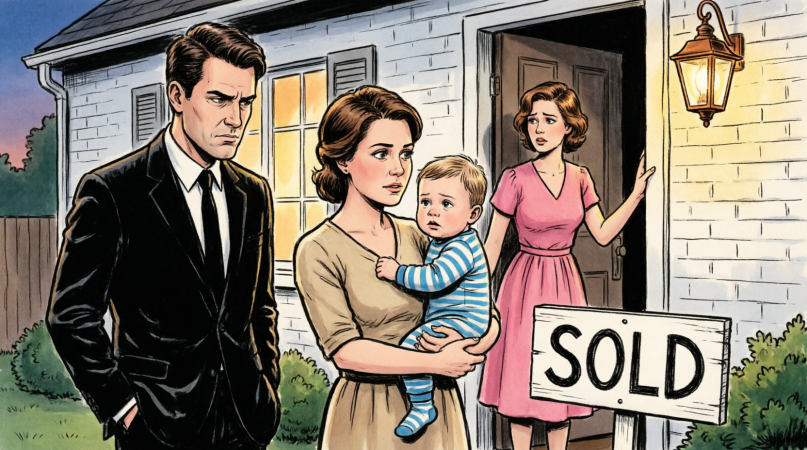
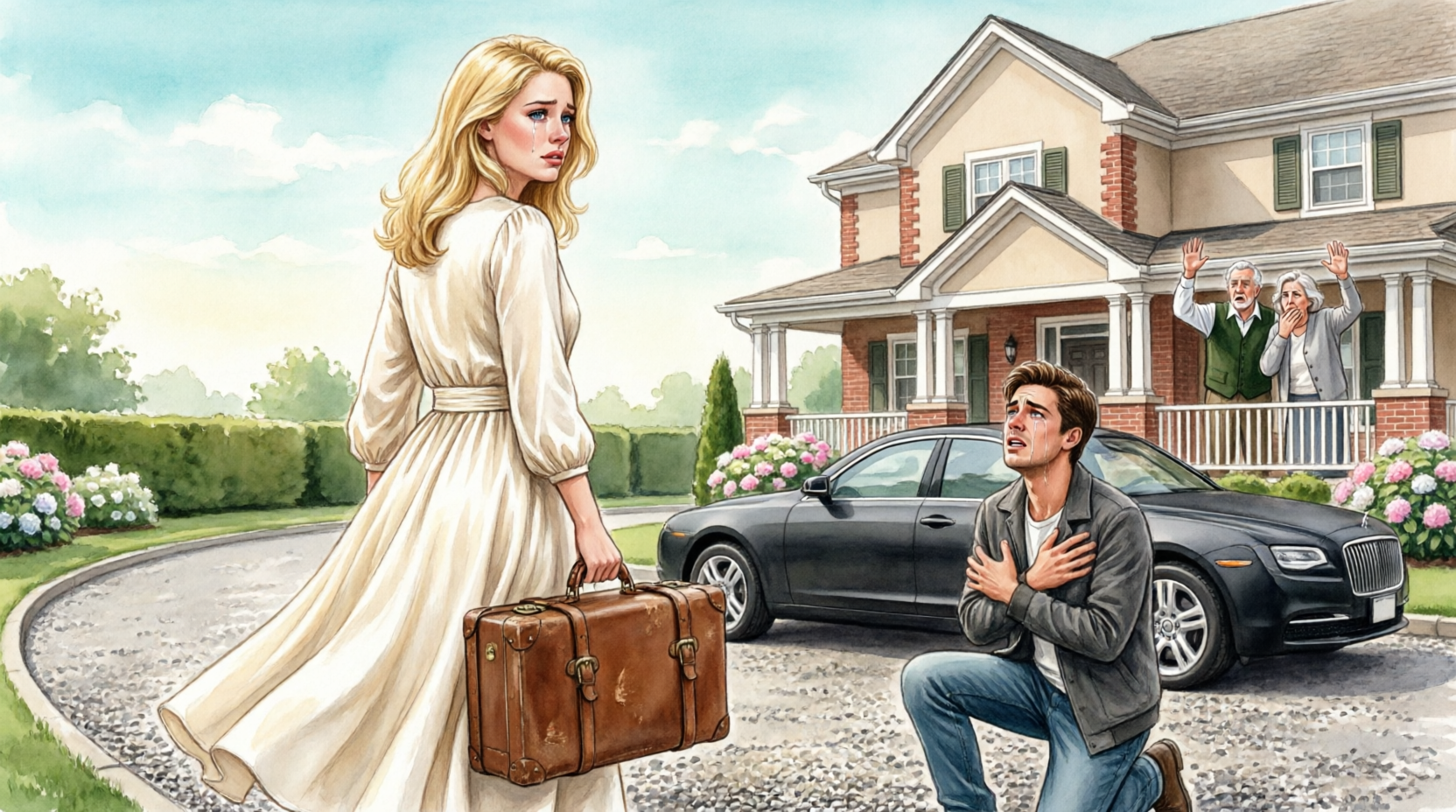
I went to my quiet Malibu beach house at 70, hoping to rest, but found my daughter-in-law already inside with her entire family as if it were a vacation rental. When she looked at me with pure contempt and said, “What is this old parasite doing here—there’s no room for you,” I only smiled… because she had no idea she had just started a war she could never win.
Jul 3, 2026

I went to my quiet Malibu beach house at 70, hoping to rest, but found my daughter-in-law already inside with her entire family as if it were a vacation rental. When she looked at me with pure contempt and said, “What is this old parasite doing here—there’s no room for you,” I only smiled… because she had no idea she had just started a war she could never win.

The day my daughter-in-law called me an old parasite while standing in the doorway of the beach house I had paid for with forty years of bent fingers and aching shoulders, I did not scream.

That was what frightened her most, I think.

Not at first. At first, Jessica believed my silence was weakness. She believed my thin gray hair, my careful shoes, and my old leather handbag meant I was the kind of woman who could be pushed to the edge of her own life and told to make room for younger, louder people. She believed the house behind her belonged to her because she had slept there a few weekends, because she had learned where I kept the good plates, because she had married my son and assumed that marriage was a set of keys to everything his mother had ever built.

She was wrong.

My name is Eleanor Vance. I was seventy years old when this happened, though I did not feel seventy until that morning. Before then, age had simply been a number attached to my driver’s license, a list of vitamins in my kitchen cabinet, and the small stiffness in my knees when I climbed stairs too quickly. I still drove myself from Chicago to California twice a year when I wanted the long road and flew when I wanted to be sensible. I still gardened. I still hemmed my own dresses. I still kept receipts in labeled envelopes because a woman who grows up poor learns that paper can protect her when people will not.

The Malibu house was never meant to impress anyone.

That was what Jessica never understood.

To her, it was a view, a location, a weekend destination, a place to take pictures on the terrace with the Pacific behind her and tell her friends she was “escaping to the coast.” To me, it was proof. Proof that I had survived widowhood. Proof that a woman could lose the man she loved and still build something beautiful with hands that shook from grief. Proof that every late night at a sewing machine, every skipped vacation, every repaired coat, every wedding dress altered for another woman’s daughter had not disappeared into thin air.

I had not bought that house because I had money.

I bought it because my grief needed somewhere to breathe.

When my husband, Thomas, died, I was fifty years old. Too young, people said, though grief does not care whether the age sounds fair. He had spent thirty years promising me we would retire somewhere near the ocean. “Not Florida,” he used to say, because Thomas had opinions about humidity. “Somewhere with cliffs. Somewhere where the water looks dramatic.”

We lived in Chicago then, in a narrow house with a small yard and radiators that hissed through winter. I sewed for a living, first in a bridal shop, then for private clients after my hands became known among women who cared about seams and patience. I could take in a gown without changing its soul. I could rebuild a bodice overnight. I could turn a thrifted suit into something elegant if the woman wearing it stood still long enough.

Thomas worked for the city. He fixed things. Pipes, meters, budgets, neighbors’ lawn mowers when they asked nicely. He was a good man in the quiet ways that never make headlines. He loved our son, Robert, with a gentleness Robert did not fully appreciate until he was a man himself.

Then Thomas’s heart failed one Wednesday morning while he was trimming the hedge.

He was gone before the ambulance arrived.

For months afterward, I existed in the house like a ghost who still paid bills. Robert was twenty-five then, newly working, newly proud, still calling me when his check engine light came on. He came by often at first, standing in the kitchen awkwardly because neither of us knew how to speak around Thomas’s absence.

One night, while sorting through a drawer, I found a folder Thomas had labeled “Ocean Someday.” Inside were magazine clippings, handwritten notes, and an old listing for a small, neglected beach property above Malibu. It had been far beyond our reach when he saved it. The house was in poor condition, the lot overgrown, the roof questionable, the retaining wall needing work.

I should have thrown it away.

Instead, I flew to California.

I stood on that overgrown lot with weeds scratching my ankles and the Pacific rolling below like a living thing, and for the first time since Thomas died, I felt something inside me move toward tomorrow.

The realtor warned me it needed too much work. The inspector listed problems with a kind of professional pity. Robert told me gently that maybe grief was making me romantic.

Maybe it was.

But grief is not always foolish. Sometimes it sees the thing your ordinary life was too practical to imagine.

I bought the house.

Not easily. Not dramatically. With savings, insurance money, the sale of a small parcel Thomas and I had inherited, and a modest loan I attacked with the same discipline I brought to every seam I ever stitched. I did not renovate it all at once. I could not afford that. I did what I could, one project at a time. New roof first. Electrical next. Plumbing after that. Tiles for the kitchen bought on sale and carried home in the trunk of a rental car. Plants from nurseries, tucked into the soil by my own hands. Wicker chairs for the terrace after the first summer I could sit outside without looking at unfinished walls.

Every piece mattered because every piece had cost me something.

Robert understood that once.

The first summer the porch was finished, he helped me carry two wicker chairs out to face the ocean. He was thirty by then, broad-shouldered like his father, with the same habit of rubbing the back of his neck when emotions came too close.

He set the second chair down and looked at the house glowing in late sunlight.

“Mom,” he said softly, “this place is a miracle.”

“No,” I told him. “It’s a mortgage.”

He laughed, then kissed my cheek. “It’s your miracle.”

For years, that was what he called it.

Mom’s miracle.

When Robert married Jessica, I tried to welcome her into it.

I truly did.

Jessica was pretty in a sharp, polished way, with blond hair always arranged as if she expected a camera and a smile that appeared quickly but rarely reached her eyes. She came from a family that valued appearances the way some people value honesty. Her mother, Celeste, wore pearls to breakfast and corrected waiters with a sweetness more insulting than anger. Her sister, Veronica, moved through life as if every inconvenience were a personal attack.

Still, Jessica made Robert happy at first. Or he looked happy beside her, which I mistook for the same thing.

I invited them to Malibu for birthdays. I cooked dinners. I showed Jessica where I kept fresh towels, sunscreen, extra blankets, and the good white plates with the blue edge. I let her use my kitchen. I let her borrow my sunhat. I let her stay in the guest room and wake to the ocean because I wanted her to feel she had gained a mother, not an opponent.

That was my first mistake.

Entitlement rarely enters through a broken window.

It walks in through a door opened with love, compliments the view, and begins deciding what belongs to it.

Over time, little things shifted. Jessica stopped asking if she could open wine from the cabinet and simply opened it. She invited friends for “just the afternoon,” then stayed overnight. She rearranged my pantry because my system “made no sense.” She posted photos from my terrace with captions like “Our little coastal escape,” and when I gently corrected her, she laughed.

“Oh, Eleanor, it’s just social media.”

Robert heard these things and looked uncomfortable, which is to say he did nothing.

I should have changed the locks earlier. I know that now. But mothers are slow to protect themselves from their children because we remember them small. We remember fevered foreheads, lost teeth, first heartbreaks. We remember the boy who called a beach house a miracle, and we hesitate to treat the man like someone who might let that miracle be used against us.

I had given Robert a spare key years earlier for emergencies. The agreement was written because I have always believed love and paperwork can live under the same roof. He teased me about it when he signed.

“Mom, you make everything official.”

“And you will thank me one day,” I said.

The agreement was simple. The key was for emergency access, repairs, and visits I approved in advance. No overnight guests without permission. No parties. No transferring the key. No removal of my personal belongings.

Robert kissed my forehead. “You think I’m going to rob you?”

“No,” I said. “I think people forget boundaries when they are not written down.”

He laughed.

Years later, nobody was laughing.

That Friday morning, I drove up the coastal road expecting quiet.

It was late October, one of those California mornings that feels almost indecently beautiful. The sky was clear and blue, the ocean polished by sunlight, the air scented with salt, eucalyptus, and the faint dry sweetness of chaparral. I had come to Malibu for a long weekend to review tax papers, prune the geraniums, and sit with coffee on the terrace where Thomas should have sat beside me.

Robert had texted the night before.

Mom, Jessica may stop by tomorrow afternoon to pick up a few things we left last time. Is that okay?

I had replied: She may stop by between noon and three. No overnight guests. I will arrive Friday afternoon.

He sent back: Understood. Thanks, Mom.

Understood.

A useful word when people mean it.

I turned into my driveway just after ten and saw six unfamiliar cars.

Not one.

Six.

Two crowded into the garage. One parked across the front walkway. A black SUV half on my lawn. Another car near the side gate. Music thudded from inside the house, bass rattling through the walls I had paid to restore. Beer cans lay scattered across the grass. A beach ball rolled lazily across the path. My red geraniums—the ones I had trimmed by hand every visit—had been knocked over, soil spilled across the terrace.

For several seconds, I sat in the car with my keys in my hand.

The mind is merciful at first. It searches for innocent explanations. Maybe Robert was there. Maybe there had been an emergency. Maybe Jessica had misunderstood. Maybe the cars belonged to workers, though workers rarely arrived with coolers, towels, and children shrieking across a patio.

Then I saw a teenage boy run past the window carrying one of my decorative pillows under his arm.

Something inside me went still.

I got out of the car.

The closer I came, the worse it became. Wet towels lay over my wicker chairs. Cigarette ash dotted the porch rail. Someone had dragged a cooler across the mosaic tiles and left a scratch behind. A toddler held one of my seashell bookends in both hands. Through the open door, I could see strangers moving through my kitchen.

Then Jessica appeared in the doorway wearing my apron.

Not just any apron.

My embroidered linen apron, the one I had made ten years earlier during the winter after Robert moved into his first apartment. Cream fabric, blue stitching, tiny flowers along the pocket. It was not valuable to anyone else. It was valuable to me because I had sewn it while teaching myself how to live alone without collapsing.

Jessica had tied it carelessly at her waist, a glass of white wine in one hand.

She looked at me, and annoyance crossed her face before surprise did.

“Eleanor,” she said. “What are you doing here?”

I looked past her into my own house. Celeste sat in my living room with her feet on the coffee table. Veronica stood near the fireplace scrolling on her phone. Two teenage boys hovered by the destroyed geraniums, suddenly aware they had been caught. A man in a Hawaiian shirt held a cooler against his hip. A young woman bounced a baby near the hallway.

“This is my house,” I said.

Jessica laughed.

Not loudly. Not nervously. Dismissively.

“What is this old parasite doing here?” she called over her shoulder. “There’s no place for you.”

The terrace went quiet.

That was the moment I learned exactly what kind of people she had brought into my home.

Because no one corrected her.

No one said, Jessica, stop.

No one said, This is Eleanor’s house.

No one looked ashamed except Veronica, and even she looked more afraid of inconvenience than injustice.

Celeste gave me a slow look from inside, her eyes traveling over my linen pants, my sensible shoes, my old handbag. “Perhaps Eleanor forgot there was a family gathering this weekend.”

Family gathering.

In my house.

Without me.

The teenage boys snickered softly.

Quiet cruelty can cut deeper than shouting because it assumes you will help by shrinking.

I did not shrink.

“Jessica,” I said, “where is Robert?”

“Working,” she said. “As usual. Some people have responsibilities.”

The insult was lazy, but the confidence behind it was not. She believed she had power here. Not legal power. Social power. The kind younger women sometimes think they have over older women because they are married to someone’s son and everyone is too uncomfortable to challenge them.

“I gave permission for you to stop by this afternoon,” I said. “Not to move your family into my house.”

She rolled her eyes. “Oh, don’t be dramatic. It’s the weekend. The house is empty most of the time anyway.”

“It is not empty. It is mine.”

“Robert is your son.”

“Yes.”

“So what’s yours is his. And what’s his is mine. That’s how normal families work.”

I felt my key bite into my palm.

A younger version of me might have shouted. A grieving version of me might have cried. A lonely version of me might have tried to reason with her.

But I was seventy years old, and I had spent enough years sewing silk for wealthy women to know that bad seams must be cut cleanly. Pull gently and the whole garment warps.

“I need to go to my bedroom,” I said.

Jessica stepped slightly to block the doorway.

“The bedrooms are occupied.”

I stared at her.

She lifted her chin. “Look, Eleanor, there’s no room for you here. The kitchen is being used. The kids are settled. Your presence is only going to create tension.”

“My presence,” I repeated.

“In the nicest possible way, yes.”

One teenage boy, emboldened by her tone, muttered, “She could just get a hotel.”

Jessica smiled.

And that was when I smiled too.

Not warmly.

Not kindly.

“All right, dear,” I said. “I understand the situation perfectly.”

Jessica mistook that smile for surrender.

That was her first mistake.

I drove to the Pacific View Inn and paid $285 for a room I never should have needed. The woman at the desk asked if I was in town for the weekend. I nearly told her the truth just to see what her face would do.

Yes, I am visiting because strangers are sleeping in the bed I bought.

Instead, I said, “Something like that.”

The room was clean and beige, with a balcony facing the water. From there, I could see the warm glow of my house in the distance. It looked peaceful. Welcoming. As if it had not just watched me be turned away.

That offended me more than Jessica’s insult.

At 9:17 p.m., I opened the notebook I kept in my travel bag.

I wrote everything down.

Six cars. Broken geranium pots. Beer cans on lawn. Cigarette ash on porch rail. Wet towels on wicker chairs. Jessica wearing embroidered apron. Exact words: “old parasite,” “no place for you,” “your presence will create tension.” Approximate number of guests: sixteen. Possible minors present: four.

Then I opened the property folder I always carried during tax season. Deed. Mortgage payoff papers. Utility bills. Insurance policy. Los Angeles County property tax records. Emergency access agreement signed by Robert. Recent text message exchange printed from my phone at the hotel business center.

Paper remembers what people try to bully out of existence.

I slept little.

At eight the next morning, I returned.

The front door was locked.

My own front door.

I rang the bell.

Veronica opened it in pajamas, hair tangled, face already irritated.

“What do you want now?”

I looked at her for a long moment. “Good morning. I need to gather personal belongings and speak with Jessica.”

“She’s asleep.”

“Wake her.”

Veronica crossed her arms. “Your stuff’s in the garage.”

“My stuff?”

“Jessica had us move it so it wouldn’t be in the way.”

In the way.

My clothes. My photographs. My linens. My records. The life that had paid for the roof over her head.

I walked past her.

She protested, but weakly. People are often bold only when they think you will obey.

The garage door was open. Inside, near the storage shelves, I found black garbage bags.

One had split. My cardigan sleeve hung out. Another held framed photographs wrapped in a damp towel. My wedding picture leaned crookedly against a plastic bin. My old sewing ledger from Chicago—the one where I had recorded years of clients, payments, fabric costs, and dreams—had one corner bent. The embroidered pillowcases I made after Thomas died were crushed beneath beach toys.

For a moment, I could not move.

Then I took out my phone and began photographing everything.

The garbage bags.

The split seam.

The bent ledger.

The wedding photo.

The broken pots outside.

The cigarette burn on the wicker chair.

The ash on the railing.

The beer cans under the bougainvillea.

Jessica entered while I was photographing the apron still hanging from her neck.

“What are you doing?” she snapped.

“Documenting.”

Her eyes went to the folder in my hand. “What are those papers?”

Before I answered, my phone rang.

Robert.

I put him on speaker.

“Mom?” His voice sounded tense. “Jessica said you showed up and upset everyone.”

I looked directly at Jessica. “Did she?”

Jessica’s face tightened.

“Mom, what’s going on?”

“Your wife moved her family into my Malibu house without permission, packed my belongings into garbage bags, damaged my garden and furniture, wore my personal things, and told me there was no place for me in my own home.”

Silence.

Then Robert said, “What?”

Jessica stepped forward. “Eleanor is exaggerating. We came for one weekend. She’s being territorial.”

I held up the printed text message even though Robert could not see it. “You asked if Jessica could stop by for an afternoon. I replied no overnight guests and told you I would be arriving Friday. Do you remember that?”

A pause.

“Yes,” he said.

Veronica, standing near the door now, went pale. “Jess, you said she knew.”

Jessica’s eyes flashed. “Stay out of it.”

Celeste appeared behind her, wrapped in one of my guest towels as if this were a resort. “This is absurd. Eleanor, you are creating a spectacle over a family weekend.”

“No,” I said. “Jessica created the weekend. I am creating the record.”

Robert’s voice cut through the speaker. “Jessica, tell me you didn’t throw my mother out of her own house.”

Jessica looked around. The audience she had gathered for my humiliation was now watching her carefully.

“She had somewhere else to go,” Jessica said.

The silence after that was colder than any answer.

I heard Robert inhale sharply.

“Mom,” he said, voice low, “I’m coming.”

He arrived in less than an hour.

I know because I timed it.

He came into the garage without his work jacket, hair still damp from a rushed shower, face pale in a way I had not seen since Thomas’s funeral. For one second, I saw my son as a little boy again, looking at something broken and hoping I could fix it.

Then he saw the garbage bags.

His face changed.

“Mom,” he whispered.

I did not comfort him.

Mothers spend too much of their lives absorbing the consequences of their children’s cowardice. I had no intention of absorbing this.

Jessica began speaking quickly. “Robert, before you overreact, your mother is making this sound horrible. We moved a few things carefully. The house was empty. My family needed a place for the weekend. You said we could use it.”

“I said you could stop by.”

“You always say your mother won’t mind.”

Robert looked at her. “I never said you could throw her things in the garage.”

“They were in the way!”

The words rang out.

There it was again.

In the way.

Robert looked at me. Then at the bags. Then at the apron tied around Jessica’s waist.

His voice changed.

“Take it off.”

Jessica blinked. “What?”

“My mother’s apron. Take it off.”

She laughed nervously. “Are you serious?”

“Now.”

That was the first time Jessica looked frightened.

Not because of the apron, but because she finally realized Robert was not automatically standing between her and the consequences.

Slowly, angrily, she untied it and tossed it onto a storage box.

I picked it up, folded it once, and laid it beside my folder.

Then I opened the emergency access agreement and placed it on top of the bin.

“Robert,” I said, “do you remember signing this?”

He looked at it and swallowed. “Yes.”

“It says your key is for emergencies, repairs, and approved visits only. It does not permit overnight guests, parties, transfer of access, or removal of my belongings.”

Celeste made a scoffing sound. “Good heavens. You made your own son sign a contract?”

I looked at her. “And today I am grateful I did.”

Nobody had anything clever to say to that.

I gave them until noon to leave.

Jessica exploded.

She accused me of humiliating her. She said I was selfish. She said I was ruining the children’s weekend. She said I was punishing Robert because I could not handle sharing. She said old people became possessive when their lives got small.

I let her speak.

Then I said, “If everyone is not gone by noon, I will call the sheriff and my attorney. I will file a trespass report, submit a damage claim, and provide photographs, signed agreements, and text messages. I will also formally revoke all access to this property.”

Jessica’s mother stepped forward. “You would do that to family?”

“No,” I said. “I would do that to trespassers.”

The packing began at once.

It was not graceful. Children cried. Veronica muttered that she had told Jessica this was a bad idea. Celeste snapped at everyone while carrying designer luggage she had apparently unpacked in my guest room. The man in the Hawaiian shirt took three trips to load the cooler and avoided looking at me entirely. The teenage boys were assigned to pick up beer cans under Robert’s supervision.

By noon, the cars were gone.

All of them.

The silence left behind felt bruised.

The house smelled of spilled beer, sunscreen, smoke, and entitlement. Sand covered the hallway. The kitchen counter was sticky. Someone had cracked one of the blue-edged plates. My white quilt was bunched on the floor of the guest room. A damp swimsuit had been left in the sink.

Robert stood in the living room with a trash bag in his hand, looking devastated.

“I’m sorry,” he said.

“I know.”

“I should have stopped this before.”

“Yes.”

“I didn’t think she would—”

“Do not finish that sentence,” I said.

He looked at me.

“Do not tell me you didn’t think your wife would mistreat me when she has been testing how far she could go for years. You saw it. You excused it. That is why she thought she could do this.”

His eyes filled.

“I didn’t want to choose sides.”

“She counted on that.”

He sat down slowly on the edge of the couch.

“I’ve been a coward,” he said.

That was the first useful thing he had said all day.

I let the words sit between us.

Then I handed him a broom.

“Start with the terrace.”

He swept dirt from the tile while I called a locksmith. Then my attorney. Then my insurance agent. I sent photographs. I sent copies of the agreement. I sent the hotel receipt. I sent the printed text exchange. I changed the alarm code while Robert stood beside me and watched his access disappear from the system.

That hurt him.

Good.

Some pain is corrective.

By evening, the locks were changed. Robert had loaded my garbage-bagged belongings back into the proper rooms. When he found the bent sewing ledger, he cried. Not loudly. Just one hand over his eyes, shoulders shaking once.

I wanted to go to him.

I did not.

Love without consequence becomes permission.

Within one week, Robert reimbursed me for the hotel, the cleaning, the locksmith, the broken pots, the damaged wicker chair, and the cracked plate. I did not ask whether the money came from him or Jessica. I deposited the check after it cleared.

Jessica called once.

I let it go to voicemail.

At first, she was angry. She said I had embarrassed her, damaged her marriage, and made her family feel unwelcome. Then her tone changed. She said things had gotten out of hand. She said maybe she had been stressed. She said she hoped “we could all move forward.”

She never said, “I called you a parasite in your own home.”

She never said, “I packed your life into garbage bags.”

She never said, “I was wrong.”

I saved the voicemail.

People who rewrite history should never be left alone with the only copy.

Two weeks later, Robert came to Chicago.

He brought my repaired wedding frame wrapped carefully in brown paper. We sat at my small kitchen table, the same table where he had once done homework while Thomas read the newspaper.

“I’m not asking you to forgive Jessica,” he said.

“That is wise.”

He gave a sad smile. “We’re in counseling.”

“I hope it helps.”

“I don’t know if it will.”

I did not answer.

He looked down at his hands. “She thought I would always smooth things over. She thought if she pushed far enough, I’d make you accept it.”

“And would you have?”

His face twisted.

“Before that weekend,” he said quietly, “maybe.”

That honesty hurt more than a lie.

I looked out the kitchen window at the alley behind my building, at the brick walls and gray sky and laundry line strung between neighbors’ porches. Chicago was not Malibu. It did not pretend to be soft. I had always liked that about it.

“I love you, Robert,” I said. “You are my son. Nothing changes that.”

His shoulders loosened slightly.

“But love is not a spare key.”

He closed his eyes.

“The Malibu house remains mine. There will be no unsupervised access. No spare key. No casual weekends. Any visit will be requested in advance and confirmed by me in writing. If Jessica comes, she comes as a guest who understands she is a guest. If she cannot do that, she does not come.”

He nodded.

“I understand.”

“Do you?”

“Yes.”

I believed he wanted to.

That was not the same as trusting him yet.

The next month, I returned to Malibu alone.

I did not invite Robert. I did not tell Jessica. I did not announce anything to anyone.

I simply went home.

The house felt different at first, not ruined, but handled. Every room held traces I did not want. I cleaned slowly. I washed the apron twice and folded it into a drawer. I replanted the geraniums in heavier pots. I replaced the cracked plate, then changed my mind and kept the broken one wrapped in paper at the back of a cabinet as a reminder that beautiful things can survive damage without pretending it never happened.

The terrace took longest.

I scrubbed the cigarette burn. I sanded and refinished the arm of the wicker chair. I swept the tiles at sunrise and again at dusk. Each task steadied me. Women of my generation were taught to tidy away pain before guests saw it. This time, cleaning was not hiding. It was reclamation.

On the fourth evening, I sat on the terrace with coffee and opened my old sewing ledger.

Inside the front cover, written years earlier in Robert’s blue ink, were the words: Mom’s miracle.

I traced them with my thumb.

I thought about Thomas. About Chicago winters. About the first roof repair. About Robert carrying chairs. About Jessica in my apron. About my own voice saying, “I understand the situation perfectly,” while something fierce and ancient woke up inside me.

A gull cried overhead. The waves struck the rocks below. The wind moved through the curtains as if the house were exhaling.

For the first time since that Friday morning, the house sounded like itself again.

Six months later, Robert and Jessica separated.

He told me over the phone. His voice was tired but clear.

“She still thinks the problem was that you embarrassed her,” he said. “Not what she did.”

“And what do you think?”

“I think I almost let my wife steal my mother’s peace because I was afraid of conflict.”

I sat quietly.

“I’m sorry,” he said. “Not because I want the key back. Not because I want anything. I’m just sorry.”

That apology reached me because it did not ask to be rewarded.

“I hear you,” I said.

Sometimes that is all forgiveness can honestly begin as.

I did not celebrate their separation. Marriage is complicated, and other people’s broken vows are not a party. But I did feel relief. Not because Jessica was gone from Robert’s life completely—I had learned not to assume anything—but because he had finally noticed the difference between keeping peace and enabling disrespect.

The following summer, he visited Malibu with written permission, though I teased him for sending the request like a nervous tenant.

He arrived alone.

We sat on the terrace in the two wicker chairs he had carried out years before. The geraniums bloomed red between us. The sun dropped toward the Pacific. For a long time, neither of us spoke.

Then Robert said, “Dad would have hated what happened.”

“Yes.”

“He would have told me I was being weak.”

“Yes.”

“I miss him.”

“So do I.”

His eyes filled, but he did not look away.

“I forgot what this place was,” he said.

I looked at the ocean.

“No,” I said gently. “You forgot whose it was.”

He nodded.

That was enough for the day.

Age teaches you that not every wound needs a speech. Some truths do their work quietly if people are finally willing to sit still with them.

I am seventy-one now.

The house is still mine.

The spare key hangs on a hook inside my Chicago apartment, labeled Emergency Only, which makes me smile because there is no one left who receives it without understanding what those words mean. The Malibu property is in my trust now, with clear instructions, legal protections, and conditions that would make any entitled daughter-in-law break out in hives. Robert knows this. He helped drive me to the attorney’s office.

He did not complain.

That was progress.

Sometimes, when I sit on the terrace at dusk, I think about that morning in the driveway. The cars. The music. The wet towels. Jessica’s voice calling me a parasite while standing under my roof. I used to wonder whether I should have shouted. Whether I should have defended myself more dramatically. Whether a louder woman would have seemed stronger.

Now I know better.

Strength is not always loud.

Sometimes strength is a notebook opened in a cheap hotel room.

Sometimes it is a deed laid flat on a storage bin.

Sometimes it is a mother telling her grown son, “Love does not unlock the door again.”

And sometimes it is an older woman sitting peacefully in the house she built, listening to the waves, knowing nobody will ever again mistake her kindness for permission.

A home is not protected by blood.

It is protected by boundaries.

It is protected by memory, evidence, courage, and the woman who finally understands that everything she built with her own hands belongs first to her.

THE END.

More Details
My sister left her five-year-old daughter with me for three days, and I thought I’d only have to put on cartoons and heat up some food. But on the first night, when I served her a bowl of homemade beef stew, the little girl didn’t even touch her spoon. Instead, trembling, she asked me: “Uncle… am I allowed to eat today?”
Jul 3, 2026

My sister left her five-year-old daughter with me for three days, and I thought I’d only have to put on cartoons and heat up some food. But on the first night, when I served her a bowl of homemade beef stew, the little girl didn’t even touch her spoon. Instead, trembling, she asked me: “Uncle… am I allowed to eat today?”

I noticed an open seam on the doll’s belly.
It wasn’t a normal tear.
It had fresh, clumsy stitches made with black thread, as if someone had sliced it open and hurriedly sewn it back together. Ruby was clutching the doll tightly against her chest, but a tiny piece of white plastic was poking through her fingers.
A tracker.
I didn’t need Paula to explain a single thing to me. Sergio hadn’t guessed where my niece was. He had followed her.
“Ruby,” I said softly, “hand me the doll.”
She squeezed it tighter.
“He gets mad if I lose it.”
The knocks came again.
Three.
Slow.
“Robert,” Sergio called from outside. “Let’s not make a scene for the neighbors. Open up and let’s talk like family.”
Like family.
The phrase made my blood boil.

I took Ruby by the hand and led her into the kitchen, away from the front door. My house was located on a quiet street near South Congress, the kind of neighborhood where at night you can still hear the occasional car passing over the bridge, the echo bouncing off the walls. I had always considered it a safe area. Tonight, I understood that no street is safe if danger carries a copy of your key, a smile, and permission to enter.

“Paula,” I whispered into the phone, “call 911 right now. Go.”
“I already did,” she cried on the other end. “Robert, listen to me. He has keys to your house.”
I froze.
“What?”
“Months ago, he asked me for your spare copy ‘just in case something ever happened to you.’ I was such an idiot.”

I didn’t have time to reply.
The deadbolt clicked.
Sergio was putting the key in the lock.

I scooped Ruby up all at once and ran into the laundry room. I locked the door from the inside and shoved the washing machine with all my strength until it wedged tightly against the frame. Ruby didn’t scream. That was the worst part. A normal child would have cried, would have asked what was happening. She just balled herself up in my arms and placed her tiny hand over my mouth.

“Shh,” she whispered. “If we don’t make any noise, sometimes he goes away.”

Outside, the front door swung open.

Sergio’s footsteps entered my house as casually as if he were walking into his own backyard.

“Where are you, champion?” he said, using that warm, friendly tone he always put on during family dinners. “Look, I know you got scared. Paula exaggerates everything. You know how she is.”

Ruby began to tremble violently.

I dialed 911 with the speaker turned off.

A dispatcher answered. I gave her my address in a low whisper, doing the best I could. I said “domestic violence,” “minor involved,” “intruder inside my house,” “suspected camera in a child’s bedroom.” The woman didn’t interrupt me. She only instructed me to keep the line open and avoid confronting the aggressor.

Sergio was walking through the living room.

I heard him lifting things up.

The chair.

A glass.

The plate where Ruby had just eaten her dinner.

“Ah, so you did eat, princess,” he said.

Ruby closed her eyes and wet herself.

She didn’t make a sound.

I felt something inside me break forever.

“It’s okay,” I whispered into her ear. “It’s okay, my love. I’m right here with you.”

On the other side of the wall, Sergio reached the kitchen.

“Robert, don’t be ridiculous. That girl has behavioral issues. Paula can’t handle her. I was just instilling structure.”

The word structure made me sick to my stomach.

I knelt next to Ruby, took her doll, and found the uneven seam. She looked at me with sheer terror.

“I’m not going to throw it away,” I promised her. “I’m just going to take out something that shouldn’t be inside.”

Using a small pair of scissors from my sewing kit, I snipped the fabric belly open. Inside was old cotton stuffing, a tiny Ziploc bag, and a small, round tracking device. I stomped on it with my heel until it crunched.

Sergio went completely silent outside.

Then, he pounded on the laundry room door.

“That was a very bad idea.”

Ruby began to chant under her breath:

“I’m sorry, I’m sorry, I’m sorry.”

I wrapped my arms tightly around her.

“You have absolutely nothing to apologize for. Do you hear me? Nothing.”

Sergio shoved the door hard. The washing machine groaned against the floorboards.

“Open up.”

I didn’t answer.

“Open up, or I’ll tell everyone what Paula did. You think she’s innocent? You think your sister didn’t know?”

That sentence drove a painful wedge of doubt into my chest.

I looked at the phone. Paula was still on the parallel call, her breathing ragged, as if she were running.

“What did you do, Paula?” I asked.

It took her a long time to speak.

“I let him punish her.”

The silence that followed was worse than Sergio slamming against the door.

“Not like that,” she sobbed. “I swear to God I didn’t know about the camera. But I did let him send her to bed without dinner. He told me Ruby was manipulating me, that if I wasn’t firm, she would grow up ruined. I was so tired, Robert. I was afraid. I depended on him. And one day, I just stopped defending my daughter.”

I wanted to hate her.

In that moment, I did hate her.

But Ruby, who couldn’t fully comprehend everything, heard her mother weeping through the phone and whispered:

“Mommy is sad.”

That completely destroyed me.

Outside, a distant siren wailed.

Then another.

In Austin at night, sirens echo strangely between the old historic avenues and the highway grids. They sound close and far away at the same time, as if they were coming from Zilker Park and I-35 simultaneously. Sergio heard them too.

He stopped shoving the door.

“Robert,” he said, his friendly voice completely gone. “Think carefully about what you’re doing. That girl isn’t yours.”

I opened my phone’s camera app and started recording through the crack beneath the door.

“Say it again,” I replied. “Say it for the District Attorney.”

There was another silence.

Then Sergio laughed.

“You have nothing on me.”

Then Ruby, still wet and shaking, pulled away from me. She tugged at my sleeve.

“Uncle,” she said. “In the chair.”

“What?”

“Underneath the chair.”

I didn’t understand until she pointed her tiny finger toward the door.

The chair.

The one he used to block her door.

“What is underneath the chair, Ruby?”

She swallowed hard.

“The little black box. He hides it there when Mommy cleans.”

Sergio overheard.

He slammed against the door with such violence that the wood split slightly along the frame.

“Shut up!”

That word, screamed at a five-year-old girl, was what stripped away my remaining fear.

I didn’t open the door.

I didn’t go out.

I didn’t try to play the hero.

I simply put my body between the door and Ruby, while police cruisers screeched to a halt outside and neighbors began to peer out of their windows. Mrs. Higgins, the elderly lady from across the street who sold baked goods on weekends and always knew everything before anyone else, shouted from the sidewalk:

“The cops are here, you bastard!”

Sergio bolted toward the exit.

But he didn’t get far.

Two local police officers entered cautiously—one through the front door and the other through the side gate leading to the yard. They ordered him to the ground. Sergio threw his hands up immediately, instantly playing the victim of a misunderstanding.

“Officers, I’m her stepfather,” he said. “I came for the girl because they have her hidden away.”

“He is not her stepfather,” I yelled from the laundry room. “He doesn’t have custody. The child is terrified.”

When I finally managed to shift the washing machine and open the door, Ruby clung to my leg. An officer knelt down to talk to her, but she hid her face.

“Please don’t touch her,” I requested. “Please.”

A representative from the victim services unit arrived. She didn’t have the cold look of a bureaucrat. She brought a thermal blanket, water, and a voice that didn’t crowd the room. She asked Ruby if she wanted to sit down. She didn’t tell her “don’t cry.” She didn’t say “be brave.” She only said:

“You get to decide if you want to talk right now or later.”

Ruby looked at her as if she were being offered an entirely new language.

Part 3

Half an hour later, my house looked like a crime scene from a television show. Yellow tape, flashing lights, neighbors standing around in bathrobes, the harsh overhead light of the dining room shining down on the now-cold beef stew. Sergio was sitting on the curb, handcuffed, wearing the exact same crisp blue shirt he wore when he brought flowers to our family gatherings.

He was no longer smiling.

Paula arrived around two in the morning.

She hadn’t been in Dallas.

She had been hiding at a coworker’s house in West Lake Hills, where she had spent the day gathering the courage to file a report. She stepped out of a cab with her hair loose, no makeup, and a wrinkled blouse. The moment she saw Ruby, she broke down completely.

“My baby girl.”

Ruby didn’t run to her.

She stayed glued to my side.

Paula understood.

She stopped three paces away and sank to her knees on the pavement.

“Forgive me,” she said. “Forgive me, Ruby. I was supposed to protect you.”

The little girl stared down at the ground.

“Am I allowed to eat today, Mommy?”

Paula clapped her hand over her mouth to stifle a scream.

I had to look away, staring up at the city skyline, because if I looked at my sister, I was going to say something that wouldn’t help anyone. The city remained beautiful and indifferent, with its flashing lights and clean streets, as if the world could simply go on being lovely while a child had to ask permission to feed herself.

The victim services advocate spoke with Paula. Shortly after, representatives from Child Protective Services arrived. They threw around legal terms that I could barely process: failure to protect, child abuse, emergency protection orders, psychological evaluation, legal representation for minors.

Paula handed over her phone.

That was where the worst of it lay.

It wasn’t just the hidden camera.

There were text messages from Sergio to a friend, mocking the punishments. Photos of the list. Audio clips where he told Paula that a child “either breaks early or grows up useless.” And a video of Ruby crying behind a locked door while he wedged a chair against it from the outside, telling her that good girls don’t cause problems.

They didn’t let me see any more than that.

Thank God.

The police searched Paula’s house that very same morning; she authorized the entry. I rode with Ruby in the ambulance for a medical evaluation, though she refused to let go of my shirt fabric. At the Children’s Hospital, they checked her stomach, her hydration levels, and the small bruises that she automatically explained away as “I fell.”

Every “I fell” felt like a stone crushing my chest.

At six in the morning, the city began to wake up.

A pale grey light filtered through the hospital window. Outside, someone was selling hot coffee and breakfast pastries to family members who had spent the night waiting for news. That smell of warm dough made me cry without warning, because I thought of all the times a person buys food without a second thought, and of Ruby asking if I would let her eat tomorrow, too.

She was sleeping on the cot wrapped in a pink blanket.

She was squeezing my finger.

Paula sat on the other side, not touching her. Her eyes were swollen, carrying the look of someone who had just seen the full extent of her own guilt, stripped of all excuses.

“They aren’t going to let me keep her, are they?” she asked.

“I don’t know.”

“It’s better this way,” she said, her voice trembling. “They shouldn’t let me have her back until I learn how to be her mother.”

It was the first right thing I had heard her say in a long time.

The days that followed were a blur of state offices, formal statements, and absolute exhaustion. We went to the Family Justice Center, then to the District Attorney’s office, then to CPS. I learned that justice doesn’t arrive like it does in the movies, with dramatic music and a clean resolution. It arrives with photocopies, signatures, endless waiting rooms, psychologists who speak in quiet tones, social workers who look you dead in the eye, and a little girl who draws a picture of a house with no doors.

Sergio tried to fight the charges.

He claimed it was all just discipline.

He claimed Paula was unstable.

He claimed I wanted to take Ruby away just to punish my sister.

But the black recording device beneath the chair held a digital memory. And inside that memory was his voice. His calm, everyday voice. The one that dictated when a little girl could eat and when it was simply her water day.

He was formally indicted and held for trial.

I didn’t understand all the legal jargon, but I understood perfectly when the CPS attorney told me:

“For now, Ruby is not returning to that home.”

My legs felt weak with relief.

Paula signed every single document she was required to sign. She accepted court-ordered psychological therapy, protective orders, and constant supervision. She didn’t fight the temporary guardianship order. She looked at me as we walked out of the family court building and said:

“Love her better than I could.”

“That won’t be very difficult to beat,” I replied.

It hurt her.

It hurt me to say it, too.

But it was the truth.

Ruby stayed with me.

In the beginning, she would hoard bread underneath her pillow. Folded tortillas inside her clothes drawers. A banana hidden behind her coloring supplies. The child psychologist told me not to scold her, explaining that her body was still processing the fact that food wouldn’t suddenly disappear as a punishment.

So, every single night, I left a small basket right next to her bed.

An apple.

Some crackers.

A small cup of water.

And a note written in large block letters:

“YOU CAN EAT WHENEVER YOU ARE HUNGRY.”

The first time she read it, she looked up and asked:

“Even if it’s nighttime?”

“Even if it’s nighttime.”

“Even if I’m not perfectly good?”

“Even if you act exactly like a normal kid.”

She didn’t smile.

But that night, she went to sleep with the note tucked beneath her pillow.

Weeks passed.

One Sunday, I took her to the local Farmers’ Market. The air was filled with chatter, flowers, smoking brisket, vendors selling fresh produce, and kids begging for fresh-squeezed orange juice. Ruby walked glued to my side, but she was no longer asking for permission just to look around. She stopped in front of a Tex-Mex food stand and pointed at some fresh cheese.

“Am I allowed to try some?”

The words “am I allowed” still squeezed my chest tight, but this time, her voice sounded different.

It wasn’t terror.

It was an old habit slowly breaking apart.

“Yes,” I told her. “And you can also say, ‘I want to.’”

Ruby crinkled her nose, concentrating hard.

“I want to try some.”

I bought her a small plate.

She ate slowly.

She blew on it.

She chewed.

Nobody took a single thing away from her.

Afterward, we walked down toward Congress Avenue Plaza. The trees provided a deep shade, and a street musician was playing a violin near a bench. The historic stone storefronts looked freshly washed by the afternoon sun. Ruby had a purple balloon tied to her wrist and a brand-new doll tucked inside her backpack—one with no strange seams, and no dark secrets hidden inside.

“Uncle,” she said suddenly.

“What’s up, sweetie?”

“Is my mommy bad?”

I sat down with her on a bench.

I took my time responding, because easy lies do their own kind of damage.

“Your mommy did some bad things,” I told her. “Very bad things. She didn’t protect you when she was supposed to protect you.”

Ruby looked up at her balloon.

“And Sergio?”

“Sergio is dangerous. And he is never going to get anywhere near you again.”

“Never?”

“I am going to do everything humanly possible to make sure it’s never.”

She thought about that for a moment.

Then, she asked:

“Am I good?”

I felt that familiar knot tighten in my throat.

I lifted her up into my arms and set her on my lap, looking out toward the plaza—at the people walking past buying ice cream, at the tourists taking photos, at the city that just kept moving forward.

“Ruby, you don’t have to earn your food. Or hugs. Or a bed to sleep in. Or leaving the lights turned on. Or having someone protect you. You don’t earn those things. You have a right to them simply because you are a child.”

Her eyes welled up with tears.

“Even if I make a mistake?”

“Especially when you make a mistake.”

She wrapped her arms around my neck.

She wasn’t stiff anymore.

Her tiny body completely relaxed against my chest, as if she could finally rest, even if just a little bit. She cried out loud without covering her mouth. I let her cry. The sounds of the plaza continued all around us—distant bells ringing and footsteps echoing on the pavement.

That night, when we got back home, I made a fresh batch of beef stew.

The exact same one.

With potatoes, carrots, and rice.

I set two plates on the table along with a warm tortilla wrapped in a cloth napkin. Ruby climbed up onto her chair. She looked down at the steaming stew. Then, she looked up at me.

For a split second, I feared that old question would return.

But it didn’t.

She picked up her spoon.

She blew on it.

And right before taking a bite, she said:

“Tomorrow I want eggs and beans.”

I laughed.

I couldn’t help myself.

“Tomorrow we are having eggs and beans.”

Ruby took her first spoonful. Then another. She ate peacefully, her legs swinging back and forth beneath the chair, getting a tiny bit of broth on her pajamas.

When she finished, she left her spoon inside the bowl and wiped her mouth with her sleeve.

“Uncle.”

“Tell me, sweetie.”

“I was actually hungry today.”

I looked at her.

She looked right back at me.

And then, she smiled.

It wasn’t a huge smile. It wasn’t a miraculous cure. It was barely a sliver of light peaking into a house that had been locked in darkness for far too long.

But through that sliver of light, I swear to you, life finally began to find its way back in.

More Details
BILLIONAIRE HUSBAND CAME HOME AT 4:17 A.M 212
Jul 3, 2026

BILLIONAIRE HUSBAND CAME HOME AT 4:17 A.M 212

By 5:03 in the morning, I was standing in the middle of my son’s empty nursery with blood on my hand, glass in my shoes, and my entire life folded into a cream-colored note.
For a long time, I did not move.
The house was so quiet I could hear the heating system ticking inside the walls. Somewhere downstairs, cold wind slipped through the broken kitchen door and moved across the empty rooms like a stranger.
I stared at the photograph on my phone.
My signature.
My perfect, practiced signature.
Daniel R. Whitman.
It sat at the bottom of a document I had never seen, beneath language that made my stomach twist.
Voluntary transfer of marital residence.
Acknowledgment of separate asset restructuring.
Consent to temporary custody arrangement.
My eyes kept snagging on those last words.
Temporary custody arrangement.
Custody.
Noah.
I called Hannah again. Voicemail.
Again. Voicemail.
Again.
This time, I left a message.

“Hannah, call me. Whatever this is, call me right now. You can be angry. You can take the house. You can take the money. But do not keep my son from me.”

My voice broke on the last word, and I hated myself for it.

Then I called my attorney.

Not the family lawyer. Not the smiling man who handled prenups and charity trusts and quiet settlements.

I called Richard Vale.

Richard answered on the fourth ring, his voice thick with sleep.

“Daniel?”

“My wife is gone.”

A pause.

“What do you mean, gone?”

“I mean the house is empty. Sold. She took Noah. There are divorce papers at my office. And someone sent me a photo of my signature on a custody document I never signed.”

The sleep left his voice immediately.

“Where are you?”

“At the house.”

“Do not touch anything else.”

“I already broke in.”

Another pause.

“Of course you did.”

“She locked me out of my own house.”

“Daniel, listen carefully. Is there a sold sign in the yard?”

“Yes.”

“Then it may not be your house anymore.”

That sentence hit harder than it should have.

I looked around the nursery, at the pale rectangular marks where Noah’s shelves used to be. There had been a tiny stuffed elephant on one of them, gray with floppy ears. Hannah bought it before we even knew he was a boy. She used to press it against her stomach and say, “He kicks when he hears your voice.”

I had laughed at her then.

I had been answering emails.

“Daniel,” Richard said. “Go to your office. Do not call Hannah again. Do not contact this Olivia woman. Do not speak to police unless I am present.”

“Police?”

“You smashed a door in a house that may no longer belong to you.”

I closed my eyes.

“I need to find my wife.”

“No,” Richard said. “You need to find out how much of your life she legally dismantled before you noticed.”

I hung up without answering.

Outside, dawn was beginning to gray the windows. Westport looked peaceful. Rich people liked peaceful things. Quiet streets, trimmed hedges, expensive lies.

I walked through the empty house one last time.

In the dining room, I saw a scratch in the floor from when Hannah and I had dragged the table ourselves because she said delivery men never understood angles. In the hallway, I saw where Noah’s swing had once stood, playing soft music at three in the morning while Hannah bounced barefoot beside it, exhausted but smiling.

In the primary bedroom, I saw nothing.

That was worst of all.

Nothing.

She had not left perfume bottles behind in fury. She had not ripped clothes from hangers. She had not shattered wedding photos.

Hannah had left with the precision of a surgeon.

No noise.

No mess.

No mistake.

When I stepped outside, a black sedan was idling by the curb.

For one wild moment, I thought it was hers.

But the rear window lowered, and my father looked out at me.

Charles Whitman wore a navy overcoat over his pajamas. His silver hair was combed. His face was carved from the same cold stone he used on bankers and senators.

“Get in,” he said.

I did not ask how he knew.

Men like my father always knew.

The driver opened the door. I slid into the back seat, and the car pulled away from the house I no longer owned.

My father did not look at me.

“I received a call twenty minutes ago,” he said.

“From who?”

“Board counsel.”

My throat tightened. “Why?”

“Because your wife’s attorney delivered a package to Whitman Capital at 4:45 this morning.”

I stared at him.

“That’s impossible.”

“Apparently not.”

“What package?”

He finally turned his head.

“Financial records. Emails. Internal transfers. Expense reimbursements. Private calendar entries. Enough to make several people extremely nervous.”

My pulse started pounding.

“Hannah doesn’t understand those documents.”

My father’s eyes narrowed.

“That is the first stupid thing you have said today, and I suspect it will not be the last.”

I looked away.

Hannah had a degree in art history. She loved museums and old churches and books with cracked spines. She cried during documentaries. She wrote thank-you notes by hand.

She did not belong in rooms with corporate counsel.

She did not belong near knives.

But then I remembered the note.

You were so busy hiding your life from me that you never noticed I was packing mine.

“How much does she have?” I asked.

“Enough.”

“That’s not an answer.”

“It is the only one you deserve at the moment.”

The car carried us toward Greenwich, toward the glass tower where Whitman Capital occupied the top four floors. My phone buzzed again.

Olivia.

Daniel? Are you okay? Your wife just called me.

I sat upright.

“What?” I whispered.

My father glanced over.

I opened the message thread.

She knows everything. She said if I contact you again, my deposition will be under oath.

A second message followed.

Daniel, what did you tell her about me?

I almost laughed.

What had I told Hannah about Olivia?

Nothing.

That was the point.

Olivia Bennett was not supposed to exist outside hotel rooms and late dinners and false calendar blocks. She was vice president of investor relations at one of our portfolio companies, sharp, beautiful, ambitious, and careless in the way people are careless when they believe powerful men protect them.

I had protected her.

Or thought I had.

I typed nothing back.

At 5:52, we arrived at Whitman Capital.

The lobby guard would not meet my eyes.

That was when I understood the disaster was not private anymore.

Upstairs, the lights were already on.

Richard Vale stood in the conference room with two other attorneys, three sealed folders, and a look on his face that made me colder than the empty nursery had.

On the table lay a stack of documents.

On top was a petition for dissolution of marriage.

Beneath it sat a custody filing.

And beneath that was a photograph of me entering the Boston hotel with Olivia.

I picked up the petition.

My hands felt numb.

Hannah Whitman v. Daniel Robert Whitman.

She had used my full name.

Not Dan.

Not Daniel.

Not husband.

Daniel Robert Whitman.

As if I were already a stranger.

Richard took the paper gently from my hand.

“She filed at 12:01 a.m.,” he said. “Emergency protective custody, temporary financial restraining order, preservation order for corporate records, and notice of intent to subpoena.”

“For what?” I asked.

His silence answered before his mouth did.

My father removed his gloves finger by finger.

“Tell him.”

Richard exhaled.

“Hannah’s team alleges marital waste, concealment of assets, misuse of corporate funds, fraudulent expense reporting, and exposure of family assets to personal liability.”

I stared at him.

“That’s insane.”

“Did you buy Olivia Bennett a diamond bracelet through an executive discretionary account?”

My mouth opened.

No sound came out.

Richard nodded once.

“Did you categorize hotel stays as client entertainment?”

“Everyone does that.”

My father’s hand struck the table.

Not hard.

Just once.

The room went silent.

“Children say everyone does it,” he said. “Men who inherit billion-dollar institutions do not.”

Heat climbed my neck.

“She had no right to take Noah.”

Richard’s expression changed.

“That is where this becomes worse.”

He opened the custody filing and slid a page toward me.

There it was again.

My signature.

My signature beneath a statement consenting to Hannah’s temporary relocation with Noah due to “ongoing marital instability and father’s erratic absence from home.”

“I did not sign that,” I said.

“We will challenge it.”

“I did not sign it.”

“I heard you.”

“No, you don’t understand. I didn’t sign anything like that.”

Richard looked at me carefully.

“Daniel, there is a notarization.”

I grabbed the page.

A notary seal. A date. Two weeks earlier.

Two weeks earlier, I had been in Chicago.

No.

Not Chicago.

Boston.

With Olivia.

My stomach dropped.

My father leaned forward.

“Where were you on March 14?”

I knew before I checked the calendar.

“The Four Seasons,” I said.

Richard’s jaw tightened.

“With Ms. Bennett?”

I said nothing.

My father closed his eyes for one brief second, as if the sight of me had become physically tiring.

Richard tapped the page.

“The document says it was signed at your home at 8:30 p.m. Hannah’s attorney claims there is video evidence.”

“That’s impossible.”

“Then we need to prove it.”

The conference room door opened.

My assistant, Mara, stepped inside.

She was usually immaculate. That morning, her blouse was slightly wrinkled, and her face looked pale.

“Daniel,” she said softly. “There’s someone here to see you.”

“Not now.”

“She says she is here on behalf of Mrs. Whitman.”

Richard straightened.

“Who?”

Mara swallowed.

“Eleanor Price.”

My father looked toward the door.

For the first time all morning, something like surprise passed across his face.

I knew the name.

Everyone with money and secrets in Connecticut knew the name.

Eleanor Price did not lose.

She was the attorney wives hired when they did not want revenge to look messy. She smiled in court. She wore pearls. She used words like “stability” and “best interests” while quietly removing a man’s skin.

“Send her in,” Richard said.

Eleanor entered alone.

She was in her sixties, small, silver-haired, wearing a cream suit and carrying a leather folder. She looked around the room, smiled politely at my father, and then looked at me.

“Daniel.”

I hated the way she said my name.

Like she already owned the ending.

“Where is my wife?” I asked.

“Safe.”

“Where is my son?”

“With his mother.”

“You can’t do this.”

She placed the folder on the table.

“Mr. Whitman, I did not do anything. Hannah did.”

The use of Mr. Whitman cut deeper than expected.

“We will be contesting every document,” Richard said.

“I assumed so.” Eleanor opened the folder. “That is why I brought copies of the security footage, notarized recordings, bank authorizations, property transfer documents, and communications confirming Mr. Whitman’s consent.”

Richard’s eyes sharpened.

“Communications?”

Eleanor removed a printed sheet and slid it across the table.

It was an email.

From me.

To Hannah.

Subject: Do what you need to do.

Hannah,

I know I have been absent. If leaving Westport for a while makes you feel safer with Noah, I won’t stop you. Sell the house if you want. I don’t care anymore.

D.

I stared at it.

My skin prickled.

“I never wrote that.”

“It came from your personal email,” Eleanor said.

“I never wrote that.”

She folded her hands.

“Then perhaps you should ask who had access to your accounts.”

The room shifted.

Because someone did.

Someone had access to my email. My calendar. My travel records. My passwords.

Not Hannah.

Not unless—

I stopped breathing.

Mara.

I turned slowly.

My assistant stood near the door, white as paper.

“Mara,” I said.

Her eyes filled instantly.

“I’m sorry.”

The words were barely audible.

My father stood.

Richard said, “Do not speak without counsel.”

But I was already moving toward her.

“What did you do?”

Mara stepped back.

“I didn’t know at first.”

“What did you do?”

“She came to me last year,” Mara whispered. “After Noah was born.”

“Hannah?”

Mara nodded.

“She asked if you were really in Chicago as often as you said. I told her I couldn’t discuss your schedule. She didn’t yell. She didn’t threaten me. She just looked so tired.”

My hands curled.

“So you betrayed me?”

Her face changed then. Something sad hardened into something almost angry.

“You asked me to send flowers to your wife and jewelry to your mistress on the same afternoon.”

The sentence landed like a slap.

No one spoke.

Mara wiped at her cheek.

“You forgot Hannah’s birthday, Daniel. You told me to pick something tasteful and sign your name. Then ten minutes later, you asked me to book Olivia a suite in Boston with a view.”

“I paid you very well.”

“Yes,” she said. “You did. That was what made it worse.”

My father made a low sound of disgust.

Eleanor lifted one hand.

“Ms. Keene cooperated voluntarily. She did not forge Mr. Whitman’s signature.”

“Then who did?” Richard asked.

Eleanor looked at me.

“We believe Mr. Whitman did.”

I laughed once.

“You’re insane.”

“We have video.”

She removed a tablet and tapped the screen.

The footage showed our Westport kitchen.

Date stamp: March 14.

Time: 8:27 p.m.

Hannah sat at the kitchen island, wearing a gray sweater, her hair tied back. Noah’s baby monitor glowed beside her.

A man entered the frame.

My height.

My build.

My dark suit.

My face.

He sat beside her.

Hannah slid the papers forward.

He picked up a pen.

He signed.

My signature.

My blood went cold.

“That is not me,” I said.

But my voice had lost force.

The man looked exactly like me.

Not similar.

Exactly.

Richard took the tablet, watched the clip twice, and went pale.

“Daniel,” he said quietly. “Where were you at this exact time?”

I knew the answer would bury me.

Because at 8:27 p.m. on March 14, I was not in Chicago.

I was not in a meeting.

I was in a hotel room in Boston with Olivia Bennett, where no one except the hotel staff and Olivia could prove I existed.

Eleanor closed the tablet.

“Hannah is prepared to offer supervised visitation pending forensic review. She is also willing to delay public filing of certain corporate allegations if Mr. Whitman complies with all temporary orders.”

My father laughed, but there was no humor in it.

“She is blackmailing him.”

“No,” Eleanor said gently. “She is surviving him.”

I wanted to hate her for that.

Instead, I thought of Hannah in the nursery at midnight, folding Noah’s tiny clothes into boxes while I texted another woman beneath a hotel sheet.

The anger in me flickered.

Fear took its place.

“Let me speak to her,” I said.

Eleanor shook her head.

“No.”

“She is my wife.”

“Not in the ways that matter.”

I stepped forward.

Richard caught my arm.

“Daniel.”

I shook him off.

“Tell her I want to see Noah.”

“I will tell her,” Eleanor said.

“Tell her I’ll give her anything.”

At that, Eleanor’s eyes changed.

“Daniel, that is what you never understood. She stopped wanting what you could give.”

She picked up her folder.

At the door, she turned back.

“One more thing. Hannah asked me to deliver a message.”

The room held its breath.

Eleanor looked directly at me.

“She said, ‘Check the blue safe.’”

Then she left.

The blue safe.

No one spoke for several seconds.

My father broke the silence.

“What blue safe?”

I looked at him.

There was a safe in my private office behind a framed photograph of my grandfather shaking hands with a president. Blue enamel dial. Old-fashioned. Sentimental.

Hannah used to joke that it was the only ugly thing in the entire building.

I had not opened it in months.

We moved down the hallway in silence.

Mara did not follow.

Inside my office, the city was turning silver beyond the glass. I pulled the photograph from the wall and revealed the safe.

My hands shook as I turned the dial.

Left. Right. Left.

It opened.

Inside, there was no cash.

No certificates.

No passport.

Only a small white box and a folded letter.

I opened the box first.

Inside lay my wedding ring.

Not mine.

Hannah’s.

The platinum band I had slid onto her finger under a canopy of white roses while three hundred people watched and my father congratulated me for choosing well.

Beneath the ring was a tiny hospital bracelet.

Noah Whitman.

My throat closed.

Richard looked away.

I unfolded the letter.

Daniel,

You always kept trophies in safes.

So I left you the only things you ever truly owned and never valued.

My ring.

Your son’s name.

Everything else was borrowed.

I wanted you to know something before the lawyers teach you how to sound innocent.

I know about Boston.

I know about Olivia.

I know about the accounts.

I know about the signatures.

But there is one thing I do not know.

I do not know whether the man in that kitchen was you.

And that should terrify you more than it terrifies me.

H.

I read the last line again.

I do not know whether the man in that kitchen was you.

The room tilted.

Richard stepped closer.

“Daniel?”

I handed him the letter.

He read it. Then he read it again.

My father took it from him, and for once, he did not have a lecture ready.

“What does she mean?” he asked.

I looked at the open safe.

At Hannah’s ring.

At Noah’s hospital bracelet.

At the empty space where I used to keep documents that could move markets.

“I don’t know,” I said.

But a memory had already surfaced.

A dinner party two months ago.

Hannah standing in the garden beside a man I had assumed was a donor from the museum board. Tall. Dark-haired. Similar build. His back to me.

When I approached, Hannah had turned.

Too quickly.

The man had smiled.

Only briefly.

Only before my phone rang and I stepped away.

I had forgotten his face.

Now I could not remember it at all.

At 7:12 a.m., Richard’s forensic team arrived.

At 7:40, my father called an emergency board meeting.

At 8:05, Olivia Bennett stopped answering her phone.

At 8:19, the police arrived at my office.

Not for the broken door.

For me.

Two detectives stepped out of the elevator with badges in hand and expressions that told me they already knew my name.

“Daniel Whitman?” one asked.

“Yes.”

“I’m Detective Harris. This is Detective Lane. We need to ask you some questions regarding the disappearance of Ethan Cole.”

Richard immediately stepped in.

“My client will not answer questions without—”

I raised a hand.

“Who is Ethan Cole?”

The detectives exchanged a glance.

Detective Lane opened a folder and removed a photograph.

A man smiled up from the page.

Tall.

Dark hair.

My build.

Not my face.

But close enough in the wrong light.

Close enough from behind.

Close enough on a security camera if he wanted to be.

My mouth went dry.

Detective Harris watched me carefully.

“You know him?”

“No.”

But I had seen him.

In my garden.

With my wife.

Detective Lane slid another photo onto the desk.

This one showed Ethan Cole entering the lobby of the Boston hotel.

March 14.

8:11 p.m.

My heart stopped.

He was wearing my suit.

My suit.

The one I had sent out for tailoring after a wine stain and never picked up myself.

Detective Harris said, “Mr. Cole was a private investigator. He was hired six months ago by your wife.”

Richard’s voice went sharp.

“Detective, what exactly is this about?”

Harris looked at me.

“Ethan Cole vanished three days ago. His last known meeting was with Olivia Bennett.”

The name entered the room like smoke.

I grabbed the edge of the desk.

“That’s impossible.”

“Why?”

“Because Olivia doesn’t know him.”

Detective Lane’s face did not move.

“We have evidence suggesting otherwise.”

My father spoke at last.

“What kind of evidence?”

Detective Harris placed one final photograph on the desk.

It showed Olivia Bennett outside a parking garage at night.

She was speaking to Ethan Cole.

Her face was tense.

His was calm.

Between them, she held a small blue flash drive.

I felt the world narrow to a single point.

The blue safe.

The blue flash drive.

Hannah’s letter.

Olivia’s messages.

The fake signature.

The man in the kitchen.

None of it was separate.

It had never been separate.

Detective Harris leaned forward.

“Mr. Whitman, when was the last time you saw Olivia Bennett?”

I heard Richard say my name.

I heard my father curse softly.

I heard my own heartbeat.

And then my phone buzzed.

Unknown number.

A video message.

Everyone in the room saw it arrive.

Richard said, “Do not open that.”

But I already had.

The screen filled with darkness. Then a light clicked on.

Olivia Bennett sat in a chair, mascara streaked down her face, wrists bound with silver duct tape. Behind her was a concrete wall.

She looked terrified.

“Daniel,” she whispered. “I’m sorry. I thought she only wanted proof. I didn’t know what he was going to do.”

A man stepped into frame behind her.

Only his torso was visible.

Dark suit.

My suit.

Then he leaned down beside Olivia’s face.

For one sick second, I thought I was looking in a mirror.

But the smile was wrong.

Too calm.

Too familiar.

He looked into the camera and said, in a voice almost identical to mine, “Your wife is smarter than both of us, Daniel. But she still doesn’t know the best part.”

The video cut to black.

A second message appeared.

Ask your father about the first Daniel Whitman.

My father went completely still.

Not pale.

Not shocked.

Still.

Like a man who had just heard a dead person knock from inside a wall.

I turned toward him.

“What does that mean?”

He did not answer.

For the first time in my life, Charles Whitman looked afraid.

The House I Came Home To Was Already Gone

PART 3

She had mentioned his name in the letter like a fact, not an explanation. Like I was supposed to already know what she had done with him.
My son.
My chest tightened.
I ran back downstairs, skipping steps, nearly falling into the stripped living room. I grabbed my laptop from the kitchen counter out of instinct, then remembered—there was no counter. Just bare marble and emptiness.
So I went to the car.
Slammed the door shut. Hands trembling. Turned the ignition.
Nothing mattered except answers now.
I drove through Westport half-blind, red lights flashing past me like accusations. Olivia’s messages kept lighting up my phone in the cupholder, but I didn’t touch them anymore.
I went straight to my office building downtown.
The glass tower still glowed like nothing in my life had just collapsed.
Security nodded as I walked in at 5:02 a.m., suit wrinkled, eyes wild.
“Morning, Mr. Whitman.”
I didn’t answer.
My office was on the 41st floor. Corner suite. Entire glass wall overlooking the harbor.
I used my keycard.
Green light.
Door opened.
And that’s when I saw them.
Two federal agents standing inside my office like they had been waiting for me all night.
One of them held a folder.
The other didn’t move at all.
“Daniel Whitman?” the first asked.
My mouth went dry again. “Yes.”
He flipped the folder open.
“We need to ask you about fraudulent asset transfers, tax evasion, and misuse of corporate funds across multiple accounts registered under Whitman Holdings.”
I laughed once.
A short, broken sound.
“You’ve got the wrong person.”
The second agent finally spoke.
“Your wife disagrees.”

The room tilted slightly.

“My… wife?”

The first agent slid a document across my desk.

“It was all filed legally. Signed. Witnessed. And submitted two days ago. Everything tied to you has already been frozen pending investigation.”

My eyes scanned the paper.

My company.

My accounts.

My offshore holdings.

My private investment group.

All of it… exposed.

But the signature at the bottom wasn’t mine.

It was hers.

Hannah Whitman.

Neat. Clean. Certain.

I leaned forward, gripping the edge of the desk.

“No,” I said again, but weaker this time. “She wouldn’t even know how to—”

The agent cut me off.

“She brought a full forensic audit team with her. And documentation. Very thorough documentation.”

My throat tightened.

“Where is she?”

The agents exchanged a look.

Then the first one answered.

“We don’t know. She didn’t stay after filing.”

They turned to leave.

Then paused.

“Oh,” he added casually, like it was nothing. “She also requested sole custody. Emergency relocation approval. Approved last night.”

My knees nearly gave out again.

“Relocation?” I repeated. “To where?”

But they were already walking out.

And just before the door closed, the second agent said something that made everything inside me go still.

“She said if you tried to find her… you’d only find what you deserve.”

The door shut.

And I was alone in my own office.

For the first time in my life, I wasn’t the one controlling the outcome.

I grabbed my phone again.

Called Olivia.

This time she answered immediately.

“Hey—”

“Did you know?” I snapped.

A pause.

“…Know what?”

“About Hannah. About any of this.”

Silence again.

Then a soft exhale.

“Daniel,” she said carefully, “I think you should stop calling me.”

My grip tightened.

“You told her, didn’t you?”

Another pause.

Then her voice changed. Less soft now.

“She didn’t need me to tell her. She already knew everything. She just needed proof.”

Click.

She hung up.

I stood there staring at my reflection in the glass wall.

And for the first time, I didn’t see a powerful man.

I saw someone who had been watched for a very long time.

Someone who had mistaken silence for ignorance.

My phone buzzed one more time.

Unknown number again.

A single message:

You taught me how to wait.

Now you’ll learn what waiting feels like.

And beneath it… a bank notification.

A transaction alert.

Every personal account I had was now at zero.

Not frozen.

Not pending.

Empty.

I sank into my chair.

The city lights outside kept shining like nothing had changed.

But everything already had.

And somewhere out there, Hannah wasn’t running.

She was finishing what she had started.

PART 4

I stayed in that chair until the sky outside the glass turned from black to a dull, lifeless gray.

At some point, my tie loosened on its own. My collar felt too tight, like the building itself was pressing down on me.

Every system I tried to access—accounts, internal company servers, legal dashboards—refused me. Not because of technical failure.

Because I no longer had permission.

It was like I had been erased from my own empire.

Then the office door opened again.

Not security this time.

My chief financial officer, Mark Ellison.

He looked like he hadn’t slept either. Suit disheveled. Eyes sharp but uneasy.

“You need to see this,” he said immediately.

He didn’t wait for permission. He placed his tablet on my desk.

A news headline filled the screen:

“Whitman Holdings Under Federal Investigation Following Internal Whistleblower Audit”

Below it… my face.

My company logo.

And beneath that, another name I didn’t expect to see attached to any of this:

Hannah Whitman — Lead Source of Documentation.

My throat tightened.

“That’s impossible,” I said quietly.

Mark didn’t respond right away. Instead, he swiped.

Financial charts. Transaction maps. Offshore transfers. Internal memos.

All tied together like a web.

And at the center of it…

me.

“I’ve been with you eight years,” Mark said finally. “I’ve never seen records this complete. Whoever built this… didn’t guess. She mapped everything.”

I leaned forward slowly.

“She’s not a forensic accountant,” I muttered. “She’s a schoolteacher. She stayed home with our son.”

Mark looked at me for a long moment.

“Then you underestimated her.”

The words hit harder than they should have.

Because deep down, I already knew that wasn’t the real story anymore.

I stood up.

“I need to find her.”

Mark hesitated. “Daniel—federal investigators are already—”

“I don’t care,” I snapped.

I grabbed my coat and left the office before he could finish.

I didn’t go home.

There was nothing left there except silence and consequences.

Instead, I drove to the only place I could still think clearly: the hospital where Noah was born.

Yale New Haven.

The parking lot was almost empty. Morning shift change. Nurses moving like ghosts behind glass doors.

I sat in the car for a full minute before going in.

The maternity wing smelled the same as I remembered—sterile air, disinfectant, something faintly like milk and exhaustion.

At the front desk, I gave Noah’s full name.

The receptionist typed slowly.

Then frowned.

“I’m sorry,” she said. “That record has been restricted.”

“Restricted?” I repeated. “By who?”

She checked again.

“Maternal authority override. Legal guardian designation updated.”

My stomach dropped.

“Hannah Whitman,” I said immediately.

The receptionist nodded. “Yes.”

My hands curled into fists.

“Where did she take him?”

The woman looked uncomfortable now. “Sir, I’m not authorized to—”

I slammed my hand on the counter.

“Where. Is. My. Son.”

A nurse nearby turned.

The receptionist finally spoke, quieter.

“I’m sorry… but they were discharged under emergency relocation order. Yesterday afternoon.”

Yesterday.

While I was still pretending my life was normal.

I stepped back slowly.

“Who approved it?” I asked, voice low now.

She hesitated.

“Court order was already in place. Everything was pre-filed.”

Pre-filed.

That word again.

Like none of this had happened overnight.

Like it had been built piece by piece… while I was busy lying to myself.

Back in the car, my phone rang.

Unknown number.

I answered immediately.

Silence at first.

Then her voice.

Calm. Familiar. Controlled.

“Hannah,” I said.

“No,” she replied softly. “Not anymore.”

My chest tightened. “Where is my son?”

A pause.

Then: “Safe.”

“That’s not an answer.”

“It is the only one you get right now.”

I swallowed hard.

“What do you want from me?”

For the first time, she hesitated.

Not long. Just enough for me to hear something behind the silence.

Tiredness.

Or maybe disappointment.

“You already gave me everything I wanted,” she said.

I shook my head even though she couldn’t see me.

“I don’t understand.”

A quiet breath.

“Yes, you do.”

Then she continued.

“You just never thought I would use it.”

My grip tightened on the steering wheel.

“What are you talking about?”

Another pause.

Then her final words came through, steady and cold.

“The life you built wasn’t just yours, Daniel. You made sure I had access to every part of it. Every account. Every signature. Every system. You taught me how everything worked… because you never thought I would ever look.”

My throat went dry.

“That doesn’t explain—”

“It does,” she interrupted.

A sharper edge now.

“You just never paid attention when I started learning.”

Silence again.

Then a final sentence, quieter than the rest:

“You will hear from me when it’s time.”

The line went dead.

I sat there staring at the dashboard for a long time.

Then my phone lit up again.

But this time, it wasn’t a message.

It was an email.

Subject line:

“Phase Two Executed.”

No sender name.

Just a single attachment.

I hesitated.

Then opened it.

It was a list.

Names.

Companies.

Accounts.

People I trusted.

And next to each one… a status update.

FROZEN. EXPOSED. TERMINATED. UNDER INVESTIGATION.

At the very bottom of the list, one final line:

Subject: Daniel Whitman — Pending Final Action.

My blood went cold.

Because this wasn’t just divorce anymore.

This was execution.

Not of my life.

Of everything I thought I controlled.

And somewhere behind it all…

Hannah was still one step ahead.

PART 5

I stared at that email until the screen dimmed, my reflection faintly appearing over the list of names like a ghost hovering over its own crimes.

“Pending Final Action.”

Those three words wouldn’t leave my mind.

I started the car without thinking and drove.

No destination. Just motion.

The city blurred past—morning traffic, coffee shops opening, people living normal lives that suddenly felt unreal. I kept checking my mirrors like someone might be following me, though I couldn’t say who anymore.

Hannah? The government? Or just the consequences finally catching up?

My phone rang again.

This time, I almost didn’t answer.

Unknown number.

I pressed accept.

A man’s voice this time.

Calm. Professional.

“Mr. Whitman.”

I straightened slightly. “Who is this?”

“Legal counsel assigned to the emergency custody and corporate seizure proceedings.”

My jaw tightened. “Where is my son?”

A pause.

“Your son is safe. That is the only detail authorized for release.”

I laughed once, bitter. “Everyone keeps saying that like it means something.”

Silence.

Then: “Your wife anticipated that reaction.”

My grip tightened on the wheel.

“Stop calling her that,” I said sharply. “She’s not—”

“She is the petitioner,” the man interrupted. “And at this stage, she holds full legal authority over the trust structures tied to your family assets.”

I swallowed hard.

“That’s not possible. I would’ve seen it.”

“You did,” he said. “You just didn’t recognize it.”

That sentence hit harder than I expected.

Because something about it felt true.

Not legally.

Emotionally.

Like I had been walking through my own downfall and mistaking it for success the entire time.

I ended up at the marina without remembering the drive.

Westport Harbor.

The same place I used to take investors on weekends. The same dock where I once stood with Hannah, her hand in mine, watching the water like it meant something permanent.

Now the boats rocked gently in the wind like nothing had ever broken.

I got out of the car.

Cold air hit my face.

For the first time since this started, I wasn’t running.

I was standing still.

My phone buzzed again.

A message.

Unknown number.

No words this time.

Just a location pin.

Attached text:

If you want answers, come alone.

My pulse slowed instead of speeding up.

That should’ve scared me more.

But it didn’t.

Because something in me—something desperate and cornered—was done waiting.

I got back in the car and followed the pin.

It led me outside the city.

To a quiet stretch of road I barely recognized.

Then a private property gate.

Unmarked.

Open.

I hesitated only once.

Then drove in.

The road curved through trees until I saw the house.

Smaller than mine.

Older.

Hidden in a way my house never was.

And parked outside it…

was a familiar car.

Hannah’s.

My breath caught.

I stepped out slowly, every instinct screaming that this was wrong.

But I kept walking.

The front door was already open.

Inside, the house was warm. Lived-in. Not erased like mine had been.

And in the center of the living room stood Hannah.

No longer the version of her I remembered.

No soft hesitation. No warmth waiting for permission.

Just stillness.

Control.

And in her arms—

Noah.

My son.

He was asleep.

Breathing softly.

Safe, like everyone had said.

My voice broke before I could stop it.

“Hannah…”

She didn’t correct me this time.

She just looked at me.

Not with anger.

Not with love.

With something far more final.

Understanding.

“You came,” she said quietly.

I took a step forward. “Give him to me.”

She didn’t move.

Instead, she shifted slightly, holding him closer.

And said something I wasn’t prepared for.

“He doesn’t know you.”

The words didn’t make sense at first.

Then they did.

Slowly.

Painfully.

My throat tightened. “That’s not true.”

Hannah studied me for a long moment.

Then she walked to the couch and sat down with him, still holding him like the world couldn’t take him unless she allowed it.

“You weren’t there,” she said simply.

My chest tightened. “I provided for him.”

She looked up at me then.

And there it was.

Not accusation.

Fact.

“You were absent,” she corrected. “There’s a difference.”

Silence filled the room.

Then she reached beside her and picked up a folder.

Placed it on the table.

“Everything you lost,” she said, “you already signed away.”

I stared at her.

“No,” I whispered. “You did this behind my back.”

Her expression didn’t change.

“I did it in front of you,” she said. “You just never looked at me long enough to notice.”

A long silence followed.

Only Noah’s quiet breathing filled the space between us.

Then she added, softer:

“I didn’t destroy your life, Daniel.”

A pause.

“I just stopped protecting it.”

My phone buzzed in my pocket again.

Another message.

Same unknown number.

Final line:

Decision confirmed.

I looked at Hannah.

At my son.

At the life I no longer understood how to reach.

And for the first time…

I realized this wasn’t about losing everything.

It was about realizing I had never truly had it the way I believed.

Hannah stood up slowly.

Still holding Noah.

And said:

“This ends now.”

PART 6

Hannah stood there for a moment longer, holding Noah close, her eyes steady on me—not angry anymore, not even emotional in the way I expected.

Just finished.

The kind of calm that comes after a decision has already been made long before the conversation ever started.

“You don’t need to chase this anymore, Daniel,” she said quietly. “There’s nothing left for you to fix.”

My throat tightened. “That’s my son.”

For the first time, something flickered in her expression. Not doubt. Not softness.

History.

“You think fatherhood is a title you get to claim because of biology,” she said. “But Noah doesn’t know your voice. He doesn’t wake up looking for you. He doesn’t reach for you when he’s scared.”

Each word landed heavier than the last.

“I did that part,” she continued. “I stayed up when he cried. I held him when he was sick. I learned him while you were learning how to disappear.”

The room felt smaller.

Not because the walls changed—but because everything inside me was collapsing inward.

I took a step forward. “I can change.”

Hannah shook her head once.

“No,” she said simply. “You can only start over somewhere else. Not here.”

Silence.

Then she walked toward the door.

Slowly.

Deliberately.

Still carrying Noah like the final piece of something she had already rebuilt without me.

Before she stepped outside, she stopped.

Not looking back fully.

Just enough for me to hear her last words clearly.

“You didn’t lose your life tonight, Daniel.”

A pause.

“You lost the version of it that depended on no one ever noticing what you were doing.”

And then she was gone.

The door closed softly.

No dramatic slam. No final explosion.

Just an ending that felt too quiet for how much it destroyed.

I stood there for a long time in that empty living room.

The house around me was warm.

Alive.

But I wasn’t part of it anymore.

Eventually, I turned and walked out.

No destination.

No phone calls.

No more chasing voices that wouldn’t answer.

Outside, the air was cold and real.

For the first time in a long time, I wasn’t building anything.

I wasn’t escaping anything either.

I was just… left with the truth.

Some lives don’t end with revenge.

Some end with understanding arriving too late to matter.

And as I stood there watching the road Hannah had taken disappear into the trees, I finally understood the last thing she ever gave me.

Not punishment.

Not hatred.

Clarity.

And that was the part I couldn’t run from.

The end.

More Details
My husband left me at home when I was 38 weeks pregnant to go on vacation with his mother: “Let her give birth alone,”
Jul 3, 2026

My husband left me at home when I was 38 weeks pregnant to go on vacation with his mother: “Let her give birth alone,”

At 38 weeks pregnant, I stood there watching my husband drag a champagne-colored suitcase past the nursery and press a kiss to his mother’s cheek as if he were heading out for work, not walking away from his pregnant wife.

“Let her give birth alone,” Diane laughed from the porch. “Maybe pain will finally teach her respect.”

My palm settled over my heavy belly. Our daughter kicked once, hard and angry, almost like she understood the betrayal before I fully did.

“Ethan,” I said softly, “my doctor said labor could start any day.”

He showed no shame at all. He only straightened his sunglasses in the hallway mirror, admiring his own reflection. “Then call an ambulance.”

Diane flashed a wide, satisfied smile. “Or don’t. Women gave birth in fields for centuries.”

They had planned a five-day trip to Cancún. Diane called it a “mother-son reset,” because somehow my pregnancy had left Ethan “emotionally exhausted.” For eight months, I had endured vomiting, swelling, bleeding, preparing a nursery, handling our finances, and pretending I didn’t see Diane leaning close to whisper poison into his ear like a queen corrupting a prince.

“You’re really leaving?” I asked.

Ethan finally faced me. “Don’t be dramatic, Nora. You wanted a family. This is part of it.”

“No,” I said. “This is cruelty.”

His expression turned cold. “Careful. That house, those cards, this lifestyle—you enjoy them because of me.”

That was the first lie.

Diane moved nearer, her perfume thick enough to choke the room. “When we get back, we’ll discuss boundaries. A wife who can’t please her husband shouldn’t expect sympathy.”

I looked at them in silence. The old Nora would have pleaded. The old Nora would have sobbed until her throat ached. But they had mistaken quietness for weakness.

So all I said was, “Enjoy your vacation.”

Ethan smirked. “Try not to make everything about you.”

The door slammed shut. Their Uber disappeared down the road. The house fell silent.

Then I locked every deadbolt.

I went into Ethan’s office, opened the lowest drawer of his desk, and pulled out the folder he believed I knew nothing about: secret debts, forged signatures, transfers from my inheritance trust into his collapsing luxury car business.

My phone vibrated.

A message from Diane appeared:

Don’t embarrass us while we’re gone.

I smiled through the tight band of pain forming across my stomach.

Then I called my attorney.

“Marianne,” I said, breathing with control, “it’s time.”….

Part 2

Labor started that same night in the middle of a thunderstorm.

The first contraction folded me over the kitchen counter, one hand clamped around the marble edge, the other clutching my phone. Rain battered the windows. Lightning lit up the empty driveway where my husband’s car should have been.

I did not call Ethan.

I called the private maternity team my late father had arranged before his death—the same team Ethan had dismissed as “rich-girl paranoia.” Within twenty minutes, two nurses and Dr. Patel were standing at my door. Within forty, I was inside a private suite at St. Catherine’s, surrounded by steady voices, soft blankets, and people who did not demand an explanation for my husband’s absence.

At 4:12 a.m., my daughter entered the world screaming.

I named her Lily Grace Valen.

Not Mercer. Valen.

My maiden name.

When the nurse placed Lily against my chest, I allowed myself to cry for one minute. Only one. After that, I signed the hospital forms and marked Ethan as “not present.” Dr. Patel’s expression tightened, but she remained silent.

By sunrise, Marianne was standing beside my hospital bed in a navy suit, tablet in hand.

“Are you sure?” she asked.

I stared down at Lily’s tiny fist curled against my skin. “I have never been more sure.”

The house Ethan loved using as a threat? Bought completely through my father’s trust three years before our marriage. The credit cards? Mine. The business loans? Co-signed with forged authorization. The company Ethan loved bragging about? Funded with money he had stolen from accounts he had no legal right to touch.

And Diane?

She had sent messages.

So many messages.

Make her sign over the house after delivery.

A newborn will weaken her.

If she bleeds enough, she’ll stop fighting.

Once the baby comes, we control everything.

They believed cruelty vanished when it was spoken privately.

They forgot that before marriage, I had been a compliance auditor. Numbers spoke clearly to me. Patterns sang. Lies always left fingerprints.

While Ethan uploaded beach photos—bronzed skin, white linen shirt, Diane holding a coconut like a queen—I moved with exact, quiet purpose. Marianne filed for emergency asset protection. My bank froze every card connected to joint access. The trust sent out fraud notices. Ethan’s business accounts were locked while the investigation began.

On the third day, Ethan called.

I let it ring.

Then Diane called.

I let it ring.

Then the texts started.

Why is my card declined?

Nora, answer me.

This isn’t funny.

Mom’s hotel deposit failed.

Did you touch the accounts?

I sent one photo.

Lily sleeping in a white blanket.

Beneath it, I wrote:

Your daughter arrived safely. No thanks to you.

Ethan answered within seconds.

You had the baby without telling me?

I typed back:

You went on vacation without staying.

Then I switched off my phone and slept properly for the first time in months.

They came back two days later, sunburned, enraged, dragging expensive luggage across my front steps like invaders returning to a palace.

But the locks had already been changed.

And taped to the door was an envelope with Ethan’s name on it.

Part 3

I watched them from the upstairs window while Lily slept peacefully in the nursery.

Ethan punched the keypad once. Then again. The red light blinked back at him. Diane grabbed the handle and shook it.

“What is this?” she snapped.

Ethan spotted the envelope and ripped it open.

The color drained beneath his tan as he read.

“What does it say?” Diane demanded.

He said nothing.

So I opened the door from inside, leaving the chain latched.

Ethan’s eyes shot up to mine. “Nora. Open this door.”

“No.”

Diane stepped closer. “How dare you lock us out of my son’s home?”

“My home,” I said. “Purchased by the Valen Family Trust three years before I married him.”

Ethan’s jaw clenched. “You’re emotional. You just had a baby.”

“Yes,” I said. “Alone. While you drank margaritas with your mother.”

Something flashed across his face, not remorse, but fear. “Let me in. We’ll talk.”

Marianne appeared behind me, composed and cold as winter. “All communication will go through counsel.”

Diane flinched. “Counsel?”

I loosened the chain only enough to slide another folder through the narrow gap. Ethan took it with shaking hands.

“Emergency separation order,” Marianne said. “Asset freeze. Fraud complaint. Petition for sole custody. Temporary exclusion from the property.”

Ethan let out one weak laugh. “This is insane.”

“No,” I said. “Insane was forging my signature on business loans. Insane was draining my inheritance. Insane was leaving your pregnant wife during a high-risk delivery because your mother wanted a beach vacation.”

Diane’s expression twisted. “You ungrateful little—”

“I have your texts,” I interrupted.

She stopped cold.

I lifted my phone and read aloud, “‘If she bleeds enough, she’ll stop fighting.’ Charming, Diane.”

A car pulled in behind them. Then another.

Two investigators stepped out, badges visible. Behind them came a process server.

Ethan slowly turned. “Nora…”

For the first time, my name left his mouth like a prayer.

But I had stopped answering prayers from men who only remembered God when consequences arrived.

The investigators questioned Ethan on the porch. Diane screamed until one of them warned her to stop. Neighbors peeked from behind curtains as the great Mercer family fell apart in the afternoon light.

Within a week, Ethan’s business partners pulled away. The fraud investigation uncovered years of altered records. His company went into receivership. Diane’s condo, which had been used as collateral in one of Ethan’s schemes, was seized pending civil judgment. Their vacation photos remained online, frozen like proof of their arrogance.

In court, Ethan tried to cry.

“She turned my daughter against me,” he said.

The judge studied the hospital record, the messages, the financial documents, and the travel receipts. Then he removed his glasses.

“Mr. Mercer,” he said coldly, “your daughter was three days old when you first attempted to see her.”

I was granted sole physical custody. Ethan was given supervised visitation, mandatory financial restitution, and a criminal case he could not charm his way out of. Diane was forbidden from contacting us.

Six months later, Lily and I moved through the house beneath soft morning light. Her laughter filled the rooms Ethan had once used to threaten me. I sold his cars, paid the nurses, restored the trust, and turned his office into a playroom with yellow curtains.

One afternoon, a postcard arrived from Diane.

No address. Only three words.

You ruined us.

I tucked it into Lily’s baby book, behind her first hospital bracelet.

Then I whispered, “No, sweetheart. They ruined themselves.”

Outside, spring unfolded across the garden.

Inside, my daughter slept safely in the home they thought belonged to them, beneath a name they would never be able to touch.

More Details
Part1:My Brother Stole Every Dollar I Had and Disappeared—Then My 10-Year-Old Daughter Quietly Said, “Mom, I Already Took Care of It”
Jul 3, 2026

Part1:My Brother Stole Every Dollar I Had and Disappeared—Then My 10-Year-Old Daughter Quietly Said, “Mom, I Already Took Care of It”

I was devastated until my ten-year-old daughter told me, “Mom, don’t worry.
I took care of it.”
Two days later, my brother called me, screaming.
At first, I could not understand a single word he was saying.
His voice cracked through the speaker like someone running from a fire, high and furious and terrified all at once.
“What did you do, Laura?” he shouted.
“What did you do?”
I was standing in the kitchen with one hand wrapped around a cold mug of coffee I had forgotten to drink.
My daughter, Emily, sat at the table with her cereal untouched, her brown hair still messy from sleep, her backpack leaning against the chair.
When Ethan’s name lit up my phone, my whole body went cold.
For two days, I had called him until my fingers hurt.
I had texted him with shaking hands.
I had left voicemails that went from pleading to rage to something small and broken.
He had ignored every one of them.
Now he was calling me.
And he was the one screaming.
“Ethan,” I said, my voice barely steady, “where is my money?”
There was a sound on the other end, like he had slammed a door.
Then Maya’s voice hissed somewhere behind him, sharp and panicked.
“Do not say anything else,” she snapped.
“Hang up.”
But Ethan did not hang up.
He breathed hard into the phone.
“You think you’re so smart? You think sending that stuff is going to scare me?”
My eyes moved to Emily.
She had gone completely still.
Her spoon hovered above the bowl.
Her face had changed in that quiet way children have when they know adults are about to discover something they were not supposed to know.
“What stuff?” I asked.
Ethan let out a bitter laugh, but there was no confidence in it.

Only fear wearing a mask.
“Don’t play dumb,” he said.
“The video.
The screenshots.
That location thing.
Maya’s bank account is frozen, Laura.
Frozen.
They called her mother.
Her mother.
Do you understand what you’ve done?”
I gripped the counter.
I had not sent anyone a video.
I had not found screenshots.
I had not frozen anything.
Across the kitchen, Emily slowly lowered her spoon into the bowl.
“Mom,” she said softly.
Ethan heard her voice through the phone.
For half a second, he went silent.
Then he whispered, “Emily?”
Something in his tone made my skin crawl.
My daughter looked at the phone as if it were a snake on the table.
Then she lifted her chin.
“You shouldn’t have taken Mom’s money,” she said.
There are moments in a person’s life when everything slows down, not because time is kind, but because the truth is too heavy to arrive all at once.
That was one of them.

Before last spring, I thought my brother was careless, selfish, and irresponsible.
I did not think he was dangerous to me.
I did not think he could sit at my kitchen table, laugh with my child, drink my coffee, and count the days until he could clean me out.
Ethan had always been reckless.
Growing up, he was the kind of kid who broke windows and somehow convinced our mother the baseball had slipped out
of someone else’s hand.
He crashed cars, borrowed money, dodged rent, and loved people only as long as they were useful.
Still, he was my brother.
That sentence became the excuse I used for everything.
When he called me in March and said he had been laid off, I believed him.
When he said his landlord was “being insane” and gave him two weeks to leave, I let him move into the guest room.
When he said Maya had nowhere safe to stay either, I let her sleep on the pullout sofa for a weekend that became three weeks.
Emily did not like Maya.
She never said it in a dramatic way.
Emily was a careful child, observant in the quiet corners.
She noticed when people changed tone.
She noticed when adults smiled with their mouths but not their eyes.
One night, while I was washing dishes, she came beside me and whispered, “Does Uncle Ethan have to stay forever?”

I laughed because I thought she was being a child who wanted her space back.
“No, honey,” I said.
“He’s just getting back on his feet.”
Emily looked toward the hallway where Ethan and Maya were whispering behind the guest room door.
“He doesn’t sound like he’s getting better,” she said.
“He sounds like he’s planning.”
I should have listened.
Instead, I dried my hands, kissed the top of her head, and told her not to worry.
The worst part is how normal the betrayal looked while it was happening.
Ethan bought groceries one afternoon and made a big show of leaving the receipt on the counter.
He fixed the loose handle on my pantry door.
He drove Emily to soccer practice twice when I had late meetings.
He asked about my mortgage, my utilities, my savings, my old emergency fund.
|He made it sound like concern.
“You’ve always been good with money,” he said one evening, leaning against the fridge with a beer in his hand.
“I don’t know how you do it.”

I remember feeling proud in the smallest, saddest way.
As a single mother, I had built my stability dollar by dollar.
Every overtime shift, every packed lunch, every vacation I skipped, every sale rack sweater I bought instead of something new had gone into those accounts.
That money was not luxury.
It was safety.
It was rent if I got sick.
It was groceries if my hours got cut.
It was braces for Emily one day, college applications later, a car repair without choosing between heat and food.
Ethan knew that.
And he took it anyway.
I had added him as a temporary authorized user because he said he wanted to contribute to shared expenses while staying at my house.
He told me his direct deposit was delayed and that using the same account for groceries and utilities would make things easier
It sounded inconvenient but reasonable.
The bank representative warned me that authorized access meant authorized actions.

I remember nodding impatiently, distracted by work emails and Emily asking where her blue sweater was.
I did not hear the danger because the danger was wearing my brother’s face.
On the Monday morning I found the money gone, my first thought was that the app had glitched.
The number in checking was so low it looked absurd.
Like a typo.
Like a missing digit.
I refreshed the screen three times.
Then I opened savings.
The emergency fund was empty.
For a few seconds, I heard nothing.
Not the refrigerator hum.
Not Emily in the bathroom brushing her teeth.
Not the neighbor’s dog barking outside.
Just a hollow rushing in my ears.
I called the bank with trembling hands.
The woman on the line was kind, but kindness did not put money back into an account.
“Ma’am,” she said gently, “the transfers were made by an authorized user.”
“Who?” I asked, even though I already knew.
There was a pause, then typing.
“Ethan Mitchell.”
I remember sitting down on the edge of my bed because my knees stopped trusting me.
He had moved the money in pieces, not all at once.
Late-night transfers.
Electronic payments.
Cash app transactions.

It had started three days earlier while I was in the same house, sleeping down the hall.
I called him.
Voicemail.
I called again.
Voicemail.
I texted, Ethan, call me now.

Then, What did you do?

Then, Please don’t do this.

Then, I am calling the police.

By noon, I walked into the guest room and found the closet empty.

The bed was stripped.

The drawer where Maya kept her curling iron was bare.

Ethan’s old hoodie, the one he always left on the chair, was gone too.

Only a faint smell of cologne remained.

That was what broke me.

Not the numbers on the screen.

Not the bank’s explanation.

Not even the silence after my calls.

It was the empty room.

The proof that he had packed calmly.

He had folded clothes while I made dinner.

He had carried bags out while Emily slept.

He had left no note, no apology, no hesitation.

I sank onto the kitchen floor and cried so hard my ribs hurt.

Emily found me there after school.

She stood in the doorway with her backpack still on, holding a permission slip in one hand.

Her face changed when she saw me.

I tried to wipe my cheeks quickly.

“I’m okay,” I lied.

She did not believe me.

Children may not understand adult finances, but they understand devastation.

They understand when the person who makes the world safe suddenly looks like she has nowhere to stand.

That night, I sat at the kitchen table surrounded by papers from the bank, police report notes, and a list of bills I no longer knew how to pay.

Emily sat across from me, swinging her legs slowly, watching me with eyes too serious for ten.

Then she said it.

“Mom, don’t worry.

I took care of it.”

I looked up, exhausted.

“Honey, this is adult stuff.”

She nodded.

“I know.

That’s why I did what I did.”

At the time, I thought she meant she had prayed, or hidden her allowance for me, or made some small childlike plan that would break my heart if I asked too many questions.

I was too tired to ask.

For the next two days, my life became a blur of forms and phone calls.

The bank opened a review but warned me again that Ethan’s access complicated everything.

The police officer who took my statement looked sympathetic, but his questions were careful.

“You voluntarily gave him account access?”

“Temporarily,” I said.

“Was there anything in writing about what he could or couldn’t do?”

I stared at him.

There was not.

Because I had trusted him.

Because I had been stupid in the exact way loving people are stupid when someone they grew up with asks for help.

By Wednesday, I had barely slept.

I was sitting at the kitchen table, trying to decide which bill could survive being late, when Ethan called.

And now he was screaming about videos, screenshots, frozen accounts, and Maya’s mother.

“Put Mom on,” Emily said suddenly.

I looked at her.

“What?”

My daughter swallowed.

Her face was pale, but her voice stayed steady.

“Put it on speaker.”

I should have said no.

I should have protected her from whatever this was.

But something had shifted.

Ethan’s panic, Emily’s calm, the strange words coming through the phone, all of it told me my daughter had been carrying something alone.

I tapped speaker.

Ethan’s voice filled the kitchen.

“You little brat,” he snapped.

My heart turned to ice.

“Do not speak to my daughter like that,” I said.

He ignored me.

“You had no right to touch my stuff.”

Emily’s lower lip trembled once.

Then she pressed it flat.

“You used my tablet,” she said.

“You said yours was dead.”

Maya cursed in the background.

Ethan went silent.

Emily looked at me, then down at the table.

“He borrowed my tablet Saturday night,” she whispered.

“I was supposed to be asleep.

But I came downstairs because I wanted water, and I heard them talking in the guest room.

Maya said, ‘Once the transfer clears, we leave before Laura wakes up.’”

The room seemed to tilt.

“Emily,” I said carefully, “what did you do?”

She pulled her school backpack closer and unzipped the front pocket.

From inside, she took out her small blue tablet, the one with a cracked corner and stickers on the case.

“I forgot my tablet was still recording,” she said.

Ethan exploded.

“She’s lying! Laura, she is lying! She’s a kid!”

But he sounded afraid.

Emily opened the tablet with shaking fingers.

She tapped through a folder I had never seen before, then turned the screen toward me.

The first file was a video.

It had been recorded from a low angle, probably from the dresser in the guest room.

The image was partly blocked by a pile of clothes, but the sound was clear.

Maya’s voice came first.

“How much can you move before they flag it?”

Then Ethan.

“Enough.

She never checks at night.

She trusts me.”

I put one hand over my mouth.

On the phone, Ethan stopped breathing loudly.

Maya whispered, “Hang up.

Hang up now.”

The recording continued.

Maya said, “And your sister won’t call the cops?”

Ethan laughed.

That laugh was worse than any confession.

“Laura? No.

She’ll cry first.

Then she’ll try to fix it quietly because she doesn’t want Emily scared.

By the time she grows a spine, we’ll be gone.”

My eyes burned, but I did not cry.

Not then.

Something colder was building in me.

Emily tapped another file.

This one was a screenshot.

Ethan had used her tablet to log into a ride-share account because his phone battery was low.

He had not logged out…

PART 2-My Brother Stole Every Dollar I Had and Disappeared—Then My 10-Year-Old Daughter Quietly Said, “Mom, I Already Took Care of It” 

Another screenshot showed messages between Ethan and Maya on a web app still open in the browser.
I saw my name.
I saw the words authorized user.
I saw Maya asking, “Can she reverse it?” and Ethan answering, “Not if it looks like I had permission.”
My stomach twisted.
“Why didn’t you tell me right away?”I asked Emily, though my voice came out broken instead of angry.
Her eyes filled with tears.
“Because you were crying,” she said.
“And I thought if I told you, you would get scared and call him.
I didn’t want him to come back.”
Then she showed me the last thing.
It was not hacking.
It was not some impossible movie trick.

It was something a child could do because she paid attention when adults underestimated her.
Emily had opened the family safety app I had installed on her tablet months earlier, the one I used to find the device when she misplaced it around the house.
When Ethan borrowed her tablet and packed it by mistake with his things, it kept sharing its location.
The blue dot had moved from our house to the motel.
Then to a storage facility.
Then to a small rental cabin near the state line.

Emily had taken screenshots every time it moved.
She had emailed them to herself and, because she did not know what else to do, she had sent the folder to the one adult she trusted besides me.
Her teacher, Mrs.
Alvarez.
That was why Ethan was panicking.
Mrs.
Alvarez had not brushed it off as a child’s story.

She had called the school counselor.

The counselor had called me, but I had been on the phone with the bank and missed it.

Then, after seeing the screenshots and hearing the recording, they contacted the police department handling my report.

The bank had received supplemental evidence that morning.

Maya’s linked account had been flagged.

Ethan did not know any of that yet.

He only knew their escape had started closing around them.

“Listen to me,” Ethan said, and now his voice had changed.

It was softer, desperate.

The old Ethan.

The brother who knew how to sound wounded when cornered.

“Laura, you need to call them and tell them this is a misunderstanding.

I was going to pay you back.

I just needed a reset.

Maya and I were in trouble.”

“You emptied my savings,” I said.

“I borrowed it.”

“You disappeared.”

“I panicked.”

“You laughed about me crying.”

Silence.

That silence was the first honest thing he gave me.

Maya grabbed the phone.

Her voice came through sharp and breathless.

“You don’t understand what you’re doing.

If this becomes a criminal case, everyone’s life gets ruined.

Ethan’s, mine, yours.

Do you really want your daughter dragged into court because she recorded private conversations?”

Emily flinched.

I stood up.

For two days, I had felt helpless.

I had felt small.

I had felt like the mistake was mine because I had trusted the wrong person.

But hearing Maya try to scare my child burned something clean through me.

“Do not ever mention my daughter again,” I said.

Maya scoffed.

“Or what?”

Before I could answer, there

was a pounding sound on their end of the call.

Three hard knocks.

Then a muffled voice.

“Ethan Mitchell? Open the door.”

Maya stopped breathing.

Ethan whispered, “No.

No, no, no.”

The line filled with movement.

A chair scraping.

Maya crying.

Ethan saying something I could not understand.

Then the call went dead.

I stood in the kitchen staring at my phone, my pulse thudding in my throat.

Emily burst into tears.

I crossed the room and pulled her into my arms.

She clung to me like she had been holding herself together for days and had finally been given permission to be a child again.

“I’m sorry,” she sobbed.

“I didn’t know what to do.

I just wanted you to not lose everything.”

I held her tighter.

“You did nothing wrong,” I whispered, though I knew the world was more complicated than that.

I knew there would be questions, statements, procedures, adults with clipboards asking my little girl to repeat things she should never have heard.

But in that moment, all I could feel was the fierce ache of knowing my ten-year-old had protected me while I was trying to protect her.

The next week was brutal.

Ethan and Maya were found at the cabin near the state line.

They had split the money between two accounts, one prepaid card, and a cash withdrawal they claimed was for “travel expenses.” Maya insisted she thought Ethan had permission.

The recording made that lie fall apart quickly.

The bank’s fraud department moved slowly, but the police report, the location history, and the recorded conversation changed everything.

Ethan had not simply spent money while authorized.

He had documented intent to deceive, transfer, conceal, and flee.

That distinction mattered.

Not all the money came back at once.

Some of it was gone, wasted on motel rooms, cash withdrawals, and whatever fantasy they had built for themselves.

But the frozen account recovered a large portion.

The rest became part of restitution.

When I saw the first returned deposit appear in my account, I sat down on my bedroom floor and cried again.

This time, it was different.

It was not helplessness.

It was relief arriving so hard it hurt.

My mother called me after Ethan was arrested.

She had heard his version first, of course.

In his version, I had overreacted.

Emily had misunderstood.

Maya had been manipulated.

The money was going to come back eventually.

“He’s still your brother,” my mother said.

I looked through the doorway at Emily doing homework at the kitchen table, her pencil moving carefully across the page as if she had not just lived through something that would leave marks for years.

“He is also the man who stole from my child,” I said.

My mother went quiet.

People always talk about forgiveness like it is a door you are cruel for keeping locked.

They do not talk enough about what happens when the person outside that door is still holding the crowbar.

Ethan pleaded guilty months later.

He stood in court wearing a shirt I recognized because it had once been my father’s.

He did not look at me at first.

He looked at the floor, at his lawyer, at the judge, anywhere but my face.

When the judge asked whether he wanted to say anything, Ethan

finally turned.

For one foolish second, I thought he might apologize to Emily.

Instead, he said, “I made a mistake.”

A mistake.

As if he had forgotten to return a borrowed sweater.

As if he had not planned it, mocked me, vanished, and then screamed at my daughter when she became the reason he got caught.

I felt Emily’s hand slip into mine.

She squeezed once.

I did not speak to Ethan that day.

I did not need to.

The recording had spoken.

The screenshots had spoken.

The empty bank accounts had spoken.

After court, my mother cried in the parking lot and asked if I would ever forgive him.

I watched Emily climb into the car, small and brave and far too quiet.

“Maybe someday I’ll stop being angry,” I said.

“But he doesn’t get access to us again.

Not to my home, not to my money, not to my daughter.”

That was the boundary that saved us.

It took time to rebuild.

I picked up extra work.

I negotiated bills.

I changed every password, closed old accounts, froze credit, and learned more about financial access than I ever wanted to know.

Emily started seeing a counselor because bravery does not mean a child walks away untouched.

For weeks, she kept asking if Ethan knew where we were.

For weeks, I promised her the locks were changed.

Then one evening, almost a year later, she sat beside me on the couch and asked, “Are you mad that I didn’t tell you right away?”

The question broke my heart in a quiet place.

I turned off the television and faced her.

“No,” I said.

“I’m sorry you felt like you had to fix it.

That was never your job.”

She leaned against me.

“But I did help, right?”

I kissed her hair.

“You helped more than anyone.”

The money mattered.

Of course it did.

Losing it had almost crushed us.

Getting most of it back gave us room to breathe again.

But the real damage was not financial.

It was the moment I realized trust could be used as a weapon by someone who knew exactly where you were softest.

Ethan thought I was weak because I loved my family.

He thought Emily was invisible because she was a child.

In the end, the person he underestimated most was the one who saw him clearly.

I still do not know what I would have done if Emily had not kept those screenshots, if that tablet had not stayed in his bag, if her teacher had not taken her seriously.

Maybe the bank would have shrugged.

Maybe Ethan would have vanished long enough to spend everything.

Maybe I would have spent years blaming myself for trusting him.

That is the part people argue about when they hear the story.

Some say Emily should never have been involved.

Some say I should have seen the red flags sooner.

Some say family deserves forgiveness, no matter what.

But I know what I saw in that courtroom.

I saw a man who called betrayal a mistake only after he was caught.

And I saw my daughter, ten years old, holding my hand like she was the adult in the room.

Part 12 — The Letter Emily Never Meant Me to Read

Almost two years passed before I found the letter.

Not because Emily hid it well.
But because children hide things in places adults stop looking.

Inside old sketchbooks.
Under mattress corners.
Between pages of school notebooks no one opens after summer break.

I found it by accident while cleaning her closet before middle school started.

The paper was folded carefully into quarters, tucked inside a faded purple journal with a broken zipper.

At first, I thought it was homework.

Then I saw my name written across the top in Emily’s careful handwriting.

Mom.

I should have stopped.
Every parent knows there are thoughts children deserve to keep private.

But something about the date written beneath my name made my chest tighten.

Three days after Ethan stole the money.

My hands suddenly felt cold.

I unfolded the letter slowly.

And by the second sentence, I had to sit down on the floor.

“Mom,
I know you’re trying not to cry where I can see you.
But I can still hear it through the wall at night.”

The room blurred instantly.

I kept reading.

“I’m writing this because I think grown-ups forget things when they get scared.
You kept saying everything would be okay, but your eyes looked like when Grandma died and you thought nobody noticed.”

I covered my mouth.

The paper shook in my hands.

“I know Uncle Ethan is bad now.
I know you don’t want me to hate him because he’s your brother.
But I do hate him a little.
And I feel bad for hating him because you taught me not to.”

That sentence nearly broke me completely.

Because children do not simply survive betrayal.
They absorb it.
Quietly.
Deeply.
In places adults cannot immediately see.

The letter continued.

“When I heard them talking in the guest room, I got scared.
Not because of the money.
Because of you.
I thought if he could hurt you that much, maybe he didn’t love you anymore.
And if family can stop loving you, then maybe anybody can.”

I started crying then.
Not the silent crying I had mastered during the bank calls and court hearings.
Real crying.
The kind that folds your body inward.

My daughter had carried fears I never even knew existed.

“I didn’t tell you right away because you already looked broken.
And I thought maybe moms can only survive one bad thing at a time.”

I closed my eyes hard.

God.

She was ten years old.

Ten.

And trying to ration my pain like medicine.

The final part of the letter hurt worst of all.

“If I ever have kids one day, I hope they tell me when they’re scared.
I hope I notice faster than the adults around me did.”

There are sentences that change how you understand your own life.

That was one of them.

Because suddenly I realized something unbearable:

Emily had not only survived Ethan’s betrayal.

She had survived watching me collapse under it.

And children remember both.

I sat on the closet floor for almost an hour with that letter in my lap.

Not moving.

Just thinking.

About all the nights I thought I had hidden my fear well enough.
All the moments I believed I was protecting her by pretending to be stronger than I felt.

Children always know.

Maybe not every detail.
Maybe not every bill or legal document or bank account.

But they know when safety changes shape inside a home.

That evening, after dinner, I asked Emily to sit with me on the porch.

She was twelve by then.
Longer legs.
Older eyes.
Still carrying traces of the little girl who once sat in a bathroom stall whispering, Mom, look.

I handed her the folded letter carefully.

Her entire face changed the moment she recognized it.

“Oh my God,” she whispered.
“You found that?”

I nodded.

Emily grabbed the paper quickly, embarrassed.
“I didn’t mean for you to read it.”

“I know.”

She stared at the porch floor.
For a few seconds neither of us spoke.

Then I said quietly:
“You thought I was broken.”

Her eyes filled immediately.
“You were.”

The honesty hurt because it was true.

I looked out across the yard.
“I think I tried so hard to protect you from what was happening that I forgot something important.”

“What?”

“You were already living through it too.”

Emily wiped her nose with her sleeve exactly the way she did as a little girl.

“I was scared all the time after they left,” she admitted softly.
“I thought Uncle Ethan might come back angry.”

“I know.”

“No,” she whispered.
“I don’t think you did.”

That sentence settled between us heavily.

Because trauma creates parallel experiences inside the same house.

I had lived through financial devastation.
Emily had lived through emotional uncertainty.

I feared losing stability.
She feared losing safety.

Both were real.

Both mattered.

“I’m sorry,” I said quietly.

Emily looked startled.
“For what?”

“For not realizing sooner how much this hurt you too.”

Her face crumpled then in a way I had not seen since she was very small.

“I didn’t want you to feel worse,” she cried.
“You already looked so sad all the time.”

I pulled her into my arms immediately.

And suddenly we were both crying for different versions of the same wound.

There on the porch, holding my daughter while summer thunder rolled softly in the distance, I understood something I wish more adults recognized:

Children do not need perfect parents.

They need truthful ones.

Not parents who never fall apart.
Parents who teach them how people survive honestly after they do.

That night changed something between us.

Not dramatically.
Not magically.

But permanently.

After that, Emily started talking more openly when things frightened her.
And I stopped pretending strength meant silence.

Sometimes healing begins the moment people stop performing stability for each other.

Three months later, Emily’s school assigned a personal essay titled:
Describe someone who changed your understanding of courage.

I expected her to write about teachers.
Or firefighters.
Or athletes children admire for obvious reasons.

Instead, she wrote about me.

She left the essay on the kitchen counter accidentally before school.

I know I probably shouldn’t have read that either.

But I did.

And one paragraph has stayed with me ever since.

“My mom cried a lot after my uncle stole our money.
But she still got up every morning.
She still made my lunch.
She still checked my homework.
She still hugged me before bed even when she looked tired enough to fall over.
Before all this happened, I thought brave people were people who never got hurt.
Now I think brave people are the ones who keep loving others while they heal.”

I sat at the kitchen table holding those pages and cried harder than I had cried at Ethan’s sentencing.

Because children are watching us all the time.

Not when we’re impressive.
When we’re real.

Ethan wrote twice from prison during those years.

The first letter blamed Maya.
The second blamed addiction, stress, fear, bad influences, financial desperation, childhood resentment, everything except himself.

I never answered either one.

Not because forgiveness is impossible

PART 3-My Brother Stole Every Dollar I Had and Disappeared—Then My 10-Year-Old Daughter Quietly Said, “Mom, I Already Took Care of It”

And strangely, the answer was yes.
Not the man he became.
The brother I thought existed before betrayal revealed otherwise.
Sometimes grief is not about losing a person.
Sometimes it’s grieving the version of them you believed was real.
Five years later, Emily stood onstage at her high school graduation wearing a navy honor cord around her neck.
When they announced her scholarship award, she searched the crowd immediately until she found me.
And smiled.
After the ceremony, she hugged me tightly and whispered:
“We made it, Mom.”

We.
Not you.
Not me.
We.
That mattered more than she understood.
Because surviving betrayal together had quietly transformed us into something stronger than we were before it happened.
Not untouched.
Not fearless.
But honest.
And honesty builds sturdier homes than denial ever will.
Lesson Learned — Educational Meaning of the Story

This story teaches one of the hardest truths about trust:
the people capable of hurting us most deeply are often the people we love most completely.
Laura’s greatest mistake was not kindness.
It was believing kindness alone protects us from betrayal.
The story shows how emotional manipulation often hides inside familiarity.
Ethan succeeded initially because he understood his sister’s compassion, routines, and emotional blind spots.
Many real-life betrayals happen exactly this way — not through strangers, but through trusted people slowly normalizing access until boundaries disappear.

Another major lesson is the importance of financial awareness and legal protection.
Laura added Ethan as an authorized user without establishing written limitations or safeguards because she trusted him emotionally.
The story demonstrates why even family relationships require healthy boundaries, documentation, and accountability.

But the deepest educational meaning comes through Emily.

Children are often more observant than adults realize.
They notice emotional shifts, dangerous behavior, dishonesty, fear, and instability long before adults admit something is wrong.
Emily’s courage came not from maturity beyond her years, but from paying attention when others ignored warning signs.

The story also teaches that bravery is not the absence of fear.
Laura cried.
She panicked.
She broke down.
But she still kept moving forward.
Real resilience is continuing to function, protect, and love despite emotional devastation.

Another important lesson is that children should never carry adult burdens alone.
Emily felt responsible for protecting her mother emotionally.
This reflects a real psychological pattern called parentification, where children begin emotionally managing adults around them.
The story highlights how easily this can happen during crises and why emotional honesty inside families matters.

The ending ultimately teaches that healing does not erase scars.
Laura never fully repaired her relationship with Ethan.
Some betrayals permanently alter relationships.
And that is not cruelty.
It is consequence.

Forgiveness without accountability becomes permission.

The story encourages readers to understand the difference between compassion and access.
You can love someone and still refuse to let them hurt you again.

Character Analysis — Very Long

Laura Mitchell

Laura represents the emotional reality of many responsible people who become caretakers inside dysfunctional families.
She is hardworking, dependable, forgiving, and deeply loyal.
But those strengths slowly become vulnerabilities because she mistakes love for obligation.

Her tragedy is not weakness.
It is conditioning.

Laura spent years believing family loyalty required endless second chances.
Like many people raised around unstable relatives, she normalized behavior that should have alarmed her long before the betrayal occurred.

What makes Laura compelling is her emotional realism.
She is not a perfect victim.
She ignores red flags.
She minimizes concerns.
She dismisses Emily’s instincts initially because acknowledging them would require confronting painful truths about Ethan.

Yet after the betrayal, Laura evolves.

She stops confusing guilt with compassion.
She learns boundaries are not cruelty.
She begins documenting facts instead of emotionally negotiating reality.
Most importantly, she learns that protecting her daughter emotionally matters just as much as protecting finances.

Laura’s greatest transformation happens quietly:
she stops performing invulnerability.
By the end, she understands that honest parenting is more valuable than pretending strength all the time.

Emily Mitchell

Emily is the emotional center of the story.

She represents childhood perception, intuition, and silent courage.

Unlike adults, Emily sees Ethan clearly because children often recognize emotional danger before they can intellectually explain it.
She notices tone changes, secretive conversations, false kindness, and hidden tension long before Laura fully accepts them.

Emily’s actions are not unrealistic genius.
They are careful observation.
She succeeds because adults underestimate children constantly.

What makes Emily heartbreaking is not merely her bravery.
It is the emotional burden she carries afterward.

She does not simply help expose a crime.
She becomes emotionally responsible for protecting her mother during collapse.
Her letter later reveals the psychological weight children absorb when adults around them fall apart.

Emily also symbolizes truth without ego.
She acts not for revenge, but protection.
Her motivations remain rooted in love rather than punishment.

By the end of the story, Emily teaches the most important lesson:
children remember how adults survive pain, not merely the pain itself.

Ethan Mitchell

Ethan represents weaponized entitlement.

He is charismatic enough to appear redeemable while consistently avoiding accountability.
Like many manipulative people, he relies heavily on emotional history.
He expects Laura’s love to shield him from consequences indefinitely.

Ethan’s most disturbing quality is not theft.
It is emotional calculation.

He studies Laura’s compassion and uses it strategically.
He knows she will hesitate to involve police.
He knows she fears frightening Emily.
He mistakes empathy for weakness.

His courtroom statement reveals his core flaw completely:
he calls deliberate betrayal “a mistake.”
This shows his inability to fully confront the intentional nature of his actions.

Ethan symbolizes a painful reality:
some people only experience remorse after consequences arrive, not after harm is done.

Maya

Maya functions as both accomplice and amplifier.

She reinforces Ethan’s rationalizations and helps normalize increasingly unethical behavior.
At multiple points, she attempts to redirect blame, minimize wrongdoing, and emotionally intimidate Laura.

Her role reflects how destructive dynamics often survive through mutual reinforcement.
People engaged in harmful behavior frequently create emotional ecosystems where accountability becomes distorted or mocked.

Yet Maya also represents fear.
Unlike Ethan, whose pride dominates him, Maya’s panic appears earlier.
She recognizes the danger of exposure faster than he does.

Mrs. Alvarez

Though appearing briefly, Mrs. Alvarez represents responsible adult intervention.

She listens carefully to a child.
She treats Emily seriously instead of dismissing her concerns as imagination or exaggeration.
This action becomes critical.

The story quietly emphasizes how powerful safe adults can be in a child’s life.
One attentive teacher changed the outcome completely.

Final Reflection

At its heart, this story is not really about stolen money.

It is about trust.

About the terrifying realization that love without boundaries can become self-destruction.
About children noticing more than adults think.
About rebuilding safety after betrayal.
About learning that strength is not pretending nothing hurts.

And most importantly:

It is about a little girl who saw danger clearly, spoke the truth bravely, and helped save her mother when the adults around her failed to protect each other.

Part 13 — The Day Ethan Came Back

It happened on a Thursday in October.
Rainy.
Gray.
One of those afternoons where the sky hangs low enough to feel personal.

I was home early from work because the office heating system had failed, and Emily was upstairs doing algebra homework while music played softly through her bedroom door.

For the first time in years, life felt stable again.

Not perfect.
Never untouched.
But stable.

The mortgage was current.
The savings account existed again.
The panic that once lived permanently beneath my ribs had finally quieted enough for me to sleep through most nights.

That’s why the knock at the front door startled me so badly.

Three slow knocks.

Not rushed.
Not aggressive.
Measured.

Something about them immediately made my stomach tighten.

I looked through the peephole.

And forgot how to breathe for a second.

Ethan stood on my porch.

Older.
Thinner.
A little grayer around the temples.
Wearing a dark jacket damp from rain.

He looked smaller somehow.
Not physically.
Spiritually.

Like life had finally introduced itself to him without excuses.

For several seconds I simply stood there staring at him through the glass.

Then Emily’s bedroom door opened upstairs.

“Mom?”
Her footsteps moved toward the staircase.

Instantly, my body reacted before my thoughts could catch up.

“Stay upstairs,” I called quickly.

Silence.

Then:
“Is it him?”

I closed my eyes briefly.

Even after all these years, she knew.

“Yes.”

The house went completely quiet.

Ethan stood motionless outside, hands visible, shoulders slightly hunched against the cold.

He looked nervous.

Good.

I opened the door only halfway.

Neither of us spoke at first.

Rain tapped softly against the porch railing.

Finally Ethan swallowed hard and said:
“You look okay.”

I almost laughed at the absurdity.

Okay.

As if survival after devastation was some cosmetic change he was politely observing.

“What do you want?”

His eyes dropped briefly.
Then back to mine.

“I wanted to see you.”

“No,” I said calmly.
“You wanted something.
Which is why you’re here.”

The truth hit him immediately.
I saw it in his face.

Because people who manipulate others for years become deeply uncomfortable around people who finally see them clearly.

“I’m not here for money,” he said quickly.

“That’s not reassuring enough to deserve praise.”

He flinched.

For years, I imagined this moment differently.

I imagined rage.
Screaming.
Questions.
Some cinematic confrontation where he finally understood what he had destroyed.

Instead, standing there looking at him after everything, I mostly felt tired.

Not weak.
Not broken.

Just deeply tired of carrying history that no longer had anywhere healthy to go.

“I wrote letters,” he said quietly.

“I know.”

“You never answered.”

“You noticed.”

Rainwater dripped from the edge of the porch roof between us.

Ethan rubbed his hands together nervously.
A habit from childhood.

For one dangerous second, memory tried to interfere with reality.

I saw flashes:
two children building blanket forts.
My brother teaching me to ride a bike.
Christmas mornings.
Shared jokes.
Old versions of him before selfishness hardened into character.

That is the cruelest part about betrayal.

The memories remain alive long after trust dies.

“I’m sober now,” Ethan said suddenly.

I said nothing.

“Nineteen months.”

Still nothing.

“I go to meetings.
I have a job.
I’ve been trying to…” He stopped, struggling for the word.
“…become someone else.”

That sentence finally reached me.

Not because it erased anything.
Nothing could.

But because for the first time in years, Ethan sounded less interested in escaping consequences and more aware they existed.

Awareness changes people.
Sometimes too late.
But it changes them nonetheless.

Upstairs, floorboards creaked softly.

Emily was listening.

Of course she was.

Ethan heard it too.

His eyes lifted toward the ceiling automatically.
Then guilt crossed his face so visibly it almost looked physical.

“How is she?”

I leaned against the doorway carefully.

“You don’t get to ask that casually.”

His jaw tightened.
“You’re right.”

That surprised me slightly.

Old Ethan would have defended himself immediately.
Explained.
Redirected.
Minimized.

This Ethan just stood there in the rain holding the weight of what he had done.

“I think about her every day,” he admitted quietly.

I believed him.

Painfully enough, I believed him.

Not because he deserved forgiveness.
But because guilt had finally reached him fully.

“And she thinks about you every time the doorbell rings unexpectedly,” I replied.

That hit hard.

He looked away immediately.

Good.

He should know.

People talk about crime mostly in terms of money, prison, punishment, legality.

But betrayal leaves smaller invisible damages everywhere.

Hypervigilance.
Fear.
Distrust.
Children checking locks twice.
Women flinching at unknown phone calls.

Those costs never appear in court documents.

“I’m sorry,” Ethan whispered.

There it was.

The sentence I once thought I needed desperately.

But hearing it now felt strange.

Not meaningless.
Just late.

Very late.

“You should be,” I said softly.

He nodded slowly.

“I don’t expect anything from you.”

“Then why come?”

That question sat between us for several seconds.

Finally he answered honestly.

“Because if I died tomorrow, I couldn’t stand that the last version of me your daughter remembers is the man screaming at her on the phone.”

The rain intensified slightly.

I looked at him carefully then.

Really looked.

Not at the brother I lost.
Not at the thief from court.
Not at the manipulator from the recordings.

Just the exhausted middle-aged man standing alone on my porch realizing some damage survives longer than apologies do.

And for the first time since all this began, I felt something dangerously close to pity.

Not trust.
Never trust.

But pity.

That scared me more than anger ever had.

Because anger protects boundaries clearly.
Pity blurs them.

“I can’t fix this for you,” I said carefully.

“I know.”

“She still has nightmares sometimes.”

His face crumpled briefly before he controlled it again.

“I know.”

“No,” I replied quietly.
“You really don’t.”

That silence lasted a long time.

Then something unexpected happened.

Emily appeared halfway down the stairs.

Barefoot.
Older now.
Fourteen years old.
Tall and serious and carrying herself differently than the little girl from before.

Ethan saw her and stopped breathing for a second.

Neither moved.

I turned immediately.
“Emily—”

“It’s okay,” she said softly.

No.
It wasn’t okay.
None of this was okay.

But she kept walking slowly until she stood beside me near the doorway.

Ethan looked devastated seeing her older.

That happens sometimes when people disappear from children’s lives.
They expect to return and find frozen versions waiting for them.

Instead they discover growth happened without them.

Emily crossed her arms tightly.

“You look different,” Ethan whispered.

“So do you.”

Rain filled the pause afterward.

Then Emily asked the question I never once prepared for.

“Why wasn’t I enough for you to stop?”

Ethan physically recoiled.

I felt my own heart crack open hearing it aloud.

Because children always make trauma simpler and more devastating than adults do.

Not:
Why did you steal?
Not:
Why did you betray Mom?

Why wasn’t I enough?

Ethan covered his mouth briefly.

When he finally spoke, his voice broke completely.

“You were,” he whispered.
“That’s the worst part.
You were.
I just wasn’t stronger than the person I became.”

Emily stared at him for a long time.

Not forgiving.
Not cruel.

Just searching.

Trying to understand how someone can love you and still hurt you terribly.

Many adults never solve that contradiction.

Finally she said quietly:
“I used to think it was my fault.”

Ethan looked destroyed.

“What?”
“No,” he said immediately.
“No, Emily, never—”

“I thought maybe if I had noticed faster or told Mom sooner or hidden the tablet better—”

PART 4-My Brother Stole Every Dollar I Had and Disappeared—Then My 10-Year-Old Daughter Quietly Said, “Mom, I Already Took Care of It”

“That was never yours to carry.”
Emily’s eyes filled with tears.
“Then why did it feel like it was?”
Nobody answered immediately.
Because the truth was ugly:

That is what loving children do.
Ethan wiped his face roughly.
Then, finally, he did the first truly selfless thing I had seen from him in years.
He stepped backward off the porch.
“I shouldn’t have come here,” he said quietly.
Emily looked startled.
“What?”

“You deserve peace more than I deserve forgiveness.”
The rain soaked through his jacket completely now.
“I just needed you both to know…” He swallowed hard.
“…that there has not been a single day I didn’t understand exactly what I destroyed.”

For the first time since he arrived, I believed every word completely.

Not because redemption erases damage.

But because genuine remorse sounds different from self-pity.

Self-pity asks to be comforted.
Remorse accepts discomfort.

Ethan looked at Emily one last time.

“You saved your mother,” he said softly.
“You were braver than every adult in that story.”

Emily started crying quietly then.

And suddenly so was he.

Not dramatically.
Not manipulatively.

Just two damaged people standing in cold rain mourning what should have existed between them.

Finally Ethan nodded once.

Then turned and walked away down the driveway without asking for anything else.

No hug.
No promises.
No demand for reconciliation.

Just consequences walking slowly into the rain.

Emily stood silently beside me long after he disappeared.

Then she whispered:
“Do you think people can really change?”

I looked out at the empty street carefully before answering.

“I think some people finally become honest about who they were.”

“That’s not the same thing.”

“No,” I admitted softly.
“It isn’t.”

She leaned her head against my shoulder.

“But maybe it’s where change starts.”

That night, after Emily went upstairs, I sat alone in the kitchen thinking about forgiveness.

People misunderstand forgiveness constantly.

They think forgiveness means restoring access.
Restoring trust.
Restoring closeness.

Sometimes forgiveness is simply deciding not to spend the rest of your life drinking poison hoping someone else suffers.

Nothing more.

Nothing less.

I still locked the doors before bed.

I still checked the security cameras sometimes when anxiety crept back unexpectedly.

Healing does not erase memory.

But something inside me had shifted.

Not because Ethan apologized.

Because for the first time, he stopped asking his pain to matter more than ours.

And sometimes that is the closest damaged families ever come to redemption.

Lesson Learned — Educational Meaning of the Story

This continuation teaches that consequences do not end when punishment begins.

Even after prison, legal accountability, and financial restitution, emotional consequences continue living inside relationships for years.

The story explores intergenerational trauma, emotional accountability, and the difficult difference between remorse and redemption.

One major lesson is that true accountability requires full acknowledgment of harm without demanding comfort from the people harmed.
Ethan’s growth only begins when he stops defending himself and accepts that some wounds cannot be repaired on his timeline.

The story also teaches that children internalize family trauma deeply.
Emily’s question —
“Why wasn’t I enough for you to stop?”
— reflects how children often interpret adult failures personally.
This is psychologically realistic and emotionally devastating.

Another important lesson is that forgiveness and reconciliation are not identical.
Laura does not suddenly trust Ethan again.
Boundaries remain necessary.
Healing does not require pretending betrayal never happened.

The story also emphasizes emotional honesty.
For years, Ethan avoided seeing himself clearly.
Real change only becomes possible once self-deception ends.

Finally, the continuation teaches that love alone cannot heal destructive behavior.
Accountability, humility, therapy, boundaries, and truth are necessary.
Without them, apologies become performances instead of transformation.

Part 14 — The Call From the Hospital

Three weeks after Ethan came to the house, I almost convinced myself life was finally settling into something survivable again.

That’s the dangerous thing about peace after trauma.
You never fully trust it.

Every quiet moment feels temporary.
Every calm day feels borrowed.

Emily had started laughing more again.
Real laughter.
Not the careful kind children use after hard years when they’re checking whether joy is safe yet.

The weather had turned colder.
Indiana cold.
Sharp wind.
Gray skies.
The kind that makes the windows hum softly at night.

I had just finished folding laundry when my phone rang at 6:12 PM.

Unknown number.

Normally I ignored unknown numbers now.
Trauma teaches strange habits.

But something made me answer.

“Hello?”

“Is this Laura Bennett?”

My stomach tightened immediately.

“Yes.”

“This is Saint Vincent Emergency Department. We have a patient listed with you as emergency contact.”

Everything inside me went cold.

“Who?”

A pause.

Then:
“Ethan Cole.”

For several seconds, I forgot how to speak.

Not because I still depended on him emotionally.
Not because I secretly wanted him back in my life.

But because some people become part of your nervous system after enough years.
Hearing their name attached to emergency rooms bypasses logic completely.

“What happened?”

“Car accident,” the nurse said carefully.
“He’s stable right now, but there were complications during transport. He asked specifically for you.”

I closed my eyes.

Of course he did.

Not his old friends.
Not coworkers.
Not distant relatives.

Me.

The woman whose life he shattered.

Trauma creates terrible emotional geometry.

“I’m not family anymore,” I said automatically.

“You’re still listed.”

That sentence hurt more than it should have.

Still listed.

Meaning sometime after prison.
After court.
After everything…

he still wrote my name down under emergency contact.

I looked toward the staircase where Emily was upstairs doing homework.

My first instinct was no.
Absolutely not.

Boundaries.
Distance.
Self-protection.

Then another feeling arrived beneath it.

Humanity.

Not reconciliation.
Not romance.
Not weakness.

Just humanity.

“When did this happen?”

“About an hour ago.”

I rubbed my forehead slowly.

“Is he alone?”

Another pause.

“Yes.”

That answered something painful I hadn’t asked aloud.

Ethan truly had lost almost everyone.

Consequences isolate people eventually.
Especially when they spend years burning bridges faster than they can build them.

“I’ll come,” I heard myself say quietly.

After hanging up, I sat motionless for nearly a full minute before calling upstairs.

“Emily?”

She appeared halfway down almost immediately.

Children from fractured homes develop hyperawareness around tone changes.

“What’s wrong?”

I hated this part.

“Honey… Ethan’s in the hospital.”

Her face drained instantly.

Not panic.
Not even fear exactly.

More like emotional whiplash.

Because healing becomes confusing when the person who hurt you gets hurt too.

“What happened?”

“Car accident.”

She sat slowly on the stairs.

For a moment she looked much younger than fourteen again.

Then came the question I knew was coming.

“Are you going?”

I nodded carefully.

Emily stared at the floor for several seconds.

Finally:
“Good.”

That surprised me.

“You think so?”

She shrugged awkwardly.

“I don’t know.
But… I think if you didn’t go, it would bother you forever.”

God.

Sometimes children understand adults better than adults understand themselves.

Mrs. Ramirez from next door came to stay with Emily while I drove downtown through freezing rain.

The roads glistened black under streetlights.
Everything looked lonely.

Hospitals after dark feel different from hospitals during the day.

Less hopeful somehow.
More honest.

The fluorescent lighting.
The exhausted families.
The smell of antiseptic and bad coffee.

The nurse led me to a private recovery room near the end of the hall.

I almost didn’t recognize Ethan at first.

Bruised.
Bandaged.
One arm immobilized.
Cuts across his forehead.
A deep purple mark spreading along his jaw.

Machines beeped softly around him.

He looked fragile in a way I had never associated with him before.

Not physically.

Existentially.

Like life had finally reduced him to something painfully human.

His eyes opened slowly when I stepped inside.

For one brief second confusion crossed his face.

Then recognition.

“You came.”

His voice was rough.

I stayed near the doorway initially.

“You asked me to.”

A weak laugh escaped him.
“Still following instructions.”

“That’s not what this is.”

He nodded slightly.
“I know.”

Rain tapped softly against the hospital windows.

Neither of us spoke for a minute.

Finally I asked:
“How bad is it?”

“Concussion.
Broken collarbone.
Some ribs.
I’ll survive unfortunately.”

The attempt at humor landed awkwardly.

Still Ethan though.
Even damaged.

“What happened?”

He stared at the ceiling for several seconds before answering.

“Drunk driver crossed lanes.”

That shook something loose inside me immediately.

The irony.
The cruelty.

Years ago Ethan became the disaster in other people’s lives.
Tonight someone else became the disaster in his.

“Was anyone else hurt?”

“No.”

Thank God.

He turned his head carefully toward me.

“You didn’t have to come.”

“You already said that once on my porch.”

A faint smile touched his swollen mouth.
“Guess I repeat myself when I’m scared.”

That honesty startled me again.

Old Ethan weaponized charm.
This Ethan accidentally revealed vulnerability like someone unfamiliar with it.

I pulled a chair closer finally and sat.

Not close enough to touch him.
But no longer standing like an exit sign.

“You scared Emily.”

Pain crossed his face immediately.

“I’m sorry.”

“She asked if people who hurt others still deserve help when something bad happens to them.”

He closed his eyes briefly.

“What did you say?”

“That compassion and boundaries can exist together.”

He swallowed hard.

“That sounds like you.”

“No,” I admitted quietly.
“It sounds like therapy.”

That actually made him laugh once before wincing from the ribs.

Silence settled again.

Hospitals create strange intimacy.
The absence of ordinary life removes distractions.

Eventually Ethan spoke without looking at me.

“I almost died thinking the last real conversation we had was on that porch.”

I didn’t answer immediately.

Because part of me understood exactly what he meant.

Trauma survivors often fantasize about final conversations.
Closure.
Repair.
One last chance to explain ourselves properly.

Life rarely gives those moments cleanly.

“You’re not dying,” I said finally.

“No.
But I understood something in the ambulance.”

His eyes finally lifted toward mine.

“For years I kept thinking prison was the punishment.
Then losing my career was the punishment.
Then losing everyone else.”

He looked exhausted suddenly.
Bone-deep exhausted.

“But the real punishment was becoming someone I wouldn’t have trusted with Emily either.”

That sentence settled heavily between us.

Not manipulative.
Not self-hating theatrics.

Just truth.

Sometimes truth arrives too late to save relationships.
But still early enough to save a soul.

“I used to blame you for everything,” he admitted quietly.
“It was easier than admitting what I’d become.”

I leaned back carefully.

“And now?”

“Now I think you were the only person who ever loved me enough to stop protecting me from consequences.”

That one hurt.

Because it was partly true.

For years I cleaned up emotional messes quietly.
Explained him away.
Defended him.
Softened hard truths so everyone could keep functioning.

Sometimes enabling looks like loyalty until the damage becomes undeniable.

“You know what the worst part was?” Ethan whispered.

“What?”

“That Emily still trusted me right up until the end.”

I looked down at my hands.

Children offer trust recklessly.
Beautifully.
Completely.

And adults break it far too casually.

“I remember her science fair,” he said suddenly.

I blinked.

“What?”

“She was nine.
Solar system project.
One of the planets fell off in the car and she cried like the world ended.”

Despite myself, I smiled faintly.

“She made us stop at Walgreens at 8 PM because the replacement Styrofoam balls had to be the exact same size.”

Ethan smiled weakly too.

“She trusted us to fix things back then.”

The room fell quiet again.

Finally I said the thing sitting inside me for years.

“She trusted you after everyone else stopped.”

His eyes filled instantly.

No denial.
No defense.

Just devastation.

“I know.”

And there it was again:
remorse instead of self-pity.

The distinction matters enormously.

Around 9 PM the doctor entered briefly with updates.
Monitoring overnight.
Likely discharge in two days.
Recovery painful but manageable.

Normal medical language.

Strangely comforting.

As the doctor left, Ethan looked toward me carefully.

“You should go home.”

Probably.
Yes.

But I stayed another hour anyway.

Not because everything was fixed.

Not because betrayal disappeared.

But because sometimes human beings sit beside damaged people simply because leaving them entirely alone would wound our own humanity too deeply.

There is a difference between reconciliation and mercy…

PART 5-My Brother Stole Every Dollar I Had and Disappeared—Then My 10-Year-Old Daughter Quietly Said, “Mom, I Already Took Care of It”

Emily:
Is he okay?
I showed Ethan the message.
His eyes watered immediately.
He turned his face away quickly.
Embarrassed.
I typed back:
He will be.

Three dots appeared immediately.
Then:
Tell him I hope his ribs hurt really bad for a while.
|I laughed unexpectedly.
Actually laughed.
Then showed Ethan.
To my surprise, he laughed too.
Slowly.
Painfully.
Honestly.

“Fair enough,” he whispered.
When I finally stood to leave, Ethan looked terrified for one brief second.
Not of dying.
Of disappearing again.
I noticed because abandonment has a recognizable face.
“You don’t owe me anything,” he said quickly.
“I know that.”

“I know you know.”

I picked up my coat slowly.

Then, before I could overthink it, I said:
“Call Emily when you’re discharged.
Not to fix anything.
Just… don’t disappear without warning again.”

His entire expression cracked open emotionally.

Not relief exactly.

Something sadder.

Gratitude mixed with grief.

“I can do that,” he whispered.

As I walked toward the door he stopped me once more.

“Laura?”

I turned.

“I’m glad you survived me.”

That sentence followed me all the way home.

Lesson Learned — Educational Meaning of the Story

This chapter explores one of the hardest emotional truths about healing:
someone can deeply hurt you and still remain human in your eyes.

The story teaches that compassion does not erase accountability.
Laura visiting Ethan in the hospital is not weakness, reconciliation, or forgetting the past.
It is emotional maturity.
She maintains boundaries while still choosing humanity.

Another important lesson is that remorse and self-pity are profoundly different.
Self-pity focuses on the suffering of the person who caused harm.
Remorse focuses on the suffering they caused others.

Ethan’s emotional growth becomes believable because he finally stops centering himself emotionally.
Instead of demanding forgiveness, he accepts consequences and acknowledges damage honestly.

The chapter also teaches that trauma survivors often struggle when the person who harmed them becomes vulnerable.
It creates emotional confusion:
anger, pity, grief, empathy, resentment, and care can coexist simultaneously.

Emily’s role highlights another key lesson:
children observe emotional truth more clearly than adults realize.
Her statement that Laura would regret not going reveals emotional wisdom beyond her years.

Finally, the story emphasizes that healing is not linear.
Even after boundaries are established and life improves, unexpected events can reopen emotional wounds.
True healing is not the absence of pain.
It is the ability to face pain without losing yourself again.

Character Analysis — Deep Psychological Exploration

Laura:
Laura represents emotional resilience without emotional numbness.
Many trauma survivors become hyper-independent after betrayal, mistaking emotional shutdown for strength.
Laura evolves differently.
She learns boundaries while preserving empathy.

Her hospital visit demonstrates extraordinary emotional growth.
Earlier in life, she might have confused compassion with surrender.
Now she understands she can offer humanity without reopening access to her life.

Psychologically, Laura is transitioning from survival mode into integrated healing.
She no longer defines herself primarily through the betrayal.
That allows her to respond thoughtfully instead of reactively.

Her greatest strength is emotional clarity.
She no longer confuses love with obligation.

Ethan:
Ethan’s development is tragic because it arrives late but genuinely.
He represents a psychologically realistic portrait of delayed accountability.

Many people who betray others spend years defending themselves internally because accepting the truth would collapse their self-image.
Ethan finally reaches the painful stage where self-deception becomes impossible.

His statement —
“I became someone I wouldn’t trust with Emily either” —
shows the beginning of true moral awareness.

Importantly, Ethan does not ask for forgiveness.
That restraint makes his remorse credible.

He also demonstrates how consequences eventually strip away ego defenses.
Prison, isolation, lost relationships, and near-death experiences forced him into self-confrontation.

Emily:
Emily represents the long-term emotional impact of betrayal on children.
Her reactions are psychologically nuanced:
she is cautious, emotionally intelligent, forgiving in flashes, but still wounded.

Her text —
“I hope his ribs hurt really bad for a while” —
beautifully captures adolescent emotional complexity.
Humor becomes a safe container for unresolved anger.

Emily’s growth throughout the story shows how children recover best when adults consistently validate their perceptions and emotions instead of minimizing them.

Most importantly, Emily learns that honesty is safer than silence.
That lesson will protect her for the rest of her life.

Part 15 — Thanksgiving Without Pretending

The first snowfall came early that year.

Not enough to cover the roads completely.
Just enough to soften everything.

The rooftops.
The fences.
The dead grass.
The parts of life that usually looked harsher in November.

I stood at the kitchen sink watching snow gather lightly against the back deck while Emily argued with canned cranberry sauce behind me.

“It jiggles too much,” she announced suspiciously.

“That’s literally its entire identity,” I replied.

She made a face.
“I don’t trust food that echoes when you touch it.”

For the first time in years, Thanksgiving felt quiet in a good way instead of a painful one.

No crowded table full of relatives pretending not to notice tension.
No emotional landmines hidden beneath polite conversation.
No exhausting performance of “family normalcy.”

Just us.

A small turkey.
Mashed potatoes.
Emily’s aggressively over-buttered rolls.
A pumpkin pie we almost burned because she started dancing in the kitchen and distracted both of us.

Peace looked smaller than I imagined growing up.

But it felt safer.

Mark arrived around noon carrying extra groceries and far too much sparkling cider like he was preparing for prohibition.

He had become part of our orbit naturally over the past several months.

Not romantically.
Not yet.

Maybe not ever.

Trauma complicates closeness.
And both of us respected that.

But he showed up consistently.

Consistency becomes sacred after chaos.

Emily adored him in the uncomplicated way children love adults who listen carefully and never make them feel small.

He helped her with math homework.
Fixed cabinet hinges without announcing it.
Remembered things she said weeks earlier.

Tiny things.

Tiny things heal people slowly.

By three o’clock the house smelled like rosemary, cinnamon, butter, and warmth.

I had almost convinced myself the day might pass peacefully when my phone buzzed against the counter.

Ethan.

For several seconds I stared at the screen without moving.

Emily noticed immediately.

“Is it him?”

I nodded once.

She went very still.

Not afraid anymore.
Just alert.

That hurt differently.

Children should not learn emotional threat assessment this early.

I answered carefully.
“Hello?”

Background noise crackled through the line.
Wind.
Traffic.

“Hey.”

His voice sounded stronger than the hospital.
Still rough around the edges.

“You okay?”

“Yeah.
Physical therapy sucks.
Breathing hurts.
Apparently ribs are dramatic.”

Despite myself, I smiled faintly.

Emily narrowed her eyes immediately.
“You smiled.”

“Don’t make it weird.”

“Too late.”

Ethan heard her through the phone and laughed softly.
“Hi, kid.”

Emily hesitated.

Then:
“Hi.”

That single syllable carried enough emotional caution to break a person.

“I just wanted to…” Ethan paused awkwardly.
“…say happy Thanksgiving.”

There it was again.

Not manipulation.
Not emotional pressure.

Just someone trying to approach a burned bridge carefully enough not to collapse what remained.

“Happy Thanksgiving,” I replied.

Silence lingered.

Then Ethan cleared his throat.

“I know today’s complicated.”

“Yes.”

Another pause.

Then:
“I’m outside.”

Every muscle in my body tightened instantly.

“What?”

“I didn’t want to assume I could come in,” he said quickly.
“I just… brought something for Emily.”

I moved toward the front window carefully.

And there he was.

Standing near the curb beside his old truck.
Snow collecting lightly on his jacket shoulders.

Holding a pie box.

God.

Sometimes life becomes so painfully human it almost feels unbearable.

Emily appeared beside me silently.

“Oh.”

That tiny sound carried confusion, hope, fear, and longing simultaneously.

The emotional complexity children carry for broken adults is enormous.

“I can tell him to leave,” I said immediately.

Emily stared outside for several long seconds.

Then:
“No.
I think… I want to know what happens next.”

Jesus.

Fourteen-year-olds should not talk like people recovering from war.

I grabbed my coat slowly.

“You stay inside.”

She nodded.

Outside, the cold hit sharply.

Ethan looked nervous the second I opened the door.

Not defensive nervousness.
Not angry nervousness.

Vulnerable nervousness.

Different species entirely.

“I know this is probably inappropriate,” he started quickly.
“I almost turned around like six times.”

“What are you doing here, Ethan?”

He lifted the pie box slightly.

“Pumpkin pie from that bakery Emily liked when she was little.”

My throat tightened unexpectedly.

He remembered.

Of course he remembered.

Trauma does not erase love completely.
That’s what makes betrayal devastating.

“I wasn’t planning to stay,” he added carefully.
“I just thought maybe… I don’t know.
Maybe traditions shouldn’t completely die because people fail.”

Snow drifted quietly around us.

I studied him carefully.

Still thinner.
Still tired-looking.
But sober.
Present.
Real in a way he had never consistently managed before.

“You should’ve called first.”

“You’re right.”

No argument.
No excuse.

That still unsettled me emotionally.
I remained accustomed to the older version of him who turned accountability into debate.

“Emily’s inside,” I said carefully.

His entire face changed at hearing that.

Hope is dangerous on people who already regret too much.

“She doesn’t have to come out,” he said immediately.
“I swear I didn’t come to pressure anybody.”

I believed him.

And somehow that made everything harder.

Because genuine remorse removes the comforting simplicity of hatred.

Behind me, the front door opened.

Emily stepped onto the porch wearing fuzzy socks and my oversized cardigan.

“You still owe me twenty dollars,” she announced immediately.

Ethan blinked.

“What?”

“For losing our Mario Kart tournament in 2019.”

God bless teenagers.
Sometimes humor is the only safe bridge across emotional ruin.

Ethan laughed suddenly.
A real laugh.
Short and shocked and painfully grateful.

“You kept track of that?”

“I hold grudges professionally.”

“That sounds genetic.”

I shot both of them a look.
“Absolutely not.”

For the first time in years, the three of us smiled simultaneously.

It lasted maybe two seconds.

But still.

Something softened.

Emily stepped closer carefully.

Not fully trusting.
Not fully distant either.

Just cautiously brave.

“Mom made too many potatoes,” she said.
“And Mark brought enough cider to survive the apocalypse.”

Ethan’s expression shifted instantly.

“You sure?”

“No,” Emily replied honestly.
“But I think maybe that’s okay.”

That sentence nearly destroyed me emotionally.

Because healing is not certainty.

Healing is willingness.

Inside, things remained awkward at first.

Of course they did.

Mark looked startled when Ethan walked in behind me carrying pie.

To his credit, he hid it quickly.

Adult maturity often reveals itself in the pauses people choose not to weaponize.

Ethan stopped near the doorway.

“I can leave if this is uncomfortable.”

Mark looked at him for a long second.

Then:
“There’s too much food already.
Might as well suffer together.”

It wasn’t forgiveness.
But it was grace.

And sometimes grace matters more.

Dinner felt fragile initially.
Like carrying glass across ice.

Emily kept conversation alive mostly through force of personality.

School stories.
A teacher she hated.
Some ridiculous TikTok trend none of us understood.

Slowly, painfully, the room relaxed.

Not back into old shapes.
Those were gone forever.

Into something new.

Something honest.

At one point Ethan looked around the table quietly and said:
“I forgot what normal sounds like.”

Nobody answered immediately.

Because we all understood what he meant.

Trauma changes the sound inside families.
Even silence becomes heavier

PART 6-My Brother Stole Every Dollar I Had and Disappeared—Then My 10-Year-Old Daughter Quietly Said, “Mom, I Already Took Care of It”

Snow fell steadily outside now.
Mark leaned back carefully.
“I need to ask something.”
Ethan nodded once.
“Fair.”

“Do you actually understand what you did to them?”
No hostility.
No accusation.
Just directness.
Ethan stared at the table for several seconds before answering.
“I think I understand more every year.”
A pause.
“And I think realizing the full damage might take the rest of my life.”

That honesty settled heavily in the room.
Mark nodded slowly.
Then surprisingly:
“That’s probably the first smart thing you’ve said.”
Ethan almost smiled.
“Low bar.”

“No,” Mark replied quietly.
“Most people spend their entire lives avoiding themselves.”

That sentence stayed with me.

Because it was true.

Most destruction survives through denial.
Not malice alone.

Emily returned carrying pie plates before the silence became too deep.

She handed Ethan a fork carefully.
Like trust itself:
small.
Fragile.
Earned slowly.

Later that night, after Ethan left, Emily helped me clean the kitchen.

Snow piled softly against the windows.

Finally she asked:
“Do you think we’re stupid?”

“What?”

“For letting him come.”

I dried a plate slowly before answering.

“No.
I think we’re trying to learn the difference between boundaries and bitterness.”

She considered that carefully.

“That sounds exhausting.”

“It is.”

She nodded.

Then:
“But maybe bitterness is more exhausting eventually.”

I looked at my daughter standing there in warm kitchen light suddenly seeming older than fourteen again.

Children raised around pain either become hard or wise.

I prayed constantly she could become wise without becoming cold.

Before bed that night, I stood alone by the front window watching snow erase footprints from the driveway.

Including Ethan’s.

Maybe that was the real shape of healing.

Not pretending damage never happened.

Not restoring everything.

Just learning that some people can return to your life differently than they existed before.

Smaller.
Sadder.
More honest.

And understanding that forgiveness is not always a door reopening fully.

Sometimes it is simply allowing someone to stand near the warmth without pretending winter never came.

Lesson Learned — Educational Meaning of the Story

This chapter teaches that healing inside damaged families rarely happens through dramatic reconciliation.
Instead, healing occurs through small consistent moments of honesty, accountability, humility, and emotional courage.

One important lesson is that forgiveness does not require forgetting history.
Laura allows Ethan into Thanksgiving dinner while still fully remembering the pain he caused.
This reflects emotionally healthy forgiveness:
truth without denial.

The story also explores how trust rebuilds differently after betrayal.
Emily does not instantly embrace Ethan emotionally.
Instead, she cautiously experiments with connection while maintaining emotional awareness.
That realism is psychologically important.

Another major lesson is that remorse must remain patient.
Ethan no longer demands emotional access or immediate reconciliation.
He accepts discomfort, uncertainty, and limited trust.
That maturity makes gradual healing possible.

The chapter also teaches that emotional safety is created through consistency, not grand gestures.
Mark’s steady presence, Laura’s boundaries, and Emily’s honesty create a healthier family atmosphere than the performative “normalcy” that existed before.

Finally, the story demonstrates that bitterness and boundaries are not the same thing.
Boundaries protect healing.
Bitterness traps pain permanently inside identity.
Laura slowly learns she can maintain protection without surrendering her humanity.

Character Analysis — Deep Emotional Exploration

Laura:
Laura continues evolving from survival-based thinking into emotionally integrated healing.
Earlier in the story, safety required emotional distance and hypervigilance.
Now she experiments carefully with controlled vulnerability.

Her decision to allow Ethan inside is not weakness.
It is evidence that she no longer fears emotional collapse if confronted with painful history.

Psychologically, Laura is reclaiming emotional autonomy.
She chooses responses intentionally rather than reacting from fear.

Her greatest growth lies in her ability to distinguish compassion from self-destruction.

Ethan:
Ethan’s character development becomes increasingly authentic because it remains incomplete.
He is not transformed into a perfect man.
He is simply becoming honest.

His awkwardness, restraint, and acceptance of uncertainty demonstrate genuine remorse.
Importantly, he no longer centers his own emotional needs.
He does not pressure Emily or Laura for absolution.

Psychologically, Ethan is grieving multiple things simultaneously:
the family he destroyed,
the identity he lost,
the years wasted,
and the realization that love survived long after he deserved it.

That combination creates humility.

Emily:
Emily represents adaptive emotional intelligence.
Despite trauma, she retains humor, curiosity, and emotional openness.

Her invitation to Ethan is profoundly brave because children often fear reattachment after betrayal.
Yet she also maintains caution and self-awareness.

Psychologically, Emily is learning one of adulthood’s hardest truths:
people can deeply hurt you and still remain emotionally meaningful.

Her development shows resilience without denial.
She neither idealizes Ethan nor erases him entirely.
That balance reflects emotional maturity far beyond her age.

Mark:
Mark serves as a stabilizing emotional figure.
He represents healthy masculinity:
steady,
respectful,
non-controlling,
emotionally observant.

Importantly, Mark does not attempt to dominate the emotional space.
He allows Laura and Emily ownership over their healing process.

His willingness to coexist temporarily with Ethan demonstrates confidence rather than insecurity.
That emotional steadiness helps create safety for everyone else.

Part 16 — The Letter Emily Was Never Supposed to See

December arrived quietly.

The kind of cold that settles into window frames and old bones.
The kind that makes houses creak at night like they’re remembering things.

Christmas decorations started appearing across the neighborhood the week after Thanksgiving.
Inflatable snowmen.
Twinkling lights.
Plastic reindeer collapsing sideways in frozen yards.

Emily insisted on putting our tree up early this year.

“Psychological survival,” she declared while dragging boxes from the garage.
“Science says lights help people not lose their minds in winter.”

“Science says you don’t want to untangle cords alone.”

“Also true.”

The house slowly transformed around us.
Warm white lights.
Pine candles.
Holiday music soft in the background while snow drifted past the windows.

For the first time in years, decorating didn’t feel performative.

It felt healing.

That frightened me slightly.

Trauma survivors often distrust happiness.
We wait for the interruption.
The collapse.
The phone call.

And eventually, life usually provides one.

It happened on a Tuesday evening.

Emily was looking for tape in the hall closet upstairs when I heard something heavy fall.

Then silence.

Not normal silence.
Sharp silence.

I climbed halfway up the stairs and saw her standing motionless in the hallway holding a dusty manila envelope.

Her face had gone pale.

“Emily?”

She looked at me slowly.

“This was behind the old board games.”

Something inside me tightened immediately.

I recognized the handwriting before she even handed it over.

Ethan’s.

My pulse stumbled once.

The envelope was old.
Creased at the edges.
Unopened.

Written across the front:
For Emily — when she’s older.

Oh God.

I sat down slowly on the stairs.

Emily hovered nearby uncertainly.
“What is it?”

I turned the envelope over carefully.

The date on the back hit me like ice water.

Three years ago.

Before prison.
Before court.
Before everything collapsed publicly.

He had written this before he got caught.

That mattered.
Maybe more than anything.

“Mom?”

I looked up at my daughter.

“I think… your father wrote you a letter.”

Her expression shifted instantly.
Curiosity.
Fear.
Hope.
Suspicion.

Children from fractured families learn to hold contradictory emotions simultaneously.

“Why didn’t you give it to me?”

“I didn’t know it existed.”

That part was true.

I slid my thumb beneath the seal carefully.

Then stopped.

“No,” Emily said suddenly.

“What?”

“I want to read it myself.”

Fair.

Completely fair.

I handed it over quietly.

She sat beside me on the stairs with the envelope resting in her lap for almost a full minute before finally opening it.

I watched her eyes move across the page slowly.

Then slower.

Then stop completely.

Her breathing changed first.

Tighter.
Shallower.

My instinct screamed to take the letter away.
Protect her.
Interrupt whatever damage waited inside those pages.

But she deserved ownership over this moment.

Children deserve truth.
Even painful truth.

Finally tears slid silently down her face.

Not dramatic crying.

The kind that happens when something reaches directly into the center of a person.

“Emily?”

She handed me the pages without speaking.

My hands shook slightly as I read.

Bug,

If you’re reading this, it means one of two things:
either I finally got brave enough to tell the truth,
or things went so badly that someone found this after I failed.

Knowing me, probably the second one.

There are things adults think children don’t notice.
That’s the biggest lie adults tell themselves.

You noticed every late night.
Every promise I broke.
Every time your mom defended me when she shouldn’t have had to.

I used to think being loved by good people automatically made me good too.
Turns out that’s not how character works.

You and your mom deserved someone safe.
Instead, you got someone charming when convenient and selfish when tested.

I need you to understand something clearly:
none of what happened was because you weren’t enough.

You were always enough.

That’s what makes this worse.

I could blame addiction.
Pressure.
Fear.
My childhood.
Anything.

But the ugliest truth is simpler:
I kept choosing myself over other people until I forgot how to stop.

And eventually people like that destroy the things they love.

If I lose you after this, I deserve it.
But I need you to know that loving you was the most real thing about me.

You used to hold my hand crossing parking lots even after you got old enough not to.
One day you stopped.
I remember the exact moment I noticed.

I pretended it didn’t hurt.
But it did.

I think part of being a parent is realizing your children slowly become witnesses to who you really are.
Not who you pretend to be.

And Bug…
you saw me clearly long before I saw myself.

If your mother is angry reading this someday, she has every right.
She spent years carrying weight I should have been helping lift.

Be gentler with her than I was.

And be gentler with yourself than I ever learned to be.

Love,
Dad

By the time I reached the end, my own vision had blurred.

Not because the letter erased anything.

But because it revealed something terrible:
Ethan had understood more than we realized long before consequences finally arrived.

Self-awareness without change.
One of the saddest human conditions.

Emily wiped her face roughly beside me.

“I don’t know how to feel.”

I wrapped an arm around her carefully.

“You don’t have to decide tonight.”

“That letter sounds like he already knew he was ruining everything.”

PART 7-My Brother Stole Every Dollar I Had and Disappeared—Then My 10-Year-Old Daughter Quietly Said, “Mom, I Already Took Care of It”

“Then why didn’t he stop?”
There it was.
The question at the center of almost every broken family story.
Why didn’t they stop?
Not:
Why didn’t they know better?
Not:
Why didn’t they love us?
Why didn’t they stop?

I answered honestly because children deserve honesty more than comfort sometimes.
“Because knowing you’re hurting people and becoming strong enough to change are not always the same thing.”
Emily frowned.
“That’s awful.”
“Yes,” I whispered.
“It is.”
We sat together quietly on the stairs while Christmas lights glowed softly downstairs.
Finally Emily asked:
“Do you think he meant it?”
The answer came easier than I expected.
“Yes.”
No hesitation.
Because whatever else Ethan had become, the letter was real.
Painfully real.

“I hate that I miss him sometimes,” she admitted softly.
I kissed the top of her head.
“That’s normal.”
“It feels disloyal to you.”
God.
Children always try carrying emotional responsibilities that belong to adults.

“Listen to me carefully,” I said, pulling back enough to look at her directly.
“You are allowed to love people who hurt you.
And you are allowed to protect yourself from them at the same time.”
She absorbed that slowly.

“That sounds confusing.”

“Very.”

Downstairs, my phone buzzed suddenly against the kitchen counter.

Ethan.

Both of us looked toward the sound instinctively.

Neither moved immediately.

Then Emily surprised me.

“Answer it.”

“You sure?”

She nodded slowly.

I walked downstairs while she remained on the staircase holding the letter.

The Christmas tree glowed softly in the corner as I answered.

“Hello?”

“Hey.”

His voice sounded tired.

“I know this is random,” he said awkwardly.
“But I found something while cleaning my apartment and I can’t remember if I ever gave it to Emily.”

My breath caught immediately.

Of course.

“What was it?”

“A letter.”

I closed my eyes.

“She found it already.”

Silence exploded through the line.

“What?”

“It was in the closet.”

Another silence.
Longer this time.

Then:
“Oh God.”

“She read it.”

His breathing changed audibly.

Not panic exactly.
Something more vulnerable.

“Is she okay?”

I looked toward the staircase where Emily sat under soft yellow lights holding pages that probably changed something fundamental inside her.

“No,” I answered honestly.
“But I think she understands you better now.”

That seemed to devastate him quietly.

“I never wanted her to become collateral damage.”

I almost said:
Then you should’ve stopped.

But honestly?
He already knew.

“You should come tomorrow,” I said suddenly.

The words surprised both of us.

“What?”

“She has questions.
And I think maybe… you owe her answers she doesn’t have to discover accidentally in closets.”

Silence.

Then:
“Are you sure?”

No.
Absolutely not.

But healing rarely waits for certainty.

“No,” I admitted.
“But I think hiding from hard conversations already cost this family enough years.”

Upstairs, I heard Emily moving slowly toward her room.

Ethan finally spoke again.

“I’ll come.”

After hanging up, I stood alone beside the Christmas tree for a long time.

The lights reflected softly against the dark windows.

Families don’t break in single moments usually.

They fracture gradually through avoidance.
Secrets.
Minimizations.
The endless human instinct to postpone painful truths until they become catastrophes instead.

Maybe healing worked the opposite way.

One honest conversation at a time.

Even when your hands shake holding the truth.

Lesson Learned — Educational Meaning of the Story

This chapter teaches that emotional honesty delayed too long becomes its own form of harm.

Ethan’s letter is powerful because it reveals an important psychological truth:
self-awareness alone does not automatically produce change.
Many people understand they are hurting others long before they develop the courage, discipline, or emotional maturity to stop.

The story also explores how children process betrayal differently from adults.
Emily does not only grieve what happened.
She grieves the contradiction:
someone can love you deeply and still repeatedly fail you.

Another major lesson is that unresolved truths do not disappear.
Hidden pain eventually resurfaces —
through old letters,
memories,
trauma responses,
or unexpected discoveries.

The chapter also emphasizes emotionally healthy parenting.
Laura does not lie to Emily to make things easier.
Instead, she offers age-appropriate honesty while helping her daughter carry emotional complexity safely.

Importantly, the story teaches that love and boundaries can coexist.
Emily is allowed to miss Ethan while still acknowledging the damage he caused.
This reflects emotionally mature healing rather than emotional denial.

Finally, the continuation demonstrates that healing families requires direct conversations, not silent endurance.
Avoidance may temporarily reduce conflict, but truth is what creates long-term emotional safety.

Character Analysis — Deep Emotional Exploration

Laura:
Laura continues evolving into emotionally integrated strength.
Earlier in life, she equated protection with shielding others from painful truths.
Now she understands protection sometimes means helping loved ones face truth safely instead of hiding it.

Her decision to let Emily read the letter independently reflects respect for her daughter’s emotional agency.
This is psychologically healthy parenting:
guidance without control.

Laura’s invitation for Ethan to come the next day also shows extraordinary emotional courage.
She prioritizes emotional clarity over emotional comfort.

Ethan:
The letter reveals Ethan’s deepest tragedy:
he recognized his moral decline long before consequences forced accountability.

Psychologically, Ethan represents the phenomenon of compartmentalization.
He separated self-awareness from action for years, allowing guilt to exist without transformation.

However, the sincerity of the letter matters enormously.
It proves that beneath denial and selfishness, genuine love for Emily remained real.

His greatest emotional shift is that he no longer protects his ego first.
He is finally willing to be seen honestly, even when it humiliates him.

Emily:
Emily’s emotional complexity becomes increasingly sophisticated.
She experiences grief, anger, empathy, confusion, loyalty, and distrust simultaneously.

This realism matters deeply.
Children from broken homes rarely feel one clean emotion at a time.

Her willingness to ask difficult questions demonstrates growing emotional courage.
Rather than avoiding pain, she seeks understanding.

Most importantly, Emily is learning emotional differentiation:
loving someone does not require excusing them,
and protecting herself does not require hating them.

That lesson will shape every future relationship she has.

Part 17 — The Conversation That Should Have Happened Years Ago

Ethan arrived the next evening at exactly 6:03 PM.

Not early.
Not late.

Careful.

The snow from the night before still covered the yard in uneven patches, and his boots left dark wet prints across the walkway as he approached the porch.

I watched from the kitchen window while pretending to rearrange dishes that did not need rearranging.

My stomach was tight in a way I hated admitting.

Not fear exactly.

Anticipation.

Because some conversations carry enough emotional weight that your body recognizes them before your mind fully does.

Emily sat at the dining table turning the folded letter over and over in her hands.

She had read it at least six times since finding it.

Not because she was searching for hidden meaning anymore.

Because children revisit emotional truth repeatedly when trying to rebuild their understanding of someone they love.

“You don’t have to do this tonight,” I reminded her softly.

“Yes, I do.”

Her voice wasn’t angry.
It wasn’t emotional at all.

That worried me more.

The doorbell rang.

Nobody moved immediately.

Then Emily stood first.

“I’ll get it.”

I almost stopped her.

Almost.

But healing requires ownership.
Not control.

So I let her walk to the door alone while I remained near the kitchen entrance pretending I wasn’t close enough to hear every breath.

When Emily opened the door, Ethan visibly braced himself.

He looked nervous enough to shatter.

“Hi, Bug.”

She didn’t smile.

But she also didn’t close the door.

“Come in.”

That alone nearly broke him emotionally.
I saw it instantly.

Small mercies destroy remorseful people faster than cruelty does.

He stepped inside carefully carrying nothing except cold air and visible anxiety.

No gifts.
No manipulative gestures.
Good.

Emily walked back toward the dining table slowly and sat down.
Ethan remained standing awkwardly near the entryway like a man uncertain whether he deserved furniture.

Finally I intervened.

“You can sit, Ethan.
This isn’t a hostage negotiation.”

A faint startled laugh escaped Emily before she covered it quickly.

Ethan sat carefully across from her.

The silence that followed was unbearable.

Not hostile.
Just painfully human.

Finally Emily slid the letter across the table toward him.

“When did you write this?”

Ethan looked down at the pages slowly.

“About four months before everything collapsed.”

“You already knew.”

Not a question.

He nodded once.

“Yes.”

Emily’s jaw tightened immediately.

“Then why didn’t you stop?”

There it was again.

The center wound.

Not:
Why did you hurt us?

Why didn’t you stop once you understood?

Ethan rubbed both hands slowly against his jeans.
Buying seconds.

“I kept thinking I could fix things before anybody found out.”

Emily stared at him.

“That’s stupid.”

“Yes.”

No defense.
No explanation.

Just agreement.

That shook her slightly.
I could tell.

Children prepare themselves emotionally for denial.
Accountability catches them off guard.

“You could’ve gone to prison for way longer,” she said quietly.

“I know.”

“You scared Mom all the time near the end.”

Ethan swallowed hard.
“I know.”

“You lied to me too.”

That one landed visibly deeper.

Because Emily was not speaking dramatically.
Just factually.

And factual pain is harder to escape.

“I know,” he whispered again.

Finally Emily exploded emotionally.

“Then why does it sound in the letter like you loved us if you kept doing it anyway?”

The room went completely silent.

God.

There it was.

The impossible contradiction children spend years trying to untangle.

How can someone love you genuinely while also destroying your safety?

Ethan looked devastated.

But he answered.

Honestly.

“Because loving people and being healthy enough not to hurt them are different things.”

Emily’s eyes filled instantly.

“That doesn’t make sense.”

“No,” he admitted softly.
“It doesn’t.”

He leaned back slowly, exhausted already.

“When I was younger,” he continued carefully,
“I thought bad people looked obvious.
Cruel.
Cold.
Easy to recognize.”

His voice roughened.

“But most damage gets done by ordinary people slowly choosing themselves over everyone else until selfishness feels normal.”

Emily listened silently.

“I told myself stories constantly,” Ethan admitted.
“That I was under pressure.
That I’d stop soon.
That nobody would really get hurt.
That I deserved shortcuts because life felt unfair.”

He looked directly at her then.

“But every selfish choice trains you to make the next one faster.”

That sentence settled heavily into the room.

Because it was true far beyond Ethan specifically.

Character forms gradually.
Through repetition.

“I didn’t wake up one day evil,” he whispered.
“I became someone dangerous one excuse at a time.”

Emily cried quietly now.
Silent tears sliding down her face.

“I trusted you.”

The devastation on Ethan’s face became almost unbearable to witness.

“I know.”

“You were my favorite person.”

That nearly destroyed him completely.

He covered his eyes briefly with one hand.

“I know.”

“You promised you’d always protect us.”

His breathing broke unevenly.

“I know.”

There are moments where remorse stops looking abstract and starts looking physical.

This was one of them.

I moved toward the table quietly then and sat beside Emily.

Not rescuing her.
Supporting her.

Different thing entirely.

Emily wiped her face angrily.

“I hate that I still miss you sometimes.”

Ethan lowered his hand slowly.

“That’s okay.”

“No it’s not.”

“Yes,” he said gently.
“It is.”

For the first time all evening, his voice sounded parental again.
Not defensive.
Not guilty.

Just careful.

“Love doesn’t disappear on command, Bug.
Even when trust does.”

Emily stared down at the table.

“That’s inconvenient.”

Despite everything, Ethan laughed softly through tears.

“You got that from your mother.”

“Excuse you,” I said automatically.

That earned the smallest smile from Emily.

Tiny.
Fragile.
But real.

Then came the hardest question yet.

“Did you ever love us more than money?”

Ethan froze…

PART 8-My Brother Stole Every Dollar I Had and Disappeared—Then My 10-Year-Old Daughter Quietly Said, “Mom, I Already Took Care of It”

Finally Ethan answered carefully.
“Yes.”
Emily looked furious suddenly.
“Then why didn’t you act like it?”
There it was.
The distinction that matters most.
Love as feeling versus love as behavior.
Ethan nodded slowly.
“Because feeling love and practicing love are different skills.”
God.
That answer hurt because of how true it was.
“So what changed now?” Emily demanded.
“How do we know this version of you isn’t fake too?”


Ethan accepted that blow quietly.
“You don’t.”
No argument.
No performance.
“You shouldn’t trust words quickly after someone breaks trust repeatedly.
You watch patterns instead.”
That visibly affected her.
Because it was emotionally responsible advice.
The kind healthy adults give children.
Late.
But still valuable.


“I spent years teaching you the opposite,” Ethan admitted.
“I taught you promises matter more than consistency.
That charm matters more than accountability.”

He shook his head slowly.

“That’s probably the worst thing I ever did.”

Silence returned.

Outside, snow slid softly from tree branches.

Finally Emily asked the question I knew terrified her most.

“Are you going to disappear again?”

Ethan looked stunned by the vulnerability beneath it.

“No,” he said immediately.
“Not unless you ask me to.”

She searched his face carefully.

Children become experts at studying emotional sincerity after betrayal.

“I don’t know what I want yet,” she admitted quietly.

“That’s fair.”

“I’m still angry.”

“You should be.”

“I don’t forgive you.”

Another nod.
“Okay.”

No pressure.
No guilt.
No emotional manipulation.

That mattered enormously.

Because true remorse allows other people ownership over their emotions.

Finally Emily whispered:
“I just don’t want to feel scared every time someone I love disappoints me.”

Oh God.

There it was.

The real damage.

Not money.
Not prison.
Not headlines.

Fear attaching itself permanently to love.

I wrapped my arm around her immediately.

Ethan looked shattered hearing it.

“I’m so sorry,” he whispered.

And for the first time all evening, I believed the apology reached the correct target.

Not himself.
Not his guilt.

Her.

After a long silence, Emily suddenly stood.

“I need air.”

Then she disappeared upstairs before either of us could stop her.

The house fell silent again.

Ethan stared at the empty staircase with visible devastation.

“I broke something in her,” he said quietly.

I answered honestly.

“Yes.”

He nodded slowly like he expected nothing else.

Then after a long pause:
“Did she ever stop checking the locks twice?”

That startled me.

“You noticed that?”

“I notice everything now.”

There was no self-pity in the statement.
Just grief.

“That’s the punishment nobody talks about,” he whispered.
“Seeing the permanent shape of what you damaged.”

I looked at him carefully across the table.

“You don’t get to drown in guilt either, Ethan.”

His eyes lifted slowly.

“What?”

“Guilt can become selfish too.
People sit inside it because feeling horrible seems easier than rebuilding trust slowly.”

That hit him hard.

Good.

“Emily doesn’t need you destroyed,” I continued quietly.
“She needs you reliable.”

He absorbed that silently.

Then nodded once.

“You’re right.”

For years I waited desperately for him to become emotionally honest.

Funny how painful it still felt once it finally happened.

Upstairs, floorboards creaked softly.

Emily moving around her room.

Still processing.
Still hurting.
Still trying.

Like all of us.

Ethan stood slowly and grabbed his coat.

“I should go.”

Probably.
Yes.

But before he reached the door, I stopped him.

“One thing.”

He turned.

“You don’t get credit for finally telling the truth.”

He nodded immediately.
“I know.”

“But,” I added carefully,
“you do get a chance to keep telling it.”

Something in his face cracked quietly then.

Not relief.

Hope.

Very small.
Very fragile.
But alive.

And sometimes healing begins exactly there.

Not with forgiveness.

With honesty surviving long enough to become consistency.

Lesson Learned — Educational Meaning of the Story

This chapter explores one of the deepest emotional truths in family trauma:
love and harm can coexist painfully inside the same person.

The story teaches that many harmful people are not entirely devoid of love.
Instead, they lack emotional discipline, accountability, and moral consistency.
That distinction is psychologically important because it explains why betrayal inside families feels so confusing and devastating.

Another major lesson is that apologies alone do not rebuild trust.
Trust returns through observable patterns over time:
honesty,
reliability,
consistency,
and respect for boundaries.

The chapter also highlights the difference between feeling love and practicing love.
Many people sincerely love others emotionally while still behaving selfishly, irresponsibly, or destructively.
Healthy love requires action, not merely emotion.

Emily’s fear —
“I don’t want to feel scared every time someone I love disappoints me” —
captures how betrayal reshapes nervous systems.
Trauma teaches people to associate attachment with danger.

The continuation also teaches that guilt itself can become self-centered if it replaces meaningful change.
True accountability requires sustained behavioral transformation, not endless emotional collapse.

Finally, the chapter demonstrates that healing conversations are rarely clean or cinematic.
They are awkward,
painful,
unfinished,
and emotionally exhausting.
But honest conversations interrupt generational silence and create the possibility of healthier relationships moving forward.

Character Analysis — Deep Psychological Exploration

Laura:
Laura now functions as the emotional anchor of the family.
She balances empathy with boundaries exceptionally well.

Psychologically, Laura has moved beyond survival mode into active emotional leadership.
She no longer protects people from truth to preserve comfort.

Her statement —
“Emily doesn’t need you destroyed. She needs you reliable.”
— reflects profound emotional wisdom.
Laura understands that accountability must eventually produce constructive behavior rather than endless self-condemnation.

Ethan:
Ethan’s transformation becomes increasingly credible because he accepts emotional consequences without demanding emotional absolution.

His explanation that he became dangerous “one excuse at a time” reflects psychologically realistic moral deterioration.
Most destructive behavior develops gradually through normalized selfishness and rationalization.

Importantly, Ethan now understands trust behaviorally instead of emotionally.
Earlier in life, he relied on charm, promises, and emotional intensity.
Now he recognizes consistency as the true measure of character.

His greatest growth is learning to tolerate other people’s anger without centering his own pain.

Emily:
Emily continues demonstrating remarkable emotional intelligence for her age.
Her questions are emotionally precise because children instinctively seek moral clarity.

She struggles with one of trauma’s hardest contradictions:
someone can genuinely love you while simultaneously harming you.

Psychologically, Emily is rebuilding her internal model of trust.
Her fear that love itself may become unsafe reflects classic attachment disruption after betrayal.

However, her willingness to engage emotionally rather than shut down completely reveals resilience.
She is not becoming emotionally numb.
She is learning discernment.

Part 18 — The Woman At The Grocery Store

Three weeks passed after Ethan’s visit.

Not magically healed weeks.
Not movie-ending weeks.

Real weeks.

The kind where life continues doing ordinary things while everyone quietly carries emotional bruises underneath their coats.

Emily still checked locks twice before bed.
Sometimes three times.

I still woke up at 2:00 AM occasionally reaching for a husband who no longer slept beside me.

And Ethan…
Ethan texted every Wednesday and Sunday exactly like he promised.

No emotional pressure.
No guilt.
No “please answer.”

Just consistency.

Wednesday:
Thinking about Emily’s science fair today.
Hope it went well.

Sunday:
I found the recipe for those blueberry pancakes she liked.
No hidden walnuts this time.

Tiny things.

Predictable things.

At first Emily ignored every message completely.
Then she started reading them over my shoulder silently.

Then one night she asked:
“Did Dad actually ruin pancakes with walnuts once?”

I snorted unexpectedly.

“He absolutely did.
Twice.”

That earned the smallest smile.

Progress often arrives dressed like something insignificant.

But healing never moves in a straight line.

I learned that the hard way on a rainy Thursday afternoon at the grocery store.

I was standing near the dairy section comparing yogurt prices when I heard my name behind me.

Not “Laura.”

My old name.

“Mrs. Whitmore.”

I turned automatically.

And there she stood.

Vanessa Carlisle.

The woman Ethan had nearly married after our separation.

For one strange second my brain refused to connect her polished appearance with the wreckage she represented in my life.

She looked exactly how expensive heartbreak imagines itself:
perfect hair,
camel-colored coat,
diamond earrings small enough to look tasteful but large enough to cost several mortgage payments.

But her face startled me.

Because she looked exhausted.

Not physically.
Morally.

Like someone carrying a version of themselves they no longer fully respected.

Neither of us spoke immediately.

Finally she smiled awkwardly.

“Hi.”

There are moments where your body remembers pain before your mind catches up.

Mine certainly did.

This was the woman who attended charity events beside Ethan while divorce paperwork was still drying.
The woman who accidentally posted vacation photos before our daughter even understood we were permanently separating.
The woman whose existence turned my family into gossip for half the city.

And yet…

Standing there now, she looked less triumphant than haunted.

I answered carefully.
“Hello, Vanessa.”

She glanced toward my cart nervously.

“No wine and no frozen pizza?
You’re healing better than I expected.”

That surprised an unwilling laugh out of me.

“Congratulations.
You’re the first person this month to joke about my emotional collapse successfully.”

Her smile flickered briefly.

Then disappeared.

“I owe you an apology.”

Ah.

There it was.

The thing exhausted people eventually come searching for once denial becomes too heavy to carry comfortably.

I should have walked away.
Probably.

Instead I stood there holding Greek yogurt while emotional history prepared to unload itself beside discounted cheese sticks.

“What for specifically?” I asked calmly.

Vanessa inhaled slowly.

“Honestly?
Probably enough things to require alphabetical organization.”

Interesting answer.

Not defensive.
Not performative.

Specific.

That made me stay.

We moved toward the small coffee stand near the front windows mostly because neither of us wanted this conversation happening beside refrigerated eggs.

Rain tapped softly against the glass while we sat across from each other at a tiny round table that felt wildly insufficient for the emotional weight involved.

Vanessa wrapped both hands around her coffee cup before speaking again.

“I used to tell myself you were cold,” she admitted quietly.
“That your marriage was already emotionally dead.
That Ethan stayed because of obligation.”

I listened silently.

“People always need moral shortcuts when they’re participating in someone else’s destruction,” she continued.
“You invent narratives that make your choices feel less ugly.”

Well.

That was brutally self-aware.

“I’m not interested in humiliating you,” I said carefully.
“But honesty matters here.
Did you know he was still trying to reconcile with me while seeing you?”

Vanessa closed her eyes briefly.

“Yes.”

The truth landed harder because she didn’t soften it.

“He kept saying he was confused,” she whispered.
“That he didn’t want to hurt anybody.
That he needed time.”

Classic.

Men requesting emotional patience while detonating multiple lives simultaneously.

“I believed him because believing him protected me from seeing myself clearly.”

There it was again.

Personal accountability.

Rare.
Painful.
Valuable.

I studied her carefully.

“You loved him.”

Not a question.

Vanessa laughed once sadly.

“I loved the version of him that existed when he needed something from me.”

God.

That sentence hit deep.

Because I recognized it instantly.

She noticed my reaction too.

“That expression means you understand exactly what I mean.”

Unfortunately…
yes.

“When did it fall apart?” I asked quietly.

Vanessa stared down into her coffee.

“The first time he lied to me using the exact same tone he once used to reassure me about you.”

Oof.

There are few moments more psychologically devastating than realizing you were not special.
Just next in line.

“He started hiding things constantly,” she admitted.
“Small lies at first.
Then bigger ones.”

She looked up at me finally.

“Did he always need admiration like oxygen?”

I almost answered immediately.
Then stopped.

Because the truthful answer was more complicated.

“No,” I said slowly.
“I think he needed validation because deep down he never liked himself very much.”

Vanessa stared at me carefully.

“That’s an incredibly compassionate thing to say about someone who hurt you.”

“Compassion and access are different things,” I replied.
“I can understand him without reopening my life to chaos.”

That visibly affected her.

Because emotionally mature boundaries confuse people accustomed to dramatic relationships.

Vanessa looked out the rain-covered window quietly.

“I thought winning him meant something.”

Ah.

The hidden wound finally appeared.

Not love.

Competition.

“She made me feel old,” I admitted softly before I could stop myself.
“When everything first happened.”

Vanessa’s eyes widened instantly.

“You?”
She laughed in genuine disbelief.
“Laura, half the women at those fundraisers wanted to be you.”

That startled me.

Because pain narrows perception brutally.

“I used to watch you walk into rooms,” Vanessa continued quietly,
“and think:
That’s what stability looks like.”

I nearly laughed myself.

Stability.

If only she knew how many nights I cried in bathroom mirrors trying desperately to become emotionally acceptable enough to keep my marriage alive.

Funny how suffering hides beneath polished surfaces.

“You know the worst part?” Vanessa whispered.

“What?”

“He talks about regret constantly now.”

I looked down at my coffee immediately.

Dangerous territory.

“I’m not telling you that because I think you should reconcile,” she added quickly.
“Honestly, I think you’re healthier apart.”

That honesty made me trust her slightly more.

“But he’s different now,” she admitted.
“Quieter.
Careful.
Like somebody finally forced him to meet himself without distractions.”

That sounded accurate.

Painful.
But accurate.

Vanessa sighed heavily.

“I ended things because I realized something awful.”

“What?”

“I wasn’t actually building a relationship with him.
I was helping him escape accountability temporarily.”

Damn.

That was emotionally advanced insight.

Most people spend years avoiding conclusions like that.

Rain continued sliding down the windows quietly around us.

Finally Vanessa asked the question she’d clearly been building toward the entire conversation.

“Do you hate me?”

Straightforward.

Good.

I considered it honestly.

“No,” I said finally.

She looked genuinely shocked.

“I hated what happened,” I clarified.
“I hated how selfish everyone became.
I hated watching my daughter get hurt.”

I paused carefully.

“But hatred requires emotional energy I’d rather spend rebuilding my own life.”

Vanessa cried silently then.

Not dramatically.
Not manipulatively.

Just quietly.

“I’m sorry,” she whispered.
“For all of it.”

And strangely enough…
I believed her.

Not because apologies erase damage…

PART 9-My Brother Stole Every Dollar I Had and Disappeared—Then My 10-Year-Old Daughter Quietly Said, “Mom, I Already Took Care of It” 

We sat there quietly awhile longer before Vanessa finally stood.
When she reached for her purse, she hesitated.
“There’s one more thing.”
Something in her tone sharpened my attention immediately.
“What is it?”
She swallowed hard.
“Your mother-in-law contacted me last month.”
Ice slid down my spine instantly.
“Why?”
Vanessa looked deeply uncomfortable now.


“She wanted information about your finances.”
What.
“She asked whether Ethan had hidden assets during the divorce,” Vanessa continued carefully.
“And whether I knew if you planned to sell the house.”
My stomach tightened hard.
“She also asked if I thought you were emotionally stable enough to manage Emily alone.”
There it was.
The real agenda underneath concern.
Positioning.

Narrative-building.

Custody implications maybe.

I felt suddenly cold despite the coffee in my hands.

“What exactly did you tell her?”

Vanessa looked directly at me.

“That if she wanted to weaponize her granddaughter emotionally to punish you for surviving her son, she could go to hell.”

Well then.

That surprised another laugh out of me.
Short.
Sharp.
Real.

Vanessa smiled faintly through tears.

“Honestly, it was the first morally correct thing I’d done in months.”

We stood there awkwardly afterward because some conversations alter relational gravity permanently.

Before leaving, Vanessa touched my arm gently.

“For what it’s worth…
you were never the weak one in that marriage.”

Then she walked out into the rain.

And I sat there stunned.

Because life is strange sometimes.

Sometimes the woman you thought destroyed your family becomes the person who accidentally confirms your sanity after months of emotional reconstruction.

I drove home slowly that evening thinking about how complicated people truly are.

Vanessa was not innocent.
Not remotely.

But neither was she the cartoon villain I reduced her to emotionally during my worst grief.

Painful truth:
people who participate in harm often carry wounds themselves.

That does not excuse damage.

But understanding complexity prevents bitterness from calcifying permanently.

When I got home, Emily was sprawled across the living room floor doing homework while music played softly through her headphones.

She looked up immediately.

“You took forever.”

“I ran into someone.”

“Who?”

I hesitated briefly.

“Vanessa.”

Emily blinked hard.

“The lady Dad dated?”

Children reduce catastrophe into astonishingly simple language.

“Yes.”

“What happened?”

I looked at my daughter carefully then.

At her cautious eyes.
Her growing emotional intelligence.
Her fragile rebuilding trust.

And I made another decision.

“The truth happened,” I said quietly.

Emily considered that answer seriously.

Then nodded once.

“Was it weird?”

I laughed softly.

“Extremely.”

That satisfied her enough somehow.

She returned to her homework.

And I stood there watching her awhile realizing something important.

Healing doesn’t arrive when pain disappears completely.

Healing arrives when pain stops controlling the entire emotional climate of your life.

And for the first time in a very long time…

I could finally feel that beginning.

Lesson Learned — Educational Meaning of the Story

This continuation explores emotional complexity, accountability, and the difference between understanding someone versus excusing them.

One major lesson is that people involved in betrayal are rarely emotionally simple.
Vanessa participated in harm, but she was also emotionally manipulated and morally compromised by her own need for validation and emotional fantasy.
The story teaches that recognizing complexity does not erase accountability.

Another important lesson is that emotionally mature healing requires moving beyond simplistic “good versus evil” narratives.
Laura begins understanding that bitterness traps victims emotionally inside the worst moments of their lives.
True healing allows space for nuance without surrendering boundaries.

The chapter also explores how people rationalize unethical behavior.
Vanessa admitted she created emotional narratives that allowed her to participate in betrayal without confronting the reality of her actions.
This reflects real psychological defense mechanisms:
people often rewrite morality internally before they violate it externally.

Another key educational theme is that self-worth cannot depend entirely on being chosen romantically.
Vanessa’s realization that “winning” Ethan did not actually validate her reflects the emotional danger of competition-based identity.

The story also highlights an advanced emotional truth:
compassion and access are not the same thing.
Laura can understand Ethan’s emotional brokenness without allowing him unrestricted reentry into her life.
Healthy boundaries are compatible with empathy.

Finally, the continuation reinforces that healing is gradual and nonlinear.
Trust rebuilds slowly through consistency.
Pain remains.
Triggers remain.
But emotional stability slowly returns when trauma stops dominating every moment of daily life.

Character Analysis — Deep Psychological Exploration

Laura:
Laura demonstrates major emotional evolution in this chapter.
Instead of reacting defensively or vindictively toward Vanessa, she listens with discernment and emotional stability.

Psychologically, Laura is moving from trauma-based identity into grounded self-awareness.
She no longer needs everyone else to be villains in order to validate her own pain.

Her ability to distinguish between understanding someone and granting them access reflects strong emotional maturity and healthy post-trauma boundaries.

Vanessa:
Vanessa becomes a deeply layered character here.
Initially positioned as “the other woman,” she now emerges as someone confronting the consequences of her own moral compromises.

Her insight that she helped Ethan “escape accountability temporarily” demonstrates psychological growth and genuine remorse.
Importantly, her accountability sounds authentic because she does not center herself as the victim.

Vanessa also reveals how insecurity and competition can distort ethical judgment.
She mistook being chosen for being valued.

Ethan:
Though physically absent for most of the chapter, Ethan’s psychological transformation remains central.
Other characters now consistently describe him as quieter, more reflective, and stripped of performative confidence.

The story suggests Ethan is finally confronting internal emptiness rather than constantly managing external validation.

Emily:
Emily continues developing emotional resilience and observational intelligence.
Her ability to accept complexity in small pieces reflects healthy emotional adaptation after trauma.

Importantly, she still seeks truth directly from trusted adults, which shows her trust system remains damaged but functional rather than collapsed.

Her growth demonstrates one of the story’s deepest themes:
children heal best when adults stop protecting themselves with lies and start modeling honest emotional responsibility instead.

Part 19 — The Last Thing We Never Said

Winter arrived slowly that year.

Not with dramatic snowstorms or movie-perfect Christmas mornings.
Just gray skies.
Frozen sidewalks.
Bare trees scratching against cold Indiana wind.

The kind of season that forces people indoors long enough to finally hear themselves think.

By December, life had settled into something unfamiliar but stable.

Not the old version of stable.
Not the performance of stability Laura had spent years exhausting herself maintaining.

A quieter version.

Honest.
Sometimes awkward.
But real.

Ethan continued showing up consistently for Emily.

No grand gestures.
No emotional speeches.
No manipulative “I’ve changed” declarations.

Just presence.

School pickup on Tuesdays.
Science museum Saturdays twice a month.
Helping with math homework over video calls.
Actually remembering things Emily said instead of pretending to listen while mentally elsewhere.

Small things.

Reliable things.

The kinds of things children trust more than apologies.

And Laura watched carefully.

Not because she wanted him back.
That part mattered.

People often confuse forgiveness with reconciliation.
They are not remotely the same thing.

Laura had forgiven enough to stop poisoning herself with rage.
But she had also learned something equally important:
love without safety eventually becomes self-destruction.

She would not return to that version of herself again.

Not for history.
Not for loneliness.
Not even for family.

Especially not for family.

One snowy evening just before Christmas, Emily sat cross-legged on the living room rug wrapping gifts badly with an alarming amount of tape.

Laura was untangling Christmas lights nearby when Emily suddenly asked:
“Do you think Grandma Diane hates you?”

Children always ask the hardest questions while doing completely ordinary things.

Laura paused carefully.

“No,” she answered slowly.
“I think your grandmother spent a long time believing control was the same thing as love.”

Emily frowned down at the tape dispenser in her lap.

“That sounds unhealthy.”

Laura laughed unexpectedly.

“It is unhealthy.”

Emily nodded seriously as if filing that away for future reference.

Then:
“Do you think Dad loved Vanessa more than you?”

Ah.

There it was.

The real wound underneath the others.

Laura set the lights aside completely.

“No,” she said honestly.
“I think your father was searching for a version of himself that felt easier to live with.”

Emily looked confused.

So Laura tried again.

“Sometimes adults make terrible decisions because they think another person will fix feelings they don’t know how to fix themselves.”

Emily considered that deeply.

“That sounds unhealthy too.”

“Extremely.”

That made Emily smile slightly.

Then she returned to wrapping gifts while Laura sat quietly beside her thinking about how strange healing truly was.

A year ago she would have answered those questions completely differently.

A year ago her pain would have demanded villains.

Now…
she simply wanted truth.

And truth was usually more complicated than anger allowed.

Three days before Christmas, Ethan asked if he could stop by after dropping off Emily.

Laura almost said no automatically.

Not from fear.
Habit.

But something in his voice sounded careful.
Not hopeful.
Not manipulative.

Just tired…

PART 10-My Brother Stole Every Dollar I Had and Disappeared—Then My 10-Year-Old Daughter Quietly Said, “Mom, I Already Took Care of It” (End)

Ethan stood awkwardly in the kitchen holding two coffees like a peace offering nobody requested.
“You still buy the terrible vanilla creamer?” he asked quietly.
Laura snorted despite herself.
“You still judge perfectly acceptable coffee choices?”
Tiny familiarity flickered between them painfully.

Not romantic.
Human.
He handed her one cup carefully.
“You cut your hair.”
“So did you.”
Another small silence.
Then Ethan looked around the kitchen slowly.

The room felt different now.
Not physically.
Emotionally.
Less tense.
Less performative.

Laura noticed him noticing.

Finally he said quietly:
“You seem lighter.”

That startled her.

Because it was true.

Not happy all the time.
Not magically repaired.

But lighter.

“I stopped trying to earn love from people determined to misunderstand me,” she admitted.

Ethan absorbed that silently because he knew he belonged in that sentence too.

“I’m sorry,” he said eventually.

Not rushed.
Not dramatic.

Just plain.

Laura looked at him carefully.

“For what part?”

His eyes dropped immediately.

“All of it.”

Interesting answer.

No selective accountability.
No technicalities.

Just all of it.

That mattered.

He sat across from her at the kitchen table where they once paid bills and argued quietly and planned vacations and slowly became strangers without noticing quickly enough.

“I keep replaying things,” he admitted softly.
“Not the affair itself.
The smaller moments.”

Laura stayed silent.

“The way you stopped finishing stories halfway through because I wasn’t listening.”
“The way Emily watched our moods constantly.”
“The way I made you responsible for keeping the emotional temperature comfortable all the time.”

His voice grew rougher.

“You were lonely long before I left.”

That one landed hard.

Because yes.
She had been.

Terribly lonely.

Even married.

Especially married.

Laura stared into her coffee quietly.

“You know the worst part?” she admitted eventually.
“I blamed myself for becoming emotionally exhausted.”

Ethan closed his eyes briefly.

“I know.”

“No,” she said softly.
“You knew I was unhappy.
But you didn’t know I thought it was my fault.”

That visibly hurt him.

Good.

Not because she wanted revenge.
Because truth should cost something sometimes.

“I spent years trying to become easier to love,” she whispered.
“Smaller.
Less emotional.
Less demanding.

More understanding.
More flexible.”

She laughed once sadly.

“I nearly disappeared trying to keep everybody comfortable.”

Ethan looked shattered now.

And strangely…
Laura did not enjoy it.

That surprised her.

Months ago his pain would have felt satisfying.

Now it mostly felt tragic.

Because once love exists deeply enough, watching someone confront the worst parts of themselves stops feeling victorious.

It just feels sad.

“I don’t expect another chance,” Ethan said quietly.
“I need you to know that.”

Laura believed him.

“I’m not here trying to rebuild our marriage.
Honestly…
I don’t think we should.”

There it was.

The truth both of them had finally reached separately.

Not every relationship destroyed by betrayal should be rebuilt.
Some should simply end honestly instead of continuing dishonestly.

Ethan looked around the kitchen again slowly.

“But I do want Emily to grow up seeing two people who learned how to stop hurting each other.”

Laura felt tears sting unexpectedly then.

Because that…
that was finally the right goal.

Not reunion.
Not punishment.
Not winning.

Peace.

Real peace.

For everyone.

Including themselves.

Upstairs, something crashed loudly followed by Emily shouting:
“NOBODY COME UP HERE.”

Both Laura and Ethan laughed simultaneously.

And for one strange moment, the sound felt almost like old times.

Not because the marriage still existed.

But because beneath all the damage, they had once genuinely loved each other.

That mattered too.

Eventually Ethan stood to leave.

At the front door he hesitated.

“There’s something else,” he admitted.

Laura raised an eyebrow carefully.

“I sold the lake cabin.”

That surprised her completely.

The cabin had belonged to Ethan’s grandfather.
Emotionally sacred territory.

“Why?”

He exhaled slowly.

“Because I kept treating nostalgia like redemption.”

Wow.

Therapy was definitely working.

“What are you going to do now?” she asked quietly.

Ethan smiled faintly.

“Learn how to become someone my daughter can trust completely.”

Simple.

Difficult.
But simple.

Before leaving, he looked at her one final time.

“I did love you, Laura.
Even at my worst.
That part was real.”

Tears burned her eyes again unexpectedly.

“I know,” she whispered.

And somehow…
that was enough.

Not enough to fix it.
Not enough to undo it.

But enough to let the final bitterness go.

After he left, Laura stood quietly in the doorway watching snow fall across the streetlights.

Emily eventually came downstairs carrying crookedly wrapped presents and too much tape residue on her sweater.

“Did Dad leave?”

“Yeah.”

Emily studied her mother’s face carefully.

“You okay?”

Laura looked at her daughter.
At the little girl who survived confusion and tension and adult mistakes without losing her softness completely.

And she smiled gently.

“Yeah,” she said truthfully.
“I think I finally am.”

That Christmas morning felt different from every holiday before it.

Not perfect.

But peaceful.

Diane remained distant and carefully supervised.
Vanessa eventually moved to another city entirely.
Ethan rented a small townhouse nearby and slowly rebuilt trust with Emily one consistent action at a time.

And Laura…

Laura rebuilt herself.

She started painting again.
Joined a book club.
Traveled alone once and discovered solitude felt completely different from abandonment.

She stopped apologizing for taking up emotional space.

Most importantly:
she stopped confusing self-sacrifice with love.

Years later, Emily would remember that winter not as the year her family broke apart…
but as the year honesty finally entered the house.

And strangely enough,
that honesty saved all of them.

Not the marriage.

But the people inside it.

Final Lesson Learned — Educational Meaning of the Story

This ending teaches that healing does not always mean restoring what was broken.
Sometimes healing means ending cycles of harm honestly and building healthier lives afterward.

One major lesson is that forgiveness and reconciliation are different processes.
Laura learns she can release hatred without reopening access to unhealthy dynamics.
This distinction is emotionally crucial in real life.

The story also explores how emotional neglect slowly damages identity.
Laura spent years shrinking herself emotionally to maintain peace inside her marriage.
The ending demonstrates that long-term self-erasure is not love.
It is survival behavior.

Another educational theme is accountability without performance.
Ethan’s growth only truly begins when he stops defending himself and starts confronting the emotional consequences of his actions honestly.

The story also highlights the importance of emotional truth for children.
Emily heals not because adults pretend everything is fine, but because the adults around her finally stop lying emotionally.

Another key lesson:
peace is not the same thing as perfection.
Laura’s life remains complicated.
Family dynamics remain imperfect.
But honesty creates stability where denial once created emotional chaos.

Finally, the ending teaches one of the deepest truths in adult relationships:
sometimes love is real even when the relationship fails.
Acknowledging that complexity allows healing without rewriting history into pure bitterness or fantasy.

Character Analysis — Final Deep Exploration

Laura:
Laura completes a profound emotional transformation.
At the beginning of the story, she defined herself through emotional usefulness and self-sacrifice.
By the end, she understands her worth independently from being chosen, needed, or validated by others.

Her greatest evolution is internal:
she stops abandoning herself emotionally in order to preserve relationships.

Ethan:
Ethan’s final development is rooted in genuine accountability.
He stops seeking forgiveness as a shortcut to comfort and instead focuses on becoming trustworthy through consistent behavior.

Importantly, his growth does not erase his harm.
The story avoids romanticizing redemption while still allowing meaningful personal change.

Emily:
Emily symbolizes emotional resilience shaped through truth rather than denial.
Because her parents eventually choose honesty over performance, she develops healthy emotional instincts instead of internalizing confusion and manipulation.

Her emotional intelligence throughout the story reflects how deeply children observe relational dynamics even when adults believe they are hiding them.

Vanessa:
Vanessa ultimately becomes an example of how people trapped in unhealthy emotional validation systems can still evolve morally once they stop protecting their ego.

Her remorse becomes meaningful because it includes self-awareness instead of self-victimization.

Diane:
Diane represents generational control disguised as love.
Her inability to separate protection from possession illustrates how unresolved emotional fears can become invasive and destructive inside family systems.

Her reduced role in the ending reflects an important truth:
not every relationship receives full restoration simply because someone shares DNA.

End of Story.

More Details
My sister left her five-year-old daughter with me for three days, and I thought I’d only have to put on cartoons and heat up some food. But on the first night, when I served her a bowl of homemade beef stew, the little girl didn’t even touch her spoon. Instead, trembling, she asked me: “Uncle… am I allowed to eat today?”
Jul 3, 2026

My sister left her five-year-old daughter with me for three days, and I thought I’d only have to put on cartoons and heat up some food. But on the first night, when I served her a bowl of homemade beef stew, the little girl didn’t even touch her spoon. Instead, trembling, she asked me: “Uncle… am I allowed to eat today?”

I noticed an open seam on the doll’s belly.
It wasn’t a normal tear.
It had fresh, clumsy stitches made with black thread, as if someone had sliced it open and hurriedly sewn it back together. Ruby was clutching the doll tightly against her chest, but a tiny piece of white plastic was poking through her fingers.
A tracker.
I didn’t need Paula to explain a single thing to me. Sergio hadn’t guessed where my niece was. He had followed her.
“Ruby,” I said softly, “hand me the doll.”
She squeezed it tighter.
“He gets mad if I lose it.”
The knocks came again.
Three.
Slow.
“Robert,” Sergio called from outside. “Let’s not make a scene for the neighbors. Open up and let’s talk like family.”
Like family.
The phrase made my blood boil.

I took Ruby by the hand and led her into the kitchen, away from the front door. My house was located on a quiet street near South Congress, the kind of neighborhood where at night you can still hear the occasional car passing over the bridge, the echo bouncing off the walls. I had always considered it a safe area. Tonight, I understood that no street is safe if danger carries a copy of your key, a smile, and permission to enter.

“Paula,” I whispered into the phone, “call 911 right now. Go.”
“I already did,” she cried on the other end. “Robert, listen to me. He has keys to your house.”
I froze.
“What?”
“Months ago, he asked me for your spare copy ‘just in case something ever happened to you.’ I was such an idiot.”

I didn’t have time to reply.
The deadbolt clicked.
Sergio was putting the key in the lock.

I scooped Ruby up all at once and ran into the laundry room. I locked the door from the inside and shoved the washing machine with all my strength until it wedged tightly against the frame. Ruby didn’t scream. That was the worst part. A normal child would have cried, would have asked what was happening. She just balled herself up in my arms and placed her tiny hand over my mouth.

“Shh,” she whispered. “If we don’t make any noise, sometimes he goes away.”

Outside, the front door swung open.

Sergio’s footsteps entered my house as casually as if he were walking into his own backyard.

“Where are you, champion?” he said, using that warm, friendly tone he always put on during family dinners. “Look, I know you got scared. Paula exaggerates everything. You know how she is.”

Ruby began to tremble violently.

I dialed 911 with the speaker turned off.

A dispatcher answered. I gave her my address in a low whisper, doing the best I could. I said “domestic violence,” “minor involved,” “intruder inside my house,” “suspected camera in a child’s bedroom.” The woman didn’t interrupt me. She only instructed me to keep the line open and avoid confronting the aggressor.

Sergio was walking through the living room.

I heard him lifting things up.

The chair.

A glass.

The plate where Ruby had just eaten her dinner.

“Ah, so you did eat, princess,” he said.

Ruby closed her eyes and wet herself.

She didn’t make a sound.

I felt something inside me break forever.

“It’s okay,” I whispered into her ear. “It’s okay, my love. I’m right here with you.”

On the other side of the wall, Sergio reached the kitchen.

“Robert, don’t be ridiculous. That girl has behavioral issues. Paula can’t handle her. I was just instilling structure.”

The word structure made me sick to my stomach.

I knelt next to Ruby, took her doll, and found the uneven seam. She looked at me with sheer terror.

“I’m not going to throw it away,” I promised her. “I’m just going to take out something that shouldn’t be inside.”

Using a small pair of scissors from my sewing kit, I snipped the fabric belly open. Inside was old cotton stuffing, a tiny Ziploc bag, and a small, round tracking device. I stomped on it with my heel until it crunched.

Sergio went completely silent outside.

Then, he pounded on the laundry room door.

“That was a very bad idea.”

Ruby began to chant under her breath:

“I’m sorry, I’m sorry, I’m sorry.”

I wrapped my arms tightly around her.

“You have absolutely nothing to apologize for. Do you hear me? Nothing.”

Sergio shoved the door hard. The washing machine groaned against the floorboards.

“Open up.”

I didn’t answer.

“Open up, or I’ll tell everyone what Paula did. You think she’s innocent? You think your sister didn’t know?”

That sentence drove a painful wedge of doubt into my chest.

I looked at the phone. Paula was still on the parallel call, her breathing ragged, as if she were running.

“What did you do, Paula?” I asked.

It took her a long time to speak.

“I let him punish her.”

The silence that followed was worse than Sergio slamming against the door.

“Not like that,” she sobbed. “I swear to God I didn’t know about the camera. But I did let him send her to bed without dinner. He told me Ruby was manipulating me, that if I wasn’t firm, she would grow up ruined. I was so tired, Robert. I was afraid. I depended on him. And one day, I just stopped defending my daughter.”

I wanted to hate her.

In that moment, I did hate her.

But Ruby, who couldn’t fully comprehend everything, heard her mother weeping through the phone and whispered:

“Mommy is sad.”

That completely destroyed me.

Outside, a distant siren wailed.

Then another.

In Austin at night, sirens echo strangely between the old historic avenues and the highway grids. They sound close and far away at the same time, as if they were coming from Zilker Park and I-35 simultaneously. Sergio heard them too.

He stopped shoving the door.

“Robert,” he said, his friendly voice completely gone. “Think carefully about what you’re doing. That girl isn’t yours.”

I opened my phone’s camera app and started recording through the crack beneath the door.

“Say it again,” I replied. “Say it for the District Attorney.”

There was another silence.

Then Sergio laughed.

“You have nothing on me.”

Then Ruby, still wet and shaking, pulled away from me. She tugged at my sleeve.

“Uncle,” she said. “In the chair.”

“What?”

“Underneath the chair.”

I didn’t understand until she pointed her tiny finger toward the door.

The chair.

The one he used to block her door.

“What is underneath the chair, Ruby?”

She swallowed hard.

“The little black box. He hides it there when Mommy cleans.”

Sergio overheard.

He slammed against the door with such violence that the wood split slightly along the frame.

“Shut up!”

That word, screamed at a five-year-old girl, was what stripped away my remaining fear.

I didn’t open the door.

I didn’t go out.

I didn’t try to play the hero.

I simply put my body between the door and Ruby, while police cruisers screeched to a halt outside and neighbors began to peer out of their windows. Mrs. Higgins, the elderly lady from across the street who sold baked goods on weekends and always knew everything before anyone else, shouted from the sidewalk:

“The cops are here, you bastard!”

Sergio bolted toward the exit.

But he didn’t get far.

Two local police officers entered cautiously—one through the front door and the other through the side gate leading to the yard. They ordered him to the ground. Sergio threw his hands up immediately, instantly playing the victim of a misunderstanding.

“Officers, I’m her stepfather,” he said. “I came for the girl because they have her hidden away.”

“He is not her stepfather,” I yelled from the laundry room. “He doesn’t have custody. The child is terrified.”

When I finally managed to shift the washing machine and open the door, Ruby clung to my leg. An officer knelt down to talk to her, but she hid her face.

“Please don’t touch her,” I requested. “Please.”

A representative from the victim services unit arrived. She didn’t have the cold look of a bureaucrat. She brought a thermal blanket, water, and a voice that didn’t crowd the room. She asked Ruby if she wanted to sit down. She didn’t tell her “don’t cry.” She didn’t say “be brave.” She only said:

“You get to decide if you want to talk right now or later.”

Ruby looked at her as if she were being offered an entirely new language.

Part 3

Half an hour later, my house looked like a crime scene from a television show. Yellow tape, flashing lights, neighbors standing around in bathrobes, the harsh overhead light of the dining room shining down on the now-cold beef stew. Sergio was sitting on the curb, handcuffed, wearing the exact same crisp blue shirt he wore when he brought flowers to our family gatherings.

He was no longer smiling.

Paula arrived around two in the morning.

She hadn’t been in Dallas.

She had been hiding at a coworker’s house in West Lake Hills, where she had spent the day gathering the courage to file a report. She stepped out of a cab with her hair loose, no makeup, and a wrinkled blouse. The moment she saw Ruby, she broke down completely.

“My baby girl.”

Ruby didn’t run to her.

She stayed glued to my side.

Paula understood.

She stopped three paces away and sank to her knees on the pavement.

“Forgive me,” she said. “Forgive me, Ruby. I was supposed to protect you.”

The little girl stared down at the ground.

“Am I allowed to eat today, Mommy?”

Paula clapped her hand over her mouth to stifle a scream.

I had to look away, staring up at the city skyline, because if I looked at my sister, I was going to say something that wouldn’t help anyone. The city remained beautiful and indifferent, with its flashing lights and clean streets, as if the world could simply go on being lovely while a child had to ask permission to feed herself.

The victim services advocate spoke with Paula. Shortly after, representatives from Child Protective Services arrived. They threw around legal terms that I could barely process: failure to protect, child abuse, emergency protection orders, psychological evaluation, legal representation for minors.

Paula handed over her phone.

That was where the worst of it lay.

It wasn’t just the hidden camera.

There were text messages from Sergio to a friend, mocking the punishments. Photos of the list. Audio clips where he told Paula that a child “either breaks early or grows up useless.” And a video of Ruby crying behind a locked door while he wedged a chair against it from the outside, telling her that good girls don’t cause problems.

They didn’t let me see any more than that.

Thank God.

The police searched Paula’s house that very same morning; she authorized the entry. I rode with Ruby in the ambulance for a medical evaluation, though she refused to let go of my shirt fabric. At the Children’s Hospital, they checked her stomach, her hydration levels, and the small bruises that she automatically explained away as “I fell.”

Every “I fell” felt like a stone crushing my chest.

At six in the morning, the city began to wake up.

A pale grey light filtered through the hospital window. Outside, someone was selling hot coffee and breakfast pastries to family members who had spent the night waiting for news. That smell of warm dough made me cry without warning, because I thought of all the times a person buys food without a second thought, and of Ruby asking if I would let her eat tomorrow, too.

She was sleeping on the cot wrapped in a pink blanket.

She was squeezing my finger.

Paula sat on the other side, not touching her. Her eyes were swollen, carrying the look of someone who had just seen the full extent of her own guilt, stripped of all excuses.

“They aren’t going to let me keep her, are they?” she asked.

“I don’t know.”

“It’s better this way,” she said, her voice trembling. “They shouldn’t let me have her back until I learn how to be her mother.”

It was the first right thing I had heard her say in a long time.

The days that followed were a blur of state offices, formal statements, and absolute exhaustion. We went to the Family Justice Center, then to the District Attorney’s office, then to CPS. I learned that justice doesn’t arrive like it does in the movies, with dramatic music and a clean resolution. It arrives with photocopies, signatures, endless waiting rooms, psychologists who speak in quiet tones, social workers who look you dead in the eye, and a little girl who draws a picture of a house with no doors.

Sergio tried to fight the charges.

He claimed it was all just discipline.

He claimed Paula was unstable.

He claimed I wanted to take Ruby away just to punish my sister.

But the black recording device beneath the chair held a digital memory. And inside that memory was his voice. His calm, everyday voice. The one that dictated when a little girl could eat and when it was simply her water day.

He was formally indicted and held for trial.

I didn’t understand all the legal jargon, but I understood perfectly when the CPS attorney told me:

“For now, Ruby is not returning to that home.”

My legs felt weak with relief.

Paula signed every single document she was required to sign. She accepted court-ordered psychological therapy, protective orders, and constant supervision. She didn’t fight the temporary guardianship order. She looked at me as we walked out of the family court building and said:

“Love her better than I could.”

“That won’t be very difficult to beat,” I replied.

It hurt her.

It hurt me to say it, too.

But it was the truth.

Ruby stayed with me.

In the beginning, she would hoard bread underneath her pillow. Folded tortillas inside her clothes drawers. A banana hidden behind her coloring supplies. The child psychologist told me not to scold her, explaining that her body was still processing the fact that food wouldn’t suddenly disappear as a punishment.

So, every single night, I left a small basket right next to her bed.

An apple.

Some crackers.

A small cup of water.

And a note written in large block letters:

“YOU CAN EAT WHENEVER YOU ARE HUNGRY.”

The first time she read it, she looked up and asked:

“Even if it’s nighttime?”

“Even if it’s nighttime.”

“Even if I’m not perfectly good?”

“Even if you act exactly like a normal kid.”

She didn’t smile.

But that night, she went to sleep with the note tucked beneath her pillow.

Weeks passed.

One Sunday, I took her to the local Farmers’ Market. The air was filled with chatter, flowers, smoking brisket, vendors selling fresh produce, and kids begging for fresh-squeezed orange juice. Ruby walked glued to my side, but she was no longer asking for permission just to look around. She stopped in front of a Tex-Mex food stand and pointed at some fresh cheese.

“Am I allowed to try some?”

The words “am I allowed” still squeezed my chest tight, but this time, her voice sounded different.

It wasn’t terror.

It was an old habit slowly breaking apart.

“Yes,” I told her. “And you can also say, ‘I want to.’”

Ruby crinkled her nose, concentrating hard.

“I want to try some.”

I bought her a small plate.

She ate slowly.

She blew on it.

She chewed.

Nobody took a single thing away from her.

Afterward, we walked down toward Congress Avenue Plaza. The trees provided a deep shade, and a street musician was playing a violin near a bench. The historic stone storefronts looked freshly washed by the afternoon sun. Ruby had a purple balloon tied to her wrist and a brand-new doll tucked inside her backpack—one with no strange seams, and no dark secrets hidden inside.

“Uncle,” she said suddenly.

“What’s up, sweetie?”

“Is my mommy bad?”

I sat down with her on a bench.

I took my time responding, because easy lies do their own kind of damage.

“Your mommy did some bad things,” I told her. “Very bad things. She didn’t protect you when she was supposed to protect you.”

Ruby looked up at her balloon.

“And Sergio?”

“Sergio is dangerous. And he is never going to get anywhere near you again.”

“Never?”

“I am going to do everything humanly possible to make sure it’s never.”

She thought about that for a moment.

Then, she asked:

“Am I good?”

I felt that familiar knot tighten in my throat.

I lifted her up into my arms and set her on my lap, looking out toward the plaza—at the people walking past buying ice cream, at the tourists taking photos, at the city that just kept moving forward.

“Ruby, you don’t have to earn your food. Or hugs. Or a bed to sleep in. Or leaving the lights turned on. Or having someone protect you. You don’t earn those things. You have a right to them simply because you are a child.”

Her eyes welled up with tears.

“Even if I make a mistake?”

“Especially when you make a mistake.”

She wrapped her arms around my neck.

She wasn’t stiff anymore.

Her tiny body completely relaxed against my chest, as if she could finally rest, even if just a little bit. She cried out loud without covering her mouth. I let her cry. The sounds of the plaza continued all around us—distant bells ringing and footsteps echoing on the pavement.

That night, when we got back home, I made a fresh batch of beef stew.

The exact same one.

With potatoes, carrots, and rice.

I set two plates on the table along with a warm tortilla wrapped in a cloth napkin. Ruby climbed up onto her chair. She looked down at the steaming stew. Then, she looked up at me.

For a split second, I feared that old question would return.

But it didn’t.

She picked up her spoon.

She blew on it.

And right before taking a bite, she said:

“Tomorrow I want eggs and beans.”

I laughed.

I couldn’t help myself.

“Tomorrow we are having eggs and beans.”

Ruby took her first spoonful. Then another. She ate peacefully, her legs swinging back and forth beneath the chair, getting a tiny bit of broth on her pajamas.

When she finished, she left her spoon inside the bowl and wiped her mouth with her sleeve.

“Uncle.”

“Tell me, sweetie.”

“I was actually hungry today.”

I looked at her.

She looked right back at me.

And then, she smiled.

It wasn’t a huge smile. It wasn’t a miraculous cure. It was barely a sliver of light peaking into a house that had been locked in darkness for far too long.

But through that sliver of light, I swear to you, life finally began to find its way back in

PART 4
THE FIRST THERAPY SESSION
Three days after the incident, I drove Ruby to her first therapy appointment.
She sat quietly in the back seat holding her new doll.
No tracker.
No stitches.
Just a normal doll.
The office was inside a small brick building surrounded by oak trees.
The waiting room had colorful books, puzzles, and stuffed animals.
Ruby stood beside me and whispered:
“Am I supposed to tell her what happened?”
The question broke my heart.
“You only tell her what you want to tell her.”
“What if she gets mad?”
“She won’t.”
The therapist’s name was Dr. Helen Martinez.
She greeted Ruby with a smile and pointed toward a shelf full of toys.
“You can talk if you want,” she said.
“Or we can just play.”
Ruby looked confused.
“That’s it?”
Dr. Martinez nodded.
“That’s it.”
For almost twenty minutes, Ruby didn’t say a single word.
She simply stacked wooden blocks.
Red.
Blue.
Yellow.
Over and over.

Then Dr. Martinez asked softly:

“What happens if the tower falls?”

Ruby froze.

Her tiny hands stopped moving.

The room became silent.

Then she whispered:

“Someone gets punished.”

Dr. Martinez didn’t react.

She didn’t gasp.

She didn’t interrupt.

She only asked:

“Who told you that?”

Ruby stared at the floor.

“Sergio.”

The rest of the session came slowly.

One small sentence at a time.

Like a child carefully walking across broken glass.

When we left, Dr. Martinez asked to speak with me privately.

“Ruby is showing signs of complex trauma.”

I swallowed hard.

“Can she recover?”

“Yes.”

The answer came immediately.

Without hesitation.

“Children are incredibly resilient when they’re finally safe.”

For the first time in weeks, I felt a tiny bit of hope.

But that hope didn’t last long.

Because later that afternoon, I received a phone call from the District Attorney’s office.

Sergio had hired an expensive defense attorney.

And he wasn’t planning to plead guilty.

He was planning to fight everything.

Every single charge.

Including the abuse.

Including the hidden camera.

Including the starvation.

The prosecutor sighed.

“He’s claiming your family invented the entire story.”

I nearly dropped the phone.

“What?”

“He says Paula is unstable. He says you’re manipulating Ruby.”

I stared out the kitchen window.

Ruby was drawing with sidewalk chalk in the backyard.

For the first time, she looked like a normal little girl.

And Sergio wanted to drag her through a courtroom.

The prosecutor continued.

“There’s something else.”

My stomach tightened.

“What?”

“The defense has requested temporary visitation.”

I felt pure rage.

“Absolutely not.”

“They won’t get it.”

“Then why ask?”

“Because abusive people often mistake control for love.”

That night, I barely slept.

At three in the morning, I heard footsteps in the hallway.

I opened my bedroom door.

Ruby was standing there.

Holding her blanket.

“Bad dream?” I asked.

She nodded.

“Can I stay here?”

For a moment, she looked terrified she would be told no.

I pulled back the covers.

“Of course.”

She climbed in beside me.

Five minutes later she was asleep.

But before she drifted off, she whispered something so quietly I almost missed it.

“Thank you for letting me be little.”

I cried after she fell asleep.

Because no child should ever have to thank someone for that.

PART 5

THE RECORDING

The next week was filled with meetings.

Lawyers.

Social workers.

Therapists.

People carrying clipboards and asking careful questions.

Through all of it, Ruby stayed close to me.

Not because anyone told her to.

Because she wanted to.

That alone felt like progress.

One afternoon, I received a call from Detective Ramirez.

“Robert, we found something.”

My stomach immediately tightened.

“What is it?”

“The black box.”

I remembered the device Ruby had mentioned beneath the chair.

The one Sergio had hidden whenever Paula cleaned the house.

The detective’s voice grew serious.

“Our tech team managed to recover the files.”

I sat down slowly.

“And?”

There was a pause.

Then he said:

“It’s worse than we thought.”

The words hit like a punch.

I drove to the police station immediately.

The evidence room was cold.

The fluorescent lights buzzed overhead.

Detective Ramirez looked exhausted.

He slid a folder across the table.

“We aren’t going to show Ruby any of this.”

“Good.”

“We’re also limiting what you see.”

“Good.”

The detective opened the folder.

Inside were photographs.

Dates.

Logs.

Records.

The black box had been recording audio for months.

Months.

Every punishment.

Every threat.

Every time Ruby cried.

Every time she begged.

Every time Sergio decided whether she could eat.

My hands shook.

“How long?”

“Approximately eleven months.”

Eleven months.

Nearly a year.

The detective pointed to one transcript.

“We think this is important.”

I forced myself to read.

RUBY: I’m hungry.

SERGIO: Then you should have listened.

RUBY: I’m sorry.

SERGIO: Sorry doesn’t fill stomachs.

I stopped reading.

I couldn’t continue.

Detective Ramirez quietly closed the folder.

“There’s more.”

My chest felt tight.

“What?”

“We found evidence suggesting Sergio wasn’t acting alone.”

The room spun.

“What do you mean?”

“He communicated with someone.”

I immediately thought of Paula.

My sister.

Ruby’s mother.

“No.”

Ramirez shook his head.

“Not Paula.”

I looked up.

“Then who?”

The detective slid over a printed text message.

One name appeared repeatedly.

A woman named Vanessa Cross.

I didn’t recognize it.

“Who is she?”

“We’re still investigating.”

The detective folded his arms.

“But whoever she is, she encouraged the punishments.”

A chill ran through me.

There were messages.

Dozens of them.

Sergio sending updates.

Vanessa responding.

Treat her like a dog and she’ll obey.

Children need consequences.

Don’t let the mother interfere.

The words made me physically sick.

“This woman knew?”

“We believe so.”

The investigation had just gotten much bigger.

When I arrived home later that evening, Ruby was sitting at the kitchen table.

She was coloring.

A giant purple dragon.

A green castle.

A yellow sun.

Normal kid stuff.

She looked up.

“You’re late.”

I smiled.

“Sorry.”

She pointed at the drawing.

“The dragon protects everybody.”

I sat beside her.

“Who’s everybody?”

She pointed.

“Those people.”

I looked closer.

There was a little girl.

A woman.

And a man.

The man had brown hair.

Just like mine.

I swallowed hard.

“That’s a nice dragon.”

She nodded proudly.

“He’s strong.”

I noticed something else.

The castle doors were wide open.

No locks.

No chairs.

No barriers.

Just open.

I didn’t realize how much that mattered until I saw it.

That night, while Ruby slept, I called Paula.

She sounded tired.

Therapy had started for her too.

Court-ordered.

Necessary.

Painful.

“They found more evidence,” I told her.

Silence.

Then:

“Against Sergio?”

“Yes.”

She began crying.

Not loudly.

Not dramatically.

Just quietly.

The way people cry when they finally stop lying to themselves.

“I should have left sooner.”

I didn’t answer.

Because we both knew it was true.

“I was scared,” she whispered.

“I know.”

“He always knew exactly what to say.”

“I know.”

“I thought I was protecting her.”

I closed my eyes.

“No.”

The silence that followed lasted several seconds.

Finally I continued.

“But you can start protecting her now.”

Paula cried harder.

The next morning brought another surprise.

A certified letter arrived at my front door.

From Sergio’s attorney.

I opened it at the kitchen counter.

The words made my blood boil.

FORMAL NOTICE OF CIVIL ACTION

The lawsuit claimed I had intentionally alienated Ruby from her family.

It accused me of kidnapping.

Manipulation.

Defamation.

Emotional abuse.

Every accusation was a lie.

Every single one.

Ruby walked into the kitchen carrying her blanket.

She looked at my face.

“What’s wrong?”

I quickly folded the papers.

“Nothing you need to worry about.”

She stared at me for a moment.

Children notice more than adults think.

Then she climbed onto a chair.

“Are bad people allowed to lie?”

I blinked.

“Sometimes they do.”

She thought carefully.

“Does that mean they win?”

I looked at her.

Really looked at her.

This little girl had survived things most adults couldn’t imagine.

Yet somehow she still believed justice was possible.

I smiled.

“No, sweetheart.”

She waited.

“Not forever.”

Ruby nodded.

Then she picked up a crayon.

And went back to drawing her dragon.

The dragon with the open castle.

The dragon that protected everybody.

The dragon that never let anyone go hungry.

What neither of us knew yet was that Detective Ramirez was about to uncover something hidden inside Sergio’s storage unit.

Something that would completely destroy his defense.

And expose a secret he had been hiding for years.

PART 6

THE STORAGE UNIT

Three days after the lawsuit arrived, Detective Ramirez called again.

This time, his voice sounded different.

Calmer.

More confident.

Like a man who finally had the missing piece.

“Robert, are you home?”

“Yes.”

“I need you to come to the station.”

My stomach tightened.

“What happened?”

“We executed a search warrant on one of Sergio’s storage units.”

I immediately stood up.

“And?”

There was a pause.

Then Ramirez said:

“We found enough evidence to bury him.”

An hour later, I was sitting across from the detective in an interview room.

The folder he carried looked twice as thick as the last one.

He set it on the table.

“The storage unit was rented under a different name.”

“Why?”

“He didn’t want anyone connecting it to him.”

The detective opened the folder.

Inside were photographs.

Shelves.

Boxes.

Plastic containers.

Everything carefully organized.

Almost obsessively organized.

The sight alone made my skin crawl.

“What’s in them?”

Ramirez slid one photograph toward me.

My blood froze.

Children’s belongings.

Dozens of them.

Tiny shoes.

Toys.

Drawings.

Blankets.

Hair ribbons.

School projects.

The room suddenly felt too small.

“Tell me those aren’t what I think they are.”

“We’re still identifying everything.”

The detective looked grim.

“But we believe many of those items belonged to children he had contact with over the years.”

I felt sick.

“You’re saying Ruby wasn’t the first?”

Ramirez didn’t answer immediately.

He didn’t need to.

The silence said enough.

“No,” he finally admitted.

“We don’t think she was.”

A cold wave of anger washed over me.

All this time, I had been imagining Sergio as a monster who destroyed one family.

The truth was worse.

He may have been doing it for years.

The detective opened another folder.

“This was hidden inside a locked filing cabinet.”

The photo showed a notebook.

A thick black notebook.

Filled with names.

Dates.

Notes.

Observations.

Children.

Their fears.

Their habits.

Their weaknesses.

The way a hunter might study prey.

I pushed the folder away.

I couldn’t look anymore.

Ramirez closed it immediately.

“I understand.”

“No.”

I rubbed my face.

“I don’t think I do.”

The detective leaned back.

“Neither do I.”

For several seconds, neither of us spoke.

Then he said:

“There’s something else.”

Of course there was.

There always seemed to be something else.

“We identified Vanessa Cross.”

“The woman from the messages?”

He nodded.

“She isn’t a girlfriend.”

“Then who is she?”

The detective slid another photo across the table.

I stared at it.

Then stared again.

I recognized her.

Not personally.

But I had seen her before.

At family events.

At birthday parties.

At barbecues.

Standing beside Sergio.

Smiling.

Friendly.

Normal.

“That’s his sister.”

Ramirez nodded.

“Yes.”

The realization hit me like a truck.

The person encouraging him.

Supporting him.

Defending him.

Was family.

His own sister.

The detective folded his hands.

“We’ve brought her in for questioning.”

“What did she say?”

“Nothing useful.”

“She lawyered up?”

“Immediately.”

Of course she did.

People like that always seemed prepared.

As I left the station, I sat in my truck for nearly ten minutes.

Just breathing.

Trying to process everything.

Trying to understand how someone could spend years hurting children.

Trying to understand how other people could watch it happen.

And then I thought about Ruby.

The answer became painfully obvious.

Monsters survive because enough people stay quiet.

When I got home, Ruby was sitting on the porch.

Waiting.

The sight made my entire day brighter.

She spotted my truck and waved.

A real wave.

Not a hesitant one.

Not one asking permission.

Just a normal kid waving.

I smiled despite everything.

“Hey, kiddo.”

“Hi.”

She climbed into my lap as soon as I sat down beside her.

The evening sun was setting behind the trees.

Everything looked golden.

Peaceful.

Safe.

Exactly what childhood should feel like.

“What did you do today?” I asked.

She grinned.

“I made pancakes.”

“You did?”

“I only burned one.”

“That’s actually pretty impressive.”

She laughed.

A genuine laugh.

The sound surprised both of us.

For a second, she almost looked shocked that it came out.

Then she laughed again.

Louder this time.

I joined her.

And for a moment, everything felt normal.

Then she became serious.

“Uncle?”

“Yeah?”

“Can I ask something?”

“Always.”

She looked down at her shoes.

“Am I going to stay here forever?”

The question hit harder than she realized.

Because I didn’t know.

The courts hadn’t decided.

The lawyers were still fighting.

The future remained uncertain.

But I knew one thing.

I would never willingly let her go back to that nightmare.

I gently brushed a strand of hair from her face.

“I don’t know exactly what happens next.”

She nodded.

“But I do know this.”

“What?”

“No matter where you live, you’re never going to be alone again.”

Ruby looked at me for several seconds.

Making sure I meant it.

Then she wrapped her arms around my neck.

And held on.

That night, after she fell asleep, I sat alone in the living room.

The house was quiet.

For the first time in weeks, I allowed myself to hope.

Not because justice was guaranteed.

Not because the case was over.

But because Ruby was changing.

Healing.

Slowly.

One day at a time.

Then my phone buzzed.

A text message.

Unknown number.

No name.

No explanation.

Just a photograph.

I opened it.

My blood instantly turned to ice.

The image showed Ruby.

Taken earlier that day.

Playing in my front yard.

Someone had been watching our house.

And beneath the photo was a single message:

YOU THINK THIS IS OVER?

PART 7

THE PHOTOGRAPH

For several seconds, I couldn’t breathe.

The photograph filled my screen.

Ruby.

Standing in the front yard.

Holding a piece of sidewalk chalk.

Laughing.

The picture had been taken that afternoon.

Maybe only hours earlier.

Which meant someone had been close enough to watch her.

Close enough to photograph her.

Close enough to know exactly where she was.

My hands immediately started shaking.

Beneath the photo were six words:

YOU THINK THIS IS OVER?

Nothing else.

No name.

No number I recognized.

No explanation.

Just a threat.

I stood up so quickly that my chair nearly tipped over.

The first thing I did was lock every door.

The second thing I did was check every window.

The third thing I did was call Detective Ramirez.

He answered on the second ring.

“Robert?”

I didn’t waste time.

“I got a message.”

His tone changed immediately.

“What kind of message?”

I sent him the screenshot.

Ten seconds later, his phone beeped.

The silence stretched.

Then:

“Don’t delete anything.”

“I wasn’t planning to.”

“Good.”

His voice grew serious.

“Stay inside tonight.”

That wasn’t exactly comforting.

“Can you trace it?”

“We’ll try.”

Try.

Not will.

Try.

I hated that word.

After the call ended, I walked upstairs.

Ruby was asleep.

Curled beneath her blanket.

One arm wrapped around her doll.

Her breathing was slow and peaceful.

I stood there for a long time.

Watching.

Making sure she was safe.

Eventually, I sat beside her bed.

The idea that someone had been watching her made me physically ill.

Nobody was going to hurt her again.

Nobody.

Not while I was alive.

The next morning, two police patrol cars parked outside my house.

One officer knocked on my door.

His name was Officer Daniels.

Tall.

Friendly.

The kind of face that made children feel comfortable.

“We’re increasing patrols around the property.”

“Any idea who sent the photo?”

He shook his head.

“Not yet.”

Not yet.

Another answer I hated.

Ruby came downstairs while we were talking.

She stopped when she saw the police cars.

Immediately, her shoulders tensed.

Fear.

Automatic.

Conditioned.

Officer Daniels crouched down.

“Good morning.”

Ruby looked at me first.

Making sure she was allowed to answer.

That old habit wasn’t completely gone.

“Good morning.”

The officer smiled.

“I heard you’re pretty brave.”

Ruby frowned.

“I’m not brave.”

“Why not?”

She thought about it.

“Because I’m scared a lot.”

The officer smiled gently.

“That’s actually what brave means.”

Ruby stared at him.

Confused.

The officer stood up.

“Have a good day, kiddo.”

After he left, Ruby followed me into the kitchen.

“Uncle?”

“Yeah?”

“Was that police officer nice?”

“He seemed nice.”

She thought about that.

Then nodded.

“Okay.”

Small victories.

That’s what recovery looked like.

Not giant breakthroughs.

Tiny moments.

Tiny steps.

Tiny pieces of trust.

Around noon, Detective Ramirez called again.

“We traced the phone.”

I immediately sat down.

“And?”

“It was purchased with cash.”

Of course it was.

“But?”

He sighed.

“But it was activated near Sergio’s storage unit.”

Hope flickered.

“Meaning?”

“Meaning whoever sent it probably has a connection to him.”

Vanessa.

The thought appeared instantly.

His sister.

The woman who encouraged the punishments.

The woman who lawyered up the second police started asking questions.

“You think it was Vanessa?”

“We don’t know yet.”

Not yet.

Again.

That evening, Ruby and I stayed home.

We made pancakes.

The second batch turned out much better than the first.

Only one slightly burned.

Ruby considered that a major achievement.

After dinner, we sat together in the living room.

She colored while I reviewed paperwork.

At one point, she looked up.

“Uncle?”

“Hmm?”

“Can I tell you a secret?”

I put the papers down immediately.

“Always.”

She looked toward the hallway.

Making sure nobody else was listening.

Then she lowered her voice.

“Sergio used to get angry when I smiled.”

My heart stopped.

“What do you mean?”

She focused on her crayons.

“He said happy kids become spoiled.”

I couldn’t speak.

“He said too much laughing makes people weak.”

I stared at her.

Trying to imagine an adult saying those words to a child.

Trying to understand how someone becomes that cruel.

Ruby continued drawing.

“He didn’t like singing either.”

“Did you like singing?”

She nodded.

A tiny nod.

“I used to.”

Used to.

Not anymore.

The realization hurt.

A piece of childhood stolen.

Another thing Sergio had taken.

I reached over and squeezed her hand.

“You know something?”

“What?”

“In this house, you’re allowed to smile.”

She looked at me carefully.

“Really?”

“Absolutely.”

“And sing?”

“As loudly as you want.”

Her eyes widened.

“Even badly?”

I laughed.

“Especially badly.”

For the first time all day, she smiled.

A real smile.

Not cautious.

Not forced.

Just happy.

Then something happened.

Something I will never forget.

Ruby started singing.

Quietly at first.

Barely above a whisper.

An old children’s song.

Off-key.

Completely imperfect.

Absolutely beautiful.

I sat there listening.

Not moving.

Not interrupting.

Just letting her sing.

Because every note felt like proof.

Proof that she was coming back.

Proof that healing was possible.

Proof that Sergio hadn’t won.

The song ended.

Ruby giggled.

Actually giggled.

Then she ran upstairs to get another coloring book.

I remained on the couch.

Smiling.

Until I heard a sound outside.

A car engine.

Slow.

Very slow.

I looked through the front window.

A black SUV rolled past the house.

Then slowed.

Then stopped.

Directly across the street.

My stomach dropped.

The windows were tinted.

Too dark to see inside.

The vehicle sat there.

Motionless.

Watching.

And after nearly thirty seconds, the driver’s side window lowered just enough for a hand to emerge.

The hand placed something on the curb.

Then the SUV drove away.

I waited until it disappeared around the corner.

Then I stepped outside.

My pulse hammering.

Lying on the curb was a small white envelope.

And written across the front in black marker were three words:

FOR RUBY ONLY.

PART 8

THE ENVELOPE

I stared at the white envelope lying on the curb.

Every instinct told me not to touch it.

The police had warned me.

The threats.

The photograph.

The black SUV.

None of it felt random anymore.

Someone was watching us.

Someone wanted us to know they were watching.

I immediately called Detective Ramirez.

Twenty minutes later, a patrol car arrived.

Officer Daniels stepped out.

He carefully photographed the envelope before placing on a pair of gloves.

“What if it’s dangerous?” I asked.

“We’ll find out.”

The envelope was sealed.

No return address.

No stamp.

No fingerprints visible.

Just three words written in thick black marker:

FOR RUBY ONLY

Officer Daniels opened it carefully.

Inside was a folded letter.

And a photograph.

The moment he saw the photograph, his expression changed.

“What?”

He handed it to me.

My stomach dropped.

The photo showed Sergio.

Much younger.

Maybe ten years younger.

Standing beside a little girl.

The girl couldn’t have been older than seven.

She looked terrified.

I flipped the picture over.

Written on the back were five words:

HE DID THIS TO ME TOO.

The entire world seemed to stop.

Officer Daniels immediately called Ramirez.

Within an hour, detectives were at my house.

The letter was sent to the crime lab.

The photo was scanned.

Every detail examined.

But before leaving, Ramirez said something that stayed with me.

“If this is real, Ruby may not be his first victim.”

I thought about the storage unit.

The toys.

The notebooks.

The recordings.

And suddenly a horrifying possibility emerged.

Maybe Ruby wasn’t the beginning.

Maybe she was simply the first child someone managed to save.

That night, I couldn’t sleep.

Around midnight, my phone rang.

Unknown number.

I answered immediately.

“Hello?”

Silence.

Then a woman spoke.

Her voice was shaking.

Barely audible.

“Is Ruby safe?”

My pulse jumped.

“Who is this?”

A pause.

Then:

“My name is Emma.”

I sat upright.

“Emma who?”

The woman inhaled sharply.

“That’s me in the photograph.”

The room went completely silent.

I gripped the phone tighter.

The little girl.

The terrified child standing beside Sergio.

“Where are you?”

“That doesn’t matter.”

“It matters if you’re in danger.”

Another pause.

Then:

“I’ve been in danger for fifteen years.”

A chill ran through me.

Fifteen years.

Fifteen.

I couldn’t even process that number.

“What happened?”

The woman began crying.

Not loudly.

Just enough for me to hear the pain.

“My mother dated Sergio when I was seven.”

I closed my eyes.

Already knowing where this was going.

“He used the same words.”

My stomach twisted.

“What words?”

She answered immediately.

“‘Good girls don’t ask for things.’”

I felt sick.

Those exact words.

The same words Ruby had repeated.

The same words Sergio had used.

The same script.

The same cruelty.

Emma continued.

“He controlled everything.”

The tears in her voice became stronger.

“Food. Sleep. Speaking. Smiling.”

Exactly like Ruby.

Exactly.

“He used chairs too.”

I froze.

The chair.

The one blocking Ruby’s bedroom.

The one hiding the recording device.

Emma’s voice broke.

“I thought I was the only one.”

I didn’t know what to say.

For years she had carried this alone.

Thinking nobody would believe her.

Thinking nobody else understood.

Then she saw Sergio on the news.

Saw the investigation.

Saw Ruby.

And finally realized she wasn’t alone.

“Why contact us now?” I asked gently.

“Because of Ruby.”

I looked upstairs.

Toward the bedroom where my niece was sleeping.

Safe.

For the moment.

Emma continued.

“When I saw her picture, I recognized the look in her eyes.”

The room became silent.

Then she whispered:

“Nobody came for me.”

The words shattered my heart.

Nobody came for me.

A sentence no child should ever have to say.

“But someone came for Ruby.”

I couldn’t speak.

“Tell her something.”

“What?”

Emma’s voice trembled.

“Tell her none of it was her fault.”

I swallowed hard.

“I will.”

“And tell her it gets better.”

The line went quiet.

Then:

“It takes time.”

A small laugh.

A sad one.

“But it gets better.”

Before I could ask another question, she said:

“I have evidence.”

My heart started racing.

“What kind of evidence?”

“Journals.”

I stood up.

“What?”

“I wrote everything down.”

Years of notes.

Years of memories.

Years of details.

The kind of evidence defense attorneys hate.

The kind of evidence juries remember.

The kind of evidence that destroys lies.

“I want to help.”

For the first time since this nightmare began, I felt something new.

Not relief.

Not hope.

Something stronger.

Momentum.

The truth was no longer standing alone.

It was growing.

And Sergio was starting to run out of places to hide.

The next morning, Detective Ramirez nearly kicked my front door down trying to get inside.

Not because something bad had happened.

Because he was excited.

Actually excited.

“Robert.”

“What happened?”

He held up a folder.

“We identified two more victims.”

My blood froze.

Two more.

Not one.

Two.

And both of them had something in common.

They remembered the same phrases.

The same punishments.

The same chair.

The same rules.

The same man.

Sergio’s carefully constructed defense was beginning to collapse.

Piece by piece.

Victim by victim.

Truth by truth.

But before Ramirez could explain further, another vehicle pulled into my driveway.

A black sedan.

Official.

Government plates.

A woman stepped out carrying a briefcase.

The District Attorney herself.

And judging by the expression on her face, she had news that was about to change everything

PART 9
THE DISTRICT ATTORNEY
The woman stepped out of the black sedan and walked up my driveway with purpose.
She wasn’t smiling.
She wasn’t carrying the polite expression most officials wear when delivering difficult news.
She looked focused.
Determined.
Dangerously determined.
Detective Ramirez immediately straightened.
“Ma’am.”
She nodded.
Then turned to me.
“Robert?”
“Yes.”
“My name is Karen Whitmore.”
She handed me a business card.
“I am the lead prosecutor handling Sergio Alvarez’s case.”
My stomach tightened.
Prosecutors don’t usually visit people at home.
Not unless something important is happening.
“Would you mind if we talked inside?”
Ten minutes later, we were sitting at my kitchen table.
The same table where Ruby had asked if she was allowed to eat.
The memory still haunted me.
Whitmore opened a thick folder.
The first thing I noticed was how much paperwork was inside.
Far more than before.
Far more than any ordinary abuse case should contain.
She looked directly at me.
“Mr. Hayes, I need you to understand something.”
I braced myself.
“This investigation is no longer focused solely on Ruby.”
My chest tightened.
“What does that mean?”
The prosecutor took a breath.
“It means we have evidence suggesting Sergio has been targeting vulnerable children for over a decade.”
The room became completely silent.

Even Ramirez looked grim.

“Over a decade?”

Whitmore nodded.

“We currently have four confirmed victims.”

Four.

My mind immediately went to Emma.

Then the two additional victims.

Then Ruby.

Four children.

Four lives.

Four childhoods damaged by the same man.

And the investigation wasn’t finished.

Whitmore continued.

“We believe there may be more.”

I rubbed my face.

Trying to process everything.

“How many more?”

“We don’t know.”

That answer terrified me.

Because sometimes the worst number isn’t a number at all.

It’s not knowing.

The prosecutor opened another file.

“However, that’s not why I’m here.”

My stomach sank.

Of course it wasn’t.

There was more.

There always seemed to be more.

“What happened?”

Whitmore slid a photograph across the table.

At first, I didn’t understand what I was seeing.

Then my blood ran cold.

It was a bank statement.

Several bank statements.

Thousands of dollars.

Transferred repeatedly.

Different names.

Different accounts.

Different dates.

“What is this?”

The prosecutor’s expression hardened.

“We believe Sergio was being paid.”

I stared at her.

“What?”

“We don’t yet know by whom.”

The room seemed to tilt.

Paid.

Someone had been paying him.

For what?

For control?

For abuse?

For information?

My mind raced through possibilities I didn’t even want to consider.

Whitmore spoke carefully.

“We aren’t making accusations until we know more.”

“But?”

“But this case may be much larger than one abusive man.”

I couldn’t breathe for a moment.

Everything suddenly felt bigger.

Darker.

More complicated.

The prosecutor closed the file.

“We’re expanding the investigation.”

“Into what?”

“We don’t know yet.”

Those words again.

We don’t know.

The truth was still unfolding.

And every new piece seemed worse than the last.

Upstairs, a door opened.

Small footsteps crossed the hallway.

Ruby.

A few seconds later she appeared in the kitchen.

Still wearing her pajamas.

Holding her doll.

The prosecutor immediately softened.

“Hello.”

Ruby froze when she saw strangers.

Old habits.

Old fears.

I smiled.

“It’s okay, sweetheart.”

She walked over and climbed into my lap.

Something she never would have done a month ago.

Another small victory.

Whitmore watched quietly.

Then smiled.

“That’s a nice doll.”

Ruby nodded.

“No tracker.”

The room fell silent.

The prosecutor blinked.

Ramirez looked down.

My throat tightened.

To Ruby, that statement was perfectly normal.

A simple observation.

But every adult in the room understood how heartbreaking it was.

No tracker.

A child should never need to specify that.

Whitmore gently changed the subject.

“Do you like drawing?”

Ruby nodded again.

“What’s your favorite thing to draw?”

For the first time, a tiny smile appeared.

“Dragons.”

The prosecutor smiled.

“Why dragons?”

Ruby thought carefully.

Then answered:

“Because they protect people.”

Nobody spoke for a moment.

The answer hit every one of us.

Finally Whitmore nodded.

“I think that’s a very good reason.”

Ruby seemed satisfied.

Then she climbed off my lap and disappeared back upstairs.

As soon as she was gone, Whitmore looked at me.

“She’s stronger than she knows.”

I looked toward the staircase.

“No.”

I smiled sadly.

“She’s stronger than any child should ever have to be.”

The prosecutor left shortly afterward.

But before getting into her car, she stopped beside me.

“There is one more thing.”

I felt my stomach drop.

“What now?”

Whitmore hesitated.

Which scared me more than anything else.

Then she said:

“Vanessa Cross requested a meeting.”

Sergio’s sister.

The woman who encouraged the punishments.

The woman who helped him.

The woman who lawyered up.

I frowned.

“Why?”

Whitmore’s expression darkened.

“Because she wants immunity.”

My heart started pounding.

Immunity.

People ask for immunity when they know something valuable.

Or when they’re afraid.

Very afraid.

“What does she want in exchange?”

The prosecutor looked directly at me.

“The truth.”

That night I couldn’t stop thinking about Vanessa.

What could she possibly know?

Why talk now?

Why not weeks ago?

Why not years ago?

The questions followed me into the early hours of the morning.

Then, just after sunrise, my phone rang.

Detective Ramirez.

Again.

I answered immediately.

“What happened?”

For several seconds, he didn’t speak.

And that terrified me.

Then he finally said:

“Robert…”

His voice sounded stunned.

Completely stunned.

“We just opened Sergio’s laptop.”

I sat upright.

“And?”

The detective exhaled slowly.

“What we found changes everything.”

PART 10

THE LAPTOP

I was already grabbing my keys before Detective Ramirez finished speaking.

“What did you find?”

“Not over the phone.”

Those four words were enough.

Twenty minutes later, I was walking into the police station.

The atmosphere felt different.

Tense.

Focused.

People were moving quickly.

Doors opening and closing.

Phones ringing.

No one looked relaxed.

Ramirez met me in the hallway.

His face was pale.

“Tell me.”

“Come with me.”

He led me into a conference room.

The District Attorney was already there.

So were two investigators I had never seen before.

That alone worried me.

One investigator opened a laptop.

Not Sergio’s.

A police laptop containing copies of evidence.

“We recovered deleted files.”

I sat down.

“What kind of files?”

The investigator looked at Whitmore.

Whitmore nodded.

“Show him.”

The screen filled with folders.

Hundreds of folders.

Organized by year.

Each one labeled with initials.

Not names.

Initials.

A cold chill ran through me.

“What am I looking at?”

The investigator clicked one folder.

Inside were notes.

Schedules.

Observations.

Records.

The same kind of notes found in the black notebook.

Only far more detailed.

Far more disturbing.

“He documented everything,” Ramirez said quietly.

My stomach turned.

Everything.

Every punishment.

Every fear.

Every weakness.

Every child.

I felt sick.

Then I noticed something strange.

Several folders were marked with a star.

“What does that mean?”

Nobody answered immediately.

Finally Whitmore spoke.

“We believe those were children he considered ‘successful cases.’”

The room seemed to spin.

Successful.

That was how he thought.

Like a project.

An experiment.

Not a human being.

Not a child.

A case.

I looked away from the screen.

I couldn’t keep staring at it.

Then the investigator opened another file.

“This is what changed everything.”

The screen displayed financial records.

Payments.

Transfers.

Receipts.

Thousands and thousands of dollars.

The same transactions Whitmore had shown me before.

Only now there were names attached.

Real names.

Real people.

“What is this?”

The investigator took a breath.

“We believe Sergio was selling information.”

I stared.

“What kind of information?”

The answer came from Whitmore.

“Information about vulnerable families.”

The room fell silent.

I couldn’t understand.

“Why?”

“Custody disputes.”

My chest tightened.

“Explain.”

Whitmore folded her hands.

“We believe certain private investigators, attorneys, and other individuals paid him for information.”

The pieces started clicking together.

Slowly.

Terribly.

“He got close to families.”

Whitmore nodded.

“He gained trust.”

I felt nauseous.

“He learned secrets.”

Another nod.

“Then he sold them.”

“Or used them.”

Ramirez finished the thought.

The room went quiet.

This wasn’t just abuse anymore.

This wasn’t just one monster hurting children.

This was exploitation.

Manipulation.

Profit.

The destruction of families for money.

I rubbed my forehead.

“How many people knew?”

“That’s what we’re trying to determine.”

Then Whitmore slid a single document across the table.

My eyes immediately found one name.

Vanessa Cross.

Sergio’s sister.

The same woman now asking for immunity.

“What was her role?”

Whitmore looked grim.

“She managed records.”

I closed my eyes.

Of course she did.

The messages.

The encouragement.

The support.

She wasn’t standing on the sidelines.

She was involved.

Deeply involved.

Then Ramirez said something that surprised everyone.

“Not anymore.”

“What?”

He pointed toward another report.

“She turned over evidence.”

I blinked.

“She actually cooperated?”

Whitmore nodded.

“Last night.”

“Why?”

Nobody answered immediately.

Finally Whitmore spoke.

“Because she found out Ruby’s age.”

I stared.

“That doesn’t make sense.”

“It didn’t make sense to us either.”

Whitmore opened another file.

Inside was a statement from Vanessa.

Handwritten.

Signed.

Recorded.

Verified.

The woman claimed she thought Sergio was dealing with troubled teenagers.

Not little children.

Not five-year-olds.

Not kids Ruby’s age.

The moment she saw Ruby’s photograph on the news, she panicked.

Everything changed.

“She realized what she’d helped cover up.”

I leaned back.

Trying to process it.

Part of me wanted to believe her.

Part of me didn’t.

Whitmore seemed to read my thoughts.

“We’re verifying everything.”

“Do you trust her?”

“No.”

The answer came instantly.

“Do I believe she may finally be telling the truth?”

Whitmore paused.

“Possibly.”

That was the best anyone could offer.

Possibly.

After the meeting ended, I drove home.

My head was pounding.

The world felt heavier than ever.

But when I opened my front door, something unexpected happened.

I heard singing.

Not a radio.

Not a television.

Singing.

A child’s voice.

Ruby.

I followed the sound into the kitchen.

She was standing on a chair helping Mrs. Higgins make cookies.

The elderly neighbor laughed.

“Don’t tell me the dragon protector can’t crack an egg.”

Ruby giggled.

Actually giggled.

Then cracked the egg perfectly.

“See?”

Mrs. Higgins pointed.

“I told you.”

Ruby looked proud.

Confident.

Happy.

For a moment, all the darkness of the investigation faded.

The police.

The evidence.

The court case.

The threats.

All of it disappeared.

And I saw what mattered most.

A little girl learning how to be a little girl again.

That evening, after Mrs. Higgins left, Ruby carried a plate of cookies into the living room.

She handed me one.

“Careful,” she said.

“Why?”

“It’s still warm.”

I smiled.

“Thank you.”

She sat beside me.

Quiet for a moment.

Then:

“Uncle?”

“Yeah?”

“Am I allowed to be happy?”

The question hit me harder than anything else.

Harder than the recordings.

Harder than the evidence.

Harder than the threats.

Because it revealed how deep the damage truly went.

I put down the cookie.

Then turned toward her.

“Ruby.”

She looked up.

“You don’t need permission to be happy.”

Her eyes filled with tears.

“But what if somebody gets mad?”

I gently wiped a tear from her cheek.

“Then that’s their problem.”

The tiniest smile appeared.

Then another.

And finally she leaned against my shoulder.

Safe.

Comfortable.

Trusting.

A few minutes later she fell asleep.

For the first time ever, smiling.

I thought the day was finally over.

I was wrong.

Because at 11:43 p.m., Detective Ramirez called again.

And the first thing he said was:

“Robert, we found Ruby’s biological father.”

The room suddenly felt very, very quiet.

PART 11

THE FATHER

For several seconds, I couldn’t speak.

I simply stared at the phone.

“Robert?”

Ramirez’s voice brought me back.

“What do you mean you found him?”

“We found him.”

My pulse quickened.

“How?”

“Vanessa’s records.”

Of course.

More records.

More secrets.

More evidence hidden away for years.

I sat down slowly.

“Paula told everyone he left.”

“That’s what we were told too.”

The detective paused.

“Looks like that isn’t the whole story.”

An hour later, I was back at the station.

The file waiting for me wasn’t thick.

In some ways, that made it worse.

A thin file often means a simple truth.

And simple truths can destroy entire lives.

The man’s name was Daniel Mercer.

Thirty-six years old.

Former electrician.

No criminal history.

No arrests.

No protective orders.

No record of violence.

Nothing.

Absolutely nothing.

“You’re sure?”

Ramirez nodded.

“We checked everything twice.”

I looked down at Daniel’s photograph.

Brown hair.

Kind eyes.

Ordinary.

The face of someone you wouldn’t notice in a grocery store.

The face of someone who looked completely unaware that his daughter had spent years suffering.

“What happened?”

Ramirez slid over another document.

A custody filing.

Then another.

Then another.

The dates stretched back years.

My stomach sank.

“He fought for visitation.”

“Yes.”

I turned another page.

“He filed again.”

“Yes.”

Another.

“He kept filing.”

The detective nodded.

“Every time.”

I stared at the paperwork.

The picture was becoming clear.

Painfully clear.

Someone had told Daniel to go away.

Someone had convinced the courts he wasn’t needed.

Someone had convinced everyone that he abandoned his child.

And now I was terrified I knew who.

“Paula.”

Ramirez didn’t answer.

He didn’t need to.

The documents spoke for themselves.

Years ago, after a difficult breakup, Paula had claimed Daniel wasn’t interested.

Then she had slowly cut off communication.

Moved.

Changed numbers.

Ignored letters.

Ignored requests.

Ignored court notices.

And eventually Daniel had run out of money fighting.

The realization hit me like a freight train.

Ruby had lost two parents.

One through abuse.

The other through lies.

I drove home in silence.

The city lights blurred through my windshield.

Everything felt different.

Heavier.

By the time I arrived home, it was nearly two in the morning.

Yet someone was waiting on the porch.

Paula.

She stood when she saw me.

Her face immediately told me she knew.

“You found him.”

Not a question.

A statement.

I walked past her.

“How long?”

She closed her eyes.

“Robert…”

“How long?”

The pain on her face was real.

But so was my anger.

“Tell me the truth.”

Tears began rolling down her cheeks.

“Since Ruby was two.”

I felt sick.

Ruby was five now.

Three years.

Three years of separation.

Three years of lies.

“Why?”

Paula broke.

Completely.

The words poured out between sobs.

“Because Sergio hated him.”

The answer stunned me.

“What?”

“He said Daniel would take Ruby away.”

She wiped at her face.

“He convinced me Daniel didn’t really love her.”

I stared.

Unable to believe what I was hearing.

“He convinced me that if Daniel won visitation, I’d lose my daughter.”

The manipulation.

The control.

The isolation.

It was exactly how Sergio operated.

Not just on children.

On adults too.

That didn’t excuse Paula.

Not even close.

But it explained things.

The woman standing before me looked shattered.

Like someone finally seeing the full wreckage of her own choices.

“I was wrong.”

I said nothing.

“I was so wrong.”

Still nothing.

Then Paula whispered something that almost broke me.

“I stole years from both of them.”

For once, there was no excuse attached.

No justification.

No blaming someone else.

Just truth.

Raw and ugly.

The next morning, CPS approved a supervised meeting.

Not between Daniel and Ruby.

Not yet.

First they wanted to evaluate him.

Interview him.

Verify everything.

By noon, Daniel Mercer arrived.

I wasn’t prepared for what happened.

The moment he entered the room and saw Ruby’s photograph sitting on the conference table, he stopped walking.

Completely stopped.

The color drained from his face.

His hands started shaking.

Then he sat down heavily in the nearest chair.

Nobody spoke.

Not the social worker.

Not Ramirez.

Not me.

Daniel stared at the photograph for nearly thirty seconds.

Then tears began falling.

Silent tears.

The kind a person can’t stop.

The kind that come from somewhere deep.

“She’s gotten so big.”

Nobody knew what to say.

Finally Daniel looked up.

His voice cracked.

“Does she still like strawberries?”

The social worker blinked.

“What?”

Daniel laughed through tears.

“When she was little, she would steal strawberries from my plate.”

The room went quiet.

Because that wasn’t the answer of a man pretending to care.

That was a memory.

A real one.

A father’s memory.

Then Daniel asked another question.

One that shattered every heart in the room.

“Did she think I left?”

Nobody answered immediately.

Because nobody wanted to.

Eventually the social worker nodded.

Very slowly.

Daniel lowered his head.

And cried.

Not loudly.

Not dramatically.

Just quietly.

Like a man mourning years he could never get back.

That evening, when I returned home, Ruby was drawing in the living room.

A new picture.

A dragon.

A castle.

A little girl.

And something else.

A second adult standing beside me.

I pointed.

“Who’s that?”

Ruby shrugged.

“I don’t know.”

The answer seemed innocent.

But then she added:

“I think somebody is missing.”

I stared at the drawing.

Then at her.

Then back at the drawing.

Because for the first time since this nightmare began, I realized something.

This story wasn’t only about saving Ruby.

It was about giving her back everything that had been stolen.

Including a father who never stopped looking for her.

And three days later, the court approved their first meeting.

Neither Daniel nor Ruby knew it yet.

But that single meeting was about to change both of their lives forever.

PART 12

THE FIRST MEETING

The meeting was scheduled for Friday afternoon.

Neutral location.

Supervised.

One social worker.

One child psychologist.

One father.

One little girl.

And enough nerves to fill an entire building.

I barely slept the night before.

Not because I was worried about Daniel.

Everything we had learned suggested he was a good man.

A decent man.

A father who had spent years searching.

No.

I was worried about Ruby.

Because children don’t experience time the way adults do.

Three years to an adult is painful.

Three years to a child can feel like forever.

She was only five.

She barely remembered life before Sergio.

Barely remembered life before fear.

What if she didn’t remember Daniel at all?

The next morning, I helped her get dressed.

She chose a yellow shirt covered in little flowers.

Then spent fifteen minutes deciding which doll should come with her.

Eventually she selected the newest one.

The safe one.

The one without stitches.

The one without secrets.

As we drove to the family services center, she sat quietly in the back seat.

Watching the city pass by.

Finally she spoke.

“Uncle?”

“Yeah, sweetie?”

“Is today the day?”

I glanced in the rearview mirror.

“Yes.”

She looked down at her hands.

“What if he doesn’t like me?”

The question hit hard.

Because only a child who has been hurt asks something like that.

“He already likes you.”

She frowned.

“How do you know?”

I smiled.

“Because I’ve seen him cry when he talks about you.”

Ruby seemed surprised.

“Grown-ups cry?”

I laughed softly.

“More than we admit.”

That earned the tiniest smile.

The family services center was located in a quiet brick building surrounded by trees.

The waiting room felt warm.

Comfortable.

Deliberately designed to feel safe.

Still, Ruby immediately moved closer to me.

Old habits.

The social worker greeted us.

“Good afternoon, Ruby.”

Ruby nodded.

Then hid behind my leg.

The woman smiled kindly.

“Would you like a juice box?”

Ruby considered the offer.

Then whispered:

“Okay.”

Progress.

Small.

But progress.

A few minutes later, another door opened.

Daniel arrived.

The moment I saw him, I knew he hadn’t slept either.

His eyes were red.

His shirt was neatly pressed, but his hands shook.

He looked terrified.

Not of the meeting.

Of getting it wrong.

Of saying the wrong thing.

Of losing her again.

The social worker approached him.

Explained the process one final time.

Then everyone moved toward the meeting room.

Everyone except me.

I stopped at the doorway.

Ruby looked up.

“You aren’t coming?”

The question nearly broke me.

I crouched beside her.

“No, sweetheart.”

Her face immediately filled with panic.

The psychologist gently stepped closer.

“Remember what we talked about?”

Ruby nodded weakly.

I squeezed her hand.

“I’ll be right outside.”

“What if I need you?”

“Then I’ll be there.”

“What if I get scared?”

I smiled.

“Then you tell someone.”

The psychologist nodded.

“Exactly.”

Ruby took a deep breath.

Then another.

Finally she walked into the room.

The door closed.

And I began the longest forty-five minutes of my life.

I sat outside with a paper cup of coffee that I never drank.

Every minute felt like an hour.

Every time I heard movement behind the door, my heart jumped.

Then, after what felt like forever, the door finally opened.

The psychologist stepped out first.

She was smiling.

Actually smiling.

A good sign.

A very good sign.

“How did it go?”

Her smile widened.

“You should see for yourself.”

I stood immediately.

Then walked into the room.

And froze.

Daniel was sitting on the floor.

Cross-legged.

Holding a coloring book.

Ruby was beside him.

Drawing.

The two of them looked up simultaneously.

And for the first time, I saw something remarkable.

Ruby wasn’t scared.

Not nervous.

Not frozen.

Comfortable.

Daniel’s eyes were filled with tears.

Again.

But these were different tears.

Hopeful tears.

The social worker handed me a tissue.

Apparently my eyes weren’t exactly dry either.

Ruby pointed at her drawing.

“Look.”

I knelt beside her.

A dragon.

Of course.

A castle.

Of course.

And something new.

Three adults.

Not two.

Three.

Me.

Ruby.

And Daniel.

Standing together.

My throat tightened.

Daniel looked at me.

“I didn’t tell her who I was.”

I blinked.

“What?”

The psychologist nodded.

“She figured it out.”

I looked at Ruby.

“How?”

She shrugged.

As if the answer were obvious.

“He looked at me the same way Uncle Robert does.”

Nobody spoke.

Not for several seconds.

Daniel covered his eyes.

Trying unsuccessfully to stop crying.

The social worker handed him another tissue.

He laughed weakly.

Then looked at Ruby.

“You really like dragons, huh?”

Ruby nodded.

“They protect people.”

Daniel smiled.

“I like dragons too.”

That earned him a grin.

A real grin.

Then Ruby asked a question.

One simple question.

One devastating question.

“Did I do something bad?”

The room became silent.

Daniel immediately shook his head.

“No.”

Firm.

Certain.

Absolute.

“No, sweetheart.”

Ruby stared at him.

Waiting.

Daniel leaned forward slightly.

“You didn’t do anything wrong.”

The room felt very still.

“You never did.”

His voice cracked.

“But you left.”

The words were soft.

Honest.

Not accusing.

Just confused.

A child’s confusion.

Daniel closed his eyes.

For a moment I thought he might break completely.

Then he answered.

The truth.

The full truth.

“I tried to stay.”

Ruby watched him carefully.

“I tried really hard.”

Tears slid down his face.

“I just couldn’t find you.”

Nobody interrupted.

Nobody rushed the moment.

Ruby thought about his answer for a long time.

Then she did something none of us expected.

She climbed into his lap.

The room collectively stopped breathing.

Daniel froze.

Terrified of moving.

Terrified of ruining the moment.

Ruby wrapped her arms around his neck.

And hugged him.

Just hugged him.

No speech.

No dramatic music.

No perfect movie moment.

Just a little girl deciding she wanted a hug.

Daniel finally wrapped his arms around her.

Very carefully.

As if she were made of glass.

Then he cried harder than ever.

The social worker looked away.

The psychologist wiped her eyes.

Even I had to pretend something was suddenly very interesting on the ceiling.

After a few minutes, Ruby pulled back.

Then asked:

“Do you like strawberries?”

Daniel laughed through tears.

A shocked laugh.

A stunned laugh.

“Yeah.”

Ruby smiled.

“I do too.”

The room erupted into relieved laughter.

And for the first time in years, a father and daughter began building something that should never have been taken away.

But none of us knew that while this reunion was happening, Sergio had just learned about the meeting.

And inside the county jail, he was absolutely furious.

Because someone had finally given investigators a piece of evidence he thought had been destroyed forever

PART 13
THE MISSING FLASH DRIVE
Sergio learned about the reunion two days later.
Not because anyone told him.
Because jail is full of rumors.
Lawyers talk.
Guards talk.
People overhear things.
And somehow, news travels.
When his attorney arrived for their weekly meeting, Sergio was already angry.
By the time the meeting ended, he was furious.
Because Daniel Mercer wasn’t supposed to be back in Ruby’s life.
The entire plan had depended on that.
Isolation.
Control.
Dependency.
Sergio understood those things better than anyone.
And now the people he had spent years separating were finding their way back together.
What Sergio didn’t know was that something even worse was happening.
Three hundred miles away, in a small town outside Houston, a woman named Emma was cleaning out her late grandmother’s attic.
The same Emma from the photograph.
The same Emma who had contacted us.
The same Emma who had survived Sergio fifteen years earlier.
Dust covered everything.
Old furniture.
Boxes.
Christmas decorations.
Family photographs.
She had spent most of the afternoon sorting through memories when she found an old metal lunchbox.

It wasn’t hers.

At least, she didn’t think it was.

The box was hidden beneath a loose floorboard.

Inside were childhood keepsakes.

A bracelet.

A ribbon.

Several folded drawings.

And one small flash drive.

Emma stared at it.

Something about it felt familiar.

Then she remembered.

Fifteen years earlier, when she was a child, she had secretly recorded something.

Just once.

One recording.

One moment.

One piece of evidence.

Then she had hidden it.

And forgotten where.

Her hands began to shake.

Within an hour, Detective Ramirez received a phone call.

By sunset, the flash drive was in police custody.

The following morning, Ramirez called me.

“Robert.”

His voice sounded stunned.

Again.

That was becoming a pattern.

“What happened?”

“We recovered the files.”

I sat down.

“And?”

Silence.

Then:

“You need to hear this.”

An hour later, I was back at the station.

The recording wasn’t video.

Only audio.

The timestamp showed it was nearly fifteen years old.

The room became quiet as the investigator pressed play.

At first there was static.

Then a little girl’s voice.

Emma.

Young.

Scared.

Trying not to cry.

Then another voice appeared.

Sergio.

Younger.

But unmistakable.

The same calm tone.

The same fake patience.

The same cruelty hiding beneath politeness.

I felt my stomach twist.

The recording lasted only six minutes.

Six minutes.

That was all.

But it changed everything.

Because for six minutes, Sergio spoke freely.

Confidently.

Without realizing anyone was listening.

The investigator stopped the recording.

Nobody spoke.

Nobody needed to.

The evidence was devastating.

Years before Ruby.

Years before Paula.

Years before any of us.

The pattern was already there.

The manipulation.

The punishments.

The control.

Everything.

Sergio’s attorney could no longer argue that Ruby’s case was a misunderstanding.

Or a parenting disagreement.

Or an isolated incident.

The flash drive proved otherwise.

It proved intent.

History.

Pattern.

The prosecutor called it exactly what it was.

Predatory behavior.

The strongest evidence yet.

As I left the station, I felt something I hadn’t felt in months.

Hope.

Real hope.

For the first time, I could actually imagine a future where Sergio never hurt another child.

When I got home, Daniel was there.

He had started visiting several times a week under supervision.

The process was slow.

Careful.

Healthy.

Exactly what Ruby needed.

I found them in the backyard.

Daniel was attempting to help Ruby ride a bicycle.

Attempting being the important word.

Because Ruby was clearly the better teacher.

“No, no, no,” she laughed.

“You have to run faster.”

“I’m trying.”

“You’re slow.”

“I am not slow.”

“You are absolutely slow.”

I stood on the porch smiling.

Daniel noticed me first.

“Hey.”

“Hey.”

Ruby immediately abandoned the bicycle and ran over.

Not walked.

Not cautiously approached.

Ran.

Another small miracle.

“Look!”

She pointed proudly.

“I almost rode by myself.”

“Almost?”

“Okay, I fell.”

I laughed.

“That sounds more accurate.”

She grinned.

Then her expression changed.

More serious.

“Uncle?”

“Yeah?”

“Can I ask something?”

“Always.”

She looked between Daniel and me.

Then asked:

“Can people have two safe people?”

The question caught both of us off guard.

Daniel looked down.

I swallowed hard.

“Absolutely.”

Ruby considered that.

Then nodded.

“Good.”

“Why?”

She shrugged.

“Because I think I do.”

Nobody spoke for a moment.

Because some answers are too important to interrupt.

That evening, after dinner, Ruby fell asleep on the couch.

Halfway through a movie.

Her head resting against my shoulder.

One sock missing.

Cookie crumbs on her shirt.

Completely normal.

Completely safe.

I carried her upstairs.

Tucked her into bed.

Placed her favorite dragon drawing on the nightstand.

Then turned off the light.

As I stepped into the hallway, my phone buzzed.

A text from Detective Ramirez.

Three words.

CALL ME NOW.

My stomach dropped.

I immediately dialed.

He answered before the first ring finished.

“Robert.”

“What happened?”

The detective sounded angry.

Furious, actually.

“The jail just intercepted a message.”

My pulse quickened.

“What kind of message?”

There was a pause.

Then he said:

“A message from Sergio.”

I gripped the phone tighter.

“To who?”

The answer made my blood run cold.

“To Paula.”

And according to the message, Sergio had one final secret.

A secret so serious that he believed it could destroy everything.

PART 14

THE MESSAGE FROM JAIL

I drove to the police station before sunrise.

The roads were nearly empty.

My mind wasn’t.

The entire drive, one question repeated over and over:

What secret could Sergio possibly still be hiding?

Detective Ramirez met me in an interview room.

Paula was already there.

She looked exhausted.

As if she hadn’t slept at all.

Maybe she hadn’t.

A printed copy of the message sat on the table.

Ramirez slid it toward me.

“Read it.”

I did.

The message was short.

Very short.

Only two sentences.

PAULA,

IF YOU DON’T WANT THEM TO FIND WHAT’S UNDER THE STAIRS, YOU NEED TO TALK TO ME FIRST.

My stomach dropped.

Under the stairs.

Paula looked like she might faint.

“What does it mean?”

Ramirez turned toward her.

“You tell us.”

Paula immediately shook her head.

“I don’t know.”

“Paula.”

“I swear.”

Her voice cracked.

“I don’t know.”

Ramirez studied her for several seconds.

Then nodded.

For the first time, I believed her.

Whatever was under those stairs…

She genuinely seemed unaware of it.

“Search warrant?” I asked.

Ramirez nodded.

“Already approved.”

Two hours later, we were standing outside Paula’s house.

The same house Ruby had been trapped in.

The same house where Sergio had hidden cameras.

The same house where a little girl learned to fear food.

Police officers entered first.

Then investigators.

Then forensic technicians.

The search began immediately.

The stairs Sergio mentioned led to a small storage space beneath the first floor.

An ordinary place.

Boxes.

Holiday decorations.

Cleaning supplies.

Nothing unusual.

At least at first.

Then one investigator noticed something.

A section of drywall.

Freshly painted.

Too fresh.

Ramirez looked at the wall.

Then at me.

Then back at the wall.

“Open it.”

The investigator used a small pry bar.

The drywall cracked.

Then pulled away.

And everyone froze.

Hidden inside the cavity were several sealed plastic containers.

Dozens of them.

Carefully stacked.

Carefully organized.

My blood ran cold.

Ramirez slowly opened the first container.

Inside were files.

Hundreds of pages.

Names.

Addresses.

Photographs.

Notes.

The same type of records found on Sergio’s laptop.

Only far more extensive.

The second container held flash drives.

The third held hard drives.

The fourth contained something that made the room go silent.

Children’s drawings.

Dozens of them.

Each labeled with dates.

Each preserved.

Each belonging to a different child.

I felt sick.

Truly sick.

One investigator whispered:

“My God.”

Ramirez looked furious.

Not shocked.

Not surprised.

Furious.

Because now it was undeniable.

This wasn’t one case.

This wasn’t four victims.

This was something much larger.

Something that had been hidden for years.

Then a forensic technician opened the final container.

And found a notebook.

A thick black notebook.

Different from the one in the storage unit.

Older.

Much older.

The first page contained a date from nearly twenty years ago.

Twenty.

Years.

The room became silent.

Sergio hadn’t started with Ruby.

He hadn’t started with Emma.

He hadn’t started recently.

He had been doing this for almost two decades.

Ramirez closed the notebook.

Very carefully.

As if touching something toxic.

Then he looked directly at me.

“This changes everything.”

I knew he was right.

Because if the notebook was authentic…

The investigation had just exploded.

And Sergio knew it.

That was why he sent the message.

Not to help.

Not out of guilt.

Out of fear.

Pure fear.

For the first time since his arrest, he was scared.

And that meant investigators were getting close to something he desperately wanted hidden.

Very close.

That evening, after hours of evidence collection, I returned home.

Completely exhausted.

But the moment I opened the door, Ruby came running.

Actually running.

She threw her arms around me.

“You’re back.”

I smiled.

“I’m back.”

She looked relieved.

“Good.”

I crouched down.

“Everything okay?”

She nodded.

Then hesitated.

“Mostly.”

That word caught my attention.

“Mostly?”

Ruby glanced toward the living room.

Daniel was there.

Helping assemble a bookshelf.

Poorly.

Very poorly.

Several pieces were backwards.

I immediately understood.

Ruby pointed.

“He doesn’t read instructions.”

Daniel looked offended.

“I absolutely read instructions.”

“You put the shelf upside down.”

“That happened one time.”

“It happened three times.”

I laughed so hard I nearly fell over.

For the first time in months, the house felt normal.

Messy.

Loud.

Warm.

Safe.

A real home.

The kind every child deserves.

Later that night, after Ruby fell asleep, Daniel and I sat on the porch.

The summer air was warm.

Quiet.

Peaceful.

For a while neither of us spoke.

Then Daniel finally asked:

“How bad was it?”

I knew what he meant.

How much had Ruby suffered?

How much had he missed?

How much damage needed healing?

I stared into the darkness.

Then answered honestly.

“Bad.”

Daniel nodded.

Tears filled his eyes.

Again.

“I should have found her.”

“You tried.”

“It wasn’t enough.”

No answer existed for that.

Not a good one.

Eventually he looked toward Ruby’s bedroom window.

A soft nightlight glowed behind the curtain.

Then he whispered:

“I’ll spend the rest of my life making sure she never feels abandoned again.”

I believed him.

Completely.

But neither of us knew that the notebook found under the stairs contained something even more shocking than the investigators realized.

Because hidden near the very end…

Was a name.

One name.

A name nobody expected to see.

And when Ramirez read it the next morning, he immediately ordered another arrest.

Because the name belonged to someone we all knew.

PART 15

THE NAME IN THE NOTEBOOK

The call came at 6:17 a.m.

I was making coffee.

Ruby was still asleep.

Daniel was snoring on my couch after staying late.

My phone rang.

Detective Ramirez.

Again.

I answered immediately.

“What happened?”

The detective sounded stunned.

Not angry.

Not excited.

Stunned.

“We identified the name.”

I leaned against the counter.

“What name?”

“The one at the end of the notebook.”

Silence.

Then:

“You’re not going to believe this.”

My stomach tightened.

“Try me.”

Ramirez exhaled.

“It was a judge.”

The coffee mug nearly slipped from my hand.

“What?”

“A family court judge.”

The room suddenly felt very small.

A judge.

Not a criminal.

Not a friend.

Not a relative.

A judge.

Someone trusted.

Someone powerful.

Someone involved in deciding children’s futures.

I couldn’t speak.

The implications were horrifying.

Ramirez continued.

“We don’t know the full extent yet.”

“But?”

“But we found payments.”

Of course they did.

Always payments.

Always money.

Always corruption hiding behind respectability.

The detective’s voice hardened.

“We’re moving carefully.”

“You think the judge helped him?”

“I think we need answers.”

That afternoon, federal investigators joined the case.

Federal.

Not local.

Not state.

Federal.

The situation had grown beyond anything any of us imagined.

Meanwhile, life continued.

Because somehow it always does.

Ruby still wanted pancakes.

Still argued with Daniel about bookshelf instructions.

Still drew dragons.

Still occasionally woke up from nightmares.

Healing wasn’t dramatic.

It wasn’t linear.

It happened in tiny pieces.

One safe day at a time.

That evening she sat beside me coloring.

Then suddenly asked:

“Uncle?”

“Yeah?”

“Do dragons ever get tired?”

I smiled.

“Probably.”

“Then who protects the dragon?”

I looked at her.

Really looked at her.

Then answered:

“The people who love it.”

Ruby thought about that for a moment.

Then quietly moved closer and rested her head against my arm.

Neither of us said another word.

But somehow the message felt understood.

The next morning, investigators uncovered the judge’s connection.

And what they found sent shockwaves through the entire case.

Because Sergio wasn’t the only predator hiding behind a respectable image.

Not even close.

:::

PART 16

THE SHOCKWAVE

By Friday morning, every major news station in Texas was covering the story.

The judge had resigned.

Federal agents had seized records.

Multiple investigations were underway.

And suddenly, victims were coming forward.

Not one.

Not two.

Dozens.

People who had stayed silent for years.

People who thought nobody would believe them.

People who thought they were alone.

Now they were speaking.

Because one little girl had survived long enough to tell the truth.

Ruby didn’t know any of that.

She was more focused on something else.

Her first day back at school.

A normal school.

A safe school.

A fresh start.

She stood by the front door gripping her backpack.

Nervous.

Excited.

Terrified.

All at once.

Daniel knelt beside her.

“You’ve got this.”

Ruby frowned.

“What if nobody likes me?”

I smiled.

“What if they do?”

She considered that possibility.

Apparently it had never occurred to her.

Then she nodded slowly.

And together, we walked her to the car.

A new chapter was beginning.

For Ruby.

For Daniel.

For Paula.

And maybe even for me.

But as we drove away from the house, none of us noticed the reporter parked half a block away.

Watching.

Waiting.

Because the story was about to become national news.

And suddenly, everyone wanted to know about the little girl who once asked:

“Am I allowed to eat today?”

PART 17

THE FIRST DAY OF SCHOOL

The school parking lot was packed.

Parents carrying backpacks.

Children laughing.

Teachers greeting students at the entrance.

It looked completely ordinary.

Which was exactly why Ruby was terrified.

She stood beside my truck clutching her backpack straps so tightly her knuckles turned white.

“Uncle?”

“Yeah, sweetheart?”

“What if I do something wrong?”

The question came automatically.

Like breathing.

Like blinking.

The old fear was still there.

Smaller now.

But still there.

I crouched beside her.

“You know what happens if you make a mistake at school?”

She shook her head.

“You learn.”

Ruby frowned.

“That’s it?”

“That’s it.”

She looked suspicious.

As if I were hiding the real answer.

Daniel stepped forward.

“And if somebody tells you that you aren’t allowed to make mistakes…”

He pointed toward himself.

“You send them to me.”

Ruby giggled.

The sound still felt like a miracle every time.

The school counselor met us at the entrance.

Mrs. Patterson.

Kind eyes.

Soft voice.

The type of person who understood that some children carried invisible wounds.

She knelt down.

“Ready?”

Ruby hesitated.

Then nodded.

Barely.

Mrs. Patterson smiled.

“Let’s go meet your class.”

For one second, Ruby grabbed my hand.

Hard.

Then she let go.

And walked inside.

I watched her disappear down the hallway.

My chest felt tight.

Daniel stood beside me.

Neither of us moved.

Finally he sighed.

“That was harder than I expected.”

I laughed.

“Welcome to parenthood.”

He smiled.

Then looked toward the building.

“I missed so much.”

The sadness in his voice was impossible to miss.

“You can’t change the past.”

“I know.”

“But I can show up now.”

I nodded.

“That’s what matters.”

Neither of us knew it then.

But inside classroom 2B, something important was happening.

Mrs. Patterson introduced Ruby to the class.

Twenty-two children looked up.

Twenty-two strangers.

Ruby immediately froze.

The room suddenly felt enormous.

The teacher smiled.

“Class, this is Ruby.”

A few children waved.

One little girl with curly hair smiled brightly.

“Hi.”

Ruby quietly waved back.

Then the teacher pointed toward an empty seat.

“Why don’t you sit next to Emma?”

Not THE Emma.

A different Emma.

A six-year-old girl missing her front tooth.

Ruby carefully walked over.

Sat down.

Opened her backpack.

And immediately dropped her pencil.

The pencil rolled across the floor.

The entire class saw it.

Ruby’s stomach dropped.

Her chest tightened.

She waited.

Waited for yelling.

Waited for punishment.

Waited for someone to tell her she ruined everything.

Instead…

Emma picked up the pencil.

And handed it back.

“Here.”

Ruby blinked.

“That’s okay.”

Then Emma returned to her own work.

That was it.

No punishment.

No lecture.

No anger.

Just kindness.

Ruby stared at the pencil for several seconds.

As if she couldn’t quite believe what had happened.

The rest of the day went similarly.

She accidentally spilled a little juice.

Nobody screamed.

She got a math question wrong.

Nobody took away lunch.

She laughed during recess.

Nobody called her spoiled.

By the time school ended, her entire understanding of the world had shifted just a little.

Not completely.

Healing doesn’t happen in one day.

But a little.

Enough.

When Daniel and I arrived for pickup, she came running out of the building.

Actually running.

Again.

A wonderful habit she was developing.

“Guess what!”

I smiled.

“What?”

“I got something wrong.”

I blinked.

“Okay.”

“And nothing happened.”

Daniel laughed.

“That’s usually how it works.”

Ruby looked amazed.

“School is weird.”

We all burst out laughing.

That evening she sat at the kitchen table doing homework.

Something else she’d never experienced properly before.

Halfway through a worksheet, she raised her hand.

I stared.

“Ruby.”

She blinked.

“What?”

“You don’t have to raise your hand at home.”

“Oh.”

She slowly lowered it.

Then whispered:

“I forgot.”

The words hit me harder than they should have.

Forgot.

Because that meant she was learning.

Learning safety.

Learning freedom.

Learning what normal looked like.

Later that night, after Ruby was asleep, I received a call from the District Attorney.

Karen Whitmore.

Her voice sounded serious.

Very serious.

“Robert.”

“What happened?”

“The trial date has been set.”

My pulse quickened.

Finally.

After months of evidence.

Months of investigations.

Months of waiting.

It was happening.

“When?”

“Six weeks.”

I sat down.

Six weeks.

The end was finally approaching.

Or at least the beginning of the end.

Then Whitmore said something unexpected.

“We need to talk about Ruby.”

My stomach tightened.

“What about her?”

A pause.

Then:

“The defense wants her to testify.”

The room became completely silent.

Because there was one thing I promised myself from the very beginning.

One thing.

I would protect her.

No matter what.

And suddenly the biggest battle of all was about to begin.

PART 18

THE TESTIMONY

For several seconds, I couldn’t respond.

The defense wanted Ruby to testify.

Ruby.

A six-year-old child who still sometimes hid crackers under her pillow.

A child who occasionally woke up from nightmares.

A child who was only now learning she didn’t need permission to be happy.

“No.”

The word left my mouth immediately.

Karen Whitmore sighed.

“I understand.”

“No, you don’t.”

My voice cracked.

“She has been through enough.”

“I know.”

“No, Karen.”

I stood up and began pacing.

“You didn’t hear her ask if she was allowed to eat.”

The prosecutor remained quiet.

“You didn’t watch her apologize for being hungry.”

Still silence.

Then Whitmore spoke carefully.

“I’m not saying she should testify.”

I stopped walking.

“What?”

“I’m saying the defense wants her to.”

The distinction mattered.

A lot.

I sat back down.

“Can they force her?”

“Not easily.”

That was not the answer I wanted.

Whitmore continued.

“We’re exploring alternatives.”

“What kind of alternatives?”

“Recorded interviews.”

“Previous statements.”

“Expert testimony.”

I exhaled slowly.

Better.

Still not good.

But better.

Then Whitmore added:

“There may be another option.”

“What?”

A pause.

Then:

“Someone else is willing to testify.”

The next morning, I learned who.

Emma.

The original Emma.

The woman from the photograph.

The first known victim.

She had agreed to take the stand.

Not because she wanted attention.

Not because she wanted revenge.

Because she wanted to protect Ruby.

When I met her for the first time, I understood immediately why.

She was twenty-two now.

Soft-spoken.

Thoughtful.

Nervous.

But there was strength in her too.

The kind that comes from surviving.

The kind that comes from rebuilding yourself after someone tries to break you.

We met in a conference room at the District Attorney’s office.

She looked exactly like the little girl from the photograph.

Just older.

Stronger.

“Thank you,” I said.

She smiled sadly.

“You don’t need to thank me.”

“I do.”

Emma shook her head.

“No.”

Her eyes filled with tears.

“If someone had done this for me, maybe things would have been different.”

The room fell silent.

Then she said something I’ll never forget.

“When I saw Ruby on the news, I recognized her.”

“Recognized her?”

Emma nodded.

“The way she looked at adults.”

I understood immediately.

The caution.

The fear.

The habit of apologizing.

The habit of asking permission.

Emma continued.

“I knew exactly what that meant.”

Her voice trembled.

“And I couldn’t stay quiet.”

For the first time in years, she had a chance to stop the man who hurt her.

Not through anger.

Not through revenge.

Through truth.

Weeks passed.

Preparations for trial intensified.

Experts reviewed evidence.

Witnesses met with attorneys.

The prosecution’s case grew stronger every day.

And throughout it all, Ruby kept healing.

One afternoon, I picked her up from school.

She climbed into the truck smiling.

A big smile.

A proud smile.

The kind children wear when they can’t wait to share something.

“What happened?”

She practically bounced in her seat.

“I got in trouble.”

I nearly slammed on the brakes.

“What?”

She grinned.

“I talked too much.”

For a second I just stared.

Then I laughed so hard tears came to my eyes.

The teacher had asked her to stop chatting during reading time.

That was it.

A normal childhood mistake.

A wonderfully ordinary problem.

Ruby laughed too.

“I wasn’t even scared.”

The words hit me harder than she realized.

Not scared.

For most children, that meant nothing.

For Ruby, it meant everything.

That night we celebrated with ice cream.

Not because she got in trouble.

Because she wasn’t terrified afterward.

Progress deserves recognition.

No matter how small.

A few days later, Daniel officially filed for shared custody.

The process wasn’t simple.

Nothing about this situation was simple.

But CPS supported it.

The therapists supported it.

Even Paula supported it.

That surprised everyone.

Including me.

She was changing too.

Slowly.

Painfully.

But genuinely.

One evening she stopped by the house.

Not to see me.

Not to argue.

Not to defend herself.

To bring Ruby a birthday present.

Early.

Her birthday was still weeks away.

But Paula was nervous.

Terrified, actually.

She handed over a wrapped box.

“Can you give this to her?”

I looked at it.

Then at my sister.

“You can give it to her yourself.”

The fear on her face was immediate.

“What if she doesn’t want it?”

That was the question, wasn’t it?

What if she didn’t?

What if forgiveness never came?

I answered honestly.

“Then you’ll respect that.”

Paula nodded.

Tears filling her eyes.

For once, she wasn’t asking for another chance.

She was accepting responsibility.

That mattered.

A lot.

The next afternoon, Ruby opened the gift.

Inside was a photo album.

Nothing expensive.

Nothing flashy.

Just photographs.

Pictures from before Sergio.

Pictures of Ruby as a baby.

Pictures of Daniel.

Pictures of birthdays.

Parks.

Family dinners.

Moments she couldn’t remember.

Ruby spent hours looking through it.

Quietly.

Thoughtfully.

Then she found one photograph.

A picture of herself sitting on Daniel’s shoulders.

She stared at it for a very long time.

Finally she looked up.

“That’s me?”

“Yep.”

She smiled.

“I looked happy.”

The room became very quiet.

Because she did.

She really did.

That little girl in the photograph looked completely safe.

Completely loved.

Completely free.

Ruby touched the picture gently.

Then whispered:

“I want to be her again.”

I sat beside her.

Then wrapped an arm around her shoulders.

“You will be.”

She leaned against me.

Trusting.

Comfortable.

Certain.

And for the first time, I believed it too.

But while Ruby was looking through old photographs, something unexpected happened across town.

Sergio’s attorney walked into the county jail.

And fifteen minutes later, he walked out looking completely defeated.

Because his client had just made a catastrophic mistake.

One that could destroy the entire defense

PART 19
THE MISTAKE
The call came from Karen Whitmore at 8:12 the next morning.
I was standing in the kitchen making breakfast.
Ruby was helping.
Or at least she claimed she was helping.
Mostly, she was eating pieces of bacon before they reached the plate.
Daniel pretended not to notice.
I pretended not to notice.
Everybody was happy.
Then my phone rang.
One look at the screen told me it was important.
Whitmore.
I answered immediately.
“Karen?”
The prosecutor sounded almost shocked.
Not angry.
Not stressed.
Shocked.
“Sergio made a mistake.”
I set down the spatula.
“What kind of mistake?”
“The kind defense attorneys have nightmares about.”
That got my attention.
“What happened?”
There was a pause.
Then Whitmore said:
“He talked.”
I frowned.
“Talked to who?”
“Another inmate.”
My stomach tightened.
“Oh no.”
“Oh yes.”
The prosecutor sounded grim.
“Apparently Sergio thought nobody was listening.”
That never ends well.
Especially in jail.
Whitmore continued.
“The conversation was recorded.”
I sat down.
Slowly.
“What did he say?”

Another pause.

Then:

“He admitted the punishments.”

The room seemed to stop.

Completely stop.

“What?”

“He called them necessary.”

I closed my eyes.

Of course he did.

Because people like Sergio rarely see themselves as villains.

They see themselves as right.

Even when they’re cruel.

Especially when they’re cruel.

The prosecutor continued.

“He described withholding food.”

I felt sick.

“He described locking doors.”

Sicker.

“He described controlling every aspect of Ruby’s routine.”

My hands clenched.

“And then?”

Karen’s voice hardened.

“Then he laughed.”

The silence that followed felt enormous.

“He laughed?”

“Yes.”

I stared out the window.

Unable to process it.

Unable to understand it.

The prosecutor spoke quietly.

“I’ve handled child abuse cases for fifteen years.”

Her voice trembled slightly.

“I’ve never heard anything like it.”

That afternoon, Sergio’s attorney requested an emergency meeting.

Not with prosecutors.

With Sergio.

Again.

Three hours later, word spread through the courthouse.

The defense was changing strategy.

Because the recording was devastating.

Absolutely devastating.

For the first time since his arrest, Sergio wasn’t looking confident.

He was looking desperate.

Meanwhile, life continued.

Ruby had soccer practice.

Her first one.

She was terrible.

Truly terrible.

The ball seemed personally offended whenever she kicked it.

At one point she managed to fall down while standing completely still.

The coach looked impressed.

I was impressed.

Daniel laughed so hard he nearly choked.

Ruby laughed too.

And that was what mattered.

Not goals.

Not winning.

Not talent.

Joy.

Pure joy.

The kind Sergio tried to erase.

The kind that kept coming back anyway.

That evening, after practice, we stopped for burgers.

Ruby ordered for herself.

No hesitation.

No asking permission.

No fear.

Just confidence.

“I want the cheeseburger.”

The waitress smiled.

“Excellent choice.”

Ruby grinned proudly.

A normal moment.

A beautiful moment.

The kind of moment healing is built from.

Later that night, after she was asleep, Daniel and I sat on the porch.

The trial was only days away now.

Everyone could feel it.

The tension.

The anticipation.

The fear.

Daniel stared into the darkness.

“What if he gets away with it?”

I understood the question.

I had asked myself the same thing.

More than once.

But tonight felt different.

Tonight, for the first time, I had an answer.

“He won’t.”

Daniel looked at me.

“You sound sure.”

I nodded.

“I am.”

The evidence.

The recordings.

The notebook.

The victims.

The flash drive.

The messages.

The truth.

There was simply too much.

For months, Sergio had controlled the story.

Controlled the people around him.

Controlled the narrative.

Not anymore.

Now the facts were speaking.

And facts don’t care how charming you are.

The next morning, I drove Ruby to school.

As she climbed out of the truck, she suddenly stopped.

Then turned around.

“Uncle?”

“Yeah?”

She smiled.

A big smile.

A fearless smile.

“I had a good dream.”

My chest tightened.

“Really?”

She nodded.

“What happened?”

She thought about it.

Then answered:

“I was flying.”

I watched her walk into school.

Back straight.

Head up.

Confident.

The image stayed with me all day.

Flying.

Because maybe that’s what healing really is.

Not forgetting what happened.

Not pretending it never hurt.

Learning that the sky still belongs to you.

That afternoon, Karen Whitmore called again.

This time her voice was serious.

Very serious.

“The judge made a ruling.”

My pulse quickened.

“What kind of ruling?”

“The defense requested Ruby testify.”

I stopped breathing.

“And?”

A pause.

Then Karen smiled through the phone.

I could hear it.

“Request denied.”

I sat down heavily.

Relief hit so hard I nearly cried.

Ruby wouldn’t have to face him.

Wouldn’t have to sit in a courtroom.

Wouldn’t have to relive everything.

For the first time in months, she could simply remain a child.

But Karen wasn’t finished.

“There is one more thing.”

Of course there was.

“What now?”

The prosecutor exhaled.

Then said four words.

“The trial starts Monday.”

And just like that, the moment we’d been moving toward since the night of the beef stew had finally arrived.

PART 20

THE TRIAL

Monday morning arrived gray and rainy.

The courthouse was already crowded when I got there.

Reporters.

Cameras.

Police.

Lawyers.

Victim advocates.

Families.

The case had become national news.

Not because of Sergio alone.

Because of what investigators uncovered around him.

The corruption.

The victims.

The years of abuse.

The system failures.

People wanted answers.

And today, they would start getting them.

I walked into the courtroom beside Daniel.

Paula sat several rows behind us.

Quiet.

Nervous.

Different.

The old Paula would have worried about appearances.

This Paula looked worried about Ruby.

That was progress too.

Then Sergio entered.

For the first time, I saw him in person since his arrest.

He looked smaller.

Not physically.

Spiritually.

The confidence was gone.

The charm was gone.

The mask was cracking.

And he knew it.

The jury filed in.

Twelve ordinary people.

Twelve people who had no idea how much pain was about to be laid before them.

Then the trial began.

And the first witness called to the stand was Emma.

The little girl from the photograph.

Only she wasn’t little anymore.

She walked confidently to the witness stand.

Raised her hand.

Took the oath.

Then sat down.

For a moment, she simply looked at Sergio.

The man who had haunted her childhood.

The man who thought she would stay silent forever.

Then she began to speak.

And by the time she finished, the entire courtroom had changed.

Because for the first time, the jury heard what Sergio really was.

Not from documents.

Not from recordings.

From someone who lived through it.

And Emma wasn’t the only survivor waiting outside that courtroom.

Not even close.

PART 21

THE SURVIVORS

By the time Emma finished her testimony, the courtroom was completely silent.

No one moved.

No one whispered.

Even the reporters had stopped typing.

Emma sat in the witness chair with tears in her eyes, but her voice never shook.

Not once.

She described the food restrictions.

The isolation.

The punishments.

The chair against the door.

The rules.

The constant fear.

Every detail matched Ruby’s experience.

Every single one.

The defense attorney stood up for cross-examination.

A tall man with silver hair and a reputation for dismantling witnesses.

He approached carefully.

“Ms. Collins, these events happened fifteen years ago, correct?”

“Yes.”

“So it’s possible your memory isn’t perfect.”

Emma looked directly at him.

“No.”

The attorney blinked.

“No?”

Emma’s voice remained calm.

“You don’t forget being hungry.”

The courtroom went silent again.

The attorney tried another angle.

“You were a child.”

“Yes.”

“Children can misunderstand situations.”

Emma nodded.

“Sometimes.”

The attorney looked hopeful.

Then Emma finished her sentence.

“But children know when they’re afraid.”

The attorney sat down five minutes later.

Defeated.

The prosecutor called the next witness.

Then the next.

Then another.

One survivor after another.

Different years.

Different families.

Different cities.

The same man.

The same patterns.

The same words.

The same cruelty.

By lunchtime, the jury looked exhausted.

Not because the testimony was confusing.

Because it was overwhelming.

The consistency was impossible to ignore.

Every witness described almost identical behavior.

No collaboration.

No contact.

No reason to lie.

Just truth.

Repeated again and again.

Like pieces of the same puzzle.

Then came the most devastating witness of all.

Vanessa Cross.

Sergio’s sister.

The courtroom practically exploded when she walked in.

Reporters sat forward.

Attorneys exchanged glances.

Even Sergio looked stunned.

For months she had protected him.

Defended him.

Supported him.

Now she was taking the stand.

She raised her hand.

Took the oath.

Sat down.

And immediately looked at the jury.

Not at Sergio.

Not at the attorneys.

The jury.

Then she said five words that changed everything.

“I knew more than I admitted.”

The room froze.

Sergio’s face turned white.

Vanessa continued.

Tears streaming down her face.

“He manipulated me.”

She swallowed hard.

“But I still helped him.”

The honesty was brutal.

Painful.

Necessary.

She described the files.

The records.

The messages.

The years of excuses she made for him.

The lies she told herself.

The things she ignored.

Then she looked directly at the jury.

“I thought I was helping my brother.”

Her voice broke.

“I was helping a predator.”

Sergio slammed his fist onto the defense table.

The judge immediately called for order.

The outburst lasted only seconds.

But the damage was done.

The jury saw it.

Everyone saw it.

The mask slipped.

For one brief moment, the charming, controlled image disappeared.

And something much darker emerged.

Court recessed shortly afterward.

Outside, reporters crowded the courthouse steps.

Inside, the atmosphere felt completely different.

The defense wasn’t winning.

The defense wasn’t surviving.

The defense was collapsing.

That evening, I returned home emotionally exhausted.

The house was quiet.

Peaceful.

Ruby sat on the living room floor drawing.

Daniel was helping with homework.

Or trying to.

The math worksheet appeared to be defeating both of them equally.

Ruby looked up.

“How was court?”

I sat beside her.

“Tiring.”

She nodded.

Then returned to drawing.

After a few moments, she held up the picture.

A dragon.

Of course.

But this time there were many people standing behind it.

Not just one child.

Lots of people.

I smiled.

“Who are they?”

Ruby considered the drawing.

Then answered:

“The people the dragon protects.”

Something tightened in my chest.

Because she didn’t know about the testimony.

Didn’t know about the survivors.

Didn’t know about Emma.

Yet somehow her drawing captured exactly what was happening.

No one was standing alone anymore.

Not anymore.

Later that night, after Ruby fell asleep, my phone rang.

Karen Whitmore.

Her voice sounded different.

Excited.

For the first time since the trial began.

“What happened?”

The prosecutor laughed softly.

“We found something.”

My stomach tightened.

“What?”

“A witness.”

I frowned.

“We already have witnesses.”

“Not like this one.”

A pause.

Then:

“This witness worked directly with Sergio.”

I sat upright.

“What?”

“He wasn’t a victim.”

The silence stretched.

Then Karen said something that made my blood run cold.

“He was Sergio’s former business partner.”

The room suddenly felt very quiet.

Because if someone from the inside was finally talking…

The trial was about to get a lot worse for Sergio.

And a lot better for the truth.

PART 22

THE PARTNER

The next morning, the courtroom was packed.

Word had spread overnight.

A new witness.

An insider.

Someone who knew Sergio personally.

The tension was palpable.

Even before proceedings began.

Then the witness entered.

His name was Mark Delaney.

Fifty-two years old.

Former private investigator.

Former business associate.

Former friend.

The keyword being former.

He looked nervous.

Very nervous.

The kind of nervous that comes from knowing your testimony might change everything.

After taking the oath, he sat down.

The prosecutor approached.

“Mr. Delaney, how long did you know the defendant?”

“About twelve years.”

The courtroom became still.

Twelve years.

Long enough to know someone.

Long enough to see who they really are.

“What was your relationship?”

“We worked together.”

“Doing what?”

Mark shifted uncomfortably.

“Background investigations.”

The prosecutor nodded.

“Did those investigations involve families?”

“Sometimes.”

The jury watched carefully.

The prosecutor continued.

“Did Sergio ever discuss children with you?”

Mark closed his eyes.

For a moment, it looked like he might not answer.

Then he did.

“Constantly.”

The room became silent.

The testimony lasted nearly three hours.

By the end, the picture was horrifying.

Mark described how Sergio collected information.

How he inserted himself into vulnerable situations.

How he gained trust.

How he learned weaknesses.

How he used them.

Then came the question that changed everything.

“Mr. Delaney, why are you testifying today?”

The witness stared at the defense table.

At Sergio.

Then answered.

“Because I was a coward.”

Nobody moved.

“I saw things that didn’t feel right.”

His voice trembled.

“I told myself it wasn’t my business.”

The courtroom remained silent.

“I told myself somebody else would stop him.”

A tear rolled down his cheek.

“I was wrong.”

Then he looked toward the jury.

“And a little girl paid the price.”

The room seemed to stop breathing.

Because everyone knew who he meant.

Ruby.

The child who asked permission to eat.

The child who believed hunger was punishment.

The child who accidentally exposed years of abuse simply by telling the truth.

When court ended that day, the defense attorney looked exhausted.

Sergio looked furious.

The prosecution looked confident.

For the first time, a verdict felt close.

Very close.

But as I drove home, I had no idea that something even more important was waiting for me.

Because when I opened the front door, Ruby came running toward me holding a piece of paper.

Her face was glowing.

“Uncle!”

“What happened?”

She practically bounced with excitement.

“I wrote something.”

I smiled.

“What?”

Ruby handed me the paper.

At the top, written in large, careful letters, were six words:

THINGS I DON’T HAVE TO EARN

My vision immediately blurred.

And as I started reading the list, I realized I might be holding the most important document in this entire story.

PART 23

THE LIST

I stared at the paper in my hands.

The handwriting was uneven.

Some letters were backwards.

A few words were misspelled.

It was perfect.

Because it was Ruby’s.

At the very top of the page she had written:

THINGS I DON’T HAVE TO EARN

My vision blurred immediately.

“Ruby…”

She shifted nervously.

“I made it in school.”

I looked down and continued reading.

  1. Food
  2. Water
  3. Hugs
  4. Blankets
  5. Being sleepy
  6. Asking questions
  7. Making mistakes
  8. Laughing

By the time I reached number eight, tears were already rolling down my face.

But the last item shattered me completely.

  1. Being loved

I couldn’t speak.

Not for several seconds.

Ruby stared at me.

“Were those good answers?”

Good answers.

As if this were a spelling quiz.

As if she hadn’t just summarized months of healing on a single sheet of paper.

I knelt down.

Then wrapped my arms around her.

“They’re perfect.”

Ruby smiled.

The kind of smile that no longer carried fear behind it.

The kind that belonged to a child.

A real child.

Not a survivor.

Not a victim.

Just a little girl.

That evening, I placed the list on the refrigerator.

Right in the center.

Where everyone could see it.

Daniel read it first.

Halfway through, he stopped talking.

By the end, he was crying.

Paula arrived later for a supervised visit.

She read it too.

Then quietly sat down at the kitchen table.

No excuses.

No explanations.

Just tears.

Because she understood exactly what that list meant.

It was a record.

Not of abuse.

Of recovery.

Every item represented something Ruby was finally learning.

Something she should have known all along.

That night, after everyone left, Ruby stood in front of the refrigerator.

Looking at the paper.

“Uncle?”

“Yeah?”

“Do grown-ups have lists too?”

I smiled.

“They probably should.”

She thought about that.

Then nodded seriously.

“I think yours would say coffee.”

I laughed so hard I nearly spilled my drink.

The next morning was the final week of the trial.

Closing arguments were approaching.

The courtroom felt different now.

Not tense.

Certain.

The evidence had piled too high.

The testimony had become too powerful.

Even the reporters seemed to know which direction things were heading.

Then the prosecution introduced one final exhibit.

Ruby’s list.

The defense objected immediately.

The judge overruled it.

The courtroom became silent as Karen Whitmore walked toward the jury.

She held up the page.

Not as evidence of abuse.

As evidence of impact.

“Members of the jury,” she said.

“This is what recovery looks like.”

Nobody moved.

Nobody spoke.

Whitmore continued.

“When this child was rescued, she believed food had to be earned.”

Silence.

“She believed mistakes deserved punishment.”

More silence.

“She believed love was conditional.”

The jury stared at the paper.

Every single one of them.

Then Whitmore delivered the line that would appear in newspapers across the country.

“This case is not about discipline.”

She held up the list.

“It is about what happens when a child forgets she is worthy of being loved.”

Even Sergio looked away.

For the first time during the entire trial.

He looked away.

And everyone noticed.

The defense gave its closing argument the following day.

But something had changed.

The confidence was gone.

The certainty was gone.

The story they were trying to tell no longer matched the evidence.

No longer matched reality.

No longer matched the truth.

When court adjourned, the jury received instructions.

The verdict was coming.

Finally.

Months of fear.

Months of waiting.

Months of healing.

All leading to this moment.

That evening, Ruby sat beside me on the couch.

Watching cartoons.

Completely unaware that twelve strangers were about to help decide the future.

She rested her head against my shoulder.

Then whispered:

“Uncle?”

“Yeah?”

“I’m happy today.”

I smiled.

“Me too.”

Ruby yawned.

Then fell asleep.

And for the first time since the night of the beef stew, I allowed myself to believe that tomorrow might finally bring justice.

But none of us knew that the jury would return far sooner than expected.

And when they did…

Everything would change.

PART 24

THE VERDICT

The jury returned after only six hours.

Six.

Not a day.

Not two days.

Not a week.

Six hours.

That was the first sign.

The second sign was the look on Karen Whitmore’s face when she called me.

“They’re back.”

My stomach immediately dropped.

I looked across the living room.

Ruby was building a blanket fort.

Daniel was helping.

Or trying to.

The structure looked one strong breeze away from collapse.

Neither of them knew what was happening.

Neither of them knew the day we had been waiting for had finally arrived.

“I’ll be there,” I told Karen.

Twenty minutes later, I was walking into the courthouse.

The atmosphere felt electric.

Reporters crowded the hallways.

Cameras lined the entrance.

Court officers stood at every door.

Everyone knew.

This was it.

Inside the courtroom, Sergio sat at the defense table.

For the first time, he looked nervous.

Not irritated.

Not angry.

Nervous.

His attorney looked exhausted.

Months of evidence.

Months of testimony.

Months of lies unraveling.

All leading here.

The jury filed in.

One by one.

Twelve ordinary people.

Twelve people who had listened to every recording.

Every witness.

Every survivor.

Every fact.

The judge entered.

Everyone stood.

Then sat.

And suddenly there was nothing left to do except hear the truth.

The courtroom clerk stood.

“Has the jury reached a verdict?”

The foreperson stood.

A woman in her sixties.

Steady voice.

Calm expression.

“We have.”

My pulse pounded.

The entire room seemed to stop breathing.

The clerk took the envelope.

Handed it to the judge.

The judge opened it.

Read silently.

Then looked up.

I will never forget Sergio’s face in that moment.

Because deep down…

He already knew.

The judge began reading.

“Count One.”

Silence.

“We find the defendant…”

A pause.

Then:

“Guilty.”

The room didn’t react.

Not yet.

The judge continued.

“Count Two.”

Another pause.

“Guilty.”

Then another.

And another.

And another.

Every count.

Every charge.

Every victim.

Every crime.

Guilty.

Guilty.

Guilty.

Guilty.

The word echoed through the courtroom over and over.

Like a hammer.

Like justice.

Like truth finally catching up.

By the time the final count was read, several jurors were crying.

Emma was crying.

Vanessa was crying.

Paula was crying.

I was crying.

Only Sergio wasn’t.

He simply sat there.

Staring forward.

Expressionless.

As if he still couldn’t believe consequences applied to him.

The judge wasn’t finished.

Because sentencing had already been partially agreed upon due to the overwhelming evidence.

The courtroom became silent again.

Then the judge delivered the final decision.

A sentence so long that Sergio would spend the rest of his life behind bars.

The rest of his life.

No release.

No second chance.

No future victims.

No more little girls asking permission to eat.

The judge finished speaking.

The courtroom remained silent.

Then something unexpected happened.

Emma stood.

Nobody stopped her.

She turned toward Sergio.

Looked directly at him.

Then said:

“You don’t get to be the voice in our heads anymore.”

The room froze.

Years of fear.

Years of pain.

Years of silence.

Reduced to a single sentence.

And somehow it was enough.

Because she was right.

He didn’t.

Not anymore.

Court adjourned shortly afterward.

Outside, reporters rushed toward everyone.

Questions.

Cameras.

Microphones.

Noise.

So much noise.

I avoided all of it.

I only wanted to go home.

When I opened the front door, Ruby looked up from inside her blanket fort.

“You’re back.”

I smiled.

“I’m back.”

She immediately noticed my eyes.

“Why were you crying?”

I sat beside her.

Then took a deep breath.

Because this mattered.

The truth mattered.

“He can’t hurt anyone anymore.”

Ruby stared at me.

Processing.

Thinking.

Then:

“Ever?”

“Ever.”

The room became very quiet.

Ruby looked down at her hands.

Then at the floor.

Then finally back at me.

And for the first time in the entire story…

She relaxed completely.

Not a little.

Not partly.

Completely.

The kind of relaxation that comes when danger is finally gone.

The kind of peace that arrives after surviving a storm.

Then she crawled into my lap.

Rested her head against my chest.

And whispered:

“Okay.”

Just one word.

Okay.

But inside that word was relief.

Safety.

Freedom.

A future.

I held her tightly.

And for the first time since the night of the beef stew…

Neither of us was afraid of tomorrow.

But the story wasn’t over.

Because justice is not the same thing as healing.

And the next chapter wasn’t about Sergio.

It was about family.

PART 25

THE BIRTHDAY

Two weeks after the verdict, Ruby turned six.

It was the first birthday she could actually remember.

Not because previous birthdays hadn’t happened.

Because previous birthdays had been spent surviving.

This one was different.

This one was safe.

I woke up early that morning and quietly decorated the kitchen.

Nothing extravagant.

A few balloons.

Some streamers.

A banner that read:

HAPPY BIRTHDAY RUBY

Daniel arrived carrying a cake box almost as big as he was.

Mrs. Higgins brought cookies.

The neighbors brought gifts.

Even Paula came.

Nervous.

Terrified.

Hopeful.

The entire house felt warm.

Alive.

Happy.

At exactly 8:03 a.m., Ruby came downstairs.

Still wearing dinosaur pajamas.

Still half asleep.

Then she stopped.

The kitchen exploded with cheers.

“Happy Birthday!”

Ruby jumped.

Then stared.

Balloons.

Decorations.

Cake.

Presents.

People.

For several seconds she didn’t move.

Then tears filled her eyes.

My heart nearly stopped.

“Oh no.”

I crouched beside her.

“Sweetheart?”

She looked at me.

“Is all this for me?”

The question hit everyone at once.

Daniel immediately looked away.

Mrs. Higgins started crying.

Even Paula covered her mouth.

Because yes.

All of it was for her.

And the fact that she had to ask broke every heart in the room.

I smiled.

“Every single bit.”

Ruby looked around again.

Then whispered:

“Nobody’s mad?”

The room became silent.

I gently shook my head.

“No one is mad.”

A tear slid down her cheek.

Then another.

Then she smiled.

A real smile.

The kind that reaches all the way to the eyes.

And suddenly she ran.

Straight into the middle of the kitchen.

Straight into the celebration.

Straight into being six years old.

For the next several hours, she opened presents.

Played games.

Ate too much cake.

Got frosting on her face.

Got frosting on Daniel.

Then somehow got frosting on the dog next door.

Nobody knew how.

Not even Ruby.

Especially not Ruby.

The laughter filled the house.

And for the first time, I realized something.

The sound no longer felt fragile.

Months ago, happiness felt temporary.

Like something that might disappear at any moment.

Now it felt stronger.

Permanent.

Real.

Later that afternoon came the moment everyone had been quietly worried about.

Paula’s gift.

The room became noticeably quieter when Ruby picked it up.

Even Paula looked like she might faint.

Ruby carefully unwrapped the package.

Inside was a scrapbook.

Handmade.

Every page created by Paula herself.

Photographs.

Stories.

Memories.

Letters.

Little moments from Ruby’s life.

The final page contained a handwritten note.

Ruby read slowly.

Sounding out the difficult words.

Then she reached the last sentence.

I am sorry for the times I failed you.

I will spend the rest of my life trying to do better.

Love,

Mom

The room became completely silent.

Ruby stared at the page.

Then looked up.

At Paula.

Neither spoke.

Several seconds passed.

Then Ruby climbed off her chair.

Walked across the room.

And hugged her mother.

Paula broke instantly.

Completely.

Years of guilt.

Years of shame.

Years of regret.

Everything poured out at once.

She held her daughter carefully.

As if she were holding something precious.

Something she almost lost forever.

Nobody interrupted.

Nobody rushed the moment.

Some things deserve silence.

That evening, after the guests left and the decorations started coming down, Ruby sat beside me on the porch.

The sun was setting.

Orange and gold across the sky.

Beautiful.

Peaceful.

She leaned against my shoulder.

Tired from the best day of her life.

“Uncle?”

“Yeah?”

“This was my favorite birthday.”

I smiled.

“I’m glad.”

She thought for a moment.

Then asked:

“Do I get another one?”

I laughed.

“That’s usually how birthdays work.”

Her eyes widened.

“Every year?”

“Every year.”

Ruby looked genuinely amazed.

As if the future itself were a gift.

Then she smiled.

A sleepy smile.

A content smile.

And rested her head against my arm.

For several minutes neither of us spoke.

Finally she whispered:

“I think I’m lucky.”

The words caught me off guard.

Lucky.

After everything she survived.

After everything she lost.

Lucky.

I looked down at her.

Then gently kissed the top of her head.

“No, sweetheart.”

She frowned.

“No?”

I shook my head.

“You’re loved.”

Ruby considered that.

Long and carefully.

Then finally nodded.

As if understanding the difference.

And as the sun disappeared beyond the horizon, I realized something.

The little girl who once asked permission to eat no longer measured her worth by what she earned.

She measured it by the people who loved her.

And that changed everything.

But one final decision still remained.

A decision that would determine where Ruby’s future truly belonged.

Because next month, the family court would make its permanent custody ruling.

And no matter what happened…

Someone’s heart was going to break

PART 26
THE CUSTODY HEARING
The custody hearing arrived on a Tuesday morning.
I had been dreading it for weeks.
Not because I was afraid of the outcome.
Because I knew the outcome would hurt someone.
Maybe everyone.
The courthouse looked different this time.
Quieter.
Smaller.
The criminal trial was over.
The reporters were gone.
The cameras had disappeared.
Today wasn’t about punishment.
Today was about the future.
Ruby’s future.

Daniel arrived first.

He looked nervous.

More nervous than he had looked during the criminal trial.

Paula arrived shortly afterward.

Her hands were shaking.

She had spent months in therapy.

Completed every parenting class.

Followed every court order.

Never missed a supervised visit.

She had worked harder than anyone expected.

Including me.

And still…

There were no guarantees.

Inside the courtroom, the judge reviewed reports from therapists, social workers, teachers, and child advocates.

The stack of documents seemed endless.

Every professional involved in Ruby’s recovery had submitted recommendations.

The judge spent nearly an hour reading.

Then came testimony.

The psychologist spoke first.

“Ruby has made remarkable progress.”

The judge nodded.

“What contributed most to that progress?”

The answer came immediately.

“Consistency.”

The psychologist smiled slightly.

“Safety. Predictability. Love.”

Then she added:

“And being listened to.”

The judge made notes.

The school counselor testified next.

Then Ruby’s teacher.

Then the CPS caseworker.

Every single person described the same child.

A child who was healing.

Growing.

Learning.

Laughing.

Trusting.

Living.

Then Daniel testified.

I watched him walk to the witness stand.

The same man who cried when he saw Ruby’s photograph.

The same man who missed years he could never recover.

He took the oath.

Sat down.

And told the truth.

Not a polished version.

Not a perfect version.

The truth.

“I can’t get those years back.”

His voice cracked.

The courtroom became silent.

“I’ll regret that for the rest of my life.”

The judge listened carefully.

Daniel wiped his eyes.

“But I can show up now.”

Nobody moved.

“I can be there tomorrow.”

His voice trembled.

“And the day after that.”

Then:

“And every day after that.”

The courtroom remained silent.

Because there wasn’t anything else to say.

Love is often simpler than people think.

It’s showing up.

Again.

And again.

And again.

Then Paula took the stand.

I honestly didn’t know what she would say.

Neither did she.

You could see it.

She looked terrified.

Not of punishment.

Of honesty.

She sat down.

Took a deep breath.

Then spoke.

“I failed my daughter.”

No excuses.

No explanations.

No blaming Sergio.

Just truth.

Raw and painful.

“I let fear make decisions for me.”

Tears rolled down her cheeks.

“I ignored things I should have seen.”

More tears.

“I chose comfort over courage.”

The judge listened quietly.

The courtroom listened quietly.

Everyone did.

Then Paula looked toward me.

“I will spend the rest of my life regretting that.”

The room became still.

“But regret isn’t enough.”

Her voice steadied.

“I have to become better.”

For the first time since this began, I saw something different in my sister.

Not guilt.

Responsibility.

Real responsibility.

The kind that doesn’t ask for forgiveness.

The kind that earns trust slowly.

Over time.

One choice at a time.

Finally, the judge asked the most important question.

“What outcome are you requesting?”

Everyone expected a fight.

A battle.

An argument.

Instead, Paula surprised us all.

She looked directly at the judge.

Then answered:

“Whatever is best for Ruby.”

The room froze.

Even the attorneys looked shocked.

Because that answer costs something.

It requires surrender.

Humility.

Love.

The judge nodded slowly.

Then recessed for lunch.

The decision would come later that afternoon.

The waiting was torture.

Pure torture.

Daniel paced.

I paced.

Even Paula paced.

Nobody could sit still.

Then, around 3:30 p.m., the courtroom reconvened.

The judge returned.

Everyone stood.

Then sat.

The ruling was several pages long.

Careful.

Detailed.

Thoughtful.

The judge reviewed the abuse.

The recovery.

The therapy.

The relationships.

Everything.

Then finally came the decision.

The permanent custody arrangement.

The future.

The judge looked up.

And smiled.

Not a big smile.

A gentle one.

The kind people wear when delivering good news.

The ruling granted shared custody between Daniel and Paula.

With ongoing safeguards and court supervision for a period of time.

But that wasn’t the part that made everyone cry.

The judge wasn’t finished.

He looked directly at me.

“Mr. Hayes.”

I blinked.

“Yes, Your Honor?”

The judge smiled again.

Then said:

“The court wishes to formally recognize the extraordinary role you played in protecting this child.”

The room went silent.

I wasn’t prepared for that.

Not at all.

The judge continued.

“When others failed, you acted.”

My throat tightened.

“When she needed safety, you provided it.”

I looked down.

Unable to speak.

Then came the final sentence.

One I’ll never forget.

“Every child deserves an uncle like you.”

The courtroom blurred.

Because suddenly I couldn’t see through the tears.

And across the room, Ruby—who had been allowed to attend only the final portion—jumped out of her chair.

Ran across the room.

And launched herself into my arms.

The entire courtroom laughed.

Even the judge.

And in that moment, I knew something important.

This wasn’t the end of our story.

It was the beginning of a new one.

A healthier one.

A happier one.

A future.

PART 27

THE NEW NORMAL

For months, my life had revolved around emergencies.

Police calls.

Court dates.

Therapy appointments.

Meetings.

Reports.

Evidence.

Fear.

Then one morning I woke up and realized something strange.

Nothing was wrong.

No crisis.

No phone calls.

No bad news.

Just Tuesday.

An ordinary Tuesday.

And somehow that felt miraculous.

Ruby was spending part of the week with Daniel.

Part with Paula.

And plenty of time with me.

The arrangement wasn’t perfect.

No family ever is.

But it was healthy.

And more importantly, it was working.

One Saturday morning, I stopped by Daniel’s house.

The front door was open.

I could hear laughter inside.

Real laughter.

The loud kind.

The messy kind.

The kind that fills a home.

I stepped inside and immediately found the source.

Ruby.

Covered in flour.

Absolutely covered.

The kitchen looked like a small baking disaster.

Daniel wasn’t much better.

In fact, he looked worse.

“Should I call emergency services?” I asked.

Ruby gasped dramatically.

“Uncle!”

“What?”

“We’re baking.”

I looked around.

At the flour on the floor.

The flour on the counter.

The flour somehow on the ceiling.

“Clearly.”

Daniel sighed.

“I lost control of the situation.”

“You never had control of the situation.”

Ruby laughed.

Daniel laughed.

I laughed.

And for a moment, I simply stood there watching them.

Father and daughter.

Together.

Finally.

It wasn’t perfect.

Nothing ever is.

But it was real.

And that mattered more.

Later that afternoon, Ruby and I sat in the backyard.

The weather was beautiful.

Warm sunlight.

Blue sky.

A light breeze moving through the trees.

Ruby was drawing.

Of course she was.

Dragons still appeared in nearly every picture.

Some things never change.

Then she held up her latest masterpiece.

I studied it carefully.

A dragon.

A castle.

A little girl.

Three adults.

A dog.

Two cats.

A soccer ball.

And what appeared to be a flying taco.

I pointed.

“What’s that?”

Ruby looked offended.

“It’s a dragon taco.”

“Of course it is.”

She nodded seriously.

“Dragons get hungry.”

Reasonable.

Very reasonable.

Then her expression changed.

She became thoughtful.

Quiet.

“Uncle?”

“Yeah?”

She stared at her drawing.

“Do you think I was bad?”

The question caught me off guard.

Not because she’d asked it before.

Because she hadn’t asked it in months.

The old wound was still there.

Smaller.

But there.

I set the drawing down.

Then turned toward her.

“Why are you thinking about that?”

She shrugged.

“I don’t know.”

A pause.

“Sometimes I still wonder.”

I nodded slowly.

Then took a deep breath.

“Can I tell you something?”

She nodded.

“When you were hungry…”

Her eyes lifted.

“When you were scared…”

A tiny nod.

“When you thought everything was your fault…”

She watched me carefully.

“You were never bad.”

The breeze moved softly through the yard.

The trees rustled overhead.

The world felt very still.

Then I continued.

“You were a little girl trying to survive.”

Ruby looked down.

Thinking.

Processing.

Finally she whispered:

“Okay.”

It wasn’t dramatic.

It wasn’t some magical breakthrough.

But it felt important.

Because healing isn’t one big moment.

It’s hundreds of tiny moments.

Tiny truths.

Repeated over and over until they’re stronger than the lies.

That evening, something unexpected happened.

Paula stopped by.

Not for a scheduled visit.

Not for paperwork.

Not for therapy.

She came carrying a small box.

“What is it?” I asked.

She smiled nervously.

“Found something while cleaning.”

Inside the box were old photographs.

Family photographs.

Pictures from before everything went wrong.

Before Sergio.

Before the fear.

Before the damage.

There were photos of me holding baby Ruby.

Photos of Daniel teaching her to walk.

Photos of birthday parties.

Picnics.

Holidays.

Normal life.

Ruby spent hours looking through them.

Laughing at everyone’s hairstyles.

Especially mine.

Which was rude.

Accurate.

But rude.

Then she found a picture of herself sitting between Daniel and Paula.

She stared at it quietly.

Then looked up.

“Was I happy?”

Paula’s eyes filled with tears.

“Very.”

Ruby studied the picture again.

Then smiled.

“I think I am again.”

Nobody spoke.

Because nobody trusted their voice.

That night, after everyone left, I tucked Ruby into bed.

A routine that had become one of my favorite parts of the day.

I adjusted her blanket.

Turned on the nightlight.

Then started toward the door.

“Uncle?”

I smiled.

“Yeah?”

Ruby looked thoughtful.

Then asked:

“Remember when I asked if I could eat tomorrow?”

My chest tightened.

Of course I remembered.

I would remember that moment for the rest of my life.

She smiled.

“I can’t believe I thought that.”

Neither could I.

But I also understood why.

The little girl who asked that question wasn’t weak.

She was surviving.

The little girl asking questions now?

She was living.

And there is a difference.

A huge difference.

I leaned down and kissed her forehead.

“Goodnight, kiddo.”

“Goodnight.”

I turned off the light.

Started toward the hallway.

Then heard her voice one last time.

Soft.

Sleepy.

Happy.

“Uncle?”

“Yeah?”

A smile spread across my face before she even spoke.

Because I knew.

I just knew.

And sure enough:

“Can we have beef stew tomorrow?”

I laughed.

The kind of laugh that comes from relief.

From gratitude.

From love.

“Absolutely.”

And as I closed the door behind me, I realized something.

The story had started with a bowl of beef stew.

Maybe it was fitting that the ending was waiting there too.

PART 28

THE STEW

The next evening, I made beef stew.

Not because it was my favorite meal.

Not because Ruby begged for it.

Because some stories deserve to come full circle.

The smell filled the house before sunset.

Potatoes.

Carrots.

Rice.

Slow-cooked beef.

Home.

Real home.

The kind that doesn’t come from walls.

The kind that comes from people.

Ruby was helping.

Or at least she claimed she was helping.

Mostly she was stealing carrots from the cutting board.

Daniel was setting the table.

Paula was folding napkins.

Mrs. Higgins had somehow appeared carrying fresh bread.

Nobody questioned it.

Mrs. Higgins simply existed wherever food happened.

That seemed to be one of the laws of the universe.

The kitchen was noisy.

Comfortably noisy.

People talking over one another.

Laughing.

Moving around.

Living.

A year earlier, none of this would have seemed possible.

Yet here we were.

Together.

When dinner was finally ready, everyone sat down.

The bowls were served.

Steam rose into the air.

Conversation filled the room.

Then something happened.

Something small.

Something ordinary.

Something perfect.

Ruby picked up her spoon.

Looked down at the stew.

And started eating.

That’s all.

No hesitation.

No fear.

No question.

She simply ate.

Because hungry people eat.

Children eat.

Families eat.

The moment lasted less than two seconds.

But it nearly broke me.

Because I remembered.

I remembered another bowl.

Another night.

Another little girl.

A frightened little voice asking:

“Am I allowed to eat today?”

The difference between then and now felt impossible to measure.

Across the table, Daniel noticed my expression.

He knew exactly what I was thinking.

Paula did too.

Nobody said anything.

Nobody needed to.

Some victories speak for themselves.

Halfway through dinner, Ruby looked up.

“Can I tell everybody something?”

The table became quiet.

“Of course.”

Ruby set down her spoon.

Then thought carefully.

As if choosing the most important words she knew.

Finally she smiled.

“I’m happy.”

Silence.

Not awkward silence.

Emotional silence.

The kind that arrives when nobody trusts their voice.

Ruby looked confused.

“Was that weird?”

Daniel immediately shook his head.

“No.”

Paula wiped away tears.

“No, sweetheart.”

Mrs. Higgins was crying openly.

Which honestly surprised no one.

The woman cried during weather reports.

Ruby looked around the table.

Then smiled again.

“I’m really happy.”

This time nobody even tried to hide the tears.

Because happiness is ordinary.

But for Ruby, it had once seemed impossible.

After dinner, everyone helped clean up.

The dishes.

The leftovers.

The crumbs.

Normal family things.

Then the adults drifted into conversation while Ruby disappeared upstairs.

A few minutes later she returned carrying something.

A folder.

The folder.

The one containing all her drawings.

“Show us!” Mrs. Higgins demanded.

Ruby grinned.

Then opened it.

Hundreds of drawings.

Dragons.

Castles.

Soccer games.

Birthday cakes.

Dogs.

Cats.

Flying tacos.

Apparently dragon tacos had become a recurring theme.

Then she reached the final drawing.

The newest one.

The room became quiet.

It showed a house.

Not a castle.

Not a fortress.

A house.

Inside were people.

Daniel.

Paula.

Me.

Mrs. Higgins.

A dog.

Two cats.

And Ruby.

Everyone was smiling.

Everyone.

Above the house was a dragon.

Watching.

Protecting.

Happy.

I pointed toward the dragon.

“Who’s that?”

Ruby looked surprised.

“You know.”

“No.”

“Yes you do.”

I smiled.

“Tell me.”

She rolled her eyes dramatically.

Then answered:

“It’s all of us.”

The room went still.

Because she was right.

The dragon wasn’t one person.

It was everyone.

Every person who showed up.

Every person who protected her.

Every person who helped her heal.

The dragon was family.

Real family.

Not perfect.

Not flawless.

But present.

And sometimes that’s enough.

Later that night, after everyone left, I tucked Ruby into bed.

The same routine.

The same nightlight.

The same blanket.

But something felt different.

The chapter was ending.

Not our lives.

Not our family.

Just this chapter.

As I adjusted the blanket, Ruby yawned.

Then looked up.

“Uncle?”

“Yeah?”

She smiled sleepily.

A smile completely free of fear.

Completely free of doubt.

Completely free.

“Thank you for letting me eat.”

The words hit me harder than anything else.

Harder than the trial.

Harder than the verdict.

Harder than the list.

Because in those seven words was the entire story.

A little girl who once believed hunger was punishment.

A little girl who now understood she deserved care.

Deserved safety.

Deserved love.

I leaned down and kissed her forehead.

Then smiled.

“You never needed permission.”

Ruby thought about that.

Then nodded.

As if she finally believed it.

Really believed it.

A few minutes later she was asleep.

Peacefully.

Comfortably.

Safely.

I stood in the doorway for a long time.

Watching.

Thinking.

Remembering.

Then I quietly turned off the hallway light.

And before heading to bed, I stopped by the refrigerator.

The list was still there.

THINGS I DON’T HAVE TO EARN

Food.

Water.

Hugs.

Blankets.

Being sleepy.

Asking questions.

Making mistakes.

Laughing.

Being loved.

I read it one more time.

Then smiled.

Because the little girl who wrote that list no longer needed it.

She already knew.

And that, more than any verdict or courtroom victory, was the real ending

PART 29
FIVE YEARS LATER
The first thing I noticed was that Ruby no longer asked permission.
Not for food.
Not for water.
Not for hugs.
Not for anything.
She was eleven years old now.
And she was currently raiding my refrigerator like she owned the place.
“Those are my leftovers,” I said.
“They were your leftovers.”
I laughed.
Some things never changed.
Others changed completely.
Five years earlier, Ruby had been afraid to touch a spoon without permission.
Now she was standing barefoot in my kitchen at six in the morning stealing cold pizza.
Honestly?
I considered that progress.
The house felt different these days.
Lighter.
Healthier.
Normal.
The kind of normal I once thought we’d never have.
“Uncle?”
“Yeah?”
Ruby held up a carton of orange juice.
“Did you know this expired yesterday?”
“Did you know you’re avoiding school?”
She sighed dramatically.
“I liked you better when you were old.”
“I am old.”

“Older.”

The front door opened.

Daniel walked in carrying breakfast tacos.

Ruby immediately abandoned the orange juice.

“Dad!”

Five years.

And I still wasn’t tired of hearing that word.

Dad.

Not Daniel.

Not awkward silence.

Dad.

The smile on his face said everything.

“Morning, kiddo.”

The future had finally arrived.

And it looked pretty good.

PART 30

THE SCHOOL DANCE

Ruby hated the dress.

That was how the argument started.

“It has flowers.”

Daniel looked confused.

“Flowers are nice.”

“It has too many flowers.”

“How many flowers is too many flowers?”

“Any flowers.”

I sat at the kitchen table drinking coffee and enjoying the show.

Five years ago, Ruby had asked permission to breathe too loudly.

Now she was arguing passionately about floral patterns.

Again.

Progress.

Beautiful progress.

Daniel held up another dress.

“This one?”

“It looks like a curtain.”

“A curtain?”

“A fancy curtain.”

I nearly choked on my coffee.

Daniel looked personally offended.

“I spent forty minutes picking this out.”

“And now you’ve learned a valuable lesson.”

Ruby grinned.

Daniel pointed at me.

“You’re supposed to be helping.”

“I am helping.”

“No, you’re watching me suffer.”

“Correct.”

Ruby burst out laughing.

The school dance was scheduled for Friday night.

Nothing major.

Just a middle-school event.

Music.

Snacks.

Friends.

The sort of thing most parents barely remember.

But for Ruby, it felt enormous.

Because it wasn’t really about dancing.

It was about belonging.

The eleven-year-old version of her would never admit that.

But I knew.

Daniel knew.

Even Paula knew.

That evening, Ruby finally settled on a simple blue dress.

No flowers.

Apparently that was very important.

Then she spent an hour pretending she wasn’t excited.

Which fooled absolutely nobody.

Friday arrived.

The dance started at seven.

By six-thirty, Ruby had changed outfits three times.

Changed hairstyles twice.

And asked approximately four hundred questions.

“What if nobody asks me to dance?”

“What if the music is terrible?”

“What if I trip?”

“What if—”

“Ruby.”

She stopped.

I smiled.

“You are allowed to have fun.”

She stared at me.

Then laughed.

“That’s one of your old speeches.”

“No.”

I pointed toward her.

“That’s one of your old questions.”

The realization hit her immediately.

For a second she looked surprised.

Then thoughtful.

Because she remembered.

The little girl who once needed permission for everything.

The little girl who had written the list.

The little girl who wasn’t little anymore.

Daniel drove her to the school.

I stayed home.

Mostly because apparently middle-school dances are not improved by uncles hanging around the gymnasium.

At least according to Ruby.

The moment they left, the house felt strangely quiet.

I wandered into the living room.

Then noticed something.

A frame hanging on the wall.

The list.

The original list.

THINGS I DON’T HAVE TO EARN.

It had been framed years ago.

Protected behind glass.

A reminder.

Not of pain.

Of recovery.

I stood there looking at it.

Then smiled.

Because some victories deserve to be remembered.

Around nine-thirty, my phone rang.

Daniel.

I answered immediately.

“Everything okay?”

There was laughter in the background.

Loud laughter.

Then Daniel spoke.

“You’re going to want to hear this.”

“What happened?”

More laughter.

Then Ruby grabbed the phone.

“UNCLE!”

I pulled the phone away from my ear.

“Hi, Ruby.”

“I danced.”

I smiled.

“Good.”

“No, you don’t understand.”

Her excitement practically exploded through the phone.

“I danced in front of people.”

I laughed.

“That is generally how dancing works.”

“Uncle.”

Her voice became serious.

Very serious.

“I wasn’t scared.”

The words hit me right in the chest.

Not scared.

Five years earlier she had been afraid to eat.

Now she was dancing in front of a gym full of classmates.

Life is strange sometimes.

Wonderful.

But strange.

“I’m proud of you.”

A pause.

Then:

“I know.”

I blinked.

Then laughed.

Because confidence sounded good on her.

Really good.

When they returned home later that night, Ruby was exhausted.

Happy.

But exhausted.

She collapsed onto the couch.

Shoes kicked off.

Hair messy.

Smile still present.

“Best night ever?”

I asked.

She considered it.

Then shook her head.

“No.”

I looked surprised.

“No?”

She smiled.

“My sixth birthday was better.”

My throat tightened.

Because I knew exactly which birthday she meant.

The first real one.

The one with the balloons.

The cake.

The scrapbook.

The day she learned celebrations weren’t something other people got.

They were something she deserved too.

Ruby yawned.

Then looked around the room.

At the family photos.

The framed list.

The drawings.

The life she’d built.

And quietly said:

“I like being me.”

The room became very still.

Because that sentence?

That sentence was worth every court hearing.

Every sleepless night.

Every therapy session.

Every tear.

Every fight.

Every single thing.

Five years ago, Ruby had wondered if she was good.

Now she liked being herself.

And honestly?

I couldn’t think of a better victory.

PART 31

THE APOLOGY LETTER

The letter arrived on a Wednesday.

Not in the mail.

Not in an envelope.

Not with a stamp.

Paula handed it to me herself.

Folded carefully.

Worn around the edges.

As if she had opened it a hundred times before finally deciding to share it.

“What is it?” I asked.

Paula looked nervous.

More nervous than I’d seen her in years.

“A letter.”

I waited.

She swallowed.

“For Ruby.”

I stared at the folded pages.

Then at my sister.

“You could give it to her yourself.”

Paula shook her head immediately.

“No.”

The answer came too quickly.

Too honestly.

“I’m not ready.”

For a moment neither of us spoke.

Then she laughed weakly.

“Actually, that’s not true.”

“What isn’t?”

“I’m ready.”

Her eyes filled with tears.

“I’m just scared.”

That made more sense.

Fear.

Not of rejection.

Of consequences.

Of finally saying the things she’d avoided saying for years.

I looked down at the letter.

“What’s in it?”

“The truth.”

That answer surprised me.

Not because it was dramatic.

Because it wasn’t.

It was simple.

And simple truths are usually the hardest ones to tell.

That evening, after dinner, Paula sat with Ruby on the back porch.

The summer air was warm.

The sky was turning orange.

Everything felt calm.

Peaceful.

The kind of evening that invites honesty.

Ruby noticed the letter immediately.

“What’s that?”

Paula smiled nervously.

“A letter I wrote.”

“For who?”

“You.”

Ruby blinked.

“Why didn’t you text me?”

I laughed so hard I nearly spilled my drink.

Paula laughed too.

“Because some things are easier to write.”

Ruby accepted that explanation.

Mostly.

Then she took the letter.

Opened it.

And started reading.

The first few lines were simple.

Dear Ruby,

There are things I should have said years ago.

Things I should have understood years ago.

Things I should have done years ago.

The porch became quiet.

Very quiet.

Ruby kept reading.

Page after page.

Nobody interrupted.

Nobody rushed her.

Eventually she reached the middle.

The section that mattered most.

The section Paula had probably rewritten a hundred times.

I was wrong.

Not because I loved you too little.

Because I loved you without courage.

I was afraid.

And fear made me weak.

You deserved someone brave.

The words hung in the air.

Heavy.

Honest.

Painful.

Ruby continued reading.

I cannot change what happened.

I cannot erase your hurt.

I cannot give you back the years I failed you.

But I can tell the truth.

And the truth is this:

None of it was your fault.

Not one day.

Not one moment.

Not one tear.

Ruby stopped reading.

For several seconds she simply stared at the page.

Then continued.

You never had to earn food.

You never had to earn love.

You never had to earn safety.

You deserved those things the day you were born.

The porch was silent except for birds in the distance.

Then Ruby reached the final paragraph.

I don’t expect forgiveness.

I don’t expect trust.

I don’t expect anything.

I only hope that one day, when you think of me, you remember that I kept trying.

Love,

Mom

Nobody spoke.

Not immediately.

Ruby folded the letter carefully.

Then stared out at the yard.

Thinking.

Processing.

Remembering.

Paula sat perfectly still.

Waiting.

Not demanding.

Not expecting.

Just waiting.

Finally Ruby looked up.

“Mom?”

Paula’s voice barely worked.

“Yeah?”

“Did it hurt?”

Paula blinked.

“What?”

Ruby looked at the letter.

“Writing all that.”

For a second, nobody moved.

Then Paula laughed through tears.

“It did.”

Ruby nodded.

Then looked back at the paper.

“Good.”

The answer shocked everyone.

Including Paula.

“What?”

Ruby shrugged.

“It should hurt.”

The honesty hit like a freight train.

Not cruel.

Not angry.

Just true.

Because healing doesn’t erase accountability.

And children understand fairness better than adults sometimes realize.

Paula nodded slowly.

“You’re right.”

The two sat quietly for a moment.

Then something unexpected happened.

Ruby reached over.

And held her mother’s hand.

Not a hug.

Not forgiveness.

Not a magical movie ending.

Just a hand.

A beginning.

A small bridge.

The first plank laid across a broken space.

And somehow that felt more meaningful than anything else.

Later that night, after Paula left, I found Ruby sitting in the living room.

The letter rested on her lap.

She looked thoughtful.

“Uncle?”

“Yeah?”

“Do you think people can change?”

I looked at the framed list hanging on the wall.

Then at Ruby.

Then at the letter.

And finally at the girl who once thought happiness had to be earned.

“Yes.”

Ruby thought about that.

Then smiled.

“Me too.”

She folded the letter carefully.

Then slipped it into the same frame as her old list.

Not because the two things were the same.

Because they belonged together.

One was proof of what happened.

The other was proof that people could try to become better.

And as I turned off the lights that night, I realized something.

The story had never really been about perfect people.

It was about imperfect people choosing to do better.

One day at a time.

END OF PART 31

PART 32

THE FRAMED LIST

The list had been hanging on the wall for almost five years.

Most people noticed it.

Then forgot about it.

Not because it wasn’t important.

Because they didn’t know the story behind it.

To visitors, it looked like a child’s school project.

A simple piece of paper in a frame.

Nothing more.

But every person who loved Ruby knew better.

It wasn’t a list.

It was a map.

A map showing how far she’d traveled.

The day it changed another life started completely normally.

Which seems to be how important days always begin.

It was a Saturday.

Daniel was coaching a youth soccer game.

Paula was working.

Mrs. Higgins was arguing with a grocery store manager about melons.

Apparently they were “suspicious melons.”

Nobody asked for details.

And Ruby was helping me volunteer at a community family center.

At eleven years old, she had decided she wanted to help people.

Specifically children.

“Because somebody helped me.”

That was her explanation.

Hard to argue with logic like that.

The center worked with families going through difficult situations.

Nothing dramatic.

Just support.

Resources.

Activities.

Safe adults.

The kind of place that quietly changes lives.

Ruby spent most Saturdays there.

Reading with younger children.

Helping with art projects.

Playing games.

Being herself.

That afternoon, I noticed something unusual.

A little girl sitting alone in the corner.

Maybe seven years old.

Tiny.

Quiet.

Watching everyone else have fun without joining.

Ruby noticed her too.

Of course she did.

Some people learn how to recognize loneliness.

Ruby had a doctorate in it.

She walked over carrying markers and paper.

The little girl immediately tensed.

Fear.

Ruby recognized that too.

“Hi.”

No response.

“I’m Ruby.”

The little girl stared at the floor.

Ruby sat beside her.

Not too close.

Just close enough.

“You don’t have to talk.”

Still nothing.

Ruby nodded.

“Okay.”

Then she started drawing.

A dragon.

Obviously.

Five minutes passed.

Then ten.

The little girl eventually glanced sideways.

Curiosity.

The first crack in the wall.

Ruby noticed.

But pretended not to.

Another thing she had learned.

Eventually the little girl pointed.

“What is that?”

Ruby smiled.

“A dragon.”

The girl frowned.

“It looks weird.”

Ruby gasped dramatically.

“That was rude.”

The little girl almost smiled.

Almost.

Progress.

Small progress.

Then the girl surprised both of us.

“Do dragons get scared?”

Ruby paused.

Thought carefully.

Then nodded.

“Sometimes.”

The little girl looked down.

“Oh.”

Something in her voice made my chest tighten.

Ruby seemed to hear it too.

Because she gently asked:

“Are you scared?”

The girl didn’t answer.

Not directly.

Instead she whispered:

“Sometimes.”

Ruby nodded.

Not pushing.

Not forcing.

Just understanding.

Then she stood up.

“I’ll be right back.”

The little girl watched her leave.

A few minutes later, Ruby returned carrying something.

A framed photograph.

The list.

The original list.

I blinked.

“What are you doing?”

Ruby smiled.

“Trust me.”

She sat beside the little girl again.

Then placed the frame between them.

The little girl looked confused.

“What is it?”

“A list.”

“Okay.”

Ruby pointed.

“Read it.”

The girl slowly read each line.

Food.

Water.

Hugs.

Blankets.

Being sleepy.

Asking questions.

Making mistakes.

Laughing.

Being loved.

The room became very quiet.

The little girl stared at the final item.

Being loved.

Then asked:

“What’s it for?”

Ruby took a deep breath.

The answer mattered.

A lot.

“It reminds me.”

“Of what?”

Ruby smiled softly.

“That I don’t have to earn those things.”

The little girl looked confused.

“What do you mean?”

Ruby hesitated.

Then told the truth.

Not all of it.

Just enough.

“There was a time when I forgot.”

Silence.

The little girl looked back at the list.

Then whispered something so quietly I almost missed it.

“Me too.”

My heart stopped.

Ruby’s did too.

You could see it.

Because she understood exactly what those words meant.

Not the details.

Not the circumstances.

The feeling.

The belief.

The lie.

The terrible lie that some children carry.

The lie that love must be earned.

Neither girl spoke for several seconds.

Then Ruby did something beautiful.

She lifted the frame.

Removed the back.

Pulled out a copy.

A copy I didn’t even know existed.

Apparently she’d made one.

At some point.

For reasons only she understood.

Until now.

She handed it to the little girl.

“Keep it.”

The girl’s eyes widened.

“Really?”

Ruby nodded.

“Really.”

The little girl held the paper carefully.

Like something fragile.

Like something important.

Maybe it was both.

Then she smiled.

A tiny smile.

Barely visible.

But real.

And suddenly I wasn’t looking at one child anymore.

I was looking at two.

One who had been rescued.

And one who still needed rescuing.

One who had received hope.

And one who was receiving it now.

The rest of the afternoon passed quietly.

But before leaving, the little girl stopped beside Ruby.

Then hugged her.

Quickly.

Awkwardly.

The way children do when emotions are bigger than words.

Ruby hugged her back.

When the girl left, I sat beside Ruby.

“You knew.”

She nodded.

“Yeah.”

“How?”

Ruby looked at the empty chair.

Then smiled sadly.

“Because she asked permission before taking a cookie.”

The words hit me like a freight train.

Because that’s how this whole story started.

Permission.

Fear.

Hunger.

And now?

Now Ruby wasn’t the child asking permission.

She was the person helping someone else remember they didn’t need it.

That night, as we drove home, I glanced at her in the passenger seat.

No longer a frightened little girl.

Not quite an adult.

Something in between.

Growing.

Healing.

Becoming.

And for the first time, I realized the dragon in all those drawings had been wrong.

Not completely wrong.

Just incomplete.

Because dragons don’t only protect people.

Sometimes they teach others how to fly

PART 33
THE SPEECH
The invitation arrived on a Monday.
Ruby almost threw it away.
In her defense, it looked boring.
Official envelope.
Official logo.
Official paperwork.
The sort of mail most eleven-year-olds naturally distrust.
“What is it?” I asked.
She shrugged.
“Adult stuff.”
That was apparently her category for anything involving paper.
Bills.
Insurance.
Taxes.
Letters.
Everything.
Adult stuff.
I opened the envelope.
Then read it twice.
Then a third time.

Ruby immediately became suspicious.

“Why are you making that face?”

“What face?”

“The face you make when you’re about to tell me something.”

I laughed.

Fair point.

Then handed her the letter.

The invitation came from the community family center.

The same place where she volunteered.

The same place where she’d met the little girl.

The same place where her list had quietly started helping other children.

Ruby read silently.

Then frowned.

Then read it again.

Then looked at me.

“They want me to give a speech.”

“Looks that way.”

Her eyes widened.

“A speech.”

“Yep.”

“With people?”

“That’s generally how speeches work.”

She stared at the paper.

Then at me.

Then back at the paper.

Finally:

“Absolutely not.”

I tried not to laugh.

I failed.

Spectacularly.

“This isn’t funny.”

“It is a little funny.”

Ruby crossed her arms.

“I’m serious.”

“I know.”

“I don’t do speeches.”

“You’ve never done one.”

“Exactly.”

Over the next several days, the invitation remained on the refrigerator.

Ignored.

Avoided.

Pretended not to exist.

Until Friday.

That’s when the center director called.

Her name was Lisa.

Kind woman.

Patient.

The sort of person who genuinely cared.

She spoke directly with Ruby.

Not me.

Not Daniel.

Not Paula.

Ruby.

When the call ended, Ruby sat quietly at the kitchen table.

Thinking.

Then finally spoke.

“The little girl is going to be there.”

I knew exactly which little girl she meant.

The one from the art room.

The one who asked permission before taking a cookie.

The one carrying her own invisible scars.

“Okay.”

Ruby stared at the table.

“Lisa said other kids might be there too.”

I nodded.

Still waiting.

Then Ruby sighed dramatically.

A skill she had clearly inherited from both parents.

“I’ll do it.”

The announcement sounded more like a hostage negotiation than a decision.

But it counted.

The event was scheduled two weeks later.

And suddenly our house became speech headquarters.

Ruby wrote drafts.

Crossed things out.

Started over.

Repeated the process.

Again.

And again.

And again.

Nothing sounded right.

Nothing felt right.

Until one evening she wandered into the kitchen.

Holding a notebook.

“Uncle?”

“Yeah?”

“I think I figured it out.”

She handed me the page.

The speech wasn’t long.

Actually, it was surprisingly short.

Only two pages.

Simple words.

Simple ideas.

But every sentence felt honest.

Every sentence sounded like Ruby.

And that was what mattered.

The night of the event arrived quickly.

The community center auditorium was packed.

Families.

Volunteers.

Social workers.

Teachers.

Counselors.

Children.

Lots of children.

Far more than Ruby expected.

The moment she saw the crowd, panic appeared.

Immediate panic.

“I’ve made a terrible mistake.”

I smiled.

“No, you haven’t.”

“Look at all those people.”

“Okay.”

“They have faces.”

“Most people do.”

She groaned.

“You’re being annoying.”

“Correct.”

Daniel laughed.

Paula laughed.

Even Ruby smiled.

A little.

Just enough.

Eventually the event began.

One speaker.

Then another.

Then another.

And finally:

“Please welcome Ruby Hayes.”

The room applauded.

Ruby froze.

Completely froze.

For one terrifying second, I thought she might run.

Instead she took a deep breath.

Then another.

Then walked toward the stage.

The auditorium became quiet.

Very quiet.

Ruby stepped behind the microphone.

Looked out at the crowd.

Hundreds of eyes.

Waiting.

Listening.

Believing in her.

She swallowed.

Then began.

“My name is Ruby.”

The room remained silent.

“I used to think I had to earn things.”

A few people shifted in their seats.

Listening carefully now.

Ruby continued.

“I thought food had to be earned.”

Silence.

“I thought mistakes meant I was bad.”

More silence.

“I thought being loved depended on behaving perfectly.”

Across the room, I saw several adults wiping tears from their eyes.

Ruby kept going.

Not rushing.

Not hiding.

Just telling the truth.

Then she reached the part that mattered most.

The reason she agreed to speak.

The reason she stood on that stage.

The reason she’d spent weeks rewriting every sentence.

She looked toward the audience.

Toward the children.

Then said:

“If you’re scared…”

The room became completely still.

“If you think everything is your fault…”

Even the adults seemed to stop breathing.

“If you think you have to earn love…”

Ruby smiled.

A small smile.

A brave smile.

“You don’t.”

The silence that followed felt enormous.

Then she added:

“I know because somebody taught me.”

That was it.

No dramatic ending.

No perfect speech.

Just truth.

Simple truth.

The kind that changes people.

The applause started slowly.

Then grew.

And grew.

And grew.

Until the entire room was standing.

A standing ovation.

Ruby looked stunned.

Completely stunned.

As if she couldn’t understand why everyone was clapping.

Then her eyes found me.

And Daniel.

And Paula.

And she smiled.

Because finally she understood.

They weren’t applauding her pain.

They were applauding her courage.

After the event ended, dozens of people approached.

Parents.

Teachers.

Volunteers.

But one person mattered most.

The little girl.

The one from the art room.

She walked over clutching a folded piece of paper.

Then handed it to Ruby.

“What is it?”

“A list.”

Ruby opened it.

And immediately started crying.

At the top were six handwritten words:

THINGS I DON’T HAVE TO EARN

And beneath it?

The little girl had started writing her own.

END OF PART 33

PART 34

THE LIST ON THE WALL

Ruby carried the folded paper home like it was made of glass.

She didn’t let anyone hold it.

Not me.

Not Daniel.

Not Paula.

Not even Mrs. Higgins.

And Mrs. Higgins had somehow convinced half the neighborhood to trust her with their house keys.

That should tell you how serious Ruby was.

The paper sat on the kitchen table all evening.

Untouched.

Protected.

Important.

Finally, after dinner, she unfolded it.

The little girl’s handwriting was messy.

Uneven.

Exactly like Ruby’s had been years ago.

At the top were the same words:

THINGS I DON’T HAVE TO EARN

Below them were six items.

  1. Dinner
  2. Asking for help
  3. Crying
  4. Being scared
  5. Having friends
  6. Being loved

The room became very quiet.

Daniel read the list twice.

Paula cried immediately.

Mrs. Higgins cried immediately too.

Which surprised absolutely nobody.

I looked at Ruby.

She was staring at the paper.

Not speaking.

Just staring.

Finally she whispered:

“She believed me.”

The words broke my heart.

Because that’s what this was really about.

Not the speech.

Not the applause.

Not the standing ovation.

A child believed another child.

Sometimes that’s more powerful than anything else.

The next Saturday, Ruby insisted on visiting the community center.

Not volunteering.

Not reading.

Not helping with activities.

She had a specific mission.

When we arrived, she walked directly into the art room.

Then stopped.

Completely stopped.

The wall had changed.

A huge bulletin board hung across the back of the room.

Covered in paper.

Dozens of papers.

Different colors.

Different handwriting.

Different ages.

But every single page started with the same sentence.

THINGS I DON’T HAVE TO EARN

Ruby’s eyes widened.

So did mine.

The center director appeared beside us.

Smiling.

“You saw it.”

“What is this?” Ruby asked.

Lisa laughed softly.

“You started something.”

The wall was covered with lists.

One child wrote:

Making mistakes.

Another wrote:

Taking up space.

Another:

Having bad days.

One list simply said:

Being a kid.

The words hit me harder than I expected.

Because every list represented a child learning something important.

Something many adults never learn.

That worth isn’t earned.

It exists.

Ruby slowly walked along the wall.

Reading each one.

Taking her time.

Near the center hung the original.

Her original.

A photograph of the framed list.

Placed there by the staff.

The beginning.

The first domino.

The first child who said it out loud.

Ruby stared at it for a long time.

Then asked:

“Did all these kids make these?”

Lisa nodded.

“Every one.”

The room felt suddenly very small.

And very big.

At the same time.

Because one little list written years ago had somehow become dozens.

Maybe more.

The little girl from the speech appeared a few minutes later.

The same shy smile.

The same careful movements.

But different somehow.

Lighter.

She walked over carrying a marker.

Then pointed toward an empty section of the board.

“We need another one.”

Ruby blinked.

“Another what?”

The girl smiled.

“A list.”

Apparently everyone agreed.

Within minutes, children started gathering.

Markers appeared.

Paper appeared.

Ideas appeared.

And suddenly the art room turned into chaos.

Wonderful chaos.

Children writing.

Drawing.

Talking.

Laughing.

Living.

Ruby sat at a table surrounded by them.

Helping.

Encouraging.

Listening.

Not because she was the oldest.

Not because she was in charge.

Because she understood.

A few hours later, as we prepared to leave, Lisa stopped me in the hallway.

She looked emotional.

More emotional than usual.

“What happened?” I asked.

She smiled.

Then pointed toward the art room.

“Look.”

I peeked inside.

Ruby was laughing.

Completely relaxed.

Completely herself.

Surrounded by children.

Sharing stories.

Sharing hope.

Sharing pieces of her journey.

Lisa folded her arms.

“Five years ago, somebody saved her.”

I nodded.

“Yeah.”

She smiled.

“Today she saved somebody else.”

For a moment, neither of us spoke.

Because she was right.

Not through some dramatic rescue.

Not through heroics.

Through kindness.

Through honesty.

Through understanding.

The best kind of saving there is.

That evening, back at home, Ruby climbed into the attic.

An activity that usually ended badly.

Fortunately, this time she wasn’t looking for trouble.

She was looking for something specific.

A few minutes later she came downstairs carrying a dusty cardboard box.

Inside were old drawings.

Hundreds of them.

Dragons.

Castles.

Lists.

Memories.

Pieces of childhood.

Then she found the very first dragon drawing.

The one she made shortly after moving in with me.

The dragon protecting a little girl.

Ruby stared at it.

Then laughed.

“What?”

I asked.

She handed it over.

The dragon looked enormous.

The little girl looked tiny.

The picture suddenly felt very familiar.

Then Ruby pointed.

“I got it wrong.”

I looked at her.

“Wrong?”

She smiled.

Then pointed toward a family photo hanging on the wall.

Me.

Daniel.

Paula.

Mrs. Higgins.

Her.

Everyone.

“No.”

She shook her head.

“The dragon wasn’t one dragon.”

The realization hit me immediately.

Ruby smiled.

“It was all of us.”

And for the second time in her life, she was absolutely right.

END OF PART 34

PART 35

THE DRAGON

Five years ago, Ruby asked:

“Am I allowed to eat today?”

Today, she stood on a stage.

Twelve years old.

Confident.

Strong.

A little taller than before.

A little wiser than before.

And carrying none of the fear that once ruled her life.

The auditorium was full.

Families.

Teachers.

Social workers.

Children.

Volunteers.

People whose lives had somehow connected to hers over the years.

The event was celebrating the community center’s tenth anniversary.

Ruby had been invited to speak again.

Only this time, the topic wasn’t survival.

It was healing.

The difference mattered.

Because surviving keeps you alive.

Healing teaches you how to live.

I sat in the front row beside Daniel.

Paula sat on my other side.

Mrs. Higgins occupied an entire row by herself.

Not because she needed the space.

Because she insisted on bringing enough snacks for twelve people.

Some things never change.

The room quieted.

The lights dimmed.

Ruby stepped onto the stage.

And smiled.

No panic.

No hesitation.

No fear.

Just a smile.

A real one.

The kind she’d fought hard to earn—

Then immediately laughed.

Because she would hate that sentence.

Not earn.

Never earn.

That was the whole point.

She deserved happiness simply because she existed.

The microphone crackled softly.

Ruby looked out at the crowd.

Then began.

“When I was little, I thought love had rules.”

The room became silent.

“I thought mistakes made people leave.”

Nobody moved.

“I thought being hungry was my fault.”

Across the room, several people wiped away tears.

Ruby continued.

“But something interesting happened.”

A small smile appeared.

“People kept showing up.”

I felt my throat tighten.

Because that was it.

That was the whole story.

People kept showing up.

Daniel.

Paula.

Me.

Mrs. Higgins.

The therapists.

The teachers.

The social workers.

The neighbors.

The volunteers.

The people who refused to leave.

Ruby looked toward the audience.

Toward the children sitting in the front rows.

Then she said:

“Sometimes healing isn’t one big moment.”

The room remained perfectly quiet.

“Sometimes it’s breakfast.”

A few people smiled.

“Sometimes it’s someone answering the phone.”

More smiles.

“Sometimes it’s a ride home.”

A laugh.

“Sometimes it’s somebody remembering your favorite snack.”

The audience laughed softly.

Then Ruby’s expression became thoughtful.

“And sometimes…”

A pause.

“It’s just somebody staying.”

The silence returned.

Beautiful silence.

The kind that means people are listening with their whole heart.

Ruby took a breath.

Then reached into her folder.

The audience immediately recognized the paper.

The list.

Not the original.

A copy.

The words appeared on a large screen behind her.

THINGS I DON’T HAVE TO EARN

The room became emotional immediately.

Ruby smiled.

“This list changed my life.”

Then she pointed toward the audience.

“But it isn’t mine anymore.”

A photograph appeared on the screen.

The wall.

The wall covered with hundreds of lists.

Hundreds.

Maybe thousands by now.

Children.

Parents.

Families.

People learning the same lesson.

Worth isn’t earned.

It exists.

The audience applauded.

Ruby waited.

Then finished her speech with the same simplicity that made it powerful.

“When I was six years old, I thought I needed permission to live.”

The room went still.

“Now I know something different.”

She smiled.

A calm.

Certain.

Beautiful smile.

“I belong here.”

Nobody moved.

Nobody spoke.

Then the audience stood.

Every single person.

A standing ovation.

The loudest one I’d ever heard.

Ruby looked surprised.

Even after all these years.

Some things never change.

When she walked off the stage, Daniel hugged her first.

Then Paula.

Then Mrs. Higgins.

Who cried so hard she nearly lost a shoe.

Then finally Ruby reached me.

I opened my arms.

And she stepped into them.

Just like she always had.

For a moment neither of us spoke.

Then she laughed.

“What?”

I asked.

Ruby smiled.

“You know the funny part?”

“What?”

She looked around the room.

At the families.

The children.

The lists.

The laughter.

The life.

Then she shook her head.

“I thought the dragon was protecting me.”

I smiled.

“Yeah?”

She nodded.

Then pointed toward the crowd.

“It turns out the dragon was teaching all of us.”

The words settled quietly between us.

And I realized she was right.

The dragon had never been about safety.

Not really.

It was about hope.

Hope passed from one person to another.

From one family to another.

From one child to another.

Growing every time it was shared.

Later that night, after everyone went home, the house became quiet.

The kind of comfortable quiet that follows a good day.

A complete day.

A full day.

Ruby sat at the kitchen table.

Older now.

Yet somehow still the same little girl.

I placed a bowl in front of her.

Beef stew.

Potatoes.

Carrots.

Rice.

Exactly the way it had always been.

She looked down at it.

Then up at me.

A smile spread across her face.

Not because of the food.

Because of the memory.

Because of the journey.

Because she understood.

Without saying a word, she picked up her spoon.

Took a bite.

And kept talking about her day.

No fear.

No hesitation.

No permission.

Just life.

Ordinary.

Beautiful life.

I watched her for a moment.

Then looked at the framed list hanging on the wall.

The original.

Still there.

Still important.

Still true.

Food.

Water.

Hugs.

Blankets.

Being sleepy.

Asking questions.

Making mistakes.

Laughing.

Being loved.

And finally, I understood something too.

The story was never about a little girl learning she could eat.

It was about a little girl learning she deserved to exist.

And once she learned that…

Everything else became possible.

THE END

More Details
My son had no idea I’d saved $800,000. Then his wife said, “He has to leave this house.”
Jul 3, 2026

My son had no idea I’d saved $800,000. Then his wife said, “He has to leave this house.”

I did not feel cruel satisfaction.

I simply felt the quiet relief of an account finally balanced.

I started the car and drove away slowly, leaving them standing in the wreckage of their own selfishness.

But I knew the real blow had not landed yet.

Three days later, on Friday morning, Chelsea hosted brunch for her neighborhood friends.

She was trying to keep up appearances. Trying to act as if her life was not falling apart.

But at exactly 10:15 a.m., the low growl of a diesel engine disturbed the calm of Thunderbird Road.

A large yellow tow truck stopped directly in front of their driveway.

Part 3

The tow truck driver wasted no time.

He jumped from the cab and began unwinding a heavy steel chain.

The metallic sound rang down the street.

Clack.

Clack.

Clack.

Inside the house, the laughter of Chelsea’s friends died instantly.

Chelsea appeared at the dining room window.

Her face turned pale with shock.

She dropped her mimosa and rushed toward the front door.

“Hey! What are you doing?” she shouted as she ran across the lawn.

The driver did not even look at her.

He hooked the chains beneath the luxury SUV.

“Vehicle repossession, ma’am,” he said flatly.

“You can’t do that! That’s my car!”

“The vehicle is registered under Albert Higgins,” the driver replied. “The repossession order came through his attorney.”

By then, all of Chelsea’s friends had stepped onto the porch.

They whispered among themselves, wide-eyed at the scandal unfolding in front of them.

The woman who loved presenting herself as perfectly wealthy was now watching her car get taken in front of the entire neighborhood.

The humiliation was complete.

The SUV lifted off the ground.

Chelsea burst into tears as the tow truck drove away with her prized symbol of status.

At the same time, Logan was facing his own nightmare at the dealership.

The bank manager had already called his boss.

Rumors about personal bankruptcy were spreading.

Logan’s carefully polished image was collapsing.

By two o’clock that afternoon, they had no choice.

They had to find me.

They expected to discover me in some cheap bed-and-breakfast.

Instead, the address Fiona gave them led to the most respected law firm downtown.

When they pushed open the heavy glass doors of Cartwright’s office, they looked exhausted.

They were led into a large conference room with glass walls.

I was already seated at the far end of the table.

My back was straight. My suit was flawless.

I was no longer the old retired man they had pushed into a back room.

I was the creditor.

Fiona sat to my right, arranging papers with surgical precision.

Logan and Chelsea sat across from me.

Neither one could meet my eyes.

“Dad…” Logan began, his voice shaking. “Please. Stop this.”

Chelsea leaned forward, trying to sound emotional.

“Albert, we were just stressed that night. You misunderstood. We’re family.”

I looked at her coldly.

“I misunderstood nothing, Chelsea.”

I folded my hands on the polished table.

“You told me to stay in my room. So I chose a bigger room.”

Fiona took control.

“Mr. and Mrs. Higgins, the situation is simple.”

She slid three folders toward them.

“The bank requires a new co-signer by the end of the week.”

“The $65,000 loan is due today at 5:00 p.m.”

Logan buried his face in his hands.

“We don’t have that kind of money, Dad. You know we’re living paycheck to paycheck. If you do this, we’ll lose everything. The house. Everything.”

I looked at my son.

He had chosen the arrogance of a cruel woman over the respect owed to his own father.

“That is the nature of accounting, Logan,” I said quietly. “In the end, everything balances.”

Chelsea’s fake sadness vanished, replaced by rage.

“You’re a monster,” she hissed. “You lived under our roof for free.”

I let out a short, dry laugh.

Then I nodded to Fiona.

She opened the final file.

A slim black folder, elegant and simple.

From it, she removed one bank statement and placed it in the center of the table.

Logan leaned forward.

Chelsea did too.

Their eyes went straight to the balance line.

$804,312.45

Chelsea’s breath caught.

Logan seemed to stop breathing entirely.

“What… what is this?” he stammered.

“My personal account,” I replied calmly.

Chelsea’s panic changed instantly into horrified greed.

“Eight hundred thousand dollars?” she whispered. “You’re rich?”

“I’m comfortable,” I corrected.

I leaned forward and met their stunned eyes.

“That money represents a lifetime of savings with my late wife.”

Then I looked directly at Logan.

“My plan was to leave it all to you.”

The realization struck him like a physical blow.

“I lived modestly so I could observe you,” I said. “I wanted to see how you handled what you already had.”

I pointed to the bank statement.

“This account was once a trust fund in your name.”

The word hung in the room.

“Was?” Chelsea repeated, her voice suddenly sharp.

“Yes,” Fiona confirmed without looking up from her notes. “Mr. Higgins dissolved the trust last Tuesday.”

Then she looked at them with a cold, professional smile.

“All funds have been transferred into private accounts and charitable foundations. You are no longer beneficiaries.”

Chelsea slowly turned toward Logan.

The truth ate through her expression.

She had thrown away over eight hundred thousand dollars because she didn’t want an old man in her kitchen.

“You let this happen!” she suddenly screamed at Logan.

She struck his shoulder hard.

“You let him leave! You idiot!”

Logan did not react.

He was frozen.

Their perfect marriage cracked open before my eyes.

Money had been the glue holding their lies together.

Now the money was gone.

Only the debts remained.

I stood slowly and adjusted my suit jacket.

“The documents are all here, Logan. I suggest you read them carefully.”

I did not wait for an answer.

I turned and walked toward the glass door.

“Dad, wait!” Logan begged, his voice breaking.

I did not stop.

I pushed the door open and stepped into the quiet corridor.

The air outside the conference room was cool and clean.

The next month, I bought a small cottage by a lake.

No unnecessary guest rooms.

No loud parties I never wanted.

Just golden morning light, good coffee, and complete peace.

I later heard that the house on Thunderbird Road was foreclosed.

Chelsea filed for divorce.

Logan had to move into a small apartment in the suburbs.

The calculations were finished.

The ledger was closed.

And for the first time in years, my personal balance was finally positive.

More Details
My daughter abandoned her autistic son eleven year…
Jul 3, 2026

My daughter abandoned her autistic son eleven year…

My name is Teresa, and for 11 years, I was the only mother my grandson knew.

Not because I gave birth to him. I did not. Not because the law had ever been kind enough to put the truth on paper. It had not. I became his mother because one cold morning, before the sun had fully risen, my daughter left him at my door with a backpack, 3 changes of clothes, and a note pinned to his shirt.

I still remember the sound of that knock.

It was not loud. It was not desperate. It was the kind of small, uncertain sound a child makes when he has been told to do something but does not understand why. When I opened the door, Emiliano was standing under the weak porch light, his eyes fixed on the ground, his little hands gripping the straps of his backpack as though it was the only thing keeping him from floating away.

He was 5 years old.

His shirt was twisted at the collar. His hair was messy from sleep. His shoes were on the wrong feet. He did not cry. Emiliano rarely cried the way other children cried. When pain or fear overwhelmed him, he seemed to fold inward instead, disappearing into a place no one could reach.

There was a piece of paper pinned to his chest with a safety pin.

My hands shook when I unfastened it.

The handwriting was Karla’s.

“I can’t handle him. You take care of him.”

That was all.

No apology. No explanation. No promise to come back. No mention of a doctor, a school, a favorite food, a bedtime routine, or how to calm him when the world became too loud.

Just 8 words.

“I can’t handle him. You take care of him.”

I crouched in front of Emiliano, careful not to touch him too quickly. Even then I knew sudden touch frightened him. He did not look at my face. His gaze stayed fixed near my knees, and one small hand crept up to scratch at the inside of his collar, where the clothing tag was rubbing his skin raw.

“Mijo,” I whispered, “come inside.”

He did not move at once. He stood there for a few seconds, processing the doorway, my voice, the dim hallway behind me, the morning air, the fact that his mother was gone.

Then he stepped into my house.

Karla had already left.

When I called her later, she answered as though I was the one disturbing her peace.

“You got him, didn’t you?” she asked.

“He is your son, Karla.”

There was a silence on the line. Then she said the words that burned themselves into me forever.

“He ruined my life.”

I pressed the phone so hard against my ear that it hurt.

“A mother does not abandon her child.”

Karla laughed once, cold and tired.

“Then you be his mother.”

And she hung up.

That was the beginning of everything.

People like to imagine abandonment as one dramatic moment. A child on a doorstep. A mother walking away. A note. A slammed door. But abandonment is not one moment. It stretches. It repeats itself. It arrives on every birthday when the phone does not ring. It sits at the table every Christmas when one chair remains empty. It appears at school meetings, in hospital waiting rooms, in the faces of strangers who ask where the mother is.

For 11 years, Karla did not come back.

She did not call on Emiliano’s birthdays. She did not ask whether he had learned to read, whether he had friends, whether he still covered his ears when motorcycles passed. She was not there when he had a fever so high that I carried him to the clinic in the middle of the night, whispering the same 3 words over and over because repetition comforted him.

“You are safe. You are safe. You are safe.”

She was not there when children at school called him weird.

She was not there when a boy broke his glasses and the teacher told me Emiliano must have provoked him.

“How?” I asked. “He barely speaks.”

The teacher looked away and said, “Children like Emiliano can be difficult.”

Children like Emiliano.

I learned to hate that phrase.

It meant people had already decided who he was before they knew him. It meant they heard his silence and called it emptiness. They saw his discomfort and called it bad behavior. They saw his need for order and called it stubbornness. They saw him cover his ears and decided he was dramatic.

But I saw more.

I saw a little boy who could notice the smallest change in a room. I saw him line up bottle caps by color and size with the focus of a watchmaker. I saw him remember every bus route after traveling it once. I saw him panic when the beans touched the rice, not because he wanted to cause trouble, but because his world had rules that helped him survive.

So I learned his rules.

I cut the tags from his shirts. I bought the softest socks I could afford. I cooked his rice on one side of the plate and his beans in a separate bowl. I warned him before turning on the blender. I lowered my voice when he was overwhelmed. I learned not to hug him unless I asked first. I learned that when he crawled under the table, I should not drag him out. I should sit nearby, lower myself to his level, and let him return when he was ready.

We were poor, but poverty teaches a person how to stretch the smallest things.

I woke before dawn to make tamales. My hands kneaded masa while the rest of the neighborhood slept. I filled corn husks with pork, chicken, green chile, beans, and cheese. Steam fogged the kitchen windows before sunrise. By morning, I was standing on the corner with a pot full of tamales, calling softly to passersby, saving coins in a cloth pouch tied beneath my apron.

In the afternoons, I washed clothes for other families. Shirts, sheets, school uniforms, work pants, baby blankets. I scrubbed until my knuckles cracked. I carried baskets that made my back ache. Sometimes, after Emiliano fell asleep, I sat at the kitchen table counting money and deciding which bill could wait.

Therapy or electricity.

Shoes or medicine.

Bus fare or groceries.

I did not always choose correctly. I was tired. I was scared. I was learning as I went. But I never left.

And Emiliano grew.

Quietly, yes. Differently, yes. But he grew.

At 13, he fixed my old cellphone with a watchmaker’s screwdriver. I had taken it to a repair shop, and the man there told me it was not worth saving. I brought it home, placed it on the table, and sighed because that phone was how customers ordered tamales and how schools called me when Emiliano needed me.

Emiliano stared at it for a long time. Then he disappeared into his room and returned with a tiny screwdriver set I did not know he owned.

He took the phone apart.

I nearly shouted. Every instinct in me wanted to say, “Stop, you’ll break it more.” But I had learned that Emiliano’s hands often understood what the rest of us did not.

Two hours later, he pushed the phone toward me.

“Turn it on,” he said.

I pressed the power button.

The cracked screen lit up.

I cried.

He looked uncomfortable with my tears, so I wiped them quickly. He lowered his gaze and said, “It was not dead. The connector was loose.”

Not dead.

That became one of the secret sentences of our life.

At 14, Emiliano created a webpage to help me sell tamales. At first, I thought he was just playing on the computer. He photographed my food with careful lighting, wrote a menu, created a simple order form, and organized customers by delivery time. Within 2 months, I was receiving orders from offices. Secretaries called me. Managers ordered trays. Workers bought tamales for morning meetings.

For the first time, I did not have to stand on the street every day.

Emiliano did not celebrate. He simply adjusted the spreadsheet and told me I needed more green salsa on Thursdays because offices ordered more chicken tamales then.

At 16, he built the app.

He did not create it to become rich. He created it because talking was hard.

That is what people never understood about him. Emiliano had thoughts. Thousands of them. Detailed, layered, sharp thoughts. But words did not always come when the world demanded them. Sometimes his throat closed. Sometimes a question felt too large. Sometimes emotion arrived faster than language, and all he could do was cover his ears, retreat, and wait for the storm inside his body to pass.

So he built something for children like him.

The app helped autistic children organize routines, choose emotion icons, request help, signal pain, hunger, fear, exhaustion, or the need for quiet without needing to speak. It used soft colors, simple symbols, predictable menus, and no sudden sounds. A child could press one image and send a message to a caregiver: I need a break. The noise hurts. I am confused. Please do not touch me. I want to go home.

A teacher tried it first. Then a therapist. Then a group of parents.

And then a company in Monterrey called.

They wanted to buy it.

I did not understand all the legal language. Licensing. Intellectual property. Structured payments. Trust protection. Future development rights. But I understood the number when Mr. Méndez, the lawyer who helped us, said it aloud.

3.2 million dollars.

I thought I had heard wrong.

I looked at Emiliano, expecting shock, joy, fear, something. But he only adjusted his headphones, looked at the screen, and said, “Grandma, you can stop washing clothes now.”

That was the most beautiful sentence anyone had ever said to me.

Not because of the money.

Because he had seen me.

All those years I thought he did not notice my cracked hands, my swollen feet, my whispered prayers over unpaid bills. But he had noticed everything.

We bought a simple house in Querétaro.

Not a mansion. Not a palace. Just a peaceful house with soft light, a small garden, and enough space for both of us to breathe. Emiliano’s room had dimmable lamps, thick curtains, shelves arranged exactly as he wanted them, and a desk near the wall so no one could come up behind him unexpectedly. My kitchen was larger than the one I had known for years, and even though I no longer had to sell tamales to survive, I kept making them.

Some habits are not just work. They are memory.

For a while, I believed the worst was behind us.

I should have known that money is a kind of noise. It travels farther than love. It reaches people who ignored every cry for help but somehow hear the whisper of a bank account.

The white SUV arrived on a Thursday afternoon.

I was wiping the kitchen counter when I heard it stop outside. Emiliano was in the living room, sitting in his armchair with his tablet on his lap. He did not look up, but his fingers stopped moving. That was how I knew he had heard it too.

I opened the door.

Karla stepped out of the SUV like a woman arriving at a place she had already decided belonged to her.

High heels. Expensive purse. Red lipstick. Hair smooth and shining. Beside her stood a man in a dark suit carrying a black briefcase.

She looked at the house before she looked at me.

Her eyes moved across the gate, the windows, the garden, the front door. I watched her calculate.

Then she smiled.

“Mom,” she said, “I came for my son.”

My knees nearly failed me.

“Karla,” I whispered. “What are you doing here?”

“What I should have done long ago.” She walked past me before I invited her in. “I’m here to take back my child.”

The man beside her nodded once.

“Attorney Ramírez,” he said. “I represent Mrs. Karla Gómez.”

Inside, Emiliano sat still.

Karla entered the living room as if walking onto a stage. She did not ask how he was. She did not ask if he remembered her. She did not ask what he liked, what frightened him, what kind of life he had lived in the 11 years she had been absent.

She walked toward him and softened her voice.

“My love,” she said. “I’m Mom.”

Emiliano blinked once.

Then again.

He slowly raised his head.

“No,” he said calmly. “You are Karla.”

Her smile hardened.

Attorney Ramírez opened his briefcase and pulled out a stack of papers.

“Mrs. Karla Gómez remains the biological mother and natural legal representative of the minor, Emiliano. We are here to request custody, administration of his assets, and immediate access to all accounts connected to him.”

The room seemed to tilt.

“She abandoned him,” I said.

Karla placed a hand on her chest as though I had wounded her.

“I was young. I was sick. My mother took him from me, and now she wants to keep the money.”

For a moment, I could not speak.

Eleven years of food, fevers, therapies, school meetings, broken glasses, sleepless nights, unpaid debts, and whispered comfort under kitchen tables. Eleven years turned into theft in a single sentence.

Our lawyer, Mr. Méndez, arrived an hour later.

He read the documents. He read the lawsuit. He read the birth certificate. His face changed.

“Doña Teresa,” he said quietly, “we could lose.”

I gripped the back of a chair.

“What do you mean, lose?”

“You never formalized custody,” he said. “You cared for him, yes. But legally…”

He did not finish.

He did not have to.

Karla crossed her legs in my living room.

“I don’t want to fight, Mom. I only want what is fair. Emiliano needs a mother who knows how to manage his future.”

Emiliano remained silent.

Too silent.

“Mijo,” I whispered.

He lifted one hand gently, asking me not to speak.

Then he removed his headphones.

He looked at Karla for the first time since she entered, and his voice came out low, calm, and terrifyingly steady.

“Let her talk.”

Karla smiled.

She thought he was surrendering.

But Emiliano touched one key on his tablet.

The television turned on by itself.

A folder appeared on the screen.

The title made the whole room go cold.

“Evidence Against My Mother.”

Part 2

For a few seconds, no one moved.

The only sound was the faint hum of the television and the tiny electronic click as Emiliano opened the folder. Blue light washed over Karla’s face, turning her red lipstick dark and sharp. Her smile remained, but it no longer belonged to her. It looked trapped there, like a mask she was suddenly afraid to remove.

Attorney Ramírez frowned.

“What is this?” he asked.

Emiliano did not answer him.

He placed his tablet on the arm of his chair, lowered the volume, and selected the first file.

A photograph appeared on the screen.

It was old and slightly blurry, but I recognized it instantly.

The note.

The same note Karla had pinned to his chest 11 years before.

“I can’t handle him. You take care of him.”

The room seemed to shrink around those words.

I stared at the screen, stunned. I had thought the note was lost. I had thought only my memory held it now, stained by panic and grief. But there it was.

Emiliano spoke without looking at anyone.

“Grandma photographed it because she was afraid people would forget what it said.”

I turned to him.

I barely remembered taking that picture. Perhaps I had done it in shock. Perhaps some buried instinct had warned me that one day, the truth would need proof.

Karla laughed, but the sound came out thin.

“A piece of paper from 11 years ago proves nothing. I was in crisis. I was sick. Your grandmother took advantage of that.”

Emiliano touched the tablet again.

An audio recording began.

At first there was static. Then my daughter’s younger voice filled the room.

“Then you be his mother.”

My breath stopped.

My own voice followed, shaking.

“He is your son, Karla.”

“He ruined my life,” Karla said in the recording. “I don’t want to hear more.”

Then came the dead tone of the call ending.

Karla jumped to her feet.

“That is illegal!”

Attorney Ramírez put out a hand, silently telling her to sit, but even he looked shaken now.

“Emiliano,” he said carefully, “you are still a minor. You may not understand how evidence works, or whether this material can be used.”

“I understand,” Emiliano said.

Just 2 words.

But they landed hard.

Mr. Méndez stepped closer to the television. A few minutes earlier, he had looked like a man preparing for defeat. Now his eyes had changed. Something like hope had entered them.

More Details
After throwing out his pregnant wife, his work phone rang—and everything changed.
Jul 3, 2026

After throwing out his pregnant wife, his work phone rang—and everything changed.

That was one reason she kept the shop, even after her father died and left her controlling ownership of Vega International Holdings through a family trust. The shop let her breathe outside boardrooms and quarterly reports.

Michael met her there on a rainy Wednesday, holding a wrinkled note from his mother and asking for something that looked expensive but was not. Emily helped him choose daisies and eucalyptus, then wrapped them with twine.

When they married, she did not tell him she owned the company where he had just accepted an entry-level management position. She told herself secrecy protected the marriage from money and suspicion.

Emily believed love should be able to survive a small house, grocery coupons, unpaid bills, and ordinary shoes by the door. She wanted to be chosen before anyone knew what came with choosing her.

For a while, Michael made that belief feel reasonable. He carried boxes into the shop before work. He brought her takeout when inventory ran late. He cried during the first ultrasound, his hand trembling over hers.

Jessica, his mother, worked in Vega’s finance department and acted polite enough in public. In private, she studied Emily’s thrift-store coats and flower-stained fingers as if they proved something disappointing about her son’s taste.

Sarah arrived later, first as a colleague attached to Michael’s team, then as a name that appeared too often in meetings, messages, and after-hours project updates. She was polished, careful, and always close.

Emily said nothing at first. She was pregnant, tired, and still trying to believe that marriage could bend without breaking. She watched, listened, and gave Michael chances he never knew he was receiving.

The first warning came in an HR email flagged for unusual access. Sarah’s badge had opened a compensation folder after midnight. The second warning was Jessica’s approval code attached to a finance exception that benefited Michael’s division.

Emily did not confront anyone. She printed the emails, saved the access log, and asked the board secretary to preserve the files. She did it quietly, without anger in the subject line.

Silence can look like surrender to people who only understand noise. Emily’s silence was not surrender. It was documentation, patience, and the last mercy she could offer before the truth became official.

By the time she was seven months pregnant, Michael had changed in small, daily ways. He stopped asking about doctor’s appointments. He corrected her in front of his mother. He called the flower shop cute, then later small.

Jessica became bolder. She told Emily that Michael was rising quickly and needed a wife who could move in executive circles. Sarah, when introduced as a coworker, smiled as if she had already been promised the role.

The Friday it happened, Emily washed a baby blanket and folded it on the kitchen counter beside her prenatal vitamins. Rain tapped at the window, and the house smelled like lemon cleaner and cold takeout.

At 7:06 p.m., Michael walked in holding a manila envelope. Jessica followed him, still wearing her beige work coat. Sarah came last, one hand resting lightly on Michael’s arm.

No one removed their shoes. That small detail stayed with Emily later. They entered her home like people walking through property they had already decided no longer belonged to her.

Michael set the envelope on the counter. His voice was flat when he said, “Sign.” Inside were divorce papers, a property waiver, and a clause about not challenging his employment benefits.

Emily read the clause twice. It was not just cruel. It was sloppy. Someone had been trying to protect his salary, his stock eligibility, and whatever plan had been built around Sarah’s promotion.

“I’m pregnant,” Emily said, because some part of her still hoped the child might matter to him. Jessica laughed softly and told her to stop using that as if it made her special.

Sarah said Michael needed someone on his level. The sentence landed harder than Emily expected, not because Sarah mattered, but because Michael did not correct her. He only watched.

Then he said the line that ended the marriage more completely than the paperwork ever could. “You’re useless,” he told Emily. “You were always temporary.”

Emily wanted to answer. She wanted to tell him whose trust owned the company logo on his badge, whose signature sat behind the board authority, whose protection had softened every room he had entered.

Instead, she sat down. The refrigerator hummed. Rain tapped the glass. Sarah’s smile held steady until Emily’s hand stopped shaking and the pen began moving across the pages.

She signed the divorce petition. She signed the waiver where it did not matter. She dated each page and slid the stack back to Michael with a calm that made Jessica frown.

“I hope you don’t regret this,” Emily said. Michael laughed and asked what there was to regret losing. That question became the sentence she remembered most clearly later.

Emily picked up the overnight bag she had quietly packed. Inside were two sweaters, her medical folder, the ownership trust copy, and a pair of tiny blue socks she had bought alone.

She walked out through the front door without slamming it. On the porch, rain soaked her sleeve while she paused beside the mailbox and rested one hand against her belly.

At 8:19 p.m., her phone buzzed. The subject line read: Emergency Ownership Verification. Through the front window, she saw Michael’s company phone light up at almost the same moment.

The sender line came from the Office of the Chair. Michael looked down, and the blood left his face. Sarah leaned over his shoulder, still not understanding what she was seeing.

The second message included a PDF labeled Ownership Certification and Control Review. The board secretary had copied the relevant officers, HR, and legal counsel. Jessica understood first because finance people know what copied counsel means.

Then the doorbell rang. A courier stood on the porch with a sealed overnight envelope from Vega International Holdings. The delivery required a signature, a timestamp, and badge verification.

Emily opened it under the porch light while rain spotted the paper. The first page was titled Conflict-of-Interest Review. Beneath it were the dates, access records, and internal approvals she had preserved.

Michael came to the doorway slowly. His voice was careful now, stripped of command. “Emily, what is this?” Behind him, Sarah had gone pale. Jessica sat with both hands over her mouth.

Emily did not yell. She did not perform revenge for the room. She simply told Michael that the divorce was his choice, but the company review was no longer personal.

By Monday morning, Vega’s board had placed Michael, Jessica, and Sarah under administrative review. Badge access was suspended while HR and counsel examined compensation files, promotion records, and after-hours folder entries.

Michael tried to call Emily twenty-seven times that week. She answered once, from the parking lot outside her doctor’s office, and told him all communication about the divorce could go through counsel.

The review did not need drama to ruin them. It needed dates, signatures, access logs, and the simple fact that three people had mistaken proximity to power for ownership of it.

Sarah resigned before the final report. Jessica’s department role ended after the finance exception was confirmed. Michael’s employment was terminated for policy violations tied to undisclosed relationships and internal process abuse.

The divorce moved forward without the performance he expected. Emily kept the shop, the house interest was settled through her attorney, and the trust remained exactly where it had always been: outside his reach.

Her son was born six weeks later on a clear morning after a storm. Emily named him Noah because the name felt steady, like dry ground after too much rain.

Months later, she reopened the flower shop for longer hours. The baby slept in a bassinet behind the counter while customers came in for anniversaries, apologies, funerals, and first dates.

Sometimes people asked if she regretted staying quiet for so long. Emily never answered quickly. Regret is complicated when silence both hurts you and saves you.

But she knew this: that night, they had no idea who they were losing. They thought they were throwing out a weak woman, when they were really pushing away the person holding everything together.

Emily never used ownership to make someone love her. She finally used it to stop people from using her. And after that, the house felt quiet in a way that no longer frightened her.

More Details
My mom laughed and said I’d never own a house like my sister
Jul 3, 2026

My mom laughed and said I’d never own a house like my sister

My mom laughed: “You’ll never own a house like your sister.” My sister smirked: “She’ll be broke forever.” I didn’t argue, just smiled. Weeks later, they both called and called me from the driveway. I only texted back four words: “Get off my property.” My name is Grace. I’m 27 years old and this is the story of how I built a life they never thought I deserved.

It was Thanksgiving and the air in my parents’ house smelled like roasted turkey, cinnamon, and cruelty. My mother’s voice, sharp and thin, cut through the warm, buttery chatter of the dining room. You’ll never own a house like your sister, Grace, she said it with a laugh, as if she were telling a lighthearted joke, but her eyes were cold. The laughter that followed from around the table was soft, but it was sharp enough to draw blood.

My older sister, Victoria, the golden daughter, the pride of the family, took a slow, deliberate sip of her red wine and smirked at me over the rim of the glass. “Come on, mom, don’t make her feel bad,” Victoria said, her voice dripping with false sympathy. “Not everyone’s meant for stability. Some people are just free spirits.” Everyone laughed again, a little louder this time.

My dad chuckled into his mashed potatoes. My uncle nodded in agreement. Even my sweet, tired grandma managed a weak smile, not wanting to disrupt the family’s favorite pastime, reminding me of my place. I smiled, too. I held my fork, looked at each of them, and I smiled. Not because it didn’t hurt. It did. It felt like a thousand tiny needles piercing my skin, but because for the very first time, I didn’t need to argue.

I didn’t need to defend myself. Because while they were all sitting there mocking me for not having a home, I was already designing one in perfect blissful silence. Victoria wasn’t just the golden child. She was the sun around which my entire family happily orbited.

Her gravity was immense, pulling all attention, all praise, all expectations toward her. I was born two years later, not as a new center of a universe, but as a small, forgotten moon, reflecting her light and existing mostly in her shadow. From our earliest days, the dynamic was set. When Victoria took her first steps, my parents filmed it, framed photos of it, and told the story at every subsequent family gathering.

When I took mine, my mother was on the phone coordinating Victoria’s first playdate. Her successes were never just hers. They were family trophies, polished and displayed for all to see. I remember her high school graduation party with a painful clarity. Our backyard was transformed, filled with white tents, catered food, and at least a hundred guests.

My mother floated through the crowd. A radiant queen mother carrying a leatherbound album filled with every certificate and award Victoria had ever received. “This is her debate team championship,” she’d announced to a cluster of neighbors. And here she is accepting the science fair prize. She built a working volcano that actually erupted with baking soda.

So clever. I had just finished my sophomore year of high school and had recently won a regional award for a digital art piece I’d spent months creating. It was the first time I had ever been recognized for my talent. The first time I felt a spark of genuine pride in my own abilities. The small, heavy plaque was wrapped in a towel in the backseat of my car.

All afternoon, I tried to find the right moment to mention it. I’d approach my mom, my heart thumping, only to have her turn away to greet a new guest or rush off to direct the catering staff. Finally, late in the evening, I found her alone for a moment near the dessert table. “Mom,” I started, my voice small. “I have something to show you. It’s the art award I won.”

She was straightening a stack of napkins, her focus elsewhere. “Oh, that’s nice, dear,” she said, her eyes scanning the yard. “Can you believe how many people came for Vicki? It’s just wonderful. Now be a doll and see if your uncle Robert needs another drink. He looks thirsty. The conversation was over. The moment was gone.

I spent the rest of the party in my self-assigned role. The helper, the ghost, the quiet stage hand in the grand production of my sister’s life. The plaque stayed in the car. Victoria’s adult life was simply an extension of this lifelong performance. She married Mark, a man who seemed less like a person and more like a collection of desirable attributes.

He was a dentist. He drove a luxury sedan. He had a firm handshake and his teeth were so brilliantly white they were practically a landmark. At their wedding, my father’s toast was less about his daughter’s happiness and more about his pride in her excellent choice. Victoria always had the best taste, he’d boomed, raising his champagne flute.

She’s brought a wonderful, successful man into our family. Their house in the gated community of Willow Creek was the ultimate trophy. It was a sprawling, sterile monument to their success. I visited once for a housewarming party. The walls were all painted a tasteful shade of greige. The furniture looked like it had been lifted directly from a magazine cover, and there wasn’t a single personal item out of place.

It didn’t feel like a home. It felt like a showroom. My mother walked through the rooms with a reverence usually reserved for a cathedral. She ran her hand over the cold marble of the kitchen island, an island larger than my entire kitchen, and sighed. This is what it’s all about, she’d whispered to my aunt, loud enough for me to hear.

Making a real home, having something to show for your life. She kept a large, professionally taken photo of that house on the mantelpiece in her own home, a daily reminder of what she considered true success. There were no photos of me or my small, cozy apartment. My life, by contrast, was a source of constant low-grade disappointment.

The label of the artsy one was my cross to bear. It was a catch-all term for everything they didn’t understand or value about me. My career as a graphic designer was a cute little hobby. My independence was a failure to settle down. My carefully managed budget was a sign that I was struggling. The comparisons were relentless and exhausting.

If I bought a new pair of secondhand boots, my mom would ask if I was being responsible with my money. If Victoria bought a new designer handbag, my mom would praise her for investing in quality pieces. If I spent a weekend at home reading and recharging, my dad would call, worried that I was lonely and isolated.

If Victoria and Mark spent a weekend at a spa, they were taking a well-deserved break from their stressful lives. I learned to survive by making myself smaller, quieter. I built a world for myself that they couldn’t touch. My apartment was my sanctuary. It was filled with books, plants, and colorful art I’d collected from local thrift stores.

It was messy and lived in and real. It was everything Victoria’s house wasn’t. Here, I wasn’t a ghost. I was the master of my own small universe. But every time I had to attend a family function, I had to put on my ghost costume and fade into the background. The thing they never understood was that their constant disregard gave me a unique kind of freedom.

Because they had already written me off, they never bothered to look closely. They never saw the late nights I spent teaching myself new design software, the weekends I dedicated to online business courses, or the meticulous spreadsheets I used to track my savings. They saw a free spirit drifting aimlessly through life.

They didn’t see the architect who was silently, painstakingly drawing up the blueprints for her own escape. Their underestimation wasn’t just an insult. It was the perfect camouflage. The drive home from that Thanksgiving dinner should have been 15 minutes. Instead, I sat in my parked car at the curb in front of my parents’ house for almost an hour.

The engine silent, the November cold slowly seeping through the glass. The house glowed. It was a perfect picture of warmth and family. A Rockwell painting come to life. Laughter would occasionally burst through the walls, a happy, careless sound that made my stomach clench. I could picture the scene perfectly.

My dad would be asleep in his recliner, a newspaper over his face. My uncle would be telling a loud, unfunny story, and my mother and Victoria would be in the kitchen, heads close together, sharing a secret or a piece of gossip. Their bond of fortress I could never seem to penetrate.

My hands were clamped so tightly around the steering wheel that my knuckles were white. My whole body was trembling, not from the cold, but from a rage so profound it felt like a physical illness. It was a sickness I’d been carrying for years, a low-grade fever of resentment that would spike during family holidays.

But this time was different. The fever had broken. It wasn’t that my mother’s comment was the cruelest thing she’d ever said. There had been worse. There was the time she’d told me my art degree was a waste of a good mind. Or the time she’d introduced me to a friend as my other daughter, the one who is still finding herself.

But the casual laughing way she’d delivered the line, “You’ll never own a house like your sister.” And the instant gleeful smirk on Victoria’s face, that combination was the final crushing blow. It wasn’t just an insult. It was a verdict. It was the closing statement in the lifelong case of grace versus the family’s expectations.

And they had found me guilty of being unworthy. A single hot tear finally escaped and traced a path down my cold cheek. I swiped it away with an angry gesture. I was done crying over them. Crying was passive. Crying was what they expected. The shivering in my body wasn’t weakness anymore. It was a current of energy, a coiled spring of anger and hurt that was finally, finally ready to snap.

Something inside me had hardened. The soft, wounded part of me that always hoped they might one day see me, that they might finally be proud of me, had turned to steel. I didn’t want their approval anymore. I wanted to build a life so far beyond their limited imagination that their opinions would become irrelevant, like the buzz of a distant fly.

That’s when I reached for my laptop. The worn, familiar weight of it in my lap was comforting. I powered it on, the screen’s pale light pushing back against the darkness of the car. And there it was, the folder named Someday. It was more than a collection of files. It was a vault where I kept my secret fragile hope.

My fingers, still trembling slightly, moved the cursor and double-clicked. The contents spilled across my screen. I didn’t just glance at them. I immersed myself. I opened a subfolder filled with client testimonials. I read an email from a woman who ran a small animal shelter, telling me that the new website I designed for her had led to a 50% increase in adoption inquiries.

You have no idea what a difference this has made, Grace. You’ve helped save lives. I opened another file, a design I’d done for a family-owned coffee shop. It was a beautiful, intricate logo that I had been immensely proud of. They had loved it so much they’d had it painted as a mural on their wall.

Then I opened the spreadsheet. It was my secret weapon, the undeniable proof of my hard work. I had meticulously tracked every single dollar I’d ever made from my side projects. The columns and rows told a story of slow, steady growth. The first year, I’d made just over $5,000. The next, $18,000.

This past year, I was on track to clear $40,000. All of it earned between the hours of 7:00 p.m. and 2 a.m. All of it sitting in a high-yield savings account they knew nothing about. It was real. It wasn’t a hobby. It was a business in waiting. The word whispered itself in the silent car.

Someday. And with the force of a revelation, I knew that someday was a lie. It was a postponement. It was a permission slip. I was waiting for one that was never going to come. I didn’t need to wait for someday. Someday was now. My fingers moved with a new sure-footed speed.

I pulled up my phone’s hotspot. The connection slow but steady. I navigated to the state’s official business portal. A bland bureaucratic website that suddenly felt like the gateway to my entire future. The online form was intimidating, filled with legal terms like sole proprietorship and limited liability company. I paused, my confidence wavering for a second.

It felt too big, too real. Then I pictured my mother’s laugh, my sister’s smirk, my resolve hardened again. I clicked on limited liability company. It sounded safe. It sounded strong. For the business name, I typed in the first thing that came to my mind. The truest thing, Grace Design Co., it was simple.

It was mine. My name, my work, my company. I filled in the rest of the information, my heart hammering against my ribs. When I reached the payment page, I saw the fee, $150. It felt like the best money I would ever spend. I pulled out my debit card, the one linked to my secret account, and carefully typed in the 16 digits.

My hand hovered over the submit button for a long, breathless moment. This was it, the point of no return. I was stepping out of the shadows. I clicked. For a few seconds, there was just a loading icon, a spinning wheel that seemed to hold my entire future in its digital orbit.

Then the page refreshed. A confirmation message appeared in plain black text. Congratulations. Your application for Grace Design Co LLC has been received and approved. I leaned my head back against the cold headrest and let out a shaky breath that turned into a quiet, tearful laugh. It was done. It was real.

In the dark, in the cold, sitting in a ten-year-old car outside a house where I felt like a ghost. I had just brought my new life into existence. The decision made in the cold darkness of my car that night ignited a fire in me. But keeping that fire burning required a level of work and sacrifice I hadn’t fully anticipated.

My life condensed into a grueling, monotonous, and strangely exhilarating routine. The next three years were a blur of screens, deadlines, and cheap coffee. My days were split into two distinct lives. From 8 to 5, I was the quiet, reliable grace at the marketing firm. I did my work. I did it well, but I kept my head down.

I was a ghost there, too, in a way. I deflected conversations at the water cooler, ate lunch at my desk, and politely declined invitations for after-work drinks. My colleagues probably thought I was shy or antisocial. The truth was I was conserving every ounce of my mental and social energy for my second life.

The one that began the moment I walked through the door of my apartment. I’d give myself a strict 30-minute window to transition. I’d kick off my work shoes, change into sweatpants, and force myself to eat something. My diet consisted of things that could be prepared in under 10 minutes. Scrambled eggs, canned soup, and an ungodly amount of instant ramen.

There were nights I was so tired I’d just eat a handful of almonds and call it dinner. Then I’d turn on my desk lamp and the office of Grace Design Co. would officially open for business. This was where I came alive. The work was challenging and demanding, but it was mine. Every problem I solved, every client I satisfied was a small personal victory.

I lived by the glow of my monitor, often until the first hints of dawn would begin to lighten the sky outside my window. Sleep became a luxury. 4 or 5 hours was a good night. My apartment, once my cozy sanctuary, became a cluttered command center. Sticky notes with project reminders covered my walls, and stacks of design books and sketch pads teetered precariously on every available surface.

My first major turning point came about six months in. I was working with a woman named Sarah who was launching an organic skincare line. She was passionate and knowledgeable, but her budget was tiny. I, still operating from a place of fear and a desperate need for validation, quoted her a price that was barely enough to cover my time.

We had a video call to discuss the initial designs, and she was thrilled with them. At the end of the call, she looked at me thoughtfully. “Grace, can I be honest with you?” she asked. “Your work is incredible. It’s better than the mock-ups I got from a big agency that wanted to charge me 10 times what you are.

You’re selling yourself short.” Her words struck me with the force of a physical blow. A complete stranger saw more value in me than I was willing to claim for myself. The voice of my mother, of my family, was so deeply embedded in my subconscious that it was dictating my business practices. Don’t get too big for your britches.

Don’t expect too much. Know your place. That night, I threw it all out. I created a new professional rate sheet, researching what top designers in my field were charging. My hands shook as I typed the numbers. They felt impossibly high. They felt arrogant. They felt like something Victoria would ask for.

I almost deleted the file a dozen times, but Sarah’s face kept appearing in my mind. The next morning, a request came in from a tech startup that needed a full branding package. I took a deep breath, attached my new rate sheet to the email, and hit send. I spent the rest of the day in an agony of suspense, convinced I had priced myself out of the market, that I had been foolish and greedy.

That evening, a reply landed in my inbox. It was one sentence. The price is within our budget. When can you start? I had to read it three times before I believed it. That was the moment everything changed. With higher rates came better clients, more professional, more decisive, and more respectful of my time.

My income exploded. The number in my secret savings account began to grow at a dizzying pace. Within eighteen months, I had a six-month waiting list for new projects. The workload was becoming impossible for one person to handle. I was terrified of burning out, of letting my quality slip. I knew I needed help.

Hiring my first freelancer was even scarier than raising my rates. It meant trusting someone else with the business I had built from nothing. It meant being a boss. I posted a listing online and was inundated with applications. I spent a week pouring over portfolios and another week conducting awkward Zoom interviews from my living room, trying to sound more confident and professional than I felt.

I eventually hired two designers, Maria from Texas and Ben from Oregon. They were talented, hungry, and reliable. The first time I delegated a project to Maria and she delivered work that was just as good as, if not better than my own, I felt a profound sense of relief. I wasn’t alone in this anymore.

Grace Design Co. was now a we. Three years after that fateful Thanksgiving, I was consistently clearing more in a month from my business than I made in six months at my day job. The decision to quit was obvious, but it was still terrifying. Walking into my boss’s office to hand in my resignation felt like stepping off a cliff.

My steady, reliable paycheck had been my safety net for so long. “Are you sure about this, Grace?” he asked, genuinely concerned. “A competitor can offer you more money. I understand.” “No, it’s not that,” I said, the words feeling wonderfully solid in my mouth. “I’m going to be working for myself full-time.”

The look on his face, a mixture of shock and admiration, was a satisfaction I had never known. All this time, my family remained completely in the dark. My Sunday calls with my mom became an exercise in careful omission. “How are things, dear?” she would ask, her voice laced with its usual pity. “Things are good, Mom. Keeping busy,” I’d reply, staring at a signed contract on my desk worth more than my car.

“Well, don’t work too hard at that little doodling job. Make sure you get out and have some fun, she’d advise. I will, I’d say, smiling to myself. The secret was no longer a shield against their judgment. It had become a private, beautiful world that was all my own, and I wasn’t ready to let them in just yet.

The idea of the house started as a vague dream, a distant point on the horizon. But as my business grew and my savings account swelled, the dream began to take on shape and weight. It became a concrete goal, the tangible culmination of every sleepless night and every sacrifice. It wasn’t just about owning property.

It was about building a sanctuary, a place of peace and stability that I had created for myself on my own terms. It was about proving my mother’s curse wrong. My house hunt began in secret late at night. After a long day of client work, I’d trade my design software for real estate websites, my eyes blurry from staring at the screen.

I scrolled through hundreds of listings, my search filters set exclusively to one town, Willow Creek. It was a choice born not out of a desire to imitate my sister, but out of a need to reclaim the narrative. My family saw Willow Creek as the exclusive domain of the successful, the stable, the real families like Victoria’s.

Buying a house there felt like planting my own flag on hostile territory. The first few houses I saw in person were disappointments. One was a modern new build with paper thin walls and no soul. It felt cold and impersonal, too much like Victoria’s showroom. Another was a small bungalow that was charming on the outside, but dark and cramped on the inside, making me feel claustrophobic.

I was starting to feel discouraged, wondering if the perfect place only existed in my imagination. Then, one rainy Saturday morning, I had an appointment to see a brick colonial on a quiet treelined street called Maple Drive. The moment I turned the corner, I felt it. A quiet little pull, a sense of rightness.

The house wasn’t ostentatious. It was solid, classic, and welcoming. It had dark green shutters that looked elegant against the weathered red brick, and a massive oak tree stood guard in the front yard, its branches spreading protectively over the roof. A small wooden swing hung on the porch. It looked like a house that had stories to tell.

The realtor, Susan, was waiting for me at the door. She was impeccably dressed and had a bright professional smile, but her eyes gave her away. She sized up my old sedan parked at the curb, my simple jeans and raincoat, and her smile became a little tighter, a little more condescending. She saw a young single woman who was probably just a curiosity seeker, not a serious buyer.

The moment I stepped inside, I knew the air smelled faintly of lemon polish and old books. Sunlight muted by the rainy day streamed through the large multi-paneed windows, illuminating the rich patina of the original hardwood floors. The house had a gentle, peaceful energy. I walked slowly through the rooms, running my hand along the smooth, cool plaster walls and the carved wooden banister of the staircase.

In the living room, a brick fireplace promised cozy winter nights. The kitchen was bright and airy with a large window over the sink that looked out onto a lush, private backyard. Upstairs, there were three bedrooms. One was clearly the master with two closets and its own small bathroom.

I walked into the second bedroom and stopped. It had a large window that overlooked the backyard and got the best afternoon light. This, I thought instantly, would be my office, my headquarters, the place where I would continue to build my empire, but with a view of grass and trees instead of a brick wall.

I could feel my future life taking shape within those walls. I could picture myself drinking coffee on the back steps, setting up a reading nook in the corner of the living room and turning the third bedroom into a guest room, a welcoming space for my friends, the real family I had chosen for myself.

We ended the tour back in the kitchen. Susan was leaning against the counter looking at her watch. “So, what do you think?” she asked, her tone polite but dismissive. “It’s a wonderful property. Gets a lot of traffic. The sellers have already received one offer. It was a classic sales tactic designed to create a sense of urgency.

I love it, I said, my voice quiet but firm. It’s perfect. Her professional smile snapped back into place. Great. Well, the next step would be to get your financials in order. Getting preapproved for a mortgage is key in this market. It shows the sellers you’re a serious contender. I have a few mortgage brokers I work with who are excellent with first-time buyers.

I can send you their information. She was already reaching for her phone, ready to move on to her next, more promising client. I let her talk, a small secret smile playing on my lips. I enjoyed the moment, the dramatic irony of it all. She had no idea who she was talking to.

She saw a daydreaming girl in a raincoat. She didn’t see the CEO of a successful company who had spent the last three years planning for this exact moment. I waited for her to pause for breath. Then I said the words I had been practicing in my head for years. That won’t be necessary.

She stopped, her thumb hovering over her phone screen. “I’m sorry. I don’t need a mortgage broker,” I said, my voice steady and clear, cutting through the quiet hum of the refrigerator. “I’ll pay cash.” The change in her demeanor was instantaneous and profound. It was as if a switch had been flipped.

Her professional smile vanished, replaced by a look of stunned disbelief, her jaw literally dropped for a second before she snapped it shut. She straightened up from the counter, her body language shifting from dismissive to deeply respectful. “You, you’ll pay cash?” she stammered, her voice an octave higher than before. “For the full asking price?”

“Yes,” I said, feeling a surge of power so potent it almost made me dizzy. “And I’ll offer 5,000 above asking to close the deal today.” The rest of the process was a blur of paperwork and legal formalities. Two weeks later, I sat in a sterile lawyer’s office and signed my name on a thick stack of documents.

Each signature a final definitive stroke in the masterpiece I was creating of my life. The lawyer slid a small velvet box across the polished mahogany table. Inside, nestled on a bed of black velvet were two shiny brass keys. I drove straight to Maple Drive. The sold sign on the lawn now had a smaller sign hanging from it.

Pending. I walked up the path and put the key in the lock. It turned smoothly. I pushed the door open and stepped inside. It was my house. The silence was vast, a blank canvas. I walked through the empty rooms, my footsteps echoing on the bare wood floors. I stood in the spot that would be my office, then in the living room where my fireplace would crackle.

Finally, I went back to the living room and slid down the wall to sit on the floor, pulling my knees to my chest. I held the keys in my palm, their sharp edges digging reassuringly into my skin. They were real. This was all real. And I whispered to the empty sunlit room, to the house that was all mine.

You did it, Grace. You did it. A wave of emotion I had been suppressing for years washed over me. The exhaustion, the loneliness, the hurt, the anger, and beneath it all, a deep, powerful current of pride. The tears that came were not just for this moment, but for every moment that had led to it.

They were for the girl who won an art award and hid it in her car, for the young woman who was called a free spirit as an insult, and for the CEO who had built her company in secret. I sat there and cried until I had no tears left. The afternoon sun warming my face through the tall, beautiful windows of my brand new home.

I waited a full year, a year of settling in, of turning my house into a home. A year of watching my business not just survive, but flourish. A year of profound, uninterrupted peace. I bought furniture that I loved, painted the walls in colors that made me happy, and planted a garden in the backyard.

My house was no longer an empty shell of potential. It was filled with life, with my life. And as Thanksgiving approached again, I knew it was time. I was no longer the ghost at the feast. I was a homeowner. I was a business owner. I was a woman who had built her own foundation, and it was time to stand on it.

The drive to my parents’ house was different this time. Last year, I had been driving my old sputtering sedan, my stomach in knots, bracing myself for the inevitable onslaught of pity and condescension. This year, I was behind the wheel of a new, reliable SUV I had bought with cash a few months prior.

The heated leather seats were warm, the engine was a quiet hum, and my stomach was calm. I wasn’t bracing for a fight. I was preparing for a quiet declaration of independence. I had dressed with intention, not in anything flashy, but in a simple, elegant cashmere sweater and well-fitting jeans. I felt solid, put together.

I was wearing my calm-like armor. I parked on the street behind Victoria’s gleaming black luxury SUV, a newer model than last year’s. Some things, I mused, would never change. I took a deep, steadying breath before getting out of the car. I wasn’t nervous. I was ready.

I walked up the familiar path and rang the doorbell. The same smells of roasted turkey and cinnamon wafted out to greet me when my dad opened the door. Grace, you made it,” he said, giving me a quick awkward hug. His eyes flickered past me to my new car at the curb. He blinked, a flicker of surprise on his face, but said nothing.

The scene inside was a perfect replica of the year before. My mom was bustling around the kitchen. My uncle was watching football on the television at a deafening volume, and Victoria was perched on a stool at the kitchen island, a glass of wine in her hand holding court. She was in the middle of a story about her recent family vacation to a five-star resort in Greece and the infinity pool mom.

You would have died, she was saying, gesturing dramatically. It overlooked the Aegean and the kids had their own private butler. Mark said we’re absolutely going back next year. Oh, how wonderful, Vicki, my mother gushed, pausing to beam at her. You and Mark worked so hard. You deserve to be pampered.

She caught sight of me then. Grace, hello, dear. You’re late. Hi, Mom,” I said, my voice even. “Traffic was heavy.” It wasn’t, but it was the kind of excuse they expected. The dinner conversation followed its predictable script. Victoria dominated, recounting every luxurious detail of her trip, every impressive accomplishment of her children, every new acquisition she and Mark had made.

My parents and relatives hung on her every word. Their faces a mixture of admiration and vicarious pride. I ate my turkey. I passed the gravy. And I remained silent. a quiet observer watching a play I’d seen a hundred times before. I didn’t feel the usual sting of invisibility. Instead, I felt a strange sense of detachment, as if I were an anthropologist studying the peculiar customs of a foreign tribe.

Finally, there was a lull in Victoria’s monologue. My mother, as if remembering I was there, turned her attention to me. Her eyes did a quick critical scan of my outfit before she plastered on a placid smile. “So, Grace,” she began, her voice carrying across the table. How are things? Still renting that little apartment downtown?

This was it. The moment, the cue I had been waiting for. The entire table quieted slightly, their attention shifting to me, ready for the familiar, pitiful chapter of the evening’s performance. I took a slow sip of my water, set the glass down gently, and met my mother’s gaze. “No,” I said, my voice clear and calm.

“I bought a house.” The silence that fell over the table was instantaneous and absolute. It was so sudden and so complete that I could hear the hum of the refrigerator from the kitchen. My uncle muted the football game. My dad, who had been mid-chew, froze with his fork halfway to his mouth.

My mother blinked several times as if she were trying to process a foreign language. “You what?” she asked, her voice a thin, reedy whisper. Victoria let out a short, sharp laugh, breaking the spell. The sound was brittle with disbelief. Oh, please, Grace, she scoffed, swirling the wine in her glass.

Don’t be so dramatic. A condo, maybe? Did you finally buy your little apartment? The implication was clear. Even that would be a stretch. No, I said again, my gaze unwavering. I turned my head slightly to look directly at her. A house in Willow Creek. This second statement landed with the force of a physical shock.

My dad actually set his fork down with a clatter. Victoria’s condescending smirk faltered, replaced by a look of genuine slack-jawed confusion. She knew what houses in Willow Creek cost. My mother found her voice first, and it was sharp with suspicion. Grace, that’s not funny. You expect us to believe that you could afford a house in Willow Creek on your salary?

Don’t lie at the dinner table. The accusation, the sheer impossibility of it in her mind was exactly what I had expected. I didn’t argue. I didn’t raise my voice. I simply reached into my purse, took out my phone, and unlocked it. I had saved a single photo on my lock screen for this exact occasion.

It was a beautiful shot taken just last week. The afternoon sun was hitting the front of my house, making the red brick glow. The dark green shutters looked crisp, and the porch swing was swaying gently in the breeze. A pot of bright yellow chrysanthemums sat on the steps. It looked like a picture from a magazine.

It looked like a home. I placed the phone on the table and slid it silently across the polished wood toward the center. It stopped right in front of my father. He picked it up, his brow furrowed. He stared at the screen for a long moment, then his eyes widened. He looked up at me, then back at the picture, then back at me, his mouth slightly agape.

My god, he whispered. He passed the phone to my mother. She snatched it from him. She stared at the screen, her face a blank mask of shock. I could see her zooming in as if looking for evidence of a trick. She saw the address numbers on the door clear as day. She saw my new car, the same one parked outside, sitting in the driveway.

Her face paled. She didn’t say a word, just passed the phone to Victoria as if it were contaminated. Victoria took the phone, her movements stiff. She looked at the picture and her carefully constructed facade of smug superiority crumbled into dust. The smirk was gone, replaced by an ugly, twisted expression of envy and disbelief.

She looked from the phone to me. Her eyes narrowed. I let the silence stretch, letting the reality sink in. I picked up my wine glass, my hand perfectly steady. I took a slow sip, savoring the moment. Then I lowered the glass and looked at my mother, whose face was now a mixture of confusion and dawning horror.

You said I’d never own a house like my sister, I said, my voice soft, but it carried to every corner of the silent room. You were right. I didn’t. I paused, letting the words hang in the air before delivering the final quiet blow. I bought something better. I bought something that was mine.

The silence that followed my statement was heavier and more suffocating than any that had come before. It was the sound of a 27-year-old narrative being utterly and completely shattered. The roles had been reversed so suddenly, so completely that no one knew their lines anymore. I was no longer the struggling artist.

Victoria was no longer the undisputed champion of success. The family hierarchy had imploded, and the quiet ringing in the air was the sound of the fallout. Victoria was the first to break, her shock curdled into a bitter, defensive rage. She tossed my phone back onto the table as if it were a piece of garbage.

“Well, it must be nice,” she spat, her voice dripping with venom. “It must be nice to have no one to think about but yourself. No husband, no kids with tuition to pay, no real responsibilities. You can just squirrel away every penny you make from your little hobby.” She started listing her burdens as if they were badges of honor.

I have a mortgage on a six-bedroom house, Grace. I have two children in a private academy. We have country club dues. That’s what real adulthood looks like. It’s not just about buying a cute little house for one. She was trying to diminish me, to reframe my monumental achievement as a frivolous indulgence, a result of a selfish, childless life.

It was a desperate attempt to claw her way back to the top, to repaint me as irresponsible, even in my success. A year ago, her words would have sliced me to the bone. Now they felt pathetic. They were the desperate flailings of a queen who had just been dethroned. My mother, seeing her golden child floundering, quickly scrambled to regain control.

Her face hardened, her shock transforming into a mask of maternal indignation. “You should have told us, Grace,” she said, her voice sharp and accusatory. How could you do something so significant and not tell your own family? We’re your parents. We could have helped you. Your father knows about real estate.

We could have given you advice, made sure you weren’t being taken advantage of. Her words were a masterclass in manipulation. She was twisting my independence into an act of betrayal. She was trying to reinsert herself into my narrative, not as a supporter, but as a gatekeeper of knowledge and wisdom, whose counsel I had foolishly ignored.

To keep a secret like that,” she continued, her voice rising with manufactured hurt. “It’s like you don’t even consider us your family. It’s cruel, Grace. It’s deeply, deeply cruel.” She was painting herself as the victim, the mother, wounded by her secretive, ungrateful child. I looked at her at the familiar patterns of her behavior, and I felt nothing but a profound sense of clarity.

The old urge to defend myself, to justify my choices, was gone. I didn’t need to. The proof of my competence was parked in a driveway in Willow Creek. I let her finish, then I took a calm, steadying breath. I looked directly into her eyes, my gaze level and unblinking. “You already helped, Mom,” I said, my voice quiet, but carrying an undeniable weight, her brow furrowed in confusion.

“What are you talking about? We didn’t help you do anything. You did,” I insisted softly. “You helped me more than anyone.” I paused, making sure I had her full, undivided attention. You helped by doubting me. Every time you called my career a hobby, every time you looked at me with pity, every time you told me I wasn’t enough, that’s what lit the fire.

You gave me the motivation no one else could. The truth of the words delivered without anger or malice was more devastating than any shout could have been. My mother’s face stiffened as if I had slapped her. Her mouth opened then closed again. There was no defense against it. Victoria, for her part, flinched and looked away, staring intently at a wine stain on the tablecloth.

Even my dad, who had remained a silent observer, shifted uncomfortably in his chair. For the first time in my life, I held all the power at that table. And I knew in that moment that the best way to keep it was to walk away. I deliberately folded my napkin and placed it on the table.

The small, neat gesture felt enormously significant. I pushed my chair back. the scrape of its legs on the hardwood floor loud in the cavernous silence. I stood up. “Thank you for dinner, Mom,” I said, my voice polite, detached. “It was delicious as always.” I walked around the table to where my grandmother was sitting.

She looked up at me, her old eyes wide and filled with a complex mixture of shock and something that looked like awe. I leaned down and kissed her soft, wrinkled cheek. “I’ll call you tomorrow, Grandma,” I whispered. She squeezed my hand, a silent, powerful message of support. Then I turned to the rest of my stunned family.

I looked at my mother, my father, my sister. I have my own home-cooked dinner waiting for me at my house, I said, my voice clear and steady. I just wanted you all to know where I live now in case you ever want to visit. I paused and added the final crucial boundary with respect.

And then I turned and walked out of the dining room. I didn’t run. I didn’t storm out. I walked with a calm, measured pace down the hallway, retrieved my coat from the closet, and let myself out the front door, closing it softly behind me. I didn’t look back. I didn’t need to.

I could feel their eyes on my back. I could feel the entire foundation of their world cracking behind me. As I got into my car and started the engine, a feeling of profound, exhilarating lightness washed over me. I wasn’t a ghost anymore. I had a voice. I had a home. And for the first time, I was driving towards it.

The drive from my parents house to mine was only 10 minutes, but it felt like a journey across a lifetime. The person who had arrived in their driveway 2 hours ago was not the same person who was now driving away. I drove through the quiet treelined streets of Willow Creek. The familiar landscape now feeling truly like it belonged to me.

When I turned onto my street, the sight of my house, warm light spilling from the windows, a wreath on the dark green door, filled me with a sense of peace so deep it was almost overwhelming. This wasn’t just a building I owned. It was my sanctuary. It was the fortress I had built brick by brick, pixel by pixel, secret by secret.

I let myself in, the click of the lock sounding definitive in the quiet entryway. I hadn’t actually cooked a Thanksgiving dinner, of course. The line had been a metaphor, a statement. My kitchen was clean and quiet. Instead of cooking, I filled the kettle with water and put it on the stove to boil for tea.

While it heated, I walked through the rooms of my house, touching the furniture, running my hand along the cool plaster walls. In the living room, I lit a few candles. The soft, flickering light danced across the walls, making the space feel sacred. This room, where I had spent countless nights sketching out logos and wrestling with difficult clients, was now a haven of tranquility.

The silence in the house was a stark contrast to the thick, suffocating silence I had left behind at my parents’ dinner table. Their silence had been an absence of words, a void filled with shock and resentment. My silence was a presence. It was the sound of contentment, of safety, of a battle finally won.

I made my tea and sat on the comfortable sofa I’d spent weeks searching for. Curling my feet up under me. That’s when my phone, which I had left on the kitchen counter, began to buzz. I ignored it. A minute later, it buzzed again and again. I didn’t need to look to know who it was.

The calls were an intrusion, an attempt to pull me back into the vortex of their drama. They were accustomed to me being available, to me absorbing their emotions and managing their expectations. That version of me was gone. I let it ring until it went to voicemail. Then the text messages started.

The screen lit up with previews from mom. Grace, you can’t just walk out like that. We need to talk about this. From Victoria, that was a cruel thing to do on Thanksgiving. From mom again. Your father is very upset. Call me immediately. I read the messages with a sense of detachment. The words had no power over me here.

Their attempts to guilt me, to frame me as the villain, were transparent and weak. They weren’t upset that I had kept a secret. They were furious that I had stripped them of their power over me. I turned the phone over, screened down on the counter, and returned to my tea in the peaceful silence of my living room.

Later that evening, another text came through. I glanced at it. It was from my dad. It was different from the others. Just four words. Proud of you, kiddo. I stared at the message for a long time. A part of me, the part that had craved his approval for my entire life, felt a warm flicker of validation, but it was followed by a wave of sadness.

Why had it taken this? Why did I have to build a house and a six-figure business to earn four simple words of pride from my own father? Why couldn’t he have said them after my first art show or when I got my first job or when I paid off my student loans? The text was a crack in the facade, a tiny admission of his own failing, but it felt like too little, too late.

It was a step. But I knew in my heart that it was a step he felt forced to take, not one he had chosen freely. I didn’t reply to him either. Hours passed. The candles burned low. I read a book, listened to some quiet music. Around midnight, just as I was getting ready for bed, one more text lit up the screen.

It was from Victoria. I shouldn’t have laughed. Congratulations, Grace. This message was more complex. It was as close to an apology as my sister was capable of getting. There was no excuse, no justification, just a stark, simple admission. I could almost feel the effort it must have cost her to type those words, to humble herself even that much.

I thought about our relationship, a long and painful history of competition I had never even known I was a part of. Her need to be the best, the brightest, had required me to be the least, the dimmest. My success hadn’t just surprised her. It had fundamentally threatened her identity. Her text wasn’t just an apology.

It was a white flag, a tacit acknowledgment that the game was over. I thought about writing back, about saying thank you or it’s okay. But the words felt hollow. It wasn’t okay. And a simple thank you felt like I was letting her off the hook too easily. Some things didn’t need a response.

Some things just needed to be absorbed, to be allowed to settle. My silence was its own answer. It was a boundary. It said, “I see your message and I will accept it, but I am not going to rush to make you feel comfortable. You can sit with your own actions for a while.” The days that followed were blissfully, strangely quiet.

There were no more angry calls, no more manipulative texts. It was as if a storm had passed, leaving behind an eerie, calm stillness. I spent that weekend truly nesting. I went to a nursery and bought more plants for my garden. I went to a furniture store and finally ordered the large wooden dining table I’d been wanting, picturing it filled with my friends, with laughter, with joy.

Each small act of building my home felt like an act of healing, of reinforcing the new reality I had created. I was no longer waiting for their permission to live, and the quiet from their end felt like a grudging acceptance of that fact. The shift had happened, the power had transferred, and it was all mine.

Another year passed and the quiet that had followed the Thanksgiving showdown slowly evolved into a new fragile kind of normal. The angry buzzing silence was replaced by hesitant, sporadic contact. A brief text from my dad asking what kind of lawn mower I’d bought. A stilted phone call from my mom on my birthday where for the first time she didn’t ask if I was managing okay, but instead asked what color I was thinking of painting the guest room.

They were small, clumsy attempts at connection, like people learning a new language. They were learning to speak to the real Grace, not the ghost they had invented. Victoria and I had the least contact. The chasm between us was too wide, too filled with the wreckage of a lifetime of slights and jealousies.

But the open hostility was gone, replaced by a sort of weary, distant truce. When the invitation for Thanksgiving arrived that year, I considered declining. The thought of walking back into that house, of sitting at that table, still produced a faint echo of the old anxiety. But I knew that not going would be an act of avoidance of fear.

I had won the war. I didn’t need to keep fighting the battles. Showing up was a display of quiet confidence, proof that the old dynamics no longer had a hold on me. When I walked through the door, the difference in the atmosphere was immediate and palpable. Last year, the air had crackled with tension and disbelief.

This year, it was thick with a heavy, awkward caution. Everyone seemed to be holding their breath, afraid to say the wrong thing. Victoria was there standing by the fireplace and she looked smaller, somehow less radiant. She offered me a tight, brief smile and a quiet hi grace. There was no smirk, no condescending once over.

Mom didn’t mention that I was on time or late. She simply handed me a glass of water and asked if I needed anything. It was all excruciatingly polite and deeply strange. We sat down to dinner and the conversation was stilted. My uncle tried to tell a joke that fell flat.

My dad talked about the weather. Victoria spoke about her children’s school play, but without the usual bragging, her words sounding hollow and rehearsed. It was clear that the family’s old script had been thrown out, and no one had written a new one. I stayed quiet, not out of fear this time, but out of a calm sense of observation.

It was my grandmother who finally broke the spell. She had been quieter than usual, watching everyone with her wise, knowing eyes. She turned to me, her voice clear and strong, deliberately drawing the entire table’s attention. Grace, dear, she said, her smile warm and genuine. I watched that video tour of your home you sent me.

It is just beautiful. The light in your office is simply wonderful. For the past year, my grandmother had been my one true ally. She had called me a week after the reveal, not to scold or question, but to ask for pictures. I had sent her a link to a video tour I’d made for my friends.

She had called back, weeping with pride. Her public validation now was a gift. It gave everyone else at the table permission to finally acknowledge my reality. Thank you, Grandma. I smiled back. It’s a peaceful place. It’s home. My father cleared his throat. That oak tree in the front yard is a beauty.

Grace, you’ll want to make sure you have the branches trimmed back from the roof before winter. It was his way of offering a connection, of speaking to me as a fellow homeowner, an equal. Thanks for the tip, Dad. I’ll look into it,” I said, and the simple, normal exchange felt both bizarre and deeply healing.

Then later, as I was helping to clear the plates, my mother cornered me in the kitchen. She was ringing a dish towel in her hands, her knuckles white. “She wouldn’t meet my eyes.” “Grace,” she began, her voice barely a whisper. “About last year, I” She trailed off, struggling for the words.

“I didn’t mean to laugh at you,” she finally managed, her gaze fixed on the sink. “It’s just I didn’t think you could do it. I worried about you so much about your choices. I never saw this. It was the most honest thing she had ever said to me. It wasn’t a perfect apology.

It was riddled with her own justifications and her own surprise, but it was the truth. She hadn’t been intentionally cruel. She had simply suffered from a profound and crippling lack of imagination when it came to me. She could not envision a future for me that didn’t align with her narrow definition of success.

And that failure of imagination had been the source of so much of my pain. I looked at my mother, at this woman whose approval I had craved for so long, and I felt a wave of something that wasn’t anger or even forgiveness, but a kind of gentle, sad acceptance. I had been waiting my whole life for her to see me, to believe in me.

And I finally understood that it had been the wrong thing to wait for her. Her belief was never a prerequisite for my success. I leaned against the counter and smiled, a real gentle smile. “That’s the thing, Mom,” I said, and my voice was soft, devoid of any lingering bitterness. “You didn’t have to think I could.”

I did. In that moment, I wasn’t her child seeking validation anymore. I was a woman, whole and complete on her own. I was absolving her of a responsibility she had never been able to handle. The responsibility of believing in my dreams. They were my dreams. And as it turned out, my belief was the only one that had ever really mattered.

She finally looked up at me, her eyes filled with a complicated mix of regret and a new, hesitant flicker of pride. She didn’t seem like a monster or a villain anymore. She just seemed like a woman who was finally seeing her daughter for the very first time. Sometimes the sweetest revenge isn’t proving other people wrong.

It’s the quiet, unshakable peace of proving yourself right. I don’t need their validation anymore. I don’t need their applause or their approval to feel successful. The sound of my own key turning in my own lock. That’s enough. Every creak of my wooden floorboards is a reminder of the foundation I built.

Every sunrise that streams through my kitchen window as I make my morning coffee whispers the same simple powerful message. You did this. My family visits now. Not often, and with a lingering awkwardness that may never fully disappear, but they come. My mother walks through my rooms, touching the things I’ve chosen with a quiet, curious respect.

Victoria sits on my sofa and asks about my work. A genuine interest in her eyes that was never there before. They look around at the life I’ve built, at the home created from all the ambition they told me I never had. Owning a house isn’t just about the walls and the roof and the deed with your name on it.

It’s about reclaiming your space in the world. It’s about taking back every part of yourself they told you wasn’t good enough, wasn’t stable enough, wasn’t worthy enough, and building a sanctuary out of it. They don’t laugh at me anymore.

More Details