My daughter told me to wait on her husband or leave. So I packed my suitcase and walked out.
Jul 11, 2026

My daughter told me to wait on her husband or leave. So I packed my suitcase and walked out.

When my daughter told me I could either obey her husband or leave the house, I did not argue.

I did not remind her of the mortgage payments I had covered, the groceries I had bought, or the quiet sacrifices I had made for years because I believed that was what a father was supposed to do.

I simply smiled.

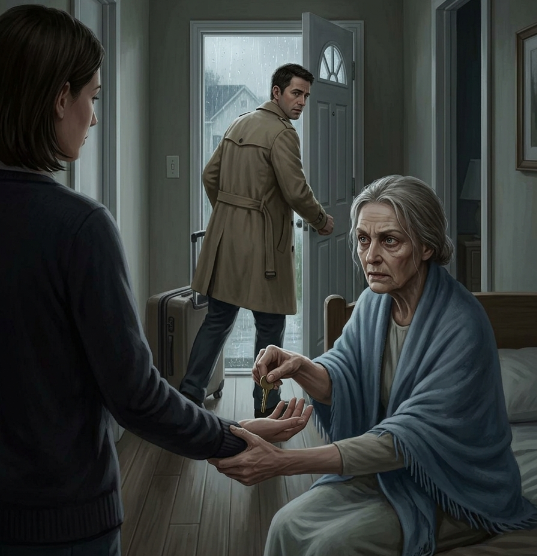
Then I packed my suitcase and walked out of the house I had paid for with my life.

Tiffany expected me to surrender like I always had. She thought I would calm down, forgive everything, and return because I hated conflict in the family.

But that version of me was gone.

That Saturday had begun normally. I had spent hours shopping, using most of my Social Security check to buy food for Tiffany and her husband, Harry. I even bought the beer Harry liked because Tiffany had mentioned he enjoyed having it after work.

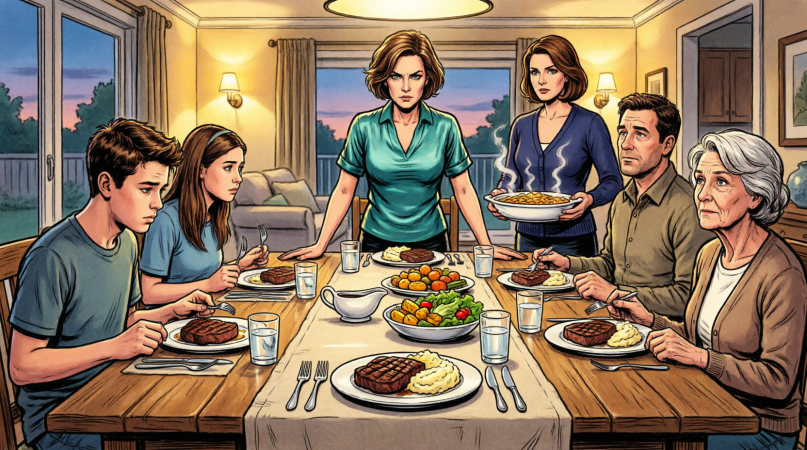
When I came home, Harry was sitting in my leather recliner, the one my late wife Martha had given me. His feet were up, a beer bottle hung from his hand, and he did not even look at me.

“Old man,” he said, eyes on the television. “Get me another beer.”

I set the grocery bags down.

“Excuse me?”

“You heard me. Corona. Not that cheap stuff.”

Something inside me went cold.

“I just got home,” I said. “I need to put the groceries away.”

Harry finally looked at me, annoyed.

“What’s the problem? You’re already standing.”

“The problem,” I said, “is that this is my house.”

He stood slowly, trying to use his size to intimidate me.

“Your house? Tiffany and I live here.”

“You live here because I allowed it.”

Then Tiffany walked in. She looked at Harry, then at me.

“Dad,” she said, “just get him the beer. It isn’t worth fighting over.”

Harry stepped closer.

“You live in our house now,” he said. “So when I ask you to do something, you do it.”

I looked at my daughter, waiting for her to defend me.

She didn’t.

Instead, she stood beside him.

“Dad,” she said, “you need to decide. Either help Harry and do what he asks, or pack your things and leave.”

The room went silent.

“All right,” I said.

Harry smirked.

“Good. Now about that beer—”

“I’ll pack.”

His smile disappeared.

Tiffany’s face changed immediately.

“Dad, wait.”

But I was already walking to my bedroom.

I packed calmly: clothes, medicine, glasses, financial records, and the framed photograph of Martha at Flathead Lake. Then I rolled my suitcase down the hallway.

Neither of them said goodbye.

I drove to a small motel on the edge of town. For the first time in years, I sat in silence and thought clearly.

Then I opened my laptop.

PART 2

Thirty years in banking had taught me how systems worked.

By Sunday morning, I had spread my documents across the motel table: bank statements, insurance policies, account numbers, and notes.

The first call stopped the automatic mortgage payment on the house.

The second removed Harry’s truck and Tiffany’s car from my insurance.

Then I called the credit card companies and removed Tiffany as an authorized user.

By noon, I had made eight calls.

Mortgage stopped.

Insurance canceled.

Credit cards blocked.

Automatic transfers ended.

I wrote every confirmation number down carefully.

My phone stayed quiet.

They did not know yet. But they would.

A few days later, while having breakfast at a diner, an old coworker named Bob pulled me aside.

“Clark,” he said, “Harry tried something a few months ago.”

“What do you mean?”

“He applied for a home equity loan on your house. Fifty thousand dollars. Claimed the property was his.”

My stomach tightened.

Bob explained that the bank had rejected the application after checking the title. The house was fully in my name. But the papers Harry submitted had been forged.

Then Bob added something worse.

“People are saying Harry has gambling debts. Big ones.”

I called Detective Jim Morrison, an old friend. He confirmed that Harry owed around eighteen thousand dollars connected to casino gambling.

That was when I understood.

Harry had not just been disrespecting me.

He had been using me.

He had already tried to borrow money against my house. And if I had stayed quiet, he would have kept going.

I went back to the motel and created a file on my laptop named Evidence.

Then I went to the courthouse.

I filed an eviction notice.

I reported Harry’s behavior and the attempted loan fraud.

Detective Morrison told me there were grounds for a restraining order. Then he mentioned something else: Harry had been asking a lawyer about adverse possession laws.

In other words, he had been looking for a way to take my house legally after living there long enough.

He had been planning this.

The restraining order came through on Thursday. Harry could not come near me or my property.

By then, I had also contacted the collection agencies that had been calling my address about Harry’s debts. I informed them he had no ownership of my house and was no longer connected to me financially.

Soon, Harry lost his job.

The life he had built on my money began falling apart.

By Saturday, he was walking around town telling everyone I had abandoned my daughter.

I found him outside the bank, performing for a small crowd.

“There he is,” Harry announced. “The man who threw his own daughter away.”

I looked at him calmly.

“Hello, Harry. How are the gambling debts?”

The crowd went silent.

Harry’s face turned red.

“You miserable old—”

“I can document every dollar I spent supporting you for five years,” I said. “Can you document where your paychecks went?”

He had no answer.

He left.

And I went back to the motel to update my evidence file.

PART 3

Harry tried one more lie.

He claimed Tiffany was pregnant and that I was ignoring a family emergency.

So I called the doctor’s office and explained that if there was a real medical need, I would pay directly.

There was no pregnancy record.

When I told Tiffany that, she hung up.

Soon after, Harry left town. He packed his truck while Tiffany was at work and disappeared without a forwarding address.

Men like Harry leave when the money runs out.

I called Tiffany and asked her to meet me at the diner.

She arrived looking older than she had two weeks before. She talked about the debt collectors, the calls, and how she had discovered Harry had been using her credit cards at the casino.

I let her finish.

Then I told her she had one chance to rebuild anything with me.

Honesty.

A public statement at church.

A letter to the local paper.

A real admission of what had happened.

“What will people think?” she asked.

“They’ll think you had a father who gave up his retirement security for your comfort,” I said. “And that you took it for granted until it disappeared.”

Then she asked about the house.

“I donated it,” I said. “It now belongs to the Montana Veterans Housing Initiative. Three families will live there.”

Her face fell.

“The will has been changed too,” I continued. “Even if you do everything right, the house is not coming back to you. I need to know our relationship is based on something other than inheritance.”

This time, her tears were real.

“I’m sorry, Dad.”

“Sorry is a beginning,” I said. “Not the finish.”

That Sunday, Tiffany stood in front of the church and told the truth.

She admitted I had paid for her tuition, her wedding, the down payment, the bills, the groceries, and the mortgage. She admitted she had stood beside Harry when he disrespected me. She admitted she had told her own father to leave his own house.

The church was silent.

Afterward, people shook my hand, hugged me, and told me they finally understood.

Tiffany later told me she had posted the truth online, sent the letter, filed for divorce, and started counseling.

For the first time in a long time, I believed she meant it.

Months passed.

I bought a small cabin near Flathead Lake. I drank coffee on the deck in the morning, fished in the afternoon, and read in the evening without anyone demanding pieces of me.

The old house became transitional housing for veteran families. When the first family moved in, children’s bicycles appeared near the fence, and a small flag was placed on the porch.

Tiffany and I began meeting for coffee on the first Saturday of every month.

She never asked for money.

She never asked for the house back.

Instead, she asked about my life, my work, my past, and her mother.

We were not restoring what we lost.

We were building something new.

One October afternoon, she came to my cabin. We sat on the deck and watched the lake turn silver in the fading light.

“I keep thinking about what you could have done with all that money,” she said.

“I would have spent it on you anyway,” I replied. “I just would have spent it differently.”

She was quiet for a long time.

“I didn’t understand what you were giving up.”

“No,” I said. “But you understand now. That matters.”

After she left, I sat alone by the lake and thought of Martha.

For the first time in years, my home was quiet.

My time was mine.

And that was enough.

It had always been enough.

I simply had to believe I deserved it.

More Details
My sister-in-law called me from a resort to ask me to feed her dog, but when I opened her house, there was no dog. There was a five-year-old boy locked inside, dehydrated, trembling, and whispering: “Mom said you weren’t going to come.” I only brought dog food. I ended up carrying my nephew to the emergency room. And when Chloe sent me that threatening text, I understood that this was no accident.
Jul 11, 2026

My sister-in-law called me from a resort to ask me to feed her dog, but when I opened her house, there was no dog. There was a five-year-old boy locked inside, dehydrated, trembling, and whispering: “Mom said you weren’t going to come.” I only brought dog food. I ended up carrying my nephew to the emergency room. And when Chloe sent me that threatening text, I understood that this was no accident.

Then her voice came through, clear and calm, as if she were talking about the weather. —Leo needed to learn. That boy thinks that just because he gets sick, everyone is going to come running. I left him water. Don’t overreact. Besides, if Paula goes in and doesn’t find him, that’s no longer my problem. I did tell her to go to the house.
The doctor said nothing. The social worker, who had just walked in with a blue folder, stopped writing. I felt the hospital floor open up beneath my feet.
The voice of my friend Elena, the one who worked at the resort’s front desk, followed immediately in another audio clip. —Pau, she’s here. She’s at a table by the pool with Sophia and the dog. She just said that in front of another woman. I recorded her because you told me it was an emergency. And listen: she’s also saying that Richard doesn’t know Leo didn’t come.
Sophia. My eight-year-old niece.
Until that moment, I had only thought about Leo, because seeing him hooked up to an IV had driven every other thought from my mind. But Sophia was with Chloe too. Sophia, who always smiled without showing her teeth and stayed perfectly still whenever her mother spoke.
—Can you forward that audio? —the social worker asked. —I already have it —I said, my voice cracking.
The doctor stepped closer to Leo. He gently touched his forehead and checked the IV. My nephew barely opened his eyes, as if returning to the world took too much effort. —Auntie —he whispered. I leaned over. —I’m right here. —Was I bad?

I couldn’t take it. I covered my mouth, but the crying came anyway, hot and heavy. —No, my love. You didn’t do anything wrong.

The social worker introduced herself as Maricela. She had a firm voice, the kind that doesn’t ask for permission to protect. She explained that she was going to notify the Department of Child Safety and that the District Attorney’s office would have to step in. I nodded without fully understanding. I just kept looking at Leo.

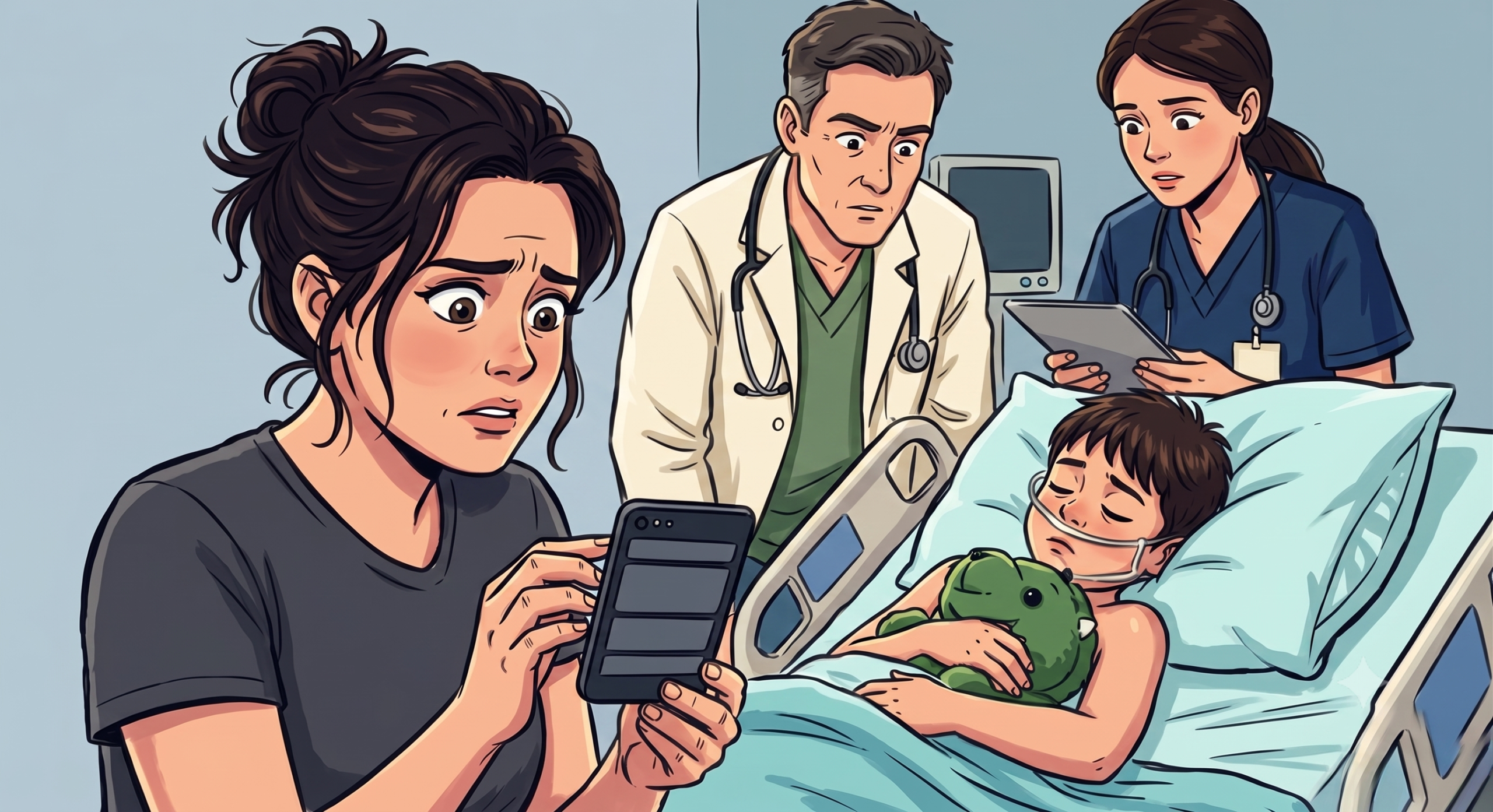
His thin fingers tightly gripped Rex, the green dinosaur. There was a purple mark on his wrist, as if someone had grabbed him forcefully. When a nurse offered him a small cup of electrolytes, he asked for permission before drinking. That was what completely broke me. A child shouldn’t have to ask for permission to be thirsty.

My phone buzzed again. Chloe. “Where are you?” Then another text. “Paula, answer me.” And one more. “I know you went into the room.”

Maricela looked at me. —Don’t delete anything. —I don’t plan on deleting anything.

Then the call came in. I let it ring once. Twice. Thrice. Maricela signaled to the police officer who had just arrived in the hallway. He turned on his phone’s recorder and nodded.

I answered. —What do you want, Chloe? Her voice no longer sounded cheerful. It sounded sharp. —What did you do? —I took him to the hospital.

There was a silence. In the background, I heard a bark. Buddy. Then Sophia’s voice saying something softly. —You’re crazy —Chloe said—. I asked you to go feed the dog, not to kidnap my son. —Buddy is with you. —You don’t know what you’re talking about. —Elena saw you.

Another silence. This time longer. —You are a piece of garbage, Paula. Always nosy. I gripped the phone until my fingers ached. —You locked Leo up since Friday. —Leo lies. He always lies. Just like you. And if you think Richard is going to believe you over me, you’re stupider than I thought. —Richard is going to see his son. Chloe let out a dry laugh. —Richard sees whatever I tell him to see.

That sentence hung in the hallway like black smoke. The officer looked up. Maricela closed her folder. —Chloe —I said—, the doctors, social services, and the police are already involved.

Her breathing hitched. —Listen to me very carefully. If you ruin my life, I’ll ruin yours. You broke into my house. You had the key. You were the last adult with access to Leo.

Right then, I understood everything. She hadn’t called me for Buddy. She had called me to put my name in the story. If Leo died, she would say that I went over, I went in, I saw him, and I left. That the house was under my care. That she was far away, at a resort, surrounded by witnesses, photos, and wristbands on her arm. I felt nauseous.

—It didn’t work out for you —I said. —You still don’t know what I’m capable of pulling off. She hung up.

For a few seconds, no one spoke. Then Maricela said: —Mrs. Paula, we need to locate the other child. The officer was already radioing it in.

I called Richard again. Voicemail. I sent him the photos. The audio clips. A voice note where I could barely speak. “Richard, your son is at the Phoenix Children’s Hospital. Chloe locked him up. Sophia is with her. Answer me, for God’s sake.”

Then I called his office. An assistant told me that Richard was indeed in Dallas, at an industrial plant, and that he had been in a meeting all morning without his cell phone because Chloe had insisted that he “disconnect because of stress.” —Tell him it’s a matter of life and death —I told her—. I’m not just saying that. It’s literal.

Leo fell asleep. The hospital smelled of bleach, machine coffee, and parental fear. Outside, Scottsdale was still Scottsdale, with its bright white sun bouncing off the windows, cars driving toward Old Town, and people who were surely eating brunch or buying pastries, entirely unaware that on a gurney, a child was learning all over again that the world could give him water.

An hour later, Richard came running in. His shirt was wrinkled, he had his suitcase in one hand, and he looked like a man who had aged ten years on a single flight. —Where is he? —he asked.

I didn’t answer him right away. I looked at him with a rage that physically hurt me. —How did you not see? He swallowed hard. —Paula… —How did you not see that your son was fading away?

His eyes filled with tears. —Chloe said Leo was difficult. That he didn’t want to eat. That he threw tantrums when I wasn’t around. I… I thought we needed therapy, not this. —A five-year-old child doesn’t get dehydrated from a tantrum, Richard.

He covered his face with his hands. —Let me see him.

We walked in together. Leo opened his eyes upon hearing his voice. Richard approached as if the bed were made of glass. —Son. Leo looked at him for a moment. Then he said something that tore all of us apart. —I’m sorry for throwing up in the truck, Dad.

Richard fell to his knees beside the bed. —No, my boy. No. You forgive me. Leo touched his hair with weak fingers. —Mom said if I told you, you wouldn’t want to come back anymore. Richard sobbed silently.

I went out into the hallway because I needed to breathe. That was when I heard barking. It wasn’t coming from inside. It was coming from the parking lot. Buddy was barking like crazy. I looked through the large hallway window and saw a white SUV stopped near the emergency room entrance. It had tinted windows. The engine was off.

Standing next to the automatic sliding door was Chloe. Perfect. Dark sunglasses, a linen dress, expensive sandals, a beige purse slung over her arm. She looked like a worried mom who had just stepped out of a magazine. She was walking toward the entrance with a rehearsed expression of anguish.

But the barking continued. One after another. Desperate. My body reacted before my head did. I ran. —Sophia! —I screamed.

Chloe spun around. For the first time, I saw her lose her composure. —Paula, no!

That confirmed everything. I burst through the emergency doors, and a wave of heat hit me in the face. The afternoon was heavy and dry, with that Arizona air that scrapes your throat. I reached the SUV and slammed my hands against the glass.

Inside was Sophia. She was sitting in the backseat, sweating, pale, with Buddy moving desperately beside her. The girl’s eyes were open, but she wasn’t responding. In her lap, she held a pink backpack.

—She’s locked inside! —I screamed—. Help!

A security guard ran toward me. Chloe arrived right behind him. —Don’t touch her! She’s my daughter! —You left her in the car! —It was for two minutes. —The engine is off!

Chloe tried to shove me, but the officer who had followed me from the hallway held her back. —Ma’am, calm down. —This woman is sick! —she screamed—. She wants to take my children away from me. She broke into my house without permission. She took Leo. Now she wants to do the same with Sophia.

Her voice was so steady and confident that for a second, I understood how she had fooled everyone. Chloe didn’t lie with nerves. She lied with authority.

The guard struck the window with a tool. Once. Twice. On the third strike, the glass shattered into a brilliant rain. Buddy scrambled out first, panting and crying. Then I pulled Sophia out. She was heavier than Leo, but she was limp, burning hot, and drenched in sweat. A nurse caught her in her arms and ran back toward the ER.

Chloe started screaming. She was no longer the perfect woman from Instagram. She was something else entirely. —Let me go! I am her mother! You can’t do this to me!

Richard walked out at that exact moment. He saw Chloe detained by the officer. He saw the shattered glass. He saw Buddy trembling beside me. He saw Sophia in the arms of a nurse. His face went entirely blank. —What did you do? —he asked.

Chloe switched her mask in a split second. —Sweetheart, listen to me. Your sister is crazy. She always hated me. She wants to destroy us.

Richard looked at her as if he were finally seeing a complete stranger. —Leo apologized to me for throwing up. Chloe pressed her lips together. —He’s manipulative. Richard took a step back. —He is five years old. —Which is exactly why he learns fast.
No one moved. Even the police officer seemed frozen in place. Chloe realized she had said too much. But it was already too late.|
Sophia, from the gurney they had just positioned near the entrance, opened her eyes and said in a broken voice: —Mom said if I talked, she was going to leave me just like Leo.
The silence that followed was worse than any scream. Maricela walked over to the girl, knelt down, and took her hand. —Not anymore, sweetheart. Not anymore.
Chloe tried to break free. —She doesn’t know what she’s saying!
The officer ordered her to put her hands forward. Chloe looked around, searching for allies. She looked at me, at Richard, at the doctors, at the guards, at the hospital cameras. She found no one.

The perfect wife disappeared right there, under the parking lot sun, amid broken glass and the barks of a dog that had protected a little girl better than her own mother ever did. They put her in a police cruiser. Before getting inside, she looked at me. —This doesn’t end here.
I had Buddy pressed against my legs and my hands were bloody from the glass. I wasn’t afraid anymore. —For you, it does —I told her.
Things didn’t move quickly after that. Real life never closes out like the movies. There were depositions, medical examinations, photographs of injuries, interviews with psychologists, calls to the District Attorney’s office, and legal documents filled with harsh words: child neglect, domestic violence, abandonment, endangerment. Child Protective Services took emergency measures that very night. Leo and Sophia never went back to that house in the gated community. Neither did Richard.

When the police went to the home, they found the guest room exactly as Chloe had left it: the empty bottle, the napkin with crumbs, the stale smell, the key left on the outside of the door. In the kitchen, the bag of dog food I had dropped while running out was still lying on the floor. On the table, the family photo smiled with an absurd cruelty.
Chloe’s phone contained scheduled text messages. One meant for me: “Thanks for stopping by, Pau. Buddy is happy.” Another for Richard: “Leo is with your sister, he got a bit overwhelmed and she wanted to take him for a while.” Another for a friend: “You have no idea how much you can relax when you get a break from difficult kids.” The mask didn’t just slip; it was ripped away from her piece by piece.

Richard gave statements for hours. He didn’t try to defend her. He didn’t try to defend himself too much either. He told the truth, even when it painted him as a blind, absent, comfortable man. He said Chloe controlled the schedules, the meals, the visits. He said he had believed that keeping the peace was protecting his children.
The doctor told him something I haven’t forgotten. —Sometimes peace in a house just means that the fear has learned how to not make any noise.
Leo spent two days in the hospital. Sophia recovered faster from the heat stroke, but she spoke less. She slept with the light on and woke up every time a door closed loudly. Buddy never left their side; if anyone raised their voice, he would position himself right in the middle like a clumsy, golden guard.

The first time Leo asked for food without asking if he was allowed to, we all cried. It was just cherry Jell-O. Nothing extraordinary. But he held it with both hands as if it were proof that he was still alive.

Weeks later, when the protective orders were firmly in place and Chloe was facing her legal trial far away from them, I took Leo and Sophia to Old Town Scottsdale. Richard came with us, quiet, holding Buddy’s leash. He still didn’t know how to be a father again, but at least he was no longer pretending that he knew.

We walked past the main plazas, where the patios were filled with families and servers with trays of coffee. On one corner, it smelled of roasted corn and fresh bread. Later, we bought Mexican food at a local market, because Sophia said she was hungry and then looked utterly surprised to have said it out loud.

Leo ate slowly. Carefully. But he ate everything.

Afterward, we sat where we could see the old historic buildings silhouetted against the wide desert sky. I told Leo stories about the old town, how people used to come from miles away just to find a safe place to rest. He stared at the horizon for a long time. —A safe place for everyone? —he asked. My throat tightened. —Yes, my love. So that no one would ever be left out.

Leo hugged Rex. —Then they are good.

Richard lowered his head. Sophia took her brother’s hand.

I looked at the city lights and thought about how a place can hold so many things: legends, beautiful streets, tourist photos, golden afternoons. But it also hides closed doors, quiet children, and neighbors who hear something but prefer not to get involved. I was almost one of those people. I almost just left the dog food and walked away. That thought still wakes me up some nights.

But then I remember Leo’s voice behind that door. “Mom said you weren’t going to come.”

And I remember what I told him later, when he was finally able to understand it, when he no longer had a fever, when he no longer apologized just for breathing. I told him: —She lied to you, Leo. I did come.

He hugged me with his tiny, thin arms. And for the first time, he didn’t tremble.

PART 1 — “Can You Feed Buddy?”
My sister-in-law called me at eleven in the morning while I was reorganizing expired yogurt at the grocery store where I worked weekends for extra money.
Her voice sounded cheerful.
Too cheerful.
“Pau, sweetie,” Chloe said brightly, “can you do me a huge favor?”
I tucked the phone between my shoulder and ear while scanning discount stickers.
“What happened?”
“We’re at Golden Lake Resort with the kids and Buddy, and everything ran late. Can you stop by the house later and feed him?”
That made me pause.
“With you?”
“What?”
“Buddy.”
I frowned.
“I thought you just said Buddy was at the resort.”
Tiny silence.
Then immediate recovery.
“Oh my God, no. Sorry. Brain fog.”
A little laugh.
“He’s home. We left in a rush.”
I stared at a yogurt expiration date while something uncomfortable brushed the back of my thoughts.
Chloe always recovered too quickly.
Nothing ever rattled her properly.
Not spilled wine.
Not screaming children.
Not dead car batteries.
Not funerals.
Especially not funerals.
I still remembered her perfect makeup at my mother’s burial three years earlier. Waterproof mascara. White blouse. Soft voice. She hugged people at exactly the right moments like someone performing kindness instead of feeling it.
“You still there?” she asked lightly.

“Yeah.”

“You’re an angel.”
Her voice turned sugary again.
“The key’s under the fern pot. Like always.”

I agreed before I could overthink it.

Because despite everything strange about Chloe—
the polished smiles,
the rehearsed warmth,
the tiny sharpness underneath every interaction—

she was still family.

At least technically.

After we hung up, I tried focusing on work again.

But Leo’s face kept appearing in my mind.

Five years old.
Huge brown eyes.
Tiny shoulders always curled inward like he expected the world to hit him eventually.

The last time I saw him was at Sophia’s birthday dinner two weeks earlier.

Everyone else ate tacos around the backyard table while Leo sat quietly beside the pool clutching his green dinosaur.

Rex.

That kid carried the dinosaur everywhere.

At one point I brought him lemonade.

“Thanks,” he whispered automatically.

Not unusual.

The weird part came after.

He took exactly two sips before setting the cup down carefully.

“You don’t want more?” I asked.

His eyes flicked nervously toward the patio where Chloe laughed loudly beside my brother.

Then quietly:

“If I drink too much, Mom gets annoyed because I need the bathroom.”

I stared at him.

“What?”

Before he could answer, Chloe appeared behind us instantly.

“There you are.”
Her smile arrived too fast.
“Leo exaggerates everything.”

Leo immediately looked down.

Smaller somehow.

Chloe laughed softly and rubbed his shoulder in a way that looked affectionate from far away.

“He’s dramatic.”
She smiled toward me.
“You know how boys are.”

Actually,
I didn’t.

Because five-year-olds usually didn’t speak like tiny employees trying not to upset management.

That should have stayed with me longer than it did.

But people are good at explaining away discomfort when the person causing it looks polished enough.

And Chloe looked polished constantly.

Perfect house.
Perfect photos.
Perfect children in matching outfits on Instagram.

Meanwhile I lived alone in a small apartment over a nail salon and forgot to water plants regularly.

So who was I to judge someone else’s parenting?

Around four-thirty that afternoon, I finally left work.

The Arizona heat pressed against everything outside like a giant hand.

I stopped at a pet store on the way to Chloe’s neighborhood and bought:

dry dog food
wet food
milk bones
Buddy loved milk bones.

By the time I reached the gated community in Scottsdale, the sun hung low and golden over rows of identical luxury homes.

Everything looked:
trimmed,
quiet,
controlled.

The kind of neighborhood where nobody yelled loud enough for neighbors to hear.

I parked outside Chloe’s house and grabbed the dog food bag from the passenger seat.

The driveway was empty.

No SUV.

No children’s bikes.

No sound.

Still normal.

I walked up the front path slowly.

The fern pot sat exactly where Chloe said it would.

Key underneath.

Like always.

When I unlocked the front door, warm stale air drifted outward immediately.

And something felt wrong.

Not dramatic wrong.

Quiet wrong.

I stepped inside carefully.

“Buddy?”

Nothing.

The house was silent.

Too silent.

No barking.
No nails clicking against hardwood floors.
No frantic golden retriever excitement.

Just stillness.

I frowned slightly and shut the door behind me.

“Buddy?”

PART 2 — “The House Was Too Quiet”
The silence bothered me immediately.

Not normal silence.

Not “everyone left for vacation” silence.

Wrong silence.

I stood in Chloe’s kitchen holding a bag of dog food while late afternoon sunlight stretched across the marble counters in long golden lines.

“Buddy?” I called again.

Nothing.

Buddy was a Golden Retriever.

Nothing about that dog had ever been quiet in his entire life.

Normally he:

barked at delivery drivers
barked at sprinklers
barked because he loved existing
And the second someone opened the front door, he came flying across the house like happiness itself had grown fur.

But now?

Nothing.

I walked slowly farther into the kitchen.

The dog bowls sat near the pantry.

Empty.

Both of them.

I frowned.

Buddy’s water bowl was bone dry.

That made no sense.

Chloe obsessed over appearances.
And appearances included the dog.

Especially online.

Half her Instagram stories looked like luxury dog food commercials.

I set the grocery bags on the counter carefully.

The air inside the house felt stale.
Heavy.

As if the windows hadn’t been opened in days.

Something uncomfortable crawled slowly up my spine.

“Buddy?”

Still nothing.

I moved into the living room.

Everything looked perfect.

Too perfect.

The throw blankets folded sharply.
The coffee table spotless.
The family photos arranged carefully beside decorative candles nobody actually lit.

Chloe smiled from every frame.

Beach vacations.
Matching Christmas pajamas.
Poolside cocktails.
Children posed perfectly beside her like accessories.

And every time,
Leo looked slightly terrified.

I stopped in front of one photo from Easter.

Sophia smiled brightly beside a basket of candy.

Leo stood beside her clutching Rex, the green dinosaur.

His smile looked practiced.

Like he learned it somewhere instead of feeling it naturally.

I suddenly remembered another moment from last winter.

I had stopped by unexpectedly to drop off Christmas gifts.

Chloe answered the door wearing silk pajamas and expensive lipstick despite it being almost noon.

Behind her,
I heard something crash.

Then Leo crying softly.

Chloe didn’t even turn around.

“See?” she sighed dramatically.
“He destroys everything.”

I stepped inside and found Leo kneeling beside broken glass near the kitchen island.

He looked terrified.

Not guilty.

Terrified.

“It was an accident,” I told him gently.

He immediately shook his head.

“No.”
His voice trembled.
“I’m bad at holding things.”

That sentence hit me strangely even then.

Five-year-olds weren’t supposed to describe themselves like failed employees.

Back in the present,
I rubbed my arms uneasily.

The house felt too warm.

Too still.

I checked the backyard next.

Empty.

No Buddy.

No children’s toys.

No evidence anyone had been there recently at all.

Then the laundry room.

Nothing.

The downstairs office.

Nothing.

By now,
my heartbeat had started doing strange things.

Not panic.

Not yet.

But something underneath it.

Instinct maybe.

I returned to the hallway slowly.

The entire house seemed to hum with silence.

And that was when I heard it.

A sound.

Soft.

Almost nothing.

Like fabric dragging lightly across the floor.

I froze.

The noise came again.

Tiny.
Weak.

From the very end of the hallway.

The guest room.

My stomach tightened instantly.

That door stayed closed most of the time.

I walked toward it slowly.

Step by step.

The hallway suddenly felt much longer than before.

The sound stopped completely.

I stood outside the guest room door.

Closed.

Locked.

A key sat in the lock.

On the outside.

Cold prickles spread across my skin.

“Hello?”

No answer.

I swallowed hard.

“Is someone in there?”

Silence.

Then—

a tiny voice.

So weak I almost thought I imagined it.

“Mom said you weren’t going to come.”

ARC 1 — THE DOG THAT WASN’T THERE
PART 3 — “The Locked Door”
For one horrible second, I couldn’t move.

The voice was too small.

Too weak.

Not the voice of a child playing hide-and-seek.

The voice of someone who had already started believing nobody was coming.

My throat tightened painfully.

“Leo?”

A tiny sound came from behind the door.

Not quite a cry.

More like someone trying very hard not to make noise.

I reached for the handle instantly.

Locked.

My stomach dropped.

The key sat in the lock.

On the outside.

Cold panic shot through me so fast my hands started shaking immediately.

“Leo, sweetheart, it’s Aunt Paula.”
I pressed closer to the door.
“Are you okay?”

Silence.

Then softly:

“I tried to be good.”

Something inside me snapped.

I grabbed the key and turned it so hard it scraped against the metal.

The lock clicked open.

For one terrible second,
I hesitated.

Because some instinct already knew:
whatever waited inside that room was going to change something permanently.

Then I shoved the door open.

The smell hit first.

Hot air.
Sweat.
Urine.
Stale fabric.

Confinement.

The curtains were closed, turning the room dim and yellow-gray despite the Arizona sunlight outside.

And there—
on the floor beside the bed—

sat Leo.

My knees nearly gave out.

He looked impossibly small curled against the wall with Rex clutched tightly against his chest.

His hair stuck damply to his forehead.

His lips were cracked.

His oversized T-shirt hung off his shoulders like it belonged to another child entirely.

Beside him sat:

one empty water bottle
a napkin with crumbs
nothing else
No toys.
No food.
No blanket.

Just a five-year-old boy locked inside a hot room.

“Jesus Christ…”

The words escaped before I could stop them.

Leo blinked slowly when he saw me.

Not relieved.

Cautious.

Like he still wasn’t sure whether being found was good or dangerous.

I knelt immediately beside him.

“Oh my God, baby…”

I wanted to hug him.

But he looked fragile enough to bruise from touch alone.

“How long have you been in here?”

His eyes drifted toward the window.

Then back to Rex.

“Since Friday.”

The room tilted violently around me.

Friday.

It was Sunday afternoon.

Two full days.

I physically stopped breathing for a second.

“No…”

Leo nodded weakly.

“I was supposed to think about what I did.”

Cold fury flooded through my body so suddenly I almost felt dizzy.

“What did you do?”

His chin trembled.

“I got sick before the trip.”

I stared at him.

“You got sick.”

He nodded carefully.

“Mom said I ruined everything.”

My hands curled into fists automatically.

No child should know how to say sentences like that.

No child should look this afraid of existing.

I looked around the room desperately.

“Where’s Buddy?”

Leo swallowed hard.

“Mom took him.”

The air disappeared from my lungs.

Suddenly everything made sense at once:

the phone call
the fake errand
the empty bowls
the silent house
Chloe never needed someone to feed the dog.

She needed someone connected to the house.

A witness.
A backup story.
Maybe even a scapegoat.

Nausea rolled through me.

Leo tried pushing himself upright suddenly.

His arms shook violently under his own weight.

“I can walk,” he whispered automatically.

Then his knees buckled instantly.

I caught him before he hit the floor.

And the second I lifted him—

I realized how terrifyingly little he weighed.

Children should not feel this light.

He curled instinctively against my chest clutching Rex tighter.

“You’re burning up,” I whispered.

His forehead felt frighteningly hot.

“We’re going to the hospital.”

Immediately he panicked.

“No.”
His fingers grabbed my shirt weakly.
“Mom said not to leave the room.”

“Leo—”

“She’ll get mad.”

That broke something inside me completely.

Because even now—
even dehydrated,
locked away,
feverish—

his biggest fear was still upsetting her.

I stood up carefully holding him tighter.

“Let her be mad.”

He buried his face against my shoulder silently.

And as I carried him out of that room—

past the family photos,
the polished kitchen,
the perfect Instagram life—

I understood something horrifying:

some houses look beautiful specifically because nobody inside feels safe enough to make noise.

ARC 1 — THE DOG THAT WASN’T THERE
PART 4 — “I Only Brought Dog Food”
The Arizona heat hit me like a wall the second I ran outside.

Leo barely moved in my arms.

That terrified me more than anything.

Children were supposed to squirm.
Cry.
Fight naps.
Ask questions.

Not lie silently against your shoulder feeling lighter than a backpack.

I hurried across the driveway toward my car while my heartbeat slammed painfully against my ribs.

“It’s okay,” I whispered.
“I’ve got you.”

Leo clutched Rex tighter.

Behind us, the front door of Chloe’s perfect house swung slowly shut on its own.

Click.

The sound made my skin crawl.

I strapped Leo carefully into the backseat.

His hands trembled while he held the dinosaur against his chest.

The seatbelt looked too big across his tiny body.

I slammed the driver’s door and started the engine so fast my keys scraped painfully against my fingers.

“Stay awake for me, okay?”

He nodded weakly.

The drive to the hospital felt endless.

Every red light looked personal.
Every slow driver felt evil.

I kept checking the rearview mirror constantly.

Leo’s eyes drifted shut again.

“Nope.”
My voice shook.
“No sleeping yet, buddy.”
I forced a smile he probably couldn’t even see.
“Tell me about Rex.”

His fingers tightened slightly around the dinosaur.

“He likes chicken nuggets.”

I almost cried immediately.

“Does he?”

Tiny nod.

“He hates peas.”

“Honestly?”
I swallowed hard.
“Same.”

For the first time, the corner of Leo’s mouth moved slightly.

Then he whispered something so softly I almost missed it.

“Mom said if you came… not to tell anybody.”

Ice flooded my stomach instantly.

I gripped the steering wheel harder.

“What else did she say?”

Silence.

Then finally:

“She said you’re nosy.”

The word sounded strange in his tiny exhausted voice.

“She said that’s why Dad shouldn’t talk to you anymore.”

My jaw tightened painfully.

Richard.

My brother.

Currently on a business trip in Dallas.

Or at least that’s what Chloe claimed.

The thought suddenly made me nauseous.

How much did he know?

How much had he ignored?

Leo shifted weakly in the backseat.

“Aunt Paula?”

“Yeah?”

“If Mom gets really mad…”
His voice trembled.
“…can Rex stay with you?”

That nearly destroyed me.

Because five-year-olds weren’t supposed to make emergency plans for emotional survival.

“Yes,” I said instantly.
“Rex can stay with me forever if he wants.”

Leo nodded faintly like that solved something enormous.

By the time I pulled into the emergency room entrance, my hands were shaking so badly I barely parked correctly.

I jumped out and yanked open the back door.

Leo tried apologizing immediately.

“I’m sorry.”

The words hit me like physical pain.

“For what?”

“For being heavy.”

I stared at him.

Then looked down at the child who weighed almost nothing in my arms.

And suddenly rage moved through me so hard it felt clean.

Someone had taught this little boy:

taking up space was wrong
needing help was wrong
being sick was wrong
existing inconveniently was wrong
No.

Absolutely not.

I carried him through the emergency room doors fast enough that people turned immediately.

“Help!”
My voice cracked loudly.
“It’s a child!”

Two nurses rushed toward us instantly.

One look at Leo and their expressions changed.

Professional calm.
Fast movement.
Real concern.

A doctor appeared beside us while they transferred Leo onto a gurney carefully.

“Is he your son?”

“My nephew.”

“What happened?”

The question shattered against me.

Because where do you even begin?

My sister-in-law locked him in a room for two days.

She lied about a dog.

She left him there alone while she drank cocktails at a resort.

The truth sounded insane even inside my own head.

“It’s complicated,” I whispered.

The doctor pulled back Leo’s sleeve gently.

Then his face hardened immediately.

“Get fluids started now.”

Everything moved quickly after that.

Machines.
IV lines.
Questions.
Nurses checking his temperature.

Leo barely reacted anymore.

That frightened me most of all.

One nurse handed me a clipboard while another adjusted blankets around his tiny body.

I stood there holding a bag of dog food like an idiot.

Dry food.
Milk bones.
Wet food.

That was all I brought.

Because I thought I was feeding a dog.

Instead,
I found a child locked away so quietly the world almost kept moving without noticing him at all.

The doctor returned several minutes later.

His expression looked grim now.

“This didn’t just happen today.”

My stomach dropped instantly.

“What do you mean?”

He glanced toward Leo sleeping beneath hospital blankets.

Then back at me.

“There are signs of prolonged neglect.”
A pause.
“Malnutrition too.”

The room went cold around me.

“No…”

The doctor’s voice softened slightly.

“We’re required to report this.”

Before I could answer,
my phone buzzed in my hand.

One new text message.

From Chloe.

Thanks for feeding Buddy.

PART 5 — “The Threatening Text”
For a second, I just stared at the screen.

Thanks for feeding Buddy.

My hands started shaking immediately.

Because now I understood:
Chloe knew.

She knew I had gone into the house.
She knew I found Leo.
And somehow the casualness of the message made everything worse.

Another text appeared before I could even breathe.

And Paula… don’t go snooping where you shouldn’t.

Cold spread slowly through my chest.

The emergency room suddenly felt too bright.
Too loud.

Machines beeped softly around me while nurses moved quickly between curtained rooms.

And somewhere behind me,
Leo slept beneath hospital blankets with an IV in his tiny arm.

Another message arrived.

Some things are better left as they are. For everyone’s sake.

That was the moment fear disappeared.

Not because the situation became less terrifying.

Because fury finally became stronger.

I looked toward Leo.

His cheeks looked pale against the white pillow.
Rex rested beneath one weak arm like a guard standing watch.

Five years old.

Five.

And someone left him locked inside a hot room like forgotten laundry.

The doctor returned carrying paperwork.

His eyes dropped immediately to my phone.

“You know who did this.”

Not a question.

I swallowed hard.

“Yes.”

“Then I need the truth now.”

My mouth felt dry suddenly.

Because saying it aloud would make everything real.

Not suspicion.
Not discomfort.
Not “maybe something is wrong.”

Real.

“My sister-in-law locked him in a room.”

The doctor went very still.

I continued before fear could stop me.

“She called me pretending she needed someone to feed her dog.”
I looked down at the messages again.
“But the dog was with her.”

The doctor’s jaw tightened visibly.

“How long was the child alone?”

“Since Friday.”

A long silence followed.

Then quietly:

“I’m contacting social services.”

I nodded immediately.

No hesitation now.

No protecting family reputation.
No waiting for explanations.

No.

The doctor stepped away toward the nurses’ station while I sat slowly beside Leo’s bed.

The hospital room smelled faintly like disinfectant and overheated air conditioning.

Outside the window, late evening sunlight burned orange across Scottsdale.

Everything out there still looked normal.

Traffic.
Restaurants.
People heading home from work.

Meanwhile inside this room,
a little boy slept like someone exhausted from surviving.

Leo stirred weakly beneath the blanket.

“Auntie?”

I leaned forward instantly.

“I’m here.”

His eyelids fluttered halfway open.

“Is Mom mad?”

The question hit me harder than any threat Chloe could ever send.

Because even now—
after everything—

his first instinct was still fear.

I brushed damp hair carefully away from his forehead.

“No.”
My throat tightened painfully.
“You don’t need to worry about that anymore.”

He looked unconvinced.

Children who grow up afraid always do.

A soft knock sounded against the doorframe.

A woman entered holding a blue folder against her chest.

Mid-forties.
Serious eyes.
No wasted movement.

“Paula Mendoza?”

I stood immediately.

“Yes.”

She introduced herself as Maricela from Child Protective Services.

The words alone made my stomach twist.

Not because she frightened me.

Because this situation had become real enough for government agencies now.

Maricela glanced toward Leo sleeping quietly in the bed.

Then lowered her voice.

“The doctor briefed me.”
A pause.
“I need to ask some questions.”

I nodded.

She sat across from me while opening the folder carefully.

“Has anyone expressed concern about the child before?”

Instantly,
memories started flashing through my head:

Leo apologizing constantly
asking permission to drink lemonade
flinching when glasses broke
how thin he always looked
how carefully he watched Chloe’s face before speaking
Oh God.

How many signs had we all ignored because Chloe looked polished enough?

“I thought…”
My voice cracked slightly.
“I thought she was strict.”

Maricela’s expression softened sadly.

“A lot of abused children get described that way.”

The sentence hollowed something inside me.

My phone buzzed again.

Another message from Chloe.

Where are you?

Then immediately:

Paula answer me.

Then:

I know you went into the room.

Maricela looked up sharply.

“Do not delete anything.”

“I won’t.”

My phone started ringing before I could say anything else.

Chloe.

Her name glowed brightly across the screen.

For one second,
I almost ignored it.

Then Maricela glanced toward the hallway where a police officer had just arrived.

He lifted his phone slightly.

Recording.

My pulse jumped.

I answered.

“What do you want, Chloe?”

Gone was the sugary cheerful voice from earlier.

Now she sounded sharp.
Cold.

“What did you do?”

I stared at Leo sleeping beside me.

“I took him to the hospital.”

Silence.

Then somewhere through the phone—

a bark.

Buddy.

My blood went cold instantly.

And in the background,
I heard another voice.

Sophia.

PART 6 — “The Audio Recording”
The bark came through the phone again.

Loud.
Close.

Buddy.

My entire body went cold.

Because Buddy was supposed to be at the house.

Not beside Chloe.

Not wherever she currently was.

And then—

faintly in the background—

I heard Sophia’s voice.

Tiny.
Soft.

“Mom?”

Every hair on my arms stood up instantly.

“You said Buddy was home,” I whispered.

Chloe’s breathing shifted slightly.

Not panic.

Calculation.

“You’re overreacting.”

The police officer in the hallway looked up sharply from his recording app.

Maricela stopped writing.

I tightened my grip on the phone.

“Where is Sophia?”

A tiny pause.

“At the resort with me.”
Her voice turned smooth again.
“Obviously.”

I looked toward Leo sleeping weakly in the hospital bed.

One child hidden away.
Another still alone with her.

Suddenly the room felt much too small.

“You left Leo locked in that room.”

Chloe sighed like I was exhausting her.

“Leo needed consequences.”

The words hit me like acid.

“He’s dehydrated.”

“He exaggerates.”

“He’s five years old!”

That finally sharpened her tone.

“And you’ve always been dramatic, Paula.”
A pause.
“You walk into one situation and suddenly think you’re a hero.”

My hands shook harder.

Behind me,
a heart monitor beeped steadily beside Leo’s bed.

Alive.

Thank God he was alive.

“You abandoned him.”

“No.”
Her voice stayed terrifyingly calm.
“I left water.”

The room went completely still.

Even the officer stopped moving.

I closed my eyes briefly because rage nearly made me dizzy.

“You locked a sick child in a room for two days.”

“I told him to think about what he did.”

“He got sick!”

“That trip cost thousands of dollars.”

Silence exploded through the hospital room.

Because somehow—
unbelievably—

she sounded genuinely offended.

Like Leo ruining her vacation mattered more than what she’d done to him.

Maricela slowly closed the blue folder in her lap.

The officer’s expression darkened visibly.

And Chloe just kept talking.

“That boy thinks every little stomachache means the world should stop for him.”

I stared through the hospital window toward the burning Arizona sunset outside.

Then quietly:

“You were testing me.”

Silence.

Tiny.
But real.

“You wanted to know if I’d go inside the house.”

“No idea what you’re talking about.”

“Yes, you do.”
My voice shook now.
“If I hadn’t found him, you were going to blame me somehow.”

Nothing.

Not denial.

Nothing.

That terrified me more than screaming would have.

Then finally Chloe laughed softly.

Cold laugh.
Tiny laugh.

“You always think you’re smarter than you are.”

My stomach twisted violently.

Because people only say things like that when they already built backup plans.

I suddenly remembered:

the hidden key
the texts
her making sure I entered the house
Richard unreachable in Dallas
witnesses surrounding her at a luxury resort
Oh my God.

She really had planned this.

I looked toward Leo again.

His tiny hand still clutched Rex even while sleeping.

And suddenly I realized something horrifying:

if I had simply dropped off the dog food and left—

nobody might have checked that room until it was too late.

“Aunt Paula?”

I spun instantly.

Leo’s eyes were barely open.

Fever-bright.
Confused.

“I’m here.”

He swallowed weakly.

“Did I make Mom really mad?”

The question shattered the room.

Maricela looked away immediately.

The officer’s jaw tightened.

And something inside me hardened permanently.

“No.”
I moved beside the bed and took his tiny hand carefully.
“You didn’t do anything wrong.”

His fingers curled weakly around mine.

Then my phone buzzed again.

A new message.

From Elena.

My friend at Golden Lake Resort.

One audio file attached.

Caption:

Pau… you need to hear this right now.

My pulse jumped instantly.

I pressed play.

Pool music crackled softly through the speaker.

Glasses clinking.
People laughing.

Then Chloe’s voice drifted through clearly.

Calm.
Relaxed.
Amused.

“Leo needed to learn.”

“That boy thinks just because he gets sick everyone’s supposed to come running.”

The room froze.

Every single person listening stopped breathing.

Chloe laughed lightly in the recording.

“I left him water. People are too sensitive.”

“And honestly? If Paula goes into the house and doesn’t find him, that’s not really my problem anymore.”

The blood drained from my face.

Beside me,
Maricela slowly stood up.

The police officer took out a second phone immediately.

And suddenly I understood something with terrifying clarity:

there was no saving Chloe anymore.

PART 7 — “Was I Bad?”

Nobody spoke after the audio ended.
Not immediately.
The hospital room seemed to shrink inward around us while pool music crackled faintly from my phone speaker.
Leo slept beneath thin blankets.
An IV fed fluids slowly into his tiny arm.
And his mother’s voice still echoed in the air like poison.
“Leo needed to learn.”
Maricela stood perfectly still beside the window.
The police officer muted his phone recording carefully.
And I—
I couldn’t stop staring at my nephew.
Because suddenly all the strange little moments from the past two years rearranged themselves into something horrifyingly clear.
The apologizing.
The flinching.
The silence.
The fear.
None of it had been personality.
It had been survival.
Leo stirred weakly against the pillow.
Immediately I leaned closer.
“Hey.”
I touched his hand gently.
“I’m here.”
His eyes opened slowly.
Fever still glazed them slightly.
For a second he looked confused by the bright hospital lights.
Then his gaze landed on me.
“Aunt Paula?”
“Yeah, baby.”

His tiny fingers tightened around Rex.

“Am I in trouble?”

The question nearly stopped my heart.

Not:
Where am I?
Not:
What happened?

Am I in trouble.

A child who thinks suffering automatically means punishment.

I swallowed hard.

“No.”
My voice cracked slightly.
“You’re safe.”

Leo looked uncertain.

Like “safe” was a word adults used without meaning.

A nurse entered carrying a small paper cup filled with electrolyte ice chips.

“Let’s try a little more, sweetheart.”

Leo immediately sat up straighter.

Not relaxed.

Careful.

The nurse held out the cup gently.

And then—

in a tiny whisper—

he asked:

“Am I allowed?”

The room shattered silently.

The nurse froze.

I covered my mouth instantly because tears hit too fast to stop.

Even Maricela looked devastated now.

The nurse crouched carefully beside the bed.

“Oh honey…”
Her voice softened painfully.
“You never have to ask permission to be thirsty.”

Leo stared at her uncertainly.

Like he genuinely didn’t understand.

The nurse handed him the cup slowly.

He took one tiny sip.

Then immediately looked around the room waiting for someone to get angry.

No one did.

His shoulders loosened slightly.

Just slightly.

And somehow that made me cry harder.

Because children should not look surprised when basic kindness arrives.

Maricela quietly stepped outside with the officer.

I could hear low voices in the hallway:

  • documentation
  • emergency custody
  • police reports

Real things now.

Legal things.

Meanwhile inside this hospital room,
Leo concentrated carefully on eating ice chips like someone completing an important test.

I brushed damp hair away from his forehead gently.

“You doing okay?”

Tiny nod.

Then after a long silence:

“Mom gets mad when I spill.”

My chest tightened painfully.

“You’re not going to spill.”

“I know.”
A pause.
“But I get scared anyway.”

God.

Five years old and already trained to anticipate anger before accidents even happen.

The nurse adjusted his blanket softly.

“You know what?”
She smiled gently.
“I spill coffee on myself at work like twice a week.”

Leo blinked.

“You do?”

“All the time.”

That finally earned the tiniest smile.

Small.
Weak.

But real.

The nurse left quietly afterward.

Outside the room,
hospital sounds continued normally:
phones ringing,
cart wheels squeaking,
voices overhead.

The world kept moving.

And that felt strange somehow.

Because sitting beside Leo,
it felt impossible that ordinary life still existed while children like him quietly learned to apologize for existing inconveniently.

My phone buzzed again.

Another text from Chloe.

You’re making a huge mistake.

Then immediately:

Richard will never forgive you for this.

I stared at the screen coldly now.

Because suddenly I understood something important:

abusive people always speak like exposure is the real crime.

Not the harm.
Not the suffering.

The exposure.

Leo’s eyelids started drooping again.

Exhaustion pulling him under slowly.

Before falling asleep,
he whispered one more thing.

“So you really came?”

That broke me completely.

I leaned down carefully and kissed his forehead.

“Yes.”
My throat burned painfully.
“I came.”

PART 8 — “You Kidnapped My Son”

The call came twenty minutes later.

This time,
Chloe didn’t bother pretending to sound sweet.

My phone lit up across the hospital chair beside me while Leo slept curled against the pillow clutching Rex tightly beneath his chin.

Outside the room, evening darkness slowly settled over Phoenix.

Machines beeped softly.
Nurses walked past in rubber-soled shoes.
And somewhere down the hallway, a baby cried briefly before being comforted.

Ordinary hospital sounds.

Meanwhile my entire family was collapsing.

The police officer standing near the doorway glanced at the screen.

CHLOE CALLING.

He lifted his phone again silently.

Recording.

Maricela nodded once.

I answered.

“What do you want?”

No greeting.

No fake warmth.

Immediately Chloe snapped:

“What the hell did you tell people?”

Her voice sounded sharp now.
Cornered.

I looked toward Leo sleeping in the bed.

“What I found.”

“You had no right to take him.”

The sentence stunned me so badly I almost laughed.

“No right?”

“You broke into my house.”

“The key was under the fern pot.”

“You were supposed to feed the dog and leave.”

There it was.

The truth hiding underneath everything.

My stomach turned.

“You knew he was in there.”

Silence.

Then coldly:

“You always were dramatic.”

I stood slowly and moved toward the hallway window because suddenly sitting still felt impossible.

“Leo could barely stand.”

“He throws tantrums.”

“He’s dehydrated.”

“He lies.”

Every answer came instantly.

Too instantly.

Like she’d rehearsed these sentences privately for years.

Gaslighting polished into reflex.

I pressed one hand against the cool glass window.

“You locked your child in a room for two days.”

“He needed consequences.”

“He had a fever!”

“So?”
Her voice sharpened suddenly.
“Do you know how much money that trip cost?”

The officer actually blinked.

Even Maricela looked momentarily stunned.

Not because Chloe screamed.

Because she sounded genuinely offended by inconvenience.

That was the terrifying part.

I lowered my voice carefully.

“Richard doesn’t know, does he?”

Tiny silence.

Then:

“Richard sees what I tell him to see.”

The words landed like black smoke inside the hallway.

Cold.
Toxic.
Certain.

And suddenly I understood something horrifying:

this wasn’t chaos.

This was control.

Long-term control.

Carefully maintained control.

I thought about:

  • Richard constantly exhausted from work
  • Chloe handling every schedule
  • Chloe speaking for the children constantly
  • Leo barely talking when she entered rooms
  • Sophia smiling too carefully

Oh God.

How long had this been happening?

“You manipulated everyone,” I whispered.

“No.”
She laughed softly.
“I managed my family.”

The sentence made my skin crawl.

Behind me,
Leo shifted weakly in the hospital bed.

The IV machine beeped quietly beside him.

Alive.

Still alive.

Thank God.

Then Chloe’s voice changed suddenly.

Softer now.

More dangerous.

“Listen carefully, Paula.”
A pause.
“If you ruin my life…”
Another pause.
“…I will ruin yours.”

I closed my eyes briefly.

“There are doctors involved now.”

“I know exactly how to handle doctors.”

“Police too.”

Another tiny silence.

Then:

“You were the last adult inside that house.”

Ice flooded my bloodstream.

Oh my God.

There it was.

The real plan.

Not just abandonment.

A setup.

My mouth went dry instantly.

“She called me for Buddy,” I whispered aloud before I even realized I’d spoken.

The officer looked sharply toward me.

Maricela’s expression changed instantly too.

Because now they understood it completely:

  • Chloe made sure I entered the house
  • made sure my fingerprints were there
  • made sure I became connected to the timeline
  • made sure she had witnesses at a resort

If Leo had died—

I nearly got sick thinking about it.

Chloe spoke again calmly.

“You really should’ve minded your own business.”

I stared through the glass toward the dark parking lot outside.

Then quietly:

“It didn’t work.”

Her breathing hitched slightly for the first time.

“What?”

“You didn’t leave him enough time to die.”

Silence detonated across the phone line.

Pure silence.

Then Chloe whispered something that made every person in that hallway go cold.

“You still don’t know what I’m capable of pulling off.”

And she hung up.

PART 9 — “Richard Didn’t Answer”

After Chloe hung up, the hallway felt colder somehow.

The police officer slowly lowered his phone.

Maricela looked exhausted already,
like she’d heard too many versions of this story before.

Meanwhile I stood frozen beside the hospital window trying not to throw up.

Because I couldn’t stop thinking about what almost happened.

If I had:

  • dropped off the dog food
  • called for Buddy once or twice
  • assumed nobody was home
  • and simply left—

Leo might have stayed inside that locked room another night.

Maybe longer.

My stomach twisted violently.

“Aunt Paula?”

I spun immediately.

Leo blinked sleepily from the hospital bed.

“I’m here.”

“Did I do something wrong again?”

That question hurt worse every single time.

I crossed the room quickly and sat beside him.

“No.”
I took his tiny hand carefully.
“You didn’t do anything wrong.”

He studied my face for several long seconds like he was checking whether adults actually meant things when they said them.

Then quietly:

“Mom gets mad when people make problems.”

God.

I brushed my thumb gently across his knuckles.

“You are not a problem.”

His eyes lowered immediately.

Children believe the things they hear repeatedly.

Even when those things are cruel.

My phone sat heavy in my lap.

Richard still hadn’t answered.

Five missed calls.
Three voicemails.
Multiple texts.
Photos.
Audio recordings.

Nothing.

I hated him a little for that.

Not rationally.
Not completely fairly.

But sitting beside his starving child while he stayed unreachable somewhere in Dallas made rage feel easier than empathy.

Maricela stepped back into the room holding more paperwork.

“We’re moving forward with emergency protective procedures tonight.”

I nodded automatically.

Then:

“Can Chloe take them?”

“No.”

The firmness in her answer nearly made me collapse from relief.

“She cannot remove either child from medical supervision now.”

Either child.

My pulse jumped instantly.

Sophia.

Still with Chloe.

Still out there somewhere.

I sat up straighter immediately.

“What about Sophia?”

Maricela’s face tightened.

“We’re trying to locate her now.”

Fear crawled sharply through my chest.

Because suddenly every memory involving Sophia started replaying differently too:

  • how quiet she became around Chloe
  • how carefully she watched her mother’s moods
  • the tiny fake smile
  • how she always asked Leo if he was okay when nobody noticed

Oh God.

How much had that little girl seen?

The hospital room door opened again.

A nurse stepped inside carrying apple juice and crackers.

“For later,” she said softly.

Leo stared at the crackers like they might disappear.

Then whispered:

“Can I really eat those?”

The nurse blinked.

“Yes, sweetheart.”

He looked toward me for confirmation too.

That nearly broke me again.

I nodded quickly.

“All yours.”

Leo opened the cracker packet slowly.
Carefully.

Like someone handling something expensive.

Not because he was greedy.

Because he was afraid it might be taken away.

I looked down immediately because tears burned too fast behind my eyes.

Across the room,
Maricela quietly stopped writing for a second too.

Then my phone buzzed again.

Finally.

RICHARD CALLING.

Rage slammed into me instantly.

I answered before the first ring finished.

“WHERE WERE YOU?”

Silence exploded through the speaker.

Then my brother’s voice—
confused,
breathless,
panicked.

“Paula?”
A pause.
“What happened?”

I almost screamed.

“What happened?”
I stood so fast the chair scraped loudly backward.
“Your son is in the hospital!”

Dead silence.

Then:

“…what?”

I started crying before I realized I was crying.

“Richard, she locked him in a room.”

Nothing.

No sound at all.

Then finally:

“No.”

“Yes.”

“No, Chloe would never—”

“HE WAS DEHYDRATED.”

The words echoed harshly through the room.

Leo flinched slightly in the bed.

Immediately I lowered my voice again.

But the damage was done.

Because now the truth existed between us whether Richard wanted it or not.

I could hear airport noise in the background suddenly.

Voices.
Announcements.
Rolling luggage.

He was moving.

Good.

“Paula…”
His voice sounded smaller now.
“…tell me exactly what’s happening.”

I looked toward Leo.

Tiny body beneath hospital blankets.
Rex clutched against his chest.
Cracker packet held carefully in both hands.

And suddenly I realized something devastating:

children can be dying in plain sight while adults convince themselves everything is normal because the alternative feels too horrifying to face.

PART 10 — “The Child Who Apologized For Throwing Up”

Richard arrived an hour later looking like a man barely holding himself together.

His shirt was wrinkled.
His tie hung loose.
And he still carried his suitcase because apparently he had run straight from the airport without stopping anywhere first.

The second he entered the pediatric floor, he spotted me outside Leo’s room.

And froze.

Not because of me.

Because of my face.

He already knew before speaking:
this was real.

“Where is he?”

My anger hit so hard I physically shook.

I stood up immediately.

“How did you not see?”

Richard blinked like I slapped him.

“Paula—”

“How did you not notice your son was disappearing?”

His mouth opened.
Closed.

No defense came out.

Good.

“He’s five years old.”
My voice cracked.
“He weighs almost nothing.”

Richard covered his face with one hand briefly.

“I didn’t know it was this bad.”

“You didn’t know because you didn’t look.”

That landed hard.

I saw it hit him physically.

Because deep down,
he already knew it was true.

The hallway smelled like disinfectant and burnt coffee while nurses moved quietly around us pretending not to hear.

Richard looked suddenly older than his forty-one years.

“Chloe said he was difficult.”
A pause.
“She said he refused food.”
Another pause.
“She said he had behavioral problems.”

I stared at him in disbelief.

“He’s terrified of asking for water.”

That shattered something in my brother’s face instantly.

Not denial anymore.

Horror.

Real horror.

His eyes filled immediately.

“Oh God.”

“Yeah.”

He leaned heavily against the wall for one second like his knees might give out.

Then quietly:

“Can I see him?”

I looked through the glass window into the hospital room.

Leo slept curled toward the wall with Rex tucked beneath his chin.

So small.

So fragile.

I swallowed hard and nodded once.

Richard stepped into the room slowly.

Like approaching something sacred.
Or broken.

Maybe both.

The heart monitor beeped softly beside the bed.

Machines glowed pale blue in the dimmed evening light.

Richard stopped beside the mattress and just stared.

At first,
he didn’t touch him.

I think the shock was too big.

Because suddenly this wasn’t:

  • Chloe’s explanations
  • parenting disagreements
  • “difficult behavior”

This was a starving child connected to IV fluids.

His child.

“Leo?”

The little boy stirred weakly.

Then slowly opened his eyes.

For one confused second, he simply stared at Richard.

Then immediately panic flickered across his face.

“I’m sorry.”

The words hit the room like a bomb.

Richard visibly flinched.

“What?”

Leo’s voice trembled.

“I’m sorry for throwing up in the truck.”

Oh God.

I covered my mouth instantly.

Richard looked completely destroyed.

“No.”
He dropped to his knees beside the bed so fast the chair beside him rattled.
“No, buddy.”
His voice cracked violently.
“No.”

Leo looked frightened now.

Like maybe apologizing was somehow wrong too.

Richard grabbed his tiny hand carefully between both of his.

“You did nothing wrong.”

Leo stared at him uncertainly.

Children always know when adults are lying.

And this child had survived on lies.

Richard started crying openly.

No control.
No pride.
No polished adult composure.

Just grief.

“I should’ve seen it.”
He pressed trembling fingers against his forehead.
“Oh God, I should’ve seen it.”

Leo reached toward him weakly.

Tiny fingers touching Richard’s hair carefully.

And then quietly—
so quietly—

he whispered the sentence that destroyed all of us:

“Mom said if I told you…”
A shaky breath.
“…you wouldn’t want to come home anymore.”

Richard broke completely.

Actual sobbing now.

Because suddenly he understood:
his son had been protecting him emotionally while being abused.

Five years old.

Protecting adults already.

I turned away toward the window because I physically couldn’t watch anymore without falling apart too.

Outside,
the Scottsdale skyline glowed orange beneath the setting sun.

People drove home from work.
Families went to dinner.
Life kept moving.

Meanwhile behind me,
a father finally realized the silence inside his house had never meant peace at all.

It meant fear had learned how to whisper quietly enough not to disturb him.

PART 11 — “Buddy Wouldn’t Stop Barking”

I stepped out into the hallway because I couldn’t breathe inside that room anymore.

Behind me,
Richard still knelt beside Leo’s hospital bed crying quietly while his son held his hand like he was the one responsible for comforting adults.

The unfairness of it made my chest ache.

I leaned against the hallway wall and closed my eyes briefly.

Hospital sounds blurred around me:

  • rolling carts
  • distant conversations
  • overhead announcements
  • monitors beeping steadily

Everything felt unreal.

Like I’d walked into somebody else’s nightmare by mistake.

Then I heard it.

Barking.

Sharp.
Loud.
Frantic.

My eyes opened immediately.

Again.

Buddy.

The sound echoed faintly through the hallway windows overlooking the emergency entrance.

Not playful barking.

Panic barking.

Every instinct in my body fired at once.

I moved toward the large glass window automatically.

Down below near the emergency drop-off area sat a white SUV with dark tinted windows.

Engine off.

Hazard lights blinking silently.

Buddy barked again.

Wildly.

I felt my stomach drop.

Because dogs know.

Dogs always know when something is wrong.

Then I saw Chloe.

Standing beside the automatic ER doors like a woman posing for a sympathy commercial.

Linen dress.
Designer sunglasses.
Perfect hair despite the Arizona heat.

Even from this distance she looked controlled.
Polished.

Her face wore carefully rehearsed concern.

But Buddy kept barking.

Over and over.

Not at strangers.

At the SUV.

Cold dread flooded my bloodstream instantly.

My body reacted before my brain fully understood why.

I ran.

“Aunt Paula?”

Richard’s voice echoed behind me somewhere.

Too late.

I was already sprinting down the hallway toward the emergency entrance.

The automatic doors burst open and brutal desert heat slammed into me immediately.

The parking lot shimmered beneath late-evening sunlight.

Buddy barked louder the second he saw me.

Desperate.

I turned toward the SUV fully.

And that was when I saw it.

A tiny shape in the backseat.

My entire body went numb.

“Sophia!”

Chloe spun around instantly.

For the first time since this nightmare began—

I saw genuine panic on her face.

“Paula, WAIT—”

That confirmed everything.

I ran harder.

The asphalt burned heat through the soles of my shoes while Buddy practically threw himself against the back passenger door barking hysterically.

I reached the SUV and slammed my hands against the tinted window.

Inside—

Sophia sat slumped sideways against the seatbelt.

Pale.
Sweating.
Barely moving.

A pink backpack rested in her lap.

“Oh my God.”

My voice broke violently.

“SHE’S LOCKED IN HERE!”

People turned immediately.

A security guard started running toward us from the hospital entrance.

Chloe grabbed my arm suddenly.

“Stop making a scene!”

I yanked free so hard she stumbled backward.

“The engine’s off!”

“It was only for a minute!”

The metal door handle burned against my hand from the heat.

Inside the SUV,
Sophia’s eyes fluttered weakly.

Buddy barked louder and scratched desperately at the door.

“She’s overheating!”

The security guard arrived beside me breathing hard.

“What’s happening?”

“Break the window!”

Chloe snapped instantly.

“Don’t you dare touch my car!”

The guard looked between us uncertainly.

Then through the glass toward Sophia.

His expression changed immediately.

Hospital staff began rushing outside now too.

Nurses.
Orderlies.
The police officer from upstairs.

Chloe’s composure cracked visibly.

“This woman is unstable!”
She pointed at me wildly.
“She kidnapped my son and now she’s trying to take my daughter too!”

For one terrifying second,
I understood exactly how she fooled people.

She sounded believable.

Not hysterical.
Not sloppy.

Confident.

Controlled.

Like a woman unfairly accused.

That was the horrifying part.

She lied with authority.

Buddy threw himself against the SUV door again barking like his life depended on it.

The police officer reached us at a run.

One glance through the window—
then instantly:

“Break it.”

The security guard grabbed a rescue tool from emergency staff nearby and swung hard against the glass.

Once.

Crack.

Twice.

Spiderweb fractures exploded across the window.

Chloe screamed.

Third strike.

The glass shattered in a glittering rain across the pavement.

Hot air burst outward from inside the SUV.

Buddy lunged through the opening immediately panting frantically.

I climbed halfway inside without thinking and reached for Sophia.

Her skin felt terrifyingly hot.

“Sophia?”
I touched her face carefully.
“Baby, wake up.”

Her eyes opened weakly.

Confused.

Then immediately frightened.

“Mom said not to talk.”

Rage flooded me so hard my vision blurred.

A nurse reached in beside me.

“We need to move her now.”

Together we carefully lifted Sophia from the seat.

Her body felt limp against us.

Behind me,
Chloe started screaming at the officer holding her back.

“She’s my daughter!”
“You can’t do this!”
“You’re all insane!”

But nobody looked convinced anymore.

Because standing in the middle of that burning parking lot—

with shattered glass,
a heat-sick child,
and a frantic dog trying desperately to protect her—

the perfect Instagram mother had finally run out of places to hide.

PART 12 — “The Shattered Window”

Everything happened at once after the glass broke.

Heat rolled out of the SUV like an oven door opening.

Sophia whimpered weakly as the nurse lifted her carefully into waiting arms.

Buddy circled frantically beside us barking nonstop, his golden fur glittering with tiny pieces of broken glass beneath the parking lot lights.

And Chloe—

Chloe completely lost control.

“DON’T TOUCH HER!”

The scream ripped out of her so violently that people near the emergency entrance physically froze.

Not polished anymore.
Not elegant.

Just rage.

The police officer tightened his grip on her arm immediately.

“Ma’am, calm down.”

“She’s MY daughter!”

Meanwhile Sophia clung weakly to the nurse’s uniform whispering something too soft for me to hear.

I climbed out of the SUV breathing hard.

My palms stung from glass cuts I hadn’t even noticed happening.

The Arizona heat still radiated off the asphalt in waves despite the lowering sun.

A second nurse rushed Sophia toward the emergency entrance.

Buddy tried following instantly.

“It’s okay, boy.”
A paramedic caught his collar gently.
“She’s safe.”

The dog kept whining anxiously anyway.

Because dogs understand fear long before humans admit it exists.

Chloe twisted toward me again.

“This is YOUR fault!”

I stared at her.

Really stared at her.

And suddenly the illusion vanished completely.

Not just for me.

For everyone watching.

The perfect wife from social media—
the polished mother,
the carefully curated woman smiling beside luxury vacations and matching family pajamas—

was gone.

In her place stood someone furious that her control had broken publicly.

“That child could’ve died in there,” I said quietly.

“It was TWO MINUTES!”

The officer looked toward the SUV.

Engine off.
Windows sealed.
Desert heat trapped inside like a furnace.

Nobody believed her anymore.

Not even close.

Then suddenly the emergency room doors opened again.

Richard stepped outside.

And stopped dead.

His eyes moved across the entire scene slowly:

  • shattered glass glittering on the pavement
  • Buddy trembling beside paramedics
  • police restraining Chloe
  • Sophia disappearing into the ER
  • me bleeding lightly from my hands

His face emptied completely.

Not anger.

Shock so severe it erased expression entirely.

“What did you do?”

Chloe’s entire body changed instantly.

Like watching an actress hit her cue perfectly.

Tears appeared.
Her voice softened.
Her shoulders collapsed slightly.

“Sweetheart—”
She reached toward him desperately.
“Thank God you’re here.”

The transformation made my skin crawl.

“She’s lying to everyone,” Chloe cried.
“Paula’s obsessed with destroying me.”

Richard didn’t move.

Didn’t blink.

“She took Sophia out of my car!”

“She was overheating!”

“I left the air on!”

“The engine was OFF!”

People nearby stared openly now.

Nurses.
Security guards.
Families entering the hospital.

Chloe’s perfect image cracked wider with every second.

Then Richard said quietly:

“Leo apologized to me.”

Silence.

Complete silence.

Even Chloe froze slightly.

Richard’s voice shook now.

“He apologized for throwing up.”

The parking lot suddenly felt unbearably still beneath the burning evening sky.

Chloe recovered fast.

Too fast.

“He manipulates people.”
She wiped at fake tears carefully.
“You know how sensitive he is.”

Richard stared at her like he’d never seen her before.

“He is five years old.”

That landed harder than shouting would have.

Because truth spoken quietly always does.

For one second,
Chloe’s mask slipped again.

Just one second.

But enough.

“Which is exactly why he learns fast.”

Nobody moved.

Not the officer.
Not the nurses.
Not me.

Because suddenly we all heard it:
the cruelty underneath everything.

Not accidental cruelty.

Intentional.

Calculated.

Teach them fear young enough and they stop resisting later.

Chloe realized too late what she’d admitted aloud.

Her face shifted instantly.

But the damage was done.

Then from behind us—

a tiny exhausted voice.

“Mom said if I talked…”

We all turned.

Sophia lay on a hospital gurney just inside the ER entrance now.

Pale.
Sweating.
Tiny oxygen tube beneath her nose.

Her eyes found Richard shakily.

And then she whispered:

“…she would leave me like Leo.”

The world stopped.

Actually stopped.

Richard physically staggered backward like the words hit him in the chest.

The police officer slowly reached for handcuffs.

And for the first time all day—

Chloe finally looked afraid.

PART 13 — “He Is Five Years Old”

The parking lot went completely silent after Sophia spoke.

Not normal silence.

The kind that happens when reality finally tears through denial so violently nobody knows what to say next.

Sophia looked impossibly small on the hospital gurney.

Tiny oxygen tube beneath her nose.
Sweat dampening her hair.
Pink backpack still clutched weakly against her chest like something protective.

And beside me,
Richard looked like his entire world had just collapsed inward.

“…leave me like Leo.”

The sentence echoed through the hot evening air.

The police officer stepped closer to Chloe slowly now.

Professional.
Certain.

“Ma’am, place your hands behind your back.”

Chloe stared around wildly.

At the nurses.
At the officer.
At Richard.

Searching desperately for someone still willing to believe her.

“You can’t seriously think—”

“Hands behind your back.”

Her composure shattered fully then.

Not sadness.

Fury.

Pure fury.

“This is INSANE!”
She pointed toward me violently.
“She manipulated all of you!”

Nobody moved.

Because there were now:

  • medical reports
  • recordings
  • text messages
  • two injured children
  • a locked room
  • a boiling SUV

Reality had piled too high.

Richard still hadn’t spoken.

He simply stared at Chloe like he was trying to understand how long he’d been married to a stranger.

Then finally:

“How many times?”

Chloe blinked.

“What?”

“How many times did you lock him in there?”

Silence.

A dangerous silence.

Because suddenly even Chloe understood:
there was no correct answer.

Richard stepped closer slowly.

Not aggressive.

Worse.

Devastated.

“He asks permission to drink water.”

His voice cracked on the word water.

And somehow that hurt more than shouting ever could.

“He apologizes when he’s sick.”
Another step closer.
“He thought I’d stop loving him if he told me the truth.”

Chloe crossed her arms defensively.

“You always make him weak by babying him.”

The officer moved immediately.

“Hands. Now.”

Metal handcuffs clicked sharply in the desert air.

The sound made Sophia flinch visibly from the gurney.

Instantly Buddy moved beside her protectively whining softly.

Even now,
that dog understood comfort better than some adults ever learned.

Chloe’s eyes locked onto Richard again.

“You’re choosing THEM over me?”

Them.

Not:
your children.

Them.

Richard looked physically ill.

Then quietly,
with tears standing openly in his eyes,
he said:

“They are my children.”

The sentence destroyed whatever remained of her performance.

Because suddenly Chloe realized:
the control was gone.

No more polished explanations.
No more family image.
No more managing the story.

Just consequences.

She looked toward me next.

Hatred burned there now openly.

“This is your fault.”

For the first time all day,
I didn’t feel afraid of her at all.

I looked at the blood drying across my palms from the shattered glass.

Then toward Sophia being wheeled safely inside.

Then toward Leo waiting upstairs.

And quietly I answered:

“No.”
A pause.
“This is what you did.”

The officer guided Chloe toward the patrol car.

People stared openly now as she passed:

  • visitors
  • nurses
  • security guards
  • strangers arriving at the ER

And suddenly the woman who spent years obsessing over appearances finally faced the one thing she could not control:

being seen clearly.

Before entering the cruiser,
she twisted toward Richard one last time.

“You think they’ll love you after this?”
Her voice turned vicious suddenly.
“They’ll blame you too.”

That hit him hard.

I saw it.

Because deep down,
Richard already blamed himself more than anyone else ever could.

But before he could answer,
Sophia spoke softly from the gurney.

“Dad?”

Richard spun immediately.

Sophia’s small hand reached weakly toward him.

“Can you come with us?”

That was it.

That was the moment everything finally broke inside him completely.

Because children still wanted him despite everything.

Richard walked beside the moving gurney instantly gripping Sophia’s hand like he was terrified she might disappear if he let go.

And as the hospital doors closed behind them—

leaving shattered glass glittering across the parking lot beneath the Arizona sunset—

I realized something devastating:

sometimes the worst monsters are not the loudest people in the room.

Sometimes they are simply the ones who teach children that love can vanish the second they become inconvenient.

PART 14 — “For You, It Does”

They put Chloe into the back of the police cruiser just as the sun disappeared behind the hospital buildings.

The flashing lights painted everything red and blue:

  • shattered glass
  • hospital walls
  • Buddy’s golden fur
  • my blood-streaked hands

It looked unreal.

Like a crime show.

Except crime shows never captured the exhaustion afterward.

The silence.
The shaking.
The horrible realization that children had survived things adults missed completely.

Chloe sat rigidly inside the cruiser.

Still elegant somehow.

Even handcuffed,
she held herself like someone expecting the world to eventually apologize to her.

That frightened me most.

Not rage.

Certainty.

People like Chloe survive a long time because they truly believe their cruelty is justified.

The officer closed the cruiser door firmly.

And suddenly the parking lot became quiet again except for distant ambulance sirens and Buddy whining softly near my leg.

I looked down at him.

“You tried to tell us, huh?”

Buddy pressed against me immediately.

Still trembling.

Poor thing had probably spent hours trapped beside Sophia in that boiling SUV trying desperately to protect her.

A paramedic approached carefully.

“Your hands need stitches.”

I blinked down at my palms.

Tiny cuts everywhere from climbing through shattered glass.

I honestly hadn’t even noticed the pain yet.

Adrenaline was strange like that.

“It’s fine.”

“It’s not.”

Before I could answer,
Richard stepped back outside.

Alone this time.

No suitcase anymore.

No business-trip version of him.

Just a father who looked completely broken open.

“How are they?” I asked immediately.

“Sophia’s okay.”
His voice sounded wrecked.
“Dehydrated. Mild heat exhaustion.”
A pause.
“She keeps asking where Buddy is.”

The dog’s ears perked instantly at her name.

Richard looked down at him.

Then suddenly covered his face with one shaking hand.

“I didn’t see it.”

That sentence hurt more than excuses would have.

Because it was true.

He didn’t see:

  • the fear
  • the silence
  • the apologizing
  • the shrinking

Or maybe he did.

And convinced himself it wasn’t serious enough to destroy his marriage over.

That was worse.

I leaned tiredly against the ambulance railing nearby.

“She controlled everything.”

Richard nodded slowly.

“The schedules.”
A pause.
“The meals.”
Another pause.
“She always said I worked too much to understand what parenting actually looked like.”

Classic isolation.

Classic control.

Slowly convince one parent they’re uninformed enough to stop questioning the other.

Richard stared toward the police cruiser silently.

“I thought keeping peace mattered most.”

The sentence hollowed something inside me.

Because families like this always looked peaceful from outside.

Beautiful houses.
Vacation photos.
Quiet children.

Nobody asks questions when a home appears calm enough.

Then the emergency doors opened again.

Maricela stepped outside holding paperwork.

Her expression softened slightly when she saw Richard.

“The children will remain under emergency protective supervision while the investigation continues.”

Richard nodded immediately.

“Okay.”

No arguments.
No hesitation.

Just:
okay.

Maricela looked toward me next.

“You likely saved Leo’s life.”

The words landed strangely.

Heavy.

Because honestly?

I almost didn’t go inside.

That truth still sat like poison in my chest.

I looked down at the forgotten dog food bags still sitting near the curb where I dropped them hours earlier.

Milk bones spilled partly from one torn package.

Ordinary groceries.

Ordinary errands.

Ordinary moments that accidentally become life-or-death turning points forever.

Then suddenly Chloe’s voice exploded from inside the cruiser.

“This isn’t over!”

Everyone turned.

Her face pressed toward the partially opened divider window now.

Mascara smeared slightly for the first time all day.

“You think you won?”
She stared directly at me.
“You have no idea what you’ve started.”

Old fear flickered briefly through my stomach.

Then disappeared.

Because upstairs:

  • Leo had water
  • Sophia was safe
  • doctors believed them
  • police believed them
  • and for the first time,
    their mother no longer controlled the story

I stepped closer to the cruiser slowly.

Chloe’s eyes burned into mine.

“This doesn’t end here,” she hissed.

I thought about:

  • the locked room
  • the empty bottle
  • Leo apologizing for being sick
  • Sophia trapped in heat
  • Buddy barking desperately for help

Then quietly,
without anger anymore,
I answered:

“For you, it does.”

PART 15 — “Peace Can Sound Quiet”

The police searched Chloe’s house the next morning.
Not dramatically.
No screaming officers.
No television cameras.
No neighbors standing outside in bathrobes watching chaos unfold.
Just quiet professionals walking through a beautiful home that suddenly looked horrifyingly different once people knew where to look.
I went with Richard because the detectives needed us present during the inventory process.
The gated neighborhood still looked perfect in daylight:
trimmed hedges,
silent fountains,
luxury SUVs parked neatly beside spotless driveways.
The kind of place people described as safe automatically.
That word made me sick now.
Inside the house,
everything remained exactly as we left it.
Too clean.
That was what haunted me most.
Not mess.
Not violence.
Control.
The guest room door stood open now.
Sunlight spilled across the carpet where Leo had curled beside the bed clutching Rex less than twenty-four hours earlier.
A detective photographed:

  • the empty water bottle
  • the crumbs on the napkin
  • the lock
  • the key left outside

Click.
Click.
Click.

Each camera flash felt like proof that something invisible had finally become visible.

Richard stood silently in the hallway staring into the room.

He looked physically ill.

“I walked past this door.”

The confession barely sounded audible.

“I came home from work and walked past this door.”

Nobody answered him.

Because honestly?
What could anyone say?

The detective moved into the kitchen next.

One of the dog food bags still lay tipped sideways near the island where I dropped it running out with Leo.

Milk bones scattered across the tile floor.

The detective paused.

“Who bought these?”

“I did.”

The words came out smaller than expected.

Because suddenly that image wouldn’t leave my head:
I arrived thinking a dog needed food.

Instead I found a starving child.

The detective crouched beside the bags slowly.

Then quietly:

“Sometimes people survive because somebody follows a feeling they almost ignored.”

My throat tightened instantly.

Because he didn’t know how close I came to leaving.

Richard moved toward the kitchen counter silently.

Family photos still lined the marble surfaces:
vacations,
Christmas mornings,
matching swimsuits beside resort pools.

Perfect happiness frozen inside expensive frames.

One detective carefully collected Chloe’s phone from evidence storage and opened the message logs.

The atmosphere changed immediately.

Scheduled texts.

Dozens of them.

Automated messages prepared in advance:

  • for me
  • for Richard
  • for neighbors
  • for friends

Every version of reality already written before anyone even asked questions.

One detective read quietly from the screen.

“Leo is staying with Paula for a few days.”

“He needed space after behavioral issues.”

“Kids can be exhausting sometimes lol.”

Richard closed his eyes briefly.

“She planned everything.”

Nobody disagreed.

Another officer emerged from the laundry room holding a notebook.

“There’s a food chart.”

My stomach dropped instantly.

He placed it carefully on the kitchen counter.

Columns.
Rules.
Punishments.

Red marks beside Leo’s name repeatedly.

Restrictions.

My chest hurt reading it.

Sophia’s column looked different:
clean,
organized,
approved.

Good child.
Difficult child.

The labels practically screamed from the paper.

Richard stared down at the notebook like he wanted to burn it.

“She separated them.”

The detective nodded slowly.

“Common control tactic.”

A long silence settled over the kitchen afterward.

Outside,
sprinklers clicked softly across perfect green lawns while birds moved through the Arizona heat.

Ordinary suburban sounds.

That was the terrifying part.

Abuse rarely announces itself loudly enough for neighbors to notice.

Sometimes it hides inside:

  • beautiful homes
  • quiet children
  • organized schedules
  • smiling photographs

A detective gently closed the notebook.

Then said something I don’t think I’ll ever forget:

“Sometimes peace in a house just means fear learned not to make noise.”

Nobody spoke after that.

Because standing inside Chloe’s spotless kitchen—

surrounded by family photos smiling from every surface—

we finally understood the truth:

the silence inside this house had never meant safety at all.

PART 16 — “Leo Asked Before Drinking Water”

The first night after the hospital felt strangely quiet.

Not peaceful quiet.

Fragile quiet.

The kind where everyone moves softly because something inside the house still feels bruised.

Richard rented a temporary furnished townhouse near the hospital because Child Protective Services wouldn’t allow the children back into Chloe’s home during the investigation.

Honestly?
None of us wanted to go back there anyway.

The townhouse smelled like new furniture and laundry detergent.

Too clean.
Too temporary.

But at least there were no locked doors.

That mattered more than comfort now.

Sophia fell asleep almost immediately after getting discharged.

Exhaustion finally pulling her under after hours of medical tests and interviews with child psychologists.

Buddy refused to leave her side.

The dog lay stretched across the bedroom doorway like a furry security system,
lifting his head every time someone walked past.

Meanwhile Leo sat curled on the living room couch beside me wearing one of Richard’s oversized T-shirts and holding Rex against his chest.

Cartoons played quietly on television.

He wasn’t watching them.

He watched adults instead.

Tracking moods.
Listening to footsteps.
Waiting for emotional weather changes.

Children raised around fear become experts at prediction.

Richard emerged slowly from the kitchen carrying two glasses of water.

He hesitated before handing one carefully toward Leo.

Not because he didn’t want to.

Because suddenly even ordinary parenting felt terrifyingly important.

Leo stared at the glass.

Then looked up nervously.

“Right now?”

Richard blinked.

“What?”

“Am I allowed right now?”

The room hollowed instantly.

Richard’s face broke open with fresh grief.

“Yes.”
His voice cracked immediately.
“Yes, buddy.”
He knelt beside the couch carefully.
“You never have to ask permission for water.”

Leo looked uncertain.

Like maybe adults changed rules suddenly when angry.

Slowly,
carefully,
he accepted the glass with both hands.

Then he took exactly one sip.

And stopped.

“You can drink more,” I whispered gently.

His eyes flicked automatically toward Richard.

Checking.

Always checking.

Richard swallowed hard.

“As much as you want.”

Leo drank again.

Longer this time.

Then immediately whispered:

“Sorry.”

Richard physically flinched.

“For what?”

“For taking too much.”

Oh God.

I looked away toward the dark window because suddenly tears burned too hard behind my eyes again.

How long does it take to teach a child that basic needs are inconveniences?

How many small punishments create this much fear?

Richard sat slowly beside Leo on the couch.

Not too close.
Not forcing touch.

Like he finally understood trust couldn’t be demanded back immediately just because danger was gone.

“I should’ve protected you.”

The confession came quietly.

Leo looked down at the water glass.

“Mom said you were busy.”

Richard closed his eyes briefly.

Because yes.

That was how it happened sometimes.

Not through obvious monsters.

Through exhaustion.
Work.
Avoidance.
One parent slowly becoming invisible inside their own home.

“I was busy,” Richard admitted softly.
“But that wasn’t your fault.”

Leo absorbed the sentence silently.

Maybe believing it.
Maybe not.

The television kept playing cheerful cartoon music no one actually listened to.

Outside,
cars moved quietly through Scottsdale streets beneath warm desert night air.

Normal life continuing.

That still felt strange.

Then Leo asked something so softly I almost missed it.

“Are doors gonna stay unlocked now?”

Richard looked at him immediately.

“Yes.”

“Always?”

A long silence followed.

Then Richard answered with absolute certainty:

“Yes.
Always.”

For the first time all evening,
Leo’s shoulders loosened slightly against the couch cushions.

Just slightly.

But enough to notice.

And somehow that tiny movement felt bigger than anything else that happened all day.

Because healing doesn’t begin with huge dramatic moments.

Sometimes it begins when a child realizes:
the door is unlocked,
the water is allowed,
and nobody is angry that he exists.

PART 17 — “Richard Finally Saw His Son”

The next morning, Richard burned breakfast.

Not slightly burned.

Destroyed.

Smoke rolled out of the frying pan while the townhouse fire alarm screamed overhead and Buddy barked like the apocalypse had arrived.

For one startled second,
Sophia actually laughed.

Tiny laugh.
Quick laugh.

But real.

Everyone froze.

Because it was the first normal child sound either of them had made in days.

Richard stood in the kitchen holding a spatula and looking genuinely horrified.

“I was making pancakes.”

I stared into the blackened pan.

“That was attempted murder.”

Sophia laughed again.
Small,
but stronger this time.

Even Leo’s mouth twitched slightly around the edge.

The sound of children laughing inside the townhouse felt strange.

Fragile.

Like something returning carefully after being gone too long.

Richard hurried to shut off the alarm while apologizing to literally everyone including Buddy.

The dog seemed personally offended by the smoke.

Eventually we settled for cereal around the kitchen table.

Simple.
Quiet.

Sophia sat beside the window twisting the sleeve of her sweatshirt repeatedly while Buddy rested beneath her chair.

Leo ate slowly beside me,
carefully breaking cereal pieces apart before putting them in his mouth.

Still cautious around food.

Still watching adults before taking more.

Richard noticed too.

I saw the moment it hit him.

Not abstractly.

Specifically.

His son genuinely did not know how to eat without fear.

Richard lowered his spoon slowly.

“When did he start doing that?”

I looked up.

“What?”

“The food thing.”
His voice sounded hollow.
“Taking tiny bites. Watching people.”

Nobody answered immediately.

Because the truth was awful:
we didn’t know.

That was the problem.

So many warning signs had blended quietly into ordinary life because no one wanted to imagine what they actually meant.

Sophia stared down at her cereal bowl.

“Mom said eating too fast was greedy.”

The room went silent.

Richard looked physically sick again.

“And Leo got in trouble more because he spilled things,” Sophia added quietly.

Leo shrank instantly beside me.

Even now,
he looked embarrassed hearing his mistakes discussed aloud.

Richard noticed.

Oh God,
he finally noticed.

Not just the bruised emotions.
Not just the hospital.

The constant fear underneath every movement.

Children adapting themselves into smaller versions just to survive someone else’s moods.

Richard pushed his untouched cereal away slowly.

“I thought she was strict.”

Sophia looked confused by the sentence.

“She was scary.”

Simple.

Direct.

Child truth.

No complicated adult language hiding it.

Just:
scary.

Richard covered his mouth with one hand.

And suddenly I understood something painful:

my brother wasn’t evil.

He was absent in the most dangerous possible way.

Not physically absent.
Emotionally absent.

Working constantly.
Traveling constantly.
Trusting the wrong person constantly.

He loved his children.

But he stopped looking closely enough to notice they were disappearing right in front of him.

The townhouse kitchen stayed quiet except for spoons lightly touching ceramic bowls.

Then Leo spilled milk.

Just a little.

Tiny splash across the table.

The reaction was immediate.

Leo jerked backward so fast his chair scraped loudly against the floor.

“Oh no.”
His breathing quickened instantly.
“I’m sorry.”
He grabbed napkins frantically.
“I’m sorry, I’m sorry—”

Richard stood up too fast.

Not angry.

Panicked.

“Leo—”

“I’ll clean it!”
Tears filled Leo’s eyes immediately.
“I know, I know—”

The little boy shook so hard milk splashed worse across the table.

And that—

that finally destroyed Richard completely.

Because suddenly he wasn’t seeing a difficult child.

He was seeing conditioning.

Pure conditioning.

Richard dropped to his knees beside the chair carefully.

“Buddy.”
His voice broke.
“Look at me.”

Leo kept crying anyway.

“I didn’t mean to.”

“I know.”
Richard gently took the napkins from his trembling hands.
“I know.”

Leo stared at him like he expected shouting next.

Punishment next.

Instead Richard wiped the milk slowly himself.

“That’s all.”
A shaky breath.
“It’s just milk.”

The room felt unbearably fragile.

Sophia watched silently from across the table clutching her spoon too tightly.

Buddy rested his giant head against Leo’s leg.

And Richard—
kneeling on the kitchen floor cleaning spilled milk—

finally saw the full shape of what fear had done to his children when nobody was paying enough attention.

PART 18 — “Sophia Slept With The Lights On”

That night, Sophia refused to sleep in her room.

She stood silently in the hallway clutching Buddy’s collar while the townhouse lamps cast soft yellow light across the walls.

“I don’t want the door closed.”

Richard immediately shook his head.

“It doesn’t have to close.”

But Sophia still looked uneasy.

Like she expected adults to change rules once nighttime arrived.

Children who grow up around fear always trust daylight more than dark.

“I can sleep on the couch,” she whispered quickly.
“I won’t take up much space.”

The sentence hurt almost as much as Leo apologizing constantly.

Because there it was again:
children shrinking themselves before anyone asks them to.

Richard crouched slowly in front of her.

“You don’t have to earn space here.”

Sophia looked confused by the idea.

Not emotional.
Not dramatic.

Just genuinely unfamiliar with it.

Buddy leaned heavily against her leg while his tail thumped softly against the hallway wall.

The dog hadn’t fully relaxed since the hospital.

Every loud sound still made his ears perk instantly.

Honestly?
Same.

Eventually we made a little nest in the living room instead:
blankets,
pillows,
cartoons playing quietly on low volume.

Leo fell asleep first curled beside Buddy with Rex trapped safely beneath one arm.

But Sophia stayed awake.

Watching.

Always watching.

I sat beside her beneath the soft glow of the standing lamp while Richard cleaned dishes quietly in the kitchen pretending not to cry every few minutes.

The townhouse felt warm now.
Lived in.

Still temporary.
But softer somehow.

Sophia twisted a blanket corner tightly between her fingers.

Then after a long silence:

“Mom hated noise after nine.”

My chest tightened immediately.

“What happened if you made noise?”

She shrugged automatically.

Too automatically.

Like the answer lived inside muscle memory now.

“She got angry.”

“What kind of angry?”

Sophia’s eyes stayed fixed on the television.

“Depends.”

That single word held far too much experience for an eight-year-old child.

I waited quietly.

Children speak more when silence feels safe enough.

Finally she whispered:

“Sometimes she ignored us.”
A pause.
“Sometimes she locked Leo away.”
Another pause.
“Sometimes she cried and said we ruined everything.”

I closed my eyes briefly.

God.

Emotional punishment.
Isolation.
Guilt.

All wrapped inside motherhood.

Sophia pulled the blanket tighter around herself.

“She said good kids don’t need things all the time.”

There it was again.

Need becoming shame.

I looked toward the kitchen where Richard stood motionless beside the sink hearing every word.

His shoulders looked permanently heavier now.

And honestly?

Maybe they should.

Not because he caused the abuse.

Because he ignored the silence surrounding it.

Sophia glanced nervously toward the dark hallway leading to the bedrooms.

“Can the lamp stay on?”

“Of course.”

“All night?”

“Yes.”

Her entire body relaxed slightly.

Just slightly.

Then she admitted something that nearly broke me:

“I don’t like dark rooms anymore.”

Not anymore.

Meaning:
something happened in the dark often enough to change the way safety felt permanently.

Buddy lifted his head suddenly when a cabinet closed loudly in the kitchen.

Immediately Sophia flinched hard.

The dog climbed onto the couch beside her at once pressing his body against hers protectively.

Instinct.

Pure instinct.

Sophia buried both hands into his fur.

“He always stayed with Leo outside the guest room.”

I stared at her.

“What?”

“When Mom locked Leo in there…”
Her voice grew smaller.
“…Buddy used to sleep by the door.”

Oh God.

Even the dog knew.

Tears burned instantly behind my eyes.

Because animals notice suffering long before humans stop explaining it away.

Richard quietly sat down across the room finally.

He looked wrecked.

Not dramatic crying anymore.

Worse.

The hollow exhausted grief of someone replaying years of missed signs over and over inside their head.

“I should’ve listened better,” he whispered.

Sophia looked toward him carefully.

Then after a long silence:

“You were always working.”

No anger in the sentence.

That made it sadder somehow.

Just truth.

Richard nodded once slowly.

“I know.”

The townhouse fell quiet afterward except for soft television sounds and Buddy’s steady breathing between the children.

And sometime after midnight,
Sophia finally fell asleep beneath warm lamplight—

with the lights still on,
the doors unlocked,
and a dog guarding the space between her and the dark.

PART 19 — “Buddy Slept Between Them”

Three nights after the hospital, Buddy finally stopped barking in his sleep.

I noticed because I couldn’t sleep either.

The townhouse stayed dim and quiet beneath soft kitchen lights while desert wind brushed gently against the windows outside.

Everything felt temporary still:

  • borrowed blankets
  • unpacked suitcases
  • paper cups beside the sink
  • children sleeping in the living room because bedrooms still felt unsafe

Trauma changes the meaning of rooms.

Leo slept curled on one side of the couch clutching Rex beneath his chin.

Sophia slept on the other wrapped tightly in blankets with one hand resting against Buddy’s fur like she needed proof something protective was still there.

And Buddy—

Buddy slept stretched directly between them.

Not randomly.

Protectively.

Head facing the hallway.
Ears twitching at every sound.

Guarding.

The sight nearly broke me quietly.

Because somehow the dog understood the assignment better than half the adults in this story ever had.

I sat at the kitchen counter nursing cold coffee when Richard walked in wearing sweatpants and exhaustion.

Neither of us spoke immediately.

The townhouse hummed softly with nighttime silence.

Then quietly he asked:

“Do they always sleep this lightly?”

I looked toward the couch.

Even now,
Sophia shifted slightly every time pipes creaked inside the walls.

Leo’s fingers tightened around Rex whenever someone walked too heavily nearby.

“Yes,” I whispered.

Richard stared at them for a long moment.

Then slowly sat beside me at the counter.

“I used to think Chloe was just better at parenting than me.”

The confession sounded poisonous coming out.

“I traveled constantly.”
A pause.
“She handled schedules, school, meals… everything.”
Another pause.
“So every time something felt wrong…”
He swallowed hard.
“…I assumed she understood the kids better than I did.”

Classic.

That was the terrifying thing.

Abuse often survives inside authority nobody questions enough.

I rubbed tiredly at my eyes.

“She isolated you from the truth.”

Richard laughed once quietly.

Not humor.

Self-disgust.

“I helped her do it.”

That sentence sat heavily between us.

Because yes.

Even passive blindness leaves damage behind.

From the couch,
Leo whimpered softly in his sleep.

Immediately Buddy lifted his head.

Alert.
Watching.

The dog gently nudged Leo’s arm with his nose until the little boy settled again.

Richard stared openly.

“He always does that?”

“All the time.”

Another long silence.

Then Richard whispered something that made my chest ache:

“The dog knew before I did.”

Nobody answered because honestly?

It was true.

Buddy:

  • guarded doors
  • barked at locked rooms
  • stayed beside crying children
  • panicked around Chloe’s anger

Animals don’t care about social appearances.

They react to fear directly.

Richard leaned forward slowly resting both elbows against the counter.

“I keep replaying things now.”
A pause.
“All the little moments.”
Another pause.
“Leo flinching.”
His voice weakened.
“Sophia going silent whenever Chloe walked in.”

The guilt in his face looked unbearable.

And maybe it should.

But guilt alone doesn’t help children heal.

Consistency does.

Patience does.

Showing up repeatedly does.

I looked toward him carefully.

“You can’t undo what happened.”

“I know.”

“But you can stop pretending you didn’t see it anymore.”

That landed hard.

Richard nodded once slowly.

Across the room,
Sophia stirred awake suddenly.

Instant fear flashed across her face before she fully recognized where she was.

Then Buddy lifted his head immediately and rested it against her leg.

The fear eased.

Just like that.

Sophia spotted us watching and looked embarrassed.

“Sorry.”

There it was again.

Sorry for waking up.
Sorry for existing loudly.
Sorry for needing comfort.

Richard stood slowly and crossed the room carefully.

Not rushing.

Learning.

He crouched beside the couch.

“You never have to apologize for being scared.”

Sophia stared at him uncertainly.

Like maybe fathers weren’t supposed to say things like that.

Then quietly:

“Even at night?”

Richard’s eyes filled instantly.

“Especially at night.”

Something shifted softly across her face then.

Not trust fully.

Not yet.

But maybe the beginning of believing safety could exist after dark too.

Buddy sighed heavily between the children and settled back down across the couch cushions like a living wall between them and the world.

And sometime near sunrise,
for the very first time since this nightmare began—

the townhouse finally sounded less like survival…

and a little more like home.

PART 20 — “The House In Scottsdale”

Two weeks later, I went back to Chloe’s house alone.

Not because I wanted to.

Because Child Protective Services asked whether there were any personal items the children might want retrieved before the property was processed further.

Clothes.
School things.
Comfort items.

Normal words.

Nothing about this situation felt normal anymore.

The gated neighborhood looked exactly the same as before:
perfect sidewalks,
trimmed trees,
sprinklers hissing softly beneath the Arizona sun.

That was the horrifying part.

Places where terrible things happen rarely announce themselves visually.

Sometimes abuse lives in houses with:

  • luxury kitchens
  • matching patio furniture
  • seasonal wreaths on the front door

I parked slowly outside the house and sat motionless for a moment gripping the steering wheel.

The front windows reflected bright afternoon light.

Beautiful.
Quiet.

Like none of it had happened.

Eventually I forced myself out of the car.

The detective had left me a temporary access code.

The alarm beeped softly when I entered.

And instantly—
the silence hit me again.

Heavy silence.

Not peaceful.

Careful.

The kind of silence children learn to survive inside.

I stood in the entryway breathing slowly.

Everything still looked staged:

  • decorative pillows perfectly arranged
  • expensive candles untouched
  • family portraits smiling from polished walls

A museum of fake happiness.

I walked toward the living room first.

Leo’s green crayons still sat beneath the coffee table.

One broken in half.

My chest tightened painfully.

How long had he sat quietly coloring in this spotless house trying not to upset anyone?

The kitchen looked even worse somehow.

Because now I noticed things differently.

Not obvious abuse.

Patterns.

Labels inside the pantry:

  • GOOD snacks
  • SPECIAL snacks
  • ADULT snacks

Everything categorized.

Controlled.

The refrigerator held meal-prep containers lined in perfect rows like a magazine advertisement.

And suddenly I remembered Sophia whispering:

“Mom said eating too fast was greedy.”

I closed the refrigerator quickly because nausea rolled through me again.

Then I forced myself down the hallway.

The guest room door stood open now.

Sunlight poured across the carpet brightly.
Warmly.

Which somehow made it worse.

I stepped inside slowly.

The room smelled cleaner now after investigators processed it.

But I still remembered:

  • the heat
  • the stale air
  • Leo curled beside the bed
  • Rex clutched against his chest

My eyes landed on the wall near the closet.

Tiny scratch marks.

Low enough for a child.

Oh God.

I pressed one hand against my mouth immediately.

Not dramatic scratches.

Little ones.

Repeated ones.

Like someone small dragged nervous fingers there over and over while waiting.

Waiting for water.
Waiting for footsteps.
Waiting for somebody to come.

Tears blurred my vision instantly.

I turned away quickly and crossed into Sophia’s room instead.

Pink blankets.
Bookshelves.
Horse stickers on the walls.

Perfect little girl bedroom.

Except every drawer inside the dresser had labels too.

SOCKS.
PAJAMAS.
SCHOOL.

Even the stuffed animals sat arranged too carefully.

Like messiness itself had become dangerous here.

Then I noticed something beside Sophia’s bed.

A nightlight.

Still plugged in.

My throat tightened.

Of course.

She was afraid of dark rooms long before the SUV.

I carefully packed:

  • Rex’s extra dinosaur pajamas
  • Sophia’s favorite sweatshirt
  • school notebooks
  • family photos without Chloe in them

That last part felt important somehow.

The children deserved memories untouched by fear too.

As I zipped the bag closed,
something caught my eye on the kitchen counter.

A handwritten note.

Chloe’s handwriting.

Neat.
Beautiful.
Controlled.

It simply read:

Peace depends on discipline.

I stared at the sentence for a very long time.

Because suddenly the entire house made emotional sense.

Not love.

Management.

Not care.

Control.

And people outside the family probably admired her for it constantly.

The organized house.
The quiet children.
The perfect routines.

Nobody asks questions when suffering behaves politely enough.

I grabbed the bag quickly and left.

The second I stepped back into the blazing Scottsdale sunlight,
I finally breathed fully again.

And driving away from that beautiful silent house—

I realized something terrifying:

sometimes children don’t grow up inside homes.

Sometimes they grow up inside systems designed to make adults comfortable while slowly teaching fear how to behave perfectly.

PART 21 — “I Almost Left The Dog Food”

The guilt arrived quietly afterward.

Not all at once.

Not dramatic.

Just small moments that slipped into ordinary hours unexpectedly.

Three weeks after the hospital,
I stood in my apartment kitchen staring at a bag of dog treats I forgot to throw away.

Milk bones.

The same brand I bought that day.

My stomach twisted instantly.

Because suddenly I could see the entire timeline again with horrifying clarity:

  • parking outside Chloe’s house
  • hearing no barking
  • feeling something was wrong
  • almost convincing myself I was overthinking

Almost leaving.

That was the part haunting me now.

Not what I found.

How close I came to not finding him at all.

I sat heavily at my tiny kitchen table and pressed both hands against my face.

Outside,
the nail salon downstairs buzzed faintly with voices and hairdryers.

Ordinary life continuing.

Meanwhile my brain replayed one terrifying question endlessly:

What if I had ignored the feeling?

People do it every day.

We tell ourselves:

  • not my business
  • I’m probably exaggerating
  • there’s surely an explanation
  • I don’t want to cause drama

And children stay trapped behind closed doors while adults protect social comfort over instinct.

My phone buzzed softly beside me.

A photo from Richard.

Leo and Sophia sitting on the townhouse floor building a dinosaur puzzle together while Buddy sprawled across half the pieces like an unhelpful golden rug.

For the first time in weeks,
both children looked relaxed enough to make a mess.

The sight nearly made me cry again.

Then another message appeared:

Leo asked for seconds tonight.

I stared at the screen for a long moment.

Seconds.

Such a tiny thing.

But not tiny for children taught to survive by becoming smaller.

I leaned back slowly against the chair.

The apartment smelled faintly like coffee and laundry detergent.

Safe smells.

Ordinary smells.

And suddenly I remembered something else from months earlier.

One afternoon,
I stopped by Chloe’s house unexpectedly to return Sophia’s forgotten backpack.

Leo answered the door alone.

He looked startled seeing me.

Not happy.
Startled.

Like unexpected adults usually meant trouble.

“Where’s your mom?” I asked.

“Napping.”

He hesitated.

Then whispered:

“Can you be loud when you leave?”

I blinked.

“What?”

“So she knows you were really here.”

Cold moved through me even now remembering it.

Back then I laughed awkwardly and said sure.

I didn’t understand what he actually meant:
proof.
Witnesses.
Protection.

Children living inside fear think about survival differently than adults do.

My chest hurt.

How many moments had I dismissed because the alternative felt too ugly to consider?

I grabbed the dog treats and shoved them deep into the trash finally.

Then immediately felt guilty for that too.

Because now even ordinary objects carried memory:

  • dog food
  • locked doors
  • water bottles
  • nightlights
  • crackers
  • spilled milk

Trauma attaches itself to random things forever.

My phone buzzed again.

Another message from Richard this time without a photo.

Sophia slept with the lamp off for thirty minutes tonight.

I stared at that sentence with tears burning instantly behind my eyes.

Thirty minutes.

Another tiny thing.

But healing is made of tiny things repeated safely enough times.

I typed back slowly:

Tell her I’m proud of her.

Three dots appeared immediately.

Then disappeared.

Then finally:

I don’t think I’ll ever forgive myself.

I looked down at the message for a long time.

And honestly?

I didn’t know whether he should completely forgive himself.

Because yes,
Chloe caused the abuse.

But love also requires attention.
Presence.
Courage to notice when silence feels wrong.

Eventually I replied:

Then don’t waste the guilt.

Become the father they needed sooner.

Long pause.

Then:

I’m trying.

I believed him.

That was the complicated part.

People imagine abusive homes as places without love.

But sometimes love exists there.

It’s just too passive.
Too distracted.
Too afraid of conflict to stop cruelty growing quietly in the next room.

I looked around my tiny apartment afterward:
unwatered plants,
laundry basket,
cheap furniture,
messy countertops.

Nothing polished.

Nothing perfect.

And suddenly I realized something important:

safe homes are rarely the most impressive-looking ones.

They’re the places where children aren’t afraid to make noise.

PART 22 — “The Children Learned To Eat Slowly”

By the fourth week, the townhouse kitchen finally started sounding like people actually lived there.

Not survival.

Living.

Cabinet doors opening.
Buddy’s nails clicking across tile floors.
Sophia humming softly while drawing at the table.
Leo asking questions about dinosaurs with absolute scientific seriousness.

Small sounds.

Normal sounds.

The kind fear used to erase from their lives.

I came over after work carrying takeout from a Mexican restaurant near Old Town Scottsdale.

The second I walked in,
Buddy nearly tackled me.

“Okay, okay!”
I laughed breathlessly while he shoved a tennis ball into my hand.
“I missed you too.”

That alone felt important somehow.

Dogs only relax after humans do.

The townhouse smelled like:

  • warm tortillas
  • rice
  • laundry detergent
  • crayons

Home smells.

Richard emerged from the kitchen looking exhausted but different now.

Present.

Actually present.

Not holding a phone.
Not distracted by emails.
Not halfway out the door mentally.

Just there.

“Hey,” he said quietly.

“Hey yourself.”

Then Sophia appeared carrying napkins carefully stacked against her chest.

Not stiff anymore.
Not silent.

Still cautious.
But softer.

“We got horchata,” she announced seriously.

Like this was critical information.

I gasped dramatically.

“Well now this is a celebration.”

That earned a tiny grin.

Leo sat cross-legged on the living room rug building a dinosaur park out of cereal boxes and tape.

Rex supervised from nearby.

Obviously.

“Look!”
He pointed excitedly.
“This one bites tourists.”

Honestly?
Fair.

Dinner happened around the coffee table because nobody wanted formal seating tonight.

The children sat close to Buddy while movie music played quietly in the background.

And for the first time since the hospital,
I noticed something different:

they reached for food automatically.

No asking first.
No watching adult reactions constantly.

Just:
hunger.

That nearly made me emotional immediately.

Richard noticed too.

I saw his throat tighten when Sophia grabbed another tortilla without hesitation.

Then Leo reached carefully toward the rice container.

Paused.

Old instincts flickered across his face briefly.

Fear still lived there sometimes.

But then he quietly took another spoonful anyway.

No apology.

No panic.

Just food.

I looked away quickly because tears threatened again.

Healing is exhausting like that.

It sneaks up on you inside tiny ordinary moments.

Halfway through dinner,
Leo spilled horchata on himself.

Everyone froze instinctively.

Including him.

The little boy went completely still.

Eyes wide.
Breathing shallow.

Waiting.

The old fear returned so fast it physically hurt to watch.

Then Buddy sneezed directly into the spilled drink.

Sophia burst out laughing.

Real laughter this time.
Loud.
Messy.

Leo blinked.

Then unexpectedly giggled too.

And suddenly the entire moment broke apart into chaos:

  • napkins everywhere
  • Buddy licking spilled horchata
  • Richard laughing helplessly
  • Sophia almost falling sideways against the couch cushions

No yelling.

No punishment.

Just a mess.

Just family.

Leo stared around the room like he couldn’t fully believe this version of reality existed.

Then quietly:

“Nobody’s mad?”

Richard looked at him immediately.

“Buddy, it’s just a spill.”

Leo absorbed that silently.

Then something incredible happened.

He relaxed.

Actually relaxed.

Not fully.
Not permanently.

But enough that his shoulders dropped naturally instead of defensively.

And somehow that tiny movement felt bigger than court cases,
police reports,
or medical documents.

Because trauma teaches children mistakes are dangerous.

Healing teaches them mistakes can simply be mistakes.

Later that night,
after the food was gone and the movie credits rolled softly across the television screen,
Leo climbed sleepily into my lap holding Rex.

His voice sounded drowsy.

“Aunt Paula?”

“Yeah?”

“Can we have tacos again someday?”

I kissed the top of his head gently.

“As many times as you want.”

He nodded once against my shoulder.

Satisfied.

Safe enough to assume there would be a someday.

And honestly?

That might have been the most important healing milestone of all…
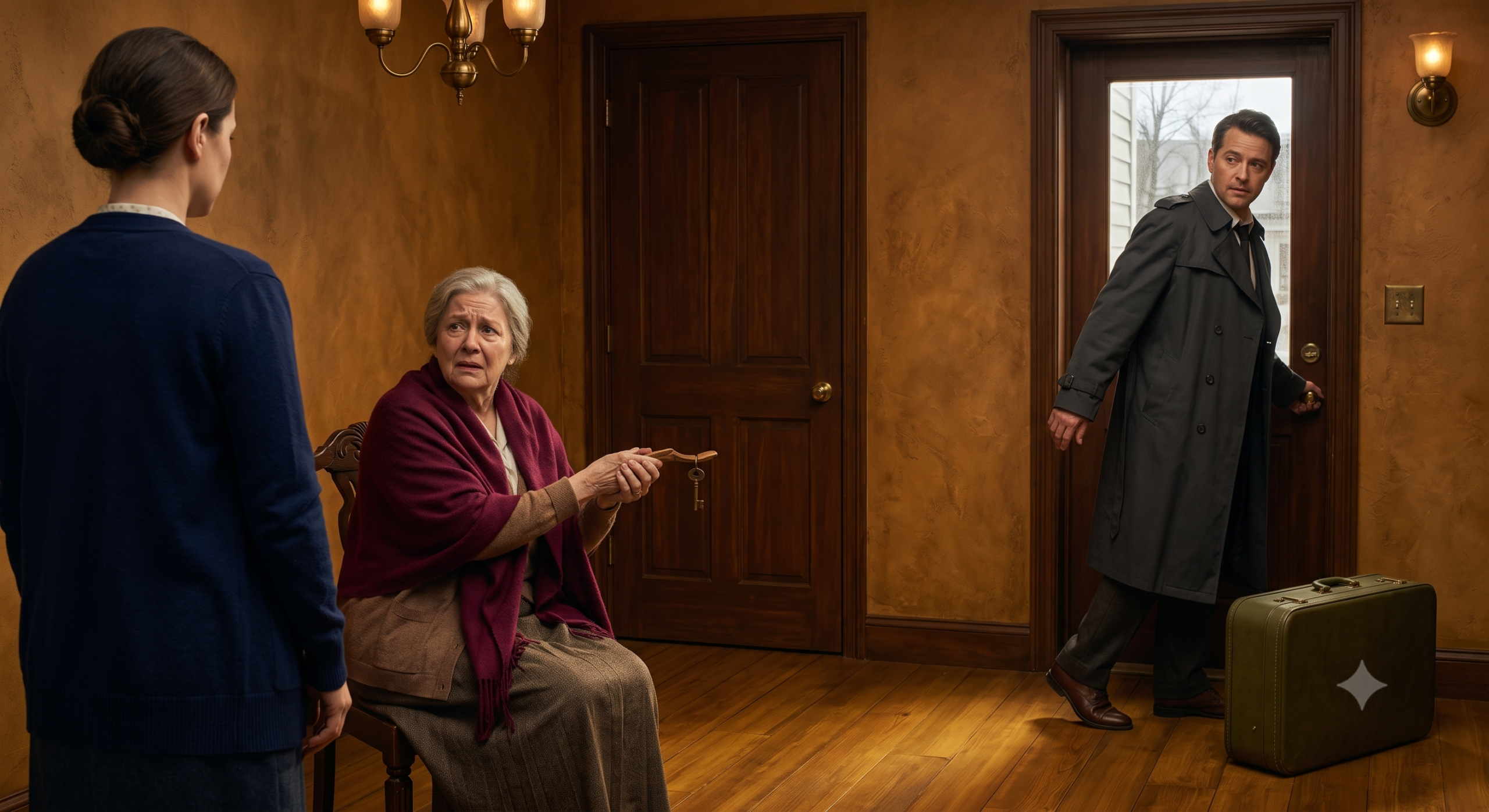
More Details
Jul 11, 2026

“MIL thought I slept. Heard her plot: ‘Take the keys.’ Opened drawer. Silence. ‘What is this?’” 1

My name is Lucía Ortega. I’m thirty-two years old, and for nearly four years I pretended that my marriage to Adrián was still intact, just to protect my daughter and finish paying off the apartment we had bought together. What nobody knew was that my mother-in-law, Carmen Valdés, had been entering my house for months under the excuse of helping me with the child, when in reality she was watching my every move. She had always suspected that I was hiding something, and she was right—though it wasn’t what she imagined.

Everything began when I discovered that Adrián had used my signature to take out a loan. It wasn’t a small amount. There were guarantors, strange transfers, and payments to an account I didn’t recognize. When I confronted him, he swore it was an administrative mistake, that he would fix everything, that I shouldn’t make a scene because his mother wouldn’t survive such embarrassment. I didn’t believe him. I started keeping copies of documents, bank statements, printed messages, and photographs inside a large envelope in the drawer of my nightstand. It wasn’t a safe or a sophisticated hiding place, but it was the last place Carmen would think to look if she believed I was truly asleep.

That night the three of us had dinner at his mother’s house. Carmen didn’t take her eyes off me for a second. She asked why I was so quiet, why I no longer wore my wedding ring, why I had changed the password on my phone. Adrián, nervous, answered for me. I smiled just enough. When we returned home, I pretended to be exhausted, put on my nightgown, left the lamp on, and lay down without fully closing the bedroom door. That same afternoon I had heard Adrián whispering to Carmen: “The keys are in Lucía’s drawer. If you take them, tomorrow I’ll get the rest from the closet and it’s over.” They weren’t talking about hidden money. They were talking about evidence.

I waited motionless, eyes closed, until I heard her soft footsteps in the hallway. The door opened slowly. Carmen held her breath, came close to my side, and checked that I was still lying still. Then she opened the drawer. There was a second of absolute silence. After that I heard the envelope scrape against the wood, several photos fall to the floor, and her voice—broken and barely recognizable—murmur, “No… this can’t be from my son.”

Part 2

I opened my eyes at that moment. Carmen jumped slightly and pressed the envelope against her chest as if the paper might burn her. The bedroom lamp was still on, and the light traced every wrinkle on her face. I had never seen her like that. She wasn’t angry, nor proud, nor ready to humiliate me. She was shattered.

“Since you’ve started looking through my things, you might as well finish,” I said, slowly sitting up.

Carmen lowered her gaze. Two photographs were still on the floor: one of a contract with my forged signature and another of Adrián entering a hotel with a woman I didn’t know. Inside the envelope were also copies of the loan papers, bank messages, printed conversations, and a handwritten sheet where I had noted dates, money movements, and calls. Everything was organized. Everything made sense. Everything pointed to the same truth: Adrián had not only betrayed me with another woman, he had also used my name to sustain debts he never intended to repay.

“Lucía…” she said, her voice dry. “This could have an explanation.”

I got out of bed.

“Of course it does. Your son stole from me, lied to me, and planned to empty the closet before I could report him.”

She shook her head, but not with the certainty of someone rejecting a lie—rather with the clumsy desperation of someone trying to stop a truth that had already pierced through her. She sat down on the vanity chair and looked at the photos again. Her hands were trembling. I had imagined that moment for weeks, believing I would feel relief, but what I felt instead was exhaustion. A deep, overwhelming exhaustion.

Then Carmen’s phone rang. It was Adrián. She put it on speaker without meaning to—or perhaps because she no longer knew what to do.

“Did you get them?” he asked quietly. “Tell me you did. Tomorrow I’ll take the rest before Lucía makes a move.”

Carmen froze.

“Your wife is awake,” she replied.

On the other end there was a brief, dirty silence.

“Mom, don’t start. That woman wants to ruin me.”

I walked toward the phone.

“No, Adrián. You ruined yourself.”

His tone changed immediately, shifting from aggressive to pleading.

“Lucía, listen, we can talk. Don’t bring in lawyers. Think about our daughter.”

“I thought about our daughter when I discovered you had put her home at risk.”

Carmen covered her mouth. She had just understood something more serious than the infidelity: if that debt exploded, the apartment could be lost. Her granddaughter’s stability depended on me acting before her son did.

That same night, without asking my permission, Carmen did something I had never imagined. She dialed Adrián again and said, word for word:

“Don’t ever use me again to cover your garbage. If Lucía reports you, I will testify in her favor.”

And at that exact moment—just when I believed I had already seen everything—the doorbell rang. It was almost two in the morning. Adrián was on the other side of the door.

Part 3

Carmen didn’t open the door. I did. Adrián walked in breathing quickly, his hair messy, wearing that carefully practiced expression of a repentant man that had worked so many times on other people. The first thing he did was look at his mother, searching for complicity. He didn’t find it. Carmen was still sitting in the chair, the envelope on her knees, her face hardened in a new way I had never seen before.

“Give me that,” Adrián said, stepping closer.

I moved in front of him.

“Not a single paper leaves this room.”

“Lucía, please, you’re exaggerating. That loan was going to be resolved in a few weeks.”

“With my forged signature?” I asked. “With another woman paid with money from our account? With messages saying you’d empty the closet before I could act?”

His mask broke. For a few seconds he stopped pretending. He looked at me with anger, not guilt.

“You’ve always wanted to make me look like a monster in front of my mother.”

Carmen stood up slowly.

“She didn’t have to turn you into anything. You did that all by yourself.”

I will never forget Adrián’s face when he heard that. Because for the first time he understood that he had lost control of the scene. He no longer had his mother as a shield, nor me as a frightened wife, nor time to invent an excuse. He took a folder from his jacket and placed it on the dresser. They were papers for a supposed refinancing. An improvised trap. He wanted me to sign that same night. He hadn’t even stopped trying.

“Sign it and we close everything,” he insisted. “For our daughter.”

“Precisely because of her, I’m not signing anything else with you,” I replied.

I picked up my phone and called my lawyer, whom I had already warned days earlier that I might need to act in the middle of the night. I put the call on speaker. Adrián went pale when he heard her name and the name of the notary office where we planned to file the complaint the next morning. Carmen stepped away from him, as if touching him might stain her.

What happened next was less dramatic, but more final. Adrián left without shouting, without breaking anything, without apologizing. He left because he understood he could no longer manipulate anyone in that house. Two weeks later I began the formal separation, blocked his access to our shared accounts, and submitted all the documentation. Carmen kept her word and testified about what she had heard that night. She didn’t do it for me. She did it for her granddaughter—and perhaps out of shame for having protected too long a son who confused love with impunity.

Today I still live in the same apartment, but with different locks and a different kind of silence. One that doesn’t weigh on me. Sometimes I think about the exact moment when Carmen opened my drawer believing she would save her son and instead found the truth that destroyed him. That night she didn’t recover a set of keys. She lost a version of him she would never be able to hold onto again.

And now tell me: if you had been in my place, would you have waited in silence like I did, or would you have confronted him the moment you discovered the first lie?

More Details
My family told me I wasn’t invited to the cruise I paid for because Dad wanted “just family”—so I kept my penthouse suite, downgraded their rooms to the cheapest cabins, and watched them discover what happens when the family ATM finally stops working.
Jul 11, 2026

My family told me I wasn’t invited to the cruise I paid for because Dad wanted “just family”—so I kept my penthouse suite, downgraded their rooms to the cheapest cabins, and watched them discover what happens when the family ATM finally stops working.

On the passenger seat was a small gift bag. Inside were silver seashell earrings I had bought for my mother to wear on the cruise. The cruise I paid for. The cruise I planned for six months. The cruise I spent my bonus on because I thought one beautiful family trip might finally make me feel like I belonged. Then my phone buzzed. It was Mom. I smiled before reading it. Then I saw the words that froze my entire body.

“You’re not coming. Dad wants just family.”

No apology. No call. No explanation. Just seven words that removed me from the vacation I had funded. The car behind me honked. The light had turned green. I drove forward, but my hands shook so badly I could barely hold the wheel. Dad wants just family. Apparently, I was family when the bill needed paying.

My name is Millie Miller. I am thirty-three, and for most of my life, I believed love meant being useful. I was “the responsible one.” When my younger sister Vanessa needed tuition after dropping out of college, I helped pay it. When Dad’s construction business collapsed, I covered bills. When Mom cried over final notices, I emptied my savings before I was old enough to understand resentment. Every emergency became mine. Every bad choice became my burden. And every time I helped, they said I was lucky to be “good with money.” As if discipline was luck. As if exhaustion was a personality trait.

So when Mom sighed one night and said she had always dreamed of a real family cruise, I fell for it. Dad said cruises were too expensive. Vanessa said she needed a break from stress, though her biggest stress seemed to be avoiding job applications. I knew what they were doing. Still, the little girl inside me wanted to be loved. So I said,

“Let me handle it.”

And suddenly, the room changed. Mom smiled. Dad squeezed my shoulder. Vanessa called me the best sister ever. For one dinner, I mattered. I should have known that warmth was just a receipt.

The total came to $21,840. Six tickets. Balcony cabins. Premium dining. Wi-Fi. Drink packages. Excursions in the Bahamas, Mexico, and Jamaica. I booked everything. I paid for everything. I even ordered matching navy shirts that said Miller Family Cruise 2025 because I imagined us taking one silly photo together on deck. A real family photo. Proof that all my trying had meant something. Then Mom told me I was not coming.

When I called, she sent me to voicemail. Dad did too. Vanessa too. Then I realized the family group chat was gone. Not quiet. Gone. Later that night, my cousin Sarah sent me a screenshot from a new chat called Miller Cruise Crew. Vanessa had posted a picture wearing one of the shirts I bought. Her caption said,

“Got our cruise swag. So excited for a drama-free trip. Thank God Millie decided she was too busy with work to come.”

Too busy. That was their story. They had not cut me out. I had simply been unavailable.

I sat on my couch until sunrise with every booking confirmation open on my laptop. Billed to Millie Miller. Cardholder: Millie Miller. Contact email: Millie Miller. My name was everywhere. That was when the pain hardened into clarity. They thought I was useful only until the payment cleared. They forgot the booking still belonged to me.

At 8:01 the next morning, I called the travel agency. A woman named Brenda answered. I gave her the confirmation number.

“Looks like a wonderful family trip,” she said.

“It was supposed to be,” I replied. “I need to make some changes.”

First, I canceled every premium dining package. Then the drink passes. Then the Wi-Fi. Then the excursions. Snorkeling, ziplining, private beach cabana—all canceled, all refunded to my card. Then Brenda asked if there was anything else.

“Yes,” I said. “I need to change the cabin assignments.”

There was a pause.

“What kind of change?”

“The five balcony cabins under Richard Miller, Susan Miller, Vanessa Miller, Brandon Smith, and the other Miller guests. Move them to the cheapest interior cabins available.”

“The most basic rooms?”

“Yes.”

“I have several on deck two,” Brenda said carefully. “No windows. Near the engine area.”

“That’s perfect.”

“And your suite, Miss Miller? Would you like to cancel that?”

I looked at the sunrise outside my window.

“No,” I said. “Keep mine.”

For the first time in twenty-four hours, I smiled.

“I’ll be there.”

Two weeks later, I boarded the ship alone. Not embarrassed. Not hiding. Alone. My penthouse suite was larger than my first apartment. It had a marble bathroom, a private balcony, champagne in an ice bucket, and a welcome note addressed to Miss Miller. For once, something I paid for belonged only to me.

I did not see them on the first day. But on the second evening, I walked into the main buffet and spotted them near the dessert line. They looked miserable. Dad’s jaw was tight. Mom looked exhausted. Vanessa was waving her hands, complaining. Then Mom saw me. She froze with a slice of cake halfway to her plate. Dad followed her stare. Vanessa turned around. For once, none of them had anything clever to say. I sat by the window, took a slow bite of salad, and smiled. They stormed over. Dad spoke first.

“What are you doing here?”

I wiped my mouth with a napkin.

“I’m on vacation.”

Vanessa’s eyes dropped to my wrist. My gold suite band. Then she looked at her own cheap blue one. Realization hit her face like a slap. I stood calmly.

“Well,” I said, picking up my plate, “enjoy the buffet.”

That night, they tried to enter the steakhouse. I was already seated inside with lobster bisque and a glass of wine. The hostess asked for their reservation. Dad gave his name. Nothing. Mom said,

“Our daughter booked it for us.”

The hostess asked for their cabin number. Then her face changed.

“I’m sorry,” she said politely. “Your cabins do not include specialty dining access.”

Vanessa’s voice carried through the entrance.

“You said Millie paid for everything.”

I lifted my wine glass and took a slow sip. A few minutes later, my waiter leaned close.

“They asked if Miss Miller in the penthouse suite would upgrade their dining plan.”

I looked toward the door where my family had just walked away humiliated.

“No,” I said softly. “They’ll manage.”

And for the first time in my life, I meant it.

The next day, they found me by the adults-only pool. Mom stood over my lounge chair with her arms crossed.

“How could you do this to us, Millie?”

I closed my book slowly.

“I’m not sure what you mean.”

Vanessa snapped,

“Don’t play dumb. You downgraded our rooms. You canceled everything. People are looking at us.”

There it was. They were not sorry for hurting me. They were embarrassed. I looked at them calmly.

“You took a vacation I paid for, uninvited me by text, told everyone I was too busy to come, and removed me from the family chat. And now you think you’re the ones who look ridiculous?”

Mom went pale. Vanessa sneered,

“Money doesn’t buy class.”

“You’re right,” I said. “But it does buy tickets, balcony rooms, steak dinners, and excursions.”

I paused.

“And I’m done buying yours.”

After that, they avoided me. I enjoyed the rest of the cruise. I watched shows, took a cooking class, sat on my balcony, and felt peace settle into places where guilt used to live.

When the ship returned to Miami, I canceled the hotel reservation I had made for them. Then I canceled the car service. Everything tied to my name, my card, and my generosity was gone. They had decided I was not family. So I stopped funding them like I was.

A week later, Mom came to my door. I opened it only halfway. She looked tired and smaller than I remembered.

“We went too far,” she whispered.

I didn’t invite her in.

“You thought I would keep paying,” I said. “You thought you could cut me out but still keep the benefits of having me.”

She looked down. She could not deny it. So I gave her the truth.

“It’s over, Mom. The bank is closed. The rescues are finished.”

Her face crumpled. But I did not fix it. I simply closed the door.

Six months later, I took another cruise—alone, to the Greek Isles. This time, every ticket, every meal, every sunset belonged to me. And when I came home, there was a postcard from Mom.

We’re sorry, Millie. We miss you.

A year earlier, those words would have pulled me back. This time, I placed the postcard in a drawer and started packing for my next trip. Planned by me. Paid for by me. Shared only with people who loved me for who I was, not for what I could give.

More Details
I gave my parents $550 every Friday so they could “live comfortably.” Dad remarked, “We don’t count your family the same way,” when they didn’t attend my daughter’s birthday.
Jul 11, 2026

I gave my parents $550 every Friday so they could “live comfortably.” Dad remarked, “We don’t count your family the same way,” when they didn’t attend my daughter’s birthday.

Three years later, “help” looked like duct tape inside Lily’s sneakers. Rent late—again. Groceries on a credit card. Marcus dragging himself home from a second shift, hands split from corrugate and cold. He tapped the statement with a bandaged finger. “Just a month,” he said. “Ask them to scale back.” I kissed his knuckles.

“They need it,” I said, and tried not to do the math on my daughter’s shoes. Mom promised they’d be at Lily’s party. “Wouldn’t miss it—with bells on.” I believed her, because believing is cheaper than admitting you’ve been financing a story you’re not even in. Saturday arrived cotton-candy pink. Dollar-store balloons. Paper streamers.

I frosted a leaning chocolate cake with Lily’s favorite swirls because, according to my six-year-old, “pink tastes like cake.” Two o’clock softened into 2:30. Musical chairs got loud in the best way. Lily kept glancing at the door like it could grow grandparents on command. By three, a princess dress and a still-wrapped present sat on the couch together.

By four, the last goodie bag left, and the quiet landed sticky and sweet. I called. Dad answered over laughter and clinking glasses. “Oh—today? We’re at Danny’s. He insisted. Busy house, you know how it is.” “You knew,” I said. “I reminded you yesterday.” He sighed like I was the unreasonable one. “We can’t drop everything for every little thing, Sarah. We have other grandkids. It’s easier there.” “How’d you afford the trip?”

I asked, even though I already knew. “We saved,” he snapped. “What we do with our money is our business. You offered to help. Nobody forced you.” Then the cut that cauterized: “We don’t count your family the same way. Danny’s is… better established. You understand.” I hung up before Lily could hear my voice crack through the bedroom door.

The kitchen went very still. My bank app threw a blue square of light across the counter. A balloon’s reflection drifted over the microwave door. Marcus stared at the empty cake plates like they’d said something ugly. Down the hall, one small sniffle. I canceled the transfer. Then I pulled every thread they’d tied to me. The car loan I’d co-signed “just to lock a better rate”—closed, title rerouted.

The two extra phone lines on my plan—removed, port-out codes generated. The “emergency” credit card they treated like a punch card for takeout—frozen, statements downloaded, charges highlighted like evidence. Fifteen minutes of taps unraveled three years of obligation. Mom called, voice high and shiny.

“What did you do? That’s our money!” I looked at the crayon crown Lily had left on the table, the frosting smear shaped like a question mark, the photo taped to the wall from last July—Lily with a sparkler and a little U.S. flag she’d colored herself—and felt something old and heavy lift. I opened Photos. Screenshot of the transfers. The text where Mom promised “bells on.”

Dad’s message from last winter—not our problem—when our car died and Marcus took the bus in the dark for a week. A picture of Lily in her purple dress, smiling at a door that never opened. I opened the family thread. The cousins who “stay out of it.” The aunts who forward prayers. Danny with his perfect-lawn thumbs-ups. I typed two sentences. Clean.

No swearing, no apology, no ladder back down. I attached the screenshots, the statement PDF, and a photo of Lily’s cake with two empty chairs behind it. Marcus watched my face. “You sure?” he asked. I looked down the hall where my daughter slept with glitter still on her cheek. My thumb hovered over Send I pressed send.

The little circle spun for a heartbeat, a digital pendulum swinging between the life I had and the life I was choosing. Then it vanished. Delivered.

For ten seconds, nothing happened. The kitchen remained still, save for the hum of the refrigerator and the distant sound of Marcus running water in the bathroom sink. I set the phone down on the counter, screen up. It looked like a bomb waiting to detonate.

“Done,” I said. My voice sounded foreign to my own ears. Flat. Final.

Marcus dried his hands on a towel and came to stand beside me. He didn’t look at the phone. He looked at me. He saw the tension in my shoulders drop, the way my hands stopped trembling. He wrapped an arm around my waist and pulled me into his side. He smelled like cardboard dust and laundry detergent. He smelled like safety.

“They’re going to call,” he said.

“Let them,” I replied.

“Your mom… she’s not going to take this well, Sarah. She’ll call everyone. She’ll tell them you’re selfish. That you abandoned them.”

“I didn’t abandon them,” I said, looking at the crayon crown on the table. “I stopped funding their rejection of me.”

We stood there for a long time, watching the phone screen dim until it went black. Then, as if on cue, it lit up. A notification. Then another. Then a cascade.

I didn’t pick it up. I walked down the hall to Lily’s room.

She was asleep, curled around a stuffed rabbit that had lost an ear years ago. There was glitter on her cheek, exactly where Marcus had said it would be. I sat on the edge of her bed and brushed the glitter away with my thumb. She stirred but didn’t wake.

“I’m sorry,” I whispered to the quiet room. “I’m sorry they weren’t here. But I promise… I’m going to be enough. Just me.”

I went back to the kitchen. The phone was buzzing continuously now. A steady, angry vibration against the laminate counter. I picked it up.

Mom:What is this? Why did the transfer fail?Mom:Sarah? Call me immediately.Dad:This is childish. Turn it back on.Aunt Carol:Is everything okay? Your mother is very upset.Danny:Hey cuz, heard there’s some drama. Everything cool?

I scrolled through the notifications. Thirty-two messages in five minutes. The group chat, usually a stream of birthday wishes and prayer emojis, had become a tribunal.

I typed one more message. Not to the group. To Dad.

You said we don’t count the same way. So I stopped counting you in my budget. Use Danny’s establishment to pay the bills now.

I blocked the number. Then I blocked Mom. Then I muted the group chat.

The silence that followed was louder than the buzzing had been.


The first week was the hardest. Not financially—that relief was immediate and intoxicating. For the first time in three years, when I logged into my banking app, I didn’t feel a knot of dread in my stomach. I saw the $2,200 a month that used to vanish every Friday. I saw it sitting there. Waiting.

I used the first week’s surplus to buy Lily new sneakers. Not the ones with the duct tape. Real ones. White and pink with velcro straps she could fasten herself. When she put them on, she marched around the living room stomping loudly, laughing every time the squeak echoed off the walls.

“Look, Mama! They fit!”

“They fit,” I agreed. My throat tightened.

But while Lily marched, my phone sat in the drawer, occasionally lighting up with calls from numbers I didn’t recognize. Blocked. Voicemails full of heavy breathing, sighs, and sometimes, sharp accusations.

“How could you do this to your own blood?”“We raised you.”“You’re punishing us for being human.”

I didn’t listen to all of them. I listened to enough to know the narrative was shifting. I was no longer the helpful daughter. I was the ungrateful child. The one who turned her back when things got tough.

Marcus handled the logistics. He changed our passwords. He put a fraud alert on our credit reports because Dad had co-signed nothing, but he had access to enough information to be dangerous. We fortified the perimeter.

On Wednesday of that first week, Mom showed up at our apartment.

I was at work. Marcus called me during my lunch break, his voice low. “She’s in the parking lot. She says she won’t leave until you talk to her.”

“Did you let her in?”

“No. But she’s making a scene. Talking to the neighbors.”

I left work early. When I pulled into the lot, I saw her car—a sedan I had helped pay the insurance on for two years—parked across two spaces. Mom was standing by the entrance, arms crossed, wearing the coat I bought her last Christmas. She looked small against the brick building, but her posture was rigid with indignation.

I walked toward her. I didn’t run. I didn’t hide.

“Sarah,” she said when I was ten feet away. Her voice was loud, intended for the windows above us. “You think you can just cut us off? After everything we did?”

“You didn’t come to Lily’s birthday,” I said. My voice was calm. I was surprised by how calm it was. “You went to Danny’s.”

“Danny’s mother was there,” she snapped. “It was a family gathering. You know how your father gets about being outnumbered.”

“So I should have brought Lily to Danny’s? Instead of you coming here?”

“We’re the parents,” she said, as if that explained the geometry of the universe. “We go where we want. You send the money because you can. Because you’re stable. Why are you punishing us for your own success?”

That was the core of it. I realized then. It wasn’t about need. It was about hierarchy. They needed me to be the ATM because it kept me in the child role. As long as I was paying, I was subordinate. If I stopped paying, I became an equal. And they couldn’t tolerate an equal.

“I’m not punishing you,” I said. “I’m balancing the books. You said my family doesn’t count the same way. So I removed you from the ledger.”

“Your father is going to have a heart attack,” she said, playing the final card. The health scare. The guilt trip that had worked for decades.

“If he’s sick, take him to the hospital,” I said. “I’m not paying the bills anymore. But I will call 911 if you think he’s in danger.”

She stared at me. Her mouth opened, then closed. She had no script for this. In her story, I was supposed to crumble. I was supposed to apologize and double the transfer to prove my love.

“You’re cold,” she whispered. “Just like your father said.”

“Maybe,” I said. “Or maybe I’m just warm enough for my own daughter now.”

I turned my back and walked into the building. I didn’t look to see if she was crying. I didn’t look to see if she was leaving. I just kept walking.


Month two brought the extended family pressure.

Thanksgiving was approaching. Usually, this was the week I spent stressing about the ham, the pie, the travel costs to get to my parents’ house. This year, my phone buzzed with a text from Aunt Carol.

We need to talk about Thanksgiving. Your mother is hurt. She says she doesn’t know if she can cook for everyone if she’s struggling.

It was a threat disguised as a concern. If I didn’t show up (and presumably bring money), the holiday would be ruined.

I called Aunt Carol. She was the mediator, the one who claimed to stay out of it while constantly passing messages.

“Aunt Carol,” I said. “I’m not coming this year.”

“Sarah, be reasonable. It’s one day.”

“It’s never one day,” I said. “It’s the judgment all week. It’s the comments about Marcus’s job. It’s the questions about why Lily doesn’t have a tutor. It’s the expectation that I pay for the groceries I cook.”

“We’re family,” she said.

“Family shows up,” I replied. “They didn’t show up for Lily. So I’m not showing up for them.”

“What about Danny?”

“Danny is fine,” I said. “He’s established. Remember?”

There was a silence on the other end. She knew I was quoting Dad. She knew the game had changed.

“Your mother says you’re going to regret this,” Carol said finally. “When they get older. When they need care.”

“I’m preparing for that now,” I said. “By ensuring I have the resources to care for my own child. If they need care, they have Danny. He’s established.”

I hung up.

That Thanksgiving, we stayed home. Marcus made a turkey that was slightly dry. Lily made a centerpiece out of construction paper and glue. We watched movies. We wore pajamas until noon.

For the first time in my adult life, I wasn’t tired on Friday morning. I wasn’t dreading the weekend. I wasn’t checking my bank account to see if the overdraft fee had hit.

I took the $550 I would have sent that Friday and put it into a college fund for Lily. I set up an automatic transfer. Every week, without fail, money went to her future. Not my parents’ present.


Month six brought the financial reality check for them.

I heard through the grapevine—actually, through a cousin who liked to talk—that Dad’s hours had been cut again. That Mom’s salon visits had stopped. That the car needed repairs they couldn’t afford.

Part of me felt a pang of guilt. It was instinctual. The conditioning of thirty years doesn’t vanish in six months. I wondered if they were eating properly. I wondered if the heat was on.

Then I remembered Lily’s sneakers. I remembered the duct tape. I remembered the empty chairs at the birthday party.

Guilt is a habit. I was breaking it.

Danny tried to reach out in December. He sent a friend request on social media. I ignored it. Then he sent a message.

Hey, looks like things are tense. Just wanted to say, I didn’t know they were using the money like that. I thought it was for bills.

It was a weak olive branch. He benefited from the hierarchy. He knew it. But he was trying to keep the door open in case I ever came into money again.

You knew, I replied. You posted photos from the birthday party while Lily was waiting for the door to open. You liked the photos.

He didn’t reply.

The silence from that side of the family grew heavier. They were learning to live without me. It was painful for them, I’m sure. But it was necessary.


One year later.

It was Lily’s seventh birthday.

We weren’t having a big party. Just a few friends from school. The backyard was decorated with real lights, not paper streamers. The cake was from a bakery, not made from a box.

I was standing by the grill, flipping burgers, when Marcus came out with the phone.

“It’s your dad,” he said.

My hand didn’t slip. The spatula hovered over the meat. “Why are you answering?”

“He kept calling until I picked up. He says it’s an emergency.”

I wiped my hands on my apron and took the phone. “This is Sarah.”

“Sarah,” Dad’s voice was rough. Older. “I… we need to talk.”

“You blocked me,” I said. “I remember.”

“I unblocked you. Look, your mother… she fell. At the house. She broke her hip.”

My heart skipped a beat. Not out of fear for her, but out of that old reflex. Is she okay? Is she safe?

“Is she in the hospital?”

“Yes. They’re saying she needs rehabilitation. Home care. It’s… it’s expensive.”

I looked out at the backyard. Lily was running through the sprinkler, screaming with laughter. She was wearing the dress I bought her. The one without stains.

“And you’re calling me because…?”

“Because you’re the only one who understands the finances,” he said. “Danny… he’s got his own issues now. His business isn’t doing well. He can’t help.”

There it was. The reversal. The established son was no longer established. The ATM daughter was the only option left.

“I’m sorry to hear about Mom,” I said. And I meant it. I didn’t wish harm on them. But I couldn’t fix it.

“Sarah,” he said, his voice dropping. “Please. We’re your parents.”

“You told me I don’t count the same way,” I said. “You told me Danny was better established. So I let him be the establishment.”

“That was… that was pride talking,” he said. “I was wrong.”

It was the first admission I had ever heard. It hung in the air, fragile and strange.

“I know you were,” I said. “But being wrong doesn’t erase the cost.”

“What cost?”

“The cost of trust,” I said. “The cost of showing up. You spent three years teaching me that my support was conditional. That my family was secondary. I can’t unlearn that overnight.”

“So you’re just… letting her suffer?”

“I’m not letting her suffer. The hospital is treating her. Insurance is covering the rehab. You have savings. You have the house. You have Danny.”

“The house is leveraged,” he admitted quietly. “We… we took out a loan. Against the equity.”

Of course they had. Because the $550 a week was gone. Because the safety net I provided had allowed them to take risks they couldn’t afford.

“I can’t help you financially, Dad,” I said. “But I can send you a list of social services. I can help you apply for Medicaid waiver programs. I can give you time.”

“Time doesn’t pay bills,” he snapped. The old anger flared, brief and weak.

“No,” I said. “But boundaries do.”

I heard him breathe on the other end. It sounded like a sigh of defeat.

“Will you… will you come see her?” he asked. “At the hospital?”

I looked at Lily. She had stopped running. She was looking at me, waiting for me to come join the game.

“I’ll come,” I said. “But I’m not paying. And I’m not staying long. And if anyone makes a comment about my family… I leave.”

“Okay,” he whispered. “Okay.”

“Happy Birthday, Lily,” I said to the phone, though he wasn’t the one celebrating.

“What?”

“Nothing,” I said. “I’ll be there tomorrow.”

I hung up.

Marcus touched my shoulder. “You okay?”

“I will be,” I said.

I went to join Lily. She grabbed my hand and pulled me into the sprinkler. The water was cold. I shrieked. She laughed.

“Again!” she yelled.

We ran again. I got soaked. My hair plastered to my head. My shoes squished.

For the first time in my life, I didn’t care about the mess. I didn’t care about the impression. I didn’t care about the cost.


The hospital visit was quiet. Mom looked smaller in the bed. Her leg was elevated. Dad sat in the chair beside her, looking at his hands.

They didn’t mention the money. They didn’t mention the transfer. They talked about the weather. About the nurse. About the food.

It was civil. It was distant. It was a relationship reset to factory settings.

When I left, I didn’t promise to come back next week. I didn’t promise to call. I just said, “Feel better.”

Driving home, I felt a strange sensation in my chest. It wasn’t guilt. It wasn’t anger. It was grief. I was grieving the parents I wanted. The ones who would have come to the birthday party. The ones who would have cheered for Lily without calculating the cost.

They didn’t exist. Accepting that was the final step.


Two years later.

We moved. Not far, just to a different complex with better security and a playground that didn’t have broken glass.

The rent was higher. But we could afford it. Because I wasn’t sending $550 a week. Because Marcus got a raise. Because we stopped bleeding money into a void.

I ran into Danny at the grocery store. He looked tired. He was buying generic brand cereal. He saw me and hesitated.

“Hey,” he said.

“Hey.”

“Mom’s doing okay,” he said. “Walking with a cane now.”

“That’s good,” I said.

“We… we sold the house,” he said. “Downsizing.”

“Okay.”

“I get it now,” he said, looking at the cart. I had fresh fruit. Milk. Real cheese. “About the money. About… everything.”

“Do you?”

“Yeah. I got into some debt. Trying to keep up the image. The establishment.” He laughed, a dry, humorless sound. “Turns out establishment is just a word people use when they’re scared.”

“We all are,” I said.

He nodded. He didn’t ask for help. He didn’t ask for a loan. He just checked out and left.

I watched him go. I didn’t feel superior. I felt sad for him. He was still trapped in the hierarchy. I had climbed out.


Three years later.

Lily is nine. She’s in fourth grade. She plays soccer. She hates math. She loves to draw.

We were sitting at the kitchen table doing homework. The Friday transfer notification used to ping at 9 AM. Now, at 9 AM on Fridays, I get a notification from her college fund. Deposit Successful.

It’s a different sound. A happier sound.

Marcus came in from the garage. He put a envelope on the table.

“What’s this?” I asked.

“Tax return,” he said. “We’re getting a refund.”

“We never get refunds,” I said.

“We do now,” he said. “Because we claimed everything. Because we didn’t give half of it away.”

He kissed the top of my head. “Proud of you,” he said.

It wasn’t about the money. Not really. It was about the message. The message I sent that day when I hovered over the send button.

We don’t count your family the same way.

He was right. We don’t.

My family is the people who show up. The people who eat the dry turkey. The people who run through the sprinklers. The people who protect the peace instead of selling it.

My parents are still alive. We talk on holidays. Sometimes. They send cards for Lily’s birthday. They never come. They never ask to visit. They know the terms.

I think they respect me more now than they ever did when I was paying them. Because I proved I could walk away. And power only respects power.


Last week, I found the old phone. The one I used before I changed my number. It was in a box in the closet, buried under winter scarves.

I charged it. It turned on. There were hundreds of voicemails from three years ago. From the week I cut them off.

I listened to one. It was Mom.

Sarah, please. We’re sorry. We didn’t mean it. Call us back.

Her voice sounded desperate. Scared.

I deleted it.

I didn’t need to hear the apology anymore. I had lived the consequence. That was worth more than words.

I put the phone back in the box. I put the box back in the closet.

I walked out to the living room. Lily was on the floor, building a tower out of blocks. It was tall. Unsteady.

“Don’t let it fall,” I said.

“I won’t,” she said. “I built the base strong.”

She looked at me. “Like you taught me.”

“Yeah,” I said. “Like I taught you.”

I sat down beside her. I handed her a blue block.

“Where does this go?” I asked.

“Here,” she said. “On the top.”

She placed it gently. The tower held.

We sat there in the quiet apartment. The rent was paid. The lights were on. The fridge was full.

And for the first time in my life, I wasn’t waiting for the other shoe to drop. I wasn’t waiting for the phone to ring. I wasn’t waiting for permission to be happy.

I was just here.

The lifeline was severed. But I hadn’t fallen. I had learned to fly.

And the view from up here… it was beautiful.

THE END.

More Details
My ex-husband, his new wife, and my own brother thought they had won the inheritance battle—until my father’s final secret came to light.
Jul 11, 2026

My ex-husband, his new wife, and my own brother thought they had won the inheritance battle—until my father’s final secret came to light.

So when I said, “Vanessa just threatened me,” Margaret’s voice changed instantly.“What exactly did she say?”

I stood in the garden with the phone pressed to my ear, the envelope damp and cold in my hand, while the white roses trembled in the breeze around me.

“She said after the will reading tomorrow, the house would belong to her and Daniel. She said Ethan helped them understand Dad’s mental condition toward the end.”

A silence.

Not confusion.

Recognition.

“Claire,” Margaret said carefully, “do not open anything else. Do not speak to Daniel. Do not speak to Vanessa. And if Ethan calls, let it go to voicemail.”

My mouth went dry. “Margaret… what is happening?”

Another pause.

Then she said, “Your father asked me to wait until tomorrow. But if Vanessa has already approached you, then she has moved sooner than he expected.”

The words made the garden tilt.

“She moved?”

“Yes.”

I looked down at the envelope.

CLAIRE.

My father’s handwriting was still firm, still elegant, the letters slightly slanted like they were leaning toward a truth.

“What did he know?”

Margaret’s voice softened. “Enough to be afraid for you.”

For me.

Not the estate.

Not the money.

Me.

For three weeks, I had told myself grief was the worst thing waiting in this house. I had been wrong. Grief was honest. Grief knocked on the door wearing its own face.

This was something else.

“Come to my office now,” Margaret said. “Bring the envelope. Drive yourself if you can. Take the back road.”

I almost laughed. “You sound like Dad.”

“That is because I am following his instructions.”

My breath caught.

“His instructions?”

“Yes. And Claire?”

“What?”

“Check the envelope before you leave. Without opening it.”

I turned it over carefully.

There, pressed into the back flap, was a small red wax seal. My father’s initials were stamped into it.

R.D.

Robert Davenport.

But beneath the seal, almost hidden by dew, was one sentence written in pencil.

If she comes before the will, she already knows she has lost.

My knees weakened.

Vanessa’s smug smile flashed in my mind. Her heels sinking into my father’s soil. Her voice promising to rip out the roses. Her certainty that tomorrow would belong to her.

She had not come because she was confident.

She had come because she was desperate.

I went inside through the garden door, locked it behind me, and stood for a moment in the kitchen.

The house smelled faintly of coffee, lemon oil, and old wood. Morning light spilled across the blue tiles my mother had chosen thirty years earlier. On the windowsill sat my father’s chipped mug, the one no one had been able to move since the funeral.

I touched its handle.

“I found it, Dad,” I whispered.

Then the landline rang.

The sound cut through the house like a blade.

I stared at it.

No one called the landline anymore.

It rang again.

I let it.

On the fourth ring, the answering machine clicked.

Ethan’s voice filled the kitchen.

“Claire, pick up. I know you’re there.”

My brother sounded tired, irritated, and slightly breathless.

“Look, Vanessa told me she came by. Don’t make this ugly. Daniel has been more of a son to Dad than most people know, and you need to stop acting like grief gives you ownership over everything. We’re all meeting tomorrow anyway. Just… don’t do anything stupid.”

The line clicked dead.

I stood frozen.

Daniel had been more of a son to Dad.

The sentence made something inside me go cold.

Ethan and I had never been perfect siblings. He was six years younger, always restless, always convinced the world owed him a faster road. My father adored him, but they fought constantly. Ethan wanted cash. Dad wanted responsibility. Ethan wanted shortcuts. Dad believed shortcuts usually led to cliffs.

But Daniel?

My ex-husband?

The man who had sat at my father’s dining table, accepted his advice, borrowed his connections, shaken his hand every Sunday, then shattered my marriage with Vanessa?

If Ethan truly believed Daniel deserved my father’s home, someone had been feeding him poison for months.

Maybe longer.

I grabbed my keys, the envelope, and my father’s old gardening notebook from the counter without knowing why. Then I left through the side door and drove the back road toward Margaret’s office.

Charleston was too beautiful for betrayal that morning.

Spanish moss swayed from the oak trees like gray lace. Sunlight flashed across the river. Tourists wandered past historic homes, smiling at painted shutters and wrought-iron gates, never guessing that behind one of those gates, a dead man had left a trap beneath a rosebush.

Margaret’s office sat above a quiet bookstore on King Street. By the time I arrived, her assistant was already waiting at the door.

“She’s inside,” the woman whispered. “Go straight back.”

Margaret stood when I entered.

She was in her seventies, silver-haired, narrow-eyed, dressed in charcoal gray. She had the kind of posture that made even wealthy men sit up straighter. On her desk were three sealed folders, a recorder, and a framed photograph of my father from twenty years ago, smiling beside her at some charity event.

Her eyes went immediately to the envelope in my hand.

“You found it under the white roses?”

“Yes.”

“Did anyone see you?”

“Vanessa saw me in the garden, but she left before I found it.”

Margaret exhaled slowly. “Good.”

“Margaret,” I said, my voice shaking despite my best effort, “tell me what this is.”

She motioned for me to sit.

I did not.

“Please.”

Her expression softened, and that frightened me more than her urgency had.

“Your father changed his will six months ago.”

I blinked. “Six months ago?”

“Yes.”

“But he was already sick.”

“He was ill,” she said firmly. “Not incompetent. I had two physicians evaluate him before signing. He insisted. He knew someone would question his mental state.”

Ethan.

My own brother.

My stomach twisted.

“What did he change?”

“Almost everything.”

The room went silent around that sentence.

Margaret picked up the envelope but did not open it. She studied the seal, then nodded to herself.

“Your father created a protective trust. The estate, the land, and several business holdings pass into it. You are the primary trustee.”

I sat down at last.

“Me?”

“Yes.”

“What about Ethan?”

“He receives a structured inheritance, but not direct control over the property.”

“He’ll hate that.”

“He already does.”

I looked up sharply.

Margaret’s eyes held mine.

“Ethan knows?”

“He knows enough. Not the final details, but he knows your father altered the distribution.”

My chest tightened. “Is that why he went to Daniel?”

“Partly.”

“What does Daniel have to do with any of this?”

Margaret opened the first folder.

Inside were photocopies of loan documents, property records, and emails. Daniel’s name appeared again and again. My ex-husband had been many things—charming, ambitious, unfaithful—but I had never known him to be patient enough for paperwork.

Margaret slid one page toward me.

It was a promissory note.

Signed by Ethan.

Guaranteed by Daniel.

My throat closed.

“How much?”

“Two million dollars.”

I stared at the number.

“That’s impossible.”

“Unfortunately, it is not. Ethan borrowed against his expected inheritance. Daniel arranged the lender.”

“Why would Daniel do that?”

Margaret’s mouth tightened. “Because if Ethan defaulted, Daniel could pressure him into supporting a challenge to the will.”

I looked toward the window, where people moved on the street below, ordinary and unaware.

“My brother sold me for debt.”

“No,” Margaret said quietly. “Your brother made a foolish bargain. Daniel and Vanessa exploited it.”

My laugh came out bitter. “That sounds kinder than the truth.”

“The truth is still forming.”

Then she placed the envelope in front of me.

“Your father hid this for you to find because he knew Vanessa would not be able to resist gloating.”

My fingers hovered over the seal.

“May I?”

“Yes. The condition has been met.”

The wax cracked beneath my thumb.

Inside was a single sheet of paper and a small brass key.

I unfolded the paper.

My father’s handwriting filled the page.

My dearest Claire,

If you are reading this, then someone has come into my garden before the will was read.

That means they are frightened.

Good.

Fear makes careless people honest.

I know Daniel has been circling the estate. I know Vanessa believes beauty is something she can purchase, then destroy when it reminds her of another woman. I know Ethan has made mistakes large enough to frighten him into betrayal.

Do not hate your brother yet.

That line broke me.

I pressed my fingers to my mouth, but a sob escaped anyway.

Margaret looked away, giving me privacy I did not ask for but desperately needed.

I forced myself to continue.

There are things I did not tell you because I thought I had more time. That was my arrogance. Cancer corrected it.

The key opens the rose shed.

Not the door you know.

The floor.

Trust Margaret. Trust no one who asks you to hurry.

And remember what I taught you.

Roses survive because they know how to protect themselves.

Dad.

I read it three times.

“The floor?” I whispered.

Margaret nodded. “He would not tell me what was hidden there. Only that you had to retrieve it before the will reading.”

I stood so fast the chair scraped back.

“Then we go now.”

“I’m coming with you.”

“No,” I said. “If Daniel is watching—”

“He is.”

The words froze me.

Margaret turned her computer monitor toward me.

A security feed showed the street outside my father’s estate. A black SUV was parked two houses down.

Daniel’s SUV.

My ex-husband had always believed black cars made mediocre men look important.

My hands went cold.

“He’s there?”

“He arrived twenty minutes after you left.”

“Vanessa must have called him.”

“Likely.”

“And Ethan?”

Margaret clicked another camera angle.

My brother’s truck sat near the service entrance.

For one second, I could not breathe.

Ethan had a key.

He still had a key.

I grabbed my phone.

Margaret stopped me with one look.

“Do not call him.”

“He’s inside my father’s house.”

“He is inside a house your father prepared for this moment.”

The calm in her voice made me stare.

“What else did Dad do?”

Margaret closed the folders and reached for her coat.

“He hired security.”

The drive back to the estate took twelve minutes. It felt like twelve hours.

Margaret followed behind me in her own car. Halfway there, a dark sedan pulled between us. For one terrifying second, I thought it was Daniel. Then the driver touched two fingers to his rearview mirror.

A signal.

Margaret had not been exaggerating.

My father’s security.

By the time I turned onto the lane leading to Davenport House, my hands were steady. Not because I was calm. Because rage, when it finally matures, stops shaking.

Daniel stood on the front porch as if he belonged there.

He wore a navy blazer and no tie, his golden-brown hair swept back in that effortless style people once praised at dinner parties. At forty-six, he still had the face that made strangers trust him too quickly.

Ethan stood beside him, arms crossed, jaw tense.

Vanessa waited near the garden gate, scrolling on her phone like a queen bored by her own kingdom.

When she saw me, she smiled.

It died when she saw Margaret.

Daniel stepped forward. “Claire. We need to talk.”

“No,” I said, walking past him. “You need to leave.”

His expression tightened. “This is still family property.”

“My father’s body is barely cold.”

“And that is exactly why emotions are high,” he said smoothly. “No one wants a fight.”

Margaret’s voice cut in like ice. “Then stop trespassing.”

Daniel’s eyes shifted to her.

“Margaret. Always dramatic.”

“Always documented,” she replied.

Ethan looked between us. “Claire, stop acting like a victim. We’re trying to make this fair.”

I turned to him.

My baby brother.

The boy I once taught to ride a bike along this driveway. The teenager I covered for when he dented Dad’s truck. The man now standing beside my ex-husband because debt had made him small.

“Fair?” I repeated.

His face reddened. “Dad wasn’t himself at the end. You know that.”

“No,” I said. “I know you needed him to not be himself.”

He flinched.

Daniel placed a hand on Ethan’s shoulder.

The gesture made my stomach turn.

Protector. Adviser. Parasite.

Vanessa laughed softly. “This is exactly why Daniel should help manage things. You’re too emotional.”

I looked at her designer heels planted beside my father’s roses.

“You threatened to rip out my mother’s garden.”

She rolled her eyes. “Oh, please. They’re flowers.”

“They are not yours.”

“Not yet.”

The garden went quiet.

Even Daniel looked annoyed with her for saying it aloud.

Margaret smiled faintly.

“Thank you, Mrs. Whitmore.”

Vanessa frowned. “For what?”

“For confirming intent.”

Daniel’s face darkened. “Enough. Claire, we are contesting the will. Ethan is prepared to testify that your father was confused, paranoid, and unduly influenced by you.”

The words struck exactly where he aimed.

Unduly influenced.

After fifteen years of marriage, he knew my deepest fear was becoming the kind of person who took too much, asked too much, occupied too much space. He had trained that fear into me one comment at a time.

You’re overreacting.

You’re making this about you.

Your father only listens to you because you hover.

Now he was using the same knife, just with legal language.

I looked at Ethan.

“Is that true?”

His mouth opened.

Closed.

Daniel’s hand tightened on his shoulder.

Ethan looked away.

That answered me.

Something inside my chest split, but I did not let it show.

“Margaret,” I said.

“Yes?”

“Please inform them they have five minutes to leave before security removes them.”

Daniel laughed. “Security?”

Two men appeared near the oak trees.

Daniel stopped laughing.

Vanessa took one step back.

Ethan stared at them, stunned.

I walked past all of them toward the garden.

The rose shed sat at the far end of the property, half-covered in jasmine and shadow. My father built it when I was eight. To everyone else, it was a storage shed filled with fertilizer, clay pots, pruning tools, and old garden gloves.

To me, it had always been a tiny kingdom.

Dad and I spent entire afternoons there. He taught me how to graft stems, how to sharpen shears, how to recognize blight before it spread. When my marriage began to crack, I would come here and sit on the overturned bucket by the window, breathing in soil and cedar until I remembered I had belonged somewhere before Daniel.

Now I unlocked the shed door with my old key.

Then I looked down at the brass key from the envelope.

The floor.

The wooden planks were worn smooth from decades of use. I knelt and ran my hand along them, searching. Near the back wall, beneath a stack of burlap sacks, I found a narrow iron ring set into the wood.

My pulse thundered.

Margaret stood behind me, silent.

I pulled.

A square section of flooring lifted upward.

Beneath it was a small metal lockbox.

The brass key fit perfectly.

Inside were three things.

A flash drive.

A stack of letters tied with green ribbon.

And an old photograph.

I picked up the photograph first.

My father stood younger and broader beside a woman I did not recognize. She had dark hair, serious eyes, and one hand resting on a little boy’s shoulder.

The boy was Ethan.

My heart stopped.

No.

Not Ethan.

The boy looked like Ethan.

Same eyes. Same chin. Same stubborn mouth.

But the photograph was dated twenty-seven years ago.

Before Ethan was born.

I turned it over.

On the back, my father had written:

Thomas Whitmore. Savannah, 1997. Daniel’s first lie.

The shed seemed to shrink around me.

Whitmore.

Daniel’s last name.

“Margaret,” I whispered. “What is this?”

Margaret looked at the photograph and went very still.

“I don’t know.”

For once, I believed her.

I untied the letters with shaking fingers.

The first letter was addressed to my father.

Robert,

I am begging you not to tell Claire yet. She is too young, and Daniel will deny everything. He has already convinced his family I am unstable. Thomas deserves better than being used as evidence in a war I cannot win.

You once told me that truth kept too long becomes poison. I know you were right. But I am tired, Robert. I am so tired.

If something happens to me, please keep the boy safe.

A.

I looked up slowly.

A.

I knew that initial.

Not from my family.

From Daniel’s past.

Before me, before Vanessa, before the life he polished into respectability, Daniel had been engaged to a woman named Amelia Ross. He told me she had left him suddenly. He said she was unstable, jealous, cruel.

He said she tried to ruin him.

I had believed him.

Because at twenty-four, I believed handsome men when they looked wounded.

“What happened to Amelia?” I asked.

Margaret’s face had lost color.

“She died,” she said. “Car accident. Years before you married Daniel.”

I looked back at the photograph.

Thomas Whitmore.

Daniel’s first lie.

A child.

Daniel had a son.

A son he erased.

A son who looked like my brother.

My phone buzzed.

A text from Ethan.

Claire, what are you doing in the shed? Daniel is freaking out.

I looked through the tiny window.

Daniel stood outside the garden gate, no longer polished, no longer smooth. His eyes were fixed on the shed with naked fear.

Vanessa was arguing with him, but he wasn’t listening.

He knew.

Whatever my father had hidden here, Daniel knew enough to be terrified.

Margaret took the flash drive. “We need to review this in a secure place.”

“No,” I said. “We review it now.”

“Claire—”

“Now.”

The rose shed had no computer, of course, but my father’s study did.

We walked back toward the house with security flanking us. Daniel moved toward me immediately.

“What did you find?” he demanded.

I kept walking.

His voice rose. “Claire.”

That tone.

The old husband tone.

The one that expected obedience by muscle memory.

I turned.

“Do not speak to me like I still belong to you.”

For one second, the mask slipped completely.

There he was.

Not charming Daniel Whitmore.

Not wounded ex-husband.

Not Vanessa’s devoted new spouse.

Just a frightened man staring at a dead man’s last move.

“You have no idea what you’re touching,” he said softly.

I stepped closer.

“Then why are you shaking?”

Vanessa looked at him sharply.

“Daniel?”

He ignored her.

Ethan’s eyes moved from Daniel to me.

“What did Dad hide?”

The word Dad pierced me.

I almost told him everything right there. I almost handed him the photograph and watched his face break.

But my father had written: Do not hate your brother yet.

So I said only, “The truth.”

In the study, Margaret inserted the flash drive into my father’s computer.

A single folder appeared.

It was named:

FOR CLAIRE—AFTER THE ROSES.

Inside were video files, scanned documents, bank statements, medical records, and a recording labeled:

ROBERT DAVENPORT FINAL STATEMENT.

My hands went numb.

Margaret looked at me. “Are you ready?”

No.

“Yes.”

She clicked play.

My father appeared on the screen.

He was sitting in this very study, thinner than I remembered but dressed in his favorite brown cardigan. His face was pale, his eyes sunken from illness, yet when he looked into the camera, I felt eight years old again, standing beside him in the garden with soil under my nails.

“Claire,” he said.

I broke instantly.

One word, and I was no longer the woman fighting vultures at the gate. I was his daughter.

“If you are watching this, then I failed to tell you everything while I was alive. I am sorry. I wanted to protect you. That was my first mistake. Protection without truth becomes another kind of prison.”

Margaret turned away, but I saw her wipe her eye.

My father continued.

“Daniel Whitmore is not merely a faithless husband. He is a practiced thief. Before he married you, he abandoned Amelia Ross, the woman carrying his child. When Amelia threatened to expose him for stealing from her family’s business, Daniel and his father used private influence to ruin her credibility. Amelia died before she could file suit. Her son, Thomas, disappeared into foster care.”

I covered my mouth.

“Years later, I found him,” Dad said. “Not because I was noble. Because I did not trust Daniel, and I investigated too late. Thomas was grown by then. Angry. Brilliant. Lost. I offered help. He refused money, but he accepted work under another name.”

A knock sounded in the hall.

I ignored it.

“He came to Davenport House many times,” Dad said. “You met him, Claire. You knew him as Ethan’s friend from college.”

My mind raced.

Ethan’s friend.

There had been so many.

Then one face emerged.

Quiet. Dark-haired. Kind eyes. A young man who helped Ethan repair the dock one summer. A man who looked at Daniel across a barbecue with such cold contempt I had asked Ethan later if something was wrong.

“What was his name?” I whispered.

On screen, my father answered as if he heard me.

“He called himself Luke Harris.”

Luke.

I gripped the desk.

“Luke later discovered Daniel had begun manipulating Ethan. Loans. Investments. False promises. Your brother thought he was building independence. Daniel was building leverage.”

The knock came again, harder.

Daniel’s voice followed through the door.

“Claire, open this door.”

Margaret reached for her phone and signaled security.

My father kept speaking.

“When I became ill, Daniel grew bolder. He visited often. He pretended concern. He asked questions about the estate, the land, the trusts. Vanessa helped. Ethan, God forgive him, trusted them because debt had made him afraid. I do not excuse him. But I ask you to see the difference between weakness and malice.”

Tears blurred my vision.

“I changed my will to protect the estate from all of them. But that is not the final secret.”

My breath stopped.

Dad leaned closer to the camera.

“Claire, the estate is not worth millions.”

Margaret frowned.

“It is worth far more.”

The room went silent.

“Three years ago,” my father said, “a geological survey connected to the southern acreage revealed a rare mineral deposit beneath land our family has owned for generations. I refused to sell. I refused to lease. I refused to let Daniel know. But he found part of the report.”

Outside the study, Daniel shouted now.

“Claire!”

Vanessa’s voice rose behind him. “What is going on?”

Dad’s voice remained calm.

“Daniel believes the estate is valuable because of the house. He is wrong. The true value is underground. Enough to make dishonest men dangerous. Enough to make them marry, betray, threaten, and challenge a will.”

I felt cold all over.

The roses.

The house.

The inheritance.

None of it was the real prize.

The land was.

My father looked directly into the camera.

“That is why Vanessa came early. That is why Daniel needs Ethan. That is why tomorrow’s will reading matters. Not because they expect to win immediately, but because a contested will could freeze the trust long enough for them to force a sale.”

Margaret whispered, “Dear God.”

Dad’s expression softened.

“Claire, I know you love this home because it is ours. But I need you to understand what I have done. I did not leave you a house. I left you a battlefield. And I am sorry.”

The study door burst open.

Daniel stood there, breathing hard, one security guard behind him with a firm hand on his arm.

His eyes went to the computer screen.

My father, frozen mid-video.

Daniel’s face twisted.

“You had no right,” he said.

I stood slowly.

“To watch my father’s message?”

“To dig into things that don’t concern you.”

I laughed, but it came out broken.

“My father. My estate. My brother. My marriage. Your abandoned son. Tell me which part doesn’t concern me.”

Vanessa appeared behind him, pale now. “Abandoned what?”

Daniel did not look at her.

Ethan pushed past her.

“What did you say?”

I picked up the photograph from the desk and held it out.

Ethan approached slowly.

He looked at it.

His face changed.

“Why does he look like me?”

Daniel closed his eyes.

That was enough.

Ethan turned toward him. “Why does he look like me?”

Daniel said nothing.

Margaret spoke carefully. “Because Daniel had a son before Claire. His name was Thomas. He later used the name Luke Harris.”

Ethan staggered back like someone had struck him.

“Luke?”

His voice cracked on the name.

The betrayal inside that single word told me there was more.

Daniel grabbed Ethan’s arm. “Listen to me. Your father was confused. Claire is twisting—”

Ethan ripped himself free.

“Luke told me not to trust you,” he whispered. “He said you ruined people.”

Daniel’s jaw tightened. “Luke was unstable, just like his mother.”

Ethan stared at him.

And finally, finally, I saw the poison begin to leave my brother’s face.

“You said he was jealous,” Ethan said. “You said he wanted money from our family.”

“He did.”

“No,” I said. “You did.”

Vanessa backed away from Daniel as though seeing rot spread beneath his skin.

“Daniel,” she said quietly, “is this true?”

His head snapped toward her. “Do not start.”

She flinched.

I recognized that flinch.

Not because she deserved my sympathy.

Because I had once been the woman flinching.

Daniel saw me notice.

His face hardened.

“You think you’ve won because an old man recorded a fairy tale?” he said. “None of this proves anything.”

Margaret lifted the flash drive.

“It proves motive. It supports capacity. It validates the trust. And if you remain in this house another minute, it will also accompany the trespassing report.”

Daniel’s smile returned, but now it was thin and ugly.

“You’re making a mistake, Claire. Your father hid things from you. Ask yourself why.”

“I already know why,” I said. “He was protecting me from you.”

“No,” Daniel said softly. “He was protecting himself.”

The room froze.

Something in his tone changed the air.

Margaret’s eyes narrowed.

“What does that mean?”

Daniel looked at me, and for the first time that day, he seemed almost pleased.

“You think Robert Davenport was a saint because he grew roses and wrote sentimental letters? Ask Margaret what happened the year your mother died. Ask her why your father really stopped speaking to the Whitmore family. Ask her who signed the first mineral survey.”

Margaret went still.

Too still.

I turned to her.

“Margaret?”

She did not answer immediately.

Daniel’s smile widened.

“There it is,” he whispered. “That little silence. That’s how you know.”

My pulse hammered.

“What is he talking about?”

Before Margaret could respond, my father’s computer chimed.

A new email had arrived.

Scheduled delivery.

From my father.

Subject line:

IF DANIEL MENTIONS YOUR MOTHER, OPEN THIS IMMEDIATELY.

The room went dead quiet.

Daniel’s smile vanished.

I clicked the email.

There was no message.

Only a video attachment.

My hands shook as I opened it.

My father appeared again.

But this time, he was not in the study.

He was in my mother’s old bedroom.

His face looked ravaged.

“Claire,” he said, voice hoarse. “If you are seeing this, Daniel has done exactly what I expected. He has pointed toward your mother because it is the one wound I never taught you how to defend.”

My throat closed.

Daniel lunged toward the computer, but security seized him.

“No,” he snarled. “Turn that off.”

Vanessa stared at him, horrified.

Ethan whispered, “What did you do?”

On screen, my father closed his eyes.

“Your mother did not die only from a stroke.”

The world stopped.

“She had been under pressure for months. Blackmail. Threats. Not from Daniel directly—he was too young then—but from his father, Charles Whitmore. Charles discovered the first survey of the land. He tried to force your mother to convince me to sell. She refused. The stress broke something in her body that medicine could not repair.”

I could not move.

My mother.

Her gentle hands.

Her soft singing from the kitchen.

The day she collapsed near the staircase.

I had been nineteen.

My father continued, each word a nail in the wall of my past.

“I buried the truth because I wanted peace for you and Ethan. Then Daniel entered your life years later, and I should have stopped it. I failed you. I thought watching him would be enough. It was not.”

Daniel was fighting security now, wild-eyed.

“Lies,” he spat. “All of it.”

My father looked into the camera as if seeing through time.

“Daniel will call this a lie. He will accuse me of hiding guilt. He will say I am manipulating you from the grave.”

A faint, sad smile touched his mouth.

“So I have arranged for Amelia Ross’s son, Thomas Whitmore, to attend the will reading tomorrow. He has the original documents. He also has a recording of Charles Whitmore naming Daniel as his chosen successor in the effort to acquire this estate by any means necessary.”

Daniel stopped struggling.

The silence after that was enormous.

Dad’s voice softened.

“Claire, I am sorry I left you with a war. But I also left you allies. You will know Thomas when you see him. He has his mother’s eyes. And if Ethan is still capable of choosing love over fear, he will stand beside you.”

The video ended.

No one moved.

Then Ethan began to cry.

Not loudly.

Not dramatically.

He simply covered his face, and his shoulders folded inward as if the shame had finally become heavier than pride.

“I didn’t know,” he whispered. “Claire, I swear, I didn’t know.”

For three weeks, I had imagined screaming at him. I had imagined throwing his betrayal back in his face. I had imagined cutting him out cleanly because that seemed easier than admitting he had hurt me.

But now he looked like the little boy who once ran to me with scraped knees and absolute trust.

I stepped toward him.

Daniel’s voice cracked across the room.

“Don’t be stupid, Ethan. She will take everything from you.”

Ethan lowered his hands.

His face was wet, but his eyes were clear.

“No,” he said. “You already did.”

Daniel stared at him.

Then, from the hallway, a new voice spoke.

“That’s what he does.”

Everyone turned.

A man stood near the open study door.

Tall. Dark-haired. Older than the boy in the photograph, but unmistakable.

Luke Harris.

Thomas Whitmore.

Daniel’s son.

His eyes moved past Vanessa, past Ethan, past Margaret, and landed on Daniel.

“Hello, Dad,” he said.

The word did not sound like affection.

It sounded like a verdict.

Daniel’s face drained of all color.

Thomas stepped into the room holding a leather folder against his side.

“I was going to wait until tomorrow,” he said. “But then I heard Vanessa tried to claim the roses.”

His eyes flicked toward me.

“Robert said that would mean the clock had started.”

My father had orchestrated this down to the minute.

The garden.

The envelope.

The shed.

The videos.

The son Daniel abandoned.

Thomas looked at me, and his expression softened.

“I’m sorry we’re meeting like this, Claire.”

I could barely speak.

“You were Luke.”

He nodded. “I was.”

“You were Ethan’s friend.”

“I still am,” he said quietly, then looked at my brother. “If he wants me to be.”

Ethan broke completely.

“I’m sorry,” he said. “I didn’t know who you were. I didn’t know Daniel—”

“I know,” Thomas said. “I tried to warn you without telling you everything. I should have been clearer.”

Daniel laughed suddenly.

It was a terrible sound.

“This is touching. Really. All my discarded enemies gathered in one room.”

Thomas turned to him.

“No. Not all.”

Daniel’s smile faltered.

Thomas opened the leather folder and removed a sealed document.

“Charles Whitmore died last night.”

Vanessa gasped.

Daniel went motionless.

Thomas continued.

“And he left a confession.”

Daniel whispered, “No.”

“Yes.”

Thomas held up the document.

“He admitted he pushed Amelia. He admitted he targeted Claire’s mother. He admitted you knew about the mineral survey before you married Claire.”

My stomach turned.

Before you married Claire.

Not after.

Not during.

Before.

Daniel had not simply betrayed our marriage.

He had entered it as part of a plan.

Fifteen years of my life rearranged themselves in an instant, not as love ruined by infidelity, but as a theft wearing a wedding ring.

Vanessa looked at him with horror.

“You married her for the land?”

Daniel’s silence answered.

She stepped away.

But there was nowhere clean for her to stand. She had come into my father’s garden ready to claim the spoils. Now she was learning she had married a man who had been hunting my family long before he hunted her.

Thomas placed the confession on the desk.

“Tomorrow, at the will reading, this becomes public record.”

Daniel’s eyes sharpened with panic.

“You can’t.”

“I can.”

“You’ll ruin the Whitmore name.”

Thomas looked at him coldly.

“You did that before I was born.”

Daniel’s gaze darted toward the window, toward the door, toward every escape route in a room he no longer controlled.

Then he smiled at me.

A strange, chilling smile.

“You still don’t understand, Claire.”

I was tired of men telling me what I did not understand.

“What now?”

He leaned forward as far as security allowed.

“The mineral rights were transferred last week.”

Margaret’s face snapped toward him.

“What?”

Daniel’s smile widened.

“Ethan signed.”

The room seemed to drop beneath my feet.

Ethan staggered back. “No. I signed loan papers.”

“You signed authorization,” Daniel said. “You signed exactly what I needed.”

Margaret grabbed the folder from the desk, flipping through documents with frantic precision.

“That transfer would require trustee approval,” she said.

Daniel’s smile turned vicious.

“Yes. Unless Robert Davenport created a secondary emergency authority when his capacity was questioned.”

Margaret went pale.

I stared at her.

“Is that true?”

Her silence was answer enough.

Daniel looked at me.

“There is your father’s final mistake. He trusted family.”

Ethan looked like he might be sick.

“I didn’t know,” he whispered. “Claire, I didn’t—”

I could barely hear him.

My father’s estate.

My mother’s garden.

The land he died protecting.

Had Daniel already stolen the heart beneath it?

Margaret found the page.

Her eyes raced across it.

Then stopped.

Her face changed.

Not fear.

Confusion.

Then something almost like disbelief.

“Daniel,” she said slowly, “did you read the emergency authority clause?”

His smile faded slightly.

“What?”

Margaret looked up.

“You had Ethan sign as secondary family authority.”

“Yes.”

“But the clause only activates if Claire is dead, incapacitated, or formally removed as trustee.”

Daniel’s jaw tightened.

“She will be removed after the challenge.”

“No,” Margaret said. “She will not.”

She turned the document toward him.

“Because Robert added a final condition.”

I stepped closer.

Margaret read aloud.

“In the event any party attempts to transfer mineral, land, residential, or trust rights through coercion, fraud, marital manipulation, inheritance speculation, or challenge based on alleged incapacity, all disputed rights shall immediately transfer into the Rose Conservancy Foundation, a charitable entity controlled solely by Claire Davenport for a minimum term of twenty-five years.”

Daniel stared at her.

The blood left his face.

Margaret’s voice sharpened with triumph.

“Your attempted transfer did not steal the mineral rights. It triggered their permanent removal from private sale.”

For a second, nobody understood.

Then Thomas laughed once.

Softly.

Astonished.

Ethan whispered, “Dad trapped him.”

Margaret looked at me, eyes bright.

“Yes,” she said. “Your father trapped all of them.”

Daniel made a sound I had never heard from him before.

Not anger.

Not fear.

Loss.

Pure, animal loss.

The land he had hunted for fifteen years could no longer be sold, leased, mortgaged, or exploited by him. Not by Vanessa. Not by Ethan. Not even by me for personal profit.

My father had protected the estate by taking the prize off the table forever.

The white roses would remain.

The house would remain.

The land beneath it would remain untouched.

And Daniel Whitmore, who had married me for a fortune under the soil, had just ensured he would never own a grain of it.

Vanessa sat down slowly in my father’s leather chair.

She looked at Daniel as if she had finally met him.

“You used me too,” she whispered.

He did not answer.

Outside, police sirens sounded faintly in the distance.

Margaret had called them earlier.

Of course she had.

Daniel turned toward the sound, then back to me.

For the first time since I had known him, he had nothing beautiful to say.

No apology.

No explanation.

No lie polished enough to survive the room.

Only hatred.

“This isn’t over,” he said.

I stepped closer.

“No,” I replied. “But you are.”

The police arrived five minutes later.

Daniel was escorted out through the front door of Davenport House while the white roses moved gently in the wind behind him. Vanessa followed separately, no longer smiling, no longer certain of anything. Ethan stood on the porch and watched with tears drying on his face.

Thomas remained beside me.

When the cars disappeared down the drive, the estate became quiet again.

Not peaceful.

Not yet.

But quiet.

Ethan turned to me.

“Claire…”

I held up a hand.

“I love you,” I said. “But I cannot forgive you today.”

His face crumpled.

“I understand.”

“No,” I said softly. “You will. Eventually.”

He nodded, swallowing hard.

Thomas looked toward the rose garden.

“Robert said you’d want to save the white ones first.”

My throat tightened.

“He said that?”

Thomas smiled faintly.

“He said everything else could wait, but not the roses.”

For the first time that day, I almost smiled.

Then Margaret stepped onto the porch holding my father’s flash drive.

“There is one more file,” she said.

I closed my eyes.

“Of course there is.”

“It is labeled Part Three.”

That made no sense.

My father had always hated dramatics. Or so I thought.

Margaret’s expression was unreadable.

“It is not for you alone.”

“Who is it for?”

She looked past me.

At Ethan.

At Thomas.

Then back at me.

“All three of you.”

We returned to the study.

The house seemed to hold its breath as Margaret opened the final file.

My father appeared on screen one last time.

This version of him looked weaker than the others. His skin was gray, his voice lower, but his eyes were still bright.

“Claire. Ethan. Thomas.”

Thomas inhaled sharply.

My father smiled faintly.

“If all three of you are watching this, then Daniel failed, but the real truth remains.”

My fingers curled around the edge of the desk.

Real truth?

Dad leaned closer.

“Thomas, I owe you the most. I promised your mother I would keep you safe, and I kept you hidden instead. Ethan, I let you believe loneliness was rebellion when it was really grief. Claire, I let you marry a man I distrusted because I mistook your stubbornness for certainty.”

His breath hitched.

Then he said the words that changed everything.

“The reason I protected all three of you is not only because I loved you.”

He paused.

“It is because only one of you was born a Davenport.”

The room went silent.

Ethan whispered, “What?”

My father’s eyes filled with tears on the screen.

“And tomorrow, at the will reading, you will learn which one.”

The video ended.

No one breathed.

PART 3: THE WILL THAT NAMED ONLY ONE TRUE DAVENPORT

The next morning, Davenport House did not feel like a home.

It felt like a courtroom waiting for a sentence.

The white roses outside the windows bent under a silver mist, their petals heavy with rain, their thorns dark and sharp against the stems. I stood in my father’s study with the curtains half-open, staring at the chair where he had recorded his final video.

Only one of you was born a Davenport.

The words had followed me through the night like footsteps in an empty hallway.

Ethan had not slept. I knew because I saw his light burning in the east guest room until dawn. Thomas had stayed in the carriage house at Margaret’s insistence, guarded by one of my father’s security men. Vanessa had left the estate pale and silent. Daniel had been taken in for questioning, though Margaret warned us he would likely be released soon.

Men like Daniel rarely fell with one push.

They had to be dismantled.

Piece by piece.

At ten o’clock, the will reading began in the formal dining room.

Margaret sat at the head of the table with three folders stacked before her. Ethan sat to my left, hollow-eyed and trembling. Thomas sat across from us, still as stone. Vanessa arrived alone, wearing black, though she had not been invited as family. She claimed she was there as Daniel’s wife.

No one corrected her.

That title was punishment enough.

Daniel arrived last.

His suit was immaculate. His smile was calm. Only his eyes betrayed him. They darted from Margaret to Thomas, from Ethan to me, and finally toward the window overlooking the white roses.

“You look tired, Claire,” he said softly.

I looked at him without blinking.

“You look trapped.”

His jaw tightened.

Margaret opened the first folder.

“Robert Davenport’s final testament was signed six months before his death, witnessed by two independent physicians, two estate officers, and myself. It also includes recorded statements validating mental competency.”

Daniel leaned back. “We’ll see.”

Margaret ignored him.

She read the formal clauses first. Small gifts to old friends. Charitable donations. The preservation of the rose garden. A fund for staff who had served the estate more than ten years.

Then her voice changed.

“To my daughter, Claire—”

My breath caught.

Margaret paused, then continued.

“To the child I raised as my daughter, Claire Davenport, I leave stewardship of Davenport House, not as possession, but as trust. She loved this land before she understood its value. That is why she must protect it from those who understand only value.”

My eyes burned.

Daniel scoffed quietly.

Margaret looked at him over her glasses.

“Mr. Whitmore, interrupt again and you will be removed.”

He smiled, but he did not speak.

“To Ethan,” Margaret read, “the boy who carried my name but never my blood, I leave forgiveness in advance, though I know he will hate needing it.”

Ethan made a small sound.

His face drained of color.

Not my blood.

I turned to him, but he was staring at the table as if the wood had opened beneath him.

Margaret continued, voice gentle but firm.

“Ethan came to me when he was three months old, placed in my arms by a woman too frightened to keep him and too loving to leave him to strangers. My wife wanted another child. I wanted peace after years of grief. We told ourselves love would make the truth unnecessary.”

Ethan whispered, “No.”

But there was no denial in his voice.

Only a little boy losing the ground beneath his name.

Margaret read on.

“Ethan’s birth mother was Anna Bell, a gardener who worked briefly on the estate. His biological father is unknown. My late wife, Eleanor, loved him from the first moment. Claire loved him before she was old enough to understand adoption. Therefore, Ethan is my son by every measure that matters, except the one dishonest people use for inheritance.”

Daniel stared at Ethan.

I saw his calculation begin.

Ethan was not blood. Therefore Ethan could be weakened. Used. Disqualified. Broken.

But Margaret was faster.

“For that reason, Ethan receives an irrevocable lifetime trust, protected from creditors, spouses, lenders, and his own fear. No debt incurred under manipulation by Daniel Whitmore or associates shall attach to this inheritance. If Ethan chooses recovery, education, or lawful work, the trust will support him. If he chooses greed, it will wait until he returns to himself.”

Ethan covered his face.

He cried silently.

I reached for his hand.

This time, he took it.

Margaret opened the second folder.

“To Thomas Whitmore, born Thomas Ross, son of Amelia Ross, I leave the truth I should have given him sooner.”

Thomas did not move, but his eyes sharpened.

“Thomas is not my son by blood. Yet I failed him like one. I knew Daniel Whitmore had abandoned him. I knew Charles Whitmore buried Amelia’s name under lies. I found Thomas too late and helped too quietly. For that, I leave him a seat on the Rose Conservancy Foundation, full access to the Whitmore evidence archive, and the right to decide what justice means for his mother.”

Thomas lowered his gaze.

His jaw worked once, painfully.

Then came the final folder.

Margaret did not open it immediately.

She looked at me.

My heart began to pound.

“To the one born a Davenport,” she read.

The room seemed to stop breathing.

Daniel leaned forward.

Vanessa stared at me.

Ethan’s hand went cold in mine.

Thomas looked down at the table.

Margaret opened the folder.

“To my biological child…”

She paused.

I closed my eyes.

“…Claire.”

For one second, nothing happened.

Then Daniel exhaled sharply, almost angrily, as though the truth had cheated him.

Ethan squeezed my hand.

Thomas’s expression softened with something like relief.

I sat still, numb.

I had not realized how badly I needed to hear it until I did.

Not because blood made love real.

But because Daniel had spent years making me doubt my place in every room I entered. Wife. Daughter. Sister. Heiress. Woman. He made everything sound borrowed.

My father had returned my name to me in front of everyone.

Margaret continued.

“Claire, you are my blood. But more importantly, you are my witness. You saw what this house was before men tried to price it. You know the sound of your mother singing in the kitchen. You know where the roses struggle after a hard winter. You know Ethan’s first word was your name. You know love is not ownership.”

My tears finally fell.

“And because you know this, I leave you not wealth, but burden. Davenport House and all surrounding land now belong to the Rose Conservancy Foundation. Claire Davenport is founding director. Ethan Davenport and Thomas Ross are permanent board members if they choose to serve. The land may never be sold for extraction. The mineral rights may never be leased for private profit. Any proceeds from scientific or environmental partnerships must support medical research, foster youth, and women escaping financial abuse.”

Vanessa looked up sharply at that.

Daniel stared at Margaret.

“You can’t do that.”

Margaret smiled.

“He already did.”

PART 4: DANIEL’S LAST CARD WAS VANESSA

Daniel stood so fast his chair scraped across the floor.

“This is fraud.”

Margaret closed the folder calmly. “No. This is estate planning.”

“You expect me to believe Robert Davenport gave away land worth billions?”

My stomach turned at the word.

Billions.

Vanessa’s face changed too.

Not with greed this time.

With horror.

Because she was finally understanding what Daniel had chased. Not a house. Not a garden. Not a widow’s inheritance.

A fortune beneath the soil.

Margaret folded her hands.

“Robert Davenport believed some things are too valuable to be owned by men like you.”

Daniel’s mask slipped.

“You self-righteous old witch.”

Thomas stood.

He did not raise his voice.

“Sit down.”

Daniel laughed. “You think you can order me?”

“No,” Thomas said. “I think I can testify.”

That silenced him.

Thomas opened his leather folder and placed a recorder on the table.

“This contains Charles Whitmore’s confession. It names Daniel as aware of the mineral survey before he married Claire. It also confirms pressure placed on Eleanor Davenport before her death and threats made against Amelia Ross.”

Daniel’s face became still.

Very still.

Then Vanessa whispered, “You knew before you married her.”

No one looked at her at first.

But I did.

She was pale beneath her expensive makeup. Her hands trembled in her lap. For the first time since she walked into my garden, she looked young. Not innocent. Never innocent. But young in the way people look when their arrogance collapses and leaves fear behind.

Daniel turned to her slowly.

“Vanessa, not now.”

She flinched again.

I saw the whole marriage in that flinch.

I knew that room. I had lived there.

The room where Daniel’s voice softened right before it cut. The room where you learned to measure his mood by the way he said your name. The room where apology became easier than truth because truth made him cruel.

Vanessa looked at me.

For one unbearable second, mistress and ex-wife were not enemies.

We were two women standing on opposite ends of the same trap.

“Did you marry me because I worked in his office?” she asked Daniel.

His silence answered.

Her laugh came out thin and broken. “You said I understood you.”

“You did.”

“No,” she whispered. “I was close to Claire’s father’s medical schedule. His calls. His paperwork. His visitors.”

Daniel’s eyes darkened. “Careful.”

That single word changed everything.

Vanessa recoiled.

Then her spine straightened.

“Careful?” she repeated.

Margaret leaned forward. “Mrs. Whitmore, did Daniel ask you to monitor Robert Davenport’s condition?”

Vanessa looked at Daniel.

He smiled faintly, warning her.

She turned back to Margaret.

“Yes.”

Daniel’s face went flat.

Margaret’s pen moved.

“Did he instruct you to gather documents?”

“Yes.”

“Did he encourage Ethan Davenport to question his father’s competency?”

Vanessa swallowed.

“Yes.”

Ethan closed his eyes.

Daniel took one step toward her.

Thomas moved faster, blocking him.

Vanessa continued, voice shaking but gaining strength.

“He told me Claire was unstable. Bitter. That she had poisoned Robert against him. He said the estate should have been shared. He said Ethan was weak and needed guidance. He said once the will was frozen, everything would be negotiated.”

I stared at her.

“You came into my garden and told me to pack.”

She looked at me, tears rising.

“I know.”

“You threatened my mother’s roses.”

“I know.”

“Why?”

Her mouth trembled.

“Because he told me you had everything I deserved.”

The honesty was ugly.

But it was honest.

Daniel laughed coldly. “This is pathetic. A few tears and suddenly you’re a victim?”

Vanessa turned on him.

“No. I am guilty. But I am not taking the blame alone.”

The room went silent.

Then she reached into her purse and pulled out a small silver flash drive.

Daniel’s expression changed.

For the first time, true fear crossed his face.

“Vanessa,” he said softly.

She placed it on the table.

“I copied everything.”

Margaret’s eyes sharpened. “Everything?”

“Emails. Recordings. Daniel’s calls with his father. Messages about Ethan’s loans. Draft petitions challenging Robert’s capacity. The fake medical statement Daniel wanted me to get from Dr. Lang.”

Daniel lunged.

Security caught him before he reached her.

His polished mask shattered completely.

“You stupid woman.”

Vanessa stood, shaking.

“No,” she said. “I was stupid when I believed you loved me.”

Daniel struggled against the guards, face twisted with fury.

“I made you.”

She wiped her tears with the back of her hand.

“And now I will unmake you.”

PART 5: THE BROTHER WHO WAS NOT BLOOD CHOSE FAMILY ANYWAY

By evening, Daniel Whitmore was no longer simply a grieving son-in-law contesting a will.

He was a man under investigation for fraud, coercion, conspiracy, and attempted unlawful transfer of protected land rights.

Margaret called it “a beginning.”

Thomas called it “late.”

Ethan said nothing.

After everyone left, I found my brother in the rose garden.

He was kneeling beside the white bushes, hands buried in the soil, still wearing the suit he had worn to the will reading. Rain darkened his hair and shoulders, but he did not seem to notice.

“I’m not a Davenport,” he said when I approached.

I sat beside him in the wet grass.

“You heard Dad.”

“I heard him say I’m not blood.”

“I heard him say you were his son.”

Ethan laughed bitterly.

“Easy for you to say. You’re the real one.”

The words hurt, but I let them land.

For years, Ethan had lived in my shadow, and I had mistaken his resentment for selfishness alone. Maybe some of it was. But beneath it was fear. The old fear of a child who somehow knew he had been placed, not born, into love.

“You were three months old,” I said softly. “I was six. Mom put you in my lap and told me I had to support your head. You screamed for twenty minutes. Then you grabbed my finger and refused to let go.”

His face crumpled.

“I don’t remember that.”

“I do.”

He looked at me, rain and tears mixing on his face.

“I almost helped him take everything from you.”

“Yes.”

“I believed him.”

“Yes.”

“I was jealous of you.”

“I know.”

He flinched.

I touched the soil beside him.

“But you are here now.”

“I don’t deserve to be.”

“No,” I said. “But Dad left room for you anyway.”

Ethan looked toward the shed.

“He knew I would fail.”

“He knew you might.”

“That’s worse.”

“No,” I said. “That’s love with open eyes.”

For a long time, we sat in silence.

Then Ethan pulled something from his jacket.

A folded paper, soaked at the edges.

“I signed more than Daniel said.”

My body went cold.

“What?”

“He gave me documents. I didn’t read them. I thought they were loan restructuring papers. But after everything today, I checked my email. There’s another authorization.”

He handed it to me.

I opened it under the gray sky.

My eyes moved across legal language until I found the phrase that mattered.

Emergency access to restricted family archives.

I looked up sharply.

“Ethan.”

“I didn’t know.”

“What archives?”

His voice broke.

“Dad’s private vault.”

The vault.

I had forgotten it existed.

My father kept it beneath the old carriage house, behind a temperature-controlled wine cellar no one used. When we were children, Ethan and I called it the dragon room because Dad said it held things that breathed fire if handled carelessly.

Daniel had access.

Maybe not to the land anymore.

But to the secrets.

We ran.

Thomas was already there.

The carriage house door stood open. One security guard lay conscious but dazed near the steps, bleeding from his temple. Margaret stood beside him, phone in hand, shouting for an ambulance.

The vault door was open.

Inside, drawers had been pulled out. Archive boxes overturned. Papers scattered across the floor like dead birds.

Thomas stepped carefully through the mess.

“He was looking for something specific,” he said.

“What?”

He lifted an empty black case from the floor.

Margaret went pale.

“That held Eleanor Davenport’s journals.”

My mother’s journals.

My stomach dropped.

“Why would Daniel want those?”

Margaret looked at me with the expression of someone realizing the war had another room.

“Because your mother knew about the first survey. And if her journals contain anything Daniel can twist, he may use them to claim Robert concealed marital assets, falsified land history, or manipulated the foundation.”

Thomas swore under his breath.

Ethan looked destroyed.

“This is my fault.”

I wanted to tell him no.

But it was.

And somehow, that did not make him less my brother.

It only made the next choice his.

I turned to him.

“Then help us fix it.”

His eyes lifted.

“How?”

I looked toward the road where Daniel had disappeared.

“We find him before he decides what story those journals tell.”

PART 6: MY MOTHER’S JOURNALS REVEALED THE WOMAN WHO SAVED US FIRST

Daniel did not run far.

Men like him did not imagine hiding in poor places.

Thomas found him through a charge at the Vendue Hotel, where Daniel had taken a suite under Vanessa’s old business account. Vanessa gave us the clue without hesitation.

“He always goes somewhere beautiful when he feels ugly,” she said quietly.

We did not go alone.

Margaret brought police.

Thomas brought Charles Whitmore’s confession.

Ethan brought the shame on his face like a weapon he refused to put down.

I brought my father’s pruning shears.

Not because I intended to use them.

Because I needed to remember what Dad taught me.

Steady hands.

Never too rough.

Even thorns have a purpose.

Daniel was in the suite when police opened the door.

He sat near the window overlooking Charleston harbor, my mother’s journals spread across the table before him. A glass of bourbon stood untouched at his elbow.

He looked up and smiled.

“Claire. Still chasing things you don’t understand.”

I stepped inside.

“Still repeating yourself because you have nothing new.”

His smile thinned.

An officer moved toward the journals, but Daniel placed his hand over one.

“This one is interesting,” he said. “Eleanor wrote about wanting to leave Robert.”

The words hit hard.

I did not show it.

“She wrote about fear. About secrets. About land. About a man named Charles Whitmore who threatened her. But with a little editing, grief becomes instability. Instability becomes leverage.”

Thomas said, “You’re done, Daniel.”

Daniel ignored him.

His eyes stayed on me.

“Your sainted parents lied to you your entire life. Ethan adopted. Mineral rights hidden. Your mother unhappy. Your father controlling every outcome from the grave. Yet somehow I’m the villain because I wanted what he hoarded?”

“You married me for land.”

“I married opportunity.”

“You destroyed Amelia.”

“My father destroyed Amelia.”

“And you learned from him.”

For the first time, Daniel’s face cracked.

Then Ethan stepped forward.

“No more.”

Daniel looked at him with disgust.

“You little idiot. Without me, you’d be nothing.”

Ethan flinched, but he did not step back.

“No. Without you, I might have been ashamed sooner. That would have saved us all time.”

Daniel laughed.

“You think Claire will forgive you because you cried in the garden?”

“No,” Ethan said. “I think forgiveness is her choice. This is mine.”

Then he placed his phone on the table.

A live call was open.

Margaret’s office.

Recording.

Daniel stared at it.

Ethan’s voice shook, but he kept speaking.

“You told me to sign access authorization. You told me Claire was stealing my inheritance. You told me Dad was incompetent. Say it was a lie.”

Daniel’s mouth tightened.

Ethan leaned closer.

“Say it.”

Daniel’s pride did what pride always does.

It chose destruction over silence.

“You were easy,” he said coldly. “Needy. Angry. Desperate to be seen as a man. All I had to do was tell you Claire thought you were useless.”

Ethan closed his eyes.

The words entered him.

Then passed through.

When he opened his eyes again, something had changed.

“You’re right,” he said. “I was easy. Not anymore.”

The police collected the journals.

Daniel was arrested before sunset.

This time, he did not leave with warnings.

He left in handcuffs.

But the true revelation came later, when Margaret returned the journals to Davenport House and we read them together in my mother’s bedroom.

Eleanor Davenport’s handwriting was graceful, slanted, intimate.

At first, the entries hurt.

She had been lonely.

She had been frightened.

She had argued with my father about secrecy, about the land, about his obsession with protecting us from invisible threats.

Then we found the final journal.

The one Daniel had kept closest.

Inside was not weakness.

It was a plan.

My mother had discovered Charles Whitmore’s pressure campaign. She had documented every call, every threat, every attempt to force a sale. She had hidden copies with Margaret. She had convinced my father to create the first version of the foundation.

And then, on the final page before her stroke, she had written:

If I do not survive this, Robert must not sell. Claire must not marry into the Whitmore family. Ethan must never be told he is loved less because he was chosen. And the roses must remain, because roots remember what people try to bury.

I touched the page with trembling fingers.

All this time, I thought my father had built the final trap.

He had finished it.

But my mother had planted it.

PART 7: VANESSA’S CONFESSION CHANGED THE ENDING

Six months later, Daniel Whitmore stood trial.

By then, Charleston had turned the story into public theater.

The stolen journals. The abandoned son. The hidden mineral fortune. The rose garden. The ex-wife. The new wife. The brother who betrayed and returned.

Reporters camped outside the courthouse, hungry for tears.

They were disappointed.

I did not cry on the stand.

When the prosecutor asked when I first suspected Daniel had married me for the estate, I answered plainly.

“The day my father’s hidden video told me.”

Daniel stared at me from the defense table.

I did not look away.

Thomas testified after me.

He spoke of Amelia Ross, of foster homes, of discovering Daniel’s name, of Robert Davenport finding him. He did not exaggerate. He did not need to.

Ethan testified next.

His voice shook at first, but grew stronger with every answer. He admitted his debt. His jealousy. His signatures. His shame.

Daniel’s lawyer tried to break him.

“You benefited from Mr. Whitmore’s help, did you not?”

Ethan swallowed.

“I benefited from my sister’s mercy after I stopped accepting his help.”

That sentence made the courtroom go silent.

Then Vanessa took the stand.

No one expected her to save herself by telling the whole truth.

But she did.

She wore a simple navy dress. No diamonds. No bright lipstick. No armor.

The prosecutor asked, “Mrs. Whitmore, why did you go to Davenport House the day after Robert Davenport’s burial?”

Vanessa looked at me.

“Because I wanted Claire to feel small.”

The room went still.

“Why?”

“Because Daniel made me believe her pain was proof of my victory.”

Her voice trembled.

“And because I wanted to believe I had won something worth losing myself for.”

Daniel stared at her with cold hatred.

She did not look at him.

She described the emails, the forged medical statement, the pressure on Ethan, the plan to freeze the estate, the mineral rights, the journals.

Then Daniel’s lawyer rose.

“Mrs. Whitmore, are you testifying to avoid prosecution?”

Vanessa’s mouth tightened.

“Yes.”

Murmurs moved through the courtroom.

She lifted her chin.

“But that does not make Daniel innocent. It makes me guilty enough to finally tell the truth.”

For the first time, I respected her.

Not liked.

Not forgave.

Respected.

There is a difference.

Daniel was convicted on the major fraud counts and several conspiracy charges. Charges connected to Amelia and my mother were more complicated, older, tangled in dead men’s confessions and missing records, but the civil findings destroyed what remained of the Whitmore name.

He received prison time.

Not forever.

Not enough for fifteen stolen years.

But enough to end his reach.

As he was led away, he looked back once.

Not at Vanessa.

Not at Thomas.

At me.

“You think this makes you free?”

I smiled slightly.

“No, Daniel. I was free the moment I stopped needing you to admit what you were.”

His face twisted.

Then he was gone.

Outside the courthouse, reporters shouted questions.

I ignored them all until one asked, “Ms. Davenport, what will happen to the estate now?”

I stopped.

The cameras surged.

“The estate belongs to the Rose Conservancy Foundation,” I said. “It will become a public botanical research center, a legal aid fund for financially abused spouses, and a home for foster youth aging out of care.”

Thomas looked at me sharply.

He had not known the last part.

Neither had Ethan.

I continued.

“My parents protected land. Now the land will protect people.”

The headline ran the next morning:

DAVENPORT HEIRESS TURNS BILLION-DOLLAR ESTATE INTO SANCTUARY

I hated the word heiress.

But sanctuary?

That one I could live with.

PART 8: THE ROSES BLOOMED FOR ALL OF US

Three years later, the white roses bloomed harder than they ever had.

People said it was the soil.

I knew better.

Some places respond when they are no longer afraid.

Davenport House had changed, but not in the ways Vanessa once threatened.

The wraparound porch had been restored. The gardens expanded. The old carriage house became legal offices where women sat with attorneys and learned how to leave men who had turned money into chains.

The rose shed remained exactly as it was.

Except now, on the floor above the hidden compartment, a brass plaque read:

ROOTS REMEMBER.

Ethan became the foundation’s operations director.

It took time.

He relapsed into shame often. Some days he worked too hard to prove he deserved his place. Some days he avoided me because forgiveness made him more uncomfortable than anger ever had.

But slowly, my brother returned.

Not the boy before betrayal.

Not the man Daniel manipulated.

Someone humbler.

Someone real.

One morning, I found him teaching a group of foster teenagers how to repair the old dock.

“You’re patient with them,” I said afterward.

He shrugged.

“Someone was patient with me.”

I bumped his shoulder.

“Eventually.”

He smiled.

It was the first easy smile I had seen from him in years.

Thomas stayed too.

Not at first. He left after the trial, saying Charleston had too many ghosts. But six months later, he returned with Amelia’s old photographs and a quiet request.

“I want to build something here,” he said. “Not for Daniel. Not for revenge. For kids like I was.”

So he did.

The Thomas Ross House opened on the southern edge of the estate, not far from the land Daniel had tried to steal. It became a residence for young adults leaving foster care, with scholarships, counseling, job training, and rooms that locked from the inside.

The first night it opened, Thomas stood outside watching the lights come on in every window.

“My mother would have liked this,” he said.

“I think she would have loved it.”

He looked at me then.

For a moment, the air changed.

Not dramatically.

Not like a romance novel thunderclap.

Softer.

Like a gate opening.

Thomas and I had moved carefully around each other for years. Too much history. Too many tangled names. My ex-husband was his father by blood. My father had hidden his truth. My brother had been his friend. Our lives were not a clean line.

But love, I learned, does not always arrive clean.

Sometimes it arrives after the fire, carrying water.

We did not rush.

We walked the gardens. We argued over foundation budgets. We repaired the greenhouse after a storm. We sat on the porch at dusk and talked about our mothers.

One evening, under the white roses, Thomas said, “I used to think justice meant Daniel losing everything.”

“What does it mean now?”

He looked toward the house, where Ethan was laughing with the residents over burnt hamburgers.

“This.”

I knew exactly what he meant.

Vanessa wrote to me once a year.

The first letter was an apology. I did not answer.

The second included a check for the foundation from the sale of her jewelry. I deposited it.

The third said she had started volunteering with women leaving controlling marriages.

That one I answered.

Four words.

Do not waste this.

She wrote back.

I won’t.

Daniel wrote too.

Many times at first.

I never opened the letters.

Then, on the fifth anniversary of my father’s death, one arrived with no return address but his handwriting unmistakable.

I almost threw it away.

Instead, I burned it in the garden.

Ethan watched from the porch.

“Was that from him?”

“Yes.”

“Did you read it?”

“No.”

He nodded.

“Good.”

The paper curled black, then vanished into ash.

For years, Daniel had used words like keys.

I no longer gave him doors.

That afternoon, we held the annual Rose Festival at Davenport House. Hundreds of people came through the gates. Children ran across the lawns. Former clients returned with new jobs, new apartments, new laughter. Foster residents sold handmade planters near the fountain. Margaret, now retired in theory only, sat beneath an umbrella correcting everyone’s paperwork.

At sunset, Ethan raised a glass.

“To Dad,” he said.

Then he paused.

“To Mom too. The one who planted the trap before any of us knew we needed saving.”

We drank.

I looked around the garden.

At Ethan, my brother by choice and by history.

At Thomas, Daniel’s abandoned son, who had become the gentlest guardian of the land Daniel coveted.

At Margaret, who had kept my father’s secrets and then helped me survive them.

At the teenagers laughing near the rose shed.

At the white roses, still rooted, still armed, still blooming.

Thomas came to stand beside me.

“You’re quiet,” he said.

“I was thinking.”

“Dangerous.”

I smiled.

“Always.”

He held out his hand.

In his palm was a small brass key.

My breath caught.

“The rose shed key?”

He nodded.

“Margaret gave it to me. Said your father wanted it passed only when the house became a home again.”

I looked toward Margaret.

She pretended not to watch us.

Thomas’s voice softened.

“Claire, I know both our lives were shaped by people who lied about love. I won’t do that. I won’t promise simple. I won’t promise painless. But I will promise honest.”

My heart moved slowly, carefully, like something healing tested its own strength.

“What are you asking?”

He smiled.

“Not marriage. Not yet. Not a performance. Just permission to keep choosing this. You. The house. The impossible family we somehow became.”

I took the key.

Then I took his hand.

“Yes,” I said.

The word felt nothing like the yes I had given Daniel years ago.

That yes had been full of dreams I did not yet know could be used against me.

This yes had roots.

Thorns.

Memory.

Choice.

Across the garden, Ethan shouted, “Finally!”

I laughed so hard I nearly cried.

Thomas groaned. “He knew?”

“Everyone knew,” Margaret called from beneath her umbrella.

The garden erupted in applause, teasing, and laughter.

For once, I did not feel embarrassed to be seen.

Later that night, after the guests had gone and the estate settled into moonlight, I walked alone to the white roses.

I knelt where I had found my father’s envelope years before.

The soil was warm from the day.

“Dad,” I whispered, “you left me a battlefield.”

The roses moved gently in the wind.

“But Mom left me a garden.”

Behind me, the house glowed gold. Ethan was helping residents clean the porch. Margaret was arguing with someone about donation receipts. Thomas stood near the steps, waiting without rushing me.

I thought of Vanessa’s heels sinking into the damp earth.

Daniel’s smile.

Ethan’s betrayal.

Thomas’s first quiet “Hello, Dad.”

My father’s video.

My mother’s journals.

The sentence that had shattered us all:

Only one of you was born a Davenport.

It had sounded like a threat then.

Now I understood.

Blood had never been the final answer.

It was only the first clue.

A Davenport was not someone born to the land.

A Davenport was someone willing to protect what could not protect itself.

By that measure, my father had three children after all.

I rose, brushed soil from my hands, and walked back toward the house.

Thomas met me halfway.

“Ready?” he asked.

I looked once more at the white roses.

They gleamed in the moonlight, soft as silk, sharp as truth.

“Yes,” I said.

And for the first time since my father died, I stepped inside Davenport House without feeling haunted.

I felt welcomed.

Not by inheritance.

Not by victory.

By everything we had chosen to save.

More Details
Interesting For You  See How Prince Harry’s Daughter Lilibet Looks Today And How She’s Growing … My ex-husband, his new wife, and my own brother thought they had won the inheritance battle—until my father’s final secret came to light.
Jul 11, 2026

Interesting For You See How Prince Harry’s Daughter Lilibet Looks Today And How She’s Growing … My ex-husband, his new wife, and my own brother thought they had won the inheritance battle—until my father’s final secret came to light.

So when I said, “Vanessa just threatened me,” Margaret’s voice changed instantly.“What exactly did she say?”

I stood in the garden with the phone pressed to my ear, the envelope damp and cold in my hand, while the white roses trembled in the breeze around me.

“She said after the will reading tomorrow, the house would belong to her and Daniel. She said Ethan helped them understand Dad’s mental condition toward the end.”

A silence.

Not confusion.

Recognition.

“Claire,” Margaret said carefully, “do not open anything else. Do not speak to Daniel. Do not speak to Vanessa. And if Ethan calls, let it go to voicemail.”

My mouth went dry. “Margaret… what is happening?”

Another pause.

Then she said, “Your father asked me to wait until tomorrow. But if Vanessa has already approached you, then she has moved sooner than he expected.”

The words made the garden tilt.

“She moved?”

“Yes.”

I looked down at the envelope.

CLAIRE.

My father’s handwriting was still firm, still elegant, the letters slightly slanted like they were leaning toward a truth.

“What did he know?”

Margaret’s voice softened. “Enough to be afraid for you.”

For me.

Not the estate.

Not the money.

Me.

For three weeks, I had told myself grief was the worst thing waiting in this house. I had been wrong. Grief was honest. Grief knocked on the door wearing its own face.

This was something else.

“Come to my office now,” Margaret said. “Bring the envelope. Drive yourself if you can. Take the back road.”

I almost laughed. “You sound like Dad.”

“That is because I am following his instructions.”

My breath caught.

“His instructions?”

“Yes. And Claire?”

“What?”

“Check the envelope before you leave. Without opening it.”

I turned it over carefully.

There, pressed into the back flap, was a small red wax seal. My father’s initials were stamped into it.

R.D.

Robert Davenport.

But beneath the seal, almost hidden by dew, was one sentence written in pencil.

If she comes before the will, she already knows she has lost.

My knees weakened.

Vanessa’s smug smile flashed in my mind. Her heels sinking into my father’s soil. Her voice promising to rip out the roses. Her certainty that tomorrow would belong to her.

She had not come because she was confident.

She had come because she was desperate.

I went inside through the garden door, locked it behind me, and stood for a moment in the kitchen.

The house smelled faintly of coffee, lemon oil, and old wood. Morning light spilled across the blue tiles my mother had chosen thirty years earlier. On the windowsill sat my father’s chipped mug, the one no one had been able to move since the funeral.

I touched its handle.

“I found it, Dad,” I whispered.

Then the landline rang.

The sound cut through the house like a blade.

I stared at it.

No one called the landline anymore.

It rang again.

I let it.

On the fourth ring, the answering machine clicked.

Ethan’s voice filled the kitchen.

“Claire, pick up. I know you’re there.”

My brother sounded tired, irritated, and slightly breathless.

“Look, Vanessa told me she came by. Don’t make this ugly. Daniel has been more of a son to Dad than most people know, and you need to stop acting like grief gives you ownership over everything. We’re all meeting tomorrow anyway. Just… don’t do anything stupid.”

The line clicked dead.

I stood frozen.

Daniel had been more of a son to Dad.

The sentence made something inside me go cold.

Ethan and I had never been perfect siblings. He was six years younger, always restless, always convinced the world owed him a faster road. My father adored him, but they fought constantly. Ethan wanted cash. Dad wanted responsibility. Ethan wanted shortcuts. Dad believed shortcuts usually led to cliffs.

But Daniel?

My ex-husband?

The man who had sat at my father’s dining table, accepted his advice, borrowed his connections, shaken his hand every Sunday, then shattered my marriage with Vanessa?

If Ethan truly believed Daniel deserved my father’s home, someone had been feeding him poison for months.

Maybe longer.

I grabbed my keys, the envelope, and my father’s old gardening notebook from the counter without knowing why. Then I left through the side door and drove the back road toward Margaret’s office.

Charleston was too beautiful for betrayal that morning.

Spanish moss swayed from the oak trees like gray lace. Sunlight flashed across the river. Tourists wandered past historic homes, smiling at painted shutters and wrought-iron gates, never guessing that behind one of those gates, a dead man had left a trap beneath a rosebush.

Margaret’s office sat above a quiet bookstore on King Street. By the time I arrived, her assistant was already waiting at the door.

“She’s inside,” the woman whispered. “Go straight back.”

Margaret stood when I entered.

She was in her seventies, silver-haired, narrow-eyed, dressed in charcoal gray. She had the kind of posture that made even wealthy men sit up straighter. On her desk were three sealed folders, a recorder, and a framed photograph of my father from twenty years ago, smiling beside her at some charity event.

Her eyes went immediately to the envelope in my hand.

“You found it under the white roses?”

“Yes.”

“Did anyone see you?”

“Vanessa saw me in the garden, but she left before I found it.”

Margaret exhaled slowly. “Good.”

“Margaret,” I said, my voice shaking despite my best effort, “tell me what this is.”

She motioned for me to sit.

I did not.

“Please.”

Her expression softened, and that frightened me more than her urgency had.

“Your father changed his will six months ago.”

I blinked. “Six months ago?”

“Yes.”

“But he was already sick.”

“He was ill,” she said firmly. “Not incompetent. I had two physicians evaluate him before signing. He insisted. He knew someone would question his mental state.”

Ethan.

My own brother.

My stomach twisted.

“What did he change?”

“Almost everything.”

The room went silent around that sentence.

Margaret picked up the envelope but did not open it. She studied the seal, then nodded to herself.

“Your father created a protective trust. The estate, the land, and several business holdings pass into it. You are the primary trustee.”

I sat down at last.

“Me?”

“Yes.”

“What about Ethan?”

“He receives a structured inheritance, but not direct control over the property.”

“He’ll hate that.”

“He already does.”

I looked up sharply.

Margaret’s eyes held mine.

“Ethan knows?”

“He knows enough. Not the final details, but he knows your father altered the distribution.”

My chest tightened. “Is that why he went to Daniel?”

“Partly.”

“What does Daniel have to do with any of this?”

Margaret opened the first folder.

Inside were photocopies of loan documents, property records, and emails. Daniel’s name appeared again and again. My ex-husband had been many things—charming, ambitious, unfaithful—but I had never known him to be patient enough for paperwork.

Margaret slid one page toward me.

It was a promissory note.

Signed by Ethan.

Guaranteed by Daniel.

My throat closed.

“How much?”

“Two million dollars.”

I stared at the number.

“That’s impossible.”

“Unfortunately, it is not. Ethan borrowed against his expected inheritance. Daniel arranged the lender.”

“Why would Daniel do that?”

Margaret’s mouth tightened. “Because if Ethan defaulted, Daniel could pressure him into supporting a challenge to the will.”

I looked toward the window, where people moved on the street below, ordinary and unaware.

“My brother sold me for debt.”

“No,” Margaret said quietly. “Your brother made a foolish bargain. Daniel and Vanessa exploited it.”

My laugh came out bitter. “That sounds kinder than the truth.”

“The truth is still forming.”

Then she placed the envelope in front of me.

“Your father hid this for you to find because he knew Vanessa would not be able to resist gloating.”

My fingers hovered over the seal.

“May I?”

“Yes. The condition has been met.”

The wax cracked beneath my thumb.

Inside was a single sheet of paper and a small brass key.

I unfolded the paper.

My father’s handwriting filled the page.

My dearest Claire,

If you are reading this, then someone has come into my garden before the will was read.

That means they are frightened.

Good.

Fear makes careless people honest.

I know Daniel has been circling the estate. I know Vanessa believes beauty is something she can purchase, then destroy when it reminds her of another woman. I know Ethan has made mistakes large enough to frighten him into betrayal.

Do not hate your brother yet.

That line broke me.

I pressed my fingers to my mouth, but a sob escaped anyway.

Margaret looked away, giving me privacy I did not ask for but desperately needed.

I forced myself to continue.

There are things I did not tell you because I thought I had more time. That was my arrogance. Cancer corrected it.

The key opens the rose shed.

Not the door you know.

The floor.

Trust Margaret. Trust no one who asks you to hurry.

And remember what I taught you.

Roses survive because they know how to protect themselves.

Dad.

I read it three times.

“The floor?” I whispered.

Margaret nodded. “He would not tell me what was hidden there. Only that you had to retrieve it before the will reading.”

I stood so fast the chair scraped back.

“Then we go now.”

“I’m coming with you.”

“No,” I said. “If Daniel is watching—”

“He is.”

The words froze me.

Margaret turned her computer monitor toward me.

A security feed showed the street outside my father’s estate. A black SUV was parked two houses down.

Daniel’s SUV.

My ex-husband had always believed black cars made mediocre men look important.

My hands went cold.

“He’s there?”

“He arrived twenty minutes after you left.”

“Vanessa must have called him.”

“Likely.”

“And Ethan?”

Margaret clicked another camera angle.

My brother’s truck sat near the service entrance.

For one second, I could not breathe.

Ethan had a key.

He still had a key.

I grabbed my phone.

Margaret stopped me with one look.

“Do not call him.”

“He’s inside my father’s house.”

“He is inside a house your father prepared for this moment.”

The calm in her voice made me stare.

“What else did Dad do?”

Margaret closed the folders and reached for her coat.

“He hired security.”

The drive back to the estate took twelve minutes. It felt like twelve hours.

Margaret followed behind me in her own car. Halfway there, a dark sedan pulled between us. For one terrifying second, I thought it was Daniel. Then the driver touched two fingers to his rearview mirror.

A signal.

Margaret had not been exaggerating.

My father’s security.

By the time I turned onto the lane leading to Davenport House, my hands were steady. Not because I was calm. Because rage, when it finally matures, stops shaking.

Daniel stood on the front porch as if he belonged there.

He wore a navy blazer and no tie, his golden-brown hair swept back in that effortless style people once praised at dinner parties. At forty-six, he still had the face that made strangers trust him too quickly.

Ethan stood beside him, arms crossed, jaw tense.

Vanessa waited near the garden gate, scrolling on her phone like a queen bored by her own kingdom.

When she saw me, she smiled.

It died when she saw Margaret.

Daniel stepped forward. “Claire. We need to talk.”

“No,” I said, walking past him. “You need to leave.”

His expression tightened. “This is still family property.”

“My father’s body is barely cold.”

“And that is exactly why emotions are high,” he said smoothly. “No one wants a fight.”

Margaret’s voice cut in like ice. “Then stop trespassing.”

Daniel’s eyes shifted to her.

“Margaret. Always dramatic.”

“Always documented,” she replied.

Ethan looked between us. “Claire, stop acting like a victim. We’re trying to make this fair.”

I turned to him.

My baby brother.

The boy I once taught to ride a bike along this driveway. The teenager I covered for when he dented Dad’s truck. The man now standing beside my ex-husband because debt had made him small.

“Fair?” I repeated.

His face reddened. “Dad wasn’t himself at the end. You know that.”

“No,” I said. “I know you needed him to not be himself.”

He flinched.

Daniel placed a hand on Ethan’s shoulder.

The gesture made my stomach turn.

Protector. Adviser. Parasite.

Vanessa laughed softly. “This is exactly why Daniel should help manage things. You’re too emotional.”

I looked at her designer heels planted beside my father’s roses.

“You threatened to rip out my mother’s garden.”

She rolled her eyes. “Oh, please. They’re flowers.”

“They are not yours.”

“Not yet.”

The garden went quiet.

Even Daniel looked annoyed with her for saying it aloud.

Margaret smiled faintly.

“Thank you, Mrs. Whitmore.”

Vanessa frowned. “For what?”

“For confirming intent.”

Daniel’s face darkened. “Enough. Claire, we are contesting the will. Ethan is prepared to testify that your father was confused, paranoid, and unduly influenced by you.”

The words struck exactly where he aimed.

Unduly influenced.

After fifteen years of marriage, he knew my deepest fear was becoming the kind of person who took too much, asked too much, occupied too much space. He had trained that fear into me one comment at a time.

You’re overreacting.

You’re making this about you.

Your father only listens to you because you hover.

Now he was using the same knife, just with legal language.

I looked at Ethan.

“Is that true?”

His mouth opened.

Closed.

Daniel’s hand tightened on his shoulder.

Ethan looked away.

That answered me.

Something inside my chest split, but I did not let it show.

“Margaret,” I said.

“Yes?”

“Please inform them they have five minutes to leave before security removes them.”

Daniel laughed. “Security?”

Two men appeared near the oak trees.

Daniel stopped laughing.

Vanessa took one step back.

Ethan stared at them, stunned.

I walked past all of them toward the garden.

The rose shed sat at the far end of the property, half-covered in jasmine and shadow. My father built it when I was eight. To everyone else, it was a storage shed filled with fertilizer, clay pots, pruning tools, and old garden gloves.

To me, it had always been a tiny kingdom.

Dad and I spent entire afternoons there. He taught me how to graft stems, how to sharpen shears, how to recognize blight before it spread. When my marriage began to crack, I would come here and sit on the overturned bucket by the window, breathing in soil and cedar until I remembered I had belonged somewhere before Daniel.

Now I unlocked the shed door with my old key.

Then I looked down at the brass key from the envelope.

The floor.

The wooden planks were worn smooth from decades of use. I knelt and ran my hand along them, searching. Near the back wall, beneath a stack of burlap sacks, I found a narrow iron ring set into the wood.

My pulse thundered.

Margaret stood behind me, silent.

I pulled.

A square section of flooring lifted upward.

Beneath it was a small metal lockbox.

The brass key fit perfectly.

Inside were three things.

A flash drive.

A stack of letters tied with green ribbon.

And an old photograph.

I picked up the photograph first.

My father stood younger and broader beside a woman I did not recognize. She had dark hair, serious eyes, and one hand resting on a little boy’s shoulder.

The boy was Ethan.

My heart stopped.

No.

Not Ethan.

The boy looked like Ethan.

Same eyes. Same chin. Same stubborn mouth.

But the photograph was dated twenty-seven years ago.

Before Ethan was born.

I turned it over.

On the back, my father had written:

Thomas Whitmore. Savannah, 1997. Daniel’s first lie.

The shed seemed to shrink around me.

Whitmore.

Daniel’s last name.

“Margaret,” I whispered. “What is this?”

Margaret looked at the photograph and went very still.

“I don’t know.”

For once, I believed her.

I untied the letters with shaking fingers.

The first letter was addressed to my father.

Robert,

I am begging you not to tell Claire yet. She is too young, and Daniel will deny everything. He has already convinced his family I am unstable. Thomas deserves better than being used as evidence in a war I cannot win.

You once told me that truth kept too long becomes poison. I know you were right. But I am tired, Robert. I am so tired.

If something happens to me, please keep the boy safe.

A.

I looked up slowly.

A.

I knew that initial.

Not from my family.

From Daniel’s past.

Before me, before Vanessa, before the life he polished into respectability, Daniel had been engaged to a woman named Amelia Ross. He told me she had left him suddenly. He said she was unstable, jealous, cruel.

He said she tried to ruin him.

I had believed him.

Because at twenty-four, I believed handsome men when they looked wounded.

“What happened to Amelia?” I asked.

Margaret’s face had lost color.

“She died,” she said. “Car accident. Years before you married Daniel.”

I looked back at the photograph.

Thomas Whitmore.

Daniel’s first lie.

A child.

Daniel had a son.

A son he erased.

A son who looked like my brother.

My phone buzzed.

A text from Ethan.

Claire, what are you doing in the shed? Daniel is freaking out.

I looked through the tiny window.

Daniel stood outside the garden gate, no longer polished, no longer smooth. His eyes were fixed on the shed with naked fear.

Vanessa was arguing with him, but he wasn’t listening.

He knew.

Whatever my father had hidden here, Daniel knew enough to be terrified.

Margaret took the flash drive. “We need to review this in a secure place.”

“No,” I said. “We review it now.”

“Claire—”

“Now.”

The rose shed had no computer, of course, but my father’s study did.

We walked back toward the house with security flanking us. Daniel moved toward me immediately.

“What did you find?” he demanded.

I kept walking.

His voice rose. “Claire.”

That tone.

The old husband tone.

The one that expected obedience by muscle memory.

I turned.

“Do not speak to me like I still belong to you.”

For one second, the mask slipped completely.

There he was.

Not charming Daniel Whitmore.

Not wounded ex-husband.

Not Vanessa’s devoted new spouse.

Just a frightened man staring at a dead man’s last move.

“You have no idea what you’re touching,” he said softly.

I stepped closer.

“Then why are you shaking?”

Vanessa looked at him sharply.

“Daniel?”

He ignored her.

Ethan’s eyes moved from Daniel to me.

“What did Dad hide?”

The word Dad pierced me.

I almost told him everything right there. I almost handed him the photograph and watched his face break.

But my father had written: Do not hate your brother yet.

So I said only, “The truth.”

In the study, Margaret inserted the flash drive into my father’s computer.

A single folder appeared.

It was named:

FOR CLAIRE—AFTER THE ROSES.

Inside were video files, scanned documents, bank statements, medical records, and a recording labeled:

ROBERT DAVENPORT FINAL STATEMENT.

My hands went numb.

Margaret looked at me. “Are you ready?”

No.

“Yes.”

She clicked play.

My father appeared on the screen.

He was sitting in this very study, thinner than I remembered but dressed in his favorite brown cardigan. His face was pale, his eyes sunken from illness, yet when he looked into the camera, I felt eight years old again, standing beside him in the garden with soil under my nails.

“Claire,” he said.

I broke instantly.

One word, and I was no longer the woman fighting vultures at the gate. I was his daughter.

“If you are watching this, then I failed to tell you everything while I was alive. I am sorry. I wanted to protect you. That was my first mistake. Protection without truth becomes another kind of prison.”

Margaret turned away, but I saw her wipe her eye.

My father continued.

“Daniel Whitmore is not merely a faithless husband. He is a practiced thief. Before he married you, he abandoned Amelia Ross, the woman carrying his child. When Amelia threatened to expose him for stealing from her family’s business, Daniel and his father used private influence to ruin her credibility. Amelia died before she could file suit. Her son, Thomas, disappeared into foster care.”

I covered my mouth.

“Years later, I found him,” Dad said. “Not because I was noble. Because I did not trust Daniel, and I investigated too late. Thomas was grown by then. Angry. Brilliant. Lost. I offered help. He refused money, but he accepted work under another name.”

A knock sounded in the hall.

I ignored it.

“He came to Davenport House many times,” Dad said. “You met him, Claire. You knew him as Ethan’s friend from college.”

My mind raced.

Ethan’s friend.

There had been so many.

Then one face emerged.

Quiet. Dark-haired. Kind eyes. A young man who helped Ethan repair the dock one summer. A man who looked at Daniel across a barbecue with such cold contempt I had asked Ethan later if something was wrong.

“What was his name?” I whispered.

On screen, my father answered as if he heard me.

“He called himself Luke Harris.”

Luke.

I gripped the desk.

“Luke later discovered Daniel had begun manipulating Ethan. Loans. Investments. False promises. Your brother thought he was building independence. Daniel was building leverage.”

The knock came again, harder.

Daniel’s voice followed through the door.

“Claire, open this door.”

Margaret reached for her phone and signaled security.

My father kept speaking.

“When I became ill, Daniel grew bolder. He visited often. He pretended concern. He asked questions about the estate, the land, the trusts. Vanessa helped. Ethan, God forgive him, trusted them because debt had made him afraid. I do not excuse him. But I ask you to see the difference between weakness and malice.”

Tears blurred my vision.

“I changed my will to protect the estate from all of them. But that is not the final secret.”

My breath stopped.

Dad leaned closer to the camera.

“Claire, the estate is not worth millions.”

Margaret frowned.

“It is worth far more.”

The room went silent.

“Three years ago,” my father said, “a geological survey connected to the southern acreage revealed a rare mineral deposit beneath land our family has owned for generations. I refused to sell. I refused to lease. I refused to let Daniel know. But he found part of the report.”

Outside the study, Daniel shouted now.

“Claire!”

Vanessa’s voice rose behind him. “What is going on?”

Dad’s voice remained calm.

“Daniel believes the estate is valuable because of the house. He is wrong. The true value is underground. Enough to make dishonest men dangerous. Enough to make them marry, betray, threaten, and challenge a will.”

I felt cold all over.

The roses.

The house.

The inheritance.

None of it was the real prize.

The land was.

My father looked directly into the camera.

“That is why Vanessa came early. That is why Daniel needs Ethan. That is why tomorrow’s will reading matters. Not because they expect to win immediately, but because a contested will could freeze the trust long enough for them to force a sale.”

Margaret whispered, “Dear God.”

Dad’s expression softened.

“Claire, I know you love this home because it is ours. But I need you to understand what I have done. I did not leave you a house. I left you a battlefield. And I am sorry.”

The study door burst open.

Daniel stood there, breathing hard, one security guard behind him with a firm hand on his arm.

His eyes went to the computer screen.

My father, frozen mid-video.

Daniel’s face twisted.

“You had no right,” he said.

I stood slowly.

“To watch my father’s message?”

“To dig into things that don’t concern you.”

I laughed, but it came out broken.

“My father. My estate. My brother. My marriage. Your abandoned son. Tell me which part doesn’t concern me.”

Vanessa appeared behind him, pale now. “Abandoned what?”

Daniel did not look at her.

Ethan pushed past her.

“What did you say?”

I picked up the photograph from the desk and held it out.

Ethan approached slowly.

He looked at it.

His face changed.

“Why does he look like me?”

Daniel closed his eyes.

That was enough.

Ethan turned toward him. “Why does he look like me?”

Daniel said nothing.

Margaret spoke carefully. “Because Daniel had a son before Claire. His name was Thomas. He later used the name Luke Harris.”

Ethan staggered back like someone had struck him.

“Luke?”

His voice cracked on the name.

The betrayal inside that single word told me there was more.

Daniel grabbed Ethan’s arm. “Listen to me. Your father was confused. Claire is twisting—”

Ethan ripped himself free.

“Luke told me not to trust you,” he whispered. “He said you ruined people.”

Daniel’s jaw tightened. “Luke was unstable, just like his mother.”

Ethan stared at him.

And finally, finally, I saw the poison begin to leave my brother’s face.

“You said he was jealous,” Ethan said. “You said he wanted money from our family.”

“He did.”

“No,” I said. “You did.”

Vanessa backed away from Daniel as though seeing rot spread beneath his skin.

“Daniel,” she said quietly, “is this true?”

His head snapped toward her. “Do not start.”

She flinched.

I recognized that flinch.

Not because she deserved my sympathy.

Because I had once been the woman flinching.

Daniel saw me notice.

His face hardened.

“You think you’ve won because an old man recorded a fairy tale?” he said. “None of this proves anything.”

Margaret lifted the flash drive.

“It proves motive. It supports capacity. It validates the trust. And if you remain in this house another minute, it will also accompany the trespassing report.”

Daniel’s smile returned, but now it was thin and ugly.

“You’re making a mistake, Claire. Your father hid things from you. Ask yourself why.”

“I already know why,” I said. “He was protecting me from you.”

“No,” Daniel said softly. “He was protecting himself.”

The room froze.

Something in his tone changed the air.

Margaret’s eyes narrowed.

“What does that mean?”

Daniel looked at me, and for the first time that day, he seemed almost pleased.

“You think Robert Davenport was a saint because he grew roses and wrote sentimental letters? Ask Margaret what happened the year your mother died. Ask her why your father really stopped speaking to the Whitmore family. Ask her who signed the first mineral survey.”

Margaret went still.

Too still.

I turned to her.

“Margaret?”

She did not answer immediately.

Daniel’s smile widened.

“There it is,” he whispered. “That little silence. That’s how you know.”

My pulse hammered.

“What is he talking about?”

Before Margaret could respond, my father’s computer chimed.

A new email had arrived.

Scheduled delivery.

From my father.

Subject line:

IF DANIEL MENTIONS YOUR MOTHER, OPEN THIS IMMEDIATELY.

The room went dead quiet.

Daniel’s smile vanished.

I clicked the email.

There was no message.

Only a video attachment.

My hands shook as I opened it.

My father appeared again.

But this time, he was not in the study.

He was in my mother’s old bedroom.

His face looked ravaged.

“Claire,” he said, voice hoarse. “If you are seeing this, Daniel has done exactly what I expected. He has pointed toward your mother because it is the one wound I never taught you how to defend.”

My throat closed.

Daniel lunged toward the computer, but security seized him.

“No,” he snarled. “Turn that off.”

Vanessa stared at him, horrified.

Ethan whispered, “What did you do?”

On screen, my father closed his eyes.

“Your mother did not die only from a stroke.”

The world stopped.

“She had been under pressure for months. Blackmail. Threats. Not from Daniel directly—he was too young then—but from his father, Charles Whitmore. Charles discovered the first survey of the land. He tried to force your mother to convince me to sell. She refused. The stress broke something in her body that medicine could not repair.”

I could not move.

My mother.

Her gentle hands.

Her soft singing from the kitchen.

The day she collapsed near the staircase.

I had been nineteen.

My father continued, each word a nail in the wall of my past.

“I buried the truth because I wanted peace for you and Ethan. Then Daniel entered your life years later, and I should have stopped it. I failed you. I thought watching him would be enough. It was not.”

Daniel was fighting security now, wild-eyed.

“Lies,” he spat. “All of it.”

My father looked into the camera as if seeing through time.

“Daniel will call this a lie. He will accuse me of hiding guilt. He will say I am manipulating you from the grave.”

A faint, sad smile touched his mouth.

“So I have arranged for Amelia Ross’s son, Thomas Whitmore, to attend the will reading tomorrow. He has the original documents. He also has a recording of Charles Whitmore naming Daniel as his chosen successor in the effort to acquire this estate by any means necessary.”

Daniel stopped struggling.

The silence after that was enormous.

Dad’s voice softened.

“Claire, I am sorry I left you with a war. But I also left you allies. You will know Thomas when you see him. He has his mother’s eyes. And if Ethan is still capable of choosing love over fear, he will stand beside you.”

The video ended.

No one moved.

Then Ethan began to cry.

Not loudly.

Not dramatically.

He simply covered his face, and his shoulders folded inward as if the shame had finally become heavier than pride.

“I didn’t know,” he whispered. “Claire, I swear, I didn’t know.”

For three weeks, I had imagined screaming at him. I had imagined throwing his betrayal back in his face. I had imagined cutting him out cleanly because that seemed easier than admitting he had hurt me.

But now he looked like the little boy who once ran to me with scraped knees and absolute trust.

I stepped toward him.

Daniel’s voice cracked across the room.

“Don’t be stupid, Ethan. She will take everything from you.”

Ethan lowered his hands.

His face was wet, but his eyes were clear.

“No,” he said. “You already did.”

Daniel stared at him.

Then, from the hallway, a new voice spoke.

“That’s what he does.”

Everyone turned.

A man stood near the open study door.

Tall. Dark-haired. Older than the boy in the photograph, but unmistakable.

Luke Harris.

Thomas Whitmore.

Daniel’s son.

His eyes moved past Vanessa, past Ethan, past Margaret, and landed on Daniel.

“Hello, Dad,” he said.

The word did not sound like affection.

It sounded like a verdict.

Daniel’s face drained of all color.

Thomas stepped into the room holding a leather folder against his side.

“I was going to wait until tomorrow,” he said. “But then I heard Vanessa tried to claim the roses.”

His eyes flicked toward me.

“Robert said that would mean the clock had started.”

My father had orchestrated this down to the minute.

The garden.

The envelope.

The shed.

The videos.

The son Daniel abandoned.

Thomas looked at me, and his expression softened.

“I’m sorry we’re meeting like this, Claire.”

I could barely speak.

“You were Luke.”

He nodded. “I was.”

“You were Ethan’s friend.”

“I still am,” he said quietly, then looked at my brother. “If he wants me to be.”

Ethan broke completely.

“I’m sorry,” he said. “I didn’t know who you were. I didn’t know Daniel—”

“I know,” Thomas said. “I tried to warn you without telling you everything. I should have been clearer.”

Daniel laughed suddenly.

It was a terrible sound.

“This is touching. Really. All my discarded enemies gathered in one room.”

Thomas turned to him.

“No. Not all.”

Daniel’s smile faltered.

Thomas opened the leather folder and removed a sealed document.

“Charles Whitmore died last night.”

Vanessa gasped.

Daniel went motionless.

Thomas continued.

“And he left a confession.”

Daniel whispered, “No.”

“Yes.”

Thomas held up the document.

“He admitted he pushed Amelia. He admitted he targeted Claire’s mother. He admitted you knew about the mineral survey before you married Claire.”

My stomach turned.

Before you married Claire.

Not after.

Not during.

Before.

Daniel had not simply betrayed our marriage.

He had entered it as part of a plan.

Fifteen years of my life rearranged themselves in an instant, not as love ruined by infidelity, but as a theft wearing a wedding ring.

Vanessa looked at him with horror.

“You married her for the land?”

Daniel’s silence answered.

She stepped away.

But there was nowhere clean for her to stand. She had come into my father’s garden ready to claim the spoils. Now she was learning she had married a man who had been hunting my family long before he hunted her.

Thomas placed the confession on the desk.

“Tomorrow, at the will reading, this becomes public record.”

Daniel’s eyes sharpened with panic.

“You can’t.”

“I can.”

“You’ll ruin the Whitmore name.”

Thomas looked at him coldly.

“You did that before I was born.”

Daniel’s gaze darted toward the window, toward the door, toward every escape route in a room he no longer controlled.

Then he smiled at me.

A strange, chilling smile.

“You still don’t understand, Claire.”

I was tired of men telling me what I did not understand.

“What now?”

He leaned forward as far as security allowed.

“The mineral rights were transferred last week.”

Margaret’s face snapped toward him.

“What?”

Daniel’s smile widened.

“Ethan signed.”

The room seemed to drop beneath my feet.

Ethan staggered back. “No. I signed loan papers.”

“You signed authorization,” Daniel said. “You signed exactly what I needed.”

Margaret grabbed the folder from the desk, flipping through documents with frantic precision.

“That transfer would require trustee approval,” she said.

Daniel’s smile turned vicious.

“Yes. Unless Robert Davenport created a secondary emergency authority when his capacity was questioned.”

Margaret went pale.

I stared at her.

“Is that true?”

Her silence was answer enough.

Daniel looked at me.

“There is your father’s final mistake. He trusted family.”

Ethan looked like he might be sick.

“I didn’t know,” he whispered. “Claire, I didn’t—”

I could barely hear him.

My father’s estate.

My mother’s garden.

The land he died protecting.

Had Daniel already stolen the heart beneath it?

Margaret found the page.

Her eyes raced across it.

Then stopped.

Her face changed.

Not fear.

Confusion.

Then something almost like disbelief.

“Daniel,” she said slowly, “did you read the emergency authority clause?”

His smile faded slightly.

“What?”

Margaret looked up.

“You had Ethan sign as secondary family authority.”

“Yes.”

“But the clause only activates if Claire is dead, incapacitated, or formally removed as trustee.”

Daniel’s jaw tightened.

“She will be removed after the challenge.”

“No,” Margaret said. “She will not.”

She turned the document toward him.

“Because Robert added a final condition.”

I stepped closer.

Margaret read aloud.

“In the event any party attempts to transfer mineral, land, residential, or trust rights through coercion, fraud, marital manipulation, inheritance speculation, or challenge based on alleged incapacity, all disputed rights shall immediately transfer into the Rose Conservancy Foundation, a charitable entity controlled solely by Claire Davenport for a minimum term of twenty-five years.”

Daniel stared at her.

The blood left his face.

Margaret’s voice sharpened with triumph.

“Your attempted transfer did not steal the mineral rights. It triggered their permanent removal from private sale.”

For a second, nobody understood.

Then Thomas laughed once.

Softly.

Astonished.

Ethan whispered, “Dad trapped him.”

Margaret looked at me, eyes bright.

“Yes,” she said. “Your father trapped all of them.”

Daniel made a sound I had never heard from him before.

Not anger.

Not fear.

Loss.

Pure, animal loss.

The land he had hunted for fifteen years could no longer be sold, leased, mortgaged, or exploited by him. Not by Vanessa. Not by Ethan. Not even by me for personal profit.

My father had protected the estate by taking the prize off the table forever.

The white roses would remain.

The house would remain.

The land beneath it would remain untouched.

And Daniel Whitmore, who had married me for a fortune under the soil, had just ensured he would never own a grain of it.

Vanessa sat down slowly in my father’s leather chair.

She looked at Daniel as if she had finally met him.

“You used me too,” she whispered.

He did not answer.

Outside, police sirens sounded faintly in the distance.

Margaret had called them earlier.

Of course she had.

Daniel turned toward the sound, then back to me.

For the first time since I had known him, he had nothing beautiful to say.

No apology.

No explanation.

No lie polished enough to survive the room.

Only hatred.

“This isn’t over,” he said.

I stepped closer.

“No,” I replied. “But you are.”

The police arrived five minutes later.

Daniel was escorted out through the front door of Davenport House while the white roses moved gently in the wind behind him. Vanessa followed separately, no longer smiling, no longer certain of anything. Ethan stood on the porch and watched with tears drying on his face.

Thomas remained beside me.

When the cars disappeared down the drive, the estate became quiet again.

Not peaceful.

Not yet.

But quiet.

Ethan turned to me.

“Claire…”

I held up a hand.

“I love you,” I said. “But I cannot forgive you today.”

His face crumpled.

“I understand.”

“No,” I said softly. “You will. Eventually.”

He nodded, swallowing hard.

Thomas looked toward the rose garden.

“Robert said you’d want to save the white ones first.”

My throat tightened.

“He said that?”

Thomas smiled faintly.

“He said everything else could wait, but not the roses.”

For the first time that day, I almost smiled.

Then Margaret stepped onto the porch holding my father’s flash drive.

“There is one more file,” she said.

I closed my eyes.

“Of course there is.”

“It is labeled Part Three.”

That made no sense.

My father had always hated dramatics. Or so I thought.

Margaret’s expression was unreadable.

“It is not for you alone.”

“Who is it for?”

She looked past me.

At Ethan.

At Thomas.

Then back at me.

“All three of you.”

We returned to the study.

The house seemed to hold its breath as Margaret opened the final file.

My father appeared on screen one last time.

This version of him looked weaker than the others. His skin was gray, his voice lower, but his eyes were still bright.

“Claire. Ethan. Thomas.”

Thomas inhaled sharply.

My father smiled faintly.

“If all three of you are watching this, then Daniel failed, but the real truth remains.”

My fingers curled around the edge of the desk.

Real truth?

Dad leaned closer.

“Thomas, I owe you the most. I promised your mother I would keep you safe, and I kept you hidden instead. Ethan, I let you believe loneliness was rebellion when it was really grief. Claire, I let you marry a man I distrusted because I mistook your stubbornness for certainty.”

His breath hitched.

Then he said the words that changed everything.

“The reason I protected all three of you is not only because I loved you.”

He paused.

“It is because only one of you was born a Davenport.”

The room went silent.

Ethan whispered, “What?”

My father’s eyes filled with tears on the screen.

“And tomorrow, at the will reading, you will learn which one.”

The video ended.

No one breathed.

PART 3: THE WILL THAT NAMED ONLY ONE TRUE DAVENPORT

The next morning, Davenport House did not feel like a home.

It felt like a courtroom waiting for a sentence.

The white roses outside the windows bent under a silver mist, their petals heavy with rain, their thorns dark and sharp against the stems. I stood in my father’s study with the curtains half-open, staring at the chair where he had recorded his final video.

Only one of you was born a Davenport.

The words had followed me through the night like footsteps in an empty hallway.

Ethan had not slept. I knew because I saw his light burning in the east guest room until dawn. Thomas had stayed in the carriage house at Margaret’s insistence, guarded by one of my father’s security men. Vanessa had left the estate pale and silent. Daniel had been taken in for questioning, though Margaret warned us he would likely be released soon.

Men like Daniel rarely fell with one push.

They had to be dismantled.

Piece by piece.

At ten o’clock, the will reading began in the formal dining room.

Margaret sat at the head of the table with three folders stacked before her. Ethan sat to my left, hollow-eyed and trembling. Thomas sat across from us, still as stone. Vanessa arrived alone, wearing black, though she had not been invited as family. She claimed she was there as Daniel’s wife.

No one corrected her.

That title was punishment enough.

Daniel arrived last.

His suit was immaculate. His smile was calm. Only his eyes betrayed him. They darted from Margaret to Thomas, from Ethan to me, and finally toward the window overlooking the white roses.

“You look tired, Claire,” he said softly.

I looked at him without blinking.

“You look trapped.”

His jaw tightened.

Margaret opened the first folder.

“Robert Davenport’s final testament was signed six months before his death, witnessed by two independent physicians, two estate officers, and myself. It also includes recorded statements validating mental competency.”

Daniel leaned back. “We’ll see.”

Margaret ignored him.

She read the formal clauses first. Small gifts to old friends. Charitable donations. The preservation of the rose garden. A fund for staff who had served the estate more than ten years.

Then her voice changed.

“To my daughter, Claire—”

My breath caught.

Margaret paused, then continued.

“To the child I raised as my daughter, Claire Davenport, I leave stewardship of Davenport House, not as possession, but as trust. She loved this land before she understood its value. That is why she must protect it from those who understand only value.”

My eyes burned.

Daniel scoffed quietly.

Margaret looked at him over her glasses.

“Mr. Whitmore, interrupt again and you will be removed.”

He smiled, but he did not speak.

“To Ethan,” Margaret read, “the boy who carried my name but never my blood, I leave forgiveness in advance, though I know he will hate needing it.”

Ethan made a small sound.

His face drained of color.

Not my blood.

I turned to him, but he was staring at the table as if the wood had opened beneath him.

Margaret continued, voice gentle but firm.

“Ethan came to me when he was three months old, placed in my arms by a woman too frightened to keep him and too loving to leave him to strangers. My wife wanted another child. I wanted peace after years of grief. We told ourselves love would make the truth unnecessary.”

Ethan whispered, “No.”

But there was no denial in his voice.

Only a little boy losing the ground beneath his name.

Margaret read on.

“Ethan’s birth mother was Anna Bell, a gardener who worked briefly on the estate. His biological father is unknown. My late wife, Eleanor, loved him from the first moment. Claire loved him before she was old enough to understand adoption. Therefore, Ethan is my son by every measure that matters, except the one dishonest people use for inheritance.”

Daniel stared at Ethan.

I saw his calculation begin.

Ethan was not blood. Therefore Ethan could be weakened. Used. Disqualified. Broken.

But Margaret was faster.

“For that reason, Ethan receives an irrevocable lifetime trust, protected from creditors, spouses, lenders, and his own fear. No debt incurred under manipulation by Daniel Whitmore or associates shall attach to this inheritance. If Ethan chooses recovery, education, or lawful work, the trust will support him. If he chooses greed, it will wait until he returns to himself.”

Ethan covered his face.

He cried silently.

I reached for his hand.

This time, he took it.

Margaret opened the second folder.

“To Thomas Whitmore, born Thomas Ross, son of Amelia Ross, I leave the truth I should have given him sooner.”

Thomas did not move, but his eyes sharpened.

“Thomas is not my son by blood. Yet I failed him like one. I knew Daniel Whitmore had abandoned him. I knew Charles Whitmore buried Amelia’s name under lies. I found Thomas too late and helped too quietly. For that, I leave him a seat on the Rose Conservancy Foundation, full access to the Whitmore evidence archive, and the right to decide what justice means for his mother.”

Thomas lowered his gaze.

His jaw worked once, painfully.

Then came the final folder.

Margaret did not open it immediately.

She looked at me.

My heart began to pound.

“To the one born a Davenport,” she read.

The room seemed to stop breathing.

Daniel leaned forward.

Vanessa stared at me.

Ethan’s hand went cold in mine.

Thomas looked down at the table.

Margaret opened the folder.

“To my biological child…”

She paused.

I closed my eyes.

“…Claire.”

For one second, nothing happened.

Then Daniel exhaled sharply, almost angrily, as though the truth had cheated him.

Ethan squeezed my hand.

Thomas’s expression softened with something like relief.

I sat still, numb.

I had not realized how badly I needed to hear it until I did.

Not because blood made love real.

But because Daniel had spent years making me doubt my place in every room I entered. Wife. Daughter. Sister. Heiress. Woman. He made everything sound borrowed.

My father had returned my name to me in front of everyone.

Margaret continued.

“Claire, you are my blood. But more importantly, you are my witness. You saw what this house was before men tried to price it. You know the sound of your mother singing in the kitchen. You know where the roses struggle after a hard winter. You know Ethan’s first word was your name. You know love is not ownership.”

My tears finally fell.

“And because you know this, I leave you not wealth, but burden. Davenport House and all surrounding land now belong to the Rose Conservancy Foundation. Claire Davenport is founding director. Ethan Davenport and Thomas Ross are permanent board members if they choose to serve. The land may never be sold for extraction. The mineral rights may never be leased for private profit. Any proceeds from scientific or environmental partnerships must support medical research, foster youth, and women escaping financial abuse.”

Vanessa looked up sharply at that.

Daniel stared at Margaret.

“You can’t do that.”

Margaret smiled.

“He already did.”

PART 4: DANIEL’S LAST CARD WAS VANESSA

Daniel stood so fast his chair scraped across the floor.

“This is fraud.”

Margaret closed the folder calmly. “No. This is estate planning.”

“You expect me to believe Robert Davenport gave away land worth billions?”

My stomach turned at the word.

Billions.

Vanessa’s face changed too.

Not with greed this time.

With horror.

Because she was finally understanding what Daniel had chased. Not a house. Not a garden. Not a widow’s inheritance.

A fortune beneath the soil.

Margaret folded her hands.

“Robert Davenport believed some things are too valuable to be owned by men like you.”

Daniel’s mask slipped.

“You self-righteous old witch.”

Thomas stood.

He did not raise his voice.

“Sit down.”

Daniel laughed. “You think you can order me?”

“No,” Thomas said. “I think I can testify.”

That silenced him.

Thomas opened his leather folder and placed a recorder on the table.

“This contains Charles Whitmore’s confession. It names Daniel as aware of the mineral survey before he married Claire. It also confirms pressure placed on Eleanor Davenport before her death and threats made against Amelia Ross.”

Daniel’s face became still.

Very still.

Then Vanessa whispered, “You knew before you married her.”

No one looked at her at first.

But I did.

She was pale beneath her expensive makeup. Her hands trembled in her lap. For the first time since she walked into my garden, she looked young. Not innocent. Never innocent. But young in the way people look when their arrogance collapses and leaves fear behind.

Daniel turned to her slowly.

“Vanessa, not now.”

She flinched again.

I saw the whole marriage in that flinch.

I knew that room. I had lived there.

The room where Daniel’s voice softened right before it cut. The room where you learned to measure his mood by the way he said your name. The room where apology became easier than truth because truth made him cruel.

Vanessa looked at me.

For one unbearable second, mistress and ex-wife were not enemies.

We were two women standing on opposite ends of the same trap.

“Did you marry me because I worked in his office?” she asked Daniel.

His silence answered.

Her laugh came out thin and broken. “You said I understood you.”

“You did.”

“No,” she whispered. “I was close to Claire’s father’s medical schedule. His calls. His paperwork. His visitors.”

Daniel’s eyes darkened. “Careful.”

That single word changed everything.

Vanessa recoiled.

Then her spine straightened.

“Careful?” she repeated.

Margaret leaned forward. “Mrs. Whitmore, did Daniel ask you to monitor Robert Davenport’s condition?”

Vanessa looked at Daniel.

He smiled faintly, warning her.

She turned back to Margaret.

“Yes.”

Daniel’s face went flat.

Margaret’s pen moved.

“Did he instruct you to gather documents?”

“Yes.”

“Did he encourage Ethan Davenport to question his father’s competency?”

Vanessa swallowed.

“Yes.”

Ethan closed his eyes.

Daniel took one step toward her.

Thomas moved faster, blocking him.

Vanessa continued, voice shaking but gaining strength.

“He told me Claire was unstable. Bitter. That she had poisoned Robert against him. He said the estate should have been shared. He said Ethan was weak and needed guidance. He said once the will was frozen, everything would be negotiated.”

I stared at her.

“You came into my garden and told me to pack.”

She looked at me, tears rising.

“I know.”

“You threatened my mother’s roses.”

“I know.”

“Why?”

Her mouth trembled.

“Because he told me you had everything I deserved.”

The honesty was ugly.

But it was honest.

Daniel laughed coldly. “This is pathetic. A few tears and suddenly you’re a victim?”

Vanessa turned on him.

“No. I am guilty. But I am not taking the blame alone.”

The room went silent.

Then she reached into her purse and pulled out a small silver flash drive.

Daniel’s expression changed.

For the first time, true fear crossed his face.

“Vanessa,” he said softly.

She placed it on the table.

“I copied everything.”

Margaret’s eyes sharpened. “Everything?”

“Emails. Recordings. Daniel’s calls with his father. Messages about Ethan’s loans. Draft petitions challenging Robert’s capacity. The fake medical statement Daniel wanted me to get from Dr. Lang.”

Daniel lunged.

Security caught him before he reached her.

His polished mask shattered completely.

“You stupid woman.”

Vanessa stood, shaking.

“No,” she said. “I was stupid when I believed you loved me.”

Daniel struggled against the guards, face twisted with fury.

“I made you.”

She wiped her tears with the back of her hand.

“And now I will unmake you.”

PART 5: THE BROTHER WHO WAS NOT BLOOD CHOSE FAMILY ANYWAY

By evening, Daniel Whitmore was no longer simply a grieving son-in-law contesting a will.

He was a man under investigation for fraud, coercion, conspiracy, and attempted unlawful transfer of protected land rights.

Margaret called it “a beginning.”

Thomas called it “late.”

Ethan said nothing.

After everyone left, I found my brother in the rose garden.

He was kneeling beside the white bushes, hands buried in the soil, still wearing the suit he had worn to the will reading. Rain darkened his hair and shoulders, but he did not seem to notice.

“I’m not a Davenport,” he said when I approached.

I sat beside him in the wet grass.

“You heard Dad.”

“I heard him say I’m not blood.”

“I heard him say you were his son.”

Ethan laughed bitterly.

“Easy for you to say. You’re the real one.”

The words hurt, but I let them land.

For years, Ethan had lived in my shadow, and I had mistaken his resentment for selfishness alone. Maybe some of it was. But beneath it was fear. The old fear of a child who somehow knew he had been placed, not born, into love.

“You were three months old,” I said softly. “I was six. Mom put you in my lap and told me I had to support your head. You screamed for twenty minutes. Then you grabbed my finger and refused to let go.”

His face crumpled.

“I don’t remember that.”

“I do.”

He looked at me, rain and tears mixing on his face.

“I almost helped him take everything from you.”

“Yes.”

“I believed him.”

“Yes.”

“I was jealous of you.”

“I know.”

He flinched.

I touched the soil beside him.

“But you are here now.”

“I don’t deserve to be.”

“No,” I said. “But Dad left room for you anyway.”

Ethan looked toward the shed.

“He knew I would fail.”

“He knew you might.”

“That’s worse.”

“No,” I said. “That’s love with open eyes.”

For a long time, we sat in silence.

Then Ethan pulled something from his jacket.

A folded paper, soaked at the edges.

“I signed more than Daniel said.”

My body went cold.

“What?”

“He gave me documents. I didn’t read them. I thought they were loan restructuring papers. But after everything today, I checked my email. There’s another authorization.”

He handed it to me.

I opened it under the gray sky.

My eyes moved across legal language until I found the phrase that mattered.

Emergency access to restricted family archives.

I looked up sharply.

“Ethan.”

“I didn’t know.”

“What archives?”

His voice broke.

“Dad’s private vault.”

The vault.

I had forgotten it existed.

My father kept it beneath the old carriage house, behind a temperature-controlled wine cellar no one used. When we were children, Ethan and I called it the dragon room because Dad said it held things that breathed fire if handled carelessly.

Daniel had access.

Maybe not to the land anymore.

But to the secrets.

We ran.

Thomas was already there.

The carriage house door stood open. One security guard lay conscious but dazed near the steps, bleeding from his temple. Margaret stood beside him, phone in hand, shouting for an ambulance.

The vault door was open.

Inside, drawers had been pulled out. Archive boxes overturned. Papers scattered across the floor like dead birds.

Thomas stepped carefully through the mess.

“He was looking for something specific,” he said.

“What?”

He lifted an empty black case from the floor.

Margaret went pale.

“That held Eleanor Davenport’s journals.”

My mother’s journals.

My stomach dropped.

“Why would Daniel want those?”

Margaret looked at me with the expression of someone realizing the war had another room.

“Because your mother knew about the first survey. And if her journals contain anything Daniel can twist, he may use them to claim Robert concealed marital assets, falsified land history, or manipulated the foundation.”

Thomas swore under his breath.

Ethan looked destroyed.

“This is my fault.”

I wanted to tell him no.

But it was.

And somehow, that did not make him less my brother.

It only made the next choice his.

I turned to him.

“Then help us fix it.”

His eyes lifted.

“How?”

I looked toward the road where Daniel had disappeared.

“We find him before he decides what story those journals tell.”

PART 6: MY MOTHER’S JOURNALS REVEALED THE WOMAN WHO SAVED US FIRST

Daniel did not run far.

Men like him did not imagine hiding in poor places.

Thomas found him through a charge at the Vendue Hotel, where Daniel had taken a suite under Vanessa’s old business account. Vanessa gave us the clue without hesitation.

“He always goes somewhere beautiful when he feels ugly,” she said quietly.

We did not go alone.

Margaret brought police.

Thomas brought Charles Whitmore’s confession.

Ethan brought the shame on his face like a weapon he refused to put down.

I brought my father’s pruning shears.

Not because I intended to use them.

Because I needed to remember what Dad taught me.

Steady hands.

Never too rough.

Even thorns have a purpose.

Daniel was in the suite when police opened the door.

He sat near the window overlooking Charleston harbor, my mother’s journals spread across the table before him. A glass of bourbon stood untouched at his elbow.

He looked up and smiled.

“Claire. Still chasing things you don’t understand.”

I stepped inside.

“Still repeating yourself because you have nothing new.”

His smile thinned.

An officer moved toward the journals, but Daniel placed his hand over one.

“This one is interesting,” he said. “Eleanor wrote about wanting to leave Robert.”

The words hit hard.

I did not show it.

“She wrote about fear. About secrets. About land. About a man named Charles Whitmore who threatened her. But with a little editing, grief becomes instability. Instability becomes leverage.”

Thomas said, “You’re done, Daniel.”

Daniel ignored him.

His eyes stayed on me.

“Your sainted parents lied to you your entire life. Ethan adopted. Mineral rights hidden. Your mother unhappy. Your father controlling every outcome from the grave. Yet somehow I’m the villain because I wanted what he hoarded?”

“You married me for land.”

“I married opportunity.”

“You destroyed Amelia.”

“My father destroyed Amelia.”

“And you learned from him.”

For the first time, Daniel’s face cracked.

Then Ethan stepped forward.

“No more.”

Daniel looked at him with disgust.

“You little idiot. Without me, you’d be nothing.”

Ethan flinched, but he did not step back.

“No. Without you, I might have been ashamed sooner. That would have saved us all time.”

Daniel laughed.

“You think Claire will forgive you because you cried in the garden?”

“No,” Ethan said. “I think forgiveness is her choice. This is mine.”

Then he placed his phone on the table.

A live call was open.

Margaret’s office.

Recording.

Daniel stared at it.

Ethan’s voice shook, but he kept speaking.

“You told me to sign access authorization. You told me Claire was stealing my inheritance. You told me Dad was incompetent. Say it was a lie.”

Daniel’s mouth tightened.

Ethan leaned closer.

“Say it.”

Daniel’s pride did what pride always does.

It chose destruction over silence.

“You were easy,” he said coldly. “Needy. Angry. Desperate to be seen as a man. All I had to do was tell you Claire thought you were useless.”

Ethan closed his eyes.

The words entered him.

Then passed through.

When he opened his eyes again, something had changed.

“You’re right,” he said. “I was easy. Not anymore.”

The police collected the journals.

Daniel was arrested before sunset.

This time, he did not leave with warnings.

He left in handcuffs.

But the true revelation came later, when Margaret returned the journals to Davenport House and we read them together in my mother’s bedroom.

Eleanor Davenport’s handwriting was graceful, slanted, intimate.

At first, the entries hurt.

She had been lonely.

She had been frightened.

She had argued with my father about secrecy, about the land, about his obsession with protecting us from invisible threats.

Then we found the final journal.

The one Daniel had kept closest.

Inside was not weakness.

It was a plan.

My mother had discovered Charles Whitmore’s pressure campaign. She had documented every call, every threat, every attempt to force a sale. She had hidden copies with Margaret. She had convinced my father to create the first version of the foundation.

And then, on the final page before her stroke, she had written:

If I do not survive this, Robert must not sell. Claire must not marry into the Whitmore family. Ethan must never be told he is loved less because he was chosen. And the roses must remain, because roots remember what people try to bury.

I touched the page with trembling fingers.

All this time, I thought my father had built the final trap.

He had finished it.

But my mother had planted it.

PART 7: VANESSA’S CONFESSION CHANGED THE ENDING

Six months later, Daniel Whitmore stood trial.

By then, Charleston had turned the story into public theater.

The stolen journals. The abandoned son. The hidden mineral fortune. The rose garden. The ex-wife. The new wife. The brother who betrayed and returned.

Reporters camped outside the courthouse, hungry for tears.

They were disappointed.

I did not cry on the stand.

When the prosecutor asked when I first suspected Daniel had married me for the estate, I answered plainly.

“The day my father’s hidden video told me.”

Daniel stared at me from the defense table.

I did not look away.

Thomas testified after me.

He spoke of Amelia Ross, of foster homes, of discovering Daniel’s name, of Robert Davenport finding him. He did not exaggerate. He did not need to.

Ethan testified next.

His voice shook at first, but grew stronger with every answer. He admitted his debt. His jealousy. His signatures. His shame.

Daniel’s lawyer tried to break him.

“You benefited from Mr. Whitmore’s help, did you not?”

Ethan swallowed.

“I benefited from my sister’s mercy after I stopped accepting his help.”

That sentence made the courtroom go silent.

Then Vanessa took the stand.

No one expected her to save herself by telling the whole truth.

But she did.

She wore a simple navy dress. No diamonds. No bright lipstick. No armor.

The prosecutor asked, “Mrs. Whitmore, why did you go to Davenport House the day after Robert Davenport’s burial?”

Vanessa looked at me.

“Because I wanted Claire to feel small.”

The room went still.

“Why?”

“Because Daniel made me believe her pain was proof of my victory.”

Her voice trembled.

“And because I wanted to believe I had won something worth losing myself for.”

Daniel stared at her with cold hatred.

She did not look at him.

She described the emails, the forged medical statement, the pressure on Ethan, the plan to freeze the estate, the mineral rights, the journals.

Then Daniel’s lawyer rose.

“Mrs. Whitmore, are you testifying to avoid prosecution?”

Vanessa’s mouth tightened.

“Yes.”

Murmurs moved through the courtroom.

She lifted her chin.

“But that does not make Daniel innocent. It makes me guilty enough to finally tell the truth.”

For the first time, I respected her.

Not liked.

Not forgave.

Respected.

There is a difference.

Daniel was convicted on the major fraud counts and several conspiracy charges. Charges connected to Amelia and my mother were more complicated, older, tangled in dead men’s confessions and missing records, but the civil findings destroyed what remained of the Whitmore name.

He received prison time.

Not forever.

Not enough for fifteen stolen years.

But enough to end his reach.

As he was led away, he looked back once.

Not at Vanessa.

Not at Thomas.

At me.

“You think this makes you free?”

I smiled slightly.

“No, Daniel. I was free the moment I stopped needing you to admit what you were.”

His face twisted.

Then he was gone.

Outside the courthouse, reporters shouted questions.

I ignored them all until one asked, “Ms. Davenport, what will happen to the estate now?”

I stopped.

The cameras surged.

“The estate belongs to the Rose Conservancy Foundation,” I said. “It will become a public botanical research center, a legal aid fund for financially abused spouses, and a home for foster youth aging out of care.”

Thomas looked at me sharply.

He had not known the last part.

Neither had Ethan.

I continued.

“My parents protected land. Now the land will protect people.”

The headline ran the next morning:

DAVENPORT HEIRESS TURNS BILLION-DOLLAR ESTATE INTO SANCTUARY

I hated the word heiress.

But sanctuary?

That one I could live with.

PART 8: THE ROSES BLOOMED FOR ALL OF US

Three years later, the white roses bloomed harder than they ever had.

People said it was the soil.

I knew better.

Some places respond when they are no longer afraid.

Davenport House had changed, but not in the ways Vanessa once threatened.

The wraparound porch had been restored. The gardens expanded. The old carriage house became legal offices where women sat with attorneys and learned how to leave men who had turned money into chains.

The rose shed remained exactly as it was.

Except now, on the floor above the hidden compartment, a brass plaque read:

ROOTS REMEMBER.

Ethan became the foundation’s operations director.

It took time.

He relapsed into shame often. Some days he worked too hard to prove he deserved his place. Some days he avoided me because forgiveness made him more uncomfortable than anger ever had.

But slowly, my brother returned.

Not the boy before betrayal.

Not the man Daniel manipulated.

Someone humbler.

Someone real.

One morning, I found him teaching a group of foster teenagers how to repair the old dock.

“You’re patient with them,” I said afterward.

He shrugged.

“Someone was patient with me.”

I bumped his shoulder.

“Eventually.”

He smiled.

It was the first easy smile I had seen from him in years.

Thomas stayed too.

Not at first. He left after the trial, saying Charleston had too many ghosts. But six months later, he returned with Amelia’s old photographs and a quiet request.

“I want to build something here,” he said. “Not for Daniel. Not for revenge. For kids like I was.”

So he did.

The Thomas Ross House opened on the southern edge of the estate, not far from the land Daniel had tried to steal. It became a residence for young adults leaving foster care, with scholarships, counseling, job training, and rooms that locked from the inside.

The first night it opened, Thomas stood outside watching the lights come on in every window.

“My mother would have liked this,” he said.

“I think she would have loved it.”

He looked at me then.

For a moment, the air changed.

Not dramatically.

Not like a romance novel thunderclap.

Softer.

Like a gate opening.

Thomas and I had moved carefully around each other for years. Too much history. Too many tangled names. My ex-husband was his father by blood. My father had hidden his truth. My brother had been his friend. Our lives were not a clean line.

But love, I learned, does not always arrive clean.

Sometimes it arrives after the fire, carrying water.

We did not rush.

We walked the gardens. We argued over foundation budgets. We repaired the greenhouse after a storm. We sat on the porch at dusk and talked about our mothers.

One evening, under the white roses, Thomas said, “I used to think justice meant Daniel losing everything.”

“What does it mean now?”

He looked toward the house, where Ethan was laughing with the residents over burnt hamburgers.

“This.”

I knew exactly what he meant.

Vanessa wrote to me once a year.

The first letter was an apology. I did not answer.

The second included a check for the foundation from the sale of her jewelry. I deposited it.

The third said she had started volunteering with women leaving controlling marriages.

That one I answered.

Four words.

Do not waste this.

She wrote back.

I won’t.

Daniel wrote too.

Many times at first.

I never opened the letters.

Then, on the fifth anniversary of my father’s death, one arrived with no return address but his handwriting unmistakable.

I almost threw it away.

Instead, I burned it in the garden.

Ethan watched from the porch.

“Was that from him?”

“Yes.”

“Did you read it?”

“No.”

He nodded.

“Good.”

The paper curled black, then vanished into ash.

For years, Daniel had used words like keys.

I no longer gave him doors.

That afternoon, we held the annual Rose Festival at Davenport House. Hundreds of people came through the gates. Children ran across the lawns. Former clients returned with new jobs, new apartments, new laughter. Foster residents sold handmade planters near the fountain. Margaret, now retired in theory only, sat beneath an umbrella correcting everyone’s paperwork.

At sunset, Ethan raised a glass.

“To Dad,” he said.

Then he paused.

“To Mom too. The one who planted the trap before any of us knew we needed saving.”

We drank.

I looked around the garden.

At Ethan, my brother by choice and by history.

At Thomas, Daniel’s abandoned son, who had become the gentlest guardian of the land Daniel coveted.

At Margaret, who had kept my father’s secrets and then helped me survive them.

At the teenagers laughing near the rose shed.

At the white roses, still rooted, still armed, still blooming.

Thomas came to stand beside me.

“You’re quiet,” he said.

“I was thinking.”

“Dangerous.”

I smiled.

“Always.”

He held out his hand.

In his palm was a small brass key.

My breath caught.

“The rose shed key?”

He nodded.

“Margaret gave it to me. Said your father wanted it passed only when the house became a home again.”

I looked toward Margaret.

She pretended not to watch us.

Thomas’s voice softened.

“Claire, I know both our lives were shaped by people who lied about love. I won’t do that. I won’t promise simple. I won’t promise painless. But I will promise honest.”

My heart moved slowly, carefully, like something healing tested its own strength.

“What are you asking?”

He smiled.

“Not marriage. Not yet. Not a performance. Just permission to keep choosing this. You. The house. The impossible family we somehow became.”

I took the key.

Then I took his hand.

“Yes,” I said.

The word felt nothing like the yes I had given Daniel years ago.

That yes had been full of dreams I did not yet know could be used against me.

This yes had roots.

Thorns.

Memory.

Choice.

Across the garden, Ethan shouted, “Finally!”

I laughed so hard I nearly cried.

Thomas groaned. “He knew?”

“Everyone knew,” Margaret called from beneath her umbrella.

The garden erupted in applause, teasing, and laughter.

For once, I did not feel embarrassed to be seen.

Later that night, after the guests had gone and the estate settled into moonlight, I walked alone to the white roses.

I knelt where I had found my father’s envelope years before.

The soil was warm from the day.

“Dad,” I whispered, “you left me a battlefield.”

The roses moved gently in the wind.

“But Mom left me a garden.”

Behind me, the house glowed gold. Ethan was helping residents clean the porch. Margaret was arguing with someone about donation receipts. Thomas stood near the steps, waiting without rushing me.

I thought of Vanessa’s heels sinking into the damp earth.

Daniel’s smile.

Ethan’s betrayal.

Thomas’s first quiet “Hello, Dad.”

My father’s video.

My mother’s journals.

The sentence that had shattered us all:

Only one of you was born a Davenport.

It had sounded like a threat then.

Now I understood.

Blood had never been the final answer.

It was only the first clue.

A Davenport was not someone born to the land.

A Davenport was someone willing to protect what could not protect itself.

By that measure, my father had three children after all.

I rose, brushed soil from my hands, and walked back toward the house.

Thomas met me halfway.

“Ready?” he asked.

I looked once more at the white roses.

They gleamed in the moonlight, soft as silk, sharp as truth.

“Yes,” I said.

And for the first time since my father died, I stepped inside Davenport House without feeling haunted.

I felt welcomed.

Not by inheritance.

Not by victory.

By everything we had chosen to save.

More Details
Last night, my son hit me, and I didn’t cry……
Jul 11, 2026

Last night, my son hit me, and I didn’t cry……

Last night, my son hit me, and I didn’t cry… This morning, I made pancakes and bacon, laid out the good tablecloth, and poured fresh coffee like it was a special occasion. It wasn’t a celebration. It was the final breakfast of a mother who used to forgive everything. And when Dylan came downstairs smiling, he found the one man at my table he never thought he’d have to face again.

—”What I should have done the very first day you made me afraid.”

Dylan stood still. Not out of remorse. Out of surprise. Because children used to a mother who lowers her head don’t recognize the sound of a mother who stands up.

The woman in the dark suit stepped toward the table. —”Good morning, Dylan. I’m Detective Marissa Vance, from the Family Crisis Unit. I’m here because your mother requested an escort.”

Dylan let out a dry laugh. —”An escort? For what? To serve me pancakes with a side of police?” —”So you understand that what happened last night wasn’t a family argument,” Richard said. “It was domestic violence.”

My son turned to him, his eyes blazing. —”You shut up. You weren’t even here.”

Richard didn’t move. That threw him off even more. In the past, when Dylan yelled, Richard yelled back. Two fires in the same house. I was always caught in the middle, putting out flames with my bare hands. That’s why the divorce felt like salvation, even if Dylan later made me pay for his father’s absence as if I had invented it.

—”I wasn’t here,” Richard admitted. “And that is a guilt I will carry. But I am here today.”

Dylan looked at the table. The pancakes were steaming. The bacon smelled of grease and salt. The freshly brewed coffee gave off the scent of roasted beans and memory. It was the breakfast I made for birthdays, graduations, rainy Sundays.

Dylan swallowed hard. For a second, I saw the little boy. Then the man who hit me returned.

—”What a ridiculous show,” he said. “And now what? You’re going to kick me out of my house?”

My house. The phrase cut right through me. For years he’d say “my room,” “my fridge,” “my internet,” “my food.” I let him talk like that because I thought belonging would make him feel safe. I didn’t understand he confused home with dominion.

—”Yes,” I answered. Dylan blinked. —”What?” —”You are leaving this house today.”

The silence fell heavy over my mother’s embroidered tablecloth.

Outside, Evanston was starting to wake up. A truck drove by, a neighbor started their SUV, someone opened a garage door. In the distance, you could hear the roar of Ridge Avenue, that current of people and work that doesn’t stop even if a family is breaking apart in a kitchen.

Dylan leaned toward me. —”You can’t do that.”

Detective Vance spoke before I could answer. —”The property is in the name of Eleanor Miller. You are of legal age. If she no longer allows you to live here, you must leave. And if you assault or threaten her again, the corresponding legal procedures will be initiated.”

Dylan clenched his fists. I saw his knuckles whiten. My body wanted to step back. The habit of fear is faster than dignity.

But Richard stood up. —”Don’t even think about it.”

My son looked at him with hatred. —”So now you’re a dad?”

Richard lowered his eyes just a fraction. That blow landed. —”No. I didn’t come here today to ask for your forgiveness. I came to stop you from waking up one day knowing you hurt your mother beyond repair.”

Dylan let out a loud, harsh laugh. —”And what do you know about repairing?” —”Little,” Richard said. “That’s why I brought help.”

He pointed to the folder. Inside were the papers he had prepared in the early hours of the morning. A domestic violence report. A request for a restraining order. A lawyer’s business card. Information for psychological counseling. There was also an address in Chicago, near Lincoln Park, of a facility where they could evaluate him if he agreed to get treatment for his substance abuse and aggression.

Dylan pushed his chair back. —”I’m not crazy.” —”No one said crazy,” I replied. “I said dangerous.”

That word changed his face. As if I had committed a betrayal worse than his physical blow.

—”Me? Dangerous? Do you know what I’ve been through?”

Here it came. The list.

The broken childhood.

The absent father.

The classmates who actually had money.

The unfair jobs.

The anxiety.

The sadness.

Real wounds used as a permission slip to wound others.

—”Yes,” I said. “And even so, you do not have the right to raise your hand to me.” Dylan looked at me as if he didn’t understand the language. —”I’m your son.” —”Which is exactly why it took me so long.”

Detective Vance sat down without touching the food. —”Eleanor, I need you to confirm in front of him: do you want Dylan to leave the residence today?”

I felt the kitchen grow enormous. I thought of the first time I held him at Evanston Hospital. His warm head on my chest. His crooked teeth. His homework glued together with Elmer’s. The afternoons at Centennial Park, chasing pigeons and coming back with his face red from the sun.

I thought of last night. His hand. “Just so you understand.”

—”Yes,” I said. “I want him to leave today.”

Dylan kicked his chair. His plate jumped. The maple syrup spilled over the nice tablecloth. A dark, sticky stain spread over the embroidered flowers, as if the fabric itself were bleeding.

—”Ungrateful!” he yelled. “I’m the only thing you have left!”

I didn’t yell. That was my triumph. —”No, Dylan. I have myself. And I had forgotten that by taking care of you.”

He lunged toward me. Richard stopped him with a hand on his chest. Dylan shoved him. The shove wasn’t hard, but it was enough.

Marissa took out her phone. —”Requesting backup at the residence. Possible escalation.”

Dylan froze. —”You’re going to call the cops on me?” —”No,” I said. “For me.”

That destroyed him more than any insult.

He went up to his room cursing. He slammed drawers, kicked things, broke something glass. Every thud upstairs shook me inside, but I didn’t go up. I didn’t go to clean up. I didn’t go to calm him down. I didn’t go to save him from the consequences of his own rage.

Richard sat back down. His hands were trembling. —”Forgive me,” he muttered. —”Don’t do this today.”

He looked at me. —”Then when?” —”When I have the space to be angry with you, too.”

He nodded. It was the most decent thing he had done in years.

Dylan came down with a duffel bag, a jacket, and his phone in his hand. He didn’t look furious anymore. He looked offended. That specific offense of men who believe the world owes them an apology for refusing to obey them.

—”I’m leaving,” he said. “But when you get sick, don’t come looking for me.”

It hurt. Of course, it hurt. A mother hears that sentence and feels years of nursing, fevers, sleepless nights, and birthdays being ripped away. But I took a breath.

—”When I get sick, I’ll look for someone who doesn’t hit me.”

Richard closed his eyes. Dylan shot me a look I will never forget. It wasn’t pure hatred. It was fear. Not of me. But of no longer having a place to unload what he didn’t know how to name.

A local patrol car arrived outside. Two officers stayed by the gate, discreetly, without storming in. On the sidewalk, Mrs. Higgins, my neighbor, pretended to water a hydrangea bush that was already soaked. In the Midwest, people look straight ahead less than they listen sideways, but that morning I was glad there were witnesses.

Dylan walked out with the bag over his shoulder. Before walking through the gate, he turned to Richard. —”Happy? You’ve got your destroyed family.”

Richard replied quietly: —”The destruction started when you confused pain with permission.”

Dylan left. He didn’t run. He didn’t ask for forgiveness. He didn’t look back.

The door closed and the house was left with a new kind of silence. It wasn’t peace yet. It was the hollow space left behind when a machine that has been making noise for years is finally turned off.

I sat down. I looked at the stained tablecloth. Then, I cried.

Not like before. Not with guilt. I cried for my son, for me, for the woman who couldn’t sleep last night because she realized her house was no longer a sanctuary. I cried for all the breakfasts where I pretended nothing was wrong. I cried for Dylan’s tiny voice promising me that no one would ever make me cry, not knowing that one day I would have to protect myself from him.

Marissa let me finish. Then she slid the report toward me. —”Eleanor, this doesn’t mean he stops being your son. It means you stop being unprotected.”

I took the pen. My hand was shaking. I signed.

Eleanor Miller.

The signature was crooked, but it was mine.

I didn’t go to the library that day. I called the director and told her a half-truth: “I had a family emergency.” She didn’t ask questions, but that afternoon she sent a text: “Your place is here whenever you can come back.” I stared at that sentence for a long time.

Your place. A life is also rebuilt with small sentences.

Richard stayed until the locks were changed. Then he took Dylan’s things to his sister’s house in Skokie, where he said he could stay for a few days. I didn’t go. I didn’t want to look at my son’s duffel bag like it was a dead man’s suitcase.

That night, I had toast and coffee for dinner. The house sounded different. Dylan’s room stayed closed. The smell of deodorant, dirty laundry, and delayed adolescence still seeped from under the door. I walked past it three times. On the fourth, I placed my hand on the wood and said softly: —”I love you. But I’m not opening the door.”

I slept with a chair wedged against my bedroom door. I wasn’t ashamed. Fear doesn’t uninstall itself in one day.

The following days were an endurance test. Dylan called seventeen times. Then he sent texts.

“I’m sorry, things got out of hand.” “You’re my mom, you can’t do this to me.” “Richard is manipulating you.” “If something happens to me, it will be your fault.”

That last text almost broke me. Almost.

I called Marissa. She told me not to reply and to save everything. Then I called a therapist whose office was off Green Bay Road. The first appointment scared me more than filing the police report.

I used to think going to therapy was for people who break down. The therapist, a woman with short hair and a calm voice, told me: —”No. It’s for people who want to stop breaking themselves.”

I went back. I went back many times.

I also went back to the library. The kids kept asking for books about dinosaurs, princesses, the Chicago Bears, and scary stories. One Friday, a fourth-grade girl asked me about the yellowing bruise still fading on my cheek.

—”I fell,” I was about to say. But I stopped myself. —”Someone hurt me,” I answered. “And I asked for help.”

The little girl nodded, as if she were storing that sentence somewhere important.

Dylan didn’t get better quickly. I wish I could say the shock turned him into a different man. It didn’t.

A week later, he showed up at my house drunk, banging on the gate and screaming that I was going to regret it. Mrs. Higgins called the police before I did. When I got to the window, I saw my son struggling with an officer and then breaking down in tears on the sidewalk.

I covered my mouth. I didn’t go outside. That was the hardest act of love of my entire life.

They took him in. Richard went to the precinct. The lawyer filed the paperwork. The restraining order was enforced. Dylan had to attend counseling and accept treatment if he wanted to keep the charges from escalating.

He hated me for it. For an entire month, he hated me.

I learned to survive that hatred. Because I used to think a mother had to be loved at any cost. Now I understood that sometimes a mother has to endure her son’s hatred so she doesn’t let him destroy her.

In September, when the muggy Illinois heat still clung to the walls even late in the day, Dylan asked to see me.

I accepted only at an outreach center, with a social worker present.

He arrived looking thin. No gel in his hair. Dark circles under his eyes. He didn’t look like the giant from my kitchen. He looked like a scared boy wearing an adult’s body.

He sat across from me and didn’t speak for almost five minutes. Neither did I. I had learned that silence doesn’t always need to be filled with food, money, or apologies.

Finally, he said: —”I don’t know what to do with the things I have inside me.”

That sentence broke my heart more than any insult. —”Then get help to get them out without throwing them at me.”

He wiped his nose with his sleeve. —”I hit you.” —”Yes.” —”I remember.” —”So do I.”

He lowered his head. —”I don’t know how to ask for forgiveness without it sounding small.”

I took a deep breath. Outside, through a window, I saw a bus heading toward downtown Chicago. Life kept moving with its noise, its routes, its rush. Inside that room, my son was trying to speak a truth that felt too big for him.

—”Start by not asking me to forget,” I said.

He cried. I didn’t get up to hug him. Not yet. That was new, too.

—”You can’t come back to the house,” I continued. “Not for now. Maybe never the way it was.” —”And then what?” —”Then you’re going to work. You’re going to therapy. You’re going to do what the court ordered. You’re going to learn to knock on a door without thinking you have the right to kick it down.”

Dylan nodded. —”Do you still love me?”

I closed my eyes. There it was—the involuntary trap of love. He needed to hear it. I needed to not use it to erase everything.

—”Yes,” I said. “I love you. But I am no longer going to be afraid of you just so you can feel loved.”

I don’t know if he understood all of it. But he listened.

Months later, he got a job at an auto shop near O’Hare. Richard helped him rent a room—not by giving him cash directly, but by paying the deposit and making it clear it was the absolute last time. I didn’t intervene. I bit my tongue, but I stayed out of it.

The first time Dylan invited me for coffee was at a little diner near Centennial Park. I walked in with my purse clutched tight to my chest, just in case. He was already sitting there, with two mugs and a box of caramel pecan turtles he bought from a candy shop.

—”I know you like them,” he said.

It made me want to cry. Not because of the candy. Because of the clumsy effort.

We talked very little. About the weather. About work. About a barbecue his boss threw. About a book I recommended to him when he was a teenager and that now, according to him, he wanted to read.

Before we left, he stood by the sidewalk. —”Mom.”

I looked at him. —”I never should have touched you.”

I felt the world stop for a fraction of a second. He didn’t say “but.” He didn’t say “I was drunk.” He didn’t say “you provoked me.” Just that.

I never should have touched you.

—”No,” I answered. “Never.”

He cried silently. This time, I did hug him. Not like before, not to save him from himself, but like a woman who decides to hug without opening the cage.

Epilogue

My house is still mine.

Dylan’s room doesn’t look the same anymore. I packed his things in boxes. I painted the walls a light green and put a desk by the window. Sometimes I read in there, with the ceiling fan on and the smell of coffee drifting up from the kitchen.

The nice tablecloth never went back to being pure white. The dark, sticky stain didn’t come out completely. I could have thrown it away, but I didn’t want to. I washed it, folded it, and put it in the top drawer. Not as a souvenir of shame, but as proof.

The morning I made pancakes and bacon, I buried the mother who forgave everything.

But I didn’t bury the mother. She is still here. She just learned something she should have known from the very beginning: loving a child doesn’t mean letting them break you.

Sometimes, loving is brewing the coffee, serving breakfast, looking at the monster that grew inside your home, and telling him with a trembling voice:

This ends here.

And meaning it.

More Details
My husband had two children with his secretary, and I stayed completely…
Jul 11, 2026

My husband had two children with his secretary, and I stayed completely…

PART 3

A long, stretching silence that no one in that room seemed willing to break. Then— “No,” Martin said slowly. “Because there was no need. My wife was informed.”
Every head in the room turned slightly toward me.

I didn’t move. The doctor exhaled once, like a man preparing to drop something heavy. “She was informed,” he confirmed. “But the diagnosis was not what you think it was.”

Martin frowned. “What does that mean?” The doctor closed the file. And said the words that broke everything cleanly in half. “You are medically infertile, Mr. Voss. You have been since childhood surgery. It is permanent.”

For half a second, Martin still didn’t understand. Then his brain caught up.

“No,” he said immediately, shaking his head. “That’s wrong. That’s impossible.”

Clara’s grip tightened on the baby.

Martin laughed again—but now it sounded sharp, defensive. “I have two children.”

The doctor didn’t blink.

“That’s why I asked your wife if she had told you.”

And then he looked at me.

Not Martin.

Me.

The room tilted.

Martin followed his gaze slowly, like a man turning toward a noise in a dark house.

“What…” he whispered. “What did he mean by that?”

I stood up.

Slowly.

Not rushed. Not emotional. Not dramatic.

Just… final.

And for the first time in nine years, I spoke to him without protecting his ego.

“I mean,” I said quietly, “that you’ve been celebrating someone else’s truth for years.”

A ripple moved through the room.

Martin stared at me.

“No,” he said. “No. Clara—tell him. Tell him it’s mine.”

Clara didn’t answer immediately.

That silence was worse than anything I could have said.

Her eyes dropped.

Just for a second.

But that second was enough.

Martin saw it.

He staggered backward a step like the floor had shifted.

“What did you do?” he whispered, suddenly looking at me differently. “What did you do, Evelyn?”

I almost smiled.

Because that was the moment he finally stopped seeing me as background noise

I picked up my bag.

“I didn’t do anything,” I said softly. “That’s the part you never understood.”

Martin shook his head harder now. “No. No, this is some kind of setup. You’re trying to—”

The doctor interrupted him.

“There are DNA confirmations in your file, Mr. Voss. From the hospital’s own records. Neither child matches your genetic profile.”

Silence.

Then—

“Lies,” Martin snapped instantly. “Fabricated. Someone has manipulated this.”

But his voice was thinner now.

Less certain.

Clara stood up suddenly.

“Stop,” she said.

Not to the doctor.

To Martin.

“Just… stop talking.”

Martin turned to her.

And for the first time, I saw something in his face I had waited years to see.

Confusion without arrogance to cover it.

“Clara,” he said slowly. “Tell them this is ridiculous.”

She didn’t.

Instead, she adjusted the baby in her arms.

Like she was preparing to put something down she could no longer carry.

And then she said it.

Quietly.

Carefully.

“I thought you knew.”

That was it.

No defense. No explanation. No denial.

Just that sentence.

Martin went completely still.

As if his body had forgotten how to continue existing.

By the time we left the medical center, the story had already started spreading.

Not officially.

Not publicly.

But in the way powerful things always spread—quiet calls, whispered updates, executives suddenly “remembering” urgent meetings.

Martin didn’t speak in the car.

He just stared forward, gripping the steering wheel too tightly, like if he let go the world might spin away without him.

Clara took a separate car.

She didn’t look at him when she left.

Neither did I.

That night, he called a private meeting at Voss Meridian headquarters.

He demanded explanations.

He demanded proof.

He demanded me.

And so I came.

Not because he asked.

Because I had already planned to.

The boardroom was full.

Executives. Legal counsel. Family representatives.

People who had spent years bowing to Martin’s version of reality.

He stood at the head of the table.

“This is sabotage,” he said immediately. “Someone has altered medical records. My wife has been involved in this from the beginning.”

All eyes turned to me.

I placed a small folder on the table.

“I haven’t altered anything,” I said. “I preserved it.”

Then I slid the documents forward.

Copies of hospital reports.

Emails.

Prenup drafts he never read carefully.

Financial transfers labeled “family legacy trusts” that were never legally tied to children at all.

And finally—

The original fertility report.

Stamped.

Signed.

Unchanged.

Martin stared at it like it was speaking a language he refused to learn.

One of the board members leaned forward.

“Martin…” he said slowly. “These records are… consistent.”

Martin’s voice cracked slightly. “Then explain the children.”

No one answered immediately.

Because there was only one explanation left.

And everyone in that room understood it at the same time.

Except him.

Or maybe—

He understood it.

And couldn’t survive it.

FINAL PART: THE FALL OF A MAN WHO BUILT HIMSELF ON A LIE

Martin didn’t resign that night.

He couldn’t.

Men like him don’t fall gracefully.

They fracture.

The company began internal investigations within 48 hours.

Investors pulled quietly at first, then aggressively.

Clara disappeared from public life entirely, taking the children with her without public comment.

And Martin?

He stayed in the office.

Late nights.

Empty meetings.

Re-reading documents like repetition could undo truth.

I saw him once more after that.

Only once.

In the building hallway, long after everyone had left.

He looked… smaller.

Not physically.

But in the way certainty leaves a person when it finally runs out.

“You knew,” he said.

It wasn’t an accusation anymore.

Just exhaustion.

“Yes,” I replied.

“Why wait?”

I looked at him for a long moment.

Because this was the only answer he would finally understand.

“Because you never listened when I spoke,” I said. “You only listened when reality started speaking louder than you.”

He didn’t respond.

There was nothing left in him that could argue.

I turned to leave.

And behind me, I heard him say something very quiet.

Not angry.

Not powerful.

Just broken.

“I thought I was the one in control.”

I didn’t turn back.

Because the truth is simple:

Some people don’t lose everything in one moment.

They just finally see it all at once.

PART 4

I didn’t answer him in the hallway.

Because anything I said after that would have sounded like victory, and I didn’t feel victorious.

I felt finished.

And those are not the same thing.

The weeks after that moved strangely, like the world had lost confidence in its own rhythm.

Voss Meridian didn’t collapse overnight.

It unraveled.

Slowly.

Quietly.

Like a suit being pulled apart thread by thread until it was no longer recognizable as clothing at all.

First came the audit.

Then the frozen accounts.

Then the resignations that were called “strategic transitions” in public statements but were really escapes in private.

Martin tried to fight it at first.

He hired new lawyers.

New consultants.

New explanations.

But the problem with truth is that once it becomes visible, it stops needing permission to spread.

It moves on its own.

I didn’t see Clara again for a long time.

But I heard things.

Not directly.

Never directly.

People like us don’t get direct truths anymore.

We get fragments.

The children were not taken away.

But custody became complicated.

DNA evidence had already done its work.

What remained was emotional damage that no court could measure properly.

And Martin, for all his power, had no language left that the world trusted.

Because once a man is exposed in one lie, everything he has ever said becomes suspicious.

Even the things that were true.

The first time I saw him after everything, it was outside the courthouse.

No press.

No crowd.

Just him standing near the steps like he wasn’t sure where else to exist.

He looked at me when I passed.

And for a moment, I thought he might speak.

Demand answers.

Accuse me.

Rewrite the story one last time in his favor.

But he didn’t.

He just said quietly:

“I don’t know who I was.”

I stopped walking.

For the first time in a long time, I didn’t feel anger toward him.

Not because he deserved peace.

But because he finally ran out of power to distort reality.

“That’s the first honest thing you’ve ever said to me,” I replied.

He nodded slightly.

Like that truth cost him something physical.

Then he asked:

“Did you ever love me?”

It was such a simple question.

So human.

And so late.

I looked at him for a long moment.

And answered honestly.

“I loved the version of you that I thought was real.”

His eyes lowered.

That was all.

No argument left.

No performance left.

Just silence.

People later tried to rewrite my silence.

They called it patience.

Strategy.

Manipulation.

Survival.

They tried to turn it into something clever because they couldn’t accept something simpler:

I stayed silent because speaking to him never reached him.

Only consequences did.

And when consequences finally arrived, I didn’t need to add anything.

The truth had already learned how to speak without me.

I went back to the house once.

The one that used to belong to “us.”

It was quiet in a way that felt unfamiliar.

Not peaceful.

Not painful.

Just… unused.

Like a story that had been read to the end and then closed for the last time.

I walked through each room slowly.

The dining table where he used to perform generosity.

The living room where he built his image.

The bedroom where silence had been mistaken for loyalty.

Nothing in it held power anymore.

Not even memory.

Only residue.

Months later, I received one final message.

No sender name.

Just a single line:

“You destroyed everything.”

I read it once.

Then deleted it.

Because by then, I understood something important:

I didn’t destroy anything.

I simply stopped holding it together.

And structures built on lies don’t collapse because someone attacks them.

They collapse because no one is left willing to pretend they are stable.

Life did not become magical after that.

There was no sudden happiness.

No dramatic transformation.

Just space.

Time without pressure.

Days that didn’t belong to anyone else.

Sometimes I still think about him—not with bitterness, but with distance.

Like a chapter I once lived inside but no longer read from.

And I understand now:

The most powerful moment was not when the truth was revealed in the doctor’s office.

It was not when the boardroom went silent.

It was not even when everything fell apart.

It was the years I stayed quiet… gathering reality instead of reacting to illusion.

Because in the end, I didn’t win against him.

I simply stopped living inside his version of the world.

And that was the real ending.

Not his collapse.

Not my silence.

But the moment I finally walked out of the story he thought I would never leave.

THE END

More Details
My late wife’s necklace was the only thing i had left of her. when i…
Jul 11, 2026

My late wife’s necklace was the only thing i had left of her. when i…

PART 3

Eleanor had looked worried. Not about dying. About him. His stomach tightened.

Without thinking further, he started the engine and drove directly to Bank of Arizona.

The branch was only twenty minutes away. Every red light felt like an hour.

Every slow driver felt unbearable. By the time he arrived, his palms were sweating.

Inside, the bank manager listened carefully as Wilbur explained.

When he showed Eleanor’s note and identification, the manager disappeared into a back office.

Several minutes later she returned carrying a long metal box.

“Mr. Harrison?”

Wilbur nodded.

The manager placed the box on a private viewing table.

“This box was registered solely under Mrs. Eleanor Harrison’s name.”

His heart skipped.

“But there are instructions that ownership transfers immediately upon her death to you.”

Wilbur swallowed hard.

“Thank you.”

The manager handed him a key.

Then quietly left the room.

The moment the door closed, Wilbur stared at the box.

Forty-two years.

Forty-two years together.

And somehow Eleanor had prepared something he knew nothing about.

Slowly he inserted the key.

The lock clicked.

The lid opened.

Inside sat three items.

A thick envelope.

A leather journal.

And a second smaller box.

Wilbur reached for the envelope first.

On the front, written in Eleanor’s familiar handwriting, were four simple words.

For Wilbur. Open Alone.

His vision blurred immediately.

“God, Eleanor…”

His voice cracked.

He opened the envelope.

Inside was a letter.

Several pages long.

The first sentence nearly stopped his heart.

My darling Wilbur, if you’re reading this, then I’m gone… and Jennifer has already shown you who she really is.

Wilbur froze.

His hands shook so violently he nearly dropped the pages.

Eleanor knew.

She knew.

Every word suddenly felt heavier.

She continued:

I pray I am wrong.

I pray our daughter remembers kindness.

But if you’re reading this, then she has likely mistaken your love for weakness.

And that means it’s time for you to know the truth.

Tears rolled down Wilbur’s face.

He kept reading.

Page after page.

Eleanor described things she had noticed during her final years.

Money disappearing.

Small lies.

Manipulation.

The way Jennifer constantly pressured them for financial help.

The way Michael encouraged her.

The way Amber copied everything she saw.

Most painfully of all, Eleanor admitted something.

I tried to tell you, Wilbur.

Many times.

But every time I criticized Jennifer, you defended her.

Because you’re a good father.

And because good fathers often refuse to see what hurts them.

Wilbur closed his eyes.

The truth hurt because it was true.

He had defended Jennifer for years.

Excused her behavior.

Ignored warning signs.

Because she was his daughter.

Because he loved her.

Because parents want to believe the best.

Even when evidence says otherwise.

Then he reached the final page.

And found a sentence that changed everything.

The money is not in this letter.

Wilbur frowned.

Money?

He continued reading.

I knew Jennifer would eventually look for inheritance. That is why I moved certain assets where she would never find them.

His heart began racing.

The next sentence nearly knocked the breath from his lungs.

Inside the smaller box is the key to an account worth $2.4 million.

Wilbur stared.

Then read it again.

And again.

Two point four million dollars.

His mind couldn’t process the number.

They had been comfortable.

Retirement savings.

Investments.

But two point four million?

He slowly opened the smaller box.

Inside sat a key.

A passbook.

And additional documents.

His hands trembled.

Eleanor had secretly built an investment portfolio over twenty years.

Quietly.

Carefully.

Patiently.

Every dividend reinvested.

Every gain protected.

Every account hidden.

Not from him.

For him.

A safety net.

Protection.

Insurance against exactly what was happening now.

Then he saw another envelope.

This one was marked:

Only open if Jennifer betrays you.

Wilbur stared at it for a long time.

Then opened it.

Inside was one page.

One sentence.

One devastating sentence.

If Jennifer steals from you, remove her from the house immediately. Do not negotiate. Do not excuse it. Do not save her from consequences again.

Wilbur felt as though Eleanor were sitting beside him.

Looking directly at him.

Finally forcing him to see reality.

And for the first time in years…

He listened.

That evening he returned home.

Jennifer was scrolling through vacation photos.

Michael was watching television.

Amber was ordering something online.

None of them noticed the change in him.

Not yet.

“Jennifer.”

She barely looked up.

“What?”

“We need to talk.”

“Can it wait?”

“No.”

Something in his voice made everyone look up.

The room became quiet.

Wilbur stood in the center of the living room.

Holding Eleanor’s necklace.

Holding her letter.

Holding the truth.

And for the first time in three years…

Nobody in that house felt comfortable.

The living room was silent.

Not the comfortable silence that once filled the home when Eleanor sat reading in her favorite chair.

This silence was tense.

Heavy.

Dangerous.

Jennifer slowly lowered her phone.

Michael muted the television.

Amber pulled out one earbud.

For the first time in years, all three of them were paying attention to Wilbur.

And none of them liked what they saw.

Because something had changed.

The old Wilbur would have sighed.

The old Wilbur would have avoided conflict.

The old Wilbur would have forgiven first and questioned later.

This Wilbur looked different.

Calm.

Cold.

Certain.

“What’s going on?” Jennifer asked.

Wilbur held up the necklace.

Immediately her eyes widened.

“You got it back?”

“Yes.”

Jennifer rolled her eyes.

“Well, that’s great.”

Wilbur didn’t answer.

Instead, he carefully placed Eleanor’s necklace on the coffee table.

Then he placed the letters beside it.

The room remained quiet.

“What are those?” Michael asked.

“Something your mother-in-law left for me.”

Jennifer suddenly looked uncomfortable.

A tiny shift.

But Wilbur noticed.

“I went to the bank today.”

That got everyone’s attention.

“What bank?” Jennifer asked.

“The one your mother secretly prepared for.”

Nobody spoke.

Wilbur continued.

“She knew.”

Jennifer’s face tightened.

“Knew what?”

“That someday you would show me exactly who you are.”

The words landed like a slap.

“Dad—”

“No.”

His voice cut through the room.

For the first time in her life, Jennifer stopped talking.

Wilbur unfolded Eleanor’s letter.

Then he read several sections aloud.

Every warning.

Every concern.

Every fear Eleanor had hidden.

By the time he finished, Jennifer’s face was red.

“Dad, that’s ridiculous.”

“Is it?”

“Mom was sick.”

“Your mother was dying.”

The room froze.

Wilbur’s eyes filled with tears.

“But even while she was dying, she was worried about me.”

Jennifer looked away.

Unable to meet his gaze.

Because deep down she knew.

Eleanor had been right.

Wilbur took a deep breath.

“Did you take anything else?”

Silence.

“Jennifer.”

“No.”

The answer came too quickly.

Far too quickly.

Wilbur nodded slowly.

Then he reached into his pocket.

And placed a printed document on the table.

The pawn shop receipts.

Not one.

Not two.

Seven.

Jennifer stared.

Michael stared.

Amber stared.

The room went completely silent.

Wilbur’s voice shook.

“Your mother’s necklace wasn’t the only thing you sold.”

Jennifer’s face lost all color.

Receipt after receipt.

Eleanor’s silver bracelet.

Her vintage watch.

A diamond brooch inherited from her grandmother.

Her sewing machine.

A collection of antique figurines.

Even her wedding china.

One item after another.

Sold.

Gone.

Converted into cash.

Cash that disappeared into vacations.

Shopping trips.

Luxury purchases.

Wilbur felt his heart breaking all over again.

Not because of the money.

Because each item carried memories.

And Jennifer had sold them as casually as throwing away old newspapers.

“Dad, I can explain.”

“No.”

This time his voice was stronger.

“You can listen.”

Jennifer fell silent.

For once.

Wilbur looked around the room.

At the furniture.

At the walls.

At the house he and Eleanor had spent decades building.

And suddenly he saw something.

Nothing in the room belonged to these people.

Everything belonged to sacrifices.

To hard work.

To memories.

To Eleanor.

And he realized he had allowed strangers to occupy his life simply because they shared his blood.

That realization hurt more than anything.

Then came the moment nobody expected.

Wilbur pulled an envelope from his pocket.

And handed it to Jennifer.

“What is this?”

“Open it.”

Her hands trembled.

She opened the envelope.

Then froze.

Eviction notice.

The room exploded.

“DAD!”

“No.”

Michael jumped to his feet.

“You can’t be serious.”

“I am.”

Amber looked horrified.

“Grandpa—”

“You have thirty days.”

Jennifer’s eyes filled with tears.

“You would throw your family out?”

Wilbur stared at her.

Then slowly asked:

“Did you think about family when you stole from me?”

No answer.

“Did you think about family when you sold your mother’s necklace?”

Silence.

“Did you think about family when you watched me grieve while wearing Hawaiian vacation photos on social media?”

Jennifer burst into tears.

But for the first time, the tears didn’t work.

Wilbur had spent years confusing guilt with love.

Not anymore.

The following weeks were ugly.

Arguments.

Threats.

Begging.

Promises.

Every tactic imaginable.

But Wilbur never changed his mind.

Not once.

Then came another discovery.

While cleaning Eleanor’s old craft room, Wilbur found a hidden notebook.

Inside were detailed records.

Dates.

Amounts.

Missing items.

Everything.

Eleanor had documented years of disappearing property.

Years.

The total value exceeded $80,000.

Wilbur sat there for nearly an hour staring at the pages.

His wife had known.

Not everything.

But enough.

Enough to prepare.

Enough to protect him.

Enough to leave a trail.

And suddenly he understood something.

Eleanor’s final gift wasn’t the money.

It was clarity.

She had spent her last years making sure he would someday see the truth.

And now he finally did.

Thirty days later, moving trucks arrived.

Jennifer stood on the driveway crying.

Michael looked furious.

Amber looked embarrassed.

Neighbors watched quietly.

Nobody intervened.

Nobody defended them.

Because everyone knew what had happened.

Jennifer approached her father one last time.

“Dad.”

Wilbur looked at her.

For a moment he saw the little girl she used to be.

The one who climbed trees.

The one who made Eleanor laugh.

The one he had loved endlessly.

Then reality returned.

“What?”

More tears.

“I’m sorry.”

Wilbur studied her face carefully.

For a long time.

Then he asked:

“For stealing?

Or for getting caught?”

Jennifer couldn’t answer.

And that was answer enough.

The moving truck drove away.

The house became quiet.

Truly quiet.

For the first time in years.

That evening Wilbur sat alone in the living room.

The silence felt strange.

Almost uncomfortable.

Then his eyes drifted toward Eleanor’s favorite chair.

And he smiled.

Because suddenly the house felt like home again.

Over the next year, life slowly changed.

Wilbur renovated Eleanor’s craft room exactly the way she would have wanted.

He traveled.

Made new friends.

Joined a gardening club.

Even adopted an elderly golden retriever named Charlie.

The investment account Eleanor left continued growing.

But surprisingly, the money mattered less than expected.

Because wealth wasn’t what Eleanor had really given him.

She had given him freedom.

Freedom from manipulation.

Freedom from guilt.

Freedom from people who only loved what he could provide.

One spring morning, nearly two years later, Wilbur visited Eleanor’s grave.

He carried fresh roses.

And the necklace.

The same necklace that had nearly disappeared forever.

The same necklace that revealed everything.

He sat beside the headstone.

Smiling softly.

“Well, sweetheart.”

The wind rustled through nearby trees.

“You were right.”

He laughed quietly.

A laugh mixed with tears.

“As usual.”

Then he placed his hand over the necklace.

The gold heart warmed in the sunlight.

And for the first time since Eleanor died…

The grief didn’t feel so heavy.

Because he finally understood.

Love isn’t measured by what someone leaves behind.

It’s measured by how they continue protecting you long after they’re gone.

Eleanor had done exactly that.

Even from beyond the grave.

As Wilbur stood to leave, he glanced at the inscription inside the locket.

Forever W and E.

Forty-two years together.

Not enough.

Never enough.

But more precious than anything money could buy.

He smiled.

“Thank you, Eleanor.”

Then he walked back toward his truck.

Toward the future.

Toward peace.

And for the first time in a very long time…

He wasn’t walking alone.

Because every lesson she left behind was still with him.

And always would be.

THE END.

More Details