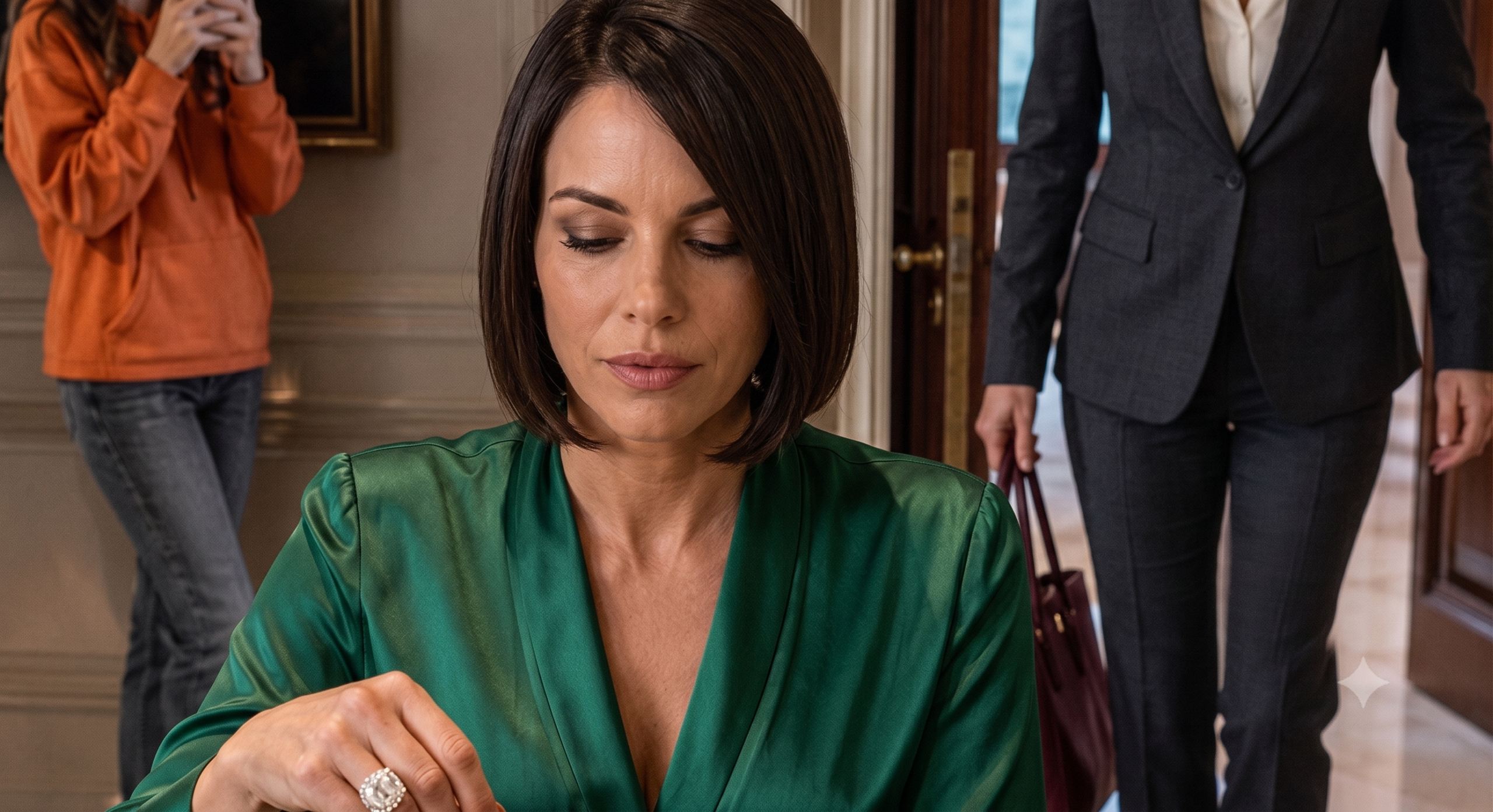
I took my son to visit my husband, the commander, but the guard blocked us at the gate and said, “His girlfriend is inside the unit. No visitors!” I covered my son’s ears, called my second brother, and ordered him to cut off every bit of support immediately.
Jul 11, 2026

I took my son to visit my husband, the commander, but the guard blocked us at the gate and said, “His girlfriend is inside the unit. No visitors!” I covered my son’s ears, called my second brother, and ordered him to cut off every bit of support immediately.

Part 1: The first thing I heard when I arrived at the gate was my eight-year-old son excitedly pointing toward the base. The second was the guard saying, “His girlfriend is inside the unit. No visitors!” I dropped the keys into my handbag.

At 8:17 on a gray Thursday morning in San Diego, Evelyn Whitaker stood outside the west gate of Naval Support Unit Coronado with one hand gripping her eight-year-old son’s shoulder and the other holding a paper bag of still-warm cinnamon rolls. Dylan had insisted they surprise his father. “Dad said commanders like coffee,” he had said solemnly in the car, balancing the thermos on his knees. Evelyn had smiled then. She was not smiling now.

The guard at the gate looked uncomfortable the moment he saw her military dependent ID. His name strip read HARRIS. He was young, maybe twenty-four, with the tense face of someone who had already been told what to say. “Ma’am,” he said, lowering his voice, “Commander Whitaker is unavailable.”

Evelyn glanced past him toward the administration building. Her husband’s black Tahoe was parked in his reserved space. “Unavailable?” she asked. “He told our son he would eat lunch with him today.” Harris swallowed. Dylan tugged her sleeve. “Mom?”

The guard looked at the boy, then back at Evelyn. His expression cracked. “Ma’am, I’m sorry. His girlfriend is inside the unit. No visitors.”

For three seconds, the world became soundless. Evelyn moved fast. She covered Dylan’s ears with both hands before the words could settle into him.

But the boy had already seen the guard’s face. He had already seen his mother go pale.

Inside the administration building, a woman in a cream coat stepped near the second-floor window, laughing into a phone.

Evelyn recognized her instantly: Chloe Vale, the civilian contractor whose “strategic consulting firm” had received emergency funding through a nonprofit account Evelyn’s family controlled. Her husband,

Commander Brandon Whitaker, appeared behind Chloe and placed a hand at her waist. Evelyn’s breath left her. Not pain. Not yet. Calculation.

She led Dylan back to the parking lot, buckled him into the SUV, and shut the door before she allowed herself to speak.

Then she called her second brother, Lucas Langford. He answered on the first ring. “Evie?” Her voice was quiet. “Cut off all support immediately. No mercy.” Lucas did not ask what happened. In the Langford family, that sentence had only one meaning.

“Brandon?” he asked. “And every account connected to Chloe Vale.” A pause. “Done.”

By noon, Brandon’s discretionary housing grant was frozen. By two, Chloe’s consulting invoices were flagged for audit.

By four, the private foundation that had quietly financed half of Brandon’s career advancement withdrew every endorsement attached to his name. At five thirty, Brandon called Evelyn seventeen times. She did not answer. At six, an unmarked government sedan pulled up beside the unit.

At six fifteen, Commander Brandon Whitaker walked out of the building without his cover, without his confidence, and without Chloe beside him.

Evelyn watched from across the street. Dylan slept in the back seat. Her phone buzzed with a message from Lucas. He thought you were powerless. He was wrong.

Part 2

Evelyn did not drive home immediately. She parked by the marina, where the water lay black and restless beneath the evening wind, and let Dylan sleep under his dinosaur blanket in the back seat.

For eleven years, she had been Commander Brandon Whitaker’s wife. To the officers’ spouses, she was gracious, composed, useful. S

he hosted dinners. She remembered birthdays. She wrote thank-you notes to donors and condolences to widows. She smiled beside Brandon at ceremonies while he accepted applause for programs that would never have existed without Langford money.

The Langford’s were not flashy old money. They were disciplined old money. Her grandfather had built ports, warehouses, and shipping contracts after the Second World War. Her father had expanded into defense logistics.

Her eldest brother, Nathaniel, ran the public company. Lucas, her second brother, handled private risk, legal exposure, and political relationships. Evelyn had chosen marriage over the family boardroom. Brandon had loved that choice when it served him. Now the service was over.

At 7:04 p.m., Lucas called again. “You need to know what we found.” Evelyn stared at the lights on the water. “Tell me.” “Chloe Vale’s firm received three accelerated payments from the Foundation for Veterans’ Housing.

All three were approved under Brandon’s recommendation.” Evelyn closed her eyes. “That foundation was mine,” she said. “Yes,” Lucas replied. “And one payment was routed through a subcontractor in Nevada. That subcontractor is linked to a company Brandon registered under his aide’s address.”

The cold inside Evelyn sharpened. “So this is not just an affair.” “No,” Lucas said. “It is fraud, procurement abuse, and possibly misuse of influence. I already sent the preliminary file to outside counsel. Nathaniel wants him destroyed publicly. I told him to wait.” “Good.” Lucas paused. “Evie, I have to ask. Did you know any of this?” “No.” “I believe you.”

That nearly broke her. Not Brandon’s betrayal. Not Chloe’s laugh behind the glass. Not the guard’s pity. Her brother’s simple trust almost did it. She looked back at Dylan. He was awake now, silent, watching her with wide eyes.

“Mom,” he whispered, “does Dad have another family?” Evelyn turned fully toward him. She climbed into the back seat, pulled him into her arms, and held him until his small body stopped trembling. “No,” she said. “He has made a terrible mess. But you are not the mess.

You are my son. You are loved. That part does not change.” Dylan buried his face against her coat. “Did I do something?” “No. Never.”

At 8:22 p.m., Brandon finally sent a text. Come home. We need to talk before your family ruins everything. Evelyn read it once, then forwarded it to Lucas. His reply came quickly. That is useful. Keep everything. Do not warn him.

When Evelyn arrived home, Brandon was waiting in the driveway of their Coronado house, still in uniform trousers and a white undershirt, his hair damp as if he had showered in a hurry. His face carried the ugly panic of a man who had confused charm with immunity.

He stepped toward the SUV. “Evelyn, listen to me.” She locked the doors from inside. Dylan flinched at the sound. Brandon noticed. For one moment, shame crossed

his face. Then anger replaced it. “You called Lucas?” he demanded. “Do you understand what you’ve done?” Evelyn lowered the window three inches. “Yes,” she said.

“I finally understood what I should have done years ago.” Brandon leaned close to the opening. “Chloe means nothing.” Evelyn looked at him without blinking. “That is

the first honest thing you have said tonight.”

Then she raised the window, backed out of the driveway, and drove away with their son while Brandon shouted her name behind them. By midnight, she and Dylan

were inside a secure Langford-owned apartment downtown. By morning, Brandon’s command would no longer be his shield. It would be the room where every lie came due.

Part 3

At 08:00 the following morning, the sun barely cut through the thick ocean fog hanging over Naval Support Unit Coronado. Inside the base’s main administration

building, the air was suffocatingly tense. Brandon sat at his immaculate mahogany desk, his cover resting precisely to his left, though his uniform shirt was slightly wrinkled from a sleepless night.

He was furiously typing an encrypted email to a contact in logistics, trying to trace why his discretionary funds had been frozen, when his office door swang open without a knock.

It wasn’t his aide.

Rear Admiral Vance stepped into the room, flanked by two stone-faced investigators from the Naval Criminal Investigative Service (NCIS). Behind them stood Lucas Langford, dressed in a sharp, dark corporate suit, carrying a sleek leather briefcase.

Brandon stood up out of military habit, his chest puffing out, though his jaw tightened. “Admiral. I wasn’t expecting an unannounced inspection.”

“This isn’t an inspection, Commander,” Admiral Vance said, his voice dropping like an anvil. “Hand over your base credentials, your government-issued devices, and your sidearm. You are being immediately relieved of command pending a formal Article 32 hearing.”

Brandon’s confidence finally fractured, his hands dropping to the desk. “Sir? On what grounds? If this is about a domestic dispute with my wife’s family—”

“It’s about procurement fraud, Commander,” one of the NCIS investigators interrupted, stepping forward to slap a sealed federal warrant onto the desk. “We have

spent the night reviewing the financial trail of the Foundation for Veterans’ Housing. Your signature authorized three accelerated payments to a shell contractor in

Nevada. That contractor directly funneled forty percent of those defense logistics funds into a private offshore account registered under your name.”

Brandon turned his head slowly, glaring at Lucas with pure, unadulterated hatred. “You did this. You’re trying to destroy my career because Evelyn is throwing a tantrum.”

Lucas didn’t flinch. He walked over to the desk, opened his briefcase, and smoothly laid out a series of printed bank forensics. “Evelyn didn’t destroy your career,

Brandon. Your own greed did. You assumed that because she chose to host family dinners instead of sitting in boardrooms, she didn’t understand how the money

moved. But the Langford family doesn’t just build ports—we secure them. Every single dollar you gave to Chloe Vale came from a trust fund Evelyn’s grandfather set

up. You were stealing from my sister, under the guise of serving your country.”

From the adjacent office down the hall, a frantic commotion broke out. Two female base security officers escorted Chloe Vale into the corridor, her cream coat

crumpled, her hands empty as they carried her personal electronics in static-free evidence bags.

“Brandon!” Chloe cried out, her voice echoing through the open door, entirely stripped of the mocking laughter she had displayed the morning before. “They froze

my firm’s server. They’re revoking my defense clearance. Do something!”

Brandon couldn’t even look at her. He stared down at his desk, the realization crashing over him that the uniform he had used as a shield for over a decade was officially gone.

Final PartBy 2:00 PM that afternoon, the news of the commander’s sudden removal had rippled through the insular Coronado military community. The black Tahoe

was towed out of its reserved parking space, and Brandon was escorted off the installation in the back of an unmarked government vehicle.

Six months later, the legal and financial hammer of the Langford family had systematically dismantled every lie Brandon Whitaker had ever told.

The defense procurement investigation had been merciless. Facing federal charges of grand larceny, fraud, and wire fraud, Chloe Vale had quickly turned state’s

evidence, handing over months of encrypted text messages proving that Brandon had orchestrated the entire shell company setup to fund their lavish lifestyle behind Evelyn’s back.

Because Brandon had used his active military command to facilitate the fraud, the court-martial was swift and absolute. He was stripped of his rank, dishonorably

discharged from the United States Navy, and sentenced to eighty-four months in a federal military correctional facility. His pension was completely forfeited to pay

back the restitution owed to the veterans’ foundation.

On a bright, clear Saturday afternoon, Evelyn stood near the edge of the Coronado marina. The water was a brilliant, sparkling blue beneath the Pacific sun, a sharp

contrast to the dark, restless waves from months prior.

She had sold the Coronado house, using the proceeds to fully fund Dylan’s future education trust. She was wearing a simple, tailored sundress, her hair catching the

ocean breeze, looking lighter than she had in years.

A silver sedan pulled up to the curb, and Brandon stepped out. He was completely out of uniform, wearing a faded t-shirt and jeans, his posture entirely hollowed

out, his face carrying the permanent exhaustion of a man awaiting his check-in date at the federal prison. He walked toward her slowly, stopping a few feet away,

unable to look her directly in the eyes.

“The lawyers said you agreed to let me see Dylan one last time before I report to the facility,” Brandon said, his voice raspy and thin.

“Dylan is with his uncle Lucas at the park,” Evelyn replied, her voice steady, entirely devoid of the anger he probably expected. “He knows you are going away for a

long time to fix the mistakes you made. I won’t teach our son to hate you, Brandon. But I will teach him to never confuse power with permission to hurt people.”

Brandon wiped a hand across his face, his eyes welling with a heavy, belated shame. “Evelyn… I lost everything. My command, my pension, my name. If your family

hadn’t interfered, we could have handled this privately.”

“You lost everything because you treated my silence as blindness,” Evelyn told him calmly. “You thought that because I hosted the dinners and wrote the thank-you

notes, I was powerless. But I was merely choosing to be a wife. The moment you turned your command into a playground for your mistress and a vault for your fraud,

the marriage was over. And the Langford family always protects its own.”

She turned away from him, looking out over the open ocean where a massive naval ship was slowly heading out to sea. She felt no joy in his ruin—only the clean,

liberating peace of a woman who had finally reclaimed her own life.

“Goodbye, Brandon,” she said quietly.

She walked away, stepping into her own vehicle where Dylan was now waiting for her in the passenger seat, his eyes bright as he held up a model airplane his uncle had bought him.

“Where are we going now, Mom?” Dylan asked as she started the engine.

Evelyn smiled, reaching over to squeeze his hand. “We’re going to our new home, sweetie. A place where the foundation is completely honest.”

Brandon Whitaker had spent eleven years believing his uniform made him untouchable, assuming a quiet, gracious woman would always absorb his betrayal in

silence to preserve his career. But as he stood alone on the concrete walkway of the marina, watching his family drive out of sight, he finally understood the true

weight of the Langford name: true strength isn’t found in the authority of a command or the arrogance of an affair—it is found in the quiet, unyielding integrity of the

people who hold the ground beneath your feet when you think you’re flying high.

More Details
At dinner, my parents demanded I apologize to their golden son or lose my education. I said, “Alright.” By dawn, I was packed. My brother’s face drained white: “Please tell me you didn’t send it.” Dad froze. “Send what?”
Jul 11, 2026

At dinner, my parents demanded I apologize to their golden son or lose my education. I said, “Alright.” By dawn, I was packed. My brother’s face drained white: “Please tell me you didn’t send it.” Dad froze. “Send what?”

It began when my father slid a printed email across the dinner table as if it were a court order. “Sign it,” he said.
My fork stopped above the mashed potatoes. My mother kept smiling at the roast chicken, because in our house, denial was basically served with dinner. My brother Brandon leaned back in his chair, ankle resting on his knee, wearing the lazy golden-boy grin that had saved him from every totaled car, bad check, and screaming ex-girlfriend since high school.
The paper said I was voluntarily deferring my fall semester at Ellison University.
Voluntarily.
I had worked three jobs for that acceptance. I had cleaned offices after dark, tutored rich kids who called me “the scholarship girl,” and hidden every diner tip in a coffee can beneath my bed. Ellison was my escape from that dining room, from my mother’s tight little sighs and my father’s favorite line: “Why can’t you be more like Brandon?”

I looked at him. “Why would I sign this?”

Dad’s jaw shifted once. “Because family comes first.”

Which meant Brandon came first.

Mom finally looked up. “Your brother is under enough stress. You embarrassed him at church. You accused him of something ugly.”

“He sold my laptop,” I said. “And my camera. I found the pawn slips in his truck.”

Brandon gave a soft laugh. “There she goes again. Always dramatic.”

Dad hit the table so hard the glasses jumped. “You will apologize to your brother tonight, or we cut off your education. No tuition help. No co-signed housing. No car. Nothing.”

The funny part was that they still believed I needed them.

Six months earlier, after Brandon “borrowed” my social security card to “help with insurance paperwork,” I began scanning everything. Bank notices. Loan letters. The locked cabinet in Dad’s office. The email Mom left open on the family iPad. I did not understand all of it at first, but I understood enough to make copies.

My name was attached to loans I had never taken.

My dead grandmother’s trust had been emptied.

And Brandon’s truck, the one Dad claimed came from “hard work,” had been bought with money Grandma left for my tuition.

I folded the deferral form in half. Then again.

Mom whispered, “Ava, don’t make this harder.”

Brandon leaned forward. “Say you lied. Then we can all eat.”

I stood. My knees trembled, but my voice stayed calm. “Alright.”

Dad smiled like he had won. Brandon actually winked at me.

By sunrise, my room was packed into two trash bags and my old suitcase. I had slept maybe twenty minutes. At 5:48 a.m., Brandon rushed into my doorway barefoot, pale as milk, holding his phone like it had attacked him.

“Please tell me you didn’t send it,” he said.

Dad appeared behind him in his robe, irritated. “Send what?”

Then Mom screamed from downstairs.

Part 2

Mom’s scream was sharp and high, the kind that makes every fight in a house stop breathing.

We ran downstairs. She stood in the foyer in her nightgown, staring through the front window. A black sedan was parked at the curb. Behind it sat Aunt Renee’s silver SUV, and behind that, a police cruiser.

Brandon muttered a word I had never heard him say in front of our mother.

Dad turned slowly toward me. “Ava. What did you do?”

I lifted my suitcase handle. “I protected myself.”

He moved quickly for a man who always claimed his blood pressure was too high for stress. He stepped in front of the door, blocking it with his shoulder. “You are not leaving until you explain.”

That was when my phone buzzed. Then again. Then again, until the kitchen counter sounded like a nest of wasps. Emails. Texts. Calls. My aunt. My university adviser. The county estate attorney. A woman from the student loan fraud unit whose name I had memorized at three in the morning because fear makes you organized.

Brandon’s face turned gray. “You sent the folder.”

Dad snapped, “What folder?”

I looked straight at him. “The one with the forged loan applications. The pawn slips. Grandma’s trust statements. The fake medical bills you used to drain it.”

Mom covered her mouth with one hand, but her eyes did not look shocked. They looked exhausted.

That frightened me more than Dad.

Aunt Renee pounded on the door. “Michael, open up before I break this window.”

Dad lowered his voice. “Ava, listen to me. Families handle mistakes privately.”

“Is that what we’re calling felonies now?”

Brandon lunged for my phone. I twisted away, and he crashed into the hallway table. The framed photo of him in his varsity jacket fell and cracked right through his smile. For one ridiculous second, I almost laughed.

Then Dad grabbed my arm.

Not hard enough to bruise, but hard enough to remind me he was still bigger.

“Undo it,” he said.

“I can’t.”

“You can.”

“No,” I said. “I scheduled three sends. The first went to the people who could investigate. The second goes at noon to every relative and donor who ever gave Brandon money. The third goes tonight to the local paper.”

Brandon made a choking sound. “You psycho.”

Mom finally spoke. “Ava, please. You don’t understand what happens if this gets out.”

I looked at her. “Then tell me.”

The room went so silent I could hear the refrigerator humming.

Dad said, “Diane, don’t.”

Mom flinched. Then she turned to me with wet eyes and said the sentence that split my childhood open.

“Your grandmother didn’t leave that trust only to you.”

I blinked. “What?”

“She left the house to you too,” Mom whispered. “This house. In your name, effective when you turned eighteen.”

For a moment, the words would not connect. The house I had cleaned after Brandon’s parties. The house where Dad called me ungrateful. The house they threatened to throw me out of whenever I said no.

Mine.

Aunt Renee shouted again, “Ava, are you safe?”

Dad’s face changed. The mask slipped. It was not anger anymore. It was panic.

Brandon pointed at me. “She can’t prove that. The deed was corrected.”

“Corrected?” I said.

Dad reached into the pocket of his robe and pulled out a small brass key. The key to the fireproof box in his office.

Then the doorbell rang.

Through the glass, I saw a woman in a navy blazer holding up a badge. Aunt Renee stood beside her, furious and crying.

Dad looked at Brandon. Brandon looked toward the stairs.

And before I could move, my brother bolted for Dad’s office.

PART 3

Brandon slammed into the office door with his shoulder and vanished inside before anyone could stop him. Dad shouted his name with a fear I had never heard from him, not even when Brandon wrapped Dad’s truck around a mailbox and convinced everyone the mailbox had “come out of nowhere.”

The woman with the badge knocked once, and then Aunt Renee pushed past her as soon as Mom opened the door.

“Ava,” Aunt Renee said, taking my face in both hands. “Did he touch you?”

“I’m fine,” I said, though my arm still burned where Dad had grabbed it.

The woman introduced herself as Marla Voss from the county financial crimes division. Her calm made my father look even more frantic. A uniformed officer stood watch in the hallway.

From the office came the sound of drawers slamming, then Brandon cursing.

“He’s destroying evidence,” I said.

Dad barked, “No one is destroying anything.”

Marla looked at him. “Then step aside.”

For once, Dad did not control the room just by raising his voice. The officer moved past him. Aunt Renee followed. So did I, because I was finished obeying criminals in bathrobes.

Brandon was kneeling beside the fireproof box, shaking so badly he could barely fit the brass key into the lock. When he saw us, he tried to shove papers under the desk with his foot.

Marla said, “Hands where I can see them.”

He froze. “This is a family matter.”

Aunt Renee laughed once, bitter and cold. “So was my mother’s funeral, and you still stole from it.”

Marla opened the box with gloves. Inside were envelopes, certificates, bank documents, and a folded deed with my grandmother’s handwriting across the front: For Ava when the truth becomes necessary.

My throat tightened.

Dad stared at it like it had risen from a grave.

Marla handed me the envelope. “You can read it or allow counsel to read it later.”

“I want to read it.”

Grandma’s letter was short. She wrote the way she spoke, warm and blunt, with no patience for nonsense. She said she knew my parents favored Brandon. She had watched them call my kindness “attitude” and his recklessness “potential.” She had put the house and education trust in my name because she believed I would build a life, not gamble one away.

Then came the line that broke me.

If they make you feel homeless in a house I left to you, remember this: love does not require you to stay where you are being used.

That was when I cried. Not graceful movie crying. The humiliating kind that breaks your breath apart. Aunt Renee pulled me against her shoulder, and for the first time that morning, I had family who was not trying to sell off pieces of me.

Dad tried one last time. “That letter proves nothing. Evelyn was confused near the end.”

Marla removed another document. “The notarized deed says otherwise.”

Mom sank into the chair beside the bookcase.

There it was, the ugly machine exposed in daylight. Grandma had deeded the house to me and funded my education trust two years before she died. Dad found out after the funeral and panicked because the mortgage had been refinanced twice, and he and Mom were drowning in debt from paying for Brandon’s “fresh starts.” A business school he quit. Betting losses he called bad luck. A private attorney after he was caught selling fake concert tickets. The truck. The engagement ring for a woman who had already left him.

They could not sell the house because it belonged to me. They could not touch the trust without records. So Dad forged a correction deed, claiming Grandma meant to leave everything to him. Mom notarized one signature through a friend from her old real estate office. Brandon, who was supposedly too innocent to understand paperwork, opened student loans in my name using my social security card and an old school ID. The money went into an account Dad controlled, then disappeared in pieces to cover Brandon’s disasters.

My education had not been threatened at dinner.

It had already been stolen years earlier, then dangled in front of me like a leash.

The twist that silenced everyone came from Aunt Renee. She pulled a thumb drive from her purse and handed it to Marla.

“What is that?” Dad asked.

“Mom’s kitchen camera,” Aunt Renee said. “You remember the little camera we put up after she started falling? It recorded audio too. You went to her house three days before she died and screamed at her about the trust for forty minutes.”

Dad went white.

Aunt Renee’s voice shook, but she held his stare. “You told her Ava would never survive without you. She told you Ava would survive the minute she got away from you.”

Brandon dropped his head. For one second, I wondered whether he had ever believed his own golden-boy act. Then he looked up with pure hatred, and my sympathy left.

“You ruined my life,” he said.

“No, Brandon,” I said. “I just stopped letting you use mine.”

The officer led him into the hallway after Marla found three loan approval notices in his backpack. He had been trying to take the originals, not to protect Dad, but because his name appeared on one transfer request. Even his panic was selfish.

Dad was not handcuffed that morning. Not yet. Investigations move more slowly than rage. But he was told not to remove documents, not to contact certain offices, and not to threaten me. Watching a stranger explain consequences to the man who had ruled our dinner table felt unreal.

Mom followed me onto the porch when I carried my suitcase outside.

“Ava,” she said. “I was afraid. Your father said we would lose everything.”

I looked back at the brick house glowing in the early sunlight. From the outside, it looked like every safe, ordinary family home on the block.

“You did lose everything,” I said. “You just lost it by protecting the wrong person.”

Aunt Renee took me to her apartment. She made terrible coffee and let me sleep on her couch under a quilt that smelled like lavender detergent. When I woke, my phone had eighty-seven messages. Some relatives called me cruel. Some said they had always known something was wrong. My university adviser wrote that my enrollment was secure while the fraud claim was reviewed. The student loan unit froze the accounts. The estate attorney said the deed would hold unless Dad could prove fraud.

At noon, my second scheduled email went out.

I did not stop it.

That email was not revenge. It was a record. Dates. Transfers. Scans. A timeline so clear even Uncle Mark, who once lost a parked car at a county fair, could understand it. I removed anything that was merely embarrassing and not evidence. I wanted truth, not a bonfire.

By evening, Brandon’s fiancee returned the ring. The diamond had been bought with trust money too. She sent me one message: I am sorry I believed them.

Over the next months, my life did not turn into a victory montage. Real justice comes with paperwork. I worked breakfast shifts at the diner. I filled out affidavits between classes. I sat through meetings where men in suits said “misappropriation” while I fought the urge to scream, “You mean theft.”

But I also moved into my dorm.

I bought a used laptop with money Aunt Renee insisted was a loan and then refused to let me repay. I froze my credit. I testified in a civil hearing wearing the only blazer I owned, and when Dad’s attorney suggested I was just an angry daughter exaggerating family conflict, I looked at the judge and said, “Being angry does not make the documents fake.”

The house was placed under court protection until the estate issues were resolved. Dad eventually accepted a settlement that restored the trust funds through the sale of assets he swore did not exist. Brandon took a plea on the loan fraud because the evidence had his fingerprints all over it, literally and digitally. Mom avoided charges by cooperating, which hurt in a different way. She called once to say she was proud of me.

I told her, “I hope one day you mean that when it costs you something.”

Then I hung up.

A year later, I stood outside Ellison’s library after my last final of sophomore year. The sun was warm. My backpack was too heavy. My coffee tasted burnt. My life was still messy, still expensive, still nothing like the glossy brochures promised.

But it was mine.

That morning, Aunt Renee texted me a photo. The old house had sold. The money went where Grandma had intended: my education, my credit repair, and a small scholarship fund in her name for students whose families treated opportunity like a bargaining chip.

I sat on the library steps and cried again, but this time I laughed too. Somewhere, I could almost hear Grandma saying, Took you long enough, kid.

People ask why I only said one word at dinner. Why not scream? Why not defend myself?

Because “alright” was not surrender.

It was the sound of a door unlocking.

So tell me honestly: when parents protect the golden child by sacrificing the quiet one, is exposing the truth betrayal, or is it justice? Comment what you would have done if your family asked you to apologize to the person who stole your future.

More Details
“My stepfather hurt me almost every day for fun. One night, he broke my arm, and when my mother rushed me to the hospital, she calmly told the staff,
Jul 11, 2026

“My stepfather hurt me almost every day for fun. One night, he broke my arm, and when my mother rushed me to the hospital, she calmly told the staff,

It was hope.

Because hope was dangerous.

Hope made you believe someone might save you.

And people never did.

Not the teachers who saw bruises beneath my sleeves. Not the neighbors who heard shouting through the walls. Not the relatives who noticed how quiet I had become after Ernesto moved in. Everyone preferred easy lies over ugly truths.

My mother suddenly grabbed my chin hard enough to hurt.

“Are you listening to me?” she hissed.

Before I could answer, two police officers stepped into the room.

One was a middle-aged woman with tired eyes and dark hair pulled into a tight bun. The other was younger, broad-shouldered, silent.

“Good evening,” the woman said calmly. “I’m Officer Medina. We just need to ask a few questions.”

My mother immediately smiled.

“Of course. It was just an accident.”

Officer Medina nodded politely, but her eyes moved to my neck, my face, my swollen arm in its temporary brace.

Then she looked directly at me.

“Can you tell me what happened, Valeria?”

The room became suffocatingly quiet.

I felt my mother’s stare burning into my skin.

I opened my mouth.

Nothing came out.

Years of fear wrapped around my throat like chains. Ernesto’s voice echoed inside my head.

No one will believe you.

You’ll destroy this family.

You’ll regret it.

My mother interrupted quickly.

“She already told the doctor. She fell.”

Officer Medina didn’t even glance at her.

“I asked Valeria.”

For the first time in my life, an adult wanted my answer instead of my mother’s.

My chest tightened painfully.

And suddenly, I was exhausted.

Exhausted from lying.

Exhausted from hiding bruises with makeup.

Exhausted from pretending the sounds coming from my bedroom at night were normal.

A tear slid down my face before I could stop it.

Then another.

Finally, in a voice so weak I barely recognized it, I whispered:

“He did this.”

My mother inhaled sharply.

Officer Medina stayed completely still.

“Who did?” she asked gently.

“Ernesto.”

The silence that followed felt enormous.

My mother stood up so abruptly the chair scraped across the floor.

“She’s confused,” she snapped. “She’s medicated. She doesn’t know what she’s saying.”

But something had changed already.

Once the truth left my mouth, it would never fit back inside.

Officer Medina asked my mother to step outside.

Laura refused at first, growing louder and angrier until the younger officer firmly escorted her into the hallway. I could hear her voice through the curtain.

“She’s dramatic!”

“She lies for attention!”

“You don’t understand what she’s like!”

Officer Medina pulled a chair beside my bed.

And I told her everything.

Not all at once.

At first the words came slowly, painfully, like broken glass. But once I started, years of silence burst open. I told her about the beatings. The threats. The nights Ernesto dragged me by the hair across the kitchen floor. The times he locked me outside in the rain. The way my mother always looked away.

Then I told her about the evidence.

Her expression changed immediately.

“What evidence?”

I explained about the recordings, the photos, the secret account, the lawyer.

Within an hour, the hospital room filled with people.

A social worker.

Another detective.

A woman from child protective services.

Someone brought me water. Someone else covered my shoulders with a blanket because I was shaking so hard.

No one called me a liar.

That alone felt stranger than anything else.

Around midnight, the police left to arrest Ernesto.

I expected relief.

Instead, terror crashed into me.

Because what if he escaped?

What if they released him?

What if he came back?

Officer Medina seemed to read my thoughts.

“He won’t touch you tonight,” she said firmly.

I wanted to believe her.

But fear had lived inside me too long to disappear in one sentence.

Two hours later, she returned.

And this time, Ernesto was with them.

Handcuffed.

His shirt was wrinkled, his face red with fury. The moment he saw me sitting upright in the hospital bed, he lunged forward.

“You ungrateful little—”

The officers restrained him instantly.

“You think this makes you strong?” he shouted. “You ruined everything!”

I froze.

Not because I was afraid anymore.

Because suddenly, he looked small.

For years Ernesto had seemed larger than life, like some monster impossible to escape. But standing there in handcuffs, screaming while officers held him back, he looked pathetic.

Weak.

Desperate.

And for the first time, I realized something important:

Cruel men survive by convincing everyone else they are powerful.

Officer Medina ordered him removed from the hospital.

As he disappeared down the hallway, he twisted toward my mother.

“Do something!” he yelled.

My mother stood there silently.

And that silence finally told the truth.

Not once did she ask if I was okay.

Not once did she defend me.

Not once did she apologize.

She only looked frightened that her world was collapsing.

A few days later, I moved into a temporary shelter arranged through social services. It was small, crowded, and smelled like detergent and cafeteria food.

But nobody screamed there.

Nobody slammed doors at midnight.

Nobody grabbed my wrists hard enough to leave bruises.

The first night, I couldn’t sleep because the silence felt unnatural.

The second night, I cried so hard my chest hurt.

The third night, I looked at my reflection in the bathroom mirror and realized I no longer looked terrified all the time.

The court process took almost a year.

Ernesto denied everything, of course.

Then the recordings were played.

His voice filled the courtroom — threats, insults, laughter after my screams.

The photos followed.

Then the videos.

By the end, even Ernesto’s lawyer stopped looking at the jury.

My mother testified too.

Not for me.

For him.

She said he was stressed. That he drank too much sometimes. That he “never meant real harm.”

I remember staring at her across the courtroom and feeling something inside me finally die.

Not love.

That had died years ago.

It was hope that she would someday become the mother I needed.

When the verdict came, Ernesto was sentenced to prison for aggravated domestic abuse and child endangerment.

He shouted as officers dragged him away.

I didn’t even flinch.

Afterward, my mother tried to approach me outside the courthouse.

“Valeria…” she began, crying.

I stopped walking.

For a moment, she looked so tired and human that sixteen years of memories collided painfully inside me. Part of me still wanted her to say the words I had waited my whole childhood to hear.

I’m sorry.

I should have protected you.

But she only whispered:

“You could have destroyed us.”

I looked at her for a long time before answering.

“No,” I said quietly. “He did.”

Then I walked away.

Five years later, I still carry scars.

Some are visible. Most are not.

My arm aches when it rains. Loud voices still make my heartbeat spike. Sometimes I wake up in the middle of the night convinced I hear Ernesto’s footsteps outside my door.

But I also survived.

I finished school.

I studied law.

And now I work with teenagers who sit across from me with bruises hidden beneath long sleeves, convinced nobody will ever believe them.

I always tell them the same thing:

“The moment you speak the truth, the violence begins to lose.”

Because silence protected Ernesto.

Truth destroyed him.

And that night in the hospital — the night the doctor quietly stepped into the hallway and called the police — was the first night my life finally began.

More Details
After I retired, my daughter laughed in my face: “Your pension is barely $1,000. You won’t survive on that,” and her husband added: “You have two options: serve me and keep living in this house, or go out and beg.” He thought that was my only way out, but they didn’t know I owned six houses in the city, had $10 million sitting in a trust, and had already prepared a plan to wipe those smiles off their faces.
Jul 11, 2026

After I retired, my daughter laughed in my face: “Your pension is barely $1,000. You won’t survive on that,” and her husband added: “You have two options: serve me and keep living in this house, or go out and beg.” He thought that was my only way out, but they didn’t know I owned six houses in the city, had $10 million sitting in a trust, and had already prepared a plan to wipe those smiles off their faces.

Part 3 — The Lesson They Never Saw Coming

The room was so quiet I could hear the clock ticking in the hallway.

Sarah’s hands trembled as she stared at the documents spread across the table.

Michael looked from one deed to another.

Then back to me.

Then back to the deeds.

As if looking long enough would somehow change what he was seeing.

It didn’t.

The truth was sitting right there between the wine bottle and the untouched steaks.

Six properties.

All paid off.

A trust worth over ten million dollars.

And a man they had mistaken for helpless.

Michael swallowed hard.

“You… you own all of this?”

I folded my hands.

“Yes.”

Sarah’s face had turned ghost white.

“But why didn’t you ever tell us?”

I looked at her for a long moment.

“Because I wanted people to love me for who I was, not for what I had.”

Nobody spoke.

The answer landed harder than any accusation.

Michael shifted uncomfortably in his chair.

“Look, maybe we got off on the wrong foot tonight—”

“No.”

My voice stopped him immediately.

“This didn’t start tonight.”

His mouth closed.

I stood and walked toward the living room.

The two of them followed.

I opened a drawer and pulled out a thick folder.

Inside were years of receipts.

Cancelled checks.

Bank transfers.

Records.

Every time I had helped them.

Every loan.

Every emergency.

Every rescue.

I laid the folder on the coffee table.

Sarah stared at it.

“What is this?”

“Your history.”

I opened the first page.

“$8,200 for your divorce attorney.”

Flip.

“$4,500 for your car after the accident.”

Flip.

“$12,000 for Michael’s business idea.”

Michael looked away.

Flip.

“Mortgage payments when you couldn’t make them.”

Flip.

“Medical bills.”

Flip.

“Credit card debt.”

Page after page.

Year after year.

Sarah began crying before I reached the middle.

“I never realized…”

“No,” I said softly.

“You never counted.”

The tears streamed down her face.

Because she knew I was right.

When help becomes expected, gratitude slowly disappears.

And somewhere along the way, my sacrifices had become invisible.

For several minutes nobody said a word.

Then Sarah whispered something I never expected.

“I’m ashamed.”

I looked at her.

She wasn’t defending herself.

Wasn’t making excuses.

Wasn’t blaming Michael.

She was simply telling the truth.

“I’m ashamed of how I treated you.”

For the first time all evening, I saw my daughter again.

Not the angry woman across the dinner table.

Not the person obsessed with money.

The daughter I had raised.

The one who still existed beneath all the noise.

Michael stood quietly.

Then he surprised me too.

“I owe you an apology.”

I raised an eyebrow.

He continued.

“No conditions. No excuses.”

He looked directly at me.

“I was wrong.”

The room fell silent again.

This time for a different reason.

Because sincere apologies are rare.

Especially from people who aren’t used to admitting fault.

I nodded slowly.

“Thank you.”

The next morning nobody slept late.

Nobody hid in their room.

Nobody pretended the previous night hadn’t happened.

Instead, Sarah made breakfast.

Michael cleaned the kitchen.

And around noon they both sat across from me at the dining room table.

The same table where they had mocked me less than twenty-four hours earlier.

Sarah took a deep breath.

“What happens now?”

I already knew the answer.

Because I had spent months thinking about it.

“I’ll tell you exactly what happens.”

They listened carefully.

“You are still moving out.”

Their faces dropped.

I raised my hand.

“Not because I hate you.”

They remained silent.

“Because dependency is destroying all three of us.”

The words hurt.

But they were true.

“You need your own life.”

Sarah nodded slowly.

“And you?”

I smiled.

“I need mine.”

For the first time in years, neither of them argued.

Over the next sixty days, everything changed.

Michael found steady work.

Not glamorous work.

Real work.

The kind that requires showing up every day.

Sarah returned to school and completed the certification program she had abandoned years earlier.

Slowly, they began standing on their own feet.

The process wasn’t easy.

Some weeks were difficult.

Some months were worse.

But every challenge they solved themselves made them stronger.

And for me?

Retirement finally began.

I traveled.

I visited places I had postponed seeing for decades.

I watched sunrises without checking emails.

I ate breakfast whenever I wanted.

I spent entire afternoons reading books with absolutely no deadlines.

For the first time since I was twenty-three years old, I belonged to my own schedule.

Life felt lighter.

Then came the phone call.

Two years later.

“Dad?”

Sarah’s voice sounded different.

Confident.

Happy.

“We bought a house.”

I smiled immediately.

“You did?”

“We did.”

I could hear excitement in her voice.

Not entitlement.

Pride.

The healthy kind.

The kind earned through effort.

A month later she invited me over.

The house wasn’t huge.

It wasn’t luxurious.

But every corner of it reflected their hard work.

As we walked through the front door, Sarah stopped beside the entryway.

Mounted on the wall was a framed photograph.

The picture showed three people standing in front of a moving truck.

Me.

Sarah.

Michael.

The day they moved out.

Below it was a small plaque.

I leaned closer and read the words.

“The day we stopped depending on others and started building our own future.”

I felt my throat tighten.

Sarah noticed.

“You changed our lives, Dad.”

I laughed softly.

“I nearly threw you out.”

She smiled through tears.

“Exactly.”

That evening we sat on their back patio watching the sunset.

No arguments.

No manipulation.

No demands.

Just family.

Real family.

Before I left, Sarah handed me a small envelope.

Inside was a note.

Written in her handwriting.

The last line read:

“You spent your life giving us everything. Thank you for finally teaching us how to earn something ourselves.”

I folded the letter carefully and slipped it into my pocket.

As I drove home, I realized something important.

The greatest inheritance isn’t money.

It isn’t property.

It isn’t a trust fund.

The greatest inheritance is character.

Because money can disappear.

Property can be sold.

Fortunes can be lost.

But the lessons that shape a person’s heart can last forever.

And for the first time in a very long time, I knew my daughter would be just fine.

Not because of what I could give her.

But because of who she had become.

The End.

More Details
At the family dinner I was sitting there with my broken arm, couldn’t even eat. My MIL said “My son taught her a lesson.” And his sister bragged, “She thought she was in charge.” I just smiled. 30-minutes later, the doorbell rang and he found out who really runs this place.
Jul 10, 2026

At the family dinner I was sitting there with my broken arm, couldn’t even eat. My MIL said “My son taught her a lesson.” And his sister bragged, “She thought she was in charge.” I just smiled. 30-minutes later, the doorbell rang and he found out who really runs this place.

PART 1

My husband broke my arm on Tuesday night, and by Friday his family was laughing about it over roast beef. The worst part was not the pain—it was the way they spoke as though I were furniture they had finally kicked into place.

I sat at the long walnut table with my right arm locked in a sling, my fingers swollen purple beneath the bandages. Every movement sent a hot pulse from my wrist to my shoulder. I could not cut my food, so my plate sat untouched while Ethan carved his steak beside me.

His mother, Victoria, lifted her wineglass and smiled. “My son taught her a lesson,” she said.

Ethan’s sister, Natalie, laughed. “She thought she was in charge.”

Ethan did not deny it. He leaned back in the chair I had bought, under the chandelier I had chosen, and looked at me with the lazy confidence of a man who believed fear had erased my memory.

“Maybe now,” he said, “you’ll stop interfering in family decisions.”

The “family decision” had been Ethan transferring eighty thousand dollars from our joint household account to cover Natalie’s failing boutique. I had frozen the transfer. That night, he cornered me in the upstairs hall, twisted my arm behind my back, and shoved me into the banister. At the emergency room, I told the doctor I had fallen.

But I had not lied everywhere.

Beneath the table, my left hand rested beside my phone. The screen was dark, but the recording app had been running since Victoria’s toast.

I looked around the dining room. Victoria had already begun talking about moving into “the east suite.” Natalie wanted to convert my office into a nursery for the baby she had not yet conceived. Ethan spoke about refinancing the house and putting his mother on the deed.

They had mistaken my silence for surrender.

I smiled.

Victoria narrowed her eyes. “What is so funny?”

“Nothing,” I said softly. “Please continue.”

Ethan’s expression flickered. He knew that tone. Before marrying him, I had spent twelve years negotiating commercial fraud cases for a national bank. I knew how arrogant people behaved when they believed the documents were already signed.

Natalie raised her glass toward me. “To knowing your place.”

I lifted my water with my uninjured hand.

“To ownership,” I replied.

They laughed again.

Thirty minutes later, the doorbell rang.

Ethan glanced toward the foyer. “Who invited someone?”

I finally looked him directly in the eyes. “I did.”

For the first time since Tuesday, fear did not control my breathing. The bell rang again, and I watched Ethan walk toward the door without realizing he was crossing the final safe distance between arrogance and consequence.

PART 2

Ethan opened the front door expecting a delivery driver.

Instead, two police officers stood beside a woman in a charcoal suit. A locksmith and a private security supervisor waited behind them.

The woman stepped forward. “Mr. Vance? I’m Attorney Sophia Sterling. We represent Mrs. Brooks and the Brooks Family Property Trust.”

For the first time that evening, Ethan looked uncertain.

Victoria pushed past him. “What is this nonsense?”

Sophia entered without raising her voice. “This property belongs solely to the trust established by Mrs. Brooks’ late father. Ethan Vance has no ownership interest and no legal authority to refinance, transfer, or encumber it.”

Natalie scoffed. “He is her husband.”

“Yes,” Sophia said. “Not her landlord. Not her trustee. Not her owner.”

Ethan turned on me. “What did you do?”

I remained seated. “I stopped protecting you.”

One officer approached the table. “Mrs. Brooks, are you safe speaking in front of these individuals?”

“Yes.”

“Do you wish to make a formal statement concerning the assault reported by your physician?”

Victoria’s face drained of color.

Ethan stared at me. “You said you fell.”

“I said that at the hospital. I never said the doctor believed me.”

The emergency physician had noticed finger-shaped bruising above the fracture. Hospital security preserved footage of Ethan dragging me through the parking garage while warning me to stay quiet. My smartwatch had recorded the argument, the impact, and his voice afterward: Look what you made me do.

Sophia placed a folder on the table.

Inside were photographs, bank records, copies of Ethan’s attempted transfer, and messages between Victoria, Natalie, and Ethan. They had discussed declaring me mentally unstable, gaining control of my trust income, and using my injury as proof I could not manage my affairs.

Natalie’s glass slipped from her fingers.

“You hacked my phone,” she whispered.

“No. You logged into your messages on the tablet in my kitchen and never signed out.”

Ethan lunged toward the folder, but the second officer blocked him.

“Sir, keep your hands visible.”

Victoria sneered. “This is a family matter. She has always been dramatic.”

Sophia opened another document. “Then perhaps you can calmly explain why you submitted a forged power of attorney to First Commonwealth Bank yesterday.”

Silence swallowed the room.

Ethan looked at his mother. Victoria looked at Natalie. Natalie looked at the floor.

That was the proof I needed. His mother had convinced him marriage gave him access to everything my father left me. Their greed made them reckless enough to put the fraud in writing and steal my future.

The security supervisor handed Ethan a notice.

“What is this?” he snapped.

“A revocation of permission to occupy trust property,” Sophia replied. “Because of documented violence and attempted financial exploitation, the trust has authorized your immediate removal pending a protective-order hearing.”

Ethan liquefied into a thin laugh. “You cannot throw me out of my own home.”

I stood slowly, pain burning through my arm.

“This was never your home,” I said. “It was the place where I let you live.”

PART 3

Ethan’s face changed before anyone touched him. Rage rose through the shock, familiar and ugly.

“You planned this,” he said.

“No. You planned it. I documented it.”

He stepped toward me, but the officers moved at once. When one took his wrist, Ethan jerked away and shouted that I belonged to him, that everything under that roof was his, and that a wife could not humiliate her husband before his family.

The room went still.

The officer said, “Thank you for clarifying your state of mind.”

Ethan was arrested for domestic assault, coercive control, and attempted financial fraud.

Victoria screamed as they led him outside. “You ungrateful witch! We accepted you!”

I looked at the table set with my china. “You accepted my money,” I said. “You never accepted me.”

Sophia turned to Victoria and Natalie. “You have ten minutes to collect your handbags and coats. Everything else will be returned through counsel.”

Natalie began crying. “My boutique will collapse without that money.”

“It already collapsed,” I said. “You wanted my savings to hide it.”

Victoria pointed at me. “Ethan will come back. Judges do not destroy families over one argument.”

I tapped my phone and played her voice into the dining room. “My son taught her a lesson.”

Then Natalie’s laughter. “She thought she was in charge.”

Finally came Ethan’s voice from Tuesday night, captured by my watch. “Sign the authorization tomorrow, or next time I break more than your arm.”

Victoria stopped speaking.

Sophia informed them that the bank had frozen the transfer and referred the forged document to its financial-crimes unit. My trust’s attorneys were suing all three of them for attempted conversion of assets, legal fees, and damages. Natalie’s boutique account would also be examined because Ethan had already funneled twelve thousand dollars into it.

Their confidence disappeared.

Security escorted them into the cold rain. The locksmith changed every exterior lock before midnight. Sophia stayed while I gave my statement, then helped me heat soup because I still could not lift a spoon.

At two in the morning, I stood alone in the silent dining room. Ethan’s chair sat pulled back, empty.

For years, I had mistaken endurance for loyalty. That night, strength meant locking the door.

Eight months later, Ethan pleaded guilty after the recordings and bank evidence destroyed his defense. He received prison time, mandatory intervention treatment, and a permanent restraining order. Victoria lost most of her savings settling the civil case. Natalie declared bankruptcy and closed the boutique.

I sold the house—not because they had ruined it, but because I no longer needed a fortress built from my father’s protection. I bought a bright apartment overlooking the river, returned to work, and used part of the settlement to fund emergency legal aid for abuse survivors.

On my first evening there, I ate dinner by the window with my healed arm resting freely on the table.

No one mocked me. No one told me my place.

I had finally learned it for myself.

More Details
My CEO Thought She Could Fire Me, Steal My Code, and Keep My $4 Million Bonus… Until the Company Lawyer Saw My Contract.
Jul 9, 2026

My CEO Thought She Could Fire Me, Steal My Code, and Keep My $4 Million Bonus… Until the Company Lawyer Saw My Contract.

This is a chronicle of my own meticulously designed coup d’état. It is a testament to the lethal, invisible intersection of corporate greed and strategic foresight, built entirely upon the blind arrogance of men and women who believe they inherently own everything they touch. It is a narrative of cold-blooded, absolute revenge, executed with nothing more violent than the stroke of a pen. It is proof that in our modern, cutthroat economy, leverage—and the ironclad legal right to wield it—is the only true currency that matters.

The morning had begun like any other over the past three years. I took the express train into the city, watching the gray blur of the boroughs give way to the towering glass cathedrals of Manhattan. I felt a quiet, simmering hum of anticipation in my chest. Three years of eighty-hour weeks. Three years of missed holidays, cold takeout, and staring at dual monitors until my vision blurred. Tomorrow was the payout date for the Chimera milestone. Tomorrow, the struggle ended.

But the real scene began not with a celebration, but with the harsh, rattling vibration of my phone against the glass coffee table in the ground-floor lobby of our headquarters. I was sitting in the sterile, aggressively minimalist atrium, sipping a black coffee, waiting for the elevators to cycle.

The text message from the Human Resources automated system was entirely devoid of human warmth, a clinical command masked as a polite calendar invite: URGENT PERFORMANCE REVIEW. 9:15 A.M. CONFERENCE ROOM C. I froze. A performance review on a Tuesday morning, one day before a massive equity payout? That wasn’t a review. That was an ambush.

I looked up, scanning the vast expanse of imported white marble, and saw Morgan Vance, the Vice President of Engineering and sister to the CEO, standing near the security turnstiles. She was flanked by one of our third-party security guards—a man twice my size with a jawline like an anvil and arms that strained the fabric of his cheap blazer. Morgan’s eyes flicked toward me for a fraction of a second, registering my presence, then instantly darted away. She suddenly found the intricate, polished pattern of her expensive leather heels utterly fascinating. That single, cowardly refusal to meet my gaze told me everything I needed to know. The guillotine wasn’t just polished; the blade was already dropping.

I stood up slowly, smoothing the imaginary wrinkles from my tailored charcoal skirt. I walked toward the VIP elevator bank, my heels clicking a steady, rhythmic march against the stone. The hum of the building’s massive HVAC system felt oppressive today, pumping a synthetic, recycled chill into the air that raised goosebumps on my arms.

By the time I reached the executive floor and approached Conference Room C, the air inside felt palpably thick. It smelled faintly of stale espresso, expensive dry cleaning, and the distinct, sour metallic tang of cowardice.

Morgan sat at the head of the long mahogany table, her posture rigid. She didn’t offer me a seat. Instead, as soon as I crossed the threshold, she slid a thin, blindingly white envelope across the polished wood. The microscopic scratch of the heavy cardstock against the veneer sounded as loud as a match striking in a silent cave.

“Your position has been eliminated, effective immediately,” Morgan recited, her voice a rehearsed, hollow drone. She sounded like an exhausted customer service representative reading a script to a difficult client.

I didn’t reach for the envelope. I didn’t even look at it. Instead, my eyes drifted up to the digital clock mounted on the frosted glass wall behind her. 9:16 A.M. I was exactly twenty-three hours and forty-four minutes away from a life-changing payout, the contractual reward for dedicating the prime years of my life to building the backend architecture of their flagship product.

“I see,” I replied, letting my voice spool out into the quiet room like a steady, unbreakable ribbon of silk. “And I assume the standard severance package enclosed in that envelope conveniently excludes the performance bonus for Project Chimera?”

Morgan offered a tight, predatory smile that didn’t come anywhere near her eyes. She leaned back in her ergonomic chair, crossing her arms, adopting the smug posture of an executioner who genuinely enjoys the final, desperate twitch of the condemned.

“Bonuses are for active, performing employees, Clara. Since you are no longer with the firm as of this exact minute, that offer is null and void. The company is pivoting its strategic direction. We simply don’t need your architectural oversight anymore. We are streamlining.”

She truly believed she had won. Looking at me, she believed I was just a bloated line item on a spreadsheet, an expense to be neatly trimmed before the end of the fiscal quarter to make the balance sheets look prettier for the impending acquisition. She saw a disposable, naive asset. She didn’t see that the structural integrity of this entire billion-dollar company rested on a single, fragile, legal pillar that I had personally designed, and which she was currently kicking out from underneath herself.

I held her gaze, my face a mask of absolute neutrality, and slowly reached into my oversized leather tote bag.

“I need your security badge, Clara,” Morgan snapped abruptly, misinterpreting my movement. Her false politeness evaporated instantly, replaced by a defensive bark. “And the company phone. Now.”

I didn’t pull out my badge. Instead, my fingers wrapped around a heavy, leather-bound folder. It was old, its edges worn soft from years of being carried from apartment to apartment. It looked far older, far more permanent, and infinitely more dangerous than the flimsy severance agreement resting on the table.

I set it down on the mahogany with a heavy, satisfying thud that echoed in the quiet room.

“Before I leave, Morgan,” I whispered, leaning forward just enough to invade her space, holding her gaze until the smugness began to melt off her face, “we need to talk about the things you don’t actually own.”


The silence in Conference Room C immediately stretched taut, pulling tight like a piano wire tuned dangerously past its breaking point. Morgan stared at the battered leather folder resting between us, a flicker of genuine, unscripted confusion crossing her perfectly contoured features. In the corner of the room, sitting so still he was practically camouflaged against the gray wallpaper, was a young Human Resources representative. He looked like he belonged in a university library, clutching a clipboard to his chest. I heard him swallow audibly, a loud, nervous gulp in the quiet room.

“I told you, hand over the badge,” Morgan repeated. Her voice rose a full octave, the sharp, commanding edges of her authority beginning to visibly crumble under the weight of my utter lack of panic. People who are fired are supposed to cry. They are supposed to yell, or beg, or at least look shocked. My absolute stillness was a variable she hadn’t prepared for.

I unclipped the plastic photo ID lanyard from my lapel and tossed it casually across the table. It landed next to her pristine white envelope with a hollow, plastic clack.

When the HR rep tentatively stood up and reached across the table for my leather portfolio—presumably thinking it was company property I was trying to steal—my hand flashed out with the speed of a striking viper. I pressed my palm flat against the thick leather cover, pinning it to the mahogany with enough sudden force to make the heavy table shudder. My knuckles turned stark white.

“Not this,” I said, my tone dropping to a glacial, echoing register that made the young man instantly retract his hand as if he’d touched a hot stove. “This is my private, notarized copy of my employment contract. Specifically, the original master agreement, complete with the handwritten rider from the July seed-funding round three years ago.”

Morgan scoffed, a harsh, abrasive sound, though I noticed her left hand trembling slightly as she reached for her cooling coffee mug. She brought the ceramic to her lips, using the motion to hide the sudden, nervous tic jumping in her jawline.

“Your little ‘riders’ don’t matter, Clara. They haven’t mattered for years,” she said, feigning an air of exhausted patience. “The company owns everything you’ve touched, thought of, sketched out, or coded for the last thirty-six months. It’s standard Silicon Valley boilerplate. You signed the overarching Intellectual Property assignment on your first day. It supersedes everything.”

“I did sign it,” I conceded easily, leaning back in my chair and crossing my legs, settling in. “But I also signed Clause 11C. I highly suggest you stop talking right now, Morgan, and call Eleanor Shaw. She is the only person in this entire glass tower who actually possesses the legal pedigree to understand the devastating distinction between a perpetual license and a deed of sale.”

Morgan glared at me, her eyes narrowing into slits. But the absolute, terrifying absence of fear in my posture rattled her deep in her core. She pulled her sleek smartphone from her blazer pocket and angrily tapped out a frantic, aggressive message.

We sat in a suffocating, unbearable silence for ten agonizing minutes. I spent the time peacefully admiring the breathtaking view of the Chrysler building glinting in the morning sun, feeling the slow, rhythmic, powerful thud of my own heartbeat. I was entirely in control. Calm. Measured. Ready to detonate the charge I had planted three years prior. Morgan, conversely, spent the ten minutes shifting in her chair, checking her watch, and pretending not to look at the leather folder under my hand.

When Eleanor Shaw, the firm’s ruthless Lead Legal Counsel, finally pushed open the heavy glass door, she looked deeply inconvenienced. Her silver-rimmed glasses were perched precariously on the bridge of her sharp nose, and she held a digital tablet clutched to her chest like a Spartan shield. She looked at me with a fleeting, irritating glance of corporate pity, clearly assuming she was here to mop up a messy, emotional termination of a mid-level employee who didn’t understand right-to-work laws.

“Morgan, I have three international acquisition calls before noon. What on earth is the holdup?” Eleanor sighed heavily, resting her manicured hands on the back of an empty chair.

“Clara is refusing to sign the severance waiver. She’s citing some archaic rider. Clause 11C or something,” Morgan said, waving a dismissive, trembling hand toward my folder. “Just explain to her that the IP assignment is airtight so we can get security up here to escort her out of the building. I want her desk cleared by ten.”

Eleanor sighed again, a long, dramatic exhalation meant to convey how vastly her time was being wasted, and opened her tablet. Her finger tapped the screen aggressively, pulling up the digital archives of my personnel file. “Clara, please. Let’s not make this harder than it has to—”

She stopped mid-sentence.

Her finger hovered perfectly still over the glowing screen. She scrolled down slowly, her eyes narrowing as they scanned the digital text. She read the screen once. Then, she stopped breathing and read it again.

The annoyance vanished from her face instantly, wiped away and replaced by a horrifying, hollow vacancy. Her skin, previously flushed with the morning rush of the office, turned the sickly color of wet ash. Her lips parted, moving silently as she read and re-read the dense, archaic legal syntax I had insisted upon all those years ago.

She looked up at me. Her eyes were wide, blown-out, entirely devoid of the pity she had carried into the room moments before. It was replaced by pure, unadulterated terror.

“You… you drafted this with outside counsel,” Eleanor whispered, her voice barely carrying across the room.

“I did,” I replied, offering her a terrible, cold smile. “And you countersigned it yourself, Eleanor. Because back then, the company was completely broke, and you needed my architecture far more than you needed standard boilerplate.”

Eleanor slowly reached up and removed her silver glasses. Her hand was shaking so violently that the metal frames rattled rhythmically against the mahogany table when she set them down. She turned her head slowly, mechanically, toward the frosted glass door, where a large, imposing shadow was suddenly looming, preparing to enter. It was the CEO.

“Oh my god,” Eleanor whispered, her voice cracking, sounding exactly like a woman who had just looked down to realize she was standing directly on a pressure-plate landmine. As the heavy door handle clicked downward, she breathed, “Vance… please tell me you already paid her.”


Richard Vance, the CEO, founder, and golden boy of the tech press, burst into the room with the kind of aggressive, entitled swagger that actively sucked the oxygen out of any enclosed space. He wore a quarter-zip cashmere sweater over a crisp dress shirt and a look of perpetual, simmering impatience—the universal, mandated uniform of the untouchable Silicon Valley bro-king.

“What’s the holdup in here?” Vance barked, not even granting me the dignity of a glance. He looked directly at his sister, Morgan. “I thought I told you to have her cleared out and off the premises by nine-thirty. We have the Japanese acquisition team logging onto the secure server in twenty minutes to finalize the tech handover.”

Eleanor didn’t look at him. She remained entirely frozen, staring down at the glowing screen of her tablet as if it were a venomous snake preparing to strike. “We can’t, Richard,” she managed to say. Her voice was completely stripped of its usual sharp, commanding edge; it sounded thin and reedy. “We just fired her. You ordered Morgan to fire her ‘without cause’ to avoid paying out the final milestone bonus.”

“Yeah, obviously, that was the financial strategy,” Vance snapped, crossing his arms and shifting his weight impatiently. “Save four million in cash flow on the balance sheet right before the final audit. It makes our EBITDA margins look pristine for the buyers. It’s smart business. So what? Write her a check for three months’ severance and get her out.”

“So,” Eleanor said, finally lifting her heavy, terrified eyes to meet his, “that specific termination just triggered Clause 11C of her original founding contract.”

Vance rolled his eyes to the ceiling, a theatrical, exhausting display of a genius forced to deal with lesser minds. “Stop talking to me in legal code, Eleanor. I don’t care about some clause. She worked for us. We paid her a salary. She built the algorithm on our servers, using our electricity. We own the code. It’s ours. Call the muscle downstairs and physically remove her.”

“No, Richard, you are not listening to me,” Eleanor said. The word no was sharp, desperate, and completely foreign in a room where Vance usually reigned supreme. “The Chimera Architecture wasn’t a standard work-for-hire agreement. Do you remember the seed round? Three years ago? We had absolutely zero capital. We couldn’t afford to pay Clara even a fraction of her market rate for the initial backend build. So, to get her to stay and build the foundation, you authorized me to sign a provisional license.”

Vance’s impatient frown faltered, just a microscopic fraction. A tiny, deep crease appeared between his eyebrows. He uncrossed his arms. “A what?”

“A provisional license,” I interrupted, standing up slowly. I took my time, smoothing the front of my skirt, enjoying the sudden, terrifying gravity my voice now commanded in the room. The acoustics seemed to shift, amplifying my every syllable. “The clause clearly states that this company merely holds a temporary, entirely revocable license to use the Chimera code. That license only legally converts to a permanent deed of ownership after the final milestone bonus—defined in the text as the ‘purchase installment’—is paid in full.”

Vance stared at me, his jaw slowly slacking, his aggressive posture deflating as the words bypassed his ego and hit his intellect.

“You fired me,” I continued, taking a slow, deliberate step toward the head of the table, forcing him to track my movement. “Without cause. Exactly twenty-four hours before that purchase installment was legally due. The clause explicitly states that in the event of an arbitrary termination prior to final payment, the provisional license is revoked. Instantly. Without a grace period. Without room for mediation.”

Eleanor dropped her tablet. It hit the mahogany table with a loud, violent crack that made the HR rep jump out of his skin. “Ownership reverts entirely and retroactively to the creator,” she translated for her boss, her voice now barely a horrified whisper. “Richard… she owns it. She owns all of it.”

Project Chimera wasn’t just a side project or a minor feature. It was the central nervous system of the company. It was the complex neural network that powered our entire data-sorting platform. It was the exact, singular piece of proprietary technology that the massive Japanese conglomerate was paying one point two billion dollars to acquire next week. Without Chimera, the company was just a collection of rented servers and Herman Miller chairs.

“Project Chimera is mine, Richard,” I said, stopping two feet away from him, looking dead into his panicking eyes. “Every single line of backend code, every patent-pending algorithm, every data-sorting protocol. As of 9:15 A.M. this morning, when your sister handed me that pathetic white envelope, your tech empire became an empty, worthless shell.”

The stale coffee smell in the room was suddenly and violently overpowered by the sharp, acrid scent of raw, human panic. The executives were paralyzed. I could see the realization washing over them like freezing water breaking through a dam. Their careers, their massive equity payouts, their planned golden parachutes, their entire identities as ‘titans of industry’—all of it rested on a foundation they had just legally, foolishly dynamited to save a few bucks.

Vance’s face transformed. The blood rushed to his head, turning his skin a dark, bruised, mottled purple. The veins in his thick neck bulged visibly against his expensive cashmere collar. He let out a sound that was half-roar, half-sob, and slammed both his fists down onto the mahogany table with such staggering violence that Morgan’s coffee mug tipped over. A dark brown stain spread rapidly across the wood, creeping toward my white severance envelope.

“I’ll see you in federal prison for this! You set us up! You sabotaged us!” Vance screamed, spit flying from his lips, completely losing control. “It’s extortion! I’ll bury you in litigation until you’re homeless and begging on the street!”

He lunged forward, his hands grasping at the air, his face twisted in pure, animalistic fury, entirely stripped of his sophisticated corporate veneer.

I didn’t flinch. I didn’t step back. I just slowly raised my left arm, checked the silver watch on my wrist, looked back into his bloodshot eyes, and smiled.


“Extortion?” I asked, my voice barely above a whisper, yet it possessed a cold resonance that sliced right through Vance’s feral shouting. “No, Richard. Extortion is demanding a woman work eighty-hour weeks to build your empire from scratch, only to fire her the day before she gets her rightful cut just to fluff your margins. This?” I gestured to the leather folder on the table. “This is just business.”

Vance took another step toward me, his face twisted in rage, but the massive security guard—the man Morgan had brought in specifically to intimidate me—suddenly stepped forward.

But he didn’t grab me.

He stepped between me and Vance. He put a heavy, restraining hand on the CEO’s chest. The guard wasn’t a lawyer, but he was fluent in the language of power. And he could read the room perfectly. He knew, with absolute certainty, who was actually in charge now.

Vance stopped, chest heaving, staring at the guard in disbelief.

Eleanor sank into her chair, putting her head in her hands. She looked physically ill, her shoulders shaking. “He’s right to stop you, Richard. If we go to court, if you even try to fight this, the discovery process will take two to three years. The Japanese acquisition auditors are pulling the final IP title reports tomorrow morning. The moment they see a title dispute on Chimera, the deal dies. It dies before lunch.”

She looked up, her mascara slightly smudged. “We’ve burned through our runway. We have no bridge loan. If this deal falls through, we will be entirely bankrupt and in receivership by Friday. We won’t even be able to make payroll.”

The room went tomb-silent. The only sound was the drip, drip, drip of Morgan’s spilled coffee hitting the carpet. Morgan herself looked like she wanted to liquefy and disappear into the floorboards. The eager executioner had effectively slipped the noose around her own neck.

I walked over to the table and calmly picked up my leather portfolio, tucking it under my arm. The power dynamic hadn’t just shifted; it had inverted completely. I was no longer the fired employee begging for scraps. I was a hostile negotiator holding the detonator to their billion-dollar legacy.

“I’m leaving now,” I announced to the silent room. “You have my outside counsel’s number. I suggest you use it.”

Vance, completely deflated, grabbed the edge of the table to steady himself. The swagger was gone. The arrogance was entirely wiped away, leaving behind a terrified, small man.

“Wait,” Vance croaked, his voice cracking, sounding aged by a decade in a single minute. He looked at me with bloodshot eyes. “What do you want, Clara? Just… tell us the number. We’ll pay the four million. We’ll reinstate you right now. Just void the revocation.”

I stopped at the glass door, placing my hand on the cool metal handle. I didn’t look back at him. I stared out at the bustling city below, at the tiny cars and the people going about their lives, entirely unaware of the slaughter happening in this tower.

“Just tell me the number, Clara!” Vance begged, his voice breaking.


I turned my head slowly, looking over my shoulder at the wreckage of their arrogance.

“My price,” I said, my voice steady and devoid of any emotion, “is no longer four million dollars. That was the ‘loyal employee’ discount. The ‘hostile IP acquisition’ price is forty million.”

Morgan gasped loudly, a wet, choking sound.

Vance’s jaw dropped. “Forty… forty million? That’s insane! You’re taking almost half of the executive profit pool from the merger! We can’t authorize that! The board will skin me alive!”

“I am taking exactly what the market will bear, Richard,” I replied, holding his gaze until he looked away. “And considering I am the only thing standing between you, a billion-dollar lawsuit for corporate fraud, and the total destruction of your personal net worth, I’d say forty million is a generous bargain.”

I pushed the glass door open.

“You have until the close of business today. Five-o’clock Eastern Standard Time. If the funds are not wired and cleared in my offshore account by then, I am selling the Chimera architecture to your direct competitors in Silicon Valley. Good luck with the Japanese.”

I walked out of the room, letting the heavy glass door swing shut behind me, sealing them in their own self-made tomb.

The elevator ride down to the lobby felt entirely different than the ride up. The crushing, invisible weight that had been compressing my spine for three years—the constant, exhausting need to prove my intelligence, to justify my worth to men who viewed me merely as a tool—was gone.

As I stepped out into the crisp, bright New York air, the sun hit my face, warming the cold chill of the corporate air conditioning from my skin.

My phone pinged in my pocket. I pulled it out.

It was an email from Morgan, flagged with high importance. The subject line read: URGENT: Clara, please let’s talk. We can fix this. I am so sorry.

I stared at the preview text. I could almost hear the tremor in her fingers as she typed it, the desperation bleeding through the screen. With a single, smooth swipe of my thumb, I deleted the email without opening it.

I walked three blocks away from the skyscraper and found a quiet, dimly lit French bistro. I ordered a glass of vintage champagne and sat at a small corner table. I placed my phone flat on the white tablecloth and opened my secure banking application.

The screen was blank, save for my current, modest checking balance.

I sat there for six hours. I ordered a second glass of champagne. I watched the city move. I watched the digital clock on my phone screen tick upward, minute by agonizing minute. The wait wasn’t anxious; it was thrilling. It was the feeling of watching a perfectly placed domino tip forward.

At 4:58 P.M., I pulled the phone closer. I stared at the banking app. I swiped down to refresh.

The screen flashed. The little loading circle spun in the center. Pending. 4:59 P.M. The circle kept spinning. The bistro around me seemed to go totally silent.

5:00 P.M.

The screen flashed bright white as it refreshed one final time.


Six months later, I was sitting on the terrace of a cafe in Zurich, wrapped in a thick wool coat, watching the morning fog roll off the snow-capped peaks of the Alps. The air was razor-sharp and clean, smelling of pine and roasted coffee.

I reached across the wrought-ironSet featured image table and picked up a discarded copy of the Financial Times left by a previous patron. I casually flipped through the global markets section until a small, bolded headline caught my eye:

CHIMERA ACQUISITION LEADS TO BOARDROOM BLOODBATH: CEO RICHARD VANCE REMOVED AMIDST INVESTOR BACKLASH.

The article was brief but brutal. Following the successful billion-dollar merger, a massive, unexplained forty-million-dollar hole had been discovered in the pre-acquisition financials. The board had panicked, the new parent company had initiated an audit, and Vance had been unceremoniously ousted, his reputation entirely radioactive. Morgan, the article noted briefly, had “stepped down” to pursue other opportunities.

I sipped my black coffee. I felt a fleeting, microscopic pang of pity, but it vanished almost instantly, carried away by the cold mountain breeze.

I thought back to that morning in Conference Room C—the smell of stale coffee, the sight of that blindingly white envelope, the practiced indifference in Morgan’s eyes.

I realized, staring out at the mountains, that the forty million dollars currently sitting in diversified, high-yield trusts wasn’t the actual victory. The money was just math. The true victory was the exact moment I had looked at the severance envelope, nodded, and refused to cry. It was the moment I realized I didn’t need their permission to be powerful, because I had been the one holding the keys to the kingdom all along. They just hadn’t bothered to read the fine print.

My phone, resting next to my saucer, vibrated with a soft hum.

It wasn’t a calendar invite from Human Resources. It was an encrypted message from a former senior engineer I used to work with, someone who had survived the merger purge.

Everyone is still talking about what happened that morning, the message read. The NDA they made us sign is crazy, but rumors leak. You took them down without raising your voice. You’re a legend around here, Clara. What are you going to do next?

I set my coffee cup down. I looked out at the brilliant, blinding reflection of the sun on the water of Lake Zurich. The world felt entirely open, a vast, complex system waiting for a new architect.

I picked up my phone and began to type my reply, my thumb moving rhythmically over the glass screen.

“Next? I’m thinking about starting a new fund. Actually, I might just buy the building they fired me in. I’ve always thought the lobby felt a bit sterile. I have some ideas for the floor plan.”

I hit send. I turned the phone off completely, slid it into my pocket, and leaned back in my chair, finally stepping into a future that belonged to no one but me.

More Details
“SHE WAS K****LED” – Head of Police FINALLY Reveals What REALLY HAPPENED To Princess Diana’s Final Night in Paris
Jul 9, 2026

“SHE WAS K****LED” – Head of Police FINALLY Reveals What REALLY HAPPENED To Princess Diana’s Final Night in Paris

Nearly three decades after the tragic death of Princess Diana, the world continues to demand clarity. Now, a senior police chief has spoken publicly once again, reaffirming the official findings while acknowledging the pain and unanswered questions that linger.

A Tragic Night in the Alma Tunnel

On August 31, 1997, Princess Diana, her companion Dodi Al-Fayed, and driver Henri Paul lost their lives in a high-speed crash inside the Pont de l’Alma tunnel in Paris. From the very beginning, speculation swirled: was it simply a terrible accident, or was there something more?

Investigations by both French authorities and later Scotland Yard concluded the cause was clear — a tragic collision fueled by speed, dangerous driving, and a driver under the influence. “It was an accident, a terrible, heartbreaking accident,” the police chief emphasized.

Addressing the Conspiracies

For years, conspiracy theories have clouded the memory of Diana’s final hours. Some suggested foul play, others hinted at hidden plots within the royal family. But the police chief was adamant: “Every credible lead was investigated. There was no conspiracy, no cover-up, and no evidence of assassination. The truth is painful, but it is simple: Diana’s death was the result of reckless driving and the relentless pursuit of paparazzi.”

A World Still in Mourning

The officer acknowledged that for many, accepting the official conclusion has been difficult. Princess Diana was more than a royal — she was “the people’s princess,” adored worldwide. Her sudden loss at just 36 years old left a wound that has never fully healed.

“Because Diana was so loved, it is human nature to search for deeper explanations,” the chief said. “But we owe it to her memory, and to the public, to stand by the facts.”

Lessons from Tragedy

The investigation also highlighted the dangers of paparazzi culture, road safety, and the vulnerability of high-profile figures. “This was not only a royal tragedy, it was a human tragedy,” the police chief noted. “It should remind us of the consequences of intrusion, pressure, and neglecting safety.”

The Final Word

After nearly 28 years, the official conclusion remains unchanged: Princess Diana’s death was the result of a devastating car crash, not a plot or crime. Yet the myths and speculation live on, a reflection of the deep love and fascination the world continues to hold for her.

“The case is closed in the eyes of the law,” the chief concluded, “but Diana’s memory will remain forever open in the hearts of millions.”

More Details
I paid £19,400 for my grandparents’ anniversary cruise, something they’d dreamed about for 38 years.
Jul 9, 2026

I paid £19,400 for my grandparents’ anniversary cruise, something they’d dreamed about for 38 years.

Holding that empty folder.Watching the ship shrink into the horizon until it became just another white shape on the water.

For the first time in a long time, I didn’t feel tired.

I felt… done.

Not broken. Not angry.

Just finished with something I had been carrying for too long.

I didn’t expect my phone to ring.

But it did.

Unknown number.

I almost didn’t answer.

Then I did.

“Mum is in a state,” my sister’s voice snapped through the line immediately. No greeting. No warmth. Just panic wrapped in blame. “Security had to escort us out of the terminal. People were staring at us like we were criminals.”

I stayed quiet.

“She’s saying you humiliated her,” she continued. “Do you understand what you’ve done?”

I looked out at the water where the ship had gone.

“No,” I said calmly. “She did that herself.”

A pause.

Then my sister’s voice changed—less sharp, more uncertain.

“…you didn’t have to take it that far.”

That line.

That same family line.

The one used every time I was supposed to swallow something unfair.

I finally spoke.

“I spent three years taking things ‘not that far’,” I said. “That’s how I ended up here in the first place.”

Silence again.

Then she hung up.

I took the earliest flight back.

Not because I regretted it.

But because I knew something else was coming.

And I was right.

When I arrived home, the house felt different.

Not physically.

Emotionally.

Like the walls had already chosen sides.

My mum was waiting inside.

No shouting this time.

No dramatic entrance.

Just sitting at the kitchen table like she had been there for hours, staring at nothing.

Grandma’s kettle was still on the counter.

Unwashed cups still in the sink from before the trip.

Life paused mid-sentence.

She didn’t look at me when I walked in.

“You ruined everything,” she said quietly.

I put my keys down.

“No,” I replied. “You tried to take everything.”

That made her finally look up.

And for the first time, I saw something I had never seen before in her face.

Not anger.

Not entitlement.

Something weaker.

Fear.

Because deep down, she knew this time she couldn’t rewrite it.

It didn’t take long for the truth to spread.

Not the dramatic version she told people.

The real one.

The cruise company had documentation. Emails. Authorization logs. Everything tied to the cancellation attempt.

And fraud protection flags don’t lie politely.

They record everything.

My aunt called me two days later.

Then my uncle.

Then someone from my mum’s side of the family I hadn’t spoken to in years.

All asking the same thing:

“What happened?”

I only said one sentence each time.

“I gave my grandparents what I promised them.”

Some stayed silent after that.

Others didn’t like the answer.

But none of them asked again.

Meanwhile, the ship kept moving.

Barcelona turned into open sea.

And on that deck, something I had only ever imagined started becoming real for them.

Grandma sent me the first message.

A shaky photo.

Ocean stretching forever behind her.

Her caption was simple:

“I didn’t know silence could look this beautiful.”

The second day, Grandad sent a video.

It was short.

Just him sitting on the balcony, wind in his hair, smiling like a man who had forgotten what pain felt like for a moment.

“I thought I’d feel seasick,” he said in the video. “Turns out I just needed peace.”

I watched it five times.

Back home, things didn’t settle.

They fractured.

My sister stopped talking to me entirely.

My mum tried something else first.

Guilt.

Then anger.

Then silence.

But silence was the only thing I was no longer afraid of.

One evening, she finally said it directly.

“You chose them over your own mother.”

I looked at her.

Not with emotion.

With clarity.

“No,” I said. “You made me choose between respect and being used.”

That was the moment something shifted permanently.

Not loudly.

Just quietly snapping in place.

Like a door locking.

A week later, a letter arrived.

No return address.

Just cruise ship stationery.

Inside was handwriting I knew too well.

Grandma’s.

“We have seen half the Mediterranean now. Every morning your grandfather eats breakfast on the balcony like he is afraid the world might disappear if he doesn’t look at it enough.”

“We talk about you a lot. Not what happened. Just you.”

“There is something I want you to understand, my dear.”

“You did not lose anything that day in Barcelona.”

“You only stopped letting others take it.”

I had to sit down after reading it.

Because suddenly, everything I had carried for years didn’t feel heavy anymore.

Ten days later, I went back to the port.

Not because I needed to.

But because I wanted to.

When the ship returned, I stood at the terminal waiting.

No drama.

No confrontation.

Just waiting.

And when they walked out, it didn’t feel like a reunion.

It felt like completion.

Grandma saw me first.

Her face broke into a smile before she even reached me.

Grandad just shook his head, half laughing.

“You caused a scandal in Spain,” he said.

I smiled. “I heard.”

Then Grandma did something she almost never did.

She hugged me tightly.

Not politely.

Not carefully.

Like she was afraid I might disappear again.

My mum didn’t come that day.

But she called later.

One last time.

Her voice was different.

Tired.

Smaller.

“I didn’t think you would really shut me out like that,” she said.

I stayed quiet.

Then she added something I didn’t expect.

“I thought you would always come back.”

That line stayed in the air longer than anything else she had ever said.

I finally answered.

“I used to,” I said. “Until I stopped disappearing for people who only noticed when I was useful.”

She didn’t reply.

And this time, she didn’t call again after.

Months passed.

Life didn’t magically become perfect.

But it became honest.

I worked.

I saved.

I lived without constantly subtracting myself from my own future.

Grandparents came back changed.

Not younger.

Not richer.

Just… lighter.

Like something inside them had been given back.

And sometimes, on quiet evenings, Grandma would still say it.

“That cruise didn’t just take us somewhere beautiful,” she said once, sipping tea.

“It brought our family back to where it should have been.”

I didn’t answer.

Because she was right.

Not about everyone.

But about me.

Some things don’t end with revenge.

Some things end when you finally stop letting people decide your worth.

And for the first time in my life…

I wasn’t the one left behind anymore.

More Details