Amanda Holden’s golden girl ❤️❤️
Jul 12, 2026

Amanda Holden’s golden girl ❤️❤️

MOST EMOTIONAL Auditions | Britain’s Got Talent

☆ABOUT AMERICA’S GOT TALENT☆ Creator and Executive Producer Simon Cowell returns to the judges’ panel along with Howie Mandel, Heidi Klum and Sofia Vergara. Terry Crews, who made a big splash as the host of the inaugural series “America’s Got Talent: The Champions”, joins as host for “America’s Got Talent.” With the show open to acts of all ages, AGT 2022 continues to celebrate the variety format like no other show on television. Year after year, “America’s Got Talent” features a colorful array of singers, dancers, comedians, contortionists, impressionists, magicians, ventriloquists and hopeful stars, all vying to win America’s hearts and a $1 million prize. ☆ABOUT TALENT RECAP☆ Talent Recap is the #1 independent website which is exclusively dedicated to the fans of the most popular talent shows around the world. As passionate fans of these shows, we provide news, analysis and fan engagement on America’s Got Talent, Britain’s Got Talent, The Voice, The X Factor, American Idol, The Four, The Masked Singer, The World’s Best and its contestants.


More Details
MOST EMOTIONAL Auditions | Britain’s Got Talent 😍😍
Jul 12, 2026

MOST EMOTIONAL Auditions | Britain’s Got Talent 😍😍

Backstage, even the most hardened critics were visibly shaken. Among them was Simon Cowell, known for his cutting remarks and uncompromising honesty. But as she reached the heart of the performance, his usually steely composure melted into complete awe and disbelief. With his eyes wide and his jaw slack, Simon, a man known to rarely be at a loss for words, was left entirely speechless. His silence spoke volumes, instantly setting social media abuzz with excited chatter and fervent praise.
In that singular performance, she not only captured the essence of Whitney Houston’s iconic style but also imprinted her own identity upon the piece, transforming it into something new yet achingly familiar. Every note resonated with so much passion and depth that the audience felt as if they were witnessing a rebirth of a legend, a celebration of timeless talent that transcended generations.
After the final note had faded into a thunderous standing ovation, her eyes sparkled with relief and joy. Tears of elation streamed down faces all around, as viewers and critics alike began to share their thoughts on the overwhelming performance. Social media platforms exploded with praise, comparisons, and a flurry of hashtags celebrating the unforgettable moment. Interviews followed, with former doubters now questioning how someone so young could embody the spirit of such an iconic voice.
In the days that followed, her performance became the talk of the town. TV shows, blogs, and magazine features dissected every nuance of her act—every subtle inflection, every deliberate pause, and every electrifying high note. People marveled at the flawless mimicry of Whitney Houston’s style, yet no two reviews were exactly alike; some saw echoes of a bygone era, while others heralded the emergence of a new superstar in her own right.
That night, in a modest dressing room backstage, she sat quietly, still in disbelief at what she had just achieved. The memory of seeing Simon Cowell, one of the most discerning voices in the industry, rendered speechless was a humbling reminder that talent, when fused with passion and dedication, transcends all boundaries. As she prepared to leave the stage, an overwhelming feeling of gratitude washed over her—a gratitude for the opportunity to share her gift and for the support of an audience that recognized true artistry when they heard it.
Her journey was just beginning, and while she knew that there would be challenges ahead, that transformative performance had redefined her destiny. It was a night of magic, where every chord struck a chord in the hearts of those present, and where a single performance created ripples that would echo throughout the music industry for years to come. This was more than an act; it was an awakening, a powerful reminder that sometimes, under the bright lights of fame, legends are reborn.

More Details
I Learned My Husband’s Native Language to Surprise His Family – But Then I Heard Something I Was Never Meant to Hear
Jul 11, 2026

I Learned My Husband’s Native Language to Surprise His Family – But Then I Heard Something I Was Never Meant to Hear

I spent an entire year secretly learning Spanish because I was tired of only understanding half of every family conversation.

But on the night I planned to reveal my surprise, I overheard something about myself that I was never supposed to understand.

And it changed how I saw my husband’s family forever.

Mateo’s family had never treated me badly.

From the first Sunday dinner, his mother filled my plate, his aunts asked about my work, and his father greeted me like I already belonged.

They were warm, loud, generous people.

But when everyone switched to Spanish, I was always a few steps behind.

Someone would lean over and give me the short version.

I would smile, nod, and laugh a little late.

I did not resent them.

I was simply tired of living through translation.

So about a year after Mateo and I got married, I started learning Spanish in secret.

I listened to lessons during my morning commute. I practiced out loud in the car. I repeated phrases at red lights and made plenty of embarrassing mistakes.

Slowly, the language began to stay with me.

I practiced with podcasts, cooking videos, radio stations, and conversations I overheard at the grocery store.

I thought I was preparing for a sweet family surprise.

I had no idea I was preparing to hear the truth.

PART 2

Then our daughter was born, and life changed completely.

The first year of parenthood nearly swallowed me.

I felt exhausted, overwhelmed, and convinced I was failing at everything. Some days, I sat in the kitchen unable to begin the next task.

I thought I had hidden it well.

I thought I had survived mostly alone.

For our second anniversary, Mateo planned a huge family dinner.

His mother made three kinds of rice. His aunt brought tamales. Cousins arrived with children, noise, music, and laughter.

I thought, Tonight is the night.

I had practiced what I would say in Spanish. I knew how to compliment his mother’s food and ask his father about his garden.

After dinner, I slipped into the kitchen to help with dessert.

As I picked up the plates, I heard my name.

Mateo’s parents were standing near the hallway, speaking quietly in Spanish.

I knew I should walk away.

But I froze.

Then I heard his mother say, “Amy still thinks she got through that year alone.”

His father answered, “She doesn’t know how many people were carrying it with her.”

My breath caught.

They talked about the year after my daughter was born.

The groceries his mother kept bringing with casual excuses.

The Sundays his aunt took the baby.

The water heater bill his father quietly paid.

The freezer meals his sister left without ever mentioning them again.

They had seen me struggling.

They had helped quietly.

And Mateo had never told me—not because he was hiding something cruel, but because he knew I would feel ashamed and try to repay everyone.

They had protected me without making me feel small.

PART 3

I stood in the hallway with dessert plates in my hands, trying not to cry.

Then I took a breath and walked in.

Mateo’s parents looked up.

The room went still.

In Spanish, I said, “I understood all of that.”

His mother covered her mouth.

His father blinked, then started laughing.

I set the plates down and said the only words I could manage.

“Thank you.”

Then everything became chaos.

His mother cried. Other women rushed in, thinking something terrible had happened. When they understood, they cried too.

Mateo appeared with a serving bowl, completely confused.

“Amy,” he asked, “you know Spanish?”

“I’ve been learning,” I admitted. “For about a year. And I heard your parents.”

Later that night, after everyone had gone and our daughter was asleep, Mateo and I sat at the table with the last of the wine.

I asked why he had never told me.

“You were working so hard to stay above water,” he said. “If I told you my family was helping, you would have felt embarrassed. Then you would have spent years trying to pay them back.”

He was right.

Then he said, “They helped because you are family. Family doesn’t hand you a bill afterward.”

I had spent a year learning Spanish because I wanted to feel included.

But the truth was, I had belonged all along.

Weeks later, at another Sunday dinner, I spoke with his mother in the kitchen while she corrected my grammar and laughed gently at my mistakes.

At the table, I no longer waited for every translation.

I asked questions.

I answered.

I made a joke that landed three seconds late, but everyone laughed anyway.

Later, while we cleared the dishes, Mateo’s mother squeezed my hand and said slowly in Spanish:

“You have always belonged here, Amy.”

The language had been a door.

But the family had already left it open.

I was home.

And now, I finally understood every word.

More Details
Part 1: He brought divorce papers to the hospital, as if he knew everything about my situation…
Jul 11, 2026

Part 1: He brought divorce papers to the hospital, as if he knew everything about my situation…

I’d been admitted for complications that started as “just dizziness” and turned into hushed conversations between doctors outside my curtain. I was exhausted, scared, and trying to hold my life together with trembling hands. He walked in smiling like it was a business meeting. No flowers. No concern. Just a phone in his hand and that smug expression he wore when he thought he’d won. “I filed for divorce,” he announced, loud enough for the nurse to look over. “I’m taking the house and the car, lol.” He actually laughed. Then he dropped a manila envelope onto my lap. His signature was already in place. He’d highlighted where I needed to sign, as if I were just another document waiting to be processed. I scanned the pages while my heart pounded. House. Car. Accounts. He’d checked boxes like he was shopping. The wildest part wasn’t that he wanted everything. It was how sure he was that I couldn’t stop him. Because he had no idea I earned $130,000 a year. For years, he treated my career like a side hobby. He preferred the quiet version of me — the one who paid bills, didn’t argue, and never made him feel insecure. I never corrected his assumptions about my income. I didn’t need to. I kept my salary separate. Built savings quietly. Watched him spend recklessly as if consequences didn’t apply to him. He leaned closer. “You can’t afford to fight this. Just sign it.” I didn’t cry. I didn’t beg. I asked one thing: “You’re leaving me here?” He shrugged. “You’ll be fine. Hospitals fix people.” Then he walked out. By the time I was discharged, he had already moved out. Weeks later, mutual friends told me he’d remarried — quickly, extravagantly, like he needed a public celebration to prove he’d upgraded. People assumed I was heartbroken. I wasn’t. I was clear. Three days after his wedding, at exactly 11:23 p.m., my phone lit up with his name. I almost ignored it. Almost. But I answered. There was no laughter this time. Only panic. “Please,” he said, voice cracking. “Tell me what you did.” In the background, I could hear a woman crying. He spiraled fast. The bank had frozen accounts. His cards weren’t working. The mortgage payment failed. The dealership had called. The house title was flagged. “You’re mad, I get it,” he rushed. “But my wife’s freaking out. Her kids are here. We can’t be homeless.” Homeless. The exact outcome he’d casually planned for me. I sat in my new apartment — quiet, peaceful, mine — and let him unravel. “You left me in a hospital bed,” I reminded him. He brushed it off. “You weren’t dying.” “But you didn’t know that.


The Phone Call

“But you didn’t know that.”

The silence on the other end lasted several seconds.

For the first time in our entire marriage, Ethan had no immediate answer.

His breathing became uneven.

“I…”

“You left because you believed I wasn’t worth waiting for.”

“No.”

“You left because you thought I’d become inconvenient.”

“That’s not true.”

“You handed me divorce papers while doctors were still trying to figure out why I kept passing out.”

“I didn’t think—”

“I know.”

Another silence.

This one hurt him.

Not me.

Behind him, I could hear drawers opening and slamming.

Someone was crying louder now.

A woman.

His new wife.

“Ethan!” she shouted.

“Tell them!”

“I am trying!”

The phone muffled as he covered the microphone.

Then another voice entered.

A man’s voice.

Professional.

Firm.


“Sir, unless this issue is resolved tonight, we will continue with the legal process tomorrow morning.”

My ex whispered something I couldn’t understand.

The man answered only one sentence.

“Ownership matters.”

Then the line became clear again.

“Evelyn…”

He hadn’t said my name like that in years.

Softly.

Like it actually belonged to a person instead of an obligation.

“What did you do?”

“I signed nothing.”

He blinked audibly.

“What?”

“I never signed your divorce settlement.”

“…”

“The papers you left in my hospital room?”

“…”

“They’re still sitting inside the envelope.”

His breathing stopped.

“No…”

“You filed assuming I’d cooperate.”

“…”

“You transferred property assuming I’d waive my rights.”

“…”

“You remarried assuming everything had already been finalized.”

Another long silence.

Then came the sentence that explained every ounce of panic.

“Oh my God…”

His voice cracked.

“The marriage…”

“Exactly.”

He understood.

Not everything.

Just enough.

The divorce had eventually been granted.


But because he had attempted to conceal marital assets and filed inaccurate financial disclosures, the court had placed temporary restrictions on several transactions while the case was being reviewed.

The home sale.

The refinancing.

The vehicle title.

Joint investment accounts.

Everything connected to those filings.

Nothing moved.

Nothing finalized.

Everything froze.

Not because I had attacked him.

Because the truth had finally caught up.

“You reported my annual income as twenty-two thousand dollars.”

“…”

“You reported your own as one hundred seventy.”

“…”

“You claimed I contributed almost nothing to the household.”

“…”

“You forgot payroll records exist.”

He said nothing.

“You forgot tax returns exist.”

Silence.

“You forgot electronic transfers leave permanent records.”

Silence.

“You forgot every mortgage payment came from an account that carried both our names.”

His breathing sounded weaker now.

“I made mistakes.”

“You built them.”

“I wasn’t trying to hurt you.”

I almost laughed.

“You served me in a hospital.”

“I know.”

“You walked away.”

“I know.”


“You remarried before the paperwork was completely settled.”

“I didn’t know—”

“But you were certain enough to spend money celebrating.”

Nothing.

Absolutely nothing.

Sometimes silence is louder than screaming.

After another minute he whispered,

“My lawyer quit.”

I raised an eyebrow.

“Why?”

“He said…”

His voice became embarrassingly quiet.

“He said I lied to him.”

That surprised me.

Not because Ethan lied.

Because apparently he’d finally met someone unwilling to lie with him.

“So now what?”

“I don’t know.”

The honesty sounded unfamiliar.

For years, Ethan always knew everything.

Every opinion.

Every decision.

Every criticism.

Now he knew nothing.

I ended the call.

Not angrily.

Simply because there was nothing left to discuss.

…

The following morning I made coffee.

Opened my balcony door.

Watched sunlight spill across the courtyard below.

My apartment wasn’t enormous.

It wasn’t luxurious.

But every object inside belonged to peace.

No shouting.

No criticism.

No eggshells.

No calculating someone’s mood before speaking.

For the first time in eleven years…

Home felt safe.

My phone buzzed again.

This time it was Rebecca.

My attorney.

“You slept?”

“Better than I have in years.”

“I have good news.”

“I’ve had enough surprises.”

“You’ll like this one.”

I smiled.

“I’m listening.”

“The forensic accountant finished.”

“And?”

“There was more.”

I frowned.

“What do you mean?”

“He wasn’t only hiding spending.”

Rebecca paused.

“He was hiding debt.”

My stomach tightened.

“How much?”

“More than we originally estimated.”

“Twenty thousand?”

“No.”

“Forty?”

“No.”

She took a slow breath.

“Almost four hundred thousand dollars.”

Everything around me became quiet.

Four hundred thousand.

I replayed every argument we’d ever had.

Every time he insisted we couldn’t afford vacations.

Every birthday he claimed money was tight.

Every anniversary gift he skipped.

Every lecture about my spending.

Every accusation that I wasn’t financially responsible.

Meanwhile…

He had secretly buried himself beneath mountains of debt.

“How?”

“Luxury watches.”

“Cars.”

“Sports betting.”

“Private investment schemes.”

“Personal loans.”

“Credit cards.”

“He even borrowed against future commissions.”

I closed my eyes.

“So that’s why he wanted everything.”

Rebecca answered immediately.

“He wasn’t trying to become rich.”

“He was trying to survive.”

That realization hit harder than any insult he’d ever thrown at me.

He hadn’t divorced me because I was worthless.

He divorced me because I was the only financially stable thing left in his collapsing life.

…

Three weeks later we met in mediation.

It wasn’t required anymore.

But his new attorney requested one final attempt at settlement.

When Ethan entered the conference room…

I barely recognized him.

The expensive suits were gone.

Designer shoes replaced with ordinary leather.

His shoulders slumped.

Dark circles beneath his eyes.

He looked older.

Not by years.

By consequences.

He stared at me for several seconds.

“You look…”

I waited.

“Healthy.”

“I am.”

“You lost weight.”

“I lost stress.”

That earned the smallest smile from Rebecca.

His attorney cleared his throat.

“My client wishes to resolve everything without further litigation.”

Rebecca folded her hands.

“So do we.”

The negotiations lasted nearly six hours.

For six hours Ethan discovered something he’d never experienced during our marriage.

Facts.

Not opinions.

Documents.

Not assumptions.

Numbers.

Not manipulation.

Every hidden account appeared.

Every unexplained withdrawal.

Every gambling transaction.

Every wire transfer.

Every false disclosure.

Piece by piece…

The version of himself he had carefully constructed fell apart.

Around four in the afternoon his attorney quietly whispered,

“I think you should accept.”

Ethan stared across the table.

At me.

“I don’t understand something.”

“What?”

“Why didn’t you destroy me?”

The room became still.

I answered honestly.

“Because I wanted freedom.”

He frowned.

“Not revenge?”

“No.”

“You could have asked for more.”

“I know.”

“You could have embarrassed me publicly.”

“I know.”

“You could have ruined everything.”

I looked directly into his eyes.

“You already did that yourself.”

His shoulders dropped.

For the first time…

He nodded.

Not because he agreed.

Because he finally couldn’t deny it.

…

Six months later the case officially ended.

The judge signed the final orders.

Assets divided fairly.

Hidden liabilities assigned appropriately.

My savings untouched.

My retirement protected.

My future finally belonged to me.

When I stepped outside the courthouse, Rebecca hugged me.

“You won.”

I shook my head.

“No.”

She looked confused.

“I got my life back.”

“That’s better.”

She was right.

Winning a lawsuit lasts a day.

Getting your life back lasts much longer.

…

Nearly a year passed.

I accepted a promotion.

Bought a small townhouse with a bright kitchen and a garden just big enough for flowers.

I painted every room exactly the colors I loved.

Nobody argued.

Nobody mocked my choices.

Nobody called them stupid.

Every morning I drank coffee by the window while reading in complete silence.

I discovered something surprising.

Peace has a sound.

It’s incredibly quiet.

…

One Saturday afternoon someone knocked on my front door.

I opened it.

Ethan stood there.

He looked thinner.

Calmer.

Almost humble.

“I won’t stay long.”

“I know.”

“I just…”

He handed me a small cardboard box.

Inside were photographs.

Old birthday cards.

The necklace my grandmother had given me.

Letters.

Small pieces of a life I’d thought were gone forever.

“I found these while moving.”

I looked through them carefully.

“You kept them.”

“I couldn’t throw them away.”

Neither of us spoke for a while.

Finally he said,

“I was angry at you.”

“I know.”

“But mostly…”

He swallowed hard.

“I was angry that you never needed me as much as I wanted you to.”

I smiled sadly.

“I did need you.”

He looked surprised.

“I just wanted a partner.”

His eyes filled.

“I wasn’t.”

“No.”

“I’m sorry.”

There it was.

The apology I’d imagined hearing a thousand different ways.

It wasn’t dramatic.

It wasn’t perfect.

It wasn’t enough to erase the past.

But it was real.

“I forgive you.”

His head lifted.

“But forgiveness doesn’t mean going back.”

“I know.”

“It means I’m done carrying it.”

He nodded.

“I hope you’re happy.”

“I am.”

“I believe you.”

He turned.

Walked down the path.

Never looked back.

Neither did I.

I closed the door.

Placed the photographs on my kitchen table.

Opened every curtain in the house.

The afternoon sunlight filled every room.

For years I thought surviving my marriage would be the hardest thing I’d ever do.

It wasn’t.

The hardest part was believing I deserved a peaceful life afterward.

Now I knew I did.

Some people think justice is watching the person who hurt you lose everything.

Sometimes it is.

But sometimes justice is much quieter.

It’s waking up without fear.

It’s spending money without asking permission.

It’s laughing without being judged.

It’s sleeping through the night.

It’s building a home where kindness is ordinary instead of exceptional.

The phone never rang again at 11:23 p.m.

It didn’t have to.

The last conversation had ended exactly the way it should have.

Not with revenge.

Not with victory.

With freedom.

And freedom, I finally learned, was worth far more than the house, the car, or every dollar either of us had ever earned

Part 2

One Year Later
One year passed more quickly than I expected. People always say time heals everything.
It doesn’t.
Time simply gives you enough distance to see the truth more clearly.
Some mornings I still reached for the other side of the bed before remembering no one slept there anymore.
Instead of sadness, I felt relief.
My home had become quiet in the best possible way.
Every room reflected choices I had made for myself.
Fresh flowers stood on the kitchen table every Sunday.
Books filled shelves that Ethan had once insisted were “a waste of space.”
Music played while I cooked dinner.
No one complained.
No one criticized.
No one demanded silence.
One Friday afternoon my assistant knocked on my office door.
“You have a visitor.”
“I wasn’t expecting anyone.”
“He says his name is Daniel.”
The name meant nothing to me.
When I walked into the reception area, I found a man in his early sixties holding a weathered leather folder.
“Mrs. Carter?”
I smiled politely.
“It’s Ms. Carter now.”
He smiled back.
“Good.”
He extended his hand.
“My name is Daniel Brooks.”
“I used to work with Ethan.”
My smile faded slightly.
“I’m retired now.”
“I hope you don’t mind me stopping by.”
“It depends.”
He nodded as if he expected that answer.
“I came because there are things you deserve to know.”
I invited him into a nearby conference room.
He carefully placed the old leather folder on the table.
“I spent twenty-two years working beside Ethan.”
“I watched your marriage from a distance.”
“I should have spoken sooner.”
I folded my hands.
“What is this about?”
Daniel sighed.
“The debts weren’t where everything started.”
He opened the folder.
Inside were copies of old business reports.
Emails.
Expense summaries.
Meeting notes.
“I managed compliance.”
“My job was making sure employees followed company policy.”
He slid one document toward me.
“I recognized your signature.”
I frowned.
“My signature?”
“It had been copied.”
I looked closer.
The signature resembled mine.
Almost perfectly.
But it wasn’t mine.
A chill ran through me.
“What is this?”
“A loan authorization.”
“I never signed this.”
“I know.”
He nodded slowly.
“I reported it.”
“What happened?”
“Nothing.”

“They said there wasn’t enough proof.”
I stared at the document.
The date was almost five years earlier.
Back when Ethan constantly insisted money was tight.
Back when he convinced me to postpone replacing my old car.
Back when he told me we couldn’t afford vacations.
Daniel quietly continued.
“There were three more.”
My heart sank.
Three more forged authorizations.
Each tied to loans Ethan had taken using falsified documentation.
“I wanted to tell you.”
“But I was afraid.”
“Afraid of what?”
“He knew people.”
“He intimidated employees.”
“He convinced everyone he was untouchable.”
I leaned back in my chair.
“So why now?”
Daniel looked tired.
“Because I retired.”
“And because I watched what happened during your divorce.”
“I realized I had stayed silent for far too long.”
He pushed the folder toward me.
“It belongs to you.”
I looked at him for a long moment.
“You didn’t owe me this.”
“No.”
He smiled sadly.
“But I owed myself.”
After he left, I sat alone for nearly an hour.
Not because I was angry.
Because another piece of my past had finally made sense.
For years I blamed myself for not noticing.
Now I understood.
Manipulation works because it is gradual.
It doesn’t arrive all at once.
It arrives one lie at a time.
One excuse.
One secret.
One compromise.
Until one day you wake up wondering when your confidence disappeared.
That evening I placed the folder in my attorney’s hands.
Rebecca reviewed every page carefully.
When she looked up, she said only one sentence.
“Some stories aren’t over just because the divorce is.”
I didn’t know what would come next.
For the first time, though, I wasn’t afraid of whatever truth remained.
Because I had already survived the hardest chapter of my life.
Everything after that was simply another page waiting to be written.


The Truth Buried in the Numbers

Rebecca called me just after eight the following morning.

“I didn’t sleep much,” she admitted.

“I take it the folder was worth reading.”

“It was.”

She paused for a moment.

“Daniel may have just handed us the missing piece.”

I stared out the window of my office.

“What missing piece?”

“The one that explains why Ethan became so desperate.”

I drove to Rebecca’s office instead of asking more questions over the phone.

When I arrived, the folder was spread across her conference table.

Every page had sticky notes.

Every transaction was highlighted.

Every signature had been compared.

Rebecca slid a thick report toward me.

“I had a handwriting expert review the signatures overnight.”

“So quickly?”

“I called in a favor.”

“And?”

“They’re not yours.”

I wasn’t surprised.

I was disappointed.

Not because Ethan had forged my signature.

Because he had looked at my name and decided it was simply another tool he could use.

Rebecca pointed to the first document.

“This loan paid off gambling debts.”

She pointed to the second.


“This one covered losses from a failed investment.”

The third.

“A luxury SUV.”

The fourth.

“A private line of credit.”

None of it had been for our family.

None of it had paid our mortgage.

None of it had gone toward medical bills.

Every dollar had gone toward maintaining an image.

An image I had unknowingly helped finance simply by believing him whenever he said we needed to tighten our budget.

“I kept wondering why he never wanted to take vacations,” I whispered.

Rebecca nodded.

“He couldn’t afford to stop pretending.”

For years, I had mistaken control for responsibility.

Now I understood.

Control had been the only thing he still possessed.

The money was already gone.

The confidence was borrowed.

The success existed mostly in photographs and expensive suits purchased with credit.

Rebecca opened another envelope.

“There was something else.”

Inside was a handwritten statement from Daniel.

He described years of watching Ethan pressure coworkers into approving expenses.

He described intimidating junior employees.

He described shouting behind closed doors.

He described threatening careers.

Then came one paragraph that made me stop reading.


“I once overheard Ethan say that if Evelyn ever learned how much money she actually had, she would realize she never needed him.”

I read the sentence again.

Then again.

It wasn’t just about money.

He had needed me to underestimate myself.

As long as I believed I couldn’t survive alone, I would stay.

Rebecca quietly asked, “How are you feeling?”

I answered honestly.

“Strangely relieved.”

She looked surprised.

“I spent years wondering what was wrong with me.”

I smiled sadly.

“It turns out the question was wrong.”

“The right question?”

“What was wrong with the life I accepted?”

Rebecca nodded.

“I think you’ve finally answered it.”

A week later, Daniel called again.

“I remembered something.”

“What?”

“There was a storage unit.”

“A storage unit?”

“Ethan rented it through the company years ago.”

“What was inside?”

“I don’t know.”

“It was always locked.”

“Why tell me now?”

“Because yesterday I received a letter.”

“What kind of letter?”


“The rental company is auctioning abandoned units.”

My heart skipped.

“You think it’s his?”

“I know it’s his.”

Rebecca wasted no time.

Within hours she had confirmed that the unit was listed under Ethan’s former business address.

Because the lease had expired months earlier, its contents were scheduled for public auction in three days.

“If there’s evidence inside,” Rebecca said, “it could disappear forever.”

“So what do we do?”

“We go.”

Three mornings later we stood outside a row of weathered storage buildings on the edge of town.

Dozens of bidders wandered between the units.

Some were collectors.

Others were resellers looking for furniture or antiques.

No one else knew what I hoped to find.

The auctioneer rolled open the metal door.

Dust floated through the morning sunlight.

At first glance it looked ordinary.

Cardboard boxes.

Plastic bins.

Old office furniture.

Then I noticed something.

Every box had a label.

Taxes.

Personal.

Insurance.

Bank.

Photos.

Rebecca whispered, “Those labels weren’t made for an auction.”

“They were made for someone trying to organize secrets.”

The bidding began.

Hands shot into the air.

The price climbed quickly.

Five hundred dollars.

Seven hundred.

One thousand.

Fifteen hundred.

I hesitated.

Rebecca leaned toward me.

“If those documents matter, this may be your only chance.”

I raised my paddle.

“Two thousand.”

Another bidder immediately answered.

“Twenty-two hundred.”

The auctioneer looked around.

“Do I hear twenty-four?”

I took a deep breath.

“Three thousand.”

The crowd turned toward me.

The other bidder hesitated.

Then slowly lowered his paddle.

“Sold.”

The metal door slammed shut again until payment was complete.

A few minutes later, I stood inside the storage unit.

The air smelled of old paper and dust.

Rebecca opened the nearest filing cabinet.

Her expression changed instantly.

“Evelyn…”

“What?”

“You need to see this.”

She lifted a thick envelope.

Across the front, written in Ethan’s unmistakable handwriting, were six words.

OPEN ONLY IF EVERYTHING FALLS APART.

Neither of us spoke.

For the first time since the divorce, I wasn’t looking at the man Ethan had pretended to be.

I was standing in front of the life he had hidden from everyone.

And somehow, I knew the envelope was about to answer questions I hadn’t even thought to ask.

FINAL PART — The Last Envelope

My hands hesitated over the envelope.

For months, every answer I uncovered had led to another question.

Every secret revealed another layer beneath it.

Rebecca looked at me.

“You don’t have to open it today.”

I took a slow breath.

“No.”

“I’ve spent too many years afraid of the truth.”

“It’s time.”

I carefully broke the seal.

Inside were several folders.

A handwritten letter rested on top.

It began with only three words.

If you’re reading…

I recognized Ethan’s handwriting immediately.

It was neat.

Steady.

Nothing like the frantic voice I had heard during that late-night phone call.

I started reading.

“If you’re reading this, then everything finally collapsed.”

“I always believed I could fix things before anyone found out.”

“I was wrong.”

“I blamed everyone except myself.”

“I blamed my job.”

“I blamed the economy.”

“I blamed you.”

“But none of this was your fault.”

I stopped.

Rebecca remained silent.

I continued.

“The first debt came from one stupid decision.”

“I won a large amount gambling.”

“I thought I had discovered an easy way to make money.”

“Then I lost it.”

“I kept trying to win it back.”

“Every loss became another loan.”

“Every loan became another lie.”

“I started buying expensive things because people believe successful people.”

“If everyone believed I was successful, maybe I would believe it too.”

“I couldn’t stand that you were becoming more successful every year.”

“You never bragged.”

“You never competed with me.”

“But your quiet confidence reminded me of everything I wasn’t.”

“So I convinced myself you needed me.”

“I criticized you.”

“I controlled you.”

“I made you doubt yourself.”

“Because if you ever realized your own worth…”

“…you would leave.”

A tear rolled down my cheek.

Not because I wanted him back.

Because the tragedy had finally become clear.

He had destroyed his own life trying to protect his pride.

The next page listed every hidden account.

Every unpaid loan.

Every creditor.

Every forged document.

Every lie.

He had documented everything.

Not for the courts.

Not for the police.

For himself.

As if writing it down somehow balanced the scales.

At the bottom of the final page was another note.

“I don’t expect forgiveness.”

“I don’t deserve another chance.”

“If you ever read this…”

“…please don’t spend another day wondering whether you were enough.”

“You always were.”

“I simply couldn’t accept that I wasn’t.”

I quietly folded the letter.

Rebecca asked softly, “How do you feel?”

I thought for a long moment.

“I think…”

“I finally understand.”

She nodded.

“Understanding isn’t the same as excusing.”

“I know.”

“And I don’t excuse him.”

“But I’m tired of carrying questions.”

Outside the storage unit, the afternoon sun felt warm.

For the first time in months, I wasn’t thinking about evidence.

Or courtrooms.

Or bank statements.

Or betrayal.

I was thinking about tomorrow.

Over the next several weeks, Rebecca turned every document over to the appropriate authorities.

The remaining legal matters were resolved.

Some creditors pursued Ethan.

Others wrote off losses that could never be recovered.

The forged documents became part of the official record.

Nothing remained hidden anymore.

A month later, my phone rang.

It was an unfamiliar number.

When I answered, a quiet voice spoke.

“Hello.”

I recognized it immediately.

Ethan.

“This is the last time I’ll call.”

“I know.”

“I heard the documents were found.”

“They were.”

“I figured they would be.”

There was no panic in his voice this time.

Only exhaustion.

“I wanted to apologize one last time.”

“I know saying sorry doesn’t repair anything.”

“It doesn’t.”

“I know.”

“I’ve started attending counseling.”

I said nothing.

“I finally admitted I had a gambling addiction.”

“I should have admitted it years ago.”

“Probably.”

“They say recovery starts when you stop blaming everyone else.”

I looked out my living room window.

“And have you?”

“Yes.”

“I lost my marriage.”

“My home.”

“My reputation.”

“My friends.”

“But I lost those because of my choices.”

“Not because of you.”

For a long moment, neither of us spoke.

Finally I answered.

“I hope you recover.”

He sounded surprised.

“Really?”

“Yes.”

“Not for us.”

“There is no us anymore.”

“But because becoming a better person is still worthwhile.”

His voice broke.

“Thank you.”

“Goodbye, Ethan.”

“Goodbye, Evelyn.”

The call ended.

This time, I knew it truly was the last one.

Nearly two years after the divorce, life looked completely different.

I accepted an executive position that challenged me in all the best ways.

I mentored young women entering the company.

Whenever someone apologized for speaking confidently, I stopped them.

“You never have to shrink yourself to make someone else comfortable.”

Those words became something of a personal motto.

My townhouse slowly transformed into the home I had always imagined.

The spare bedroom became a library.

The backyard filled with roses and lavender.

Friends gathered for dinners that lasted late into the evening.

Laughter echoed through rooms that had once known only tension.

One Saturday, while cleaning a closet, I found the old hospital bracelet.

The thin plastic band still carried my name.

The date.

The hospital identification number.

I held it for several minutes.

That bracelet reminded me of the day I thought my life was ending.

In reality…

It had been the day my new life quietly began.

I walked outside and placed it in the trash.

Not out of anger.

Out of gratitude.

Some memories belong in our hearts.

Others belong in the past.

Years later, people occasionally asked what happened after my divorce.

Most expected a dramatic story.

A revenge story.

They were always surprised by my answer.

“I didn’t win because he lost.”

“I won because I finally stopped measuring my life by someone else’s opinion.”

“The house was never the prize.”

“The car was never the prize.”

“The money was never the prize.”

“The real prize was discovering that peace is priceless.”

I learned that strength is often quiet.

It signs its own mortgage.

It pays its own bills.

It sleeps well at night.

It no longer argues with people determined to misunderstand it.

It simply keeps moving forward.

As I locked my front door one evening and watched the sunset paint the sky in shades of gold and crimson, I smiled to myself.

The woman sitting alone in that hospital room had believed she had lost everything.

She hadn’t.

She had only lost the person who was standing between her and the life she deserved.

And in the end, that made all the difference.

THE END

More Details
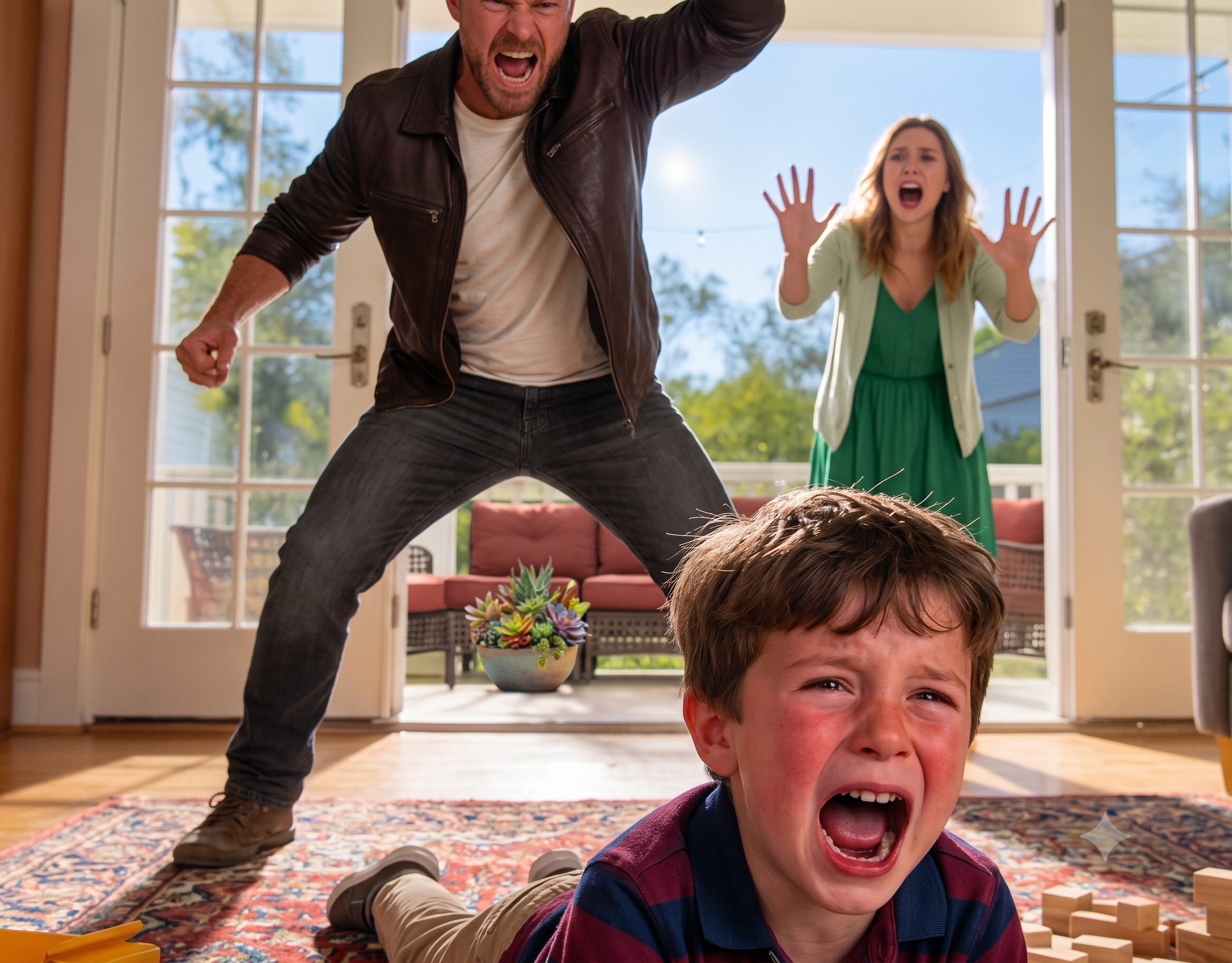
My 4-Year-Old Son Called Me at Work Crying, “Dad, Mom’s Boyfriend Hit Me With a Baseball Bat.” I Was Twenty Minutes Away. I Knew Someone Else Could Get There Faster. So I Made One Phone Call. By the Time I Arrived, Everything Had Already Changed.
Jul 11, 2026

My 4-Year-Old Son Called Me at Work Crying, “Dad, Mom’s Boyfriend Hit Me With a Baseball Bat.” I Was Twenty Minutes Away. I Knew Someone Else Could Get There Faster. So I Made One Phone Call. By the Time I Arrived, Everything Had Already Changed.

My phone buzzed on the conference room table during a budget meeting, and at first I did what people do when they are trying to keep a job.
I ignored it.
The room smelled like stale coffee, dry-erase marker, and the lemon cleaner they used on the glass walls every morning.
A projector hummed over our heads.
Someone near the window was clicking a pen over and over, like the sound was normal, like the world was still normal.
Then my phone buzzed again.
Three seconds apart.
That was not normal.
Noah knew not to call me at work unless something was wrong.
He was four, but he understood our little rules better than most adults understood their promises.
If he missed me, Lena helped him send a voice message.
If he wanted to show me a drawing, she texted a picture.
If he called, it meant something had broken.
I looked down and saw his name.
NOAH.
I answered before anyone in the meeting could complain.
“Hey, buddy,” I said quietly. “You okay?”
For a moment there was only crying.
Not loud crying.
Small crying.
The kind a child makes when he has already been told that making noise will make things worse.
“Daddy,” he whispered. “Please come home.”
My chair scraped backward so hard it hit the wall behind me.
Every person at the table looked up.
I did not care.
“Noah, what happened? Where’s Mom?”
His breath hitched once, then again.
“She’s not here. Mom’s boyfriend… Travis… hit me with the baseball bat. My arm hurts. He said if I cry again, he’ll hit me again.”
I remember the exact silence after that.
It was not empty.
It was full of things my body wanted to do before my mind could stop it.

Run.

Scream.

Break something.

Then a man’s voice roared in the background.

“Who are you talking to? Give me that phone!”

The call ended.

For one second, I stared at the black screen like my son might come back if I looked hard enough.

Then I grabbed my keys.

My boss said my name, but I was already moving.

The little American flag in the corner of the conference room stood beside the glass wall, perfectly still, while my whole life became motion.

I had known Lena for six years.

We had loved each other once, then failed each other in ordinary adult ways.

Money stress.

Long hours.

Too much pride.

Too many tired conversations at the kitchen counter after Noah finally fell asleep.

But even after we split, we tried to keep him safe from the worst of us.

We used a custody app.

We traded weekends.

I paid support on the first Friday of every month.

I kept dinosaur pajamas in my dresser and a plastic step stool by my bathroom sink because he liked brushing his teeth next to me.

Whatever Lena and I had lost, I thought we still agreed on one thing.

Noah came first.

Then Travis appeared.

He was not loud around me.

That was part of the problem.

He smiled carefully, shook my hand too firmly, and called Noah “little man” in a tone that made my son press closer to my leg.

Once, at pickup, Noah had flinched when Travis dropped a cooler lid in the garage.

Lena told me he was sensitive.

I told myself not to start a fight over a feeling.

Sometimes adults call fear sensitivity because it asks them to do something inconvenient.

I ran to the elevator and hit Derek’s number.

My older brother answered on the second ring.

“What’s up?”

“Noah called me,” I said. “Travis hit him with a baseball bat. Lena isn’t home. I’m twenty minutes out. Where are you?”

The line went quiet.

Derek had been in enough dangerous rooms in his life to know the difference between panic and information.

He used to fight in regional MMA shows before his shoulder gave out, but that was not what made him useful.

Derek was useful because he got calm when everyone else got loud.

“I’m about fifteen minutes from your house,” he said.

“Go. Now. I’m calling 911.”

“I’m already moving.”

The elevator doors opened too slowly.

I shoved through them and ran across the parking garage, my shoes slapping concrete, my hand shaking so hard I almost dropped the keys.

At 2:17 p.m., I called emergency dispatch.

I gave my name.

I gave the address.

I said my four-year-old son had called and reported being hit by an adult male with a baseball bat.

I said the adult male had threatened to hit him again if he cried.

I said the mother was not home.

I said my brother was closer and on his way.

The dispatcher asked whether there were weapons in the home.

I said I did not know.

That answer nearly split me open.

There were so many things you think you know about the place where your child sleeps.

Then one phone call teaches you the difference between access and safety.

I backed out so fast my tires squealed.

Downtown traffic was nearly stopped.

A delivery truck blocked half the right lane.

A bus hissed at the curb.

People crossed at a light with coffee cups in their hands, unaware that every second they took felt stolen from my son.

The dispatcher stayed on long enough to tell me officers were being sent.

I remember saying, “Please tell them he’s four.”

As if that number could move sirens faster.

As if anyone should need more reason than that.

At 2:24 p.m., Derek called back.

“I’m two blocks out.”

“Stay on the line,” I said.

“No,” he answered. “You drive. I’ll call when I see the house.”

“Derek—”

“I know.”

He hung up.

I hit another red light.

I wanted to run it.

I wanted to put my fist through the windshield.

I wanted to become the kind of man who did not think about consequences.

But consequences were the only thing that mattered now.

If I crashed, Noah would still be in that house.

So I sat there with both hands on the wheel and forced myself to breathe through my teeth.

At 2:27 p.m., Derek called again.

I answered instantly.

For one second, I heard wind.

Then tires over gravel.

Then Derek’s breathing.

“Your front door is open,” he said.

My mouth went dry.

“What do you see?”

He did not answer right away.

I heard the faint creak of the porch boards.

I heard him step inside.

Then his voice lowered into something I had not heard from him in years.

“Travis,” he said, “step away from the boy.”

Then Noah screamed.

The sound came through the phone so thin and sharp that I almost swerved into the next lane.

I heard a chair scrape.

I heard Travis curse.

I heard Derek say, very calmly, “I said step away.”

That calmness is what I remember most.

Not rage.

Not performance.

Control.

Real protection does not always announce itself with volume.

Sometimes it walks through an open door and makes a dangerous man realize the room has changed.

I was still ten minutes away when dispatch called back for an update.

I told her Derek was inside.

I told her Noah was crying.

I told her the front door had been open.

Then I remembered the doorbell camera.

I had installed it two months earlier after Lena lost her spare key somewhere near the driveway.

I never removed my access from the app.

My thumb missed the icon twice before I got it open.

The porch filled the screen.

The cracked welcome mat.

The mailbox at the edge of the frame.

The little American flag Noah had stuck in the planter after preschool because he said it made the house look “official.”

Then Derek’s shoulder moved through the doorway.

Inside, past the edge of the frame, I saw Noah curled against the couch.

He was holding his arm to his chest.

There was a baseball bat on the carpet.

Not on a rack.

Not by the door.

On the carpet, close enough to my son that my stomach turned.

The dispatcher went silent for a beat.

I realized my phone must have picked up the sound I made.

Derek looked down at something inside the doorway.

His face changed.

“Oh my God,” he whispered.

“What?” I shouted. “Derek, what is it?”

He did not answer me.

He spoke to the dispatcher instead because he understood, even in that moment, that the record mattered.

“There is a child injured in the living room,” he said. “Adult male present. Baseball bat on the floor. I am not touching the weapon. I am keeping myself between him and the child.”

Those words became part of the police report later.

So did the timestamp.

2:29 p.m.

So did the doorbell footage.

So did the emergency call recording.

Travis tried to talk after that.

Men like him always do.

He said Noah had fallen.

He said Derek had misunderstood.

He said I was always causing drama because I did not like him.

On the camera feed, I watched Derek turn his head just enough to look at the bat on the floor, then at my son curled beside the couch.

He did not argue.

He said, “Then you’ll have no problem explaining that to the officers.”

That was when sirens rose behind me.

One patrol car passed me first.

Then another.

I followed as closely as traffic allowed, my hazard lights blinking, my throat so tight I could barely swallow.

By the time I turned onto Lena’s street, two police vehicles were already in front of the house.

Neighbors stood on porches.

A woman across the street had one hand over her mouth.

The afternoon sun was bright enough to make the whole scene feel wrong, like something this ugly should not be allowed to happen in weather that clear.

An officer stopped me halfway up the driveway.

I told him I was Noah’s father.

My voice cracked on my son’s name.

Inside, Derek was seated on the floor near the couch, not touching Noah but close enough for Noah to see him.

His injured shoulder was angled stiffly, and I could tell from his face that he had used every ounce of self-control he had not to put Travis through a wall.

Travis was standing near the far side of the room with an officer between him and everyone else.

He was still talking.

Of course he was.

Noah saw me and tried to get up.

I dropped to my knees before he could move.

“Don’t, buddy,” I said. “I’ve got you. Daddy’s here.”

He pressed his face into my shirt and made a sound that did not feel like crying anymore.

It felt like his body finally believing he was allowed to be scared.

The paramedics arrived minutes later.

At the hospital intake desk, I repeated the same information again.

Name.

Age.

Time of call.

Reported object.

Reported threat.

The nurse placed a wristband around Noah’s small wrist, and he looked at it like it was a punishment until I told him it was just so everyone knew his name.

He asked if he was in trouble.

That question did something to me that anger had not.

I had been angry since the call.

But that question made me quiet.

“No,” I said. “You did exactly the right thing. You called me.”

He looked at Derek, who stood in the corner with his arms folded, face pale now that the adrenaline was leaving.

“Uncle Derek came fast,” Noah whispered.

Derek looked away for a second.

Then he nodded.

“Always will,” he said.

Lena arrived at the hospital forty minutes later.

Her hair was still damp from rain or sweat, and she had grocery bags in the back of her SUV when she pulled up.

For the first thirty seconds, she did not understand what she was walking into.

Then she saw the wristband.

Then the officer near the door.

Then me holding Noah’s shoes because he did not want them touching his sore arm.

Her face folded.

“Where is Travis?” she asked.

It was the wrong first question.

She knew it as soon as she said it.

Noah turned his face into my chest.

The officer asked Lena to step into the hallway.

I did not follow.

I stayed with my son.

Later, there would be statements.

There would be an incident report.

There would be a family court hallway with fluorescent lights and people pretending paperwork could make terror neat.

There would be a custody modification request filed with attached screenshots, call logs, and a copy of the doorbell video preserved on a flash drive.

There would be a hospital note that described Noah’s injury in careful medical language, the kind that makes a father’s hands shake because it sounds too clean for what happened.

But that night, all I cared about was the weight of my son leaning against me while he fell asleep.

Derek sat on the other side of the room with a paper coffee cup he never drank from.

Every few minutes, he looked at the door.

Not because he was afraid.

Because he was done trusting doors.

When Noah finally slept, I stepped into the hallway.

Lena was sitting on a plastic chair outside the room, both hands pressed over her mouth.

She looked smaller than I had ever seen her.

“I didn’t know,” she whispered.

I believed that she had not known everything.

I did not believe she had known nothing.

There is a difference between missing danger and explaining it away because admitting it would cost you the life you were trying to keep.

She had wanted Travis to be safe.

Noah had needed him to be safe.

Only one of those mattered now.

“He called me,” I said.

She nodded, crying.

“He was scared you wouldn’t come.”

That was the sentence I carried home.

Not the sirens.

Not Travis talking.

Not even the bat on the carpet.

My four-year-old son had been afraid I would not come.

The next morning, Derek brought over Noah’s dinosaur pajamas from my dresser and a small stuffed triceratops Noah had left in his truck the weekend before.

He also brought the doorbell footage on a drive, labeled with the date and time because that is the kind of man Derek is when he is angry.

Methodical.

Useful.

Careful enough to make sure nobody could call the truth a misunderstanding.

The case did not become clean overnight.

Nothing involving a child, two parents, and a man like Travis ever does.

But the record was there.

The 2:17 p.m. emergency call.

The 2:29 p.m. doorbell footage.

The hospital intake form.

The police report.

The custody filing.

The witness statement from Derek, written in blocky handwriting because his shoulder hurt when he wrote too long.

Noah healed faster on the outside than he did on the inside.

For weeks, he jumped at loud noises.

He asked whether Travis knew where I lived.

He slept with the hallway light on.

I let him.

Healing a child is not a speech.

It is showing up at bedtime.

It is answering the same question twenty times without sounding tired.

It is putting a step stool back by the sink and letting him brush his teeth slowly because control has to be rebuilt in small places.

One month later, Noah asked if he could call Derek by himself.

I said yes and handed him the phone.

Derek answered with his usual, “What’s up, champ?”

Noah looked at me, then down at the dinosaur on his lap.

“Thank you for coming fast,” he said.

Derek did not answer right away.

When he did, his voice was rough.

“You never have to thank me for that.”

Noah nodded like he understood.

Maybe he did.

Maybe some part of him was learning the thing I wished he had never needed to learn.

That love is not the person who says they care when the house is quiet.

Love is the person who answers the phone, breaks every polite rule, calls for help, drives through traffic without falling apart, and sends the one person who can get there faster.

That day, my world split clean in half.

But my son learned something too.

When he called, someone came.

More Details
My family cut me off on my birthday—I cut off their family fortune
Jul 11, 2026

My family cut me off on my birthday—I cut off their family fortune

My name is Sabrina Nolan. I’m 34.

On my birthday, I sent a text to my family group chat. Just a simple message saying I was feeling sad that no one had reached out. My mom’s reply came 3 hours later. We need space from you. Please don’t reach out anymore.

My sister liked the message. Thumbs up. That was it.

So, I blocked them both. And then I did something else. I cut off every single dollar they’d been living on for the past seven years.

See, my family had been collecting monthly checks from a trust fund my grandfather left behind. They treated that money like it fell from the sky. They never once asked who approved it. They never once said thank you, because they never knew, or never cared, that every penny required my signature.

The morning after I shut it down, I woke up to 99 missed calls. But by then, it was already too late.

Before I get into what happened, please take a moment to hit like and subscribe, but only if you genuinely enjoy this story, and drop a comment letting me know where you’re watching from and what time it is right now.

Now, let me take you back to March 15th. The morning everything changed.

March 15th started like any other Tuesday. Alarm at 6:15. Coffee in the kitchen. The photo of my grandfather on the wall above the stove, smiling in his flannel shirt the way he always did.

I drove to work at the property management office, the same small firm I’d been running since Grandpa Harold passed seven years ago. Four rental houses, two duplexes, one commercial lot. Nothing glamorous, enough to keep the trust funded and the family comfortable.

My phone sat face up on the desk all morning. I kept glancing at it between lease reviews and maintenance calls. No texts, no voicemails, no happy birthday from anyone with the last name Nolan.

Around noon, my friend Clare called. “Happy birthday, Bina. 34 looks good on you.”

I laughed, but it came out thin. Clare was the only one who remembered. She always was.

By evening, I’d stopped pretending it didn’t sting. I sat in my truck in the driveway for 10 minutes before going inside. The house was quiet. The kitchen was dark. I heated up leftover soup and ate it standing at the counter.

At 8:40, I picked up my phone and typed into the family group chat, the one with Mom and Megan and me. The one that had been silent since Megan posted a photo of her engagement ring 3 days earlier, and Mom flooded it with heart emojis.

I typed, “Hey, I know everyone’s busy, but it’s my birthday today, and I’m feeling a little down that no one reached out.”

I hit send. The message went through. Two blue check marks appeared almost immediately. Both of them had read it.

Then nothing, not a word. I watched the screen until it went dark.

At 10:14 that night, my phone finally buzzed. I grabbed it off the nightstand so fast I nearly knocked over my water glass. Mom’s name lit up the screen. I opened the message.

“Sabrina, we’ve been meaning to tell you this. We need space from you. Please don’t reach out anymore.”

I read it once, then again, then a third time, slower, like the words might rearrange themselves into something that made sense.

Underneath her message, a small notification. Megan liked this message. A tiny thumbs-up icon right below the sentence that told me to disappear.

I sat on the edge of my bed, phone in both hands. I didn’t cry. I didn’t throw anything. I just felt this strange numbness, like someone had pulled a plug somewhere inside my chest and everything drained out at once.

I scrolled up through the group chat. 3 days ago, Megan had posted a photo of her new engagement ring, princess cut, the one Derek spent four months researching. Mom had responded within minutes.

“My baby girl, I’m so happy I could cry.”

Then a string of hearts. Then Megan’s reply.

“Thanks, Mama. Love you so much.”

67 messages in that thread about Megan’s ring, plans for the engagement party, venue ideas, color schemes, guest lists, and then my message sitting at the bottom like a pebble dropped into a well. It’s my birthday today, followed by my mother telling me to go away.

I kept staring at that thumbs up. Megan didn’t even bother typing a response. She just pressed a button, one tap to endorse my erasure.

I set the phone face down on the nightstand and lay in the dark, staring at the ceiling, listening to nothing. I didn’t sleep that night. Not really.

I drifted in and out of something shallow, waking every hour with the same weight pressing on my ribs. By 5:00 a.m., I gave up and went to the kitchen.

The photo of Grandpa Harold was the first thing I saw. Him standing in front of the Riverside Grill the day he signed the lease on his first rental property. 31 years old in that picture, younger than me now.

He was the one who taught me how to read a lease agreement, how to balance a trust ledger, how to shake a contractor’s hand and look them in the eye. And when he got sick, pancreatic stage 4, the kind that doesn’t negotiate, he sat me down at the same kitchen table and said, “I’m putting you in charge, Brea. Take care of them, but take care of yourself first.”

7 years. I’d honored the first half of that sentence every single month. 4,500 to Mom, 3,200 to Megan. Mortgage payments, car notes, insurance premiums, spending money, all approved by me, all signed by me every month, like clockwork.

The second half, take care of yourself first. I’d buried under a pile of hope that one day they’d see what I was doing. That one day they’d turn around and say thank you.

My phone rang at 6. Clare. She could hear it in my voice before I said a word. I told her what happened. The message, the thumbs up, the silence.

Clare was quiet for a long time. Then she said, “Brina, you’ve been funding their lives. They just told you to disappear. Do you hear how insane that is?”

I did hear it. For the first time in 7 years, I heard it clearly.

I hung up, opened my laptop, and pulled up the trust management portal. The first thing I did was block them. Both numbers, no dramatic goodbye message, no explanation. I just opened my contacts, tapped the names, and pressed block. It took 4 seconds total.

The second thing took a little longer. I called Ray Whitfield at 8 sharp. Ray was my grandfather’s oldest friend, an estate attorney who’d helped draft the trust 20 years ago. He’d been my adviser ever since Grandpa passed.

“Ray, I have a question. If I pause all discretionary distributions from the trust, am I within my rights?”

He didn’t hesitate. “100%. The trust document gives you sole discretion over those payments. That’s the whole point of a discretionary trust, Sabrina. You’re not obligated to distribute a single dollar beyond what the document mandates. And the document mandates nothing for discretionary beneficiaries. Your grandfather structured it that way on purpose. The distributions your mother and sister receive are entirely at your approval.”

I logged into the trust management portal. Two recurring payments stared back at me. $4,500 to Linda Nolan, $3,200 to Megan Nolan. Both set to process on the first of every month. Both had been running uninterrupted for 84 consecutive months.

I clicked suspend on the first one. A confirmation box appeared. I clicked yes.

Then the second one. Same box. Same click.

$7,700 a month. Gone. Just like that.

The money was still in the trust, still technically accessible to the family under the right conditions, but nobody could touch it without my signature. And I wasn’t signing anything.

I closed the laptop and poured another cup of coffee. My hands weren’t shaking. My chest didn’t hurt anymore. For the first time in years, the kitchen felt quiet in a good way.

48 hours passed. I went to work. I filed paperwork. I ate lunch alone at my desk and drove home in silence. My phone didn’t ring because the only people trying to reach me were blocked.

I found out later through Ray how it unfolded on their end. Linda noticed first. The first of the month came and went and her checking account didn’t get its usual deposit. She called the bank. The bank told her the incoming transfer from the Nolan family trust had been suspended.

She asked them to reverse it, push it through, do something. They told her they couldn’t. The account required trustee authorization for every distribution.

So, she called Ray.

“Where’s my money, Ray? The trust payment didn’t come through.”

Ray kept it professional. He had to. Attorney-client privilege meant he couldn’t disclose my decisions, but he could state facts.

“All discretionary distributions require the trustee’s written approval, Linda. That’s always been the case.”

“But it’s always been automatic.”

“It was never automatic. Someone approved it every single month.”

Silence on the line.

“What do you mean someone approved it? It just… it just comes in.”

“Linda, I’m not at liberty to discuss the trustee’s decisions, but I can tell you that the trust document has always required authorization for every disbursement, every single one for the past seven years.”

That was the moment it landed. Seven years of monthly deposits, seven years of mortgage payments and car notes and shopping sprees and spa weekends, all of it flowing from an account that someone had to unlock by hand, month after month.

And that someone was the daughter she’d just told to disappear.

Here’s the thing about cutting someone off. It’s not just about the money. It’s about what the money was holding together.

I knew what would happen if I kept the trust frozen. Mom’s mortgage, $2,100 a month, had been covered by the trust since Grandpa died. Without it, she had maybe six weeks of savings before the bank started calling.

Megan’s apartment, her car payment, her credit card minimums, all subsidized. Without the trust, she’d be underwater by the end of April.

And Megan’s engagement party, booked 3 months ago at the Riverside Grill under the trust account, was 3 weeks out. The venue expected a final payment of $6,200. Nobody had put a personal card down. Nobody had a backup plan because nobody ever imagined the money would stop.

I sat with that for a while. The weight of it. I’m not going to pretend I didn’t feel it. These were my people, my mother, my sister, however broken things were between us.

I’d spent seven years trying to hold this family together with the only tool I had. And part of me, the part that still remembered being 12 years old and wanting Mom to say she was proud of me, that part whispered, “Just turn it back on. Just let it go.”

They didn’t mean it, but they did mean it. We’ve been meaning to tell you this. Those were her exact words. This wasn’t a bad night or a burst of anger. They’d planned it. They discussed it without me. And then they’d waited until my birthday to deliver the message.

Clare said it best when I called her that evening. “You’re not choosing between money and family. They already made the choice when they told you to disappear.”

I let that sentence sit in the silence for a long time.

On the fourth day, I unblocked them just long enough to check. 99 missed calls. I stopped counting after that because the notification just said 99 plus and wouldn’t go any higher. Linda, Megan, Derek, even Aunt Patty, Mom’s younger sister, who I hadn’t spoken to since Thanksgiving.

I opened the voicemail folder. Linda’s messages came in waves, each one a different version of the same woman.

The first few were confused. “Sabrina, call me back. Something’s wrong with the bank.”

Then concerned. “Honey, I think there’s been a mistake with Daddy’s trust.”

Then the mask slipped. “I didn’t mean what I said, okay? I was having a bad week. Can we just talk?”

And then, by message number 11. “You can’t do this to your own mother, Sabrina. This is my money. Your grandfather left it for this family, not just for you.”

Megan’s messages were shorter, more direct. “Sabrina, this isn’t funny. My engagement party is in 3 weeks. I need the venue deposit cleared.”

Then two hours later. “Seriously, call me back. This is about my future.”

I scrolled through every text, every voicemail, every missed call timestamp. Not one of them said happy birthday. Not one of them apologized for the message. Not one of them asked how I was doing or acknowledged that they’d told me to stop existing in their lives 4 days ago.

Every single message was about money. Where’s the deposit? When’s the payment? Fix the trust. Call the bank. This is about Megan’s party. This is about Mom’s mortgage.

I was the emergency contact for their wallets. Nothing more.

I blocked them again, set my phone on the counter, and went to bed at 8:30. Slept better than I had all week.

99 missed calls, and not a single one started with, “I’m sorry.”

I want to ask you something. If someone in your family told you to stop reaching out, then blew up your phone when the money stopped, would you answer? Drop a one in the comments if you’d pick up. Drop a two if you’d let it ring. I’ll tell you what I did right after this.

6 days after the birthday text, my doorbell rang at 7 in the morning. I was still in pajamas, coffee in hand. I looked through the peephole and saw my mother standing on the porch in a blouse I recognized, the one she’d bought last fall with trust money.

Her arms were crossed, her jaw was set. I opened the door, but didn’t step aside. I stood in the frame with my mug and waited.

“Sabrina, we need to talk about this.”

“Okay.”

“You can’t just freeze me out.”

“You told me not to reach out.”

“That’s… I didn’t mean like this.”

“What did you mean then?”

She sputtered for a second. Then she tried a different angle, the one she always tried. The guilt.

“I’m your mother. I raised you alone after your father left. I sacrificed everything for you and your sister.”

“I know, Mom.”

“Then act like it. Turn the money back on.”

“I’m not punishing you. I’m exercising my responsibility as trustee.”

Her eyes went wide, then narrow. “Your grandfather would be ashamed of you.”

I took a sip of coffee, let it land. “Then Grandpa told me to take care of myself first. I’m finally listening.”

She stared at me like I’d spoken in a foreign language. Then she turned and walked down the steps, heels clicking hard on the concrete.

At the end of the driveway, she stopped and looked back, not at me, but past me toward old Mister Garrett across the street, who was watering his lawn and definitely watching.

“My own daughter,” she said loud enough for him to hear, “punishing her own mother.”

She got in her car and drove away. I closed the door and finished my coffee.

I should tell you this wasn’t the first time I’d been invisible in my own family. It was just the first time they put it in writing.

Two Christmases ago, Mom hosted dinner at her house, the house the trust paid the mortgage on. She’d redecorated the dining room with money I’d approved in November. New curtains, a centerpiece arrangement, candles that smelled like cinnamon and vanilla.

Megan and Derek arrived in matching sweaters. Mom hugged them at the door like she was greeting royalty. Derek got a monogrammed leather wallet. Megan got a gold bracelet. Not cheap, either. I’d seen the charge on the trust statement. $340 at a jewelry boutique downtown.

My gift was on the table next to the cranberry sauce. A card, generic, the kind you grab at the pharmacy checkout. Happy holidays in silver script. Preprinted message inside. No personal note. No signature.

I held it up. “Did you guys forget to write something in here?”

Megan rolled her eyes. “Oh, come on. Don’t be so sensitive. It’s Christmas, not your therapy session.”

Mom said nothing. She just passed the mashed potatoes and changed the subject to Megan’s new job, the part-time online sales gig that covered maybe a quarter of her expenses, while the trust handled the rest.

I stayed through dessert. I helped wash the dishes. I hugged Mom at the door like I always did, and she patted my back the way you’d pat a dog you weren’t particularly fond of.

I drove home to my one-bedroom apartment that night, set up the table for one, ate leftover pie in the kitchen with the lights off, and the next morning I logged into the trust portal and approved January’s distributions like I always did.

A year before the birthday incident, Megan called me on a Wednesday afternoon. No hello, no small talk.

“I need 12,000 from the trust, security deposit and first month on a new apartment.”

“That’s a big draw, Meg. What happened to your current place?”

“It’s too small. Derek’s basically living with me now, and we need more room. The new one’s downtown. Hardwood floors, balcony. It’s perfect.”

I approved it. I always approved it. $12,000 processed within 48 hours.

Megan didn’t say thank you. What she said was, “Finally, I’ve been waiting two weeks.”

Two weeks, because I’d asked her to send me the lease agreement first, which is standard procedure for a trust disbursement. She acted like I’d asked her to donate a kidney.

A month later, I found out through a friend of Clare’s that Megan was still holding the old apartment, the one the trust paid rent on, and letting her college roommate live there, charging her $800 a month in cash, pocketing it.

When I brought it up carefully over the phone, Megan’s response came fast and sharp. “It’s not like it’s your money, Sabrina. It’s Grandpa’s.”

I let that sentence pass. Swallowed it whole the way I’d swallowed every other insult and oversight and dismissal for years, because I thought keeping the peace was the same as keeping the family. It wasn’t.

Grandpa’s money. That’s what she called it. Not the trust, not our inheritance. Grandpa’s money, as if the old man were still alive somewhere, writing checks from heaven and I was just the mailbox.

I remember hanging up the phone and sitting very still for a long time, staring at the wall. I should have drawn the line that day. I didn’t.

10 days after the birthday, a Monday morning, I was at my desk reviewing a plumbing estimate when the front door of the office swung open. Megan walked in first. Derek trailed behind her, hands in his pockets, looking like he’d rather be anywhere else.

“We need to talk,” Megan said.

“My office hours are by appointment.”

“Don’t do that. Don’t act like I’m a client.”

I set the estimate down. “What do you need, Megan?”

“The venue wants 8,000 by Friday or they cancel the party. You need to release the funds.”

“The trust distributions are paused. If you’d like to discuss reinstatement, you can contact Ray Whitfield.”

Her face reddened. “I don’t want to talk to Ray. I want to talk to you.”

“You’re talking to me, and I’m telling you the process.”

Derek stepped forward. His voice was softer, rehearsed, the tone of a man who’d been coached in the car. “Come on, Sabrina. This is Megan’s engagement. Can’t we just move past the family stuff and handle this?”

“I didn’t start the family stuff, Derek. And I’m not the one who created this situation.”

Megan grabbed Derek’s arm. “She’s not going to help. I told you.”

She turned back to me, eyes glassy. “You’re going to regret this.”

“Maybe.”

She yanked the door open. It banged against the wall. Derek muttered something, “Sorry,” or “Let’s go,” and followed her out.

Through the window, I watched them argue in the parking lot. Megan’s hands were flying. Derek stood with his shoulders hunched, nodding, absorbing it.

My coworker, Denise, looked over from her desk. “Everything okay?”

“Family stuff,” I said.

“Ah.”

She turned back to her screen. In a small town, that answer covers a lot.

That afternoon, I drove to Ray Whitfield’s office. It sat on Main Street between a hardware store and a barber shop, a small-town law practice with wood paneling and framed photos of trout.

Ray had the trust document spread across his desk when I walked in. He’d already flagged the relevant section with a yellow tab.

“Sit down. Read this.”

I sat. The clause was on page 14, paragraph 9. I’d seen it before, but I’d never really absorbed it. Not until now.

“The successor trustee may, at their sole discretion, modify, reduce, or suspend any discretionary distribution to any beneficiary for any reason the trustee deems appropriate, without prior notice or court approval.”

I looked up. “He wrote that in from the beginning.”

Ray leaned back. “Your grandfather wasn’t naive, Sabrina. He watched how your mother handled money for 30 years. He loved her, but he didn’t trust her with it. That’s why he picked you. If they try to challenge this in court, they’d lose. Discretionary means discretionary. I’ve seen cases where beneficiaries try to force distributions. It almost never works. No judge is going to override a trustee who’s acting within clearly documented authority.”

He pulled his glasses off and rubbed his eyes. “You know, Harold and I talked about this exact scenario. Not the birthday part, but the possibility that your mother would push you too far and you’d have to make a call. He told me once, and I remember it clearly. ‘Ray, when Sabrina finally stands up, make sure she knows she’s on solid ground.’”

I didn’t say anything for a minute. I just looked at that clause. Page 14, paragraph 9. Solid ground.

I folded the document and slid it into my bag.

That evening, I was clearing out old emails, a mindless task I’d been putting off for months, when I found it. 5 years old, sent from Mom’s personal account. Subject line: re trust question.

I’d asked her back then whether she wanted me to send a summary of the trust distributions to the family so everyone understood how the money worked.

Her response was four lines long. I read them three times.

“Sabrina, please don’t tell anyone you manage the trust. People will think I can’t take care of my own family. Just keep the money coming and let me handle the rest.”

Just keep the money coming and let me handle the rest.

I sat at my kitchen table and stared at those words. 5 years ago, I’d read this email and thought my mother was embarrassed, maybe a little proud in her own way about needing help. I’d honored her request because I thought I was being kind. I thought I was protecting her dignity.

Now I understood what it really was. She didn’t want people to know I existed in the financial picture because she wanted the credit. She wanted the neighbors to think she was the self-sufficient widow who’d pulled it together after Dad left. She wanted the church ladies to admire her resilience. She wanted Megan to believe the money was simply what Grandpa left us, a birthright, not a gift that someone approved every 30 days.

She’d asked me to be invisible, and I’d agreed.

I forwarded the email to my own backup account and saved a screenshot to a folder on my desktop. I didn’t know yet how it would matter. I just knew that words like those don’t stay buried forever. Some things have a way of surfacing at exactly the wrong time for the person who wrote them.

The following Saturday, Clare showed up at my door with a sheet cake from the bakery on 5th, two bottles of cheap wine, and three friends I hadn’t seen since college.

“We’re celebrating,” she announced. “Late birthday, non-negotiable.”

We ate cake on the living room floor because my dining table only seats two. Clare’s friend Josie brought candles shaped like the number 34. Heather brought a card that everyone had signed with actual messages written inside. Funny ones, kind ones, one that made me tear up.

You deserve people who remember.

Clare’s gift was in a brown paper bag. I opened it and went still. It was a framed photograph, the one I thought I’d lost years ago. Grandpa Harold and me, standing in front of the Riverside Grill when I was nine. He’s got his hand on my shoulder. I’m holding a fishing rod that’s taller than I am. Grinning like I just caught the whole ocean.

“Where did you find this?”

“Your grandpa gave me a copy years ago. He told me to hang on to it. Said you’d need it someday.”

I cried. For the first time since the birthday text, I actually cried. Not from sadness, but from something warmer. The feeling of being known by people who chose to know me.

Clare raised her glass. “This is what family looks like, Bina. People who show up.”

We toasted to that. Five women on the floor of a one-bedroom apartment, eating grocery store cake, laughing about nothing important.

That same night, Megan posted an Instagram story, a mirror selfie in a white dress, trying on outfits for her engagement party. The caption read, “Three weeks to go. So blessed.”

She didn’t know the venue hadn’t been paid. Or maybe she did, and the performance mattered more.

I first noticed it at the grocery store. Mrs. Patterson at the deli counter, the one who always asked about my day, looked at me sideways and didn’t say a word, just bagged my turkey slices and slid them across without eye contact.

Then at the post office, two women from Mom’s church circle stopped talking when I walked in. One of them, Betty Marsh, gave me a tight smile that wasn’t a smile at all.

By Sunday, I understood. Mom had been busy.

The story she’d planted around town went like this. Sabrina was holding the family inheritance hostage. Sabrina was bitter and controlling. Sabrina was punishing her own mother over a petty misunderstanding.

At church, Reverend Grant pulled me aside after the service. He looked uncomfortable, the way people do when they’ve been recruited into someone else’s conflict.

“Sabrina, your mother came to see me this week. She’s very upset. She says you’re withholding family money.”

“Reverend, with all respect, the trust document names me as sole trustee. I’m fulfilling my legal obligations. That’s all I can say.”

He nodded slowly. “I understand. I just thought you should know people are talking.”

“They usually are.”

I walked to my truck, and I could feel eyes following me across the parking lot. In a small town, reputation is currency. And my mother had just drained my account.

She’d done it carefully, too. Never mentioning the birthday text. Never explaining that she’d told me to stop reaching out. In her version, I was the aggressor. She was the victim. The same story she’d been telling for years, just louder now, because she needed it to work.

I drove home and didn’t say a word about it to anyone. Not yet. Timing matters.

The Facebook post went up on a Wednesday evening. Megan didn’t use my name. She didn’t need to. Everyone in town knew.

“Some people would rather watch their family suffer than let go of control. My engagement party might not happen because one person decided her ego matters more than her sister’s happiness. I’ve tried reaching out. I’ve tried being the bigger person. Nothing works. Sometimes the people who are supposed to love you are the ones who hurt you most.”

Within an hour, 43 likes, 21 comments, six shares.

So sorry, babe. You deserve the world. That’s horrible. Family should lift each other up. Praying for you and Derek. Some people really do change when money gets involved.

Clare screenshotted the whole thing and sent it to me. I read every comment. Then I closed my phone and made dinner.

I called Ray that night. “They’re making public accusations. Does this change anything legally?”

“Not for the trust. Your authority is documented and ironclad. But socially, it could get uncomfortable.”

He paused. “That said, Sabrina, if you ever need it, that post establishes a pattern. Public defamation by a beneficiary against her own trustee. It’s not nothing.”

“I’m not suing my sister, Ray.”

“I’m not suggesting you do. I’m saying save everything.”

I saved everything. Screenshots of the post, screenshots of the comments, the timestamps, the shares, the likes. I put them all in the same folder as Mom’s email, the one that said, “Just keep the money coming.”

A digital filing cabinet of every time my family told me I didn’t matter. Organized by date.

It wasn’t evidence for a courtroom. It was evidence for myself. Proof that I wasn’t imagining things. Proof that I wasn’t the monster they were building in public.

The call came from a number I didn’t recognize. I picked up out of habit. Property management means unknown numbers could be tenants with emergencies.

“Sabrina, it’s Derek.”

I almost hung up, but something in his voice, quieter than usual, almost careful, made me stay.

“I’m calling from a friend’s phone. Look, I know you’re upset. I get it. They hurt you. But can we just… can we get past this for the engagement? Just release the party funds and we can deal with the rest later.”

“Derek, getting past this means pretending my mother didn’t tell me to disappear.”

“She didn’t mean it like she typed it.”

“Megan endorsed it. Those aren’t accidents.”

He exhaled hard. I could hear the frustration building, the politeness thinning.

“Megan’s been crying every night, Sabrina. Every night. If this party falls through, everyone’s going to blame you. You understand that? The whole town’s already talking.”

“Everyone already blames me, Derek. That’s not new.”

“So, you’re just going to let it all burn?”

“I didn’t light the fire.”

Long silence. Then his voice dropped. Not softer, but harder. Colder.

“Fine. We’re going to find a way to get that money. With or without you.”

The line went dead.

I sat in the kitchen and played those last words back. With or without you. It wasn’t a plea anymore. It was a threat. Vague, the kind people make when they don’t actually have a plan, but want you to worry that they do.

I opened my phone and wrote a note to myself. Derek called from unknown number, threatened to access trust funds without my authorization. March 27th.

Then I locked my screen and went back to my evening.

Whatever they were planning, the trust was airtight. Ray had made sure of that.

They tried everything over the next week. Every angle, every door, every window.

Linda called the trust company directly, First Regional Bank, which served as custodian of the trust assets. She spoke to three different people in the wealth management department. Each one told her the same thing.

“Only the named trustee can authorize distributions.”

“Mrs. Nolan, but I’m a beneficiary. It’s my father’s trust.”

“Yes, ma’am. But beneficiary status doesn’t grant disbursement authority. You’d need the trustee’s written approval.”

“Well, what if the trustee is… what if she’s not acting right? What if she’s doing this out of spite?”

“Ma’am, if you believe the trustee is breaching their fiduciary duty, you’re welcome to consult an attorney and petition the court, but from what we can see, all actions taken are within the trust’s documented provisions.”

Dead end.

Megan tried a different route. She went straight to the Riverside Grill and asked the owner, Mr. Hargrove, to let the engagement party proceed on credit. A promise to pay within 30 days after the event.

Mr. Hargrove, a careful man who’d been running that restaurant for 20 years, said no. The booking had been made under the trust account. The final payment of $6,200 was overdue. No payment, no event.

“Can’t I just put it on a card?”

“Do you have a card with a $6,000 limit?”

She didn’t.

Derek looked into personal loans. Two banks, one credit union. His credit was decent, but not strong enough for an unsecured loan on short notice. The engagement party was 12 days away.

Meanwhile, I went to work. I managed the rental properties. I returned tenant calls and approved maintenance requests. I lived my life.

The difference was, for the first time in seven years, I wasn’t living it for them.

Megan came to my house at 9:00 on a Friday night. I could smell wine on her before she opened her mouth. She didn’t knock. She pounded.

When I opened the door, her mascara was smeared and her voice was too loud for the quiet street.

“You ruined my life. I’ve been planning this party for a year. A whole year.”

“Sabrina, keep your voice down, Megan.”

“No, I want the whole neighborhood to hear what kind of sister you are.”

I stayed in the doorway. Steady. “Megan, you liked the message that told me to disappear. You didn’t plan for me to be part of your life, so I’m not.”

“That was Mom’s idea. I just went along with it.”

The words hung in the night air. She didn’t realize what she’d just said. Or maybe the wine kept her from caring.

“So, you planned it,” I said. “Thank you for confirming that.”

Her face crumbled. The anger dissolved into something messier. She started crying. Not quiet tears, but the ugly gasping kind. The kind that comes from running out of options.

“Just release the money for the party. Please, you can go back to being mad at us after. I just need this one thing.”

One thing. After 7 years of everything. After 84 months of silent signatures and thankless deposits and Christmas cards without names. One more thing.

“I’m not mad, Megan. I’m done.”

I stepped back and closed the door, locked it, stood there in the hallway listening to her cry on the porch until Derek’s headlights pulled into the driveway and she stumbled to the car.

Through the window, I watched them drive away. The street went quiet again.

Mom’s idea. I just went along with it. Planned, coordinated, intentional. That was Mom’s idea. I just went along with it. She said it like it was a defense, like following someone’s cruelty makes it less cruel.

I need to know, if your own sibling admitted they helped plan to push you out, could you ever trust them again? Comment never or maybe. And stick around because what happened at that engagement party? Nobody in that room saw it coming.

The engagement party was set for Saturday, April 5th. Riverside Grill, 7:00, 80 guests.

I wasn’t invited. I found out the details from Clare, who’d received her invitation 3 months ago, back when Megan still thought of her as a mutual friend and not an extension of the sister she’d discarded.

“You sure you don’t want me to skip it?” Clare asked.

“No, go. I want someone I trust in that room.”

Here’s what I knew that Megan didn’t. The final payment had never gone through. I’d informed Mr. Hargrove’s office 3 weeks earlier that the Nolan Family Trust would not be authorizing the charge. His bookkeeper confirmed receipt of my letter. The $6,200 balance was outstanding.

Megan and Linda apparently assumed the venue would just let it slide. That the Nolan name, or whatever version of it Mom had been polishing around town, would carry enough weight to skip the formalities.

They showed up that evening as if nothing was wrong.

From what Clare described later, the restaurant looked beautiful. White tablecloths, mason jar centerpieces with wildflowers, Grandpa Harold’s favorite, a three-tier cake in the corner, string lights across the patio.

Linda wore a new dress, navy blue, fitted, the kind she’d normally charge to the trust account. This time, Clare told me she’d put it on a department store credit card. Keeping up appearances costs money, even when the money’s gone.

Megan was radiant, at least on the surface. White cocktail dress, hair blown out, smiling for every photo. Derek stood beside her in a sport coat, shaking hands, playing the part.

80 people filled that room, expecting a celebration. Nobody expected what came next, least of all the woman who’d told me to disappear.

The first hour went smoothly. Cocktails circulated. Guests mingled on the patio overlooking the river. Derek’s insurance colleagues clustered near the bar. Mom’s church friends occupied a round table by the window. Megan floated between groups, laughing, posing, showing off the ring.

At 7:45, Linda stood up and clinked her glass. The room settled.

“I want to thank everyone for being here tonight to celebrate my beautiful daughter and her wonderful fiancé.” She smiled, that practiced, camera-ready smile she’d perfected over decades. “This family has been through so much, but we always stick together. That’s what Nolans do.”

A few people clapped. Someone raised a glass. Clare, sitting at a corner table near the kitchen, told me later she almost choked on her water.

We always stick together. The woman who’d texted her eldest daughter to stop reaching out, standing in a room full of people declaring family unity with the confidence of someone who believed her own story.

Around 8:15, one of Derek’s coworkers leaned over to Clare. “Hey, where’s Sabrina? Isn’t she Megan’s sister?”

Clare kept it simple. “She couldn’t make it.”

“That’s too bad. I heard she manages the family’s properties or something. Megan mentioned it once.”

Clare just smiled and sipped her wine.

At 8:22, Clare remembered the time because she glanced at her phone. Mr. Hargrove appeared from the kitchen.

He was a tall man, silver-haired, the kind of restaurant owner who wore a tie every day and still bused tables when the place got busy. He walked directly to Linda’s table, leaned down, spoke quietly.

“Mrs. Nolan, I’m sorry to interrupt. May I have a word with you in private?”

Linda’s smile didn’t waver. She touched her napkin and stood. They stepped through the kitchen doors. Linda and Mr. Hargrove, visible through the round window to anyone paying attention.

Clare was paying attention. She couldn’t hear the words, but she could see the body language. Mr. Hargrove held a clipboard. Linda’s arms crossed, then uncrossed, then crossed again.

The conversation lasted maybe 3 minutes before Linda’s posture changed completely. Her shoulders dropped, her head tilted forward. Mr. Hargrove gestured at the clipboard, pointing, explaining.

Later, through Ray, I got the details of what was said.

“Mrs. Nolan, the final payment of $6,200 hasn’t cleared. The account on file, the Nolan Family Trust, was not authorized for this charge.”

“There must be a mistake. That account has always worked.”

“Ma’am, we contacted the trustee directly 3 weeks ago. We were informed that the trust would not be covering this event.”

“Who told you that?”

“The trustee. Miss Sabrina Nolan.”

Linda’s face went white.

“She has no right to.”

“Ma’am, she’s the named trustee. She has every right. I’m sorry, but without payment, I can’t continue the service. We’ve already extended a significant courtesy by allowing the event to begin.”

Linda started to argue. Something about the family being longtime customers, about Harold Nolan eating at this restaurant every Friday for 20 years.

Mr. Hargrove listened politely. He didn’t budge.

That’s when Megan appeared in the kitchen doorway. She’d noticed her mother missing and come looking. She caught the tail end.

“The trust would not be covering this event.”

And the volume control she’d been holding all night finally broke.

“What do you mean the money didn’t go through?”

Through the kitchen window, 80 heads turned at once.

The kitchen doors swung open. Megan came through first, face flushed, chest heaving. Linda followed, looking like she’d aged 10 years in 4 minutes.

The room was silent. Forks were down. Conversations frozen mid-sentence.

Someone near the back, Derek’s college friend, I think, spoke first. “Is everything okay?”

Megan opened her mouth, then closed it. She looked at her mother.

Linda straightened her spine, summoned what was left of her composure, and said, “It’s a banking error. We’ll sort it out.”

But Megan was past the point of performance. “It’s not a banking error, Mom. Sabrina froze the trust. She cut us off.”

The silence that followed was the kind you feel in your chest. Not the polite kind. The kind where 80 people are recalculating everything they thought they knew.

Mrs. Dalton, a neighbor who’d known the family for decades, was the first to break it. She set down her wine glass very deliberately.

“Wait, Sabrina manages the trust? I thought you said the money was from your father’s estate, Linda. You told me you handled the finances yourself.”

Linda didn’t answer. She stood there frozen with the entire room watching.

Aunt Patty, sitting three tables away, rose halfway out of her chair. “Linda, is that true? You told me Dad left you in charge.”

“It’s… it’s complicated.”

Mrs. Dalton shook her head slowly. “It doesn’t sound complicated. It sounds like your daughter has been paying for everything, and you told the whole town it was you.”

The words landed like a stone in still water. Ripples everywhere. 80 pairs of eyes shifting between Linda and the empty chair at the family table, the chair that would have been mine.

Seven years of fiction, undone in 30 seconds.

Linda sat down, not at a table, just in the nearest chair, a spare by the wall, the one Mr. Hargrove usually kept for his hostess. She put her face in her hands.

When she looked up, she wasn’t apologetic. She was cornered.

“She’s punishing me,” Linda said loud enough for the room. “My own daughter is punishing me because I asked for a little space. That’s all I did. I asked for space and she took everything.”

A few people shifted uncomfortably. Someone at the bar turned away.

Megan, still standing, pivoted toward Clare, her eyes narrowed. “Did you tell her about tonight? Did you help her set this up?”

Clare didn’t flinch. “Sabrina didn’t set anything up, Megan. She just stopped paying. You planned this party without checking if the money was there. That’s on you.”

“You don’t know anything about—”

“I know your sister’s been signing checks for this family since she was 27 years old. And I know the thank-you she got was a text telling her to go away.”

Megan stared. A few people at the nearby tables nodded without meaning to.

Derek appeared at Megan’s elbow. “We should go.”

“No. Everyone needs to know my sister is a monster.”

But the room wasn’t with her anymore. You could see it in the turned heads, the lowered eyes, the quiet gathering of purses and jackets.

Mr. Hargrove’s staff began clearing the buffet trays, half the food untouched. One by one, guests started leaving, handshakes with Derek, quick hugs, whispered good-lucks that meant something different than they had an hour ago.

Linda sat in her chair by the wall, watching the room empty.

“Someone call Sabrina,” she said. “Tell her to fix this.”

Nobody picked up a phone.

Clare called me at 9:30 that night. I was on my couch with a book and a cup of tea. Chamomile, the kind Grandpa always drank.

She told me everything. The kitchen, the announcement, Mrs. Dalton’s question, Aunt Patty’s face, Megan’s outburst, the slow, awful emptying of the room.

I listened without interrupting.

“I didn’t want it to happen that way,” I said when she finished.

“I know, but it happened because they built a house of cards with your money and your silence. You took back the silence. The house fell on its own.”

That night, I couldn’t sleep again. But this time, it wasn’t from grief. It was from clarity. The kind that keeps you awake because your mind is finally working instead of hiding.

Monday morning, I was at Ray’s office by 8.

“I want to restructure the distributions,” I told him. “Not eliminate them. Restructure.”

He nodded. “What are you thinking?”

“1,200 a month to each beneficiary. Directly tied to documented expenses. Rent, utilities, groceries. Receipts required for every disbursement. No lump sums, no discretionary spending, no more blank checks.”

Ray wrote it up that afternoon.

Certified letters went out to both Linda and Megan via registered mail.

I also did one more thing. I opened my email, found the message Linda had sent me 5 years ago, “Just keep the money coming and let me handle the rest,” and forwarded it to her current address.

I added one line underneath.

You handled it. Here’s the result.

I didn’t CC anyone. I didn’t post it publicly. This wasn’t about humiliation. It was about making sure she understood in writing that I remembered every word and that every word had weight.

The certified letters arrived on a Tuesday. I know because Ray’s office got the return receipts. Linda signed for hers at 9:07 a.m. Megan signed at 11:15.

Linda called Ray within the hour. Her voice, he told me later, oscillated between fury and panic.

“You can’t do this. I’ll sue. I’ll take her to court.”

“You’re welcome to consult your own attorney, Linda. But I’ll tell you what any estate lawyer in this state will say. A trustee acting within documented discretion is nearly impossible to challenge. The trust gives Sabrina full authority over distribution amounts, schedules, and conditions. She’s not required to give you a dime.”

“A dime? She dropped me to 1,200 a month. I can’t live on that.”

“Then I’d suggest adjusting your budget or finding supplemental income.”

The line went quiet.

“Then Harold never would have wanted this.”

“Harold wrote the document that allows it. He chose Sabrina specifically because he trusted her judgment.”

She hung up.

Megan’s reaction came through Derek, who texted Ray’s office, politely to his credit, asking if the decision could be reconsidered. Ray responded with a one-paragraph letter reiterating the trustee’s authority and suggesting Megan consult independent counsel if she wished to explore her options.

Within two weeks, the financial reality set in.

Megan couldn’t cover her downtown apartment at $1,800 a month on $1,200 from the trust and her part-time income. She moved back in with Linda.

Derek began asking questions, the kind he probably should have asked before proposing. How much of Megan’s lifestyle was real? How much was subsidized? When she said we can afford it, who was we?

He postponed the wedding. “Until we figure out our finances,” he told friends.

Megan’s version was shorter. “This is all because of Sabrina.”

Two weeks after the engagement party, a small article appeared in the Caldwell County Courier, our local paper, the kind that still prints on Thursdays and runs stories about zoning board meetings.

The headline read, “Nolan Family Trust establishes annual scholarship.”

The trust document had always included a provision for charitable giving. Grandpa Harold insisted on it. I’d never activated it. There had always been more pressing demands. Mom’s mortgage, Megan’s rent, the endless drip of discretionary spending that left little room for anything else.

With the distributions restructured, there was room now. $25,000 a year, roughly the same amount Linda had been spending annually on spa treatments, handbags, and dinners she charged to the trust without receipts.

I named it the Harold Nolan Community Scholarship, open to any graduating senior in Caldwell County pursuing a trade certification or community college degree. The kind of kid Grandpa Harold had been. Hardworking, practical, first in his family to think bigger.

The announcement included my name as trustee and scholarship administrator. First time my name had appeared publicly in connection with the trust. First time the town saw Sabrina Nolan not as Linda’s difficult daughter, but as the woman managing her grandfather’s legacy.

The following Sunday, Mrs. Dalton stopped me in the church parking lot. She put her hand on my arm and said simply, “Your grandfather would be so proud of you, Sabrina.”

The same words Linda had weaponized on my porch. Your grandfather would be ashamed. Now returned inverted from the mouth of someone who had no reason to lie.

I thanked her and got in my truck and sat there for a minute before starting the engine. Not because I was sad, because sometimes being seen, truly seen, takes a moment to absorb.

Over the next two months, I watched, mostly from a distance, as reality settled over my mother like weather she couldn’t outrun.

The SUV was the first to go, the white Chevy Tahoe she’d leased two years ago with a trust-funded down payment. Without the $4,500 monthly cushion, the payments became impossible. She traded it in for a 10-year-old Honda Civic that got her where she needed to go and nothing more.

She found a job, part-time receptionist at Dr. Harmon’s dental office on Oak Street. 20 hours a week, $12 an hour. It was the first paid work she’d done in over a decade. And from what I heard through Aunt Patty, the adjustment was hard. She came home exhausted. She complained about her feet, her back, the indignity of answering phones.

But she did it. I’ll give her that. She showed up.

The social landscape shifted more slowly. At church, people were polite but measured. Nobody mentioned the engagement party directly. Small towns have manners about that sort of thing.

But the dynamic had changed. Linda’s opinion carried less weight now. Her recommendations, her judgments about other people’s lives, her carefully curated image of the strong single mother, all of it had a crack running through it.

One evening, a letter arrived at my apartment, handwritten, Mom’s stationery, the lavender kind with her initials embossed at the top.

“Sabrina, I’m sorry for how things went, but you didn’t have to humiliate me in front of everyone. I’m trying. That should count for something.”

I read it twice, folded it, put it in the kitchen drawer.

She apologized for the humiliation, not for the birthday, not for the text, not for seven years of making me invisible. She was sorry about the audience, not the action.

Megan’s situation was harder to watch, even for someone who’d been on the receiving end of her cruelty. The downtown apartment was gone within a month. She moved back into Mom’s spare bedroom, the room that used to be mine, actually, before I left at 18.

Her online sales business, which had always been more of a hobby than an income, barely covered her phone bill.

Derek started asking the kinds of questions that shake foundations. Not angry questions, careful ones, which are worse.

“When you said we could afford the honeymoon, what did you mean by we? When you told me your family was comfortable, what exactly did that mean? Did you ever actually pay rent with your own money?”

Megan deflected. Blamed me, mostly.

“This is all Sabrina’s doing. She’s controlling and vindictive and she’s trying to ruin my life because she’s jealous.”

Derek listened. And then, according to Aunt Patty, who’d become my quiet conduit to the family weather report, he said something that stopped Megan cold.

“I didn’t know you couldn’t afford your own rent, Megan. That’s not about Sabrina. That’s about honesty.”

The wedding stayed postponed. Derek didn’t break things off. Not formally. But the energy shifted. He started spending more time at his own place. Fewer joint Instagram posts. No more ring photos.

Megan deleted the Facebook post about me, the one calling me controlling, the one with 43 likes and 21 comments. But in a small town, screenshots travel faster than apologies. Half of Derek’s coworkers had already seen it. His mother had seen it.

The narrative Megan had built, the capable young woman planning her dream wedding, turned out to be as unsupported as the trust payments that had propped it up.

Aunt Patty called me on a Sunday morning in late May. No preamble.

“Can I come over? I’ll bring muffins.”

She showed up with blueberry muffins from the bakery and two coffees. We sat on the porch steps. The morning was warm and the street was quiet. And for a few minutes, we just ate and didn’t talk.

Then she said it. “I didn’t know, Sabrina. I didn’t know you’d been carrying all of us.”

“I wasn’t carrying you, Aunt Patty. You never took a cent from the trust.”

“I know, but I knew something was off, and I never asked. That’s on me.”

She picked at her muffin. “Your mother has always been like this.”

“Did you know she pulled the same thing with me? Years ago, when your grandfather first started doing well, she told people the rental income was a family business she helped manage. I was the one who painted those apartments, Sabrina. Every unit. She never lifted a brush.”

“Why didn’t you say anything?”

“Because she’s my sister and I stopped fighting with her 20 years ago. Decided it was easier to just let it go and keep my distance.”

She looked at me sideways. “I should have told you sooner. I should have warned you that this is what she does. She uses people and then rewrites the story so she’s the hero.”

“You’re telling me now. That matters.”

She nodded, sipped her coffee. “Come over for dinner next Saturday, just us. I’m making Grandpa’s pot roast recipe, the one with the onion gravy.”

I smiled. The first real one in weeks. “I’d like that.”

She squeezed my hand once before she left. Firm and brief and real.

Leaving a toxic family doesn’t mean losing every branch. Sometimes you just have to find the ones that grew in healthier soil.

Two months after the engagement party, my phone rang while I was at Aunt Patty’s house. Patty’s number on the screen, but when I picked up, it wasn’t Patty’s voice.

“Sabrina, it’s Mom.”

I almost hung up. My thumb hovered, but something in her tone, smaller than I’d ever heard it, kept me listening.

“I got a job,” she said. “At Dr. Harmon’s office. I’m answering phones. It’s not much, but I’m paying my own electric bill now. First time in a long time.”

“I’m glad you’re working, Mom. That’s a good step.”

Silence, then. “Can we have coffee? Just us, somewhere neutral. I won’t bring Megan. I won’t make a scene. I just want to sit across from you and talk.”

I looked out Patty’s kitchen window. The sunset was doing that thing it does in late spring, burning orange through the trees, making everything look gentler than it is.

“Not yet.”

“Okay.”

Her voice cracked just a little. “When?”

“Maybe someday. When sorry comes without but you didn’t have to. When you can say what you did without explaining why I deserved it.”

Long pause. I could hear her breathing.

“That’s… that’s fair. Okay. Okay.”

She hung up.

I set the phone on Patty’s counter and stared at it for a while. Patty came in from the garden, saw my face, and didn’t ask. She just put the kettle on.

It would have been easy to say yes, to slide back into the old pattern, the forgiving daughter, the quiet provider, the one who smooths things over so everyone else can be comfortable.

But comfort isn’t the same as healing. And I’d spent enough years learning the difference.

Four months out, summer in full swing. The rental properties were in good shape. I’d repainted two units in June and replaced the HVAC in the commercial lot. The trust was healthy. The scholarship had its first three applicants.

I started taking a financial planning course at the community college on Tuesday nights. 12 students, a retired CPA named Professor Daniels, and a textbook that weighed more than my cat. I liked it. I liked the precision of it. The way numbers don’t lie or rearrange themselves to fit a narrative.

Saturday dinners became a ritual. Clare and Patty, sometimes Josie or Heather, sometimes just me and whoever showed up. My apartment was small, but the table could squeeze four if we moved the bookshelf.

Clare brought wine. Patty brought leftovers from the week. We talked about nothing important and everything that mattered.

I hung two frames on the kitchen wall. The first, Grandpa Harold and 9-year-old me at the Riverside Grill. The second, Clare’s photo from my belated birthday. Five women on the floor, sheet cake, cheap wine, candles shaped like 34.

Megan hadn’t reached out. Derek and Megan were still technically engaged, but nobody was planning anything. The ring stayed on her finger. The date stayed off the calendar.

I thought about her sometimes, usually at night, usually when it was quiet. I didn’t feel victorious. I didn’t feel righteous. I just felt clear.

I wasn’t responsible for Megan’s pain, the same way I wasn’t responsible for Mom’s mortgage or Megan’s lifestyle or the story they’d written about me in my absence.

I was responsible for one thing: living a life I could respect.

I’d spent seven years being a foundation no one acknowledged. Now I was building something of my own.

If you’re still listening, I want to talk to you directly for a moment. If something in this story felt familiar, if you’re the person who always gives but never gets remembered, who funds the party but isn’t on the guest list, who keeps the lights on for people who don’t notice when you leave the room, I want you to hear this.

Setting a boundary is not revenge. It’s not cruelty. It’s not selfishness. It’s the moment you decide that your own dignity has a seat at the table, too.

My mother thought space was a lever she could pull to keep me in line. She figured I’d panic, come crawling back, beg to be let in again. She didn’t realize that I’d been the one holding the structure together.

When I stepped away, the house didn’t fall because I knocked it down. It fell because I was the only thing keeping it standing.

I don’t hate my family. That’s important. Hate takes energy I’d rather spend elsewhere.

I just love myself enough now to stop paying for people who can’t be bothered to remember my birthday.

Here’s what I’ve learned. When someone tells you they need space from you, believe them. Give them every inch of it, and then pay attention to what happens when they realize what they actually lost.

It’s never about the money. It was never about the trust or the distributions or the venue deposit. It was about being seen, about mattering, about the difference between being needed and being valued.

I was needed for seven years. Needed for my signature, my silence, my compliance. But I was never valued. Not until I forced them to look at the space I used to fill.

Don’t wait 7 years. That’s my only advice. Don’t wait as long as I did.

It was a Thursday night in November, 8 months after my birthday, when my phone buzzed on the kitchen counter. I was on the porch, wrapped in a blanket, drinking coffee that had gone lukewarm. The kind of evening where the air smells like dried leaves and wood smoke and the street sounds like it’s breathing.

I went inside and picked up the phone. Unknown number, a text.

“Happy birthday, sis. I know it’s 8 months late. I’m sorry for all of it. Megan.”

I read it standing at the counter in the same spot where I’d eaten soup alone on March 15th. The kitchen light was on this time, two photos on the wall, a pot of coffee still warm on the machine.

I didn’t reply. Not right then. But I didn’t block the number either.

I set the phone down, went back to the porch, and pulled the blanket tighter. The street was quiet. The sky was dark. Somewhere down the road, someone was burning leaves.

Maybe someday. But this time, it starts with respect, not a check.

More Details
My parents paid for my twin sister’s college but refused to pay for mine because I wasn’t worth the investment
Jul 11, 2026

My parents paid for my twin sister’s college but refused to pay for mine because I wasn’t worth the investment

Until four years later, they sat at her graduation and heard my name called as valedictorian. My name is Lena Whitaker, and two weeks ago I stood on a graduation stage in front of thousands of people while my parents sat proudly in the front row, completely unaware that the valedictorian about to speak was the same daughter they once decided wasn’t worth investing in.

They hadn’t come for me. They came to celebrate my twin sister. And when my name echoed through the stadium speakers, the silence on their faces said more than any speech I could have prepared.

But that moment didn’t begin with applause. It began four years earlier inside our family home in Portland, Oregon, on a quiet summer evening when two college acceptance letters changed everything.

The envelopes arrived on the same afternoon. My sister, Clare Whitaker, opened hers first. She had been accepted into Redwood Heights University, an elite private school famous for powerful alumni networks and tuition costs high enough to make most families hesitate.

My parents didn’t hesitate. My mother gasped, already talking about campus tours. My father smiled proudly, a rare, warm expression I had learned not to expect directed at me. Clare laughed, hugging them both while plans formed instantly around her future.

When I opened my own letter, my hands trembled slightly. I had been accepted into Cascade State University, a respected public university with a strong academic program. It wasn’t prestigious, but it was solid, earned through years of quiet studying while Clare thrived socially and effortlessly drew attention.

I waited for the same excitement. It never came.

That evening, my father called a family meeting in the living room. He sat in his usual chair, posture straight, voice calm, the tone he used when making business decisions. My mother sat beside him. Clare leaned casually against the wall, already smiling as if she knew what was coming.

I sat across from them, acceptance letter folded tightly in my hands.

“We need to talk about college finances,” my father began.

He turned to Clare first.

“We’ll be covering your full tuition at Redwood Heights, housing, meals, everything.”

Clare gasped and threw her arms around him while my mother started listing dorm decorations and orientation dates.

Then my father looked at me.

“Lena,” he said evenly, “we’ve decided not to fund your education.”

The words didn’t make sense at first.

“I don’t understand.”

He clasped his hands together thoughtfully.

“Your sister has exceptional networking skills,” he explained. “The environment at Redwood Heights will maximize her potential. It’s a smart investment.”

Investment. The word felt cold.

“And me?” I asked quietly.

He hesitated only briefly.

“You’re intelligent,” he said. “But you don’t stand out in the same way. We don’t see the same long-term return.”

My mother stared at her lap. She didn’t argue. Clare was already texting friends, smiling at her phone.

“So I just figure it out myself?” I asked.

My father shrugged slightly.

“You’ve always been independent.”

That was the end of it. No discussion, no reassurance, just a decision already finalized.

That night, laughter floated downstairs while I sat alone in my bedroom, staring at the ceiling. I expected anger or tears, but instead I felt strangely calm because suddenly years of small memories rearranged themselves into something clear.

Birthdays where Clare received elaborate surprises while mine were quieter. Vacations planned around her interests. Family photos where she stood at the center while I adjusted myself at the edge.

I hadn’t imagined the difference. I had simply learned not to name it.

Around midnight, I opened my aging laptop, Clare’s old one handed down when she upgraded, and typed slowly into the search bar: Full scholarships for independent students.

Results filled the screen. Deadlines, essays, requirements, impossible odds. Still, I kept scrolling because if my parents believed I wasn’t worth investing in, then I would have to become someone who invested in herself.

Outside my window, the street lights cast long shadows across empty sidewalks. Downstairs, my parents discussed Redwood Heights plans late into the night. No one knocked on my door.

I grabbed a notebook and began writing numbers. Tuition costs, job possibilities, rent estimates. Every calculation terrified me, but it also gave me control.

Freedom, I realized, doesn’t always feel like relief. Sometimes it feels like rejection.

And if you’ve ever had a moment where your life quietly splits into before and after while everyone else continues as if nothing changed, you understand why that night never left me. Because that was the moment I stopped waiting to be chosen.

I didn’t know it yet, but the decision made in that living room would follow all of us to a graduation stage years later. And when that day came, the daughter they overlooked would be impossible to ignore.

The morning after the decision felt strangely ordinary. Sunlight filled the kitchen while my parents discussed Clare’s dorm arrangements over breakfast. My father compared meal plans like he was reviewing a business proposal. My mother scrolled through decor ideas on her tablet, already imagining Clare’s new life at Redwood Heights. Clare laughed, excited, glowing with certainty.

I sat at the table quietly eating toast. No one mentioned Cascade State University. No one asked how I planned to pay for college.

At first, I convinced myself the conversation would come later. Maybe my father needed time. Maybe my parents would reconsider once emotions settled.

They didn’t.

Instead, the decision settled into everyday life as if it had always existed. And slowly, I began noticing things I had ignored for years.

When we turned 16, Clare walked outside to find a brand-new car waiting in the driveway, a red ribbon stretched across the hood. My parents filmed her reaction while she cried and hugged them. That same evening, my father handed me her old tablet.

“It still works perfectly,” he said. “You don’t really need anything new.”

I thanked him. I always thanked them.

Family vacations followed the same pattern. Clare chose destinations. Clare picked activities. Clare had her own hotel room because she needed space. I slept wherever there was room. Couches, pullout beds, once even a narrow storage nook a resort described optimistically as cozy.

When I asked my mother about it years earlier, she smiled gently.

“You’re easygoing, Lena. Your sister needs more attention.”

Easygoing became the explanation for everything I didn’t receive. Designer prom dress for Clare. A discounted one for me. Leadership camps for her, extra work shifts for me.

Each moment felt small alone. Together, they formed a pattern impossible to ignore.

The realization became undeniable one afternoon when my mother left her phone on the kitchen counter. A message thread with my aunt remained open. I knew I shouldn’t read it, but I did.

“I feel bad for Lena,” my mother had written. “But Daniel’s right. Clare stands out more. We have to be practical.”

Practical. The same word my father used during the college conversation.

I placed the phone back exactly where it had been and walked upstairs quietly. Something inside me didn’t break. It settled.

That night, I stopped waiting for fairness. Instead, I started planning.

I filled pages of a notebook with numbers. Tuition totals, job estimates, rent costs. Cascade State’s expenses added up faster than I expected. Four years looked impossible. My savings barely covered books.

Every option came with risk: overwhelming debt, exhaustion, failure.

I imagined future holidays where relatives praised Clare’s success while politely asking about me.

“She’s still figuring things out.”

The thought burned more than anger ever could.

At 2:00 in the morning, sitting cross-legged on my bedroom floor, I realized something unexpected. No one was coming to rescue me.

And strangely, that realization felt freeing.

I searched scholarship databases until sunrise. Most programs required essays, recommendations, achievements that felt far beyond my reach. Still, I bookmarked everything.

One listing stood out: Cascade State’s merit scholarship for independent students. Full tuition coverage. Only a handful selected each year. The odds were brutal. I saved it anyway.

Then I found another, a national fellowship selecting just 20 students across the country. I almost laughed. Twenty students.

But I bookmarked that one, too, because belief sometimes begins before confidence exists.

The rest of the summer unfolded in parallel worlds. Downstairs, my parents helped Clare order dorm furniture and plan orientation trips. Boxes filled the hallway with excitement. Upstairs, I researched work schedules and affordable housing, quietly building a future no one noticed.

A week before college started, Clare posted beach photos online. Sunsets, laughter, captions about new beginnings.

I packed thrift-store bedding into a worn suitcase. Our lives were already moving in different directions.

That night, before sleep, I whispered something softly into the dark.

“This is the price of freedom.”

I didn’t fully believe it yet. Freedom still felt a lot like loneliness.

But if you’ve ever reached a moment where continuing forward becomes a choice you make entirely for yourself, even when no one else is watching, then you understand why that night mattered. Because sometimes the quietest beginnings turn into the stories people stay to hear all the way through, even when they don’t realize yet that they’ve already started rooting for you.

I arrived at Cascade State University with two suitcases, a backpack filled with borrowed textbooks, and a bank account balance that made my stomach tighten every time I checked it.

Orientation week felt overwhelming. Parents carried boxes into dorm buildings, hugged their kids goodbye, and promised weekend visits. Cars lined the sidewalks while laughter echoed across campus lawns.

Everywhere I looked, families helped students begin new lives.

I dragged my luggage across the pavement alone.

Dorm housing was too expensive, so I rented a small room in an aging house five blocks from campus. Four other students lived there, though we barely spoke. Everyone worked different hours, moving quietly through shared spaces like strangers surviving parallel lives.

My room barely fit a mattress and a narrow desk pushed against the wall. The paint peeled near the window, and the heater clanged loudly at night.

Still, it was affordable. Affordable meant possible.

My routine began before sunrise. At 4:30 a.m., my alarm buzzed beside my pillow. By 5:00, I was unlocking the doors of a campus cafe called Morning Current, tying on an apron while half-awake students lined up for coffee.

I learned drink orders faster than lecture material. Smiling became automatic even when exhaustion settled behind my eyes.

Classes filled the day: economics lectures, statistics labs, writing seminars. I sat near the front taking careful notes because missing details meant wasted effort I couldn’t afford.

Evenings belonged to studying or my second job cleaning residence halls on weekends. Sleep averaged four hours. Some mornings I woke unsure which day it was.

While other freshmen attended parties or football games, I memorized formulas during lunch breaks and searched online for used textbooks cheaper by a few dollars. I learned which library floors stayed open the latest and which vending machines sometimes dropped extra snacks if you pressed the buttons just right.

Small victories mattered.

Thanksgiving arrived quietly. Campus emptied almost overnight. Parking lots cleared. Dorm windows went dark. The silence felt heavier than noise ever could.

I stayed behind. Plane tickets were impossible. And honestly, I wasn’t sure anyone expected me home anyway.

Still, I called.

My mother answered after several rings, her voice distracted by laughter in the background.

“Oh, Lena, happy Thanksgiving.”

I could picture it perfectly: warm lights, the dining table set, Clare telling stories from Redwood Heights while my father listened proudly.

“Can I talk to Dad?” I asked.

A pause. Then, faintly through the phone, I heard his voice.

“Tell her I’m busy.”

The words landed softly but heavily.

My mother returned quickly.

“He’s in the middle of something.”

“It’s okay,” I said. “I just wanted to say hi.”

She asked if I was eating enough, if I needed anything.

I glanced at the instant ramen on my desk and the borrowed blanket wrapped tightly around my shoulders.

“No,” I said. “I’m fine.”

After hanging up, I opened social media without thinking.

The first photo showed Clare between our parents at the dining table. Candles glowing, smiles wide.

Caption: “So thankful for my amazing family.”

I zoomed in slowly. Three place settings, three chairs.

I stared at the image longer than I should have before closing my laptop.

Something shifted inside me that night. The hope that things might someday feel equal began to fade. Not disappear, just quiet. Without that hope, disappointment lost its sharpest edge.

Second semester arrived harder. Coursework intensified, and exhaustion followed me everywhere.

One morning during a cafe shift, the room tilted suddenly. I grabbed the counter as my vision blurred. My manager guided me into a chair.

“You need rest,” she said gently.

I nodded, already knowing I would return the next morning anyway. Because quitting wasn’t an option.

Every night before falling asleep, I repeated the same sentence silently: This is temporary. Temporary hunger, temporary loneliness, temporary exhaustion. What wasn’t temporary was what I was building.

One evening, after submitting an economics paper written between shifts, I felt a rare flicker of pride. It wasn’t perfect, but it was mine. Proof that effort still mattered, even when unseen.

Two days later, the papers were returned. At the top of mine, written in bold red ink, were two letters I had never received before: A+.

Below it was a short note: Please stay after class.

My stomach tightened instantly. I packed my bag slowly, convinced something had gone wrong.

I had no idea that walking toward that professor’s desk would introduce me to the first person who would truly see my potential and quietly change the direction of everything that came next.

I waited until the lecture hall nearly emptied before approaching the front. Students packed their bags and filtered out in small groups, already talking about weekend plans. I stayed seated longer than necessary, rereading the red ink on my paper again and again.

A plus, please stay after class.

Praise always made me uneasy. It felt temporary, like something that would be corrected once someone looked closer.

Professor Ethan Holloway organized his notes behind the desk, calm and methodical. He was known across Cascade State for being demanding and difficult to impress, which only made my anxiety worse.

“Professor Holloway,” I said quietly.

He looked up.

“Lena Whitaker, sit.”

My heartbeat quickened as I lowered myself into the chair across from him. He slid my essay forward.

“This paper,” he said, tapping the page lightly, “is exceptional.”

I blinked.

“I thought maybe I misunderstood something.”

“You didn’t,” he replied simply.

The silence that followed felt unfamiliar. Compliments usually came with conditions. This one didn’t.

“Where did you study before coming here?” he asked.

“Public high school,” I said. “Nothing specialized.”

“And your family?” he asked casually.

I hesitated.

“They’re not involved in my education,” I said carefully. “Financially or otherwise.”

He didn’t interrupt. He simply waited.

Something about his patience made the words come out easier than expected. I told him about the early cafe shifts, the cleaning job, the four hours of sleep. Without planning to, I repeated my father’s words.

“Not worth the investment.”

When I finished, embarrassment crept in. I stared down at my hands, wishing I had kept things professional.

Professor Holloway leaned back thoughtfully.

“Do you know why this essay stood out?” he asked.

I shook my head.

“Because it wasn’t written by someone trying to sound impressive,” he said. “It was written by someone who understands effort.”

He opened a drawer and pulled out a thick folder.

“Have you heard of the Sterling Scholars program?”

I nodded slowly. A national scholarship, extremely competitive.

“Twenty students nationwide each year,” he confirmed.

“I saw it online,” I admitted quickly. “But that’s for people with perfect resumes.”

He raised an eyebrow slightly.

“Adversity doesn’t disqualify candidates. Often it distinguishes them.”

He placed the folder in front of me.

“I want you to apply.”

Panic rose immediately.

“I work two jobs,” I said. “I barely keep up with classes.”

“That’s exactly why you should apply,” he replied calmly. “You’ve already proven discipline. Now you need opportunity.”

Opportunity. The word felt unfamiliar, almost fragile.

I left his office carrying the folder carefully, as if it might disappear if I moved too fast. Outside, students crossed campus laughing while my thoughts raced ahead into possibilities I didn’t quite trust.

Hope felt dangerous.

That night, I spread the application papers across my small desk. Essays, recommendations, interviews, requirements clearly designed for students with time and support, not someone counting grocery money.

Still, I opened a blank document. The cursor blinked patiently.

Days turned into weeks of relentless routine: work, class, writing, revisions.

Professor Holloway reviewed drafts between lectures, covering pages with notes.

“You keep minimizing yourself,” he told me once. “Stop apologizing for your story.”

I rewrote entire sections.

Telling the truth proved harder than academic writing. It meant admitting loneliness, fear, and determination built quietly without recognition.

One night, exhaustion finally caught up to me. I sat staring at the screen while tears blurred the words. Nothing dramatic had happened, just years of pressure surfacing all at once. For 20 minutes, I cried silently.

Then I wiped my face and kept typing because something had shifted. I wasn’t applying just to escape debt anymore. I was applying because someone believed I belonged somewhere bigger.

And slowly, cautiously, I began to believe it, too.

I didn’t know then that this application would eventually lead me back into the same world my parents had chosen for Clare. Only this time, I wouldn’t be standing at the edge of the picture. I would be standing where they couldn’t possibly overlook me again.

The Sterling Scholars application slowly became the center of my life. At first, it felt impossible, just a stack of essays and requirements meant for students who had time, support, and confidence.

But day by day, it turned into something else: a quiet promise I made to myself that I wouldn’t stop trying simply because the odds were small.

I wrote before sunrise shifts at Morning Current. I edited essays during short breaks between classes. At night, while the rest of the house slept, I revised paragraphs until the words blurred together. My laptop hummed constantly, overheating as if it shared my exhaustion.

The hardest essay asked a deceptively simple question: Describe a moment that changed how you see yourself.

I stared at the prompt for nearly an hour. I hadn’t traveled the world or led organizations. I didn’t have dramatic achievements or impressive connections. All I had done was survive.

Eventually, I realized that was the answer.

I wrote about early mornings behind a coffee counter, about calculating grocery money down to coins, about studying in empty classrooms long after everyone else went home. I wrote about learning discipline without encouragement and finding motivation without recognition.

When Professor Holloway returned my draft, red ink filled the margins, not criticism, honesty.

“You’re still protecting people who didn’t protect you,” he said gently. “Tell the truth.”

So I rewrote everything.

The application also required recommendation letters. Asking felt uncomfortable. I wasn’t used to depending on anyone.

Still, two professors agreed immediately after hearing my situation. One of them said quietly, “You’re one of the most determined students I’ve met.”

The words stayed with me longer than they should have.

Meanwhile, life refused to slow down. Midterms overlapped with work schedules. I memorized formulas while steaming milk and practiced interview answers during bus rides between jobs.

One afternoon, exhaustion finally caught up to me. I was carrying a tray of drinks when the room tilted suddenly. Sound faded into a dull ringing, and the next thing I knew, I was sitting on the cafe floor with my manager kneeling beside me.

“You fainted,” she said softly.

“I’m okay,” I insisted, embarrassed.

“You need rest.”

Rest wasn’t something I could afford. I returned two days later.

That night, I counted the money left in my account: $36 after rent. I ate instant noodles slowly while rereading scholarship interview questions.

Somewhere across the country, other applicants probably prepared with family encouragement and quiet study spaces. I had determination, and strangely, determination felt stronger.

Weeks later, an email arrived early one morning while I unlocked the cafe doors.

Subject: Sterling Scholars Application Update.

My hands trembled as I opened it.

Congratulations. You have advanced to the finalist round.

I reread the sentence several times before it felt real. Fifty finalists remained out of hundreds. I leaned against the counter, heart racing.

That afternoon, I told Professor Holloway.

“I expected this,” he said calmly.

“You did?” I asked.

“Yes,” he replied. “Now we prepare for interviews.”

The final round required live interviews, panels asking about leadership, resilience, and long-term goals. Just reading the instructions made my stomach tighten.

“What if I fail?” I asked during practice.

He shook his head.

“Failure isn’t losing. Failure is never letting yourself be seen.”

We practiced relentlessly. He challenged every answer, forcing clarity instead of modesty.

Meanwhile, messages from home remained rare. Clare posted photos from Redwood Heights: formal events, smiling friends, my parents visiting proudly. They never asked how I was doing.

At first, that silence hurt. Eventually, it became background noise.

The interview took place weeks later in a quiet conference room. I wore my only blazer, slightly oversized but carefully pressed.

They asked about adversity, about motivation, about success without recognition. For the first time, I stopped trying to sound impressive. I simply told the truth.

When it ended, exhaustion washed over me. I walked outside into cold evening air, unsure whether I had succeeded or failed.

Waiting became unbearable. Every notification made my pulse spike. Every quiet day stretched endlessly.

Then one Tuesday morning, my phone buzzed while I crossed campus. I almost ignored it. The subject line froze me midstep.

Sterling Scholars Final Decision.

I stood there staring at the screen, knowing one click could change everything. Because sometimes the hardest moment isn’t failure. It’s the second before hope asks whether you’re brave enough to believe your life might finally be about to change.

I didn’t open the email right away. For several seconds, I stood frozen in the middle of the campus walkway while students passed around me, laughing, rushing to class, living ordinary mornings that suddenly felt very far away from mine.

My thumb hovered over the screen.

Then I tapped.

Dear Lena Whitaker, we are pleased to inform you that you have been selected as a Sterling Scholar for the class of 2025.

I read the sentence again and again.

Selected. Full tuition coverage, annual living stipend, academic placement opportunities at partner universities nationwide.

My knees weakened, and I sat down on the nearest bench. A shaky laugh escaped before tears followed, the kind that come after years of holding everything together finally loosen at once.

Every early shift, every skipped meal, every night I wondered if effort mattered when no one noticed. Someone had noticed. Someone had chosen me.

I called Professor Holloway immediately.

“I got it,” I said, my voice barely steady.

“I know,” he replied calmly. “I received confirmation this morning.”

I laughed weakly.

“You sound less surprised than I am.”

“I told you,” he said gently. “You belonged there long before you believed it.”

We spoke for several minutes before he added almost casually, “There’s something else you should understand about the program.”

I straightened slightly.

Sterling Scholars may transfer to one of the fellowship’s partner universities for their final academic year, he explained. Many choose schools aligned with their career goals.

I opened the attached document and scanned the list.

Then I saw it.

Redwood Heights University. My sister’s school. The same campus my parents believed I didn’t deserve.

The room felt suddenly quiet.

“If you transfer,” Professor Holloway continued, “you’ll enter their honors track. Sterling Scholars are typically selected to deliver the commencement address.”

My heart pounded loudly.

“You mean valedictorian consideration?” I asked.

“Yes.”

The word felt unreal.

I remembered my father sliding my acceptance letter back across the table four years earlier.

Not worth the investment.

“I’m not doing this to prove anything,” I said quietly.

“I know,” he replied. “You’re doing it because you earned it.”

After we hung up, I sat staring at the email for a long time.

Then I completed the transfer paperwork.

I didn’t tell my parents, not out of revenge, but because for once I wanted something in my life untouched by their expectations.

The following months felt surreal. Financial stress faded slowly. Grocery shopping no longer required mental math. One night, I slept six full hours and woke up confused by how rested I felt.

Freedom felt unfamiliar.

Rebecca, my closest friend at Cascade State, hugged me so tightly when I told her that I nearly lost balance.

“You changed your entire future,” she said.

But part of me still waited for something to go wrong. Success felt fragile after years of survival mode.

The move to Redwood Heights happened quietly at the start of fall semester. Stone buildings rose across perfectly trimmed lawns, exactly like the photos Clare posted online. Students walked confidently, discussing internships and connections as if success were guaranteed.

For the first few weeks, I stayed invisible. No announcements, no explanations, just classes, studying, and rebuilding routine.

Three weeks into the semester, I sat alone in the library reviewing notes when a familiar voice froze me.

“Lena.”

I looked up slowly.

Clare stood a few feet away, iced coffee in hand, staring at me like she’d seen a ghost.

“How are you here?” she asked.

“I transferred,” I said calmly.

Her confusion deepened.

“Mom and Dad didn’t say anything.”

“They don’t know,” I replied.

The silence between us stretched, filled with years neither of us had acknowledged.

“But how are you paying for this?” she asked carefully.

“Scholarship.”

Her expression shifted: surprise, disbelief, and something close to guilt.

I gathered my books.

“I have class,” I said gently.

As I walked away, my phone began vibrating repeatedly in my pocket. I already knew what was coming. Because sometimes the moment your life finally changes is also the moment people who never looked closely suddenly realize there was always more to your story and quietly start paying attention for the first time.

And if stories like this ever remind you how unpredictable turning points can be, you understand why some journeys only make sense when you stay long enough to see what happens next.

I knew Clare would tell them. She’d never been good at keeping surprises, and finding me at Redwood Heights was the kind of discovery that demanded explanation.

Still, when my phone began lighting up later that evening, my chest tightened anyway.

Missed calls from Mom. Two messages from Clare: Please answer them.

And finally, one text from Dad: Call me.

I set the phone face down on my desk.

For years, silence had belonged to them. Unanswered questions, short conversations, holidays that passed without real curiosity about my life.

Now silence belonged to me.

I finished reviewing my notes before picking up the phone again.

The call came the next morning while I crossed the campus courtyard.

Dad.

His name on my screen felt unfamiliar after so long.

I answered.

“Lena?”

His voice sounded controlled, but underneath it, I heard confusion.

“Your sister says you’re at Redwood Heights.”

“Yes.”

“You transferred without telling us.”

Students passed around me laughing, backpacks swinging, completely unaware of how heavy the moment felt.

“I didn’t think you’d care,” I said calmly.

A long pause followed.

“Of course I care,” he replied. “You’re my daughter.”

The words felt strange after years of distance.

“Am I?” I asked quietly.

Silence filled the line.

“You told me I wasn’t worth investing in,” I continued. “I remember it very clearly.”

“That was years ago,” he said quickly.

“I know,” I replied. “But it didn’t stop mattering.”

His breathing grew heavier.

“How are you paying for Redwood Heights?” he asked finally.

“Scholarship.”

Another pause.

“What scholarship?”

“Sterling Scholars.”

He didn’t respond immediately. I could almost hear him recalculating something in his mind.

“That’s extremely competitive,” he said slowly.

“Yes.”

“And you won it?”

I almost smiled at the disbelief.

“Yes.”

The line went quiet again.

“We should talk about this in person,” he said eventually. “Your mother and I will be at graduation for Clare anyway.”

Graduation. Even now, he assumed the day belonged entirely to her.

“I’ll see you there,” I said.

After hanging up, I stood still for a moment, letting the conversation settle. He hadn’t asked how I survived those years. He hadn’t apologized.

Some patterns didn’t disappear overnight.

The weeks leading to graduation moved quickly. Honors meetings filled my schedule. Faculty advisers discussed ceremony logistics while students around campus planned parties and celebrations.

One afternoon, my academic coordinator handed me an official envelope.

“Congratulations,” she said warmly.

Inside was confirmation: Valedictorian, class of 2025.

The word felt unreal even after everything.

I signed forms, reviewed speech guidelines, and scheduled rehearsals while the rest of campus prepared for farewell dinners and family visits.

Clare posted graduation photos online, smiling with friends, tagging our parents beneath every picture. They commented proudly, completely unaware of what was coming.

They still didn’t know.

Professor Holloway called to confirm he would attend the ceremony.

“Do you want your family informed about your speech beforehand?” he asked gently.

I looked out the window at students crossing the quad below.

“No,” I said after a moment. “This isn’t about surprising them. It’s about telling my story honestly.”

He understood immediately.

The night before graduation, sleep refused to come. I lay awake staring at the ceiling, replaying memories I thought no longer affected me. The living room conversation, the quiet dinners, the years spent proving something no one watched.

I expected anger. It didn’t come. Instead, I felt calm because tomorrow wasn’t about revenge. Tomorrow was about closure.

Morning light slowly filled the room as realization settled quietly inside me. For years, I imagined success would feel loud, triumphant, overwhelming.

Instead, it felt still, like reaching the end of a long road and realizing I had already survived the hardest part.

Somewhere across campus, my parents were arriving with cameras and flowers, completely certain they knew how the day would unfold. They had no idea everything was about to change.

Graduation morning arrived clear and bright, the kind of perfect spring day that felt almost unreal. The campus of Redwood Heights University buzzed with excitement. Families filled the walkways carrying bouquets and balloons. Laughter echoed between stone buildings as graduates gathered for photos. Cameras flashed everywhere, capturing moments people would remember for the rest of their lives.

I entered through the faculty gate quietly, unnoticed among rows of black gowns. My robe looked like everyone else’s, but the gold honors sash across my shoulders felt heavier than fabric should. The Sterling Scholar medallion rested against my chest, cool and solid, proof of years no one had seen.

I took my seat near the front of the graduate section reserved for honor students. From there, I could see the entire stadium.

And then I saw them.

Front row, center seats. My parents.

My father adjusted his camera carefully, testing angles, preparing to capture Clare’s big moment. My mother held a large bouquet of white roses, smiling proudly as families waved nearby.

Between them sat an empty chair holding a folded jacket. Not saved for me. Never saved for me.

A few rows behind the main graduate section, Clare laughed with her friends, taking selfies and adjusting her cap. She hadn’t noticed me yet.

For a moment, I simply watched them. They looked happy, certain, completely confident about how the day would unfold.

The ceremony began with music and formal introductions. Applause rose and faded as speakers welcomed families and honored faculty. Names blurred together while sunlight warmed the stadium seats.

My heartbeat grew louder with every passing minute. I folded my hands together, steadying myself.

Soon, the university president returned to the podium.

“And now,” he announced, voice echoing across thousands of seats, “it is my honor to introduce this year’s valedictorian and Sterling Scholar, a student whose resilience and academic excellence embody the spirit of Redwood Heights University.”

My mother leaned toward my father, whispering something. He nodded and raised his camera toward Clare’s section, ready to capture what he believed would be her moment.

“Please welcome,” the president continued.

Time slowed.

“Lena Whitaker.”

For one suspended second, nothing moved.

Then I stood.

Applause erupted as I stepped forward. My heels clicked softly against the stage floor, each step steady despite the rush of adrenaline.

And in the front row, realization unfolded.

First confusion. My father lowered his camera slightly, squinting toward the stage.

Then recognition. My mother’s smile faded. The bouquet tilted as her hands trembled.

Shock followed, unmistakable and raw.

Clare turned sharply, scanning the stage until her eyes locked onto mine. Her mouth formed my name silently.

I reached the podium.

Three thousand people clapped. My parents didn’t. They sat frozen as if the world had suddenly rewritten itself without warning.

For the first time in my life, they were looking directly at me. Not past me, not through me, at me.

I adjusted the microphone.

“Good morning,” I began, my voice calm. “Four years ago, someone told me I wasn’t worth the investment.”

A ripple moved through the audience. In the front row, my mother’s hand rose slowly to her mouth.

“I was told to expect less from myself,” I continued, “because others expected less from me.”

The stadium grew completely silent.

I spoke about early mornings and long nights, about studying in empty rooms and learning to believe in myself when encouragement never arrived. I didn’t name anyone. I didn’t need to.

“The greatest lesson I learned,” I said, pausing briefly, “is that your worth doesn’t depend on who notices you. Sometimes it begins the moment you notice yourself.”

Faces softened across the crowd. Some parents wiped tears away. Graduates nodded quietly.

“To anyone who has ever felt invisible,” I added gently, “you are not.”

When I finished, silence held for a heartbeat.

Then the stadium erupted into applause.

A standing ovation spread across thousands of seats. As I stepped away from the podium, the sound followed me like thunder.

And beyond the stage, I could already see my parents moving through the crowd toward me, their expressions shaken, searching for words they had never needed before.

For the first time, I felt no anger, only calm, because the moment I had worked toward for years no longer belonged to their approval. It belonged entirely to me.

The reception hall was loud with celebration. Graduates laughed, families hugged, and cameras flashed endlessly while faculty members moved through the crowd offering congratulations. Conversations overlapped in waves of excitement.

But everything around me felt strangely distant, as if I were watching the moment from outside myself.

For most of my life, I had learned how to blend into the background. Now people recognized me before I spoke.

I was thanking one of the department advisers when I saw my parents moving toward me through the crowd. They looked different. Not angry, not proud, just uncertain.

My father reached me first.

“Lena,” he said, voice rough. “Why didn’t you tell us?”

I accepted a glass of sparkling water from a passing server before answering.

“Did you ever ask?”

The question landed quietly but heavily between us. He opened his mouth, then stopped.

My mother stepped forward, eyes red.

“We didn’t know,” she whispered. “We had no idea.”

I met her gaze calmly.

“You knew enough.”

My father frowned slightly.

“That’s not fair.”

“Fair?” I repeated gently. “You told me I wasn’t worth investing in. You paid everything for Clare and told me to figure it out myself. That’s exactly what I did.”

Neither of them argued.

Around us, laughter continued, strangely disconnected from the tension surrounding us.

My mother reached toward me instinctively. I stepped back before she could touch my arm.

“I’m not angry,” I said honestly. “That part ended a long time ago.”

The truth surprised even me.

My father’s shoulders lowered slightly.

“I made a mistake,” he said quietly. “I said things I shouldn’t have.”

“You said what you believed,” I replied.

The honesty seemed to hit harder than accusation.

At that moment, a distinguished older man approached and extended his hand.

“Miss Whitaker,” he said warmly. “Your speech was remarkable. The Sterling Foundation is proud to have you.”

Mr. Jonathan Sterling, founder of the fellowship.

I shook his hand while my parents watched silently as he spoke about leadership opportunities and future programs. He treated me with respect and admiration, the kind I had learned to give myself long before anyone else offered it.

When he walked away, silence returned. My parents looked smaller somehow, as if realization had taken something from them.

“Come home this summer,” my mother said softly. “We can talk properly as a family.”

The word family felt unfamiliar.

“I start a job in New York in two weeks,” I said.

My father blinked.

“Already?”

“I’ve been preparing for a long time.”

He stepped closer.

“Are you cutting us off?”

I shook my head slowly.

“I’m setting boundaries. That’s different.”

He struggled with the distinction.

“What do you want from us?” he asked, voice cracking slightly. “Tell me how to fix this.”

I thought carefully. For years, I wanted recognition, fairness, proof that I mattered. Standing there, I realized I didn’t need those things anymore.

“I don’t want anything,” I said quietly. “That’s the point.”

My mother began crying again.

“We love you,” she whispered.

“Maybe,” I replied gently. “But love is choices, and you made yours.”

Clare approached then, hesitant, standing just outside the circle.

“Congratulations,” she said softly.

“Thank you.”

There was no dramatic hug, no sudden closeness, only honesty we had never shared growing up.

“I should have asked how you were doing,” she admitted.

“We were kids,” I said. “We didn’t create the situation. We just lived in it.”

Relief crossed her face.

“I’d like to try again,” she said. “As sisters.”

I nodded slightly. Maybe not forgiveness, but not rejection either.

After a few quiet moments, I excused myself and walked toward the exit where Professor Holloway waited.

“You handled that with grace,” he said.

“I didn’t plan anything,” I admitted.

“That’s why it mattered.”

Outside, warm afternoon air met my face as the noise of celebration faded behind me. I walked slowly down the steps, feeling lighter with every step.

For years, I imagined this moment would feel like victory. Instead, it felt like release.

Behind me, my parents remained inside, facing truths they could no longer avoid. And ahead of me waited a life built entirely on my own terms.

Three months after graduation, I stood in the center of a small studio apartment in New York City, holding a set of keys that still felt unreal in my hand.

The apartment wasn’t impressive. One narrow window faced a brick wall. The kitchen barely fit a stove and sink, and the radiator clanged loudly whenever it turned on. The floors creaked, and the elevator worked only when it decided to cooperate.

But it was mine.

Every inch of it existed because of decisions I had made alone.

My job at Sterling and Grant Consulting started the following Monday. Entry-level analyst, long hours, endless reports, the kind of opportunity people usually reached through family connections.

I arrived there through persistence instead.

The first weeks passed in a blur of subway rides, takeaway coffee, and late evenings learning faster than I thought possible. I returned home exhausted, but satisfied in a way I had never felt before.

For the first time, exhaustion didn’t mean survival. It meant progress.

Rebecca visited during my second weekend and laughed the moment she stepped inside.

“This place is tiny,” she said.

“It’s perfect,” I replied.

She hugged me tightly.

“You really did it.”

Sometimes I still struggled to believe that.

One evening after work, I found an envelope waiting in my mailbox. My mother’s handwriting covered the front.

I sat on the edge of my bed before opening it.

The letter was long, three pages filled with careful words. She wrote about regret, about replaying graduation day over and over, about realizing she had watched me become someone strong without ever truly seeing me.

I see you now, she wrote. I just wish I had seen you sooner.

I folded the letter slowly and placed it inside my desk drawer. I didn’t reply, not because I wanted revenge, but because healing required time, and for once, the timing belonged to me.

A few weeks later, my phone rang late one evening.

Dad.

I almost let it go to voicemail. Almost.

“Lena,” he said quietly when I answered. “I’ve been trying to figure out what to say.”

I waited.

“I was wrong,” he continued. “Not just about the money, about you, about everything.”

The honesty surprised me.

“I don’t expect forgiveness,” he added. “I just needed you to hear that.”

I looked around my apartment at the life built piece by piece without permission or approval.

“I hear you,” I said finally.

Silence followed, but it felt lighter now.

“Maybe,” I added carefully, “we can talk sometimes. No pretending things are fixed.”

“That’s more than I deserve,” he said softly.

“Yes,” I replied gently. “It is.”

The conversation wasn’t dramatic. No sudden reconciliation. Just two people learning to speak honestly after years of distance.

And somehow, that mattered more.

Life continued moving forward. Six months later, I received my first promotion. A year later, my company offered to sponsor my graduate degree.

Clare and I began meeting occasionally for coffee when she visited the city. Conversations were awkward at first, then easier. We were learning how to be sisters without comparison shaping every interaction.

One afternoon, she said quietly, “I didn’t realize how alone you were.”

“I didn’t either.”

I admitted the biggest moment came unexpectedly. I mailed a $10,000 anonymous donation to Cascade State’s scholarship fund designated for students without family financial support. Someone had opened a door for me once. Now I could hold one open for someone else.

Sometimes I still think about that night in our living room, my father calmly explaining why I wasn’t worth investing in.

For a long time, I believed success would erase that memory. It didn’t. But it changed what it meant. Because their rejection didn’t define my value. It forced me to discover it.

If there’s one thing I understand now, it’s this: You cannot earn love by becoming successful enough. You cannot wait forever for people to recognize your worth. And you cannot build your life around approval that may never come.

At some point, you choose yourself.

Two years later, my parents visited New York for the first time. Conversations were careful, imperfect, sometimes uncomfortable, but honest. We weren’t a perfect family. Maybe we never would be, but we were trying.

As I locked my apartment door one morning and stepped into the noise of the city, I realized the feeling I had chased for years finally had a name.

Freedom.

Not revenge, not validation, just the quiet certainty that I know exactly who I am.

More Details
I thought I knew my husband. Then I discovered he had a second life.
Jul 11, 2026

I thought I knew my husband. Then I discovered he had a second life.

For a moment, I forgot where I was.

The office around me kept moving in its clean, expensive rhythm: keyboards clicking behind frosted glass, phones vibrating on walnut desks, the soft hiss of the espresso machine in the break area, someone laughing near the elevators about a client call that had gone too long. Outside the floor-to-ceiling windows, Midtown Manhattan looked washed in late-morning light, all steel, taxis, and ambition. It should have been the beginning of something good. A new title. A new team. A new office badge still warm from the printer and clipped to the lapel of my charcoal blazer.

Instead, I was standing beside a young woman’s desk, staring at a silver picture frame that had quietly opened the floor beneath my life.

The man in the photograph wore a navy polo shirt, one shoulder angled toward the camera, his smile caught halfway between confidence and tenderness. I knew the dimple on his left cheek. I knew the slight lift of his right eyebrow when he was trying not to laugh. I knew that shirt because I had bought it for him on our third wedding anniversary after he complained that most polos made him look like a country club dad. I knew the background too: blue water, palm trees, bright Maui sky. I had taken that photo myself.

Michael Davis.

My husband of seven years.

The same man who had stood behind me in our Upper West Side kitchen the night before, his arms around my waist, saying, “Tomorrow’s your big day, sweetheart. They’re lucky to have you.”

Now his face sat on another woman’s desk, polished under glass, placed beside a tiny potted succulent and a blush-colored planner.

I kept my smile on because it was all I had.

Maya Jenkins smiled back at me, warm and eager, completely unaware that she had just handed me a front-row seat to my own humiliation.

“That’s my boyfriend,” she said, touching the frame lightly with one finger. “Well, technically my fiancé now. His name is Michael. We’ve been together three years. He proposed last month.”

Three years.

The number did not hit like thunder. It entered quietly, clinically, and began rearranging everything I thought I knew. Three years meant Dallas. It meant late client dinners. It meant the weekends he had called “quick finance conferences.” It meant the birthday I spent alone because his flight had supposedly been delayed. It meant the quiet season when he grew less affectionate and I blamed stress, the market, his clients, our schedules, anything but the possibility that my husband had built another life so close to mine that I could walk into it on my first day at work.

“That’s wonderful,” I said.

My voice sounded normal. Almost too normal.

Maya lifted her left hand, and the diamond on her finger caught the office light. Radiant cut. Large, bright, confident. The kind of ring that announced itself before the woman wearing it entered a room.

My own wedding band was thin gold, plain by choice, or so I had believed. Michael used to say love did not need spectacle. “We’re not those people,” he told me when we got married at City Hall with a dinner afterward at a little Italian place in the West Village. I had loved him more for that. I had thought our simplicity was intimacy.

Looking at Maya’s ring, I understood something with the sharp clarity of injury.

He had never disliked spectacle.

He had simply reserved it for someone else.

Maya laughed softly, a little embarrassed by her own happiness. “He says he wants to give me the wedding I deserve. We’re looking at hotels in Midtown. I’m trying not to become one of those brides, but honestly, I already have three dress appointments.”

The office seemed to tilt.

I set my bag on my new chair slowly and sat down before my knees could reveal me. My desk was separated from hers by a frosted glass divider that blurred shapes without hiding sound. I opened my laptop, entered my password, and stared at the blank screen as if it held instructions for breathing.

Maya leaned slightly toward me.

“Sorry, I’m talking too much. First-day nerves, right? You must be overwhelmed.”

“You have no idea,” I said, still smiling.

She laughed because she thought it was a joke.

My name is Allison Davis. I was thirty-two then, senior marketing manager at TechSphere, a fast-growing tech firm on Madison Avenue with exposed brick walls, glass conference rooms, and a CEO who wore sneakers with Italian suits. I had spent a decade building a reputation for being calm under pressure. I could handle hostile clients, collapsing budgets, product delays, and executives who changed strategy twenty minutes before a presentation. I knew how to turn panic into a spreadsheet and chaos into a launch plan.

But nothing in my career had prepared me to sit three feet away from a woman who believed my husband was her future.

Maya was not cruel. That was the hardest part. She was twenty-six, maybe twenty-seven, with soft brown hair, careful makeup, and the kind of openness people either protect or exploit. She had welcomed me like a friend before she knew I had a reason to become anything else. Her desk was neat but personal: pastel sticky notes, a ceramic mug with lipstick on the rim, a framed quote about ambition, a bottle of perfume tucked near her monitor, and Michael’s photograph shining like evidence.

I wanted to hate her.

It would have been easier.

Instead, when she asked whether I wanted coffee from the break room, I heard myself say, “Black, if they have it.”

She came back with two cups and a story about how Michael preferred pour-over coffee but pretended to drink office coffee when he was “being humble.” I nodded at the right places. I asked questions because silence would have looked strange. I learned he had met her at a finance conference in Dallas. He had been a guest speaker. She had gone up afterward to ask for his contact information because she thought his panel comments were brilliant. He had been, according to her, “guarded but sweet.”

“He told me later he wasn’t looking for anything serious,” she said, smiling at the memory. “But I changed his mind.”

I felt my fingernails press into my palm beneath the desk.

Michael had been married four years when Maya met him.

Married to me.

He had worn his ring through that conference. I knew because I remembered helping him pack. He could never fold dress shirts correctly, so I did it while he stood in the doorway with his phone, answering emails. I put his charcoal suit in the garment bag. I placed his watch in the small leather case. I told him to bring a sweater because hotel conference rooms were always freezing. He kissed my forehead and said, “You take care of me too well.”

Apparently, I did.

By noon, I had learned enough to understand this was not confusion. Maya knew Michael as Michael Davis, investment consultant, bachelor, future husband. She had met some of his business contacts. She had traveled with him. She had been to Dallas, Miami, Napa, and Maui.

Maui.

I asked about the photo because I could not stop myself.

“That picture,” I said, keeping my voice light. “Where was it taken?”

Her whole face brightened.

“Maui. Last year. He surprised me with the trip after I helped him with a presentation. Isn’t it beautiful?”

I looked at the frame.

Last year, Michael told me he had a partners’ retreat in San Francisco. He came home tan and tired, carrying a box of chocolates from the airport for me. He said the hotel had a heated pool but he barely had time to use it. I teased him for getting sunburned during “strategy sessions.” He kissed my hand and told me I was suspicious by nature.

I had laughed.

The memory folded over itself, turning from sweet to humiliating in an instant.

“It is beautiful,” I said.

At lunch, the team took me to a small bistro two blocks away, the kind of place with exposed brick, hanging plants, and twelve-dollar iced tea. Everyone asked safe first-day questions. Where had I worked before? How did I like New York after Chicago? Was I ready for TechSphere’s pace? I answered smoothly. I even made Bob Sterling, my new department head, laugh when I compared onboarding decks to airport security lines: necessary, exhausting, and somehow always missing one important sign.

Across the table, Maya talked about her wedding.

Not constantly. Just enough.

A venue in Midtown. A white sheath dress she was considering. A possible fall date. Michael’s insistence that they find a place with skyline views because “a woman should remember the room where her life changes.”

I lifted my water glass and swallowed slowly.

My life was changing in a room with Edison bulbs and roasted garlic.

The team designer, Jordan, grinned at her. “Sounds like your guy is serious.”

“He is,” Maya said. “He’s been under so much pressure lately. He’s launching something big with investors, but he still makes me feel like I’m the center of his world.”

I nearly laughed.

Not because it was funny.

Because I had been the center too, apparently. Or one of them. A man like Michael did not divide love clumsily. He portioned it with precision, giving each woman the version she was most likely to believe.

That afternoon, in a conference room overlooking Park Avenue, I sat through a project briefing with my notebook open and my mind elsewhere. Bob walked me through campaign objectives, client expectations, media spend, and internal politics. I asked the right questions. I offered two immediate improvements to the launch schedule. Bob looked impressed.

“Good instincts,” he said when the meeting ended. “You’re going to be great here.”

I thanked him and returned to my desk.

Maya was typing with one hand and texting with the other. Her phone lit up, and though I did not try to read it, I saw enough to recognize the name.

Michael.

She smiled at the screen the way I used to.

The first rule of surviving a betrayal is simple: do not alert the person who thinks you are still blind.

I learned that rule in the elevator going down to the lobby that evening. My reflection stared back from polished steel. Tailored gray suit. Neat low bun. Burgundy lipstick. Calm face. No one would have known I had just spent eight hours sitting beside the woman my husband planned to marry.

My phone buzzed before I reached the sidewalk.

Michael.

How was the first day, beautiful?

I stared at the message until the letters blurred.

Yesterday, I would have sent him a paragraph. I would have told him about Maya, Bob, the office coffee, the campaign plan, the doorman who called me Ms. Davis instead of Mrs. Davis because my badge confused him. I would have complained about my heels. I would have asked if he wanted pasta or takeout.

Instead, I typed: Good. Busy.

His reply came quickly.

Proud of you. Dinner meeting tonight. Don’t wait up.

Dinner meeting.

I stood in front of the building while yellow cabs rolled by and pedestrians moved around me like water around stone.

Okay, I wrote. Good luck.

Then I turned off my notifications and took the subway home.

Our apartment looked exactly the way it had that morning and nothing like home. The gray velvet sofa. The oak dining table. The framed Sedona landscape we bought on our fifth anniversary. The expensive espresso machine Michael insisted was “a long-term investment.” The wedding photo in the hallway, both of us smiling outside City Hall, my hair windblown, his hand around mine.

I stood beneath that photo for a long time.

Then I walked into the bedroom and opened his closet.

I did not tear through it. I did not throw clothes to the floor. I moved carefully, methodically. Suits arranged by color. Polos folded in drawers. Travel bags on the top shelf. Shoe trees tucked into Italian loafers. Michael believed in order. That had always comforted me. Now I understood order could be another kind of disguise.

In the inner pocket of the charcoal suit he had worn to Dallas, I found a receipt.

Omakase dinner. Manhattan. Three weeks earlier. Five hundred fifty dollars.

That night he had told me he was taking potential investors out and might be home late.

I sat on the edge of the bed with the receipt in my hand.

A lesser pain might have made me cry.

This one made me precise.

I took a photo of the receipt and saved it to a new folder on my phone. Then I opened my laptop and created a spreadsheet. Date. Claim. Evidence. Amount. Related Person. Notes.

The first line was Dallas conference.

The second was Maui photo.

The third was dinner receipt.

By the time Michael came home at 10:43, I had ten entries and a face calm enough to fool him.

He walked in smelling faintly of expensive sushi and winter air. He loosened his tie and smiled when he saw me reading on the sofa.

“You’re still awake.”

“Couldn’t sleep.”

He bent to kiss my forehead. “Big day.”

“Yours too?”

“Brutal dinner,” he said, walking toward the kitchen. “Singapore investors. They like to talk in circles.”

I watched him pour water, roll his shoulders, check his phone discreetly near the island.

“Did it go well?”

“Productive,” he said.

That word.

I almost admired him. Truly. He lied with the ease of a man who had practiced in mirrors for years.

He sat beside me, draped an arm across the back of the sofa, and asked about TechSphere. I told him the team seemed sharp. I mentioned Bob Sterling, the campaign, the office layout, the bistro. I did not mention Maya.

Not yet.

When he touched my shoulder, I did not pull away. I let his hand rest there because evidence requires patience, and patience sometimes requires sitting beside the person who has already left you in every meaningful way.

The next morning, he left his phone face up on the kitchen island for twelve seconds while he rinsed his coffee mug.

That was all it took.

A message lit the screen.

Maya: Can’t wait for tonight.

I looked away before he turned back.

He slipped the phone into his pocket and kissed me goodbye.

“Late again?”

“Probably,” he said. “Back-to-back pitches.”

“Of course.”

At work, Maya arrived glowing.

She wore cream trousers, a silk blouse, and the engagement ring that flashed every time she moved her hand. Around ten, she leaned over the divider.

“Allison, you have to hear this.”

I looked up.

“Michael took me to the most amazing omakase place last night. He said we hadn’t had a proper date in weeks.”

My hand stilled over the keyboard.

“That’s sweet.”

“He works too hard, but he always finds a way to make me feel special.”

There it was.

The receipt, given a voice.

By noon, I had stopped wondering whether I was wrong. By five, I followed Maya from the lobby at a careful distance, standing behind the glass doors while she waited at the curb. A black Audi pulled up. Michael stepped out, sleeves rolled, face bright with the charm he used when he wanted the world to forgive him before knowing why.

Maya threw her arms around his neck.

He kissed her hair.

Then he opened the passenger door for her like a gentleman.

I stood less than fifty feet away.

The doorman beside me asked if I needed help getting a cab.

“No,” I said. “I found what I needed.”

That evening, I went to Washington Square and met Sarah Levin in our usual corner booth at a quiet coffee shop. Sarah had been my best friend since college and one of the most feared family law attorneys in Manhattan. She had the rare gift of listening without making sympathy feel like pity.

I told her everything.

When I finished, she put both hands flat on the table.

“Do not

More Details
PART1: Before getting married, my mom forced me to put my two-million-dollar apartment in her name. She told me: “Don’t say anything to Jason or his family.” I thought she was crazy. Until my mother-in-law took the microphone in front of 200 guests and announced that my place on the Upper East Side would be her retirement home.
Jul 11, 2026

PART1: Before getting married, my mom forced me to put my two-million-dollar apartment in her name. She told me: “Don’t say anything to Jason or his family.” I thought she was crazy. Until my mother-in-law took the microphone in front of 200 guests and announced that my place on the Upper East Side would be her retirement home.

Her voice still sounded sweet, but it cracked at the end. My mother didn’t answer immediately. She stood there in front of the two hundred guests, holding the microphone as if it weighed less than the truth she had just dropped.
I wasn’t breathing. Neither was Jason. I felt his hand—the same one that seconds ago was squeezing my waist—clench into a fist against his leg.
“Exactly what I said,” my mother stated. “The Upper East Side apartment is no longer in my daughter’s name.”
A murmur rippled through the room. It wasn’t an uproar yet. It was that low, poisonous sound of tables leaning in toward someone else’s misfortune.
Eleanor blinked several times. “I don’t understand. Sophia told us that apartment was hers.” “It was,” my mother replied.
Jason suddenly stepped toward the microphone. “What did you do, Sophia?” The way he said it chilled me. It wasn’t “What happened?” It wasn’t “Are you okay?” It was “What did you do?”, as if I had committed a crime. As if the betrayal was not handing him my house.
My mother turned to look at him for the first time. “She didn’t do anything. I asked her to do it.”
Jason swallowed hard. The skin around his eyes tightened. “Ma’am, with all due respect, this isn’t your business.”
My father stood up from his table. Slowly. That man, who always let my mother speak first because he said she had better aim, walked toward us without taking his eyes off Jason.

“The moment your mother announced in front of everyone that she was going to live in my daughter’s property,” my father said, “it became our business.”
Eleanor let out a little laugh. “Oh, please. Let’s not exaggerate. It was a family comment, a nice joke.”
My mother raised her eyebrows. “A joke?” “Of course,” she said, looking back at the guests. “We’re celebrating. A mother-in-law can’t say anything these days without being accused of being a gold digger.”
A few women laughed quietly, uncomfortably. Jason stepped closer to me. “Honey, give me the mic. Let’s settle this in private.” That “honey” sounded used. Like a napkin passed through too many mouths.
“Did you know your mother planned on moving into my apartment?” I asked him. He smiled, but it didn’t reach his eyes. “It wasn’t like that.” “Then how was it?” “It was a future possibility. My mom is alone. You have space. We could live with her for a while while…” “While what?”

Jason clenched his jaw. My mother didn’t take her eyes off him. Eleanor jumped back in. “While you two learn how to manage a marriage. Because with all due respect, Sophia, you’ve always lived very protected. An apartment of that caliber for two newlyweds is too much. It goes to your head.”
I laughed. It wasn’t a pretty laugh. It was a short, sharp laugh that escaped before I could stop it. “My apartment was too much for me, but perfect for you?”
The background music cut off abruptly. I didn’t know if the DJ realized the party was over or if someone signaled him. The silence became massive.
Jason grabbed my arm. “That’s enough.” It hurt. Not because he squeezed hard, but because he did it without thinking. As if my body were something he could move to accommodate his shame.
My father took a step forward. “Let go of her.” Jason let go.

Eleanor stopped pretending. Her face changed right then and there, in front of everyone. The elegant mother-in-law, the woman with the perfect smile, vanished. Another woman remained—furious, hungry, with her nails digging into her glass.
“This is a humiliation,” she said. My mother tilted her head slightly. “No, Eleanor. Humiliation was taking the microphone at my daughter’s wedding to announce you already had plans for what doesn’t belong to you.” “It was for the family!” “No. It was for you.”
Jason stepped between them. “Mom, stop.” But she couldn’t stop. “Don’t tell me to stop!” she spat at him. “You told me it was already settled. You told me Sophia did everything you asked.”
The whole room heard it. I felt something open up inside me. Something hot. It wasn’t pain yet. It was clarity.
Jason closed his eyes. “Mom…” “No,” I said. My voice was firmer than I expected. “Let her continue.”
Jason looked at me with hatred for half a second. A flash. Quick. Sufficient. Right there, I saw the man my mother had seen before I did.
Eleanor was breathing heavily. “Do you think my son married you to live as a guest in his mother-in-law’s house?” she said. “He deserves better than starting from zero. And if you have, you share. That’s what marriage is for.”
My mother let out a breath through her nose. “How interesting. Because when we asked for a prenuptial agreement, Jason said it was out of love, that he didn’t want money to contaminate anything.”

Jason’s face lost its color. “Did you tell her about that too?” “I didn’t tell her anything,” my mother said. “I was there.”
I remembered that afternoon at the lawyer’s office. Jason smiling, signing without reading, saying: “What we have isn’t measured in property.” My mother sitting behind me, silent. Watching him. Learning.
Eleanor looked at her son. “A prenup?” The question wasn’t an act. She didn’t know. And then I understood that Jason had lied to her, too.
The woman who wanted my apartment didn’t know that her own son had no direct legal route to touch it. That’s why they needed pressure. That’s why they needed a spectacle. That’s why they wanted me to accept publicly, in front of everyone, that it would one day be hers.
They weren’t looking for a house. They were looking for a social confession. A recorded promise. A chain with a white bow.
Jason took my hand. Gently now. Too gently. “Sophia, honey, you’re confusing everything. My mom got excited. It’s not worth ruining our wedding over a comment.” “It wasn’t a comment,” I said. “It was a plan.”

He stared at me. “Be careful.” That word pierced through me. It wasn’t loud. It wasn’t shouted. But my mother heard it. My father did too. And unfortunately for Jason, the microphone was still on.
An entire table stopped whispering. My best friend, Natalie, stood up with her phone held high. “I’m recording everything, Soph.”
Jason turned toward her. “Turn that off.” “No.” “Turn it off!”
My father stepped closer. “Touch her and this party ends even worse for you.”
A waiter set a tray on the bar so carefully that the clinking of the glasses sounded like bells. Eleanor composed herself. She wiped a tear that hadn’t fallen and looked at the guests. “How sad that such a beautiful family starts this way. I only wanted to feel included.”
My mother smiled thinly. “Included in the public records, apparently.”
A few people let out a nervous laugh. Eleanor glared at her. “You judge me because you have money.” “No,” my mother said. “I judge you because you tried to take from my daughter what she built.” “Nobody tried to take anything!”

My mother reached into her purse. She pulled out a beige envelope. The same envelope she had kept at the lawyer’s office. My heart thudded.
“Three months ago,” she said, “someone asked the building manager if Sophia could authorize permanent entry for ‘immediate family.’ They also asked how many storage units the apartment had, if the private elevator could be deactivated for other floors, and if the master key could be changed without Sophia being present.”
Jason froze. Eleanor stopped breathing. “That’s a lie,” she said.
My mother opened the envelope and took out a sheet of paper. “The manager has worked with us for twenty years. He told me the same day.”
I looked at Jason. I wanted him to defend himself. I wanted, still like a fool, for him to say: “That wasn’t me.” But he looked at the floor. And that was his confession.
My wedding dress started to feel heavy, as if it were wet. “Is that why you asked for a copy of my ID?” I asked him.
Jason looked up. “It was for the trip.” “There was no trip,” my father said.
We all turned toward him. My father pulled out his phone, tapped the screen, and held it up. “The travel agency confirmed yesterday that the honeymoon to Italy was canceled six weeks ago. The refund went into an account in Jason’s name.”

The room erupted in murmurs. The air left my lungs. Italy. I had chosen every hotel. I had bought dresses. I had dreamed of walking with him through ancient streets, holding hands, as if the world owed us beauty.
“You canceled our honeymoon?” I whispered. Jason took a step toward me. “I was going to reschedule it.” “With what money?”
He didn’t answer. Eleanor clenched her teeth. “This is all getting out of hand.”
My mother calmly put the papers away. “No, Eleanor. For the first time, it’s getting into hand.”
Then, the final blow. A man in a gray suit stood up from a table in the back. I didn’t know him. Or maybe I did. I had seen him greeting Jason at the start of the party, whispering in his ear, clapping him on the back.
The man walked toward us with a glass in his hand. “Jason,” he said in a low voice, but the room was so quiet that everyone heard, “I need to talk to you.”
Jason turned pale. “Not now, Arthur.” “Yes, now.”
Eleanor closed her eyes. As if she recognized the scent of a tragedy that had been following her footsteps for a long time. Arthur looked at me. Then he looked at my father.
“Sorry for interfering in a family matter, but if the apartment is not in Sophia’s name, we have a problem.”

My mother turned slowly toward him. “We do?” Arthur swallowed hard. “Jason presented that property as a moral guarantee for an investment.”
My father let out a dry laugh. “‘Moral guarantee?’ What an elegant term for a lie.”
Jason held up his hands. “I didn’t sign anything.” “No,” Arthur said. “But you promised that after the wedding you would have access. And your mother confirmed it was already settled.”
Eleanor brought her glass to her mouth, but her hand was shaking so much that the wine spilled onto her gold dress. It looked like dark blood.
I no longer felt the shame. The shame had been replaced by something colder. “How much do you owe?” I asked. Jason looked at me. “Sophia, don’t do this here.” “How much?”
He didn’t answer. Arthur did. “Twelve and a half million.”
The room became a void. My mother closed her eyes for a second. My father cursed under his breath. I looked at my husband. My husband of two hours. The man who had cried when he saw me walk in. The man who had promised to take care of me. The man who had gambled my house before I even finished taking off my veil.

“Is that why you married me?” I asked. Jason opened his mouth. And for the first time, he couldn’t find a lie fast enough.
Eleanor stepped forward. “My son loves you.” “Shut up,” I said.
She froze. I had never spoken to her like that. I didn’t know I could. “Don’t ever say the word love in my name again.”
Jason tried to touch me again. I backed away. “Don’t touch me.” “Sophia…” “No.”
The DJ, who had been paralyzed for twenty minutes, finally turned off the colored lights. The room remained lit only by the chandeliers and cell phones. No one was pretending this was a wedding anymore.
My mother came over to me. “Honey, we’re leaving.” Eleanor let out a desperate laugh. “Leaving? Just like that? After my family spent money on this wedding?”
My father looked at her. “I paid for the wedding.” Eleanor opened her mouth. Nothing came out. “And the venue contract is in my name,” he added. “So you can stay for dinner if you’re hungry. We have nothing left to celebrate.”

My mother carefully took the cake knife out of my hand. I hadn’t even realized I was still holding it. Natalie came running over with my bouquet. “Soph, let’s go.”
I looked at Jason one last time. I expected to feel like I was dying. But I didn’t. What I felt was worse for him. I felt the love leaving me. Not all at once. Not with screams. It was leaving like dirty water down a drain.
“I’ll send someone for my things tomorrow,” I said. Jason approached with red eyes. “You can’t leave me at my wedding.” “You already did that first.”
I walked toward the exit with my mother on one side and Natalie on the other. The guests parted as if I were carrying fire. A few aunts were crying. One of Jason’s cousins was recording secretly.
Claire, his younger sister, was sitting by a pillar with her face covered. When I passed her, she lowered her hands. “I’m sorry,” she said to me.|
I stopped. Jason shouted from behind: “Sophia!” I didn’t turn around. But Claire took my wrist. “My mom has a key.”
I felt the floor move. “What?” Claire cried silently. “I don’t know if it’s for the apartment. She had it made from a photo. Jason gave her your keys one night when you fell asleep. I saw them.”

My mother heard. Her face didn’t change, but her eyes did. They turned to stone. “When?” she asked. “About two weeks ago.”
My father pulled out his phone immediately. “I’m going to have everything changed now.” “It’s not enough,” Claire said. We all stood there looking at her. She looked toward her mother, who remained in the center of the room, stained with wine, faking dignity amidst ruins.
“My mom didn’t want to move in later,” Claire whispered. “She wanted to get in tonight, while you guys were going to Italy. She said once she was inside, no one could get her out without a scandal.”
Jason started walking toward us. “Claire, shut your mouth.” My father stepped in front of me. But Claire, trembling, said the last thing. “And she wasn’t going alone.”
The man in the gray suit set his glass on a table. My mother squeezed my hand. “Who else?” Claire opened her mouth to answer. At that instant, the doors of the ballroom burst open from the outside.
Two security guards rushed in, talking into their radios. Behind them appeared my building manager, Mr. Henderson. He was pale, sweating, his suit jacket disheveled.

“Mr. Roberts,” he said to my father, “sorry for coming here, but you weren’t answering.” My father went rigid. “What happened?”
Mr. Henderson looked first at Jason. Then at Eleanor. Then at me. “Fifteen minutes ago, a young woman and two men tried to enter Ms. Sophia’s apartment with a duplicate key.”
My hands froze. “Who?”
Mr. Henderson took a deep breath. “A young woman and two men. They said they were sent by Mrs. Eleanor.”
Eleanor shouted from the back: “That’s a lie!” But no one looked at her. Because Mr. Henderson held up his phone. On the screen was an image from the private elevator camera. A woman with a cap, dark sunglasses, and a huge bag. Next to her, two men were carrying empty cardboard boxes.
I didn’t recognize the men. But I recognized the bag. It was Eleanor’s. The same gold bag she had brought to my bridal shower.
My mother murmured: “My God.”
Then Jason’s phone vibrated. Once. Twice. Three times. He looked at the screen and his expression completely broke. It wasn’t fear. It was panic. The man in the gray suit also received a call. He walked a few steps away, answered, and stood motionless.

Eleanor started walking toward the exit, but security blocked her path. “Excuse me,” she said. “I feel sick.”
My mother picked up the microphone again. No one knew she still had it. “Eleanor.” Her voice came through the speakers, clear and terrifying. Eleanor stopped. “Before you leave, you should know something.”
Everyone turned. My mother looked at me. Not like a scared mother. Like a woman who had survived a war before I was even born.
“The apartment isn’t in my name just for the sake of keeping it,” she said. “It’s protected in a family trust. And for the last three months, any unauthorized entry attempt triggers an automatic police report.”
Jason’s eyes went wide. “What?” My mother smiled slightly. “I told you my daughter wasn’t going to lose her house because she was too trusting.”
At that moment, outside the ballroom, sirens sounded. Not many. Just two. But they were enough for Eleanor to drop her glass. The glass shattered against the floor.
And I, dressed as a bride, with the bouquet trembling in my hands, understood that my marriage hadn’t lasted even one night. I also understood something worse. My mom hadn’t done all this just out of suspicion. She had been waiting for them to dare.
And when the police entered the ballroom asking for Jason and his mother, my mother leaned into my ear and said the sentence that left me bloodless:
“Honey, this didn’t start with your apartment. It started with Jason’s first wife.”

Part 3:

“First wife?” I repeated.

I didn’t recognize my own voice. It sounded like someone else was speaking from inside my dress—a woman who looked like me but no longer understood the language of the world.

Jason stopped looking at the police. For the first time since everything exploded, he didn’t try to justify himself. He didn’t try to smile. He didn’t reach for my hand. He only looked at my mother. And in that look, there was a silent question, an old rage: How did you know?

My mother didn’t move. “Yes, Sophia,” she said, just for me. “Jason has been married before.”

Eleanor let out a laugh that convinced no one. “That’s ridiculous! My son has never been married!”

The officer at the front, a broad-shouldered man with a tired face, held up a folder. “Eleanor Ortega, Jason Montes, we need you to come with us to give a statement regarding the attempted entry into Sophia Roberts’ property.”

“Give a statement?” Eleanor screamed. “I didn’t do anything! I’m at my son’s wedding!”

PART2:

“Your bag was identified by security cameras,” Mr. Henderson said from the doorway. “And the person carrying it said they were sent by you.”
Eleanor turned toward Jason. This time she didn’t look at him like a mother. She looked at him like a partner—like someone who had just realized the other left too many footprints.
“Jason,” she said through gritted teeth. “Say something.”
He swallowed hard. “This is a misunderstanding.”
I laughed again, but this time without strength. “Is the first wife a misunderstanding too?”
His eyes locked onto mine. “You don’t know what you’re talking about.”
“Then explain it to me.”
“Not here.”
“Everything has happened here, Jason. Your mother announced my apartment here. Your debt appeared here. Your honeymoon lie came out here. Your duplicate key was used while we were here. So yes. Explain it to me right here.”

The guests were no longer whispering. They breathed softly, as if the air itself might shatter. Claire was still next to me, trembling. I took her hand without thinking. She was Jason’s sister, Eleanor’s daughter, but at that moment, she looked like a child escaping a burning house.
My mother looked toward the main door. “You can come in.”
I didn’t understand. Jason did. His face fell before I even saw who it was. A woman appeared behind the police. She wasn’t dressed for a wedding. She wore black pants, a white blouse, her hair pulled back haphazardly, and a folder clutched to her chest. She was about thirty. She was pretty, but in a tired way. Like someone who had been beautiful before learning to sleep in fear.
Jason took a step back. “Laura.”
Eleanor let out a moan. “No.”

The woman didn’t look at Eleanor. She looked at me. And that look hurt more than all the lies combined, because it held no hatred. It held pity.
“You’re Sophia,” she said.
I nodded.
“I’m Laura Mendez.” The name dropped like a stone. “I was Jason’s wife.”
I put a hand to my chest. Not because I was going to faint, but because I felt something inside me wanted to run away.
“When?” I asked.
Laura looked at Jason. “Four years ago. We had a civil ceremony in Charleston. My father had left me a small house in the historic district. It was nothing like your apartment, but it was the only thing I owned. Two months after we got married, Jason convinced me to put it up as collateral for a business deal. He said it was temporary. He said it was for our family.”

Jason shook his head. “It wasn’t like that.”
Laura didn’t even blink. “Your mother took me to the notary.”
Eleanor covered her mouth with one hand, as if trying to contain the story before it all came out.
Laura continued: “She told me that if I didn’t trust my husband, I didn’t deserve to be married. That a good wife doesn’t count square footage or
deeds. That love is proven by sharing.”
I felt the ground abandon me. They were the same words. The same trap in a different dress. My mother held me by the waist.
“And what happened?” I asked, though I no longer wanted to know.
Laura opened the folder. “I signed. Jason lost the money in an investment that never existed. The house was foreclosed on. When I tried to report it, I discovered he had taken out loans using documents I had given him for ‘travel arrangements.’ Then he started saying I was unstable. That I made things up. That I was jealous. That I had gone crazy.”
Jason raised his voice: “Because you were out of control, Laura!”
She smiled. It wasn’t a sad smile. It was the smile of someone who had heard that phrase so many times it had stopped bleeding.
“No, Jason. I was alone.”

The silence that followed was massive. Laura took a deep breath. “I didn’t come here to ruin anyone’s life. I came because your mother found me three months ago, Sophia. She called me and asked if I knew Jason Montes. I hung up on her twice. The third time, she said a sentence that made me stay on the line.”
I looked at my mother. She didn’t lower her eyes.
“What sentence?” I asked.
Laura swallowed hard. “She told me: ‘My daughter owns property and he is far too interested in the keys.’”
Tears of rage welled up. Not for Jason. For my mother. For the times I called her an exaggerator. For the times I told her that not all men approached me for money. For the times I defended Jason to her, to my father, to myself.
“Mom…”
She stroked my back. “We’ll talk later, honey.”
But I was already understanding. My mother hadn’t been cold about my engagement. She had been terrified. And while I was picking out flowers, she was hunting ghosts.
Laura looked at Claire. “Your sister wrote to me too.”
Claire closed her eyes. Jason turned toward her with a fury that made me squeeze her hand tighter.

“You?”
Claire trembled. “I’m tired, Jason.”
“You’re a traitor,” he spat.
My father stepped forward. “Watch how you speak to her.”
Claire finally burst into tears, but she didn’t let go of me. “I heard you guys talking so many times, Jason. I heard Mom say that with Sophia it would work out because she was ‘more docile.’ I heard about Italy. I heard about Arthur. I heard that you needed to cover the money before they came looking for you for real. And when I saw you were sending people to the apartment tonight, I couldn’t take it anymore.”
Eleanor lunged toward her. “Ungrateful!”

Security stopped her before she could reach her. Eleanor thrashed like a wild animal. “I did everything for you! For this family! Because your father left us with nothing! Because I wasn’t going to let anyone see us hit rock bottom! What did you want? For my son to live like some mediocre nobody?”
Laura looked at her with terrible calm. “Your son lives by destroying women.”
Eleanor stood motionless. Jason suddenly changed his expression. I saw him decide. I saw him put on the mask. The same one as always. The repentant man. The sweet man. The man who cried beautifully.
He approached me slowly, palms open. “Sophia, listen to me. Yes, I messed up. Yes, I should have told you about Laura. But that was before you. I love you. I got desperate. I had debts, but I was going to fix it. This all got out of hand because of my mom.”

Eleanor opened her mouth, indignant. “Because of me?”
Jason didn’t even look at her. “I never wanted them to go into your apartment. I swear. I just wanted time.”
I looked at him and, for a second, I saw the man I fell in love with. The one who brought coffee to my office when I had tight deadlines. The one who called me “his favorite designer” even though I was just an interior decorator. The one who wrote vows saying I was his home.
And then I remembered that a thief also knocks before entering if he wants you to open the door yourself.
“You love me?” I asked.
“More than anything.”
“How much do you owe?”
His lips trembled. “Sophia…”
“You can’t answer with a number, but you can say love.”
He said nothing. Arthur, from a corner, spoke in a low voice: “It’s not just the twelve and a half million.”

We all turned. Jason clenched his fists. “Shut up, Arthur.”
“Not anymore,” he said. “I’m going to get dragged down by your lies too.”
My father stepped closer. “Talk.”
Arthur breathed as if he had just chosen the side of the bridge he was going to jump from. “Jason asked for money from three different people using the same promise. He said that after the wedding he would have access to the apartment, that he could sell it or mortgage it because Sophia would ‘sign whatever he wanted.’ He told me his mother-in-law already agreed. He told another that the property was part of a marital inheritance. And he offered a third to bring him in as an investor to buy another pre-construction condo.”
I turned cold. “You were going to leave me without a house and still in debt?”
Jason looked at me with tears in his eyes. “I was going to fix it.”
“No. You were going to hide it.”

“Because you never would have understood the pressure I’m under!”
There it was. The real man. No music. No suit. No vows.
“And what was your plan?” I asked. “That we’d come back from a honeymoon that didn’t exist and find your mom living in my house? That I wouldn’t make a scene because I was already your wife? That I’d be too ashamed to kick her out? That I’d sign out of exhaustion? Out of love? Out of guilt?”
Jason was crying, but his eyes were still dry of any real tenderness. “We were a team.”
“No. I was your prey.” The word came out on its own. And when I said it, something ended. Not the marriage—that was already dead. My need to understand him ended.
The police moved forward. “Jason Montes, Eleanor Ortega, we need you to come with us.”
Eleanor resisted. “You have no right! My lawyer will destroy you!”
My mother stepped close to her, just enough so only the front tables heard. “Call him. And tell him to bring Laura’s file too.”

Eleanor went white. My father added: “And the attempted entry tonight. And the fraudulent travel cancellation. And the loans. And the recorded threats.”
Natalie held up her phone. “In high definition, by the way.”
Jason looked at me one last time. “Sophia, please. Don’t let them take me like this. Think about what we had.”
“That’s exactly what I’m doing.”
“I made you happy.”
“No. You studied me well.”
That sentence hit him harder than any scream. He looked down. The police took him by the arm. Eleanor started to truly cry when she felt the officer’s hand on her elbow. Not from remorse. From defeat.

“Sophia,” she sobbed. “I was going to take care of you like a daughter.”

I looked at her. Stained with wine, mascara running, her gold dress wrinkled, still trying to sell a motherhood she never possessed. “I already have a mother.”

My mother stood still beside me. She didn’t say anything. She didn’t need to.

As they took Jason away, some guests turned away in shame. Others recorded. Others looked at the floor, as if suddenly remembering they had applauded this man two hours earlier. Claire collapsed into a chair. Laura went over to her.

“You did the right thing.”

Claire shook her head. “I did it too late.”

Laura held her gaze. “But you did it.”

I wanted to say something, but I couldn’t. I felt empty. Not destroyed. Empty. Like a house after a robbery, when it still smells like someone else’s perfume and the walls don’t understand what’s missing…

PART3:

My father spoke with Mr. Henderson and the police. My mother spoke with the lawyer. Natalie started organizing my things without me asking. Someone turned off the music completely. The cake remained intact on a table—massive, white, ridiculously perfect.
I walked over to it. The bride and groom toppers were smiling on top of three layers of fondant. Her with a veil. Him in a suit. Both made of sugar. I took the groom figure and pushed it into the cake until it disappeared.
Natalie let out a laugh through her tears. “Sorry,” she said. “I shouldn’t be laughing.”
“I should.”
And for the first time that night, I breathed. Not perfectly, but I breathed. Laura approached with the folder against her chest.|
“Sophia, you don’t have to talk to me now.”
“I want to.”
We sat at an empty table, far from the onlookers. I still had the dress on. She looked at me with a cautious sadness.
“How did you survive?” I asked her.

Laura took a while to answer. “Badly, at first. I lost the house. I lost friends because Jason made sure to tell his version before I found my voice. I lost a lot of weight. I lost my trust. For months, every time someone said ‘I love you,’ I checked if I had my keys.”
I felt a lump in my throat. “I’m sorry.”
“You don’t have to be. You didn’t do it to me.”
“But I was going to marry him.”
Laura touched my hand. “I did marry him. And it wasn’t my fault either.”
Those words broke me. I didn’t cry when I found out about the apartment. I didn’t cry when I found out about Italy. I didn’t cry when I heard about the twelve million. But I cried there, in front of a woman who had been me before me.
My mother sat on the other side without invading. She was just there. Like she had always been, even when I didn’t see her.

“Why didn’t you tell me?” I asked her.
She looked at me with exhaustion. “Because I needed proof. Because if I told you ‘Don’t get married, I investigated your boyfriend and found an ex-wife who says he robbed her,’ you would have run to him. And he would have cried. And he would have said I wanted to control your life. And maybe you would have believed him.”|
It hurt because it was true. “I would have believed him,” I whispered.
“I know.” She didn’t say it with reproach. That hurt more.
“That’s why we moved the apartment to the trust,” she said. “That’s why we alerted the manager. That’s why we let them feel safe. Thieves show themselves when they think the door is already open.”
I looked toward the exit where they had taken Jason. “You used me as bait.”My mother closed her eyes. My father, who had just approached, stopped upon hearing me.
“No,” she said. “I put a net under you before you fell.”

I wanted to get angry. I wanted to tell her she should have trusted me. But the truth sat between us: I hadn’t trusted myself. I had seen signs and turned them into “details.” I had heard phrases and called them “nerves.” I had felt fear and named it “love.”
My mother took my hand. “Sophia, I couldn’t tear you away from him. You had to see it.”
“I saw it too late.”
Laura shook her head. “No. You saw it before you signed your life over to him.”
Outside, the sirens faded. The room was left with a strange silence, like after a storm. My father approached and carefully took off my veil. He didn’t say “I told you so.” He didn’t say “Why didn’t you listen.” He just kissed my forehead.
“Let’s go home, Soph.”
That word pierced me. Home. For a moment I thought about my apartment, the walls I chose, the light in the living room in the morning, the books by the window. I thought of a young woman in a cap trying to get in with empty boxes. I thought of Eleanor imagining my drawers as hers.

“I don’t want to go to the apartment tonight,” I said.
“We won’t,” my mother replied. “The locks are already being changed. Security is staying there. You’re coming with us.”
Claire raised her head. “And me?”
We all looked at her. Her face looked so small. “I can’t go back to my mom. Not after this.”
My father sighed, but not with annoyance. With humanity. “Your brother and your mother are going to be busy for a while.”
Claire looked down. “I have nowhere to go.”
Laura spoke before anyone else. “You can stay with me tonight.”
Claire looked at her, surprised. “With you?”
“With me. Not because I owe you anything. Because I know what it’s like to be afraid of that family.”
Claire burst into tears. I understood then that that night not only had my house been saved—a door had also been opened for other women who had been locked in Jason’s version of reality for years.

Before leaving, I stopped in front of the guests. I don’t know why. Maybe because they had seen my shame and I needed them to see my exit, too. I took the microphone one last time. My hand was no longer shaking.
“Thank you for coming,” I said. An uncomfortable murmur went through the room. “I’m not going to give explanations for what everyone heard. I’m not going to apologize for canceling a celebration built on lies. I only want to say one thing, especially to the women here.”
My mother looked at me. Laura did too.
“When someone asks you for a ‘proof of love’ that makes you feel smaller, it isn’t love. When someone uses the word ‘family’ to get their hands on what is yours, it isn’t family. When someone is offended because you protect yourself, they aren’t hurt—they’re exposed.”
Several women looked down. One of Jason’s aunts started crying silently.

“I didn’t lose a marriage today,” I continued. “I lost a lie before it could take any more from me. And even though it hurts, even though I’m ashamed, even though the gossip will travel faster than the truth tomorrow, I’d rather be the bride who left in time than the wife who stayed out of pity.”
I set the microphone on the table. No one applauded at first. Then Natalie did. A loud clap. Then my father. Then Laura. Then several tables. It wasn’t a party applause. It was something else. A permission. A farewell.
I walked out of the ballroom without looking back. Outside, the early morning smelled like rain even though it wasn’t raining. My dress dragged petals, dust, and invisible pieces of a life that was no longer going to exist.
In my parents’ car, I took off my shoes. Natalie sat in the front. My mother sat with me in the back. My father drove without saying anything for several blocks. I looked out the window. The city looked the same. The closed stalls. The changing traffic lights. A couple laughing on a corner. A man sweeping the sidewalk. It felt unfair that the world didn’t stop when mine had just collapsed. But it also felt like a miracle. Because if the world kept going, maybe I could too.

My phone started vibrating. Messages. Calls. Videos. Audio clips. I didn’t open anything. My mother gently took the phone from me.
“Not today.”
I rested my head on her shoulder. “Forgive me.”
“No.”
“I said mean things to you so many times because of him.”
“Yes.” I looked at her, surprised. She smiled slightly. “But I don’t forgive you because you don’t have to ask for forgiveness for having wanted to be happy.”
Then I really cried, like a little girl. I cried until the makeup was completely gone. I cried for Italy. For the dress. For the song we never danced to. For the version of Jason I invented so I could love him. I cried for Laura. For Claire. For me.
My mother held my hand the whole way.
When we got to my parents’ house, the sky was starting to lighten. I walked in with the wedding dress and bare feet. The living room where I spent my childhood welcomed me with the smell of old coffee and wood. My father went to get a blanket. Natalie helped me unzip the dress. My mother lent me pajamas.

When I looked in the mirror—no veil, no heels, no bouquet—I didn’t see an abandoned woman. I saw a woman who had been returned to herself.

I slept for two hours. At nine in the morning, the lawyer arrived with a folder. At ten, Mr. Henderson confirmed the locks were changed, the system updated, and the videos backed up. At eleven, Laura sent a message: “Claire is with me. She’s scared, but safe.”

By noon, my marriage was family news, then group gossip, then a viral clip on social media. As I had imagined, people talked. Some said it was embarrassing. Others said my mom exaggerated. Others said a woman should support her husband through thick and thin. One lady who didn’t even know me wrote that this is why men don’t get married anymore.

I read all of that three days later, sitting in my apartment, with my father installing a new camera and Natalie eating wedding cake straight out of a box.

“It’s actually really good,” she said with her mouth full. “The groom turned out to be a rat, but the cake wasn’t to blame.”

I laughed. Really laughed. The apartment no longer felt invaded. It smelled like bleach, fresh flowers, and coffee. My mother had put eucalyptus branches in the entryway “to clear the energy,” even though she didn’t believe in that stuff. My father pretended not to believe it either, but he let her put them up.

That afternoon, Laura came over. She brought bread. Claire came with her. She had dark circles under her eyes, a backpack, and the look of someone learning to breathe without asking for permission.

The four of us sat in my living room. None of us really knew what we were to each other. Not friends yet. Not family. Maybe just survivors of the same fire.

Laura told me she would reopen her case with the new evidence. Claire agreed to testify. Arthur did too. The men who had tried to enter the apartment said a woman named Eleanor paid them to “help with an urgent move.” The young woman in the cap turned out to be one of Jason’s cousins, who thought it was all legal because “the lady was going to live there already.”

Jason sent me a letter from his lawyer’s phone. I didn’t read it. My lawyer did. It said he was sorry, that his mom manipulated him, that he never meant to hurt me, that I was the love of his life.

The last line said: “Please, don’t destroy the little I have left.”

When my lawyer finished reading it, I asked for a pen. On the printout, under his sentence, I wrote: “I didn’t destroy anything. I only closed my door.” And I sent it back.

Weeks passed. The annulment moved faster than I expected because Jason had hidden relevant information and because his legal situation was complicated by the reports. I’m not going to say it was all easy. It wasn’t. There were nights I woke up sure I heard a key. There were days I was too ashamed to go out. There were moments I missed the Jason who never existed and I hated myself for missing him.

But every time I doubted, Laura sent me a message: “Remember: you don’t miss the thief. You miss the house he painted in your head.”

Claire started therapy. I did too. My mother never once said “I told you so.”

One Sunday, almost two months later, I invited her to breakfast at my apartment. I set the table with nice plates, juice, pastries, and flowers. When she arrived, she stood in the entryway looking at everything.

“What?” I asked her.

“Nothing.”

“Mom.”

She sighed. “I thought this place would hurt you.”

I looked at my living room. My window. My bookshelf. The new door. The space someone tried to turn into a cage. “It did hurt,” I said. “But not anymore.”

She smiled. “Then it really is yours.”

We sat down to breakfast. Then I pulled out a box. Inside was my wedding dress—clean, folded, with no destination.

“I don’t know what to do with it,” I confessed.

My mother touched it carefully. “You could keep it.”

“I don’t want to.”

“You could sell it.”

“No.”

That afternoon I called Laura and Claire. Natalie arrived with scissors, non-alcoholic wine, and a speaker.

We cut up the dress. Not with rage—with patience. The skirt became tablecloths for a foundation that helped women start over. The lace became handkerchiefs. The buttons, small decorations. With a piece of the tulle, Claire made a white bow and tied it to my door handle.

“To remind you that no one enters here without permission,” she said.

I hugged her. she cried. I did too.

Months later, Jason accepted a plea deal in one of the cases and remained under trial for the others. Eleanor, who at first swore she was ill, ended up pointing at her own son when she realized he had used her too. I didn’t feel joy. I didn’t feel pity.

Sometimes justice doesn’t come like thunder. Sometimes it comes as paperwork. As signatures. As hearings where you learn not to tremble. As a new lock. As a woman speaking her truth without apologizing.

The last time I saw Jason was in a courtroom. He was thinner. No expensive suit. No smile. He looked for me when I walked in. I didn’t look away. He tried to approach, but his lawyer stopped him.

“Sophia,” he said.

I didn’t answer.

“I really did love you.”

I looked at him for a second. And I understood that this was the last key he was trying to use. The key of doubt. The key of nostalgia. The key of “maybe.”

I smiled slightly. “But I don’t.”

I walked into the room without looking back. That day I signed my freedom. There was no music. No rice. No applause. Just my name on a paper and my calm breathing.

As I walked out, my mother was waiting for me with coffee. My father with a bag of pastries. Natalie with sunglasses, even though it was cloudy. Laura with Claire. Five women and a good man on the sidewalk of a courthouse, celebrating something that didn’t look like a celebration to anyone else.

“What now?” Claire asked.

I looked at the gray city sky. I thought of the wedding that wasn’t. Of the house I didn’t lose. Of the woman I was walking into that ballroom with a bouquet in my hands. I wanted to hug her. I wanted to tell her she wasn’t stupid—that she was just in love. That love didn’t save her, but the truth did.

“Now,” I said, “we eat.”

My father held up the bag. “That was already decided.”

We laughed. And we walked together. Not toward a perfect ending. Not toward a life without fear. But toward a life that was mine.

That night I returned to my apartment alone. I opened the door with my new key. I turned on the light. Everything was in its place. I set my bag on the table, took off my shoes, and walked to the window. The city shined below—immense, indifferent, and alive.

I thought of Jason, of Eleanor, of their plans, of their lies. I thought of the young woman with empty boxes who tried to come and take my world away. Then I looked at my walls. My books. My cup by the sink. My reflection in the glass.

And for the first time since the wedding, I didn’t feel that my marriage hadn’t lasted even one night. I felt something much more powerful.

I felt that my life had stayed up waiting for me.

I closed the curtains. I locked the door. And I slept in my home

PART4:

The Secret Letter Hidden Inside the Music Box
Three years after the night Hope was born inside the broken elevator, life had finally become something Clara trusted again.
Not perfect.
Not painless.
But real.
Warm Saturday mornings. Burned pancakes because Julian got distracted kissing her in the kitchen. Chloe’s endless piano disasters. Hope’s tiny bare feet running through the halls of the house Julian once sketched in a leather-bound dream journal.
It was the kind of happiness Clara once believed people like her were never allowed to keep for long.
And maybe that was why the fear never completely left her.
Sometimes, late at night, she still woke up reaching for Julian in the dark just to make sure he was still there.
Still real.
Still hers.
The old antique music box sat permanently on the bookshelf beside the fireplace now. The same restored box Julian had once placed on her counter as proof that broken things could sing again.
Hope loved it more than any toy in the house.
Every night before bed, she asked to hear the tiny crystal waltz.
Every night, Julian wound the key.
Every night, Clara watched him carefully.
Because even after all these years…
there were moments when sadness still passed quietly through his eyes like a shadow he thought no one noticed.
He never talked about his parents.
Never talked about the night they died.
Never talked about why he became the emotionally frozen man Clara first met.


And Clara had stopped asking.

Love had taught her something important:
sometimes healing came slowly…
and sometimes people opened locked doors only when they were finally ready.

But fate had its own timing.

It happened on a rainy Thursday afternoon.

Julian had flown to New York for an emergency meeting with investors. Chloe was at school. Hope was home with Clara after recovering from a mild fever.

Outside, thunder rolled softly over Boston.

Inside, Hope sat cross-legged on the living room rug in pink dinosaur pajamas while Clara folded laundry nearby.

“Mama,” Hope asked suddenly, “can I hear Daddy’s song?”

Clara smiled tiredly. “Only once. Then nap time.”

Hope grinned victoriously and climbed onto the couch, grabbing the old music box carefully with both tiny hands.

Clara returned to folding sweaters.

Then she heard it.

A strange sound.

Not music.

A sharp metallic click.

Her head snapped up.

Hope frowned. “Mama… it broke.”

Clara immediately crossed the room. “Don’t force it, baby—”

But before she reached her, the bottom panel of the antique music box suddenly shifted loose and fell open onto the rug.

Something slid out.

An envelope.

Old.

Yellowed.

Hidden deep inside the wooden compartment.

Clara froze.

Hope blinked innocently. “Daddy hid treasure?”

The world suddenly felt very quiet.

Very still.

Slowly, Clara picked up the envelope.

Her name was written across the front.

Clara.

Not in Julian’s handwriting.

Her stomach tightened instantly.

There was no stamp.

No date.

Only one sentence written beneath her name.

If you are reading this… then Julian finally chose love over fear.

A cold chill crawled slowly down Clara’s spine.

Hope tilted her head. “Mama?”

Clara’s fingers trembled as she opened the envelope.

Inside was a folded letter.

And a photograph.

The second Clara saw the picture, all the air vanished from her lungs.

It was Julian.

Younger. Maybe twenty-four.

Standing beside a pregnant woman Clara had never seen before.

But that wasn’t what terrified her.

The woman was wearing a hospital bracelet.

And across the bracelet was written one word:

MATERNITY.

Clara’s pulse exploded in her ears.

No.

No no no.

Her eyes dropped to the letter.

The handwriting matched the envelope.

Elegant.
Feminine.
Controlled.

Dear Clara,

If Julian truly gave you his heart, then this box finally opened the way it was always supposed to.

Which means he finally became the man I prayed he could become.

Before you judge him for what you are about to learn, understand this first:

He was once destroyed by a loss so unbearable it nearly killed him too.

Clara’s hands began shaking violently.

Rain hammered harder against the windows.

Hope climbed quietly into her mother’s lap, sensing something was wrong.

Clara kept reading.

Ten years ago, I was engaged to Julian.

I was carrying his child.

And on the night our daughter died…

he blamed himself.

The letter slipped slightly in Clara’s trembling hands.

Her heart stopped.

No.

Julian had never told her this.

Never.

Not once.

Tears blurred the ink as she forced herself to continue.

He never recovered from losing her.

That was the real reason he feared love.
The real reason he could not say the words you begged to hear.
Because the last time he allowed himself to build a future around someone he loved…

he buried both of them.

Clara covered her mouth.

Everything suddenly made horrible sense.

The fear.
The emotional distance.
The panic during Hope’s birth.
The way Julian sometimes woke from nightmares gasping beside her.

Oh God.

He had already lived through losing a child once before.

And he had carried it alone.

Hope looked up softly. “Mama… why are you crying?”

Clara pulled her daughter tightly against her chest.

At the bottom of the page, one final paragraph waited.

And after Clara read it…

her entire world shifted again.

Because the woman wrote:

There is one final truth Julian never had the courage to tell you himself.

Our daughter did not die naturally.

Someone caused the accident that killed her.

And after all these years…

that person has finally returned.

# 😨 PART 3 — The Woman From Julian’s Past Walked Into Clara’s Hospital… Holding a Child That Shouldn’t Exist

The letter slipped from Clara’s fingers and landed silently on the hardwood floor.

Rain battered the windows of the living room while Hope curled against her chest, half-asleep and completely unaware that her mother’s world had just cracked open again.

Someone caused the accident that killed her.

That person has finally returned.

Clara read the sentence again.

And again.

Her pulse thundered painfully in her throat.

For three years, she had believed she knew every important scar Julian carried.

But this…

This was not a scar.

This was a buried grave.

A secret so devastating Julian had hidden it even while building a life beside her.

“Mama?” Hope whispered softly. “Did Daddy do something bad?”

The question stabbed straight through Clara’s heart.

“No, baby,” she whispered immediately, holding her tighter. “No… Daddy isn’t bad.”

But her own voice lacked certainty.

Because suddenly, Clara didn’t know what was true anymore.

—

Julian returned home shortly after nine that night.

The second he stepped through the front door, he sensed it.

The silence.

Not peaceful silence.

Dangerous silence.

The kind that settles over a house right before lightning strikes.

His dark coat was still wet from the rain when he entered the kitchen and saw Clara sitting alone at the table.

The music box rested between them.

Open.

Julian froze instantly.

All color drained from his face.

“You opened it,” he whispered.

Clara stared at him for a long moment before answering.

“No,” she said quietly.
“Hope did.”

Julian looked physically ill.

His eyes dropped to the letter beside her hand.

For one terrible second, Clara saw genuine fear enter him.

Not fear of anger.

Not fear of losing an argument.

Fear of losing her.

“Clara…” he began carefully.

“Who was she?”

His jaw tightened.

The storm outside rumbled through the windows.

Finally, Julian sat down slowly across from her like a man approaching his own execution.

“Her name was Emilia.”

The name settled heavily between them.

“She was my fiancée,” Julian admitted quietly. “Before you.”

Clara swallowed hard.

“How did she die?”

Julian closed his eyes briefly.

And when he spoke again, his voice sounded broken in places.

“We were driving home from dinner. She was eight months pregnant.” His fingers trembled slightly against the table. “A truck ran a red light.”

Clara felt sick.

“She died instantly?”

“No.”

One word.

But the pain inside it was unbearable.

Julian looked away toward the dark windows.

“She was alive when they pulled us out of the car.”

Clara’s chest tightened sharply.

“She kept asking about the baby,” he whispered. “Even while she was bleeding.”

The room suddenly felt too small to breathe in.

Julian continued staring into the storm.

“I held her hand in the ambulance while she begged me to save our daughter first.” His voice cracked violently. “And I couldn’t do anything.”

Clara pressed trembling fingers against her mouth.

Oh God.

No wonder he feared love.

No wonder he panicked every time she got sick during pregnancy.

No wonder the elevator nearly destroyed him.

Because in his mind…

he had already watched the woman he loved die carrying his child once before.

“You blamed yourself,” Clara whispered.

Julian laughed bitterly.

“The police blamed me too.”

Her eyes snapped up.

“What?”

He finally looked at her.

“The truck driver was drunk,” Julian said. “But I was driving above the speed limit. The investigation said if I had been going slower…” He swallowed painfully. “The impact might have been survivable.”

Silence swallowed the room.

Clara suddenly understood everything.

The emotional walls.
The inability to say I love you.
The obsession with fixing things.
The terror of building a family.

Julian hadn’t been afraid of commitment.

He’d been afraid of becoming a murderer twice.

Tears burned Clara’s eyes.

“You should’ve told me,” she whispered.

“I wanted to.” His voice cracked again. “A thousand times, Clara. But every time I looked at you pregnant with Hope…” He shook his head helplessly. “I thought if you knew what happened to Emilia, you would see me differently.”

“And the letter?” Clara asked softly. “Who wrote it?”

Julian’s expression darkened instantly.

“Victoria.”

Clara blinked.

“Victoria knew?”

“She knew everything.” Julian rubbed both hands over his face. “After Emilia died, Victoria was the only person who dragged me out of the apartment when I stopped functioning. She saved my life long before she became my wife.”

A horrible realization slowly formed in Clara’s mind.

“She left the letter intentionally.”

Julian nodded once.

“She told me years ago that someday the truth would find its way out.” He looked down at the music box. “I just prayed it would happen after I became someone worthy of you first.”

Clara’s anger began crumbling under the sheer weight of his grief.

But one question still remained.

The most terrifying one.

“The letter said Emilia’s death wasn’t an accident.”

Julian went completely still.

Every muscle in his body tightened.

Then came the knock.

Three sharp knocks at the front door.

Both of them jumped.

At nearly ten o’clock at night, nobody visited unexpectedly.

Julian stood slowly.

Something dangerous entered his expression.

“Stay here,” he said quietly.

Clara’s pulse accelerated instantly.

Julian crossed the dark living room and opened the front door.

A woman stood beneath the porch light.

Tall.
Elegant.
Dark hair soaked from rain.

And beside her…

stood a little girl around seven years old.

The child had Julian’s eyes.

Clara’s entire body went cold.

The woman looked directly at Julian and said the one sentence capable of destroying every ounce of peace they had rebuilt together.

“You need to tell your wife the truth,” she said calmly.
“Because this child is yours.”

# 😨 PART 4 — The Child Standing at Julian’s Door Had His Eyes… But the Truth Was Far Worse

For one endless second, nobody moved.

The rain poured behind the woman like static from another world.

Julian stood frozen in the doorway.

Clara couldn’t breathe.

And the little girl beside the stranger stared quietly up at Julian with wide gray-blue eyes identical to Hope’s.

Not similar.

Identical.

The child clutched a small stuffed rabbit against her chest and whispered nervously:

“Mommy… is that him?”

Clara felt the blood drain from her entire body.

Julian finally found his voice.

“No,” he said hoarsely.
“That’s impossible.”

The woman’s expression hardened slightly.

“Her name is Lily.”

Julian staggered backward once as though physically struck.

Clara stood slowly from the kitchen table.

Every survival instinct in her screamed.

Not again.

Please not again.

Hope’s sleepy voice suddenly floated from upstairs.

“Mama?”

Clara snapped back to reality instantly.

“Stay upstairs, baby!” she called, panic leaking into her voice.

Julian turned toward Clara immediately.

“Clara, I swear to you—”

“Do NOT lie to me right now,” she whispered.

The pain in her voice nearly destroyed him.

The woman stepped inside calmly, rainwater dripping from her coat onto the hardwood floor.

“I’m not here to ruin your marriage,” she said coldly. “I’m here because someone is trying to kill my daughter.”

The entire room went silent.

Julian stared at her.

“What?”

She reached into her purse and pulled out a thick manila folder.

“Three days ago, someone broke into my apartment.”

Her hands trembled for the first time.

“They didn’t steal anything.” She looked down at Lily. “They only searched her bedroom.”

A cold chill crawled down Clara’s spine.

Julian slowly shut the front door.

“Who are you?” Clara asked carefully.

The woman looked at her.

“My name is Ava Mercer.” Her eyes shifted briefly toward Julian. “And seven years ago, I worked for the private investigation firm hired after Emilia’s accident.”

Julian’s face changed instantly.

Recognition.

Horror.

“No…” he whispered.

Ava nodded grimly.

“Yes.”

She opened the folder and spread photographs across the kitchen counter.

Crime scene images.

Vehicle reports.

Insurance files.

Police documents.

Clara stepped closer carefully.

Then she saw it.

The photograph of Emilia’s crushed car.

But something was circled in red marker near the underside of the vehicle.

A cut brake line.

Clara’s stomach dropped.

Julian looked physically sick.

“The crash wasn’t an accident,” Ava said quietly.
“Someone tampered with the car before you left dinner that night.”

Clara looked at Julian in disbelief.

“You never knew?”

“The police told me the damage came from the collision,” he whispered.

Ava shook her head.

“They were wrong. Or paid to be wrong.”

The room suddenly felt dangerous.

Like invisible eyes were watching through the windows.

Julian’s breathing became uneven.

“All these years…” he whispered.
“I thought I killed her.”

“No,” Ava said firmly.
“You were manipulated into believing that.”

Clara watched the walls around Julian crack apart in real time.

A decade of guilt.

A decade of self-hatred.

Built on a lie.

Then Clara looked toward the little girl again.

Lily sat silently on the couch hugging her stuffed rabbit tighter.

And suddenly Clara realized the most terrifying thing of all.

“She’s not your daughter,” Clara whispered slowly.

Ava looked at her.

“No.”

Julian blinked in confusion.

“What?”

Ava inhaled shakily.

“Lily is Emilia’s daughter.”

The room exploded into silence.

Julian stopped breathing.

Clara stared at the child.

No.

No no no.

That was impossible.

“She died,” Julian whispered weakly. “The baby died. I saw the reports.”

Ava’s eyes filled with tears.

“The baby survived for sixteen minutes after emergency delivery,” she said softly. “But someone at the hospital altered the records.”

Julian grabbed the counter to stay standing.

“You’re lying.”

“I wish I was.”

Ava slid one final paper across the table.

DNA test results.

Julian’s knees nearly gave out.

Positive paternal match.

The little girl sitting quietly in his living room…
was his daughter.

Alive.

After ten years.

Clara covered her mouth in absolute shock.

“Oh my God…”

Julian turned slowly toward Lily.

The little girl looked frightened now.

Small.

Confused.

“Mommy said you didn’t know about me,” she whispered timidly.

Julian’s entire face shattered.

A broken sound escaped his throat before he dropped to his knees in front of her.

For ten years he believed he buried this child before she ever opened her eyes.

And now she was sitting three feet away from him holding a stuffed rabbit.

Alive.

Breathing.

Looking at him with Emilia’s eyes.

Julian began crying so hard he could barely speak.

Lily hesitated nervously before reaching out one tiny hand.

“Are you my daddy?”

That single sentence completely destroyed him.

Julian bowed forward, covering his face with shaking hands as years of grief detonated inside his chest.

“Yes,” he sobbed.
“Yes, baby… I’m your daddy.”

Even Clara started crying.

But Ava’s expression never softened.

Because she wasn’t finished.

“There’s more,” she said quietly.

Julian looked up slowly, devastated.

Ava’s voice dropped almost to a whisper.

“The person who ordered Emilia’s death finally resurfaced two months ago.”

Fear moved instantly through the room.

“And they know Lily exists now.”

Clara’s pulse accelerated.

Julian stood immediately.

“Who?”

Ava looked him dead in the eyes.

Then said the name that made his entire face turn pale.

“Your father.”

# 😨 PART 5 — Julian’s Father Was Supposed to Be Dead… But the Truth Was Even Darker

“That’s impossible.”

Julian’s voice came out hollow.

Almost childlike.

Because some fears are so old they never truly leave you.

Rain slammed against the windows while the grandfather clock in the hallway ticked loudly through the silence.

Ava didn’t look away.

“Your father is alive.”

Julian staggered backward once.

“No.” He shook his head violently. “I buried him. I identified his body myself after the fire.”

Clara’s stomach tightened instantly.

Fire?

Julian had never mentioned a fire.

Not once.

Ava slowly removed another photograph from the folder and slid it across the counter.

It showed an old newspaper clipping.

BOSTON DEVELOPER AND WIFE KILLED IN ESTATE FIRE

Below the headline stood a younger Julian beside two covered stretchers, his face pale and emotionally vacant.

Clara looked up at him in shock.

“You never told me this.”

Julian looked sick.

“I was nineteen.”

His voice trembled now.

“The estate burned down in the middle of the night.” He swallowed hard. “They found two bodies upstairs.”

Clara suddenly understood why he hated darkness.

Why he panicked during the elevator blackout.

Why fear always lived behind his eyes.

Ava spoke carefully.

“The bodies were never fully identified.”

Julian stared at her.

“What?”

“The fire damage was too extensive. Dental records were used.” Ava’s expression darkened. “Records that were later discovered to be altered.”

The room became deathly still.

“No…” Julian whispered again.

Ava nodded once.

“Your mother died in that fire.”

A cold wave passed through Clara.

“But your father survived.”

Julian looked like he might collapse.

For years he had mourned both parents.

For years he had built his life around surviving their deaths.

And now—

one of them had abandoned him willingly.

“Why?” Julian whispered painfully.

Ava’s eyes softened slightly.

“Because your father was involved in something far darker than anyone realized.”

She opened another file.

Financial reports.
Construction permits.
Shell corporations.

Clara’s doctor instincts immediately noticed the pattern.

Money laundering.

Illegal developments.

Payoffs.

Ava pointed toward one specific document.

“Your father used his company to hide millions through fake infrastructure projects.” She looked at Julian carefully. “Emilia discovered it.”

Julian froze.

“She handled the charity division for my company,” he whispered.

“Yes,” Ava confirmed. “And she found evidence connecting him to multiple illegal deals… including the building collapse that killed six people in South Boston twelve years ago.”

Clara felt physically ill.

Julian’s father had covered up deaths.

Then Emilia found proof.

Ava’s next sentence landed like a bomb.

“She told him she planned to go to the police.”

Julian’s face turned completely white.

“No…”

Ava’s eyes filled with pity.

“He arranged the crash three days later.”

The room spun.

Julian grabbed the edge of the counter hard enough his knuckles turned bloodless.

For ten years he blamed himself for Emilia’s death.

When in reality…

his own father murdered her.

A terrible broken sound escaped Julian’s throat.

Clara moved instinctively toward him, but he stepped back suddenly like he didn’t deserve comfort.

“I brought him into her life,” he whispered. “If she never met me—”

“Stop.” Clara’s voice cracked sharply through the room.

Julian looked at her.

Tears streamed down his face openly now.

“This is my fault.”

“No,” Clara said fiercely, crossing the room and grabbing his face in both hands. “Your father made that choice. Not you.”

“But Emilia died because of my family.”

“And YOU almost died because of him too!” Clara shouted.

The words hit him hard.

For the first time, Clara saw something terrifying beneath Julian’s grief.

Fear.

Not for himself.

For them.

For her.
For Hope.
For Chloe.
For Lily.

Because suddenly this wasn’t history anymore.

It was happening again.

Ava looked toward the windows uneasily.

“We don’t have much time.”

Julian wiped his face roughly. “What do you mean?”

“I mean somebody followed me tonight.”

Every light feeling in the room vanished instantly.

Clara’s pulse exploded.

“What?”

Ava walked quickly toward the curtains and pulled them aside slightly.

Across the street…

a black sedan sat motionless beneath the rain.

Engine running.

Headlights off.

Watching the house.

Julian moved instantly.

“Get the girls upstairs. Now.”

Clara grabbed Hope’s tiny hand while Ava rushed toward Lily.

But before they could move—

the front lights suddenly died.

The entire house went black.

Hope screamed upstairs.

And from somewhere outside…

came the sound of a car door slowly opening.

Julian’s entire body tensed.

Because now he knew exactly where his fear of darkness began.

And this time…

his family was inside it.

# 😨 PART 6 — The Night Julian Finally Became the Man His Father Could Never Be

Darkness swallowed the house instantly.

Hope’s terrified scream echoed from upstairs.

“MAMA!”

Clara’s entire body reacted before her mind could think.

“Hope!” she cried, starting toward the staircase.

But Julian caught her wrist hard.

“No.” His voice was sharp and terrifyingly calm. “Stay with the girls.”

Outside, thunder shook the windows.

The black sedan still waited beyond the rain like a predator watching wounded prey.

Another car door opened.

Then footsteps.

Slow.

Deliberate.

Crunching across wet gravel toward the front porch.

Julian’s face changed completely.

The fear was still there.

But something else had finally grown stronger than fear.

Protectiveness.

The kind capable of turning broken men dangerous.

Ava immediately pulled Lily behind her…

PART5:

“He found us faster than I thought.”
Clara’s doctor instincts screamed that something was horribly wrong.
Not random danger.
Planned danger.
Julian moved toward the fireplace calmly and reached inside the wooden cabinet beneath it.
Clara stared.
“What are you doing?”
He pulled out a locked metal box.
Then opened it.
Inside sat a handgun.
Clara froze.
Julian noticed instantly.
“I bought it after Hope was born,” he said quietly. “I prayed I would never touch it.”
Another loud bang hit the front door.
Hope screamed again upstairs.
“Mama please!”
Clara ran.
This time Julian let her go.
She flew upstairs two steps at a time and burst into Hope’s room.
Her little daughter sat curled beneath blankets shaking violently.
“Mama…”
Clara immediately grabbed her into her arms.
“It’s okay, baby. I’ve got you.”
But even as she said the words…
she wasn’t sure they were true.
Downstairs, another bang shook the front entrance.
Then silence.
Terrible silence.


Julian stood in the dark living room staring at the door while rainwater rolled down the windows behind him.

Ava approached carefully.

“He doesn’t just want Lily.”

Julian didn’t look away from the entrance.

“What else?”

Ava hesitated.

Then finally admitted the truth.

“Emilia copied the financial files before she died.”

Julian turned sharply.

“Where are they?”

Ava swallowed hard.

“She hid them.”

A cold realization crossed Julian’s face.

“The music box.”

Ava nodded slowly.

“She trusted only you.”

Everything clicked together instantly.

The hidden compartment.
Victoria’s letter.
The timing.

Emilia knew she was in danger before the crash.

And she left evidence behind.

Julian looked toward the shelf where the music box still sat quietly beneath the shadows.

Then—

CRASH.

The back kitchen window exploded inward.

Glass shattered across the floor.

Hope screamed upstairs again.

Clara clutched her tighter.

Downstairs, Ava grabbed Lily while Julian moved instantly toward the sound.

A dark figure climbed through the broken window.

Tall.

Broad shoulders.

Gray hair wet from rain.

And when lightning flashed through the kitchen—

Julian stopped breathing.

Because he recognized the face immediately.

Older now.

Harder.

But unmistakable.

“Dad.”

The man stepped fully into the house.

His expression remained calm.

Almost emotionless.

Like this was business.

Not family.

“Hello, son.”

Clara stood frozen at the top of the staircase holding Hope tightly against her chest.

The man looked up slowly.

His eyes landed on her.

Then Hope.

Then Lily hiding behind Ava.

No warmth entered his face.

Only calculation.

“You built quite a family,” he said coldly.

Julian stepped directly between him and the staircase.

“You’re not touching them.”

His father almost smiled.

“That’s exactly what your mother used to say.”

The sentence hit Julian like a knife.

“Don’t you dare talk about her.”

For the first time, anger entered the older man’s expression.

“She chose weakness over survival.”

Julian’s hands curled into fists.

“You killed Emilia.”

“No,” his father corrected calmly. “Emilia endangered everything I built.”

“You murdered a pregnant woman.”

His father’s voice remained horrifyingly steady.

“I removed a threat.”

Clara felt sick.

This wasn’t a damaged man.

This was a monster wearing human skin.

Julian’s father looked toward Lily again.

“And unfortunately… unfinished business survived.”

Lily whimpered softly.

Julian immediately moved wider to shield everyone behind him.

The older man sighed.

“You were always emotional, Julian. That’s why you disappointed me.”

“No,” Julian said quietly.

For the first time in his life…

his voice carried no fear.

“You were disappointed because I became human.”

Lightning flashed again.

And suddenly Clara saw it.

The exact moment Julian stopped being the terrified son trapped inside childhood grief.

Because now he wasn’t fighting for himself.

He was fighting for them.

For Hope.
For Chloe.
For Lily.
For Clara.

For the family he once believed he didn’t deserve.

His father reached slowly inside his coat.

Julian instantly raised the handgun.

“Don’t.”

The older man paused.

Clara’s heart pounded so violently she thought she might faint.

Hope buried her face against Clara’s shoulder crying silently.

“Julian…” Clara whispered shakily.

But Julian never looked away from his father.

For years he ran from darkness.

Tonight…

he finally stood inside it.

And refused to move.

His father slowly pulled out not a weapon—

but a lighter.

Silver.

Elegant.

He flicked it once.

Tiny flame.

Julian’s face went pale instantly.

Because suddenly he understood.

The fire.

The house fire years ago.

This man enjoyed flames.

His father smiled faintly.

“You know what burns fastest, son?”

Julian’s grip tightened.

The old man lifted his eyes toward the staircase.

“Happy families.”

Then he dropped the lighter directly onto the gasoline soaking across the shattered kitchen floor.

😨 FINAL PART — The Fire Meant to Destroy Julian’s Family Became the Moment He Finally Broke the Cycle

The flames exploded instantly.

Fire raced across the kitchen floor with a violent roar, swallowing cabinets, curtains, and walls in seconds.

Heat slammed through the house like a living thing.

Hope screamed against Clara’s shoulder.

Lily burst into terrified tears.

Smoke flooded the ceiling.

And through the chaos—

Julian never lowered the gun.

His father stood calmly beyond the firelight, his face glowing orange beneath the rising flames.

Like a man watching art.

“You always feared becoming me,” he said quietly.

Julian’s voice shook with rage.

“No.”
He took one step forward.
“I feared becoming weak enough to let you hurt people I love.”

The old man’s eyes narrowed slightly.

For the first time in his life…

Julian wasn’t backing away.

Another section of the kitchen ignited violently behind them.

Smoke alarms screamed overhead.

Clara’s doctor instincts kicked in instantly.

“We have to get out NOW!”

A burning beam crashed beside the dining room entrance.

The hallway to the front door was already disappearing behind smoke.

Ava grabbed Lily tightly.

“There’s a side exit through the study!”

Julian shook his head immediately.

“No. He blocked it.”

His father smiled faintly.

“Smart boy.”

The realization hit Clara hard.

This wasn’t intimidation.

This was execution.

The old man intended to burn the entire family alive.

Exactly like before.

But this time Julian saw the truth clearly.

His father never survived the fire years ago by accident.

He caused it.

His mother didn’t die in tragedy.

She died trapped beside a monster.

Julian’s entire face changed.

Every last piece of fear finally burned away.

Only fury remained.

“You killed her too,” he whispered.

The older man said nothing.

That silence was answer enough.

Something inside Julian snapped completely.

Not into madness.

Into clarity.

He lowered the gun slowly.

His father smirked.

“Finally learned surrender?”

Julian looked at Clara instead.

At Hope.
At Lily.
At the terrified family standing behind him.

Then he smiled softly.

“No.”

And suddenly—

he threw the handgun directly into the flames.

His father blinked in surprise.

Julian lunged.

The two men crashed violently through the burning kitchen as Clara screamed his name.

“JULIAN!”

Smoke exploded around them.

Glass shattered.

The older man hit the floor hard while Julian drove him backward away from the staircase.

“RUN!” Julian roared.

Clara snapped into motion instantly.

“AVA MOVE!”

She grabbed Hope while Ava carried Lily toward the study hallway.

Smoke thickened rapidly.

The heat became unbearable.

Behind them, Julian and his father struggled violently through the flames.

Years of grief.
Fear.
Pain.
Trauma.

Everything collided inside that inferno.

His father slammed Julian against the wall.

“You weak pathetic fool!” the man snarled. “Love makes people fragile!”

Julian punched him hard enough to split his lip.

“No,” Julian growled.
“Love makes people worth saving.”

The older man grabbed a broken glass shard from the floor—

and drove it toward Julian’s throat.

Clara screamed.

But Julian caught his wrist inches away.

The two men struggled violently while flames climbed the walls around them.

Then suddenly—

a loud cracking sound thundered overhead.

The burning ceiling beam gave way.

Julian looked up instantly.

His father looked too late.

The massive beam crashed down between them in an explosion of sparks and debris.

The old man disappeared beneath the collapsing fire.

His scream lasted only seconds.

Then silence.

Terrible silence.

“JULIAN!” Clara cried desperately.

Smoke swallowed everything.

Then—

a figure emerged through the flames.

Coughing.
Bleeding.
Alive.

Julian staggered toward them.

Clara ran straight into him.

The force nearly knocked them both down as she grabbed his face with trembling hands.

“You idiot,” she sobbed. “You absolute idiot…”

Julian wrapped both arms around her and Hope at once.

For one brief moment…

the world disappeared.

No past.
No fear.
No darkness.

Only family.

Then the floor groaned dangerously beneath them.

Ava shouted from the study doorway.

“NOW!”

The entire family ran through thick smoke into the hidden back corridor as the house burned behind them.

Seconds later—

they burst out into the freezing rain just as the upper windows exploded outward in a storm of fire and shattered glass.

Hope cried against Clara’s chest.

Lily clung tightly to Ava.

Julian dropped to his knees in the wet grass, gasping for air while flames consumed the home he once built from blueprints and second chances.

Police sirens screamed in the distance.

Neighbors shouted nearby.

But Julian barely heard any of it.

Because Clara knelt beside him and touched his face gently.

And for the first time since she met him…

there was no fear left in his eyes.

Only peace.

Weeks later, investigators officially confirmed the truth.

Julian’s father had orchestrated:

Emilia’s death
the original estate fire
multiple financial crimes
several murders hidden through corporate corruption

The empire built on fear finally collapsed completely.

But something else survived.

Family.

Three months later, Clara stood beneath soft autumn sunlight in the botanical garden behind Boston Children’s Hospital.

Not as Dr. Clara.

As a bride.

Hope scattered flower petals down the aisle while Chloe walked proudly beside Lily holding both girls’ hands.

Victoria cried openly in the front row while pretending she wasn’t.

And Julian…

Julian stood waiting beneath white roses with tears already in his eyes before Clara even reached him.

Because this time—

he wasn’t afraid to love someone out loud.

During the vows, Clara looked at the man once destroyed by darkness and whispered softly:

“You were never your father.”

Julian broke completely at those words.

When they kissed, Hope yelled loudly:

“FINALLY!”

The entire garden burst into laughter.

And somewhere beyond the music and sunlight and healing…

the antique music box played its delicate crystal waltz one final time.

Not as a reminder of broken things.

But as proof that some people survive fire…

and still learn how to sing again.

❤️ Lesson Learned

The people who fear love the most are often the ones who lost everything trying to hold onto it once before.

But healing begins the moment someone chooses to stay instead of run.

Sometimes… the hardest part of healing is believing life will finally stop hurting you.

After surviving betrayal, secrets, fire, and the darkness that nearly destroyed their family, Clara and Julian thought they had finally found peace.

But life has a cruel way of reminding people that some wounds never truly disappear…

Because while holding onto the family they fought so hard to protect, another couple across the country was carrying a grief just as devastating.

A grief connected to a child.
A hospital mistake.
And a truth buried for six long years.

They say love is stronger than blood…

But what happens when blood suddenly changes everything?

😭 Next Emotional Story:

“My Husband Donated a Kidney to a Stranger… Then the Stranger’s Daughter Walked Into Our House and Called Him ‘Dad.’”

👇 Full heartbreaking story below…

“My husband is a hero.”

That was what everyone kept telling me after the surgery.

The nurses said it.
The reporters said it.
Even strangers online said it beneath the hospital interview clip that went viral overnight.

“Rare man saves stranger’s life.”

“True example of humanity.”

“Boston businessman donates kidney to dying father of two.”

I smiled beside my husband through every interview because that was what a loving wife was supposed to do.

But deep down…

something felt wrong.

Not wrong about the donation.

Wrong about him.

About the strange look on Daniel’s face every time someone mentioned the recipient’s family.

About the way he avoided eye contact whenever I asked simple questions.

About the nightmares that started again after years of silence.

Three nights after the surgery, I woke up at 2:13 a.m. to find my husband sitting alone in the nursery we never used.

The room was dark except for moonlight spilling through the curtains.

Daniel sat in the rocking chair staring at nothing.

Completely still.

Our daughter Emma’s old stuffed elephant rested in his lap.

My chest tightened instantly.

“Daniel?”

He looked up too quickly, almost startled.

“You should be sleeping,” I whispered carefully.

His hand moved protectively over the bandage near his side. “Couldn’t sleep.”

That wasn’t unusual anymore.

Ever since the surgery, he barely slept at all.

I walked farther into the room slowly.

The nursery still looked exactly the same even after six years…

PART6: (END)

Pale yellow walls.
Tiny wooden crib.
Books untouched on the shelf.
Everything frozen in time.
Because six years earlier…
our daughter Emma died before she ever took her first breath.
And after that night, neither of us ever truly recovered.
Especially Daniel.
I sat quietly on the floor beside him.
“You’re doing it again,” I said softly.
“What?”
“Looking guilty when people call you a good man.”
He went silent immediately.
Too silent.
That awful feeling inside me grew stronger.
“Daniel…”
His jaw tightened.
Then finally he whispered something so quietly I almost missed it.
“I didn’t donate because he was a stranger.”
Cold fear crawled slowly down my spine.
“What does that mean?”
Daniel looked down at the stuffed elephant in his hands.
“The man who received my kidney…”
His voice cracked violently.
“…was Emma’s biological father.”
The entire room stopped breathing.
I stared at him.


No.

No no no.

That wasn’t possible.

Daniel and I were married.

Emma was our baby.

WASN’T she?

I laughed once.

A horrible, broken sound.

“What are you talking about?”

Tears filled Daniel’s eyes instantly.

“The IVF clinic made a mistake.”

The floor beneath me seemed to vanish.

“What?”

His breathing became uneven.

“Six years ago… they mixed embryos.”

I couldn’t move.

Couldn’t think.

Couldn’t breathe.

Daniel covered his face with shaking hands.

“We found out two months after Emma died.”

The pain in his voice was unbearable.

“We were already destroyed by grief. Then suddenly the clinic told us the embryo implanted in you biologically belonged to another couple.”

I stared at him in absolute horror.

“No.”

“I didn’t tell you because you almost died after the stillbirth.” He looked completely shattered now. “Your heart stopped for forty-seven seconds during surgery. When you woke up, I couldn’t destroy you again.”

My entire body started trembling.

All these years…

All these years I mourned my daughter believing she carried both of us inside her.

And Daniel knew the truth alone.

“You lied to me for six years.”

“I was trying to protect you.”

“You let me visit her grave every birthday!” I screamed.

Daniel broke completely.

“Because she WAS our daughter!”

The pain inside those words hit like a knife.

“She kicked when you sang to her,” he sobbed. “She stopped crying when she heard your heartbeat. You carried her. You loved her. Biology never changed that.”

Tears blurred my vision violently.

“But her real parents were alive somewhere?”

Daniel nodded weakly.

“The clinic paid them millions to stay silent.”

“And you met the father recently?”

His silence answered everything.

“Oh my God…”

Daniel looked sick with shame.

“He needed a kidney. I was the only match.”

I staggered backward away from him.

“And after six years THAT’S how you found them?!”

Daniel nodded once.

“The mother refused contact.”

“But the father didn’t.”

“No.”

I wiped furiously at tears pouring down my face.

“You should’ve told me.”

“I know.”

“You should’ve trusted me.”

“I know.”

“You should’ve let me grieve with the truth instead of living inside a lie!”

Daniel looked like a man waiting for execution.

“I know.”

The nursery suddenly felt haunted.

Like six years of buried pain had finally clawed its way into the light.

I turned toward the door because if I stayed another second I might completely fall apart.

Then came the knock.

Three soft knocks downstairs.

Daniel frowned immediately.

“At this hour?”

I looked at the clock.

2:41 a.m.

Another knock echoed through the silent house.

Slow.

Careful.

Almost nervous.

Daniel stood painfully because of the surgery stitches and walked downstairs while I followed numbly behind him.

The porch light illuminated two figures beyond the frosted glass.

A woman.

And a little girl around five years old.

Daniel froze instantly.

My stomach dropped.

“No…”

The woman looked exhausted.

Dark circles beneath her eyes.
Rain soaking her coat.

And beside her stood the little girl clutching a stuffed rabbit tightly against her chest.

The child looked up the second the door opened.

Then her eyes landed directly on Daniel.

And she smiled.

Not nervous.

Not shy.

Like she already knew him somehow.

Then she said the sentence that destroyed whatever remained of our old life.

“Mommy said my sister lived here before she went to heaven.”

The entire world tilted sideways.

The woman looked at me with tears already running down her face.

“My name is Olivia,” she whispered shakily.
“And this… is Emma’s biological sister.”

I couldn’t breathe.

The little girl stepped forward slowly.

Then held out a folded piece of paper toward me.

“A picture,” she whispered.

My hands shook as I took it.

It was a child’s drawing.

A little yellow house.
A mommy.
A daddy.
A tiny girl with wings in the sky.

And beside them…

another little girl standing alone.

Underneath, written in messy crayon handwriting:

I miss my sister.

Something inside my chest shattered instantly.

I fell to my knees crying so hard I couldn’t speak.

The little girl panicked immediately.

“Did I do bad?”

“No,” I sobbed, grabbing her carefully into my arms. “No baby… no…”

Behind me, Daniel broke down too.

Olivia covered her mouth crying silently while rain poured outside the doorway.

And suddenly I realized something unbearable.

Somewhere out there…

another family had been grieving Emma too.

For six years.

The next few weeks felt surreal.

Like living inside someone else’s life.

Olivia’s husband—Nathan—was recovering slowly after the kidney transplant. He lived quietly in Vermont with Olivia and their daughter Lily.

Lily.

Emma’s biological sister.

Every time I looked at her, my heart split open in a new place.

Because she looked exactly how Emma might have looked alive.

Same eyes.
Same dimples.
Same tiny curls.

The universe had somehow created a living ghost.

Daniel blamed himself for everything.

For hiding the truth.
For donating without telling me.
For reopening wounds we barely survived once already.

But the worst part?

I couldn’t decide whether I hated him…

or understood him completely.

Because if I had learned the truth while drowning in postpartum grief years earlier…

would I have survived it?

One afternoon, Olivia finally told me the truth about why she came.

We sat together while Lily colored beside us.

“I found Emma’s old medical files after Nathan’s surgery,” she whispered. “That’s when I realized the clinic never destroyed the records completely.”

I looked up slowly.

“There’s more?”

Olivia nodded.

“The embryo mix-up wasn’t accidental.”

Cold fear moved through me instantly.

“What?”

She slid a folder across the table.

Inside were internal emails from the fertility clinic.

Financial reports.
Illegal embryo sales.
Fake paperwork.

My stomach turned.

The clinic had secretly switched embryos for wealthy clients paying millions for genetically “desirable” babies.

Emma wasn’t a mistake.

She was trafficking.

“Oh my God…”

Olivia looked pale.

“One of the doctors involved disappeared five years ago.”

Daniel entered the kitchen halfway through the conversation and immediately sensed something wrong.

“What happened?”

I handed him the file silently.

As he read, all color disappeared from his face.

Then suddenly—

Lily looked up from the floor innocently.

“Mommy?”

Olivia turned.

“Yes baby?”

Lily pointed toward the front window.

“The man outside is back.”

Every adult in the room froze.

“What man?” Daniel asked sharply.

Lily blinked.

“The one who watches the house.”

Ice flooded my veins.

Daniel crossed the room instantly and pulled the curtain aside.

Across the street sat a black SUV.

Engine running.

Watching us.

And the second Daniel looked directly at it—

the vehicle slowly drove away.

That night nobody slept.

Because suddenly this wasn’t grief anymore.

It was danger.

Two days later, the clinic’s former administrator was found dead inside a motel outside Hartford.

Officially:
heart attack.

Unofficially:
his throat had been cut.

Daniel immediately contacted police.

But before investigators arrived…

our house alarm went off at 1:17 a.m.

Glass shattered downstairs.

Lily screamed.

I grabbed her and ran toward the hallway while Daniel rushed toward the kitchen despite still recovering from surgery.

A shadow moved through the dark house.

Then another.

Men.

Not thieves.

Searching.

One of them shouted:

“Find the files!”

Daniel grabbed the fireplace poker while Olivia dialed 911 with shaking hands.

My heart pounded violently as I hid with Lily inside the upstairs bathroom.

The little girl cried silently against my chest.

“I’m scared.”

I held her tighter.

“It’s okay baby.”

But downstairs—

a gunshot exploded through the house.

I screamed.

Then Daniel’s voice roared:

“RUN!”

Smoke suddenly flooded the hallway.

Fire.

Oh God.

Not again.

The men had set the kitchen on fire.

Olivia grabbed my arm desperately.

“There’s a back exit!”

We ran through thick smoke carrying Lily between us while flames spread rapidly downstairs.

The entire house became chaos.

Wood cracking.
Glass exploding.
Sirens screaming somewhere far away.

Then suddenly—

part of the staircase collapsed behind us.

Blocking Daniel.

“DANIEL!” I screamed hysterically.

Through the smoke I saw him trapped downstairs surrounded by flames.

For one horrible moment…

I thought I was about to lose him the same way I lost Emma.

But Daniel looked straight at me through the fire and yelled something I’ll never forget:

“SAVE OUR DAUGHTER!”

Not your daughter.

Not her daughter.

OUR daughter.

Something inside me healed and shattered at the same time.

Because love had finally become bigger than biology.

Bigger than blood.

Bigger than grief.

The firefighters arrived seconds before the ceiling collapsed completely.

Daniel survived.

Barely.

Second-degree burns.
Broken ribs.
Smoke inhalation.

But alive.

The investigation exploded nationally afterward.

The fertility clinic scandal reached news stations across the country.

Multiple arrests followed.

Millions in settlements surfaced.

And dozens of families discovered their children were never biologically theirs.

America called it:
“The Stolen Cradle Scandal.”

But for us…

it was never about headlines.

It was about Emma.

Months later, after the trials finally ended, we visited Emma’s grave together for the first time with Olivia, Nathan, and Lily beside us.

Snow fell softly across the cemetery.

Lily placed two stuffed rabbits beside the headstone.

“One for me,” she whispered.
“And one for my sister.”

Nobody could stop crying after that.

Not even Daniel.

Especially not Daniel.

Then something unexpected happened.

Lily slipped her tiny hand into mine.

And another into Daniel’s.

“Can I still come visit?” she asked quietly.

I looked at Daniel.

He looked at me.

And somehow…

without words…

we both knew the answer.

“Yes,” I whispered.

Because Emma had connected us forever.

Not through DNA.

Through love.

One year later, Lily spent nearly every weekend at our house.

Daniel taught her piano.
I taught her how to bake cupcakes badly.
Nathan slowly became like a brother to Daniel.
And Olivia became the friend I never expected to find inside tragedy.

One spring afternoon, Lily climbed into my lap while we watched the sunset from the porch.

“Can I ask you something?”

“Anything, sweetheart.”

She looked nervous.

Then whispered:

“If Emma lived… do you think she would’ve loved me?”

I felt tears instantly burn my eyes.

“Oh baby,” I whispered, kissing her forehead softly.
“She already did.”

And somewhere beyond grief…
beyond mistakes…
beyond blood and loss and secrets…

I think Emma did too.

Some families are not created by blood.

They are created by grief…
by survival…
and by the people who refuse to let go of each other after tragedy.

After the fire that nearly killed Daniel…
after the fertility scandal destroyed countless lives…
after Emma’s memory somehow brought two broken families together…

everyone thought the hardest part was finally over.

And for a little while…

it truly felt like peace.

Lily’s tiny shoes stayed beside our front door.
Her drawings slowly covered our refrigerator.
Daniel started smiling again in ways I hadn’t seen since before Emma died.

For the first time in years…

our home no longer felt haunted.

It felt alive.

But healing is a strange thing.

Because sometimes…
just when your heart finally begins to recover…

one innocent sentence can break it all over again.

And on the night of Emma’s birthday…

Lily looked up from the dinner table and asked the one question none of us were emotionally prepared to hear.

😭 Continue Story:

“Can I Call You Mom and Dad Now?”

👇 Full emotional continuation below…

The first time Lily accidentally called Daniel “Dad,” nobody mentioned it.

Not because we didn’t hear her.

But because we all did.

It happened on an ordinary Sunday morning six months after the fire.

The kitchen smelled like pancakes and maple syrup while sunlight poured through the windows. Daniel stood at the stove pretending not to burn breakfast while Lily sat on the counter wearing oversized pajamas and singing loudly into a whisk like it was a microphone.

For the first time in years…

our house sounded alive.

Really alive.

Not quiet.
Not haunted.
Not surviving.

Living.

“Dad, you’re burning them again,” Lily announced dramatically.

Daniel froze instantly.

So did I.

Even the pancake spatula stopped moving.

Lily’s eyes widened in horror the second she realized what she said.

“Oh no,” she whispered, covering her mouth. “I’m sorry.”

Daniel slowly turned around.

And the look on his face nearly shattered me.

Because beneath the surprise…

there was hope.

Small.
Fragile.
Terrifying hope.

“It’s okay, bug,” he said softly.

Bug.

That nickname started after Lily moved between our house and Olivia’s every weekend. Somehow Daniel began collecting little names for her without realizing it.

Bug.
Bean.
Tiny tornado.

The kinds of names men give children when love sneaks into their hearts before permission arrives.

Lily stared down nervously at her hands.

“I didn’t mean to make everybody weird.”

I walked over immediately and kissed the top of her head.

“You didn’t, sweetheart.”

But she still looked worried.

Because children always notice emotional earthquakes adults pretend to hide.

Daniel quietly turned back toward the stove.

But I saw him wipe his eyes quickly before Lily could notice.

And deep down…

I think that was the exact moment everything changed.

—

A week later was Emma’s birthday.

Or what would have been her seventh birthday.

For years, the date destroyed us.

Daniel usually disappeared emotionally for days beforehand. I usually visited the cemetery alone because grief between married people sometimes becomes too heavy to carry together.

But this year was different.

This year there was Lily.

And somehow that made the day both easier…

and infinitely harder.

The cemetery sat beneath pale autumn skies while cold wind moved softly through the trees.

Olivia and Nathan arrived quietly holding flowers while Lily skipped carefully beside them carrying two stuffed rabbits against her chest.

One pink.

One yellow.

“For Emma,” she whispered seriously.

My throat tightened instantly.

Daniel stood beside me silently staring at Emma’s grave.

Beloved Daughter.
Forever Loved.
Forever Ours.

For years those words tortured him.

Because he thought he didn’t deserve to write them.

But today…

he finally reached down and touched the headstone gently for the first time in years.

“I’m sorry it took me so long,” he whispered brokenly.

I looked away quickly because suddenly I was crying too hard to breathe.

Lily carefully placed both stuffed rabbits beside the flowers.

Then she looked up at me.

“Can I tell Emma something?”

I nodded silently.

Lily crouched beside the grave with heartbreaking seriousness.

“Hi Emma,” she whispered. “I know we never got to meet… but your mommy makes really good pancakes now and your daddy still burns them a little.”

Daniel immediately laughed and cried at the same time.

“And…” Lily continued softly, “I think they miss you every day. So I’m trying really hard to love them extra for you.”

Nobody survived that sentence emotionally.

Not me.
Not Olivia.
Not even Nathan.

Daniel actually bent forward covering his face while sobbing openly beside the grave.

Because children say things adults spend entire lifetimes trying to express.

—

That night we all came back to our house for dinner.

Something simple.
Something warm.

No sadness allowed.

At least that was the plan.

Candles glowed softly across the dining table while Lily proudly helped decorate Emma’s birthday cake with far too much frosting.

“She would’ve liked extra sprinkles,” Lily declared confidently.

“You think so?” I asked softly.

“Definitely. I can feel it.”

Daniel went very quiet after that.

I noticed.

So did Olivia.

There were moments lately when I caught Olivia watching Lily and Daniel together with an unreadable expression.

Not jealousy exactly.

Fear.

The kind mothers feel when they realize love is growing in places they cannot control.

During dinner, Lily laughed louder than usual.

Daniel smiled more than usual.

And for one dangerous, beautiful moment…

it almost felt like we were all one family.

Then Lily asked the question.

The question that stopped the entire room.

“Can I call you Mom and Dad now?”

Silence.

Absolute silence.

The candle flames flickered softly while nobody moved.

Lily looked between us nervously.

“I mean only if it’s okay,” she whispered quickly. “I just already feel it inside sometimes.”

Daniel broke first.

A sharp breath escaped him before tears instantly flooded his eyes.

Not quiet tears.

Not hidden tears.

The kind that come from somewhere ancient and wounded and impossible to stop.

He stood up so suddenly his chair scraped violently across the floor.

“Daniel—”

But he was already crying too hard to answer.

He walked straight out onto the back porch into the cold night air.

The screen door slammed behind him.

Lily’s little face crumpled immediately.

“Oh no…”

I moved instantly beside her.

“No baby, no—you didn’t do anything wrong.”

“But he’s crying.”

“Yes,” I whispered softly, brushing curls from her face. “Because sometimes love makes grown-ups cry too.”

Across the table, Olivia stared silently toward the porch door.

And suddenly I understood her fear perfectly.

Because none of us knew what we were becoming anymore.

Friends?
Co-parents?
Broken people trying to build one strange healing family from tragedy?

Nathan finally stood quietly.

“I should check on him.”

But Olivia touched his arm.

“No,” she whispered.

Her eyes shifted toward me gently.

“He needs her.”

My chest tightened instantly.

I stepped outside slowly.

The autumn wind was freezing.

Daniel stood at the far edge of the porch gripping the railing with both hands while his shoulders shook violently.

For a moment…

he looked exactly like the man I found years ago sitting in Emma’s nursery at 2AM unable to survive his own grief.

I walked beside him carefully.

Neither of us spoke at first.

Then finally he whispered:

“I wanted to hear it.”

I looked up slowly.

His eyes were red and devastated.

“I wanted to hear someone call me Dad again so badly it terrified me.”

The pain in his voice split me open.

“You are a dad,” I whispered.

“But Emma’s gone.”

“Yes,” I said softly. “But love didn’t die with her.”

Daniel broke completely after that.

He buried his face against my shoulder crying harder than I’d seen since the hospital fire.

“I feel guilty,” he whispered. “Every time I love Lily this much, I feel like I’m betraying Emma somehow.”

I pulled back enough to hold his face gently.

“Daniel… Lily is not replacing her.”

His breathing shook unevenly.

“She just found the empty room Emma left inside us.”

That sentence destroyed him entirely.

He pulled me into his arms so tightly I could barely breathe.

Inside the house, I saw Lily watching through the kitchen window.

So small.
So hopeful.
So afraid we might reject her.

And suddenly I understood something important.

Children don’t care about biology the way adults do.

They care about who stays.
Who protects them.
Who makes pancakes badly on Sunday mornings.

That’s what family means to them.

The next morning, Olivia asked if we could talk alone.

We sat together on the porch drinking coffee while Lily and Daniel drew chalk dinosaurs in the driveway.

“I’m scared,” Olivia admitted quietly.

I looked at her honestly.

“So am I.”

She stared down into her cup.

“She talks about you two constantly now.” Olivia laughed weakly. “Yesterday she asked if she could keep extra pajamas here permanently.”

My chest tightened.

“I never wanted to take her from you.”

“I know.” Olivia’s eyes filled with tears. “That’s what makes this harder. You love her.”

We sat in silence awhile.

Then she whispered the truth neither of us wanted to say aloud.

“She feels like your daughter too.”

Tears instantly burned my eyes.

Because yes.

God help me…

yes.

Not instead of Emma.

Never instead of Emma.

But somehow beside her.

Olivia wiped her face slowly.

“When Lily was born,” she whispered, “I used to stare at her and think about Emma constantly. Wondering if somewhere another mother was missing this exact smile.”

I covered my mouth crying quietly.

“And now,” Olivia whispered shakily, “I think maybe Emma spent all these years leading us back to each other somehow.”

Inside the driveway, Lily suddenly yelled excitedly:

“MOM! DAD! LOOK AT MY DINOSAUR!”

All four adults froze.

Lily froze too.

The sidewalk chalk slipped from her tiny fingers.

“Oh…”

Silence.

Then Daniel looked toward Olivia carefully.

And Olivia—

beautiful, exhausted Olivia—

started crying while laughing at the same time.

“Well,” she sniffed emotionally, “I guess the universe decided for us.”

Lily looked terrified.

“Are you mad?”

Olivia immediately opened her arms.

“No baby. Never.”

Lily ran straight into her mother’s lap crying instantly.

And while Olivia held her tightly…

she looked up at me and Daniel through tears.

Then whispered the words that changed all our lives forever.

“Maybe Lily was never meant to belong to only one family.”

(ENDING)
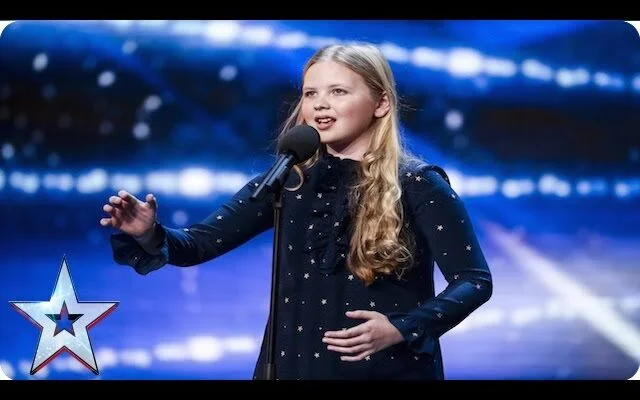
More Details
The judge gave my ex-husband the house, the cars, and every dollar I helped build
Jul 11, 2026

The judge gave my ex-husband the house, the cars, and every dollar I helped build

Part 1

The padlock on the cabin door was rusted shut. I stood there in the dark with two suitcases and a flashlight I’d bought at a gas station forty miles back, and I couldn’t even get inside. I sat on the porch steps and listened to the lake. The water lapped against the dock my grandfather built when I was seven, the same dock where he taught me to tie knots and told me that patience wasn’t about waiting. It was about knowing what you were waiting for.

I didn’t understand that then. I’m not sure I understand it now. Before I go any further, where are you watching from today? Drop your location in the comments. And if you’ve ever walked away from everything you built with nothing but what fit in two suitcases, hit like and subscribe, because this story does not end where you think it does.

Two weeks earlier, I was sitting on my friend Megan’s couch waiting for the hearing that would decide the division of assets. The divorce was already signed. Brandon filed, and I had no way to fight it, but the hearing would determine who got what.

Megan had let me stay with her since the day I left the house. She never complained, never made me feel like a burden, but I could hear her on the phone with her boyfriend at night, whispering about how long this would last. I didn’t blame her. Her apartment was small, and my presence made everything smaller.

The day came. Courthouse, nine in the morning. Brandon’s lawyer did most of the talking. Mine, the one I found through a free legal-aid website because I couldn’t afford anyone else, sat beside me shuffling papers and checking his phone.

Brandon sat across the aisle in the suit I picked out for him six years ago, the charcoal one with the thin pinstripe. He looked good. He always looked good. That was part of the problem.

“Your Honor, my client has been the sole financial provider for the duration of this marriage,” his lawyer said, straightening his tie. “The residence, the vehicles, the investment accounts, all were acquired through his income and his professional efforts.”

I wanted to stand up. I wanted to say that when we got married, Brandon was selling insurance out of a rented office with a broken air conditioner. I wanted to say that I worked double shifts at the hospital for three years so he could get his broker’s license, and that when he finally started making real money, he told me I could quit. And I did, because I believed him when he said he’d take care of us.

But my lawyer had told me not to speak. He said the judge had already reviewed everything. He said it was straightforward. Straightforward. That was the word he used.

The judge awarded Brandon the house, the one I’d chosen, the one where I painted every room myself because we couldn’t afford a contractor back then. He got both cars. He got the savings account that still had my name on it but somehow didn’t count as mine. He got the retirement fund. He got the life we built together.

And I got a settlement check for eleven thousand dollars and a handshake from a lawyer who was already late for his next case. When the list of assets reached my grandfather’s cabin, the judge reviewed the documents and ruled that it stayed with me. Direct inheritance received before the marriage, never incorporated into marital property.

Brandon rolled his eyes. His lawyer shrugged. An old cabin in the middle of nowhere. Nobody cared.

I didn’t cry in the courtroom. I held it together until I got to the parking lot, and then I sat in the passenger seat of Megan’s car and stared at the dashboard until she asked if I wanted to go somewhere.

“I don’t have anywhere to go,” I said.

She was quiet for a moment. Then she said, “What about your grandfather’s cabin up by the lake?”

It really was the only place I had left. Grandpa Arthur died when I was thirty-one. He left the cabin to me, just the cabin, nothing else. My mother had rolled her eyes at the time.

“A shack in the woods,” she called it. “That’s what you get for being his favorite.”

She and my uncle split his savings, which wasn’t much. Nobody wanted to fight over the cabin. Brandon never wanted to go there either. He said it was too far from anything, too old, too quiet.

At the hearing, when the judge said the cabin stayed with me, he laughed under his breath. A cabin worth nothing. That was my grand prize. But now it was all I had.

So that is how I ended up there, driving four hours north with everything I owned in two suitcases, pulling into a gravel driveway that was more weeds than gravel and standing in front of a door I couldn’t open. I found a rock by the woodpile. It took six hits to break the padlock.

The door swung open and the smell hit me first—pine, dust, and something underneath that I recognized immediately. Cedar. Grandpa Arthur kept cedar blocks in every drawer and closet. He said it kept the moths away, but I think he just liked the smell.

I stepped inside. The flashlight beam swept across the room, and everything was exactly where he’d left it: the plaid couch with the sunken middle cushion, the bookshelf he built himself still full of paperbacks with cracked spines, the kitchen table where we used to play cards—him, me, and a cup of hot chocolate he always made too sweet.

The paintings were still on the walls. He painted them all himself, landscapes mostly—the lake at sunrise, the birch trees in autumn, the old stone bridge two miles up the road. They weren’t masterpieces. They were his.

I set my suitcases down, sat on the couch, and something cracked inside me. Not the dramatic kind you see in movies, more like the sound you hear in an old house at night. Something settling, shifting, finding a new position.

I cried for three hours. Then I found the fuse box, flipped the breakers, and the kitchen light flickered on. The cabin was cold, dusty, and mine. It was the only thing in the world that was still mine.

The first week was survival, and not the romantic kind. Not the woman-finds-herself-in-nature kind. The ugly kind, the kind where you scrub mold off bathroom tiles at two in the morning because you can’t sleep and you need something to do with your hands.

The cabin had no heat. The water heater took twenty minutes to produce anything above lukewarm. The nearest grocery store was a thirty-minute drive on a road with no cell signal for the first fifteen miles. I ate canned soup for four days straight because I was afraid to spend what little money I had.

I called my mother on the third day. She picked up on the sixth ring.

“I heard about the divorce,” she said.

No question about how I was doing. No offer to help. Just a statement, like she was confirming a weather report.

“I’m at Grandpa’s cabin,” I said.

Silence.

“Then why?”

“Because I don’t have anywhere else.”

“You could come stay with your brother for a while. He has that spare room.”

My brother Kyle hadn’t called me in eight months. The spare room she was talking about was his home office. I would have been sleeping on an air mattress between his desk and his rowing machine.

“I’m okay here,” I said.

“Well.” Another pause. “Your grandfather always did baby you.”

I hung up.

The days blurred together. I cleaned. I fixed what I could—the leaking faucet in the bathroom, the broken latch on the back door, the window in the bedroom that wouldn’t close all the way. Grandpa Arthur had kept a toolbox under the kitchen sink, everything organized and labeled in his handwriting: Phillips head, flathead, three-eighths wrench. Each tool sat in its place like he expected someone would need them eventually.

By the fifth day, I started going through his things. Not to throw them away. I wasn’t ready for that. I just wanted to touch them—his reading glasses on the nightstand, his fishing vest on the hook by the door, a stack of letters in the desk drawer, most of them from me. Birthday cards, Christmas cards, a few actual letters I’d written during college. He’d kept every single one.

On the sixth day, I started cleaning the walls. I wiped down the bookshelves, the windowsills, the frames of his paintings. There were nine of them throughout the cabin—the lake at sunset, the birch grove, the stone bridge, a deer at the edge of the clearing—each one signed in the bottom corner with his initials, A.H.

I stopped in front of the one above the fireplace. It was the largest, maybe two feet by three, a winter scene with the lake frozen over, the trees bare, the sky that particular shade of gray that means snow is coming. I’d always loved that one.

When I was little, I told him it looked cold, and he said, “That’s because I painted it on the coldest night of my life.”

I reached up to wipe the frame, and the painting shifted. It was heavier than it looked. I steadied it with both hands and felt something behind it, not the wall, but something wedged between the canvas and the wall.

I lifted the painting off the hook carefully and set it against the couch. There was a rectangular shape taped to the back of the frame, brown packing tape yellowed with age holding a manila envelope flat against the wood.

My name was written on it in his handwriting. Not Clare. My full name: Clare Elizabeth Ashford. Underneath it, in smaller letters: If you’re reading this, it’s because I’m already gone.

My hands were shaking. I peeled the tape slowly, trying not to tear whatever was inside. The envelope was sealed. I could feel something inside—paper, and something small and hard. A key, maybe.

I sat on the floor with it in my lap for a long time. The cabin was quiet. The lake was quiet. Everything was waiting.

I opened it. Inside was a single folded letter, a brass key, and a business card for a man named Thomas Wilder, Attorney at Law, with an address in town—the same small town twenty miles down the road where I’d been buying canned soup. I read the first line of the letter, and every hair on my arms stood up.

“My dear Clare, if you are reading this in the cabin, then you came back to the only place I could leave something for you that no one else would ever look.”

Part 2

I read the letter seven times. I sat on that floor with my back against the couch and read it until I could close my eyes and see his handwriting on the inside of my eyelids. It wasn’t long. Grandpa Arthur was never a man who used ten words when four would do, but every sentence carried weight.

“I have watched you give yourself away to people who did not know your value. I watched it with your mother. I watched it with the man you married. I could not stop it. That was the hardest part of loving you, knowing that you would have to learn the hard way what you were worth.”

He wrote about the cabin, how he bought it in 1974 for twelve thousand dollars with money he’d saved working at the paper mill. Everyone told him it was a waste—too far from town, no resale value, bad investment—but he didn’t care, because the first time he stood on that porch and looked at the lake, he felt something he couldn’t explain.

Then the letter changed. The tone shifted.

“The key opens a safety deposit box at First Heritage Bank on Main Street in Milbrook. Box 1177. Thomas Wilder knows everything. He is the only person I trusted with this, and I am trusting you to go see him. Do not tell your mother. Do not tell your uncle. Do not tell anyone until you understand the full picture.”

The last paragraph was the one that stayed in my chest like a stone.

“I was not a rich man, Clare, but I was a patient one. Patience and time can build things that money alone cannot. What is in that box is not a gift. It is a correction. The world took things from you that it should not have taken. This is my way of putting them back.”

He signed it the way he signed his paintings. Just his initials. A.H.

I didn’t sleep that night. I lay in the bed he used to sleep in, staring at the ceiling and holding the brass key in my fist so tightly it left an impression in my palm. A patient man. That’s what he called himself. Not rich. Patient.

The next morning, I drove to Milbrook. It took twenty-two minutes. Main Street was four blocks long—a hardware store, a diner, a post office—and then there it was, First Heritage Bank, a stone building that looked like it had been standing since before the town had a name.

I walked in with the key in my jacket pocket and the business card in my hand. The woman at the front desk looked at me the way small-town bank employees look at strangers, polite but already cataloging.

“I’m looking for a safety deposit box,” I said. “Box 1177.”

She blinked. “You’ll need to speak with our manager. Can I have your name?”

“Clare Ashford.”

Something changed in her face. Not surprise exactly. Recognition, like she’d been expecting the name but not the face.

“One moment, please.”

The manager came out a minute later, a man in his sixties with silver hair and reading glasses pushed up on his forehead. He looked at me for a long moment.

“Arthur’s granddaughter,” he said.

It wasn’t a question.

“Yes.”

“He told me you’d come eventually. I just didn’t know when.” He extended his hand. “I’m Gerald. I’ve been managing this branch for thirty-one years. Your grandfather was one of our oldest clients.”

He led me downstairs. The safety deposit vault was in the basement, cool and quiet and lined with metal. Box 1177 was in the third row, bottom shelf. Gerald handed me a second key, the bank’s copy, and together we turned both locks.

The box was larger than I expected. Inside was a thick folder, a second sealed envelope, and a small leather journal with a rubber band wrapped around it.

“I’ll give you some privacy,” Gerald said. He paused at the door. “For what it’s worth, he talked about you every time he came in. Every single time.”

I opened the folder first. The top document was a deed. Then another deed. Then another. Seven deeds in total, each one for a different parcel of land, all of them surrounding the lake.

Two hundred forty-three acres. Purchased over a span of thirty-seven years, beginning in 1978.

My grandfather—the man who lived in a one-bedroom cabin, painted landscapes, and drove a truck older than me—had quietly bought every piece of land around the lake. Have you ever been completely wrong about someone you thought you knew? Tell me in the comments, because I was about to find out just how wrong I’d been about the man who raised me.

The journal was the key to everything. I sat in a small conference room Gerald let me use and read it cover to cover. It wasn’t a diary. Grandpa Arthur wasn’t the type. It was a ledger.

Dates, amounts, parcel numbers, notes—every purchase documented in his careful handwriting. 1978, forty acres north of the lake, $8,200. Farmer needed cash for his daughter’s surgery. Fair price. Good land. 1983, twenty-two acres east of the access road, $11,400. Bank was going to foreclose. Bought it before they could. Family doesn’t know it was me.

1991, thirty-five acres including the ridge, $27,000. Used the timber sale money from the north parcel. Replanted everything.

He never borrowed. He never took a loan. Every purchase was cash, saved from decades of work at the paper mill, from selling firewood, from small timber operations on land he already owned. He’d buy a parcel, manage it, use the income from one piece to buy the next. Patient. Methodical. Invisible.

The second envelope contained a letter from Thomas Wilder, dated the year my grandfather died. It was a legal summary of everything—the trust, the holdings, the current assessments. I read the number three times. Then I set the paper down and pressed my palms flat against the table because my hands would not stop shaking.

Two hundred forty-three acres of lakefront property in a region that had seen explosive development in the last decade. Assessed value at the time of my grandfather’s death: 4.2 million dollars. Current estimated market value, according to the note Thomas Wilder appended: between seven and nine million, depending on how the parcels were sold.

My grandfather left me nine million dollars in land, and nobody knew. Not my mother. Not my uncle. Not Brandon. Not the judge who gave everything to my ex-husband because I had no assets and no income. Nobody.

And there was a reason for that. All deeds were held under the trust’s name—Hawkins Land Trust—not under my grandfather’s personal name. Annual property taxes were paid directly by the trust. To anyone searching public records, the land belonged to an entity. Nobody would ever connect it to old Arthur in the cabin by the lake.

I went back to the journal and opened it to the last entry. 2019, the year before he died. No purchase this time. Just a note.

“Clare’s husband does not love her. He loves what she gives him. There is a difference, and she will learn it. When she does, she’ll come to the cabin. And when she comes to the cabin, she’ll find this. That is why I never sold. That is why I never told her. Some things can only be received when you’re ready to carry them.”

I sat on the porch for a long time after I got back. The lake was flat, the sky was gray, and the trees on the far shore were just starting to turn. All that land, every hill, every tree line, every stretch of shoreline I could see, and most of what I couldn’t, belonged to me.

Grandpa Arthur had spent thirty-seven years wrapping that lake in a quiet fortress, and he had put me inside it.

The next morning, I called Thomas Wilder. His office was above the hardware store on Main Street, one room with a desk, two chairs, and filing cabinets that went floor to ceiling. He was in his late fifties, gray at the temples, the kind of man who wore a tie even when nobody was coming in.

“I’ve been waiting for this call for three years,” he said. “Sit down. We have a lot to talk about.”

He explained the trust. My grandfather had set it up in 2005, fourteen years before he died. The trust held all seven parcels. I was the sole beneficiary.

The terms were simple. The trust would transfer to me upon my grandfather’s death, but the documents would only be accessible through the safety deposit box. No notification would be sent. No lawyer would come looking for me. I had to find it myself.

“He said you’d find it when you needed it most,” Thomas told me. “He was very specific about that. He didn’t want you to have it while things were comfortable. He wanted you to have it when things fell apart.”

“That’s a gamble,” I said. “What if I never came to the cabin?”

Thomas leaned back in his chair. “He knew you’d come. He told me, ‘She’ll come. It might take years, but she’ll come. That cabin is the only place she ever felt safe.’”

Then he slid a letter across the desk.

“There’s one more thing. You’re not the only one interested in this land. Lake View Development Group has been trying to buy parcels around the lake for the past five years. They’ve acquired most of the private land on the west shore, but your grandfather’s holdings—the east shore, the north ridge, the access road frontage—they need all of it for their project to work.”

The letter was from Lake View Development, addressed to the Estate of Arthur Hawkins and dated fourteen months earlier. The offer was 8.7 million dollars.

“Your grandfather never responded,” Thomas said. “Neither did I. We were waiting for you. I didn’t tell anyone.”

That first night back in the cabin after meeting Thomas, I made coffee—real coffee—and sat at the kitchen table with the folder open in front of me. I read every deed, every assessment, every piece of correspondence from Lake View Development. And I didn’t tell a soul.

Not Megan. Not my mother. Not my brother. The instinct to call someone, to share it, to hear someone gasp and say, “Oh my God, Clare,” was strong. But something else was stronger, a quieter voice, the one that sounded like my grandfather.

Do not tell anyone until you understand the full picture.

My phone rang the next morning. Brandon’s mother, Diane. I let it ring twice. The third time, I picked up.

“Clare, honey.”

Her voice was warm. It was always warm. That was the trap.

“I heard you’re up at that little cabin of your grandfather’s,” she said. “Brandon mentioned it. He’s worried about you.”

I almost laughed. Almost.

“Is he?”

“He knows the divorce was hard on you. He feels terrible about how things went.”

I leaned against the kitchen counter. Through the window, I could see the lake. My lake. The shoreline curving east. My shoreline. The ridge where the pine trees grew thick and dark. My ridge. Nine million dollars of land that her son’s lawyer hadn’t even bothered to look into because it was just a shack in the woods.

“He was wondering, and this is just a practical thing, nothing emotional, whether you might be willing to sign over the cabin for tax purposes,” Diane said. “His accountant said there might be some complication with the settlement if there’s property unaccounted for.”

I set my coffee down. The mug made a small sound against the counter.

“Diane, the cabin was left to me by my grandfather. It wasn’t part of the marriage. It wasn’t part of the settlement.”

“Of course, of course. He just thought, since it’s not worth much and you’re living there temporarily—”

“I’m not living here temporarily.”

After I hung up, I opened my laptop and found the divorce settlement agreement. Brandon’s lawyer had been thorough about claiming everything of value. But the settlement specifically excluded premarital and inherited assets of negligible value. That was the cabin.

That one line—negligible value—was the crack in the wall. Because the cabin wasn’t what mattered. The trust was what mattered. And the trust had been set up in 2005, inherited upon my grandfather’s death in 2020, three years before the divorce. It had never been marital property.

Brandon never knew about it. His lawyer never asked. The judge never considered it. Seven parcels. Two hundred forty-three acres. All of it, legally and completely, mine.

I called Thomas Wilder that afternoon.

“I want to meet with Lake View Development,” I said.

“Are you sure? Once you engage, things move fast.”

“I’m sure. But I’m not selling. Not yet. I want to hear what they have to say.”

“And Clare,” he said, “there’s something else you should know. Lake View Development isn’t just any company. Their primary investor is a group called Mercer Capital Partners. Their regional director is a man named Scott Kesler.”

The name meant nothing to me.

“Should I know him?”

“Probably not,” Thomas said. “But your ex-husband does. Scott Kesler is Brandon’s business partner.”

The kitchen went quiet. The lake was quiet. Even the birds seemed to go silent, as if the whole world had leaned in to listen. Brandon’s business partner was trying to buy my grandfather’s land—the same land Brandon laughed about in court, the same land his mother had just called asking me to sign over.

I gripped the edge of the counter. The marble felt cold beneath my palms.

“Set the meeting, Thomas.”

Part 3

I spent the next three days preparing. Thomas brought me everything he had on Lake View Development—corporate filings, project proposals, public records—and I spread it all across the kitchen table and worked through it the way my grandfather would have, slowly and carefully, making notes in the margins.

Lake View had been assembling land around the lake for a luxury resort project: a golf course, a spa, waterfront condominiums, a private marina. Total projected investment: 120 million dollars. They’d spent the last four years buying parcels on the west and south shores. But the east shore and the north ridge—my grandfather’s land—were the lynchpin. Without my parcels, their entire 120 million-dollar project was dead.

And Brandon knew. He had to know.

I sat with that for a while. I let the anger come, and I let it sit, and then I let it settle into something colder and more useful.

On Thursday, I drove to Thomas’s office for the meeting. I wore the nicest clothes I’d brought, which wasn’t saying much, considering everything I owned fit into two suitcases. Scott Kesler arrived at exactly ten o’clock.

He was younger than I expected, early forties, tailored suit, the kind of confidence that comes from years of getting what you want. With him was a woman I didn’t recognize—sharp eyes, gray blazer, leather portfolio tucked under her arm.

“His attorney,” Thomas murmured.

Scott shook my hand and smiled the way people smile when they think they’re about to close a deal.

“Clare, it’s a pleasure. I’ve heard great things about your grandfather’s property.”

“From whom?” I asked.

The smile flickered. He recovered quickly.

“The land speaks for itself.”

His attorney laid out the offer. 9.4 million dollars for all seven parcels. Clean sale. Thirty-day close. No contingencies. They would even cover transfer taxes.

It was a strong offer. Six months earlier, I would have cried at a number like that. But I wasn’t that woman anymore.

“Tell me about the resort project,” I said.

He started talking about jobs and tax revenue. I cut him off.

“And how much is the total project worth upon completion?”

He hesitated. “The projected return isn’t really relevant to the land valuation.”

“It is to me.”

Scott cleared his throat. “Upon full buildout and sales completion, the project is valued at approximately 340 million dollars.”

“And without my parcels—I’m sorry, without the east shore, the north ridge, and the access road frontage—can the project proceed?”

“The project would need to be significantly restructured.”

“Restructured meaning it can’t happen.”

“I wouldn’t say—”

“I would.”

I opened the folder Thomas had prepared. “Your environmental impact study references the east-shore watershed as the primary drainage corridor for the golf course. Your marina permit specifies the north cove, which is on Parcel Four. And your road-access variance depends on frontage that belongs to Parcel Seven. Without those three elements, you don’t have a project. You have an expensive idea.”

The room went very quiet. Scott’s smile was gone. In its place was something more honest, the look of a man who had underestimated the person sitting across from him and was only now realizing it.

“What are you proposing?” he asked.

“I’m not proposing anything,” I said. “Not today. Today, I’m listening. When I’m ready to talk, Thomas will contact you.”

I stood up, shook his hand, and walked out.

In the stairwell, I stopped. My hands were trembling, not from fear, but from something I didn’t have a name for. Something that felt like the first deep breath after being underwater for a very long time.

Thomas caught up with me on the sidewalk.

“Your grandfather sat in that same chair,” he said quietly. “Same room. Same table. Three different developers came to him over the years. He listened to every one of them. Never raised his voice. Never showed his hand.”

He looked toward the lake road as if he could see it from there.

“He told me once, ‘The person who understands the land always wins, because the land doesn’t lie and it doesn’t leave.’”

I drove back to the cabin, sat on the porch, and watched the sun go down over the lake. My lake. My grandfather’s lake.

Then my phone buzzed. A text from a number I hadn’t seen in months.

Brandon: We need to talk.

I didn’t answer that night. I didn’t answer the next morning either. I left the phone facedown on the kitchen table, made coffee, sat on the porch, looked out at the lake, and thought about what my grandfather would do.

He would wait.

So I waited.

The second message came the next day.

Brandon: Clare, I’m serious. I need to talk to you. It’s about the cabin.

The third came twelve hours later.

Brandon: I know you’re angry, but this is bigger than both of us. Call me.

I didn’t call. Instead, I called Thomas, who said, “Your grandfather always told me that when someone starts texting about something they could handle on the phone, it’s because they’re afraid to hear the answer. And when they stop texting and show up at the door, it’s because they’re afraid of getting no answer at all.”

Brandon showed up on a Saturday morning.

I was on the porch with coffee and one of my grandfather’s books, an eighties crime novel with a spine so worn the pages were starting to fall out on their own. I heard the car before I saw it—a black SUV pulling onto the dirt road, the door opening, footsteps on gravel.

He stopped at the bottom of the porch stairs.

He looked different. Not his face. His face was the same, the same face that made me believe for twelve years. But the way he held his body was different—tense, calculated, the posture of someone who had rehearsed what he was going to say.

“Can I come up?” he asked.

“The porch is mine,” I said. “So it’s up to me.”

He came up and sat in the rocking chair my grandfather made by hand.

“Are you okay?” he asked.

I didn’t answer. I took a sip of coffee and waited.

“Look, I know things got ugly,” he said. “The lawyers, the process, that whole circus. I didn’t want it to go that way, but it did. And I’m sorry.”

He wasn’t sorry. I could see it in his shoulders. Too rigid for someone actually apologizing. People who are truly sorry soften. He was hard as concrete.

“What do you want, Brandon?”

“Fine. I’ll be direct. I know about the development project at the lake. I know Lake View wants this land, and I know you met with them.”

“How do you know that?”

He hesitated, just for an instant, too quick for most people to notice. But I was married to this man for twelve years. I knew every micro-expression. That hesitation meant he was about to lie.

“Scott told me. We’re friends. He mentioned he met the landowner, and the name was Ashford.”

Friends, not partners. Friends. He chose that word carefully.

“So this is a real opportunity, Clare. We’re talking about millions, and I think we can work this out in a way that benefits both of us.”

I set the coffee mug on the wooden table my grandfather had sanded by hand. The sound it made against the wood was dry and final.

“Brandon, you got the house, the cars, the accounts, the retirement fund, everything I helped build over twelve years. And now you show up on the porch of a cabin you called a shack and offer me help.”

“I’m trying to—”

“You’re trying to get into a deal you have no part in because you know that without this land, your partner’s project doesn’t exist.”

His face changed. The mask dropped for half a second. And what was underneath wasn’t anger. It wasn’t surprise.

It was fear. Pure, simple financial fear.

“Scott Kesler isn’t your friend,” I said. “He’s your business partner at Mercer Capital Partners. I know that. Thomas Wilder knows that. And now you know I know.”

He sat frozen. My grandfather’s rocking chair creaked in the silence.

“Leave, Brandon.”

He stood up, opened his mouth, closed it, and walked down the stairs. Halfway to the car, he stopped and turned back.

“You don’t know what you’re getting into,” he said. “This deal is bigger than you think.”

“I know exactly how big it is,” I said. “Three hundred forty million full buildout. I read the prospectus.”

He went white, got into the car, and drove down the dirt road without looking back.

What would you have done? Tell me. If it were you on that porch, would you have let him in? Leave in the comments what you think should happen next.

The day after Brandon showed up, I knocked on the door of a house about half a mile from the cabin, along the trail that ran beside the lake. It was a white house with green shutters and a garden that still had color even in late autumn.

The woman who opened the door was in her early sixties, with short gray hair and hands that belonged to someone who worked the soil. She looked at me for a moment and then said, before I could say anything, “You’re Clare.”

“How do you know?”

“Because you look just like Arthur when he was young,” she said, “and because he told me you’d show up one day.”

She opened the door wide.

“Come in. The coffee just finished.”

Her name was Ruth. She’d lived in that house for twenty-eight years. She and my grandfather were neighbors, friends, and, I would slowly discover, accomplices in a way I hadn’t expected.

Her kitchen was warm. It smelled like cinnamon and burning wood.

“He talked about you all the time,” Ruth said. “Not in a sentimental way. He wasn’t like that. More like someone describing a plan. ‘Clare is smart, but she trusts too easily. She’s going to need to learn. When she does, I need to be ready.’”

“Ready for what?”

Ruth looked at me over the rim of her mug.

“To leave everything to you without anyone getting in the way.”

She told me things I didn’t know. My grandfather had known about developer interest in the lake since the early 2000s. He had refused every offer without hesitation.

“He used to say land was the one thing nobody could take from you in court,” Ruth said. “Money disappears. Marital property gets divided. But inherited land, protected in a trust that’s yours and nobody else’s—that lasts.”

“Ruth, I need to ask you something, and I need you to be honest.”

“I’m always honest,” she said. “It’s my worst quality.”

“My ex-husband, Brandon—did he come here before? Before the divorce?”

Ruth stopped her mug halfway to her mouth. Then she set it back on the table slowly.

“Once, about five or six years ago. You weren’t with him. He showed up alone in a nice car, walked the road, looked over the property, and knocked on my door asking about the land around the lake.”

Five or six years ago. Before my grandfather even died. Before the divorce.

“He pushed,” Ruth said. “Asked specifically about Arthur’s land. How many acres. Whether there were any environmental restrictions. I told him to talk to the owner. He said the owner was his wife’s grandfather and the old man was difficult to deal with.”

Difficult to deal with. My grandfather, who never raised his voice in his life, was difficult to deal with because he wouldn’t sell what he didn’t want to sell.

“After he left,” Ruth went on, “I called Arthur and told him. You know what he said? ‘It started.’ Just that. It started. And the next week, he went to Thomas’s office and made the final changes to the trust.”

I understood it all at once. Brandon didn’t file for divorce because he didn’t love me anymore. He filed because he needed me out of the equation. He figured if he took everything and left me with nothing, I’d sell the cabin and the land out of desperation, and then Lake View would buy it from me for a fraction of what it was worth.

My grandfather saw it coming before I did. Before anyone did. And he closed every door before Brandon could open one.

Ruth looked at me steadily.

“Your grandfather asked me a favor before he died. He asked me to keep an eye on the cabin. If you showed up, I was to welcome you, but never to come looking for you first.”

“Why?”

“Because if someone told you, you’d doubt it. If you found it yourself, you’d believe it.”

I went back to the cabin, opened my grandfather’s journal to the 2019 page, and read the last entry again. But now I saw something I hadn’t noticed before. Below it, in smaller letters, almost faded:

“If he comes before her, Ruth will know. If she comes before him, the land will take care of the rest.”

The lawyer’s letter arrived on a Tuesday. Thomas called me at eight in the morning.

“We received a legal notice,” he said. “Brandon is contesting the trust.”

I sat down in the kitchen chair so fast it scraped the floor.

“On what grounds?”

“He’s claiming the trust should have been disclosed during the divorce proceedings as a potential asset. He says that by failing to disclose the existence of the trust, you acted in bad faith. He’s asking to reopen the case.”

“I didn’t even know the trust existed during the divorce.”

“I know. And that’s why his argument is weak. But weak doesn’t mean it goes away.”

He let that sit between us for a beat.

“If a judge agrees to reopen, this could take months, maybe a year. And during that time, any negotiation with Lake View would be frozen.”

That was exactly what Brandon wanted. Not to win. To buy time. To wear me down. I knew that method. I’d lived with it for twelve years.

Brandon never yelled. He never threatened directly. He exhausted you, drained you, turned every decision into a maze so tiring that in the end you agreed with him just so you could breathe.

“Thomas,” I said, “how much does it cost to defend this?”

“If it goes to court, between forty and eighty thousand.”

“I have eleven thousand in my account.”

“And the land,” he said carefully, “as long as there’s an open legal dispute over the trust, is frozen. It can’t be used as collateral. It can’t be negotiated. It can’t generate income. No bank will accept it as security with pending litigation.”

Nine million dollars in land, and I couldn’t touch a cent of it. Brandon knew that. That was the point.

Make me sit on a fortune I couldn’t access until I gave in.

Part 4

But I wasn’t sitting there as the old Clare. I was sitting in my grandfather’s kitchen chair, looking through his window, surrounded by his land. And the land doesn’t lie. The land doesn’t leave.

I opened my grandfather’s journal again. This time I went to the beginning and read every entry, every note. He was a meticulous man, a man who had planned for thirty-seven years, a man who predicted Brandon would show up before I did. Had he predicted this too?

Page forty-seven.

There was a note different from the others. No purchase date. No amount. Just an instruction.

“If there is a legal challenge to the trust, Thomas has Protocol B in the gray filing cabinet, third drawer, green folder. I paid for the best. You won’t need to pay again.”

My grandfather had hired preemptive legal protection.

I called Thomas immediately.

“Protocol B,” I said. “Gray filing cabinet. Third drawer. Green folder.”

There was silence on the other end, and then a quiet laugh. Not humor. Admiration.

“I’d forgotten,” he said. “Your grandfather had me prepare that in 2018. A complete preemptive defense package. Independent legal opinions confirming the legal separation of assets. Notarized declarations that the beneficiary had no knowledge of the trust. A letter from Arthur himself explaining why the trust was kept confidential.”

“Will it hold?”

“Clare, your grandfather paid three different lawyers to review this. One in New York, one in Boston, one here. All three signed off. It’s airtight.”

I held the phone with both hands while the old pendulum clock in the cabin kept ticking.

“Send the response to Brandon’s lawyer,” I said. “Use everything.”

“Gladly.”

My grandfather didn’t just buy the land. He didn’t just set up the trust. He built a legal wall around everything and left me the key. Patient. Methodical. Invisible. He knew they would try, and he made sure they couldn’t succeed.

Brandon’s lawyer withdrew the challenge eleven days later. Thomas called me with the news in the middle of a Thursday afternoon. I was on the porch painting.

That deserves an explanation.

Three days after the legal letter arrived, while I was waiting for the response, I did something I hadn’t done since I was a child. I went to the corner of my grandfather’s bedroom where he kept his supplies—brushes, oil paints, two wooden easels, blank canvases leaning against the wall, everything covered in dust, everything waiting.

I can’t paint. Never could. As a kid, I smeared color on paper while my grandfather made landscapes that looked real. He never corrected me. He just said, “Paint what you see, not what you think you should see.”

So I set up his easel on the porch, opened the paints, and started painting the lake. It was terrible. It didn’t matter.

“They withdrew everything,” Thomas said. “Protocol B worked. Brandon’s lawyer didn’t even try to respond. He just filed to dismiss.”

I set the brush down. Blue paint dripped onto the wooden porch floor.

“What does that mean?”

“It means the trust is yours. No dispute. No conditions. Nobody can take it.”

He paused.

“And Lake View? They called again. Three times this week. Scott Kesler is getting anxious. The project deadlines are tightening. Based on public filings, the financing approval expires in six months. If they don’t close the land acquisition by then, they lose their investors.”

Six months.

My grandfather taught me about patience. But he also taught me that patience wasn’t about waiting. It was about knowing what you were waiting for. And suddenly, I knew.

That night, I drew up a plan. Not a revenge plan. A plan for what I wanted my life to be from that moment forward.

I didn’t want to sell the land. My grandfather spent thirty-seven years building it. Selling it would erase every decision he made. But two hundred forty-three acres of unused land didn’t pay bills either.

On the last page of the journal, there was a line I’d read before but hadn’t understood.

“Land is power, but power is not selling. Power is deciding who uses it, how they use it, and for how long.”

A lease. Not a sale.

I would keep every acre. Every deed would stay in my name, and Lake View would pay for the right to use it, not own it. A sixty-year contract with review every decade, guaranteed annual income, full control.

I called Thomas.

“I have a proposal,” I said, “but I need you to tell me if it’s legally possible.”

He listened. He asked questions. Then he was quiet for almost a full minute.

“It’s possible,” he said at last. “And it’s exactly what your grandfather would have done.”

Then his tone changed.

“But Clare, I need to ask you something. Not as your lawyer, but as someone who knew your grandfather his whole life. Are you sure you don’t want to sell and walk away? Start clean somewhere else? Nine million would give you a lifetime without worry.”

I looked through the window. The lake was dark. The stars were starting to come out.

“My grandfather had thirty-seven years to sell and leave,” I said. “He never did.”

Thomas was quiet for a moment.

“All right,” he said softly. “Let’s build the lease.”

The meeting was at Thomas’s office on a Wednesday morning. It had rained all night, and the air smelled like washed earth and pine needles. I drove the road that ran along the lake, and for the first time, I didn’t look at that landscape like a lost woman who had ended up there because she had nowhere else to go.

I looked at it like the owner.

Scott Kesler brought a team this time—his attorney, a financial analyst, and a man I didn’t recognize, older, with completely white hair and a suit that cost more than everything I had in my two suitcases. He was the investment director of Mercer Capital. The big money.

Thomas and I sat on one side of the table. They sat on the other. Four against two. But I had something they didn’t.

I had the land.

“Thank you for coming,” I said. “I’ll be direct. I’m not selling.”

“You refused an offer of 9.4 million,” Scott said. “We can renegotiate the price.”

“It’s not about the price. The land is not for sale. Not a single lot. Not a single acre. Not at any price.”

“Then why are we here?”

“Because I have an alternative proposal.”

I passed the pages across the table.

“Long-term lease. Sixty years, with a review clause every decade. Lake View receives the right to use all seven parcels. I retain full ownership of the land.”

Thomas walked them through the terms. The white-haired man read every page without expression. When he finally looked up, his face hadn’t changed.

“This is highly unusual,” he said.

“My grandfather was an unusual man.”

“Investors prefer outright acquisition.”

“A lease creates complexity,” Scott added.

“Complexity for you,” I said, “security for me.”

The white-haired man steepled his fingers.

“You understand that if you refuse to sell and we don’t accept the lease, the project simply moves to another location.”

“With all due respect,” I said, “you have forty-eight million dollars invested in land on the west and south shores that only has value if the project is here. You’re not going anywhere else. You can’t. Everyone at this table knows it.”

He looked at me for a long moment. Then he did something I didn’t expect.

He laughed. A short, contained, genuine laugh.

“Your grandfather knew how to pick his heirs.”

At that exact moment, the office door opened.

Everyone turned.

Brandon walked in as if he had every right to be there. Dark blue suit, tie, the same posture he used to impress clients. But I saw his eyes—quick, nervous, scanning the room.

“Sorry I’m late,” he said, as if he’d been invited.

Thomas stood. “You were not called to this meeting.”

“I’m a director at Mercer Capital. I have every right.”

“You’re my ex-husband,” I said.

The entire room went still.

“And you tried to legally challenge the trust that protects this land, which gives you exactly zero right to sit at this table.”

Brandon looked at me, and I held his gaze. No anger. No trembling. Nothing.

“Clare—”

“Scott can represent Mercer,” I said. “You can’t. Leave.”

Scott looked at the white-haired man. The white-haired man looked at Brandon and, with the smallest gesture, barely perceptible, shook his head.

Brandon stood frozen for three seconds. Then he turned and walked out. The door closed behind him with a soft click.

“Where were we?” I asked.

The white-haired man folded his hands. “The lease. I’ll take it to the investors. I’ll call in a week.”

“Two weeks,” I said. “I’m busy.”

Part 5

The call came in twelve days.

Thomas told me the details late that afternoon while we sat on the cabin porch. I made coffee for both of us the way my grandfather used to make it—too strong and too sweet. Thomas held the mug with both hands and looked out at the lake before he spoke.

“The lease agreement was approved by Mercer Capital’s board. Sixty years. Review every decade. Fixed annual revenue of six hundred eighty thousand dollars, plus 2.3 percent of the resort’s gross revenue. The environmental clause stayed intact. The reversion clause stayed intact. You keep every deed.”

He took another sip of coffee.

“There’s one more thing. Scott Kesler told me Brandon was let go from Mercer Capital last week. Conflict of interest. The attempt to challenge the trust while the company was negotiating was the final straw.”

I didn’t say anything. I looked at the lake instead. The water was calm. The sun was dropping behind the trees on the north ridge, the ridge my grandfather bought in 1991 with money from timber he cut and replanted himself.

“You’re not going to ask how he’s doing?” Thomas asked.

“No.”

Thomas nodded, took another sip of coffee, and didn’t ask again.

I signed the contract on a Friday morning in Thomas’s office. There were no photographers, no party, no champagne. Seven deeds. One lease agreement. My name on every page.

The white-haired man—Richard Hail—shook my hand and said, “If you ever want to invest, look me up.”

“Thank you,” I said, “but my grandfather taught me to invest in land. I’ll stick with what I know.”

I drove back to the cabin, parked, and sat on the porch. It was real autumn now. The trees had turned red and gold. The lake reflected everything—the colors, the clouds, the dark pines at the top of the ridge.

Then I went inside, grabbed the easel, carried it out to the porch, set up a blank canvas, opened the paints—the same ones he used—and started painting the lake.

It was terrible. Completely out of proportion. The trees looked like fat broccoli. The color of the sky wasn’t remotely close to the orange tone I was trying to capture. It didn’t matter.

I signed it in the bottom corner, not with his initials but with mine.

C.A. — Clare Ashford.

Then I hung it on the wall beside his nine paintings. The tenth, the worst of them all, and somehow the one that made the most sense there.

I called Megan that night.

“Thank you,” I said. “For the couch. For the borrowed car. For reminding me the cabin existed.”

“Are you okay?” she asked.

“Yeah,” I said. “I’m okay.”

I sat on the porch until it got dark. The lake disappeared little by little, first the colors, then the shapes, then everything. All that was left was the sound of water lapping against my grandfather’s dock.

Patience isn’t about waiting. It’s about knowing what you’re waiting for.

I wasn’t waiting anymore. I was exactly where I was supposed to be.

More Details