“My Mother-in-Law Took My Son to an Appointment — At 3 A.M., He Came Home Alone and Shaking”
Jul 14, 2026

“My Mother-in-Law Took My Son to an Appointment — At 3 A.M., He Came Home Alone and Shaking”

The morning started like any other morning in the Richardson household. I woke up at six-thirty, made coffee, and began preparing breakfast while my six-year-old son Ethan sat at the kitchen table swinging his legs and humming some cartoon theme song I’d heard a thousand times but could never quite place.

“Big day today, buddy,” I said, setting a plate of scrambled eggs in front of him. “Dr. Morrison is going to check out that arm.”

Two weeks earlier, Ethan had taken a spill off his bike. The X-rays showed no fracture, but our pediatrician wanted a specialist to follow up just to be safe. I’d rearranged my schedule at the documentary production company twice to make sure I could take him.

Then my wife walked into the kitchen.

“Actually, Mom’s going to take him,” Candace said, not looking at me as she poured herself coffee. She was already dressed in her yoga clothes, hair pulled back, moving with the brisk efficiency of someone who’d already made all the decisions and wasn’t interested in debate.

I felt my jaw tighten. “I cleared my afternoon for this.”

“You have that investor meeting,” she said. “The one you’ve already postponed twice. Mom offered, and you know how she gets when we refuse her help.”

That was true. Gertrude Sims, my mother-in-law, had a particular talent for making her displeasure known. Since her husband died five years ago, she’d become increasingly involved in our lives—to the point where I sometimes felt like I was married to both of them.

“I don’t feel comfortable with this,” I said quietly.

Candace’s expression hardened. “You don’t feel comfortable with anything involving my mother. It’s one appointment, Henry. Let it go.”

I’d learned over the past year that our marriage ran smoother when I picked my battles carefully. Money had been tight since my investigative documentary on pharmaceutical corruption had cost me several major contracts. Candace had been spending more time at her mother’s estate in the suburbs, and the distance between us—both literal and emotional—had been growing.

So I let it go.

Gertrude arrived at ten o’clock sharp, her silver Mercedes gliding into our driveway with practiced precision. She was a tall woman in her late sixties, always impeccably dressed, always wearing the same heavy perfume that made me think of funeral homes and old money.

The Sims family had wealth that went back generations—real estate development, strategic investments, the kind of money that opened doors and closed mouths. Gertrude guarded that legacy like a dragon guards gold.

“Ready, sweetheart?” she asked Ethan, completely ignoring me as I stood in the doorway.

“The appointment’s at two,” I said. “I’ll have my phone if you need—”

“We’ll be fine,” Gertrude cut me off, her voice sharp as cut glass. “Come along, Ethan.”

I watched them drive away, that familiar knot of anxiety tightening in my stomach. Something about Gertrude had always unsettled me, though I could never articulate exactly what. Maybe it was the way she sometimes looked at Ethan—not like a grandmother seeing her grandson, but like someone appraising property.

I tried to focus on work, reviewing footage for my latest project about corruption in the foster care system. But I couldn’t concentrate.

At one-thirty, I texted Candace: Everything okay?

No response.

At two-fifteen, I called the orthopedic office. “Hi, this is Henry Richardson. My son Ethan had a two o’clock appointment with Dr. Morrison. Can you confirm he checked in?”

The receptionist put me on hold. When she returned, her voice had changed.

“Sir, I don’t see any check-in for Ethan Richardson today. Are you certain the appointment was scheduled for today?”

My blood went cold. “Yes. His grandmother was bringing him. Gertrude Sims.”

“Let me check… No, sir. No one by that name has checked in either. Would you like to reschedule?”

I hung up without answering and immediately called Gertrude. Straight to voicemail.

I called Candace. Voicemail.

I called Gertrude’s house. Nothing.

By four o’clock, I was pacing our living room, calling every number I had. Her country club. Her bridge partner. Her attorney. No one had seen her. The hospital called me back, concern evident in the receptionist’s voice.

“Mr. Richardson, your son never arrived. Have you considered filing a report?”

“They’ve only been gone six hours,” I said, trying to sound rational. “She probably just took him somewhere.”

But even as I said it, I didn’t believe it.

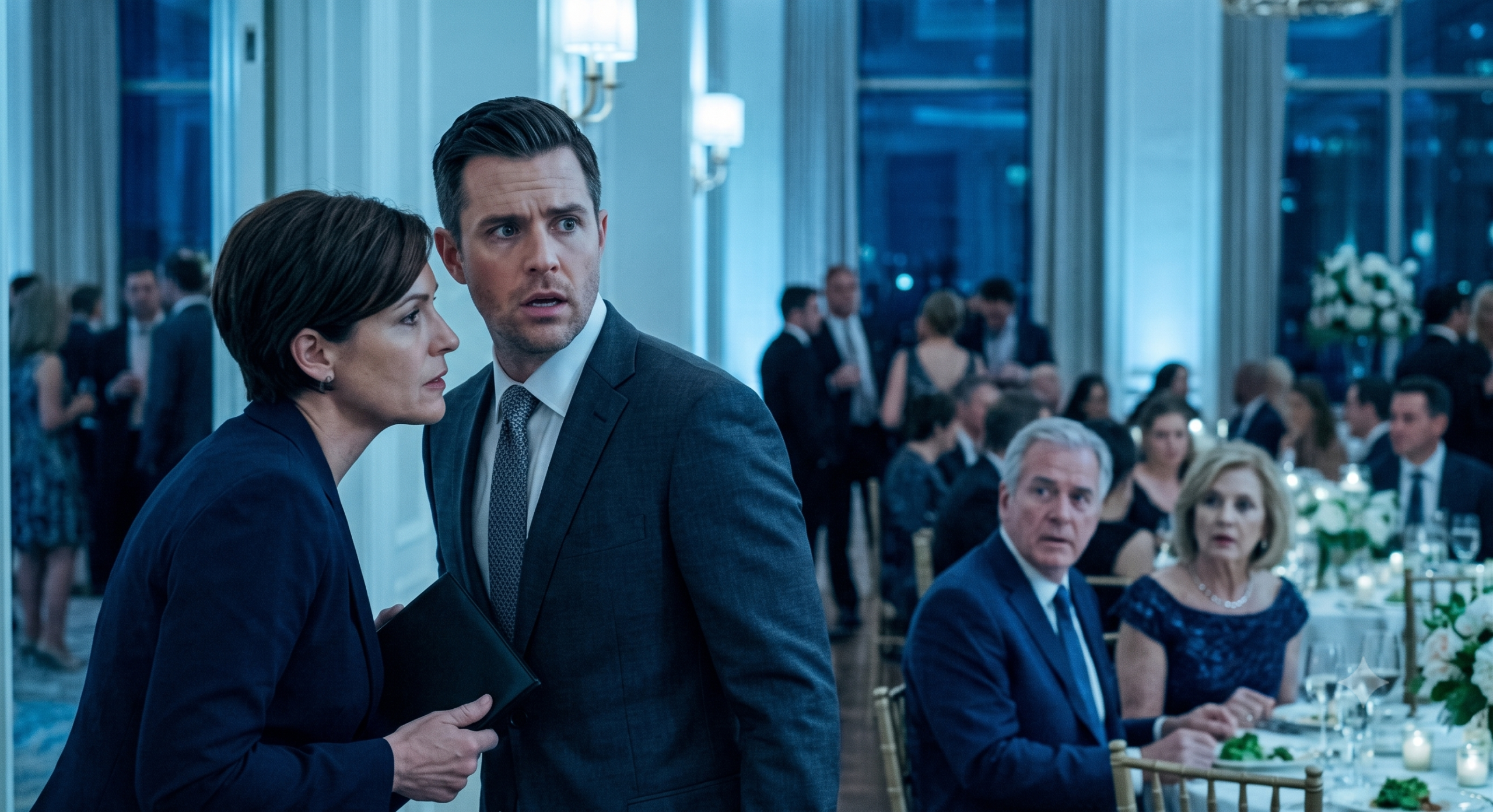
When Candace finally walked through the door at seven-thirty, she had shopping bags in her hands and not a trace of worry on her face.

“Where the hell is Ethan?” I demanded.

She looked at me like I was insane. “With Mom, obviously. Why are you freaking out?”

“He never made it to his appointment. I’ve been calling you for hours.”

“My phone died.” She set down her bags. “I’m sure Mom just took him for ice cream or something. You know how she spoils him.”

“Candace, the hospital called me at four o’clock. He never arrived. I’ve called your mother sixty-three times. She’s not answering.”

For the first time, something flickered across her face. Not worry—annoyance.

“Henry, you’re being paranoid. Mom probably wanted to spend time with him. She’ll bring him back when she’s ready.”

“When she’s ready?” I felt like I was losing my mind. “Our six-year-old son has been missing for nine hours and you’re acting like this is normal.”

“He’s not missing. He’s with my mother.” Her voice turned cold. “I’m going to take a bath. When they get back, try not to make a scene. Mom doesn’t appreciate your dramatics.”

She left me standing there, hands shaking with a mixture of rage and fear.

I called the police at midnight. They took a report but made it clear they couldn’t do much. No evidence of foul play. Family members took children places all the time.

“If he’s not back by morning, call us again,” the officer said.

I sat in the dark living room all night, phone in my hand, while Candace slept peacefully upstairs.

At three forty-seven in the morning, I heard the back door creak open.

I was on my feet instantly, flipping on the kitchen light.

Ethan stood in the doorway, and my entire world tilted sideways.

His hair—his beautiful dark hair that fell across his forehead—was completely gone. Shaved down to pale skin. Dried blood crusted around his left ear and down his neck. He wore clothes I’d never seen before: a gray sweatshirt and black pants, both several sizes too large.

But what made my heart stop was his eyes. They were empty. Hollow. Like someone had reached inside my son and scooped out everything that made him Ethan.

“Buddy,” I whispered, dropping to my knees. “What happened? Where’s Grandma?”

He looked at me with those dead eyes and said in a flat, mechanical voice: “Grandma made me promise not to tell you where we went.”

“It’s okay,” I said, pulling him into my arms. He was stiff, unresponsive. “You can tell Daddy anything.”

“I promised,” he repeated. “She said you’d try to take me away if I told. She said I have to be a good boy.”

My hands were shaking as I examined him. No obvious injuries except whatever had caused the blood near his ear. Then I checked his arm—the one that had been hurt—and pushed up the sleeve.

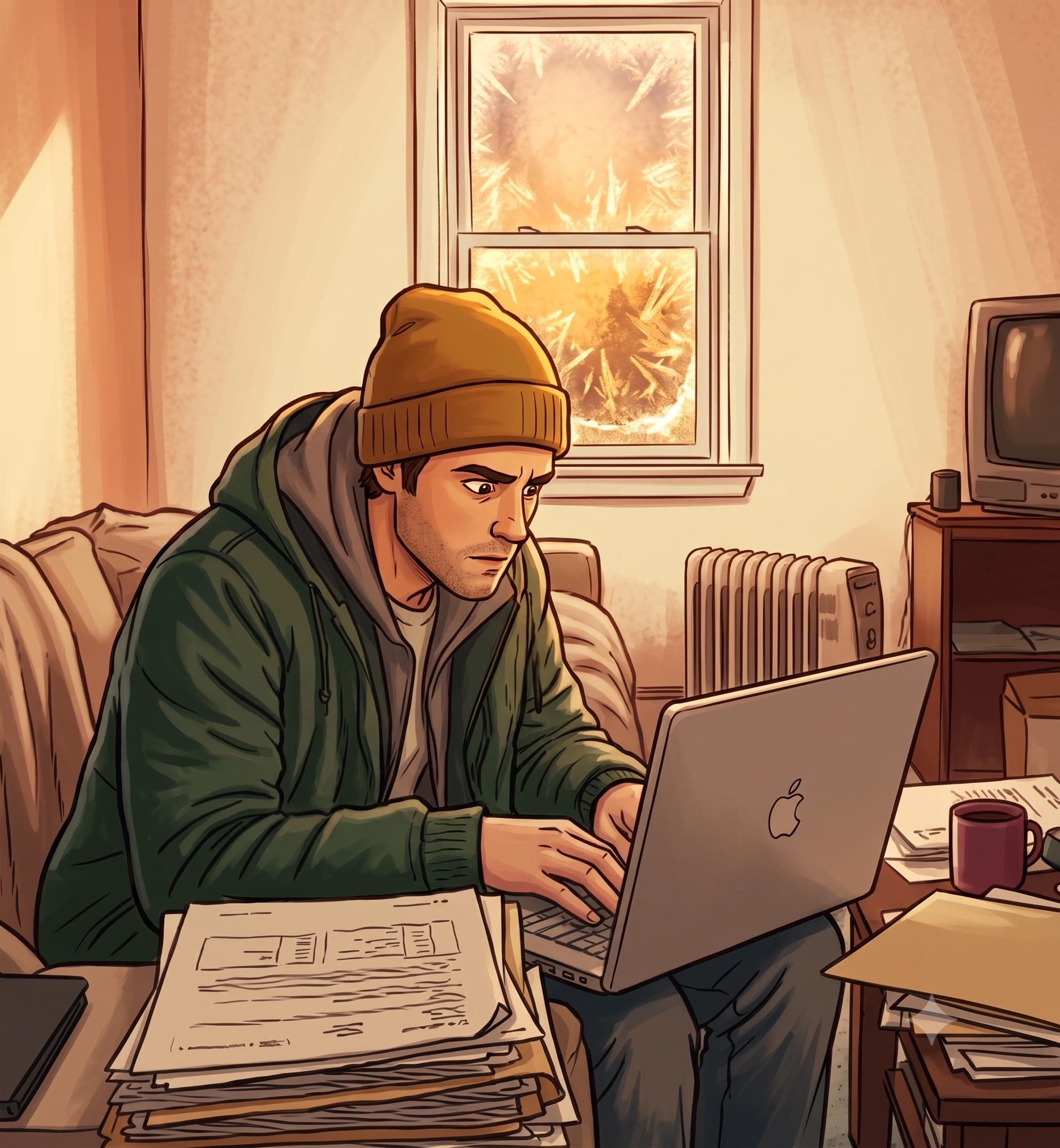
There, on the inside of his forearm, was a fresh tattoo. Still red and inflamed.

A number: 2847.

I stopped breathing.

I’d seen marks like this before in my research for the foster care documentary. Children who’d been trafficked were sometimes marked—tagged like inventory.

“Ethan,” I said, forcing my voice to stay steady, “did Grandma take you to a building? Were there other people there?”

His lip trembled. “I promised.”

“Forget the promise. Daddy needs to know.”

But he just shook his head, tears finally spilling down his cheeks. He wasn’t going to tell me. Not tonight. Maybe not ever, depending on what psychological damage had been done.

I heard Candace coming down the stairs.

“Henry, is that—oh, good. They’re back.” She said it like she’d been proven right, like this was all perfectly normal.

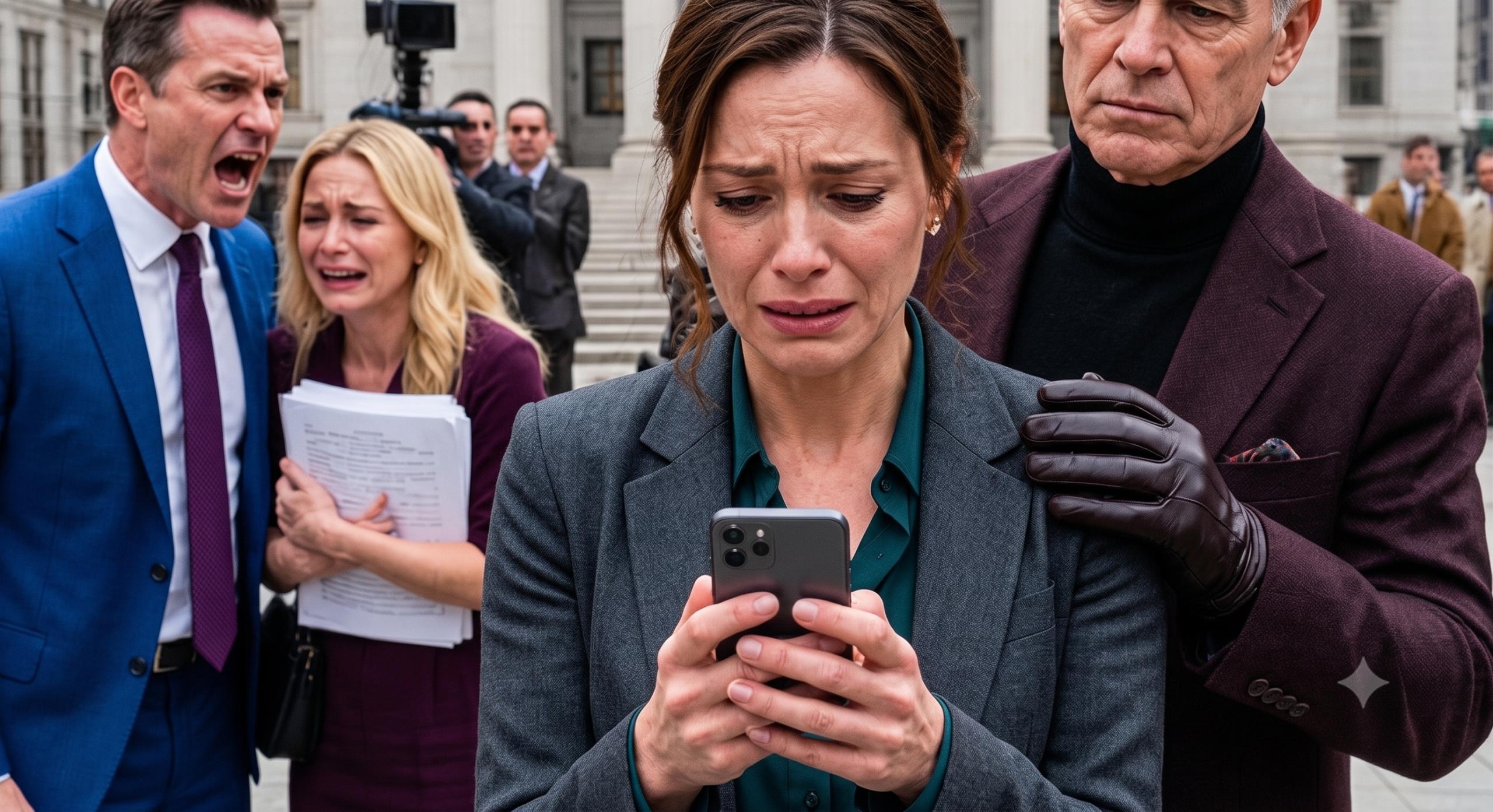
She appeared in the kitchen doorway, saw Ethan’s shaved head and the blood, and her face went completely blank. Not shocked. Not horrified. Just blank.

“Candace,” I said slowly, standing up with Ethan in my arms, “what did your mother do to our son?”

“I don’t know what you’re talking about.”

“His head is shaved. He’s covered in blood. He has a fucking tattoo on his arm.” I was barely keeping my voice level. “What did she do?”

Candace’s eyes flickered to the tattoo, and I saw it—recognition. She knew.

“I need to call Mom,” she said, reaching for her phone.

“Don’t you dare.” My voice was lethal. “Don’t you dare warn her.”

“Henry, you’re being irrational—”

“What did your mother tell you?” I demanded. “You knew something was going to happen today. You made sure I wouldn’t be there. What did she tell you?”

Candace was already backing away, phone in her hand, panic finally showing on her face.

I didn’t wait for answers.

I carried Ethan upstairs, grabbed our emergency bag—something I’d kept packed since my investigative work had made me paranoid—and threw in extra clothes for both of us. Ethan was silent the entire time, that terrible empty look still in his eyes.

“We’re going on an adventure,” I told him softly. “Just you and me.”

I could hear Candace on the phone downstairs, her voice urgent and hushed. I had maybe five minutes before whoever she was calling knew I was running.

We were gone in ten minutes.

I drove north through the night with no specific destination, just putting distance between us and whatever nightmare Gertrude had orchestrated. Ethan fell asleep in the back seat clutching his stuffed dinosaur, and every few minutes I checked the rearview mirror, expecting to see headlights following us.

My mind raced. That tattoo. The shaved head. The blood. Ethan’s dead eyes and robotic responses. And Candace’s reaction—not surprise, but fear that I’d found out.

How long had this been going on? What had Gertrude done? And more terrifyingly—why?

At dawn, I pulled into a small town in upstate New York and found a rundown motel that still took cash. Inside the room, I finally examined Ethan properly. The blood came from a precise cut behind his ear—surgical, deliberate, like someone had removed a small piece of skin. I cleaned it carefully, my hands shaking.

The tattoo was professional work. Medical-grade ink. Someone who knew what they were doing had marked my son like property.

I pulled out the burner phone I kept in my emergency bag and called the only person I could trust—Randy Sanders, my best friend since college and now a family law attorney with connections throughout the state.

“It’s six in the morning,” Randy answered, voice thick with sleep. “This better be—”

“I need your help. I can’t explain over the phone. Can you meet me?”

Something in my voice must have gotten through. “Where are you?”

“Pine Creek. The Evergreen Motel on Route 9.”

“I’ll be there in three hours.”

While I waited, I started searching. Gertrude Sims. The Sims family fortune. The Sims Foundation for Children’s Welfare.

That last one made my blood run cold.

The foundation ran programs for at-risk youth, organized international adoptions, funded children’s homes across multiple states. On paper, it looked philanthropic. But I’d learned in my years of investigative journalism to read between the lines.

I found articles about children who’d gone missing from Sims Foundation programs. Not many—just enough to raise questions if anyone was paying attention. But each case had been quietly closed with no investigation, no follow-up. Children simply vanishing.

When Randy arrived, I showed him everything—Ethan’s shaved head, the tattoo, the blood, Candace’s reaction.

Randy’s face went from shock to grim understanding. “Let me see the arm.”

He examined the tattoo, took photos, measured it. “This is professional work. And this number format… I’ve seen it before in trafficking cases.”

The word hung in the air between us like poison.

“Henry,” Randy said carefully, “I think your mother-in-law is involved in something very serious. Something organized.”

“How do I stop it?”

“You document everything. You build a case so airtight that when it goes public, they can’t bury it.” He looked at Ethan, sleeping on the motel bed. “And you keep him safe. Because if they’re part of this, they’ll come for him.”

Over the next two weeks, I built a new life. Randy helped me rent a house under a false name in a small town three hours away. It wasn’t much—a modest two-bedroom with a fenced yard—but it was safe.

Ethan slowly began to come back to himself. The dead look in his eyes faded, though it was replaced by a weariness that broke my heart. He didn’t talk about what happened, but he had nightmares. Terrible ones. He’d wake up screaming about rooms and other children and men with cameras.

Randy connected me with Dr. Karen Davenport, a child psychologist who specialized in trauma. After three sessions with Ethan, she pulled me aside.

“Your son has been subjected to significant psychological manipulation,” she said bluntly. “Someone trained him not to talk. Threatened him. This is organized and professional.”

While Ethan worked with Dr. Davenport, I worked on my investigation. I started with public records. The Sims Foundation had properties in four states, all clean on paper, all regularly inspected.

But when I cross-referenced children who’d passed through these facilities with missing persons reports, patterns emerged. Children arrived and then vanished from the system within months, supposedly adopted internationally. But when I tried to track down the adoptive families, I hit walls—fake addresses, disconnected phones, shell companies.

I needed someone on the inside. Someone willing to talk.

I found her in Newark—Rosario Glover, a former Sims Foundation employee who’d been fired for asking too many questions.

When I showed her the photo of Ethan’s tattoo, something in her face cracked.

“Jesus Christ,” she whispered. “They’re actually doing it.”

Over three hours, she told me everything. The Sims Foundation wasn’t a charity—it was a pipeline. They took vulnerable children, processed them through their facilities, and sold them to wealthy buyers.

“Gertrude Sims runs it,” Rosario said. “But she’s not alone. There’s a network of wealthy families. They call themselves the Providence Circle. They’ve been doing this for generations.”

“How many children?” I asked.

“Hundreds. Maybe thousands over the years.” Her voice was hollow. “When I tried to speak up, a man visited me. Showed me photos of my sister—her car, her route to work, her schedule. Told me accidents happen. So I signed the NDA and kept quiet.”

“But you’re talking now.”

“Because you have proof.” She pointed to the photo. “And because I’m tired of being scared. If you’re really going after them, I’ll help. But you have to promise me you’ll burn them all down. Not just Gertrude. All of them.”

I promised.

With Rosario’s help, I began to understand the scope. The Providence Circle had existed for over sixty years, started by Gertrude’s father as a way for wealthy families to secure servants without the complications of legal employment. Over time, it evolved into something darker—a marketplace for children.

But they were arrogant. They thought themselves untouchable.

That would be their downfall.

Randy helped me plan our next move. We needed to get inside one of the facilities—the Hartley Home for Children in Connecticut, where Gertrude visited every month on the 15th.

We surveilled it for three days, learning the patterns. Staff left at six. A skeleton crew stayed overnight. And Gertrude arrived at exactly two o’clock every 15th of the month.

We went in at two in the morning, cutting through the fence where the cameras didn’t reach. The security system was expensive but outdated—more for show than function.

Inside Gertrude’s office, I planted a hidden camera and microphone. Then I started copying files from her computer—encrypted files, financial records, correspondence.

What I found made me physically ill.

Lists of children’s names. Dates of acquisition. Dates of transfer. Locations. Prices. Actual dollar amounts for human beings.

Correspondence between Gertrude and other Providence Circle members discussing expansion plans and which judges they’d need to bribe.

And video files.

I watched in horror as children were processed in clinical white rooms—photographed, measured, documented, tattooed. I found footage of Ethan screaming while someone shaved his head and marked his arm.

I turned it off before I could see more.

“We take this to the FBI,” Randy said. “Today.”

“Not yet,” I said. My voice was cold, controlled. “This proves what they did, but it doesn’t destroy them. They’ll get lawyers. They’ll use their connections. Some might go to jail, but others will walk. And in ten years, they’ll rebuild.”

“What do you want to do?”

“I want to make them infamous. I want to destroy their lives so completely that their own families will disown them. I want the name Sims to be synonymous with child trafficking for the next hundred years.”

Over the next week, I executed my plan with methodical precision. I created encrypted documentation packages and sent them to secure locations, set to auto-release if anything happened to me or Ethan.

Then I reached out to five independent investigative journalists—people who’d built careers exposing the powerful, people who would salivate over a story this big.

I sent each of them sample evidence—enough to prove it was real, but not enough to break the story without my full cooperation.

They all wanted in.

Before the story broke, I made one final call. I used a burner phone to call Candace.

“Henry, oh thank God. Where are you? Where’s Ethan?”

“You mean inventory number 2,847,” I said. “He’s safe. No thanks to you.”

Silence. Then a sharp intake of breath.

“Henry, you don’t understand—”

“I understand perfectly. You and your mother run a trafficking network. You mark children and sell them. And you tried to do it to our son.”

“It’s not like that,” she said quickly. “It’s tradition. How things are done in families like ours. The children go to good homes—”

“They’re slaves, Candace.” My voice cracked. “You turn children into slaves.”

“Tell Gertrude something for me,” I said. “Tell her I’m coming for her. Tell her I have everything—the files, the videos, the testimony. Tell her the Providence Circle is done. And tell her that when I’m finished, the name Sims will be synonymous with horror.”

I hung up.

Within an hour, Gertrude called and left a voicemail, her voice unnaturally calm. “Henry, let’s discuss this like adults. I’m prepared to offer you five million dollars. Enough to start over somewhere far away. Just you and Ethan, of course.”

I deleted the message. They thought they could buy me.

They still didn’t understand.

The next day, all five journalists published simultaneously.

Wealthy Families Run Child Trafficking Network for Decades.

The evidence was irrefutable—photos, videos, financial records, testimony. Within twenty-four hours, FBI agents raided every Sims Foundation facility. They found processing rooms. They found fifty-three children marked for transfer. They found evidence linking the operation to twelve wealthy families across the Northeast.

I watched it unfold on the news from our safe house. Ethan sat beside me, not quite understanding but sensing it was important.

“Are we safe now, Daddy?” he asked.

“Yes, champ,” I said. “We’re safe now.”

The arrests happened quickly. Gertrude was caught trying to burn documents. Candace was picked up at a friend’s house, hysterical. Seventeen people were charged with trafficking and conspiracy.

But I wanted more than prison. I wanted permanent destruction.

While the journalists broke the trafficking story, I’d been working on a second phase. With Rosario’s help, I identified every child who’d passed through the Circle’s network—over three hundred across twenty years.

I created a public registry documenting every victim, every facility, every crime. It was searchable, growing as more victims came forward. A permanent monument to the Circle’s evil.

I also established a foundation using seized Circle assets to provide therapy and support for survivors. I called it the Ethan Foundation.

But my most devastating blow was simpler—social destruction. I compiled dossiers on every Providence Circle family, exposing not just their crimes but every dirty secret. I leaked these selectively to their communities, their churches, their country clubs.

Within weeks, these families were pariahs. Their businesses collapsed. Their social circles evaporated. The Sims real estate empire crumbled when every client pulled out simultaneously.

When you Googled “Sims,” the first hundred results were about child trafficking. Forever.

Gertrude died in her jail cell two weeks before trial—officially ruled a suicide, though I suspected the Circle was eliminating witnesses.

I felt nothing when I heard.

Candace’s trial was harder to watch. She sat looking small and confused, as if she genuinely couldn’t understand why everyone was upset. Her lawyer argued she’d been brainwashed, a victim of generational abuse.

The jury didn’t buy it. Twenty-five years.

I didn’t attend the sentencing. I’d already said everything I needed in my victim impact statement, which the judge read aloud: “My wife didn’t just betray me. She betrayed our son. She allowed her mother to mark him like property, to traumatize him in ways he may never fully recover from. She chose wealth over her own child’s well-being. I will never forgive her.”

In the months that followed, I focused on rebuilding Ethan’s life. The nightmares became less frequent. The weariness in his eyes faded. Dr. Davenport said he was making remarkable progress.

On Ethan’s seventh birthday, we went to the park and flew kites. He laughed—really laughed—for the first time since that terrible night.

“Daddy,” he said as we walked back to the car, “are the bad people all gone now?”

I thought about Gertrude dead, Candace in prison, seventeen others serving sentences ranging from fifteen years to life. About families destroyed, reputations ruined, an empire dismantled.

“Yes,” I said. “The bad people are gone.”

He pushed back his hair, revealing the faint scar behind his ear. “Can we get my tattoo removed?”

“Absolutely. We can start the laser treatments next month. It’ll take a few sessions, but we’ll get rid of it.”

“Good,” he said. “I don’t want their numbers on me anymore.”

I hugged him tight. “You were never just a number. You’re Ethan Richardson, and you’re the bravest person I know.”

My phone buzzed. A text from Randy: Final conviction came through. Last Providence Circle member sentenced today. 35 years. It’s over.

I smiled and deleted the text. It wasn’t really over—there would be appeals, civil suits, years of legal aftermath.

But the important part was done. The children were free. The monsters were caged. My son was safe.

A year later, I stood before an auditorium filled with child welfare advocates, law enforcement officials, and survivors. I’d been invited to speak about recognizing warning signs and questioning powerful institutions.

I talked about the registry I’d created and the foundation that now helped hundreds of survivors. But mostly I talked about Ethan—about how one child’s suffering had uncovered the suffering of hundreds, about resilience and justice.

When I finished, the room gave me a standing ovation. But my eyes were on the back of the room where Ethan sat with Dr. Davenport, coloring peacefully.

He looked up, caught my eye, and waved.

I waved back.

After the speech, Randy found me. “There’s talk of legislation now. The Richardson Act—new federal guidelines for monitoring private child welfare organizations.”

“Good,” I said.

“How does it feel?” Randy asked. “You exposed a network that operated with impunity for decades. You saved lives. How does it feel?”

I thought about it. I’d destroyed my marriage, lost my career, spent a year consumed by rage and the need for justice. I’d seen things in those videos that would haunt me forever.

But I’d also saved my son and hundreds of other children. I’d made sure that when future generations learned about the Providence Circle, they’d see it as a cautionary tale about the dangers of wealth without accountability.

“It feels,” I said slowly, “like the beginning.”

“The beginning of what?”

“Of making sure this never happens again.”

That night, after putting Ethan to bed, I sat in my office and created a new encrypted file. I titled it: For Ethan—When He’s Ready.

Someday, my son would want to know the full story. Someday, he’d want to understand exactly what happened and how his father fought back.

And when that day came, I’d show him this file. I’d show him how one person, armed with truth and determination, could bring down an empire of evil.

But for now, Ethan was seven. For now, he deserved to be a child—to play with dinosaurs and fly kites and eat ice cream in the park.

I checked on him one more time. He was sleeping peacefully, his stuffed dinosaur clutched in his arms. No nightmares.

I stood in the doorway and made a silent promise. Whatever came next, I would always protect my son. I would always fight for him. I would always choose him over everything else.

Because unlike the monsters I’d exposed—unlike Gertrude and Candace and all the other members of the Providence Circle—I understood that children weren’t property. They weren’t inventory.

They were precious. Irreplaceable. Deserving of protection and love.

They were everything.

I turned off the light and closed the door, leaving my son to dreams that were finally, blessedly, free of darkness.

In the morning, we would go to the park again. We would fly kites and be a family of two.

And that would be enough.

That would always be enough.

More Details
My mother canceled my room after I paid $5,000 for our Hawaii trip. She thought she had won- until one phone call changed everything.
Jul 14, 2026

My mother canceled my room after I paid $5,000 for our Hawaii trip. She thought she had won- until one phone call changed everything.

It was a beautiful, suffocating cage.
I stood near the edge of the sprawling reception desk, my small, sensible black carry-on suitcase resting against my leg. I was wearing a simple, tailored navy sheath dress and comfortable flats-practical travel wear for a woman who had just flown commercial from Chicago.|
Ten feet away, basking in the aggressive air conditioning, stood my family.
My mother, Eleanor, was draped in white linen and heavy gold jewelry, looking every inch the aristocratic matriarch she desperately pretended to be. My father, Richard, stood beside her, checking his massive, diamond-encrusted Rolex, projecting an aura of bored impatience.
And then there was Madison.
My younger sister, the undisputed, terrifyingly entitled “Golden Child” of the Parker family. She was clinging to the arm of her fiancé, Brandon, a man whose primary personality trait seemed to be his trust fund. Madison was wearing a bright, designer sundress, her hair perfectly blown out, laughing loudly at something Brandon had said.
They had flown down to Miami for Madison’s “engagement weekend”- a lavish, multi-day spectacle designed to impress Brandon’s equally wealthy family.
I was thirty-two years old, and I was only here because of a promise.
Two months ago, my grandmother, the formidable founder of the Vesta Hospitality Group, had passed away. On her deathbed, she had held my hand, her grip surprisingly strong, and demanded I promise to attend Madison’s engagement. “Keep the peace, Emily,” she had whispered, her eyes sharp and clear. “Just watch them. One last time.”
I had honored her dying wish. I bought my own economy-class ticket and took an Uber to the hotel, exhausted but determined to endure the weekend.

But the moment I had walked into the lobby and greeted them, Eleanor had looked me up and down with profound, undisguised disappointment.
I approached the front desk, offering a tired but polite smile to the clerk. “Checking in, please.
Reservation under Emily Parker.”
The clerk, a young woman with a tight bun, typed my name into her keyboard. She frowned, hitting the backspace key and typing it again. Her polite smile faltered, replaced by a look of uncomfortable, apologetic wincing.
“I’m so sorry, ma’am,” the clerk said softly, glancing nervously at my family nearby. “I show that reservation in the system, but… it was canceled yesterday evening.”

My heart performed a slow, sickening drop.

“Canceled?” I repeated, my brow furrowing in confusion. “By who? It was a guaranteed booking.”

It was canceled by the primary account holder on the master block reservation, ma’am,” the clerk explained quietly.

I turned my head.

Madison had stopped laughing. She leaned against Brandon, looking at me with a slow, razor-thin smile that radiated pure, unadulterated malice.

“Oh, right,” Madison drawled, her voice carrying effortlessly across the marble lobby. “I totally forgot to text you, Em. Brandon’s cousins decided to fly in at the last minute, and they really needed the extra rooms on the VIP floor. You know how it is. And since you always say you don’t care about fancy stuff anyway, I figured you wouldn’t mind giving up your suite. You’re so low-maintenance.”

I stared at her. The sheer, breathtaking audacity of the statement temporarily stole the air from my lungs.

“You canceled my room?” I asked, my voice dangerously quiet. “You waited until I flew across the country and walked into the lobby to tell me you gave my room away?”

Eleanor stepped forward, inserting herself between Madison and me. The fake, polite society smile vanished, replaced by a harsh, venomous hiss meant only for my ears.

“Don’t you dare make a scene, Emily,” Eleanor scolded, her eyes flashing with anger. “It is Madison’s weekend. Her future in-laws are arriving in an hour. We had to accommodate them.

You can find a motel down by the highway. You’re thirty-two years old. Figure it out.”

She looked me up and down again, her lip curling in disgust.

“Maybe next time,” Eleanor sneered, “you’ll learn not to embarrass this family by showing up to a five-star resort in discount clothes looking like a tired secretary. You are a liability to your sister’s image today.”

Richard, my father, didn’t even look at me. He adjusted the cuffs of his expensive Italian shirt, checking his Rolex again. “Eleanor is right,” he muttered dismissively. “This weekend is entirely about Madison. Not your feelings, Emily. Deal with it quietly and leave.”

I looked at the four of them. The people who shared my DNA. The people who had spent my entire life making me feel small, invisible, and utterly disposable.

They looked at me, expecting the usual reaction. They expected my eyes to fill with tears. They expected me to lower my head, apologize for being an inconvenience, drag my scuffed suitcase back out into the suffocating, humid Miami heat, and disappear quietly into the background.

They thought my silence was submission.

But as I watched my father polish the watch he had bought using my grandfather’s company money, something deep inside my chest-the terrified, eager-to-please daughter I used to be-went completely, permanently, and terrifyingly quiet.

I didn’t flush red with embarrassment. I didn’t reach for the handle of my suitcase.

I reached into the pocket of my navy dress and pulled out my smartphone.

| 2. The Call to Margaret

“Who are you calling?” Eleanor laughed, a sharp, mocking, brittle sound that echoed in the caverous space. She crossed her arms over her chest, utterly convinced of her own untouchable superiority. “A homeless shelter? A taxi service? The hotel manager isn’t going to help you, Emily. Your father is a founding board member. They work for us.”

I didn’t answer her. I didn’t look at her. I kept my eyes fixed on the massive, sparkling crystal chandelier hanging above us.

I unlocked my phone and hit a specific speed dial number. It didn’t ring. It connected instantly on a secure, encrypted, priority executive line.

“Margaret,” I said.

My voice was no longer the quiet, hesitant tone of an unwanted sister. It was clear, resonant, and projected perfectly over the ambient noise of the lobby. It was the voice of a woman who commanded legions.

“This is Emily Parker.”

Madison rolled her eyes so hard thought they might get stuck in her head. She let out a loud, dramatic groan, turning to her fiancé.

“Oh my god, Brandon, look at her,” Madison sneered, pointing a manicured finger at me. “She is so incredibly embarrassing. She’s pretending to call corporate. Emily, just stop. Stop pretending you have any power here. You’re making yourself look insane.”

I ignored the petulant child completely. I lowered my gaze, locking my eyes directly onto my mother’s arrogant, sneering face.

“Margaret,” I commanded into the phone, my voice dropping to a temperature that could freeze ocean water. “Please execute a system-wide override. Cancel all executive family privileges and corporate comps attached to Richard Parker’s master account. Effective immediately.”

Eleanor’s mocking smile faltered for a fraction of a second. She glanced at Richard, a flicker of uncertainty crossing her features.

“Understood, Ms. Parker,” Margaret’s crisp, hyper-professional voice crackled clearly through the phone’s speaker.

Margaret wasn’t a receptionist. She was the Regional Director of Operations for the entire Southeastern seaboard of the Vesta Hospitality Group. And as of 9:00 AM yesterday morning, she was my direct employee.

“I will revoke the primary master account privileges and flag all associated sub-accounts for immediate deactivation,” Margaret continued flawlessly. “Shall I also cancel the current complimentary bookings and event holds under that specific profile?”

“Yes,” I said, not breaking eye contact with my mother. “All of them. Every single room, every catering contract, every bar tab. Purge the account.”

“Executing now, Ms. Parker. Is there anything else?”

“That will be all, Margaret. Thank you.”

I hung up the phone. The screen went black. I slipped the device smoothly back into the pocket of my dress.

The silence that followed was heavy, confused, and thick with a sudden, suffocating tension.

Richard snorted. It was a loud, ugly sound of complete, unadulterated hubris. He shook his head, looking at me with profound pity.

“Nice try, Emily,” Richard chuckled, stepping forward, aggressively invading my personal space.

“That was a very cute little performance. But I am a founding board member of this corporation.

My mother built this empire. No one, and I mean absolutely no one, is canceling my account.” He turned his back on me, entirely dismissing my existence, and approached the bewildered front desk clerk who had been silently watching the entire exchange.

Richard reached into his designer leather wallet and pulled out a sleek, heavy, brushed-black metal card. It was the Vesta VIP Black Card, a symbol of ultimate, limitless corporate privilege within the hotel chain.

He slapped the heavy metal card down onto the marble counter with a loud, aggressive thack.

“Just ignore her, sweetheart,” Richard commanded the clerk, his voice booming with arrogant entitlement. “She’s having a bit of a mental episode. Give me the key cards to the Presidential Suite, and ensure the four adjoining ocean-view rooms are prepped and keyed for my daughter’s guests. And send a bottle of Dom Pérignon up immediately.”

The clerk, looking incredibly nervous, nodded quickly. She picked up the heavy black metal card and swiped it through the magnetic reader on her keyboard.

| 3. The Red Screen

The moment the magnetic strip passed through the reader, the hotel’s advanced, centralized booking software communicated directly with the master servers in Chicago.

BEEP.

It wasn’t the soft, pleasant, ascending chime of a successful authorization. It was a sharp, harsh, negative, electronic blare that echoed loudly in the quiet lobby.

The large, flat-screen monitor facing the clerk flashed violently. The screen turned a bright, undeniable, blinding red.

The clerk froze. She stared at the screen, her eyes widening in shock. She quickly grabbed the heavy black metal card and swiped it through the reader a second time, her hands trembling slightly.

BEEP.

The screen flashed red again.

“I’m… I’m so sorry, Mr. Parker,” the clerk stammered, looking up at my father, her face pale. She nervously pushed the black card back across the marble counter. “The system… the system says this account has been globally suspended.”

Richard’s face flushed a deep, furious, indignant purple. The veins in his neck bulged.

“Globally suspended?!” Richard roared, slamming his heavy fist violently against the marble

counter. The sound echoed like a gunshot. “That’s impossible! Your machine is broken! Run it again! Do you have any idea who I am?! I built this company!”

“Actually, Dad,” I corrected him smoothly, taking a slow, deliberate step toward the counter. My voice was a calm, steady oasis amidst his rising panic. “Grandma built this company. You just spent the last twenty years squandering the profits on bad investments and vanity projects.”

“Shut up, Emily!” Eleanor hissed, whirling around to face me, her eyes blazing with sudden, terrifying panic. The illusion of her untouchable wealth was cracking in real-time. She turned back to the terrified clerk. “Get the general manager out here immediately! Right now! You are all going to be fired for this incompetence!”

The commotion had already drawn attention. The heavy, frosted glass door behind the reception desk opened, and a tall man in an impeccably tailored, dark suit rushed out.

It was Mr. Sterling, the General Manager of the Vesta Grand.

He moved quickly to the desk, his eyes scanning the aggressive posture of my father, the panic of my mother, and finally, settling on me.

Sterling didn’t bow to my father. He didn’t offer a sycophantic apology to Eleanor.

He stopped. He looked directly at me. He stood up perfectly straight, his expression one of profound, absolute respect, and offered me a slight, deep, deferential nod.

Only then did he turn his attention to the furious man banging on his counter.

“Mr. Parker,” Sterling said tightly, his voice laced with forced, professional patience. “I apologize for the confusion, but your executive override privileges, along with the corporate expense accounts attached to your name, have been permanently revoked by the holding company’s new majority shareholder.”

Sterling picked up the heavy black metal card with two fingers and dropped it unceremoniously into a small trash bin behind the desk.

“Your card is void, sir,” Sterling stated coldly. “The complimentary reservation for the Presidential Suite and the four adjoining rooms has been cancelled. If you wish to stay in those rooms tonight, I will need a personal credit card capable of authorizing an immediate, non-refundable, twenty-five-thousand-dollar hold for the weekend.”

Madison’s jaw physically dropped. The smug, victorious sneer completely evaporated, replaced by a look of sheer, unadulterated horror. She looked at Brandon, her wealthy fiance, who was suddenly shifting his weight very uncomfortably, staring at his prospective father-in-law.

“Dad?” Madison asked, panic bleeding heavily into her voice, the reality of the situation finally piercing her narcissistic bubble. “Dad, what is he talking about? Just give them your Amex! The

guests are arriving for the welcome dinner in an hour! We need those rooms!”

Richard’s face turned the color of wet ash.

He wasn’t a billionaire. He was a man who lived entirely on the corporate dime his mother had allowed him access to. His personal accounts were heavily leveraged, drained by years of funding his wife’s shopping habits and his daughter’s extravagant lifestyle.

His hands trembled violently as he reached into his designer wallet. He pulled out a personal, platinum credit card. He handed it to Sterling, avoiding eye contact with everyone in the room.

Sterling took the card. He didn’t swipe it. He inserted the chip into the main terminal.

The machine thought for three agonizing, suffocatingly tense seconds.

The machine beeped. A small piece of receipt paper printed out.

Sterling didn’t look surprised. He ripped the paper off and handed the card back to my father.

“I’m sorry, sir,” Sterling said, delivering the final, fatal blow to the patriarch’s ego in front of his golden child and her wealthy fiancé. “The card has been declined for insufficient funds.”

| 4. The Billionaire’s Reveal

“Declined?!”

Eleanor shrieked, the sound tearing from her throat like a wounded animal. The mask of high-society elegance completely, violently shattered, revealing the desperate, terrified parasite beneath.

“What do you mean declined?!” she shrieked, grabbing Richard’s arm, her perfectly manicured nails digging into his expensive suit jacket. “Richard, what is going on?! Why is your card declining?! We have a two-hundred-thousand-dollar engagement weekend starting in an hour!

Pay the man!”

Richard was hyperventilating, his eyes wide and fixed on the floor. He couldn’t speak. He was experiencing the catastrophic, real-time implosion of his entire fake existence.

“It means,” I said, stepping forward, the crisp click of my sensible flats echoing in the sudden, horrified silence of the lobby.

I didn’t raise my voice. I didn’t need to. I commanded the space entirely.

“It means,” I repeated, looking directly into my mother’s panicked eyes, “that without Grandma’s company subsidizing your extravagant, fraudulent life, you are completely, utterly broke.”

“You did this!” Richard roared, the sheer terror finally morphing into violent, cornered rage.

He lunged toward me, his hands outstretched, his face contorted in an ugly mask of hatred.

He didn’t make it two steps.

Mr. Sterling, moving with surprising speed for a hotel manager, instantly stepped out from behind the counter, physically inserting himself between my father and me. He raised a hand, signaling sharply to the two massive, uniformed security guards standing near the elevators.

“Touch her, and I will have you arrested for assaulting the owner of this hotel,” Sterling warned, his voice low and dangerous.

Richard froze. The security guards rapidly closed the distance, flanking him on both sides.

“I didn’t do anything, Dad,” I said, my voice echoing clearly in the quiet, cavernous lobby. “! didn’t steal your money. I simply claimed my rightful inheritance.”

I looked at Madison, who was clutching her designer purse to her chest as if it were a life preserver on a sinking ship.

“When Grandma died,” I explained, delivering the truth like a surgical strike, “she knew exactly what you were, Richard. She knew you had nearly bankrupted the philanthropic, non-profit arm of this company with your vanity projects and your gross mismanagement. She knew you were bleeding the operational accounts dry to fund Madison’s lifestyle.”

I took a slow, deliberate step closer to my family.

“So, she made a change to her will,” I said softly. “She bypassed you entirely. She left her fifty-one percent controlling stake in the Vesta Hospitality Group, and all associated holding companies, to the only person in this family who actually works for a living. The legal transfer and the final probate paperwork cleared the federal registry at nine o’clock yesterday morning.”

Madison stumbled backward, her knees visibly buckling. She bumped into a marble pillar, her eyes wide with unadulterated shock.

“You…” Madison stammered, pointing a shaking finger at me. “You… you own Vesta?”

“I do,” I smiled. It was a cold, terrifying, and profoundly satisfied smile. “And as the new majority shareholder and CEO, I spent yesterday afternoon doing a comprehensive audit of our bloated executive expense accounts. I’ve decided to clean house. Starting with your free vacations.”

Eleanor dropped Richard’s arm. She turned to me.

The arrogant, cruel woman who had told me to sleep in a motel fifteen minutes ago was gone.

In her place was a frantic, pathetic, groveling beggar.

“Emily, please!” Eleanor gasped, her voice cracking, tears of genuine panic welling in her eyes.

She actually reached her hands out toward me in a gesture of supplication. “You can’t do this!

We have twenty people flying in from Aspen for this engagement party tonight! Brandon’s family is arriving in thirty minutes! You can’t cancel the rooms! You can’t leave us homeless in Miami!

We’re your family!”

I looked at the woman who had spent thirty-two years making me feel like an unwanted disease.

I looked at the woman who had just told me I was a liability to her image.

The well of my empathy was completely, permanently dry.

“You told me to figure it out, Mom,” I said softly, throwing her exact, callous words back in her face. “You told me I was an adult. I suggest you take your own advice.”

I turned away from her sobbing, pathetic form and looked directly at Mr. Sterling.

“The Motel 6 by the interstate usually has vacancies this time of year,” I told him, loud enough for Brandon to hear. I gestured toward my family. “If these individuals do not provide a valid, personal payment method capable of covering the incidental holds in the next two minutes, have your security team escort them off my property. They are trespassing.”

| 5. The Eviction of Ego

“You can’t do this to me!” Madison shrieked, the sound tearing from her throat like a wounded banshee.

She abandoned all pretense of high-society elegance. She threw a massive, ugly, toddler-esque tantrum right in the middle of the five-star lobby.

“Dad! Do something!” Madison sobbed hysterically, stomping her foot, tears ruining her expensive makeup as the two large security guards took a synchronized step closer to the group. “Fix this! Brandon’s family is going to be here any minute! They are going to think we’re trash! They’re going to think we’re poor!”

Brandon, the wealthy fiancé, had been standing silently by the luggage cart, his face growing paler by the second.

He was a trust-fund kid, but he wasn’t an idiot. He had watched the entire scene unfold. He had watched the father-in-law he thought was a billionaire get his credit card declined for a hotel room. He had watched the mother-in-law beg for a free room. He realized, with sudden, terrifying clarity, that he was about to marry into a bankrupt, fraudulent family that was attempting to use his wealth as a life raft.

Brandon took a slow, deliberate step away from Madison.

“I think…” Brandon muttered, clearing his throat awkwardly, avoiding Madison’s desperate gaze.

“I think I’m going to go ahead and get my own room. Or maybe… maybe I should just catch a

flight back to Aspen. I need to call my parents.”

“Brandon, wait! No!” Madison screamed, lunging toward him, her engagement weekend violently, catastrophically imploding in real-time. “It’s a mistake! She’s crazy! Brandon, please!”

Brandon didn’t wait. He grabbed his sleek overnight bag and practically jogged toward the revolving front doors, desperate to escape the blast radius of the Parker family’s financial ruin.

“Brandon!” Madison wailed, collapsing onto her expensive luggage, weeping uncontrollably.

Richard, his face red and slick with sweat, pointed a shaking finger at me. “I will sue you for this, Emily!” he roared, though his voice lacked any real power. “I will drag you through probate court for decades! I’ll tie this company up in litigation until you’re bankrupt!”

“You don’t have the funds to hire a lawyer who could tie my shoes, Richard,” I replied coldly.

“Ladies and gentlemen,” the head security guard boomed, stepping directly into Richard’s path, placing a heavy hand on his shoulder. “Your time is up. We are escorting you off the premises.

Please move toward the exit.”

Eleanor began to wail, a loud, pathetic sound, as the guards physically herded the three of them toward the revolving doors. They were forced to drag their own heavy luggage across the marble floor, completely abandoned by the bellhops who were now standing by, watching the spectacle.

I didn’t stay to watch them get shoved out into the humid Miami heat.

I turned my back on their screaming, crying, and empty threats. I walked back to the reception desk.

“Is the Presidential Suite ready, Mr. Sterling?” | asked calmly, picking up my small, sensible carry-on bag.

“Yes, Ms. Parker,” Sterling smiled warmly, a look of profound, genuine respect in his eyes. He handed me a sleek, black metal keycard. “It has been fully sanitized and prepped for you. Right this way.”

I followed him to the private, VIP elevator.

I rode up to the top floor in absolute silence. The heavy, mahogany doors of the Presidential Suite opened, revealing a massive, sunlit, multi-room expanse of pure luxury. Floor-to-ceiling windows offered a breathtaking, panoramic view of the turquoise ocean. The air conditioning was flawless.

I walked into the center of the room. I dropped my bag.

I didn’t feel a single, solitary shred of guilt.

I didn’t feel sorry for Madison. I didn’t pity my mother.

The heavy, dark, suffocating anxiety of being the family scapegoat-the constant, exhausting need to make myself small so they could feel big -had completely, permanently evaporated. It was replaced by the fierce, unapologetic, and profoundly empowering relief of absolute sovereignty.

I walked over to the massive, plush sofa and sat down.

I pulled my phone from my pocket. It was vibrating continuously.

My lock screen was a chaotic waterfall of frantic, angry, confused text messages from aunts, uncles, and cousins who had flown into Miami, demanding to know why Madison’s extravagant engagement party at the Vesta Grand had been suddenly relocated to a local, chain diner near the airport.

I didn’t reply to a single one.

I opened my settings. I selected my parents’ numbers. I selected Madison’s number. I selected the entire, toxic extended family group chat.

I hit Block.

I ordered a bottle of vintage champagne from room service, took a long, hot shower in the massive marble bathroom, and walked out onto the balcony to watch the sun set over the ocean.

The silence was beautiful. And the fortress was secure.

| 6. The Controlling Interest

Six months later.

The air in the boardroom on the fiftieth floor of the Vesta Hospitality Group headquarters in Chicago was crisp, clean, and crackling with the electric energy of massive, undeniable success.

I stood at the head of the massive glass conference table, wearing a razor-sharp, tailored black power suit.

I was looking at the end-of-year financial projections displayed on the massive digital monitor.

The numbers were staggering. Under my direct, uncompromising leadership, and stripped of the millions of dollars in wasteful “executive perks” and vanity projects my father had instituted, the Vesta Group had just posted its highest quarterly profits in over a decade.

The board of directors-the people who actually mattered, the investors and executives who

respected competence over bloodlines were currently giving me a standing ovation.

The contrast between my reality and the reality of the people I had left behind in Miami was absolute and incredibly poetic.

A month after the disastrous engagement trip, I had utilized my majority shareholder power to formally, legally, and publicly oust Richard Parker from the board of directors, severing his final, desperate tie to the company my grandmother built.

Without his exorbitant, unearned salary and the endless stream of corporate credit cards, the facade of their wealth violently collapsed.

My parents were forced to sell their massive suburban estate to avoid foreclosure. They had downsized to a small, two-bedroom condo in an undesirable neighborhood, drowning in the massive personal debt they had accumulated trying to keep up appearances.

Brandon, the wealthy fiancé, had indeed called off the engagement that very weekend in Miami.

His prominent family was horrified by the scandal and completely unwilling to marry their son into a bankrupt, fraudulent family that had lied about their wealth.

Madison, stripped of her trust fund and her rich fiance, had been forced to face the harsh, unforgiving reality of the real world. I had heard through a mutual acquaintance that she was currently working a grueling, entry-level retail job, desperately trying to pay off her own massive credit card bills, entirely alienated from the high-society circles she had worshipped.

They were trapped in a miserable, suffocating cage of their own making.

I turned away from the digital monitor, smiling warmly at my executive team as they filed out of the boardroom, congratulating me on the stellar quarter.

I walked over to the massive, floor-to-ceiling windows of my office.

The city spread out below me, a sprawling, glittering grid of concrete, steel, and endless potential.

I held a cup of hot, black coffee in my hands.

I remembered standing in the lobby of the hotel in Miami, holding my cheap suitcase, listening to my mother tell me to figure it out. I remembered her telling me that I was an embarrassment because I didn’t wear designer clothes. She assumed my lack of superficial flash meant I was a liability, a weak link in their chain of illusions.

She was staggeringly, fatally ignorant.

She didn’t understand the fundamental truth of the world. She didn’t understand that the most embarrassing, pathetic thing a person can do is build their entire life, their entire identity, and their entire ego on a foundation they do not actually own.

I had slept in enough uncomfortable airport chairs. I had swallowed enough insults. I had made myself small for the last time.

I took a slow, satisfying sip of my coffee, feeling a deep, profound sense of absolute peace settle into my bones.

I smiled, turning back to my desk, picking up the dossier for our next massive, multi-million-dollar international acquisition.

I knew, with absolute, terrifying, and beautiful certainty, that from now on, I was the only one who decided who got a room at the inn.

More Details
“My Mother-in-Law Took My Son to an Appointment — At 3 A.M., He Came Home Alone and Shaking”
Jul 14, 2026

“My Mother-in-Law Took My Son to an Appointment — At 3 A.M., He Came Home Alone and Shaking”

The morning started like any other morning in the Richardson household. I woke up at six-thirty, made coffee, and began preparing breakfast while my six-year-old son Ethan sat at the kitchen table swinging his legs and humming some cartoon theme song I’d heard a thousand times but could never quite place.

“Big day today, buddy,” I said, setting a plate of scrambled eggs in front of him. “Dr. Morrison is going to check out that arm.”

Two weeks earlier, Ethan had taken a spill off his bike. The X-rays showed no fracture, but our pediatrician wanted a specialist to follow up just to be safe. I’d rearranged my schedule at the documentary production company twice to make sure I could take him.

Then my wife walked into the kitchen.

“Actually, Mom’s going to take him,” Candace said, not looking at me as she poured herself coffee. She was already dressed in her yoga clothes, hair pulled back, moving with the brisk efficiency of someone who’d already made all the decisions and wasn’t interested in debate.

I felt my jaw tighten. “I cleared my afternoon for this.”

“You have that investor meeting,” she said. “The one you’ve already postponed twice. Mom offered, and you know how she gets when we refuse her help.”

That was true. Gertrude Sims, my mother-in-law, had a particular talent for making her displeasure known. Since her husband died five years ago, she’d become increasingly involved in our lives—to the point where I sometimes felt like I was married to both of them.

“I don’t feel comfortable with this,” I said quietly.

Candace’s expression hardened. “You don’t feel comfortable with anything involving my mother. It’s one appointment, Henry. Let it go.”

I’d learned over the past year that our marriage ran smoother when I picked my battles carefully. Money had been tight since my investigative documentary on pharmaceutical corruption had cost me several major contracts. Candace had been spending more time at her mother’s estate in the suburbs, and the distance between us—both literal and emotional—had been growing.

So I let it go.

Gertrude arrived at ten o’clock sharp, her silver Mercedes gliding into our driveway with practiced precision. She was a tall woman in her late sixties, always impeccably dressed, always wearing the same heavy perfume that made me think of funeral homes and old money.

The Sims family had wealth that went back generations—real estate development, strategic investments, the kind of money that opened doors and closed mouths. Gertrude guarded that legacy like a dragon guards gold.

“Ready, sweetheart?” she asked Ethan, completely ignoring me as I stood in the doorway.

“The appointment’s at two,” I said. “I’ll have my phone if you need—”

“We’ll be fine,” Gertrude cut me off, her voice sharp as cut glass. “Come along, Ethan.”

I watched them drive away, that familiar knot of anxiety tightening in my stomach. Something about Gertrude had always unsettled me, though I could never articulate exactly what. Maybe it was the way she sometimes looked at Ethan—not like a grandmother seeing her grandson, but like someone appraising property.

I tried to focus on work, reviewing footage for my latest project about corruption in the foster care system. But I couldn’t concentrate.

At one-thirty, I texted Candace: Everything okay?

No response.

At two-fifteen, I called the orthopedic office. “Hi, this is Henry Richardson. My son Ethan had a two o’clock appointment with Dr. Morrison. Can you confirm he checked in?”

The receptionist put me on hold. When she returned, her voice had changed.

“Sir, I don’t see any check-in for Ethan Richardson today. Are you certain the appointment was scheduled for today?”

My blood went cold. “Yes. His grandmother was bringing him. Gertrude Sims.”

“Let me check… No, sir. No one by that name has checked in either. Would you like to reschedule?”

I hung up without answering and immediately called Gertrude. Straight to voicemail.

I called Candace. Voicemail.

I called Gertrude’s house. Nothing.

By four o’clock, I was pacing our living room, calling every number I had. Her country club. Her bridge partner. Her attorney. No one had seen her. The hospital called me back, concern evident in the receptionist’s voice.

“Mr. Richardson, your son never arrived. Have you considered filing a report?”

“They’ve only been gone six hours,” I said, trying to sound rational. “She probably just took him somewhere.”

But even as I said it, I didn’t believe it.

When Candace finally walked through the door at seven-thirty, she had shopping bags in her hands and not a trace of worry on her face.

“Where the hell is Ethan?” I demanded.

She looked at me like I was insane. “With Mom, obviously. Why are you freaking out?”

“He never made it to his appointment. I’ve been calling you for hours.”

“My phone died.” She set down her bags. “I’m sure Mom just took him for ice cream or something. You know how she spoils him.”

“Candace, the hospital called me at four o’clock. He never arrived. I’ve called your mother sixty-three times. She’s not answering.”

For the first time, something flickered across her face. Not worry—annoyance.

“Henry, you’re being paranoid. Mom probably wanted to spend time with him. She’ll bring him back when she’s ready.”

“When she’s ready?” I felt like I was losing my mind. “Our six-year-old son has been missing for nine hours and you’re acting like this is normal.”

“He’s not missing. He’s with my mother.” Her voice turned cold. “I’m going to take a bath. When they get back, try not to make a scene. Mom doesn’t appreciate your dramatics.”

She left me standing there, hands shaking with a mixture of rage and fear.

I called the police at midnight. They took a report but made it clear they couldn’t do much. No evidence of foul play. Family members took children places all the time.

“If he’s not back by morning, call us again,” the officer said.

I sat in the dark living room all night, phone in my hand, while Candace slept peacefully upstairs.

At three forty-seven in the morning, I heard the back door creak open.

I was on my feet instantly, flipping on the kitchen light.

Ethan stood in the doorway, and my entire world tilted sideways.

His hair—his beautiful dark hair that fell across his forehead—was completely gone. Shaved down to pale skin. Dried blood crusted around his left ear and down his neck. He wore clothes I’d never seen before: a gray sweatshirt and black pants, both several sizes too large.

But what made my heart stop was his eyes. They were empty. Hollow. Like someone had reached inside my son and scooped out everything that made him Ethan.

“Buddy,” I whispered, dropping to my knees. “What happened? Where’s Grandma?”

He looked at me with those dead eyes and said in a flat, mechanical voice: “Grandma made me promise not to tell you where we went.”

“It’s okay,” I said, pulling him into my arms. He was stiff, unresponsive. “You can tell Daddy anything.”

“I promised,” he repeated. “She said you’d try to take me away if I told. She said I have to be a good boy.”

My hands were shaking as I examined him. No obvious injuries except whatever had caused the blood near his ear. Then I checked his arm—the one that had been hurt—and pushed up the sleeve.

There, on the inside of his forearm, was a fresh tattoo. Still red and inflamed.

A number: 2847.

I stopped breathing.

I’d seen marks like this before in my research for the foster care documentary. Children who’d been trafficked were sometimes marked—tagged like inventory.

“Ethan,” I said, forcing my voice to stay steady, “did Grandma take you to a building? Were there other people there?”

His lip trembled. “I promised.”

“Forget the promise. Daddy needs to know.”

But he just shook his head, tears finally spilling down his cheeks. He wasn’t going to tell me. Not tonight. Maybe not ever, depending on what psychological damage had been done.

I heard Candace coming down the stairs.

“Henry, is that—oh, good. They’re back.” She said it like she’d been proven right, like this was all perfectly normal.

She appeared in the kitchen doorway, saw Ethan’s shaved head and the blood, and her face went completely blank. Not shocked. Not horrified. Just blank.

“Candace,” I said slowly, standing up with Ethan in my arms, “what did your mother do to our son?”

“I don’t know what you’re talking about.”

“His head is shaved. He’s covered in blood. He has a fucking tattoo on his arm.” I was barely keeping my voice level. “What did she do?”

Candace’s eyes flickered to the tattoo, and I saw it—recognition. She knew.

“I need to call Mom,” she said, reaching for her phone.

“Don’t you dare.” My voice was lethal. “Don’t you dare warn her.”

“Henry, you’re being irrational—”

“What did your mother tell you?” I demanded. “You knew something was going to happen today. You made sure I wouldn’t be there. What did she tell you?”

Candace was already backing away, phone in her hand, panic finally showing on her face.

I didn’t wait for answers.

I carried Ethan upstairs, grabbed our emergency bag—something I’d kept packed since my investigative work had made me paranoid—and threw in extra clothes for both of us. Ethan was silent the entire time, that terrible empty look still in his eyes.

“We’re going on an adventure,” I told him softly. “Just you and me.”

I could hear Candace on the phone downstairs, her voice urgent and hushed. I had maybe five minutes before whoever she was calling knew I was running.

We were gone in ten minutes.

I drove north through the night with no specific destination, just putting distance between us and whatever nightmare Gertrude had orchestrated. Ethan fell asleep in the back seat clutching his stuffed dinosaur, and every few minutes I checked the rearview mirror, expecting to see headlights following us.

My mind raced. That tattoo. The shaved head. The blood. Ethan’s dead eyes and robotic responses. And Candace’s reaction—not surprise, but fear that I’d found out.

How long had this been going on? What had Gertrude done? And more terrifyingly—why?

At dawn, I pulled into a small town in upstate New York and found a rundown motel that still took cash. Inside the room, I finally examined Ethan properly. The blood came from a precise cut behind his ear—surgical, deliberate, like someone had removed a small piece of skin. I cleaned it carefully, my hands shaking.

The tattoo was professional work. Medical-grade ink. Someone who knew what they were doing had marked my son like property.

I pulled out the burner phone I kept in my emergency bag and called the only person I could trust—Randy Sanders, my best friend since college and now a family law attorney with connections throughout the state.

“It’s six in the morning,” Randy answered, voice thick with sleep. “This better be—”

“I need your help. I can’t explain over the phone. Can you meet me?”

Something in my voice must have gotten through. “Where are you?”

“Pine Creek. The Evergreen Motel on Route 9.”

“I’ll be there in three hours.”

While I waited, I started searching. Gertrude Sims. The Sims family fortune. The Sims Foundation for Children’s Welfare.

That last one made my blood run cold.

The foundation ran programs for at-risk youth, organized international adoptions, funded children’s homes across multiple states. On paper, it looked philanthropic. But I’d learned in my years of investigative journalism to read between the lines.

I found articles about children who’d gone missing from Sims Foundation programs. Not many—just enough to raise questions if anyone was paying attention. But each case had been quietly closed with no investigation, no follow-up. Children simply vanishing.

When Randy arrived, I showed him everything—Ethan’s shaved head, the tattoo, the blood, Candace’s reaction.

Randy’s face went from shock to grim understanding. “Let me see the arm.”

He examined the tattoo, took photos, measured it. “This is professional work. And this number format… I’ve seen it before in trafficking cases.”

The word hung in the air between us like poison.

“Henry,” Randy said carefully, “I think your mother-in-law is involved in something very serious. Something organized.”

“How do I stop it?”

“You document everything. You build a case so airtight that when it goes public, they can’t bury it.” He looked at Ethan, sleeping on the motel bed. “And you keep him safe. Because if they’re part of this, they’ll come for him.”

Over the next two weeks, I built a new life. Randy helped me rent a house under a false name in a small town three hours away. It wasn’t much—a modest two-bedroom with a fenced yard—but it was safe.

Ethan slowly began to come back to himself. The dead look in his eyes faded, though it was replaced by a weariness that broke my heart. He didn’t talk about what happened, but he had nightmares. Terrible ones. He’d wake up screaming about rooms and other children and men with cameras.

Randy connected me with Dr. Karen Davenport, a child psychologist who specialized in trauma. After three sessions with Ethan, she pulled me aside.

“Your son has been subjected to significant psychological manipulation,” she said bluntly. “Someone trained him not to talk. Threatened him. This is organized and professional.”

While Ethan worked with Dr. Davenport, I worked on my investigation. I started with public records. The Sims Foundation had properties in four states, all clean on paper, all regularly inspected.

But when I cross-referenced children who’d passed through these facilities with missing persons reports, patterns emerged. Children arrived and then vanished from the system within months, supposedly adopted internationally. But when I tried to track down the adoptive families, I hit walls—fake addresses, disconnected phones, shell companies.

I needed someone on the inside. Someone willing to talk.

I found her in Newark—Rosario Glover, a former Sims Foundation employee who’d been fired for asking too many questions.

When I showed her the photo of Ethan’s tattoo, something in her face cracked.

“Jesus Christ,” she whispered. “They’re actually doing it.”

Over three hours, she told me everything. The Sims Foundation wasn’t a charity—it was a pipeline. They took vulnerable children, processed them through their facilities, and sold them to wealthy buyers.

“Gertrude Sims runs it,” Rosario said. “But she’s not alone. There’s a network of wealthy families. They call themselves the Providence Circle. They’ve been doing this for generations.”

“How many children?” I asked.

“Hundreds. Maybe thousands over the years.” Her voice was hollow. “When I tried to speak up, a man visited me. Showed me photos of my sister—her car, her route to work, her schedule. Told me accidents happen. So I signed the NDA and kept quiet.”

“But you’re talking now.”

“Because you have proof.” She pointed to the photo. “And because I’m tired of being scared. If you’re really going after them, I’ll help. But you have to promise me you’ll burn them all down. Not just Gertrude. All of them.”

I promised.

With Rosario’s help, I began to understand the scope. The Providence Circle had existed for over sixty years, started by Gertrude’s father as a way for wealthy families to secure servants without the complications of legal employment. Over time, it evolved into something darker—a marketplace for children.

But they were arrogant. They thought themselves untouchable.

That would be their downfall.

Randy helped me plan our next move. We needed to get inside one of the facilities—the Hartley Home for Children in Connecticut, where Gertrude visited every month on the 15th.

We surveilled it for three days, learning the patterns. Staff left at six. A skeleton crew stayed overnight. And Gertrude arrived at exactly two o’clock every 15th of the month.

We went in at two in the morning, cutting through the fence where the cameras didn’t reach. The security system was expensive but outdated—more for show than function.

Inside Gertrude’s office, I planted a hidden camera and microphone. Then I started copying files from her computer—encrypted files, financial records, correspondence.

What I found made me physically ill.

Lists of children’s names. Dates of acquisition. Dates of transfer. Locations. Prices. Actual dollar amounts for human beings.

Correspondence between Gertrude and other Providence Circle members discussing expansion plans and which judges they’d need to bribe.

And video files.

I watched in horror as children were processed in clinical white rooms—photographed, measured, documented, tattooed. I found footage of Ethan screaming while someone shaved his head and marked his arm.

I turned it off before I could see more.

“We take this to the FBI,” Randy said. “Today.”

“Not yet,” I said. My voice was cold, controlled. “This proves what they did, but it doesn’t destroy them. They’ll get lawyers. They’ll use their connections. Some might go to jail, but others will walk. And in ten years, they’ll rebuild.”

“What do you want to do?”

“I want to make them infamous. I want to destroy their lives so completely that their own families will disown them. I want the name Sims to be synonymous with child trafficking for the next hundred years.”

Over the next week, I executed my plan with methodical precision. I created encrypted documentation packages and sent them to secure locations, set to auto-release if anything happened to me or Ethan.

Then I reached out to five independent investigative journalists—people who’d built careers exposing the powerful, people who would salivate over a story this big.

I sent each of them sample evidence—enough to prove it was real, but not enough to break the story without my full cooperation.

They all wanted in.

Before the story broke, I made one final call. I used a burner phone to call Candace.

“Henry, oh thank God. Where are you? Where’s Ethan?”

“You mean inventory number 2,847,” I said. “He’s safe. No thanks to you.”

Silence. Then a sharp intake of breath.

“Henry, you don’t understand—”

“I understand perfectly. You and your mother run a trafficking network. You mark children and sell them. And you tried to do it to our son.”

“It’s not like that,” she said quickly. “It’s tradition. How things are done in families like ours. The children go to good homes—”

“They’re slaves, Candace.” My voice cracked. “You turn children into slaves.”

“Tell Gertrude something for me,” I said. “Tell her I’m coming for her. Tell her I have everything—the files, the videos, the testimony. Tell her the Providence Circle is done. And tell her that when I’m finished, the name Sims will be synonymous with horror.”

I hung up.

Within an hour, Gertrude called and left a voicemail, her voice unnaturally calm. “Henry, let’s discuss this like adults. I’m prepared to offer you five million dollars. Enough to start over somewhere far away. Just you and Ethan, of course.”

I deleted the message. They thought they could buy me.

They still didn’t understand.

The next day, all five journalists published simultaneously.

Wealthy Families Run Child Trafficking Network for Decades.

The evidence was irrefutable—photos, videos, financial records, testimony. Within twenty-four hours, FBI agents raided every Sims Foundation facility. They found processing rooms. They found fifty-three children marked for transfer. They found evidence linking the operation to twelve wealthy families across the Northeast.

I watched it unfold on the news from our safe house. Ethan sat beside me, not quite understanding but sensing it was important.

“Are we safe now, Daddy?” he asked.

“Yes, champ,” I said. “We’re safe now.”

The arrests happened quickly. Gertrude was caught trying to burn documents. Candace was picked up at a friend’s house, hysterical. Seventeen people were charged with trafficking and conspiracy.

But I wanted more than prison. I wanted permanent destruction.

While the journalists broke the trafficking story, I’d been working on a second phase. With Rosario’s help, I identified every child who’d passed through the Circle’s network—over three hundred across twenty years.

I created a public registry documenting every victim, every facility, every crime. It was searchable, growing as more victims came forward. A permanent monument to the Circle’s evil.

I also established a foundation using seized Circle assets to provide therapy and support for survivors. I called it the Ethan Foundation.

But my most devastating blow was simpler—social destruction. I compiled dossiers on every Providence Circle family, exposing not just their crimes but every dirty secret. I leaked these selectively to their communities, their churches, their country clubs.

Within weeks, these families were pariahs. Their businesses collapsed. Their social circles evaporated. The Sims real estate empire crumbled when every client pulled out simultaneously.

When you Googled “Sims,” the first hundred results were about child trafficking. Forever.

Gertrude died in her jail cell two weeks before trial—officially ruled a suicide, though I suspected the Circle was eliminating witnesses.

I felt nothing when I heard.

Candace’s trial was harder to watch. She sat looking small and confused, as if she genuinely couldn’t understand why everyone was upset. Her lawyer argued she’d been brainwashed, a victim of generational abuse.

The jury didn’t buy it. Twenty-five years.

I didn’t attend the sentencing. I’d already said everything I needed in my victim impact statement, which the judge read aloud: “My wife didn’t just betray me. She betrayed our son. She allowed her mother to mark him like property, to traumatize him in ways he may never fully recover from. She chose wealth over her own child’s well-being. I will never forgive her.”

In the months that followed, I focused on rebuilding Ethan’s life. The nightmares became less frequent. The weariness in his eyes faded. Dr. Davenport said he was making remarkable progress.

On Ethan’s seventh birthday, we went to the park and flew kites. He laughed—really laughed—for the first time since that terrible night.

“Daddy,” he said as we walked back to the car, “are the bad people all gone now?”

I thought about Gertrude dead, Candace in prison, seventeen others serving sentences ranging from fifteen years to life. About families destroyed, reputations ruined, an empire dismantled.

“Yes,” I said. “The bad people are gone.”

He pushed back his hair, revealing the faint scar behind his ear. “Can we get my tattoo removed?”

“Absolutely. We can start the laser treatments next month. It’ll take a few sessions, but we’ll get rid of it.”

“Good,” he said. “I don’t want their numbers on me anymore.”

I hugged him tight. “You were never just a number. You’re Ethan Richardson, and you’re the bravest person I know.”

My phone buzzed. A text from Randy: Final conviction came through. Last Providence Circle member sentenced today. 35 years. It’s over.

I smiled and deleted the text. It wasn’t really over—there would be appeals, civil suits, years of legal aftermath.

But the important part was done. The children were free. The monsters were caged. My son was safe.

A year later, I stood before an auditorium filled with child welfare advocates, law enforcement officials, and survivors. I’d been invited to speak about recognizing warning signs and questioning powerful institutions.

I talked about the registry I’d created and the foundation that now helped hundreds of survivors. But mostly I talked about Ethan—about how one child’s suffering had uncovered the suffering of hundreds, about resilience and justice.

When I finished, the room gave me a standing ovation. But my eyes were on the back of the room where Ethan sat with Dr. Davenport, coloring peacefully.

He looked up, caught my eye, and waved.

I waved back.

After the speech, Randy found me. “There’s talk of legislation now. The Richardson Act—new federal guidelines for monitoring private child welfare organizations.”

“Good,” I said.

“How does it feel?” Randy asked. “You exposed a network that operated with impunity for decades. You saved lives. How does it feel?”

I thought about it. I’d destroyed my marriage, lost my career, spent a year consumed by rage and the need for justice. I’d seen things in those videos that would haunt me forever.

But I’d also saved my son and hundreds of other children. I’d made sure that when future generations learned about the Providence Circle, they’d see it as a cautionary tale about the dangers of wealth without accountability.

“It feels,” I said slowly, “like the beginning.”

“The beginning of what?”

“Of making sure this never happens again.”

That night, after putting Ethan to bed, I sat in my office and created a new encrypted file. I titled it: For Ethan—When He’s Ready.

Someday, my son would want to know the full story. Someday, he’d want to understand exactly what happened and how his father fought back.

And when that day came, I’d show him this file. I’d show him how one person, armed with truth and determination, could bring down an empire of evil.

But for now, Ethan was seven. For now, he deserved to be a child—to play with dinosaurs and fly kites and eat ice cream in the park.

I checked on him one more time. He was sleeping peacefully, his stuffed dinosaur clutched in his arms. No nightmares.

I stood in the doorway and made a silent promise. Whatever came next, I would always protect my son. I would always fight for him. I would always choose him over everything else.

Because unlike the monsters I’d exposed—unlike Gertrude and Candace and all the other members of the Providence Circle—I understood that children weren’t property. They weren’t inventory.

They were precious. Irreplaceable. Deserving of protection and love.

They were everything.

I turned off the light and closed the door, leaving my son to dreams that were finally, blessedly, free of darkness.

In the morning, we would go to the park again. We would fly kites and be a family of two.

And that would be enough.

That would always be enough.
More Details
I worked 80-hour weeks in a freezing apartment to buy my parents their farmhouse in cash…
Jul 14, 2026

I worked 80-hour weeks in a freezing apartment to buy my parents their farmhouse in cash…

Jessica didn’t answer right away.

That silence told me more than any words could.

Susan’s face tightened.

“That’s nonsense,” she snapped. “You don’t even understand how banking works—”

“I understand it perfectly,” I said.

My voice stayed calm. Too calm.

That was what finally made Jessica step back.

Because she knew me.

Or she used to.

I pulled my phone out and turned the screen so they could all see it.

“Every transfer I made for the past six years went into a single account,” I said. “A joint household account under my parents’ names.”

I looked directly at Susan.

“Not yours.”

My father’s hands trembled as he whispered, “Michael… what are you saying?”

I didn’t take my eyes off Jessica.

“I’m saying someone changed the destination account.”

A long, heavy pause.

Then I tapped the screen again.

“And I already know who authorized the change.”

Jessica’s breathing hitched.

Susan tried to laugh again, but it came out thin this time.

“You’re accusing family over numbers on a screen,” she said quickly. “You’ve been gone for years, Michael. You don’t know what we’ve had to manage here. Your parents—”

“Stop.”

Just one word.

But it cut through everything.

Even the wind seemed to pause.

I stepped closer to Jessica.

“Say one thing,” I said quietly. “Just one.”

Her eyes flickered.

I continued.

“Look me in the eye and tell me you didn’t move my parents’ money into your mother’s account.”

Jessica opened her mouth.

Nothing came out.

That was all I needed.

My mother let out a broken sound behind me, like she had been holding her breath for six years and just forgot how to release it.

My father’s voice cracked.

“We thought… we thought you were helping us…” he whispered. “Jessica said the costs were higher. That insurance wasn’t covering things…”

My chest tightened.

So that was the lie.

Slow. Careful. Convincing.

Not theft in one moment.

Theft stretched across years.

Susan suddenly grabbed Jessica’s arm.

“Enough,” she hissed. “Don’t say anything else.”

That was when everything finally snapped into place.

Not just the money.

The control.

The isolation.

The way my parents had been made dependent on the same people stealing from them.

I exhaled slowly.

And pulled out my phone again.

Jessica’s voice broke.

“What are you doing?”

I didn’t look up.

“I’m correcting something,” I said.

She rushed forward. “Michael, we can fix this. It was temporary borrowing. We were going to return it—”

I finally looked at her.

“You used my parents as unpaid labor while spending their medical money on yourself,” I said. “There is no version of ‘fix’ for that.”

Susan stepped between us now.

“You’re going to destroy this family over money?” she demanded.

I almost laughed.

“No,” I said.

“I’m destroying it over what you did while thinking I would never come home.”

I pressed one button on my phone.

A single message sent.

Then I looked at my father.

“Dad,” I said softly. “Did you sign anything she gave you?”

He hesitated.

Then nodded slowly.

My stomach dropped.

My voice lowered.

“What kind of documents?”

My mother answered instead, tears falling now.

“Power of attorney…” she whispered. “Jessica said it was for hospital emergencies…”

Silence.

That was the second theft.

Not just money.

Authority.

Control.

Everything I had built for my parents had been quietly redirected, piece by piece, while I was gone.

I closed my eyes for a moment.

When I opened them again, I was no longer looking at family.

I was looking at a case.

A very clean one.

I spoke into my phone.

“Harper, I need emergency legal freeze on a misappropriation case. Yes, all accounts. And send a fraud investigator team to my location.”

Jessica’s face went completely still.

“You wouldn’t,” she whispered.

I looked at her.

“You already decided I was someone who wouldn’t notice,” I said.

That was the mistake.

Sirens weren’t there yet.

But the certainty of them was already in the air.

Susan backed toward the porch door.

“This is insane—”

“No,” I interrupted.

“This is late.”

My mother stepped forward for the first time, trembling, voice barely holding together.

“Michael…” she said. “Are we… going to lose the house?”

I turned to her immediately.

And for the first time all day, my voice softened.

“No,” I said. “You’re going to get it back.”

I looked at my father.

“And no one is ever going to speak to you like that in your own home again.”

A few minutes later, Jessica tried to leave.

She made it halfway down the porch steps before I spoke again.

“Don’t go far,” I said quietly.

She froze.

“Because this isn’t just family anymore.”

I stepped down onto the gravel.

“This is already paperwork.”

The wind picked up slightly across the yard.

My father still held the broom, but now he wasn’t sweeping.

My mother stood beside him, finally still.

And for the first time since I arrived, the house didn’t feel like theirs was the only story being written inside it.

Because I was finally back.

And I wasn’t here to ask questions anymore.

I was here to end an answer that had been going on for six years.

PART 2 (FINAL ENDING)

Jessica didn’t move.

That was the strange part.

Even after everything—after the phone call, after the mention of legal freezes, after the word fraud hanging in the air like smoke—she still stood on the porch like she believed the house might somehow still obey her.

Susan, on the other hand, was already panicking.

“You’re overreacting,” she snapped too fast. “This is a family misunderstanding. Michael, you don’t understand how expensive—”

“I understand perfectly,” I interrupted.

My voice was quiet.

That made it worse.

Because everyone knew loud anger could be emotional.

Quiet anger meant decisions had already been made.

Behind me, my father whispered, “Michael… don’t make it worse…”

I turned to him immediately.

“I’m not,” I said softly. “I’m ending it.”

Then I looked back at Jessica.

“You forged access to my parents’ accounts.”

Her lips parted.

“I didn’t forge—”

I lifted my phone.

“One signature mismatch on a bank authorization,” I said. “One witness statement from the pharmacy manager who confirmed you picked up medications they never received. One property manager confirming forced ‘fee adjustments’ you controlled.”

I stepped closer.

“And one Power of Attorney your mother is not legally allowed to enforce because my parents were not medically incapacitated when it was signed.”

That sentence landed.

Hard.

Susan’s face changed first.

Not anger anymore.

Fear.

Because she finally understood something simple:

This wasn’t a family argument.

It was exposure.

Jessica’s voice cracked.

“You’ve been investigating us?”

I looked at her for a long moment.

“I’ve been protecting them,” I corrected.

A distant sound came from the road.

Engines.

Not one.

Two vehicles.

My father flinched instinctively.

My mother grabbed his arm.

And then, like punctuation at the end of a sentence, black SUVs turned into the driveway.

Everything stopped.

Susan stepped back.

“What is that?” she whispered.

Doors opened.

Two men in plain suits stepped out first, followed by a woman holding a folder and an ID badge.

The lead agent looked at me.

“Mr. Keller?”

I nodded.

“Fraud division,” he said. “We received your submission and expedited due to financial elder exploitation indicators.”

Jessica’s face drained completely.

“This is insane,” she said, backing up. “You called the FBI over family money?”

The agent didn’t even look at her.

He looked at me.

“Where are the financial records?”

I handed him my phone.

“My cloud folder,” I said. “Everything is indexed.”

That was when Susan finally snapped.

“You can’t just come into someone’s home and—”

The agent held up a hand.

“We’re not in your home,” he said calmly.

He pointed at the mailbox.

“This property is registered under Mr. Keller’s ownership.”

Silence.

Jessica froze.

“What?”

My father turned slowly toward me.

His voice barely worked.

“Michael… what did he just say?”

I met his eyes.

“I never transferred the title back after buying it,” I said gently. “I only gave you permission to live here.”

My mother’s hand flew to her mouth.

Susan actually stumbled backward like the ground shifted under her.

“That’s impossible,” Jessica whispered. “We’ve been here for years—”

“You’ve been here as guests,” I corrected.

A second agent stepped forward.

“Ms. Jessica,” he said, “we need you to come with us for questioning regarding financial misappropriation, identity misuse, and unauthorized fiduciary access.”

Jessica turned toward me one last time.

And something in her broke.

Not rage.

Not defiance.

Panic.

“You’re going to ruin my life,” she said.

I looked at her steadily.

“No,” I said.

“You did that when you decided their survival was optional.”

That was the moment she realized there was no speech left that could fix it.

Susan tried to speak again, but no one was listening anymore.

Not even her.

Handcuffs clicked quietly.

Not dramatic.

Not loud.

Just final.

As Jessica was led toward the vehicle, she looked back once.

At my parents.

At the house.

At everything she thought she controlled.

My father stood a little straighter now, like something heavy had finally been lifted off his spine.

My mother was crying—but not from fear anymore.

From release.

The SUV doors closed.

The driveway went quiet again.

Only dust remained where noise had been.


LATER THAT EVENING

Inside the house, everything felt different.

Not richer.

Not bigger.

Just… lighter.

My mother sat at the kitchen table holding a glass of water like she was relearning what safety felt like.

My father stared at the porch through the window.

“I didn’t know it had gotten that bad,” he whispered.

I sat across from them.

“You were surviving,” I said gently. “That’s different from seeing.”

My mother looked at me.

“Why didn’t you come sooner?” she asked.

The question didn’t carry blame.

Only sadness.

I paused.

Then answered honestly.

“Because I trusted the wrong version of ‘family.’”

Silence.

My father nodded slowly, eyes wet.

“I’m sorry,” he said.

I shook my head immediately.

“No,” I said. “You don’t apologize for being trapped.”

I looked around the kitchen.

The same house I built for them.

But now it finally felt like theirs again.


THREE MONTHS LATER

The legal case was already closed in its first phase.

Restitution orders were issued.

Accounts restored.

Investigations expanded into additional fraud connected to Susan’s financial network.

Jessica was facing sentencing.

Susan disappeared from public view entirely.

But none of that was the real ending.

The real ending was smaller.

Quieter.

One afternoon, I came back without warning again.

My father was outside—but this time, he wasn’t sweeping.

He was planting flowers along the porch edge.

My mother was sitting in a chair watching him, smiling like she had forgotten how to be afraid.

When they saw me, my father laughed softly.

“Now we’re not allowed to work too hard,” he said.

I smiled for the first time in a long while.

“That’s correct,” I replied.

My mother stood and hugged me.

Long.

Warm.

No tension in it anymore.

Just family.

Not the kind that takes.

The kind that finally heals.

As I stood there looking at them in the late afternoon light, I realized something simple:

I didn’t just buy them a house.

I had to come back to give them their life inside it.

And this time…

no one was going to take it away again.

More Details
My father told me to change every bank card PIN just five minutes after the divorce, and I obeyed without asking why. That same night, my ex-husband and his mistress enjoyed a $990,000 night at a luxury club—until the waiter returned with one sentence that froze them both.
Jul 14, 2026

My father told me to change every bank card PIN just five minutes after the divorce, and I obeyed without asking why. That same night, my ex-husband and his mistress enjoyed a $990,000 night at a luxury club—until the waiter returned with one sentence that froze them both.

Chapter 1: The Code of Silence

My father told me to switch the security codes on every single bank card just five minutes after the divorce was finalized, and I followed his instructions without daring to ask a single question.

That very same night, my former husband and his new companion indulged in a nine hundred and ninety thousand dollar evening at a private luxury club, but the night ended in disaster when the waiter returned with a single sentence that left them both completely frozen.

Five minutes after the judge signed the final divorce decree, my father grabbed my wrist before I could walk out of the courthouse doors.

“Florence,” he said, his eyes sharp and calm, “you must change every single PIN on those accounts right now, as you cannot wait until tonight because grief and guilt are dangerous things.”

“I understand, Dad,” I replied, my hands still shaking from the finality of the legal proceedings we had just endured.

“Never trust a man who smiles while he is taking half of your life away from you,” he added with a tone that brook no argument.

I nearly let out a bitter laugh while sitting on a cold wooden bench just outside the courtroom, but I knew my father, Frederick Brown, had spent thirty years investigating high-level financial fraud across the country.

When he spoke with that specific tone of voice, it was always best to listen to him without hesitation.

So I opened the mobile banking applications on my smartphone and updated the security credentials for all ten of my cards at once, including my business accounts, personal savings, and emergency credit lines.

My former husband, Jasper Davis, walked past me with his new flame, Giselle Moore, clinging tightly to his arm as if she were a trophy he had won.

She was wearing a silk blouse that cost more than my first car, and she carried the smug expression of a woman who was entirely convinced that she had emerged victorious.

Jasper slowed his pace just enough to look down at me and whisper, “Try not to cry too much in public, Florence, because it is truly pathetic how some women simply do not know how to keep a man interested.”

Giselle let out a high-pitched giggle that made my skin crawl.

I looked up from the screen of my phone and offered them both a cool, detached smile while saying, “It seems some men are entirely incapable of reading a bank statement before they start spending money.”

His face flickered with a brief moment of confusion, but he quickly regained his arrogant composure and walked away.

By eight forty that evening, Jasper and Giselle were located in the heart of the city at The Gilded Vault, which was an elite social club where a single bottle of champagne could easily cover the cost of a luxury apartment.

Jasper had booked the Obsidian Suite through my company membership, which he had retained access to during our long and messy separation.

He ordered several towers of imported oysters, Wagyu beef, two bottles of rare aged wine, and a series of extravagant cocktails for Giselle’s birthday celebration.

When the time came for the main event, he led her to the in-house boutique located inside the club so she could pick out a sapphire necklace that was priced at six hundred and forty thousand dollars.

Jasper, drunk on his own sense of revenge and the borrowed status of my hard work, confidently handed the waiter my black business card to finalize the transaction.

The waiter returned to the table only three minutes later with his face drained of all color and his body posture extremely rigid.

“Mr. Davis,” he said in a hushed, trembling voice, “I am incredibly sorry, but I am afraid that the payment has failed to process.”

Jasper frowned, his face reddening with irritation, and he said, “That is impossible, so please run the card through the machine one more time.”

“We have already attempted to process the payment three times, sir,” the waiter explained while looking down at his shoes.

“Then you will simply use the backup card that is linked to the primary account,” Jasper demanded, clearly losing his patience in front of his date.

The waiter swallowed hard and replied, “Sir, all of the cards that are linked to this membership have been cancelled or restricted by the account owner.”

Giselle’s smile vanished instantly, and she looked at the necklace display with a mixture of confusion and sudden embarrassment.

Jasper snatched the receipt from the waiter’s hand and stared at the total, which amounted to nearly one million dollars for the evening’s festivities.

Across the city, my phone began buzzing incessantly with fraud alerts, but I simply sat at my father’s kitchen table and stared at the screen as the notifications rolled in.

My father poured a fresh cup of coffee into my mug and said, “Now that the cards are silent, the real divorce is finally going to begin.”

Chapter 2: The Sound of Panic

At first, I truly thought the alerts would be the end of the situation, as I assumed Jasper would be humiliated and the club would force him to provide another form of payment.

However, men like Jasper did not accept the consequences of their own actions with any shred of dignity, because they were far too accustomed to finding someone else to blame for their failures.

At nine zero seven in the evening, my phone began to ring with his caller identification displayed clearly on the screen.

I let it ring until it went to voicemail, and at nine zero eight, he called again with even more urgency.

At nine zero nine, Giselle called me from a telephone number that I did not recognize, likely hoping to catch me off guard.

My father looked over the edge of his coffee cup and said, “Do not answer the phone, because they are only looking for a target for their frustration.”

“I was never going to pick up, Dad,” I replied, watching the phone screen go dark again.

He nodded, clearly satisfied with my restraint, and pushed a yellow legal pad toward me so I could start documenting everything.

“Write down every single time they call and take a screenshot of every message they send you,” he instructed, knowing that records were the only shield against a man like Jasper.

My father had always maintained that panic made people incredibly careless, while Jasper had always operated under the false belief that his charm could erase any amount of legal paperwork.

That night, those two opposing philosophies collided in a way that left Jasper completely exposed.

The first voicemail came from Jasper, and his voice was low, shaky, and filled with a dangerous kind of fury.

“Florence, you need to stop playing these petty games right now, because you know that card is tied to the company accounts and you have just embarrassed me in front of some very important clients.”

Clients, he called them, as if he were actually conducting business while spending my money on a birthday party for his mistress.

I almost admired the audacity of his lie, especially since Giselle had been posting videos of their extravagant night all over her social media platforms for hours.

The second voicemail arrived ten minutes later, and his tone had shifted from pure arrogance to something that sounded suspiciously like desperation.

“Listen, Em, there has clearly been some sort of massive confusion at the club, and they are telling me the membership is still under your name, so just go into your app and approve the charge for me.”

“He is trying to manipulate you,” my father snorted, shaking his head at the audacity of the request.

“I know exactly what he is doing,” I whispered, feeling a sense of cold relief that I had finally cut the cord.

Then the text messages began to flood my inbox, each one more desperate and insulting than the one before it.

You are being incredibly petty, Florence.

This is the exact reason why our marriage was never going to work out.

Do you really want everyone to know that you are this vindictive?

You have plenty of money, so just cover the bill and stop acting like a child.

You owe me the dignity of fixing this situation for me.

That last message made me stare at my phone screen for a long time, wondering how a man could have so little self-awareness.

I owed him dignity? The man who had moved Giselle into a penthouse that I paid for while telling me that he needed space to heal his heart?

The man who had used my professional contacts to impress all of her shallow friends?

At nine forty-six in the evening, the general manager of The Gilded Vault called me directly to discuss the situation.

I put the call on speakerphone so my father could hear the exchange, and I answered firmly.

“Ms. Brown?” the woman asked, her voice professional and strictly controlled.

“This is she,” I replied, my voice steady despite the adrenaline pumping through my veins.

“This is Clara Williams, the general manager of The Gilded Vault, and I am calling to apologize for disturbing you, but Mr. Davis is currently attempting to force through charges on your corporate membership.”

“Jasper Davis is my ex-husband, and the divorce was legally finalized earlier today,” I said, making sure my tone was clear and absolute.

There was a brief pause on the other end of the line while she processed the information.

“I see, and I apologize for the oversight,” she said, her voice becoming even more clipped.

“He has absolutely no permission to use my cards, my business accounts, or my private membership for his personal expenses.”

“I completely understand, Ms. Brown, but would you be willing to confirm that in writing for our internal records?”

“My attorney will send you a formal declaration tonight,” I promised, and my father was already pulling his laptop toward him.

Clara lowered her voice and said, “There is one more issue, as Mr. Davis attempted to purchase a high-value piece of jewelry and signed your company name on the authorization slip.”

My stomach tightened, but I did not lose my composure because I knew this was the moment he had crossed the line into criminal territory.

“Please preserve the slip, the security footage, the itemized bill, and every piece of communication you have regarding this night,” I requested.

“I will secure all of those files immediately,” she confirmed, and the call ended with a tone of finality.

At ten fifteen, Jasper sent one final, chilling text message that read: You will definitely regret trying to humiliate me like this.

I handed the phone to my father so he could read the message for himself.

He read it once, then looked at me with the same calm, analytical expression he used whenever the world felt like it was narrowing down to simple evidence and consequences.

“No, Florence,” he said quietly, “it is actually going to be the other way around.”

Chapter 3: The Breaking Point

The next morning, Jasper Davis showed up at the lobby of my office building wearing dark sunglasses, even though the sky was gray and pouring rain.

My receptionist, Sarah, called me on my private line before he had even reached the security desk in the lobby.

“Florence,” she said in a hushed tone, “Mr. Davis is downstairs and he is causing a scene because he insists that it is an urgent matter.”

I stood by the window of my thirty-second-floor office and watched the rain streak against the glass while thinking about how much I had wasted on him.

“Tell security that he is absolutely not allowed to pass the lobby under any circumstances,” I commanded.

Sarah lowered her voice even further and said, “He is already shouting at the guards and refusing to leave the building.”

I sighed, realizing that for nine years, Jasper had treated every locked door as a mere suggestion and every boundary as an invitation to negotiate.

When we first met, he had been a charming consultant with expensive suits and a perfectly practiced sense of humility.

I had been working hard to build my design firm out of a small, rented room above a bakery, and he had told me that he admired my ambition.

Later, I realized that he did not admire my work ethic at all; he had only ever admired the access that my success provided him.

He loved the access to my wealthy clients, the access to my credit cards, and the access to the elite rooms where powerful people said things they would never utter in public.

By the time I truly understood his motivations, he had already learned exactly how to smile at my board members and flatter my vendors to make himself seem indispensable.

It had taken me two years to separate my company from his influence, and an even longer time to separate my heart from the version of him I had created in my mind.

Now, he was standing in my lobby, shouting loudly enough that Sarah no longer needed to hold the phone close to the receiver to hear him.

“You tell her that I am not leaving this building until she fixes this mistake!” he bellowed.

I pressed the intercom button on my desk and said, “Sarah, please put me on the lobby speaker system.”

A second later, my voice echoed throughout the marble lobby, causing the shouting to stop instantly.

“Jasper, leave the building immediately,” I said, my voice cold and clear.

He looked up toward the security camera, and even through the grainy monitor, I could see his jaw tightening with rage.

“Florence, do not be childish, because we need to talk about this situation face to face.”

“We have absolutely nothing left to discuss, and you are currently trespassing on private property.”

“You froze the credit cards and made me look like a fool!” he yelled.

“I protected the accounts that belong to me, and you were the one who made yourself look like a fool by trying to spend money you did not have.”

“You are going to ruin my entire reputation with this stunt!” he cried out.

“You attempted to spend nearly one million dollars on my corporate membership just five hours after our marriage was dissolved in a court of law.”

The entire lobby went silent, and I could see the junior designers near the elevators turning to stare at him.

Jasper removed his sunglasses, revealing that the edge of his eye was bruised a deep shade of purple, likely from a confrontation at the club.

I almost felt a flicker of curiosity about how he got the mark, but I quickly remembered that The Gilded Vault had its own private security and a very strict policy regarding unpaid bills.

“You planned all of this from the very start,” he accused, his voice shaking.

“No, Jasper, you planned a night that you could not afford, and I simply secured the accounts that are legally under my name.”

“You knew that I still had the card in my wallet!”

“And you certainly knew that it was no longer yours to use,” I replied.

His face turned a deep shade of purple, and he seemed to be struggling to find a response that didn’t make him sound like a criminal.

My father walked into my office behind me, carrying a leather folder and two cups of coffee, having driven in before the sun came up.

He set the folder on my desk and nodded toward the computer monitor where the security footage was playing.

“Let him keep talking, because every word he says is just more evidence,” my father whispered.

“You think that club is going to choose you over me?” Jasper shouted at the ceiling. “I have connections there, and I know people who can make your life very difficult!”

My father arched an eyebrow, looking unimpressed by the empty threats.

I leaned closer to the microphone and said, “Clara Williams has already sent our attorney the security footage from last night, and she also provided the signed authorization slip.”

Jasper stopped moving, and for the first time, he looked truly defeated.

There it was, the first real crack in his armor, because he had always relied on his ability to intimidate people into silence.

Giselle did not understand the gravity of financial fraud the way Jasper did, because she only cared about the aesthetic of wealth, the velvet ropes, and the social media likes.

Jasper, however, knew enough about business to understand the difference between a dispute and a felony.

“You do not have anything on me,” he said, though his voice had dropped to a defensive mumble.

“I have more than enough,” I said, and then I cut the feed.

At ten-thirty in the morning, my attorney, Margaret Sloan, arrived at the office with a posture that made men like Jasper suddenly remember that they had very urgent appointments elsewhere.

She was in her late fifties, with sharp silver hair and a reputation for being allergic to dramatic theatrics in a courtroom.

She joined me in my office while the security team kept Jasper confined to the lobby area.

Margaret opened her briefcase and laid out a series of documents for us to review.

“The club’s bill is completely itemized, including the alcohol, the private room rental, the service fees, and the attempted boutique purchase,” she said.

“The necklace was never actually released to him because the payment failed, which is very good for our side of the case.”

I looked down at the copy of the authorization slip, and my heart sank for a moment as I saw his handwriting.

He had written Hayes Design Group at the top, and underneath it, he had forged my name: Florence Brown.

For a second, the room seemed to tilt, not because of fear, but because of the sheer insult of his arrogance.

He had not even made a serious attempt to mimic my signature, because he assumed that nobody would dare question a man of his status.

Margaret tapped the paper with her pen and said, “This is clear evidence of attempted unauthorized use of a financial instrument and forgery.”

“The Gilded Vault is willing to cooperate fully because they want to distance themselves from this massive legal headache,” she added.

My father sat beside me, silent but watchful, ready to help me navigate the next steps of this nightmare.

“What about Giselle?” I asked, wondering how much she truly knew about his desperate situation.

Margaret pulled out another page from her bag and said, “She posted enough evidence online to decorate a courtroom several times over.”

“She has videos of the suite, the necklace tray, and Jasper handing over your card with a caption that literally says Divorce looks good on us,” she noted.

I let out a short, sharp laugh that even surprised me, as the irony of the situation became impossible to ignore.

Margaret’s mouth twitched into a tiny smile. “Yes, people like them truly do make our professional lives much easier than they need to be.”

By noon, Jasper had finally left the lobby, but not before he gave one final, desperate performance for the staff.

He told the security guards that I was mentally unstable, he told Sarah that I was punishing him for finding true love, and he told a confused delivery driver that wealthy women were the most dangerous creatures on the planet.

Sarah sent me a message a few minutes later, telling me that he had forgotten that the security cameras recorded high-quality audio.

I replied with a simple message: Save every single file.

That afternoon, Margaret filed emergency notices with the court to document Jasper’s illegal attempts to use my accounts after our legal separation.

My company’s bank confirmed that the cards had been properly restricted before the charges were even attempted.

The Gilded Vault submitted a formal statement clarifying that Jasper had misrepresented his authority to use my corporate membership.

My father helped me organize every voicemail, text message, call log, and screenshot into a timeline so clean and precise that Margaret called it beautifully ugly.

The real collapse, however, came from Giselle later that same afternoon.

At three eighteen, she called my personal cell phone, and I decided to answer because Margaret was sitting right there to witness the conversation.

Giselle’s voice was no longer smug or filled with the arrogance of a new romance.

“Florence?” she asked, her voice trembling slightly.

“Yes, this is she,” I replied, my tone neutral.

“This is Giselle, and I am calling because Jasper told me that you were doing all of this illegally.”

“Jasper has said a great many things over the last twenty-four hours, most of them completely false,” I said.

She took a small, shaky breath and continued, “He told me that the cards were part of the divorce settlement and that you had agreed to cover one last business entertainment expense for him.”

I closed my eyes for a moment, realizing that Jasper had not only lied to me, but he had also been lying to her about his financial reality the entire time.

That did not make her innocent, as she had been happy to spend money she thought was mine, but it certainly made her a very useful witness.

“Giselle,” I said, “did Jasper tell you that the Obsidian Suite was for meeting business clients?”

There was a long silence on the other end of the line.

“No,” she finally admitted, “he told me it was a gift for my birthday celebration.”

Margaret began writing quickly on her legal notepad, clearly pleased with the admission.

“Did he tell you that he had my permission to sign my name on that authorization slip?”

Another silence followed, more telling than any words could have been.

“He told me that spouses sign for each other all the time and that it was a standard practice for people like us.”

“We were legally divorced as of yesterday morning, Giselle.”

“I know that now,” she whispered, and her voice finally broke at the edges.

She wasn’t sad enough to make me feel pity for her, but she was definitely realizing that the fantasy life Jasper had promised her was falling apart.

Then she said the one thing that changed the entire direction of our legal strategy.

“He told me that you were still paying for everything because you owed him for hiding marital assets during the divorce.”

My eyes snapped open, and Margaret looked up from her notes immediately.

My father, who had been standing by the window, turned around to listen more closely.

“What assets, Giselle?” I asked, my voice demanding the truth.

“I do not know the details,” she said quickly, “but he said he had proof and that once the settlement was finalized, he would be able to get even more money out of you.”

“He told me last night was just a preview of the lifestyle we were going to share,” she added.

A preview.

For months, Jasper had fought aggressively during the divorce, accusing me of hiding income, undervaluing my company, and manipulating our tax accounts.

Every single claim he made had failed during the discovery phase because my financial records were perfectly clean.

I had thought he was only trying to scare me into a larger payout, but now I understood that he had been building a long-term lie to keep his claws in my accounts.

If he could make it appear that I was still funding his lavish lifestyle after the divorce, he might have been planning to reopen the entire financial settlement.

Either way, he had miscalculated, and he had now provided us with the perfect evidence of his bad faith.

Margaret asked Giselle to provide a formal written statement, and to my surprise, she agreed immediately, likely hoping to save her own skin.

By the evening, Jasper’s attorney called Margaret, and according to her, his tone was significantly less confident than it had been only a few hours earlier.

He wanted to resolve the matter with The Gilded Vault privately, without any police involvement or official filings that could damage Jasper’s professional licenses.

Margaret listened to the request, then replied, “My client was threatened in writing, had her name forged, and was the victim of an attempted million-dollar fraud, so a private resolution is no longer entirely up to your client.”

The next week moved very quickly, and the legal walls began to close in on Jasper.

The Gilded Vault permanently banned him from the premises and sent a formal demand letter for the unpaid portion of the services he had already consumed.

Since the necklace had never actually left the boutique, that charge was removed, but the remaining balance was still large enough to cause him major financial damage.

Giselle vanished from his social media profiles almost immediately, but it was far too late, as Margaret had already archived all of her incriminating posts.

Three days later, Jasper appeared at a hearing regarding his post-divorce financial conduct.

He wore a navy suit, a crisp white tie, and the wounded expression of a man who hoped the judge had never encountered people like him before.

Unfortunately for Jasper, Judge Marlene Porter had spent her entire career dealing with people who thought they were above the rules.

Margaret presented the timeline in excruciating detail, showing exactly when the divorce was finalized and when the PINs were changed.

She played the voicemails where he demanded that I approve the charges, and she read his text message threatening that I would regret my actions.

Jasper’s attorney tried to frame the entire incident as a simple case of emotional confusion.

“Your Honor,” the attorney said, “this was an emotionally charged day for both parties, and my client honestly believed there were still shared privileges on those accounts.”

Judge Porter looked over the top of her glasses and asked, “He believed he had the legal right to sign his ex-wife’s name on a corporate authorization slip?”

Jasper stared down at the table, refusing to make eye contact with the judge or with me.

His attorney hesitated, then said, “He believed he had informal permission to use the account as he always had in the past.”

Margaret stood up and said, “There is no written permission, no verbal permission, and no marital relationship left to justify this conduct.”

“There is, however, video evidence of Mr. Davis handing over my client’s card while celebrating with the woman he introduced as his partner,” she added.

The judge read the transcript of Jasper’s threatening voicemail and then read his final text message aloud for the entire courtroom to hear.

You will definitely regret trying to humiliate me like this.

The courtroom was so silent that I could hear Jasper’s shallow, nervous breathing in the front row.

Judge Porter ordered Jasper to preserve all communications related to the incident, barred him from contacting me directly, and referred the matter for further investigation regarding the forgery.

She also firmly denied his attorney’s attempt to reopen the financial claims against me, noting that his conduct had destroyed his credibility in her court.

Outside of the courtroom, Jasper waited near the elevators, and for the first time in my life, he did not look polished or successful.

He looked ordinary, tired, cornered, and much smaller than the shadow he had once cast over my life.

“Florence,” he said as I walked past him.

Margaret stepped slightly in front of me and said, “All communication must go through counsel from this moment forward.”

Jasper ignored her and focused all of his attention on me. “You have completely destroyed everything I have worked for.”

I studied his face, the same face that had once made me rearrange my meetings, forgive his lies, and apologize for pain he had caused me.

“No, Jasper,” I said, “I simply stopped paying for you to exist in my world.”

His mouth opened to argue, but no words came out, and he finally closed it in defeat.

My father appeared beside me and opened the elevator door with a polite nod.

“Are you ready to go home?” he asked.

I nodded, and as the elevator doors slid shut, Jasper remained standing there, all alone under the harsh fluorescent lights of the courthouse hallway.

Two months later, my company hosted a major client dinner at a different venue, because I had absolutely no interest in rooms where men tried to buy importance with other people’s money.

Sarah handled the guest list, Margaret attended as a trusted friend, and my father sat at the head of the table, pretending that he did not enjoy the expensive steak I had ordered for him.

At the end of the night, he raised his glass and said, “To clean exits and the courage to make them.”

I smiled and replied, “And to changed PINs that keep the past where it belongs.”

Everyone at the table laughed, but I felt it more deeply than they could ever understand.

Changing those PINs had not merely blocked a fraudulent charge; it had drawn a permanent line that Jasper could finally see and respect.

For years, he had mistaken my patience for permission and my love for weakness, believing that I would always protect him from his own embarrassment.

But the divorce was not the moment my marriage ended, because it actually ended on that cold wooden bench in the courthouse, with my father beside me and ten cards locked away.

By the time Jasper tried to reach for my money, I had already taken back everything that was mine.

THE END.

More Details
“On Easter Sunday, My Daughter Begged Me To Save Her… And I Walked Into A Nightmare”
Jul 14, 2026

“On Easter Sunday, My Daughter Begged Me To Save Her… And I Walked Into A Nightmare”

1. The Easter Distress Call

It was a Sunday afternoon in April, the kind of quiet, peaceful Easter I had grown accustomed to since my retirement. The air in my small suburban house was filled with the warm, comforting scent of slow-roasted ham and the faint, sweet smell of the spring daffodils blooming outside my kitchen window. I was sitting at my small dining table, nursing a cup of black coffee, expecting a call from my daughter, Lily, later that afternoon to wish me a happy holiday.

At exactly 1:04 PM, my cell phone rang. The caller ID flashed Lily. A warm, paternal smile touched my lips.

I hit accept. “Happy Easter, sweetheart,” I said, my voice full of warmth.

The sound that came back was not a cheerful greeting.

“Dad… oh my god… please…”

Lily’s voice was a shattered, terrified, barely recognizable whisper, broken by a series of ragged, wet sobs.

“Lily? Honey, what’s wrong?” I asked, my own voice instantly losing its warmth, the comfortable peace of my Sunday afternoon evaporating in a flash of cold, paternal dread.

“Please come get me,” Lily choked out. “He… he hit me again, Dad. It’s bad this time…”

Before she could say another word, I heard a sharp, guttural scream on her end of the line, a sound of pure, unadulterated agony, followed immediately by the sickening, metallic thud of what sounded like a phone hitting a hard surface, and then a wall.

Click.

The line went dead.

The coffee cup fell from my hand, shattering against the linoleum floor, but I didn’t even notice. The quiet retiree, the lonely old man my neighbors saw mowing his lawn on Saturdays, vanished. In his place, something else, something much older and far more dangerous, awoke.

Twenty minutes later, my old, beat-up pickup truck screeched to a halt in front of the massive, wrought-iron gates of the Vance estate.

Richard Vance, Lily’s husband of five years, was a real estate mogul who had inherited his fortune and possessed an ego so vast it had its own gravitational pull. The estate was a monument to his arrogance—a sprawling, multi-million dollar mansion surrounded by perfectly manicured lawns and high, intimidating stone walls.

As I punched the security code into the keypad—a code Lily had given me for emergencies—the gates swung open to reveal a scene of grotesque, surreal normalcy.

On the pristine front lawn, a group of about a dozen children, undoubtedly the offspring of Richard’s wealthy relatives and business partners, were happily running around, hunting for brightly colored plastic Easter eggs. Soft, classical music drifted from outdoor speakers.

I slammed the truck into park near the front entrance, my heart hammering a frantic, terrifying rhythm against my ribs.

I stormed up the wide, marble porch steps. The heavy, ornate oak double doors were ajar.

Just as I reached for the handle, the door was pulled open from the inside.

Eleanor, Richard’s mother, stood blocking the doorway. She was a woman constructed of sharp angles, expensive silk, and a profound, chilling lack of empathy. She was holding a tall, delicate glass of mimosa, her face a mask of polite, aristocratic disdain.

Her fake, practiced smile hardened instantly when she saw my face.

“Oh, Arthur,” Eleanor sneered, deliberately blocking the entryway with her body. “What a surprise. Lily isn’t feeling well. She’s resting upstairs. You don’t need to come in here and ruin our holiday party with your drama. She just needs her space.”

“Move,” I growled, my voice a low, dangerous rumble.

“I really think you should leave, Arthur,” Eleanor continued, her tone dripping with condescending pity. “We have important guests here. Just go back to your lonely little house and wait for her to call you when she feels better.”

She placed a manicured, diamond-ringed hand directly on my chest and gave me a firm, aggressive shove backward.

A hot, blinding surge of pure, primal rage flared in my chest, wiping away every shred of my carefully cultivated, civilized restraint.

I didn’t step back.

I reached out, grabbed her wrist with a grip of solid iron, and forcefully swatted her diamond-adorned arm aside as if she were a fly. I didn’t care about her expensive jewelry or her fragile, old-money bones.

I threw open the solid oak doors with enough force that they slammed violently against the interior walls of the grand foyer.

I stepped into the sprawling, cathedral-like living room.

The floor was scattered with the remnants of a children’s Easter basket—shredded green plastic grass, torn gift wrapping, and brightly colored chocolate eggs.

But in the absolute center of the room, lying in a broken, unnatural heap on a massive, expensive white Persian rug, was a sight that made a father’s heart stop beating.

Lily was curled up on the rug, unmoving. A dark, ugly, viscous pool of blood was seeping from a wound on her temple, staining the pristine white wool a sickening shade of crimson.

And standing over her, casually adjusting the expensive French cuffs of his tailored silk shirt, a smug, self-satisfied, almost bored smile on his face, was Richard.

2. The Bloody Confession

“Get away from her!” I roared, the sound echoing off the high, vaulted ceilings of the mansion.

I sprinted across the room, my boots sinking into the thick, plush carpet. I dropped to my knees beside my daughter, my hands trembling violently as I gently cradled her head.

Her face was a horrific, swollen mess. Her left eye was already bruised shut, the skin around it a deep, mottled purple. A long, angry red welt, the unmistakable imprint of a human hand, was emblazoned across her neck.

She was breathing. Shallow, ragged, but breathing.

“Lily, baby, I’m here,” I whispered, my voice choked with a mixture of terror and rage.

Lily’s eyes fluttered open. She clung to the fabric of my old flannel shirt, her body trembling like a leaf in a hurricane.

Richard let out a short, condescending scoff from behind me. He walked casually over to the crystal decanter on the wet bar and poured himself a heavy glass of amber Scotch.

“Old man, you need to calm down,” Richard sneered, swirling the expensive liquid in his glass. “She’s just being dramatic. She’s a clumsy girl. She tripped and hit her head on the fireplace mantle.”

I looked down at Lily’s neck. The finger-shaped bruises were undeniable.

“She tripped,” I growled, looking up at him, “and left handprints on her own neck, did she, Richard?”

Eleanor walked into the room, her mimosa still in her hand. She looked down at the blood seeping into her five-thousand-dollar rug, and clicked her tongue in annoyance.

“Oh, for heaven’s sake,” Eleanor sighed, her voice devoid of any human compassion. “Look at the mess. Richard, I told you to call the maid to clean this up before the guests come inside for dinner. This is completely unacceptable.”

They weren’t looking at a human being. They were looking at an inconvenience. A stain on their perfect, curated, high-society Easter party.

“You think you can do this?” I asked Richard, my voice dropping to a low, dangerous whisper as I carefully compressed my white-hot, explosive rage into a single, cold, hard block of ice in my chest. “You think you can beat my daughter half to death and just get away with it?”

Richard took a slow, deliberate sip of his Scotch. He smiled. It was the smile of a man who believed, with absolute, unshakeable certainty, that he was entirely untouchable.

“Get away with it?” Richard smirked, walking closer. “Arthur, let me explain how the world works to a simple, retired old man like you. My grandfather built this town. My family owns half the businesses on Main Street.”

He paused, leaning in slightly, his voice dropping to a conspiratorial, mocking tone.

“The local Chief of Police,” Richard continued, “is currently enjoying a barbecue in my backyard. I donate heavily to his reelection campaign. His son is on a full scholarship to a university, courtesy of a ‘charitable grant’ from my family’s foundation.”

He stood up straight, his chest puffed out with arrogant, sociopathic pride.

“So, go ahead, Arthur,” Richard sneered. “Call the cops. Let’s see if they put handcuffs on me, or if they put handcuffs on you for trespassing on my private property and assaulting my mother.”

I looked into his cold, dead eyes.

He was right.

Conventional law, the kind of law that served the wealthy and powerful, would not protect my daughter here. The system in this town was rigged, bought and paid for by the Vance family fortune. They had built a fortress of corruption around themselves.

So, I wouldn’t use conventional law. I would use my own.

I carefully, gently scooped Lily’s limp, broken body into my arms. I stood up, cradling her as if she were a small child again.

“You are going to deeply, profoundly regret what you just said,” I whispered to Richard, my voice devoid of any anger, filled only with a terrifying, absolute finality.

I turned my back on them and walked out the front doors, leaving Richard laughing hysterically behind me.

He didn’t know that the moment I stepped out of the gilded gates of his estate, my trembling fingers were already dialing a heavily encrypted, barcode-sequenced number on a satellite phone I hadn’t used in fifteen years.

3. Activating the Signal

I placed Lily gently, carefully in the passenger seat of my old pickup truck. I buckled her in, ignoring the bloodstains she was leaving on the worn fabric seats. She whimpered softly in pain, still only half-conscious.

“Hold on, sweetheart,” I whispered, kissing her bruised forehead. “Daddy’s going to fix this. I promise.”

I slammed the truck door shut. I didn’t drive to the local hospital—I knew Richard would have the police chief there in minutes, controlling the narrative, ensuring the doctors wrote “accidental fall” on her medical report.

I reached into the glove compartment of the truck and pulled out my second phone.

It wasn’t a sleek, modern smartphone. It was an old, heavy, military-grade satellite flip phone, a relic from a life I had tried so hard to bury.

I flipped it open. The small screen glowed a faint green. I navigated to the single, unlabeled contact in the phonebook and hit dial.

The phone didn’t ring. There was only a brief, silent burst of static before a deep, gritty, instantly familiar voice answered on the other end of the line.

“Report, Commander.”

The title hit me like a jolt of electricity. I hadn’t been “Commander” in over a decade. But to the men I had led, the title was permanent.

“Ghost,” I said, my voice instantly shedding the soft, gentle tone of a retired grandfather, returning to the ice-cold, razor-sharp cadence of the man I used to be fifteen years ago when I commanded the elite, off-the-books Delta Task Force. “We have a Code Black.”

There was a dead, heavy silence on the other end of the line. A Code Black was the highest, most severe distress signal, reserved only for extreme, life-or-death situations involving the commander’s immediate family. It had only been used once before.

“Location?” Ghost asked, his voice instantly devoid of any warmth, all business.

“The Vance estate, Oakwood Hills,” I replied, starting the truck’s engine with a roar. “My daughter has been severely assaulted. There is a high probability of local law enforcement complicity and cover-up. I require a full, clean sweep.”

The silence on the line stretched for another full second. Then, I heard a sharp, definitive, metallic click of a rifle chambering a round.

“Understood, Commander,” Ghost said, his voice a low, terrifying rumble of absolute loyalty. “We are fifteen minutes out. We will not leave a single brick intact, boss. Asset recovery and hostile neutralization are authorized. Get your daughter clear of the blast radius.”

Click.

The line went dead.

I slammed the truck into gear and peeled out of the gated community, heading east, toward the next county line. I was taking Lily to a private, secure medical facility run by a former Army field surgeon who owed me his life.

Behind me, in their luxurious, insulated mansion, Richard and Eleanor were still drinking expensive Scotch, laughing at the pathetic old man they had so easily dismissed.

They were completely, blissfully unaware that a pack of highly trained, incredibly dangerous wolves had just been unleashed from the shadows.

At the Vance estate, the local Police Chief, a fat, complacent man named O’Malley, was raising a crystal glass to toast Richard.

“Don’t you worry about that crazy old man, Richard,” O’Malley slurred, his face flushed with alcohol. “I’ll have a patrol car stationed outside his house for the next week for ‘harassment’. And I’ll make damn sure the hospital report officially states that your wife just had a clumsy, unfortunate fall.”

Richard laughed, a loud, booming sound of untouchable arrogance.

Suddenly, every single lightbulb in the massive, sprawling mansion flickered violently and then went out simultaneously. The classical music playing from the integrated sound system cut off abruptly, plunging the entire estate into a sudden, disorienting darkness and silence.

And then, from every single direction, the sound of shattering glass echoed through the night.

4. The Shadow Raid

The darkness that enveloped the Vance mansion was absolute and suffocating.

The immediate, panicked screams of the elite, wealthy guests echoed chaotically through the dining room as dozens of bright, blinding red and green laser sights pierced the blackness, sweeping across their expensive suits and silk dresses.

“What the hell is this?! A power outage?!” Richard yelled, his voice tight with a sudden, sharp spike of panic. “O’Malley! Chief! Do something!”

The local police chief, O’Malley, fumbled drunkenly at his hip, his hand reaching for the holster of his service pistol.

He never made it.

A massive, dark, silent shadow rappelled down from the high, vaulted ceiling of the dining room. A heavy, tactical boot slammed violently into the back of O’Malley’s knees, shattering his kneecaps and sending him face-first onto the hard marble floor with a wet, sickening crunch.

The cold, steel barrel of a suppressed assault rifle pressed firmly against the side of O’Malley’s head before he could even scream.

“Federal Bureau of Investigation,” a cold, anonymous voice stated in the darkness, a simple, effective lie to sow maximum terror and confusion.

The front doors of the mansion, which had been locked and bolted, were not breached. They simply swung open silently, revealing four more massive figures in full, unbadged black tactical gear, their faces obscured by ballistic masks and night-vision goggles.

They moved with a terrifying, silent, choreographed precision that local law enforcement could never hope to match.

The guests were not harmed. They were simply herded, terrified and weeping, into a corner of the room by two of the operators, their cell phones and purses confiscated.

The other four operators zeroed in on their primary targets.

Four rifle barrels, each with a laser sight painting a small, dancing red dot, pointed directly at Richard’s chest. He froze, his hands shooting into the air.

He was kicked hard behind the knees, forcing him to collapse to the floor. His hands were yanked violently behind his back and bound tightly with heavy-duty, military-grade zip ties.

Eleanor shrieked in terror as a tall, slender female operative grabbed her by the hair, dragging her off her chair and pressing her face down onto the expensive, soft fabric of the sofa she prized so highly.

“Who are you people?!” Richard screamed, his voice cracking with a mixture of terror and wounded pride as his face was pressed into the remnants of his Thanksgiving feast. “Do you know who I am?! I am a millionaire! I will sue you! I will have all of your badges!”

The emergency backup lights in the mansion suddenly flickered on, casting a dim, eerie, red glow over the scene of chaos.

The now-splintered front doors swung open again.

Ghost—my former second-in-command, a man built like a mountain with a face scarred by a dozen forgotten conflicts—walked calmly into the room. He was holding a small, ruggedized military tablet.

He walked over to where Richard was being held on the floor. He didn’t say a word. He simply tossed a small, encrypted satellite phone, already streaming a live video call, right onto the floor in front of Richard’s face.

On the glowing screen, my face appeared.

I was sitting in the stark, white, fluorescent-lit waiting room of the private hospital, my daughter sleeping peacefully, wrapped in warm blankets on a gurney beside me.

Richard glared at the screen, his chest heaving, his eyes wide with a mixture of profound confusion and absolute, soul-crushing horror as he recognized the face of the man he had just called a “lonely retiree.”

“Arthur?” Richard panted, spitting out a piece of half-chewed turkey. “What the hell are you doing? Are these your men? What is the meaning of this?!”

I looked at him through the camera. I looked at the blood on his shirt from Lily’s wound.

“I told you you would regret it, Richard,” I said, my voice cold and flat, transmitting perfectly through the satellite connection. “You thought you were untouchable behind your money and your corrupt police chief. You were wrong.”

I paused, a cold, predatory smile touching my lips.

“And now,” I said, “the evidence collection portion of the evening begins.”

Ghost looked at me through the camera and nodded. He reached into a pouch on his tactical vest.

He pulled out a heavy, industrial nail puller.

5. The Blood Confession

“No need for the pliers, Ghost,” I said calmly through the video feed. “Let’s be a bit more civilized.”

Ghost smiled, a terrifying, humorless expression. He tossed the nail puller onto the table and replaced it with a sleek, military-grade laptop, which he immediately connected to Richard’s home network server.

“We’ve been monitoring your digital traffic for the last hour, Richard,” I explained, watching his face contort with a new wave of panic. “My men hacked into your internal home servers the moment I gave the Code Black. They have everything.”

Ghost turned the laptop screen toward Richard’s face, showing him a cascading wall of code and brightly highlighted financial data.

“Your encrypted Cayman Island accounts,” Ghost rumbled, his voice low and menacing. “The detailed transaction history of your money laundering operation with Arthur Vance. And, most damning of all, the archived text messages and wire transfer receipts showing your illegal bribes to the very police chief currently lying face-down and bleeding on your expensive Persian rug.”

Richard gasped, a wet, choking sound. His arrogance was not just crushed; it was completely, utterly annihilated. He was a cornered animal, stripped of his wealth, his power, and every single one of his illusions.

“What do you want from me?” Richard whimpered, his voice a pathetic, broken whisper.

“I want a confession,” I said coldly. “A full, detailed, on-camera confession. I want you to look into this camera and state, for the record, that you and your mother, Eleanor Hale, did knowingly and with malicious intent, physically assault my daughter, Lily Hale, with a golf club this morning.”

“No… please…” Richard sobbed, tears and snot now mixing with the blood on his face. “If I confess to that, I’ll go to prison for decades!”

“You will confess to the assault,” I stated, my tone leaving absolutely no room for negotiation, “or, I will have Ghost upload this entire, unredacted financial file directly to the secure servers of the Internal Revenue Service, the FBI’s white-collar crime division, and, just for fun, the primary leadership of the Colombian cartel whose money you’ve been so clumsily laundering.”

I paused, letting the full weight of the ultimatum sink in.

“You will not just lose your money, Richard,” I said, my voice dropping to a lethal whisper. “You will lose your life in a federal supermax prison. Your choice.”

Under the terrified, horrified gaze of his dozens of elite, high-society guests, Richard Hale—the arrogant, untouchable real estate millionaire—broke completely.

He cried. He sobbed. And with a camera recording his every word, he clearly, meticulously detailed every single horrific blow he and his mother had inflicted upon my daughter. He described the weapon. He described her screams. He described their decision to dump her, bleeding and unconscious, at a bus terminal.

His mother, Eleanor, who was being held on the sofa, let out a long, keening wail of despair, burying her face in the expensive cushions as she realized her son had just sealed their fate.

“And,” I added when he had finished, “I want you to confess that you bribed Chief O’Malley to cover it up.”

“Yes!” Richard sobbed hysterically. “Yes, I paid him! I pay him every month to look the other way! Just please, don’t send those files! Please!”

Ghost looked at me through the camera, raising an eyebrow.

“Recordings secured, Commander,” Ghost said.

I smiled. A cold, hard, and deeply satisfying smile.

“Excellent,” I replied. “Now, send the files anyway.”

6. The Easter of Life

Three months later.

The sterile, antiseptic scent of the hospital had been replaced by the warm, earthy smell of spring rain and blooming roses.

I was standing in the physical therapy wing of the rehabilitation center, the bright, afternoon sun streaming through the large windows, chasing away the bone-chilling cold of that horrific Thanksgiving day.

The trial had been swift, brutal, and incredibly public.

The high-definition video confession, combined with the irrefutable forensic evidence from the hospital and the mountain of incriminating financial data retrieved from Richard’s servers, had left their high-priced defense attorneys with absolutely nothing to work with.

Marcus and Sylvia Hale were both found guilty of conspiracy and attempted murder. The judge, disgusted by the sheer, calculating cruelty of their actions against a family member, handed down maximum, consecutive sentences. Life in a federal penitentiary, without the possibility of parole.

Arthur Vance’s sprawling criminal empire, which I had been hunting for years, collapsed like a house of cards. The financial files provided the irrefutable evidence the FBI needed to indict his entire organization. The Vance Investment Group was seized, its assets frozen, and Arthur himself was currently facing a litany of charges that would ensure he spent the rest of his natural life behind bars.

Chief O’Malley was stripped of his position, his pension, and his freedom, indicted on federal corruption charges.

They had all thought they were untouchable. They thought their wealth and their wrought-iron gates made them gods. They didn’t know that a father protecting his daughter is more powerful, more relentless, and infinitely more dangerous than any army in the world.

I watched Lily from across the room.

She was standing between two long, parallel metal bars, her small hands gripping the rails tightly. The ugly, dark purple bruises had long since faded. The deep laceration on her temple had healed into a thin, faint, silvery scar that was barely visible against her hairline. Her smile, which I had feared I would never see again, had returned, brighter and more resilient than ever.

She took a deep breath, her face set in a mask of intense, focused concentration.

She let go of the bars.

She slowly, deliberately lifted her right leg, the muscles trembling slightly with the effort of relearning a motion that had once been so natural.

“Come on, sweetie,” I smiled, stepping to the end of the parallel bars and holding my arms wide open. My heart swelled with a profound, overwhelming pride that left me breathless. “You can do it. I’m right here.”

Lily smiled back at me. It was a bright, genuine, victorious smile.

She took a step.

Then another.

Her balance was unsteady, but she didn’t fall. She took three more determined, unassisted steps, crossing the gap between the bars, before finally falling forward, laughing, into my waiting arms.

I caught her, wrapping my arms tightly around her shoulders, holding her close, burying my face in her hair. I breathed in the scent of her shampoo, listening to the strong, steady, miraculous thrum of her heartbeat against my chest.

I had put my satellite phone away in a locked box. I had retired the name “Commander.” The biggest, most important, and most agonizing battle of my entire life was finally, truly over.

And I had won.

Not because I had sent three people to prison. Not because I had dismantled a criminal enterprise.

I had won because as I stood in the warm sunlight, holding my daughter tightly in my arms, feeling her strength and her incredible, unbreakable resilience, I knew that the greatest miracle in the world wasn’t a tactical raid or a perfect legal execution.

It was the simple, beautiful, undeniable fact that she was still here. Surviving, thriving, and entirely safe in my arms.

More Details
“Don’t Call Dad,” she whispered as the scan revealed something inside of her.
Jul 14, 2026

“Don’t Call Dad,” she whispered as the scan revealed something inside of her.

My 15-year-old daughter had been complaining of nausea and stomach pain for weeks.

My husband said, “She’s just faking it.

Don’t waste time or money.” I took her to the hospital in secret.

The doctor looked at the image and whispered, “There is something inside her…” I couldn’t do anything but scream.

I knew something was wrong long before the hospital confirmed it.

Mothers learn the language of small changes.

We hear the difference between a tired sigh and a frightened one.

We notice when a laugh disappears from the house and does not come back.

Hailey had always been bright in ways that filled a room without trying.

She was the girl who set alarms for sunrise soccer practice and still had energy afterward to take photos of dew on the grass.

She talked with her hands.


She stole fries off my plate and called it a victimless crime.

She edited pictures late into the night and pinned printed snapshots on the wall above her desk.

Then, over a few weeks, she began shrinking right in front of me.

She said her stomach hurt.

Then she said she felt nauseated all the time.

Then came the dizziness, the exhaustion, and a strange heaviness in her body that made her move like she was carrying something invisible.

She stopped asking to see friends.

She stopped finishing meals.

She slept with her curtains closed and her phone face down.

Even her voice changed.

Everything in her sounded muted, like life had turned down its own volume.

Mark dismissed it from the start.

“She’s fifteen,” he said one evening, scrolling on his phone while I stood at the kitchen counter, barely touching my own dinner.

“Teenagers collect symptoms like hobbies.

You take her to one doctor, and suddenly we’ll be paying for ten.

She’s dramatic, Laura.

Let it pass.”

I wanted to argue, but Mark had a way of flattening every concern with a few clipped sentences.

He made worry sound irrational and care sound expensive.

If I pushed, he accused me of making Hailey weak.

If I insisted, he called it panic.

He never raised his voice much.

He did not need to.

He could freeze a room with calm contempt.

Hailey heard it all.

Every time I asked her in front of him how she was feeling, she retreated further.

She would pull her hoodie over her head and say, “I’m fine.” Once, I saw her flinch before he even answered for her.

Then I found the hair in the bathroom sink.

It was not a few strands.

It was a small tangled clump, the kind that makes your stomach drop before your brain can explain why.

I called her name.

She appeared in the doorway with her hood up, one hand half-hidden in the sleeve.

“Did you brush too hard?” I asked.

“I guess,” she said quickly.

She did not meet my eyes.

That night I told Mark I was taking her to a doctor whether he approved or not.

He actually laughed.

“You are feeding this,” he said.

“The more attention you give her, the worse she’ll get.

She wants a reaction.

Stop giving her one.”


I looked toward the hallway and saw Hailey standing there for just a second before she disappeared back into her room.

should have followed her right then.

I should have walked out of the house with her that night.

Instead, I stayed up listening to every creak in the floorboards, every rustle behind her bedroom door, and hating myself for hesitating.

After midnight, I opened her door and found her curled into herself, gripping her stomach with both arms.

Her face was nearly gray.

Sweat clung to her hairline.

Her pillow was wet with tears.

“Mom,” she whispered, “please make it stop.”

The next afternoon, while Mark was at work, I took her to St.

Helena Medical Center.

The waiting room was bright in that aggressive hospital way that makes everything feel more exposed.

Nurses took blood.

A resident asked gentle questions.

An ultrasound technician rolled cold gel over Hailey’s stomach and went silent halfway through.

I saw her expression change.

She moved the wand again and again, then left to get the doctor.

Dr.

Adler came in with a folder tucked against his chest.

He lowered his voice and said the image showed something inside Hailey’s stomach.

I felt my lungs fail for a second.

When I asked what that meant, he said he needed a CT scan right away and told me, very carefully, that this was serious.

I screamed.

I did not mean to.

The sound just tore out of me.

A nurse rushed to the door.

Hailey grabbed my wrist with freezing fingers and whispered, “Mom…

please don’t call Dad.”

Those were the words that changed everything.

The CT scan moved quickly after that.

Within an hour, Dr.

Adler was back.

He shut the door and pulled a stool close to us.

“This is not a pregnancy,” he said, as if he knew that fear had already crossed my mind.

“It is a large mass in her stomach.

Based on the shape and density, I believe it’s a trichobezoar.” He paused when my face told him I had no idea what that was.

“A compacted mass of swallowed hair.

In Hailey’s case, it appears to extend beyond the stomach into the small intestine.

We sometimes call this Rapunzel syndrome.

It’s rare, and it can become life-threatening.”

I turned to my daughter so fast I nearly fell out of my chair.

Hailey was crying before I could even speak.

Dr.

Adler asked gently, “Have you been pulling your hair out, Hailey? Or swallowing it?”

With shaking hands, she pushed her hood back.

I saw the patches then.

A thin place near her temple.

Broken strands near her crown.

Areas she had arranged carefully every morning and hidden every afternoon.

My stomach twisted with a different kind of pain, the kind that comes when you realize your child has been suffering in a language you failed to understand.

“We need surgery tonight,” Dr.

Adler said.

“The mass is too large to pass on its own, and it’s already causing significant obstruction.

If we wait much longer, we risk a perforation or a full blockage.”

The room blurred around me.

Consent forms appeared.

Nurses explained anesthesia.

Someone attached a bracelet to Hailey’s wrist.

Someone else asked about allergies.

I answered automatically, like a person speaking from underwater.

Then Hailey clutched my hand and said, very softly, “He knew.”

I bent closer.

“What do you mean?”

Her mouth trembled.

“Dad saw

me once.

Months ago.

I was in the bathroom.

He told me if I ever told anyone, they would think I was crazy.

He said I was doing it for attention.

He said if I made you spend money on doctors, he’d never forgive me.”

For a second I could not process the sentence.

It did not fit into the shape of the man I had been trying to defend in my own head for years.

Then it fit too well.

The nurse took Hailey toward pre-op.

I kissed her forehead and promised I would be there when she woke up.

She looked terrified, but beneath that terror was something else: relief.

It hit me with brutal force that my daughter felt safer going into surgery than going home and facing her father.

I was in the waiting room signing one last form when Mark arrived.

The hospital had called the emergency contact listed on Hailey’s chart.

He came in angry, not scared.

His tie was loosened from work, his jaw clenched, his eyes already looking for someone to blame.

“You took her here behind my back?” he demanded.

“She needs emergency surgery,” I said.

He stared at me.

“For what?”

I heard how absurd the answer would sound before I said it.

“They found a mass made of swallowed hair.

It’s blocking her stomach.”

For the first time, he looked unsettled.

But it lasted only a second.

“So she did this to herself,” he said.

Those six words split something open in me.

Not Is she okay.

Not What can I do.

Not How did we miss this.

So she did this to herself.

I looked at him and saw, all at once, the structure of the last few years.

The way Hailey always went silent after he criticized her.

The way she hid when he was in a bad mood.

The way he dismissed pain, sadness, fear, and need as weakness.

The way I had mistaken emotional cruelty for strictness because it arrived in such controlled packaging.

The surgery lasted a little over three hours.

Those were the longest three hours of my life.

Every time the waiting room doors opened, I stopped breathing.

Mark paced for a while, then sat across from me in brittle silence, as if this were an inconvenience that had happened to him.

Dr.

Adler finally came out still wearing a cap and mask around his neck.

He looked tired, but relieved.

“She did well,” he said.

“We removed the mass successfully.

It was large and extended from the stomach into the intestine, exactly as the scan suggested.

Another week or two, and this could have been far worse.”

I sat down because my legs would not hold me.

Mark asked only one question.

“How long will she be in the hospital?”

Dr.

Adler’s expression changed almost imperceptibly.

He answered him politely, then turned back to me and explained the recovery process, the need for therapy, the risk of recurrence if the underlying behavior was not treated.

The next morning, a child psychologist named Dr.

Nguyen came to Hailey’s room.

She spoke with the kind of calm that makes truth easier to touch.

She explained trichotillomania and trichophagia in plain language: hair-pulling can become a response to anxiety, shame, or overwhelming stress; swallowing

the hair can happen automatically, almost without awareness, especially when the behavior becomes compulsive.

Kids hide it because they are embarrassed.

Adults miss it because they do not know what they are looking at.

Then she asked if she could speak to Hailey alone for a few minutes.

When she came back out, she said gently, “Your daughter has been living under a lot of fear.

She needs medical recovery, but she also needs emotional safety.

Right now, those two things are connected.”

I sat beside Hailey’s bed after that, holding a cup of coffee gone cold, and asked her to tell me everything.

At first she could not.

She cried every time she started.

So I told her we had time.

I told her I was not leaving.

I told her nothing she said would make me love her less.

Little by little, the truth came out.

It had started almost a year earlier, after a bad stretch at school and a disappointing soccer season.

Mark began talking to her the way some people sharpen knives: slowly, precisely, leaving marks you cannot show anyone.

He called her lazy when she was tired.

He called her dramatic when she cried.

He mocked her for needing rest, for needing help, for getting overwhelmed.

If she forgot something, he said she was careless.

If she got quiet, he said she was manipulative.

If I defended her, he said I was babying her.

At first, she pulled at her hair only during panic attacks.

Then while doing homework.

Then in bed at night after he had lectured her.

She twisted the strands around her fingers, chewed the ends, swallowed without thinking.

The habit became secret, then automatic, then impossible to stop.

One night he caught her in the bathroom with hair in the sink.

Instead of asking if she needed help, he stepped into the doorway and told her she was disgusting.

He said if anyone found out, they would lock her in a psychiatric ward.

He said I would be humiliated.

He said if she cost the family money over something this stupid, she could forget college, forget soccer, forget everything.

So she hid it better.

She wore hoodies.

She changed the part in her hair.

She cleaned the sink.

She said she was fine.

And when the stomach pain started, she understood before I did that the thing hurting her had become physical.

“I wanted to tell you,” she said through tears.

“But every time I tried, I heard his voice first.”

No sentence has ever broken me more completely.

Mark came to the hospital room that afternoon with flowers from the gift shop, as if props could rebuild what his words had destroyed.

Hailey went rigid the second he stepped inside.

“You scared everyone,” he said, trying for gentle and missing by a mile.

“Let’s not turn this into something bigger than it is.”

I stood before I even realized I was moving.

“Stop talking,” I said.

He stared at me.

“Excuse me?”

But Hailey spoke first.

Her voice shook, yet she did not look away from him.

“I wasn’t faking,” she said.

“I was scared of you.”

The silence that followed felt like a wall collapsing.

Mark scoffed, then saw from my face that there would be no smoothing

this over, no private discussion later, no return to normal.

He tried to say he had only been pushing her to be strong.

He said kids today were fragile.

He said everyone was blaming him for a medical issue.

I called the nurse.

When she came in, I said, very clearly, “I do not want him in this room.”

He looked at me as though I had betrayed him.

Maybe I had.

But not in the way he meant.

I had betrayed the version of my life where I kept translating cruelty into discipline because admitting the truth would cost too much.

Hailey was discharged four days later.

She did not come home to Mark.

We went to my sister’s house first, then to a short-term rental across town.

Dr.

Nguyen helped us arrange regular therapy.

A nutritionist guided Hailey through eating again without fear.

Her incision healed faster than her trust, but both began to close with time.

I filed for divorce within two weeks.

Mark sent messages that moved through every possible shape of denial.

First anger.

Then blame.

Then explanation.

Then a version of apology that never quite stopped protecting him.

He said he had been under stress.

He said he never imagined words could do this.

He said he had only wanted Hailey to toughen up.

I did not answer most of them.

By winter, the divorce was final.

Hailey kept going to therapy.

She learned what anxiety feels like before it turns into compulsion.

She learned replacement behaviors, grounding exercises, and how to name fear before it swallows the room.

Her hair grew back slowly.

The first day she left the house without her hood up, I had to lock myself in the bathroom for a minute because I started crying too hard to breathe.

She did not go back to soccer right away.

Instead, she picked up her camera again.

One Saturday morning, months after the surgery, she asked me to drive her to the field near our old neighborhood at sunrise.

The grass was silver with dew.

The sky was pink at the edges.

She stepped out with her camera, lifted it to her face, and for the first time in a long while, her posture looked light again, like she was no longer bracing for impact.

She took a picture of the sun breaking through low clouds and smiled when she checked the screen.

“This one feels real,” she said.

So much of our life before had not.

The surgeons removed the thing inside her in a single night.

The other thing took longer.

Shame does not come out through an incision.

Fear does not vanish because a doctor gives it a name.

It lingers in doorways, in tones of voice, in the instinct to apologize for pain before anyone has even questioned it.

I still think about the first red flag I explained away and the cost of every silence that followed.

People ask whether I will ever forgive Mark.

I do not know if forgiveness belongs in a story like this.

I only know the scan found a mass inside my daughter, but the most dangerous thing in our home had never appeared on any image at all.

THE END

More Details
My Husband Told Me Not to Come to His Parents’ Anniversary Party—Then the Hotel Asked Who Was Paying
Jul 14, 2026

My Husband Told Me Not to Come to His Parents’ Anniversary Party—Then the Hotel Asked Who Was Paying

I stared at the text message while standing in front of my bedroom mirror, one heel already on my foot and the other still dangling from my fingertips.

For a few seconds, I honestly believed I had read it wrong.

My hair had been curled an hour earlier at a downtown salon. My makeup was soft and elegant, exactly the way Daniel always said he liked it whenever we attended one of his family’s formal events. The navy blue dress hugging my body had taken me three weeks to choose because his mother, Evelyn Mercer, once told me I never seemed to understand what was appropriate for upscale occasions.

On the edge of our bed sat a gift box wrapped in silver paper and tied with a ribbon. Inside was a vintage Rolex I had spent nearly four thousand dollars on for Daniel’s father, Richard, because Daniel said his dad had always wanted one and this anniversary meant everything to him.

Tonight was Richard and Evelyn Mercer’s fortieth wedding anniversary party.

Nearly one hundred guests. The Langford Grand Hotel in downtown Chicago. A ballroom. Live jazz. Imported flowers. Steak dinners. Custom desserts. Champagne service. A photographer. A second string quartet for after-dinner dancing because Evelyn said jazz was lovely for cocktails but “not elegant enough for the sentimental portion of the evening.”

What nobody at that party knew was that the Mercers had not paid for most of it.

I had.

My phone buzzed again before I could move.

“Please don’t make this harder than it already is.”

That one hurt more.

Not because it was crueler than the first message, but because it was so casual. So neat. So prepared. As if disinviting his wife from a family celebration she had quietly financed was just an unfortunate scheduling adjustment.

I sat down slowly on the edge of the bed.

Outside, rain tapped against the windows of our Lincoln Park house. Somewhere downstairs, the dishwasher hummed quietly in the kitchen. Everything around me felt painfully normal—the lamp glowing on my nightstand, the faint scent of hairspray, the closet door left open, the polished heel in my hand.

That normalness made the humiliation worse.

My name is Claire Bennett. I was thirty-six years old that night, and I had been married to Daniel Mercer for six years. For most of those six years, I told myself I had a good marriage with a difficult extended family.

That was the lie that kept me comfortable.

Daniel was charming in the effortless way men from polished families often are. He knew how to speak to waiters, bankers, old ladies, children, and nervous clients. He always looked put together. He remembered wine names and golf scores. He could walk into a room full of strangers and make everyone feel that he belonged there.

I used to think that was confidence.

Now I know some of it was performance.

Daniel came from a family that cared deeply about appearing successful. His father, Richard, had been a commercial real estate attorney for most of his career. His mother, Evelyn, had never worked in the traditional sense, but she had spent decades building a social life that required as much strategy as any corporation. Charity luncheons. Private club committees. Museum fundraisers. Holiday open houses where she arranged flowers by color temperature and corrected people’s pronunciation of French pastries.

The Mercer name did not mean old money exactly, but Evelyn behaved as if it did.

I did not come from that world.

My father was a mechanic in Joliet. My mother managed the front desk of a dental office. We lived in a narrow ranch house with a chain-link fence and a garage full of tools. I worked from the time I was sixteen, paid my own way through college, and eventually built a consulting firm that helped midsized companies restructure operations, reduce waste, and survive growth without collapsing under their own systems.

I was good at fixing what looked functional from the outside but was quietly falling apart inside.

That should have helped me recognize the Mercers sooner.

Instead, for six years, I kept trying to be accepted by people who had already decided I was an unfortunate detail Daniel had married.

Evelyn never said outright that I was beneath them. That would have been too crude for her. She preferred small cuts.

At Thanksgiving, she introduced me to guests as “Daniel’s wife” while introducing Daniel’s younger brother’s girlfriends by name, school, family background, and career promise.

At Christmas, she once looked at my dress and said, “Oh, Claire, that color is brave.”

At a charity auction, Richard joked that I must have gotten lucky marrying into the Mercers, then laughed like it was harmless. This was said while Daniel’s company payroll had been covered by a short-term loan from me, but of course no one at that table knew that.

Daniel heard the comments.

He always heard them.

Sometimes he squeezed my knee under the table, as if silent pressure counted as loyalty. Sometimes he changed the subject. Sometimes he told me later, “You know how Mom is,” or, “Dad doesn’t mean anything by it.”

That phrase, “You know how they are,” became the family shield.

It protected everyone except me.

Three months before the anniversary party, Daniel came into my home office close to midnight holding a stack of invoices. I remember the scene clearly because it was one of those small domestic moments that later grows teeth in your memory.

I was reviewing a client proposal. He stood in the doorway wearing sweatpants and a dress shirt he had not fully unbuttoned, his face pale and tired.

“Claire,” he said. “I need to talk to you.”

The invoices were for the anniversary party. Deposits. Menu upgrades. Floral design. Room fees. Entertainment. Transportation. A ridiculous dessert station Evelyn had decided was necessary because one of her friends had something similar at a gala.

Richard’s retirement investments had gone sideways. Daniel’s business accounts were stretched thin. Evelyn had already invited half their social circle, and canceling the party would humiliate her.

“She’ll never recover socially,” Daniel said, sitting across from me. “You know how she is.”

There it was again.

You know how she is.

I should have said no.

Instead, I looked at the man I loved and saw shame on his face. I saw the boy inside him still trying to keep his parents proud. I saw my husband asking for help and thought marriage meant stepping in.

“I’ll pay you back,” he promised. “I swear. I just need help getting through this one thing.”

One thing.

It was always one thing.

One mortgage payment when his business struggled during the pandemic. One overdue tax bill after his accountant made a mistake. One payroll issue before Christmas. One credit card balance after Richard’s surgery. One emergency loan. One discreet transfer. One catering deposit.

Over six years of marriage, I had become the invisible safety net beneath Daniel’s entire life.

And somehow, his family still treated me like I was lucky to be tolerated.

I stared down at his text.

“Don’t come anymore.”

A strange little laugh left my throat.

Not because anything was funny. Because the cruelty was so clean that my brain almost admired its efficiency. After all those years of paying, smoothing, saving, smiling, and swallowing, Daniel had reduced me to a problem his parents wanted removed from their ballroom.

My phone rang.

Daniel.

I declined the call.

Then I stood, walked to the bed, and looked at the folder beside the gift box. The hotel confirmation packet sat there neatly, because I was the kind of woman who printed documents even when digital copies existed. My name was everywhere.

Primary financial guarantor: Claire Bennett.

Event insurance authorization: Claire Bennett.

Corporate card on file: Bennett Strategic Consulting.

Every upgraded flower arrangement. Every bottle of champagne. Every steak dinner Evelyn insisted must be “excellent but not flashy.” Every server. Every candle. Every polished illusion.

Me.

I opened my contacts and called the Langford Grand.

“Good evening, Ms. Bennett,” said Vanessa, the event coordinator. “Is everything all right?”

I walked toward the bedroom window and watched rain slide down the glass like melted silver.

“Yes,” I said calmly. “I need to make a change regarding tonight’s event.”

“Of course. What kind of change?”

I closed my eyes for one second.

For six years, I had swallowed every insult to keep Daniel comfortable. Every awkward dinner. Every fake smile. Every moment where I shrank so he would not have to choose between his wife and his family. But standing there in the dress they had made me feel desperate to get right, holding a rejection text from my own husband, something inside me finally snapped.

“I’d like to revoke authorization for all remaining charges under my account,” I said. “Effective immediately.”

There was a pause.

“Ms. Bennett,” Vanessa said carefully, “are you certain?”

Downstairs, the dishwasher clicked off.

The house became perfectly quiet.

“Yes,” I said. “I’m certain.”

And for the first time in years, I meant it.

The ballroom at the Langford Grand Hotel glowed like a page from a luxury magazine.

Gold lighting spilled across polished marble. Crystal chandeliers reflected in rows of champagne glasses. Waiters moved through the crowd with smoked salmon canapés and little pastry shells filled with herbed cream. A jazz trio played near the stage. Women in designer gowns laughed beside towering floral arrangements. Men with silver hair compared club memberships, golf handicaps, and market anxieties while pretending not to discuss money.

At the center of the room stood Evelyn Mercer in emerald silk, smiling like a queen receiving tribute. Diamonds flashed at her ears and throat. Richard stood beside her in a tuxedo, greeting guests with the inflated warmth of a man certain everyone admired him.

Daniel stood near them, checking his phone every thirty seconds.

At first, Evelyn was pleased I had not come.

“She finally understood this wasn’t the right environment for her,” she whispered to one of her friends near the bar. Unfortunately for her, she had never mastered whispering. “Some people simply don’t belong at formal events.”

The woman beside her laughed politely.

Daniel heard it.

He said nothing.

That detail mattered later.

The first sign of trouble came exactly nine minutes after my phone call. A hotel manager approached Daniel near the ballroom entrance and asked him to step aside. Guests barely noticed at first. Conversations continued. Glasses clinked. The jazz trio kept playing.

But Daniel’s expression changed almost immediately.

Confusion first.

Then disbelief.

Then fear.

“I don’t understand,” he said. “Run the card again.”

“We already attempted that twice, sir,” the manager replied quietly.

“That’s impossible.”

“Authorization for the event account was revoked approximately ten minutes ago.”

Daniel went pale.

Not angry pale.

Afraid pale.

Because in that instant, he knew exactly whose account had carried the party.

Evelyn noticed his expression and crossed the ballroom quickly, irritation already tightening her mouth.

“Daniel, what is going on?”

“Nothing,” he said too fast.

But wealthy people notice discomfort the way sharks notice blood. Nearby guests began glancing over. Conversations softened at the edges. Even the music seemed suddenly too delicate for the room.

The manager kept his voice low. “Sir, unless payment authorization is restored immediately, hotel policy requires us to suspend additional event services.”

Evelyn blinked. “Suspend what services?”

Almost on cue, the bartender stopped pouring. A waiter disappeared toward the kitchen and returned with another staff member. The dessert team near the back began gathering supplies. The lights dimmed slightly—not enough to plunge the room into darkness, but enough for people to look up.

Confusion moved through the ballroom like smoke.

Daniel stepped closer to the manager. “Give me five minutes.”

“I’m very sorry, sir, but we have already extended the courtesy grace period.”

“What grace period?”

“The grace period extended to Ms. Bennett.”

There it was.

My name.

For the first time all evening, Evelyn’s perfect expression cracked.

“What does Claire have to do with this?”

The manager looked deeply uncomfortable. “Mrs. Mercer, Ms. Bennett is listed as the primary financial guarantor for this event.”

Silence.

Not polite silence.

Shock.

Evelyn laughed once, short and brittle. “That cannot possibly be correct.”

But Daniel knew it was.

Every invoice had gone through me. Every deposit. Every upgrade his mother demanded while assuming her son had handled it. For months, I had protected Daniel’s pride by letting his parents believe he was the successful provider they bragged about.

Now the illusion was collapsing in a room full of witnesses.

Richard stepped forward.

“Daniel,” he said tightly. “Fix this.”

“I’m trying.”

“Then call her.”

Daniel pulled out his phone and dialed.

At home, I watched his name light up on my screen.

I let it ring.

Then I let it ring again.

And again.

At the hotel, things deteriorated quickly. Alcohol service stopped completely. The photographer informed staff that he would not continue beyond the contracted minimum without payment confirmation. The string quartet scheduled for the second half of the evening never unpacked their instruments. The kitchen halted dessert service. Guests began asking questions in the bright, careful voices people use when they want gossip but not involvement.

“Is everything all right?”

“Is the bar closed?”

“Where is Claire?”

That last question spread.

Where was Claire?

Evelyn’s jaw tightened each time she heard it.

Daniel moved into the hallway and kept calling me. When I still did not answer, the texts began.

Claire, please answer.

This isn’t funny.

You’re embarrassing my family.

That one made me smile.

Because somehow, even then, he did not understand.

I was not embarrassing his family.

I was simply no longer protecting them from the consequences of their own cruelty.

Another message appeared.

Mom didn’t mean it.

I stared at those words.

For years, Daniel had translated disrespect into misunderstandings because acknowledging the truth would have forced him to choose. And every single time, he chose comfort.

At the hotel, Evelyn grabbed Daniel’s arm hard enough to make him turn.

“You told me she handled some reservations,” she hissed. “You did not tell me she paid for the entire event.”

Daniel looked trapped. “I was going to pay her back.”

“When?”

He did not answer.

Because there was no answer.

Richard rubbed both hands over his face. “You let your wife bankroll our anniversary?”

Daniel snapped then.

“Would you rather I canceled it?”

The words landed harder than he intended.

Several nearby guests heard. A woman slowly lowered her champagne glass. Someone else stepped away.

For the first time that night, Richard and Evelyn looked ashamed.

Not because of how they had treated me.

Because other people knew.

In families like the Mercers, public humiliation was worse than moral failure.

Meanwhile, I sat alone in the quiet house, still wearing the navy blue dress they had decided did not belong in their ballroom. The Rolex gift remained untouched on the couch beside me. Rain ran down the windows. The house felt too large, too still, too full of years I had spent confusing patience with love.

My phone buzzed again.

Evelyn Mercer.

I looked at her name on the screen.

Then I declined the call.

By the time Daniel came home, the rain had turned into a full spring storm. It was almost midnight. Wind rattled the windows hard enough to shake the glass. I was still on the living room couch, barefoot now, one leg folded beneath me, the untouched glass of wine on the coffee table.

I heard his car pull into the driveway too fast.

The front door slammed.

For several seconds, he stood in the foyer breathing heavily. Then he walked into the living room.

His tuxedo jacket was wrinkled. His bow tie hung loose around his collar. His hair, normally perfect, had been pushed back roughly. His face held panic, anger, and humiliation tangled so tightly they were almost the same emotion.

“You humiliated my parents,” he said.

No hello.

No apology.

I looked at him. “Interesting first sentence.”

Daniel dragged a hand through his hair and started pacing. “Do you have any idea what tonight looked like?”

“Yes,” I said. “I imagine it looked expensive.”

He stopped.

For a moment neither of us spoke.

Then he gave a bitter laugh. “You think this is funny?”

“No. I think it’s overdue.”

That landed harder than yelling would have.

He turned away, paced toward the kitchen, then came back. “You could have talked to me privately.”

“I tried that for six years.”

“That’s not fair.”

“Fair?” I repeated softly. “Your parents disinvited me from an event I paid for, Daniel.”

He rubbed both hands over his face. “You know how my mother is.”

There it was.

The sentence that had kept me trapped for years.

I sat forward slowly. “Do you know what the saddest part is?”

“Claire, please—”

“The saddest part isn’t your mother. It’s that you read that message before sending it and still hit send.”

He opened his mouth.

Closed it.

There was no defense for that.

Thunder rolled low over the city.

Daniel sank into the chair across from me, elbows on his knees. Some anger drained from his face, leaving shame underneath.

“You embarrassed me in front of everyone,” he muttered.

I watched him for several seconds.

“Do you have any idea how many times your family embarrassed me in front of everyone?”

His jaw tightened.

“Every holiday dinner where your mother corrected my clothes, my voice, my background. Every charity event where she introduced me like I was temporary. Every time your father joked that I got lucky marrying into this family while sitting in a house partially paid for with my money.”

“That’s not true.”

“It is true.”

He stood again, defensive now. “You always exaggerate when you’re upset.”

That sentence almost broke something inside me.

Not because it was cruel. Because it was familiar.

Years earlier, I might have cried. I might have wondered whether I was too sensitive, too emotional, too difficult. But not that night. That night, I was simply tired of carrying everyone else’s comfort at the expense of my own dignity.

“You know what’s interesting?” I said. “Your family spent years treating me like I wasn’t good enough for you while quietly surviving on my financial support.”

His eyes hardened. “I never asked you to throw money in my face.”

“Throw money in your face?” I repeated. “Daniel, I paid your company payroll three years ago so your employees wouldn’t lose their jobs before Christmas.”

He looked away.

“I paid your overdue taxes.”

Silence.

“I covered your mortgage payments for eight months during the pandemic.”

More silence.

“And tonight your parents were drinking champagne under chandeliers because my name was attached to every single invoice in that ballroom.”

His face flushed dark red.

Not because I was lying.

Because I had finally stopped protecting him.

For years, I never mentioned those things publicly. I had loved him enough to preserve his pride even when it cost me financially, emotionally, and psychologically. I convinced myself marriage meant support.

But support without respect eventually becomes exploitation.

Somewhere along the way, Daniel had stopped seeing the difference.

He walked to the kitchen island and gripped the counter with both hands.

“I was going to pay you back.”

“When?”

“I don’t know.”

“Exactly.”

The storm beat against the windows.

Finally, I asked the question that had been sitting in the room since his first text.

“Why did your mother really want me gone tonight?”

Daniel froze.

That hesitation answered before he did.

“It wasn’t just her, was it?” I asked.

He said nothing.

My stomach tightened. “Who was there?”

Another pause.

Then, finally, he said, “Madison.”

Madison Carter.

Daniel’s ex-girlfriend.

The woman Evelyn Mercer had adored for years because she came from old Chicago money, belonged to the right clubs, attended the right schools, and understood without effort the world I had spent six years being told I did not fit.

Madison had dated Daniel before me. Evelyn never stopped mourning the breakup.

“When were you planning to tell me?” I asked.

“It wasn’t a big deal.”

I laughed then. A quiet, exhausted laugh filled with disbelief.

“Your ex-girlfriend attends a party I paid for, and your solution is to remove your wife?”

“That’s not what happened.”

“Then explain it.”

Daniel rubbed his forehead. “My mother thought it would create tension.”

“No,” I said. “Your mother thought Madison looked better standing beside you than I did.”

He said nothing.

Silence again.

Always silence.

For the first time, the truth settled fully into my chest. Daniel had not failed to defend me because he did not understand what was happening. He understood perfectly. He simply did not want the discomfort of choosing me out loud.

I stood.

“What are you doing?” he asked.

“I’m leaving tonight.”

His expression changed. “Claire, don’t be ridiculous.”

“Ridiculous?” I walked past him toward the hall. “I spent six years making myself smaller so your family could feel bigger. I’m done.”

“Where are you going?”

“My sister’s.”

“Claire.”

I stopped, but did not turn around.

“You wanted me invisible tonight, Daniel,” I said quietly.

The house became still.

“So I’m finally disappearing.”

My younger sister Rachel lived in a quiet condo building near Evanston, close enough to Lake Michigan that cold wind moved through the streets even in late spring. She opened her door after midnight to find me standing there with two suitcases, formal makeup, and a navy dress that had survived a party I never attended.

She looked at my face once and stepped aside.

“You can take the bedroom,” she said.

That was the thing about people who truly loved you. They did not demand a performance before offering shelter.

The next morning, sunlight spilled across Rachel’s kitchen while she made coffee and pretended not to stare at the expensive dress hanging over one of her dining chairs.

My phone showed seventeen missed calls from Daniel, nine from Evelyn, three from Richard, and several from numbers I did not recognize.

Then came the texts.

Claire, this has gone far enough.

Please call us.

We need to discuss reimbursement.

That last one almost made me laugh.

Reimbursement.

Not apology.

Not concern.

Money.

Rachel slid a mug toward me. “Are you going to answer any of them?”

“No.”

“Good.”

I looked up.

She shrugged. “Honestly, I’ve wanted to slap Daniel for years.”

Despite everything, I smiled.

Rachel had never liked him much, though she tried for my sake. Once, she told me Daniel loved being admired more than he loved being honest. I had thought she was being unfair.

Now I realized she had simply seen him clearly before I did.

By Monday, the fallout from the anniversary disaster had begun moving quietly through the Mercers’ social circle. Wealthy communities run on gossip polished enough to pass for concern. By evening, Rachel came home with takeout bags and an arched brow.

“Apparently your mother-in-law cried at brunch.”

“How tragic.”

“She said there was a misunderstanding with hotel billing.”

“Of course she did.”

Because Evelyn Mercer would rather suggest a billing error than admit the woman she considered beneath her had been keeping her family afloat.

But the truth was becoming harder to hide.

That Wednesday afternoon, Daniel showed up at Rachel’s condo unannounced.

I almost did not open the door.

Almost.

But some stubborn part of me still wanted answers.

He looked terrible. Not ruined. Not dramatically destroyed. Just worn down in a way I had never seen before. Dark circles under his eyes. Uneven stubble. A wrinkled shirt under a coat he had thrown on too quickly.

“Can I come in?” he asked.

I stepped aside.

Rachel, bless her, grabbed her purse. “I’m going for a walk,” she announced. “A very long one.”

Daniel waited until the door closed.

“My company account got frozen this morning.”

I crossed my arms. “Okay.”

His eyes narrowed. “That’s your response?”

“What exactly would you like from me?”

“You handled payroll processing through your firm. Your withdrawal triggered a financial review.”

“I know.”

“You knew this would happen.”

“I warned you for two years that your business spending was unstable.”

“That’s not the point.”

“No,” I said. “The point is that you got used to me quietly fixing problems before consequences could reach you.”

He looked away.

Daniel’s marketing company had always looked more successful from the outside than it really was. Expensive office lease. Client dinners. Leased German car. A website full of confident language. Everything designed to create the appearance of momentum. But appearances require funding, and whenever the numbers got too tight, I quietly stepped in.

Not because he forced me.

Because I believed we were building something together.

Now, sitting across from him in my sister’s kitchen, I finally understood. Daniel had loved my support, but he had never truly valued the sacrifice behind it.

“I talked to Madison,” he said suddenly.

“Interesting. And?”

A bitter laugh left him. “Turns out she thought I still owned half the company.”

There it was.

The truth beneath everything.

Daniel had drifted back toward Madison because she represented the version of himself he wanted reflected back: polished, wealthy, admired, successful, untouched by failure. Around her, he could pretend he was still the man Evelyn bragged about.

But reality reaches everyone eventually.

“She left after twenty minutes,” he admitted. “Once she realized things weren’t what she thought.”

For the first time, I almost felt sorry for him.

Almost.

Then I remembered standing in that dress, reading a text message that erased me from my own life like an inconvenience.

The sympathy disappeared.

Daniel leaned forward. “I know I screwed up.”

“That is an understatement.”

“I was trying to keep everyone happy.”

“No,” I said. “You were trying to avoid disappointing your parents.”

That distinction mattered.

Men like Daniel often call cowardice peacekeeping. They convince themselves neutrality is kindness when really it means the person with less power absorbs all the damage.

For six years, that person had been me.

“Are you really throwing everything away over one night?” he asked.

I stared at him.

“One night?”

My voice stayed calm, but something sharp entered it.

“Daniel, women do not leave good marriages over one night. They leave after years of being shown exactly where they rank.”

He opened his mouth, then closed it again.

I saw the moment reality finally reached him. Not that I was angry. Not that I had embarrassed his family. That I was emotionally done.

That frightened him more than anything.

In a whisper, he asked, “Did you ever really love me?”

The question hurt because yes, I had.

Deeply.

Enough to protect him from consequences. Enough to carry burdens he barely noticed. Enough to disappear inside the marriage while telling myself loyalty meant endurance.

“I loved you enough to build a life around your comfort,” I said. “But somewhere along the way, you got so used to being supported that you forgot to protect the person supporting you.”

Daniel lowered his eyes.

For the first time since I met him, he had nothing to say.

Six months later, Chicago was wrapped in early winter again. Snow edged the streets, and downtown storefronts glowed with velvet, glass ornaments, and gold light. I had rented a small condo overlooking the river, expanded my consulting firm, and started sleeping through the night for the first time in years.

My life was not perfect.

But it was honest.

That evening, I met Rachel for dinner at a small restaurant in Lincoln Park. The place was warm and candlelit, with soft jazz in the background and couples leaning close over wineglasses to escape the cold outside.

I saw Daniel before I reached Rachel’s table.

He sat alone near the window.

He looked older. Not broken, just stripped down. The polished confidence was gone, replaced by something quieter. He wore a dark wool coat over a plain sweater. No luxury watch. No constant phone. No performance of importance.

When he noticed me, surprise crossed his face.

Then he stood.

Rachel looked between us. “Do you want me to leave?”

“No,” I said. “It’s okay.”

Daniel approached carefully.

“Hi.”

“Hi.”

The awkwardness between us was no longer angry. Just sad.

He nodded toward Rachel. “Good to see you.”

“You too,” she said, in a tone that made clear she still did not trust him.

“Fair enough,” he replied.

He looked back at me. “Could I sit for a minute?”

I considered it, then nodded.

He sat across from me while snow drifted outside the windows.

“How have you been?” he asked.

“Good.”

For the first time, it was completely true.

He nodded. “I heard your firm landed the Heartwell account.”

“We did.”

“That’s huge.”

“It is.”

Silence settled between us. Not hostile. Just two people sitting in the ruins of something they once believed would last.

“My business is gone,” he said.

“I heard.”

He gave a tired laugh. “Turns out appearances are expensive.”

There was no self-pity in it. Only honesty.

Rachel excused herself to take a phone call, giving us privacy neither of us requested.

Daniel stared down at his hands.

“I owe you an apology,” he said.

I did not answer immediately. Not to punish him. I simply did not know whether apologies could still matter after certain damage.

“Not just for the party,” he continued. “Not just for Madison. For making you feel alone in your own marriage.”

Something in my chest shifted.

Because after all those months, he had finally named the real wound.

Not the money.

Not the public humiliation.

The loneliness.

“I kept asking you to tolerate things I never should have allowed,” he said. “Every time my parents crossed a line, I told myself keeping peace was easier than standing beside you.”

Outside, snow kept falling over the dark street.

“You know the worst part?” he asked with a bitter little smile. “After you left, my mother still criticized people. Waitresses. Cousins. Neighbors. Anyone. I finally realized it was never really about you.”

“No,” I said. “It wasn’t.”

Cruel people eventually run out of targets only after losing the person willing to absorb their behavior quietly.

Daniel swallowed hard. “I let people make you feel small because I was afraid to disappoint them.”

There it was.

Simple. Ugly. Human.

And strangely, hearing him say it healed something revenge never could.

For months after the anniversary disaster, I imagined this moment differently. I imagined wanting him miserable, wanting him to feel every ounce of shame I had carried. But sitting across from him, I realized pain does not become less painful simply because it changes hands.

Daniel had consequences. Real ones. He lost his business, his marriage, the polished image he had spent years protecting.

And I had lost six years trying to earn respect that should have been automatic.

Neither of us had truly won.

That was the tragedy.

“I did love you,” he said softly.

“I know.”

And I did know.

But love without courage eventually becomes useless.

Daniel’s eyes reddened slightly. “I still think about that night. The text. The hotel. Your face when I came home.” He breathed out slowly. “I don’t think I understood until then how much of yourself you had sacrificed for me.”

I looked at the candle flickering between us.

“Most people don’t notice the bridge holding them up,” I said, “until it collapses.”

Silence returned, gentle and final.

Then Daniel asked the question I think he already knew the answer to.

“Is there any chance for us?”

The old version of me might have hesitated. She might have confused history with destiny. She might have mistaken guilt for love.

But healing changes your eyesight.

“You were the love of a chapter in my life,” I said softly. “Not the rest of it.”

Daniel lowered his eyes and nodded.

Somehow, that hurt less than pretending otherwise would have.

When Rachel returned, Daniel stood to leave. Before he walked away, he paused beside the table.

“You deserved better than the version of me you got,” he said.

Then he left.

I watched the restaurant door close behind him while snow swirled beyond the glass.

And for the first time, I felt peaceful.

The night they told me not to show up was the night I stopped begging to be chosen by people who had already decided not to value me. Losing my marriage hurt. Losing the illusion hurt. But losing myself would have hurt far more.

Sometimes the most powerful revenge is not destroying the people who underestimated you.

Sometimes it is simply withdrawing the life support they never appreciated, walking away without explaining your worth again, and letting them discover, in a room full of witnesses, exactly who had been keeping the lights on.

THE END

More Details
ART 2: MY HUSBAND WAS LIVING TWO LIVES
Jul 14, 2026

ART 2: MY HUSBAND WAS LIVING TWO LIVES

For a moment, I forgot where I was.

The office around me kept moving in its clean, expensive rhythm: keyboards clicking behind frosted glass, phones vibrating on walnut desks, the soft hiss of the espresso machine in the break area, someone laughing near the elevators about a client call that had gone too long. Outside the floor-to-ceiling windows, Midtown Manhattan looked washed in late-morning light, all steel, taxis, and ambition. It should have been the beginning of something good. A new title. A new team. A new office badge still warm from the printer and clipped to the lapel of my charcoal blazer.

Instead, I was standing beside a young woman’s desk, staring at a silver picture frame that had quietly opened the floor beneath my life.

The man in the photograph wore a navy polo shirt, one shoulder angled toward the camera, his smile caught halfway between confidence and tenderness. I knew the dimple on his left cheek. I knew the slight lift of his right eyebrow when he was trying not to laugh. I knew that shirt because I had bought it for him on our third wedding anniversary after he complained that most polos made him look like a country club dad. I knew the background too: blue water, palm trees, bright Maui sky. I had taken that photo myself.

Michael Davis.

My husband of seven years.

The same man who had stood behind me in our Upper West Side kitchen the night before, his arms around my waist, saying, “Tomorrow’s your big day, sweetheart. They’re lucky to have you.”

Now his face sat on another woman’s desk, polished under glass, placed beside a tiny potted succulent and a blush-colored planner.

I kept my smile on because it was all I had.

Maya Jenkins smiled back at me, warm and eager, completely unaware that she had just handed me a front-row seat to my own humiliation.

“That’s my boyfriend,” she said, touching the frame lightly with one finger. “Well, technically my fiancé now. His name is Michael. We’ve been together three years. He proposed last month.”

Three years.

The number did not hit like thunder. It entered quietly, clinically, and began rearranging everything I thought I knew. Three years meant Dallas. It meant late client dinners. It meant the weekends he had called “quick finance conferences.” It meant the birthday I spent alone because his flight had supposedly been delayed. It meant the quiet season when he grew less affectionate and I blamed stress, the market, his clients, our schedules, anything but the possibility that my husband had built another life so close to mine that I could walk into it on my first day at work.

“That’s wonderful,” I said.

My voice sounded normal. Almost too normal.

Maya lifted her left hand, and the diamond on her finger caught the office light. Radiant cut. Large, bright, confident. The kind of ring that announced itself before the woman wearing it entered a room.

My own wedding band was thin gold, plain by choice, or so I had believed. Michael used to say love did not need spectacle. “We’re not those people,” he told me when we got married at City Hall with a dinner afterward at a little Italian place in the West Village. I had loved him more for that. I had thought our simplicity was intimacy.

Looking at Maya’s ring, I understood something with the sharp clarity of injury.

He had never disliked spectacle.

He had simply reserved it for someone else.

Maya laughed softly, a little embarrassed by her own happiness. “He says he wants to give me the wedding I deserve. We’re looking at hotels in Midtown. I’m trying not to become one of those brides, but honestly, I already have three dress appointments.”

The office seemed to tilt.

I set my bag on my new chair slowly and sat down before my knees could reveal me. My desk was separated from hers by a frosted glass divider that blurred shapes without hiding sound. I opened my laptop, entered my password, and stared at the blank screen as if it held instructions for breathing.

Maya leaned slightly toward me.

“Sorry, I’m talking too much. First-day nerves, right? You must be overwhelmed.”

“You have no idea,” I said, still smiling.

She laughed because she thought it was a joke.

My name is Allison Davis. I was thirty-two then, senior marketing manager at TechSphere, a fast-growing tech firm on Madison Avenue with exposed brick walls, glass conference rooms, and a CEO who wore sneakers with Italian suits. I had spent a decade building a reputation for being calm under pressure. I could handle hostile clients, collapsing budgets, product delays, and executives who changed strategy twenty minutes before a presentation. I knew how to turn panic into a spreadsheet and chaos into a launch plan.

But nothing in my career had prepared me to sit three feet away from a woman who believed my husband was her future.

Maya was not cruel. That was the hardest part. She was twenty-six, maybe twenty-seven, with soft brown hair, careful makeup, and the kind of openness people either protect or exploit. She had welcomed me like a friend before she knew I had a reason to become anything else. Her desk was neat but personal: pastel sticky notes, a ceramic mug with lipstick on the rim, a framed quote about ambition, a bottle of perfume tucked near her monitor, and Michael’s photograph shining like evidence.

I wanted to hate her.

It would have been easier.

Instead, when she asked whether I wanted coffee from the break room, I heard myself say, “Black, if they have it.”

She came back with two cups and a story about how Michael preferred pour-over coffee but pretended to drink office coffee when he was “being humble.” I nodded at the right places. I asked questions because silence would have looked strange. I learned he had met her at a finance conference in Dallas. He had been a guest speaker. She had gone up afterward to ask for his contact information because she thought his panel comments were brilliant. He had been, according to her, “guarded but sweet.”

“He told me later he wasn’t looking for anything serious,” she said, smiling at the memory. “But I changed his mind.”

I felt my fingernails press into my palm beneath the desk.

Michael had been married four years when Maya met him.

Married to me.

He had worn his ring through that conference. I knew because I remembered helping him pack. He could never fold dress shirts correctly, so I did it while he stood in the doorway with his phone, answering emails. I put his charcoal suit in the garment bag. I placed his watch in the small leather case. I told him to bring a sweater because hotel conference rooms were always freezing. He kissed my forehead and said, “You take care of me too well.”

Apparently, I did.

By noon, I had learned enough to understand this was not confusion. Maya knew Michael as Michael Davis, investment consultant, bachelor, future husband. She had met some of his business contacts. She had traveled with him. She had been to Dallas, Miami, Napa, and Maui.

Maui.

I asked about the photo because I could not stop myself.

“That picture,” I said, keeping my voice light. “Where was it taken?”

Her whole face brightened.

“Maui. Last year. He surprised me with the trip after I helped him with a presentation. Isn’t it beautiful?”

I looked at the frame.

Last year, Michael told me he had a partners’ retreat in San Francisco. He came home tan and tired, carrying a box of chocolates from the airport for me. He said the hotel had a heated pool but he barely had time to use it. I teased him for getting sunburned during “strategy sessions.” He kissed my hand and told me I was suspicious by nature.

I had laughed.

The memory folded over itself, turning from sweet to humiliating in an instant.

“It is beautiful,” I said.

At lunch, the team took me to a small bistro two blocks away, the kind of place with exposed brick, hanging plants, and twelve-dollar iced tea. Everyone asked safe first-day questions. Where had I worked before? How did I like New York after Chicago? Was I ready for TechSphere’s pace? I answered smoothly. I even made Bob Sterling, my new department head, laugh when I compared onboarding decks to airport security lines: necessary, exhausting, and somehow always missing one important sign.

Across the table, Maya talked about her wedding.

Not constantly. Just enough.

A venue in Midtown. A white sheath dress she was considering. A possible fall date. Michael’s insistence that they find a place with skyline views because “a woman should remember the room where her life changes.”

I lifted my water glass and swallowed slowly.

My life was changing in a room with Edison bulbs and roasted garlic.

The team designer, Jordan, grinned at her. “Sounds like your guy is serious.”

“He is,” Maya said. “He’s been under so much pressure lately. He’s launching something big with investors, but he still makes me feel like I’m the center of his world.”

I nearly laughed.

Not because it was funny.

Because I had been the center too, apparently. Or one of them. A man like Michael did not divide love clumsily. He portioned it with precision, giving each woman the version she was most likely to believe.

That afternoon, in a conference room overlooking Park Avenue, I sat through a project briefing with my notebook open and my mind elsewhere. Bob walked me through campaign objectives, client expectations, media spend, and internal politics. I asked the right questions. I offered two immediate improvements to the launch schedule. Bob looked impressed.

“Good instincts,” he said when the meeting ended. “You’re going to be great here.”

I thanked him and returned to my desk.

Maya was typing with one hand and texting with the other. Her phone lit up, and though I did not try to read it, I saw enough to recognize the name.

Michael.

She smiled at the screen the way I used to.

The first rule of surviving a betrayal is simple: do not alert the person who thinks you are still blind.

I learned that rule in the elevator going down to the lobby that evening. My reflection stared back from polished steel. Tailored gray suit. Neat low bun. Burgundy lipstick. Calm face. No one would have known I had just spent eight hours sitting beside the woman my husband planned to marry.

My phone buzzed before I reached the sidewalk.

Michael.

How was the first day, beautiful?

I stared at the message until the letters blurred.

Yesterday, I would have sent him a paragraph. I would have told him about Maya, Bob, the office coffee, the campaign plan, the doorman who called me Ms. Davis instead of Mrs. Davis because my badge confused him. I would have complained about my heels. I would have asked if he wanted pasta or takeout.

Instead, I typed: Good. Busy.

His reply came quickly.

Proud of you. Dinner meeting tonight. Don’t wait up.

Dinner meeting.

I stood in front of the building while yellow cabs rolled by and pedestrians moved around me like water around stone.

Okay, I wrote. Good luck.

Then I turned off my notifications and took the subway home.

Our apartment looked exactly the way it had that morning and nothing like home. The gray velvet sofa. The oak dining table. The framed Sedona landscape we bought on our fifth anniversary. The expensive espresso machine Michael insisted was “a long-term investment.” The wedding photo in the hallway, both of us smiling outside City Hall, my hair windblown, his hand around mine.

PART 3: MY HUSBAND WAS LIVING TWO LIVES

I stood beneath that photo for a long time.

Then I walked into the bedroom and opened his closet.

I did not tear through it. I did not throw clothes to the floor. I moved carefully, methodically. Suits arranged by color. Polos folded in drawers. Travel bags on the top shelf. Shoe trees tucked into Italian loafers. Michael believed in order. That had always comforted me. Now I understood order could be another kind of disguise.

In the inner pocket of the charcoal suit he had worn to Dallas, I found a receipt.

Omakase dinner. Manhattan. Three weeks earlier. Five hundred fifty dollars.

That night he had told me he was taking potential investors out and might be home late.

I sat on the edge of the bed with the receipt in my hand.

A lesser pain might have made me cry.

This one made me precise.

I took a photo of the receipt and saved it to a new folder on my phone. Then I opened my laptop and created a spreadsheet. Date. Claim. Evidence. Amount. Related Person. Notes.

The first line was Dallas conference.

The second was Maui photo.

The third was dinner receipt.

By the time Michael came home at 10:43, I had ten entries and a face calm enough to fool him.

He walked in smelling faintly of expensive sushi and winter air. He loosened his tie and smiled when he saw me reading on the sofa.

“You’re still awake.”

“Couldn’t sleep.”

He bent to kiss my forehead. “Big day.”

“Yours too?”

“Brutal dinner,” he said, walking toward the kitchen. “Singapore investors. They like to talk in circles.”

I watched him pour water, roll his shoulders, check his phone discreetly near the island.

“Did it go well?”

“Productive,” he said.

That word.

I almost admired him. Truly. He lied with the ease of a man who had practiced in mirrors for years.

He sat beside me, draped an arm across the back of the sofa, and asked about TechSphere. I told him the team seemed sharp. I mentioned Bob Sterling, the campaign, the office layout, the bistro. I did not mention Maya.

Not yet.

When he touched my shoulder, I did not pull away. I let his hand rest there because evidence requires patience, and patience sometimes requires sitting beside the person who has already left you in every meaningful way.

The next morning, he left his phone face up on the kitchen island for twelve seconds while he rinsed his coffee mug.

That was all it took.

A message lit the screen.

Maya: Can’t wait for tonight.

I looked away before he turned back.

He slipped the phone into his pocket and kissed me goodbye.

“Late again?”

“Probably,” he said. “Back-to-back pitches.”

“Of course.”

At work, Maya arrived glowing.

She wore cream trousers, a silk blouse, and the engagement ring that flashed every time she moved her hand. Around ten, she leaned over the divider.

“Allison, you have to hear this.”

I looked up.

“Michael took me to the most amazing omakase place last night. He said we hadn’t had a proper date in weeks.”

My hand stilled over the keyboard.

“That’s sweet.”

“He works too hard, but he always finds a way to make me feel special.”

There it was.

The receipt, given a voice.

By noon, I had stopped wondering whether I was wrong. By five, I followed Maya from the lobby at a careful distance, standing behind the glass doors while she waited at the curb. A black Audi pulled up. Michael stepped out, sleeves rolled, face bright with the charm he used when he wanted the world to forgive him before knowing why.

Maya threw her arms around his neck.

He kissed her hair.

Then he opened the passenger door for her like a gentleman.

I stood less than fifty feet away.

The doorman beside me asked if I needed help getting a cab.

“No,” I said. “I found what I needed.”

That evening, I went to Washington Square and met Sarah Levin in our usual corner booth at a quiet coffee shop. Sarah had been my best friend since college and one of the most feared family law attorneys in Manhattan. She had the rare gift of listening without making sympathy feel like pity.

I told her everything.

When I finished, she put both hands flat on the table.

“Do not

More Details
My parents said they could only afford to take one… 32
Jul 14, 2026

My parents said they could only afford to take one… 32

My parents said they could only afford to take one daughter on vacation, so they chose my sister and left me behind. When they came home, my room was empty, every piece I had ever bought was gone, and the silence told them I was never coming back. The Room I Left Empty My parents said they could only afford to take one daughter on vacation, so they chose my sister and left me behind. When they came home, my room was empty, every piece I had ever bought was gone, and the silence told them I was never coming back. For two weeks, my room waited at the end of the hallway like a closed mouth. That was how my mother described it later, in one of the voicemails I did not answer. She said she opened the door expecting to see my bedspread, my stack of books, the little desk lamp with the crooked shade, the framed print I bought at a street fair because it reminded me of a place I had never been. Instead, she found bare carpet, nail holes in the wall, and one rectangle of dust where my dresser used to be.

She said the room looked abandoned. She was wrong. It looked returned. Every item I had paid for was gone. Every receipt was copied. Every loose thread tying me to that house had been cut with the kind of careful patience only a daughter can learn after years of being expected to smile while unraveling herself for everyone else. But the night it began, none of them knew that. They were too busy passing the potatoes. The kitchen smelled like rosemary and garlic. My mother, Clara, believed roast chicken could repair almost anything. Bad news, good news, uncomfortable news, ordinary Sunday evenings—she put a chicken in the oven, scattered potatoes around it, and let the house fill with a smell that made people believe they were safe.

For years, that smell had worked on me. It meant home. It meant family. It meant the four of us around the table, even if I was the one who had chopped the vegetables, set out the dishes, folded the napkins, and remembered that Dad liked his green beans cooked longer than everyone else’s.

That night, I had rubbed the butter and herbs under the chicken skin because Mom said her hands were bothering her. I had peeled potatoes while she stood at the kitchen island scrolling through her phone. I had wiped down the counters, filled the water glasses, and pulled the good platter from the cabinet above the stove because she always forgot it was too high for her to reach comfortably.

My younger sister, Lily, had been upstairs laughing into her phone.

My father, Mark, sat in the living room with a game murmuring on television and another game open on his phone.

It was an ordinary Sunday in our split-level house in suburban Ohio, ordinary in the way routines can become so familiar that nobody questions who carries the weight of them.

Dinner was on the table at six.

Dad came in without looking up, one thumb still moving across his phone screen. Lily bounced down the stairs in a cream sweater she had bought with money she still owed me from a shopping trip in March. Her blond hair fell in loose waves over her shoulders, and she smelled like vanilla body spray and the kind of effortless attention I had spent my entire life watching people give her.

“This looks amazing, Mom,” she said, reaching for the serving fork.

“Victoria helped,” Mom said.

Not proudly. Not warmly. Just factually, the way someone might mention that the dishwasher had finished running.

“I did the chicken,” I said lightly, sliding into my usual chair.

Nobody heard me, or maybe they did and the sentence simply had nowhere to land.

My chair wobbled slightly when I sat down. It had done that for years. Nobody else used it because of the wobble, so it became mine by default, like most inconvenient things in that house. I served myself a small portion of potatoes and a few green beans, then listened as the conversation moved around me. Dad talked about a golf outing with a man from church. Mom talked about a handbag she saw on sale. Lily talked about a coworker who had gotten engaged and said the ring was “small but sweet,” which was Lily’s way of being unkind while smiling.

I nodded in the right places.

I had become very good at nodding.

Then Mom set down her wine glass on the lace doily beside her plate. A red circle bloomed under the stem. She did not notice. I did. I always noticed the things I would have to clean later.

“Oh,” she said, brightening. “That reminds me. I booked the tickets today.”

My fork paused halfway to my mouth.

“The tickets?” I asked.

“For the anniversary trip.” Mom beamed at Lily. “Italy is officially happening.”

For months, they had talked about a family vacation for their thirtieth wedding anniversary. Italy. Rome, Florence, maybe the Amalfi Coast if the budget allowed. I had pictured it more times than I admitted. Not because I expected luxury. I just wanted to walk somewhere nobody knew me as the reliable one. I wanted to stand in a sunlit piazza with a paper cup of gelato and feel, for once, like I was part of the memory instead of the person making sure the memory happened for everyone else.

“That’s great,” I said. “When do we leave?”

The table shifted.

Not visibly. Nobody dropped anything. Nobody gasped. But the energy changed so quickly that I felt it before I understood it.

Dad cleared his throat and looked at his phone.

Lily reached for her water, suddenly very interested in the ice.

Mom gave me the smile she used when she was about to explain why disappointment was my responsibility to handle gracefully.

“Well, sweetie,” she said.

I hated that word in her mouth. Sweetie was always a cushion placed over something sharp.

“We ran the numbers,” she continued, “and we just can’t afford to take both girls this year.”

“Both girls?” I repeated.

“You and Lily.”

“There are four of us.”

“Obviously your father and I are going,” she said, with a little laugh that made my face heat. “It’s our anniversary.”

I looked from her to Dad. “So you’re taking Lily.”

Lily gave a small, helpless shrug, the kind people give when they are not sorry enough to decline the benefit.

Mom reached over and patted her hand. “She’s had such a hard year.”

A hard year.

Lily’s hard year consisted of a breakup with a man she had dated for three months, quitting a part-time job because the manager expected her to arrive on time, and spending several weeks “finding herself,” mostly through online shopping and brunch. In my family, Lily’s inconveniences were treated like storms. My sacrifices were treated like weather.

“I see,” I said.

Dad finally looked up. “Victoria, you’re twenty-nine. You’re an adult. You can take your own vacation anytime you want.”

The words sat between us, neat and cruel.

I was an adult.

An adult who had given Mom eight thousand four hundred twenty-one dollars when they needed help refinancing the mortgage. An adult who had covered grocery runs when Dad’s hours were reduced. An adult who co-signed Lily’s car loan and then made the payments when she stopped. An adult who bought the washer and dryer, the living room television, the new refrigerator, and the couch Mom said would help her back. An adult whose money was family money when they needed something, but whose seat on an airplane was suddenly a personal luxury.

Lily twirled her fork through her potatoes. “Don’t worry, Vicki,” she said with a bright little smile. “I’ll send you pictures.”

Dad chuckled.

Mom gave Lily the fond look she had not directed at me in years.

Something inside me snapped so quietly no one at the table heard it.

It was not a dramatic breaking. There was no raised voice, no tears, no chair pushed back. It was more like a thread pulled too tight finally giving way. For most of my life, I had believed that if I gave enough, helped enough, understood enough, and asked for little enough, one day they would look at me and see a daughter instead of a dependable resource.

That night, with rosemary in the air and my sister smiling over mashed potatoes, I understood they never would.

I picked up my fork.

“That sounds wonderful,” I said. “I hope you have the best time.”

They accepted the answer as surrender.

Of course they did. Good Victoria always understood. Good Victoria never ruined dinner. Good Victoria cleared the plates afterward and wrapped leftovers in foil and wiped the red wine ring from the doily before it could set.

So that was what I did.

At the sink, hot water ran over my hands while their voices drifted from the living room. They had moved on to hotels, luggage, walking shoes, and whether Lily should buy new dresses for the trip. I scrubbed the roasting pan in slow circles, looking at my reflection in the dark kitchen window.

I did not look angry.

That surprised me.

I looked awake.

After the dishes were done, I went to my bedroom and closed the door.

My room was small, the same room I had slept in since childhood, though at twenty-nine it felt less like a bedroom and more like evidence of a life paused too long. There was a secondhand desk under the window, a narrow bed with a gray quilt, two bookcases, a printer that rattled when it worked, and a stack of bills clipped together with a binder clip. My laptop sat on the desk beside a chipped mug full of pens.

From downstairs, I could hear Lily laughing at something on TV. Mom laughed next. Dad’s voice joined in, low and amused.

I opened my banking app.

At first, I did not know what I was looking for. I only knew that if I did not turn the feeling in my chest into something solid, I might spend another ten years calling it love.

I set the transaction history back as far as the app allowed. Then I opened my laptop and pulled the old statements from email archives. One by one, the numbers appeared.

October 2015: Transfer to Mom, $508. Roof repair.

January 2016: Transfer to Lily, $300. Textbooks.

June 2017: Credit card payment for Dad, $1,200. “Just this once.”

March 2018: Appliance store, $2,764. Refrigerator.

Every line carried a memory. The washer and dryer purchased after Mom cried in the laundry room because the old set finally quit. The couch bought during a holiday sale because Mom said her back hurt on the old one. The television Dad wanted because “after everything we’ve been through, it would be nice to enjoy the game properly.” Grocery charges, phone plan payments, car payments, insurance, pharmacy co-pays, emergency transfers, forgotten reimbursements.

Then the big one.

$8,421.

Mortgage refinance help.

I remembered the night Mom asked for it. She sat with me at the kitchen table, twisting a paper napkin until it tore. “It’s temporary, Vicki,” she said. “We’ll pay you back in a year. I promise.”

That money had been my school fund. My second chance at finishing the degree I abandoned when Dad lost his job and the house grew tight with panic. I gave it to her the next morning.

They never paid it back.

When I printed the statements, the old machine groaned like it resented being part of the truth. Page after page slid into the tray. I sat cross-legged on the floor with a highlighter and a calculator. The room filled with paper. Ten years of transactions spread around me like fallen leaves.

At midnight, I wrote the total on a yellow legal pad.

$112,419.

I stared at the number until it stopped looking like money.

It became time.

It became night shifts at the café after class until I finally stopped enrolling. It became winter coats I did not buy, dental appointments I delayed, vacations I never took, apartments I never applied for because my savings never stayed mine long enough. It became a decade of my twenties converted into someone else’s comfort.

They had not taken it all at once. That would have been easier to recognize.

They had taken it politely. Gratefully. Tearfully. Casually.

They had called it family.

I stood up and found an old expandable folder in the back of my closet. It was blue, with a broken elastic strap. I repaired the strap with a paper clip, then began sorting. Bank statements. Receipts. Email requests. Screenshots. The car loan documents with my signature under co-signer. The appliance warranties. The phone plan contract. The credit card bills showing purchases made for the house.

At the front of the folder, I wrote one word in black marker.

REALITY.

It was not revenge.

Revenge would have required me to keep them at the center of my life. This was something cleaner. A resignation. An audit. A closing statement.

By dawn, my decision had shape.

I called out sick from work, something I almost never did, and spent the day making quiet plans.

There was a remote position I had applied for months earlier and never believed I would get. The company had offered me the job the previous week, but I had not accepted because it would require relocation to another time zone, another life, and I had been afraid of what my family would do without me. That morning, I emailed the recruiter back.

I accept.

Then I searched furnished rentals in small towns far away from Glen View, far away from that kitchen, far away from the wobbling chair. I found a cabin outside a mountain town in Colorado, small and simple, with a porch, reliable internet, and a month-to-month lease. I paid the deposit from the last part of my savings and felt my stomach twist at the number.

Then I remembered $112,419.

I booked the cabin.

The next call was to a moving company that specialized in discreet relocations. The woman who answered sounded calm in a way I needed.

“Are you leaving quickly?” she asked.

“Yes.”

“Do you feel safe?”

I looked at my bedroom door. “Physically, yes.”

“That matters,” she said. “We can help with the rest.”

I hired them for the morning after my family’s flight.

For two weeks, I behaved exactly the way they expected me to behave.

I watered plants. I listened to trip details. I hemmed a pair of Lily’s pants because she said the tailor wanted too much money. I drove Mom to Target because she needed travel-size bottles. I nodded while Dad complained about airport parking. I said, “That sounds beautiful,” when Lily showed me a dress she had bought for Rome.

Every night, after they went to bed, I packed quietly.

Not boxes. Not yet. Boxes would be noticed. I sorted. I made lists. I photographed serial numbers on appliances. I scanned receipts to my lawyer, a practical woman named Denise Cooper whom I found through a consultation service. She reviewed everything and said, “If you purchased it and retained ownership, document it. Do not take gifts. Do not take things you cannot prove. Keep it clean.”

Clean.

I liked that word.

The morning they left, the sky was a clear autumn blue.

Their excitement filled the house like a bright, selfish music. Suitcases rolled down the hallway. Lily complained that her bag was overweight. Mom checked her passport seven times. Dad loaded the car with the solemn focus of a man preparing for an expedition instead of an anniversary trip paid for, in no small part, by years of my quiet labor.

I stood at the kitchen window holding coffee in both hands.

Mom came back inside for her sunglasses. “Keep an eye on the mail, sweetie,” she said, kissing my cheek quickly. “And don’t forget the plants.”

“I won’t.”

Lily appeared in the doorway, phone in hand. “Don’t mess with my room while I’m gone.”

“I won’t.”

PART 2-My parents said they could only afford to take one…

Dad lifted the last suitcase into the trunk. “Try to enjoy the quiet,” he called. “I will,” I said. It was the truest thing I had said to them in years. They pulled out of the driveway laughing. Lily waved dramatically from the back seat. Mom waved too. Dad gave one short honk as they turned onto the street. They thought they were leaving me behind for two weeks. They did not know they were giving me the only thing I needed. Time. When their car disappeared, the house became still. For several minutes, I stood in the kitchen and listened. No TV.

May be an image of sliding door

No Lily’s music upstairs. No Mom calling my name from another room. No Dad asking if I had seen his glasses while they sat on top of his head. The silence was not lonely. It was spacious. At ten, the moving truck arrived. Two movers in gray shirts stepped out. The older one introduced himself as Dave. The younger one was Miguel. They were polite, efficient, and did not ask personal questions. I handed Dave the folder marked REALITY. “Everything I’m taking is documented,” I said. “Receipts, statements, warranties. If there’s any question, ask me before moving it.” Dave opened the folder, glanced through the first pages, and nodded. His expression softened, just slightly. “You point,” he said. “We’ll carry.”

The living room went first.

The television came off the wall, leaving a pale rectangle behind. The soundbar, the stand, the couch, the two armchairs, the coffee table I assembled myself on a rainy Saturday while Dad watched from the recliner and told me I was “better at that sort of thing.” Each piece passed through the front door into the clean morning light.

The room began to echo.

In the kitchen, they took the freestanding refrigerator, the microwave, the espresso machine Mom had wanted for Christmas, and the set of cookware I bought after she complained that the old pans made everything stick. I left the old wooden table because it was theirs. I left the mismatched chairs. Even the wobbling one.

In the laundry room, Dave and Miguel disconnected the washer and dryer set I was still paying off. When Miguel rolled the washer toward the door, he looked back at me.

“You sure?”

I looked at the receipt in my hand.

“Yes.”

I did not touch Lily’s room.

There were things in there I had bought. A laptop. A bed frame. A vanity mirror with lights around it. But those had been gifts, even if she had never once thanked me properly. Gifts are doors you close behind you. I would not reopen them just to prove a point.

My own room was last.

Books into boxes. Clothes into wardrobe cartons. Desk, lamp, nightstand, framed print, bedding, the small rug beneath my bed. When the movers carried out the dresser, dust rose in the empty space behind it. The wall looked naked. I stood there for a moment, looking at the room where I had waited for my life to begin while everyone else used my waiting as storage.

By late afternoon, the house had changed into a place I did not recognize.

Not ruined.

Revealed.

Without the things I had bought, the comfort was gone. The living room held Dad’s old recliner and the side table with a water ring he never used a coaster for. The kitchen hummed with emptiness where the refrigerator had stood. The laundry room smelled faintly of detergent and open space. My bedroom was bare except for carpet lines and nail holes.

On the kitchen counter, I placed a white envelope.

On the front, I wrote: Family.

Inside was one sheet of paper.

Mom, Dad, and Lily,

Everything I took belongs to me. Every item is documented, and my attorney has copies of the receipts.

Anything that was truly yours is still here.

For years, I helped pay for this house, your bills, Lily’s car, groceries, appliances, furniture, and emergencies. I was told I was responsible when I gave and selfish when I hesitated.

I am done being the backup plan.

I am done being the second daughter when love is given, and the first person called when money is needed.

I hope your trip is everything you wanted.

I am going to build a life that belongs to me.

Victoria

I folded the note carefully.

Then I placed my house key on top of it.

The key looked small there, almost harmless. It had opened the front door since I was twelve. It had let me in after late shifts, after grocery runs, after years of coming home to a place where I was needed but not cherished.

I did not cry when I left it.

I walked outside into the afternoon sun. Dave closed the back of the moving truck and handed me the clipboard.

“Long drive?” he asked.

“Three days.”

He nodded. “Good luck, ma’am.”

“Thank you.”

I got into my car. A suitcase sat in the back seat. A cooler of snacks was on the floor. The blue folder lay on the passenger seat like a witness.

I pulled away from the curb.

At the stop sign, I almost looked in the rearview mirror.

Almost.

Then I kept my eyes on the road.

The first night, I slept in a motel outside Indianapolis where the carpet smelled faintly of lemon cleaner and the ice machine groaned all night. I ate a cheeseburger from the diner next door and watched headlights move across the curtains. My phone stayed silent because my family was somewhere over the Atlantic, still believing the world they left behind would be waiting exactly as they wanted it.

The second day, I drove through rain that turned the highway silver. I listened to music I had not chosen for anyone else. Nobody complained about the volume. Nobody skipped my songs. Nobody asked me to stop for something they had forgotten. I ate gas station pretzels for lunch and laughed when I realized there was no one to disappoint.

By the third day, the land had opened wide.

Colorado appeared in layers—flat roads, rising hills, distant peaks like a promise drawn along the horizon. The air felt different when I stepped out at a rest stop. Thinner. Cleaner. Cold enough to wake me up.

The cabin was smaller than the photos made it look.

That made me love it more.

It had one bedroom, a little kitchen with blue cabinets, a stone fireplace, and a porch that looked out toward pines. The furniture was simple. A small couch, a round table, a bed with a thick quilt. The silence inside was not the silence of waiting to be useful.

It was the silence of belonging to myself.

The movers arrived the next morning with my things. My desk fit perfectly near the window. My books filled the shelves beside the fireplace. The lamp with the crooked shade sat on the nightstand, warm and ridiculous and mine.

For two weeks, I learned my new life in pieces.

Coffee on the porch at sunrise. Remote work at the desk while pine branches moved outside the window. Groceries from a small market where the cashier called everyone “hon.” Evenings with soup on the stove and a book in my lap. Some nights, loneliness walked through the room and sat beside me, but it was not the same loneliness I had known at home.

That loneliness had been crowded.

This one was honest.

The storm broke on a Tuesday morning.

My phone buzzed before sunrise.

Mom.

Victoria, what have you done? The house is empty. Where is everything? Call me right now.

I read it while waiting for the coffee to drip.

Then Dad.

This is unacceptable. You need to call immediately.

Then Lily.

I can’t believe you did this. Mom is crying. The living room is empty. The fridge is gone. What is wrong with you?

The messages kept coming. Shock. Anger. Accusations. Not one asked where I was sleeping. Not one asked if I was safe. Not one said, Why did you feel you had to leave?

They were not grieving me.

They were grieving comfort.

I set the phone down and poured my coffee.

When Dad’s messages started referencing a formal complaint, I called Denise.

She answered on the second ring. “Good morning, Victoria. I assume they’re home.”

“They are.”

“They contacted a local officer this morning,” she said. “I spoke with him.”

My stomach tightened despite everything.

“And?”

“I provided copies of the receipts, payment records, and your note. I explained that this is a property dispute, not a criminal matter. He advised them accordingly.”

I sat down hard on the kitchen chair.

“So it’s over?”

“Legally, from that angle, yes. They can be upset. They cannot make your property theirs because it was convenient to use.”

The sentence moved through me like sunlight entering a room I had kept dark for too long.

“They can be upset,” I repeated.

“Yes,” Denise said. “And so can you.”

After we hung up, I laughed.

It came out suddenly, almost awkwardly, as if my body had forgotten how. Then it grew until I had tears on my cheeks and one hand pressed to my chest. I laughed in my tiny kitchen with the blue cabinets and the mountain morning outside, not because any of it was funny, but because the fear that had ruled me for years had finally shown itself to be mostly noise.

They could be angry.

They could call me selfish.

They could sit in an empty living room and tell themselves I had betrayed them.

But they could not pull me back by the collar anymore.

Three days later, Lily called.

I let it ring until the last second, then answered on speaker because I did not want her voice too close to my ear.

“Hello.”

For a moment, there was only breathing.

“Vicki?”

“It’s Victoria.”

A small pause. “Victoria.”

That was the first time in years I remembered her using my full name.

“What do you want, Lily?”

She sniffed. “The house is awful.”

I looked out the kitchen window at the pines. “I’m sorry you feel that way.”

“Mom won’t stop crying. Dad barely talks. Everything echoes.”

“That happens in empty rooms.”

“You took the couch.”

“I bought the couch.”

“The TV.”

“I bought the TV.”

“The refrigerator.”

PART 3-My parents said they could only afford to take one…

“I bought the refrigerator when the old one stopped working and nobody had room on their cards.” She made a choked sound. “How were we supposed to know you were keeping score?” “I wasn’t,” I said. “That was the problem.” Silence. Then she whispered, “How could you do this to us? We’re family.” There it was. The word they had used like a master key to every locked part of my life. Family. For years, family meant I gave and they accepted. Family meant I covered payments, changed plans, canceled dreams, softened my voice, swallowed disappointment, and acted grateful for being needed. Family meant Lily’s pain was everyone’s emergency and mine was poor timing.

May be an image of sliding door

I took a slow breath. “Family doesn’t make one daughter work herself empty so the other can stay comfortable,” I said. “Family doesn’t drain someone’s savings and then tell her she can pay for her own vacation. Family doesn’t call love selfish the moment money stops coming.” Lily said nothing. “You didn’t lose me because I left,” I continued. “You lost me because none of you noticed I was disappearing while I was still there.” Her breath trembled through the phone.

“Do you hate me?” she asked.

I thought about the dinner. The car loan. The missed payments. The smile over mashed potatoes. The years I had spent believing my sister was careless but not cruel, spoiled but not responsible for the structure that spoiled her.

Hate felt too active.

Too heavy.

“No,” I said. “I don’t hate you.”

She exhaled.

“I just stopped paying for you.”

Then I ended the call.

I expected guilt to arrive afterward. It did, but faintly, like a habit trying to find its old room and discovering the furniture gone. I let it pass. Then I made tea and opened my laptop for work.

A week later, a letter arrived at my post office box.

The handwriting on the envelope was Dad’s, sharp and slanted. For a moment, the old reflex returned. The tight stomach. The sense that I had been called into a room where judgment was already waiting.

Then I remembered where I was.

A small mountain town. My own PO box. My own key. My own life.

I carried the letter back to the cabin and opened it at the kitchen table.

Victoria,

I do not know what you think you accomplished. You embarrassed your mother, disrupted this household, and abandoned your family over a vacation. We gave you a home. We raised you. We did the best we could. If you think the world will be kinder to you than your family was, you are mistaken. Do not expect us to come to your rescue when this new life falls apart. You will regret choosing furniture over blood.

Mark

He did not sign it Dad.

That detail should have hurt.

It did not.

I read the letter twice.

The old me would have folded under it. I would have called immediately, crying, apologizing for making him angry. I would have explained that I was hurt, then softened the hurt so he would not feel accused. I would have begged for the conversation to become gentle enough for me to survive.

The woman sitting in that cabin saw something different.

A last attempt at control.

You will regret it.

You will be alone.

The threat had lived underneath every family expectation. Be good or be alone. Give or be alone. Stay useful or be alone.

But I had never been more alone than I had been in that house. Alone at the dinner table while they talked around me. Alone in the grocery store checkout line, paying for food everyone would eat and nobody would think to thank me for. Alone in my room at night calculating how much I had left after covering someone else’s emergency. Alone in a family that used the language of love to disguise the habit of taking.

In the cabin, I was by myself.

That was not the same.

Rain began tapping softly against the roof. I looked around at the books on my shelves, the mug beside my laptop, the blue coat hanging by the door because I had bought it the day before simply because I liked it. The cabin was quiet. Warm. Mine.

I folded Dad’s letter and placed it in the back pocket of the REALITY folder.

Not because I wanted to keep the pain.

Because it proved the case was closed.

My new life did not transform me overnight.

That would have been easier to explain. A clean before and after. A dramatic reinvention. Instead, it happened slowly, in small acts that nobody applauded.

I learned to grocery shop for one person. At first, I bought too much. I was used to planning around Dad’s lunches, Mom’s snacks, Lily’s cravings. A half-gallon of milk spoiled before I finished it. Lettuce wilted. Bread went stale. Then I learned my own appetite. Two apples, not six. One carton of eggs. Coffee beans from the local roaster because I liked the chocolate note in them and nobody was there to say the store brand was cheaper.

I learned to spend money without apologizing to imaginary voices.

The first time I bought something only for myself—a deep blue winter coat from a shop downtown—I stood in the dressing room for ten minutes fighting the urge to put it back. It was warm, beautiful, and more expensive than any coat I had owned. The old guilt whispered: Mom needs new shoes. Lily’s phone bill is due. Dad’s prescription refill is coming.

Then I looked at myself in the mirror.

I looked like a woman who deserved to be warm.

I bought the coat.

At work, I improved quickly. Free from the constant interruptions of home, I took on more responsibility. My manager noticed. Three months after I moved, she called and offered me a promotion with a raise that made me set the phone down afterward and stare at the wall.

For years, my money had vanished into other people’s lives before I could feel it. Now my savings account grew. Slowly at first. Then steadily. One thousand dollars. Three. Five. Ten.

I opened a retirement account.

I built an emergency fund.

I booked a dental cleaning.

These were not glamorous victories. They did not look impressive on social media. But every one felt like placing a brick in the foundation of a house no one could take from me.

The harder part was people.

Peace is not the same as isolation, and after months in the cabin, I realized I needed more than quiet. So I started small. Saturday farmers market. A library card. A hiking group that met Sunday mornings near the trailhead behind the old ranger station.

The first time I went, I nearly turned around in the parking lot. Everyone seemed to know one another. They had proper boots, water packs, easy laughter. I had new hiking shoes and the social confidence of someone who had spent years being valued mainly for her usefulness.

A retired teacher named Sarah fell into step beside me.

“First hike with us?” she asked.

“That obvious?”

She smiled. “Only because you look like you’re waiting for someone to ask you for paperwork.”

I laughed, surprising myself.

By the end of the hike, I knew Sarah had two grown sons, a rescued dog named Banjo, and strong opinions about trail mix. She did not ask why I had moved to town. She did not ask about my family. She let me be new without demanding I explain old wounds.

Around Thanksgiving, she invited me to a potluck.

“A few of us who don’t travel,” she said. “No pressure.”

No pressure.

The phrase almost made me cry.

I went.

The dinner was held in a small community hall with folding tables and mismatched chairs. Someone brought turkey. Someone else brought tamales. Sarah made sweet potato casserole. I brought green beans because I knew how to make them well, and this time nobody expected me to cook the entire meal.

When I set the dish on the table, a man named Tom tasted one and said, “These are great.”

“Thank you,” I said.

Then I waited for the familiar correction, the casual dismissal, the way praise in my family always seemed to drift past me toward someone else.

It did not come.

People ate. They thanked me. Sarah asked if I would share the recipe.

That night, driving home under a sky full of sharp winter stars, I understood something that changed me.

Respect was not loud.

It did not always arrive as grand declarations or dramatic apologies. Sometimes it was simply people noticing what you brought to the table and not treating it as something owed.

Nearly a year after I left, Lily emailed me.

The subject line was simple.

Victoria.

I stared at it for a long time.

My first instinct was to delete it. I had spent months building peace like a fence around a garden. I did not want anyone from my old life trampling through it with accusations, apologies, or needs dressed as remorse.

But the email sat there.

Eventually, I opened it.

Victoria,

I don’t know if you’ll read this. I wouldn’t blame you if you don’t.

A lot has happened since you left. Mom and Dad are still angry. They talk about that day like it happened yesterday. They bought new furniture on credit, and Dad works part-time now to help pay it off. He hates it.

My car was repossessed in February. I couldn’t make the payments without you covering them. I take the bus to work now. I have two jobs, one at a coffee shop and one at a clothing store on weekends. I’ve had to learn how to budget. I’ve had to tell myself no.

Last month my phone broke. My first thought was, I’ll ask Vicki.

Then I realized I couldn’t.

I sat on my bed and cried for a long time. Not because of the phone. Because I finally understood that you were always the person we called when something went wrong. We never asked what it cost you.

You were never selfish. You were tired.

I’m sorry I didn’t see it sooner.

Lily

I read it twice.

The strange thing was, it did not give me the satisfaction I might once have wanted. There was no triumphant surge, no desire to write back with a list of everything she had missed. Instead, I felt a quiet sadness for the sister she might have been if our family had not trained both of us so badly. Me to give. Her to receive.

She was not asking for money.

She was not asking for rescue.

She was simply admitting a truth I no longer needed her to confirm.

I moved the email into a folder called Archive.

I did not answer.

Forgiveness, I had learned, does not always require reopening a door. Sometimes it happens silently, in the private room of your own heart, where you can release someone without inviting them back in.

That spring, I booked a ticket to Italy.

Not as an act of revenge. Not to prove anything to my parents. By then, their trip had become just another memory attached to another version of me. I booked it because I wanted to go, and for the first time in my life, wanting was enough.

I flew out of Denver on a Thursday evening with one suitcase, a paperback novel, and the blue coat folded over my arm. On the plane, a woman beside me asked if I was traveling with anyone.

“Just me,” I said.

It felt good.

In Rome, I walked until my feet ached. I stood near the Colosseum in the late afternoon sun and watched swallows cut through the gold light. I ate pasta at a tiny table on a side street and ordered dessert because nobody was there to say we had something sweet at home. I bought a postcard of the Amalfi Coast even though I had not gone there yet. On the back, I wrote one sentence to myself.

You were never left behind.

Then I tucked it into my journal.

A week later, I stood on a balcony overlooking water so blue it looked unreal. Church bells rang somewhere below. Laundry moved on a line between two buildings. A waiter set down an espresso beside me with a smile and said something I did not understand but felt grateful for anyway.

I thought of the roast chicken dinner.

Mom’s wine glass on the doily. Dad’s phone in his hand. Lily promising to send pictures. My fork clattering against the plate. The quiet snap inside me.

For a long time, I thought that was the moment my family left me behind.

But standing there with sunlight on my face, I understood it differently.

That was the moment they finally showed me the door.

I was the one who had the courage to walk through it.

When my parents came home to my empty room, they thought silence meant punishment. They thought the missing furniture was the story. They thought the absence was a stunt, a tantrum, a daughter trying to be chased.

They never understood.

The empty room was not a demand.

It was an answer.

It said I had paid enough.

It said I had loved enough.

It said the good daughter had grown tired of earning a place in a family that only noticed her when the bill came due.

And in the end, that silence did what my words never could.

It told the truth.

I was gone.

And for the first time in my life, I had not been left behind.

I had chosen myself.

PART 2-PART 4-My parents said they could only afford to take one…

The rain began to fall on the morning they were supposed to return. I stood on the porch of my small Colorado cabin, watching the storm roll over the pine-covered hills. The air was thin and sharp, carrying the scent of wet earth and crushed needles. My phone sat on the kitchen counter inside, a silent black rectangle that I knew would soon erupt. I had timed my departure perfectly. I knew the exact minute their flight would land in Ohio. I knew the exact minute the Uber would drop them at the curb of the split-level house in Glen View. I knew the exact moment the front door would open, and the silence would hit them like a physical blow. For ten years, I had been the shock absorber of that family. I had absorbed their financial panics, their emotional volatility, and their casual cruelties. Now, for the first time, I was letting them feel the full impact of their own choices. I walked back inside and poured a cup of coffee, my hands steady. The cabin was quiet, but it was a peaceful quiet.

May be an image of sliding door

It was the silence of a space that belonged entirely to me. Every object in this room had been chosen by me, paid for by me, and placed here with intention. There were no wobbly chairs assigned to me by default. There were no hand-me-down blankets that smelled like someone else’s life. There was only the thick wool quilt I had bought at a local market, the solid oak desk I had assembled myself, and the framed photograph of a mountain range that I had taken on my first solo hike. I sat at the table and opened my laptop. I had a remote meeting in an hour, but my mind was already miles away, projecting the scene unfolding in Ohio. I imagined my mother, Clara, dropping her suitcase in the hallway. I imagined her calling out my name, expecting me to emerge from the kitchen with a welcoming smile and a pot of freshly brewed coffee.

I imagined the confusion that would set in when the house remained utterly silent. I imagined her walking down the hallway to my bedroom, pushing open the door, and finding nothing but bare carpet and the faint outline of dust where my life used to be. The thought did not bring me joy. It brought me a profound, settling clarity. I was not punishing them. I was simply removing myself from the equation. At exactly two-fifteen in the afternoon, my phone vibrated against the wooden table. The screen lit up with a single name. Mom. I let it ring. It rang six times before going to voicemail. I did not listen to the message. I knew what it would say. It would be a mixture of panic, indignation, and the familiar, manipulative guilt that had governed my entire existence. Two minutes later, a text message appeared. Victoria, what have you done? The house is empty. Where is everything? Call me right now. I read the words, noting the lack of concern for my well-being. There was no “Are you okay?” There was no “Where are you?” There was only the outrage of a woman who had lost her primary source of convenience. Another text followed, this time from Dad. This is unacceptable. You need to call immediately. Then, a third text, from Lily. I can’t believe you did this. Mom is crying. The living room is empty. The fridge is gone. What is wrong with you? I set the phone down and took a slow, deep breath. The old Victoria would have called immediately. The old Victoria would have been paralyzed by the image of her mother crying. She would have rushed to the phone, her voice trembling, offering frantic explanations and immediate apologies. She would have promised to come home, to fix it, to make the uncomfortable feeling go away. But the old Victoria was gone. She had been left behind in that empty bedroom, along with the gray quilt and the rattling printer. I picked up the phone and opened my contacts. I scrolled down to Denise Cooper, my attorney. I pressed call. She answered on the second ring, her voice calm and professional. Good morning, Victoria. I assume they are home. They are, I replied, my voice surprisingly steady. They contacted a local officer this morning, Denise said, the sound of rustling papers audible in the background. I spoke with him. My stomach tightened, a fleeting ghost of the old anxiety trying to assert itself. And? I asked. I provided copies of the receipts, the payment records, and the note you left on the counter, Denise explained. I explained that this is a civil property dispute, not a criminal matter. You legally own every item you removed, and you have the documentation to prove it. The officer advised them accordingly. He told them that if they pursue this, they will be liable for your legal fees. I sat down hard on the kitchen chair, the tension draining from my shoulders. So it is over? I asked. Legally, from that angle, yes, Denise confirmed. They can be upset. They can be angry. But they cannot make your property theirs simply because it was convenient for them to use. The sentence moved through me like sunlight entering a room I had kept dark for too long. They can be upset, I repeated, testing the weight of the words. Yes, Denise said gently. And so can you. After we hung up, a sound escaped my throat. It started as a small, choked noise, but it quickly grew into a full, unrestrained laugh. It came out suddenly, almost awkwardly, as if my body had forgotten how to express genuine relief. Then it grew until I had tears on my cheeks and one hand pressed firmly to my chest. I laughed in my tiny kitchen with the blue cabinets and the mountain morning outside. I laughed not because any of it was funny, but because the fear that had ruled me for years had finally shown itself to be mostly noise. They could be angry. They could call me selfish. They could sit in an empty living room and tell themselves I had betrayed them. But they could not pull me back by the collar anymore. The legal threat was neutralized. The umbilical cord of financial dependency had been severed. I was free. But freedom, I was quickly learning, was not a single event. It was a daily practice. Three days later, the phone rang again. It was Lily. I let it ring until the last possible second, then answered on speakerphone. I did not want her voice too close to my ear. Hello, I said. For a moment, there was only the sound of breathing on the other end of the line. Vicki? she finally whispered. It is Victoria, I corrected her gently but firmly. There was a small, stunned pause. Victoria, she repeated, the name sounding foreign and heavy on her tongue. That was the first time in years I remembered her using my full name. What do you want, Lily? I asked. She sniffed, the sound wet and pathetic. The house is awful, she said. I looked out the kitchen window at the swaying pines. I am sorry you feel that way, I replied. Mom won’t stop crying, Lily continued, her voice rising in pitch. Dad barely talks. Everything echoes. That happens in empty rooms, I said. You took the couch, she accused. I bought the couch, I reminded her. The TV. I bought the TV. The refrigerator. I bought the refrigerator when the old one stopped working and nobody had room on their credit cards. She made a choked, frustrated sound. How were we supposed to know you were keeping score? she demanded. I wasn’t, I said, my voice dropping to a quiet, absolute truth. That was the problem. Silence stretched between us, thick and heavy. Then she whispered, her voice breaking, How could you do this to us? We are family. There it was. The word they had used like a master key to every locked part of my life. Family. For years, family had meant that I gave and they accepted. Family had meant that I covered payments, changed plans, canceled dreams, softened my voice, swallowed disappointment, and acted grateful for being needed. Family had meant that Lily’s pain was everyone’s emergency, and mine was simply poor timing. I took a slow, deliberate breath. Family doesn’t make one daughter work herself empty so the other can stay comfortable, I said. Family doesn’t drain someone’s savings and then tell her she can pay for her own vacation. Family doesn’t call love selfish the moment money stops coming. Lily said nothing. You didn’t lose me because I left, I continued, the words flowing with a clarity I had never possessed before. You lost me because none of you noticed I was disappearing while I was still there. Her breath trembled through the phone. Do you hate me? she asked, her voice small and terrified. I thought about the dinner. The car loan. The missed payments. The smile over mashed potatoes. The years I had spent believing my sister was careless but not cruel, spoiled but not responsible for the structure that spoiled her. Hate felt too active. Too heavy. No, I said. I don’t hate you. She exhaled, a shaky, relieved sound. I just stopped paying for you, I finished. Then I ended the call. I expected guilt to arrive afterward. It did, but faintly, like a habit trying to find its old room and discovering the furniture gone. I let it pass. Then I made tea and opened my laptop for work. A week later, a letter arrived at my post office box. The handwriting on the envelope was Dad’s, sharp and slanted. For a moment, the old reflex returned. The tight stomach. The sense that I had been called into a room where judgment was already waiting. Then I remembered where I was. A small mountain town. My own PO box. My own key. My own life. I carried the letter back to the cabin and opened it at the kitchen table. Victoria, it began. I do not know what you think you accomplished. You embarrassed your mother, disrupted this household, and abandoned your family over a vacation. We gave you a home. We raised you. We did the best we could. If you think the world will be kinder to you than your family was, you are mistaken. Do not expect us to come to your rescue when this new life falls apart. You will regret choosing furniture over blood. Mark. He did not sign it Dad. That detail should have hurt. It did not. I read the letter twice. The old me would have folded under it. I would have called immediately, crying, apologizing for making him angry. I would have explained that I was hurt, then softened the hurt so he would not feel accused. I would have begged for the conversation to become gentle enough for me to survive. The woman sitting in that cabin saw something different. It was a last attempt at control. You will regret it. You will be alone. The threat had lived underneath every family expectation. Be good or be alone. Give or be alone. Stay useful or be alone. But I had never been more alone than I had been in that house. Alone at the dinner table while they talked around me. Alone in the grocery store checkout line, paying for food everyone would eat and nobody would thank me for. Alone in my room at night, calculating how much I had left after covering someone else’s emergency. Alone in a family that used the language of love to disguise the habit of taking. In the cabin, I was by myself. That was not the same. Rain began tapping softly against the roof. I looked around at the books on my shelves, the mug beside my laptop, the blue coat hanging by the door because I had bought it the day before simply because I liked it. The cabin was quiet. Warm. Mine. I folded Dad’s letter and placed it in the back pocket of the blue folder marked REALITY. Not because I wanted to keep the pain. Because it proved the case was closed. My new life did not transform me overnight. That would have been easier to explain. A clean before and after. A dramatic reinvention. Instead, it happened slowly, in small acts that nobody applauded. I learned to grocery shop for one person. At first, I bought too much. I was used to planning around Dad’s lunches, Mom’s snacks, Lily’s cravings. A half-gallon of milk spoiled before I finished it. Lettuce wilted. Bread went stale. Then I learned my own appetite. Two apples, not six. One carton of eggs. Coffee beans from the local roaster because I liked the chocolate note in them, and nobody was there to say the store brand was cheaper. I learned to spend money without apologizing to imaginary voices. The first time I bought something only for myself, a deep blue winter coat from a shop downtown, I stood in the dressing room for ten minutes fighting the urge to put it back. It was warm, beautiful, and more expensive than any coat I had ever owned. The old guilt whispered. Mom needs new shoes. Lily’s phone bill is due. Dad’s prescription refill is coming. Then I looked at myself in the mirror. I looked like a woman who deserved to be warm. I bought the coat. At work, I improved quickly. Free from the constant interruptions of home, I took on more responsibility. My manager noticed. Three months after I moved, she called and offered me a promotion with a raise that made me set the phone down afterward and stare at the wall. For years, my money had vanished into other people’s lives before I could feel it. Now my savings account grew. Slowly at first. Then steadily. One thousand dollars. Three. Five. Ten. I opened a retirement account. I built an emergency fund. I booked a dental cleaning. These were not glamorous victories. They did not look impressive on social media. But every one felt like placing a brick in the foundation of a house no one could take from me. The harder part was people. Peace is not the same as isolation, and after months in the cabin, I realized I needed more than quiet. So I started small. Saturday farmers market. A library card. A hiking group that met Sunday mornings near the trailhead behind the old ranger station. The first time I went, I nearly turned around in the parking lot. Everyone seemed to know one another. They had proper boots, water packs, easy laughter. I had new hiking shoes and the social confidence of someone who had spent years being valued mainly for her usefulness. A retired teacher named Sarah fell into step beside me. First hike with us? she asked. That obvious? I replied. She smiled.

PART 5-My parents said they could only afford to take one…

Only because you look like you’re waiting for someone to ask you for paperwork. I laughed, surprising myself. By the end of the hike, I knew Sarah had two grown sons, a rescued dog named Banjo, and strong opinions about trail mix. She did not ask why I had moved to town. She did not ask about my family. She let me be new without demanding I explain old wounds. Around Thanksgiving, she invited me to a potluck. A few of us who don’t travel, she said. No pressure. No pressure. The phrase almost made me cry. I went. The dinner was held in a small community hall with folding tables and mismatched chairs. Someone brought turkey. Someone else brought tamales. Sarah made sweet potato casserole.

May be an image of sliding door

I brought green beans because I knew how to make them well, and this time nobody expected me to cook the entire meal. When I set the dish on the table, a man named Tom tasted one and said, These are great. Thank you, I said. Then I waited for the familiar correction, the casual dismissal, the way praise in my family always seemed to drift past me toward someone else. It did not come. People ate. They thanked me. Sarah asked if I would share the recipe. That night, driving home under a sky full of sharp winter stars, I understood something that changed me. Respect was not loud. It did not always arrive as grand declarations or dramatic apologies. Sometimes it was simply people noticing what you brought to the table and not treating it as something owed. Nearly a year after I left, an email arrived.

The sender was Lily. The subject line was simple. Victoria. I stared at it for a long time. My first instinct was to delete it. I had spent months building peace like a fence around a garden. I did not want anyone from my old life trampling through it with accusations, apologies, or needs dressed as remorse. But the email sat there. Eventually, I opened it. Victoria, it began. I don’t know if you’ll read this. I wouldn’t blame you if you don’t. A lot has happened since you left. Mom and Dad are still angry. They talk about that day like it happened yesterday. They bought new furniture on credit, and Dad works part-time now to help pay it off. He hates it. My car was repossessed in February. I couldn’t make the payments without you covering them. I take the bus to work now. I have two jobs, one at a coffee shop and one at a clothing store on weekends. I’ve had to learn how to budget. I’ve had to tell myself no. Last month my phone broke. My first thought was, I’ll ask Vicki. Then I realized I couldn’t. I sat on my bed and cried for a long time. Not because of the phone. Because I finally understood that you were always the person we called when something went wrong. We never asked what it cost you. You were never selfish. You were tired. I’m sorry I didn’t see it sooner. Lily. I read it twice. The strange thing was, it did not give me the satisfaction I might once have wanted. There was no triumphant surge, no desire to write back with a list of everything she had missed. Instead, I felt a quiet sadness for the sister she might have been if our family had not trained both of us so badly. Me to give. Her to receive. She was not asking for money. She was not asking for rescue. She was simply admitting a truth I no longer needed her to confirm. I moved the email into a folder called Archive. I did not answer. Forgiveness, I had learned, does not always require reopening a door. Sometimes it happens silently, in the private room of your own heart, where you can release someone without inviting them back in. But the story did not end with an email. Life has a way of testing the boundaries you have so carefully constructed. It was a Tuesday in late April when the twist arrived. I was sitting on the porch, drinking tea and reviewing a project proposal, when a car pulled into the gravel driveway. It was a beat-up sedan, nothing like the car Lily used to drive. The engine sputtered and died. The door opened, and Lily stepped out. She looked different. Her hair was pulled back in a messy bun, devoid of the expensive products she used to favor. She wore a thin jacket that was not suitable for the mountain chill, and her shoulders were hunched as if carrying a physical weight. She looked up at the cabin, her eyes wide with a mixture of awe and apprehension. I did not move. I simply watched her walk up the path. She stopped at the bottom of the porch steps. Hi, she said, her voice trembling slightly. Hello, Lily, I replied. Can I… can I come up? she asked. I considered saying no. I considered telling her that my home was a sanctuary and she was not welcome. But I looked at her, really looked at her, and saw not the entitled sister I had resented, but a young woman who was waking up to a harsh reality for the very first time. Yes, I said. She climbed the steps and sat on the top one, leaving a respectful distance between us. I didn’t know where else to go, she admitted, staring at her hands. Dad’s letters to you kept getting returned. Mom won’t talk about you at all. I just needed to see that you were real. I am real, I said. And I am doing well. She nodded, a tear slipping down her cheek. I see that. It looks… it looks peaceful. It is, I confirmed. She took a shaky breath. I got my phone working again, she said. I paid for it myself. It took me three months of saving, but I did it. That is good, I said, and I meant it. I also started therapy, she added, looking up at me. The counselor said I have to learn how to be an adult. She said I was raised to be a child, and you were raised to be a parent. The words hung in the cold mountain air. It was a profound, devastating insight, spoken with a clarity that Lily had never possessed before. She is right, I said softly. I am so sorry, Victoria, she whispered. I am so sorry for everything. For the car, for the money, for letting them treat you like that. I didn’t stop them. I just took the benefits. I looked out at the trees, feeling the weight of her apology. It was not a demand for forgiveness. It was a statement of fact. I know, I said. Are we… are we ever going to be sisters again? she asked, her voice breaking. I turned to look at her. I don’t know, I answered honestly. I love you, Lily. But I cannot be your safety net anymore. I cannot be the person who fixes your mistakes. If we are going to have a relationship, it has to be between two adults. Not a savior and a victim. She nodded, wiping her eyes. I understand. I don’t expect you to help me. I just wanted you to know that I see you now. I really see you. Stay for tea, I said. It was a small gesture, but it was a start. We sat on the porch for an hour. We did not talk about our parents. We talked about her jobs, her budget, the strange bus routes in Ohio. We talked about the mountains, the cold, the quiet. When she left, she hugged me. It was awkward, but it was real. I watched her car drive away, feeling a strange sense of closure. The past was finally, truly in the past. That spring, I booked a ticket to Italy. Not as an act of revenge. Not to prove anything to my parents. By then, their trip had become just another memory attached to another version of me. I booked it because I wanted to go, and for the first time in my life, wanting was enough. I flew out of Denver on a Thursday evening with one suitcase, a paperback novel, and the blue coat folded over my arm. On the plane, a woman beside me asked if I was traveling with anyone. Just me, I said. It felt good. In Rome, I walked until my feet ached. I stood near the Colosseum in the late afternoon sun and watched swallows cut through the gold light. I ate pasta at a tiny table on a side street and ordered dessert because nobody was there to say we had something sweet at home. I bought a postcard of the Amalfi Coast even though I had not gone there yet. On the back, I wrote one sentence to myself. You were never left behind. Then I tucked it into my journal. A week later, I stood on a balcony overlooking water so blue it looked unreal. Church bells rang somewhere below. Laundry moved on a line between two buildings. A waiter set down an espresso beside me with a smile and said something I did not understand but felt grateful for anyway. I thought of the roast chicken dinner. Mom’s wine glass on the doily. Dad’s phone in his hand. Lily promising to send pictures. My fork clattering against the plate. The quiet snap inside me. For a long time, I thought that was the moment my family left me behind. But standing there with sunlight on my face, I understood it differently. That was the moment they finally showed me the door. I was the one who had the courage to walk through it. When my parents came home to my empty room, they thought silence meant punishment. They thought the missing furniture was the story. They thought the absence was a stunt, a tantrum, a daughter trying to be chased. They never understood. The empty room was not a demand. It was an answer. It said I had paid enough. It said I had loved enough. It said the good daughter had grown tired of earning a place in a family that only noticed her when the bill came due. And in the end, that silence did what my words never could. It told the truth. I was gone. And for the first time in my life, I had not been left behind. I had chosen myself. The sun dipped below the horizon, painting the Italian sky in shades of violet and gold. I took a sip of my espresso, feeling the warmth spread through my chest. I was alone.

PART 6-My parents said they could only afford to take one…

The train to Salerno was crowded but quiet. I sat by the window with my journal open on my lap. The pen felt heavy in my hand. I wrote down the date. I wrote down the location. Then I wrote the sentence that had been echoing in my mind since I left Ohio. You were never left behind. I stared at the words until the ink began to dry. A woman sitting across from me cleared her throat. She was older, perhaps in her late sixties, with silver hair pulled into a loose chignon. She wore a linen scarf and held a small cup of espresso. Forgive me, she said in accented English. I could not help but see what you wrote. I instinctively moved to close the journal. Please, do not, she said, raising a hand.

May be an image of sliding door

It is a beautiful sentence. I looked at her, surprised by the genuine warmth in her eyes. Thank you, I said softly. It is a sentence I had to learn how to believe. She nodded slowly, taking a sip of her coffee. We spend so much of our youth believing we are abandoned, she murmured. When in reality, we are just being set free. The words struck a chord deep within my chest. I felt a sudden, unexpected prick of tears. Did someone set you free? I asked. She smiled, a sad but peaceful expression. My father, she said. He refused to let me marry the man he chose. He threw me out of the house with nothing but a suitcase. I hated him for twenty years. Then I met my husband on that train, the very day I left. I realized my father did not abandon me.

He pushed me out of the nest because he knew I was meant to fly. I looked back down at my journal. The ink was dry. The words were permanent. I was not abandoned. I was pushed out of a nest that was never built for me. And I was finally flying. The train curved along the coastline, and the Tyrrhenian Sea flashed in brilliant, blinding turquoise outside the window. I spent the next three days in Positano, wandering the steep, winding streets. I ate lemon gelato that tasted like sunshine and sea salt. I bought a small, hand-painted ceramic tile of a blue door. It was a trivial purchase, the kind of thing I would have never bought for myself back in Ohio. Back then, every dollar had a designated purpose. Every dollar was a brick in someone else’s foundation. Now, the tile was just a tile. It was beautiful, and I wanted it, and that was reason enough. On my last evening in Italy, I sat on a balcony overlooking the water. Church bells rang somewhere below, their deep, resonant tones rolling over the terracotta roofs. Laundry moved on a line between two buildings, snapping gently in the evening breeze. A waiter set down an espresso beside me with a warm smile. He said something in rapid Italian that I did not understand. I smiled back and said, Grazie. He nodded and walked away. I thought of the roast chicken dinner. I thought of Mom’s wine glass leaving a red ring on the lace doily. I thought of Dad’s phone glowing in his hand. I thought of Lily promising to send pictures, her voice bright and careless. I thought of my fork clattering against the plate. I thought of the quiet snap inside me. For a long time, I thought that was the moment my family left me behind. But standing there with sunlight fading on my face, I understood it differently. That was the moment they finally showed me the door. I was the one who had the courage to walk through it. When my parents came home to my empty room, they thought silence meant punishment. They thought the missing furniture was the story. They thought the absence was a stunt, a tantrum, a daughter trying to be chased. They never understood. The empty room was not a demand. It was an answer. It said I had paid enough. It said I had loved enough. It said the good daughter had grown tired of earning a place in a family that only noticed her when the bill came due. And in the end, that silence did what my words never could. It told the truth. I was gone. And for the first time in my life, I had not been left behind. I had chosen myself. The flight back to Denver was long, but I did not mind. I slept for six hours, wrapped in the deep blue coat I had bought for myself. When I landed, the mountain air hit me like a cold, clean slap. I rented a car and drove the two hours back to my cabin. The gravel driveway crunched under the tires, a sound that now meant home. I unlocked the front door and stepped inside. The cabin smelled of pine needles and the lavender sachet I had left on the counter. It was exactly as I had left it. Quiet. Peaceful. Mine. I unpacked my suitcase slowly, hanging my clothes in the small closet. I placed the hand-painted ceramic tile on the windowsill above the kitchen sink. It caught the afternoon light, the blue paint gleaming. I made a cup of tea and sat on the porch, watching the shadows lengthen across the trees. My phone buzzed in my pocket. I pulled it out, expecting a work email or a message from Sarah about the hiking group. The screen displayed a name I had not seen in months. Clara. My mother. My thumb hovered over the screen. The old reflex flared, a phantom ache in my chest. The urge to answer, to soothe, to explain, to fix. I took a deep breath, letting the cold mountain air fill my lungs. I pressed accept and put the phone on speaker, setting it on the wooden table beside me. Hello, I said. My voice was calm, steady, entirely my own. Victoria, my mother said. Her voice sounded thin, stretched tight over a framework of exhaustion. Hello, Mom, I replied. There was a long pause. I could hear the faint hum of the refrigerator in the background, the same refrigerator I had not replaced for them. I saw your post office box forwarding address, she said finally. Colorado. Yes, I said. It is beautiful here. Another pause. Why did you do it, Victoria? she asked. The question was not angry. It was bewildered, almost childlike in its confusion. Do what, Mom? I asked, though I knew exactly what she meant. Take everything, she whispered. The house feels like a shell. Your father is miserable. Lily is struggling. We are a family. We are supposed to take care of each other. I closed my eyes, listening to the wind rustle the pine branches. You are right, I said softly. Families are supposed to take care of each other. But care is not a one-way street, Mom. Care is not one daughter draining her life savings to keep everyone else afloat while being told she is selfish for wanting a seat on a plane. We were going to pay you back, she said quickly, the old defense mechanism kicking in. The mortgage money. We were going to pay it back. It has been years, Mom, I said. You never even brought it up. You only brought it up when you needed something else. She was silent for a moment. I did not do it to hurt you, Victoria, she said, and for the first time, I heard a crack in her armor. I did it to survive. The words hung in the air between us. I sat up straighter. What do you mean? I asked. She let out a shaky breath. When I was your age, I was trapped, she said. Your grandfather was a cruel man. He controlled every penny. He controlled who I spoke to, where I went, what I wore. I married your father because it was the only way out. But your father was not a provider. He was a dreamer. He lost jobs. He made bad investments. I spent my entire life terrified of being poor, terrified of being powerless. When you started making money, when you started helping… I let you. I let you because it made me feel safe. I let you because I convinced myself that a mother’s job is to keep the family together, no matter the cost. I listened, my heart beating a slow, heavy rhythm. I did not realize the cost was you, she whispered. I thought you were strong. I thought you liked being the responsible one. I thought you were proud of how much you held us together. I was not proud, Mom, I said, my voice trembling slightly. I was drowning. And you watched me drown because it kept you safe. She began to cry. It was a quiet, ragged sound. I am so sorry, Victoria, she sobbed. I am so, so sorry. I did not know how to be anything else. I felt a profound shift inside me. The anger that had fueled me for so long began to dissolve, replaced by a deep, aching pity. She was not a monster. She was a wounded woman who had passed her wounds down to me like a dark inheritance. But understanding her did not mean I had to accept her. I know you are sorry, I said gently. And I forgive you. She gasped, a hopeful, desperate sound. But I cannot come back, I continued. I cannot be that person anymore. I have built a life that is mine, and I will not tear it down to rebuild yours. The silence that followed was different from the silence of the empty house. It was the silence of a door closing, finally and permanently. I understand, she whispered. Take care of yourself, Mom, I said. Goodbye, Victoria. Goodbye. I ended the call. I sat on the porch for a long time as the sun dipped below the horizon, painting the sky in shades of violet and gold. I felt lighter. The ghost of my mother’s expectations had finally been laid to rest. I was no longer fighting a war. I was just living. A month later, I received a package in the mail. There was no return address, but I recognized the handwriting. It was Lily’s. I carried it inside and cut the tape with a kitchen knife. Inside was a small, carefully wrapped box. I opened it to find a framed photograph. It was a picture of the two of us when we were children. I was seven, missing a front tooth, holding a stuffed bear. Lily was four, sitting on my lap, grinning wildly. We looked happy. We looked like sisters who loved each other. Beneath the frame was a handwritten note. Victoria, I found this in a box in the attic. I remember that day. You let me have the last piece of cake even though I dropped mine in the dirt. You always looked out for me. I am working on looking out for myself now. I got a promotion at the coffee shop. I am taking a financial literacy class at the community college. I am paying off my debts, one dollar at a time. It is hard, but it is mine. I do not expect you to reply to this. I just wanted you to have this picture. To remind you that before the money and the mess, we were just two little girls. I love you. Lily. I ran my thumb over the glass of the frame. I remembered that day, too. I remembered feeling so proud to be the big sister. I remembered wanting to protect her. I had spent so many years resenting her for taking advantage of me that I had forgotten the little girl she used to be. The little girl who was also a victim of our family’s dysfunction, just in a different way. I placed the framed photograph on the mantel above the fireplace. It looked good there. It was a reminder of the past, but it no longer held power over my future. Winter came to the mountains, bringing heavy snow and biting winds. I spent the holidays alone, but I was not lonely. I cooked a small turkey for myself. I watched old movies. I read books by the fire. On Christmas morning, I woke up to a text from Sarah. Merry Christmas, Victoria! Hope you are staying warm. We are having a small gathering on New Year’s Eve. You are officially invited. No pressure, just good food and good company. I smiled, typing back a quick reply. I would not miss it. New Year’s Eve arrived with a clear, starry sky. I drove down the mountain to Sarah’s house, bringing a bottle of wine and a homemade apple pie. The house was warm and brightly lit. Laughter spilled out of the open front door. I knocked, and Sarah answered, her face breaking into a wide smile. You made it! she exclaimed, pulling me into a tight hug. I wouldn’t miss it, I said. I stepped inside, and the warmth of the house enveloped me. Tom was in the kitchen, stirring a large pot of soup. He turned and waved. Victoria! Glad you could make it. The pie smells incredible. Thank you, I said, feeling a genuine blush rise to my cheeks. There were six of us in total. Sarah, Tom, a retired couple named Bill and Martha, and a young woman named Chloe who had recently moved to town. We sat around a large wooden table, passing plates of food and sharing stories. Nobody talked over anyone else. Nobody demanded attention. Nobody made me feel like I was there to serve them. When I spoke, they listened. When I laughed, they laughed with me. At midnight, we stood on the back porch, watching fireworks explode over the distant town. The cold air was sharp and clean. Tom handed me a glass of champagne. To new beginnings, he said, raising his glass. To new beginnings, we all echoed. I clinked my glass against theirs, the sound bright and clear in the night air. I took a sip, the bubbles sharp and sweet on my tongue. I looked around at the faces of the people standing with me. They were not my blood. They did not share my history. But they saw me. They valued me. They respected me. This was what family was supposed to be. It was not a debt to be paid.

PART 7-My parents said they could only afford to take one…

It was a choice to be made, over and over again. The next morning, I woke up early and drove to the local real estate office. I had been saving diligently for over a year. My remote job had given me a significant raise. My expenses were low. My savings account was robust. I met with a realtor named David, a kind man with a patient demeanor. I want to buy a house, I told him. Not a cabin. A real house. With a yard. And a kitchen big enough to host a dinner party. David smiled. I think we can find exactly what you are looking for. We spent the next three weeks touring properties. I was meticulous. I checked the foundations. I inspected the roofs. I asked about the neighbors.

May be an image of sliding door

I was no longer willing to settle for a wobbly chair or a leaking pipe. I was buying my own peace of mind. Finally, we found it. It was a small, craftsman-style house on the edge of town, nestled among tall pine trees. It had three bedrooms, two bathrooms, and a wraparound porch. The kitchen had blue cabinets, just like the cabin, but with a large island in the center. It had a fenced-in backyard. It had a driveway that could fit two cars. It was perfect. I made an offer the same day. It was accepted within twenty-four hours. The day I got the keys, I stood on the front porch and cried. They were not tears of sadness. They were tears of profound, overwhelming gratitude. I had done it. I had built a life from the ashes of the one I had left behind.

I spent the next month painting, cleaning, and furnishing the house. I bought a new couch, a sturdy dining table, and a bed with a thick, comfortable mattress. I bought a new refrigerator, and I made sure the receipt was filed in my own desk, in my own home. I hung the framed photograph of Lily and me on the wall in the hallway. I placed the hand-painted ceramic tile from Italy on the kitchen windowsill. Every object in the house had a story. Every object was chosen by me, paid for by me, and placed with intention. Six months after I moved in, I hosted my first dinner party. I invited Sarah, Tom, Bill, Martha, Chloe, and David, the realtor who had helped me find the house. I spent the day cooking. I made a roast chicken, mashed potatoes, and green beans. The house smelled of rosemary and garlic. For a fleeting second, the scent triggered a memory of that Sunday night in Ohio. The wobbly chair. The red ring on the doily. The quiet snap inside me. But the memory faded quickly, replaced by the sound of the front door opening. Sarah walked in first, carrying a bottle of wine and a bouquet of wildflowers. Oh, Victoria, this place is gorgeous, she said, looking around with wide eyes. Thank you, I said, taking the flowers. Tom and Bill followed, carrying a large tray of appetizers. Chloe brought a dessert. Martha brought a beautiful centerpiece. We gathered in the dining room, sitting around the sturdy, unwobbly table. I looked at the faces around me. They were smiling, talking, laughing. I passed the potatoes. I poured the wine. I listened to their stories. And for the first time in my life, I was not keeping score. I was not calculating the cost of the meal. I was not worrying about who would clean up. I was simply present. I was simply happy. After dinner, we moved to the living room. We sat by the fire, drinking coffee and eating chocolate cake. Sarah turned to me, her expression soft and serious. You know, Victoria, she said. You have changed since I first met you. I smiled. I hope so. You have, she insisted. When you first came to the hiking group, you looked like you were holding your breath. Like you were waiting for someone to tell you to leave. Now, you look like you own the mountain. I laughed, a genuine, full-bodied sound. I feel like I do. Tom raised his coffee mug. To Victoria, he said. The woman who taught us all that it is never too late to choose yourself. We all raised our mugs. To Victoria, they echoed. I took a sip of my coffee, feeling the warmth spread through my chest. Later that night, after everyone had gone home, I cleaned the kitchen. I washed the dishes, dried them, and put them away. I wiped down the counters. I swept the floor. The house was quiet. But it was not the hollow, echoing silence of the empty house in Ohio. It was a rich, contented silence. The silence of a home that is full of love, even when it is empty of people. I walked into my bedroom and closed the door. I sat on the edge of my bed and looked around the room. It was beautiful. It was mine. I thought about the girl I used to be. The girl who thought she had to earn her place in the world by giving everything away. The girl who thought love was a transaction. The girl who thought she was destined to be a backup plan. I wished I could go back and hold her. I wished I could tell her that it was going to be okay. I wished I could tell her that the pain she was feeling was not the end of her story. It was the beginning. I lay back on the bed, pulling the thick quilt up to my chin. I closed my eyes and listened to the wind moving through the pine trees outside. I thought about the journey that had brought me here. The receipts. The folder marked REALITY. The moving truck. The empty room. The phone calls. The tears. The flight to Italy. The ceramic tile. The new house. The dinner party. It had been a long, hard road. But every step had been worth it. I had lost a family that did not value me. But I had found myself. And that was a trade I would make a thousand times over. I drifted off to sleep with a smile on my face. The next morning, I woke up to a bright, sunny day. I made coffee and sat on the wraparound porch. I opened my laptop to check my email. There was a message from my manager at work, praising a recent project. There was a message from Sarah, thanking me for the dinner. And there was a message from an unknown number. I opened it cautiously. Hi Victoria. It is Lily. I know I am not supposed to contact you, and I respect your boundaries. I just wanted to let you know that I got the promotion. I am moving into a small apartment of my own next month. I am paying for it myself. It is scary, but it is good. I am finally learning how to be an adult. Thank you for showing me what that looks like, even if I was too blind to see it at the time. I hope you are happy. I truly do. Lily. I read the message three times. A tear slipped down my cheek, but it was a tear of pure, unadulterated joy. She was doing it. She was breaking the cycle. She was learning to stand on her own two feet. I typed a brief, careful reply. I am so proud of you, Lily. Keep going. You can do this. Victoria. I hit send. I did not offer money. I did not offer to help her move. I offered the only thing that truly mattered. Belief. I closed my laptop and looked out at the mountains. The sun was high in the sky, casting long, golden shadows across the snow. The world was vast and beautiful and full of possibility. I was twenty-nine years old when I left my family. I was thirty-one now. I had a career I loved. I had a home I owned. I had friends who cherished me. I had a sister who was finally finding her own way. I had a mother who had finally apologized, even if it was too late to fix the past. I had a father who was learning the consequences of his own choices. And I had myself. The woman who had the courage to walk away. The woman who had the strength to rebuild. The woman who had finally learned how to leave without asking permission. I took a deep breath of the crisp mountain air. I stood up and stretched, feeling the strength in my own legs. I walked back inside and locked the door. Not to keep the world out. But to keep my peace in. I was home. And I was never, ever going to leave again.

PART 8-My parents said they could only afford to take one…

Three years had dissolved into the mountain soil like spring snowmelt. I was thirty-two now, and the woman who had fled Ohio felt like a ghost I used to haunt. My life had expanded in ways I had once thought were reserved for other people. I had started my own remote consulting business, helping small organizations streamline their finances. It was ironic, perhaps, that the skill I had honed by surviving my family’s chaos was now my greatest professional asset. I worked from the sunroom of the craftsman house I had bought, surrounded by thriving pothos plants and the quiet hum of the mountains. I had also met Elias. He was a local contractor who had helped me reinforce the porch of my new house during my first winter. He was steady, kind, and possessed a quiet humor that never demanded attention. He did not take from me.

May be an image of sliding door

He built with me. When he proposed on a crisp October morning, kneeling on the very porch he had helped repair, I said yes without a single shadow of doubt. We were planning a small wedding for the following spring, just family and close friends. And for the first time, the word family did not make my stomach clench. It was a Tuesday in late November when the past tapped gently on my door. I was in the kitchen chopping vegetables for a stew when I heard the crunch of gravel in the driveway. It was not Elias’s truck. It was a modest, silver sedan with a dent in the rear bumper. I wiped my hands on a towel and walked to the front window. Lily stepped out of the car. She was twenty-eight now, and the transformation was nothing short of miraculous. Gone was the expensive, effortless polish she had worn like armor in Ohio. Her hair was cut into a practical, chin-length bob. She wore a simple wool coat and sturdy boots.

She looked older, yes, but she also looked grounded. She looked like a woman who knew the weight of her own life and had chosen to carry it. I opened the front door before she could knock. She stopped at the bottom of the steps, her breath pluming in the cold air. Hi, Victoria, she said. Her voice was steady, devoid of the frantic energy that used to define her. Hello, Lily, I replied, opening the door wider. Come inside. It is freezing. She walked in, looking around the entryway with wide, appreciative eyes. It is beautiful in here, she said softly. It smells like cinnamon and pine. Thank you, I said. I am glad you made the drive safely. She nodded, unzipping her coat. I drove all the way from Columbus. I wanted to see it. I wanted to see you. We moved into the living room, and I poured us both a mug of hot tea. We sat on the sturdy, unwobbly couch, the silence between us comfortable and earned. How are you? I asked. She wrapped her hands around the mug, staring into the steam. I am good, she said. Really good. I got promoted to shift manager at the coffee shop. I am taking night classes for an accounting degree. I live in a one-bedroom apartment, and I pay the rent on the first of every month. I smiled, feeling a swell of genuine pride. That is incredible, Lily. I am so proud of you. She looked up, her eyes shining with unshed tears. I am proud of myself, too. But I would not be here if you had not left. The words hung in the air, heavy and true. I did not flinch. I just nodded. I needed to see that it was possible, she continued. I needed to see that a woman could walk away from the mess and build something real. You showed me what boundaries look like, even when I was too angry to admit it. I reached out and placed my hand over hers. I am just glad you found your own way, I said. We spent the afternoon walking the trails behind the house. We talked about everything and nothing. We talked about her classes, my business, Elias’s terrible cooking, and the strange, beautiful quiet of the mountains. For the first time in our lives, we were not playing roles. We were not the savior and the victim. We were just two sisters, walking side by side on uneven ground, learning how to be equals. That evening, after Elias had joined us for dinner, my phone rang. The screen displayed a name I had not seen in over a year. Clara. My mother. I excused myself and stepped out onto the back porch, pulling the glass door shut behind me. The night air was sharp and cold. I answered the call. Hello, Mom, I said. Victoria, she said. Her voice was different. The usual layer of performative guilt or sharp indignation was gone. She sounded tired. Profoundly, irrevocably tired. Is everything okay? I asked, keeping my voice neutral. No, she said quietly. No, it is not. The house is in foreclosure. I closed my eyes, leaning against the wooden railing. I had suspected it might come to this. Dad lost his part-time job at the hardware store three months ago, she continued. He stopped looking for work. He just sits in the recliner and watches the news. We missed three mortgage payments. The bank sent the final notice last week. We have to be out by the end of the month. I listened, feeling the old, familiar phantom ache in my chest. The urge to fix it. The urge to write a check, to smooth it over, to be the good daughter who saves the day. But I looked through the glass door. I saw Lily laughing at something Elias had said. I saw the warm, golden light of the home I had built with my own hands and my own money. I am sorry to hear that, Mom, I said. And I meant it. I was sorry that they had brought this upon themselves. I was sorry that their pride had cost them their home. But I was not sorry that I was not the one paying the price. There was a long pause on the other end of the line. I know you are probably glad, she whispered. I am not glad, I said firmly. But I am not responsible for it, either. I know, she said, and to my absolute shock, she began to cry. It was not the manipulative, theatrical sobbing I had grown up with. It was the quiet, broken weeping of a woman who had finally run out of illusions. I am so tired, Victoria, she sobbed. I am so tired of fighting a war I do not know how to win. I took a deep breath, letting the cold air fill my lungs. Mom, I said gently. You do not have to fight anymore. You just have to let go. We have nowhere to go, she whispered. I closed my eyes. I will pay for a professional moving company to pack your essential items, I said. My voice was calm, clear, and absolute. I will pay for one month of storage in a facility near your new location. And I will buy you two bus tickets to wherever you decide to go next. That is all I can do. I will not pay the mortgage. I will not bail you out. This is the boundary. Silence stretched between us, thick and heavy. I waited for the anger. I waited for the accusation. I waited for the familiar weaponization of the word family. Instead, I heard a shaky, ragged exhale. Okay, she whispered. Okay. Thank you, Victoria. The words hit me like a physical blow. It was the first time in my entire life that my mother had thanked me without immediately following it with a demand. You are welcome, I said softly. I will have the moving company call you tomorrow to arrange the details. Goodbye, Mom. Goodbye, Victoria. I ended the call. I stood on the porch for a long time, listening to the wind move through the pine trees. I did not feel guilty. I did not feel cruel. I felt a profound, settling peace. I had not abandoned them. I had simply refused to drown with them. I had thrown them a life preserver, but I would not let them pull me back into the undertow. The door opened behind me, and Lily stepped out. She wrapped a blanket around her shoulders and stood beside me. Was that Mom? she asked quietly. Yes, I said. The house is in foreclosure. Lily did not gasp. She did not panic. She just nodded, staring out into the dark tree line. I figured it would happen eventually, she said. Dad never wanted to face reality. And Mom never wanted to let go of the fantasy. I looked at my sister. She was no longer the girl who expected the world to bend to her will. She was a woman who understood consequences. Are you going to help them? she asked. I told her what I am doing, I replied. Moving, storage, bus tickets. Nothing more. Lily turned to me, her eyes reflecting the moonlight. That is more than they deserve, she said. But it is exactly what a good person would do. I am proud of you, Victoria. I smiled, leaning my head against her shoulder. Thank you. We stood there in the quiet cold, two survivors of the same storm, finally on solid ground. The next morning, I called the moving company and arranged everything. I sent the details to my mother in a simple, unemotional email. She replied an hour later with a single line. Received. Thank you. And that was it. The final transaction. The final tie. A month later, the house in Glen View was sold at auction. My parents moved into a small, two-bedroom apartment in a neighboring town. Dad eventually found a job at a local grocery store. Mom started volunteering at a library. They were not rich. They were not comfortable. But they were alive, and they were finally facing the reality of their own choices. I did not visit them. I did not need to. Our relationship existed now in the quiet space of mutual, distant respect. They knew I would not be their safety net. And I knew they would no longer try to use me as one. Spring arrived in the mountains, bringing a riot of wildflowers and melting snow. The day of my wedding was bright and clear. I stood in front of the mirror in my bedroom, adjusting the lace of my dress. It was a simple, elegant gown that I had bought with my own money. There was no wobble in my posture. There was no fear in my eyes. There was only a woman who knew exactly who she was and what she was worth. Lily walked into the room, holding a small bouquet of blue wildflowers. She was my maid of honor. She had planned the entire bridal shower. She had helped me pick out the dress. She looked at me in the mirror, her eyes filling with tears. You look beautiful, she whispered. I turned and hugged her tightly. Thank you, I said. For everything. She pulled back and smiled. No, she said. Thank you. For showing me how to be free. We walked out of the house together, down the wooden steps, and into the sunlight. Elias was waiting for me at the end of the aisle, his face lit with a love that was steady, patient, and entirely unconditional. As I walked toward him, I thought about the empty room in Ohio. I thought about the red ring on the doily. I thought about the $112,419 that had bought my freedom. I thought about the quiet snap that had changed my life forever. They had thought they were leaving me behind. They had thought the empty room was a punishment. But as I took Elias’s hands and looked out at the mountains, the trees, and the sister who had finally learned to stand on her own, I knew the truth. The empty room was not an ending. It was a beginning. It was the moment I finally stopped paying for a seat at a table where I was never truly welcome. It was the moment I built my own table. And as I said my vows under the open sky, I knew with absolute certainty that I would never, ever be a backup plan again. I was the main event. I was the architect of my own life. And I was finally, completely, and beautifully home.

PART 9-My parents said they could only afford to take one…

Five years dissolved into the mountain soil like the snowmelt of a dozen winters. The craftsman house had grown, expanding outward with a sunlit nursery and a wraparound deck where Elias and I drank our morning coffee. I was thirty-seven now, and my body held a new, profound secret. A life was growing inside me, a quiet miracle that terrified and thrilled me in equal measure. For months, I had wrestled with the ghost of my own upbringing. I lay awake at night, tracing the curve of my stomach, wondering if the damage of my childhood was written into my DNA. Could I love a child without conditions? Could I build a home where no one had to earn their place at the table? Elias would wake up, feel my tension, and pull me close, his heartbeat a steady rhythm against my back. You are not them, he would whisper into the dark. You are the one who broke the wheel.

May be an image of sliding door

His faith in me was a scaffold I leaned on when my own confidence wavered. We painted the nursery a soft, warm yellow, the color of dawn breaking over the peaks. We assembled the crib together, laughing when we realized we had put the back panel on backward. Every nail hammered, every brushstroke applied, felt like a deliberate act of defiance against the past. I was building a sanctuary. Then, in the eighth month of my pregnancy, the past knocked on my door. It was not a phone call. It was not an email. It was a physical letter, the envelope thin and worn, bearing a return address from a small apartment complex two towns over from my parents’ old neighborhood. The handwriting was Clara’s, but it was different. The sharp, slanted urgency was gone, replaced by a trembling, hesitant script. I sat at the kitchen island, the morning sun casting long shadows across the floor, and stared at my mother’s name. My first instinct was to throw it in the trash. I had spent five years cultivating a peace so deep and so hard-won that I refused to let a single stone disrupt the water.

But the envelope felt heavy in my hands. I slid my finger under the flap and pulled out a single, folded sheet of lined paper. Victoria, it began. I know I have no right to write to you. I know I forfeited that right the day I chose comfort over my own daughter. I am not writing to ask for money. I am not writing to ask for forgiveness, because I know some things cannot be forgiven, only survived. I am writing because I am sick. The doctors say it is manageable, but it is a reminder that my time is shorter than I thought. Before I go, there is something I need to tell you. Something I should have told you twenty years ago. If you are willing, I will come to Colorado. I will stay in a hotel. I will not ask to see the baby if you do not want me to. I will only ask for thirty minutes of your time to speak the truth. If you do not reply, I will understand, and I will never contact you again. Clara. I read the letter three times. The word sick echoed in the quiet kitchen, but it did not trigger the old panic. It did not send me rushing to my checkbook or my phone to fix it. Instead, it sparked a cold, clear curiosity. What truth could she possibly have that was worth twenty years of silence? I discussed it with Elias that evening. We sat on the new deck, the mountain air crisp and smelling of pine. He listened without interrupting, his hand resting gently on my swollen ankle. What do you want to do? he asked when I finished. I want to hear it, I said slowly. But on my terms. We set the boundaries in writing. I replied to her letter with a strict set of conditions. She could come to the town at the base of the mountain. We would meet at a public park, on a bench overlooking the river. She would stay for exactly thirty minutes. She would not mention my father. She would not mention Lily. She would not ask about the baby’s name or future. She had thirty minutes to speak her truth, and then she would leave. A week later, she agreed. The day of the meeting was overcast, the sky a heavy, bruised purple. I drove down the mountain alone, leaving Elias at the house. This was a boundary I needed to hold by myself. I arrived at the park ten minutes early. I sat on the wooden bench, my hands resting on my stomach, feeling the baby shift and kick, a steady, rhythmic reminder of the future I was protecting. At exactly two o’clock, a silver sedan pulled into the gravel lot. Clara stepped out. She looked older than her years. Her hair, once meticulously styled, was thin and pulled back in a loose, gray clip. She wore a simple beige coat that hung loosely on her frame. She walked toward the bench with a slight limp, her eyes fixed on the ground until she was a few feet away. She looked up, and for the first time in my life, I saw no calculation in her eyes. I saw only a profound, exhausting sorrow. Hello, Victoria, she said. Her voice was thin, like dry leaves scraping across pavement. Hello, Mom, I replied. I did not stand up. I did not offer her a seat. She remained standing, clutching her purse with both hands. Thank you for seeing me, she said. You have twenty-eight minutes, I said, checking my watch. She nodded, accepting the terms without argument. She took a deep, shaky breath. When I was a little girl, she began, her eyes looking past me toward the river, my mother made me choose. I frowned, the words not making immediate sense. Choose what? I asked. She turned her gaze back to me, her eyes bright with unshed tears. My father lost his business. We had no money. My mother had a brother, my uncle, who was sick and needed expensive care. She told me I had to choose. Either I gave up my chance to go to college so she could pay for his care, or she would leave me at an orphanage. I was twelve years old. I gave her the money I had saved for books. I gave up my dream. Clara’s voice broke, a small, ragged sound. I spent my entire life resenting her for it. I resented her for making me choose. But when I had you and Lily, I did something worse. She paused, a tear finally escaping and tracking down her wrinkled cheek. I didn’t make you choose, Victoria. I made the choice for you. I looked at Lily, and I saw myself. I saw the little girl who was forced to sacrifice everything. And I looked at you, and I saw the mother who demanded the sacrifice. I was so terrified of being the victim again that I became the villain. I took from you because I thought if I kept you dependent, you could never leave me like I wanted to leave my mother. I made you the provider so I could pretend I was finally safe. The silence that followed was absolute. The wind rustled the autumn leaves, and the river rushed over the rocks below. I stared at this woman, this stranger who shared my blood, and I felt the final, crumbling wall of my childhood anger dissolve into something entirely different. It was not forgiveness. It was understanding. She was not a monster. She was a wounded child who had never healed, passing her unhealed wounds down to me like a cursed heirloom. I am so sorry, she whispered, her shoulders shaking. I am so sorry I stole your twenties. I am so sorry I made you feel like you had to buy my love. You didn’t have to say all this, I said softly. Yes, I did, she replied fiercely, looking me in the eye for the first time. Because you need to know that it was never about you being less than Lily. It was about me being broken. You were always the strong one. You were always the one who could survive. And I selfishly relied on that strength until it broke you. She reached into her purse and pulled out a small, sealed envelope. She placed it on the bench between us. This is for the baby, she said. It is a college fund. It is not much, but it is mine. It is the first thing I have ever given without expecting something in return. I looked at the envelope. I did not touch it. I will leave it with the park ranger station when I go, she added quickly, seeing my hesitation. You do not have to accept it. You do not have to acknowledge it. But it is there. She checked her watch, a small, sad smile touching her lips. My time is up. I stood up slowly, my hands supporting my back. I looked at her, really looked at her, and saw the end of a long, tragic lineage of women who were taught that love was a transaction. I am not broken anymore, I said. She nodded, a fresh wave of tears spilling over. I know, she whispered. I can see it. I am glad you made it out, Victoria. I am so glad you made it out. She turned and walked back to her car. She did not look back. I stood by the river for a long time, watching the water carve its way through the stone, relentless and free. I did not pick up the envelope. I let the park ranger handle it, just as she said. Whether the money went to the baby or to a local charity did not matter. The gesture was the point. The cycle was broken. Two months later, I went into labor. The mountain hospital was small, quiet, and efficient. Elias held my hand through every contraction, his face pale but determined, whispering encouragement I actually believed. When our daughter was finally placed on my chest, the world narrowed down to a single, perfect point. She was small, and warm, and she smelled like new life. I looked down at her face, tracing the curve of her cheek with a trembling finger. I made a silent vow in that quiet room. I vowed that she would never have to buy my love. I vowed that she would never have to shrink herself to make someone else comfortable. I vowed that her worth would be inherent, absolute, and unquestioned from the moment she drew her first breath. We named her June. Because she was born in the early summer, when the mountains were green and the world felt entirely full of promise. Lily drove up from Ohio a week after June was born. She walked into the hospital room carrying a bouquet of wildflowers and a look of pure, unadulterated awe. She did not ask to hold the baby immediately. She asked if I was okay first. I am, I smiled, exhausted but radiant. Lily stepped forward and gently kissed my forehead. She is beautiful, Victoria, she whispered. She has your eyes. She stayed for three days, helping Elias and me navigate the chaotic, beautiful exhaustion of new parenthood. She washed bottles. She folded tiny onesies. She sat with June in the rocking chair while I slept, guarding our peace with a fierce, protective loyalty that I had never seen in her before. On her last morning, we sat on the porch of the mountain house, drinking coffee while June slept in the bassinet between us. Mom sent a card, Lily said quietly, staring into her mug. I looked up, surprised. She did? I asked. Lily nodded. She didn’t ask for anything. She just wrote that she was glad you were safe, and that she hoped the baby brought you joy. She signed it, Love, Mom. I felt a strange, light sensation in my chest. It was not happiness, exactly. It was closure. That is good, I said softly. Lily reached across the small table and covered my hand with hers. You did it, she said, her voice thick with emotion. You really did it. We sat in silence as the sun rose higher, casting golden light over the pine trees. I thought about the girl who had sat at a wobbling kitchen table, swallowing her disappointment while her family planned a vacation without her. I thought about the $112,419 that had bought my freedom. I thought about the empty room, the blue folder marked REALITY, and the long, lonely drive to Colorado. I had spent so many years believing that leaving my family meant I was losing a part of myself. But as I looked at my sister, and listened to the soft, rhythmic breathing of my daughter, I realized the truth. I had not lost anything. I had finally found everything. The house was warm. The coffee was hot. The mountains stood tall and unyielding in the distance. And for the first time in the history of the women in my family, I was exactly where I was meant to be. I was home.

PART 10-My parents said they could only afford to take one…

Seven years after the day I left Glen View, I stood in the arrivals terminal of the Denver International Airport. My daughter, June, was six years old. She had my dark hair and Elias’s steady, observant eyes. She was holding a small, worn suitcase with wheels that clicked rhythmically against the polished floor. We were going to Italy. Not as an act of reclamation. Not to prove a point to ghosts who no longer haunted my halls. We were going because the world was wide, and she was ready to see it, and I had the means to show it to her. Elias stayed behind to manage a large contracting project, but he had packed our bags with meticulous care. He kissed my forehead at the security checkpoint and told us to eat extra gelato for him. On the plane, June pressed her face against the window, watching the clouds part like cotton.

May be an image of sliding door

She asked me if I had ever been to Rome before. I told her I had, a long time ago, when I was learning how to be brave. She nodded solemnly, as if that were the most natural reason in the world to travel. When we landed, the Italian air hit me with the same sharp, sun-baked warmth I remembered. We took a train to the city center, navigating the cobblestone streets with a map on my phone and June’s small hand firmly in mine. We checked into a bright, airy hotel near the Pantheon. The room had a balcony, a comfortable bed, and a minibar that I did not have to ration for anyone else. That first evening, we walked to a small piazza where an old man was playing an accordion. We sat at a wrought-iron table, and I ordered two cups of gelato. June chose pistachio. I chose stracciatella. We ate in comfortable silence, watching the swallows dart through the twilight sky. It was then that my phone buzzed in my pocket. The screen lit up with a name I had not seen in months. Lily.

I excused myself and stepped a few paces away, answering the call. Her voice was bright, clear, and entirely free of the frantic energy that used to define her. She told me she had just closed on her first house. It was a small, two-bedroom bungalow in a quiet suburb of Columbus. She had saved for the down payment herself, working as a senior accountant at a mid-sized firm. She told me she had painted the kitchen yellow. She told me she had bought a sturdy dining table that did not wobble. I felt a swell of pride so profound it tightened my throat. She had done it. She had truly broken the cycle. She asked how Italy was. I told her it was beautiful, and that June was eating her weight in gelato. Lily laughed, a genuine, warm sound. She told me to give June a hug for her Aunt Lily. We said our goodbyes, and I ended the call. I stood there for a moment, looking up at the ancient stone of the Pantheon. I thought about the $112,419. For years, I had viewed that number as a theft. I had viewed it as the price of my lost youth, my stolen education, my delayed life. I had hated the way it represented a decade of my twenties converted into someone else’s comfort. But standing in the warm Roman evening, I realized it was something else entirely. It was the tuition I had unknowingly paid for my own liberation. It was the exact cost of the lesson that taught me my worth was not negotiable. It was the fuel that burned away the naive belief that love is a transaction. I had taken that money back, not in cash, but in boundaries. I took it back in the form of peace. I took it back in the form of a home in the mountains. I took it back in a marriage built on mutual respect and unwavering support. I took it back in a daughter who would never know what it meant to be a backup plan. That number was no longer a wound. It was a receipt for my freedom. I walked back to the table and sat down beside June. She held up her cone, her face smeared with green ice cream. Look, Mom, she said. I smiled and wiped her cheek with a napkin. The next day, we visited the Colosseum. We walked through the ancient arches, and I told June stories of emperors and gladiators, simplifying the history for a six-year-old mind. She listened with rapt attention, her eyes wide with wonder. Later, we stopped at a small street vendor to buy a postcard. June picked one with a bright red Vespa parked in front of a colorful building. She asked if we should mail it to Dad. I paused. I thought about Elias, waiting for us at home, who already knew every detail of our trip through our daily video calls. No, I said gently. Let’s keep it for our scrapbook. She agreed easily, tucking the card into her small backpack. We spent the rest of the week wandering museums, eating pasta at tiny trattorias, and riding the tram. There were no emergencies. There were no frantic phone calls asking for money. There was no one demanding I shrink myself to make their discomfort go away. There was only the sun, the history, and the profound, quiet joy of being exactly where I was supposed to be. On our last morning, I woke up before dawn. I stepped out onto the balcony and watched the city slowly come to life. The sky turned from deep indigo to soft lavender, and then to a brilliant, burning gold. I thought about the roast chicken dinner. I thought about the red ring on the lace doily. I thought about the wobbly chair. I thought about the empty room at the end of the hallway in Glen View. For a long time, I believed that empty room was a tragedy. I believed it was a symbol of a family torn apart by my supposed selfishness. I believed the silence was a punishment I had inflicted on the people who raised me. But as the morning light hit my face, I finally understood the absolute truth of it. That empty room was not a tragedy. It was a masterpiece. It was the physical manifestation of a woman who finally decided to stop paying for a seat at a table where she was never truly welcome. It was the moment I stopped being the daughter who cleaned up the mess, and became the woman who built her own home. It was the moment I realized that leaving was not an act of abandonment. It was an act of survival. I went back inside and woke June. We packed our bags, checked out of the hotel, and headed to the airport. On the flight home, June fell asleep against my shoulder, her breathing soft and even. I looked out the window at the endless expanse of clouds below us. I thought about the blue folder marked REALITY, still sitting in my desk drawer in Colorado. I thought about the moving truck, the long drive, the cabin with the blue cabinets. I thought about the mother who had finally apologized, and the sister who had finally grown up. I had lost a family that only valued me for what I could provide. But in return, I had gained a life that was entirely, beautifully my own. The plane began its descent, and the Rocky Mountains came into view, majestic and unyielding against the horizon. I tightened my arm around my sleeping daughter. I was not the backup plan anymore. I was the main event. I was the architect of my own destiny. And as the wheels touched down on the tarmac, I knew with absolute certainty that I was finally, completely, and permanently home.

PART 11-My parents said they could only afford to take one…

Ten years dissolved into the mountain soil like the quiet turning of seasons. I was forty-two now, and the woman who had fled Glen View felt less like a ghost and more like a foundational myth of my own making. The craftsman house had grown, expanding outward with a sunlit art studio for June and a wraparound deck where Elias and I drank our morning coffee. June was sixteen, possessing my dark hair, Elias’s steady eyes, and a fierce, unapologetic kindness that made my heart swell with a pride I had never known was possible. She was applying to colleges, not out of panic or financial desperation, but out of a genuine, burning curiosity about the world. We had the means to support her, and more importantly, we had the emotional bandwidth to let her choose her own path without guilt. One crisp Tuesday in October, the mail brought an envelope with a return address I had not seen in years. It was from Lily.

May be an image of sliding door

I stood at the kitchen island, the morning sun casting long, golden shadows across the floor, and stared at my sister’s handwriting. It was steady, elegant, and entirely devoid of the frantic, looping urgency that used to define her letters. I slid my finger under the flap and pulled out a thick, cream-colored card. Victoria, it began. I am getting married. His name is David, and he is kind, patient, and makes me laugh in a way I never thought possible. I know it has been a long time since we shared a room, let alone a life. But there is no one else I would rather have by my side on this day. Dad has been gone for three years now, and Mom’s health is too fragile for her to travel, let alone walk me down the aisle. I am writing to ask if you would do me the greatest honor of my life. Will you walk me down the aisle?

I read the words three times, the paper trembling slightly in my hands. I thought of the wobbly chair at the dinner table. I thought of the $112,419 that had bought my freedom. I thought of the empty room at the end of the hallway in Glen View. For a long time, I believed that leaving my family meant I was severing a limb. But as I looked at the invitation, I realized the truth. I had not severed a limb. I had amputated a tumor, and in the space it left behind, something healthy had finally been allowed to grow. I called Lily that evening. She answered on the first ring, her voice bright and clear. Hello, Victoria, she said. Hello, Lily, I replied, my voice steady. I got your invitation, I continued. And? she asked, a slight tremor betraying her calm facade. I would be honored, I said. She let out a sound that was half-laugh, half-sob. Thank you, she whispered. Thank you for saying yes. Thank you for asking, I replied. We talked for an hour, not about money, or obligations, or the past. We talked about David, about the venue, about the color of the bridesmaid dresses, which she insisted should be a deep, forest green because she knew it was my favorite. When we hung up, I felt a profound sense of peace. The wedding was set for late spring in a small botanical garden just outside of Columbus. I flew out a few days early, leaving Elias and June to manage the household and finish June’s college applications. This was a boundary I needed to hold, a solo journey to close the final chapter of my history with Ohio. The town looked smaller than I remembered, the streets narrower, the houses closer together. I checked into a lovely boutique hotel, paid for with my own money, and spent the first evening walking along the river, breathing in the cool, damp air. The next morning, I drove to the assisted living facility where Clara resided. I had not seen her in person since the park bench conversation seven years prior. She was sitting in a sunroom, wrapped in a soft cardigan, watching the birds at the feeder. She looked frail, her hair entirely white, her movements slow and deliberate. But her eyes, when they met mine, were clear. Victoria, she said, her voice a soft rasp. Hello, Mom, I replied, pulling up a sturdy, unwobbly chair beside her. She reached out and took my hand, her skin like parchment paper. You came, she said. I did, I confirmed. Lily is so happy, she murmured, looking out the window. She is, I agreed. She has you to thank for that, Clara said, turning her gaze back to me. I shook my head gently. No, Mom, I said. She has herself to thank. She had a map, Clara insisted, a tear slipping down her wrinkled cheek. You drew the map. I squeezed her hand, feeling a strange, quiet pity for the woman who had spent her entire life terrified of poverty and powerlessness, only to find peace in her final years through the very boundaries I had forced her to respect. I am glad you are here, Victoria, she whispered. I am glad you are at peace, Mom, I replied. We sat in silence for a while, watching the birds, two survivors of the same storm, finally on solid ground. The day of the wedding was bright and clear, the sky a brilliant, cloudless blue. The botanical garden was a riot of blooming tulips and dogwood trees. I stood in the bridal suite, adjusting the deep forest green silk of my dress. Lily walked in, her face radiant, her eyes shining with tears. She looked at me, and for a moment, I saw the four-year-old girl sitting on my lap, grinning wildly. You look beautiful, I said, my voice thick with emotion. So do you, she replied, stepping forward to hug me tightly. Are you ready? I asked. She took a deep, shaky breath and nodded. I am, she said. We walked out of the suite together, down the stone path, and toward the altar. The music began, a soft, acoustic rendition of a song we used to listen to on the radio when we were kids. I felt her hand tremble slightly in mine, and I squeezed it, offering a silent promise of support. We walked slowly, deliberately, past rows of smiling faces, friends and chosen family who had gathered to celebrate her. At the end of the aisle, David waited, his face lit with a love that was steady, patient, and entirely unconditional. As I placed Lily’s hand in his, I looked at my sister, and I knew with absolute certainty that the cycle was broken. She was not a victim. She was not a burden. She was a woman who had done the hard, ugly work of healing, and she was stepping into a future she had built with her own two hands. I stepped back, taking my seat in the front row, and watched them exchange their vows. Later that evening, during the reception, I stood on the edge of the dance floor, sipping a glass of champagne. An older woman, a friend of Lily’s new mother-in-law, approached me. You must be so proud of your sister, she said warmly. I am, I replied. It must be hard, though, she continued, her voice dropping to a conspiratorial whisper. Seeing your parents miss this, after everything your family has been through. I looked at her, my expression calm and unyielding. My family is right here, I said, gesturing to Lily and David on the dance floor, and then to my phone, where a picture of Elias and June was set as my wallpaper. The woman blinked, taken aback, and quickly murmured an apology before retreating. I took a sip of my champagne, the bubbles sharp and sweet on my tongue. I had spent so many years believing that leaving my family meant I was losing a part of myself. But as I watched my sister laugh, surrounded by people who cherished her for who she was, not what she could provide, I realized the truth. I had not lost anything. I had finally found everything. The next morning, I packed my bags and drove to the airport. On the flight home, I looked out the window at the endless expanse of clouds below us. I thought about the blue folder marked REALITY, still sitting in my desk drawer in Colorado. I thought about the moving truck, the long drive, the cabin with the blue cabinets. I thought about the mother who had finally found peace, and the sister who had finally found herself. I had lost a family that only valued me for what I could provide. But in return, I had gained a life that was entirely, beautifully my own. The plane began its descent, and the Rocky Mountains came into view, majestic and unyielding against the horizon. I tightened my grip on my carry-on bag, feeling the strength in my own hands. I was not the backup plan anymore. I was the main event. I was the architect of my own destiny. And as the wheels touched down on the tarmac, I knew with absolute certainty that I was finally, completely, and permanently home. The story of the empty room was over. The story of the woman who built her own house had just begun. And it was going to be a very long, very beautiful story.

PART 12- My parents said they could only afford to take one…

Fifteen years dissolved into the mountain soil like the quiet turning of seasons. I was forty-seven now, and the woman who had fled Glen View felt less like a ghost and more like the foundation of a life well-lived. The craftsman house had weathered a dozen winters, its blue cabinets fading slightly in the sun, its wooden floors worn smooth by the footsteps of a family that actually loved each other. June was twenty-one, a bright, fiercely independent young woman who had just graduated from college with a degree in environmental science. She had my dark hair, Elias’s steady eyes, and a quiet confidence that made my heart swell with a pride I had never known was possible. She was packing for a backpacking trip through Europe, not out of panic or financial desperation, but out of a genuine, burning curiosity about the world. We had the means to support her, and more importantly, we had the emotional bandwidth to let her choose her own path without guilt.

May be an image of sliding door

One crisp Tuesday in October, the mail brought an envelope with a return address I had not seen in years. It was from Lily. I stood at the kitchen island, the morning sun casting long, golden shadows across the floor, and stared at my sister’s handwriting. It was steady, elegant, and entirely devoid of the frantic, looping urgency that used to define her letters. I slid my finger under the flap and pulled out a thick, cream-colored card. Victoria, it began. I am writing to let you know that Mom passed away peacefully in her sleep last night. The words did not shatter me. They did not send me spiraling into the old, familiar panic of needing to fix, to soothe, to rescue. Instead, they landed in my chest with a profound, settling weight. I read the rest of the letter. Lily explained that the funeral would be small.

She explained that Dad had passed three years prior. She explained that she was handling the arrangements with a quiet, steady competence that made me incredibly proud. She did not ask for money. She did not ask me to come home and take over. She simply asked if I would be there, if I felt ready, and if not, she would completely understand. I called her that evening. She answered on the first ring, her voice bright but tinged with a natural, healthy grief. Hello, Victoria, she said. Hello, Lily, I replied, my voice steady. I got your letter, I continued. And? she asked, a slight tremor betraying her calm facade. I will be there, I said. She let out a sound that was half-laugh, half-sob. Thank you, she whispered. Thank you for saying yes. We talked for an hour, not about money, or obligations, or the past. We talked about the funeral arrangements. We talked about the flowers she had chosen. We talked about the small, quiet life our mother had lived in her final years. When we hung up, I felt a profound sense of peace. The funeral was set for a crisp, clear morning in a small chapel just outside of Glen View. I flew out a few days early, leaving Elias and June to manage the household. This was a boundary I needed to hold, a solo journey to close the final, definitive chapter of my history with Ohio. The town looked smaller than I remembered, the streets narrower, the houses closer together. I checked into a lovely boutique hotel, paid for with my own money. I spent the first evening walking along the river, breathing in the cool, damp air. The next morning, I drove to the chapel. I wore a simple, elegant black dress. I wore the deep blue coat I had bought for myself all those years ago, draped over my shoulders. I walked into the sanctuary and took a seat in the second row. I left the front row for Lily and the few remaining relatives. The service was beautiful, simple, and entirely devoid of the performative grief I had grown up with. Lily stood at the podium and spoke about our mother. She did not speak of her as a martyr or a villain. She spoke of her as a flawed, complicated woman who had done the best she could with the tools she had been given. She spoke about her own journey. She spoke about the hard, ugly work of learning to stand on her own two feet. She did not mention me by name, but when her eyes met mine across the room, I knew she was thanking me for the map I had drawn. After the service, we stood in the receiving line. People I barely recognized offered vague condolences. Their eyes darted around, looking for the drama that never came. When it was just the two of us, Lily turned to me and hugged me tightly. You came, she said. I did, I confirmed. Are you okay? she asked. I am, I replied. And I meant it. We drove to the cemetery together. We stood side by side as the casket was lowered into the ground. The wind rustled the autumn leaves. The sky was a brilliant, cloudless blue. I did not cry for the mother I had lost. I cried for the little girl I had been. I cried for the girl who had waited so long for a love that was conditional, transactional, and ultimately insufficient. I cried for the years I had spent shrinking myself to fit into a space that was never designed for me. But as the dirt hit the casket, I felt the final, heavy chain of my childhood snap and fall away. I was free. Truly, completely free. Later that afternoon, Lily and I sat in her small, sunlit kitchen. We drank tea from mismatched mugs. She had inherited the old house, but she had sold it immediately. She had chosen instead to live in the cozy bungalow she had bought with her own savings. I looked around her kitchen. I noticed the sturdy, unwobbly table. I noticed the fresh flowers on the counter. I noticed the quiet, contented hum of a life well-lived. You did good, Lily, I said softly. She smiled, a genuine, warm expression that reached her eyes. We did good, she corrected. We sat in silence for a while. We were two survivors of the same storm, finally on solid ground. The next morning, I packed my bags and drove to the airport. On the flight home, I looked out the window at the endless expanse of clouds below us. I thought about the blue folder marked REALITY, still sitting in my desk drawer in Colorado. I thought about the moving truck. I thought about the long drive. I thought about the cabin with the blue cabinets. I thought about the mother who had finally found peace. I thought about the sister who had finally found herself. I had lost a family that only valued me for what I could provide. But in return, I had gained a life that was entirely, beautifully my own. The plane began its descent. The Rocky Mountains came into view, majestic and unyielding against the horizon. I tightened my grip on my carry-on bag. I felt the strength in my own hands. I was not the backup plan anymore. I was the main event. I was the architect of my own destiny. As the wheels touched down on the tarmac, I knew with absolute certainty that I was finally, completely, and permanently home. The story of the empty room was over. The story of the woman who built her own house had reached its final, beautiful conclusion. As I walked through the airport doors, I saw Elias and June waiting for me. June ran forward and wrapped her arms around me. Elias took my bag and kissed my cheek. I knew then that the best part of the story was not the leaving. It was the staying. It was the choosing. It was the quiet, everyday magic of a life built on a foundation of self-respect. It was boundless love. It was the unshakeable knowledge that I was, and always would be, enough. I took a deep breath of the crisp mountain air. I smiled. And I walked forward into the rest of my life.

PART 13- My parents said they could only afford to take one…

Twenty years dissolved into the mountain soil like the quiet turning of seasons. I was fifty-two now, and the woman who had fled Glen View felt less like a survivor and more like an architect of a life that had finally settled into its foundation. The craftsman house had weathered two decades of snow and sun, its blue cabinets softened by time, its wooden floors worn smooth by the footsteps of a family that actually chose each other every single day. June was thirty-one, possessing my dark hair, Elias’s steady eyes, and a fierce, unapologetic kindness that made my heart swell with a quiet pride I had spent my entire youth waiting to receive.

May be an image of sliding door

She was packing for a long research trip to Patagonia, not out of panic or financial desperation, but out of a genuine, burning curiosity about the world. We had the means to support her, and more importantly, we had the emotional bandwidth to let her choose her own path without guilt. One crisp Tuesday in October, the mail brought a small, heavy package with a return address from a quiet suburb of Columbus. It was from Lily. I stood at the kitchen island, the morning sun casting long, golden shadows across the floor, and stared at my sister’s handwriting. It was steady, elegant, and entirely devoid of the frantic, looping urgency that used to define her letters. I slid my finger under the packing tape and pulled out a thick, wooden box. Inside rested a simple, polished stone paperweight and a handwritten letter on cream stationery.

Victoria, it began. I am cleaning out Mom’s old storage unit. I found this box in the back corner, labeled with your name in her handwriting. I have not opened it. It belongs to you. I am sixty years old now. My life is quiet. My marriage is steady. I have two dogs, a garden I finally learned to tend, and a bank account that I manage entirely on my own. I do not write to ask for anything. I do not write to reopen old wounds. I write only to return what was yours, and to thank you for the hardest gift anyone has ever given me. You taught me how to stand. Love, Lily. I closed the box gently. I did not feel the old panic. I did not feel the heavy pull of obligation. I only felt a profound, settling peace. I placed the box on the shelf beside the blue folder marked REALITY. They sat side by side now. One a monument to what I had taken back. The other a testament to what my sister had learned to keep. That evening, June came downstairs with a half-packed backpack slung over her shoulder. She stopped in the hallway, her eyes catching the wooden box. What is that? she asked. A piece of history, I said. She stepped closer, her curiosity gentle. Can I ask about it? Of course, I said. We sat on the porch steps as the evening air turned cool and sharp. I told her about the wobbling chair. I told her about the roast chicken dinner. I told her about the $112,419 that had bought my freedom. I told her about the empty room, the moving truck, the long drive, the blue cabin, and the quiet snap that changed everything. I did not soften the edges. I did not villainize her grandparents. I told her the truth, exactly as it had happened. She listened without interrupting. When I finished, she sat in silence for a long moment, watching the shadows stretch across the yard. You were so brave, she said finally. I was so tired, I corrected gently. She nodded, understanding the difference. Do you ever worry that I will become like them? she asked, her voice barely above a whisper. I reached out and covered her hand with mine. No, I said. Because you know what it looks like when love is a transaction. You know what it looks like when someone is asked to shrink themselves to fit into a space that was never designed for them. And you know that you never have to pay for your own seat at the table. She turned her hand over and squeezed mine. Thank you, she said. For what? I asked. For leaving, she replied. The words did not break me. They anchored me. I walked inside and made tea. June finished packing. Elias came home from work, kissed my cheek, and asked about the day. We ate dinner together. The house was warm. The silence was rich. The life was mine. A week later, Lily arrived in Colorado. She stepped out of a rental car wearing a practical wool coat and a pair of sturdy boots. Her hair was silver now, cut short and neat. Her face carried the quiet lines of a woman who had done the hard work of healing. She walked up the porch steps slowly, taking in the mountain air. Hello, Victoria, she said. Hello, Lily, I replied, opening the door wider. Come inside. It is freezing. We sat in the living room, surrounded by the comfortable quiet of a home that had never been used as a storage space for someone else’s expectations. We talked about the box. We talked about the storage unit. We talked about the decades that had passed between the night we sat at that kitchen table and the morning we sat on this porch. I finally paid off the last of Dad’s medical debts before he passed, she said quietly. It took me three years of extra shifts. I did it because I wanted to be the one who handled it. Not because I was forced to. Because I chose to. I looked at my sister. I saw the girl who had been trained to receive. I saw the woman who had learned how to give. I am proud of you, I said. She smiled, a genuine, warm expression that reached her eyes. I am proud of us, she replied. We stayed up late talking. We did not talk about money. We did not talk about guilt. We talked about books, about gardening, about the strange, beautiful quiet of growing older. When she left the next morning, she hugged me tightly. It was not the desperate, clinging hug of a sister who needed saving. It was the steady, grounded embrace of a woman who knew exactly who she was. I watched her car drive down the gravel driveway. I did not feel the old ache. I felt a profound, settling peace. The cycle was not just broken. It was buried. Years later, when Elias and I were both old enough to feel the quiet weight of time, we sat on the porch watching June’s daughter play in the yard. The little girl was chasing fireflies in the fading light, her laughter ringing clear and bright against the mountain air. She stopped and ran up to us, holding out a smooth, gray stone. For you, Nana, she said. I took it in my palm. Thank you, sweetheart, I said. Why do you look so happy? she asked. Because I am home, I replied. She smiled and ran back into the grass. Elias reached for my hand. His skin was paper-thin now, but his grip was still steady. Do you remember the day you left? he asked. I looked out at the trees, at the mountains, at the life we had built from nothing but patience and boundaries. I remember every step, I said. He squeezed my fingers. It was the best day of your life, he said softly. I closed my eyes and let the memory wash over me. The wobbling chair. The red ring on the doily. The quiet snap. The empty room. The blue folder. The long drive. The cabin. The promotion. The coat. The hiking group. The dinner party. The wedding. The birth of June. The letter from Italy. The funeral in Ohio. The wooden box. The stone. I opened my eyes. It was not the best day of my life. It was the first day of my life. Everything before it was just practice. I leaned my head against his shoulder. The sun dipped below the horizon, painting the sky in shades of violet and gold. I took a slow, deep breath of the crisp mountain air. I was fifty-seven years old. I had lost a family that only valued me for what I could provide. But in return, I had gained a life that was entirely, beautifully my own. I had learned that leaving is not an act of abandonment. It is an act of survival. I had learned that an empty room is not a punishment. It is a boundary. I had learned that love does not require you to shrink yourself. It requires you to stand tall. I looked out at the yard, at the fireflies, at the little girl who would never have to buy her own worth. I smiled. And I knew, with absolute certainty, that the story was finally complete. The daughter they treated like a backup plan had finally learned how to leave without asking permission. And in doing so, she had finally learned how to stay. Forever.

PART 14-My parents said they could only afford to take one…

Ten years after the day I left Glen View, a shadow fell across my front porch. I was thirty-nine. June was eight years old, sitting at the kitchen table coloring a map of the world with intense, focused concentration. Elias was at a job site across town, building a custom deck for a neighbor who had become a dear friend. The house was quiet, filled with the comfortable, rhythmic hum of a life that belonged entirely to us. Then came the knock. It was not the brisk, cheerful rap of a delivery driver or the enthusiastic pounding of a neighborhood child. It was a heavy, hesitant thud, like a fist that had forgotten how to ask for anything. I wiped my hands on a linen dish towel and walked to the door. I looked through the brass peephole. My breath caught in my throat, freezing there like ice. It was Mark. My father. He stood on the woven welcome mat, staring down at his worn, scuffed leather shoes. His hair was entirely gray, thinning drastically at the crown.

May be an image of sliding door

The broad, imposing shoulders that used to intimidate me were now slumped under the weight of a faded, oversized denim jacket. He looked small. He looked like a man who had run out of road and was finally forced to look at the map. I unlocked the heavy deadbolt and opened the door, deliberately leaving the metal screen door closed between us. He looked up, his eyes bloodshot, watery, and profoundly tired. Hello, Victoria, he said. His voice was a dry, brittle rasp, stripped of the booming, unquestionable authority it once held. Hello, Dad, I replied. I did not reach for the latch to open the screen door. Can I come in? he asked, his gaze darting past me into the warm hallway. No, I said. The word was simple, flat, and absolute. He flinched, a microscopic tightening of his jaw that betrayed decades of unearned entitlement. I drove fourteen hours, he said, his voice cracking slightly.

I know, I replied. I just need to talk to you. You can talk from there. He looked past me again, his eyes tracing the sunlit hallway, the framed photographs of our family, the sturdy oak console table. You have a nice place, he muttered, a strange mixture of awe and resentment in his tone. I worked hard for it, I said. He nodded slowly, pulling a crumpled pack of cigarettes from his jacket pocket before remembering where he was and shoving it back with a shaky hand. Your mother is sick, he said abruptly. I felt a cold, sharp spike in my chest, but I did not let it show on my face. I am sorry to hear that, I said, keeping my voice perfectly level. She has been for a while, he continued, staring fixedly at the floorboards of the porch. She didn’t tell me, I said. She didn’t want to bother you. I almost laughed at the sheer, staggering absurdity of the statement. Bother me. As if my entire existence was a utility service I provided to them, and her illness was just another inconvenient bill to be managed. Why are you here, Dad? I asked. He looked up, and for the first time, I saw a flicker of the old, defensive defiance, quickly smothered by a crushing wave of shame. I came to see if you were real, he said. I frowned, genuinely confused. What does that mean? He leaned heavily against the porch railing, the old wood groaning under his diminished weight. For ten years, he said, your mother and I have argued about you every single week. She says you are selfish. She says you stole from us. She says you abandoned your family over a stupid, two-week vacation. I listened, my face a mask of calm, unmoved by the familiar rhetoric. But I see the house, he continued, gesturing vaguely toward the mountain backdrop. I see the truck in the driveway. I see the life you built. And I realized something on the long drive out here. He paused, swallowing hard, his Adam’s apple bobbing in his thin neck. We didn’t lose you because you left. We lost you because we never deserved to keep you in the first place. The silence stretched between us, thick and heavy with a decade of unspoken, festering truths. I didn’t come to ask for money, he said quickly, as if reading the skepticism in my eyes. I know you wouldn’t give it. And I wouldn’t, I confirmed. I know, he said. That is exactly why I am here. He reached into his jacket and pulled out a folded, yellowed piece of lined paper. He slid it carefully through the slats of the screen door. It fluttered down and landed on the welcome mat. What is this? I asked. A list, he said. Of what? Of everything I knew about. I stared down at the paper, my heart beginning to hammer a frantic rhythm against my ribs. I knew about the mortgage, he said, his voice dropping to a harsh, self-loathing whisper. I knew about the car payments. I knew about the refrigerator. I knew you were drowning, Victoria. My hands clenched into fists at my sides. Then why didn’t you stop it? I asked, my voice trembling for the first time in ten years. Why did you let me pay for everything? He looked away, unable to meet my eyes, staring out at the pine trees instead. Because it was easy, he said. The confession hung in the cold mountain air, brutal, naked, and devastating. It was easy to let you pay, he continued, the words tumbling out now in a rush of guilt. It made me look like a man who had it all figured out to my friends at the country club. It meant I didn’t have to work overtime. It meant I could buy the new golf clubs. It meant I could pretend our family was thriving, when in reality, we were just feeding off you like ticks. I stared at him, the man who had raised me, the man I had spent my entire youth trying to impress and appease. You used me, I said. Yes, he whispered. I used you. And I am a coward for it. He looked up, tears finally spilling over his lower lids and tracking through the deep lines of his face. Your mother is proud of what she did, he said, his voice breaking. She still believes she was protecting the family by making you the provider. But I know the truth. We were parasites. And you were the host. I looked down at the paper on the mat. I did not bend down to pick it up. I don’t want this, I said. Keep it, he said. It is my confession. I am not asking for forgiveness, Victoria. I know I don’t deserve it. I am just telling you that you were right. You were always right. He turned around slowly, his movements stiff, aged, and defeated. Where are you going? I asked. Back to Ohio, he said. To be with your mother? To face the music, he replied. He walked down the porch steps and got into a battered, rusted sedan that had seen better decades. He did not look back as he drove away, disappearing down the winding mountain road. I stood on the porch for a long time, the cold wind biting at my cheeks, grounding me in the present. I looked down at the paper. I finally bent down and picked it up. It was a handwritten list of dates and amounts, stretching back over ten years. Next to each entry, in his shaky, desperate handwriting, was a single, repeated phrase. My fault. My fault. My fault. I picked up the paper and walked inside, closing the door firmly behind me. June looked up from her coloring book, her crayon paused mid-stroke. Who was that, Mom? she asked. Just someone from a long time ago, I said, forcing a gentle smile. I walked to the stone fireplace, struck a match, and tossed the paper into the flames. I watched it curl and blacken, the edges turning to gray ash. I did not need his confession to validate my truth. I already knew it. But knowing that he knew it, too, was the final, heavy lock clicking securely into place. That evening, Elias came home, bringing with him the scent of sawdust and cold air. He kissed my forehead and asked about my day. I told him about the visitor. He listened quietly, his warm, steady hand resting on my shoulder. Are you okay? he asked, searching my eyes. I am, I said. And I meant it. I felt lighter than I had in years, as if a phantom weight had been permanently lifted. The ghost of my father’s approval had finally been exorcised. I no longer had to wonder if I had been too harsh, too cruel, or too unforgiving. He had admitted it. The system was broken, and I had been the one brave enough to break it. Years later, when my mother passed away, I did not feel the crushing, suffocating weight of unresolved grief. I felt a quiet, distant sorrow for the woman she could have been, had she not been so terrified of her own shadows. I attended the funeral. I stood in the back of the small chapel. I watched Lily hold it together with a strength I had taught her, indirectly, by refusing to do it for her anymore. After the service, Lily found me in the parking lot. She hugged me, and this time, it felt like a hug between true equals. Thank you, she whispered into my shoulder. For what? I asked. For showing me how to be strong, she said. We drove back to our separate lives. She to her cozy bungalow in Ohio. Me to my mountain home in Colorado. The distance between us was no longer a wound. It was a bridge we had both chosen to cross on our own, healthy terms. Today, I am fifty-seven. June is twenty-six, living in Patagonia, studying glaciers and sending me photos of landscapes that take my breath away. Elias and I sit on the porch every evening, watching the sun dip below the jagged peaks. We drink tea. We talk about nothing and everything. The blue folder marked REALITY is still in my desk. I open it sometimes, not to dwell on the pain, but to remember the exact cost of my freedom. $112,419. It was a steep price. But looking at the life I have built, the love I have found, and the peace I have earned, I know it was an absolute bargain. I was the backup plan. I was the afterthought. I was the one who paid the bills and cleared the plates and swallowed the disappointment. But I was also the one who walked away. I was the one who built a house with no wobbling chairs. I was the one who learned that love is not a transaction. And I was the one who finally, beautifully, came home to myself. The story of the empty room is over. The story of the woman who filled it with her own light is just beginning. And it is a story I will tell for the rest of my days. With pride. With peace. And with absolute, unshakeable joy.

PART  15-My parents said they could only afford to take one…

Decades later, the blue folder marked REALITY sat on the highest shelf of my home office. It had not been opened in years. Dust had settled gently on its faded plastic cover. I was sixty-two now, and my hair was entirely silver, matching the majestic peaks visible from my back porch. June was thirty-six, a brilliant geologist who had recently returned from a two-year research expedition in Patagonia. She was sitting at my sturdy, unwobbly kitchen table, helping her own five-year-old daughter, Maya, build a tower out of wooden blocks. The house was filled with the warm, golden light of a late autumn afternoon. It smelled of cinnamon, old books, and the faint, comforting scent of pine from the fire Elias had just built in the hearth. I walked into the kitchen and looked at the scene before me. There was no red wine ring on a lace doily. There was no wobbly chair assigned by default. There was no one waiting for me to fix a problem I did not create. There was only peace.

May be an image of sliding door

I reached up and took the blue folder down from the shelf. I carried it to the table and set it down gently in front of June. She looked up, her steady eyes meeting mine with a quiet, knowing curiosity. What is that, Mom? she asked. My past, I replied. I unclasped the broken elastic strap, the same paperclip I had used to fix it thirty years ago still holding it together. I opened the folder and pulled out the very first document. It was the yellow legal pad with the number written in black ink. $112,419. June looked at the number, then at the stack of faded receipts, bank statements, and printed emails beneath it. She read the dates. She read the descriptions. Mortgage refinance. Car loan co-signer. Refrigerator. Washer and dryer. Her breath caught in her throat. Is this… she started, her voice trembling slightly.

Yes, I said softly. This is what it cost me to be the reliable daughter. She traced the number with her finger, her eyes filling with a profound, aching sadness for the young woman I had been. They took all of this from you, she whispered. They did, I confirmed. And they called it love. June looked up at me, a single tear slipping down her cheek. I am so sorry, Mom. I reached out and covered her hand with mine. Don’t be, I said. I needed to see the total to believe I was allowed to leave. I tapped the yellow legal pad. This number was not a theft, I explained. It was a tuition. June frowned, confused. It was the exact price I paid to learn that my worth was not negotiable, I continued. It was the cost of the lesson that taught me I could not buy my way into a family that only valued me for my utility. I looked around the kitchen, at the solid oak table, at the thriving plants on the windowsill, at my granddaughter stacking blocks with fierce concentration. I took that money back, I said. Not in cash. I took it back in the form of boundaries. I took it back in the form of this house. I took it back in a marriage built on mutual respect. And I took it back in a daughter who knows she never has to shrink herself to make someone else comfortable. June closed the folder slowly. She looked at me with a reverence that made my heart swell. You saved us, she said. I saved myself, I corrected gently. And in doing so, I made sure you would never have to save anyone else. I took the folder and walked over to the stone fireplace. I did not burn it. It was not trash. It was evidence. I placed it back on the shelf, but this time, I did not hide it in the back. I placed it front and center, a monument to the day I chose myself. Later that evening, after Maya had gone to sleep and Elias was reading in the living room, I stepped out onto the back porch. The mountain air was crisp and cold, smelling of snow and ancient pine. I looked up at the sky, which was a canvas of brilliant, unobstructed stars. I thought about the roast chicken dinner. I thought about the quiet snap inside me. I thought about the empty room at the end of the hallway in Glen View. For thirty years, I had carried the weight of that empty room. I had wondered if I was too harsh, too cruel, too unforgiving. But standing there in the quiet dark, I finally understood the absolute, unshakeable truth. That empty room was not a tragedy. It was a masterpiece. It was the physical manifestation of a woman who finally decided to stop paying for a seat at a table where she was never truly welcome. It was the moment I stopped being the daughter who cleaned up the mess, and became the woman who built her own home. I had lost a family that only valued me for what I could provide. But in return, I had gained a life that was entirely, beautifully my own. I took a deep breath, letting the cold air fill my lungs. I was not the backup plan anymore. I was the main event. I was the architect of my own destiny. And as the wind rustled through the trees, singing a song of absolute freedom, I knew with complete certainty that I was finally, permanently, and wonderfully home. The story of the empty room was over. The story of the woman who filled it with her own light would last forever.

THE END.

More Details