I Came Home To Surprise My Parents, But Found Them Unresponsive — One Week Later, A Forgotten Camera Revealed Everything
Jul 14, 2026

I Came Home To Surprise My Parents, But Found Them Unresponsive — One Week Later, A Forgotten Camera Revealed Everything

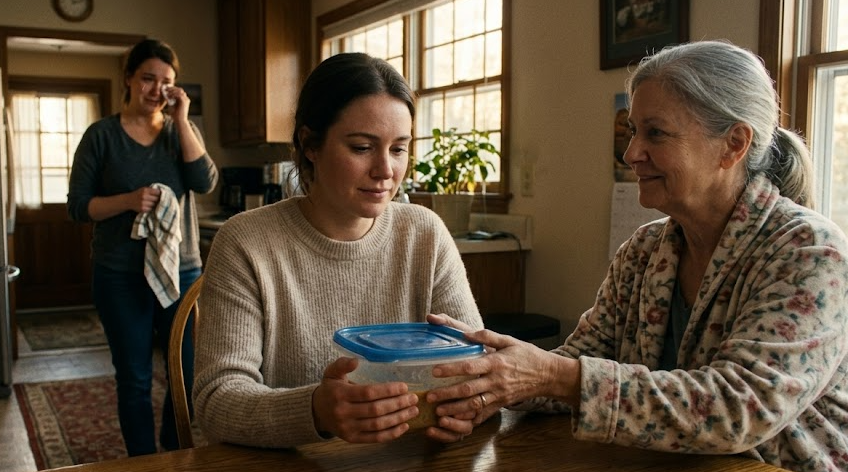
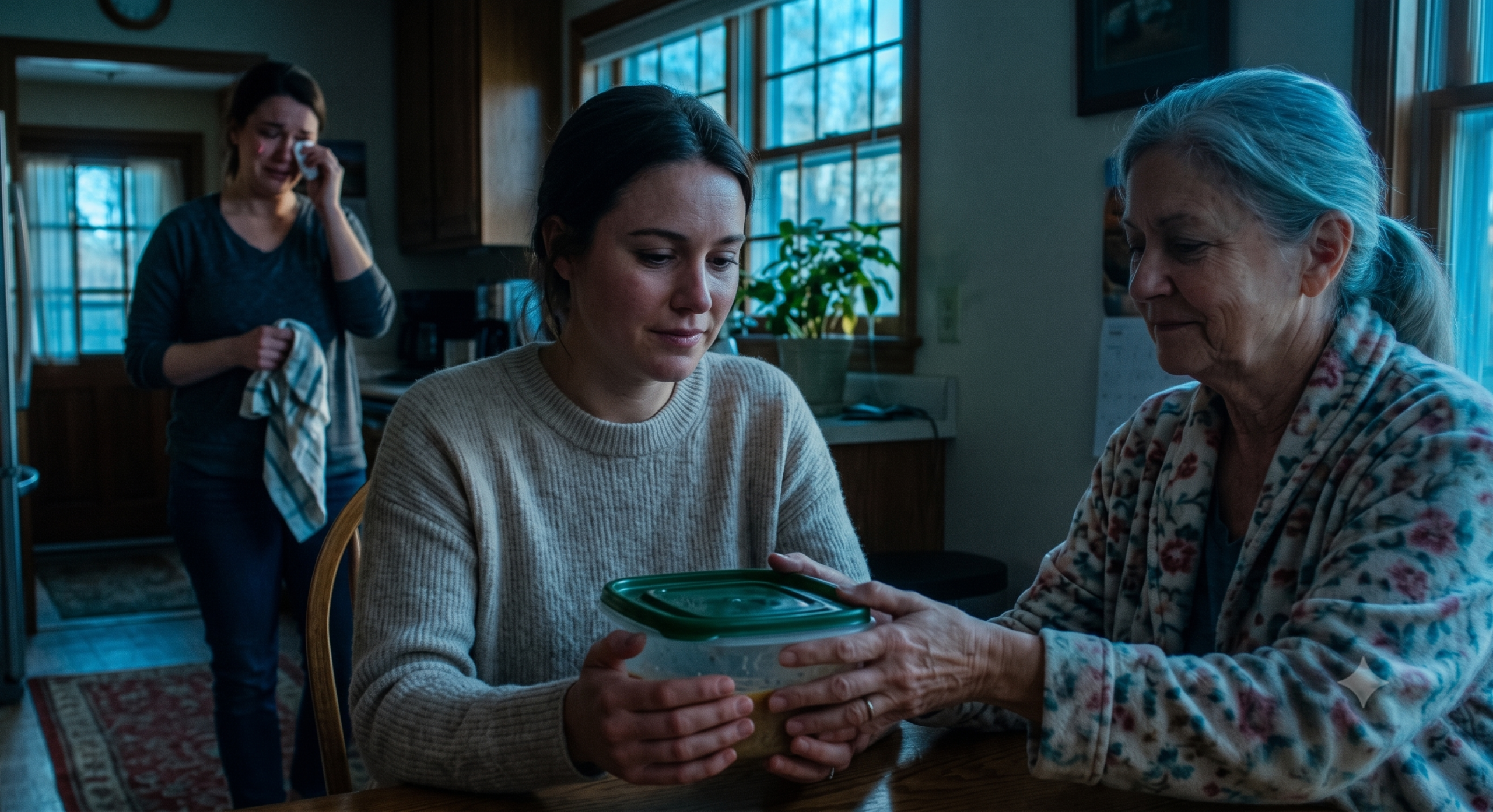
The last normal thing my mother ever did before everything changed was hand me a container of chicken soup. Not fancy soup. Not some family recipe written in a cookbook. Just chicken soup in an old plastic container with a blue lid that never seemed to fit correctly.

“You’re too skinny,” she said, pushing it into my hands. “Take it and don’t argue.”

I laughed because I had heard those words my entire life. My father stood behind her wearing his faded baseball cap. “Listen to your mother,” he said. “She’s been telling me what to do for forty years and somehow I’m still alive.”

That was my father. Always a joke ready. Always making difficult days feel lighter. I hugged them both and promised I would come back the following weekend. I meant it. But life has a cruel way of turning ordinary promises into regrets.

The Weight of “Soon”

The next weekend passed. Work became chaotic; a client moved up a deadline, and I caught a bad cold. My husband, Michael, was working several extra shifts. My sister, Kara, called once, but I missed it during a meeting. I texted her afterward: Tell Mom I’ll visit soon.

Soon. A harmless word. Or so we think.

On Tuesday afternoon, Kara sent another message: Can you stop by Mom and Dad’s house and grab the mail? We’ll be out of town for a few days.

There was nothing unusual about the request. Our parents were healthy, stubborn, and independent. I figured it would also ease the guilt I felt for postponing my visit. After work, I stopped at the grocery store and bought seedless grapes (my father’s favorite), butter, and a loaf of fresh sourdough bread for Mom.

By the time I reached their neighborhood, evening shadows were stretching across the street. Everything looked normal. Their cars were in the driveway. The porch light was on. The little American flag near the mailbox moved gently in the wind.

But something felt wrong. The house was too quiet.

A Silent House

I rang the doorbell. Nothing. I knocked. “Mom? Dad? It’s me.” No answer.

Finally, I used my key and stepped inside. The air felt stale. The television was off. That detail bothered me immediately. My mother hated silence; she always had a cooking show, an old movie, or the weather channel playing in the background. A silent house wasn’t like her.

I walked into the living room. Then I saw them.

My mother was lying beside the coffee table. My father was stretched out near the couch. For a moment, my brain refused to understand what my eyes were seeing. Then the grocery bag slipped from my hand, and grapes scattered across the floor.

“Mom?” I dropped beside her and touched her face. Cold.

I rushed to my father and searched desperately for a pulse. At first, I felt nothing. Then, a faint flutter. Weak, but there. My shaking fingers barely managed to dial 911.

The Discovery on the Porch

The paramedics arrived quickly, and within minutes, both of my parents were loaded into ambulances. At the hospital, doctors worked frantically. Hours later, one finally emerged.

“Both are alive,” he said. I nearly collapsed with relief. Then he continued, “We believe they may have consumed a dangerous amount of sleeping medication.”

The relief vanished. Someone had given my parents sleeping pills—and enough of them to nearly kill them both.

The police immediately began asking questions. Who had access to the house? Who had keys? Who had visited recently? At first, none of it made sense. My parents didn’t have enemies. They were the kind of people who lent tools to neighbors and remembered everyone’s birthdays.

A week later, Michael returned to their house to collect some personal items. That night, he called me. “Come home,” he said. His voice sounded strange. Controlled. Serious.

When I arrived, he was sitting at the kitchen table with Kara beside him. A laptop sat open. “There’s something you need to see,” he said.

He explained that while checking the porch, he had found the memory card inside my father’s old doorbell camera. The app had stopped working months ago, but the camera had continued recording locally. Michael inserted the card into the computer and pressed play.

The footage showed my parents’ front porch the night before they were found unconscious. A man walked toward the door carrying a white pharmacy bag. He didn’t ring the bell; he unlocked the door himself.

Kara’s breathing became uneven. I felt my stomach drop. The man entered the house. Thirty minutes later, he came back out. As he turned toward the porch light, his face became visible.

It was Daniel. Kara’s husband.

“Look at Daniel First”

Nobody spoke. Nobody moved. The room seemed to freeze.

Then, Michael handed me an envelope he had found beneath the seat of my father’s truck. My mother’s handwriting covered the front: Emily — Open only if something happens.

Inside was a medical form from several days earlier. At the bottom, my mother had written a single, chilling sentence: If anything happens to us, look at Daniel first.

The detective received the video immediately. What followed happened quickly. Investigators discovered Daniel had been demanding a large loan from my parents because he was drowning in debt. My father had refused to help, and my mother supported that decision.

Police found the pharmacy bag in Daniel’s garage. They found receipts matching the medication purchases. They found internet searches about sleeping pills and detection times. The evidence was overwhelming. Daniel was arrested.

Rebuilding from the Ashes

A few days later, my mother woke up. She couldn’t speak at first, but when I showed her the envelope, tears rolled down her cheeks. She squeezed my hand twice. My father woke shortly afterward. When I told him Daniel had been arrested, he simply closed his eyes—not because he was surprised, but because he was heartbroken. Being hurt by a stranger is painful; being betrayed by family changes the way you see the world.

Kara never defended Daniel. She never asked us to forgive him. Instead, she blamed herself. “I brought him into this family,” she kept saying.

But my mother refused to let her carry that burden. Even while recovering, she wrote a message on a notepad: He fooled you too.

Eventually, Daniel pleaded guilty, bringing the legal process to an end. But the damage remained. My parents survived, yet things were different. My father walked slower. My mother locked the doors during the day. The spare key hidden outside disappeared forever. Trust did not return as easily as health.

Kara divorced Daniel. She moved into a small apartment and slowly rebuilt her relationship with the family. One afternoon, after weeks of distance, my father looked at her and quietly said, “You can come to dinner on Sunday.” Kara cried. Not because everything was fixed, but because a door had finally opened, even if only a little.

Several weeks later, my mother made chicken soup again. Same pot. Same recipe. Same plastic container with the blue lid. When she handed it to me, neither of us laughed. We both remembered the last time.

I hugged her tightly. This time, I didn’t say I’d visit soon. I looked her directly in the eye and said, “I’ll be here Sunday.”

And I was. Then I came back the next Sunday, and the one after that.

Because I learned something that night when the grapes rolled across the carpet and my parents lay motionless beneath the lamp: love is not measured by good intentions. It is measured by showing up. And every time my mother hands me soup now, I take it with both hands.

More Details
“We sold your car. Family comes first.” Then my parents demanded I pay $5,800 for my brother’s college tuition too.
Jul 14, 2026

“We sold your car. Family comes first.” Then my parents demanded I pay $5,800 for my brother’s college tuition too.

I said, “Not happening.” He replied, “Then pack your shit — you’re dead to me.” So I did.

That same night, I left something behind. This morning, they found it — now my aunt’s crying, my uncle’s screaming, and my dad’s on the porch begging the neighbors for help. It changed everything…

My name is Haley Mitchell and I turned 24 last Tuesday while working a 12-hour shift at Memorial Hospital. I’d been a registered nurse for almost 2 years and the Toyota Corolla parked in the staff lot was my pride and joy, the first car I’d ever bought with my own money. During my lunch break, my phone buzzed with a text from my dad: “We sold your car for $8,000. Jake needs tuition money. Family comes first. Be grateful we raised you right.” My hands started shaking so badly I dropped my sandwich. They couldn’t have.

They wouldn’t have, but they did.

Growing up in the Mitchell household meant one thing above all else. What my parents wanted always came first. My father, Frank, a loan officer at the local bank with an inflated sense of authority, and my mother, Diane, a part-time receptionist who weaponized guilt like an Olympic sport, controlled every aspect of my childhood and adolescence.

My wardrobe, my friends, my hobbies, all subject to their approval. My younger brother Jake, now 20, and sister Melissa, 18, never seemed to face the same scrutiny or demands. “Haley, you’re the oldest. You need to set an example,” became the soundtrack of my youth, playing on repeat whenever I questioned their decisions or expressed a desire for independence. When I wanted to join the volleyball team in high school, I couldn’t because I needed to babysit my siblings. When I received a partial scholarship to my dream university across the state, I was firmly directed toward the local community college because family stays together.

The pattern was painfully predictable. Jake wanted a gaming computer. Dad worked overtime to buy it.

Melissa needed dance lessons. Mom rearranged the entire family to accommodate. But when I needed anything, the response was always, “We’ll see.”

Which everyone in the family knew translated to absolutely not.

Despite these constraints, I managed to complete my nursing degree, working multiple jobs to cover the costs my parents couldn’t or wouldn’t help with. My classmate Amy often found me studying in the campus library at midnight after finishing an 8-hour shift at the local diner. “I don’t know how you do it,” she’d say, sliding an extra coffee my way.

The truth was, neither did I. But the promise of independence kept me going through the all-nighters and double shifts. When I graduated and secured a position at Memorial Hospital with a starting salary that exceeded anything my parents had ever earned, I felt a surge of pride that was quickly tempered by their reaction.

“It’s about time you started contributing more to the household,” my father commented when I shared the news. “No congratulations, no celebration, just an expectation that my achievement would benefit them.” For three years, I lived at home and saved every penny I could, quietly plotting my escape while enduring daily reminders that I owed them for raising me.

My paychecks regularly disappeared into the family fund for emergencies that somehow always aligned with Jake’s wants or Melissa’s needs.

The day I bought my Toyota Corolla was the first time I’d ever directly defied them. I’d been eyeing the used car for weeks. A 2015 model with reasonable mileage and a price tag of $12,000 that I could actually afford thanks to my secret savings account. When I drove it home, my father’s face darkened with a storm of disapproval.

“You spent your money on this? Without consulting us?” he demanded, as if I’d committed an unforgivable betrayal. “I’m 23, Dad. I need reliable transportation for work,” I replied, clutching the keys tightly in my palm, already anticipating his attempt to take them. My mother’s approach was more insidious. “I thought we raised you to think about others before yourself. Your brother’s college tuition is coming due, and now you’ve wasted money on this.” It wasn’t wasted money. It was my freedom.

For the first time, I could come and go without borrowing the family car or explaining my whereabouts. I could take extra shifts without coordinating transportation. I could even, though I barely allowed myself to think it, start looking for my own apartment.

In the 6 months since purchasing my car, my parents’ financial demands had intensified. My father’s position at the bank had become precarious due to downsizing, and he’d made several poor investment decisions that he kept hidden from everyone except me, his designated confidant for troubles, but never for triumphs. “You don’t understand the pressure I’m under,” he’d say whenever I questioned the increasing requests for loans that we both knew would never be repaid. “When you have a family of your own, you’ll realize that sometimes difficult decisions must be made.” The irony that I was funding these difficult decisions while being told I wouldn’t understand them wasn’t lost on me.

As my birthday approached, I volunteered for a double shift at the hospital, partly for the overtime pay and partly to avoid another disappointing family celebration, where my mother would prepare my brother’s favorite meal instead of mine, and my father would give a toast that somehow centered on his own achievements. My real celebration would come the following weekend when my friends had planned a small gathering at Tyler’s apartment.

Tyler, a paramedic I’d met during my hospital orientation, had become one of my closest friends and strongest supporters. “You deserve one day that’s actually about you,” he insisted when proposing the party. The concept was so foreign, it almost made me uncomfortable.

The morning of my birthday, I left for work before anyone else was awake. No cards waited on the kitchen counter. No texts arrived wishing me a happy birthday.

By midday, I’d convinced myself I didn’t care. I was an adult after all. Birthdays were for children.

Then my phone buzzed during my lunch break and for a brief hopeful moment I thought someone had remembered. Instead, I received the message that would finally break the chains of obligation and guilt that had bound me to my family for 24 years. The text from my father was brief but devastating.

We sold your car for $8,000. Jake needs tuition money. Family comes first.

Be grateful we raised you right. I read it once, twice, three times, my brain struggling to process the words. My car, my legally owned, paid for with my own money car, had been sold without my knowledge or consent.

My fingers trembled as I typed, “You did what?” The response came immediately: “Don’t be dramatic. We left your things from the car on your bed. You can take the bus to work until you save up for another one.” The casual cruelty of it knocked the wind out of me.

I sat in the hospital cafeteria surrounded by colleagues chatting and eating while my world imploded. My car wasn’t just transportation. It was the first major step toward my independence.

Tangible proof that I could build a life on my terms. I excused myself to the bathroom where I pressed my forehead against the cool tile wall trying to steady my breathing. I had patients waiting.

I couldn’t fall apart now. With trembling hands, I splashed water on my face and returned to the floor, somehow functioning on autopilot through medication rounds and patient assessments.

During my afternoon break, I called my father, hoping against hope that this was some terrible misunderstanding. “Dad, please tell me you didn’t really sell my car,” I said when he answered. “Of course we did,” he replied as if discussing something as trivial as rearranging the living room furniture.

“Jake’s tuition is due next week and we’re short. The dealership gave us a fair price considering the mileage.” “But it wasn’t yours to sell,” I said, my voice rising and drawing concerned looks from passing staff members. “The car is in my name. I paid for it. You had no right.” “Don’t take that tone with me,” he interrupted. “You’re being selfish. Jake needs his education. What was I supposed to do? Let him drop out? Family comes first, Haley. Always.” “Put Mom on the phone,” I demanded, hoping for some semblance of reason from her. My mother’s voice was soft but cutting when she came on the line. “Honey, if you really loved us, you wouldn’t make such a fuss. Jake has his whole future ahead of him. You already have your degree and a good job. You can manage without a car for a while.” Before I could respond, I heard Jake in the background, his voice carrying clearly through the phone. “Tell her to chill out. I need education more than she needs a car. She can take the bus like other people.” The entitlement in his tone made my blood boil. Then Melissa chimed in. “Seriously, she should just get over it. It’s not like she doesn’t make good money.” Hearing them discuss me as if I weren’t on the phone, as if my feelings and property rights were irrelevant, crystallized something inside me.

These people, my family, saw me as nothing more than a resource to be used and discarded at their convenience. “What dealership did you take it to?” I asked, struggling to keep my voice steady. “Carson’s on Main,” my father replied. “Why? It’s done, Haley. Move on.” I ended the call without another word and immediately phoned Carson’s dealership. After explaining the situation to an increasingly uncomfortable sales manager named Paul, the truth emerged.

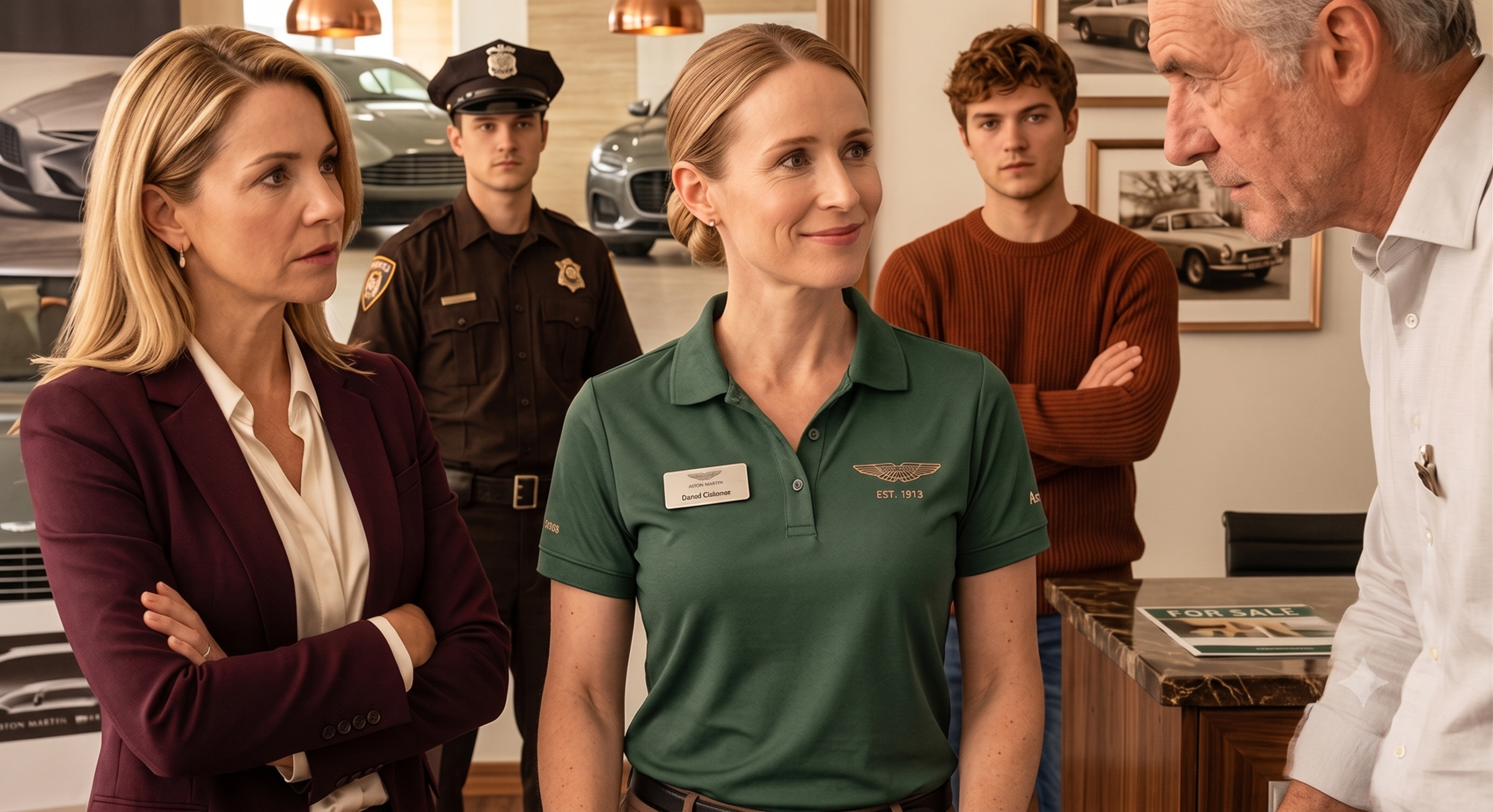
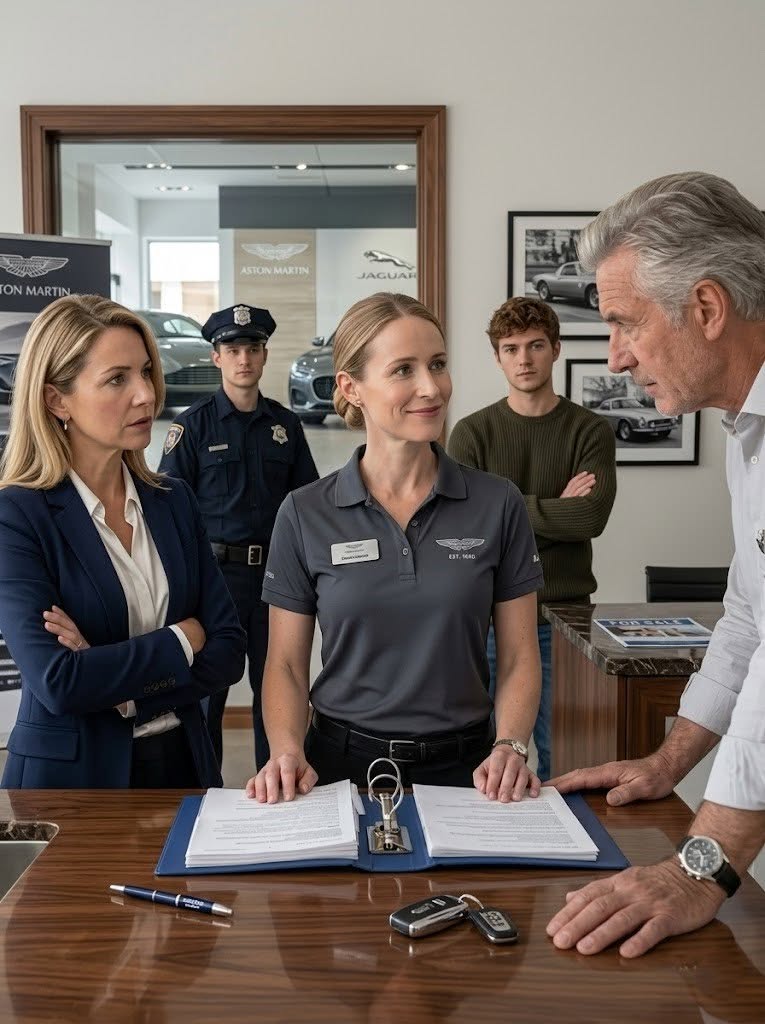
My parents had indeed sold my car that morning, presenting the title with what appeared to be my signature. Ma’am, I have the paperwork right here, Paul said hesitantly. “It has your signature on the title transfer.” “That’s not possible,” I replied. “I’m at work. I haven’t signed anything.” A heavy silence followed before Paul cleared his throat. “I think you should come down when you can and maybe bring a police report.”

The realization hit me like a physical blow. They had forged my signature. They had committed fraud.

The car was in my name only. I had insisted on that despite my father’s attempts to be added to the title just in case. The spare key they had was meant for emergencies, not to facilitate theft.

As I ended the call with Paul, my colleague Janice touched my shoulder. Haley, your patient in 304 is asking for pain medication. I nodded, wiping away tears I hadn’t realized were falling.

I’ll be right there. Somehow, I made it through the remaining hours of my shift, attending to patients with as much care and attention as I could muster while my personal life crumbled. The unfairness of it all kept hitting me in waves: on my birthday, of all days, my family had committed what amounted to grand theft auto against me.

As I changed out of my scrubs at the end of my shift, Amy noticed my red rimmed eyes. “What happened?” she asked, sitting beside me on the bench. When I explained, her expression shifted from concern to outrage.

That’s illegal, Haley. That’s not just wrong, it’s criminal. You need to report this.

They’re my family, I said weakly, the excuse sounding hollow even to my ears. Family doesn’t steal from you, Amy replied firmly. What are you going to do about getting home?

I hadn’t even thought that far ahead. My car, my now sold car, had been my transportation to and from the hospital. I can call an Uber, I began, but was interrupted by another voice.

I can drive you, offered Tyler, who had just finished his paramedic shift and overheard our conversation. And I think you should call the police. I shook my head, not ready to take that step, though a part of me knew he was right.

As we walked to the parking lot, the empty space where my Corolla should have been seemed to mock me, a perfect metaphor for the void where familiar love and respect should exist. The ride to my parents’ house was quiet, Tyler occasionally glancing at me with concern but respecting my need for silence.

When we pulled up to the curb, he put the car in park but didn’t unlock the doors. “You don’t have to go in there,” he said quietly. “You can stay at my place or with Amy.

Take some time to figure things out.” His kindness nearly broke me, but I shook my head. I need to face them.

I need to see if there’s any explanation that could possibly make this okay. There wasn’t.

When I walked through the front door, my family was seated around the dinner table, eating as if nothing unusual had happened. My car belongings — sunglasses, phone charger, emergency kit, and the small container of personal items I kept in the glove compartment had been unceremoniously dumped on my bed. Some things were broken in the process.

Finally home, my mother remarked without looking up from her plate. There’s leftover casserole in the fridge if you’re hungry. The normalcy was surreal.

I stood in the doorway staring at them, wondering how these people who shared my blood could be so callous about violating my trust and stealing my property. How could you? I finally managed to ask.

My father sighed dramatically as if I were a petulant child interrupting an important meeting. We’ve been through this, Haley. Jake needed the tuition money.

The decision is made. Be mature about it. Mature?

I repeated incredulously. You stole my car. You forged my signature.

There’s nothing mature about what you did. We didn’t steal anything, my mother interjected. We’re family.

Family shares resources when needs arise. Did anyone ask if I had needs? I countered.

Did anyone consider that I need transportation to get to the job that apparently funds everyone else’s priorities? Jake rolled his eyes. Drama queen.

Take the bus like I do. You take the bus because you crashed your car. I snapped.

A car that Mom and Dad bought for you, by the way. My father’s face darkened. That’s enough.

Under this roof, we make decisions as a family for the family. No, I corrected him. You make decisions for everyone without consultation or consent.

That’s not family. That’s dictatorship. If you don’t like how this family operates, he said coldly.

There’s the door. But don’t expect to come crawling back when you realize how good you had it here. It was the same threat he’d used throughout my life whenever I showed any sign of independence.

For the first time, however, it didn’t fill me with fear. Instead, I felt something unexpected. Relief.

The door suddenly represented not punishment, but escape. “I’ll be finding my own place,” I said with a calm I didn’t know I possessed. “And you’ll be hearing from me about the car.”

“What’s that supposed to mean?” my mother asked, a flicker of uncertainty crossing her face. “It means what you did was illegal,” I replied. “And there are consequences for illegal actions.”

As I turned to go to my room, my father called after me. We sacrificed everything for you, Haley. Everything.

A little gratitude would be appropriate. The word gratitude echoed in my mind as I closed my bedroom door. They expected gratitude for theft, for betrayal, for years of emotional manipulation and financial exploitation.

For the first time, I saw with perfect clarity that what I had experienced throughout my life wasn’t normal family dynamics. It was abuse. And on my 24th birthday, I received an unexpected gift.

The final push I needed to break free.

Sleep eluded me that night. I lay in my childhood bed, surrounded by the few possessions I’d managed to accumulate, despite my parents’ constant financial demands, and stared at the ceiling. The familiar glow-in-the-dark stars I’d stuck there at age 12 seemed to mock me now, wishes and dreams pasted on a ceiling I could never actually reach.

My phone buzzed with a text from Amy. You okay? Been thinking about you all night.

The simple kindness made my eyes well up again. I’d spent so long in an environment where my feelings were dismissed that genuine concern felt almost foreign. Not really, I replied honestly.

Not sure what to do next. Her response was immediate. Whatever you need.

Spare room is yours if you want it. I clutched the phone to my chest like a lifeline. Perhaps it was.

The next morning, I had to face the practical reality of my situation. I needed to get to work and my transportation was gone. The nearest bus stop was a mile away and the route would require two transfers to reach the hospital.

The commute would take nearly 2 hours each way. As I quietly gathered my uniform and prepared to leave extra early, my mother appeared in the kitchen doorway in her bathrobe. “I’ve made you breakfast,” she said, gesturing to a plate of pancakes on the table.

“My favorite, not Jake’s for once.” The attempted peace offering was as transparent as it was inadequate. “I don’t have time,” I replied, though I had intentionally given myself extra time for the bus journey.

“I need to leave now to catch the bus.” Something like guilt flickered across her face. “Your father and I were talking.

We can drive you until you figure something out.” The audacity nearly took my breath away. They steal my car, then offer rides as if doing me a favor.

“No, thank you,” I said stiffly. I’d rather take the bus. The walk to the bus stop gave me time to think.

Each step on the pavement a small act of independence. By the time I reached the hospital, sweaty, tired, and nearly late despite my early departure, I was emotionally drained. My colleague Lisa noticed immediately as we prepared for shift handover.

Rough morning, she asked, helping me organize my patient charts. Rough life, I muttered, then immediately regretted the self-pity in my voice.

Throughout my shift, I moved through my duties mechanically, my mind elsewhere. During lunch, Amy joined me, sliding into the cafeteria seat across from mine. “You look terrible,” she said bluntly.

“No offense.” “None taken,” I sighed, picking at my salad without appetite. “I feel terrible.

Did you report the car theft yet?” I shook my head. “I don’t know if I can do that to them.

They’re still my parents.” Amy leaned forward, her expression serious. Haley, listen to me.

If a stranger stole your car, would you report it? Of course, but no buts. What they did was theft.

The fact that they’re related to you makes it worse, not better. Her words resonated, but taking action against my family felt impossible. Years of conditioning had taught me that their needs always superseded mine, that questioning their authority was selfish and ungrateful.

Even now, with the clear evidence of their betrayal before me, I struggled to break free from those deeply ingrained beliefs. I’ll think about it, I promised, though we both knew I was stalling.

The real breakdown came at the end of my shift. In the quiet privacy of the hospital locker room, I opened my locker to find the small birthday card that Tyler had slipped inside. A simple gesture from someone who had no obligation to remember my birthday, but did anyway.

The contrast between his thoughtfulness and my family’s callousness was stark. I sank onto the bench, card clutched in my trembling hands and finally allowed the tears to flow freely. Years of suppressed hurt and anger poured out in heaving sobs that I couldn’t control.

That’s how Tyler found me when he came looking after his shift ended. Without a word, he sat beside me and put his arm around my shoulders, offering quiet support until the storm of emotions subsided. I can’t go back there, I finally whispered, voicing the decision my heart had already made.

You don’t have to, he assured me. Not tonight. Not ever if that’s what you want.

He drove me to Amy’s apartment where she was already preparing the spare room. Stay as long as you need, she insisted, showing me where she’d put fresh towels and a spare key.

That night, lying in Amy’s guest bed, I felt simultaneously lost and found. I had no car, no concrete plan, and most of my possessions were still at my parents’ house. Yet, for the first time in memory, I was making choices based solely on my own needs and well-being.

My phone had been buzzing periodically with texts from my mother, ranging from concerned, “Are you coming home tonight?” to manipulative, “Your father’s blood pressure is up because of the stress you’re causing.” I silenced it without responding.

The next morning, I called in sick to work, something I’d never done before, even when legitimately ill. Janice, my supervisor, was surprisingly understanding. “Take the time you need,” she said.

“Your patients need you at your best.”

Left alone in Amy’s apartment, I paced restlessly, feeling powerless despite my physical removal from my parents’ house. They still had most of my belongings. They had gotten away with selling my car.

They probably assumed I would eventually cave as I always had before and return to the fold with appropriate contrition for my selfish behavior. The familiar pattern of guilt and obligation began to creep in. Maybe I was overreacting.

Maybe family really did come first. Maybe I should be more understanding of their financial struggles. I was reaching for my phone to call my mother when it rang in my hand.

An unknown number. Is this Haley Mitchell? A woman’s voice asked when I answered.

Yes, speaking. This is Sarah Kingsley. We work together at Memorial.

I’m the night shift charge nurse in oncology. I knew Sarah by reputation more than personal interaction since we worked different shifts. At 45, she was respected for both her clinical skills and her no-nonsense approach to workplace drama.

Amy mentioned you’re going through some family difficulties, Sarah continued. I hope you don’t mind her sharing that. I experienced something similar years ago and she thought I might have some perspective to offer.

Something in her tone, understanding without pity, made me open up. Before I knew it, I was pouring out the whole story from the years of financial exploitation to the car theft. Sarah listened without interruption until I finished, slightly embarrassed by my emotional download to someone I barely knew. “Haley,” she said finally, her voice gentle but firm. “What you’re describing isn’t normal family dynamics. It’s financial abuse.” The word abuse hung in the air between us.

I had used it in my own thoughts, but hearing someone else, someone older and wiser, confirm it gave the assessment weight and validity. I don’t know what to do, I admitted. I feel trapped even though I’ve physically left.

That’s because you haven’t mentally left yet, Sarah replied. They’ve conditioned you to prioritize their needs and feelings above your own. Breaking that conditioning is harder than walking out the door.

How do I break it? I asked, desperate for a road map out of the emotional maze. You recognize that you have legitimate rights, Sarah said.

You start enforcing boundaries. And sometimes you have to be willing to take actions that they’ll label as disloyal or ungrateful in order to protect yourself, like reporting the car theft. I ventured.

Exactly like that, she confirmed. They’re counting on your reluctance to hold them accountable. That’s how they’ve controlled you all these years.

After we hung up, I sat at Amy’s kitchen table. Sarah’s words replaying in my mind. The clarity they provided was like oxygen after years of breathing in the toxic fog of manipulation.

I was still scared. I was still sad. But for the first time, I was also angry.

Not the helpless anger that burns inward, but the righteous anger that fuels action. And I was ready to act.

The day after my conversation with Sarah became the first day of my new life. I woke early, made a pot of coffee in Amy’s kitchen, and sat down with a notebook to create what I called my independence plan. First, I needed to secure my remaining possessions from my parents’ house.

Next, I needed affordable housing of my own. And finally, I needed transportation to get to and from work. The task seemed overwhelming when viewed together, but Sarah had advised me to break them down into manageable steps.

Start with your support system, she had suggested. You’ll be surprised how many people want to help.

Taking her advice, I texted Tyler. Can you help me get my things from my parents’ house tomorrow when they’re at work? His response was immediate.

Absolutely. What time? Amy emerged from her bedroom as I was making my list, hair tousled from sleep.

Planning the revolution? She asked, pouring herself coffee. Something like that.

I smiled weakly. I need to find an apartment I can afford on short notice. Amy sat across from me, suddenly looking excited.

Actually, Kendra from pediatrics just mentioned her roommate is moving out next week. Her place is only about 10 minutes from the hospital. Kendra was a pediatric nurse I knew casually from hospital functions.

Warm, reliable, and refreshingly drama-free. The prospect of sharing space with someone like her rather than continuing to impose on Amy was appealing. Would she mind if I called her?

I asked. Are you kidding? She’s been struggling to find someone trustworthy.

She’d probably offer you the room on the spot.

By noon, I had a potential living situation. Kendra had indeed been enthusiastic, offering to show me the apartment that evening. It’s nothing fancy, she warned, but it’s clean, safe, and the rent is reasonable.

My next call was more difficult. Mark Williams was a lawyer who had dated Amy briefly the previous year. Though their romantic relationship hadn’t worked out, they had remained friends, and I knew he specialized in property law.

I can’t afford legal fees, I admitted after explaining my situation. Let’s start with a consultation, Mark suggested. No charge.

Then we’ll figure out your options.

Meeting with Mark that afternoon in his modest office downtown, I learned several important things. First, what my parents had done was unequivocally illegal, both the theft of the car and the forgery of my signature. Second, I had several potential courses of action, ranging from a civil suit to criminal charges.

And third, I needed to document everything. “Start keeping records of all communications with your parents,” Mark advised. “Texts, emails, voicemails. Preserve them all and don’t delete anything they’ve already sent, especially any admissions about taking the car.”

As I left his office with a folder of information, I felt a strange sense of calm. Knowledge was power, and for once, I wasn’t operating from a place of emotional reaction, but informed decision-making.

That evening, Kendra showed me her apartment, a two-bedroom unit in an older but well-maintained building. The available room was small, but had good natural light and built-in shelves. The shared spaces were tidy and comfortable.

“I work a lot of evenings, so we probably won’t overlap too much,” Kendra explained. “House rules are pretty simple. Clean up after yourself, no loud music after 10:00, and contribute to the snack drawer.”

She pointed to a kitchen drawer filled with an impressive variety of chips, cookies, and chocolate bars. “The snack drawer is non-negotiable”, she added with mock seriousness. I found myself laughing genuinely for the first time in days.

I can definitely contribute to the snack drawer. By the time I returned to Amy’s apartment, I had signed a rental agreement with Kendra starting the following week. The security deposit had taken a chunk of my savings, but it was worth the peace of mind.

As I prepared for bed, my phone rang my parents’ number. After a moment’s hesitation, I answered, putting the call on speaker and recording it as Mark had advised. “Haley,” my father’s voice was artificially warm. “When are you coming home? Your mother is worried sick.” “I’m not coming home,” I replied, surprised by the steadiness in my voice. “I found my own place.” A brief silence followed before his tone changed, becoming cold and dismissive. “Don’t be ridiculous. You can’t afford your own place. Come home and we’ll forget this childish tantrum.” “It’s not a tantrum, Dad. You stole my car. You forged my signature. Those are crimes.” “We did what was necessary for this family,” he insisted. “If you’re going to be technical about it—” “Technical?” I interrupted. “There’s nothing technical about grand theft auto and forgery.” My mother’s voice broke in, likely on another extension. “Haley, please. We’re your parents. We’ve given you everything. You owe us.” “I don’t owe you the right to steal from me,” I stated firmly. “I’m an adult. My property is mine, not yours.” “So, what are you saying?” My father’s voice had taken on the dangerous quiet that had intimidated me throughout childhood. “Are you threatening us? Your own parents?” “I’m informing you that I’ll be coming tomorrow at 2:00 to collect my belongings. Tyler will be with me. I expect no interference.” “If you walk out like this,” my father warned, “don’t expect any support from us ever again.” The threat that had kept me compliant for years now seemed almost laughable.

What support had they ever truly provided that didn’t come with strings attached? “I understand,” I replied. “Goodbye.”

After ending the call, I sat on the edge of the bed, adrenaline coursing through me. I had stood my ground. I had set a boundary.

And while the earth hadn’t opened up to swallow me whole, as my anxiety had always suggested it might, I knew the real test would come tomorrow.

That night, I created a group chat with Tyler, Amy, Sarah, and Kendra, explaining my plan to retrieve my belongings the next day. Their responses flooded in immediately. Tyler: “I’ll be there. My truck can fit whatever you need.” Amy: “I’ll come too. Safety in numbers.” Sarah: “I’m off tomorrow. Need another pair of hands?” Kendra: “I can help you move stuff to my place right after.”

Staring at the screen, I felt a lump form in my throat. This was what genuine support looked like. People offering help without expecting anything in return.

The following morning, I called the police non-emergency line to request a civil standby, an officer to be present while I retrieved my belongings to prevent potential conflict. The dispatcher, after hearing my situation, assured me someone would meet us at the house. As I prepared for the confrontation, Sarah’s words echoed in my mind.

“They’ve conditioned you to prioritize their needs and feelings above your own. Breaking that conditioning is harder than walking out the door.” She was right.

Even now, knowing all I knew, a part of me still feared hurting my parents feelings, still worried about being labeled ungrateful or selfish. But alongside that conditioned response, a new voice was emerging. My own voice, insisting on my right to respect, autonomy, and basic fairness.

By the time Tyler picked me up in his truck with Amy and Sarah following in Sarah’s car, I had transformed my fear into determination. This wasn’t just about retrieving clothes and personal items. It was about reclaiming my life.

The day I reclaimed my independence began with meticulous preparation. Tyler arrived at Amy’s apartment at 1:00, his pickup truck emptied of work equipment to make room for my belongings. Sarah pulled up moments later with Amy, who had taken a rare day off to support me.

“Ready for this?” Tyler asked as I climbed into the passenger seat of his truck. “As ready as I’ll ever be,” I replied, clutching a folder containing the document Mark had prepared.

A formal demand for compensation for my stolen vehicle.

The drive to my parents’ house felt surreal, as if I were approaching a place I had only visited in dreams rather than the home where I had spent most of my life. Officer Ramirez, who had been assigned to our civil standby, was already waiting when we arrived, his patrol car parked conspicuously at the curb. Miss Mitchell, he confirmed as we approached.

I understand you’re retrieving your personal property today. Any reason to believe this won’t go smoothly? My parents don’t respond well to boundaries, I explained.

The understatement of the year, but having you here should help. To my surprise, the house appeared empty when we arrived. No cars in the driveway, no movement visible through the windows.

Using my key, I led our small group inside, half expecting to find my room emptied or my possessions damaged out of spite. Instead, everything was untouched. My clothing still in the dresser, books on the shelves, nursing textbooks stacked on the desk.

The normality was almost disappointing, as if the dramatic confrontation I had steeled myself for had been cancelled without notice. Let’s work quickly, Sarah suggested. Ever practical.

Start with the essentials and things of sentimental value. We formed an efficient assembly line. Me selecting and packing.

Amy and Sarah carrying boxes to the door. Tyler loading them into the truck. Within an hour, we had packed most of my clothing, all my professional materials, my laptop and electronics, and the few keepsakes I couldn’t bear to leave behind, photo albums, my grandmother’s jewelry box, the quilt my aunt had made for my high school graduation.

As we worked on the final boxes, the front door opened. My mother entered first, stopping short at the sight of strangers in her house and a police officer standing calmly in the living room. My father followed, his expression darkening instantly.

“What is the meaning of this?” he demanded, ignoring Officer Ramirez and addressing me directly. “Who are these people? Why is there a police officer in my house?” “I told you I was coming for my things,” I replied, continuing to fold a sweater into a box. “These are my friends helping me move.” “You didn’t say anything about police,” my mother interjected, her voice trembling with either fear or rage. It was sometimes hard to tell the difference. “Officer Ramirez is here to ensure this goes smoothly,” I explained. “We’re almost finished.” My father stepped forward, only to be intercepted by Officer Ramirez. “Sir, I’m here to keep the peace while your daughter retrieves her personal belongings. I suggest you let her complete this process without interference.” The official tone seemed to momentarily deflate my father’s bluster. He retreated to the kitchen, my mother, trailing behind him, whispered arguments floating back to us as we continued working.

When the last box was loaded, I took a deep breath and approached the kitchen, the folder from Mark clutched firmly in my hand. Tyler positioned himself discreetly in the doorway, a silent support. “I’m leaving now,” I announced.

“But before I go, I want to address the matter of my car.” My father scoffed. There’s nothing to address.

The decision is made. You had no legal right to sell my vehicle, I continued as if he hadn’t spoken. It was registered in my name only.

You forged my signature, which is a felony offense. We are your parents, my mother hissed. Her earlier trembling replaced by indignation.

Everything we’ve done has been for this family. Selling my car without permission wasn’t for me, I countered. It was for Jake, who has never been expected to support himself the way I’ve had to.

As if summoned by his name, my brother appeared in the doorway behind Tyler, looking confused and annoyed. What’s going on? Why are there people taking your stuff?

I’m moving out, I told him simply. And I’m addressing the fact that Mom and Dad illegally sold my car to pay for your tuition. Jake’s expression shifted from confusion to defensive anger.

They said you agreed to help. Don’t blame me because you changed your mind. I never agreed to anything, I replied.

They stole my car, Jake. They committed fraud. That’s ridiculous, my father interjected.

We’re your parents. We don’t steal from you. This document says otherwise, I said, removing the demand letter from the folder and placing it on the kitchen counter.

My lawyer has prepared this formal demand for compensation for the full value of my vehicle, $11,200, not the $8,000 you accepted. You have 30 days to pay in full or I will be pursuing both civil and criminal charges.

The silence that followed was absolute. My father stared at the document as if it were a venomous snake while my mother’s face drained of color. You wouldn’t dare, my father finally whispered.

I would prefer not to, I acknowledged. I’d prefer that you simply acknowledge what you did was wrong and make restitution, but I will pursue legal action if necessary. After everything we’ve done for you, my mother began, tears welling in her eyes.

Her standard tactic when logical arguments failed. How can you threaten us like this? We raised you, fed you, clothed you.

That was your obligation as parents, I interrupted. A statement that would have been unthinkable for me to make even days earlier. It doesn’t give you the right to steal from me as an adult.

My father’s face contorted with rage. Get out of my house, he snarled. Get out now before I forget you’re my daughter.

Frank, my mother gasped, but he continued. If you pursue this, you are no longer part of this family. Do you understand?

You will be dead to us. The threat hung in the air between us. In the past, it would have devastated me, sent me backpedaling with apologies and concessions.

Now, it simply confirmed what I already knew. Their love had always been conditional on my compliance. I understand, I said quietly.

The choice is yours. Pay what you owe for my stolen property or face the consequences.

As I turned to leave, Melissa appeared in the hallway, clearly having overheard everything. Unlike the others, her expression wasn’t angry, but thoughtful, almost sad. “Haley,” she called as I reached the front door.

“Wait,” she hurried to her room and returned with something clutched in her hand. My childhood teddy bear worn with age and love that I had overlooked in my packing. “You should take him,” she said, pressing the stuffed animal into my hands.

“And I’m sorry about your car.” I didn’t know they didn’t ask you. The simple gesture of kindness from the sibling I’d least expected it from brought tears to my eyes.

“Thank you, Mel,” I whispered, giving her a quick hug before walking out the door.

Outside, my friends waited by the vehicles, faces concerned. “Everything okay?” Amy asked.

“No,” I admitted. “But it will be.”

As we drove away, I watched my childhood home recede in the side mirror, the distance growing with each passing second. My father had appeared on the front step, still shouting something I could no longer hear. My mother stood beside him, one hand covering her face.

Neither Melissa nor Jake was visible. “You did it,” Tyler said beside me, his voice filled with quiet pride. “You stood your ground.”

I nodded, unable to speak past the lump in my throat. The confrontation had been every bit as difficult as I’d feared, but also strangely liberating.

For the first time in my life, I had spoken my truth without minimizing it to protect others’ feelings. I had named the injustice without accepting blame for noticing it. The threats and emotional manipulation hadn’t vanished, but their power over me had, and that made all the difference.

The week following my departure from my parents’ house passed in a blur of activity. With Kendra’s help, I settled into my new room, arranging my belongings in the limited space with a sense of ownership I’d never experienced before. Every item I placed, each book on the shelf, each photo I tacked to the wall, represented a choice that was entirely mine.

“It’s really coming together,” Kendra remarked on the third evening as she leaned against the door frame, watching me organize my small desk. “How does it feel?” “Strange,” I admitted.

“Good. Strange, but still strange. I keep expecting someone to tell me I’ve put something in the wrong place.”

She nodded, understanding. Independence takes some getting used to. Wait until you have to unclog your first drain without calling a parent.

That’s when you know you’ve truly adult. Her easy humor had already become one of my favorite things about living with her. Unlike the walking on eggshells atmosphere of my parents’ house, our apartment was filled with laughter and straightforward communication.

The practical challenges of my new independence were substantial but manageable. Without a car, my commute to the hospital required careful planning and occasional ride sharing with colleagues heading in the same direction. My budget, already tight, now had to accommodate rent and transportation costs I hadn’t anticipated.

Yet, these limitations felt different from the financial constraints I’d experienced while living at home. These were my challenges faced on my terms without the constant drain of supporting others’ priorities.

One week after delivering the demand letter, I received my first communication from my parents, a formal letter from their attorney rejecting my claim for compensation. They’ve hired Gerald Winston. Mark informed me when I brought him the letter.

He’s known for aggressive tactics. What does that mean for my case? I asked, anxiety creeping into my voice.

It means they’re taking this seriously, he replied, which actually works in our favor. They wouldn’t hire Winston if they didn’t believe they were legally vulnerable.

Over the following days, the legal process unfolded alongside my new life. I filed a police report documenting the car theft and forgery, providing the officer with text messages in which my father explicitly admitted selling my car without permission. Carson’s dealership cooperated fully, providing copies of the sales documents with a forged signature.

We have a solid case, Mark assured me. The evidence is clear. The question is how far you want to push this.

It was a question I wrestled with daily. Despite everything, these were still my parents. The thought of them facing criminal charges created a knot of conflicting emotions that kept me awake at night.

They’re counting on that hesitation, Sarah pointed out during one of our regular coffee meetings. They’ve trained you to protect them, even at your own expense. She was right, of course.

The conditioning ran deep, making it difficult to separate legitimate compassion from unhealthy guilt. In the end, my decision came not from anger, but from clarity. My parents needed to experience consequences to understand that their behavior was unacceptable.

Two weeks after moving out, I filed formal charges of grand theft auto and forgery. The detective assigned to my case, a no-nonsense woman named Detective Sawyer, took my statement with professional detachment. Family cases are always complicated, she acknowledged.

But the law is clear. You can’t sell someone else’s vehicle without their consent, regardless of your relationship to them.

The fallout was swift and dramatic. My parents received formal notices to appear for questioning. Extended family members began taking sides, most supporting my parents based on their carefully crafted narrative of an ungrateful daughter, but a few reaching out to offer support after hearing my version of events.

My aunt Catherine, my mother’s older sister, called me out of the blue one evening. “I always wondered when you’d finally stand up to them,” she said without preamble. Your mother has been calling everyone in the family, telling them you’ve lost your mind.

But I’ve watched how they’ve treated you for years. Her validation brought tears to my eyes. I thought I was crazy sometimes.

I admitted the way they made everything seemed normal. There’s nothing normal about expecting your adult daughter to finance the family while taking away her independence. And Catherine stated firmly, “I’m proud of you, Haley.

It takes courage to break patterns like this. Not all reactions were as supportive. My uncle Robert left a scathing voicemail accusing me of destroying the family over a car.

Several cousins unfriended me on social media. Even my grandmother, usually a neutral party in family disputes, expressed disappointment in my decision to involve outsiders in what she considered private family matters.

The most unexpected development came from Melissa. 3 weeks after I moved out, she texted asking if we could meet for coffee. Wary but hopeful, I agreed.

We met at a cafe halfway between her school and my apartment. At 18, my sister still carried the round-cheeked softness of adolescence, but her eyes held a new awareness as she stirred her latte. It’s weird at home now, she began.

Dad’s angry all the time. Mom cries a lot. Jake just stays in his room playing video games.

I’m sorry it’s difficult, I said, meaning it. She shook her head. That’s not why I wanted to talk.

I wanted to tell you that I get it now. What you were saying about them treating you differently. What changed?

I asked, genuinely curious. After you left, they started expecting me to take over your role, she explained. Suddenly, I’m supposed to work part-time to contribute to the family while maintaining perfect grades.

Dad took control of my savings account for safekeeping. It’s like they just transferred all their expectations from you to me. The realization that my parents hadn’t learned from my departure, but had simply found a new target made my stomach churn.

Mel, that’s not right. Your money is yours. You need to protect it.

I know that now, she said. A determined set to her jaw that reminded me of my own recent awakening. I’ve been talking to Aunt Catherine about opening a new account they can’t access.

Pride swelled in my chest. “That’s really smart, Mel. And if you need any help—” “Would you really help me?” she interrupted. “Even after everything?” “Of course,” I assured her. “You’re my sister. What happened with Mom and Dad doesn’t change that.”

Tears welled in her eyes. Jake says we should hate you for what you’re doing to the family. But I think I think you might be saving me from going through what you did.

We parted with a tight hug and a promise to stay in touch regardless of what happened with our parents. That connection, honest, equal, and free from manipulation, felt like the first healthy family relationship I had ever experienced.

Meanwhile, the consequences of my legal action continued to unfold. Detective Sawyer informed me that the district attorney had decided to pursue the forgery charges, but was willing to negotiate on the theft charge if restitution was made. “Your parents are facing serious consequences,” Mark explained during our next meeting.

Forgery carries potential jail time. They’re motivated to settle.

Sure enough, a settlement offer arrived through their attorney the following week. $10,000 in compensation for the car with the stipulation that I drop all criminal charges. What do you think? I asked Mark after reviewing the offer.

It’s less than the full value, but more than they got from selling it, he replied. From a practical standpoint, it would resolve this faster than going to court. But it’s your decision, Haley.

What outcome are you looking for here? I considered the question carefully. What did I want?

Revenge, justice, or simply acknowledgement that what they had done was wrong. I want them to understand they can’t treat people this way, I said finally. But I don’t necessarily want them to go to jail.

After further negotiation, we reached an agreement. Full restitution of $12,000, a formal written apology acknowledging the wrongdoing, and my parents agreement to attend financial boundaries counseling. In exchange, I would not pursue criminal charges.

The check arrived by certified mail 3 days later, accompanied by a terse letter of apology that clearly had been drafted by their attorney and reluctantly signed by my parents. It wasn’t the heartfelt reconciliation part of me had secretly hoped for, but it was accountability. Perhaps the first real accountability they had ever faced.

With the settlement money, I purchased a used Honda Civic. Less expensive than my previous car, allowing me to keep some funds in savings. The day I drove it off the lot, registration and insurance in my name only, I felt a profound sense of reclaiming what had been taken from me, not just transportation, but agency over my own life.

My professional life flourished amid these personal changes. Freed from the constant financial drain of supporting my family, I could focus fully on my nursing career. When a senior position opened in the emergency department, Janice encouraged me to apply despite my relatively limited experience.

“You’ve shown exceptional judgment and composure under pressure,” she noted during my interview. “Recent events in your personal life have demonstrated that clearly. I got the position, which came with a substantial pay increase and more regular hours.”

The irony wasn’t lost on me. By prioritizing my own well-being for once, I had actually improved my professional prospects rather than undermining them as my parents had always implied would happen if I selfishly focused on my own needs. 3 months after moving out of my parents’ house, I sat in my new car in the hospital parking lot after finishing my shift, reflecting on the transformation of my life.

My phone buzzed with a text from Tyler, who had been a steadfast support throughout the ordeal. Dinner tonight to celebrate three months of freedom. I smiled as I typed my reply.

Absolutely. My treat this time. As I drove toward the restaurant, I realized that the settlement money and promotion were only the tangible results of my stand for independence.

The true victory was internal. Learning to value my own needs, to set and maintain boundaries, and to recognize that genuine love doesn’t demand sacrifice of one’s basic rights and dignity. My car radio played softly as I navigated the familiar streets, no longer feeling like an impostor in my own life.

The road ahead was uncharted, but undeniably mine.
More Details
After 11 Years of Calling Me Infertile, My Husband Replaced Me With a Younger Woman and Kicked Me Out—But Three Children Appeared at His Wedding and Turned His Perfect Day Into Public Humiliation
Jul 14, 2026

After 11 Years of Calling Me Infertile, My Husband Replaced Me With a Younger Woman and Kicked Me Out—But Three Children Appeared at His Wedding and Turned His Perfect Day Into Public Humiliation

PART 1   “My suitcase is outside, Mariana. You don’t belong in this house anymore.”

I stood frozen at the front gate of our mansion in Beverly Hills, one trembling hand resting against my stomach while the other gripped a white envelope.

Inside were divorce papers.

Lying on top of my suitcase were the house keys.

My husband of eleven years, Ryan Montgomery, had left them there as if he were returning a life that no longer had any value.

Laughter drifted from inside the house.

Not nervous laughter.

Not surprised laughter.

The comfortable, cruel kind that comes from people who believe they’ve already won.

I looked through the open doorway and saw Ryan sitting on the leather sofa I had picked out years earlier.

Beside him sat Vanessa Carter, younger, flawless, wearing a red dress and holding a glass of wine.

Behind them stood my mother-in-law, Rebecca Montgomery, elegant as always in her pearl necklace.

The same woman who had spent years telling me at every family gathering:

“A house without children feels empty, sweetheart. And a woman who can’t become a mother is always missing something.”

I swallowed those words the way people swallow broken glass.

Silently.

Trying not to bleed in front of anyone.

For eleven years I endured fertility treatments, specialists, hormone injections, expensive clinics, prayers whispered in the dark, and pitying looks from strangers.

Every negative test felt like a tiny funeral.

And every time I emerged from a bathroom with swollen eyes, Ryan held me a little less.

Until eventually he stopped holding me at all.

What none of them knew was that seven weeks earlier, Dr. Daniel Harrison had discovered something dozens of doctors had missed for years.

Severe endometriosis.

Misdiagnosed.

Untreated.

The infertility had never been my fault.

Not once.

After surgery and proper treatment, something happened that every specialist had told me was impossible.

That very morning, I had learned I was pregnant.

I had driven home excited and terrified, planning to tell Ryan that after eleven years, we were finally going to become parents.

Instead, I found my clothes packed in a suitcase.

Divorce papers on the table.

And his mistress sitting in my living room.

Rebecca stepped onto the patio with a poisonous smile.

“Don’t make a scene, Mariana. Ryan deserves a woman who can actually give him a family. We’ve carried this burden long enough.”

For a moment I couldn’t breathe.

I wanted to scream.

I wanted to tell them there was a baby growing inside me.

I wanted to watch the smiles disappear from their faces.

But then I looked at Ryan.

He didn’t stand up.

Didn’t ask if I was okay.

Didn’t even have the courage to meet my eyes.

So I picked up my suitcase.

Walked down the front steps.

And left.

My stomach was still flat.

But my heart felt shattered.

I wandered down the sidewalk with no destination in mind until I stopped beside the dark reflection of a parked SUV.

For the first time, I saw myself.

Pregnant.

Betrayed.

Alone.

And just when I thought nothing else could possibly hurt more, the driver’s window slowly rolled down.

An older man in a gray suit stared at me with stunned eyes.

As though he had just seen a ghost.

“My goodness,” he said softly.

“Why are you crying like that, sweetheart?”

I had no idea that question was about to uncover a truth that would one day bring Ryan Montgomery to his knees in front of everyone.

PART 2

The man who stopped beside me that night was named William Harper.

He was seventy years old, carried himself with quiet confidence, and had the kind of calm voice that made people listen without ever raising it.

He stepped out of his black sedan, picked up my suitcase, and looked at me as if I were someone who mattered.

“Come on,” he said gently. “You’re not spending tonight alone.”

I don’t know why I trusted him.

Maybe because I was exhausted.

Maybe because I had nowhere else to go.

Or maybe because after being treated like I was disposable, one act of kindness felt like a miracle.

That night I found myself sitting in a beautiful apartment overlooking downtown Chicago.

A housekeeper brought me tea.

A guest room had already been prepared.

No one asked what I had done wrong.

No one suggested that maybe I should have tried harder to save my marriage.

No one looked at me like I was broken.

For the first time in years, I slept without crying myself awake.

The next morning, I walked into the dining room and nearly dropped my coffee mug.

Standing beside William was Dr. Daniel Harrison.

My doctor.

The man who had finally discovered the medical condition everyone else had missed.

The man who had told me only hours before that I was pregnant.

His eyes widened.

“Mariana?”

I stared back.

“Dr. Harrison?”

William looked between us and laughed.

“Well, this is unexpected.”

“You know each other?” I asked.

Daniel nodded.

“She’s my patient.”

William smiled.

“And he’s my son.”

Neither of us knew what to say.

Life has a strange sense of humor.

Over the following weeks, I remained in William’s guest suite while I figured out what to do next.

Daniel continued monitoring my pregnancy.

Professional.

Respectful.

Patient.

Unlike so many doctors I had met over the years, he never talked down to me.

He explained every test.

Every symptom.

Every concern.

Whenever fear overwhelmed me, he listened.

Really listened.

And little by little, I found myself looking forward to our appointments.

Not because I was scared.

Because I felt safe.

Meanwhile, I heard almost nothing from Rodrigo.

No apology.

No explanation.

No attempt to ask how I was doing.

The only thing I received was a formal email from his attorney finalizing the divorce.

Eleven years together.

Reduced to paperwork.

It hurt.

But each day hurt a little less.

Then one afternoon, everything changed.

I was helping William organize old boxes in his study when I discovered a wooden case tucked behind a cabinet.

Inside were dozens of photographs.

Most were faded.

Some dated back decades.

But one picture made my entire body freeze.

My hands started shaking.

I stared at the photograph.

A younger William stood smiling beside another man.

A man with kind eyes.

A man I knew immediately.

My father.

“Dad…” I whispered.

William looked over.

The moment he saw the photograph, tears filled his eyes.

“You recognize him.”

I could barely speak.

“That’s David Beltran.”

William slowly sat down.

“Your father was my best friend.”

I felt like the room tilted.

My father had died when I was sixteen.

All my life, I had been told he left very little behind.

Just memories.

Just stories.

Nothing more.

But William shook his head.

“No,” he said quietly. “That’s not true.”

Over the next two hours, he told me a story no one had ever told me before.

Years earlier, he and my father had started a medical supply company together.

They had built it from nothing.

When my father became ill, he arranged for part of his ownership to be placed in a trust fund for me.

But after his death, legal complications and interference from distant relatives buried the documents.

William spent years trying to locate me.

Years.

But somehow, every lead disappeared.

Until now.

Until the night my husband threw me out.

The irony was almost unbelievable.

Rodrigo believed he was discarding a woman with nothing.

Instead, he had thrown away someone connected to a substantial inheritance she didn’t even know existed.

When William finished explaining everything, neither of us spoke for a long time.

Then he reached across the table and squeezed my hand.

“You’re family, Mariana.”

I burst into tears.

Not because of the inheritance.

Not because of the money.

Because for the first time since my father’s death, someone spoke about him as if he still mattered.

And somehow, that healed a part of me I didn’t even realize was broken.

Months passed.

My pregnancy progressed beautifully.

I focused on my future.

On my baby.

On rebuilding a life that wasn’t dependent on anyone else’s approval.

Then, during an ultrasound appointment, Daniel suddenly went quiet.

My stomach dropped.

“What’s wrong?”

He stared at the screen.

Then smiled.

A huge smile.

“Nothing’s wrong.”

I narrowed my eyes.

“Then why are you looking at me like that?”

He laughed.

“Because you’re going to need more cribs.”

I blinked.

“What?”

Daniel turned the monitor toward me.

And pointed.

“There.”

Then another.

“And there.”

Then another.

“And there.”

My jaw dropped.

Three heartbeats.

Three tiny babies.

Three.

After eleven years of being told I couldn’t have children…

I was carrying triplets.

I cried so hard the nurse started crying too.

And for the first time since Rodrigo abandoned me, those tears weren’t from pain.

They were from hope.

PART 3 (FINAL)

The day my children were born, I finally understood that life doesn’t always arrive when you expect it.

Sometimes it shows up after you’ve been humiliated.

After you’ve been abandoned.

After you’ve spent years believing the worst things people said about you.

My labor lasted nearly fourteen hours.

William paced the hospital hallway so much that one of the nurses joked he was wearing a path into the floor.

Daniel never left my side.

Every time fear crossed my face, he squeezed my hand and reminded me to breathe.

When the first baby cried, I burst into tears.

When the second arrived safely, I couldn’t stop smiling.

And when the third let out a loud, angry scream that echoed through the delivery room, everyone started laughing.

Three healthy babies.

Two boys and a girl.

Matthew.

Daniel.

Lucy.

Three tiny miracles.

Three children I had been told would never exist.

When William finally held them, his eyes filled with tears.

He looked toward the ceiling and whispered,

“David, my friend… your little girl made it.”

And somehow I felt like my father was there with us.

Watching.

Smiling.

Proud.


The next eighteen months passed in a blur of diapers, bottles, sleepless nights, and more love than I thought a heart could hold.

Daniel became a constant part of our lives.

Not because he had to.

Because he wanted to.

He read bedtime stories.

Changed diapers.

Rocked babies at three in the morning.

Showed up every single day.

Slowly, without either of us planning it, our friendship became something deeper.

Something stronger.

One evening after the children had fallen asleep, we sat together on William’s back porch.

The summer air was warm.

The house was quiet.

Daniel looked at me for a long moment.

Then he said softly,

“I love you.”

I froze.

Not because I was surprised.

Because I had been afraid to hear it.

Afraid to trust it.

Afraid to believe I deserved it.

He smiled.

“I didn’t fall in love with you because of what happened to you.”

His voice was steady.

“I fell in love with the woman who survived it.”

Tears filled my eyes.

For years I had begged someone else to choose me.

That night, I realized I didn’t need to beg anymore.


A few months later, an email arrived.

The sender’s name made my stomach tighten.

Rodrigo Santillán.

I hadn’t spoken to him since the divorce.

Hadn’t seen him.

Hadn’t wanted to.

I opened the message.

The subject line read:

Wedding Invitation

I almost laughed.

Then I read the rest.

“I thought you might want to see what a real family looks like. Valeria and I would be honored to have you attend.”

I stared at the screen.

Then read it again.

The cruelty was unbelievable.

Even after everything, he still wanted to hurt me.

Daniel walked into the room.

“What is it?”

I handed him the phone.

His jaw tightened.

“He wants an audience.”

I looked toward the playroom where my children were building a tower out of colorful blocks.

Then I smiled.

A calm smile.

A dangerous smile.

“Then let’s give him one.”


The wedding was held at a luxury estate outside Dallas.

Everything was perfect.

White roses.

String quartet.

Expensive champagne.

Guests dressed in designer clothes.

The kind of wedding built for photographs.

The kind designed to impress strangers.

No one expected me to show up.

Especially not with three toddlers.

And definitely not holding Daniel’s hand.

The whispers started before I even reached the ceremony area.

People recognized me immediately.

Rodrigo was standing near the altar.

The moment he saw me, all the color drained from his face.

His mother nearly dropped her champagne glass.

Valeria froze.

I kept walking.

Slowly.

Confidently.

Matthew held my right hand.

Daniel carried Lucy.

Little Daniel walked proudly beside his grandfather.

For the first time in years, I wasn’t walking into a room wondering if I belonged there.

I knew exactly who I was.

And exactly what I was worth.

Rodrigo stared at the children.

Then at me.

Then back at them.

His lips trembled.

“Mariana…”

I stopped a few feet away.

He looked like he had seen a ghost.

“Those children…”

“Are mine,” I answered.

He swallowed hard.

“But… that’s impossible.”

“No,” I said quietly.

“It was never impossible. The doctors were wrong.”

The crowd fell silent.

Every guest was listening now.

I took a deep breath.

“The day you threw me out, I had just learned I was pregnant.”

The words hit him like a punch.

“I was coming home to tell you.”

His knees nearly buckled.

I continued.

“Instead, I found divorce papers. Your girlfriend in my living room. And your mother calling me an incomplete woman.”

His mother looked away.

For the first time in her life, she had nothing to say.

Rodrigo’s eyes filled with tears.

“Are they… mine?”

I looked at the children.

Then back at him.

“Biologically? Yes.”

The silence became unbearable.

“But being a father is more than biology.”

Daniel stepped closer beside me.

“A father stays.”

Rodrigo lowered his head.

And then something unexpected happened.

A man in a blue suit suddenly walked down the aisle.

Straight toward Valeria.

Her face turned white.

The man stopped in front of everyone.

“Tell him the truth.”

The entire crowd froze.

Valeria started crying.

“Please…”

“No,” he said firmly. “Enough lies.”

Rodrigo looked confused.

“What truth?”

The man took a deep breath.

“The baby she’s carrying isn’t yours.”

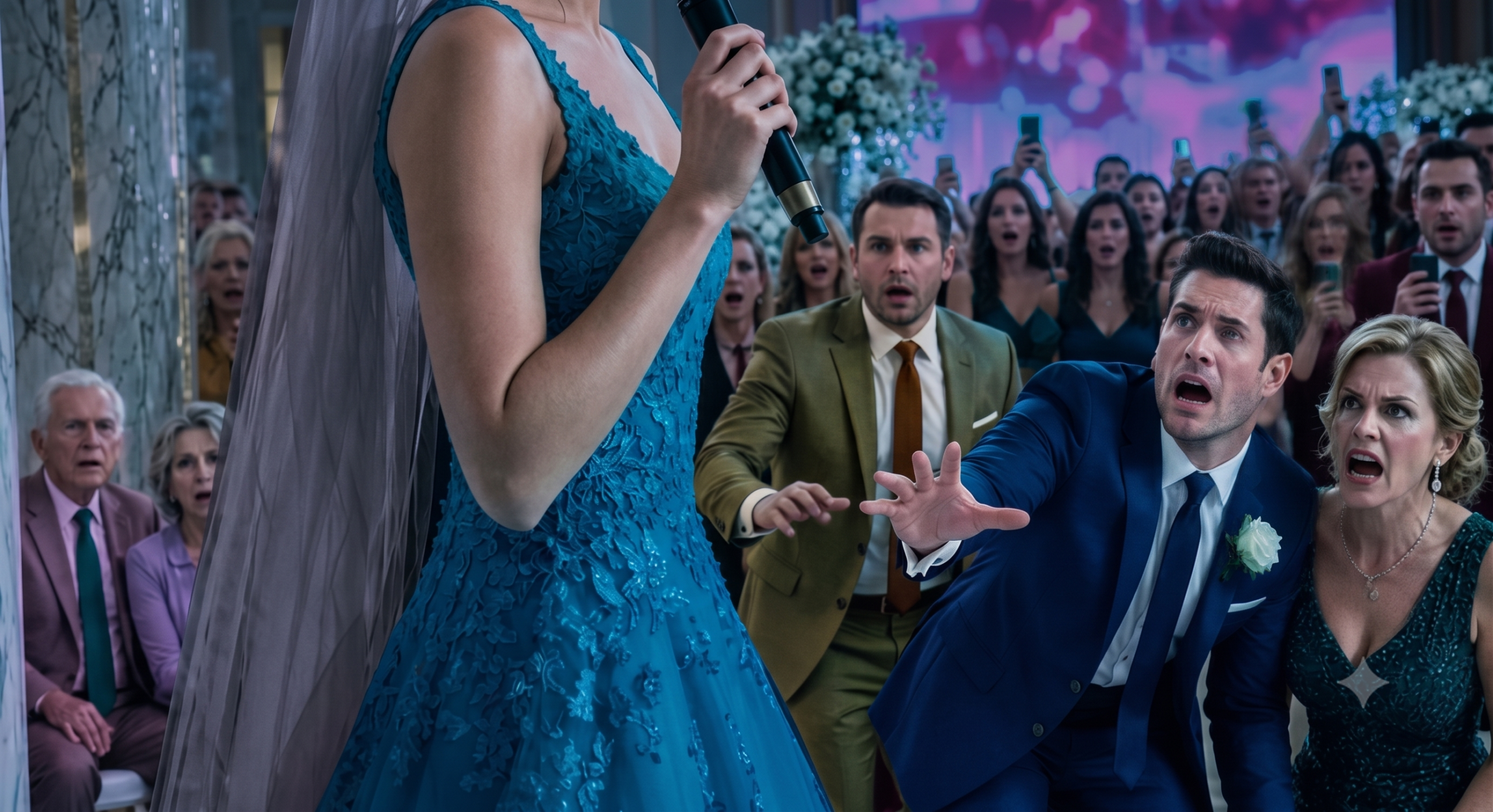
The estate erupted in gasps.

Rodrigo turned toward Valeria.

Slowly.

Almost mechanically.

“What?”

Valeria dropped her bouquet.

Flowers scattered across the ground.

Tears streamed down her face.

“It’s true.”

The world seemed to stop.

“His name is Andrew,” she whispered.

“We were together before I met you.”

Rodrigo stared at her.

Unable to speak.

Then she delivered the final blow.

“Your mother approached me.”

Every eye turned toward Rebecca.

Valeria continued.

“She said you needed a wife who could give you children quickly. Someone suitable. Someone who could save appearances.”

Rebecca looked horrified.

“Stop talking.”

But Valeria was finished being controlled.

“You used me.”

She pointed toward me.

“And you destroyed her.”

The guests began whispering loudly.

Some stood.

Others pulled out their phones.

Rebecca’s perfect image was collapsing in real time.

Rodrigo turned toward his mother.

“Did you know?”

She said nothing.

And her silence answered everything.


I expected to feel victorious.

Instead, I felt tired.

Because revenge isn’t nearly as satisfying as people imagine.

Mostly, it feels like closure.

I looked directly at Rodrigo.

“I didn’t come here to ruin your wedding.”

His eyes lifted to mine.

“I came so everyone would know what you threw away.”

I gestured toward my children.

“My family.”

I squeezed Daniel’s hand.

“My future.”

Then I looked at myself reflected in a nearby window.

“And the woman you convinced was never enough.”

Rodrigo suddenly dropped to his knees.

“Please forgive me.”

I felt sadness.

But not love.

Not anymore.

“You don’t erase eleven years of humiliation with one apology.”

He started crying.

And for the first time, I didn’t feel responsible for comforting him.


Months later, DNA tests confirmed what everyone already knew.

The children were his biological children.

A judge granted supervised visitation.

Family counseling was required.

Rebecca was forbidden from seeing the children without court approval.

When she learned that, she came to my building one afternoon.

Gone were the pearls.

Gone was the arrogance.

Gone was the queen of the family.

She stood at my door looking old and broken.

“I only wanted grandchildren.”

I shook my head.

“No.”

She looked confused.

“You wanted control.”

Then I gently closed the door.

Not with anger.

With peace.


One year later, Daniel proposed in William’s garden.

No reporters.

No luxury venue.

No performance.

Just family.

Three children running through the flowers.

A sunset.

And a man who loved me exactly as I was.

He knelt down.

His hands were shaking.

“Mariana Beltrán,” he said, smiling through tears. “Will you marry me?”

I looked around.

At William.

At my children.

At the life I thought I had lost forever.

Then I looked at Daniel.

And finally answered.

“Yes.”

The children started cheering.

William wiped away tears.

And for the first time in a very long time, my heart felt completely whole.

Because I learned something important:

A woman isn’t incomplete because she doesn’t have children.

And she isn’t complete because someone chooses her.

She’s complete the moment she realizes her worth was never determined by anyone else’s approval.

Sometimes life has to remove you from the place that broke you…

So it can lead you to the place where you’re finally loved the way you always deserved.

More Details
Fifteen minutes before my wedding, I found my parents sitting behind a pillar on two cheap plastic chairs, while my fiancé’s rich family filled the front row like royalty. My mother whispered, “Don’t ruin your day, sweetheart.” But something inside me went cold.
Jul 14, 2026

Fifteen minutes before my wedding, I found my parents sitting behind a pillar on two cheap plastic chairs, while my fiancé’s rich family filled the front row like royalty. My mother whispered, “Don’t ruin your day, sweetheart.” But something inside me went cold.

Fifteen minutes before my wedding, I discovered my parents tucked away behind a marble column, sitting on two cheap plastic chairs.

Meanwhile, my fiancé’s family occupied the front row like royalty, sparkling beneath chandeliers they hadn’t paid for.

My mother noticed my expression change before anyone else.

“Don’t spoil your day, sweetheart,” she whispered, forcing a smile that shook at the edges.

My father sat silently with his hands folded over his knees, staring at the floor as though the humiliation belonged to him.

It didn’t.

The Grand Ellison Hotel ballroom looked like something from a luxury film—white roses, gold ribbons, crystal glassware, and a string quartet playing softly near the altar. Two hundred guests filled the room in tailored suits and silk dresses. At the front, my fiancé, Preston Vale, laughed beside his mother, Cynthia, whose diamonds were so large they looked almost offensive.

During the entire wedding planning process, I had made only one request.

“My parents sit in the front row,” I told Preston.

He kissed my forehead and replied, “Of course, Claire. They raised you.”

But now they were hidden near the service entrance, beside stacked trays and emergency exit signs.

“Who moved them?” I asked quietly.

My mother touched my arm. “It’s all right.”

“No,” I said. “Who did this?”

My father swallowed. “A woman with a headset said the front row was reserved for family.”

I turned toward Cynthia.

She raised her champagne glass when she saw me watching. Her smile was flawless, cold, and cruel.

Preston rushed over, fixing his cufflinks. “Claire, why are you over here? The photographer is waiting.”

I pointed at my parents. “Why are they sitting there?”

His face flickered for a second, then hardened. “Mom handled the seating. Don’t turn this into a scene.”

“My parents are behind a pillar.”

“They’re not exactly high society,” he muttered. “You know how events like this work.”

The words cut deep, but I didn’t cry.

I remembered every insult I had ignored during our engagement. Cynthia calling my mother “plain.” Preston joking that my father’s hardware store smelled like paint and dust. His sister asking if my family even owned “proper silverware.”

They thought I was lucky to marry into their world.

They were wrong.

I looked past Preston toward the stage, where a microphone stood beside a tower of white roses.

Something inside me became calm and icy.

I lifted my veil, walked away from Preston, crossed the aisle in my wedding gown, and stepped onto the stage.

The room fell quiet.

I picked up the microphone and smiled.

“Before I say ‘I do,’ there is something everyone here deserves to know.”

Preston stopped mid-step. His mother’s smile vanished first.

“Claire,” he warned, loud enough for the front rows to hear, “put the microphone down.”

I ignored him.

Every guest turned toward me—senators, investors, bankers, lawyers, charity board members. Cynthia had invited them all to watch her son marry a woman she believed was beneath him.

Perfect.

“My parents,” I said, “were promised seats in the front row today. Instead, they were hidden behind a pillar on plastic chairs.”

A wave of whispers moved through the ballroom.

Cynthia stood. “This is a misunderstanding.”

I faced her. “Then explain it.”

Her jaw tightened. “This is not the time or place.”

“Oh,” I said, “I think it is.”

Preston climbed onto the stage, pale with anger. “You’re embarrassing yourself.”

I looked at him closely—the polished smile, the perfect confidence, the man who once admired my ambition before trying to turn it into obedience.

“Am I?” I asked.

He leaned close and hissed, “My family can ruin yours before dinner.”

That was when I knew he still believed the lie.

For two years, I had allowed the Vales to think I was only the daughter of a small-town hardware store owner. I never corrected them when Cynthia praised herself for accepting “humble people.” I never explained that my father’s little store was actually the first branch of Ellery Home Group, now a national supplier with contracts in forty states.

I was not marrying into wealth.

I was wealth.

More importantly, I was the woman whose private investment firm had quietly purchased thirty-two percent of Vale Meridian Hotels after their debt crisis six months earlier.

Preston’s luxurious life was already in my hands.

I reached into the hidden pocket sewn into my gown and took out my phone.

“Play it,” I said.

The screens behind me lit up.

Cynthia’s voice filled the ballroom, clear and unmistakable.

“Put her parents somewhere invisible. I will not have hardware-store people in my family photos.”

Then Preston’s voice followed.

“Claire won’t fight it. She’s too desperate to marry me.”

Gasps spread through the room.

My mother covered her mouth. My father finally lifted his head.

Preston lunged for my phone, but I stepped back.

“There’s more,” I said.

The screen changed to emails, seating charts, and messages between Preston and his mother.

One sentence stood out.

After the wedding, we pressure her to sign the asset transfer. She trusts me.

The ballroom went completely silent.

Cynthia clutched the back of her chair.

Preston whispered, “Where did you get those?”

I smiled. “From the attorney you tried to bribe.”

His eyes widened.

“My attorney,” I corrected. “The one handling the prenuptial agreement you assumed I hadn’t read.”

For the first time, Preston Vale looked afraid.

I turned back to the guests, my voice calm.

“For anyone here who doesn’t know me, my name is Claire Ellery. I am the majority managing partner of Ellery Capital Holdings.”

The ballroom erupted in murmurs.

Cynthia’s diamonds trembled against her throat.

“And as of last month,” I continued, “my firm became the largest outside investor in Vale Meridian Hotels after purchasing distressed shares during their emergency restructuring.”

Preston stared at me as though I had become someone else.

But I hadn’t changed.

I had simply stopped pretending.

I looked at him. “You planned to marry me, humiliate my parents, isolate me, and pressure me into transferring assets after the honeymoon.”

“That’s a lie,” he snapped.

I raised one finger.

The screen changed again.

A video appeared. Preston sat in a private lounge with Cynthia and their family attorney, laughing over drinks.

Cynthia said, “Once she signs, we control the voting rights through marriage.”

Preston smirked. “She’ll sign. She wants the fairy tale.”

The ballroom exploded.

One hotel board member stood and walked out. Then another. A senator’s wife whispered urgently to her husband. Phones rose as guests recorded every second.

Cynthia shouted, “Turn that off!”

“No,” my father said.

His voice was not loud, but it carried.

Everyone turned.

He rose from the plastic chair behind the pillar, straightened his inexpensive suit, and walked down the aisle with my mother beside him.

I stepped off the stage and met them halfway.

My father took my hand.

“You don’t owe these people another second.”

Preston rushed toward me. “Claire, listen. We can fix this.”

I looked at the man I had almost married.

“No, Preston. I already did.”

My attorney, who had been sitting quietly in the third row, stood and opened a folder.

“As of this morning,” he announced, “Ms. Ellery has withdrawn all personal guarantees connected to Vale Meridian’s pending credit extension. In addition, the evidence shown here has been forwarded to the board, the lenders, and the state attorney’s office.”

Cynthia’s face fell.

Preston grabbed my wrist. “You can’t do this.”

I looked down at his hand.

“Let go.”

Security moved immediately.

He released me, breathing hard, his perfect mask shattered in front of everyone he had tried so desperately to impress.

I returned to the stage, removed my engagement ring, and placed it beside the microphone.

“This wedding is canceled,” I said. “Dinner will still be served. My parents will sit at the head table.”

Then I turned to the string quartet.

“Play something cheerful.”

Six months later, Preston Vale was removed from the company by unanimous board vote. Cynthia resigned from three charity boards after the video spread through the social circles she had spent her life worshiping. Their hotel empire survived, but not under their control.

My parents sold the original hardware store only after I convinced my father that he deserved rest.

As for me, I bought a quiet house overlooking the coast, where Sunday dinners became loud, warm, and beautifully ordinary.

Sometimes people ask if I regret exposing Preston at the altar.

I always say no.

Because I did not lose a husband that day.

I returned two plastic chairs to the people who deserved the front row—and took back my life.

More Details
CEO gave my project to an intern – my resignation crushed the company
Jul 14, 2026

CEO gave my project to an intern – my resignation crushed the company

After three long years of hard work, my father-in-law, the CEO, awarded a massive project to a new intern instead of me. I simply resigned with a polite smile and said, “Congrats on the decision!” When he read my resignation, his face turned crimson. “You’re joking, right?!”

Raymond’s voice echoed through the hallway as I walked past the executive conference room. Innovation comes from youth, he was saying, full-chested and performative, like he was pitching a teed talk to a room full of yesmen.

I didn’t stop walking. I’d heard it all before. Heard it at our wedding, actually, when he toasted my husband for choosing well, and then me for keeping the catering under budget.

That was 3 years ago. 3 years of 14-hour days, weekend login, and duct taping this family-owned circus of a company together with vendor relationships and pure caffeine. And it wasn’t even my family. Not really. I was just the daughter-in-law, which in Raymond’s kingdom meant unpaid intern with a better wardrobe.

Want the truth? Nepotism didn’t help me. It buried me.

Raymond liked the optics of keeping me on the ground level so he could play noble king, doling out opportunities to outsiders while keeping his own house in check. He called it fairness. I called it humiliation with a 401k.

I built the logistics pipeline. Negotiated supplier exclusivity with firms that hadn’t returned Raymond’s calls in a decade. Turned a department that used to run on Google Sheets and crossed fingers into a functional machine with 22% profit growth year-over-year.

No one clapped.

Hell, I think half of them still thought my name was Lisa. The only time I ever saw my name mentioned in an internal memo, it was under travel policy enforcement because I’d canled a VP’s trip to Napa when he tried to expense a couple’s massage.

That same VP once asked me if I was the receptionist’s assistant.

I run five departments, Greg. But sure, I’ll fetch your latte if it helps you sleep at night.

Oh, and let’s not forget the big pitch I landed last quarter. 48 pages of strategy, 7 months of setup calls, and a custom dashboard roll out. The client sent Raymond a gift basket address to me. He ate the chocolates and forwarded me a blurry photo of the card with a thumbs up emoji.

Still, I stayed because part of me believed maybe, maybe hard work would outshine bloodlines, that maybe being better would eventually matter more than being born into the right dinner conversations. Stupid, I know.

And if you’ve ever been in a job where you know you’re the backbone, but no one else seems to notice until you slip a disc, you’ll understand why I started printing receipts. Not just literal invoices, receipts, emails, contracts, renewal clauses, access logs.

I started bookmarking everything with the paranoid grace of a woman who seen too many boys named Chad get promoted for remembering to wear shoes to a Zoom call.

That’s how I ended up staring at one particular clause I’d authored last fiscal year, buried in a renewal packet for a key supplier. A few lines of legal ease I’d negotiated directly, giving me personally exclusive liaison status for vendor management through Q4.

I remember the lawyer blinking at me when I insisted it go in.

Why? she asked. Isn’t that unusual?

I just smiled and said, “Sometimes you don’t know you’re being erased until they need your handwriting.”

Oh, and while you’re here, before we get deeper into this mess, if stories like this hit a little too close to your cubicle, go ahead and tap that subscribe button and hit like. It’s the cheapest therapy you’ll ever get, and it actually does help the team keep telling these stories.

All right, let’s keep going.

So, there I was, 3 years in, one foot always ready to pivot, and still hoping Raymond might just once say, “Nice job.”

What I got instead? An all hands meeting with catered bagels and a smiling intern named Cole.

But we’ll get there.

First, let me tell you about the golf lunch, because that’s where the fuse was lit.

Raymond had been extra chipper that week. Kept whistling some Sinatra song off key and strolling around the office like Santa Claus with a midlife crisis.

My husband, bless his sweet oblivious heart, mentioned over dinner that dad had met up with his old golf buddy Mitch and Mitch’s son, who just got a marketing degree and might be interning.

Interning, I repeated.

Yeah, just for a quarter, maybe. Dad said he seems sharp, might have potential.

Cool, I said. Cut my steak like it had personally offended me.

A week later, Cole showed up. Teeth too white, handshake too firm, dress shoes like he borrowed them from a manquin. Everyone fell over themselves, welcoming him. Raymond gave him a tour personally. I’d been there 3 years and still didn’t have a parking spot.

Cole’s desk was too down from mine. He had dual monitors and a window seat. I was still working off the laptop I’d paid for myself.

On day three, he asked me how to access the project drive.

I’ll ask it to onboard you, I said with a smile. And just a heads up, you’ll want to read through the supplier exclusivity clauses, especially the one on North Axis. It’s trickier than it looks.

He blinked. North Axis.

I tapped my temple. Vendor management lives up here.

What I didn’t say, you’ll never find it unless you know where I buried the bones. And I was just getting started.

2 weeks after Cole’s miraculous descent from Golf Olympus into our open plan, Purgatory, the buzz began. It started like all dangerous ideas do, overheard whispers in the copy room and an accidental reply all from the CFO’s assistant.

A new initiative. Big, like double our revenue big. Something to do with streamlining logistics for high volume clients using a proprietary system I’d actually been sketching out in my spare time for months, you know, in between fixing invoices, putting out supplier fires, and finding out someone named Travis had tried to expense a $400 steak dinner as team bonding.

But this, this was different. Just another quarterly adjustment or budget reshuffle. This was the project, the kind you could staple to your resume and let it scream for you in bold font. I built this.

Naturally, I’d been laying the groundwork for this beast since before Cole even knew how to send a calendar invite. My team had already prototyped a logistics module that cut lead times by 18%. We were ready. Hell, we were the only department actually running under budget.

Then one night, as I was microwaving leftovers and trying to decide if Pino Grigio counted as self-care, my husband walked in, grinning like he just solved the Middle East peace talks.

Dad’s talking about that logistics expansion, he said, shoveling lasagna into his mouth. He’s super impressed. Told me you’ve basically built the whole foundation. Said he’ll probably give it to you.

I didn’t reply. Just sip my wine and smiled like a woman who’s heard this bedtime story before and already knows how it ends.

Spoiler. The princess doesn’t get the castle. She gets passed over for the squire who once fixed the drawbridge gate and called it innovation.

Don’t get that look, my husband said. He means it.

Sure, I murmured, right after he stops calling my department the little engine that could.

And yet, I couldn’t help it. Somewhere in the cobweb attic of my brain, hope blinked on like a stupid candle.

What if this time merit one? What if all the late nights, the spreadsheet autopsies, calm I’d faked in front of clients while simultaneously googling how to fix corrupted ZIP files? What if it was finally going to pay off?

The next morning, I showed up early, beat the janitor, cleaned up my inbox like I was prepping for judgment day. Forwarded some reports to Raymond with clean charts and optimized bullet points. All killer, no filler.

His reply, “Thumbs up.”

I told myself that was good until I saw him later that day at the cafe across the street sharing a salmon sandwich with Mitch from golf. And Mitch’s son Cole, grinning like he’d just been kned with a bagel knife. They didn’t see me.

I watched from the sidewalk, iced coffee sweating in my hand, pretending I wasn’t plotting three different exit strategies and a fourth where I just fake a seizure and escape through the ceiling tiles.

Cole was nodding along while Raymond gestured with his hands like he was explaining some great visionary plan. My plan, no doubt. While Cole nodded like he wasn’t still googling what a vendor SLA was.

Back at the office, Cole had a sticky note on his monitor that said, “Call North Axis guy.” Ask Claus.

I stared at it for a full 10 seconds before slipping into the bathroom to scream silently into a paper towel.

Still, no one had said anything official, so I kept going, kept pushing the timeline forward, scheduled a few team meetings, drafted a new supplier engagement model and titled it phase 1 fast track. I even saved a copy in a private folder labeled in case it screwed.

That night, Raymond sent out a companywide email. Subject: Exciting expansion ahead.

The body was corporate word salad. Synergies, client engagement optimization, strategic partnerships. But I read between the lines. There was a big project coming, and everyone knew I’d built the bones of it.

My team started buzzing, slapping my back, saying things like, “This is your baby,” and “can’t wait to see you in charge of this one.”

I smiled, nodded, laughed along. But that candle, the one in the attic, it flickered. Because I’d seen Raymond play this game before, and I’d seen enough interns with nice smiles and famous fathers get handed the keys to empires they didn’t build.

Still, I didn’t blow the whistle yet. I needed to see if he’d really do it.

Spoiler, he did. And with confetti, they brought in quasas. That’s how I knew it was bad.

Raymond only sprang for catering when he wanted to soften a blow or sweeten a betrayal. The last time there were pastries in the conference room, half the QA team got absorbed into marketing, and their manager found out via calendar invite.

So, when I walked in and saw the glossy trays of carbs and fruit skewers, I nearly turned around. But I didn’t, because I had a front row seat to whatever performance was about to unfold. And something told me it was going to be a classic.

We all filed in, department heads, project leads, interns, yes, plural, because apparently fresh blood was the new KPI.

I took my usual seat on the left side, halfway down the table. Not too close, not too far. Strategic invisibility honed over three years.

Raymond Kimman last, always did, like a sitcom character entering after the laugh track. Except this time he had Cole with him. Cole in a blazer that still had the brand tag stitched to the sleeve, carrying a laptop like it might bite him.

I clocked the jitter in his left leg, the overapplied cologne, the way he mouthed the words as Raymond launched into his opening monologue.

Team, Raymond began with that condescending sincerity he reserved for interns and me, as you all know, were embarking on an exciting new phase of growth.

I already hated it.

He clicked a button. The first slide popped up.

Project elevate strategic future.

It was in comic sands. I stared at it, blinked. Surely this was a joke.

We’ve been watching the trends, analyzing the metrics, he said, completely ignoring the five-month analytics report I’d compiled that he’d signed off on. We’ve realized we need to approach this initiative with fresh eyes.

He paused for effect.

And that’s why I’m thrilled to announce that Cole will be leading Project Elevate as our interim strategic innovation lead.

Silence.

You know, that kind of silence that doesn’t even feel like silence. It’s a vacuum, a noise-sucking, logic-devouring void. A pit in the room where everyone’s common sense goes to die. It was like someone had slapped the mute button on reality.

Few people shifted uncomfortably. One guy coughed, but it sounded like what the f and then turned into a throat clear. Even the air vents seemed confused.

Raymond beamed. Cole stood up awkwardly.

Uh, yeah, really honored. Can’t wait to learn. I mean lead.

I smiled, and I clapped. Just three quiet, polite claps, like a school teacher applauding a third grader for not eating glue. Everyone else followed, unsure whether to celebrate or check for hidden cameras.

I didn’t say a word. Raymond never even looked at me. My name wasn’t mentioned, not even a courtesy nod, not a single acknowledgement that I had built every damn foundation this project stood on, that I had written the vendor frameworks, organized the client transition plans, and streamlined the entire back end.

Nope. All that mattered now was Cole, intern with a LinkedIn profile that listed team player under skills, and had a quote from the Wolf of Wall Street in his about section.

After the meeting, I didn’t storm out. I didn’t cry in the bathroom. I just drifted, walked back to my desk, opened my inbox, flagged a few messages, then went to the supply closet to retrieve a new notebook because if the game was changing, I needed a new playbook.

Cole found me 2 hours later, nervous, sweaty, holding a printed copy of a supplier agreement I’d authored 6 months ago.

“Hey, Alinda,” he said, tapping the paper. “Do you have the original dock for this, the North Axis exclusivity thing? I don’t totally get the renewal language.”

I looked at him for a long beat, long enough for him to start twitching. Then I smiled like a woman staring into the void and finally seeing shapes.

That’s not my job anymore, I said.

And I walked away, because it wasn’t. Not for long.

Raymond’s office always smelled like old money and bad decisions. Mahogany desk, leather chair that probably cost more than my first car. A framed golf photo of him shaking hands with some sweaty executive who once tried to pitch a multi-level coffee subscription.

The man had taste. Sure, if you consider divorce attorney Shikica design style.

I knocked once and stepped in without waiting. He was on the phone, pretending to sound busy, flipping through a file of printouts like they meant anything. I stood there smiling, holding the envelope.

He waved me in with one finger, still talking.

Yeah, yeah, we’ll circle back on the onboarding dock. Uh-huh. Let’s touch base next week. Cole will quarterback the vendor handoff. Yep. Fresh perspective. Love it. Quarterback Jesus.

He hung up and finally looked up at me, the mask slipping into his version of paternal warmth.

Linda, big day, huh? Exciting times. I hope you’re ready to support Cole as we ramp up.

Support Cole. Like I was his unpaid emotional doula, like I hadn’t already built the thing Cole was about to crash into a wall.

I smiled. I just wanted to thank you, I said, calm as a cucumber in a freezer.

He blinked. Oh?

For the opportunity, for the experience, for showing me exactly where I stand.

And I laid the envelope gently on the desk in front of him. White, clean, crisp, no drama.

His face did a thing. Eyes narrowed, lips parted like he couldn’t quite process the fact that someone dared to reject him.

He opened the flap and pulled out the single sheet of paper inside. One sentence.

I, Linda Pharaoh, resign effective two weeks from today.

His mouth opened, then closed, then opened again like a fish discovering existential dread.

You’re joking, right?

No, I said, same polite tone I used to explain to interns how Outlook folders worked. I’ll wrap up cleanly. No hard feelings.

He leaned back, looking suddenly smaller in that oversized throne of his.

Is this because of the project?

I tilted my head. You made your decision. I’m making mine.

He blinked again. Come on, Linda. Let’s be adults. You’re taking this personally.

You made it personal the second you decided I was more useful and visible.

He had nothing. Just stared at the paper like it might start dancing and tell him how to fix it.

I turned to leave. Paused at the door.

Oh, I’ll transfer access to the necessary files. Some may take time. Legal clearance and all.

He squinted. Legal clearance?

I smiled wider. Some of our contracts are delicate. You’ll want to get legal involved, especially on the exclusivity renewals.

I left before he could ask what I meant, before he could see the blind copy I just sent from my phone to legal at Northx’s partners comm with the subject line per clause 9 C notice of contractual liaison departure.

I walked back to my desk, packed slowly. No big announcement. No farewell email. Just quiet, methodical closure. Each folder archived. Each handoff note meticulously drafted. Each file saved to the correct directory, except for a few I left intentionally blank. Placeholders with names like Q4 timeline final l final V9, just to see who’d notice.

By 300 p.m. the news had leaked. By 5, people were whispering in the breakroom. By 6:00, Cole tried to get into the supplier dashboard and got hit with a restricted access popup.

That night, over takeout, my husband said, “So, you really quit?”

I nodded. Yep.

He chewed slowly. “Wow, I mean, Dad’s going to freak.”

He already did.

Are you okay?

I thought about it. I’d spent 3 years grinding myself into something unrecognizable, waiting for someone to validate my worth. I’d been quiet, polite, strategic. A good soldier.

And now, now I felt free.

I think I am, I said.

The next morning, I ordered business cards for my LLC, and I sent one more email to myself. Subject in case they come crawling. Attachment: A folder labeled vendor leverage. Read first, just in case.

2 weeks. That’s how long it took before the gears started grinding.

Not a dramatic crash, not a fireworks finale, just the slow, painful creek of machine realizing one of its most essential screws was gone.

It started with a Slack message. Not to me, of course. I wasn’t there anymore, but an old coworker forwarded the screenshot.

Hey, anyone got the North Axis contact? We’re hitting a wall on procurement.

That wall? Me.

See, when I’d negotiated the North Axis agreement, I’d insisted on a single point of liaison for all component fulfillment. Not just because I like control, though, let’s be honest, I do, but because I knew their VP of ops, Carmen, hated fragmented communication. One voice, one thread. That was the deal.

And in clause 7.2, buried between boilerplate indemnity jargon and force majura language, it stated clearly, authorized liaison, L. Pharaoh. Transfer of liaison role requires 30-day notice and written approval from North Axis legal.

As who didn’t get that memo? Cole.

The order got kicked back. No parts shipped, no updates, just a pleasant, professional per contract terms. We cannot process requests from unauthorized personnel from Carmen’s assistant.

Q panic. Cole apparently started calling everyone he could find on LinkedIn who had vendor in their job title. No one responded.

The week after that, another vendor, Fulcrum Dynamics, flagged a delivery clause. Turns out their contract included a timeline penalty waiver that only applied while I was overseeing implementation. Without me, fees kicked back in hard.

Suddenly, the numbers stopped making sense. Budgets ballooned. Timelines slipped. The magic project with Comic Sands Dreams started bleeding money before it even launched.

I didn’t gloat. Not out loud. But when I got a LinkedIn message from my old assistant that read, “Do you take the whole house of cards with you or just the top floor?” I did allow myself one smug sip of overpriced oat milk latte.

Detached curiosity. That’s what I felt, like watching a reality show where you already know who’s going to cheat on whom. You just don’t know when or how messy.

Then came the call. Not to me again, but someone leaked the Zoom transcript. A vendor check-in, standard stuff.

Only Cole was leading the call.

And the client rep asked about the licensing handover for the IP architecture in phase 2.

Cole, bless him, said, “Oh, uh, I don’t think we actually like own it. I think it’s in the files Linda had, but we can figure it out later.”

You could hear the silence a beat.

Then the vendor calmly replied, “So you’re saying the intellectual property you’re building on isn’t fully transferred?”

Cole laughed. “Well, I mean, it’s all in the system, I think, right?”

Another beat. And someone left the call.

That was the turning point. The moment the remaining illusion shattered, when everyone realized Cole wasn’t just underqualified, he was overconfident and dangerously underinformed.

My phone buzzed later that day. Unknown number. I didn’t answer.

Then it buzzed again. Same number. I let it go to voicemail.

Later, I listened. It was one of the junior PMs whispering like she was in a confessional booth.

Hey, um, just wanted to say it’s a mess over here. I know you’re gone, but God, Linda, they’re unraveling. Raymond’s blaming the suppliers. Cole’s blaming legal. Legal’s blaming procurement. It’s like musical chairs on fire. Thought you’d want to know.

I smiled. Not a big one, just enough to feel it in my cheekbones.

I closed the voicemail and opened a document labeled consulting retainer draft V3. Adjusted the rate, then leaned back in my chair and watched the metaphorical smoke rise from a company that never thought I mattered until I was no longer there to clean up their mess.

Raymond never called me. Not when my mother was in the hospital. Not when my team pulled an all-nighter to save a million dollar contract he nearly tanked. Not even when I got married to his son, his only son, and became the daughter-in-law he weaponized at board meetings like some passive aggressive trophy wife with access to spreadsheets.

So, when his name lit up my screen on a quiet Tuesday afternoon, I didn’t answer. I let it ring while I poured a cup of tea. Not coffee. Tea, because that’s what you drink when you’re no longer living in fight or flight.

It rang again 20 minutes later, then once more. By the fourth attempt, I picked up with the same tone I use for sales reps offering a once- ina-lifetime CRM migration tool.

Hi, Raymond.

Linda, his voice was sugar dipped in motor oil. How are you?

I let the silence do the heavy lifting.

He cleared his throat. I’ve I’ve been meaning to reach out. Just wanted to check in. See how things are going.

I looked around the co-working suite I’d rented just last week. Bright windows, quiet, smelled like eucalyptus and printer ink. I knew home base paid for 6 months in advance by North Axis as part of a vendor strategy engagement. Not that I was bragging yet.

I’m well, I said, smiling faintly at the glass wall that separated me from a design team workshopping a logo involving a goose and a lightning bolt.

That’s great. Really great. Listen, I won’t waste your time.

He always wasted my time.

We’ve hit a few snags with Elevate. Minor stuff, of course, growing pains, but it made me think maybe we could bring you in just temporarily. Help smooth a few things out for the good of the company.

There it was. The white flag folded neatly in a cashmere tone.

I’m consulting full-time now, I said lightly.

Of course, of course. But we were thinking more like a short-term engagement, just to get us through this phase.

I didn’t laugh, but my tea almost did.

I’d consider it, I replied. Depending on the terms.

A pause.

Well, I’m sure we can work something out. What kind of package are you thinking?

I opened a new tab, typed out a figure. Tripled my old salary. Added a clause for vendor protection adisement and a monthly retainer with a 90-day minimum.

I’ll send you a proposal, I said. It’ll be clear.

Another pause. A nervous laugh.

You’ve certainly found your voice, huh?

I always had it. Raymond, you just talked over it.

He chuckled, but it was hollow. Like he was standing in a hallway that had just lost all its doors.

I’ll look for the email.

You do that.

We hung up.

I stared at the phone for a moment, then turned back to my notes. I had three calls lined up that day. One with a logistics startup looking to poach Raymond’s core fulfillment strategy, which I wrote. Another with a former client looking to move their contract away from the company. And a third with Fulcrum Dynamics to finalize a consulting package they’d offered me the day after I walked out.

People were noticing. People remembered. Not the fireworks or the handshakes, but the results. The emails answered at 2:00 a.m. The saved shipments, the polite but unrelenting follow-ups that turned maybe into yes.

The intern, word was he had started forwarding all vendor requests to procurement with pls advise in the subject line. He’d scheduled a brainstorming lunch with marketing to rebrand the confusion. His new nickname in the office was captain slide deck.

Raymon never mentioned Cole in the call. He didn’t have to.

Later that day, I emailed the retainer contract. Watched as the read receipt pinged less than 5 minutes after I hit send. He didn’t reply right away, but the next morning I got a wire transfer and a single line email: consider us retained.

I printed it out, taped it to the wall above my desk in the co-working suite, and titled it, “My favorite apology.”

Raymond always thought clients were loyal to the brand. That the logo on the letter head was what kept deals alive, not the people behind the curtain making sure the wheels didn’t fall off and the contracts didn’t spontaneously combust at 11:59 p.m. on a holiday weekend.

He was wrong.

It started with an email forwarded to me from a friend still inside the company. Subject line: Urgent account escalation.

Hexler Group.

Hexler was one of the company’s whales. Multi-year engagement, high margin, demanding as hell. The kind of client that didn’t blink at a six-figure scope increase, but would rage for a week if their quarterly dashboard loaded 5 seconds late.

I’d managed them personally for 2 and 1/2 years. Their operations director once sent me a Christmas card with a bottle of whiskey and a hand note that said, “You’re the reason this circus stays in town.”

Apparently, Hexler had requested a meeting with Raymond and the board to discuss the viability of continued engagement.

Translation: They were preparing to walk.

The leaked meeting minutes came a few days later, courtesy of another friend, bless her paranoia and working from home screen recorder.

Raymon started the call by trying to charm them. We know there have been a few bumps, but we’re confident the new team is more than capable.

Then, Hexler’s lead strategist cut him off.

With all due respect, your new team couldn’t find a project timeline if you nailed it to their foreheads.

Raymond laughed. Wrong move. They weren’t joking.

We’re terminating the current contract unless Linda Pharaoh is re-engaged. Effective immediately.

Raymond stammered something about legal complications and transition planning.

Hexler replied, “No need. We’ve already signed a direct contract with her firm. If your company wants to keep the relationship, you’ll coordinate through her.”

The sound bite of the century. I played it three times on loop while eating leftover Thai food in my suite.

Vindication doesn’t always arrive with trumpets. Sometimes it shows up as a cold, clean memo from a billion-dollar client that simply says, “We’d prefer to work with her directly.”

Raymond tried to spin it to the board. He called it strategic delegation to the finance team, cost-splitting innovation. But everyone saw the numbers. Hexler accounted for nearly 18% of revenue last quarter. And now that revenue flowed through my LLC. And they weren’t the only ones sniffing around.

Two other mid-tier clients had reached out to me through back channels, quiet lunches, casual hypotheticals. One even sent flowers to the co-working suite with a card that said, “In case you’re still accepting miracles.”

I was.

Every new inquiry felt like justice in deposit form.

Raymon’s mask started to crack. My inside source said the board had begun asking for weekly updates, real ones, not the fluffed PowerPoint fluff he liked to present with pastel gradients and stock photos of handshake silhouettes.

The last board meeting ended with one of the more senior members allegedly saying, “You told us the intern could carry the torch. So far, all he’s lit is our reputation.”

Cole had reportedly tried to deflect blame onto the legacy systems, which was adorable since the system in question had my name on most of its logic trees. It scheduled a 2-day offsite to align vision, which I think involved whiteboards and a Spotify playlist titled innovation vibes.

Meanwhile, I was too busy reviewing NDAs, navigating client migrations, and hiring an assistant. A real one this time, not the imaginary kind Raymon promised me every quarter before telling me budgets are tight, kiddo.

What stung Raymon most, I suspect, wasn’t the loss of control. Was the realization that his client saw me before he ever did.

His kingdom was built on the assumption that people stayed loyal to logos. I built mine on relationships, receipts, and the quiet knowledge that if you give everything to someone who refuses to see you, they’ll eventually feel your absence like a hole in the floor.

By the end of the week, my calendar was booked solid. By the end of the month, I’d made more than my last three quarters combined.

By the time Raymond reached out again, this time via a carefully worded email cing two board members, I already had a canned reply ready.

As previously stated, all communications will go through my client portal. My team will be in touch regarding terms.

I didn’t even sign it best, just Linda.

The boardroom looked like someone had died. Maybe not a person, but definitely someone’s illusion of competence.

Emergency session. No quas this time. Just tension so thick it curdled the air.

Raymon sat at the head of the table, suit slightly a skew, hair a shade too flat. The man had finally stopped trying to win the room with swagger. Across from him sat legal, their lead council flipping slowly through a red folder marked exit agreement’s pharaoh l.

The only sound was the faint buzz of a dying fluorescent light overhead and the occasional tap of a pen on a leather portfolio. The CFO was already two shades past panic, whispering furiously to someone from compliance. The VP of ops was pale. And Cole, bless him, sat three seats down from Raymond, silent, small, and suddenly very interested in the wood grain of the table.

Let’s begin, the board chair finally said.

Legal cleared her throat and looked up. Deadpen after review of the exit documentation executed by Mr. Raymond. We’ve identified several critical oversightes.

Raymond leaned forward. It was a standard offboarding. I saw nothing unusual.

She slid a copy of my signed exit paperwork across the table.

Section D, clause 4B, she said. For this language, Miss Pharaoh retained rights to the IP framework she authored unless formally reassigned under board approval.

A long silence.

Raymon blinked. That’s not possible. I never would have—

You signed it, legal said calmly. Initialed and timestamped. We’ve confirmed Merida.

It looked like he’d swallowed a stapler.

She was just leaving. It was a courtesy form.

He sputtered, sweat gathering at the crease of his neck. She didn’t own anything.

Legal didn’t flinch. She built the vendor matrix architecture. She negotiated the exclusivity deals. She drafted the IP schema. And for this agreement, she retained all documentation and distribution rights not explicitly claimed by the company before departure, which you did not.

Board chair leaned in. So she owns the operating spine of Project Elevate.

Legal nodded once. Yes. And since you never filed the IP transfer, she also holds rights to the internal tools being used to power your pilot clients.

Q implosion.

The CFO dropped his pen. The ops VP muttered, Jesus Christ. One of the external advisers pulled out his phone and began typing furiously, probably messaging his assistant to start hunting for a parachute job.

Raymond looked around the table like someone had moved the walls.

This is This is insane. She was my daughter-in-law.

The board chair’s voice was cold enough to strip paint. And that personal bias may be the exact reason we’re here.

Raymond opened his mouth again, but legal cut in, sharper now. You also failed to initiate revocation clauses on her data access, which means she still has access to our internal systems.

Someone barked from the far end of the table.

Legal shook her head. No, she revoked her own access and sent confirmation. She did your job for you.

Silence again.

And then, almost unnoticed, Cole stood up. Didn’t speak. Didn’t make eye contact. Just gathered his laptop, his half-used notepad, and quietly walked out the door.

No one stopped him.

Raymond watched him leave, jaw clenched, hands white knuckled on the armrests.

What do you want us to do? he asked the board chair finally, voice a rasp.

The chair didn’t even look at him. He looked at legal.

Do we have any options?

Negotiate, legal said humbly, respectfully, and fast.

Across town, I sat at my desk in the co-working suite, sipping cold brew and skimming an email thread from one of my newer clients. Ironically, a startup obsessed with emotional intelligence in leadership.

My assistant pinged me. Emergency board MTG just wrapped. Insider says, “You dropped a bomb.”

I smiled faintly and opened a blank document, titled it retainer adjustment board rate, because the next conversation wasn’t going to be about feelings. It was going to be about value.

The ballroom was filled with the clink of ice in whiskey glasses and the soft thrum of jazz that no one was really listening to. Investors in suits that cost more than my consulting retainer milled around small tables, exchanging forced laughter and desperate optimism. It was the kind of event where buzzwords got passed around like orurves, scalable, agile, synergy, meaningless sounds dressed in expensive cologne.

Raymon stood just inside the entryway, scanning the room like he was still someone people wanted to talk to. He looked thinner. Not physically, just deflated. The kind of man who’d once walked into rooms assuming gravity bent to him, now quietly realizing it had never worked that way at all.

He spotted me before I spotted him.

I was laughing genuinely, shaking hands with a partner from Dovetail Technologies, a competitor his company once tried to poach from back when they still had swagger and a full vendor pipeline. The partner gestured me toward the table, pulled out a chair with the kind of difference Raymond had always reserved for other men.

I felt his eyes before I saw his face.

He stood frozen, half a glass of scotch in one hand, that permanent twitch of disbelief etched between his eyebrows, like he still couldn’t quite process how the girl he never took seriously had quietly, methodically replaced him in rooms like this.

Someone stepped up beside him. Board member, older guy, one of the few who hadn’t tried to mansplain supply chains to me during Q2 earnings calls. He nodded toward me, then said quietly, “She salvaged what she could. We lost everything else.”

Raymond didn’t answer. Just watched.

He had the face of a man watching his house burn down while the neighbor throws a garden party with his wife.

Across the room, a contract folder slid across a table. It bore the name of a logistics firm I just brought over. One of his former clients.

The new CTO signed first, then the partner, then me, Linda Pharaoh, strategic adviser. Simple, clean black ink on a white page.

That signature, my name, was the last one needed to finalize a six-figure deal they’d tried and failed to close for a year.

I didn’t look over at Raymond. I didn’t need to.

There was no gloating, no final blow, only the stillness of closure. That rare quiet moment when you realized the war is over. Not because you won, but because you stopped needing to fight.

He’d built his company like a family heirloom, assuming he could hand it down, polish it up, and let legacy do the work. I built mine with contracts, leverage, and long memory.

And now the girl in the corner office with no name plate had become the woman they introduced with handshakes and words like essential.

I stood.

The partner raised his glass. To clean exits, he said.

To clean beginnings, I corrected.

Raymond turned and walked out. I didn’t follow.

More Details
She Signed His Divorce Papers, Then Let Him Brag For Two Weeks-tete
Jul 14, 2026

She Signed His Divorce Papers, Then Let Him Brag For Two Weeks-tete

It was just a soft scratch across the bottom of the page.

Still, in that kitchen, on that humid Indiana night, it sounded like the loudest thing in the house.

The ceiling fan clicked above us in a rhythm that made the room feel smaller.

The counter was still sticky from the sweet tea Ben had spilled at dinner, and the manila folder Scott had dropped there smelled like fresh printer ink and his expensive cologne.

He had expected a different sound from me.

A scream.

The kind of broken noise that would prove I was as helpless as he had been telling himself I was.

Instead, I signed.


Scott stood on the other side of the kitchen island in his navy blazer and clean sneakers, looking like he had stopped by our marriage between appointments.

He always dressed like that when he wanted to feel important.

Not formal enough to seem desperate.

Not casual enough to seem ordinary.

“I’m done, Dana,” he had said when he walked in.

No hello.

No warning.

Just done.

Then he dropped the folder in front of me and explained my future as if he had already purchased it.

The house would be his.

The money would be his.

The business would be his.

Then he leaned closer and lowered his voice, because he knew exactly where to press.

“If you fight this, you’ll never see the kids again.”

That was the only part that nearly broke me.

Not the house.

Not the bank accounts.

Not the years I had spent swallowing small insults so the evening would stay peaceful.

The kids.

Ben was in the den, tapping his game controller too quickly, which meant he could hear more than he wanted to.

Ellie was upstairs with headphones on, which meant she had probably heard everything and was pretending not to.

That was motherhood in a house where a man loved control more than peace.

You learned which silence belonged to which child.

You learned the sound of fear pretending to be normal.

Scott saw my face change when he mentioned them.

His mouth shifted into that small satisfied line I had come to recognize.

He thought he had found the button that would make me do anything.

For years, maybe he had.

I had let him handle the accounts because he said it was easier.

I had signed forms he slid across the table because he said there was no reason to make everything complicated.

I had smiled when he told friends I was not a “numbers person,” because correcting him in front of people always came with a cost later.

He called it protecting me from stress.

What he meant was keeping the lights pointed away from himself.

A marriage can train a woman to be quiet, but quiet is not the same thing as blind.

I noticed the charges that did not match the stories.

I noticed the business trips with gaps in the receipts.

I noticed the weekend meetings that never appeared on any calendar.

I noticed emails from shared accounts that kept coming even after he thought he had locked me out.

For years, those details sat in the back of my mind like loose threads.

That night, when Scott shoved the papers toward me, all those threads tightened into one rope.

He said, “I’m taking everything.”

I looked at him and said, “Fine. Let’s not drag this out.”

The smile came back to his face.

“Smart move,” he said.

So I signed before he could finish explaining how badly I was going to lose.

He blinked.

“You did what?”

I capped the pen and slid the papers back across the counter.

“You heard me.”

That frightened him more than anger would have.

Anger would have been familiar.

Anger would have let him call me unstable, dramatic, impossible.

Calm gave him nothing to grab.

He left the kitchen with the folder tucked under his arm and the posture of a man who believed he had won because nobody had stopped him from announcing victory.

I stood there until I heard the front door shut.

Then I turned off the burner under the chicken, set Ben’s glass in the sink, and walked upstairs.

Ellie’s bedroom light was off, but I could see the thin line of glow under the door.

I did not knock.

Not yet.

Children deserve at least a few minutes to pretend they are not listening to their parents ruin everything.

The next morning, I drove to Indianapolis with the manila folder on the passenger seat.

There was a paper coffee cup in my cupholder, but I barely drank from it.

Every time I glanced at the folder, I could hear Scott’s voice again.

The house.

The money.

Even the kids.

The attorney’s office was plain and bright.

There was a small American flag near the reception desk, a stack of intake forms clipped to a clipboard, and a woman behind the counter who spoke gently without sounding soft.

That helped more than she knew.

I sat across from the attorney while she read every page.

The divorce petition.

The proposed property division.

The custody language.

The financial disclosure that Scott had filled out as if I were a problem he could summarize.

She did not interrupt herself with outrage.

She did not gasp.

Good attorneys do not perform shock just because your life is falling apart in front of them.

They read.

They mark.

They ask the questions that matter.

Finally, she looked up at me.

“You know this isn’t final, right?”

I nodded.

I had hoped it was true, but hearing it from her changed the air in my lungs.

“He served you papers,” she said. “He did not decide the entire case.”

That was the first time since Scott had walked into the kitchen that I felt my spine settle back into my body.

He had been counting on fear.

He had been counting on shame.

More than anything, he had been counting on my not understanding the process.

He wanted me to treat his version like the ending.

It was the opening move.

For the next two weeks, Scott celebrated.

He moved into a new apartment downtown and posted pictures like a man who had escaped captivity instead of abandoned a family.

There were expensive drinks on polished bars.

Late dinners with people I did not recognize.

A smiling photo in the blazer.

Another in a shirt I knew he had bought with a card tied to an account he told me not to worry about.

Neighbors heard he was “starting over.”

His brother heard I was being “reasonable.”

One of the dads from Ben’s school pickup line gave me an awkward nod and said he was sorry things had gotten “so settled.”

Settled.

That was the word Scott had been spreading.

He wanted the world to believe the hard part was over.

So I let him.

Some women survive by fighting loudly.

Some survive by making the person underestimating them comfortable enough to keep talking.

After the kids went to bed, I went into the garage.

The concrete was cold through my jeans even though the nights were still heavy with August heat.

The air smelled like cardboard, dust, old lawn equipment, and the faint chemical bite of a half-empty gas can near the mower.

I pulled down the blue file box Scott always mocked me for keeping.

He said I saved too much.

Receipts.

School forms.

Old tax returns.

Bank statements.

Printed emails.

I used to feel embarrassed when he called me sentimental.

That week, sentimental looked a lot like evidence.

I sorted everything by date first.

Then by account number.

Then by signature.

When that got too confusing, I started labeling sticky notes and stacking piles across the garage floor.

Tax returns on the left.

Bank statements near the water heater.

Receipts by the old cooler.

School forms in a separate folder so I would not mix the kids into the mess more than they already were.

At midnight, my coffee had gone cold.

At 1:32 a.m., I found the first transfer that did not belong.

It was not large enough to scream.

That was the clever part.

It looked ordinary if you were tired.

It looked like the kind of thing someone like Scott would explain away with a sigh and a lecture.

By 2:06 a.m., I found the second.

Then a third pattern started to show itself across months.

Not groceries.

Not gas.

Not a business expense I recognized.

Money moving quietly through places he had never mentioned in any kitchen conversation.

The next day, I called my attorney.

She told me what to print, what to photograph, and what not to touch.

She told me not to guess.

She told me to document.

So I did.

I printed account histories.

I photographed pages with the dates visible.

I saved envelopes.

I wrote down where every paper had come from.

I did not hack anything.

I did not break into anything.

I used what had lived in our house for years, in cabinets and boxes and old email folders he had forgotten existed because he had forgotten I was capable of remembering.

That was Scott’s real mistake.

He did not forget one document.

He forgot me.

The folder grew thick.

By the end of the second week, the rubber band snapped when I tried to close it.

I sat on the garage floor holding the broken band in my palm, and for one ugly second, I wanted to throw the whole box across the room.

I wanted to storm into his apartment.

I wanted to call everyone he had been bragging to and tell them he had not won anything except the privilege of being studied.

But rage is expensive when you have children asleep upstairs.

So I set the rubber band aside, got a bigger folder, and kept going.

Two weeks after Scott left, we sat in a family court room.

The air smelled like floor polish and old coffee.

The walls were beige.

The benches were hard.

A flag stood near the front, and the judge’s bench looked less dramatic than I had imagined because real fear rarely arrives with movie lighting.

Scott came in wearing the navy blazer.

Of course he did.

He sat with his attorney and gave me the kind of nod people use when they want witnesses to think they are being generous.

I gave him nothing back.

My attorney had told me the goal for that day was not fireworks.

It was records.

It was temporary orders.

It was getting the court to understand that Scott’s version of our marriage was not the only version with paper behind it.

When Scott took the stand, he looked almost relaxed.

He talked about responsibility.

He talked about stability.

He talked about how he had always handled the finances because I found them stressful.

That last part made his voice soften in a way that almost sounded kind.

I watched the judge write something down.

I watched Scott’s attorney keep his pen moving.

I watched my own attorney wait.

That was when I understood the discipline of a good question.

She did not interrupt him while he was building the wall.

She waited until he had stacked enough bricks to trap himself behind it.

Then she stood.

She opened the folder.

“Mr. Porter,” she said, “I’d like to ask you about an account ending in 4821.”

Scott’s smile did not disappear all at once.

It slipped.

His eyes went first.

Then the corners of his mouth.

Then one hand shifted on the witness chair as if the wood had suddenly become hot.

He said he would need context.

My attorney gave it to him.

She read the dates.

She read the transfer lines.

She asked whether he recognized the account.

He said he handled many accounts through the business.

She asked whether he considered that account a business account.

He said it depended on what she meant.

That was Scott in four words.

It depends what you mean.

He could turn a yes into weather.

He could turn a no into a lecture.

My attorney did not argue with him.

She placed the account history beside another page and asked him to read the name on the source account.

The room changed.

Even before he said anything, the room changed.

Scott’s attorney stopped writing.

The court clerk paused with her fingers over the keyboard.

I looked at the page only once, because I already knew what it said.

Ellie’s college fund.

Seeing it in black and white in that room did something different to me than seeing it on the garage floor.

In the garage, it had been a discovery.

In court, it became a fact other people had to look at.

That is the power of paper.

It takes what someone told you was just your imagination and lays it flat under fluorescent light.

Scott swallowed.

For the first time since he had walked into our kitchen with that folder, he looked smaller than his blazer.

My attorney asked whether money from that fund had been moved without my knowledge.

Scott said there were temporary cash-flow issues.

She asked whether he had disclosed those cash-flow issues in the papers he brought to my kitchen.

He did not answer right away.

The judge told him to answer the question.

“No,” Scott said.

It was barely a word.

But it landed.

The court did not explode.

No one dragged him out.

No judge banged a gavel and declared my whole life restored.

Real endings rarely arrive that clean.

What happened was quieter and better.

The court ordered the accounts preserved.

Scott was required to produce complete financial records.

The custody threats he had thrown at me in the kitchen did not turn into some magic spell just because he had spoken them with confidence.

Temporary parenting arrangements were made with the children’s routines in mind, not his ego.

The house was not handed to him because he had written it that way in a folder.

The money was not his because he had said it was.

The kids were not property.

That last part mattered most.

When we stepped into the hallway afterward, Scott tried to speak to me.

He said my name in the tone he used when he wanted to sound injured by the consequences of his own choices.

“Dana.”

I looked at him.

For years, that tone had worked on me.

It had made me explain, soften, apologize, make the room easier for him to stand in.

Not that day.

My attorney was beside me.

His attorney was behind him.

A vending machine hummed at the end of the hallway, and someone’s toddler was crying near the elevators.

It was such an ordinary sound for such an extraordinary moment.

I said, “Do not threaten me with my children again.”

He looked away first.

That was when I knew the marriage was over in the only way that mattered.

Not legally.

Not yet.

But inside me, the part that had kept waiting for Scott to become careful with my heart finally stood up and left.

When I got home, Ben was at the kitchen table with homework he was pretending to understand.

Ellie was at the sink, rinsing a bowl that was already clean.

She looked at my face and asked, “Are we okay?”

I wanted to tell her yes in the way parents say yes when they are trying to build a roof out of one word.

Instead, I told her the truth I could safely give.

“We are going to be.”

Ben looked up then.

I set my purse down, took the chicken from the refrigerator, and started making dinner because ordinary things become sacred when life has tried to take them from you.

The ceiling fan clicked above us.

The same kitchen.

The same counter.

The same back door with Ben’s sneakers kicked beside it.

Only I was different.

I had spent years thinking peace meant staying quiet enough not to start a fight.

Now I know peace sometimes begins the moment you stop helping someone lie about you.

Scott thought I signed because I was beaten.

I signed because I knew his papers were not the ending.

They were evidence of how certain he was that I would never read the rest.

For two weeks, he celebrated.

For two weeks, I sorted, printed, photographed, and waited.

And by the time he finally looked across that family court room and remembered who had been living in that house with him, it was too late for the version of me he thought he could scare into silence.

He had forgotten to check the one thing that mattered.

I had been paying attention.

More Details
On the first morning after our wedding, my husband sla:pped me while his whole family watched. They expected tears, sh:ame, and silence. Instead, I looked at him coldly and left without a word.
Jul 14, 2026

On the first morning after our wedding, my husband sla:pped me while his whole family watched. They expected tears, sh:ame, and silence. Instead, I looked at him coldly and left without a word.

It happened at the long walnut breakfast table inside the Harrington family estate outside Greenwich, Connecticut. Morning light streamed through the high windows. The silverware shone. His mother, Victoria Harrington, sat at the head of the table as though even the sunlight had been bought and paid for by her.

I had slept only three hours after a wedding reception that had dragged on past midnight. Even so, I came downstairs wearing a cream dress, offered polite smiles, and helped the housekeeper serve coffee because Victoria had made a sharp little remark about “new brides understanding their place.”

Then she took one bite of the omelet I had prepared and lowered her fork.

“Too salty,” she said.

Ryan, my husband, gave an uneasy laugh.

His sister, Claire, scanned me from head to toe. “Maybe she’s better at signing contracts than cooking.”

The table broke into soft laughter. I did not join them.

Ryan’s father, Malcolm, folded his newspaper and said, “A Harrington wife should be graceful under criticism.”

I set the coffee pot on the table. “A Harrington wife should not be treated like staff.”

Silence dropped over the room.

Victoria’s lips pressed together. “Excuse me?”

I met her stare without blinking. “You heard me.”

Ryan shot to his feet so quickly his chair scraped against the marble floor. His face flushed, not only with anger, but with humiliation. For six months, he had performed the role of a different man. Kind. Progressive. Devoted.

That illusion lasted less than half a day after the vows.

“You don’t talk to my mother that way,” he snapped.

“I talk to people the way they earn.”

The slap landed across my face before anyone had time to react.

For a single second, the entire house seemed to stop breathing.

My cheek stung. My wedding ring suddenly felt like a weight on my hand. Ryan stood there breathing hard, watching me as if he expected tears, apologies, surrender.

I gave him nothing but a cold stare.

Not surprise. Not terror.

Understanding.

Because in that moment, he had confirmed every document, every warning sign, every hidden clause I had arranged before I ever walked down the aisle.

Victoria settled back in her chair, pleased with herself. Malcolm lifted his newspaper again. Claire smiled smugly.

They believed they had shamed a woman who had no powerful family behind her.

They believed I was only Emma Vale, the quiet daughter of a deceased schoolteacher from Ohio, fortunate enough to marry into their dynasty.

They had no idea I had built my own private investigation firm under someone else’s name.

They had no idea Ryan’s company relied on three contracts I secretly controlled through shell entities.

They had no idea I possessed recordings, financial trails, falsified board approvals, and signed statements from employees they had destroyed.

Most importantly, they had no idea the prenuptial agreement Ryan had pushed me to sign contained one clause his attorney had overlooked.

Domestic abuse erased his protections.

I slid off my ring and placed it beside my untouched breakfast plate.

Ryan blinked. “What are you doing?”

I took my purse.

“Ending your family,” I said.

Then I walked out.

PART 2

By 8:17 a.m., I was in the back seat of a black car traveling toward Manhattan. My cheek still throbbed, but my hands did not shake. I opened my laptop, accessed the encrypted drive I had prepared months earlier, and called my lawyer.

“Emma?” Naomi Carter answered on the second ring. “You’re supposed to be on your honeymoon.”

“That changed.”

Her tone instantly tightened. “How bad?”

“He hit me in front of five witnesses.”

There was a pause.

Then Naomi asked, “Did anyone record it?”

“The dining room has internal security cameras. Ryan told me last month they record audio too. He was bragging about catching a contractor stealing wine.”

“Good. Do not contact him. Do not answer him. Come straight to my office.”

“I’m not going to your office first.”

“Emma.”

“I’m going to Harrington BioSystems.”

Naomi let out a slow breath. “Then I am meeting you there.”

Harrington BioSystems was the family’s crown jewel, a medical technology company with a shining public reputation and a decaying financial foundation. Six months before the wedding, I had uncovered that Ryan’s father had hidden failed trials, bribed procurement officials, and used charitable foundations to move dirty money through foreign accounts.

I had not set out to find any of it at first. I had only wanted to understand why Ryan was rushing marriage, why his mother wanted me to abandon my work, why his father asked too many questions about my “small consulting clients.”

The further I dug, the more obvious the truth became.

They had not wanted a daughter-in-law.

They had wanted access.

My late father had left me a minority share in a pharmaceutical logistics company he had quietly invested in years earlier. That company controlled distribution rights Harrington urgently needed for a federal contract worth hundreds of millions.

Ryan had pursued me as though it were love.

His family had targeted me like property.

At 9:02 a.m., I walked into Harrington BioSystems wearing the same cream dress from breakfast, the redness on my cheek faintly hidden beneath light makeup. People turned their heads in the lobby. The receptionist recognized me from the wedding photos that were already spreading online.

“Mrs. Harrington,” she said warmly.

“Vale,” I corrected. “Emma Vale.”

Naomi arrived three minutes later with two associates and a court filing already prepared. At 9:20, we entered the conference room where Ryan, Malcolm, and three board members had gathered for what they clearly believed would be an emergency family containment discussion.

Ryan stood up. “Emma, thank God. Listen, about this morning—”

“Sit down,” Naomi said.

Malcolm’s gaze narrowed. “This is a private company meeting.”

“Not anymore.” I placed a folder on the table. “At 10 a.m., the Securities and Exchange Commission receives copies of everything in here. At 10:05, the Department of Justice gets the overseas payment records. At 10:10, every board member receives the full internal memo proving Malcolm knowingly concealed device failures before market approval.”

Claire, who had just come in behind them, turned pale.

Ryan whispered, “You wouldn’t.”

I looked straight at him. “You slapped me before breakfast. Don’t pretend you know what I would do after lunch.”

His phone began ringing. Then Malcolm’s. Then Claire’s.

Beyond the glass walls, assistants started rushing from office to office.

Naomi pushed one document across the table. “Mrs. Vale is filing for annulment and civil protection. The prenuptial agreement’s asset shield is void due to spousal violence witnessed in the marital home.”

Victoria appeared in the doorway, her pearls shaking at her throat.

For the first time since I had known her, she had no insult prepared.

PART 3

At 10:00 a.m., my thumb rested over the send button.

Ryan watched me from across the conference table, his handsome face now stripped of all charm. Without the soft glow of wedding lights, without champagne smiles, without the tailored tuxedo, he looked exactly like what he truly was: a terrified man who had confused cruelty with authority.

“Emma,” he said quietly, “let’s not be dramatic.”

That almost made me laugh.

Only twelve hours earlier, he had vowed to honor me in front of two hundred guests beneath white roses and cathedral glass. That morning, he had hit me because his mother did not like an omelet.

Now he wanted moderation.

Naomi glanced at her watch. “It’s time.”

I pressed send.

There was no thunder. No walls split apart. No dramatic music rose in the background.

Only a quiet whoosh from my laptop.

Then Harrington BioSystems started falling apart.

The first call came from the general counsel, yelling so loudly that Malcolm had to pull the phone away from his ear. The second came from the chief financial officer, who had clearly already opened the evidence file. The third came from a board member in Boston.

“What did you do?” Malcolm demanded.

“What you trained everyone else to fear,” I said. “I documented everything.”

Victoria stepped into the room, her face drained of color. “This family gave you a name.”

“No,” I said. “You offered me a cage and engraved it.”

Claire slammed her purse onto the table. “You think people will believe you? You married him yesterday. This will look like a money grab.”

Naomi opened a second folder. “There is video from the breakfast room. There are medical photographs being taken this afternoon. There are witness statements from household staff who heard the strike and saw the aftermath.”

Victoria’s eyes darted toward the door, where two housekeepers stood near the hallway, whispering.

I had not asked them to lie. I had not had to. The Harringtons had spent years treating employees like furniture, forgetting that invisible people noticed everything.

Ryan lowered his voice. “Emma, baby, please. We can fix this. I was stressed. My family was pressuring me. You know I love you.”

I stared at him for a long moment.

I remembered our first date at a small Italian restaurant in Brooklyn, where he had asked gentle questions about my father. I remembered him sending soup when I was sick with the flu. I remembered him standing beside my father’s grave, holding my hand, saying, “You don’t have to be alone anymore.”

Those memories had once seemed precious.

Now they seemed practiced.

“You loved the distribution rights,” I said. “You loved my father’s shares. You loved the fact that I had no living parents to warn me.”

His jaw tightened.

There it was again. The real Ryan.

At 10:26 a.m., federal investigators arrived downstairs. Harrington BioSystems was not raided in the dramatic style people imagine from films. No doors were kicked open. No one shouted. Men and women in plain suits walked in with badges, warrants, and controlled voices. That calm was more frightening than yelling.

By 10:40, employees were being ordered not to delete emails, destroy paper documents, or leave the building with company devices.

By 11:15, business partners began freezing pending agreements.

By noon, the first news alert appeared.

HARRINGTON BIOSYSTEMS FACES FEDERAL INQUIRY INTO DEVICE SAFETY REPORTS AND FOREIGN PAYMENTS.

Ryan read it on Claire’s phone. His mouth opened slightly. “This can still be managed.”

Malcolm, for the first time, looked uncertain.

“It cannot,” I said.

He turned toward me. “You stupid girl. You have no idea what you’ve done. Thousands of people depend on this company.”

“Then you should not have built it on fraud.”

His expression darkened. For a moment, I thought he might come across the room. Naomi’s associate shifted slightly forward, not touching anyone, only making it obvious that there were witnesses now.

That was the only thing men like Malcolm understood.

Witnesses.

At 1:30 p.m., my doctor recorded the swelling on my cheek and the bruise forming along my jaw. At 2:10, Naomi filed for an emergency protective order. At 3:00, the court approved temporary restrictions barring Ryan from contacting me directly or coming near my apartment, my office, or my vehicle.

At 3:25, Ryan violated it with a text.

Please don’t do this. My mother is crying. You’re angry. Come home.

I forwarded it to Naomi.

At 3:31, he sent another.

You owe me a conversation.

Forwarded.

At 3:38:

I swear to God, Emma, if you ruin me, I’ll ruin you too.

Forwarded.

Naomi called immediately. “Do not respond.”

“I know.”

“Are you safe?”

I looked around my office. Two locks. A security camera. My assistant, Daniel, outside with a copy of the police report and the composed expression of a man who had always known this family would underestimate me.

“Yes,” I said. “I’m safe.”

But safety did not yet feel like comfort. It felt like standing perfectly still after leaping from a burning building, waiting to find out whether any part of you was still on fire.

By evening, Harrington BioSystems’ board held an emergency vote. Malcolm was removed as chairman pending investigation. Ryan was suspended from his executive position. Claire resigned from the charitable foundation after donation records emerged showing that money had been funneled into consulting companies owned by her college friends.

Victoria attempted to do what Victoria always did best: control the narrative.

At 6:00 p.m., a statement appeared from a Harrington family spokesperson.

This is a private marital misunderstanding being exploited during a sensitive business period. The Harrington family remains united.

At 6:07, Naomi released one sentence on my behalf.

Ms. Emma Vale has filed for annulment and protection following a documented act of domestic violence witnessed in the Harrington residence this morning.

No insults. No theatrics. No show.

Facts cut deeper.

By 7:30, the wedding photographs had disappeared from Ryan’s social media. By 8:00, guests from the reception began calling me, leaving uncomfortable messages filled with concern and curiosity. Most wanted information. Some wanted gossip. Only one call mattered.

It was Eleanor Briggs, my father’s oldest friend and the woman who had quietly warned me before the wedding.

“Emma,” she said when I picked up, “are you hurt badly?”

“No.”

“Good.” Her voice softened. “I wish I had been wrong about them.”

“So do I.”

“Your father would be proud of how you protected yourself.”

For the first time that day, my throat tightened.

I had not cried when Ryan slapped me. I had not cried in the car. I had not cried while sending evidence that shattered a billion-dollar illusion.

But hearing my father’s name almost broke me.

“He taught me not to sign anything I hadn’t read twice,” I said.

“And you read the Harringtons better than they read you.”

After the call ended, I sat alone in my office while night pressed against the windows. Manhattan glowed below me, indifferent and alive. Somewhere across the city, Ryan was probably pacing, blaming me, blaming his mother, blaming pressure, blaming everyone except himself.

My phone buzzed again.

This time, the number was unknown.

You think you won. You’ll be alone forever.

I looked at the message.

Once, that threat might have reached the old wound inside me. The orphaned daughter. The woman who had worked too hard, trusted too little, and still hoped marriage might feel like belonging.

But loneliness was not the worst thing.

The worst thing was sitting at a breakfast table with people who believed your silence could be bought with a ring.

I blocked the number.

The next morning, exactly twenty-four hours after the slap, Ryan Harrington was escorted out of his apartment by police for violating the protective order and sending threats. Cameras caught him ducking his head beneath a navy jacket. The same reporters who had photographed our wedding were now shouting questions about fraud, abuse, and federal subpoenas.

Victoria tried to leave through the rear entrance of her townhouse and was photographed without makeup, without pearls, and without her usual smile.

Malcolm’s lawyers told him not to make any public statements.

Claire posted a vague quote about betrayal, then deleted it when former foundation employees started commenting with proof.

By noon, Harrington BioSystems’ stock had fallen hard enough to trigger emergency investor calls. By late afternoon, two hospitals announced they were pausing use of the company’s devices pending review. Whistleblowers who had been ignored for years finally had people returning their calls.

I did not celebrate.

Celebrating would have suggested I took pleasure in the destruction.

I did not.

I simply refused to be buried beneath it.

Three weeks later, the annulment proceeded uncontested. Ryan’s attorneys attempted to bargain for my silence. Naomi rejected the idea before they had even finished the sentence. The prenuptial shield remained void. My father’s shares stayed with me. The distribution rights were moved to a competitor with clean audit records and no connection to the Harrington family.

Six months later, Malcolm was indicted on charges of fraud and conspiracy. Claire settled civil claims tied to the foundation. Victoria quietly sold the Greenwich house after staff members gave sworn statements describing years of intimidation and abuse behind its polished doors.

Ryan avoided prison on the business charges by cooperating, but the domestic violence record followed him everywhere. Friends stopped answering his calls. Invitations disappeared. His surname, once an advantage, became a burden.

The last time I saw him was outside the courthouse.

He looked thinner. Older. Still expensive, but no longer so certain.

“Emma,” he said, stopping several feet away because the order required him to. “Was one slap worth all this?”

I looked at him calmly.

That was the difference between us.

He still believed the slap had been the beginning.

It had only been the proof.

“No,” I said. “Your whole life of lies was worth all this.”

He swallowed. “I did love you.”

“No,” I said. “You loved winning.”

Then I walked past him into the sunlight.

A year later, I moved my firm into a bigger office. On the wall behind my desk, I hung a framed photograph of my father smiling in an old brown jacket, standing beside the first car he had ever bought in cash. Beneath it, I kept no wedding picture, no ring, no trace of the Harrington name.

Only a small brass plaque with a line he used to say whenever I faced a hard decision:

Read the fine print, then write your own.

People later asked how I ruined the Harringtons in a single day.

The truth was much simpler.

They had spent years ruining themselves.

I only stopped pretending I could not see it.

More Details
My fiancée laughed: “I put peanuts in your dinner to prove you’re faking your allergy. You’re just picky.” As my throat swelled up, I texted: “Call 911.”
Jul 14, 2026

My fiancée laughed: “I put peanuts in your dinner to prove you’re faking your allergy. You’re just picky.” As my throat swelled up, I texted: “Call 911.”

She leaned back in her chair, smiling as though she had finally won the argument.

“Finally,” she said. “I put a little peanut sauce in it.”

The room seemed to tilt sideways.

“What?”

“Oh, don’t look at me like that.” She rolled her eyes. “I wanted to prove you’re faking your allergy. You’re just picky, Jonah. You always make everything difficult.”

My tongue felt heavy.

I pushed away from the table, knocking my chair into the wall.

“Sabrina,” I gasped, “call 911.”

Her smile faltered, but only for a moment. “Stop being dramatic.”

My throat tightened. Heat spread over my face and down my neck. I grabbed my phone with trembling hands because speaking was already becoming harder.

Call 911. Peanut allergy. Can’t breathe.

I sent it to my neighbor, Marcus, because Sabrina was still sitting there, staring at me like she was waiting for me to stop pretending.

Then I reached for my jacket.

The EpiPen slipped from my fingers once before I managed to press it into my thigh. Pain shot through my leg, but relief did not come instantly. My breaths came in thin, ugly pulls. I pointed at the bowl of pasta, then at a clean container on the counter.

Sabrina finally stood up. “Jonah, you’re scaring me.”

Good, I thought.

Marcus burst through the back door four minutes later with the 911 dispatcher still on speaker. He found me on the kitchen floor, one hand around the food container I had sealed myself, the other gripping my phone.

The EMTs arrived quickly.

Before they lifted me onto the stretcher, I pushed the container into one paramedic’s hand and forced out two words.

“Food sample.”

Sabrina began crying as if she were the victim.

But when I reached the ER, I asked for the police.

And when the officers arrested her in the waiting room, she screamed, “I was only trying to prove a point!..

Part 2

The ER waiting room fell silent when the officers placed Sabrina in handcuffs.

Her mother, who had arrived ten minutes earlier wearing pearls and panic, gasped as if the police had interrupted a wedding toast instead of responding to a crime. Sabrina kept looking through the glass doors toward my treatment room, expecting me to rescue her from the consequences of nearly killing me.

I still could not speak. My throat was raw. An oxygen mask covered half my face. My hands shook from adrenaline, medication, and fear.

But I could still write.

When Officer Leary came into the room, I typed everything into my phone. The argument about the wedding menu. Sabrina’s comments about my allergy. Her exact words at dinner. Marcus arriving. The food sample.

The officer read in silence, then looked at me with a seriousness that made the entire thing feel real.

“She knowingly served you something containing peanuts after being told you had a life-threatening allergy?”

I nodded.

He asked, “Did she refuse to call emergency services?”

I nodded again.

Marcus was in the hallway giving his statement. He told them he had heard Sabrina say, “I thought he was exaggerating,” while I was being loaded into the ambulance.

By midnight, my mother arrived from Salem, still wearing her work shoes. She had driven nearly an hour with my younger sister, Paige, beside her. The moment Mom saw me, her face crumpled.

Then she saw Sabrina through the waiting room window.

My mother had always been gentle. She mailed thank-you cards. She apologized to furniture after bumping into it. But that night, she stood perfectly still, her eyes hard as stone.

“She knew,” Mom said.

I nodded.

Sabrina’s mother came toward us, crying. “Please. This is a misunderstanding. Sabrina would never hurt anyone.”

My sister Paige stepped in front of my mother.

“She poisoned him to win an argument,” Paige said. “That is not a misunderstanding. That is arrogance with a body count waiting to happen.”

I closed my eyes.

The wedding invitation was still in my car. The florist deposit had already been paid. My suit was hanging in my closet.

But lying in that hospital bed, I understood something colder than heartbreak.

Sabrina had not doubted my allergy.

She had doubted my right to be believed.

PART 3

Sabrina was charged the following morning.

The exact charge changed later after the district attorney reviewed the evidence, but the first report included the phrase that made everyone flinch: assault with a deadly weapon. In this case, the weapon had not been a knife or a gun. It had been a dinner she prepared while fully aware of what it could do to me.

Her family tried to turn the story into a tragic misunderstanding.

Her father called my mother and said Sabrina was “under stress from wedding planning.” Her aunt left me a voicemail saying a criminal record would ruin Sabrina’s future. One of her bridesmaids texted me, She made a mistake. Don’t destroy her life over pasta.

I stared at that message for a long time before I blocked the number.

People love calling danger a mistake when they are not the ones fighting for air.

I canceled the wedding from my hospital bed. Paige dealt with the vendors. Marcus returned Sabrina’s things from my apartment in sealed boxes. My mother sat beside me, holding my hand while pretending not to cry every time a nurse checked my breathing.

Two days after I was discharged, Sabrina’s lawyer contacted mine. They wanted me to support a diversion program instead of jail time. They wanted anger management, community service, and a public statement from me saying I did not believe Sabrina intended to kill me.

I refused to lie.

But I also did not want revenge to become the center of my life.

So through my attorney, I gave one statement.

Sabrina had known about my allergy. She had secretly added peanuts to my food. She had delayed calling for help. Whatever the court decided, I wanted the record to show that disbelief can become dangerous when it turns into control.

Months passed.

Sabrina eventually accepted a plea deal. She received probation, mandatory counseling, community service, and a permanent protective order that prevented her from contacting me. Some people thought that was too lenient. Some thought it was too severe.

I stopped measuring justice by what made other people comfortable.

The harder part was rebuilding my own sense of safety.

For a while, I could not eat anything I had not prepared myself. I checked labels three times. I avoided restaurants. I flinched whenever someone said, “Trust me.” My therapist told me trauma often hides inside ordinary things: kitchens, forks, laughter, a bowl of pasta sitting on a table.

Slowly, I learned how to breathe in those rooms again.

Marcus came over every Thursday with sealed takeout from the same allergy-safe restaurant, and we watched terrible old movies until I stopped apologizing for being nervous. Paige made a spreadsheet of vendors who understood severe allergies. My mother cooked meals in my kitchen with every ingredient lined up like evidence, not because I needed proof from her, but because she wanted me to feel safe.

A year later, I spoke at a local food allergy awareness event. I almost backed out when I saw the microphone. Then a teenage boy approached me with his father.

“My coach keeps saying I’m being dramatic about my allergy,” the boy said quietly. “My dad made him watch your interview.”

I looked at his frightened face and felt the final piece of shame loosen inside me.

“You are not dramatic,” I told him. “You are protecting your life. Anyone who mocks that does not deserve access to you.”

That was the lesson I had paid for with terror.

Love is not proven by how much danger someone expects you to endure. Family is not the person who laughs at your limits and calls them inconvenience. A partner does not test whether your body can survive their disbelief.

The wedding never happened.

The dress was never worn. The cake was never cut. The vows were never spoken beneath the white arch Sabrina had chosen.

But I survived the dinner.

I survived the humiliation, the fear, the courthouse whispers, and the strange grief of missing someone who had almost killed me.

In the end, Sabrina proved a point after all.

She proved that the smallest boundary can reveal the entire truth of a person.

And when someone shows you they need to endanger you before they respect you, the only safe answer is to leave—and never sit at their table again.

More Details
I found out who my husband’s lover was and showed up at her family party. In front of all the guests, I handed her back the red lingerie
Jul 14, 2026

I found out who my husband’s lover was and showed up at her family party. In front of all the guests, I handed her back the red lingerie


A few guests chuckled. Daniel’s jaw tightened. He had spent seven years convincing people I was soft, forgettable, the quiet wife who signed charity checks and stayed behind the curtain.

I placed the box into Elena’s hands.

“For you,” I said.

She opened it.

The red lace spilled out like blood.

A gasp moved through the room. Someone dropped a glass. Elena’s mother covered her mouth, while her father, Carlo Moretti, turned scarlet with rage.

Elena’s eyes flashed, but she recovered quickly.

“How vulgar,” she said. “You came to my family home to humiliate yourself?”

Daniel grabbed my wrist. “Leave. Now.”

I looked down at his fingers.

“Careful,” I whispered. “There are cameras everywhere.”

His grip loosened.

Elena laughed softly. “Poor Claire. You really think this changes anything? Daniel is done with you. He told me you’re useless without him.”

There it was—the sentence he had repeated through every cruel argument, every locked door, every cold silence.

I smiled.

That made Daniel nervous.

“You’re right,” I said. “A woman who only knows how to cry would be useless tonight.”

Then I leaned closer to Elena.

“But I stopped crying three weeks ago.”

For the first time, her smile faltered.

Because three weeks ago, I had found the lingerie.

And three weeks ago, I had stopped being Daniel’s wife.

I had become his evidence collector.

Part 2

Daniel pulled me into the hallway, away from the eyes of the guests.

“Are you insane?” he hissed. “Do you know who her father is?”

“Yes,” I said. “A contractor who built half the city with government money and missing safety reports.”

His face went pale.

Elena followed us, her heels clicking like gunshots. “You pathetic little housewife. You think gossip can hurt us?”

I turned toward her. “No. Paperwork can.”

She blinked.

Daniel forced out a laugh. “Claire doesn’t know anything. She doesn’t even understand my company accounts.”

That was his greatest mistake.

He had confused silence with ignorance.

For seven years, I had worked as the unpaid mind behind his empire. I reviewed contracts when he was drunk, corrected projections when he was reckless, and cleaned up numbers when his board started asking questions. Before our marriage, I had been a forensic accountant. Daniel called it “boring little calculator work.”

Boring little calculator work was about to bury him.

Elena crossed her arms. “Daniel said the divorce papers are ready. You get the house, maybe some allowance, and then you disappear.”

I almost admired her confidence.

“The divorce papers he prepared?” I asked. “The ones hiding offshore assets? The ones claiming his company is nearly bankrupt while he secretly moved twelve million dollars through your father’s shell vendors?”

Daniel’s breath stopped.

Elena whispered, “You told her?”

“No,” I said. “Your emails did.”

Her face drained.

From the ballroom, Carlo Moretti stormed toward us with two security guards.

“Get this woman out of my house,” he ordered.

I opened my clutch and took out a thin black drive.

“Before you do that,” I said, “you should know every guest in that room just received a scheduled email from me.”

Daniel lunged, but I stepped back.

His hand froze inches from my face.

A camera above the hallway blinked red.

I smiled. “Still recording.”

Carlo stared at the drive. “What is that?”

“Copies of invoices, fake inspections, bribery ledgers, bank transfers, and messages between your daughter and my husband planning to bankrupt me before filing for divorce.”

Elena’s lips trembled. “You’re lying.”

“Then you’ll enjoy proving that to the prosecutor.”

At that exact moment, phones began buzzing inside the ballroom.

One by one.

Then all at once.

A wave of murmurs rose behind us.

Daniel glanced over his shoulder and saw his investors, clients, and friends reading the same files he had hidden from me.

His mask cracked.

“You don’t understand what you’ve done,” he said.

I leaned close.

“No, Daniel. You don’t understand who you married.”

Part 3

Carlo tried to save the room with volume.

“This is a private family matter!” he roared as we stepped back into the ballroom.

But the Moretti name was already bleeding across every phone screen.

A city councilman hurried toward the exit. A bank executive whispered into his phone. Elena’s fiancé—yes, fiancé—stood near the champagne tower, staring at the red lingerie on the floor.

“You were sleeping with him?” he asked Elena.

Her mouth opened. Nothing came out.

Daniel grabbed my arm again, desperate now. “Claire, stop this. We can talk.”

I looked at his hand until he released me.

“You had years to talk.”

Elena suddenly found her cruelty again. “You think you won? Daniel still loves me. Men like him don’t stay with women like you.”

“No,” I said. “Men like Daniel stay with whoever funds them.”

Then the final doors opened.

Two federal investigators entered with local police behind them.

The ballroom froze.

Daniel stumbled back. “Claire…”

I nodded toward the officers. “I filed everything this morning. Tonight was just courtesy. I thought your victims deserved to see your faces when the truth arrived.”

Carlo shouted for his lawyer.

An investigator held up a warrant.

Elena screamed when they took her phone. Daniel tried to claim I had forged the documents, but his own voice began playing from a guest’s phone—one of the audio files I had attached.

“Hide the money before Claire gets suspicious,” Daniel’s recorded voice said. “Once she signs, she’ll be too broke to fight.”

The room went silent.

His mother began crying. His investors walked away. Elena’s fiancé removed his ring and placed it on the champagne table.

Daniel looked at me with hatred, then fear.

“You ruined me,” he whispered.

“No,” I said. “I returned what belonged to you.”

I glanced at the red lingerie.

“Your shame.”

Six months later, I woke in my new apartment overlooking the river, sunlight spilling across hardwood floors I had paid for myself.

Daniel’s company had collapsed under fraud charges. His accounts were frozen. Carlo Moretti was under investigation, Elena had become a headline instead of a bride, and Daniel was living in a rented room, calling lawyers who no longer answered.

As for me, I opened my own forensic consulting firm.

My first client was Elena’s former fiancé.

He wanted every Moretti account examined.

I took one sip of coffee, smiled at the morning, and accepted.

Because betrayal had taken my marriage.

But it had returned my name.

More Details
My family told me I wasn’t invited to the cruise I paid for because Dad wanted “just family”—so I kept my penthouse suite, downgraded their rooms to the cheapest cabins, and watched them discover what happens when the family ATM finally stops working.
Jul 14, 2026

My family told me I wasn’t invited to the cruise I paid for because Dad wanted “just family”—so I kept my penthouse suite, downgraded their rooms to the cheapest cabins, and watched them discover what happens when the family ATM finally stops working.

On the passenger seat was a small gift bag. Inside were silver seashell earrings I had bought for my mother to wear on the cruise. The cruise I paid for. The cruise I planned for six months. The cruise I spent my bonus on because I thought one beautiful family trip might finally make me feel like I belonged. Then my phone buzzed. It was Mom. I smiled before reading it. Then I saw the words that froze my entire body.

“You’re not coming. Dad wants just family.”

No apology. No call. No explanation. Just seven words that removed me from the vacation I had funded. The car behind me honked. The light had turned green. I drove forward, but my hands shook so badly I could barely hold the wheel. Dad wants just family. Apparently, I was family when the bill needed paying.

My name is Millie Miller. I am thirty-three, and for most of my life, I believed love meant being useful. I was “the responsible one.” When my younger sister Vanessa needed tuition after dropping out of college, I helped pay it. When Dad’s construction business collapsed, I covered bills. When Mom cried over final notices, I emptied my savings before I was old enough to understand resentment. Every emergency became mine. Every bad choice became my burden. And every time I helped, they said I was lucky to be “good with money.” As if discipline was luck. As if exhaustion was a personality trait.

So when Mom sighed one night and said she had always dreamed of a real family cruise, I fell for it. Dad said cruises were too expensive. Vanessa said she needed a break from stress, though her biggest stress seemed to be avoiding job applications. I knew what they were doing. Still, the little girl inside me wanted to be loved. So I said,

“Let me handle it.”

And suddenly, the room changed. Mom smiled. Dad squeezed my shoulder. Vanessa called me the best sister ever. For one dinner, I mattered. I should have known that warmth was just a receipt.

The total came to $21,840. Six tickets. Balcony cabins. Premium dining. Wi-Fi. Drink packages. Excursions in the Bahamas, Mexico, and Jamaica. I booked everything. I paid for everything. I even ordered matching navy shirts that said Miller Family Cruise 2025 because I imagined us taking one silly photo together on deck. A real family photo. Proof that all my trying had meant something. Then Mom told me I was not coming.

When I called, she sent me to voicemail. Dad did too. Vanessa too. Then I realized the family group chat was gone. Not quiet. Gone. Later that night, my cousin Sarah sent me a screenshot from a new chat called Miller Cruise Crew. Vanessa had posted a picture wearing one of the shirts I bought. Her caption said,

“Got our cruise swag. So excited for a drama-free trip. Thank God Millie decided she was too busy with work to come.”

Too busy. That was their story. They had not cut me out. I had simply been unavailable.

I sat on my couch until sunrise with every booking confirmation open on my laptop. Billed to Millie Miller. Cardholder: Millie Miller. Contact email: Millie Miller. My name was everywhere. That was when the pain hardened into clarity. They thought I was useful only until the payment cleared. They forgot the booking still belonged to me.

At 8:01 the next morning, I called the travel agency. A woman named Brenda answered. I gave her the confirmation number.

“Looks like a wonderful family trip,” she said.

“It was supposed to be,” I replied. “I need to make some changes.”

First, I canceled every premium dining package. Then the drink passes. Then the Wi-Fi. Then the excursions. Snorkeling, ziplining, private beach cabana—all canceled, all refunded to my card. Then Brenda asked if there was anything else.

“Yes,” I said. “I need to change the cabin assignments.”

There was a pause.

“What kind of change?”

“The five balcony cabins under Richard Miller, Susan Miller, Vanessa Miller, Brandon Smith, and the other Miller guests. Move them to the cheapest interior cabins available.”

“The most basic rooms?”

“Yes.”

“I have several on deck two,” Brenda said carefully. “No windows. Near the engine area.”

“That’s perfect.”

“And your suite, Miss Miller? Would you like to cancel that?”

I looked at the sunrise outside my window.

“No,” I said. “Keep mine.”

For the first time in twenty-four hours, I smiled.

“I’ll be there.”

Two weeks later, I boarded the ship alone. Not embarrassed. Not hiding. Alone. My penthouse suite was larger than my first apartment. It had a marble bathroom, a private balcony, champagne in an ice bucket, and a welcome note addressed to Miss Miller. For once, something I paid for belonged only to me.

I did not see them on the first day. But on the second evening, I walked into the main buffet and spotted them near the dessert line. They looked miserable. Dad’s jaw was tight. Mom looked exhausted. Vanessa was waving her hands, complaining. Then Mom saw me. She froze with a slice of cake halfway to her plate. Dad followed her stare. Vanessa turned around. For once, none of them had anything clever to say. I sat by the window, took a slow bite of salad, and smiled. They stormed over. Dad spoke first.

“What are you doing here?”

I wiped my mouth with a napkin.

“I’m on vacation.”

Vanessa’s eyes dropped to my wrist. My gold suite band. Then she looked at her own cheap blue one. Realization hit her face like a slap. I stood calmly.

“Well,” I said, picking up my plate, “enjoy the buffet.”

That night, they tried to enter the steakhouse. I was already seated inside with lobster bisque and a glass of wine. The hostess asked for their reservation. Dad gave his name. Nothing. Mom said,

“Our daughter booked it for us.”

The hostess asked for their cabin number. Then her face changed.

“I’m sorry,” she said politely. “Your cabins do not include specialty dining access.”

Vanessa’s voice carried through the entrance.

“You said Millie paid for everything.”

I lifted my wine glass and took a slow sip. A few minutes later, my waiter leaned close.

“They asked if Miss Miller in the penthouse suite would upgrade their dining plan.”

I looked toward the door where my family had just walked away humiliated.

“No,” I said softly. “They’ll manage.”

And for the first time in my life, I meant it.

The next day, they found me by the adults-only pool. Mom stood over my lounge chair with her arms crossed.

“How could you do this to us, Millie?”

I closed my book slowly.

“I’m not sure what you mean.”

Vanessa snapped,

“Don’t play dumb. You downgraded our rooms. You canceled everything. People are looking at us.”

There it was. They were not sorry for hurting me. They were embarrassed. I looked at them calmly.

“You took a vacation I paid for, uninvited me by text, told everyone I was too busy to come, and removed me from the family chat. And now you think you’re the ones who look ridiculous?”

Mom went pale. Vanessa sneered,

“Money doesn’t buy class.”

“You’re right,” I said. “But it does buy tickets, balcony rooms, steak dinners, and excursions.”

I paused.

“And I’m done buying yours.”

After that, they avoided me. I enjoyed the rest of the cruise. I watched shows, took a cooking class, sat on my balcony, and felt peace settle into places where guilt used to live.

When the ship returned to Miami, I canceled the hotel reservation I had made for them. Then I canceled the car service. Everything tied to my name, my card, and my generosity was gone. They had decided I was not family. So I stopped funding them like I was.

A week later, Mom came to my door. I opened it only halfway. She looked tired and smaller than I remembered.

“We went too far,” she whispered.

I didn’t invite her in.

“You thought I would keep paying,” I said. “You thought you could cut me out but still keep the benefits of having me.”

She looked down. She could not deny it. So I gave her the truth.

“It’s over, Mom. The bank is closed. The rescues are finished.”

Her face crumpled. But I did not fix it. I simply closed the door.

Six months later, I took another cruise—alone, to the Greek Isles. This time, every ticket, every meal, every sunset belonged to me. And when I came home, there was a postcard from Mom.

We’re sorry, Millie. We miss you.

A year earlier, those words would have pulled me back. This time, I placed the postcard in a drawer and started packing for my next trip. Planned by me. Paid for by me. Shared only with people who loved me for who I was, not for what I could give.

More Details