I Surprised My Husband at Work on Valentine’s Day—Then Everything Changed
Jul 15, 2026

I Surprised My Husband at Work on Valentine’s Day—Then Everything Changed

Part 1:

I arrived carrying red tulips, two first-class tickets to Paris, and a ridiculous smile I could not hide.

For years, Daniel had promised, “One day, Olivia, I’ll take you there and make you forget every ugly boardroom we survived.”

That year, I decided I would be the one to make it happen.

But when the elevator opened on the forty-second floor of Whitmore & Vale, thunderous applause filled the hallway.

For one foolish second, I thought Daniel had somehow discovered my surprise and prepared one of his own.

Then I noticed the champagne tower.

The silver balloons.

And the enormous banner stretched across the glass conference-room wall.

CONGRATULATIONS, DANIEL & VIVIENNE

My fingers tightened around the tulip stems.

Daniel stood near the conference room in the navy suit I had helped him choose. Beside him was Vivienne Shaw, the company’s recently appointed CEO, dressed in white silk with one hand resting possessively against his chest.

Before I could move, my husband leaned forward and kissed her.

It was not a friendly kiss.

It was slow, intimate, and painfully familiar.

The employees cheered.

Then Daniel lifted Vivienne’s left hand, revealing a large diamond ring beneath the office lights.

Vivienne laughed.

“I said yes.”

Someone in the crowd shouted, “Power couple!”

My husband smiled as though he had conquered the world.

Meanwhile, I stood twelve feet away holding a trip to Paris in one hand and flowers in the other.

Daniel finally noticed me.

His smile disappeared.

Vivienne followed his gaze. Her expression did not show guilt.

It showed calculation.

The applause faded until the entire floor fell silent.

“Olivia,” Daniel said.

My name sounded almost insulting in his mouth.

I looked at the diamond, then at him.

“Congratulations.”

His face drained of color.

“This isn’t what it looks like.”

“It looks like my husband just became engaged to another woman inside the company I created.”

No one moved.

Vivienne raised her chin.

“Perhaps this conversation should happen privately.”

I smiled at her.

“You chose an audience.”

I placed the tulips on the reception desk, opened the airline application, and canceled both Paris tickets while Daniel watched.

His phone vibrated.

Mine followed.

The first confirmation informed me that the joint marital accounts had been frozen.

The second message came from my attorney.

Withdrawal notice filed. Effective immediately.

My eighty-three-percent stake in Whitmore & Vale—worth approximately $558 million—was no longer available as company collateral.

Across the room, the chief financial officer shouted, “What just happened to our operating reserve?”

Daniel rushed toward me.

“Olivia, wait!”

I stepped into the elevator and left without looking back.

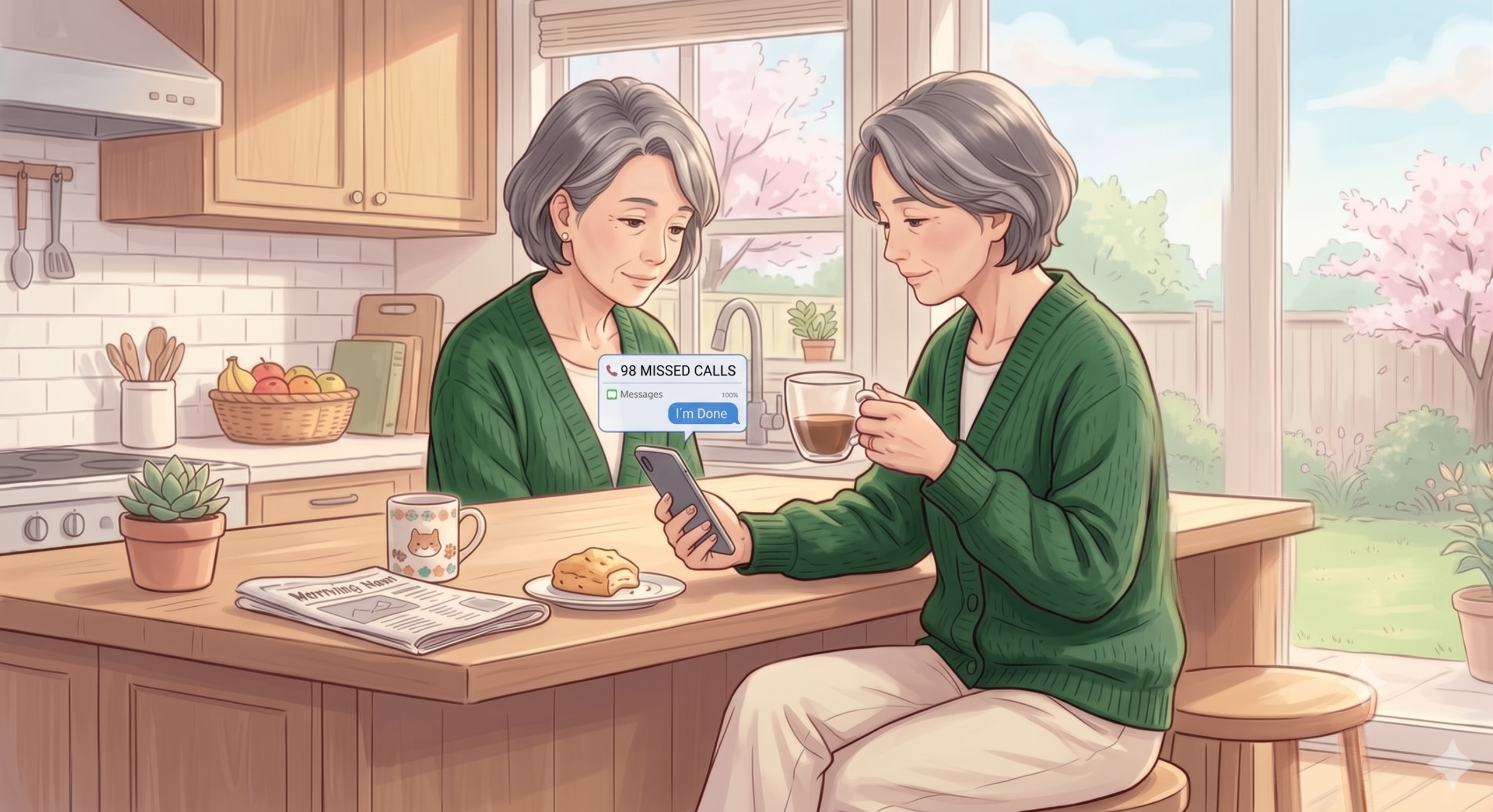
By the time I reached my penthouse, I had 152 missed calls.

Then the doorbell rang.

Through the security camera, I saw Daniel standing outside with his tie loosened and his hair ruined from repeatedly running his hands through it.

Vivienne stood behind him.

She was still wearing the engagement ring.

That angered me more than the kiss.

Daniel pressed the buzzer again.

“Olivia, open the door. We need to talk.”

I activated the intercom.

“You have three minutes.”

He stared toward the speaker.

“Three minutes? I’m your husband.”

“Legally, perhaps. Emotionally, you resigned in front of two hundred employees.”

Vivienne stepped closer to the camera.

“Mrs. Whitmore, I understand that today was painful, but your reaction has created a serious corporate emergency.”

I nearly laughed.

“My reaction?”

Daniel leaned toward the door.

“You froze accounts connected to payroll, vendors, and acquisitions.”

“I froze our marital accounts. The company is affected because you used my ownership stake as collateral without my permission.”

The hallway went silent.

Daniel’s eyes shifted.

That was enough confirmation.

I opened the door but left the security chain in place.

Relief crossed his face until he saw my expression.

“Olivia,” he said softly, “I made a mistake.”

“You publicly proposed to another woman.”

“It was strategic.”

I stared at him.

Vivienne released an impatient breath.

Part 2:

“Daniel and I needed to present stable, united leadership before the Phoenix acquisition. Investors had become concerned after your medical leave.”

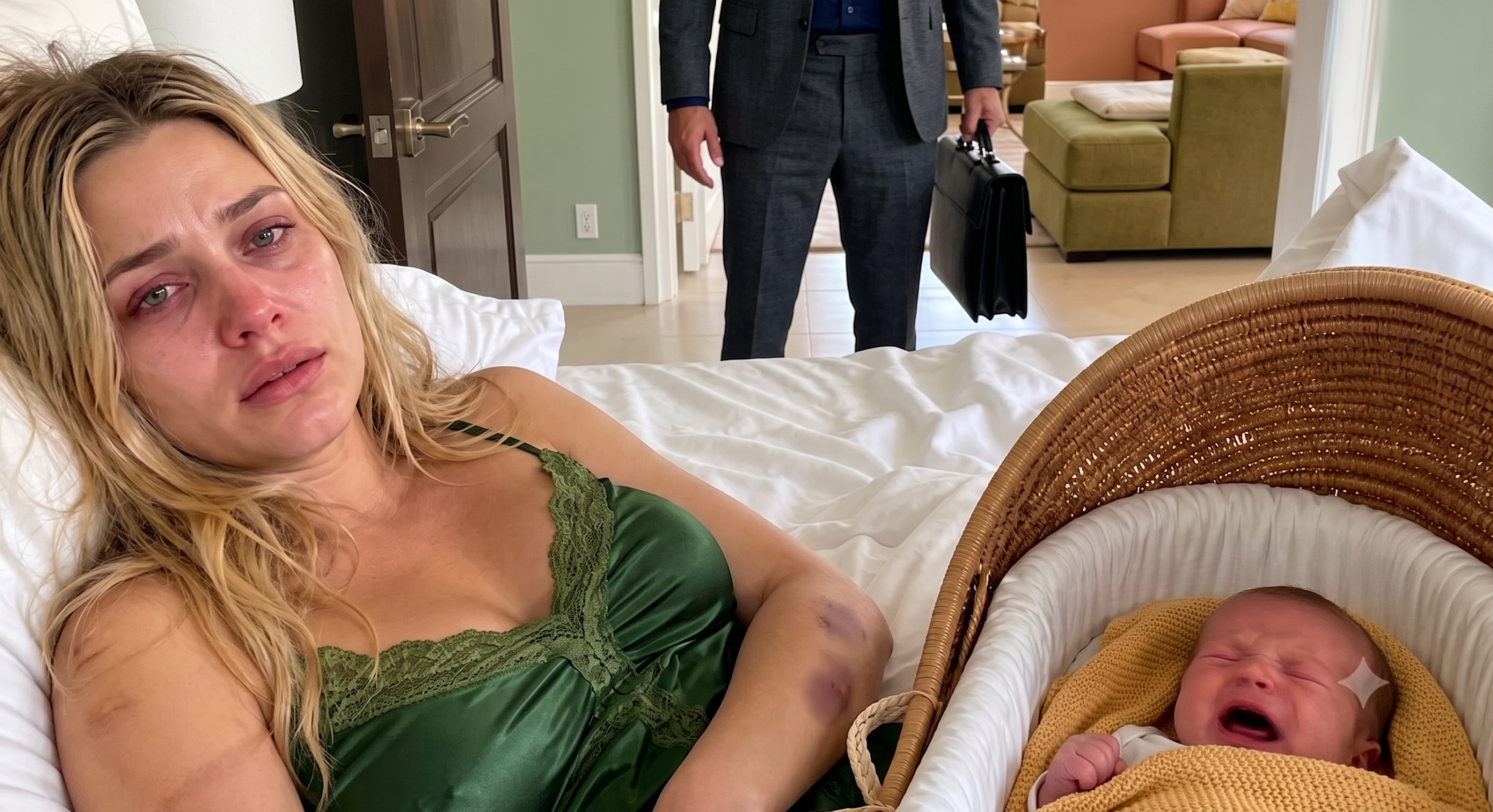
“My medical leave lasted two weeks,” I said. “It followed a miscarriage.”

Daniel flinched.

Vivienne did not.

“So your solution,” I continued, “was to marry my husband?”

“No one expected you to arrive,” she replied.

“That is not a defense.”

Daniel stepped forward until the chain pulled tight.

“I planned to explain everything tonight.”

“In Paris?”

His eyes fell on the canceled ticket confirmations in my hand.

“You bought tickets?”

I tore the paper in half.

“Past tense.”

Vivienne’s phone rang.

She checked the screen and immediately paled.

“The board has called an emergency meeting.”

Daniel’s phone rang next.

Then mine.

I answered on speaker.

“Olivia,” said Marcus Vale, my cofounder, “the board needs you back here immediately.”

“I’m finished.”

“You still control the voting structure. Without your equity, the Phoenix acquisition fails, the credit line may default, and Vivienne’s appointment can be challenged.”

Daniel whispered, “No.”

Marcus continued.

“The auditors also found unauthorized personal guarantees linked to your shares. Did you give Daniel permission to pledge your equity against executive compensation advances?”

I stared directly at my husband.

His face turned gray.

“No,” I answered.

Vivienne turned toward him.

“What did you do?”

For the first time that evening, she sounded frightened.

Daniel raised his hands.

“It was temporary.”

I closed the door.

He began pounding against it.

“Olivia, please!”

I locked the deadbolt and called my attorney.

“Elaine, file for divorce. Begin a full fraud review and tell the board I’ll attend the meeting under one condition.”

“What condition?”

“Daniel and Vivienne must be removed before I enter.”

The emergency meeting began at 9:40 that night in the same glass room where Daniel had kissed Vivienne beneath silver balloons.

The decorations were already gone.

Someone had ripped down the congratulatory banner so quickly that strips of tape still clung to the glass.

The champagne had been cleared away, leaving only a sticky trail across the marble floor.

I arrived with Elaine Porter, my attorney, and two forensic accountants who specialized in corporate fraud.

Every board member stood when I entered.

Daniel was not there.

Neither was Vivienne.

Marcus sat at the far end of the table looking exhausted and furious.

He and I had built Whitmore & Vale fifteen years earlier in a rented Boston office, long before Daniel had gained influence inside the company.

“I’m sorry,” Marcus said.

“I don’t need an apology tonight. I need documents.”

He pushed a folder toward us.

Elaine opened it.

Her expression hardened with every page.

Daniel had pledged shares he did not own as collateral for executive liquidity loans. He claimed he possessed spousal authority to use my equity.

“I never gave him authority.”

“We know,” Elaine said. “The digital signatures came from an unfamiliar IP address. Someone accessed your executive credentials while you were on medical leave.”

Medical leave.

The phrase still cut through me.

After losing our pregnancy at eleven weeks, Daniel had sat beside my hospital bed, held my hand, and promised to handle everything while I recovered.

Apparently, “everything” included using my absence to build his future with my assets.

Marcus leaned forward.

“There’s more.”

Payments had been routed through a consulting company connected to Vivienne’s brother.

The business had received advisory fees related to the Phoenix acquisition.

“How much?”

“Forty-two million dollars over eighteen months.”

One board member coughed nervously.

I looked around the table.

“And nobody noticed?”

Helen Price, head of the audit committee, lowered her gaze.

“The payments were divided among several subsidiaries.”

“You approved those subsidiaries.”

“We relied on information provided by executive leadership.”

“Daniel?”

Marcus nodded.

“And Vivienne.”

Elaine closed the folder.

“This may support civil claims and a criminal referral.”

I placed both hands on the table.

For fifteen years, I had treated Whitmore & Vale like something alive.

I had protected it through recessions, hostile investors, personal losses, and sleepless nights on the office sofa.

Daniel used to bring coffee at midnight, kiss the top of my head, and say, “My brilliant wife is building an empire.”

I had believed he admired me.

Now I realized he had been searching for weak places in the walls.

The conference-room door suddenly opened.

Daniel stood outside with two security officers behind him.

Vivienne was beside him. Her white dress was wrinkled beneath a black coat, and the engagement ring had disappeared from her finger.

Marcus stood.

“You were told not to enter.”

Daniel ignored him.

“Olivia, give me five minutes.”

Elaine intervened.

“My client will not speak to you without counsel.”

“I don’t care about lawyers,” he snapped. “I care about my marriage.”

The room became completely still.

I gave a quiet laugh.

“Your marriage?”

His mouth trembled.

“I made a terrible mistake.”

“You made several.”

“I never loved her.”

Vivienne turned sharply.

“Daniel.”

He kept looking at me.

“It was business. Then everything went too far.”

“You proposed to her in front of cameras.”

“It needed to appear convincing.”

Vivienne stepped backward as though he had struck her.

I studied my husband carefully.

His desperation was genuine.

But it was not about losing me.

It was about losing the apartment, private-jet access, boardroom authority, and the surname that gave him influence.

“You were very convincing,” I said.

“I can repair this.”

Elaine placed a draft restraining order on the table where he could see it.

Daniel’s eyes dropped.

“No.”

I spoke calmly.

“You are being removed from every account connected to me. You are suspended from all company duties pending investigation. I am filing for divorce based on adultery, fraud, and financial misconduct. My lawyers will recover every dollar taken through my name, my shares, or my credentials.”

“You’ll destroy me.”

“You did that publicly without my help.”

Vivienne stepped forward.

“I can testify.”

Daniel spun toward her.

“Be quiet.”

She ignored him.

“He told me your marriage was already over. He said the divorce was being handled privately because of market concerns.”

Helen closed her eyes.

Vivienne continued.

“He said Olivia had permanently stepped away after the miscarriage. He called her unstable and claimed he was supervising her exit.”

The room seemed to turn colder.

Daniel had not only betrayed me.

He had attempted to remove me from my own company while I was grieving our child.

I looked at Marcus.

“Did no one think to speak directly to the majority owner?”

His answer was honest.

“Not enough of us did.”

Then I turned to Vivienne.

“You believed him?”

“At first,” she said. “Later, I simply didn’t want to stop believing him.”

It was the cleanest confession anyone had offered all night.

Daniel laughed bitterly.

“Don’t pretend you’re innocent. You enjoyed the ring, the cameras, and the idea of becoming Mrs. Whitmore before my first wife was gone.”

Vivienne’s expression hardened.

“And you enjoyed having two women finance your ambition.”

Security moved closer.

Daniel’s breathing became uneven.

“Olivia, I was scared. You owned everything—the votes, the shares, the investor relationships. Everyone respected you. I was your husband, but people looked through me.”

“There it is,” I said.

He stared at me.

“The truth.”

Tears appeared in his eyes.

“I wanted something that belonged to me.”

“So you stole what belonged to me.”

“I borrowed against it. I planned to repay everything after the Phoenix deal closed.”

“With money from the acquisition your fiancée’s brother was already draining?”

He had no answer.

Elaine stood.

“This meeting is over for Mr. Whitmore.”

Daniel took one sudden step toward me.

Security immediately grabbed him.

“Olivia! You can’t erase me!”

I looked at the man I had once danced with barefoot in our empty apartment.

The man who had whispered baby names to me in the dark.

The man who later turned my grief into financial opportunity.

“I don’t need to erase you,” I said. “You left enough evidence.”

Part 3:

They removed him from the room.

Vivienne remained standing beside the door.

“What happens to me?”

“That depends on how useful and truthful your cooperation becomes.”

She reached into her purse and removed a USB drive.

“Emails, text messages, payment approvals, and voice recordings. Daniel said we needed protection against each other.”

Marcus gave a humorless smile.

“How romantic.”

Vivienne placed the drive on the table.

“I’ll cooperate.”

“You are suspended immediately,” I told her. “Your compensation and access are frozen. If you have lied about anything, we will know.”

She nodded.

For the first time since seeing her ring, I felt no anger toward her.

Not forgiveness.

Only clarity.

Vivienne had been dishonest and ambitious, but Daniel had designed the scheme.

And architects always left blueprints.

Before midnight, the board voted unanimously to restore me as interim executive chair with emergency authority.

Marcus accepted temporary control of operations.

Helen resigned from the audit committee.

At 2:15 in the morning, Elaine filed my divorce petition.

By sunrise, the company released a statement announcing leadership changes and an independent investigation into executive misconduct.

It mentioned nothing about the kiss or the engagement.

Corporate statements were designed to remove blood from a wound before displaying it publicly.

The market fell when trading opened.

Then it recovered.

Investors feared uncertainty more than scandal, and I had eliminated uncertainty quickly.

Three days later, I returned to my penthouse after fourteen hours of meetings.

The tulips I had left at reception had somehow been delivered to the lobby.

They were wilted and wrapped in paper damaged by too many hands.

The doorman looked uncomfortable.

“Mr. Whitmore requested that these be delivered.”

“Throw them away.”

I rode the elevator upstairs alone.

The silence inside the apartment did not feel empty anymore.

It felt clean.

The torn Paris confirmations still lay on the dining table.

For years, I had imagined going to Paris with Daniel as proof that we had finally earned peace after all the boardrooms, negotiations, and sacrifices.

But Paris had never belonged to him.

I opened my laptop and purchased one ticket.

Under my name.

With my own money.

Two weeks later, investigators found enough evidence to freeze Daniel’s personal assets.

Vivienne’s cooperation reduced her legal exposure, but she still resigned permanently and became a witness in both civil and criminal proceedings.

Daniel sent one final letter through his attorney.

He admitted that jealousy and insecurity had transformed admiration into resentment.

He wrote that he had loved me but could not tolerate always feeling smaller.

He asked me not to let the worst thing he had done become the only thing I remembered about him.

I read the letter once.

Then I placed it inside a folder labeled EVIDENCE.

Six months later, Whitmore & Vale stabilized.

The Phoenix deal was renegotiated after the fraudulent advisory contracts were removed.

Vivienne testified.

Daniel initially pleaded not guilty but changed his position after prosecutors revealed the digital-signature records.

The press called me ruthless.

Then resilient.

Then brilliant.

I did not feel like any of those things.

I simply felt awake.

On a cold October morning, I stood alone on a bridge in Paris.

I wore a black coat and no wedding ring.

The Seine moved quietly beneath me while tourists passed with cameras and a violinist played somewhere nearby.

My phone vibrated.

Marcus had sent a message.

Board vote complete. The company is officially Vale Hart Group. Your name appears first on the charter, where it always belonged.

I smiled.

Daniel had once promised to bring me to Paris and make me forget every terrible boardroom we had survived.

He had been wrong.

I did not need to forget.

I needed to remember exactly who had built the room, who had attempted to lock me out, and who still possessed the key.

I placed my phone inside my pocket and continued across the bridge alone.

For the first time in years, being alone did not feel like losing something.

It felt like finally owning my life.

More Details
I spent 15 years training Marines in hand-to-hand combat, and my rule was simple
Jul 15, 2026

I spent 15 years training Marines in hand-to-hand combat, and my rule was simple

“Dad?” Marcy appeared in the doorway, twenty-two years old, with her mother’s dark hair and his piercing blue eyes. Something was off. She wore a turtleneck despite the California heat, and her smile didn’t quite reach her eyes.

“Hey, sweetheart. Come see this.” Shane held up the box, its dovetail joints perfect. “What do you think?”

“It’s beautiful.” She stepped closer, and Shane noticed the careful way she moved, favoring her left side. His instructor instincts kicked in, the same senses that had kept him alive in Fallujah and Helmand Province during his Force Recon days, long before he became the Marine Corps’s top hand-to-hand combat instructor at Quantico.

“How’s Dustin treating you?” he asked, his tone casual, but his eyes tracked every micro-expression, every subtle flinch.

“He’s good. Really good.” The pause was half a second too long. “Actually, we’re training together now. He’s teaching me some boxing basics.”

Shane’s jaw tightened. Dustin Freeman, twenty-six, a cocky MMA fighter who trained at some strip-mall gym called Titan’s Forge. They’d been dating for four months, and Shane had disliked him from the first handshake—too much grip, too much eye contact, the kind of insecure dominance display that screamed overcompensation.

“Marcy,” Shane set down his tools, his voice gentle but firm. “If anything is wrong…”

“Nothing’s wrong, Dad. I’m not a kid anymore.” She kissed his cheek and retreated before he could push further. “Mom needs help with dinner.”

That evening, Shane sat across from his wife, Lisa, at the dinner table, Marcy’s empty chair a silent accusation between them. Lisa, a trauma nurse at County General, had the same worried crease between her eyebrows that he felt forming on his own forehead.

“She’s covering bruises,” Lisa said quietly, her voice barely a whisper. “I saw them when I stopped by her apartment yesterday. Finger marks on her upper arm.”

Shane’s knuckles whitened around his fork.

“She denied it,” Lisa’s voice cracked. “Said she bumped into a door frame during a workout. Shane, I’ve seen enough domestic violence victims to know the difference between an accident and an assault.”

The old warrior in Shane wanted to drive to Dustin’s gym right then and there. But fifteen years of tactical training had taught him patience. You didn’t win fights by charging in blind. You gathered intelligence. You waited for the right moment. You struck when your enemy’s guard was down.

“I’ll handle it,” Shane said, his voice a low growl.

“Legally, Shane. Promise me.”

He met his wife’s pleading eyes and said nothing. Some promises he couldn’t make.

Two weeks crawled by. Shane watched and waited, his surveillance training from Force Recon kicking in with an old, familiar hum. He drove past Titan’s Forge three times, memorizing the layout, the patterns, the faces. Dustin’s coach was a loudmouth named Perry Cox, a man in his forties with a shaved head and neck tattoos, the kind of trainer who confused brutality with discipline.

Shane also made calls. His old Marine buddy, Gabriel Stevenson, now a private investigator in San Diego, ran background checks.

“Your daughter’s boyfriend is dirty, brother,” Gabriel reported over the phone, his voice grim. “Three assault charges that got pleaded down to misdemeanors. A restraining order from an ex-girlfriend. And here’s the kicker: his uncle is Royce Clark.”

Shane’s blood ran cold. Royce Clark ran the Southside Vipers, an organization that controlled illicit markets and underground fighting circuits across three counties. They weren’t street-level punks; they were organized criminals with legitimate business fronts and dirty cops on their payroll.

“Freeman is their prize fighter,” Gabriel continued. “They use him in illegal prize fights, betting hundreds of thousands. If he loses, people get hurt. He’s a monster in the ring, Shane. Three opponents hospitalized, one with permanent brain damage.”

“Send me everything,” Shane said, his voice flat.

“Shane, these people aren’t some drunk Marines you can straighten out. They’re—”

“Send me everything.”

That night, Marcy came for dinner. She wore long sleeves again and moved even more carefully than before. Lisa tried to draw her out, but Marcy just picked at her food, her body tensing every time her phone buzzed. She checked it constantly with barely concealed fear.

After dinner, Shane walked Marcy to her car. “Baby girl,” he said softly. “I know what’s happening.”

Her eyes filled with tears. “Dad, please don’t.”

“Has he hit you?”

“It’s complicated. He gets stressed with training, with his uncle’s expectations. It’s not always—”

“Has. He. Hit. You?”

The tears spilled over. “He says he loves me. He apologizes every time. He’s just… he’s under so much pressure from his family.”

Shane pulled her into a hug, feeling her small frame shake against him. “This ends now.”

“Dad, you don’t understand! His uncle… Dustin said if I leave, Royce will hurt you. Hurt our family. They’re connected, Dad. Police, judges, everyone.”

“Let me worry about that. Promise me you won’t do anything reckless.”

Shane stroked her hair like he did when she was little, scared of thunderstorms. “I promise I’ll fix this.”

That night, he pulled his old footlocker from the garage attic. Inside, wrapped in oilcloth, were things he’d hoped to never touch again: tactical gear, surveillance equipment, and a notebook filled with fifteen years of knowledge on how to neutralize threats. The Marine Corps had trained him to be a weapon. It was time to remember how to deploy it.

The call came on a Tuesday afternoon. Shane was at his job as a shop foreman at a custom furniture company when his phone rang. Lisa’s voice was ice. “Marcy’s in the ER. She listed me as her emergency contact.”

Shane’s vision narrowed to a tunnel. “How bad?”

“Concussion, bruised ribs, split lip. She says she fell downstairs, but Shane, there are defensive wounds on her forearms. And witnesses saw her arguing with Dustin in the parking lot of his gym an hour ago.”

The phone cracked in Shane’s grip. “I’m on my way.”

But he didn’t go to the hospital. Not yet. First, he drove to Titan’s Forge. The gym occupied a converted warehouse on the industrial side of town. Bass-heavy music pounded from inside, mixed with the thud of fists on bags and coaches barking orders. Shane parked and sat for five minutes, breathing deeply, finding the cold, calm center he’d cultivated in combat zones.

When he walked through the door, the smell hit him: sweat, testosterone, and arrogance. Twenty fighters were scattered across the space. Dustin Freeman stood near a cage, laughing with his coach, Perry Cox, and three other fighters. Dustin was tall, muscular, covered in tattoos, with that predatory confidence that came from never facing real consequences.

Shane walked straight toward them. A few fighters noticed, stopping their work. The music seemed to dim.

Dustin saw him coming and grinned. “Well, well. Daddy came to visit.” He nudged Perry. “This is Marcy’s old man.”

Perry Cox looked Shane up and down—the extra weight, the gray beard, the carpenter’s clothes—and laughed. “What are you going to do, Grandpa? Give us a stern talking-to?”

Shane stopped ten feet away, his voice quiet, conversational. “You put your hands on my daughter.”

“Your daughter’s a clumsy girl who can’t follow simple instructions,” Dustin sneered. “Told her your old self couldn’t protect her. She didn’t believe me, so I had to teach her some respect.”

The three fighters with them—Shane recognized their faces from Gabriel’s report: Lamar Duncan, Brenton Cantrell, and Andres White, all Viper associates—spread out slightly, surrounding him.

Perry stepped forward. “Here’s how this goes, Grandpa. You turn around, walk out, and forget you have a daughter, or my boys will make sure you leave on a stretcher.”

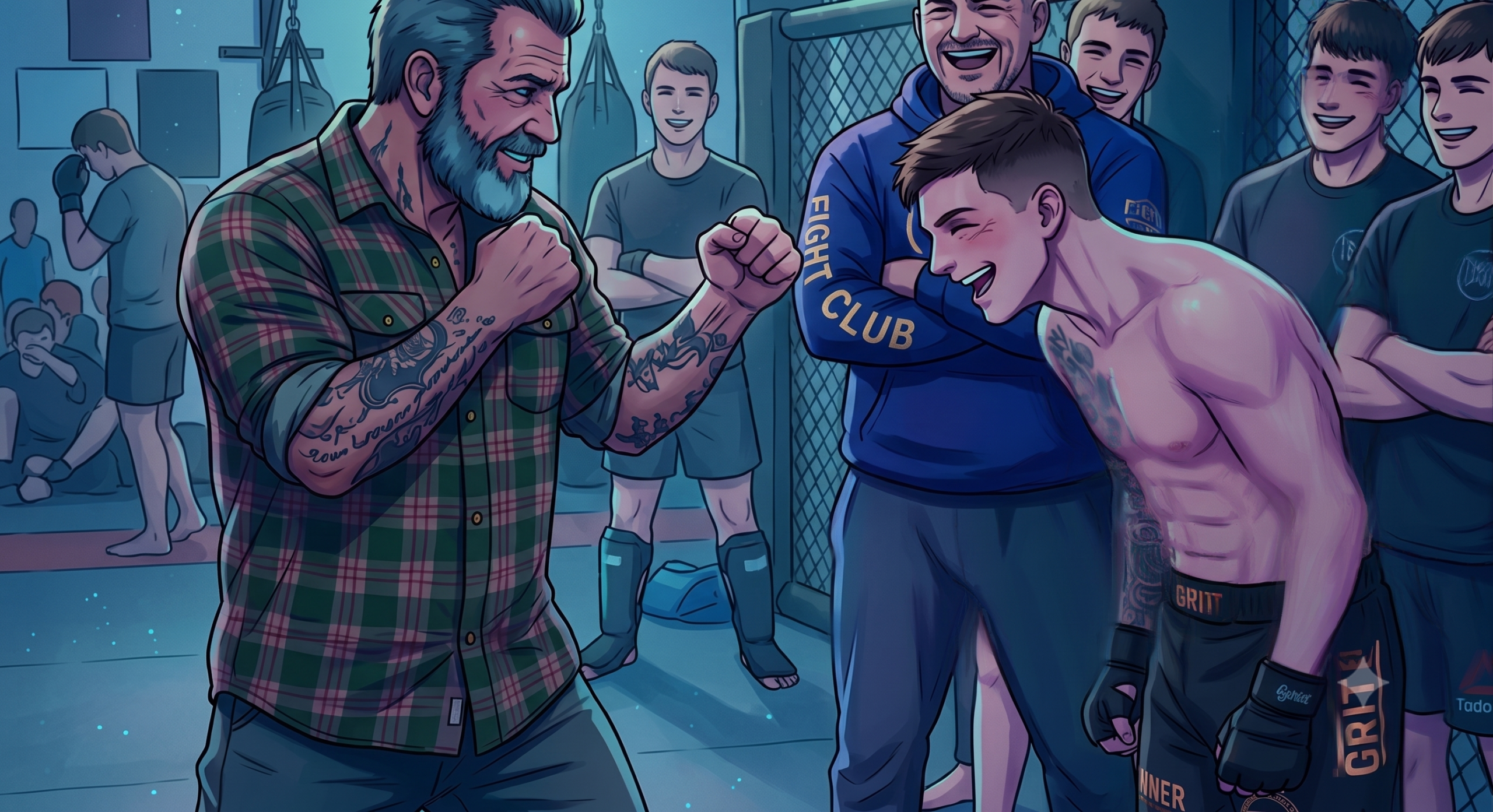
Shane smiled. It was the smile he’d given enemy combatants who didn’t know they were already defeated. “I was a Marine Corps hand-to-hand combat instructor for fifteen years. I trained Force Recon operators, MARSOC Raiders, and over three thousand combat Marines.” He rolled his shoulders, and suddenly the extra weight didn’t look so soft. “You’re going to need more than three guys.”

“Cocky old fool,” Perry nodded at his fighters. “Put him down.”

What happened next took seventeen seconds.

Lamar came in first, throwing a haymaker. Shane sidestepped, caught the arm, and executed a textbook wrist lock combined with a knee to the solar plexus. Lamar dropped like a stone, gasping.

Brenton and Andres rushed together. Shane moved like water, decades of muscle memory taking over. He deflected Brenton’s punch, trapped the arm, and delivered a palm strike to the ear that ruptured the eardrum. As Brenton screamed, Shane pivoted, caught Andres’s kick, swept the standing leg, and dropped an elbow on the falling fighter’s knee. The snap echoed through the gym. Fourteen seconds.

Perry Cox grabbed a training knife from a wall rack and lunged. Mistake. Shane’s disarm was reflexive. He trapped the weapon hand, controlled the wrist, and applied pressure to the nerve cluster while stepping into Perry’s center line. The knife clattered away. Shane drove three rapid strikes into Perry’s floating ribs, then swept both legs. Perry crashed onto his back. Shane followed him down, knee on sternum, and delivered two precise strikes to the jaw that sent Perry into darkness.

Seventeen seconds. Three fighters and a coach on the ground—two unconscious, one clutching a destroyed knee, one rolling in agony with a ruptured eardrum.

Shane stood and turned to Dustin Freeman. Dustin’s cocky grin had vanished. He backed toward the cage, hands up. “You’re finished! My uncle—”

Shane closed the distance in two steps. Dustin threw a combination—jab, cross, hook. Shane parried each strike, then delivered a front kick to the solar plexus that sent Dustin stumbling backward into the cage wall. Before Dustin could recover, Shane was on him, trapping an arm behind his back. Shane slammed Dustin’s face into the chain-link once, twice, three times. Blood splattered, teeth cracked.

Shane spun Dustin around and lifted him by the throat, speaking inches from his ruined face. “You ever come near my daughter again, I will find you. You understand me?”

Dustin gurgled something that might have been agreement.

“I didn’t hear you.”

“Yes! Yes!”

Shane dropped him. Dustin collapsed, whimpering. Shane looked around the gym. Every fighter had backed away, phones out, filming.

“Good. Let them see,” Shane said to the silent room. “Anyone else want to teach the old man a lesson?”

Silence. Shane walked out, his knuckles barely bruised, his breathing steady. Behind him, someone was already calling 911.

The knock came at 6:00 AM the next morning. Two detectives, Roosevelt Kent, a black man in his fifties with tired eyes, and Sue Shepard, a sharp-featured woman in her thirties. Shane opened the door in his bathrobe, coffee in hand, expecting this.

“Mr. Jones, we need to talk about an incident at Titan’s Forge gym yesterday.”

“Come in.” Shane led them to the kitchen. Lisa stood by the counter, her lawyer’s face on. She’d made calls last night, prepared for this moment.

Detective Kent pulled out a notebo

More Details
At my sister’s fiancée’s birthday party, I accidentally spilled wine on him. My sister pu:nched me in the face and screamed, “Stupid maid! Wash my shirt!” Then my dad coldly said, “Apologize or get out.” So I walked away from them all… and later, my phone showed 56 missed calls.
Jul 15, 2026

At my sister’s fiancée’s birthday party, I accidentally spilled wine on him. My sister pu:nched me in the face and screamed, “Stupid maid! Wash my shirt!” Then my dad coldly said, “Apologize or get out.” So I walked away from them all… and later, my phone showed 56 missed calls.


So I showed up.

I wore a plain navy dress. I arranged chairs. I smiled whenever people wondered why I was carrying trays instead of sitting with my family.

Then Mason Whitaker, Vanessa’s fiancé, stepped into my path.

“Emily,” he said warmly. “You made it.”

He was handsome in that sleek, wealthy way—custom suit, steady voice, assured smile. But the way he looked at me always seemed to tighten something inside Vanessa.

“I did,” I said. “Happy birthday.”

Before I could move away, someone knocked into my elbow from behind.

The red wine tipped.

It spilled across Mason’s white shirt.

The entire backyard fell silent.

“Oh my God,” I gasped. “Mason, I’m so sorry—”

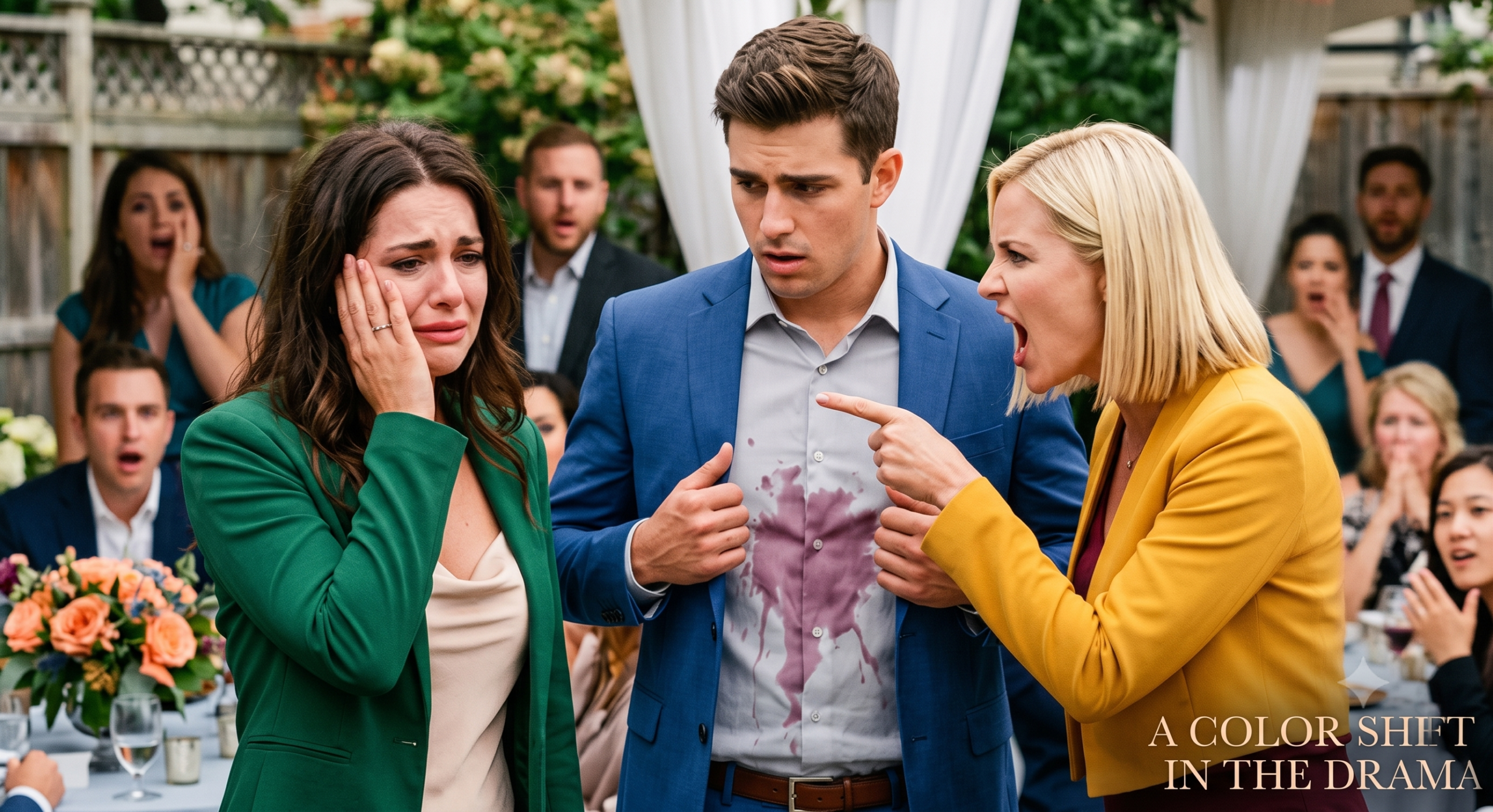
Vanessa cut through the crowd like a knife.

Her expression twisted with rage.

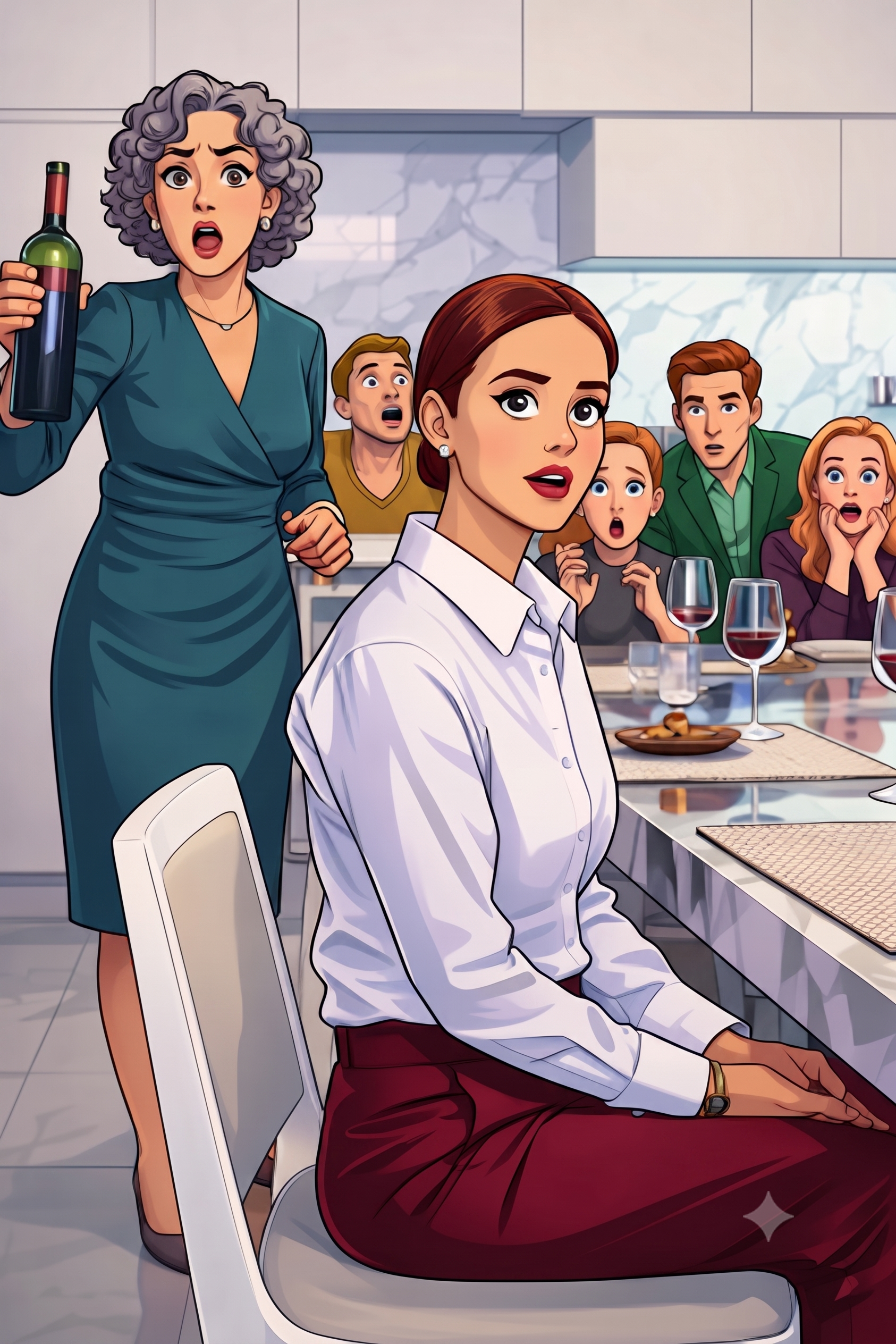
“You did that on purpose,” she hissed.

“No, I didn’t. Someone bumped—”

Her fist hit my face before I could finish.

Pain burst across my cheek. I staggered backward and dropped the empty glass. It broke beside my shoes.

The guests went still. The jazz trio stopped in the middle of a note.

Vanessa clutched the front of her stained blouse, even though only a little wine had touched it.

“Stupid maid!” she screamed. “Wash my shirt!”

My ears buzzed.

I stared at her with one hand pressed against my face.

“Maid?” I whispered.

Dad stepped forward. For one reckless second, I believed he was going to stand up for me.

Instead, he pointed toward the house.

“Apologize,” he said coldly, “or get out.”

I looked at him. Then at Vanessa, breathing sharply with victory shining in her eyes. Then at Mason, whose face had turned white.

Something inside me became still.

I took off the family pearl earrings Dad had once given me for graduation and set them on the dessert table.

“No,” I said.

Then I walked away.

By midnight, my phone showed fifty-six missed calls.

PART 2

I did not pick up a single call.

Not the first ten from Dad. Not the fifteen from Vanessa. Not Mason’s repeated attempts. Not even the unknown number that rang six times while I sat in my rental car outside a gas station, pressing a bag of frozen peas to my swollen cheek.

My flight back to Chicago was not until the next morning, but I could not spend the night in that house. I booked a small hotel near LaGuardia, washed my face, and stared at myself in the bathroom mirror.

My cheekbone was flushed red. My lip was split where my teeth had cut it.

But the worst thing was not the pain.

It was the sudden clarity.

For years, I had been the dependable daughter. The quiet one. The one who solved problems, covered bills when Dad’s business was strained, remembered birthdays, managed hospital forms after Mom died, and allowed Vanessa to call it “help” instead of sacrifice.

Vanessa was the treasured daughter. The one Dad admired. The one who “needed support.” The one whose cruelty was always twisted into my overreaction.

At 1:17 a.m., Mason texted.

Emily, please answer. This is serious.

I watched the screen until it dimmed.

Then another message appeared.

Vanessa lied. About everything. I need to talk to you before your father does.

My stomach clenched.

At 1:24 a.m., Dad called again.

This time, he left a voicemail.

His voice sounded unfamiliar. Not furious. Not authoritative.

Shaken.

“Emily,” he said. “Call me back. Now. We need to talk about your mother’s trust.”

I sat upright.

My mother’s trust?

Mom had died six years earlier from pancreatic cancer. Dad had told me she left everything to him because he had “handled the paperwork.” I had never challenged it. I was twenty-four then, grieving, drained, and too numb to fight.

A new text came in from Mason.

I found documents in Vanessa’s office. Your mother left you controlling interest in Cole Home Designs. Not your father. Not Vanessa. You.

I read it three times.

Cole Home Designs was my father’s company. At least, that was what I had always believed. It was a luxury interior design firm my mother had created from nothing before Dad took control after she died.

Another message arrived.

Vanessa planned to have you sign papers tomorrow morning. She told me you were unstable and Dad needed legal control before the wedding.

My hands turned cold.

That was why Dad had insisted I come.

That was why Vanessa had humiliated me in public.

That was why they needed me rattled.

I finally called Mason.

He answered immediately.

“Emily,” he breathed. “Thank God.”

“What is going on?”

“I’m sorry,” he said. “I should have told you sooner. I thought it was just family drama. But tonight, after you left, Vanessa laughed about it. She said once you apologized, your father would make you sign a release. She called you easy to break.”

I shut my eyes.

Mason went on, “Then your father found out I had seen the trust papers. They’re panicking.”

My phone vibrated again.

Dad.

Then Vanessa.

Then Dad.

Then an unknown number.

Mason’s voice dropped. “Do not go back there alone. And do not sign anything.”

I looked at my reflection in the dark hotel window.

For the first time that night, I smiled.

Not because I felt happy.

Because I finally understood the game.

And now they were afraid I had learned the rules.

PART 3

By six in the morning, I had finished crying.

By seven, I had found a lawyer.

Her name was Rachel Stein, a sharp-tongued estate attorney in Manhattan whom my college roommate recommended after I sent one frantic message: Need legal help. Family trust. Urgent.

Rachel called while I drank burnt hotel coffee and pressed concealer beneath my swollen eye.

“Do you have identification?” she asked.

“Yes.”

“Do you have any written messages from your father, sister, or fiancé?”

“My sister’s fiancé,” I corrected.

“Fine. Him too.”

“Yes. Texts. Voicemails. Fifty-six missed calls.”

“Save everything. Screenshot everything. Email it to yourself. Do not answer calls unless we agree first. Do not meet them without me present.”

Her steadiness helped me breathe.

At 9:30 a.m., I was sitting in Rachel’s office on Madison Avenue, still wearing the same navy dress from the party. My cheek had deepened into a purple bruise. Rachel noticed, but she did not ask pointless questions.

She opened a folder Mason had sent overnight.

“I verified enough to say this is not imaginary,” Rachel said. “Your mother, Margaret Cole, created a revocable trust three years before her death. Upon her passing, her shares in Cole Home Designs were to be held for you. You became majority beneficiary at age twenty-five.”

“I’m thirty.”

Rachel peered at me over her glasses.

“Yes. Which means someone has been withholding information from you for five years.”

The room seemed to shift beneath me.

I gripped the chair arms.

“My father told me everything went to him.”

“Your father appears to have acted as temporary trustee,” Rachel said. “That did not make him owner.”

I thought of Dad’s house. His cars. Vanessa’s designer clothes. The engagement party. The way they had treated me like staff while living on a company my mother had intended for me.

Rachel pushed a document across the table.

“This is the release Mason mentioned. It would have transferred your beneficial rights to your father under the claim that you were voluntarily declining involvement due to emotional instability.”

My throat tightened.

“Emotional instability,” I repeated.

Rachel’s gaze settled on my bruised cheek.

“They were building a story.”

At 10:12 a.m., Dad called again.

Rachel extended her hand. “May I?”

I nodded and handed her the phone.

She answered on speaker.

“Emily,” Dad barked instantly. “Where the hell are you?”

Rachel said, “This is Rachel Stein, attorney for Emily Cole. All communication regarding Ms. Cole’s inheritance, trust interests, or corporate rights will go through my office.”

Silence.

Then Dad’s voice shifted.

“Attorney?” he said. “Emily doesn’t need an attorney. This is a family matter.”Family vacation planning

Rachel’s voice stayed level. “Then your family should have behaved better.”

Dad drew in a sharp breath. “Put my daughter on the phone.”

“No.”

“She has no idea what she’s doing.”

“She has a black eye and a proposed release document falsely describing her as unstable. I’d choose your next words carefully.”

The call ended.

Not disconnected casually.

Ended.

As though Dad had dropped the phone.

Rachel looked at me. “That went well.”

I nearly laughed, but only a trembling breath came out.

By noon, Vanessa began texting.

You’re being dramatic.

Then:

Mason is confused. He doesn’t understand our family.

Then:

Dad is furious. You’re ruining everything.

Then:

Do you know how embarrassing it was when you walked out?

I typed nothing.

Rachel read each message and said, “Let her keep talking.”

At 2:00 p.m., Mason came to the office.

He looked worse than I had imagined. His birthday confidence had disappeared. His shirt was clean now, but his face was pale, and dark shadows sat beneath his eyes.

When he saw my bruise, his jaw tightened.

“I’m sorry,” he said.

I did not reassure him.

“Why help me?” I asked.

He lowered his eyes.

“Because last night I realized I wasn’t marrying a spoiled woman,” he said. “I was marrying someone cruel. And because I found out your father and Vanessa planned to use me too.”

Rachel leaned back. “Explain.”

Mason laid a thin folder on the conference table.

“My family investment firm was preparing to put three million dollars into Cole Home Designs after the wedding,” he said. “Vanessa told me her father controlled the company. She said Emily was estranged, irresponsible, and had no real claim.”

Heat rose into my face.

“I barely knew you,” Mason said to me. “But you never seemed irresponsible. You seemed… tired.”

That word struck harder than I expected.

Tired.

Yes.

I had been tired for years.

Tired of earning affection by being useful. Tired of apologizing for things I had not done. Tired of making myself smaller so Vanessa could feel larger.

Rachel examined Mason’s folder.

“This helps,” she said. “A lot.”

“What happens now?” I asked.

Rachel gave a small smile.

“Now we stop letting them set the table.”

At 4:30 p.m., Rachel sent formal notices to Dad, Vanessa, the company accountant, and the board members of Cole Home Designs. She requested trust records, financial statements, meeting minutes, and disclosure of every distribution made after my mother’s death.

At 5:05 p.m., Dad called Rachel’s office.

At 5:07 p.m., Vanessa called me from a blocked number.

I answered only because Rachel nodded.

Vanessa’s voice was sharp and breathless.

“You little snake.”

I said nothing.

“You think Mason cares about you? He’s using you because he’s embarrassed. You always do this, Emily. You ruin things and act like the victim.”

I glanced at Rachel, who tapped her notepad.

Keep her talking.

Vanessa went on, “Dad should have cut you off years ago.”

“He did,” I said quietly. “Emotionally.”

She scoffed. “Don’t start with that therapy language.”

“Why did you want me to sign the release?”

Silence.

Then she laughed.

“That company would collapse if you touched it.”

“That wasn’t the question.”

“You don’t even want it,” she snapped. “You live in Chicago. You have your boring little marketing job. Dad built the company after Mom died.”

“Mom built it before she died.”

Vanessa’s breathing shifted.

“You don’t deserve it,” she said.

There it was.

Not denial.

Not misunderstanding.

Only resentment.

“I took care of Mom too,” Vanessa said suddenly. “Everyone acts like you were some saint because you sat at her bedside, but I had a life. I had friends. I had plans. Then she left everything important to you.”

I closed my eyes.

So Vanessa had known.

All along, she had known.

“Why didn’t you tell me?” I asked.

“Because Dad said it would destroy the family.”Family vacation planning

“No,” I said. “It would have changed who had power.”

Vanessa’s voice sank lower.

“You should have just apologized.”

I looked out the window at the afternoon light striking the glass towers across the street.

“For what?”

“For embarrassing me.”

I touched my bruised cheek.

“You punched me in front of fifty people.”

“You spilled wine on my fiancé.”

“By accident.”

“Nothing you do is an accident,” she said. “You’ve always wanted what I had.”

For the first time, I realized how hollow that sounded.

Mason had not been hers because she loved him. Dad’s approval had not been hers because she deserved it. The company had never been hers at all.

She had spent years protecting stolen things and calling it success.

Rachel gestured for me to end the call.

I said, “All communication goes through my attorney.”

Vanessa screamed my name as I hung up.

Three weeks later, the first board meeting took place.

Rachel sat next to me. Mason attended as a witness, no longer engaged to Vanessa. Dad entered the conference room looking older than I had ever seen him. Vanessa arrived in a black suit and sunglasses, even though we were indoors.

No one embraced.

No one pretended.

The company accountant presented the records.

The truth was uglier than I had expected.

For five years, Dad had used company distributions meant for my trust to cover personal costs: renovations, luxury trips, Vanessa’s apartment, the engagement party, even the pearl earrings I had left on the dessert table.

Vanessa had been added to payroll as a “brand consultant,” though she had produced no work.

My mother’s signature appeared on one document dated two months after she had become too weak to hold a pen.

Rachel’s face turned ice-cold when she saw it.

Dad attempted to speak.Patio, Lawn & Garden

“Emily, you have to understand—”

I cut him off.

“No. I don’t.”

The room went quiet.

He blinked, unaccustomed to being interrupted by me.

“I spent years trying to understand you,” I said. “Why you ignored me. Why Vanessa could insult me and I had to apologize. Why Mom’s name disappeared from the company she created. I thought maybe grief made you hard.”

His mouth tightened.

“But it wasn’t grief,” I said. “It was greed.”

Vanessa yanked off her sunglasses.

“You think you can run a company because Mommy wrote your name on paper?”

“No,” I said. “I think I can hire qualified people, appoint ethical leadership, and remove anyone who stole from it.”

Dad’s face flushed red.

“You wouldn’t dare.”

Rachel placed a document on the table.

“She already has.”

The vote was procedural, but the result was not.

Dad was removed from operational authority pending investigation.

Vanessa’s consulting contract was ended immediately.

The company accounts were frozen for review.

And I was acknowledged as majority beneficiary with the authority to appoint interim leadership.

Dad looked at me as though I had turned into a stranger.

But I had not changed.

I had simply stopped bowing.

Outside the conference room, Vanessa trapped me near the elevators.

Her makeup was perfect, but her hands were shaking.

“You destroyed my life,” she said.

“No,” I replied. “I stopped funding it.”

Her eyes flashed.

“Mason left me because of you.”

“Mason left because he saw you clearly.”

She moved closer, her voice trembling with fury.

“You were always jealous.”

I studied her for a long moment.

Then I said, “Vanessa, I don’t want your life.”

That hurt her more than anger ever could have.

The elevator doors opened.

I stepped in.

Dad was already inside.

For ten floors, neither of us spoke.

Then he said, almost under his breath, “Your mother wanted you protected.”

I looked at him.

“And you used that protection as a bank account.”

His eyes filled, but I no longer believed tears from people who only cried once consequences arrived.

“I was trying to keep the company alive,” he said.

“No,” I answered. “You were trying to keep control.”

The elevator reached the lobby.

Before I walked out, he said, “Emily.”

I turned.

He suddenly looked small.

“I’m your father.”

I nodded once.

“Yes. That made it worse.”

Six months later, Cole Home Designs moved into a smaller office.

We sold the wasteful assets Dad had bought. We hired an outside CEO with real experience. We restored my mother’s name to the company’s public history. Her portrait returned to the main lobby, where Dad had once replaced it with abstract art.

I did not become magically whole.

Real life is not like that.

Some mornings, I still woke with anger pressed beneath my ribs. Some nights, I replayed Vanessa’s fist striking my face and Dad’s voice ordering me to apologize.

But my phone was quieter.

My bills belonged to me.

My apartment in Chicago felt calm.

Mason sent a letter months later. He apologized again, not with excuses, but with specifics: what he noticed, what he dismissed, and what he wished he had questioned earlier. I replied only once.

Thank you for telling the truth.

That was enough.

As for Vanessa, she posted vague quotes online about betrayal, fake family, and rising from ashes. Then she moved to Miami with a friend and attempted to start a lifestyle brand.

Dad settled before the case became public.

Part of the settlement required repayment to the trust. Part required his permanent resignation from Cole Home Designs. Part required a written acknowledgment that my mother’s ownership documents had been hidden from me.

The apology letter arrived on costly stationery.

Dear Emily,

I regret that mistakes were made—

I stopped reading there.

Mistakes were made.

Not I lied.

Not I stole.

Not I failed you.

I folded the letter and put it in a box with the pearl earrings from the party. Rachel had recovered them from the dessert table after asking the caterer.Patio, Lawn & Garden

I never wore them again.

On the first anniversary of that night, I flew to New York.

Not for Dad.

Not for Vanessa.

For Mom.

I visited her grave in Sleepy Hollow and brought white tulips, her favorite flowers. The grass was damp from morning rain. The air smelled of soil and stone.

I sat beside her headstone and told her everything.

About the party.

About the trust.

About the company.

About how I had finally stopped apologizing for existing.

The wind moved gently through the trees.

There was no answer, of course.

But I did not need one.

When I stood to leave, my phone buzzed.

One missed call.

Dad.

I stared at the screen until it went dark.

Then I slipped the phone into my coat pocket and walked toward the gate, my steps steady on the wet path.

This time, I did not call back.

More Details
After my grandfather’s funeral, my dad inherited $56M then threw me out, saying, “You’re useless now.” 24h later, the lawyer laughed: “Did you even read the will?” My dad went pale… because the will said…
Jul 15, 2026

After my grandfather’s funeral, my dad inherited $56M then threw me out, saying, “You’re useless now.” 24h later, the lawyer laughed: “Did you even read the will?” My dad went pale… because the will said…

It clung to my black dress, darkened the hem with mud, and made every car outside Harold Jenkins’s conference room hiss against the wet street like it was trying not to interrupt.
My father did not look wet.
Thomas Stewart never did.
He looked pressed, polished, and faintly impatient, as if my grandfather’s funeral had been an appointment that ran longer than expected.
I sat across from him with both hands wrapped around the old brass key Grandpa William had given me when I was eight years old.
The key had a tag on it.
HOME.
Grandpa had written it in black marker himself.
He had put it in my palm after my mother died and told me I would always have a door that opened for me.
My father had never liked that story.
He had never liked anything that made Grandpa look like the parent he had refused to be.
Harold Jenkins sat at the head of the glass table with a thick folder in front of him.
He was the kind of lawyer who looked older than he probably was because he carried other people’s worst days for a living.
His glasses kept sliding down his nose.

Every time he pushed them back up, his eyes flicked toward me.
Not long enough for my father to notice.
Long enough for me to feel seen.
A small American flag stood beside a framed courthouse photo on the credenza behind him.
It was the sort of office detail I had never paid attention to before that morning.
That day, everything looked official enough to hurt.
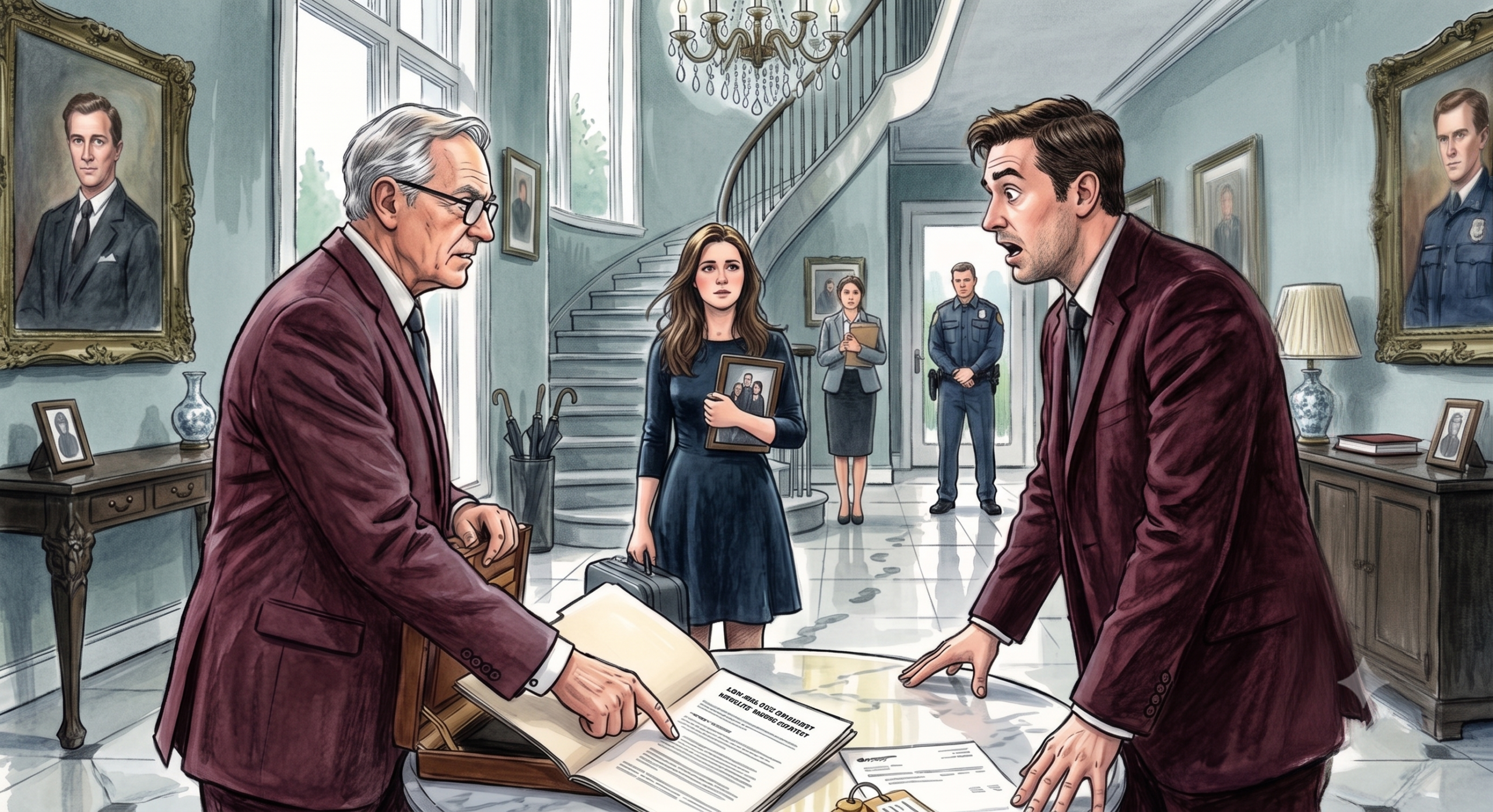
“We are here to read the last will and testament of William Arthur Stewart,” Harold said.
My father laughed under his breath.
“Skip the ceremony, Harold. We all know why we’re here.”

I looked at him then.
Really looked.
At the graveside, he had accepted condolences with the right slow nod, the right lowered voice, the right hand placed briefly over his chest.
But while the priest was still speaking, he had leaned close enough for me to smell his cologne and whispered, “The estate needs to be cleared out.”
Not mourned.
Not protected.
Cleared out.
“I live there,” I had whispered back.
“For now,” he said.
That was my father.
He could stand beside a casket and discuss locks.
He could shake hands with old friends of his father and already be thinking about listing prices.
He could make grief look like bad business.
Harold opened the folder and began to read.
The Oak Lane house came first.
The house where I had learned to ride a bike in the driveway.

The house where my mother’s photo still sat on the hallway table because Grandpa said love did not get packed away just because it hurt.

Then came the investment accounts.

Then the controlling interest in Stewart and Sons Construction.

Then the full value of the estate.

Fifty-six million dollars.

All of it passed to Thomas Stewart.

My father leaned back as if a throne had appeared under him.

“Excellent,” he said.

The word did not echo.

It landed.

I stared at the folder, waiting for my name.

I did not want a mansion.

I did not want a company.

I wanted one line.

One sentence that said Grandpa had remembered the girl who sat beside him during chemo appointments, who learned how to make his oatmeal the way he liked it, who kept his pill organizer filled when my father was too busy to answer the phone.

Harold turned a page.

My father stood before he could read another word.

“Send the transfer documents to my office by noon,” Dad said. “I want the house empty today. Stagers are coming Monday.”

Harold’s hand stopped on the paper.

“Thomas,” he said, “Sophia has lived in that house for most of her life.”

“Sophia is twenty-four,” my father said. “She has a degree. She can find an apartment. My father was sentimental. I am not.”

He said it with the smoothness of a man who had practiced sounding reasonable while doing cruel things.

I swallowed.

“Dad, I just buried the man who raised me.”

“You buried my father,” he said. “Do not confuse affection with ownership.”

There are moments when a family sentence becomes a diagnosis.

That one did.

My father did not hate me in the dramatic way people imagine hatred.

He simply considered me unnecessary.

He walked around the table until he stood over me.

“You have two hours,” he said.

“For what?”

“To remove your personal effects.”

The phrase made me feel like a box in storage.

“My mother’s photo is there,” I said. “Grandpa’s books are there. My whole life is there.”

“Then pack quickly.”

Harold’s jaw tightened.

He looked like a man holding back a sentence he was not yet allowed to say.

That was the first moment I understood something was wrong.

Not wrong with the will.

Wrong with my father’s confidence.

“Please,” I said.

I hated the word before it finished leaving my mouth.

“Give me a week.”

Dad checked his watch.

“You are useless to me now, Sophia.”

He did not shout.

He did not spit.

He did not lose control.

He filed me away.

Harold closed his eyes for half a second.

My father picked up his briefcase.

“At noon,” he said, “anything left in the house becomes mine. If you take anything of value, I will treat it as theft.”

Then he walked out.

No hug.

No apology.

No backward glance.

I drove to Oak Lane with my funeral shoes still damp.

The house looked the same from the road, which felt like betrayal.

The oaks leaned over the driveway.

The mailbox still had one corner dented from the winter Grandpa backed into it with his old pickup.

The porch light was on even though it was almost noon, because Grandpa had believed a lit porch made a house look kinder.

But there was already a locksmith’s van in the driveway.

Two security men stood near the front steps.

My father pointed at the door.

“Exterior locks first,” he said. “Then the gate code.”

I ran past him.

In my room, I opened my suitcase on the bed and began throwing clothes inside.

Jeans.

A sweater.

A hoodie.

My laptop charger.

The stuffed bear Grandpa had won for me at a county fair when I was ten.

My hands were shaking so badly I dropped the framed photo of my mother, and the glass struck the carpet with a soft thud.

It did not break.

I remember thinking that was the only mercy the room gave me.

At 11:31 a.m., I tried to enter Grandpa’s bedroom.

My father blocked the doorway.

“Nothing from here,” he said.

“I just want his watch.”

“It’s worth ten grand.”

“He was my grandfather.”

“And now he is an asset.”

Something inside me went quiet.

Not peaceful.

Quiet in the way a courtroom goes quiet before the verdict is read.

I looked past his shoulder at the room.

Grandpa’s cardigan was still hanging over the chair.

His reading glasses were on the nightstand.

The book he had been too tired to finish lay facedown beside the lamp.

The room still smelled faintly of cedar, coffee, and the peppermint candies he kept in his pocket.

A family can train you to beg for warmth from a closed door.

The day you stop knocking, they call it disrespect.

“You’re going to regret this,” I said.

My father laughed.

“Threats from a homeless girl. How dramatic.”

That was when I remembered what Grandpa had told me two months earlier.

We had been sitting at the kitchen table while rain hit the windows.

He had asked me to bring him his blue folder from the office.

When I did, he covered my hand with his and said, “Sophia, when people show you who they are, don’t argue with the evidence.”

I thought he meant my father’s absence.

I thought he meant the missed birthdays, the unanswered calls, the way Dad only came to dinner when investors were visiting and he wanted the family table to look warm.

I did not know he meant evidence literally.

So I stopped begging.

I packed only what belonged to me.

I photographed every room.

I recorded the locksmith’s van in the driveway, the real estate agent’s SUV parked behind my father’s car, and the security guard taking the brass key from my hand.

My phone stamped the final video at 11:46 a.m.

In the foyer, Dad smiled.

“Good girl,” he said.

I walked out with one suitcase, one framed photo, and the stuffed bear tucked under my arm like I was eight years old again.

That night, I slept in my car under the harsh white lights of a grocery store parking lot.

The store was open twenty-four hours, and every few minutes someone pushed a cart across the pavement.

The wheels rattled.

The automatic doors sighed.

A teenage employee in a red vest came outside to collect carts and pretended not to notice me wiping my face with my sleeve.

I did not cry loudly.

I did not want strangers to hear the sound my father had managed to pull out of me.

I kept my mother’s photo wrapped in Grandpa’s sweater on the passenger seat.

At 9:00 the next morning, my phone rang.

Harold Jenkins.

“Sophia,” he said, “where are you?”

“In my car.”

Silence.

Then he exhaled.

“Come back to Oak Lane.”

I sat up so quickly my neck hurt.

“Why?”

“Do not call your father. Do not warn him. Bring nothing except yourself.”

“Harold, what is going on?”

His voice changed then.

It became careful.

Almost kind.

“Your grandfather trusted you more than he trusted anyone. I need you to remember that before we walk in.”

One hour later, Harold and I stood on the porch together.

The new lock was halfway installed.

A small cardboard box of hardware sat by the door.

Inside, my father’s voice carried from the foyer.

“We’ll tear out the built-ins,” he was saying. “Buyers don’t want dark wood. They want clean lines.”

I stopped walking.

Grandpa’s library had been the heart of the house.

He had built those shelves himself when my mother was pregnant with me.

He had measured every board, sanded every edge, and told me that books deserved a proper home because people often did not get one.

Harold looked at me.

“Ready?” he asked.

No.

But I nodded.

We stepped inside.

My father was standing beside a real estate agent with a tape measure in her hand.

The locksmith was near the staircase.

One security guard stood by the door, looking bored until he saw Harold.

Dad turned red the instant he saw me.

“I told you to get lost.”

Harold set his briefcase on Grandpa’s entry table.

For the first time since the funeral, he smiled.

“Thomas,” he said, “did you actually read the whole will?”

Dad’s mouth tightened.

“I read enough.”

“No,” Harold said. “You read the part your ego wanted.”

The real estate agent lowered the tape measure.

The locksmith stopped moving.

Harold opened the briefcase and removed a sealed section from behind the probate filing.

It was clipped separately.

The paper looked ordinary.

That made it more terrifying.

My father stared at it.

“What is that?”

“Your father’s conditional transfer addendum,” Harold said.

Dad laughed once.

It was a bad laugh.

Too short.

Too dry.

“That’s not enforceable.”

“You may argue that later,” Harold said. “But you will not argue it while attempting to remove property or alter the residence.”

He laid the first page on the table.

My name was there.

Sophia Elaine Stewart.

My knees nearly gave out.

Harold kept one hand on the document.

“William left temporary control of the estate to you for twenty-four hours, Thomas, with one specific test attached. If you used that control to preserve the family home and provide Sophia access, the transfer would continue under supervision.”

Dad’s face changed.

Not fully.

Not yet.

But the smugness cracked.

Harold continued.

“If you attempted to remove Sophia, change locks, liquidate the residence, destroy the library, or interfere with her personal property before final certification, your control terminated immediately.”

The foyer froze.

The real estate agent whispered, “Oh my God.”

My father reached for the page.

Harold moved it away.

“I would advise against touching it.”

Dad’s voice dropped.

“You set me up.”

“No,” Harold said. “Your father gave you a choice.”

That sentence did what shouting could not.

It made my father look small.

Harold opened a thin envelope I had never seen before.

My name was written on it in Grandpa’s crooked black ink.

Sophia — only open this if your father forgets what family means.

For a second, I was back at the kitchen table with Grandpa’s warm hand over mine.

I could hear the rain on the windows.

I could smell his coffee.

I could see him trying not to look tired.

My father saw the envelope too.

All the color drained from his face.

“Harold,” he said. “Don’t.”

The word sounded nothing like the man who had called me useless.

It sounded like fear.

Harold slid the envelope toward me.

“Your grandfather asked me to give this to you if the condition was triggered.”

My fingers trembled as I broke the seal.

Inside was a letter and one notarized page.

The letter began with my name.

My dear Sophia.

I had to stop reading for a moment because the handwriting blurred.

Harold waited.

Nobody else moved.

Even the locksmith seemed to understand he had walked into something larger than a lock job.

I read the first paragraph silently.

Then the second.

Then I looked at my father.

He would not meet my eyes.

Harold took the notarized page and read aloud.

“Upon breach of conditional stewardship by Thomas Stewart, full residential ownership of the Oak Lane property transfers to Sophia Elaine Stewart, along with the William Stewart Family Preservation Trust established for maintenance, taxes, and protection of the residence.”

The real estate agent covered her mouth.

My father gripped the edge of the table.

Harold kept reading.

“Additionally, Thomas Stewart shall be removed from controlling authority over Stewart and Sons Construction pending board review, due to demonstrated conflict of interest and failure to comply with fiduciary conditions.”

Dad looked like he had been slapped by air.

“The company?” he said.

Harold nodded.

“The board received notice this morning.”

At 9:42 a.m., Harold told him, the certification packet had been filed.

At 9:57 a.m., the conditional breach notice had been delivered to the company’s registered office.

At 10:12 a.m., the first board member called Harold back.

Every time Harold named a time, my father flinched.

Not because the times were dramatic.

Because they were documented.

People like my father can dismiss tears.

They struggle with timestamps.

“You can’t do this,” Dad said.

“I am not doing it,” Harold replied. “William did.”

Then he looked at me.

“Sophia, the house is yours.”

I did not smile.

I thought I would.

I thought if the day ever came when my father was forced to face the cost of his cruelty, I would feel triumphant.

Instead, I felt the terrible weight of being loved by a dead man more carefully than I had been loved by a living father.

I picked up the old brass key from the table.

The guard had returned it when Harold demanded it.

The tag still said HOME.

Dad looked at the key like it had betrayed him.

“You think this makes you important?” he said.

I looked at him for a long moment.

“No,” I said. “It means Grandpa knew exactly who you were.”

The real estate agent quietly gathered her clipboard.

“I’m leaving,” she said.

The locksmith packed up his tools without being asked.

The security guard stepped aside.

My father did not move.

For the first time in my life, he was standing in a room where his money, his name, and his tone did not open the door.

Harold handed him a copy of the notice.

“You have until five p.m. to remove yourself from the property,” he said. “Anything belonging to the estate or the residence stays here.”

Dad stared at him.

Then he stared at me.

I remembered the conference room.

I remembered the cemetery mud.

I remembered sleeping under grocery store lights with my mother’s photo beside me.

I remembered his voice saying, “You are useless to me now, Sophia.”

That sentence had felt like an ending when he said it.

It was not.

It was evidence.

By sunset, my father was gone from Oak Lane.

He left in silence.

No apology.

No explanation.

No dramatic final speech.

Just a man carrying a briefcase down the porch steps of a house he had tried to sell before the grief inside it had cooled.

I stood in the doorway and watched him pass the mailbox Grandpa had dented with his old pickup.

The porch light clicked on behind me.

For the first time in twenty-four hours, the house did not feel like something being taken.

It felt like something keeping its promise.

Later that night, I went into Grandpa’s room.

His watch was still on the dresser.

I did not put it on.

I sat beside it and read his letter again.

He wrote that he was sorry he had not protected me sooner.

He wrote that he knew Thomas would mistake inheritance for permission.

He wrote that blood did not make someone family if all they knew how to do was calculate your value.

Then he wrote the line that finally broke me.

You were never useless, Sophia. You were the reason this house stayed warm.

I cried then.

Not loudly.

Not prettily.

I cried the way people cry when their body finally believes it is safe.

The next morning, I made coffee too strong and toast too dark.

I set one cup at Grandpa’s place at the kitchen table, not because he was coming back, but because love sometimes needs a ritual before it can become memory.

Then I took the old brass key, locked the front door from the inside, and stood there listening to the quiet house breathe.

My father had called me useless because he could not use me anymore.

Grandpa had called me home because he knew the difference.

And that difference changed everything.

More Details
I Divorced My Wife After Believing a Lie—Then I Found Her Homeless With Twin Babies Who Looked Exactly Like Me
Jul 15, 2026

I Divorced My Wife After Believing a Lie—Then I Found Her Homeless With Twin Babies Who Looked Exactly Like Me

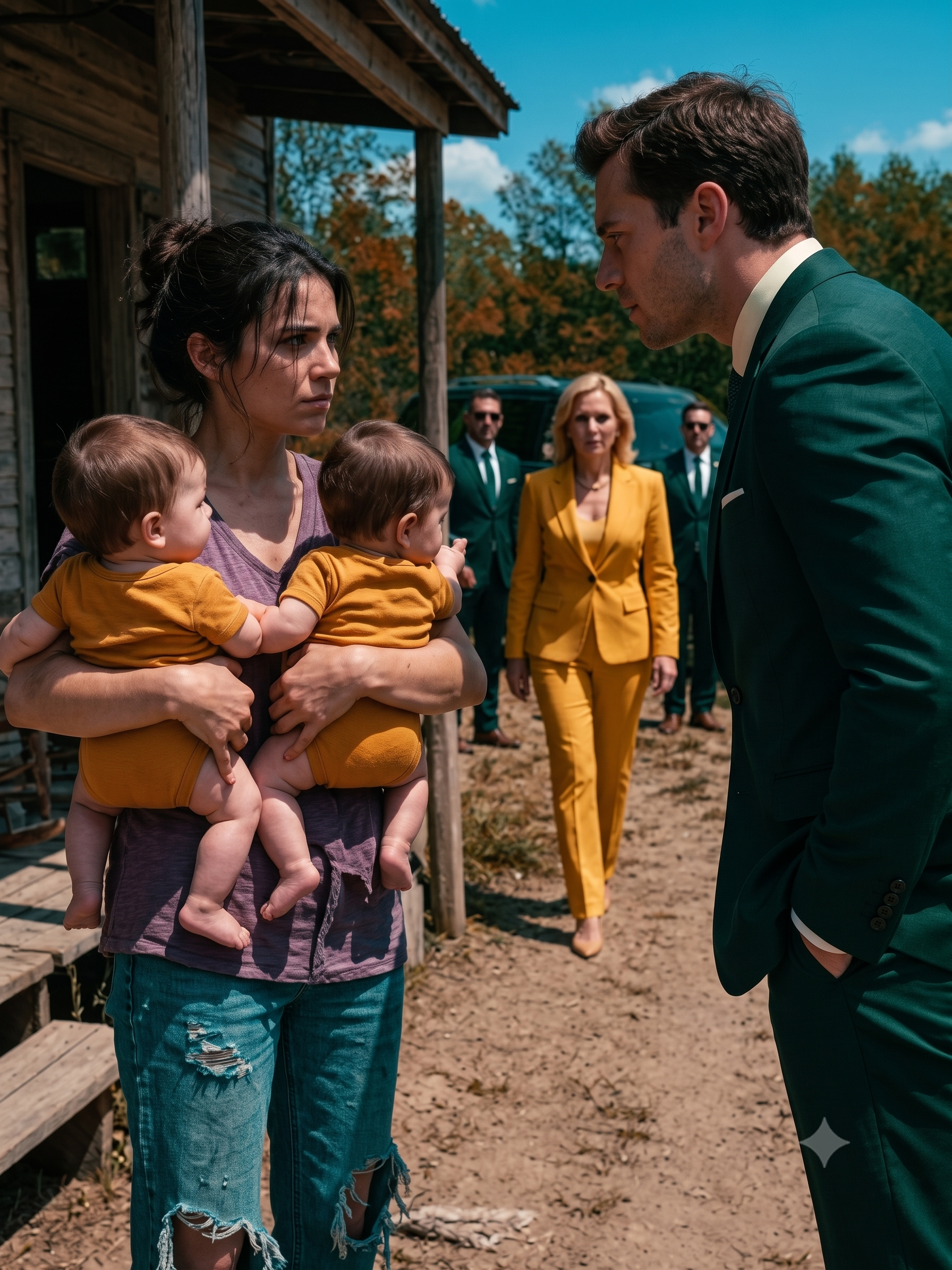
I thought my ex-wife had betrayed me. One year later, I found her standing on the side of a dusty Georgia road, carrying twin babies with my eyes, my hair, and a secret that would destroy everything I thought I knew.

My name is Michael Carter, and the worst mistake of my life began the day I stopped listening to the woman I loved.

When my fiancée Ashley suddenly screamed for me to pull over, I had no idea my entire world was about to collapse.

There, beneath the blazing afternoon sun, stood Emily.

My ex-wife.

The woman I had thrown out of our home.

The woman I had accused of stealing money, stealing jewelry, and cheating on me.

She looked exhausted. Her clothes were worn. A plastic bag filled with crushed cans hung from one hand.

But none of that mattered.

Because strapped against her chest were two babies.

Twins.

And even from inside my SUV, I could see they looked exactly like me.

Ashley laughed cruelly and tossed a twenty-dollar bill toward Emily.

“Buy yourself something to eat.”

Emily didn’t even look at the money.

She only looked at me.

There was no anger in her eyes. No hatred. Only sadness.

The kind of sadness that comes from being betrayed by someone you trusted completely.

Then she turned and walked away.

That night, I couldn’t sleep.

I kept seeing those babies. Their faces. Their hair. The way Emily had protected them from the dust blowing across the road.

The next morning, I hired a private investigator named David Reynolds.

“Find everything,” I told him.

Three days later, he called. His voice sounded different. Serious. Concerned.

“Michael,” he said quietly, “you need to sit down.”

My stomach tightened. “What did you find?”

“Eleven months ago, Emily checked into a county hospital while pregnant.”

I froze. Pregnant. Eleven months ago. That timeline made my blood run cold.

“She listed you as her emergency contact.”

“What?”

“She gave your private number. Your office number. Your home number.”

I gripped the phone. “I never received anything.”

“I know.”

Silence filled the line. Then David spoke again.

“Because someone paid to remove the records.”

I couldn’t breathe. “Who?”

“I sent the documents.”

Seconds later, an email appeared. My hands shook as I opened it.

At the bottom of the payment authorization was a name: Ashley Bennett. My fiancée.

I stared at the screen. No. It couldn’t be.

But the evidence kept coming. Over the next week, David uncovered everything.

  • The hotel photos proving Emily’s affair? Fabricated.

  • The so-called witness? Paid.

  • The missing bank transfers? Redirected through shell accounts controlled by Ashley’s brother.

  • My mother’s missing diamond necklace? Security footage revealed Ashley planting it inside Emily’s dresser hours before it was “discovered.”

I felt physically sick.

For a year, I had blamed the wrong person.

For a year, Emily had suffered alone. Pregnant. Homeless. Abandoned.

Because I chose pride over trust.

The final report nearly broke me. Emily had repeatedly tried to contact me while carrying our children. Calls blocked. Emails deleted. Letters intercepted.

Every path led back to Ashley.

She hadn’t just destroyed my marriage. She had stolen my family.

That same evening, I drove to the rural shelter where David said Emily was staying. My heart pounded harder with every step.

When I finally saw her sitting on a bench holding the twins, I barely recognized the strength in her face.

She looked up. Our eyes met.

“Emily,” I whispered.

She stood immediately. Not with hope. Not with happiness. With caution.

The twins stared at me from her arms. My children. Children I had never held.

“I’m sorry,” I said, my voice breaking.

Tears filled her eyes.

But before she could answer, a black SUV suddenly pulled into the parking lot.

Three people stepped out.

One of them was Ashley. The other two were attorneys.

And when Ashley smiled, I realized she wasn’t finished yet. Because despite everything I had discovered, she still held one final secret.

A secret that could determine whether I ever got my family back…

Part 2: The Final Secret

The sun had completely dipped below the horizon, casting the shelter’s asphalt parking lot in long, predatory shadows. The headlights of Ashley’s black SUV remained on, cutting through the twilight like two accusatory eyes.

Ashley stepped forward, the heels of her designer boots clicking sharply against the pavement—a sound that used to represent sophistication to me, but now sounded like the ticking of a time bomb. Flanking her were two men in immaculate grey suits, carrying leather briefcases. Attorneys.

“Michael, darling,” Ashley said, her voice dripping with artificial sweetness. “You really shouldn’t have come to this dreadful place. But I suppose it’s fitting. You’re always trying to play the hero when it’s far too late.”

I stood like a shield between her and Emily. Behind me, I could hear Emily’s shallow, terrified breathing as she clutched our babies tighter against her chest.

“Get out of here, Ashley,” I spat, my voice shaking with a volatile mix of rage and disgust. “I know everything. I know about the fabricated photos. I know about the bank transfers. I know you planted my mother’s necklace. It’s over. The private investigator found the paper trail with your name all over it.”

To my horror, Ashley didn’t flinch. Instead, she threw her head back and laughed. It was a cold, sharp sound that echoed off the concrete walls of the shelter.

“Oh, Michael. You always were so beautifully predictable,” she said, smoothing down her skirt. “Did you really think I didn’t know you hired David Reynolds? Did you really think I’d let a cheap private investigator unravel months of careful planning without a safety net?”

One of the attorneys stepped forward, opening his briefcase and handing a thick, notarized document to Ashley.

“You think you’ve won because you found out the truth about Emily’s innocence,” Ashley whispered, stepping closer until I could smell her expensive perfume—the same perfume that had filled my home while Emily was starving on the streets. “But the truth doesn’t matter anymore, Michael. Legally, I’ve already won.”

She held up the document. Even in the dim light, I could read the bold, capitalized letters at the top: FULL LEGAL CUSTODY AND SURROGACY AGREEMENT.

“What is that?” I demanded, my blood running cold.

“Before you threw Emily out, remember that medical checkup she went to? The one for her chronic iron deficiency?” Ashley smiled, a viper-like grin. “She signed a lot of papers that day. Standard hospital intake forms, or so she thought. But hidden among those digital signature pages was a legally binding, ironclad surrogacy and parental rights relinquishment contract.”

“That’s fraud!” I shouted. “She didn’t know what she was signing!”

“Can you prove that in a court of law?” Ashley countered smoothly. “The document states that Emily voluntarily acted as a surrogate for us. It states that because she used a private clinic—conveniently funded by my brother’s shell accounts—she waived all maternal rights upon the birth of the children. And since you and I are still legally engaged, and the children are biologically yours…”

Ashley turned her gaze to the twins, her eyes narrowing.

“Those babies belong to me, Michael. The moment they were born, by law, I became their legal guardian alongside you. Emily is nothing but a trespasser holding my property. If she doesn’t hand them over right now, my attorneys will have the state police arrest her for parental kidnapping before the night is over.”

The Plot Twist

I felt the ground shift beneath my feet. I turned to look at Emily. Her face was deathly pale. Tears streamed down her hollow cheeks, but she didn’t look surprised.

“Emily…” I breathed. “Did you know about this?”

“She knew,” Ashley interrupted triumphantly. “That’s why she’s been hiding in this disgusting rural county. She knew the moment I tracked her down, I would take my children.”

Emily finally spoke. Her voice was trembling, but there was a fierce, protective resonance in it that I had never heard before. “They aren’t your children, Ashley. And they never will be.”

“Call the police, Donald,” Ashley snapped at one of her lawyers. “Let’s end this little drama.”

“Wait,” Emily said. She stepped out from behind my back, holding the twins firmly. She looked directly at me, ignoring Ashley entirely. “Michael… I didn’t cheat on you. You know that now. But there is something you don’t know. Something Ashley doesn’t know either.”

Ashley scoffed. “Oh, please. Save your breath.”

“The documents you had me sign at the clinic,” Emily continued, her eyes locked onto mine, “they were based on the medical files from our primary fertility doctor. The ones stating that we were trying to conceive through IVF before everything fell apart.”

“Yes,” Ashley said impatiently. “The contract explicitly covers any children born from that specific medical timeline and biological lineage. You signed away your rights to Michael’s biological children.”

“That’s exactly the point,” Emily said softly. A strange, tragic smile touched her lips. “Michael… do you remember the week before you kicked me out? When you found those fake hotel photos?”

My heart stopped. “Yes.”

“The day before that, I went to the fertility clinic alone to get the final results of your genetic and reproductive testing. I never got to show them to you because the next morning, you threw my clothes onto the driveway and changed the locks.”

Emily took a deep breath, her voice dropping to a whisper.

“Michael… you are sterile.”

The silence that followed was absolute.

I stared at Emily, my brain scrambling to process the words. Sterile?

“What?” Ashley’s voice lost its confident edge, dropping an octave. “What are you talking about? Look at those babies! They have his eyes! They have his dark hair! They are identical to his childhood photos!”

“They look like him because they share his DNA,” Emily said, her voice growing stronger, steadier. “But Michael is not their father.”

She looked at me, her eyes filled with a profound, agonizing sorrow. “Michael… your younger brother, Christopher, passed away five years ago in that terrible accident. Before he died, when he was just a teenager diagnosed with leukemia, your parents had his bone marrow and genetic tissue frozen, hoping for a future cure. After he passed, they donated his remaining genetic material to a private repository in your family’s name.”

The realization hit me like a physical blow. Christopher. My younger brother. He had looked so much like me that people used to mistake us for twins when we were boys. He had my eyes. My hair. My exact facial structure.

“When our fertility doctor told me that you could never have biological children,” Emily wept, “I knew how much it would break your heart. You wanted a family more than anything. So, I went to your mother. Together, without telling you because we wanted to surprise you when the pregnancy was successful, we authorized the use of Christopher’s genetic material for the procedure. The twins… they aren’t your sons, Michael. They are your nephews. Biologically, they belong to Christopher and an anonymous donor.”

Ashley’s face contorted in sudden, manic panic. She turned to her lawyers. “Is this true? Does the contract still hold?”

The lawyer named Donald quickly flipped through the pages, his hands suddenly sweating. “The contract… the contract explicitly defines the children as ‘the biological offspring of Michael Carter.’ If the DNA profile does not match Michael Carter as the biological father, then this surrogacy and relinquishment agreement is null and void. The contract holds no jurisdiction over a different biological entity’s lineage.”

Ashley dropped her designer handbag. The twenty-dollar bill she had mocked Emily with earlier was still crumpled in her pocket, a stark contrast to the utter ruin of her master plan.

“No,” Ashley whispered, her eyes darting wildly. “No, I spent a year on this! I ruined your life for this!”

“You ruined your own life,” I said. The shock in my system had crystallized into a cold, absolute certainty. I stepped toward Ashley, the full weight of my anger finally unleashed. “You committed fraud. You falsified medical records. You wire-frauded my bank accounts through your brother. And you stalked an innocent woman.”

I pulled out my phone. “David Reynolds didn’t just send the files to me, Ashley. He sent a duplicate copy to the District Attorney’s office an hour ago. I suggest you take your lawyers and go find a very good criminal defense attorney. Because I will spend every single penny I have to ensure you and your brother spend the next two decades in a federal prison.”

Ashley backed away, her face pale, the mask of the sophisticated fiancée entirely shattered. Without another word, she scrambled back into her SUV. The doors slammed shut, and the vehicle sped out of the parking lot, tires screeching into the dark night.

Restoring the Pieces

The dust from the SUV’s departure slowly settled. The quiet courtyard of the rural shelter was peaceful once more, lit only by a single flickering streetlamp.

I turned back to Emily. The weight of my failures over the past year crashed down on me all at once. I had believed a snake. I had thrown away the purest soul I had ever known. I had allowed my brother’s children to be born in poverty, and their mother to sleep in a homeless shelter.

I sank to my knees on the cold asphalt before her.

“Emily,” I choked out, tears finally spilling over. “I don’t expect you to ever forgive me. I don’t deserve it. I let my pride blind me. I should have listened. I should have fought for you.”

Emily looked down at me for a long time. The twins had fallen asleep in her arms, oblivious to the storm that had just passed over their lives.

Slowly, she knelt down with me, bringing herself to my level. She didn’t pull away.

“I was angry for a very long time, Michael,” she said softly, her own tears falling onto my hand. “But I never stopped loving the man you used to be before Ashley poisoned your mind.”

She gently placed one of the sleeping babies into my awkward, trembling arms.

As I held the little boy, I looked down at his face. He had Christopher’s nose. He had my eyes. He was a piece of the brother I had lost, and a gift from the woman I had wronged.

“They need a father, Michael,” Emily whispered, placing her hand over mine. “And Christopher would have wanted it to be you. But we have a very long road ahead of us to heal.”

“I will spend the rest of my life earning back your trust,” I promised, holding my nephew close to my heart, looking at Emily through a veil of tears. “Whatever it takes. We’re going home.”

For the first time in a year, under the quiet Georgia sky, the darkness finally began to lift.

More Details
I came home from a business trip to find my wife and newborn son exhausted and barely responsive while my mother called her “LAZY.” But when a hospital doctor noticed unusual marks on my wife’s wrists, everything changed. Then my mother coldly said, “If caring for a baby is so hard for her, maybe she never should’ve become a mother.”
Jul 15, 2026

I came home from a business trip to find my wife and newborn son exhausted and barely responsive while my mother called her “LAZY.” But when a hospital doctor noticed unusual marks on my wife’s wrists, everything changed. Then my mother coldly said, “If caring for a baby is so hard for her, maybe she never should’ve become a mother.”

Part 1: The Day I Came Home Too Late

“If taking care of a baby is this difficult for you, maybe you never should’ve become a mother.”

Those were the first words I heard when I walked into my bedroom and found my wife barely conscious beside our crying newborn son. My name is Ethan Parker, and at the time I worked as an operations manager for a freight company outside Kansas City. My wife Hannah had given birth to our son Owen less than a week earlier and was still recovering from a difficult labor.

My mother, Patricia Parker, never liked Hannah. She constantly criticized her personality, her independence, and even the way she spoke to people. My younger sister Courtney copied every opinion our mother had, so Hannah spent most family gatherings quietly enduring insults disguised as “advice.”

Things became much worse during Hannah’s pregnancy when my mother pressured me to buy a house using my savings but place the property entirely in her name. According to Patricia, that was the safest way to “keep things inside the family.” Hannah immediately refused and warned me that my mother was trying to control our future financially.

I didn’t listen carefully enough.

At the time, I convinced myself Hannah was simply stressed from the pregnancy and that my mother only wanted to help us. Looking back, I realize I ignored warning signs because admitting the truth about my family felt easier than confronting it.

When Owen was born, I genuinely hoped becoming a grandmother would soften Patricia’s behavior. For a few days, it actually seemed possible. She brought flowers to the hospital, kissed Owen’s forehead gently, and promised Hannah she would help however she could during recovery.

Then an emergency happened at one of our company facilities in another state.

I hated leaving so soon after Owen’s birth, but my mother immediately volunteered to stay with Hannah while I traveled. Patricia insisted she had raised children herself and claimed Hannah only needed guidance from someone more experienced. Courtney laughed and told me we would survive a few days apart.

The only person who looked unhappy about the plan was Hannah.

She stood quietly beside the hospital bed with fear written across her face, but when I asked whether everything was okay, she forced a small smile and told me to be careful during the trip. Even now, I still regret walking away from that room.

During the next three days, I called constantly.

Most of the time my mother answered the phone instead of Hannah. Patricia always claimed Hannah was resting, feeding the baby, or sleeping because new mothers became emotional and exhausted easily. Whenever Hannah briefly spoke, her voice sounded weak and nervous.

On the third night, Hannah whispered something that immediately unsettled me.

“Ethan… please come home.”

I asked what was wrong, but before she could explain anything, my mother grabbed the phone and laughed the situation away. She insisted Hannah was overwhelmed by hormones and sleep deprivation. Still, something about the conversation felt deeply wrong afterward.

The next morning, I decided to drive home without warning anyone.

I bought diapers, pastries from Hannah’s favorite bakery, and a small green blanket for Owen during the trip back because I wanted to surprise them. But the moment I pulled into the driveway, dread settled into my stomach.

The front door stood slightly open.

The house smelled stale.

Dirty dishes covered nearly every surface in the kitchen while the television blasted loudly from the living room. My mother and Courtney were asleep on the couch beneath piles of blankets like they were relaxing through a vacation instead of caring for a recovering mother and newborn baby.

I ran toward the bedroom immediately.

Nothing prepared me for what I found inside. Hannah lay motionless across the bed with pale gray skin, cracked lips, and sunken eyes. She looked dangerously ill. Beside her, Owen’s face burned bright red with fever while weak cries barely escaped him. His diaper clearly hadn’t been changed for hours.

“Hannah!” I shouted.

Her eyes opened slowly, and for a second she looked genuinely shocked to see me standing there. Then she whispered the sentence that made my blood run cold.

“They took my phone.”

Before I could respond, my mother appeared behind me acting irritated instead of concerned. Patricia accused Hannah of exaggerating for attention while Courtney folded her arms and complained that Hannah always enjoyed playing the victim.

I ignored both of them and picked Owen up immediately.

The heat radiating from his tiny body terrified me. Within minutes, I had Hannah and Owen in the car while I sped toward the hospital barely able to think clearly.

Doctors rushed both of them into separate treatment rooms the moment we arrived.

A physician examined them before turning toward me with visible anger across his face. He explained that both Hannah and Owen were severely dehydrated. Then his expression darkened even further when he noticed bruises circling Hannah’s wrists.

“And those injuries,” he said carefully, “need an explanation immediately.”


Part 2: The Hospital Room Where the Truth Finally Broke Open

While doctors treated Hannah and Owen, I stood frozen in the hallway trying to understand how everything collapsed so quickly. Less than four days earlier, I left home believing my mother would help care for my recovering wife and newborn son. Now both of them were lying in emergency treatment rooms while hospital staff looked at me like they suspected something criminal happened inside my own house.

I came home from a business trip to find my wife and newborn son exhausted and barely responsive while my mother called her “LAZY.” But when a hospital doctor noticed unusual marks on my wife’s wrists, everything changed. Then my mother coldly said, “If caring for a baby is so hard for her, maybe she never should’ve become a mother.”

Part 2 of 3

Then my mother arrived at the hospital.

Patricia rushed through the emergency department crying loudly and insisting she had only been trying to help. Courtney followed closely behind her acting offended that anyone would question our family. But the moment Hannah heard Patricia’s voice from down the hallway, her entire body started trembling uncontrollably.

That reaction changed everything.

The nurses immediately exchanged uneasy looks, and the doctor who examined Hannah quietly stepped aside to contact hospital security. A detective named Rebecca Morales arrived shortly afterward and separated everyone into different rooms for questioning.

My mother launched into her explanation immediately.

According to Patricia, Hannah refused to eat properly, ignored instructions about caring for the baby, and spent most of the time behaving emotionally unstable. Courtney eagerly supported every accusation and claimed Hannah constantly exaggerated problems for attention.

But the doctor interrupted before either of them could continue.

He calmly explained that the medical evidence did not support their story at all. Hannah had an untreated infection, severe dehydration, high fever, and clear signs of prolonged neglect. Then he mentioned the bruises around her wrists and asked whether anyone wanted to explain how those injuries happened.

Nobody answered.

Detective Morales eventually sat beside Hannah’s hospital bed and gently asked her to describe everything that happened after I left town. For several seconds Hannah stayed quiet like she still feared someone would interrupt or punish her for speaking honestly. Then, slowly, she began telling the truth.

She explained that Patricia constantly criticized her parenting from the moment we arrived home from the hospital. My mother insisted Hannah’s breast milk was “bad” for Owen and repeatedly prevented her from feeding him naturally. Courtney mocked her whenever she asked for help or complained about pain from the delivery recovery.

The situation escalated every day.

Hannah described being denied proper meals because Patricia claimed she needed to “earn rest” by proving herself as a mother first. Whenever Hannah asked to contact me privately, my mother confiscated her phone and insisted I was too busy working to deal with emotional drama.

Then Detective Morales asked the question that changed the entire investigation.

“Did anyone physically stop you from leaving the house?”

Hannah slowly raised both arms.

Dark bruises circled her wrists.

Her voice barely rose above a whisper when she answered.

“I tried to leave with my son,” she said. “They stopped me.”

My mother exploded immediately.

“She’s lying!” Patricia screamed. “She’s trying to destroy this family!”

But for the first time in my life, I looked at my mother and felt absolutely no instinct to defend her. Everything Hannah described matched the fear I heard in her voice during those phone calls and the horror I saw inside our bedroom.

Then Hannah revealed the reason behind everything.

“It was about the house,” she whispered while looking directly at me. “Your mother kept saying I stole you from her. She said once I broke down, you’d finally understand who truly belonged in your life.”

Suddenly every argument from the previous year made sense. The pressure about putting property in Patricia’s name. The constant warnings about trusting wives. The guilt whenever I prioritized Hannah over my mother. I realized Hannah had seen the danger long before I ever allowed myself to acknowledge it.

The breakthrough happened accidentally.

While pacing angrily through the hallway, Courtney dropped her phone onto the floor. The screen lit up automatically, and Detective Morales immediately noticed a message preview still open across the display.

“If she holds out one more day,” the message read, “Ethan will blame her instead of us.”

Everything changed after that.

The detective confiscated the phone immediately despite Patricia screaming protests through the hallway. Investigators quickly discovered voice recordings saved on the device. One recording captured Hannah crying softly while Owen screamed in the background. Then my mother’s voice became clearly audible.

“You wanted to run this house so badly,” Patricia said coldly. “Figure it out yourself.”

Courtney’s laughter followed immediately afterward.

“If Ethan asks,” she joked, “we’ll tell him you refused to feed the baby.”

The entire hallway fell silent after the recording ended. My mother insisted the audio was fake. Nobody believed her anymore.

I came home from a business trip to find my wife and newborn son exhausted and barely responsive while my mother called her “LAZY.” But when a hospital doctor noticed unusual marks on my wife’s wrists, everything changed. Then my mother coldly said, “If caring for a baby is so hard for her, maybe she never should’ve become a mother.”

Part 3 of 3

Part 3: The Day I Finally Chose My Own Family

After the recordings were recovered from Courtney’s phone, the entire investigation changed immediately.

Detective Morales no longer treated the situation like a misunderstanding between exhausted family members. The evidence clearly showed a deliberate pattern of abuse, neglect, and intimidation directed toward Hannah while she was physically vulnerable after childbirth.

My mother still refused to accept reality.

Patricia screamed that Hannah manipulated everyone and accused the hospital staff of turning me against my own family. Courtney panicked the moment investigators started reviewing more messages from her phone, and within minutes she completely turned on our mother trying to protect herself.

“You planned all of this!” Courtney shouted at Patricia in the hallway. “You said if Hannah broke down emotionally, Ethan would finally stop listening to her and give you the house money!”

That was the moment the truth became impossible to deny.

This had never been about helping Hannah recover after childbirth. It had never been about supporting our family or caring for Owen. My mother wanted control, and when Hannah refused to surrender it, Patricia decided to punish her until she broke emotionally and physically.

Police arrested Patricia and Courtney that same night.

Some relatives immediately started calling me afterward accusing me of betraying my own mother. Others insisted family problems should remain private no matter how serious they became. But every time someone tried defending Patricia, I pictured Hannah lying weak and dehydrated in that bedroom beside our feverish newborn son.

My answer never changed.

“Owen is my son,” I told them. “My responsibility is protecting him and his mother.”

Hannah’s recovery took months.

The physical injuries healed first. The infection eventually cleared, the bruises faded, and Owen slowly regained his strength after proper treatment. The emotional damage lasted much longer. For a long time, Hannah flinched whenever someone raised their voice unexpectedly or knocked loudly at the front door.

The hardest part for me was realizing how badly I failed her before any of this happened.

Hannah warned me repeatedly about my mother’s behavior during the pregnancy. She told me Patricia’s obsession with controlling the house, the finances, and our future was dangerous. Instead of listening carefully, I kept convincing myself things would improve if everyone simply spent more time together.

I confused loyalty with denial.

I thought protecting my mother’s feelings would somehow preserve peace inside the family. In reality, my silence only gave her more room to hurt the people I should have protected first.

The criminal trial lasted several weeks.

Doctors testified about Hannah and Owen’s medical condition. Detectives presented the recordings, messages, and photographs documenting the abuse inside our home. Hospital staff described Hannah’s fear whenever Patricia entered the room, and forensic analysts confirmed the recordings on Courtney’s phone were authentic.

The verdict devastated what remained of our extended family.

Patricia was convicted of assault, unlawful restraint, domestic abuse, and child endangerment. Courtney received a lighter sentence after cooperating with investigators and providing additional evidence against our mother.

As officers escorted Patricia from the courtroom, she turned toward me one final time.

“Ethan!” she screamed. “I’m your mother!”

For years, those words would have controlled me completely.

This time, I looked directly at her and answered calmly.

“A mother doesn’t destroy her son’s family because she can’t control it.”

Then I walked away.

Today, Owen is two years old.

We moved to a quieter city far away from the house where everything happened. Our home is smaller, simpler, and far less impressive than the one my mother obsessed over for so long, but for the first time since Owen’s birth, it actually feels peaceful.

Hannah smiles more now.

She no longer apologizes for setting boundaries or taking up space inside her own life. Sometimes I still catch her watching Owen sleep beneath the small green blanket I bought the day I rushed home unexpectedly. Every time I see it, I remember how close I came to losing both of them because I ignored warning signs I didn’t want to face.

I learned painful lessons from everything that happened. Love means nothing without protection. Loyalty does not require excusing abuse.

And sometimes the people claiming to love you most are fully capable of causing the deepest harm if control matters more to them than compassion.

Every night, when I tuck Owen into bed and Hannah rests beside me safely, I think about the promise I silently made in that hospital hallway years ago.

I failed my family once. I never intend to fail them again

More Details
My daughter-in-law pushed a $500,000 debt across my kitchen table and said, ‘You have to pay it… or you’re no longer family.’ I looked at her, then at my son, and said, ‘Then I’m not.’ Three days later, my phone showed 98 missed calls. I sent just one message.
Jul 15, 2026

My daughter-in-law pushed a $500,000 debt across my kitchen table and said, ‘You have to pay it… or you’re no longer family.’ I looked at her, then at my son, and said, ‘Then I’m not.’ Three days later, my phone showed 98 missed calls. I sent just one message.

My daughter-in-law slid a number across my kitchen island like she was handing me a dinner check.

Five hundred thousand dollars.

She had written it in thick black marker on the back of a bank envelope, underlined it twice, and tapped one polished fingernail against the paper as if I might have trouble understanding it.

“You pay this,” Lauren said, looking me straight in the eye, “or we’re done pretending you’re part of this family.”

My son, Ryan, stood beside her with his shoulders rounded and his hands buried in the pockets of his expensive wool coat. He did not look at me. Not once.

The words hung in the air of my clean kitchen like smoke.

Outside, the late autumn rain moved softly against the windows of my house in a quiet, upscale neighborhood east of Seattle. The maple trees along the street had already dropped most of their leaves, and the slick pavement reflected the porch lights from the houses across the road. It was the kind of neighborhood where people waved while walking their dogs, where garbage bins were pulled in before noon, where everyone pretended not to know anyone else’s business.

Inside my house, my daughter-in-law was trying to buy my fear with a threat.

“Half a million dollars,” I said quietly.

Lauren crossed her arms. Her blonde hair was freshly blown out, her cream-colored sweater probably cost more than my monthly grocery bill, and the diamond on her finger caught the recessed kitchen lights every time she moved her hand.

“You know exactly what this is about,” she said. “Ryan’s investment situation is complicated. We need liquidity.”

Liquidity.

That was the word she used for debt.

Ryan had gotten himself tangled in a string of real estate deals that looked impressive at dinner parties and catastrophic on paper. Flipped homes. Short-term rentals. A commercial property in Tacoma that never leased the way he swore it would. He had talked about passive income, tax advantages, investor circles, and opportunities too good to pass up.

What he never talked about was risk.

Lauren had encouraged every bit of it. She liked saying they were building a legacy, but what she really meant was she wanted a life that looked expensive before they could afford it. Luxury SUV. Designer furniture. Private school waitlists for children they did not even have yet. Weekend dinners at waterfront restaurants where the valet knew her name because I paid the bill more often than anyone admitted.

I knew they were in trouble. I had known for months.

But demanding my money as if it were theirs by birthright was a different kind of disrespect.

I looked down at the number again.

$500,000.

Then I looked at my son.

“Ryan,” I said.

He shifted his weight.

Lauren answered for him. “Don’t put him in the middle of this.”

I almost laughed.

He was my son. He had been in the middle of my life from the moment the nurse placed him in my arms at Swedish Medical Center thirty-nine years earlier. I had packed his lunches, sat through his Little League games in the rain, helped him through college, paid for the down payment on his first condo, and stood beside him at his father’s funeral when he trembled so hard I had to hold him up.

And now his wife was telling me not to put him in the middle of a conversation where she had just threatened to erase me from the family if I did not hand over half a million dollars.

“Is this what you want?” I asked him.

Ryan’s jaw tightened.

“Mom,” he said finally, his voice low. “We’re under a lot of pressure.”

“That wasn’t my question.”

He looked at the floor again.

Lauren made an irritated sound. “This is exactly what I mean. You always make everything emotional.”

“It is emotional,” I said. “You are standing in my kitchen asking me for half a million dollars and threatening to cut me off from my own son if I say no.”

Lauren’s face hardened.

“You’re sixty-eight, Margaret. You live alone in this big house. You have more than you need. We’re your family. What exactly are you saving it for?”

There it was.

The truth, plain and ugly.

To Lauren, I was not a mother. I was not a widow who had worked thirty years beside my husband to build a secure life. I was not a woman who had earned peace after burying the man she loved.

I was an account balance with gray hair.

Ryan rubbed one hand over his face.

“Mom, please,” he said. “Just help us this once.”

I stared at him.

Just this once.

I had heard those words when I covered three months of their rent after Ryan’s first failed deal. I had heard them when Lauren’s SUV lease payment bounced. I had heard them when their credit card debt became “temporary cash flow pressure.” I had heard them when they needed money for a vacation they insisted was already booked and nonrefundable.

Just this once had become a family tradition.

But this time, Lauren was not asking.

She was collecting.

“If you refuse,” Lauren said, “then don’t expect invitations anymore. Not holidays. Not birthdays. Not anything. We’re not going to keep letting you sit at our table while you watch us struggle.”

I glanced around my kitchen.

My kitchen.

The same kitchen where Ryan used to do homework at the island while his father made grilled cheese sandwiches on rainy nights. The same kitchen where my husband, Thomas, had gripped the counter during his final months because walking from the bedroom to the table became a victory. The same kitchen where Lauren had accepted champagne after Ryan proposed, smiling sweetly while calling me “Mom” for the first time.

I placed both palms flat on the cool granite.

Then I stood.

Slowly.

My back was straight. My hands were steady. My voice, when it came, was calm enough to surprise even me.

“If that is the price of staying in your family,” I said, “then I am done.”

Lauren blinked.

Ryan lifted his head.

“What?” he said.

“I said I’m done.”

Lauren’s mouth parted slightly, as if she had not prepared for this part.

I walked past them to the small brass hook near the mudroom door and took my car keys from it. My purse sat on the bench below, exactly where I had left it after coming home from the grocery store that morning.

“Mom,” Ryan said, stepping toward me. “Wait.”

I turned back.

“No,” I said. “You gave me three days, didn’t you? Friday at noon. That is what your text said before you came over.”

Lauren’s eyes narrowed. “So you’ll do it?”

I smiled a little.

“I’ll use the three days.”

Then I opened the door to the garage, got into my car, and drove away from the house that was legally mine.

No shouting.

No tears.

No slammed doors.

I had wasted too many years keeping the peace for people who mistook my kindness for weakness.

As I pulled out of the driveway, I saw Ryan standing on the porch through my rearview mirror. Lauren was beside him, her arms folded, her expression sharp and confused.

They had expected panic.

They had expected begging.

They had expected an old widow to fear loneliness so much that she would pay any price to avoid it.

They had forgotten something important.

Loneliness had already been living in my house for years. It wore my son’s face and spoke in my daughter-in-law’s voice. It came to Thanksgiving dinner only when I paid for catering. It called when it needed childcare, groceries, rent, or repairs. It smiled at me in public and treated me like a burden in private.

By the time I reached the end of my street, my heartbeat had stopped racing.

By the time I turned toward downtown Bellevue, the fear had cooled into something harder.

Resolve.

My first stop was Evergreen Community Credit Union, a brick building tucked between a dentist’s office and a bakery that always smelled like cinnamon when the wind came from the north. I had banked there for more than twenty years. The branch manager, Paul Henderson, had helped Thomas and me refinance the house after Ryan left for college. He had sent flowers when Thomas passed.

When I walked in, Paul looked up from his office and smiled.

“Margaret,” he said. “Good morning.”

“Good morning, Paul.”

Something in my face must have warned him not to make small talk. He stood and closed his office door behind me.

“What can I do for you?”

I sat across from him and set my purse in my lap.

“I need to revoke every power of attorney and emergency access authorization I ever gave my son,” I said. “Effective immediately.”

Paul’s expression changed, but his voice stayed professional.

“All right,” he said. “We can start that today.”

“I also need new account passwords, new security questions, and written confirmation that no one but me can authorize transfers, withdrawals, account inquiries, or wire requests.”

He nodded once.

“Understood.”

He did not ask why.

That was one of the reasons I trusted him.

The paperwork took nearly an hour. While he printed forms and made calls, I opened my banking app and changed every password I had. Checking. Savings. Brokerage login. Credit card portal. Utilities. Insurance. Even my Costco account, because Lauren had used my membership and my stored card for years without a flicker of embarrassment.

Ryan had emergency access because I had trusted him.

That access ended while the rain streaked down Paul Henderson’s office window.

When the last document was signed, Paul slid a folder across the desk.

“You’re protected on our end,” he said. “But I recommend you contact your attorney as well. Estate documents, medical directives, anything with your son listed.”

“I’m going there next.”

Paul paused.

“I’m sorry, Margaret.”

I looked at him for a moment.

“So am I,” I said. “But not as sorry as I was yesterday.”

From the credit union, I drove to a small hardware store near Lake Hills, the kind with narrow aisles, handwritten signs, and two older men at the counter who knew the difference between helping and hovering.

I bought three new deadbolts, a reinforced strike plate, and a video doorbell that connected to my phone.

The young clerk asked if I needed installation.

“No,” I said. “I’ve changed locks before.”

He looked surprised. People often did when women my age knew how to do practical things. Thomas had taught me after our first apartment in Seattle had a back door that stuck in winter. Over the years, I had learned that depending on someone else for every small repair was its own kind of vulnerability.

When I got home, Ryan and Lauren were gone.

Of course they were.

They had likely gone to lunch somewhere with cloth napkins, convinced that I was driving around town arranging a wire transfer.

I carried the hardware boxes inside, locked the door behind me for the last time with the old key, and went to the basement for the toolbox.

Changing the front door lock felt strangely soothing.

The screws came out cleanly. The old brass hardware loosened in my hands. The new deadbolt slid into place with a satisfying click. I did the side door next, then the garage entry, then the back door that opened onto the terrace.

One by one, the house returned to me.

When I finished, I made tea and sat at the kitchen island.

The envelope with the $500,000 demand still lay on the counter where Lauren had left it.

I picked it up and turned it over.

On the front was a past-due notice from one of Ryan’s lenders. Not a bank I recognized. Not a mortgage company. A private financing firm with an address in Portland and language cold enough to make my stomach tighten.

So that was why Lauren had written on it.

She was not only demanding my money.

She had done it on top of proof that their world was already collapsing.

My phone buzzed.

Lauren.

We expect confirmation of the transfer by Friday at noon. Don’t make this harder than it has to be.

I set the phone facedown.

No answer.

Instead, I opened my laptop and began making a list.

Not a list of grievances. I had no interest in reliving every insult, every cold dinner, every moment Ryan looked away while Lauren treated me like staff.

I made a list of facts.

Monthly transfer to Ryan’s landlord.

Canceled.

Automatic payment for Lauren’s SUV lease.

Canceled.

Shared grocery account at Madison Market.

Canceled.

Gas cards.

Canceled.

Streaming services they used but I paid for.

Canceled.

Private storage unit where Lauren kept seasonal decorations and furniture she no longer liked.

Canceled.

House cleaning service for their rental.

Canceled.

Meal delivery subscription.

Canceled.

I worked slowly and carefully, saving confirmation numbers and screenshots into a folder labeled Household Changes.

That title made me smile.

By the time the sky darkened over the back garden, I had ended nearly six thousand dollars a month in support they had trained themselves not to see.

The faucet was officially turned off.

That night, I slept better than I had in years.

The next morning, the house felt unusually still.

Normally, Lauren would have called before nine. She always had some task for me wrapped in the language of family. Could I pick up dry cleaning? Could I meet the furniture delivery? Could I run to Whole Foods because Ryan forgot almond milk? Could I watch their dog while they went to Portland for “business networking”?

Today, nothing.

They thought silence would scare me.

Instead, it gave me room to think.

I walked through my house with a cup of coffee and saw it clearly for the first time in a long while.

Not the house Thomas and I had built with patience.

The house Ryan and Lauren had slowly occupied with entitlement.

Lauren had taken over the west-side den the previous year and called it her office. She did not live with me, but somehow she had claimed one of the brightest rooms in my home, the one with the tall windows facing the Japanese maple. She had replaced my old reading chair with a white designer desk, pushed family photo albums into the closet, and moved Thomas’s bookshelf to the basement because, in her words, “the room needed to feel less dated.”

I stood in the doorway and looked at the desk, the velvet chair, the gold lamp, the framed fashion prints, the stack of unopened packages addressed to her at my house.

Then I went to the garage for boxes.

I did not throw things wildly. I did not break anything. I wrapped the lamp carefully. I folded the throw blanket. I placed her little ceramic trays and scented candles into newspaper.

Methodical work has a way of calming the mind.

Every box I sealed felt like one more inch of my life being returned.

In the closet, behind two garment bags, I found a canvas tote filled with old framed photographs that had belonged on the den shelves. Ryan at age seven missing both front teeth. Thomas holding a salmon he caught near Anacortes. My mother in her church dress, smiling at a Fourth of July picnic. Our family in front of Mount Rainier one summer before grief became part of our story.

Lauren had hidden them like clutter.

I carried the photos back to the den and placed them on the shelves again.

The room exhaled.

Around lunchtime, I drove to Madison Market, the upscale organic grocery where Lauren loved to shop on my account. The owner, a silver-haired woman named Denise, had known me for years. She looked up from arranging local honey jars and smiled.

“Margaret. Good to see you.”

“You too, Denise.”

I kept my voice pleasant.

“I need to change something on my account. From now on, please don’t allow anyone to charge purchases unless I am physically present.”

Denise’s face shifted just enough to tell me she understood more than I had said.

“Of course.”

“My son and daughter-in-law will be paying for their own groceries from now on.”

She nodded.

“I’ll make a note right away.”

“Thank you.”

On the way out, I bought sourdough bread, apples, and a wedge of cheddar because I wanted them, not because anyone had sent me a list.

As I drove home, I saw Lauren’s SUV pass the intersection ahead of me. She was heading toward their rental house, probably still convinced I was wrestling with guilt.

She did not know the card connected to that SUV payment was already dead.

At home, I sat in the garden with my lunch and watched chickadees hop along the wet branches of the lilac bush.

For the first time in years, I did not feel like the family servant.

The countdown had started.

And the quiet before the storm felt almost beautiful.

Thursday morning brought the first crack.

It came from Lauren, not Ryan.

My phone lit up at 9:12 a.m.

Then again at 9:14.

Then 9:16.

By 10:00, I had ten missed calls and six texts.

Why is the card being declined?

Call me immediately.

This is embarrassing.

Margaret, don’t play games.

Ryan says you canceled something. Fix it.

I read the messages while sitting in the sunroom with a novel I had started three years earlier and never finished because I was always too busy solving other people’s emergencies.

I did not respond.

At noon, tires squealed outside.

I stood behind the lace curtain in the upstairs guest room and watched Ryan climb out of his car. He looked pale and exhausted. His hair was uncombed, his coat collar turned up against the rain. He marched to the front door and jammed his key into the lock.

Nothing.

He tried again.

The key turned halfway and stopped.

He rattled the handle.

Then he kicked the bottom of the door like a teenager.

I opened the upstairs window a few inches.

“The key doesn’t work anymore, Ryan.”

He jumped back and looked up.

“Mom, what the hell?”

“Language,” I said automatically.

His face twisted with anger and panic.

“Why did you change the locks?”

“Because this is my house.”

“We’re in trouble,” he shouted. “Lauren can’t access the card. The landlord called. The auto-payment didn’t go through. Why would you do that?”

A neighbor across the street slowed while walking her golden retriever, then wisely kept moving.

I looked down at my son.

For a moment, I saw him at sixteen, standing in the driveway after denting Thomas’s truck and trying not to cry. Back then, he had admitted the truth before anyone asked. He had said, “I messed up, Dad. I’m sorry.” Thomas had made him work all summer to pay for the repair, not because we needed the money, but because accountability mattered.

Somewhere along the way, Ryan had forgotten that lesson.

“You gave me an ultimatum on Tuesday,” I said. “I accepted it.”

“This is different.”

“No. It is exactly the same.”

“Mom, Lauren was stressed.”

“Lauren was clear.”

He gripped the porch railing.

“We need time.”

“You had time. You used it to threaten me.”

His voice cracked. “You’re really going to do this to your own son?”

That question might have broken me a year earlier.

Not now.

“You told me I was no longer your mother if I didn’t pay your debt,” I said. “A stranger doesn’t pay your rent.”

His mouth opened.

No words came.

I closed the window.

He stood on the porch for ten more minutes. He called my name. He knocked. He tried the key again, as if reality might change through repetition.

Finally, he got back into his car and drove away.

I went downstairs and made tomato soup for lunch.

The power balance had shifted so quietly that I almost missed the sound of it.

Friday morning dawned clear after two days of rain.

Sunlight moved across the kitchen floor in pale gold rectangles. The air smelled faintly of cedar from the wet fence outside. I had slept like a baby, which felt almost rude considering the chaos probably unfolding across town.

I had left my phone in the kitchen overnight.

When I turned it on after breakfast, the screen filled with notifications.

Forty-five missed calls.

Twenty-eight texts.

Six voicemails.

Lauren’s messages swung between fury and panic.

You are destroying your own family.

You don’t understand what this will do to Ryan.

You’re being selfish.

Fine, don’t answer. But don’t come crying when we cut you off.

Then, twenty minutes later:

Please call. We need to talk.

Ryan’s messages were shorter.

Mom, please.

I’m sorry.

Can we meet?

Please don’t let Lauren lose the car today.

That last one nearly made me laugh.

Not because it was funny.

Because even in desperation, he still led with Lauren’s comfort.

At ten o’clock, I drove into downtown Seattle for an appointment with my attorney and financial adviser. Their offices were in a glass building near Fifth Avenue, the kind with underground parking, security badges, and a lobby full of people who looked too busy to make eye contact.

My adviser, Natalie Kim, greeted me with careful warmth.

“Margaret,” she said. “I got your message. I have the documents ready to review.”

My attorney, James Whitaker, joined us by conference call.

We went through everything.

My will.

My trust.

My medical directive.

My durable power of attorney.

Beneficiary designations.

Access permissions.

Emergency contacts.

It was not emotional work. It was precise work. Clean, necessary, adult work.

Ryan was removed from financial authority. He was removed as executor. He was removed from any role that would allow him to act on my behalf if I became ill or incapacitated.

I did not cut him out completely. I was not cruel. But I placed his inheritance in a conditional trust, protected from creditors, divorce, and anyone who thought marrying my son meant inheriting my life. I also created a charitable foundation that would receive a large portion of my estate one day, funding housing and education support for children from struggling families in King County.

Natalie looked over the final page.

“You seem very certain,” she said.

“I am.”

James’s voice came through the speaker.

“These changes are legally sound, Margaret. Once signed and notarized, they will be effective immediately.”

“Good.”

I signed where they told me to sign.

My hand did not shake.

As I left the building, I saw Ryan and Lauren through the window of a café across the street.

They sat at a small table near the glass. Lauren was on the phone, one hand pressed to her forehead, her face drawn tight. Ryan sat opposite her with his head in his hands. Two untouched coffees cooled between them.

They did not see me.

I stood on the sidewalk for a moment, holding my folder against my chest.

For years, I had rushed toward their distress as if it were a fire I alone had to put out. That reflex still lived somewhere in me. I felt it stir.

Then Lauren snapped something into the phone, and Ryan flinched.

The reflex died.

Their house of cards had no foundation.

That was not my fault.

I walked to my car and drove down to the waterfront.

The afternoon was bright and cold. Ferries moved across Elliott Bay. Seagulls called above the piers. Tourists in rain jackets took pictures near the railing while office workers hurried past with paper coffee cups.

My phone buzzed in my pocket again and again.

Sixty missed calls.

Seventy-two.

Eighty.

I sat on a bench and watched the water.

When you try to blackmail your own mother, you forfeit the right to immediate comfort.

They had believed they could control me by threatening to take away family. They forgot they were the ones who had turned family into a transaction. They forgot I was the one paying for the rent, the car, the groceries, the conveniences, the image.

I had been their anchor.

They had cut the rope.

Now they were angry at the ocean.

By three in the afternoon, my phone showed ninety-eight missed calls.

A text from Ryan appeared.

Please. The debt collectors are at the door.

I stared at it.

Then I shook my head.

Debt collectors do not appear at your door on a Friday afternoon because a real estate investment collapsed. Not like that. Not with that timing. It was another performance, another attempt to make panic contagious.

I decided to send one reply.

Too late.

Nothing more.

No explanation.

No argument.

Then I powered the phone off and placed it in the glove compartment.

When I returned home, I called the security company that monitored my alarm system.

“This is Margaret Hayes,” I said. “I’m expecting some uninvited family members this evening. If anyone attempts to enter the property without permission, please send patrol.”

“Do you want police called?” the dispatcher asked.

“Not unless they refuse to leave. I want them removed from the property. Peacefully.”

“Yes, ma’am.”

I thanked her and hung up.

Then I went down to the cellar and pulled out a good bottle of Washington red wine Thomas had bought from a small winery in Walla Walla the year before he got sick. We had saved it for a special occasion that never came.

That evening, I opened it.

Not for revenge.

For independence.

I sat on the terrace as the sun lowered behind the evergreens. The air was cold enough that I wrapped myself in a wool shawl. The garden looked bare, but not dead. The rose bushes had been cut back for winter. The lavender had gone silver at the edges. In the distance, a neighbor’s wind chime moved softly.

I thought about that half million dollars.

It would have solved Ryan’s emergency for a while.

It would not have solved Ryan.

It would not have solved Lauren.

It would have taught them that threats worked. It would have made the next demand larger, uglier, more certain. They would have drained me dry and called it family loyalty.

By saying no, I had not just saved money.

I had saved my dignity.

Real wealth is not the balance in your account.

It is the ability to decide what your life belongs to.

Just after sunset, headlights appeared at the end of the street.

Ryan’s car turned the corner and stopped in front of my closed garden gate.

The final act had arrived.

Ryan got out first. Lauren followed, slamming the passenger door so hard the sound cracked across the quiet street.

She looked nothing like the polished woman who had stood in my kitchen three days earlier. Her hair was pulled back too tightly, her mascara smudged at one corner, and her cream sweater had been replaced by a black coat hanging open despite the cold.

She grabbed the metal gate and shook it.

“Margaret!” she shouted. “Open this gate.”

I remained seated on the terrace, wineglass in hand, fifty feet away.

“You can’t do this to us,” she yelled. “We’re losing everything.”

I lifted my voice just enough to carry.

“You told me I was not your family anymore. I don’t open my gate to strangers after dark.”

Ryan stepped closer to the bars.

“Mom, please. The bank froze one of the business accounts. The landlord wants payment by Monday. We can’t even fill the gas tank without using credit.”

“That sounds difficult.”

His face crumpled.

“Lauren pawned some jewelry. Grandma’s bracelet and those earrings from Dad’s mother. We’re trying.”

The words landed hard.

For a second, the terrace seemed to tilt beneath me.

My mother-in-law’s earrings. The little pearl drops she wore to church every Sunday. The bracelet Thomas had kept in a velvet box after she died because he said it belonged to the women of the family.

Lauren had pawned them.

Not because she was hungry.

Not because children needed medicine.

Because she and Ryan had built a life on debt and vanity, then tried to make me pay for it.

I set my wineglass on the small iron table beside me.

“That was a mistake,” I said.

Lauren snapped, “Oh, don’t act sentimental. You weren’t using them.”

Ryan turned on her.

“Lauren, stop.”

She ignored him.

“You’re enjoying this,” she shouted at me. “You’re sitting there like some queen while your son’s life falls apart.”

“No,” I said. “I am sitting on my terrace at my house after refusing to be blackmailed.”

She laughed sharply.

“Blackmailed? We asked for help.”

“You demanded money and threatened to erase me from the family.”

“You’re twisting it.”

“I wrote it down exactly as you said it.”

That silenced her for half a second.

Then she grabbed the gate again.

“You owe him,” she said. “He is your son.”

“I raised him,” I said. “I loved him. I helped him. I gave him more chances than I can count. I do not owe him the rest of my life.”

Ryan’s voice was barely above a whisper.

“Mom.”

I looked at him.

For the first time in days, he truly looked ashamed.

Not inconvenienced.

Not frightened.

Ashamed.

“Go home, Ryan,” I said.

“We might not have one soon.”

“Then find one you can afford.”

Lauren cursed and tried to climb the gate.

Her high heels slipped on the lower bar, and she stumbled back with a frustrated cry.

At that moment, the security truck pulled into the driveway.

Two uniformed guards stepped out. They were calm, professional, and large enough that Lauren stopped moving before they reached her.

“Good evening,” one of them said. “The property owner has asked that you leave.”

Lauren pointed at me.

“That is my mother-in-law.”

The guard did not look impressed.

“Ma’am, you need to return to your vehicle.”

“This is family business.”

“This is private property.”

Ryan touched Lauren’s sleeve.

“Come on,” he said quietly.

She jerked away.

“No. She doesn’t get to do this.”

The second guard stepped closer.

“Ma’am.”

Something in his tone finally reached her.

Ryan looked past the guards to me.

I saw the moment he understood.

I was not crying.

I was not begging.

I was not reaching for my checkbook.

I was fully in control of my own life.

He swallowed hard, then opened the passenger door for Lauren.

She got in without looking at me.

Ryan stood beside the car for one more moment.

“I’m sorry,” he called.

I did not answer.

Not because I wanted to hurt him.

Because sorry, spoken under pressure, is not the same as change.

He got in the car and drove away.

Quiet returned to the neighborhood.

I picked up my wineglass and took one final sip.

It was done.

Saturday morning was the most peaceful I had experienced in years.

No phone buzzing.

No demands.

No emergencies disguised as obligations.

I made coffee and drank it at the kitchen table while sunlight moved across the restored family photographs in the den. The house felt different, though nothing major had changed. The walls were the same. The floors were the same. The rain gutters still needed cleaning.

But the air was mine again.

I called a landscaper after breakfast.

“I want to redo the garden,” I told him. “Nothing too modern. I want old-fashioned roses, native flowers, and something that attracts bees.”

“That sounds beautiful,” he said.

“It used to be,” I replied.

Lauren had convinced me two years earlier to replace half my garden with sterile white gravel, sculptural shrubs, and black planters because it looked “cleaner.” I had agreed because I was tired. Because she made everything sound like a favor. Because Ryan said, “It makes her happy, Mom.”

Now I wanted color back.

I wanted softness.

I wanted life.

After the call, I walked into town for pastries from the bakery near the credit union. The sidewalks were damp. A man in a Seahawks jacket held the door for me. Denise from the market waved through her front window. The world was carrying on, as it always does, indifferent to private heartbreak.

That comforted me.

At home, I finished clearing Lauren’s things from the den.

In the bottom drawer of her desk, beneath old receipts and fabric samples, I found a notebook.

At first, I thought it was a planner.

Then I opened it.

My name appeared on the first page.

Margaret assets estimate.

Below that, Lauren had listed my house, investment accounts, pension income, jewelry, savings, and the approximate value of Thomas’s old coin collection. She had written notes in the margin.

House could sell high in this market.

Push Ryan to discuss inheritance.

Margaret too attached to old stuff.

May need to encourage downsizing.

I turned the pages slowly.

There were calculations for what they could do with my estate after I died. Sell the house. Pay down debt. Buy a larger place. Invest the rest. Use a portion for private club membership.

My hands stayed steady.

That surprised me.

I expected anger.

What I felt instead was confirmation.

Lauren had not seen me as family for a long time.

I had simply found the paperwork.

I placed the notebook in my file with the bank confirmations and legal documents. Not because I planned to use it unless necessary, but because truth deserves a place where it cannot be denied later.

That afternoon, I called an old friend I had neglected for years.

Evelyn answered on the third ring.

“Margaret Hayes,” she said warmly. “I was starting to think you’d forgotten me.”

“I almost forgot myself,” I said.

There was a pause.

Then her voice softened.

“Oh, honey.”

I sat by the window and told her a little. Not everything. Enough.

When I finished, she said, “You need to get out of that house for a while. Come to the coast with me. Cannon Beach, Mendocino, Monterey, anywhere with salt air and no greedy relatives.”

I laughed for the first time all week.

“How about the California coast next month?”

“Now you’re talking.”

We stayed on the phone for nearly an hour, remembering old trips, old jokes, old versions of ourselves before marriage, motherhood, illness, and grief reshaped our lives.

When I hung up, I felt lighter.

For years, I had mistaken usefulness for love. I had said yes until yes became expected. I had let Ryan’s disappointment frighten me more than my own unhappiness.

Now it was my turn.

I had my house.

My money.

My time.

My name.

Ryan and Lauren would have to learn what it meant to stand on their own. It was the hardest lesson I could give him, and maybe the most honest one.

Two weeks passed.

I heard pieces through the quiet channels every family has. A neighbor’s cousin. A friend who knew someone at Ryan’s office. A text from an old acquaintance who did not realize I had stopped being the family rescue line.

Ryan and Lauren had moved out of their rental house.

The landlord would not wait. Their credit was damaged. The SUV was gone. They had taken a small two-bedroom apartment farther east, nowhere near the neighborhood Lauren liked to name-drop.

Ryan picked up consulting work on weekends. Lauren, according to someone who had seen her, was working part-time at a boutique in a shopping center she used to mock.

The $500,000 debt had not disappeared.

It had only become theirs again.

One afternoon, a package arrived on my doorstep.

No return address.

Inside were several wrapped items.

My mother-in-law’s pearl earrings.

The bracelet.

A small silver locket I had given Lauren to wear at her wedding because she had asked for “something old” and I had wanted her to feel welcomed.

Beneath them was a note from Ryan.

Mom,

I’m sorry.

I know that doesn’t fix anything. I know I let Lauren talk to you in ways I should have stopped a long time ago. I was scared, and I was weak, and I made you carry problems that were mine.

Lauren and I fight all the time now. I don’t know if we’re going to make it.

I returned what I could get back.

I’m not asking for money.

I just wanted you to know I understand more than I did before.

Ryan

I read it twice.

Then I folded it and placed it in a drawer.

I did not reply that day.

A letter did not erase years of disrespect. It did not undo the gate, the demand, the silence in my kitchen when I asked my son if this was what he wanted.

But it was the first thing he had given me in a long time that did not come with an invoice attached.

That mattered.

I spent the afternoon packing for my trip with Evelyn.

Sweaters. Comfortable shoes. A blue scarf Thomas used to say made my eyes look brighter. A paperback novel. My camera, because I wanted to remember things that were mine.

Before closing the suitcase, I walked to the mantel and picked up a framed photo of Thomas.

He was standing on a ferry deck, wind messing his hair, laughing at something outside the frame. I touched the glass.

“You would have told me to do this sooner,” I whispered.

And I knew it was true.

Thomas had been kind, but he had never confused kindness with surrender. He had adored Ryan, but he had believed love required backbone. If he had been alive to see our son stand silent while Lauren threatened me, it would have broken his heart.

But he would have stood beside me.

That knowledge steadied something inside me.

The morning of my flight, the new roses had begun arriving in black nursery pots. The landscaper had lined them along the walkway, their labels fluttering in the breeze. Peace. Mister Lincoln. Queen Elizabeth. Old roses with strong roots and names that sounded like survival.

I locked the front door.

The new deadbolt turned smoothly.

For the first time in a long time, I did not check whether Ryan had called before leaving.

The world was wide.

And I was finally ready to see it.

Three months later, I sat on my terrace with coffee and watched morning light move over the water in the distance.

The trip had changed me.

Not in a dramatic way. I did not come back with a new haircut, a new boyfriend, or a plan to sell everything and move to Italy. Life is rarely that cinematic when you are sixty-eight.

But I came home with space inside myself.

I had walked beaches with Evelyn while gulls dipped over the gray Pacific. I had eaten clam chowder in small towns where nobody knew my name. I had slept through the night in hotel rooms without waking to check my phone. I had remembered what it felt like to choose a day simply because I wanted it.

When I returned, my house did not feel empty.

It felt peaceful.

Ryan sent occasional messages.

At first, they were cautious.

Hope you’re well.

The weather has been rough. Watch the back steps.

I made Dad’s chili recipe but it didn’t taste right. What did he put in it?

Then one day:

Lauren moved out.

I sat with that message for a long time.

I did not celebrate. Divorce is not a party, even when a marriage has done harm. But I was not surprised. Lauren had loved the life Ryan promised more than the man himself. When the money disappeared, so did her patience.

Ryan kept working.

He did not ask for money.

That was the change I trusted most.

He asked for his father’s chili recipe. He asked what kind of oil Thomas used on the old cedar bench. He asked if he could come by one Sunday afternoon and help clean the gutters.

I said yes.

But I did not give him a key.

When he arrived, he looked thinner. Older. More like a man who had met consequences and had not enjoyed the introduction.

He stood on the porch holding a bag of coffee beans from a local roaster.

“I brought this,” he said awkwardly. “I remember you like dark roast.”

“I do.”

He glanced at the lock.

The new lock.

Then he looked back at me.

“I know I don’t get a key anymore.”

“No,” I said. “You don’t.”

He nodded.

“I understand.”

Those two words did more for me than his apology letter had.

We sat in the garden with coffee after the gutters were done. The new roses were settling in. Bees moved through the native flowers. The west-side den windows reflected the afternoon light.

Ryan looked toward them.

“You put the photos back,” he said.

“I did.”

“They look good there.”

“They belong there.”

He nodded again.

For a while, neither of us spoke.

Then he said, “I let her change too much.”

I looked at him.

“You let both of you change too much.”

His eyes lowered.

“I know.”

I did not rush to comfort him. That would have been the old Margaret, the one who softened every hard truth before anyone had to feel it.

Instead, I let the words stand.

He needed to feel their weight.

Over the next months, we rebuilt slowly. Not as mother and dependent son. Not as banker and borrower. Not as a widow desperate for scraps of attention and a grown man willing to accept them while looking the other way.

We rebuilt as two adults with history, boundaries, and work to do.

Sometimes he came for Sunday coffee. Sometimes he helped in the garden. Sometimes he talked about his debts and the second job he hated but kept because he had signed the papers and the responsibility was his.

I listened.

I did not rescue.

That distinction saved us both.

The foundation paperwork was completed by spring. Natalie helped me structure it properly, and I began volunteering with a local program that supported children from families facing housing instability. The first time I sat across from a teenage girl filling out a scholarship application, I thought of Lauren’s notebook and its hungry little calculations.

My money would not become a monument to vanity.

It would become school supplies, tutoring, emergency rent support, warm coats, application fees, bus passes, small bridges for children standing at the edge of difficult lives.

That felt right.

Better than right.

It felt like taking something Lauren had tried to shrink into inheritance and expanding it back into purpose.

People often say blood is thicker than water.

Maybe that is true.

But I learned that respect is the foundation of any real relationship. Without it, family becomes a word people use when they want access to parts of you they have not earned.

Ryan was still my son.

I still loved him.

But love no longer meant opening every door, paying every bill, swallowing every insult, or pretending silence was peace.

He was a welcome guest in my life now.

A responsible guest.

A man learning, late but not too late, that his mother was not a safety net stretched beneath every foolish choice.

One evening, nearly a year after Lauren slid that number across my kitchen island, I found the old envelope in my file drawer.

Five hundred thousand dollars.

Underlined twice.

I held it for a moment, then walked to the kitchen where it had all begun.

The granite island shone beneath the warm lights. A vase of roses from my garden sat in the center. Outside, rain touched the windows softly, just as it had that day.

I thought about the woman I had been then.

Tired. Lonely. Afraid of losing a son who had already been drifting away.

Then I thought about the woman I had become.

Not hard.

Not bitter.

Free.

I tore the envelope in half.

Then in half again.

I dropped the pieces into the trash beneath the sink and washed my hands.

My phone buzzed on the counter.

A message from Ryan.

Made Dad’s chili again. Better this time. Still not as good as yours.

I smiled.

Then I typed back:

You probably forgot the smoked paprika.

A minute later, he replied.

I did. Of course I did.

I laughed softly in my quiet kitchen.

There was no grand ending. No perfect reconciliation. No magical moment where everything broken became whole again.

Life is not like that.

But there was peace.

There were boundaries.

There was a son learning humility and a mother learning she did not have to buy love from anyone, not even her own child.

I walked to the terrace with a cup of tea and looked out over the garden. The roses had grown fuller than I expected. Their roots had taken hold. Their blooms opened slowly, confidently, without asking permission.

I was sixty-eight years old.

I lived alone.

And I had never felt lonelier than I did when I was twisting myself into knots trying to please people who saw my kindness as something to spend.

Now I belonged to myself.

That was the most precious gift I had ever given.

Family should never be a place where your love comes with a price tag.

Sometimes, you do not lose people.

You simply stop financing the version of them that was never going to love you back.

More Details
PART 2 I FED THE MAFIA BOSS’S STARVING BABY ON A PRIVATE JET – THEN HE TOLD ME I COULD NEVER GO HOME 5-009
Jul 15, 2026

PART 2 I FED THE MAFIA BOSS’S STARVING BABY ON A PRIVATE JET – THEN HE TOLD ME I COULD NEVER GO HOME 5-009

Matteo Volkov saw Elena move before anyone else did.

His head snapped up, eyes cutting through the cabin like a blade drawn halfway from its sheath. The crying baby in his arms had gone quieter now, which made the silence worse. The engine’s low hum filled the space where the screams had been, and every adult in that plane seemed to understand that a weakening cry was more terrifying than a loud one.

Elena stopped two steps from him.

Up close, Matteo looked less like a myth and more like a man who had not slept in days. His dark hair was neatly combed, his jaw clean-shaven, his suit perfect, but nothing could disguise the panic trapped behind his eyes.

“What are you doing?” he asked.

His voice was low, controlled, and dangerous.

Elena’s throat tightened. “She’s hungry.”

One of the bodyguards shifted behind her. A tiny sound, leather against leather, but Elena heard it.

Matteo’s gaze flicked once to the wet patches spreading beneath her coat. His expression changed. Not softened. Matteo Volkov did not seem like a man who softened easily. But something in him understood.

The baby whimpered again, a thin, broken little sound.

Elena’s chest ached in answer.

“I can help her,” she said.

No one breathed.

Matteo stared at her as if she had just offered to put her hand inside a lion’s mouth.

“What is your name?” he asked.

“Elena Rossi.”

At the sound of her surname, one of the guards near the back looked up sharply.

Elena noticed.

So did Matteo.

His eyes narrowed. “Rossi?”

“My husband’s name,” she said quickly. “Was my husband’s name.”

The past tense landed between them.

For the first time, Matteo’s gaze dropped from her face to her left hand. Her wedding ring was still there. Thin gold, worn from years of touch. Elena had not been able to remove it. Not even after the funeral. Not even after the hospital gave her two tiny knitted hats in a paper bag and called it personal effects.

The baby’s head rolled weakly against Matteo’s arm.

Elena took one more step. “Please.”

It was a strange word to offer a man like him. Too small. Too human. But it worked.

Matteo leaned back slightly, not away from her but to give her space. “If you harm her—”

“I won’t.”

“If you try anything—”

“I’m not armed.”

His eyes held hers. “Everyone is armed with something.”

Elena had no answer for that.

The flight attendant rushed forward with a blanket, hands trembling as she held it out. Elena took it without looking away from the baby. She sat on the edge of the cream leather seat opposite Matteo, turned slightly toward the window, and unbuttoned her blouse with fingers that shook harder than she wanted them to.

The cabin remained frozen.

Elena hated them watching.

She hated her body for responding, hated the ache, hated the milk, hated the cruel usefulness of a part of her that had survived the death of the children it was meant to feed.

But when Matteo placed the baby into her arms, everything else fell away.

The infant was smaller than Elena expected. Warm. Damp from sweat. Her little fists opened and closed against Elena’s skin. She smelled faintly of formula, expensive soap, and distress. Her dark lashes clung together with tears.

“What’s her name?” Elena whispered.

Matteo did not answer at once.

Then, so quietly only she heard, he said, “Sofia.”

Elena swallowed.

Sofia rooted blindly, weak at first, then with frantic instinct. Elena guided her gently, murmuring nonsense under her breath. “There you are. There you are, sweetheart. You’re all right. Breathe. Slow down.”

The baby latched.

Pain flashed through Elena so suddenly that tears sprang to her eyes.

Not because Sofia hurt her.

Because the sensation belonged to another life.

A life where Luca and Nico had lain against her in the blue hour before dawn, both of them impossibly small, both of them alive. A life where her husband Marco would stand in the nursery doorway with sleepy eyes and whisper, “You are magic, Lena.”

She almost broke apart.

Then Sofia swallowed.

Once.

Twice.

Then greedily.

A sound moved through the cabin. Not a gasp exactly. More like everyone had remembered they had lungs.

Matteo did not move. His hands rested open on his knees, tattooed fingers slightly curled, as if he did not trust himself to touch anything. He watched his daughter nurse with a look Elena could not bear to interpret.

Relief.

Shame.

Wonder.

Grief, perhaps.

Elena looked down at Sofia instead.

The baby’s body changed first. Her fists loosened. Her brow smoothed. The terrible red flush faded from her face. Her little mouth worked with desperate rhythm until the desperation became comfort.

Elena held the blanket close around them and rocked without thinking.

The old motion returned like memory in the bones.

“There,” she whispered. “That’s better.”

Matteo heard her. His gaze lifted.

“You have children?” he asked.

Elena’s body went still.

The question was simple. The answer was not.

“I did.”

The two words seemed to dim the cabin.

Matteo’s face changed again. This time, the hardness did not leave it, but something behind it shifted, like a locked door being touched from the other side.

“Twins,” Elena said before she could stop herself. “Boys.”

Matteo looked at the baby. “How long ago?”

“Three months.”

He said nothing.

No apology. No soft words. Elena was grateful. Condolences had begun to feel like stones placed on her chest one by one.

Sofia nursed until her body grew heavy. When she finally pulled away, milk-drunk and drowsy, her mouth slackened into the softest little pout. Elena adjusted her blouse with one hand and held the infant upright against her shoulder. Sofia released a tiny burp, then sighed as if she had survived a war no one else understood.

A strange sound came from Matteo.

Elena looked up.

He had leaned forward, elbows on knees, one hand covering his mouth. His eyes were fixed on his daughter. For half a second, Elena thought he might cry.

Then the mask returned.

“Give her to me,” he said.

The words were not rough, but Elena felt something inside her resist them.

Still, she handed Sofia back.

Matteo took the baby as if she were made of glass and secrets. He held her against his chest, and Sofia, now calm, turned her cheek against his suit. His large hand covered almost her entire back.

The bodyguards relaxed by degrees. The flight attendant vanished toward the galley, visibly crying now that nobody was looking at her.

Elena stood.

Her knees felt weak.

“I’ll return to my seat,” she said.

Matteo looked up. “No.”

A single word.

The cabin tightened again.

Elena’s heart began to beat faster. “Excuse me?”

“You will sit here.”

“I’ve done what she needed.”

“For now.”

Elena stared at him. “For now?”

Matteo shifted Sofia against him. “She refuses the bottle. She has refused it for nine hours.”

“That is something you should have addressed before putting her on a transatlantic flight.”

One of the guards inhaled sharply.

Matteo’s eyes darkened.

Elena knew she should have been afraid. She was afraid. But fear had been living in her body for so long that it had lost its authority.

“My daughter’s mother died yesterday,” Matteo said.

The words were flat.

Elena’s anger collapsed.

“Oh,” she whispered.

“She was not expected to die yesterday. She was not expected to die at all.”

Elena sat back down slowly.

Sofia’s mother.

A dead woman somewhere behind this story. A body. A hospital room. A baby too young to understand absence. A father who could command armed men but could not convince his newborn to drink from rubber.

Elena looked at Sofia again.

“How old is she?”

“Seven weeks.”

Seven weeks.

Elena’s twins had lived seven weeks.

The number struck so violently that she had to look away.

Matteo noticed. Of course he did. Men like him survived by noticing everything.

“Elena Rossi,” he said, as though tasting the name. “Where were you going?”

“Home.”

“To where?”

“Boston.”

“No,” he said. “Before that.”

She hesitated. “Rome.”

“Why?”

The question was too direct. Too possessive.

“My mother is ill. I went to see her.”

“And now?”

“Now I go back to my apartment and my empty life. Does that satisfy your interrogation?”

His eyes did not leave her. “No.”

The plane dipped slightly. Sofia stirred, then settled again.

Matteo looked toward the man standing nearest the cockpit. “Dimitri.”

The guard stepped forward. “Yes, boss.”

“Get her bag.”

Elena stood at once. “Absolutely not.”

Dimitri stopped.

Matteo did not look away from Elena. “Sit down.”

“No.”

The silence that followed was colder than the Atlantic beneath them.

Elena saw the calculation in his face. He was not used to refusal. Certainly not from a woman with trembling hands and a milk-stained blouse.

But Sofia was asleep against him.

That saved Elena.

Maybe he knew it too.

“You misunderstand,” Matteo said. “I need information.”

“You can ask.”

“I am asking.”

“No. You are ordering.”

His jaw flexed.

Then, to everyone’s astonishment, Matteo Volkov leaned back and said, “Fine. May I see your passport, Elena Rossi?”

The politeness sounded almost violent.

Elena did not smile. “Why?”

“Because five minutes ago you fed my daughter. Now I must decide whether you are a miracle, a threat, or both.”

“I’m a widow on a plane.”

“You are a widow with the name Rossi.”

“My husband was an accountant.”

“For whom?”

Elena frowned. “What?”

Matteo’s eyes sharpened. “Your husband. Marco Rossi. He was an accountant for whom?”

The blood left her face.

She had not told him Marco’s first name.

Matteo saw that too.

A low buzzing filled Elena’s ears. “How do you know his name?”

Dimitri shifted again. This time not toward Elena. Toward Matteo, as if warning him.

Matteo ignored him.

“Elena,” he said carefully, “your husband was not only an accountant.”

The plane seemed to tilt beneath her, though it flew level.

“No.”

“You don’t know what I’m talking about yet.”

“No,” she repeated, but this time it was not disagreement. It was refusal. A prayer. A door being held shut with both hands.

Marco had been gentle. Marco had made pancakes shaped like clouds. Marco had kissed both babies before leaving for work. Marco had died in a car crash on a wet road with their sons strapped into the back seat.

That was the story.

That was the only story Elena had survived.

Matteo watched her unraveling and lowered his voice. “Who told you it was an accident?”

“My brother-in-law. The police. The hospital. Everyone.”

“Your brother-in-law’s name?”

“Adrian.”

Matteo’s expression hardened into something ancient and brutal.

There it was.

The first crack.

Elena saw it and knew, with a coldness that started at the base of her spine, that some part of her life had been built over a grave she had not seen.

“What?” she whispered.

Matteo looked at Sofia. “Your husband kept books for the Bellandi family.”

“No.”

“He moved money through charitable accounts, medical foundations, shipping firms.”

“No.”

“He copied records before he died.”

“No.”

“And those records disappeared with him.”

Elena stood so fast the blanket slipped from her lap. “Stop talking.”

Sofia stirred. Matteo’s hand moved automatically over her back.

“Elena—”

“Stop saying my name like you know me.”

“I know the men who killed your family.”

The sentence emptied the world.

Elena did not faint. She almost wished she had. Instead she remained standing, one hand gripping the edge of the leather seat, her lungs unable to decide whether they still worked.

Matteo’s face was stone again, but his eyes were not. “I have been hunting them for three months.”

Three months.

The same length of time since she had buried one husband and two sons under a gray sky while milk soaked through the black dress she had bought for the funeral.

“You’re lying,” she said.

“I lie when it profits me.”

“And this does?”

“Yes.”

The honesty struck harder than a denial.

Elena gave a broken laugh. “At least you admit it.”

“I need what Marco hid.”

“I don’t have anything.”

“You may not know that.”

“I said I don’t have anything.”

Matteo stood slowly, Sofia in his arms. He was so tall that the cabin seemed to shrink around him. “The Bellandis believe you do.”

The Bellandis.

She had heard the name once.

Only once.

Late at night, two weeks before the accident, when Marco thought she was asleep. He had been in the hallway, whispering into his phone.

No, Bellandi can’t know. Not yet.

When Elena had asked him the next morning, he kissed her forehead and told her it was a client. A difficult one. Nothing more.

Her stomach rolled.

Matteo saw recognition move across her face.

“You remember something.”

“I remember my husband lying to me.”

“That may have been how he kept you alive.”

“Alive?” Elena’s voice cracked. “My babies are dead.”

Sofia woke at the sharpness in her voice and began to fuss.

Elena stepped back as if burned. “I’m sorry.”

Matteo looked down at his daughter. For one second, the feared man vanished again, replaced by someone raw and clumsy with love. “She’ll need you when she wakes fully.”

Elena stared at him. “Then find someone in Boston. A nurse. A lactation consultant. A donor milk bank. A hospital. You have money.”

“The moment we land, men will be waiting.”

“For you?”

“For her.” His gaze returned to Elena. “And now possibly for you.”

A cold laugh escaped her. “Because I fed a baby?”

“Because my enemies saw the passenger manifest.”

“What enemies?”

“The same family your husband betrayed.”

Elena shook her head. “No. I don’t know these people. I don’t belong in this.”

“You belonged the moment Marco married you.”

It was a cruel thing to say because it sounded true.

The plane suddenly felt too small, too sealed, too far above the earth. Elena looked toward the oval window. Beyond it, night stretched endlessly over the ocean. There was nowhere to run. There was no door to open. No street. No crowd. No home.

Only the man in front of her.

Only the baby.

Only the past rising like a body through dark water.

“I want my passport back,” Elena said.

Matteo glanced toward Dimitri, who had retrieved her bag without her noticing.

Rage flashed through her. “You had no right.”

“No,” Matteo said. “I didn’t.”

He took the passport from Dimitri and held it out.

Elena reached for it.

He did not let go immediately.

Their fingers touched over the small blue booklet.

“You can walk away when we land,” he said. “I won’t stop you.”

She searched his face, trying to find the trap.

“Then why did you say I could never go home?”

For the first time, Matteo looked tired. Truly tired.

“Because home is already compromised.”

The words settled into her bones.

He released the passport.

Elena clutched it to her chest as if paper could protect her. “My apartment?”

“Watched.”

“My mother?”

“Safe for now. In Rome. Under police observation, though they do not know what they are observing.”

“You had my mother watched?”

“I had everyone connected to Marco watched.”

She should have hated him for it.

She did hate him.

But beneath the hate was something worse.

Relief.

Someone had been looking when she had not known to look.

The baby began to cry again, not with the terrible weakened hunger from before, but a demanding newborn cry, alive and offended. Matteo looked down, helplessness returning in a flash.

Elena closed her eyes.

No.

Her mind screamed it.

No, no, no.

She could not do this. She could not become necessary to another child. She could not hold a baby who breathed when her own had stopped. She could not let her body become useful to a man who spoke of murder and enemies as calmly as weather.

Sofia cried harder.

Elena opened her eyes.

“Give her to me,” she said.

Matteo did.

This time there was no hesitation.

Elena took the baby and settled back into the seat by the window. She looked at no one as Sofia latched again. The cabin seemed to exhale around them.

For the next hour, Matteo told her pieces of the truth.

Not all of it. Elena knew that. Men like him never gave the whole truth at once. They measured it out like poison or medicine depending on their need.

Marco Rossi, her kind, exhausted, pancake-making husband, had worked for the Bellandi family for six years before Elena met him. He had tried to leave when she became pregnant. The Bellandis refused. Then Marco had discovered something in their accounts. Not just money laundering. Not just bribes. Something bigger. Something tied to hospitals, adoptions, offshore trusts, and children who vanished from paper before they vanished from the world.

Elena went cold when Matteo said that.

“Children?”

Matteo’s jaw tightened. “Yes.”

“My sons?”

“I don’t know.”

The answer was immediate. Too immediate to be comforting.

Elena looked down at Sofia, whose tiny fingers rested against her skin.

“You think the crash was staged,” she said.

“I know it was staged.”

“My husband died.”

“Yes.”

“My sons died.”

Matteo said nothing.

Elena’s heart began to pound in a strange, uneven rhythm. “Say it.”

His eyes found hers.

“Say what?”

“What you’re not saying.”

The cabin had gone very still again.

Matteo shifted in his seat. “The bodies were badly burned.”

Elena stopped breathing.

“No.”

“The report identified them through items recovered at the scene and partial remains.”

“No.”

“I am not saying they survived.”

“No.”

“I am saying the evidence was convenient.”

Elena pulled Sofia closer without meaning to.

A memory sliced through her.

The hospital corridor. Adrian holding her upright. A doctor speaking gently. Too gently. Identification impossible in the usual way. Personal effects. Dental fragments. DNA pending. So sorry. So deeply sorry.

Then Adrian’s hand on her shoulder.

Don’t ask to see them, Lena. Remember them as they were.

She had obeyed because grief had made her boneless.

Now every obedient moment felt like betrayal.

“You think my babies are alive?” she whispered.

Matteo did not answer quickly.

That almost destroyed her.

“I think Marco hid something valuable enough that the Bellandis wanted leverage,” he said at last. “A grieving widow is silent. A mother searching for missing children is not.”

Elena’s whole body began to shake.

For three months, she had lived inside death.

She had folded tiny clothes for children she believed were gone. She had sat on the nursery floor until sunrise because leaving felt like abandoning them twice. She had poured milk into the sink while sobbing so hard she could barely stand.

And now this man, this stranger, this criminal with a starving baby and blood in his world, was offering her a hope so terrible it felt like another form of violence.

“If you are lying,” she said, “I will kill you.”

No one moved.

Then Matteo Volkov, who had probably heard threats from men with armies, looked at her and said, “I know.”

Something passed between them then.

Not trust.

Never trust.

But recognition.

They were both parents standing over the edge of an abyss. His child was warm and alive in her arms. Hers were shadows, perhaps dead, perhaps hidden, perhaps waiting somewhere beyond reach.

The plane began its descent before dawn.

The sky outside turned from black to bruised purple. Clouds spread beneath them like torn silk. Boston waited below, familiar and impossible.

Elena had never been afraid of landing before.

Now every light below looked like an eye.

Matteo’s men moved with quiet efficiency. Phones appeared. Weapons were checked discreetly. The flight attendant avoided looking at Elena. Dimitri spoke in Russian into a secure line, his voice too low for her to understand.

Sofia slept against Elena’s chest, full and peaceful.

Matteo watched the baby with an expression that had become difficult for Elena to ignore.

“You love her,” she said before she could stop herself.

His gaze flicked to her. “She is my daughter.”

“That isn’t the same thing.”

“No,” he said after a moment. “It isn’t.”

Elena looked out the window again. “Was her mother your wife?”

“Yes.”

“You loved her?”

Matteo’s face closed. “In my way.”

“That sounds lonely.”

“It was safe.”

Elena almost laughed. “Nothing about you seems safe.”

“For her, I tried to be.”

The admission hung there, stripped of performance.

Then the wheels hit the runway.

The impact jolted through Elena’s body. Sofia startled but did not wake. Elena placed a hand over the baby’s back and whispered, “Shh. I have you.”

Matteo heard.

His eyes sharpened with something like pain.

The jet taxied far from the commercial terminals, toward a private hangar glowing under harsh white lights. Elena saw black SUVs waiting on the tarmac. Men stood beside them. Too many men.

“Yours?” she asked.

Matteo did not answer.

That was answer enough.

Dimitri came forward, face tense. “Boss.”

Matteo stood.

“What?”

Dimitri handed him a phone.

Matteo looked at the screen.

Whatever he saw turned him completely still.

Elena knew that stillness now. It was not calm. It was the moment before violence.

“What happened?” she asked.

Matteo looked toward the hangar windows.

“Bellandi men are here.”

Elena’s mouth went dry. “How do you know?”

“One of mine is already dead.”

The plane stopped.

Nobody moved to open the door.

Outside, one of the men near the SUVs raised a hand in greeting.

Matteo stared at him through the oval window. Then he smiled.

It was the first time Elena had seen him smile.

She wished she had not.

“Who is that?” she whispered.

“My cousin,” Matteo said. “Which means he is either here to save me or sell me.”

Sofia stirred in Elena’s arms.

Dimitri chambered a round with a soft metallic click.

Elena’s heart hammered against the sleeping baby’s cheek.

Matteo turned to her. “Listen carefully. When the door opens, you stay behind me. If I tell you to run, you run with Sofia and you do not look back.”

“I’m not taking your daughter.”

“You already did.”

The words struck her silent.

He reached inside his jacket and removed a small black drive no bigger than his thumb. He slipped it into the pocket of Sofia’s blanket.

Elena looked at him. “What is that?”

“Insurance.”

“For whom?”

He held her gaze.

“For your sons.”

The plane door opened.

Cold morning air rushed into the cabin.

And from the bottom of the stairs, a familiar voice called up, warm and grieving and impossible.

“Elena?”

Her blood turned to ice.

She stepped toward the doorway before Matteo could stop her.

Standing on the tarmac beside Matteo’s cousin, dressed in a dark overcoat with one hand raised as if greeting a beloved relative, was Adrian Rossi.

Her dead husband’s brother.

The man who had arranged the funeral.

The man who had told her not to look at the bodies.

The man who now smiled at her as if he had been expecting her all along.

“Elena,” Adrian called again. “Give me the baby, and I’ll take you to your sons.”

PART 3 — THE MAN WHO BURIED THE WRONG CHILDREN

Elena Rossi forgot how to breathe.

For three months, Adrian Rossi had been the face of survival.

He had stood beside her at the funeral when her knees failed. He had handled the paperwork. He had chosen the closed caskets. He had told her, gently, again and again, that seeing what remained would only destroy her further.

Now he stood beneath the private jet stairs, smiling through the gray Boston dawn as if he were welcoming her home from vacation.

“Give me the baby,” Adrian called, “and I’ll take you to your sons.”

The world narrowed to that sentence.

Her sons.

Not their graves.

Not their memory.

Her sons.

Matteo moved before Elena could. One arm cut across her body, blocking her from the open door.

“Do not answer him,” he said.

But Elena barely heard him. Sofia stirred against her chest, warm and alive, her tiny cheek pressed to Elena’s collarbone. The baby smelled of milk and sleep. Elena clutched her tighter, not because Sofia belonged to her, but because the child had suddenly become the only solid thing in a world collapsing beneath her feet.

Adrian’s smile faltered.

“Elena,” he said, softer now. “Come down. You don’t understand who you’re standing with.”

Matteo laughed once. It was not amusement. It was a warning.

“She understands more than you hoped.”

Adrian looked past Elena to Matteo. “Volkov. Still hiding behind women and infants?”

Matteo’s expression did not change. “Still stealing them, Adrian?”

The men on the tarmac shifted.

Elena saw hands move beneath coats. She saw Matteo’s bodyguards tighten around the cabin. She saw Dimitri position himself near the door, face empty, pistol low against his thigh.

The morning seemed to hold its breath.

Then Adrian lifted both hands, palms out. “No weapons. Not here. Not in front of her.”

Elena’s voice came out broken. “Where are Luca and Nico?”

Adrian’s eyes returned to her. For one second, something like regret crossed his face.

Then it disappeared.

“They’re safe.”

Safe.

The word struck her harder than any cruelty could have.

“Where?” she demanded.

“I can take you to them.”

“Where?”

“Not while you’re holding his child.”

Matteo’s hand tightened slightly near Elena’s shoulder. “He wants Sofia because Marco hid the drive in something connected to the baby trade. He thinks I have it. He thinks I put it with my daughter.”

Elena felt the tiny weight in Sofia’s blanket pocket.

The black drive.

Insurance.

For your sons.

Her heart lurched.

Adrian’s gaze dropped to the blanket.

So he knew.

He had known before Matteo said it.

Elena’s blood turned cold.

“You knew Marco hid something,” she whispered.

Adrian’s face softened in that old practiced way she remembered from hospital corridors and funeral homes. “Marco made mistakes. Dangerous ones. I tried to clean them up.”

“You told me my children were dead.”

“I told you what I had to tell you.”

The words were so calm that for a moment Elena could not comprehend them.

Then rage came.

Not loud at first. Not wild. It rose silently, filling every hollowed place grief had carved inside her.

“You buried empty coffins?”

Adrian’s jaw tightened. “I buried evidence.”

Elena flinched as if struck.

Matteo stepped forward. “Enough.”

Adrian ignored him. “Elena, listen to me. The boys are alive because of me. If Bellandi had found them that night, they would have disappeared for good. I moved them first.”

“You moved them?” Her voice cracked. “You took my babies from the crash?”

“I saved them.”

“You let me grieve them.”

“I kept you alive.”

Elena shook her head. Tears blurred the men below into dark shapes. “You watched me put flowers on their graves.”

Adrian’s eyes hardened. “And those graves kept you from asking questions that would have gotten all of us killed.”

A cruel silence followed.

Then Matteo said, “Tell her the rest.”

Adrian’s mouth twisted. “You want truth from me, Volkov? Fine. Marco stole from monsters and thought he could become a saint at the end. He copied ledgers. Names. Accounts. Medical transfers. Children moved through private clinics under fake guardianship papers. He thought exposing it would save his soul.”

“My husband was trying to stop you,” Elena said.

Adrian looked at her, and for the first time, his grief looked real.

“No. He was trying to stop himself.”

That landed like a blade.

Elena wanted to deny it, but Matteo had already told her Marco worked for Bellandi. The man she loved had lived with shadows behind his eyes. She remembered late-night calls. Passwords changed. The locked drawer in his office. The way he had begun checking windows after the twins were born.

Marco had not simply been afraid.

He had been hunted.

Sofia fussed in her arms. Elena looked down automatically, rocking her.

Adrian saw the motion and his expression changed.

“You’re feeding her, aren’t you?” he asked.

Elena did not answer.

Adrian smiled faintly, but there was no warmth in it now. “God. That is almost poetic.”

Matteo moved faster than thought.

In one smooth motion, he pulled Elena back from the doorway and signaled Dimitri.

The cabin exploded into movement.

The jet door began to close.

Adrian shouted, “Elena!”

A gunshot cracked across the tarmac.

The flight attendant screamed.

The bullet struck the side of the jet with a metallic shriek.

Matteo shoved Elena down between the seats, covering both her and Sofia with his body. The baby woke and wailed. Elena wrapped herself around the infant, terror and instinct fusing into something sharper than fear.

More shots followed.

Glass shattered somewhere near the front.

Dimitri fired back through the narrowing doorway. One of Matteo’s guards went down with a grunt, blood spreading across his white shirt.

The jet door sealed.

For one breath, there was only Sofia screaming and Elena whispering, “No, no, no, no,” into the baby’s hair.

Matteo rose, face cold as death. “Cockpit. Now.”

Dimitri shook his head. “Runway is blocked.”

“Then we do not take the runway.”

Elena looked up. “What does that mean?”

Matteo glanced at her. “It means you should hold on.”

The jet engines roared.

Outside, men scattered.

The aircraft lurched forward.

Elena screamed as the plane turned violently, not toward the runway, but toward the service road running beside the hangars.

“You can’t take off from here!” she cried.

Matteo crouched beside her, one hand braced against the wall. “We’re not taking off.”

The jet accelerated.

Metal screamed.

Something crashed against the fuselage.

Then the aircraft burst through a chain barrier and skidded across wet concrete toward another hangar. Elena thought they would die there, not in a fiery crash like the one that had supposedly taken her family, but in a luxury jet turned coffin by men who had stolen too many children to let one mother learn the truth.

At the last second, the plane slammed to a stop.

The cabin plunged into red emergency light.

Dimitri shouted from the front, “Service exit!”

Matteo pulled Elena to her feet. “Move.”

She clutched Sofia and stumbled after him.

Behind the galley, a narrow emergency hatch opened onto a maintenance platform connected to the hangar wall. Cold air rushed in. Sirens screamed in the distance.

Matteo’s men moved first.

Then Elena.

Then Matteo behind her.

They crossed into the hangar as bullets struck the wall behind them.

Inside, the space smelled of fuel, oil, and rain. A black van waited beneath a tarp. Dimitri yanked the cover off while another guard opened the sliding door.

Elena froze.

“No.”

Matteo turned. “Elena.”

“No more vans. No more men. No more being moved like cargo.”

Adrian’s voice echoed from outside the hangar.

“Elena! He will use you until he gets what he wants!”

Matteo’s face hardened.

Elena looked from the van to Sofia, then to the USB hidden in the blanket.

“What do you want?” she asked Matteo.

“My daughter alive,” he said. “Your sons found. Bellandi destroyed.”

“And after that?”

His answer was immediate. “After that, you owe me nothing.”

Elena stared at him.

She did not trust him.

But she knew now what Adrian had done.

And in that moment, trust mattered less than direction.

She climbed into the van.

Matteo followed.

The doors slammed shut.

As the van tore out through the back of the hangar, Elena looked through the rear window and saw Adrian standing in the rain, his overcoat whipping around him, his face no longer kind.

He lifted his phone to his ear.

And Elena understood with sickening certainty:

Her brother-in-law had not come to save her. He had come to collect what Marco died protecting.


PART 4 — THE HOUSE WHERE MOTHERS DISAPPEARED

By noon, Elena Rossi had no country, no home, no truth she could hold without bleeding.

Matteo brought her to a house north of the city, hidden behind pine trees and iron gates. It was not a mansion in the showy sense. It was worse. It was quiet wealth. Old stone. Bulletproof glass disguised as elegance. Cameras hidden in carved corners. A house built not to impress guests, but to survive enemies.

Inside, nurses waited for Sofia.

Elena should have handed the baby over.

She did not.

Sofia had fallen asleep again against her chest, exhausted by the morning’s terror. Elena stood in the marble foyer while strangers in clean uniforms reached gently toward the infant, and something primitive snarled inside her.

“No,” she said.

The nurse paused.

Matteo, standing behind Elena, said nothing.

Dimitri looked at him. “Boss?”

Matteo’s eyes remained on Elena. “Let her keep the child.”

The nurse withdrew.

Elena hated how grateful she felt.

Matteo led her to a sitting room with tall windows overlooking gray sea cliffs. The ocean below was violent and cold, smashing itself against black rocks. Elena sat in an armchair near the fire, Sofia in her arms, and realized she had not eaten since somewhere over Europe.

A tray appeared.

Soup. Bread. Tea. Fruit.

She touched none of it.

Matteo stood by the mantel, phone in hand, listening as Dimitri spoke in clipped phrases.

“Adrian is moving,” Dimitri said. “Bellandi men split after the airport. Local police found the dead guard but no witnesses. The cousin vanished.”

“Of course he did,” Matteo said.

Elena looked up. “Your cousin betrayed you?”

“My cousin has betrayed everyone at least once.”

“Then why was he there?”

“To see which side paid better.”

She gave a hollow laugh. “Your family sounds charming.”

Matteo’s gaze flicked to her. “Yours buried your living children.”

The room went silent.

It was cruel.

It was also true.

Elena looked down at Sofia. “Do you always say the worst thing possible?”

“No. Sometimes I do worse.”

She should not have smiled.

She almost did.

Then Sofia’s little mouth moved in sleep, and the almost-smile collapsed into grief.

“I need proof,” Elena said.

Matteo nodded once. “You will have it.”

He held out his hand.

For a moment she thought he wanted Sofia.

Then she realized.

The drive.

Elena removed it from the blanket pocket and placed it in his palm.

Dimitri brought a hardened laptop from a wall safe. Matteo inserted the drive.

A password prompt appeared.

Elena stared at it.

Matteo typed once.

Rejected.

He typed again.

Rejected.

He looked at Elena. “Marco would have chosen something you knew.”

“My sons’ birthday.”

Matteo entered it.

Rejected.

“My birthday.”

Rejected.

“The day we married.”

Rejected.

Elena pressed her fingers to her mouth, trying to think through exhaustion.

Marco had been sentimental, but not obvious. He used little private jokes. Lines from songs. The name of the café where they first met. The ridiculous nickname he had given her when she burned toast on their third date.

She whispered, “MagicLena.”

Matteo typed it.

Rejected.

Pain tightened behind her eyes.

“He said that to me,” Elena murmured. “When the boys were born. He said I was magic.”

Matteo waited.

She looked at the screen again.

A memory surfaced. Marco holding both newborns, terrified and awed, whispering, “Three miracles. My Lena and my two little lions.”

“Try LittleLions.”

Rejected.

“No spaces,” Dimitri said.

Matteo typed littlelions.

The screen flashed.

Opened.

Elena covered her mouth.

Folders filled the screen.

Names. Dates. Clinic records. Offshore accounts. Scanned birth certificates. Adoption paperwork. Shipping manifests. Photographs.

Hundreds of photographs.

Elena’s breath stopped.

Matteo clicked a folder labeled ORCHARD HOUSE.

Images appeared of a large white estate surrounded by winter trees. Children played in a fenced garden. Some were toddlers. Some older. Nurses moved among them. Nothing looked overtly cruel. That made it worse.

It looked peaceful.

Organized.

Funded.

Hidden.

Dimitri swore under his breath.

Matteo clicked another file.

A spreadsheet opened.

Elena saw columns: birth name, assigned name, medical marker, donor match, transfer status, guardian placement.

Then she saw two entries side by side.

LUCA ROSSI — STATUS: HELD

NICO ROSSI — STATUS: HELD

The sound Elena made did not sound human.

Sofia woke and cried with her.

Matteo crossed the room, but stopped before touching her. “Elena.”

“They’re alive,” she gasped. “They’re alive.”

The words were not joy yet. They were shock. They were terror dressed as hope.

She bent over Sofia, sobbing into the baby’s blanket, trying not to shake her.

“My babies are alive.”

Matteo looked at the screen, jaw clenched. “Location?”

Dimitri scrolled. “No direct address. Code designation. Orchard House. Transfer scheduled.”

“When?”

Dimitri’s face changed.

Matteo said, “Say it.”

“Tonight.”

Elena lifted her head.

“No.”

Dimitri continued, voice grim. “Two male infants. Matched pair. Moving through medical charity convoy to Montreal, then overseas.”

Elena stood so abruptly Sofia cried harder. “We go now.”

Matteo took the baby from her before Elena realized he had moved. Sofia protested, then calmed when he pressed her to his chest.

“Elena,” he said. “You are exhausted.”

“My sons are being moved tonight.”

“I know.”

“Then why are you standing still?”

“Because if we run at Orchard House blind, we die before reaching the nursery.”

Her eyes blazed. “Then make a plan faster.”

For the first time since the jet, something like admiration flickered across Matteo’s face.

Then his phone rang.

He looked at the number and went very still.

Dimitri saw it. “Boss?”

Matteo answered on speaker.

Adrian’s voice filled the room.

“Elena. I assume you opened Marco’s drive.”

Elena’s hands curled into fists. “Where are my sons?”

“At the moment? Sleeping. Nico still hates being swaddled. Luca sucks two fingers when he’s tired.”

Elena made a broken sound.

Matteo’s eyes darkened.

Adrian continued, “I know. Cruel detail. But you needed to know I’m not bluffing.”

“I want to hear them,” Elena said.

“No.”

“Adrian—”

“You lost the right to negotiate when you left the airport with Volkov.”

“You stole my children.”

“I protected them from Bellandi.”

“By giving them to Bellandi?”

A pause.

Then Adrian said quietly, “You still don’t understand. Bellandi is not one family. It’s a market. Volkov knows. He has used the same routes.”

Elena looked at Matteo.

His expression gave nothing.

Adrian laughed softly. “He didn’t tell you that part?”

Matteo said, “Careful.”

“No, let’s be honest. Elena deserves honesty, doesn’t she? Ask him how his wife died. Ask him why Sofia refused the bottle. Ask him what was in the medication given to her mother.”

Matteo’s hand tightened on the phone.

Elena stared at him. “What is he talking about?”

Adrian said, “Ask him why Sofia was on that plane in the first place.”

The call ended.

The room remained silent except for Sofia’s small hiccuping breaths.

Elena turned slowly toward Matteo.

“What does he mean?”

Matteo looked down at his daughter.

And for the first time, the feared mafia boss looked afraid to speak.

“My wife,” he said, “was trying to leave me.”

Elena’s heart sank.

Matteo continued, voice low. “She discovered Sofia had been marked in Bellandi records before she was born. Not as merchandise. As leverage.”

“Against you?”

“Yes.”

“Why would your own enemies have access to your unborn child?”

His silence was answer enough.

Elena stepped back.

“You worked with them.”

“Years ago.”

“You trafficked children?”

“No.”

“But you knew.”

Matteo’s jaw clenched. “I knew there were movements. Papers. Private adoptions for powerful people. I told myself it was not my business.”

Elena stared at him with disgust rising like bile.

He accepted it.

“My wife did not. She gathered proof. She planned to take Sofia and give the files to federal agents. Someone inside my house told Bellandi.”

“And she died.”

His eyes closed briefly. “Poisoned.”

Elena looked at the child in his arms.

Sofia.

Seven weeks old.

Motherless because the adults around her had made monsters comfortable.

“I should take that baby and run from you,” Elena whispered.

“Yes,” Matteo said.

The answer stunned her.

He looked at her then, eyes black with something that might have been remorse if remorse had teeth. “But you will not find your sons without me.”

Elena hated that too.

Because it was true.

Outside, the ocean hammered the rocks.

Inside, Elena Rossi stood between a criminal who had looked away too long and a traitor who had buried her children alive.

She looked at the screen again.

Luca Rossi.

Nico Rossi.

Status: Held.

Transfer: Tonight.

Her tears dried.

“Then we make a deal,” she said.

Matteo listened.

“You help me get my sons back. You keep Sofia safe. And when this is over, you give every file to the authorities.”

Dimitri looked sharply at Matteo.

Matteo said nothing.

Elena stepped closer. “Every file. Every name. Including yours.”

A muscle moved in Matteo’s jaw.

Then Sofia reached up in her sleep and curled her tiny fingers around his thumb.

Matteo looked down at her hand.

Something inside him broke quietly.

“Every name,” he said.


PART 5 — THE NURSERY BEHIND THE IRON GATE

They found Orchard House by following a dead woman.

Matteo’s wife had hidden more than files. Her name was Anya, and Elena learned it from the folder marked with a single initial: A. Inside were recordings, photographs, schedules, and one final video.

Matteo did not want to play it.

Elena did.

The video opened on a woman with pale blond hair and tired eyes. She sat in a car at night, rain crawling down the windshield. She was heavily pregnant. Her hand rested over her stomach.

“If Matteo is watching this,” Anya said, voice shaking, “then I failed to leave.”

Matteo went motionless.

Anya looked directly into the camera. “You will want revenge. That is easy for you. Don’t make it about revenge. Make it about ending the machine. Sofia cannot grow up protected by the same darkness that killed me.”

Elena looked at Matteo.

His face was unreadable, but his eyes shone.

Anya continued, “Orchard House changes location names every six months. But the children are always moved through one of three medical charities. The convoy manifests are disguised as neonatal equipment. Follow the cold-chain trucks. They never miss a transfer.”

Dimitri leaned over the laptop. “Cold-chain. Refrigerated medical transport.”

Matteo snapped into command. “Find every registered medical transport leaving New England tonight.”

Dimitri nodded and moved.

The house became a war room.

Maps appeared. Phones rang. Men came and went. Elena sat at the table with Sofia in a sling against her chest because the baby refused to settle with anyone else for long. That small fact seemed to bother Matteo, though he never said so.

Elena watched him work.

He was terrifyingly efficient. He spoke rarely, and when he did, things happened. Cars were moved. Cameras accessed. Men bribed. Routes blocked. Names extracted from silence.

At dusk, Dimitri found the convoy.

“Three vehicles,” he said. “Leaving a private pediatric rehabilitation center in Vermont at eleven-thirty. Destination listed as medical equipment disposal in Quebec.”

Elena’s hands went cold. “That’s Orchard House?”

Matteo studied the satellite images. “No. That’s the shell. Orchard House is somewhere near it.”

A younger guard named Ilya pointed to a forested road. “There. Gated service entrance. No public listing. Thermal shows multiple small heat signatures in east wing.”

Children.

Elena gripped the chair until her knuckles whitened.

Matteo looked at her. “You stay here.”

She laughed.

Everyone looked at her.

It was not a pleasant laugh. “No.”

“Elena.”

“No.”

“This is not negotiable.”

“My children are inside.”

“And if you are killed, they lose you again.”

The words struck deep.

For a moment, she faltered.

Then Sofia stirred against her. Elena looked down at the baby and thought of Luca sucking two fingers. Nico hating the swaddle. Details Adrian should never have been allowed to know.

“I am going,” she said quietly. “But I won’t be reckless.”

Matteo stared at her.

“You need me,” Elena continued. “If there are babies inside, your men will scare them. I won’t.”

Dimitri said, “She is right.”

Matteo gave him a look sharp enough to cut.

Dimitri did not back down. “You know she is.”

Matteo turned away, furious because the truth had come from someone else.

An hour later, Elena stood in a guest room changing into dark clothes someone had brought her. Black jeans. Boots. A wool coat. Her hands shook as she tied her hair back.

On the bed, Sofia lay awake, blinking up at the ceiling, making soft sounds.

Elena bent over her. “I’m going to bring my babies home,” she whispered. “Then I’m going to make sure no one ever uses you as a weapon either.”

Sofia waved a tiny fist.

A knock sounded.

Matteo stood in the doorway.

For a moment, neither spoke.

Then he said, “I arranged donor milk. A nurse will stay with Sofia.”

Elena nodded.

He looked at the baby. Something in his face softened so quickly it almost vanished before she saw it.

“May I?” he asked.

Elena stepped aside.

Matteo lifted Sofia carefully. The baby squirmed, then settled when he held her upright against his chest. He closed his eyes briefly.

“I was not there when she was born,” he said.

Elena said nothing.

“I was dealing with a shipment dispute in Marseille. Anya begged me not to go. I thought I had time.”

His hand covered Sofia’s back.

“I always thought I had time.”

Elena looked away.

Time was the lie every happy life told itself.

Matteo placed Sofia back in the bassinet. “If I do not return—”

“Don’t.”

He looked at her.

“Don’t make me carry another ghost before we even leave.”

He nodded once.

They left without another word.

The drive north took hours. Elena sat in the back of an SUV beside Dimitri, staring at the dark roads unspooling ahead. Matteo sat in front, silent. Rain began near the state line, light at first, then heavy enough to blur the world.

At 10:47 p.m., they reached the outer perimeter.

Orchard House was beautiful.

That was the horror of it.

White walls. Warm windows. A chapel-like roofline. A playground under bare trees. A painted sign near the side entrance read Hawthorne Pediatric Recovery Center.

Elena wanted to scream.

Instead, she followed Matteo through the woods.

His men moved like shadows. They cut cameras, disabled alarms, and opened the service gate in less than two minutes. Elena stayed close, breathing through her mouth to keep from shaking apart.

Inside the east wing, the air changed.

It smelled like antiseptic, baby lotion, and institutional laundry.

Then Elena heard it.

A baby crying.

Not Sofia.

Not memory.

Real.

She broke into a run.

Matteo caught her arm. “Quiet.”

She turned on him with murder in her eyes.

He released her.

They moved down the corridor.

Rooms opened on either side, each with rows of cribs. Some babies slept. Some stared at mobiles turning above them. A few toddlers sat behind soft barriers, silent in the way children became silent when crying had stopped bringing help.

Elena pressed a hand over her mouth.

There were so many.

A nurse stepped from a side room and froze.

Matteo’s gun appeared.

Elena moved in front of him. “Don’t.”

The nurse raised her hands, trembling. “Please. Please, I only work nights.”

“Where are Luca and Nico Rossi?” Elena demanded.

The nurse’s face changed.

“You know them,” Elena said.

The nurse began to cry. “Room twelve.”

Elena ran.

Room twelve was at the end of the hall.

Two cribs stood beneath a painted mural of clouds.

For a moment, Elena could not move.

In the left crib, a baby slept with two fingers in his mouth.

In the right, another kicked furiously against his swaddle, face scrunched with irritation.

The sound that left Elena was half sob, half laugh, half resurrection.

She went to them like a woman walking through fire.

“Luca,” she whispered, lifting the first baby.

He stirred, eyes opening.

Her son looked at her.

Three months had passed. He was bigger. Rounder. His hair had darkened. But he was hers. He was bone of her bone, breath of her breath, the child she had buried in a coffin full of lies.

“Nico,” she sobbed, reaching for the second.

Matteo lifted Nico carefully and placed him into her free arm.

Both babies began to cry.

Elena sank to the floor with her sons against her chest and broke.

She cried so hard she could not speak. She kissed their heads, their cheeks, their tiny hands. She counted fingers. She whispered their names again and again like prayers dragged back from the dead.

Matteo stood in the doorway, gun low, watching with an expression no one else was allowed to see.

Then a voice came from the corridor.

“Beautiful, isn’t it?”

Adrian.

Matteo turned slowly.

Adrian stood at the far end of the hallway with a gun in one hand and a child in the other.

Not Sofia.

A toddler girl with dark curls, sleeping against his shoulder.

Matteo’s face changed.

Adrian smiled.

“Recognize her?”

Matteo went pale.

Elena looked up through tears.

Adrian said, “You thought Anya’s first pregnancy ended in miscarriage.”

Matteo did not move.

Adrian’s smile widened.

“It didn’t.”


PART 6 — THE CHILD MATTEO NEVER KNEW

The hallway became a tomb.

Rain beat against the windows. Somewhere in Orchard House, alarms began to pulse red, though no siren sounded. Matteo’s men appeared at intersecting corridors, weapons raised, but no one fired.

Not with a child in Adrian’s arms.

Matteo stared at the sleeping girl.

She was perhaps three years old. Dark curls. Olive skin. A small birthmark near her left eyebrow.

His birthmark.

Elena saw the recognition strike him like a bullet.

“What is her name?” Matteo asked.

His voice was barely audible.

Adrian adjusted the child against his shoulder. “Mila.”

Matteo flinched.

Adrian’s smile became almost gentle. “Anya named her. Before they took her.”

“You lie.”

“Of course I do. But not about this.”

Matteo’s hand shook.

Elena had seen those hands steady under gunfire. She had seen him hold command while men died around him. Now one sleeping child had undone him.

Adrian looked at Elena on the floor with Luca and Nico. “You see? No one in this hallway is innocent.”

Elena held her sons tighter. “Put the child down.”

“She’s safer with me.”

“No child is safer with you.”

Adrian’s face hardened. “You still think this is simple. Good men, bad men, stolen babies, weeping mothers. It isn’t. Bellandi did not build this alone. Families like Volkov allowed the roads. Politicians signed papers. Doctors forged reports. Charities washed money. And men like Marco Rossi balanced the accounts until guilt made them inconvenient.”

Elena’s voice shook. “Why did you take my sons?”

“Because Marco gave me the only key to the network before he died.”

Matteo’s eyes snapped to him. “You have another drive.”

Adrian laughed. “No. I have something better.”

He looked at Elena.

“Your sons.”

Her stomach dropped.

Adrian continued, “Marco embedded biometric locks into the final archive. Bloodline confirmation. Twin confirmation. He thought no one would hurt them if they were required to open the files.”

Elena’s horror deepened.

Marco had protected the truth by tying it to their children.

Or condemned them.

“I was going to hide them until I could bargain with federal agents,” Adrian said. “But Bellandi found me first.”

“You joined them,” Elena spat.

“I survived them.”

“You let me think they were dead.”

“I could not tell you.”

“You could have told me anything!”

“And you would have run to the police. Bellandi owns police. You would have gone to the press. Bellandi owns editors. You would have screamed in every hospital, every airport, every street until someone put you in the ground beside Marco.”

Elena shook with rage. “Do not pretend you did this for me.”

Adrian’s eyes flashed. “I loved my brother.”

“Then why is he dead?”

Silence.

That silence answered what words did not.

Matteo stepped forward. “You gave up Marco.”

Adrian’s face tightened.

Elena stared at him.

“No,” she whispered.

Adrian looked away.

Matteo’s voice became lethal. “Bellandi promised to protect you if you gave them the route Marco was taking that night.”

Adrian did not deny it.

Elena felt something inside her go quiet.

Not numb.

Worse.

Clear.

“You killed him,” she said.

Adrian’s eyes filled with tears. “I didn’t know the boys were in the car.”

Elena rose slowly, Luca and Nico held against her. “You killed my husband.”

“I tried to stop the crash when I found out—”

“You killed my husband.”

“Elena—”

“You buried my children alive.”

Adrian’s tears spilled over. “I saved them after.”

“No,” she said. “You saved your leverage.”

The words destroyed whatever remained of the man he pretended to be.

His face twisted.

“Fine,” he said. “Yes. I made choices. So did Marco. So did Volkov. So did Anya. And now you will make one too.”

He raised the gun, not at Elena.

At Matteo.

“Walk away from the files,” Adrian said. “Let me leave with Mila and the twins. I will give Elena one child tonight and one after I secure immunity.”

Matteo’s expression turned black.

Elena whispered, “You are insane.”

“I am realistic.”

Mila stirred in Adrian’s arms.

Her sleepy eyes opened.

She looked at Matteo.

For one suspended second, no one moved.

Then the little girl reached toward him and whispered, “Papa?”

Matteo’s face shattered.

Adrian’s eyes widened.

He had not expected that.

Elena saw the opening.

She did not think.

She shifted Nico into the crook of one arm, grabbed a metal feeding tray from the dresser beside her, and hurled it down the hallway with every ounce of grief in her body.

It struck Adrian’s wrist.

The gun fired.

The bullet hit the ceiling.

Mila screamed.

Matteo moved.

Dimitri fired once, clean and controlled, striking Adrian in the shoulder. Adrian spun, lost his grip on Mila, and Matteo caught the child before she hit the floor.

Elena dropped to her knees over Luca and Nico as gunfire erupted from the far stairwell.

Bellandi men had entered the building.

The hallway became chaos.

Matteo clutched Mila with one arm and fired with the other. Dimitri dragged Adrian by the collar into a side room before more bullets could finish him. Elena crawled backward with the twins, shielding their bodies beneath hers.

A nurse screamed.

Children cried from every room.

And in the middle of it all, Matteo Volkov looked at Elena over the heads of three stolen children and shouted, “Take them out!”

“I won’t leave you!”

“Yes, you will!”

Mila sobbed against his chest, tiny hands gripping his shirt.

Matteo shoved her gently toward Dimitri. “Get them to the vans.”

Dimitri hesitated. “Boss—”

“That is an order.”

Elena looked at Matteo.

For a heartbeat, they understood each other perfectly.

He would stay because someone had to stop the men coming.

She would leave because the children had to live.

Elena ran.

She carried Luca and Nico while Dimitri carried Mila. Nurses, now realizing the tide had turned, began lifting babies from cribs. Matteo’s men formed a moving wall through the corridors.

They exited through a laundry dock into the freezing rain.

Vans waited.

Children were loaded inside.

Elena strapped Luca and Nico into emergency carriers with hands that shook violently. Mila cried for Matteo, reaching toward the building.

Then the east wing exploded.

The blast threw Elena against the van.

For a second there was only white light, heat, and the terrible roar of stone becoming dust.

She lifted her head, ears ringing.

The windows of Orchard House burned orange.

Mila screamed.

“Papa!”

Elena looked toward the flames.

Matteo was still inside.


PART 7 — THE CONFESSION IN THE BURNING HOUSE

Elena handed her sons to a nurse and ran back toward the fire.

Dimitri caught her around the waist. “No!”

“Let me go!”

“He ordered us to leave!”

“My children needed me alive,” she screamed. “His children need him alive!”

That stopped him.

For half a second, Dimitri looked toward Mila, who was sobbing in the van, then toward the burning building.

He cursed in Russian.

“Stay behind me.”

They ran.

Smoke poured from the east wing. Sprinklers rained uselessly over flame. The blast had torn open part of the corridor, exposing twisted pipes and broken beams. Somewhere inside, a child cried.

Elena heard it.

Dimitri heard it too.

They found Matteo near the nursery corridor, blood running down one side of his face, carrying two infants in a blanket sling against his chest. A third baby was tucked in the crook of his arm.

He staggered when he saw Elena.

“You do not listen,” he rasped.

“Neither do you.”

Dimitri took the babies.

Elena grabbed Matteo’s arm. “Can you walk?”

“Yes.”

He took one step and nearly collapsed.

“No, you can’t.”

Another section of ceiling groaned.

Matteo looked past her. “Adrian.”

Elena froze.

Through the smoke, Adrian lay trapped beneath a fallen beam, one arm useless, face gray with pain. He was conscious. His eyes found Elena’s.

“Go,” he said hoarsely.

Elena stared at him.

The man who betrayed Marco.

The man who stole her sons.

The man who had also kept them breathing.

Life was cruel enough to make villains complicated.

Matteo said, “Leave him.”

Adrian laughed weakly, then coughed blood. “Still honest, Volkov.”

Elena stepped toward Adrian.

Matteo grabbed her wrist. “No.”

“He knows the final archive.”

“He will say anything.”

Adrian’s eyes locked on Elena. “Your mother’s house. Rome. Blue Madonna.”

Elena stopped.

“What?”

“Marco sent the original ledger to your mother before the crash. Hidden behind the blue Madonna painting in her bedroom. He knew no one would search a sick old woman’s wall.”

Elena’s breath caught.

Adrian continued, each word dragged through pain. “I found out too late. Bellandi still doesn’t know. But they will.”

Matteo’s gaze sharpened.

“Why tell us?” Elena asked.

Adrian looked at the burning ceiling above him.

“Because Marco was my brother before he became my mistake.”

For one terrible second, Elena saw him as he had been at the funeral: tired, grieving, human. Then she saw Marco’s empty casket. Her sons’ stolen cribs. The lie that had eaten three months of her life.

She turned to Dimitri. “Help me lift the beam.”

Matteo swore. “Elena.”

“I am not saving him for mercy,” she snapped. “I am saving him for testimony.”

Dimitri looked to Matteo.

Matteo, bleeding and furious, gave the smallest nod.

Together, they lifted enough for Adrian to drag himself free.

They escaped as the nursery roof collapsed behind them.

Outside, police sirens finally screamed through the forest. Not Bellandi-owned local patrols this time. Federal vehicles. Dozens of them.

Matteo looked at Elena.

She looked back.

“You called them?” she asked.

“No.”

Dimitri raised his phone. “I did.”

Matteo stared at him.

Dimitri did not apologize. “Anya sent me the files too. Months ago. I was waiting for you to become the man she hoped you could be.”

For a moment, Elena thought Matteo might kill him.

Instead, Matteo looked at the vans full of rescued children. He looked at Mila crying his name. He looked at Sofia’s empty place in his arms, far away at the safe house.

Then he lowered his gun.

Federal agents flooded the grounds.

Paramedics rushed toward the children.

Adrian was taken on a stretcher, handcuffed to the rail.

Before they loaded him into the ambulance, he turned his head toward Elena.

“I am sorry,” he said.

Elena held Luca and Nico, one against each shoulder.

She had dreamed of hearing those words.

Now that they came, they were too small to matter.

“Live long enough to tell the truth,” she said. “That is all I want from you.”

His eyes closed.

Matteo stood beside her, swaying slightly.

A federal agent approached. “Matteo Volkov?”

Dimitri stepped forward.

Matteo stopped him.

“Yes,” Matteo said.

“You’re under arrest.”

Elena turned sharply. “No.”

Matteo looked at her.

There was no surprise in his face.

Only acceptance.

The agent continued reading rights, but Elena heard none of it. She watched them cuff Matteo while Mila screamed from the van.

“Papa! Papa!”

Matteo closed his eyes.

Elena walked to Mila, knelt, and took the child’s hands.

“He’ll come back,” she whispered, though she had no right to promise that.

Mila sobbed. “Papa.”

Matteo looked at Elena one last time.

Then he said, “Tell Sofia I chose them.”

Elena understood.

Not just his daughters.

All of them.

The rescued children. Her sons. The children whose names had been turned into entries on a spreadsheet.

He had chosen them over power.

Over silence.

Over himself.

As federal agents led him away, dawn began to rise over the ruins of Orchard House.

Elena stood in the smoke with Luca and Nico alive in her arms, Mila clinging to her coat, and the cries of rescued children filling the cold morning air.

For the first time in three months, the world did not feel empty.

It felt wounded.

But alive.


PART 8 — THE WOMAN WHO CAME HOME WITH FOUR CHILDREN

Six months later, Elena Rossi returned to Rome with four children and one secret that could still destroy half the men in Europe.

Luca and Nico slept in a double stroller, round-cheeked and healthy, their matching curls shining in the Italian sun. Sofia rode against Elena’s chest in a sling, chewing solemnly on the edge of her own sleeve. Mila held Elena’s hand, serious and watchful, carrying a stuffed rabbit nearly as large as her torso.

People stared.

Elena did not blame them.

She looked like a woman who had survived a war and accidentally opened a nursery afterward.

Her mother’s apartment smelled of basil, lemon cleaner, and old wood. It was exactly as Elena remembered it, except smaller somehow, as if grief and danger had made every familiar thing fragile.

Her mother, Lucia, stood in the doorway with one hand pressed over her mouth.

For a moment, neither woman moved.

Then Lucia saw the twins.

She made a sound that belonged to every grandmother who had ever been handed back a miracle.

“My boys,” she whispered.

Elena pushed the stroller forward, tears already falling. “They’re alive, Mama.”

Lucia sank to her knees and kissed Luca’s feet, then Nico’s hands, sobbing too hard to speak.

Mila hid behind Elena’s leg.

Sofia kicked happily in the sling.

It took nearly an hour before Elena could ask about the painting.

The Blue Madonna hung above Lucia’s bed, serene and sorrowful, her painted eyes lifted toward heaven.

Elena stood before it with a screwdriver in her trembling hand.

“You are sure?” Lucia asked.

“No,” Elena said. “But I have learned not to ignore dead men.”

Behind the painting, taped into the wall, was a sealed packet.

Inside was not a ledger.

It was a letter.

Elena recognized Marco’s handwriting and nearly dropped it.

My Lena,

If you are reading this, I failed to come home.

She sat on the bed before her legs gave out.

Lucia took Sofia. Mila climbed quietly beside Elena and leaned against her arm.

Elena read.

Marco had written everything. His guilt. His fear. His plan. He had not known whether he would survive. He had discovered Bellandi’s network after years of telling himself the numbers were just numbers. Then Elena became pregnant. Then the numbers had faces.

He had tried to erase Luca and Nico from the system.

But someone betrayed him.

Adrian.

Marco had suspected it. He had still loved his brother too much to believe it fully.

At the end of the letter, Marco wrote:

The archive cannot be opened by money, violence, or passwords. It opens only with a living witness, a blood match, and the phrase I gave the woman who saved me before I deserved saving.

Elena frowned through tears.

Below the letter was a small device.

A biometric reader.

Her hands shook as she connected it to the laptop Dimitri had given her.

A prompt appeared.

Bloodline confirmation required.

Elena pricked her finger.

Accepted.

Secondary confirmation required.

She looked at Luca and Nico sleeping in the stroller.

“No,” she whispered. “No more using them.”

Mila touched her hand. “Maybe it means me.”

Elena looked at the child.

Mila’s dark eyes were too old.

“Sweetheart…”

Mila held out her small finger. “Papa said brave means shaking and doing it.”

Elena’s heart twisted.

She pricked Mila’s finger.

Accepted.

Elena stared.

Not Luca.

Not Nico.

Mila.

The child Matteo never knew.

The child Anya had hidden.

The final witness.

One last prompt appeared.

Phrase required.

Elena closed her eyes.

Marco’s words returned across years of love and lies.

You are magic, Lena.

She typed:

MagicLena

Rejected.

Her breath caught.

Then she remembered the letter.

The woman who saved me before I deserved saving.

Not Elena.

Anya.

Elena looked at Mila. “What did your mother call you?”

Mila’s lower lip trembled. “Little star.”

Elena typed:

LittleStar

The screen opened.

The archive unfolded like a kingdom of ghosts.

Names. Judges. Ministers. surgeons. billionaires. charity directors. police chiefs. shipping magnates. Men and women who had dined under chandeliers while children disappeared through paperwork.

And one folder labeled:

VOLKOV — MATTEO

Elena hesitated.

Then opened it.

Inside was not proof of trafficking.

It was correspondence.

Matteo refusing routes after Anya’s disappearance. Matteo searching for a child he did not know was his. Matteo paying informants for lists of missing girls born in private clinics. Matteo slowly, secretly, turning against the machine long before Sofia’s birth.

He had not been innocent.

But he had been changing before Elena ever stepped onto that plane.

At the bottom was a recording from Anya.

Elena played it.

Anya’s voice filled the room.

“Matteo, if this reaches court, they will use your past to bury your future. Let them. Tell the truth anyway. That is the only inheritance I want for our daughters.”

Elena covered her mouth.

Mila whispered, “Mama?”

Elena pulled her close.

“Yes,” she said. “That was your mama.”

Three weeks later, the archive went public.

Not leaked anonymously.

Not traded for immunity.

Released through federal prosecutors, international courts, and every major newspaper at once.

Adrian testified from a hospital bed under guard.

Dimitri testified too.

Nurses from Orchard House came forward.

Doctors fled.

Politicians resigned.

Bellandi vanished for nine days before being arrested at a private airstrip in Cyprus, carrying three passports and a bag full of diamonds.

Matteo Volkov pleaded guilty to conspiracy, obstruction, and financial crimes connected to his earlier years.

But he also testified for eleven days.

Elena watched from the back of the courtroom with Sofia sleeping in her arms.

Mila sat beside her, clutching the stuffed rabbit.

When Matteo described Anya, his voice broke only once.

When he described Orchard House, the room went silent.

When asked why he gave up the empire his family had built, he looked toward Elena, then toward his daughters.

“Because my daughter was starving in my arms,” he said. “And a stranger had more courage than every powerful man I knew.”

The trial lasted months.

The network fell piece by piece.

Children were identified. Families reunited. Some stories ended in joy. Others in grief. Elena learned that happiness after horror was not clean. It came mixed with nightmares, paperwork, therapy appointments, midnight crying, and sudden laughter in kitchens where people were still learning how to be safe.

Matteo was sentenced to five years, reduced for cooperation.

Elena thought that would be the end of him.

It was not.

He wrote letters.

Not to her at first.

To Mila. To Sofia. Short ones, full of careful drawings and clumsy jokes. Then birthday letters to Luca and Nico, always signed simply, Matteo.

Elena read every one before giving them to the children.

Some nights she hated him.

Some nights she missed him.

Most nights she was too busy to decide.

Five years passed like weather over stone.

The children grew.

Luca became gentle and observant, always giving half his cookie to someone else. Nico became fearless, climbing furniture before he could properly speak. Sofia became dramatic, loud, and impossible to ignore. Mila became quiet, brilliant, and fiercely protective of them all.

Elena became something she had never expected.

Not healed.

Not untouched.

But whole in a new shape.

On a spring morning in Boston, where she had finally returned—not to the old apartment, but to a yellow house near the water—Elena stood in the kitchen making pancakes shaped like clouds.

A knock sounded at the door.

She already knew.

Mila froze at the table.

Sofia looked up, syrup on her chin.

Luca and Nico ran toward the hallway before Elena could stop them.

She opened the door.

Matteo stood on the porch with gray at his temples, a small duffel bag in one hand, and no guards behind him.

For once, he looked like only a man.

Not a king.

Not a monster.

Not a myth.

Just a father who had lost years and come back carrying nothing but hope.

Mila stepped forward first.

Matteo knelt.

She studied him with all the seriousness of a child who remembered too much.

Then she threw herself into his arms.

Sofia followed, shouting, “Papa!” though she had learned the word first from photographs and letters.

Matteo held them both and wept silently into their hair.

Elena stood in the doorway, arms folded, heart aching in ways she had stopped trying to name.

After a long time, Matteo looked up at her.

“I know I cannot ask for a place here,” he said.

Elena watched Luca and Nico peek from behind her skirt. She watched Sofia pat Matteo’s face as if making sure he was real. She watched Mila refuse to let go of his coat.

“No,” Elena said softly. “You cannot ask.”

His face fell slightly.

Then she opened the door wider.

“But the children can.”

Years later, people in the neighborhood would say Elena Rossi had the strangest family on the street.

Two miracle twins.

Two daughters born from another woman’s courage.

A quiet man who coached little league with tattooed hands and never missed school pickup.

And Elena, who always kept the nursery door open.

Only she knew the full truth.

That she had boarded a private jet as a grieving widow.

That she had fed a starving baby because her body remembered motherhood when her mind wanted to die.

That the baby had led her to her sons.

That the monster she feared had become the man who helped tear down the monsters behind him.

And that sometimes, in the cruelest chapter of a life, fate placed a crying child in your arms not to trap you in darkness—

but to lead you home.

THE END

More Details
They Demanded $20,000 At 1 A.M.—So I Told Them To Call Her
Jul 15, 2026

They Demanded $20,000 At 1 A.M.—So I Told Them To Call Her

Triage

The text came in at 12:01 a.m., a little burst of light on the nightstand that yanked me out of a shallow, twitchy sleep.

You are just a glorified maid. Nobody loves you.

At first, half-awake and disoriented, I stared at the screen, the words blurring into nothing. My brain tried to turn them into spam, a misdial, a wrong number. But the name at the top of the thread was unmistakable.

Mia.

Of course it was.

The blue glow lit the dark room, carving out the shape of my dresser, the pile of scrubs slumped over the chair, the unwatered plant in the corner that I kept meaning to revive but never did because I was always either working, recovering from working, or preparing to work again. The apartment was silent except for the hum of the radiator and the occasional hiss of traffic below.

I could’ve put the phone down. I could’ve turned it face-down, rolled over, and sunk back into sleep. I could’ve ignored it the way “nobody loves you” implied I should. But this was my sister. And my family never sent messages out of the blue for no reason. There was always a prelude to the ask. An insult, a guilt trip, a reminder that I was, at my core, a utility. First they knocked you down, and then, while you were still dizzy and desperate to prove them wrong, they asked you for something.

I typed: What’s wrong?

No reply.

I watched the clock tick toward 12:05, then 12:11. Finally I put the phone down and lay on my back, eyes open in the dark. My heart didn’t pound; it just did that low, tired thud it’d perfected over years—resigned, braced, waiting for whatever was coming next. Because something was always coming next.


The phone rang at 3:18 a.m.

My mother’s name lit up the display: “Mom – Veronica.” I knew, before I hit accept, that we were getting to the real reason Mia had warmed up the line with that text.

“Evelyn!” My mother’s voice slammed into my ear at full hysteria. “Send forty-eight thousand five hundred dollars right now. Mia’s appendix ruptured! They won’t operate without cash.”

I sat up slowly, my mind snapping into focus. “What hospital?”

“Mercy General! She’s screaming, Evie, she’s in so much pain—”

Mercy General. I’d rotated there. I knew the ER attending who worked nights and the floor charge nurses. I knew the policy. And I knew the law.

“Hospitals can’t refuse life-saving treatment because someone can’t pay,” I said carefully. “EMTALA. They treat first and bill later.”

“Oh, for God’s sake, Evelyn, don’t start. The doctor says they need the money before they can book the OR. She could die—”

Her performance was good. Just enough ragged breathing, enough stumbling on key medical words. If I hadn’t been an ER nurse, and if I’d been the old Evelyn—the one still desperate for her mother’s approval—I would have opened my banking app with shaking hands and started bleeding myself dry.

But the old Evelyn had died slowly, over years, every time I watched them treat my life like a faucet of money they could twist on and off. The old Evelyn died the first time I realized my sister’s “emergencies” always coincided with her credit card due dates.

“Okay,” I said, pitching my voice up like a panicked child. “Let me check how much I can move.”

In the ER, you don’t scream with a family while their loved one codes. You keep your hands steady and your voice level. We call it triage. You tag the people you can save, and you don’t waste precious time on the ones you can’t.

My family wasn’t coding. My family was malignant. A tumor wrapped around my finances and my self-worth since I was old enough to hold a job. You don’t negotiate with tumors. You excise them.

“My banking app is flagging the transfer,” I said. “Fraud protection hold. It won’t let me move that much overnight.”

“Then call them!” she screamed. “Override it!”

“The fraud department doesn’t open until eight, Mom. But listen—I can wire money directly to the hospital. An emergency medical transfer. It bypasses the hold if the recipient is a medical provider.”

A pause. “You can?”

“I need specific details so the system can verify. The doctor’s full name, his medical license number, and the CPT code for the procedure. And the bank needs a voice verification—you have to call me back and leave it on voicemail so they can archive it.”

“Why can’t I just tell you now?”

“Because the bank needs a recorded message!” I shouted, pushing my performance right up to shrill. “If they don’t get it, they’ll freeze my whole account. Do you want the money or not?”

I heard her breathing, fast and shallow. Not fear for a child. It was the same way she breathed before lying to a landlord, before talking herself into an overdraft.

Addicts don’t sound terrified. They sound greedy.

“Okay,” she said. “I’ll go to the nurse’s station and get the information.”

“Hurry.”

I hung up. The room was silent except for the faint ticking of the clock.

Five minutes later: voicemail from Mom.

I stood, padded into the kitchen, poured a glass of water. Drank slowly. Walked back, sat down, pressed play.

“Evelyn, it’s Mom. I’m outside the OR. The doctor’s name is Dr. Anthony Mitchell at Mercy General. The billing code for the emergency appendectomy is four-four-nine-seven-zero. That’s the CPT code. Send the forty-eight thousand five hundred to the account I texted you, and we’ll take care of the hospital from here. Please hurry.”

I listened twice. Forwarded it to my secure cloud archive. Saved a backup on a thumb drive.

Wire fraud is a federal crime. People think of fraud as something nebulous, a slap-on-the-wrist thing. But try to obtain money under false pretenses using telecommunications—phone, email, text—and congratulations, you’re playing in felony territory. Cross state lines and it gets even more interesting.

By reading off a fake doctor’s name and a real billing code and tying them to a specific amount, my mother hadn’t just lied. She’d created an audio record of attempting to commit a crime.

She had just handed me a legal scalpel.

I checked the time—3:45 a.m.—and dragged a hand over my face. The woman in the mirror above my dresser looked older than thirty-two. Dark hair rumpled, skin pale, eyes ringed with echoes of too many night shifts. But behind the exhaustion was something hard and bright and sharp.

I pulled on my navy scrubs—habit, not personality—and they settled over my shoulders like armor. I clipped my ID badge to my chest, the little plastic rectangle still showing my stiff, professional smile from four years ago. They wanted a nurse, I thought. They were going to get one.

Chicago at four in the morning in winter is like a forgotten film set: empty streets, traffic lights flipping with no cars to obey them, icy wind sweeping trash along sidewalks like tumbleweeds. My breath puffed white as I crossed the lot to my car. Frost glimmered on the windshield in a thin crust.

Forty-eight thousand five hundred. The number sat in my mind like a brick. Not some ugly, lumpy Frankenstein monster of real hospital charges—nine hundred forty-two for anesthesia, three thousand for surgeon’s fees, fifty-four for a disposable stapler, twelve-eighty-five for a single dose of some obscure medication. Real surgery bills are padded with codes that look like someone’s cat walked across the keyboard. But forty-eight-five? That’s a payoff number. A collections number. An “if you don’t give us this by Friday” number.

Three weeks earlier, I’d stopped by my parents’ house to drop off Mom’s blood pressure meds. The kitchen counter was buried in envelopes with screaming red print: FINAL NOTICE, URGENT, IMMEDIATE ACTION REQUIRED. American Express Platinum. Capital One.

Mia was there, perched on a barstool in leggings and an oversized sweatshirt that cost more than my winter coat. She’d slapped the envelopes into a drawer, but not fast enough.

For six months, Mia had been “building her brand” on Instagram—content trips to Dubai and Tulum, champagne in infinity pools, designer bikinis on yachts. Captions like “grind now, shine later,” as if she’d manifested the money by positivity instead of swiping our mother’s credit card.

Mercy General’s parking garage was almost empty. I walked into the ER, badge catching the fluorescent light, and approached the patient information window.

“I’m checking on my sister, Mia Henderson. Admitted through the ER, suspected ruptured appendix.”

The clerk typed, frowned, typed again.

“I’m sorry. No record of any Mia Henderson being admitted today or yesterday. Nothing on the board for an appendectomy tonight.”

“Check the trauma log?”

She checked. “We haven’t had any acute abdomens all night.”

No Mia. No surgery. No Dr. Anthony Mitchell. The lab results confirmed exactly what I’d suspected: they weren’t trying to save a ruptured organ. They were trying to save a credit score.

Outside, I pulled up the location-sharing app on my phone. Three years ago, my mother had insisted we all download “FamTrack” to keep us “safe.” In reality, it let her track whether I was at work or daring to have a life she wasn’t benefiting from.

She’d forgotten that cameras record both ways.

Two blue dots pulsed downtown. Not at Mercy General. At a restaurant: The Prime Rib Vault. A place where the cheapest entrée cost more than my weekly grocery bill, where the windows were floor-to-ceiling glass so the people inside could be seen by everyone outside. The kind of place you went when you wanted to be watched.

Twenty minutes later, I was parked across the street. Even at that early hour, light blazed from the windows. A few couples lingered over drinks, reluctant to surrender their night.

Booth four—front and center, like they’d requested the best seat—held three familiar silhouettes.

Mia was in the middle, angled toward the street, laughing. Her hair flowed over her shoulders, her skin flushed with good wine, a glass of red in hand, head tipped back in carefree joy. Not exactly the posture of someone whose appendix had exploded.

Veronica sat to her left, cutting into a steak so big it looked obscene, her knife and fork moving with small, precise motions. Gary—my stepfather—sat across from them, topping off glasses from a bottle.

The table was cluttered with plates: creamed spinach, loaded baked potatoes, some kind of seafood tower. It looked like the glossy photos on the restaurant’s website. They weren’t just eating dinner. They were celebrating. Pre-spending money they didn’t have. Pre-spending my money, the forty-eight thousand five hundred they believed was hurtling through digital pipelines from my future to their plates.

I watched them for a long moment. This is the part, in movies, where the protagonist bursts through the doors, flips plates, throws wine, causes a scene. But storming in would give them what they always wanted: drama, a stage. They’d spin it into a narrative where I was cruel for “embarrassing” them.

She can afford it, Veronica would say. She doesn’t have kids. She’s a nurse; they make so much money. She owes us.

That’s the economics of abuse: the ones who give are rebranded as debtors. The ones who take become creditors, outraged that their payments might someday stop.

Instead, I shifted the car into drive and headed six blocks south, toward First National Bank.

Sarah—the bank manager—owed me one. Two years ago, her husband had come into the ER with chest pain. The resident shrugged and said “probably anxiety.” Something about the pattern on the heart monitor made my stomach flip.

“Let’s get a CT,” I’d said. “Now.”

The aneurysm in his aorta had been ready to burst. We got him into surgery in eleven minutes. Afterward, Sarah hugged me and whispered, “If you ever need anything—anything—you call me.”

Tonight, I was calling it in.

She met me at the side door at five in the morning, wearing jeans and a lumpy ponytail. She unlocked the door, deactivated the alarm, and led me to the main conference room—a glass-walled pod in the middle of the lobby. We were fish in a bowl, but nobody was around to watch.

“What’s going on?” she asked. “You look like hell, if you don’t mind me saying.”

“Family,” I said. “And I need a document that’ll hold up if this goes south.”

“Restraining order? Cease-and-desist?”

“Something you use when you fire an executive for cause. A mutual termination of relationship. Complete severing.”

Her eyes sharpened. She went to a cabinet and pulled out a thick sheaf of paper. “Mutual release and settlement agreement. Boilerplate, but our lawyers swear by it.”

I scanned it—dense with legalese: whereas, hereby, covenants, releases, indemnifies. Exactly the kind of document that made normal people’s eyes glaze over and their panic spike. Perfect.

I filled in the blanks, my handwriting neat and slow.

Party A: Evelyn Marie Henderson. Party B: Veronica Lynn Henderson, Gary Thomas Henderson, and Mia Elise Henderson. Consideration: $5,000. Paid as a single cashier’s check upon execution.

Release: Party B forever waives all claims arising out of any familial, financial, or other relationship with Party A.

Then the additional clauses. This was the fun part.

No-contact clause covering phone, text, email, social media, in-person visits, and third-party contact—for the duration of their natural lives. A clause confirming I owed them nothing, now or ever. And a liquidated damages clause: breach meant they owed me $100,000 on demand.

Sarah whistled low. “You don’t mess around.”

“I don’t want them arrested,” I said. “I just want them gone. But I want leverage in case they forget how to read.”

“What’s the five thousand for?”

“Severance. Enough to keep American Express off their backs for thirty days. Something to make the hook shiny enough to bite.”

I wasn’t going to hand over forty-eight grand to people who’d already proven they’d abuse it. Five thousand was more than generous for people who’d never given me anything I hadn’t paid for twice over.

When the ink was dry, Sarah stamped the notary sections and slid it back.

I drafted the text carefully, my thumb steady.

The bank flagged the $48,500 transfer as potential fraud. They need you here in person with IDs to verify the receiving account. Come to First National, side entrance. If we don’t clear it by 7 a.m., the transfer will be canceled.

Once, I would’ve apologized in that message. Added crying emojis to show I was suffering too. Not today.

I hit send.

On our way, my mother wrote. Thank you, baby. We knew you wouldn’t let her die.

Mia followed: You should’ve just wired it to us like a normal person. This is so dramatic.

Sarah, who’d read upside-down like any good nurse or banker, snorted. “Charming.”

“They think they’re coming to pick up their winnings,” I said. “We’ll let them.”

The twenty minutes before they arrived felt stretched thin, like someone had pulled time like taffy. Sarah got us both coffee from the break room—cheap drip that left a scorched taste at the back of my throat. I stood, paced, sat. Stood again.


They arrived at 6:10 a.m., smelling like garlic butter, charred meat, and expensive wine. Mia still wore her trendy sweater dress and thigh-high boots, hair immaculate. Veronica’s makeup was smudged just enough to suggest tears. Gary’s tie was loosened, eyes yellowed with sleep deprivation and booze.

“Evie!” Veronica burst into the conference room. “Thank God you’re here to fix it.”

Mia flopped into a chair. “We need to get back to the hospital. They’re holding her in pre-op.”

I looked at her. Clear eyes. No morphine buzz. No hospital band. Perfectly coiffed for someone allegedly on the verge of septic shock.

“Before we do anything,” I said, “we’re going to go over a few things.”

I slid a printed sheet across the table. Hospital admissions log from Mercy General, timestamped.

“Zero admissions under ‘Mia Henderson’ in the last six hours. No emergency appendectomy scheduled. No Dr. Anthony Mitchell on call. No surgeon by that name on staff at all.”

Veronica sputtered. “There must be a mistake—”

I opened another folder. Credit reports. Statements. American Express Platinum. Final notice. Minimum payment demand equal to the full balance: $48,500. Issued three weeks ago. Due this morning.

“Where did you get this?” Veronica hissed.

“You gave me your login once. Remember? When you wanted me to check a refund.”

Then I picked up my phone and pressed play.

Veronica’s voice filled the glass-walled room: “The doctor’s name is Dr. Anthony Mitchell at Mercy General. The billing code is four-four-nine-seven-zero. Send the forty-eight thousand five hundred…”

Silence when it ended.

“You fabricated a doctor, a surgery, and an emergency,” I said quietly. “You used medical billing codes to try to get me to wire you money. That’s attempted wire fraud. A felony.”

Veronica’s face crumpled. Full-body sobs. It might’ve once undone me. Now I watched it like a symptom.

Gary slammed the table. “Families help each other. You’re not some stranger we scammed.”

I slid another page forward—contact information for the U.S. Attorney’s office, and the email of a fraud investigator I worked with.

“You wouldn’t,” Veronica whispered.

“I don’t want to,” I said. “I don’t want my mother in prison. But I am done being your cart horse.”

The word landed. I watched it register on Veronica’s face—the callback to a night twenty years ago, when I was sixteen and Mia was twelve, sitting at our sticky kitchen table. I’d had my AP Bio textbook spread open, fluorescent yellow highlighter in hand, the overhead light buzzing like it was going to explode. Mia was sprawled on the couch, crying because she wanted a designer dress for a dance she wasn’t even old enough to attend.

“You don’t need things like that, Eevee,” Veronica had said, her tone matter-of-fact, one hand stroking Mia’s hair. “You’re practical. You’re the strong one. You’re built like a cart horse.”

I’d frowned. “A what?”

“A cart horse,” she’d repeated, smiling faintly like it was a compliment. “You can pull a lot. You’re sturdy. You don’t need the extras. But Mia—she’s a show pony. She needs special care. That’s just how she is.”

A cart horse. A beast of burden. Something you feed just enough to keep it working. You don’t braid its mane or take it to shows. You hitch it to the cart and expect it to pull.

I’d carried that description in my gut like a stone for sixteen years. Working twenty-four hours of class and thirty-two hours of part-time jobs while Mia cried about shoes. Telling myself someday they’d see me, thank me, realize I was more than a beast of burden.

They never did. You don’t thank your water heater for working. You don’t ask it how its day was. You just expect hot water when you turn the tap. If it stops, you don’t grieve. You kick it and curse.

That 3:18 a.m. phone call had been them kicking the water heater.

I placed the mutual release agreement in the center of the table.

“You sign this. All three of you. Today. And I won’t forward the voicemail to anyone. In exchange, I give you a cashier’s check for five thousand dollars.”

“What is this?” Mia squinted at the paragraphs.

“It says that as of the moment you sign, I am no longer your daughter or your sister in any practical sense. You have no claim to my money, my time, or my presence. You agree not to contact me. Ever.” I paused. “It’s a severance agreement. I’m firing you.”

Gary snorted. “You can’t decide we’re not family. Blood is blood.”

“Blood does not give you the right to commit crimes against me.”

Mia pushed back her chair, standing so fast it screeched against the floor. “This is ridiculous. We’re not signing anything. You don’t get to lord your stupid nursing degree over us.”

She marched toward the door like she expected us to call her back, to beg her to sit down. I didn’t move. I didn’t flinch.

“What happens if we just walk?” Gary asked, uncertainty creeping into his posture. He’d always gone where the loudest voice pointed him. For years, that had been Veronica’s.

Today, the paper on the table was louder.

“Then I call the investigator,” I said. “And I send a copy of the voicemail to Mercy General’s legal department, since you used their name in your script. They might not enjoy being dragged into your fraud attempt.”

Mia stopped in the doorway, hand on the handle. “You don’t have the guts. You’ve never stood up to Mom in your life. You’re just pretending to be tough because we scared you.”

I picked up my phone. My thumb hovered over the share icon.

“Try me.”

We stared at each other across the room, an invisible line drawn between us. For the first time in my life, I didn’t feel smaller under her glare. I didn’t feel like the awkward, practical older sister in the corner of every family photo. I felt done.

Mia’s gaze flicked to the paper, to the pen, to our mother’s shaking shoulders. She was doing math—five thousand now and delayed prison maybe, versus nothing now and so many unknowns later.

“Mom,” she said. “Sign it.”

“Mia—”

“Sign it. You made the call. You used the code.” She jabbed a finger at the table. “Sign it and get the money.”

Gary went first. His signature scrawled across the line, messy, almost illegible. “Whatever,” he muttered. “This is all bullshit anyway. She’ll come crawling back eventually. They always do.”

Veronica took the pen next. Her hand shook so badly she had to brace it with the other. For a second, I thought she’d throw it at me instead. But she bent over the paper and wrote her name, pressing so hard the pen left indentations even where the ink didn’t fully take.

Then Mia. She sat, eyes narrowed, holding the pen poised.

“If I sign this and something happens to you later—if you get sick or broke—you can’t come to us for help.”

I almost laughed. “Correct. I would never come to you. That’s the point.”

She sighed dramatically, like the star of her own reality show, and scribbled her name. Quick, jagged, angry strokes.

Sarah notarized it with a series of satisfying thumps and swirls of ink. She examined their IDs, compared signatures, and stamped every page.

“It’s done,” she said quietly to me.

I reached into my bag for the cashier’s check—requested from Sarah before they’d arrived, while she’d printed the agreement. Five thousand dollars. My hand didn’t tremble as I placed it on the table.

Veronica’s eyes zeroed in on it like a hawk spotting a mouse. She lunged, fingers closing around the paper, clutching it to her chest.

“Thank you, baby,” she gasped, tears still clinging to her lashes. “You’ll never regret this. We’ll pay you back, I swear—”

“You won’t,” I said. “Because after you walk out of this room, we are done. Permanently. Do not call me. Do not text me. Don’t show up at my apartment or my work. If there’s a crisis, call 911 or each other. I am not your emergency contact anymore.”

Mia rolled her eyes. “It’s not like we won’t see each other at Christmas.”

“You won’t. Because I won’t be there.”

Veronica stared at me like she was seeing me for the first time. Not the dependable background character in her life’s drama, but something else entirely. Something that had teeth.

“You’re really going to throw away your family over a little mistake?”

“You didn’t make a mistake,” I said softly. “You made a choice. You chose money over my trust. You chose a lie over my safety. You chose your show pony’s image over your cart horse’s life. I’m just responding.”

Gary stood, adjusted his jacket. “Let’s go. We’ve got calls to make.”

They shuffled out of the conference room, the scent of garlic and wine fading with them. Through the glass, I watched them cross the lobby and push through the side door, already arguing, voices sharp even through the walls. Mia snatched the check from Veronica’s hand, waving it in the air. Gary gestured angrily at the parking lot. Within seconds, they were three small figures in the cold, dissolving into the blue-gray morning like they’d never been inside at all.

I didn’t watch them drive away. I simply turned my head toward the sunrise. The first thin line of light split the clouds, turning them a gentle pink. The city was beginning to stir—a bus rumbling past, lights flickering on in office buildings, early risers hurrying with coffee cups. The world didn’t know that, in a small conference room behind a locked glass door, a family had just been declared legally dead.

“You okay?” Sarah asked quietly.

I thought about it. For the first time in thirty-two years, my life no longer had a leak. No more quiet siphoning of savings into their emergencies. No more being jolted awake by calls that felt like gunshots. No more rewriting my budget around their impulsive disasters. No more bracing.

I felt lighter. Hollowed out in places, yes—the kind of hollow that aches when you press on it—but also the kind that makes room for something new.

“I think so,” I said. “Or I will be.”

She squeezed my shoulder. “If they bother you again, bring me that paper. We’ll get some very expensive lawyers involved.”

“Thank you,” I murmured. And I meant it more than she knew.


Twelve months later, I stood in a different apartment with a paintbrush in my hand.

This place had white walls, big windows, and a tiny balcony overlooking a park instead of a parking lot. I’d moved six months after cutting them off—not because I thought they’d show up, but because I wanted a place untouched by their ghosts. A place where every corner didn’t remind me of a phone call I’d dreaded or a transfer I’d regretted.

On the easel was a watercolor I was completely failing to control. The sky bled into the buildings, the trees ran together. It was a mess. I loved it.

I’d started painting after walking past a community center sign: Watercolor for Beginners, No Experience Needed. The old Evelyn would have thought, I don’t have time. I don’t have money. I don’t deserve to take up space doing something frivolous. This Evelyn walked inside, signed up, and bought cheap brushes without feeling like she owed anyone an explanation.

I’d also started doing other things that would have seemed impossible a year ago. I took a weekend trip to Michigan, just to see the lake. I bought a plant—a real one, not the dying thing from my old apartment—and I actually watered it. I signed up for the RN bridge program I’d been putting off for three years because every time I’d saved enough for tuition, someone in my family had needed it more.

Nobody needed it more now. It was mine.

My phone buzzed on the kitchen counter. I ignored it, dabbing more color into the sky.

It buzzed again. And again.

Old habits. A buzzing phone still made my heart skip in that old, anxious pattern. I walked into the kitchen and picked it up.

Unknown number. The preview showed: Your mother was taken by ambulance to the hospital. She’s been asking for you. Please call me. – Pastor Rick

For a long moment, I stared at the screen.

This was the scenario people always brought up when I told them I’d gone no contact. “But what if one of them dies? Won’t you regret it?” They asked it with such certainty, as if the answer was obvious, as if guilt was the only reasonable response. As if my entire life should be built around preemptively rehearsing grief for people who’d never grieved for me. As if the theoretical sadness of a future loss should outweigh the very real pain of my present.

I scrolled up, checking the number. Definitely not one I knew. Probably the church she’d joined after deciding religion made her look respectable.

The old Evelyn would have called back immediately, thrown herself into crisis mode, driven across the city in her scrubs, taken on the role of dutiful daughter without question, and sat by a hospital bed while Veronica recounted her illness in a voice heavy with expectation and implication.

The new Evelyn set the phone down on the counter.

Maybe it was real this time. Maybe she was genuinely in an ambulance, genuinely frightened, genuinely asking for me. And maybe that was sad—deeply, fundamentally sad—in a way I’d have to sit with someday. But sad didn’t mean I had to go back. Sad didn’t mean the contract was void. Sad didn’t undo what they’d done in that conference room, or what they’d done for thirty-two years before it.

I walked back to my easel. The paint had started to dry, leaving faint tide lines where the water pooled. I dipped my brush in clear water and touched it to the edge of a cloud, watching pigment soften and spread.

Some people think boundaries are cruel. That saying no makes you selfish, that stepping away makes you heartless.

But I knew, now, what it really was.

It was triage.

In the ER, we color-code incoming patients: black tags for the ones we can’t save, red for critical, yellow for serious but stable, green for walking wounded. You don’t stand there wasting IV lines and compressions on a black-tagged patient while a red one bleeds out beside you.

My family had handed me their black tag at that bank table. They’d proven, in a fluorescent-lit fishbowl, that they would choose my destruction over my safety every single time if there was money at stake.

Sometimes survival means firing your own blood.

My phone buzzed again. I reached over, turned it face down, and let the sound fade into the background.

Then I picked up my brush, and kept painting.

More Details
😍Amanda Holden’s golden girl😍
Jul 15, 2026

😍Amanda Holden’s golden girl😍

☆ABOUT AMERICA’S GOT TALENT☆ Creator and Executive Producer Simon Cowell returns to the judges’ panel along with Howie Mandel, Heidi Klum and Sofia Vergara. Terry Crews, who made a big splash as the host of the inaugural series “America’s Got Talent: The Champions”, joins as host for “America’s Got Talent.” With the show open to acts of all ages, AGT 2022 continues to celebrate the variety format like no other show on television. Year after year, “America’s Got Talent” features a colorful array of singers, dancers, comedians, contortionists, impressionists, magicians, ventriloquists and hopeful stars, all vying to win America’s hearts and a $1 million prize. ☆ABOUT TALENT RECAP☆ Talent Recap is the #1 independent website which is exclusively dedicated to the fans of the most popular talent shows around the world. As passionate fans of these shows, we provide news, analysis and fan engagement on America’s Got Talent, Britain’s Got Talent, The Voice, The X Factor, American Idol, The Four, The Masked Singer, The World’s Best and its contestants.

More Details