Part2: Grandpa gave me an old passbook for my wedding. “That bank closed in the ’80s,” Dad said, snatching it away. He’s perplexed. Grandpa died shortly after. In any case, I visited the bank.
Jul 15, 2026

Part2: Grandpa gave me an old passbook for my wedding. “That bank closed in the ’80s,” Dad said, snatching it away. He’s perplexed. Grandpa died shortly after. In any case, I visited the bank.

The Passbook in the Champagne

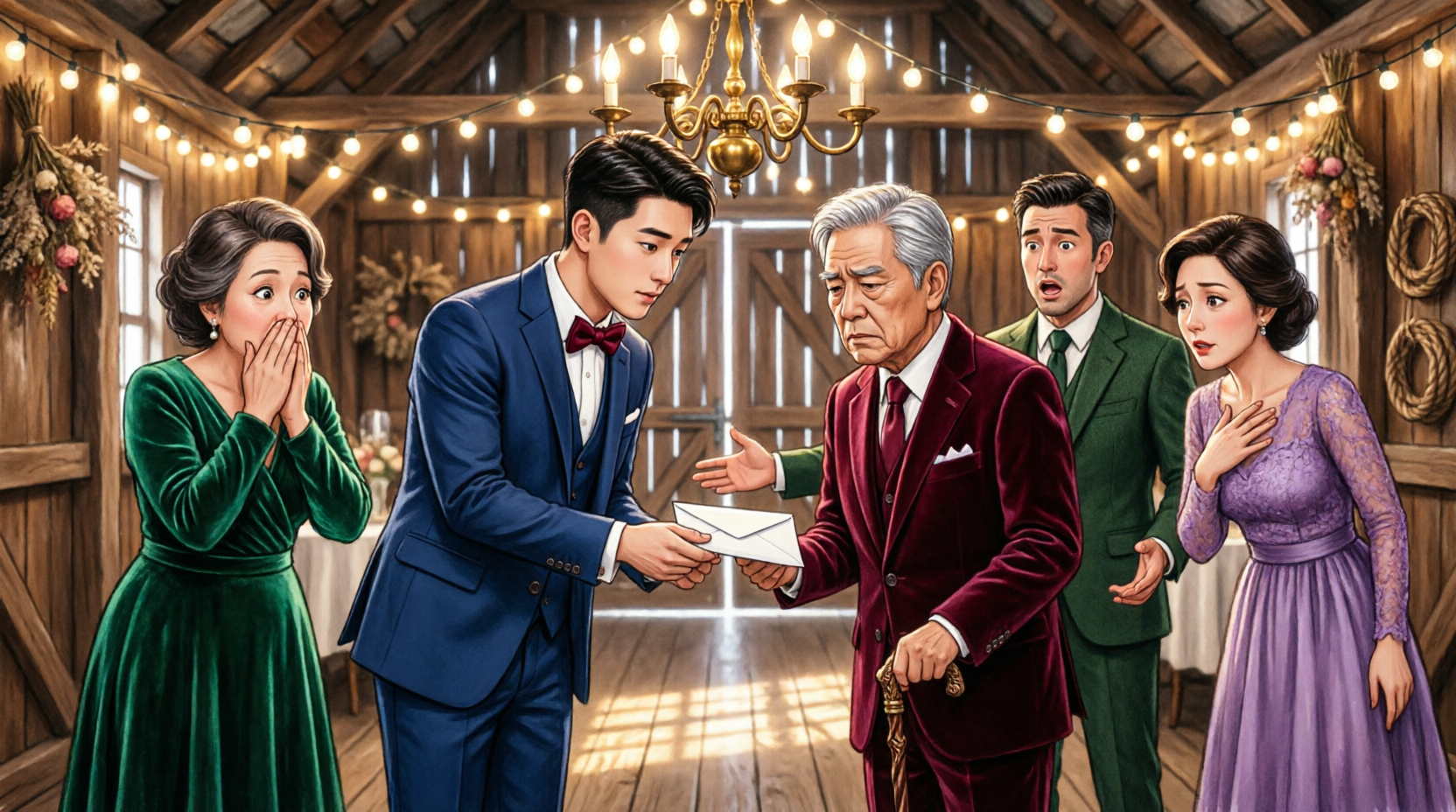
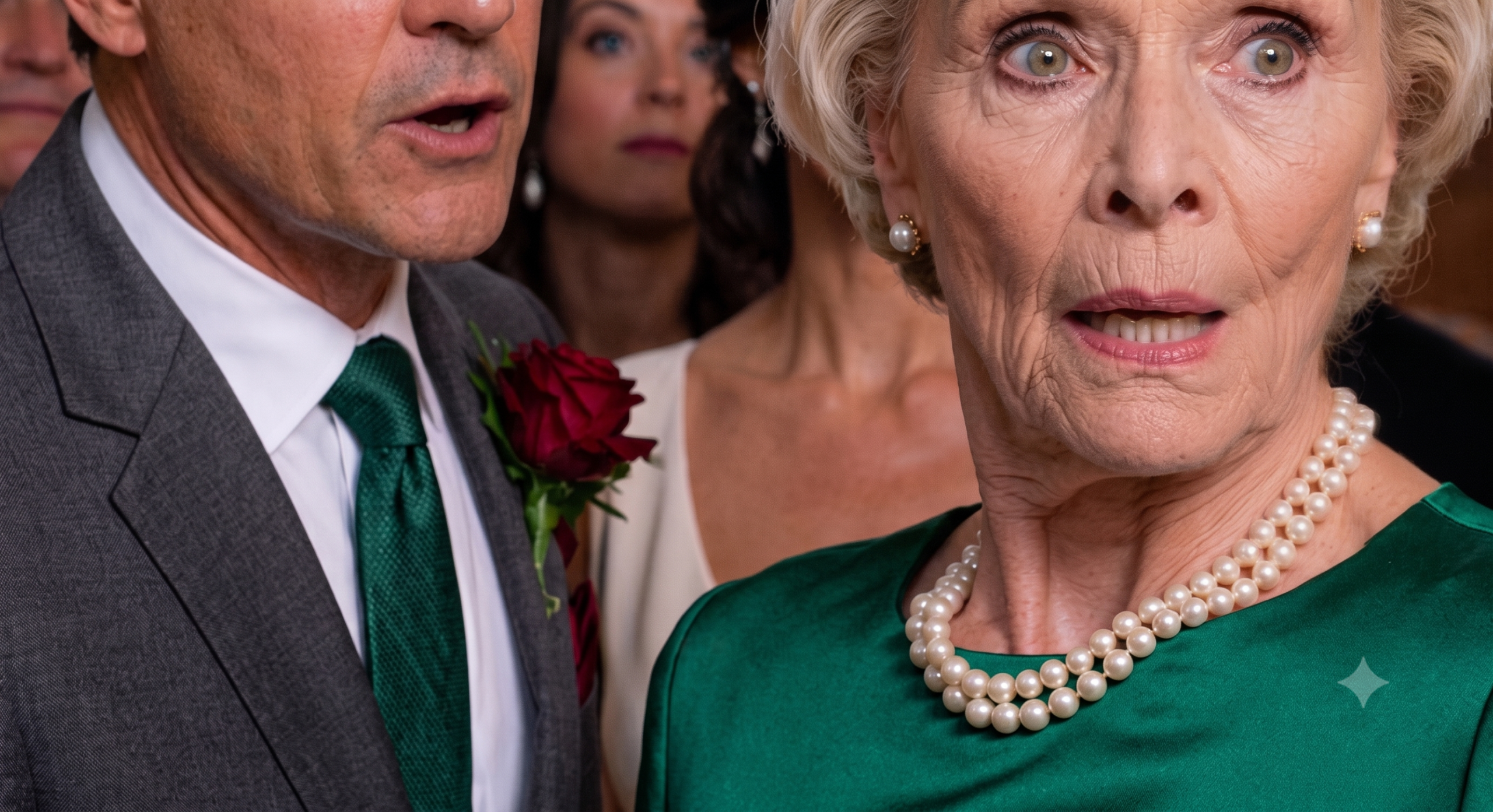
He walked right to the champagne bucket—silver, sweating, packed with melting ice—and dropped that book straight in like it was garbage he didn’t want on his hands.

The band was still playing. The tent lights were warm and golden. Newport ocean air drifted in, salty and expensive, the kind of air people pay for. And still, when the passbook hit the slush of ice and bubbly, the whole place erupted like it was the punchline of the year.

Laughter. Cheers. A few phones lifted higher to record it.

My father smiled into the spotlight as if humiliation was a party favor he’d generously handed out.

For a second, I felt my body do what it’s done my whole life around him—shrink, disappear, make room. The old reflex. The quiet daughter. The one who doesn’t make trouble. The one who keeps the peace so everyone can pretend the peace exists.

Then I saw my grandfather’s handwriting on the inside cover, blurred under the film of champagne, and something inside me went sharp.

I didn’t scream. I didn’t plead. I didn’t give him the satisfaction of drama.

I stepped forward, plunged my hand into the freezing water, and grabbed the passbook like it was a pulse I refused to lose. Ice burned my skin. Champagne soaked up my sleeve, and the bodice of my dress darkened with wet, heavy silk.

I lifted the book out. Pages stuck together, swollen and trembling. The cover sagged in my grip.

A few people gasped—more at my dress than at what he’d done. That’s how it always is. They care about the spectacle, not the cruelty.

My father leaned toward the mic again, amused.

“Look at her,” he said, like I was entertainment. “Always saving what can’t be saved.”

The crowd laughed harder.

I looked at him one last time—really looked—and saw what I’d always been trained not to see: not a king, not an untouchable man, just a bully who needed an audience.

I turned and walked out without looking back.

Behind me, the tent kept glowing. The music kept playing. Glasses kept clinking. My wedding continued like I was never the point of it.

Three Days Later

I walked into the First National Bank in downtown Boston with that passbook sealed inside a plastic Ziploc bag.

The lobby was all marble and hush, the kind of quiet that makes you lower your voice even when you’re not speaking. Back Bay always feels like that—polished, careful, built for people who don’t like mess. The air smelled faintly of lemon cleaner and old money.

My coat was thrifted, slightly too thin for the February bite. My hair was still damp from my shower, because in my world you shower and go, no matter what’s happening inside you.

I’m Alyssa Mercer, and at twenty-nine, I’ve spent my life making myself invisible.

As a trauma nurse, I’m good at it. I know how to step aside while louder people take up space. I know how to keep my face steady when a room is spinning. I’ve learned that if you look calm enough, people assume you’re safe—even when you’re not.

“I need to check the balance on this,” I said, sliding the bag across the polished counter. “It was a gift.”

The teller—a girl no older than twenty—picked it up with two fingers, her nose wrinkling slightly. Not because she was mean. Because people like her aren’t trained to expect something valuable to look like this.

She turned it over once, then typed the account number, probably expecting an error message or a balance of zero.

At first, her face stayed neutral, the way you learn to keep it when you’re customer-facing and tired.

Then she stopped.

Her fingers hovered over the keys. She blinked. Leaned closer to the screen as if she didn’t trust her own eyes.

And the color drained from her face so quickly it was like watching a tide pull out.

“Ma’am,” she whispered, voice trembling. “Please wait here. Do not leave.”

Within seconds, the branch manager appeared—tight smile, expensive suit, quick steps—and behind her came a man in a bespoke suit with the kind of posture that says he’s used to people moving out of his way.

The regional director.

“Miss Mercer,” the director said, and even the way he said my name carried weight. “Please. Come with us.”

He gestured toward a heavy steel door in the back. Not a decorative door. A real one.

“We’ve been waiting for this account to be claimed for a very long time,” he added, and his voice lowered like the walls had ears.

They led me into a private viewing room that smelled of old paper, dust, and faint metal—like history trapped in air-conditioned silence. A leather chair waited at the table.

As they went to retrieve the file, I sat down and closed my eyes.

And suddenly, I wasn’t in a bank vault.

I was twelve years old again.

I was kneeling on the hardwood floor of my father’s study in our Newport house, the room that always smelled like leather and scotch and power.

Richard sat in his armchair, swirling a glass of scotch, watching me like I was a show he’d paid for.

He had spilled it on purpose. I knew he had. But the rule in our house was simple: Girls clean. Boys conquer.

Hunter was on the sofa, laughing at a video game, feet propped up on the table I’d just polished. He didn’t even glance my way.

“You missed a spot, Alyssa,” Richard said softly.

He didn’t yell. He preferred his hurt to be quiet, controlled, undeniable. He liked to see the light go out in my eyes in slow motion.

When Grandpa Samuel tried to help me up, I felt his hand hover near my shoulder, gentle and uncertain.

Richard’s voice snapped through the room like a whip.

“Touch that rag, old man, and I’ll put you in a state home so fast you won’t even have time to pack your pills.”

My grandfather froze. His face tightened with a kind of grief that I still don’t have words for.

I scrubbed until my knuckles went raw that day. I scrubbed because I believed I had no value outside of what I could endure.

The heavy clank of the vault door brought me back.

I opened my eyes.

The director returned with a thick file—old, heavy, the kind of folder that looks like it carries decades inside it.

“Your grandfather didn’t just open a savings account, Miss Mercer,” he said. “In 1982, he established a Totten trust.”

He flipped the file open.

“He was an early investor. Apple. Microsoft. He funneled every dividend back into the portfolio—untouched—for forty years.”

The director turned the document toward me.

“The current value of the trust, legally payable to you upon his death, is $12,400,000.”

The number sat there on the page, black and absolute.

I thought about the champagne bucket. I thought about my father’s voice, bright with mockery, calling this fortune trash.

He had held twelve million dollars in his hand and thrown it away because he couldn’t imagine value existing outside his control.

“Is there anyone else listed on the account?” I asked.

“No,” the director said. “Just you. It’s entirely yours.”

I touched the passbook through the plastic, the ruined pages like softened skin. It wasn’t just money.

It was proof that my grandfather had seen me.

For the first time, I wasn’t holding a rag.

I was holding a weapon.

The Truth Behind the Empire

My husband Luke didn’t look up when I walked through the door that evening.

He was hunched over his laptop at the kitchen island, surrounded by a fortress of printed spreadsheets and highlighted documents.

Luke isn’t just a data analyst. He’s a forensic architect of secrets. He finds the cracks in foundations nobody else wants to admit are there.

“It’s not an empire, Alyssa,” Luke said, finally turning the screen toward me. His voice was flat, almost gentle, which meant the truth was sharp. “It’s a Ponzi scheme built on bridge loans and ego.”

I leaned in, expecting to see wealth.

Instead, I saw red.

Red flags. Red negative balances. Red timelines marked overdue.

“He’s insolvent,” Luke said. “The mansion in Newport—foreclosure proceedings started three weeks ago.”

He clicked again.

“The family trust he claims to manage? It’s empty. He’s been moving the same fifty thousand dollars between six different shell accounts to make it look like he has liquidity.”

Luke’s finger traced the lines like he was reading a map to a buried crime.

“And here’s the kicker,” he said, quieter. “He’s being audited. The IRS sent him a notice of deficiency last month.”

The man who had thrown my grandfather’s legacy into a champagne bucket wasn’t a titan of industry.

He was a drowning man, flailing in a sea of debt, still pretending he was swimming.

My phone rang.

It was him.

I put it on speaker.

“Alyssa.” Richard’s voice filled our kitchen like he owned it. “I’ve been thinking about that shack your grandfather left you. The cottage.”

The word “shack” made something in my chest tighten. The cottage wasn’t a shack. It was cedar and salt air and my grandfather’s worn hands.

“What about it?” I asked.

“I’m going to do you a favor,” Richard said. “I’ve spoken to my real estate attorney. We can liquidate it quickly. I’ll handle the sale and invest the proceeds into the family business so you actually get a return. You’re a nurse, honey. You don’t know the first thing about property taxes.”

He wanted the cottage. It was worth maybe three hundred thousand dollars. Peanuts to a man who called himself a billionaire—but a lifeline to a desperate fraudster hunting for cash.

“I’m not selling, Dad,” I said.

The mask slipped.

“You listen to me,” he snarled. “That old man was mentally incompetent when he signed that deed. I have witnesses ready to testify that you manipulated him. If you don’t sign that transfer paperwork by Friday, I will sue you. I will drag you through probate court until you’re bankrupt.”

A pause, heavy and ugly.

“Do you understand me? You’re out of your depth, Alyssa.”

He wasn’t protecting me. He was hunting for liquidity—any asset he could seize and sell.

“I understand perfectly,” I said.

“Good,” he snapped. “I’ll have the papers sent over.”

The line clicked dead.

I looked at Luke.

He wasn’t scared.

He was smiling—a cold, sharp smile that matched the feeling rising in my chest.

Richard thought he was bullying a helpless daughter.

He didn’t know he had just handed us the blueprint to his own destruction.

The Trap

I waited twenty-four hours before calling him back.

Silence is a powerful amplifier. It lets the desperation breed.

Luke and I spent that day in preparation. Not the kind that looks dramatic from the outside. No screaming. No breakdowns.

We moved like people in a controlled room, hands steady, decisions clean.

When I finally dialed Richard’s number, I put on the performance of my life.

I didn’t summon the confident woman who’d walked out of the bank vault.

I summoned the twelve-year-old girl terrified of spilling scotch.

“Dad,” I whispered when he picked up. I let my breath catch just enough to sound like panic. “I’m sorry I hung up. I… I didn’t know what to say.”

“You should be sorry,” he snapped.

But the edge was duller now. He was listening.

“It’s not just the cottage,” I said. “I went to the bank. The passbook. It wasn’t empty.”

The line went dead silent.

“How much?” he asked.

The word came out too quickly. Too hungry.

“Twelve million,” I choked out. “But, Dad… I don’t know what to do. The bank manager started talking about capital gains taxes and audits. I think I’m in trouble. If the IRS finds out I have this, they’ll take half of it.”

It was the perfect bait.

“Listen to me very carefully, Alyssa,” he said, his voice shifting like a predator putting on a friendly face. “Do not sign anything with the bank. Do not talk to any lawyers. You bring that paperwork to me. I can shelter it under the family trust. I can make the tax liability disappear.”

Then, softer: “I’m doing this for you, sweetheart. To protect you.”

Protect me? No. He wanted to swallow the inheritance whole.

“Can we… can we do it tonight?” I asked.

“No,” he said too quickly. “I have the Man of the Year gala on Saturday in Boston. Bring the documents there. We’ll sign everything in the VIP suite before the speeches. I’ll announce the expansion of the family fund.”

He wanted the audience. He wanted the glory of announcing a twelve-million-dollar windfall as if it was the result of his brilliance.

“Okay,” I said. “Thank you, Dad.”

“That’s what fathers are for,” he replied, pleased with himself.

I hung up.

The fear slid off my face like a costume I no longer needed.

“He took it,” I said.

Luke nodded once, sharp and satisfied.

By the time Saturday came, everything was ready.

Part2: Grandpa gave me an old passbook for my wedding. “That bank closed in the ’80s,” Dad said, snatching it away. He’s perplexed. Grandpa died shortly after. In any case, I visited the bank.

The Gala

The Man of the Year charity gala was held in the grand ballroom of the Fairmont Copley Plaza. Crystal chandeliers dripped light onto the shoulders of Boston’s elite. Cameras hovered like insects, hungry for a moment.

I arrived at 7:55 p.m.

I wasn’t wearing the beige, sensible clothes Richard preferred me in.

I was wearing a structured red dress that cost more than my car. The color wasn’t an accident. It was a statement: I’m here, and I’m not shrinking.

I walked through the crowd, not around it.

Heads turned. Eyes followed.

Richard was at the front of the room, flanked by two senators. He looked radiant—the glow of a man who thought he had just pulled off the heist of the century.

When he saw me approaching, his smile didn’t waver, but his eyes narrowed.

“You’re late,” he hissed. “Do you have it?”

“I have it,” I said evenly.

I held out the blue leather presentation folder.

He snatched it from my hand, fingers impatient.

“Is it all there?” he asked. “The transfer authorizations, the power of attorney?”

“It’s all there, Dad,” I said. “Just like you asked. It puts the entire twelve million under the control of the family trust. You just need to sign as the sole trustee.”

He opened the folder right there, standing beside the stage.

He didn’t read the clauses. He didn’t check the definitions.

He just saw the signature line and the shape of victory.

A smart man would have asked why the document carried language that tied responsibility backward through years of transactions.

But Richard wasn’t smart. He was arrogant.

He pulled a Mont Blanc pen from his pocket like it was a scepter.

“You did the right thing, Alyssa,” he said. “Finally.”

He signed with a flourish.

Then he handed the folder back to me, dismissive, already turning toward the stage.

“Go find a seat in the back,” he ordered. “I have an announcement to make.”

I didn’t retreat to the back.

I moved to the side, where the light caught the glossy paper, and I photographed the signature page with steady hands.

I hit send.

Across the city, Luke received it, attached it to the complaint package we’d prepared, and sent it where it needed to go.

Moments later, Richard took the microphone.

“Ladies and gentlemen,” he announced proudly, “tonight we launch a historic expansion of the Mercer Family Foundation. A twelve-million-dollar investment in this city’s future.”

He was confessing in real time, in front of five hundred witnesses.

He claimed ownership of funds I had just tied to his own trail of fraud.

My phone buzzed.

It’s done.

Richard was still smiling when the sixty-foot LED screen behind him flickered.

The foundation logo vanished.

Replaced by a Department of Justice seal stamped with red letters:

FEDERAL ASSET SEIZURE IN PROGRESS.

The room didn’t erupt. It collapsed.

Applause died mid-breath. Conversations snapped shut.

Richard turned, confused rather than afraid.

The ballroom doors burst open.

Six IRS agents swept down the aisle, moving with clean certainty.

“Richard Mercer,” the lead agent ordered, “step away from the podium.”

Richard clutched the mic. “Do you know who I am?”

“We do,” the agent replied, calm as marble. “You’re the sole trustee who signed an affidavit accepting responsibility for twenty years of unreported accounts.”

Richard spun, eyes hunting, until they landed on me.

“She tricked me,” he shouted. “My daughter—”

“Save it for the grand jury,” the agent said.

Handcuffs snapped shut with a sound that cut through the room sharper than any scream.

Three Weeks Later

This morning, Newport smells like salt and fresh coffee, the kind that tastes better when you’re not swallowing fear with it.

I’m sitting on the porch of my cottage. Mine.

The roof is fixed. The ivy is gone. The porch boards don’t creak in apology anymore.

Richard was denied bail. His assets are frozen. His empire liquidated.

Hunter took a plea. No inheritance awaits him.

Luke sits beside me, shoulder warm against mine.

“The trust transfer is complete,” he says. “It’s all yours. What do you want to do with it?”

I look out at the ocean.

Twelve million dollars.

The number doesn’t feel like a crown. It doesn’t feel like revenge.

It feels like a locked door finally opening.

“Nothing,” I say. “Let it grow. I’m still a nurse. Still Alyssa. The money isn’t power. It’s protection.”

I breathe in, slow and steady.

“Family isn’t blood,” I say. “It’s who stands with you when the vault opens.”

More Details
My husband had a vasectomy, yet two months later, I got pregnant. He called me a traitor, left me for another woman…
Jul 15, 2026

My husband had a vasectomy, yet two months later, I got pregnant. He called me a traitor, left me for another woman…

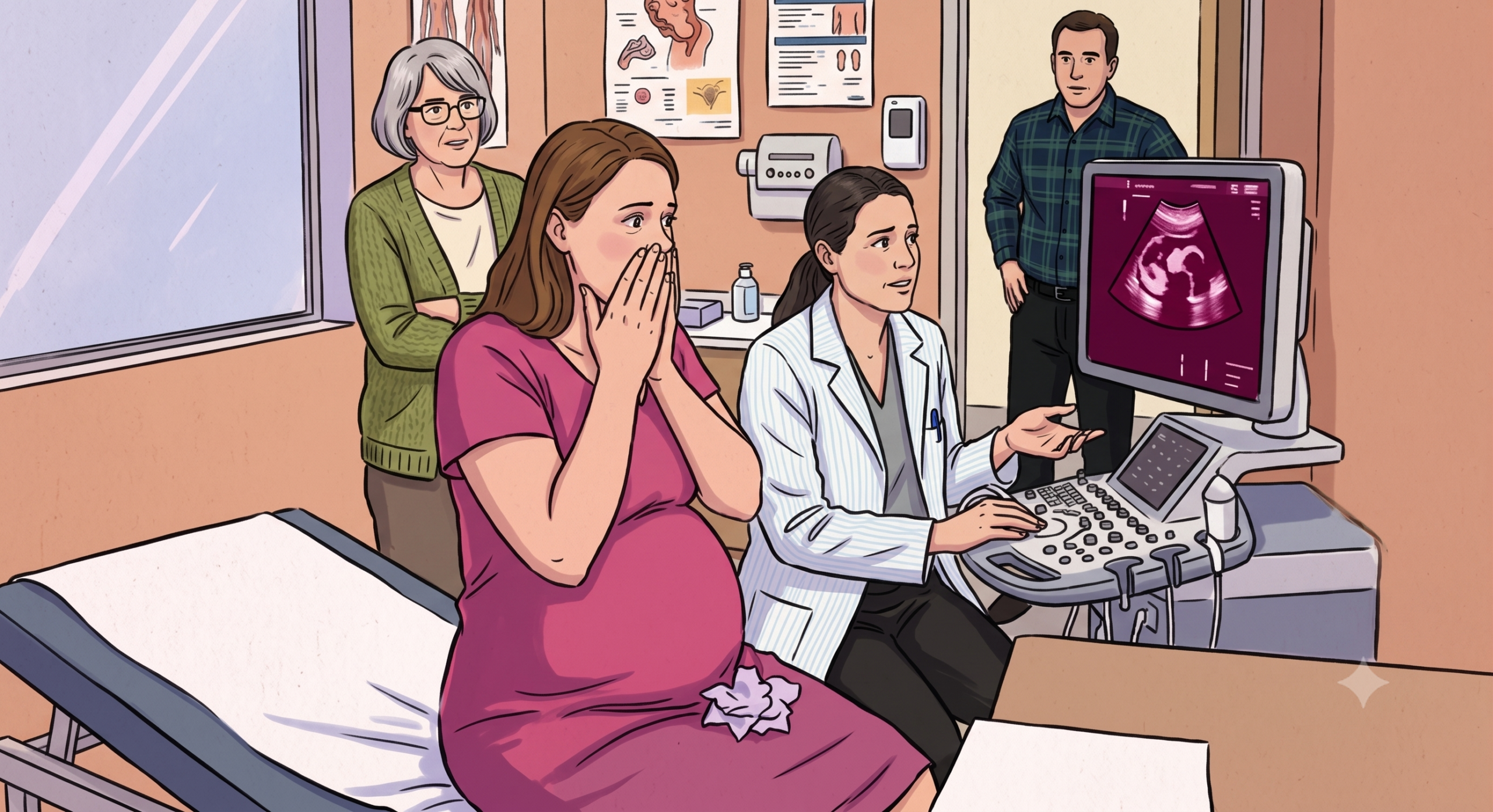
“Mr. Diego, before you continue insulting your wife… you need to take a very close look at what is appearing right here.”
Diego’s arrogant smile froze.

For the first time since he walked into the room, he actually looked at the screen.
Paula crossed her arms and gave a small, impatient laugh.
“What are we supposed to be looking at?” she asked. “A baby? We already know there’s a baby.”
Dr. Salinas did not even glance at her.

She kept her eyes on Diego.
“Do you see this measurement?”
Diego stepped closer, though his face still carried that smug confidence of a man who believed medicine and cruelty were standing on his side.
“Yes,” he said. “So?”
Dr. Salinas pointed to the screen.
“This pregnancy is not as recent as you think.”
My breath caught.
Diego frowned.

“What does that mean?”
The doctor clicked a few buttons and enlarged the image.
“It means the gestational development does not match conception after your vasectomy.”
The room went silent.
Even the machine seemed louder now.
The heartbeat filled the air.
Fast.
Strong.
Alive.
Diego’s eyes narrowed.

“Say that clearly.”
Dr. Salinas turned toward him fully.
“Based on the ultrasound, your wife appears to have conceived before your vasectomy.”
For one impossible second, nobody moved.
The words entered the room and settled there like a judge taking a seat.
Before.
Before the surgery.
Before Diego called me a traitor.
Before his mother came with trash bags.
Before Paula smiled across a coffee shop table and stroked her own flat stomach like she had already won.
Before the neighborhood whispered.

Before I slept with a chair against my door.
Before all of that, this baby had already existed.
I covered my mouth.
A sob escaped me.
Not the broken kind from the bathroom floor.
Not the desperate kind from humiliation.
This was something else.
Relief so powerful it hurt.
Diego blinked.
“No.”
Dr. Salinas remained calm.
“Yes.”

“No, that’s not possible.”

“It is very possible,” she said. “Vasectomy does not retroactively prevent conception.”

Paula’s face changed first.

The smugness drained out of her mouth.

She looked at Diego.

“You said it was impossible.”

Diego did not answer her.

He was staring at the screen as if it had betrayed him personally.

Dr. Salinas continued.

“And even if conception had occurred after the vasectomy, Mr. Diego, pregnancy after a recent vasectomy is not impossible until post-procedure semen analysis confirms sterility. Patients are always instructed to use protection until clearance is confirmed.”

She looked directly at him.

“Were you cleared?”

Diego’s jaw flexed.

I already knew the answer.

He had never gone back for the follow-up test.

I had reminded him twice.

Both times, he waved me off.

“Laura, I know my own body.”

Now that arrogance stood naked in the ultrasound room.

Dr. Salinas repeated, colder this time.

“Were you medically cleared?”

Diego looked away.

Paula whispered, “Diego?”

He snapped, “Be quiet.”

The doctor’s face hardened.

“Do not speak that way in my examination room.”

For some reason, that almost made me cry again.

A stranger had defended me with more dignity than my husband had given me in weeks.

Diego dragged both hands through his hair.

“This doesn’t prove the baby is mine.”

The words came out weaker this time.

Dr. Salinas looked at him as if he had disappointed her professionally and morally.

“No ultrasound can prove paternity. But it can prove that your accusation based solely on the timing of your vasectomy was medically ignorant.”

Paula flinched.

I sat up slowly, wiping the gel from my belly with shaking hands.

For the first time since Diego had placed his coffee cup down and looked at me like garbage, I felt my spine straighten.

I looked at him.

“You left me for her before asking one doctor one question.”

Diego opened his mouth.

Closed it.

Paula’s eyes flicked between us.

Then the second shock arrived.

Dr. Salinas turned the screen slightly.

“There is one more thing.”

My heart jumped.

I grabbed the edge of the examination table.

“What?”

She softened immediately.

“The baby’s heartbeat is strong. But I need to show you something else.”

Diego muttered, “What now?”

The doctor moved the probe slowly.

A second dark shape appeared beside the first.

My mind did not understand it at first.

Then I saw another tiny flicker.

Another rhythm.

Another life.

Dr. Salinas said gently, “Laura… there are two babies.”

The room disappeared.

Two.

I stared at the screen.

One heartbeat.

Then another.

Two tiny pulses of life beating inside me while the man who created this chaos stood there with his mistress at his side.

“Twins?” I whispered.

Dr. Salinas smiled softly.

“Yes. Twins.”

My hands flew to my stomach.

I began crying so hard I could barely see.

Two babies.

Two little miracles.

Two children Diego had called another man’s without even seeing them.

Paula made a strangled sound.

Diego stared at the screen, pale now.

Completely pale.

“Twins,” he repeated.

It was not joy in his voice.

It was fear.

Because one baby could be dismissed in his mind as an inconvenience.

Two babies meant consequence.

Two babies meant child support.

Two babies meant public truth.

Two babies meant the story he had built with Paula was no longer romantic.

It was evidence of his stupidity.

Dr. Salinas printed the ultrasound images.

She handed them to me, not to him.

“Laura, I want you to schedule bloodwork and another scan. You’ll need careful monitoring.”

I nodded through tears.

Diego stepped forward.

“Let me see.”

I pulled the photos close to my chest.

“No.”

His face darkened instinctively.

“What do you mean, no?”

“I mean no.”

He stared at me as if the word did not belong in my mouth.

For eight years, I had softened my voice for him.

Explained.

Apologized.

Tried to keep peace.

Not now.

Not with two heartbeats still echoing in my ears.

“You walked in here to humiliate me,” I said. “You don’t get to hold the first picture of my babies.”

His jaw tightened.

“Our babies.”

I laughed.

The sound surprised all of us.

Even me.

“Our?”

Paula went very still.

Diego swallowed.

“Laura, listen—”

“No. You listen.”

My voice shook, but it did not break.

“You called me a traitor. You left me for your coworker. You let your mother call me a disgrace. You posted online that I was a lie. You brought Paula to a meeting where you tried to strip me of my house, my dignity, and my child’s rights.”

I looked down at my belly.

“Children’s rights.”

Diego closed his eyes.

“Laura, I was angry.”

“You were cruel.”

He opened them.

“That’s not fair.”

I almost smiled.

“Fair? Diego, fair is what you ask for before you burn the house down, not after you realize you’re still inside it.”

Paula’s face flushed.

“Don’t speak to him like that.”

I turned to her.

“And you don’t speak to me at all.”

Her mouth opened.

I raised one hand.

“No. You came into my ultrasound appointment behind my husband, proud to watch me be humiliated. You stood there waiting for a doctor to measure my shame. The only reason you’re quiet now is because the truth pointed at you instead.”

Dr. Salinas stepped between us slightly.

“This appointment is over. Mr. Diego, Ms. Paula, you need to leave.”

Diego did not move.

“Laura, we need to talk.”

I looked at the doctor.

“Can you call someone from reception?”

She nodded immediately.

Within a minute, a nurse appeared at the door.

Diego looked shocked.

As if he could not believe I would remove him from a room he had invaded.

“I’m your husband,” he said.

I held the ultrasound photos tighter.

“For now.”

His face changed.

The same way it had when he saw the pregnancy test.

Except this time, he was the one standing accused.

Paula grabbed his arm.

“Diego, let’s go.”

He pulled away from her without thinking.

She noticed.

So did I.

So did the doctor.

That small movement was the first crack in the fantasy they had built together.

Diego looked at me one last time.

His voice dropped.

“I’ll call you.”

“No,” I said. “You’ll call my lawyer.”

The nurse escorted them out.

When the door closed, I finally broke.

Not prettily.

Not quietly.

I folded over my belly and sobbed.

Dr. Salinas sat beside me and placed a hand on my shoulder.

“You are safe here,” she said.

Safe.

I had not realized how long it had been since I felt that word.

I left the clinic with two ultrasound photos in my purse and a new fire in my chest.

Outside, Diego was waiting near the parking lot.

Paula stood several feet away from him, arms crossed, face hard.

They were arguing.

I could hear Paula’s voice.

“You told me she cheated.”

Diego answered sharply, “I thought she did.”

“You thought? You destroyed your marriage over something you thought?”

He saw me and stopped talking.

I walked past both of them.

Diego stepped toward me.

“Laura.”

I did not stop.

He followed.

“Laura, wait. Please.”

Please.

He had found that word quickly.

Too quickly.

I turned around.

“What?”

His face looked different now.

Not sorry exactly.

Shaken.

“I need time to process this.”

I stared at him.

“That’s funny. You didn’t need time to condemn me.”

Paula came closer.

Diego ignored her.

“I made a mistake.”

“No, Diego. You made a choice. Many choices.”

His lips pressed together.

“I didn’t know the timeline.”

“You didn’t ask.”

“I was hurt.”

“You were cheating.”

Paula gasped.

Diego’s eyes flashed.

“That’s not—”

“What? True? You moved in with her the same night I told you I was pregnant. Did she already have a toothbrush at her apartment for you?”

His silence answered.

Paula looked away.

I nodded slowly.

“That’s what I thought.”

Diego lowered his voice.

“Let’s talk at home.”

I laughed.

“You don’t live there anymore.”

“I can come back.”

“No.”

His eyes sharpened.

“Laura, those are my children.”

I stepped closer.

The parking lot wind lifted my hair.

For the first time in weeks, I did not feel like a discarded wife.

I felt like a mother.

“You called them another man’s children before you knew they had heartbeats. Do not use them now as a key to the door you slammed behind you.”

He went pale.

Then I turned and walked to my car.

That evening, I called a lawyer.

Her name was Valeria Montes.

She was recommended by a woman from my old office who had once divorced a man so politely dangerous that even her dog had needed therapy.

Valeria listened without interrupting.

The vasectomy.

The pregnancy.

The accusations.

The mistress.

The social media post.

The coercive divorce agreement.

The ultrasound room.

The twins.

When I finished, she said only one thing.

“Do not sign anything he gives you, and do not meet him alone.”

“I won’t.”

“Good. Send me every message, every post, every document, and the ultrasound report. We are going to control the story with facts.”

Facts.

The word felt like clean water.

By midnight, Diego had called twelve times.

I did not answer.

He sent messages.

Laura, please. I panicked.

We need to talk for the babies.

I never meant for things to go this far.

Then:

My mother is upset. Please don’t tell people about the twins yet.

There it was.

Not love.

Not remorse.

Management.

I replied once.

All communication goes through my attorney.

Then I blocked him.

The next morning, I woke to banging on the front door.

My whole body jolted.

I checked the camera.

My mother-in-law.

Of course.

Dolores stood on my porch in a burgundy dress with her church purse clutched in both hands, face arranged into righteous suffering.

I did not open the door.

I spoke through the camera.

“What do you want?”

She looked startled.

“Laura, open this door.”

“No.”

“Don’t be childish. We need to discuss what happened.”

“What happened is that your son abandoned his pregnant wife and accused her falsely.”

Her mouth tightened.

“Diego was devastated.”

“Diego was wrong.”

She glanced toward the street.

Always worried about witnesses.

“Lower your voice.”

“No.”

Her face hardened.

“You think twins give you power now?”

I placed one hand over my belly.

“They give me responsibility. You’re the one thinking about power.”

She stepped closer to the camera.

“Listen to me carefully. Diego made a mistake, yes. But he is the father. You will not keep those children from our family.”

“Our family?” I asked.

“Their blood is ours.”

I felt something cold move through me.

There it was again.

Possession.

Not love.

Ownership.

“You called them a disgrace last week,” I said.

Dolores lifted her chin.

“I was misinformed.”

“No. You were eager.”

She flushed.

“I want to come inside.”

“No.”

“I am your mother-in-law.”

“For now.”

Her eyes widened.

Then she whispered, “You will regret humiliating Diego.”

I smiled into the camera.

“Thank you. My lawyer will enjoy that recording.”

Dolores stepped back as if the door itself had slapped her.

She left.

I sent the footage to Valeria.

By afternoon, Valeria filed the first response.

A formal notice rejecting Diego’s proposed agreement.

A demand that he preserve all financial records.

A notice regarding marital abandonment.

A documentation request related to his vasectomy, follow-up instructions, and failure to complete medical clearance.

A warning regarding harassment by third parties.

By evening, Diego unblocked himself through another number and sent:

You’re making me look like a monster.

I stared at the screen.

Then I typed:

No. I’m documenting how you behaved.

I did not send more.

I did not need to.

The next weeks became strange.

Publicly, Diego tried to soften the story.

He deleted the restaurant photo with Paula.

Too late.

Screenshots existed.

He stopped posting.

He began telling mutual friends that “things were complicated” and he had “reacted emotionally to confusing medical circumstances.”

Confusing medical circumstances.

That was how men like Diego dressed cruelty for company.

Paula did not stay silent.

That surprised me.

Three days after the ultrasound, she sent me a message.

I didn’t know he had not been medically cleared. I didn’t know he moved in with me before speaking to a doctor. I believed what he told me. I’m sorry for coming to the appointment. I was cruel.

I stared at the message for a long time.

An apology did not erase what she had done.

But it was more than Diego had given me.

I replied:

You helped him humiliate me. Remember that before you call yourself deceived.

She answered:

I will.

Two weeks later, Paula moved out of her apartment temporarily because Diego refused to leave after she ended things.

I heard that from Valeria, who heard it from Paula’s attorney.

Life, apparently, had a sense of irony.

My first trimester was brutal.

The nausea came in waves.

The exhaustion was so deep I sometimes cried because standing up felt impossible.

But every appointment showed two strong heartbeats.

I named them in my head.

Not real names yet.

Just secret names.

Sun and Moon.

One twin always seemed more active on the ultrasound.

That one was Sun.

The calmer one became Moon.

At twelve weeks, Valeria arranged a meeting with Diego’s lawyer.

Diego wanted to attend.

I agreed only if it was recorded and held in Valeria’s office.

He arrived wearing the face of a repentant man.

Soft eyes.

Unshaven jaw.

No Paula.

No mother.

He looked at my belly immediately.

I wore a loose green dress.

Not for him.

For me.

His voice broke when he said my name.

“Laura.”

I sat across from him.

“Diego.”

For a second, I remembered the man I had married.

The one who danced badly in the kitchen.

The one who cried when our dog died.

The one who held my hand through my father’s funeral.

I hated that memory.

Not because it was false.

Because it was not enough.

Diego folded his hands.

“I want to apologize.”

Valeria sat beside me, pen ready.

I nodded once.

He looked at me.

“I was shocked. I thought the vasectomy meant… I thought there was no way. I let fear and pride control me.”

I waited.

“And?”

He swallowed.

“I accused you. Publicly and privately. I left. I involved Paula. I allowed my mother to insult you. I tried to pressure you into signing an unfair divorce agreement.”

His lawyer shifted uncomfortably.

Good.

Diego continued.

“I was wrong.”

The words landed.

Not deeply.

But they landed.

I looked at him.

“Do you understand what you did to me?”

His eyes filled.

“I think so.”

“No. You don’t.”

He flinched.

“You humiliated me while I was newly pregnant. You made me afraid of my own neighbors. You made me afraid my children would be born into hatred. You made me sleep with a chair against the door.”

His face crumpled.

“I didn’t know that.”

“You didn’t care to know.”

Silence.

Then Diego whispered, “Can we fix this?”

There it was.

The question I had dreaded.

Part of me wanted to scream no.

Part of me wanted to go back to before the coffee cup, before Paula, before the post, before the ultrasound room.

But life does not reverse because a man finally feels consequences.

“No,” I said quietly.

His face fell.

“We cannot fix what we had. It’s gone.”

He stared at the table.

I placed one hand over my belly.

“But we can decide what kind of father you are allowed to become.”

His eyes lifted.

Allowed.

That word mattered.

Valeria slid a document forward.

Temporary support.

Medical expense coverage.

Communication through a parenting app.

No direct unscheduled visits.

No involvement from Dolores without my consent.

Public correction of his false accusation.

Therapy.

Completion of vasectomy follow-up and full medical disclosure.

Diego looked at the list.

His lawyer looked pained.

I felt no sympathy.

Diego read one clause aloud.

“Public correction?”

“Yes.”

He looked at me.

“You want me to post about this?”

“You posted when you thought I was a liar.”

His shame returned.

“You want revenge.”

“No,” I said. “I want the lie removed from where you placed it.”

He nodded slowly.

Two days later, Diego posted:

Weeks ago, I publicly implied that my wife Laura had betrayed our marriage because she became pregnant after my vasectomy. I was wrong. I had not completed the required medical follow-up and did not understand the timing. I accused her unfairly and caused harm. Laura did not betray me. I did.

The neighborhood went silent.

Then it exploded.

Messages poured in.

Some from people apologizing.

Some pretending they had never judged me.

Some saying they “always knew there was more to the story.”

I did not answer most of them.

My peace was not a community project.

Dolores called Diego screaming after the post.

He told me through the parenting app.

I responded:

That is between you and your mother. Do not bring it to my door.

At sixteen weeks, we learned the twins were girls.

Sun and Moon became realer.

Diego cried at the appointment.

I let him attend because he had followed the rules for a month.

He stood on the other side of the room, hands clasped, waiting for permission to come closer.

When the doctor said “two girls,” he covered his face.

I felt nothing simple.

Not satisfaction.

Not forgiveness.

Not love.

Just sadness for the father he could have been from the start.

After the appointment, he asked if he could have a copy of the ultrasound.

I hesitated.

Then gave him one.

He held it like it was made of glass.

“I’m sorry,” he said.

“I know.”

He looked hopeful.

That was dangerous.

I added, “Sorry is a beginning. Not a bridge.”

His shoulders sank.

But he nodded.

Paula testified in the divorce proceedings.

I did not expect that.

She provided messages from Diego proving he had been involved with her before the pregnancy test.

Proof that he had considered leaving me before the vasectomy.

Proof that his outrage had been convenient.

Not invented, maybe.

But convenient.

He had used the pregnancy as a moral exit ramp.

Paula’s statement hurt.

Not because I wanted Diego back.

Because betrayal is rarely a single knife.

It is a drawer full of them.

The divorce became final when I was twenty-four weeks pregnant.

I wore a blue dress.

Valeria sat beside me.

Diego sat across the courtroom looking hollow.

The judge approved support, medical cost coverage, future custody evaluation, and protective communication boundaries.

The house remained mine.

Not because Diego gave it to me.

Because my name was on the deed, my inheritance had paid the down payment, and his lawyer could not rewrite history no matter how hard he tried.

Afterward, Diego approached carefully.

“Laura.”

Valeria looked at me.

I nodded.

He stopped several feet away.

“I know today is not something to celebrate,” he said.

“No.”

“But I hope someday the girls know I tried to become better.”

I looked at him.

“Then become better when nobody is watching.”

He nodded.

I left.

At thirty-two weeks, complications began.

Twin pregnancies are not gentle.

My blood pressure rose.

My feet swelled.

I could not sleep.

One night, I woke with pain sharp enough to make me gasp.

I called the emergency line.

Then, after a moment, I called Diego.

He answered on the first ring.

“What’s wrong?”

“I need to go to the hospital.”

“I’m coming.”

“No drama. No Dolores. No panic.”

“I understand.”

He arrived in nine minutes.

For once, he did everything right.

He carried my bag.

He helped me into the car.

He did not touch me without asking.

At the hospital, he stayed quiet while doctors examined me.

When they admitted me for monitoring, he sat in the chair by the wall.

Not beside the bed.

By the wall.

Waiting.

At 3:00 a.m., I woke and found him still there, head bent, hands clasped.

“You can go home,” I said.

He looked up.

“I know.”

“But you’re staying?”

“If you allow it.”

I closed my eyes.

The old Diego would have assumed.

The new one asked.

That mattered.

Not enough to erase everything.

But enough for that night.

“You can stay,” I said.

He nodded.

“Thank you.”

The girls were born at thirty-five weeks.

Small.

Furious.

Perfect.

Isabel came first, screaming like she had a legal objection.

Lucía came second, quieter but gripping the nurse’s finger with astonishing force.

Sun and Moon.

Real names.

Real faces.

Real daughters.

When Diego saw them through the NICU glass, he wept so hard a nurse handed him tissues.

I watched him from my wheelchair.

Part of me was angry that he got to cry over beauty after causing so much pain.

Part of me was relieved he cared.

Motherhood made room for complicated truths.

He did not hold them first.

I did.

That was not punishment.

That was order.

My body had carried them through fear, shame, nausea, court dates, and lonely nights.

My arms were the first home they needed.

Diego held them later, one at a time, sitting down, supervised by a nurse because they were tiny and he was trembling.

When Isabel opened one eye, Diego whispered, “I’m sorry.”

I looked away.

Not because I wanted to interrupt.

Because some apologies belong to the future, not the past.

Dolores met the twins three weeks later.

After written boundaries.

After Diego made it clear that one insult would end the visit immediately.

She arrived with gifts and red eyes.

At first, she tried to kiss me.

I stepped back.

“No.”

She froze.

Then nodded stiffly.

She looked at the babies and began crying.

“My granddaughters.”

I held Lucía closer.

“They are Laura and Diego’s daughters. Being their grandmother is a privilege. Not a right.”

Dolores’s mouth tightened.

Diego said quietly, “Mom.”

She swallowed whatever she wanted to say.

Good.

Progress, sometimes, is only a cruel person staying silent because consequences are standing nearby.

Years passed.

Co-parenting was not easy.

Diego missed the marriage at times.

Or maybe he missed who he was before the truth.

He went to therapy.

So did I.

Not together.

That was important.

He became a decent father.

Careful.

Present.

Sometimes awkward.

He never brought Paula near the girls.

He never allowed Dolores to speak badly of me.

When Isabel was three and knocked over a vase at his apartment, she burst into tears and said, “Mommy will be mad.”

Diego called me immediately, panicked.

I drove over.

Isabel ran into my arms.

I looked at the broken vase.

Then at Diego.

He looked devastated.

“I didn’t yell,” he said. “I swear.”

I believed him.

Isabel had simply inherited fear from a world she did not remember but had lived inside me.

I knelt.

“Baby, people are more important than vases.”

She sniffed.

“Even expensive ones?”

“Especially expensive ones.”

Diego threw the broken pieces away himself.

Later, he said quietly, “I hate what I made you feel while you were carrying them.”

I looked at him.

“I do too.”

He nodded.

No defense.

That was growth.

Not redemption.

Growth.

When the girls turned five, Isabel asked why Daddy lived in a different house.

I knew the question would come.

I had practiced answers.

Still, my throat tightened.

“Because sometimes adults hurt each other and cannot stay married safely. But Daddy and I both love you.”

Lucía asked, “Did Daddy hurt you?”

Diego happened to be there.

He had come for birthday cake.

The room went still.

He looked at me.

Then at the girls.

I could have softened it.

Protected him.

Preserved comfort.

But I had promised myself never to build their childhood on lies.

Diego knelt.

“Yes,” he said quietly. “I hurt Mommy with my words and choices. I was very wrong. I am sorry, and I work every day to be kinder now.”

Isabel stared at him.

“Did Mommy hurt you?”

Diego shook his head.

“No. Mommy told the truth.”

Lucía considered that.

Then said, “Can we have cake now?”

Children have a gift for moving forward when adults think the world has ended.

We had cake.

Years later, I sometimes think back to that first ultrasound room.

The cold gel.

The heartbeat.

Diego walking in with Paula behind him.

His cruel voice asking how many weeks along another man’s child was.

And Dr. Salinas turning to him with the calm fury of a woman who knew the truth was about to draw blood.

“Mr. Diego, before you continue insulting your wife…”

That sentence saved something in me.

Not my marriage.

That was already dying.

It saved my belief that truth could still enter a room where lies had arrived first.

Diego had a vasectomy.

I got pregnant.

He called me a traitor.

He left me for another woman.

He tried to turn my babies into evidence against me before they were even big enough to kick.

But the biggest shock waiting in that ultrasound room was not only that the pregnancy began before the surgery.

It was not even the second heartbeat.

The biggest shock was what happened to me.

I stopped begging to be believed by people who benefited from doubting me.

I stopped confusing humiliation with proof.

I stopped thinking a husband’s accusation was stronger than my own truth.

The day Diego saw those two heartbeats, he lost the story he had written about me.

And I gained the one thing I needed most before becoming a mother.

My own voice.

Now, when Isabel and Lucía ask about the first picture of them, I show them the ultrasound.

Two tiny shapes.

Two stubborn heartbeats.

Two daughters who entered my life surrounded by lies and turned it toward truth.

I do not tell them every detail yet.

One day, I will.

When they are old enough to understand.

I will tell them love must ask questions before making accusations.

I will tell them never to accept shame that does not belong to them.

I will tell them a woman’s dignity is not something a man can destroy by posting a lie online.

And I will tell them that before they were born, their mother sat in a clinic room alone, terrified and humiliated…

until two heartbeats answered for her.

Diego thought the ultrasound would expose me.

It did.

It exposed me as faithful.

As pregnant before his careless surgery could become his excuse.

As the mother of twins.

As the woman he had underestimated.

And when the truth appeared on that screen, clear and undeniable, it did not just show my babies.

It showed the end of his lie.

More Details
I was standing on my graduation stage holding the valedictorian medal I spent four years fighting for when my father suddenly stormed toward me and screamed, ‘You don’t deserve this!’
Jul 15, 2026

I was standing on my graduation stage holding the valedictorian medal I spent four years fighting for when my father suddenly stormed toward me and screamed, ‘You don’t deserve this!’

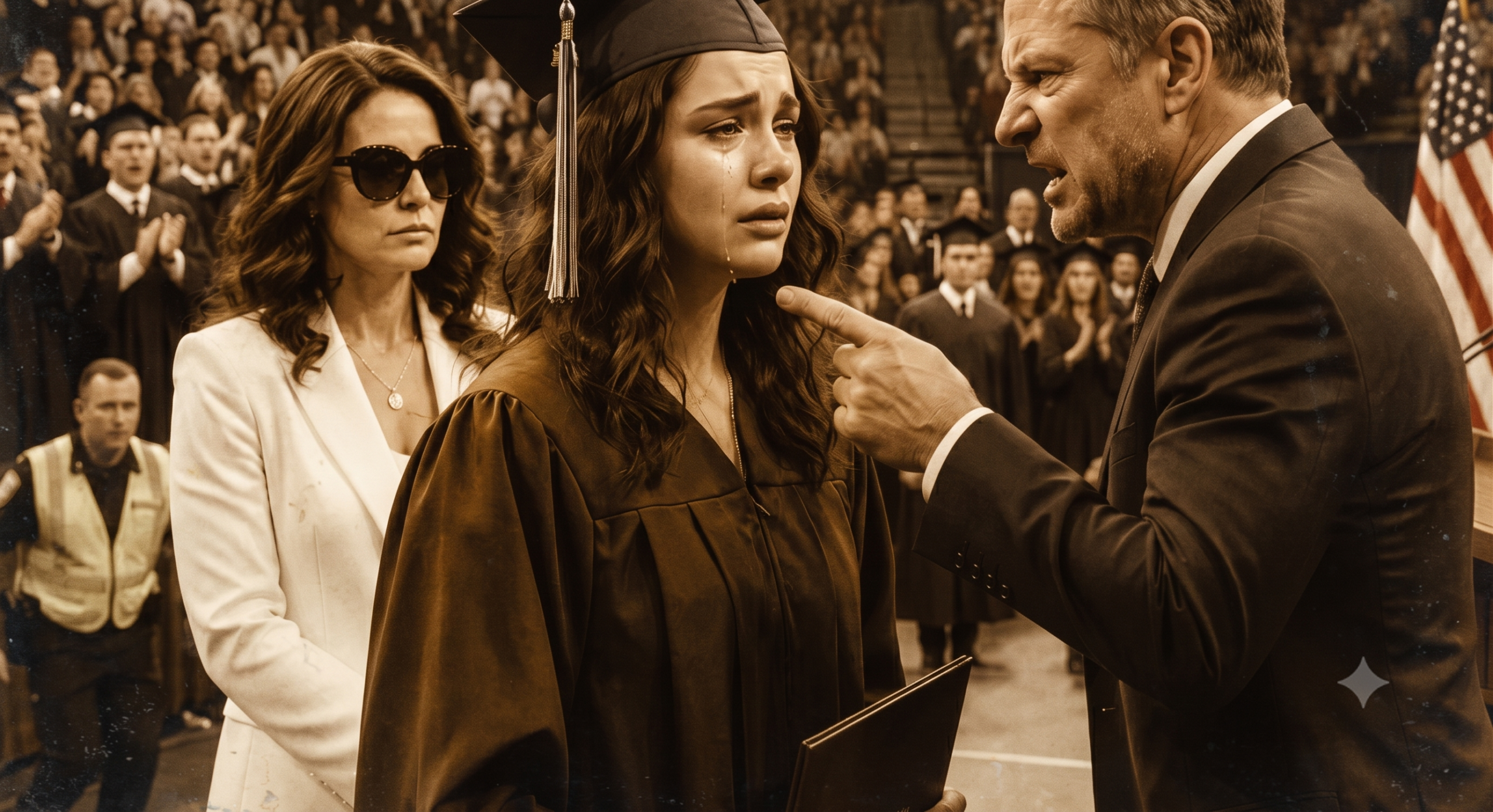
I was standing on my graduation stage holding the valedictorian medal I spent four years fighting for when my father suddenly stormed toward me and screamed, ‘You don’t deserve this!’ Before anyone could react, he ripped the medal from my neck in front of thousands of people while my mother just stood there watching me break apart inside. But what happened after that public humiliation changed all of our lives forever…”

Graduation morning was supposed to feel like victory.

That was how people always described it — the payoff after years of sleepless nights, sacrifice, pressure, and simply getting through. But as I stood by myself in the cramped bathroom of my apartment, adjusting the dark blue stole over my graduation gown, triumph was not what filled me.

Pressure did.

Heavy.
Sharp.
Merciless.

I stared at myself under the flickering bathroom light as though I was trying to convince my own reflection that I truly deserved to be there. My hands shook a little while I fixed the collar.

Four years earlier, almost no one thought I would make it through college.

Especially not my parents.

My name is Olivia Hayes, and every single part of my degree was earned without anyone’s help.

While other students arrived on campus with family backing, meal plans, and parents proudly sharing photos online, I learned how to survive by myself almost immediately. I worked double shifts at a diner just off campus until two in the morning, memorizing business formulas between refilling coffee cups and wiping down tables. On weekends, I cleaned office buildings downtown while playing recorded lectures through cheap earbuds.

Some nights, I was so exhausted I fell asleep without taking off my shoes.

There were weeks when instant noodles were the only food I could afford. I wrapped myself in old blankets instead of turning on the heat during winter because the electricity bill frightened me more than the cold.

Meanwhile, my younger brother Ethan lived in an entirely different world.

My parents adored him with a loyalty that never seemed to run dry, no matter how often he failed.

When Ethan turned seventeen, my father bought him a brand-new truck.
When Ethan dropped out of community college, my mother excused it by saying he was “too smart for classrooms.”
When he started awful business ideas that fell apart within months, my parents paid off every debt without hesitating.

But when I asked for help buying textbooks during sophomore year, my father laughed bitterly and said:

“Maybe college just isn’t for people like us.”

I still remember standing there with the bookstore receipt in my hand while shame burned through me hotter than anger.

That was the moment I stopped expecting anything from them.

Still, I kept moving.

Every insult became fuel.
Every disappointment became drive.

I studied between shifts. I survived panic attacks before exams. I trained myself not to cry when I watched classmates hug their parents after academic ceremonies.

And somehow… I made it.

By senior year, professors respected me enough to nominate me for leadership programs. Recruiters from major companies had already begun contacting me before graduation day even arrived. I finished at the top of my business program and was chosen as valedictorian.

For the first time in my life, I let myself hope.

Maybe now my parents would finally see me differently.

Maybe achievement would matter more than disappointment.

Maybe they would finally look at me with pride instead of resentment.

That small hope stayed with me all morning as I rode the crowded shuttle toward the stadium.

The campus was buzzing with excitement. Families carried bouquets and balloons. Cameras flashed everywhere while students cried, laughed, and hugged one another.

I felt strangely separate from all of it.

As if happiness was happening around me, not inside me.

When I finally entered the stadium, my eyes automatically searched the enormous crowd.

Then I saw them sitting near the back rows.

My mother wore oversized sunglasses even though the sky was cloudy. My father barely looked up from his phone when I walked over.

“You made it,” I said quietly.

My father shrugged.

“Wouldn’t miss your little performance.”

The words hit harder than I expected.

My stomach tightened at once, but I forced myself to smile anyway. I had spent my whole life learning how to survive their disappointment. I could survive one more day.

At least that was what I told myself.

The ceremony began under gray clouds and thunderous applause. Names echoed across the field while families shouted loudly enough to shake the bleachers.

Students cried openly as they crossed the stage.
Parents waved signs.
Professors shook hands with pride.

I watched it all like an outsider standing behind glass.

Then the dean finally called my name.

“Valedictorian, Olivia Hayes.”

For one breathtaking moment, the entire stadium erupted.

The applause crashed around me so loudly it almost didn’t feel real.

I walked onto the stage, trying not to cry.

The medal rested against my chest — heavy, gold, and earned through everything I had survived.

Four years of sacrifice suddenly narrowed into that one moment.

I stepped up to the podium and gave my speech with a steady voice, even as emotion built inside me. I spoke about resilience. About sacrifice. About creating a future without waiting for permission from people who never believed in you.

I did not name my parents directly.

I did not have to.

Somewhere halfway through the speech, I noticed professors nodding with emotion. Students wiped tears from their faces. Even strangers in the audience clapped loudly after certain lines.

And when I finished…

People stood.

An entire stadium rose to its feet.

The applause rolled across the field like thunder.

That should have been the happiest moment of my life.

Instead, it became the moment everything broke.

Before I could even make my way back to my seat, I heard my father shouting.

“You think you’re better than this family now?!”

The stadium went quiet almost immediately.

I froze.

At first, I honestly thought I had imagined it.

Then I saw him charging toward the stage.

Fast.
Furious.
Humiliated.

As if my success had personally insulted him.

Security paused in confusion as he climbed the steps before anyone could stop him. My heart hammered so violently I could barely breathe.

“Dad…” I whispered.

But he was not listening.

Thousands of people watched in stunned silence as he pointed straight at me.

“You don’t deserve all this attention!” he shouted.

Then he grabbed the medal hanging around my neck.

The chain snapped painfully against my skin.

Gasps burst through the audience.

For a second, I couldn’t even understand what had happened. The medal I had spent four years earning swung from his fist while cameras flashed all around us.

“You think a fancy speech makes you special?” he barked furiously.

I stood there trembling.

Humiliated.
Speechless.
Completely exposed.

Security finally rushed toward him, but the damage had already been done.

What hurt even more was looking out into the crowd and seeing my mother sitting there in silence.

Watching.

Not protecting me.
Not stopping him.
Not moving at all.

As if this humiliation was something I had earned.

And in that moment, standing on that stage before thousands of strangers while my father tore apart the proudest achievement of my life…

Something inside me finally shattered completely.

Part 2

The video reached social media before I even got back to my apartment.

By midnight, clips of my father tearing off my medal had spread everywhere. Millions of strangers watched that moment again and again while I sat on my kitchen floor still in my graduation gown, staring emptily at the wall.

My phone would not stop buzzing.

Friends checked in on me. Former classmates sent furious messages about my parents. Even professors emailed to ask whether I was safe. But the message that changed everything came from a woman I had never met.

A woman named Rebecca Sloan, founder of a consulting firm in Chicago, sent me a direct message.

“I saw your speech,” she wrote. “Anyone who can stay composed through that level of humiliation has leadership qualities most executives never develop. Call me tomorrow.”

I almost ignored it.

The next morning, curiosity won.

That call became a three-hour conversation. Rebecca asked about my background, my internships, my research projects, and my plans after graduation. Unlike most people in my life, she actually listened.

By the end of the call, she offered me a junior analyst role in Chicago with a salary higher than anything I had ever imagined making at twenty-two.

Three days later, I accepted.

My parents found out through Facebook.

That evening, my mother finally called.

“You embarrassed this family online,” she snapped before I could even speak.

“I embarrassed you?” I laughed bitterly. “Dad ripped my medal off in front of thousands of people.”

“You provoked him acting superior,” she replied coldly.

That was enough.

Years of disappointment, neglect, and favoritism suddenly became painfully clear. They would never admit what they had done, because admitting it would mean confronting the truth about themselves.

So I stopped trying to earn their love.

I packed everything I owned into my old Honda and drove twelve hours to Chicago without giving them my new address.

Life there was not magically perfect. I still worked brutal hours. I still questioned myself sometimes. But for the first time, no one treated my ambition like a crime.

Rebecca became more than my boss. She became the mentor I had never had. She pushed me into leadership training programs, introduced me to important clients, and taught me how to stop apologizing for taking up space.

Within two years, I earned three promotions.

Then, on a rainy Thursday afternoon, my brother Ethan called without warning.

“I need help,” he admitted quietly.

Apparently, my parents had cut him off financially after his latest failed investment. The same people who had worshipped him his entire life suddenly wanted nothing to do with him once the money disappeared.

I listened silently as he talked.

Then he said something I never expected.

“You were always the strongest one in this family, Liv. I think they hated that.”

For the first time in years, I understood that the problem had never been me.

Part 3

Five years after graduation, I stood before another audience.

But this time, no one had the power to humiliate me.

The ballroom overlooking downtown Chicago sparkled with chandeliers and camera flashes as business leaders gathered for the annual Women in Leadership Conference. My company had recently promoted me to Director of Strategy at only twenty-seven, making me the youngest executive in the firm’s history.

As I waited backstage, a staff member handed me the event booklet.

My photo filled an entire page beside the title:

Olivia Hayes — Turning Adversity Into Authority

I stared at those words longer than I expected.

Because the truth was, some part of me still remembered the girl frozen on that graduation stage while her father tore success from her neck.

Some scars never vanish completely.

But scars also prove that you endured.

When I stepped onto the stage, applause filled the room. Hundreds of faces turned toward me with expectation.

I smiled and began to speak.

Not about business.

Not about profits.

Not even about success.

I spoke about self-worth.

I told them how dangerous it is to spend your life begging for approval from people determined never to give it. I spoke about toxic families, quiet resentment, and the way some parents love control more than they love their children.

The room became completely still.

Then I said the sentence I wished my younger self could have heard years before:

“Sometimes the people who should support you the most will resent you for growing beyond the limits they accepted for themselves.”

A few people wiped tears away.

After the event ended, dozens of young women came up to me. Some told me about controlling parents. Others spoke about abusive relationships or years spent questioning their abilities because someone had convinced them they would never be enough.

Every conversation reminded me why I had survived what I did.

Not for revenge.

Not to prove my parents wrong.

But to prove to myself that my future had never belonged to them at all.

That night, back in my apartment, I opened social media and saw another clip from my graduation circulating again. By then, millions had viewed it.

But this time, the comments felt different.

People were no longer talking about humiliation.

They were talking about resilience.

I closed my phone, walked to the window overlooking the city lights, and smiled quietly to myself.

They had tried to make me feel small my entire life.

Instead, they forced me to learn how to stand alone.

And honestly?

That became my greatest strength.

If this story connected with you in any way, share where you’re watching from and tell me: have you ever succeeded despite someone doubting you? Sometimes the strongest people are the ones who had to believe in themselves first.

More Details
Part1: I Bought My Dream Home Until My Husband Tried to Move His Family In and Claim It as His
Jul 15, 2026

Part1: I Bought My Dream Home Until My Husband Tried to Move His Family In and Claim It as His

“Claire?”

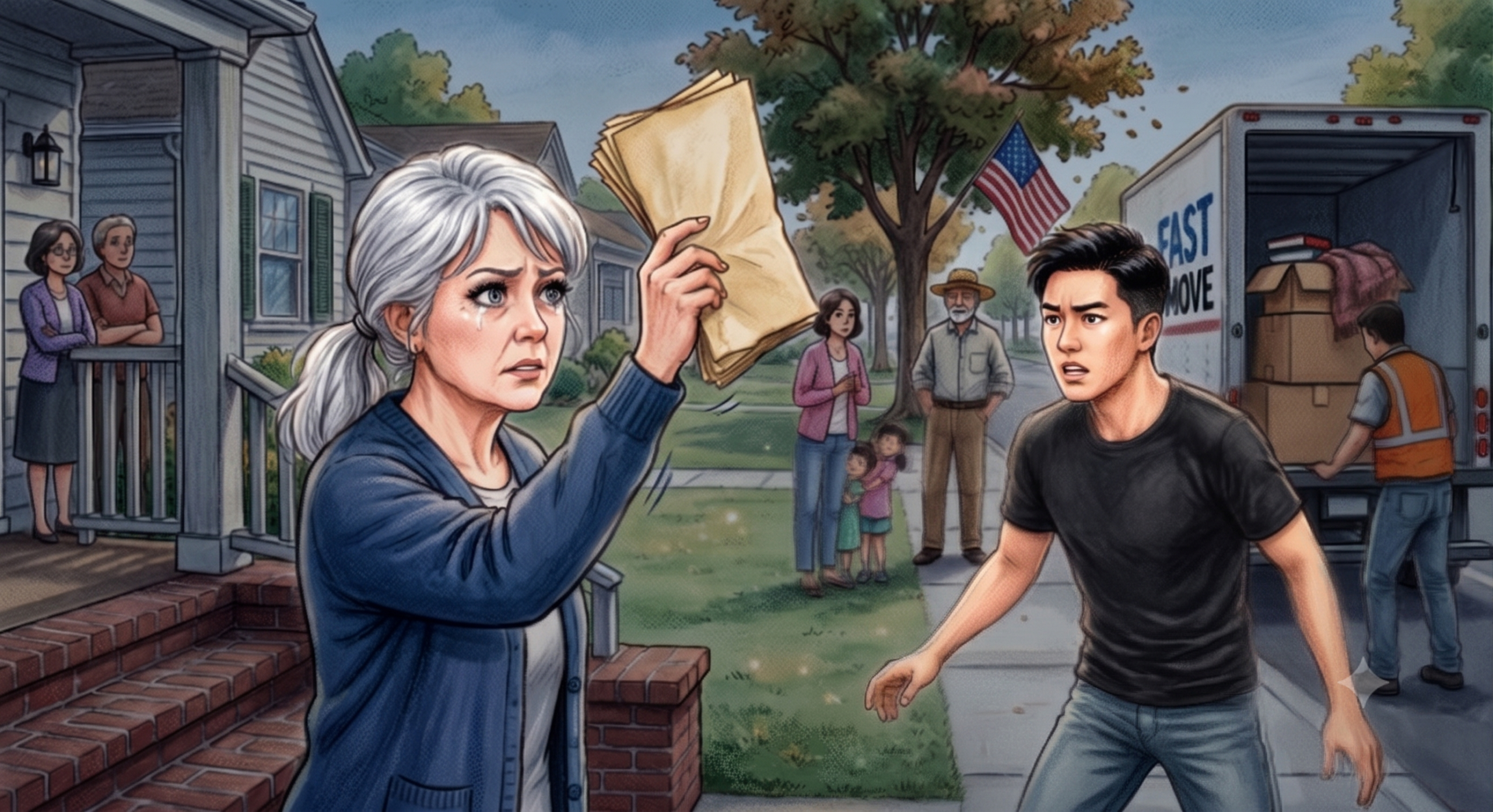
The question went into the empty foyer and came back smaller than he had sent it. That is the particular cruelty of a house that has been emptied: it does not argue with you. It simply shows you the shape of what was there, outlined in absence, and lets you draw your own conclusions.

That morning he had left like a man who believed the world had organized itself around his convenience. He had come through the kitchen in the expensive watch I bought him for our anniversary, coffee in one hand and the unhurried confidence of someone who had already decided how the day was going to go. He told me he was picking up his parents and his recently divorced sister from the airport. He told me how many rooms they would need. He told me that I was not going to say a word about it. He said all of this the way a person states the weather: not negotiating, not explaining, simply reporting a condition that existed independent of anyone else’s opinion.

He did not ask whether his family could move in. He did not ask whether I had any feelings about sharing the house I had just bought without his contribution. He did not ask because asking would have implied I had standing to refuse, and in his understanding of our marriage I had long since stopped having that kind of standing. He simply told me how things were going to work, set his coffee cup in the sink, and walked out.

By the time he came back with his parents and his sister and their luggage, the house had learned a new language.

Let me go back further, because the moment Ethan opened that door is not where the story begins.

Ten years before I bought that house, I was sleeping next to a laptop in a one-bedroom apartment with a window that let in cold air through a crack I had been meaning to seal for eight months. The company was still small enough that every dollar that went out of my account was a dollar I felt personally, in the specific anxious way you feel money when you have built everything from exactly nothing and payroll is Tuesday and you are not entirely sure Tuesday is covered. There were months when I ate cereal for dinner because cereal was two dollars and did not require time I did not have. There were nights I fell asleep at my desk over attorney invoices and server contracts and the particular kind of email that requires diplomatic precision when you are furious but cannot afford to be. I did all of it without a co-founder, without inherited capital, without anyone’s name attached to mine in a way that would have made the doors open faster.

Ethan came later. He arrived after the company had a real office with a receptionist who answered the phone. He arrived after the clients were paying reliably and the product had been written about by people who got paid to have opinions about products. He arrived after the first article described me as a founder rather than a young woman with an interesting idea, which is a distinction that sounds small and is in practice enormous.

He was charming in the way that certain men are charming when they have not yet encountered serious resistance from anyone they wanted something from. He remembered names at parties. He offered to carry things when people were watching. He made a specific point of telling everyone he was proud of me, and I understood that to mean the same thing as respecting me, which was my mistake and one I had plenty of time later to understand clearly.

The first time he said “our company” in a room full of people, I corrected him without making much of it. The second time, I laughed and let it go because the room had moved on. By the tenth time, I had stopped correcting him because arguing over a pronoun in a crowd of people holding champagne made me look petty, and I did not want to look petty, and so the word passed without comment and became, over time, something he believed.

That is how it begins, sometimes. Not with a slammed door or a raised voice. With a word you do not correct because correcting it will make you seem difficult, and then another word, and then a version of reality constructed one unchallenged sentence at a time, until you are standing in your own kitchen wondering when you stopped being the subject of your own story.

When the company sold, Ethan told people we were blessed. When the wire cleared into my account, he told people we were finally secure. When I bought the house in Bel Air outright, with a closing statement that listed no mortgage, no co-borrower, no contribution from anyone other than the proceeds of my own work, he stood beside me at the title office and put his hand on my lower back and said, “We finally got our dream house.”

The woman behind the desk looked at the paperwork. Then she looked at me. She knew, the way anyone with a document in front of them knew. The deed was in my name. The wire confirmation mapped to my account. The closing statement, the insurance policy, the property tax enrollment, the homeowner’s file, all of it had a single origin point, and that point was me. But Ethan had spent years practicing the art of standing near things until people assumed they belonged to him too, and he was very good at it by then.

Two nights after we moved in, the marble floors were still cold under my bare feet and the pool filter hummed through the open glass doors in that soft, expensive rhythm that well-maintained houses produce. The place still smelled of lemon cleaner and new stone sealant. Ethan was in the kitchen with a beer and the relaxed ease of someone who had arrived at the destination he had been planning toward without being required to do much of the traveling.

That was the second night, and it was the night he stopped assuming and started declaring.

He told me his parents were moving in. He told me his sister Lily needed a fresh start after her divorce. He said there was more than enough space. He said all of this standing barefoot on my marble in a house I had paid for in full, and the specific way he said it, without a question mark anywhere, without a pause that suggested my response was relevant, was the clearest thing he had said to me in five years.

I felt bad for Lily. She had always been kind in the understated way of someone who does not have much surplus energy but extends what she has without being asked. Her divorce was a month old and I could imagine the particular exhaustion of that, the strange weight of a life that needs to be repacked and carried somewhere new. My sympathy for her was real. But sympathy is not the same thing as handing someone the keys to something that cost you a decade.

“You didn’t decide that with me,” I said.

That was when I saw what had been standing behind the curtain the entire time. Not a new side of him. The same side, finally no longer bothering with the curtain.

“Don’t start with your drama, Claire.”

“I’m asking why you made a decision about my house without talking to me.”

He laughed. Once, short, with something in it that was not humor. “Your house?”

“Yes,” I said. “My house.”

He stepped closer to me in the way people step closer when they want the size difference to do part of the work for them. “Claire,” he said. “This house is mine. You bought it after you married me. Everything you have is mine too. If you have a problem with my family moving in, you better get comfortable with it, because I am the one in charge here.”

There are sentences that do not detonate immediately. They sit down in the room with you. They make themselves at home. And then slowly, over the hours that follow, they make the room unlivable.

“I paid for it,” I said. “From my account. From the sale of my company.”

He shrugged. “Then prove it.”

The moment my love for him changed shape was not dramatic. It did not happen with tears or a slammed cabinet or anything a camera would want to capture. It happened in the gap between his shrug and my silence. Something that had been soft and warm for five years went cold and specific, like water freezing in a pipe. It did not vanish. I wish it had been that clean. It compressed into something harder and much less useful to him.

At one forty-three in the morning, I lay beside him listening to him sleep and replayed the five years before that kitchen. His hand on my lower back whenever a client praised my work, the hand that read as affection and functioned as a claim. His jokes about how I would forget to eat if he did not manage me, jokes I had laughed at because I did not yet understand what they were managing me toward. His habit of saying “we” whenever money was mentioned and “Claire’s work” whenever difficulty was involved. The way he told the story of my company at dinner parties, always with himself positioned near the center as the stabilizing force behind my ambition, the man who kept things grounded while I had my interesting ideas.

At four in the morning I locked myself in my office and opened the deed transfer folder. I downloaded the closing statement. I saved the wire receipt from the sale proceeds. I pulled the insurance policy, the property tax account, the homeowner’s file. I photographed every document on my desk, partly because I needed the images and partly because I needed to see my own evidence assembled in a single physical space, needed proof that I had not imagined my own life into existence in someone else’s version of it.

Then I opened the temporary moving account.

I had created it for practical expenses during the transition. Movers, storage fees, packing supplies, tips for the crew. I had given Ethan access to it without much thought because five years of marriage had trained me to treat access as an expression of trust rather than an operational decision with consequences.

The ledger loaded and three transfers looked back at me.

Twenty thousand dollars. Forty-three thousand dollars. Sixteen thousand dollars. The descriptions were plain and unhurried in the way of someone who had not expected anyone to question them: family support, emergency, help for Lily. I sat with those three lines for a long moment. My hand tightened on the edge of the desk until my knuckles ached. I did not scream. I did not wake him. I checked the dates.

One transfer had gone out before closing had even completed. Before he stood beside me at the title office. Before he told me his family was coming. Before he said “then prove it” in my kitchen as though the burden of demonstrating my own life was mine to perform for his benefit.

This was not confusion. This was not one ugly sentence spoken in the stress of an insecure marriage. This was paperwork and timing and access used as architecture. He had not simply declared the house his in the heat of a moment. He had been treating it as his before the ink dried.

At seven twelve the next morning, Ethan came into the kitchen wearing the anniversary watch and the expression of a man who had said difficult things the night before and expected the morning to have absorbed them. “I’m heading to the airport,” he said. “By the time I get back, you better have figured out how things are going to work.”

He expected me to fight. I think he may have wanted it, because anger has a shape he understood and could respond to. Anger would have given him something to hold onto, something to redirect, something to wait out.

I looked at the coffee cup in his hand, the one with my company logo printed on the side from the launch party where he had stood in a room full of people and told them all he was proud of what we had built together.

“Drive safe,” I said.

His eyes narrowed slightly. He knew something had shifted but could not locate where it had gone. That is the specific limitation of people who confuse control with intelligence: they can feel resistance, but they cannot always read its form.

The front door closed at seven nineteen.

By seven twenty-one I was moving.

I called the attorney whose card was in the closing file, the one who had prepared all the documents Ethan had shrugged at. I called the private moving coordinator whose number I had saved months before during the purchase, when I had been planning this move as a celebration and could not have imagined I would need it for something else. I called the bank and froze the temporary account, which required a phone call and two verification questions and the particular patience of a person who is working fast but cannot afford to make mistakes. Then I sent one email with the subject line reading urgent: unauthorized transfers and property access. I attached the deed packet, the wire ledger, the transfer confirmations, and the closing statement, and I sent it before I talked myself into waiting.

After that I walked through the house with my phone in my hand and documented every room methodically, the way the dispatcher in me had been trained to approach scenes before anything changed. My office first. The safe. The computers. The framed photograph from my first office, the one where you can see the cracked window in the background and a folding chair that I bought at a garage sale because I was not yet spending money on furniture that could not also function as a tax write-off. The furniture delivery receipts, still in a folder on my desk. The kitchen tools and appliances I had bought years before Ethan ever stood on that marble and described the counters to his friends with the proprietary warmth of a man who owned things by proximity.

I did not take what belonged to the house. I did not take what was genuinely his. I took what was mine, which required making distinctions quickly and cleanly and without sentiment, which is a thing I had become very good at over ten years of running a company where sentiment was a luxury and decisions had to be both right and fast.

There is a difference between leaving and disappearing, and the difference matters more than people think. Leaving is honest. You make a choice, you move in the direction of that choice, and you let the consequences land wherever they land. Disappearing is what people do when they want to avoid being held accountable for the footprints they leave behind. I was not disappearing. I was leaving, with documentation, with an attorney copied on every significant action, with a folder waiting on the kitchen island so that when Ethan came home there would be no ambiguity about what had happened and why.

By ten in the morning my movers were in the driveway. Not his movers. Mine, from the company I had researched and hired and paid for, and they worked with the efficiency of people who had been adequately compensated and given a clear scope of work. Rugs rolled. Boxes sealed. Hangers stripped from the closet in long smooth arcs. My office emptied first, because that room was the one he had always treated as a hobby space rather than the room that had generated the money that paid for everything he was now claiming as joint property.

The house changed with every box that left. At first it looked wounded, the way rooms do when they are in the middle of being reorganized and everything that usually gives them coherence is in transit. Then it looked clean. Then, by noon, it had a particular honesty to it that the furnished version had been missing. A couch he had chosen for the living room remained. Two barstools he had picked out stayed at the island. His golf clubs were still in the garage. Everything that had made the space feel like a home, which is to say everything I had brought to it from a decade of building a life, had been carried out through the front door into a truck that was now parked on a street in Bel Air waiting for my instruction.

At twelve thirty-eight Ethan texted: We’re on our way. Don’t embarrass me.

I read the message while the last box moved past me on a dolly. I did not respond. Some men interpret silence as obedience because they have never had to understand the difference between someone who has nothing to say and someone who has decided to stop saying it where he can hear.

At one in the afternoon I stood in the foyer for a few minutes and let the emptiness settle around me. Not comfortable with it, exactly, but not afraid of it either. The house echoed in the way that houses echo when there is nothing left to absorb the sound. I had a folder on the marble island, copies only, not originals. The deed. The closing statement. The wire confirmation. The frozen account notice. The three transfer records with their plain, insulting descriptions. I placed it where he would see it immediately and where no one could claim afterward that the information had not been made available.

Then I walked out.

A neighbor’s small flag moved in the warm afternoon air near the mailbox at the end of the driveway. The moving truck door closed with the particular finality of a mechanism designed to hold heavy things securely.

At one seventeen I watched from the back seat of the truck as Ethan’s SUV pulled into the driveway. He got out first, smiling, in the easy way of a man who has spent the morning at an airport being useful to people who needed him. His father followed carefully, the way older men navigate unfamiliar surfaces after long flights. His mother held her purse close to her chest. Lily came last, standing beside the car with two suitcases and the face of someone who has been promised something and is still deciding whether to believe the promise.

Lily was the one moment that hurt me outside the anger. She had not caused any of this. She had trusted her brother, which is a forgivable thing. She looked exhausted in the specific way of someone who has recently had their life reorganized against their preferences and is trying to find their footing again, and she deserved better than to arrive at a stranger’s home, luggage in hand, and discover that the shelter she had been offered had been taken from someone else without permission.

Ethan lifted his key.

He opened the front door.

His voice started with the volume of a man announcing a good thing. “Claire, we’re”

The empty foyer took the rest of the sentence and gave nothing back.

For several seconds no one moved. His mother looked at the bare walls. His father looked toward the living room where only the couch remained. Lily stepped inside slowly and the wheel of one suitcase caught on the threshold.

Ethan walked to the kitchen island because men like Ethan go for the object rather than the person when they feel threatened. He found the folder. He opened it. I was too far away to hear what he said when the first page registered, but I could read the shape of his body. The shoulders went tight. The head dropped. The hand on the pages went still and then moved faster.

Deed. Closing statement. Wire confirmation. Frozen account notice. Transfer records.

His father moved behind him and looked over his shoulder at the documents. His mother stayed near the entry with one hand pressed to her purse. Lily came to the island last, and when she saw her own name in the transfer description, help for Lily, she stopped moving in the visible way people stop when something reaches them a beat after it should have.

Her hand went to her mouth.

I did not know what Ethan had told her. Perhaps that I had agreed to the arrangement and was simply nervous about the adjustment. Perhaps that we had discussed it and I was coming around. Perhaps simply that Lily needed this and I would be fine and the details were being managed. Whatever version she had been given, the folder dissolved it.

Ethan’s phone buzzed. He looked at the screen and turned it toward his body too quickly, which is the gesture of someone receiving information they do not want witnessed. Lily saw the gesture. That small, instinctive motion, that single turn of the wrist away from the room, told her more about the situation than the folder had. She sat down on her suitcase. Not the graceful lowering of someone choosing to sit. The sudden sit of a person whose knees have received news before the rest of them.

My phone rang while I was still watching from the truck. The attorney from the closing file. I answered before the second ring.

“Claire,” she said, “I received everything this morning.” Her voice had the particular calm of a professional who has seen worse and knows exactly where to begin. “The temporary account is frozen. Do not speak to him directly about the transfers. Do not negotiate property access over text. Every communication goes through counsel from this point.”

I looked through the truck’s windshield at the house. Ethan was in the doorway now with the folder in one hand, scanning the street. He was looking for me. For the version of me who would step out of a car with tears on her face and start explaining herself. For the wife who would be so occupied defending her feelings that she forgot to defend her facts. That woman was not available.

“Understood,” I said.

“There is also a timing issue on one of the transfers,” she said. “It predates the final closing. We will want that reviewed separately, because it has implications beyond the property dispute.”

I closed my eyes for a moment. The kitchen came back to me. The marble. The pool light turning the wall blue. His voice saying then prove it with the confidence of a man who had not considered the possibility that I already had.

Now he had the proof too.

Evidence has a sound when it lands in the wrong man’s hands. It is quieter than you expect.

Ethan called nine times over the course of that afternoon. I forwarded each call notification to the attorney without answering. His texts moved through stages that I recognized as the predictable sequence of a person whose primary tools have stopped working: anger first, then confusion, then the particular false concern men reach for when fury has run its course. Where are you. This is insane. You embarrassed me in front of my family. We need to talk like adults. You cannot just empty our house.

Even then, even with the deed in his hand and the closing statement on the island showing a single name, a single account, a single origin for everything he had been calling ours, he still typed it.

I forwarded every message.

At three forty-two, Lily texted from her own phone. I did not know, she wrote. Then, a minute later: He said you offered.

I believed her. She had no reason to lie to me at this point and every reason not to. I also understood that believing her did not obligate me to absorb the cost of her brother’s choices on her behalf. I wrote back one sentence: I’m sorry he put you in this position. That was all I had available to give her that was honest without being useful to Ethan.

His parents did not move into the house that day. Lily did not either. The suitcases went back into the SUV, which must have had its own particular quality of silence on the drive to wherever they found to stay that night. The folder remained on the island. The security alerts on my phone showed Ethan moving through the house for three hours after I left, opening rooms, checking closets, standing in spaces that no longer held what he had told himself he owned.

He checked the office. Empty. The primary suite closet. Empty. The kitchen cabinets. Largely empty. The rooms gave him the same answer in slightly different forms: mine does not become ours because you say it loudly enough or often enough or with enough confidence that the people around you stop challenging it.

My attorney sent a formal letter to the property address that evening. It was not dramatic. It did not catalog my pain or explain my choices or give him the satisfaction of knowing how any of it had felt. It named the property. It named the account. It named the disputed transfers. It directed him not to remove, damage, or represent ownership he did not legally hold. I read it twice, not because it sounded like revenge but because it sounded like oxygen. For the first time in a longer stretch than I wanted to calculate, a sentence about my life did not have to navigate around someone else’s ego in order to get to the point.

I slept that night in a furnished temporary place with three suitcases, my laptop, my jewelry case, and the framed photo from my first office leaning against the wall. The room had a mini-fridge that hummed too loud and a lamp with a shade that sat slightly crooked on its base. The sheets smelled faintly of institutional laundry. I slept better there than I had slept beside Ethan in weeks.

People tend to believe the hard part is the leaving. In my experience the hard part is the period just before the leaving, when you understand what is happening clearly enough to act but have not yet acted, when clarity and inertia exist in the same body at the same time. The leaving itself, when it finally comes, tends to be quiet. The hard part is behind you by then.

The next morning Ethan sent one more message. It was shorter than the others and different in tone, without the anger or the performance. You made your point, it said.

I looked at those four words for a while. Then I forwarded them to the attorney along with everything else, because lessons have a way of requiring maintenance, and I was done translating my evidence into emotional language for a man who only understood power when it was removed from his reach.

The legal process moved through the weeks that followed with the unglamorous methodical rhythm of legal processes. The transfers were reviewed. The property remained in my name. The family Ethan had tried to install in my home learned from documents, rather than from me, that he had offered them something he did not have the authority to give. Lily sent one more message three days after everything, two words: I’m sorry. I wrote back: Me too. That was the extent of what I owed her, and it was genuine, and it was complete.

I did not owe Ethan’s parents an explanation for their son. I did not owe Ethan a final conversation in the kitchen where he could stand on my floor and perform his version of accountability on his own terms. Some people believe that closure requires a confrontation, a scene, a moment where everything is said out loud in a room where both parties can hear it. I have found that closure is more often a document than a conversation. A deed. A wire confirmation. A frozen account and an attorney who answers on the first ring.

Weeks later I went back to the house with my attorney’s instructions in a folder and a locksmith scheduled for the afternoon, and I stood in the kitchen where all of it had happened. The neighbor’s flag was still moving by the mailbox. The pool was still and clear. The marble was still cold in the way of good stone that holds its temperature.

The house felt different. Not lighter, exactly, which is the word people reach for in these situations. More accurate, maybe. More like itself. The life that had filled it for those brief weeks had been partly mine and partly a story Ethan was telling about his own importance, and with the story removed, what remained was the house I had actually bought: clean lines, good light, and the kind of quiet that is not emptiness but potential.

I stood where he had stood and said the words that were still somewhere in the air of the room. This house is mine.

He had been right that one time. He had simply been confused about which one of us he was talking about.

I walked through the rooms without inventory, without documentation, without anything more required of me than simply being present in a space that had always been mine and always would be. The echo was still there, but it sounded different now. Not like absence. Not like a question going unanswered. It sounded like a room waiting for the right person to fill it, which is perhaps the best thing a room can do.

I had spent ten years building something from nothing, through cracked windows and cereal dinners and the particular loneliness of being competent in a world that kept asking who was actually in charge. I had done all of it before Ethan arrived and I had continued doing it after he left, and the house, like the company before it, had exactly one name attached to its origin.

Mine.

Not as a correction. Not as a declaration that needed to be repeated until someone believed it. Simply as a fact that had always been true and that no amount of confident standing near it had ever changed.

I locked the front door behind me with my own key.

The afternoon was warm. The flag moved in the breeze. The pool filter hummed through the glass doors in the soft, expensive way of a house where everything was running exactly as it should.

I drove away without looking back, because there was nothing behind me that I had not already accounted for.

More Details
My son barred me from the wedding I paid for, and he still had no idea
Jul 15, 2026

My son barred me from the wedding I paid for, and he still had no idea

My name is Denise Parker. I’m seventy-two years old, a widow, and the kind of woman who was raised to keep her back straight even when her heart was breaking.

My son stopped me at the entrance to my granddaughter’s wedding in front of two hundred people and told me my name wasn’t on the list. But they forgot one small detail.

I was the one who had paid for the entire event.

I had spent the whole morning getting ready. My oldest granddaughter’s wedding was the kind of day a grandmother waits her whole life for.

My Clara.

I still remembered changing her diapers, teaching her how to make rice pudding in my kitchen, Robert’s favorite dessert, and watching her lick cinnamon off the spoon when she thought I wasn’t looking. And now she was getting married.

My heart was full of pride.

I chose the pink silk dress I had been saving for years for a special occasion, put on my mother’s pearl necklace, and sprayed a touch of the French perfume I only used for big celebrations. I felt beautiful, elegant, and worthy.

I wanted Clara to see me as a happy grandmother. A strong woman.

But I didn’t know that in my son Richard’s eyes, I was nothing more than a burden.

For six months, my life had revolved around preparing for that wedding. Richard and his wife Susan would come over to my apartment, sit on my velvet couch, drink the coffee I made for them, and speak in soft, careful tones that now make my skin crawl when I think about them.

“You know, Mom, times are tough these days,” Richard would say.

And then Susan would add, with that practiced sweetness of hers, “We just want Clara to have her dream wedding.”

Naively, I opened my heart and my wallet.

“How much does Clara’s dream wedding cost?” I asked.

They showed me a brochure. The venue looked like a palace out in Westchester. The catering included lobster. The wedding gown cost as much as a new car.

And I paid every single dollar.

More than one hundred thousand dollars.

It all came out of the savings Robert had left behind, money meant to make sure I could live comfortably and help my family when it truly mattered. I signed the contracts, handled the vendors, approved the flowers, managed the details, and answered the calls.

My name was on every receipt.

That afternoon, I called a cab, excited and proud. The driver was a cheerful young man with a Yankees cap and an easy smile.

“You look fancy, ma’am,” he said. “Heading to a big party?”

I smiled.

“It’s my granddaughter’s happiest day.”

When we pulled up to Green Valley Estate, the place took my breath away. White floral arches framed the entrance. Twinkling lights wrapped the trees. Soft classical music drifted through the warm evening air.

Guests were arriving in waves, dressed to impress, laughing, chatting, air-kissing, holding little gift bags and champagne flutes. Family. Friends. Neighbors. Distant relatives.

Two hundred people.

Everyone smiled and greeted me. Some of them complimented the beautiful event. I walked proudly toward the main gate, my heels tapping the stone path.

Richard and Susan were standing there greeting guests.

My son looked sharp in a perfectly fitted suit. Susan sparkled in a bright emerald dress that made her look like an overdecorated Christmas ornament.

“Richard, my son, everything looks wonderful,” I said as I stepped forward to hug him.

But he didn’t move.

His eyes were cold. Distant. Like those of a stranger.

Susan turned away and pretended to fix the flowers at the welcome table.

“Mom,” Richard said in a flat, icy tone, “what are you doing here?”

I laughed, because I honestly thought he was joking.

“What am I doing here? I came to my granddaughter’s wedding, of course.”

He grabbed the guest list from the receptionist’s hand and looked at it for a long moment. The music seemed to dim.

Behind me, two hundred guests fell strangely quiet.

I could feel every eye turning toward me.

“Your name isn’t on the list,” he said, loud enough for everyone to hear.

My smile disappeared.

“What do you mean, Richard? What kind of joke is this?”

“It’s not a joke,” he said curtly. “Probably a mistake in the invitation process.”

“A mistake? I was the one who paid for the invitations, and I helped Susan double-check the guest list to make sure no one was forgotten.”

Shame burned across my face.

I looked at Susan. She was smirking.

Not hiding it. Not even trying.

Everyone was still staring. My longtime neighbor covered her mouth in shock. My nephew looked down and pretended to scroll through his phone.

No one said a word in my defense.

I was humiliated in front of everyone, treated like an intruder at a party I had built with my own hands and paid for with my own money.

I took a deep breath.

A lifetime of dignity doesn’t disappear in one ugly moment unless you hand it over. And I was not going to let an ungrateful child destroy mine.

I straightened my necklace and looked directly into my son’s cold eyes.

“All right, sweetheart,” I said calmly. “If I’m a mistake, I’m sorry for the inconvenience.”

Then I turned around and walked away with my head held high.

The crowd stepped aside as I passed. No one touched me. No one offered a hand. I walked back under the floral arch I had paid for, to the music I had chosen, leaving behind the celebration I had financed.

The cab driver was still waiting.

“Did you forget something, ma’am?” he asked.

I got in and looked out the window.

“Yes,” I said quietly. “I forgot what kind of son I raised.”

The ride home was silent.

Anger and humiliation sat heavy in my chest, too heavy even for tears. They had used me, drained every ounce of kindness I had, and tossed me aside the moment they thought I was no longer useful.

They wanted my money, not me.

They were embarrassed by their old mother.

When I got home, the apartment felt painfully quiet. The pink dress looked ridiculous now.

I took it off and let it fall to the floor.

My eyes went to the framed photo of Robert on the wall.

He would never have allowed that to happen. He would have looked Richard straight in the eye and said, “You are no son of mine.”

But Robert wasn’t there anymore.

Only me.

I could have cried. I could have called a friend and spent the night going over every detail. I could have taken something to sleep and tried to forget.

But the woman who came home that night was not the same Denise who had left.

The humiliation had awakened something in me.

The woman who once ran her husband’s business for ten years. The woman who managed finances, negotiated contracts, and knew the value of every dollar down to the last cent.

I didn’t cry.

I walked straight into my office, opened the cabinet, and took out a cream-colored folder labeled Clara’s wedding. Inside was everything: the venue contract with my signature, the catering invoices in my name, the decoration receipts, and the wire transfers from my account to each vendor.

Then I picked up the phone.

My lawyer, Martin Hayes, had been my legal adviser for thirty years. He answered right away.

“Mrs. Parker. What a coincidence. Today’s your granddaughter’s big day, isn’t it?”

I smiled, but there was no joy in it.

“Martin, I need the best attorney you can be tomorrow morning. Do you have five minutes?”

“I have the whole evening,” he said. “What happened?”

“I was asked to leave the wedding I paid for,” I said slowly. “My son and daughter-in-law think they can take my money and treat me like dirt. I need you to help me fix that.”

I sat down in my leather chair with the folder open in front of me. The pain was still raw. The humiliation still burned.

But beneath it, a plan had already formed.

Richard thought he had excluded me from the party. He didn’t know I had just closed the door on his easy life.

By the next morning, he wasn’t going to get an apology from me.

He was going to hear from my lawyer.

I didn’t sleep that night.

I sat in the living room with the pink dress still lying on the floor, a crumpled symbol of disgrace. The old clock ticked like it was whispering the same word over and over.

Mistake. Mistake. Mistake.

Dawn broke, but the house still felt heavy. I didn’t brew coffee. Even that familiar smell felt bitter.

The ache in my chest wasn’t sharp anymore. It had turned deep and tired, like the grief of losing a child you thought you had.

At exactly nine in the morning, the doorbell rang.

Martin stood there in his dark coat, briefcase in hand. He had been part of our family for decades, even Richard’s godfather.

When he saw my face, he froze. Then anger flashed in his eyes.

“Good Lord, Denise.”

“I’m fine,” I said. “The files are on the table.”

He took off his coat, sat down at the dining table, and began reading. I stood by the window and looked out at the street below.

It was a beautiful day.

Neighborhood kids were playing outside. The kind of Sunday morning when I should have been at a hotel brunch, eating breakfast with my granddaughter and laughing about the night before.

“Denise.”

Martin’s voice pulled me back.

“I see the contracts. The receipts. Everything is in your name. You paid from your personal account. Legally, you’re the event owner. The host.”

I laughed bitterly.

“The host locked out of her own party. How ironic.”

“It’s not just ironic,” he said grimly. “It’s humiliation.”

We both thought of Richard.

“What do you want to do?” Martin asked. “We can sue for emotional distress. You have two hundred witnesses.”

I turned to him.

“Martin, what do you think I want? An apology? A compensation check written with my own money?”

That was when it truly hit me.

The real revelation was not about humiliation. It was about power.

They had never seen me as a mother or a grandmother. To them, I was a wallet that never ran dry. And when people think they no longer need the wallet, they close it.

Or in their case, they lock it out of the wedding so it won’t spoil their perfect family photographs.

I thought of all the years of being dismissed. All the small insults wrapped in false concern.

“Mom, you don’t understand real estate investments,” Richard once told me when I advised him to buy an apartment to rent out instead of wasting money on a luxury car.

“Mrs. Parker, this phone is too complicated for you,” Susan had said in that pitying voice when I asked her about the banking app.

They had no idea that after Robert’s death, I ran his logistics company for a decade. I negotiated contracts. I dealt with unions. I balanced the books to the last cent.

I sold the company five years ago for a fortune.

Richard and Susan thought it was just retirement money. They had no idea how much it was. They thought the hundred thousand dollars for the wedding was a huge sacrifice for me.

They had no idea.

I realized I had never truly been a person to them. I was the nice mom. The free babysitter so they could have date nights. The grandmother who signed checks for college tuition. The one who once paid Susan’s credit card bill “just this once.”

It wasn’t family.

I was a function.

“Martin,” I said, and my voice sounded different now. The tremor was gone. “Keep the wedding file. It’s proof, but it isn’t the weapon.”

He frowned.

“Denise, what are you planning?”

“Where are Richard and Susan now?”

“I assume they’re on their honeymoon. Paris, right? I heard Clara mention that.”

“Good,” I said. “Let them enjoy it.”

I walked into Robert’s old office, opened the safe, and took out a blue folder. When I placed it in front of Martin, I saw his eyes sharpen before he even opened it.

“This,” I said, “is rediscovered power.”

Inside were two property deeds.

One was for the apartment where Richard and Susan lived, a large three-bedroom place with a balcony and a doorman. Martin’s eyes widened the moment he saw the ownership records.

“Everything is in your name.”

“Of course,” I said. “I bought it as an investment. Richard said rent in Manhattan was too high and wanted a better place for the kids. I let them live there.”

“No lease?”

“No lease. No rent. They’ve been there for ten years. They never paid property tax, common charges, or building fees. I paid all of it.”

Martin swallowed.

“And the second deed?”

“The beach house,” I said. “The one where they take pictures every summer and post them online with captions about our little paradise. That one’s mine too.”

I crossed my arms.

“And Martin, in my garage there’s a gray car Richard drives around and calls his company car. That company used to be mine. I sold the business, but the car remained under my name. The insurance, the taxes, everything.”

Martin closed the blue folder and leaned back in his chair like a general studying a battle map.

“Denise Parker,” he said quietly, “what exactly do you want me to do?”

“They erased my name from the guest list,” I said. “Now it’s my turn.”

I began to pace.

My headache was gone. The sadness had burned into fuel.

“First, their apartment. I want a formal eviction notice. When they land back from Paris, I want the paperwork waiting for them.”

I stopped and looked at him.

“Actually, no. Better yet. I want it posted on the door. Thirty days to move out. That’s what the law says, right? If it were up to my heart, I’d give them thirty minutes, but I’ll follow the law.”

Martin gave a short nod.

“Second, the beach house. Change the locks tomorrow. Hire security. If they try to enter, it becomes a legal problem for them.”

He wrote it down.

“Third, the car. Send a registered letter demanding immediate return. If they refuse, then we handle it properly.”

I reached into my purse, took out my phone, and opened the banking app, the very one Susan once said was too complicated for me. I went to the scheduled transfers.

There it was.

Allowance.

Richard Parker.

Four thousand dollars monthly.

I turned the screen toward Martin.

He let out a low whistle.

“Four thousand a month?”

“Yes. The allowance, as they call it. Susan doesn’t work. She calls herself an influencer and spends my money trying to impress her friends. Richard’s salary from that little ad agency barely covers the suit he wore while humiliating me.”

I pressed cancel transfer.

The screen blinked.

Scheduled transfer canceled.

“Done,” I said.

Martin was silent for a long moment. When he finally looked at me, he no longer looked at me with pity.

He looked at me with respect.

“They’re going to hate you, Denise.”

“They already do, Martin. They just hid it well because they needed my money. They don’t hate me for being cruel. They hate me for being old. They hate me because I remind them that without me, they are nothing.”

I held his gaze.

“Let them hate me. But from far away. And without my money.”

“And Clara?” he asked softly.

That landed where it hurt.

“She knew her grandmother paid for her dress. She knew I was turned away, and she said nothing. She chose the party. She chose her parents. She made her choice, and now she’ll live with it without her grandmother’s privileges.”

I took a breath.

“Martin, we spend our whole lives watering our children. But when a tree grows and only bears rotten fruit, there comes a point when you have to stop.”

He stood, slipped the folder into his briefcase, and nodded.

“I’ll prepare the notices today. When they return, the building will be ready. The beach house locks will be changed by tomorrow morning.”

He paused at the door.

“Will you be all right?”

I looked at Robert’s smiling photograph on the wall.

“I’ll be fine, Martin. Last night I felt like a mistake. Today I feel like a beginning.”

He left.

I closed the door behind him.

The apartment was quiet, but not with the silence of defeat. It was the silence before battle. The silence of strategy.

My son and daughter-in-law were flying across the Atlantic, sipping champagne, laughing, convinced they had fooled a foolish old woman. They were headed to the City of Light.

But when they came back, every light in their comfortable lives would go dark.

The next fifteen days were the strangest of my life.

They were in Paris eating cheese and drinking wine while I was in New York dismantling everything that had once been their privilege.

Everything happened quietly, precisely, exactly as I planned.

The fragile woman was gone. Denise Parker the strategist had returned.

On the first day, Martin called.

“Denise, the beach house locks have been changed. Security will be there around the clock.”

“Good,” I said. “Send me the receipts and the new keys.”

While he handled that, I handled the rest.

The pink dress still lay on the floor where I had dropped it. I picked it up, tore it apart with my own hands, and shoved it into a trash bag.

Then I cleaned.

I walked into the guest room, the room Richard and Susan used whenever they wanted to stay over and act like my home belonged to them. I gathered the expensive sheets and towels Susan had insisted I buy and tossed them out.

The guest room was just a room again.

In the living room, I noticed last Christmas’s framed family photo on the shelf. Me, Richard, Susan, and Clara smiling brightly.

Susan’s smile in that photo was the same smile she wore when she watched me being humiliated at the wedding entrance.

I took the picture down and slid it into a dark drawer.

In its place, I set another photograph. Robert and me on the day we opened our transport company. Two young people, smudged with grease, glowing with pride, ready to conquer the world.

“It’s done, Robert,” I whispered. “The house is clean again.”

A week passed.

Then the first of the month arrived, the day they usually received four thousand dollars from me. I woke early, brewed coffee, and sat in my armchair waiting.

In Paris, they were probably strolling through charming little streets, still believing the old life was intact.

I closed my eyes and pictured it.

Susan walked into another boutique with glossy shopping bags already hanging from her arm and handed over her card. The clerk swiped once. Then twice.

“I’m sorry, ma’am.”

I could almost see Susan’s face go rigid.

“That’s impossible. Try again.”

Meanwhile, Richard sat in some corner café and tried to pay for his breakfast, only to have his card declined too.

The first crack in the glass.

They didn’t call me right away, but by the end of the day a message appeared on the old phone I had kept just for them.

Mom, are you okay? The money didn’t go through. Did something happen?

It was from Richard.

Not, Mom, how are you after what happened at the wedding?

Not, Mom, are you all right?

Just where is the money?

I stared at the message. My fingers ached to answer, to release everything I had been carrying. But strategy had already taught me something.
Silence is a weapon too.

I deleted the message.

While they stood in Paris staring at empty balances and confused screens, Martin kept moving pieces on the board.

“Denise, the eviction notice has been filed,” he told me. “The process server is scheduled for the day they return. As for the vehicle demand letter, it’s been sent to the apartment. The doorman will hand it to them personally.”

I felt lighter than I had in years.

After living so long as only a grandmother, I had forgotten I was still Denise.

So I started stepping back into my own life.

I went to a salon and cut my hair short and modern, the kind Susan once said only younger women could pull off. I colored the gray a soft light brown that warmed my face.

I stopped by the mall, not to buy gifts for my granddaughter or things for somebody else’s house, but to buy the newest laptop.

Then I hired a young tutor for private lessons.

“I want to learn everything,” I told him. “Spreadsheets. Investing. Financial apps. All of it.”

Susan had thought I couldn’t even use a phone.

What she didn’t know was that within a week I had transferred ninety percent of my assets into a secure investment fund and moved the rest into a new digital bank account protected by passwords only I knew. In the old account Richard knew about, I left exactly one thousand dollars.

Just enough to let him think there was still something to reach for.

On Saturday, the day before they returned, I did something I hadn’t done in years.

I drove.

I took my favorite old car out of the garage and headed to the beach house. Martin had sent the new keys by courier.

The house was silent when I opened the door.

No trace of Susan’s sweet perfume. No imported beer Richard always left in the fridge. No borrowed sense of ownership.

It was mine again.

I sat on the porch facing the ocean and cried.

Not from pain.

From relief.

I cried for the woman who had allowed herself to be used. I cried for Robert, because I had let his son grow into a man like this.

“It’s over now, Robert,” I whispered. “From now on, I control my life and my money.”

I spent the night there and drove back on Sunday, the day their flight landed.

I knew the plane from Paris would arrive in New York that afternoon. Customs, baggage claim, traffic from JFK—by my estimate, they would reach the apartment around eight.

So I took a bath with lavender salts, put on silk pajamas, brewed chamomile tea, and sat in my favorite armchair facing the landline.

I wasn’t nervous.

I was calm.

At 8:15, the phone rang.

Richard.

I let it ring a few times before answering.

“Hello,” I said in the calmest voice I could manage.

The shouting on the other end was so loud I had to move the receiver away from my ear.

“Mom, what is this? Are you out of your mind? Did you throw us out of the apartment?”

In the background, I could hear Susan shrieking.

“She’s lost it. Call somebody.”

I waited until the noise settled.

“Richard,” I said, “lower your voice. I’m not deaf.”

“There’s a notice taped to the door,” he snapped. “An eviction notice. Thirty days. You’re joking, right?”

“Oh, that,” I said evenly. “No, dear. That’s not a joke. That’s legal notice.”

“Legal notice? You’re throwing your own son out on the street?”

“No. I’m reclaiming my property. That apartment belongs to me. You’ll need to find somewhere else to live.”

Silence.

He hadn’t expected that tone from me. He thought I would cry. He thought I would apologize. He thought I would blame a misunderstanding or say Martin had gone too far.

“This is about the wedding, isn’t it?” he said at last, softening his voice into the pleading tone he always used when he needed money. “Mom, please. Susan was stressed. There was a mistake with the list.”

I cut him off.

“A mistake? The invitations I paid for? The list I personally reviewed? You looked your mother in the eye and said, ‘You’re not on the list.’ You threw me out of a party I paid for. You and your wife made me a public embarrassment.”

“Mom—”

“No, Richard. I understand now.”

“Understand what?”

“That I no longer have a family. I have one son and one freeloading daughter-in-law living off my money, staying in my apartment, driving my car, and banning me from my granddaughter’s wedding.”

“That’s not true. We love you—”

This time Susan grabbed the phone.

“We love you,” she shouted.

“You love my money,” I said. “But the money is gone.”

“Gone?” Richard’s voice jumped in again. “What about the allowance? It stopped.”

“I’m old, Richard. Old people have expenses. As for the car, I need to sell it.”

“But that’s my car. I need it for work.”

“Then work a little harder. And besides that, you have thirty days to leave my apartment.”

That was when he lost control. He started ranting, threatening to sue me, threatening to claim I wasn’t mentally competent so he could control my assets.

I laughed.

“Go ahead, Richard. Good lawyers are expensive, and you don’t have my money anymore. Meanwhile, Martin is working full-time for this supposedly confused old woman.”

I took a breath.

“You blocked me at the door by mistake, Richard. I’m blocking you by choice. You have thirty days. The clock started the moment you read that notice. Good night, son, and welcome home from your honeymoon.”

Then I hung up.

The silence that followed was the most beautiful silence I had ever heard.

My home suddenly felt exactly right. Not too large. Not too empty. Just enough for peace.

The phone rang again and again.

I imagined them frantically redialing, as if that could undo the truth.

I walked over, unplugged the line, and sat back down.

For the first time since that night at the wedding, the air felt light.

I slept eight full hours without a single dream.

The next morning, sunlight spilled through the windows. I brewed the strong coffee Robert used to joke could wake the dead. Then I opened my new phone, the one Richard didn’t know existed.

Thirty-seven messages.

All from Richard and Susan.

The first one: Mom, please pick up. This was a mistake. Let’s talk.

The second: You monster. You’re ruining your son’s life. Susan fainted. If anything happens to her, it’s your fault.

The third: Denise, it’s Richard. I’ve thought it over. We can make a deal. How much do you want to stop this? Half the apartment is mine by inheritance.

I laughed out loud.

Inheritance?

I was still very much alive.

I deleted every message, grabbed my bag, and went to computer class.

While I was learning how to build spreadsheets in Excel and discovering I was rather good at it, Richard decided to prove he still had control of something. He put on the expensive suit he had bought with my money, went down to the garage, and tried to drive away in the luxury car he called his.

He didn’t expect the doorman, Mr. George, to be loyal to the actual owner.

“Good morning, Mr. Richard. Mrs. Susan. Welcome back,” George said politely from the gate.

“Good morning, George. Open the gate. I’m in a hurry,” Richard snapped.

The car beeped.

The gate did not move.

“George,” Richard barked, “open the gate.”

George stepped out of the booth, looking uneasy but firm.

“I’m sorry, sir, but I have direct instructions from the owner, Mrs. Denise Parker.”

Richard froze.

“Instructions?”

“This vehicle is not authorized to leave the garage. It is on the list of assets to be reclaimed. The insurance company has been notified. If anyone attempts to remove it without authorization, I’m required to report it.”

“This is insane.”

“I’m sorry, sir,” George said. “But the law is the law. The vehicle is not in your name.”

Later, my neighbor Martha from the building across the street told me she had seen the entire scene while walking her dog. Susan screamed and called George “that old woman’s puppet.” Richard turned beet red, yanked open the back door, unbuckled the child seat I had bought for my grandson, and dumped everything onto the garage floor before storming off to hail a taxi.

That was the first consequence.

Public humiliation.

Just like what they had done to me, only instead of two hundred wedding guests, his audience was the doorman, the neighbors, and the people lingering on the sidewalk.

The second consequence came that very afternoon.

Susan, hungry and frantic, opened a food delivery app.

Card declined.

She tried another.

Declined.

Then Richard’s.

Declined again.

The four thousand dollars I had sent them every month was not extra money. It was their lifeline.

And I had cut it.

They couldn’t call me. The landline was disconnected.

They couldn’t spend. The money was gone.

They couldn’t drive. The car was locked down.

So there was only one thing left for them to do.

Come find me.

That day I had just finished computer class and was walking back toward my building with my new laptop in my bag. When I reached the entrance, they were standing there.

Richard and Susan.

They looked like survivors of a shipwreck.

Susan’s hair was messy. Her makeup had slid. Richard’s face was twisted with a kind of rage so intense I barely recognized him as my son.

“Mom!”

He rushed toward me.

My doorman, Patrick, shifted forward, ready to step in, but I lifted one hand to stop him.

“Richard. Susan. What a surprise.”

“Open the door. We need to talk,” Richard said, reaching for my arm.

I stepped back.

“I have nothing to say, and you are not coming inside.”

“You can’t do this. I’m your son. I live here.”

“No, Richard. You have lived in my apartment for ten years for free. And you still have thirty days to move out.”

Susan’s voice trembled as she put on the same fake sweetness she always used when she was desperate.

“Mrs. Denise, please don’t be cruel. We were wrong. We’re sorry. It was the receptionist’s mistake. She mixed up the list.”

“Susan,” I interrupted, “that performance is pathetic. You were the one checking the list. You stood there, watched my own son turn me away, and smiled.”

She went pale.

“I still remember that smile,” I said. “The smile of victory. You thought you got everything in one move. A hundred-thousand-dollar wedding and no bothersome old woman in the photos.”

Richard stepped forward, his tone turning dark.

“You’re going to regret this. You’re old. You’ve lost your mind. I’ll sue you. I’ll prove you’re mentally incompetent, wasting money like a fool.”

I looked at the boy I had once carried in my arms.

Then I laughed.

“Lost my mind, Richard? Let me show you something.”

I opened my bag, pulled out my phone, opened the banking app, and held it up.

“See this? The banking app Susan said was too complicated for me. This morning I bought shares in two major corporations. I can do that. What can you do besides spend my money?”

My voice had changed.

It was no longer the voice of a hurt old woman. It was the voice of Denise Parker, the woman who once ran Parker Logistics.

“You want to sue me? Fine. Lawyers cost money, and you don’t have any. You want proof I’m not competent? Last week I paid five thousand dollars for a full evaluation by a top forensic psychiatrist. Eight pages. Perfectly sound mind. Martin has a copy.”

Richard’s face changed color.

“You two think I’m a faucet you can turn on whenever you need cash,” I said. “But tell me—who built the pipeline?”

They said nothing.

“The three-bedroom apartment you’re clinging to, the luxury car you’re mourning, the four-thousand-dollar monthly allowance you depended on—none of that was my fortune.”

I smiled slowly.

“That was pocket change.”

They froze.

“Richard, you think I sold the company and lived off retirement money? Wrong. I sold the trucking operations, the contracts, the vehicles. I kept the warehouses. Six of them. One leased to Amazon. One to FedEx. One to a pharmaceutical corporation.”

I stared at my son.

“Do you know how much rent I collect every month? No, you don’t. Because if you did, you would have treated me like a queen, even if only out of greed.”

I let that settle into them.

“The hundred thousand dollars I paid for your daughter’s wedding?” I said softly. “That’s about what I pay in annual property taxes. Spare change. Money I gave out of love. And you threw it back in my face.”

Susan’s mouth fell open.

Richard looked like he had aged ten years in thirty seconds.

“You forgot who I am,” I said. “I’m not just the nice mom or the sweet grandma. I’m Denise Parker, wife of Robert Parker, the woman who ran a transport company alone for a decade and made it worth three times more than before. Underestimating me was your biggest mistake.”

Then I turned to Patrick.

“Patrick, please call security. These two are trespassing.”

“Wait, Mom—”

“Don’t call me Mom,” I said. “You lost that right at the wedding entrance.”

I gave him one final look.

“Now, if you’ll excuse me, I have an Italian class. Arrivederci.”

I walked into the building.

The glass doors closed between us.

I didn’t look back.

While the elevator rose, my phone rang again. Unknown number.

I answered.

“Hello?”

“Grandma. It’s me. Clara.”

Her voice trembled. She was crying.

My heart, hard as I had made it, still wavered.

“Clara,” I said. “What a surprise. How was Paris? Was the wedding—the one I paid for—beautiful?”

“Grandma,” she sobbed, “what’s happening? Mom and Dad said you lost your mind and kicked them out of their home.”

I inhaled slowly.

“I have not lost my mind, Clara. On the contrary, I have never been clearer. I’m simply taking back what belongs to me. The apartment. The car. The money. All of it.”

“Is this because of the wedding? I swear I didn’t notice anything. It all happened so fast. I was nervous.”

I closed my eyes.

“You didn’t notice?”

My voice turned soft and sharp.

“You didn’t notice your only grandmother—the one who helped raise you while your mother chased salons and shopping—missing from the ceremony? You didn’t notice the empty front-row seat where I was supposed to sit?”

She was crying harder now.

“Grandma, I—”

“No, Clara. I was humiliated in front of two hundred people. Your father turned me away like I was some embarrassing stranger. And you stood there in white and said nothing.”

Silence.

“Then you went to Paris for fifteen days and never once called to ask whether I was all right,” I continued. “You’re calling now because your parents ran out of money.”

The line was quiet except for her muffled sobs.

“Your parents chose their path, Clara. And with your silence, you chose too. You chose the party. You chose the luxury. Now you must live with that choice.”

I swallowed.

“I still love you. But the foolish grandmother who paid for everything and endured everything is gone. She died at the doors of your wedding.”

Then I ended the call.

When the elevator doors opened, I stepped into my apartment knowing the balance of power had not only shifted.

It had been carved into stone.

The days that followed felt like waking from a long fever.

Everything looked sharper. Brighter. Mine.

The thirty days I gave Richard and Susan to leave passed quickly for me. I imagine they passed like punishment for them.

They stopped calling.

Apparently, they hired a lawyer.

Martin phoned me laughing.

“Denise, I got a call from a colleague. Richard and Susan hired him to negotiate a peaceful agreement.”

I was watering my plants when he told me.

“And what did you say?”

“I told him Mrs. Denise Parker does not negotiate with people who treated her like trash. The only agreement is to hand over the keys by day thirty or face formal eviction.”

I smiled.

“And the car?”

“Returned,” he said. “Richard had it towed back to the garage. He appears not to want to see you again.”

“At least this time,” I said, “he paid for the ride himself.”

At exactly five o’clock on the thirtieth day, a delivery man brought me a brown envelope.

Inside were the keys to the apartment and the beach house.

No note. No apology. Just surrender.

I held them in my hand and felt the weight of something much heavier than metal.

A lesson.

Martha, who always knew the news before the newspapers did, told me Richard and Susan couldn’t afford a hotel. They rented a shabby one-bedroom place in the suburbs with a loan Richard barely managed to get.

Susan, the social media queen, had started selling designer handbags.

The lesson they learned was not about love. Not about remorse.

They never learned remorse.

They learned power.

They learned that the money they worshiped had never been theirs. It was mine. And whoever controls the money controls the game.

They made me suffer public humiliation.

Their collapse came quietly.

And permanently.

Richard, the self-important businessman, now took the bus. Susan, the woman who once spent my money like water, now shopped at discount stores.

But the biggest change wasn’t in them.

It was in me.

I sold that apartment within a week for more than I expected. I didn’t let the money sit idle. Using what I learned in computer class, I began investing not just in stocks, but in myself.

I enrolled in the Italian course I had always wanted.

“Buongiorno,” my teacher Lorenzo said on the first day, smiling like he had all the time in the world.

I smiled back.

I also revived an old dream Robert and I once had—to build a shelter for stray dogs and cats. With part of the apartment money, I bought a small piece of land outside the city and started construction.

Martin volunteered to handle all the paperwork for free. He said it was the most meaningful work he had done in years.

The house that had once echoed with loneliness slowly filled with laughter again.

Neighbors who had once looked at me like a pitiful widow looked at me differently now. In the elevator one afternoon, Martha squeezed my hand and said, “Denise, you didn’t just do that for yourself. You did it for every woman who has had to stay quiet her whole life.”

I smiled.

I hadn’t done it for all of them.

I had done it for me.

But sometimes when one woman finally stands up, other women remember they still have a spine too.

As for Clara, that wound stayed open longer.

She didn’t call again until about two months after her parents moved into that cramped apartment.

One afternoon, the doorbell rang.

I looked through the peephole and my heart skipped.

It was her.

Clara stood there looking thinner, stripped of all that bridal shine. No designer clothes. No polished glamour. Just jeans, a T-shirt, and a face that looked younger and sadder than it had on her wedding day.

I opened the door.

We looked at each other for a long moment.

Then she cried.

“Grandma,” she said.

“Come in, Clara.”

She sat on the sofa, the same sofa where her parents once begged me for wedding money.

“Grandma,” she said after a moment, “I’m divorced.”

I sat across from her. I wasn’t even surprised.

“What happened, sweetheart?”

“Money,” she whispered. “The money’s gone. Michael didn’t marry me for love. He married me because I was Denise Parker’s granddaughter. When he found out my parents had nothing left, he changed. He became cold. Angry. He said he wasn’t going to carry a whole family with nothing.”

Tears rolled down her cheeks.

“I realized his love was the same kind of love Mom and Dad had for you. The kind that depends on a bank balance.”

I went to the kitchen and made chamomile tea with honey, the same way I used to when she had nightmares as a child. When I handed it to her, her hands trembled.

“What about your parents?” I asked.

“They haven’t changed,” she said. “Mom cries and blames Dad. Dad yells and blames you. They never ask how I am. All they want to know is whether I’ve talked to you and whether I’ve apologized on their behalf.”

She lowered her eyes.

“They don’t regret humiliating you. They’re just angry because they got exposed. Because the money is gone.”

I studied her face for a long moment.

Then she whispered, “Grandma, I know I was wrong. I saw everything. I saw Dad turn you away at the door. I didn’t do anything. I was scared. Scared to ruin the wedding. Scared Mom would yell at me. I was a coward.”

Her shoulders shook.

“And I understand now why you did what you did.”

I moved to the sofa and sat beside her.

“I’m not angry,” I said softly. “I’m wounded. There’s a difference.”

She cried harder.

“Clara,” I said, taking her hand, “women like us are taught to stay quiet. To keep the peace. To smile while people step on us. We’re told that getting older means becoming smaller. Softer. Easier to dismiss.”

I shook my head.

“They’re wrong. Dignity has no age. It isn’t something we shed. It’s our skin.”

I squeezed her hand gently.

“What I did was not about revenge. It was about self-protection. I chose my dignity. Unfortunately, that’s a lesson you had to learn the hard way too.”

She wiped her face.

“I don’t have anywhere to go. Michael threw me out. I don’t want to go back to my parents.”

I looked at her and saw, for one brief moment, the little girl who used to wobble down my driveway on a pink bicycle while I jogged behind her with my hands out.

“The guest room at the end of the hall is still there,” I said. “And it will always be yours.”

Clara didn’t turn into a princess after that.

She turned into a woman.

I did not give her money. I gave her my old computer and an internet connection. She had a real talent for design, so she started freelancing.

Little by little, she began paying the electric and gas bills. She learned what it meant to stand on her own feet.

My transformation was complete, not because I defeated my son, but because I found myself again.

I am Denise Parker.

A strong, clear-minded woman who manages six rental warehouses and an animal rescue center. A woman who speaks Italian, understands stock investments, and no longer confuses love with access.

Richard and Susan never reached out again.

Martin told me they once tried to sue me for elder neglect.

The judge dismissed it immediately.

Now they are nothing more than a small stain in my past.

Today, when I look back on that night—the night I was turned away from the wedding in my pink dress—I don’t feel shame anymore.

I feel gratitude.

Because the moment I was shut out of that party I paid for was the exact moment I was finally invited into my own life.

And this is one celebration I will never let anyone throw me out of again.

And what about you?

If you were in my place, would you have had the courage to say enough and start over?

Share your thoughts below so we can talk about family, self-respect, and the lessons life teaches us.

And if you’d like to stay with me through more stories of strength, awakening, and kindness, stay tuned.

This journey still has many beautiful chapters ahead.
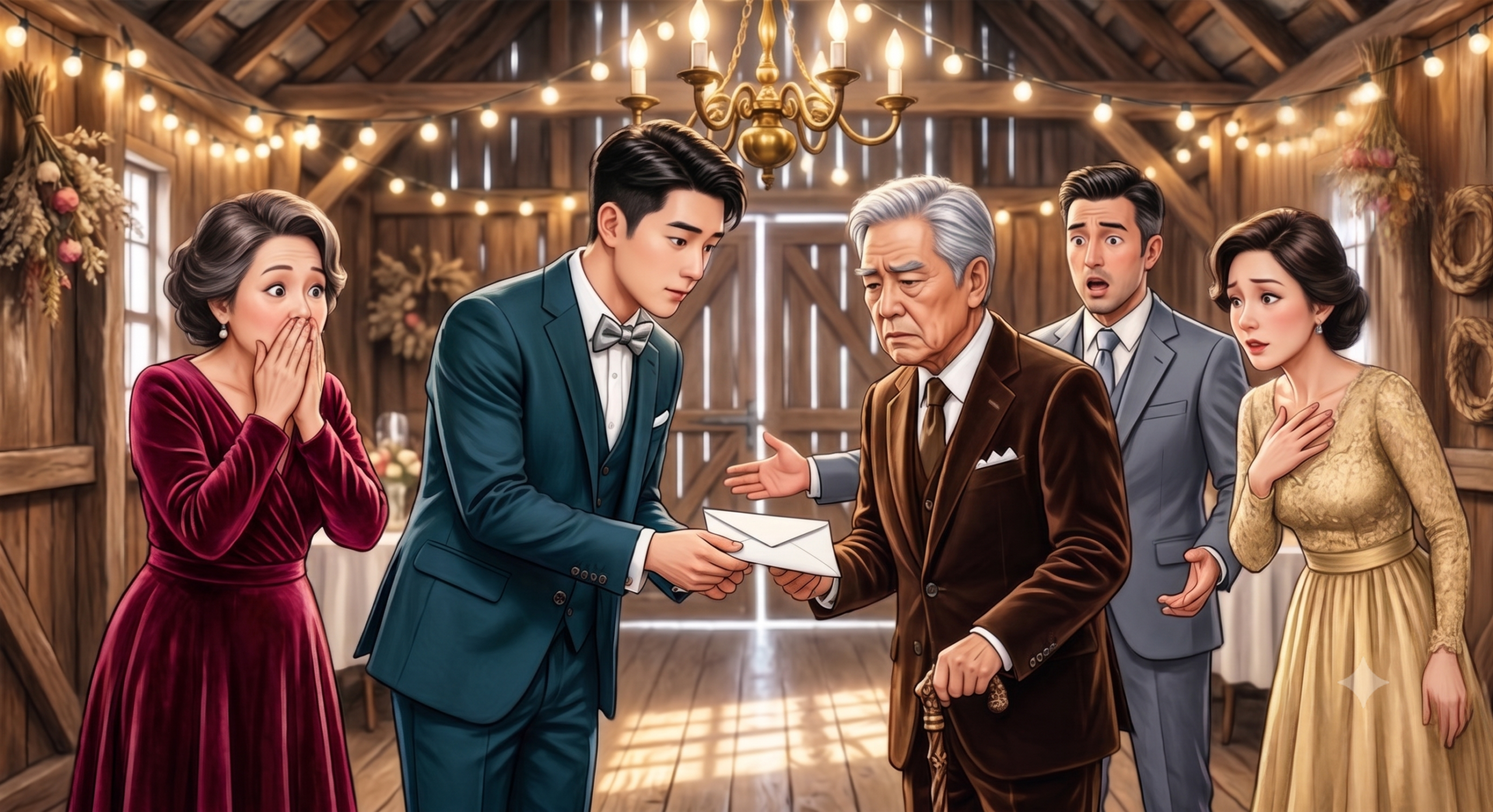
More Details
lThey Told Me I Could Only Take One Dog Home Until I Saw What Happened When They Tried to Separate Them
Jul 15, 2026

lThey Told Me I Could Only Take One Dog Home Until I Saw What Happened When They Tried to Separate Them

The Door She Almost Didn’t Open

Margaret Jensen drove to the county animal shelter on a Thursday morning in November with very modest intentions and a practical list of requirements she had rehearsed during the forty-minute drive as though preparing for a sensible transaction rather than an act of the heart.

One dog. Small. Calm. Not a puppy, because puppies required an energy she no longer had. Something older, she told herself, something already past its demanding phase, a companion that would settle beside her on the sofa during the evening news and not require her to become a different person than the one she had quietly become since the house emptied out.

Her youngest son had left for college in September. His room still smelled faintly of him, a specific combination of athletic shoes and the cedar soap he had used since middle school, and she had not yet decided whether to open the window and let the smell out or keep the door closed to preserve it. The baseball trophies on his shelf were dusty. She kept meaning to dust them and kept not doing it. The hallway outside his room was the place where the house felt most like a held breath.

Fifty-three years old, widowed at forty-seven, and now genuinely alone in a way she had been moving toward for six years but somehow only fully arrived at in October when the last set of footsteps disappeared from the upper floor and the house became entirely, unambiguously quiet.

The shelter was a low concrete building set back from the county road behind chain-link fencing, with a parking lot full of November puddles reflecting a gray sky. Donated blankets were being unloaded from a van near the entrance. The wind brought the sound of barking before she even opened her car door.

Inside, the smell was institutional, antiseptic layered over the underlying warmth of too many animals in too small a space. A woman behind the front desk smiled with the particular sympathy of someone who had watched many hopeful visitors walk in and make promises they did not always keep. Margaret explained what she was looking for, and the woman nodded and called for Clara.

Clara was young, maybe twenty-two, with the slightly raw look of someone who cries in their car on the way home from work and considers that a reasonable cost of doing something that matters. She led Margaret through a corridor of kennels where puppies launched themselves at the gates with uncomplicated enthusiasm and older dogs lay still, conserving something.

Margaret paused at several of the smaller breeds, the ones that matched the original intention. A terrier mix with one eye that was probably ten pounds. A beagle whose papers said he was seven years old. She stood in front of each one and felt nothing particular, which confused her, because she had expected to feel something. She had expected the choice to announce itself.

Clara kept walking without pressure, which Margaret appreciated, and they moved toward the far end of the corridor where the barking thinned and then stopped entirely, replaced by a quality of silence that was different from the silence of emptiness. The silence of two things resting against each other.

The last kennel.

An elderly Great Dane, black, enormous even in collapse, lay on a faded blue blanket with his muzzle resting on his front paws. His muzzle was white, the silver-white that comes to dark dogs when they are old, like early snow on a field. His ribs were visible through the loose skin of his sides, not from abuse but from the wasting of age, from a body that had been large and strong and was now spending what remained of its reserves with great dignity.

Curled against his chest, tucked into the shelter of his forelegs as though that was the only place in the world that made sense to be, was a miniature Dachshund. Brown, small enough to fit in both of Margaret’s hands, asleep with the absolute trust of an animal that has decided one particular creature represents safety and has organized its entire existence around that belief.

Neither dog moved when Margaret and Clara approached. They did not rush the gate. They did not perform hope. Whatever experience had taught them about strangers arriving with sympathy and leaving without them had apparently done its work.

“Harold and Beans,” Clara said, softly, the way you say names you’ve said many times and mean every time.

She explained what the intake records held. Their owner, a man named Arthur, had suffered a stroke eight months earlier and been moved to a long-term rehabilitation facility that did not allow animals. Neighbors had tried to help at first. Life had intervened, the way life does, and the temporary had quietly become permanent, and Harold and Beans had ended up here.

Arthur had adopted Harold from a flood rescue twelve years ago and had found Beans at another shelter a few years after that, a shelter that had been struggling to keep its doors open. Since then, the three of them had moved through Arthur’s retirement and his medical appointments and his increasingly quiet evenings together, and the dogs had learned each other’s rhythms the way people do when they share a life without reservation.

The intake note clipped above the kennel door was handwritten in capital letters, underlined twice: DO NOT SEPARATE.

A second note explained that Beans stopped eating whenever Harold was taken for veterinary examination or overnight observation. Shelter staff had tried brief separations in the early weeks, believing some adjustment was possible, and had reversed the decision after seeing what happened to both animals. The Dachshund’s distress was the more visible, but Harold’s was the more interior, a withdrawal into stillness that was harder to watch because it had no sound.

Eleven adoption applications had been submitted in eight months. Every one requested Beans alone. Every one had been declined.

Margaret was watching Harold when his eye opened. Just one, slowly, and he looked at her without any performance of need or appeal, just with the steady watchfulness of an animal that has learned to observe before it trusts. She looked back. The eye was dark and deep and tired in a way that was not sickness exactly but something more like having seen enough of a certain kind of thing and no longer being surprised by it.

Then Clara said Beans’s name softly and something happened.

The Dachshund scrambled awake in a panic that was not waking from a pleasant dream but from something more urgent, the body’s alarm system engaging before consciousness fully arrived. His paws slipped on the kennel floor. He pressed against Harold’s neck, small frantic nudges looking for the reassurance of a heartbeat still present, still reliable. He did not bark. The fear was too complete for noise.

Harold lifted his head. He looked at Beans. The Dachshund’s frantic movement slowed and then stopped. Beans pressed himself flat against Harold’s chest and let out a breath that was barely audible over the shelter’s ambient sound, a sigh of such complete relief that it carried a weight larger than the small body producing it.

Margaret had not moved.

She was thinking about her husband in the hospital, late in his illness, when holding his hand in the dark had been the entire content of love. Not grand, not articulate. Just the confirmation of presence. Just the body saying to another body, I am still here, you are not alone.

She read the second handwritten note more carefully.

Beans only sleeps when he can feel Harold breathing.

She stood in that corridor for a long time.

She thought about the practical reality of her life. The small house with its narrow hallways and steep back stairs. Her budget, which was tight after years of medical bills and tuition and reduced income following factory closures in her region that had taken the accounting position she had held for eleven years. She thought about the cost of arthritis medication for a Great Dane, about emergency veterinary care, about the specialized equipment she would need to help an elderly giant dog navigate a house built for smaller lives.

She thought about what her children would say. She thought about what she had planned when she got in the car that morning.

Then she asked Clara if Harold had any serious interest from potential adopters.

Clara’s expression answered before her words did.

Margaret asked for the adoption paperwork for both of them.

The moment Clara left to retrieve the folders, Margaret turned back to the kennel and stood very still with her hands folded in front of her like a person in church, which she supposed was approximately the right register for what was happening.

Her hands shook while she signed. She did not pretend they were not shaking. The forms were thorough and specific, acknowledging specialized care needs, potential surgical costs, the behavioral requirements of an animal with severe separation anxiety. She signed every page and tried not to calculate the monthly food expense for a dog who weighed more than she did.

Several volunteers gathered at the far end of the corridor by the time Clara brought the worn leashes. They did not make noise. They just stood there watching, which told Margaret something about how long Harold and Beans had been waiting.

Getting Harold to the parking lot was slow work. His hind legs had the weakness common to elderly large-breed dogs, and each step required a deliberate gathering of effort, a consultation between the intention and the body’s ability to execute it. Beans walked at his shoulder the entire way, matching pace, never getting ahead, occasionally glancing upward at Harold with the focus of a navigator monitoring conditions.

Outside, the cold air settled around them.

Margaret had arranged blankets across the backseat and folded down the rear seat to make room. She bent to lift Beans into the car first, thinking to settle him and then manage Harold’s more complicated boarding process, and the world came apart.

Harold made a sound she had never heard a dog make before. It was not a bark. It was not a whimper. It was something older than vocabulary, a sound from a place where language has not yet been invented but grief already has. The shelter dogs in the nearby kennels went quiet. Every person in the parking lot stopped.

Harold believed Beans was being taken away.

Margaret lowered Beans to the ground immediately. The Dachshund pressed himself against Harold’s chest and Harold lowered his enormous head and placed it over Beans’s narrow back with the deliberateness of someone placing a hand on a wound.

Three volunteers helped lift Harold into the car using a harness. It took time and patience and a kind of coordinated tenderness that Margaret found unexpectedly moving. Once he was settled, Beans needed no encouragement. He climbed in and curled against Harold’s chest and was, within moments, asleep.

The drive home was quiet. Harold slept. Beans watched the window with anxious eyes, keeping one paw on Harold’s side throughout.

Margaret stopped at a roadside diner and ordered grilled chicken strips because the shelter staff had warned her Beans might refuse unfamiliar food during the stress of transition. She placed several small pieces beside Harold’s paw. Beans ignored the food until Harold began eating slowly, and then ate a few careful bites himself, staying close.

The house received them the way houses receive new things, with a period of adjustment, the old space learning new patterns. Harold’s nails on the hardwood floors made a sound she had not heard before. Beans inspected every room with systematic anxiety, always returning to confirm Harold’s position before moving to the next one.

The first nights were difficult. Harold needed help rising, needed the mobility harness, needed encouragement and patience and the unglamorous physical work of caring for a large aging animal in a small house. Beans panicked at every closed door. Margaret slept in fragments, listening.

Around three in the morning of their second night, Harold slipped on the hallway carpet trying to reach the back door. Before Margaret had fully come awake, Beans was already there, pressed against Harold’s face, quiet and still, offering the one thing he knew how to give. Harold’s breathing steadied. He found his balance. Beans stayed beside him until he was upright.

Margaret knelt on the hallway floor in the dark and thought about what she had just seen.

Weeks passed. Then months. The neighborhood adjusted to Harold’s measured pace on the morning walks, to Beans’s small determined legs keeping time beside enormous strides. Children waiting for school buses waved. Neighbors began leaving things on the porch: orthopedic dog beds, canned food, a handmade sweater from the woman three houses down who kept asking for Beans’s measurements.

Arthur’s rehabilitation nurse reached out in December. Shelter staff had forwarded the adoption information, hoping it would help him. Margaret arranged a video call.

When Arthur’s face appeared on the tablet screen, Harold lifted his ears and Beans barked once and then pressed himself against Harold’s side, as though trying to include both of them in being seen. Arthur cried. He thanked her in the way people thank someone when gratitude exceeds the available vocabulary, in fragments, with long silences.

Margaret began calling regularly. Arthur had few visitors. His physical recovery was slow and his emotional recovery was slower, and knowing Harold and Beans were together and warm and sleeping beside a fireplace was, he told her once, the thing that made some days possible.

Harold’s health followed the trajectory that elderly Great Danes follow, unpredictably, with good weeks and difficult weeks, with days that looked like recovery and nights that looked like something else. The veterinarians were honest with her about what lay ahead. She appreciated the honesty. She was not a person who preferred comfortable uncertainty to difficult clarity.

During Harold’s harder days, Beans did something the veterinarians mentioned in professional terms as clinically notable. He anticipated distress before it was visible, pressing against Harold with calm precision when Harold’s breathing shifted or his movement became uncertain. The vet said she had seen this kind of attunement in bonded animals before but not often, not at this level.

February brought heavy snow and a morning when Harold could not rise.

Margaret called the emergency vet and received the information she had been preparing herself for without fully preparing herself for. Harold’s heart and his joints had reached the place where the treatments available were less than what the body required.

She brought him home.

Neighbors appeared at the door with casseroles and flowers and handwritten notes. Children from the school bus stop left drawings on the porch. The woman with the sweaters came and sat in Margaret’s living room without saying much, which was exactly right.

Margaret arranged blankets beside the fireplace. She lay down beside Harold on the floor and Beans pressed against Harold’s chest and stayed there through the night, awake, monitoring each breath with absolute attention. Around four in the morning, Harold nudged Beans with his muzzle in the slow deliberate way of an animal saying something it has no other means to say.

He died as dawn was beginning, with Beans against his chest and Margaret’s hand on his back and the fire still burning low.

The silence in the house afterward was different from the silence she had arrived home to after her husband died, different from the silence after her son left for college. This silence had shape. It had the specific shape of absence, of a space recently occupied by something very large.

Beans searched the house for three days. He checked every room with methodical grief, returning repeatedly to Harold’s blanket beside the fireplace, circling, lying down, rising, circling again. Margaret feared what the shelter records had described, the severe emotional decline following separation. She watched him closely. She sat on the floor beside Harold’s blanket and let Beans come to her when he was ready.

On the fourth day, he climbed onto the sofa beside her during the evening news.

He did not curl against her the way he had curled against Harold, not at first. But he stayed. He kept one paw on her leg, light pressure, the minimum required to confirm presence. She put her hand over his paw and they watched the news together and then the program that came after it, and neither of them moved until she got up to make tea.

After that, he slept beside her every night.

The trust did not arrive all at once. It came the way grief recedes and is replaced by something that is not the absence of grief but its transformation into something else, something that can be lived inside of. Margaret did not try to make it happen quickly. She had learned from Harold and Beans that patience was not passive. It was its own form of loyalty.

She began volunteering at the shelter in March, working with Clara on weekends, advocating specifically for bonded pairs and senior animals. They printed photographs of Harold and Beans and put them on the bulletin board near the front desk. Several families who saw the photographs changed their minds about what they had come in looking for.

A retired teacher and his wife adopted an elderly bonded pair of beagles in April, specifically because they had read about Harold and Beans. A young couple with a large house took in two aging cats who had lived together for thirteen years. Each adoption felt like a continuation of something.

Margaret told the story in volunteer orientations, not as a lesson exactly but as an account. She described what it looked like when Beans went still and pressed himself against Harold’s side after Harold’s nighttime slip. She described Harold’s cry in the parking lot. She described signing the paperwork with shaking hands and the practical calculations she had made and set aside.

She said that the house she had wanted to keep quiet had become full of clicking nails and medication alarms and the particular warmth of being needed. She said she had gone to the shelter looking for a manageable amount of companionship and had come home with something that required more of her than she had planned to give and returned more than she had known she was missing.


Beans was beside her during these talks, sitting on the chair she brought for him, patient and still with the dignity of an animal who has survived significant loss and continues to show up anyway. People reached out to touch him. He accepted this with equanimity.

On a Saturday in late spring, Margaret sat in the shelter’s small meeting room with a couple who had come to look at a bonded pair, two senior retrievers, one of whom was nearly blind and followed the other by sound and scent.

“It seems like a lot,” the woman said. Not unkindly. Just honestly.

“It is,” Margaret said.

“Did you regret it?”

Margaret thought about Harold lying beside the fireplace on his last night. She thought about Beans watching his face throughout the night. She thought about Arthur crying on a video call because a stranger had kept his dogs together.

“No,” she said. “I regret that I almost didn’t go through with it. I came very close to asking for more time. I had my hand on the folder and I almost said I needed to think.”

“What stopped you?”

Margaret looked down at Beans, who was lying with his chin on her foot with his eyes half-closed.

“He pressed his nose against Harold’s shoulder,” she said. “Just once. It was such a small thing. But I understood it. I knew what it looked like to need someone to stay.”

The couple adopted the retrievers.

Summer arrived and the house on the quiet street was not quiet in the way it had been. Not noisy, exactly, but inhabited in a way that had texture. Beans woke early and required his walk and had opinions about it. The neighbors asked after him by name. The school was out for summer and the children who had watched Harold’s slow morning progress sometimes appeared on the sidewalk to walk alongside Margaret and Beans for a block or two before turning back.

Margaret called Arthur every Sunday. His health had improved enough that he could sit up for longer periods and he was learning, slowly, to use his left hand for writing. He asked about Beans every time, and Margaret held the tablet so he could see the little dog curled beside her on the sofa. Arthur always smiled the same way, a smile that was still grief but had something else moving through it.

She planted basil in the back garden in June and thought of nothing in particular while she watered it, which was its own kind of peace. The house had changed. She had changed. She could not identify the exact moment when the grief of the empty rooms had been replaced by something else, because it had not happened at a moment. It had happened the way light changes in the afternoon, gradually and all at once.

Beans lay in the garden while she worked, watching her with his chin on his paws, alert but calm, the way he was now most of the time. He still checked on her when she came home, still pressed his nose briefly against her hand the way he had pressed it against Harold’s shoulder on that November morning in the shelter.

The gesture still meant the same thing it had always meant.

I am here. You are here. That is enough.

Margaret had gone to the shelter looking for something manageable and had found instead something true. She had nearly chosen convenience and had chosen, instead, the more demanding and more valuable thing. She had signed the paperwork with shaking hands and brought home two animals who needed everything she had, and they had given her back the thing she had not known she was still missing, which was the sense that her presence in the world was required.

Not her labor. Not her function. Her actual presence.

Beans was still alive. Harold was not. The loss of him sat in a specific place in the house, near the fireplace, beside the blanket Margaret still kept there. She did not consider this sad, exactly. She considered it evidence of something real.

Some things leave a shape. Some things teach you more by ending than by continuing.

She had gone to the shelter to soften the silence.

What she had found there had taught her that the silence was not the problem, that the question was not how to fill it but whether she was willing to risk the kind of fullness that came with its own particular grief, its own weight, its own demands, and its own irreplaceable gift of being genuinely needed by another living creature that could not explain it in words and did not need to.

Beans stretched in the afternoon light and rested his chin on her shoe.

She put down the watering can and sat beside him on the garden steps.

Outside the fence, the neighborhood went about its ordinary afternoon, and inside it, two lives that had not been planned continued their quiet and necessary arrangement.

More Details
My father barred me from entering my own medical school graduation ceremony because my stepmother wanted her daughter to use my ticket. “You’re just a nurse’s assistant anyway, let your sister have her moment,” my father sneered, pushing me toward the exit.
Jul 15, 2026

My father barred me from entering my own medical school graduation ceremony because my stepmother wanted her daughter to use my ticket. “You’re just a nurse’s assistant anyway, let your sister have her moment,” my father sneered, pushing me toward the exit.

I stood in the rain, watching them take pictures. But they didn’t know I wasn’t just graduating—I was the keynote speaker and the recipient of the university’s highest research grant. When the Dean took the microphone to introduce the guest of honor, my family’s smiles instantly froze… Returning home after a brutal 22-hour shift, my stepmother’s sharp voice immediately greeted me: “Clara, clean up those greasy plates. Haley has a photoshoot tomorrow; don’t ruin the aesthetic.” My father, Thomas, waved me away dismissively without looking up from his tablet. Swallowing my exhaustion, I pulled a single, gold-embossed envelope from my bag. “Dad,” I whispered, my voice raw. “My graduation is this Friday. I only got one VIP ticket, and I was really hoping you would come…”

Before I could finish, he snatched the ticket from my trembling fingers and handed it straight to my stepsister. “Don’t be selfish, Clara,” Thomas sneered, looking down his nose at me. “You’re just a low-level nurse’s assistant; you’ll be in the back row anyway. Haley needs this VIP access to network with wealthy doctors for her lifestyle brand. Let your sister have her moment.” I froze. For four grueling years, I kept the truth locked away. The sky on graduation day was a churning gray, attacking the campus with freezing rain. I stood shivering near the grand hall, my wet hair plastered to my face. Suddenly, a black taxi pulled up to the VIP curb. Out stepped my family.

My stepsister, Haley, twirled in a designer coat, excitedly waving the gold-embossed VIP ticket my father had stolen from me the night before.

“This VIP access is going to make my photos go viral!” she squealed.

I took a deep breath, stepping toward the security doors to explain I didn’t need a ticket because I was part of the graduating class. But before I could speak, my father’s hand shot out. His fingers dug painfully into my arm, physically dragging me backward into the freezing downpour.

“What the hell are you doing?” Thomas hissed, sneering at my soaked appearance. “You’re going to ruin Haley’s photos! You’re just a low-level assistant! Do not embarrass us in front of these wealthy doctors. Go wait in the car!”

My stepmother walked past, her face twisted in pure disgust. “Listen to your father, Clara. Let your sister have her moment. Go hide somewhere out of sight.”

With a final shove, he pushed me toward the wet steps. They walked through the magnificent bronze doors, leaving me completely alone in the storm. For four grueling years, they assumed I was just a lowly assistant, exploiting and crushing me.

Wiping hot tears from my face, I was about to walk away. But suddenly, the relentless rain stopped hitting me. A massive black umbrella shadowed my head.

I looked up, startled, to find Dean Jonathan Bradley, the head of the university’s medical board, wearing his flawless academic regalia. He stared at me in absolute, bewildered shock.

“Dr. Hensley?!” The Dean’s resonant voice cut through the storm. “Why on earth are you standing out here in the freezing rain? The entire Board of Trustees has been frantically looking for you backstage for thirty minutes to prepare for the Valedictorian speech!”…

The heavy, crimson velvet curtains parted with a mechanical hum, and a blinding, pure white spotlight illuminated the massive wooden stage. The auditorium, packed with over three thousand people, fell into a breathless, reverent hush.

Dean Bradley stepped to the gold-embossed podium. He adjusted his microphone, the sound echoing crisply through the state-of-the-art acoustic system.

“Ladies and gentlemen, esteemed colleagues, board of trustees, and honored guests,” his voice rolled over the crowd like thunder. “Today, we gather to graduate a class of extraordinary, brilliant minds. We send a new generation of healers into the world.”

He paused, resting his hands on the edges of the podium, letting the silence stretch until it was almost agonizing.

“But one among them,” he continued, his tone shifting into one of profound awe, “stands entirely apart. She stands as a titan. This individual is not only graduating at the absolute, undisputed top of her class with a dual MD/PhD in pediatric oncology—an incredibly rare feat—but she is also the sole, historic recipient of our university’s highest national honor: the two-million-dollar National Health Research Grant.”

A collective, audible gasp rippled through the massive audience. The sheer magnitude of the achievement sent a shockwave of whispers through the velvet seats.

In the fourth row, Thomas crossed his legs, a smug, envious smirk playing on his lips. He leaned over and muttered into Victoria’s ear. “Imagine having a daughter like that. Two million dollars in federal funding before she’s even out of school. Instead, we have Clara scrubbing bedpans.”

Victoria snorted quietly, rolling her eyes.

“Please join me,” Dean Bradley’s voice boomed, reaching a triumphant crescendo, “in welcoming to the stage our Valedictorian, our keynote speaker, and the undeniable future of oncology research… Dr. Clara Hensley.”

For a fraction of a second, the universe seemed to hold its breath.

Then, the spotlight swung sharply away from the podium, slicing through the darkness to illuminate the wings. I stepped out from the shadows. My posture was regal, my chin held high. The heavy velvet academic robes flowed behind me with every measured, confident step I took toward the center of the stage.

The entire auditorium erupted. Three thousand people rose to their feet in unison, delivering a thunderous, deafening standing ovation that physically shook the wooden floorboards beneath my feet…

My hands were perpetually stripped raw. Even now, standing on the uneven concrete of the driveway, I could smell the caustic, medical-grade chlorhexidine sanitizer clinging to my skin—a scent that had become my permanent perfume over the last four years. My spine felt like a stack of brittle porcelain saucers, grinding together and threatening to shatter with one wrong step after another brutal twelve-hour shift at the university hospital.

I slipped my key into the lock of the back door of my late mother’s house. It used to smell of cinnamon and old books here. Now, the air that rushed out to greet me was cloying, choked with the artificial lavender diffusers Victoria Hensley, my stepmother, bought by the dozen. My father, Thomas Hensley, had spent the last five years systematically erasing my mother’s existence, replacing her solid oak antiques with Victoria’s expensive, tacky mirrored furniture and acrylic chairs.

A burst of shrill, performative laughter erupted from the formal dining room as I stepped into the hallway.

“Oh my god, you guys, this sheer detailing is literally everything.”

It was my stepsister, Haley Hensley. She was standing in the center of the room, illuminated by the harsh, blinding halo of a professional ring light, live-streaming to her followers. She twirled in a designer trench coat that probably cost more than two months of my nursing assistant salary.

I kept my head down, my heavy canvas tote bag bumping against my hip. All I wanted was the dark sanctuary of my cramped basement bedroom. I had been awake for twenty-two hours. Between rotating patient beds in the pediatric oncology ward and secretly agonizing over the final statistical models for my doctoral thesis in the bio-lab, my mind was fraying at the edges.

As I tried to quietly skirt past the dining room archway, Victoria’s sharp voice snapped like a wet towel.

“Clara. Stop creeping around.”

She sat at the head of the dining table, meticulously painting her nails a blood-red crimson. She didn’t bother to look up. With a pointed, manicured finger, she shoved a towering stack of grease-stained porcelain plates toward the edge of the table.

“Clean those up before you go to sleep. Haley has a very important brand partnership shoot tomorrow morning, and we cannot have the kitchen looking like a slum. You know how sensitive she is to visual clutter.”

In the corner, sitting in a leather wingback chair, Thomas finally looked up from his glowing tablet. He was a man who measured worth entirely in profit margins and networking opportunities. His logistics company was currently bleeding money, a fact he tried to hide behind tailored suits and country club memberships.

“Just do it, Clara,” Thomas muttered, waving his hand dismissively. “And try not to make so much noise. I’m waiting for an email from a pharmaceutical rep.”

I stood frozen, the exhaustion heavy in my marrow. My throat tightened. I dug my raw fingers into the strap of my bag, feeling the stiff edge of the envelope I had carried with me all day. I took a deep, shaky breath and pulled it out. It was a single, gold-embossed envelope containing a VIP guest pass.

“Dad,” I started, my voice barely above a rasp. “My graduation ceremony is this Friday. Because of the security protocols this year, I only get one guest ticket. I was really hoping you would come—”

Before the sentence could fully leave my mouth, Thomas was out of his chair. He crossed the room in three long strides, his face twisted in a mask of aggressive irritation. He snatched the thick envelope right out of my trembling fingers.

He didn’t open it. He didn’t look at the university seal. He just turned and held it out to Haley, who had paused her live stream to watch the exchange with a smug, knowing little smile.

“Don’t be entirely selfish, Clara,” Thomas sneered, looking down his nose at me. “Haley’s lifestyle brand desperately needs high-society networking content. The medical school graduation brings in the wealthiest families in the state. You’re just a nurse’s assistant anyway. You’ll be sitting in the back row of some general assembly hall with the rest of the support staff. Let your sister have her moment in a real venue.”

Haley snatched the ticket with a squeal, waving it in front of her ring light. “VIP access! Thanks, Dad. I’m going to get so much amazing footage.”

I stared at the man who shared my DNA. A cold, suffocating knot tightened in my chest. Let your sister have her moment.

It was a truth I had kept fiercely guarded, locked away in the darkest, safest vault of my mind for four grueling years. I hadn’t corrected them when they assumed my grueling clinical hours were just low-level assistant work. I hadn’t told them because I knew Thomas would instantly try to exploit my connections, or worse, Victoria would find a way to sabotage my funding out of pure, venomous jealousy.

They didn’t know I wasn’t graduating from a community college certificate program. They had no idea I was graduating from the university’s elite, top-tier medical school.

I didn’t say a word. I turned on my heel, the plates left untouched, and descended the creaking stairs to my windowless basement room.

As I reached the bottom step, the floorboards above my head creaked. The house was old, and the air vents carried every whisper like a megaphone. I stood dead still in the dark as Victoria’s hushed, conspiratorial voice drifted down through the aluminum grating.

“Are the papers drafted?” she asked.

“Yes,” Thomas replied, his tone devoid of any paternal warmth. “Once this ridiculous graduation is over on Friday, we’ll present her with the eviction notice. She’s officially eighteen now; she has no legal claim to her mother’s estate anymore. Haley needs that basement cleared out. It’s going to be her new personal content studio.”…

The morning of the ceremony, the sky over University Hall was a bruised, violently churning gray. The rain didn’t just fall; it attacked in heavy, freezing sheets, turning the grand limestone pillars of the campus into slick, imposing monoliths.

I stood near the edge of the sprawling stone courtyard, the hem of my black graduation gown plastered wetly to my ankles. The cold seeped through the thin soles of my sensible shoes, chilling me all the way to my teeth. I had arrived early, needing a moment to breathe before the chaos swallowed me, only to watch a sleek black taxi pull up to the VIP curb.

Out stepped my family.

Haley emerged first, completely shielded by a massive golf umbrella held by the taxi driver. She wore a pristine, cream-colored designer trench coat, completely inappropriate for the weather but perfect for a photograph. In her manicured hand, she clutched my stolen gold-embossed VIP ticket, waving it around as if she had won a lottery. Victoria stepped out behind her, complaining loudly about the humidity ruining her blowout, while Thomas adjusted his silk tie, his eyes already darting around, scanning the crowd of arriving families for anyone wealthy enough to pitch his failing logistics company to.

They looked like a parody of a loving family.

I took a breath, stepping out from the meager shelter of a stone archway. I needed to get inside. As I approached the main security checkpoint, Thomas spotted me. His face instantly contorted with profound embarrassment.

I stepped toward the velvet rope to explain to the security guard that I didn’t require a guest ticket because I was part of the graduating doctoral class. Before I could even open my mouth, Thomas’s hand shot out. His fingers dug painfully into the meat of my upper arm, his grip like a vice. With a violent jerk, he pulled me backward, physically tearing me out of the queue and dragging me toward the unsheltered, rain-slicked steps.

“What the hell do you think you’re doing?” Thomas hissed, his voice a furious, dripping sneer. He looked at my soaked hair and the simple black gown I wore over my dress. “You’re going to ruin Haley’s photos looking like a drowned rat. I told you yesterday, you’re just an assistant. You don’t belong in the VIP entrance. Go wait in the car. Do not embarrass us in front of these wealthy doctors!”

Victoria walked past, flanked by Haley. She paused just long enough to look me up and down with an expression of sheer, unadulterated disgust. She gave a cold, dismissive little laugh as she adjusted a stray lock of Haley’s perfectly styled hair.

“Listen to your father, Clara. Let your sister have her moment. Go dry off somewhere out of sight.”

Thomas released my arm with a final, forceful shove toward the bottom of the exterior stairs. My heel slipped on the wet stone, and I stumbled, barely catching my balance on the freezing bronze railing.

I stood completely alone in the freezing downpour. I watched the heavy, magnificent bronze doors of the grand hall swing shut behind them, cutting off the warm golden light from inside. The absolute, staggering betrayal fractured something deep within my chest. They weren’t just oblivious; they were actively, joyfully cruel. The rain mixed with the hot tears spilling over my eyelashes, blurring the world into a gray smear.

Wiping the cold rain from my face with a trembling hand, I turned away from the doors. My spirit felt scraped hollow. Maybe I couldn’t do this. Maybe I should just walk away.

But before I could take a single step down into the flooded street, the relentless pelting of rain on my head suddenly stopped.

A shadow fell over me. I looked up, startled, to find a massive, black umbrella held firmly over my head. Standing beside me was the imposing, aristocratic figure of Dean Jonathan Bradley, the head of the university’s medical board. He was impeccably dressed in his full academic regalia, the purple velvet of his station rich and dry.

He stared down at me, his silver eyebrows drawn together in an expression of absolute, bewildered shock.

“Dr. Hensley?” Dean Bradley’s deep, resonant voice cut through the noise of the storm. “Why on earth are you standing out here in the freezing rain? The board of trustees has been frantically looking for you backstage for thirty minutes!”

The air backstage was entirely different from the rest of the world. It was thick with the scent of polished leather, ancient paper, and the expensive, hothouse floral arrangements that lined the corridors. It was the scent of untouchable, institutional power.

The moment Dean Bradley ushered me through the private faculty entrance, the atmosphere shifted from panic to synchronized, hyper-focused action. Two administrative assistants practically materialized out of thin air, rushing toward me with thick, heated cotton towels. They gently draped them over my shivering shoulders, dabbing the rainwater from my face with careful reverence.

“We have her! Dr. Hensley is here!” one of the assistants called out down the hall.

From an adjacent dressing room emerged Dr. Charles Fletcher, the internationally renowned head of the pediatric oncology department and my personal thesis advisor. His usually stern face broke into a massive, deeply affectionate smile. He carried something draped carefully over his arm.

“My god, Clara, we thought we’d lost our star,” Dr. Fletcher chuckled warmly. He stepped forward as I shrugged off the wet towels. With practiced, deliberate care, he lifted the heavy, magnificent velvet doctoral hood.

The fabric felt incredibly weighty as he draped it over my shoulders, smoothing the brilliant green and gold satin lining that designated my dual MD/PhD status. It wasn’t just clothing; it was a coronation.

“You look magnificent, Clara,” Dr. Fletcher said softly, his eyes shining with unshed tears. He placed a warm, fatherly hand on my shoulder. “Your research on cellular apoptosis in pediatric leukemia… it’s going to change the world. Your late mother would have been so incredibly proud of the history you are making today.”

I looked at my reflection in the massive gilded mirror leaning against the brick wall. I blinked, barely recognizing the woman staring back. The exhausted, invisible nurse’s assistant in stained scrubs was gone. In her place stood a sovereign force, draped in the armor of unparalleled academic achievement.

I earned this, I thought, the realization finally anchoring in my bones. Every sleepless night. Every tear. It was all real.

Meanwhile, just on the other side of the heavy velvet curtain, a vastly different reality was playing out.

In the fourth row of the auditorium’s velvet-lined VIP section, Thomas and Victoria were holding court. They had commandeered the seats I had bled for, practically shouting to be heard over the low murmur of the sophisticated crowd.

“Oh, absolutely,” Victoria lied smoothly, adjusting her heavy pearl necklace and flashing a brilliant, fake smile to the wealthy neurosurgeon’s family sitting next to them. “Our Haley is practically the guest of honor today. She’s a major lifestyle influencer, you see. We had to leave our other daughter at home, unfortunately. She’s just a low-level assistant, very sweet, but she doesn’t really belong in a high-caliber room like this. She gets so intimidated.”

Thomas nodded proudly, puffing out his chest. He reached into his tailored breast pocket, his fingers tapping affectionately against a folded legal folder. It was the eviction notice. He planned to slap it onto my mattress the second they returned to the house.

“It’s all about surrounding yourself with excellence,” Thomas boasted to the surgeon, his eyes darting around the room hungrily. “Actually, I own a logistics firm that specializes in—”

Backstage, the warning chimes echoed through the PA system, signaling the five-minute mark. The lights in the grand hall began to slowly dim, bathing the audience in a hushed, expectant twilight.

Dean Bradley walked up beside me, holding a heavy, leather-bound binder containing the run-of-show and my keynote address. He leaned in, his expression turning intensely serious.

“Clara, I must warn you before you step out there,” he murmured, his voice low enough that only I could hear. “We have some incredibly powerful global investors sitting in the front rows today. Word of your grant has leaked. Specifically, Marcus Sterling, the CEO of the Sterling Pharmaceutical Conglomerate, is in the audience. I believe your father’s logistics company has been desperately begging his office for a distribution contract for the last two years.”

My heart skipped a beat, a sudden, sharp thrill of pure adrenaline flooding my veins.

Dean Bradley handed me the leather binder, his eyes glinting with a fierce, knowing pride. “They are all waiting for you. Are you ready to change your life?”

The heavy, crimson velvet curtains parted with a mechanical hum, and a blinding, pure white spotlight illuminated the massive wooden stage. The auditorium, packed with over three thousand people, fell into a breathless, reverent hush.

Dean Bradley stepped to the gold-embossed podium. He adjusted his microphone, the sound echoing crisply through the state-of-the-art acoustic system.

“Ladies and gentlemen, esteemed colleagues, board of trustees, and honored guests,” his voice rolled over the crowd like thunder. “Today, we gather to graduate a class of extraordinary, brilliant minds. We send a new generation of healers into the world.”

He paused, resting his hands on the edges of the podium, letting the silence stretch until it was almost agonizing.

“But one among them,” he continued, his tone shifting into one of profound awe, “stands entirely apart. She stands as a titan. This individual is not only graduating at the absolute, undisputed top of her class with a dual MD/PhD in pediatric oncology—an incredibly rare feat—but she is also the sole, historic recipient of our university’s highest national honor: the two-million-dollar National Health Research Grant.”

A collective, audible gasp rippled through the massive audience. The sheer magnitude of the achievement sent a shockwave of whispers through the velvet seats.

In the fourth row, Thomas crossed his legs, a smug, envious smirk playing on his lips. He leaned over and muttered into Victoria’s ear. “Imagine having a daughter like that. Two million dollars in federal funding before she’s even out of school. Instead, we have Clara scrubbing bedpans.”

Victoria snorted quietly, rolling her eyes.

“Please join me,” Dean Bradley’s voice boomed, reaching a triumphant crescendo, “in welcoming to the stage our Valedictorian, our keynote speaker, and the undeniable future of oncology research… Dr. Clara Hensley.”

For a fraction of a second, the universe seemed to hold its breath.

Then, the spotlight swung sharply away from the podium, slicing through the darkness to illuminate the wings. I stepped out from the shadows. My posture was regal, my chin held high. The heavy velvet academic robes flowed behind me with every measured, confident step I took toward the center of the stage.

The entire auditorium erupted. Three thousand people rose to their feet in unison, delivering a thunderous, deafening standing ovation that physically shook the wooden floorboards beneath my feet.

But I didn’t look at the crowd. I looked exactly at the fourth row, center aisle.

I watched the smug smile on Thomas’s face evaporate so violently that I could almost hear his jaw physically click out of place. His eyes bulged, wide and unblinking, staring up at me as if I were a ghost that had just crawled out of a grave.

Beside him, Victoria’s artificially tanned face drained of all blood, turning an ashen, sickly, ghostly white. Her perfectly manicured hand went limp, and her thousand-dollar designer purse slipped from her lap, hitting the concrete floor with a heavy, unnoticed thud.

Haley, who had been holding her phone up to record the mysterious genius, froze. Her mouth fell open in a silent scream. The phone slipped through her trembling, sweat-slicked fingers, clattering loudly against the legs of the chairs.

They were paralyzed. Stripped of their delusions in front of the most powerful people in the state, they stared up at the stage, drowning in absolute, suffocating terror.

I reached the podium. I let the applause wash over me for a long, luxurious moment before I gently raised a hand. The room quieted immediately, eager for every word.

I adjusted the microphone. I leaned in, my eyes locking onto my trembling, hyperventilating father.

“To those who explicitly told me to step aside so that others could have their moment,” I said. My voice was crystal clear, completely devoid of fear, dripping with a quiet, lethal authority. The microphone picked up the icy edge of my tone, projecting it into the very marrow of the audience. “Thank you. Your cruelty forced me to build a stage where I no longer need your permission to stand.”

The silence in the room was absolute, pregnant with the brutal, unspoken context of my words.

Before the applause could resume, the pressure inside Thomas’s fragile, narcissistic ego violently ruptured. He couldn’t process the reality. He couldn’t accept that the servant he planned to evict was the queen of the room.

He stood up, kicking his chair back so hard it slammed into the knees of the neurosurgeon behind him. He was trapped in a blind, desperate, foaming panic.

“This is a mistake!” Thomas screamed, his voice cracking, pointing a shaking finger up at the stage. “She’s a liar! She’s not a doctor! She’s just a nurse’s assistant! She stole someone’s identity! Security! Arrest her immediately!”

The reaction was instantaneous and violently decisive. The elite medical community did not tolerate disruptions, let alone unhinged attacks on their crown jewel.

Within seconds of Thomas’s screaming outburst, three burly, heavily armed campus security guards materialized from the aisles. They didn’t ask questions. Two of them flanked Thomas, grabbing his flailing arms and pinning them forcefully behind his back, twisting just enough to make him gasp in pain.

“Sir, you are disrupting a federally funded academic ceremony. You are trespassing. Move your feet now, or you will be carried out in zip-ties,” the lead guard growled, his voice brooking no argument.

They dragged him, still shouting semi-coherent, red-faced demands, backward up the aisle. Every head in the auditorium turned to watch the spectacle. The wealthy doctors, the investors, the pharmaceutical CEOs—they all glared at him with an undisguised, aristocratic disgust.

Victoria and Haley were practically vibrating with deep, burning humiliation. Surrounded by the sneers of the high society they so desperately wanted to belong to, they had no choice. They grabbed their coats and scurried up the aisle behind the guards, heads ducked down, fleeing the auditorium like frightened, pathetic rodents fleeing a sinking ship.

I watched them go, feeling nothing but a cool, refreshing breeze where my anxiety used to live. I turned my attention back to the audience.

Unfazed by the interruption, I delivered my keynote. I spoke passionately, weaving the raw emotional reality of pediatric suffering with the brilliant, cutting-edge molecular pathways my research had uncovered. I didn’t just give a speech; I painted a vision of a future without fear. By the time I delivered my final, resonant sentence, there wasn’t a dry eye in the house. Even the stoic board of trustees were openly weeping. The room erupted onto its feet once again, the applause this time deafening, a physical validation of my existence.

Two hours later, the contrast between our lives became a permanent chasm.

I was sitting in Dean Bradley’s private, wood-paneled office. The air smelled of expensive espresso and success. I held a Montblanc pen, signing my name across the bottom line of my official two-million-dollar federal research contract. Dr. Fletcher stood behind me, beaming like a proud father.

Meanwhile, three blocks away, Thomas and Victoria were huddled in the corner booth of a cheap, fluorescent-lit coffee shop, seeking shelter from the lingering rain. Their phones were buzzing relentlessly on the sticky laminate table. Haley had forgotten to end her live stream when she dropped her phone. The entire internet had witnessed Thomas’s screaming, humiliating meltdown. Haley’s inbox was flooded with notifications—not from fans, but from her major sponsors, dropping her lifestyle brand by the minute due to the viral embarrassment.

Before Thomas could even begin to process the catastrophic loss of his daughter’s income, a tall, imposing man in a bespoke gray suit walked up to their table. He didn’t introduce himself warmly. He simply laid a thick, legally binding document directly over Thomas’s cooling coffee cup.

“Mr. Hensley?” the man asked, his tone clipped and professional. “I am Arthur Vance. I represent Dr. Clara Hensley. This document serves as an immediate injunction freeze on all of your personal and business bank accounts.”

Thomas stared at the paper, his mouth opening and closing like a suffocating fish. “What? On what grounds?!”

“On the grounds of a civil lawsuit contesting your documented, illegal attempt to fraudulently transfer and liquidate her late mother’s estate,” Mr. Vance replied smoothly, buttoning his jacket. “My client has also filed a restraining order. If you step foot near her property or her laboratory, you will be jailed. We will see you in federal court.”

Back in the Dean’s office, I capped the pen, a profound sigh of relief leaving my lungs. It was done. The house was safe. I was safe.

As I stood up to leave, the heavy oak door opened. Dr. Fletcher walked in, accompanied by a stern, incredibly wealthy-looking older man wearing a tailored Italian suit that radiated quiet, old money.

“Clara,” Dr. Fletcher said, his eyes dancing with excitement. “I’d like you to meet someone. This is Elias Thorne. He is the head of the Global Pharmaceutical Alliance, and coincidentally, Marcus Sterling’s chief corporate competitor.”

Mr. Thorne stepped forward, extending a calloused hand. “Dr. Hensley. I just watched your speech. It was the most brilliant defense of targeted molecular therapy I have heard in a decade.” He paused, his gaze turning intensely sharp. “I want to personally fund the construction of your private research laboratory. Unlimited capital. But I will only do it on one very specific condition.”

One year later.

The air in the Hensley Oncology Lab was perfectly climate-controlled, carrying the faint, clean scent of ozone and sterilized glass. Located in the newly constructed, sunlit wing of the university’s research center, it was widely considered the crown jewel of the institution.

I stood in the center of my pristine, state-of-the-art private laboratory. The walls were lined with millions of dollars of sequencing equipment, humming with quiet, obedient power. I wore a crisp, immaculate white lab coat, my name—Dr. Clara Hensley, MD/PhD, Director—embroidered in navy blue thread above my heart.

I leaned against my glass desk, looking down at a beautiful, silver-framed photograph of my mother. She was smiling, her eyes bright and full of life. I kept the house, Mom, I thought. I kept the promise.

I was no longer a frightened girl hiding in a basement. I was a globally recognized authority in my field, fiercely financially independent, and surrounded every day by a team of brilliant researchers who respected my intellect, not my subservience.

A soft, hesitant knock on my heavy glass office door pulled me from my thoughts. My lead assistant, a bright-eyed grad student named Sarah, walked in. She looked deeply uncomfortable, clutching an iPad to her chest.

“Dr. Hensley? I’m so sorry to interrupt your data review,” Sarah stammered. “There’s a man out in the main lobby. He claims to be your father. He… well, he doesn’t have an appointment, and security tried to turn him away, but he’s practically begging to see you for just two minutes.”

I felt a faint, distant prickle at the back of my neck, but the panic that used to accompany his name was completely gone. In its place was a vast, arctic calm.

“It’s fine, Sarah. I’ll handle it.”

I stepped out of my office, the automatic glass doors parting with a soft hiss, and walked into the expansive, marble-floored lobby.

Thomas stood near the security desk. The last twelve months had not been kind to him. The arrogant, tailored businessman was gone. He looked aged by a decade, his posture slumped, his suit slightly wrinkled and out of style. The lawsuit I had filed exposed years of his financial mismanagement. His logistics company had gone bankrupt mere months after the public scandal of my graduation. Victoria, true to her nature, had filed for divorce the moment the bank accounts were frozen, taking what little liquid cash he had left and moving to Florida with Haley.

He was completely, utterly broken.

When he saw me walking toward him, flanked by security, his bloodshot eyes watered. He looked at my pristine white coat, at the massive steel letters spelling my name on the wall behind me.

“Clara… please,” Thomas whispered, his voice trembling with a pathetic, raw desperation. He took a hesitant step forward, but the security guard put a hand on his chest, stopping him. “Clara, I’m your father. I… I made a terrible mistake. I was blind. But I’m destitute. The bank is taking my apartment tomorrow. Just… just sign a single recommendation letter for me. Introduce me to Elias Thorne. You have so much power now, so much influence. Please, save my life.”

I stopped a few feet away from him. I looked at the man who had pushed me into the freezing rain, who had tried to steal my mother’s legacy to build a TikTok studio. I searched my heart for a flicker of anger, or perhaps a lingering drop of hatred.

I found absolutely nothing. Only a cold, clinical, profound indifference. He wasn’t a monster anymore. He was just a sad, irrelevant man.

“I’m sorry, Thomas,” I said softly. My voice was calm, steady, and utterly devoid of empathy. I purposefully used his first name, drawing an immediate, unbreakable boundary between us.

His face crumbled at the sound of his name on my lips.

“But as you once told me,” I continued, tilting my head slightly, “when you’re in the presence of greatness, you have to get out of the way. You have to let the real achievers have their moment.”

I didn’t wait for a response. I didn’t need to see his tears. I simply turned my back on him. I walked away, my white coat billowing slightly, passing through the secure glass doors of my laboratory, leaving him standing completely alone in the cold, unforgiving lobby of the empire I had built without him.

As I sat back down at my desk, exhaling a breath I felt like I had been holding for twenty years, the silence of the lab was broken.

My secure personal phone chimed with an incoming, encrypted international call. The caller ID flashed briefly: Stockholm, Sweden.

I picked up the receiver, my heart suddenly hammering against my ribs. I pressed the phone to my ear, listening to the heavy, prestigious, accented voice of the chairman of the Nobel Committee’s selection board.

As the man spoke the words that would immortalize my name in the annals of medical history forever, I closed my eyes. A beautiful, victorious, tearful smile spread slowly across my face. I looked at the framed picture on my desk.

“We did it, Mom,” I whispered to the empty, perfect room. “We finally did it.”

More Details
My Husband Sent Me a Message From Vegas That Changed Everything—So I Made a Few Changes of My Own
Jul 15, 2026

My Husband Sent Me a Message From Vegas That Changed Everything—So I Made a Few Changes of My Own

But at 2:47 a.m. on a Tuesday, laughter no longer existed in me.

The house was unnaturally quiet. I had fallen asleep on the couch, the TV muted, the screen washing the room in pale light. When my phone vibrated, I reached for it lazily, assuming it was nothing—maybe Ethan texting from his work trip in Vegas.

Instead, my breath vanished.

The first thing that loaded was a photo.
Ethan—my husband of six years—standing beneath the neon glow of a Vegas wedding chapel.
Beside him was Rebecca, his coworker.

They were holding marriage certificates.

Then the message appeared:

Just married Rebecca. Been sleeping with her for eight months. You’re boring and pathetic. Enjoy your sad little life.

I stared at the screen until the words lost meaning. No tears. No screaming. Just a deep, frozen calm.

I replied with one word:

Cool.

At that moment, something sharp and steady locked into place inside me. Ethan thought he had destroyed me—but he’d forgotten who managed everything he was walking away from.

By 3:15 a.m., I moved with ruthless clarity.

Every credit card in his wallet—canceled.
Passwords—changed.
The house deed—mine.
The accounts—mine.
His access—revoked.

At 3:30, I called a locksmith.
“I’ll pay double,” I said. “Now.”

By dawn, the locks were changed. The house was sealed.
Ethan Jensen, newly married, no longer belonged anywhere inside it.

At 8 a.m., pounding shook the door.

Two police officers stood outside. Ethan had called them, claiming I’d locked him out of his home.

I showed them the Vegas message.

The older officer sighed. “He married someone else. This isn’t a police matter.”

They left.

I slept for two hours—deep, dreamless.

By afternoon, I knew Ethan would return. He always did.

At 2 p.m., he showed up with Rebecca, his mother Margaret, and his sister Lily.
His belongings were already boxed and labeled in the garage.

Margaret screamed. Lily mocked. Ethan tried to posture.

“This house was mine before I met you,” I said calmly. “Your name was never on it.”

Their confidence collapsed.

Rebecca’s credit card declined when she tried to rent a truck.
Then Ethan’s declined too.

The Vegas fantasy cracked in real time.

When Lily sneered that I was alone and bitter, I stepped close and answered quietly:

“I have my home. My career. My freedom. And I don’t have Ethan. That’s the best part.”

They packed. They left.

Then came the smear campaign.

Ethan, his mother, and his sister flooded social media, painting me as abusive and controlling. People I knew started believing it.

I called David, my tech-savvy friend.

Within hours, he uncovered everything—messages between Ethan and Rebecca, bragging about stealing money from my accounts to fund their affair.

I posted the screenshots. No commentary. Just truth.

The internet turned on them instantly.

Next came harassment, false accusations, even an attempted break-in—all documented, all forwarded to my lawyer.

Finally, Ethan begged through my mother.

She shut him down.

Then Rebecca’s mother called, asking me to take Ethan back because her daughter “couldn’t afford him.”

I laughed and hung up.

The final act took place in court.

The judge read the evidence.
Affair. Theft. Bigamy.

The verdict was swift.

The divorce was granted.
I kept my home and assets.
Ethan left with nothing but his belongings—and six months of alimony to pay me.

Outside the courthouse, his family erupted into chaos. Coffee flew. Security intervened. Ethan disappeared without a word.

Within weeks, both Ethan and Rebecca lost their jobs due to company policy.

Their entire world collapsed.

Mine finally opened.

I sold the house, bought a bright downtown condo, and breathed again.

At the gym, I met Jacob—kind, steady, uncomplicated. One morning he handed me a coffee with two words written on the cup:

Not Ethan.

I laughed harder than I had in years.

On my wall hangs a framed copy of Ethan’s Vegas marriage certificate—not as pain, but proof.

Because people like Ethan don’t need revenge.

They write their own ending.

All you have to do is step aside and let it happen.

And this time, I smiled.

More Details
My stepson smashed my son’s handmade airplane, stared directly at me, and said, “YOU’RE NOT MY REAL MOTHER ANYWAY.” That night, I quietly stopped paying for every luxury, privilege, and expense I had been covering for that household… and before morning came, I discovered exactly WHO HAD BEEN TEACHING HIM TO TREAT ME LIKE GARBAGE ALL ALONG.
Jul 15, 2026

My stepson smashed my son’s handmade airplane, stared directly at me, and said, “YOU’RE NOT MY REAL MOTHER ANYWAY.” That night, I quietly stopped paying for every luxury, privilege, and expense I had been covering for that household… and before morning came, I discovered exactly WHO HAD BEEN TEACHING HIM TO TREAT ME LIKE GARBAGE ALL ALONG.

Chapter 1: The Breaking Point

The breaking point arrived on a rainy Thursday evening after years of quiet tension simmering within our household.

My name is Katherine, I am forty-three years old, and I lived in a suburban neighborhood near Omaha with my husband, Paul.

I brought two children into this marriage, my daughter Grace and my son Leo, while Paul had two teenagers from his first marriage: Miles and Kayla.

Their biological mother, Brenda, lived in a different suburb and constantly planted seeds of doubt about what constituted a real family.

The kids always returned from her place carrying heavy resentment toward me, no matter how much I tried to foster a warm environment.

I kept trying because I truly believed that patience and kindness would eventually lead to a lasting peace.

I paid for school clothes, expensive sports equipment, birthday gifts, monthly phone bills, and countless emergency medical expenses.

I drove everyone to soccer practices, dentist appointments, and school events while memorizing the small details of their likes and dislikes.

I never forced them to call me Mom, and I never expected overt displays of affection, as I only wanted basic respect.

But that respect never actually materialized.

Miles openly ignored my authority whenever I asked him to help with chores, and Kayla made it clear she only listened to whatever Paul suggested.

Every time I tried to discuss the situation privately with my husband, he brushed it aside by claiming the teenagers were just going through a difficult adjustment phase.

Eventually, the toxic atmosphere spread toward my own children as well.

One afternoon, Grace cried quietly at the dining table after Kayla intentionally ruined the expensive set of professional markers I bought her for Christmas.

Kayla had left every cap off the markers overnight, and when Grace confronted her, Kayla just shrugged.

“Dad controls this house, not your mother,” Kayla had sneered, leaving Grace completely stunned.

That same week, Leo asked me a question that left me struggling for an honest answer.

“Mom, why are they allowed to talk to you like that when I would get in trouble for even raising my voice?”

The truth was incredibly painful to acknowledge.

I had spent years tolerating blatant disrespect because I convinced myself that keeping the peace was more important than protecting my own dignity.

Everything finally exploded when I came home one evening to find Leo sitting on the living room floor clutching the broken pieces of his wooden airplane.

We had spent three weeks building that model together in the garage, carefully sanding the wings and painting the intricate details.

Now, the airplane was snapped clean in two.

When I asked what happened, Leo admitted that Miles had destroyed it after getting angry about a disagreement regarding the television.

I walked into the living room where Miles was sitting, playing games on the expensive console I had purchased for him last Christmas.

“Did you break Leo’s airplane on purpose?” I asked, keeping my voice steady.

Miles looked up from the screen with a dismissive smirk.

“It was just a piece of wood, calm down,” Miles said.

I looked at him firmly and replied, “That model meant a lot to him, and you know how hard he worked on it.”

His entire expression shifted from casual annoyance to cold, calculated hostility.

“Listen closely, Katherine,” he said, his voice dropping an octave. “You are not my real mother, so I do not owe you any respect or explanations.”

“You need to be careful how you speak to me in my own home,” I warned him, though my heart was pounding.

“This isn’t your home, it’s just the place where you live because Dad married you,” Miles shot back.

Something inside me snapped, but in a very quiet, final way.

I did not yell or lose my temper, as I simply turned around and walked into my home office.

I opened my laptop and began the process of removing every single convenience connected to my name and my bank account.

Phone plans, streaming services, high speed internet permissions, and shared cloud storage access were deleted within minutes.

I then reached for my phone and dialed the number for a local locksmith.

Later that evening, Paul came home and walked into the office, his face turning pale as he stared at the account cancellation screens on my monitor.

“What exactly are you doing, Katherine?” he asked, his voice trembling with a mix of confusion and panic.

I looked him dead in the eye and answered with complete honesty.

“I am returning everyone to the reality of the situation,” I said.

“What is that supposed to mean?” Paul stammered, backing away from the desk.

“If I am not their family,” I said, my voice ice cold, “then they do not get to enjoy the benefits of this family anymore.”

Chapter 2: The Consequence of Choices

The following afternoon, I left my job early and drove home just as the locksmith finished replacing every lock on the front and back doors.

He handed me four new keys: one for me, one for Paul, one for Grace, and one for Leo.

There were no spare copies created for Miles or Kayla.

I spent the next hour calmly packing the teenagers’ belongings into plastic bins and labeling them clearly.

I did not throw their things around or behave with any unnecessary drama, as I simply wanted them out.

By the time I finished, the boxes lined up beside the front door looked like the inevitable result of choices they had made for years.

At exactly 5:02 p.m., my phone rang with a call from Paul, who sounded frantic.

“The key is not working, and the kids are standing on the porch,” Paul shouted through the receiver.

“I know the key isn’t working because I had the locks changed,” I replied, standing in the kitchen with a glass of water.

I could hear Kayla screaming and Miles cursing in the background, their voices distorted by the speakerphone.

“You cannot lock my children out of their own house,” Paul hissed, trying to regain some sense of authority.

“I am not doing this because they are your children,” I clarified calmly. “I am doing this because they made it clear they do not recognize me as an authority figure.”

Paul started the same tired monologue about them being teenagers, but I cut him off immediately.

“Plenty of teenagers manage to live in a house without destroying property or humiliating the people who take care of them,” I noted.

“Let them in right now,” Paul demanded, his frustration growing.

“Call Brenda, because their things are already packed and waiting on the porch,” I said, ending the call.

When I arrived at the front porch an hour later, Paul was sitting on the concrete curb, looking absolutely defeated.

Kayla was crying softly into her hands, while Miles stood with his arms crossed, though his hands were shaking uncontrollably.

A few minutes later, a silver SUV pulled up, and Brenda stepped out, looking irritated and completely inconvenienced.

“What is the meaning of this, Katherine?” Brenda barked, walking toward the porch.

I looked at her and said, “Miles made it very clear that I am nothing more than the woman his father married.”

“He was just upset, you shouldn’t take it personally,” Brenda dismissed, waving a hand in the air.

“Since he does not consider me family, I decided to stop pretending that I am,” I told her, refusing to back down.

Paul finally looked up at us, his face flushing with a sudden, painful realization.

“Brenda, stop it,” Paul said, his voice quiet but firm. “I know you have been telling them to use Katherine’s money for years.”

The driveway fell into an absolute, suffocating silence.

Brenda tried to laugh it off, but Kayla looked up with red, puffy eyes.

“Mom, you told us that Katherine was just trying to buy our love and that we should take whatever she offered,” Kayla whispered.

For the first time since we had been married, Paul looked genuinely ashamed instead of defensive.

I stood there and explained that the financial support and the open door policy ended officially that very day.

Miles tried to force a sarcastic laugh, claiming they were better off at their mother’s house anyway.

But then, Brenda hesitated, her eyes darting nervously toward her car.

That hesitation spoke volumes, revealing the hidden truth that she was living with her own mother in a cramped apartment.

“There is not enough room for both of them, is there?” I asked, watching her face crumble.

Miles and Kayla stared at their mother, the realization hitting them that they had no place to go.

Before they climbed into the SUV, Miles turned back to me with a look of genuine fear.

“What happens if we want to come back someday?” he asked, his bravado completely gone.

I looked him in the eyes and gave him the only honest answer I had left.

“Then you will have to do something you have never done in this house before,” I said.

“What do you mean?” he asked.

“You will have to tell the truth,” I replied, closing the door.

Chapter 3: Building Something Real

The first week after Miles and Kayla left felt strange, but it was not the hollow feeling I expected.

What surprised me the most was how peaceful the house became, as if a weight had been lifted from the very walls.

Grace started drawing at the dining table again without fear, and Leo stopped acting like he had to guard his belongings.

Paul barely spoke during those days, often retreating to the living room to stare at the wall.

Every evening, I would notice him pausing outside of the empty bedroom that belonged to his children before heading to bed.

Twice, I found him sobbing in the dark, believing that nobody could hear him.

I realized then that boundaries are often painful to enforce, and that saying enough feels like a loss before it feels like a gain.

A week later, Brenda called me and asked to meet at a local cafe downtown.

She looked exhausted, as if the reality of her living situation had finally crushed her vanity.

“I spent years telling them you were trying to buy their affection because I was jealous of what you could give them,” she admitted, staring at her coffee.

She then confessed that Miles had finally confronted her, blaming her for the way his life had fallen apart.

“They have been miserable, and I realize now that I was wrong,” she whispered.

That evening, we gathered in the backyard to have a conversation that was long overdue.

Miles looked at me, his demeanor stripped of all the arrogance that had defined him for years.

“I broke the airplane because I was angry that Leo actually felt safe and happy here,” Miles confessed.

“I was just mirroring what I thought I had to do to be loyal to my mother,” Kayla added, tears streaming down her face.

I sat there, listening to them, and realized that the malice was not born of evil, but of a deep, misplaced insecurity.

Brenda stood up, looking at her children, and apologized for the way she had poisoned their minds against me.

“I had no right to do that,” she said, finally acknowledging her role in the chaos.

The air in the backyard felt lighter, as if the truth had finally cleared the path for us to move forward.

Miles turned to Leo, his voice barely a whisper.

“I am sorry about the airplane,” he said, looking at his brother. “I do not have the money to replace it right now, but I can help you build the next one.”

Leo looked at him, thought about it for a second, and nodded.

“Okay,” Leo said, “but you have to be careful with the glue this time.”

A small, genuine laugh moved through the group, breaking the tension that had gripped us for so long.

I agreed to let them come back, not because everything was perfect, but because the foundation of lies had finally been removed.

We established new rules that night, emphasizing that respect was a two way street and that everyone had to contribute.

Miles started working a part time job on the weekends to pay for the damages he had caused and to cover his own expenses.

Kayla spent her Saturdays working with Grace, helping to clean up the mess she had made of the art supplies.

Nothing became perfect, and there were still arguments and bad days, but the atmosphere had shifted.

Months later, I walked into the garage and saw Miles and Leo building a new, more complex model together.

They were arguing over the paint colors and laughing like actual brothers, with no trace of the cold resentment from the past.

Paul stood beside me, taking my hand in his and squeezing it gently.

I realized then that family is not something you are born into or something you buy with gifts.

Family is built through accountability, the courage to enforce boundaries, and the shared commitment to being honest with one another.

Sometimes, to save the home you are in, you have to close the door long enough for everyone to realize what they almost lost forever.

THE END.

More Details
I arrived at my ranch with my children and found someone else’s party; the woman with the crown yelled at me, “Get off my property,” without knowing who was standing in front of her
Jul 15, 2026

I arrived at my ranch with my children and found someone else’s party; the woman with the crown yelled at me, “Get off my property,” without knowing who was standing in front of her

That was the first thing Jacob Miller heard when he stepped out of his pickup truck, with his two sons sitting behind the windshield and a massive party spread across the middle of the land he had spent sixteen years paying for, protecting, and caring for as if it were part of his own body.

There were more than twenty cars parked across the grass. Long tables covered with white linens. A bounce house beside the big oak tree. A country band testing their speakers beneath a white canopy. Children running everywhere with gold balloons. And on the rough wooden table Jacob had built with his own hands back when he was still married, there sat a four-tier cake covered in pink flowers and shiny letters that read:

HAPPY BIRTHDAY, HEATHER.

Jacob stood completely still.

This was not a tiny mistake. This was not some neighbor who had accidentally wandered onto the wrong land. These people had arrived with coolers, servers, decorations, music, and even a makeshift valet. They had turned his family ranch, that quiet stretch of land outside San Antonio where he took his boys fishing and away from the noise of the city, into the stage for a stranger’s celebration.

His younger son, Noah, eight years old, pressed his nose against the window.

“Dad… why is there a lady wearing a crown on our ranch?”

Jacob saw her near the back.

A woman around forty-five, wearing a long white dress, her heels sinking into the grass, with a silver tiara resting on perfectly styled hair. She moved through the crowd with a glass in her hand, greeting guests as if she were opening the doors to a mansion.

His older son, Ethan, eleven, opened the truck door.

“Don’t get out,” Jacob ordered. “Stay here.”

He walked slowly toward the cake table. With every step, his chest tightened. That ranch was not a luxury meant to be shown off. It was the place where he had cried after the divorce. Where he taught his sons how to start a campfire without fear. Where he buried the family’s old dog. Where the silence still carried something close to peace.

The moment he reached the cake, the woman in the tiara approached him with a cold smile.

“Can I help you?”

“I think there’s been a mistake,” Jacob said. “This land belongs to me.”

Her smile vanished.

“Excuse me?”

“I said this ranch is mine.”

Heather let out a short laugh, glancing around at her guests as though she needed witnesses for his “nonsense.”

“Listen, sir, I don’t know if you’re here looking for work, selling something, or just trying to cause trouble, but this is private property.”

“Exactly.”

“Then leave.”

Jacob took a deep breath.

“Ma’am, you’re throwing a party on my land.”

Heather raised her voice.

“Don’t you dare spread lies on my birthday. I bought this ranch. I have guests, I have a contract, and I’m not going to let some random man ruin my day.”

The music stopped.

People turned.

“I’m speaking to you respectfully,” Jacob said.

“And I’m telling you to leave before I have the police drag you out.”

The silence grew heavy. Ethan and Noah watched from the pickup.

Heather pointed toward the gate as if Jacob were trash.

“Off my property. Now.”

Jacob did not answer.

He slowly walked back to the pickup and sat on the edge of the truck bed.

Noah rolled down the window.

“Dad, why didn’t you tell her it’s ours?”

“I did.”

“She didn’t believe you.”

“Not yet.”

The music started again. Heather recovered her smile. The guests continued drinking and toasting.

For almost an hour, Jacob watched that woman display his ranch as though it were a trophy. She pointed toward the creek, the shed, the trees. She said something, and the guests nodded with admiration. A man in a designer shirt approached Jacob and demanded that he leave. Then a woman politely asked him not to make the birthday girl uncomfortable. After that, another guest threatened to call the sheriff.

Jacob did not move.

Until Heather came back again, her dress dragging dry leaves across the grass.

“Final warning,” she said quietly. “If you don’t leave, I’ll have every guest here swear that you came onto my property to harass me.”

Jacob stared at her without blinking.

Then she spat on the ground, right in front of his boots.

“So you understand exactly where you’re standing.”

Noah’s mouth fell open. Ethan clenched his fists.

Heather returned to the party like a queen.

Jacob took out his phone, dialed a number, and said only:

“Carl, come to the ranch. And bring the truth with you.”

Then he hung up.

Across the yard, Heather climbed onto the wooden table, raised her glass, and announced that this ranch was “the beginning of her new life.”

The guests applauded.

And Jacob, looking at his sons, understood that what was coming was no longer just an explanation.

It was going to be a lesson no one at that party would ever forget.

When the guests began singing Happy Birthday, Jacob knew the moment had arrived. Heather stood in front of the cake, her tiara shining in the sun and her victorious smile looking almost rehearsed. One woman was recording with her phone. Another guest held out a silver knife so Heather could make the first cut. Everyone looked at her as if she owned an empire.

Jacob stepped down from the pickup and said to his sons:

“Come with me.”

Ethan walked with a serious face. Noah followed with huge eyes, caught somewhere between nervous and excited.

With every step they took, the singing faded. First one person stopped. Then another. Then everything went quiet except for the warm wind moving the balloons.

Heather’s eyes widened, and when she saw them approaching, her smile disappeared.

“What do you think you’re doing?” she asked.

Jacob stopped in front of the table.

“I came to give you your gift.”

Heather frowned.

“Don’t be ridiculous. I already called the police.”

“Good,” Jacob replied. “I need to speak with them too.”

Heather tried to take control again.

“Everyone, please don’t worry. This man is confused. Apparently, he thinks any pretty piece of land belongs to him.”

A few guests laughed nervously.

Jacob looked at the cake.

Then he looked at Noah.

He said nothing.

He only gave the smallest nod.

Noah understood.

He ran to the table, plunged both hands into the lower tier of the cake, and pulled out a huge chunk covered in frosting.

Heather barely managed to scream:

“Kid, no!”

The cake landed directly on her face.

White frosting covered her forehead, nose, lashes, and part of her dress. A sugar flower stuck to her cheek. Her tiara tilted to one side as if it wanted to leave the scene too.

For three seconds, no one breathed.

Then Ethan grabbed another piece and threw it at the man who had threatened his father.

The shot was perfect.

The party exploded.

One invited child started laughing and threw frosting at his cousin. A woman got cake on her shoulder and, furious, dumped her drink on another guest. The country band stopped playing for a moment, but then the accordion player burst out laughing and started a faster song, as if the chaos had always been part of the performance.

In less than one minute, the elegant party turned into a frosting war filled with shouting, stained dresses, and delighted children.

Heather stayed in the center, shrieking for everyone to stop.

“I’m going to sue all of you! This is assault! This is my property!”

But no one heard her the same way anymore. The crooked crown, the frosting-covered face, and the ruined dress had stripped her of all authority.

When two patrol cars arrived, the field looked like an absurd scene from a destroyed carnival.

Heather ran toward the first officer.

“Arrest that man! He broke into my ranch, attacked me, and destroyed my birthday.”

The officer looked at Jacob.

“Sir, does this land belong to her?”

Jacob answered calmly:

“No. It’s mine.”

Heather let out a hysterical laugh.

“That’s a lie. I rented it. Actually, I bought it. Well… I’m in the process of buying it. I have documents.”

The officer raised an eyebrow.

“Who did you buy it from?”

Heather opened her phone with trembling hands.

“From Carl. The caretaker. He told me the previous owner didn’t come here anymore, that he could sell it, and that only some paperwork was left. I gave him a down payment, and I paid for today’s event.”

At that moment, an old pickup came down the dirt road.

Jacob recognized it immediately.

It was Carl, the ranch caretaker. For years, Jacob had paid him to cut the grass, check the fences, and report any problems. He had never failed him.

Or so Jacob had believed.

Carl stepped out pale, looking at the patrol cars, the ruined cake, and Heather covered in frosting.

She rushed toward him like someone drowning.

“Tell them! Tell them we have a contract! Tell them this ranch was practically mine already!”

Carl did not look at her.

He looked at Jacob.

Then he lowered his head.

“I can’t say that.”

Heather froze.

“What do you mean you can’t?”

“Because it isn’t true.”

The silence fell harder than any scream.

Carl swallowed.

“I didn’t have permission to rent or sell anything. The owner is him. It has always been him.”

Heather slowly turned toward Jacob, and for the first time since he had arrived, she no longer looked like a queen.

She looked like a woman who had just discovered her castle was made of cardboard.

But the worst was still to come.

The officer asked to see the documents Heather had on her phone. She showed them desperately, as if a fake signature could rescue her from humiliation. There were receipts, messages, a supposed purchase agreement, and even photos of the ranch sent by Carl. At first glance, everything looked official, with scanned stamps and legal wording.

But Jacob recognized one thing immediately: the letterhead came from an old fertilizer invoice he had left in the shed years ago.

Carl had not only rented the land without permission.

He had invented a sale.

“How much did you give him?” the officer asked.

Heather wiped her face with a napkin stained with frosting. Her voice came out broken.

“Twenty-five thousand dollars as a down payment. And thirty-five hundred to use it today.”

Some guests murmured. The woman who had earlier asked Jacob to leave covered her mouth. The man in the designer shirt stopped looking at the ground.

Jacob felt a cold anger, different from before. Not because of Heather’s money. Not because of the cake. Because of his sons. Because for months, maybe years, a man he had trusted with that place had been selling pieces of his peace to strangers.

“Carl,” Jacob said, “how many times did you do this?”

The caretaker did not answer.

The officer stepped toward him.

“You should answer.”

Carl pressed his lips together.

“A few times.”

“How many?”

“Five… maybe six events.”

Jacob closed his eyes for a second.

Ethan spoke from behind him:

“Dad, did he bring people here when we weren’t around?”

Jacob did not know how to answer. That question hurt more than Heather spitting in front of him.

The officer took Carl’s information. Another deputy searched his truck and found a folder with copies of contracts, receipts, and names of other families. There were also duplicate gate keys and photographs of the creek, the table, and the shed, taken as if the ranch were some secret event venue.

Heather, still covered in dried frosting, tried to approach Jacob.

“I didn’t know,” she said.

Jacob looked at her. She was no longer shouting. There was no pride left on her face.

“You didn’t know he was a scammer,” Jacob replied. “But you did know you shouldn’t treat people like garbage.”

She lowered her eyes.

“I thought you were trying to ruin my birthday.”

“And you spat in front of my sons.”

Heather opened her mouth, but no defense came out.

The guests began leaving little by little. No one said goodbye with music or laughter anymore. Some apologized to Jacob. Others left quickly, hiding their faces behind purses, hats, or napkins. The bounce house sagged halfway down, as if even it were embarrassed. The country band packed up their instruments in silence.

When the last pickup drove away, the ranch was left covered in cups, broken balloons, frosting in the grass, and deep tire marks.

Carl was handcuffed.

Heather watched from a distance. Her princess party had ended with police, fraud, and a crooked crown inside a trash bag.

Before she got into her car, she turned back toward Jacob.

“I’ll pay for the damages.”

“I hope so.”

“And… I’m sorry.”

Jacob did not answer right away. He looked at his sons. Noah had dried frosting on his arms. Ethan stood serious beside him, looking older than he had that morning.

“Don’t apologize just because you lost,” Jacob said. “Apologize when you actually understand what you did.”

Heather nodded with tears in her eyes and left.

That night, Jacob and his sons cleaned until dark. They washed the table, picked up plates, and pulled ribbons from the trees. They couldn’t erase everything, but they erased enough to bring back the silence.

The next morning, Noah woke up early with one question:

“Are we still going fishing?”

Jacob smiled for the first time since the day before.

“Of course we are.”

They walked toward the creek with their fishing rods over their shoulders. The sun fell clean across the water. The ranch was still there. Hurt, dirty in some places, but theirs.

Weeks later, Heather sent an envelope with money to repair the table and a handwritten letter. It said:

“I thought having papers made me the owner. That day I learned that neither money nor a crown can buy respect.”

Jacob deposited the money. He put the letter in a drawer. Not because he had forgiven her completely, but because his sons needed to learn something deeper than revenge.

The next summer, he installed a new gate at the entrance. The main sign read:

PRIVATE PROPERTY. NO EVENT RENTALS. NO EXCEPTIONS.

Under it, Noah insisted on adding a smaller sign:

NO CROWNS ALLOWED.

Ethan laughed so hard he almost fell over.

That night, sitting by the campfire, the boys told the cake story as if it had been a legendary battle. Noah swore Heather screamed so loudly she scared the cows on the neighboring ranch. Ethan said the throw had been “perfect, historic, and absolutely necessary.”

Jacob listened to them laugh and understood that peace is not always defended by shouting. Sometimes it is defended by waiting for the exact moment when the lie climbs onto the stage by itself.

Because some places are not valuable because of what they cost, but because of what they hold.

And that ranch held something no one had the right to rent, sell, or trample:

the memory of a family that still knew how to call a piece of land their own.

More Details