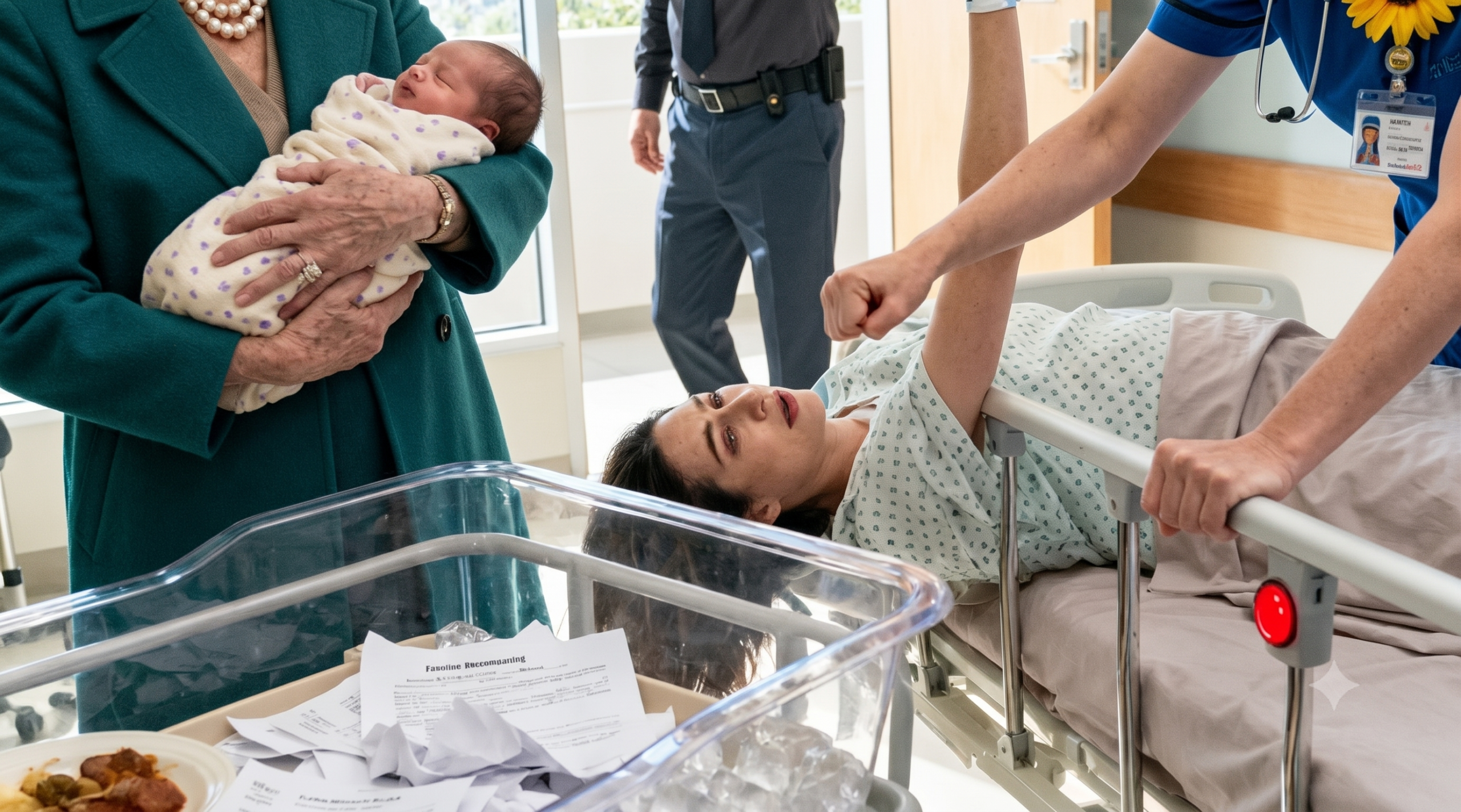
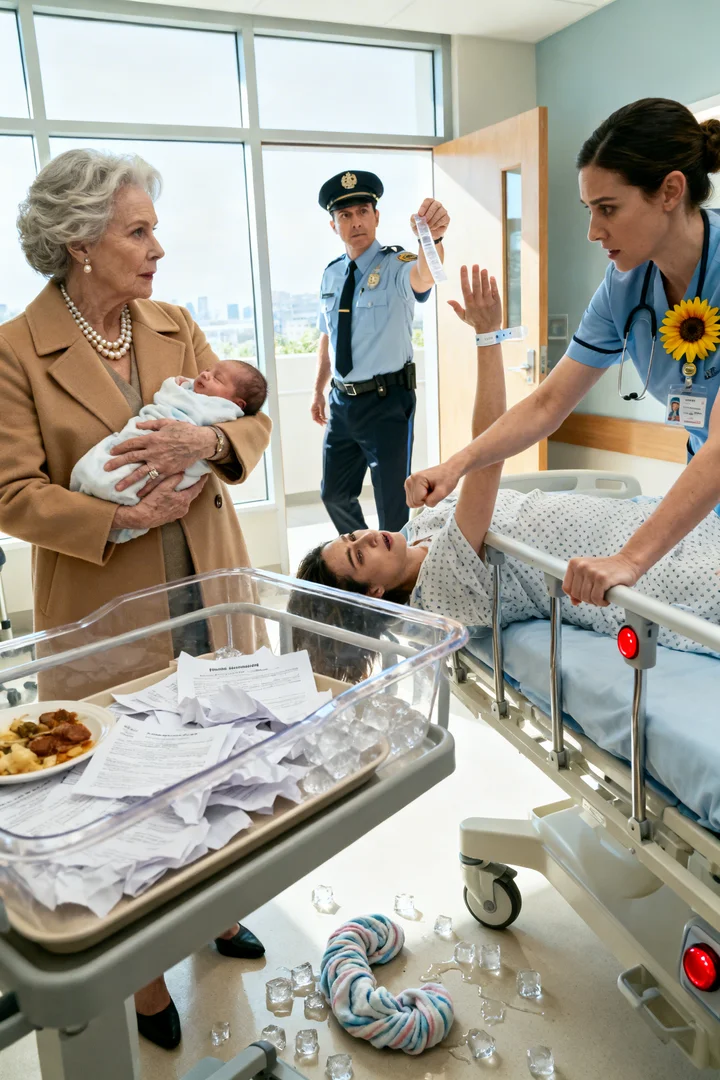
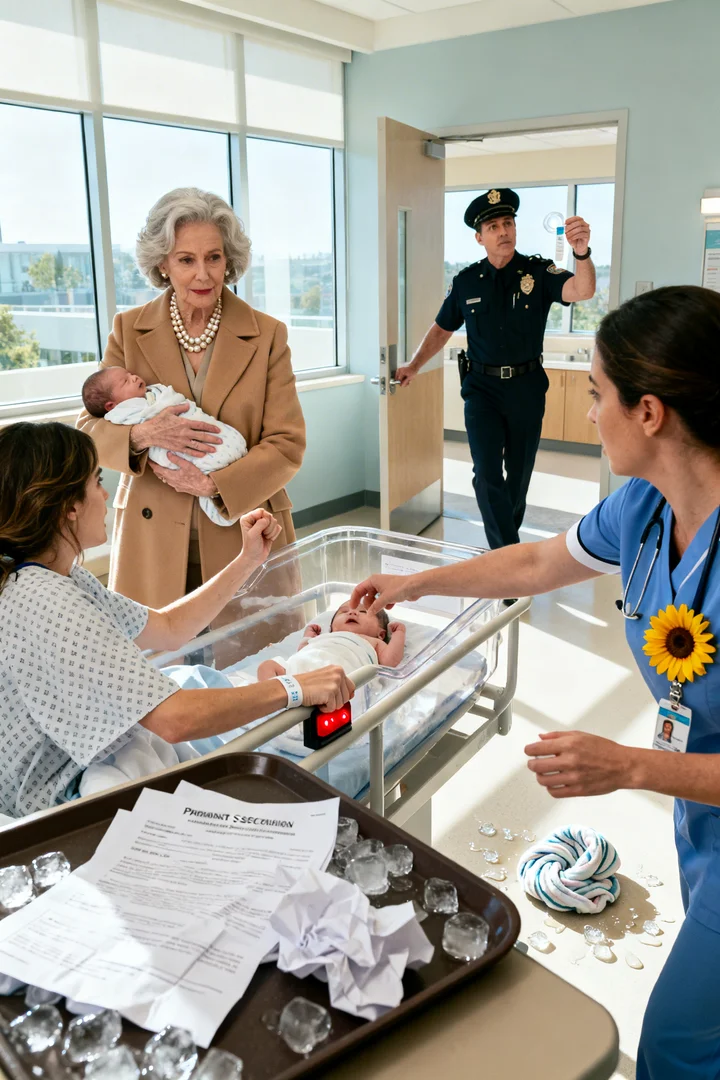
5 minutes after the divorce was signed, I boarded a flight with my two kids and disappeared overseas. Meanwhile, all seven of his family members crowded into a maternity clinic, celebrating his mistress—until the doctor spoke… and the room went dead silent.
Jul 12, 2026

5 minutes after the divorce was signed, I boarded a flight with my two kids and disappeared overseas. Meanwhile, all seven of his family members crowded into a maternity clinic, celebrating his mistress—until the doctor spoke… and the room went dead silent.

Chapter 1: The Ten-O-Three Decree

When the nib of my pen finally met the fiber of the divorce decree, the wall clock in the mediator’s office clicked to exactly 10:03 a.m. It was a sterile, strangely profound moment. There were no cinematic tears, no grand dramatic outbursts, and none of the visceral agony I had spent months imagining. Instead, there was only a vast, ringing silence in my soul—the kind of quiet that follows a long, exhausting siege.

My name is Catherine. I am thirty-two years old, a mother to two beautiful, confused children, and as of five minutes ago, the former wife of David. He was the man who once whispered promises of lifelong sanctuary against my skin, only to trade that sanctuary for the cheap thrill of a secret life.

I had barely lifted the pen when David’s phone erupted. The ringtone was distinctive, a melody I had grown to loathe. He didn’t bother with the grace of discretion. Right there, in front of me and the stone-faced mediator, his voice shifted into a register of sickening sweetness I hadn’t heard in years.

“Yes, it’s finished. I’m coming to you now,” he murmured, his eyes avoiding mine. “The checkup is today, isn’t it? Don’t worry, Allison. My entire family is meeting us there. Your child is the heir to our legacy, after all. We’re coming to see our boy.”

The mediator pushed the final copies toward him. David didn’t read them. He scribbled his name with a jagged flourish and tossed the pen onto the desk with practiced contempt.

“There’s nothing to divide,” he said, directing his words at the mediator as if I were a piece of discarded furniture. “The condo was my premarital asset. The car is mine. As for the children—Aiden and Chloe—if she wants to drag them along, let her. It’s less hassle for my new life.”

His older sister, Megan, stood by the door like a sentinel of spite. “Exactly,” she chimed in, her voice sharp enough to draw blood. “David is getting married to a woman who is actually giving this family a son. Who would want a used-up housewife with two kids in tow anyway?”

The words hung in the air, meant to sting, but they fell flat. I had been submerged in their cruelty for so long that I had developed gills. I simply reached into my purse, pulled out a heavy brass ring, and slid it across the mahogany table.

“The keys to the condo,” I said calmly. “We moved the last of our things yesterday.”

David smirked, a look of triumph crossing his face. “Commendable. You’re finally catching on to your station, Catherine.”

“What isn’t yours, you eventually have to return,” Megan added, fueling the fire of her brother’s arrogance.

I didn’t offer a rebuttal. Instead, I reached back into my bag and produced two navy blue passports. I fanned them out like a winning hand at a high-stakes table. “David, the visas were finalized last week. I’m taking Aiden and Chloe to London. Permanently.”

The smugness on his face froze into a mask of confusion. Megan was the one who found her voice first, shrieking, “Are you insane? Do you have any idea what that costs? Where would you get that kind of money?”

I looked at them both—truly looked at them—and felt a wave of pity. “Money is no longer your concern.”

As if on cue, a black Mercedes GLS glided to the curb outside the glass doors. A driver in a crisp suit stepped out, opening the rear door and bowing toward the window. “Miss Catherine, the transport is ready.”

David’s face turned a mottled purple. “What kind of circus is this?”

I didn’t answer. I knelt to pick up Chloe, while Aiden gripped my hand with a strength that broke my heart. I looked at my ex-husband one last time. “Rest assured, from this second forward, we will never interfere with your ‘new life’ again.”

As I walked down the steps, the driver handed me a thick manila envelope. “From Steven, ma’am. All the evidence of the asset transfers has been compiled.”

I climbed into the car, the scent of expensive leather a stark contrast to the stagnant air of the office. Looking out the window, I saw David and Megan arguing on the sidewalk, oblivious to the fact that their world was about to be hit by a tactical strike they never saw coming.

Chapter 2: The Heir to Nothing

The black Mercedes merged into the morning sprawl of Manhattan, the June sun reflecting off the skyscrapers with a blinding, indifferent brilliance. Inside the car, the silence was heavy. Aiden stared out the window, his small face etched with a gravity no seven-year-old should possess.

“Mom,” he whispered, not looking away from the passing blur of the city. “Is Dad ever coming to visit us in the new house?”

I stroked his hair, my heart a lead weight. “We’re going to start a new adventure, Aiden. Just you, me, and Chloe.”

My phone buzzed. A text from Steven, my attorney: The vultures have landed at the clinic. Security is in place. The trap is set.

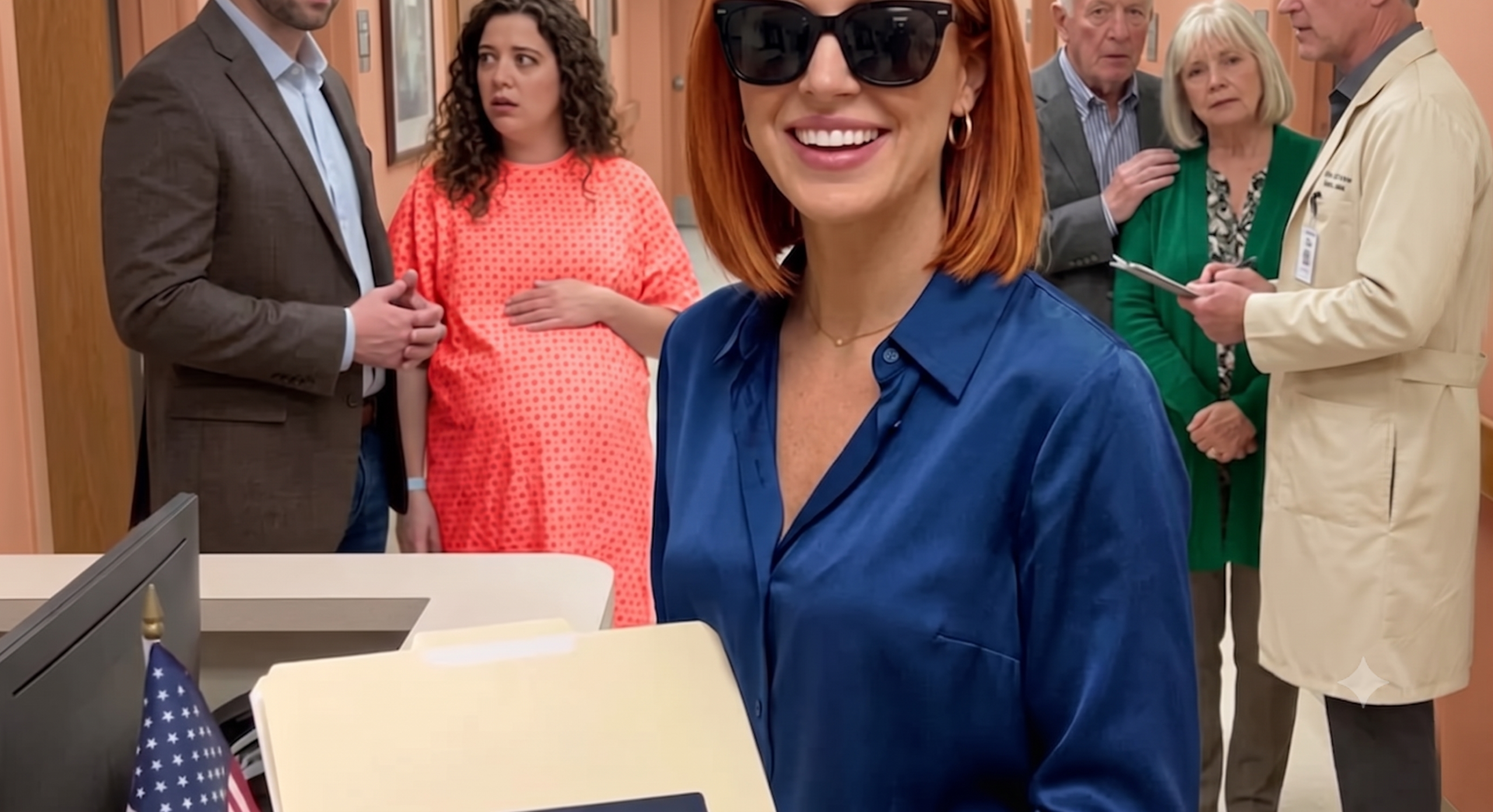
While we headed toward JFK Airport, David and the entire Coleman clan were descending upon the Hope Private Reproductive Center. To them, this was a coronation. Allison, the mistress-turned-queen, sat in the VIP lounge in a maternity dress that cost more than my first car.

Linda, my former mother-in-law, was practically vibrating with excitement. She took Allison’s hand with a warmth she had never shown me in eight years. “My dear, are you holding up? My grandson needs his mother to be rested.”

“I’m fine, Mom,” Allison purred, casting a smug glance at David.

Megan handed over a gift box wrapped in silver. “Premium organic supplements. Only the best for the Coleman heir. We’ve already reserved his spot at the international prep school.”

The family laughed, sharing a vision of a future built on the wreckage of my marriage. No one mentioned my name. I had been erased, a footnote in the ledger of their lives.

“Allison,” a nurse called. “The doctor is ready for the ultrasound.”

David jumped up, his face glowing with pride. “I’m coming in. This is my son we’re talking about.”

The ultrasound room was cool, lit by the clinical blue glow of monitors. Allison lay on the table, her hand clutched in David’s. The doctor, a man named Dr. Aris, began moving the transducer over her abdomen. The grainy image of a fetus appeared on the screen, flickering like a ghost.

But as the seconds ticked by, the doctor’s expression shifted. His brow furrowed. He moved the transducer again, his eyes darting between the screen and the intake forms.

“Doctor?” David asked, his voice tensed with a sudden, unformed fear. “Is my boy healthy? Look at those shoulders—he’s a fighter, isn’t he?”

Dr. Aris didn’t answer. He clicked a button on the console, zooming in on the crown-rump length. He looked at Allison, then at David, his face becoming a mask of professional neutrality.

“We have a discrepancy,” the doctor said quietly.

“A discrepancy? What does that mean?” David barked.

PART 2- 5 minutes after the divorce was signed, I boarded a flight with my two kids and disappeared overseas. Meanwhile, all seven of his family members crowded into a maternity clinic, celebrating his mistress—until the doctor spoke… and the room went dead silent.

The doctor straightened his lab coat and pressed an intercom button. “Connect me to the legal department. And have security stand by in ultrasound room three.”

David froze. Allison’s face went from pale to translucent. The door, which hadn’t been fully latched, was pushed open by the eavesdropping Linda and Megan.

“Is something wrong with the baby?” Linda gasped.

The doctor turned to face the entire family, his voice ringing with a terrifying clarity. “Mr. Coleman, based on the fetal development, bone density, and gestational size, conception occurred exactly four weeks earlier than the dates provided on the intake forms.”

The air in the room seemed to solidify into ice. David looked at Allison. Allison looked at the floor.

“I don’t understand,” David stammered. “A month? That’s… that’s impossible. We weren’t even—”

“I mean,” the doctor interrupted, his voice dropping an octave, “that Miss Allison was already pregnant before your documented timeline of ‘exclusive intimacy’ began. By a full month.”

Chapter 3: The Ghost in the Machine

“Whose child is this?”

David’s roar echoed through the sterile halls of the clinic, a sound of primal, wounded pride. Allison sat up on the exam table, clutching the thin paper gown as if it could shield her from the sudden fury of the man she had manipulated.

“David, wait! The doctor is making a mistake! It’s just a growth spurt!” she sobbed, her voice high and desperate.

Dr. Aris shook his head. “Medicine doesn’t have ‘growth spurts’ that skip an entire month of gestation, Miss Allison. The measurements are indisputable.”

Megan lunged forward, her face twisted. “You lying little tramp! You used this baby to get him to buy that condo! You used us!”

In the middle of the chaos, David’s phone began to vibrate again. But it wasn’t a lover’s call this time. It was Andrew, his Chief Financial Officer. David answered, his hand trembling.

“What?” he hissed.

“David, we have a catastrophe,” Andrew’s voice was frantic. “Three of our primary corporate partners just sent termination notices. They’re severing all contracts effective immediately.”

David felt the floor tilt. “Why? We have a ten-million-dollar project in the pipeline!”

“They said they received an anonymous dossier,” Andrew stammered. “Documented proof of fund misappropriation. They’re calling it ‘ethical breach.’ And David… the IRS just pulled up to the lobby.”

David dropped the phone. The sound of it hitting the linoleum was like a gunshot. He looked at Allison, then at his sister, then at the doctor. The world he had built on a foundation of lies was dissolving in real-time.

“The condo,” David whispered, a cold dread coiling in his gut. “I signed the papers for that luxury condo using company capital as a ‘draw.’ If the IRS is there…”

“Mister David?” a nurse interrupted, her voice cool. “We tried to process the payment for today’s VIP session. The card was declined. It says ‘Account Frozen by Court Order.’”

David grabbed the card from her hand, his eyes bloodshot. “That’s impossible! I have half a million in that liquid account!”

He fumbled with his mobile banking app. The screen flashed a red notification that felt like a death sentence: ACCOUNTS RESTRICTED. APPLICANT: CATHERINE COLEMAN. REASON: PENDING LITIGATION FOR ASSET DISSIPATION.

At that exact moment, five miles away, the wheels of a Boeing 777 tucked into the fuselage as we cleared the New York skyline. Chloe was counting clouds. Aiden had finally fallen asleep against my shoulder. I looked out at the Atlantic Ocean, a vast expanse of blue freedom, and closed my eyes.

The housewife they had despised had spent the last six months as a ghost in the ledger. Every late-night “business meeting” David had attended was a night I spent with Steven, documenting every penny transferred to Allison, every “business expense” that was actually jewelry, and every tax loophole David had clumsily tried to exploit.

He thought I was weak because I was silent. He didn’t realize I was just waiting for the 10:03 a.m. flight.

Chapter 4: The Financial Apocalypse

By the time the sun began to set over the Atlantic, David’s office in Midtown Manhattan looked like a crime scene. IRS agents were systematically boxing up hard drives and ledgers. Megan and Linda sat in the lobby, their designer handbags looking suddenly pathetic against the backdrop of an active federal audit.

David stood in the center of his office, watching as they seized his computer. “Andrew, tell me there’s a mistake,” he pleaded.

Andrew didn’t even look up from his own desk. “There’s no mistake, David. They have everything. Every transfer to Allison’s personal account. Every wire for the condo. They even have the surveillance footage from the real estate brokerage where you signed the papers.”

“How?” David gasped. “I was careful.”

“You weren’t careful,” a new voice spoke. Steven, my attorney, walked into the office with a calm, predatory grace. He held a silver tablet. “You were arrogant. You thought your wife didn’t understand the books because she didn’t talk about them. You forgot that Catherine has a Master’s in Forensic Accounting. She was doing your books long before you could afford a CFO.”

David fell into his leather chair, the air leaving his lungs in a ragged hiss. “She did this? All of it?”

“She didn’t ‘do’ this, David,” Steven said, leaning over the desk. “You did this. She simply gave the evidence to the people who care about it. The partners you lied to. The bank you defrauded. And the court you thought you could bypass.”

The door to the office burst open. Allison stood there, disheveled, her eyes red. “David, the real estate agent called! They’re putting a lien on the condo! They say it was bought with ‘tainted’ funds!”

David looked at her—the woman he had ruined his life for. “Whose child is it, Allison?”

She flinched. The smugness was gone, replaced by the raw, shivering fear of a grifter who had been caught. “I… it doesn’t matter now, does it? We’re losing everything!”

“It matters to me!” David screamed, lunging across the desk.

The IRS agents stepped in, holding him back. “Mr. Coleman, sit down. We have questions about the offshore shell company ‘C&C Holdings.’”

David froze. “C&C Holdings? That was a legacy fund for the kids. It’s empty.”

“It’s not empty,” the agent said, showing him a statement. “It was liquidated forty-eight hours ago. The funds were moved to a private trust in the United Kingdom. Authorized signature: Catherine Coleman.”

David’s head hit the desk with a dull thud. He finally understood. I hadn’t just left him. I had dismantled him, piece by piece, and taken the pieces with me to London.

PART 3- 5 minutes after the divorce was signed, I boarded a flight with my two kids and disappeared overseas. Meanwhile, all seven of his family members crowded into a maternity clinic, celebrating his mistress—until the doctor spoke… and the room went dead silent.

Chapter 5: The London Dawn

The morning air at Heathrow was crisp and tasted of rain. As we walked through the terminal, Nick, an old friend of my father’s, was waiting with a sign that read WELCOME HOME.

“Tired, kiddo?” he asked, taking my suitcase.

“Exhausted,” I admitted, but for the first time in a decade, my chest didn’t feel tight.

We drove to a small, elegant house in Chelsea, a place I had purchased through the trust months ago. It had a small garden in the back, full of bluebells and a weathered oak tree.

“Is this our house, Mom?” Chloe asked, her eyes wide.

“It is,” I said, kneeling to hug them both. “No more lies. No more ‘business meetings.’ Just us.”

As I settled the kids into their rooms, my phone chimed. A final email from Steven.

David’s company filed for Chapter 11 an hour ago. The bank is foreclosing on the family estate. Megan’s accounts were flagged for complicity. Allison’s DNA test came back. The father is a former ‘associate’ of hers from the city. David is currently being questioned regarding tax evasion. He tried to call you, but I reminded him of the restraining order. Enjoy the tea, Catherine. You earned it.

I walked out to the garden. The sky was a pale, hopeful gray. I thought about the woman I was yesterday—the woman who sat in a mediator’s office and let them call her a “used-up housewife.”

I wasn’t that woman anymore. I was a mother, a forensic accountant, and the architect of my own salvation.

I sat on the garden bench and watched the London sun struggle through the clouds. It wasn’t the bright, burning sun of New York, but it was steady. It was real.

Back in New York, the Coleman legacy was a pile of ash. The “heir” was a lie. The business was a shell. The man who thought he was a king was sitting in a fluorescent-lit room, realizing that the most dangerous person in the world is the one who stays silent while they count your mistakes.

Chapter 6: The Inventory of Ruin
Two weeks later, the news from New York continued to trickle in like the aftershocks of an earthquake. David’s office had been fully emptied, the mahogany furniture he loved so much sold at a public auction to pay off a fraction of the penalties.

Megan had moved back into her mother’s small rent-controlled apartment after her own car was repossessed. The “international prep school” reservation for the “Coleman heir” had been canceled, the deposit forfeited.

David himself was staying in a budget motel, his days spent in meetings with public defenders. He had reached out to Steven one last time, begging for a “dialogue” with me.

Steven’s response had been a single, scanned image: a photo of Aiden and Chloe eating ice cream by the River Thames, their faces lit with a joy they had never known in the shadow of their father’s arrogance.

Attached was a note: Miss Catherine has no words for you, David. She’s too busy living the life you said she couldn’t afford.

I put the phone down and looked at the garden. The bluebells were in full bloom. Aiden was helping Nick fix a wooden birdhouse. Chloe was “painting” the fence with a bucket of water.

In life, there are those who believe betrayal is a game of skill, that their cunning makes them invincible. They forget that the person they are betraying is often the person who knows their weaknesses best.

I had been David’s foundation for eight years. When he decided he didn’t need a foundation, he shouldn’t have been surprised when the house fell down.

The “used-up housewife” was gone. In her place was a woman who knew the value of every penny, every ledger, and most importantly, every moment of freedom.

I breathed in the cool London air and felt the last of the New York soot leave my lungs. The 10:03 a.m. decree wasn’t just a divorce. It was a rebirth.

Chapter 7: The Final Audit

The months turned into a year. The “Coleman scandal” faded from the Manhattan headlines, replaced by newer, fresher ruins. I heard through the grapevine that Allison had vanished back into the city’s underbelly, her child born into a world far removed from the luxury she had tried to steal.

David was eventually given a suspended sentence, provided he worked to pay back the back taxes. He was working as a junior clerk in a firm half the size of the one he had owned.

I didn’t feel joy at his suffering. I felt nothing. He was a ghost from a book I had finished reading a long time ago.

One evening, as I sat in my garden, Aiden walked over and sat on my lap. He was taller now, his eyes clearer.

“Mom,” he said. “Are we happy here?”

I looked at the small, cozy house, the quiet street, and the life we had built on the wreckage of a lie. I thought of the millions in the trust, the security of our home, and the absolute absence of fear.

“We are, Aiden,” I said, kissing the top of his head. “We are exactly where we’re supposed to be.”

Because in the end, life isn’t about the grand legacies we try to force into existence. It’s about the quiet truths we protect. It’s about the ledgers that actually balance.

And as the London sun set over the rooftops, I realized that my own ledger was finally, perfectly, in the black.

Chapter 8: The Price of Silence
Looking back at the entire saga—from the mediator’s office to the banks of the Thames—I am often asked if I regret the coldness of my departure. People wonder if I should have screamed, if I should have fought for him, if I should have given him a “chance” to explain the month-long discrepancy in his mistress’s pregnancy.

My answer is always the same.

Silence is the ultimate weapon of the observant. If I had screamed, he would have prepared. If I had cried, he would have manipulated. By being the “weak housewife,” I was given the greatest gift an opponent can give: their total, unguarded arrogance.

He thought I was counting the days until he came home. I was actually counting the dollars he was moving out of our children’s future.

Many men think their wives will endure forever because of a marriage certificate. They don’t understand that a woman’s patience is a finite resource. When it runs out, it doesn’t just evaporate. It turns into a plan.

I looked at my children playing in the twilight. They were the real heirs. Heirs to a legacy of strength, of intelligence, and of a mother who knew how to turn a betrayal into a bridge.

The door to the past was closed, locked, and the keys had been left on a mahogany desk in New York.

“Mom, look!” Chloe yelled, pointing at a firefly blinking in the bushes.

I smiled, my soul finally at rest. The 10:03 a.m. girl was gone. The London woman was home. And for the first time in my life, I wasn’t just managing a ledger. I was living a life that was finally, beautifully, all my own.

THE END

More Details
3 HOURS AGO! Princess Anne’s Cries Echoed Through the Palace — Royals Left in Shock as Tragedy Struck Without Warning. Hearts Shattered, Silence Fell Over the Halls… and then came the statement that changed everything: ‘With heavy hearts, we announce the passing of…’”
Jul 12, 2026

3 HOURS AGO! Princess Anne’s Cries Echoed Through the Palace — Royals Left in Shock as Tragedy Struck Without Warning. Hearts Shattered, Silence Fell Over the Halls… and then came the statement that changed everything: ‘With heavy hearts, we announce the passing of…’”

Princess Anne has delivered heartbreaking news that has left the entire nation — and even the royal family — in utter shock. Known as the “hardest-working royal,” the Princess Royal rarely reveals her private feelings, but this announcement struck directly at the heart of millions who admire her.

A Rare Emotional Moment

Those who know Princess Anne understand her reputation for duty, resilience, and a no-nonsense attitude. For decades, she has carried out her responsibilities with remarkable strength, rarely allowing emotion to spill into the public eye. That is why her words this week felt all the more powerful — a rare moment of vulnerability that stunned even the most seasoned royal watchers.

Dressed elegantly but simply, Anne stood before a small audience and shared the news. While her voice never wavered, her expression told the story of deep sadness. “This is not something I say lightly,” she admitted, “but it is something that must be shared.”

The Nation Reacts

Within minutes of the announcement, headlines lit up across social media. “Anne Breaks Silence,” “Princess in Tears,” and “Royal Shock” dominated trending topics worldwide. Fans expressed heartbreak and disbelief, with one emotional supporter writing: “She has given her entire life to duty — to see her this sad breaks us all.”

Others praised her courage, noting that while the news was sorrowful, her honesty reminded the world of the humanity that lies beneath the crown and titles.

Support from Family

Though details remain private, insiders reveal that Prince William and Princess Catherine have already rallied around Anne, ensuring she feels supported during this difficult chapter. Even King Charles, said to be deeply moved, reportedly cleared his schedule to spend time with his sister.

“Anne has always been the rock of the family,” one source said. “Now, it is the family’s turn to be her rock.”

A Lifetime of Service

This moment comes after decades of tireless commitment. From charitable work to international tours, Princess Anne has long been admired for her dedication. Unlike some royals who attract attention with glamour, Anne built her reputation on sheer hard work and resilience.

This announcement, however, revealed a different side of the Princess — one that resonated deeply with ordinary people. For once, the woman often called the “unsung hero of the monarchy” was seen not just as a royal, but as a person facing pain, loss, and change.

What Lies Ahead

While questions swirl, one thing is certain: Princess Anne’s courage in speaking openly has left an unforgettable mark. The coming months will no doubt test her strength, but if history is any guide, she will meet this moment with the same determination that has defined her life.

For now, the nation watches, waits, and sends heartfelt wishes to the Princess Royal — a woman whose latest announcement reminds us all that even in the palace, hearts can break.

More Details
After the divorce, Bradley smiled and said, “There’s nothing to divide.” I placed the penthouse keys on the table, pulled out two passports, and whispered, “You’re right. I won’t disturb your new life.” He laughed. But inside the car, a sealed folder was waiting for me. And once Bradley opened his next door… he would understand what he had really lost.
Jul 12, 2026

After the divorce, Bradley smiled and said, “There’s nothing to divide.” I placed the penthouse keys on the table, pulled out two passports, and whispered, “You’re right. I won’t disturb your new life.” He laughed. But inside the car, a sealed folder was waiting for me. And once Bradley opened his next door… he would understand what he had really lost.

When I finished signing the divorce papers, the grandfather clock in the mediator’s office struck exactly nine in the morning. I had expected tears, screaming, maybe even pain sharp enough to break me open.

Instead, there was only emptiness.

My name is Sarah. I am thirty-four years old, a mother of two, and eight minutes earlier, I officially ended my ten-year marriage to Bradley—the man who once promised to protect me forever.

Before the ink had even dried, his phone rang.

He answered without leaving the room.

“Yes, babe,” he said softly, using a voice he had never once used with me. “I’m almost done here. Don’t worry, I haven’t forgotten the ultrasound. Mom and the family will meet us there. Your baby is the heir, after all.”

I kept my face still.

The mediator looked uncomfortable and pushed the final documents toward Bradley.

“You need to review the asset division before signing.”

Bradley barely glanced at them. He signed with arrogant confidence and tossed the papers back.

“There’s nothing to divide,” he said. “The penthouse is mine. The SUV is mine. If she wants the kids, she can take them. Less trouble for me.”

His sister Brittany smiled cruelly.

“He’ll be marrying a real woman soon anyway. One who’s actually carrying his son.”

An aunt near the window added, “She’ll come crawling back in a month. Who wants a woman with two kids?”

Their words floated through the office, ugly and poisonous.

But they no longer cut me.

Maybe when a heart has been bruised long enough, it finally hardens.

I stood, opened my purse, and placed the penthouse keys in the middle of the table.

“These are yours,” I said calmly.

Bradley smirked. “Good. You’re finally learning your place.”

I reached into my bag again and took out two navy passports.

“The visas were approved last week,” I said. “I’m taking the children to study in London.”

The room went silent.

Brittany’s face twisted. “Are you insane? Do you know how much that costs? You don’t have money.”

I looked at them evenly.

“That is no longer your concern.”

At that moment, the office doors opened. A chauffeur in uniform stepped inside.

“Miss Sarah, the car is ready.”

Through the lobby windows, a black Mercedes waited at the curb.

Bradley shot to his feet. “Who is paying for this?”

I took Madison and Connor by the hands.

“From this moment on,” I said, “the children and I will never interfere with your new life.”

Then I walked out.

Inside the car, the driver handed me a sealed envelope. Inside were bank records, transfer receipts, and photos of Bradley and his mistress, Tiffany, signing papers for a luxury condo—the same condo my parents had helped us buy when we first married.

My phone buzzed.

It was a message from my lawyer, Harrison.

The trap is set. They just walked into the clinic.

While I drove away, Bradley was heading toward what he believed would be the happiest day of his life.

He had no idea everything was already collapsing.

At the Hope Reproductive Health Center, Bradley’s mother, Margaret, treated Tiffany like royalty. Tiffany sat in a designer maternity dress, smiling smugly as Brittany handed her expensive organic juices.

“Our heir deserves the best,” Brittany said.

Bradley stood by the window, full of pride.

“Of course he’ll be perfect,” he said. “He’s my son.”

When the nurse called Tiffany in for the ultrasound, Bradley went with her. The room was quiet except for the hum of the machine.

The doctor moved the probe across Tiffany’s stomach and stared at the monitor.

He did not smile.

He measured again.

Then again.

Bradley grew impatient.

“What is it? Is my son healthy?”

The doctor reached for the intercom.

“Security to Ultrasound Suite 3. Send legal as well.”

Bradley froze. “Security? What happened?”

The doctor turned to him.

“Mr. Bradley, are you certain you are the father of this child?”

Bradley’s face flushed. “Of course I am.”

The doctor looked at Tiffany.

“Are you certain about the conception date you provided?”

Tiffany began trembling.

The doctor’s voice stayed calm.

“Based on the fetus’s development, conception happened at least five weeks earlier than you claimed.”

The room went cold.

Margaret and Brittany pushed inside, demanding answers.

The doctor said plainly, “The timeline does not match Mr. Bradley.”

Bradley turned slowly toward Tiffany.

“Explain.”

She began sobbing, but before she could speak, Bradley’s phone rang. It was his CFO.

“Bradley, we’re in freefall,” the man said. “Our three biggest partners just pulled their accounts. They received documents about internal financial irregularities.”

Bradley’s face went white.

Then another notification appeared.

Notice of Immediate Asset Freeze.

Soon, his cards stopped working. Brittany’s cards were declined. His banker confirmed the truth: a judge had frozen every account tied to Bradley, his companies, and family trusts.

The injunction had been filed by Harrison.

On my behalf.

Bradley called him in a rage.

Harrison’s voice was calm.

“My client kept records for three years. Misused marital funds, company money moved into real estate, transfers connected to your mistress. The IRS has been notified.”

Then he added, “You should go to your office. Federal investigators just arrived.”

By then, I was thirty thousand feet above the clouds with my children.

Connor slept against my shoulder. Madison stared out the window.

“Mommy,” she whispered, “are we going back to the loud house?”

I stroked her hair.

“No, sweetheart. We’re going to a quiet house with a garden.”

She smiled.

“Good. I didn’t like when Daddy yelled.”

Her words hurt, but they also confirmed everything.

For the first time in years, the fear in my stomach was gone.

In New York, Bradley rushed to his office and found federal agents boxing up files, seizing hard drives, and locking down the finance floor. His lawyers refused to help because his retainer had bounced.

Without money, Bradley had no power.

Without power, he was no one.

That evening, Harrison visited him with one final offer.

“Sarah is not cruel,” he said. “She is precise. Sign over your remaining company equity as part of the divorce settlement, and she will classify certain transfers as marital disputes instead of pursuing every federal complaint.”

Bradley stared at him.

“You want my company?”

Harrison smiled faintly.

“She already has it. The board voted to remove you an hour ago.”

At that moment, Bradley received the DNA results from the clinic.

Probability of Paternity: 0.00%.

The baby was not his.

Everything he had destroyed his family for had been a lie.

He signed.

Weeks later, Bradley lost the penthouse, the cars, the company, and nearly every friend who had once admired him. He moved into a small apartment in Queens and took a mid-level accounting job just to survive.

Meanwhile, London became our new beginning.

An old friend of my father’s, William, welcomed us at Heathrow and brought us to a red-doored townhouse in Chelsea. It was smaller than the New York penthouse, but it felt like home.

The children laughed again.

I slept again.

I breathed again.

Two years passed.

London was no longer a refuge. It was our life.

I became a literary translator, respected for my own work and my own name. Madison and Connor filled the house with noise, schoolbooks, football cleats, and laughter.

I even found love again with Ethan, a kind publisher who never tried to control me—only stand beside me.

One afternoon, the doorbell rang.

Tiffany stood outside in the drizzle, looking older and worn down.

“I know I have no right to be here,” she said. “I just wanted to say I’m sorry.”

I studied her and felt no anger.

Only distance.

“Your apology is heard,” I said. “But you didn’t destroy my marriage. You exposed what was already broken.”

Then I closed the door.

Inside, my children were setting the table while Ethan pulled dinner from the oven.

On the counter sat a forwarded letter from Bradley.

I recognized his handwriting.

For a moment, I held it.

Then I dropped it unopened into the fireplace.

The paper curled, blackened, and turned to ash.

I did not need to read his ending.

I was too busy writing my own.

More Details
MY DAUGHTER STOPPED RESPONDING, AND WE WERE DEVASTATED BY WHAT WE DISCOVERED IN THE BASEMENT 32
Jul 12, 2026

MY DAUGHTER STOPPED RESPONDING, AND WE WERE DEVASTATED BY WHAT WE DISCOVERED IN THE BASEMENT 32

For three weeks, every call I made to my daughter went straight to voicemail.

My Daughter Rachel Hadn’t Answered My Calls In Three Weeks. I Decided To Check On Her Myself, Taking The Spare Key. When I Walked In, I Heard A Faint Scratching Sound Coming From The Basement. There Was A Padlock On The Door From The Outside. When The Police Forced It Open, We Saw Something That Made Us Collapse….

My daughter Rachel hadn’t answered my calls in three weeks, and at first, I convinced myself it meant nothing more than grief and exhaustion settling in after James passed away.

People need space, I told myself, especially after losing a husband so suddenly, especially when the house still echoes with someone who isn’t there anymore.

But each unanswered call, each unread message, sat heavier in my chest, pressing down in a way I couldn’t explain or shake.

Then Mrs. Chen from two houses down called me on a Tuesday afternoon, her voice tight and hesitant, the way people sound when they don’t want to be the one delivering bad news.

She said she had seen unfamiliar cars coming and going at odd hours, late at night and early in the morning, pulling into Rachel’s driveway and leaving without lights on.

She said she hadn’t seen Rachel herself in weeks.

That was when the cold feeling settled into my stomach, slow and deliberate, the kind of dread that doesn’t spike but spreads, creeping into every thought.

I grabbed the spare key I’d kept on my ring for years and drove the forty minutes to Riverside with my hands clenched tight around the steering wheel, my mind replaying every conversation I’d ever had with my daughter, searching for something I might have missed.

The driveway was empty when I arrived.

Rachel’s SUV was gone, but James’s old pickup truck still sat in its usual spot, coated in pollen and dust, as if it hadn’t moved in days.

I knocked twice out of habit, even though I already knew no one would answer, then used the spare key to let myself in.

The house was silent.

Not the peaceful silence of someone sleeping or resting, but a hollow, abandoned quiet, the kind that feels wrong the moment you step into it.

No television murmuring in the background.

No coffee maker sputtering in the kitchen.

Just stillness.

I called out, “Rachel, it’s Mom,” my voice sounding too loud in the empty space, but nothing answered back.

At first glance, the living room looked unchanged, the same gray couch, the same throw pillows Rachel insisted matched perfectly, the same framed photo of her and James on their wedding day sitting on the mantle.

Then I noticed the dust.

Not a light layer, but a thick coating that dulled the glass and softened the edges of everything it touched, the kind that only settles when no one has been home in a long time.

Rachel had never let dust accumulate like that.

My chest tightened as I moved into the kitchen, opening the refrigerator and checking the dates on the milk and eggs, all expired by nearly two weeks.

A cereal bowl sat in the sink with dried flakes stuck to the sides, hardened like stone, untouched for days.

The trash can was empty, but the air carried a faint sour smell that didn’t belong in a lived-in home.

That was when I heard it.

A faint scratching sound, steady and deliberate, coming from somewhere beneath my feet.

I froze, my breath catching as I listened, my heart pounding so hard I thought it might drown out the noise.

The sound came again.

Scrape.

Pause.

Scrape.

It was coming from the basement.

The basement door was in the hallway, something I’d never paid much attention to before, because Rachel and James only used it for storage, for holiday decorations and old boxes they swore they’d go through someday.

I reached for the doorknob, then stopped cold.

There was a padlock on the door.

A thick, industrial padlock, heavy and new, securing a metal hasp that had been screwed directly into the door frame.

The wood around the screws was pale and raw, unmistakably recent.

My hands began to shake as the scratching came again, louder this time, followed by a sound that made my knees nearly buckle.

A hoarse whisper.

“Please.”

I pressed my palm against the door, my mind screaming what my body already knew.

I pulled out my phone and dialed 911 with trembling fingers, barely able to get the words out as I told the operator that someone was trapped in a basement at 847 Maple Drive.

While I waited, I leaned closer to the door and whispered, “Who’s there,” even though terror had already given me the answer.

The scratching stopped, then came a weak reply, so soft I almost missed it.

“Margaret.”

It was James.

I tried to break the lock myself, grabbing a hammer from the garage and striking it again and again until my arms burned and my grip slipped, but the padlock didn’t budge.

The police arrived twelve minutes later, though it felt like an eternity, and one look at the door was enough for them to call for bolt cutters without asking questions.

When the lock finally snapped and the door swung open, the smell hit us first.

Unwashed body.

Human waste.

Something sour and sick that made my vision blur as I stumbled backward, my legs giving out beneath me.

Continue in C0mment 👇👇


SAY “YES” — WHEN WE REACH 30 COMMENTS, THE FULL STORY WILL BE REVEALED. 👇


PART 2

The officers moved quickly after that, their voices sharp and controlled as they rushed down the basement stairs, but I couldn’t make myself stand, my body frozen in place by what my mind was already trying to piece together.

When they brought James up, thin, trembling, barely able to hold himself upright, the reality of what had been done in that house began to surface in fragments I wasn’t ready to understand.

He tried to speak, his lips cracking as he struggled to form words, his eyes darting toward the hallway as if he expected someone to appear at any moment.

Rachel was nowhere to be found.

As the police asked their questions and began sealing off the house, I realized that whatever had happened here didn’t end in that basement, and that my daughter’s silence was only the beginning of something far darker than I had imagined.

C0ntinue below 👇

My daughter Rachel hadn’t answered my calls in 3 weeks. I told myself she was just busy, that she needed space after James died. But when her neighbor Mrs. Chen called to say she’d seen strange cars coming and going at odd hours, something cold settled in my stomach. I grabbed my spare key and drove the 40 minutes to their house in Riverside.

The driveway was empty when I pulled up. Rachel’s SUV was gone, but James’s old pickup truck sat in its usual spot, gathering pollen. I knocked twice before using my key. The house was quiet. Too quiet. No TV humming in the background. No coffee maker gurgling. Just silence. I called out, “Rachel, it’s mom.” Nothing.

The living room looked normal at first glance. Same gray couch. Same family photos on the mantle. But then I noticed the dust. Not just a little dust, but the kind that settles when no one’s been home in days. The picture of Rachel and James from their wedding day was coated in it. That wasn’t like Rachel. She’d always been meticulous about keeping things clean.

I walked through to the kitchen. The fridge was stocked, but when I checked the dates on the milk and eggs, they’d all expired 2 weeks ago. A bowl sat in the sink with cereal stuck to the sides, hard as concrete. The trash can was empty, but it smelled like something was rotting somewhere. That’s when I heard it. A faint scratching sound, rhythmic and deliberate.

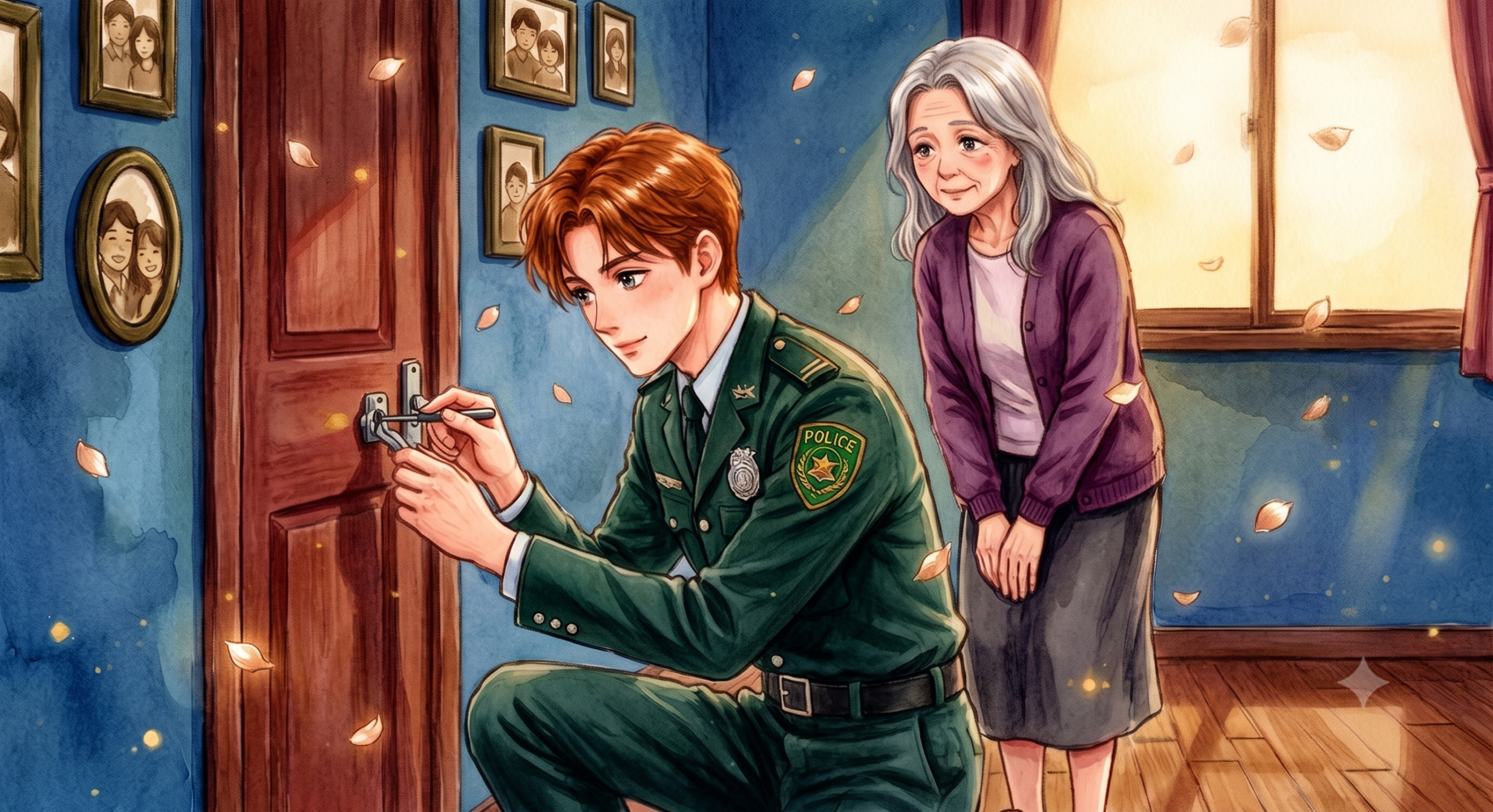
It was coming from below my feet. The basement door was in the hallway. I’d never paid much attention to it before. Rachel and James used it for storage. Kept their Christmas decorations down there, old boxes of James’ college textbooks. But when I reached for the doororknob, I froze. There was a padlock on it. A thick industrial padlock securing a hasp that had been screwed into the door frame.

Recent screws, too. The wood around them was fresh and pale. Why would anyone padlock a basement door from the outside? The scratching came again, louder now. Then, a sound that made my blood turn to ice. A weak horse whisper. Please. My hands shook as I pulled out my phone and dialed 911. I need police at 847 Maple Drive in Riverside.

I think someone’s trapped in a basement. The operator asked me questions, but I barely heard them. All I could focus on was that voice. I knew that voice. James. I pressed my face against the door. James, is that you? The scratching stopped, then so faint I almost missed it. Margaret. I tried to break the lock, but it wouldn’t budge.

I grabbed a hammer from James’ toolbox in the garage and beat at it until my arms achd. The police arrived 12 minutes later. It felt like hours. Officer Valdez and his partner took one look at the padlock and called for bolt cutters. When they finally got the door open, the smell hit us first.

Unwashed body, human waste, something sour and sick. The stairs descended into darkness. Officer Valdez went down first, his flashlight cutting through the gloom. “Jesus Christ,” he breathed. I pushed past him, ignoring his protests. And there, in the corner of the basement, chained to a support beam, was my son-in-law. James looked like he’d aged 20 years.

His clothes hung off his skeletal frame. His face was covered in a matted beard, his eyes sunken and glassy. There was a bucket next to him and an empty water bottle, a thin mattress on the concrete floor. That was it. I collapsed to my knees. James. Oh my god, James. He tried to speak, but his voice cracked.

His lips were cracked and bleeding. Officer Valdez was already on his radio calling for an ambulance. “The funeral,” I whispered. “We had a funeral.” Rachel said you’d killed yourself. She said she found you in the garage, that you’d used carbon monoxide poisoning. We buried you. James’ eyes filled with tears.

He shook his head weakly. The ambulance arrived. Paramedics rushed down, checking his vitals, starting an IV. He was severely dehydrated, malnourished, and had infections on his wrists where the chains had cut into his skin. As they loaded him onto a stretcher, he grabbed my hand. “Rachel,” he whispered. “She did this. I know, sweetheart.

I know. At the hospital, the doctor said James was lucky to be alive. He’d been given just enough water to survive, barely enough food to keep his organs functioning. They estimated he’d been down there for at least 3 weeks, maybe four. The timeline matched exactly with when Rachel had called to tell me James was dead.

I sat with James while he slept, my mind racing. I’d worked as a social worker for 37 years before I retired. I’d seen abuse cases, domestic violence, financial exploitation, but I’d never imagined my own daughter capable of something like this. The police wanted to talk to me. Detective Morrison was a woman in her 40s with kind eyes and a nononsense demeanor.

She sat across from me in the hospital waiting room, her notebook open. Mrs. Hartley, can you walk me through what happened 3 weeks ago when you were told your son-in-law had died? I took a deep breath. Rachel called me on September 12th around 9:00 in the morning. She was hysterical, said she’d come home from her morning run, and found James in the garage.

The truck was running, garage door closed. She said he’d left a note saying he couldn’t handle the pressure anymore. Did you see the body? No. Rachel said it was too traumatic. The medical examiner released it directly to the funeral home. We had a closed casket service on September 16th. Detective Morrison wrote something down.

And you didn’t think that was suspicious? I I felt my face flush. James had been depressed. He’d lost his job six months earlier, was having trouble finding new work. Rachel said he’d been seeing a therapist, but had stopped going. It made sense at the time. What about the death certificate? Rachel showed it to me. It looked official. Signed by a Dr.

Chen at County Medical. Detective Morrison nodded. We’re looking into that. Mrs. Hartley, did your daughter have any financial motive? The question hung in the air. I didn’t want to answer it, but I knew I had to. James had a life insurance policy, half a million dollars. Rachel was the beneficiary. Has she collected on it yet? I don’t know.

The policy had a waiting period. I think 30 days from date of death, which would have been up in 2 days. Detective Morrison closed her notebook. Mrs. Heartley, I need you to tell me everything you know about your daughter’s activities over the past month. I spent the next 2 hours telling her everything.

How Rachel had seemed calm at the funeral, almost detached. How she’d immediately started talking about selling the house, moving to California. How she’d asked me not to visit for a while because she needed time to grieve alone. How she’d blocked James’ family from contacting her, saying they were making accusations and she couldn’t handle it.

red flags I’d ignored because I didn’t want to believe my daughter was capable of lying to me. When James was stable enough to talk, he told the police everything. Rachel had been having an affair with her personal trainer, a man named Derek Moss. They’d been planning this for months. Rachel had found a doctor willing to forge a death certificate for $10,000.

She’d paid a funeral home director another 5,000 to provide a body, some homeless man who died with no family to claim him. She’d staged the suicide note on James’ laptop, but she hadn’t wanted to actually kill James right away. She needed him alive long enough to sign over the deed to the house to move money from their joint accounts.

She drugged him, chained him in the basement, and told him she’d let him go once everything was finalized. She’d been keeping him alive with minimal food and water, waiting, but then I’d shown up. The police arrested Rachel 2 days later at a hotel in Los Angeles. She was with Derek. They found the life insurance claim forms in her luggage already filled out and ready to submit.

They also found a burner phone with text messages detailing the plan. Rachel’s lawyer tried to argue that James had been suicidal, that Rachel had been trying to prevent him from hurting himself by locking him in the basement, but the evidence was overwhelming. The chains, the padlock, the forged death certificate, the affair, the insurance policy. I attended every court hearing.

I testified about finding James, about the padlock, about Rachel’s lies. It was the hardest thing I’d ever done, watching my daughter sit at the defense table, knowing what she was capable of. My son-in-law’s family flew in from Michigan. His mother, Helen, was a tiny woman with steel in her eyes.

She hugged me in the courthouse hallway. “Thank you for not giving up,” she said. “Thank you for finding him.” I couldn’t speak. I just held her while we both cried. James recovered slowly. The physical damage healed faster than the psychological trauma. He had nightmares, panic attacks. He couldn’t be in enclosed spaces without hyperventilating.

I helped him find a good therapist, someone who specialized in torture survivors because that’s what he was, a survivor. He moved in with me while he got back on his feet. We didn’t talk about Rachel much. What was there to say? I’d failed to see the monster my daughter had become. I’d raised her, loved her, and somehow missed the moment she decided that money was worth more than a human life.

The trial lasted 3 weeks. The prosecution brought in medical experts who testified about James’ condition when he was found. A forensic accountant traced the payments Rachel had made to Dr. Chen and the funeral director. Derek Moss cut a deal and testified against Rachel, describing how she’d planned everything down to the smallest detail.

Rachel’s defense was that she’d had a mental breakdown after years of emotional abuse from James. But James’ co-workers, his friends, his family, all testified to his character. They painted a picture of a gentle man who’d been struggling with depression, but who would never have hurt anyone. The jury deliberated for 6 hours.

When they came back, the four women stood and read the verdict. Guilty on all counts, attempted murder. Fraud, forgery, kidnapping. The list went on. Rachel didn’t react. She just stared straight ahead, her face blank. I wanted to feel something for her. Pity, maybe. Grief for the daughter I thought I knew. But all I felt was hollow.

The judge sentenced her to 35 years in prison. With her record and the severity of the crimes, she wouldn’t be eligible for parole for at least 25 years. She’d be 73 if she ever got out. Derek Moss got 15 years for his role in the conspiracy. Doctor Chen lost his medical license and got 10 years for fraud and filing false documents.

The funeral director got 5 years and his business was shut down. I sat in the courtroom as the judge pronounced each sentence. James sat beside me, his hand in mine. Helen sat on his other side. We were a family now, bonded by trauma and survival. After the sentencing, reporters crowded the courthouse steps. They wanted to know how I felt, what I wanted to say to my daughter, whether I’d forgive her.

I ignored them all. James needed to get home away from the cameras and questions. In the car, James finally spoke. Do you hate her? I thought about it. Did I hate Rachel? I hate what she did. I hate that she threw away her humanity for money, but she’s still my daughter. I don’t know if I can ever forgive her, but I don’t hate her.

I just feel sad.” James nodded. “I dream about that basement sometimes about being down there wondering if anyone would ever find me, wondering if I’d die alone in the dark.” He paused. “You saved my life, Margaret. If you hadn’t come that day, if you hadn’t used your key, I’d be dead. She was only giving me enough water to last until the insurance claim went through.

I squeezed his hand. You’re not alone anymore. You’ll never be alone again. Over the next year, James rebuilt his life. He found a new job, a good one with better pay than before. He started dating again, someone he met in his therapy group, a kind woman named Sarah, who understood trauma. I watched him laugh again, really laugh, and it felt like a miracle. I sold Rachel’s house.

The money went into a trust for James, compensation for what he’d endured. He tried to refuse it, but I insisted. It was the least I could do. I also started volunteering at a domestic abuse shelter. My years as a social worker had taught me to spot warning signs, but I’d missed them in my own family.

I wouldn’t make that mistake again. I helped other women and men escape situations like James’s. I became an advocate for survivors. James and Sarah got married two years after the trial. It was a small ceremony in my backyard, just close friends and family. Helen made the cake. James’s brother Tom was the best man.

Sarah’s daughter was the flower girl. As I watched them exchange vows, I thought about Rachel. She was in a maximum security prison 3 hours away. I’d visited her once, 6 months after the sentencing. She’d refused to see me. The guard said she spent most of her time in the library reading. She’d written me one letter since then.

It was in a drawer in my bedroom, still unopened. I wasn’t ready to read it yet. Maybe I never would be. But standing there in my backyard, watching James kiss his new wife while everyone cheered, I realized something. Rachel had tried to destroy James. She chained him in the dark, starved him, left him to die.

But she’d failed. James had survived. He’d found love again. He’d found joy. That was my daughter’s real punishment. Not the prison sentence, not the loss of her freedom. It was knowing that despite everything she’d done, she hadn’t won. James had lived. He’d healed. He’d moved on. And me? I’d learned that evil doesn’t always announce itself with horns and a pitchfork.

Sometimes it wears the face of someone you love, someone you’d trust with your life. The key is to keep your eyes open, to trust your instincts when something feels wrong. That padlock on the basement door had been wrong. The dust on the photos had been wrong. Rachel’s calm demeanor at the funeral had been wrong.

I’d seen the signs, but I hadn’t wanted to believe them. I wouldn’t make that mistake again. I still have the spare key to that house on Maple Drive. I keep it in my desk drawer. A reminder. A reminder that sometimes the people who need saving are right in front of us. A reminder that a mother’s love can’t excuse evil, but it can help heal its victims.

And most importantly, a reminder that when you hear something scratching in the basement, when you see a padlock that shouldn’t be there, when your instincts scream that something is wrong, you listen. You act because someone’s life might depend on it. James came up to me after the ceremony, Sarah on his arm. Thank you, he said simply.

I hugged him tight. You don’t need to thank me. Your family. No, he said, pulling back to look me in the eye. Not for saving me. I mean, yes, thank you for that, but thank you for not giving up on me even when you thought I was dead. Thank you for using that spare key. Thank you for listening when you heard me scratching at that door.

I felt tears sliding down my cheeks. I’ll always listen, James. Always. He smiled. That same gentle smile I remembered from before. I know. That’s why I’m still here. As the sun set and the party continued around us, I thought about all the decisions that had led to this moment. Rachel’s greed, my decision to check on her, that spare key, the scratching sound.

Every small choice had mattered. Every instinct I’d followed had brought us here. I’d lost a daughter, but I’d saved a son. And in the end, that was what mattered. Not the blood we share, but the lives we choose to protect. The people we choose to fight for. The moment we decide that no lock, no lie, no evil plot will keep us from doing what’s right.

That’s the story I tell now. Not the one about my daughter, the monster, but the one about the day I listened to a scratching sound and found a life worth saving. It’s a story about second chances, about the strength of the human spirit, about the power of showing up when someone needs you most.

And every time I tell it, I hope someone else out there hears it and remembers. Trust your instincts. Check on the people you love. Use that spare key because you never know who might be waiting on the other side of a locked door, hoping someone will care enough to open it. James is safe now. Sarah loves him. Helen visits every month.

We’re a family bound not by blood, but by survival and choice. That’s the ending Rachel never saw coming. She thought she could write the story, but she forgot the most important rule. The story isn’t over until the survivors say it is. And we’re still here, still writing, still living, still loving. That’s our victory. That’s our justice.

That’s how we win.

More Details
My Mother-In-Law Brought Adoption Papers to My Hospital Room
Jul 12, 2026

My Mother-In-Law Brought Adoption Papers to My Hospital Room

“Judge Elena Marlowe?” Chief Ruiz said, staring at the plastic band around my wrist. 

His arm went out across the doorway, blocking the officers behind him. “Nobody restrains her,” he said. “Ms. Sterling, put that baby back right now.”

Vivian hugged Leo tighter and lifted her chin. “She’s delusional,” she said. “I’m saving him from her.”

Tasha moved before the sentence was finished. She stepped in, slid one arm under Leo’s back, and took him from Vivian with the clean speed of a nurse who trusted her hands more than anyone’s story.

Leo let out one furious cry, then settled against Tasha’s shoulder. The air rushed back into my lungs so hard it hurt.

Vivian reached after them. Ruiz stepped between her and the bassinet. “Don’t,” he said.


His eyes went from the red print on my cheek to the papers on my tray, then back to my face. “Judge Marlowe, are you injured?”

“My face and my incision,” I said. “She hit me, grabbed my son, and tried to walk out.”

Tasha held up the forms with a gloved hand. “These aren’t signed by the mother,” she said. “And I heard her say the daughter was waiting in the car.”

Vivian’s whole performance slipped for a second. Not long. Just enough.

A labor-floor supervisor arrived first, then a social worker, then two Chicago officers Ruiz had already called. The room filled with radio static, soft shoes, and the sour smell of Vivian’s perfume.

I knew Chief Ruiz from a courthouse security hearing six months earlier. He had testified in my courtroom after a threat against a witness. He had looked nervous then.

Now he looked angry.

“Get a statement from the nurse,” he told one officer. “And nobody removes those babies from this room without their mother’s consent.”

Vivian snapped back to life. “My son authorized me to be here,” she said. “Ask Evan. He knows his wife is unstable.”

That part landed, because I had already seen the sticker on her coat sleeve. Labor and delivery parent access. Not visitor. Parent.

My stomach dropped harder than it had when she slapped me.

Ruiz noticed it too. “How did you get that pass?”

Vivian didn’t answer. She just crossed her arms and said, “This family will not be humiliated by some postpartum scene.”

I started laughing. It came out ugly and thin because my body was shaking, but I couldn’t stop.

“A postpartum scene?” I said. “You tried to split my children like property.”

Tasha handed Leo to the second nurse and came back to my bedside. She lowered my bed a few inches, pressed the call button for pain medication, and quietly said, “I saw her push past the desk.”

That mattered. A lot.

Then Evan walked in carrying a pharmacy bag and my charger, still talking as he crossed the threshold. “The line downstairs was insane, and my phone was in my coat, I’m sor—”

He stopped.

His mother was boxed in by police. I was half upright in bed with dried blood at the corner of my mouth. Leo was back with staff. Luna was screaming in her bassinet. Adoption papers sat beside my untouched broth.

“Mom,” he said, and all the color left his face. “What did you do?”

Vivian didn’t even try shame. She went straight to command. “Tell them I’m here with your permission,” she said. “Tell them your wife is hysterical and needs help.”

His eyes dropped to the papers. Then to my face. Then to the red mark on my wrist where my monitor cord had twisted when I lunged for Leo.

He looked at me and asked the wrong question first. “Are the babies okay?”

I stared at him. “Did you sign her in?”

That hit him harder than the scene did. He looked at the sticker on her sleeve and closed his eyes for one second.

“Yes,” he said.

The room got very still.

He opened them again fast, like the truth might change if he moved quickly enough. “She called while you were in recovery,” he said. “She said she wanted to apologize. She said she’d bring soup and flowers, stay five minutes, and leave. I told the desk to let her up once. That’s all.”

Image

Vivian cut in. “I came to protect this family.”

“Protect it from what?” I asked. “A mother keeping her own child?”

Evan looked like I had slapped him. Maybe I had. Just not with my hand.

Ruiz asked him to step into the hall for a statement. Evan refused. “I’m staying with my wife,” he said.

“Then answer in front of her,” Ruiz said.

That was the moment I understood why I had hidden so much of myself from the Sterlings. They loved power as long as it wore their last name. The second it answered to law, truth, or anyone else, they called it disrespect.

Evan swallowed hard. “I did not know about any papers,” he said. “I did not know she was going to touch the babies. I did not know she’d do this.”

I believed half of that immediately. The other half took longer.

Because not knowing the exact crime doesn’t erase opening the door.

The social worker asked whether there had ever been prior discussion of family adoption. I said yes, once, in the abstract. After Brooke’s third failed IVF cycle, Vivian had started talking about “legacy” at dinner.

Always over dessert. Always like she was discussing estate planning.

I had told Evan the conversation made my skin crawl. He told me his mother was grieving and didn’t mean it literally.

That was the problem with men raised by women like Vivian. They called a threat exaggeration until someone got hurt.

One of the officers went downstairs and brought Brooke up from the parking garage. I expected entitlement. I expected rehearsed tears.

Instead, she walked into the room, saw the papers in the officer’s hand, and went white.

“Mom,” she said. “What is that?”

Vivian turned toward her daughter with sudden softness, like this whole mess had been a gift. “I was fixing it,” she said. “You said you were tired of being the one everybody pitied. I’m your mother. I fix things.”

Brooke’s mouth shook. “I said I was tired,” she whispered. “I did not ask you to steal a baby.”

That sentence changed the room again.

Not because Vivian got quieter. She didn’t. She exploded.

She shouted about lineage, fairness, how I already had two and Brooke had none, how women like me didn’t appreciate what we had until someone stronger took control. She shouted that I had trapped Evan, lied about my work, and manipulated the whole family.

Brooke cried through all of it. Not dramatic crying. Exhausted crying. The kind that sounds embarrassed coming out.

For the first time, I saw the collateral damage clearly. Vivian hadn’t only attacked me. She had built a daughter inside a cage of grief and then tried to hand her a stolen key.

Brooke looked at me through tears. “I’m sorry,” she said. “I never wanted this. I swear to you.”

I believed her.

Not because infertility makes someone harmless. It doesn’t. Pain can rot people if they let it.

I believed her because horror has a sound, and hers was real.

Ruiz had enough by then. He directed the officers to remove Vivian from the room, collect the papers, preserve hallway footage, and photograph my face before the swelling set in. When Vivian realized nobody was rescuing her version of events, she turned savage.

She called me ungrateful. She called Brooke weak. She called Evan spineless. She said our children would grow up hating all of us.

Then she tried one last reach toward Leo as an officer guided her to the door.

Tasha stepped between them again.

I will remember that small movement for the rest of my life. No speech. No drama. Just a woman planting her feet and deciding, very clearly, not one step farther.

Image

Vivian was escorted out still yelling. Her voice faded down the corridor until the automatic doors swallowed it.

The room went silent in pieces.

First the police radios. Then Brooke’s crying. Then Luna, once Tasha placed her against my chest and helped me settle Leo beside her.

Newborns make noise even in peace. Snuffles, tiny squeaks, the soft wet sound of searching mouths. After the chaos, those sounds felt holy.

Evan stood near the window, not touching anything. He looked like a man who had just watched his house reveal its foundation cracks.

“I’m sorry,” he said.

It was too small. We both knew it.

I adjusted Leo’s blanket because my hands needed work. “Your mother took our son,” I said. “But your silence built the hallway she walked down.”

He covered his mouth with one hand and nodded like he had been hit in the ribs.

“I know,” he said. “I know.”

“No,” I said. “You know now. That’s different.”

The labor-floor director came in with hospital legal. They explained the next steps in plain, careful language. Vivian would be banned from the maternity floor immediately. Security footage would be preserved. A police report would include battery and attempted custodial interference. The hospital would issue a no-information alert, which meant nobody could call and confirm my room number or condition.

I asked for the same process any patient would get. Nothing special.

That was important to me. I was a judge, but in that bed I was also just a woman who had been hurt while holding her life together with fresh stitches.

Tasha stayed through the interviews even after her shift ended. She handed officers the timestamp from the hallway camera and the exact minute Vivian pushed past the desk. She described the slap without making me repeat it first.

That kindness mattered more than the paperwork.

When the room finally emptied, Brooke lingered by the door. Her mascara was gone. So was the performance people usually wore around the Sterlings.

“I’ll give a statement,” she said. “Whatever you need.”

I looked at her for a long second. My body was exhausted, but my mind was suddenly very clear.

“Then tell the truth even when it embarrasses your family,” I said. “Especially then.”

She nodded. “I will.”

Evan asked if he could come closer. I said yes, but only to the foot of the bed. That answer seemed to hurt him, which was fair.

He told me he had spent his whole life translating Vivian for other people. She doesn’t mean it like that. She’s intense. She’s scared. She loves badly, but she loves.

I told him that love without boundaries is just control with better branding.

He sat in the chair by the wall and cried quietly. I had never seen him do that before.

Part of me wanted to comfort him from habit. The older part of me, the one I had earned the hard way, stayed still.

He asked if I wanted him to call my sister. I said yes. He asked if I wanted him gone. I said not yet.

That was the most mercy I had available.

By morning, the bruise on my cheek had darkened. The detective assigned to the case returned with a victim advocate and took a second statement. Brooke had already filed hers. Tasha had done the same.

Vivian, apparently, had spent the night insisting that hospital staff, police, and I had coordinated to humiliate her.

Some people would rather accuse the world of conspiracy than admit they were monstrous in broad daylight.

Because of my position, I contacted private counsel instead of touching anything myself. By noon, an emergency protective order was being prepared through the proper channel. Another judge from a neighboring division would hear it.

Image

That mattered too. Law means nothing when you bend it toward your own convenience.

Evan made calls from the hallway all day. I heard enough pieces to understand the shape of them. He told his mother’s assistant not to come. He told the front desk to refuse flowers. He told his brother that if anyone posted about the babies online, he would sue.

Late that afternoon, he came back into my room holding a folder and a paper cup of coffee he had forgotten to drink.

“I changed the locks,” he said. “I canceled my mother’s code to the building. I told the doorman not to let her in. And I resigned from the company board.”

I looked up at him then. “Why?”

He gave a broken laugh. “Because every time I said I was keeping peace, I was really protecting the wrong person.”

That was the first useful thing he had said.

I still didn’t forgive him.

But I let him sit beside Luna while I fed Leo, and when my hands started shaking from pain and exhaustion, I let him hold the bottle without speaking. Trust doesn’t return as a feeling. It returns as a series of permissions.

Small ones first.

Before we were discharged, Ruiz stopped by in plain clothes. He said he wanted to make sure the no-contact order was on file with security. He also apologized for taking one step toward my bed before he knew who I was.

I thanked him and told him the truth.

“If you had only believed me because you recognized me,” I said, “that would have been its own kind of failure.”

He nodded. “I know. The nurse is the reason your son was safe before I had a name.”

He was right.

So was I.

I asked Tasha to come back in before we left. She looked embarrassed when I thanked her, like she thought she had only done her job.

Maybe she had. But sometimes a person doing exactly their job is what keeps the world from tipping over.

I wrote her name down that day anyway. People like that deserve to be remembered correctly.

A week later, Brooke testified at the protective order hearing. She spoke clearly, without dramatics, and described what infertility had done to her mother’s mind long before the hospital scene. Not madness. Entitlement.

There’s a difference, and courts should treat it that way.

The order was granted.

Vivian was barred from contacting me or the twins. She was barred from entering our building, the pediatric office, and Evan’s downtown apartment, which he had moved into temporarily after I told him I needed space that belonged only to me and the babies.

That part surprised him more than the legal filing.

He had assumed, I think, that remorse and action would let him come home immediately. But motherhood had made me softer in some places and sharper in others.

I was done confusing love with access.

At night, when Leo and Luna finally slept at the same time, I would sometimes touch the fading bruise on my cheek and think about how fast a room can turn against a woman if the wrong person sounds confident enough.

Then I would think about the other truth.

How fast it can turn back when one person tells the truth clearly, one person refuses to move, and one cheap plastic wristband carries the right name.

Evan comes by every afternoon now. He brings groceries, folds laundry badly, and asks before touching either baby. We are in therapy. He is learning that apology is not the end of a wound.

It’s the first honest step into it.

As for me, I went back to chambers with a softer voice and a lower tolerance for people who call control concern. I had seen that lie from the bench for years.

It sounds different when it enters your recovery room wearing cashmere.

The next hearing on Vivian’s case is Monday. My twins will be six weeks old, and I still haven’t decided whether I’m rebuilding a marriage or preparing to close one for good.

More Details
My mother canceled my room after I paid $5,000 for our Hawaii trip. She thought she had won- until one phone call changed everything.
Jul 12, 2026

My mother canceled my room after I paid $5,000 for our Hawaii trip. She thought she had won- until one phone call changed everything.

It was a beautiful, suffocating cage.
I stood near the edge of the sprawling reception desk, my small, sensible black carry-on suitcase resting against my leg. I was wearing a simple, tailored navy sheath dress and comfortable flats-practical travel wear for a woman who had just flown commercial from Chicago.|
Ten feet away, basking in the aggressive air conditioning, stood my family.
My mother, Eleanor, was draped in white linen and heavy gold jewelry, looking every inch the aristocratic matriarch she desperately pretended to be. My father, Richard, stood beside her, checking his massive, diamond-encrusted Rolex, projecting an aura of bored impatience.
And then there was Madison.
My younger sister, the undisputed, terrifyingly entitled “Golden Child” of the Parker family. She was clinging to the arm of her fiancé, Brandon, a man whose primary personality trait seemed to be his trust fund. Madison was wearing a bright, designer sundress, her hair perfectly blown out, laughing loudly at something Brandon had said.
They had flown down to Miami for Madison’s “engagement weekend”- a lavish, multi-day spectacle designed to impress Brandon’s equally wealthy family.
I was thirty-two years old, and I was only here because of a promise.
Two months ago, my grandmother, the formidable founder of the Vesta Hospitality Group, had passed away. On her deathbed, she had held my hand, her grip surprisingly strong, and demanded I promise to attend Madison’s engagement. “Keep the peace, Emily,” she had whispered, her eyes sharp and clear. “Just watch them. One last time.”
I had honored her dying wish. I bought my own economy-class ticket and took an Uber to the hotel, exhausted but determined to endure the weekend.

But the moment I had walked into the lobby and greeted them, Eleanor had looked me up and down with profound, undisguised disappointment.
I approached the front desk, offering a tired but polite smile to the clerk. “Checking in, please.
Reservation under Emily Parker.”
The clerk, a young woman with a tight bun, typed my name into her keyboard. She frowned, hitting the backspace key and typing it again. Her polite smile faltered, replaced by a look of uncomfortable, apologetic wincing.
“I’m so sorry, ma’am,” the clerk said softly, glancing nervously at my family nearby. “I show that reservation in the system, but… it was canceled yesterday evening.”

My heart performed a slow, sickening drop.

“Canceled?” I repeated, my brow furrowing in confusion. “By who? It was a guaranteed booking.”

It was canceled by the primary account holder on the master block reservation, ma’am,” the clerk explained quietly.

I turned my head.

Madison had stopped laughing. She leaned against Brandon, looking at me with a slow, razor-thin smile that radiated pure, unadulterated malice.

“Oh, right,” Madison drawled, her voice carrying effortlessly across the marble lobby. “I totally forgot to text you, Em. Brandon’s cousins decided to fly in at the last minute, and they really needed the extra rooms on the VIP floor. You know how it is. And since you always say you don’t care about fancy stuff anyway, I figured you wouldn’t mind giving up your suite. You’re so low-maintenance.”

I stared at her. The sheer, breathtaking audacity of the statement temporarily stole the air from my lungs.

“You canceled my room?” I asked, my voice dangerously quiet. “You waited until I flew across the country and walked into the lobby to tell me you gave my room away?”

Eleanor stepped forward, inserting herself between Madison and me. The fake, polite society smile vanished, replaced by a harsh, venomous hiss meant only for my ears.

“Don’t you dare make a scene, Emily,” Eleanor scolded, her eyes flashing with anger. “It is Madison’s weekend. Her future in-laws are arriving in an hour. We had to accommodate them.

You can find a motel down by the highway. You’re thirty-two years old. Figure it out.”

She looked me up and down again, her lip curling in disgust.

“Maybe next time,” Eleanor sneered, “you’ll learn not to embarrass this family by showing up to a five-star resort in discount clothes looking like a tired secretary. You are a liability to your sister’s image today.”

Richard, my father, didn’t even look at me. He adjusted the cuffs of his expensive Italian shirt, checking his Rolex again. “Eleanor is right,” he muttered dismissively. “This weekend is entirely about Madison. Not your feelings, Emily. Deal with it quietly and leave.”

I looked at the four of them. The people who shared my DNA. The people who had spent my entire life making me feel small, invisible, and utterly disposable.

They looked at me, expecting the usual reaction. They expected my eyes to fill with tears. They expected me to lower my head, apologize for being an inconvenience, drag my scuffed suitcase back out into the suffocating, humid Miami heat, and disappear quietly into the background.

They thought my silence was submission.

But as I watched my father polish the watch he had bought using my grandfather’s company money, something deep inside my chest-the terrified, eager-to-please daughter I used to be-went completely, permanently, and terrifyingly quiet.

I didn’t flush red with embarrassment. I didn’t reach for the handle of my suitcase.

I reached into the pocket of my navy dress and pulled out my smartphone.

| 2. The Call to Margaret

“Who are you calling?” Eleanor laughed, a sharp, mocking, brittle sound that echoed in the caverous space. She crossed her arms over her chest, utterly convinced of her own untouchable superiority. “A homeless shelter? A taxi service? The hotel manager isn’t going to help you, Emily. Your father is a founding board member. They work for us.”

I didn’t answer her. I didn’t look at her. I kept my eyes fixed on the massive, sparkling crystal chandelier hanging above us.

I unlocked my phone and hit a specific speed dial number. It didn’t ring. It connected instantly on a secure, encrypted, priority executive line.

“Margaret,” I said.

My voice was no longer the quiet, hesitant tone of an unwanted sister. It was clear, resonant, and projected perfectly over the ambient noise of the lobby. It was the voice of a woman who commanded legions.

“This is Emily Parker.”

Madison rolled her eyes so hard thought they might get stuck in her head. She let out a loud, dramatic groan, turning to her fiancé.

“Oh my god, Brandon, look at her,” Madison sneered, pointing a manicured finger at me. “She is so incredibly embarrassing. She’s pretending to call corporate. Emily, just stop. Stop pretending you have any power here. You’re making yourself look insane.”

I ignored the petulant child completely. I lowered my gaze, locking my eyes directly onto my mother’s arrogant, sneering face.

“Margaret,” I commanded into the phone, my voice dropping to a temperature that could freeze ocean water. “Please execute a system-wide override. Cancel all executive family privileges and corporate comps attached to Richard Parker’s master account. Effective immediately.”

Eleanor’s mocking smile faltered for a fraction of a second. She glanced at Richard, a flicker of uncertainty crossing her features.

“Understood, Ms. Parker,” Margaret’s crisp, hyper-professional voice crackled clearly through the phone’s speaker.

Margaret wasn’t a receptionist. She was the Regional Director of Operations for the entire Southeastern seaboard of the Vesta Hospitality Group. And as of 9:00 AM yesterday morning, she was my direct employee.

“I will revoke the primary master account privileges and flag all associated sub-accounts for immediate deactivation,” Margaret continued flawlessly. “Shall I also cancel the current complimentary bookings and event holds under that specific profile?”

“Yes,” I said, not breaking eye contact with my mother. “All of them. Every single room, every catering contract, every bar tab. Purge the account.”

“Executing now, Ms. Parker. Is there anything else?”

“That will be all, Margaret. Thank you.”

I hung up the phone. The screen went black. I slipped the device smoothly back into the pocket of my dress.

The silence that followed was heavy, confused, and thick with a sudden, suffocating tension.

Richard snorted. It was a loud, ugly sound of complete, unadulterated hubris. He shook his head, looking at me with profound pity.

“Nice try, Emily,” Richard chuckled, stepping forward, aggressively invading my personal space.

“That was a very cute little performance. But I am a founding board member of this corporation.

My mother built this empire. No one, and I mean absolutely no one, is canceling my account.” He turned his back on me, entirely dismissing my existence, and approached the bewildered front desk clerk who had been silently watching the entire exchange.

Richard reached into his designer leather wallet and pulled out a sleek, heavy, brushed-black metal card. It was the Vesta VIP Black Card, a symbol of ultimate, limitless corporate privilege within the hotel chain.

He slapped the heavy metal card down onto the marble counter with a loud, aggressive thack.

“Just ignore her, sweetheart,” Richard commanded the clerk, his voice booming with arrogant entitlement. “She’s having a bit of a mental episode. Give me the key cards to the Presidential Suite, and ensure the four adjoining ocean-view rooms are prepped and keyed for my daughter’s guests. And send a bottle of Dom Pérignon up immediately.”

The clerk, looking incredibly nervous, nodded quickly. She picked up the heavy black metal card and swiped it through the magnetic reader on her keyboard.

| 3. The Red Screen

The moment the magnetic strip passed through the reader, the hotel’s advanced, centralized booking software communicated directly with the master servers in Chicago.

BEEP.

It wasn’t the soft, pleasant, ascending chime of a successful authorization. It was a sharp, harsh, negative, electronic blare that echoed loudly in the quiet lobby.

The large, flat-screen monitor facing the clerk flashed violently. The screen turned a bright, undeniable, blinding red.

The clerk froze. She stared at the screen, her eyes widening in shock. She quickly grabbed the heavy black metal card and swiped it through the reader a second time, her hands trembling slightly.

BEEP.

The screen flashed red again.

“I’m… I’m so sorry, Mr. Parker,” the clerk stammered, looking up at my father, her face pale. She nervously pushed the black card back across the marble counter. “The system… the system says this account has been globally suspended.”

Richard’s face flushed a deep, furious, indignant purple. The veins in his neck bulged.

“Globally suspended?!” Richard roared, slamming his heavy fist violently against the marble

counter. The sound echoed like a gunshot. “That’s impossible! Your machine is broken! Run it again! Do you have any idea who I am?! I built this company!”

“Actually, Dad,” I corrected him smoothly, taking a slow, deliberate step toward the counter. My voice was a calm, steady oasis amidst his rising panic. “Grandma built this company. You just spent the last twenty years squandering the profits on bad investments and vanity projects.”

“Shut up, Emily!” Eleanor hissed, whirling around to face me, her eyes blazing with sudden, terrifying panic. The illusion of her untouchable wealth was cracking in real-time. She turned back to the terrified clerk. “Get the general manager out here immediately! Right now! You are all going to be fired for this incompetence!”

The commotion had already drawn attention. The heavy, frosted glass door behind the reception desk opened, and a tall man in an impeccably tailored, dark suit rushed out.

It was Mr. Sterling, the General Manager of the Vesta Grand.

He moved quickly to the desk, his eyes scanning the aggressive posture of my father, the panic of my mother, and finally, settling on me.

Sterling didn’t bow to my father. He didn’t offer a sycophantic apology to Eleanor.

He stopped. He looked directly at me. He stood up perfectly straight, his expression one of profound, absolute respect, and offered me a slight, deep, deferential nod.

Only then did he turn his attention to the furious man banging on his counter.

“Mr. Parker,” Sterling said tightly, his voice laced with forced, professional patience. “I apologize for the confusion, but your executive override privileges, along with the corporate expense accounts attached to your name, have been permanently revoked by the holding company’s new majority shareholder.”

Sterling picked up the heavy black metal card with two fingers and dropped it unceremoniously into a small trash bin behind the desk.

“Your card is void, sir,” Sterling stated coldly. “The complimentary reservation for the Presidential Suite and the four adjoining rooms has been cancelled. If you wish to stay in those rooms tonight, I will need a personal credit card capable of authorizing an immediate, non-refundable, twenty-five-thousand-dollar hold for the weekend.”

Madison’s jaw physically dropped. The smug, victorious sneer completely evaporated, replaced by a look of sheer, unadulterated horror. She looked at Brandon, her wealthy fiance, who was suddenly shifting his weight very uncomfortably, staring at his prospective father-in-law.

“Dad?” Madison asked, panic bleeding heavily into her voice, the reality of the situation finally piercing her narcissistic bubble. “Dad, what is he talking about? Just give them your Amex! The

guests are arriving for the welcome dinner in an hour! We need those rooms!”

Richard’s face turned the color of wet ash.

He wasn’t a billionaire. He was a man who lived entirely on the corporate dime his mother had allowed him access to. His personal accounts were heavily leveraged, drained by years of funding his wife’s shopping habits and his daughter’s extravagant lifestyle.

His hands trembled violently as he reached into his designer wallet. He pulled out a personal, platinum credit card. He handed it to Sterling, avoiding eye contact with everyone in the room.

Sterling took the card. He didn’t swipe it. He inserted the chip into the main terminal.

The machine thought for three agonizing, suffocatingly tense seconds.

The machine beeped. A small piece of receipt paper printed out.

Sterling didn’t look surprised. He ripped the paper off and handed the card back to my father.

“I’m sorry, sir,” Sterling said, delivering the final, fatal blow to the patriarch’s ego in front of his golden child and her wealthy fiancé. “The card has been declined for insufficient funds.”

| 4. The Billionaire’s Reveal

“Declined?!”

Eleanor shrieked, the sound tearing from her throat like a wounded animal. The mask of high-society elegance completely, violently shattered, revealing the desperate, terrified parasite beneath.

“What do you mean declined?!” she shrieked, grabbing Richard’s arm, her perfectly manicured nails digging into his expensive suit jacket. “Richard, what is going on?! Why is your card declining?! We have a two-hundred-thousand-dollar engagement weekend starting in an hour!

Pay the man!”

Richard was hyperventilating, his eyes wide and fixed on the floor. He couldn’t speak. He was experiencing the catastrophic, real-time implosion of his entire fake existence.

“It means,” I said, stepping forward, the crisp click of my sensible flats echoing in the sudden, horrified silence of the lobby.

I didn’t raise my voice. I didn’t need to. I commanded the space entirely.

“It means,” I repeated, looking directly into my mother’s panicked eyes, “that without Grandma’s company subsidizing your extravagant, fraudulent life, you are completely, utterly broke.”

“You did this!” Richard roared, the sheer terror finally morphing into violent, cornered rage.

He lunged toward me, his hands outstretched, his face contorted in an ugly mask of hatred.

He didn’t make it two steps.

Mr. Sterling, moving with surprising speed for a hotel manager, instantly stepped out from behind the counter, physically inserting himself between my father and me. He raised a hand, signaling sharply to the two massive, uniformed security guards standing near the elevators.

“Touch her, and I will have you arrested for assaulting the owner of this hotel,” Sterling warned, his voice low and dangerous.

Richard froze. The security guards rapidly closed the distance, flanking him on both sides.

“I didn’t do anything, Dad,” I said, my voice echoing clearly in the quiet, cavernous lobby. “! didn’t steal your money. I simply claimed my rightful inheritance.”

I looked at Madison, who was clutching her designer purse to her chest as if it were a life preserver on a sinking ship.

“When Grandma died,” I explained, delivering the truth like a surgical strike, “she knew exactly what you were, Richard. She knew you had nearly bankrupted the philanthropic, non-profit arm of this company with your vanity projects and your gross mismanagement. She knew you were bleeding the operational accounts dry to fund Madison’s lifestyle.”

I took a slow, deliberate step closer to my family.

“So, she made a change to her will,” I said softly. “She bypassed you entirely. She left her fifty-one percent controlling stake in the Vesta Hospitality Group, and all associated holding companies, to the only person in this family who actually works for a living. The legal transfer and the final probate paperwork cleared the federal registry at nine o’clock yesterday morning.”

Madison stumbled backward, her knees visibly buckling. She bumped into a marble pillar, her eyes wide with unadulterated shock.

“You…” Madison stammered, pointing a shaking finger at me. “You… you own Vesta?”

“I do,” I smiled. It was a cold, terrifying, and profoundly satisfied smile. “And as the new majority shareholder and CEO, I spent yesterday afternoon doing a comprehensive audit of our bloated executive expense accounts. I’ve decided to clean house. Starting with your free vacations.”

Eleanor dropped Richard’s arm. She turned to me.

The arrogant, cruel woman who had told me to sleep in a motel fifteen minutes ago was gone.

In her place was a frantic, pathetic, groveling beggar.

“Emily, please!” Eleanor gasped, her voice cracking, tears of genuine panic welling in her eyes.

She actually reached her hands out toward me in a gesture of supplication. “You can’t do this!

We have twenty people flying in from Aspen for this engagement party tonight! Brandon’s family is arriving in thirty minutes! You can’t cancel the rooms! You can’t leave us homeless in Miami!

We’re your family!”

I looked at the woman who had spent thirty-two years making me feel like an unwanted disease.

I looked at the woman who had just told me I was a liability to her image.

The well of my empathy was completely, permanently dry.

“You told me to figure it out, Mom,” I said softly, throwing her exact, callous words back in her face. “You told me I was an adult. I suggest you take your own advice.”

I turned away from her sobbing, pathetic form and looked directly at Mr. Sterling.

“The Motel 6 by the interstate usually has vacancies this time of year,” I told him, loud enough for Brandon to hear. I gestured toward my family. “If these individuals do not provide a valid, personal payment method capable of covering the incidental holds in the next two minutes, have your security team escort them off my property. They are trespassing.”

| 5. The Eviction of Ego

“You can’t do this to me!” Madison shrieked, the sound tearing from her throat like a wounded banshee.

She abandoned all pretense of high-society elegance. She threw a massive, ugly, toddler-esque tantrum right in the middle of the five-star lobby.

“Dad! Do something!” Madison sobbed hysterically, stomping her foot, tears ruining her expensive makeup as the two large security guards took a synchronized step closer to the group. “Fix this! Brandon’s family is going to be here any minute! They are going to think we’re trash! They’re going to think we’re poor!”

Brandon, the wealthy fiancé, had been standing silently by the luggage cart, his face growing paler by the second.

He was a trust-fund kid, but he wasn’t an idiot. He had watched the entire scene unfold. He had watched the father-in-law he thought was a billionaire get his credit card declined for a hotel room. He had watched the mother-in-law beg for a free room. He realized, with sudden, terrifying clarity, that he was about to marry into a bankrupt, fraudulent family that was attempting to use his wealth as a life raft.

Brandon took a slow, deliberate step away from Madison.

“I think…” Brandon muttered, clearing his throat awkwardly, avoiding Madison’s desperate gaze.

“I think I’m going to go ahead and get my own room. Or maybe… maybe I should just catch a

flight back to Aspen. I need to call my parents.”

“Brandon, wait! No!” Madison screamed, lunging toward him, her engagement weekend violently, catastrophically imploding in real-time. “It’s a mistake! She’s crazy! Brandon, please!”

Brandon didn’t wait. He grabbed his sleek overnight bag and practically jogged toward the revolving front doors, desperate to escape the blast radius of the Parker family’s financial ruin.

“Brandon!” Madison wailed, collapsing onto her expensive luggage, weeping uncontrollably.

Richard, his face red and slick with sweat, pointed a shaking finger at me. “I will sue you for this, Emily!” he roared, though his voice lacked any real power. “I will drag you through probate court for decades! I’ll tie this company up in litigation until you’re bankrupt!”

“You don’t have the funds to hire a lawyer who could tie my shoes, Richard,” I replied coldly.

“Ladies and gentlemen,” the head security guard boomed, stepping directly into Richard’s path, placing a heavy hand on his shoulder. “Your time is up. We are escorting you off the premises.

Please move toward the exit.”

Eleanor began to wail, a loud, pathetic sound, as the guards physically herded the three of them toward the revolving doors. They were forced to drag their own heavy luggage across the marble floor, completely abandoned by the bellhops who were now standing by, watching the spectacle.

I didn’t stay to watch them get shoved out into the humid Miami heat.

I turned my back on their screaming, crying, and empty threats. I walked back to the reception desk.

“Is the Presidential Suite ready, Mr. Sterling?” | asked calmly, picking up my small, sensible carry-on bag.

“Yes, Ms. Parker,” Sterling smiled warmly, a look of profound, genuine respect in his eyes. He handed me a sleek, black metal keycard. “It has been fully sanitized and prepped for you. Right this way.”

I followed him to the private, VIP elevator.

I rode up to the top floor in absolute silence. The heavy, mahogany doors of the Presidential Suite opened, revealing a massive, sunlit, multi-room expanse of pure luxury. Floor-to-ceiling windows offered a breathtaking, panoramic view of the turquoise ocean. The air conditioning was flawless.

I walked into the center of the room. I dropped my bag.

I didn’t feel a single, solitary shred of guilt.

I didn’t feel sorry for Madison. I didn’t pity my mother.

The heavy, dark, suffocating anxiety of being the family scapegoat-the constant, exhausting need to make myself small so they could feel big -had completely, permanently evaporated. It was replaced by the fierce, unapologetic, and profoundly empowering relief of absolute sovereignty.

I walked over to the massive, plush sofa and sat down.

I pulled my phone from my pocket. It was vibrating continuously.

My lock screen was a chaotic waterfall of frantic, angry, confused text messages from aunts, uncles, and cousins who had flown into Miami, demanding to know why Madison’s extravagant engagement party at the Vesta Grand had been suddenly relocated to a local, chain diner near the airport.

I didn’t reply to a single one.

I opened my settings. I selected my parents’ numbers. I selected Madison’s number. I selected the entire, toxic extended family group chat.

I hit Block.

I ordered a bottle of vintage champagne from room service, took a long, hot shower in the massive marble bathroom, and walked out onto the balcony to watch the sun set over the ocean.

The silence was beautiful. And the fortress was secure.

| 6. The Controlling Interest

Six months later.

The air in the boardroom on the fiftieth floor of the Vesta Hospitality Group headquarters in Chicago was crisp, clean, and crackling with the electric energy of massive, undeniable success.

I stood at the head of the massive glass conference table, wearing a razor-sharp, tailored black power suit.

I was looking at the end-of-year financial projections displayed on the massive digital monitor.

The numbers were staggering. Under my direct, uncompromising leadership, and stripped of the millions of dollars in wasteful “executive perks” and vanity projects my father had instituted, the Vesta Group had just posted its highest quarterly profits in over a decade.

The board of directors-the people who actually mattered, the investors and executives who

respected competence over bloodlines were currently giving me a standing ovation.

The contrast between my reality and the reality of the people I had left behind in Miami was absolute and incredibly poetic.

A month after the disastrous engagement trip, I had utilized my majority shareholder power to formally, legally, and publicly oust Richard Parker from the board of directors, severing his final, desperate tie to the company my grandmother built.

Without his exorbitant, unearned salary and the endless stream of corporate credit cards, the facade of their wealth violently collapsed.

My parents were forced to sell their massive suburban estate to avoid foreclosure. They had downsized to a small, two-bedroom condo in an undesirable neighborhood, drowning in the massive personal debt they had accumulated trying to keep up appearances.

Brandon, the wealthy fiancé, had indeed called off the engagement that very weekend in Miami.

His prominent family was horrified by the scandal and completely unwilling to marry their son into a bankrupt, fraudulent family that had lied about their wealth.

Madison, stripped of her trust fund and her rich fiance, had been forced to face the harsh, unforgiving reality of the real world. I had heard through a mutual acquaintance that she was currently working a grueling, entry-level retail job, desperately trying to pay off her own massive credit card bills, entirely alienated from the high-society circles she had worshipped.

They were trapped in a miserable, suffocating cage of their own making.

I turned away from the digital monitor, smiling warmly at my executive team as they filed out of the boardroom, congratulating me on the stellar quarter.

I walked over to the massive, floor-to-ceiling windows of my office.

The city spread out below me, a sprawling, glittering grid of concrete, steel, and endless potential.

I held a cup of hot, black coffee in my hands.

I remembered standing in the lobby of the hotel in Miami, holding my cheap suitcase, listening to my mother tell me to figure it out. I remembered her telling me that I was an embarrassment because I didn’t wear designer clothes. She assumed my lack of superficial flash meant I was a liability, a weak link in their chain of illusions.

She was staggeringly, fatally ignorant.

She didn’t understand the fundamental truth of the world. She didn’t understand that the most embarrassing, pathetic thing a person can do is build their entire life, their entire identity, and their entire ego on a foundation they do not actually own.

I had slept in enough uncomfortable airport chairs. I had swallowed enough insults. I had made myself small for the last time.

I took a slow, satisfying sip of my coffee, feeling a deep, profound sense of absolute peace settle into my bones.

I smiled, turning back to my desk, picking up the dossier for our next massive, multi-million-dollar international acquisition.

I knew, with absolute, terrifying, and beautiful certainty, that from now on, I was the only one who decided who got a room at the inn.

More Details
My Husband Thought I Was Just the “Steady Wife”… Until He Realized I Had Been Tracking Every Dollar He Disrespected.
Jul 12, 2026

My Husband Thought I Was Just the “Steady Wife”… Until He Realized I Had Been Tracking Every Dollar He Disrespected.

My husband said it in the car like he had been waiting years to hear himself sound that powerful.

Jason Bennett had one hand on the steering wheel and the other tugging loose the knot of his tie, the same deep blue tie I had bought him two Christmases earlier because he said every man in sales needed one tie that made him look “decisive.” He was still flushed from the promotion dinner, still smelling like steakhouse smoke, expensive cologne, bourbon, and victory. The glow from the dashboard cut across his jaw, making him look sharper than he was, like a man in an advertisement for ambition.

We were driving north through Atlanta, past the blurred white and red lights of the freeway, while our four-year-old daughter Ellie slept in the back seat with her head tilted against the car seat and one small hand curled around the stuffed rabbit she refused to go anywhere without. The city rolled by in gold signs and glass towers and late-night brake lights. Somewhere behind us, at the steakhouse where Jason’s new regional sales director title had been toasted over ribeyes and old-fashioneds, people were still telling him he deserved it.

He believed them.

He believed them so completely that by the time we pulled onto I-75, he had already started rewriting our life.

“The freeloading ends today,” he said again, as if the first time had tasted so good he wanted another bite.

I turned my head slowly from the passenger window. “Excuse me?”

Jason laughed under his breath, not because anything was funny, but because he had recently developed the habit of laughing before saying things he knew were cruel. It gave him a kind of preloaded defense. If I reacted, he could say I was too sensitive. If I stayed quiet, he could claim he was joking. If I cried, he could tell me I was proving his point.

“You heard me, Nora,” he said. “From now on, we’re doing separate bank accounts.”

I stared at him.

“No more shared money,” he continued. “No more automatic access. No more me funding everything while you coast.”

The freeway lights slid over his face. Bright. Dark. Bright. Dark.

We had been married six years.

I was thirty-three years old, a registered nurse at Piedmont Atlanta Hospital, the kind of nurse who worked twelve-hour shifts that were almost never only twelve hours. I had held pressure on wounds while families prayed in hallways. I had helped frightened old men remember how to breathe after surgery. I had cleaned vomit off shoes that were not mine and blood off floors I would never mention at dinner. I had learned to eat granola bars standing up and drink coffee gone cold because someone’s mother needed one more blanket, one more explanation, one more human being to look her in the eye and say, “I’m here.”

Then I came home and became the other kind of invisible.

The woman who knew when Ellie’s preschool forms were due. The woman who noticed the milk was low, the laundry was souring in the washer, the dog needed flea medication, the mortgage autopay had cleared, the dishwasher was making a grinding noise, the pediatrician had left a voicemail, Jason’s dry cleaning had to be picked up before his quarterly meeting. I packed lunches. I bought birthday gifts for nieces whose mothers barely thanked me. I folded laundry at midnight. I wrote grocery lists in the notes app on my phone between patient rooms.

Jason called that “being good at home stuff.”

I called it my second unpaid job.

Now he sat beside me, newly promoted and drunk on applause, telling me that he was tired of carrying me.

“I’m not funding everything anymore,” he said. “I’ve been thinking about this for a while.”

That was the first honest thing he had said all night.

He had been thinking about it. I had felt it building for months, like pressure behind a locked door. The promotion had not created the cruelty. It had merely given it permission to speak.

Jason’s company had been dangling the regional sales director position in front of him since January. By March, he began using phrases that sounded borrowed from podcasts hosted by men who talked too loudly into microphones. Financial discipline. High-value habits. Dead weight. Lifestyle leakage. Accountability. He used these words at the kitchen island while I packed Ellie’s lunch. He used them while sitting in the recliner watching golf with one hand down a bag of chips. He used them while I stood at the stove after coming home from a shift where one of my patients had died before his daughter could make it from Chattanooga.

At first, I thought he was stressed.

Then I realized he was rehearsing.

He wanted to become the kind of man who could say something ugly and call it leadership.

The promotion dinner had been held at a dark-paneled steakhouse in Buckhead where the hostess had cheekbones like glass and the menus did not list prices on the specials. Jason’s boss, Mitchell Grant, raised a glass and talked about drive, grit, numbers, leadership presence. The other men at the table nodded at Jason as if he had pulled himself out of a burning building instead of beating two other sales managers for a role with a bigger territory and a cleaner title. Their wives smiled politely. One asked me whether nursing was “emotionally rewarding,” the way people ask when they mean underpaid but useful.

Jason told the table that my job kept me busy, but “the real stress” had been on him these past few years.

I had smiled.

I had learned over time that marriage can train your face into obedience before your heart realizes what is happening.

Now, in the car, he was finally saying the rest.

“We’ll split things fairly,” he said. “I’ll handle my stuff. You handle yours. No more assuming my money is just household money.”

My mouth went dry.

In the back seat, Ellie shifted and sighed in her sleep.

I looked at her first. Not at Jason. Her little cheeks were pink from sleeping in the restaurant booth while adults clapped too loudly. A strand of hair stuck to her forehead. Her rabbit’s ear was pressed under her chin. She had no idea her father had chosen the drive home from his promotion dinner to declare her mother a burden.

Jason wanted a fight.

I could feel it as clearly as I could feel the seat belt across my chest. It was in the sideways glance he gave me, the small smile waiting for panic, the lifted edge of his mouth when he imagined me scrambling. He expected tears, outrage, pleading. He expected me to say, “But Jason, how will we manage?” He expected me to remind him that we were a team so he could tell me teams still needed standards. He expected to be the calm one. The reasonable one. The man setting boundaries with a wife who had gotten too comfortable.

I gave him nothing.

“Okay,” I said.

Jason blinked. “Okay?”

“Separate accounts,” I repeated calmly. “We can do that.”

His smile spread slowly, like he had won something. “Good. Finally.”

He leaned back into the driver’s seat, satisfied.

I turned toward the window again and watched Atlanta streak past.

Jason thought separate accounts meant freedom.

He did not understand the math of our life.

That was the part that would undo him.

At home, he pulled into the driveway of our brick two-story house in Marietta with the same exaggerated control he used when he wanted me to notice he was displeased. The neighborhood was dark except for porch lights and the soft blue flicker of televisions behind curtains. Our house looked peaceful from the outside: black shutters, white trim, hydrangeas by the walkway, a little tricycle tipped over near the garage because Ellie had abandoned it there before we left for dinner.

I carried Ellie inside while Jason grabbed nothing.

That was normal. He had always been the kind of father who loved the idea of holding his daughter in photographs but somehow failed to notice when she needed to be lifted from the car, changed out of a dress, given water, tucked in, kissed twice, then once more because the first two “didn’t count.”

I carried her upstairs, took off her shoes, changed her into pajamas with little yellow moons on them, and tucked her into bed. She opened her eyes for half a second.

“Mommy?”

“I’m here, baby.”

“Daddy got a clapping dinner?”

I almost laughed. “Yes. Daddy got a clapping dinner.”

“Did you get claps?”

I smoothed her hair back. “Not tonight.”

She yawned. “I clap for you.”

Then she patted her hands together weakly, eyes already closing.

That tiny, sleepy applause nearly broke me.

I stood beside her bed longer than necessary, listening to her breathing settle. Across the hall, Jason turned on the shower. A few minutes later, I heard him singing under his breath.

By the time I went downstairs, he had already left his shoes in the middle of the bedroom, his belt on the floor, and his dress shirt slung over the chair instead of the hamper. His phone buzzed on the nightstand again and again with congratulations. He emerged from the bathroom in sweatpants, hair damp, face relaxed in the steam of his own importance.

“You okay?” he asked, though the question held no concern. It was bait.

“I’m fine.”

He gave me a look that said he did not believe me and was pleased by that. “This is going to be good for us, Nora.”

“Maybe.”

“It’ll make things clearer.”

“Yes,” I said. “I think it will.”

He heard agreement.

I heard prophecy.

He climbed into bed with his phone, scrolling through LinkedIn comments and texts from coworkers and friends. I watched him type thank-yous with the focused tenderness he had not shown me in months. Within fifteen minutes, he was asleep, one hand still resting near the glowing screen.

I did not sleep.

I went downstairs.

The kitchen was dark except for the light above the stove. It cast a yellow pool over the counters, the sink, the school artwork magneted to the refrigerator, the stack of mail I had sorted after my shift the day before. There were still two coffee mugs in the sink because I had not gotten to them. Jason’s travel mug sat on the counter, stained ring beneath it. Ellie’s backpack hung from a chair.

I opened my laptop at the kitchen table.

The house was quiet except for the hum of the refrigerator and the occasional creak of settling wood. Outside, somewhere down the block, a dog barked twice and stopped.

I logged into our bank account.

The joint account stared back at me in neat columns of numbers that told the truth better than either of us had.

For most of the last three years, my paycheck had been the stable one. Jason’s commission checks came in bursts—fat deposits after good months, thin stretches after slow ones, always explained with phrases like pipeline timing, territory transition, client delays, market softness. During the good months, Jason spent freely because he had “earned it.” During the slow months, the house did not stop needing money.

The mortgage came out whether Jason had closed a deal or not.

So did the power bill.

The water bill.

The internet.

The phones.

The insurance.

Ellie’s daycare.

Groceries.

Prescriptions.

School fees.

Car insurance.

Dental copays.

Birthday parties.

Laundry detergent.

Gas.

Dog food.

The invisible machinery of a family kept running because I kept feeding it.

Jason called that “help.”

I called it carrying.

I clicked through eighteen months of statements. I did not need to do it because I already knew, but knowing in your bones and proving on paper are different kinds of power. I downloaded transactions. I sorted categories. I opened a spreadsheet and began organizing our life the way I had organized medication schedules, shift rotations, discharge instructions, and everything else people assumed women simply remembered.

Mortgage: $2,180.

Electric, water, gas: average $430.

Internet and phones: $210.

Childcare: $1,150.

Groceries: average $900, sometimes more when prices climbed and Ellie decided strawberries were the only acceptable fruit.

Health insurance premiums through my hospital plan: $640.

Car insurance: $190.

School supplies, clothes, medications, copays, birthday gifts, household repairs: average $300 or more.

Total: a little over $6,000 every month before emergencies, holidays, or Jason’s spontaneous purchases disguised as investments in his career.

Then I pulled Jason’s contributions.

Transfers to the joint account: irregular, average $1,200 a month over the last twelve months.

Payments made directly: his truck.

That truck was a black Ford F-150 with leather seats, upgraded wheels, and a payment that made me feel faint the day he signed the paperwork. He had insisted he needed it for “client presence,” though his clients usually met him in conference rooms or on Zoom. He treated the truck like proof he had become someone. He washed it more often than he loaded the dishwasher.

Then there was Melanie.

Jason’s sister Melanie Bennett had been a recurring expense in our marriage, though she did not appear on any budget line. Her requests came through Venmo, Cash App, text messages, and guilt. Rent short. Car note. Just until payday. Emergency groceries. Phone bill. Kid’s field trip. Hair appointment framed as job interview prep. She was thirty-seven years old, worked when she felt like it, dated men with motorcycles and unresolved custody issues, and treated Jason like an ATM with childhood trauma.

In eighteen months, nearly $10,000 had gone from our joint account to Melanie.

I stared at the total for a long time.

$9,840.

Not including cash Jason had handed her.

Not including groceries I had bought when she came over and “shopped” from my pantry.

Not including Christmas gifts for her children that I purchased because Jason promised to handle them and then forgot on December 23rd.

I downloaded the Venmo records. Dates. Notes. Amounts. Some had emojis. A laughing face beside “rent short again.” A prayer hands emoji beside “promise I’ll pay back.” She almost never did.

At 2:13 a.m., I sat back in the kitchen chair and looked at the spreadsheet.

There was a strange calm inside me.

I had expected anger. I had expected grief. Instead, what I felt was clarity so clean it almost felt cold.

Jason had asked for separate accounts.

I would give him separate accounts.

Not revenge. Not theatrics. Not screaming. Just exactly what he claimed he wanted, stripped of the fantasy that my labor and my paycheck would continue cushioning his ego.

The next morning, I woke before six after less than three hours of sleep.

I made coffee. Packed Ellie’s lunch. Fed the dog. Signed a permission slip Jason had left under a pile of mail. Put scrubs in the wash. Wiped down the kitchen counters. Set Ellie’s little sneakers by the door.

Jason came downstairs at seven-thirty, yawning, wearing gym shorts and a T-shirt from a sales conference in Nashville.

“Morning,” he said, opening the refrigerator.

“Morning.”

He scanned the shelves. “We out of that protein yogurt?”

“It’s on the grocery list.”

He closed the door with a sigh meant to be heard. “Okay.”

Normally, I would have apologized, though I had no reason to. That morning, I did not.

He noticed the absence.

His eyes moved to me. “You’re quiet.”

“I’m drinking coffee.”

He smirked. “Still mad?”

“No.”

“Good.” He poured himself coffee and leaned against the counter. “Because I really think last night was a turning point. We’ve got to operate like adults.”

I looked at him over my mug. “Agreed.”

He seemed pleased, though a little disappointed not to find resistance.

Ellie came bouncing into the kitchen in mismatched socks, holding her rabbit by one ear.

“Daddy, clap dinner!”

Jason laughed and scooped her up. “That’s right, peanut. Daddy got promoted.”

“What’s promoted?”

“It means Daddy worked hard and got a bigger job.”

Ellie looked at me. “Mommy works hard.”

Jason hesitated just long enough for me to feel it.

“Mommy works hard too,” he said finally, kissing Ellie’s forehead.

Too.

As if my work were an add-on.

After preschool drop-off, I did not go straight home. I went to a branch of a bank where Jason and I had never held an account together. The woman who helped me had silver-framed glasses and a calm voice. She asked what kind of account I wanted.

“Checking and savings,” I said. “In my name only.”

She clicked through screens, asked for identification, printed forms, explained debit card timing, mobile access, routing numbers. I listened carefully. I had learned that freedom often begins as paperwork.

From the parking lot, I logged into my hospital employee portal and changed my direct deposit.

Then I drove home and moved through the rest of the financial machinery.

Autopays connected to my income were redirected. Mortgage from my new account. Utilities. Internet. Phones. Insurance. Childcare. Health plan deductions stayed where they were, through my paycheck. Grocery subscriptions were moved. I changed passwords Jason had never bothered to learn anyway. I set up a household expense tracker in my own system and created a recurring invoice template for Jason’s share.

I did not cancel anything Ellie depended on.

That mattered.

I was angry, but I was not reckless. I would not let my daughter’s daycare lapse to prove a point. I would not risk the mortgage. I would not turn our home into a battlefield where utilities became weapons. That was not who I was.

I simply stopped allowing Jason to confuse access with contribution.

The joint account remained open.

I left one automatic payment there.

Jason’s truck.

By Friday afternoon, I had printed everything.

A simple folder. Clean tabs. Bank statements. Transaction summaries. Household expenses. Jason’s average contributions. Melanie’s transfers. A proposed monthly split. A list of accounts updated. A final page with my written terms.

No insults.

No dramatic language.

Just numbers.

Numbers are useful because they do not care who feels like the hero.

Sunday was family dinner.

It had been scheduled before the promotion dinner, though scheduled was too generous a word. Melanie had texted Jason earlier in the week: Coming Sunday. Tell Nora to make that chicken. Jason had relayed it like a weather report. I had considered refusing, then decided Sunday might be useful.

Melanie arrived at five-thirty in a cloud of perfume and noise.

She wore tight white jeans, a bright red blouse, large hoop earrings, and bracelets that clattered when she moved. Her hair was freshly highlighted, her nails long and glossy. She carried no dish, no wine, no flowers. She entered our house like someone checking into a hotel where the staff knew her preferences.

“Baby girl!” she shouted, crouching as Ellie ran toward her.

Ellie hugged her because Ellie hugged nearly everyone. Melanie squeezed her dramatically, then stood and kissed Jason on the cheek.

“Mr. Big Promotion,” she said. “Look at you.”

Jason grinned. “Hey, Mel.”

She glanced at me and gave a nod so small it barely counted. “Nora.”

“Melanie.”

Her eyes swept the living room, the rug, the framed preschool art, the folded blanket on the couch, the basket of toys, the shoes by the door. She always scanned my house like she was looking for evidence that I had failed to deserve it.

“Smells good,” she said, walking toward the kitchen.

“You’re welcome,” I replied.

She either did not hear the edge or chose not to.

Dinner was roast chicken with lemon and rosemary, green beans, mashed potatoes, warm bread, and a salad Melanie did not touch. Ellie chattered about making a paper caterpillar at school. Jason seemed relaxed, newly expansive, like a king among subjects. He poured wine for himself and Melanie, then looked at me.

“You want some?”

“No, thank you.”

“Still doing early shift tomorrow?”

“Yes.”

Melanie rolled her eyes. “Hospitals. I don’t know how you do it.”

I smiled. “Most people don’t.”

She missed that too.

For a while, dinner looked ordinary.

That is one of the cruelest things about family conflict. It rarely begins with thunder. It begins with bread being passed, a child asking for more potatoes, someone laughing too loudly. The room seems normal until one sentence opens the floor.

Melanie lifted her wine glass and smirked at me.

“About time he stopped,” she said.

I paused with my fork halfway to my mouth. “Stopped what?”

She tilted her head toward Jason like they shared a private joke. “Stopped funding you.”

Jason did not correct her.

He did not look surprised.

That told me everything I needed to know. He had told her. Of course he had. He had taken our private conversation—if a declaration in a car after a promotion dinner could be called a conversation—and fed it to Melanie as proof of his new authority.

“You’ve had it easy,” Melanie continued, eyes cold and amused.

Ellie looked up from her potatoes.

My daughter’s eyes moved from Melanie to Jason to me. She was too young to understand the words, but children hear tone before they understand meaning. She knew something sharp had entered the room.

I reached over and brushed a crumb from her cheek.

“I do admit it,” I said softly.

Jason’s eyebrows lifted.

Melanie blinked, then smiled wider. “Well. There we go.”

I set my fork down gently.

“You’re right, Melanie.”

Jason leaned back in his chair, surprise turning to satisfaction.

Because he thought I was agreeing with them.

What I was actually doing was giving him one last calm moment before his new reality arrived.

Jason chuckled. “Finally.”

Melanie waved her fork. “See? Even Nora admits it. Jason’s been carrying this whole thing.”

I looked at my husband.

He was smiling.

Not awkwardly. Not apologetically. Not like a man embarrassed by his sister’s cruelty.

Smiling.

That smile did more damage than the words.

Because in marriage, there are moments when betrayal does not come from the person who attacks you. It comes from the person who sits beside you and lets it happen because the attack flatters him.

“Separate accounts are a great idea,” I said.

Melanie laughed. “Good for you, Jason. I told you. Women get comfortable.”

Jason lifted his glass. “To accountability.”

I picked up my water glass and touched it lightly to his.

“To accountability,” I echoed.

Then I stood.

Jason looked amused. “What are you doing?”

“Getting dessert.”

In the kitchen, I took the pie from the counter. Store-bought apple, warmed in the oven because I had worked too many hours that week to make one from scratch for a woman who thought gratitude was a tax. Beneath the pie plate sat the folder.

For a moment, my hand rested on it.

Not shaking.

I thought of all the nights I had sat alone at this same kitchen table paying bills while Jason slept. All the times I had transferred money from my savings because his commission was delayed. All the times I had told myself marriage was not supposed to be scorekeeping. All the times he had spent hundreds on golf weekends while I compared grocery prices and chose the cheaper laundry detergent. All the times Melanie had sent another request, and Jason had said, “She’s family,” as if I were not.

Then I picked up the pie and the folder.

I returned to the dining room.

Ellie clapped. “Pie!”

“Yes, baby. Pie.”

I set the pie in the center of the table. Then I slid the folder toward Jason.

He looked down, still smiling. “What’s that?”

“A breakdown,” I said. “Since we’re doing separate finances.”

Melanie leaned in with delight. “Oh, this should be good.”

Jason opened the folder.

The first page was simple.

Monthly Household Expenses — Previously Paid by Nora.

Mortgage: $2,180.

Electric, water, gas: $430.

Internet and phones: $210.

Childcare: $1,150.

Groceries: $900.

Health insurance: $640.

Car insurance: $190.

Miscellaneous school costs, clothes, medications, copays, household needs: $300.

Total: $6,000 plus.

Jason’s smile faltered slightly.

“Okay,” he said slowly. “And?”

I turned the page for him.

Jason’s Contributions — Average Last 12 Months.

Transfers to joint account: $1,200.

Payments made directly: truck only.

Below that, in clean bullet points:

Nora’s paycheck covered approximately 80 to 90 percent of household costs.

Jason’s commission spikes were spent primarily on personal expenses, leisure, and discretionary purchases.

Melanie Bennett’s Venmo requests paid from joint account: $9,840 in eighteen months.

Melanie’s head snapped up.

“Excuse me?”

Jason’s eyes widened. “That can’t be right.”

“It is,” I said. “Every transfer is printed in the back. Dates. Notes. Amounts.”

Melanie’s face flushed. “Why are you tracking me like some kind of criminal?”

“I tracked our household spending,” I said. “You appeared often.”

Jason flipped through pages too quickly, panic rising in the movement of his hands. “Why did you make this?”

“Because you said freeloading ends today,” I replied. “And I agree.”

His throat worked.

“Nora,” he said, voice lower now. “We’re married. It’s not freeloading if it’s family money.”

I smiled gently.

“You’re the one who wanted separate finances.”

“That’s not what I meant.”

“No,” I said. “It’s what you said.”

Melanie pushed back her chair. “Jason, tell her to stop.”

Jason did not tell me to stop.

He was too busy reading.

I reached into my pocket and placed two cards on the table.

One was the new debit card linked to my personal account.

The other was the joint account card.

“I opened a new account Friday,” I said. “My direct deposit now goes there.”

Jason stared at me. “You did what?”

“I rerouted my paycheck.”

“You can’t just—”

“My paycheck,” I said calmly. “My account.”

He blinked as if the concept offended him.

“I also moved every autopay I’ve been covering to my account and scheduled cancellations from the joint one where necessary. The mortgage, daycare, utilities, insurance, groceries, and phones are protected. I’m not risking Ellie’s stability. But you no longer have automatic access to the income that pays them.”

Melanie stood so fast her chair scraped the floor.

“So you’re trying to control him with money!”

I looked at her. “No. I’m removing your access.”

Her mouth fell open.

Jason’s face had gone pale under the dining room light. “Wait. What about the joint account balance?”

“What about it?”

“My promotion bonus goes there.”

I tilted my head. “Not anymore.”

The room went very still.

Even Ellie stopped moving her fork through the pie crust I had just placed on her plate.

Jason’s eyes narrowed. “What does that mean?”

“It means your bonus is not going into the joint account.”

“How would you know?”

“Because last week, when you asked me to handle your promotion paperwork, you signed the direct deposit update with the new account instructions attached.”

His face changed.

Confusion first.

Then recognition.

Then fear.

Then anger racing to cover fear.

Melanie’s voice rose. “You stole his money!”

“I didn’t steal anything,” I said. “He signed the authorization.”

Jason stood. “I didn’t authorize that.”

I took the final page from the folder and slid it across the table.

His signature sat at the bottom.

Not forged. Not copied. Not manipulated. His handwriting, bold and careless, the way he signed everything when he assumed I had already made sure the details would not inconvenience him.

“You asked me to print your onboarding documents for the promotion,” I said. “You signed without reading because you assumed I was your unpaid assistant.”

Jason stared at the paper like it had betrayed him.

“This is fraud,” he said.

“No,” I replied. “This is paperwork you didn’t respect until it stopped benefiting you.”

“Send it back.”

“After it deposits, we can discuss your required household contribution.”

“My required—Nora, that’s my bonus.”

“And this is our household.”

“I earned that.”

“I earned the income that has been paying the mortgage you sleep under.”

Melanie pointed a shaking finger at me. “You are unbelievable.”

I turned toward her. “Melanie, you have received almost ten thousand dollars from an account funded mostly by my labor. That ends tonight.”

Her face contorted. “After everything I’ve been through—”

“You’ve been through my bank account,” I said.

Ellie’s small voice cut through the room.

“Mommy… are we okay?”

My heart pinched so sharply I almost lost my composure.

I turned to her immediately. “We’re okay, baby.”

“Is Daddy mad?”

Jason looked at Ellie then, and something like shame flickered across his face. Not enough. But something.

“No, peanut,” he said, forcing his voice softer. “Daddy’s not mad.”

He was lying, but at least he was trying not to scare her.

I stood and lifted Ellie from her chair. “Why don’t we wash your hands and get ready for a movie upstairs?”

“But pie.”

“I’ll bring it.”

I carried her to the bathroom, helped her wash sticky fingers, then settled her in our bedroom with her pie on a small plate and a cartoon playing low on the television. She relaxed quickly, because children want to believe adults when adults say things are fine.

I stood in the doorway watching her for a moment.

Then I returned downstairs.

The dining room had become a different room.

Jason stood near the table, one hand on his hip, the other gripping his phone. Melanie paced near the window, whispering curses under her breath. The folder lay open like evidence at a trial.

Jason looked up. “Fix this.”

“No.”

His jaw tightened. “Nora.”

“You wanted separate finances. This is separation.”

“You tricked me.”

“You trusted me to manage paperwork you couldn’t be bothered to read.”

“That’s not the same thing.”

“No,” I said. “It’s the pattern.”

Melanie scoffed. “Oh, here we go. She has a speech.”

I looked at her, and for the first time that night, I let her see my exhaustion.

“No, Melanie. I don’t have a speech. I have six years of receipts.”

That shut her up for almost three seconds.

Jason stepped closer, lowering his voice like intimidation had a history of working here. Maybe it did. Maybe I had mistaken avoiding his moods for peace so many times that he thought my silence belonged to him.

“You think you’re smart, Nora?” he said. “You think you can outplay me?”

I met his eyes.

“I’m not playing. I’m done.”

His phone buzzed on the table.

He glanced down automatically. Then grabbed it.

I watched his face as he read.

His anger faltered.

His voice dropped. “The truck payment declined.”

I nodded. “The joint account is now funded by you. You spent what was left on Friday.”

“That was a golf weekend with clients.”

“And new clubs.”

“They were on sale.”

“They were eight hundred dollars.”

Melanie laughed, but it came out thin. “So what? He’ll transfer money.”

Jason did not answer.

Because the truth had arrived quietly and sat down among us.

His separate account was almost empty.

He had been spending like his promotion was already a bank balance instead of a promise on company letterhead. He had counted money before it arrived. He had assumed my paycheck would continue to soften every foolish choice.

I stood at the end of the table.

“Here’s what happens next,” I said. “You keep your separate account. I keep mine. Every month, you transfer three thousand dollars to cover your share of the household expenses. If you don’t, we meet with a mediator and put the arrangement in writing. If you still refuse, I’ll speak to an attorney and formalize a financial separation agreement.”

Jason’s face twisted. “You’re threatening divorce?”

“No. I’m creating boundaries.”

“Same thing.”

“It is only the same thing if you believe marriage requires me to be financially available for disrespect.”

He looked away.

“And Melanie,” I said, turning to her, “do not send another Venmo request to my husband that relies on money from this household. If he wants to help you from his own discretionary funds after meeting his obligations here, that is between you and him. But my paycheck is no longer your emergency plan.”

She sneered. “You think you’re better than me because you wear scrubs and pay bills?”

“No,” I said. “I think I’m done paying yours.”

She grabbed her purse.

Jason said, “Mel, wait.”

She rounded on him. “Are you kidding me? You’re going to let her talk to me like that?”

He opened his mouth, but nothing came out.

For once, he was standing between two women and could not use one as a shield against the other.

Melanie looked at me. “You’ll regret this.”

I almost smiled.

People say that when they have run out of leverage.

She stormed out, slamming the front door hard enough to rattle the glass.

The house went quiet.

Jason sat down slowly at the dining room table and stared at his phone. The folder remained open in front of him. Numbers. Dates. Proof. The unromantic skeleton of our marriage.

For a while, neither of us spoke.

Then he muttered, “I didn’t mean it.”

I stood across from him. “Mean what?”

“The freeloading comment.”

I waited.

“I was hyped,” he said. “Dinner, promotion, everybody congratulating me. Mitchell was talking about leadership. I just… I got carried away.”

I nodded once. “You meant it enough to say it out loud.”

His eyes lifted, glossy with frustration. “So what, you’re leaving me?”

It would have been easy to answer with drama. To say yes just to watch him panic. To say no just to keep the floor from opening. Instead, I told him the truth.

“I’m giving you a chance to be a partner,” I said. “For the first time. Not a dependent with an ego.”

His face flushed. “That’s unfair.”

“No. What’s unfair is calling me a freeloader while living inside a life my labor built.”

He looked down.

I picked up the folder and closed it.

“I’m going upstairs to put Ellie to bed properly. When I come back down, we can discuss the first transfer.”

“Nora.”

I paused.

His voice was smaller now. “What happened to us?”

I looked at him for a long moment.

“That’s what I’ve been wondering,” I said.

Then I went upstairs.

Ellie had fallen asleep sideways across our bed with pie crust crumbs on her pajama shirt and the cartoon still playing. I turned off the television, brushed crumbs from the blanket, and carried her to her room. She stirred when I tucked her in.

“Mommy?”

“I’m here.”

“Daddy got loud.”

“I know.”

“Are you sad?”

I sat beside her bed and held her little hand. “A little.”

She opened her eyes. “I clap for you again tomorrow.”

My throat tightened.

“Thank you, baby.”

She fell asleep holding my fingers.

I stayed there long after her breathing evened out.

Downstairs, Jason moved around the kitchen. A plate clinked. A chair scraped. The dishwasher opened and closed. That alone told me how badly I had scared him. Jason almost never loaded the dishwasher without being asked.

The next morning, he made coffee.

Badly.

He used too many grounds and spilled some on the counter, but he made it. When I came downstairs in scrubs, he was standing near the machine holding a mug like a peace offering.

“Coffee?” he asked.

I took it. “Thank you.”

He watched me sip.

“It’s strong,” I said.

“Yeah. I, uh, wasn’t sure how much.”

I did not say, You’ve lived here six years.

He looked tired. Not just sleepy. Tired in the way people look when the story they tell about themselves has begun to crack.

“I can transfer fifteen hundred today,” he said.

“Your share is three thousand.”

“I know. I don’t have three today.”

“That’s a problem.”

“I get paid Friday.”

“Then fifteen hundred today, fifteen hundred Friday.”

He nodded.

Progress, maybe.

Or survival.

There is a difference, and I was no longer interested in confusing them.

For the next three days, Jason behaved like a man trying to reverse a storm by straightening furniture. He took out the trash without announcing it. He packed Ellie’s backpack, incorrectly but earnestly. He asked what time I worked. He texted me a photo of the grocery list and asked whether we needed eggs. He transferred fifteen hundred dollars with a memo line that said household.

He also sulked.

Quietly, but not invisibly.

When he thought I was not looking, his mouth tightened. He checked his accounts often. He whispered on the phone in the garage once, and I knew it was Melanie before he came back inside because his shoulders were up near his ears.

I did not ask.

By Friday, the second fifteen hundred had not arrived.

I waited until six.

Then seven.

At eight-thirty, after Ellie was asleep and Jason was watching television with the remote in one hand and his phone in the other, I stood in the living room doorway.

“The transfer didn’t come.”

He did not look at me. “Cash flow is weird this week.”

“Your paycheck came in.”

“It’s not that simple.”

“It is.”

He muted the television and sighed loudly. “Nora, I had things pending. The truck issue caused fees. I had to cover some work expenses. I can’t just empty my account because you made a spreadsheet.”

“Household expenses are not optional.”

“I said I’ll get it to you.”

“When?”

“Soon.”

That word had carried too much weight in my marriage.

Soon, I’ll fix the garage shelf.

Soon, I’ll call daycare.

Soon, I’ll pay back the joint account.

Soon, I’ll talk to Melanie.

Soon, things will calm down.

Soon is where accountability goes to die.

I nodded. “Okay.”

He looked relieved, which told me he misunderstood.

On Monday morning, after preschool drop-off, I called a family law attorney named Rebecca Harlan whose office was in a brick building near Decatur Square. I had found her through a colleague at the hospital who once told me over vending machine coffee that the best lawyers were the ones who did not sound impressed by drama.

Rebecca did not sound impressed by drama.

She listened while I explained the separate accounts, the household expenses, the missed transfer, and the fact that I was not yet filing for divorce but needed boundaries enforceable enough to matter.

When I finished, she said, “You’re describing a postnuptial financial agreement or a formal separation of financial responsibilities. Whether he signs voluntarily is another question.”

“I expected that.”

“Do you feel unsafe at home?”

The question landed quietly but heavily.

“No,” I said after a moment. “Not physically.”

“Emotionally?”

I looked out the window at people walking past with coffee cups and laptop bags.

“I feel tired.”

“That’s not nothing.”

“I know.”

She explained options. Mediation. Documentation. Temporary agreements. Child-related expenses. Separate accounts. Debt responsibility. Household contributions. Legal limits. Risks. She asked about the direct deposit update, and I told her the truth: he signed the form, but he did not read it. Her silence afterward was long enough to make my stomach tighten.

“That may create conflict,” she said carefully.

“I know.”

“Do not move or redirect any additional funds belonging solely to him without explicit written clarity.”

“I won’t.”

“Good. Going forward, clean lines only.”

Clean lines.

I wrote that down.

By the time I left her office, I had a list of documents to gather, a plan for mediation, and a strange feeling in my chest that was either fear or oxygen.

Jason did not react well.

I told him that evening at the kitchen table after Ellie went to bed. I had printed Rebecca’s mediation referral and a proposed temporary household contribution agreement.

He stared at it.

“You went to a lawyer.”

“Yes.”

“Unbelievable.”

“You missed the transfer.”

“I told you cash flow was weird.”

“And I told you what would happen if you didn’t contribute.”

He pushed the paper away. “This is insane. Married people don’t invoice each other.”

“Married people also don’t call each other freeloaders after years of being subsidized.”

His jaw tightened. “So you’re never letting that go.”

“I’m not letting the pattern continue.”

He stood and paced to the sink, then back. “You know what Melanie said? She said you planned this. She said you’ve been waiting for a chance to humiliate me.”

“Melanie has received nearly ten thousand dollars from us. Her opinion is not neutral.”

“She’s my sister.”

“I’m your wife.”

He stopped.

The sentence hung between us.

For years, I had watched Jason treat those two loyalties as if mine were the flexible one. Melanie could demand. Melanie could cry. Melanie could accuse. Melanie could arrive empty-handed and leave with leftovers and money. I was expected to understand because she was family.

But what was I?

The woman who paid the mortgage?

The woman who made sure his daughter had shoes that fit?

The woman who smiled at promotion dinners while he told people he carried the stress?

Jason rubbed both hands over his face. “I don’t want a mediator.”

“Then make the transfer and sign a household agreement.”

“I don’t want to be treated like a tenant.”

“I didn’t want to be treated like an expense.”

He looked at me then, and for once, he had no immediate answer.

The next few weeks were not dramatic in the way people think marital turning points are dramatic.

There was no screaming in the driveway. No suitcase thrown from a balcony. No public meltdown in front of neighbors. Instead, there were emails from lawyers, bank notifications, tense conversations after Ellie fell asleep, and mornings where we passed each other in the kitchen like coworkers after a failed merger.

Jason paid the overdue amount, but not gracefully.

He made comments.

“Must be nice having everything controlled.”

“Should I ask permission before buying lunch?”

“I guess I’m just the bad guy now.”

Sometimes I answered. Sometimes I did not. I was learning that not every thrown hook deserved my mouth.

At work, I became quieter. My friend and fellow nurse, Denise Carter, noticed by the second week.

Denise was forty-five, divorced, sharp-eyed, and almost impossible to fool. She had the kind of calm that came from raising two sons, surviving one bad marriage, and working trauma long enough to know which complaints mattered.

We were restocking supplies after a brutal morning when she said, “You look like someone who either needs coffee or a shovel.”

I almost laughed. “Coffee.”

“Mm-hmm. Who are we burying?”

“No one yet.”

She stopped and looked at me.

That was all it took.

I told her the shorter version in the break room over microwaved soup neither of us wanted. The promotion dinner. The freeloading comment. The separate accounts. The spreadsheet. Melanie. The missed transfer. The lawyer.

Denise listened without interrupting.

When I finished, she stirred her soup and said, “Men love separate finances until they find out their wives were the infrastructure.”

I stared at her.

Then I laughed so hard I nearly cried.

She handed me a napkin. “I’m serious.”

“I know.”

“Is he mean often?”

I looked down.

Denise’s voice softened. “Nora.”

“He wasn’t always.”

“They never are every minute.”

“He can be good with Ellie.”

“That’s not the same as being good to you.”

I nodded, but the nod hurt.

At home, Jason began trying in uneven bursts.

Some days he seemed genuinely shaken. He would cook spaghetti and leave the kitchen looking like a minor disaster, then clean it without being asked. He would sit with Ellie and practice letters. He would ask how my shift went and actually listen for a minute or two.

Other days, resentment leaked out of him like gas from a cracked line.

He hated sending the monthly transfer.

He hated seeing the numbers.

He hated that his promotion bonus, once deposited, did not become proof of dominance. After legal advice, we documented what portion was his separate income and what portion would be applied toward overdue household contributions, shared debt, and a savings account for Ellie’s care. He called that “bureaucratic.” I called it clean.

Melanie hated everything.

She sent me a Venmo request for $600 two weeks after the dinner with the note: since you like receipts.

I declined it.

Then I blocked her.

She called Jason crying. Then yelling. Then crying again. For a few days, he was unbearable, pacing the house with his phone, saying things like, “She has nobody else,” and “You don’t understand how hard it’s been for her,” and “It’s just money.”

Finally, I said, “Then give her your golf clubs.”

He stared at me.

“What?”

“If it’s just money, sell the new clubs and send her that. Or skip lunches out for two months. Or cancel your sports package. Or use your discretionary account. Help your sister however you want after your obligations here are met.”

“That’s not fair.”

“Why?”

“Because I shouldn’t have to choose.”

I looked at him, and something in my face made him look away.

“You’ve been making me choose for years,” I said. “You just never had to see it.”

That night, he slept on the couch.

Not because I asked him to. Because his pride needed a room of its own.

Mediation happened in a beige office park in Sandy Springs with framed abstract art and a bowl of peppermints on the conference table. The mediator, a gray-haired woman named Linda Shaw, had a voice so neutral it could have cooled soup. Jason arrived in a navy blazer, as if dressing like a responsible man might help him become one.

I brought a binder.

Jason saw it and sighed.

Linda began by asking what we wanted.

Jason said, “I want my wife to stop treating me like I’m financially irresponsible.”

Linda wrote something down.

I said, “I want documented household contributions proportional to expenses, clear separation of discretionary spending, no use of joint funds for extended family without written agreement, and a shared savings plan for our daughter.”

Linda wrote longer.

Jason looked at me. “You sound like a contract.”

“I learned from receipts.”

The first session was ugly in quiet ways.

Jason tried to frame himself as a husband blindsided by a controlling wife. I let him talk. That was something I had learned from nursing too: people often reveal the wound by describing the wrong pain.

He said I “suddenly changed everything.”

I showed the years of uneven contributions.

He said I “made him look bad” in front of Melanie.

I showed Melanie’s transfers.

He said he had been under pressure before the promotion.

I said pressure did not create permission to degrade me.

Linda asked him whether he believed I had been freeloading.

Jason looked at the table.

“No,” he said finally.

It was the first time he had said it plainly.

Linda waited.

Jason swallowed. “No. She wasn’t freeloading.”

I stared at my hands because if I looked at him, I might cry, and I did not want my tears mistaken for surrender.

“Then why use that word?” Linda asked.

Jason rubbed his jaw.

“I don’t know.”

Linda said nothing.

Jason exhaled. “Because I wanted to feel like I was the one in control.”

There it was.

Not complete accountability. Not transformation. But a door opening.

Linda turned to me. “What do you need to hear from him?”

I looked at Jason.

“I need to hear that you understand our life was not being carried by you alone.”

His eyes met mine.

“I understand,” he said.

“No. Not like that.”

His face tightened, but he tried again.

“I understand that your paycheck has been paying most of our household expenses. I understand that you have been managing the bills, Ellie’s care, the house, and your job. I understand that I benefited from that while acting like I was the only one under pressure.”

The room went very quiet.

Linda wrote something down.

I nodded once.

It did not fix everything.

But truth, spoken clearly, has weight.

We left mediation with a temporary agreement.

Jason would transfer a fixed amount monthly based on documented household costs. Both of us would keep separate personal accounts. Shared expenses would be tracked through a household account requiring agreed contributions. No money would go to extended family from shared funds without written consent. Ellie’s expenses would be prioritized. Personal debts remained personal unless jointly agreed. We would revisit in six months.

Jason hated signing it.

But he signed.

When we got home, Ellie ran into the hallway holding a drawing.

“Mommy! Daddy! Look!”

It was a picture of three stick figures under a yellow sun. One had long brown hair. One had short brown hair. One was small with wild yellow scribbles around the head. Above them, she had asked her preschool teacher to write: My family.

Jason looked at it for a long time.

Then he crouched and hugged her.

I stood in the doorway watching, the signed agreement still in my bag.

People think boundaries destroy families.

Sometimes they are the only thing that gives a family any honest chance to survive.

Fall moved into Atlanta slowly that year.

The heat loosened its grip by degrees. Mornings grew cooler. Leaves collected along the curb. Ellie turned five in October and insisted on a butterfly birthday party with purple cupcakes and enough glitter to permanently alter our living room rug. Jason helped hang decorations. He paid for half the party without complaint. When Melanie texted him asking why she had not been invited to “her own niece’s birthday planning,” he showed me the message instead of hiding it.

“What do you want to do?” he asked.

“What do you want to do?” I replied.

He looked uncomfortable. “I want to invite her if she can behave.”

“And if she can’t?”

“Then she leaves.”

“Can you enforce that?”

He hesitated.

There was the work.

Not the words. Not the agreement. The work.

“I think so,” he said.

“That’s not enough.”

He nodded slowly. “Then no. Not this year.”

Melanie did not come.

Ellie barely noticed. She had preschool friends, cupcakes, balloons, and a butterfly crown. Jason looked sad for part of the afternoon, and I let him. His sadness was not mine to solve.

Later, after everyone left and Ellie fell asleep surrounded by new stuffed animals, Jason and I cleaned frosting off the kitchen floor.

“I miss who I thought Melanie was,” he said.

I rinsed a sponge. “Who was that?”

“My little sister who needed me.”

“That may be part of who she is.”

He looked at me. “But not all.”

“No.”

He nodded, eyes tired. “I think I liked being needed. It made me feel successful before I actually was.”

I leaned against the counter.

“That’s probably the most honest thing you’ve said in months.”

He gave a small, humorless laugh. “Therapy.”

“You’re going?”

He nodded.

I had not known.

“Since when?”

“Three weeks.”

“What made you start?”

He looked around the kitchen. The butterfly plates stacked near the sink. The deflated balloons. The crumbs. The ordinary evidence of a child loved well.

“I didn’t like who I sounded like in mediation.”

I absorbed that quietly.

“Good,” I said.

He looked at me, almost smiling. “That’s all?”

“That’s a lot.”

Therapy did not turn Jason into a different man overnight.

Nothing does.

But it gave him fewer places to hide from himself. He began noticing his own defensiveness, sometimes after the fact, sometimes during. He apologized more specifically. He stopped saying “helping” when he meant parenting. He learned Ellie’s pediatrician’s name. He took over scheduling her dentist appointment and only asked me three questions instead of twelve. He started cooking on Thursdays because those were my late shifts. The food was repetitive, but edible.

He still slipped.

Once, in November, after a bad sales week, he snapped, “Must be nice to have a steady paycheck and not worry about performance.”

I looked at him.

He closed his eyes. “I’m sorry. That was ugly.”

“Yes.”

“I’m scared about numbers and I took a shot at you.”

“Yes.”

“I’ll make pasta.”

“That doesn’t fix it.”

“I know. But I’m still making pasta.”

That was new.

Not perfection.

But new.

Thanksgiving came with its own battlefield.

Jason wanted to invite Melanie.

I said no.

He argued, but not like before. No accusations. No “she’s family” as a magic spell. He argued from guilt, which was at least more honest.

“She’ll be alone,” he said.

“She has friends.”

“She’ll tell everyone I kept her away.”

“She probably will.”

“She’ll say you control me.”

“Jason.”

He sighed. “I know.”

“What do you know?”

“That if I invite her before she takes responsibility, I’m asking you to absorb the cost again.”

I said nothing.

He rubbed his forehead. “I hate this.”

“I know.”

“She’s my sister.”

“I know.”

“You’re my wife.”

I looked at him then.

He said it quietly, but it mattered.

“Yes,” I said.

We spent Thanksgiving with Denise and her family instead. Ellie played with Denise’s granddaughter. Jason watched football with Denise’s brother and helped wash dishes afterward without making a heroic announcement. Denise caught my eye from across the kitchen and raised one eyebrow.

Later, when Jason took Ellie to the bathroom, Denise leaned close and said, “He looks housebroken.”

I choked on my tea.

“Denise.”

“What? I’m being generous.”

“He’s trying.”

“Good. Make sure trying has receipts too.”

“I do.”

She smiled. “That’s my girl.”

By Christmas, the household account had become routine.

Jason’s transfers came on time. Mine did too. Shared bills were paid from shared contributions. Personal spending stayed personal. I stopped carrying the invisible panic of wondering whether his choices would collide with the mortgage. I built savings again. Not huge. Not dramatic. But mine.

The first time I bought myself a new winter coat from my personal account without mentally subtracting Melanie’s next emergency, I sat in my car outside the store and cried.

Not because of the coat.

Because of the space around the decision.

Jason noticed the coat when I came home.

“It looks nice,” he said.

“Thank you.”

“How much was it?”

The old me would have answered quickly, defensively, already justifying.

The new me looked at him.

He caught himself. “Sorry. None of my business unless it affects household money.”

“It doesn’t.”

“Then it looks nice.”

That small correction warmed me more than the coat.

In January, Jason’s company held a regional kickoff event downtown. Spouses were invited to the closing dinner. I almost did not go. The memory of the promotion dinner still lived in me like a bruise. But Jason asked differently this time.

“I’d like you there,” he said. “Not for appearance. Because I want you there. But if you don’t want to, I understand.”

I went.

The dinner was at a hotel ballroom with too much beige carpet and surprisingly good salmon. Jason introduced me to colleagues as “my wife, Nora, who’s a nurse at Piedmont and honestly keeps our entire life from falling apart.” He said it lightly, but not jokingly.

I watched the faces around us.

Some laughed.

One woman said, “Same.”

Mitchell Grant, Jason’s boss, clapped him on the shoulder and said, “Smart man, giving credit where it’s due.”

Jason looked at me. Not for praise. For recognition.

I gave him the smallest smile.

During dessert, Mitchell’s wife asked me how I balanced nursing and motherhood.

Normally, that question made me tired. That night, I answered honestly.

“I don’t balance it alone anymore,” I said.

Jason heard.

His hand found mine under the table.

That did not erase the car ride. It did not erase the folder. It did not erase Melanie’s smirk or the truck payment decline or the mediation office. But healing, if it comes, does not come as erasure. It comes as evidence that the wound is no longer being reopened daily.

In February, Melanie appeared at our front door.

It was raining.

I opened the door because Jason was giving Ellie a bath upstairs. Melanie stood on the porch in a black hoodie, mascara smudged under one eye, hair damp at the ends. She looked less polished than usual. Younger somehow. Or maybe just less armored.

“Nora,” she said.

I did not invite her in.

“Melanie.”

She shifted her weight. “Is Jason here?”

“Yes.”

“Can I talk to him?”

“About what?”

Her eyes flashed. “He’s my brother.”

“And this is my house.”

The old Melanie would have exploded. This one looked down.

“I need help,” she said.

“With money?”

Her mouth tightened.

I waited.

“My car got repossessed.”

I felt a flicker of pity. Real pity. Then I remembered nearly ten thousand dollars and the way she had said I had it easy.

“I’m sorry to hear that.”

“I need to get to work.”

“You have a job?”

“Yes.”

“Good.”

She looked past me into the warmth of the house. “Can you just get Jason?”

I stepped back and called upstairs.

Jason came down in jeans and a sweatshirt, Ellie’s bath water still running faintly above us.

When he saw Melanie, his face changed with old reflexive worry. Then he looked at me. Not for permission. For steadiness.

“What’s going on?” he asked.

Melanie told him. The car. The missed payments. The fees. The need for cash immediately or everything would collapse. She cried halfway through. Some of it was real. Some of it was strategy. Often, in families like theirs, even the person crying no longer knows the difference.

Jason listened.

Then he said, “I’m sorry.”

Melanie wiped her cheek. “So can you help?”

“I can help you figure out a bus route. Or I can drive you to work twice this week if it doesn’t conflict with Ellie or my schedule. I can help you make a budget. I can’t give you money.”

She stared at him.

“What?”

“I can’t give you money.”

“You mean Nora won’t let you.”

Jason’s jaw tightened.

There it was. The test.

“No,” he said. “I mean I’m choosing not to.”

Melanie looked as if he had slapped her.

“After everything?”

“I love you,” he said. “But I’m not funding emergencies you create by ignoring bills.”

She turned to me, furious. “You did this.”

I shook my head. “No. I stopped doing it.”

Her face crumpled into something uglier than anger. Hurt, maybe. Betrayal, certainly. But not the kind that belongs entirely to the present. I wondered, not for the first time, what Jason and Melanie had learned in childhood about need, love, and money. I wondered who had taught them that rescue was proof and boundaries were abandonment.

Wondering did not make me open my wallet.

Melanie left without coming inside.

Jason stood in the doorway after she walked away, rain blowing lightly onto the floor.

“You okay?” I asked.

“No.”

I waited.

“But I didn’t give her money.”

“No.”

He looked at me. “That was awful.”

“Yes.”

“Necessary?”

“Yes.”

He closed the door.

From upstairs, Ellie called, “Daddy! Bubbles are escaping!”

Jason wiped his face with both hands, then ran upstairs.

Life, relentless and ordinary, continued.

By spring, I no longer checked the household account every day.

That may not sound romantic, but it felt like peace.

I knew what would be there. I knew the mortgage would clear. I knew daycare was covered. I knew Jason’s truck payment came from his account and his anxiety about it was not mine to manage. I knew Melanie could not reach me through Venmo or guilt. I knew if Jason slipped, I had paper, policy, and a lawyer who spoke in clean lines.

I also knew something more painful: love without respect had nearly emptied me.

That realization did not arrive all at once. It came in small moments. When I noticed my shoulders no longer rose at the sound of Jason’s phone buzzing. When I bought groceries without rehearsing explanations for the total. When I stopped apologizing for being tired after a shift. When Ellie asked Daddy for clean socks because Daddy now knew where the socks were.

One Saturday in April, Jason and I took Ellie to Piedmont Park. The dogwoods were blooming, and the air smelled like grass and food trucks. Ellie ran ahead with a kite shaped like a rainbow fish, shrieking every time it dipped. Jason chased her, laughing, nearly tripping over his own feet. I sat on a blanket watching them, sunlight warm on my arms.

For a moment, we looked like the family in Ellie’s drawing.

That scared me.

Not because it was false, but because it was not entirely false. That is what makes decisions hard. People who hurt you are rarely monsters every hour. Jason could be funny. He could be tender with Ellie. He could make pancakes shaped like lopsided hearts. He could also become cruel when threatened, arrogant when praised, careless when comfortable.

The question was not whether he had good in him.

The question was whether the good could become consistent enough to trust.

He came back breathless and dropped onto the blanket beside me while Ellie tried to relaunch the kite.

“She’s fast,” he said.

“She’s five.”

“She has your stamina.”

“She has your stubbornness.”

He smiled. Then his face grew serious.

“I’ve been thinking,” he said.

Dangerous words, once.

Now I waited.

“I want to apologize again. Not for one comment. For the whole way I saw things.”

I looked at Ellie because it was easier than looking at him.

“I thought money I earned was mine and money you earned was ours,” he said. “I didn’t say it that way, but that’s how I acted. I thought my stress counted more because my paycheck changed month to month. I thought because you were steady, you weren’t under pressure. And I let Melanie disrespect you because it made me feel important to be needed by her.”

The wind tugged the kite sideways. Ellie yelled, “Mommy, look!”

“I’m looking!” I called.

Jason waited until Ellie turned away again.

“I’m sorry,” he said.

Something in me softened, and something else stayed guarded. Both were true.

“Thank you,” I said.

“I know you may not forgive all of it.”

“I don’t know what forgiveness means yet.”

He nodded.

“I do know I don’t want to go back,” I said.

“I don’t either.”

“If things slide, I won’t carry them quietly next time.”

“I know.”

“No, Jason. Listen to me. I won’t absorb disrespect to keep the house peaceful. I won’t let Ellie grow up thinking that’s marriage.”

His eyes moved to our daughter.

“I don’t want that either.”

“Then show her something different.”

He nodded slowly. “I’m trying.”

“I know.”

There it was again.

Trying.

A word I had learned to distrust and then slowly allow back into the room, provided it arrived with action.

In June, our six-month financial agreement review came due.

We sat at the same kitchen table where I had once built the spreadsheet after midnight. The folder was thinner now. Less like ammunition. More like a map.

Jason had met every transfer.

No shared money had gone to Melanie.

Household costs were stable.

We had started an emergency fund for Ellie.

Jason had reduced discretionary spending and sold the golf clubs he bought the weekend before the truck payment declined. He did not tell me immediately. I found out when I saw the deposit.

“Why did you sell them?” I asked.

He shrugged. “They annoyed me.”

“Golf clubs annoyed you?”

“What they represented annoyed me.”

That answer stayed with me.

At the review, we made the agreement permanent.

Not because our marriage was perfect. Because the agreement had made honesty harder to avoid.

After we signed, Jason leaned back and looked around the kitchen.

“I used to hate this table,” he said.

I raised an eyebrow. “The table?”

“Yeah. Every big conversation happens here.”

“It’s from Target.”

“I know. But emotionally, it’s a courtroom.”

I laughed before I could stop myself.

He smiled, and for a second we were simply us. Not fixed. Not innocent. But alive.

That summer, Melanie sent a letter.

Not a text. Not a Venmo request. A letter in a pale blue envelope addressed to both of us. Jason opened it while I was making dinner, then went quiet.

“What is it?” I asked.

He handed it to me.

The handwriting was large and dramatic.

She apologized.

Badly at first. The first paragraph included the words “if you felt” twice, which made me nearly hand it back. But by the second page, something shifted. She admitted she had been angry when Jason stopped giving her money. She admitted she had told herself I was selfish because it was easier than admitting she had been using us. She said losing the car had scared her. She said Jason helping her budget instead of rescuing her made her furious, then embarrassed, then eventually grateful. She had taken extra shifts at work. She was on a payment plan. She was trying.

At the end, she wrote: Nora, I shouldn’t have said you had it easy. I knew you worked hard. I said it because I wanted what you built without respecting what it cost you. I’m sorry.

I read that sentence three times.

Jason watched me carefully.

“What do you think?” he asked.

“I think it’s the first useful thing she’s said to me.”

He laughed softly.

“Do you want to see her?”

“Not yet.”

“Okay.”

He did not argue.

Another receipt of change.

In September, I got a promotion of my own.

Clinical nurse coordinator.

It came with more responsibility, a modest raise, and a schedule that was somehow both better and more complicated. Denise brought cupcakes to the break room. Ellie made me a card with glitter letters that said GOOD JOB MOMMY. Jason booked dinner at a small Italian restaurant in Decatur, not a steakhouse, not a performance venue, just a warm place with good pasta and a patio strung with lights.

At dinner, he raised his glass.

“To Nora,” he said.

I narrowed my eyes slightly, half teasing, half cautious.

He smiled. “For being promoted because she is excellent at what she does, for carrying more than I understood, and for teaching this family that accountability is not an attack.”

Ellie lifted her apple juice. “To Mommy!”

I looked at Jason.

There were tears in my eyes, which annoyed me.

“Thank you,” I said.

He reached across the table, palm up.

I took his hand.

The thing about rebuilding is that it does not give you back the old house. It cannot. The old house had hidden rot behind painted walls. The old house looked good from the street and leaked when it rained. The old house taught you where not to step.

What you build afterward is different.

Maybe smaller.

Maybe less impressive to outsiders.

But if you do it honestly, it can stand.

A year after Jason said “the freeloading ends today,” we drove past the same steakhouse in Buckhead on our way home from Ellie’s kindergarten orientation.

I noticed it before Jason did.

The dark windows. The valet stand. The expensive glow.

My body remembered before my mind fully caught up. My stomach tightened. My hands went cold.

Jason glanced over. Then he saw the restaurant and understood.

He was quiet for several blocks.

Finally, he said, “I hate who I was that night.”

I watched the freeway lights appear ahead.

“I hated him too,” I said.

He nodded. “Fair.”

In the back seat, Ellie kicked her feet and sang a song from school.

Jason took a breath. “Thank you for not letting him stay.”

I turned toward him.

He kept his eyes on the road. His hands were steady on the wheel.

“I mean it,” he said. “I don’t know if I would have changed if you’d just argued with me. I think I would have defended myself forever. The receipts made it impossible.”

I looked out the window.

“The receipts weren’t the hard part,” I said.

“What was?”

“Deciding I deserved to use them.”

He did not answer immediately.

Then he said, “You did.”

The freeway lights moved over us. Bright. Dark. Bright. Dark.

This time, the silence between us did not feel like something waiting to explode.

It felt like room.

Room for truth.

Room for regret.

Room for the woman I had been before marriage taught me to shrink around someone else’s pride, and room for the woman I had become when I stopped.

The freeloading did end that day.

Jason had been right about that, though not in the way he imagined.

What ended was not a lazy wife living off a hardworking husband. That woman had never existed. She was a character Jason created because he needed someone to stand beneath him when his promotion lifted him higher than his character could safely carry.

What ended was my willingness to fund disrespect.

My willingness to let “family” mean everyone but me.

My willingness to convert exhaustion into silence.

My willingness to protect a man from the consequences of his own math.

After that night, everything cost what it actually cost.

The mortgage.

The daycare.

The truck.

Melanie’s emergencies.

Jason’s pride.

My patience.

Our marriage.

Some costs were too high. Some were worth paying. Some had been charged to me without permission for years.

But once I saw the numbers, I could not unsee them.

And once Jason saw them, neither could he.

That is the thing about receipts. People think they are paper. They are not. They are memory with proof. They are truth that does not shake when someone raises his voice. They are the record of what happened after everyone has finished explaining what they meant.

I still have the original folder.

It sits in a file box in my closet, behind tax returns and Ellie’s old preschool artwork. I do not look at it often. I do not need to. Its work is done.

But I keep it.

Not because I plan to use it again, though I would if I had to.

I keep it because it reminds me of the night I sat at my kitchen table while my husband slept upstairs believing he had finally taken control. It reminds me of the hum of the refrigerator, the glow of the laptop, the numbers lining up like witnesses. It reminds me that clarity can arrive quietly. It reminds me that calm is not weakness. It reminds me that a woman can be tired, hurt, underappreciated, and still precise enough to save herself.

Sometimes, when younger nurses at work talk about money, marriage, and feeling guilty for wanting fairness, I hear my own old voice in theirs. I do not tell them what to do. People rarely accept instructions about love until they are ready. But I tell them this:

Know the numbers.

Not because marriage should be a business deal.

Because respect should survive math.

And if someone calls you a burden while standing on everything you built, do not waste your breath trying to convince him you are valuable.

Print the receipts.

Then decide what kind of life you are willing to keep funding.

More Details

MY DAUGHTER STOPPED RESPONDING, AND WE WERE DEVASTATED BY WHAT WE DISCOVERED IN THE BASEMENT 25
Jul 12, 2026

MY DAUGHTER STOPPED RESPONDING, AND WE WERE DEVASTATED BY WHAT WE DISCOVERED IN THE BASEMENT 25

For three weeks, every call I made to my daughter went straight to voicemail.

My Daughter Rachel Hadn’t Answered My Calls In Three Weeks. I Decided To Check On Her Myself, Taking The Spare Key. When I Walked In, I Heard A Faint Scratching Sound Coming From The Basement. There Was A Padlock On The Door From The Outside. When The Police Forced It Open, We Saw Something That Made Us Collapse….

My daughter Rachel hadn’t answered my calls in three weeks, and at first, I convinced myself it meant nothing more than grief and exhaustion settling in after James passed away.

People need space, I told myself, especially after losing a husband so suddenly, especially when the house still echoes with someone who isn’t there anymore.

But each unanswered call, each unread message, sat heavier in my chest, pressing down in a way I couldn’t explain or shake.

Then Mrs. Chen from two houses down called me on a Tuesday afternoon, her voice tight and hesitant, the way people sound when they don’t want to be the one delivering bad news.

She said she had seen unfamiliar cars coming and going at odd hours, late at night and early in the morning, pulling into Rachel’s driveway and leaving without lights on.

She said she hadn’t seen Rachel herself in weeks.

That was when the cold feeling settled into my stomach, slow and deliberate, the kind of dread that doesn’t spike but spreads, creeping into every thought.

I grabbed the spare key I’d kept on my ring for years and drove the forty minutes to Riverside with my hands clenched tight around the steering wheel, my mind replaying every conversation I’d ever had with my daughter, searching for something I might have missed.

The driveway was empty when I arrived.

Rachel’s SUV was gone, but James’s old pickup truck still sat in its usual spot, coated in pollen and dust, as if it hadn’t moved in days.

I knocked twice out of habit, even though I already knew no one would answer, then used the spare key to let myself in.

The house was silent.

Not the peaceful silence of someone sleeping or resting, but a hollow, abandoned quiet, the kind that feels wrong the moment you step into it.

No television murmuring in the background.

No coffee maker sputtering in the kitchen.

Just stillness.

I called out, “Rachel, it’s Mom,” my voice sounding too loud in the empty space, but nothing answered back.

At first glance, the living room looked unchanged, the same gray couch, the same throw pillows Rachel insisted matched perfectly, the same framed photo of her and James on their wedding day sitting on the mantle.

Then I noticed the dust.

Not a light layer, but a thick coating that dulled the glass and softened the edges of everything it touched, the kind that only settles when no one has been home in a long time.

Rachel had never let dust accumulate like that.

My chest tightened as I moved into the kitchen, opening the refrigerator and checking the dates on the milk and eggs, all expired by nearly two weeks.

A cereal bowl sat in the sink with dried flakes stuck to the sides, hardened like stone, untouched for days.

The trash can was empty, but the air carried a faint sour smell that didn’t belong in a lived-in home.

That was when I heard it.

A faint scratching sound, steady and deliberate, coming from somewhere beneath my feet.

I froze, my breath catching as I listened, my heart pounding so hard I thought it might drown out the noise.

The sound came again.

Scrape.

Pause.

Scrape.

It was coming from the basement.

The basement door was in the hallway, something I’d never paid much attention to before, because Rachel and James only used it for storage, for holiday decorations and old boxes they swore they’d go through someday.

I reached for the doorknob, then stopped cold.

There was a padlock on the door.

A thick, industrial padlock, heavy and new, securing a metal hasp that had been screwed directly into the door frame.

The wood around the screws was pale and raw, unmistakably recent.

My hands began to shake as the scratching came again, louder this time, followed by a sound that made my knees nearly buckle.

A hoarse whisper.

“Please.”

I pressed my palm against the door, my mind screaming what my body already knew.

I pulled out my phone and dialed 911 with trembling fingers, barely able to get the words out as I told the operator that someone was trapped in a basement at 847 Maple Drive.

While I waited, I leaned closer to the door and whispered, “Who’s there,” even though terror had already given me the answer.

The scratching stopped, then came a weak reply, so soft I almost missed it.

“Margaret.”

It was James.

I tried to break the lock myself, grabbing a hammer from the garage and striking it again and again until my arms burned and my grip slipped, but the padlock didn’t budge.

The police arrived twelve minutes later, though it felt like an eternity, and one look at the door was enough for them to call for bolt cutters without asking questions.

When the lock finally snapped and the door swung open, the smell hit us first.

Unwashed body.

Human waste.

Something sour and sick that made my vision blur as I stumbled backward, my legs giving out beneath me.

Continue in C0mment 👇👇


SAY “YES” — WHEN WE REACH 30 COMMENTS, THE FULL STORY WILL BE REVEALED. 👇


PART 2

The officers moved quickly after that, their voices sharp and controlled as they rushed down the basement stairs, but I couldn’t make myself stand, my body frozen in place by what my mind was already trying to piece together.

When they brought James up, thin, trembling, barely able to hold himself upright, the reality of what had been done in that house began to surface in fragments I wasn’t ready to understand.

He tried to speak, his lips cracking as he struggled to form words, his eyes darting toward the hallway as if he expected someone to appear at any moment.

Rachel was nowhere to be found.

As the police asked their questions and began sealing off the house, I realized that whatever had happened here didn’t end in that basement, and that my daughter’s silence was only the beginning of something far darker than I had imagined.

C0ntinue below 👇

My daughter Rachel hadn’t answered my calls in 3 weeks. I told myself she was just busy, that she needed space after James died. But when her neighbor Mrs. Chen called to say she’d seen strange cars coming and going at odd hours, something cold settled in my stomach. I grabbed my spare key and drove the 40 minutes to their house in Riverside.

The driveway was empty when I pulled up. Rachel’s SUV was gone, but James’s old pickup truck sat in its usual spot, gathering pollen. I knocked twice before using my key. The house was quiet. Too quiet. No TV humming in the background. No coffee maker gurgling. Just silence. I called out, “Rachel, it’s mom.” Nothing.

The living room looked normal at first glance. Same gray couch. Same family photos on the mantle. But then I noticed the dust. Not just a little dust, but the kind that settles when no one’s been home in days. The picture of Rachel and James from their wedding day was coated in it. That wasn’t like Rachel. She’d always been meticulous about keeping things clean.

I walked through to the kitchen. The fridge was stocked, but when I checked the dates on the milk and eggs, they’d all expired 2 weeks ago. A bowl sat in the sink with cereal stuck to the sides, hard as concrete. The trash can was empty, but it smelled like something was rotting somewhere. That’s when I heard it. A faint scratching sound, rhythmic and deliberate.

It was coming from below my feet. The basement door was in the hallway. I’d never paid much attention to it before. Rachel and James used it for storage. Kept their Christmas decorations down there, old boxes of James’ college textbooks. But when I reached for the doororknob, I froze. There was a padlock on it. A thick industrial padlock securing a hasp that had been screwed into the door frame.

Recent screws, too. The wood around them was fresh and pale. Why would anyone padlock a basement door from the outside? The scratching came again, louder now. Then, a sound that made my blood turn to ice. A weak horse whisper. Please. My hands shook as I pulled out my phone and dialed 911. I need police at 847 Maple Drive in Riverside.

I think someone’s trapped in a basement. The operator asked me questions, but I barely heard them. All I could focus on was that voice. I knew that voice. James. I pressed my face against the door. James, is that you? The scratching stopped, then so faint I almost missed it. Margaret. I tried to break the lock, but it wouldn’t budge.

I grabbed a hammer from James’ toolbox in the garage and beat at it until my arms achd. The police arrived 12 minutes later. It felt like hours. Officer Valdez and his partner took one look at the padlock and called for bolt cutters. When they finally got the door open, the smell hit us first.

Unwashed body, human waste, something sour and sick. The stairs descended into darkness. Officer Valdez went down first, his flashlight cutting through the gloom. “Jesus Christ,” he breathed. I pushed past him, ignoring his protests. And there, in the corner of the basement, chained to a support beam, was my son-in-law. James looked like he’d aged 20 years.

His clothes hung off his skeletal frame. His face was covered in a matted beard, his eyes sunken and glassy. There was a bucket next to him and an empty water bottle, a thin mattress on the concrete floor. That was it. I collapsed to my knees. James. Oh my god, James. He tried to speak, but his voice cracked.

His lips were cracked and bleeding. Officer Valdez was already on his radio calling for an ambulance. “The funeral,” I whispered. “We had a funeral.” Rachel said you’d killed yourself. She said she found you in the garage, that you’d used carbon monoxide poisoning. We buried you. James’ eyes filled with tears.

He shook his head weakly. The ambulance arrived. Paramedics rushed down, checking his vitals, starting an IV. He was severely dehydrated, malnourished, and had infections on his wrists where the chains had cut into his skin. As they loaded him onto a stretcher, he grabbed my hand. “Rachel,” he whispered. “She did this. I know, sweetheart.

I know. At the hospital, the doctor said James was lucky to be alive. He’d been given just enough water to survive, barely enough food to keep his organs functioning. They estimated he’d been down there for at least 3 weeks, maybe four. The timeline matched exactly with when Rachel had called to tell me James was dead.

I sat with James while he slept, my mind racing. I’d worked as a social worker for 37 years before I retired. I’d seen abuse cases, domestic violence, financial exploitation, but I’d never imagined my own daughter capable of something like this. The police wanted to talk to me. Detective Morrison was a woman in her 40s with kind eyes and a nononsense demeanor.

She sat across from me in the hospital waiting room, her notebook open. Mrs. Hartley, can you walk me through what happened 3 weeks ago when you were told your son-in-law had died? I took a deep breath. Rachel called me on September 12th around 9:00 in the morning. She was hysterical, said she’d come home from her morning run, and found James in the garage.

The truck was running, garage door closed. She said he’d left a note saying he couldn’t handle the pressure anymore. Did you see the body? No. Rachel said it was too traumatic. The medical examiner released it directly to the funeral home. We had a closed casket service on September 16th. Detective Morrison wrote something down.

And you didn’t think that was suspicious? I I felt my face flush. James had been depressed. He’d lost his job six months earlier, was having trouble finding new work. Rachel said he’d been seeing a therapist, but had stopped going. It made sense at the time. What about the death certificate? Rachel showed it to me. It looked official. Signed by a Dr.

Chen at County Medical. Detective Morrison nodded. We’re looking into that. Mrs. Hartley, did your daughter have any financial motive? The question hung in the air. I didn’t want to answer it, but I knew I had to. James had a life insurance policy, half a million dollars. Rachel was the beneficiary. Has she collected on it yet? I don’t know.

The policy had a waiting period. I think 30 days from date of death, which would have been up in 2 days. Detective Morrison closed her notebook. Mrs. Heartley, I need you to tell me everything you know about your daughter’s activities over the past month. I spent the next 2 hours telling her everything.

How Rachel had seemed calm at the funeral, almost detached. How she’d immediately started talking about selling the house, moving to California. How she’d asked me not to visit for a while because she needed time to grieve alone. How she’d blocked James’ family from contacting her, saying they were making accusations and she couldn’t handle it.

red flags I’d ignored because I didn’t want to believe my daughter was capable of lying to me. When James was stable enough to talk, he told the police everything. Rachel had been having an affair with her personal trainer, a man named Derek Moss. They’d been planning this for months. Rachel had found a doctor willing to forge a death certificate for $10,000.

She’d paid a funeral home director another 5,000 to provide a body, some homeless man who died with no family to claim him. She’d staged the suicide note on James’ laptop, but she hadn’t wanted to actually kill James right away. She needed him alive long enough to sign over the deed to the house to move money from their joint accounts.

She drugged him, chained him in the basement, and told him she’d let him go once everything was finalized. She’d been keeping him alive with minimal food and water, waiting, but then I’d shown up. The police arrested Rachel 2 days later at a hotel in Los Angeles. She was with Derek. They found the life insurance claim forms in her luggage already filled out and ready to submit.

They also found a burner phone with text messages detailing the plan. Rachel’s lawyer tried to argue that James had been suicidal, that Rachel had been trying to prevent him from hurting himself by locking him in the basement, but the evidence was overwhelming. The chains, the padlock, the forged death certificate, the affair, the insurance policy. I attended every court hearing.

I testified about finding James, about the padlock, about Rachel’s lies. It was the hardest thing I’d ever done, watching my daughter sit at the defense table, knowing what she was capable of. My son-in-law’s family flew in from Michigan. His mother, Helen, was a tiny woman with steel in her eyes.

She hugged me in the courthouse hallway. “Thank you for not giving up,” she said. “Thank you for finding him.” I couldn’t speak. I just held her while we both cried. James recovered slowly. The physical damage healed faster than the psychological trauma. He had nightmares, panic attacks. He couldn’t be in enclosed spaces without hyperventilating.

I helped him find a good therapist, someone who specialized in torture survivors because that’s what he was, a survivor. He moved in with me while he got back on his feet. We didn’t talk about Rachel much. What was there to say? I’d failed to see the monster my daughter had become. I’d raised her, loved her, and somehow missed the moment she decided that money was worth more than a human life.

The trial lasted 3 weeks. The prosecution brought in medical experts who testified about James’ condition when he was found. A forensic accountant traced the payments Rachel had made to Dr. Chen and the funeral director. Derek Moss cut a deal and testified against Rachel, describing how she’d planned everything down to the smallest detail.

Rachel’s defense was that she’d had a mental breakdown after years of emotional abuse from James. But James’ co-workers, his friends, his family, all testified to his character. They painted a picture of a gentle man who’d been struggling with depression, but who would never have hurt anyone. The jury deliberated for 6 hours.

When they came back, the four women stood and read the verdict. Guilty on all counts, attempted murder. Fraud, forgery, kidnapping. The list went on. Rachel didn’t react. She just stared straight ahead, her face blank. I wanted to feel something for her. Pity, maybe. Grief for the daughter I thought I knew. But all I felt was hollow.

The judge sentenced her to 35 years in prison. With her record and the severity of the crimes, she wouldn’t be eligible for parole for at least 25 years. She’d be 73 if she ever got out. Derek Moss got 15 years for his role in the conspiracy. Doctor Chen lost his medical license and got 10 years for fraud and filing false documents.

The funeral director got 5 years and his business was shut down. I sat in the courtroom as the judge pronounced each sentence. James sat beside me, his hand in mine. Helen sat on his other side. We were a family now, bonded by trauma and survival. After the sentencing, reporters crowded the courthouse steps. They wanted to know how I felt, what I wanted to say to my daughter, whether I’d forgive her.

I ignored them all. James needed to get home away from the cameras and questions. In the car, James finally spoke. Do you hate her? I thought about it. Did I hate Rachel? I hate what she did. I hate that she threw away her humanity for money, but she’s still my daughter. I don’t know if I can ever forgive her, but I don’t hate her.

I just feel sad.” James nodded. “I dream about that basement sometimes about being down there wondering if anyone would ever find me, wondering if I’d die alone in the dark.” He paused. “You saved my life, Margaret. If you hadn’t come that day, if you hadn’t used your key, I’d be dead. She was only giving me enough water to last until the insurance claim went through.

I squeezed his hand. You’re not alone anymore. You’ll never be alone again. Over the next year, James rebuilt his life. He found a new job, a good one with better pay than before. He started dating again, someone he met in his therapy group, a kind woman named Sarah, who understood trauma. I watched him laugh again, really laugh, and it felt like a miracle. I sold Rachel’s house.

The money went into a trust for James, compensation for what he’d endured. He tried to refuse it, but I insisted. It was the least I could do. I also started volunteering at a domestic abuse shelter. My years as a social worker had taught me to spot warning signs, but I’d missed them in my own family.

I wouldn’t make that mistake again. I helped other women and men escape situations like James’s. I became an advocate for survivors. James and Sarah got married two years after the trial. It was a small ceremony in my backyard, just close friends and family. Helen made the cake. James’s brother Tom was the best man.

Sarah’s daughter was the flower girl. As I watched them exchange vows, I thought about Rachel. She was in a maximum security prison 3 hours away. I’d visited her once, 6 months after the sentencing. She’d refused to see me. The guard said she spent most of her time in the library reading. She’d written me one letter since then.

It was in a drawer in my bedroom, still unopened. I wasn’t ready to read it yet. Maybe I never would be. But standing there in my backyard, watching James kiss his new wife while everyone cheered, I realized something. Rachel had tried to destroy James. She chained him in the dark, starved him, left him to die.

But she’d failed. James had survived. He’d found love again. He’d found joy. That was my daughter’s real punishment. Not the prison sentence, not the loss of her freedom. It was knowing that despite everything she’d done, she hadn’t won. James had lived. He’d healed. He’d moved on. And me? I’d learned that evil doesn’t always announce itself with horns and a pitchfork.

Sometimes it wears the face of someone you love, someone you’d trust with your life. The key is to keep your eyes open, to trust your instincts when something feels wrong. That padlock on the basement door had been wrong. The dust on the photos had been wrong. Rachel’s calm demeanor at the funeral had been wrong.

I’d seen the signs, but I hadn’t wanted to believe them. I wouldn’t make that mistake again. I still have the spare key to that house on Maple Drive. I keep it in my desk drawer. A reminder. A reminder that sometimes the people who need saving are right in front of us. A reminder that a mother’s love can’t excuse evil, but it can help heal its victims.

And most importantly, a reminder that when you hear something scratching in the basement, when you see a padlock that shouldn’t be there, when your instincts scream that something is wrong, you listen. You act because someone’s life might depend on it. James came up to me after the ceremony, Sarah on his arm. Thank you, he said simply.

I hugged him tight. You don’t need to thank me. Your family. No, he said, pulling back to look me in the eye. Not for saving me. I mean, yes, thank you for that, but thank you for not giving up on me even when you thought I was dead. Thank you for using that spare key. Thank you for listening when you heard me scratching at that door.

I felt tears sliding down my cheeks. I’ll always listen, James. Always. He smiled. That same gentle smile I remembered from before. I know. That’s why I’m still here. As the sun set and the party continued around us, I thought about all the decisions that had led to this moment. Rachel’s greed, my decision to check on her, that spare key, the scratching sound.

Every small choice had mattered. Every instinct I’d followed had brought us here. I’d lost a daughter, but I’d saved a son. And in the end, that was what mattered. Not the blood we share, but the lives we choose to protect. The people we choose to fight for. The moment we decide that no lock, no lie, no evil plot will keep us from doing what’s right.

That’s the story I tell now. Not the one about my daughter, the monster, but the one about the day I listened to a scratching sound and found a life worth saving. It’s a story about second chances, about the strength of the human spirit, about the power of showing up when someone needs you most.

And every time I tell it, I hope someone else out there hears it and remembers. Trust your instincts. Check on the people you love. Use that spare key because you never know who might be waiting on the other side of a locked door, hoping someone will care enough to open it. James is safe now. Sarah loves him. Helen visits every month.

We’re a family bound not by blood, but by survival and choice. That’s the ending Rachel never saw coming. She thought she could write the story, but she forgot the most important rule. The story isn’t over until the survivors say it is. And we’re still here, still writing, still living, still loving. That’s our victory. That’s our justice.

That’s how we win.

More Details
Two days after I paid for my son’s wedding, the restaurant manager called and said, “Please don’t put him on speaker.” What I heard next changed everything.
Jul 12, 2026

Two days after I paid for my son’s wedding, the restaurant manager called and said, “Please don’t put him on speaker.” What I heard next changed everything.

“Mr. Barnes,” he said quietly, “please don’t put this on speaker. You need to come here alone. And whatever you do, don’t tell your wife.”

I was sitting at my kitchen table, staring at cold coffee while my wife, Beatrice, arranged white lilies at the sink. She looked peaceful, devoted, exactly like the woman everyone believed she was.

“I’ll be there in twenty minutes,” I said.

Beatrice turned. “Who was that?”

“Pharmacy,” I lied. “Something about my blood pressure prescription.”

Her eyes narrowed slightly. Yesterday, I would not have noticed. That morning, it looked like calculation.

At the restaurant, Tony led me to the basement security room and played the footage from the VIP lounge after the wedding.

The screen showed Beatrice walking in, strong and steady, not with the fragile limp she sometimes used at church. Then Megan, my new daughter-in-law, entered in her wedding dress.

Beatrice poured champagne.

“To the stupidest man in Atlanta,” Megan said.

Beatrice laughed.

“To Elijah,” she replied. “The goose that lays the golden eggs.”

I gripped the chair.

Then they talked about selling the lakehouse I had gifted my son and using the money for Megan’s debts and a condo in Miami. They talked about my family trust, the one that would unlock millions when a biological grandchild was born.

Then Megan touched her stomach and laughed.

“Terrence thinks the baby is his. He doesn’t even know how to do the math.”

Beatrice warned her not to let me demand a DNA test.

My chest tightened.

Then Megan asked when I would “retire permanently.”

Beatrice took a sip of champagne.

“Soon,” she said. “I switched his heart medication three weeks ago. I’ve been crushing digoxin into his morning smoothies. One day he’ll fall asleep and not wake up. Then we own everything.”

The room lost its air.

For forty years, this woman had prayed over my meals, held my hand in hospitals, and smiled at me across breakfast tables.

And every morning, she had been poisoning me.

Then came the final blow.

Megan asked something about Terrence’s gullibility.

Beatrice smiled and said, “He gets that from his father.”

Megan frowned. “Elijah?”

“No,” Beatrice said. “Terrence is Silas’s son.”

Pastor Silas Jenkins.

My best friend.

The man who had officiated my wedding, baptized my son, and eaten Sunday dinner at my table for thirty years.

I nearly destroyed the monitor, but Tony grabbed my arm.

“If you destroy this, you destroy your only advantage,” he said. “This isn’t a family argument. It’s a conspiracy.”

He was right.

If I went home shouting, Beatrice would call me unstable. She would say the poison had damaged my mind. Without evidence, I would lose.

So I called my attorney, Ms. Sterling.

“Open a new file,” I told her. “Code name Omega. Freeze accounts, lock properties, suspend trust access, and get me a toxicologist. Test for digoxin.”

Then I went home.

Beatrice was waiting with a green smoothie.

“I made your favorite,” she said sweetly. “You missed it this morning.”

I took the glass.

I pretended to drink.

The liquid tasted bitter beneath the ginger. I spat it into a napkin when she looked away, then acted weak.

Thirty minutes later, I collapsed onto the living room rug.

Beatrice did not scream.

She did not call for help.

She nudged me with her shoe and whispered, “Wake up, old man.”

When I stayed still, she laughed.

Then she called Megan.

“It’s done,” she said. “He drank it. Bring the binder. We need the medical power of attorney and DNR ready before anyone calls paramedics.”

Soon after, Terrence came in.

“Dad!” he shouted, dropping beside me. “Call 911!”

For one second, I felt hope.

Then Megan snapped, “Don’t touch that phone. He’s supposed to die.”

Terrence sobbed, but Beatrice told him I had signed a DNR.

I had not.

Still, Terrence let go of my arm.

“Okay,” he whispered. “We wait.”

That was when something inside me stopped being his father.

Not because he was not my blood.

Because he chose not to save me.

They began arranging their story. Megan opened the binder. Beatrice told Terrence what time to write. He signed.

Then I coughed.

The room froze.

I rolled onto my back and blinked up at them.

“What happened?” I rasped.

Their faces were priceless.

Beatrice recovered first and tried to embrace me.

“Oh my God, Elijah. You’re alive.”

“Of course I’m alive,” I said weakly. “Takes more than a dizzy spell to kill an old trucker.”

I let them believe I was confused. Then I told them the scare had made me want to get my affairs in order.

“Next week,” I said, “we’ll have a family meeting. Pastor Silas, the lawyer, the board. I want everyone to get exactly what they deserve.”

They smiled.

They thought they had won.

Over the next week, Sterling moved quietly. Accounts were frozen. Properties were locked. Trust access was suspended. A toxicologist confirmed the napkin contained digoxin. DNA tests confirmed Terrence was not mine, but Silas’s. The unborn baby was not Terrence’s either.

Megan even met me at a café and threatened to accuse me of something terrible if I did not sign power of attorney over to her.

The recorder in my pocket caught every word.

By Saturday, everything was ready.

On Sunday, the church was full—family, business partners, bankers, board members, donors, reporters, and friends who believed they were there to watch me transfer power to the next generation.

Beatrice wore cream silk.

Megan wore soft green.

Terrence looked nervous.

Pastor Silas stood at the front, looking righteous.

I stepped to the podium after his sermon.

“Many of you think you are here to witness a transfer of power,” I said. “You are. But first, we’re going to take a walk down memory lane.”

The lights dimmed.

The security footage from the Gilded Oak appeared on the screen.

The sanctuary went silent as Beatrice and Megan toasted to “the stupidest man in Atlanta.”

They watched the plan unfold: the lakehouse, the trust, the baby, the personal trainer, the poisoning.

When Beatrice’s voice filled the church—“I’ve been crushing digoxin into his smoothies”—five hundred people sat frozen.

Then the café footage played.

Megan’s threat echoed through the sanctuary.

After that came the DNA results.

Terrence Barnes and Elijah Barnes: 0% probability of paternity.

Terrence Barnes and Silas Jenkins: 99.9%.

The church erupted.

Terrence turned to me, crying. “Dad, please. It doesn’t matter. I’m still your son.”

I looked at the man I had raised.

Then I remembered him choosing not to call 911.

“A son protects his father,” I said. “He doesn’t sign his death warrant for a check.”

The final slide appeared.

The unborn baby was not Terrence’s.

Megan screamed.

Then I held up a checkbook.

“I invited you here to witness a transfer of power,” I said. “And you will.”

I tore out a check.

“This represents twenty-five million dollars. Every dollar I made liquid for this day.”

For one last second, hope lit their faces.

Then I said, “I’m giving it all to Westside Orphanage, because they are the only children in this city who actually need a father.”

No one spoke.

I walked down from the podium, past Beatrice, past Silas, past Megan, and past Terrence.

Outside, sunlight hit my face.

I had lost a wife, a son, a best friend, and the story I had believed for forty years.

But for the first time in decades, I had the truth.

And that was worth the price.

The pavement outside the church was hot, but the air filling my lungs tasted sweeter and cleaner than it had in decades. I walked toward my truck without looking back, the sound of the chaos inside the sanctuary fading into a distant, muffled hum.

Behind me, forty years of a meticulously crafted lie had collapsed in a matter of minutes. The woman I had loved, the boy I had raised, the pastor I had trusted, and the daughter-in-law I had welcomed—all of them stood exposed under the harsh, unyielding light of the truth. They had plotted my death in the dark, but they were forced to face their execution in the light.

As I reached my truck, the heavy glass double doors of the church burst open.

“Elijah! Wait! Please, Elijah!”

It was Silas. He was running down the stone steps, his pastoral robes billowing behind him like the wings of a fallen angel. His face, usually so composed and radiant with artificial grace, was pale and slick with sweat. The righteousness he had preached from the pulpit just an hour ago had evaporated, replaced by the desperate, clawing panic of a man who realized his empire of deceit was crumbling.

I didn’t turn around until I had opened the driver-side door. I stood there, leaning one hand against the cool metal of the truck, watching him approach.

“Elijah, you have to listen to me,” Silas gasped, stopping a few feet away, his hands raised in a posture of pleading. “The video… the DNA… it’s a misunderstanding. It’s a spiritual attack, Elijah! The devil is trying to destroy this ministry, to destroy our brotherhood! We can pray through this. We can heal.”

I looked at him—really looked at him. For thirty years, I had seen a man of God. Now, I just saw a pathetic con man wearing a cross.

“A misunderstanding, Silas?” I said, my voice shockingly calm, cutting through his frantic babble. “Did the devil forge your DNA into Terrence’s blood thirty-eight years ago? Did the devil force you to sit at my Sunday dinner table, drinking my wine and eating my food, while you knew you had stolen my family?”

“Beatrice was weak, Elijah! It was one time, decades ago!” he lied, his voice cracking. “I repented! God forgave me!”

“But I haven’t,” I said. “And the board of trustees won’t either.”

Right on cue, several members of the church’s executive board stepped out onto the plaza, accompanied by a local news crew that Ms. Sterling had subtly tipped off about a ‘major announcement’ at the morning service. Silas turned, seeing the cameras flashing, and the last remnants of his composure shattered. He knew his career, his reputation, and his freedom were gone. The church would strip him of his title by nightfall, and the financial audit I had triggered into the church’s funds—funds he and Beatrice had frequently managed together—would likely finish the job.

Before he could say another word, a second wave of people spilled out of the church.

Beatrice was flanked by Terrence and Megan. She was no longer the elegant matriarch in cream silk; her hair was disheveled, and her eyes were wild. Megan was screaming at Terrence, her face twisted in rage because her own secret—the true paternity of her unborn child—had been laid bare in front of the very people she sought to impress.

Terrence broke away from them, rushing toward me with tears streaming down his face. “Dad! Please! You can’t do this to us! You can’t leave me with nothing! I’m your son! I don’t care what that paper says, you raised me!”

He reached out to grab my jacket, but I stepped back, letting his hand fall through the empty air.

“You had a choice, Terrence,” I said, looking into the eyes of the boy I had taught to fish, the boy whose scraped knees I had bandaged, the boy I would have given my life to protect. “When I was lying on that living room rug, suffocating from the poison your mother gave me, you had a choice. You could have called 911. You could have saved my life.”

Terrence choked on a sob, his head dropping. “She told me you signed a DNR… she said it was what you wanted…”

“And you didn’t even check,” I whispered. “You opened a binder to write down the time of my death so you could collect a twenty-five million dollar check. You didn’t lose your father today, Terrence. You traded him. And the transaction is complete.”

I climbed into the driver’s seat of my truck and turned the key. The engine roared to life, a steady, powerful vibration that drowned out their cries. As I pulled out of the parking lot, I looked in the rearview mirror one last time.

Beatrice was standing on the pavement, watching me leave, her face settling into a cold, hard mask of defeat. The police cruisers were already turning into the church driveway, their blue and red lights flashing against the white brick of the sanctuary. Ms. Sterling had delivered the toxicologist report and the Gilded Oak security footage to the district attorney’s office an hour before the service started. Arrest warrants for attempted murder, conspiracy, and fraud had been signed before I ever stepped up to the podium.

They thought they were going to bury me. Instead, they had dug their own graves.

The drive out to the Westside Orphanage was long, taking me away from the wealthy, manicured suburbs of north Atlanta and into the heart of the city where the glitz faded into the reality of working-class gravel and worn-down brick.

I parked outside the main administration building. It was a historic, sprawling facility that had seen better days, but the playground was filled with children laughing, chasing a soccer ball across a patch of faded green grass.

I walked inside, carrying the heavy leather checkbook in my breast pocket.

The director, a tired-looking woman named Director Harris who had spent thirty years fighting for every scrap of state funding she could get, met me in her office. She looked confused when I walked in; I was a wealthy businessman, but I had never personally visited the facility before.

“Mr. Barnes,” she said, rising to shake my hand. “To what do we owe the honor? I received a call from your attorney, Ms. Sterling, saying you wanted to make a donation, but she didn’t specify the amount.”

I sat down across from her desk, pulling out the check I had torn from the book inside the church. I slid it across the worn wooden surface.

Director Harris picked it up. She looked at the numbers, then looked away, then looked back again, her entire body going entirely still. The color completely drained from her face.

“Mr. Barnes… I… I don’t understand,” she whispered, her hands trembling so hard the paper rattled. “This says twenty-five million dollars. This isn’t a typo?”

“It’s not a typo, Director,” I said softly. “It’s the entirety of my liquid estate. The trust assets, the corporate shares, the real estate liquidation—it’s all there.”

“But… why?” she stammered, tears welling in her eyes. “A donation of this size… it will completely rebuild our facilities. We can fund college scholarships for every child who passes through these doors for the next fifty years. We can provide medical care, therapy, housing… why would you give this to us all at once?”

I looked out the window at a little boy on the playground, about seven years old, sitting by himself on a bench, looking lonely but safe.

“Because for forty years, I poured my life, my love, and my fortune into a house built on lies,” I told her, my voice thick with emotion but steady with conviction. “I gave everything to people who didn’t want a father—they just wanted a bank account. I want this money to go to children who actually know what it means to need someone to look out for them. I want to build a foundation that can’t be broken by greed.”

Director Harris couldn’t even find the words to respond. She simply wept, holding the check to her chest like a sacred relic. I stood up, shook her hand one last time, and walked out into the warm afternoon air.

Six months later, the dust had finally settled.

The trial of Beatrice and Megan Barnes had been the biggest scandal in Atlanta’s recent history. The media called it the “Gilded Poison Case.” The evidence was so absolute that neither of them could mount a viable defense. Beatrice pleaded guilty to conspiracy to commit murder and was sentenced to twenty-five years without the possibility of parole. At her age, it was a life sentence. She would spend the rest of her days in a state penitentiary, a far cry from the lakehouse and the Miami condos she had dreamed of stealing.

Megan received a lighter sentence of ten years for her role in the conspiracy and extortion, her glamorous social life replaced by a grey uniform.

Terrence had tried to fight the asset freezes, but Ms. Sterling’s legal net was completely airtight. Because the family trust specified that funds were only accessible to biological descendants or designated heirs, and because the court ruled that his complicity in my attempted murder disqualified him from any equitable inheritance, he was stripped of everything. The last I heard, he was working an entry-level job at a logistics warehouse, living in a cramped apartment, finally experiencing the hard work he had spent his entire life avoiding.

As for Pastor Silas Jenkins, the church board not only fired him but launched a full investigation into the church accounts. They discovered he had embezzled hundreds of thousands of dollars over the years to fund his lifestyle—and to pay for hush money to keep his various indiscretions quiet. He was currently awaiting his own trial in federal court for wire fraud and tax evasion.

I sat on the deck of my small cabin in the mountains, three hours north of the city. I had sold the big suburban mansion, the lakehouse, and the corporate offices. I didn’t need the noise anymore.

The air up here was crisp and smelled of pine. I had a cup of black coffee in my hand—no smoothies, no ginger to hide the bitterness of poison. Just pure, simple coffee.

My phone buzzed on the wooden table beside me. It was an email from Director Harris at the Westside Orphanage. Attached were pictures of the new residential wing, named the Barnes Family Haven. The second picture was a drawing made by one of the children—a picture of a big, sturdy oak tree with deep roots, providing shade for a group of smiling kids.

At the bottom of the drawing, the child had written: Thank you for being our grandfather, Mr. Elijah.

A tear slipped down my cheek, but for the first time in six months, it wasn’t a tear of grief or betrayal. It was a tear of profound peace.

I had lost the family I thought I had, but in losing them, I had found my true purpose. I was seventy years old, my body was scarred, and my heart had been broken in ways I didn’t think a man could survive. But as I watched the sun set over the blue ridges of the mountains, painting the sky in shades of gold and purple, I smiled.

I was alone, but I wasn’t lonely. I was broke compared to the millions I used to possess, but I was richer than I had ever been. I had survived the poison, survived the lies, and crossed the finish line with my integrity intact.

The price of the truth had been everything I owned, but as I took a sip of my coffee and looked out over the quiet forest, I knew the truth was worth every single penny.

More Details
I buried my husband, and nobody knew that that very same week, I bought a ticket for a one-year cruise.
Jul 12, 2026

I buried my husband, and nobody knew that that very same week, I bought a ticket for a one-year cruise.

I buried my husband, and nobody knew that that very same week, I bought a ticket for a one-year cruise. When my son left three cages in my living room as if I were his maid, I knew my mourning was over. My daughter-in-law didn’t even greet me. She just pushed the cages onto my rug and said, “There are your instructions.” I smiled. By dawn, when the ship set sail from Miami, my absence was going to completely ruin their lives.The photo arrived blurry, but I could still see Austin’s face. 

Pale. His mouth wide open. Holding my note in one hand and that second folder in the other—the one I had left on the table with bold black letters: “AUSTIN.”
Behind him, Chloe was looking toward the hallway, as if she still expected to find the parakeets, the rabbit, and the cat. She had surely opened every door, checked under the couch, and yelled my name like someone calling for a maid who was taking too long.

She found nothing. No pets. No food. No mother.

My phone started vibrating again. Austin. Chloe. Austin. Chloe.
Then Tyler, my other son, who had been living in Charlotte for years and only called me on Christmas or when he wanted to ask what size shirt his dad used to wear.

I didn’t answer.

In front of me, the cruise ship lit up like a white city ready to lift off from the sea. The Port of Miami smelled of salt, diesel, coffee, and early morning. In the distance, the outline of Fort Jefferson stood dark against the water, like an old witness that had watched ships, wars, promises, and goodbyes come and go.
I was saying goodbye too. But not to my dead. To my chains.

I walked up the gangway with my blue suitcase in one hand and my passport in the other. A young man in uniform smiled at me.
“Welcome on board, Mrs. Theresa.”
The word “welcome” pierced right through me. It had been years since anyone had said that to me without asking for something right after.
When I entered my cabin, I set the suitcase by the bed and pulled back the curtain. Through the window, I could see the pier, the harbor cranes, the lights along Ocean Drive, and a few taxis idling like yellow fireflies. I thought of Ernest, of his white linen shirt, of his thin hands during his final months.

“Forgive me for leaving so soon,” I whispered.

But I didn’t feel any guilt. I felt that he, wherever he was, was smiling.

The phone vibrated again. This time it was a voice note from Austin. I didn’t want to hear it. Then one came from Chloe. No, thank you. Then a text message appeared from my son:

“Mom, what is this? What does this lawsuit mean? Why does it say we have to evict? Where are my animals?”

My animals. He didn’t ask if I was okay. He didn’t ask if I had arrived safely. He only asked about his own comfort.

I sat on the bed, opened my purse, and pulled out a copy of the very folder he was holding in his hands. I had put it together with Claire Montgomery, a white-haired attorney with a calm voice who had been friends with Ernest since high school.

Claire was the one who opened my eyes. Not with advice, but with documents.

Three months before Ernest died, Austin had taken his father to the bank “to help him with some signatures.” Ernest was weak, confused by his medication, but he still understood far more than anyone realized. That night, when he came back, he took my hand and said:

“Theresa, don’t give him the house. Not while you’re still breathing.”

I thought it was just the fever talking. It wasn’t a fever. It was a warning.

After the funeral, when Austin asked about the house with the cemetery dirt still on his shoes, I looked through Ernest’s papers. There, I found copies of promissory notes, an attempted power of attorney, personal loans in my husband’s name, and an application to use our house as collateral for a debt of Austin’s.

My son didn’t want to know what I was going to do with the house. He wanted to know how soon he could strip it away from me.

Claire reviewed everything at her downtown office, near the plazas, where you can still hear live music in the afternoons and servers walk past with Cuban espressos as if they were carrying ceremonial cups.

“Theresa,” she told me, “your husband managed to protect you.”

Ernest had updated his will a year prior. The house was left entirely to me, complete, with no strings attached. He also left a clear clause: as long as I lived, no one could occupy, sell, rent, or use it as collateral without my explicit, written consent.

And Austin had already tried. Not once. Three times.

The first folder, the one I left next to the keys, was the formal notification from Claire: a lawsuit for signature forgery, the cancellation of any power of attorney, and a request for an injunction to prevent Austin from entering my property without authorization.

The second folder was worse. The second one contained copies of bank transfers, receipts, messages, and a log of every single dollar I had given him over the years. Not because I wanted to collect it all back. A mother doesn’t keep a ledger to charge for love.

But when a son calls his mother a “maid” with his hands full of cages, those ledgers become a shield.

Austin called again. This time, I answered. I didn’t say hello. I just listened.

“What did you do?” he screamed. “Where are you?”

Behind him, Chloe was shrieking something about the cat, the rabbit, and the parakeets.

“Good morning, Austin.”

“Don’t you dare talk to me like that! There’s a court server here. She says we can’t stay. She says if we don’t leave, she’s calling the police!”

“Correct.”

“This is my house!”

I looked out the window. The sky over the ocean was beginning to brighten.

“No, son. It’s my house.”

There was a silence. Not of remorse. Of calculation.

“Mom, you’re hysterical. You just became a widow. Chloe and I are worried about you. Tell us where you are, and we’ll come pick you up.”

I almost laughed.

“I am exactly where I should have been many years ago.”

“What does that mean?”

Just then, the ship’s speakers announced our imminent departure. Several people were walking along the deck with coffee in paper cups, sun hats, and that pure excitement of someone who still believes the world can be kind.

I took a deep breath.

“It means I am not going to take care of your pets, or your debt, or your marriage, or your hunger, or your pride.”

“Mom…”

“The animals are safe. Mrs. Mary took them to her nephew, at the shelter that handles responsible adoptions. I left them food, vaccines, and a donation. The cat is finally out of that horrible carrier.”

Chloe snatched the phone. “You crazy old woman! That cat was incredibly expensive!”

Hearing that, something clicked inside me. I didn’t cry because of the insult. I cried because for years, things that had no teeth had made me hurt.

“Chloe,” I said, “I also left a folder for you in the entryway drawer.”

She went silent. “What folder?”

“The one containing the text messages where you said that when I ‘get a little older,’ you both were going to put me in a cheap nursing home so you could take over the house. Claire already has copies.”

Chloe gasped as if she had swallowed a splinter. Austin came back on the line.

“Mom, don’t do this. We’re family.”

Family. That word some people use to demand your blood without ever offering you a drop of water.

“That is precisely why I did it,” I replied. “Because you are still my son, and I didn’t want to wait until I hated you.”

I hung up.

The ship let out a massive, deep horn blast. I felt the vibration beneath my feet. The city began to slide away slowly behind the glass, or perhaps it was me finally moving away.

I walked up to the deck. The ocean breeze hit my face. Ocean Drive slipped past on one side, with its art deco buildings, its benches, and the early morning vendors setting up their shops. Further away, I imagined the Versailles Restaurant waking up, the little espresso cups waiting for the rush, that Miami ritual where the coffee pours strong like a dark promise.

I hadn’t eaten breakfast. For the first time in my life, it didn’t matter. I didn’t have to serve coffee to anyone.

A woman around my age leaned against the railing next to me. She wore an enormous sun hat and bright red lipstick.

“First cruise?”

“First escape,” I said without thinking.

She looked at me for a second and smiled. “Then I’ll toast to that.”

She offered me a small thermos. “Coffee with a dash of cinnamon. I’m from Tallahassee. A woman never travels without decent coffee.”

I took a sip. It was hot, sweet, and strong.

“My name is Sarah,” she said.

“Theresa.”

“Traveling alone?”

I looked out at the ocean. “For the first time, yes.”

I didn’t explain further. She didn’t ask either. There are women who understand when an answer carries far too many decades behind it.

The ship left Miami slowly. The coastline faded back, firm and dark, enduring years of humidity and memory. I thought about how I, too, had been a fortress—but the kind where everyone entered to dump their belongings, and no one ever stopped to ask if the walls were aching.

The phone vibrated again. This time, it was Tyler. I answered because, unlike Austin, he didn’t scream. He just disappeared.

“Mom,” he said. “Austin called me. He says you’ve lost your mind.”

“Of course.”

“Is it true about the house?”

“Yes.”

He sighed. “And the cruise?”

“That too.”

There was a long silence. “Why didn’t you tell me?”

I looked at my hands. They had age spots, protruding veins, and short nails from so much washing, so much cooking, so much caretaking. Those hands had held Tyler when he had a fever, had sewn school uniforms, had pushed wheelchairs, and had split Ernest’s pills into exact halves.

“Because when your father got sick, I called you three times and you didn’t come,” I told him. “Because when I needed help, you said you were too busy. Because I didn’t want to ask for permission to live.”

Tyler didn’t answer. Then he said quietly:

“I’m sorry, Mom.”

The word hurt. Not because it was enough. But because it arrived so late.

“Save it,” I told him. “Use it when I come back, if you still want to get to know me as a person and not just as an available mother.”

“Are you coming back?”

The ocean opened up wide in front of the ship, massive.

“In a year.”

“A year?”

“A year.”

I could almost picture him sitting down, calculating everything he had never had to calculate before: birthdays without my cakes, Thanksgiving without my southern collard greens, illnesses without my homemade soup, guilt without my silence.

“And what if something happens?”

“Call an adult,” I said. “You all are adults now.”

I hung up gently. Not with anger. With a clean, light exhaustion.

I spent the first morning walking around the deck. People were taking photos, children were running, and a couple was arguing over a lost suitcase. I walked into the dining room and served myself fruit, toast, eggs, and a coffee that wasn’t as good as the one from the café, but it tasted like freedom.

As I raised the first spoonful to my mouth, I paused. For forty years, I had eaten last. First Ernest, then the children, then the grandchildren, then the guests, then the dishes. My plate always sat waiting, cold, right next to the sink. This morning, I ate my food hot.

And I cried. Not a lot. Just enough.

At noon, another message arrived from Austin. “Let’s just calm down. Chloe is crying. The baby is asking for you. Don’t do this to us.”

The baby. My granddaughter, Lily. At that, my chest tightened. Lily wasn’t to blame for her parents’ faults. I happily made her favorite sweet treats because she would hug me without ever demanding a thing. I would miss her.

I opened the chat link to my granddaughter’s tablet, which she sometimes used to send me voice notes. There was a new one.

“Grandma, Daddy says you left because you don’t love us anymore. Is that true?”

I sat down on a deck bench. The wind whipped my hair around. I recorded a message.

“My sweet girl, Grandma loves you very much. So much. But loving people doesn’t mean letting them treat you poorly. As soon as it’s possible, you and I will talk. And I’m going to send you postcards from every single place I go. This adventure is also to teach you something, my baby: no woman was born to be anyone’s doormat.”

I sent it. Then, I blocked Austin and Chloe for a few hours. Not forever. Just enough to breathe.

That afternoon, as the ship advanced across the Gulf, I went down to the lounge where they were hosting a seminar for long-term travelers. There were widows, retirees, couples, a retired teacher from Charleston, a man from Nashville who said he was going to write his memoirs, and a couple from Memphis celebrating fifty years together.

I was the only one who seemed to still carry the funeral on her shoulders.

Sarah sat down beside me. “It looks like you left a war back on land.”

“I left my son in my living room with a legal folder.”

“Then you left a bomb, not a war.”

I smiled. She was right. But the bomb wasn’t meant to destroy out of malice. It was to blow open a door that had been sealed shut with abuse.

At nightfall, the ocean turned pitch black and gleaming. On deck, they played live jazz to bid farewell to the coastline. A young musician sang a classic tune, and several couples got up to dance. I thought of Ernest, who had two left feet but would still drag me out to dance at local neighborhood gatherings anyway.

“I don’t know how to dance alone,” I murmured.

Sarah overheard me. “Nobody dances alone out here, Theresa.”

She took me by the hand and pulled me into the center of the floor.

I danced poorly. I danced with embarrassment. I danced while crying and laughing all at once. I danced for Ernest, for the young girl I used to be, for the woman who had been buried beneath aprons, debts, and prescription bottles. I danced until my knees ached and my chest opened up wide like a window.

When I returned to my cabin, I unblocked my phone. There were thirty messages. I only opened the one from Claire, my attorney.

“Everything is handled. Austin handed over the keys after making a scene. The court officer recorded the transition. Chloe threatened to report animal abandonment; I have already forwarded the shelter drop-off logs, veterinary receipts, and authorization forms. We also received the court summons for the signature forgery hearing. Enjoy your trip, Theresa.”

Enjoy. The word felt massive.

Beneath it was another message. From Mrs. Mary. “The parakeets are already singing, the rabbit ate some hay, and the cat scratched my nephew, but he says that’s a good sign. Rest easy, my friend. Ernest would be giving you a standing ovation right now.”

I laughed out loud to myself. Then I cried again.

I imagined Ernest sitting in our kitchen with his coffee, saying that the cat had character and that Austin had needed to learn how to wash his own dishes since 1998.

Guilt tried to creep in around 3:00 AM. It always knows how to find the cracks. I woke up thinking about my empty house, about Ernest’s photo, about the extinguished candles. I thought about Austin as a little boy, sleeping off a fever against my chest. I thought about Chloe insulting me. I thought about Lily.

For a split second, I wanted to get off the ship. But there was no port left. Only the ocean.

Then I understood that sometimes, a woman needs there to be no road back just so she won’t betray herself all over again.

On the third day, an email arrived from Austin. He couldn’t call me, so he wrote from an old account.

“Mom, I messed up. But you can’t do this to me. I’m your son.”

I read it several times. Then I typed my response:

“Yes, you are my son. That is why I gave you so many chances. Now, I am giving you a consequence. Talk to Claire. Find a job. Pay your debts. Take care of your daughter. And when you can speak to me without demanding anything from me, maybe we can start over.”

He took a long time to reply. “And if I can’t?”

I looked out at the horizon. “Then learn.”

That afternoon, the ship organized an activity where we could write letters to our future selves. They handed out heavy paper and envelopes. Some people wrote down goals. Others wrote the names of their grandchildren. I wrote a letter to myself.

“Theresa: do not return small. Do not ever open the door again to anyone who only comes to drop off cages. Remember the Port of Miami, the wind, and the coastline fading behind you. Remember that you ate your food hot. Remember that your mourning ended the moment you stopped burying yourself alongside Ernest.”

I tucked the letter deep inside my blue suitcase.

Months from now, there would be other ports. There would be Cartagena, Havana seen from a distance, islands with impossibly clear water, dinners with strangers, and sunrises where the sun seemed to rise solely for me. There would be days of profound sadness and nights where I would miss Ernest’s voice the way one misses a demolished home. There would be calls from Lily, growing happier each time, telling me that her dad was now making burnt eggs for breakfast and that her mom had learned how to clean the cat litter.

There would also be a court hearing. Austin, his voice cracking, would admit that he forged signatures driven by debt and by the absurd certainty that everything belonging to me already belonged to him. Claire would tell me the story without sugarcoating it. I wouldn’t celebrate. A mother doesn’t celebrate seeing her son fall.

But she doesn’t lie down underneath him to cushion the blow either.

That first night, however, none of that existed yet. There was only me. My cabin. The gentle lapping of the sea.

And a new message from Lily: “Grandma, send me a photo of the ship. I love you. You are not a doormat.”

I clamped a hand over my mouth to stifle a sob. I sent her a photo of the moon reflecting across the Gulf. Then, I turned off my phone.

I put on the perfume Ernest had bought me, opened the cabin window, and let the salty air wind-whip my hair.

Behind me lay the empty cages. The clean living room. The note. The folder. The son who would have to learn how to live without bleeding me dry.

In front of me was the black water—vast, immense, and entirely free.

And for the very first time since I buried my husband, I didn’t feel like a widow. I felt alive.

More Details