She Reached For A Toy Truck, Then Coffee Flew Across The Patio-heyily 78
Jul 13, 2026

She Reached For A Toy Truck, Then Coffee Flew Across The Patio-heyily 78

She had soft curls that sprang back when I brushed them, round cheeks that flushed when she laughed, and a habit of saying “mine?” in the gentlest possible voice whenever curiosity got ahead of her manners.
That Saturday was supposed to be simple.
A cookout at Ethan’s parents’ house.
A few hours in the backyard.
Hot dogs, corn, pasta salad, paper plates, the kind of family afternoon that should have ended with sticky fingers and a tired toddler asleep before we hit the second stoplight.
Ethan had been called into an unexpected shift that morning, and I remember standing in our kitchen with the fridge humming behind me while he kissed Lily on the top of her head and told me he would meet us later.
He told me to go ahead, and he promised he would get there as soon as he could.
I almost said no.
I almost told him I didn’t like going to his parents’ house alone, not because they were loud or messy or difficult in the normal family way, but because every visit there felt like walking into a room where everyone had already agreed you were overreacting before anything even happened.
But I had been trying.

For years, I had been trying.
I had tried through Diane’s tight comments about the way I packed Lily’s diaper bag, through Robert’s habit of talking over me like I was one of the kids, through Mark’s silence whenever his wife turned mean, and through Vanessa’s constant need to make motherhood into a scoreboard.
So I dressed Lily in her yellow sundress, found both white sandals even though she kicked one off twice before we left the driveway, and let her wear the tiny plastic bracelet she called her fancy jewelry.
The day was warm enough to make the steering wheel sticky.
The air smelled like cut grass and sunscreen when we pulled up, and somewhere down the block a mower buzzed in long, lazy lines.

Ethan’s parents lived on a quiet street with trimmed hedges, a basketball hoop over the garage, and a little flag clipped near the back porch that flapped whenever the wind came around the side of the house.
I balanced the glass dish of pasta salad against my hip, slung the diaper bag over my shoulder, and opened Lily’s door.
She reached for me immediately.
I lifted her out, fixed her sandal strap, and told myself we would stay for dinner, smile, thank everyone, and go home.
In the backyard, Robert was already at the grill, wearing mirrored sunglasses and holding a long pair of tongs like a badge.
He had a way of turning even hamburger patties into a performance.
Diane was at the patio table arranging napkins, cups, forks, and paper plates in little stacks, fussing over the corners as if the backyard might fall apart without her.
Mark stood near the cooler with his phone in one hand.
Vanessa sat in a patio chair beside a small side table, her sunglasses pushed onto her head, one manicured hand wrapped around a coffee mug.
Their son Caleb was four, all knees and elbows, racing between a soccer ball and a red toy truck he had been driving along the edge of the patio.
Vanessa saw me first.
Her smile came on fast and stopped at her eyes.
She called Lily a little princess.
It should have sounded sweet.
It didn’t.
I had learned the difference between a compliment and a test.
If Diane said Lily was polite, Vanessa would mention Caleb already knew how to say please and thank you in full sentences.
If Robert laughed because Lily danced to music in the kitchen, Vanessa would remind everyone Caleb had started soccer and had real coordination.
If Ethan’s parents bought Lily a small toy, Vanessa would explain that Caleb had outgrown that kind of thing months ago.
It was never about the children themselves.


It was about winning an invisible contest no one else had agreed to play.

I set the pasta salad on the table and kissed Diane on the cheek.

She smelled like hairspray and iced tea.

She asked where Ethan was, already glancing over my shoulder as though I had misplaced him.

I told her work had called him in, and he would come by later.

Robert gave a loud snort from the grill.

He said Ethan was always working, though Ethan had learned that from him.


I didn’t answer.

Some days, peace is just the decision not to pick up every stone someone throws at your feet.

Lily had already spotted the bubbles.

Caleb was blowing them near the lawn, and every time one floated low enough for Lily to clap at, her whole face opened with joy.

For twenty minutes, it almost felt normal.

The grill hissed.

The patio chair legs scraped softly.


Diane complained that the corn was taking too long.

Mark laughed at something on his phone.

I passed Lily a juice box and wiped a streak of dirt off her knee with a baby wipe.

I let myself believe we could get through it.

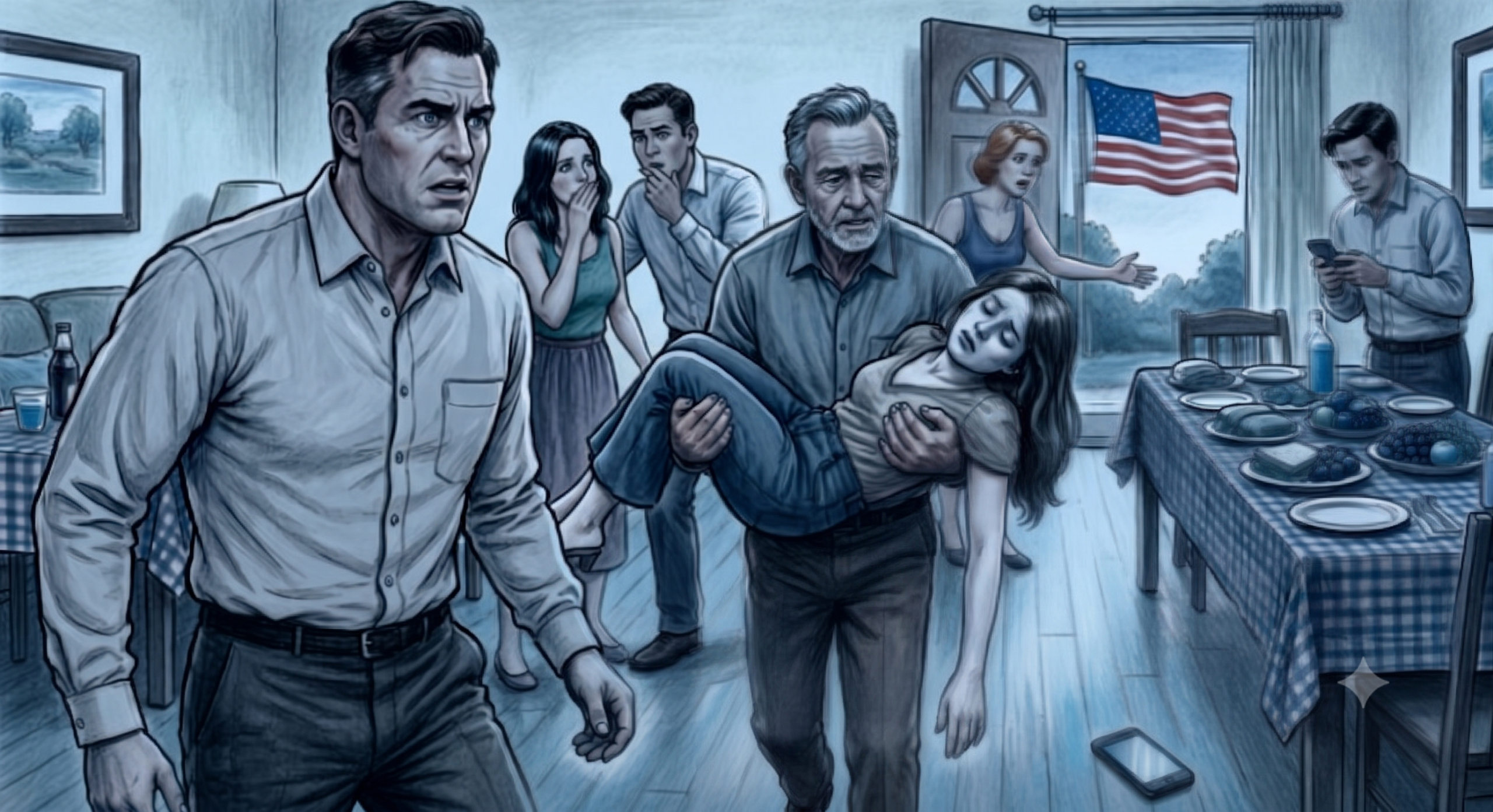
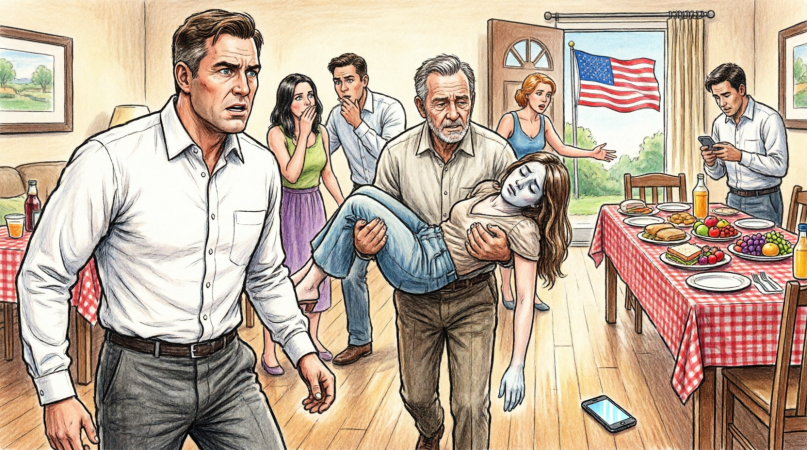
Then Caleb dropped his red toy truck near the patio steps and ran after the soccer ball.

It landed on its side, one black wheel still spinning.

Lily saw it the way toddlers see things, with full attention and no calculation.


She toddled over, bent her knees, picked it up with both hands, and turned the wheel with her thumb.

She didn’t snatch it from Caleb.

She didn’t hide it.

She didn’t even take a step away.

She just looked at it in the sunshine, serious and gentle, as if she had been trusted with something important.

I saw her and started toward her at once.

I told her it was okay, that Mommy was coming.


That should have been the end of it.

I would have handed the truck back, Lily would have cried for twelve seconds, and everyone would have moved on to corn and paper plates.


But Vanessa’s chair shot backward across the concrete.

The sound cut through the whole yard.

She snapped at me to tell my kid to stop touching her son’s things.

Lily looked up, startled by the sharpness.


I told Vanessa I had it, that Lily was two, that she had only picked it up.

Vanessa’s face changed.

It is hard to explain that kind of change unless you have seen an adult stop seeing a child as a child and start seeing them as an insult.

Her mouth tightened.

Her eyes hardened.

Her fingers closed around the handle of the ceramic mug sitting beside her chair.

Diane had poured that coffee only minutes earlier.


I remembered because she had warned Robert not to knock it over.

I saw the liquid move inside the cup.

I saw Vanessa’s shoulder lift.

I saw the decision happen before my brain had time to believe it.

Then she threw it.

The coffee flew in a dark arc across the patio and hit Lily across the cheek, chin, neck, and the front of her dress.

The red truck dropped from Lily’s hands.


The mug hit the concrete with a crack.

For a fraction of a second, the whole backyard froze around her scream.

Then my daughter’s pain tore through everything.

It was not a normal cry.

It was not embarrassment or fear or a tantrum.

It was the sound of a two-year-old body trying to hold agony too large for it.

I ran so fast I don’t remember crossing the patio.


My knees hit the concrete when I dropped beside her, and pain shot up my legs, but I barely felt it.

I pulled Lily into my arms and tried to wipe the coffee off with my hands.

Then with my shirt.

Then with the cleanest corner of a napkin I could reach.

Her skin was already angry and red beneath the liquid, and her small fingers kept clawing toward her own face.

I begged her not to touch, telling her Mommy had her.

She screamed into my chest, jerking and gasping, her curls damp against my arm.


That was when Diane started screaming too.

Not at Vanessa.

At me.

She yelled for me to get Lily out.

I looked up at her, sure I had misunderstood.

She was waving both hands toward the side gate, her face twisted in panic, not because Lily was hurt, but because Lily was loud.

Robert stepped away from the grill.

For one tiny second, I thought he was coming to help.

Instead he pointed at the gate and barked, “Get that child out of our house right now!”

That child.

Not Lily.

Not his granddaughter.

Not a baby with coffee burning her skin.

That child.

Mark had gone pale beside the table, his mouth open and useless.

Caleb stood near the lawn, confused and scared.

Vanessa was still breathing hard, still glaring, as though the problem was not what she had done, but the fact that everyone could now see it.

No one called 911.

No one ran for cool water.

No one handed me a towel.

No one asked if the coffee had gone into Lily’s eyes.

I had spent years trying to understand Ethan’s family, trying to explain away their coldness as stress or pride or old habits, but sometimes the truth of people arrives all at once and leaves no room for excuses.

I grabbed the diaper bag with one hand and held Lily against me with the other.

I ran.

Ethan’s name flashed on my phone as I reached the car.

I couldn’t answer.

My hands were shaking so badly I had trouble fastening Lily’s car seat straps, and I kept saying her name over and over like repetition could undo what had happened.

Her screams were breaking into gasps by the time I pulled away from the curb.

Every red light felt criminal.

Every car in front of me felt like a wall.

I drove to County Memorial with one hand on the wheel and the other stretched behind me whenever I stopped, touching Lily’s foot, her knee, the edge of her dress, anything I could reach.


The dashboard clock said 3:42 when I pulled under the emergency entrance.

I carried her through the sliding doors with the diaper bag half-open and my shirt wet from coffee, tears, and whatever I had tried to wipe away from her skin.

The woman at the intake desk looked up and stood immediately.

A triage nurse came around the counter, saw Lily’s face and neck, and took us back without asking me to sit.

After that, the world narrowed.

Fluorescent lights.

A rolling cart.

Cool compresses.

A tiny hospital bracelet around Lily’s wrist.

A consent form I signed with a hand that did not look like mine.

A nurse asking the time of injury.

Another nurse asking what liquid it was.

A doctor asking whether it had been spilled or thrown.

I heard myself answer.

Thrown.

The word sounded unreal in the room.

A pediatric burn specialist examined Lily while I stood close enough for her to grip my finger.

He said there were first-degree burns in some areas and partial-thickness burns in others, especially along one cheek and under her chin.

He explained that hot liquid can cling to skin, that small children burn faster than adults, and that they would manage her pain while watching for blistering and swelling.

His voice stayed controlled.

His face did not.

Then he said something I will never forget.

The injury pattern was consistent with hot liquid striking her at close range.

At close range.

I felt those words move through me like a door locking.

Not an accident.

Not a spill.

Not a clumsy hand at a crowded table.

A strike.

I thought of Vanessa’s fingers on the mug.

I thought of Diane waving toward the gate.

I thought of Robert saying that child.

Something inside me went very quiet.

A hospital social worker came in a little later, wearing a soft cardigan and a badge clipped near her shoulder.

She pulled a chair beside mine and introduced herself in the careful voice people use when they already know the answer may be awful.

Lily was lying against the pillow with gauze under her chin and medication making her heavy-eyed.

Every few minutes, she whimpered without fully waking.

The social worker asked what happened.

I told her.

I told her about the toy truck and Vanessa’s chair scraping across the concrete.

I told her about the mug.

I told her about the coffee hitting Lily’s face.

I told her that Diane screamed at me to get Lily out of the house.

I told her Robert pointed at the gate.

I told her Mark did nothing.

The social worker wrote steadily on her clipboard.

She did not make a shocked face.

She did not interrupt.

She did not ask me whether I was sure.

That, somehow, made me feel believed in a way my own family by marriage never had.

When I finished, the room felt too quiet.

The nurse at the computer kept typing, but slower now.

A cart rolled past in the hallway.

Somewhere behind a curtain, another child cried and then stopped.

The social worker looked at Lily, then back at me.

Her voice dropped.

She asked if I wanted them to contact law enforcement from there.

For a moment, I could not speak.

The word law made the whole thing feel larger than the backyard, larger than Ethan’s parents, larger than all the little insults I had swallowed.

I looked at the plastic belongings bag near the chair.

Inside it was Lily’s yellow dress, damp and stained.

Beside it were her sandals, one strap twisted sideways.

On the counter were pages waiting for signatures and instructions.


My phone lit up again.

Ethan.

I had ignored the earlier calls because there had been no room in me for anything except keeping Lily breathing, checked, treated, held.

This time, I answered.

His voice sounded strained, but there was something else in it too.

Confusion.

His parents had called him first.

They said Lily got upset and I took off.

For one second, I stopped feeling the hospital floor beneath my shoes.

In that silence, I understood that Diane had already started cleaning the story before the coffee had even dried on the patio.

I told Ethan to come to County Memorial.

I did not explain over the phone.

I did not fight.

I did not scream.

I only told him to come see his daughter.

He arrived later, still in his work shirt, hair damp at the temples, face pale from the rush.

He stepped into the room ready to ask questions.

Then he saw Lily.

He saw the gauze.

He saw the chart.

He saw the tiny hospital bracelet on her wrist and the way she flinched when the nurse adjusted the blanket.

His hand went to the wall.

For a moment, he looked like a man whose whole childhood had just walked into the room and confessed.

Then he sat down hard in the plastic chair beside the bed and covered his mouth with both hands.

I did not comfort him right away.

That may sound cruel, but my arms were full of our daughter, and for the first time that day, I needed him to feel the truth without me softening it.

The social worker asked if we wanted a report started.

Ethan looked at me.

I looked at Lily.

Then I called my father.

My father was not a dramatic man.

He did not raise his voice for effect.

He had spent his whole life fixing things quietly, the way some men fix loose hinges, leaking faucets, and scared daughters who call from hospital hallways.

He answered on the second ring.

I told him everything.

I did not say Vanessa lost her temper.

I did not say coffee spilled.

I did not say there was a misunderstanding.

I said she threw it.

I said Lily was burned.

I said Ethan’s family tried to make me leave before anyone helped her.

My father listened until I ran out of breath.

Then he asked if Lily was safe, if I was still at the hospital, and if there was a social worker there.

I answered yes to all three.

Then he told me to tell the truth once, clearly, and let every person with a badge, chart, form, or report write it down exactly as it happened.

My throat closed.

Behind me, Ethan made a sound I had never heard from him before, not a sob exactly, but something breaking loose after being held in place for too long.

My father’s voice stayed low.

He told me not to go back to that house that night, not to answer their calls alone, and not to let anyone turn it into family drama.

A grown woman had thrown hot coffee at a two-year-old, and grown people had tried to remove the evidence instead of helping the child.

I looked at Lily’s small hand curled against the blanket.

I looked at the dress in the plastic bag.

I looked at the social worker’s pen hovering over the page.

For years, I had worried that standing up to Ethan’s family would make me the problem.

That day, I understood the problem had been protected by everyone else’s silence.

The social worker slid a form closer.

Ethan reached for my hand with trembling fingers.

My father waited on the phone.

And in that bright hospital room, with Lily breathing softly beside me and the truth finally sitting where everyone could see it, I whispered the words I had been too polite, too tired, and too afraid to say before.

“Tomorrow,” I told my father, “we end them.”

There was silence on the line.

Then he said, “No, sweetheart. We start tonight.”

And that was the moment I realized Ethan’s family had no idea what was already moving toward them.

PART TWO: THE ARCHITECTURE OF RECKONING

My father did not ask questions when I whispered those words into the phone. He did not tell me to calm down. He did not offer platitudes about family loyalty or healing or giving people the benefit of the doubt. He simply said, “No, sweetheart. We start tonight,” and the line went dead.
I stood outside the trauma bay doors with my back pressed against the cool cinderblock, my hands still trembling, my shirt stiff with dried coffee and tears, and listened to the muffled sounds of Lily whimpering behind the curtain. The hospital corridor hummed with its usual indifferent rhythm: nurses rolling carts, pagers beeping, distant elevators chiming, a janitor pushing a mop bucket in slow, methodical arcs. The world kept moving. It did not care that my daughter’s face was wrapped in gauze. It did not care that three adults had watched her burn and told me to leave.
But my father did.
Twenty-three minutes later, the automatic doors slid open. He stepped through them in a charcoal overcoat, his posture straight, his face carved from decades of quiet discipline. He did not run. He did not look panicked. He looked exactly like the man who had raised me to read a room before speaking, to gather facts before reacting, to never mistake volume for strength. Beside him walked a woman I recognized immediately: Attorney Grace Lin, the civil litigator he had worked with for years, and a man in a dark windbreaker I had never met but whose badge clipped to his belt read County Investigator – Child Welfare Division.
My father’s eyes found me instantly. He crossed the distance in three long strides, pulled me into a firm embrace, and held me until my breathing evened out. He did not pat my back. He did not tell me it would be okay. He simply absorbed my shaking and let it pass.
“Where is she?” he asked, his voice low, steady.
“Behind curtain four,” I whispered. “First-degree and partial-thickness burns. Left cheek, chin, neck. They’re monitoring swelling. The social worker is with her now.”
He nodded. Then he turned to Grace and the investigator. “We secure the room first. Chain of custody on every medical note, every photograph, every statement. No one enters without logging their presence. We treat this like a crime scene because it is one.”
Grace opened her portfolio. “I’ve already drafted the emergency protective order. Once the burn specialist signs off on the injury pattern, we file it. We request immediate no-contact directives against Vanessa, Robert, Diane, and Mark. We flag the incident with the district attorney’s office for potential felony assault and child endangerment. We do not negotiate. We document.”
The investigator handed me a waterproof evidence bag. “I need the dress, the sandals, the plastic bag holding the stained clothes. I need your phone, too. Every call, every text, every voicemail. Especially the one from Ethan.”
I handed them over without hesitation. My hands were steady now. Not because the fear was gone. Because it had been replaced by something colder. Something structural. The kind of clarity that arrives when you finally stop begging people to see your child as human, and start building a case that forces the world to see it.
We walked back to the trauma bay. My father knocked once, pushed the curtain aside, and stepped inside. The burn specialist looked up, startled, but my father’s posture shifted instantly into something respectful, authoritative, and unyielding.
“Dr. Hayes,” he said. “I’m Eleanor’s father. I need the injury pattern report signed, the toxicology screen if they ran one, and the social worker’s initial statement. We are initiating legal proceedings within the hour.”
Dr. Hayes did not argue. He nodded, pulled up a terminal, and began printing. The social worker handed over her clipboard without hesitation. The nurse at the computer logged our presence. Within forty minutes, the hospital room was no longer just a place of treatment. It was a vault. Every word, every timestamp, every medical notation was being copied, signed, and routed to a secure server that no one in Ethan’s family could access, alter, or dismiss.
Then Ethan arrived.
He came through the doors in his work uniform, still damp from the rain, his hair messy, his eyes wide with the kind of performative urgency that men wear when they realize they might be losing control of the narrative. He did not look at the curtain. He looked at me.
“I just heard from my mother,” he said, his voice tight. “What the hell is going on? Why are there cops in the hallway? Why is Lily in trauma?”
I did not answer. I stepped aside.
He pushed the curtain open.
The moment he saw Lily, the performance cracked. His shoulders dropped. His breath caught. He took one step forward, then stopped, his hands hovering in the air like he was afraid to touch the space around her.
Lily flinched.
Not dramatically. Not loudly. Just a tiny, involuntary recoil, her small body turning slightly toward me, her fingers curling into the edge of the blanket. It was the reflex of a child who had just learned that the people who were supposed to protect her had chosen someone else’s comfort over her pain.
Ethan’s face went pale. “Lily-bug,” he whispered. “It’s okay. Daddy’s here.”
She did not look at him. She kept her eyes on my face.
That was when I finally spoke. “You’re not here to comfort her. You’re here to manage the fallout. So manage it quietly.”
He turned to me, his jaw tightening. “My mother said it was an accident. She said Vanessa lost her balance and the coffee spilled. She said you overreacted and stormed out before anyone could help.”
I looked at him. Really looked. Not with anger. Not with grief. With the quiet, surgical precision of a woman who had spent years smoothing things over and had finally decided to stop. “Your mother threw a cup of scalding coffee at a two-year-old. Your father pointed at the gate and told me to get her out. Your brother stood in silence. Your sister stood in silence. And you, when I called you on the way here, let your mother dictate the version of reality before you even saw your daughter’s face.”
His mouth opened. No words came out.
“I have the burn specialist’s report,” I continued. “It says the injury pattern is consistent with hot liquid striking her at close range. I have the social worker’s statement. I have the nurse’s intake notes. I have the voicemail from your mother where she tells me to ‘get that child out.’ I have your own voicemail where you repeat her version before you even looked at her. And I have a civil attorney, a child welfare investigator, and a county prosecutor already in motion. You don’t get to spin this, Ethan. You don’t get to minimize it. You don’t get to protect them. Not anymore.”
He took a step back. His hands dropped to his sides. “What are you doing?”
“I’m ending them,” I said. “Exactly like I promised.”
The investigator stepped forward, handing Ethan a printed notice. “You’re being served with a temporary no-contact directive. Effective immediately, you and all immediate family members are prohibited from approaching, contacting, or attempting to communicate with the child or the mother. Violation will result in immediate arrest and escalation to felony contempt. Do you understand?”
Ethan stared at the paper. His breathing grew shallow. “This is insane. She’s my wife. They’re my family.”
“They’re your family,” I said. “They’re not Lily’s. And they’re certainly not mine.”
Grace stepped in, her voice calm, precise, carrying the weight of a woman who had spent her career watching abusers trip over their own excuses. “The protective order is already filed. The police report is being processed. The district attorney is reviewing the case for criminal assault charges against Vanessa. The hospital’s ethics committee is documenting everything. You will be contacted by counsel. Do not attempt to contact your wife. Do not attempt to contact your daughter. Do not attempt to coordinate statements with your family. Anything you say will be documented. Anything you do will be logged.”
Ethan’s eyes filled. Not with remorse. With panic. The kind that arrives when a person realizes the floor they’ve been standing on was never theirs to begin with. He looked at Lily again. She was asleep now, her breathing steady beneath the gauze, her small fingers resting lightly on the blanket. He reached out, then stopped himself. He didn’t touch her. He didn’t speak. He just stood there, a man who had spent his entire life believing loyalty meant silence, finally realizing that silence had just cost him everything.
He turned and walked out. The curtain fell back into place. The room exhaled.
My father rested a hand on my shoulder. “You did exactly what you needed to do.”
I nodded. I didn’t feel triumphant. I felt the heavy, grounding weight of triage. The kind that arrives when you finally stop fighting the current and let the architecture do the work.
By midnight, the hospital room had transformed into a command center. Grace’s laptop glowed on the rolling tray. The investigator had secured digital copies of every intake form, every nurse’s note, every social worker’s statement. My father had coordinated with a forensic photographer to document the injuries before the dressings were changed tomorrow. He had also contacted a private security firm to monitor our apartment, ensuring no one from Ethan’s family could attempt to approach, deliver messages, or stage “surprise visits.”
I sat beside Lily’s bed, my hand resting lightly over hers, and opened my phone. The group chat was already burning.
Aunt Carol: Did you really call the police over spilled coffee? Uncle David: Vanessa is devastated. She’s crying. She didn’t mean to hurt her. Mark: You’re making a mountain out of a molehill. Family handles things quietly. Diane: You embarrassed us in front of the whole neighborhood. You’ll regret this. Robert: We’re family. You don’t burn bridges over a mistake.
I did not reply. I took screenshots. I logged the timestamps. I forwarded everything to Grace. Then I powered down my phone. Not out of fear. Out of discipline. In legal proceedings, you don’t argue with a symptom. You isolate the cause. Their messages were symptoms. The cause was control. And control dies when it’s documented.
At 1:14 a.m., Grace handed me a printed folder. “The protective order is active. The DA is reviewing the case. The social worker’s report is filed. The hospital’s ethics committee has logged everything. You’re not carrying this alone anymore.”
I looked at the folder. The paper was thick. The stamps were official. The signatures were real. It didn’t feel like revenge. It felt like architecture. Building a structure so solid that no amount of manipulation could collapse it.
“What happens next?” I asked.
“Discovery,” Grace said. “Depositions. Medical records. Witness statements. They’ll try to reframe it as an accident. They’ll claim you provoked it. They’ll claim you’re unstable. They’ll try to turn survival into sabotage. Don’t engage. Document. Let the evidence speak.”
“I will,” I said.
She closed the folder. Stood. Adjusted her coat. “The system is moving. Let it move. You focus on your daughter.”
“I am,” I said.
She left. The hallway quieted. I sat beside Lily. I watched her breathe. In. Out. Steady. Real. The tension that had lived in her frame for hours finally began to unclench. I didn’t touch her. I didn’t speak. I just sat. Letting the quiet do what words never could.
At 3:22 a.m., a new message arrived. Not from the family chat. From Ethan.
I’m sorry. I didn’t know it was that bad. I’m trying to get them to understand. Please don’t shut me out. I love her too.
I read it twice. I did not reply. I took a screenshot. Logged the timestamp. Forwarded it to Grace. Then I locked my phone. Not out of hatred. Out of clarity. Apologies that arrive after the damage is logged aren’t meant to heal. They’re meant to negotiate. And negotiation requires leverage. I had none left to give.
At 4:48 a.m., Lily stirred. Her eyes opened, slow and heavy with medication. She looked at me. Her lips parted. No sound came out. Then, quietly: “Mama?”
“I’m here, baby,” I said.
She reached for me. I lifted her carefully, avoiding the bandaged areas, and held her against my chest. She didn’t cry. She just rested her head against my collarbone, her breathing evening out, her small fingers curling into my shirt. The weight of her was real. The warmth of her was real. The fact that she was still mine, despite everything, was real.
I kissed her forehead. I didn’t make promises. I didn’t tell her it would never happen again. I just held her. Let her feel the steady rhythm of my heartbeat. Let her learn that safety isn’t a word. It’s a practice. And practices, once established, outlast the people who try to break them.
At 6:15 a.m., the morning shift began. Nurses rotated in. Doctors reviewed charts. The burn specialist signed off on the initial treatment plan. The social worker returned to update the case file. The investigator logged the overnight evidence. The system was moving. Slowly. Methodically. Exactly as it was designed to when evidence was clean and narrative was stripped of performance.
At 7:30 a.m., my father returned with coffee, a stack of legal forms, and a quiet certainty in his posture. “The DA’s office is scheduling a preliminary hearing for Thursday. We’re requesting immediate supervised visitation restrictions. We’re filing for emergency custody modification. We’re subpoenaing the neighbor’s security footage. We’re documenting every communication. We’re building the case brick by brick. You don’t have to fight them anymore. You just have to stay steady.”
“I am,” I said.
He nodded. He sat beside me. He didn’t offer advice. He didn’t try to fix it. He just stayed. Letting the quiet settle into my bones.
At 8:42 a.m., Grace called. “The in-laws have hired counsel. They’re claiming medical malpractice. They’re claiming you staged the incident. They’re claiming Lily’s burns are from a different source. They’re trying to reframe the timeline. Don’t engage. Document. Let the system work.”
“I will,” I said.
She didn’t argue. She ended the call. The screen went dark. I closed my laptop. I turned off the overhead light. I walked to the window. The sky had lightened to pale gray. The city was waking up. Cars passed. People hurried. The world kept moving. It just moved differently now.

At 9:15 a.m., Lily fell asleep against my chest. Her breathing was deep. Her face was calm. The gauze rested lightly against her skin. The burns would heal. The scars might fade. But the lesson would remain. And lessons, once learned, cannot be unlearned.

I didn’t dream of the patio. I didn’t dream of the coffee. I didn’t dream of the gate or the laughter or the silence. I dreamed of a ledger finally balancing. And for the first time in years, I let myself believe that truth was not a negotiation. It was a fact. And facts, once documented, cannot be unmade

PART THREE: THE ARCHITECTURE OF WHAT REMAINS

The calendar turned, but the real shift happened in the small, unphotographed moments. One year after the Easter picnic, the house no longer felt like a place where I was holding my breath. It felt like a place where I was finally allowed to exhale. Healing, I learned quickly, is not a montage. It is not a cinematic sequence of tearful apologies, sudden realizations, and perfectly timed sunsets. It is grueling. It is uneven. It is a slow, deliberate practice of rebuilding a house after the foundation has been deliberately weakened. You do not pour new concrete and expect it to hold overnight. You let it cure. You test the weight. You watch for cracks. And when they appear, you do not pretend they are not there. You fill them. Again. And again. Until the floor is level.
The weeks that followed were not marked by dramatic reconciliations or sudden family gatherings. They were marked by silence. The heavy, unvarnished kind that settles into a home when the performance ends and the real work begins. Patrice stopped calling. Not out of punishment, but out of necessity. She had begun therapy, a fact Gil mentioned over the phone with a mixture of pride and profound exhaustion. “She’s learning to sit with herself,” he said. “It’s not pretty. She cries. She argues with the counselor. She tries to spin things the way she always has. But she’s staying. She’s showing up.” I listened to him speak without interrupting. I did not offer advice. I did not ask for updates. I simply let him talk, because for the first time in my life, my father was not asking me to carry something. He was just telling me what he was doing. And that, in itself, was a kind of freedom.
Gil, meanwhile, did not just stop bending. He started building. He took a full-time position at the local hardware store not as a retirement hobby, but as a daily practice of showing up for himself. He woke at six. He drove the same route every morning. He learned the weight of lumber, the difference between treated and untreated pine, the quiet satisfaction of watching a customer walk out with exactly what they needed and nothing they didn’t. He called me every Sunday now, not to ask for money or mediate family drama, but to talk about weather, about the price of cedar, about the way the morning light hit his new workbench. He never once apologized for the past again. He didn’t need to. His presence became the apology. Steady. Consistent. Unburdened. He stopped flinching when my mother raised her voice. He stopped translating her cruelty into his own guilt. He just lived. And in living, he finally gave me permission to do the same.
Marlo thrived in the new quiet. Without the constant threat of family landmines, her shoulders dropped. Her sarcasm softened into genuine wit. She started a journal, not to document grievances, but to track small victories: a volleyball serve that finally cleared the net, a conversation with a teacher that ended in mutual respect, the day she realized she didn’t have to armor herself before checking her phone. She stopped waiting for validation from people who had never known how to give it. She started building her own. She joined the school’s debate team. She wrote an essay on generational silence that won a regional award. She didn’t show me the plaque until three weeks after the ceremony. “I didn’t want it to become a thing,” she said, shrugging like it was nothing. But her eyes gave her away. They were bright. Unafraid. Proud. And for the first time, I understood that my daughter was not just surviving our family. She was outgrowing it.
Theo, meanwhile, stopped asking if he was bad. The question didn’t vanish because it was answered; it vanished because it was no longer relevant. He returned to his dinosaurs, his muddy knees, his unselfconscious laughter. He learned that love does not require a performance, and that some adults are simply unreliable narrators. He stopped checking my face before speaking. He stopped apologizing for taking up space. He started building block towers that reached the ceiling and knocking them down without waiting for permission. He learned that falling is not failure. It is physics. And physics does not care about guilt. He learned that some people will love him loudly, and some will love him quietly, and some will not love him at all. And none of that changes his worth. He learned it the way children learn most things: by watching the people around him finally tell the truth.
I had spent my life believing that peace was something you earned through compliance. Through swallowed words, through padded invoices, through showing up to picnics where your child’s worth was debated over potato salad. I was wrong. Peace is not earned. It is enforced. It is the quiet, daily practice of choosing yourself when the world demands you shrink. It is saying no without a speech. It is letting the silence hang until the other person learns to sit in it. It is realizing that you can love people from a distance without financing their destruction. I stopped auditing my own worth. I stopped translating other people’s cruelty into my own guilt. I stopped believing that absence was punishment. I started understanding it as preservation. And preservation, I learned, is the most honest form of love.
One evening in late autumn, Deanna came over with a casserole and a stack of board games. We sat on the floor with Marlo and Theo, playing something ridiculous and loud, the kind of game where you shout and laugh and accidentally knock over a cup of juice. Theo didn’t apologize. He just grabbed a towel. Marlo didn’t check her phone. She just rolled the dice. I watched them, my chest tight with a feeling I couldn’t immediately name. It wasn’t happiness. It was something heavier. Something earned. It was the quiet certainty that the house we lived in was finally ours. Not because we owned the deed, but because we owned the air inside it. Because no one else’s expectations lived in the corners. Because no one else’s voice dictated the temperature. Because we had finally stopped inviting ghosts to dinner.
Patrice’s therapy did not turn her into a different woman. It turned her into a more honest one. She sent a letter three months after the dinner. Not a text. Not a voicemail. A real letter, written in shaky but deliberate handwriting. I am learning that my cruelty was not protection. It was fear. I am sorry I made you pay for it. I am learning to sit with my own reflection. It is harder than I expected. I hope one day I earn a place at your table. Not because I am family. Because I am trying. I kept the letter in a drawer. Not because I forgave her. Because forgiveness is not a switch. It is a season. And seasons take time. I did not write back. I did not need to. The letter was not a demand. It was an offering. And offerings do not require immediate acceptance. They simply require space to land.
Gil began visiting on weekends. Not as a mediator. Not as a messenger. Just as a grandfather who showed up with hardware store catalogs and bad jokes and a quiet willingness to sit on the floor with a six-year-old and name every dinosaur in the plastic bin. He never mentioned money. He never mentioned the past. He just built Lego castles and let Theo knock them down, laughing when the pieces scattered across the rug. It was ordinary. It was extraordinary. He started bringing Theo to the store on Saturday mornings. Let him hold the tape measure. Let him read the price tags. Let him ask questions without interrupting. He did not try to make up for lost time. He just showed up for the time they had. And time, when given freely, does its own healing.
My sister never apologized. She stopped inviting me to gatherings. She posted photos of new vacations, new dinners, new perfectly arranged tables. I watched them from a distance, not with bitterness, but with clarity. Some people choose the performance over the truth. That is their right. It is also their consequence. I no longer needed to be in the frame to know I existed. I no longer needed to be acknowledged to know I was real. I had spent years believing that exclusion meant I was broken. I finally understood it meant I was free.
People ask me how I did it. How I cut off the supply. How I held the line. How I survived the silence that followed. I tell them the truth: I didn’t do it all at once. I did it in increments. In declined calls. In unopened envelopes. In the quiet decision to stop translating other people’s cruelty into my own guilt. I did it by learning that love is not a ledger. That boundaries are not walls. That healing is not a destination. It is a practice. It is waking up and realizing you do not have to brace for impact. It is reading a text message and choosing not to reply. It is buying groceries without calculating who will judge the brand. It is sitting in a room and knowing you do not have to earn your place in it. It is quiet. It is slow. It is entirely yours. It does not ask for permission. It simply takes up space. And space, once claimed, cannot be unclaimed.
On a Tuesday in early December, I stood in the kitchen making hot chocolate. Snow fell outside in slow, deliberate flakes. Marlo was upstairs studying for midterms. Theo was on the rug, drawing a T-Rex with meticulous attention to its teeth. The house was warm. The coffee maker hummed. The world outside kept moving, indifferent to the quiet revolution that had taken place inside these walls. I poured the hot chocolate into three mugs. I didn’t set a fourth. I didn’t need to. For the first time in my life, I was not waiting for permission to exist. I was not auditing my own worth. I was not bracing for impact. I was simply here. In a house that belonged to us. In a life I had finally chosen. And that was enough. It would always be enough.
I carried the mugs to the living room. Set them on the coffee table. Sat beside Theo. Watched him color. Listened to Marlo’s footsteps above us. Felt the snow fall against the glass. And for the first time in thirty-four years, I did not ask myself if I had done enough. I did not wonder if I had failed. I did not measure my worth against the expectations of people who had never learned how to see me. I just sat. And breathed. And let the quiet do what it does best. It holds. It settles. It reminds you that you are still here. And that is all that has ever been required.
But the true test of a new architecture is not how it stands in calm weather. It is how it holds when the wind returns.  

It came in February. Not as a crisis. As a request. Patrice called on a rainy Thursday evening. Her voice was steady, but I could hear the effort in it. “Karen,” she said, “your father and I would like to host Easter this year. Not at the old house. We’ve downsized to the apartment near the park. It’s smaller. Fewer stairs. I want to do it right this time. No crowds. No performances. Just the four of us. If you’re willing.” She paused. “If you’re not, I understand. The boundary stands. I just wanted to ask.”
I looked at the calendar. I looked at the rain against the window. I looked at the framed drawing on my refrigerator: three stick figures holding hands beside a yellow house, a sun in the corner with long rays, a tiny flag beside the front door because seven-year-olds know that houses feel safer with flags. I remembered the folding table in my sister’s backyard. The plastic spoons. The broth on Megan’s dress. The twenty-three adults who looked away. The weight of a word spoken like it was nothing. Technically. The word adults use when they want permission to be cruel to a child.
“I’ll be there,” I said. “But we’re bringing the food. And we’re leaving at two.”
“Understood,” she said. No negotiation. No sigh. Just acceptance.
Easter Sunday arrived pale and crisp. Patrice’s apartment was small, bright, and entirely her own. No borrowed folding tables. No hidden expectations. Just a wooden dining table set for four, with real plates, real silverware, and a vase of yellow tulips in the center. Gil greeted us at the door with a genuine smile, his hands clean, his posture open. He took Marlo’s coat. He knelt to hug Theo. He didn’t perform. He just welcomed.
We ate. We talked. Not about money. Not about obligations. Not about who owed what to whom. We talked about Marlo’s debate tournament. About Theo’s new geology book. About Gil’s woodworking class. About the way the light hit the park trees in early spring. Patrice listened. Really listened. She didn’t interrupt. She didn’t redirect. She didn’t try to steer the conversation toward herself. She just sat in the quiet spaces and let them be.
Halfway through dessert, Theo looked up from his plate. “Grandma,” he said, “do you like dinosaurs too?”
Patrice didn’t laugh. She didn’t sigh. She didn’t tell him he was too old for questions or too loud for dessert. She leaned forward. “I don’t know much about them,” she said honestly. “But I’d love to learn. Could you show me your book later?”
Theo’s face lit up. “Yeah. It’s got a T-Rex that’s bigger than our car.”
“I’d like to see that,” she said.
And just like that, the room exhaled. Not because the past was erased. Because the present was finally honest.
On the drive home, Marlo sat in the backseat, quiet for a long time. Then she said, “It was different.”
“Yes,” I said.
“Do you think it’ll stay that way?”
“I don’t know,” I said. “But it doesn’t have to be perfect to be real. It just has to be chosen. Every time.”
She nodded. She didn’t look away. She didn’t flinch. She just absorbed the truth the way children do when they’re finally given room to grow.
That night, I stood on the balcony of my apartment, wrapped in a thick sweater, watching the city lights blur through the mist. My phone buzzed. A message from Deanna. Day 214. Still standing? I typed back: Still breathing. She replied instantly: Good. That’s the only metric that matters.
I put the phone away. I looked down at my hands. They were no longer clenched. They were open. They had spent decades catching falling plates, wiping spilled broth, holding back tears, signing checks, swallowing words, absorbing blows, making myself small so other people could feel tall. But hands are not meant to catch what isn’t theirs to carry. They are meant to hold what is. To build. To reach. To rest.
I thought of the Easter picnic. Not with bitterness. With clarity. That day had not broken me. It had revealed me. It had shown me exactly where my loyalty had been misplaced, exactly where my silence had become complicity, exactly where my love had been mistaken for permission. And it had given me the exact moment I needed to finally stand up. Not with a shout. With a choice. A quiet, unshakable, irreversible choice to stop funding people who ranked my children like inventory. To stop translating other people’s cruelty into my own guilt. To stop believing that peace required my disappearance.
I am not the family’s shock absorber anymore. I am its architect. I build tables that fit the people who sit at them. I set boundaries that hold. I love without conditions that cost me my dignity. I protect without apologies that erase my truth. I am Karen. I am a mother. I am a daughter who finally learned that blood does not grant ownership. It only grants the opportunity to choose. And I have chosen well.
Inside, Marlo’s door clicked shut. Theo’s steady breathing drifted down the hall. The apartment was quiet. The snow had stopped. The air was still. I did not look back at the folding tables of my past. I did not wait for apologies that would never be perfect. I did not measure my worth against the expectations of people who had spent decades teaching me how to shrink.
I just stood. And breathed. And let the quiet do what it does best. It holds. It settles. It reminds you that you are still here. And that is all that has ever been required.
And for the first time in my life, I finally believed it.
More Details
My dad threw my grandmother’s savings book into her grave and said it was worthless. The next day I went to the bank, and the teller turned pale before calling the police. 80
Jul 13, 2026

My dad threw my grandmother’s savings book into her grave and said it was worthless. The next day I went to the bank, and the teller turned pale before calling the police. 80

I was coming to become crazy before I could become a witness.
I went to the bathroom window. It was small, with loose bars that I always promised to fix when I had money. I never had. Blessed poverty. One of the rods was rusty before I arrived. I pulled it with both hands until I felt the skin on my fingers open up.
The door creaked.
“Mariana,” said Victor, more quietly. Your mom didn’t abandon you because she wanted to. But if you keep asking, you’re going to wish I had.
The rod gave way with a groan.
I went through the hole.
I ripped the black dress. I scraped my hip. I fell in the backyard of the building, on a garbage bag that cracked like bone. I stood still for a few seconds, listening.
Upstairs, my door burst open.
“Mariana!
I didn’t run.
I forced myself to walk close to the wall, crouching, until I came out through the alley. When I turned the corner, then I did run as if all my past came after me.
I did not call Agent Maldonado.
I didn’t call Rosa either.
I dialed the only number that did not yet belong to my fear: that of Mrs. Camacho. He answered the second tone.
“Mariana?”
“Victor is in my room.
He didn’t ask anything.
“Where are you?”
I looked around. A closed store. A taco stand lifting the chairs. A Virgin of Guadalupe painted on a metal curtain.
—On the corner of Fresno and Naranjo.
“Do not move from a lighted area. I’m going to send someone.
“No. No one from the Prosecutor’s Office.
There was silence.
“Why?”
I swallowed hard.

“Rosa called me. He told me not to trust Maldonado.
The lawyer took a deep breath.
“Then trust me enough to hear this: Lucía Maldonado has been investigating her own father for two years.
I froze.
“What?”
—Retired commander Ernesto Maldonado was the one who attested that Rosa María had voluntarily abandoned her daughters. It was a lie. Lucía knows it. That is why he asked to be in his case.
Her daughters.
Not “his daughter.”
I felt the world tilt again.
“My sister…
“Mariana, I need you to come to the bank.
“Account 307 is not the bank’s.

Another pause.

Rosa told him that too.

It was not a question.

“It’s a vault of the pantheon.”

The lawyer spoke more quietly:

“Then Victor is going there.

My grandmother’s cemetery was on the other side of town. At night it seemed like a different place, though I had seen it just that morning full of people, cheap crowns, and fresh earth. Now the entrance was closed, but Ms. Camacho arrived with an older man who was carrying a bunch of keys and a bank jacket that was tight.

“Don Eusebio was an employee of the heritage archive,” she explained. He met his grandmother.

The old man looked at me as if he had been waiting for me since before I was born.

“You have his eyes,” he said.

I didn’t know if he was talking about my grandmother or Rosa.

I didn’t ask.

We enter through a side door. The cemetery smelled of rotting flowers, wet earth and dull wax. The moon was barely enough to paint the crosses. Every step sounded too loud.

“The three-hundred-and-seventh vault is in the old part,” said Don Eusebio. In the past, large families rented numbered niches. Later that area was no longer used.

“And my sister?” I asked.

No one answered.

That was enough of a response to keep walking.

We come to a long wall, full of rusty plaques. The numbers were blurry. Don Eusebio shone a lamp.

My heart began to pound my ribs.

And there it was.

It had no name.

Just a small, dust-covered plaque with a dried flower tucked between the metal and the wall.

Don Eusebio took out a different key. Smaller. Older.

“Your grandmother gave it to me twenty-seven years ago,” he said. He told me: “If one day Mariana comes, you give it to her. If Victor comes, you play dead.”

Ms. Camacho looked at me.

“This is no longer the bank’s. It’s his.

I took the key.

It weighed me down like it was lead.

I put it in the lock.

He did not turn.

The forced.

Not either.

Then I remembered my grandmother’s notebook. The red seal. The note. The way she always folded the corners of the leaves when she wanted to hide something from Victor.

I searched my memory for the last page I had managed to see before the Prosecutor’s Office kept it.

Account 307.

Below, very small, a number written in blue pen.

It was not quantity.

It was a date.

17-09-1998.

My birthday.

I tried turning the key counterclockwise, three times. Then to the right, one.

The lock gave way.

The niche had no coffin.

It had a metal box.

And on top of the box, wrapped in yellowish plastic, was a blanket.

Yellow.

The same one in the photo.

I touched it with my fingertips and something fell apart inside.

I didn’t remember that blanket, of course.

But my body does.

The body keeps what memory cannot.

Ms. Camacho opened the box carefully. Inside there were folders, an old cassette, minutes, photographs, a rosary and two hospital bracelets.

One read:

Mariana Salazar. Female. 2,800 kg.

The other said:

Clara Salazar. Female. 2,300 kg.

Clara.

My sister had a name.

I couldn’t breathe.

I put the bracelet to my mouth and kissed her as if I could apologize for not having heard from her.

Under the bracelets was a letter.

My grandmother’s handwriting.

“My girl Mariana:

If you’re reading this, forgive me. I was not a coward because I wanted to. I was a coward because they left me alive with a granddaughter in my arms and the threat of taking the other one away from me forever.

Rosa had two girls. You and Clara.

Victor, your uncle, not your father, found out about the trust that your grandfather left for Rosa’s daughters. That money could only be touched when the two girls were identified alive, or when one of them was declared dead with evidence. Victor sold Clara to a family that could not have children. He kept you with me to wait for the moment to collect.

I filed a complaint. They made me sign the withdrawal with a gun on the table and with Clara’s photo in Victor’s hands. He told me that if I talked, I would really bury her.

Rosa did not die. They locked her in a clinic with false papers. When he managed to get out, he could no longer get close. Victor made him believe that you were dead. It made me believe that Rosa had gone crazy.

If God gives me strength, I will give you the notebook while I am alive. If not, look for account 307. There’s the truth. Don’t hate your mother. Don’t hate your sister. And if one day you wonder why I was so silent, remember that every silence of mine was to keep you breathing.

Your grandmother, who loved you badly because she didn’t know how to love you free.”

The letter fell from my hands.

I folded in on myself.

I didn’t cry pretty.

I cried like a wounded animal. With my mouth open, without air, with a sound that made me embarrassed until Mrs. Camacho knelt next to me and hugged me without asking my permission.

Don Eusebio took off his cap.

“Doña Guadalupe came every year,” he whispered. She left a flower in this niche. He said it was for the girl he was missing.

Then we heard footsteps.

Not one.

Of several.

The light of a lamp hit us in the face.

“How nice,” Victor said from the darkness. Family reunion in the cemetery.

Patricia came behind him, heels that sank into the earth. And two more men, wide, without uniforms, with the face of obeying for money.

Victor looked at the open box.

For the first time in my life I saw fear in his eyes.

Not much.

Enough.

“Give me that, Mariana.

I wiped my face with the back of my hand.

“I’m not your daughter.

His mouth twitched.

“I gave you a roof.”

“You scared me.

“I gave you food.”

“You took my name from me.

“I protected you from a crazy mother.

I didn’t slap him with my hand.

I gave it to him with the bracelet.

I held it up in front of him.

“You also removed Clara’s name.

Patricia clicked her tongue.

“Oh, the other one is out.

I looked at her.

“Did you know?”

He did not answer.

But he smiled.

And that smile was crueler than any confession.

Victor took a step.

“You have no idea who bought your sister. You have no idea what surnames are behind it. If you open that box, you don’t just sink me. You sink. You sink Rosa. You sink Clara, if she is still breathing.

If he is still breathing.

I felt like I was going to throw myself on him.

But Mrs. Camacho squeezed my wrist.

“It’s open now,” she said.

Victor looked at her.

“You don’t know what you’ve gotten yourself into.

Then another voice came from the graves.

“Yes, you know.

Agent Lucía Maldonado appeared with four investigative police officers.

He had the weapon down, but ready.

Victor barely backed away.

“Just look,” he said. The dog’s daughter believing herself to be a saint.

Lucia didn’t blink.

“My father confessed this afternoon.

Patricia let out a fake laugh.

“That doesn’t prove anything.

“Try enough to search your house, the notary’s office and the Santa Irene clinic. Also to tap your phones. Thank you for coming straight to the vault.

Victor understood before I did.

Ms. Camacho had not come alone.

I hadn’t been bait.

Or maybe it is.

But this time the trap was not for me.

One of Victor’s men tried to run. The police threw him against a tombstone. Patricia screamed. Don Eusebio hid behind a mausoleum. The box was between my feet like an open heart.

Victor did not run.

He looked at me.

He no longer feigned sweetness.

“You’re just like Rosa,” he spat. They ruin everything out of sentimentality.

“No,” I said. You ruined it out of ambition.

“Ambition?” He laughed. Your grandfather left millions for two brats and nothing for me. Nothing for the son who did stay. Rosa went off with any musician at the fair and she was still rewarded for misfortunes.

“Rosa was your sister.

“Rosa was the favorite.

There it was.

The truth is not always great.

Sometimes it’s an old misery rotting into a little man.

Lucia approached.

Víctor Salazar is arrested for child abduction, falsification of documents, criminal association, property fraud and whatever results.

He didn’t look at her.

He looked at me.

“You’re never going to find Clara.”

He did not say it as a threat.

He said it as a last rotten gift.

I smiled even though I was breaking.

“I’ve already found it.

Lying.

But he didn’t know it.

And for a second, that second when he hesitated, I understood that there was a clue that he had not yet taken away from us.

He was handcuffed next to the unmarked grave where my grandmother had hidden the truth with more love than resources.

When they took him away, Victor passed me by and murmured:

“Ask Rosa why she didn’t come back.”

That phrase followed me all night.

At the Prosecutor’s Office, I did not testify for two hours.

I testified until dawn.

I listened to my grandmother’s cassette on an old tape recorder that someone got on file. Her voice came out full of static, but it was her.

My grandmother.

My mom Lupe.

“Victor, don’t take Clara with you.”

Then his young voice, furious:

“Sign, Mom. Sign or tomorrow bury at two o’clock.”

Then a cry.

That of a baby.

The dos.

Lucía Maldonado stayed with me while I listened to him. He didn’t apologize to me for his father. Even so, he said it.

“I’m sorry.

I didn’t know whether to accept it.

So I didn’t answer.

At noon, they found a safe behind Patricia’s closet in Victor’s house. There were false powers of attorney, copies of minutes, photos, receipts from a closed clinic and a contact book.

On the page marked with a picture of St. Jude was written:

“Clara S. — delivered to family R. / Querétaro / new name: Camila.”

Camila.

My sister’s name was Clara.

But perhaps he had grown up responding to Camila.

Rosa called again that afternoon.

I answered in a room of the Prosecutor’s Office, with Lucía in front of me and Ms. Camacho by my side.

“Mariana?”

I didn’t say “ma’am.”

I didn’t say “Rosa.”

I said:

“Mom.”

On the other side, she broke down in tears so long that everyone was silent.

“Forgive me,” she repeated. Forgive me, my child. I thought you were dead. They showed me a record. They showed me a grave. They told me that my mother had signed.

“I thought you were dead too.

“They had me medicated for years. When I got out, I had no proof. Guadalupe sent me messages from people in the market, but Víctor always arrived first. The last time I saw her she told me that she had hidden a key. I couldn’t get any closer. If he knew I was still looking for you, he was going to hurt you.

I wanted to hate her.

I really wanted to.

It would have been easier to have a culprit to complain about all my motherless birthdays, every night asking me why no one had the same face as me, all the times Victor made me feel in the way.

But his voice didn’t sound like an excuse.

Sonaba and ruin.

“Where are you?” I asked.

“Close.”

“Why don’t you come?”

He was slow to respond.

“Because I don’t know if I deserve to look at you.”

I got up with my cell phone in my hand.

“I don’t know if I’m ready to hug you. But I’m tired of Victor deciding who can see me and who can’t.

An hour later, Rosa entered the Prosecutor’s Office.

It was the woman in the photo, but with twenty-seven years of pain on her. Thinner. More gray hair. A scar next to the lip. The same eyes.

My eyes.

She stood ten feet away from me.

As if getting close could break me.

I thought I was going to run into his arms.

I didn’t.

By a step.

Then another.

She covered her mouth.

“My girl…

I raised my hand.

I touched her cheek.

It was real.

Hot.

Viva.

Then he hugged me.

And I was no longer twenty-seven.

I was a baby.

I was a girl.

I went all my ages together claiming the breast that had been stolen from me.

We cried without saying anything.

Because there were pains that did not fit into an explanation.

Three days later we find Camila.

Not in a mansion, as I imagined from Victor’s words. Not with jewels or a chauffeur or a powerful surname.

We found her in a public elementary school in Querétaro, teaching third grade.

Her hair was tied back with a pencil, chalk stains on her blouse, and the same brown stain next to her nose.

Mine.

Ours.

Lucia spoke to her first. Then with her adoptive parents, who had not bought a baby as one buys a piece of furniture, but had received her from a fake “foster home” with apparently legal documents. The adoptive mother fainted when she saw the evidence. The father aged ten years sitting on a bench.

Camila received us in the empty room.

I went in with Rosa.

She looked at both of us.

Then he touched the spot on his face.

“No,” he whispered.

Rosa took a step and stopped, just like me.

“Your name was Clara,” he said.

Camila shook her head, but she was already crying.

“My mother’s name is Teresa.

“And he loves you,” said Rosa. No one comes to take that away from you.

Camila looked at me.

“Who are you?”

I wore her hospital bracelet in a transparent bag. I took it out.

“I think I’m the part of your life that was also looking for you without knowing.

We didn’t hug that day.

She couldn’t.

I also didn’t know how to hug a sister born with me and completely unknown.

But before I left, Camila caught up with me in the hallway.

“Mariana?”

I turned.

She took a deep breath.

“Do you like coffee?”

I laughed crying.

“It keeps me alive.

“Then…” one day.

“One day,” I said.

And that “one day” was the first clean promise of this whole story.

The trial was not quick or pretty.

Victor tried to say that my grandmother had been sick in the head. That Rosa was unstable. That Patricia only signed what he put in front of her. That Lucía Maldonado was seeking revenge on her father. That I was manipulable, poor, resentful.

But my grandmother’s voice filled the room.

“Sign, Mom. Sign or tomorrow bury at two o’clock.”

Victor did not look up again.

The Santa Irene clinic opened its archives by court order. Other women appeared. Other babies. Other families divided. My case ceased to be mine alone and became a door to many buried truths.

The trust existed.

It was a lot of money.

So much so that for a moment I felt angry at having gone hungry while that amount slept under padlocks and false signatures.

But when I was finally able to touch it legally, I didn’t think about cars or big houses.

I thought of a tombstone.

I had the unmarked plaque removed from niche 307.

I put another one.

It didn’t say “Clara,” because Clara was alive.

She didn’t say “Rosa,” because Rosa was learning to live.

It said:

“Here Guadalupe Salazar kept the truth when no one wanted to hear it.”

Below I had it recorded:

“Sorry for being late.”

The day they placed the plaque, the four of us went.

Pink.

Camila.

Me.

And Teresa, the mother who raised my sister with clean hands even though the world had given her dirty.

No one knew how to stand next to anyone.

We were a family made of pieces that didn’t fit together yet.

But we were there.

Camila left a white flower.

I left the yellow blanket in a sealed glass box so that it would never rot in secret again.

Rosa left a photo of the three of us: she carrying us newborns, before Victor turned envy into a crime.

Teresa left a rosary.

“I didn’t know,” he said.

“I know.

“But if knowing it before would have meant losing her… perhaps he would have been afraid to ask.

I looked at her.

For the first time I understood my grandmother in a way that hurt me less.

Fear does not justify lies.

But sometimes it explains the chains.

Months later I returned to the bank.

Not in a black dress.

Not with shoes full of mud.

I went with a blue blouse that Rosa gave me and some papers signed by me and Camila. The cashier who had whispered “it’s her” recognized me instantly.

This time he smiled.

Ms. Camacho received us in the same office.

On the desk he put my grandmother’s notebook.

It was no longer as evidence.

It was no longer tainted with suspicion.

It was worn, simple, beautiful.

I took it with both hands.

Camila looked at her without touching her.

“Did this all start there?”

“No,” I said. This all started with someone who believed they could sell us and get away with it.

I opened the notebook on the last page.

Below the date that took me to the vault, there was another sentence. I hadn’t seen it before because it was written so faint that it looked like a shadow.

“When you find your sister, don’t charge alone anymore.”

I smiled.

My grandmother, even when she was dead, kept scolding me.

Camila let out a low laugh.

Ms. Camacho explained to us figures, terms, signatures. I heard only half of it. Not because I didn’t care, but because on the other side of the glass I saw my reflection next to Camila’s.

Two equal and different women.

Two lives stolen in opposite ways.

She had been given love with a false origin.

I had been given blood with a twisted love.

None came out intact.

But we went out.

With part of the money we opened a foundation to help stolen people find their identity. Rosa wanted to work there, filing files. He said that each tidy folder was a way to put someone on their feet.

Camila continued to teach.

I went back to study.

Not because Victor could no longer take away my scholarships.

But because my name finally belonged to me.

The last time I saw Victor was at a hearing.

He was skinny, older, with sunken eyes. As I passed in front of him, he whispered:

“I raised you.

I stopped.

For years that phrase would have doubled me.

Not that day.

“No,” I said. My grandmother raised me. You were only in the house.

He clenched his jaw.

“Without me you would be nobody.

I looked at him with a calmness that surprised me.

“Without you I would have been happy before.

He did not answer.

Because there are truths that leave no room for poison.

I left the courthouse and outside were Rosa and Camila waiting for me. Rosa carried sweet bread in a bag. Camila brought coffee for the three of them.

The sky was clear.

The city continued to smell of gasoline, humidity and fried food, as it did the night it all began. But I was no longer the same girl with a notebook hidden in an errand bag.

That afternoon we went to the cemetery.

We sat by my grandmother’s grave. I told him everything, even though I knew that somehow I already knew.

I told him that Victor had been convicted.

That Patricia agreed to testify in exchange for fewer years and even so she could not be saved.

That Lucía visited her father in prison, not to forgive him, but to remind him of the names of the women she helped erase.

That Rosa already slept some nights without waking up screaming.

That Camila had invited me to spend Christmas with Teresa.

That I was still crying when I saw yellow blankets in the markets.

That sometimes I was angry with her, with my grandmother, for having kept quiet.

And that later made me angry with myself for judging from a freedom that she never had.

The wind moved the flowers.

I took out the notebook and put it on the tombstone.

“I’ve found her, grandma,” I whispered. I found Mom. I found Clara. I found myself.

Rosa took my right hand.

Camila on the left.

For the first time I didn’t feel like I was missing something behind my chest.

The wound was still there.

But it was no longer empty.

Before we left, I saw a yellow butterfly land on the notebook. She stood still for a few seconds, as if reading the accounts, the dates, the silences.

He then flew to the old part of the pantheon.

Towards vault 307.

To the place where my life stopped being a lie.

And as I watched her get lost among the crosses, I finally understood what my grandmother had wanted to tell me by hiding a notebook in her grave.

He didn’t leave me any money.

He left me no revenge.

He left me the way back.

Because there are families that are not born the day someone signs an act.

They are born the day when someone dares to open the door that everyone ordered to be kept closed.

I opened mine with fear.

And on the other side, although late, although broken, although trembling, was the truth.

My mother was there.

My sister was there.

I was there.

The light of a lamp hit us in the face, blinding me completely. I shielded my eyes with my forearm, the sharp glare burning through the darkness of the old cemetery [1].
“Nobody move,” a voice commanded.
It wasn’t Victor. It was a woman’s voice, tight and breathless.
As my eyes adjusted, the beam lowered, revealing Agent Lucía Maldonado [1]. Her jacket was torn, her chest heaving as if she had just run a marathon. Behind her stood two uniform officers, their guns drawn, but pointed out toward the dark rows of tombstones, not at us.
“Agent Maldonado?” Ms. Camacho rose quickly, stepping horizontally to shield me and the open metal box. “What is the meaning of this? I told Mariana you couldn’t be trusted.”
“You shouldn’t trust my father,” Lucía said, her voice cracking slightly as she kept her eyes swept across the shadows behind us. “But you can trust me. I knew Victor would come here. He’s been tracking your phone, Mariana [1].”
“Your father buried my mother alive in a lie!” I screamed, my voice still raw from crying [1]. The hospital bracelets were clenched so tightly in my fist that the plastic dug into my skin [1]. “He took Clara! [1]”
Lucía’s face paled under the moonlight, but she didn’t look away. “I know. I found the original intake logs from 1998 in my father’s old safe last week. That’s why I took this case. I’m arresting Victor tonight, or I’m tearing my own badge off.”
“Too bad you won’t live to do either,” a slick, familiar voice echoed from the dark [1].
From behind a large marble mausoleum, Victor stepped into the faint light [1]. But he wasn’t alone. Emerging from the shadows beside him was an older man with gray hair and a cold, calculating posture. Even without a uniform, the authority in his stance was unmistakable.
It was Retired Commander Ernesto Maldonado.
“Drop the weapons, Lucía,” the older Maldonado said calmly, his own registered firearm leveled directly at his daughter’s chest. “You always were too sentimental for this line of work. Just like your mother.”
“Dad, stop,” Lucía whispered, her hands shaking as she kept her service weapon trained on Victor. “It’s over. The paper trail goes all the way back to the clinic where you locked Rosa María [1]. Camacho has the archive box [1].”
Victor let out that same soft, disgusting laugh I had heard through my apartment door earlier that night [1]. “An archive box found by an old lunatic and a corrupt lawyer? That’s not evidence, Lucía. That’s a tragic graveyard robbery. The neighbors already think Mariana is losing her mind since her grandmother died [1]. It’s tragic, really. A double suicide in the old pantheon [1].”
My knees stopped shaking. Looking at Victor—the man who had kept me in a cage of poverty, who had sold my twin sister, who had broken my grandmother’s spirit—the fear simply evaporated, replaced by a cold, burning rage [1].
“You sold Clara,” I said, stepping out from behind Ms. Camacho.
Victor blinked, surprised by the steady venom in my voice.
“You sold my sister to buy your cars, your suits, and your payoffs to the Commander,” I said, taking a step forward. “But you forgot one thing, Victor.”
“Back up, Mariana,” Commander Maldonado warned, shifting his aim slightly toward me.
“You forgot that the trust requires both daughters to be identified alive, or one to be proven dead with official evidence,” I said, referencing the words in my grandmother’s letter [1]. “If I die tonight, Victor, you get nothing. The trust dissolves into state probate. You killed Clara’s chance of finding us, and if you kill me, you stay a broke, pathetic rat forever.”
Victor’s eyes widened. He turned sharply to the Commander. “Wait. Ernesto, wait. Is that true? The legal terms—”
“Shut up, Victor, she’s bluffing!” Maldonado snapped.
But the distraction was all Lucía needed.
Bang!
Lucía fired, striking Victor cleanly in the shoulder. He screamed, dropping to the wet earth [1]. At the same fraction of a second, the two uniform officers behind Lucía—who were loyal to her, not her retired father—tackled Commander Maldonado to the ground, disarming him before he could pull his trigger.
The cemetery erupted into chaotic noise, shouts echoing off the stone walls, but to me, everything went completely silent.
I sank back to the ground next to the open niche [1]. Don Eusebio gently placed his tightly zipped bank jacket over my shoulders to keep me warm [1]. Ms. Camacho gathered the folders, the old cassette tape, and the yellowish blanket, packing them securely back into the metal box .
“We have them, Mariana,” Ms. Camacho whispered, her eyes shining with tears. “We have everything we need.”

Three months later.
The courtroom in the city was hot, but for the first time in twenty-seven years, I felt like I could breathe fresh air [1].
Victor and Ernesto Maldonado were led away in handcuffs, facing charges of human trafficking, kidnapping, fraud, and official corruption [1]. The paperwork found in vault 307 was airtight [1].
I sat on the wooden bench in the hallway outside the courtroom, the yellow baby blanket resting in my lap [1]. Lucía Maldonado walked out, wearing civilian clothes. She had resigned from the Prosecutor’s Office the day before, choosing to build a new life away from her father’s shadow.
“The judge ordered the immediate release and rehabilitation of Rosa María Salazar,” Lucía said, sitting down next to me. “She’s at a private care facility in Guadalajara right now. Ms. Camacho is organizing the transport. Mariana… your mother wants to see you.”
My heart skipped a beat. “And Clara? [1]”
Lucía smiled softly, reaching into her bag and pulling out a modern printed document. “Because Victor kept meticulous records of the sale to ensure he could track her down later for the trust, we found her. She was raised by a family in Monterrey. Her name is Clara now, too. She knows everything. She’s flying in tomorrow.”
I looked down at the old hospital bracelets in my palm [1].
My grandmother was right. Every silence of hers had kept me breathing until this moment [1]. But the silence was finally broken.
I stood up, holding the yellow blanket close to my chest, and walked out of the courthouse into the bright, blinding sunlight—ready to meet my family for the very first time [1].
The sun was warm on the balcony of the Guadalajara care facility, a stark contrast to the cold, damp shadows of the cemetery.
Rosa María sat in a wicker chair, her eyes fixed on the horizon. Though the years of forced isolation had lined her face, there was a sudden, sharp clarity in her gaze the moment the door clicked open.
I walked in first. In my arms, I carried the yellow blanket, freshly washed and smelling of lavender.
When Rosa María saw it, a gasp caught in her throat. She stood up, her hands trembling, reaching out not for the fabric, but for me.
“Mariana?” she whispered, her voice cracking with a lifetime of unshed tears.
“I’m here, Mama,” I said, stepping into her embrace.
The warmth of her hug was something my memory had lost, but my body instantly recognized. It felt like coming home after a twenty-seven-year storm. We held each other tightly, the weight of Victor’s lies finally evaporating into the afternoon air.
A moment later, a soft knock sounded at the open door.
We both turned. Standing in the doorway was a young woman with dark hair, wearing a simple blue dress. She looked at me, and it was like looking into a mirror that reflected a slightly different path. She had the exact same eyes—the eyes Don Eusebio said belonged to our grandmother.
It was Clara.
She held a vintage, worn teddy bear in her hands—the only piece of her infancy her adoptive parents had been given.
Rosa María let out a sob, stretching out her left arm. I reached out with my right. Together, we pulled Clara into the circle. For the first time since September 17, 1998, the three of us were in the same room, holding onto one another so tightly that no amount of greed, corruption, or fear could ever tear us apart again.
“You’re both safe,” Rosa María wept, kissing our foreheads. “My beautiful girls.”

One year later.
The trust left by our grandfather was finally settled. Ms. Camacho had ensured every peso was recovered from Victor’s seized assets. We didn’t use it for luxury. Instead, we bought a small, sunlit house with a large garden on the outskirts of the city, where the air smelled of wet earth and blooming jasmine, but without the scent of old grief.
Clara had moved closer, splitting her time between her work and helping Mama reclaim the years she had lost. Mama was painting again, filling the walls of our home with vibrant canvas colors, replacing the gray memories of the past.
On a quiet Sunday afternoon, I sat on the porch watching Clara and Mama plant fresh white roses along the garden wall.
My phone buzzed. It was a message from Lucía Maldonado, who was now running a private advocacy group helping families locate missing relatives. “Found another lead today, Mariana. Thinking of you all.”
I smiled and put the phone face down on the table. I didn’t need to look at it anymore. My fear was entirely gone.
I walked down into the garden, kneeling in the dirt next to my mother and my sister. We handed each other tools, laughing as the soil stained our hands.
Our grandmother had kept us breathing through her silence. But now, in the bright, beautiful light of our new life, we were finally free to live.
More Details
The Lesson They Never Saw Coming 23
Jul 13, 2026

The Lesson They Never Saw Coming 23

Sarah’s hands trembled as she stared at the documents spread across the table.

Michael looked from one deed to another.

Then back to me.

Then back to the deeds.

As if looking long enough would somehow change what he was seeing.

It didn’t.

The truth was sitting right there between the wine bottle and the untouched steaks.

Six properties.

All paid off.

A trust worth over ten million dollars.

And a man they had mistaken for helpless.

Michael swallowed hard.

“You… you own all of this?”

I folded my hands.

“Yes.”

Sarah’s face had turned ghost white.

“But why didn’t you ever tell us?”

I looked at her for a long moment.

“Because I wanted people to love me for who I was, not for what I had.”

Nobody spoke.

The answer landed harder than any accusation.

Michael shifted uncomfortably in his chair.

“Look, maybe we got off on the wrong foot tonight—”

“No.”

My voice stopped him immediately.

“This didn’t start tonight.”

His mouth closed.

I stood and walked toward the living room.

The two of them followed.

I opened a drawer and pulled out a thick folder.

Inside were years of receipts.

Cancelled checks.

Bank transfers.

Records.

Every time I had helped them.

Every loan.

Every emergency.

Every rescue.

I laid the folder on the coffee table.

Sarah stared at it.

“What is this?”

“Your history.”

I opened the first page.

“$8,200 for your divorce attorney.”

Flip.

“$4,500 for your car after the accident.”

Flip.

“$12,000 for Michael’s business idea.”

Michael looked away.

Flip.

“Mortgage payments when you couldn’t make them.”

Flip.

“Medical bills.”

Flip.

“Credit card debt.”

Page after page.

Year after year.

Sarah began crying before I reached the middle.

“I never realized…”

“No,” I said softly.

“You never counted.”

The tears streamed down her face.

Because she knew I was right.

When help becomes expected, gratitude slowly disappears.

And somewhere along the way, my sacrifices had become invisible.

For several minutes nobody said a word.

Then Sarah whispered something I never expected.

“I’m ashamed.”

I looked at her.

She wasn’t defending herself.

Wasn’t making excuses.

Wasn’t blaming Michael.

She was simply telling the truth.

“I’m ashamed of how I treated you.”

For the first time all evening, I saw my daughter again.

Not the angry woman across the dinner table.

Not the person obsessed with money.

The daughter I had raised.

The one who still existed beneath all the noise.

Michael stood quietly.

Then he surprised me too.

“I owe you an apology.”

I raised an eyebrow.

He continued.

“No conditions. No excuses.”

He looked directly at me.

“I was wrong.”

The room fell silent again.

This time for a different reason.

Because sincere apologies are rare.

Especially from people who aren’t used to admitting fault.

I nodded slowly.

“Thank you.”

The next morning nobody slept late.

Nobody hid in their room.

Nobody pretended the previous night hadn’t happened.

Instead, Sarah made breakfast.

Michael cleaned the kitchen.

And around noon they both sat across from me at the dining room table.

The same table where they had mocked me less than twenty-four hours earlier.

Sarah took a deep breath.

“What happens now?”

I already knew the answer.

Because I had spent months thinking about it.

“I’ll tell you exactly what happens.”

They listened carefully.

“You are still moving out.”

Their faces dropped.

I raised my hand.

“Not because I hate you.”

They remained silent.

“Because dependency is destroying all three of us.”

The words hurt.

But they were true.

“You need your own life.”

Sarah nodded slowly.

“And you?”

I smiled.

“I need mine.”

For the first time in years, neither of them argued.

Over the next sixty days, everything changed.

Michael found steady work.

Not glamorous work.

Real work.

The kind that requires showing up every day.

Sarah returned to school and completed the certification program she had abandoned years earlier.

Slowly, they began standing on their own feet.

The process wasn’t easy.

Some weeks were difficult.

Some months were worse.

But every challenge they solved themselves made them stronger.

And for me?

Retirement finally began.

I traveled.

I visited places I had postponed seeing for decades.

I watched sunrises without checking emails.

I ate breakfast whenever I wanted.

I spent entire afternoons reading books with absolutely no deadlines.

For the first time since I was twenty-three years old, I belonged to my own schedule.

Life felt lighter.

Then came the phone call.

Two years later.

“Dad?”

Sarah’s voice sounded different.

Confident.

Happy.

“We bought a house.”

I smiled immediately.

“You did?”

“We did.”

I could hear excitement in her voice.

Not entitlement.

Pride.

The healthy kind.

The kind earned through effort.

A month later she invited me over.

The house wasn’t huge.

It wasn’t luxurious.

But every corner of it reflected their hard work.

As we walked through the front door, Sarah stopped beside the entryway.

Mounted on the wall was a framed photograph.

The picture showed three people standing in front of a moving truck.

Me.

Sarah.

Michael.

The day they moved out.

Below it was a small plaque.

I leaned closer and read the words.

“The day we stopped depending on others and started building our own future.”

I felt my throat tighten.

Sarah noticed.

“You changed our lives, Dad.”

I laughed softly.

“I nearly threw you out.”

She smiled through tears.

“Exactly.”

That evening we sat on their back patio watching the sunset.

No arguments.

No manipulation.

No demands.

Just family.

Real family.

Before I left, Sarah handed me a small envelope.

Inside was a note.

Written in her handwriting.

The last line read:

“You spent your life giving us everything. Thank you for finally teaching us how to earn something ourselves.”

I folded the letter carefully and slipped it into my pocket.

As I drove home, I realized something important.

The greatest inheritance isn’t money.

It isn’t property.

It isn’t a trust fund.

The greatest inheritance is character.

Because money can disappear.

Property can be sold.

Fortunes can be lost.

But the lessons that shape a person’s heart can last forever.

And for the first time in a very long time, I knew my daughter would be just fine.

Not because of what I could give her.

But because of who she had become.

The End.

More Details
She Signed His Divorce Papers, Then Let Him Brag For Two Weeks-tete
Jul 13, 2026

She Signed His Divorce Papers, Then Let Him Brag For Two Weeks-tete

It was just a soft scratch across the bottom of the page.

Still, in that kitchen, on that humid Indiana night, it sounded like the loudest thing in the house.

The ceiling fan clicked above us in a rhythm that made the room feel smaller.

The counter was still sticky from the sweet tea Ben had spilled at dinner, and the manila folder Scott had dropped there smelled like fresh printer ink and his expensive cologne.

He had expected a different sound from me.

A scream.

The kind of broken noise that would prove I was as helpless as he had been telling himself I was.

Instead, I signed.


Scott stood on the other side of the kitchen island in his navy blazer and clean sneakers, looking like he had stopped by our marriage between appointments.

He always dressed like that when he wanted to feel important.

Not formal enough to seem desperate.

Not casual enough to seem ordinary.

“I’m done, Dana,” he had said when he walked in.

No hello.

No warning.

Just done.

Then he dropped the folder in front of me and explained my future as if he had already purchased it.

The house would be his.

The money would be his.

The business would be his.

Then he leaned closer and lowered his voice, because he knew exactly where to press.

“If you fight this, you’ll never see the kids again.”

That was the only part that nearly broke me.

Not the house.

Not the bank accounts.

Not the years I had spent swallowing small insults so the evening would stay peaceful.

The kids.

Ben was in the den, tapping his game controller too quickly, which meant he could hear more than he wanted to.

Ellie was upstairs with headphones on, which meant she had probably heard everything and was pretending not to.

That was motherhood in a house where a man loved control more than peace.

You learned which silence belonged to which child.

You learned the sound of fear pretending to be normal.

Scott saw my face change when he mentioned them.

His mouth shifted into that small satisfied line I had come to recognize.

He thought he had found the button that would make me do anything.

For years, maybe he had.

I had let him handle the accounts because he said it was easier.

I had signed forms he slid across the table because he said there was no reason to make everything complicated.

I had smiled when he told friends I was not a “numbers person,” because correcting him in front of people always came with a cost later.

He called it protecting me from stress.

What he meant was keeping the lights pointed away from himself.

A marriage can train a woman to be quiet, but quiet is not the same thing as blind.

I noticed the charges that did not match the stories.

I noticed the business trips with gaps in the receipts.

I noticed the weekend meetings that never appeared on any calendar.

I noticed emails from shared accounts that kept coming even after he thought he had locked me out.

For years, those details sat in the back of my mind like loose threads.

That night, when Scott shoved the papers toward me, all those threads tightened into one rope.

He said, “I’m taking everything.”

I looked at him and said, “Fine. Let’s not drag this out.”

The smile came back to his face.

“Smart move,” he said.

So I signed before he could finish explaining how badly I was going to lose.

He blinked.

“You did what?”

I capped the pen and slid the papers back across the counter.

“You heard me.”

That frightened him more than anger would have.

Anger would have been familiar.

Anger would have let him call me unstable, dramatic, impossible.

Calm gave him nothing to grab.

He left the kitchen with the folder tucked under his arm and the posture of a man who believed he had won because nobody had stopped him from announcing victory.

I stood there until I heard the front door shut.

Then I turned off the burner under the chicken, set Ben’s glass in the sink, and walked upstairs.

Ellie’s bedroom light was off, but I could see the thin line of glow under the door.

I did not knock.

Not yet.

Children deserve at least a few minutes to pretend they are not listening to their parents ruin everything.

The next morning, I drove to Indianapolis with the manila folder on the passenger seat.

There was a paper coffee cup in my cupholder, but I barely drank from it.

Every time I glanced at the folder, I could hear Scott’s voice again.

The house.

The money.

Even the kids.

The attorney’s office was plain and bright.

There was a small American flag near the reception desk, a stack of intake forms clipped to a clipboard, and a woman behind the counter who spoke gently without sounding soft.

That helped more than she knew.

I sat across from the attorney while she read every page.

The divorce petition.

The proposed property division.

The custody language.

The financial disclosure that Scott had filled out as if I were a problem he could summarize.

She did not interrupt herself with outrage.

She did not gasp.

Good attorneys do not perform shock just because your life is falling apart in front of them.

They read.

They mark.

They ask the questions that matter.

Finally, she looked up at me.

“You know this isn’t final, right?”

I nodded.

I had hoped it was true, but hearing it from her changed the air in my lungs.

“He served you papers,” she said. “He did not decide the entire case.”

That was the first time since Scott had walked into the kitchen that I felt my spine settle back into my body.

He had been counting on fear.

He had been counting on shame.

More than anything, he had been counting on my not understanding the process.

He wanted me to treat his version like the ending.

It was the opening move.

For the next two weeks, Scott celebrated.

He moved into a new apartment downtown and posted pictures like a man who had escaped captivity instead of abandoned a family.

There were expensive drinks on polished bars.

Late dinners with people I did not recognize.

A smiling photo in the blazer.

Another in a shirt I knew he had bought with a card tied to an account he told me not to worry about.

Neighbors heard he was “starting over.”

His brother heard I was being “reasonable.”

One of the dads from Ben’s school pickup line gave me an awkward nod and said he was sorry things had gotten “so settled.”

Settled.

That was the word Scott had been spreading.

He wanted the world to believe the hard part was over.

So I let him.

Some women survive by fighting loudly.

Some survive by making the person underestimating them comfortable enough to keep talking.

After the kids went to bed, I went into the garage.

The concrete was cold through my jeans even though the nights were still heavy with August heat.

The air smelled like cardboard, dust, old lawn equipment, and the faint chemical bite of a half-empty gas can near the mower.

I pulled down the blue file box Scott always mocked me for keeping.

He said I saved too much.

Receipts.

School forms.

Old tax returns.

Bank statements.

Printed emails.

I used to feel embarrassed when he called me sentimental.

That week, sentimental looked a lot like evidence.

I sorted everything by date first.

Then by account number.

Then by signature.

When that got too confusing, I started labeling sticky notes and stacking piles across the garage floor.

Tax returns on the left.

Bank statements near the water heater.

Receipts by the old cooler.

School forms in a separate folder so I would not mix the kids into the mess more than they already were.

At midnight, my coffee had gone cold.

At 1:32 a.m., I found the first transfer that did not belong.

It was not large enough to scream.

That was the clever part.

It looked ordinary if you were tired.

It looked like the kind of thing someone like Scott would explain away with a sigh and a lecture.

By 2:06 a.m., I found the second.

Then a third pattern started to show itself across months.

Not groceries.

Not gas.

Not a business expense I recognized.

Money moving quietly through places he had never mentioned in any kitchen conversation.

The next day, I called my attorney.

She told me what to print, what to photograph, and what not to touch.

She told me not to guess.

She told me to document.

So I did.

I printed account histories.

I photographed pages with the dates visible.

I saved envelopes.

I wrote down where every paper had come from.

I did not hack anything.

I did not break into anything.

I used what had lived in our house for years, in cabinets and boxes and old email folders he had forgotten existed because he had forgotten I was capable of remembering.

That was Scott’s real mistake.

He did not forget one document.

He forgot me.

The folder grew thick.

By the end of the second week, the rubber band snapped when I tried to close it.

I sat on the garage floor holding the broken band in my palm, and for one ugly second, I wanted to throw the whole box across the room.

I wanted to storm into his apartment.

I wanted to call everyone he had been bragging to and tell them he had not won anything except the privilege of being studied.

But rage is expensive when you have children asleep upstairs.

So I set the rubber band aside, got a bigger folder, and kept going.

Two weeks after Scott left, we sat in a family court room.

The air smelled like floor polish and old coffee.

The walls were beige.

The benches were hard.

A flag stood near the front, and the judge’s bench looked less dramatic than I had imagined because real fear rarely arrives with movie lighting.

Scott came in wearing the navy blazer.

Of course he did.

He sat with his attorney and gave me the kind of nod people use when they want witnesses to think they are being generous.

I gave him nothing back.

My attorney had told me the goal for that day was not fireworks.

It was records.

It was temporary orders.

It was getting the court to understand that Scott’s version of our marriage was not the only version with paper behind it.

When Scott took the stand, he looked almost relaxed.

He talked about responsibility.

He talked about stability.

He talked about how he had always handled the finances because I found them stressful.

That last part made his voice soften in a way that almost sounded kind.

I watched the judge write something down.

I watched Scott’s attorney keep his pen moving.

I watched my own attorney wait.

That was when I understood the discipline of a good question.

She did not interrupt him while he was building the wall.

She waited until he had stacked enough bricks to trap himself behind it.

Then she stood.

She opened the folder.

“Mr. Porter,” she said, “I’d like to ask you about an account ending in 4821.”

Scott’s smile did not disappear all at once.

It slipped.

His eyes went first.

Then the corners of his mouth.

Then one hand shifted on the witness chair as if the wood had suddenly become hot.

He said he would need context.

My attorney gave it to him.

She read the dates.

She read the transfer lines.

She asked whether he recognized the account.

He said he handled many accounts through the business.

She asked whether he considered that account a business account.

He said it depended on what she meant.

That was Scott in four words.

It depends what you mean.

He could turn a yes into weather.

He could turn a no into a lecture.

My attorney did not argue with him.

She placed the account history beside another page and asked him to read the name on the source account.

The room changed.

Even before he said anything, the room changed.

Scott’s attorney stopped writing.

The court clerk paused with her fingers over the keyboard.

I looked at the page only once, because I already knew what it said.

Ellie’s college fund.

Seeing it in black and white in that room did something different to me than seeing it on the garage floor.

In the garage, it had been a discovery.

In court, it became a fact other people had to look at.

That is the power of paper.

It takes what someone told you was just your imagination and lays it flat under fluorescent light.

Scott swallowed.

For the first time since he had walked into our kitchen with that folder, he looked smaller than his blazer.

My attorney asked whether money from that fund had been moved without my knowledge.

Scott said there were temporary cash-flow issues.

She asked whether he had disclosed those cash-flow issues in the papers he brought to my kitchen.

He did not answer right away.

The judge told him to answer the question.

“No,” Scott said.

It was barely a word.

But it landed.

The court did not explode.

No one dragged him out.

No judge banged a gavel and declared my whole life restored.

Real endings rarely arrive that clean.

What happened was quieter and better.

The court ordered the accounts preserved.

Scott was required to produce complete financial records.

The custody threats he had thrown at me in the kitchen did not turn into some magic spell just because he had spoken them with confidence.

Temporary parenting arrangements were made with the children’s routines in mind, not his ego.

The house was not handed to him because he had written it that way in a folder.

The money was not his because he had said it was.

The kids were not property.

That last part mattered most.

When we stepped into the hallway afterward, Scott tried to speak to me.

He said my name in the tone he used when he wanted to sound injured by the consequences of his own choices.

“Dana.”

I looked at him.

For years, that tone had worked on me.

It had made me explain, soften, apologize, make the room easier for him to stand in.

Not that day.

My attorney was beside me.

His attorney was behind him.

A vending machine hummed at the end of the hallway, and someone’s toddler was crying near the elevators.

It was such an ordinary sound for such an extraordinary moment.

I said, “Do not threaten me with my children again.”

He looked away first.

That was when I knew the marriage was over in the only way that mattered.

Not legally.

Not yet.

But inside me, the part that had kept waiting for Scott to become careful with my heart finally stood up and left.

When I got home, Ben was at the kitchen table with homework he was pretending to understand.

Ellie was at the sink, rinsing a bowl that was already clean.

She looked at my face and asked, “Are we okay?”

I wanted to tell her yes in the way parents say yes when they are trying to build a roof out of one word.

Instead, I told her the truth I could safely give.

“We are going to be.”

Ben looked up then.

I set my purse down, took the chicken from the refrigerator, and started making dinner because ordinary things become sacred when life has tried to take them from you.

The ceiling fan clicked above us.

The same kitchen.

The same counter.

The same back door with Ben’s sneakers kicked beside it.

Only I was different.

I had spent years thinking peace meant staying quiet enough not to start a fight.

Now I know peace sometimes begins the moment you stop helping someone lie about you.

Scott thought I signed because I was beaten.

I signed because I knew his papers were not the ending.

They were evidence of how certain he was that I would never read the rest.

For two weeks, he celebrated.

For two weeks, I sorted, printed, photographed, and waited.

And by the time he finally looked across that family court room and remembered who had been living in that house with him, it was too late for the version of me he thought he could scare into silence.

He had forgotten to check the one thing that mattered.

I had been paying attention.

More Details
A 5-year-old called his grandpa when his mother couldn’t breathe… and that one phone call saved everything
Jul 13, 2026

A 5-year-old called his grandpa when his mother couldn’t breathe… and that one phone call saved everything

Lena used to believe a home announced itself by ordinary sounds.

The refrigerator clicking on after midnight.

A child’s bare feet slapping against the hallway floor.

Rain ticking against the split-level windows in Tacoma, Washington, while the heat vent rattled under the kitchen sink.

For years, she had tried to make those sounds louder than Evan’s anger.

She had tried to fill the house with cartoons, pancakes, folded laundry, library books, and Noah’s dinosaur drawings taped crookedly to the refrigerator.

She had tried to make a marriage look survivable by keeping every terrifying part of it behind closed doors.

The house had three bedrooms, old wiring, and a narrow staircase that creaked on the fourth step.

Evan always complained about that step.

He said the house was falling apart.

He said Lena wasted money on small things.

He said she had no idea how hard he worked.

He said a lot of things in a voice that turned ordinary rooms into places where she measured her breathing.

Lena had married him seven years earlier, before Noah, before the bank app, before she knew how quickly a man could turn a question into an interrogation.

Back then, Evan had been charming in public and intense in private.

He remembered what she ordered at restaurants.

He scraped ice off her windshield before work.

He told her he wanted a family that stayed together no matter what.

At twenty-six, Lena thought that sounded like devotion.

At thirty-three, she understood it had been a warning.

Their son Noah was five, small for his age, with a soft voice and serious brown eyes.

He loved plastic dinosaurs, peanut butter toast, and the little fishing-boat emoji beside his grandfather’s contact in Lena’s phone.

That emoji mattered because Lena’s father, Carl, had taken Noah fishing once at Point Defiance, where Noah had caught nothing but talked about it for weeks.

After that, Carl became Grandpa Boat in Noah’s mind.

If something needed fixing, Grandpa Boat fixed it.

If a toy wheel came loose, Grandpa Boat had a screwdriver.

If the porch light burned out, Grandpa Boat brought a ladder.

If Lena’s car made a grinding noise, Grandpa Boat listened with one hand on the hood and said, “Start it again.”

Lena had never told Noah that some things were too broken for a screwdriver.

She had also never told Carl the truth about Evan.

She told herself she was protecting her father’s heart.

She told herself she did not want to make family dinners awkward.

She told herself every bruise had an explanation that sounded almost believable if nobody asked a second question.

A cabinet door.

A fall in the garage.

A bad night.

A clumsy mistake.

Shame is patient that way.

It will sit beside you for years and call itself privacy.

The week before everything changed, Lena opened a separate savings account at Tacoma First Credit Union.

She did it on her lunch break while eating a granola bar in her parked car.

The account held seventy-three dollars.

That was all.

Twenty dollars from grocery change.

Thirty from birthday money her sister had slipped into a card.

Twenty-three from cash she had saved by pretending she forgot to buy herself shampoo and using Noah’s baby wash instead.

She did not call it an escape fund.

Not out loud.

But she took a screenshot of the account number.

She wrote the customer service number on the back of a receipt.

She changed her phone passcode at 1:12 p.m. on a Tuesday and then changed it back at 1:19 because Evan hated when things changed without his permission.

Those seven minutes frightened her more than they should have.

By Friday, the seventy-three dollars was still there.

By Saturday, Evan found it.

The fight began at 8:17 p.m.

Noah was supposed to be in bed, but he had come downstairs with his stuffed dinosaur because the hall nightlight had flickered out.

Lena was standing near the counter, rinsing a mug, when Evan picked up her phone from the kitchen table.

He had never asked before taking it.

He simply took things.

Her phone.

Her keys.

Her explanations.

“What is this?” he asked.

Lena turned and saw the bank app open on the screen.

More Details
PART1: Right in the middle of my husband’s funeral, while my children feigned tears next to the casket, a message reached my phone: “I’m alive. Don’t trust them.” I thought it was a sick joke… until the second message came with a photo of Robert’s desk and read: “That’s where I hid the real will.”
Jul 13, 2026

PART1: Right in the middle of my husband’s funeral, while my children feigned tears next to the casket, a message reached my phone: “I’m alive. Don’t trust them.” I thought it was a sick joke… until the second message came with a photo of Robert’s desk and read: “That’s where I hid the real will.”

“If you want to know who died in my place, go to the ranch in Austin and ask for the son Charles and Hector believed they buried when he was a newborn.”
I read the message three times inside the cab. I didn’t understand. Or I didn’t want to understand. Mr. Arthur drove without turning on the radio, both hands steady on the wheel. Left behind was Beverly Hills, my home, my sons, the closed casket, and forty-three years of marriage turned into an impossible question. —”Mr. Arthur,” I whispered, “is Robert alive?” The old chauffeur looked through the rearview mirror. —”Yes, Mrs. Teresa.” I covered my mouth. My weeping came out strange. It wasn’t a clean relief. It was rage, fear, love, and betrayal all twisted together. —”And the man in the casket?” Mr. Arthur took entirely too long to answer. —”He needs to be the one to tell you that.”

We drove all night. We left Los Angeles while the drizzle battered the windshield. We passed the dark highways, the semi-trucks with red taillights, and the closed diners where the scent of burnt coffee still lingered. Inside my purse, I carried the letter, the USB drive, the empty vial, and Robert’s revolver. I had never felt so old. Nor so wide awake.


At dawn, Austin appeared with its clear sky, its dry hills, and that earth that smells different after the rain. Mr. Arthur took a dirt road between mesquite trees, cacti, and old stone walls. The ranch wasn’t elegant. It was a low, white house with hydrangeas and a well in the center of the courtyard. And there was Robert. Alive. Sitting on a wooden chair, with a few days’ stubble, a bandage on his arm, and eyes full of guilt. I got out of the cab without knowing whether to run toward him or hit him. He stood up. —”Teresita.”

I slapped him. Not hard. Just enough for him to understand that a woman doesn’t mourn her husband in front of a casket as part of a strategy and then hug him as if nothing happened. —”I wept for you in front of your sons,” I said. “I wept for you in front of a casket.” Robert lowered his head. —”Forgive me.” —”Don’t start with that. Speak.”

We walked into the kitchen. A woman from the ranch served us coffee, but nobody touched it. Robert placed a folder on the table. His hands were trembling. —”Charles and Hector wanted to declare you incompetent,” he said. “They already had a doctor willing to testify that your grief had altered your mind. They wanted to control your accounts, sell the house, and present a forged will.” I felt a wave of nausea. —”I overheard them.” —”They were also drugging me.” I looked at the vial in my purse. —”With this?” He nodded. —”Small doses. Sedatives. Just enough to make me seem confused, slow, tired. They told me it was just old age. I started to suspect something when Charles insisted on bringing me coffee every single night.” I remembered my son walking into the study with a smile. “Dad, rest. You can’t handle all of this anymore.” My eyes burned. —”And you faked your death?” —”Not from the beginning. My plan was to leave the house, file a police report, and protect you. But then Raphael died.”

The name pierced right through me. Raphael. My firstborn son. The baby who, according to everyone, died just two days after he was born. They told me he was born weak. They sedated me. When I woke up, Robert was crying by my bedside, and my mother-in-law was saying that God knew why He did things. I never saw the body. Only a tiny white box. —”No,” I said. Robert closed his eyes. —”Raphael didn’t die back then.”

I stood up so fast the chair fell backward. —”What did you say?” —”My mother gave him away.” The air in the room turned to poison. —”Your mother?” —”She said the boy was born sick, that we would spend our entire lives in hospitals, that you wouldn’t survive the strain. I was young. I was desperate. I believed he died because they told me the same lie they told you. Eight months ago, Raphael found me.”

I gripped the edge of the table. —”You knew him for eight months and you didn’t tell me?” Robert wept. —”He didn’t want me to. He grew up believing we had abandoned him. By the time he learned the truth, his heart was already failing. He was terrified of showing up only to die all over again in your arms.” I felt something ancient rip open deep inside me. A pain that didn’t belong to a widow. It belonged to a robbed mother. —”I had the right to hold him.” —”Yes.” —”I had the right to know his voice.” —”Yes.” —”I had the right to say goodbye.” Robert didn’t defend himself. That only infuriated me more.

He led me to a small bedroom. There was a made bed, a candle, a folded shirt, and a portrait. Raphael. Nearly forty years old. Robert’s eyes. My mouth. My exact way of tilting his head. I approached the portrait and completely broke down. —”My boy…”

On the table lay a letter. “Momma Teresa.” I opened it with useless, trembling hands. “Forgive me for arriving late. They told me you didn’t want me because I was born sick. When I met Dad, I understood that we had been robbed too. I didn’t want to make you suffer, but I needed you to know that I lived. That I felt fear. That I dreamed of your voice even though I couldn’t remember it. If you ever read this, don’t think I died without a mother. I imagined you my entire life.”

I collapsed onto the bed. I wept for the baby I never got to cradle. For the boy I never saw walk. For the man who died calling me Momma on a piece of paper. Robert stayed by the door. He was smart to do so. If he had stepped closer, I would have hated him. If he had walked away, I would have hated him just the same.

When I could finally breathe, I asked: —”How did he end up in that casket?” Robert sat across from me. —”Raphael died here, three days ago. The doctor signed his death certificate with his real name. But Charles and Hector didn’t know I had fled the Beverly Hills house. They entered my study at night. They believed they found me dead on the daybed because Raphael looked so much like me. Thinner, with a beard, covered up. Mr. Arthur let them get confused.” —”You let them bury our son under your name?” —”They weren’t going to bury him. They were going to cremate him tomorrow morning. Fast. To erase all the evidence.”

Rage dried my tears instantly. —”We are going back today.” —”Yes.” —”And this time, you don’t send me messages like a ghost. This time, you walk right beside me.” Robert nodded.

Counselor Montalvo arrived before noon—an old notary public and long-time friend of Robert’s. He brought certified copies, videos, DNA test records, the authentic will, and a flash drive containing recordings. —”Mrs. Teresa,” —he said—, “your sons didn’t just try to alter the estate succession. There are clear indicators of chemical tampering and financial elder abuse. And regarding you, an attempt to forcibly compromise your legal capacity through fraudulent deception.” I looked at Robert. —”The will?” Montalvo opened the folder. —”The family estate is left entirely to you with total control and life estate rights. The primary bank accounts as well. Charles and Hector were only designated to receive a portion if they respected your explicit will and didn’t attempt to declare you incompetent, pressure you, or forge documents. Since they violated those terms, they are entirely disinherited.” —”They violated them.” —”Then they have lost far more than money.”

I tucked Raphael’s letter safely against my chest. —”Let’s go.”

We returned to Los Angeles before nightfall. I didn’t go hiding in the shadows. I sat straight up in the backseat, with the black veil stuffed inside my purse and a heart turned into a solid, unyielding ruin.

When we arrived at the funeral home, Charles was aggressively arguing with the director. —”My father wanted an immediate cremation,” —he was saying—. “My mother is not in the proper mental condition to make these decisions.” Hector was speaking into his phone nearby. —”Yes, doctor. As soon as she returns, we’ll sedate her. She’s completely delusional.”

I walked right into the room. —”Delusional about what, son?” Hector whirled around. He turned ghostly white. Charles stepped toward me with a well-rehearsed expression of deep concern. —”Mom, where were you? You had us half to death with worry.”

Then Robert walked in right behind me. Charles’s entire face collapsed. Hector stumbled backward until he crashed right into a standing floral arrangement. —”Dad…”

Robert looked at them as if he were seeing them for the very first time in his life. —”You certainly were in a desperate hurry to burn me.”

Charles opened his mouth, but absolutely nothing came out. Montalvo’s legal assistant spoke directly to the director. The cremation was immediately suspended. The funeral home staff, who minutes before had been obeying my sons with compliant smiles, were now demanding identifications, legal forms, and verified authorizations.

The police arrived without their sirens blaring. The fraudulent doctor tried to slip out through a side corridor, but Mr. Arthur pointed him out to the officers. Inside his briefcase, they discovered blank prescription pads, heavy sedatives, and a pre-drafted psychological evaluation bearing my name. “Severe cognitive decline.” “Requires permanent structural supervision.” “Presents a high risk for independent asset management.”

I almost laughed. Not out of amusement. Out of pure horror. —”They even wanted to forge my old age,” —I said coldly.

Charles tried to step closer. —”Mom, you don’t understand. Dad was going to leave us with absolutely nothing for the sake of a complete stranger.”

I slapped him across the face. The sharp crack silenced the entire room. —”Raphael was not a stranger. He was my son.” Hector threw his hands over his head, panicked. —”That man was dead!” —”No,” —I fired back—. “He was hidden away. Just like the truth.”

Robert took a definitive step toward them. —”You chose money over your own mother.” Charles grit his teeth, his eyes flashing with bitterness. —”You chose a dead man over your living children.” Robert looked at him with a profound, crushing sadness. —”No. You chose to become dead to me.”

Raphael was buried in Austin under his true legal name. There was no grand society service. There were no corporate executives, no high-society friends from Beverly Hills, no expensive custom wreaths. Just oak trees, damp earth, the private doctor who had cared for him, Mr. Arthur, Montalvo, Robert, and me. I placed white roses flat onto his grave. —”Forgive me for arriving late, my son.” The wind rustled through the branches. Nothing more. But that afternoon, at the very least, my son finally had his mother standing before his earth.

After that, the legal warfare commenced. Charles and Hector ceased to be my sons; they became criminal case numbers. Grand fraud. Forgery of legal documents. Attempted grand larceny of property. Financial elder abuse. Unlawful administering of chemical substances. Conspiracy to fraudulently manipulate legal competency. I mastered terms that no mother ever wants to learn in connection to her own flesh and blood.

The authentic will was formally read at a law office in Century City, with video cameras rolling, corporate attorneys present, and my two sons sitting across from me looking like men who still foolishly believed they could negotiate their way out of the truth. Montalvo read the provisions clearly: “Any act directed toward pressuring, legally incapacitating, sedating, displacing, or administering care against the explicit will of my wife, Teresa Morales Miller, shall result in the immediate and total exclusion of any and all inheritance benefits.”

Charles clenched his jaw tightly. Hector broke into a wave of desperate tears. —”Mom, please…” I didn’t offer a single word in response. The notary public continued: “A prominent portion of the estate assets shall be permanently allocated to the Raphael Ramirez Miller Foundation, designated for the specialized cardiac medical care of infants and children across rural communities in Texas.”

I closed my eyes tightly. Raphael didn’t receive our resources in time. Other children would.

When the reading concluded, Charles bolted upright from his chair. —”You stripped us of everything.” Robert, sitting firmly by my side, answered him: —”No. You emptied yourselves.”

Charles never once begged for my forgiveness. He sent defense attorneys. He sent legal threats. He sent bitter letters claiming Robert was completely manipulating my mind. I filed every single one of them away in a cardboard box without reading past the first two lines.

Hector did return once. Months later, he surfaced in the estate gardens—thinner, with a neglected beard, holding a bouquet of grocery-store flowers purchased out of sheer guilt. I met him outside on the porch steps. I didn’t invite him into the living room. —”Mom,” —he choked out—, “Charles pressured me into all of it.” —”You were a grown man long before your brother ever learned how to lie better than you.” He lowered his head. —”Forgive me.”

I looked at him the way you look at a child you still carry love for, but realize you can no longer save from himself. —”Forgiveness doesn’t hand back the keys, Hector.” He wept. —”I know.” —”Then start by actually knowing it for real.” I didn’t pull him into an embrace. Nor did I scream and drive him away. Sometimes a mother doesn’t know if that boundary is an act of mercy or just absolute exhaustion.

Robert and I never returned to who we used to be. How could we? He had saved me from my own sons. But he had also hidden my firstborn child from me for months. He made me mourn him under a false pretense and bury Raphael under another identity. We slept in separate bedrooms for months. The estate in Beverly Hills, with its high security walls and manicured gardens, no longer felt elegant. It smelled of poisoned coffee, of dark secrets, of drawers pried open by greedy hands.

I had every single lock terminal changed. I threw the ceramic coffee mug where the vial had been hidden straight into the trash. But I kept the mahogany desk. Every single morning, I would walk up and press the bottom left molding of the secret compartment—even though it remained completely empty—just to remind myself that a woman must always know exactly where she guards her truths…..

PART2 : Right in the middle of my husband’s funeral, while my children feigned tears next to the casket, a message reached my phone: “I’m alive. Don’t trust them.” I thought it was a sick joke… until the second message came with a photo of Robert’s desk and read: “That’s where I hid the real will.”

One night, I found Robert sitting alone out on the dark patio. —”I don’t deserve for you to stay under this roof,” —he murmured. I took a seat right beside him. —”I didn’t stay because you deserve it, Robert. I stayed because forty-three years of history cannot fit inside a single lie. But they can’t be magically cured by a single truth, either.” He wept silently into his hands. —”Raphael possessed your exact mouth, Teresa.” —”I know.” —”I should have driven you straight to him.” —”Yes, you should have.” —”I should have told you the truth.” —”Yes, you should have.” —”Are you ever going to forgive me?”

I looked past the trees at the cold, distant lights of the city skyline. —”Perhaps on the day I finally stop waking up feeling like I am burying you twice.” He didn’t say another word. He was smart not to.

The Raphael Foundation opened its very first mobile pediatric clinic two years later. We traveled deep into the rural counties, where mothers walked for miles carrying their infants wrapped tightly in warm blankets. I watched a pediatric cardiologist carefully examine a baby while his mother bowed her head, praying in a low whisper. I reached out and took her hand. —”We are right here,” —I told her gently. And in that quiet room, I felt that Raphael was right there alongside us, too.

Robert died for real five years later. There was no closed casket mystery. There was no theatrical display. There were no frantic text messages sent from unknown numbers. There were no sons standing by the pew feigning tears. I laid him to rest with a profound, clean sadness. Not a flawless history—but a clean grief. I placed a single flower onto his grave and whispered: —”This time, I know exactly where you are.”

Then I walked over to Raphael’s headstone and left another. The mother of a stolen child. The wife of a man who both saved me and deeply wounded me. The survivor of two living sons who learned entirely too late that a mother is not a trembling signature to be exploited.

Today, I am eighty years old, and I still reside independently in my home. Upstairs in the study, the mahogany desk remains firmly in its place. Inside the secret compartment, I no longer store wills or financial trusts. I store letters. Raphael’s letter. A letter Robert wrote to me right before he passed, begging for my peace. And a letter of my own, drafted for the day I am no longer here. It begins with these exact words: “To whoever attempts to make decisions on my behalf when I no longer possess the voice to speak: Teresa was never a confused widow, nor a mother easily erased from her own history, nor an old woman waiting around for a permission slip to exist.”

Sometimes my cell phone vibrates in my palm in the quiet of the afternoon, and I still feel that sudden, icy chill wash over my skin. I remember the funeral parlor. The priest reciting the prayers. Charles and Hector standing rigid beside the casket. The text message: “I’m alive. Don’t trust them.”

I thought it was a sick, twisted joke. It was a cruel resurrection. But it was also the door. I discovered my husband wasn’t inside that box. I discovered my lost child had actually existed in this world. I discovered my living sons could operate like cold strangers. And I discovered something far more important: a woman can weep in front of a sealed casket, and still possess the absolute, unyielding strength to split open a desk, a will, a massive lie, and her own destiny.

Robert left me an asset of warning. Raphael left me a legacy of love. Charles and Hector left me a scar. But I left myself the most critical asset of all: the absolute refusal to ever obey those who labeled my confinement as care.

That is why, whenever people ask me how I managed to survive that funeral, I always deliver the exact same response: It wasn’t because Robert was alive. It was because I had finally woken up, too.

More Details
I Ordered a Few Things on Your Amazon
Jul 13, 2026

I Ordered a Few Things on Your Amazon

I stared at the notification. I had not ordered anything.The night before, I had worked late from the dining room table, reviewing quarterly reports until the numbers blurred. By the time I shut my laptop, I barely had the energy to rinse my mug, much less shop online. My daughter, Nora, had already been asleep for hours. My sister Marissa and her son Jason had stayed over because their apartment had “plumbing issues,” which, in Marissa language, could mean anything from an actual leak to her landlord finally asking for the rent she was late on.

I tapped the email, expecting a scam link, a fake logo, something obvious. It was real. My stomach tightened. Before I could scroll, another notification dropped. Then another. Then another. By the time I rinsed my mouth and walked into the kitchen with wet hands, five order confirmations sat in my inbox like little bombs.

The kitchen smelled like old coffee and the cinnamon waffles Nora had begged for the night before. Pale winter light pressed through the blinds, striping the table, the counters, and Jason’s backpack tossed half-open on a chair. A charger cord hung from it like a loose vein.

I opened the first order. PlayStation VR mega bundle. $1,749.99. I opened the second. Bluetooth gaming chair pair. $299.99. The third. LED gaming desk with programmable lights. $262.66. The fourth. Amazon gift cards. $500. The fifth was a mess of accessories: controller skins, a headset stand, light strips, a snack mini-fridge shaped like a safe. Total: $2,812.64.

For a second, all I heard was the refrigerator humming. Then footsteps padded down the hallway.

Jason shuffled into the kitchen in pajama pants and an oversized hoodie, thirteen years old and already wearing the permanent bored expression of a man waiting on disappointing service. His hair stuck up in the back. His phone was in his hand. He looked at me, then at my phone, then smiled.

Not nervous.

Not guilty.

Smug.

“Oh yeah,” he said, as casually as if he had borrowed my phone charger. “I ordered a few things on your Amazon.”

The sentence landed so strangely I almost laughed.

“You what?”

“My birthday’s next week.” He shrugged and opened the fridge. “Mom said it was fine.”

I stood barefoot on the cold tile, one hand still damp around my phone.

“Jason,” I said slowly, “you spent almost three thousand dollars.”

He took out the orange juice and drank straight from the carton.

“Not three thousand,” he said. “It was like twenty-eight something.”

My jaw tightened.

He wiped his mouth with the back of his sleeve. “You make good money anyway. Mom said you wouldn’t care.”

That was the first crack.

Not the money. The confidence.

The way he stood in my kitchen, drinking my orange juice, wearing a hoodie I had bought him at Christmas, telling me I would not care because that was the kind of woman I had allowed them to believe I was.

Useful.

Available.

Too tired to fight.

My name is Emily Carter. I was thirty-six, divorced, and raising a ten-year-old daughter who carried a sketchbook everywhere and believed the world made more sense if she could draw it first. I worked in logistics for a medical supply company, which sounded boring until you realized hospitals panic quickly when shipments disappear. I was good at my job because I noticed patterns before other people did.

Except, apparently, in my own family.

Marissa was my older sister by two years, though most people assumed she was younger because she had spent her life being rescued from consequences and I had spent mine arriving early with a checkbook and a plan.

When her electricity got shut off, I paid the bill.

When Jason needed soccer cleats, I bought them.

When Marissa’s car died in a grocery store parking lot last year, I gave her my old Toyota Corolla. It was worth at least ten grand, clean title, low mileage, reliable as sunrise. I told her not to worry about paying me. I said I wanted her and Jason to be safe.

What I did not say, because I did not understand it yet, was that kindness can become a leash if you hand it to the wrong person.

“Where’s your mom?” I asked.

Jason smirked again. “Sleeping.”

I walked down the hall.

Marissa had taken my guest room, as usual. She was propped against the pillows, scrolling TikTok with the volume just low enough to pretend it wasn’t rude. Her dyed blond hair was piled into a messy bun, and yesterday’s mascara shadowed under her eyes. The room smelled like vanilla body spray and the peppermint gum she chewed when she wanted people to think she was calm.

“Did you give Jason my Amazon password?” I asked.

She did not pause the video.

“Morning to you too.”

“Marissa.”

She sighed and tapped the screen. A woman’s voice froze mid-sentence. “He wanted birthday stuff.”

“He spent $2,812.”

Her eyes flicked up.

Only for a second.

Then she laughed.

Actually laughed.

“Em, come on. It’s not like he bought a car.”

My fingers tightened around the phone. “He used my card.”

“You have Prime. It was easier.”

“He bought five hundred dollars in gift cards.”

“Well, return them if you’re going to be dramatic.”

“Gift cards aren’t always refundable.”

She rolled her eyes. “It’s not that much. Just let it go.”

Let it go.

The words slid under my skin like a splinter.

Let it go, like I had not paid her gas bill twice last month.

Let it go, like she had not used my Netflix, Hulu, Disney Plus, Amazon Prime, warehouse club membership, and my patience for years.

Let it go, like Jason had not looked me in the eye and smiled because he already knew his mother would defend him.

I looked at my sister, lying in my guest bed under my clean sheets, telling me to absorb her son’s theft because it was inconvenient for her to care.

Something shifted inside me.

Not loudly.

No dramatic snap.

Just a small door closing.

“I’m not letting it go,” I said.

Marissa tossed her phone onto the blanket. “Don’t start.”

But I had already started. I just did not know yet how far I was willing to go.

And when Jason walked by the doorway laughing into his phone, bragging to somebody that his “setup” was coming Friday, I realized this was not just about an Amazon order anymore.

It was about what they thought they could take from me next.

Part 2

I did not yell that morning.

That surprised everyone, including me.

I canceled what I could from my phone with my thumb moving fast and cold across the screen. Some orders were already “preparing to ship,” which made my pulse beat harder behind my eyes. The gift cards were the worst. Digital cards, delivered to Jason’s email within minutes. Five hundred dollars gone like smoke.

Amazon customer service put me on hold twice.

The first representative told me cheerfully that unauthorized purchases should be reported quickly.

“I am reporting them quickly,” I said, standing in my laundry room because it was the only place in the house where Jason and Marissa could not hear me.

The dryer smelled like warm cotton. Nora’s school uniforms tumbled behind me with a soft thudding rhythm. Normal sounds. Safe sounds. They made the situation feel even stranger.

The second representative was kinder. She froze shipments, flagged the account, and told me I would likely get most of the physical item charges reversed.

“Gift cards may require review,” she said.

“Review?”

“Yes, ma’am. Because they were delivered and may have been redeemed.”

I closed my eyes.

Through the wall, Jason laughed.

“Please note,” the woman added, “you may want to change your password and remove shared household users.”

Shared household users.

That phrase almost made me laugh. My whole life had become one long shared household plan, and everyone else kept streaming while I paid the subscription.

I changed the password. Removed Marissa. Removed Jason. Removed the old address linked to her apartment. Removed the saved card and added two-factor authentication. Every click felt like clipping a wire.

When I came out, Nora was sitting at the kitchen table with her cereal untouched.

She had dark curls like mine and soft brown eyes that always seemed to be watching more than they said. Her sketchbook was open beside her bowl, but the page was blank.

“Mom?” she asked quietly. “Are we still going to school?”

Her voice pulled me back into my body.

“Yes, baby.” I smoothed her hair. “Go grab your coat.”

Jason snorted from the couch. “Baby.”

I turned.

He did not look up from his phone.

“What did you say?”

He shrugged. “Nothing.”

Nora’s shoulders curled inward.

I saw it.

Really saw it.

Not for the first time, maybe, but for the first time without excuses rushing in to cover it.

She moved faster toward the hallway, clutching her sketchbook against her chest.

Marissa came in behind her, yawning. “Why is everyone so tense?”

I looked from Jason to Nora’s empty chair.

“What did he call her?”

Marissa rubbed her eyes. “Emily, it’s too early.”

“What does Jason call Nora?”

Jason sighed dramatically. “Oh my God.”

Marissa gave me a warning look. “Don’t interrogate my kid.”

“That depends on what your kid is doing.”

“He teases her. They’re cousins. Kids tease.”

Nora came back with her backpack, face carefully blank.

Too blank.

I knew that look. It was the look of a child trying not to be trouble.

I had worn it myself growing up whenever Marissa cried first and I knew the room had already chosen her.

I took Nora to school.

In the car, the heater blew warm air against the windshield, melting a foggy half-moon near the dashboard. Traffic crawled past wet lawns and recycling bins tipped at the curb. Nora sat in the back seat instead of the front, even though I let her ride up front on school mornings when she wanted.

She stared out the window.

“Nora,” I said gently.

“Yeah?”

“Does Jason tease you a lot?”

Her fingers tightened around the spiral of her sketchbook.

“Not a lot.”

That was not a no.

“What does he say?”

She shrugged.

In the rearview mirror, I watched her blink too fast.

“Sweetheart.”

“He says my drawings are weird.”

My stomach clenched.

“And?”

“He calls me art freak.”

The road blurred for a second. I blinked hard.

“How long?”

She did not answer right away.

“Nora.”

“Since summer.”

Summer.

We had spent nearly every Saturday at Marissa’s place since summer. Cookouts. Errands. Sleepovers when Marissa wanted “girl time” with me and then disappeared onto the porch with her phone. I had told myself the kids were bonding.

My daughter had been shrinking in plain sight.

“He laughs when I read out loud too,” Nora added, voice small. “He says I sound like a cartoon mouse.”

A horn honked behind me because the light had turned green.

I drove.

I kept both hands on the wheel because if I didn’t, I might have pulled over and cried in front of her.

“Why didn’t you tell me?”

She looked down. “You like Aunt Marissa.”

That answer hurt worse than an accusation.

I had made my child feel that keeping peace with my sister mattered more than telling me the truth.

At the school drop-off line, I turned around as much as the seat belt allowed.

“I am sorry,” I said. “I should have noticed.”

Nora’s eyes widened. She was not used to adults apologizing without adding a lesson.

“You’re not in trouble,” I said. “Jason was wrong. Aunt Marissa was wrong if she ignored it. And I was wrong for not paying closer attention.”

Her mouth trembled once.

Then she nodded.

When she got out, she paused and looked back at me.

“Do I have to go to Aunt Marissa’s anymore?”

The question opened something raw in me.

“No,” I said. “You don’t.”

She walked into school with her sketchbook tucked under one arm, and I sat in the drop-off lane until a teacher waved me forward.

By the time I got home, Marissa and Jason were gone. The guest bed was unmade. A wet towel lay on the floor. Jason had left a cereal bowl in the sink with milk turning gray around the edges.

I cleaned nothing.

Instead, I opened my laptop and checked every shared account.

Streaming. Phone plan. Warehouse membership. Amazon. My old spare debit card Marissa kept “for emergencies.” The family cloud storage Jason used to back up gaming clips. Even the GPS app I had installed on the Corolla after Marissa got lost twice and called me crying from the wrong side of town.

The Corolla.

I clicked into the vehicle app.

There it was, parked at Marissa’s apartment complex.

I stared at the little car icon on the map.

Then I opened my filing cabinet.

The title was still in my name.

Marissa had never transferred it. Too busy, she said. DMV lines were a nightmare. We’re sisters, Em, why does paperwork matter?

I held the title in my hands, the paper crisp and official.

For the first time all morning, I smiled.

Because Marissa was right about one thing.

Paperwork mattered.

Part 3

That night, I made spaghetti because it was Nora’s comfort food.

The sauce simmered in the pot with garlic, basil, and the cheap red wine I only used for cooking. Rain tapped the kitchen window. Nora sat at the table coloring a dragon in green pencil, her tongue poking out the corner of her mouth the way it did when she concentrated.

The house felt different with Marissa and Jason gone.

Not empty.

Breathable.

My phone buzzed every twenty minutes with messages from Marissa.

You seriously changed the Amazon password?

Jason said his birthday stuff got canceled.

You’re embarrassing me.

Call me.

Emily, stop being insane.

I did not answer.

At dinner, Nora twirled noodles around her fork and watched me carefully.

“You’re not eating,” she said.

“I’m thinking.”

“About Aunt Marissa?”

I looked at her across the table. Tomato sauce dotted her chin. Her hair was still damp from the shower, curling at the ends.

“About a lot of things.”

She nodded like an old woman. “Thinking makes food cold.”

That made me laugh.

A real one.

After she went to bed, I stood in the doorway for a while. Her room smelled like lavender shampoo and colored pencils. Drawings covered the wall above her desk: dragons, cats with crowns, a crooked city skyline, a portrait of me with superhero shoulders.

On her nightstand, one page lay half-hidden under a library book.

A girl stood alone at the edge of a playground while a boy pointed and laughed. The girl’s face had been erased so many times the paper had gone thin.

My chest tightened.

I backed out quietly.

At 11:43 p.m., Marissa finally stopped texting.

At midnight, I put on jeans, a black hoodie, and sneakers.

I took the spare key from the drawer where I kept batteries and takeout menus. The little Toyota key was on a faded purple keychain Nora had made with plastic beads years ago. I closed the drawer softly.

The night air was cold enough to sting my nose.

I drove my own SUV to Marissa’s apartment complex, parking near the visitor dumpsters where the security camera did not point directly. The complex smelled like wet asphalt, stale cigarettes, and fried food from someone’s open window. A television flashed blue in a second-floor apartment. Somewhere, a dog barked twice and went quiet.

The Corolla sat under a flickering lot light.

My Corolla.

Silver paint. Small dent on the rear bumper from when I backed into a mailbox three years ago. Registration sticker I had paid for. Insurance I had kept covering because Marissa always promised she would switch it over “next payday.”

Inside, a fast-food bag sat on the passenger floor. Jason’s hoodie was crumpled in the back seat. A sticky ring from a soda cup marked the console.

For one second, guilt rose.

She needs it for work.

Jason needs rides.

You gave it to her.

Then I thought of Nora’s erased drawing.

I unlocked the car.

The engine turned over easily. Reliable as ever.

As I pulled out of the lot, the GPS app pinged my phone.

Vehicle movement detected.

I smiled again.

Yes, it was.

I drove to my house, parked the Corolla in my garage, and disabled the location-sharing device I had installed myself. Then I locked the garage door and stood there in the smell of motor oil, cardboard boxes, and cold concrete.

No screaming.

No confrontation.

No final warning.

Just a boundary with wheels.

I slept better than I expected.

At 8:02 a.m., the calls began.

I was pouring coffee into my favorite mug, the one Nora painted with uneven sunflowers, when my phone lit up.

Marissa.

Ignored.

Again.

Ignored.

Then texts.

Where is my car?

Emily answer me.

Did you take my car?

This is theft.

I need to get to work.

Jason has school.

You are unbelievable.

At 8:17, someone pounded on my front door hard enough to rattle the frame.

Nora looked up from her cereal, eyes wide.

“Go get your shoes,” I said calmly. “Stay in your room for a minute.”

“Is it Aunt Marissa?”

“Yes.”

Her face changed, fear and hope mixing in a way that made me hate myself a little.

“I’ll handle it,” I said.

She went.

I opened the door.

Marissa stood on my porch in leggings, a puffy jacket, and slippers. Her hair was wild, her face blotchy from anger or cold, maybe both. Behind her, my neighbor Mr. O’Keefe was pretending to rake leaves that were too wet to rake.

“Where’s my car?” she demanded.

I leaned one shoulder against the doorframe.

“It’s not your car.”

Her mouth opened, then closed. “Excuse me?”

“The title is in my name. Insurance is in my name. Registration is in my name.”

“You gave it to me.”

“I let you use it.”

“That is not what happened.”

“Paperwork says otherwise.”

Her eyes narrowed. “You’re seriously taking back a car because Jason ordered birthday gifts?”

“Jason stole nearly three thousand dollars using my account after you gave him access.”

She rolled her eyes. “Oh my God, you’re still on that?”

My calm thinned.

“Yes,” I said. “I’m still on theft.”

“He’s thirteen.”

“You’re thirty-eight.”

That hit. I saw it.

She stepped closer. “You are punishing a child.”

“No. I’m holding his mother accountable.”

“He made a mistake.”

“He smirked in my kitchen and told me you said I would pay for it anyway.”

Her face flickered.

Just once.

Not remorse. Calculation.

“You’re twisting things,” she said.

I lowered my voice. “And Jason has been bullying Nora.”

Marissa threw up both hands. “There it is. Your delicate little art princess.”

The words landed between us like a dropped knife.

Behind me, somewhere down the hallway, I heard a tiny creak.

Nora’s bedroom door.

Marissa kept going. “Maybe if you didn’t baby her so much, she could handle a joke.”

Something inside me went completely still.

I stepped onto the porch and pulled the door almost closed behind me.

“You don’t get to talk about my daughter.”

“Oh, please.”

“No,” I said. “Not anymore.”

The rain had stopped, but water dripped steadily from the gutter beside us. Mr. O’Keefe had stopped pretending to rake. Across the street, Mrs. Patel’s curtains moved.

Marissa noticed the audience and lowered her voice.

“Emily, stop. Give me the keys. We’ll talk later.”

“There is no later. I’m removing you and Jason from every account. No Amazon. No streaming. No phone add-ons. No emergency card. No car.”

Her face hardened. “So that’s it? You’re done with your own sister?”

I thought of every bill. Every rescue. Every “just this once” that became a pattern. Every time Nora had gone quiet so Marissa could stay loud.

“Yes,” I said.

Marissa stared at me like I had become a language she could not read.

Then she said, “Mom and Dad will hear about this.”

For the first time that morning, I smiled without warmth.

“Good.”

Because there were things they needed to hear too.

And when I closed the door in Marissa’s face, I heard Nora crying softly behind me.

Not because she was scared.

Because she had heard me choose her.

Part 4

My mother called at lunch.

I was working from the dining table, or pretending to. The spreadsheet on my laptop had not changed in twenty minutes. Nora was at school, and the house held a quiet that felt like it was waiting for a verdict.

When Mom’s name flashed on my phone, I almost let it go to voicemail.

I could already hear the speech.

Family is family.

Marissa struggles.

Jason is just a kid.

You know how your sister gets.

Instead, I answered.

“Hi, Mom.”

“Emily.” Her voice had the careful tone she used when walking into other people’s storms. “Your sister called.”

“I assumed.”

“She’s very upset.”

“I’m sure.”

Mom sighed. In the background, I heard Dad say something and a cabinet close. Their house always had noise in it: kettle whistles, newspaper rustle, old floorboards, Dad humming without realizing.

“She says you took her car.”

“My car.”

“She says you’re angry about a birthday present.”

I laughed once.

Not nicely.

“Did she mention the amount?”

A pause.

“She said Jason ordered a headset.”

“A headset.”

“That’s what she said.”

I opened my Amazon history, took screenshots, and sent them to Mom while we were on the phone.

“Check your messages,” I said.

Silence.

Then a sharp inhale.

“Emily.”

“Yes.”

“This says almost three thousand dollars.”

“Yes.”

“Gift cards?”

“Yes.”

“Did he redeem them?”

“Some of them. I’m disputing what I can.”

Another silence, longer this time.

Then Dad’s voice came closer. “What’s going on?”

Mom must have put me on speaker because she said, “Jason used Emily’s Amazon and spent twenty-eight hundred dollars.”

Dad said, “He did what?”

There was the scrape of a chair.

Mom came back. “Marissa didn’t tell us that.”

“No,” I said. “She wouldn’t.”

“She said you humiliated her.”

“She humiliated herself.”

“Emily.”

“Mom, he also bullies Nora.”

The line went quiet in a different way.

I heard Dad stop moving.

“What do you mean?” Mom asked.

“He calls her art freak. He mocks her voice. He laughs when she reads. She begged me not to make her go to Marissa’s anymore.”

My voice cracked on that last sentence, and I hated it.

Not because crying was weak.

Because Marissa had taken enough from me. I did not want her taking my composure too.

Dad said, low and angry, “Jason said that to Nora?”

“For months.”

Mom whispered, “We didn’t know.”

“I know.”

That was true. I believed they didn’t know.

But belief did not soften the next truth.

“I didn’t know either,” I said. “Because I didn’t ask the right questions. Because I was too busy trying to keep peace with Marissa.”

Mom said nothing.

I kept going.

“I’m done. She doesn’t get the car. She doesn’t get my accounts. Jason doesn’t get access to Nora. And I’m not discussing it like a family vote.”

Dad cleared his throat.

Usually, Dad avoided conflict the way cats avoid baths. He fixed things in the garage while Mom mediated. He said, “Your mother knows best,” and disappeared behind lawn equipment.

This time, his voice was clear.

“Good.”

I blinked.

Mom said, “Richard.”

“No,” Dad said. “That boy stole from her. Marissa lied about it. And if he’s picking on Nora, then somebody should have put a stop to it before now.”

My throat tightened.

“Thanks, Dad.”

“I’m not finished.” He sounded gruff, embarrassed by his own sincerity. “I’m sorry we didn’t see it.”

That apology did more damage to my defenses than Marissa’s shouting had.

I stared at the steam rising from my coffee.

That evening, Mom and Dad showed up with banana bread and serious faces. Jason was in the back seat of their car, arms crossed, staring out the window like he was being transported to prison. Marissa was not with them.

I opened the door but did not invite Jason inside.

Mom noticed.

“Can he talk to Nora?” she asked.

“No.”

Jason’s head snapped toward me from the car.

Mom looked like she wanted to argue, then didn’t.

Good.

We sat in the living room. Dad placed the banana bread on the coffee table like an offering. The house smelled like cinnamon, coffee, and the faint graphite scent of Nora’s pencils from the art supplies scattered near the couch.

Nora stayed in her room with the door open, drawing where she could hear if she wanted to and retreat if she needed to.

Mom began carefully.

“Marissa says she needs the car for work.”

“She should have thought of that before giving her son my payment information.”

Dad grunted agreement.

Mom gave him a look. He ignored it.

“We were hoping,” she continued, “maybe you could let her use it temporarily. Just until she gets something else.”

“No.”

The word came out simpler than I expected.

Mom folded her hands. “Emily—”

“No. I need you to hear me. The car is not the issue. The car is the first consequence she has not been able to dodge.”

Dad leaned back in his chair, watching me with an expression I couldn’t read.

Mom said softly, “She is your sister.”

“Yes,” I said. “And I am Nora’s mother.”

That ended something in the room.

Not the conversation exactly.

The old hierarchy.

The one where Marissa’s emergency came first because she made the most noise.

Mom looked down.

Dad said, “Fair enough.”

After a moment, he added, “I’ll tell her we tried.”

“No,” I said. “Tell her the truth. You heard what happened, and I said no.”

Mom’s eyes lifted to mine.

She looked older than she had when she came in.

“All right,” she said.

Outside, Jason got out of the car.

He stood near the driveway with his hood up, hands shoved in his pockets. He did not come to the door. He looked toward Nora’s window, then down at his shoes.

For one second, I saw not the smirking thief from my kitchen, but a thirteen-year-old boy who had been taught entitlement so well he mistook it for confidence.

That did not excuse him.

It did make the sadness more complicated.

As my parents left, Jason still would not look at me.

But on the porch, Dad paused.

“Em,” he said quietly, “Marissa has been telling people you stole the car.”

“I know.”

“You want me to correct that?”

I looked past him at Jason in the back seat, then toward Nora’s window where the curtain moved slightly.

“Yes,” I said. “I do.”

Dad nodded.

And when they pulled away, I realized I was not just fighting Marissa anymore.

I was fighting the version of the story she had already started selling.

Part 5

By the next morning, Marissa had posted on Facebook.

I did not have to look. Three people sent it to me before I had coffee.

There is nothing like being betrayed by family when you’re already struggling. Some people will smile while helping you, then rip everything away when they need control. Pray for me and my son. We’re learning who really loves us.

She added a broken-heart emoji.

Marissa had always been good at vague enough to avoid lawsuits, specific enough to poison the well.

The comments filled quickly.

Stay strong, mama.

People show their true colors.

You and Jason deserve better.

One cousin wrote, Is this about the car? That’s so messed up.

I set my phone facedown.

The urge to respond burned through me. I could post screenshots. Order totals. Texts. The car title. I could explain Jason bullying Nora. I could turn the whole thing into a digital courtroom and probably win.

But winning online has a smell to it.

Burnt sugar. Smoke. Something that sticks to your clothes.

Nora came into the kitchen wearing mismatched socks and holding her sketchbook to her chest.

“Can I stay home today?” she asked.

She had school. I had meetings. Life did not pause just because adults acted like teenagers.

But her face looked pale.

“Is your stomach hurting?”

She shrugged.

That usually meant feelings.

I crouched in front of her. “Is this about yesterday?”

“Are people mad at you?”

My heart pinched.

“Some people are confused.”

“Because of Aunt Marissa?”

“Yes.”

Nora looked down at her socks. One had stars, the other cats.

“Can they be mad at me too?”

“No.” My voice came out firm enough that she looked up. “None of this is your fault.”

She nodded, but not like she believed me.

So I made a decision.

“Grab your markers,” I said. “You’re coming to work with me for the morning.”

My office was twenty minutes away, a gray building with too much glass and not enough parking. I usually worked hybrid, but that day I had to sign vendor paperwork in person. Nora sat in an unused conference room with her sketchbook, a granola bar, and my tablet. The room smelled like dry-erase markers and stale air conditioning. She drew quietly while I answered questions from coworkers who noticed her but were polite enough not to pry.

Around eleven, my phone buzzed.

Unknown number.

I ignored it.

Then again.

Then a text.

This is Paul. Marissa’s boyfriend. We need to talk.

I frowned.

Paul?

I had heard the name once. Maybe twice. Marissa had mentioned “seeing someone” who was “really stepping up,” which usually meant a man who liked being called mature because he owned sunglasses and had opinions.

I blocked the number.

At three, I picked Nora up from the conference room. She showed me her drawing: a fox wearing armor standing between a smaller rabbit and a dark forest.

“That’s beautiful,” I said.

She smiled shyly. “The fox is tired but still guarding.”

I swallowed.

“I like the fox.”

At home, I made grilled cheese and tomato soup. Rain moved in during the afternoon, tapping softly against the windows. Nora ate on the couch under a blanket, sketchbook balanced on her knees. She seemed calmer.

Then a Dodge Charger pulled into my driveway.

Black. Loud. Aggressive in the way certain cars seem to reflect the men who buy them used and talk about horsepower at gas stations.

Marissa got out first.

Then Paul.

He wore sunglasses even though the sky was gray. He had a shaved head, a trimmed beard, and the swagger of a man entering a conversation he had rehearsed in the mirror. Marissa stood behind him with her arms crossed, letting him lead.

That told me enough.

I told Nora to stay on the couch and turned on the TV louder than necessary.

Then I stepped outside, closing the door behind me.

The air smelled like wet pavement and exhaust.

Marissa pointed at me. “You blocked me?”

“Yes.”

“Are you twelve?”

Paul stepped forward. “We just want to talk.”

I looked at him. “And you are?”

His jaw tightened. “I’m the guy trying to keep this family from falling apart because you’re throwing a tantrum over a car.”

I stared at him for a second.

Then I laughed.

Not loudly.

Just enough.

“You moved into my sister’s life five minutes ago and decided you’re the family spokesperson?”

His face flushed.

Marissa snapped, “Don’t talk to him like that.”

“Then don’t bring him to my porch.”

Paul lifted a hand. “Look, nobody’s saying Jason should’ve ordered stuff, but you’ve got money. Marissa’s struggling. You can’t just take back something you gave.”

“Watch me.”

His mouth tightened. “That’s cold.”

“No,” I said. “Cold is letting a thirteen-year-old steal thousands of dollars from your sister and calling it birthday shopping.”

Marissa rolled her eyes. “Here we go.”

“And cold,” I continued, looking at her now, “is letting that same boy bully my daughter for months and then calling her too sensitive.”

Paul glanced at Marissa.

He had not known that part.

Good.

Marissa’s face hardened. “Jason jokes around.”

“Nora erased drawings because of him.”

“That’s not my problem.”

The sentence came out fast.

Too fast for her to catch.

Even Paul looked at her.

I felt every bit of remaining guilt leave my body.

“You’re right,” I said quietly. “She is not your problem. And from now on, you are not mine.”

Marissa’s expression flickered.

“Emily.”

“No calls. No visits. No holidays. No access to my accounts, my car, or my child.”

Paul stepped closer. “You need to calm down.”

I looked at him until he stopped moving.

“Take one more step toward my door and I call the police.”

He scoffed, but his feet stayed planted.

Behind me, through the window, I saw Nora standing in the living room, the blanket around her shoulders like a cape.

Watching.

I turned back to Marissa.

“You taught Jason that other people’s things are his if he wants them badly enough. You taught him that Nora’s feelings don’t matter if he thinks it’s funny. And now you’re teaching him that when consequences show up, you bring a man to intimidate your sister.”

Her lips parted.

For once, she had nothing ready.

“Leave,” I said.

Paul muttered something under his breath, but Marissa pulled his arm.

They walked back to the Charger.

As the engine roared and backed out of my driveway, I realized my hands were trembling.

Not from fear.

From the cost of finally meaning what I said.

But just before sunset, something thumped softly against my front door.

When I opened it, a folded sheet of notebook paper lay on the mat.

One word was written on the outside in shaky capital letters.

Sorry.

Part 6

I stood there with the note in my hand while cold air moved around my ankles.

The porch light had just clicked on, bathing the doormat in a yellow circle. The driveway was empty. Rainwater beaded on the folded paper, softening one corner. Whoever left it had run off quickly. No footsteps remained on the wet concrete, only the dark shine of evening and the smell of damp leaves.

Nora came up behind me.

“What is it?”

I turned the paper over.

“Maybe a note.”

“From Aunt Marissa?”

“I don’t think so.”

We went inside. I locked the door, then checked it twice because Paul’s voice still lived under my skin. Nora followed me into the kitchen and climbed onto a stool. Her eyes stayed on the note.

I wanted to send her away before opening it.

But this had touched her too.

I sat at the table. The overhead light hummed softly. Nora’s soup bowl still sat by the sink, orange streaks drying along the rim.

I opened the paper.

The handwriting was messy, all capital letters pressed too hard into the page.

I’M SORRY FOR ORDERING THE STUFF. I DIDN’T THINK YOU’D NOTICE THAT FAST. MOM SAID YOU ALWAYS PAY FOR EVERYTHING ANYWAY SO I THOUGHT IT WAS FINE. I KNOW THAT SOUNDS BAD. IT IS BAD. I’M SORRY.

I stopped.

Nora leaned closer but did not ask to read.

I continued.

I’M ALSO SORRY FOR CALLING NORA ART FREAK. I THOUGHT IT WAS FUNNY BUT I SAW HER FACE ONE TIME AND I KNEW IT WAS MEAN. I STILL DID IT. THAT WAS MESSED UP.

There was a space, like he had paused.

YOU DON’T HAVE TO FORGIVE ME. I JUST WANTED TO SAY IT BECAUSE GRANDPA SAID IF YOU’RE MAN ENOUGH TO DO WRONG YOU SHOULD BE MAN ENOUGH TO NAME IT. I’M NOT A MAN BUT I GET WHAT HE MEANT.

No signature.

I knew it was Jason anyway.

For a long moment, neither Nora nor I said anything.

The refrigerator clicked on. Somewhere outside, a car passed through a puddle with a wet hiss.

Nora’s voice came softly. “Is it from Jason?”

“Yes.”

“Can I see?”

I hesitated.

Then I handed it to her.

She read slowly, her lips moving a little. When she finished, she placed the note on the table and pushed it back toward me.

“Do I have to say it’s okay?”

“No.”

“Do I have to forgive him?”

“No.”

She looked relieved, then guilty for looking relieved.

“He said sorry,” she whispered.

“He did.”

“That’s good, right?”

“It’s a start.”

“But not the end?”

I looked at my ten-year-old daughter, who had just said something half the adults in my life still could not understand.

“Exactly,” I said. “An apology is a start. Changed behavior is the rest.”

She nodded and slid off the stool.

“Can I draw?”

“Always.”

She went to the living room.

I stayed at the table with Jason’s note.

It would have been easy to let that letter soften everything. To call Marissa, to say maybe we all overreacted, to fold consequence back into comfort because a boy had written two honest paragraphs.

But I thought about the sentence: Mom said you always pay for everything anyway.

Jason had done wrong.

Marissa had taught him why he thought he could.

The next morning, Mom called.

This time, her voice was tired instead of diplomatic.

“Jason wrote you a note?”

“He did.”

“Your father made him.”

“That explains the man enough line.”

A small laugh moved through her voice, then disappeared. “He cried, Emily.”

I closed my eyes.

I did not want to hate a thirteen-year-old.

I did not hate him.

That was the complicated part.

“He needs help,” Mom said.

“He needs consequences.”

“He’s grounded. Your father took his tablet, his console, everything. Marissa is furious.”

“Of course she is.”

“She says we’re all turning on her.”

I poured coffee into my mug and watched steam curl up in the morning light.

“Are you?”

Mom sighed. “Maybe we should have a long time ago.”

That silence held years.

Marissa at sixteen, borrowing my clothes and ruining them, then crying until Mom told me to be kind.

Marissa at twenty-two, moving back home after quitting another job, while I paid rent and took night classes.

Marissa at thirty-eight, calling theft a birthday gift.

“What happens now?” Mom asked.

“I don’t know.”

“Would you consider seeing Jason? Not Marissa. Just Jason. Your father wants to talk to him properly, and maybe Nora deserves to hear an apology if she wants one.”

“If Nora wants one,” I said.

“Yes. If Nora wants one.”

That mattered.

After school, I showed Nora the choice like a small object she could hold or put down.

“Jason wrote the note,” I said. “Grandma says he might apologize in person. You do not have to see him. You do not have to accept it. You can say no now and change your mind later.”

Nora sat on her bed with her sketchbook open. The fox in armor had gained a sword and a bandage over one eye.

“Would Aunt Marissa be there?”

“No.”

“Would you?”

“Yes.”

“Grandpa?”

“Probably.”

She thought about it.

“Not yet,” she said.

I nodded. “Not yet.”

That night, I called Mom and told her.

She accepted it without argument.

Another small miracle.

But peace never lasts long when someone else thinks your boundary is just a locked door they have not kicked hard enough.

Two days later, an envelope arrived from Amazon.

Inside was a notice about disputed gift cards.

They had been redeemed.

And the delivery email belonged not to Jason, but to Marissa.

Part 7

The email address was unmistakable.

Marissa had used the same one since college, back when she thought adding “xo” to everything made her sound glamorous. There it was in the Amazon fraud report: marissaxo17.

The gift cards had not gone to Jason’s gaming account.

They had gone to her.

I read the document three times while standing by the mailbox, cold wind pushing hair across my face. Across the street, a delivery truck idled with its flashers on. Somewhere nearby, someone was burning leaves, and the smoky smell made my throat tighten.

Five hundred dollars.

Not the biggest amount in the mess, but the ugliest.

Jason had stolen like a kid testing limits.

Marissa had stolen like an adult who knew exactly where the limits were and expected me to move them.

I took the letter inside, scanned it, and sent it to Amazon, my credit card company, and myself. Then I placed the original in a folder labeled Marissa – Financial.

The fact that I already had a folder told me a lot.

My phone rang at 7:12 that evening.

Mom.

“Emily,” she said. “Your sister wants to come by tomorrow.”

“No.”

“She says she has the Amazon items.”

“I canceled most of them.”

“She says some arrived anyway. She wants to return them.”

“And the gift cards?”

Silence.

There it was.

Mom had not known.

“Ask her about the gift cards,” I said.

“Emily.”

“Ask her.”

Mom covered the phone, but not well enough. I heard muffled voices. Dad’s lower rumble. Mom’s sharper question. Then silence. Then Marissa’s voice rising in the background, too distant to catch every word but familiar in shape.

Defensive.

Victimized.

Loud.

Mom came back.

“She says she used them for groceries.”

I laughed, but it came out empty.

“Groceries from Amazon gift cards delivered before I noticed?”

“She says she was going to pay you back.”

“No, she wasn’t.”

Mom did not argue.

For the first time, she did not argue.

The next afternoon, Marissa showed up alone.

No Paul. No Jason. No dramatic pounding.

Just her, standing on my porch with a cardboard box in her arms and shadows under her eyes.

I opened the door but kept the chain on.

Her gaze dropped to it, and hurt flashed across her face like she had earned trust by appearing tired.

“Really?” she said.

“Yes.”

She swallowed whatever she wanted to say and lifted the box slightly. “The stuff that shipped.”

I looked at the box. It was taped badly, corners crushed. Labels peeled off and slapped back on.

“Leave it.”

“I wanted to explain.”

“No.”

Her mouth tightened. “Emily, please.”

That word sounded strange from her. Please was not Marissa’s natural language.

I closed the door, removed the chain, and stepped outside instead of inviting her in.

The air smelled like frost and wet mulch.

“Explain out here.”

She looked past me toward the window.

“Nora home?”

“Yes.”

“Can I see her?”

“No.”

Marissa’s eyes filled. “I didn’t know Jason was being that mean.”

“You knew he teased her.”

“I didn’t know it mattered that much.”

I stared at her.

She heard herself. I saw it.

“I didn’t mean that,” she said quickly.

“Yes, you did.”

She set the box down. Her hands were shaking.

“I returned what I could. The refund should go back to your card. The gift cards…” She looked away. “I used them.”

“For groceries?”

“For bills.” Her voice grew smaller. “And Paul’s car payment.”

There it was.

New information, new rot.

“Paul’s car payment.”

“He said he’d pay me back.”

I almost closed the door right then.

Instead, I asked, “Did Jason know?”

“No.”

The answer came fast.

Maybe true.

Maybe not.

“Jason thought they were for his birthday,” she said. “I told him you’d cover it. I thought I could return the big stuff and keep the gift cards, and you’d never notice because you’re busy and you never check things like that.”

The honesty was so blunt it was almost impressive.

“You planned it.”

Her face crumpled. “Not like that.”

“Exactly like that.”

“I was desperate.”

“Desperate people ask. Thieves hide.”

She flinched.

Good.

For years, Marissa had treated truth like something rude I should keep to myself.

Not anymore.

“I’m sorry,” she whispered.

I waited.

“I know I say that when I want things to go back,” she added. “I know. But this time I know I messed up. Dad said if I don’t pay you back, he’ll stop helping me too. Mom won’t let me stay there unless I break up with Paul.”

“Have you?”

Her eyes dropped.

No.

Of course not.

I stepped back.

“That’s your choice.”

“He’s not that bad.”

“Marissa.”

“He’s not.”

“Then let him pay his own car payment.”

Her face hardened a little. There she was again, the reflex, the loyalty to whoever was currently helping her avoid herself.

“I didn’t come here to talk about Paul.”

“You came here because consequences reached your door.”

She looked tired enough to fall over.

“I can pay you back two hundred a month.”

“For how long?”

“Until it’s paid.”

“In writing,” I said.

Her eyes lifted.

“And you will admit in writing that Jason used my account with your permission and that you redeemed the gift cards. You will not post about me. You will not call me selfish online or offline. You will not contact Nora. You will not come to my house without asking. And the Corolla stays with me.”

“That car was how I got to work.”

“You should call Paul.”

Her face flushed.

“Wow.”

“Yes,” I said. “That’s what it feels like when the person who keeps rescuing you stops.”

For a moment, I thought she might scream.

Instead, she looked down at the box.

“I was jealous of you,” she said.

I did not respond.

“You always had it together. The house, the job, Nora. Even after the divorce, you didn’t fall apart. I kept waiting for you to need me, but you never did.”

That was so wildly untrue I almost laughed.

I had needed people. I had just learned early that needing Marissa cost more than loneliness.

“I needed a sister,” I said. “You kept being a bill.”

Her face changed.

Not anger.

Impact.

She picked up the box, then set it down again like she had forgotten why she lifted it.

“I’ll sign whatever,” she said.

“Good.”

“Will you ever forgive me?”

There it was.

The question people ask when they want pain converted into permission.

I looked at my sister. The same sister who once painted my nails for junior prom. The same sister who borrowed my rent money at twenty-five and paid me back in silence. The same sister who let her son turn my daughter’s softness into target practice.

“No,” I said.

Her eyes filled.

“I might stop being angry someday,” I added. “I might hope you get better. I might even let Jason apologize to Nora if Nora chooses that. But forgive you? No.”

Marissa nodded once, stiffly.

Then she walked down the steps.

She did not scream. She did not slam anything. She just got into an Uber waiting at the curb and left the box on my porch.

I stood there until the car disappeared.

Inside, Nora waited near the hallway.

“Was she sorry?” she asked.

“Yes,” I said.

“Do you believe her?”

“I believe she felt sorry today.”

Nora thought about that.

“Is that different?”

“Very.”

And as I carried the box into the garage, I noticed something tucked under the flap.

A receipt.

Not from Amazon.

From a pawn shop.

And the item sold had my name written all over it.

FINAL PART : I Ordered a Few Things on Your Amazon

Part 8

The pawn shop receipt was dated three weeks earlier.

Before the Amazon order.

Before the car.

Before Marissa’s apology on my porch.

Item: gold bracelet, engraved.

Seller: Marissa Lane.

I knew the bracelet before I even checked my jewelry box.

My grandmother had given it to me when Nora was born. Thin gold chain, tiny oval plate engraved with N.C. on one side for Nora Claire and E.C. on the other for me. I wore it the day I brought Nora home from the hospital, then put it away after my divorce because I was afraid of losing it during the chaos of moving.

I had not noticed it missing.

That realization made my knees weak.

Marissa had been inside my bedroom. My closet. My things.

Not during a moment of panic. Not because Jason clicked too freely. She had gone looking.

I walked to my room with the receipt in my hand. The house seemed too quiet. Nora was in the living room watching a movie, the volume low. My bedroom smelled like laundry detergent and the cedar blocks I kept in the closet. I opened the top drawer of my dresser.

The blue velvet box was still there.

Empty.

I sat on the bed.

For a few seconds, I could not move.

Then I called the pawn shop.

A man answered with a bored voice. “Miller’s Buy-Sell.”

I gave him the receipt number.

He shuffled papers. “Yeah, bracelet’s still here. Hasn’t cleared the hold period yet.”

Relief came so fast I nearly cried.

“I’m the owner,” I said.

That got his attention.

Within an hour, I was at the shop with the police report number, photos of me wearing the bracelet, and the receipt Marissa accidentally left in the box. The shop smelled like dust, old electronics, and metal. Guitars hung on one wall. Glass cases held watches, rings, knives, and other people’s bad decisions.

The owner placed my bracelet on a black velvet tray.

It looked smaller than I remembered.

Maybe everything does after betrayal touches it.

I did not have to buy it back. The police placed it on hold as stolen property. Another report. Another folder. Another piece of proof.

When I got home, Mom was waiting in my driveway.

Dad sat in the passenger seat, arms crossed, face set.

Mom stepped out before I had fully parked.

“She stole jewelry?” she asked.

“She pawned Nana’s bracelet.”

Mom closed her eyes.

My grandmother had been her mother.

That bracelet was not expensive compared to the Amazon order or the car. Maybe a few hundred dollars. But some thefts are not measured in money. Some are measured in the moment you understand there was no room in your life they considered sacred.

Dad got out slowly. “Where is she?”

“I don’t know.”

“We do,” Mom said.

I looked at her.

“She’s at our house.”

The air changed.

“She came there after leaving my place?”

Mom’s face looked carved. “She said Paul kicked her out because she couldn’t get him money. She told us you were being cruel. Then your father saw your text.”

Dad’s jaw worked. “She’s in the kitchen.”

I almost laughed. It would have sounded unhinged.

“Why are you here?”

Mom swallowed. “Because I wanted to tell you before we call the police.”

That stopped me.

Dad looked at me directly. “You file whatever you need. We’re done covering.”

Those words closed a loop I had been carrying since childhood.

We’re done covering.

Not calm down. Not forgive. Not think of your sister.

Done covering.

We drove to my parents’ house together.

Not because I wanted confrontation, but because the police needed my statement and Marissa needed to hear me say the next boundary with witnesses.

Their house smelled the same as always: lemon furniture spray, coffee, banana bread. The kind of smell that had once meant safety. Marissa sat at the kitchen table in one of Mom’s cardigans, face blotchy, hands wrapped around a mug.

Jason sat at the far end.

His eyes were red.

He looked from me to his mother, then down.

Marissa stood when I entered. “Emily, I can explain.”

I placed the pawn receipt on the table.

“No, you can’t.”

She started crying immediately.

“I was going to get it back.”

“When?”

“When things got better.”

“Things don’t get better because you steal heirlooms and wait.”

Jason stared at the receipt.

“What is that?” he asked.

Marissa said, “Nothing.”

I said, “Your mother pawned my bracelet.”

His face changed in a way I had not expected.

Not surprise exactly.

Recognition.

Like a boy seeing the pattern he had been living inside.

“You said Aunt Emily gave it to you,” he whispered.

Marissa turned sharply. “Jason, not now.”

He pushed back from the table. “You said she gave it to you because she didn’t want old stuff.”

Dad muttered something under his breath.

Mom put a hand on the counter.

Marissa looked trapped.

I almost felt sorry for her.

Almost.

The police arrived twenty minutes later.

No one shouted. No one fainted. Marissa gave a statement full of soft words that meant hard things. Borrowed. Planned to return. Misunderstanding. Family matter.

The officer wrote everything down.

When he asked me if I wanted to pursue charges, the kitchen went silent.

Marissa looked at me with pleading eyes.

Jason stared at the floor.

Mom held her breath.

Dad did not.

“Yes,” I said.

Marissa made a sound like I had struck her.

But Jason looked up.

And in his face, beneath the fear and shame, I saw something I had not seen before.

Understanding.

Part 9

Marissa was not taken away in handcuffs that day.

Life rarely gives people the clean scene they imagine.

The officer explained the report would go to the county attorney. The bracelet would remain evidence until it could be released back to me. The Amazon fraud case and the pawned bracelet would be reviewed together. Because the car title was mine, there was nothing to charge there, no matter how loudly Marissa had told Facebook I stole it.

That disappointed her.

Consequences, I was learning, come in different shapes.

Some wear uniforms.

Some look like your parents asking you to leave.

Dad did it after the officer left.

Marissa sat at the kitchen table with her hands over her face. Jason stood by the back door, shoulders hunched. Mom looked like she had aged five years in an afternoon.

Dad cleared his throat.

“Marissa,” he said. “You and Jason can stay tonight. Tomorrow, you need somewhere else.”

Her head snapped up. “Dad.”

“No.”

One word.

Flat.

Final.

“You can help me,” she said. “I’m your daughter.”

“So is Emily.”

The room went still.

I had waited my whole life to hear that sentence.

It came too late to undo things, but not too late to matter.

Marissa looked at Mom. “You’re going to let him kick us out?”

Mom’s eyes filled, but her voice held. “I’ll help Jason. I’ll help you find resources. But I’m not lying for you anymore.”

Marissa stood so fast the chair scraped back. “Unbelievable.”

Jason flinched.

Everyone saw it.

Marissa saw everyone seeing it and grabbed her purse.

“Fine,” she snapped. “I’ll figure it out myself like I always do.”

That was such a lie the walls should have rejected it.

Jason did not move.

“Come on,” she said.

He looked at Dad.

Then at me.

Then at his mother.

“I want to stay with Grandpa tonight,” he said.

Marissa froze.

“What?”

His voice shook, but he repeated it. “I want to stay here.”

“You don’t get to choose that.”

Dad stepped forward. “Tonight, he does.”

Marissa’s face twisted. For one terrifying second, I thought she would grab him. Instead, she pointed at me.

“You did this.”

“No,” I said. “You did.”

She left alone.

The door slammed so hard a framed family photo rattled on the wall.

Jason sat down slowly, like his legs had stopped working.

I did not go to him. It was not my place, and Nora’s pain still came first. But when he started crying silently, shoulders shaking, I felt the complicated ache again.

Children can harm other children.

Children can also be shaped by adults who use them like shields.

Both things can be true.

On the drive home, Nora was quiet. I had not wanted her at my parents’ house for the confrontation, so she had stayed with my neighbor Mrs. Chen, drawing cats in hats and eating too many dumplings.

When I picked her up, Mrs. Chen squeezed my hand and said, “Your daughter is very talented. Also, she worries too much for a child.”

That sentence stayed with me.

At home, Nora curled beside me on the couch.

“What happened?” she asked.

“Aunt Marissa took something from my room and sold it.”

Nora’s eyes widened. “Like stealing?”

“Yes.”

“Is she in jail?”

“No.”

“Will she be?”

“I don’t know.”

She thought about that. “Is Jason in trouble?”

“Yes. But he’s safe with Grandma and Grandpa tonight.”

Her fingers picked at the edge of the blanket.

“Do I have to feel bad for him?”

“No.”

“Can I?”

“Yes.”

She leaned against me. “I feel bad, but I’m still mad.”

“That’s allowed.”

“Are you mad?”

“Yes.”

“Do you feel bad too?”

I sighed. “A little.”

She nodded as if this confirmed something important. “Feelings are messy.”

“Very.”

The next few weeks were hard in quieter ways.

Marissa disappeared into Paul’s orbit, then out of it, then back again. She sent angry emails because she was blocked everywhere else. I did not respond. The county attorney filed misdemeanor charges for the bracelet and fraud-related complaints for the Amazon gift cards. The credit card company reversed most charges after Amazon confirmed the unauthorized use, but the redeemed cards remained under investigation.

Jason stayed with my parents temporarily.

That was its own storm.

Marissa accused them of kidnapping, then abandoned that argument when Dad told her he would happily explain the situation to a judge. Jason started counseling through his school. His grades were worse than anyone had known. He had been skipping assignments, lying about homework, and spending hours online with older teens who thought cruelty was entertainment.

Mom called me once after a family session.

“I keep thinking,” she said, “about how much we missed.”

I looked at Nora, drawing at the table with new markers Dad had bought her. She was making the fox again, but this time the rabbit had a shield too.

“We all missed things,” I said.

“Maybe.”

“No,” I said. “We did. But missing it can’t be where the story ends.”

Mom cried then.

I let her.

I still did not forgive Marissa.

That became clearer as time passed, not less.

Forgiveness, people told me, would free me.

But I was already freer without her access to my life.

What I wanted was not revenge. I wanted distance, repayment, and peace. I wanted my daughter to stop watching me let someone hurt us because we shared blood.

A month after the first Amazon email, Dad asked if I would come to Sunday dinner.

“Jason will be there,” he said carefully. “Marissa won’t.”

I looked at Nora, who was reading on the floor with her socked feet against the wall.

“I’ll ask Nora,” I said.

Her answer surprised me.

“Yes,” she said.

“You’re sure?”

She nodded. “I don’t want him to think I’m scared of him.”

I crouched beside her. “You don’t have to prove anything.”

“I know.” She looked down at her book. “I just want Grandma’s mashed potatoes.”

Fair enough.

So we went.

And Jason was waiting on the porch with a paper bag in his hands and fear written all over his face.

Part 10

Jason looked smaller without his phone.

That was the first thought I had when we pulled into my parents’ driveway. He stood near the porch steps in jeans and a plain sweatshirt, no tablet, no earbuds, no sarcastic slouch. Just a thirteen-year-old boy holding a paper bag with both hands like it might break.

Nora sat beside me in the passenger seat, sketchbook on her lap.

“You okay?” I asked.

She nodded once.

I did not move until she did.

That mattered now.

She opened the car door, and we walked up together. The yard smelled like damp grass and wood smoke from Dad’s fire pit. Through the kitchen window, I could see Mom moving around, steam rising from a pot.

Jason swallowed when we reached him.

“Hi,” he said.

Nora stayed half a step behind me.

“Hi,” she said.

He held out the bag, not too close.

“I got you something. Grandpa helped, but I picked it.”

Nora looked at me.

“It’s your choice,” I said.

She took the bag carefully.

Inside was a set of gel pens, the good kind with metallic colors, and a small black sketchbook with thick paper.

Jason rushed into words. “I didn’t use your mom’s money. Grandpa made me earn it. I cleaned his garage and pulled weeds and washed both cars, and I’m still not done paying back stuff, but this is from my money.”

Nora stared at the pens.

Then at him.

“Why did you call me art freak?” she asked.

Jason’s face went red.

I saw Mom freeze inside the kitchen window.

Good.

Let the adults hear children ask clear questions.

Jason looked at the porch floor. “Because I’m stupid.”

Nora did not accept that. “That’s not an answer.”

My daughter.

A fierce pride rose in me.

Jason rubbed one sleeve across his nose. “Because you’re good at drawing and I’m not good at anything except games. And when people laughed, I felt… I don’t know. Bigger.”

Nora listened.

He continued, voice rough. “That’s not an excuse. Grandpa said excuses are just lies wearing costumes.”

Dad, from somewhere inside, muttered, “Darn right.”

Jason glanced toward the window, then back. “I’m sorry. I shouldn’t have said it. I shouldn’t have ordered stuff. I shouldn’t have acted like your mom owed us. You don’t have to forgive me.”

Nora looked down at the pens.

“I don’t forgive you yet,” she said.

Jason nodded quickly. “Okay.”

“But I like the pens.”

His shoulders lowered a little. “Okay.”

“And if you make fun of my drawings again, I’m leaving.”

“I won’t.”

“If you do, I’m telling everyone.”

He nodded harder. “You should.”

That was not a happy ending.

It was better.

It was real.

Dinner was cautious but peaceful. Mom made pot roast, mashed potatoes, green beans with almonds, and apple crisp. The house smelled like butter and cinnamon. Dad carved meat at the counter while keeping one eye on Jason like he was supervising a live wire.

Nora sat beside me. Jason sat across from her.

He did not tease. He did not smirk. He asked, awkwardly, what she liked drawing most.

“Animals with armor,” she said.

“Cool,” he replied, and looked like he meant it.

After dinner, Nora and Jason sat at opposite ends of the living room floor. She drew. He worked on homework with Dad hovering nearby. It was not close. It was not warm.

But Nora’s shoulders stayed relaxed.

That was enough.

Marissa did not come.

She sent Mom six messages during dinner. Mom read none of them until after dessert. When she finally checked, her face went tight, and she handed the phone to Dad without a word.

He read, shook his head, and set it facedown.

I did not ask.

Boundaries include not volunteering for other people’s chaos.

A month became three.

The Amazon refunds came through except for the gift cards. Marissa was ordered to repay them as part of restitution, along with the value connected to the bracelet case. She missed the first payment. The court did not care about her excuses the way family used to. A wage garnishment followed after she finally got work at a call center.

The Corolla stayed in my garage for a while.

Then I sold it.

I did not sell it to punish her. I sold it because I no longer wanted that silver car sitting like a monument to the years I confused rescue with love.

With part of the money, I enrolled Nora in a weekend art class at the community center.

The first morning, she wore her favorite denim jacket and carried her new sketchbook. The classroom smelled like paint, paper, and clay. Sunlight fell across long tables covered in jars of brushes. Kids chatted nervously, comparing pencils and markers.

Nora looked at me.

“What if they think my drawings are weird?”

“Then they have eyes that don’t work.”

She smiled.

At the end of class, she ran out with charcoal on her fingers and joy all over her face.

“Mom, they liked the fox.”

“Of course they did.”

“No, like, really liked it.”

I hugged her carefully because she had a drawing in one hand and pride in the other.

That day mattered more than any refund.

Marissa tried to contact me many times.

Email. New numbers. Messages through cousins. A handwritten letter delivered to Mom’s house. I read one, just to see if anything had changed.

Emily,

I know I messed up, but you’ve always acted better than me. Maybe if you helped without making me feel small, I wouldn’t have had to hide things. Jason misses Nora. I miss my sister. I hope you can stop punishing us someday.

I folded the letter and put it in the folder.

Not because I needed it as evidence anymore.

Because sometimes you need a reminder that an apology with blame stitched through it is not an apology.

On Nora’s eleventh birthday, we had a small party at an art studio. Mom and Dad came. Jason came with them, after Nora agreed. He gave her a book about creature design and spent most of the party washing paintbrushes because Dad had told him being invited somewhere meant being useful.

He did not mention Marissa.

Neither did I.

At the end, Nora showed him a sketch of a dragon wearing headphones.

Jason grinned. “That one looks like it would roast people online.”

Nora narrowed her eyes.

He panicked. “I mean that as a compliment.”

She studied him, then laughed.

It was the first time I heard her laugh with him without shrinking afterward.

I watched from across the room with a paper plate of cake in my hand and felt something loosen.

Not forgiveness.

Hope.

There is a difference.

Part 11

The last time I saw Marissa, it was raining.

Not dramatic movie rain. Just a cold, steady drizzle that made the grocery store parking lot shine under the lights. I was loading bags into my trunk while Nora sat in the car arranging a new pack of colored pencils by shade because order soothed her.

“Emily.”

I knew her voice before I turned.

Marissa stood three spaces away, thinner than before, hair pulled back, call center badge still clipped to her jacket. She held no box, no boyfriend’s hand, no excuse I could see.

My body still tightened.

That told me enough.

“Marissa,” I said.

She glanced toward the car. “Is Nora there?”

“Yes.”

“I won’t go near her.”

“Good.”

Rain dotted her face. She wiped it away, then laughed once without humor. “You look like you’re ready to call the cops.”

“I’m ready to protect my peace.”

She nodded slowly. “I deserved that.”

I waited.

Old Emily would have filled the silence for her. Made it easier. Offered a bridge.

New Emily let her stand on her own side of the water.

“I’m paying the restitution,” she said.

“I know.”

“Dad told me you sold the Corolla.”

“Yes.”

Her mouth twisted, but she swallowed whatever came up. “Probably smart.”

Another silence.

“I broke up with Paul.”

I did not react.

“He was using me,” she said.

I kept my face still.

She smiled sadly. “Yeah. I know. Rich coming from me.”

A car rolled past, tires hissing through puddles.

Marissa looked toward Nora’s window but did not step closer. “How is Jason?”

“You should ask Mom and Dad.”

“He doesn’t want to talk to me much.”

“He’s hurt.”

Her eyes filled. “I know.”

I believed that she did know.

That did not change my answer to the question she had not asked yet.

“I’m not here to ask for money or the car or anything,” she said. “I just wanted to tell you I started counseling. Court-ordered at first, but I kept going.”

“That’s good.”

“I’m trying to understand why I do this. Why I take and take and then act offended when people notice.”

The honesty sat between us, fragile but real.

“I hope you figure it out,” I said.

Her face crumpled a little.

“Do you think someday…” She stopped.

“No,” I said gently.

She looked down.

“I’m glad you’re getting help,” I continued. “I hope you become someone Jason can trust. I hope you build a life that doesn’t depend on draining other people. But you and I are not going back.”

Tears slipped down her cheeks, blending with rain.

“Ever?”

“I don’t know what twenty years from now looks like. But I know now. And now, the answer is no.”

She nodded, crying silently.

“I miss you,” she whispered.

For a moment, I saw us as girls.

Sharing a bedroom. Whispering after lights out. Marissa teaching me how to curl my hair with a straightener. Me helping her study because she always waited until the night before. The old love flickered, not dead exactly, but far away, behind glass.

“I miss who I thought we were,” I said.

That was the truest thing I had.

She covered her mouth.

Then she stepped back.

“Tell Nora…” She stopped herself. “No. Don’t. That’s not fair.”

I nodded once.

“Goodbye, Marissa.”

“Bye, Em.”

I got into the car.

Nora looked up from her pencils. “Was that Aunt Marissa?”

“Yes.”

“What did she want?”

“To say she’s trying to get better.”

Nora considered that while rain tapped the roof.

“Are we going to see her?”

“No.”

She nodded, then went back to sorting pencils.

No relief. No grief. Just acceptance.

Children adapt to the shape of safety when adults finally stop making them hug harm.

By spring, Jason had moved back with Marissa part-time under rules my parents helped enforce. Counseling continued. Restitution continued. His relationship with Nora stayed limited and supervised, not because I hated him, but because trust grows at the speed of proof, not apology.

Sometimes he came to Mom and Dad’s Sunday dinners.

Sometimes we did.

Sometimes Nora said yes.

Sometimes she said no.

Every answer was respected.

That became the real happy ending: not everyone holding hands around a table pretending hurt had evaporated, but a family finally learning that access could be earned, paused, or denied.

Nora kept drawing.

Her fox in armor became a whole series. The fox gained friends: a rabbit with a shield, a crow with a lantern, a bear who carried maps. Her art teacher entered one piece in a youth showcase downtown. Nora wore a blue dress and her old sneakers to the opening. My parents came. Jason came with Dad and stood quietly near the back.

The drawing showed the fox standing in front of a small house while a storm broke around it. In the window, a rabbit painted stars on the walls.

The title card read: The Guard Who Learned Home Was Worth Defending.

I read it and had to step into the hallway for a minute.

Nora found me there.

“Are you crying?”

“No.”

“Your face is wet.”

“Humidity.”

She rolled her eyes.

I hugged her, and she let me.

Later, Jason approached her near the snack table.

“I liked your fox,” he said.

“Thanks.”

“It’s better than anything I can draw.”

Nora tilted her head. “You could practice.”

He smiled a little. “Maybe.”

That was it.

No grand reconciliation. No instant cousin friendship. Just two kids standing near cookies and lemonade, one learning not to cut others down, the other learning she did not have to make herself smaller to be safe.

On the drive home, Nora leaned her head against the window.

“Mom?”

“Yeah?”

“Thank you for taking the car back.”

I glanced at her.

She was watching the city lights smear across the glass.

“It wasn’t really about the car, was it?” she asked.

“No,” I said. “It wasn’t.”

She nodded.

“I think it was about you remembering you could say no.”

My throat tightened.

From the back seat, her framed drawing rattled softly against the cardboard box around it.

“Yes,” I said. “I think you’re right.”

Part 12

Two years after the Amazon email, I bought Nora a real drafting table.

Not a cheap folding desk. Not a wobbly craft table from a clearance aisle. A solid wooden drafting table with an adjustable top, side drawers, and a small brass lamp that made her room glow like an artist’s studio at sunset.

She cried when she saw it.

Then she pretended she wasn’t crying because she was twelve now and had a reputation to maintain with exactly no one.

“Mom,” she whispered, running her fingers over the smooth edge. “This is too much.”

“No,” I said. “It’s exactly enough.”

Her room had changed since those days when she erased drawings until the paper tore. The walls were covered now: foxes, dragons, city skylines, portraits of Mrs. Chen’s cat, a watercolor of my parents’ backyard, and one surprisingly emotional sketch of a waffle. She had won two local art contests and started selling greeting cards at a small craft fair, where she carefully labeled prices in pencil and nearly fainted when a stranger bought four.

She was still sensitive.

Thank God.

The world had tried to make that sound like weakness. Jason had mocked it. Marissa had dismissed it. Even I, for too long, had treated Nora’s quietness like something I needed to toughen instead of protect.

Now I knew better.

Sensitivity was how she saw colors other people missed. How she noticed when someone’s smile was fake. How she drew sadness without making it ugly. How she knew, before I did, that our family peace had been built on her silence.

My life was quieter too.

I had a new Amazon account, a locked-down credit card, separate streaming passwords, and a deep spiritual commitment to two-factor authentication. The Corolla was long gone. In its place, my garage held storage bins, Nora’s old school projects, and a used treadmill I kept promising to use.

Marissa kept paying restitution.

Not perfectly, but consistently enough that the court stopped sending warning notices. She stayed in counseling. She worked. She found a small apartment across town. Mom said she had not dated anyone in a year, which was presented like evidence of emotional growth and maybe it was.

I was glad.

From a distance.

That distance remained.

Some relatives thought I was harsh. Aunt Linda cornered me at a funeral once and said, “You only get one sister.”

I said, “That’s what made it so important for her not to steal from me.”

Aunt Linda avoided me after that.

Fine.

Jason changed more visibly.

At fifteen, he was taller, quieter, and awkward in the way boys get when they are embarrassed by their own former cruelty. He worked weekends with Dad mowing lawns and doing small repairs. Half his pay went toward restitution by his own choice after the court stopped requiring it from him directly.

He and Nora were not close.

But they were civil.

Sometimes, at family dinners, he asked about her art. Sometimes she answered with more than one word. Once, he sent her a link to a digital drawing tutorial and wrote, This looks like your dragon style but cooler. She replied, thanks.

For them, that was practically a parade.

One Sunday afternoon, Mom hosted lunch for Dad’s birthday. Not the chaotic old version where Marissa arrived late and I paid for whatever she forgot. A smaller version. Slower. Boundaried.

Marissa was not invited because I would be there with Nora.

Mom had asked me first. She asked now. That still mattered.

After cake, Jason found me on the porch.

The air smelled like cut grass and charcoal. Dad was inside arguing that store-bought cake was fine if you put ice cream next to it. Nora was in the living room showing Mom a sketch on her tablet.

Jason stood beside the porch rail, hands in his hoodie pocket.

“Aunt Emily?”

I looked at him.

He had not called me that in a long time.

“Yeah?”

“I know I said sorry before.”

“You did.”

“I know that doesn’t fix it.”

“No.”

He nodded.

His face was older now, but I could still see the boy in my kitchen, smirking with orange juice on his lip. I could also see the boy on my parents’ porch, holding gel pens like a peace offering he did not deserve to have accepted.

“I’m still sorry,” he said. “Not because Grandpa made me say it. Just… I am.”

The old me might have rushed to comfort him.

The new me told the truth.

“I believe you.”

His eyes lifted.

“That doesn’t erase it,” I added. “But I believe you.”

He nodded again, blinking fast.

“Thanks.”

He went back inside.

I stayed on the porch a while, watching clouds move across the afternoon sky.

I did not forgive Marissa.

People expect that sentence to taste bitter.

It doesn’t.

It tastes like clean water.

I hope she becomes better. I hope she and Jason build something honest. I hope she learns how to love without using need as a crowbar. But I do not give her access to my money, my home, my daughter, or the tender parts of my life.

That is not revenge.

That is architecture.

A locked door is part of a safe house.

Nora came out a few minutes later with frosting on her sleeve.

“Jason apologized again?”

“He did.”

“Are you okay?”

I smiled. “You asking me that now?”

She shrugged. “You ask me all the time.”

Fair.

“I’m okay.”

She leaned beside me against the railing.

“Do you think Aunt Marissa will ever be normal?”

I considered that.

“I think normal is overrated. I hope she becomes honest.”

Nora nodded.

“That would be better.”

We stood together while laughter rose from inside the house. Mom scolding Dad. Dad denying cake theft. Jason saying something too low for me to catch. The sounds of a family that was not fixed exactly, but no longer pretending broken things were whole.

On the way home, Nora put her feet on the dashboard until I gave her the look.

She sighed dramatically and lowered them.

Then she said, “You know what’s weird?”

“What?”

“When Jason called me art freak, I thought maybe I should stop drawing.”

My hands tightened slightly on the wheel.

“But now,” she continued, looking out at the road, “I think maybe people attack the thing they can’t take from you.”

I did not speak for a moment.

The evening sun cut through the windshield, turning everything gold. Nora’s new sketchbook sat in her lap. She had drawn a fox on the cover in silver marker.

“You’re pretty wise for twelve,” I said.

“I know.”

There she was.

My girl.

Still soft. Still sharp. Still herself.

When we got home, she went straight to her drafting table. I made tea, changed into sweatpants, and opened my laptop to check bills. The house smelled like peppermint, pencil shavings, and the lemon candle Nora liked.

No one had my passwords.

No one had my card.

No one had my permission to make my daughter smaller.

Before bed, Nora taped a new drawing to the fridge. It showed the fox, the rabbit, the crow, and the bear standing around a glowing table covered in maps. Outside the window, a storm raged, but inside the little house, every lock shone bright.

At the bottom, she had written: Safe is something you build.

I stood in the kitchen long after she went upstairs, staring at those words.

Two years earlier, I thought the story began with an Amazon order.

It didn’t.

It began with every little thing I let slide because I was afraid of being called selfish. Every bill I paid to avoid a fight. Every insult I minimized because Marissa was “struggling.” Every time I taught Nora, without meaning to, that peace mattered more than truth.

The Amazon order was only the alarm.

The Corolla was only the first door I closed.

The real ending was this: my daughter drawing again under a warm lamp, my home quiet without being tense, my bank account mine, my kindness no longer available for theft.

So no, I did not let it go.

I let go of them.

And in the space they left behind, Nora and I built something better than family obligation.

We built peace with locks on the doors, art on the walls, and no apology accepted until it came with change.
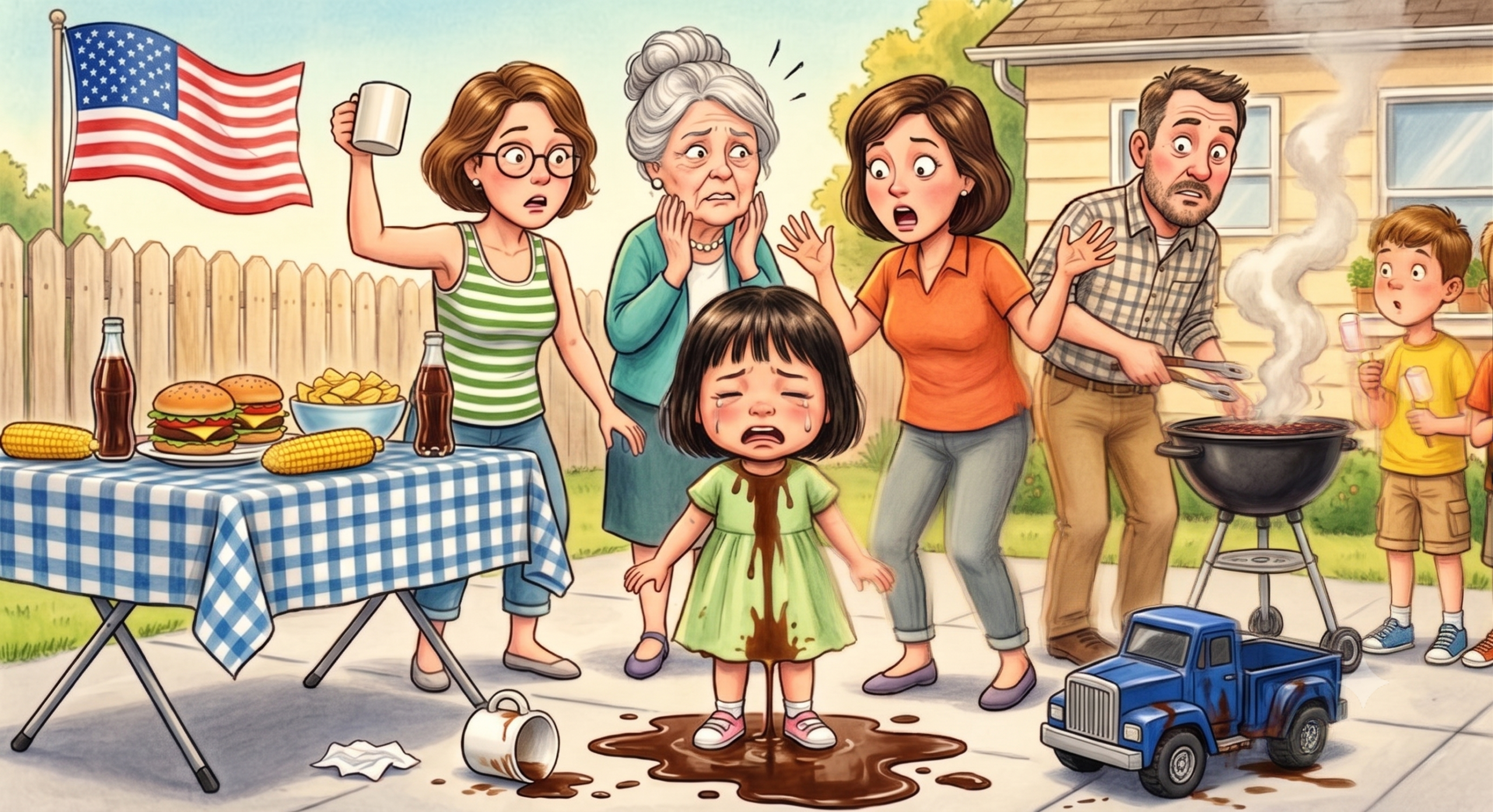
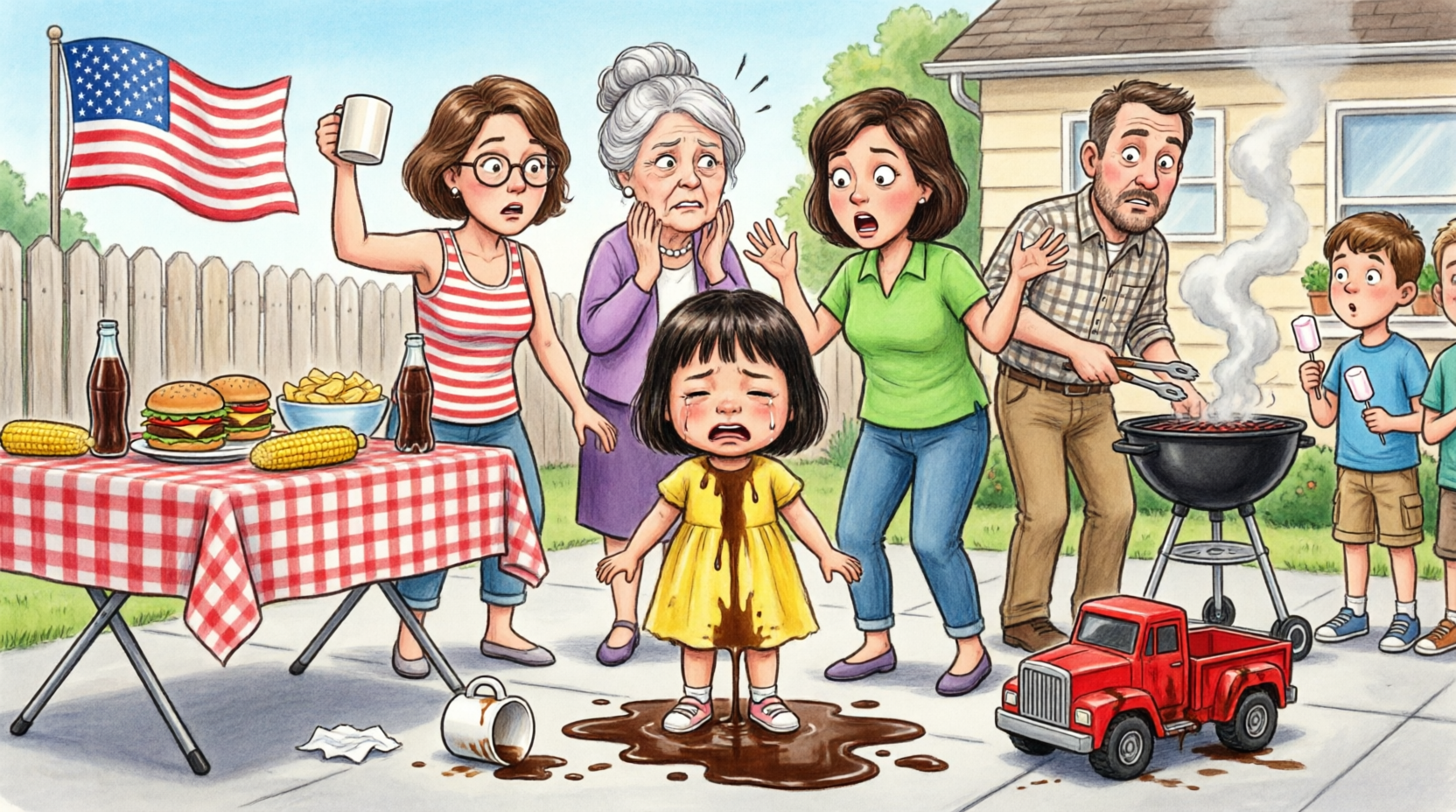
More Details
His Daughter Called On Easter. What He Found Ended The Laughing-yilux
Jul 13, 2026

His Daughter Called On Easter. What He Found Ended The Laughing-yilux

My Easter Sunday did not begin like a day that would change my daughter’s life.

It began with black coffee cooling beside the sink.

It began with dish soap on my fingers and the smell of ham glaze, lemon cleaner, and quiet rooms after church.
Outside, the neighborhood had that soft holiday stillness, the kind where the streets feel half-empty because everyone is already at somebody else’s table.
I remember the light on the kitchen floor.
I remember the faucet running.
I remember thinking I should call Lily later and ask if she had eaten enough, because fathers do that even when their daughters are grown and married.
Then my phone buzzed at 2:13 p.m.
Her name on the screen should have made me smile.
Instead, something in my chest tightened before I even answered.
“Dad…” Lily whispered.
That one word was enough.
Parents know the difference between a bad day and danger.
“Please come get me,” she said.
I turned off the faucet and stood there with water dripping from my hands onto the linoleum.
Her breathing sounded wet and ragged, like she was trying not to cry because crying would make someone angrier.
“Lily, where are you hurt?” I asked.
“He hit me again,” she said.

Then I heard a scream.
Not a movie scream.
Not clean.
A real one, cut short by a hard thud and the scrape of a phone hitting the floor.
Somewhere near her, classical music kept playing.

Behind that music, children were laughing.

That was the part that made my blood go cold.

Violence sounds different when it happens beside normal things.

A holiday song.

A serving tray.

A child asking where the blue egg went.

Lily had called me on hard days since she was small.

At nineteen, she called from the shoulder of the road after a flat tire, embarrassed because she knew how to change it but her hands were shaking too badly to hold the wrench.

In college, she called from a dorm hallway when a panic attack convinced her she was dying.

When Richard proposed, she called me after midnight and said she was happy.

I wanted to believe her.

But her laugh came half a second late.

That half second stayed with me longer than the engagement party, longer than the wedding toast, longer than the photographs where Richard held her waist like he was presenting something expensive.

I shook his hand anyway.

I gave him my blessing.

I told myself my daughter was grown and had the right to choose a life I did not fully understand.

That is how men like Richard get in.

They do not kick the door down at first.

They ask to be trusted by the person who should have known better.

Twenty minutes after Lily’s call, my old pickup slammed into park outside Richard’s gated house.

White tents dotted the lawn.

Pastel shirts moved between trimmed hedges.

Children ran across the grass with wicker baskets while painted eggs clicked together like little pieces of a perfect picture.

Soft music came through hidden speakers.

The kind of music that tells rich people nothing ugly is allowed to happen here.

I took the marble steps two at a time.

Before I could ring the bell, Richard’s mother stepped into the doorway.

She had a mimosa in one hand and diamonds on the other.

Her church dress was smooth, pale, and expensive, and her perfume reached me before her words did.

“Go back to your lonely little house, Arthur,” she said.

Her voice carried the same polished cruelty I had heard at the wedding reception, when she smiled at Lily and corrected the way she held a champagne glass.

“Lily is resting,” she said.

“Don’t bring your drama here and ruin our family holiday.”

I said, “Move.”

She smiled like I had entertained her.

Then she shoved me.

Hard.

My heel scraped against the porch stone.

For one ugly second, the old training came back.

Not anger.

Geometry.

Distance, leverage, exits, pressure points, the exact amount of force needed to clear a doorway without making a scene.

I saw it all.

I did not touch her.

I pushed past.

The door swung inward, and the living room froze in separate pieces.

A woman near the buffet stopped with a deviled egg halfway to her mouth.

A man in a linen jacket lowered his champagne but did not set it down.

Someone’s fork clicked once against china.

Through the back windows, two children kept hunting Easter eggs on the patio because nobody had told them the inside of the house had become a crime scene.

Nobody stepped forward.

Nobody asked if Lily was breathing.

Nobody moved.

My daughter was curled on her side in the center of a spotless white rug.

Her cheek was swollen.

One eye had already started to darken.

Her lip was split.

Her hands were tucked tight against her ribs, the way small children make themselves smaller when they think being small might keep them safe.

A thin red line marked the rug beneath her mouth.

Standing over her was Richard.

He was adjusting his French cuffs.

That is what I remember most clearly.

Not panic.

Not shame.

Cuffs.

He had all the time in the world to make sure his shirt looked right while my daughter lay at his feet.

Richard was a real estate man.

He knew how to talk about foundations and property lines and opportunities before anyone else saw them.

He knew how to make older couples feel safe handing him their retirement money.

He knew how to stand at my dinner table and say, “I will take care of her, Arthur,” with a straight face.

I had believed he meant protection.

He had meant possession.

He poured himself a Scotch.

“Old man, calm down,” Richard said.

His smile had no fear in it.

“She’s clumsy. She tripped.”

I looked at Lily’s neck.

Four fingerprints.

One thumb mark.

“She tripped and left handprints on her own throat, Richard?” I asked.

His mother stepped in behind me and snapped, “Arthur, don’t be vulgar.”

As if the ugly thing in that room was my sentence.

At 2:36 p.m., I noticed the cracked phone under the edge of the sofa.

The screen was still glowing.

Still recording.

I saw the smear on Richard’s cuff.

I smelled Scotch on his breath.

I saw the rug, the body position, the witnesses, the open line of sight to the backyard.

Then I saw the local Chief of Police laughing beside the barbecue with a paper plate in his hand.

That changed the room.

Not because I had trusted the system completely.

I was too old for that kind of innocence.

But because Richard knew exactly who was outside, and he wanted me to know too.

It was a threat dressed as a holiday lunch.

I documented the room the way I had once documented places where smiling men lied for a living.

Exits.

Witnesses.

Victim condition.

Visible evidence.

Compromised authority.

Cracked phone.

Active recording.

Blood on cuff.

Thumb mark.

Chief in the backyard.

A father does not stop being a father because he learned other skills first.

He only learns which skills to bury until the day his child needs them.

Richard laughed so loudly two guests flinched.

“Let me explain how the world works to a simple retired old man like you,” he said.

His voice got louder because men like him always mistake volume for control.

“My family owns this town. The Chief is in my backyard right now, eating food I paid for. Go ahead. Call the cops. Let’s see who they put in handcuffs.”

The room got very quiet.

Even the people who had pretended not to see Lily seemed to understand they had just heard him say too much.

His mother lifted her mimosa and took one small sip.

Her hand shook.

I let the silence sit there.

Conventional law in that house had already been bought lunch.

That did not mean justice had left the county.

It meant Richard had only prepared for the kind of consequence he understood.

Money.

Influence.

A phone call to a friend.

A report that got misplaced.

He had never prepared for a man who knew how to stop reacting and start recording the battlefield.

I knelt beside Lily.

She flinched before she recognized me.

That flinch went through me harder than Richard’s threat.

It told me what she had been living with.

Not just one blow.

Not just one ruined holiday.

A life where footsteps, voices, and raised hands had taught her body to expect pain before comfort.

“Lily,” I said softly.

Her eyes found mine.

For a second, she looked like the little girl who used to run barefoot across my driveway with a scraped knee and a Popsicle melting down her wrist.

Then she was twenty-six again, married to a man who had made her afraid to ask for help.

Her fingers caught my sleeve with almost no strength.

“Dad,” she whispered, “don’t let him make me stay.”

“I won’t,” I said.

The words came out calm.

That surprised me.

Maybe because rage, real rage, does not always shout.

Sometimes it gets very still and starts making promises it intends to keep.

Richard took another sip of Scotch.

“You walk out with her, Arthur, and I’ll have you arrested for kidnapping my wife.”

My jaw locked.

I tasted copper where I had bitten the inside of my cheek.

“You are going to deeply, profoundly regret saying that,” I whispered.

He smiled again, but it was thinner now.

A guest near the buffet lowered her deviled egg onto a paper napkin as if that small movement could erase her from the moment.

A man by the windows looked toward the backyard, probably searching for the Chief.

Nobody helped.

That part matters.

People like to imagine that when something terrible happens in a room full of witnesses, the room becomes brave.

It often becomes furniture.

Still.

Polished.

Useless.

I slid one arm under Lily’s shoulders and the other beneath her knees.

She made a sound I will hear until I die.

I lifted her anyway.

Richard said something behind me, but I did not turn.

His mother shouted about disgrace.

That word almost made me laugh.

Disgrace was not an old pickup in the driveway.

Disgrace was a house full of people letting a woman bleed on a rug because the man who hurt her had money and a pool and a Chief of Police eating barbecue behind him.

I carried my daughter through the front door.

The Easter party pretended not to breathe.

Outside, the afternoon was warm and bright.

Painted eggs kept dropping into wicker baskets.

Pastel shells clicked together in the sunlight.

A little boy ran past me with green grass stains on his knees, then slowed when he saw Lily in my arms.

No child should have to learn that a holiday can have two worlds inside it.

One world hunts eggs.

The other counts bruises.

At my truck, I opened the passenger door and laid Lily across the seat as gently as I could.

She clutched my sleeve again.

“I’m here,” I told her.

Richard came down the steps behind us.

He was still talking.

Men like Richard talk when they are afraid silence might let the truth get louder.

“You have no idea what you’re doing,” he said.

His mother stood behind him with her drink, pale and furious.

Then the Chief came around from the backyard.

He still had a paper plate in his hand.

That detail told me everything I needed to know.

He had heard raised voices.

He had seen me carry Lily out.

He had seen Richard following.

And he still had not put the plate down.

I reached beneath the dash.

The black case was exactly where I had left it fifteen years earlier.

My fingers knew the latch before my eyes found it.

Inside were three things Richard had never known existed.

A military-grade satellite phone.

An emergency authentication card.

A laminated contact sheet from the life I buried when I chose to become only Lily’s father.

I had put that life away because I wanted peace.

I wanted Saturday coffee, hardware store errands, Lily’s birthdays, oil changes in the driveway, and the ordinary privilege of being nobody important.

But some lives do not disappear.

They wait.

The satellite phone felt heavier than it should have.

Lily watched me through one swollen eye.

“Dad?” she whispered.

“It’s all right,” I said.

Richard laughed once, sharp and uncertain.

“What is that supposed to be?”

I did not answer him.

The encrypted line clicked alive.

For one second, all I heard was the small electric hiss of a connection crossing distance no local favor could interrupt.

Then I said, “We have a Code Black. Family extraction. Local authority compromised. Civilian injured.”

The Chief stopped walking.

Richard’s mother lowered her mimosa.

Richard looked from the phone to my face, and for the first time since I had entered that house, he seemed unsure what kind of man he was talking to.

The calmest voice from my old life answered with one question.

“Is the compromised authority on site?”

I looked at the Chief in the driveway.

I looked at Richard beside the marble steps.

I looked at Lily, shaking on the passenger seat, still alive, still reaching for my sleeve like it was the last safe thing in the world.

“Yes,” I said.

The voice did not raise.

It did not rush.

It simply said, “Then do not speak to him. Do not hand over the victim. Keep the recording secure.”

Richard’s face changed.

Not much.

Just enough.

The smugness drained first from the corners of his mouth, then from his eyes.

He had been prepared for a lonely father.

He had been prepared for a local argument.

He had been prepared for a police report written by a friend after dessert.

He had not prepared for the life I had buried.

He had not prepared for the phone under his own sofa.

He had not prepared for Lily to call me before he could teach her to stop asking for help.

The old pickup smelled like vinyl, dust, and my daughter’s fear.

The Easter lawn behind us still looked perfect.

White tents.

Trimmed hedges.

Children laughing.

A small American flag fluttering on the porch rail like any other house on any other Sunday.

That was the thing about perfect worlds.

From the street, they could look untouched.

Inside, they could be rotten down to the studs.

I kept one hand on Lily and one hand on the phone.

Richard opened his mouth.

No sound came out.

For the first time that day, Richard stopped laughing.

And I understood something then that I should have understood two years earlier, when Lily’s laugh came half a second late.

Trust is not proven by what a man promises across a dinner table.

It is proven by what he does when nobody powerful is watching.

That day, everybody had been watching.

Almost nobody had moved.

So I moved.

I took my daughter out of that house.

I kept the recording.

I kept the phone line open.

And I chose the only title that had ever mattered more than the life I buried.

Father.

More Details
“Don’t Call Dad,” she whispered as the scan revealed something inside of her. 21
Jul 13, 2026

“Don’t Call Dad,” she whispered as the scan revealed something inside of her. 21

My 15-year-old daughter had been complaining of nausea and stomach pain for weeks.

My husband said, “She’s just faking it.

Don’t waste time or money.” I took her to the hospital in secret.

The doctor looked at the image and whispered, “There is something inside her…” I couldn’t do anything but scream.

I knew something was wrong long before the hospital confirmed it.

Mothers learn the language of small changes.

We hear the difference between a tired sigh and a frightened one.

We notice when a laugh disappears from the house and does not come back.

Hailey had always been bright in ways that filled a room without trying.

She was the girl who set alarms for sunrise soccer practice and still had energy afterward to take photos of dew on the grass.

She talked with her hands.


She stole fries off my plate and called it a victimless crime.

She edited pictures late into the night and pinned printed snapshots on the wall above her desk.

Then, over a few weeks, she began shrinking right in front of me.

She said her stomach hurt.

Then she said she felt nauseated all the time.

Then came the dizziness, the exhaustion, and a strange heaviness in her body that made her move like she was carrying something invisible.

She stopped asking to see friends.

She stopped finishing meals.

She slept with her curtains closed and her phone face down.

Even her voice changed.

Everything in her sounded muted, like life had turned down its own volume.

Mark dismissed it from the start.

“She’s fifteen,” he said one evening, scrolling on his phone while I stood at the kitchen counter, barely touching my own dinner.

“Teenagers collect symptoms like hobbies.

You take her to one doctor, and suddenly we’ll be paying for ten.

She’s dramatic, Laura.

Let it pass.”

I wanted to argue, but Mark had a way of flattening every concern with a few clipped sentences.

He made worry sound irrational and care sound expensive.

If I pushed, he accused me of making Hailey weak.

If I insisted, he called it panic.

He never raised his voice much.

He did not need to.

He could freeze a room with calm contempt.

Hailey heard it all.

Every time I asked her in front of him how she was feeling, she retreated further.

She would pull her hoodie over her head and say, “I’m fine.” Once, I saw her flinch before he even answered for her.

Then I found the hair in the bathroom sink.

It was not a few strands.

It was a small tangled clump, the kind that makes your stomach drop before your brain can explain why.

I called her name.

She appeared in the doorway with her hood up, one hand half-hidden in the sleeve.

“Did you brush too hard?” I asked.

“I guess,” she said quickly.

She did not meet my eyes.

That night I told Mark I was taking her to a doctor whether he approved or not.

He actually laughed.

“You are feeding this,” he said.

“The more attention you give her, the worse she’ll get.

She wants a reaction.

Stop giving her one.”


I looked toward the hallway and saw Hailey standing there for just a second before she disappeared back into her room.

should have followed her right then.

I should have walked out of the house with her that night.

Instead, I stayed up listening to every creak in the floorboards, every rustle behind her bedroom door, and hating myself for hesitating.

After midnight, I opened her door and found her curled into herself, gripping her stomach with both arms.

Her face was nearly gray.

Sweat clung to her hairline.

Her pillow was wet with tears.

“Mom,” she whispered, “please make it stop.”

The next afternoon, while Mark was at work, I took her to St.

Helena Medical Center.

The waiting room was bright in that aggressive hospital way that makes everything feel more exposed.

Nurses took blood.

A resident asked gentle questions.

An ultrasound technician rolled cold gel over Hailey’s stomach and went silent halfway through.

I saw her expression change.

She moved the wand again and again, then left to get the doctor.

Dr.

Adler came in with a folder tucked against his chest.

He lowered his voice and said the image showed something inside Hailey’s stomach.

I felt my lungs fail for a second.

When I asked what that meant, he said he needed a CT scan right away and told me, very carefully, that this was serious.

I screamed.

I did not mean to.

The sound just tore out of me.

A nurse rushed to the door.

Hailey grabbed my wrist with freezing fingers and whispered, “Mom…

please don’t call Dad.”

Those were the words that changed everything.

The CT scan moved quickly after that.

Within an hour, Dr.

Adler was back.

He shut the door and pulled a stool close to us.

“This is not a pregnancy,” he said, as if he knew that fear had already crossed my mind.

“It is a large mass in her stomach.

Based on the shape and density, I believe it’s a trichobezoar.” He paused when my face told him I had no idea what that was.

“A compacted mass of swallowed hair.

In Hailey’s case, it appears to extend beyond the stomach into the small intestine.

We sometimes call this Rapunzel syndrome.

It’s rare, and it can become life-threatening.”

I turned to my daughter so fast I nearly fell out of my chair.

Hailey was crying before I could even speak.

Dr.

Adler asked gently, “Have you been pulling your hair out, Hailey? Or swallowing it?”

With shaking hands, she pushed her hood back.

I saw the patches then.

A thin place near her temple.

Broken strands near her crown.

Areas she had arranged carefully every morning and hidden every afternoon.

My stomach twisted with a different kind of pain, the kind that comes when you realize your child has been suffering in a language you failed to understand.

“We need surgery tonight,” Dr.

Adler said.

“The mass is too large to pass on its own, and it’s already causing significant obstruction.

If we wait much longer, we risk a perforation or a full blockage.”

The room blurred around me.

Consent forms appeared.

Nurses explained anesthesia.

Someone attached a bracelet to Hailey’s wrist.

Someone else asked about allergies.

I answered automatically, like a person speaking from underwater.

Then Hailey clutched my hand and said, very softly, “He knew.”

I bent closer.

“What do you mean?”

Her mouth trembled.

“Dad saw

me once.

Months ago.

I was in the bathroom.

He told me if I ever told anyone, they would think I was crazy.

He said I was doing it for attention.

He said if I made you spend money on doctors, he’d never forgive me.”

For a second I could not process the sentence.

It did not fit into the shape of the man I had been trying to defend in my own head for years.

Then it fit too well.

The nurse took Hailey toward pre-op.

I kissed her forehead and promised I would be there when she woke up.

She looked terrified, but beneath that terror was something else: relief.

It hit me with brutal force that my daughter felt safer going into surgery than going home and facing her father.

I was in the waiting room signing one last form when Mark arrived.

The hospital had called the emergency contact listed on Hailey’s chart.

He came in angry, not scared.

His tie was loosened from work, his jaw clenched, his eyes already looking for someone to blame.

“You took her here behind my back?” he demanded.

“She needs emergency surgery,” I said.

He stared at me.

“For what?”

I heard how absurd the answer would sound before I said it.

“They found a mass made of swallowed hair.

It’s blocking her stomach.”

For the first time, he looked unsettled.

But it lasted only a second.

“So she did this to herself,” he said.

Those six words split something open in me.

Not Is she okay.

Not What can I do.

Not How did we miss this.

So she did this to herself.

I looked at him and saw, all at once, the structure of the last few years.

The way Hailey always went silent after he criticized her.

The way she hid when he was in a bad mood.

The way he dismissed pain, sadness, fear, and need as weakness.

The way I had mistaken emotional cruelty for strictness because it arrived in such controlled packaging.

The surgery lasted a little over three hours.

Those were the longest three hours of my life.

Every time the waiting room doors opened, I stopped breathing.

Mark paced for a while, then sat across from me in brittle silence, as if this were an inconvenience that had happened to him.

Dr.

Adler finally came out still wearing a cap and mask around his neck.

He looked tired, but relieved.

“She did well,” he said.

“We removed the mass successfully.

It was large and extended from the stomach into the intestine, exactly as the scan suggested.

Another week or two, and this could have been far worse.”

I sat down because my legs would not hold me.

Mark asked only one question.

“How long will she be in the hospital?”

Dr.

Adler’s expression changed almost imperceptibly.

He answered him politely, then turned back to me and explained the recovery process, the need for therapy, the risk of recurrence if the underlying behavior was not treated.

The next morning, a child psychologist named Dr.

Nguyen came to Hailey’s room.

She spoke with the kind of calm that makes truth easier to touch.

She explained trichotillomania and trichophagia in plain language: hair-pulling can become a response to anxiety, shame, or overwhelming stress; swallowing

the hair can happen automatically, almost without awareness, especially when the behavior becomes compulsive.

Kids hide it because they are embarrassed.

Adults miss it because they do not know what they are looking at.

Then she asked if she could speak to Hailey alone for a few minutes.

When she came back out, she said gently, “Your daughter has been living under a lot of fear.

She needs medical recovery, but she also needs emotional safety.

Right now, those two things are connected.”

I sat beside Hailey’s bed after that, holding a cup of coffee gone cold, and asked her to tell me everything.

At first she could not.

She cried every time she started.

So I told her we had time.

I told her I was not leaving.

I told her nothing she said would make me love her less.

Little by little, the truth came out.

It had started almost a year earlier, after a bad stretch at school and a disappointing soccer season.

Mark began talking to her the way some people sharpen knives: slowly, precisely, leaving marks you cannot show anyone.

He called her lazy when she was tired.

He called her dramatic when she cried.

He mocked her for needing rest, for needing help, for getting overwhelmed.

If she forgot something, he said she was careless.

If she got quiet, he said she was manipulative.

If I defended her, he said I was babying her.

At first, she pulled at her hair only during panic attacks.

Then while doing homework.

Then in bed at night after he had lectured her.

She twisted the strands around her fingers, chewed the ends, swallowed without thinking.

The habit became secret, then automatic, then impossible to stop.

One night he caught her in the bathroom with hair in the sink.

Instead of asking if she needed help, he stepped into the doorway and told her she was disgusting.

He said if anyone found out, they would lock her in a psychiatric ward.

He said I would be humiliated.

He said if she cost the family money over something this stupid, she could forget college, forget soccer, forget everything.

So she hid it better.

She wore hoodies.

She changed the part in her hair.

She cleaned the sink.

She said she was fine.

And when the stomach pain started, she understood before I did that the thing hurting her had become physical.

“I wanted to tell you,” she said through tears.

“But every time I tried, I heard his voice first.”

No sentence has ever broken me more completely.

Mark came to the hospital room that afternoon with flowers from the gift shop, as if props could rebuild what his words had destroyed.

Hailey went rigid the second he stepped inside.

“You scared everyone,” he said, trying for gentle and missing by a mile.

“Let’s not turn this into something bigger than it is.”

I stood before I even realized I was moving.

“Stop talking,” I said.

He stared at me.

“Excuse me?”

But Hailey spoke first.

Her voice shook, yet she did not look away from him.

“I wasn’t faking,” she said.

“I was scared of you.”

The silence that followed felt like a wall collapsing.

Mark scoffed, then saw from my face that there would be no smoothing

this over, no private discussion later, no return to normal.

He tried to say he had only been pushing her to be strong.

He said kids today were fragile.

He said everyone was blaming him for a medical issue.

I called the nurse.

When she came in, I said, very clearly, “I do not want him in this room.”

He looked at me as though I had betrayed him.

Maybe I had.

But not in the way he meant.

I had betrayed the version of my life where I kept translating cruelty into discipline because admitting the truth would cost too much.

Hailey was discharged four days later.

She did not come home to Mark.

We went to my sister’s house first, then to a short-term rental across town.

Dr.

Nguyen helped us arrange regular therapy.

A nutritionist guided Hailey through eating again without fear.

Her incision healed faster than her trust, but both began to close with time.

I filed for divorce within two weeks.

Mark sent messages that moved through every possible shape of denial.

First anger.

Then blame.

Then explanation.

Then a version of apology that never quite stopped protecting him.

He said he had been under stress.

He said he never imagined words could do this.

He said he had only wanted Hailey to toughen up.

I did not answer most of them.

By winter, the divorce was final.

Hailey kept going to therapy.

She learned what anxiety feels like before it turns into compulsion.

She learned replacement behaviors, grounding exercises, and how to name fear before it swallows the room.

Her hair grew back slowly.

The first day she left the house without her hood up, I had to lock myself in the bathroom for a minute because I started crying too hard to breathe.

She did not go back to soccer right away.

Instead, she picked up her camera again.

One Saturday morning, months after the surgery, she asked me to drive her to the field near our old neighborhood at sunrise.

The grass was silver with dew.

The sky was pink at the edges.

She stepped out with her camera, lifted it to her face, and for the first time in a long while, her posture looked light again, like she was no longer bracing for impact.

She took a picture of the sun breaking through low clouds and smiled when she checked the screen.

“This one feels real,” she said.

So much of our life before had not.

The surgeons removed the thing inside her in a single night.

The other thing took longer.

Shame does not come out through an incision.

Fear does not vanish because a doctor gives it a name.

It lingers in doorways, in tones of voice, in the instinct to apologize for pain before anyone has even questioned it.

I still think about the first red flag I explained away and the cost of every silence that followed.

People ask whether I will ever forgive Mark.

I do not know if forgiveness belongs in a story like this.

I only know the scan found a mass inside my daughter, but the most dangerous thing in our home had never appeared on any image at all.

THE END

More Details
My Husband Thought I Was Just the “Steady Wife”… Until He Realized I Had Been Tracking Every Dollar He Disrespected.
Jul 13, 2026

My Husband Thought I Was Just the “Steady Wife”… Until He Realized I Had Been Tracking Every Dollar He Disrespected.

My husband said it in the car like he had been waiting years to hear himself sound that powerful.

Jason Bennett had one hand on the steering wheel and the other tugging loose the knot of his tie, the same deep blue tie I had bought him two Christmases earlier because he said every man in sales needed one tie that made him look “decisive.” He was still flushed from the promotion dinner, still smelling like steakhouse smoke, expensive cologne, bourbon, and victory. The glow from the dashboard cut across his jaw, making him look sharper than he was, like a man in an advertisement for ambition.

We were driving north through Atlanta, past the blurred white and red lights of the freeway, while our four-year-old daughter Ellie slept in the back seat with her head tilted against the car seat and one small hand curled around the stuffed rabbit she refused to go anywhere without. The city rolled by in gold signs and glass towers and late-night brake lights. Somewhere behind us, at the steakhouse where Jason’s new regional sales director title had been toasted over ribeyes and old-fashioneds, people were still telling him he deserved it.

He believed them.

He believed them so completely that by the time we pulled onto I-75, he had already started rewriting our life.

“The freeloading ends today,” he said again, as if the first time had tasted so good he wanted another bite.

I turned my head slowly from the passenger window. “Excuse me?”

Jason laughed under his breath, not because anything was funny, but because he had recently developed the habit of laughing before saying things he knew were cruel. It gave him a kind of preloaded defense. If I reacted, he could say I was too sensitive. If I stayed quiet, he could claim he was joking. If I cried, he could tell me I was proving his point.

“You heard me, Nora,” he said. “From now on, we’re doing separate bank accounts.”

I stared at him.

“No more shared money,” he continued. “No more automatic access. No more me funding everything while you coast.”

The freeway lights slid over his face. Bright. Dark. Bright. Dark.

We had been married six years.

I was thirty-three years old, a registered nurse at Piedmont Atlanta Hospital, the kind of nurse who worked twelve-hour shifts that were almost never only twelve hours. I had held pressure on wounds while families prayed in hallways. I had helped frightened old men remember how to breathe after surgery. I had cleaned vomit off shoes that were not mine and blood off floors I would never mention at dinner. I had learned to eat granola bars standing up and drink coffee gone cold because someone’s mother needed one more blanket, one more explanation, one more human being to look her in the eye and say, “I’m here.”

Then I came home and became the other kind of invisible.

The woman who knew when Ellie’s preschool forms were due. The woman who noticed the milk was low, the laundry was souring in the washer, the dog needed flea medication, the mortgage autopay had cleared, the dishwasher was making a grinding noise, the pediatrician had left a voicemail, Jason’s dry cleaning had to be picked up before his quarterly meeting. I packed lunches. I bought birthday gifts for nieces whose mothers barely thanked me. I folded laundry at midnight. I wrote grocery lists in the notes app on my phone between patient rooms.

Jason called that “being good at home stuff.”

I called it my second unpaid job.

Now he sat beside me, newly promoted and drunk on applause, telling me that he was tired of carrying me.

“I’m not funding everything anymore,” he said. “I’ve been thinking about this for a while.”

That was the first honest thing he had said all night.

He had been thinking about it. I had felt it building for months, like pressure behind a locked door. The promotion had not created the cruelty. It had merely given it permission to speak.

Jason’s company had been dangling the regional sales director position in front of him since January. By March, he began using phrases that sounded borrowed from podcasts hosted by men who talked too loudly into microphones. Financial discipline. High-value habits. Dead weight. Lifestyle leakage. Accountability. He used these words at the kitchen island while I packed Ellie’s lunch. He used them while sitting in the recliner watching golf with one hand down a bag of chips. He used them while I stood at the stove after coming home from a shift where one of my patients had died before his daughter could make it from Chattanooga.

At first, I thought he was stressed.

Then I realized he was rehearsing.

He wanted to become the kind of man who could say something ugly and call it leadership.

The promotion dinner had been held at a dark-paneled steakhouse in Buckhead where the hostess had cheekbones like glass and the menus did not list prices on the specials. Jason’s boss, Mitchell Grant, raised a glass and talked about drive, grit, numbers, leadership presence. The other men at the table nodded at Jason as if he had pulled himself out of a burning building instead of beating two other sales managers for a role with a bigger territory and a cleaner title. Their wives smiled politely. One asked me whether nursing was “emotionally rewarding,” the way people ask when they mean underpaid but useful.

Jason told the table that my job kept me busy, but “the real stress” had been on him these past few years.

I had smiled.

I had learned over time that marriage can train your face into obedience before your heart realizes what is happening.

Now, in the car, he was finally saying the rest.

“We’ll split things fairly,” he said. “I’ll handle my stuff. You handle yours. No more assuming my money is just household money.”

My mouth went dry.

In the back seat, Ellie shifted and sighed in her sleep.

I looked at her first. Not at Jason. Her little cheeks were pink from sleeping in the restaurant booth while adults clapped too loudly. A strand of hair stuck to her forehead. Her rabbit’s ear was pressed under her chin. She had no idea her father had chosen the drive home from his promotion dinner to declare her mother a burden.

Jason wanted a fight.

I could feel it as clearly as I could feel the seat belt across my chest. It was in the sideways glance he gave me, the small smile waiting for panic, the lifted edge of his mouth when he imagined me scrambling. He expected tears, outrage, pleading. He expected me to say, “But Jason, how will we manage?” He expected me to remind him that we were a team so he could tell me teams still needed standards. He expected to be the calm one. The reasonable one. The man setting boundaries with a wife who had gotten too comfortable.

I gave him nothing.

“Okay,” I said.

Jason blinked. “Okay?”

“Separate accounts,” I repeated calmly. “We can do that.”

His smile spread slowly, like he had won something. “Good. Finally.”

He leaned back into the driver’s seat, satisfied.

I turned toward the window again and watched Atlanta streak past.

Jason thought separate accounts meant freedom.

He did not understand the math of our life.

That was the part that would undo him.

At home, he pulled into the driveway of our brick two-story house in Marietta with the same exaggerated control he used when he wanted me to notice he was displeased. The neighborhood was dark except for porch lights and the soft blue flicker of televisions behind curtains. Our house looked peaceful from the outside: black shutters, white trim, hydrangeas by the walkway, a little tricycle tipped over near the garage because Ellie had abandoned it there before we left for dinner.

I carried Ellie inside while Jason grabbed nothing.

That was normal. He had always been the kind of father who loved the idea of holding his daughter in photographs but somehow failed to notice when she needed to be lifted from the car, changed out of a dress, given water, tucked in, kissed twice, then once more because the first two “didn’t count.”

I carried her upstairs, took off her shoes, changed her into pajamas with little yellow moons on them, and tucked her into bed. She opened her eyes for half a second.

“Mommy?”

“I’m here, baby.”

“Daddy got a clapping dinner?”

I almost laughed. “Yes. Daddy got a clapping dinner.”

“Did you get claps?”

I smoothed her hair back. “Not tonight.”

She yawned. “I clap for you.”

Then she patted her hands together weakly, eyes already closing.

That tiny, sleepy applause nearly broke me.

I stood beside her bed longer than necessary, listening to her breathing settle. Across the hall, Jason turned on the shower. A few minutes later, I heard him singing under his breath.

By the time I went downstairs, he had already left his shoes in the middle of the bedroom, his belt on the floor, and his dress shirt slung over the chair instead of the hamper. His phone buzzed on the nightstand again and again with congratulations. He emerged from the bathroom in sweatpants, hair damp, face relaxed in the steam of his own importance.

“You okay?” he asked, though the question held no concern. It was bait.

“I’m fine.”

He gave me a look that said he did not believe me and was pleased by that. “This is going to be good for us, Nora.”

“Maybe.”

“It’ll make things clearer.”

“Yes,” I said. “I think it will.”

He heard agreement.

I heard prophecy.

He climbed into bed with his phone, scrolling through LinkedIn comments and texts from coworkers and friends. I watched him type thank-yous with the focused tenderness he had not shown me in months. Within fifteen minutes, he was asleep, one hand still resting near the glowing screen.

I did not sleep.

I went downstairs.

The kitchen was dark except for the light above the stove. It cast a yellow pool over the counters, the sink, the school artwork magneted to the refrigerator, the stack of mail I had sorted after my shift the day before. There were still two coffee mugs in the sink because I had not gotten to them. Jason’s travel mug sat on the counter, stained ring beneath it. Ellie’s backpack hung from a chair.

I opened my laptop at the kitchen table.

The house was quiet except for the hum of the refrigerator and the occasional creak of settling wood. Outside, somewhere down the block, a dog barked twice and stopped.

I logged into our bank account.

The joint account stared back at me in neat columns of numbers that told the truth better than either of us had.

For most of the last three years, my paycheck had been the stable one. Jason’s commission checks came in bursts—fat deposits after good months, thin stretches after slow ones, always explained with phrases like pipeline timing, territory transition, client delays, market softness. During the good months, Jason spent freely because he had “earned it.” During the slow months, the house did not stop needing money.

The mortgage came out whether Jason had closed a deal or not.

So did the power bill.

The water bill.

The internet.

The phones.

The insurance.

Ellie’s daycare.

Groceries.

Prescriptions.

School fees.

Car insurance.

Dental copays.

Birthday parties.

Laundry detergent.

Gas.

Dog food.

The invisible machinery of a family kept running because I kept feeding it.

Jason called that “help.”

I called it carrying.

I clicked through eighteen months of statements. I did not need to do it because I already knew, but knowing in your bones and proving on paper are different kinds of power. I downloaded transactions. I sorted categories. I opened a spreadsheet and began organizing our life the way I had organized medication schedules, shift rotations, discharge instructions, and everything else people assumed women simply remembered.

Mortgage: $2,180.

Electric, water, gas: average $430.

Internet and phones: $210.

Childcare: $1,150.

Groceries: average $900, sometimes more when prices climbed and Ellie decided strawberries were the only acceptable fruit.

Health insurance premiums through my hospital plan: $640.

Car insurance: $190.

School supplies, clothes, medications, copays, birthday gifts, household repairs: average $300 or more.

Total: a little over $6,000 every month before emergencies, holidays, or Jason’s spontaneous purchases disguised as investments in his career.

Then I pulled Jason’s contributions.

Transfers to the joint account: irregular, average $1,200 a month over the last twelve months.

Payments made directly: his truck.

That truck was a black Ford F-150 with leather seats, upgraded wheels, and a payment that made me feel faint the day he signed the paperwork. He had insisted he needed it for “client presence,” though his clients usually met him in conference rooms or on Zoom. He treated the truck like proof he had become someone. He washed it more often than he loaded the dishwasher.

Then there was Melanie.

Jason’s sister Melanie Bennett had been a recurring expense in our marriage, though she did not appear on any budget line. Her requests came through Venmo, Cash App, text messages, and guilt. Rent short. Car note. Just until payday. Emergency groceries. Phone bill. Kid’s field trip. Hair appointment framed as job interview prep. She was thirty-seven years old, worked when she felt like it, dated men with motorcycles and unresolved custody issues, and treated Jason like an ATM with childhood trauma.

In eighteen months, nearly $10,000 had gone from our joint account to Melanie.

I stared at the total for a long time.

$9,840.

Not including cash Jason had handed her.

Not including groceries I had bought when she came over and “shopped” from my pantry.

Not including Christmas gifts for her children that I purchased because Jason promised to handle them and then forgot on December 23rd.

I downloaded the Venmo records. Dates. Notes. Amounts. Some had emojis. A laughing face beside “rent short again.” A prayer hands emoji beside “promise I’ll pay back.” She almost never did.

At 2:13 a.m., I sat back in the kitchen chair and looked at the spreadsheet.

There was a strange calm inside me.

I had expected anger. I had expected grief. Instead, what I felt was clarity so clean it almost felt cold.

Jason had asked for separate accounts.

I would give him separate accounts.

Not revenge. Not theatrics. Not screaming. Just exactly what he claimed he wanted, stripped of the fantasy that my labor and my paycheck would continue cushioning his ego.

The next morning, I woke before six after less than three hours of sleep.

I made coffee. Packed Ellie’s lunch. Fed the dog. Signed a permission slip Jason had left under a pile of mail. Put scrubs in the wash. Wiped down the kitchen counters. Set Ellie’s little sneakers by the door.

Jason came downstairs at seven-thirty, yawning, wearing gym shorts and a T-shirt from a sales conference in Nashville.

“Morning,” he said, opening the refrigerator.

“Morning.”

He scanned the shelves. “We out of that protein yogurt?”

“It’s on the grocery list.”

He closed the door with a sigh meant to be heard. “Okay.”

Normally, I would have apologized, though I had no reason to. That morning, I did not.

He noticed the absence.

His eyes moved to me. “You’re quiet.”

“I’m drinking coffee.”

He smirked. “Still mad?”

“No.”

“Good.” He poured himself coffee and leaned against the counter. “Because I really think last night was a turning point. We’ve got to operate like adults.”

I looked at him over my mug. “Agreed.”

He seemed pleased, though a little disappointed not to find resistance.

Ellie came bouncing into the kitchen in mismatched socks, holding her rabbit by one ear.

“Daddy, clap dinner!”

Jason laughed and scooped her up. “That’s right, peanut. Daddy got promoted.”

“What’s promoted?”

“It means Daddy worked hard and got a bigger job.”

Ellie looked at me. “Mommy works hard.”

Jason hesitated just long enough for me to feel it.

“Mommy works hard too,” he said finally, kissing Ellie’s forehead.

Too.

As if my work were an add-on.

After preschool drop-off, I did not go straight home. I went to a branch of a bank where Jason and I had never held an account together. The woman who helped me had silver-framed glasses and a calm voice. She asked what kind of account I wanted.

“Checking and savings,” I said. “In my name only.”

She clicked through screens, asked for identification, printed forms, explained debit card timing, mobile access, routing numbers. I listened carefully. I had learned that freedom often begins as paperwork.

From the parking lot, I logged into my hospital employee portal and changed my direct deposit.

Then I drove home and moved through the rest of the financial machinery.

Autopays connected to my income were redirected. Mortgage from my new account. Utilities. Internet. Phones. Insurance. Childcare. Health plan deductions stayed where they were, through my paycheck. Grocery subscriptions were moved. I changed passwords Jason had never bothered to learn anyway. I set up a household expense tracker in my own system and created a recurring invoice template for Jason’s share.

I did not cancel anything Ellie depended on.

That mattered.

I was angry, but I was not reckless. I would not let my daughter’s daycare lapse to prove a point. I would not risk the mortgage. I would not turn our home into a battlefield where utilities became weapons. That was not who I was.

I simply stopped allowing Jason to confuse access with contribution.

The joint account remained open.

I left one automatic payment there.

Jason’s truck.

By Friday afternoon, I had printed everything.

A simple folder. Clean tabs. Bank statements. Transaction summaries. Household expenses. Jason’s average contributions. Melanie’s transfers. A proposed monthly split. A list of accounts updated. A final page with my written terms.

No insults.

No dramatic language.

Just numbers.

Numbers are useful because they do not care who feels like the hero.

Sunday was family dinner.

It had been scheduled before the promotion dinner, though scheduled was too generous a word. Melanie had texted Jason earlier in the week: Coming Sunday. Tell Nora to make that chicken. Jason had relayed it like a weather report. I had considered refusing, then decided Sunday might be useful.

Melanie arrived at five-thirty in a cloud of perfume and noise.

She wore tight white jeans, a bright red blouse, large hoop earrings, and bracelets that clattered when she moved. Her hair was freshly highlighted, her nails long and glossy. She carried no dish, no wine, no flowers. She entered our house like someone checking into a hotel where the staff knew her preferences.

“Baby girl!” she shouted, crouching as Ellie ran toward her.

Ellie hugged her because Ellie hugged nearly everyone. Melanie squeezed her dramatically, then stood and kissed Jason on the cheek.

“Mr. Big Promotion,” she said. “Look at you.”

Jason grinned. “Hey, Mel.”

She glanced at me and gave a nod so small it barely counted. “Nora.”

“Melanie.”

Her eyes swept the living room, the rug, the framed preschool art, the folded blanket on the couch, the basket of toys, the shoes by the door. She always scanned my house like she was looking for evidence that I had failed to deserve it.

“Smells good,” she said, walking toward the kitchen.

“You’re welcome,” I replied.

She either did not hear the edge or chose not to.

Dinner was roast chicken with lemon and rosemary, green beans, mashed potatoes, warm bread, and a salad Melanie did not touch. Ellie chattered about making a paper caterpillar at school. Jason seemed relaxed, newly expansive, like a king among subjects. He poured wine for himself and Melanie, then looked at me.

“You want some?”

“No, thank you.”

“Still doing early shift tomorrow?”

“Yes.”

Melanie rolled her eyes. “Hospitals. I don’t know how you do it.”

I smiled. “Most people don’t.”

She missed that too.

For a while, dinner looked ordinary.

That is one of the cruelest things about family conflict. It rarely begins with thunder. It begins with bread being passed, a child asking for more potatoes, someone laughing too loudly. The room seems normal until one sentence opens the floor.

Melanie lifted her wine glass and smirked at me.

“About time he stopped,” she said.

I paused with my fork halfway to my mouth. “Stopped what?”

She tilted her head toward Jason like they shared a private joke. “Stopped funding you.”

Jason did not correct her.

He did not look surprised.

That told me everything I needed to know. He had told her. Of course he had. He had taken our private conversation—if a declaration in a car after a promotion dinner could be called a conversation—and fed it to Melanie as proof of his new authority.

“You’ve had it easy,” Melanie continued, eyes cold and amused.

Ellie looked up from her potatoes.

My daughter’s eyes moved from Melanie to Jason to me. She was too young to understand the words, but children hear tone before they understand meaning. She knew something sharp had entered the room.

I reached over and brushed a crumb from her cheek.

“I do admit it,” I said softly.

Jason’s eyebrows lifted.

Melanie blinked, then smiled wider. “Well. There we go.”

I set my fork down gently.

“You’re right, Melanie.”

Jason leaned back in his chair, surprise turning to satisfaction.

Because he thought I was agreeing with them.

What I was actually doing was giving him one last calm moment before his new reality arrived.

Jason chuckled. “Finally.”

Melanie waved her fork. “See? Even Nora admits it. Jason’s been carrying this whole thing.”

I looked at my husband.

He was smiling.

Not awkwardly. Not apologetically. Not like a man embarrassed by his sister’s cruelty.

Smiling.

That smile did more damage than the words.

Because in marriage, there are moments when betrayal does not come from the person who attacks you. It comes from the person who sits beside you and lets it happen because the attack flatters him.

“Separate accounts are a great idea,” I said.

Melanie laughed. “Good for you, Jason. I told you. Women get comfortable.”

Jason lifted his glass. “To accountability.”

I picked up my water glass and touched it lightly to his.

“To accountability,” I echoed.

Then I stood.

Jason looked amused. “What are you doing?”

“Getting dessert.”

In the kitchen, I took the pie from the counter. Store-bought apple, warmed in the oven because I had worked too many hours that week to make one from scratch for a woman who thought gratitude was a tax. Beneath the pie plate sat the folder.

For a moment, my hand rested on it.

Not shaking.

I thought of all the nights I had sat alone at this same kitchen table paying bills while Jason slept. All the times I had transferred money from my savings because his commission was delayed. All the times I had told myself marriage was not supposed to be scorekeeping. All the times he had spent hundreds on golf weekends while I compared grocery prices and chose the cheaper laundry detergent. All the times Melanie had sent another request, and Jason had said, “She’s family,” as if I were not.

Then I picked up the pie and the folder.

I returned to the dining room.

Ellie clapped. “Pie!”

“Yes, baby. Pie.”

I set the pie in the center of the table. Then I slid the folder toward Jason.

He looked down, still smiling. “What’s that?”

“A breakdown,” I said. “Since we’re doing separate finances.”

Melanie leaned in with delight. “Oh, this should be good.”

Jason opened the folder.

The first page was simple.

Monthly Household Expenses — Previously Paid by Nora.

Mortgage: $2,180.

Electric, water, gas: $430.

Internet and phones: $210.

Childcare: $1,150.

Groceries: $900.

Health insurance: $640.

Car insurance: $190.

Miscellaneous school costs, clothes, medications, copays, household needs: $300.

Total: $6,000 plus.

Jason’s smile faltered slightly.

“Okay,” he said slowly. “And?”

I turned the page for him.

Jason’s Contributions — Average Last 12 Months.

Transfers to joint account: $1,200.

Payments made directly: truck only.

Below that, in clean bullet points:

Nora’s paycheck covered approximately 80 to 90 percent of household costs.

Jason’s commission spikes were spent primarily on personal expenses, leisure, and discretionary purchases.

Melanie Bennett’s Venmo requests paid from joint account: $9,840 in eighteen months.

Melanie’s head snapped up.

“Excuse me?”

Jason’s eyes widened. “That can’t be right.”

“It is,” I said. “Every transfer is printed in the back. Dates. Notes. Amounts.”

Melanie’s face flushed. “Why are you tracking me like some kind of criminal?”

“I tracked our household spending,” I said. “You appeared often.”

Jason flipped through pages too quickly, panic rising in the movement of his hands. “Why did you make this?”

“Because you said freeloading ends today,” I replied. “And I agree.”

His throat worked.

“Nora,” he said, voice lower now. “We’re married. It’s not freeloading if it’s family money.”

I smiled gently.

“You’re the one who wanted separate finances.”

“That’s not what I meant.”

“No,” I said. “It’s what you said.”

Melanie pushed back her chair. “Jason, tell her to stop.”

Jason did not tell me to stop.

He was too busy reading.

I reached into my pocket and placed two cards on the table.

One was the new debit card linked to my personal account.

The other was the joint account card.

“I opened a new account Friday,” I said. “My direct deposit now goes there.”

Jason stared at me. “You did what?”

“I rerouted my paycheck.”

“You can’t just—”

“My paycheck,” I said calmly. “My account.”

He blinked as if the concept offended him.

“I also moved every autopay I’ve been covering to my account and scheduled cancellations from the joint one where necessary. The mortgage, daycare, utilities, insurance, groceries, and phones are protected. I’m not risking Ellie’s stability. But you no longer have automatic access to the income that pays them.”

Melanie stood so fast her chair scraped the floor.

“So you’re trying to control him with money!”

I looked at her. “No. I’m removing your access.”

Her mouth fell open.

Jason’s face had gone pale under the dining room light. “Wait. What about the joint account balance?”

“What about it?”

“My promotion bonus goes there.”

I tilted my head. “Not anymore.”

The room went very still.

Even Ellie stopped moving her fork through the pie crust I had just placed on her plate.

Jason’s eyes narrowed. “What does that mean?”

“It means your bonus is not going into the joint account.”

“How would you know?”

“Because last week, when you asked me to handle your promotion paperwork, you signed the direct deposit update with the new account instructions attached.”

His face changed.

Confusion first.

Then recognition.

Then fear.

Then anger racing to cover fear.

Melanie’s voice rose. “You stole his money!”

“I didn’t steal anything,” I said. “He signed the authorization.”

Jason stood. “I didn’t authorize that.”

I took the final page from the folder and slid it across the table.

His signature sat at the bottom.

Not forged. Not copied. Not manipulated. His handwriting, bold and careless, the way he signed everything when he assumed I had already made sure the details would not inconvenience him.

“You asked me to print your onboarding documents for the promotion,” I said. “You signed without reading because you assumed I was your unpaid assistant.”

Jason stared at the paper like it had betrayed him.

“This is fraud,” he said.

“No,” I replied. “This is paperwork you didn’t respect until it stopped benefiting you.”

“Send it back.”

“After it deposits, we can discuss your required household contribution.”

“My required—Nora, that’s my bonus.”

“And this is our household.”

“I earned that.”

“I earned the income that has been paying the mortgage you sleep under.”

Melanie pointed a shaking finger at me. “You are unbelievable.”

I turned toward her. “Melanie, you have received almost ten thousand dollars from an account funded mostly by my labor. That ends tonight.”

Her face contorted. “After everything I’ve been through—”

“You’ve been through my bank account,” I said.

Ellie’s small voice cut through the room.

“Mommy… are we okay?”

My heart pinched so sharply I almost lost my composure.

I turned to her immediately. “We’re okay, baby.”

“Is Daddy mad?”

Jason looked at Ellie then, and something like shame flickered across his face. Not enough. But something.

“No, peanut,” he said, forcing his voice softer. “Daddy’s not mad.”

He was lying, but at least he was trying not to scare her.

I stood and lifted Ellie from her chair. “Why don’t we wash your hands and get ready for a movie upstairs?”

“But pie.”

“I’ll bring it.”

I carried her to the bathroom, helped her wash sticky fingers, then settled her in our bedroom with her pie on a small plate and a cartoon playing low on the television. She relaxed quickly, because children want to believe adults when adults say things are fine.

I stood in the doorway watching her for a moment.

Then I returned downstairs.

The dining room had become a different room.

Jason stood near the table, one hand on his hip, the other gripping his phone. Melanie paced near the window, whispering curses under her breath. The folder lay open like evidence at a trial.

Jason looked up. “Fix this.”

“No.”

His jaw tightened. “Nora.”

“You wanted separate finances. This is separation.”

“You tricked me.”

“You trusted me to manage paperwork you couldn’t be bothered to read.”

“That’s not the same thing.”

“No,” I said. “It’s the pattern.”

Melanie scoffed. “Oh, here we go. She has a speech.”

I looked at her, and for the first time that night, I let her see my exhaustion.

“No, Melanie. I don’t have a speech. I have six years of receipts.”

That shut her up for almost three seconds.

Jason stepped closer, lowering his voice like intimidation had a history of working here. Maybe it did. Maybe I had mistaken avoiding his moods for peace so many times that he thought my silence belonged to him.

“You think you’re smart, Nora?” he said. “You think you can outplay me?”

I met his eyes.

“I’m not playing. I’m done.”

His phone buzzed on the table.

He glanced down automatically. Then grabbed it.

I watched his face as he read.

His anger faltered.

His voice dropped. “The truck payment declined.”

I nodded. “The joint account is now funded by you. You spent what was left on Friday.”

“That was a golf weekend with clients.”

“And new clubs.”

“They were on sale.”

“They were eight hundred dollars.”

Melanie laughed, but it came out thin. “So what? He’ll transfer money.”

Jason did not answer.

Because the truth had arrived quietly and sat down among us.

His separate account was almost empty.

He had been spending like his promotion was already a bank balance instead of a promise on company letterhead. He had counted money before it arrived. He had assumed my paycheck would continue to soften every foolish choice.

I stood at the end of the table.

“Here’s what happens next,” I said. “You keep your separate account. I keep mine. Every month, you transfer three thousand dollars to cover your share of the household expenses. If you don’t, we meet with a mediator and put the arrangement in writing. If you still refuse, I’ll speak to an attorney and formalize a financial separation agreement.”

Jason’s face twisted. “You’re threatening divorce?”

“No. I’m creating boundaries.”

“Same thing.”

“It is only the same thing if you believe marriage requires me to be financially available for disrespect.”

He looked away.

“And Melanie,” I said, turning to her, “do not send another Venmo request to my husband that relies on money from this household. If he wants to help you from his own discretionary funds after meeting his obligations here, that is between you and him. But my paycheck is no longer your emergency plan.”

She sneered. “You think you’re better than me because you wear scrubs and pay bills?”

“No,” I said. “I think I’m done paying yours.”

She grabbed her purse.

Jason said, “Mel, wait.”

She rounded on him. “Are you kidding me? You’re going to let her talk to me like that?”

He opened his mouth, but nothing came out.

For once, he was standing between two women and could not use one as a shield against the other.

Melanie looked at me. “You’ll regret this.”

I almost smiled.

People say that when they have run out of leverage.

She stormed out, slamming the front door hard enough to rattle the glass.

The house went quiet.

Jason sat down slowly at the dining room table and stared at his phone. The folder remained open in front of him. Numbers. Dates. Proof. The unromantic skeleton of our marriage.

For a while, neither of us spoke.

Then he muttered, “I didn’t mean it.”

I stood across from him. “Mean what?”

“The freeloading comment.”

I waited.

“I was hyped,” he said. “Dinner, promotion, everybody congratulating me. Mitchell was talking about leadership. I just… I got carried away.”

I nodded once. “You meant it enough to say it out loud.”

His eyes lifted, glossy with frustration. “So what, you’re leaving me?”

It would have been easy to answer with drama. To say yes just to watch him panic. To say no just to keep the floor from opening. Instead, I told him the truth.

“I’m giving you a chance to be a partner,” I said. “For the first time. Not a dependent with an ego.”

His face flushed. “That’s unfair.”

“No. What’s unfair is calling me a freeloader while living inside a life my labor built.”

He looked down.

I picked up the folder and closed it.

“I’m going upstairs to put Ellie to bed properly. When I come back down, we can discuss the first transfer.”

“Nora.”

I paused.

His voice was smaller now. “What happened to us?”

I looked at him for a long moment.

“That’s what I’ve been wondering,” I said.

Then I went upstairs.

Ellie had fallen asleep sideways across our bed with pie crust crumbs on her pajama shirt and the cartoon still playing. I turned off the television, brushed crumbs from the blanket, and carried her to her room. She stirred when I tucked her in.

“Mommy?”

“I’m here.”

“Daddy got loud.”

“I know.”

“Are you sad?”

I sat beside her bed and held her little hand. “A little.”

She opened her eyes. “I clap for you again tomorrow.”

My throat tightened.

“Thank you, baby.”

She fell asleep holding my fingers.

I stayed there long after her breathing evened out.

Downstairs, Jason moved around the kitchen. A plate clinked. A chair scraped. The dishwasher opened and closed. That alone told me how badly I had scared him. Jason almost never loaded the dishwasher without being asked.

The next morning, he made coffee.

Badly.

He used too many grounds and spilled some on the counter, but he made it. When I came downstairs in scrubs, he was standing near the machine holding a mug like a peace offering.

“Coffee?” he asked.

I took it. “Thank you.”

He watched me sip.

“It’s strong,” I said.

“Yeah. I, uh, wasn’t sure how much.”

I did not say, You’ve lived here six years.

He looked tired. Not just sleepy. Tired in the way people look when the story they tell about themselves has begun to crack.

“I can transfer fifteen hundred today,” he said.

“Your share is three thousand.”

“I know. I don’t have three today.”

“That’s a problem.”

“I get paid Friday.”

“Then fifteen hundred today, fifteen hundred Friday.”

He nodded.

Progress, maybe.

Or survival.

There is a difference, and I was no longer interested in confusing them.

For the next three days, Jason behaved like a man trying to reverse a storm by straightening furniture. He took out the trash without announcing it. He packed Ellie’s backpack, incorrectly but earnestly. He asked what time I worked. He texted me a photo of the grocery list and asked whether we needed eggs. He transferred fifteen hundred dollars with a memo line that said household.

He also sulked.

Quietly, but not invisibly.

When he thought I was not looking, his mouth tightened. He checked his accounts often. He whispered on the phone in the garage once, and I knew it was Melanie before he came back inside because his shoulders were up near his ears.

I did not ask.

By Friday, the second fifteen hundred had not arrived.

I waited until six.

Then seven.

At eight-thirty, after Ellie was asleep and Jason was watching television with the remote in one hand and his phone in the other, I stood in the living room doorway.

“The transfer didn’t come.”

He did not look at me. “Cash flow is weird this week.”

“Your paycheck came in.”

“It’s not that simple.”

“It is.”

He muted the television and sighed loudly. “Nora, I had things pending. The truck issue caused fees. I had to cover some work expenses. I can’t just empty my account because you made a spreadsheet.”

“Household expenses are not optional.”

“I said I’ll get it to you.”

“When?”

“Soon.”

That word had carried too much weight in my marriage.

Soon, I’ll fix the garage shelf.

Soon, I’ll call daycare.

Soon, I’ll pay back the joint account.

Soon, I’ll talk to Melanie.

Soon, things will calm down.

Soon is where accountability goes to die.

I nodded. “Okay.”

He looked relieved, which told me he misunderstood.

On Monday morning, after preschool drop-off, I called a family law attorney named Rebecca Harlan whose office was in a brick building near Decatur Square. I had found her through a colleague at the hospital who once told me over vending machine coffee that the best lawyers were the ones who did not sound impressed by drama.

Rebecca did not sound impressed by drama.

She listened while I explained the separate accounts, the household expenses, the missed transfer, and the fact that I was not yet filing for divorce but needed boundaries enforceable enough to matter.

When I finished, she said, “You’re describing a postnuptial financial agreement or a formal separation of financial responsibilities. Whether he signs voluntarily is another question.”

“I expected that.”

“Do you feel unsafe at home?”

The question landed quietly but heavily.

“No,” I said after a moment. “Not physically.”

“Emotionally?”

I looked out the window at people walking past with coffee cups and laptop bags.

“I feel tired.”

“That’s not nothing.”

“I know.”

She explained options. Mediation. Documentation. Temporary agreements. Child-related expenses. Separate accounts. Debt responsibility. Household contributions. Legal limits. Risks. She asked about the direct deposit update, and I told her the truth: he signed the form, but he did not read it. Her silence afterward was long enough to make my stomach tighten.

“That may create conflict,” she said carefully.

“I know.”

“Do not move or redirect any additional funds belonging solely to him without explicit written clarity.”

“I won’t.”

“Good. Going forward, clean lines only.”

Clean lines.

I wrote that down.

By the time I left her office, I had a list of documents to gather, a plan for mediation, and a strange feeling in my chest that was either fear or oxygen.

Jason did not react well.

I told him that evening at the kitchen table after Ellie went to bed. I had printed Rebecca’s mediation referral and a proposed temporary household contribution agreement.

He stared at it.

“You went to a lawyer.”

“Yes.”

“Unbelievable.”

“You missed the transfer.”

“I told you cash flow was weird.”

“And I told you what would happen if you didn’t contribute.”

He pushed the paper away. “This is insane. Married people don’t invoice each other.”

“Married people also don’t call each other freeloaders after years of being subsidized.”

His jaw tightened. “So you’re never letting that go.”

“I’m not letting the pattern continue.”

He stood and paced to the sink, then back. “You know what Melanie said? She said you planned this. She said you’ve been waiting for a chance to humiliate me.”

“Melanie has received nearly ten thousand dollars from us. Her opinion is not neutral.”

“She’s my sister.”

“I’m your wife.”

He stopped.

The sentence hung between us.

For years, I had watched Jason treat those two loyalties as if mine were the flexible one. Melanie could demand. Melanie could cry. Melanie could accuse. Melanie could arrive empty-handed and leave with leftovers and money. I was expected to understand because she was family.

But what was I?

The woman who paid the mortgage?

The woman who made sure his daughter had shoes that fit?

The woman who smiled at promotion dinners while he told people he carried the stress?

Jason rubbed both hands over his face. “I don’t want a mediator.”

“Then make the transfer and sign a household agreement.”

“I don’t want to be treated like a tenant.”

“I didn’t want to be treated like an expense.”

He looked at me then, and for once, he had no immediate answer.

The next few weeks were not dramatic in the way people think marital turning points are dramatic.

There was no screaming in the driveway. No suitcase thrown from a balcony. No public meltdown in front of neighbors. Instead, there were emails from lawyers, bank notifications, tense conversations after Ellie fell asleep, and mornings where we passed each other in the kitchen like coworkers after a failed merger.

Jason paid the overdue amount, but not gracefully.

He made comments.

“Must be nice having everything controlled.”

“Should I ask permission before buying lunch?”

“I guess I’m just the bad guy now.”

Sometimes I answered. Sometimes I did not. I was learning that not every thrown hook deserved my mouth.

At work, I became quieter. My friend and fellow nurse, Denise Carter, noticed by the second week.

Denise was forty-five, divorced, sharp-eyed, and almost impossible to fool. She had the kind of calm that came from raising two sons, surviving one bad marriage, and working trauma long enough to know which complaints mattered.

We were restocking supplies after a brutal morning when she said, “You look like someone who either needs coffee or a shovel.”

I almost laughed. “Coffee.”

“Mm-hmm. Who are we burying?”

“No one yet.”

She stopped and looked at me.

That was all it took.

I told her the shorter version in the break room over microwaved soup neither of us wanted. The promotion dinner. The freeloading comment. The separate accounts. The spreadsheet. Melanie. The missed transfer. The lawyer.

Denise listened without interrupting.

When I finished, she stirred her soup and said, “Men love separate finances until they find out their wives were the infrastructure.”

I stared at her.

Then I laughed so hard I nearly cried.

She handed me a napkin. “I’m serious.”

“I know.”

“Is he mean often?”

I looked down.

Denise’s voice softened. “Nora.”

“He wasn’t always.”

“They never are every minute.”

“He can be good with Ellie.”

“That’s not the same as being good to you.”

I nodded, but the nod hurt.

At home, Jason began trying in uneven bursts.

Some days he seemed genuinely shaken. He would cook spaghetti and leave the kitchen looking like a minor disaster, then clean it without being asked. He would sit with Ellie and practice letters. He would ask how my shift went and actually listen for a minute or two.

Other days, resentment leaked out of him like gas from a cracked line.

He hated sending the monthly transfer.

He hated seeing the numbers.

He hated that his promotion bonus, once deposited, did not become proof of dominance. After legal advice, we documented what portion was his separate income and what portion would be applied toward overdue household contributions, shared debt, and a savings account for Ellie’s care. He called that “bureaucratic.” I called it clean.

Melanie hated everything.

She sent me a Venmo request for $600 two weeks after the dinner with the note: since you like receipts.

I declined it.

Then I blocked her.

She called Jason crying. Then yelling. Then crying again. For a few days, he was unbearable, pacing the house with his phone, saying things like, “She has nobody else,” and “You don’t understand how hard it’s been for her,” and “It’s just money.”

Finally, I said, “Then give her your golf clubs.”

He stared at me.

“What?”

“If it’s just money, sell the new clubs and send her that. Or skip lunches out for two months. Or cancel your sports package. Or use your discretionary account. Help your sister however you want after your obligations here are met.”

“That’s not fair.”

“Why?”

“Because I shouldn’t have to choose.”

I looked at him, and something in my face made him look away.

“You’ve been making me choose for years,” I said. “You just never had to see it.”

That night, he slept on the couch.

Not because I asked him to. Because his pride needed a room of its own.

Mediation happened in a beige office park in Sandy Springs with framed abstract art and a bowl of peppermints on the conference table. The mediator, a gray-haired woman named Linda Shaw, had a voice so neutral it could have cooled soup. Jason arrived in a navy blazer, as if dressing like a responsible man might help him become one.

I brought a binder.

Jason saw it and sighed.

Linda began by asking what we wanted.

Jason said, “I want my wife to stop treating me like I’m financially irresponsible.”

Linda wrote something down.

I said, “I want documented household contributions proportional to expenses, clear separation of discretionary spending, no use of joint funds for extended family without written agreement, and a shared savings plan for our daughter.”

Linda wrote longer.

Jason looked at me. “You sound like a contract.”

“I learned from receipts.”

The first session was ugly in quiet ways.

Jason tried to frame himself as a husband blindsided by a controlling wife. I let him talk. That was something I had learned from nursing too: people often reveal the wound by describing the wrong pain.

He said I “suddenly changed everything.”

I showed the years of uneven contributions.

He said I “made him look bad” in front of Melanie.

I showed Melanie’s transfers.

He said he had been under pressure before the promotion.

I said pressure did not create permission to degrade me.

Linda asked him whether he believed I had been freeloading.

Jason looked at the table.

“No,” he said finally.

It was the first time he had said it plainly.

Linda waited.

Jason swallowed. “No. She wasn’t freeloading.”

I stared at my hands because if I looked at him, I might cry, and I did not want my tears mistaken for surrender.

“Then why use that word?” Linda asked.

Jason rubbed his jaw.

“I don’t know.”

Linda said nothing.

Jason exhaled. “Because I wanted to feel like I was the one in control.”

There it was.

Not complete accountability. Not transformation. But a door opening.

Linda turned to me. “What do you need to hear from him?”

I looked at Jason.

“I need to hear that you understand our life was not being carried by you alone.”

His eyes met mine.

“I understand,” he said.

“No. Not like that.”

His face tightened, but he tried again.

“I understand that your paycheck has been paying most of our household expenses. I understand that you have been managing the bills, Ellie’s care, the house, and your job. I understand that I benefited from that while acting like I was the only one under pressure.”

The room went very quiet.

Linda wrote something down.

I nodded once.

It did not fix everything.

But truth, spoken clearly, has weight.

We left mediation with a temporary agreement.

Jason would transfer a fixed amount monthly based on documented household costs. Both of us would keep separate personal accounts. Shared expenses would be tracked through a household account requiring agreed contributions. No money would go to extended family from shared funds without written consent. Ellie’s expenses would be prioritized. Personal debts remained personal unless jointly agreed. We would revisit in six months.

Jason hated signing it.

But he signed.

When we got home, Ellie ran into the hallway holding a drawing.

“Mommy! Daddy! Look!”

It was a picture of three stick figures under a yellow sun. One had long brown hair. One had short brown hair. One was small with wild yellow scribbles around the head. Above them, she had asked her preschool teacher to write: My family.

Jason looked at it for a long time.

Then he crouched and hugged her.

I stood in the doorway watching, the signed agreement still in my bag.

People think boundaries destroy families.

Sometimes they are the only thing that gives a family any honest chance to survive.

Fall moved into Atlanta slowly that year.

The heat loosened its grip by degrees. Mornings grew cooler. Leaves collected along the curb. Ellie turned five in October and insisted on a butterfly birthday party with purple cupcakes and enough glitter to permanently alter our living room rug. Jason helped hang decorations. He paid for half the party without complaint. When Melanie texted him asking why she had not been invited to “her own niece’s birthday planning,” he showed me the message instead of hiding it.

“What do you want to do?” he asked.

“What do you want to do?” I replied.

He looked uncomfortable. “I want to invite her if she can behave.”

“And if she can’t?”

“Then she leaves.”

“Can you enforce that?”

He hesitated.

There was the work.

Not the words. Not the agreement. The work.

“I think so,” he said.

“That’s not enough.”

He nodded slowly. “Then no. Not this year.”

Melanie did not come.

Ellie barely noticed. She had preschool friends, cupcakes, balloons, and a butterfly crown. Jason looked sad for part of the afternoon, and I let him. His sadness was not mine to solve.

Later, after everyone left and Ellie fell asleep surrounded by new stuffed animals, Jason and I cleaned frosting off the kitchen floor.

“I miss who I thought Melanie was,” he said.

I rinsed a sponge. “Who was that?”

“My little sister who needed me.”

“That may be part of who she is.”

He looked at me. “But not all.”

“No.”

He nodded, eyes tired. “I think I liked being needed. It made me feel successful before I actually was.”

I leaned against the counter.

“That’s probably the most honest thing you’ve said in months.”

He gave a small, humorless laugh. “Therapy.”

“You’re going?”

He nodded.

I had not known.

“Since when?”

“Three weeks.”

“What made you start?”

He looked around the kitchen. The butterfly plates stacked near the sink. The deflated balloons. The crumbs. The ordinary evidence of a child loved well.

“I didn’t like who I sounded like in mediation.”

I absorbed that quietly.

“Good,” I said.

He looked at me, almost smiling. “That’s all?”

“That’s a lot.”

Therapy did not turn Jason into a different man overnight.

Nothing does.

But it gave him fewer places to hide from himself. He began noticing his own defensiveness, sometimes after the fact, sometimes during. He apologized more specifically. He stopped saying “helping” when he meant parenting. He learned Ellie’s pediatrician’s name. He took over scheduling her dentist appointment and only asked me three questions instead of twelve. He started cooking on Thursdays because those were my late shifts. The food was repetitive, but edible.

He still slipped.

Once, in November, after a bad sales week, he snapped, “Must be nice to have a steady paycheck and not worry about performance.”

I looked at him.

He closed his eyes. “I’m sorry. That was ugly.”

“Yes.”

“I’m scared about numbers and I took a shot at you.”

“Yes.”

“I’ll make pasta.”

“That doesn’t fix it.”

“I know. But I’m still making pasta.”

That was new.

Not perfection.

But new.

Thanksgiving came with its own battlefield.

Jason wanted to invite Melanie.

I said no.

He argued, but not like before. No accusations. No “she’s family” as a magic spell. He argued from guilt, which was at least more honest.

“She’ll be alone,” he said.

“She has friends.”

“She’ll tell everyone I kept her away.”

“She probably will.”

“She’ll say you control me.”

“Jason.”

He sighed. “I know.”

“What do you know?”

“That if I invite her before she takes responsibility, I’m asking you to absorb the cost again.”

I said nothing.

He rubbed his forehead. “I hate this.”

“I know.”

“She’s my sister.”

“I know.”

“You’re my wife.”

I looked at him then.

He said it quietly, but it mattered.

“Yes,” I said.

We spent Thanksgiving with Denise and her family instead. Ellie played with Denise’s granddaughter. Jason watched football with Denise’s brother and helped wash dishes afterward without making a heroic announcement. Denise caught my eye from across the kitchen and raised one eyebrow.

Later, when Jason took Ellie to the bathroom, Denise leaned close and said, “He looks housebroken.”

I choked on my tea.

“Denise.”

“What? I’m being generous.”

“He’s trying.”

“Good. Make sure trying has receipts too.”

“I do.”

She smiled. “That’s my girl.”

By Christmas, the household account had become routine.

Jason’s transfers came on time. Mine did too. Shared bills were paid from shared contributions. Personal spending stayed personal. I stopped carrying the invisible panic of wondering whether his choices would collide with the mortgage. I built savings again. Not huge. Not dramatic. But mine.

The first time I bought myself a new winter coat from my personal account without mentally subtracting Melanie’s next emergency, I sat in my car outside the store and cried.

Not because of the coat.

Because of the space around the decision.

Jason noticed the coat when I came home.

“It looks nice,” he said.

“Thank you.”

“How much was it?”

The old me would have answered quickly, defensively, already justifying.

The new me looked at him.

He caught himself. “Sorry. None of my business unless it affects household money.”

“It doesn’t.”

“Then it looks nice.”

That small correction warmed me more than the coat.

In January, Jason’s company held a regional kickoff event downtown. Spouses were invited to the closing dinner. I almost did not go. The memory of the promotion dinner still lived in me like a bruise. But Jason asked differently this time.

“I’d like you there,” he said. “Not for appearance. Because I want you there. But if you don’t want to, I understand.”

I went.

The dinner was at a hotel ballroom with too much beige carpet and surprisingly good salmon. Jason introduced me to colleagues as “my wife, Nora, who’s a nurse at Piedmont and honestly keeps our entire life from falling apart.” He said it lightly, but not jokingly.

I watched the faces around us.

Some laughed.

One woman said, “Same.”

Mitchell Grant, Jason’s boss, clapped him on the shoulder and said, “Smart man, giving credit where it’s due.”

Jason looked at me. Not for praise. For recognition.

I gave him the smallest smile.

During dessert, Mitchell’s wife asked me how I balanced nursing and motherhood.

Normally, that question made me tired. That night, I answered honestly.

“I don’t balance it alone anymore,” I said.

Jason heard.

His hand found mine under the table.

That did not erase the car ride. It did not erase the folder. It did not erase Melanie’s smirk or the truck payment decline or the mediation office. But healing, if it comes, does not come as erasure. It comes as evidence that the wound is no longer being reopened daily.

In February, Melanie appeared at our front door.

It was raining.

I opened the door because Jason was giving Ellie a bath upstairs. Melanie stood on the porch in a black hoodie, mascara smudged under one eye, hair damp at the ends. She looked less polished than usual. Younger somehow. Or maybe just less armored.

“Nora,” she said.

I did not invite her in.

“Melanie.”

She shifted her weight. “Is Jason here?”

“Yes.”

“Can I talk to him?”

“About what?”

Her eyes flashed. “He’s my brother.”

“And this is my house.”

The old Melanie would have exploded. This one looked down.

“I need help,” she said.

“With money?”

Her mouth tightened.

I waited.

“My car got repossessed.”

I felt a flicker of pity. Real pity. Then I remembered nearly ten thousand dollars and the way she had said I had it easy.

“I’m sorry to hear that.”

“I need to get to work.”

“You have a job?”

“Yes.”

“Good.”

She looked past me into the warmth of the house. “Can you just get Jason?”

I stepped back and called upstairs.

Jason came down in jeans and a sweatshirt, Ellie’s bath water still running faintly above us.

When he saw Melanie, his face changed with old reflexive worry. Then he looked at me. Not for permission. For steadiness.

“What’s going on?” he asked.

Melanie told him. The car. The missed payments. The fees. The need for cash immediately or everything would collapse. She cried halfway through. Some of it was real. Some of it was strategy. Often, in families like theirs, even the person crying no longer knows the difference.

Jason listened.

Then he said, “I’m sorry.”

Melanie wiped her cheek. “So can you help?”

“I can help you figure out a bus route. Or I can drive you to work twice this week if it doesn’t conflict with Ellie or my schedule. I can help you make a budget. I can’t give you money.”

She stared at him.

“What?”

“I can’t give you money.”

“You mean Nora won’t let you.”

Jason’s jaw tightened.

There it was. The test.

“No,” he said. “I mean I’m choosing not to.”

Melanie looked as if he had slapped her.

“After everything?”

“I love you,” he said. “But I’m not funding emergencies you create by ignoring bills.”

She turned to me, furious. “You did this.”

I shook my head. “No. I stopped doing it.”

Her face crumpled into something uglier than anger. Hurt, maybe. Betrayal, certainly. But not the kind that belongs entirely to the present. I wondered, not for the first time, what Jason and Melanie had learned in childhood about need, love, and money. I wondered who had taught them that rescue was proof and boundaries were abandonment.

Wondering did not make me open my wallet.

Melanie left without coming inside.

Jason stood in the doorway after she walked away, rain blowing lightly onto the floor.

“You okay?” I asked.

“No.”

I waited.

“But I didn’t give her money.”

“No.”

He looked at me. “That was awful.”

“Yes.”

“Necessary?”

“Yes.”

He closed the door.

From upstairs, Ellie called, “Daddy! Bubbles are escaping!”

Jason wiped his face with both hands, then ran upstairs.

Life, relentless and ordinary, continued.

By spring, I no longer checked the household account every day.

That may not sound romantic, but it felt like peace.

I knew what would be there. I knew the mortgage would clear. I knew daycare was covered. I knew Jason’s truck payment came from his account and his anxiety about it was not mine to manage. I knew Melanie could not reach me through Venmo or guilt. I knew if Jason slipped, I had paper, policy, and a lawyer who spoke in clean lines.

I also knew something more painful: love without respect had nearly emptied me.

That realization did not arrive all at once. It came in small moments. When I noticed my shoulders no longer rose at the sound of Jason’s phone buzzing. When I bought groceries without rehearsing explanations for the total. When I stopped apologizing for being tired after a shift. When Ellie asked Daddy for clean socks because Daddy now knew where the socks were.

One Saturday in April, Jason and I took Ellie to Piedmont Park. The dogwoods were blooming, and the air smelled like grass and food trucks. Ellie ran ahead with a kite shaped like a rainbow fish, shrieking every time it dipped. Jason chased her, laughing, nearly tripping over his own feet. I sat on a blanket watching them, sunlight warm on my arms.

For a moment, we looked like the family in Ellie’s drawing.

That scared me.

Not because it was false, but because it was not entirely false. That is what makes decisions hard. People who hurt you are rarely monsters every hour. Jason could be funny. He could be tender with Ellie. He could make pancakes shaped like lopsided hearts. He could also become cruel when threatened, arrogant when praised, careless when comfortable.

The question was not whether he had good in him.

The question was whether the good could become consistent enough to trust.

He came back breathless and dropped onto the blanket beside me while Ellie tried to relaunch the kite.

“She’s fast,” he said.

“She’s five.”

“She has your stamina.”

“She has your stubbornness.”

He smiled. Then his face grew serious.

“I’ve been thinking,” he said.

Dangerous words, once.

Now I waited.

“I want to apologize again. Not for one comment. For the whole way I saw things.”

I looked at Ellie because it was easier than looking at him.

“I thought money I earned was mine and money you earned was ours,” he said. “I didn’t say it that way, but that’s how I acted. I thought my stress counted more because my paycheck changed month to month. I thought because you were steady, you weren’t under pressure. And I let Melanie disrespect you because it made me feel important to be needed by her.”

The wind tugged the kite sideways. Ellie yelled, “Mommy, look!”

“I’m looking!” I called.

Jason waited until Ellie turned away again.

“I’m sorry,” he said.

Something in me softened, and something else stayed guarded. Both were true.

“Thank you,” I said.

“I know you may not forgive all of it.”

“I don’t know what forgiveness means yet.”

He nodded.

“I do know I don’t want to go back,” I said.

“I don’t either.”

“If things slide, I won’t carry them quietly next time.”

“I know.”

“No, Jason. Listen to me. I won’t absorb disrespect to keep the house peaceful. I won’t let Ellie grow up thinking that’s marriage.”

His eyes moved to our daughter.

“I don’t want that either.”

“Then show her something different.”

He nodded slowly. “I’m trying.”

“I know.”

There it was again.

Trying.

A word I had learned to distrust and then slowly allow back into the room, provided it arrived with action.

In June, our six-month financial agreement review came due.

We sat at the same kitchen table where I had once built the spreadsheet after midnight. The folder was thinner now. Less like ammunition. More like a map.

Jason had met every transfer.

No shared money had gone to Melanie.

Household costs were stable.

We had started an emergency fund for Ellie.

Jason had reduced discretionary spending and sold the golf clubs he bought the weekend before the truck payment declined. He did not tell me immediately. I found out when I saw the deposit.

“Why did you sell them?” I asked.

He shrugged. “They annoyed me.”

“Golf clubs annoyed you?”

“What they represented annoyed me.”

That answer stayed with me.

At the review, we made the agreement permanent.

Not because our marriage was perfect. Because the agreement had made honesty harder to avoid.

After we signed, Jason leaned back and looked around the kitchen.

“I used to hate this table,” he said.

I raised an eyebrow. “The table?”

“Yeah. Every big conversation happens here.”

“It’s from Target.”

“I know. But emotionally, it’s a courtroom.”

I laughed before I could stop myself.

He smiled, and for a second we were simply us. Not fixed. Not innocent. But alive.

That summer, Melanie sent a letter.

Not a text. Not a Venmo request. A letter in a pale blue envelope addressed to both of us. Jason opened it while I was making dinner, then went quiet.

“What is it?” I asked.

He handed it to me.

The handwriting was large and dramatic.

She apologized.

Badly at first. The first paragraph included the words “if you felt” twice, which made me nearly hand it back. But by the second page, something shifted. She admitted she had been angry when Jason stopped giving her money. She admitted she had told herself I was selfish because it was easier than admitting she had been using us. She said losing the car had scared her. She said Jason helping her budget instead of rescuing her made her furious, then embarrassed, then eventually grateful. She had taken extra shifts at work. She was on a payment plan. She was trying.

At the end, she wrote: Nora, I shouldn’t have said you had it easy. I knew you worked hard. I said it because I wanted what you built without respecting what it cost you. I’m sorry.

I read that sentence three times.

Jason watched me carefully.

“What do you think?” he asked.

“I think it’s the first useful thing she’s said to me.”

He laughed softly.

“Do you want to see her?”

“Not yet.”

“Okay.”

He did not argue.

Another receipt of change.

In September, I got a promotion of my own.

Clinical nurse coordinator.

It came with more responsibility, a modest raise, and a schedule that was somehow both better and more complicated. Denise brought cupcakes to the break room. Ellie made me a card with glitter letters that said GOOD JOB MOMMY. Jason booked dinner at a small Italian restaurant in Decatur, not a steakhouse, not a performance venue, just a warm place with good pasta and a patio strung with lights.

At dinner, he raised his glass.

“To Nora,” he said.

I narrowed my eyes slightly, half teasing, half cautious.

He smiled. “For being promoted because she is excellent at what she does, for carrying more than I understood, and for teaching this family that accountability is not an attack.”

Ellie lifted her apple juice. “To Mommy!”

I looked at Jason.

There were tears in my eyes, which annoyed me.

“Thank you,” I said.

He reached across the table, palm up.

I took his hand.

The thing about rebuilding is that it does not give you back the old house. It cannot. The old house had hidden rot behind painted walls. The old house looked good from the street and leaked when it rained. The old house taught you where not to step.

What you build afterward is different.

Maybe smaller.

Maybe less impressive to outsiders.

But if you do it honestly, it can stand.

A year after Jason said “the freeloading ends today,” we drove past the same steakhouse in Buckhead on our way home from Ellie’s kindergarten orientation.

I noticed it before Jason did.

The dark windows. The valet stand. The expensive glow.

My body remembered before my mind fully caught up. My stomach tightened. My hands went cold.

Jason glanced over. Then he saw the restaurant and understood.

He was quiet for several blocks.

Finally, he said, “I hate who I was that night.”

I watched the freeway lights appear ahead.

“I hated him too,” I said.

He nodded. “Fair.”

In the back seat, Ellie kicked her feet and sang a song from school.

Jason took a breath. “Thank you for not letting him stay.”

I turned toward him.

He kept his eyes on the road. His hands were steady on the wheel.

“I mean it,” he said. “I don’t know if I would have changed if you’d just argued with me. I think I would have defended myself forever. The receipts made it impossible.”

I looked out the window.

“The receipts weren’t the hard part,” I said.

“What was?”

“Deciding I deserved to use them.”

He did not answer immediately.

Then he said, “You did.”

The freeway lights moved over us. Bright. Dark. Bright. Dark.

This time, the silence between us did not feel like something waiting to explode.

It felt like room.

Room for truth.

Room for regret.

Room for the woman I had been before marriage taught me to shrink around someone else’s pride, and room for the woman I had become when I stopped.

The freeloading did end that day.

Jason had been right about that, though not in the way he imagined.

What ended was not a lazy wife living off a hardworking husband. That woman had never existed. She was a character Jason created because he needed someone to stand beneath him when his promotion lifted him higher than his character could safely carry.

What ended was my willingness to fund disrespect.

My willingness to let “family” mean everyone but me.

My willingness to convert exhaustion into silence.

My willingness to protect a man from the consequences of his own math.

After that night, everything cost what it actually cost.

The mortgage.

The daycare.

The truck.

Melanie’s emergencies.

Jason’s pride.

My patience.

Our marriage.

Some costs were too high. Some were worth paying. Some had been charged to me without permission for years.

But once I saw the numbers, I could not unsee them.

And once Jason saw them, neither could he.

That is the thing about receipts. People think they are paper. They are not. They are memory with proof. They are truth that does not shake when someone raises his voice. They are the record of what happened after everyone has finished explaining what they meant.

I still have the original folder.

It sits in a file box in my closet, behind tax returns and Ellie’s old preschool artwork. I do not look at it often. I do not need to. Its work is done.

But I keep it.

Not because I plan to use it again, though I would if I had to.

I keep it because it reminds me of the night I sat at my kitchen table while my husband slept upstairs believing he had finally taken control. It reminds me of the hum of the refrigerator, the glow of the laptop, the numbers lining up like witnesses. It reminds me that clarity can arrive quietly. It reminds me that calm is not weakness. It reminds me that a woman can be tired, hurt, underappreciated, and still precise enough to save herself.

Sometimes, when younger nurses at work talk about money, marriage, and feeling guilty for wanting fairness, I hear my own old voice in theirs. I do not tell them what to do. People rarely accept instructions about love until they are ready. But I tell them this:

Know the numbers.

Not because marriage should be a business deal.

Because respect should survive math.

And if someone calls you a burden while standing on everything you built, do not waste your breath trying to convince him you are valuable.

Print the receipts.

Then decide what kind of life you are willing to keep funding.

More Details