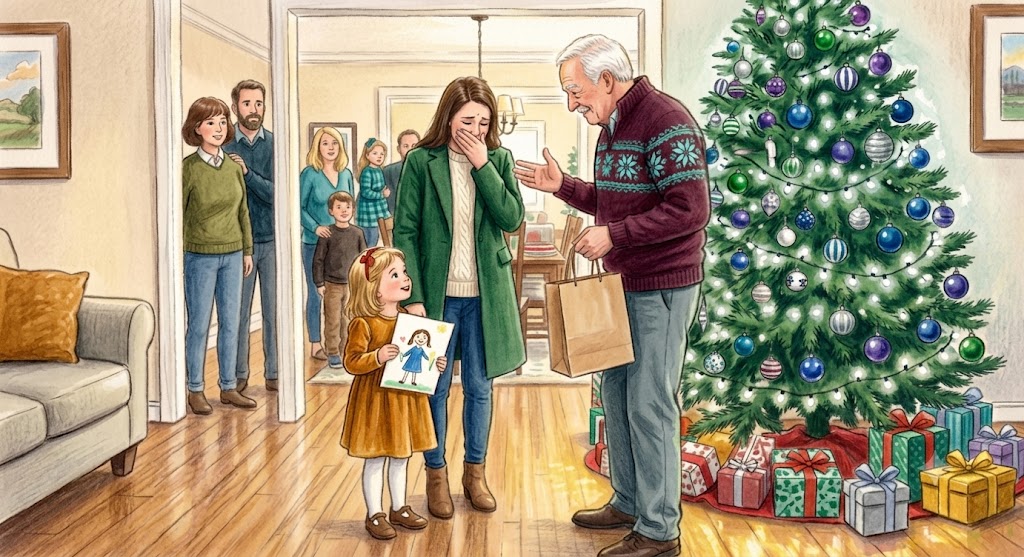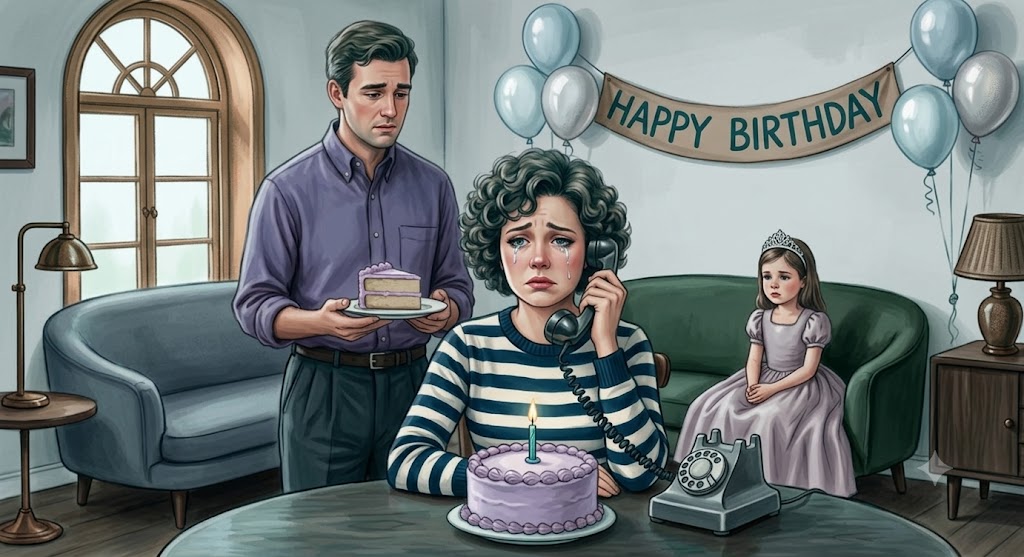
I gave my parents $550 every Friday so they could “live comfortably.” Dad remarked, “We don’t count your family the same way,” when they didn’t attend my daughter’s birthday.
Jul 5, 2026

I gave my parents $550 every Friday so they could “live comfortably.” Dad remarked, “We don’t count your family the same way,” when they didn’t attend my daughter’s birthday.

Three years later, “help” looked like duct tape inside Lily’s sneakers. Rent late—again. Groceries on a credit card. Marcus dragging himself home from a second shift, hands split from corrugate and cold. He tapped the statement with a bandaged finger. “Just a month,” he said. “Ask them to scale back.” I kissed his knuckles.
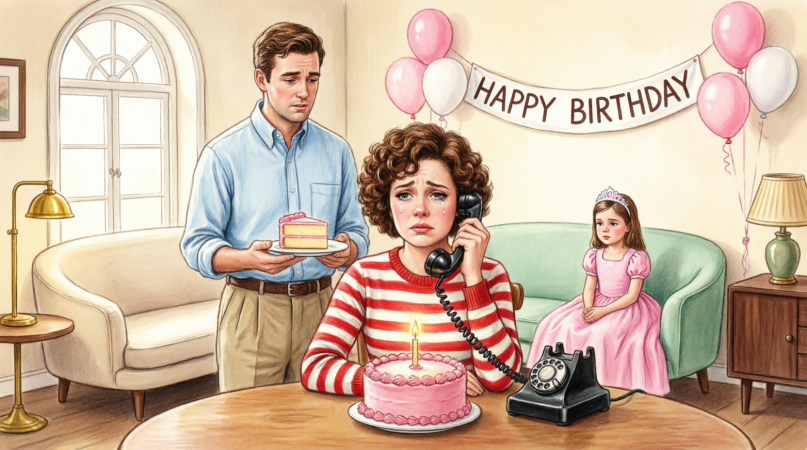
“They need it,” I said, and tried not to do the math on my daughter’s shoes. Mom promised they’d be at Lily’s party. “Wouldn’t miss it—with bells on.” I believed her, because believing is cheaper than admitting you’ve been financing a story you’re not even in. Saturday arrived cotton-candy pink. Dollar-store balloons. Paper streamers.

I frosted a leaning chocolate cake with Lily’s favorite swirls because, according to my six-year-old, “pink tastes like cake.” Two o’clock softened into 2:30. Musical chairs got loud in the best way. Lily kept glancing at the door like it could grow grandparents on command. By three, a princess dress and a still-wrapped present sat on the couch together.

By four, the last goodie bag left, and the quiet landed sticky and sweet. I called. Dad answered over laughter and clinking glasses. “Oh—today? We’re at Danny’s. He insisted. Busy house, you know how it is.” “You knew,” I said. “I reminded you yesterday.” He sighed like I was the unreasonable one. “We can’t drop everything for every little thing, Sarah. We have other grandkids. It’s easier there.” “How’d you afford the trip?”

I asked, even though I already knew. “We saved,” he snapped. “What we do with our money is our business. You offered to help. Nobody forced you.” Then the cut that cauterized: “We don’t count your family the same way. Danny’s is… better established. You understand.” I hung up before Lily could hear my voice crack through the bedroom door.

The kitchen went very still. My bank app threw a blue square of light across the counter. A balloon’s reflection drifted over the microwave door. Marcus stared at the empty cake plates like they’d said something ugly. Down the hall, one small sniffle. I canceled the transfer. Then I pulled every thread they’d tied to me. The car loan I’d co-signed “just to lock a better rate”—closed, title rerouted.

The two extra phone lines on my plan—removed, port-out codes generated. The “emergency” credit card they treated like a punch card for takeout—frozen, statements downloaded, charges highlighted like evidence. Fifteen minutes of taps unraveled three years of obligation. Mom called, voice high and shiny.

“What did you do? That’s our money!” I looked at the crayon crown Lily had left on the table, the frosting smear shaped like a question mark, the photo taped to the wall from last July—Lily with a sparkler and a little U.S. flag she’d colored herself—and felt something old and heavy lift. I opened Photos. Screenshot of the transfers. The text where Mom promised “bells on.”

Dad’s message from last winter—not our problem—when our car died and Marcus took the bus in the dark for a week. A picture of Lily in her purple dress, smiling at a door that never opened. I opened the family thread. The cousins who “stay out of it.” The aunts who forward prayers. Danny with his perfect-lawn thumbs-ups. I typed two sentences. Clean.

No swearing, no apology, no ladder back down. I attached the screenshots, the statement PDF, and a photo of Lily’s cake with two empty chairs behind it. Marcus watched my face. “You sure?” he asked. I looked down the hall where my daughter slept with glitter still on her cheek. My thumb hovered over Send I pressed send.

The little circle spun for a heartbeat, a digital pendulum swinging between the life I had and the life I was choosing. Then it vanished. Delivered.

For ten seconds, nothing happened. The kitchen remained still, save for the hum of the refrigerator and the distant sound of Marcus running water in the bathroom sink. I set the phone down on the counter, screen up. It looked like a bomb waiting to detonate.

“Done,” I said. My voice sounded foreign to my own ears. Flat. Final.

Marcus dried his hands on a towel and came to stand beside me. He didn’t look at the phone. He looked at me. He saw the tension in my shoulders drop, the way my hands stopped trembling. He wrapped an arm around my waist and pulled me into his side. He smelled like cardboard dust and laundry detergent. He smelled like safety.

“They’re going to call,” he said.

“Let them,” I replied.

“Your mom… she’s not going to take this well, Sarah. She’ll call everyone. She’ll tell them you’re selfish. That you abandoned them.”

“I didn’t abandon them,” I said, looking at the crayon crown on the table. “I stopped funding their rejection of me.”

We stood there for a long time, watching the phone screen dim until it went black. Then, as if on cue, it lit up. A notification. Then another. Then a cascade.

I didn’t pick it up. I walked down the hall to Lily’s room.

She was asleep, curled around a stuffed rabbit that had lost an ear years ago. There was glitter on her cheek, exactly where Marcus had said it would be. I sat on the edge of her bed and brushed the glitter away with my thumb. She stirred but didn’t wake.

“I’m sorry,” I whispered to the quiet room. “I’m sorry they weren’t here. But I promise… I’m going to be enough. Just me.”

I went back to the kitchen. The phone was buzzing continuously now. A steady, angry vibration against the laminate counter. I picked it up.

Mom:What is this? Why did the transfer fail?Mom:Sarah? Call me immediately.Dad:This is childish. Turn it back on.Aunt Carol:Is everything okay? Your mother is very upset.Danny:Hey cuz, heard there’s some drama. Everything cool?

I scrolled through the notifications. Thirty-two messages in five minutes. The group chat, usually a stream of birthday wishes and prayer emojis, had become a tribunal.

I typed one more message. Not to the group. To Dad.

You said we don’t count the same way. So I stopped counting you in my budget. Use Danny’s establishment to pay the bills now.

I blocked the number. Then I blocked Mom. Then I muted the group chat.

The silence that followed was louder than the buzzing had been.


The first week was the hardest. Not financially—that relief was immediate and intoxicating. For the first time in three years, when I logged into my banking app, I didn’t feel a knot of dread in my stomach. I saw the $2,200 a month that used to vanish every Friday. I saw it sitting there. Waiting.

I used the first week’s surplus to buy Lily new sneakers. Not the ones with the duct tape. Real ones. White and pink with velcro straps she could fasten herself. When she put them on, she marched around the living room stomping loudly, laughing every time the squeak echoed off the walls.

“Look, Mama! They fit!”

“They fit,” I agreed. My throat tightened.

But while Lily marched, my phone sat in the drawer, occasionally lighting up with calls from numbers I didn’t recognize. Blocked. Voicemails full of heavy breathing, sighs, and sometimes, sharp accusations.

“How could you do this to your own blood?”“We raised you.”“You’re punishing us for being human.”

I didn’t listen to all of them. I listened to enough to know the narrative was shifting. I was no longer the helpful daughter. I was the ungrateful child. The one who turned her back when things got tough.

Marcus handled the logistics. He changed our passwords. He put a fraud alert on our credit reports because Dad had co-signed nothing, but he had access to enough information to be dangerous. We fortified the perimeter.

On Wednesday of that first week, Mom showed up at our apartment.

I was at work. Marcus called me during my lunch break, his voice low. “She’s in the parking lot. She says she won’t leave until you talk to her.”

“Did you let her in?”

“No. But she’s making a scene. Talking to the neighbors.”

I left work early. When I pulled into the lot, I saw her car—a sedan I had helped pay the insurance on for two years—parked across two spaces. Mom was standing by the entrance, arms crossed, wearing the coat I bought her last Christmas. She looked small against the brick building, but her posture was rigid with indignation.

I walked toward her. I didn’t run. I didn’t hide.

“Sarah,” she said when I was ten feet away. Her voice was loud, intended for the windows above us. “You think you can just cut us off? After everything we did?”

“You didn’t come to Lily’s birthday,” I said. My voice was calm. I was surprised by how calm it was. “You went to Danny’s.”

“Danny’s mother was there,” she snapped. “It was a family gathering. You know how your father gets about being outnumbered.”

“So I should have brought Lily to Danny’s? Instead of you coming here?”

“We’re the parents,” she said, as if that explained the geometry of the universe. “We go where we want. You send the money because you can. Because you’re stable. Why are you punishing us for your own success?”

That was the core of it. I realized then. It wasn’t about need. It was about hierarchy. They needed me to be the ATM because it kept me in the child role. As long as I was paying, I was subordinate. If I stopped paying, I became an equal. And they couldn’t tolerate an equal.

“I’m not punishing you,” I said. “I’m balancing the books. You said my family doesn’t count the same way. So I removed you from the ledger.”

“Your father is going to have a heart attack,” she said, playing the final card. The health scare. The guilt trip that had worked for decades.

“If he’s sick, take him to the hospital,” I said. “I’m not paying the bills anymore. But I will call 911 if you think he’s in danger.”

She stared at me. Her mouth opened, then closed. She had no script for this. In her story, I was supposed to crumble. I was supposed to apologize and double the transfer to prove my love.

“You’re cold,” she whispered. “Just like your father said.”

“Maybe,” I said. “Or maybe I’m just warm enough for my own daughter now.”

I turned my back and walked into the building. I didn’t look to see if she was crying. I didn’t look to see if she was leaving. I just kept walking.


Month two brought the extended family pressure.

Thanksgiving was approaching. Usually, this was the week I spent stressing about the ham, the pie, the travel costs to get to my parents’ house. This year, my phone buzzed with a text from Aunt Carol.

We need to talk about Thanksgiving. Your mother is hurt. She says she doesn’t know if she can cook for everyone if she’s struggling.

It was a threat disguised as a concern. If I didn’t show up (and presumably bring money), the holiday would be ruined.

I called Aunt Carol. She was the mediator, the one who claimed to stay out of it while constantly passing messages.

“Aunt Carol,” I said. “I’m not coming this year.”

“Sarah, be reasonable. It’s one day.”

“It’s never one day,” I said. “It’s the judgment all week. It’s the comments about Marcus’s job. It’s the questions about why Lily doesn’t have a tutor. It’s the expectation that I pay for the groceries I cook.”

“We’re family,” she said.

“Family shows up,” I replied. “They didn’t show up for Lily. So I’m not showing up for them.”

“What about Danny?”

“Danny is fine,” I said. “He’s established. Remember?”

There was a silence on the other end. She knew I was quoting Dad. She knew the game had changed.

“Your mother says you’re going to regret this,” Carol said finally. “When they get older. When they need care.”

“I’m preparing for that now,” I said. “By ensuring I have the resources to care for my own child. If they need care, they have Danny. He’s established.”

I hung up.

That Thanksgiving, we stayed home. Marcus made a turkey that was slightly dry. Lily made a centerpiece out of construction paper and glue. We watched movies. We wore pajamas until noon.

For the first time in my adult life, I wasn’t tired on Friday morning. I wasn’t dreading the weekend. I wasn’t checking my bank account to see if the overdraft fee had hit.

I took the $550 I would have sent that Friday and put it into a college fund for Lily. I set up an automatic transfer. Every week, without fail, money went to her future. Not my parents’ present.


Month six brought the financial reality check for them.

I heard through the grapevine—actually, through a cousin who liked to talk—that Dad’s hours had been cut again. That Mom’s salon visits had stopped. That the car needed repairs they couldn’t afford.

Part of me felt a pang of guilt. It was instinctual. The conditioning of thirty years doesn’t vanish in six months. I wondered if they were eating properly. I wondered if the heat was on.

Then I remembered Lily’s sneakers. I remembered the duct tape. I remembered the empty chairs at the birthday party.

Guilt is a habit. I was breaking it.

Danny tried to reach out in December. He sent a friend request on social media. I ignored it. Then he sent a message.

Hey, looks like things are tense. Just wanted to say, I didn’t know they were using the money like that. I thought it was for bills.

It was a weak olive branch. He benefited from the hierarchy. He knew it. But he was trying to keep the door open in case I ever came into money again.

You knew, I replied. You posted photos from the birthday party while Lily was waiting for the door to open. You liked the photos.

He didn’t reply.

The silence from that side of the family grew heavier. They were learning to live without me. It was painful for them, I’m sure. But it was necessary.


One year later.

It was Lily’s seventh birthday.

We weren’t having a big party. Just a few friends from school. The backyard was decorated with real lights, not paper streamers. The cake was from a bakery, not made from a box.

I was standing by the grill, flipping burgers, when Marcus came out with the phone.

“It’s your dad,” he said.

My hand didn’t slip. The spatula hovered over the meat. “Why are you answering?”

“He kept calling until I picked up. He says it’s an emergency.”

I wiped my hands on my apron and took the phone. “This is Sarah.”

“Sarah,” Dad’s voice was rough. Older. “I… we need to talk.”

“You blocked me,” I said. “I remember.”

“I unblocked you. Look, your mother… she fell. At the house. She broke her hip.”

My heart skipped a beat. Not out of fear for her, but out of that old reflex. Is she okay? Is she safe?

“Is she in the hospital?”

“Yes. They’re saying she needs rehabilitation. Home care. It’s… it’s expensive.”

I looked out at the backyard. Lily was running through the sprinkler, screaming with laughter. She was wearing the dress I bought her. The one without stains.

“And you’re calling me because…?”

“Because you’re the only one who understands the finances,” he said. “Danny… he’s got his own issues now. His business isn’t doing well. He can’t help.”

There it was. The reversal. The established son was no longer established. The ATM daughter was the only option left.

“I’m sorry to hear about Mom,” I said. And I meant it. I didn’t wish harm on them. But I couldn’t fix it.

“Sarah,” he said, his voice dropping. “Please. We’re your parents.”

“You told me I don’t count the same way,” I said. “You told me Danny was better established. So I let him be the establishment.”

“That was… that was pride talking,” he said. “I was wrong.”

It was the first admission I had ever heard. It hung in the air, fragile and strange.

“I know you were,” I said. “But being wrong doesn’t erase the cost.”

“What cost?”

“The cost of trust,” I said. “The cost of showing up. You spent three years teaching me that my support was conditional. That my family was secondary. I can’t unlearn that overnight.”

“So you’re just… letting her suffer?”

“I’m not letting her suffer. The hospital is treating her. Insurance is covering the rehab. You have savings. You have the house. You have Danny.”

“The house is leveraged,” he admitted quietly. “We… we took out a loan. Against the equity.”

Of course they had. Because the $550 a week was gone. Because the safety net I provided had allowed them to take risks they couldn’t afford.

“I can’t help you financially, Dad,” I said. “But I can send you a list of social services. I can help you apply for Medicaid waiver programs. I can give you time.”

“Time doesn’t pay bills,” he snapped. The old anger flared, brief and weak.

“No,” I said. “But boundaries do.”

I heard him breathe on the other end. It sounded like a sigh of defeat.

“Will you… will you come see her?” he asked. “At the hospital?”

I looked at Lily. She had stopped running. She was looking at me, waiting for me to come join the game.

“I’ll come,” I said. “But I’m not paying. And I’m not staying long. And if anyone makes a comment about my family… I leave.”

“Okay,” he whispered. “Okay.”

“Happy Birthday, Lily,” I said to the phone, though he wasn’t the one celebrating.

“What?”

“Nothing,” I said. “I’ll be there tomorrow.”

I hung up.

Marcus touched my shoulder. “You okay?”

“I will be,” I said.

I went to join Lily. She grabbed my hand and pulled me into the sprinkler. The water was cold. I shrieked. She laughed.

“Again!” she yelled.

We ran again. I got soaked. My hair plastered to my head. My shoes squished.

For the first time in my life, I didn’t care about the mess. I didn’t care about the impression. I didn’t care about the cost.


The hospital visit was quiet. Mom looked smaller in the bed. Her leg was elevated. Dad sat in the chair beside her, looking at his hands.

They didn’t mention the money. They didn’t mention the transfer. They talked about the weather. About the nurse. About the food.

It was civil. It was distant. It was a relationship reset to factory settings.

When I left, I didn’t promise to come back next week. I didn’t promise to call. I just said, “Feel better.”

Driving home, I felt a strange sensation in my chest. It wasn’t guilt. It wasn’t anger. It was grief. I was grieving the parents I wanted. The ones who would have come to the birthday party. The ones who would have cheered for Lily without calculating the cost.

They didn’t exist. Accepting that was the final step.


Two years later.

We moved. Not far, just to a different complex with better security and a playground that didn’t have broken glass.

The rent was higher. But we could afford it. Because I wasn’t sending $550 a week. Because Marcus got a raise. Because we stopped bleeding money into a void.

I ran into Danny at the grocery store. He looked tired. He was buying generic brand cereal. He saw me and hesitated.

“Hey,” he said.

“Hey.”

“Mom’s doing okay,” he said. “Walking with a cane now.”

“That’s good,” I said.

“We… we sold the house,” he said. “Downsizing.”

“Okay.”

“I get it now,” he said, looking at the cart. I had fresh fruit. Milk. Real cheese. “About the money. About… everything.”

“Do you?”

“Yeah. I got into some debt. Trying to keep up the image. The establishment.” He laughed, a dry, humorless sound. “Turns out establishment is just a word people use when they’re scared.”

“We all are,” I said.

He nodded. He didn’t ask for help. He didn’t ask for a loan. He just checked out and left.

I watched him go. I didn’t feel superior. I felt sad for him. He was still trapped in the hierarchy. I had climbed out.


Three years later.

Lily is nine. She’s in fourth grade. She plays soccer. She hates math. She loves to draw.

We were sitting at the kitchen table doing homework. The Friday transfer notification used to ping at 9 AM. Now, at 9 AM on Fridays, I get a notification from her college fund. Deposit Successful.

It’s a different sound. A happier sound.

Marcus came in from the garage. He put a envelope on the table.

“What’s this?” I asked.

“Tax return,” he said. “We’re getting a refund.”

“We never get refunds,” I said.

“We do now,” he said. “Because we claimed everything. Because we didn’t give half of it away.”

He kissed the top of my head. “Proud of you,” he said.

It wasn’t about the money. Not really. It was about the message. The message I sent that day when I hovered over the send button.

We don’t count your family the same way.

He was right. We don’t.

My family is the people who show up. The people who eat the dry turkey. The people who run through the sprinklers. The people who protect the peace instead of selling it.

My parents are still alive. We talk on holidays. Sometimes. They send cards for Lily’s birthday. They never come. They never ask to visit. They know the terms.

I think they respect me more now than they ever did when I was paying them. Because I proved I could walk away. And power only respects power.


Last week, I found the old phone. The one I used before I changed my number. It was in a box in the closet, buried under winter scarves.

I charged it. It turned on. There were hundreds of voicemails from three years ago. From the week I cut them off.

I listened to one. It was Mom.

Sarah, please. We’re sorry. We didn’t mean it. Call us back.

Her voice sounded desperate. Scared.

I deleted it.

I didn’t need to hear the apology anymore. I had lived the consequence. That was worth more than words.

I put the phone back in the box. I put the box back in the closet.

I walked out to the living room. Lily was on the floor, building a tower out of blocks. It was tall. Unsteady.

“Don’t let it fall,” I said.

“I won’t,” she said. “I built the base strong.”

She looked at me. “Like you taught me.”

“Yeah,” I said. “Like I taught you.”

I sat down beside her. I handed her a blue block.

“Where does this go?” I asked.

“Here,” she said. “On the top.”

She placed it gently. The tower held.

We sat there in the quiet apartment. The rent was paid. The lights were on. The fridge was full.

And for the first time in my life, I wasn’t waiting for the other shoe to drop. I wasn’t waiting for the phone to ring. I wasn’t waiting for permission to be happy.

I was just here.

The lifeline was severed. But I hadn’t fallen. I had learned to fly.

And the view from up here… it was beautiful.

THE END.

More Details
My father told me to change every bank card PIN just five minutes after the divorce, and I obeyed without asking why. That same night, my ex-husband and his mistress enjoyed a $990,000 night at a luxury club—until the waiter returned with one sentence that froze them both. 22
Jul 4, 2026

My father told me to change every bank card PIN just five minutes after the divorce, and I obeyed without asking why. That same night, my ex-husband and his mistress enjoyed a $990,000 night at a luxury club—until the waiter returned with one sentence that froze them both. 22

Chapter 1: The Code of Silence

My father told me to switch the security codes on every single bank card just five minutes after the divorce was finalized, and I followed his instructions without daring to ask a single question.

That very same night, my former husband and his new companion indulged in a nine hundred and ninety thousand dollar evening at a private luxury club, but the night ended in disaster when the waiter returned with a single sentence that left them both completely frozen.

Five minutes after the judge signed the final divorce decree, my father grabbed my wrist before I could walk out of the courthouse doors.

“Florence,” he said, his eyes sharp and calm, “you must change every single PIN on those accounts right now, as you cannot wait until tonight because grief and guilt are dangerous things.”

“I understand, Dad,” I replied, my hands still shaking from the finality of the legal proceedings we had just endured.

“Never trust a man who smiles while he is taking half of your life away from you,” he added with a tone that brook no argument.

I nearly let out a bitter laugh while sitting on a cold wooden bench just outside the courtroom, but I knew my father, Frederick Brown, had spent thirty years investigating high-level financial fraud across the country.

When he spoke with that specific tone of voice, it was always best to listen to him without hesitation.

So I opened the mobile banking applications on my smartphone and updated the security credentials for all ten of my cards at once, including my business accounts, personal savings, and emergency credit lines.

My former husband, Jasper Davis, walked past me with his new flame, Giselle Moore, clinging tightly to his arm as if she were a trophy he had won.

She was wearing a silk blouse that cost more than my first car, and she carried the smug expression of a woman who was entirely convinced that she had emerged victorious.

Jasper slowed his pace just enough to look down at me and whisper, “Try not to cry too much in public, Florence, because it is truly pathetic how some women simply do not know how to keep a man interested.”

Giselle let out a high-pitched giggle that made my skin crawl.

I looked up from the screen of my phone and offered them both a cool, detached smile while saying, “It seems some men are entirely incapable of reading a bank statement before they start spending money.”

His face flickered with a brief moment of confusion, but he quickly regained his arrogant composure and walked away.

By eight forty that evening, Jasper and Giselle were located in the heart of the city at The Gilded Vault, which was an elite social club where a single bottle of champagne could easily cover the cost of a luxury apartment.

Jasper had booked the Obsidian Suite through my company membership, which he had retained access to during our long and messy separation.

He ordered several towers of imported oysters, Wagyu beef, two bottles of rare aged wine, and a series of extravagant cocktails for Giselle’s birthday celebration.

When the time came for the main event, he led her to the in-house boutique located inside the club so she could pick out a sapphire necklace that was priced at six hundred and forty thousand dollars.

Jasper, drunk on his own sense of revenge and the borrowed status of my hard work, confidently handed the waiter my black business card to finalize the transaction.

The waiter returned to the table only three minutes later with his face drained of all color and his body posture extremely rigid.

“Mr. Davis,” he said in a hushed, trembling voice, “I am incredibly sorry, but I am afraid that the payment has failed to process.”

Jasper frowned, his face reddening with irritation, and he said, “That is impossible, so please run the card through the machine one more time.”

“We have already attempted to process the payment three times, sir,” the waiter explained while looking down at his shoes.

“Then you will simply use the backup card that is linked to the primary account,” Jasper demanded, clearly losing his patience in front of his date.

The waiter swallowed hard and replied, “Sir, all of the cards that are linked to this membership have been cancelled or restricted by the account owner.”

Giselle’s smile vanished instantly, and she looked at the necklace display with a mixture of confusion and sudden embarrassment.

Jasper snatched the receipt from the waiter’s hand and stared at the total, which amounted to nearly one million dollars for the evening’s festivities.

Across the city, my phone began buzzing incessantly with fraud alerts, but I simply sat at my father’s kitchen table and stared at the screen as the notifications rolled in.

My father poured a fresh cup of coffee into my mug and said, “Now that the cards are silent, the real divorce is finally going to begin.”

Chapter 2: The Sound of Panic

At first, I truly thought the alerts would be the end of the situation, as I assumed Jasper would be humiliated and the club would force him to provide another form of payment.

However, men like Jasper did not accept the consequences of their own actions with any shred of dignity, because they were far too accustomed to finding someone else to blame for their failures.

At nine zero seven in the evening, my phone began to ring with his caller identification displayed clearly on the screen.

I let it ring until it went to voicemail, and at nine zero eight, he called again with even more urgency.

At nine zero nine, Giselle called me from a telephone number that I did not recognize, likely hoping to catch me off guard.

My father looked over the edge of his coffee cup and said, “Do not answer the phone, because they are only looking for a target for their frustration.”

“I was never going to pick up, Dad,” I replied, watching the phone screen go dark again.

He nodded, clearly satisfied with my restraint, and pushed a yellow legal pad toward me so I could start documenting everything.

“Write down every single time they call and take a screenshot of every message they send you,” he instructed, knowing that records were the only shield against a man like Jasper.

My father had always maintained that panic made people incredibly careless, while Jasper had always operated under the false belief that his charm could erase any amount of legal paperwork.

That night, those two opposing philosophies collided in a way that left Jasper completely exposed.

The first voicemail came from Jasper, and his voice was low, shaky, and filled with a dangerous kind of fury.

“Florence, you need to stop playing these petty games right now, because you know that card is tied to the company accounts and you have just embarrassed me in front of some very important clients.”

Clients, he called them, as if he were actually conducting business while spending my money on a birthday party for his mistress.

I almost admired the audacity of his lie, especially since Giselle had been posting videos of their extravagant night all over her social media platforms for hours.

The second voicemail arrived ten minutes later, and his tone had shifted from pure arrogance to something that sounded suspiciously like desperation.

“Listen, Em, there has clearly been some sort of massive confusion at the club, and they are telling me the membership is still under your name, so just go into your app and approve the charge for me.”

“He is trying to manipulate you,” my father snorted, shaking his head at the audacity of the request.

“I know exactly what he is doing,” I whispered, feeling a sense of cold relief that I had finally cut the cord.

Then the text messages began to flood my inbox, each one more desperate and insulting than the one before it.

You are being incredibly petty, Florence.

This is the exact reason why our marriage was never going to work out.

Do you really want everyone to know that you are this vindictive?

You have plenty of money, so just cover the bill and stop acting like a child.

You owe me the dignity of fixing this situation for me.

That last message made me stare at my phone screen for a long time, wondering how a man could have so little self-awareness.

I owed him dignity? The man who had moved Giselle into a penthouse that I paid for while telling me that he needed space to heal his heart?

The man who had used my professional contacts to impress all of her shallow friends?

At nine forty-six in the evening, the general manager of The Gilded Vault called me directly to discuss the situation.

I put the call on speakerphone so my father could hear the exchange, and I answered firmly.

“Ms. Brown?” the woman asked, her voice professional and strictly controlled.

“This is she,” I replied, my voice steady despite the adrenaline pumping through my veins.

“This is Clara Williams, the general manager of The Gilded Vault, and I am calling to apologize for disturbing you, but Mr. Davis is currently attempting to force through charges on your corporate membership.”

“Jasper Davis is my ex-husband, and the divorce was legally finalized earlier today,” I said, making sure my tone was clear and absolute.

There was a brief pause on the other end of the line while she processed the information.

“I see, and I apologize for the oversight,” she said, her voice becoming even more clipped.

“He has absolutely no permission to use my cards, my business accounts, or my private membership for his personal expenses.”

“I completely understand, Ms. Brown, but would you be willing to confirm that in writing for our internal records?”

“My attorney will send you a formal declaration tonight,” I promised, and my father was already pulling his laptop toward him.

Clara lowered her voice and said, “There is one more issue, as Mr. Davis attempted to purchase a high-value piece of jewelry and signed your company name on the authorization slip.”

My stomach tightened, but I did not lose my composure because I knew this was the moment he had crossed the line into criminal territory.

“Please preserve the slip, the security footage, the itemized bill, and every piece of communication you have regarding this night,” I requested.

“I will secure all of those files immediately,” she confirmed, and the call ended with a tone of finality.

At ten fifteen, Jasper sent one final, chilling text message that read: You will definitely regret trying to humiliate me like this.

I handed the phone to my father so he could read the message for himself.

He read it once, then looked at me with the same calm, analytical expression he used whenever the world felt like it was narrowing down to simple evidence and consequences.

“No, Florence,” he said quietly, “it is actually going to be the other way around.”

Chapter 3: The Breaking Point

The next morning, Jasper Davis showed up at the lobby of my office building wearing dark sunglasses, even though the sky was gray and pouring rain.

My receptionist, Sarah, called me on my private line before he had even reached the security desk in the lobby.

“Florence,” she said in a hushed tone, “Mr. Davis is downstairs and he is causing a scene because he insists that it is an urgent matter.”

I stood by the window of my thirty-second-floor office and watched the rain streak against the glass while thinking about how much I had wasted on him.

“Tell security that he is absolutely not allowed to pass the lobby under any circumstances,” I commanded.

Sarah lowered her voice even further and said, “He is already shouting at the guards and refusing to leave the building.”

I sighed, realizing that for nine years, Jasper had treated every locked door as a mere suggestion and every boundary as an invitation to negotiate.

When we first met, he had been a charming consultant with expensive suits and a perfectly practiced sense of humility.

I had been working hard to build my design firm out of a small, rented room above a bakery, and he had told me that he admired my ambition.

Later, I realized that he did not admire my work ethic at all; he had only ever admired the access that my success provided him.

He loved the access to my wealthy clients, the access to my credit cards, and the access to the elite rooms where powerful people said things they would never utter in public.

By the time I truly understood his motivations, he had already learned exactly how to smile at my board members and flatter my vendors to make himself seem indispensable.

It had taken me two years to separate my company from his influence, and an even longer time to separate my heart from the version of him I had created in my mind.

Now, he was standing in my lobby, shouting loudly enough that Sarah no longer needed to hold the phone close to the receiver to hear him.

“You tell her that I am not leaving this building until she fixes this mistake!” he bellowed.

I pressed the intercom button on my desk and said, “Sarah, please put me on the lobby speaker system.”

A second later, my voice echoed throughout the marble lobby, causing the shouting to stop instantly.

“Jasper, leave the building immediately,” I said, my voice cold and clear.

He looked up toward the security camera, and even through the grainy monitor, I could see his jaw tightening with rage.

“Florence, do not be childish, because we need to talk about this situation face to face.”

“We have absolutely nothing left to discuss, and you are currently trespassing on private property.”

“You froze the credit cards and made me look like a fool!” he yelled.

“I protected the accounts that belong to me, and you were the one who made yourself look like a fool by trying to spend money you did not have.”

“You are going to ruin my entire reputation with this stunt!” he cried out.

“You attempted to spend nearly one million dollars on my corporate membership just five hours after our marriage was dissolved in a court of law.”

The entire lobby went silent, and I could see the junior designers near the elevators turning to stare at him.

Jasper removed his sunglasses, revealing that the edge of his eye was bruised a deep shade of purple, likely from a confrontation at the club.

I almost felt a flicker of curiosity about how he got the mark, but I quickly remembered that The Gilded Vault had its own private security and a very strict policy regarding unpaid bills.

“You planned all of this from the very start,” he accused, his voice shaking.

“No, Jasper, you planned a night that you could not afford, and I simply secured the accounts that are legally under my name.”

“You knew that I still had the card in my wallet!”

“And you certainly knew that it was no longer yours to use,” I replied.

His face turned a deep shade of purple, and he seemed to be struggling to find a response that didn’t make him sound like a criminal.

My father walked into my office behind me, carrying a leather folder and two cups of coffee, having driven in before the sun came up.

He set the folder on my desk and nodded toward the computer monitor where the security footage was playing.

“Let him keep talking, because every word he says is just more evidence,” my father whispered.

“You think that club is going to choose you over me?” Jasper shouted at the ceiling. “I have connections there, and I know people who can make your life very difficult!”

My father arched an eyebrow, looking unimpressed by the empty threats.

I leaned closer to the microphone and said, “Clara Williams has already sent our attorney the security footage from last night, and she also provided the signed authorization slip.”

Jasper stopped moving, and for the first time, he looked truly defeated.

There it was, the first real crack in his armor, because he had always relied on his ability to intimidate people into silence.

Giselle did not understand the gravity of financial fraud the way Jasper did, because she only cared about the aesthetic of wealth, the velvet ropes, and the social media likes.

Jasper, however, knew enough about business to understand the difference between a dispute and a felony.

“You do not have anything on me,” he said, though his voice had dropped to a defensive mumble.

“I have more than enough,” I said, and then I cut the feed.

At ten-thirty in the morning, my attorney, Margaret Sloan, arrived at the office with a posture that made men like Jasper suddenly remember that they had very urgent appointments elsewhere.

She was in her late fifties, with sharp silver hair and a reputation for being allergic to dramatic theatrics in a courtroom.

She joined me in my office while the security team kept Jasper confined to the lobby area.

Margaret opened her briefcase and laid out a series of documents for us to review.

“The club’s bill is completely itemized, including the alcohol, the private room rental, the service fees, and the attempted boutique purchase,” she said.

“The necklace was never actually released to him because the payment failed, which is very good for our side of the case.”

I looked down at the copy of the authorization slip, and my heart sank for a moment as I saw his handwriting.

He had written Hayes Design Group at the top, and underneath it, he had forged my name: Florence Brown.

For a second, the room seemed to tilt, not because of fear, but because of the sheer insult of his arrogance.

He had not even made a serious attempt to mimic my signature, because he assumed that nobody would dare question a man of his status.

Margaret tapped the paper with her pen and said, “This is clear evidence of attempted unauthorized use of a financial instrument and forgery.”

“The Gilded Vault is willing to cooperate fully because they want to distance themselves from this massive legal headache,” she added.

My father sat beside me, silent but watchful, ready to help me navigate the next steps of this nightmare.

“What about Giselle?” I asked, wondering how much she truly knew about his desperate situation.

Margaret pulled out another page from her bag and said, “She posted enough evidence online to decorate a courtroom several times over.”

“She has videos of the suite, the necklace tray, and Jasper handing over your card with a caption that literally says Divorce looks good on us,” she noted.

I let out a short, sharp laugh that even surprised me, as the irony of the situation became impossible to ignore.

Margaret’s mouth twitched into a tiny smile. “Yes, people like them truly do make our professional lives much easier than they need to be.”

By noon, Jasper had finally left the lobby, but not before he gave one final, desperate performance for the staff.

He told the security guards that I was mentally unstable, he told Sarah that I was punishing him for finding true love, and he told a confused delivery driver that wealthy women were the most dangerous creatures on the planet.

Sarah sent me a message a few minutes later, telling me that he had forgotten that the security cameras recorded high-quality audio.

I replied with a simple message: Save every single file.

That afternoon, Margaret filed emergency notices with the court to document Jasper’s illegal attempts to use my accounts after our legal separation.

My company’s bank confirmed that the cards had been properly restricted before the charges were even attempted.

The Gilded Vault submitted a formal statement clarifying that Jasper had misrepresented his authority to use my corporate membership.

My father helped me organize every voicemail, text message, call log, and screenshot into a timeline so clean and precise that Margaret called it beautifully ugly.

The real collapse, however, came from Giselle later that same afternoon.

At three eighteen, she called my personal cell phone, and I decided to answer because Margaret was sitting right there to witness the conversation.

Giselle’s voice was no longer smug or filled with the arrogance of a new romance.

“Florence?” she asked, her voice trembling slightly.

“Yes, this is she,” I replied, my tone neutral.

“This is Giselle, and I am calling because Jasper told me that you were doing all of this illegally.”

“Jasper has said a great many things over the last twenty-four hours, most of them completely false,” I said.

She took a small, shaky breath and continued, “He told me that the cards were part of the divorce settlement and that you had agreed to cover one last business entertainment expense for him.”

I closed my eyes for a moment, realizing that Jasper had not only lied to me, but he had also been lying to her about his financial reality the entire time.

That did not make her innocent, as she had been happy to spend money she thought was mine, but it certainly made her a very useful witness.

“Giselle,” I said, “did Jasper tell you that the Obsidian Suite was for meeting business clients?”

There was a long silence on the other end of the line.

“No,” she finally admitted, “he told me it was a gift for my birthday celebration.”

Margaret began writing quickly on her legal notepad, clearly pleased with the admission.

“Did he tell you that he had my permission to sign my name on that authorization slip?”

Another silence followed, more telling than any words could have been.

“He told me that spouses sign for each other all the time and that it was a standard practice for people like us.”

“We were legally divorced as of yesterday morning, Giselle.”

“I know that now,” she whispered, and her voice finally broke at the edges.

She wasn’t sad enough to make me feel pity for her, but she was definitely realizing that the fantasy life Jasper had promised her was falling apart.

Then she said the one thing that changed the entire direction of our legal strategy.

“He told me that you were still paying for everything because you owed him for hiding marital assets during the divorce.”

My eyes snapped open, and Margaret looked up from her notes immediately.

My father, who had been standing by the window, turned around to listen more closely.

“What assets, Giselle?” I asked, my voice demanding the truth.

“I do not know the details,” she said quickly, “but he said he had proof and that once the settlement was finalized, he would be able to get even more money out of you.”

“He told me last night was just a preview of the lifestyle we were going to share,” she added.

A preview.

For months, Jasper had fought aggressively during the divorce, accusing me of hiding income, undervaluing my company, and manipulating our tax accounts.

Every single claim he made had failed during the discovery phase because my financial records were perfectly clean.

I had thought he was only trying to scare me into a larger payout, but now I understood that he had been building a long-term lie to keep his claws in my accounts.

If he could make it appear that I was still funding his lavish lifestyle after the divorce, he might have been planning to reopen the entire financial settlement.

Either way, he had miscalculated, and he had now provided us with the perfect evidence of his bad faith.

Margaret asked Giselle to provide a formal written statement, and to my surprise, she agreed immediately, likely hoping to save her own skin.

By the evening, Jasper’s attorney called Margaret, and according to her, his tone was significantly less confident than it had been only a few hours earlier.

He wanted to resolve the matter with The Gilded Vault privately, without any police involvement or official filings that could damage Jasper’s professional licenses.

Margaret listened to the request, then replied, “My client was threatened in writing, had her name forged, and was the victim of an attempted million-dollar fraud, so a private resolution is no longer entirely up to your client.”

The next week moved very quickly, and the legal walls began to close in on Jasper.

The Gilded Vault permanently banned him from the premises and sent a formal demand letter for the unpaid portion of the services he had already consumed.

Since the necklace had never actually left the boutique, that charge was removed, but the remaining balance was still large enough to cause him major financial damage.

Giselle vanished from his social media profiles almost immediately, but it was far too late, as Margaret had already archived all of her incriminating posts.

Three days later, Jasper appeared at a hearing regarding his post-divorce financial conduct.

He wore a navy suit, a crisp white tie, and the wounded expression of a man who hoped the judge had never encountered people like him before.

Unfortunately for Jasper, Judge Marlene Porter had spent her entire career dealing with people who thought they were above the rules.

Margaret presented the timeline in excruciating detail, showing exactly when the divorce was finalized and when the PINs were changed.

She played the voicemails where he demanded that I approve the charges, and she read his text message threatening that I would regret my actions.

Jasper’s attorney tried to frame the entire incident as a simple case of emotional confusion.

“Your Honor,” the attorney said, “this was an emotionally charged day for both parties, and my client honestly believed there were still shared privileges on those accounts.”

Judge Porter looked over the top of her glasses and asked, “He believed he had the legal right to sign his ex-wife’s name on a corporate authorization slip?”

Jasper stared down at the table, refusing to make eye contact with the judge or with me.

His attorney hesitated, then said, “He believed he had informal permission to use the account as he always had in the past.”

Margaret stood up and said, “There is no written permission, no verbal permission, and no marital relationship left to justify this conduct.”

“There is, however, video evidence of Mr. Davis handing over my client’s card while celebrating with the woman he introduced as his partner,” she added.

The judge read the transcript of Jasper’s threatening voicemail and then read his final text message aloud for the entire courtroom to hear.

You will definitely regret trying to humiliate me like this.

The courtroom was so silent that I could hear Jasper’s shallow, nervous breathing in the front row.

Judge Porter ordered Jasper to preserve all communications related to the incident, barred him from contacting me directly, and referred the matter for further investigation regarding the forgery.

She also firmly denied his attorney’s attempt to reopen the financial claims against me, noting that his conduct had destroyed his credibility in her court.

Outside of the courtroom, Jasper waited near the elevators, and for the first time in my life, he did not look polished or successful.

He looked ordinary, tired, cornered, and much smaller than the shadow he had once cast over my life.

“Florence,” he said as I walked past him.

Margaret stepped slightly in front of me and said, “All communication must go through counsel from this moment forward.”

Jasper ignored her and focused all of his attention on me. “You have completely destroyed everything I have worked for.”

I studied his face, the same face that had once made me rearrange my meetings, forgive his lies, and apologize for pain he had caused me.

“No, Jasper,” I said, “I simply stopped paying for you to exist in my world.”

His mouth opened to argue, but no words came out, and he finally closed it in defeat.

My father appeared beside me and opened the elevator door with a polite nod.

“Are you ready to go home?” he asked.

I nodded, and as the elevator doors slid shut, Jasper remained standing there, all alone under the harsh fluorescent lights of the courthouse hallway.

Two months later, my company hosted a major client dinner at a different venue, because I had absolutely no interest in rooms where men tried to buy importance with other people’s money.

Sarah handled the guest list, Margaret attended as a trusted friend, and my father sat at the head of the table, pretending that he did not enjoy the expensive steak I had ordered for him.

At the end of the night, he raised his glass and said, “To clean exits and the courage to make them.”

I smiled and replied, “And to changed PINs that keep the past where it belongs.”

Everyone at the table laughed, but I felt it more deeply than they could ever understand.

Changing those PINs had not merely blocked a fraudulent charge; it had drawn a permanent line that Jasper could finally see and respect.

For years, he had mistaken my patience for permission and my love for weakness, believing that I would always protect him from his own embarrassment.

But the divorce was not the moment my marriage ended, because it actually ended on that cold wooden bench in the courthouse, with my father beside me and ten cards locked away.

By the time Jasper tried to reach for my money, I had already taken back everything that was mine.

THE END.

More Details
Part1: “37 Gifts, One Exclusion: My ‘Goodbye’ Changed Everything”
Jul 4, 2026

Part1: “37 Gifts, One Exclusion: My ‘Goodbye’ Changed Everything”

Snow was falling in slow, heavy flakes as I helped my seven-year-old daughter, Lily, out of our truck and onto my parents’ front steps in Evergreen. The mountain air stung my cheeks, sharp enough to wake me from every comforting lie I had told myself on the drive up from Lakewood. I kept telling Lily that family is supposed to be together on Christmas, even if I wasn’t sure I believed it anymore.

We stepped onto the porch, the soft crunch of snow under our boots. Through the windows, I could already hear laughter and the clinking of glasses. My parents knew how to host a gathering. They always had. They were experts at creating the illusion of a loving family, even as they treated me like a shadow they wished would disappear.

Somewhere in the middle of that walk to the front door, I found myself thinking about all of you who listen to stories like mine. If you’re here with me now, I would honestly love to know what you are doing while you listen. It helps me picture the people who share these moments with me, especially on stories as heavy as this one.

My mom appeared from the dining room, smiling in that bright, deliberate way she did when she wanted everyone to think she was gracious. Her blond hair was perfectly curled, sweater pressed, lipstick flawless. She looked at me once, then at Lily a second longer, just long enough for me to see her expression flicker into something tighter, smaller, colder.

“You made it,” she said, her tone sugared but thin. “Traffic from Lakewood is awful tonight.”

“It was fine.”

I helped Lily slip out of her coat. She murmured a soft hello, and my mom responded with a nod, then turned away before the greeting even finished leaving my daughter’s lips. It was so quick and practiced that Lily hardly noticed, but I did. I always did.

We moved into the great room where the main event of the evening was unfolding. My dad stood near the enormous Christmas tree, a drink in one hand and a large black trash bag in the other. He was surrounded by children, at least three dozen of them from various cousins and relatives. The tree lights glowed gold, reflecting off shiny ornaments and the proud grin on his face. That grin said he knew exactly how important he looked right now.

“Alright, kids,” he boomed. “Who’s ready for presents?”

Squeals filled the room.

One by one, he pulled gifts from the bag, each wrapped in bright red or silver paper. He called out names with theatrical delight, tossing jokes over his shoulder to the adults, who drank it in like they always did.

“A brand new doll for sweet Harper. A science kit for little Jack. A big stuffed reindeer for Emma. Look at all my wonderful grandchildren.”

He soaked in their cheers as if they were proof that he was the greatest father and grandfather in all of Colorado.

Lily tightened her grip on my hand. Her eyes were wide, hopeful. She loved Christmas more than anything. She had made a small drawing for my parents—a family portrait with crooked little smiles—tucked safely in my purse. She didn’t care about fancy gifts. She just wanted to belong.

I watched the way my brother, Noah, stood off to the side, shoulders tense, his wife, Maria, looking at the floor. My younger sister, Laura, perched on the edge of the sofa, laughing too loudly at something her husband said, her eyes darting toward me and then away. Everyone pretended this was normal, this performance of a perfect family. But I had spent years learning to read the quiet shame hiding behind their faces.

My dad’s bag was nearly empty before he finally reached in again and pulled out the last gift, a small silver-wrapped box. The room softened into an expectant hush. Kids bounced on their toes. Lily inhaled sharply, her whole small body tightening with anticipation.

My dad turned, his gaze sweeping the room slowly, intentionally. When his eyes finally reached Lily, something inside me braced even before he opened his mouth.

“This one is not for you,” he said.

The words landed with a thud in the otherwise cheerful room. I felt Lily freeze beside me. My dad cleared his throat and spoke louder, making sure every adult in that room heard him clearly.

“Only good kids get presents. Your bastard child can get out.”

I didn’t hear the music anymore. I didn’t hear the laughter that suddenly stopped or the clink of someone setting a glass down too hard. I only heard the soft, wounded sound my daughter made as her face crumpled. She tried to swallow the sob, pressing her lips together the way she did when she was trying to be brave. But she was seven years old. The tears spilled out anyway.

My mom stood near the dining room doorway, arms crossed, watching like this scene was none of her business. Some relatives looked away. Some whispered. A few children stared at Lily with open curiosity. No one spoke up.

Something in me, something that had been stretched thin for years, finally snapped clean.

I crouched down, holding Lily by the shoulders, forcing myself not to look anywhere but at her—not at the man who had just humiliated her, not at the mother who had let it happen, not at the family who always stayed silent.

“We are leaving, sweetheart,” I said softly. “Right now.”

I stood up, lifted my chin, and spoke loud enough for the whole room to hear.

“Alright then. Goodbye.”

I didn’t yell. I didn’t cry. Every word was steady, controlled, like I had been waiting my whole life to finally say them.

No one stopped us as we walked out. A few relatives murmured, “Cara, wait,” or “I’m sure he didn’t mean it,” but none of them stepped forward. They stayed where they were, held in place by the tradition of pretending things were fine.

Outside, the cold air wrapped around us. Lily sobbed into my coat, her little hands clutching the fabric. I kissed her hair, rocking her gently, whispering, “It’s okay,” even though it was not okay at all.

I should have driven away. I should have just taken her home and shut the door on all of it forever. But another thought rose inside me, quiet and sharp. I had spent years building something of my own, something no one in that house had ever believed I could build. A business with crews, contracts, clients, and reputation. And sitting in my Denver office was a blueprint for a full home renovation for my parents, a project worth three point two million dollars, scheduled to begin in just a few weeks.

My gift to the parents who had never believed in me.

No more gifts.

Still holding Lily close, I reached for my phone with my free hand. My project manager answered on the second ring.

“Cara?” He sounded surprised. “Everything alright?”

I kept my eyes on the warm, glowing windows of the house behind me.

“Cancel the Evergreen renovation,” I said. “The full project. And I need someone here in fifteen minutes. Bring the cancellation paperwork.”

A pause. Then he exhaled.

“The entire thing is a three point two million dollar contract.”

“I know exactly what it is. Can you do it?”

“I can. I’ll send a supervisor right now.”

“Thank you.”

I hung up and breathed out slowly, feeling a strange calm settle in my chest. Lily lifted her head.

“Are we going home now, Mom?”

“Soon, sweetheart.” I brushed her hair back gently. “First, I have to give Grandpa his Christmas present.”

She didn’t understand, but she trusted me. She nodded and climbed into the backseat of the car, hugging her stuffed bear while I kept the heater running.

Fifteen minutes later, a white truck pulled into the driveway, headlights cutting through the falling snow. One of my site supervisors stepped out, clipboard tucked under his arm, breath puffing in the cold.

“You ready?” he asked quietly.

“I am.”

We walked back to the front door. I opened it without knocking. Conversations stopped mid-sentence. My mom stiffened. My dad glared like my very presence offended him.

I stepped fully inside and faced him.

“Before I leave, here is your gift tonight, Dad.”

My supervisor stepped beside me, clearing his throat.

“We need to confirm cancellation of the Evergreen renovation contract,” he said, “the full home improvement plan valued at approximately three point two million dollars. Do you, Cara Whitmore, formally cancel this contract?”

Silence fell so hard it felt physical. My dad went pale. My mom swayed where she stood. A few cousins gasped softly.

“Yes,” I said, never taking my eyes off my dad. “I confirm the cancellation.”

My supervisor nodded, had me sign, then closed his clipboard with a crisp snap. The room seemed to shrink around my parents, their faces stunned, their guests whispering behind their hands.

Without another word, I turned and walked out again, back into the cold, back toward my daughter waiting in the car. Behind me, I heard voices rising in confusion, panic, embarrassment. But ahead of me was the first clean breath I had taken in years.

And that was how Christmas ended.

Lily was already asleep by the time I buckled her into the back seat. The soft glow from the dashboard lights made her face look even smaller than it already was, her eyelashes still damp from tears. I pulled out of my parents’ driveway without looking back, the snow falling heavier now, thick flakes swirling in the headlights like pieces of the night drifting down to cover everything we were leaving behind.

The road from Evergreen down toward Lakewood twisted along the mountains, and the silence inside the car felt almost holy. My hands were steady on the wheel, but inside my chest something churned in slow circles, a mix of fury and heartbreak and the strange calm that had pushed me through the last half hour.

Halfway down the mountain, Lily stirred and mumbled for her bear before settling again. I reached back with one hand and tucked the blanket around her. My daughter, my beautiful girl, was already exhausted from holding herself together. I wanted to cry, but I felt dried out, like the tears had burned away somewhere earlier that night.

Instead, my mind drifted into the past and pulled open a doorway I thought I had sealed years ago.

Seven years earlier, I had been twenty-five and stupid in the most familiar way—the kind of stupid where you think love will fix everything. The man I was seeing back then, Connor, had a smile that could make you forget your worries for five minutes. Five minutes was about the limit of what he was good for.

When I told him I was pregnant, he stared at me like I was speaking another language. Then he said he needed time to think. Time turned into silence. Silence turned into a message that he was moving to Arizona with a woman he had been seeing behind my back. He said he hoped there were no hard feelings and that he wished me well.

My parents didn’t even offer silence. They offered judgment. My dad called me irresponsible, selfish, a disgrace. My mom cried for nearly an hour in her room and then came out to tell me that if I insisted on keeping the baby, I should find somewhere else to stay. She said she would not let me ruin the family reputation.

I remember standing in their kitchen, staring at the hardwood floor, feeling like the air had been sucked out of the room. They were not angry that I was hurting. They were angry that I might make them look bad.

So I packed two suitcases and drove to a cheap apartment in Lakewood. The landlord looked at my swollen eyes and didn’t ask any questions. I found a job cleaning construction sites the next week, sweeping sawdust and scrubbing bathroom grout for crews that barely noticed me. I told myself I would work until I could get something better, but life had other ideas.

Sometimes the worst places become the ones where everything actually begins.

One morning on a job in Golden, the crew leader asked me to help hold a board while he drilled it into place. I had never touched a power tool before. He showed me how to steady my hands, how to brace my feet, how to listen for the pitch of the drill when the screw caught. Something clicked in me that day, something I hadn’t felt in months—a feeling that I could learn, that I could build, that I could create instead of collapse.

Within six months, I was doing more than cleaning. I was shadowing carpenters, sanding frames, measuring trim. I took night classes at a community college for construction management. I asked questions even when the guys rolled their eyes. I learned by watching and then by doing, and eventually by teaching myself what they didn’t have the patience to explain.

When Lily was born, I brought her to job sites bundled in a carrier while I did paperwork from the passenger seat of the truck. The men teased me at first, then softened. One of the electricians started bringing her little pink earmuffs to wear when it got loud. A concrete guy named Dale kept small toys in his toolbox just for her. She grew up thinking the sound of hammers was normal, that sawdust was part of life, that men in Carhartt jackets were just uncles she hadn’t met yet.

Those early years were brutal. I was poor enough that every grocery trip required math. I worked long hours. I slept whenever Lily slept. But I also felt alive in a new way. Every board I cut, every problem I solved, every wall I framed felt like a quiet rebellion against the people who said I would never be more than a mistake.

It took me nearly three years to save enough money to start my own company, Whitmore & Co Homes. I opened it in a tiny office above a dentist practice near downtown Lakewood. The walls were bare. My desk was secondhand. My dreams were too big for that room and yet somehow just right.

The first year, I took any job I could find—deck repairs, drywall patches, small basement remodels. I drove the company truck, did the bidding, pulled the permits, supervised the crews, and picked Lily up from daycare every night. Clients started calling me back. They trusted me. They recommended me to friends. Work grew. I hired three full-time employees, then five, then more subcontractors.

Some days, I would walk into a finished home, sunlight hitting new countertops, the smell of fresh paint in the air, and feel a rush in my chest that reminded me I had done all of this from nothing but grit and love for my child.

The only person in my family who ever saw any of it was my brother James. For the first four years after my daughter was born, he would stop by our apartment every Sunday afternoon, often with a bag of groceries or a toy he told Lily she deserved just because she was a kid and kids deserved joy. He would sit at my wobbly kitchen table, his knees bumping against the metal legs, and listen to me talk about lumber prices or the latest disaster on a site.

He never once told me to come home. He never once said I embarrassed him. He hugged me every time he left, whispered that I was doing great, and told me Lily had my stubbornness, which he meant as a compliment.

But James never stayed long. He was always watching the clock, careful not to upset my parents, careful to keep his visits secret. They controlled him the way they had always controlled their children—through guilt and appearances. My sister Laura still lived close to them too, tangled up in their expectations, smiling through pressure she never admitted out loud. My parents liked obedience, and they wielded their reputation like a leash. James was the only one who pulled against it, even a little.

Now, as I drove down the dark mountain highway, the memories pressed in on me. The years of survival, the slow rebuilding, the moments where I almost believed my parents might someday soften. Yet the truth was clearer than the road in front of me.

Nothing I had done, no success I had built, no kindness I had offered could erase the fact that my daughter and I had never been welcome in that house.

I glanced at Lily in the rearview mirror. She slept peacefully now, her hands curled around her bear, her face relaxed. I wondered what this night would become in her memory. Children forget the details but remember the hurt. I prayed mine would heal before hers settled too deep.

As the city lights of Lakewood appeared in the distance, a heaviness settled in my stomach. I knew walking away from my family was the right thing. Yet I also knew it was only the beginning. Families do not fall apart quietly. Secrets do not stay buried. Truth has a way of clawing itself to the surface, even when everyone involved fights to keep it down.

I pulled into our driveway and turned off the engine. The quiet felt thick, almost humming. I carried Lily inside, laid her gently on her bed, and brushed her hair from her forehead. She would wake up tomorrow and ask questions. I would answer them the best I could. But tonight, I let her sleep untouched by any more disappointment.

In the living room, the small Christmas tree we decorated together glowed faintly. It looked nothing like the perfectly trimmed one in my parents’ house, but it felt more honest. Lights a little crooked, ornaments clustered at the bottom where Lily had placed them, a paper angel leaning sideways at the top.

I sat on the couch and let out a long breath. The cancellation of the renovation was already in motion. My parents would find out soon enough what it meant for them. What I didn’t expect was how much more lay beneath the surface of this night. There were truths waiting for me, truths I had never imagined, truths that would shatter what little I thought I knew about my family.

I leaned back against the cushion, the room quiet except for the ticking of the heater. I had a feeling that Christmas was only the beginning of something much bigger, and whether I liked it or not, the unraveling had already started.

I sat there in the quiet of my living room, the soft glow of the Christmas lights reflecting off the window, feeling the weight of everything pressing down on me. I knew something bigger was unfolding, something I couldn’t yet see the shape of, but it was already moving toward me.

I must have drifted half asleep on the couch, because the next thing I remembered was the vibration of my phone on the coffee table. Morning light was just starting to creep through the blinds. I blinked a few times, picked up the phone, and saw a message from Maria, my sister-in-law. It was early, earlier than she ever texted, and there were three short words that made my stomach drop.

“It is everywhere.”

I sat up straighter. Before I could respond, a second message came through.

“Someone recorded last night. They posted it in the family group.”

My heart pounded. I typed a quick, “What do you mean?” and almost immediately she sent a video.

It was shaky, probably filmed on a phone from across the room, but unmistakable. It showed my dad standing in front of the Christmas tree, the kids around him, and then his voice ringing out loud and cruel as he told my daughter to get out.

In the background, you could hear the stunned silence, the muffled whispers, the way the room froze. You could hear Lily starting to cry. You could hear me saying goodbye. It was all there.

Maria wrote again.

“They’re panicking. Your mom is calling everyone, telling them it was taken out of context. Your dad is furious.”

I put a hand to my forehead, feeling the pressure build behind my eyes. I didn’t know whether to feel vindicated or sick. Lily was still asleep in her room, and the thought of her little face being seen by everyone in the extended Whitmore family made my skin crawl. I typed back, telling Maria to please have anyone with the video take it down.

She replied, “They won’t. It’s too late. People are talking.”

I set the phone on my lap and took a long breath. I had known that walking out last night would shake things. But the video changed everything. It had already slipped out of their control. Out of mine too.

All day, I tried to move through the motions of normal life. I made breakfast, folded laundry, and played with Lily to keep her distracted. She kept asking if we were going back to Grandma’s house for dinner tonight, since she remembered how Christmas usually meant two days of gatherings. I kissed her forehead and told her we were staying home this year. She accepted it easily, as children often do, but her eyes lingered on me a little longer than usual, searching for something I didn’t know how to give.

By late afternoon, snow had stopped falling, leaving the air still and bright. I was washing dishes when I heard a familiar knock at the front door—three short taps followed by one long one. My heart tightened. Only one person knocked like that.

I dried my hands quickly and opened the door. James stood there in his coat, face pale, eyes tired. He didn’t wait for an invitation. He stepped inside and closed the door behind him, shaking off the cold.

“We need to talk,” he said in a low voice.

I nodded and led him into the living room. He glanced toward the hallway where Lily was playing, then sat on the edge of the couch, leaning forward with his elbows on his knees. I could tell he had been carrying something heavy for a long time.

“I saw the video,” he said quietly. “There’s more you need to know.”

My stomach tightened.

“What do you mean, more?”

He looked down at his hands before speaking again.

“I’ve been recording things for years. Conversations, comments, things they said about you. About Lily. About everything.”

I stared at him, stunned.

“Why would you do that?”

“Because no one ever believes the truth unless they hear it for themselves,” he said. “And because I knew you would need it one day. I just didn’t know it would be now.”

He reached into his coat pocket and pulled out a small flash drive. He set it on the coffee table between us like it was something fragile.

“They’ve been talking about you to everyone,” he said. “Not just family. People at their church. People in town. They say you ruined your life. They say Lily was a mistake. They say you’re trying to buy respect with that company of yours. They tell people you begged them for money. That you show up only when you want something.”

My chest tightened painfully.

“They’ve been doing it for years,” he continued. “They never let anyone forget it. Every time someone praised you, they corrected them. Every time someone said Lily looked like you, they reminded them she had no dad. Every success you had, they twisted it like it was luck or manipulation. And behind closed doors, they used words I can’t repeat around your daughter.”

I closed my eyes for a moment, feeling the ache spread through me. Hearing it confirmed, knowing it had been ongoing, knowing my daughter had been the center of their cruelty as much as I had—it was almost too much.

Then James said something that made the air feel heavier.

“That’s not all. Maria’s been falling apart under the pressure. They tell her what to think, what to say, how to raise the boys, how she should act. And if she slips even a little, they accuse her of turning Noah against them. She’s afraid all the time.”

I shook my head slowly. I had known my family was controlling. I had lived under that weight myself. But I hadn’t realized how far it spread.

James rubbed his forehead.

“And Laura,” he said. “She’s been pretending everything is fine, but Mom and Dad are running her life. They tell her which friends to avoid, what marriage should look like, even when she should start trying for a baby. She’s trapped. She’ll never admit it, but she’s scared.”

Something cold settled into my stomach. The web was bigger than I realized. I had escaped it, but the others were still tangled inside.

I looked at James and whispered, “Why are you telling me all of this now?”

“Because last night changed everything,” he said. “People saw their real faces. And they’re about to try to spin it in every direction to make you look like the villain. You need to know what’s been happening behind the curtain. And because you deserve the truth.”

I sat back, letting the weight of his words sink in. I felt grief, anger, shock, and something else too—something sharp and rising.

James exhaled slowly, then met my eyes.

“You don’t know half of it yet,” he said. “There’s more coming. But tonight, if you want to, we can show everyone who they really are. No more hiding. No more pretending.”

I stared at him, my heart pounding, knowing something was shifting between us, between all of us. The path was clearing, and I had a choice to make.

Then he said softly, “Tonight, let’s show them the truth.”

And I knew the next step had already begun.

“Tonight, let’s show them the truth,” James had said, and the way he looked at me told me he was done standing on the sidelines. For a long moment, we just sat there in my living room, the two of us surrounded by the glow of the little Christmas tree and the soft sounds of Lily humming to herself in her bedroom down the hall. My heart was pounding, but my mind felt strangely clear. The girl who used to bend and twist herself for our parents’ approval was gone. All that was left was a woman who had finally had enough.

James rubbed his hands together as if he was warming them, even though the house wasn’t cold.

“Mom and Dad are already moving,” he said, his voice low. “Maria just texted me. They invited half the family back up to Evergreen tonight. They’re calling it a little dessert and coffee together. Basically a damage control session.”

Of course they were. I could almost hear my mom rehearsing her lines. Robert misspoke. Cara misunderstood. Everyone is overreacting. That’s not what he meant. They would do anything to protect the story, not the people.

I exhaled slowly.

“I’m not going back there to argue, James. I said my goodbye.”

He nodded.

“I know. I’m not asking you to go there to argue. I’m asking you to go there to listen. To hear what they’re saying. To see how far this has gone. And, if you’re ready, to stop letting them own the narrative.”

My phone buzzed on the coffee table. It was a message from Maria this time. She wrote that my parents were telling everyone there had been a misunderstanding, that my dad had only been talking about good behavior in general and I had overreacted. She said Mom was already telling people I had embarrassed them for years, that I only showed up when I wanted to show off or ask for help, that I stormed out like a child and canceled the renovation out of spite.

I swallowed hard. None of it surprised me, but seeing the words still stung.

Then Maria added something else.

“Lily left her backpack here last night. It’s still by the coat rack. Her homework and her tablet are inside.”

I closed my eyes for a second. Of course. In the rush to get out, I had forgotten. That tablet had all of Lily’s school apps, including the one for the big assignment she was excited about all week, the one she kept calling “My Christmas With Family.”

I opened my eyes and looked at James.

“She left her things there,” I said. “Her tablet. Her backpack. We need to go anyway.”

James nodded once.

“Then let’s not sneak around anymore,” he said. “Let’s walk in with our eyes open.”

Later that afternoon, after I arranged for my neighbor to be on standby if Lily got overwhelmed, I told my daughter we were going up the mountain for a quick trip to get her things. She grabbed my hand and asked, in a small voice, if Grandpa would be there. I told her yes, but that this time I wouldn’t let anyone talk to her the way he had before. I meant it with everything in me.

James drove, his old Subaru humming up the winding road as snowbanks glowed white against the dark pines. Maria sat in the front seat, staring out the window, her hands clenched together in her lap. I sat in the back with Lily, who was unusually quiet, tracing little shapes on the fogged glass with her fingertip.

When we pulled into my parents’ driveway, I could see extra cars lined up along the street. The house looked like a Christmas card again, all warm light and wreaths and the big lit tree in the window. From inside, I heard voices, laughter that sounded a little too loud, like people trying to convince themselves they were having a nice time.

We walked up to the door together. James didn’t bother knocking. He turned the knob and stepped inside. The smell of coffee and cinnamon hit us, along with the layered sound of multiple conversations.

In the great room, my dad stood near the fireplace addressing a cluster of relatives. A plate of untouched cookies sat on the coffee table. My mom stood next to him, nodding along, a fixed smile on her face. Some of the older aunts leaned in, clearly ready to hear an explanation that would smooth everything over and let them go back to believing what they wanted to believe.

My dad’s voice carried through the room.

“Sometimes emotions run high on holidays,” he was saying. “Cara has always been a little dramatic. It was a simple comment about behaving well, and she turned it into something it wasn’t. We love all our grandchildren. We’ve always tried to help her, you all know that.”

One of my uncles murmured something about misunderstanding. Another aunt said she was sure I would calm down. My mom quickly added that I had always had a habit of making everything about myself, especially when I didn’t get the attention I wanted. She said that they had been patient for many years while I made, in her words, “questionable choices.”

I stood by the foyer, hidden from their view by the corner of the wall. My fists curled at my sides. My ears burned.

James looked over his shoulder at me, his jaw tight.

It got worse.

My mom went on, saying that I had used Lily to gain sympathy, that I played the single mom card whenever it was convenient. She told them I had come to them more than once begging for money, which was a flat-out lie. She said they had done their best to keep giving me chances, but that I always threw it back in their faces.

One of my dad’s friends, a man who knew him from the country club, asked about the video. My dad laughed, a short, dismissive sound.

“Someone filmed a moment out of context,” he said. “You know how it is these days. People love drama. I was joking about kids needing to behave. I never called my granddaughter anything cruel. Cara twisted it because she’s still angry about that boy leaving her with a baby. She’s always wanted to blame us for that.”

My teeth clenched so hard my jaw hurt. James put a hand on my arm, grounding me.

“Where is Lily?” I whispered.

Maria frowned and looked around.

“She was with us in the car,” she said. “She must have wandered off.”

Panic flickered in my chest. Then I heard a familiar little giggle from down the hallway. We followed the sound to the den, a smaller room off the kitchen where my dad kept his books and his television. Lily was sitting cross-legged on the rug, my parents’ old couch behind her. In her hands was her school-issued tablet, bright screen glowing. She looked up when she saw me and smiled.

“Mom,” she said. “You’re just in time. I’m working on my project.”

I crouched down beside her.

“What project, sweetheart?”

She tapped the screen.

“‘My Christmas With Family,’” she said proudly. “Mrs. Anderson said we should capture real moments with our families and share them with the class. She showed us how to use the record button on the app. It’s easy. I set the tablet in the hall on that little table so it could see everybody. I wanted to show my class how we do dessert at Grandma and Grandpa’s house.”

I glanced at the screen. In the corner was a little red circle pulsing softly, and next to it the word “LIVE.” Below that, tiny profile icons and comments floated up in a steady stream. There were names of classmates, a few that looked like parents, and a viewer count that was already over one hundred.

My heart skipped a beat.

“Lily, honey,” I said carefully, “have you been recording for a while?”

She nodded.

“Since before we came in,” she said. “I wanted to show my class how we do dessert at Grandma and Grandpa’s house. I set the tablet in the hall on that little table so it could see everybody.”

I felt the blood drain from my face. So the entire time my parents had been spinning their story in the great room, telling lies about me, diminishing what had happened, they had been speaking in range of a live microphone broadcasting to a bunch of second graders and their families.

James moved behind me to see the screen better. His eyes widened. He whispered that the link could easily be shared beyond the class, that by now there might be even more people watching. Maria put a hand over her mouth.

“Oh my God,” she said softly. “They have no idea.”

For a moment, a wild, hysterical laugh bubbled up in me. I pushed it down. Instead, I reached out and gently picked up the tablet, angling it so I could see what the last comments said. Some of the kids were typing things like “Lily’s grandpa sounds mean” or “My mom says that’s not nice.” A few adult names I recognized from the school email list had posted that they were concerned and would be following up.

I swallowed hard. Real moments with your family, I thought. That teacher had no idea just how real things were about to get.

We left Lily in the den with Maria for a minute, telling her to keep working on her project and not to worry, that everything was okay. Then James and I walked back toward the great room, the tablet still streaming in my hands. I stood in the doorway this time, not hiding. My parents saw me almost immediately. My mom’s smile froze, then cracked. My dad’s face darkened.

“Cara,” my mom said tightly, as if she had tasted something bitter. “We were just explaining to everyone what happened last night. I’m sure we can work this out in private.”

I held up the tablet slightly, not enough to make a scene yet, but enough that James could see and that my parents knew I was holding something. My dad’s eyes flicked to it and back to my face.

James stepped forward before I could speak.

“No more private,” he said. “That’s the problem. Everything important in this family has been kept private, behind closed doors, where you can spin it however you want.”

Several relatives shifted uncomfortably. An older aunt started to say that this was not the time. Another uncle muttered that this was family business. I heard those words and thought about how often they had been used to cover sins.

Maria came into the room then, her face flushed, eyes glassy. She looked at my parents and something snapped in her that must have been building for years. She said that she was tired of the secrets. Tired of being told what to say when people asked about me. Tired of repeating their lines about how I had made mistakes and they were always there to help. She admitted that she had lied to protect their image because they made her feel like she owed them everything. Her voice shook as she said all of this. At one point, she started to cry, real sobs that rocked her shoulders. She said that living under my parents’ expectations was like being on a stage all the time, never allowed to drop character.

Laura, who had been sitting stiffly in a corner armchair, suddenly covered her face with her hands. I saw her shoulders start to shake. When she looked up again, her mascara was smudged, and the cheerfulness she wore like armor was gone. She said that Mom had told her for months that if she ever left her husband, everyone in their church would think she was selfish, that she had failed, that they would side with him. She admitted that she and her husband had been living apart for almost half a year, but she kept coming to these gatherings pretending everything was perfect because she was terrified of the fallout.

My mom tried to interrupt, denying, deflecting, but her voice was thinner now. My dad scolded Laura for airing personal matters in front of extended family. He said they should all sit down and talk calmly instead of attacking him in his own home.

It was chaos, voices layered on top of each other, years of resentment finally spilling out. In the middle of the noise, Lily had wandered in from the den, drawn by the raised voices. She still held her tablet, the screen pointed vaguely toward the room, the little red “LIVE” indicator still glowing. She stood there for a second, taking everything in with those big, serious eyes.

Then she walked straight up to my mom, tugged on the sleeve of her sweater, and asked, in a small, clear voice that somehow cut through all the shouting:

“Grandma, why do you hate me?”

The question hung in the air like smoke from a blown-out candle. Every adult in the room froze. My mom’s mouth opened, then closed again, her face draining of color as she stared at the small girl who had just cracked her world open in front of relatives, friends, and more than a hundred silent viewers on Lily’s school app. Lily looked up at her with those wide brown eyes that never seemed to hold anything but sincerity. She repeated it softly.

“Did I do something bad?”

My mom stumbled back a step, her hand reaching for the arm of a chair. I could see panic rising through her like ink spreading in water. My dad’s posture stiffened, his jaw locking as if bracing for impact. I stepped closer to Lily, but I didn’t touch her yet. I wanted to see what my mom would choose at this moment—truth, or the curated version of it she had spent years polishing.

She inhaled sharply.

“Lily,” she said, forcing a brittle smile, “you misunderstood. Grandma doesn’t hate you, sweetheart. Sometimes grown-ups say things that sound harsher than they really are.”

Lily blinked.

“But you called me an embarrassment last night. And Grandpa said only good kids get presents. And you didn’t give me one.”

A tremor went through the room. A few relatives exchanged glances. Someone coughed. My mom looked around desperately, searching for support, but even the most loyal aunts seemed uneasy.

My dad stepped forward, trying to regain control.

“That is enough,” he snapped. “Children mishear things. Lily is confused.”

James barked out a humorless laugh.

“Confused. Dad, are you sure you want to go with that?”

My dad turned on him.

“Not one more word, James. You’re adding fuel to something that should never have happened in the first place.”

But James walked right past him toward the television mounted above the fireplace. His shoulders were squared, and for the first time in my life I realized just how done he really was.

He picked up the remote from the mantel.

“If we’re going to talk about misunderstanding,” he said, “then everyone should hear the whole story, not just the version you two spoon-feed them.”

My mom shot forward.

“James, don’t you dare touch that television.”

He ignored her, clicked a button, and the screen lit up. The first audio file queued automatically. A familiar voice filled the room—my mom’s voice, clear and unmistakable, from what sounded like a luncheon or small gathering.

“Honestly, I don’t know why Cara keeps trying. She’s always looking for pity. She made her choices, and now she wants the whole world to pay for them.”

Gasps rippled through the room. My mom’s hands flew to her mouth.

Another clip followed, this one my dad’s voice from what sounded like a backyard barbecue.

“That kid of hers is wild. You never know how children from those situations turn out. Cara expects us to pretend everything is normal. It’s embarrassing.”

A murmur spread among the relatives. Someone whispered that they had heard something similar before but didn’t believe it.

Clip after clip rolled on. My mom calling me irresponsible. My dad telling a friend at the golf course that I used men for help. Both of them agreeing that they should distance themselves so my reputation wouldn’t stain the family name. And worst of all, a recording where they spoke about Lily—my mom’s voice, cool and dismissive:

“We don’t bring her to events. People will ask questions. It’s better this way.”

My father answered:

“Easier for everyone.”

My stomach twisted. I heard Lily inhale sharply beside me. When I turned, her little face was flushed and trembling, her hands gripping her tablet tightly. The livestream had not stopped for a single second. In the corner of Lily’s tablet, the viewer count began to jump. One hundred twenty. One hundred eighty. Two hundred fifty. I watched it climb with surreal disbelief. Two hundred eighty-seven. Then three hundred. Then higher.

The comment section streamed upward rapidly. Some kids were typing shocked faces. Parents posting things like “I am watching” and “This is not okay.”

Then another name popped up. I blinked hard. It was her teacher.

“Mrs. Anderson is watching the stream,” I whispered.

I saw her comment appear:

“Lily, sweetheart, you are very brave. Please stay safe. I am here.”

Something inside me broke and hardened at the same time. My daughter was not alone. People were seeing the truth. A whole audience was witnessing what we had lived with in silence for years.

My mom lunged toward Lily suddenly, reaching for the tablet.

“Turn that thing off right now,” she shouted. “You have no right to broadcast private matters. This is family business.”

Lily stumbled back, nearly losing her grip. I stepped between them instantly, my voice low and sharp.

“Do not touch her.”

My dad slammed his fist on the dining table.

“Turn off the livestream, Cara. Right now. You are humiliating us. You are destroying this family.”

I slowly lifted my chin and met his furious stare. I felt something steady and cold settle inside me, like steel forming at the center of my chest.

“I’m not destroying anything, Dad,” I said quietly. “You did that yourselves.”

He looked stunned, as if no one in his life had ever spoken to him that way. James stepped to my side. Maria and Laura too. Even a few cousins silently shifted closer, forming a line behind me without saying a word.

The room was different now. It felt like the walls had widened, letting air flow freely after being sealed for too long.

Lily’s voice came trembling from behind my leg.

“Grandpa, why am I not good enough?”

My dad flinched. My mom opened her mouth, but no words came out.

The livestream viewer count jumped again. Four hundred. Five hundred. Six hundred thirty-two. Comments exploded across the screen with anger, sympathy, and disbelief. Someone typed, “This is abuse.” Someone else: “Poor child. We are with you, Lily.” Another: “Reporting this to the school district.”

Then the app flashed a notification that made my breath hitch.

“Principal Hart has joined the stream.”

I felt dizzy. The principal. Watching all of this.

The great room suddenly seemed fuller than it already was. Voices began rising in confusion. Relatives asked what all these messages were. Someone asked if Lily’s tablet was connected to social media. Another person muttered that lawyers would need to be involved.

My dad pointed at me, red-faced and shaking.

“Turn off that livestream, Cara. This is enough. You’re tearing this family apart. You’re bashing your mother and me in front of strangers. You should be ashamed.”

I stepped forward until I stood directly in front of him.

“I’m not ashamed,” I said quietly. “I did nothing wrong. I protected my child. You’re the ones who said those things. Not me. Not Lily. Not James. You want to hide the truth because you can’t stand seeing the reflection of yourselves.”

His mouth opened and closed again, fury twisting his features.

The front windows suddenly glowed with white light, soft at first, then brighter, flickering. People in the room turned to look. Outside, in the driveway, headlights swung in a slow arc. Then another set. Then a large vehicle pulled up.

James stepped toward the window and parted the curtains. His expression tightened.

“Reporters,” he said quietly.

Everyone froze. I heard tires crunching on snow. Doors opening. Distant voices calling out. Cameras clicking. Someone must have shared the livestream link. Someone must have recognized the last name Whitmore. Someone must have contacted the local news. Because the press had arrived. And the world outside my parents’ home was about to know everything.

“Reporters,” James said, and the word felt heavy in the air even without his voice carrying it.

Faces turned toward the front windows, bodies shifting in little anxious movements. No one moved closer, but everyone strained to see through the curtains. Headlights washed over the snow again, then settled. I heard car doors slam, the crunch of boots on the icy driveway, and that particular hum of excited voices that always follows cameras.

In Lily’s tablet, the viewer count jumped as if responding to the noise outside. One thousand. One thousand two hundred. One thousand six hundred. The number rolled like a slot machine that wouldn’t stop.

My dad started barking orders. He told people to stay away from the windows, to ignore whatever was happening outside, to remember that this was a private gathering. His voice had that tense cheerfulness he used when he was about to lose control but wanted everyone to pretend he was still in charge.

My mom moved closer to him, one hand clutching at his sleeve. I could see fear rising in her eyes. Not fear for my daughter. Fear for the image she had curated for decades.

Her gaze flicked from Lily’s tablet to James, then to me, calculating, searching for something she could still manipulate.

Maria was standing near the arm of a sofa, both hands shakily wrapped around a mug of coffee she had not yet tasted. She looked like she was about to be sick. I went to her side and touched her arm. She flinched slightly, then let out a low, shaky breath. She murmured that I needed to know something else, that we were not done yet, not even close.

Her eyes darted toward James, then toward my parents. It was as if carrying the secret had finally become too much. She said that five years earlier, when James had gone through a major health scare, the doctors had recommended genetic testing. They had found something concerning in his blood work and wanted to know if there was any inherited risk. So they had run a panel and suggested that everyone in the immediate family get tested as well.

James had agreed. He had always been the one willing to do whatever the doctors suggested. He wanted to be responsible, to protect his future children.

Maria’s voice trembled as she explained that the results had come back showing that whatever anomaly the doctors were concerned about simply did not line up with my dad’s DNA. There was no match. None at all. She looked at my brother as if asking permission. He gave a short nod and said softly that the test had revealed he was not biologically my father’s son.

Those words landed like a stone dropped into a frozen pond. First there was nothing, then cracks began to appear everywhere.

My mom gasped out a denial, one hand flying to her chest. My dad’s face flushed, then went an alarming shade of white. He said that James must have misunderstood, that no test could prove something like that. He accused the lab of making a mistake, said that these things happened all the time and people got worked up for no reason.

James did not back down. He said that the genetic counselor had reviewed the results three separate times and written that the probability he shared a biological father with me and Laura was effectively zero. He explained that he had confronted our mom privately afterward, that she had broken down and begged him not to say anything to my dad, sobbing that she would lose everything if the truth got out.

Maria could no longer hold it in. She said she had watched him carry this secret for years, trying to protect everyone, trying to keep peace. She said he had been torn between the man who had raised him and the truth written in his DNA. James had chosen silence because our mom had framed it as a test of loyalty.

My mom kept saying that none of this was anyone’s business, that family matters should be kept quiet, that dredging up the past would destroy what little they had left. She insisted the tests were wrong, that James was confused, that Maria was exaggerating. Her voice kept rising and cracking, betraying her.

Laura sat heavily on the sofa, her face ashen. I realized she was shaking. She finally spoke, her words coming out like they had been trapped for months. She said that she had felt crazy for so long, doubting her own perceptions, letting Mom talk her into staying in a marriage that was slowly crushing her. She admitted that she and her husband had been living separately for six months, that she had a studio apartment in Denver where she slept most nights, surrounded by half-unpacked boxes and takeout containers.

She said that every time she thought about filing for divorce, Mom had told her that no one would ever respect a woman who left her marriage without a dramatic reason. She said that Dad had reminded her that his name opened doors in their community and that she would lose those privileges if she made him look bad. So she kept putting on the dress, painting on the smile, showing up to events with a man she no longer trusted, all to keep the illusion intact.

There it was again, that word. Illusion. This whole house was built on it.

As they spoke, Lily’s tablet kept streaming. I could see the viewer count climbing into new territory. One thousand eight hundred. One thousand nine hundred fifty. Two thousand. The comments were flying so fast I could hardly read them. Parents expressing outrage, neighbors recognizing my parents’ voices, strangers saying that this was exactly why keeping up appearances at all costs poisoned families.

Then a new notification popped up at the top of the chat. It was from the principal’s account. The message said that the school would be following up with Lily’s family privately to make sure she was safe and supported, and that they were deeply concerned by what they were witnessing.

My mom saw the name on the screen and made a choking sound. Her job at the district office flashed before her eyes in that moment. She had always bragged about her role in education, about her picture on the website with the caption about her commitment to children. I wondered what the district would think now, watching a woman who refused to acknowledge her own granddaughter unless there was a way to keep it tidy and comfortable for herself.

My dad lunged for the tablet again, but James stepped in front of Lily, blocking his path. My brother had always been the quiet one, the peacemaker. In that moment he was anything but. He said that this was the first time the truth had ever been louder than their lies. He told my dad that trying to silence everyone now would only prove what the recordings had already shown.

My dad shouted that James was being ungrateful, that he had given him everything. James said calmly that my dad had given him a roof and a last name, but never once gave him unconditional love without strings. He said that discovering he was not biologically related had hurt, but not as much as realizing that my dad cared more about his reputation than any of his children’s actual lives.

The room crackled with tension. I could feel the past and present colliding in that space, the stories we had all told ourselves finally dissolving in the light.

In the middle of it all, my phone buzzed in my pocket. I pulled it out and saw a name that made my throat tighten for a different reason.

Tom Patterson.

Tom had been my mentor since those early days when I was still sweeping sawdust on job sites. He owned a large lumber-supply business in Boulder and had taken a chance on me when no one else in the industry took a young, single-mom contractor seriously. He had become something like family—the good kind. James and Maria called him one of the few grown-ups they trusted around Lily.

I stepped to the side and answered, keeping my voice low. Tom asked if I was safe. I told him that I was, that Lily was with me, that things were messy but under control. He said that he and his wife had been watching the livestream since one of their employees texted them the link. His voice was slow, heavy with both anger and compassion. He told me that he had no words for how proud he was that I stood up for my daughter.

Then his tone hardened. He said that in all his years in business he had never seen such blatant cruelty from people who pretended to be pillars of their community. He reminded me that my parents had held an account with his company for over thirty years and that he had always tried to treat them fairly out of respect for me. Then he said something that sent a ripple through my sense of what would come next.

He told me that, effective immediately, Whitmore Hardware and all personal accounts under my parents’ names were suspended from receiving any preferred treatment or credit from his lumber yard. He said that his business did not support people who belittled children and lied about their own flesh and blood.

I closed my eyes briefly, letting it sink in. In my parents’ world, that account was not just a convenience. It was a symbol. A long-standing relationship with one of the biggest suppliers in the region. A perk they bragged about at dinner parties when talking about home projects and their connections.

Tom added that he had already placed a call to two other suppliers he knew along the Front Range, warning them about potential issues with my parents and suggesting they review any open lines of credit. Not as revenge, he said, but as good business practice. If people lied in one area of life, they would lie in others.

When I hung up, my hands were trembling slightly. Not from fear. From the realization that my parents’ actions were finally carrying consequences outside the family walls.

My dad noticed my expression and demanded to know who had called. I told him it was Tom. I told him that the lumber account he had taken for granted for three decades was gone. My mom made a strangled sound. My dad sputtered that Tom had no right, that he would call him and straighten it out. He said that long-term relationships meant something. He said Tom would listen to reason.

I met his eyes and told him that reason looked different when you were watching a child be shamed in front of hundreds of people. I reminded him that loyalty was not owed, it was earned, and he had spent years burning through any he ever had.

The arguments swelled again. Some relatives tried to calm things. Some slipped quietly toward the door, not wanting to be part of the spectacle any longer. Others hovered, unable to tear themselves away from a lifetime of secrets unraveling in real time.

Lily stood close to me, her tablet still in her hands, the red “LIVE” indicator glowing like a tiny, steady heartbeat in the corner of the screen. The viewer count held over two thousand now, a wave of watching eyes that no one in that room had invited but all of us had somehow called forth.

My parents had spent their whole lives worshiping a polished image. Yet now, in the harshest light they had ever faced, the true shape of our family was showing. It was not pretty. It was not neat. But for the first time, it was honest.

And deep inside, I could feel that this was only the surface. The secrets of their generation, the choices they had made long before we were born, were starting to tremble loose. We had taken away their ability to pretend. What we were about to take away next would cut even deeper.

The room felt stretched thin, like the air itself was trembling from everything that had just been torn open. My parents stood rigid and pale, my mom gripping the back of a chair as if it were the only thing keeping her upright. My dad’s eyes darted between the front windows glowing with the lights of the press and the tablet in Lily’s hands that continued streaming our family’s collapse to more than two thousand people.

I could feel the shift in the room. People had stopped trying to pretend. The illusion was gone, and once that kind of veil is lifted, you can’t ever put it back the way it was.

Then my phone rang. At first I thought it was Tom calling again or maybe another friend who had seen the livestream. But when I looked at the screen, my breath caught in my throat.

Connor Hayes.

I stared at the name for a second, frozen. My fingers felt numb as the phone buzzed insistently in my hand. James leaned toward me.

“Who is that?” he whispered.

“Lily’s biological father.”

James’ eyes widened. The room around me blurred as the phone kept vibrating. I stepped away from the cluster of relatives and pressed the answer button with a trembling thumb.

Before I could say anything, a man’s voice slid through the line with a confidence that made my skin crawl.

“Cara. It’s been a long time.”

My heart lodged in my throat.

“Why are you calling me?”

He gave a little laugh, smooth and smug.

“I saw the livestream. Hard to miss. You’ve done pretty well for yourself, huh? Construction company, reputation, all that attention. Looks like life worked out for you. And for Lily.”

My stomach twisted. I wanted to hang up, but something in his tone held me still. I kept my voice flat.

“What do you want?”

He pretended to sigh, like this was just a hard conversation between old friends.

“I’ve been thinking. Maybe it’s time for me to be involved again. She’s my daughter too. And I think it’d be good for her to have her father in her life. Especially now that everything is blowing up over there.”

I closed my eyes, steadying myself.

“You walked away. You never called. You left us with nothing.”

He chuckled again, a sound that made the hair on my arms rise.

“Come on, Cara. That’s old history. People change. I’m ready to step up now. And since you’re doing well, it would make sense for us to work together on this. I think we can find some sort of arrangement.”

His voice dipped slightly, growing calculating.

“I know your parents set up an account for Lily. They wanted to make sure I had updates. They said it was better that way, to keep the peace. They sent pictures, school info, milestones. You know, for her future.”

My blood ran cold. I swallowed hard.

“What are you talking about?”

He sounded genuinely surprised.

“They never told you. I figured they did. They’ve been keeping me updated since she was a year old. Said it was the right thing, since you shut me out. And with that account they opened for her college fund, I thought you’d be grateful they included me. Guess not.”

My heart thudded once, hard enough that it echoed in my ears. My parents had given him pictures. Details. Access. Years of information I had never consented to share. I felt sick.

Connor continued, oblivious.

“Anyway, like I said, I want to come back in. And with everything going public tonight, this might be the perfect moment. People love redemption arcs. I can play the father who comes home. Courts eat that up. But I want to do this the clean way. You and I work something out. A shared custody deal. Financial cooperation. That kind of thing.”

I gripped the phone until my knuckles hurt.

“You’re not coming near my daughter.”

He scoffed.

“You don’t get to decide that anymore. Not now that the whole world knows she exists and her dad wants to be a part of her life.”

My voice shook.

“You’ve never been her father.”

He answered softly, with a smile I could hear even without seeing it.

“The law might disagree.”

I hung up. The second my thumb touched the screen, my knees felt weak. I braced myself against the wall, trying to steady my breath.

James was suddenly at my side.

“Cara, what happened? Who was that?”

I whispered, “Connor. And our parents have been sending him pictures of Lily. For years.”

James’ face drained of color. Behind him, I saw my mom freeze, her eyes widening in a way I had never seen. It was the expression of someone who realizes a secret they thought was buried had just been dragged into the open. My dad stiffened, his jaw flexing twice before he forced out a cold, clipped sentence.

“He has no right to contact you.”

I turned on him sharply.

“You gave him the right. You gave him everything. You gave him my daughter.”

My words cut through the room like a blade. The relatives fell silent, watching the confrontation unfold. Lily’s tablet continued streaming the moment to thousands more. Laura covered her mouth. Maria’s eyes filled with tears. James shook his head slowly, disbelief etched across his face.

My mom stammered, “We were trying to help. We thought he might step up if he had updates. We wanted Lily to have a normal life someday.”

Normal. I almost laughed, but the sound in my throat was broken.

“You gave my daughter’s information to a man who abandoned us. And you did it behind my back.”

My dad barked that it was their responsibility to fix the mistake I made. Those words echoed in my ears, cold and sharp.

Before I could respond, the front door swung open so abruptly that everyone jumped. A tall figure stepped inside, brushing snow off his coat. It was Bradley Hunter, my cousin, the one who had become a lawyer and loved telling everyone he handled complicated family disputes and high-profile mediations. He looked around the room, eyes alert, lips tight. He saw me and immediately started walking toward me with a folder in hand.

I felt my stomach drop.

“Bradley, what are you doing here?”

He didn’t smile. He spoke in that calm, professional voice he used in courtrooms.

“I got a call. From someone who believes Lily’s situation needs formal review. I’m here on behalf of a concerned party.”

My throat tightened.

“Connor,” I said under my breath. “It has to be Connor.”

Bradley continued, “I have documents here outlining a proposed arrangement for shared custody and financial planning. It’s in everyone’s best interest to sign before this gets more complicated publicly.”

The relatives erupted in murmurs. My mom gasped. My dad looked like he was about to explode. James stepped right in front of me, blocking Bradley’s view.

“No,” James said firmly. “Absolutely not.”

Bradley kept his tone neutral.

“This is not a confrontation. This is an opportunity to resolve matters respectfully. Given tonight’s events, the courts may see public confusion around Lily’s upbringing. It’s better to cooperate now than fight later.”

I stared at him, disbelief spreading through me like wildfire.

“You’re siding with a man who abandoned his child?”

Bradley shrugged faintly.

“My job is not to pick sides. My job is to prevent chaos.”

Behind me, Lily’s tablet pinged. The viewer count jumped again. Three thousand. Three thousand five hundred. Four thousand. I could almost feel the weight of those unseen eyes.

Maria whispered that this was insane. Laura sank deeper into the sofa like she could hide from all of it. My mom kept repeating that this was a misunderstanding. My dad looked ready to lunge at Bradley for even mentioning legal custody.

I stepped forward until I stood face to face with Bradley.

“I’m not signing anything. Ever. Lily is safe. She’s loved. And no one, especially not a man who abandoned her, gets to walk in because he suddenly sees an opportunity.”

Bradley opened his folder. Then he said something that made every bone in my body turn to ice.

“You should understand that if this goes to court, your own parents’ statements tonight might be used to question your stability and ability to provide a healthy environment for Lily.”

My breath caught. He was hinting that my parents’ cruelty could be twisted into proof that I caused chaos around my child. He was implying that the livestream could be used against me.

Before I could reply, James stepped between us and said, in a steady tone that carried more force than shouting:

“You are not taking my niece anywhere. Not now. Not ever.”

Bradley hesitated, then turned slightly, perhaps realizing the atmosphere had shifted fully against him. But he still held the folder, still played the part of the calm professional.

I felt my hand drift behind me to rest on Lily’s shoulder. She leaned into me, quiet but steady. Outside, I heard another wave of camera shutters and voices. Reporters asking questions. The sound pressed forward like a storm building against the walls.

In that moment, surrounded by betrayal, by secrets, by the threat of losing the child I had fought for in every breath since the day she was born, something deep inside me settled with absolute clarity.

This was not over. But I was no longer the woman who swallowed everything to keep peace. I looked up, listened to the rising noise outside, and prepared myself. Because power was shifting. And for the first time in my life, it was shifting toward me.

I felt it like a tide finally turning after years of dragging me under.

Bradley stood in my parents’ crowded living room holding that folder like it was a shield, but the ground beneath him was moving. Outside, reporters shouted questions through the cold air. Inside, my daughter clung to me while thousands of strangers watched through the small, glowing screen in her hands.

I took a breath that settled deep in my chest.

“You want to talk about courts and custody,” I said to Bradley, “then we’re talking about the whole story. All of it.”

I pulled out my phone. For seven years I had buried a folder deep inside that device because it hurt too much to open. Tonight that pain finally mattered.

“A long time ago,” I said, “Connor didn’t want to be a dad. He didn’t get confused. He didn’t panic. He made a choice. Repeatedly.”

I opened the first message. My voice stayed steady even as my throat tightened.

“He told me to get rid of the baby. He said a child would ruin his plans. He wrote that no sane man would tie himself down for eighteen years because a woman couldn’t keep her life together. He called our daughter a mistake.”

People in the room shifted, some looking at the floor. Lily didn’t understand everything, but she felt enough. Her fingers gripped my sleeve.

I opened another message.

“After I told him I was keeping the baby, he said I was trapping him. He wrote that no judge would force a man to give up his freedom because a woman made bad choices. He swore he would never be a father to my child.”

Bradley’s jaw tightened. Sweat formed along his hairline. He glanced at the tablet where comments flew past too fast to read.

“I’m sure your client forgot to mention these,” I said. “Or that he’s crawling back now only because he thinks there’s money.”

My parents murmured excuses. I ignored them. I opened a photograph the hospital nurse had shown me seven years earlier: termination of parental rights. His signature, sloppy but unmistakable. He didn’t just talk. He signed away his rights. Laughing.

This time Bradley’s face drained pale. He knew exactly how bad this looked. Thousands of witnesses. Everything recorded.

Maria stepped forward. Her voice shook but held iron.

“There’s more. Connor has done this before. Twice.”

The room froze.

She explained that he had contacted her Denver law firm last year about another custody case. Same pattern. He vanished when the child was born. Returned when the mother received a financial settlement. Tried to sue for a share. The firm declined after seeing his history.

Then she said there was another case before that, in Nevada. Another mother. Another attempt to use fatherhood as leverage. He bragged in emails that he knew how to turn kids into lifetime insurance.

People gasped. Someone whispered the word “predator.” Maria looked at Bradley.

“And you came in here representing him. Did you bother to ask anything?”

Bradley’s composure cracked. He saw a comment scroll across the livestream: “I am sending this to the state bar.” And another: “That lawyer is in serious trouble.”

He cleared his throat weakly.

“I was unaware of those previous matters. If true, everything will need to be reconsidered.”

He reached for his folder, but James stepped in front of him.

“Not yet. There’s something else.”

Maria pulled a flash drive from her bag.

“When Connor came to our firm,” she said, “we dug into the hospital records. He told us he was there the night Lily was born, that Cara shut him out. We requested security footage.”

She walked to the television and plugged in the drive. The screen flickered. A grainy hallway appeared. The timestamp matched Lily’s birthday. A little after midnight. There he was—a younger Connor stumbling down the corridor with another man, cups in hand, laughing, shoving each other like this was a bar crawl.

They stopped at the nursery window. Connor pressed his face to the glass like it was a joke. Then a nurse walked up with paperwork. He glanced at the page, didn’t read a word, pulled out a pen, and signed with a sweeping, drunken flourish. His friend applauded. Connor nearly dropped the pen and laughed like it was hilarious. He handed the clipboard back, bowed dramatically, and staggered toward the elevator.

Maria paused the footage and zoomed in on the paperwork. Even blurred, the words were clear enough: Relinquishment of parental rights. His signature. The date.

A sick murmur rippled through the room. Someone whispered that it was disgusting. Someone else said they never believed my parents were praising that man for leaving.

My mom clutched the chair. My dad’s face turned an alarming red. On Lily’s tablet, the viewer count surged. Five thousand. Six thousand. Nearly seven thousand. Comments rolled like waves.

“No court will accept him.”
“Take this to authorities.”
“Protect that child.”

Bradley looked like he was shrinking in real time. He stared at the folder in his hands like it might burst into flames.

“This is your client,” I said quietly. “This is the man you thought deserved shared custody. This is the man my parents have been feeding information to for years.”

Bradley opened his mouth, but nothing convincing came out. He knew the damage was done.

Then the slam of a car door outside cut through the air. Another door. Heavy footsteps. Voices. Not reporters this time. A sharp knock echoed through the hallway. Everyone fell silent.

James opened the door. Two officers stood on the porch, breath visible in the cold, patrol car lights flashing red and blue across the snow.

“Good evening,” one said, polite but firm. “We need to speak with Robert and Elaine Whitmore.”

My mom jerked upright. My dad froze like a cornered animal.

The officer continued, “We’re following up on several calls placed in the last hour, and on information forwarded from the fraud division downtown. We have questions regarding possible financial irregularities tied to business accounts and family trusts.”

He stepped inside when James moved aside. The second officer followed, calmly surveying the stunned relatives, the paused hospital footage on the screen, the tablet in Lily’s small hands still glowing with a live audience.

For a moment all anyone heard was the distant, muffled sound of reporters and the hum of the thermostat. Then the officer repeated himself, voice steady and unmistakable.

“Robert and Elaine Whitmore. We need to talk.”

The officers stood in the doorway saying they needed to speak with Robert and Elaine Whitmore, and the whole room seemed to freeze. My mom stared at them like they were actors in the wrong play. My dad tried to straighten his shoulders, but even he looked rattled.

Lily tucked herself against my side, her tablet still glowing with the livestream. The officers explained that multiple reports had come in regarding financial irregularities tied to my company and our family trusts. My dad tried to wave it all off, saying it was a family drama that had gotten out of hand.

The officer listened patiently, then announced that federal agents were already en route.

Minutes later, the driveway filled with unmarked cars. Flashing red and blue lights bounced off the snow. Men and women in dark jackets stepped through the door with calm authority. They presented a warrant, and no one in the room could pretend it away.

Agents moved toward my dad’s study. Drawers opened, papers stacked, file folders sealed into evidence bags. My parents protested loudly, but the federal team barely looked at them. They were there for facts, not theatrics.

One agent called me over. She held a folder containing forged incorporation papers for Whitmore & Co Homes. In that paperwork, my parents were listed as controlling stakeholders. Another page showed Connor as a minority partner with a forty percent claim. There were signatures that supposedly belonged to me and him. Both were fake.

My breath tightened.

“I have never signed anything like that,” I told the agent.

She nodded and placed the folder into a sealed bag. Then she reached for another stack. The next document hit even harder. A contingency that stated if anything happened to me, every share I owned would pass to my parents, and they would then transfer forty percent to Connor as part of an agreement.

It was a blueprint for removing me from my own life.

The agent looked at me with a gravity that made my skin prickle. She said that the combination of forged documents, Connor’s known history, and my parents’ attempts to place him in my company created a highly concerning pattern.

Another agent called out from the safe. They had located ledgers connected to the estate account of my grandmother, Margaret. The entries showed repeated withdrawals labeled “home improvement” and “investment opportunities.” The agent said calmly that the legal beneficiary listed on the account was not Robert or Elaine.

I followed her eyes to the name in the corner of the document.

Lily Whitmore.

My grandmother had intended the money for her grandchildren, not for my parents to siphon into their lifestyle. The agent lifted more papers and said that recent withdrawals had continued even after a legal change in the will.

My mom began insisting that Grandma had passed away years ago, that everything she and my dad had done was only to honor her wishes.

James stepped forward and said none of that was true. He explained that Grandma was alive in an assisted-living facility in Golden and that he had been visiting her in secret. He said our parents had told the family she was gone while quietly controlling her finances for years.

The room erupted. My mom tried to shout him down. My dad glared with a fury I had seen all my life. But James kept talking. He said that during a lucid day last month, Grandma had asked him to call her lawyer. She had changed her will, placing everything she owned into a trust for Lily, with me as trustee until Lily turned twenty-five.

The lead agent asked James whether he had any documentation of that conversation. His hands trembled as he pulled out his phone. He tapped a video file and turned the screen toward the room.

On the screen, Grandma sat by a window with sunlight on her face. Her hair was white, but her eyes were sharp. She said she had worked her whole life to build something meaningful and she refused to watch her son destroy what was left of her dignity. She said she wanted Lily to have a future untouched by manipulation. She confirmed she had changed the will intentionally and understood exactly what she signed.

My mom burst into sobs, begging her mother to say she had been confused, that she didn’t mean to disinherit them. Grandma looked directly into the camera on the video and said she was not confused at all. She said she was disappointed.

That disappointment sat heavier than any yelling could have.

The agent paused the video and asked James if Grandma was reachable. He called the facility, explaining that federal officers were with us. Within a minute, a video call request came through. When Grandma appeared live on the screen, she smiled gently at James, then at me, then at Lily. She said she had prayed for Lily since the day she was born.

The agent asked her to confirm whether she had changed her will and whether Robert and Elaine had continued spending after that date. Grandma said yes to both. She said she wished she could say she was surprised.

My mom covered her mouth. My dad swayed slightly where he stood.

The call ended when the nurse said Grandma needed rest. The lead agent turned to my parents and said they were being taken into custody on suspicion of fraud, conspiracy, and unlawful withdrawal of funds belonging to a minor’s trust.

My mom screamed that she had rights. My dad demanded to speak to someone in charge. The agents did not argue. They simply stepped forward. The clicking of the handcuffs sounded impossibly loud in the crowded room.

Watching them be cuffed should have felt triumphant. Instead, it felt like a chapter that had needed to close a long time ago finally slamming shut.

Lily pressed into me and I wrapped an arm around her shoulders. Outside, reporters shouted as the door opened and agents escorted my parents into the cold night. The lights flashed across the walls again, then disappeared when the door closed.

Inside, the house felt hollow, as if their absence had pulled the air out of the room.

James rubbed a hand over his face. Maria stood silently beside him. Laura sank onto the edge of a chair, trembling. Lily looked up at me with wide eyes. She asked if it was over now. Her voice was barely above a whisper.

I knelt down and held her close. I told her yes. We were done with secrets. We were done with schemes. Whatever came next would be about rebuilding, not surviving.

She leaned her forehead against mine. Her breath was warm and steady.

I stood again and looked around the living room, at the remnants of a family image that had been polished for decades until it cracked under its own weight. For the first time, I felt the ground beneath me settle. A long, painful war had ended. There would be consequences to sort through, repairs to make, but the fight itself was finished.

I pulled Lily into my arms and whispered that everything was going to be different now. She nodded and nestled against me, trusting me completely. And as I held her in that silent room, I felt something open in my chest that had been shut for years.

A beginning.

Six months later, that beginning had turned into something solid, something warm, something that finally felt like home. I remember standing at the edge of the lot in Golden, looking up at the house rising from the land my grandmother had left behind. The framing had finished the week before, and the siding was going up. The air smelled like fresh lumber and wet earth. It felt fitting, like the ground itself was giving me permission to start my life again.

Lily ran ahead of me across the gravel, her little boots crunching with each step. She stopped near what would become the front porch and spun around in a slow circle.

“Is this really going to be ours?” she asked.

“Yes,” I told her. “Ours. Every beam and every nail.”

The team at my company had insisted on helping build it themselves. They said they owed me nothing, but that they wanted to be part of this new beginning. I watched them work on the structure with steady hands and easy laughter. For the first time in so long, building something didn’t feel like survival. It felt like joy.

James and Maria pulled up in their car later that afternoon. Maria stepped out carefully, one hand resting on her belly. She was showing now, the roundness unmistakable under her sweater. They were having twins through IVF, and the trust money that had been stolen was fully restored to them by court order. When she told me that the ultrasound showed one boy and one girl, I hugged her so hard she laughed and warned me not to squeeze her too tight.

James wandered the property with Lily, pointing out where the garden would go and where she could plant the sunflower patch she had been begging for. Watching them, I felt something settle inside me. My brother had been the quiet hero of our family for years, and now he finally had room to breathe too.

Laura came by the next day carrying a cardboard box full of new business cards. She had finally signed the lease on her Denver marketing studio. Her divorce had been finalized in early spring, and even though it had been painful, the relief on her face was unmistakable. She handed me a card with her new company name printed across it. I told her I was proud of her. She said she was finally proud of herself too.

As for my grandmother, the federal investigation had uncovered everything. With her finances restored and her will legally enforced, she had been moved into a much better assisted-living community near Golden. Her memory had its good and bad days, but she was steadier now, calmer. Lily and I visited her every week. Sometimes Grandma remembered everything at once. Sometimes she only remembered Lily’s face. Either way, she always smiled at us like we were the two people she had been waiting to see.

She once held my hand and whispered that truth always makes its way home. It might take longer than you want, she said, but it never forgets the road back.

The city of Golden presented me with an award in early summer for our affordable housing initiative. They said my company had helped dozens of families find homes that matched their incomes. Standing at the ceremony with Lily beside me, I realized how far I had come from that Christmas night when I walked out of my parents’ living room with nothing but my daughter and the truth.

The most meaningful moment, though, came later in the school year. Lily’s class held a small writing showcase for the parents. I arrived expecting a simple presentation. Instead, Lily walked to the front of the room holding a piece of paper with both hands. She cleared her throat and read her essay called “The Family You Choose.”

She wrote about love that makes you brave. She wrote about people who show up when others walk away. She wrote about homes built from kindness, not blood. She wrote that sometimes your heart knows who your real family is before your head catches up.

By the time she finished, several parents were wiping their eyes. I was one of them. After the showcase, I hugged her tight and she laughed, embarrassed but happy. She asked if she did well. I told her she did more than good. She told the truth.

Driving home that evening, the sky was turning pink over the foothills. The new house in Golden was almost finished, and I could picture it waiting for us. I thought about that Christmas night, about the cruelty that pushed me out the door, about the humiliation, the shock, the coldness of my parents’ words. I had believed it was the end of something. I hadn’t understood it was also the start.

Sometimes your life cracks open in the ugliest moment possible. Sometimes the breaking is what lets the light in.

I looked at Lily in the rearview mirror as she hummed to herself, her hair tangled from the day, her smile soft and sure. That breaking had saved us. I turned onto the road that curved toward Golden and felt the weight of the last year settle behind me like a door finally closing. The world that had once tried to shrink me had no place here anymore.

My life belonged to me again. My daughter’s life was protected. My family—the real one—was growing stronger by the day.

And now, as I end this story, I want to leave you with the same truth I learned standing in the ashes of my old life: if you have ever been told you were too much or not enough for your own family, remember that silence can be power, and truth can be the loudest revenge.

Tell me in the comments what integrity means to you and where you’re listening from.

But what happened after she walked out… Was something no one in that house was ready for……………

The moment the front door closed behind me, the noise disappeared.

Not slowly. Not gently.

Just… gone.

Like someone had cut the sound out of the world.

The laughter.
The music.
The fake warmth of that house.

All of it stayed behind.

Out here, it was just cold.

Real cold.

The kind that bites your skin and makes your lungs hurt when you breathe too fast.

Lily buried her face into my coat the second we stepped onto the porch. Her small body shook against me, her fingers gripping the fabric like she was afraid I might disappear too.

“I didn’t do anything wrong, Mom,” she whispered, her voice breaking.

That sentence…

That one sentence hit harder than everything my father had said inside.

I tightened my arms around her.

“No, sweetheart,” I said softly, forcing my voice to stay steady. “You didn’t do anything wrong.”

But inside?

Inside I was burning.

Not the loud kind of anger.
Not the kind that explodes.

This was quieter.

Colder.

The kind that settles deep in your chest and doesn’t leave.

The kind that changes you.

I walked down the steps slowly, one hand holding Lily, the other digging into my pocket for my car keys. Snow crunched under my boots, each step feeling heavier than the last.

Behind us, through the glowing windows, I could still see shadows moving.

People shifting.

Whispering.

Watching.

But no one came out.

No one called after us.

No one said, “Wait.”

That told me everything I needed to know.

By the time I reached the car, Lily’s sobs had quieted into small, shaky breaths.

I opened the back door and helped her inside, wrapping her blanket around her the way I always did when she was tired or upset.

She clutched her stuffed bear tightly.

“Are we not staying for presents?” she asked, her voice small.

I paused for just a second.

Just long enough to feel something crack inside me.

“No,” I said gently. “We’re not staying.”

She nodded.

No questions.

No complaints.

Just acceptance.

That hurt even more.

I closed the door and stood there for a moment, my hand resting on the cold metal of the car.

I should have left.

I should have just gotten in, driven away, and never looked back.

That would have been the easy thing.

The safe thing.

But then I looked back at the house.

At the lights.

At the perfect image they worked so hard to protect.

And something inside me shifted.

Because for the first time…

I realized I didn’t need their approval anymore.

I didn’t need their acceptance.

And I definitely didn’t need to keep giving them things they didn’t deserve.

My phone felt heavy in my hand when I pulled it out.

I stared at the screen for a second before dialing.

He picked up on the second ring.

“Cara?” my project manager said. “Everything okay?”

I looked at the house again.

At the place I had spent years trying to earn a place in.

“No,” I said calmly. “But it’s about to be.”

There was a pause.

“What do you need?”

I exhaled slowly.

“I need you to cancel the Evergreen renovation project.”

Silence.

Then—

“…the one scheduled to start next month?”

“Yes.”

Another pause.

“That’s… a three point two million dollar contract.”

“I know exactly what it is.”

I didn’t raise my voice.

I didn’t hesitate.

“I want it canceled. Completely. I also need someone here with the paperwork. Fifteen minutes.”

He didn’t argue again.

“Okay,” he said. “I’ll send a supervisor.”

I ended the call.

When I opened the driver’s door, Lily looked at me through the rearview mirror.

“Are we going home now?”

“Soon,” I said.

“First… I have one last thing to do.”

She didn’t understand.

But she trusted me.

She always did.

The wait felt longer than fifteen minutes.

Snow kept falling, soft and steady, covering the driveway like nothing had happened.

Like the night hadn’t just changed everything.

Inside the house, the lights stayed bright.

The party continued.

Like we were never there.

Like we didn’t matter.

When the truck finally pulled into the driveway, I felt something settle inside me.

Not anger.

Not sadness.

Something clearer.

Something stronger.

Final.

A man stepped out, clipboard in hand, his breath visible in the cold.

“You ready?” he asked quietly.

I nodded.

“I am.”

Walking back to that door felt different this time.

The first time, I walked in hoping.

Hoping maybe things would be okay.

Hoping maybe, just this once, they would treat us like we belonged.

This time?

There was no hope.

Just truth.

I opened the door without knocking.

The room went quiet almost immediately.

Music still playing.

Glasses mid-air.

Voices cut off halfway through sentences.

All eyes turned toward me.

And for the first time in my life…

I didn’t feel small standing in that room.

My father’s expression hardened instantly.

“I thought you left,” he said coldly.

“I did,” I replied.

I stepped forward.

“But I forgot something.”

He scoffed.

“What? Your dignity?”

A few people laughed.

Nervously.

Not comfortably.

Even they felt it.

Something had changed.

I didn’t respond to him.

Instead, I stepped aside slightly.

“Before I go,” I said calmly, “I have one last Christmas gift for you.”

My supervisor stepped forward beside me, opening his clipboard.

His voice was professional.

Clear.

Unemotional.

“We’re here to confirm the cancellation of the Evergreen renovation project,” he said. “Full contract value: three point two million dollars.”

The room went completely still.

You could hear someone set a glass down.

Too hard.

My father blinked.

“What are you talking about?”

The supervisor continued.

“Do you, Cara Whitmore, confirm that you are canceling this contract effective immediately?”

I held my father’s gaze.

For once, he didn’t look powerful.

He looked… unsure.

“Yes,” I said.

“I confirm.”

The sound of the pen hitting the paper was louder than anything else in the room.

Sharp.

Final.

Irreversible.

My mother’s hand flew to her chest.

“You can’t be serious,” she whispered.

“Oh, I am,” I said.

My father stepped forward, his face darkening.

“You’re overreacting,” he snapped. “This is childish.”

“No,” I replied quietly.

“This is the first adult decision I’ve made in this house.”

No one spoke.

No one defended them.

No one stopped me.

I handed the pen back, turned, and walked toward the door again.

Same way I came in.

Same calm steps.

Same steady breathing.

But this time…

I left something behind.

Not just the contract.

Not just the money.

I left the version of myself that kept trying to belong where I never did.

When I stepped outside again, the cold hit me harder.

But it felt different.

Cleaner.

Like I could finally breathe.

I got into the car.

Started the engine.

And drove away.

Halfway down the mountain, Lily spoke softly from the back seat.

“Mom?”

“Yeah, sweetheart?”

“…why doesn’t Grandpa like me?”

My hands tightened on the steering wheel.

For a second, I didn’t trust myself to speak.

Because the truth?

The truth was ugly.

And she was too young for that.

So I chose a different truth.

“The right people will always love you,” I said gently.

“And the ones who don’t…”

I swallowed.

“…don’t get to stay in our life.”

She was quiet for a moment.

Then—

“Okay.”

Just that.

Just… okay.

And somehow, that one word felt like the beginning of something new.

But what I didn’t know yet…

Was that walking away from that house…

Wasn’t the end of the story.

Not even close.

Because behind me—

Inside that house—

The whispers had already started.

Phones were coming out.

Messages were being sent.

And someone…

Had recorded everything.

👉 Part 3: The Video That Destroyed Everything

I didn’t sleep that night.

Not really.

I lay on the couch, staring at the ceiling while the soft glow of our small Christmas tree flickered in the corner of the room. The lights were uneven—some brighter than others, one blinking a little too fast—but it felt more real than anything in my parents’ house ever had.

Lily slept in her room.

At least, I hoped she did.

Every now and then I heard her shift, a quiet sound through the wall, like her body still hadn’t fully let go of what happened.

And every time…

My chest tightened all over again.

Sometime around early morning, I must have drifted off for a few minutes.

Because the next thing I remember was my phone vibrating hard against the coffee table.

Once.

Twice.

Then nonstop.

Messages.

Calls.

Notifications stacking on top of each other.

I reached for it, still half-asleep, expecting maybe a message from James.

But when I unlocked the screen—

I froze.

Dozens of messages.

Missed calls.

Group chats lighting up like something had exploded overnight.

The first message I opened was from Maria.

“It’s everywhere.”

My stomach dropped.

Before I could even respond, another message came through.

“Someone recorded last night. They posted it.”

My fingers went cold.

I sat up straight.

“What do you mean?” I typed.

Three dots appeared instantly.

Then—

A video.

My heart was already racing before I even pressed play.

The footage was shaky.

Shot from across the room.

But there was no mistaking it.

The Christmas tree.

The lights.

The crowd.

My father standing there with that same proud smile.

And then—

His voice.

Loud.

Clear.

Unfiltered.

“Only good kids get presents. Your bastard child can get out.”

I stopped breathing.

I didn’t need to watch the rest.

But I did anyway.

Because I had to.

Because this time…

I wasn’t the only one seeing it.

The video captured everything.

The silence.

The shift in the room.

The way Lily’s face fell apart in real time.

The way no one stepped in.

The way I said goodbye.

Calm.

Controlled.

Final.

When it ended, my hands were shaking.

I looked back at my messages.

More coming in every second.

Friends.

Old coworkers.

Numbers I didn’t even recognize.

Some angry.

Some shocked.

Some just asking:

“Is this real?”

Maria sent another message.

“They’re panicking.”

I could almost picture it.

My mom calling everyone.

Trying to explain.

Trying to spin it.

Trying to fix something that had already escaped their control.

“Your dad is furious,” she added.

Of course he was.

He wasn’t sorry.

He was exposed.

I stood up slowly, running a hand through my hair, trying to steady myself.

This was never supposed to go public.

Not like this.

Not with Lily involved.

I looked toward her bedroom.

The door was slightly open.

Quiet.

Peaceful.

Too peaceful for what was happening outside that room.

My phone buzzed again.

This time, it wasn’t a message.

It was a call.

Unknown number.

I hesitated.

Then answered.

“Cara Whitmore?” a voice asked.

“Yes.”

“This is Kelly from Channel 7 News. We’ve received a video circulating online—”

I hung up.

Immediately.

My heart started pounding harder.

Faster.

Louder.

Another call.

Different number.

Then another.

And another.

I turned my phone face down on the table.

But it didn’t stop vibrating.

This wasn’t just family anymore.

This wasn’t private.

This wasn’t contained.

This was public.

I walked into the kitchen, gripping the edge of the counter, trying to think.

Trying to decide what to do next.

Because once something like this gets out…

You don’t control it anymore.

Another message.

This time from James.

“They’re saying you overreacted.”

I laughed.

But there was no humor in it.

Of course they were.

That’s what they always did.

Rewrite the story.

Change the narrative.

Make me the problem.

“They’re telling people he was joking,” James added.

“Mom is calling it a misunderstanding.”

I closed my eyes.

Took a deep breath.

Then another.

But something inside me didn’t panic.

Didn’t break.

Didn’t even feel surprised.

Because deep down…

I knew this moment was coming.

You can only hide the truth for so long.

And now?

It was everywhere.

I picked up my phone again.

Opened the video one more time.

But this time…

I didn’t watch my father.

I watched Lily.

Her face.

Her confusion.

Her pain.

That was the part people couldn’t ignore.

That was the part no excuse could fix.

And that’s when I realized something.

Something important.

Something dangerous.

They could lie all they wanted.

They could twist every word.

They could try to turn me into the villain.

But the video?

Didn’t lie.

And people?

People believe what they see.

Another message came in.

From Maria.

“They’re calling a family meeting tonight. Trying to fix this before it spreads more.”

I stared at the screen.

Then slowly typed back:

“Too late.”

I set the phone down.

Looked around my small living room.

At the crooked Christmas tree.

At the quiet space we built for ourselves.

And for the first time…

I didn’t feel like I was losing control.

I felt like I was finally getting it back.

But then—

A new notification popped up.

And this one made my blood run cold.

“Trending Now: ‘Grandfather humiliates child at Christmas dinner’”

I clicked it.

The video.

Already uploaded.

Already shared.

Thousands of views.

And climbing.

Comments flooding in.

Anger.

Outrage.

Support.

Judgment.

And right there…

At the top of the post—

A headline.

“Family’s Dark Secret Exposed on Christmas Night”

I didn’t even know the half of it yet.

Because while the world was watching that video…

While my parents were scrambling to protect their image…

Someone else…

Was watching too.

Someone who had been silent for years.

And now?

They were ready to speak.

👉 Part 4: The Truth They Tried to Bury

By the time the sun went down, the video had spread further than I ever imagined.

It wasn’t just trending anymore.

It was everywhere.

I tried to keep the day normal for Lily.

Made breakfast.

Played with her.

Let her pick a movie.

But every time my phone buzzed—

My chest tightened.

Because I knew the truth:

This wasn’t slowing down.

It was building.

“Mom,” Lily said quietly from the couch, hugging her bear, “are we going back to Grandma’s house today?”

I paused.

Just for a second.

Then I shook my head.

“No, sweetheart. Not today.”

She nodded slowly.

No questions.

But I saw it—

That small, quiet disappointment.

Not because of the house.

Not because of the gifts.

Because of what she lost…

Without even understanding it.

By late afternoon, the sky had turned gray again.

Heavy.

Still.

Like something was waiting.

Then—

A knock.

Three short taps.

One long.

I froze.

There was only one person who knocked like that.

I opened the door.

James stood there.

His face pale.

Eyes tired.

And something else…

Something heavy.

“We need to talk,” he said.

I stepped aside.

Let him in.

Closed the door.

We didn’t sit right away.

We just stood there for a moment.

The silence stretching between us.

“I saw the video,” he said finally.

“I figured.”

He nodded.

Then reached into his coat.

And pulled out something small.

Something simple.

Something that didn’t look important at all.

A flash drive.

He placed it on the table between us.

Carefully.

Like it mattered more than it looked.

“There’s more you need to know,” he said.

Something in my stomach dropped.

“What do you mean… more?”

He didn’t answer right away.

He just stared at the flash drive.

Like it carried years inside it.

“I’ve been recording things,” he said quietly.

“For a long time.”

I blinked.

“Recording… what?”

“Conversations. Comments. Things Mom and Dad said when they thought no one was listening.”

The room felt colder.

“Why?” I asked.

He looked at me.

And for the first time…

I saw it clearly.

The guilt.

The anger.

The regret.

“Because no one ever believed you,” he said.

“And I needed proof.”

My throat tightened.

He pushed the flash drive closer to me.

“They’ve been talking about you for years,” he continued.

“To everyone.”

I didn’t want to hear it.

But I couldn’t stop.

“They tell people you ruined your life,” he said.

“That Lily was a mistake.”

“That you only built your company to prove something.”

“That you begged them for money.”

Each word hit like a slow, steady удар.

“They’ve been rewriting your story,” he said.

“Every chance they get.”

I sat down slowly.

Because my legs didn’t feel steady anymore.

“And Lily?” I whispered.

His jaw tightened.

“They don’t call her their granddaughter,” he said.

“Not when you’re not there.”

Silence.

“They say she’s a reminder,” he added.

“Of your ‘bad choices.’”

I closed my eyes.

Not because I didn’t believe him.

But because part of me always knew.

I just didn’t want it to be real.

“They didn’t just hurt you,” he said softly.

“They made sure everyone else saw you the same way they did.”

The weight of that truth…

Was heavier than anything that happened last night.

Before I could say anything—

My phone buzzed.

Maria.

“They’re gathering tonight,” her message said.

“Your parents invited everyone back. They’re trying to fix the story.”

Of course they were.

Damage control.

Rewrite everything.

Make me the problem again.

I stared at the message.

Then looked back at James.

“They won’t stop,” I said quietly.

“No,” he replied.

“They won’t.”

Another message came through.

From Maria again.

“Lily left her backpack here.”

I froze.

“My God…” I whispered.

Her tablet.

Her schoolwork.

Everything.

Still in that house.

James nodded slowly.

“So we go back,” he said.

Not a question.

A decision.

I looked down the hallway.

At Lily’s room.

At the life we had built away from all of this.

Then back at the flash drive.

At the truth sitting right in front of me.

And something inside me shifted again.

Not fear.

Not anger.

Clarity.

“Okay,” I said.

James looked up.

“We go back,” I repeated.

But this time?

We weren’t walking into their house as guests.

We were walking in with the truth.

And they had no idea…

What was coming.

Part 5: The Night Everything Went Public

The drive back to Evergreen felt longer than it should have.

No music.

No talking.

Just the quiet hum of the engine and the sound of snow under the tires.

Lily sat beside me in the backseat, holding my hand.

She didn’t say much.

Just leaned into me.

Like she needed to feel that I was still there.

James drove.

Focused.

Silent.

Maria sat in the front, her hands clenched tightly in her lap.

No one needed to say it out loud.

We all felt it.

This wasn’t just a visit.

This was something else.

When we pulled into the driveway, I saw it immediately.

More cars.

More lights.

More people.

My parents had done exactly what I expected.

They gathered everyone.

Built their stage.

Prepared their version of the truth.

The house looked the same.

Warm lights.

Perfect decorations.

Soft glow through the windows.

But now?

I could see through it.

It wasn’t warmth.

It was performance.

James didn’t knock.

He just opened the door.

The moment we stepped inside—

The room shifted.

Voices stopped.

Conversations cut mid-sentence.

People turned.

And just like that…

We were the center of everything.

I could hear my father’s voice before I even saw him.

“…people love to twist things these days,” he was saying.

We walked into the living room.

And there he was.

Standing near the fireplace.

Glass in hand.

Calm.

Controlled.

Like nothing had happened.

My mother stood beside him.

Nodding.

Smiling that same perfect smile.

“…it was a misunderstanding,” she added.
“Cara has always been a little emotional—”

That’s when she saw me.

Her smile froze.

Then cracked.

The room went silent again.

But this silence?

Was different.

Tense.

Sharp.

Waiting.

I didn’t speak.

Not yet.

I just stood there.

Letting them feel it.

Letting them realize—

They didn’t control the room anymore.

My father set his glass down slowly.

“You came back,” he said.

“I did.”

His eyes narrowed slightly.

“For what?”

“For the truth,” James said before I could answer.

That got everyone’s attention.

My mother laughed softly.

Nervously.

“Oh, please. This doesn’t need to be a scene—”

“It already is,” Maria said quietly.

That was new.

Maria never spoke like that.

People shifted uncomfortably.

Whispers started.

My father straightened his posture.

“This is still my house,” he said firmly.

“And I will not have it turned into—”

“Then maybe you should’ve thought about that last night,” I said.

My voice wasn’t loud.

But it cut through everything.

He stared at me.

And for the first time…

He didn’t have an immediate response.

Good.

Because I wasn’t here to argue.

I was here to end it.

I stepped forward.

Slow.

Controlled.

James moved beside me.

Maria too.

We weren’t scattered anymore.

We were standing together.

And that?

That alone changed the energy in the room.

My father noticed.

His expression tightened.

“What exactly do you think you’re doing?” he asked.

I didn’t answer.

Instead—

James reached into his coat.

Pulled out the flash drive.

Plugged it into the TV.

The screen lit up.

And everything changed.

The first audio played.

My mother’s voice.

Clear.

Cold.

“Honestly, I don’t know why Cara keeps trying. She’s always looking for pity.”

Gasps.

My mother froze.

The second clip.

My father.

Laughing.

“That kid of hers? You never know how children like that turn out.”

The room shifted.

Hard.

Whispers got louder.

Faces changed.

Not just uncomfortable anymore.

Disturbed.

Clip after clip played.

Years of truth.

Years of lies.

Years of cruelty.

All exposed.

Right there.

In front of everyone.

My mother shook her head.

“This is taken out of context—”

“No,” James said firmly.

“It’s not.”

My father stepped forward.

“Turn that off. Right now.”

“No.”

That word echoed louder than shouting.

And then—

Everything exploded.

Voices raised.

People arguing.

Family members questioning.

Maria broke down first.

“I’m tired,” she cried.

“Tired of pretending. Tired of repeating your lies.”

The room went still again.

Laura followed.

Her voice shaking.

“I’ve been living a lie too,” she said.

“I’ve been separated for months… but you made me hide it.”

Now it wasn’t just about me anymore.

Everything was coming out.

Everything.

And in the middle of it all—

Lily walked into the room.

No one noticed at first.

But I did.

She stood there quietly.

Holding her tablet.

Watching everything.

Then she walked forward slowly.

Right up to my mother.

And asked—

“Grandma… why do you hate me?”

The room…

Froze.

Completely.

No movement.

No sound.

No escape.

My mother’s face lost all color.

She opened her mouth.

Closed it.

Nothing came out.

My father stepped in.

“That’s enough—”

But it was too late.

Because someone finally noticed the screen in Lily’s hands.

The small red word glowing at the top.

LIVE

And the numbers beside it.

Hundreds.

Then thousands.

Watching.

Listening.

Seeing everything.

Real time.

The truth wasn’t just in that room anymore.

It was everywhere.

And outside—

Headlights flashed.

Voices shouted.

Cameras clicked.

James looked out the window.

Then turned back slowly.

“Reporters,” he said.

And just like that—

The truth didn’t just come out.

It went public.

👉 Final Part: The Fallout No One Saw Coming

“Reporters.”

The word didn’t just land.

It spread.

Like fire.

For a moment, no one moved.

No one spoke.

Even the arguments stopped.

Outside, through the glass, flashing lights cut across the snow.

Red.

Blue.

White.

Voices rose.

Cameras clicking.

People calling out questions that hadn’t even been answered yet.

My mother’s hand tightened around the back of a chair.

“No…” she whispered. “No, no, no…”

My father looked toward the window like he could still fix it.

Like this was just another situation he could control.

“Everyone stay calm,” he said sharply.

But no one listened.

Because for the first time—

He wasn’t in control.

And he knew it.

The tablet in Lily’s hands still glowed.

Still streaming.

Still showing the truth to thousands of people.

My father stepped forward again.

“This ends now,” he said.

“Turn that off.”

I didn’t move.

Neither did Lily.

Because something had already changed.

Something bigger than him.

Bigger than all of this.

“You don’t get to decide that anymore,” I said quietly.

That’s when the knock came.

Loud.

Sharp.

Unavoidable.

James didn’t hesitate.

He walked to the door.

Opened it.

Cold air rushed in.

Along with two uniformed officers.

“Good evening,” one of them said calmly.

“We need to speak with Robert and Elaine Whitmore.”

The room went silent again.

But this silence?

Was different.

Final.

My father stepped forward.

“This is a misunderstanding—”

“Sir,” the officer interrupted, still calm, “we’ve received multiple reports, along with video evidence.”

Video evidence.

The word hit harder than anything else.

Because there was no denying it anymore.

No rewriting.

No controlling.

It was already out.

My mother’s voice shook.

“This is a private family matter—”

“It stopped being private,” the officer said, glancing briefly at the tablet in Lily’s hands, “when it became public.”

No one argued with that.

Because no one could.

Behind them, more lights filled the driveway.

More vehicles.

More people.

Not just police.

Investigators.

The kind you don’t ignore.

The kind that don’t leave without answers.

The energy in the room shifted again.

From chaos…

To fear.

Real fear.

An agent stepped forward, holding a folder.

“Mr. Whitmore,” she said, “we have questions regarding financial activity connected to several accounts under your name.”

My father blinked.

“What are you talking about?”

She didn’t raise her voice.

Didn’t argue.

Just opened the folder.

Papers.

Documents.

Evidence.

“Unauthorized withdrawals,” she continued.

“Misuse of funds tied to a trust.”

A pause.

Then—

She said the name.

“Lily Whitmore.”

Everything stopped.

My heart dropped.

“What?” I whispered.

The agent turned toward me.

“Are you Cara Whitmore?”

“Yes.”

She nodded.

“Then you should know—your daughter is listed as the primary beneficiary of a trust that has been accessed without proper authorization.”

The room spun.

My parents…

Had been using my daughter’s money.

For years.

“No…” my mother said weakly.

“That’s not what happened—”

James stepped forward.

“It is,” he said.

All eyes turned to him.

He exhaled slowly.

Like he had been holding this in forever.

“Grandma is still alive,” he said.

The words hit like a shockwave.

My mother’s head snapped toward him.

“That’s not—”

“It is,” he cut her off.

“She’s been in a care facility. You told everyone she passed away.”

Gasps filled the room.

“And before you ask,” he added, “yes… she knows everything.”

The agent nodded slightly.

“As part of our investigation, we’ve already spoken with her.”

My father staggered back slightly.

For the first time in my life—

He looked… small.

Not powerful.

Not in control.

Just…

Caught.

“They forged documents,” the agent continued.

“Attempted to assign control of your company and financial assets under their names… and another individual.”

My stomach twisted.

“Another individual?” I asked.

The agent looked at me.

Then at the folder.

“Connor Hayes.”

Everything inside me went cold.

They didn’t just hurt me.

They didn’t just humiliate my daughter.

They were planning something bigger.

Something darker.

Something that would’ve taken everything from us.

And I never even saw it coming.

The room was breaking apart now.

Voices overlapping.

People backing away.

Family members realizing—

This wasn’t drama anymore.

This was real.

My mother started crying.

Not soft tears.

Not regret.

Fear.

My father tried one last time.

“This is a mistake—”

But the agent didn’t respond.

She just stepped forward.

And the sound of metal clicking…

Echoed through the room.

Handcuffs.

Loud.

Clear.

Final.

No one spoke.

No one moved.

We all just watched.

As they were led out.

Through the same door they stood behind all night.

Into the cold.

Into the lights.

Into the truth they spent years trying to hide.

The door closed.

And just like that—

It was over.

The house felt empty.

Not quiet.

Not peaceful.

Empty.

Like something had been removed from it.

Something toxic.

Something heavy.

Lily stepped closer to me.

Slipped her hand into mine.

“Mom…” she said softly.

“Are we safe now?”

I knelt down in front of her.

Held her face gently.

“Yes,” I said.

“And we always will be.”

Because this time?

I meant it.

Not because everything was perfect.

Not because the past disappeared.

But because we were finally free from it.

🌅 Six Months Later

The air smelled like fresh wood and sunlight.

I stood at the edge of a new foundation.

Watching walls go up.

Watching something real take shape.

Our home.

Not borrowed.

Not given.

Built.

By me.

Lily ran across the yard, laughing.

Her hair messy.

Her smile real.

“Is this really ours?” she asked.

I smiled.

“Yes.”

And for the first time—

That word felt right.

Ours.

James visited often.

Maria too.

Her hand resting on her growing belly.

A new life on the way.

Laura?

She started over.

Finally free.

And my grandmother?

She was safe.

At peace.

Every week, we visited.

And every time—

She smiled at Lily like she was the future.

Because she was.

As for me?

I didn’t rebuild my life.

I reclaimed it.

💬 Final Lesson

Sometimes the people who are supposed to protect you…

Are the ones you need to walk away from.

Sometimes silence feels safe…

But truth is what sets you free.

And sometimes…

The worst night of your life…

Is the moment everything finally begins.

More Details
I gifted my parents a $425,000 seaside mansion for their 50th anniversary
Jul 4, 2026

I gifted my parents a $425,000 seaside mansion for their 50th anniversary

My name’s Olivia, 37, neurosurgeon, eldest child, and lifelong fixer.

I pulled into the driveway of the dream house, the one I’d bought for them.

I was holding a chocolate cake for their 50th anniversary. I was smiling. I felt good. I had finally given them peace, a $425,000 sanctuary.

Then I walked inside.

The smell of stale beer and fast food hit me first. The front door was wide open.

I saw my mother in the kitchen, her back to me, her shoulders shaking. She was crying.

My father was sitting in a hard chair, trembling, looking small and terrified.

My sister’s laugh echoed from the hallway.

Then my brother-in-law, Kyle, saw my dad. He pointed a finger and shouted, “This is my house. Get out.”

My sister laughed again.

The whole house went silent when I stepped out of the shadow of the hallway.

That day, I learned that kindness without boundaries is just another kind of weakness.

Before I tell you how everything flipped, like and subscribe. Drop a comment. Where are you watching from?

I learned to read adult silence before I learned to read chapter books.

My childhood was spent in a small, cramped apartment where the walls were thin and the money was thinner.

The smell of our apartment was a mix of boiled potatoes and my mother’s anxiety.

I grew up translating adult panic.

Rent’s late. That was my mother, Ruth. Her voice a low hum of fear at the kitchen table.

She would be shuffling envelopes. The white ones were fine. The ones with red lettering were the enemy.

She would move them from one pile to another as if shuffling them would change the numbers inside.

We’ll figure it out. That was my father, Sam. His voice always too loud, too cheerful when things were bad.

It was a fake, brittle happiness that meant he was terrified.

He worked in construction, and his body was always tired. But his voice was the most tired thing about him.

We’ll figure it out was his prayer. It was his curse.

It meant, “I have no idea what to do.”

“Don’t tell your father.” That was my mother again, pulling me aside after a phone call with the electric company.

Her eyes would be red. “Just be quiet tonight. Play in your room. Don’t ask for anything.”

I became the family barometer. I knew what kind of night it would be by the sound of my father’s key in the lock.

A heavy-footed stomp meant he’d lost a bid.

A long, slow turn meant he was just tired.

A jiggle and a curse meant he’d been drinking.

At 10 years old, I was the one saying, “It’ll be fine, Mom.”

I was the one who would find her crying over the grocery receipts, her shoulders shaking. I would rub her back. “It’s okay. I’m not very hungry anyway.”

It was a lie. I was always hungry.

But her anxiety was louder than my hunger.

I wasn’t a child. I was a tiny, stressed-out manager.

I started checking the mail before my parents got home. I would take the red-stamped envelopes and hide them under my mattress.

I thought if they didn’t see the bills, the panic wouldn’t start. I thought I could protect them.

It never worked.

The phone calls would start, the power would go out, and my mother would cry. “I don’t know what happened.”

I would just sit in my room in the dark and promise myself, never. I will never live like this.

My sister Julia was 2 years younger. She had a different strategy.

She created noise.

She was the screamer, the artist, the one who felt things deeply.

While I was learning to be invisible and useful, Julia learned to be loud and demanding.

And it worked.

Our parents, exhausted by the baseline anxiety of just existing, would give in to her just to have a moment of quiet.

I remember my 12th birthday. I had asked for a specific science kit. I wanted it more than anything.

I knew money was tight. I heard them whispering.

“We can’t, Sam.”

“I know. I know. We’ll figure it out.”

The day of my birthday, Julia threw a screaming tantrum because her shoes were ugly. She wanted new ones. The ones all her friends had.

She cried for 3 hours. She said she would die if she had to go to school in those shoes.

My parents caved. My father’s face was gray as he handed her the money.

I got no present. Just a small cake.

“You understand, Olivia?” my mother whispered to me, her hand gripping my shoulder. “You’re the strong one. She’s fragile.”

I learned my lesson.

My needs did not matter. My performance did.

Julia learned her lesson, too. Her feelings were a weapon that always got her what she wanted.

So I studied.

I studied until my eyes burned.

I studied when my friends were at parties.

I studied when Julia was having another major life crisis in the next room, slamming doors because her first boyfriend broke up with her.

I put myself through school on scholarships and brutal back-to-back jobs. I served tables. I cleaned labs.

I didn’t sleep for most of my 20s.

I didn’t just want success. I needed stability like it was oxygen.

I became a neurosurgeon.

I specialized in fixing the most complicated, delicate things in the world.

My life was sterile, controlled, and quiet. My apartment was all glass and white walls. I had a bank account that didn’t make my heart stop.

I had silence.

But you can’t fix your own past.

I would call home. They were still in the same apartment, the same thin walls, the same smell of old potatoes.

My father’s health was failing. His cough was deep and wet.

My mother’s voice was still small, still full of worry.

They were approaching their 50th anniversary, and they had nothing, nothing to show for a lifetime of hard work except debt, anxiety, and two daughters, one who escaped, and one who just kept taking.

I went to visit them a few months before the anniversary. My mother was trying to hide a new set of envelopes. This time, they were from a pharmacy.

My dad’s heart medication.

“Mom, what’s this?”

“It’s nothing, dear. The copay just went up. We’ll figure it out.”

That phrase, we’ll figure it out. It hit me like a physical blow.

They were in their late 60s, and they were still living on the edge of a cliff.

They had spent 50 years figuring it out.

They deserve to rest.

That was the moment I decided.

It wasn’t just a gift. It was an extraction.

I was going to extract them from that life of fear.

I was going to give them one place on Earth that was solid. I wanted to give them something that couldn’t collapse.

Something that couldn’t be taken away by a bad month or a late check.

A place that smelled like salt and safety.

It took me 6 months of secret obsessive searching.

I didn’t want a mansion. I wasn’t trying to show off.

I was trying to build a fortress. A fortress of peace.

I finally found it. A small blue house by the sea in a quiet community in Maine. It was $425,000.

It wasn’t big. It wasn’t grand.

It had two bedrooms, a small kitchen, and a big wooden deck, but it was peaceful.

It had a porch for my father to sit on.

It had a kitchen with a big window over the sink for my mother, so she could look at something other than a brick wall.

It had a spare room for me for when I visited.

It was a home where they could finally, after 50 long years, just breathe.

I paid for it in cash. I put the deed in their names.

I wanted them to own completely and totally one solid thing on this earth.

I wanted them to be safe.

I thought I had finally fixed the one problem I couldn’t fix with my hands.

I thought I had finally made them safe.

I was so wrong.

I bought the house quietly. I closed on a Tuesday while I was supposed to be at a medical conference in Boston.

I rented a car and drove the 2 hours up the coast.

The drive itself felt like the first clean breath I’d taken in years.

It wasn’t the manic relief of passing an exam or the adrenaline of a successful surgery. It was a deep, quiet, solid feeling.

I was finally fixing the original wound.

I spent 3 days there alone before I told them.

The house was empty. It echoed.

The previous owners had left it clean, but it had no life.

I was going to fill it with peace.

I didn’t just buy the house. I prepared it.

I wanted them to walk in and not have to do a single thing. Not to worry, not to lift a finger.

I hired painters to color the walls a soft, creamy white.

I hired a cleaning crew to make the old hardwood floors shine until they looked like honey.

Then I went shopping.

This was the part I had dreamed about.

I went to a real furniture store, not the flat-pack places of my college years.

I bought a big soft sofa the color of oatmeal.

I sat on 10 different ones until I found the one that was perfect for napping.

I bought a sturdy recliner for my father, one with good back support.

I bought a solid wood kitchen table.

I went to three different grocery stores.

At the first one, I bought the basics, milk, eggs, bread, butter, cheese.

At the second, the fancy one, I bought the luxuries, the expensive orange juice my mother always looked at but never bought. The good coffee my father loved, the kind that smelled like chocolate.

I bought a bottle of the nice wine Mom only drank at weddings.

I bought olive oil in a dark green bottle.

I bought pasta in strange beautiful shapes.

At the third, a local farm stand, I bought fresh apples and potatoes and onions.

I stocked the pantry. I filled it with pasta, soup, and baking supplies for my mother. Flour, sugar, vanilla.

I imagined her baking cookies, the house smelling like something sweet instead of old worry.

I stocked the medicine cabinet.

I bought bandages, aspirin, cough drops, and a 3-month supply of my dad’s heart medication.

I wanted him to see a full bottle, not a half-empty one.

I bought new sheets, thick towels, and two plush bathrobes.

I bought a coffee maker. I bought a new kettle.

I set up all the utilities, the electric, the water, the gas, the internet.

I paid all of them. A year in advance.

I paid the property taxes. 5 years in advance.

There would be no envelopes, no late notices, no panic.

When I was done, I stood in the quiet living room and listened.

The only sound was the distant rhythmic sigh of the waves.

I found a small wooden recipe box at a local antique shop. It felt warm in my hands.

I put it in the silverware drawer, the one right by the new kettle.

Inside, on a single thick index card, I wrote a note.

My hand was shaking.

For late mornings. Loud laughter and lemon tea. Happy 50th. I love you. Love, O.

That was the only thing I left of myself.

The reveal was the hardest part.

I drove to their old apartment. The smell of the hallway hit me. Old carpet.

I knocked.

“I’m taking you out for your anniversary,” I announced. “A special dinner up the coast. You’ll need to pack an overnight bag.”

My mother immediately started to worry.

“Oh, Olivia, that’s too much. We can’t. And the cost and the drive…”

“Just trust me, Mom,” I said, already packing a small bag for her. I put in her favorite sweater.

My father was silent. He hated surprises. He associated new with debt.

“Olivia, what’s this really about?”

“It’s about your 50th anniversary, Dad. Just get in the car.”

The drive was tense.

My mother kept looking at me, trying to read my face.

“Olivia, this is too nice. Are you sure? The gas…”

“Mom, please. Just look at the ocean.”

When I pulled into the driveway of the blue house, the sun was just beginning to set. The house was glowing.

“Oh, Olivia,” Mom breathed, her hand on the car door. “What a beautiful house. Who lives here? Are we… are we visiting your friends?”

My hands were shaking. I turned off the car.

The silence was huge.

“You do.”

They stared at me. Just stared.

“What do you mean, honey?” Dad asked, his voice rough.

“I mean, it’s yours. Happy anniversary. It’s all yours.”

I handed my father the keys. They were on a simple, heavy keychain.

He wouldn’t take them. He just shook his head.

“This is a joke. This isn’t funny, Olivia. We can’t afford this. Don’t… don’t do this to us.”

My heart broke. He thought I was playing a cruel trick on him.

“It’s not a joke, Dad,” I said gently. “It’s paid for. It’s yours. It’s in your name. There is no mortgage. There are no bills. It’s a gift. Just open the door.”

He fumbled with the lock.

His hands were shaking so badly he couldn’t get the key in. I had to put my hand over his and guide it.

The door swung open.

My mother walked in first. Her hand flew to her mouth.

She made a small sound like a gasp.

She ran her hand along the back of the new sofa.

She walked into the kitchen and saw the new kettle, the full fruit bowl.

I watched her.

She opened the fridge. She just stood there staring at the full shelves, at the orange juice.

She started to cry, not the anxious, thin tears I grew up with.

These were different.

They were deep, shuddering sobs of shock. Of release.

My dad touched the banister. He ran his hand up and down the smooth, solid wood.

He walked from room to room, touching the walls.

He looked out the back window at the small yard and the sliver of ocean visible between the trees.

“It’s solid,” he whispered.

He wasn’t talking about the house. He was talking about the feeling.

Mom, still crying, opened the silverware drawer and found the recipe box.

She found my note.

She read it.

And she collapsed into a kitchen chair.

She held that little card to her chest and just wept.

“Sam, Sam, come see. Come see.”

My father read the note.

He didn’t cry. He just nodded, his face working.

He walked over to me, pulled me into an awkward, strong hug, and buried his face in my hair.

“Thank you,” he whispered. “Thank you, Libby.”

We sat on the deck that night. I had brought blankets.

We watched the sky turn from purple to black.

The gulls were calling in the distance.

My parents didn’t say much.

They just held hands.

“I keep waiting for someone to knock on the door and tell us to leave,” Mom whispered, her head on Dad’s shoulder.

“No one is coming, Mom. It’s yours.”

“I don’t think I’ve ever felt this still,” she said.

My father just stared at the dark water.

“I haven’t slept through the night in 30 years,” he said to no one in particular. “I think I might tonight.”

For the first time in my entire 37 years, I saw peace on their faces.

I saw the lines of worry around my father’s mouth soften.

I saw my mother breathing slowly, deeply.

I thought, I did it. It’s over. They’re safe. I finally fixed it.

That feeling of peace lasted for 48 beautiful, quiet hours.

The peace ended with a phone call.

I was at the hospital scrubbing out after a long, complicated procedure on a patient’s spine.

I was tired, but I felt good. I felt successful.

I looked at my phone and saw Mom. I smiled.

The last two days had been a series of happy, slightly bewildered texts.

A deer in the yard.

Dad is napping on the porch in the middle of the day.

I baked cookies. They smell like the house.

I answered. “How’s the ocean, Mom?”

Silence.

Not a good silence.

It was a thin, hollow, stretched-tight silence.

“Mom?”

“Oh, Olivia.”

Her voice was small. Too small.

It was the voice from my childhood. The I’m trying to pretend it’s okay, but it’s not voice. The don’t tell your father voice.

My stomach dropped. It was a cold, familiar feeling.

“What is it? Are you okay? Is Dad okay?”

“Oh, yes. Yes. Everyone’s fine. It’s just… well, your sister called.”

My blood went cold.

I leaned against the tiled wall of the scrub room.

“What did she want, Mom?”

“She… she heard about the house. I don’t know how. Maybe Aunt Clara. And she’s just so, so excited for us. She was crying on the phone. She was so happy.”

I knew Julia’s tears. They were a tool.

“Mom…”

“And she just wants to see it,” Mom rushed on, her voice getting higher. “She’s going to bring the kids for the afternoon, just for lunch, to celebrate with us. Isn’t that nice?”

I closed my eyes.

“Mom, you don’t have to let her come right now. You just got there. You are still settling in. You are allowed to have your peace.”

A pause.

The long, weighted pause I knew so well.

It meant I was asking her to do something she was afraid to do.

It meant I was asking her to set a boundary.

“Oh, Olivia, don’t be silly,” she said, her voice strained and bright. “It’s your sister. What’s the harm in that? It’s just for an afternoon.”

“Mom, are you sure?”

“Yes. Yes. It’s just family. I’ll call you later, dear.”

She hung up before I could say anything else.

I felt a knot of dread tighten in my chest.

I couldn’t focus on my charts.

I knew Julia.

Seeing was never just seeing.

Lunch was never just lunch.

It was a negotiation.

I called her back that evening. No answer.

I called my dad.

He answered, but his voice was strained.

“Dad, is everything okay? Did Julia come?”

“She’s… she’s here, Olivia,” he said.

I could hear Julia in the background. She was laughing, a loud shrieking laugh.

I heard Kyle’s voice, a low rumble.

“Kyle’s with her?” I asked, my grip tightening on the phone.

“Yes, they… they decided to stay for dinner. They brought steaks. It was nice.”

He didn’t sound like it was nice.

“Where are they now?”

“Julia is giving the kids a bath in… in your mother’s tub. The big one.”

I heard Kyle in the background.

“Hey, Sam. Where’s the good whiskey? Don’t hide the good stuff.”

“I… I have to go, Olivia.”

The line went dead.

He hung up on me.

The next morning, I woke up to a text message.

It was from Mom. It must have been sent very early.

Just letting you know Julia and Kyle stayed the night. The kids just love the beach so much, and it was too late to drive back. They’re helping us unpack. See you soon.

My hands were shaking.

Helping us unpack.

I had unpacked everything. There was nothing to unpack.

I called immediately.

Mom answered on the fourth ring. She was whispering.

“I can’t talk,” she hissed.

“Mom, what is going on?”

I could hear the TV, a loud cartoon.

“Kyle’s asleep on the… on the new sofa. Julia and the kids are in your room. The guest room. They stayed.”

“Mom, this is not okay. You need to tell them to leave. That is your house.”

“I will. I will. Don’t you worry. It’s fine. We’re fine. Julia’s just… she’s just having a hard time.”

“Kyle’s job?”

“What about Kyle’s job?”

“He… he lost it. They’re just stressed, Olivia. They just need a few days. A few days by the ocean. It’s not a big deal.”

A few days.

I knew what a few days meant.

It was the same as just for lunch.

“I’m coming,” I said.

“No, Olivia, don’t… don’t make trouble.”

“I’m coming.”

I left the hospital. I told my service I had a family emergency.

It was the truest thing I’d ever said.

I drove.

I was so angry. My vision was blurry at the edges.

And then I did the stupidest thing.

I stopped at a bakery. I bought a chocolate cake. I bought a bottle of sparkling cider.

Why?

Because I’m a fixer.

Because even then, I was trying to make it okay.

I was trying to pretend this was just a normal family visit.

I thought, if I show up happy, if I bring a gift, they’ll be nice. They’ll see we’re all family. We can talk about this. I can manage this.

I was a 37-year-old neurosurgeon, and I was still that 10-year-old girl hiding the bills, trying to manage my family’s emotions.

I pulled into the driveway.

It wasn’t a home. It was an occupation.

The small, neat lawn was gone. It was littered with plastic toys, wet towels, and an inflatable pool noodle draped over the porch railing.

Two empty beer cans sat on the steps.

The front door was wide open. It was slamming against the door frame in the sea breeze.

The smell hit me first.

I was still holding the stupid cake.

It wasn’t the clean, salty air and new paint smell from 3 days ago.

It was stale beer, cold fast food grease, and the faint sour smell of a wet dog.

I walked inside.

The beautiful new rug in the entryway was covered in muddy footprints and sand.

Suitcases and duffel bags were exploded all over the living room, their contents spilling out.

The TV was blasting.

The kids were jumping on the new oatmeal-colored sofa, the one Kyle had slept on with their shoes on.

They were eating bright orange chips and wiping their hands on the cushions.

A dog I’d never seen before, a big shaggy wet thing, was asleep on the new recliner.

My father’s chair.

I saw my sister Julia.

She was on the other sofa, her feet in dirty sneakers up on the new coffee table.

She was scrolling through her phone.

She didn’t look up.

Then I heard Kyle.

He was in the kitchen. He was on the phone.

“Yeah, man. It’s sick. Right on the water. My wife’s parents. Well, her sister really just gave it to them. We’re set for the whole summer.”

Then I saw my parents.

My mother was in the kitchen. She had her back to me.

She was standing at the sink, the one with the beautiful window. She was gripping a dish towel, just gripping it, her knuckles white.

She was a statue.

She was pretending she wasn’t there.

My father was sitting on a hard kitchen chair that had been dragged into the living room near the blasting TV.

He was small. He looked 100 years old.

He was staring at his hands, which were shaking.

Kyle hung up the phone. He saw me.

He was holding a beer.

He was wearing the new plush bathrobe I had bought for my dad.

He didn’t look guilty.

He looked annoyed.

“Oh, look,” he said, not smiling. “The money train has arrived. Relax, Olivia. We’re just settling in.”

Julia finally looked up from her phone.

“It’s a family home, right?” she said, her voice bored. “Family is supposed to share.”

That’s when I heard my father’s voice.

It was so quiet I almost missed it.

“I… I don’t think this is what Olivia wanted.”

Kyle laughed. A short ugly sound.

He turned to my dad.

“This is my house,” he said, jabbing a finger. “Our house. Family. Get out if you don’t like it.”

My sister laughed. A little titter from behind her phone.

I set the cake down on the counter.

The house went completely silent.

To understand Julia, you have to understand our family.

I’m standing in this ruined, occupied house, but I’m seeing my entire childhood.

I was the responsible one.

Julia was the fragile one.

When we were kids, I was praised for being quiet, for getting good grades, for not causing trouble, for understanding.

My understanding was just me swallowing my own needs.

Julia was coddled for being loud, for being sensitive, for feeling things so deeply.

Her feelings were just tantrums.

My parents, exhausted by life, just took the path of least resistance.

When Julia threw a fit because she wanted the more expensive cereal, she got it. It was just easier than listening to her scream.

When I quietly ate my oatmeal, I was praised for being a good girl.

This was the rule.

I was responsible for my actions, and I was also responsible for Julia’s actions.

I remember when I was 12.

Julia, who was 10, broke a neighbor’s window with a baseball. She ran and hid.

When the neighbor came over yelling, my parents looked at me.

“Olivia, you were outside. You should have been watching her.”

Julia was too fragile to be yelled at.

I was the one who had to apologize.

I was the one who had to do chores for that neighbor for 2 months to pay for the window.

Julia never said thank you. She just expected it.

As we got older, this dynamic hardened into fact.

I went to med school.

Julia went to art school, dropped out after a semester, met Kyle, and declared herself a freelance artist and dreamer.

Her rough patch started when she was 20 and never, ever ended.

I became the family’s financial shock absorber.

Every time she fell, I paid the landing fee.

I was in my residency. I was working 100-hour weeks. I was living on hospital cafeteria food and stale coffee.

I was drowning in student debt. I was, for the first time, as poor as my parents had been.

Julia called me crying.

“Leo needs braces,” she wailed.

Leo was her oldest.

“The kids at school are making fun of him. They call him Snaggletooth. It’s ruining his self-esteem. Olivia, he cries every night.”

“Julia, I can’t,” I told her, my head aching. “I’m… I’m really tight right now. I have nothing.”

“Oh, right. Tight,” she scoffed, the tears vanishing instantly. “I forgot, you… the big-shot doctor. It’s just $4,000, Olivia. It’s for your nephew. Don’t you love him? I guess you don’t.”

The guilt.

It was a physical thing. It felt like choking.

She was right.

I was a doctor. I had a future.

She had nothing.

It was my responsibility.

I drained my small emergency savings account, the one I kept in case my car broke down.

I sent her the money.

“You’re a lifesaver, Liv,” she texted.

2 weeks later, I was scrolling through Facebook.

She had posted a new album, Miami Fun.

It was her and Kyle drinking on a beach, laughing.

The photos were date-stamped.

She had taken the trip before she called me about the braces.

She had run out of money on vacation and then called me to fix it, using her son’s teeth as a weapon.

When I confronted her, she wasn’t even sorry.

“My mental health is important, Olivia. I needed that break. You wouldn’t understand. You just work all the time.”

That was just the beginning.

2 years ago, I got a 3:00 a.m. call.

It was Julia. Hysterical.

“Olivia, you have to help. We’re getting evicted. The landlord is a monster. He’s throwing the kids on the street today. Right now.”

I was on call. I was exhausted.

“Julia, what happened? You were fine last week. I just… I just sent you money for your car.”

“Kyle lost his job. It wasn’t his fault. His boss is jealous of him. They’re all against him. We have nowhere to go. The kids are crying.”

The panic in her voice.

It sounded just like my mother’s.

It was my trigger.

We’ll figure it out.

I wired her $6,000.

It was my bonus. The money I was saving for a down payment.

It was for a new deposit and first month’s rent.

I found out later from my dad that Kyle hadn’t been fired. He quit.

He couldn’t handle the negative energy of the office.

He’d been unemployed for a month before Julia called me.

They had just waited.

They waited until the last possible second, until it was an emergency, because they knew I couldn’t say no to an emergency.

My $6,000 wasn’t for a crisis. It was a consequence.

And I had erased it.

I wasn’t a sister. I was a utility.

I was a resource.

I looked at my Venmo history once. It was a long scrolling diary of my guilt and their entitlement.

Julia electric bill.

Kyle job suit. He needed a new suit for an interview. He didn’t get the job. He kept the suit and billed me for it.

Leo field trip. Julia couldn’t afford it. She’d just gotten a $300 haircut and posted a selfie. Treating myself.

Julia, car broke.

Julia, groceries.

Julia, please. It’s an emergency.

For years, I told myself I was helping.

I thought my generosity could somehow sand down the chaos in her life.

I thought if I just gave her enough, enough money, enough support, enough stability, she would finally find her footing. She would finally be okay.

I was wrong.

All I did was teach them where to knock.

I taught them that actions had no consequences because Olivia would always be there to clean up the mess.

I wasn’t helping her.

I was enabling her.

I was funding her dysfunction.

And Kyle, Kyle was worse.

He didn’t even pretend to be grateful.

He saw me as a fool.

He saw my generosity as weakness.

He married into a family with a built-in safety net.

And he was happy to fall against it as hard as he could.

When they heard about the house, they didn’t see a $425,000 gift for two tired, elderly parents.

They didn’t see a sanctuary.

They didn’t see peace.

They saw the biggest payout I had ever provided.

They saw a free beach house.

They saw a resource they could liquidate.

In their minds, my money was family money.

And since they were family, it was their money.

The house wasn’t a gift from me to my parents.

It was an asset that belonged to the system.

And I was just the idiot who paid for it.

Looking at Kyle wearing my father’s robe in a house I bought, I finally understood.

My generosity hadn’t taught them kindness. It had taught them greed.

I had spent my entire life trying to fix my family.

I bought a house to fix their anxiety, but I was the one who built the road that led Julia and Kyle straight to its front door.

I was the one who taught them to knock, and I was the one who had, until this very second, always answered.

This wasn’t an intrusion.

This was an invoice.

This was the bill for my entire life of helping, and it was finally due.

The thud of the cake box on the clean kitchen counter was the loudest sound in the world.

My sister’s snicker died in her throat.

Kyle’s mouth snapped shut.

The cartoon on the TV was still babbling, but the kids, sensing the change, went still and quiet.

Even the dog on my father’s chair lifted its head, whining.

My mother flinched.

My father’s head came up, his eyes meeting mine.

In them, I saw a lifetime of shame.

I looked at Kyle, still wearing my father’s robe.

I looked at Julia, her dirty sneakers still propped up on the new coffee table.

“Everyone to the living room,” I said.

My voice was not loud. It was not shaking.

It was the same voice I use when I tell a nurse to hand me a specific instrument.

It was a voice that does not expect to be questioned.

Julia, out of sheer reflex, started to protest.

“We’re in the living room, Olivia. God, don’t be so—”

“Get your feet off the table,” I said. “And tell your husband to take off my father’s bathrobe.”

Kyle bristled.

“Hey, now, I was just cold—”

“Now,” I said.

The children were already cowering.

The older one, Leo, slid off the sofa and stood by the wall, his eyes wide.

He knew.

Children always know.

Julia, for the first time, looked uncertain.

She slowly swung her legs off the table.

Kyle looked at her, then at me. He let out a puff of angry air, but went into the hallway.

I heard him rustling his things.

My mother was still a statue at the sink.

“Mom, Dad, please come and sit down.”

My father stood up from the hard kitchen chair. He looked like an old, old man.

He walked over to my mother and gently took her arm.

He led her to the sofa.

They sat down side by side, their hands clutched together.

Kyle came back, now in his own stained sweatpants and a T-shirt.

He and Julia stood near the armchair, a united front of resentment.

They looked like teenagers caught at a party.

I walked to the briefcase I had left by the door. I hadn’t even realized I’d brought it in. It was my work bag.

I placed it on the coffee table next to the greasy chip crumbs.

I clicked the latches open.

“I am so glad you’re both here,” I said, my voice calm. “It saves me a lot of trouble. You’ve brought all your things in. You’re helping. You’ve made it clear you plan to stay.”

“It’s a family home,” Kyle said, his confidence returning. “We’re just… we’re family. We’re here to help.”

“That’s a lie,” I said.

I pulled out a stack of papers.

“But I appreciate you committing to it.”

I laid out five documents on the coffee table.

I spread them out like a hand of cards.

“What is this?” Julia asked, her voice high. “Are you… are you trying to sue us?”

“This,” I said, tapping the first paper, “is the deed to this house. As you can see, the owners are Samuel Miller and Ruth Miller.”

I pointed to my parents.

“Not Julia Miller, not Kyle… whatever your last name is.”

“That’s just a piece of paper,” Kyle scoffed.

“This?” I said, tapping the second document. “This is the certificate of trust.”

I’m a neurosurgeon. I like to be precise.

I knew when I bought this house that my parents would be vulnerable.

I knew that their kindness, their fragility, as you’ve always called it, Julia, is a liability.

My mother winced.

“This house,” I continued, “is held in an irrevocable trust. The Samuel and Ruth Miller Peace Trust. It’s a very specific trust. It states that they are the sole residents. The property cannot be sold, mortgaged, or rented in whole or in part without my signature as the trustee. It states that any non-owner staying longer than 72 hours without my written consent is in violation of the trust.”

Julia’s face went blank.

She was processing.

“It’s… it’s just lawyer stuff,” Kyle stammered, but the color was draining from his face. “That wouldn’t hold up. They’re the owners.”

“They are the beneficiaries, Kyle. I am the trustee. I control the asset for them to protect them from people like you.”

“You… you—”

Julia was speechless.

“You did that to us. You did that behind our backs.”

“No, Julia,” I said, my voice still quiet. “I did it for our parents. To protect their gift. I did it because I knew you. I knew this—”

I gestured around the wrecked room.

“—was what you would do. I knew you didn’t see a home for Mom and Dad. You saw a free summer rental.”

“How dare you?” she shrieked.

“And I know that,” I said, “because of this.”

I laid down the third document.

It was a printout from my computer.

“What’s that?” my dad whispered.

“That,” I said, “is the Airbnb listing Julia posted this morning.”

I turned it so my parents could see the color photo of their new home.

The title Julia had written: Cozy seaside getaway, summer fun. $350 a night.

My mother made a sound. A small wounded-animal sound.

“You… you were renting our house?” my father asked.

He looked at Julia.

His face was not angry.

It was just broken.

“It’s… it’s just an idea,” Julia said, her voice frantic. “To help. To make money for them. You don’t understand. This house is expensive to… to run.”

“I paid the taxes for 5 years,” I said. “I paid the utilities for 1 year. The house is free and clear. What expenses, Julia? The beer Kyle is drinking? The chips your kids are grinding into the sofa?”

“You think you’re so much better than us?” she yelled.

“I think I’m more prepared. This,” I said, tapping the fourth document, “is a list of the friends who had already pre-booked on Venmo. Your friend Amy, your cousin Chloe. You had the whole summer booked out. You were planning to put Mom and Dad in the small bedroom, the in-law suite, you called it, while your friends paid to stay in their home.”

Kyle laughed.

A real, actual laugh.

It was the most shocking sound I had ever heard.

“So what?” he said.

He crossed his arms, puffing up his chest.

“It’s a smart idea. It’s family money. We’re family. We’re just making the asset work for us. Don’t be weird about it, Olivia.”

The room went silent.

“Family money,” I repeated.

I nodded slowly.

I looked at my dad’s shaking hands.

I looked at my mom, who was now crying silently, tears just rolling down her cheeks.

“You’re right, Kyle. This is a family matter.”

I stood up.

I walked to the front door.

He was right.

It was family money.

My money.

The money I had bled for, worked 100-hour weeks for, missed my own life for. The money that had paid for Julia’s braces, Julia’s rent, Julia’s car, Julia’s entire adult life.

I looked at the lock on the front door, the new heavy-duty deadbolt I had paid for.

I turned back to them.

“You’re right, Kyle. We are family,” I said. “And you have 60 seconds to start packing your bags.”

He laughed again.

“Or what? You’ll what? You’ll kick us out? I told you, we’re tenants. We have rights.”

I just looked at him.

I looked at Julia, who was hiding behind him.

I looked at my parents, who were hiding on the sofa.

“I paid for this house,” I said. “I own the trust, and I am telling you to get out.”

“Make me,” he sneered.

I picked up my briefcase.

I closed it.

Click, click.

I looked him dead in the eye.

“You don’t get a key.”

The air in the room was so thick I could barely breathe.

Kyle was still sneering.

He thought he had won. He thought I was all talk, just like I had always been.

All my life I had been the checkbook, the one who caved, the one who paid for the braces, the rent, the emergencies.

I was the fixer, the enabler.

He thought I was weak.

Julia saw his confidence and her own returned.

She stepped out from behind him.

She tried sugar first. It was always her first move.

“Liv, come on,” she said, her voice dripping with fake concern. She even took a step toward me. “Don’t be like this. We’re helping, Olivia. Mom and Dad, they can’t manage this big place all by themselves. We were just… we were just setting up an income stream for them so they wouldn’t have to ask you for everything.”

The audacity of it.

The lie was so clean, so practiced.

I didn’t move.

“Helping?” I repeated. My voice was still low. “Were you helping when you let your dog sleep on Dad’s new chair? Were you helping when your kids rubbed chip grease into the sofa? Were you helping when Kyle wore Dad’s robe and drank all the beer I bought for him?”

“He’s just… he’s loud,” my mother whispered from the sofa. A pathetic old excuse.

“He’s a thief, Mom,” I said, not looking at her.

I looked at Julia.

“And you’re a liar.”

Julia’s face hardened.

The sugar was gone.

Now came the guilt.

This was her second weapon, the one she used to shape my parents’ world.

“Oh, I see,” she spat. “You think money makes you better than us? You think you can just swoop in here with your big fancy gift?”

She said the word gift like it was poison.

“And now you get to control everyone. You’re a cold, empty person, Olivia. You have all this money and you have no heart. You’ve always looked down on us. You’ve always thought you were better.”

“You’re right about one thing,” I said. “I am better. I’m better prepared.”

I pulled out my phone.

It was my last document.

“You think this is about money or feelings, Julia? It’s not. This is about facts. And here are the facts.”

I held up my phone.

I had been busy.

“Here,” I said, “is a printout of the text messages you sent to your friend Amy. My sister bought them a beach house. We’re moving in. Lol. She’s so dumb. And the old man will be easy to handle. She’s been a doormat her whole life.”

I’m assuming she is Mom.

My mother let out a tiny strangled gasp.

“And here,” I said, scrolling, “is the text you sent to Dad two days ago, the day I told you not to come.”

My father was looking at the floor.

“I’ll read it aloud,” I said. “It’s very touching. Dad, you know how Mom gets. She’s just stressed. We’ll be there tomorrow. Don’t worry, it’ll be fine. We just need a place to crash for a while. You know how Liv is. She’ll get over it. He’ll cave if Mom cries. Can’t wait for the beach era.”

Julia’s face cracked.

It was beautiful.

It was the face of a liar who had finally been caught in a spotlight.

She had no words.

There was no way to spin this. No way to make this my fault.

Kyle, however, had plenty of words.

He puffed his chest out.

This was not a negotiation for him. This was a dominance display.

“That’s it,” he shouted, stepping toward me. He was trying to use his size to intimidate me. “You’re not doing this. This is family. You can’t just… just show private texts. You can’t throw us out. I know our rights. We’ve been here for 48 hours. We have established residency. We are tenants. You will have to evict us. It will take months.”

He smiled. A rotten yellow-toothed smile.

“We’ll see you in court, Olivia. We’ll own this place by the time we’re done with you.”

I didn’t step back.

I looked at this loud, stupid, aggressive man, and I felt nothing. No fear, no anger, just pity.

He was a small yapping dog trying to scare a wolf.

“Try me,” I said.

I turned my phone around. I showed him the screen.

“This,” I said, “is a drafted email to the Homeowners Association for this community. The subject line is unauthorized occupants and illegal rental activity at 12 Seaside Lane. In it, I detail that my elderly parents are being taken advantage of by family members who are running an illegal short-term rental business in violation of the HOA covenants. I have attached the Airbnb listing, your names, and photos of your car’s license plate.”

Kyle’s smile faltered.

“This,” I said, swiping to the next screen, “is a drafted email to the county recorder’s office. The subject line is inquiry regarding elder fraud, coercion, and violation of an irrevocable trust. In it, I ask for a wellness check on my parents, Samuel and Ruth Miller, as I believe they are being coerced into housing relatives who are attempting to defraud them and steal from their trust.”

“You wouldn’t,” Julia whispered. Her face was white.

“This,” I said, swiping again, “is my official complaint already filled out to the Airbnb fraud department. Subject: fraudulent listing 12 Seaside Lane. It proves you are not the owner and have no right to list the property. They will be canceling your listing, freezing any funds you’ve collected, and banning your account. Probably by noon today.”

Kyle was no longer puffing.

He was shrinking.

“And this,” I said, swiping one last time to my text messages, “is a text thread with a locksmith named Victor. He is currently parked two houses down in a gray van. He is on standby.”

I looked up from the phone and met Kyle’s terrified, angry eyes.

“You have 5 minutes to get your family and your dog out of my parents’ house. If you are not in your car by the time I count to 300, I am sending all three emails. I am calling the police to report you for trespassing. And I am texting Victor to come and change the locks. Whether you are inside or out.”

I let the silence sit.

Kyle looked at Julia.

Julia looked at me.

My parents looked at the floor.

“You’re a… you’re a—” Kyle stammered.

“I’m a neurosurgeon,” I said. “I remove tumors. You are a tumor.”

I lifted my thumb and held it over the send button on my text to Victor.

“5 minutes.”

“Olivia,” my mother began, her voice a weak, pleading thread. “Don’t… don’t do this. They’re… they’re family.”

I looked at my mother.

I looked at her, really looked at her. At her gray, terrified face. At her hands twisted in her lap.

This woman who had taught me to be quiet.

This woman who had called me the strong one as an excuse to be weak.

This woman who was still, even now, still trying to manage the feelings of the people who were hurting her.

My heart hardened.

Not into cruelty, but into clarity.

I was not just protecting the house.

I was protecting them from themselves.

Julia saw her opening.

“Yeah, Mom. Tell her. Tell her she can’t do this to us.”

My mother looked at Julia.

She looked at Kyle.

She looked at the muddy floor, the chip crumbs, the broken dream of her peaceful house.

Then she looked at me.

Her eyes were full of tears.

But for the first time in my life, they weren’t tears of fear.

They were tears of something else.

She took a slow, rattling breath.

“Do what you need to,” she whispered.

It was the quietest word in the room, but it was the loudest sound I had ever heard.

It was permission.

It was the key.

It was the yes I had been waiting for my entire life.

I pressed send.

The whoosh of the text message sending was a definitive, final sound.

A small blue bubble appeared on my screen.

On my way. ETA 2 minutes.

The spell was broken.

Julia’s reaction was not anger.

It was a complete childlike collapse.

She didn’t just cry. She wailed.

It was the same tantrum she’d thrown as a 10-year-old, demanding new shoes.

A high-pitched performative shriek of disbelief and victimhood.

“You’re ruining my life!” she screamed, sinking to her knees on the muddy rug. “We have nowhere to go. You’re throwing children out on the street. My kids. You’re a monster, Olivia. A monster. I hate you. I hate you.”

Kyle’s reaction was pure impotent rage.

“You’ll be hearing from my lawyer,” he shouted, his face purple. “This is illegal. This is an illegal eviction. You can’t just… just… you can’t.”

He was pacing, grabbing his phone, then putting it down.

He was a trapped animal, all bluster with no actual plan.

He had no lawyer. He had no rights.

He just had his own echo.

Through the window, I saw the gray van pull up.

A man got out.

He was not a big guy. He was just a man with a large metal toolbox.

He was calm, professional.

He’d seen this before.

He walked up the steps and nodded at me through the open door.

“Ma’am, you called for a re-key?”

“Yes, Victor. Thank you for coming. I need every lock on this house changed, including the sliding glass door and the garage.”

Victor nodded.

“Got it.”

He set his toolbox down on the porch and got to work.

He completely and totally ignored Kyle, who was yelling in his face.

He ignored Julia, who was sobbing on the floor.

He just started whistling.

A low tuneless sound as he unfastened the front deadbolt.

That sound, the whir of his electric screwdriver, was the starting pistol.

The packing began.

It was not quiet.

It was not dignified.

It was the ugly, messy excision.

I knew it had to be.

The kids, who had been frozen, finally broke.

The younger one, seeing his mother on the floor, started screaming, too.

The older one, Leo, the one I paid for braces for, just stood by the wall.

His face was pale.

He was watching his parents.

He was ashamed.

He didn’t cry.

He just turned, walked silently to my room, the guest room, and started putting his clothes in a backpack.

He didn’t throw things. He just packed.

My heart broke for him, but I knew this was the only way.

Julia, seeing Victor at the door, finally scrambled up.

“You can’t do this!” she screamed at him.

Victor didn’t even look at her.

“Ma’am, I’m just here to do my job. You’re going to want to stand back.”

Julia’s packing was a performance of destruction.

She ran into the kitchen and started grabbing the food I had bought.

“We’re taking this. You… you owe us this.”

She threw the expensive coffee, the pasta, the wine into a cardboard box.

She grabbed the new kettle and shoved it in, too.

“You can have it,” I said. “It’s just stuff.”

This made her angrier.

She wanted me to fight.

I wouldn’t.

She ran to the linen closet.

She took the new fluffy towels I had bought for Mom. She threw them on the wet, muddy floor of the entryway.

“Whoops,” she sneered.

Kyle was just carrying suitcases.

He was sullen, silent, defeated.

He grabbed their duffel bags, throwing them out onto the front lawn.

The dog was barking, running in and out of the house, adding to the absolute chaos.

“You’ll never see us again!” Julia shrieked at me, her face blotchy and red. “You’ll never see your nephews again. I hope you’re happy. I hope you’re happy alone in your empty house with your money.”

“I am happy to be alone,” I said.

My mother was still on the sofa, crying silently into her hands.

My father had not moved.

He just sat there, his face gray, watching the destruction, watching his other daughter tear the house apart.

It took 3 hours.

Three full hours of screaming, crying, and the thud of bags being thrown.

Victor worked his way around the house, a quiet whirlwind of efficiency, the click of an old tumbler falling, the whir of the drill, the solid final thunk of a new deadbolt sliding into place.

Kyle tried one last jab as he carried the last box out.

He stopped at the door and looked at my parents.

“Your parents are going to be all alone. I hope you’re happy, Olivia. You just destroyed your own family.”

“No,” I said, holding the door open for him. “I just saved it.”

He spat on the porch, grabbed the dog’s leash, and hauled his screaming kid to the car.

The car was a beat-up sedan already stuffed with bags.

Julia got in the passenger seat.

She didn’t look at me.

She just stared straight ahead.

But as they pulled out of the driveway, her head turned.

She gave me one last look.

It was not sadness.

It was not regret.

It was pure, unadulterated hatred.

It was the look of someone who would never, ever forgive me for stopping her.

And I felt nothing.

Just relief.

The car turned the corner.

It was gone.

The silence that fell was deafening.

It was heavier than the shouting.

The house was a complete disaster.

The rug was ruined.

There was mud and garbage everywhere.

The sofa cushions were on the floor.

The kitchen cabinets were hanging open.

But it was quiet.

I stood in the doorway and just breathed.

I could smell the salt air again.

Victor came up behind me.

“All done, ma’am. New deadbolts on all three doors. Garage clicker’s been recoded. Here are your new keys. Two for you, two for your folks.”

He handed me four shiny new keys.

I paid him. I gave him a $200 tip.

“Thank you, Victor. You have no idea.”

He just smiled.

“You have a good day now.”

He got in his van and drove away.

I closed the front door.

I slid the new deadbolt into place.

The click was the most satisfying sound I had ever heard.

I turned around.

The house was a wreck.

My mother, who had been silent, let out a new kind of cry.

It wasn’t the thin, anxious cry of my childhood.

It wasn’t the silent, terrified cry of the confrontation.

It was a deep gasping sob of relief.

It was the sound of a spring held tight for 50 years, finally uncoiling.

My father slowly got up from the chair.

He walked past me out onto the porch.

I gave him a minute, then I followed him.

He was just staring at the water.

The sun was setting.

“I thought I’d be stronger,” he whispered, his back to me. “I’m… I’m the man of the house. I should have… I should have said something. I should have stopped them the day they came.”

His shoulders were shaking.

He was ashamed.

I stood next to him.

We looked at the ocean.

“You were strong, Dad,” I said quietly.

He shook his head.

“I was weak. I just… I just let them… I let them walk all over us. All over your mother.”

“No,” I said. “You did the strongest thing you could possibly do. You let go. You let me handle it. You didn’t try to figure it out. You didn’t try to make it quiet. You let it be loud. You let it be fixed.”

He turned to look at me, his eyes red.

“You called Mom,” I said. “She called me. You asked for help. That was the strong part, Dad. You let me in. You let me do what you couldn’t.”

He didn’t say anything.

He just nodded.

He reached out and squeezed my arm.

We stood there for a long time, just watching the sky turn pink, breathing in the clean, cold, quiet air.

The first thing I did was open every single window.

I let the cold, sharp, salty air rush in and flush out the smell of stale beer and chaos.

My parents were still shell-shocked.

They were sitting on the sofa looking at the ruin of the room, the muddy footprints, the discarded wrappers, the broken lamp Julia had accidentally knocked over.

“Go to bed,” I told them. “Both of you, go into your room, lock the door, and go to sleep. I’ll handle this.”

“Olivia, no, it’s… it’s too much,” my mother protested weakly.

“I’m not asking, Mom. I’m telling you. Go rest. This part is for me.”

They went.

I heard the click of their bedroom door.

Then I began the cleanup.

It was a physical act.

It was a ritual.

I was not just cleaning a house.

I was reclaiming a sanctuary.

I gathered the new towels Julia had thrown on the floor. I put them in the washing machine with a cup of bleach.

I wanted to erase her fingerprints.

I got on my hands and knees. I scrubbed the muddy footprints off the hardwood floor. I scrubbed until the wood shined again.

I took the new sofa cushions, the ones with the orange, greasy handprints.

I carried them outside onto the deck.

I scrubbed them with soap and hot water in the dark under the single porch light.

I was a surgeon, and this was my OR.

I was excising the last trace of the disease.

I threw out the ruined rug.

I rolled it up, all the mud and chips and shame, and dragged it out to the curb.

I took every glass Kyle had used, every plate, and I washed them by hand in water as hot as I could stand.

It took me 4 hours.

At 2 a.m., I was done.

The house was clean.

It was quiet.

It smelled like bleach and lemon soap and the ocean.

I sat on the damp, clean sofa.

And finally, for the first time, I cried.

The noise started the next morning.

It was not a surprise.

My phone, which I had left charging, was a minefield.

23 missed calls. All from Julia.

15 text messages, all from Julia.

They started angry.

You’re a monster. I hope you die alone.

Then they became pleading.

Where are we supposed to go? The kids are cold. Please, Liv. I’m sorry. Just let us come back. Just for a week.

I read them.

I felt a small familiar pang of guilt.

The 10-year-old fixer inside me whispered, They’re cold. You did this.

I blocked her number.

Then the flying monkeys started.

The calls from extended family.

Aunt Clara was first.

“Olivia, I just heard the most awful story. I cannot believe you would do that to your sister. She has children. To throw them out on the street in this economy. Your mother is so disappointed.”

“Were you there, Aunt Clara?” I asked.

“Well, no, but Julia told me—”

“Then you don’t know what happened.”

I hung up.

I blocked her number.

The real bomb, however, was online.

Julia had launched her campaign.

I saw the Facebook post. My cousin had tagged me in it.

The photo was a bad one of me from a family Thanksgiving 5 years ago.

I was holding a glass of wine, and I was caught mid-blink.

I looked arrogant and drunk.

The caption was a masterpiece of manipulation.

This is my successful sister, the neurosurgeon, Dr. Olivia Miller.

She used my title. Of course she did.

Yesterday, she came to the new house she gifted our parents and threw me, my husband, and my two small children out on the street. Why? Because we wanted to visit our parents. We have nowhere to go. We are currently sleeping in our car. I guess this is what happens when money makes you cruel and empty inside. Please pray for us. Family betrayal. When money makes you cruel. #homeless

It had over 200 comments.

That is monstrous.

I’m so sorry, Dr. Olivia Miller.

You should be ashamed of yourself.

This isn’t how we were raised.

Your mother and father are good people.

Call your sister and apologize, Olivia.

I’m sending you $50, Julia. Stay strong.

She was already funding her next grift.

I read the comments.

I saw the rage from strangers.

I saw the disappointment from family members who only heard her side.

I logged out.

I did not reply.

I did not defend myself.

I would not feed it.

Later that day, I got an email.

It was from Kyle.

The subject line was official cease and desist.

It was written in bright red 24-point Comic Sans.

You are hereby ordered to cease and desist all actions against my family. We will be pursuing legal action for damages of emotional distress, illegal eviction, and theft of property. You owe us compensation. You have 24 hours to remit payment or we will see you in court.

It was the most pathetic, laughable thing I had ever seen.

I deleted it.

I marked his email as spam.

I turned off my phone.

The noise was outside.

It couldn’t get in.

I spent the next week securing the house.

I wasn’t just cleaning.

I was building.

I called a security company.

A nice professional young man came and installed two small, discrete cameras. One pointing at the driveway, one at the back deck.

Just for my parents’ peace of mind, I told him.

I sat with my dad and programmed the new security code for the door.

“What do you want it to be, Dad?”

“I… I don’t know, Libby. You pick.”

“How about your birthday?”

He smiled. A small real smile.

“I can remember that.”

I went to a local gift shop. I bought a new beautiful simple wooden sign.

I hung it by the front door myself.

It said, “Welcome home, Sam and Ruth.”

And then the real change began.

It was slow. It was awkward.

My mother, who had spent the first day just sleeping, woke up and came into the clean kitchen.

She looked at the empty space where the kettle had been.

“She… she took my kettle,” she whispered.

“I’ll buy you a new one, Mom,” I said.

“No,” she said.

Her voice was firm.

“I’ll buy one. I’m… I’m going to go for a walk into town. I’ll buy one myself.”

She went.

She was gone for an hour.

She came back with a new kettle and a bag of flour.

That afternoon, the house started to smell like cinnamon and vanilla.

She was baking.

“She’s baking the sadness out,” she said.

My father started fixing things.

He found a squeaky hinge on the bathroom door and he oiled it.

He straightened the picture frame Julia had knocked crooked.

He sat on the porch in his chair and started reading a book.

He wasn’t fixing things that were broken.

He was tending to his home.

He was taking ownership.

His hands weren’t shaking.

We sat on the porch.

We drank tea.

We didn’t talk about Julia.

We didn’t talk about the Facebook post or the screaming or the locks.

We talked about the tides.

We talked about the book my dad was reading.

We talked about a new recipe my mom wanted to try.

The noise outside the walls, the texts I wasn’t reading, the Facebook posts I wasn’t seeing, grew smaller each day.

Inside, the peace took up space again.

It was a new peace.

It was stronger than the first one.

The first peace was just a gift.

This one we had earned.

This one had boundaries.

This one had new locks on the doors.

A month later, I drove up for the weekend.

I didn’t call first.

I just came.

I stood outside the house at night.

I didn’t go in. Not right away.

Through the window, I saw them.

The new lamp I had bought was on.

My father was in his chair, the one the dog had been on.

He was reading, his feet up.

My mom was at the kitchen table doing a puzzle.

The house was quiet.

It was lit from within.

It smelled like the ocean.

No shouting, no fear, no debt, just breathing.

People online still said I ruined my family.

My Aunt Clara still won’t speak to me.

Julia’s Facebook page is still a shrine to her victimhood.

They’re wrong.

I didn’t ruin my family.

I stopped funding its dysfunction.

Love isn’t saying yes to chaos.

Love isn’t paying for another emergency.

Love isn’t being a doormat.

It’s protecting peace, even if that means locking the door.

Because real love is a house with good light, quiet laughter, and boundaries that hold.

More Details
I Found a Phone Number Written on a $5 Bill — When I Called, a Familiar Voice Changed Everything
Jul 4, 2026

I Found a Phone Number Written on a $5 Bill — When I Called, a Familiar Voice Changed Everything

What began as an ordinary Tuesday evening became a moment Mavis would never forget when he noticed a message written in red ink on the back of a five-dollar bill. At first, he assumed it was a harmless joke or a strange note left behind by a previous owner. But when he looked closer beneath the streetlight, the words caught his attention: “If you found this, call ASAP,” followed by a phone number pressed firmly into the paper. Something about the message felt urgent. Although he almost ignored it, curiosity stayed with him. He took the bill home, searched for information about the number, found nothing, and eventually decided to make the call.

A woman answered quickly and immediately asked whether he had found the marked bill. Her voice carried a mixture of anxiety and relief when he confirmed he had. She explained that she had been leaving messages on bills and placing them into circulation because she had limited ways to contact someone she trusted. The number connected to a prepaid phone she kept hidden for emergencies. During the conversation, she shared that she was facing a difficult personal situation and had been carefully searching for a safe way to reach someone from her past. Then, after a quiet pause, she said something that left Mavis stunned—she knew who he was.

The caller was Lily, his former college friend and lab partner whom he had not spoken to in nearly a decade. Years earlier, they had been close, but their friendship ended after she moved away and their lives took different paths. Now she revealed that she had been trying to find him for weeks. She remembered the places he once visited, the neighborhood where he lived, and the small routines that might increase the chance that one of her messages would eventually reach him. Hearing her voice again brought back memories, but Mavis knew the most important thing was making sure she had access to the support she needed.

Instead of reacting impulsively, Mavis reached out to professional support services for guidance and followed recommendations focused on safety, privacy, and careful planning. They arranged to meet in a public place where Lily could speak openly about her circumstances and reconnect with trusted people in her life. With support from loved ones and trained professionals, she gradually began rebuilding her independence and creating a safer future. Mavis kept the marked five-dollar bill as a reminder that even the smallest message can carry great meaning. Sometimes a person’s request for help arrives quietly, and a simple decision to listen can become the beginning of a new chapter.

More Details
5 minutes after the divorce was signed, I boarded a flight with my two kids and disappeared overseas. Meanwhile, all seven of his family members crowded into a maternity clinic, celebrating his mistress—until the doctor spoke… and the room went dead silent.
Jul 4, 2026

5 minutes after the divorce was signed, I boarded a flight with my two kids and disappeared overseas. Meanwhile, all seven of his family members crowded into a maternity clinic, celebrating his mistress—until the doctor spoke… and the room went dead silent.

Chapter 1: The Ten-O-Three Decree

When the nib of my pen finally met the fiber of the divorce decree, the wall clock in the mediator’s office clicked to exactly 10:03 a.m. It was a sterile, strangely profound moment. There were no cinematic tears, no grand dramatic outbursts, and none of the visceral agony I had spent months imagining. Instead, there was only a vast, ringing silence in my soul—the kind of quiet that follows a long, exhausting siege.

My name is Catherine. I am thirty-two years old, a mother to two beautiful, confused children, and as of five minutes ago, the former wife of David. He was the man who once whispered promises of lifelong sanctuary against my skin, only to trade that sanctuary for the cheap thrill of a secret life.

I had barely lifted the pen when David’s phone erupted. The ringtone was distinctive, a melody I had grown to loathe. He didn’t bother with the grace of discretion. Right there, in front of me and the stone-faced mediator, his voice shifted into a register of sickening sweetness I hadn’t heard in years.

“Yes, it’s finished. I’m coming to you now,” he murmured, his eyes avoiding mine. “The checkup is today, isn’t it? Don’t worry, Allison. My entire family is meeting us there. Your child is the heir to our legacy, after all. We’re coming to see our boy.”

The mediator pushed the final copies toward him. David didn’t read them. He scribbled his name with a jagged flourish and tossed the pen onto the desk with practiced contempt.

“There’s nothing to divide,” he said, directing his words at the mediator as if I were a piece of discarded furniture. “The condo was my premarital asset. The car is mine. As for the children—Aiden and Chloe—if she wants to drag them along, let her. It’s less hassle for my new life.”

His older sister, Megan, stood by the door like a sentinel of spite. “Exactly,” she chimed in, her voice sharp enough to draw blood. “David is getting married to a woman who is actually giving this family a son. Who would want a used-up housewife with two kids in tow anyway?”

The words hung in the air, meant to sting, but they fell flat. I had been submerged in their cruelty for so long that I had developed gills. I simply reached into my purse, pulled out a heavy brass ring, and slid it across the mahogany table.

“The keys to the condo,” I said calmly. “We moved the last of our things yesterday.”

David smirked, a look of triumph crossing his face. “Commendable. You’re finally catching on to your station, Catherine.”

“What isn’t yours, you eventually have to return,” Megan added, fueling the fire of her brother’s arrogance.

I didn’t offer a rebuttal. Instead, I reached back into my bag and produced two navy blue passports. I fanned them out like a winning hand at a high-stakes table. “David, the visas were finalized last week. I’m taking Aiden and Chloe to London. Permanently.”

The smugness on his face froze into a mask of confusion. Megan was the one who found her voice first, shrieking, “Are you insane? Do you have any idea what that costs? Where would you get that kind of money?”

I looked at them both—truly looked at them—and felt a wave of pity. “Money is no longer your concern.”

As if on cue, a black Mercedes GLS glided to the curb outside the glass doors. A driver in a crisp suit stepped out, opening the rear door and bowing toward the window. “Miss Catherine, the transport is ready.”

David’s face turned a mottled purple. “What kind of circus is this?”

I didn’t answer. I knelt to pick up Chloe, while Aiden gripped my hand with a strength that broke my heart. I looked at my ex-husband one last time. “Rest assured, from this second forward, we will never interfere with your ‘new life’ again.”

As I walked down the steps, the driver handed me a thick manila envelope. “From Steven, ma’am. All the evidence of the asset transfers has been compiled.”

I climbed into the car, the scent of expensive leather a stark contrast to the stagnant air of the office. Looking out the window, I saw David and Megan arguing on the sidewalk, oblivious to the fact that their world was about to be hit by a tactical strike they never saw coming.

Chapter 2: The Heir to Nothing

The black Mercedes merged into the morning sprawl of Manhattan, the June sun reflecting off the skyscrapers with a blinding, indifferent brilliance. Inside the car, the silence was heavy. Aiden stared out the window, his small face etched with a gravity no seven-year-old should possess.

“Mom,” he whispered, not looking away from the passing blur of the city. “Is Dad ever coming to visit us in the new house?”

I stroked his hair, my heart a lead weight. “We’re going to start a new adventure, Aiden. Just you, me, and Chloe.”

My phone buzzed. A text from Steven, my attorney: The vultures have landed at the clinic. Security is in place. The trap is set.

While we headed toward JFK Airport, David and the entire Coleman clan were descending upon the Hope Private Reproductive Center. To them, this was a coronation. Allison, the mistress-turned-queen, sat in the VIP lounge in a maternity dress that cost more than my first car.

Linda, my former mother-in-law, was practically vibrating with excitement. She took Allison’s hand with a warmth she had never shown me in eight years. “My dear, are you holding up? My grandson needs his mother to be rested.”

“I’m fine, Mom,” Allison purred, casting a smug glance at David.

Megan handed over a gift box wrapped in silver. “Premium organic supplements. Only the best for the Coleman heir. We’ve already reserved his spot at the international prep school.”

The family laughed, sharing a vision of a future built on the wreckage of my marriage. No one mentioned my name. I had been erased, a footnote in the ledger of their lives.

“Allison,” a nurse called. “The doctor is ready for the ultrasound.”

David jumped up, his face glowing with pride. “I’m coming in. This is my son we’re talking about.”

The ultrasound room was cool, lit by the clinical blue glow of monitors. Allison lay on the table, her hand clutched in David’s. The doctor, a man named Dr. Aris, began moving the transducer over her abdomen. The grainy image of a fetus appeared on the screen, flickering like a ghost.

But as the seconds ticked by, the doctor’s expression shifted. His brow furrowed. He moved the transducer again, his eyes darting between the screen and the intake forms.

“Doctor?” David asked, his voice tensed with a sudden, unformed fear. “Is my boy healthy? Look at those shoulders—he’s a fighter, isn’t he?”

Dr. Aris didn’t answer. He clicked a button on the console, zooming in on the crown-rump length. He looked at Allison, then at David, his face becoming a mask of professional neutrality.

“We have a discrepancy,” the doctor said quietly.

“A discrepancy? What does that mean?” David barked.

PART 2- 5 minutes after the divorce was signed, I boarded a flight with my two kids and disappeared overseas. Meanwhile, all seven of his family members crowded into a maternity clinic, celebrating his mistress—until the doctor spoke… and the room went dead silent.

The doctor straightened his lab coat and pressed an intercom button. “Connect me to the legal department. And have security stand by in ultrasound room three.”

David froze. Allison’s face went from pale to translucent. The door, which hadn’t been fully latched, was pushed open by the eavesdropping Linda and Megan.

“Is something wrong with the baby?” Linda gasped.

The doctor turned to face the entire family, his voice ringing with a terrifying clarity. “Mr. Coleman, based on the fetal development, bone density, and gestational size, conception occurred exactly four weeks earlier than the dates provided on the intake forms.”

The air in the room seemed to solidify into ice. David looked at Allison. Allison looked at the floor.

“I don’t understand,” David stammered. “A month? That’s… that’s impossible. We weren’t even—”

“I mean,” the doctor interrupted, his voice dropping an octave, “that Miss Allison was already pregnant before your documented timeline of ‘exclusive intimacy’ began. By a full month.”

Chapter 3: The Ghost in the Machine

“Whose child is this?”

David’s roar echoed through the sterile halls of the clinic, a sound of primal, wounded pride. Allison sat up on the exam table, clutching the thin paper gown as if it could shield her from the sudden fury of the man she had manipulated.

“David, wait! The doctor is making a mistake! It’s just a growth spurt!” she sobbed, her voice high and desperate.

Dr. Aris shook his head. “Medicine doesn’t have ‘growth spurts’ that skip an entire month of gestation, Miss Allison. The measurements are indisputable.”

Megan lunged forward, her face twisted. “You lying little tramp! You used this baby to get him to buy that condo! You used us!”

In the middle of the chaos, David’s phone began to vibrate again. But it wasn’t a lover’s call this time. It was Andrew, his Chief Financial Officer. David answered, his hand trembling.

“What?” he hissed.

“David, we have a catastrophe,” Andrew’s voice was frantic. “Three of our primary corporate partners just sent termination notices. They’re severing all contracts effective immediately.”

David felt the floor tilt. “Why? We have a ten-million-dollar project in the pipeline!”

“They said they received an anonymous dossier,” Andrew stammered. “Documented proof of fund misappropriation. They’re calling it ‘ethical breach.’ And David… the IRS just pulled up to the lobby.”

David dropped the phone. The sound of it hitting the linoleum was like a gunshot. He looked at Allison, then at his sister, then at the doctor. The world he had built on a foundation of lies was dissolving in real-time.

“The condo,” David whispered, a cold dread coiling in his gut. “I signed the papers for that luxury condo using company capital as a ‘draw.’ If the IRS is there…”

“Mister David?” a nurse interrupted, her voice cool. “We tried to process the payment for today’s VIP session. The card was declined. It says ‘Account Frozen by Court Order.’”

David grabbed the card from her hand, his eyes bloodshot. “That’s impossible! I have half a million in that liquid account!”

He fumbled with his mobile banking app. The screen flashed a red notification that felt like a death sentence: ACCOUNTS RESTRICTED. APPLICANT: CATHERINE COLEMAN. REASON: PENDING LITIGATION FOR ASSET DISSIPATION.

At that exact moment, five miles away, the wheels of a Boeing 777 tucked into the fuselage as we cleared the New York skyline. Chloe was counting clouds. Aiden had finally fallen asleep against my shoulder. I looked out at the Atlantic Ocean, a vast expanse of blue freedom, and closed my eyes.

The housewife they had despised had spent the last six months as a ghost in the ledger. Every late-night “business meeting” David had attended was a night I spent with Steven, documenting every penny transferred to Allison, every “business expense” that was actually jewelry, and every tax loophole David had clumsily tried to exploit.

He thought I was weak because I was silent. He didn’t realize I was just waiting for the 10:03 a.m. flight.

Chapter 4: The Financial Apocalypse

By the time the sun began to set over the Atlantic, David’s office in Midtown Manhattan looked like a crime scene. IRS agents were systematically boxing up hard drives and ledgers. Megan and Linda sat in the lobby, their designer handbags looking suddenly pathetic against the backdrop of an active federal audit.

David stood in the center of his office, watching as they seized his computer. “Andrew, tell me there’s a mistake,” he pleaded.

Andrew didn’t even look up from his own desk. “There’s no mistake, David. They have everything. Every transfer to Allison’s personal account. Every wire for the condo. They even have the surveillance footage from the real estate brokerage where you signed the papers.”

“How?” David gasped. “I was careful.”

“You weren’t careful,” a new voice spoke. Steven, my attorney, walked into the office with a calm, predatory grace. He held a silver tablet. “You were arrogant. You thought your wife didn’t understand the books because she didn’t talk about them. You forgot that Catherine has a Master’s in Forensic Accounting. She was doing your books long before you could afford a CFO.”

David fell into his leather chair, the air leaving his lungs in a ragged hiss. “She did this? All of it?”

“She didn’t ‘do’ this, David,” Steven said, leaning over the desk. “You did this. She simply gave the evidence to the people who care about it. The partners you lied to. The bank you defrauded. And the court you thought you could bypass.”

The door to the office burst open. Allison stood there, disheveled, her eyes red. “David, the real estate agent called! They’re putting a lien on the condo! They say it was bought with ‘tainted’ funds!”

David looked at her—the woman he had ruined his life for. “Whose child is it, Allison?”

She flinched. The smugness was gone, replaced by the raw, shivering fear of a grifter who had been caught. “I… it doesn’t matter now, does it? We’re losing everything!”

“It matters to me!” David screamed, lunging across the desk.

The IRS agents stepped in, holding him back. “Mr. Coleman, sit down. We have questions about the offshore shell company ‘C&C Holdings.’”

David froze. “C&C Holdings? That was a legacy fund for the kids. It’s empty.”

“It’s not empty,” the agent said, showing him a statement. “It was liquidated forty-eight hours ago. The funds were moved to a private trust in the United Kingdom. Authorized signature: Catherine Coleman.”

David’s head hit the desk with a dull thud. He finally understood. I hadn’t just left him. I had dismantled him, piece by piece, and taken the pieces with me to London.

PART 3- 5 minutes after the divorce was signed, I boarded a flight with my two kids and disappeared overseas. Meanwhile, all seven of his family members crowded into a maternity clinic, celebrating his mistress—until the doctor spoke… and the room went dead silent.

Chapter 5: The London Dawn

The morning air at Heathrow was crisp and tasted of rain. As we walked through the terminal, Nick, an old friend of my father’s, was waiting with a sign that read WELCOME HOME.

“Tired, kiddo?” he asked, taking my suitcase.

“Exhausted,” I admitted, but for the first time in a decade, my chest didn’t feel tight.

We drove to a small, elegant house in Chelsea, a place I had purchased through the trust months ago. It had a small garden in the back, full of bluebells and a weathered oak tree.

“Is this our house, Mom?” Chloe asked, her eyes wide.

“It is,” I said, kneeling to hug them both. “No more lies. No more ‘business meetings.’ Just us.”

As I settled the kids into their rooms, my phone chimed. A final email from Steven.

David’s company filed for Chapter 11 an hour ago. The bank is foreclosing on the family estate. Megan’s accounts were flagged for complicity. Allison’s DNA test came back. The father is a former ‘associate’ of hers from the city. David is currently being questioned regarding tax evasion. He tried to call you, but I reminded him of the restraining order. Enjoy the tea, Catherine. You earned it.

I walked out to the garden. The sky was a pale, hopeful gray. I thought about the woman I was yesterday—the woman who sat in a mediator’s office and let them call her a “used-up housewife.”

I wasn’t that woman anymore. I was a mother, a forensic accountant, and the architect of my own salvation.

I sat on the garden bench and watched the London sun struggle through the clouds. It wasn’t the bright, burning sun of New York, but it was steady. It was real.

Back in New York, the Coleman legacy was a pile of ash. The “heir” was a lie. The business was a shell. The man who thought he was a king was sitting in a fluorescent-lit room, realizing that the most dangerous person in the world is the one who stays silent while they count your mistakes.

Chapter 6: The Inventory of Ruin
Two weeks later, the news from New York continued to trickle in like the aftershocks of an earthquake. David’s office had been fully emptied, the mahogany furniture he loved so much sold at a public auction to pay off a fraction of the penalties.

Megan had moved back into her mother’s small rent-controlled apartment after her own car was repossessed. The “international prep school” reservation for the “Coleman heir” had been canceled, the deposit forfeited.

David himself was staying in a budget motel, his days spent in meetings with public defenders. He had reached out to Steven one last time, begging for a “dialogue” with me.

Steven’s response had been a single, scanned image: a photo of Aiden and Chloe eating ice cream by the River Thames, their faces lit with a joy they had never known in the shadow of their father’s arrogance.

Attached was a note: Miss Catherine has no words for you, David. She’s too busy living the life you said she couldn’t afford.

I put the phone down and looked at the garden. The bluebells were in full bloom. Aiden was helping Nick fix a wooden birdhouse. Chloe was “painting” the fence with a bucket of water.

In life, there are those who believe betrayal is a game of skill, that their cunning makes them invincible. They forget that the person they are betraying is often the person who knows their weaknesses best.

I had been David’s foundation for eight years. When he decided he didn’t need a foundation, he shouldn’t have been surprised when the house fell down.

The “used-up housewife” was gone. In her place was a woman who knew the value of every penny, every ledger, and most importantly, every moment of freedom.

I breathed in the cool London air and felt the last of the New York soot leave my lungs. The 10:03 a.m. decree wasn’t just a divorce. It was a rebirth.

Chapter 7: The Final Audit

The months turned into a year. The “Coleman scandal” faded from the Manhattan headlines, replaced by newer, fresher ruins. I heard through the grapevine that Allison had vanished back into the city’s underbelly, her child born into a world far removed from the luxury she had tried to steal.

David was eventually given a suspended sentence, provided he worked to pay back the back taxes. He was working as a junior clerk in a firm half the size of the one he had owned.

I didn’t feel joy at his suffering. I felt nothing. He was a ghost from a book I had finished reading a long time ago.

One evening, as I sat in my garden, Aiden walked over and sat on my lap. He was taller now, his eyes clearer.

“Mom,” he said. “Are we happy here?”

I looked at the small, cozy house, the quiet street, and the life we had built on the wreckage of a lie. I thought of the millions in the trust, the security of our home, and the absolute absence of fear.

“We are, Aiden,” I said, kissing the top of his head. “We are exactly where we’re supposed to be.”

Because in the end, life isn’t about the grand legacies we try to force into existence. It’s about the quiet truths we protect. It’s about the ledgers that actually balance.

And as the London sun set over the rooftops, I realized that my own ledger was finally, perfectly, in the black.

Chapter 8: The Price of Silence
Looking back at the entire saga—from the mediator’s office to the banks of the Thames—I am often asked if I regret the coldness of my departure. People wonder if I should have screamed, if I should have fought for him, if I should have given him a “chance” to explain the month-long discrepancy in his mistress’s pregnancy.

My answer is always the same.

Silence is the ultimate weapon of the observant. If I had screamed, he would have prepared. If I had cried, he would have manipulated. By being the “weak housewife,” I was given the greatest gift an opponent can give: their total, unguarded arrogance.

He thought I was counting the days until he came home. I was actually counting the dollars he was moving out of our children’s future.

Many men think their wives will endure forever because of a marriage certificate. They don’t understand that a woman’s patience is a finite resource. When it runs out, it doesn’t just evaporate. It turns into a plan.

I looked at my children playing in the twilight. They were the real heirs. Heirs to a legacy of strength, of intelligence, and of a mother who knew how to turn a betrayal into a bridge.

The door to the past was closed, locked, and the keys had been left on a mahogany desk in New York.

“Mom, look!” Chloe yelled, pointing at a firefly blinking in the bushes.

I smiled, my soul finally at rest. The 10:03 a.m. girl was gone. The London woman was home. And for the first time in my life, I wasn’t just managing a ledger. I was living a life that was finally, beautifully, all my own.

THE END

More Details
My son barred me from the wedding I paid for, and he still had no idea
Jul 4, 2026

My son barred me from the wedding I paid for, and he still had no idea

My name is Denise Parker. I’m seventy-two years old, a widow, and the kind of woman who was raised to keep her back straight even when her heart was breaking.

My son stopped me at the entrance to my granddaughter’s wedding in front of two hundred people and told me my name wasn’t on the list. But they forgot one small detail.

I was the one who had paid for the entire event.

I had spent the whole morning getting ready. My oldest granddaughter’s wedding was the kind of day a grandmother waits her whole life for.

My Clara.

I still remembered changing her diapers, teaching her how to make rice pudding in my kitchen, Robert’s favorite dessert, and watching her lick cinnamon off the spoon when she thought I wasn’t looking. And now she was getting married.

My heart was full of pride.

I chose the pink silk dress I had been saving for years for a special occasion, put on my mother’s pearl necklace, and sprayed a touch of the French perfume I only used for big celebrations. I felt beautiful, elegant, and worthy.

I wanted Clara to see me as a happy grandmother. A strong woman.

But I didn’t know that in my son Richard’s eyes, I was nothing more than a burden.

For six months, my life had revolved around preparing for that wedding. Richard and his wife Susan would come over to my apartment, sit on my velvet couch, drink the coffee I made for them, and speak in soft, careful tones that now make my skin crawl when I think about them.

“You know, Mom, times are tough these days,” Richard would say.

And then Susan would add, with that practiced sweetness of hers, “We just want Clara to have her dream wedding.”

Naively, I opened my heart and my wallet.

“How much does Clara’s dream wedding cost?” I asked.

They showed me a brochure. The venue looked like a palace out in Westchester. The catering included lobster. The wedding gown cost as much as a new car.

And I paid every single dollar.

More than one hundred thousand dollars.

It all came out of the savings Robert had left behind, money meant to make sure I could live comfortably and help my family when it truly mattered. I signed the contracts, handled the vendors, approved the flowers, managed the details, and answered the calls.

My name was on every receipt.

That afternoon, I called a cab, excited and proud. The driver was a cheerful young man with a Yankees cap and an easy smile.

“You look fancy, ma’am,” he said. “Heading to a big party?”

I smiled.

“It’s my granddaughter’s happiest day.”

When we pulled up to Green Valley Estate, the place took my breath away. White floral arches framed the entrance. Twinkling lights wrapped the trees. Soft classical music drifted through the warm evening air.

Guests were arriving in waves, dressed to impress, laughing, chatting, air-kissing, holding little gift bags and champagne flutes. Family. Friends. Neighbors. Distant relatives.

Two hundred people.

Everyone smiled and greeted me. Some of them complimented the beautiful event. I walked proudly toward the main gate, my heels tapping the stone path.

Richard and Susan were standing there greeting guests.

My son looked sharp in a perfectly fitted suit. Susan sparkled in a bright emerald dress that made her look like an overdecorated Christmas ornament.

“Richard, my son, everything looks wonderful,” I said as I stepped forward to hug him.

But he didn’t move.

His eyes were cold. Distant. Like those of a stranger.

Susan turned away and pretended to fix the flowers at the welcome table.

“Mom,” Richard said in a flat, icy tone, “what are you doing here?”

I laughed, because I honestly thought he was joking.

“What am I doing here? I came to my granddaughter’s wedding, of course.”

He grabbed the guest list from the receptionist’s hand and looked at it for a long moment. The music seemed to dim.

Behind me, two hundred guests fell strangely quiet.

I could feel every eye turning toward me.

“Your name isn’t on the list,” he said, loud enough for everyone to hear.

My smile disappeared.

“What do you mean, Richard? What kind of joke is this?”

“It’s not a joke,” he said curtly. “Probably a mistake in the invitation process.”

“A mistake? I was the one who paid for the invitations, and I helped Susan double-check the guest list to make sure no one was forgotten.”

Shame burned across my face.

I looked at Susan. She was smirking.

Not hiding it. Not even trying.

Everyone was still staring. My longtime neighbor covered her mouth in shock. My nephew looked down and pretended to scroll through his phone.

No one said a word in my defense.

I was humiliated in front of everyone, treated like an intruder at a party I had built with my own hands and paid for with my own money.

I took a deep breath.

A lifetime of dignity doesn’t disappear in one ugly moment unless you hand it over. And I was not going to let an ungrateful child destroy mine.

I straightened my necklace and looked directly into my son’s cold eyes.

“All right, sweetheart,” I said calmly. “If I’m a mistake, I’m sorry for the inconvenience.”

Then I turned around and walked away with my head held high.

The crowd stepped aside as I passed. No one touched me. No one offered a hand. I walked back under the floral arch I had paid for, to the music I had chosen, leaving behind the celebration I had financed.

The cab driver was still waiting.

“Did you forget something, ma’am?” he asked.

I got in and looked out the window.

“Yes,” I said quietly. “I forgot what kind of son I raised.”

The ride home was silent.

Anger and humiliation sat heavy in my chest, too heavy even for tears. They had used me, drained every ounce of kindness I had, and tossed me aside the moment they thought I was no longer useful.

They wanted my money, not me.

They were embarrassed by their old mother.

When I got home, the apartment felt painfully quiet. The pink dress looked ridiculous now.

I took it off and let it fall to the floor.

My eyes went to the framed photo of Robert on the wall.

He would never have allowed that to happen. He would have looked Richard straight in the eye and said, “You are no son of mine.”

But Robert wasn’t there anymore.

Only me.

I could have cried. I could have called a friend and spent the night going over every detail. I could have taken something to sleep and tried to forget.

But the woman who came home that night was not the same Denise who had left.

The humiliation had awakened something in me.

The woman who once ran her husband’s business for ten years. The woman who managed finances, negotiated contracts, and knew the value of every dollar down to the last cent.

I didn’t cry.

I walked straight into my office, opened the cabinet, and took out a cream-colored folder labeled Clara’s wedding. Inside was everything: the venue contract with my signature, the catering invoices in my name, the decoration receipts, and the wire transfers from my account to each vendor.

Then I picked up the phone.

My lawyer, Martin Hayes, had been my legal adviser for thirty years. He answered right away.

“Mrs. Parker. What a coincidence. Today’s your granddaughter’s big day, isn’t it?”

I smiled, but there was no joy in it.

“Martin, I need the best attorney you can be tomorrow morning. Do you have five minutes?”

“I have the whole evening,” he said. “What happened?”

“I was asked to leave the wedding I paid for,” I said slowly. “My son and daughter-in-law think they can take my money and treat me like dirt. I need you to help me fix that.”

I sat down in my leather chair with the folder open in front of me. The pain was still raw. The humiliation still burned.

But beneath it, a plan had already formed.

Richard thought he had excluded me from the party. He didn’t know I had just closed the door on his easy life.

By the next morning, he wasn’t going to get an apology from me.

He was going to hear from my lawyer.

I didn’t sleep that night.

I sat in the living room with the pink dress still lying on the floor, a crumpled symbol of disgrace. The old clock ticked like it was whispering the same word over and over.

Mistake. Mistake. Mistake.

Dawn broke, but the house still felt heavy. I didn’t brew coffee. Even that familiar smell felt bitter.

The ache in my chest wasn’t sharp anymore. It had turned deep and tired, like the grief of losing a child you thought you had.

At exactly nine in the morning, the doorbell rang.

Martin stood there in his dark coat, briefcase in hand. He had been part of our family for decades, even Richard’s godfather.

When he saw my face, he froze. Then anger flashed in his eyes.

“Good Lord, Denise.”

“I’m fine,” I said. “The files are on the table.”

He took off his coat, sat down at the dining table, and began reading. I stood by the window and looked out at the street below.

It was a beautiful day.

Neighborhood kids were playing outside. The kind of Sunday morning when I should have been at a hotel brunch, eating breakfast with my granddaughter and laughing about the night before.

“Denise.”

Martin’s voice pulled me back.

“I see the contracts. The receipts. Everything is in your name. You paid from your personal account. Legally, you’re the event owner. The host.”

I laughed bitterly.

“The host locked out of her own party. How ironic.”

“It’s not just ironic,” he said grimly. “It’s humiliation.”

We both thought of Richard.

“What do you want to do?” Martin asked. “We can sue for emotional distress. You have two hundred witnesses.”

I turned to him.

“Martin, what do you think I want? An apology? A compensation check written with my own money?”

That was when it truly hit me.

The real revelation was not about humiliation. It was about power.

They had never seen me as a mother or a grandmother. To them, I was a wallet that never ran dry. And when people think they no longer need the wallet, they close it.

Or in their case, they lock it out of the wedding so it won’t spoil their perfect family photographs.

I thought of all the years of being dismissed. All the small insults wrapped in false concern.

“Mom, you don’t understand real estate investments,” Richard once told me when I advised him to buy an apartment to rent out instead of wasting money on a luxury car.

“Mrs. Parker, this phone is too complicated for you,” Susan had said in that pitying voice when I asked her about the banking app.

They had no idea that after Robert’s death, I ran his logistics company for a decade. I negotiated contracts. I dealt with unions. I balanced the books to the last cent.

I sold the company five years ago for a fortune.

Richard and Susan thought it was just retirement money. They had no idea how much it was. They thought the hundred thousand dollars for the wedding was a huge sacrifice for me.

They had no idea.

I realized I had never truly been a person to them. I was the nice mom. The free babysitter so they could have date nights. The grandmother who signed checks for college tuition. The one who once paid Susan’s credit card bill “just this once.”

It wasn’t family.

I was a function.

“Martin,” I said, and my voice sounded different now. The tremor was gone. “Keep the wedding file. It’s proof, but it isn’t the weapon.”

He frowned.

“Denise, what are you planning?”

“Where are Richard and Susan now?”

“I assume they’re on their honeymoon. Paris, right? I heard Clara mention that.”

“Good,” I said. “Let them enjoy it.”

I walked into Robert’s old office, opened the safe, and took out a blue folder. When I placed it in front of Martin, I saw his eyes sharpen before he even opened it.

“This,” I said, “is rediscovered power.”

Inside were two property deeds.

One was for the apartment where Richard and Susan lived, a large three-bedroom place with a balcony and a doorman. Martin’s eyes widened the moment he saw the ownership records.

“Everything is in your name.”

“Of course,” I said. “I bought it as an investment. Richard said rent in Manhattan was too high and wanted a better place for the kids. I let them live there.”

“No lease?”

“No lease. No rent. They’ve been there for ten years. They never paid property tax, common charges, or building fees. I paid all of it.”

Martin swallowed.

“And the second deed?”

“The beach house,” I said. “The one where they take pictures every summer and post them online with captions about our little paradise. That one’s mine too.”

I crossed my arms.

“And Martin, in my garage there’s a gray car Richard drives around and calls his company car. That company used to be mine. I sold the business, but the car remained under my name. The insurance, the taxes, everything.”

Martin closed the blue folder and leaned back in his chair like a general studying a battle map.

“Denise Parker,” he said quietly, “what exactly do you want me to do?”

“They erased my name from the guest list,” I said. “Now it’s my turn.”

I began to pace.

My headache was gone. The sadness had burned into fuel.

“First, their apartment. I want a formal eviction notice. When they land back from Paris, I want the paperwork waiting for them.”

I stopped and looked at him.

“Actually, no. Better yet. I want it posted on the door. Thirty days to move out. That’s what the law says, right? If it were up to my heart, I’d give them thirty minutes, but I’ll follow the law.”

Martin gave a short nod.

“Second, the beach house. Change the locks tomorrow. Hire security. If they try to enter, it becomes a legal problem for them.”

He wrote it down.

“Third, the car. Send a registered letter demanding immediate return. If they refuse, then we handle it properly.”

I reached into my purse, took out my phone, and opened the banking app, the very one Susan once said was too complicated for me. I went to the scheduled transfers.

There it was.

Allowance.

Richard Parker.

Four thousand dollars monthly.

I turned the screen toward Martin.

He let out a low whistle.

“Four thousand a month?”

“Yes. The allowance, as they call it. Susan doesn’t work. She calls herself an influencer and spends my money trying to impress her friends. Richard’s salary from that little ad agency barely covers the suit he wore while humiliating me.”

I pressed cancel transfer.

The screen blinked.

Scheduled transfer canceled.

“Done,” I said.

Martin was silent for a long moment. When he finally looked at me, he no longer looked at me with pity.

He looked at me with respect.

“They’re going to hate you, Denise.”

“They already do, Martin. They just hid it well because they needed my money. They don’t hate me for being cruel. They hate me for being old. They hate me because I remind them that without me, they are nothing.”

I held his gaze.

“Let them hate me. But from far away. And without my money.”

“And Clara?” he asked softly.

That landed where it hurt.

“She knew her grandmother paid for her dress. She knew I was turned away, and she said nothing. She chose the party. She chose her parents. She made her choice, and now she’ll live with it without her grandmother’s privileges.”

I took a breath.

“Martin, we spend our whole lives watering our children. But when a tree grows and only bears rotten fruit, there comes a point when you have to stop.”

He stood, slipped the folder into his briefcase, and nodded.

“I’ll prepare the notices today. When they return, the building will be ready. The beach house locks will be changed by tomorrow morning.”

He paused at the door.

“Will you be all right?”

I looked at Robert’s smiling photograph on the wall.

“I’ll be fine, Martin. Last night I felt like a mistake. Today I feel like a beginning.”

He left.

I closed the door behind him.

The apartment was quiet, but not with the silence of defeat. It was the silence before battle. The silence of strategy.

My son and daughter-in-law were flying across the Atlantic, sipping champagne, laughing, convinced they had fooled a foolish old woman. They were headed to the City of Light.

But when they came back, every light in their comfortable lives would go dark.

The next fifteen days were the strangest of my life.

They were in Paris eating cheese and drinking wine while I was in New York dismantling everything that had once been their privilege.

Everything happened quietly, precisely, exactly as I planned.

The fragile woman was gone. Denise Parker the strategist had returned.

On the first day, Martin called.

“Denise, the beach house locks have been changed. Security will be there around the clock.”

“Good,” I said. “Send me the receipts and the new keys.”

While he handled that, I handled the rest.

The pink dress still lay on the floor where I had dropped it. I picked it up, tore it apart with my own hands, and shoved it into a trash bag.

Then I cleaned.

I walked into the guest room, the room Richard and Susan used whenever they wanted to stay over and act like my home belonged to them. I gathered the expensive sheets and towels Susan had insisted I buy and tossed them out.

The guest room was just a room again.

In the living room, I noticed last Christmas’s framed family photo on the shelf. Me, Richard, Susan, and Clara smiling brightly.

Susan’s smile in that photo was the same smile she wore when she watched me being humiliated at the wedding entrance.

I took the picture down and slid it into a dark drawer.

In its place, I set another photograph. Robert and me on the day we opened our transport company. Two young people, smudged with grease, glowing with pride, ready to conquer the world.

“It’s done, Robert,” I whispered. “The house is clean again.”

A week passed.

Then the first of the month arrived, the day they usually received four thousand dollars from me. I woke early, brewed coffee, and sat in my armchair waiting.

In Paris, they were probably strolling through charming little streets, still believing the old life was intact.

I closed my eyes and pictured it.

Susan walked into another boutique with glossy shopping bags already hanging from her arm and handed over her card. The clerk swiped once. Then twice.

“I’m sorry, ma’am.”

I could almost see Susan’s face go rigid.

“That’s impossible. Try again.”

Meanwhile, Richard sat in some corner café and tried to pay for his breakfast, only to have his card declined too.

The first crack in the glass.

They didn’t call me right away, but by the end of the day a message appeared on the old phone I had kept just for them.

Mom, are you okay? The money didn’t go through. Did something happen?

It was from Richard.

Not, Mom, how are you after what happened at the wedding?

Not, Mom, are you all right?

Just where is the money?

I stared at the message. My fingers ached to answer, to release everything I had been carrying. But strategy had already taught me something.

Silence is a weapon too.

I deleted the message.

While they stood in Paris staring at empty balances and confused screens, Martin kept moving pieces on the board.

“Denise, the eviction notice has been filed,” he told me. “The process server is scheduled for the day they return. As for the vehicle demand letter, it’s been sent to the apartment. The doorman will hand it to them personally.”

I felt lighter than I had in years.

After living so long as only a grandmother, I had forgotten I was still Denise.

So I started stepping back into my own life.

I went to a salon and cut my hair short and modern, the kind Susan once said only younger women could pull off. I colored the gray a soft light brown that warmed my face.

I stopped by the mall, not to buy gifts for my granddaughter or things for somebody else’s house, but to buy the newest laptop.

Then I hired a young tutor for private lessons.

“I want to learn everything,” I told him. “Spreadsheets. Investing. Financial apps. All of it.”

Susan had thought I couldn’t even use a phone.

What she didn’t know was that within a week I had transferred ninety percent of my assets into a secure investment fund and moved the rest into a new digital bank account protected by passwords only I knew. In the old account Richard knew about, I left exactly one thousand dollars.

Just enough to let him think there was still something to reach for.

On Saturday, the day before they returned, I did something I hadn’t done in years.

I drove.

I took my favorite old car out of the garage and headed to the beach house. Martin had sent the new keys by courier.

The house was silent when I opened the door.

No trace of Susan’s sweet perfume. No imported beer Richard always left in the fridge. No borrowed sense of ownership.

It was mine again.

I sat on the porch facing the ocean and cried.

Not from pain.

From relief.

I cried for the woman who had allowed herself to be used. I cried for Robert, because I had let his son grow into a man like this.

“It’s over now, Robert,” I whispered. “From now on, I control my life and my money.”

I spent the night there and drove back on Sunday, the day their flight landed.

I knew the plane from Paris would arrive in New York that afternoon. Customs, baggage claim, traffic from JFK—by my estimate, they would reach the apartment around eight.

So I took a bath with lavender salts, put on silk pajamas, brewed chamomile tea, and sat in my favorite armchair facing the landline.

I wasn’t nervous.

I was calm.

At 8:15, the phone rang.

Richard.

I let it ring a few times before answering.

“Hello,” I said in the calmest voice I could manage.

The shouting on the other end was so loud I had to move the receiver away from my ear.

“Mom, what is this? Are you out of your mind? Did you throw us out of the apartment?”

In the background, I could hear Susan shrieking.

“She’s lost it. Call somebody.”

I waited until the noise settled.

“Richard,” I said, “lower your voice. I’m not deaf.”

“There’s a notice taped to the door,” he snapped. “An eviction notice. Thirty days. You’re joking, right?”

“Oh, that,” I said evenly. “No, dear. That’s not a joke. That’s legal notice.”

“Legal notice? You’re throwing your own son out on the street?”

“No. I’m reclaiming my property. That apartment belongs to me. You’ll need to find somewhere else to live.”

Silence.

He hadn’t expected that tone from me. He thought I would cry. He thought I would apologize. He thought I would blame a misunderstanding or say Martin had gone too far.

“This is about the wedding, isn’t it?” he said at last, softening his voice into the pleading tone he always used when he needed money. “Mom, please. Susan was stressed. There was a mistake with the list.”

I cut him off.

“A mistake? The invitations I paid for? The list I personally reviewed? You looked your mother in the eye and said, ‘You’re not on the list.’ You threw me out of a party I paid for. You and your wife made me a public embarrassment.”

“Mom—”

“No, Richard. I understand now.”

“Understand what?”

“That I no longer have a family. I have one son and one freeloading daughter-in-law living off my money, staying in my apartment, driving my car, and banning me from my granddaughter’s wedding.”

“That’s not true. We love you—”

This time Susan grabbed the phone.

“We love you,” she shouted.

“You love my money,” I said. “But the money is gone.”

“Gone?” Richard’s voice jumped in again. “What about the allowance? It stopped.”

“I’m old, Richard. Old people have expenses. As for the car, I need to sell it.”

“But that’s my car. I need it for work.”

“Then work a little harder. And besides that, you have thirty days to leave my apartment.”

That was when he lost control. He started ranting, threatening to sue me, threatening to claim I wasn’t mentally competent so he could control my assets.

I laughed.

“Go ahead, Richard. Good lawyers are expensive, and you don’t have my money anymore. Meanwhile, Martin is working full-time for this supposedly confused old woman.”

I took a breath.

“You blocked me at the door by mistake, Richard. I’m blocking you by choice. You have thirty days. The clock started the moment you read that notice. Good night, son, and welcome home from your honeymoon.”

Then I hung up.

The silence that followed was the most beautiful silence I had ever heard.

My home suddenly felt exactly right. Not too large. Not too empty. Just enough for peace.

The phone rang again and again.

I imagined them frantically redialing, as if that could undo the truth.

I walked over, unplugged the line, and sat back down.

For the first time since that night at the wedding, the air felt light.

I slept eight full hours without a single dream.

The next morning, sunlight spilled through the windows. I brewed the strong coffee Robert used to joke could wake the dead. Then I opened my new phone, the one Richard didn’t know existed.

Thirty-seven messages.

All from Richard and Susan.

The first one: Mom, please pick up. This was a mistake. Let’s talk.

The second: You monster. You’re ruining your son’s life. Susan fainted. If anything happens to her, it’s your fault.

The third: Denise, it’s Richard. I’ve thought it over. We can make a deal. How much do you want to stop this? Half the apartment is mine by inheritance.

I laughed out loud.

Inheritance?

I was still very much alive.

I deleted every message, grabbed my bag, and went to computer class.

While I was learning how to build spreadsheets in Excel and discovering I was rather good at it, Richard decided to prove he still had control of something. He put on the expensive suit he had bought with my money, went down to the garage, and tried to drive away in the luxury car he called his.

He didn’t expect the doorman, Mr. George, to be loyal to the actual owner.

“Good morning, Mr. Richard. Mrs. Susan. Welcome back,” George said politely from the gate.

“Good morning, George. Open the gate. I’m in a hurry,” Richard snapped.

The car beeped.

The gate did not move.

“George,” Richard barked, “open the gate.”

George stepped out of the booth, looking uneasy but firm.

“I’m sorry, sir, but I have direct instructions from the owner, Mrs. Denise Parker.”

Richard froze.

“Instructions?”

“This vehicle is not authorized to leave the garage. It is on the list of assets to be reclaimed. The insurance company has been notified. If anyone attempts to remove it without authorization, I’m required to report it.”

“This is insane.”

“I’m sorry, sir,” George said. “But the law is the law. The vehicle is not in your name.”

Later, my neighbor Martha from the building across the street told me she had seen the entire scene while walking her dog. Susan screamed and called George “that old woman’s puppet.” Richard turned beet red, yanked open the back door, unbuckled the child seat I had bought for my grandson, and dumped everything onto the garage floor before storming off to hail a taxi.

That was the first consequence.

Public humiliation.

Just like what they had done to me, only instead of two hundred wedding guests, his audience was the doorman, the neighbors, and the people lingering on the sidewalk.

The second consequence came that very afternoon.

Susan, hungry and frantic, opened a food delivery app.

Card declined.

She tried another.

Declined.

Then Richard’s.

Declined again.

The four thousand dollars I had sent them every month was not extra money. It was their lifeline.

And I had cut it.

They couldn’t call me. The landline was disconnected.

They couldn’t spend. The money was gone.

They couldn’t drive. The car was locked down.

So there was only one thing left for them to do.

Come find me.

That day I had just finished computer class and was walking back toward my building with my new laptop in my bag. When I reached the entrance, they were standing there.

Richard and Susan.

They looked like survivors of a shipwreck.

Susan’s hair was messy. Her makeup had slid. Richard’s face was twisted with a kind of rage so intense I barely recognized him as my son.

“Mom!”

He rushed toward me.

My doorman, Patrick, shifted forward, ready to step in, but I lifted one hand to stop him.

“Richard. Susan. What a surprise.”

“Open the door. We need to talk,” Richard said, reaching for my arm.

I stepped back.

“I have nothing to say, and you are not coming inside.”

“You can’t do this. I’m your son. I live here.”

“No, Richard. You have lived in my apartment for ten years for free. And you still have thirty days to move out.”

Susan’s voice trembled as she put on the same fake sweetness she always used when she was desperate.

“Mrs. Denise, please don’t be cruel. We were wrong. We’re sorry. It was the receptionist’s mistake. She mixed up the list.”

“Susan,” I interrupted, “that performance is pathetic. You were the one checking the list. You stood there, watched my own son turn me away, and smiled.”

She went pale.

“I still remember that smile,” I said. “The smile of victory. You thought you got everything in one move. A hundred-thousand-dollar wedding and no bothersome old woman in the photos.”

Richard stepped forward, his tone turning dark.

“You’re going to regret this. You’re old. You’ve lost your mind. I’ll sue you. I’ll prove you’re mentally incompetent, wasting money like a fool.”

I looked at the boy I had once carried in my arms.

Then I laughed.

“Lost my mind, Richard? Let me show you something.”

I opened my bag, pulled out my phone, opened the banking app, and held it up.

“See this? The banking app Susan said was too complicated for me. This morning I bought shares in two major corporations. I can do that. What can you do besides spend my money?”

My voice had changed.

It was no longer the voice of a hurt old woman. It was the voice of Denise Parker, the woman who once ran Parker Logistics.

“You want to sue me? Fine. Lawyers cost money, and you don’t have any. You want proof I’m not competent? Last week I paid five thousand dollars for a full evaluation by a top forensic psychiatrist. Eight pages. Perfectly sound mind. Martin has a copy.”

Richard’s face changed color.

“You two think I’m a faucet you can turn on whenever you need cash,” I said. “But tell me—who built the pipeline?”

They said nothing.

“The three-bedroom apartment you’re clinging to, the luxury car you’re mourning, the four-thousand-dollar monthly allowance you depended on—none of that was my fortune.”

I smiled slowly.

“That was pocket change.”

They froze.

“Richard, you think I sold the company and lived off retirement money? Wrong. I sold the trucking operations, the contracts, the vehicles. I kept the warehouses. Six of them. One leased to Amazon. One to FedEx. One to a pharmaceutical corporation.”

I stared at my son.

“Do you know how much rent I collect every month? No, you don’t. Because if you did, you would have treated me like a queen, even if only out of greed.”

I let that settle into them.

“The hundred thousand dollars I paid for your daughter’s wedding?” I said softly. “That’s about what I pay in annual property taxes. Spare change. Money I gave out of love. And you threw it back in my face.”

Susan’s mouth fell open.

Richard looked like he had aged ten years in thirty seconds.

“You forgot who I am,” I said. “I’m not just the nice mom or the sweet grandma. I’m Denise Parker, wife of Robert Parker, the woman who ran a transport company alone for a decade and made it worth three times more than before. Underestimating me was your biggest mistake.”

Then I turned to Patrick.

“Patrick, please call security. These two are trespassing.”

“Wait, Mom—”

“Don’t call me Mom,” I said. “You lost that right at the wedding entrance.”

I gave him one final look.

“Now, if you’ll excuse me, I have an Italian class. Arrivederci.”

I walked into the building.

The glass doors closed between us.

I didn’t look back.

While the elevator rose, my phone rang again. Unknown number.

I answered.

“Hello?”

“Grandma. It’s me. Clara.”

Her voice trembled. She was crying.

My heart, hard as I had made it, still wavered.

“Clara,” I said. “What a surprise. How was Paris? Was the wedding—the one I paid for—beautiful?”

“Grandma,” she sobbed, “what’s happening? Mom and Dad said you lost your mind and kicked them out of their home.”

I inhaled slowly.

“I have not lost my mind, Clara. On the contrary, I have never been clearer. I’m simply taking back what belongs to me. The apartment. The car. The money. All of it.”

“Is this because of the wedding? I swear I didn’t notice anything. It all happened so fast. I was nervous.”

I closed my eyes.

“You didn’t notice?”

My voice turned soft and sharp.

“You didn’t notice your only grandmother—the one who helped raise you while your mother chased salons and shopping—missing from the ceremony? You didn’t notice the empty front-row seat where I was supposed to sit?”

She was crying harder now.

“Grandma, I—”

“No, Clara. I was humiliated in front of two hundred people. Your father turned me away like I was some embarrassing stranger. And you stood there in white and said nothing.”

Silence.

“Then you went to Paris for fifteen days and never once called to ask whether I was all right,” I continued. “You’re calling now because your parents ran out of money.”

The line was quiet except for her muffled sobs.

“Your parents chose their path, Clara. And with your silence, you chose too. You chose the party. You chose the luxury. Now you must live with that choice.”

I swallowed.

“I still love you. But the foolish grandmother who paid for everything and endured everything is gone. She died at the doors of your wedding.”

Then I ended the call.

When the elevator doors opened, I stepped into my apartment knowing the balance of power had not only shifted.

It had been carved into stone.

The days that followed felt like waking from a long fever.

Everything looked sharper. Brighter. Mine.

The thirty days I gave Richard and Susan to leave passed quickly for me. I imagine they passed like punishment for them.

They stopped calling.

Apparently, they hired a lawyer.

Martin phoned me laughing.

“Denise, I got a call from a colleague. Richard and Susan hired him to negotiate a peaceful agreement.”

I was watering my plants when he told me.

“And what did you say?”

“I told him Mrs. Denise Parker does not negotiate with people who treated her like trash. The only agreement is to hand over the keys by day thirty or face formal eviction.”

I smiled.

“And the car?”

“Returned,” he said. “Richard had it towed back to the garage. He appears not to want to see you again.”

“At least this time,” I said, “he paid for the ride himself.”

At exactly five o’clock on the thirtieth day, a delivery man brought me a brown envelope.

Inside were the keys to the apartment and the beach house.

No note. No apology. Just surrender.

I held them in my hand and felt the weight of something much heavier than metal.

A lesson.

Martha, who always knew the news before the newspapers did, told me Richard and Susan couldn’t afford a hotel. They rented a shabby one-bedroom place in the suburbs with a loan Richard barely managed to get.

Susan, the social media queen, had started selling designer handbags.

The lesson they learned was not about love. Not about remorse.

They never learned remorse.

They learned power.

They learned that the money they worshiped had never been theirs. It was mine. And whoever controls the money controls the game.

They made me suffer public humiliation.

Their collapse came quietly.

And permanently.

Richard, the self-important businessman, now took the bus. Susan, the woman who once spent my money like water, now shopped at discount stores.

But the biggest change wasn’t in them.

It was in me.

I sold that apartment within a week for more than I expected. I didn’t let the money sit idle. Using what I learned in computer class, I began investing not just in stocks, but in myself.

I enrolled in the Italian course I had always wanted.

“Buongiorno,” my teacher Lorenzo said on the first day, smiling like he had all the time in the world.

I smiled back.

I also revived an old dream Robert and I once had—to build a shelter for stray dogs and cats. With part of the apartment money, I bought a small piece of land outside the city and started construction.

Martin volunteered to handle all the paperwork for free. He said it was the most meaningful work he had done in years.

The house that had once echoed with loneliness slowly filled with laughter again.

Neighbors who had once looked at me like a pitiful widow looked at me differently now. In the elevator one afternoon, Martha squeezed my hand and said, “Denise, you didn’t just do that for yourself. You did it for every woman who has had to stay quiet her whole life.”

I smiled.

I hadn’t done it for all of them.

I had done it for me.

But sometimes when one woman finally stands up, other women remember they still have a spine too.

As for Clara, that wound stayed open longer.

She didn’t call again until about two months after her parents moved into that cramped apartment.

One afternoon, the doorbell rang.

I looked through the peephole and my heart skipped.

It was her.

Clara stood there looking thinner, stripped of all that bridal shine. No designer clothes. No polished glamour. Just jeans, a T-shirt, and a face that looked younger and sadder than it had on her wedding day.

I opened the door.

We looked at each other for a long moment.

Then she cried.

“Grandma,” she said.

“Come in, Clara.”

She sat on the sofa, the same sofa where her parents once begged me for wedding money.

“Grandma,” she said after a moment, “I’m divorced.”

I sat across from her. I wasn’t even surprised.

“What happened, sweetheart?”

“Money,” she whispered. “The money’s gone. Michael didn’t marry me for love. He married me because I was Denise Parker’s granddaughter. When he found out my parents had nothing left, he changed. He became cold. Angry. He said he wasn’t going to carry a whole family with nothing.”

Tears rolled down her cheeks.

“I realized his love was the same kind of love Mom and Dad had for you. The kind that depends on a bank balance.”

I went to the kitchen and made chamomile tea with honey, the same way I used to when she had nightmares as a child. When I handed it to her, her hands trembled.

“What about your parents?” I asked.

“They haven’t changed,” she said. “Mom cries and blames Dad. Dad yells and blames you. They never ask how I am. All they want to know is whether I’ve talked to you and whether I’ve apologized on their behalf.”

She lowered her eyes.

“They don’t regret humiliating you. They’re just angry because they got exposed. Because the money is gone.”

I studied her face for a long moment.

Then she whispered, “Grandma, I know I was wrong. I saw everything. I saw Dad turn you away at the door. I didn’t do anything. I was scared. Scared to ruin the wedding. Scared Mom would yell at me. I was a coward.”

Her shoulders shook.

“And I understand now why you did what you did.”

I moved to the sofa and sat beside her.

“I’m not angry,” I said softly. “I’m wounded. There’s a difference.”

She cried harder.

“Clara,” I said, taking her hand, “women like us are taught to stay quiet. To keep the peace. To smile while people step on us. We’re told that getting older means becoming smaller. Softer. Easier to dismiss.”

I shook my head.

“They’re wrong. Dignity has no age. It isn’t something we shed. It’s our skin.”

I squeezed her hand gently.

“What I did was not about revenge. It was about self-protection. I chose my dignity. Unfortunately, that’s a lesson you had to learn the hard way too.”

She wiped her face.

“I don’t have anywhere to go. Michael threw me out. I don’t want to go back to my parents.”

I looked at her and saw, for one brief moment, the little girl who used to wobble down my driveway on a pink bicycle while I jogged behind her with my hands out.

“The guest room at the end of the hall is still there,” I said. “And it will always be yours.”

Clara didn’t turn into a princess after that.

She turned into a woman.

I did not give her money. I gave her my old computer and an internet connection. She had a real talent for design, so she started freelancing.

Little by little, she began paying the electric and gas bills. She learned what it meant to stand on her own feet.

My transformation was complete, not because I defeated my son, but because I found myself again.

I am Denise Parker.

A strong, clear-minded woman who manages six rental warehouses and an animal rescue center. A woman who speaks Italian, understands stock investments, and no longer confuses love with access.

Richard and Susan never reached out again.

Martin told me they once tried to sue me for elder neglect.

The judge dismissed it immediately.

Now they are nothing more than a small stain in my past.

Today, when I look back on that night—the night I was turned away from the wedding in my pink dress—I don’t feel shame anymore.

I feel gratitude.

Because the moment I was shut out of that party I paid for was the exact moment I was finally invited into my own life.

And this is one celebration I will never let anyone throw me out of again.

And what about you?

If you were in my place, would you have had the courage to say enough and start over?

Share your thoughts below so we can talk about family, self-respect, and the lessons life teaches us.

And if you’d like to stay with me through more stories of strength, awakening, and kindness, stay tuned.

This journey still has many beautiful chapters ahead.

More Details
My Husband Said He Was Taking Everything in the Divorce So I Signed and Let Him Celebrate Too Soon
Jul 4, 2026

My Husband Said He Was Taking Everything in the Divorce So I Signed and Let Him Celebrate Too Soon

It was just a soft scratch across the bottom of the page.

Still, in that kitchen, on that humid Indiana night, it sounded like the loudest thing in the house. The ceiling fan clicked above us in a rhythm that made the room feel smaller, each rotation pushing warm air downward without cooling anything, the mechanical gesture of a machine performing a function it could not actually accomplish. The counter was still sticky from the sweet tea Ben had spilled at dinner, and the manila folder Scott had dropped there smelled like fresh printer ink and his expensive cologne, the kind he wore when he wanted people to notice him from across a room and form an opinion about his success before he opened his mouth.

He had expected a different sound from me. A scream. A sob. The kind of broken noise that would confirm what he had been telling himself for years, that I was fragile and dependent and incapable of surviving the distance between his version of our life and the truth. He had walked into the kitchen that evening with the folder tucked under his arm and the posture of a man delivering a verdict rather than beginning a conversation, and he had set the papers on the counter beside the sticky ring of spilled tea and told me he was done.

No hello. No warning. No preamble. Just done, the word landing on the counter between us like something he had been carrying in his pocket all day and was finally relieved to set down.

Scott stood on the other side of the kitchen island in his navy blazer and clean sneakers, the outfit he wore when he wanted to feel important. Not formal enough to seem desperate. Not casual enough to seem ordinary. The blazer of a man who had positioned himself between two impressions and wanted you to choose the more flattering one. He had always dressed strategically. I used to find that charming. Then I found it calculated. Then I stopped finding it anything at all, which was the stage of a marriage where the things you once admired become evidence of the character you should have questioned earlier.

He explained my future as though he had already purchased it. The house would be his. The money would be his. The business would be his. He delivered each claim with the confidence of a man reading from a contract he had written himself, as though my role in the marriage had been advisory rather than foundational, as though the years I had spent managing the household and raising the children and absorbing the daily maintenance of a life he was too busy performing to actually sustain were incidental to the structure he was now claiming sole ownership of.

Then he leaned closer and lowered his voice, because Scott always lowered his voice when he was about to say the thing that was designed to break you. He understood, the way certain men understand these things instinctively, that cruelty delivered quietly is harder to defend against than cruelty delivered loudly, because quiet cruelty can later be described as calm and reasonable while the person it was directed at is described as hysterical for reacting to it.

If you fight this, he said, you will never see the kids again.

That was the only part that nearly broke me. Not the house. Not the bank accounts. Not the years I had spent swallowing small insults so the evening would stay peaceful, not the dinners where I smiled while he told friends I was not a numbers person, not the mornings I pretended not to notice that the financial landscape of our marriage had been rearranged without my knowledge. The kids. Ben and Ellie. The two people in the world whose breathing I could identify from across a house, whose footsteps on the stairs told me whether they were happy or frightened or pretending to be one while feeling the other.

Ben was in the den, tapping his game controller too quickly, which was the rhythm he fell into when he could hear something he did not want to hear and was trying to generate enough noise to drown it out. Ellie was upstairs with headphones on, which meant she had probably heard everything before the headphones went on and was now sitting in the dark with music playing and her knees pulled up, pretending that the volume could do what the walls could not.

That was motherhood in a house where a man loved control more than peace. You learned which silence belonged to which child. You learned the difference between the quiet of a child who is reading and the quiet of a child who is listening through a closed door. You learned the sound of fear pretending to be normal, because fear in children does not always look like trembling and tears. Sometimes it looks like a boy pressing buttons too fast on a controller. Sometimes it looks like a girl putting on headphones before anyone has raised a voice, because she has learned to predict the weather of a household the way animals predict storms, by instinct, by pattern, by the way the air changes before the first sound arrives.

Scott saw my face change when he mentioned the children. His mouth shifted into that small, satisfied line I had learned to recognize over thirteen years of marriage, the expression he wore when he believed he had located the pressure point that would make me cooperate. For years, maybe he had. I had let him handle the accounts because he said it was easier. I had signed forms he slid across the table because he said there was no reason to make everything complicated. I had smiled when he told people at dinner parties that I was not interested in the business side of things, that I preferred to let him handle the heavy lifting, that our arrangement worked because we had clearly defined roles, and the room would nod and the wives would smile and I would take another sip of wine and feel the lie settle into my stomach like something I had eaten that would not digest.

He called it protecting me from stress. What he meant was keeping the lights pointed away from himself.

A marriage can train a woman to be quiet, but quiet is not the same thing as blind. I noticed the charges on the credit card that did not match the stories he told about where he had been. I noticed the business trips with gaps in the receipts, days unaccounted for, hotel charges that appeared in cities where he had no meetings scheduled. I noticed the weekend meetings that never appeared on any shared calendar. I noticed the email account he thought he had locked me out of but had forgotten to remove from the browser on the family computer, the one in the office that the children used for homework and that I used on Tuesday nights to pay the bills he told me not to worry about.

For years those details sat in the back of my mind like loose threads. Not evidence. Not accusations. Just threads, small and disconnected, each one too insignificant to pull on its own but accumulating in a way that created texture, that gave the fabric of my marriage a roughness I could feel even when the surface looked smooth.

That night, when Scott shoved the papers toward me, all those threads tightened into one rope.

He said, I am taking everything.

I looked at him. I looked at the folder. I looked at the counter with the sticky ring of sweet tea and the fresh ink on the papers and the man standing across from me in his strategic blazer, and I felt something shift inside my chest. Not rage. Not grief. Something structural. The way a house settles when a support beam that has been under pressure for years finally releases, not collapsing but redistributing the weight, finding a new way to stand that does not depend on the thing that was holding it up before.

Fine, I said. Let us not drag this out.

The smile came back to his face. Smart move.

So I signed before he could finish explaining how badly I was going to lose.

He blinked. You did what?

I capped the pen and slid the papers back across the counter. You heard me.

That frightened him more than anger would have. Anger would have been familiar. Anger would have given him the role he was prepared for, the calm, reasonable man dealing with an irrational woman, the narrative he had been rehearsing in his head and would later deploy for the benefit of friends, family, and anyone else who needed a version of the story that cast him as the patient hero of his own departure. Calm gave him nothing to grab. Calm was a surface without handholds. He stood there holding the signed papers with the expression of a man who has thrown a punch and hit air.

He left the kitchen with the folder tucked under his arm and the posture of a man who believed he had won because nobody had stopped him from announcing victory. I stood there until I heard the front door close. Then I turned off the burner under the chicken, set Ben’s glass in the sink, and walked upstairs. Ellie’s bedroom light was off, but I could see the thin line of glow under the door, the light from her phone or her laptop, the light of a fourteen year old girl who was awake and aware and pretending not to be.

I did not knock. Not yet. Children deserve at least a few minutes to pretend they are not listening to their parents dismantle everything around them.

The next morning I drove to Indianapolis with the manila folder on the passenger seat and a paper coffee cup in the cupholder that I barely touched because every time I lifted it to my mouth my hand shook enough to spill, and spilling felt like losing control of something, and I could not afford to lose control of anything, not that morning, not with Scott’s voice still echoing in the car from the night before.

The attorney’s office was plain and bright. There was a small American flag near the reception desk. A stack of intake forms on a clipboard. A woman behind the counter who spoke gently without sounding soft, which is a distinction that matters more than most people realize. Gentle and soft are not the same thing. Gentle is a choice. Soft is a condition. I needed someone who had chosen to be kind, not someone who could not help it.

I sat across from the attorney, a woman named Catherine Reeves who wore reading glasses on a chain around her neck and had the particular directness of a person who had spent twenty years listening to people describe the worst things that had happened to them and had learned to respond with precision rather than performance. She read every page of Scott’s papers. The divorce petition. The proposed property division. The custody language. The financial disclosure that Scott had filled out as though I were a problem he could summarize in columns and checkboxes.

She did not interrupt herself with outrage. She did not gasp or shake her head or make the kind of sympathetic noises that are designed to make the person across the desk feel validated but do not actually help. She read. She marked. She turned pages. She asked questions that were specific and sequential and revealed the architecture of what she was looking for before I understood what the architecture was.

Finally she looked up.

You know this is not final, right?

I nodded. I had hoped it was true, but hearing it from her changed the air in my lungs.

He served you papers. He did not decide the entire case. What he gave you is a proposal. A proposal he expected you to accept because he assumed you would not understand the difference.

That was the first time since Scott walked into the kitchen that I felt my spine settle back into my body. He had been counting on fear. He had been counting on shame. More than anything, he had been counting on my not understanding the process. He wanted me to treat his version of the ending as the ending itself. He wanted me to believe that signing the papers meant accepting his terms, that the scratch of my pen on the bottom of the page was a surrender rather than what it actually was, which was an acknowledgment that a document existed and that I had received it.

It was the opening move. He thought it was the final one.

For the next two weeks, Scott celebrated.

He moved into a new apartment downtown and decorated his social media with the curated enthusiasm of a man who had escaped captivity rather than abandoned a family. There were photographs of expensive drinks on polished bar surfaces, the amber liquid and the clean glass and the low lighting all arranged to communicate a lifestyle rather than a life. There were dinners with people I did not recognize at restaurants I had never been invited to. A smiling photograph in the navy blazer. Another in a new shirt I knew he had purchased with a card tied to an account he had told me not to worry about.

Neighbors heard he was starting over. His brother heard I was being reasonable. One of the dads from Ben’s school pickup line gave me an awkward nod in the parking lot and said he was sorry things had gotten so settled, the word settled arriving in the conversation as though it were a medical term for a condition that had been treated and resolved.

Settled. That was the word Scott had been distributing. He wanted the world to believe the hard part was over, that the divorce was a transaction that had already cleared, that the marriage had been closed the way a business account is closed, with signatures and handshakes and a mutual understanding that all parties had received fair value.

So I let him. Some women survive by fighting loudly, by confronting the lie in real time and demanding correction before the lie can harden into accepted truth. Some survive by allowing the person who is underestimating them to become comfortable enough in the underestimation that they stop watching. I chose the second approach. Not out of weakness. Out of strategy. Because Scott was the kind of man who only revealed the full extent of what he was doing when he believed no one capable of understanding it was paying attention.

After the kids went to bed each night, I went into the garage.

The concrete was cold through my jeans even though the nights were still heavy with August heat. The air smelled like cardboard, dust, old lawn equipment, and the faint chemical sharpness of a half empty gas can near the mower. The single bulb overhead cast a yellow light that made the shadows hard edged and the boxes along the wall look taller than they were. I pulled down the blue file box Scott had always mocked me for keeping. He said I saved too much. He said I was sentimental about paper. He said the word sentimental the way someone says the word rash, as though it were a minor condition I should be embarrassed about.

That week, sentimental looked a lot like evidence.

I sorted everything by date first. Then by account number. Then by signature. When that got too confusing I started labeling sticky notes and stacking piles across the garage floor. Tax returns on the left. Bank statements near the water heater. Receipts by the old cooler. School forms in a separate folder so I would not accidentally mix the children into the financial mess more than they were already mixed in by virtue of being the children of a man who treated family resources as personal assets.

At midnight my coffee had gone cold. The garage was quiet except for the occasional creak of the house settling and the distant hum of a neighbor’s air conditioning unit running through the wall. I was sitting cross legged on the concrete with papers spread around me in a half circle, the way a student sits during an exam when the desk is too small for all the materials, and I was reading account statements with the focus of a woman who has been told she is not a numbers person and is discovering that the person who told her that had a very specific reason for wanting her to believe it.

At 1:32 in the morning, I found the first transfer that did not belong.

It was not large enough to scream. That was the clever part. It was the kind of amount that looks ordinary if you are tired, if you are trusting, if you are the kind of woman whose husband has spent years training her to glance at bank statements rather than read them. The kind of amount Scott would have explained away with a sigh and a lecture if I had ever asked about it, which I never had because asking questions about money in our household always came with a cost that made the question feel more expensive than the answer was worth.

By 2:06 I found the second. Then a third pattern began to emerge across months, a series of transfers that were not groceries and not gas and not any business expense I recognized from the work I had watched Scott do for thirteen years. Money moving quietly through places he had never mentioned in any kitchen conversation, through accounts that did not appear on the financial disclosure he had dropped on the counter beside the spilled sweet tea.

I sat on the cold concrete and looked at the papers spread around me and felt the particular clarity that arrives when a picture you have been staring at for years finally resolves into focus. The loose threads had become a pattern. The pattern had become a structure. And the structure explained everything, not just the money but the confidence, the blazer, the way he had walked into the kitchen and told me he was taking everything with the certainty of a man who believed the books were cooked so thoroughly that no one would ever taste the difference.

The next morning I called Catherine. She told me what to print, what to photograph, and what not to touch. She told me not to guess. She told me to document. So I did. I printed account histories. I photographed pages with the dates visible. I saved envelopes. I wrote down where every paper had come from and when I had found it and what box it had been stored in. I did not hack anything. I did not break into anything. I did not access accounts I was not authorized to access. I used what had been living in our house for years, in cabinets and boxes and old email folders he had forgotten existed because he had forgotten I was capable of remembering.

That was Scott’s real mistake. He did not forget one document. He forgot me. He forgot that the woman he had been calling sentimental and not a numbers person had been organizing, filing, and preserving every piece of paper that entered our household for thirteen years. He forgot that the quality he had mocked was the quality that would undo him. He forgot that the woman sitting across the kitchen island was not the woman he had described to his friends and his family and himself, the helpless wife who needed protecting from stress. She was the woman who had been sitting inside his description for years, watching through it like a window, seeing everything on the other side.

The folder grew thick. By the end of the second week, the rubber band snapped when I tried to close it. I sat on the garage floor holding the broken band in my palm, and for one ugly second I wanted to throw the whole box across the room. I wanted to drive to his apartment. I wanted to call every person he had been bragging to and tell them he had not won anything except the privilege of being studied by a woman he underestimated so badly he did not even realize the study was in progress.

But rage is expensive when you have children asleep upstairs. Rage is a luxury that belongs to people who do not have to make breakfast in the morning and pack lunches and drive carpool and maintain the appearance of a stable household for two children who are already frightened and do not need their mother to become another source of instability. So I set the rubber band aside, found a larger folder, and kept going.

Two weeks after Scott left, we sat in a family courtroom.

The air smelled like floor polish and old coffee and the faint staleness of a room that has been used for difficult conversations so many times the walls have absorbed the residue. The benches were hard. The lighting was fluorescent. A flag stood near the front, and the judge’s bench looked less dramatic than I had imagined it would look, because real fear rarely arrives with movie lighting. Real fear arrives in a beige room with bad acoustics and a vending machine in the hallway and a toddler crying near the elevators.

Scott came in wearing the navy blazer. Of course he did. He sat beside his attorney and gave me the kind of nod people use when they want witnesses to believe they are being generous, the nod that says I hold no ill will toward this person even though I am the one who created the situation that requires me to demonstrate the absence of ill will.

I gave him nothing back. My face was neutral. My hands were still. I sat beside Catherine with the thick folder on the table in front of me and I waited, because Catherine had told me the goal for that day was not fireworks. The goal was records. The goal was temporary orders. The goal was getting the court to understand that Scott’s version of our marriage was not the only version that existed and that his version, specifically, was the one that could not survive contact with paper.

When Scott took the stand, he looked almost relaxed. He talked about responsibility. He talked about stability. He talked about how he had always handled the finances because I found them stressful, delivering the word stressful with a slight downward inflection that almost sounded kind, the tone of a man who has packaged his control as compassion and practiced the packaging until it is indistinguishable from the real thing.

I watched the judge write something down. I watched Scott’s attorney keep his pen moving. I watched Catherine wait.

That was when I understood the discipline of a good question. She did not interrupt him while he was building the wall. She let him place every brick, let him construct the version of our marriage where he was the responsible partner and I was the grateful dependent and the finances were handled by the competent person and the children were best served by the parent who understood the world. She let him build the wall high enough that he could no longer see over it. High enough that he had trapped himself behind it.

Then she stood. She opened the folder.

Mr. Porter, she said, I would like to ask you about an account ending in 4821.

Scott’s smile did not disappear all at once. It slipped. His eyes went first, the confidence leaving them the way light leaves a room when someone moves between the lamp and the wall. Then the corners of his mouth. Then one hand shifted on the armrest of the witness chair as though the wood had become hot.

He said he would need context.

Catherine gave it to him. She read the dates. She read the transfer amounts. She asked whether he recognized the account. He said he handled many accounts through the business. She asked whether he considered this particular account a business account. He said it depended on what she meant.

That was Scott in four words. It depends what you mean. He could turn a yes into weather. He could turn a no into a lecture. He could take any clear, direct question and refract it through enough qualifications and redirections that the answer became unrecognizable as an answer and the person who asked the question forgot what they had been looking for.

Catherine did not argue with him. She did not raise her voice or express frustration or do any of the things that would have given him the conflict he was trained to win. She simply placed the account history beside another page and asked him to read the name on the source account.

The room changed.

Even before he said anything, the room changed. The quality of the air shifted. Scott’s attorney stopped writing. The court clerk paused with her fingers over the keyboard. The judge looked up from the notes she had been making with the particular attention of a person whose suspicion has just been confirmed.

I looked at the page once, because I already knew what it said.

Ellie’s college fund.

Seeing it in black and white in that courtroom did something different to me than seeing it on the garage floor at two in the morning. In the garage it had been a discovery, a private horror experienced alone on cold concrete while my children slept and my husband celebrated and the house creaked around me with the indifferent patience of a structure that does not care who lives inside it. In court it became a fact that other people had to look at. That is the power of paper. It takes what someone told you was just your imagination and lays it flat under fluorescent light and invites a room full of strangers to examine it.

Scott swallowed. For the first time since he had walked into our kitchen with that folder, he looked smaller than his blazer.

Catherine asked whether money from that fund had been moved without my knowledge.

Scott said there were temporary cash flow issues.

She asked whether he had disclosed those cash flow issues in the financial documents he brought to my kitchen.

He did not answer right away.

The judge told him to answer the question.

No, Scott said.

It was barely a word. More like a breath that happened to contain a consonant. But it landed in the room the way small, heavy things land, with an impact that is disproportionate to their size. Because that single syllable confirmed what Catherine had been building toward with every question, which was not just that Scott had moved money from his daughter’s college fund without telling me, but that he had then prepared a divorce filing that concealed the movement, and that he had delivered that filing to me in my own kitchen with the confidence of a man who believed the concealment was permanent.

The court did not explode. Nobody dragged him out. Nobody banged a gavel and declared my life restored. Real endings rarely arrive that clean. What happened was quieter and more important. The court ordered the accounts preserved. Scott was required to produce complete financial records within fourteen days. The custody threats he had thrown at me in the kitchen did not function as the legal instruments he had intended them to be, because threats spoken in a kitchen by a man in a blazer do not carry the same weight as orders issued by a judge who has just watched that man fail to account for money he moved from his daughter’s education fund. Temporary parenting arrangements were established based on the children’s routines and school schedules, not on Scott’s ego or his desire to punish me for the crime of existing inside a marriage he wanted to exit profitably.

The house was not handed to him because he had written it that way in a folder. The money was not declared his because he had said it was. The children were not property.

That last part mattered most.

When we stepped into the hallway afterward, Scott tried to speak to me. He said my name in the tone he used when he wanted to sound injured by the consequences of his own choices, the tone that had worked on me for thirteen years, the particular frequency of manufactured hurt that made me explain and soften and apologize and rearrange the room so that he could stand in it without discomfort.

Dana.

I looked at him. His attorney was behind him. Catherine was beside me. The hallway smelled like floor polish and vending machine coffee. A toddler was crying near the elevators. Somewhere down the corridor a door closed. It was such an ordinary setting for such an extraordinary moment, and the ordinariness of it was the point, because the end of my willingness to be managed did not happen on a stage or in a dramatic confrontation or in any of the cinematic locations where women in movies discover their strength. It happened in a beige hallway with bad lighting and hard benches and the distant sound of someone else’s child crying.

Do not threaten me with my children again, I said.

He looked away first.

That was when I knew the marriage was over in the only way that mattered. Not legally. Not yet. The legal process would take months, would involve depositions and disclosures and hearings and the slow, grinding machinery of a system that processes the end of a family with the same bureaucratic thoroughness it processes the end of a lease. But inside me, the part that had been waiting for Scott to become careful with my heart, the part that had kept a lamp lit in a window he had stopped looking at years ago, that part finally stood up and walked away from the window and turned off the lamp and let the room go dark.

When I got home, Ben was at the kitchen table with homework he was pretending to understand, his pencil moving across the page without producing anything that resembled answers, the mechanical motion of a child who wants to appear occupied when his mother walks through the door so that she will not worry about him. Ellie was at the sink, rinsing a bowl that was already clean, running water over the ceramic surface with the careful attention of a teenager who needs something to do with her hands while she waits for information she is afraid to ask for.

She looked at my face and asked, Are we okay?

I wanted to say yes in the way parents say yes when they are trying to build a roof out of a single word, when they want the word to cover everything, to protect against every fear, to function as a shelter large enough for everyone who needs it. Instead I told her the truth I could safely give.

We are going to be.

Ben looked up then. His pencil stopped. He studied my face the way children study their parents’ faces when they are trying to determine whether the adult version of okay matches the child version, whether the word means the same thing in both languages.

I set my purse down on the counter. I took the chicken from the refrigerator. I started making dinner because ordinary things become sacred when life has tried to take them from you, because the act of cooking for your children in the same kitchen where a man told you he was taking everything is not just cooking. It is a declaration. It is the physical statement that you are still here, that the kitchen still belongs to the people who use it to feed each other, and that the man who walked out of it with a folder under his arm did not take the room with him when he left.

The ceiling fan clicked above us. The same kitchen. The same counter. The same back door with Ben’s sneakers kicked beside it. The same window where the evening light came through and made the room warmer than the air conditioning could account for.

Only I was different.

I had spent years thinking peace meant staying quiet enough not to start a fight. I had believed that silence was a form of diplomacy, that absorbing insults was a form of strength, that keeping the evening peaceful was a contribution to the household as real and as valuable as the money Scott claimed he alone was responsible for earning. I had built a life inside that belief, a life that looked from the outside like a woman who was content and from the inside like a woman who was holding her breath.

Now I understand that peace sometimes begins the moment you stop helping someone lie about you. That silence is not always diplomacy. That the absence of conflict is not the presence of safety. That a woman who signs the papers and says nothing and walks her husband to the door with a calm expression on her face is not necessarily a woman who has been defeated. She may be a woman who has decided to stop performing defeat and start preparing for the rest of her life.

Scott thought I signed because I was beaten. He thought the scratch of my pen on the bottom of the page was the sound of surrender, the sound of a woman accepting his terms because she lacked the resources and the intelligence and the will to contest them. He told his friends. He told his family. He posted photographs of his new life and spread the word that things were settled and waited for the world to confirm that he had won.

For two weeks, he celebrated.

For two weeks, I sat on a cold garage floor after my children were asleep and sorted through thirteen years of paper with a pen and a stack of sticky notes and a focus that came not from anger but from the particular, bone deep determination of a woman who has been told she is not a numbers person and has just discovered that the person who told her that was counting on her believing it.

He had forgotten to check the one thing that mattered.

The kitchen was quiet now. Ben had finished his homework. Ellie had dried the bowl and put it away. The chicken was on the stove. The ceiling fan clicked. The house settled into the evening the way houses do when the people inside them have survived something and are beginning, cautiously, to trust the ground beneath their feet again.

I stood at the counter and looked at the spot where Scott had dropped the folder. The sweet tea ring was still there, a faint circle on the surface, the residue of an ordinary evening that had become the dividing line between the life I had been living and the life I was about to build.

I wiped it clean.

Option 1: The Hidden Business Partner Twist

At the hearing, Catherine reveals that Scott’s “secret” company isn’t entirely his. Years ago, when he started it, he used marital funds and accidentally listed Emily as a founding member on original paperwork. Scott never noticed because he assumed she never looked at business documents.

Why it works:

  • Directly attacks his belief that she knows nothing about business.
  • Turns an asset he thought was hidden into something she partly owns.
  • Creates a satisfying irony.

Example moment:

Catherine slid a yellowed filing across the table.

“Can you identify the second member listed here?”

Scott glanced down.

Then looked again.

The color drained from his face.

My name sat beside his in black ink.

Filed twelve years earlier.

Signed by him.


Option 2: The Daughter Accidentally Holds the Key

Ellie finds an old family laptop while cleaning her closet. The computer contains years of synced emails, financial records, and messages Scott thought had been deleted.

Why it works:

  • Connects back to the children.
  • Creates emotional stakes.
  • Gives Ellie an important but believable role.

Example:

“Mom?”

Ellie stood in the doorway holding a dusty laptop.

“Do you still need Dad’s old computer?”

I almost said no.

Then she opened it.

And the screen filled with emails Scott had spent years trying to hide.


Option 3: The New Girlfriend Shows Up

Scott’s girlfriend unexpectedly appears at court, believing she is about to start a new life with him.

Then she learns he lied to her too.

Why it works:

  • High drama.
  • Public embarrassment.
  • Shows Scott’s manipulation extends beyond the marriage.

Example:

The woman sitting three rows behind him stood when his hidden accounts were mentioned.

She looked confused.

Then angry.

Then she walked out of the courtroom before the hearing was over.

Scott watched her leave.

For the first time all morning, he stopped smiling.


Option 4: The Father’s Letter (Most Emotional)

Emily discovers a sealed letter from her late father. Inside are records proving that money Scott considered “his” actually came from an inheritance that legally belongs only to her.

Why it works:

  • Emotional rather than just financial.
  • Ties family history into the story.
  • Gives a powerful courtroom reveal.

Example:

The envelope had been sitting in a filing cabinet for nine years.

My father’s handwriting covered the front.

Inside was a trust document.

And a note.

“If you’re reading this, someone is trying to convince you that what belongs to you doesn’t.”


Option 5: The Celebration Party Disaster (Most Satisfying)

Scott throws a victory party before the divorce is settled. During the party he receives notice that the judge has ordered a full forensic accounting investigation.

Why it works:

  • Public humiliation.
  • Immediate consequences.
  • Fits perfectly with the theme of “he celebrated too soon.”

Example:

Scott raised a glass.

“To new beginnings.”

His friends laughed.

Then his phone buzzed.

He glanced at the screen.

The smile disappeared.

Catherine’s emergency filing had just been approved.

For maximum reader engagement, I’d combine Option 5 with Option 1: Scott throws a premature victory celebration, then learns not only that a forensic audit has been ordered, but that the hidden company he thought belonged solely to him may legally belong to Emily as well. That creates a dramatic cliffhanger and fits the title: “I Signed and Let Him Celebrate Too Soon.”

The call came at 7:12 the next morning.

Scott didn’t answer.

His attorney called again.

And again.

By the fifth attempt, Scott finally picked up.

“What?”

The word came out harsher than he intended.

His lawyer didn’t react.

“We have a problem.”

Scott rubbed his eyes.

The celebration party had ended badly.

Most of his guests had left without saying goodbye.

Two had texted him afterward asking if everything was okay.

One hadn’t responded to him at all.

“What now?” Scott asked.

“The auditors have started requesting records.”

“So give them the records.”

A long pause followed.

Then his attorney said quietly, “They’re requesting records from accounts you didn’t disclose.”

Scott sat upright.

“What accounts?”

“Don’t do that.”

The lawyer’s voice was flat.

“Don’t pretend with me.”

Silence.

The attorney continued.

“The transfers. The consulting payments. The investment account in Nevada. They know those exist.”

Scott felt a knot form in his stomach.

“How?”

“We don’t know.”

But they both knew.

Somewhere.

Somehow.

Someone had found the trail.


Across town, Emily was making coffee when Catherine arrived.

For the first time in months, Catherine was smiling.

A real smile.

Not the careful professional one she usually wore.

Emily noticed immediately.

“That’s either very good news or very bad news.”

“It’s excellent news.”

Catherine set a folder on the kitchen table.

Emily looked at it cautiously.

“What is it?”

“The beginning.”

Emily opened the folder.

Inside were spreadsheets.

Bank records.

Transfer histories.

Corporate filings.

Pages and pages of documents.

Her eyes widened.

“I don’t understand half of this.”

“You don’t need to.”

Catherine sat down.

“I do.”

She pointed to a highlighted section.

“This account received money from Scott’s company.”

Then another.

“And this one.”

Then another.

“And this one.”

Emily frowned.

“There are dozens.”

“Exactly.”

Catherine folded her hands.

“People who are hiding money usually make one mistake.”

“What mistake?”

“They think they’re smarter than everyone else.”

Emily couldn’t help smiling.

That sounded familiar.


Three days later, the first audit report arrived.

Scott received his copy at noon.

By twelve-ten, he was pacing his office.

By twelve-fifteen, he was yelling.

By twelve-twenty, he was throwing things.

The report wasn’t final.

It didn’t need to be.

The preliminary findings were bad enough.

Undisclosed transfers.

Missing disclosures.

Inconsistent reporting.

Questions about company ownership.

Questions about account access.

Questions about asset valuation.

Questions.

Questions.

Questions.

Every page seemed to create ten more.

His phone rang.

He didn’t need to look.

He already knew who it was.

His girlfriend.

Again.

The woman had barely spoken to him since the court hearing.

When she finally did call, it wasn’t to comfort him.

It was to ask questions.

Questions he didn’t want to answer.

Questions he couldn’t answer.

The phone stopped ringing.

A message appeared instead.

Were you lying to me too?

Scott stared at the screen.

For several seconds he didn’t move.

Then he locked the phone and set it face down.

Because he already knew the answer.


The second audit report arrived the following week.

This one contained something different.

A timeline.

Years of transactions arranged in chronological order.

Money moving from one account to another.

Then another.

Then another.

A maze designed to confuse anyone looking at it.

But accountants loved mazes.

Finding the exit was their job.

And near the center of that timeline was a transaction that made Catherine stop reading.

She immediately picked up the phone.

Emily answered on the second ring.

“Hello?”

Catherine didn’t waste time.

“I need you to sit down.”

Emily’s pulse quickened.

“What happened?”

“We found something.”

The silence stretched.

“What kind of something?”

Catherine looked at the highlighted line.

A transfer.

Dated eight years earlier.

For an amount large enough to change everything.

Her voice softened.

“Emily…”

“What?”

Scott stared at the document as if it were written in another language.

The courtroom had gone silent.

Even the judge seemed interested now.

Catherine waited.

Patient.

Calm.

Dangerous.

“Mr. Reynolds,” she said, “can you identify the second member listed on the formation documents?”

Scott swallowed.

His eyes moved across the page again.

Then a third time.

“No,” he said.

Catherine raised an eyebrow.

“No?”

His jaw tightened.

The answer was there.

Everyone knew it.

He just didn’t want to say it out loud.

Catherine turned toward the judge.

“For the record, Your Honor, the second member is Emily Reynolds.”

A murmur spread through the room.

Scott’s attorney grabbed the document and scanned it quickly.

His expression changed immediately.

The confidence he’d carried into court all morning vanished.

Emily sat perfectly still.

She wasn’t smiling.

She wasn’t celebrating.

She was simply watching.

For years Scott had told her she wouldn’t understand business matters.

For years he had rolled his eyes whenever she asked questions.

Now the answers were sitting in front of him.

In his own handwriting.

Filed with his own signature.

Dated twelve years earlier.

“How is this possible?” Scott finally asked.

Catherine didn’t answer.

Instead, she slid another document across the table.

“And this is the annual report filed the following year.”

Scott looked.

Emily’s name appeared again.

The color drained from his face.

The judge adjusted his glasses.

“Counselor,” he said, looking at Catherine, “are you suggesting the respondent may have concealed assets connected to an entity partially owned by the petitioner?”

“Yes, Your Honor.”

The courtroom became quiet once more.

The kind of quiet that arrives just before something breaks.

Scott’s attorney leaned toward him.

For the first time all morning, Scott looked nervous.

Very nervous.

The judge reviewed the documents for several moments.

Then he set them down.

“I am ordering a full forensic accounting review of all business entities connected to Mr. Reynolds.”

Scott’s head snapped upward.

“Your Honor—”

The judge raised a hand.

“The order stands.”

A sharp crack echoed through the room as the gavel came down.

Just like that, the hearing was over.

But the real trouble was only beginning.


Three hours later, music filled Scott’s backyard.

Strings of lights glowed overhead.

Wine glasses clinked.

Friends laughed around the pool.

Anyone arriving late would have assumed there was something to celebrate.

Scott certainly acted as though there was.

“Minor setback,” he told one guest.

“Nothing my lawyer can’t handle.”

The guest nodded.

Scott repeated the same speech several more times.

Each version sounded less convincing than the last.

Still, he kept smiling.

Kept drinking.

Kept pretending.

Around nine o’clock he climbed onto the patio and raised his glass.

“To new beginnings.”

Cheers erupted around him.

People lifted their drinks.

Scott grinned.

Then his phone vibrated.

Once.

Twice.

Three times.

Annoyed, he pulled it from his pocket.

The smile disappeared.

A new court notification had arrived.

His attorney had forwarded it with a single message.

Call me immediately.

Scott’s stomach tightened.

He opened the attachment.

His eyes widened.

The forensic accounting request had already been approved.

Temporary restrictions had been placed on several accounts pending investigation.

Additional records were being subpoenaed.

The glass slipped from his hand.

It shattered against the stone patio.

Conversations stopped.

Music continued playing somewhere in the background.

Nobody moved.

Nobody spoke.

Scott stared at the screen.

Then at the guests watching him.

Then back at the screen.

For the first time, the possibility became impossible to ignore.

The secrets he’d spent years hiding were no longer hidden.

And by the time the auditors finished looking,

they might find everything.

“I think we just found where the missing inheritance went.”

Emily gripped the edge of the kitchen table.

The room suddenly felt smaller.

“What do you mean?”

Catherine stared at the report.

The transfer amount was highlighted in yellow.

A very large amount.

An amount that should never have left the trust.

“It was moved eight years ago.”

Emily’s voice barely rose above a whisper.

“To one of Scott’s accounts?”

“No.”

Catherine’s expression darkened.

“That’s what makes this strange.”

Emily felt her stomach tighten.

“Then where did it go?”

Catherine turned the report around.

A single name appeared beside the transfer.

For a moment Emily simply stared.

Then she blinked.

And looked again.

Because it couldn’t be right.

It had to be a mistake.

A typo.

A misunderstanding.

Anything but this.

“No.”

The word escaped before she could stop it.

Catherine remained silent.

“No,” Emily repeated.

“That’s impossible.”

The name on the report belonged to someone she had known for nearly twenty years.

Someone who had attended family holidays.

Birthday parties.

School graduations.

Someone her late father had trusted completely.

Someone Emily trusted.

Or thought she had.

Her father’s financial adviser.

Martin Hale.

The man who had helped manage the family trust after her father’s death.

The man who had looked her in the eye and promised everything was protected.

The man who still sent her Christmas cards every year.

Emily slowly lowered herself into a chair.

“I don’t understand.”

“Neither do I,” Catherine admitted.

“But the money was transferred from the trust into an account connected to him.”

Emily shook her head.

“There has to be another explanation.”

“There might be.”

“But we need to find out.”


That evening, Martin Hale received an unexpected visitor.

A knock sounded at his front door.

When he opened it, his expression changed immediately.

“Scott.”

Scott stepped inside without being invited.

Martin closed the door behind him.

Neither man spoke for several seconds.

The silence was enough.

Enough to confirm what both already knew.

Finally Martin broke it.

“They found it.”

Scott’s face hardened.

“How much do they know?”

Martin exhaled slowly.

“I don’t know.”

For the first time in years, genuine fear crossed Scott’s face.

Not anger.

Not arrogance.

Fear.

Because if Emily discovered the truth about that transfer—

The whole story would come apart.

And not just for him.

For both of them.


The next morning Catherine’s office received an anonymous envelope.

No return address.

No note.

Just a single flash drive.

Catherine plugged it into her computer.

A folder appeared.

Inside were hundreds of documents.

Emails.

Bank statements.

Contracts.

Photos.

Years of records.

At the very top sat a file named:

READ THIS FIRST.

Catherine opened it.

A single sentence appeared on the screen.

Scott Reynolds is hiding something much bigger than money.

For the first time since taking the case, Catherine felt a chill run down her spine.

Six months later.

The courtroom was quieter than Emily remembered.

Or maybe she was.

The fear that had followed her for years was gone.

The doubt was gone too.

She sat beside Catherine and listened as the judge reviewed the final findings.

The forensic investigation had uncovered everything.

The hidden accounts.

The undisclosed transfers.

The shell companies.

The diverted inheritance funds.

And the documents from the anonymous flash drive.

In the end, Scott’s biggest mistake hadn’t been hiding the money.

It had been believing nobody would ever look.

The judge finished speaking.

Then came the ruling.

Several assets would be returned.

The inheritance funds would be restored.

Additional penalties were imposed.

The hidden company Scott had fought so hard to protect was no longer entirely his.

And for the first time since the divorce began, there was nothing left for him to argue.

The decision was final.

Emily looked across the courtroom.

Scott sat motionless.

His shoulders seemed smaller somehow.

Not defeated by a single ruling.

Defeated by years of choices finally catching up with him.

Their eyes met.

For a moment she expected to feel anger.

Instead she felt nothing.

And somehow that felt even better.

The judge dismissed the case.

It was over.

Finally over.


Outside the courthouse, reporters waited.

Cameras flashed.

Questions filled the air.

Emily ignored them.

Catherine walked beside her.

“You okay?” she asked.

Emily looked up at the clear afternoon sky.

Then she smiled.

“Yeah.”

And for the first time, it was true.


A year later.

The house was full again.

Not with lawyers.

Not with paperwork.

Not with stress.

With family.

Ellie was home from college.

Her younger brother was helping prepare dinner.

Music played softly from the kitchen.

Laughter drifted through the rooms.

The kind of ordinary happiness Emily once thought she had lost forever.

After dinner, Ellie stepped onto the back porch.

Emily joined her.

They watched the sunset in comfortable silence.

Finally Ellie spoke.

“Can I ask you something?”

“Of course.”

“What’s the best thing that came out of all of this?”

Emily thought about the question.

The money wasn’t the answer.

The court victory wasn’t the answer.

Neither was Scott.

She looked through the window at the people she loved.

Then she smiled.

“I remembered who I was.”

Ellie reached over and squeezed her hand.

Neither said anything else.

Nothing more needed to be said.


Later that night, Emily found herself sorting through a drawer she hadn’t opened in years.

Old photographs.

Receipts.

Letters.

Memories.

Near the bottom sat an envelope.

The one written by her father.

She carefully unfolded the note.

His handwriting looked exactly as she remembered.

She read the final line once more.

“If you’re reading this, someone is trying to convince you that what belongs to you doesn’t.”

Years earlier, those words had felt like a warning.

Now they felt like a promise.

Emily folded the letter and placed it back in the envelope.

Then she turned off the light.

Closed the drawer.

And walked away.

Not because she was leaving the past behind.

But because it no longer had power over her.

The next chapter of her life was waiting.

And this time, it belonged entirely to her.

More Details
Part1: My husband warned me I could leave if I couldn’t accept his ex’s invitation to our housewarming. I responded to him in the most composed and “mature” way he had ever seen.
Jul 4, 2026

Part1: My husband warned me I could leave if I couldn’t accept his ex’s invitation to our housewarming. I responded to him in the most composed and “mature” way he had ever seen.

My husband warned me I could leave if I couldn’t accept his ex’s invitation to our housewarming. I responded to him in the most composed and “mature” way he had ever seen.

My husband invited his ex to our housewarming party and made it clear that if I couldn’t accept it, I was free to leave. So I gave him the calmest, most “mature” response of my life.
The night he told me, I was sitting on the kitchen floor of our tiny apartment in Yaba, fixing a leaking pipe beneath the sink. My hair was tied back, my jeans were stained from work, and I still had a wrench in my hand.
Then the front door slammed hard enough to shake the picture frames.
When I slid out from under the cabinet, he was standing there with his arms folded, looking like a boss preparing to discipline an employee.
“We need to talk about Saturday,” he said.
Saturday. Our housewarming. Our first real party since moving in together.
“What about it?” I asked, wiping my hands.
He straightened up. “I invited someone,” he said. “She matters to me. I need you to handle it calmly and maturely. If you can’t, then we’re going to have a problem.”
“Who?” I asked.
“Funmi.”
His ex.

The one he always had excuses for. The one he still followed online because, according to him, “blocking people is childish.”
I set the wrench down. The sound it made against the floor seemed louder than it should have.
“You invited your ex to our housewarming party?” I asked.
He didn’t hesitate. “Yes. We’re friends. Good friends. If that makes you uncomfortable, then maybe you’re more insecure than I thought.”
There it was.
Not a discussion. A warning.
“I need you to act like an adult,” he said again. “Can you do that?”
He was expecting anger. Tears. A scene.
Instead, I smiled. Calmly. Steadily.
“I’ll be very mature,” I said. “I promise.”
He blinked. “That’s it? You’re okay with it?”
“Of course,” I said. “If she’s important to you, she’s welcome.”
He studied my face, looking for sarcasm, but found nothing.
“Good,” he said, relieved. “I’m glad you’re not going to make this awkward.”
The moment he walked away, already texting someone about his “cool” wife, I grabbed my phone.
“Hey, Ada. Is your guest room still free?”
Her reply came immediately.
“Always. What happened?”
“I’ll explain on Saturday,” I wrote. “I just need somewhere to stay for a while.”
“The door is open. Come anytime.”
The next day, he was full of excitement. He kept texting me about the snacks, the music, the decorations, and who was coming. Not one word about Funmi. In his mind, that issue had already been settled.
At lunch, sitting alone in my work van, I made my own list of what actually belonged to me.
My clothes. My tools. My laptop. My photos. My grandmother’s jewelry.
After work, I sorted out my finances. I moved my savings, paid my share of the rent, packed a bag, and hid it in the van.
When I got home, he was surrounded by decorations.
“Can you help me hang these?” he asked.
“Sure,” I said.
We decorated together while he talked about “our future,” “this new chapter,” and how proud he was of us.
“Don’t you think this is special?” he asked.
“Oh, definitely,” I replied. “A turning point.”
That night, he checked his phone and smiled.
“Funmi confirmed,” he said. “She’s bringing good wine.”
“That’s nice,” I said.
He looked at me closely. “You’re very calm.”
“You asked me to be mature,” I replied. “That’s exactly what I’m doing.”
The day of the party arrived.
By four o’clock, the apartment was full. Music, laughter, drinks, people talking everywhere.
Some guests whispered, “Is it true his ex is coming?”
“I’m just keeping the peace,” I said.
My best friend leaned in. “Something feels off. This doesn’t even feel like your party.”
“Because it isn’t,” I said quietly. “Stay close. And keep your phone ready.”
Around five, the mood shifted.
He kept checking his phone, adjusting his shirt, glancing toward the door.
Then the doorbell rang.
The room went quiet.
He started toward the entrance, but I stepped ahead of him.
“I’ll get it,” I said.
Behind me stood thirty guests.
On the other side of that door stood the woman he had told me to welcome.
I opened it.
And the second I saw her, I knew exactly what I was going to say.
That night, I couldn’t sleep.
I thought about everything I’d ignored—his jokes, his control, how I’d shrunk to keep peace.
Ava had asked me once: “Are you happy?”
I hadn’t been.
I’d just been playing a role.
The Party
Saturday came. The apartment filled with people, laughter, music.
But it didn’t feel like my party.
At five, the doorbell rang.

The Housewarming That Changed Everything — Paraphrased Version
The night he said it, I was on the kitchen floor of our small Seattle apartment, halfway under the sink with a wrench in my hand, jeans stained, hair tied back.

The door slammed. Frames rattled.

When I slid out, Derek stood there with his arms crossed, like he was about to deliver bad news.

“We need to talk about Saturday,” he said.

Our housewarming. Thirty guests. Music, food—our first real party together.

“What about it?” I asked.

He straightened, like he’d practiced this.

“I invited someone. She matters to me. I need you to stay calm and mature about it. If you can’t… we’ll have a problem.”

“Who?”

“Nicole.”

His ex.

I set the wrench down slowly.

“You invited your ex to our party?”

“We’re friends,” he said. “If that bothers you, maybe you’re not as confident as I thought.”

Not a conversation. A test.

“I’ll be calm,” I said, smiling. “Very mature.”

He relaxed, thinking he’d won.

The moment he walked away, I picked up my phone.

Hey Ava. That spare room still available?

Always. What’s wrong?

I’ll tell you Saturday. I just need somewhere to stay.

The Setup

I’m Maya Chen, 29. I fix elevators for a living.

I met Derek two years ago. He was charming, attentive. Six months ago, we moved into his apartment—our place, supposedly.

But somewhere along the way, I stopped being myself.

The next day, while he planned the party, I made my own list:

What was actually mine.

Not much.

After work, I secured my money, packed essentials, and made arrangements.

That night, he casually mentioned:

“Nicole confirmed. She’s bringing wine.”

“How nice,” I said.

He looked confused. I stayed calm.

Exactly like he asked.

The Realization
That night, I couldn’t sleep.

I thought about everything I’d ignored—his jokes, his control, how I’d shrunk to keep peace.

Ava had asked me once: “Are you happy?”

I hadn’t been.

I’d just been playing a role.

The Party

Saturday came. The apartment filled with people, laughter, music.

But it didn’t feel like my party.

At five, the doorbell rang.

Everyone went quiet.

Derek moved—but I got there first.

Nicole stood outside. Beautiful. Confident.

“Hi! You must be Maya.”

“Come in,” I said warmly.

Inside, Derek lit up around her in a way he hadn’t with me in months.

Jenna whispered, “You okay?”

“Watch,” I said.

The Shift

For the next hour, I was perfect. Smiling. Hosting.

Derek kept checking me—waiting for a reaction.

I gave him none.

It unsettled him.

At one point, I found him and Nicole alone, laughing together.

I walked over with wine.

“Let’s make a toast,” I said.

The room quieted.

“To Derek,” I said, smiling. “For showing me exactly what I deserve.”

Confusion spread.

“And to Nicole—for the clarity.”

I paused.

“I’m moving out tonight.”

Silence.

Derek froze. “What?”

“Just being mature,” I said.

I addressed the room calmly.

“A mature person knows when they’re not valued. And leaves.”

“You’re embarrassing yourself,” he snapped.

“No,” I said. “I’m embarrassing you.”

I turned to Nicole.

“He’s all yours.”

Then I walked out.

The Exit
In the bedroom, Derek tried to stop me.

“You’re overreacting.”

“No,” I said. “I’m finally reacting correctly.”

He grabbed my arm lightly.

“Don’t do this.”

“Let go.”

He did.

I walked out for good.

Aftermath

I stayed with Ava, found my own place, and ignored Derek’s messages.

They followed the usual pattern—anger, denial, apology.

I didn’t respond.

Weeks later, he showed up.

“I made a mistake,” he said.

“You made a choice,” I replied.

And I closed the door.

Six Months Later
I heard he and Nicole broke up.

For the exact reasons you’d expect.

I didn’t feel revenge.

Just confirmation.

One Year Later

I met James.

He listened. He respected me. He made space for me without asking me to shrink.

When I told him my story, he said:

“I’m glad you already knew your worth.”

The Lesson
That night taught me everything:

“Be mature” sometimes means “be quiet.”

If someone makes you compete for respect, you’ve already lost.

Walking away isn’t weakness—it’s clarity.

Now, I’m in a home that feels like mine.

With someone who never asks me to shrink.

That housewarming didn’t just end a relationship.

It brought me back to myself.

And I never looked back.


Part 2: What Happened After She Walked Out

The apartment stayed silent for nearly three full seconds after she walked out.

No one moved.

No one spoke.

The front door clicked shut behind her, and thirty people stood frozen in the middle of what had been a celebration only moments before.

Derek looked like someone had punched the air out of his lungs.

His face had gone pale. His jaw was clenched so tightly it looked painful. For a second, he simply stared at the door as if his brain refused to accept what had just happened.

Then reality hit.

He rushed after her.

“Maya!” he shouted, shoving past guests toward the hallway. “Maya, get back here!”

But by the time he yanked open the front door, she was already gone.

Her car engine roared to life.

Then the taillights disappeared down the street.

And just like that—

He was standing outside alone, abandoned in the middle of the very humiliation he had created for himself.

Behind him, the apartment buzzed with whispers.

“Did that really just happen?”

“Bro, what was he thinking?”

“I can’t believe he did that to her in front of everyone.”

Even the friends who usually defended him said nothing.

Because there was nothing to defend.

He walked back inside slowly, face burning, and found thirty pairs of eyes on him.

No one was smiling anymore.

No one was drinking.

The party was dead.

Funmi stood awkwardly near the kitchen island, still holding her wine glass like she suddenly wished she were anywhere else.

Derek looked at her, then around the room.

“Everybody relax,” he snapped. “She’s overreacting. She’ll calm down.”

Nobody answered.

One of his closest friends—Marcus—set his drink down and said quietly,

“No, man. She’s not overreacting.”

The room went even quieter.

Derek stared at him.

“What?”

Marcus folded his arms.

“You invited your ex to your wife’s housewarming party, flirted with her all night, then acted shocked when she left. What exactly did you expect?”

Derek’s face darkened.

“We were just talking.”

Marcus laughed once.

“Come on, man. Don’t insult everybody here. We all saw it.”

Several people nodded.

Funmi looked down.

And for the first time all night, Derek seemed to realize the room was no longer on his side.

He turned sharply toward Funmi.

“You should probably go.”

Her head snapped up.

“What?”

“I said you should leave.”

Her expression hardened instantly.

“So now this is my fault?”

He rubbed his face.

“Just go, Funmi.”

She stared at him another second, then grabbed her purse.

Without another word, she walked out.

Within ten minutes, the rest of the guests followed.

One by one.

Quietly.

Awkwardly.

No hugs. No smiles. No “great party.”

Just polite nods and the heavy silence people use when they know they’ve witnessed something ugly.

By eight-thirty, the apartment was empty.

Half-full glasses sat abandoned on tables.

Music still played softly through the speakers.

Decorations hung crooked from the walls.

Food sat untouched.

Derek stood alone in the middle of it all.

And for the first time that night—

He looked exactly like a man who understood he had destroyed something.

Meanwhile, across town, Maya sat in Ada’s guest room on the edge of the bed, still wearing the same dress she had worn to the party.

Her packed bag sat on the floor beside her.

She hadn’t cried yet.

She thought she would.

But instead, she just felt numb.

Ada brought her tea and sat beside her.

“You okay?”

Maya stared ahead.

“No.”

Ada nodded.

“Good.”

Maya blinked.

“What?”

Ada turned to her.

“If you were okay right now, I’d be worried. You just ended your marriage.”

That broke something.

Maya’s face crumpled.

And finally—

She cried.

Not loud.

Not dramatically.

Just quiet, exhausted tears.

The kind that come when your body can no longer carry what your heart has been holding in.

Ada wrapped an arm around her and let her cry.

For the marriage.

For the man she thought she married.

For the version of herself that had kept trying to make things work.

And most of all—

For how long she had tolerated being treated like someone whose feelings were negotiable.

Derek’s first text came at 9:12 p.m.

Derek: Are you seriously doing this?

Then—

Derek: Come home. We need to talk.

Then—

Derek: You embarrassed me in front of everyone.

Maya stared at the screen.

Then laughed.

Actually laughed.

Because even now—

Even after everything—

He still thought he was the victim.

She set the phone face down and ignored it.

The messages kept coming.

Derek: This is childish.
Derek: You made a scene for no reason.
Derek: You owe me an apology too.
Derek: Answer your phone.

Then, an hour later—

The shift.

Derek: Please just talk to me.
Derek: Let’s fix this.
Derek: I didn’t mean for it to go that far.

Ada looked over at the glowing phone.

“He’s panicking.”

Maya nodded slowly.

“No,” she said.

“He’s realizing I actually left.”

And for the first time in a very long time—

That thought made her feel powerful.

She did not answer that night.

Or the next morning.

Or the day after.

Because some lessons don’t begin until silence forces people to hear themselves.

And Derek was finally about to hear everything he had ignored for far too long.

“It’s the truth.”

He stepped closer.

“Please don’t do this.”

Maya’s voice remained calm.

“I’m not doing this to you, Derek.”

She met his eyes.

“You did this.”

Tears spilled down his face.

For the first time since she had known him—

He looked truly broken.

And still—

She did not move.

Because heartbreak is tragic.

But not all heartbreak deserves rescue.

He stood there another minute.

Waiting.

Praying.

Begging silently for her to soften.

She didn’t.

Finally he whispered—

“So that’s it?”

Maya nodded.

“That’s it.”

He stared at her.

Then gave one slow, devastated nod.

Turned.

Walked to the door.

And just before leaving, he stopped.

Without turning around, he asked quietly—

“Did you ever love me?”

Maya’s throat tightened.

“Yes,” she said.

He closed his eyes.

“Then why is it so easy for you to let me go?”

Her answer came instantly.

“Because you made staying harder.”

He stood frozen.

Then walked out.

And this time—

Neither of them looked back.

Part 4: His Karma Came Faster Than Anyone Expected

For a while, Maya heard nothing.

No texts.
No calls.
No surprise visits.

Just silence.

The kind of silence that follows when someone finally realizes there is nothing left to argue with.

And in that silence—

Maya began rebuilding.

She painted the walls of her tiny apartment warm cream because Derek had always hated light colors.

She bought plants for the windows.

She hung her own photos.

She played music while cooking without being told to “turn it down.”

She laughed louder.

Slept deeper.

Breathed easier.

Healing, she discovered, did not happen in one dramatic moment.

It happened quietly—

In tiny choices.

Tiny freedoms.

Tiny reminders that peace could feel unfamiliar when chaos had become normal.

Then one afternoon, nearly two months later, Ada burst into Maya’s apartment holding her phone like she had just witnessed a crime.

“You are not going to believe this.”

Maya looked up from her laptop.

“What?”

Ada dropped onto the couch beside her.

“Funmi dumped him.”

Maya blinked.

“What?”

Ada grinned.

Part2: My husband warned me I could leave if I couldn’t accept his ex’s invitation to our housewarming. I responded to him in the most composed and “mature” way he had ever seen.

“Apparently they started seeing each other after you left.”

Maya stared.

Then laughed once.

“Of course they did.”

Ada nodded eagerly.

“Oh, but wait—it gets better.”

She turned the phone toward her.

“Marcus told Josh, Josh told Nina, Nina told me.”

Maya laughed.

“That is the most chaotic chain of information I’ve ever heard.”

Ada pointed dramatically.

“Focus.”

Then she lowered her voice.

“Funmi dumped him after less than six weeks.”

“Why?”

Ada smiled.

“Because apparently Derek is controlling, emotionally dismissive, and thinks every disagreement means a woman is being ‘dramatic.’”

Maya stared at her.

Then burst out laughing.

Real laughter.

The kind that bends your shoulders and steals your breath.

Because sometimes karma does not arrive as lightning.

Sometimes—

It arrives as another woman refusing the same nonsense you escaped.

Apparently, according to the rumor mill:

Derek had assumed reconnecting with Funmi would be effortless now that Maya was gone.

He had thought the tension between them all those years was unresolved chemistry.

He had mistaken familiarity for destiny.

But once they actually started spending time together—

Reality returned quickly.

Funmi remembered exactly why they had broken up the first time.

His ego.

His control.

His inability to apologize without making himself the victim.

His habit of turning every disagreement into an attack on his masculinity.

According to Marcus, their final fight happened when Derek accused her of being “too independent” because she refused to cancel dinner with friends for him.

The irony nearly killed Maya.

But that wasn’t the real karma.

The real karma came later.

Because after the party—

Word spread.

Fast.

People talked.

Not because Maya had gossiped.

She never did.

But thirty people had watched him publicly humiliate his wife.

That kind of thing does not stay private.

Mutual friends distanced themselves.

Couples stopped inviting him to dinners.

Several women in their friend group openly refused to be around him.

Even men who had once laughed at his behavior now looked at him differently.

Because seeing disrespect up close changes how people see you.

And for the first time in his life—

Derek’s charm stopped working.

Three months after the breakup, Maya ran into Marcus at a coffee shop.

He hesitated before asking,

“Can I be honest?”

She smiled.

“Always.”

He looked awkward.

“He’s not doing well.”

Maya stirred her coffee.

“I figured.”

Marcus sighed.

“He keeps saying he ruined the best thing that ever happened to him.”

Maya looked out the window.

Rain tapped softly against the glass.

Then she said quietly—

“He didn’t lose me because he made one mistake.”

Marcus frowned.

“What do you mean?”

She turned back to him.

“He lost me because he kept making me smaller every time I asked for respect.”

Marcus sat silently.

Then nodded.

“Yeah,” he said softly.

“That sounds like him.”

That night, Maya sat alone in her apartment and thought about everything she had survived.

Not just the party.

Not just the ex.

But the slow erosion before it.

The constant minimization.
The subtle disrespect.
The way she had learned to doubt her own instincts because someone kept telling her she was too emotional, too insecure, too sensitive.

And she realized something:

Leaving had not destroyed her.

Staying would have.

A week later, Derek sent one final message.

Just one.

Derek:
I know I don’t deserve a response. I just need you to know losing you made me understand what I was. I hope one day someone loves you the way you deserved from me.

Maya stared at it for a long time.

Then locked her phone.

And set it down.

No anger.

No revenge.

No triumph.

Just peace.

Because the greatest revenge was never watching him suffer.

It was no longer needing him to.

Final Part: The Man Who Taught Her What Love Should Feel Like

For nearly a year after Derek, Maya stayed single.

Not because she had given up on love.

But because for the first time in her adult life—

She understood that being alone was better than being slowly diminished beside the wrong person.

So she built a life that felt like hers.

She learned how peaceful mornings could be when no one criticized the way she made coffee.

How light a room felt when no one mocked her feelings.

How quiet confidence grows when no one is constantly asking you to doubt your own instincts.

She traveled more.

Worked harder.

Laughed louder.

And little by little—

The woman Derek had worn down began returning.

Only stronger.

Then, on an ordinary Tuesday afternoon, her elevator at work broke down.

Maya stood in the lobby of an office building muttering under her breath while opening her toolkit.

“Please let this be simple for once.”

A voice behind her said—

“Bad day?”

She turned.

And saw him.

Tall. Warm smile. Slightly crooked tie. Holding a coffee cup in one hand and looking far too amused for someone trapped in a broken building.

His name was James.

They spoke for five minutes while she fixed the issue.

Then ten.

Then twenty.

Long enough for him to ask—

“Would it be unprofessional if I asked for your number while you’re rescuing my entire office?”

She laughed.

“Very.”

He grinned.

“So… should I wait until you finish?”

She gave him her number.

Their first date was simple.

Coffee.

No games. No ego. No forced charm.

Just conversation that flowed naturally.

On the second date, he asked real questions.

And listened to the answers.

On the third, he remembered details from stories she had told him weeks before.

When she apologized for being late one evening because of work, he said—

“You never have to apologize for having a life.”

She almost cried in the restaurant.

Because some wounds do not heal dramatically.

They heal the first time someone treats you gently where others were rough.

Months later, she told him everything.

About Derek.

About the party.

About the ex.

About all the ways she had learned to shrink herself to keep someone else comfortable.

James listened quietly.

Never interrupting.

Never minimizing.

And when she finished, he took her hand and said—

“I’m glad you left.”

Maya blinked.

“You are?”

He nodded.

“Because if you hadn’t… you might have stayed long enough to forget what respect feels like.”

Tears filled her eyes instantly.

Not because the words were grand.

But because they were true.

A year later, they moved into a home together.

A small house with sunlight in the kitchen and creaky floors and a front porch just big enough for two chairs.

On the day they hosted their housewarming party—

James stood in the kitchen helping her plate snacks.

He wrapped an arm around her waist and kissed her temple.

“You okay?”

She smiled.

“Yeah.”

He studied her face.

“You sure?”

She looked around the room.

At their friends laughing.

At the warmth of the house.

At the life she had once thought she would never have.

Then she nodded.

“More than okay.”

He smiled.

“Good.”

Then, after a pause—

He asked playfully,

“By the way… would it bother you if I invited my ex?”

Maya stared at him.

He burst out laughing immediately.

“Kidding. Jesus, don’t look at me like that.”

She laughed so hard she nearly dropped the tray.

And in that moment—

She realized how far she had come.

Because the memory no longer hurt.

It just reminded her how much better life became the moment she stopped begging the wrong person to love her correctly.

Years later, when friends asked how she knew James was different—

She always gave the same answer:

“Because loving him never required me to disappear.”

And that was the lesson Derek had never understood.

Love is not proven by how much pain you can tolerate.

It is not measured by how much disrespect you can endure while staying loyal.

It is not maturity to remain where you are repeatedly diminished.

Real love does not ask you to shrink.

It does not test your worth.

It does not punish your boundaries.

Real love makes room for you.

And after everything—

That was what Maya had finally found.

Not just a better man.

But a life where she no longer confused suffering with commitment.

Sometimes the worst heartbreak of your life
is only the thing that clears the path
to the love you were always meant for.

And Maya never looked back.

💬 Lesson Learned

Sometimes the hardest part of love
is realizing that loving someone deeply
does not excuse them from treating you poorly.

Respect is not optional in a relationship.
Boundaries are not insecurity.
And being “mature” does not mean staying silent while someone disrespects you.

The right person will never ask you to shrink
just to make them comfortable.

Sometimes walking away is not giving up—
it is finally choosing yourself.

❤️ Reader Question

What would YOU have done in her position?

Stayed and tried to fix it?
Left the moment he invited his ex?
Or handled it exactly the way she did?

👇 Tell us in the comments below.

And if this story hit home for you,
share it with someone who needs this reminder today.

👉 More Stories You May Love
He Called Me “Insecure” Until I Left Him…
My Fiancé Invited His Female Best Friend on Our Honeymoon…
My Husband Tested My Loyalty—Then Regretted It Instantly…

More Details
After the divorce, Bradley smiled and said, “There’s nothing to divide.” I placed the penthouse keys on the table, pulled out two passports, and whispered, “You’re right. I won’t disturb your new life.” He laughed. But inside the car, a sealed folder was waiting for me. And once Bradley opened his next door… he would understand what he had really lost.
Jul 4, 2026

After the divorce, Bradley smiled and said, “There’s nothing to divide.” I placed the penthouse keys on the table, pulled out two passports, and whispered, “You’re right. I won’t disturb your new life.” He laughed. But inside the car, a sealed folder was waiting for me. And once Bradley opened his next door… he would understand what he had really lost.

When I finished signing the divorce papers, the grandfather clock in the mediator’s office struck exactly nine in the morning. I had expected tears, screaming, maybe even pain sharp enough to break me open.

Instead, there was only emptiness.

My name is Sarah. I am thirty-four years old, a mother of two, and eight minutes earlier, I officially ended my ten-year marriage to Bradley—the man who once promised to protect me forever.

Before the ink had even dried, his phone rang.

He answered without leaving the room.

“Yes, babe,” he said softly, using a voice he had never once used with me. “I’m almost done here. Don’t worry, I haven’t forgotten the ultrasound. Mom and the family will meet us there. Your baby is the heir, after all.”

I kept my face still.

The mediator looked uncomfortable and pushed the final documents toward Bradley.

“You need to review the asset division before signing.”

Bradley barely glanced at them. He signed with arrogant confidence and tossed the papers back.

“There’s nothing to divide,” he said. “The penthouse is mine. The SUV is mine. If she wants the kids, she can take them. Less trouble for me.”

His sister Brittany smiled cruelly.

“He’ll be marrying a real woman soon anyway. One who’s actually carrying his son.”

An aunt near the window added, “She’ll come crawling back in a month. Who wants a woman with two kids?”

Their words floated through the office, ugly and poisonous.

But they no longer cut me.

Maybe when a heart has been bruised long enough, it finally hardens.

I stood, opened my purse, and placed the penthouse keys in the middle of the table.

“These are yours,” I said calmly.

Bradley smirked. “Good. You’re finally learning your place.”

I reached into my bag again and took out two navy passports.

“The visas were approved last week,” I said. “I’m taking the children to study in London.”

The room went silent.

Brittany’s face twisted. “Are you insane? Do you know how much that costs? You don’t have money.”

I looked at them evenly.

“That is no longer your concern.”

At that moment, the office doors opened. A chauffeur in uniform stepped inside.

“Miss Sarah, the car is ready.”

Through the lobby windows, a black Mercedes waited at the curb.

Bradley shot to his feet. “Who is paying for this?”

I took Madison and Connor by the hands.

“From this moment on,” I said, “the children and I will never interfere with your new life.”

Then I walked out.

Inside the car, the driver handed me a sealed envelope. Inside were bank records, transfer receipts, and photos of Bradley and his mistress, Tiffany, signing papers for a luxury condo—the same condo my parents had helped us buy when we first married.

My phone buzzed.

It was a message from my lawyer, Harrison.

The trap is set. They just walked into the clinic.

While I drove away, Bradley was heading toward what he believed would be the happiest day of his life.

He had no idea everything was already collapsing.

At the Hope Reproductive Health Center, Bradley’s mother, Margaret, treated Tiffany like royalty. Tiffany sat in a designer maternity dress, smiling smugly as Brittany handed her expensive organic juices.

“Our heir deserves the best,” Brittany said.

Bradley stood by the window, full of pride.

“Of course he’ll be perfect,” he said. “He’s my son.”

When the nurse called Tiffany in for the ultrasound, Bradley went with her. The room was quiet except for the hum of the machine.

The doctor moved the probe across Tiffany’s stomach and stared at the monitor.

He did not smile.

He measured again.

Then again.

Bradley grew impatient.

“What is it? Is my son healthy?”

The doctor reached for the intercom.

“Security to Ultrasound Suite 3. Send legal as well.”

Bradley froze. “Security? What happened?”

The doctor turned to him.

“Mr. Bradley, are you certain you are the father of this child?”

Bradley’s face flushed. “Of course I am.”

The doctor looked at Tiffany.

“Are you certain about the conception date you provided?”

Tiffany began trembling.

The doctor’s voice stayed calm.

“Based on the fetus’s development, conception happened at least five weeks earlier than you claimed.”

The room went cold.

Margaret and Brittany pushed inside, demanding answers.

The doctor said plainly, “The timeline does not match Mr. Bradley.”

Bradley turned slowly toward Tiffany.

“Explain.”

She began sobbing, but before she could speak, Bradley’s phone rang. It was his CFO.

“Bradley, we’re in freefall,” the man said. “Our three biggest partners just pulled their accounts. They received documents about internal financial irregularities.”

Bradley’s face went white.

Then another notification appeared.

Notice of Immediate Asset Freeze.

Soon, his cards stopped working. Brittany’s cards were declined. His banker confirmed the truth: a judge had frozen every account tied to Bradley, his companies, and family trusts.

The injunction had been filed by Harrison.

On my behalf.

Bradley called him in a rage.

Harrison’s voice was calm.

“My client kept records for three years. Misused marital funds, company money moved into real estate, transfers connected to your mistress. The IRS has been notified.”

Then he added, “You should go to your office. Federal investigators just arrived.”

By then, I was thirty thousand feet above the clouds with my children.

Connor slept against my shoulder. Madison stared out the window.

“Mommy,” she whispered, “are we going back to the loud house?”

I stroked her hair.

“No, sweetheart. We’re going to a quiet house with a garden.”

She smiled.

“Good. I didn’t like when Daddy yelled.”

Her words hurt, but they also confirmed everything.

For the first time in years, the fear in my stomach was gone.

In New York, Bradley rushed to his office and found federal agents boxing up files, seizing hard drives, and locking down the finance floor. His lawyers refused to help because his retainer had bounced.

Without money, Bradley had no power.

Without power, he was no one.

That evening, Harrison visited him with one final offer.

“Sarah is not cruel,” he said. “She is precise. Sign over your remaining company equity as part of the divorce settlement, and she will classify certain transfers as marital disputes instead of pursuing every federal complaint.”

Bradley stared at him.

“You want my company?”

Harrison smiled faintly.

“She already has it. The board voted to remove you an hour ago.”

At that moment, Bradley received the DNA results from the clinic.

Probability of Paternity: 0.00%.

The baby was not his.

Everything he had destroyed his family for had been a lie.

He signed.

Weeks later, Bradley lost the penthouse, the cars, the company, and nearly every friend who had once admired him. He moved into a small apartment in Queens and took a mid-level accounting job just to survive.

Meanwhile, London became our new beginning.

An old friend of my father’s, William, welcomed us at Heathrow and brought us to a red-doored townhouse in Chelsea. It was smaller than the New York penthouse, but it felt like home.

The children laughed again.

I slept again.

I breathed again.

Two years passed.

London was no longer a refuge. It was our life.

I became a literary translator, respected for my own work and my own name. Madison and Connor filled the house with noise, schoolbooks, football cleats, and laughter.

I even found love again with Ethan, a kind publisher who never tried to control me—only stand beside me.

One afternoon, the doorbell rang.

Tiffany stood outside in the drizzle, looking older and worn down.

“I know I have no right to be here,” she said. “I just wanted to say I’m sorry.”

I studied her and felt no anger.

Only distance.

“Your apology is heard,” I said. “But you didn’t destroy my marriage. You exposed what was already broken.”

Then I closed the door.

Inside, my children were setting the table while Ethan pulled dinner from the oven.

On the counter sat a forwarded letter from Bradley.

I recognized his handwriting.

For a moment, I held it.

Then I dropped it unopened into the fireplace.

The paper curled, blackened, and turned to ash.

I did not need to read his ending.

I was too busy writing my own.

More Details