PART1: Before getting married, my mom forced me to put my two-million-dollar apartment in her name. She told me: “Don’t say anything to Jason or his family.” I thought she was crazy. Until my mother-in-law took the microphone in front of 200 guests and announced that my place on the Upper East Side would be her retirement home.
Jul 7, 2026

PART1: Before getting married, my mom forced me to put my two-million-dollar apartment in her name. She told me: “Don’t say anything to Jason or his family.” I thought she was crazy. Until my mother-in-law took the microphone in front of 200 guests and announced that my place on the Upper East Side would be her retirement home.

Her voice still sounded sweet, but it cracked at the end. My mother didn’t answer immediately. She stood there in front of the two hundred guests, holding the microphone as if it weighed less than the truth she had just dropped.
I wasn’t breathing. Neither was Jason. I felt his hand—the same one that seconds ago was squeezing my waist—clench into a fist against his leg.
“Exactly what I said,” my mother stated. “The Upper East Side apartment is no longer in my daughter’s name.”
A murmur rippled through the room. It wasn’t an uproar yet. It was that low, poisonous sound of tables leaning in toward someone else’s misfortune.
Eleanor blinked several times. “I don’t understand. Sophia told us that apartment was hers.” “It was,” my mother replied.
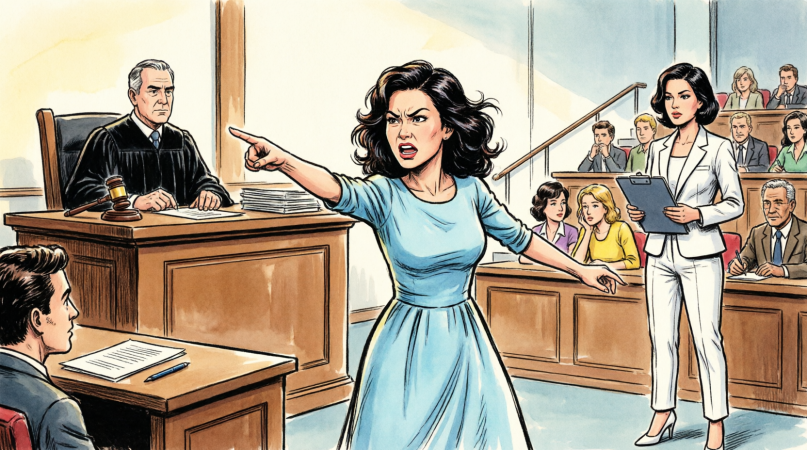
Jason suddenly stepped toward the microphone. “What did you do, Sophia?” The way he said it chilled me. It wasn’t “What happened?” It wasn’t “Are you okay?” It was “What did you do?”, as if I had committed a crime. As if the betrayal was not handing him my house.
My mother turned to look at him for the first time. “She didn’t do anything. I asked her to do it.”
Jason swallowed hard. The skin around his eyes tightened. “Ma’am, with all due respect, this isn’t your business.”
My father stood up from his table. Slowly. That man, who always let my mother speak first because he said she had better aim, walked toward us without taking his eyes off Jason.

“The moment your mother announced in front of everyone that she was going to live in my daughter’s property,” my father said, “it became our business.”
Eleanor let out a little laugh. “Oh, please. Let’s not exaggerate. It was a family comment, a nice joke.”
My mother raised her eyebrows. “A joke?” “Of course,” she said, looking back at the guests. “We’re celebrating. A mother-in-law can’t say anything these days without being accused of being a gold digger.”
A few women laughed quietly, uncomfortably. Jason stepped closer to me. “Honey, give me the mic. Let’s settle this in private.” That “honey” sounded used. Like a napkin passed through too many mouths.
“Did you know your mother planned on moving into my apartment?” I asked him. He smiled, but it didn’t reach his eyes. “It wasn’t like that.” “Then how was it?” “It was a future possibility. My mom is alone. You have space. We could live with her for a while while…” “While what?”

Jason clenched his jaw. My mother didn’t take her eyes off him. Eleanor jumped back in. “While you two learn how to manage a marriage. Because with all due respect, Sophia, you’ve always lived very protected. An apartment of that caliber for two newlyweds is too much. It goes to your head.”
I laughed. It wasn’t a pretty laugh. It was a short, sharp laugh that escaped before I could stop it. “My apartment was too much for me, but perfect for you?”
The background music cut off abruptly. I didn’t know if the DJ realized the party was over or if someone signaled him. The silence became massive.
Jason grabbed my arm. “That’s enough.” It hurt. Not because he squeezed hard, but because he did it without thinking. As if my body were something he could move to accommodate his shame.
My father took a step forward. “Let go of her.” Jason let go.

Eleanor stopped pretending. Her face changed right then and there, in front of everyone. The elegant mother-in-law, the woman with the perfect smile, vanished. Another woman remained—furious, hungry, with her nails digging into her glass.
“This is a humiliation,” she said. My mother tilted her head slightly. “No, Eleanor. Humiliation was taking the microphone at my daughter’s wedding to announce you already had plans for what doesn’t belong to you.” “It was for the family!” “No. It was for you.”
Jason stepped between them. “Mom, stop.” But she couldn’t stop. “Don’t tell me to stop!” she spat at him. “You told me it was already settled. You told me Sophia did everything you asked.”
The whole room heard it. I felt something open up inside me. Something hot. It wasn’t pain yet. It was clarity.
Jason closed his eyes. “Mom…” “No,” I said. My voice was firmer than I expected. “Let her continue.”
Jason looked at me with hatred for half a second. A flash. Quick. Sufficient. Right there, I saw the man my mother had seen before I did.
Eleanor was breathing heavily. “Do you think my son married you to live as a guest in his mother-in-law’s house?” she said. “He deserves better than starting from zero. And if you have, you share. That’s what marriage is for.”
My mother let out a breath through her nose. “How interesting. Because when we asked for a prenuptial agreement, Jason said it was out of love, that he didn’t want money to contaminate anything.”

Jason’s face lost its color. “Did you tell her about that too?” “I didn’t tell her anything,” my mother said. “I was there.”
I remembered that afternoon at the lawyer’s office. Jason smiling, signing without reading, saying: “What we have isn’t measured in property.” My mother sitting behind me, silent. Watching him. Learning.
Eleanor looked at her son. “A prenup?” The question wasn’t an act. She didn’t know. And then I understood that Jason had lied to her, too.
The woman who wanted my apartment didn’t know that her own son had no direct legal route to touch it. That’s why they needed pressure. That’s why they needed a spectacle. That’s why they wanted me to accept publicly, in front of everyone, that it would one day be hers.
They weren’t looking for a house. They were looking for a social confession. A recorded promise. A chain with a white bow.
Jason took my hand. Gently now. Too gently. “Sophia, honey, you’re confusing everything. My mom got excited. It’s not worth ruining our wedding over a comment.” “It wasn’t a comment,” I said. “It was a plan.”

He stared at me. “Be careful.” That word pierced through me. It wasn’t loud. It wasn’t shouted. But my mother heard it. My father did too. And unfortunately for Jason, the microphone was still on.
An entire table stopped whispering. My best friend, Natalie, stood up with her phone held high. “I’m recording everything, Soph.”
Jason turned toward her. “Turn that off.” “No.” “Turn it off!”
My father stepped closer. “Touch her and this party ends even worse for you.”
A waiter set a tray on the bar so carefully that the clinking of the glasses sounded like bells. Eleanor composed herself. She wiped a tear that hadn’t fallen and looked at the guests. “How sad that such a beautiful family starts this way. I only wanted to feel included.”
My mother smiled thinly. “Included in the public records, apparently.”
A few people let out a nervous laugh. Eleanor glared at her. “You judge me because you have money.” “No,” my mother said. “I judge you because you tried to take from my daughter what she built.” “Nobody tried to take anything!”

My mother reached into her purse. She pulled out a beige envelope. The same envelope she had kept at the lawyer’s office. My heart thudded.
“Three months ago,” she said, “someone asked the building manager if Sophia could authorize permanent entry for ‘immediate family.’ They also asked how many storage units the apartment had, if the private elevator could be deactivated for other floors, and if the master key could be changed without Sophia being present.”
Jason froze. Eleanor stopped breathing. “That’s a lie,” she said.
My mother opened the envelope and took out a sheet of paper. “The manager has worked with us for twenty years. He told me the same day.”
I looked at Jason. I wanted him to defend himself. I wanted, still like a fool, for him to say: “That wasn’t me.” But he looked at the floor. And that was his confession.
My wedding dress started to feel heavy, as if it were wet. “Is that why you asked for a copy of my ID?” I asked him.
Jason looked up. “It was for the trip.” “There was no trip,” my father said.
We all turned toward him. My father pulled out his phone, tapped the screen, and held it up. “The travel agency confirmed yesterday that the honeymoon to Italy was canceled six weeks ago. The refund went into an account in Jason’s name.”

The room erupted in murmurs. The air left my lungs. Italy. I had chosen every hotel. I had bought dresses. I had dreamed of walking with him through ancient streets, holding hands, as if the world owed us beauty.
“You canceled our honeymoon?” I whispered. Jason took a step toward me. “I was going to reschedule it.” “With what money?”
He didn’t answer. Eleanor clenched her teeth. “This is all getting out of hand.”
My mother calmly put the papers away. “No, Eleanor. For the first time, it’s getting into hand.”
Then, the final blow. A man in a gray suit stood up from a table in the back. I didn’t know him. Or maybe I did. I had seen him greeting Jason at the start of the party, whispering in his ear, clapping him on the back.
The man walked toward us with a glass in his hand. “Jason,” he said in a low voice, but the room was so quiet that everyone heard, “I need to talk to you.”
Jason turned pale. “Not now, Arthur.” “Yes, now.”
Eleanor closed her eyes. As if she recognized the scent of a tragedy that had been following her footsteps for a long time. Arthur looked at me. Then he looked at my father.
“Sorry for interfering in a family matter, but if the apartment is not in Sophia’s name, we have a problem.”

My mother turned slowly toward him. “We do?” Arthur swallowed hard. “Jason presented that property as a moral guarantee for an investment.”
My father let out a dry laugh. “‘Moral guarantee?’ What an elegant term for a lie.”
Jason held up his hands. “I didn’t sign anything.” “No,” Arthur said. “But you promised that after the wedding you would have access. And your mother confirmed it was already settled.”
Eleanor brought her glass to her mouth, but her hand was shaking so much that the wine spilled onto her gold dress. It looked like dark blood.
I no longer felt the shame. The shame had been replaced by something colder. “How much do you owe?” I asked. Jason looked at me. “Sophia, don’t do this here.” “How much?”
He didn’t answer. Arthur did. “Twelve and a half million.”
The room became a void. My mother closed her eyes for a second. My father cursed under his breath. I looked at my husband. My husband of two hours. The man who had cried when he saw me walk in. The man who had promised to take care of me. The man who had gambled my house before I even finished taking off my veil.

“Is that why you married me?” I asked. Jason opened his mouth. And for the first time, he couldn’t find a lie fast enough.
Eleanor stepped forward. “My son loves you.” “Shut up,” I said.
She froze. I had never spoken to her like that. I didn’t know I could. “Don’t ever say the word love in my name again.”
Jason tried to touch me again. I backed away. “Don’t touch me.” “Sophia…” “No.”
The DJ, who had been paralyzed for twenty minutes, finally turned off the colored lights. The room remained lit only by the chandeliers and cell phones. No one was pretending this was a wedding anymore.
My mother came over to me. “Honey, we’re leaving.” Eleanor let out a desperate laugh. “Leaving? Just like that? After my family spent money on this wedding?”
My father looked at her. “I paid for the wedding.” Eleanor opened her mouth. Nothing came out. “And the venue contract is in my name,” he added. “So you can stay for dinner if you’re hungry. We have nothing left to celebrate.”

My mother carefully took the cake knife out of my hand. I hadn’t even realized I was still holding it. Natalie came running over with my bouquet. “Soph, let’s go.”
I looked at Jason one last time. I expected to feel like I was dying. But I didn’t. What I felt was worse for him. I felt the love leaving me. Not all at once. Not with screams. It was leaving like dirty water down a drain.
“I’ll send someone for my things tomorrow,” I said. Jason approached with red eyes. “You can’t leave me at my wedding.” “You already did that first.”
I walked toward the exit with my mother on one side and Natalie on the other. The guests parted as if I were carrying fire. A few aunts were crying. One of Jason’s cousins was recording secretly.
Claire, his younger sister, was sitting by a pillar with her face covered. When I passed her, she lowered her hands. “I’m sorry,” she said to me.|
I stopped. Jason shouted from behind: “Sophia!” I didn’t turn around. But Claire took my wrist. “My mom has a key.”
I felt the floor move. “What?” Claire cried silently. “I don’t know if it’s for the apartment. She had it made from a photo. Jason gave her your keys one night when you fell asleep. I saw them.”

My mother heard. Her face didn’t change, but her eyes did. They turned to stone. “When?” she asked. “About two weeks ago.”
My father pulled out his phone immediately. “I’m going to have everything changed now.” “It’s not enough,” Claire said. We all stood there looking at her. She looked toward her mother, who remained in the center of the room, stained with wine, faking dignity amidst ruins.
“My mom didn’t want to move in later,” Claire whispered. “She wanted to get in tonight, while you guys were going to Italy. She said once she was inside, no one could get her out without a scandal.”
Jason started walking toward us. “Claire, shut your mouth.” My father stepped in front of me. But Claire, trembling, said the last thing. “And she wasn’t going alone.”
The man in the gray suit set his glass on a table. My mother squeezed my hand. “Who else?” Claire opened her mouth to answer. At that instant, the doors of the ballroom burst open from the outside.
Two security guards rushed in, talking into their radios. Behind them appeared my building manager, Mr. Henderson. He was pale, sweating, his suit jacket disheveled.

“Mr. Roberts,” he said to my father, “sorry for coming here, but you weren’t answering.” My father went rigid. “What happened?”
Mr. Henderson looked first at Jason. Then at Eleanor. Then at me. “Fifteen minutes ago, a young woman and two men tried to enter Ms. Sophia’s apartment with a duplicate key.”
My hands froze. “Who?”
Mr. Henderson took a deep breath. “A young woman and two men. They said they were sent by Mrs. Eleanor.”
Eleanor shouted from the back: “That’s a lie!” But no one looked at her. Because Mr. Henderson held up his phone. On the screen was an image from the private elevator camera. A woman with a cap, dark sunglasses, and a huge bag. Next to her, two men were carrying empty cardboard boxes.
I didn’t recognize the men. But I recognized the bag. It was Eleanor’s. The same gold bag she had brought to my bridal shower.
My mother murmured: “My God.”
Then Jason’s phone vibrated. Once. Twice. Three times. He looked at the screen and his expression completely broke. It wasn’t fear. It was panic. The man in the gray suit also received a call. He walked a few steps away, answered, and stood motionless.

Eleanor started walking toward the exit, but security blocked her path. “Excuse me,” she said. “I feel sick.”
My mother picked up the microphone again. No one knew she still had it. “Eleanor.” Her voice came through the speakers, clear and terrifying. Eleanor stopped. “Before you leave, you should know something.”
Everyone turned. My mother looked at me. Not like a scared mother. Like a woman who had survived a war before I was even born.
“The apartment isn’t in my name just for the sake of keeping it,” she said. “It’s protected in a family trust. And for the last three months, any unauthorized entry attempt triggers an automatic police report.”
Jason’s eyes went wide. “What?” My mother smiled slightly. “I told you my daughter wasn’t going to lose her house because she was too trusting.”
At that moment, outside the ballroom, sirens sounded. Not many. Just two. But they were enough for Eleanor to drop her glass. The glass shattered against the floor.
And I, dressed as a bride, with the bouquet trembling in my hands, understood that my marriage hadn’t lasted even one night. I also understood something worse. My mom hadn’t done all this just out of suspicion. She had been waiting for them to dare.
And when the police entered the ballroom asking for Jason and his mother, my mother leaned into my ear and said the sentence that left me bloodless:
“Honey, this didn’t start with your apartment. It started with Jason’s first wife.”

Part 3:

“First wife?” I repeated.

I didn’t recognize my own voice. It sounded like someone else was speaking from inside my dress—a woman who looked like me but no longer understood the language of the world.

Jason stopped looking at the police. For the first time since everything exploded, he didn’t try to justify himself. He didn’t try to smile. He didn’t reach for my hand. He only looked at my mother. And in that look, there was a silent question, an old rage: How did you know?

My mother didn’t move. “Yes, Sophia,” she said, just for me. “Jason has been married before.”

Eleanor let out a laugh that convinced no one. “That’s ridiculous! My son has never been married!”

The officer at the front, a broad-shouldered man with a tired face, held up a folder. “Eleanor Ortega, Jason Montes, we need you to come with us to give a statement regarding the attempted entry into Sophia Roberts’ property.”

“Give a statement?” Eleanor screamed. “I didn’t do anything! I’m at my son’s wedding!”

PART2:

“Your bag was identified by security cameras,” Mr. Henderson said from the doorway. “And the person carrying it said they were sent by you.”
Eleanor turned toward Jason. This time she didn’t look at him like a mother. She looked at him like a partner—like someone who had just realized the other left too many footprints.
“Jason,” she said through gritted teeth. “Say something.”
He swallowed hard. “This is a misunderstanding.”
I laughed again, but this time without strength. “Is the first wife a misunderstanding too?”
His eyes locked onto mine. “You don’t know what you’re talking about.”
“Then explain it to me.”
“Not here.”
“Everything has happened here, Jason. Your mother announced my apartment here. Your debt appeared here. Your honeymoon lie came out here. Your duplicate key was used while we were here. So yes. Explain it to me right here.”

The guests were no longer whispering. They breathed softly, as if the air itself might shatter. Claire was still next to me, trembling. I took her hand without thinking. She was Jason’s sister, Eleanor’s daughter, but at that moment, she looked like a child escaping a burning house.
My mother looked toward the main door. “You can come in.”
I didn’t understand. Jason did. His face fell before I even saw who it was. A woman appeared behind the police. She wasn’t dressed for a wedding. She wore black pants, a white blouse, her hair pulled back haphazardly, and a folder clutched to her chest. She was about thirty. She was pretty, but in a tired way. Like someone who had been beautiful before learning to sleep in fear.
Jason took a step back. “Laura.”
Eleanor let out a moan. “No.”

The woman didn’t look at Eleanor. She looked at me. And that look hurt more than all the lies combined, because it held no hatred. It held pity.
“You’re Sophia,” she said.
I nodded.
“I’m Laura Mendez.” The name dropped like a stone. “I was Jason’s wife.”
I put a hand to my chest. Not because I was going to faint, but because I felt something inside me wanted to run away.
“When?” I asked.
Laura looked at Jason. “Four years ago. We had a civil ceremony in Charleston. My father had left me a small house in the historic district. It was nothing like your apartment, but it was the only thing I owned. Two months after we got married, Jason convinced me to put it up as collateral for a business deal. He said it was temporary. He said it was for our family.”

Jason shook his head. “It wasn’t like that.”
Laura didn’t even blink. “Your mother took me to the notary.”
Eleanor covered her mouth with one hand, as if trying to contain the story before it all came out.
Laura continued: “She told me that if I didn’t trust my husband, I didn’t deserve to be married. That a good wife doesn’t count square footage or
deeds. That love is proven by sharing.”
I felt the ground abandon me. They were the same words. The same trap in a different dress. My mother held me by the waist.
“And what happened?” I asked, though I no longer wanted to know.
Laura opened the folder. “I signed. Jason lost the money in an investment that never existed. The house was foreclosed on. When I tried to report it, I discovered he had taken out loans using documents I had given him for ‘travel arrangements.’ Then he started saying I was unstable. That I made things up. That I was jealous. That I had gone crazy.”
Jason raised his voice: “Because you were out of control, Laura!”
She smiled. It wasn’t a sad smile. It was the smile of someone who had heard that phrase so many times it had stopped bleeding.
“No, Jason. I was alone.”

The silence that followed was massive. Laura took a deep breath. “I didn’t come here to ruin anyone’s life. I came because your mother found me three months ago, Sophia. She called me and asked if I knew Jason Montes. I hung up on her twice. The third time, she said a sentence that made me stay on the line.”
I looked at my mother. She didn’t lower her eyes.
“What sentence?” I asked.
Laura swallowed hard. “She told me: ‘My daughter owns property and he is far too interested in the keys.’”
Tears of rage welled up. Not for Jason. For my mother. For the times I called her an exaggerator. For the times I told her that not all men approached me for money. For the times I defended Jason to her, to my father, to myself.
“Mom…”
She stroked my back. “We’ll talk later, honey.”
But I was already understanding. My mother hadn’t been cold about my engagement. She had been terrified. And while I was picking out flowers, she was hunting ghosts.
Laura looked at Claire. “Your sister wrote to me too.”
Claire closed her eyes. Jason turned toward her with a fury that made me squeeze her hand tighter.

“You?”
Claire trembled. “I’m tired, Jason.”
“You’re a traitor,” he spat.
My father stepped forward. “Watch how you speak to her.”
Claire finally burst into tears, but she didn’t let go of me. “I heard you guys talking so many times, Jason. I heard Mom say that with Sophia it would work out because she was ‘more docile.’ I heard about Italy. I heard about Arthur. I heard that you needed to cover the money before they came looking for you for real. And when I saw you were sending people to the apartment tonight, I couldn’t take it anymore.”
Eleanor lunged toward her. “Ungrateful!”

Security stopped her before she could reach her. Eleanor thrashed like a wild animal. “I did everything for you! For this family! Because your father left us with nothing! Because I wasn’t going to let anyone see us hit rock bottom! What did you want? For my son to live like some mediocre nobody?”
Laura looked at her with terrible calm. “Your son lives by destroying women.”
Eleanor stood motionless. Jason suddenly changed his expression. I saw him decide. I saw him put on the mask. The same one as always. The repentant man. The sweet man. The man who cried beautifully.
He approached me slowly, palms open. “Sophia, listen to me. Yes, I messed up. Yes, I should have told you about Laura. But that was before you. I love you. I got desperate. I had debts, but I was going to fix it. This all got out of hand because of my mom.”

Eleanor opened her mouth, indignant. “Because of me?”
Jason didn’t even look at her. “I never wanted them to go into your apartment. I swear. I just wanted time.”
I looked at him and, for a second, I saw the man I fell in love with. The one who brought coffee to my office when I had tight deadlines. The one who called me “his favorite designer” even though I was just an interior decorator. The one who wrote vows saying I was his home.
And then I remembered that a thief also knocks before entering if he wants you to open the door yourself.
“You love me?” I asked.
“More than anything.”
“How much do you owe?”
His lips trembled. “Sophia…”
“You can’t answer with a number, but you can say love.”
He said nothing. Arthur, from a corner, spoke in a low voice: “It’s not just the twelve and a half million.”

We all turned. Jason clenched his fists. “Shut up, Arthur.”
“Not anymore,” he said. “I’m going to get dragged down by your lies too.”
My father stepped closer. “Talk.”
Arthur breathed as if he had just chosen the side of the bridge he was going to jump from. “Jason asked for money from three different people using the same promise. He said that after the wedding he would have access to the apartment, that he could sell it or mortgage it because Sophia would ‘sign whatever he wanted.’ He told me his mother-in-law already agreed. He told another that the property was part of a marital inheritance. And he offered a third to bring him in as an investor to buy another pre-construction condo.”
I turned cold. “You were going to leave me without a house and still in debt?”
Jason looked at me with tears in his eyes. “I was going to fix it.”
“No. You were going to hide it.”

“Because you never would have understood the pressure I’m under!”
There it was. The real man. No music. No suit. No vows.
“And what was your plan?” I asked. “That we’d come back from a honeymoon that didn’t exist and find your mom living in my house? That I wouldn’t make a scene because I was already your wife? That I’d be too ashamed to kick her out? That I’d sign out of exhaustion? Out of love? Out of guilt?”
Jason was crying, but his eyes were still dry of any real tenderness. “We were a team.”
“No. I was your prey.” The word came out on its own. And when I said it, something ended. Not the marriage—that was already dead. My need to understand him ended.
The police moved forward. “Jason Montes, Eleanor Ortega, we need you to come with us.”
Eleanor resisted. “You have no right! My lawyer will destroy you!”
My mother stepped close to her, just enough so only the front tables heard. “Call him. And tell him to bring Laura’s file too.”

Eleanor went white. My father added: “And the attempted entry tonight. And the fraudulent travel cancellation. And the loans. And the recorded threats.”
Natalie held up her phone. “In high definition, by the way.”
Jason looked at me one last time. “Sophia, please. Don’t let them take me like this. Think about what we had.”
“That’s exactly what I’m doing.”
“I made you happy.”
“No. You studied me well.”
That sentence hit him harder than any scream. He looked down. The police took him by the arm. Eleanor started to truly cry when she felt the officer’s hand on her elbow. Not from remorse. From defeat.

“Sophia,” she sobbed. “I was going to take care of you like a daughter.”

I looked at her. Stained with wine, mascara running, her gold dress wrinkled, still trying to sell a motherhood she never possessed. “I already have a mother.”

My mother stood still beside me. She didn’t say anything. She didn’t need to.

As they took Jason away, some guests turned away in shame. Others recorded. Others looked at the floor, as if suddenly remembering they had applauded this man two hours earlier. Claire collapsed into a chair. Laura went over to her.

“You did the right thing.”

Claire shook her head. “I did it too late.”

Laura held her gaze. “But you did it.”

I wanted to say something, but I couldn’t. I felt empty. Not destroyed. Empty. Like a house after a robbery, when it still smells like someone else’s perfume and the walls don’t understand what’s missing…

PART3:

My father spoke with Mr. Henderson and the police. My mother spoke with the lawyer. Natalie started organizing my things without me asking. Someone turned off the music completely. The cake remained intact on a table—massive, white, ridiculously perfect.
I walked over to it. The bride and groom toppers were smiling on top of three layers of fondant. Her with a veil. Him in a suit. Both made of sugar. I took the groom figure and pushed it into the cake until it disappeared.
Natalie let out a laugh through her tears. “Sorry,” she said. “I shouldn’t be laughing.”
“I should.”
And for the first time that night, I breathed. Not perfectly, but I breathed. Laura approached with the folder against her chest.|
“Sophia, you don’t have to talk to me now.”
“I want to.”
We sat at an empty table, far from the onlookers. I still had the dress on. She looked at me with a cautious sadness.
“How did you survive?” I asked her.

Laura took a while to answer. “Badly, at first. I lost the house. I lost friends because Jason made sure to tell his version before I found my voice. I lost a lot of weight. I lost my trust. For months, every time someone said ‘I love you,’ I checked if I had my keys.”
I felt a lump in my throat. “I’m sorry.”
“You don’t have to be. You didn’t do it to me.”
“But I was going to marry him.”
Laura touched my hand. “I did marry him. And it wasn’t my fault either.”
Those words broke me. I didn’t cry when I found out about the apartment. I didn’t cry when I found out about Italy. I didn’t cry when I heard about the twelve million. But I cried there, in front of a woman who had been me before me.
My mother sat on the other side without invading. She was just there. Like she had always been, even when I didn’t see her.

“Why didn’t you tell me?” I asked her.
She looked at me with exhaustion. “Because I needed proof. Because if I told you ‘Don’t get married, I investigated your boyfriend and found an ex-wife who says he robbed her,’ you would have run to him. And he would have cried. And he would have said I wanted to control your life. And maybe you would have believed him.”|
It hurt because it was true. “I would have believed him,” I whispered.
“I know.” She didn’t say it with reproach. That hurt more.
“That’s why we moved the apartment to the trust,” she said. “That’s why we alerted the manager. That’s why we let them feel safe. Thieves show themselves when they think the door is already open.”
I looked toward the exit where they had taken Jason. “You used me as bait.”My mother closed her eyes. My father, who had just approached, stopped upon hearing me.
“No,” she said. “I put a net under you before you fell.”

I wanted to get angry. I wanted to tell her she should have trusted me. But the truth sat between us: I hadn’t trusted myself. I had seen signs and turned them into “details.” I had heard phrases and called them “nerves.” I had felt fear and named it “love.”
My mother took my hand. “Sophia, I couldn’t tear you away from him. You had to see it.”
“I saw it too late.”
Laura shook her head. “No. You saw it before you signed your life over to him.”
Outside, the sirens faded. The room was left with a strange silence, like after a storm. My father approached and carefully took off my veil. He didn’t say “I told you so.” He didn’t say “Why didn’t you listen.” He just kissed my forehead.
“Let’s go home, Soph.”
That word pierced me. Home. For a moment I thought about my apartment, the walls I chose, the light in the living room in the morning, the books by the window. I thought of a young woman in a cap trying to get in with empty boxes. I thought of Eleanor imagining my drawers as hers.

“I don’t want to go to the apartment tonight,” I said.
“We won’t,” my mother replied. “The locks are already being changed. Security is staying there. You’re coming with us.”
Claire raised her head. “And me?”
We all looked at her. Her face looked so small. “I can’t go back to my mom. Not after this.”
My father sighed, but not with annoyance. With humanity. “Your brother and your mother are going to be busy for a while.”
Claire looked down. “I have nowhere to go.”
Laura spoke before anyone else. “You can stay with me tonight.”
Claire looked at her, surprised. “With you?”
“With me. Not because I owe you anything. Because I know what it’s like to be afraid of that family.”
Claire burst into tears. I understood then that that night not only had my house been saved—a door had also been opened for other women who had been locked in Jason’s version of reality for years.

Before leaving, I stopped in front of the guests. I don’t know why. Maybe because they had seen my shame and I needed them to see my exit, too. I took the microphone one last time. My hand was no longer shaking.
“Thank you for coming,” I said. An uncomfortable murmur went through the room. “I’m not going to give explanations for what everyone heard. I’m not going to apologize for canceling a celebration built on lies. I only want to say one thing, especially to the women here.”
My mother looked at me. Laura did too.
“When someone asks you for a ‘proof of love’ that makes you feel smaller, it isn’t love. When someone uses the word ‘family’ to get their hands on what is yours, it isn’t family. When someone is offended because you protect yourself, they aren’t hurt—they’re exposed.”
Several women looked down. One of Jason’s aunts started crying silently.

“I didn’t lose a marriage today,” I continued. “I lost a lie before it could take any more from me. And even though it hurts, even though I’m ashamed, even though the gossip will travel faster than the truth tomorrow, I’d rather be the bride who left in time than the wife who stayed out of pity.”
I set the microphone on the table. No one applauded at first. Then Natalie did. A loud clap. Then my father. Then Laura. Then several tables. It wasn’t a party applause. It was something else. A permission. A farewell.
I walked out of the ballroom without looking back. Outside, the early morning smelled like rain even though it wasn’t raining. My dress dragged petals, dust, and invisible pieces of a life that was no longer going to exist.
In my parents’ car, I took off my shoes. Natalie sat in the front. My mother sat with me in the back. My father drove without saying anything for several blocks. I looked out the window. The city looked the same. The closed stalls. The changing traffic lights. A couple laughing on a corner. A man sweeping the sidewalk. It felt unfair that the world didn’t stop when mine had just collapsed. But it also felt like a miracle. Because if the world kept going, maybe I could too.

My phone started vibrating. Messages. Calls. Videos. Audio clips. I didn’t open anything. My mother gently took the phone from me.
“Not today.”
I rested my head on her shoulder. “Forgive me.”
“No.”
“I said mean things to you so many times because of him.”
“Yes.” I looked at her, surprised. She smiled slightly. “But I don’t forgive you because you don’t have to ask for forgiveness for having wanted to be happy.”
Then I really cried, like a little girl. I cried until the makeup was completely gone. I cried for Italy. For the dress. For the song we never danced to. For the version of Jason I invented so I could love him. I cried for Laura. For Claire. For me.
My mother held my hand the whole way.
When we got to my parents’ house, the sky was starting to lighten. I walked in with the wedding dress and bare feet. The living room where I spent my childhood welcomed me with the smell of old coffee and wood. My father went to get a blanket. Natalie helped me unzip the dress. My mother lent me pajamas.

When I looked in the mirror—no veil, no heels, no bouquet—I didn’t see an abandoned woman. I saw a woman who had been returned to herself.

I slept for two hours. At nine in the morning, the lawyer arrived with a folder. At ten, Mr. Henderson confirmed the locks were changed, the system updated, and the videos backed up. At eleven, Laura sent a message: “Claire is with me. She’s scared, but safe.”

By noon, my marriage was family news, then group gossip, then a viral clip on social media. As I had imagined, people talked. Some said it was embarrassing. Others said my mom exaggerated. Others said a woman should support her husband through thick and thin. One lady who didn’t even know me wrote that this is why men don’t get married anymore.

I read all of that three days later, sitting in my apartment, with my father installing a new camera and Natalie eating wedding cake straight out of a box.

“It’s actually really good,” she said with her mouth full. “The groom turned out to be a rat, but the cake wasn’t to blame.”

I laughed. Really laughed. The apartment no longer felt invaded. It smelled like bleach, fresh flowers, and coffee. My mother had put eucalyptus branches in the entryway “to clear the energy,” even though she didn’t believe in that stuff. My father pretended not to believe it either, but he let her put them up.

That afternoon, Laura came over. She brought bread. Claire came with her. She had dark circles under her eyes, a backpack, and the look of someone learning to breathe without asking for permission.

The four of us sat in my living room. None of us really knew what we were to each other. Not friends yet. Not family. Maybe just survivors of the same fire.

Laura told me she would reopen her case with the new evidence. Claire agreed to testify. Arthur did too. The men who had tried to enter the apartment said a woman named Eleanor paid them to “help with an urgent move.” The young woman in the cap turned out to be one of Jason’s cousins, who thought it was all legal because “the lady was going to live there already.”

Jason sent me a letter from his lawyer’s phone. I didn’t read it. My lawyer did. It said he was sorry, that his mom manipulated him, that he never meant to hurt me, that I was the love of his life.

The last line said: “Please, don’t destroy the little I have left.”

When my lawyer finished reading it, I asked for a pen. On the printout, under his sentence, I wrote: “I didn’t destroy anything. I only closed my door.” And I sent it back.

Weeks passed. The annulment moved faster than I expected because Jason had hidden relevant information and because his legal situation was complicated by the reports. I’m not going to say it was all easy. It wasn’t. There were nights I woke up sure I heard a key. There were days I was too ashamed to go out. There were moments I missed the Jason who never existed and I hated myself for missing him.

But every time I doubted, Laura sent me a message: “Remember: you don’t miss the thief. You miss the house he painted in your head.”

Claire started therapy. I did too. My mother never once said “I told you so.”

One Sunday, almost two months later, I invited her to breakfast at my apartment. I set the table with nice plates, juice, pastries, and flowers. When she arrived, she stood in the entryway looking at everything.

“What?” I asked her.

“Nothing.”

“Mom.”

She sighed. “I thought this place would hurt you.”

I looked at my living room. My window. My bookshelf. The new door. The space someone tried to turn into a cage. “It did hurt,” I said. “But not anymore.”

She smiled. “Then it really is yours.”

We sat down to breakfast. Then I pulled out a box. Inside was my wedding dress—clean, folded, with no destination.

“I don’t know what to do with it,” I confessed.

My mother touched it carefully. “You could keep it.”

“I don’t want to.”

“You could sell it.”

“No.”

That afternoon I called Laura and Claire. Natalie arrived with scissors, non-alcoholic wine, and a speaker.

We cut up the dress. Not with rage—with patience. The skirt became tablecloths for a foundation that helped women start over. The lace became handkerchiefs. The buttons, small decorations. With a piece of the tulle, Claire made a white bow and tied it to my door handle.

“To remind you that no one enters here without permission,” she said.

I hugged her. she cried. I did too.

Months later, Jason accepted a plea deal in one of the cases and remained under trial for the others. Eleanor, who at first swore she was ill, ended up pointing at her own son when she realized he had used her too. I didn’t feel joy. I didn’t feel pity.

Sometimes justice doesn’t come like thunder. Sometimes it comes as paperwork. As signatures. As hearings where you learn not to tremble. As a new lock. As a woman speaking her truth without apologizing.

The last time I saw Jason was in a courtroom. He was thinner. No expensive suit. No smile. He looked for me when I walked in. I didn’t look away. He tried to approach, but his lawyer stopped him.

“Sophia,” he said.

I didn’t answer.

“I really did love you.”

I looked at him for a second. And I understood that this was the last key he was trying to use. The key of doubt. The key of nostalgia. The key of “maybe.”

I smiled slightly. “But I don’t.”

I walked into the room without looking back. That day I signed my freedom. There was no music. No rice. No applause. Just my name on a paper and my calm breathing.

As I walked out, my mother was waiting for me with coffee. My father with a bag of pastries. Natalie with sunglasses, even though it was cloudy. Laura with Claire. Five women and a good man on the sidewalk of a courthouse, celebrating something that didn’t look like a celebration to anyone else.

“What now?” Claire asked.

I looked at the gray city sky. I thought of the wedding that wasn’t. Of the house I didn’t lose. Of the woman I was walking into that ballroom with a bouquet in my hands. I wanted to hug her. I wanted to tell her she wasn’t stupid—that she was just in love. That love didn’t save her, but the truth did.

“Now,” I said, “we eat.”

My father held up the bag. “That was already decided.”

We laughed. And we walked together. Not toward a perfect ending. Not toward a life without fear. But toward a life that was mine.

That night I returned to my apartment alone. I opened the door with my new key. I turned on the light. Everything was in its place. I set my bag on the table, took off my shoes, and walked to the window. The city shined below—immense, indifferent, and alive.

I thought of Jason, of Eleanor, of their plans, of their lies. I thought of the young woman with empty boxes who tried to come and take my world away. Then I looked at my walls. My books. My cup by the sink. My reflection in the glass.

And for the first time since the wedding, I didn’t feel that my marriage hadn’t lasted even one night. I felt something much more powerful.

I felt that my life had stayed up waiting for me.

I closed the curtains. I locked the door. And I slept in my home

PART4:

The Secret Letter Hidden Inside the Music Box
Three years after the night Hope was born inside the broken elevator, life had finally become something Clara trusted again.
Not perfect.
Not painless.
But real.
Warm Saturday mornings. Burned pancakes because Julian got distracted kissing her in the kitchen. Chloe’s endless piano disasters. Hope’s tiny bare feet running through the halls of the house Julian once sketched in a leather-bound dream journal.
It was the kind of happiness Clara once believed people like her were never allowed to keep for long.
And maybe that was why the fear never completely left her.
Sometimes, late at night, she still woke up reaching for Julian in the dark just to make sure he was still there.
Still real.
Still hers.
The old antique music box sat permanently on the bookshelf beside the fireplace now. The same restored box Julian had once placed on her counter as proof that broken things could sing again.
Hope loved it more than any toy in the house.
Every night before bed, she asked to hear the tiny crystal waltz.
Every night, Julian wound the key.
Every night, Clara watched him carefully.
Because even after all these years…
there were moments when sadness still passed quietly through his eyes like a shadow he thought no one noticed.
He never talked about his parents.
Never talked about the night they died.
Never talked about why he became the emotionally frozen man Clara first met.


And Clara had stopped asking.

Love had taught her something important:
sometimes healing came slowly…
and sometimes people opened locked doors only when they were finally ready.

But fate had its own timing.

It happened on a rainy Thursday afternoon.

Julian had flown to New York for an emergency meeting with investors. Chloe was at school. Hope was home with Clara after recovering from a mild fever.

Outside, thunder rolled softly over Boston.

Inside, Hope sat cross-legged on the living room rug in pink dinosaur pajamas while Clara folded laundry nearby.

“Mama,” Hope asked suddenly, “can I hear Daddy’s song?”

Clara smiled tiredly. “Only once. Then nap time.”

Hope grinned victoriously and climbed onto the couch, grabbing the old music box carefully with both tiny hands.

Clara returned to folding sweaters.

Then she heard it.

A strange sound.

Not music.

A sharp metallic click.

Her head snapped up.

Hope frowned. “Mama… it broke.”

Clara immediately crossed the room. “Don’t force it, baby—”

But before she reached her, the bottom panel of the antique music box suddenly shifted loose and fell open onto the rug.

Something slid out.

An envelope.

Old.

Yellowed.

Hidden deep inside the wooden compartment.

Clara froze.

Hope blinked innocently. “Daddy hid treasure?”

The world suddenly felt very quiet.

Very still.

Slowly, Clara picked up the envelope.

Her name was written across the front.

Clara.

Not in Julian’s handwriting.

Her stomach tightened instantly.

There was no stamp.

No date.

Only one sentence written beneath her name.

If you are reading this… then Julian finally chose love over fear.

A cold chill crawled slowly down Clara’s spine.

Hope tilted her head. “Mama?”

Clara’s fingers trembled as she opened the envelope.

Inside was a folded letter.

And a photograph.

The second Clara saw the picture, all the air vanished from her lungs.

It was Julian.

Younger. Maybe twenty-four.

Standing beside a pregnant woman Clara had never seen before.

But that wasn’t what terrified her.

The woman was wearing a hospital bracelet.

And across the bracelet was written one word:

MATERNITY.

Clara’s pulse exploded in her ears.

No.

No no no.

Her eyes dropped to the letter.

The handwriting matched the envelope.

Elegant.
Feminine.
Controlled.

Dear Clara,

If Julian truly gave you his heart, then this box finally opened the way it was always supposed to.

Which means he finally became the man I prayed he could become.

Before you judge him for what you are about to learn, understand this first:

He was once destroyed by a loss so unbearable it nearly killed him too.

Clara’s hands began shaking violently.

Rain hammered harder against the windows.

Hope climbed quietly into her mother’s lap, sensing something was wrong.

Clara kept reading.

Ten years ago, I was engaged to Julian.

I was carrying his child.

And on the night our daughter died…

he blamed himself.

The letter slipped slightly in Clara’s trembling hands.

Her heart stopped.

No.

Julian had never told her this.

Never.

Not once.

Tears blurred the ink as she forced herself to continue.

He never recovered from losing her.

That was the real reason he feared love.
The real reason he could not say the words you begged to hear.
Because the last time he allowed himself to build a future around someone he loved…

he buried both of them.

Clara covered her mouth.

Everything suddenly made horrible sense.

The fear.
The emotional distance.
The panic during Hope’s birth.
The way Julian sometimes woke from nightmares gasping beside her.

Oh God.

He had already lived through losing a child once before.

And he had carried it alone.

Hope looked up softly. “Mama… why are you crying?”

Clara pulled her daughter tightly against her chest.

At the bottom of the page, one final paragraph waited.

And after Clara read it…

her entire world shifted again.

Because the woman wrote:

There is one final truth Julian never had the courage to tell you himself.

Our daughter did not die naturally.

Someone caused the accident that killed her.

And after all these years…

that person has finally returned.

# 😨 PART 3 — The Woman From Julian’s Past Walked Into Clara’s Hospital… Holding a Child That Shouldn’t Exist

The letter slipped from Clara’s fingers and landed silently on the hardwood floor.

Rain battered the windows of the living room while Hope curled against her chest, half-asleep and completely unaware that her mother’s world had just cracked open again.

Someone caused the accident that killed her.

That person has finally returned.

Clara read the sentence again.

And again.

Her pulse thundered painfully in her throat.

For three years, she had believed she knew every important scar Julian carried.

But this…

This was not a scar.

This was a buried grave.

A secret so devastating Julian had hidden it even while building a life beside her.

“Mama?” Hope whispered softly. “Did Daddy do something bad?”

The question stabbed straight through Clara’s heart.

“No, baby,” she whispered immediately, holding her tighter. “No… Daddy isn’t bad.”

But her own voice lacked certainty.

Because suddenly, Clara didn’t know what was true anymore.

—

Julian returned home shortly after nine that night.

The second he stepped through the front door, he sensed it.

The silence.

Not peaceful silence.

Dangerous silence.

The kind that settles over a house right before lightning strikes.

His dark coat was still wet from the rain when he entered the kitchen and saw Clara sitting alone at the table.

The music box rested between them.

Open.

Julian froze instantly.

All color drained from his face.

“You opened it,” he whispered.

Clara stared at him for a long moment before answering.

“No,” she said quietly.
“Hope did.”

Julian looked physically ill.

His eyes dropped to the letter beside her hand.

For one terrible second, Clara saw genuine fear enter him.

Not fear of anger.

Not fear of losing an argument.

Fear of losing her.

“Clara…” he began carefully.

“Who was she?”

His jaw tightened.

The storm outside rumbled through the windows.

Finally, Julian sat down slowly across from her like a man approaching his own execution.

“Her name was Emilia.”

The name settled heavily between them.

“She was my fiancée,” Julian admitted quietly. “Before you.”

Clara swallowed hard.

“How did she die?”

Julian closed his eyes briefly.

And when he spoke again, his voice sounded broken in places.

“We were driving home from dinner. She was eight months pregnant.” His fingers trembled slightly against the table. “A truck ran a red light.”

Clara felt sick.

“She died instantly?”

“No.”

One word.

But the pain inside it was unbearable.

Julian looked away toward the dark windows.

“She was alive when they pulled us out of the car.”

Clara’s chest tightened sharply.

“She kept asking about the baby,” he whispered. “Even while she was bleeding.”

The room suddenly felt too small to breathe in.

Julian continued staring into the storm.

“I held her hand in the ambulance while she begged me to save our daughter first.” His voice cracked violently. “And I couldn’t do anything.”

Clara pressed trembling fingers against her mouth.

Oh God.

No wonder he feared love.

No wonder he panicked every time she got sick during pregnancy.

No wonder the elevator nearly destroyed him.

Because in his mind…

he had already watched the woman he loved die carrying his child once before.

“You blamed yourself,” Clara whispered.

Julian laughed bitterly.

“The police blamed me too.”

Her eyes snapped up.

“What?”

He finally looked at her.

“The truck driver was drunk,” Julian said. “But I was driving above the speed limit. The investigation said if I had been going slower…” He swallowed painfully. “The impact might have been survivable.”

Silence swallowed the room.

Clara suddenly understood everything.

The emotional walls.
The inability to say I love you.
The obsession with fixing things.
The terror of building a family.

Julian hadn’t been afraid of commitment.

He’d been afraid of becoming a murderer twice.

Tears burned Clara’s eyes.

“You should’ve told me,” she whispered.

“I wanted to.” His voice cracked again. “A thousand times, Clara. But every time I looked at you pregnant with Hope…” He shook his head helplessly. “I thought if you knew what happened to Emilia, you would see me differently.”

“And the letter?” Clara asked softly. “Who wrote it?”

Julian’s expression darkened instantly.

“Victoria.”

Clara blinked.

“Victoria knew?”

“She knew everything.” Julian rubbed both hands over his face. “After Emilia died, Victoria was the only person who dragged me out of the apartment when I stopped functioning. She saved my life long before she became my wife.”

A horrible realization slowly formed in Clara’s mind.

“She left the letter intentionally.”

Julian nodded once.

“She told me years ago that someday the truth would find its way out.” He looked down at the music box. “I just prayed it would happen after I became someone worthy of you first.”

Clara’s anger began crumbling under the sheer weight of his grief.

But one question still remained.

The most terrifying one.

“The letter said Emilia’s death wasn’t an accident.”

Julian went completely still.

Every muscle in his body tightened.

Then came the knock.

Three sharp knocks at the front door.

Both of them jumped.

At nearly ten o’clock at night, nobody visited unexpectedly.

Julian stood slowly.

Something dangerous entered his expression.

“Stay here,” he said quietly.

Clara’s pulse accelerated instantly.

Julian crossed the dark living room and opened the front door.

A woman stood beneath the porch light.

Tall.
Elegant.
Dark hair soaked from rain.

And beside her…

stood a little girl around seven years old.

The child had Julian’s eyes.

Clara’s entire body went cold.

The woman looked directly at Julian and said the one sentence capable of destroying every ounce of peace they had rebuilt together.

“You need to tell your wife the truth,” she said calmly.
“Because this child is yours.”

# 

😨 PART 4 — The Child Standing at Julian’s Door Had His Eyes… But the Truth Was Far Worse

For one endless second, nobody moved.

The rain poured behind the woman like static from another world.

Julian stood frozen in the doorway.

Clara couldn’t breathe.

And the little girl beside the stranger stared quietly up at Julian with wide gray-blue eyes identical to Hope’s.

Not similar.

Identical.

The child clutched a small stuffed rabbit against her chest and whispered nervously:

“Mommy… is that him?”

Clara felt the blood drain from her entire body.

Julian finally found his voice.

“No,” he said hoarsely.
“That’s impossible.”

The woman’s expression hardened slightly.

“Her name is Lily.”

Julian staggered backward once as though physically struck.

Clara stood slowly from the kitchen table.

Every survival instinct in her screamed.

Not again.

Please not again.

Hope’s sleepy voice suddenly floated from upstairs.

“Mama?”

Clara snapped back to reality instantly.

“Stay upstairs, baby!” she called, panic leaking into her voice.

Julian turned toward Clara immediately.

“Clara, I swear to you—”

“Do NOT lie to me right now,” she whispered.

The pain in her voice nearly destroyed him.

The woman stepped inside calmly, rainwater dripping from her coat onto the hardwood floor.

“I’m not here to ruin your marriage,” she said coldly. “I’m here because someone is trying to kill my daughter.”

The entire room went silent.

Julian stared at her.

“What?”

She reached into her purse and pulled out a thick manila folder.

“Three days ago, someone broke into my apartment.”

Her hands trembled for the first time.

“They didn’t steal anything.” She looked down at Lily. “They only searched her bedroom.”

A cold chill crawled down Clara’s spine.

Julian slowly shut the front door.

“Who are you?” Clara asked carefully.

The woman looked at her.

“My name is Ava Mercer.” Her eyes shifted briefly toward Julian. “And seven years ago, I worked for the private investigation firm hired after Emilia’s accident.”

Julian’s face changed instantly.

Recognition.

Horror.

“No…” he whispered.

Ava nodded grimly.

“Yes.”

She opened the folder and spread photographs across the kitchen counter.

Crime scene images.

Vehicle reports.

Insurance files.

Police documents.

Clara stepped closer carefully.

Then she saw it.

The photograph of Emilia’s crushed car.

But something was circled in red marker near the underside of the vehicle.

A cut brake line.

Clara’s stomach dropped.

Julian looked physically sick.

“The crash wasn’t an accident,” Ava said quietly.
“Someone tampered with the car before you left dinner that night.”

Clara looked at Julian in disbelief.

“You never knew?”

“The police told me the damage came from the collision,” he whispered.

Ava shook her head.

“They were wrong. Or paid to be wrong.”

The room suddenly felt dangerous.

Like invisible eyes were watching through the windows.

Julian’s breathing became uneven.

“All these years…” he whispered.
“I thought I killed her.”

“No,” Ava said firmly.
“You were manipulated into believing that.”

Clara watched the walls around Julian crack apart in real time.

A decade of guilt.

A decade of self-hatred.

Built on a lie.

Then Clara looked toward the little girl again.

Lily sat silently on the couch hugging her stuffed rabbit tighter.

And suddenly Clara realized the most terrifying thing of all.

“She’s not your daughter,” Clara whispered slowly.

Ava looked at her.

“No.”

Julian blinked in confusion.

“What?”

Ava inhaled shakily.

“Lily is Emilia’s daughter.”

The room exploded into silence.

Julian stopped breathing.

Clara stared at the child.

No.

No no no.

That was impossible.

“She died,” Julian whispered weakly. “The baby died. I saw the reports.”

Ava’s eyes filled with tears.

“The baby survived for sixteen minutes after emergency delivery,” she said softly. “But someone at the hospital altered the records.”

Julian grabbed the counter to stay standing.

“You’re lying.”

“I wish I was.”

Ava slid one final paper across the table.

DNA test results.

Julian’s knees nearly gave out.

Positive paternal match.

The little girl sitting quietly in his living room…
was his daughter.

Alive.

After ten years.

Clara covered her mouth in absolute shock.

“Oh my God…”

Julian turned slowly toward Lily.

The little girl looked frightened now.

Small.

Confused.

“Mommy said you didn’t know about me,” she whispered timidly.

Julian’s entire face shattered.

A broken sound escaped his throat before he dropped to his knees in front of her.

For ten years he believed he buried this child before she ever opened her eyes.

And now she was sitting three feet away from him holding a stuffed rabbit.

Alive.

Breathing.

Looking at him with Emilia’s eyes.

Julian began crying so hard he could barely speak.

Lily hesitated nervously before reaching out one tiny hand.

“Are you my daddy?”

That single sentence completely destroyed him.

Julian bowed forward, covering his face with shaking hands as years of grief detonated inside his chest.

“Yes,” he sobbed.
“Yes, baby… I’m your daddy.”

Even Clara started crying.

But Ava’s expression never softened.

Because she wasn’t finished.

“There’s more,” she said quietly.

Julian looked up slowly, devastated.

Ava’s voice dropped almost to a whisper.

“The person who ordered Emilia’s death finally resurfaced two months ago.”

Fear moved instantly through the room.

“And they know Lily exists now.”

Clara’s pulse accelerated.

Julian stood immediately.

“Who?”

Ava looked him dead in the eyes.

Then said the name that made his entire face turn pale.

“Your father.”

# 😨 PART 5 — Julian’s Father Was Supposed to Be Dead… But the Truth Was Even Darker

“That’s impossible.”

Julian’s voice came out hollow.

Almost childlike.

Because some fears are so old they never truly leave you.

Rain slammed against the windows while the grandfather clock in the hallway ticked loudly through the silence.

Ava didn’t look away.

“Your father is alive.”

Julian staggered backward once.

“No.” He shook his head violently. “I buried him. I identified his body myself after the fire.”

Clara’s stomach tightened instantly.

Fire?

Julian had never mentioned a fire.

Not once.

Ava slowly removed another photograph from the folder and slid it across the counter.

It showed an old newspaper clipping.

BOSTON DEVELOPER AND WIFE KILLED IN ESTATE FIRE

Below the headline stood a younger Julian beside two covered stretchers, his face pale and emotionally vacant.

Clara looked up at him in shock.

“You never told me this.”

Julian looked sick.

“I was nineteen.”

His voice trembled now.

“The estate burned down in the middle of the night.” He swallowed hard. “They found two bodies upstairs.”

Clara suddenly understood why he hated darkness.

Why he panicked during the elevator blackout.

Why fear always lived behind his eyes.

Ava spoke carefully.

“The bodies were never fully identified.”

Julian stared at her.

“What?”

“The fire damage was too extensive. Dental records were used.” Ava’s expression darkened. “Records that were later discovered to be altered.”

The room became deathly still.

“No…” Julian whispered again.

Ava nodded once.

“Your mother died in that fire.”

A cold wave passed through Clara.

“But your father survived.”

Julian looked like he might collapse.

For years he had mourned both parents.

For years he had built his life around surviving their deaths.

And now—

one of them had abandoned him willingly.

“Why?” Julian whispered painfully.

Ava’s eyes softened slightly.

“Because your father was involved in something far darker than anyone realized.”

She opened another file.

Financial reports.
Construction permits.
Shell corporations.

Clara’s doctor instincts immediately noticed the pattern.

Money laundering.

Illegal developments.

Payoffs.

Ava pointed toward one specific document.

“Your father used his company to hide millions through fake infrastructure projects.” She looked at Julian carefully. “Emilia discovered it.”

Julian froze.

“She handled the charity division for my company,” he whispered.

“Yes,” Ava confirmed. “And she found evidence connecting him to multiple illegal deals… including the building collapse that killed six people in South Boston twelve years ago.”

Clara felt physically ill.

Julian’s father had covered up deaths.

Then Emilia found proof.

Ava’s next sentence landed like a bomb.

“She told him she planned to go to the police.”

Julian’s face turned completely white.

“No…”

Ava’s eyes filled with pity.

“He arranged the crash three days later.”

The room spun.

Julian grabbed the edge of the counter hard enough his knuckles turned bloodless.

For ten years he blamed himself for Emilia’s death.

When in reality…

his own father murdered her.

A terrible broken sound escaped Julian’s throat.

Clara moved instinctively toward him, but he stepped back suddenly like he didn’t deserve comfort.

“I brought him into her life,” he whispered. “If she never met me—”

“Stop.” Clara’s voice cracked sharply through the room.

Julian looked at her.

Tears streamed down his face openly now.

“This is my fault.”

“No,” Clara said fiercely, crossing the room and grabbing his face in both hands. “Your father made that choice. Not you.”

“But Emilia died because of my family.”

“And YOU almost died because of him too!” Clara shouted.

The words hit him hard.

For the first time, Clara saw something terrifying beneath Julian’s grief.

Fear.

Not for himself.

For them.

For her.
For Hope.
For Chloe.
For Lily.

Because suddenly this wasn’t history anymore.

It was happening again.

Ava looked toward the windows uneasily.

“We don’t have much time.”

Julian wiped his face roughly. “What do you mean?”

“I mean somebody followed me tonight.”

Every light feeling in the room vanished instantly.

Clara’s pulse exploded.

“What?”

Ava walked quickly toward the curtains and pulled them aside slightly.

Across the street…

a black sedan sat motionless beneath the rain.

Engine running.

Headlights off.

Watching the house.

Julian moved instantly.

“Get the girls upstairs. Now.”

Clara grabbed Hope’s tiny hand while Ava rushed toward Lily.

But before they could move—

the front lights suddenly died.

The entire house went black.

Hope screamed upstairs.

And from somewhere outside…

came the sound of a car door slowly opening.

Julian’s entire body tensed.

Because now he knew exactly where his fear of darkness began.

And this time…

his family was inside it.

# 

😨 PART 6 — The Night Julian Finally Became the Man His Father Could Never Be

Darkness swallowed the house instantly.

Hope’s terrified scream echoed from upstairs.

“MAMA!”

Clara’s entire body reacted before her mind could think.

“Hope!” she cried, starting toward the staircase.

But Julian caught her wrist hard.

“No.” His voice was sharp and terrifyingly calm. “Stay with the girls.”

Outside, thunder shook the windows.

The black sedan still waited beyond the rain like a predator watching wounded prey.

Another car door opened.

Then footsteps.

Slow.

Deliberate.

Crunching across wet gravel toward the front porch.

Julian’s face changed completely.

The fear was still there.

But something else had finally grown stronger than fear.

Protectiveness.

The kind capable of turning broken men dangerous.

Ava immediately pulled Lily behind her…

PART5:

“He found us faster than I thought.”
Clara’s doctor instincts screamed that something was horribly wrong.
Not random danger.
Planned danger.
Julian moved toward the fireplace calmly and reached inside the wooden cabinet beneath it.
Clara stared.
“What are you doing?”
He pulled out a locked metal box.
Then opened it.
Inside sat a handgun.
Clara froze.
Julian noticed instantly.
“I bought it after Hope was born,” he said quietly. “I prayed I would never touch it.”
Another loud bang hit the front door.
Hope screamed again upstairs.
“Mama please!”
Clara ran.
This time Julian let her go.
She flew upstairs two steps at a time and burst into Hope’s room.
Her little daughter sat curled beneath blankets shaking violently.
“Mama…”
Clara immediately grabbed her into her arms.
“It’s okay, baby. I’ve got you.”
But even as she said the words…
she wasn’t sure they were true.
Downstairs, another bang shook the front entrance.
Then silence.
Terrible silence.


Julian stood in the dark living room staring at the door while rainwater rolled down the windows behind him.

Ava approached carefully.

“He doesn’t just want Lily.”

Julian didn’t look away from the entrance.

“What else?”

Ava hesitated.

Then finally admitted the truth.

“Emilia copied the financial files before she died.”

Julian turned sharply.

“Where are they?”

Ava swallowed hard.

“She hid them.”

A cold realization crossed Julian’s face.

“The music box.”

Ava nodded slowly.

“She trusted only you.”

Everything clicked together instantly.

The hidden compartment.
Victoria’s letter.
The timing.

Emilia knew she was in danger before the crash.

And she left evidence behind.

Julian looked toward the shelf where the music box still sat quietly beneath the shadows.

Then—

CRASH.

The back kitchen window exploded inward.

Glass shattered across the floor.

Hope screamed upstairs again.

Clara clutched her tighter.

Downstairs, Ava grabbed Lily while Julian moved instantly toward the sound.

A dark figure climbed through the broken window.

Tall.

Broad shoulders.

Gray hair wet from rain.

And when lightning flashed through the kitchen—

Julian stopped breathing.

Because he recognized the face immediately.

Older now.

Harder.

But unmistakable.

“Dad.”

The man stepped fully into the house.

His expression remained calm.

Almost emotionless.

Like this was business.

Not family.

“Hello, son.”

Clara stood frozen at the top of the staircase holding Hope tightly against her chest.

The man looked up slowly.

His eyes landed on her.

Then Hope.

Then Lily hiding behind Ava.

No warmth entered his face.

Only calculation.

“You built quite a family,” he said coldly.

Julian stepped directly between him and the staircase.

“You’re not touching them.”

His father almost smiled.

“That’s exactly what your mother used to say.”

The sentence hit Julian like a knife.

“Don’t you dare talk about her.”

For the first time, anger entered the older man’s expression.

“She chose weakness over survival.”

Julian’s hands curled into fists.

“You killed Emilia.”

“No,” his father corrected calmly. “Emilia endangered everything I built.”

“You murdered a pregnant woman.”

His father’s voice remained horrifyingly steady.

“I removed a threat.”

Clara felt sick.

This wasn’t a damaged man.

This was a monster wearing human skin.

Julian’s father looked toward Lily again.

“And unfortunately… unfinished business survived.”

Lily whimpered softly.

Julian immediately moved wider to shield everyone behind him.

The older man sighed.

“You were always emotional, Julian. That’s why you disappointed me.”

“No,” Julian said quietly.

For the first time in his life…

his voice carried no fear.

“You were disappointed because I became human.”

Lightning flashed again.

And suddenly Clara saw it.

The exact moment Julian stopped being the terrified son trapped inside childhood grief.

Because now he wasn’t fighting for himself.

He was fighting for them.

For Hope.
For Chloe.
For Lily.
For Clara.

For the family he once believed he didn’t deserve.

His father reached slowly inside his coat.

Julian instantly raised the handgun.

“Don’t.”

The older man paused.

Clara’s heart pounded so violently she thought she might faint.

Hope buried her face against Clara’s shoulder crying silently.

“Julian…” Clara whispered shakily.

But Julian never looked away from his father.

For years he ran from darkness.

Tonight…

he finally stood inside it.

And refused to move.

His father slowly pulled out not a weapon—

but a lighter.

Silver.

Elegant.

He flicked it once.

Tiny flame.

Julian’s face went pale instantly.

Because suddenly he understood.

The fire.

The house fire years ago.

This man enjoyed flames.

His father smiled faintly.

“You know what burns fastest, son?”

Julian’s grip tightened.

The old man lifted his eyes toward the staircase.

“Happy families.”

Then he dropped the lighter directly onto the gasoline soaking across the shattered kitchen floor.

😨 FINAL PART — The Fire Meant to Destroy Julian’s Family Became the Moment He Finally Broke the Cycle

The flames exploded instantly.

Fire raced across the kitchen floor with a violent roar, swallowing cabinets, curtains, and walls in seconds.

Heat slammed through the house like a living thing.

Hope screamed against Clara’s shoulder.

Lily burst into terrified tears.

Smoke flooded the ceiling.

And through the chaos—

Julian never lowered the gun.

His father stood calmly beyond the firelight, his face glowing orange beneath the rising flames.

Like a man watching art.

“You always feared becoming me,” he said quietly.

Julian’s voice shook with rage.

“No.”
He took one step forward.
“I feared becoming weak enough to let you hurt people I love.”

The old man’s eyes narrowed slightly.

For the first time in his life…

Julian wasn’t backing away.

Another section of the kitchen ignited violently behind them.

Smoke alarms screamed overhead.

Clara’s doctor instincts kicked in instantly.

“We have to get out NOW!”

A burning beam crashed beside the dining room entrance.

The hallway to the front door was already disappearing behind smoke.

Ava grabbed Lily tightly.

“There’s a side exit through the study!”

Julian shook his head immediately.

“No. He blocked it.”

His father smiled faintly.

“Smart boy.”

The realization hit Clara hard.

This wasn’t intimidation.

This was execution.

The old man intended to burn the entire family alive.

Exactly like before.

But this time Julian saw the truth clearly.

His father never survived the fire years ago by accident.

He caused it.

His mother didn’t die in tragedy.

She died trapped beside a monster.

Julian’s entire face changed.

Every last piece of fear finally burned away.

Only fury remained.

“You killed her too,” he whispered.

The older man said nothing.

That silence was answer enough.

Something inside Julian snapped completely.

Not into madness.

Into clarity.

He lowered the gun slowly.

His father smirked.

“Finally learned surrender?”

Julian looked at Clara instead.

At Hope.
At Lily.
At the terrified family standing behind him.

Then he smiled softly.

“No.”

And suddenly—

he threw the handgun directly into the flames.

His father blinked in surprise.

Julian lunged.

The two men crashed violently through the burning kitchen as Clara screamed his name.

“JULIAN!”

Smoke exploded around them.

Glass shattered.

The older man hit the floor hard while Julian drove him backward away from the staircase.

“RUN!” Julian roared.

Clara snapped into motion instantly.

“AVA MOVE!”

She grabbed Hope while Ava carried Lily toward the study hallway.

Smoke thickened rapidly.

The heat became unbearable.

Behind them, Julian and his father struggled violently through the flames.

Years of grief.
Fear.
Pain.
Trauma.

Everything collided inside that inferno.

His father slammed Julian against the wall.

“You weak pathetic fool!” the man snarled. “Love makes people fragile!”

Julian punched him hard enough to split his lip.

“No,” Julian growled.
“Love makes people worth saving.”

The older man grabbed a broken glass shard from the floor—

and drove it toward Julian’s throat.

Clara screamed.

But Julian caught his wrist inches away.

The two men struggled violently while flames climbed the walls around them.

Then suddenly—

a loud cracking sound thundered overhead.

The burning ceiling beam gave way.

Julian looked up instantly.

His father looked too late.

The massive beam crashed down between them in an explosion of sparks and debris.

The old man disappeared beneath the collapsing fire.

His scream lasted only seconds.

Then silence.

Terrible silence.

“JULIAN!” Clara cried desperately.

Smoke swallowed everything.

Then—

a figure emerged through the flames.

Coughing.
Bleeding.
Alive.

Julian staggered toward them.

Clara ran straight into him.

The force nearly knocked them both down as she grabbed his face with trembling hands.

“You idiot,” she sobbed. “You absolute idiot…”

Julian wrapped both arms around her and Hope at once.

For one brief moment…

the world disappeared.

No past.
No fear.
No darkness.

Only family.

Then the floor groaned dangerously beneath them.

Ava shouted from the study doorway.

“NOW!”

The entire family ran through thick smoke into the hidden back corridor as the house burned behind them.

Seconds later—

they burst out into the freezing rain just as the upper windows exploded outward in a storm of fire and shattered glass.

Hope cried against Clara’s chest.

Lily clung tightly to Ava.

Julian dropped to his knees in the wet grass, gasping for air while flames consumed the home he once built from blueprints and second chances.

Police sirens screamed in the distance.

Neighbors shouted nearby.

But Julian barely heard any of it.

Because Clara knelt beside him and touched his face gently.

And for the first time since she met him…

there was no fear left in his eyes.

Only peace.

Weeks later, investigators officially confirmed the truth.

Julian’s father had orchestrated:

Emilia’s death
the original estate fire
multiple financial crimes
several murders hidden through corporate corruption

The empire built on fear finally collapsed completely.

But something else survived.

Family.

Three months later, Clara stood beneath soft autumn sunlight in the botanical garden behind Boston Children’s Hospital.

Not as Dr. Clara.

As a bride.

Hope scattered flower petals down the aisle while Chloe walked proudly beside Lily holding both girls’ hands.

Victoria cried openly in the front row while pretending she wasn’t.

And Julian…

Julian stood waiting beneath white roses with tears already in his eyes before Clara even reached him.

Because this time—

he wasn’t afraid to love someone out loud.

During the vows, Clara looked at the man once destroyed by darkness and whispered softly:

“You were never your father.”

Julian broke completely at those words.

When they kissed, Hope yelled loudly:

“FINALLY!”

The entire garden burst into laughter.

And somewhere beyond the music and sunlight and healing…

the antique music box played its delicate crystal waltz one final time.

Not as a reminder of broken things.

But as proof that some people survive fire…

and still learn how to sing again.

❤️ Lesson Learned

The people who fear love the most are often the ones who lost everything trying to hold onto it once before.

But healing begins the moment someone chooses to stay instead of run.

Sometimes… the hardest part of healing is believing life will finally stop hurting you.

After surviving betrayal, secrets, fire, and the darkness that nearly destroyed their family, Clara and Julian thought they had finally found peace.

But life has a cruel way of reminding people that some wounds never truly disappear…

Because while holding onto the family they fought so hard to protect, another couple across the country was carrying a grief just as devastating.

A grief connected to a child.
A hospital mistake.
And a truth buried for six long years.

They say love is stronger than blood…

But what happens when blood suddenly changes everything?

😭 Next Emotional Story:

“My Husband Donated a Kidney to a Stranger… Then the Stranger’s Daughter Walked Into Our House and Called Him ‘Dad.’”

👇 Full heartbreaking story below…

“My husband is a hero.”

That was what everyone kept telling me after the surgery.

The nurses said it.
The reporters said it.
Even strangers online said it beneath the hospital interview clip that went viral overnight.

“Rare man saves stranger’s life.”

“True example of humanity.”

“Boston businessman donates kidney to dying father of two.”

I smiled beside my husband through every interview because that was what a loving wife was supposed to do.

But deep down…

something felt wrong.

Not wrong about the donation.

Wrong about him.

About the strange look on Daniel’s face every time someone mentioned the recipient’s family.

About the way he avoided eye contact whenever I asked simple questions.

About the nightmares that started again after years of silence.

Three nights after the surgery, I woke up at 2:13 a.m. to find my husband sitting alone in the nursery we never used.

The room was dark except for moonlight spilling through the curtains.

Daniel sat in the rocking chair staring at nothing.

Completely still.

Our daughter Emma’s old stuffed elephant rested in his lap.

My chest tightened instantly.

“Daniel?”

He looked up too quickly, almost startled.

“You should be sleeping,” I whispered carefully.

His hand moved protectively over the bandage near his side. “Couldn’t sleep.”

That wasn’t unusual anymore.

Ever since the surgery, he barely slept at all.

I walked farther into the room slowly.

The nursery still looked exactly the same even after six years…

PART6: (END)

Pale yellow walls.
Tiny wooden crib.
Books untouched on the shelf.
Everything frozen in time.
Because six years earlier…
our daughter Emma died before she ever took her first breath.
And after that night, neither of us ever truly recovered.
Especially Daniel.
I sat quietly on the floor beside him.
“You’re doing it again,” I said softly.
“What?”
“Looking guilty when people call you a good man.”
He went silent immediately.
Too silent.
That awful feeling inside me grew stronger.
“Daniel…”
His jaw tightened.
Then finally he whispered something so quietly I almost missed it.
“I didn’t donate because he was a stranger.”
Cold fear crawled slowly down my spine.
“What does that mean?”
Daniel looked down at the stuffed elephant in his hands.
“The man who received my kidney…”
His voice cracked violently.
“…was Emma’s biological father.”
The entire room stopped breathing.
I stared at him.


No.

No no no.

That wasn’t possible.

Daniel and I were married.

Emma was our baby.

WASN’T she?

I laughed once.

A horrible, broken sound.

“What are you talking about?”

Tears filled Daniel’s eyes instantly.

“The IVF clinic made a mistake.”

The floor beneath me seemed to vanish.

“What?”

His breathing became uneven.

“Six years ago… they mixed embryos.”

I couldn’t move.

Couldn’t think.

Couldn’t breathe.

Daniel covered his face with shaking hands.

“We found out two months after Emma died.”

The pain in his voice was unbearable.

“We were already destroyed by grief. Then suddenly the clinic told us the embryo implanted in you biologically belonged to another couple.”

I stared at him in absolute horror.

“No.”

“I didn’t tell you because you almost died after the stillbirth.” He looked completely shattered now. “Your heart stopped for forty-seven seconds during surgery. When you woke up, I couldn’t destroy you again.”

My entire body started trembling.

All these years…

All these years I mourned my daughter believing she carried both of us inside her.

And Daniel knew the truth alone.

“You lied to me for six years.”

“I was trying to protect you.”

“You let me visit her grave every birthday!” I screamed.

Daniel broke completely.

“Because she WAS our daughter!”

The pain inside those words hit like a knife.

“She kicked when you sang to her,” he sobbed. “She stopped crying when she heard your heartbeat. You carried her. You loved her. Biology never changed that.”

Tears blurred my vision violently.

“But her real parents were alive somewhere?”

Daniel nodded weakly.

“The clinic paid them millions to stay silent.”

“And you met the father recently?”

His silence answered everything.

“Oh my God…”

Daniel looked sick with shame.

“He needed a kidney. I was the only match.”

I staggered backward away from him.

“And after six years THAT’S how you found them?!”

Daniel nodded once.

“The mother refused contact.”

“But the father didn’t.”

“No.”

I wiped furiously at tears pouring down my face.

“You should’ve told me.”

“I know.”

“You should’ve trusted me.”

“I know.”

“You should’ve let me grieve with the truth instead of living inside a lie!”

Daniel looked like a man waiting for execution.

“I know.”

The nursery suddenly felt haunted.

Like six years of buried pain had finally clawed its way into the light.

I turned toward the door because if I stayed another second I might completely fall apart.

Then came the knock.

Three soft knocks downstairs.

Daniel frowned immediately.

“At this hour?”

I looked at the clock.

2:41 a.m.

Another knock echoed through the silent house.

Slow.

Careful.

Almost nervous.

Daniel stood painfully because of the surgery stitches and walked downstairs while I followed numbly behind him.

The porch light illuminated two figures beyond the frosted glass.

A woman.

And a little girl around five years old.

Daniel froze instantly.

My stomach dropped.

“No…”

The woman looked exhausted.

Dark circles beneath her eyes.
Rain soaking her coat.

And beside her stood the little girl clutching a stuffed rabbit tightly against her chest.

The child looked up the second the door opened.

Then her eyes landed directly on Daniel.

And she smiled.

Not nervous.

Not shy.

Like she already knew him somehow.

Then she said the sentence that destroyed whatever remained of our old life.

“Mommy said my sister lived here before she went to heaven.”

The entire world tilted sideways.

The woman looked at me with tears already running down her face.

“My name is Olivia,” she whispered shakily.
“And this… is Emma’s biological sister.”

I couldn’t breathe.

The little girl stepped forward slowly.

Then held out a folded piece of paper toward me.

“A picture,” she whispered.

My hands shook as I took it.

It was a child’s drawing.

A little yellow house.
A mommy.
A daddy.
A tiny girl with wings in the sky.

And beside them…

another little girl standing alone.

Underneath, written in messy crayon handwriting:

I miss my sister.

Something inside my chest shattered instantly.

I fell to my knees crying so hard I couldn’t speak.

The little girl panicked immediately.

“Did I do bad?”

“No,” I sobbed, grabbing her carefully into my arms. “No baby… no…”

Behind me, Daniel broke down too.

Olivia covered her mouth crying silently while rain poured outside the doorway.

And suddenly I realized something unbearable.

Somewhere out there…

another family had been grieving Emma too.

For six years.

The next few weeks felt surreal.

Like living inside someone else’s life.

Olivia’s husband—Nathan—was recovering slowly after the kidney transplant. He lived quietly in Vermont with Olivia and their daughter Lily.

Lily.

Emma’s biological sister.

Every time I looked at her, my heart split open in a new place.

Because she looked exactly how Emma might have looked alive.

Same eyes.
Same dimples.
Same tiny curls.

The universe had somehow created a living ghost.

Daniel blamed himself for everything.

For hiding the truth.
For donating without telling me.
For reopening wounds we barely survived once already.

But the worst part?

I couldn’t decide whether I hated him…

or understood him completely.

Because if I had learned the truth while drowning in postpartum grief years earlier…

would I have survived it?

One afternoon, Olivia finally told me the truth about why she came.

We sat together while Lily colored beside us.

“I found Emma’s old medical files after Nathan’s surgery,” she whispered. “That’s when I realized the clinic never destroyed the records completely.”

I looked up slowly.

“There’s more?”

Olivia nodded.

“The embryo mix-up wasn’t accidental.”

Cold fear moved through me instantly.

“What?”

She slid a folder across the table.

Inside were internal emails from the fertility clinic.

Financial reports.
Illegal embryo sales.
Fake paperwork.

My stomach turned.

The clinic had secretly switched embryos for wealthy clients paying millions for genetically “desirable” babies.

Emma wasn’t a mistake.

She was trafficking.

“Oh my God…”

Olivia looked pale.

“One of the doctors involved disappeared five years ago.”

Daniel entered the kitchen halfway through the conversation and immediately sensed something wrong.

“What happened?”

I handed him the file silently.

As he read, all color disappeared from his face.

Then suddenly—

Lily looked up from the floor innocently.

“Mommy?”

Olivia turned.

“Yes baby?”

Lily pointed toward the front window.

“The man outside is back.”

Every adult in the room froze.

“What man?” Daniel asked sharply.

Lily blinked.

“The one who watches the house.”

Ice flooded my veins.

Daniel crossed the room instantly and pulled the curtain aside.

Across the street sat a black SUV.

Engine running.

Watching us.

And the second Daniel looked directly at it—

the vehicle slowly drove away.

That night nobody slept.

Because suddenly this wasn’t grief anymore.

It was danger.

Two days later, the clinic’s former administrator was found dead inside a motel outside Hartford.

Officially:
heart attack.

Unofficially:
his throat had been cut.

Daniel immediately contacted police.

But before investigators arrived…

our house alarm went off at 1:17 a.m.

Glass shattered downstairs.

Lily screamed.

I grabbed her and ran toward the hallway while Daniel rushed toward the kitchen despite still recovering from surgery.

A shadow moved through the dark house.

Then another.

Men.

Not thieves.

Searching.

One of them shouted:

“Find the files!”

Daniel grabbed the fireplace poker while Olivia dialed 911 with shaking hands.

My heart pounded violently as I hid with Lily inside the upstairs bathroom.

The little girl cried silently against my chest.

“I’m scared.”

I held her tighter.

“It’s okay baby.”

But downstairs—

a gunshot exploded through the house.

I screamed.

Then Daniel’s voice roared:

“RUN!”

Smoke suddenly flooded the hallway.

Fire.

Oh God.

Not again.

The men had set the kitchen on fire.

Olivia grabbed my arm desperately.

“There’s a back exit!”

We ran through thick smoke carrying Lily between us while flames spread rapidly downstairs.

The entire house became chaos.

Wood cracking.
Glass exploding.
Sirens screaming somewhere far away.

Then suddenly—

part of the staircase collapsed behind us.

Blocking Daniel.

“DANIEL!” I screamed hysterically.

Through the smoke I saw him trapped downstairs surrounded by flames.

For one horrible moment…

I thought I was about to lose him the same way I lost Emma.

But Daniel looked straight at me through the fire and yelled something I’ll never forget:

“SAVE OUR DAUGHTER!”

Not your daughter.

Not her daughter.

OUR daughter.

Something inside me healed and shattered at the same time.

Because love had finally become bigger than biology.

Bigger than blood.

Bigger than grief.

The firefighters arrived seconds before the ceiling collapsed completely.

Daniel survived.

Barely.

Second-degree burns.
Broken ribs.
Smoke inhalation.

But alive.

The investigation exploded nationally afterward.

The fertility clinic scandal reached news stations across the country.

Multiple arrests followed.

Millions in settlements surfaced.

And dozens of families discovered their children were never biologically theirs.

America called it:
“The Stolen Cradle Scandal.”

But for us…

it was never about headlines.

It was about Emma.

Months later, after the trials finally ended, we visited Emma’s grave together for the first time with Olivia, Nathan, and Lily beside us.

Snow fell softly across the cemetery.

Lily placed two stuffed rabbits beside the headstone.

“One for me,” she whispered.
“And one for my sister.”

Nobody could stop crying after that.

Not even Daniel.

Especially not Daniel.

Then something unexpected happened.

Lily slipped her tiny hand into mine.

And another into Daniel’s.

“Can I still come visit?” she asked quietly.

I looked at Daniel.

He looked at me.

And somehow…

without words…

we both knew the answer.

“Yes,” I whispered.

Because Emma had connected us forever.

Not through DNA.

Through love.

One year later, Lily spent nearly every weekend at our house.

Daniel taught her piano.
I taught her how to bake cupcakes badly.
Nathan slowly became like a brother to Daniel.
And Olivia became the friend I never expected to find inside tragedy.

One spring afternoon, Lily climbed into my lap while we watched the sunset from the porch.

“Can I ask you something?”

“Anything, sweetheart.”

She looked nervous.

Then whispered:

“If Emma lived… do you think she would’ve loved me?”

I felt tears instantly burn my eyes.

“Oh baby,” I whispered, kissing her forehead softly.
“She already did.”

And somewhere beyond grief…
beyond mistakes…
beyond blood and loss and secrets…

I think Emma did too.

Some families are not created by blood.

They are created by grief…
by survival…
and by the people who refuse to let go of each other after tragedy.

After the fire that nearly killed Daniel…
after the fertility scandal destroyed countless lives…
after Emma’s memory somehow brought two broken families together…

everyone thought the hardest part was finally over.

And for a little while…

it truly felt like peace.

Lily’s tiny shoes stayed beside our front door.
Her drawings slowly covered our refrigerator.
Daniel started smiling again in ways I hadn’t seen since before Emma died.

For the first time in years…

our home no longer felt haunted.

It felt alive.

But healing is a strange thing.

Because sometimes…
just when your heart finally begins to recover…

one innocent sentence can break it all over again.

And on the night of Emma’s birthday…

Lily looked up from the dinner table and asked the one question none of us were emotionally prepared to hear.

😭 Continue Story:

“Can I Call You Mom and Dad Now?”

👇 Full emotional continuation below…

The first time Lily accidentally called Daniel “Dad,” nobody mentioned it.

Not because we didn’t hear her.

But because we all did.

It happened on an ordinary Sunday morning six months after the fire.

The kitchen smelled like pancakes and maple syrup while sunlight poured through the windows. Daniel stood at the stove pretending not to burn breakfast while Lily sat on the counter wearing oversized pajamas and singing loudly into a whisk like it was a microphone.

For the first time in years…

our house sounded alive.

Really alive.

Not quiet.
Not haunted.
Not surviving.

Living.

“Dad, you’re burning them again,” Lily announced dramatically.

Daniel froze instantly.

So did I.

Even the pancake spatula stopped moving.

Lily’s eyes widened in horror the second she realized what she said.

“Oh no,” she whispered, covering her mouth. “I’m sorry.”

Daniel slowly turned around.

And the look on his face nearly shattered me.

Because beneath the surprise…

there was hope.

Small.
Fragile.
Terrifying hope.

“It’s okay, bug,” he said softly.

Bug.

That nickname started after Lily moved between our house and Olivia’s every weekend. Somehow Daniel began collecting little names for her without realizing it.

Bug.
Bean.
Tiny tornado.

The kinds of names men give children when love sneaks into their hearts before permission arrives.

Lily stared down nervously at her hands.

“I didn’t mean to make everybody weird.”

I walked over immediately and kissed the top of her head.

“You didn’t, sweetheart.”

But she still looked worried.

Because children always notice emotional earthquakes adults pretend to hide.

Daniel quietly turned back toward the stove.

But I saw him wipe his eyes quickly before Lily could notice.

And deep down…

I think that was the exact moment everything changed.

—

A week later was Emma’s birthday.

Or what would have been her seventh birthday.

For years, the date destroyed us.

Daniel usually disappeared emotionally for days beforehand. I usually visited the cemetery alone because grief between married people sometimes becomes too heavy to carry together.

But this year was different.

This year there was Lily.

And somehow that made the day both easier…

and infinitely harder.

The cemetery sat beneath pale autumn skies while cold wind moved softly through the trees.

Olivia and Nathan arrived quietly holding flowers while Lily skipped carefully beside them carrying two stuffed rabbits against her chest.

One pink.

One yellow.

“For Emma,” she whispered seriously.

My throat tightened instantly.

Daniel stood beside me silently staring at Emma’s grave.

Beloved Daughter.
Forever Loved.
Forever Ours.

For years those words tortured him.

Because he thought he didn’t deserve to write them.

But today…

he finally reached down and touched the headstone gently for the first time in years.

“I’m sorry it took me so long,” he whispered brokenly.

I looked away quickly because suddenly I was crying too hard to breathe.

Lily carefully placed both stuffed rabbits beside the flowers.

Then she looked up at me.

“Can I tell Emma something?”

I nodded silently.

Lily crouched beside the grave with heartbreaking seriousness.

“Hi Emma,” she whispered. “I know we never got to meet… but your mommy makes really good pancakes now and your daddy still burns them a little.”

Daniel immediately laughed and cried at the same time.

“And…” Lily continued softly, “I think they miss you every day. So I’m trying really hard to love them extra for you.”

Nobody survived that sentence emotionally.

Not me.
Not Olivia.
Not even Nathan.

Daniel actually bent forward covering his face while sobbing openly beside the grave.

Because children say things adults spend entire lifetimes trying to express.

—

That night we all came back to our house for dinner.

Something simple.
Something warm.

No sadness allowed.

At least that was the plan.

Candles glowed softly across the dining table while Lily proudly helped decorate Emma’s birthday cake with far too much frosting.

“She would’ve liked extra sprinkles,” Lily declared confidently.

“You think so?” I asked softly.

“Definitely. I can feel it.”

Daniel went very quiet after that.

I noticed.

So did Olivia.

There were moments lately when I caught Olivia watching Lily and Daniel together with an unreadable expression.

Not jealousy exactly.

Fear.

The kind mothers feel when they realize love is growing in places they cannot control.

During dinner, Lily laughed louder than usual.

Daniel smiled more than usual.

And for one dangerous, beautiful moment…

it almost felt like we were all one family.

Then Lily asked the question.

The question that stopped the entire room.

“Can I call you Mom and Dad now?”

Silence.

Absolute silence.

The candle flames flickered softly while nobody moved.

Lily looked between us nervously.

“I mean only if it’s okay,” she whispered quickly. “I just already feel it inside sometimes.”

Daniel broke first.

A sharp breath escaped him before tears instantly flooded his eyes.

Not quiet tears.

Not hidden tears.

The kind that come from somewhere ancient and wounded and impossible to stop.

He stood up so suddenly his chair scraped violently across the floor.

“Daniel—”

But he was already crying too hard to answer.

He walked straight out onto the back porch into the cold night air.

The screen door slammed behind him.

Lily’s little face crumpled immediately.

“Oh no…”

I moved instantly beside her.

“No baby, no—you didn’t do anything wrong.”

“But he’s crying.”

“Yes,” I whispered softly, brushing curls from her face. “Because sometimes love makes grown-ups cry too.”

Across the table, Olivia stared silently toward the porch door.

And suddenly I understood her fear perfectly.

Because none of us knew what we were becoming anymore.

Friends?
Co-parents?
Broken people trying to build one strange healing family from tragedy?

Nathan finally stood quietly.

“I should check on him.”

But Olivia touched his arm.

“No,” she whispered.

Her eyes shifted toward me gently.

“He needs her.”

My chest tightened instantly.

I stepped outside slowly.

The autumn wind was freezing.

Daniel stood at the far edge of the porch gripping the railing with both hands while his shoulders shook violently.

For a moment…

he looked exactly like the man I found years ago sitting in Emma’s nursery at 2AM unable to survive his own grief.

I walked beside him carefully.

Neither of us spoke at first.

Then finally he whispered:

“I wanted to hear it.”

I looked up slowly.

His eyes were red and devastated.

“I wanted to hear someone call me Dad again so badly it terrified me.”

The pain in his voice split me open.

“You are a dad,” I whispered.

“But Emma’s gone.”

“Yes,” I said softly. “But love didn’t die with her.”

Daniel broke completely after that.

He buried his face against my shoulder crying harder than I’d seen since the hospital fire.

“I feel guilty,” he whispered. “Every time I love Lily this much, I feel like I’m betraying Emma somehow.”

I pulled back enough to hold his face gently.

“Daniel… Lily is not replacing her.”

His breathing shook unevenly.

“She just found the empty room Emma left inside us.”

That sentence destroyed him entirely.

He pulled me into his arms so tightly I could barely breathe.

Inside the house, I saw Lily watching through the kitchen window.

So small.
So hopeful.
So afraid we might reject her.

And suddenly I understood something important.

Children don’t care about biology the way adults do.

They care about who stays.
Who protects them.
Who makes pancakes badly on Sunday mornings.

That’s what family means to them.

The next morning, Olivia asked if we could talk alone.

We sat together on the porch drinking coffee while Lily and Daniel drew chalk dinosaurs in the driveway.

“I’m scared,” Olivia admitted quietly.

I looked at her honestly.

“So am I.”

She stared down into her cup.

“She talks about you two constantly now.” Olivia laughed weakly. “Yesterday she asked if she could keep extra pajamas here permanently.”

My chest tightened.

“I never wanted to take her from you.”

“I know.” Olivia’s eyes filled with tears. “That’s what makes this harder. You love her.”

We sat in silence awhile.

Then she whispered the truth neither of us wanted to say aloud.

“She feels like your daughter too.”

Tears instantly burned my eyes.

Because yes.

God help me…

yes.

Not instead of Emma.

Never instead of Emma.

But somehow beside her.

Olivia wiped her face slowly.

“When Lily was born,” she whispered, “I used to stare at her and think about Emma constantly. Wondering if somewhere another mother was missing this exact smile.”

I covered my mouth crying quietly.

“And now,” Olivia whispered shakily, “I think maybe Emma spent all these years leading us back to each other somehow.”

Inside the driveway, Lily suddenly yelled excitedly:

“MOM! DAD! LOOK AT MY DINOSAUR!”

All four adults froze.

Lily froze too.

The sidewalk chalk slipped from her tiny fingers.

“Oh…”

Silence.

Then Daniel looked toward Olivia carefully.

And Olivia—

beautiful, exhausted Olivia—

started crying while laughing at the same time.

“Well,” she sniffed emotionally, “I guess the universe decided for us.”

Lily looked terrified.

“Are you mad?”

Olivia immediately opened her arms.

“No baby. Never.”

Lily ran straight into her mother’s lap crying instantly.

And while Olivia held her tightly…

she looked up at me and Daniel through tears.

Then whispered the words that changed all our lives forever.

“Maybe Lily was never meant to belong to only one family.”

(ENDING)

More Details
The judge gave my ex-husband the house, the cars, and every dollar I helped build
Jul 7, 2026

The judge gave my ex-husband the house, the cars, and every dollar I helped build

Part 1

The padlock on the cabin door was rusted shut. I stood there in the dark with two suitcases and a flashlight I’d bought at a gas station forty miles back, and I couldn’t even get inside. I sat on the porch steps and listened to the lake. The water lapped against the dock my grandfather built when I was seven, the same dock where he taught me to tie knots and told me that patience wasn’t about waiting. It was about knowing what you were waiting for.

I didn’t understand that then. I’m not sure I understand it now. Before I go any further, where are you watching from today? Drop your location in the comments. And if you’ve ever walked away from everything you built with nothing but what fit in two suitcases, hit like and subscribe, because this story does not end where you think it does.

Two weeks earlier, I was sitting on my friend Megan’s couch waiting for the hearing that would decide the division of assets. The divorce was already signed. Brandon filed, and I had no way to fight it, but the hearing would determine who got what.

Megan had let me stay with her since the day I left the house. She never complained, never made me feel like a burden, but I could hear her on the phone with her boyfriend at night, whispering about how long this would last. I didn’t blame her. Her apartment was small, and my presence made everything smaller.

The day came. Courthouse, nine in the morning. Brandon’s lawyer did most of the talking. Mine, the one I found through a free legal-aid website because I couldn’t afford anyone else, sat beside me shuffling papers and checking his phone.

Brandon sat across the aisle in the suit I picked out for him six years ago, the charcoal one with the thin pinstripe. He looked good. He always looked good. That was part of the problem.

“Your Honor, my client has been the sole financial provider for the duration of this marriage,” his lawyer said, straightening his tie. “The residence, the vehicles, the investment accounts, all were acquired through his income and his professional efforts.”

I wanted to stand up. I wanted to say that when we got married, Brandon was selling insurance out of a rented office with a broken air conditioner. I wanted to say that I worked double shifts at the hospital for three years so he could get his broker’s license, and that when he finally started making real money, he told me I could quit. And I did, because I believed him when he said he’d take care of us.

But my lawyer had told me not to speak. He said the judge had already reviewed everything. He said it was straightforward. Straightforward. That was the word he used.

The judge awarded Brandon the house, the one I’d chosen, the one where I painted every room myself because we couldn’t afford a contractor back then. He got both cars. He got the savings account that still had my name on it but somehow didn’t count as mine. He got the retirement fund. He got the life we built together.

And I got a settlement check for eleven thousand dollars and a handshake from a lawyer who was already late for his next case. When the list of assets reached my grandfather’s cabin, the judge reviewed the documents and ruled that it stayed with me. Direct inheritance received before the marriage, never incorporated into marital property.

Brandon rolled his eyes. His lawyer shrugged. An old cabin in the middle of nowhere. Nobody cared.

I didn’t cry in the courtroom. I held it together until I got to the parking lot, and then I sat in the passenger seat of Megan’s car and stared at the dashboard until she asked if I wanted to go somewhere.

“I don’t have anywhere to go,” I said.

She was quiet for a moment. Then she said, “What about your grandfather’s cabin up by the lake?”

It really was the only place I had left. Grandpa Arthur died when I was thirty-one. He left the cabin to me, just the cabin, nothing else. My mother had rolled her eyes at the time.

“A shack in the woods,” she called it. “That’s what you get for being his favorite.”

She and my uncle split his savings, which wasn’t much. Nobody wanted to fight over the cabin. Brandon never wanted to go there either. He said it was too far from anything, too old, too quiet.

At the hearing, when the judge said the cabin stayed with me, he laughed under his breath. A cabin worth nothing. That was my grand prize. But now it was all I had.

So that is how I ended up there, driving four hours north with everything I owned in two suitcases, pulling into a gravel driveway that was more weeds than gravel and standing in front of a door I couldn’t open. I found a rock by the woodpile. It took six hits to break the padlock.

The door swung open and the smell hit me first—pine, dust, and something underneath that I recognized immediately. Cedar. Grandpa Arthur kept cedar blocks in every drawer and closet. He said it kept the moths away, but I think he just liked the smell.

I stepped inside. The flashlight beam swept across the room, and everything was exactly where he’d left it: the plaid couch with the sunken middle cushion, the bookshelf he built himself still full of paperbacks with cracked spines, the kitchen table where we used to play cards—him, me, and a cup of hot chocolate he always made too sweet.

The paintings were still on the walls. He painted them all himself, landscapes mostly—the lake at sunrise, the birch trees in autumn, the old stone bridge two miles up the road. They weren’t masterpieces. They were his.

I set my suitcases down, sat on the couch, and something cracked inside me. Not the dramatic kind you see in movies, more like the sound you hear in an old house at night. Something settling, shifting, finding a new position.

I cried for three hours. Then I found the fuse box, flipped the breakers, and the kitchen light flickered on. The cabin was cold, dusty, and mine. It was the only thing in the world that was still mine.

The first week was survival, and not the romantic kind. Not the woman-finds-herself-in-nature kind. The ugly kind, the kind where you scrub mold off bathroom tiles at two in the morning because you can’t sleep and you need something to do with your hands.

The cabin had no heat. The water heater took twenty minutes to produce anything above lukewarm. The nearest grocery store was a thirty-minute drive on a road with no cell signal for the first fifteen miles. I ate canned soup for four days straight because I was afraid to spend what little money I had.

I called my mother on the third day. She picked up on the sixth ring.

“I heard about the divorce,” she said.

No question about how I was doing. No offer to help. Just a statement, like she was confirming a weather report.

“I’m at Grandpa’s cabin,” I said.

Silence.

“Then why?”

“Because I don’t have anywhere else.”

“You could come stay with your brother for a while. He has that spare room.”

My brother Kyle hadn’t called me in eight months. The spare room she was talking about was his home office. I would have been sleeping on an air mattress between his desk and his rowing machine.

“I’m okay here,” I said.

“Well.” Another pause. “Your grandfather always did baby you.”

I hung up.

The days blurred together. I cleaned. I fixed what I could—the leaking faucet in the bathroom, the broken latch on the back door, the window in the bedroom that wouldn’t close all the way. Grandpa Arthur had kept a toolbox under the kitchen sink, everything organized and labeled in his handwriting: Phillips head, flathead, three-eighths wrench. Each tool sat in its place like he expected someone would need them eventually.

By the fifth day, I started going through his things. Not to throw them away. I wasn’t ready for that. I just wanted to touch them—his reading glasses on the nightstand, his fishing vest on the hook by the door, a stack of letters in the desk drawer, most of them from me. Birthday cards, Christmas cards, a few actual letters I’d written during college. He’d kept every single one.

On the sixth day, I started cleaning the walls. I wiped down the bookshelves, the windowsills, the frames of his paintings. There were nine of them throughout the cabin—the lake at sunset, the birch grove, the stone bridge, a deer at the edge of the clearing—each one signed in the bottom corner with his initials, A.H.

I stopped in front of the one above the fireplace. It was the largest, maybe two feet by three, a winter scene with the lake frozen over, the trees bare, the sky that particular shade of gray that means snow is coming. I’d always loved that one.

When I was little, I told him it looked cold, and he said, “That’s because I painted it on the coldest night of my life.”

I reached up to wipe the frame, and the painting shifted. It was heavier than it looked. I steadied it with both hands and felt something behind it, not the wall, but something wedged between the canvas and the wall.

I lifted the painting off the hook carefully and set it against the couch. There was a rectangular shape taped to the back of the frame, brown packing tape yellowed with age holding a manila envelope flat against the wood.

My name was written on it in his handwriting. Not Clare. My full name: Clare Elizabeth Ashford. Underneath it, in smaller letters: If you’re reading this, it’s because I’m already gone.

My hands were shaking. I peeled the tape slowly, trying not to tear whatever was inside. The envelope was sealed. I could feel something inside—paper, and something small and hard. A key, maybe.

I sat on the floor with it in my lap for a long time. The cabin was quiet. The lake was quiet. Everything was waiting.

I opened it. Inside was a single folded letter, a brass key, and a business card for a man named Thomas Wilder, Attorney at Law, with an address in town—the same small town twenty miles down the road where I’d been buying canned soup. I read the first line of the letter, and every hair on my arms stood up.

“My dear Clare, if you are reading this in the cabin, then you came back to the only place I could leave something for you that no one else would ever look.”

Part 2

I read the letter seven times. I sat on that floor with my back against the couch and read it until I could close my eyes and see his handwriting on the inside of my eyelids. It wasn’t long. Grandpa Arthur was never a man who used ten words when four would do, but every sentence carried weight.

“I have watched you give yourself away to people who did not know your value. I watched it with your mother. I watched it with the man you married. I could not stop it. That was the hardest part of loving you, knowing that you would have to learn the hard way what you were worth.”

He wrote about the cabin, how he bought it in 1974 for twelve thousand dollars with money he’d saved working at the paper mill. Everyone told him it was a waste—too far from town, no resale value, bad investment—but he didn’t care, because the first time he stood on that porch and looked at the lake, he felt something he couldn’t explain.

Then the letter changed. The tone shifted.

“The key opens a safety deposit box at First Heritage Bank on Main Street in Milbrook. Box 1177. Thomas Wilder knows everything. He is the only person I trusted with this, and I am trusting you to go see him. Do not tell your mother. Do not tell your uncle. Do not tell anyone until you understand the full picture.”

The last paragraph was the one that stayed in my chest like a stone.

“I was not a rich man, Clare, but I was a patient one. Patience and time can build things that money alone cannot. What is in that box is not a gift. It is a correction. The world took things from you that it should not have taken. This is my way of putting them back.”

He signed it the way he signed his paintings. Just his initials. A.H.

I didn’t sleep that night. I lay in the bed he used to sleep in, staring at the ceiling and holding the brass key in my fist so tightly it left an impression in my palm. A patient man. That’s what he called himself. Not rich. Patient.

The next morning, I drove to Milbrook. It took twenty-two minutes. Main Street was four blocks long—a hardware store, a diner, a post office—and then there it was, First Heritage Bank, a stone building that looked like it had been standing since before the town had a name.

I walked in with the key in my jacket pocket and the business card in my hand. The woman at the front desk looked at me the way small-town bank employees look at strangers, polite but already cataloging.

“I’m looking for a safety deposit box,” I said. “Box 1177.”

She blinked. “You’ll need to speak with our manager. Can I have your name?”

“Clare Ashford.”

Something changed in her face. Not surprise exactly. Recognition, like she’d been expecting the name but not the face.

“One moment, please.”

The manager came out a minute later, a man in his sixties with silver hair and reading glasses pushed up on his forehead. He looked at me for a long moment.

“Arthur’s granddaughter,” he said.

It wasn’t a question.

“Yes.”

“He told me you’d come eventually. I just didn’t know when.” He extended his hand. “I’m Gerald. I’ve been managing this branch for thirty-one years. Your grandfather was one of our oldest clients.”

He led me downstairs. The safety deposit vault was in the basement, cool and quiet and lined with metal. Box 1177 was in the third row, bottom shelf. Gerald handed me a second key, the bank’s copy, and together we turned both locks.

The box was larger than I expected. Inside was a thick folder, a second sealed envelope, and a small leather journal with a rubber band wrapped around it.

“I’ll give you some privacy,” Gerald said. He paused at the door. “For what it’s worth, he talked about you every time he came in. Every single time.”

I opened the folder first. The top document was a deed. Then another deed. Then another. Seven deeds in total, each one for a different parcel of land, all of them surrounding the lake.

Two hundred forty-three acres. Purchased over a span of thirty-seven years, beginning in 1978.

My grandfather—the man who lived in a one-bedroom cabin, painted landscapes, and drove a truck older than me—had quietly bought every piece of land around the lake. Have you ever been completely wrong about someone you thought you knew? Tell me in the comments, because I was about to find out just how wrong I’d been about the man who raised me.

The journal was the key to everything. I sat in a small conference room Gerald let me use and read it cover to cover. It wasn’t a diary. Grandpa Arthur wasn’t the type. It was a ledger.

Dates, amounts, parcel numbers, notes—every purchase documented in his careful handwriting. 1978, forty acres north of the lake, $8,200. Farmer needed cash for his daughter’s surgery. Fair price. Good land. 1983, twenty-two acres east of the access road, $11,400. Bank was going to foreclose. Bought it before they could. Family doesn’t know it was me.

1991, thirty-five acres including the ridge, $27,000. Used the timber sale money from the north parcel. Replanted everything.

He never borrowed. He never took a loan. Every purchase was cash, saved from decades of work at the paper mill, from selling firewood, from small timber operations on land he already owned. He’d buy a parcel, manage it, use the income from one piece to buy the next. Patient. Methodical. Invisible.

The second envelope contained a letter from Thomas Wilder, dated the year my grandfather died. It was a legal summary of everything—the trust, the holdings, the current assessments. I read the number three times. Then I set the paper down and pressed my palms flat against the table because my hands would not stop shaking.

Two hundred forty-three acres of lakefront property in a region that had seen explosive development in the last decade. Assessed value at the time of my grandfather’s death: 4.2 million dollars. Current estimated market value, according to the note Thomas Wilder appended: between seven and nine million, depending on how the parcels were sold.

My grandfather left me nine million dollars in land, and nobody knew. Not my mother. Not my uncle. Not Brandon. Not the judge who gave everything to my ex-husband because I had no assets and no income. Nobody.

And there was a reason for that. All deeds were held under the trust’s name—Hawkins Land Trust—not under my grandfather’s personal name. Annual property taxes were paid directly by the trust. To anyone searching public records, the land belonged to an entity. Nobody would ever connect it to old Arthur in the cabin by the lake.

I went back to the journal and opened it to the last entry. 2019, the year before he died. No purchase this time. Just a note.

“Clare’s husband does not love her. He loves what she gives him. There is a difference, and she will learn it. When she does, she’ll come to the cabin. And when she comes to the cabin, she’ll find this. That is why I never sold. That is why I never told her. Some things can only be received when you’re ready to carry them.”

I sat on the porch for a long time after I got back. The lake was flat, the sky was gray, and the trees on the far shore were just starting to turn. All that land, every hill, every tree line, every stretch of shoreline I could see, and most of what I couldn’t, belonged to me.

Grandpa Arthur had spent thirty-seven years wrapping that lake in a quiet fortress, and he had put me inside it.

The next morning, I called Thomas Wilder. His office was above the hardware store on Main Street, one room with a desk, two chairs, and filing cabinets that went floor to ceiling. He was in his late fifties, gray at the temples, the kind of man who wore a tie even when nobody was coming in.

“I’ve been waiting for this call for three years,” he said. “Sit down. We have a lot to talk about.”

He explained the trust. My grandfather had set it up in 2005, fourteen years before he died. The trust held all seven parcels. I was the sole beneficiary.

The terms were simple. The trust would transfer to me upon my grandfather’s death, but the documents would only be accessible through the safety deposit box. No notification would be sent. No lawyer would come looking for me. I had to find it myself.

“He said you’d find it when you needed it most,” Thomas told me. “He was very specific about that. He didn’t want you to have it while things were comfortable. He wanted you to have it when things fell apart.”

“That’s a gamble,” I said. “What if I never came to the cabin?”

Thomas leaned back in his chair. “He knew you’d come. He told me, ‘She’ll come. It might take years, but she’ll come. That cabin is the only place she ever felt safe.’”

Then he slid a letter across the desk.

“There’s one more thing. You’re not the only one interested in this land. Lake View Development Group has been trying to buy parcels around the lake for the past five years. They’ve acquired most of the private land on the west shore, but your grandfather’s holdings—the east shore, the north ridge, the access road frontage—they need all of it for their project to work.”

The letter was from Lake View Development, addressed to the Estate of Arthur Hawkins and dated fourteen months earlier. The offer was 8.7 million dollars.

“Your grandfather never responded,” Thomas said. “Neither did I. We were waiting for you. I didn’t tell anyone.”

That first night back in the cabin after meeting Thomas, I made coffee—real coffee—and sat at the kitchen table with the folder open in front of me. I read every deed, every assessment, every piece of correspondence from Lake View Development. And I didn’t tell a soul.

Not Megan. Not my mother. Not my brother. The instinct to call someone, to share it, to hear someone gasp and say, “Oh my God, Clare,” was strong. But something else was stronger, a quieter voice, the one that sounded like my grandfather.

Do not tell anyone until you understand the full picture.

My phone rang the next morning. Brandon’s mother, Diane. I let it ring twice. The third time, I picked up.

“Clare, honey.”

Her voice was warm. It was always warm. That was the trap.

“I heard you’re up at that little cabin of your grandfather’s,” she said. “Brandon mentioned it. He’s worried about you.”

I almost laughed. Almost.

“Is he?”

“He knows the divorce was hard on you. He feels terrible about how things went.”

I leaned against the kitchen counter. Through the window, I could see the lake. My lake. The shoreline curving east. My shoreline. The ridge where the pine trees grew thick and dark. My ridge. Nine million dollars of land that her son’s lawyer hadn’t even bothered to look into because it was just a shack in the woods.

“He was wondering, and this is just a practical thing, nothing emotional, whether you might be willing to sign over the cabin for tax purposes,” Diane said. “His accountant said there might be some complication with the settlement if there’s property unaccounted for.”

I set my coffee down. The mug made a small sound against the counter.

“Diane, the cabin was left to me by my grandfather. It wasn’t part of the marriage. It wasn’t part of the settlement.”

“Of course, of course. He just thought, since it’s not worth much and you’re living there temporarily—”

“I’m not living here temporarily.”

After I hung up, I opened my laptop and found the divorce settlement agreement. Brandon’s lawyer had been thorough about claiming everything of value. But the settlement specifically excluded premarital and inherited assets of negligible value. That was the cabin.

That one line—negligible value—was the crack in the wall. Because the cabin wasn’t what mattered. The trust was what mattered. And the trust had been set up in 2005, inherited upon my grandfather’s death in 2020, three years before the divorce. It had never been marital property.

Brandon never knew about it. His lawyer never asked. The judge never considered it. Seven parcels. Two hundred forty-three acres. All of it, legally and completely, mine.

I called Thomas Wilder that afternoon.

“I want to meet with Lake View Development,” I said.

“Are you sure? Once you engage, things move fast.”

“I’m sure. But I’m not selling. Not yet. I want to hear what they have to say.”

“And Clare,” he said, “there’s something else you should know. Lake View Development isn’t just any company. Their primary investor is a group called Mercer Capital Partners. Their regional director is a man named Scott Kesler.”

The name meant nothing to me.

“Should I know him?”

“Probably not,” Thomas said. “But your ex-husband does. Scott Kesler is Brandon’s business partner.”

The kitchen went quiet. The lake was quiet. Even the birds seemed to go silent, as if the whole world had leaned in to listen. Brandon’s business partner was trying to buy my grandfather’s land—the same land Brandon laughed about in court, the same land his mother had just called asking me to sign over.

I gripped the edge of the counter. The marble felt cold beneath my palms.

“Set the meeting, Thomas.”

Part 3

I spent the next three days preparing. Thomas brought me everything he had on Lake View Development—corporate filings, project proposals, public records—and I spread it all across the kitchen table and worked through it the way my grandfather would have, slowly and carefully, making notes in the margins.

Lake View had been assembling land around the lake for a luxury resort project: a golf course, a spa, waterfront condominiums, a private marina. Total projected investment: 120 million dollars. They’d spent the last four years buying parcels on the west and south shores. But the east shore and the north ridge—my grandfather’s land—were the lynchpin. Without my parcels, their entire 120 million-dollar project was dead.

And Brandon knew. He had to know.

I sat with that for a while. I let the anger come, and I let it sit, and then I let it settle into something colder and more useful.

On Thursday, I drove to Thomas’s office for the meeting. I wore the nicest clothes I’d brought, which wasn’t saying much, considering everything I owned fit into two suitcases. Scott Kesler arrived at exactly ten o’clock.

He was younger than I expected, early forties, tailored suit, the kind of confidence that comes from years of getting what you want. With him was a woman I didn’t recognize—sharp eyes, gray blazer, leather portfolio tucked under her arm.

“His attorney,” Thomas murmured.

Scott shook my hand and smiled the way people smile when they think they’re about to close a deal.

“Clare, it’s a pleasure. I’ve heard great things about your grandfather’s property.”

“From whom?” I asked.

The smile flickered. He recovered quickly.

“The land speaks for itself.”

His attorney laid out the offer. 9.4 million dollars for all seven parcels. Clean sale. Thirty-day close. No contingencies. They would even cover transfer taxes.

It was a strong offer. Six months earlier, I would have cried at a number like that. But I wasn’t that woman anymore.

“Tell me about the resort project,” I said.

He started talking about jobs and tax revenue. I cut him off.

“And how much is the total project worth upon completion?”

He hesitated. “The projected return isn’t really relevant to the land valuation.”

“It is to me.”

Scott cleared his throat. “Upon full buildout and sales completion, the project is valued at approximately 340 million dollars.”

“And without my parcels—I’m sorry, without the east shore, the north ridge, and the access road frontage—can the project proceed?”

“The project would need to be significantly restructured.”

“Restructured meaning it can’t happen.”

“I wouldn’t say—”

“I would.”

I opened the folder Thomas had prepared. “Your environmental impact study references the east-shore watershed as the primary drainage corridor for the golf course. Your marina permit specifies the north cove, which is on Parcel Four. And your road-access variance depends on frontage that belongs to Parcel Seven. Without those three elements, you don’t have a project. You have an expensive idea.”

The room went very quiet. Scott’s smile was gone. In its place was something more honest, the look of a man who had underestimated the person sitting across from him and was only now realizing it.

“What are you proposing?” he asked.

“I’m not proposing anything,” I said. “Not today. Today, I’m listening. When I’m ready to talk, Thomas will contact you.”

I stood up, shook his hand, and walked out.

In the stairwell, I stopped. My hands were trembling, not from fear, but from something I didn’t have a name for. Something that felt like the first deep breath after being underwater for a very long time.

Thomas caught up with me on the sidewalk.

“Your grandfather sat in that same chair,” he said quietly. “Same room. Same table. Three different developers came to him over the years. He listened to every one of them. Never raised his voice. Never showed his hand.”

He looked toward the lake road as if he could see it from there.

“He told me once, ‘The person who understands the land always wins, because the land doesn’t lie and it doesn’t leave.’”

I drove back to the cabin, sat on the porch, and watched the sun go down over the lake. My lake. My grandfather’s lake.

Then my phone buzzed. A text from a number I hadn’t seen in months.

Brandon: We need to talk.

I didn’t answer that night. I didn’t answer the next morning either. I left the phone facedown on the kitchen table, made coffee, sat on the porch, looked out at the lake, and thought about what my grandfather would do.

He would wait.

So I waited.

The second message came the next day.

Brandon: Clare, I’m serious. I need to talk to you. It’s about the cabin.

The third came twelve hours later.

Brandon: I know you’re angry, but this is bigger than both of us. Call me.

I didn’t call. Instead, I called Thomas, who said, “Your grandfather always told me that when someone starts texting about something they could handle on the phone, it’s because they’re afraid to hear the answer. And when they stop texting and show up at the door, it’s because they’re afraid of getting no answer at all.”

Brandon showed up on a Saturday morning.

I was on the porch with coffee and one of my grandfather’s books, an eighties crime novel with a spine so worn the pages were starting to fall out on their own. I heard the car before I saw it—a black SUV pulling onto the dirt road, the door opening, footsteps on gravel.

He stopped at the bottom of the porch stairs.

He looked different. Not his face. His face was the same, the same face that made me believe for twelve years. But the way he held his body was different—tense, calculated, the posture of someone who had rehearsed what he was going to say.

“Can I come up?” he asked.

“The porch is mine,” I said. “So it’s up to me.”

He came up and sat in the rocking chair my grandfather made by hand.

“Are you okay?” he asked.

I didn’t answer. I took a sip of coffee and waited.

“Look, I know things got ugly,” he said. “The lawyers, the process, that whole circus. I didn’t want it to go that way, but it did. And I’m sorry.”

He wasn’t sorry. I could see it in his shoulders. Too rigid for someone actually apologizing. People who are truly sorry soften. He was hard as concrete.

“What do you want, Brandon?”

“Fine. I’ll be direct. I know about the development project at the lake. I know Lake View wants this land, and I know you met with them.”

“How do you know that?”

He hesitated, just for an instant, too quick for most people to notice. But I was married to this man for twelve years. I knew every micro-expression. That hesitation meant he was about to lie.

“Scott told me. We’re friends. He mentioned he met the landowner, and the name was Ashford.”

Friends, not partners. Friends. He chose that word carefully.

“So this is a real opportunity, Clare. We’re talking about millions, and I think we can work this out in a way that benefits both of us.”

I set the coffee mug on the wooden table my grandfather had sanded by hand. The sound it made against the wood was dry and final.

“Brandon, you got the house, the cars, the accounts, the retirement fund, everything I helped build over twelve years. And now you show up on the porch of a cabin you called a shack and offer me help.”

“I’m trying to—”

“You’re trying to get into a deal you have no part in because you know that without this land, your partner’s project doesn’t exist.”

His face changed. The mask dropped for half a second. And what was underneath wasn’t anger. It wasn’t surprise.

It was fear. Pure, simple financial fear.

“Scott Kesler isn’t your friend,” I said. “He’s your business partner at Mercer Capital Partners. I know that. Thomas Wilder knows that. And now you know I know.”

He sat frozen. My grandfather’s rocking chair creaked in the silence.

“Leave, Brandon.”

He stood up, opened his mouth, closed it, and walked down the stairs. Halfway to the car, he stopped and turned back.

“You don’t know what you’re getting into,” he said. “This deal is bigger than you think.”

“I know exactly how big it is,” I said. “Three hundred forty million full buildout. I read the prospectus.”

He went white, got into the car, and drove down the dirt road without looking back.

What would you have done? Tell me. If it were you on that porch, would you have let him in? Leave in the comments what you think should happen next.

The day after Brandon showed up, I knocked on the door of a house about half a mile from the cabin, along the trail that ran beside the lake. It was a white house with green shutters and a garden that still had color even in late autumn.

The woman who opened the door was in her early sixties, with short gray hair and hands that belonged to someone who worked the soil. She looked at me for a moment and then said, before I could say anything, “You’re Clare.”

“How do you know?”

“Because you look just like Arthur when he was young,” she said, “and because he told me you’d show up one day.”

She opened the door wide.

“Come in. The coffee just finished.”

Her name was Ruth. She’d lived in that house for twenty-eight years. She and my grandfather were neighbors, friends, and, I would slowly discover, accomplices in a way I hadn’t expected.

Her kitchen was warm. It smelled like cinnamon and burning wood.

“He talked about you all the time,” Ruth said. “Not in a sentimental way. He wasn’t like that. More like someone describing a plan. ‘Clare is smart, but she trusts too easily. She’s going to need to learn. When she does, I need to be ready.’”

“Ready for what?”

Ruth looked at me over the rim of her mug.

“To leave everything to you without anyone getting in the way.”

She told me things I didn’t know. My grandfather had known about developer interest in the lake since the early 2000s. He had refused every offer without hesitation.

“He used to say land was the one thing nobody could take from you in court,” Ruth said. “Money disappears. Marital property gets divided. But inherited land, protected in a trust that’s yours and nobody else’s—that lasts.”

“Ruth, I need to ask you something, and I need you to be honest.”

“I’m always honest,” she said. “It’s my worst quality.”

“My ex-husband, Brandon—did he come here before? Before the divorce?”

Ruth stopped her mug halfway to her mouth. Then she set it back on the table slowly.

“Once, about five or six years ago. You weren’t with him. He showed up alone in a nice car, walked the road, looked over the property, and knocked on my door asking about the land around the lake.”

Five or six years ago. Before my grandfather even died. Before the divorce.

“He pushed,” Ruth said. “Asked specifically about Arthur’s land. How many acres. Whether there were any environmental restrictions. I told him to talk to the owner. He said the owner was his wife’s grandfather and the old man was difficult to deal with.”

Difficult to deal with. My grandfather, who never raised his voice in his life, was difficult to deal with because he wouldn’t sell what he didn’t want to sell.

“After he left,” Ruth went on, “I called Arthur and told him. You know what he said? ‘It started.’ Just that. It started. And the next week, he went to Thomas’s office and made the final changes to the trust.”

I understood it all at once. Brandon didn’t file for divorce because he didn’t love me anymore. He filed because he needed me out of the equation. He figured if he took everything and left me with nothing, I’d sell the cabin and the land out of desperation, and then Lake View would buy it from me for a fraction of what it was worth.

My grandfather saw it coming before I did. Before anyone did. And he closed every door before Brandon could open one.

Ruth looked at me steadily.

“Your grandfather asked me a favor before he died. He asked me to keep an eye on the cabin. If you showed up, I was to welcome you, but never to come looking for you first.”

“Why?”

“Because if someone told you, you’d doubt it. If you found it yourself, you’d believe it.”

I went back to the cabin, opened my grandfather’s journal to the 2019 page, and read the last entry again. But now I saw something I hadn’t noticed before. Below it, in smaller letters, almost faded:

“If he comes before her, Ruth will know. If she comes before him, the land will take care of the rest.”

The lawyer’s letter arrived on a Tuesday. Thomas called me at eight in the morning.

“We received a legal notice,” he said. “Brandon is contesting the trust.”

I sat down in the kitchen chair so fast it scraped the floor.

“On what grounds?”

“He’s claiming the trust should have been disclosed during the divorce proceedings as a potential asset. He says that by failing to disclose the existence of the trust, you acted in bad faith. He’s asking to reopen the case.”

“I didn’t even know the trust existed during the divorce.”

“I know. And that’s why his argument is weak. But weak doesn’t mean it goes away.”

He let that sit between us for a beat.

“If a judge agrees to reopen, this could take months, maybe a year. And during that time, any negotiation with Lake View would be frozen.”

That was exactly what Brandon wanted. Not to win. To buy time. To wear me down. I knew that method. I’d lived with it for twelve years.

Brandon never yelled. He never threatened directly. He exhausted you, drained you, turned every decision into a maze so tiring that in the end you agreed with him just so you could breathe.

“Thomas,” I said, “how much does it cost to defend this?”

“If it goes to court, between forty and eighty thousand.”

“I have eleven thousand in my account.”

“And the land,” he said carefully, “as long as there’s an open legal dispute over the trust, is frozen. It can’t be used as collateral. It can’t be negotiated. It can’t generate income. No bank will accept it as security with pending litigation.”

Nine million dollars in land, and I couldn’t touch a cent of it. Brandon knew that. That was the point.

Make me sit on a fortune I couldn’t access until I gave in.

Part 4

But I wasn’t sitting there as the old Clare. I was sitting in my grandfather’s kitchen chair, looking through his window, surrounded by his land. And the land doesn’t lie. The land doesn’t leave.

I opened my grandfather’s journal again. This time I went to the beginning and read every entry, every note. He was a meticulous man, a man who had planned for thirty-seven years, a man who predicted Brandon would show up before I did. Had he predicted this too?

Page forty-seven.

There was a note different from the others. No purchase date. No amount. Just an instruction.

“If there is a legal challenge to the trust, Thomas has Protocol B in the gray filing cabinet, third drawer, green folder. I paid for the best. You won’t need to pay again.”

My grandfather had hired preemptive legal protection.

I called Thomas immediately.

“Protocol B,” I said. “Gray filing cabinet. Third drawer. Green folder.”

There was silence on the other end, and then a quiet laugh. Not humor. Admiration.

“I’d forgotten,” he said. “Your grandfather had me prepare that in 2018. A complete preemptive defense package. Independent legal opinions confirming the legal separation of assets. Notarized declarations that the beneficiary had no knowledge of the trust. A letter from Arthur himself explaining why the trust was kept confidential.”

“Will it hold?”

“Clare, your grandfather paid three different lawyers to review this. One in New York, one in Boston, one here. All three signed off. It’s airtight.”

I held the phone with both hands while the old pendulum clock in the cabin kept ticking.

“Send the response to Brandon’s lawyer,” I said. “Use everything.”

“Gladly.”

My grandfather didn’t just buy the land. He didn’t just set up the trust. He built a legal wall around everything and left me the key. Patient. Methodical. Invisible. He knew they would try, and he made sure they couldn’t succeed.

Brandon’s lawyer withdrew the challenge eleven days later. Thomas called me with the news in the middle of a Thursday afternoon. I was on the porch painting.

That deserves an explanation.

Three days after the legal letter arrived, while I was waiting for the response, I did something I hadn’t done since I was a child. I went to the corner of my grandfather’s bedroom where he kept his supplies—brushes, oil paints, two wooden easels, blank canvases leaning against the wall, everything covered in dust, everything waiting.

I can’t paint. Never could. As a kid, I smeared color on paper while my grandfather made landscapes that looked real. He never corrected me. He just said, “Paint what you see, not what you think you should see.”

So I set up his easel on the porch, opened the paints, and started painting the lake. It was terrible. It didn’t matter.

“They withdrew everything,” Thomas said. “Protocol B worked. Brandon’s lawyer didn’t even try to respond. He just filed to dismiss.”

I set the brush down. Blue paint dripped onto the wooden porch floor.

“What does that mean?”

“It means the trust is yours. No dispute. No conditions. Nobody can take it.”

He paused.

“And Lake View? They called again. Three times this week. Scott Kesler is getting anxious. The project deadlines are tightening. Based on public filings, the financing approval expires in six months. If they don’t close the land acquisition by then, they lose their investors.”

Six months.

My grandfather taught me about patience. But he also taught me that patience wasn’t about waiting. It was about knowing what you were waiting for. And suddenly, I knew.

That night, I drew up a plan. Not a revenge plan. A plan for what I wanted my life to be from that moment forward.

I didn’t want to sell the land. My grandfather spent thirty-seven years building it. Selling it would erase every decision he made. But two hundred forty-three acres of unused land didn’t pay bills either.

On the last page of the journal, there was a line I’d read before but hadn’t understood.

“Land is power, but power is not selling. Power is deciding who uses it, how they use it, and for how long.”

A lease. Not a sale.

I would keep every acre. Every deed would stay in my name, and Lake View would pay for the right to use it, not own it. A sixty-year contract with review every decade, guaranteed annual income, full control.

I called Thomas.

“I have a proposal,” I said, “but I need you to tell me if it’s legally possible.”

He listened. He asked questions. Then he was quiet for almost a full minute.

“It’s possible,” he said at last. “And it’s exactly what your grandfather would have done.”

Then his tone changed.

“But Clare, I need to ask you something. Not as your lawyer, but as someone who knew your grandfather his whole life. Are you sure you don’t want to sell and walk away? Start clean somewhere else? Nine million would give you a lifetime without worry.”

I looked through the window. The lake was dark. The stars were starting to come out.

“My grandfather had thirty-seven years to sell and leave,” I said. “He never did.”

Thomas was quiet for a moment.

“All right,” he said softly. “Let’s build the lease.”

The meeting was at Thomas’s office on a Wednesday morning. It had rained all night, and the air smelled like washed earth and pine needles. I drove the road that ran along the lake, and for the first time, I didn’t look at that landscape like a lost woman who had ended up there because she had nowhere else to go.

I looked at it like the owner.

Scott Kesler brought a team this time—his attorney, a financial analyst, and a man I didn’t recognize, older, with completely white hair and a suit that cost more than everything I had in my two suitcases. He was the investment director of Mercer Capital. The big money.

Thomas and I sat on one side of the table. They sat on the other. Four against two. But I had something they didn’t.

I had the land.

“Thank you for coming,” I said. “I’ll be direct. I’m not selling.”

“You refused an offer of 9.4 million,” Scott said. “We can renegotiate the price.”

“It’s not about the price. The land is not for sale. Not a single lot. Not a single acre. Not at any price.”

“Then why are we here?”

“Because I have an alternative proposal.”

I passed the pages across the table.

“Long-term lease. Sixty years, with a review clause every decade. Lake View receives the right to use all seven parcels. I retain full ownership of the land.”

Thomas walked them through the terms. The white-haired man read every page without expression. When he finally looked up, his face hadn’t changed.

“This is highly unusual,” he said.

“My grandfather was an unusual man.”

“Investors prefer outright acquisition.”

“A lease creates complexity,” Scott added.

“Complexity for you,” I said, “security for me.”

The white-haired man steepled his fingers.

“You understand that if you refuse to sell and we don’t accept the lease, the project simply moves to another location.”

“With all due respect,” I said, “you have forty-eight million dollars invested in land on the west and south shores that only has value if the project is here. You’re not going anywhere else. You can’t. Everyone at this table knows it.”

He looked at me for a long moment. Then he did something I didn’t expect.

He laughed. A short, contained, genuine laugh.

“Your grandfather knew how to pick his heirs.”

At that exact moment, the office door opened.

Everyone turned.

Brandon walked in as if he had every right to be there. Dark blue suit, tie, the same posture he used to impress clients. But I saw his eyes—quick, nervous, scanning the room.

“Sorry I’m late,” he said, as if he’d been invited.

Thomas stood. “You were not called to this meeting.”

“I’m a director at Mercer Capital. I have every right.”

“You’re my ex-husband,” I said.

The entire room went still.

“And you tried to legally challenge the trust that protects this land, which gives you exactly zero right to sit at this table.”

Brandon looked at me, and I held his gaze. No anger. No trembling. Nothing.

“Clare—”

“Scott can represent Mercer,” I said. “You can’t. Leave.”

Scott looked at the white-haired man. The white-haired man looked at Brandon and, with the smallest gesture, barely perceptible, shook his head.

Brandon stood frozen for three seconds. Then he turned and walked out. The door closed behind him with a soft click.

“Where were we?” I asked.

The white-haired man folded his hands. “The lease. I’ll take it to the investors. I’ll call in a week.”

“Two weeks,” I said. “I’m busy.”

Part 5

The call came in twelve days.

Thomas told me the details late that afternoon while we sat on the cabin porch. I made coffee for both of us the way my grandfather used to make it—too strong and too sweet. Thomas held the mug with both hands and looked out at the lake before he spoke.

“The lease agreement was approved by Mercer Capital’s board. Sixty years. Review every decade. Fixed annual revenue of six hundred eighty thousand dollars, plus 2.3 percent of the resort’s gross revenue. The environmental clause stayed intact. The reversion clause stayed intact. You keep every deed.”

He took another sip of coffee.

“There’s one more thing. Scott Kesler told me Brandon was let go from Mercer Capital last week. Conflict of interest. The attempt to challenge the trust while the company was negotiating was the final straw.”

I didn’t say anything. I looked at the lake instead. The water was calm. The sun was dropping behind the trees on the north ridge, the ridge my grandfather bought in 1991 with money from timber he cut and replanted himself.

“You’re not going to ask how he’s doing?” Thomas asked.

“No.”

Thomas nodded, took another sip of coffee, and didn’t ask again.

I signed the contract on a Friday morning in Thomas’s office. There were no photographers, no party, no champagne. Seven deeds. One lease agreement. My name on every page.

The white-haired man—Richard Hail—shook my hand and said, “If you ever want to invest, look me up.”

“Thank you,” I said, “but my grandfather taught me to invest in land. I’ll stick with what I know.”

I drove back to the cabin, parked, and sat on the porch. It was real autumn now. The trees had turned red and gold. The lake reflected everything—the colors, the clouds, the dark pines at the top of the ridge.

Then I went inside, grabbed the easel, carried it out to the porch, set up a blank canvas, opened the paints—the same ones he used—and started painting the lake.

It was terrible. Completely out of proportion. The trees looked like fat broccoli. The color of the sky wasn’t remotely close to the orange tone I was trying to capture. It didn’t matter.

I signed it in the bottom corner, not with his initials but with mine.

C.A. — Clare Ashford.

Then I hung it on the wall beside his nine paintings. The tenth, the worst of them all, and somehow the one that made the most sense there.

I called Megan that night.

“Thank you,” I said. “For the couch. For the borrowed car. For reminding me the cabin existed.”

“Are you okay?” she asked.

“Yeah,” I said. “I’m okay.”

I sat on the porch until it got dark. The lake disappeared little by little, first the colors, then the shapes, then everything. All that was left was the sound of water lapping against my grandfather’s dock.

Patience isn’t about waiting. It’s about knowing what you’re waiting for.

I wasn’t waiting anymore. I was exactly where I was supposed to be.

More Details
My sister-in-law called me from a resort to ask me to feed her dog, but when I opened her house, there was no dog. There was a five-year-old boy locked inside, dehydrated, trembling, and whispering: “Mom said you weren’t going to come.” I only brought dog food. I ended up carrying my nephew to the emergency room. And when Chloe sent me that threatening text, I understood that this was no accident.
Jul 7, 2026

My sister-in-law called me from a resort to ask me to feed her dog, but when I opened her house, there was no dog. There was a five-year-old boy locked inside, dehydrated, trembling, and whispering: “Mom said you weren’t going to come.” I only brought dog food. I ended up carrying my nephew to the emergency room. And when Chloe sent me that threatening text, I understood that this was no accident.

Then her voice came through, clear and calm, as if she were talking about the weather. —Leo needed to learn. That boy thinks that just because he gets sick, everyone is going to come running. I left him water. Don’t overreact. Besides, if Paula goes in and doesn’t find him, that’s no longer my problem. I did tell her to go to the house.
The doctor said nothing. The social worker, who had just walked in with a blue folder, stopped writing. I felt the hospital floor open up beneath my feet.
The voice of my friend Elena, the one who worked at the resort’s front desk, followed immediately in another audio clip. —Pau, she’s here. She’s at a table by the pool with Sophia and the dog. She just said that in front of another woman. I recorded her because you told me it was an emergency. And listen: she’s also saying that Richard doesn’t know Leo didn’t come.
Sophia. My eight-year-old niece.
Until that moment, I had only thought about Leo, because seeing him hooked up to an IV had driven every other thought from my mind. But Sophia was with Chloe too. Sophia, who always smiled without showing her teeth and stayed perfectly still whenever her mother spoke.
—Can you forward that audio? —the social worker asked. —I already have it —I said, my voice cracking.
The doctor stepped closer to Leo. He gently touched his forehead and checked the IV. My nephew barely opened his eyes, as if returning to the world took too much effort. —Auntie —he whispered. I leaned over. —I’m right here. —Was I bad?

I couldn’t take it. I covered my mouth, but the crying came anyway, hot and heavy. —No, my love. You didn’t do anything wrong.

The social worker introduced herself as Maricela. She had a firm voice, the kind that doesn’t ask for permission to protect. She explained that she was going to notify the Department of Child Safety and that the District Attorney’s office would have to step in. I nodded without fully understanding. I just kept looking at Leo.

His thin fingers tightly gripped Rex, the green dinosaur. There was a purple mark on his wrist, as if someone had grabbed him forcefully. When a nurse offered him a small cup of electrolytes, he asked for permission before drinking. That was what completely broke me. A child shouldn’t have to ask for permission to be thirsty.

My phone buzzed again. Chloe. “Where are you?” Then another text. “Paula, answer me.” And one more. “I know you went into the room.”

Maricela looked at me. —Don’t delete anything. —I don’t plan on deleting anything.

Then the call came in. I let it ring once. Twice. Thrice. Maricela signaled to the police officer who had just arrived in the hallway. He turned on his phone’s recorder and nodded.

I answered. —What do you want, Chloe? Her voice no longer sounded cheerful. It sounded sharp. —What did you do? —I took him to the hospital.

There was a silence. In the background, I heard a bark. Buddy. Then Sophia’s voice saying something softly. —You’re crazy —Chloe said—. I asked you to go feed the dog, not to kidnap my son. —Buddy is with you. —You don’t know what you’re talking about. —Elena saw you.

Another silence. This time longer. —You are a piece of garbage, Paula. Always nosy. I gripped the phone until my fingers ached. —You locked Leo up since Friday. —Leo lies. He always lies. Just like you. And if you think Richard is going to believe you over me, you’re stupider than I thought. —Richard is going to see his son. Chloe let out a dry laugh. —Richard sees whatever I tell him to see.

That sentence hung in the hallway like black smoke. The officer looked up. Maricela closed her folder. —Chloe —I said—, the doctors, social services, and the police are already involved.

Her breathing hitched. —Listen to me very carefully. If you ruin my life, I’ll ruin yours. You broke into my house. You had the key. You were the last adult with access to Leo.

Right then, I understood everything. She hadn’t called me for Buddy. She had called me to put my name in the story. If Leo died, she would say that I went over, I went in, I saw him, and I left. That the house was under my care. That she was far away, at a resort, surrounded by witnesses, photos, and wristbands on her arm. I felt nauseous.

—It didn’t work out for you —I said. —You still don’t know what I’m capable of pulling off. She hung up.

For a few seconds, no one spoke. Then Maricela said: —Mrs. Paula, we need to locate the other child. The officer was already radioing it in.

I called Richard again. Voicemail. I sent him the photos. The audio clips. A voice note where I could barely speak. “Richard, your son is at the Phoenix Children’s Hospital. Chloe locked him up. Sophia is with her. Answer me, for God’s sake.”

Then I called his office. An assistant told me that Richard was indeed in Dallas, at an industrial plant, and that he had been in a meeting all morning without his cell phone because Chloe had insisted that he “disconnect because of stress.” —Tell him it’s a matter of life and death —I told her—. I’m not just saying that. It’s literal.

Leo fell asleep. The hospital smelled of bleach, machine coffee, and parental fear. Outside, Scottsdale was still Scottsdale, with its bright white sun bouncing off the windows, cars driving toward Old Town, and people who were surely eating brunch or buying pastries, entirely unaware that on a gurney, a child was learning all over again that the world could give him water.

An hour later, Richard came running in. His shirt was wrinkled, he had his suitcase in one hand, and he looked like a man who had aged ten years on a single flight. —Where is he? —he asked.

I didn’t answer him right away. I looked at him with a rage that physically hurt me. —How did you not see? He swallowed hard. —Paula… —How did you not see that your son was fading away?

His eyes filled with tears. —Chloe said Leo was difficult. That he didn’t want to eat. That he threw tantrums when I wasn’t around. I… I thought we needed therapy, not this. —A five-year-old child doesn’t get dehydrated from a tantrum, Richard.

He covered his face with his hands. —Let me see him.

We walked in together. Leo opened his eyes upon hearing his voice. Richard approached as if the bed were made of glass. —Son. Leo looked at him for a moment. Then he said something that tore all of us apart. —I’m sorry for throwing up in the truck, Dad.

Richard fell to his knees beside the bed. —No, my boy. No. You forgive me. Leo touched his hair with weak fingers. —Mom said if I told you, you wouldn’t want to come back anymore. Richard sobbed silently.

I went out into the hallway because I needed to breathe. That was when I heard barking. It wasn’t coming from inside. It was coming from the parking lot. Buddy was barking like crazy. I looked through the large hallway window and saw a white SUV stopped near the emergency room entrance. It had tinted windows. The engine was off.

Standing next to the automatic sliding door was Chloe. Perfect. Dark sunglasses, a linen dress, expensive sandals, a beige purse slung over her arm. She looked like a worried mom who had just stepped out of a magazine. She was walking toward the entrance with a rehearsed expression of anguish.

But the barking continued. One after another. Desperate. My body reacted before my head did. I ran. —Sophia! —I screamed.

Chloe spun around. For the first time, I saw her lose her composure. —Paula, no!

That confirmed everything. I burst through the emergency doors, and a wave of heat hit me in the face. The afternoon was heavy and dry, with that Arizona air that scrapes your throat. I reached the SUV and slammed my hands against the glass.

Inside was Sophia. She was sitting in the backseat, sweating, pale, with Buddy moving desperately beside her. The girl’s eyes were open, but she wasn’t responding. In her lap, she held a pink backpack.

—She’s locked inside! —I screamed—. Help!

A security guard ran toward me. Chloe arrived right behind him. —Don’t touch her! She’s my daughter! —You left her in the car! —It was for two minutes. —The engine is off!

Chloe tried to shove me, but the officer who had followed me from the hallway held her back. —Ma’am, calm down. —This woman is sick! —she screamed—. She wants to take my children away from me. She broke into my house without permission. She took Leo. Now she wants to do the same with Sophia.

Her voice was so steady and confident that for a second, I understood how she had fooled everyone. Chloe didn’t lie with nerves. She lied with authority.

The guard struck the window with a tool. Once. Twice. On the third strike, the glass shattered into a brilliant rain. Buddy scrambled out first, panting and crying. Then I pulled Sophia out. She was heavier than Leo, but she was limp, burning hot, and drenched in sweat. A nurse caught her in her arms and ran back toward the ER.

Chloe started screaming. She was no longer the perfect woman from Instagram. She was something else entirely. —Let me go! I am her mother! You can’t do this to me!

Richard walked out at that exact moment. He saw Chloe detained by the officer. He saw the shattered glass. He saw Buddy trembling beside me. He saw Sophia in the arms of a nurse. His face went entirely blank. —What did you do? —he asked.

Chloe switched her mask in a split second. —Sweetheart, listen to me. Your sister is crazy. She always hated me. She wants to destroy us.

Richard looked at her as if he were finally seeing a complete stranger. —Leo apologized to me for throwing up. Chloe pressed her lips together. —He’s manipulative. Richard took a step back. —He is five years old. —Which is exactly why he learns fast.
No one moved. Even the police officer seemed frozen in place. Chloe realized she had said too much. But it was already too late.|
Sophia, from the gurney they had just positioned near the entrance, opened her eyes and said in a broken voice: —Mom said if I talked, she was going to leave me just like Leo.
The silence that followed was worse than any scream. Maricela walked over to the girl, knelt down, and took her hand. —Not anymore, sweetheart. Not anymore.
Chloe tried to break free. —She doesn’t know what she’s saying!
The officer ordered her to put her hands forward. Chloe looked around, searching for allies. She looked at me, at Richard, at the doctors, at the guards, at the hospital cameras. She found no one.

The perfect wife disappeared right there, under the parking lot sun, amid broken glass and the barks of a dog that had protected a little girl better than her own mother ever did. They put her in a police cruiser. Before getting inside, she looked at me. —This doesn’t end here.
I had Buddy pressed against my legs and my hands were bloody from the glass. I wasn’t afraid anymore. —For you, it does —I told her.
Things didn’t move quickly after that. Real life never closes out like the movies. There were depositions, medical examinations, photographs of injuries, interviews with psychologists, calls to the District Attorney’s office, and legal documents filled with harsh words: child neglect, domestic violence, abandonment, endangerment. Child Protective Services took emergency measures that very night. Leo and Sophia never went back to that house in the gated community. Neither did Richard.

When the police went to the home, they found the guest room exactly as Chloe had left it: the empty bottle, the napkin with crumbs, the stale smell, the key left on the outside of the door. In the kitchen, the bag of dog food I had dropped while running out was still lying on the floor. On the table, the family photo smiled with an absurd cruelty.
Chloe’s phone contained scheduled text messages. One meant for me: “Thanks for stopping by, Pau. Buddy is happy.” Another for Richard: “Leo is with your sister, he got a bit overwhelmed and she wanted to take him for a while.” Another for a friend: “You have no idea how much you can relax when you get a break from difficult kids.” The mask didn’t just slip; it was ripped away from her piece by piece.

Richard gave statements for hours. He didn’t try to defend her. He didn’t try to defend himself too much either. He told the truth, even when it painted him as a blind, absent, comfortable man. He said Chloe controlled the schedules, the meals, the visits. He said he had believed that keeping the peace was protecting his children.
The doctor told him something I haven’t forgotten. —Sometimes peace in a house just means that the fear has learned how to not make any noise.
Leo spent two days in the hospital. Sophia recovered faster from the heat stroke, but she spoke less. She slept with the light on and woke up every time a door closed loudly. Buddy never left their side; if anyone raised their voice, he would position himself right in the middle like a clumsy, golden guard.

The first time Leo asked for food without asking if he was allowed to, we all cried. It was just cherry Jell-O. Nothing extraordinary. But he held it with both hands as if it were proof that he was still alive.

Weeks later, when the protective orders were firmly in place and Chloe was facing her legal trial far away from them, I took Leo and Sophia to Old Town Scottsdale. Richard came with us, quiet, holding Buddy’s leash. He still didn’t know how to be a father again, but at least he was no longer pretending that he knew.

We walked past the main plazas, where the patios were filled with families and servers with trays of coffee. On one corner, it smelled of roasted corn and fresh bread. Later, we bought Mexican food at a local market, because Sophia said she was hungry and then looked utterly surprised to have said it out loud.

Leo ate slowly. Carefully. But he ate everything.

Afterward, we sat where we could see the old historic buildings silhouetted against the wide desert sky. I told Leo stories about the old town, how people used to come from miles away just to find a safe place to rest. He stared at the horizon for a long time. —A safe place for everyone? —he asked. My throat tightened. —Yes, my love. So that no one would ever be left out.

Leo hugged Rex. —Then they are good.

Richard lowered his head. Sophia took her brother’s hand.

I looked at the city lights and thought about how a place can hold so many things: legends, beautiful streets, tourist photos, golden afternoons. But it also hides closed doors, quiet children, and neighbors who hear something but prefer not to get involved. I was almost one of those people. I almost just left the dog food and walked away. That thought still wakes me up some nights.

But then I remember Leo’s voice behind that door. “Mom said you weren’t going to come.”

And I remember what I told him later, when he was finally able to understand it, when he no longer had a fever, when he no longer apologized just for breathing. I told him: —She lied to you, Leo. I did come.

He hugged me with his tiny, thin arms. And for the first time, he didn’t tremble.

PART 1 — “Can You Feed Buddy?”
My sister-in-law called me at eleven in the morning while I was reorganizing expired yogurt at the grocery store where I worked weekends for extra money.
Her voice sounded cheerful.
Too cheerful.
“Pau, sweetie,” Chloe said brightly, “can you do me a huge favor?”
I tucked the phone between my shoulder and ear while scanning discount stickers.
“What happened?”
“We’re at Golden Lake Resort with the kids and Buddy, and everything ran late. Can you stop by the house later and feed him?”
That made me pause.
“With you?”
“What?”
“Buddy.”
I frowned.
“I thought you just said Buddy was at the resort.”
Tiny silence.
Then immediate recovery.
“Oh my God, no. Sorry. Brain fog.”
A little laugh.
“He’s home. We left in a rush.”
I stared at a yogurt expiration date while something uncomfortable brushed the back of my thoughts.
Chloe always recovered too quickly.
Nothing ever rattled her properly.
Not spilled wine.
Not screaming children.
Not dead car batteries.
Not funerals.
Especially not funerals.
I still remembered her perfect makeup at my mother’s burial three years earlier. Waterproof mascara. White blouse. Soft voice. She hugged people at exactly the right moments like someone performing kindness instead of feeling it.
“You still there?” she asked lightly.

“Yeah.”

“You’re an angel.”
Her voice turned sugary again.
“The key’s under the fern pot. Like always.”

I agreed before I could overthink it.

Because despite everything strange about Chloe—
the polished smiles,
the rehearsed warmth,
the tiny sharpness underneath every interaction—

she was still family.

At least technically.

After we hung up, I tried focusing on work again.

But Leo’s face kept appearing in my mind.

Five years old.
Huge brown eyes.
Tiny shoulders always curled inward like he expected the world to hit him eventually.

The last time I saw him was at Sophia’s birthday dinner two weeks earlier.

Everyone else ate tacos around the backyard table while Leo sat quietly beside the pool clutching his green dinosaur.

Rex.

That kid carried the dinosaur everywhere.

At one point I brought him lemonade.

“Thanks,” he whispered automatically.

Not unusual.

The weird part came after.

He took exactly two sips before setting the cup down carefully.

“You don’t want more?” I asked.

His eyes flicked nervously toward the patio where Chloe laughed loudly beside my brother.

Then quietly:

“If I drink too much, Mom gets annoyed because I need the bathroom.”

I stared at him.

“What?”

Before he could answer, Chloe appeared behind us instantly.

“There you are.”
Her smile arrived too fast.
“Leo exaggerates everything.”

Leo immediately looked down.

Smaller somehow.

Chloe laughed softly and rubbed his shoulder in a way that looked affectionate from far away.

“He’s dramatic.”
She smiled toward me.
“You know how boys are.”

Actually,
I didn’t.

Because five-year-olds usually didn’t speak like tiny employees trying not to upset management.

That should have stayed with me longer than it did.

But people are good at explaining away discomfort when the person causing it looks polished enough.

And Chloe looked polished constantly.

Perfect house.
Perfect photos.
Perfect children in matching outfits on Instagram.

Meanwhile I lived alone in a small apartment over a nail salon and forgot to water plants regularly.

So who was I to judge someone else’s parenting?

Around four-thirty that afternoon, I finally left work.

The Arizona heat pressed against everything outside like a giant hand.

I stopped at a pet store on the way to Chloe’s neighborhood and bought:

dry dog food
wet food
milk bones
Buddy loved milk bones.

By the time I reached the gated community in Scottsdale, the sun hung low and golden over rows of identical luxury homes.

Everything looked:
trimmed,
quiet,
controlled.

The kind of neighborhood where nobody yelled loud enough for neighbors to hear.

I parked outside Chloe’s house and grabbed the dog food bag from the passenger seat.

The driveway was empty.

No SUV.

No children’s bikes.

No sound.

Still normal.

I walked up the front path slowly.

The fern pot sat exactly where Chloe said it would.

Key underneath.

Like always.

When I unlocked the front door, warm stale air drifted outward immediately.

And something felt wrong.

Not dramatic wrong.

Quiet wrong.

I stepped inside carefully.

“Buddy?”

Nothing.

The house was silent.

Too silent.

No barking.
No nails clicking against hardwood floors.
No frantic golden retriever excitement.

Just stillness.

I frowned slightly and shut the door behind me.

“Buddy?”

PART 2 — “The House Was Too Quiet”
The silence bothered me immediately.

Not normal silence.

Not “everyone left for vacation” silence.

Wrong silence.

I stood in Chloe’s kitchen holding a bag of dog food while late afternoon sunlight stretched across the marble counters in long golden lines.

“Buddy?” I called again.

Nothing.

Buddy was a Golden Retriever.

Nothing about that dog had ever been quiet in his entire life.

Normally he:

barked at delivery drivers
barked at sprinklers
barked because he loved existing
And the second someone opened the front door, he came flying across the house like happiness itself had grown fur.

But now?

Nothing.

I walked slowly farther into the kitchen.

The dog bowls sat near the pantry.

Empty.

Both of them.

I frowned.

Buddy’s water bowl was bone dry.

That made no sense.

Chloe obsessed over appearances.
And appearances included the dog.

Especially online.

Half her Instagram stories looked like luxury dog food commercials.

I set the grocery bags on the counter carefully.

The air inside the house felt stale.
Heavy.

As if the windows hadn’t been opened in days.

Something uncomfortable crawled slowly up my spine.

“Buddy?”

Still nothing.

I moved into the living room.

Everything looked perfect.

Too perfect.

The throw blankets folded sharply.
The coffee table spotless.
The family photos arranged carefully beside decorative candles nobody actually lit.

Chloe smiled from every frame.

Beach vacations.
Matching Christmas pajamas.
Poolside cocktails.
Children posed perfectly beside her like accessories.

And every time,
Leo looked slightly terrified.

I stopped in front of one photo from Easter.

Sophia smiled brightly beside a basket of candy.

Leo stood beside her clutching Rex, the green dinosaur.

His smile looked practiced.

Like he learned it somewhere instead of feeling it naturally.

I suddenly remembered another moment from last winter.

I had stopped by unexpectedly to drop off Christmas gifts.

Chloe answered the door wearing silk pajamas and expensive lipstick despite it being almost noon.

Behind her,
I heard something crash.

Then Leo crying softly.

Chloe didn’t even turn around.

“See?” she sighed dramatically.
“He destroys everything.”

I stepped inside and found Leo kneeling beside broken glass near the kitchen island.

He looked terrified.

Not guilty.

Terrified.

“It was an accident,” I told him gently.

He immediately shook his head.

“No.”
His voice trembled.
“I’m bad at holding things.”

That sentence hit me strangely even then.

Five-year-olds weren’t supposed to describe themselves like failed employees.

Back in the present,
I rubbed my arms uneasily.

The house felt too warm.

Too still.

I checked the backyard next.

Empty.

No Buddy.

No children’s toys.

No evidence anyone had been there recently at all.

Then the laundry room.

Nothing.

The downstairs office.

Nothing.

By now,
my heartbeat had started doing strange things.

Not panic.

Not yet.

But something underneath it.

Instinct maybe.

I returned to the hallway slowly.

The entire house seemed to hum with silence.

And that was when I heard it.

A sound.

Soft.

Almost nothing.

Like fabric dragging lightly across the floor.

I froze.

The noise came again.

Tiny.
Weak.

From the very end of the hallway.

The guest room.

My stomach tightened instantly.

That door stayed closed most of the time.

I walked toward it slowly.

Step by step.

The hallway suddenly felt much longer than before.

The sound stopped completely.

I stood outside the guest room door.

Closed.

Locked.

A key sat in the lock.

On the outside.

Cold prickles spread across my skin.

“Hello?”

No answer.

I swallowed hard.

“Is someone in there?”

Silence.

Then—

a tiny voice.

So weak I almost thought I imagined it.

“Mom said you weren’t going to come.”

ARC 1 — THE DOG THAT WASN’T THERE
PART 3 — “The Locked Door”
For one horrible second, I couldn’t move.

The voice was too small.

Too weak.

Not the voice of a child playing hide-and-seek.

The voice of someone who had already started believing nobody was coming.

My throat tightened painfully.

“Leo?”

A tiny sound came from behind the door.

Not quite a cry.

More like someone trying very hard not to make noise.

I reached for the handle instantly.

Locked.

My stomach dropped.

The key sat in the lock.

On the outside.

Cold panic shot through me so fast my hands started shaking immediately.

“Leo, sweetheart, it’s Aunt Paula.”
I pressed closer to the door.
“Are you okay?”

Silence.

Then softly:

“I tried to be good.”

Something inside me snapped.

I grabbed the key and turned it so hard it scraped against the metal.

The lock clicked open.

For one terrible second,
I hesitated.

Because some instinct already knew:
whatever waited inside that room was going to change something permanently.

Then I shoved the door open.

The smell hit first.

Hot air.
Sweat.
Urine.
Stale fabric.

Confinement.

The curtains were closed, turning the room dim and yellow-gray despite the Arizona sunlight outside.

And there—
on the floor beside the bed—

sat Leo.

My knees nearly gave out.

He looked impossibly small curled against the wall with Rex clutched tightly against his chest.

His hair stuck damply to his forehead.

His lips were cracked.

His oversized T-shirt hung off his shoulders like it belonged to another child entirely.

Beside him sat:

one empty water bottle
a napkin with crumbs
nothing else
No toys.
No food.
No blanket.

Just a five-year-old boy locked inside a hot room.

“Jesus Christ…”

The words escaped before I could stop them.

Leo blinked slowly when he saw me.

Not relieved.

Cautious.

Like he still wasn’t sure whether being found was good or dangerous.

I knelt immediately beside him.

“Oh my God, baby…”

I wanted to hug him.

But he looked fragile enough to bruise from touch alone.

“How long have you been in here?”

His eyes drifted toward the window.

Then back to Rex.

“Since Friday.”

The room tilted violently around me.

Friday.

It was Sunday afternoon.

Two full days.

I physically stopped breathing for a second.

“No…”

Leo nodded weakly.

“I was supposed to think about what I did.”

Cold fury flooded through my body so suddenly I almost felt dizzy.

“What did you do?”

His chin trembled.

“I got sick before the trip.”

I stared at him.

“You got sick.”

He nodded carefully.

“Mom said I ruined everything.”

My hands curled into fists automatically.

No child should know how to say sentences like that.

No child should look this afraid of existing.

I looked around the room desperately.

“Where’s Buddy?”

Leo swallowed hard.

“Mom took him.”

The air disappeared from my lungs.

Suddenly everything made sense at once:

the phone call
the fake errand
the empty bowls
the silent house
Chloe never needed someone to feed the dog.

She needed someone connected to the house.

A witness.
A backup story.
Maybe even a scapegoat.

Nausea rolled through me.

Leo tried pushing himself upright suddenly.

His arms shook violently under his own weight.

“I can walk,” he whispered automatically.

Then his knees buckled instantly.

I caught him before he hit the floor.

And the second I lifted him—

I realized how terrifyingly little he weighed.

Children should not feel this light.

He curled instinctively against my chest clutching Rex tighter.

“You’re burning up,” I whispered.

His forehead felt frighteningly hot.

“We’re going to the hospital.”

Immediately he panicked.

“No.”
His fingers grabbed my shirt weakly.
“Mom said not to leave the room.”

“Leo—”

“She’ll get mad.”

That broke something inside me completely.

Because even now—
even dehydrated,
locked away,
feverish—

his biggest fear was still upsetting her.

I stood up carefully holding him tighter.

“Let her be mad.”

He buried his face against my shoulder silently.

And as I carried him out of that room—

past the family photos,
the polished kitchen,
the perfect Instagram life—

I understood something horrifying:

some houses look beautiful specifically because nobody inside feels safe enough to make noise.

ARC 1 — THE DOG THAT WASN’T THERE
PART 4 — “I Only Brought Dog Food”
The Arizona heat hit me like a wall the second I ran outside.

Leo barely moved in my arms.

That terrified me more than anything.

Children were supposed to squirm.
Cry.
Fight naps.
Ask questions.

Not lie silently against your shoulder feeling lighter than a backpack.

I hurried across the driveway toward my car while my heartbeat slammed painfully against my ribs.

“It’s okay,” I whispered.
“I’ve got you.”

Leo clutched Rex tighter.

Behind us, the front door of Chloe’s perfect house swung slowly shut on its own.

Click.

The sound made my skin crawl.

I strapped Leo carefully into the backseat.

His hands trembled while he held the dinosaur against his chest.

The seatbelt looked too big across his tiny body.

I slammed the driver’s door and started the engine so fast my keys scraped painfully against my fingers.

“Stay awake for me, okay?”

He nodded weakly.

The drive to the hospital felt endless.

Every red light looked personal.
Every slow driver felt evil.

I kept checking the rearview mirror constantly.

Leo’s eyes drifted shut again.

“Nope.”
My voice shook.
“No sleeping yet, buddy.”
I forced a smile he probably couldn’t even see.
“Tell me about Rex.”

His fingers tightened slightly around the dinosaur.

“He likes chicken nuggets.”

I almost cried immediately.

“Does he?”

Tiny nod.

“He hates peas.”

“Honestly?”
I swallowed hard.
“Same.”

For the first time, the corner of Leo’s mouth moved slightly.

Then he whispered something so softly I almost missed it.

“Mom said if you came… not to tell anybody.”

Ice flooded my stomach instantly.

I gripped the steering wheel harder.

“What else did she say?”

Silence.

Then finally:

“She said you’re nosy.”

The word sounded strange in his tiny exhausted voice.

“She said that’s why Dad shouldn’t talk to you anymore.”

My jaw tightened painfully.

Richard.

My brother.

Currently on a business trip in Dallas.

Or at least that’s what Chloe claimed.

The thought suddenly made me nauseous.

How much did he know?

How much had he ignored?

Leo shifted weakly in the backseat.

“Aunt Paula?”

“Yeah?”

“If Mom gets really mad…”
His voice trembled.
“…can Rex stay with you?”

That nearly destroyed me.

Because five-year-olds weren’t supposed to make emergency plans for emotional survival.

“Yes,” I said instantly.
“Rex can stay with me forever if he wants.”

Leo nodded faintly like that solved something enormous.

By the time I pulled into the emergency room entrance, my hands were shaking so badly I barely parked correctly.

I jumped out and yanked open the back door.

Leo tried apologizing immediately.

“I’m sorry.”

The words hit me like physical pain.

“For what?”

“For being heavy.”

I stared at him.

Then looked down at the child who weighed almost nothing in my arms.

And suddenly rage moved through me so hard it felt clean.

Someone had taught this little boy:

taking up space was wrong
needing help was wrong
being sick was wrong
existing inconveniently was wrong
No.

Absolutely not.

I carried him through the emergency room doors fast enough that people turned immediately.

“Help!”
My voice cracked loudly.
“It’s a child!”

Two nurses rushed toward us instantly.

One look at Leo and their expressions changed.

Professional calm.
Fast movement.
Real concern.

A doctor appeared beside us while they transferred Leo onto a gurney carefully.

“Is he your son?”

“My nephew.”

“What happened?”

The question shattered against me.

Because where do you even begin?

My sister-in-law locked him in a room for two days.

She lied about a dog.

She left him there alone while she drank cocktails at a resort.

The truth sounded insane even inside my own head.

“It’s complicated,” I whispered.

The doctor pulled back Leo’s sleeve gently.

Then his face hardened immediately.

“Get fluids started now.”

Everything moved quickly after that.

Machines.
IV lines.
Questions.
Nurses checking his temperature.

Leo barely reacted anymore.

That frightened me most of all.

One nurse handed me a clipboard while another adjusted blankets around his tiny body.

I stood there holding a bag of dog food like an idiot.

Dry food.
Milk bones.
Wet food.

That was all I brought.

Because I thought I was feeding a dog.

Instead,
I found a child locked away so quietly the world almost kept moving without noticing him at all.

The doctor returned several minutes later.

His expression looked grim now.

“This didn’t just happen today.”

My stomach dropped instantly.

“What do you mean?”

He glanced toward Leo sleeping beneath hospital blankets.

Then back at me.

“There are signs of prolonged neglect.”
A pause.
“Malnutrition too.”

The room went cold around me.

“No…”

The doctor’s voice softened slightly.

“We’re required to report this.”

Before I could answer,
my phone buzzed in my hand.

One new text message.

From Chloe.

Thanks for feeding Buddy.

PART 5 — “The Threatening Text”
For a second, I just stared at the screen.

Thanks for feeding Buddy.

My hands started shaking immediately.

Because now I understood:
Chloe knew.

She knew I had gone into the house.
She knew I found Leo.
And somehow the casualness of the message made everything worse.

Another text appeared before I could even breathe.

And Paula… don’t go snooping where you shouldn’t.

Cold spread slowly through my chest.

The emergency room suddenly felt too bright.
Too loud.

Machines beeped softly around me while nurses moved quickly between curtained rooms.

And somewhere behind me,
Leo slept beneath hospital blankets with an IV in his tiny arm.

Another message arrived.

Some things are better left as they are. For everyone’s sake.

That was the moment fear disappeared.

Not because the situation became less terrifying.

Because fury finally became stronger.

I looked toward Leo.

His cheeks looked pale against the white pillow.
Rex rested beneath one weak arm like a guard standing watch.

Five years old.

Five.

And someone left him locked inside a hot room like forgotten laundry.

The doctor returned carrying paperwork.

His eyes dropped immediately to my phone.

“You know who did this.”

Not a question.

I swallowed hard.

“Yes.”

“Then I need the truth now.”

My mouth felt dry suddenly.

Because saying it aloud would make everything real.

Not suspicion.
Not discomfort.
Not “maybe something is wrong.”

Real.

“My sister-in-law locked him in a room.”

The doctor went very still.

I continued before fear could stop me.

“She called me pretending she needed someone to feed her dog.”
I looked down at the messages again.
“But the dog was with her.”

The doctor’s jaw tightened visibly.

“How long was the child alone?”

“Since Friday.”

A long silence followed.

Then quietly:

“I’m contacting social services.”

I nodded immediately.

No hesitation now.

No protecting family reputation.
No waiting for explanations.

No.

The doctor stepped away toward the nurses’ station while I sat slowly beside Leo’s bed.

The hospital room smelled faintly like disinfectant and overheated air conditioning.

Outside the window, late evening sunlight burned orange across Scottsdale.

Everything out there still looked normal.

Traffic.
Restaurants.
People heading home from work.

Meanwhile inside this room,
a little boy slept like someone exhausted from surviving.

Leo stirred weakly beneath the blanket.

“Auntie?”

I leaned forward instantly.

“I’m here.”

His eyelids fluttered halfway open.

“Is Mom mad?”

The question hit me harder than any threat Chloe could ever send.

Because even now—
after everything—

his first instinct was still fear.

I brushed damp hair carefully away from his forehead.

“No.”
My throat tightened painfully.
“You don’t need to worry about that anymore.”

He looked unconvinced.

Children who grow up afraid always do.

A soft knock sounded against the doorframe.

A woman entered holding a blue folder against her chest.

Mid-forties.
Serious eyes.
No wasted movement.

“Paula Mendoza?”

I stood immediately.

“Yes.”

She introduced herself as Maricela from Child Protective Services.

The words alone made my stomach twist.

Not because she frightened me.

Because this situation had become real enough for government agencies now.

Maricela glanced toward Leo sleeping quietly in the bed.

Then lowered her voice.

“The doctor briefed me.”
A pause.
“I need to ask some questions.”

I nodded.

She sat across from me while opening the folder carefully.

“Has anyone expressed concern about the child before?”

Instantly,
memories started flashing through my head:

Leo apologizing constantly
asking permission to drink lemonade
flinching when glasses broke
how thin he always looked
how carefully he watched Chloe’s face before speaking
Oh God.

How many signs had we all ignored because Chloe looked polished enough?

“I thought…”
My voice cracked slightly.
“I thought she was strict.”

Maricela’s expression softened sadly.

“A lot of abused children get described that way.”

The sentence hollowed something inside me.

My phone buzzed again.

Another message from Chloe.

Where are you?

Then immediately:

Paula answer me.

Then:

I know you went into the room.

Maricela looked up sharply.

“Do not delete anything.”

“I won’t.”

My phone started ringing before I could say anything else.

Chloe.

Her name glowed brightly across the screen.

For one second,
I almost ignored it.

Then Maricela glanced toward the hallway where a police officer had just arrived.

He lifted his phone slightly.

Recording.

My pulse jumped.

I answered.

“What do you want, Chloe?”

Gone was the sugary cheerful voice from earlier.

Now she sounded sharp.
Cold.

“What did you do?”

I stared at Leo sleeping beside me.

“I took him to the hospital.”

Silence.

Then somewhere through the phone—

a bark.

Buddy.

My blood went cold instantly.

And in the background,
I heard another voice.

Sophia.

PART 6 — “The Audio Recording”
The bark came through the phone again.

Loud.
Close.

Buddy.

My entire body went cold.

Because Buddy was supposed to be at the house.

Not beside Chloe.

Not wherever she currently was.

And then—

faintly in the background—

I heard Sophia’s voice.

Tiny.
Soft.

“Mom?”

Every hair on my arms stood up instantly.

“You said Buddy was home,” I whispered.

Chloe’s breathing shifted slightly.

Not panic.

Calculation.

“You’re overreacting.”

The police officer in the hallway looked up sharply from his recording app.

Maricela stopped writing.

I tightened my grip on the phone.

“Where is Sophia?”

A tiny pause.

“At the resort with me.”
Her voice turned smooth again.
“Obviously.”

I looked toward Leo sleeping weakly in the hospital bed.

One child hidden away.
Another still alone with her.

Suddenly the room felt much too small.

“You left Leo locked in that room.”

Chloe sighed like I was exhausting her.

“Leo needed consequences.”

The words hit me like acid.

“He’s dehydrated.”

“He exaggerates.”

“He’s five years old!”

That finally sharpened her tone.

“And you’ve always been dramatic, Paula.”
A pause.
“You walk into one situation and suddenly think you’re a hero.”

My hands shook harder.

Behind me,
a heart monitor beeped steadily beside Leo’s bed.

Alive.

Thank God he was alive.

“You abandoned him.”

“No.”
Her voice stayed terrifyingly calm.
“I left water.”

The room went completely still.

Even the officer stopped moving.

I closed my eyes briefly because rage nearly made me dizzy.

“You locked a sick child in a room for two days.”

“I told him to think about what he did.”

“He got sick!”

“That trip cost thousands of dollars.”

Silence exploded through the hospital room.

Because somehow—
unbelievably—

she sounded genuinely offended.

Like Leo ruining her vacation mattered more than what she’d done to him.

Maricela slowly closed the blue folder in her lap.

The officer’s expression darkened visibly.

And Chloe just kept talking.

“That boy thinks every little stomachache means the world should stop for him.”

I stared through the hospital window toward the burning Arizona sunset outside.

Then quietly:

“You were testing me.”

Silence.

Tiny.
But real.

“You wanted to know if I’d go inside the house.”

“No idea what you’re talking about.”

“Yes, you do.”
My voice shook now.
“If I hadn’t found him, you were going to blame me somehow.”

Nothing.

Not denial.

Nothing.

That terrified me more than screaming would have.

Then finally Chloe laughed softly.

Cold laugh.
Tiny laugh.

“You always think you’re smarter than you are.”

My stomach twisted violently.

Because people only say things like that when they already built backup plans.

I suddenly remembered:

the hidden key
the texts
her making sure I entered the house
Richard unreachable in Dallas
witnesses surrounding her at a luxury resort
Oh my God.

She really had planned this.

I looked toward Leo again.

His tiny hand still clutched Rex even while sleeping.

And suddenly I realized something horrifying:

if I had simply dropped off the dog food and left—

nobody might have checked that room until it was too late.

“Aunt Paula?”

I spun instantly.

Leo’s eyes were barely open.

Fever-bright.
Confused.

“I’m here.”

He swallowed weakly.

“Did I make Mom really mad?”

The question shattered the room.

Maricela looked away immediately.

The officer’s jaw tightened.

And something inside me hardened permanently.

“No.”
I moved beside the bed and took his tiny hand carefully.
“You didn’t do anything wrong.”

His fingers curled weakly around mine.

Then my phone buzzed again.

A new message.

From Elena.

My friend at Golden Lake Resort.

One audio file attached.

Caption:

Pau… you need to hear this right now.

My pulse jumped instantly.

I pressed play.

Pool music crackled softly through the speaker.

Glasses clinking.
People laughing.

Then Chloe’s voice drifted through clearly.

Calm.
Relaxed.
Amused.

“Leo needed to learn.”

“That boy thinks just because he gets sick everyone’s supposed to come running.”

The room froze.

Every single person listening stopped breathing.

Chloe laughed lightly in the recording.

“I left him water. People are too sensitive.”

“And honestly? If Paula goes into the house and doesn’t find him, that’s not really my problem anymore.”

The blood drained from my face.

Beside me,
Maricela slowly stood up.

The police officer took out a second phone immediately.

And suddenly I understood something with terrifying clarity:

there was no saving Chloe anymore.

PART 7 — “Was I Bad?”

Nobody spoke after the audio ended.
Not immediately.
The hospital room seemed to shrink inward around us while pool music crackled faintly from my phone speaker.
Leo slept beneath thin blankets.
An IV fed fluids slowly into his tiny arm.
And his mother’s voice still echoed in the air like poison.
“Leo needed to learn.”
Maricela stood perfectly still beside the window.
The police officer muted his phone recording carefully.
And I—
I couldn’t stop staring at my nephew.
Because suddenly all the strange little moments from the past two years rearranged themselves into something horrifyingly clear.
The apologizing.
The flinching.
The silence.
The fear.
None of it had been personality.
It had been survival.
Leo stirred weakly against the pillow.
Immediately I leaned closer.
“Hey.”
I touched his hand gently.
“I’m here.”
His eyes opened slowly.
Fever still glazed them slightly.
For a second he looked confused by the bright hospital lights.
Then his gaze landed on me.
“Aunt Paula?”
“Yeah, baby.”

His tiny fingers tightened around Rex.

“Am I in trouble?”

The question nearly stopped my heart.

Not:
Where am I?
Not:
What happened?

Am I in trouble.

A child who thinks suffering automatically means punishment.

I swallowed hard.

“No.”
My voice cracked slightly.
“You’re safe.”

Leo looked uncertain.

Like “safe” was a word adults used without meaning.

A nurse entered carrying a small paper cup filled with electrolyte ice chips.

“Let’s try a little more, sweetheart.”

Leo immediately sat up straighter.

Not relaxed.

Careful.

The nurse held out the cup gently.

And then—

in a tiny whisper—

he asked:

“Am I allowed?”

The room shattered silently.

The nurse froze.

I covered my mouth instantly because tears hit too fast to stop.

Even Maricela looked devastated now.

The nurse crouched carefully beside the bed.

“Oh honey…”
Her voice softened painfully.
“You never have to ask permission to be thirsty.”

Leo stared at her uncertainly.

Like he genuinely didn’t understand.

The nurse handed him the cup slowly.

He took one tiny sip.

Then immediately looked around the room waiting for someone to get angry.

No one did.

His shoulders loosened slightly.

Just slightly.

And somehow that made me cry harder.

Because children should not look surprised when basic kindness arrives.

Maricela quietly stepped outside with the officer.

I could hear low voices in the hallway:

  • documentation
  • emergency custody
  • police reports

Real things now.

Legal things.

Meanwhile inside this hospital room,
Leo concentrated carefully on eating ice chips like someone completing an important test.

I brushed damp hair away from his forehead gently.

“You doing okay?”

Tiny nod.

Then after a long silence:

“Mom gets mad when I spill.”

My chest tightened painfully.

“You’re not going to spill.”

“I know.”
A pause.
“But I get scared anyway.”

God.

Five years old and already trained to anticipate anger before accidents even happen.

The nurse adjusted his blanket softly.

“You know what?”
She smiled gently.
“I spill coffee on myself at work like twice a week.”

Leo blinked.

“You do?”

“All the time.”

That finally earned the tiniest smile.

Small.
Weak.

But real.

The nurse left quietly afterward.

Outside the room,
hospital sounds continued normally:
phones ringing,
cart wheels squeaking,
voices overhead.

The world kept moving.

And that felt strange somehow.

Because sitting beside Leo,
it felt impossible that ordinary life still existed while children like him quietly learned to apologize for existing inconveniently.

My phone buzzed again.

Another text from Chloe.

You’re making a huge mistake.

Then immediately:

Richard will never forgive you for this.

I stared at the screen coldly now.

Because suddenly I understood something important:

abusive people always speak like exposure is the real crime.

Not the harm.
Not the suffering.

The exposure.

Leo’s eyelids started drooping again.

Exhaustion pulling him under slowly.

Before falling asleep,
he whispered one more thing.

“So you really came?”

That broke me completely.

I leaned down carefully and kissed his forehead.

“Yes.”
My throat burned painfully.
“I came.”

PART 8 — “You Kidnapped My Son”

The call came twenty minutes later.

This time,
Chloe didn’t bother pretending to sound sweet.

My phone lit up across the hospital chair beside me while Leo slept curled against the pillow clutching Rex tightly beneath his chin.

Outside the room, evening darkness slowly settled over Phoenix.

Machines beeped softly.
Nurses walked past in rubber-soled shoes.
And somewhere down the hallway, a baby cried briefly before being comforted.

Ordinary hospital sounds.

Meanwhile my entire family was collapsing.

The police officer standing near the doorway glanced at the screen.

CHLOE CALLING.

He lifted his phone again silently.

Recording.

Maricela nodded once.

I answered.

“What do you want?”

No greeting.

No fake warmth.

Immediately Chloe snapped:

“What the hell did you tell people?”

Her voice sounded sharp now.
Cornered.

I looked toward Leo sleeping in the bed.

“What I found.”

“You had no right to take him.”

The sentence stunned me so badly I almost laughed.

“No right?”

“You broke into my house.”

“The key was under the fern pot.”

“You were supposed to feed the dog and leave.”

There it was.

The truth hiding underneath everything.

My stomach turned.

“You knew he was in there.”

Silence.

Then coldly:

“You always were dramatic.”

I stood slowly and moved toward the hallway window because suddenly sitting still felt impossible.

“Leo could barely stand.”

“He throws tantrums.”

“He’s dehydrated.”

“He lies.”

Every answer came instantly.

Too instantly.

Like she’d rehearsed these sentences privately for years.

Gaslighting polished into reflex.

I pressed one hand against the cool glass window.

“You locked your child in a room for two days.”

“He needed consequences.”

“He had a fever!”

“So?”
Her voice sharpened suddenly.
“Do you know how much money that trip cost?”

The officer actually blinked.

Even Maricela looked momentarily stunned.

Not because Chloe screamed.

Because she sounded genuinely offended by inconvenience.

That was the terrifying part.

I lowered my voice carefully.

“Richard doesn’t know, does he?”

Tiny silence.

Then:

“Richard sees what I tell him to see.”

The words landed like black smoke inside the hallway.

Cold.
Toxic.
Certain.

And suddenly I understood something horrifying:

this wasn’t chaos.

This was control.

Long-term control.

Carefully maintained control.

I thought about:

  • Richard constantly exhausted from work
  • Chloe handling every schedule
  • Chloe speaking for the children constantly
  • Leo barely talking when she entered rooms
  • Sophia smiling too carefully

Oh God.

How long had this been happening?

“You manipulated everyone,” I whispered.

“No.”
She laughed softly.
“I managed my family.”

The sentence made my skin crawl.

Behind me,
Leo shifted weakly in the hospital bed.

The IV machine beeped quietly beside him.

Alive.

Still alive.

Thank God.

Then Chloe’s voice changed suddenly.

Softer now.

More dangerous.

“Listen carefully, Paula.”
A pause.
“If you ruin my life…”
Another pause.
“…I will ruin yours.”

I closed my eyes briefly.

“There are doctors involved now.”

“I know exactly how to handle doctors.”

“Police too.”

Another tiny silence.

Then:

“You were the last adult inside that house.”

Ice flooded my bloodstream.

Oh my God.

There it was.

The real plan.

Not just abandonment.

A setup.

My mouth went dry instantly.

“She called me for Buddy,” I whispered aloud before I even realized I’d spoken.

The officer looked sharply toward me.

Maricela’s expression changed instantly too.

Because now they understood it completely:

  • Chloe made sure I entered the house
  • made sure my fingerprints were there
  • made sure I became connected to the timeline
  • made sure she had witnesses at a resort

If Leo had died—

I nearly got sick thinking about it.

Chloe spoke again calmly.

“You really should’ve minded your own business.”

I stared through the glass toward the dark parking lot outside.

Then quietly:

“It didn’t work.”

Her breathing hitched slightly for the first time.

“What?”

“You didn’t leave him enough time to die.”

Silence detonated across the phone line.

Pure silence.

Then Chloe whispered something that made every person in that hallway go cold.

“You still don’t know what I’m capable of pulling off.”

And she hung up.

PART 9 — “Richard Didn’t Answer”

After Chloe hung up, the hallway felt colder somehow.

The police officer slowly lowered his phone.

Maricela looked exhausted already,
like she’d heard too many versions of this story before.

Meanwhile I stood frozen beside the hospital window trying not to throw up.

Because I couldn’t stop thinking about what almost happened.

If I had:

  • dropped off the dog food
  • called for Buddy once or twice
  • assumed nobody was home
  • and simply left—

Leo might have stayed inside that locked room another night.

Maybe longer.

My stomach twisted violently.

“Aunt Paula?”

I spun immediately.

Leo blinked sleepily from the hospital bed.

“I’m here.”

“Did I do something wrong again?”

That question hurt worse every single time.

I crossed the room quickly and sat beside him.

“No.”
I took his tiny hand carefully.
“You didn’t do anything wrong.”

He studied my face for several long seconds like he was checking whether adults actually meant things when they said them.

Then quietly:

“Mom gets mad when people make problems.”

God.

I brushed my thumb gently across his knuckles.

“You are not a problem.”

His eyes lowered immediately.

Children believe the things they hear repeatedly.

Even when those things are cruel.

My phone sat heavy in my lap.

Richard still hadn’t answered.

Five missed calls.
Three voicemails.
Multiple texts.
Photos.
Audio recordings.

Nothing.

I hated him a little for that.

Not rationally.
Not completely fairly.

But sitting beside his starving child while he stayed unreachable somewhere in Dallas made rage feel easier than empathy.

Maricela stepped back into the room holding more paperwork.

“We’re moving forward with emergency protective procedures tonight.”

I nodded automatically.

Then:

“Can Chloe take them?”

“No.”

The firmness in her answer nearly made me collapse from relief.

“She cannot remove either child from medical supervision now.”

Either child.

My pulse jumped instantly.

Sophia.

Still with Chloe.

Still out there somewhere.

I sat up straighter immediately.

“What about Sophia?”

Maricela’s face tightened.

“We’re trying to locate her now.”

Fear crawled sharply through my chest.

Because suddenly every memory involving Sophia started replaying differently too:

  • how quiet she became around Chloe
  • how carefully she watched her mother’s moods
  • the tiny fake smile
  • how she always asked Leo if he was okay when nobody noticed

Oh God.

How much had that little girl seen?

The hospital room door opened again.

A nurse stepped inside carrying apple juice and crackers.

“For later,” she said softly.

Leo stared at the crackers like they might disappear.

Then whispered:

“Can I really eat those?”

The nurse blinked.

“Yes, sweetheart.”

He looked toward me for confirmation too.

That nearly broke me again.

I nodded quickly.

“All yours.”

Leo opened the cracker packet slowly.
Carefully.

Like someone handling something expensive.

Not because he was greedy.

Because he was afraid it might be taken away.

I looked down immediately because tears burned too fast behind my eyes.

Across the room,
Maricela quietly stopped writing for a second too.

Then my phone buzzed again.

Finally.

RICHARD CALLING.

Rage slammed into me instantly.

I answered before the first ring finished.

“WHERE WERE YOU?”

Silence exploded through the speaker.

Then my brother’s voice—
confused,
breathless,
panicked.

“Paula?”
A pause.
“What happened?”

I almost screamed.

“What happened?”
I stood so fast the chair scraped loudly backward.
“Your son is in the hospital!”

Dead silence.

Then:

“…what?”

I started crying before I realized I was crying.

“Richard, she locked him in a room.”

Nothing.

No sound at all.

Then finally:

“No.”

“Yes.”

“No, Chloe would never—”

“HE WAS DEHYDRATED.”

The words echoed harshly through the room.

Leo flinched slightly in the bed.

Immediately I lowered my voice again.

But the damage was done.

Because now the truth existed between us whether Richard wanted it or not.

I could hear airport noise in the background suddenly.

Voices.
Announcements.
Rolling luggage.

He was moving.

Good.

“Paula…”
His voice sounded smaller now.
“…tell me exactly what’s happening.”

I looked toward Leo.

Tiny body beneath hospital blankets.
Rex clutched against his chest.
Cracker packet held carefully in both hands.

And suddenly I realized something devastating:

children can be dying in plain sight while adults convince themselves everything is normal because the alternative feels too horrifying to face.

PART 10 — “The Child Who Apologized For Throwing Up”

Richard arrived an hour later looking like a man barely holding himself together.

His shirt was wrinkled.
His tie hung loose.
And he still carried his suitcase because apparently he had run straight from the airport without stopping anywhere first.

The second he entered the pediatric floor, he spotted me outside Leo’s room.

And froze.

Not because of me.

Because of my face.

He already knew before speaking:
this was real.

“Where is he?”

My anger hit so hard I physically shook.

I stood up immediately.

“How did you not see?”

Richard blinked like I slapped him.

“Paula—”

“How did you not notice your son was disappearing?”

His mouth opened.
Closed.

No defense came out.

Good.

“He’s five years old.”
My voice cracked.
“He weighs almost nothing.”

Richard covered his face with one hand briefly.

“I didn’t know it was this bad.”

“You didn’t know because you didn’t look.”

That landed hard.

I saw it hit him physically.

Because deep down,
he already knew it was true.

The hallway smelled like disinfectant and burnt coffee while nurses moved quietly around us pretending not to hear.

Richard looked suddenly older than his forty-one years.

“Chloe said he was difficult.”
A pause.
“She said he refused food.”
Another pause.
“She said he had behavioral problems.”

I stared at him in disbelief.

“He’s terrified of asking for water.”

That shattered something in my brother’s face instantly.

Not denial anymore.

Horror.

Real horror.

His eyes filled immediately.

“Oh God.”

“Yeah.”

He leaned heavily against the wall for one second like his knees might give out.

Then quietly:

“Can I see him?”

I looked through the glass window into the hospital room.

Leo slept curled toward the wall with Rex tucked beneath his chin.

So small.

So fragile.

I swallowed hard and nodded once.

Richard stepped into the room slowly.

Like approaching something sacred.
Or broken.

Maybe both.

The heart monitor beeped softly beside the bed.

Machines glowed pale blue in the dimmed evening light.

Richard stopped beside the mattress and just stared.

At first,
he didn’t touch him.

I think the shock was too big.

Because suddenly this wasn’t:

  • Chloe’s explanations
  • parenting disagreements
  • “difficult behavior”

This was a starving child connected to IV fluids.

His child.

“Leo?”

The little boy stirred weakly.

Then slowly opened his eyes.

For one confused second, he simply stared at Richard.

Then immediately panic flickered across his face.

“I’m sorry.”

The words hit the room like a bomb.

Richard visibly flinched.

“What?”

Leo’s voice trembled.

“I’m sorry for throwing up in the truck.”

Oh God.

I covered my mouth instantly.

Richard looked completely destroyed.

“No.”
He dropped to his knees beside the bed so fast the chair beside him rattled.
“No, buddy.”
His voice cracked violently.
“No.”

Leo looked frightened now.

Like maybe apologizing was somehow wrong too.

Richard grabbed his tiny hand carefully between both of his.

“You did nothing wrong.”

Leo stared at him uncertainly.

Children always know when adults are lying.

And this child had survived on lies.

Richard started crying openly.

No control.
No pride.
No polished adult composure.

Just grief.

“I should’ve seen it.”
He pressed trembling fingers against his forehead.
“Oh God, I should’ve seen it.”

Leo reached toward him weakly.

Tiny fingers touching Richard’s hair carefully.

And then quietly—
so quietly—

he whispered the sentence that destroyed all of us:

“Mom said if I told you…”
A shaky breath.
“…you wouldn’t want to come home anymore.”

Richard broke completely.

Actual sobbing now.

Because suddenly he understood:
his son had been protecting him emotionally while being abused.

Five years old.

Protecting adults already.

I turned away toward the window because I physically couldn’t watch anymore without falling apart too.

Outside,
the Scottsdale skyline glowed orange beneath the setting sun.

People drove home from work.
Families went to dinner.
Life kept moving.

Meanwhile behind me,
a father finally realized the silence inside his house had never meant peace at all.

It meant fear had learned how to whisper quietly enough not to disturb him.

PART 11 — “Buddy Wouldn’t Stop Barking”

I stepped out into the hallway because I couldn’t breathe inside that room anymore.

Behind me,
Richard still knelt beside Leo’s hospital bed crying quietly while his son held his hand like he was the one responsible for comforting adults.

The unfairness of it made my chest ache.

I leaned against the hallway wall and closed my eyes briefly.

Hospital sounds blurred around me:

  • rolling carts
  • distant conversations
  • overhead announcements
  • monitors beeping steadily

Everything felt unreal.

Like I’d walked into somebody else’s nightmare by mistake.

Then I heard it.

Barking.

Sharp.
Loud.
Frantic.

My eyes opened immediately.

Again.

Buddy.

The sound echoed faintly through the hallway windows overlooking the emergency entrance.

Not playful barking.

Panic barking.

Every instinct in my body fired at once.

I moved toward the large glass window automatically.

Down below near the emergency drop-off area sat a white SUV with dark tinted windows.

Engine off.

Hazard lights blinking silently.

Buddy barked again.

Wildly.

I felt my stomach drop.

Because dogs know.

Dogs always know when something is wrong.

Then I saw Chloe.

Standing beside the automatic ER doors like a woman posing for a sympathy commercial.

Linen dress.
Designer sunglasses.
Perfect hair despite the Arizona heat.

Even from this distance she looked controlled.
Polished.

Her face wore carefully rehearsed concern.

But Buddy kept barking.

Over and over.

Not at strangers.

At the SUV.

Cold dread flooded my bloodstream instantly.

My body reacted before my brain fully understood why.

I ran.

“Aunt Paula?”

Richard’s voice echoed behind me somewhere.

Too late.

I was already sprinting down the hallway toward the emergency entrance.

The automatic doors burst open and brutal desert heat slammed into me immediately.

The parking lot shimmered beneath late-evening sunlight.

Buddy barked louder the second he saw me.

Desperate.

I turned toward the SUV fully.

And that was when I saw it.

A tiny shape in the backseat.

My entire body went numb.

“Sophia!”

Chloe spun around instantly.

For the first time since this nightmare began—

I saw genuine panic on her face.

“Paula, WAIT—”

That confirmed everything.

I ran harder.

The asphalt burned heat through the soles of my shoes while Buddy practically threw himself against the back passenger door barking hysterically.

I reached the SUV and slammed my hands against the tinted window.

Inside—

Sophia sat slumped sideways against the seatbelt.

Pale.
Sweating.
Barely moving.

A pink backpack rested in her lap.

“Oh my God.”

My voice broke violently.

“SHE’S LOCKED IN HERE!”

People turned immediately.

A security guard started running toward us from the hospital entrance.

Chloe grabbed my arm suddenly.

“Stop making a scene!”

I yanked free so hard she stumbled backward.

“The engine’s off!”

“It was only for a minute!”

The metal door handle burned against my hand from the heat.

Inside the SUV,
Sophia’s eyes fluttered weakly.

Buddy barked louder and scratched desperately at the door.

“She’s overheating!”

The security guard arrived beside me breathing hard.

“What’s happening?”

“Break the window!”

Chloe snapped instantly.

“Don’t you dare touch my car!”

The guard looked between us uncertainly.

Then through the glass toward Sophia.

His expression changed immediately.

Hospital staff began rushing outside now too.

Nurses.
Orderlies.
The police officer from upstairs.

Chloe’s composure cracked visibly.

“This woman is unstable!”
She pointed at me wildly.
“She kidnapped my son and now she’s trying to take my daughter too!”

For one terrifying second,
I understood exactly how she fooled people.

She sounded believable.

Not hysterical.
Not sloppy.

Confident.

Controlled.

Like a woman unfairly accused.

That was the horrifying part.

She lied with authority.

Buddy threw himself against the SUV door again barking like his life depended on it.

The police officer reached us at a run.

One glance through the window—
then instantly:

“Break it.”

The security guard grabbed a rescue tool from emergency staff nearby and swung hard against the glass.

Once.

Crack.

Twice.

Spiderweb fractures exploded across the window.

Chloe screamed.

Third strike.

The glass shattered in a glittering rain across the pavement.

Hot air burst outward from inside the SUV.

Buddy lunged through the opening immediately panting frantically.

I climbed halfway inside without thinking and reached for Sophia.

Her skin felt terrifyingly hot.

“Sophia?”
I touched her face carefully.
“Baby, wake up.”

Her eyes opened weakly.

Confused.

Then immediately frightened.

“Mom said not to talk.”

Rage flooded me so hard my vision blurred.

A nurse reached in beside me.

“We need to move her now.”

Together we carefully lifted Sophia from the seat.

Her body felt limp against us.

Behind me,
Chloe started screaming at the officer holding her back.

“She’s my daughter!”
“You can’t do this!”
“You’re all insane!”

But nobody looked convinced anymore.

Because standing in the middle of that burning parking lot—

with shattered glass,
a heat-sick child,
and a frantic dog trying desperately to protect her—

the perfect Instagram mother had finally run out of places to hide.

PART 12 — “The Shattered Window”

Everything happened at once after the glass broke.

Heat rolled out of the SUV like an oven door opening.

Sophia whimpered weakly as the nurse lifted her carefully into waiting arms.

Buddy circled frantically beside us barking nonstop, his golden fur glittering with tiny pieces of broken glass beneath the parking lot lights.

And Chloe—

Chloe completely lost control.

“DON’T TOUCH HER!”

The scream ripped out of her so violently that people near the emergency entrance physically froze.

Not polished anymore.
Not elegant.

Just rage.

The police officer tightened his grip on her arm immediately.

“Ma’am, calm down.”

“She’s MY daughter!”

Meanwhile Sophia clung weakly to the nurse’s uniform whispering something too soft for me to hear.

I climbed out of the SUV breathing hard.

My palms stung from glass cuts I hadn’t even noticed happening.

The Arizona heat still radiated off the asphalt in waves despite the lowering sun.

A second nurse rushed Sophia toward the emergency entrance.

Buddy tried following instantly.

“It’s okay, boy.”
A paramedic caught his collar gently.
“She’s safe.”

The dog kept whining anxiously anyway.

Because dogs understand fear long before humans admit it exists.

Chloe twisted toward me again.

“This is YOUR fault!”

I stared at her.

Really stared at her.

And suddenly the illusion vanished completely.

Not just for me.

For everyone watching.

The perfect wife from social media—
the polished mother,
the carefully curated woman smiling beside luxury vacations and matching family pajamas—

was gone.

In her place stood someone furious that her control had broken publicly.

“That child could’ve died in there,” I said quietly.

“It was TWO MINUTES!”

The officer looked toward the SUV.

Engine off.
Windows sealed.
Desert heat trapped inside like a furnace.

Nobody believed her anymore.

Not even close.

Then suddenly the emergency room doors opened again.

Richard stepped outside.

And stopped dead.

His eyes moved across the entire scene slowly:

  • shattered glass glittering on the pavement
  • Buddy trembling beside paramedics
  • police restraining Chloe
  • Sophia disappearing into the ER
  • me bleeding lightly from my hands

His face emptied completely.

Not anger.

Shock so severe it erased expression entirely.

“What did you do?”

Chloe’s entire body changed instantly.

Like watching an actress hit her cue perfectly.

Tears appeared.
Her voice softened.
Her shoulders collapsed slightly.

“Sweetheart—”
She reached toward him desperately.
“Thank God you’re here.”

The transformation made my skin crawl.

“She’s lying to everyone,” Chloe cried.
“Paula’s obsessed with destroying me.”

Richard didn’t move.

Didn’t blink.

“She took Sophia out of my car!”

“She was overheating!”

“I left the air on!”

“The engine was OFF!”

People nearby stared openly now.

Nurses.
Security guards.
Families entering the hospital.

Chloe’s perfect image cracked wider with every second.

Then Richard said quietly:

“Leo apologized to me.”

Silence.

Complete silence.

Even Chloe froze slightly.

Richard’s voice shook now.

“He apologized for throwing up.”

The parking lot suddenly felt unbearably still beneath the burning evening sky.

Chloe recovered fast.

Too fast.

“He manipulates people.”
She wiped at fake tears carefully.
“You know how sensitive he is.”

Richard stared at her like he’d never seen her before.

“He is five years old.”

That landed harder than shouting would have.

Because truth spoken quietly always does.

For one second,
Chloe’s mask slipped again.

Just one second.

But enough.

“Which is exactly why he learns fast.”

Nobody moved.

Not the officer.
Not the nurses.
Not me.

Because suddenly we all heard it:
the cruelty underneath everything.

Not accidental cruelty.

Intentional.

Calculated.

Teach them fear young enough and they stop resisting later.

Chloe realized too late what she’d admitted aloud.

Her face shifted instantly.

But the damage was done.

Then from behind us—

a tiny exhausted voice.

“Mom said if I talked…”

We all turned.

Sophia lay on a hospital gurney just inside the ER entrance now.

Pale.
Sweating.
Tiny oxygen tube beneath her nose.

Her eyes found Richard shakily.

And then she whispered:

“…she would leave me like Leo.”

The world stopped.

Actually stopped.

Richard physically staggered backward like the words hit him in the chest.

The police officer slowly reached for handcuffs.

And for the first time all day—

Chloe finally looked afraid.

PART 13 — “He Is Five Years Old”

The parking lot went completely silent after Sophia spoke.

Not normal silence.

The kind that happens when reality finally tears through denial so violently nobody knows what to say next.

Sophia looked impossibly small on the hospital gurney.

Tiny oxygen tube beneath her nose.
Sweat dampening her hair.
Pink backpack still clutched weakly against her chest like something protective.

And beside me,
Richard looked like his entire world had just collapsed inward.

“…leave me like Leo.”

The sentence echoed through the hot evening air.

The police officer stepped closer to Chloe slowly now.

Professional.
Certain.

“Ma’am, place your hands behind your back.”

Chloe stared around wildly.

At the nurses.
At the officer.
At Richard.

Searching desperately for someone still willing to believe her.

“You can’t seriously think—”

“Hands behind your back.”

Her composure shattered fully then.

Not sadness.

Fury.

Pure fury.

“This is INSANE!”
She pointed toward me violently.
“She manipulated all of you!”

Nobody moved.

Because there were now:

  • medical reports
  • recordings
  • text messages
  • two injured children
  • a locked room
  • a boiling SUV

Reality had piled too high.

Richard still hadn’t spoken.

He simply stared at Chloe like he was trying to understand how long he’d been married to a stranger.

Then finally:

“How many times?”

Chloe blinked.

“What?”

“How many times did you lock him in there?”

Silence.

A dangerous silence.

Because suddenly even Chloe understood:
there was no correct answer.

Richard stepped closer slowly.

Not aggressive.

Worse.

Devastated.

“He asks permission to drink water.”

His voice cracked on the word water.

And somehow that hurt more than shouting ever could.

“He apologizes when he’s sick.”
Another step closer.
“He thought I’d stop loving him if he told me the truth.”

Chloe crossed her arms defensively.

“You always make him weak by babying him.”

The officer moved immediately.

“Hands. Now.”

Metal handcuffs clicked sharply in the desert air.

The sound made Sophia flinch visibly from the gurney.

Instantly Buddy moved beside her protectively whining softly.

Even now,
that dog understood comfort better than some adults ever learned.

Chloe’s eyes locked onto Richard again.

“You’re choosing THEM over me?”

Them.

Not:
your children.

Them.

Richard looked physically ill.

Then quietly,
with tears standing openly in his eyes,
he said:

“They are my children.”

The sentence destroyed whatever remained of her performance.

Because suddenly Chloe realized:
the control was gone.

No more polished explanations.
No more family image.
No more managing the story.

Just consequences.

She looked toward me next.

Hatred burned there now openly.

“This is your fault.”

For the first time all day,
I didn’t feel afraid of her at all.

I looked at the blood drying across my palms from the shattered glass.

Then toward Sophia being wheeled safely inside.

Then toward Leo waiting upstairs.

And quietly I answered:

“No.”
A pause.
“This is what you did.”

The officer guided Chloe toward the patrol car.

People stared openly now as she passed:

  • visitors
  • nurses
  • security guards
  • strangers arriving at the ER

And suddenly the woman who spent years obsessing over appearances finally faced the one thing she could not control:

being seen clearly.

Before entering the cruiser,
she twisted toward Richard one last time.

“You think they’ll love you after this?”
Her voice turned vicious suddenly.
“They’ll blame you too.”

That hit him hard.

I saw it.

Because deep down,
Richard already blamed himself more than anyone else ever could.

But before he could answer,
Sophia spoke softly from the gurney.

“Dad?”

Richard spun immediately.

Sophia’s small hand reached weakly toward him.

“Can you come with us?”

That was it.

That was the moment everything finally broke inside him completely.

Because children still wanted him despite everything.

Richard walked beside the moving gurney instantly gripping Sophia’s hand like he was terrified she might disappear if he let go.

And as the hospital doors closed behind them—

leaving shattered glass glittering across the parking lot beneath the Arizona sunset—

I realized something devastating:

sometimes the worst monsters are not the loudest people in the room.

Sometimes they are simply the ones who teach children that love can vanish the second they become inconvenient.

PART 14 — “For You, It Does”

They put Chloe into the back of the police cruiser just as the sun disappeared behind the hospital buildings.

The flashing lights painted everything red and blue:

  • shattered glass
  • hospital walls
  • Buddy’s golden fur
  • my blood-streaked hands

It looked unreal.

Like a crime show.

Except crime shows never captured the exhaustion afterward.

The silence.
The shaking.
The horrible realization that children had survived things adults missed completely.

Chloe sat rigidly inside the cruiser.

Still elegant somehow.

Even handcuffed,
she held herself like someone expecting the world to eventually apologize to her.

That frightened me most.

Not rage.

Certainty.

People like Chloe survive a long time because they truly believe their cruelty is justified.

The officer closed the cruiser door firmly.

And suddenly the parking lot became quiet again except for distant ambulance sirens and Buddy whining softly near my leg.

I looked down at him.

“You tried to tell us, huh?”

Buddy pressed against me immediately.

Still trembling.

Poor thing had probably spent hours trapped beside Sophia in that boiling SUV trying desperately to protect her.

A paramedic approached carefully.

“Your hands need stitches.”

I blinked down at my palms.

Tiny cuts everywhere from climbing through shattered glass.

I honestly hadn’t even noticed the pain yet.

Adrenaline was strange like that.

“It’s fine.”

“It’s not.”

Before I could answer,
Richard stepped back outside.

Alone this time.

No suitcase anymore.

No business-trip version of him.

Just a father who looked completely broken open.

“How are they?” I asked immediately.

“Sophia’s okay.”
His voice sounded wrecked.
“Dehydrated. Mild heat exhaustion.”
A pause.
“She keeps asking where Buddy is.”

The dog’s ears perked instantly at her name.

Richard looked down at him.

Then suddenly covered his face with one shaking hand.

“I didn’t see it.”

That sentence hurt more than excuses would have.

Because it was true.

He didn’t see:

  • the fear
  • the silence
  • the apologizing
  • the shrinking

Or maybe he did.

And convinced himself it wasn’t serious enough to destroy his marriage over.

That was worse.

I leaned tiredly against the ambulance railing nearby.

“She controlled everything.”

Richard nodded slowly.

“The schedules.”
A pause.
“The meals.”
Another pause.
“She always said I worked too much to understand what parenting actually looked like.”

Classic isolation.

Classic control.

Slowly convince one parent they’re uninformed enough to stop questioning the other.

Richard stared toward the police cruiser silently.

“I thought keeping peace mattered most.”

The sentence hollowed something inside me.

Because families like this always looked peaceful from outside.

Beautiful houses.
Vacation photos.
Quiet children.

Nobody asks questions when a home appears calm enough.

Then the emergency doors opened again.

Maricela stepped outside holding paperwork.

Her expression softened slightly when she saw Richard.

“The children will remain under emergency protective supervision while the investigation continues.”

Richard nodded immediately.

“Okay.”

No arguments.
No hesitation.

Just:
okay.

Maricela looked toward me next.

“You likely saved Leo’s life.”

The words landed strangely.

Heavy.

Because honestly?

I almost didn’t go inside.

That truth still sat like poison in my chest.

I looked down at the forgotten dog food bags still sitting near the curb where I dropped them hours earlier.

Milk bones spilled partly from one torn package.

Ordinary groceries.

Ordinary errands.

Ordinary moments that accidentally become life-or-death turning points forever.

Then suddenly Chloe’s voice exploded from inside the cruiser.

“This isn’t over!”

Everyone turned.

Her face pressed toward the partially opened divider window now.

Mascara smeared slightly for the first time all day.

“You think you won?”
She stared directly at me.
“You have no idea what you’ve started.”

Old fear flickered briefly through my stomach.

Then disappeared.

Because upstairs:

  • Leo had water
  • Sophia was safe
  • doctors believed them
  • police believed them
  • and for the first time,
    their mother no longer controlled the story

I stepped closer to the cruiser slowly.

Chloe’s eyes burned into mine.

“This doesn’t end here,” she hissed.

I thought about:

  • the locked room
  • the empty bottle
  • Leo apologizing for being sick
  • Sophia trapped in heat
  • Buddy barking desperately for help

Then quietly,
without anger anymore,
I answered:

“For you, it does.”

PART 15 — “Peace Can Sound Quiet”

The police searched Chloe’s house the next morning.
Not dramatically.
No screaming officers.
No television cameras.
No neighbors standing outside in bathrobes watching chaos unfold.
Just quiet professionals walking through a beautiful home that suddenly looked horrifyingly different once people knew where to look.
I went with Richard because the detectives needed us present during the inventory process.
The gated neighborhood still looked perfect in daylight:
trimmed hedges,
silent fountains,
luxury SUVs parked neatly beside spotless driveways.
The kind of place people described as safe automatically.
That word made me sick now.
Inside the house,
everything remained exactly as we left it.
Too clean.
That was what haunted me most.
Not mess.
Not violence.
Control.
The guest room door stood open now.
Sunlight spilled across the carpet where Leo had curled beside the bed clutching Rex less than twenty-four hours earlier.
A detective photographed:

  • the empty water bottle
  • the crumbs on the napkin
  • the lock
  • the key left outside

Click.
Click.
Click.

Each camera flash felt like proof that something invisible had finally become visible.

Richard stood silently in the hallway staring into the room.

He looked physically ill.

“I walked past this door.”

The confession barely sounded audible.

“I came home from work and walked past this door.”

Nobody answered him.

Because honestly?
What could anyone say?

The detective moved into the kitchen next.

One of the dog food bags still lay tipped sideways near the island where I dropped it running out with Leo.

Milk bones scattered across the tile floor.

The detective paused.

“Who bought these?”

“I did.”

The words came out smaller than expected.

Because suddenly that image wouldn’t leave my head:
I arrived thinking a dog needed food.

Instead I found a starving child.

The detective crouched beside the bags slowly.

Then quietly:

“Sometimes people survive because somebody follows a feeling they almost ignored.”

My throat tightened instantly.

Because he didn’t know how close I came to leaving.

Richard moved toward the kitchen counter silently.

Family photos still lined the marble surfaces:
vacations,
Christmas mornings,
matching swimsuits beside resort pools.

Perfect happiness frozen inside expensive frames.

One detective carefully collected Chloe’s phone from evidence storage and opened the message logs.

The atmosphere changed immediately.

Scheduled texts.

Dozens of them.

Automated messages prepared in advance:

  • for me
  • for Richard
  • for neighbors
  • for friends

Every version of reality already written before anyone even asked questions.

One detective read quietly from the screen.

“Leo is staying with Paula for a few days.”

“He needed space after behavioral issues.”

“Kids can be exhausting sometimes lol.”

Richard closed his eyes briefly.

“She planned everything.”

Nobody disagreed.

Another officer emerged from the laundry room holding a notebook.

“There’s a food chart.”

My stomach dropped instantly.

He placed it carefully on the kitchen counter.

Columns.
Rules.
Punishments.

Red marks beside Leo’s name repeatedly.

Restrictions.

My chest hurt reading it.

Sophia’s column looked different:
clean,
organized,
approved.

Good child.
Difficult child.

The labels practically screamed from the paper.

Richard stared down at the notebook like he wanted to burn it.

“She separated them.”

The detective nodded slowly.

“Common control tactic.”

A long silence settled over the kitchen afterward.

Outside,
sprinklers clicked softly across perfect green lawns while birds moved through the Arizona heat.

Ordinary suburban sounds.

That was the terrifying part.

Abuse rarely announces itself loudly enough for neighbors to notice.

Sometimes it hides inside:

  • beautiful homes
  • quiet children
  • organized schedules
  • smiling photographs

A detective gently closed the notebook.

Then said something I don’t think I’ll ever forget:

“Sometimes peace in a house just means fear learned not to make noise.”

Nobody spoke after that.

Because standing inside Chloe’s spotless kitchen—

surrounded by family photos smiling from every surface—

we finally understood the truth:

the silence inside this house had never meant safety at all.

PART 16 — “Leo Asked Before Drinking Water”

The first night after the hospital felt strangely quiet.

Not peaceful quiet.

Fragile quiet.

The kind where everyone moves softly because something inside the house still feels bruised.

Richard rented a temporary furnished townhouse near the hospital because Child Protective Services wouldn’t allow the children back into Chloe’s home during the investigation.

Honestly?
None of us wanted to go back there anyway.

The townhouse smelled like new furniture and laundry detergent.

Too clean.
Too temporary.

But at least there were no locked doors.

That mattered more than comfort now.

Sophia fell asleep almost immediately after getting discharged.

Exhaustion finally pulling her under after hours of medical tests and interviews with child psychologists.

Buddy refused to leave her side.

The dog lay stretched across the bedroom doorway like a furry security system,
lifting his head every time someone walked past.

Meanwhile Leo sat curled on the living room couch beside me wearing one of Richard’s oversized T-shirts and holding Rex against his chest.

Cartoons played quietly on television.

He wasn’t watching them.

He watched adults instead.

Tracking moods.
Listening to footsteps.
Waiting for emotional weather changes.

Children raised around fear become experts at prediction.

Richard emerged slowly from the kitchen carrying two glasses of water.

He hesitated before handing one carefully toward Leo.

Not because he didn’t want to.

Because suddenly even ordinary parenting felt terrifyingly important.

Leo stared at the glass.

Then looked up nervously.

“Right now?”

Richard blinked.

“What?”

“Am I allowed right now?”

The room hollowed instantly.

Richard’s face broke open with fresh grief.

“Yes.”
His voice cracked immediately.
“Yes, buddy.”
He knelt beside the couch carefully.
“You never have to ask permission for water.”

Leo looked uncertain.

Like maybe adults changed rules suddenly when angry.

Slowly,
carefully,
he accepted the glass with both hands.

Then he took exactly one sip.

And stopped.

“You can drink more,” I whispered gently.

His eyes flicked automatically toward Richard.

Checking.

Always checking.

Richard swallowed hard.

“As much as you want.”

Leo drank again.

Longer this time.

Then immediately whispered:

“Sorry.”

Richard physically flinched.

“For what?”

“For taking too much.”

Oh God.

I looked away toward the dark window because suddenly tears burned too hard behind my eyes again.

How long does it take to teach a child that basic needs are inconveniences?

How many small punishments create this much fear?

Richard sat slowly beside Leo on the couch.

Not too close.
Not forcing touch.

Like he finally understood trust couldn’t be demanded back immediately just because danger was gone.

“I should’ve protected you.”

The confession came quietly.

Leo looked down at the water glass.

“Mom said you were busy.”

Richard closed his eyes briefly.

Because yes.

That was how it happened sometimes.

Not through obvious monsters.

Through exhaustion.
Work.
Avoidance.
One parent slowly becoming invisible inside their own home.

“I was busy,” Richard admitted softly.
“But that wasn’t your fault.”

Leo absorbed the sentence silently.

Maybe believing it.
Maybe not.

The television kept playing cheerful cartoon music no one actually listened to.

Outside,
cars moved quietly through Scottsdale streets beneath warm desert night air.

Normal life continuing.

That still felt strange.

Then Leo asked something so softly I almost missed it.

“Are doors gonna stay unlocked now?”

Richard looked at him immediately.

“Yes.”

“Always?”

A long silence followed.

Then Richard answered with absolute certainty:

“Yes.
Always.”

For the first time all evening,
Leo’s shoulders loosened slightly against the couch cushions.

Just slightly.

But enough to notice.

And somehow that tiny movement felt bigger than anything else that happened all day.

Because healing doesn’t begin with huge dramatic moments.

Sometimes it begins when a child realizes:
the door is unlocked,
the water is allowed,
and nobody is angry that he exists.

PART 17 — “Richard Finally Saw His Son”

The next morning, Richard burned breakfast.

Not slightly burned.

Destroyed.

Smoke rolled out of the frying pan while the townhouse fire alarm screamed overhead and Buddy barked like the apocalypse had arrived.

For one startled second,
Sophia actually laughed.

Tiny laugh.
Quick laugh.

But real.

Everyone froze.

Because it was the first normal child sound either of them had made in days.

Richard stood in the kitchen holding a spatula and looking genuinely horrified.

“I was making pancakes.”

I stared into the blackened pan.

“That was attempted murder.”

Sophia laughed again.
Small,
but stronger this time.

Even Leo’s mouth twitched slightly around the edge.

The sound of children laughing inside the townhouse felt strange.

Fragile.

Like something returning carefully after being gone too long.

Richard hurried to shut off the alarm while apologizing to literally everyone including Buddy.

The dog seemed personally offended by the smoke.

Eventually we settled for cereal around the kitchen table.

Simple.
Quiet.

Sophia sat beside the window twisting the sleeve of her sweatshirt repeatedly while Buddy rested beneath her chair.

Leo ate slowly beside me,
carefully breaking cereal pieces apart before putting them in his mouth.

Still cautious around food.

Still watching adults before taking more.

Richard noticed too.

I saw the moment it hit him.

Not abstractly.

Specifically.

His son genuinely did not know how to eat without fear.

Richard lowered his spoon slowly.

“When did he start doing that?”

I looked up.

“What?”

“The food thing.”
His voice sounded hollow.
“Taking tiny bites. Watching people.”

Nobody answered immediately.

Because the truth was awful:
we didn’t know.

That was the problem.

So many warning signs had blended quietly into ordinary life because no one wanted to imagine what they actually meant.

Sophia stared down at her cereal bowl.

“Mom said eating too fast was greedy.”

The room went silent.

Richard looked physically sick again.

“And Leo got in trouble more because he spilled things,” Sophia added quietly.

Leo shrank instantly beside me.

Even now,
he looked embarrassed hearing his mistakes discussed aloud.

Richard noticed.

Oh God,
he finally noticed.

Not just the bruised emotions.
Not just the hospital.

The constant fear underneath every movement.

Children adapting themselves into smaller versions just to survive someone else’s moods.

Richard pushed his untouched cereal away slowly.

“I thought she was strict.”

Sophia looked confused by the sentence.

“She was scary.”

Simple.

Direct.

Child truth.

No complicated adult language hiding it.

Just:
scary.

Richard covered his mouth with one hand.

And suddenly I understood something painful:

my brother wasn’t evil.

He was absent in the most dangerous possible way.

Not physically absent.
Emotionally absent.

Working constantly.
Traveling constantly.
Trusting the wrong person constantly.

He loved his children.

But he stopped looking closely enough to notice they were disappearing right in front of him.

The townhouse kitchen stayed quiet except for spoons lightly touching ceramic bowls.

Then Leo spilled milk.

Just a little.

Tiny splash across the table.

The reaction was immediate.

Leo jerked backward so fast his chair scraped loudly against the floor.

“Oh no.”
His breathing quickened instantly.
“I’m sorry.”
He grabbed napkins frantically.
“I’m sorry, I’m sorry—”

Richard stood up too fast.

Not angry.

Panicked.

“Leo—”

“I’ll clean it!”
Tears filled Leo’s eyes immediately.
“I know, I know—”

The little boy shook so hard milk splashed worse across the table.

And that—

that finally destroyed Richard completely.

Because suddenly he wasn’t seeing a difficult child.

He was seeing conditioning.

Pure conditioning.

Richard dropped to his knees beside the chair carefully.

“Buddy.”
His voice broke.
“Look at me.”

Leo kept crying anyway.

“I didn’t mean to.”

“I know.”
Richard gently took the napkins from his trembling hands.
“I know.”

Leo stared at him like he expected shouting next.

Punishment next.

Instead Richard wiped the milk slowly himself.

“That’s all.”
A shaky breath.
“It’s just milk.”

The room felt unbearably fragile.

Sophia watched silently from across the table clutching her spoon too tightly.

Buddy rested his giant head against Leo’s leg.

And Richard—
kneeling on the kitchen floor cleaning spilled milk—

finally saw the full shape of what fear had done to his children when nobody was paying enough attention.

PART 18 — “Sophia Slept With The Lights On”

That night, Sophia refused to sleep in her room.

She stood silently in the hallway clutching Buddy’s collar while the townhouse lamps cast soft yellow light across the walls.

“I don’t want the door closed.”

Richard immediately shook his head.

“It doesn’t have to close.”

But Sophia still looked uneasy.

Like she expected adults to change rules once nighttime arrived.

Children who grow up around fear always trust daylight more than dark.

“I can sleep on the couch,” she whispered quickly.
“I won’t take up much space.”

The sentence hurt almost as much as Leo apologizing constantly.

Because there it was again:
children shrinking themselves before anyone asks them to.

Richard crouched slowly in front of her.

“You don’t have to earn space here.”

Sophia looked confused by the idea.

Not emotional.
Not dramatic.

Just genuinely unfamiliar with it.

Buddy leaned heavily against her leg while his tail thumped softly against the hallway wall.

The dog hadn’t fully relaxed since the hospital.

Every loud sound still made his ears perk instantly.

Honestly?
Same.

Eventually we made a little nest in the living room instead:
blankets,
pillows,
cartoons playing quietly on low volume.

Leo fell asleep first curled beside Buddy with Rex trapped safely beneath one arm.

But Sophia stayed awake.

Watching.

Always watching.

I sat beside her beneath the soft glow of the standing lamp while Richard cleaned dishes quietly in the kitchen pretending not to cry every few minutes.

The townhouse felt warm now.
Lived in.

Still temporary.
But softer somehow.

Sophia twisted a blanket corner tightly between her fingers.

Then after a long silence:

“Mom hated noise after nine.”

My chest tightened immediately.

“What happened if you made noise?”

She shrugged automatically.

Too automatically.

Like the answer lived inside muscle memory now.

“She got angry.”

“What kind of angry?”

Sophia’s eyes stayed fixed on the television.

“Depends.”

That single word held far too much experience for an eight-year-old child.

I waited quietly.

Children speak more when silence feels safe enough.

Finally she whispered:

“Sometimes she ignored us.”
A pause.
“Sometimes she locked Leo away.”
Another pause.
“Sometimes she cried and said we ruined everything.”

I closed my eyes briefly.

God.

Emotional punishment.
Isolation.
Guilt.

All wrapped inside motherhood.

Sophia pulled the blanket tighter around herself.

“She said good kids don’t need things all the time.”

There it was again.

Need becoming shame.

I looked toward the kitchen where Richard stood motionless beside the sink hearing every word.

His shoulders looked permanently heavier now.

And honestly?

Maybe they should.

Not because he caused the abuse.

Because he ignored the silence surrounding it.

Sophia glanced nervously toward the dark hallway leading to the bedrooms.

“Can the lamp stay on?”

“Of course.”

“All night?”

“Yes.”

Her entire body relaxed slightly.

Just slightly.

Then she admitted something that nearly broke me:

“I don’t like dark rooms anymore.”

Not anymore.

Meaning:
something happened in the dark often enough to change the way safety felt permanently.

Buddy lifted his head suddenly when a cabinet closed loudly in the kitchen.

Immediately Sophia flinched hard.

The dog climbed onto the couch beside her at once pressing his body against hers protectively.

Instinct.

Pure instinct.

Sophia buried both hands into his fur.

“He always stayed with Leo outside the guest room.”

I stared at her.

“What?”

“When Mom locked Leo in there…”
Her voice grew smaller.
“…Buddy used to sleep by the door.”

Oh God.

Even the dog knew.

Tears burned instantly behind my eyes.

Because animals notice suffering long before humans stop explaining it away.

Richard quietly sat down across the room finally.

He looked wrecked.

Not dramatic crying anymore.

Worse.

The hollow exhausted grief of someone replaying years of missed signs over and over inside their head.

“I should’ve listened better,” he whispered.

Sophia looked toward him carefully.

Then after a long silence:

“You were always working.”

No anger in the sentence.

That made it sadder somehow.

Just truth.

Richard nodded once slowly.

“I know.”

The townhouse fell quiet afterward except for soft television sounds and Buddy’s steady breathing between the children.

And sometime after midnight,
Sophia finally fell asleep beneath warm lamplight—

with the lights still on,
the doors unlocked,
and a dog guarding the space between her and the dark.

PART 19 — “Buddy Slept Between Them”

Three nights after the hospital, Buddy finally stopped barking in his sleep.

I noticed because I couldn’t sleep either.

The townhouse stayed dim and quiet beneath soft kitchen lights while desert wind brushed gently against the windows outside.

Everything felt temporary still:

  • borrowed blankets
  • unpacked suitcases
  • paper cups beside the sink
  • children sleeping in the living room because bedrooms still felt unsafe

Trauma changes the meaning of rooms.

Leo slept curled on one side of the couch clutching Rex beneath his chin.

Sophia slept on the other wrapped tightly in blankets with one hand resting against Buddy’s fur like she needed proof something protective was still there.

And Buddy—

Buddy slept stretched directly between them.

Not randomly.

Protectively.

Head facing the hallway.
Ears twitching at every sound.

Guarding.

The sight nearly broke me quietly.

Because somehow the dog understood the assignment better than half the adults in this story ever had.

I sat at the kitchen counter nursing cold coffee when Richard walked in wearing sweatpants and exhaustion.

Neither of us spoke immediately.

The townhouse hummed softly with nighttime silence.

Then quietly he asked:

“Do they always sleep this lightly?”

I looked toward the couch.

Even now,
Sophia shifted slightly every time pipes creaked inside the walls.

Leo’s fingers tightened around Rex whenever someone walked too heavily nearby.

“Yes,” I whispered.

Richard stared at them for a long moment.

Then slowly sat beside me at the counter.

“I used to think Chloe was just better at parenting than me.”

The confession sounded poisonous coming out.

“I traveled constantly.”
A pause.
“She handled schedules, school, meals… everything.”
Another pause.
“So every time something felt wrong…”
He swallowed hard.
“…I assumed she understood the kids better than I did.”

Classic.

That was the terrifying thing.

Abuse often survives inside authority nobody questions enough.

I rubbed tiredly at my eyes.

“She isolated you from the truth.”

Richard laughed once quietly.

Not humor.

Self-disgust.

“I helped her do it.”

That sentence sat heavily between us.

Because yes.

Even passive blindness leaves damage behind.

From the couch,
Leo whimpered softly in his sleep.

Immediately Buddy lifted his head.

Alert.
Watching.

The dog gently nudged Leo’s arm with his nose until the little boy settled again.

Richard stared openly.

“He always does that?”

“All the time.”

Another long silence.

Then Richard whispered something that made my chest ache:

“The dog knew before I did.”

Nobody answered because honestly?

It was true.

Buddy:

  • guarded doors
  • barked at locked rooms
  • stayed beside crying children
  • panicked around Chloe’s anger

Animals don’t care about social appearances.

They react to fear directly.

Richard leaned forward slowly resting both elbows against the counter.

“I keep replaying things now.”
A pause.
“All the little moments.”
Another pause.
“Leo flinching.”
His voice weakened.
“Sophia going silent whenever Chloe walked in.”

The guilt in his face looked unbearable.

And maybe it should.

But guilt alone doesn’t help children heal.

Consistency does.

Patience does.

Showing up repeatedly does.

I looked toward him carefully.

“You can’t undo what happened.”

“I know.”

“But you can stop pretending you didn’t see it anymore.”

That landed hard.

Richard nodded once slowly.

Across the room,
Sophia stirred awake suddenly.

Instant fear flashed across her face before she fully recognized where she was.

Then Buddy lifted his head immediately and rested it against her leg.

The fear eased.

Just like that.

Sophia spotted us watching and looked embarrassed.

“Sorry.”

There it was again.

Sorry for waking up.
Sorry for existing loudly.
Sorry for needing comfort.

Richard stood slowly and crossed the room carefully.

Not rushing.

Learning.

He crouched beside the couch.

“You never have to apologize for being scared.”

Sophia stared at him uncertainly.

Like maybe fathers weren’t supposed to say things like that.

Then quietly:

“Even at night?”

Richard’s eyes filled instantly.

“Especially at night.”

Something shifted softly across her face then.

Not trust fully.

Not yet.

But maybe the beginning of believing safety could exist after dark too.

Buddy sighed heavily between the children and settled back down across the couch cushions like a living wall between them and the world.

And sometime near sunrise,
for the very first time since this nightmare began—

the townhouse finally sounded less like survival…

and a little more like home.

PART 20 — “The House In Scottsdale”

Two weeks later, I went back to Chloe’s house alone.

Not because I wanted to.

Because Child Protective Services asked whether there were any personal items the children might want retrieved before the property was processed further.

Clothes.
School things.
Comfort items.

Normal words.

Nothing about this situation felt normal anymore.

The gated neighborhood looked exactly the same as before:
perfect sidewalks,
trimmed trees,
sprinklers hissing softly beneath the Arizona sun.

That was the horrifying part.

Places where terrible things happen rarely announce themselves visually.

Sometimes abuse lives in houses with:

  • luxury kitchens
  • matching patio furniture
  • seasonal wreaths on the front door

I parked slowly outside the house and sat motionless for a moment gripping the steering wheel.

The front windows reflected bright afternoon light.

Beautiful.
Quiet.

Like none of it had happened.

Eventually I forced myself out of the car.

The detective had left me a temporary access code.

The alarm beeped softly when I entered.

And instantly—
the silence hit me again.

Heavy silence.

Not peaceful.

Careful.

The kind of silence children learn to survive inside.

I stood in the entryway breathing slowly.

Everything still looked staged:

  • decorative pillows perfectly arranged
  • expensive candles untouched
  • family portraits smiling from polished walls

A museum of fake happiness.

I walked toward the living room first.

Leo’s green crayons still sat beneath the coffee table.

One broken in half.

My chest tightened painfully.

How long had he sat quietly coloring in this spotless house trying not to upset anyone?

The kitchen looked even worse somehow.

Because now I noticed things differently.

Not obvious abuse.

Patterns.

Labels inside the pantry:

  • GOOD snacks
  • SPECIAL snacks
  • ADULT snacks

Everything categorized.

Controlled.

The refrigerator held meal-prep containers lined in perfect rows like a magazine advertisement.

And suddenly I remembered Sophia whispering:

“Mom said eating too fast was greedy.”

I closed the refrigerator quickly because nausea rolled through me again.

Then I forced myself down the hallway.

The guest room door stood open now.

Sunlight poured across the carpet brightly.
Warmly.

Which somehow made it worse.

I stepped inside slowly.

The room smelled cleaner now after investigators processed it.

But I still remembered:

  • the heat
  • the stale air
  • Leo curled beside the bed
  • Rex clutched against his chest

My eyes landed on the wall near the closet.

Tiny scratch marks.

Low enough for a child.

Oh God.

I pressed one hand against my mouth immediately.

Not dramatic scratches.

Little ones.

Repeated ones.

Like someone small dragged nervous fingers there over and over while waiting.

Waiting for water.
Waiting for footsteps.
Waiting for somebody to come.

Tears blurred my vision instantly.

I turned away quickly and crossed into Sophia’s room instead.

Pink blankets.
Bookshelves.
Horse stickers on the walls.

Perfect little girl bedroom.

Except every drawer inside the dresser had labels too.

SOCKS.
PAJAMAS.
SCHOOL.

Even the stuffed animals sat arranged too carefully.

Like messiness itself had become dangerous here.

Then I noticed something beside Sophia’s bed.

A nightlight.

Still plugged in.

My throat tightened.

Of course.

She was afraid of dark rooms long before the SUV.

I carefully packed:

  • Rex’s extra dinosaur pajamas
  • Sophia’s favorite sweatshirt
  • school notebooks
  • family photos without Chloe in them

That last part felt important somehow.

The children deserved memories untouched by fear too.

As I zipped the bag closed,
something caught my eye on the kitchen counter.

A handwritten note.

Chloe’s handwriting.

Neat.
Beautiful.
Controlled.

It simply read:

Peace depends on discipline.

I stared at the sentence for a very long time.

Because suddenly the entire house made emotional sense.

Not love.

Management.

Not care.

Control.

And people outside the family probably admired her for it constantly.

The organized house.
The quiet children.
The perfect routines.

Nobody asks questions when suffering behaves politely enough.

I grabbed the bag quickly and left.

The second I stepped back into the blazing Scottsdale sunlight,
I finally breathed fully again.

And driving away from that beautiful silent house—

I realized something terrifying:

sometimes children don’t grow up inside homes.

Sometimes they grow up inside systems designed to make adults comfortable while slowly teaching fear how to behave perfectly.

PART 21 — “I Almost Left The Dog Food”

The guilt arrived quietly afterward.

Not all at once.

Not dramatic.

Just small moments that slipped into ordinary hours unexpectedly.

Three weeks after the hospital,
I stood in my apartment kitchen staring at a bag of dog treats I forgot to throw away.

Milk bones.

The same brand I bought that day.

My stomach twisted instantly.

Because suddenly I could see the entire timeline again with horrifying clarity:

  • parking outside Chloe’s house
  • hearing no barking
  • feeling something was wrong
  • almost convincing myself I was overthinking

Almost leaving.

That was the part haunting me now.

Not what I found.

How close I came to not finding him at all.

I sat heavily at my tiny kitchen table and pressed both hands against my face.

Outside,
the nail salon downstairs buzzed faintly with voices and hairdryers.

Ordinary life continuing.

Meanwhile my brain replayed one terrifying question endlessly:

What if I had ignored the feeling?

People do it every day.

We tell ourselves:

  • not my business
  • I’m probably exaggerating
  • there’s surely an explanation
  • I don’t want to cause drama

And children stay trapped behind closed doors while adults protect social comfort over instinct.

My phone buzzed softly beside me.

A photo from Richard.

Leo and Sophia sitting on the townhouse floor building a dinosaur puzzle together while Buddy sprawled across half the pieces like an unhelpful golden rug.

For the first time in weeks,
both children looked relaxed enough to make a mess.

The sight nearly made me cry again.

Then another message appeared:

Leo asked for seconds tonight.

I stared at the screen for a long moment.

Seconds.

Such a tiny thing.

But not tiny for children taught to survive by becoming smaller.

I leaned back slowly against the chair.

The apartment smelled faintly like coffee and laundry detergent.

Safe smells.

Ordinary smells.

And suddenly I remembered something else from months earlier.

One afternoon,
I stopped by Chloe’s house unexpectedly to return Sophia’s forgotten backpack.

Leo answered the door alone.

He looked startled seeing me.

Not happy.
Startled.

Like unexpected adults usually meant trouble.

“Where’s your mom?” I asked.

“Napping.”

He hesitated.

Then whispered:

“Can you be loud when you leave?”

I blinked.

“What?”

“So she knows you were really here.”

Cold moved through me even now remembering it.

Back then I laughed awkwardly and said sure.

I didn’t understand what he actually meant:
proof.
Witnesses.
Protection.

Children living inside fear think about survival differently than adults do.

My chest hurt.

How many moments had I dismissed because the alternative felt too ugly to consider?

I grabbed the dog treats and shoved them deep into the trash finally.

Then immediately felt guilty for that too.

Because now even ordinary objects carried memory:

  • dog food
  • locked doors
  • water bottles
  • nightlights
  • crackers
  • spilled milk

Trauma attaches itself to random things forever.

My phone buzzed again.

Another message from Richard this time without a photo.

Sophia slept with the lamp off for thirty minutes tonight.

I stared at that sentence with tears burning instantly behind my eyes.

Thirty minutes.

Another tiny thing.

But healing is made of tiny things repeated safely enough times.

I typed back slowly:

Tell her I’m proud of her.

Three dots appeared immediately.

Then disappeared.

Then finally:

I don’t think I’ll ever forgive myself.

I looked down at the message for a long time.

And honestly?

I didn’t know whether he should completely forgive himself.

Because yes,
Chloe caused the abuse.

But love also requires attention.
Presence.
Courage to notice when silence feels wrong.

Eventually I replied:

Then don’t waste the guilt.

Become the father they needed sooner.

Long pause.

Then:

I’m trying.

I believed him.

That was the complicated part.

People imagine abusive homes as places without love.

But sometimes love exists there.

It’s just too passive.
Too distracted.
Too afraid of conflict to stop cruelty growing quietly in the next room.

I looked around my tiny apartment afterward:
unwatered plants,
laundry basket,
cheap furniture,
messy countertops.

Nothing polished.

Nothing perfect.

And suddenly I realized something important:

safe homes are rarely the most impressive-looking ones.

They’re the places where children aren’t afraid to make noise.

PART 22 — “The Children Learned To Eat Slowly”

By the fourth week, the townhouse kitchen finally started sounding like people actually lived there.

Not survival.

Living.

Cabinet doors opening.
Buddy’s nails clicking across tile floors.
Sophia humming softly while drawing at the table.
Leo asking questions about dinosaurs with absolute scientific seriousness.

Small sounds.

Normal sounds.

The kind fear used to erase from their lives.

I came over after work carrying takeout from a Mexican restaurant near Old Town Scottsdale.

The second I walked in,
Buddy nearly tackled me.

“Okay, okay!”
I laughed breathlessly while he shoved a tennis ball into my hand.
“I missed you too.”

That alone felt important somehow.

Dogs only relax after humans do.

The townhouse smelled like:

  • warm tortillas
  • rice
  • laundry detergent
  • crayons

Home smells.

Richard emerged from the kitchen looking exhausted but different now.

Present.

Actually present.

Not holding a phone.
Not distracted by emails.
Not halfway out the door mentally.

Just there.

“Hey,” he said quietly.

“Hey yourself.”

Then Sophia appeared carrying napkins carefully stacked against her chest.

Not stiff anymore.
Not silent.

Still cautious.
But softer.

“We got horchata,” she announced seriously.

Like this was critical information.

I gasped dramatically.

“Well now this is a celebration.”

That earned a tiny grin.

Leo sat cross-legged on the living room rug building a dinosaur park out of cereal boxes and tape.

Rex supervised from nearby.

Obviously.

“Look!”
He pointed excitedly.
“This one bites tourists.”

Honestly?
Fair.

Dinner happened around the coffee table because nobody wanted formal seating tonight.

The children sat close to Buddy while movie music played quietly in the background.

And for the first time since the hospital,
I noticed something different:

they reached for food automatically.

No asking first.
No watching adult reactions constantly.

Just:
hunger.

That nearly made me emotional immediately.

Richard noticed too.

I saw his throat tighten when Sophia grabbed another tortilla without hesitation.

Then Leo reached carefully toward the rice container.

Paused.

Old instincts flickered across his face briefly.

Fear still lived there sometimes.

But then he quietly took another spoonful anyway.

No apology.

No panic.

Just food.

I looked away quickly because tears threatened again.

Healing is exhausting like that.

It sneaks up on you inside tiny ordinary moments.

Halfway through dinner,
Leo spilled horchata on himself.

Everyone froze instinctively.

Including him.

The little boy went completely still.

Eyes wide.
Breathing shallow.

Waiting.

The old fear returned so fast it physically hurt to watch.

Then Buddy sneezed directly into the spilled drink.

Sophia burst out laughing.

Real laughter this time.
Loud.
Messy.

Leo blinked.

Then unexpectedly giggled too.

And suddenly the entire moment broke apart into chaos:

  • napkins everywhere
  • Buddy licking spilled horchata
  • Richard laughing helplessly
  • Sophia almost falling sideways against the couch cushions

No yelling.

No punishment.

Just a mess.

Just family.

Leo stared around the room like he couldn’t fully believe this version of reality existed.

Then quietly:

“Nobody’s mad?”

Richard looked at him immediately.

“Buddy, it’s just a spill.”

Leo absorbed that silently.

Then something incredible happened.

He relaxed.

Actually relaxed.

Not fully.
Not permanently.

But enough that his shoulders dropped naturally instead of defensively.

And somehow that tiny movement felt bigger than court cases,
police reports,
or medical documents.

Because trauma teaches children mistakes are dangerous.

Healing teaches them mistakes can simply be mistakes.

Later that night,
after the food was gone and the movie credits rolled softly across the television screen,
Leo climbed sleepily into my lap holding Rex.

His voice sounded drowsy.

“Aunt Paula?”

“Yeah?”

“Can we have tacos again someday?”

I kissed the top of his head gently.

“As many times as you want.”

He nodded once against my shoulder.

Satisfied.

Safe enough to assume there would be a someday.

And honestly?

That might have been the most important healing milestone of all…

More Details
My Brother Secretly Sold My $6.3 Million Farmhouse For Just $3 Million Without Knowing The Truth
Jul 7, 2026

My Brother Secretly Sold My $6.3 Million Farmhouse For Just $3 Million Without Knowing The Truth

I had been looking forward to this trip for months. A month-long research conference in Zurich, the kind of invitation that takes years of published work to earn, the kind where the conversations in hallways between sessions are often more valuable than the presentations themselves. My boarding pass was on my phone. My carry-on was over my shoulder. The gate agent was scanning tickets.

I answered because it was Ethan, and something in me still, despite everything, answered when Ethan called.

“I just sold Grandfather’s farmhouse,” he said. His voice carried a quality I recognized from childhood: the bright, triumphant tone of someone delivering news he has been rehearsing for days. “Three million in cash. Already transferred to Kelly’s account. You are done, Lucy. That place is gone.”

I stood in the middle of the jet bridge while passengers moved around me.

I did not cry. I did not panic. What I felt, standing there with my boarding pass on my screen and my brother’s voice in my ear, was something much quieter and much more useful than either of those things. I had spent enough time around my grandfather to recognize what it felt like when a plan he had made years earlier was beginning to execute.

I canceled my ticket at the counter, retrieved my checked bag from oversized luggage, and called Adam Jenkins from the taxi line.

Adam had been my grandfather’s attorney for thirty years and had become mine after Frank Vance passed in the spring. He was seventy-one years old with close-cropped white hair and the unhurried manner of a man who has seen enough financial catastrophe to understand that most of what presents itself as emergency is simply consequence arriving on schedule. He had drafted more estate documents than he could count and had never, as far as I knew, been surprised by human greed.

When I told him what Ethan had done, he was quiet for a moment. Then he laughed. Not unkindly, but the way someone laughs when a punchline arrives exactly as expected.

“Your grandfather anticipated this,” he said. “I need you to meet me at the property. Don’t say anything to either of them until I get there.”

The taxi ride took forty-five minutes. I spent most of it looking out the window at the New England countryside and thinking about Frank Vance and the particular way he had of seeing people clearly without being unkind about what he saw.

My grandfather had built his estate from nothing, and he talked about that rarely enough that when he did mention it you understood it mattered. He had grown up the youngest of four children on a property his family did not own, working land that belonged to someone else through his entire adolescence, and he had left at eighteen with a specific and well-founded contempt for the idea that other people’s arrangements should determine the shape of your life. He educated himself through reading and through work, made his first real estate investment at twenty-seven by saving for six years to do it, and expanded from there with the patience of someone who understood that building something durable requires accepting that it will be slow.

The farmhouse had been in disrepair when he bought it. He spent the better part of two decades converting it into something worth inheriting. He was disciplined in a way that felt almost old-fashioned, but the discipline was not performance. It was simply how he moved through the world. He kept meticulous records. He drafted careful agreements. He believed in the kind of patience that allows a man to outlast people who are trying to hurry past him.

I had understood him in the way people understand each other when they share the same basic relationship to work. I spent summers at the farmhouse learning soil chemistry and estate management and the particular satisfaction of knowing exactly what you own and precisely how it functions. I went on to pursue biomedical research, working long hours in laboratories to build a career that was entirely my own, and he told me before I left that he was proud of me. He said it without ceremony, which was the most convincing way he knew to say anything important.

Ethan had wanted to be the heir in the way people want things they have not earned and cannot clearly picture losing. He was three years younger than me and had grown up being protected from the consequences of his decisions in the way that, over time, makes consequences feel like persecution. Failed business ventures, gambling debts, money borrowed from our parents that was never discussed as borrowed. Each time the family had absorbed the loss without making it cost him anything real. He interpreted this as evidence that the world owed him similar accommodation indefinitely, which is a belief that works until it encounters a precisely structured legal document.

When Grandfather Frank died and the will was read, Ethan learned that he had inherited a conditional occupancy right to the farmhouse structure but no ownership of the land beneath it, which sat in a private trust administered by me as primary trustee. He was furious in the specific way of someone who discovers that the universe does not share his estimation of himself. He had believed he would inherit everything. He had been telling people for years that he would inherit everything. The gap between that belief and the reality of the will was not something he had any framework for accepting.

Kelly arrived in his life around that time, and I want to be precise about what I mean when I say that, because she was not simply a bad influence on Ethan. Ethan had been fully formed before she arrived. What she brought was clarity of direction, a focus for impulses that had previously scattered themselves across failed ventures and borrowed money and low-level resentment. She gave his grievances a specific target and his greed a specific object. She was, in her way, efficient. She ran a luxury boutique apparel brand that was, by the time I met her at a family dinner, significantly closer to insolvency than the image she projected. She was intelligent in the particular way of someone who has spent years studying what other people want to believe and constructing reasons for them to believe it. She recognized in Ethan a man whose entitlement was outrunning his resources, and she understood how to position herself as both ally and beneficiary.

Together they spent several months looking for a mechanism to sell the farmhouse without my authorization. I learned most of this afterward, in the legal proceedings, but some of it I had suspected earlier without knowing what to do with the suspicion. Ethan had begun asking questions about the property in casual ways that were not actually casual: how the trust was structured, who else had visibility into the accounts, whether there were circumstances under which the trustee’s role could change. I had answered each question and then filed the conversation away.

He and Kelly consulted with a paralegal who had access to the historical property records and found what appeared to be a workable path through them. They consulted with a paralegal who had access to the historical property records and identified what appeared to be a workable path: an old deed from 2012, revoked and superseded but still technically present in the historical registry, which listed Ethan as a named heir without the restrictions that had been attached to the current master deed. Using that document, they listed the property on a private real estate exchange and found a development company called Blackwood that specialized in rapid cash acquisitions and commercial conversion of distressed properties.

What they had not done, because neither of them had genuine experience with estate law and both of them had trusted a paralegal who had looked at the wrong document, was pull the master restricted deed covenants that my grandfather had filed before his death. Those covenants did something the old deed did not reflect: they separated the physical structure of the farmhouse from the 150 acres of land it sat on. Ethan held a conditional occupancy right to the building. He had no title to the land, no right to sell it, and no authority to authorize its development.

He had sold Blackwood a building. The land the building stood on was not his to sell.

When the taxi pulled up the gravel driveway I sat in it for a moment before getting out, taking in the scene through the windshield.

Ethan and Kelly were on the front lawn in expensive clothes with champagne. Two leased luxury sports cars were parked near the porch. Design catalogs were spread across the porch furniture, and there were expensive leather bags stacked near the front door. They had begun planning what they would do with the property before they legally owned any of it, which was characteristic.

Ethan saw me coming across the lawn and arranged his face into the expression of someone who has just won a game they have been playing for years.

“Too late,” he said. “The contract is signed. The deposit cleared. The title transfer is submitted. We sold this place, Lucy. There is nothing your degrees can do about it.”

Kelly stepped forward. “The developers arrive in ten minutes. I suggest you collect your things before they lock the gates.”

I stood there and said nothing, because Adam had told me to say nothing, and because I had no reason to hurry toward a conclusion that was already secured.

Adam’s sedan arrived first, followed by a large black SUV bearing the Blackwood Developments insignia. The man who stepped out of the SUV was Victor Vance, the company’s chief legal officer, and he did not carry the demeanor of a man arriving to finalize something straightforward. He had two corporate attorneys with him and a property surveyor and the posture of someone who has been informed, in transit, that the transaction he is about to complete has a serious problem.

Ethan moved across the lawn to greet him, extending his hand, already composing himself into the role of the estate’s owner welcoming the purchaser.

Victor looked past him.

“We have a significant problem,” Victor said, addressing Adam directly. “Our title insurance firm flagged a block on the land registry thirty minutes ago. They refused to underwrite the development policy. The title your client submitted is not valid for a commercial sale.”

Kelly immediately began explaining that their paralegal had verified the deed records, that Ethan was a named heir, that the deposit had already been disbursed and their contracts were legally binding. Victor’s corporate attorneys were already going through the documents Adam had brought, their expressions changing as they read.

Adam removed a bound document from his briefcase and placed it on the hood of his car. He did not rush.

“Your paralegal was looking at a revoked deed from 2012,” he said. “The current master deed establishes a land trust administered by Lucy Vance as primary trustee. Ethan Hayes holds a conditional occupancy right to the farmhouse structure. He has no title to the underlying 150 acres. Additionally, the land carries a historical preservation covenant. The structure cannot be modified or demolished without Lucy’s written notarized consent.”

Victor’s lead attorney looked up from the documents. His voice was quieter than the situation seemed to call for, which meant he understood the scope of the problem. “He sold us a building,” the attorney said. “He has no legal title to the land. We cannot develop it, access it for commercial purposes, or touch the structure without the trustee’s authorization.”

The silence that followed had a particular quality. It was the silence of three or four people doing very rapid calculations and arriving at very poor results.

Victor turned to face Ethan with the controlled, cold fury of a senior executive who has just understood that he has been defrauded, and that the fraud was both obvious and avoidable.

“You signed a contract guaranteeing Blackwood a clear, unrestricted title to both the land and the structure,” Victor said. “You accepted three million dollars of corporate capital under false pretenses. Your attorney needs to explain to you what the words wire fraud and grand larceny mean in a federal context, because those are the words that are about to become relevant to your life.”

Ethan turned to Kelly. His voice had lost all its earlier confidence. “Give them the money back. Transfer it back right now, and we cancel the contract.”

Kelly took a deliberate step away from him.

“The money is gone,” she said. “I used it to pay vendor debts, secure a Manhattan office lease, and settle tax penalties. It belongs to my corporation. I had no idea you were working from a fraudulent deed. You represented to me that you had full authority to sell this property.” She looked at Victor’s attorneys. “I am a victim of his misrepresentation.”

Ethan stared at her.

He had dismantled his relationship with his sister, violated his grandfather’s final wishes, and committed federal fraud to fund this woman’s failing business. She had spent the money before the dust settled and was now constructing a legal defense that placed him at the center of the fraud and her at its periphery. The entire repositioning had taken less than a minute.

Adam turned to me and opened the second set of documents.

My grandfather had embedded a penalty clause in the Vance Heritage Trust agreement that Adam now read aloud so that Victor’s attorneys and the assembled parties on the lawn could all hear it clearly. Any named beneficiary who attempted to sell, transfer, or encumber any portion of the estate without the primary trustee’s written notarized consent would be found in material breach of the inheritance contract. Upon that breach, all of the offending beneficiary’s conditional rights, asset claims, and financial allowances would be permanently revoked. Their entire remaining share of the family trust would transfer to the compliant sibling. Furthermore, the breaching party would owe a penalty equal to twice the property’s full market value, which in this case amounted to $12.6 million in punitive damages, payable directly into the trust.

Ethan had not read the fine print. He had not read it because he had been moving quickly and because he had assumed, as he had always assumed, that formal structures were obstacles other people navigated and that he could find a way around. He had not found a way around. He had walked directly into a mechanism his grandfather had designed a decade earlier specifically for this eventuality, because Frank Vance had understood his grandson clearly enough to prepare for what he was capable of.

Adam placed the documents on the hood of his car. He set a pen beside them and looked at me.

I signed with a steady hand, looking at my brother while I did it.

“You called me this morning to tell me I was cut off,” I said. “You told me Grandfather’s legacy belonged to someone who needed it more. But you spent so long assuming the land was just an asset that you never understood what it actually was.”

Two police cruisers came up the driveway. Victor had called them from the lawn while Adam was reading the penalty clause. He handed the officers the signed sales contracts, the fraudulent wire transfer receipts, and the land registry documentation. Kelly was arrested near the sports car she had leased with the deposit money, explaining at volume that everything had been Ethan’s idea, which was both largely accurate and not a legal defense. Ethan was arrested a few minutes afterward. He did not explain anything. He had run out of things to say.

He looked at me from the window of the police car as it moved back down the gravel drive. I looked back at him. I did not feel triumphant. What I felt was closer to grief, the particular grief of watching someone arrive at a consequence they have spent their entire life building toward, knowing that no version of events could have produced a different outcome.

The legal aftermath was slow and unglamorous in the way that these things always are, moving through motions and continuances and depositions and conference calls with Adam that sometimes lasted ninety minutes and resolved one narrow procedural question. I drove down to meet with counsel on a dozen occasions over the following eight months. Each time I drove back I found myself thinking about my grandfather and his particular version of patience, the kind that is not passive but simply long-range, oriented toward an outcome that may be months or years away and requires the same quality of attention throughout. Ethan’s defense attorneys reviewed Adam’s documentation, conferred with each other, and told him the case was not winnable. He accepted a plea agreement that required him to liquidate his personal assets, forfeit his accounts, and sign a full confession. He remained personally liable for the civil damages, which followed him out of the criminal proceeding. Kelly’s fashion brand collapsed almost immediately after the arrest, her assets seized to recover the misappropriated funds. She was sentenced for money laundering. The boutique she had built on borrowed money and a stolen inheritance ceased to exist.

The farmhouse remained.

I decided to move back to the property. This was not a straightforward decision, despite how clear it felt. I had built my life in a different city around a career that had nothing geographically to do with the farmhouse. My research partners were elsewhere. My apartment was elsewhere. My professional network was built in laboratories and conference rooms that were not in rural Massachusetts. Moving back meant restructuring everything.

I restructured everything.

It was not a difficult decision in the sense that I ever seriously considered doing otherwise. I had built my career independently and on purpose, wanting to succeed on the basis of the work rather than the inheritance, but the farmhouse was not an inheritance in the ordinary sense. My grandfather had not arranged for it to come to me because I was his granddaughter. He had arranged it with considerable legal precision and evident foresight because he believed I was the person best positioned to do something real with what he had built.

Using the estate assets and my grandfather’s private investment portfolio, I established the Frank Vance Biomedical Research Foundation and converted the 150-acre property into a facility focused on agricultural science and ecological preservation. The land my grandfather had spent decades improving became the substrate for work I had spent a career preparing to do. We restored the farmhouse and maintained it as a historical structure. By the following spring it looked, in most of the ways that mattered, more like itself than it had in years.

Some members of the extended family who had aligned with Ethan during the dispute reached out once the foundation was operational and the legal proceedings had settled. They sent messages expressing regret. I answered with courtesy and without warmth and established boundaries clear enough that I did not need to reestablish them repeatedly. A lifetime of conditional loyalty cannot be corrected with a voicemail, and I had neither the time nor the interest in performing a reconciliation I did not feel.

What undid me, in the end, was not the legal outcome or the restoration of the property or any of the large visible things.

It was a morning in early winter when I was going through my grandfather’s private study and found a vault behind a panel in the floor-to-ceiling bookcase. Inside were things I had not anticipated: copies of every academic paper I had ever published, bound carefully. My undergraduate diploma. My doctorate certificate. Letters I had sent him over the years that I had not known he kept. And a leather-bound journal.

The final entry was dated several weeks before his death.

He had known, he wrote, what Ethan was planning. He had hired investigators more than a year before his death because he had watched his grandson’s behavior shift and had trusted the shift as evidence of something forming beneath the surface. The investigators confirmed it. He wrote about what they found with the spare precision of someone recording facts for a legal file, because that is what it would eventually become: a legal file, his final one, organized and sealed and waiting for the moment it would be needed. He wrote about Ethan with more sadness than anger, the sadness of a man watching someone he had hoped to believe in prove that the hope was not warranted. He wrote about the restricted deed covenants and the penalty clause with the matter-of-fact precision of someone filing a document rather than composing a confession, because those things were not punishments to him. They were structures. They were the only reliable way he knew to ensure that what he had spent his life building would go to someone who understood what it was for.

The final paragraph was about me.

He wrote that I was the only person in the family with the intellect and the integrity and the patience required to protect what he had built and turn it into something larger than itself. He wrote that he was proud of me in the way that people write when they are acknowledging something they wish they had said more often out loud. He wrote that he wanted me to know, when I found this, that I had always been his true heir, not because I had been given more or treated with greater warmth, but because I had earned it in the only way he recognized as real: through honest work and the willingness to trust that the work was enough.

I sat on the floor of that study for a long time with the journal open in my hands. The study smelled of old paper and the particular wood polish he had always preferred, a smell I associated with the summers I had spent in this room as a child watching him work. He had sat at that desk for forty years. I had sat across from him at that desk learning how to read a property map, how to understand a covenant, how to tell the difference between a document that means what it says and one that has been drafted to obscure what it means. He had taught me to read carefully. He had, it turned out, also been writing carefully, for years, toward the moment I was sitting in now.

The following morning I went out to the garden in the early light and placed fresh flowers at the stone marker we had set for him near the old oak trees at the southern edge of the property. The valley was quiet. The frost had not yet come off the grass. The research buildings were visible at the far end of the land, steel and glass against the pale sky, structures that would have looked to someone without the history as though they had always belonged there.

I did not speak out loud. I did not need to. He had understood the same things I understood, had known years in advance how it would resolve, had written it down and structured it legally and then trusted me to find my way to the moment when I would need to know it.

The farmhouse is still standing. The land sits under a preservation covenant that will outlast both of us. The foundation’s first research cohort arrives in the spring.

My grandfather believed that the things worth building are built for the long term, and that the people worth trusting are the ones who already understand that. He spent his life in patient, careful work, and he arranged, with characteristic precision, for that work to continue.

I have tried to be worthy of it.

I think, on most days, I am getting there.

More Details
“Finally, Your House Is Mine,” My Sister Declared In Court. My Parents Applauded. I Stood There Silently, But The Judge Looked Up And Said, “One Of The Twelve Properties, I See. I’d Love To Take A Look At It.” 21
Jul 7, 2026

“Finally, Your House Is Mine,” My Sister Declared In Court. My Parents Applauded. I Stood There Silently, But The Judge Looked Up And Said, “One Of The Twelve Properties, I See. I’d Love To Take A Look At It.” 21

The first thing I noticed in the courtroom was the smell of old wood polish.

Not justice. Not fear. Not even the sharp, bitter coffee breath coming from the lawyer seated two chairs away from me. Just wood polish, dust, and the faint metallic scent of rainwater drying on wool coats. It had stormed that morning, and half the people in the gallery had come in damp, carrying umbrellas that dripped beneath the benches like quiet little clocks.
My sister Nicole sat across from me in a cream suit that probably cost more than my first car.
She had always known how to look soft when she wanted something hard. Her blond hair was swept back in a low knot. Pearl earrings. Pale pink lipstick. Hands folded neatly in her lap as if she had spent her whole life praying instead of taking. Beside her, her husband Chris Irving leaned back like the courtroom belonged to him.
He had whispered to me before the hearing began.
“Your little real estate game ends here.”
He said it while brushing past my shoulder, close enough that I smelled his expensive cologne, cedar and something poisonous. Then he smiled as if he had handed me a party favor.
I didn’t answer.
There are moments when silence is not weakness. Sometimes silence is a locked door.
The bailiff called the room to order, and Judge Eleanor Brown entered with a black robe that moved like a shadow. Everyone rose. My mother’s bracelet jingled behind me. My father cleared his throat too loudly. Even without looking back, I could picture them perfectly. Richard Manning, square jaw tight with righteousness. Susan Manning, chin lifted, clutching a handbag with both hands as if morality might fall out if she loosened her grip.
They had come to watch Nicole win.
That was how they saw it. Not a legal dispute. Not an attempt to steal from me. A correction. A family imbalance being restored. Nicole had a husband, two children, Christmas cards with matching pajamas, a house in the suburbs, and a circle of women who used the word “blessed” like perfume. I was thirty-four, unmarried, and according to them, difficult.
Difficult women, in my family, were not allowed to own beautiful things.
Their lawyer stood first.
Mr. Harlan Bell was the kind of man who wore sympathy like a necktie. Smooth voice. Silver glasses. A face trained to look concerned without ever becoming kind. He walked slowly before the judge, holding a document in one hand.
“Your Honor,” he began, “this case is painful, as all family matters are painful. My clients did not come here out of greed. They came here because Miss Tracy Manning made a promise.”
I kept my hands still on the table.
A promise.
That word had followed me for weeks. It had arrived in phone calls, voicemails, emails, text messages, and finally a lawsuit. Nicole had said I promised. Chris had said I promised. My parents had said a decent daughter would honor what everyone knew I promised.

Only I remembered making no promise at all.

Mr. Bell lifted the paper.

“One year ago, Miss Manning signed an agreement stating that the mountain property at 48 Hollow Pine Road would be transferred for shared family use, specifically to the Irving family, who had invested emotionally and practically in the maintenance of family unity.”

Emotionally and practically.

I nearly laughed.

The mountain house had cedar beams, a slate fireplace, and windows facing a lake so still at dawn it looked like glass poured between trees. I had bought it quietly after eight years of work that left grooves under my eyes and calluses on my hands from carrying boxes during my earliest rental cleanouts. Nicole had never changed a light bulb in that house. Chris had never paid a tax bill. My parents had never so much as swept the porch.

But they had invested emotionally.

Mr. Bell continued. “Unfortunately, Miss Manning has long demonstrated irregular judgment. At times she appears rational, capable, even generous. At other times she becomes suspicious, impulsive, and possessive. We believe the signed agreement reflects one of her rational periods.”

A low murmur moved through the gallery.

My stomach tightened, but not from surprise.

They had decided I was unstable long before they decided to steal my house.

My father used to call it “moodiness.” My mother called it “overreacting.” Nicole called it “Tracy being Tracy.” If I cried, I was fragile. If I argued, I was aggressive. If I succeeded, I was lucky. If I failed, I was proof.

I stared at the paper in Mr. Bell’s hand.

It was the center of their little stage. A contract with my name on it. A signature pretending to be mine. A date written cleanly at the top. It looked harmless from a distance, the way a snake looks like a belt until it moves.

Chris leaned toward Nicole and whispered something.

She smiled.

Not widely. Just enough.

Then Mr. Bell said, “My clients ask only that Miss Manning be held to her own written commitment. The vacation home should be transferred as agreed.”

For the first time that morning, Nicole looked straight at me.

Her eyes were bright, almost feverish.

Finally, your house is mine, they seemed to say.

But then Judge Brown lowered her gaze to the document, and something in her face changed.

It was small. A pause. A tightening near the mouth. Her finger stopped on the property description.

“Miss Manning,” she said slowly, “this address—48 Hollow Pine Road. This is one of the properties in your real estate portfolio, correct?”

The room went still.

Chris’s smile did not disappear. It froze.

Judge Brown looked over her glasses.

“How many properties do you currently own?”

I heard my mother inhale behind me.

My lawyer, Mr. Johnson, gave me the smallest nod.

I had waited eight years to answer that question in front of my family.

“Twelve, Your Honor,” I said.

And in the silence that followed, I felt the first crack run through the world they had built around me.

### Part 2

Nobody spoke for three full seconds.

That does not sound like a long time unless you are sitting in a courtroom where everyone has just realized the person they came to bury may have arrived carrying a shovel.

Rain tapped against the tall windows. Somewhere near the back, a woman coughed into a tissue. Chris’s lawyer blinked twice, too fast, as if his eyes had misread the room and were trying to correct the picture.

“Twelve?” Judge Brown repeated.

“Yes, Your Honor.”

I kept my voice even. I had practiced that. Not because I was afraid of speaking, but because anger has a way of making women sound exactly like what men accuse them of being. Hysterical. Bitter. Emotional. I had learned over the years to wrap rage in calm cloth.

Across the aisle, Nicole’s face had changed from pink to white.

My mother whispered, “That can’t be right.”

She said it softly, but courtrooms are built for secrets to fail.

Judge Brown glanced toward the gallery, then back at me.

Mr. Johnson rose beside me. He was not flashy. That was why I hired him. No theatrical gestures, no booming voice, no shiny cufflinks winking under courtroom lights. He looked like a man who believed facts were heavy enough to do their own damage.

“Your Honor,” he said, “with the court’s permission, I can provide a full summary of Miss Manning’s holdings, acquisition timeline, financing structure, and relevant operating history.”

Judge Brown leaned back. “Proceed.”

Mr. Johnson opened his briefcase.

The sound of the latches snapping open made Nicole flinch.

Inside were files, tabs, reports, bank records, inspection documents, photographs, leases, insurance policies, renovation permits, tax filings. Eight years of my life reduced to paper and ink. I watched Chris stare at the stack, and for the first time since I had known him, he looked less like a man and more like a gambler who had miscounted the cards.

“Miss Manning purchased her first property eight years ago,” Mr. Johnson said. “A studio apartment on Dalton Street in Old Town. Down payment funded entirely by wages from three jobs.”

The words pulled me backward.

Eight years ago, Dalton Street smelled like fryer oil, wet brick, and bus exhaust. The studio had a cracked bathroom mirror, yellowed blinds, and a refrigerator that hummed like an angry insect. I had loved it the first time I saw it.

Not because it was beautiful.

Because it was mine before it was mine.

I had been twenty-six, broke enough to count quarters, and still enrolled in night classes after my parents cut off my tuition. That conversation had happened in their living room under a chandelier my mother polished every Saturday. Nicole’s wedding magazines were spread across the coffee table like royal decrees.

My father had said, “We’re done paying after this semester.”

My mother had added, “Nicole’s wedding is expensive, Tracy. You understand.”

I did not understand.

I had two semesters left.

My father lifted his bourbon glass. “Honestly, investing more in you doesn’t make sense. You’ve never had Nicole’s focus.”

Nicole, sitting beside our mother with a diamond already on her finger, had looked down at a floral centerpiece catalog.

I remembered the exact one. White roses. Baby’s breath. Gold stand. Eight hundred dollars per table.

My future had been cheaper than flowers.

That night, after they told me to be reasonable, I walked home in shoes with split soles. Rain soaked through my socks. By the time I reached my apartment, my toes were numb, but something inside me had gone hot and clear.

I made a list on the back of an unpaid electric bill.

Work more. Spend less. Learn money. Learn law. Buy something no one can take.

The next morning, I applied for a weekend cleaning job at a hotel.

Mr. Johnson’s voice brought me back.

“The second property was acquired fourteen months later, using rental income from the first and additional personal savings. A small office building on Mercer Avenue.”

Chris’s jaw shifted.

He knew Mercer Avenue. Everyone in town knew it now, with its coffee shops and boutique fitness studios and brick walls painted with murals. But when I bought that building, the roof leaked into the front office, the carpet smelled like mildew, and the only tenant was a tax preparer who paid late but left homemade tamales in the hallway every December.

I had learned plumbing there.

Not by choice.

A pipe burst at 2:00 a.m. one February night, and the emergency plumber quoted a number that made my vision blur. So I stood in the freezing utility room with YouTube videos playing on my phone, fingers aching, water soaking my jeans, until I managed to stop the leak long enough to save the walls.

My father had once told me, “Real estate is a dirty man’s world. You’ll get chewed up.”

He had been half right.

It was dirty. It did chew.

But it did not swallow me.

“The third property,” Mr. Johnson continued, “was a duplex on Hanover Street. The fourth, a mixed-use building near the university district. The fifth, a four-unit rental on Ashbury Court.”

With every address, the courtroom changed temperature.

The gallery shifted from curiosity to attention. A young reporter near the aisle stopped doodling and began writing quickly. The bailiff looked at me, then at Nicole, then back at me. Even Judge Brown’s expression sharpened.

My parents were silent now.

I could feel their confusion pressing into my back like heat.

They had believed the version of me they invented. Tracy, who rented forever. Tracy, who worked too much because she had no husband. Tracy, who came to Thanksgiving with tired eyes and plain shoes. Tracy, who politely ignored questions about her income, which they took as shame.

I had let them believe it.

Secrecy was not strategy at first. It was survival.

When people cannot love you, sometimes the next safest thing is keeping them uninformed.

Mr. Johnson turned a page.

“The sixth property is particularly important.”

I looked down at my hands.

My left thumbnail still had a faint ridge from the winter I bought the Colburn building. Stress does strange things to a body. Hair falls out. Skin dulls. Nails split. You learn which grocery stores discount bread after 8:00 p.m. You learn coffee can be dinner if you add enough cream.

“The Colburn building revealed severe structural defects after purchase,” Mr. Johnson said. “Undisclosed in the inspection report. The repair costs nearly bankrupted Miss Manning.”

Nicole looked up suddenly.

There it was. The first spark of hope.

Failure.

They understood failure. They had been waiting years to hear it attached to my name.

But Mr. Johnson did not stop there.

“Miss Manning personally renegotiated contractor bids, studied municipal code requirements, restructured the repair plan, and reduced projected costs by thirty percent. Today the Colburn building is one of her strongest income-producing assets.”

The spark died.

I let myself look at Nicole.

Her lips parted, but no sound came.

That building had almost broken me. I remembered sitting on its dusty second-floor landing at midnight, breathing through a panic attack while snow scratched against plywood-covered windows. I had one granola bar in my coat pocket and $143 in my checking account. My phone buzzed with a text from my mother.

Nicole’s bridal shower photos came out beautifully. You should have been there.

I had laughed until I cried.

Now Nicole sat in court trying to take a mountain house from me with a forged contract and a trembling smile.

Judge Brown leaned forward.

“Mr. Johnson,” she said, “continue.”

He nodded.

“The seventh and eighth properties followed. Then the ninth.”

He paused.

Not for drama. For precision.

But the pause tightened around the courtroom anyway.

Chris gripped the edge of the table.

I wondered if he could feel it yet, the shape of what was coming. Not the full truth. Not yet. Just the first shadow of it moving under the door.

“The tenth property,” Mr. Johnson said, “is 15 Riverside Avenue, commonly known as the Phoenix Lofts.”

A sound moved through the room.

Not a gasp exactly.

Recognition.

And when Nicole’s eyes widened, I knew she finally understood that she had been standing inside my life for years without knowing who owned the floor beneath her feet.

### Part 3

The Phoenix Lofts had been ugly when I bought it.

Not charming ugly. Not “exposed brick and potential” ugly. Truly ugly. Broken windows boarded with warped plywood. Graffiti layered so thick it looked like the walls had bruises. Pigeons nested in the rafters. The alley smelled like beer, urine, and rain-rotted cardboard. At night, people crossed the street to avoid it.

I loved it with the unreasonable devotion of a woman nobody had ever bet on.

The first time I walked through with a flashlight, the beam caught dust spinning in the air like tiny ghosts. My boots crunched over glass. Somewhere upstairs, water dripped steadily into a metal bucket left by no one I could find. The realtor kept saying things like “major risk exposure” and “environmental complications” and “most buyers walk away right about here.”

I kept walking.

In the center of the second floor, where old machinery had once been bolted to concrete, I stood beneath a hole in the roof and looked at the sky.

The clouds were gray. The air smelled like rust.

But I could see restaurants there. Studios. Offices. Warm light in winter. People laughing on staircases. A place the city would stop avoiding and start photographing.

That was the thing about being dismissed your whole life. You become fluent in hidden value.

“The Phoenix Lofts,” Mr. Johnson said in court, “was acquired by Miss Manning under a limited liability structure. At the time of purchase, the building had been vacant for nearly a decade and was considered a redevelopment failure by multiple prior investors.”

Chris stared at me.

His face had lost all its smug angles.

I could see him remembering. The French restaurant on the top floor. The one where he had taken Nicole for their anniversary and posted photographs of the skyline with captions about hard work and taste. He had once bragged at Christmas dinner that he knew the owner.

He did not know the owner.

He knew the chef, who leased from me.

Nicole’s favorite boutique was downstairs, a white-walled shop with Italian candles and dresses arranged by color. She had dragged my mother there for birthdays and complained that I never bought anything elegant enough for myself.

I had signed that boutique’s lease.

I had approved the awning color.

I had paid for the stonework Nicole liked to pose against.

A reporter in the back whispered to another reporter. Pens moved faster.

Judge Brown’s eyes narrowed slightly. “The anonymous investor behind the Phoenix redevelopment was Miss Manning?”

“Yes, Your Honor,” Mr. Johnson said.

I heard my father whisper, “No.”

Just one word. Small and cracked.

For most daughters, a father’s disbelief might hurt. For me, it landed like confirmation.

Mr. Johnson submitted the relevant records. Purchase agreements. Financing documents. Articles praising an unnamed investor. Before-and-after photographs. The room saw the building the way I had seen it—ruin, then risk, then resurrection.

Nicole leaned toward Chris, whispering furiously now.

He shook his head once, hard.

Their lawyer, Mr. Bell, looked trapped between professional panic and personal betrayal. I wondered how much they had told him. Maybe he truly thought I was unstable. Maybe Nicole had cried in his office. Maybe Chris had arrived with the fake contract and a wounded expression and said, We just want what Tracy promised us.

People believe beautiful lies when they come from polished mouths.

Judge Brown turned to Mr. Bell.

“Counsel, your opening statement characterized Miss Manning as impulsive, financially reckless, and incapable of stable judgment.”

Mr. Bell adjusted his glasses. “Your Honor, we were speaking to certain behavioral—”

“The woman you described restored the Phoenix Lofts?”

His mouth opened.

Closed.

The silence was not kind to him.

I watched Nicole press a tissue under her eye though no tears had fallen yet. She was preparing. My sister always prepared for sympathy before she needed it.

When we were children, Nicole broke my grandmother’s blue vase while dancing in the hallway. I saw it happen. She saw me see it happen. Before my mother arrived, Nicole pinched her own arm until tears filled her eyes and whispered, “If you tell, they’ll think you’re jealous.”

My mother found the pieces and Nicole sobbed that I had been angry because Grandma liked her better.

I got grounded for lying.

Nicole got ice cream because she was “sensitive.”

That was the year I learned truth does not win by existing. Truth needs evidence. Receipts. Witnesses. A timeline.

So I became a woman who kept everything.

Every email. Every invoice. Every text. Every voicemail. Every bank draft. Every inspection report. Every photograph of every cracked wall before repair. Every version of every contract. I kept things because I knew, someday, someone would try to tell a room full of strangers that I was not what I was.

And here we were.

Mr. Johnson was not finished.

“Your Honor, the eleventh property is a commercial rental complex on Bennett Row.”

He summarized it briefly. A stable asset. Strong tenants. Clean books.

Then he reached for the final file.

A strange stillness entered me.

The Grand Majestic Theater had been my most private pride.

It sat on Alder Street with a faded marquee and carved stone angels above the entrance. When I first saw it, the lobby smelled of mold and old velvet. Rain had damaged the ceiling murals. The seats were torn. The city had listed it as historically significant but lacked funds to save it. Developers circled like vultures, promising luxury condos and “respectful homage” in the form of one preserved wall.

I bought it through layers of legal privacy because I did not want applause.

I wanted the theater alive.

For eighteen months, I worked with preservationists, architects, donors, city staff, and contractors who specialized in plaster, old wiring, and decorative glass. I argued over paint samples until my eyes burned. I approved invoices that made my hands sweat. The night the marquee lit again, people stopped on the sidewalk and cried.

I cried too, but from the balcony, where no one could see me.

Mr. Johnson lifted the file.

“The twelfth property,” he said, “is the Grand Majestic Theater.”

This time, the gasp was real.

My mother made a sound like someone had touched a bruise.

Judge Brown looked down sharply. “The Grand Majestic?”

“Yes, Your Honor. Miss Manning personally funded and oversaw the restoration. She later received commendation from the city historical preservation society for her contribution.”

The certificate was submitted.

I did not look at it. I remembered the paper. Heavy cream stock. Gold seal. My name printed cleanly in black.

T. Manning.

That was how I had signed most public-facing documents then. A shield made of initials.

Chris rubbed both hands over his face.

Nicole stared at me as if I had betrayed her by becoming real.

That almost made me angry enough to smile.

Judge Brown let the documents settle before her.

Then she looked at the plaintiff’s table.

“Counsel,” she said, voice calm and dangerous, “you are asking this court to believe that a woman capable of acquiring, managing, redeveloping, and preserving these assets is simultaneously so unstable that she requires family intervention, yet stable enough that a contract transferring valuable property should be enforced against her.”

Mr. Bell swallowed.

“That is a difficult position, Your Honor.”

“It is an absurd position,” Judge Brown said.

The words struck the courtroom like a gavel before the gavel moved.

But Chris was not finished. Men like Chris do not surrender when exposed. They escalate. They mistake volume for truth.

He stood so suddenly his chair scraped backward.

“She signed it!” he shouted. “She signed the agreement, and now she’s trying to act like some big hero because she has money!”

The bailiff stepped forward.

Nicole grabbed Chris’s sleeve. “Sit down.”

But Chris shook her off.

“She told Nicole the house was for family. She said it. She always does this. She acts generous and then turns around and plays victim.”

There it was.

The redirection. The fog machine.

I looked at Judge Brown, not Chris.

Because I knew something Chris did not.

The contract was not merely fake.

It was stupid.

And stupidity, when sealed in evidence, becomes a gift.

### Part 4

Judge Brown did not raise her voice.

That made her more frightening.

“Mr. Irving,” she said, “sit down.”

Chris hesitated one second too long.

The bailiff took one step closer. Chris sat.

His face had gone red in patches, the way it did when he drank too much at Thanksgiving and explained mortgage-backed securities to people who had not asked. Nicole kept one hand on his arm now, but her fingers looked stiff, more restraint than comfort.

Judge Brown turned to Mr. Johnson. “You indicated in your response brief that the authenticity of the contract is disputed.”

“Yes, Your Honor.”

“Proceed.”

Mr. Johnson took out another file, thinner than the others.

Funny, how the smallest folder in the briefcase held the sharpest knife.

He placed two enlarged copies on an easel facing the court. One showed signatures from my driver’s license renewal, bank forms, property closings, and notarized documents. The other showed the signature on the alleged agreement.

From the gallery, people leaned.

My forged signature had the right general shape from far away. A looping T. A long tail under Manning. But my real signature changed pressure halfway through because my wrist had been broken when I was nineteen and never healed perfectly. On bad weather days, the pen dragged. On official documents, the hesitation was visible if you knew where to look.

The fake signature was too smooth.

Nicole had always copied surfaces well.

Depth bored her.

“We retained a forensic handwriting analyst,” Mr. Johnson said. “The expert report concludes with 98.7 percent confidence that the signature on the alleged contract was not written by Miss Manning.”

Nicole made a tiny noise.

Not loud enough to be a confession.

Loud enough to be human.

Chris turned his head toward her so sharply that even Judge Brown noticed.

My mother whispered, “Nicole?”

My sister’s eyes shone now for real.

She looked younger suddenly, but not innocent. Just caught.

I remembered another signature.

Mine, on a permission slip in seventh grade. Nicole had forged it because she wanted to go on a school ski trip after our parents said no. She used my name because I was old enough to sign as “guardian” in her little plan. When the school called, Nicole cried that I had pressured her. My parents believed her. My father said, “Tracy, your need for control is disturbing.”

I had not known then that some families rehearse crimes in miniature.

Mr. Johnson continued.

“The handwriting is only the first issue. We also commissioned ink and paper analysis.”

Mr. Bell closed his eyes briefly.

That was when I knew he had not known.

A lawyer can survive a client’s exaggeration. A forged document is different. It spreads like gasoline.

“The contract is dated May 14 of last year,” Mr. Johnson said. “However, the ink used for the body text and signature matches a pen line released commercially three months ago.”

A ripple moved through the courtroom.

Someone in the back gave a short laugh and covered it with a cough.

Mr. Johnson’s voice stayed mild. “Unless the plaintiffs possess an unusual ability to purchase office supplies from the future, the document could not have been created on the date claimed.”

Judge Brown’s mouth did not smile, but the room felt the sentence land.

Chris’s lawyer stood slowly.

“Your Honor, I request a brief recess to confer with my clients.”

Judge Brown looked at him for a long moment. “You may confer after Mr. Johnson finishes.”

There was mercy in that.

Not for Chris and Nicole.

For the truth.

Mr. Johnson placed one more document onto the table.

“There is also the matter of motive.”

At that word, Nicole lifted her head.

Motive has a smell in a courtroom. Not literally, maybe, but I felt it like ozone before lightning.

“For years,” Mr. Johnson said, “my client’s family showed no interest in her real estate investments because they did not know those investments existed. They believed her to be financially modest, perhaps struggling. Then, six weeks ago, a luxury lifestyle magazine published an article featuring 48 Hollow Pine Road as a hidden high-end retreat. The owner was unnamed, but certain identifying details were included.”

He displayed the article.

A photograph filled the screen. My porch at sunset. The lake gold under the sky. The hand-cut stone chimney. The blue Adirondack chairs I had painted myself one quiet weekend while listening to old country music and eating peaches from a paper bag.

That house had been my refuge.

Not my largest property. Not my most valuable. Not my best investment. But mine in the most intimate way.

At Hollow Pine, I slept without keeping my phone under my pillow. I drank coffee barefoot on the deck. I kept a basket of thick socks near the fireplace and a stack of books I never had to finish for anyone’s approval. I had bought it after the Grand Majestic reopened, after years of turning every dollar into the next battle.

It was the first place I bought not because it could earn money, but because I wanted peace.

That was what they tried to take.

Not just wealth.

Peace.

“The day after the article appeared,” Mr. Johnson said, “Nicole Irving called Miss Manning.”

Nicole’s expression changed again.

There are faces people make when they realize a door they thought was closed had a camera above it.

I had not recorded the call. My state’s consent laws made that complicated, and I was careful. But Nicole had followed with texts. Many texts. Greed likes repetition. It believes pressure creates truth.

Mr. Johnson read from the printed messages.

Nicole: I just think it’s selfish for one person to keep a place like that.

Nicole: You don’t even have kids.

Nicole: Family property should go to the family members who actually have a family.

Nicole: Chris says we can handle the taxes and upkeep after you transfer it.

Nicole: Don’t be dramatic, Tracy. You know Mom and Dad agree.

My mother’s bracelet stopped jingling.

My father said nothing.

Mr. Johnson let the last message hang in the air.

Then he read Chris’s text.

Chris: Be smart. A court will see you’re unstable and greedy. We’re giving you a chance to avoid embarrassment.

He turned toward the judge.

“Three weeks after these messages, the plaintiffs filed this action using a forged contract.”

Judge Brown looked at Chris.

Chris looked at the table.

It was amazing how quickly arrogance becomes posture management.

But beneath my satisfaction, something colder moved.

Because there was one clue I had not understood until that morning.

A detail buried in the photocopy of the fake contract.

One phrase.

Shared family use.

It was not Nicole’s wording. Nicole said things like “fair” and “selfish” and “Mom agrees.” Chris said “legal position” and “asset control.” But “shared family use” belonged to someone else.

I had heard my mother use that phrase for years.

For heirlooms. For wedding china. For my grandmother’s brooch that Nicole wore and never returned.

Shared family use meant Nicole gets it.

I slowly turned my head toward the gallery.

My mother was staring at her lap.

And for the first time, I wondered whether the forged signature was only the beginning.

### Part 5

The recess came twenty minutes later.

Judge Brown allowed both sides to confer, though the case had already begun to look less like a dispute and more like a crime scene with fluorescent lights.

The bailiff guided people into the hall. Benches scraped. Shoes clicked. Voices rose, then dropped when they passed me. Rain still blurred the courthouse windows, turning the city outside into gray watercolor.

I stayed seated until most of the room emptied.

My legs felt steady. That surprised me.

For weeks, I had imagined this hearing as a storm I would have to survive. But sitting there with the evidence spread out before me, I felt less like a woman under attack and more like a building after scaffolding comes down.

Mr. Johnson leaned toward me.

“You’re doing well.”

“I know.”

He gave me the smallest smile. “That’s better than thank you.”

I almost smiled back.

Almost.

Then my father approached.

He did not ask permission. Richard Manning had never understood that adulthood put a locked gate between his opinions and my life.

“Tracy,” he said.

I looked up.

He had aged in the last hour. His hair, usually combed into silver authority, had loosened near his forehead. His tie sat crooked. A vein pulsed near his temple.

My mother hovered behind him, clutching her handbag. Nicole stood farther back with Chris, whose lawyer was speaking urgently into his ear. Nicole’s eyes were red now, but she watched us closely. Even cornered, she did not stop calculating.

“What is it?” I asked.

My father’s mouth tightened at my tone.

“You should have told us.”

The sentence was so perfectly him that for a moment I could only stare.

Not I’m sorry.

Not We were wrong.

Not They forged your name.

You should have told us.

“Told you what?” I asked.

“That you had all this.” He gestured vaguely toward the table, the files, my life. “That you were doing… well.”

Doing well.

Like I had taken up pottery and sold a bowl.

My mother stepped forward. “We were worried about you, honey.”

The word honey landed badly.

When I was a child, my mother used honey when guests could hear.

“Worried?” I said. “Is that why you supported Nicole’s lawsuit?”

Her eyes filled instantly. She had always been able to summon tears the way other women opened umbrellas.

“We didn’t know the contract was forged.”

I studied her face.

Makeup settled into the fine lines around her mouth. Her perfume was the same as always, powdery and floral. It brought back every Christmas Eve where I washed dishes while Nicole posed for photographs in front of the tree.

“You knew the story was false,” I said. “That was enough.”

My father’s voice lowered. “Don’t talk to your mother that way.”

There it was. The old reflex.

I felt something inside me close gently. Not slam. Just close.

“Dad,” I said, “you are standing in a courthouse hallway during a recess in a fraud hearing where your favorite daughter tried to steal my property, and your instinct is still to correct my tone.”

His face darkened.

Behind him, Nicole began crying harder.

“Tracy,” she said, pushing past our mother. “Please. I made a mistake.”

A mistake.

Mistakes are adding salt twice. Missing an exit. Shrinking a sweater.

Forgery is not a mistake.

Chris hissed, “Nicole, shut up.”

She flinched, but continued. “I was under pressure. You don’t understand what it’s like. The kids’ school, the mortgage, Chris’s investments—”

Chris grabbed her wrist. “Stop talking.”

I looked at his hand on her.

A red mark appeared under his fingers.

For one flicker of a second, an old instinct stirred. Sister. Younger. Crying. Help.

Then Nicole looked at me and said, “You could have fixed this quietly if you weren’t so vindictive.”

The instinct died.

There she was.

Not afraid. Not sorry. Just angry that consequences had arrived with witnesses.

Mr. Johnson stood.

“This conversation is over.”

My father pointed at him. “This is family business.”

“No,” I said, standing too. “It stopped being family business when you walked into court to help them take my house.”

My mother covered her mouth.

I could smell courthouse coffee from a vending machine nearby. Burnt, stale, bitter. A man in a navy suit passed us carrying a stack of folders and pretended not to listen.

Nicole wiped under her eyes with her ring finger, careful not to smear her mascara.

“You always hated me,” she whispered.

I laughed once.

It came out dry and strange.

“No, Nicole. I raised you half the time.”

That shut her up.

Because it was true.

When our parents worked late at the furniture store, I made macaroni from the blue box and checked Nicole’s homework. I braided her hair before school. I lied when she snuck out. I saved birthday money to buy her the pink roller skates she wanted because Mom said they were too expensive after spending twice as much on a vase.

Nicole had not always been my enemy.

That was the ugliest part.

She had been a little girl who climbed into my bed during thunderstorms. She had been a teenager who borrowed my sweaters and never returned them. She had been selfish, yes, spoiled, yes, but not monstrous.

Monsters are rarely born full-sized.

Families feed them.

My father said, “Your sister has children.”

“And I have a life.”

“You have more than enough.”

I looked at him carefully.

There it was. The family math.

Nicole’s need counted double. My labor counted not at all.

“How much would be enough for me to keep what is mine?” I asked.

He looked away.

My mother whispered, “We only wanted fairness.”

“No,” I said. “You wanted Nicole to have comfort without earning it. You wanted Chris to have status without paying for it. And you wanted me small enough that taking from me would feel natural.”

The hallway went quiet around us.

Even Chris’s lawyer had stopped talking.

For the first time, my mother’s tears spilled over.

But my eyes were dry.

I had cried for them already. Years ago. In bathrooms, stairwells, empty apartments, my car outside banks that rejected my loan applications. I had cried until the crying became boring. Then I had worked.

The bailiff appeared at the courtroom door.

“Parties inside.”

My parents stepped back.

Nicole whispered, “Tracy, please.”

I walked past her.

As I crossed the threshold into the courtroom, I saw Chris bend toward my sister, his mouth close to her ear. His expression was no longer arrogant.

It was furious.

And suddenly I realized he was not looking at me like a man who had lost.

He was looking at Nicole like a man choosing who to blame.

### Part 6

After recess, the courtroom felt different.

Before, Chris and Nicole had entered like owners. Now they moved like people walking across thin ice, each step testing whether the surface would hold. Mr. Bell returned with a face the color of wet paper. He did not look at his clients when he sat down.

Judge Brown took the bench.

Everyone rose, sat, and held their breath.

Mr. Bell stood first.

“Your Honor, after conferring with my clients, I must state for the record that I was unaware of any potential irregularity regarding the document’s creation.”

Potential irregularity.

Lawyers have a gift for putting gloves on knives.

Judge Brown watched him. “Are you withdrawing the document?”

Mr. Bell hesitated.

Chris leaned toward him sharply. “No.”

It was loud enough for everyone to hear.

Mr. Bell’s jaw flexed.

“Your Honor,” he said, “my clients maintain that Miss Manning expressed intent to transfer the property. However, given the expert reports, we request additional time to investigate the document’s provenance.”

Judge Brown looked at him for a long moment.

“The document’s provenance?”

“Yes, Your Honor.”

“You submitted it as the central evidence in a petition questioning Miss Manning’s competency and seeking transfer of her property.”

Mr. Bell said nothing.

“You did so without verifying its authenticity?”

His face tightened. “I relied on client representations.”

Judge Brown’s gaze moved to Chris and Nicole.

“Then I will hear from the clients.”

Nicole’s head snapped up.

Chris whispered something. Mr. Bell half turned, alarmed.

Judge Brown said, “Mr. Irving. Mrs. Irving. Stand.”

They stood.

Nicole’s knees seemed unsteady. Chris stood too straight, trying to rebuild his dignity from posture alone.

Judge Brown lifted the alleged contract.

“Who provided this document to counsel?”

Chris said, “My wife found it.”

Nicole said, “Chris handled the paperwork.”

They spoke at the same time.

The collision hung in the air.

My mother closed her eyes.

My father stared at the floor.

Judge Brown’s expression did not change, but the courtroom understood. Lies often survive alone. They struggle in pairs.

“Mrs. Irving,” the judge said, “you first.”

Nicole swallowed.

“I found it in old family papers.”

“Where?”

“At my parents’ house.”

My mother jerked as if slapped.

I looked back at her. She would not look at me.

Judge Brown noticed.

“What family papers?”

Nicole’s mouth opened and closed. “Just… things. Documents Tracy left behind years ago.”

I almost admired the attempt.

Almost.

I had left nothing behind when I moved out except a cracked laundry basket and a box of childhood trophies my mother later threw away because, in her words, “they were just participation things.”

Judge Brown turned to Chris. “Mr. Irving?”

Chris’s nostrils flared. “Nicole showed it to me.”

“You handled the paperwork?”

“I helped organize it.”

“Did you create it?”

“No.”

“Did your wife?”

“No.”

“Did either of you sign Miss Manning’s name?”

“No,” Chris said.

Nicole did not answer.

The silence turned toward her.

Judge Brown leaned forward. “Mrs. Irving?”

Nicole began crying again.

“I don’t remember.”

That old sentence.

I don’t remember.

It had saved her from broken lamps, missing cash, scratched cars, cruel comments, and borrowed dresses returned with wine stains. It had floated through our childhood like a magic spell.

But courtrooms are harder on magic.

Judge Brown’s voice cooled. “You don’t remember whether you forged your sister’s signature on a legal document?”

Nicole covered her face.

Chris exploded.

“This is ridiculous! She’s confused. She’s scared. Tracy has always intimidated her.”

I nearly laughed again.

Nicole, intimidated by me? Nicole, who once convinced our parents I ruined her birthday because I would not give her my paycheck for a designer bag? Nicole, who could turn a dinner table into a jury in under thirty seconds?

Mr. Johnson rose.

“Your Honor, may I submit additional exhibits relevant to the origin of the document?”

Judge Brown’s eyes moved to him.

“Additional exhibits?”

“Yes. Messages between Mrs. Irving, Mr. Irving, and Susan Manning.”

My mother’s head lifted.

The courtroom seemed to inhale.

Mr. Johnson had warned me he might use them if necessary. I had hoped he would not need to. Not because I wanted to protect my mother, but because some evidence hurts even when it helps.

He displayed the messages.

My mother to Nicole: Don’t use words like steal. It sounds ugly.

Nicole to my mother: Then what do we call it?

My mother: Shared family use. Your father says that sounds reasonable.

Chris to Nicole: We need something in writing or she’ll never fold.

Nicole: Mom thinks Tracy won’t fight if everyone says she already agreed.

Susan Manning: Your sister hates public embarrassment. Push hard enough and she’ll settle.

The screen glowed.

My mother made a small broken sound.

My father turned toward her. “Susan.”

She whispered, “I didn’t know they would forge anything.”

The sentence was meant as defense.

It became confession.

Judge Brown looked at her over the screen.

“Mrs. Manning, you will remain silent unless called.”

My mother sank back.

I stared at the messages, though I had read them before.

I had not hacked anyone. I had not needed to. Nicole had sent me screenshots accidentally during one of her rage spirals, trying to prove Mom agreed with her. She deleted them within a minute, then texted, Wrong person.

But I had already saved everything.

Always keep receipts.

Mr. Johnson continued. “These communications establish coordination prior to the filing. They also show that the family understood Miss Manning had not voluntarily offered the property. Their strategy was pressure, embarrassment, and legal intimidation.”

Judge Brown’s gaze swept over my parents.

My father’s face had hardened into something ugly and defensive.

But beneath it, I saw humiliation.

That was the one emotion he had never forgiven in others. Especially not in himself.

Nicole suddenly turned toward me.

“I only wanted what was fair!”

Her voice cracked.

“The house was wasted on you!”

The words rang out before Chris could stop her.

There it was.

The honest core, finally free of lace.

Nicole breathed hard, eyes blazing through tears. “You sit up there alone like some queen, with twelve properties and no family, no children, no one to share it with. I have a family. I have kids who could have memories there. You don’t even know what it means to need space like that.”

I looked at her.

For a second, I saw us at nine and six, sitting under a blanket fort during a thunderstorm. She had sticky fingers from popsicles. I had held a flashlight under my chin to make her laugh.

Then the image burned away.

“You didn’t ask to make memories,” I said. “You forged documents to take ownership.”

Nicole’s lips trembled.

Chris hissed, “Stop talking.”

But the damage was done.

Judge Brown looked down at her notes.

“Mrs. Irving,” she said, “your statement will be considered.”

Nicole sat as if her bones had been cut.

The hearing continued, but something inside the room had already reached its verdict.

Mr. Johnson made his final argument with quiet force. He described the forged contract. The false claims about my mental state. The texts showing motive. The effort to use court authority as a weapon. He did not shout. He did not need to.

Then Judge Brown turned to me.

“Miss Manning,” she said, “before I rule, I would like to hear from you directly.”

My throat tightened for the first time all day.

Not from fear.

From the weight of being asked.

For years, my family had talked around me, over me, about me. They had defined me in rooms where I stood present and unheard. Now a judge in a black robe, in a courtroom smelling of rain and old wood, was asking me to say who I was.

I stood slowly.

Nicole stared at the table.

Chris stared at nothing.

My parents stared at me with faces I no longer needed to read.

I placed one hand lightly on the edge of the table.

Then I began.

### Part 7

“Your Honor,” I said, “I didn’t hide my success because I was ashamed.”

My voice sounded calmer than I felt. Not soft. Not hard. Just mine.

“I hid it because my family never wanted me to have any.”

Nobody moved.

The courtroom lights hummed above us. I could hear rainwater ticking from someone’s umbrella onto the tile outside the doors. For a strange second, I thought of all the empty properties I had stood inside over the years, listening to pipes, wind, traffic, mice behind walls. Buildings make sounds when people stop pretending they are silent.

So do families.

I turned slightly, not fully toward my parents, but enough.

“When I was twenty-six, my parents stopped paying my tuition. Not because they couldn’t afford it. Because Nicole’s wedding mattered more. Because they thought investing in me was a waste.”

My mother’s face crumpled.

My father’s eyes narrowed, warning me even now.

I did not stop.

“My father told me I had no talent. My mother told me a woman’s happiness came from finding a good man. My sister laughed when I said I wanted to buy property. Her husband called my work a little game.”

Chris looked away.

Good.

“I spent years working jobs they never respected. I cleaned hotel rooms. I waited tables. I answered phones. I painted walls in buildings I owned because paying someone else would have emptied my account. I ate peanut butter sandwiches in my car between shifts and studied zoning regulations under fluorescent library lights until my eyes burned.”

I saw the young reporter in the back stop writing for a moment.

Maybe she was listening now, not just recording.

“I did not build my life from luck. I built it from exhaustion, math, fear, discipline, and refusing to believe the people who benefited from my smallness.”

My throat tightened.

I paused.

Mr. Johnson stood very still beside me.

“When the Colburn building almost bankrupted me, I did not call my parents. I already knew what they would say. They would say they warned me. They would say I had embarrassed myself. They would tell me to sell, settle, come home, be humble, be grateful, be less.”

The word less seemed to echo.

“That was what they always wanted. Less ambition. Less anger. Less independence. Less proof that their favorite story about me was wrong.”

Nicole wiped her cheeks.

I looked at her fully now.

“My sister says the mountain house was wasted on me because I don’t have children. That tells you everything. She believes family gives her a right to things she did not earn. She believes my solitude makes my life less valid. She believes a woman alone is an unfinished woman, and unfinished women should hand over their beautiful houses to women who performed life correctly.”

A few people shifted in the gallery.

Judge Brown watched me closely.

“But Hollow Pine was not wasted on me. It was where I slept after the Grand Majestic restoration nearly consumed me. It was where I learned silence didn’t have to mean loneliness. It was where I sat on the deck at sunrise and felt, for the first time in years, that I was not just surviving. I was living.”

Nicole squeezed her eyes shut.

I did not soften.

“They did not try to take a vacation home. They tried to take the proof that I belonged to myself.”

The words surprised me.

Because they were exactly true.

I turned back to Judge Brown.

“I know the petition is about property. But the lie beneath it is older than that forged contract. My family has spent years saying I was unstable whenever I disagreed, selfish whenever I said no, cruel whenever I defended myself, and broken whenever I chose a life they couldn’t control.”

My father stood abruptly.

“This is character assassination.”

Judge Brown’s gavel struck once.

“Mr. Manning, sit down.”

He sat, red-faced.

I felt nothing.

That was new.

For years, my father’s anger had entered my body like weather. I could feel it before he spoke. My shoulders would tighten. My breathing would change. Some ancient daughter-part of me would begin trying to fix the room.

But now he was just an angry man in a courthouse.

Not my weather.

Not anymore.

I finished quietly.

“I am not asking this court to make my family love me. I stopped asking for that a long time ago. I am asking this court to recognize that my work, my property, my mind, and my life belong to me. No one gets to take them because they are disappointed I survived without permission.”

The courtroom stayed silent after I sat.

Not politely silent.

Deeply silent.

Judge Brown looked down at the documents before her, then at Nicole and Chris.

Her voice, when she spoke, had changed. It was still judicial, but something human moved beneath it.

“Miss Manning, thank you.”

She turned to the plaintiff’s table.

“Mr. and Mrs. Irving, this court finds the petition entirely without merit. The alleged agreement is unsupported, contradicted by forensic analysis, and surrounded by evidence of coordinated coercion and bad faith.”

Nicole sobbed once.

Chris stared at the judge with hatred he was too scared to express.

Judge Brown continued.

“The petition is dismissed in full.”

The gavel fell.

But she was not done.

“Further, this court will refer the matter of the forged document, false statements, and potential perjury to the appropriate prosecutorial authorities. Civil sanctions and attorney’s fees are also granted in favor of Miss Manning, with the amount to be determined.”

Mr. Bell bowed his head.

Chris whispered, “No.”

Judge Brown looked at him.

“Yes, Mr. Irving. No one may use this court as an instrument of theft.”

Then her gaze moved to my parents.

“Richard and Susan Manning, while you were not named as petitioners, the evidence presented suggests your participation in pressuring Miss Manning and supporting claims you knew or should have known were false. I expect counsel will address that through appropriate civil channels.”

My mother began crying openly.

My father sat rigid, as if pride could still hold his bones together.

The hearing ended.

People rose. The reporters moved quickly. Mr. Bell gathered his papers with trembling hands. Chris turned on Nicole the moment Judge Brown left the bench.

“You idiot,” he snarled under his breath.

Nicole recoiled.

I saw it.

So did Mr. Johnson.

So did the bailiff.

Chris’s mask was gone now. Without victory, he had no charm left to spend.

I should have felt vindicated.

I did.

But as I watched my sister shrink beside the man she had chosen and empowered, I also felt something darker.

Not pity.

Recognition.

Nicole had become cruel in a house that rewarded cruelty when it wore pretty shoes.

That did not excuse her.

It only explained the smell of smoke after the fire.

Mr. Johnson touched my elbow lightly.

“Ready?”

I nodded.

We walked out past my parents.

My mother reached for me.

“Tracy, please. We need to talk.”

I looked at her hand.

The same hand that had signed messages advising Nicole how to push me.

“No,” I said.

One syllable.

A door closing.

Outside the courtroom, camera flashes began.

And behind me, my sister screamed my name like I was the one who had ruined her life.

### Part 8

The story hit the local news before dinner.

By six o’clock, my phone looked like a slot machine having a nervous breakdown. Unknown numbers. Reporter requests. Former classmates. Contractors. Tenants. A cousin who had not spoken to me in nine years texted, Girl???? with seven question marks and a link to an article titled Hidden Real Estate Powerhouse Exposes Family Fraud in Court.

I turned the phone face down on my kitchen counter.

My apartment smelled like lemon dish soap and the soup I had forgotten on the stove. Outside, traffic hissed over wet pavement. I stood barefoot on cool tile, still wearing my court blouse, and watched steam die above the pot.

Victory is quieter than people think.

At least at first.

It does not arrive with music. It comes after everyone leaves, when your body realizes it no longer has to brace in the same direction. My shoulders ached. My jaw hurt from holding it steady. There was a red mark on my wrist from the hair tie I had twisted there all day.

I poured soup into a bowl and ate three spoonfuls standing up.

Then the doorbell rang.

I looked toward the hallway.

No one came to my apartment unannounced. Not friends, not tenants, not delivery drivers. I had spent years keeping my address private from my family, but privacy is never perfect when people become desperate.

The bell rang again.

I checked the camera.

Nicole stood outside.

Her hair had fallen from its neat knot. Mascara shadowed her eyes. She wore the same cream suit, now wrinkled at the elbows, and held her purse against her stomach like armor.

Behind her stood my mother.

Of course.

I did not open the door.

Instead, I pressed the intercom.

“What do you want?”

Nicole looked up at the camera. “Tracy, please. Just five minutes.”

My mother leaned in. “Honey, we shouldn’t do this through a speaker.”

I almost laughed.

They had dragged me into court with forged papers, but the speaker was undignified.

“You have one minute,” I said.

Nicole wiped her cheek. “Chris is blaming me for everything.”

“He should blame himself.”

“He says if charges are filed, he’ll tell them I made the document.”

“Did you?”

Her silence answered.

My mother said quickly, “It wasn’t like that. It got out of hand.”

Those words again. The language of people who push a boulder downhill and act surprised by gravity.

Nicole stepped closer. “I didn’t think it would go this far.”

“You filed a lawsuit.”

“Chris said you’d settle.”

“And you hoped I would.”

Her face twisted. “You always make me sound evil.”

“No. I make you sound responsible. That’s why it feels unfamiliar.”

My mother flinched. Nicole’s mouth hardened.

There she was again, the real Nicole pushing through tears like bone through skin.

“You humiliated us,” she said.

I stared at the screen.

“Nicole, you forged my signature and accused me of mental instability in public court.”

“You could have handled it privately!”

“You mean I could have surrendered quietly.”

My mother spoke, voice shaking. “Tracy, please. Your father is devastated.”

That one almost got me.

Not emotionally. Comedically.

“Is he devastated because I was betrayed, or because people know?”

My mother looked away from the camera.

There was my answer.

Nicole took a breath. “I need money.”

Direct. Finally.

I said nothing.

“Chris’s accounts may be frozen. The mortgage is behind. The kids’ tuition is due. If he goes to prison, I don’t know what I’m supposed to do.”

I looked past her face to the hallway wall, beige and bland. My building’s cleaning woman had taped a paper snowflake near the elevator even though it was still November. One corner had curled loose.

“How much?” I asked.

Nicole’s eyes lit before she could hide it.

My mother did not hide hers at all.

“Maybe just enough to stabilize things,” Nicole said. “A loan. I’ll sign whatever.”

“How much?”

She swallowed. “Two hundred thousand.”

I laughed.

This time, it was real.

Nicole’s face flushed. “You have twelve properties.”

“And now you have one minute less.”

“Tracy—”

“No.”

Her expression changed. Not sadness. Shock.

She had truly expected money.

Even after everything.

Maybe especially after everything. In her mind, my refusal would prove I was cruel. My help would prove she had been right to demand. There was no answer where I remained human and she remained accountable.

My mother pressed both hands together. “For your niece and nephew.”

I closed my eyes briefly.

I loved those children in the distant way you love people you are not allowed to know without being used. I had sent birthday gifts for years. Nicole sometimes acknowledged them, sometimes did not. Once, her son had called me “the aunt with no kids” because he heard adults say it.

“They will not starve,” I said. “You have assets. Sell things.”

Nicole’s face went ugly. “You want me ruined.”

“I want you out of my hallway.”

“You selfish bitch.”

My mother gasped, but not as if Nicole was wrong. As if she had said the quiet part near a camera.

I leaned closer to the intercom.

“Listen carefully. If you come here again, I will call building security. If you contact me outside my lawyer, I will document it. If you involve the children to manipulate me, I will include that too.”

Nicole stared up at me, breathing hard.

“You’re really going to abandon your family?”

“No,” I said. “I’m resigning from the position of family doormat.”

I ended the call.

For a moment, I watched them through the camera.

Nicole stood frozen. My mother said something I could not hear. Then Nicole swung her purse at the wall. The sound came faintly through my door, a dull thud. My mother grabbed her arm. They argued. Finally, they left.

My soup had gone cold.

I carried it to the sink.

My hands shook only after I rinsed the bowl.

That night, I slept badly.

Not because I regretted saying no. Because breaking patterns is loud inside the body. Some part of me still expected punishment. A phone call from my father. A lecture. A family meeting. A holiday exile. Then I remembered I had already been exiled. Years ago. I had just stopped pretending the locked gate was a porch light.

At 2:13 a.m., my phone buzzed.

I almost ignored it.

Then I saw the sender.

Unknown number.

The message contained no greeting.

Just a photograph.

My mountain house.

Not from the magazine.

This photo had been taken that night, in the rain, from the edge of the trees.

A second message followed.

You think court protects you?

My skin went cold.

Then a third message appeared.

Hollow Pine burns real pretty in winter.

### Part 9

I did not panic.

That is not bravery. It is training.

Panic wastes the first useful minute.

I took screenshots. Saved the number. Forwarded everything to Mr. Johnson. Then I called the county sheriff’s office near Hollow Pine and reported a threat against the property. My voice sounded distant to my own ears, like it belonged to a woman giving directions from another room.

The dispatcher asked if anyone had access to the house.

“No,” I said.

Then I thought of the magazine article. The photos. The long gravel drive. The old lockbox I had removed after buying the place. Contractors who had worked there. Nicole, who had once asked too casually whether I kept spare keys “like normal people.”

“I don’t know,” I corrected. “Maybe.”

By 3:00 a.m., a deputy agreed to drive past. By 3:20, Mr. Johnson called.

“Do not go there yourself,” he said immediately.

“I wasn’t going to.”

“You were considering it.”

“I was considering several things.”

“Tracy.”

His tone made me sit down on the edge of my bed.

“I mean it,” he said. “This is intimidation. Maybe vandalism. Maybe a bluff. But after today, assume irrational behavior.”

“From which one?”

He paused.

“All of them.”

I slept no more that night.

At dawn, the sky over the city turned the color of dishwater. I made coffee too strong and drank it black. My apartment felt both safe and temporary, like a hotel room after bad news. Every sound sharpened. Elevator cables. A truck reversing outside. Pipes knocking in the wall.

At 7:48, the deputy called.

No fire. No broken windows. No visible forced entry.

But there were tire tracks near the tree line.

Fresh.

By 9:00, I had private security arranged for Hollow Pine, Phoenix Lofts, the Grand Majestic, and my residence. By 10:30, Mr. Johnson filed for emergency protective orders. By noon, the police had the threatening messages.

At 12:17, my father called.

I let it go to voicemail.

Then another call.

Then another.

Finally, he texted.

Call me. Your sister is hysterical.

I replied through my lawyer.

All communication must go through counsel.

His response came two minutes later.

You have gone too far.

I stared at those five words until they blurred.

Not Chris. Not Nicole. Me.

I had gone too far by defending myself too successfully.

That afternoon, Mr. Johnson’s investigator found something interesting.

The threatening number was prepaid, purchased from a convenience store two towns from Nicole’s house. Security footage would take time. But the store sat four blocks from Chris’s office.

“Could be him,” Mr. Johnson said.

“Could be Nicole.”

“Could be your father.”

I hated that he was right.

My father had never been physically violent. Not in the obvious way. He preferred slammed doors, financial punishment, silent contempt. But humiliation can mutate. Men who build their identity on authority do not always survive public correction gracefully.

At four o’clock, I received an email from a woman named Dana Whitaker.

Subject: I think you should know this.

I almost deleted it. Since the article, strangers had been sending everything from congratulations to investment pitches to Bible verses.

But the first line stopped me.

I used to work for Chris Irving.

I opened it.

Dana wrote that she had been Chris’s administrative assistant for eleven months before quitting. She had seen documents on his desk with my name and property addresses. At the time, she thought it was family estate planning. After seeing the news, she realized something was wrong.

Attached were photographs.

Not perfect photographs. Quick, angled shots taken from a phone, probably in fear. But they showed spreadsheets. Property names. Estimated values. Notes.

One line made my mouth go dry.

Target: Hollow Pine first. Once competency established, expand review of portfolio.

First.

I read it three times.

First.

The house had never been the end.

It was the door.

If they had convinced the court I was unstable, if they had forced a transfer or guardianship review, they could have moved toward the rest. Maybe not all at once. Maybe slowly, wrapped in concern. Family oversight. Protective management. Nicole’s children. My parents’ support. Chris’s financial expertise.

My hands went cold around the mug.

For weeks, I had thought they wanted the mountain house because of the magazine.

They did.

But Chris had seen more.

A path.

Hollow Pine was bait and wedge.

My phone rang again.

Unknown number.

I did not answer.

A voicemail appeared.

For several seconds, there was only breathing.

Then Chris’s voice, low and stripped of polish.

“You stupid woman. You have no idea what you’ve done.”

I saved it.

Then he laughed once.

Not confidently. Not sanely.

“You think Dana is your friend? You think you know where all the copies are?”

The voicemail ended.

I stood in my kitchen with afternoon light slanting across the floor, dust moving through it like ash.

Copies.

Of what?

The forged contract? My property list? Something else?

I called Mr. Johnson.

As the phone rang, another email arrived.

No subject.

No sender name I recognized.

Just one attachment.

A PDF titled Manning Competency Packet.

I opened the first page.

At the top was my name.

Below it were scanned notes about my “erratic behavior,” “social isolation,” and “delusional hostility toward family members.”

The final page had a signature line for my father.

And unlike the contract, that signature looked real.

### Part 10

My father had signed it six days before the hearing.

The date sat there in black and white, neat as a nail.

Richard Alan Manning.

Under a statement declaring that I had shown “long-term instability,” “paranoid resistance to reasonable family support,” and “possible delusions of financial competence.”

Possible delusions.

I laughed so hard I had to grip the counter.

Then I cried.

Not much. Not dramatically. Just a sudden, hot spill that shocked me with its speed. I wiped my face with the back of my hand and stared at the document until the letters steadied.

The packet was not filed in court.

Not yet.

That was the horror of it.

It had been prepared for the next move.

If Chris and Nicole had won even a sliver of credibility, if Judge Brown had questioned my stability, this packet would have appeared. My father’s statement. My mother’s statement. Nicole’s concerned-sister narrative. Chris’s financial plan. A tidy little cage built from family testimony.

I forwarded the email to Mr. Johnson.

He called within minutes.

“Where did this come from?”

“Anonymous.”

“Do not respond.”

“I know.”

“This changes the civil case.”

“It changes more than that.”

“Yes,” he said quietly. “It does.”

I thought of my father in the courthouse hallway saying, You should have told us.

He had not been shocked that I was harmed.

He had been shocked that I was powerful enough to make harming me dangerous.

By evening, Mr. Johnson had contacted the prosecutor’s office. Dana Whitaker agreed to provide a sworn statement. The threatening voicemail was added to the police report. The competency packet moved from private nightmare to evidence.

My family, meanwhile, began doing what cornered families do.

They called relatives.

My Aunt Linda messaged me first.

I don’t know what happened, but your mom is devastated. Maybe show grace?

Grace.

Aunt Linda had not asked what happened. She knew enough to want peace and not enough to want truth.

I replied with three documents: the forged contract report, Nicole’s texts, my father’s signed statement.

She did not respond.

By midnight, the extended family group chat, from which I had been mostly ignored for years, went silent. The silence felt better than support. Cleaner.

The next morning, Chris was arrested.

Not dramatically. Not in front of cameras. At his office, according to Dana, while he was wearing a navy suit and preparing for a client meeting. Two officers arrived. He argued. Then he went pale when one of them mentioned witness intimidation.

Nicole called me seventeen times.

I answered none.

My mother left one voicemail.

Her voice was raw.

“Tracy, your father didn’t understand what he was signing.”

I sat at my desk in the management office above Phoenix Lofts, listening to the message while construction noise drifted from the street below. Someone was repairing a curb outside. The repeated crack of equipment against concrete matched the pulse in my temple.

“He thought it was just to help Nicole,” my mother continued. “Chris explained it wrong. You know your father would never intentionally hurt you like this.”

I paused the voicemail.

For a moment, I imagined calling her back.

Not to comfort. To ask.

How can you say that? How can you stand inside the ruins and keep naming the weather wrong? How old do I have to be before you stop treating my pain as a misunderstanding?

I deleted the voicemail.

A week passed.

Then another.

The legal machinery began grinding in earnest. Criminal charges against Chris expanded. Nicole was questioned. My parents hired a lawyer who specialized in looking disappointed on behalf of wealthy older couples. Reporters camped outside their furniture store until my father put brown paper over the glass doors.

The business suffered immediately.

Not because I touched it.

Because truth has legs.

Customers canceled orders. A designer who used to source from them posted a vague statement about integrity. Former employees began sharing stories online. My mother’s charity committee removed her name from the winter gala invitation. Nicole’s friends stopped commenting on her posts. Then she deleted her accounts entirely.

People later asked whether that satisfied me.

It did not.

Satisfaction suggests hunger.

I was not hungry for their ruin. I simply refused to starve myself preventing it.

One cold Friday, three weeks after court, Nicole came to Mr. Johnson’s office for a mediated civil discussion. She wore black this time. No pearls. No soft cream suit. Her face was bare, almost gray under the lights.

I did not have to attend.

I went anyway.

Not for closure. Closure is a word people use when they want pain to behave.

I went because I wanted to see whether she would tell the truth when lying stopped working.

She sat across from me at a long conference table. A box of tissues stood between us like a peace offering no one had earned. Her lawyer, a tired woman with reading glasses on a chain, spoke first.

“My client is prepared to acknowledge mistakes in judgment.”

I looked at Nicole.

“Say it yourself.”

Her lawyer stiffened. “Miss Manning—”

Nicole raised a hand.

For once, she did not cry.

“I forged your signature,” she said.

The room went still.

“I did it because Chris said we needed leverage. Mom helped with the wording. Dad signed the competency statement after Chris told him it would protect the family if you became difficult.”

Difficult.

Always that word.

Nicole looked down at her hands.

“I told myself you’d never actually lose anything. That you’d settle, maybe give us the house part-time, maybe pay us off. I thought…” She swallowed. “I thought you didn’t need it.”

I waited.

She looked at me then, eyes hollow.

“And I hated that you had it.”

There it was.

No decorations.

No family values. No children. No fairness.

Hate.

Clean, simple, old.

“I hated seeing that article,” she said. “I hated imagining you there. Peaceful. Rich. Without us. I hated that maybe you were happy and I wasn’t.”

For the first time in my life, Nicole sounded honest.

It did not make her better.

It only made the room colder.

“I used to think,” she whispered, “that if you ever became successful, you’d come back and save all of us. Or prove you still wanted us. But you didn’t come back.”

“I was never invited back as myself,” I said.

Her mouth trembled.

“I’m sorry.”

The apology sat there.

Small. Late. Bruised.

Years ago, I might have picked it up like a starving animal.

Now I only looked at it.

“I believe you’re sorry you lost,” I said.

Nicole flinched.

“I don’t know if you’re sorry you hurt me.”

She began to cry then, silently.

I stood.

Her lawyer said, “We still need to discuss settlement terms.”

“My terms are simple,” I said.

Mr. Johnson slid the papers forward.

Full restitution for legal fees. Cooperation with prosecutors. Written admission of wrongdoing. No contact. No public statements. No claims against any property. No access through third parties. Permanent restraining order.

Nicole stared at the pages.

“This will destroy me.”

“No,” I said. “It documents what you did.”

She looked up at me with wet eyes.

“We’re sisters.”

I picked up my coat.

“We were.”

### Part 11

Chris pleaded guilty in February.

By then, winter had sharpened the city. The trees outside the courthouse stood black and bare against a white sky. News vans idled near the curb, exhaust rising in pale clouds. I wore a charcoal coat, leather gloves, and the same small silver earrings I had worn when I bought Dalton Street.

I went to the sentencing because fear had once lived in my body, and I wanted it to see the ending.

Chris looked smaller in custody.

Not physically. He was still tall, still broad-shouldered, still arranged like a man who expected rooms to make space for him. But his shine was gone. No watch. No pressed pocket square. No cedar cologne. His jaw was unshaven, and his eyes moved too much.

He did not look at Nicole.

She sat two rows behind him with her lawyer, hands twisted together.

My parents sat behind her.

The family formation remained intact, but the current between them had changed. No unity now. Only shared damage and private blame.

The prosecutor described the scheme clearly.

Forged contract. False competency claims. Attempted unlawful transfer. Witness intimidation. Threats. Supporting documents prepared for broader asset control. Chris’s prior financial pressures also surfaced: failed investments, hidden debt, loans taken against property Nicole believed was secure.

That part made Nicole sway.

She had not known everything either.

Again, explanation. Not excuse.

When Chris was allowed to speak, he stood and gripped the podium.

“I made serious errors,” he said.

Errors.

I looked at the judge. A different judge this time, older, with tired eyes.

Chris continued, “I was under financial strain. I believed Miss Manning had resources that could help the family, and I allowed frustration to cloud my judgment.”

Cloud my judgment.

Such gentle fog over such ugly ground.

Then he turned slightly toward me.

“I regret that Tracy felt harmed.”

Felt.

My hands remained still in my lap.

The prosecutor’s mouth tightened.

The judge asked, “Is that your apology?”

Chris hesitated.

“Yes, Your Honor.”

The judge looked unimpressed.

Good.

Chris received prison time. Not as long as some wanted, longer than his lawyer requested. Enough. That was the word I settled on. Enough to mark the crime. Enough to strip the myth. Enough that when the bailiff moved toward him, Chris’s face finally changed.

He looked scared.

As they led him away, he turned toward Nicole.

“You did this,” he snapped.

Nicole burst into tears.

There it was, the marriage stripped to its beams.

Afterward, outside the courtroom, my father tried again.

“Tracy.”

Snow had begun to fall, tiny dry flakes melting on the courthouse steps. Reporters stood nearby but gave us space, sensing either dignity or danger.

I stopped but did not turn fully.

My father wore an overcoat I had bought him five Christmases earlier. He had never thanked me then, only said the sleeves were a touch long.

“We need to settle this family situation,” he said.

I looked at him.

“What family situation?”

His mouth tightened. “Your mother isn’t sleeping. Nicole is ruined. The business is struggling. We’ve received threats.”

“Report them.”

“Don’t be cold.”

I watched snow collect on his shoulders.

For thirty-four years, warmth had meant compliance.

“No,” I said.

His face hardened. “You think money makes you better than us.”

“No. Accountability does.”

He took a step closer. “You were always resentful.”

“Yes.”

The answer surprised him.

I continued, “I was resentful when you cut off my tuition. I was resentful when you mocked my work. I was resentful when you called me unstable because I objected to being mistreated. I was resentful when you signed a statement questioning my sanity so Nicole and Chris could get control of my assets.”

His eyes flickered.

Finally.

“You don’t understand,” he said. “Chris presented it as protection.”

“Protection from what?”

He said nothing.

“From me owning things?”

His jaw worked.

My mother came up behind him, crying softly. “We made mistakes.”

I looked at her.

“Did you?”

She blinked.

“Or did you make choices that became mistakes when people found out?”

Her face folded.

Nicole stood a few steps away, wrapped in a black coat, looking at me like a person watching the last train leave.

“I can’t lose everyone,” she whispered.

I almost said, You should have thought of that.

But cruelty, even deserved, leaves a taste.

So I said, “You didn’t lose me today.”

Her lips parted.

“You lost me every time you chose yourself and called it family.”

Then I walked down the courthouse steps.

Cameras flashed.

Someone shouted a question about forgiveness.

I did not answer.

Forgiveness is not a public performance.

And in my case, it was not an item on the table.

Over the next months, the consequences became practical.

Nicole sold her mansion before the bank could take it. The photos online looked sterile and desperate: white kitchen, marble island, nursery murals painted over in gray. She moved into a rental townhouse near the edge of town. Her children changed schools. I arranged, through a third party and without direct contact, for their school lunches to be covered anonymously for the year. Not because Nicole deserved softness. Because children should not chew their parents’ sins with cafeteria pizza.

My parents’ furniture business declined faster than anyone expected.

It turned out their reputation had been the most expensive item in the showroom.

Customers disappeared. Suppliers tightened terms. My father blamed the media, then Nicole, then Chris, then my mother. My mother blamed stress, society, me, and “miscommunication.” They listed their house in June.

I did not buy it.

People asked me that too. Wouldn’t it be poetic? The discarded daughter purchasing the family home?

No.

Some houses are not trophies. Some are tombs.

I had no desire to own the rooms where I learned to disappear.

Instead, I focused on the trust.

Every property moved into a structure my family could not touch. Hollow Pine received new security, new gates, new cameras hidden among pine branches. The Grand Majestic launched a youth arts fund. Phoenix Lofts added three small-business grants for local tenants. Dalton Street, my first little studio, I kept exactly as it was after renovation: simple, bright, with a blue door.

One afternoon in late summer, I drove there alone.

The current tenant had moved out the week before. Sunlight fell across the clean floorboards. The refrigerator no longer hummed angrily. The bathroom mirror was new. Outside, a bus sighed at the corner.

I stood in the center of the room where my empire had started and remembered the woman who had eaten instant noodles on a mattress, calculating closing costs with a cracked phone screen.

I wanted to hug her.

Instead, I whispered, “We did it.”

My voice echoed softly off the walls.

Then my phone buzzed.

A message from an unknown number.

For one second, my body remembered fear.

Then I read it.

It was from Nicole.

I know I’m not allowed to contact you. I won’t again. I just wanted to say I finally understand you’re not coming back. I’m sorry. For all of it.

I looked at the message for a long time.

Then I forwarded it to Mr. Johnson, as required by the order.

I did not reply.

Outside, children laughed near the bus stop. Somewhere downstairs, someone was frying onions. The room smelled like fresh paint and old beginnings.

I locked the blue door behind me.

### Part 12

The first winter after everything ended, I went to Hollow Pine alone.

Not because I had no one to invite.

Because I wanted to meet the house again without fear standing between us.

The drive up the mountain took two hours. The city fell away behind me in layers: glass towers, brick neighborhoods, gas stations, then long roads lined with bare trees. Snow rested in the ditches like folded linen. My tires hummed over patches of salted asphalt. On the passenger seat sat a paper bag with groceries, a bottle of red wine, and a small bundle of cedar kindling from the hardware store.

At the gate, the new security camera blinked once.

The iron swung open.

I drove slowly up the gravel road, past pines heavy with snow. The house appeared between them, dark cedar and warm window light, the roofline sharp against the pale sky. For a second, I saw again the photograph from the threatening message. Rain. Trees. Someone watching.

Then I saw what was real.

My porch. My chimney. My blue chairs stacked for winter. My life still standing.

Inside, the house smelled of wood, cold stone, and the faint lavender sachets Mrs. Bellamy, my caretaker, tucked into closets no matter how many times I told her she didn’t have to. I turned on lamps one by one. Soft gold filled the rooms. The lake beyond the windows was frozen at the edges, silver under evening clouds.

I made a fire.

At first it smoked, stubborn and gray, and I had to crouch close, coaxing flame with kindling and patience. Then it caught. The crackle filled the room, intimate as breathing.

I opened wine but drank tea instead.

That made me smile.

For years, I had imagined success as sharp things. Contracts. Deeds. Numbers. Locks. Court orders. The ability to say no and survive the fallout. And yes, success was all of that.

But it was also tea in thick socks.

It was a fire I built myself.

It was silence without dread.

On the second day, I woke before sunrise and wrapped myself in a blanket on the deck. The air burned my lungs in the cleanest way. Across the lake, the sky turned pink, then peach, then a pale American blue so wide it made every old family argument seem like a shoebox full of dust.

My phone stayed inside.

No messages. No alerts. No ghosts.

After breakfast, I took out a yellow legal pad and began writing a list.

Not a defensive list this time. Not debts, repairs, deadlines, legal exhibits, passwords, emergency contacts.

A future list.

Expand theater fund.

Convert Bennett Row upper floor into artist studios.

Offer Dalton Street at reduced rent to women rebuilding after family financial abuse.

Take two real vacations next year.

Learn to make bread.

Host Thanksgiving for people who do not use love as leverage.

I paused at that one.

Then I wrote it anyway.

By spring, the Dalton Street program had its first resident, a woman named Maribel who arrived with two suitcases, a quiet teenage daughter, and the stunned expression of someone unused to keys being handed over without a trap attached. I did not tell her my story. She did not need my wounds as a tour.

I only showed her the apartment.

“The afternoon light is best near the window,” I said. “The radiator knocks sometimes, but it works. The bakery downstairs discounts bread after seven.”

She smiled faintly. “That’s good to know.”

“Yes,” I said. “It is.”

In April, the Grand Majestic hosted a student production of Our Town. I sat in the balcony during rehearsal, listening to young voices stumble, restart, grow braver. The restored ceiling glowed above me, painted clouds floating in a blue oval sky. Below, a girl in overalls forgot her line and laughed so hard everyone joined her.

I thought of Nicole then.

Not with longing.

With distance.

She had taken a job at a dental office, according to Aunt Linda, who still sent occasional updates I did not request. Chris remained in prison. My parents had moved to a smaller condo and were reportedly “keeping to themselves,” which meant no one wanted their opinions anymore. Nicole’s children were doing okay. That mattered.

Nicole herself was, perhaps for the first time, living without applause.

I did not celebrate that.

I did not rescue her from it either.

One evening in May, I received a formal letter from her lawyer. Nicole had completed every term of the civil agreement. Restitution payments had begun through garnished proceeds from the sale of certain assets. She requested, through counsel, permission to send one written apology.

Mr. Johnson asked what I wanted.

I sat with the question.

Then I said, “She can send it. I may not read it.”

The letter arrived a week later.

Cream envelope. My full name in careful handwriting.

I placed it on my desk at Phoenix Lofts and looked at it between meetings. It sat beside tenant applications, renovation bids, and a small ceramic dish shaped like a lemon that I had bought from an artist downstairs.

At five, when the building quieted, I opened it.

Nicole’s apology was four pages.

Some parts sounded rehearsed. Some sounded honest. She wrote about jealousy, about feeling trapped in a marriage built on appearances, about resenting me because I had become the thing she was taught not to need: independent. She wrote that Mom and Dad had praised her beauty and my usefulness until neither of us knew how to be sisters. She wrote that none of that excused what she did.

At the end, she wrote:

I know you will never trust me again. I know I do not deserve a relationship with you. I am sorry I mistook your silence for weakness. I am sorry I tried to take the place where you finally felt safe.

I folded the letter.

Then I placed it in a file.

Not the legal file. Not evidence.

A different one.

Things I survived.

I did not cry.

I did not forgive.

But I felt the old story loosen its hand from my throat.

That night, I walked through Phoenix Lofts after closing. The restaurant upstairs smelled of garlic, butter, and wine. The boutique downstairs had a new window display with green silk dresses Nicole would have loved. A software company on the third floor still had lights on, young employees laughing over takeout containers. Music drifted from an art studio.

This building had once been called hopeless.

So had I.

I stepped outside into warm night air. The sign glowed above the entrance. Across the street, a couple took a photo under the brick archway.

Neither of them knew me.

That felt perfect.

My phone buzzed.

A message from Mr. Johnson.

Trust documents finalized. Everything is locked.

I read it twice.

Everything is locked.

For years, I thought locking doors meant fear.

Now I understood.

A locked door can also mean peace.

### Part 13

One year after the hearing, I hosted Thanksgiving at Hollow Pine.

Not the old version of Thanksgiving, where my father carved turkey like a king distributing favors and my mother assigned kitchen work according to gender and Nicole arrived late with perfect hair. Not the version where I sat at the end of the table and answered questions designed to shrink me.

This was different.

Maribel and her daughter came. Mr. Johnson came with his wife, who brought cranberry sauce with orange zest. Mrs. Bellamy came even though she insisted caretakers should not dine with owners, and I told her if she said that word again, I would make her sit at the head of the table. Two tenants from Phoenix Lofts came. A retired contractor named Luis came, the man who had helped me save the Colburn building when everyone else overcharged me. Dana Whitaker came too, nervous at first, then laughing in the kitchen with a glass of sparkling cider.

The house filled with smells I wanted to remember.

Rosemary. Butter. Woodsmoke. Cinnamon. Snow on wool coats. Someone’s vanilla perfume. Coffee brewing too late in the day.

Outside, the lake was dark blue under a low sky. Inside, people moved through rooms without ownership games. No one inspected the furniture for status. No one asked why I was still single. No one used children as moral currency. When something spilled, three people reached for towels and nobody cried.

At dinner, we did not go around forcing gratitude.

I hated that ritual.

Gratitude should not feel like a performance review.

Instead, people talked. Luis told a story about accidentally trapping himself in a pantry during a renovation in 1987. Maribel’s daughter described a school art project. Dana admitted she had stolen office pens from Chris for months before quitting, and the table laughed so hard Mrs. Bellamy had to wipe her eyes.

I sat near the middle, not the head.

The fire snapped behind me.

For a moment, I looked through the windows at the black shapes of pine trees and thought of the night someone stood out there taking photographs to scare me. I wondered whether it had been Chris himself. The investigation suggested yes, though he never admitted it. He admitted only what evidence forced from him. Some people confess the way cheap faucets drip: reluctantly, and never enough to clean anything.

But the trees no longer looked threatening.

They looked like trees.

After dessert, I stepped onto the porch alone.

Cold air wrapped around me. Snow had begun falling in slow, soft pieces. Behind the glass, my guests moved in warm fragments, passing plates, carrying mugs, laughing. The house glowed gold.

My house.

Not Nicole’s. Not family property. Not shared use. Not compensation for someone else’s dissatisfaction.

Mine.

The door opened behind me.

Dana stepped out, hugging her sweater around herself.

“You okay?” she asked.

I nodded. “Just looking.”

She leaned on the railing beside me.

For a while, neither of us spoke.

Then she said, “I used to think people like Chris always win.”

“So did Chris.”

Dana smiled faintly.

Below us, the lake held the reflection of the house in broken strips of light.

“Do you ever miss them?” she asked carefully.

I knew who she meant.

My family.

The answer was not simple, but it was clear.

“I miss what I pretended they could become,” I said. “I don’t miss who they were.”

Dana nodded as if that made sense.

It did, to people who had survived certain kinds of rooms.

When we went back inside, Mrs. Bellamy was cutting another pie. Someone had put old Motown on the speaker. Maribel’s daughter was teaching Mr. Johnson’s wife a card game at the coffee table.

I stood in the doorway and let myself take it in.

For years, my family told me I was alone as if it were a diagnosis.

But solitude had not been my sickness.

It had been the quiet place where I could hear myself.

Later that night, after everyone left or went to bed in guest rooms, I cleaned the kitchen barefoot. Not because I had to. Because I liked the ordinary proof of the evening: wine rings on the counter, cinnamon crumbs, a fork under the table, a dish towel damp from many hands.

Near midnight, I made tea and sat by the dying fire.

My laptop rested open on the coffee table. A blank document glowed on the screen. I had been asked to give a talk at the Grand Majestic fundraiser in December. The organizers wanted me to speak about preservation, investment, and community renewal.

Instead, I typed the first line that came to mind.

Some buildings are saved only after everyone agrees they are beyond repair.

I looked at it.

Then I added:

Some people are the same.

The fire shifted, sending up a small shower of sparks.

I thought of my parents in their condo, probably blaming each other over grocery bills and lost status. I thought of Nicole in her rental townhouse, maybe washing dishes after putting her children to bed, maybe reading self-help books, maybe hating me, maybe finally hating herself in a useful way. I thought of Chris behind bars, stripped of every room he once controlled.

I wished them no harm.

That was not forgiveness.

That was freedom.

Harm no longer needed my help finding them. Consequences had their address.

My phone lit up beside me with a calendar reminder.

Grand Majestic youth fund meeting, Monday 9 a.m.

I smiled.

There was always more to build.

I closed the laptop and carried my mug to the sink. Outside, snow continued falling over the porch, the trees, the locked gate, the road leading away from the house. By morning, the world would look untouched.

But I would know what lay beneath.

The tire tracks. The roots. The buried pipes. The foundation.

That was the thing about rebuilding. People admired the lights when they came on, the polished floors, the music returning to the theater, the warm windows glowing in a mountain house. They rarely saw the rot removed, the beams reinforced, the wiring replaced before fire could start.

I saw it.

I had done the work.

Before bed, I walked once through every room, turning off lamps. The house settled around me with soft wooden creaks. At the foot of the stairs, I paused by the framed photograph I had hung that afternoon.

Not a family portrait.

A picture of Dalton Street’s blue door.

Small. Plain. Unimpressive to anyone else.

To me, it was the beginning of everything.

I touched the frame lightly.

Then I went upstairs, locked my bedroom door out of habit, and opened the curtains so morning could find me.

For the first time in my life, I belonged nowhere that required shrinking.

And everything I owned, everything I protected, everything I would become next, stood behind my name like twelve quiet fortresses.

No one was coming to save me.

No one was coming to take me back.

And finally, no one was coming to take my house.

THE END!

Disclaimer: Our stories are inspired by real-life events but are carefully rewritten for entertainment. Any resemblance to actual people or situations is purely coincidental.

More Details
During my annual review, my boss said, “We’re cutting your salary in half. Take it or leave it
Jul 7, 2026

During my annual review, my boss said, “We’re cutting your salary in half. Take it or leave it

My name is Adrien Cole, and I’m sitting across from my boss, Gregory Dalton, as he slowly slides a sheet of paper across his polished oak desk. It’s my annual performance review. I’ve worked at Dalton and Pierce Marketing in Chicago for eight years. Eight years of 60-hour weeks, eight years of fixing problems that should never have existed in the first place. Eight years of being the person every client actually talked to.

While Gregory Dalton took credit for my work. Gregory leans back in his leather chair, folding his hands like a judge delivering a verdict. “We’re cutting your salary in half,” he says casually. “Take it or leave it.” For a moment, I just stare at the number printed on the paper. The salary is so low it wouldn’t even cover my rent in downtown Chicago.

When I look up, Gregory is smiling. Not politely, not professionally. The kind of smile a man wears when he believes he has someone completely trapped. Eight years, and this is what he thinks I’m worth. I take a slow breath and fold the paper neatly in half. “I understand,” I say calmly.

His smile widens. He’s expecting anger. Maybe desperation, maybe even begging. Instead, I ask a simple question. “When does this take effect?” Gregory tilts his head slightly, amused. “Immediately.” I nod once. “Perfect timing.” Something flickers across his face because my reaction is not the one he expected.

What Gregory Dalton doesn’t know, what he couldn’t possibly know, is that three weeks earlier, I received a phone call that would change everything. A phone call from Victoria Hayes, the founder of Hayes Strategic, the fastest-growing marketing firm in the Midwest. She didn’t call to offer me a job. She called to offer me a partnership.

And sitting there in Gregory Dalton’s office, watching him try to humiliate me with a 50% pay cut, I realized something. He thought he was about to teach me my place. But in reality, he had just given me the perfect reason to leave. And what happened after I walked out of that office would completely destroy everything Gregory Dalton thought he controlled.

My name is Adrienne Cole, and eight years ago I walked into the glass tower of Dalton and Pierce Marketing in downtown Chicago believing I had just landed the opportunity that would shape the rest of my career. At the time, I was 26, ambitious, and willing to work harder than anyone else in the room. Gregory Dalton noticed that immediately. Back then he called it potential. Now I realize it was something else entirely.

It was usefulness. Dalton and Pierce wasn’t a huge agency, but in Chicago’s competitive marketing industry, it had a respectable reputation. The firm had been founded by Gregory’s father decades earlier and had built its name working with manufacturing companies and regional tech startups across the Midwest. When Gregory inherited the company 12 years ago, he inherited the reputation, too.

But reputation can only carry you so far. Execution is what keeps clients paying, and execution for the last eight years had mostly been my responsibility. At first, it started small. Late nights revising campaign strategies, fixing presentations five minutes before client meetings, answering emails that Gregory should have answered himself. Whenever a problem surfaced, it somehow found its way to my desk, and I solved it. Not because it was my job, but because someone had to.

Over time, the pattern became clear. Gregory loved the spotlight. Client dinners, networking events, industry conferences, those were his arena. But the real work, the uncomfortable conversations, the emergency strategy calls, the projects that required actual thinking, quietly shifted to me. If a campaign succeeded, Gregory stood on stage and took the applause. If a campaign started collapsing, my phone rang at midnight.

That was the system. And for years, I didn’t question it because something interesting happened along the way. Clients stopped calling Gregory. They started calling me. Take North River Manufacturing, one of our largest accounts. Their CEO, Daniel Whitaker, didn’t trust agencies easily. The first time we pitched to them, Gregory gave a polished 20-minute presentation full of buzzwords and slides. Daniel listened politely. Then he asked a question Gregory couldn’t answer. I stepped in.

We spent 40 minutes discussing real strategy, real numbers, real outcomes. North River signed the contract two weeks later. After that, Daniel Whitaker never called Gregory again. He called me. That pattern repeated itself over and over. Twenty-three major accounts. Every one of them had my direct number saved. Every one of them trusted me to solve their problems. Not Gregory Dalton. Me.

Even inside the company, people understood the reality. When junior analysts got stuck on a campaign, they knocked on my office door. When two departments started arguing about timelines, they asked me to mediate. When someone was considering quitting, they came to my desk first. Not because I asked for that role, because I listened. And in a business built entirely on relationships, listening is more powerful than any job title.

Gregory never noticed. Or maybe he did, but chose not to think about it. From his perspective, the company worked. Clients stayed, revenue grew, and as long as the numbers looked good, there was no reason to question the invisible machinery making everything function.

But three weeks before my annual review, something unexpected happened. I received a phone call.

“Adrien Cole.”

The voice on the other end was confident, calm, and unfamiliar.

“Yes, this is Victoria Hayes.”

The name alone made me sit up straight. Victoria Hayes was the founder of Hayes Strategic, a rapidly growing agency across Chicago’s tech sector. Everyone in the industry knew her reputation. What I didn’t know was why she was calling me.

“I’ve been watching your work for years,” she said.

Your work, she emphasized carefully. Not Gregory’s, mine. She explained that Hayes Strategic was expanding aggressively and needed someone who understood how to build long-term client relationships instead of chasing short-term contracts. Then she said something I didn’t expect.

“I’m not offering you a job.”

There was a pause.

“I’m offering you a partnership.”

For a moment, I didn’t respond. Opportunities like that don’t appear in the middle of an ordinary Tuesday afternoon. They appear when something in the world is quietly shifting.

“I’ll need some time to think about it,” I finally said.

“Of course,” Victoria replied. “But Adrien, people in this industry know who actually does the work.”

The call ended shortly after that. And for the next three weeks, I kept the conversation to myself. I still came to the office every morning, still solved problems, still kept Dalton and Pierce running. But something had changed. For the first time in eight years, I started paying attention to how much of the company depended on me.

The answer was unsettling. Almost everything.

And sometimes when you start noticing patterns like that, you begin to realize something important. The person who looks powerful in the room isn’t always the one holding everything together. If you’ve ever worked somewhere that quietly depended on people no one seemed to appreciate, you probably understand that feeling because the real turning point in my story didn’t start with Gregory Dalton sliding a piece of paper across his desk. It started earlier, with a single phone call and the realization that the foundation of a company isn’t always visible. Sometimes it’s just one person, and sometimes that person eventually decides to leave.

For the next three weeks after Victoria Hayes called me, I started looking at Dalton and Pierce Marketing with different eyes. Not as an employee, not even as a senior account manager, but as someone studying a structure from the outside, trying to understand what was really holding it up. And the more closely I looked, the more uncomfortable the truth became.

Gregory Dalton believed he was the pillar of the company. In reality, he was the sign on the door. The actual foundation was scattered across dozens of quiet relationships built slowly over time, relationships that more often than not ran directly through me.

Take North River Manufacturing, for example. Their CEO, Daniel Whitaker, had a habit of calling me early in the morning. Sometimes it was about campaign metrics. Sometimes it was about supply chain delays that might affect marketing launches, but often it was just a quick conversation to run through ideas before presenting them to his board.

One morning about two weeks after Victoria’s call, my phone buzzed at 7:12 a.m.

“Adrien,” Daniel said when I answered. “Tell me honestly, do you think our product launch timeline is realistic?”

I glanced at the campaign dashboard open on my laptop. “Not if the distribution delays continue,” I replied.

There was a pause.

“That’s what I thought,” he said. “Gregory told us everything was on track.”

Daniel trusted my answer more than Gregory’s. Not because of hierarchy, because of consistency. And Daniel wasn’t the only one. There was Crestline Robotics, another major client. Their marketing director, Laura Bennett, never even attempted to schedule strategy calls through Gregory anymore. She simply texted me, “Do you have 10 minutes? Need your opinion on something? Board presentation tomorrow. Can you sanity-check these numbers?”

Those conversations weren’t written into any contract. They existed because of trust. And trust, once built, is almost impossible to transfer to someone else.

But clients weren’t the only relationships that mattered. Behind every successful campaign was a network of vendors who made the work possible. When we needed last-minute print materials, I called Marcus Reed at Midwest Print Solutions. When a client event required catering on short notice, Sophia Alvarez from Artisan Table Catering handled it without hesitation. And when our internal systems crashed at the worst possible moments, which happened more often than Gregory would ever admit, Caleb Turner, the owner of Lakefront IT Services, answered his phone even at midnight.

They didn’t do those things because Dalton and Pierce was such an impressive company. They did it because we had built mutual respect. Because when they needed clear communication, they spoke to me. Because when they needed decisions made quickly, I gave them answers.

Gregory rarely interacted with any of them. His calendar was filled with networking breakfasts and speaking engagements, events where he handed out business cards and talked about innovative marketing ecosystems. But while Gregory chased visibility, I quietly built reliability. That difference mattered more than he realized.

One afternoon about 10 days before my review meeting, I sat alone in my office after most of the staff had left. The city lights of downtown Chicago reflected off the glass buildings across the street. My inbox was still open. I started scrolling.

Email after email, client approvals, vendor negotiations, campaign adjustments, crisis resolutions. Almost every important thread in the company passed through my name at some point. Out of curiosity, I counted. Out of the last 50 major client emails sent that week, 43 had been addressed directly to me. Not Gregory, not Dalton and Pierce Marketing. Me.

That was the moment the full picture became impossible to ignore. Gregory Dalton believed he ran a company. In reality, he presided over a network of relationships he barely understood. And if those relationships ever shifted elsewhere, the entire structure would wobble.

A quiet knock interrupted my thoughts. I looked up to see Emily Carter, one of our junior analysts, standing hesitantly in the doorway.

“Sorry to bother you,” she said. “Do you have a minute?”

“Of course.”

She stepped inside and closed the door behind her.

“I just got off a call with Crestline Robotics,” she said nervously. “They’re worried about the new campaign rollout. Gregory promised them something our team can’t deliver by next week.”

That didn’t surprise me. Gregory had a habit of promising results first and worrying about logistics later.

“What exactly did he promise?” I asked.

Emily handed me a document. A full campaign rollout. Seven days.

I looked back at her. “That’s impossible.”

“I know,” she said quietly.

For a moment, neither of us spoke. Then Emily asked the question that had become strangely common inside Dalton and Pierce.

“Can you fix it?”

Not, can Gregory fix it? Not, can the company fix it? Just me.

I leaned back in my chair and thought about Victoria Hayes’s offer, about partnership, about building something where competence actually mattered.

“Let me see what I can do,” I finally said.

Emily nodded with visible relief. As she left the office, I realized something important. For years, I had quietly repaired every structural crack inside Gregory Dalton’s company, every broken promise, every unrealistic timeline, every fragile client relationship. But there was a difference now. For the first time in eight years, I wasn’t sure I wanted to keep fixing everything.

The campaign Gregory had promised Crestline Robotics was impossible. Not difficult, not challenging, impossible. Seven days wasn’t enough time to plan, design, produce, and launch a full national marketing rollout. Not without cutting corners that would eventually cost the client far more than they realized. But Gregory Dalton had never been the one responsible for dealing with those consequences. That responsibility usually landed on my desk.

I spent most of that evening inside the office reviewing Crestline’s campaign timeline. The building had already emptied out by the time I finished reorganizing the strategy into something that could actually work. It was nearly 9:30 p.m. when I shut my laptop. Outside the windows, Chicago’s skyline glowed under the reflection of thousands of lights. Traffic moved slowly along Lakeshore Drive, and the quiet hum of the city felt strangely distant from the silence inside the office.

Eight years. Eight years of solving problems like this. Eight years of quietly holding together a company that thought it was running itself.

My phone buzzed on the desk. The screen lit up with a familiar name.

Victoria Hayes.

I hesitated for a moment before answering.

“Adrien,” she said when the call connected. Her tone carried the calm confidence of someone used to making decisions that shaped entire companies. “Still thinking about my offer?”

“I am,” I admitted.

“That’s a good sign,” she replied.

I could hear the faint background noise of conversation on her side. Probably a restaurant or networking event. Victoria Hayes rarely stopped moving.

“I meant what I said,” she continued. “This isn’t a job offer.”

“I know.”

“I’m building something bigger than a traditional agency,” she said. “And I need someone who understands that business relationships aren’t transactions. They’re ecosystems.”

That word caught my attention. Ecosystems. Most agencies talked about clients like accounts, numbers on spreadsheets. Victoria talked about them like living systems.

“You’ve spent eight years doing the real work inside Dalton and Pierce,” she said. “Everyone in Chicago’s marketing industry knows it.”

That surprised me. I had always assumed the work I did behind the scenes stayed mostly invisible. Apparently, it didn’t.

“You’re the reason their retention rate is so high,” she added. “You’re the reason clients keep renewing contracts. And Gregory Dalton…” Victoria paused. “Gregory Dalton is the reason they have a nice office building.”

I laughed quietly. It was the first honest assessment of the situation I’d heard from someone outside the company.

“What exactly would this partnership look like?” I asked.

Victoria didn’t hesitate. “Equity from day one.”

That got my attention.

“Decision-making authority,” she continued. “You’d lead client strategy across the firm.”

“And the risk?” I asked.

“Shared,” she replied calmly.

That was the difference between a job and a partnership. Shared risk. Shared success.

Outside the window, a helicopter passed slowly across the skyline, its lights blinking against the dark sky. For a moment, I imagined what it might look like to leave Dalton and Pierce behind. No more fixing Gregory’s promises. No more pretending the company structure made sense. Just building something better from the ground up.

But walking away from eight years of stability wasn’t a small decision.

“What if my clients stay with Dalton and Pierce?” I asked.

Victoria chuckled softly. “Adrienne, let me ask you a question.”

“Go ahead.”

“If you left tomorrow, who would those clients call?”

I didn’t answer. I didn’t have to. We both knew the truth.

“They’d call you,” she said.

“Maybe,” I replied cautiously.

“No,” Victoria corrected gently. “They definitely call you.”

Another moment of silence passed.

“I’m not asking you to steal anything,” she added. “I know you. I just need to decide whether you want to keep building someone else’s company or start building your own.”

That sentence stayed with me long after the call ended because deep down I already knew the answer. I had simply been avoiding the moment when I would have to admit it to myself.

The next morning, I arrived at Dalton and Pierce earlier than usual. The office was still quiet. Sunlight spilled across the glass conference rooms, reflecting off polished floors and empty desks. For years, this place had felt like the center of my professional life. Now it looked different, almost temporary.

As I walked toward my office, I noticed Gregory Dalton standing near the reception area speaking with one of our junior associates. He was dressed perfectly as always, tailored suit, confident posture, the image of a successful agency owner. But something about the scene felt strange now. For the first time, I wasn’t looking at Gregory as my boss. I was looking at him as a man who had no idea how fragile his company actually was.

And that realization made the upcoming annual review meeting feel less intimidating. In fact, it made it feel almost inevitable because sometimes the most dramatic turning points in life don’t arrive with warning signs. They arrive disguised as routine meetings, like the one scheduled on Gregory Dalton’s calendar for the following Thursday.

Adrien Cole annual review.

Gregory probably expected that meeting to be another reminder of his authority. What he didn’t realize was something much more dangerous. By the time that meeting started, I already had another future waiting for me.

The email for my annual review arrived on Monday morning.

Subject: Annual performance review. Time: Thursday, 2 p.m. Location: Gregory Dalton’s office.

I stared at the message for a few seconds before closing it. For eight years, that meeting had followed the same predictable script. Gregory would congratulate himself on another successful year. He would praise the company’s growth. Then he would offer a modest raise while reminding me how fortunate I was to be part of Dalton and Pierce. It was never really a conversation. It was a performance. And Gregory Dalton always played the lead role.

But this year felt different. Not because of the meeting itself, because of what I already knew.

For the next three days, I continued working exactly as I always had. Client calls, campaign adjustments, vendor negotiations. From the outside, nothing about my routine changed. Inside, everything had shifted. I was no longer looking at Dalton and Pierce as my future. I was observing it like an engineer examining a machine, and the machine had far more fragile parts than Gregory Dalton realized.

On Tuesday afternoon, Daniel Whitaker from North River Manufacturing called again.

“Adrien,” he said, “quick question before tomorrow’s board meeting.”

“Sure.”

“We’re reviewing our marketing contracts for next year.”

That wasn’t unusual. Large companies did it regularly.

“What do you need from me?” I asked.

“Just your honest opinion,” Daniel replied.

There was a brief pause before he added something unexpected.

“If you ever left Dalton and Pierce, would you still be available for consulting?”

The question caught me slightly off guard.

“Why do you ask?” I said carefully.

Daniel laughed. “Because you’re the reason our campaigns actually work.”

There was no arrogance in his voice. Just simple honesty.

That conversation lasted less than five minutes. But after the call ended, I sat quietly in my office thinking about what it meant. Clients weren’t loyal to buildings. They were loyal to people.

Wednesday morning passed quickly. By lunchtime, most of the office was focused on a presentation Gregory was scheduled to deliver later that week at a regional marketing conference. The entire team was scrambling to finalize slides and statistics. Gregory himself wasn’t in the office. He was at a networking lunch, which meant, as usual, I was the one coordinating everything behind the scenes.

Around 3:00 p.m., Emily Carter knocked on my door again.

“The conference deck is ready,” she said.

“Good.”

“But Gregory wants to add a new slide about campaign growth projections.”

“That’s fine,” I replied. “Send me the numbers he plans to use.”

Emily hesitated. “That’s the problem,” she said. “He didn’t send numbers.”

“What did he send?”

She handed me a printed note. I read the line once, then again.

Projected growth: 40% across all major accounts.

There was no data supporting it. No client commitments. Just a number Gregory thought sounded impressive.

“That’s not realistic,” I said.

“I know,” Emily replied. “So, what should we do?”

That question had defined my role inside the company for years. Gregory promised. I adjusted reality to make the promise possible. But this time, something inside me resisted.

“Leave the slide out,” I said.

Emily looked relieved. “Got it.”

After she left, I glanced at the calendar reminder still waiting in my inbox. Annual review. Thursday, 2 p.m.

For Gregory, that meeting was probably a routine exercise, another opportunity to remind an employee who held the authority. For me, it had become something entirely different, a crossroads.

Thursday arrived faster than expected. The morning passed with the usual flow of client messages and project updates. At 1:58 p.m., I walked down the hallway toward Gregory Dalton’s office. His door was partially open. Inside, the room looked exactly as it always had. Large oak desk, framed awards on the wall, floor-to-ceiling windows overlooking downtown Chicago.

Gregory sat behind the desk reviewing a document. When he noticed me in the doorway, he gestured toward the chair across from him.

“Adrien,” he said casually. “Come in.”

I stepped inside and closed the door.

Gregory finished reading the page in front of him before setting it down neatly. For a moment, he didn’t say anything. Then he slid a sheet of paper slowly across the desk toward me.

“Before we start,” he said calmly, “I want to discuss some changes.”

I looked down at the paper, a salary document, one number circled in red. At first, I thought I had read it wrong. Then Gregory leaned back in his chair, smiling.

“We’re cutting your salary in half,” he said. “Take it or leave it.”

The room went completely quiet.

And in that moment, Gregory Dalton believed he was about to prove exactly how much power he had over my future. What he didn’t realize was that the most important decision had already been made three weeks earlier when Victoria Hayes picked up the phone.

For a moment, I simply stared at the number on the page. Half. Gregory Dalton had cut my salary in half, as casually as someone crossing an item off a grocery list. The silence inside the office stretched longer than he expected. He leaned back in his chair, watching me carefully, waiting.

Gregory Dalton believed he understood people. He believed he could read reactions before they happened. Right now, he expected anger or desperation, maybe even fear. After all, eight years inside his company had supposedly placed my career entirely in his hands.

But Gregory Dalton had misunderstood one critical detail. He thought this meeting determined my future. In reality, my future had already changed three weeks earlier.

I slowly looked up from the paper. Gregory’s smile was still there. That small, confident smirk of someone who believed he held all the leverage in the room.

“I understand,” I said calmly.

His smile widened slightly. He probably assumed the conversation was already over, that I had accepted the terms. But I asked a simple question.

“When does this take effect?”

Gregory tilted his head, almost amused. “Immediately.”

I nodded. Then I folded the paper neatly in half and placed it back on his desk.

“Perfect timing.”

For the first time since the meeting began, Gregory’s expression shifted, only slightly. Just a small flicker of confusion crossing his face because my reaction wasn’t following the script he expected.

“What do you mean by that?” he asked.

I stood up from the chair. “Nothing,” I said. “I just meant the timing works out well for me.”

Gregory studied me for a moment, perhaps trying to determine whether I was bluffing or angry or simply trying to preserve some dignity, but I gave him nothing to read. No frustration, no argument, no negotiation, just calm.

“Well,” Gregory said finally, straightening the papers on his desk. “I’m glad you understand the situation.”

“I do.”

“Good.” He leaned back again. “We all have to make adjustments sometimes.”

That sentence almost made me laugh. Not because it was funny, because it was so perfectly blind to reality. Gregory Dalton thought he had just forced an employee into submission. Instead, he had just accelerated something he never saw coming.

“I’ll get back to work,” I said.

Gregory nodded dismissively. “Please do.”

The conversation had lasted less than two minutes. Eight years of loyalty reduced to a short financial ultimatum. But as I walked out of his office, something inside me felt strangely light, like a door had quietly opened.

I returned to my desk and closed the office door behind me. For a few seconds, I just sat there. The building hummed with the normal sounds of work around me. Phones ringing, keyboards tapping, distant conversations drifting through the hallway. Nothing else in the company had changed, yet everything had.

I opened my laptop. There was one email I had been thinking about for three weeks.

Victoria Hayes.

Her last message still sat in my inbox.

Let me know when you’ve made your decision.

I began typing. Not a long explanation, just a single sentence.

Victoria, I accept your partnership offer.

My finger hovered over the send button for a moment. Not because I was unsure, but because I understood what this message represented. Eight years of work, eight years of relationships, eight years of quietly holding together someone else’s company. All ending with a single click.

Then I pressed send.

Twenty minutes later, my phone buzzed. Victoria’s reply was short.

Welcome aboard. How soon can you start?

I smiled. Then I typed my response.

How about Monday?

Because sometimes the most important turning points in life arrive quietly. No arguments, no dramatic speeches, just a moment when someone finally realizes their worth and decides to stop pretending otherwise.

Before shutting down my computer for the evening, I glanced around my office. The same desk, the same files, the same projects waiting for completion. Only now they looked different, temporary. Because in two weeks I would no longer be the invisible foundation holding Dalton and Pierce together. And Gregory Dalton still had no idea what was about to happen.

If you’ve ever had a moment where someone underestimated your value, you probably understand exactly how quiet those turning points can feel. The real shift rarely happens during the confrontation. It happens afterward, in silence, when a person finally chooses a different future.

The next morning, I arrived at Dalton and Pierce at the same time I always did, 8:15 a.m. Chicago’s morning traffic was already crawling along Michigan Avenue, and the glass lobby of our building reflected the early sunlight across the marble floor. Nothing looked different, but the moment I stepped into the elevator, I knew something had shifted. For the first time in eight years, this office was no longer my future. It was just somewhere I worked.

When the elevator doors opened onto our floor, the familiar sounds of the office greeted me. Phones ringing, quiet conversations, keyboards tapping steadily across rows of desks. I walked straight to human resources.

The HR manager, Linda Park, looked up from her desk as I stepped inside.

“Morning, Adrien.”

“Morning.”

“What can I help you with?”

I placed a printed letter on her desk.

“My formal resignation,” I said.

Her expression changed instantly.

“You’re leaving?”

“Two weeks’ notice,” I confirmed.

Linda read the letter slowly. “You’ve been here a long time,” she said carefully.

“I have.”

“Does Gregory know?”

“Not yet.”

She looked at me for a moment as if trying to determine whether this was a negotiation tactic or a final decision. It was neither. It was simply the end of something.

“I’ll process this today,” she said.

“Thank you.”

When I walked back toward my office, I noticed Emily Carter standing near the coffee machine. She looked exhausted.

“Rough morning?” I asked.

She sighed. “Crestline Robotics just asked for an update on the rollout Gregory promised.”

“That was fast.”

“They want confirmation of the timeline by noon.”

I nodded slowly. For years, moments like this had triggered an immediate response from me. Fix the problem. Rebuild the timeline. Calm the client. But something inside me had changed.

“Send them the updated schedule I prepared earlier this week,” I said.

Emily blinked. “That version pushes the launch back two weeks.”

“It’s the only realistic option.”

She hesitated. “Gregory won’t like that.”

“That’s fine.”

Emily studied my face for a moment, sensing something different in my tone, but she didn’t press further. “Okay,” she said. “I’ll send it.”

Inside my office, I began organizing the files on my desk. Client folders, vendor contacts, campaign documentation. If I was going to leave Dalton and Pierce professionally, I needed to make sure everything was structured clearly for whoever inherited the chaos after me.

And that was the strange part. I wasn’t angry. If anything, I felt unusually calm because when a decision is truly final, the tension disappears.

Around 11:30 a.m., a message popped up on my screen.

Gregory Dalton: Please come to my office.

I stood up and walked down the hallway.

Gregory was standing near the window when I entered. He turned slowly.

“I just received something interesting from HR,” he said.

“My resignation?”

“Yes.”

His tone was neutral, almost curious.

“I didn’t realize you were planning to leave,” he continued.

“I wasn’t,” I replied honestly. “Until yesterday.”

Gregory studied me carefully.

“Where are you going?”

“I’ve accepted a partnership at Hayes Strategic.”

The name registered immediately. Gregory’s eyes narrowed slightly.

“Victoria Hayes.”

“Yes.”

He walked back to his desk and rested his hands on the surface.

“That’s a competitor in the same industry,” I said.

“That’s not the same thing.”

Gregory exhaled slowly. “I assume you’re aware of the non-compete clauses in your contract.”

“I am.”

“They’re enforceable.”

“I’m sure your lawyers will review them.”

For a moment, neither of us spoke. Gregory was trying to determine whether he still had leverage, but the power dynamic in the room had already shifted.

“You’ll finish your two weeks,” he said finally.

“Of course.”

“And you’ll transfer your responsibilities properly.”

“I will document everything,” I replied.

That distinction mattered. Responsibilities can be documented. Relationships cannot.

Gregory seemed satisfied with that answer. “Good,” he said. “Then we’ll proceed professionally.”

I nodded and left the office.

As I walked back down the hallway, I realized something important. Gregory Dalton still believed the situation was under control. From his perspective, an employee had resigned. The company would replace me. Business would continue.

But what he didn’t understand was something every experienced business leader eventually learns. A company’s real value isn’t stored in files or contracts. It lives inside relationships. And relationships don’t transfer during a two-week handover. They follow people.

Which meant the real consequences of my departure hadn’t even started yet. And Gregory Dalton still had no idea how much of his company was about to walk out the door.

The first few days of my notice period passed quietly. Too quietly. Inside Dalton and Pierce, most people didn’t know yet that I was leaving. HR had processed my resignation. Gregory knew. And a few senior staff members had started hearing rumors, but the office routine continued almost exactly the same. Phones rang, meetings happened, campaigns moved forward. On the surface, nothing had changed. Underneath, everything had.

I spent most of that week documenting projects, campaign timelines, client contact lists, vendor agreements. If someone new walked into my office after I left, they would at least understand what work was happening. But there was one thing I could not document. Trust.

You cannot write a manual explaining why a CEO calls you first when a crisis appears. You cannot summarize eight years of late-night problem-solving inside a spreadsheet. And you definitely cannot transfer the quiet understanding built through hundreds of honest conversations. That kind of asset only exists between people.

Thursday morning, I received the first call.

Daniel Whitaker.

“Adrien,” he said. “Quick question about next quarter’s campaign.”

I glanced at the calendar. Technically, North River Manufacturing was still a Dalton and Pierce client.

“Yes,” I replied.

“I heard a rumor you might be leaving.”

News traveled fast in Chicago’s business community.

“Yes,” I said calmly. “I’ll be finishing my notice period next week.”

Daniel was silent for a moment.

“That’s surprising.”

“It surprised me, too,” I admitted.

“Are you allowed to say where you’re going?”

“Hayes Strategic.”

Daniel chuckled quietly. “Well, that makes sense.”

That response didn’t surprise me. Hayes Strategic had a reputation for operational excellence. Victoria Hayes had built the company carefully, focusing on long-term client partnerships rather than flashy marketing gimmicks.

“Who will manage our account after you leave?” Daniel asked.

“That decision hasn’t been finalized yet.”

Another pause.

“Adrien,” he said carefully, “you should know something.”

“Go ahead.”

“If our account gets reassigned to someone inexperienced, we’ll reconsider the contract.”

He wasn’t threatening. He was simply explaining a business reality.

“Understood,” I replied.

After we hung up, I leaned back in my chair. That conversation represented exactly what Gregory Dalton had never understood. Clients weren’t loyal to brand names. They were loyal to competence. And competence is attached to people.

By Friday afternoon, several other messages had arrived. Laura Bennett from Crestline Robotics, Marcus Reed from Midwest Print Solutions, even Caleb Turner from Lakefront IT Services had texted me asking if the rumors about my departure were true. Each conversation followed a similar pattern. Surprise, concern, then curiosity about where I was going next. None of them expressed anger. None of them accused me of abandoning Dalton and Pierce. They simply wanted to know who they would be working with moving forward.

And that question had no easy answer because Gregory Dalton had spent eight years assuming the company itself created loyalty. In reality, loyalty had grown around individual relationships, which meant those relationships were now mobile.

Late Friday evening, as most of the office emptied out, Emily Carter stopped by my office again. She leaned against the door frame.

“So, the rumors are true,” she said.

“Yes.”

“You’re leaving.”

“I am.”

Emily crossed her arms thoughtfully. “Gregory told everyone this afternoon,” she said.

“That must have been interesting.”

“Half the room looked shocked,” she replied. “The other half looked worried.”

“That sounds accurate.”

She hesitated before asking the next question.

“Are things really that bad here?”

I thought about that carefully. Dalton and Pierce wasn’t a failing company. Not yet. The clients were strong. The staff was capable. The brand still carried credibility, but the internal structure depended heavily on invisible support systems. Systems Gregory barely noticed.

“It’s not bad,” I said finally. “It’s just fragile.”

Emily nodded slowly. “That makes sense.”

She looked around my office. “What happens when you leave?”

The honest answer would have sounded dramatic, but the truth was simpler.

“Someone else will try to handle the workload,” I said. “And the clients. They’ll decide whether they’re comfortable with the new arrangement.”

Emily sighed. “That doesn’t sound easy.”

“No,” I admitted. “It probably won’t be.”

After she left, I shut down my computer and looked around the office. For eight years, this place had felt permanent. Now it felt temporary, like scaffolding around a building that had quietly lost its main support beam.

Gregory Dalton still believed the company belonged to him. Legally, he was right. But businesses are not built on legal ownership. They’re built on relationships. And relationships were the one asset he could not see leaving.

Not yet. But very soon, he would.

My last day at Dalton and Pierce Marketing arrived quietly. No dramatic speeches, no farewell party, just a normal Friday afternoon in downtown Chicago. At exactly 4:57 p.m., I finished organizing the final folders on my computer. Campaign files, vendor contacts, internal notes, everything that could reasonably be handed over had been documented. Three weeks earlier, I would have stayed late to double-check every detail. Now, I simply closed the laptop.

Across the office floor, people were beginning to pack up for the weekend. A few coworkers stopped by my office to shake my hand.

“Good luck, Adrien.”

“You’ll do great over there.”

“Hayes Strategic is lucky to have you.”

Emily Carter was the last one to stop by. She leaned against the door frame, arms folded.

“You really did it,” she said.

“I did.”

“Are you nervous?”

“A little. It’s probably a good sign.”

We both smiled.

Emily looked around the office one more time. “This place is going to feel strange without you,” she admitted.

“It’ll adjust,” I said. “Companies always do. At least that’s what people like to believe.”

At exactly 5:00 p.m., I picked up the small box of personal items from my desk. My notebooks, a framed photo of Lake Michigan at sunrise, and the coffee mug I’d used every morning for the last six years. Then I walked out just like that.

No drama, no confrontation, no announcement echoing through the halls. The elevator doors closed behind me, and eight years of my career quietly ended.

Monday morning, I arrived at Hayes Strategic. The difference was immediate. Victoria Hayes had built her company inside a renovated brick building near Chicago’s tech corridor. The office felt modern but practical. Open workspaces, glass meeting rooms, and large windows overlooking the city.

Victoria greeted me personally at the entrance.

“Welcome to the other side,” she said with a smile.

“Feels strange already.”

“That will pass,” she replied.

She walked me through the office, introducing me to the leadership team. No unnecessary hierarchy, no ego-driven presentations, just people who clearly understood their roles. By lunchtime, we were already reviewing strategic plans for upcoming campaigns.

Victoria leaned back in her chair during one of our discussions.

“So,” she said casually, “how long do you think Dalton and Pierce runs smoothly without you?”

I considered the question carefully.

“A few weeks,” I said. “Maybe a month.”

Victoria raised an eyebrow. “That long?”

“They still have strong clients,” I explained. “And the staff is capable. But the system depended on someone coordinating everything. And Gregory Dalton isn’t that person.”

“No,” I said simply.

Victoria nodded. “That’s what I suspected.”

The first call came on Wednesday afternoon. I recognized the number immediately. Daniel Whitaker, North River Manufacturing.

“Adrien,” he said when I answered. “You started your new job yet?”

“Two days ago.”

“Good.”

There was a pause.

“I called Dalton and Pierce yesterday,” he continued. “And they didn’t seem to know who was managing our account.”

That didn’t surprise me. Gregory had probably assumed someone inside the company could step in quickly. But stepping into a relationship built over eight years isn’t simple.

“What did they tell you?” I asked.

“They transferred me three times,” Daniel said. “Then Gregory joined the call, and he couldn’t answer half the questions about our campaign.”

I leaned back in my chair.

Daniel exhaled slowly. “Adrien, I’ll be honest with you.”

“Go ahead.”

“If things keep running like that, we’ll have to reconsider our contract.”

“I understand.”

“I’m not asking you to interfere,” he added quickly.

“I know.”

“But if Hayes Strategic ever wants to discuss working together…”

His sentence trailed off. The meaning was obvious.

“I’ll pass the message along.”

After the call ended, I stared at my phone for a moment. Then I walked down the hallway to Victoria’s office. She looked up from her laptop.

“Let me guess,” she said. “First crack in Dalton and Pierce.”

I nodded. “North River Manufacturing.”

Victoria smiled slightly. “That was faster than I expected.”

I leaned against the doorframe. “This is just the beginning.”

Because what Gregory Dalton still didn’t understand was something every experienced business leader eventually learns. Companies don’t collapse all at once. They fracture slowly. First, a client gets confused. Then, a vendor stops responding. Then, employees begin to question leadership. Each moment feels small on its own. But together, they create something far more dangerous. Momentum.

And once that momentum begins moving in the wrong direction, it becomes almost impossible to stop.

The problems at Dalton and Pierce Marketing didn’t explode overnight. They spread quietly, like cracks forming inside a foundation that had been under pressure for years. At first, the signs were subtle. A delayed email response, a client waiting too long for answers, a vendor asking questions no one seemed able to resolve. Small things.

But in business, small things accumulate, and Dalton and Pierce had built its entire reputation on reliability. Once that reliability disappeared, clients began noticing.

The second call came the following week.

Laura Bennett, Crestline Robotics.

Her voice carried the calm professionalism of someone trying very hard not to sound frustrated.

“Adrien,” she said, “quick question.”

“Sure.”

“We’ve had three different people contact us from Dalton and Pierce in the last four days.”

I frowned slightly. “Three?”

“Yes. None of them seemed to know what the others promised.”

That didn’t surprise me. Without a central coordinator, campaign information was probably scattered across departments.

“What happened?” I asked.

Laura sighed. “They scheduled our campaign launch meeting yesterday. And Gregory Dalton joined halfway through.”

That alone told me everything I needed to know. Gregory rarely joined operational meetings, only strategic ones.

“He tried to explain the rollout timeline,” Laura continued. “But the numbers didn’t match the projections your team originally prepared.”

Of course, they didn’t. Gregory had always focused on big-picture optimism, not logistical detail.

“What did you do?” I asked.

“We postponed the launch discussion.”

Laura hesitated before adding something more serious.

“Adrien, can I ask you something honestly?”

“Of course.”

“If Crestline were to explore other marketing partners…” She paused. “Would Hayes Strategic be interested?”

I took a slow breath. Because moments like this are where professional ethics matter most.

“I’m not involved with Dalton and Pierce anymore,” I said carefully. “And I wouldn’t interfere with their contracts.”

“I understand.”

“But if Crestline ever wanted to review alternative options, we’d be happy to have a conversation.”

Laura sounded relieved. “Good. We may need that conversation soon.”

When the call ended, I leaned back in my chair. Two major clients questioning their contracts within two weeks. Exactly the timeline I had predicted.

Later that afternoon, I walked into Victoria Hayes’s office again. She looked up immediately.

“Another one?”

“Crestline Robotics.”

Victoria leaned back slowly. “Gregory must be having a difficult month.”

“That’s one way to describe it.”

“What exactly is happening inside Dalton and Pierce right now?”

I thought about Emily Carter, about the analysts scrambling to manage unfamiliar accounts, about Gregory trying to lead conversations he had never fully participated in before.

“Imagine removing the central operating system from a complex machine,” I said. “All the parts are still there, but nothing communicates properly anymore.”

Victoria nodded thoughtfully. “That explains the vendor calls.”

“Vendor calls?”

“Midwest Print Solutions contacted us yesterday.”

That caught my attention.

“What did they want?”

“They asked whether Hayes Strategic was looking for a new printing partner.”

I laughed quietly. Marcus Reed moved fast.

“Did you tell them anything?” I asked.

“Just that we’re always open to reliable vendors.”

Victoria closed her laptop and leaned forward.

“You didn’t sabotage Dalton and Pierce.”

“No.”

“You didn’t recruit their clients.”

“No.”

“You simply left.”

“Exactly.”

Victoria smiled slightly. “That’s the part most people misunderstand because businesses built on personal relationships operate differently than businesses built on contracts. When service quality drops, clients don’t stay out of loyalty. They move toward the person who previously solved their problems.”

Which meant something important was happening across Chicago’s marketing industry. Clients were beginning to compare experiences, and Dalton and Pierce was starting to look unstable.

Three weeks later, the tipping point arrived.

Daniel Whitaker called again. This time, his tone was completely different.

“Adrien,” he said. “We’ve made a decision.”

I already knew what he meant.

“North River is terminating its marketing contract with Dalton and Pierce.”

I closed my eyes briefly. That account alone represented nearly 20% of Gregory Dalton’s annual revenue.

“When does the transition happen?” I asked.

“End of the month.”

“And after that?”

Daniel didn’t hesitate. “We’d like to meet with Hayes Strategic.”

After the call ended, I sat quietly for a long moment, not celebrating, not feeling triumphant, just understanding the reality of what was unfolding. Because once the largest client leaves, the rest of the market starts paying attention. And Gregory Dalton was about to discover a painful truth. The company he believed he controlled had never truly been his to lose.

By the time North River Manufacturing officially moved their contract to Hayes Strategic, the rest of Chicago’s marketing industry had already heard the story. Business communities are small. News travels quickly, especially when a company that once looked stable suddenly begins losing major clients.

Within the next month, two more accounts quietly followed North River’s lead, Crestline Robotics, then another midsize tech firm that had worked with Dalton and Pierce for nearly five years. None of them left because of aggressive recruiting. None of them left because I convinced them to. They left because something much simpler had happened. The service they depended on had disappeared.

And once clients experience uncertainty in business relationships, they start searching for stability somewhere else. Hayes Strategic happened to offer exactly that.

Within three months, Victoria and I had signed three major contracts that once belonged to Dalton and Pierce. Our team expanded quickly, new analysts, new campaign managers. Even Emily Carter eventually left Dalton and Pierce and joined our firm after realizing the situation there wasn’t improving.

She walked into my office one afternoon with a half-amused expression.

“You were right,” she said.

“About what?”

“The place is falling apart.”

I sighed. “I didn’t want that to happen.”

“I know,” Emily replied. “But Gregory still doesn’t understand why it’s happening.”

That part didn’t surprise me because Gregory Dalton had always believed success came from authority, titles, ownership, status. He had never realized how much of the company’s success depended on something far less visible: competence.

Six months after I left Dalton and Pierce, I attended a regional marketing conference downtown, one of the larger events in Chicago’s industry calendar. Hundreds of executives, agency owners, corporate marketing directors. I was standing near the coffee bar talking with Victoria when I noticed a familiar figure across the room.

Gregory Dalton.

He looked different, more tense, more tired. The confident energy he once carried seemed thinner. For a moment, our eyes met. Gregory hesitated. Then he walked toward me.

Victoria quietly excused herself, sensing the moment.

Gregory stopped a few feet away.

“Adrien,” he said.

“Gregory.”

There was an awkward pause between us. Then he said the sentence he had probably been rehearsing for weeks.

“You destroyed my company.”

His voice wasn’t angry. It was confused, almost desperate. Several nearby conversations had gone quiet. People were listening.

I looked at him calmly.

“No,” I said. “I didn’t destroy anything.”

Gregory frowned. “Then how do you explain what happened?”

I took a slow breath. Because the truth wasn’t complicated.

“You built a company that depended on work you didn’t understand.”

Gregory’s jaw tightened.

“And when I left,” I continued quietly, “that work didn’t disappear. It simply stopped being done.”

The silence around us grew heavier. For eight years, Gregory Dalton had operated under a comfortable illusion that he controlled the system, that the company revolved around his authority. But in that moment, standing inside a crowded conference hall filled with people who understood business, the illusion finally cracked.

“I didn’t sabotage your company,” I said calmly. “I just stopped fixing everything.”

Gregory stared at me, and I could see the realization slowly forming behind his eyes. Not anger, not revenge, just understanding. The kind that arrives too late to change anything.

Six months later, I heard through industry contacts that Dalton and Pierce Marketing had been sold. A larger corporate group acquired the remaining assets and absorbed what was left of the client list. The brand Gregory’s father had built over decades quietly disappeared.

Meanwhile, Hayes Strategic continued growing. Two offices, dozens of employees, a waiting list of clients. Victoria and I focused on building something different from the company I had left behind, a business where the people doing the work were also the people shaping the decisions.

Two years after that meeting with Gregory, I stood on a stage at the National Marketing Leadership Conference delivering a keynote about sustainable business growth. More than a thousand professionals filled the auditorium. At one point during the presentation, I shared a simple idea that had shaped everything that happened afterward.

“Businesses don’t succeed because someone owns them,” I said. “They succeed because someone understands how they actually work.”

Somewhere in that audience might have been Gregory Dalton. I never checked because the real lesson from everything that happened wasn’t about revenge. It was about something much simpler. Sometimes the most powerful thing you can do in life is stop holding together something that was never built properly in the first place.

And if this story taught me anything, it’s this.

When someone underestimates your value, they aren’t just making a mistake. They’re revealing exactly how little they understand about the system they depend on. And once you realize that, you’re free to build something

More Details
PART 1: I did not respond to his message. Rather, I continued to walk. Not yet—running is what individuals do when they believe they can still be apprehended. I blended in with the throng outside JFK after passing through the airport exit doors. Voices mingled in a disorganized chorus of everyday life as taxis honked and luggage wheels rattled. However, nothing felt typical anymore. My hand was still holding Lily’s note. RUN. DO NOT GET ON THE PLANE. LOOK FOR THE BLACK SQUARE. I stopped under a concrete pillar and finally unfolded it properly again. The drawing was worse the second time I looked at it. A house. One window crossed out. And a black square drawn next to the entrance like a warning sign that had been erased too many times to remain clean…
Jul 7, 2026

PART 1: I did not respond to his message. Rather, I continued to walk. Not yet—running is what individuals do when they believe they can still be apprehended. I blended in with the throng outside JFK after passing through the airport exit doors. Voices mingled in a disorganized chorus of everyday life as taxis honked and luggage wheels rattled. However, nothing felt typical anymore. My hand was still holding Lily’s note. RUN. DO NOT GET ON THE PLANE. LOOK FOR THE BLACK SQUARE. I stopped under a concrete pillar and finally unfolded it properly again. The drawing was worse the second time I looked at it. A house. One window crossed out. And a black square drawn next to the entrance like a warning sign that had been erased too many times to remain clean…

PART 2: My phone rang. Matthew. This time, I answered. “Mom,” he said immediately, voice controlled now, “you are making a scene. Where are you?” “I needed air,” I said carefully. A pause. Then a softer tone. “Listen to me,” he said. “You’re tired. You’re confused. That’s why I wanted to take you to France. Fresh start. Doctors. Safety.” Safety. The word landed wrong. Because Lily didn’t write safety. She wrote RUN. “Where is Lily?” I asked. Another pause. Too long. “She’s with me,” he said finally. But I had just seen her. Ten minutes ago. He continued quickly, almost rehearsed. “She’s upset you walked away. Please don’t scare her.” My chest tightened—but I forced my voice steady. “I just need a moment.” “Mom,” he said, slower now, “come back to Gate 42. Everything is fine.” And then, quieter: “Don’t make this difficult.” That last sentence changed everything. Because it wasn’t concern. It was control slipping into irritation. I looked back toward the terminal. And saw something I wish I hadn’t seen. The gray-jacket man was no longer alone. There were two more now. They were not security. Not airport staff. They were positioned. Waiting. Like the exit was being measured. I slowly stepped backward. Not toward the terminal. Away from it. And then I turned and walked fast. Not running. Not yet. Because I needed to understand something first. If Matthew was telling the truth, I should be terrified for no reason. But Lily’s handwriting didn’t feel like imagination. It felt like survival.

I crossed the street into a small row of shops near the airport perimeter. A café. A pharmacy. A closed travel agency. I stopped inside the café and sat near the window without ordering anything. My hands were shaking now. Not from fear. From calculation. Because I was starting to see the shape of it. The documents. The sudden urgency to “move me.” The house I sold. The silence Lily was breaking. And Matthew’s increasing frustration whenever I resisted. My phone vibrated again. A new message. Not from Matthew. Unknown number. DON’T TRUST HIM. THEY ARE ALREADY INSIDE THE PLAN. I stared at it. Then looked up slowly. The café window reflected the street outside. And there he was again. The gray jacket man. Standing across the road. Watching the café. But now he wasn’t alone. A second figure joined him. Then a third. All spaced apart. All facing the same direction. Toward me. My breath slowed. Because I finally understood Lily’s drawing. The crossed-out window wasn’t random. It was me. And the black square wasn’t a place. It was a system. A network. A containment plan disguised as care. My phone rang again. Matthew. I didn’t answer. Instead, I stood up. Walked toward the back exit of the café. And as I pushed the door open into the alley, I finally did the one thing Lily had been asking me to do from the very beginning. I ran. Not because I was lost. But because I had finally been found.

The Truth Behind the Black Square

The alley behind the café smelled like wet metal and old grease, the kind of place airports quietly ignore even though they depend on them. I didn’t stop running until my lungs forced me to. My phone kept vibrating in my pocket. Matthew. Unknown number. Matthew again. Then something new: a text with no name, just a single message. “Good. You’re moving correctly now.” That stopped me more than anything else. Because it wasn’t panic. It wasn’t confusion. It was confirmation. Someone was tracking the pattern, not the person. I turned a corner and pressed myself against a brick wall, trying to steady my breathing. Think. Not as a mother. Not as someone being chased. As someone who had signed documents without reading them closely enough. The house sale. The “retirement plan.” The sudden urgency to relocate me across the ocean. France. A country I had never even agreed to visit. It wasn’t a trip. It was placement. And Lily… Lily hadn’t been warning me about danger in general. She had been warning me about direction. A van door. A symbol. A system of coordination. The black square wasn’t just a mark. It was an instruction. A designation. A way of saying: contained asset in motion. My stomach turned cold. Because I had seen that same “efficiency” once before—years ago—when my husband died and Matthew suddenly took over “helping me manage everything.” At the time, I called it care. Now it felt like preparation. The Call That Changed Tone

My phone rang again. I answered. But I didn’t speak first. Matthew did. And his voice was different now. Not pretending anymore.  “Where are you?” he asked. I stayed silent. He exhaled sharply. “You’re not supposed to be outside the perimeter.” That word. Perimeter. Not “airport.” Not “plan.” Perimeter. My voice came out low. “What is going on?” A pause. Then, carefully: “You weren’t supposed to get confused, Mom.” Confused. Not worried. Not missing. Confused. Like a malfunction. My hands tightened around the phone. “Where is Lily?” I asked again. This time, he didn’t hesitate. “She’s safe. She’s with people who understand the situation.” Something inside me went still. “People,” I repeated. “Yes,” he said. “Professionals. You don’t need to worry about her.” My throat went dry. “You separated her from me,” I said. Another pause. Then, almost gently: “We needed leverage.” That word didn’t belong in a son’s voice. It belonged in contracts. In negotiations. In systems that don’t see people as people.

The Exit Door

I turned slowly and looked down the alley.

At the far end, a service door sat slightly open.

Not locked.

Waiting.

And I understood something simple and terrifying:

This wasn’t a chase.

It was containment management.

They weren’t hunting me.

They were trying to guide me back into position.

My phone buzzed again.

Unknown number:

“Exit B17 is still open. Use it.”

I stared at it.

Because now there were two paths:

  • Matthew telling me to return.
  • A stranger telling me where to leave.

And Lily telling me only one truth:

RUN.

I chose the door.

Exit B17 opened into a maintenance corridor behind the airport.

No travelers.

No announcements.

Only humming lights and distant machinery.

And at the end of it—

Lily.

Standing alone.

Small.

Still.

Holding her backpack with both hands like it was the only thing anchoring her to the floor.

When she saw me, she didn’t run.

She just whispered:

“I knew you’d come out this way.”

I dropped to my knees instantly.

“Are you okay?” I asked.

She nodded quickly.

Then shook her head.

Then nodded again—like she didn’t know which answer was allowed.

Behind us, a distant door slammed.

Footsteps echoed somewhere in the corridor.

Lily grabbed my hand.

“They don’t want us together,” she said.

“Who?” I asked.

She looked up at me.

And for the first time, her voice wasn’t scared.

It was certain.

“Dad,” she said.

“And the square people.”

The footsteps got closer.

I stood up slowly.

And for the first time since leaving the airport counter…

I stopped trying to understand the system.

Because understanding it was how it kept working.

Instead, I took Lily’s hand tightly.

And I did the only thing left that wasn’t part of their plan.

We ran together…

PART 2:

The corridor seemed endless. The fluorescent lights overhead buzzed with a cold mechanical hum. Every footstep echoed twice. Once from us. And once from whoever was following. Lily’s hand trembled inside mine. She was trying to be brave. Trying to be older than she was. Children do that when adults fail them. “Mom,” she whispered between breaths. “Don’t stop.” “I won’t.” We turned another corner. Then another. Then another. The maintenance hall finally opened into a loading dock behind the airport. Night air hit my face. Cold. Sharp. Real. For the first time in hours, I felt something stronger than fear. I felt anger. Not the wild kind. The quiet kind. The dangerous kind. The kind that grows when someone spends years stealing pieces of your life while calling it love.

PART 4:  The Woman in the Red Coat Outside the loading area sat a single black sedan. Its engine idled softly. A woman in a red coat stood beside it. She looked to be in her sixties. Silver hair. Straight posture. Calm eyes. Like someone who had spent decades watching storms without flinching. Lily stopped. The woman smiled gently. “Anna?” I tightened my grip on Lily. “Who are you?” The woman nodded once. “Good.” “What?” “You’re finally asking questions.” She opened her coat and slowly removed an identification wallet. Federal credentials. Not airport security. Not police. Something higher. Something quieter. “My name is Eleanor Reeves.” “I work with a special oversight division.” “I’ve been trying to reach you for three months.” My heart skipped. “Three months?” She nodded. “Every message was intercepted.” The world seemed to tilt. “What are you talking about?” She looked directly at Lily. Then back at me. “Your husband.” For several seconds nobody spoke. Then Eleanor said something that changed everything. “David Miller stopped being interested in being a lawyer years ago.” “He became interested in influence.” My stomach tightened. “What does that mean?” “It means your husband wasn’t building a legal career.” “He was building access.” “To judges.” “To lawmakers.” “To financial networks.” “To vulnerable clients.” Lily squeezed my hand. Eleanor continued. “And when he discovered who your father truly was…” My blood ran cold. “He hid it.” I stared at her. “What?” “We found evidence.” “Years of evidence.” “David knew exactly who your father was.” “No.””That’s impossible.” “He never knew.” “He laughed whenever I mentioned my family.” Eleanor’s eyes softened. “Because he wanted you to believe that.” The words struck harder than Sylvia’s shove. Harder than the pain tearing through my body. Harder than the fear. Because suddenly the last seven years looked different. Every conversation. Every insult. Every moment he made me feel small. It hadn’t been ignorance. It had been strategy.

PART 5: The Beginning of the Trap. The sedan pulled away from the airport. Eleanor drove. Lily sat beside me. Wrapped in a blanket. Silent. Listening. Sometimes children understand far more than adults realize. “Start from the beginning,” I said. Eleanor nodded. “Seven years ago David was an ambitious associate.” “He wasn’t particularly talented.” “He wasn’t particularly respected.” “But he was patient.” Outside the window the city lights blurred past. “He discovered your father’s identity shortly after your engagement.” “How?” “He hired investigators.” The words made me sick. “Why?” “Because he wanted leverage.” The same word Matthew had used. Leverage. Always leverage. Never love. Never family. Only advantage. Eleanor continued. “At first he planned to use the connection professionally.” “Then he realized something.” “What?” “You had almost no contact with your father.” I stared out the window. My father. The Chief Justice. The man I loved. The man I had intentionally kept at a distance. Not because we hated each other. But because I wanted a normal life. I never wanted doors opened for me. Never wanted promotions because of a famous last name. Never wanted people bowing to power that wasn’t mine. David had turned that choice into a weapon. “He isolated you,” Eleanor said quietly. “He encouraged distance. “He mocked your family.” “He convinced you independence meant separation.” Tears burned behind my eyes. Because she was right. Every holiday. Every missed call. Every excuse. Every delayed visit. It suddenly formed a pattern. Not independence. Isolation.

PART 6: The Call From My Father. The phone rang. Eleanor glanced at the screen. Then handed it to me. “Answer.” My hands shook. I already knew who it was. “Anna.” My father’s voice. For one second I was seven years old again. Standing on courthouse steps. Holding his hand. Believing nothing bad could happen. I started crying before I spoke. “Dad.” Silence. Then a broken breath. “My little girl.” The Chief Justice of the Supreme Court. One of the most feared legal minds in the country. Sounded like a father whose heart had been ripped out. “I’m sorry,” I whispered. “No.” His voice hardened immediately. “You will never apologize.” “I should have told you.” “You tried.” “What?” “I found the letters.” The world stopped. “What letters?” “The ones you wrote.” My heart froze. Letters. Twenty-three of them. Sent over six years. Letters that never received answers. Letters I assumed he ignored. Letters telling him about my marriage. My pregnancy. My loneliness. My hopes. My fears. My father’s voice grew quiet. “I never received them.” The car became perfectly silent. Even Eleanor looked away. Because everyone knew what that meant. David had intercepted them. All of them. Every single one.

PART 7: Christmas Night. Back at the Miller house, panic had become chaos. Police vehicles filled the street. Federal investigators arrived. Phones were seized. Computers removed. Guests questioned. David’s law partners stopped answering his calls. His colleagues started remembering things. Funny how memory works when badges appear. Sylvia sat in the dining room staring at the untouched Christmas turkey. Hours earlier she had ruled the house. Now she looked very small. Very old. Very frightened. An investigator placed photographs on the table. Bank records. Private communications. Witness statements. Sylvia’s hands began shaking. “David didn’t tell me.” The investigator said nothing. “David handles everything.” Still nothing. Finally she whispered: “What happens now?” The investigator closed the folder. “Now?” He looked around the enormous house. “The truth.”

PART 8

The Hospital

The contractions started before midnight.

Sharp.

Sudden.

Violent.

Lily woke instantly.

Eleanor accelerated.

My father was already waiting when we arrived.

He ran through hospital doors.

Not walked.

Not composed.

Ran.

The nurses recognized him.

The doctors recognized him.

None of that mattered.

Because at that moment he wasn’t Chief Justice.

He was simply Dad.

He grabbed my hand.

“I’m here.”

The words shattered me.

Years of distance.

Years of manipulation.

Years of silence.

Broken in two words.

I’m here.

The emergency team rushed me into surgery.

The lights overhead blurred.

Voices faded.

Fear swallowed everything.

My last thought before unconsciousness wasn’t about David.

Or Sylvia.

Or investigations.

It was Lily.

Then my father.

Then one desperate prayer.

Please let my baby live.

PART 9

The Longest Night

My father sat outside surgery for six hours.

Lily slept curled against his side.

Eleanor remained nearby.

No one left.

No one moved.

At 3:17 a.m. the operating room doors opened.

The surgeon stepped out.

Every person stood.

The surgeon smiled.

Just slightly.

But enough.

“Mother and baby are alive.”

My father cried.

Not quietly.

Not dignified.

Not carefully.

He cried like every terrifying possibility had finally released its grip on his heart.

And Lily laughed and cried at the same time.

And for the first time in years…

Everything felt possible.

PART 10

Three Years Later

The courtroom was full.

Reporters.

Attorneys.

Observers.

History.

David stood at the defense table.

Older.

Thinner.

Destroyed by consequences he once believed applied only to other people.

The evidence had been overwhelming.

Fraud.

Conspiracy.

Witness intimidation.

Financial crimes.

Obstruction.

The list seemed endless.

Sylvia sat several rows back.

Alone.

The judge finished reading the sentence.

David’s shoulders finally collapsed.

No speeches.

No clever arguments.

No last-minute miracle.

Only reality.

As officers escorted him away, he looked across the courtroom.

Toward me.

Toward Lily.

Toward the little boy sitting beside us.

My son.

The child who survived.

For a moment David looked like he wanted to say something.

Maybe sorry.

Maybe blame.

Maybe nothing.

I never found out.

Because I turned away.

Some endings don’t need dialogue.

PART 11

The Christmas We Deserved

Five years later.

Christmas morning.

Snow drifted outside large windows.

Laughter filled the house.

Real laughter.

Not the nervous kind.

Not the performative kind.

The safe kind.

The sound of people who no longer fear each other.

My son raced through the living room.

Lily chased him.

My father sat beside the fireplace reading a storybook.

His reading voices were terrible.

The children loved them anyway.

I stood in the kitchen.

Holding a cup of coffee.

Watching everything.

Peace looks ordinary when you finally find it.

No grand music.

No dramatic speeches.

Just safety.

Just love.

Just people staying.

My father walked over quietly.

“You okay?”

I smiled.

“Yeah.”

He looked around the room.

At Lily.

At my son.

At the family rebuilt from wreckage.

Then he smiled too.

“You know,” he said softly, “when David called me that day…”

I laughed.

“Oh no.”

“He really thought he was in control.”

I shook my head.

“He did.”

My father chuckled.

Then his expression grew warm.

“He made one mistake.”

“Only one?”

“One fatal one.”

I raised an eyebrow.

“What was it?”

He looked toward the children.

Toward the life David had tried to destroy.

Then back at me.

“He thought your strength came from me.”

The room felt suddenly still.

My father squeezed my shoulder.

“But it never did.”

Tears filled my eyes.

Because I finally understood.

David lost because of investigations.

Because of evidence.

Because of laws.

Because of consequences.

But before all of that—

He lost because he underestimated the woman he thought he owned.

My father smiled.

“Merry Christmas, Anna.”

I hugged him.

“Merry Christmas, Dad.”

And as snow fell outside and my children laughed inside, I realized something beautiful.

The worst day of my life had not been the end of my story.

It had been the day the real story finally began.

PART 12

The Box in the Attic

Most people think justice ends when a sentence is handed down.

It doesn’t.

Courtrooms end cases.

They do not always end wounds.

Three months after our last Christmas together, my father called me early one Saturday morning.

“Anna.”

His voice sounded unusual.

Careful.

Measured.

“Can you come by the house?”

I looked up from helping my son build a tower from wooden blocks.

“Everything okay?”

A pause.

Then:

“I found something.”

An hour later I stood inside my childhood home.

My father led me into the attic.

The old space smelled like cedar and dust.

Sunlight slipped through a small round window.

Near the back wall sat a cardboard box.

Plain.

Unremarkable.

Yet my father’s expression told me it contained something important.

“What is it?”

He removed the lid.

My breath caught.

Letters.

Hundreds of them.

Neatly bundled with string.

My letters.

Every letter I had ever sent.

Every birthday card.

Every Christmas card.

Every note.

Every photograph.

Every ultrasound image.

Every update about my life.

My hands began shaking.

“Dad…”

His eyes filled.

“I never saw them.”

I picked up one envelope.

Then another.

Then another.

All unopened.

All intercepted.

All stolen.

Years of a relationship.

Years of love.

Years of connection.

Hidden inside a box.

A lifetime reduced to evidence.

My father sat heavily in an old wooden chair.

For a long moment neither of us spoke.

Then I opened the first letter.

And began reading.

Not for myself.

For him.

For the father who should have heard those words years ago.

For the daughter who had believed she was abandoned.

For both of us.

And for the next six hours we sat together in the attic.

Reading.

Laughing.

Crying.

Recovering pieces of a stolen history.

One letter at a time.


PART 13

Sylvia’s Last Visit

Spring arrived quietly.

The snow melted.

Flowers returned.

Life moved forward.

Then Sylvia Miller appeared at my front door.

I almost didn’t recognize her.

The woman standing there looked twenty years older than the one who had ruled Christmas dinner like a queen.

Her hair had turned almost completely white.

Her shoulders had collapsed inward.

The arrogance was gone.

Only exhaustion remained.

My father happened to be visiting that day.

The moment he saw her, his jaw tightened.

But he said nothing.

Sylvia looked at me.

Then at the children playing in the backyard.

Then back at me.

“I don’t deserve forgiveness.”

It was the first honest thing I had ever heard her say.

I folded my arms.

“No.”

She nodded.

“I know.”

Silence stretched between us.

Finally she held out an envelope.

“What is this?”

“My statement.”

I frowned.

“My attorney helped me prepare it.”

I did not take it.

Sylvia lowered her eyes.

“There are things investigators never learned.”

My father’s expression changed immediately.

“What things?”

She looked at him.

Then at me.

And began speaking.

The truth came slowly.

Painfully.

Like someone pulling splinters from old wounds.

David’s manipulation had started much earlier than anyone realized.

Before our wedding.

Before our engagement.

Even before our first anniversary.

He had lied to her too.

Not because she was innocent.

She wasn’t.

But because narcissists eventually deceive everyone.

Even their allies.

Especially their allies.

For three hours Sylvia talked.

And for three hours I listened.

Not because she deserved my attention.

But because truth deserves daylight.

When she finally left, she paused at the door.

“I loved my son.”

I said nothing.

She nodded sadly.

“I just never taught him how to love anyone else.”

Then she walked away.

And I never saw her again.


PART 14

The Day Lily Told the Truth

Years passed.

The children grew.

The nightmares became less frequent.

Life settled into something resembling peace.

Then one afternoon, when Lily was sixteen, she came home from school unusually quiet.

I noticed immediately.

Good mothers always do.

“Everything okay?”

She sat across from me at the kitchen table.

The same table where we baked cookies.

Did homework.

Celebrated birthdays.

Built new memories over old scars.

She looked nervous.

“Mom?”

“Yes?”

“Can I tell you something?”

My heart squeezed.

“Always.”

She stared down at her hands.

Then finally spoke.

“The day at the airport…”

I felt the room grow still.

“What about it?”

Her eyes lifted.

“I wasn’t brave.”

The words surprised me.

“What do you mean?”

Tears appeared instantly.

“I was terrified.”

I reached for her hand.

But she kept talking.

“I thought they were going to take you away forever.”

Her voice cracked.

“I thought I’d never see you again.”

The tears finally fell.

And suddenly I wasn’t talking to a teenager anymore.

I was seeing the frightened little girl hiding beneath years of courage.

The child who had carried impossible fear.

The child who had protected me when she should have been protected herself.

I wrapped my arms around her.

And for a long time we simply cried together.

Not because we were broken.

Because healing sometimes means finally admitting how much something hurt.


PART 15

My Son’s Question

The hardest question came years later.

From my son.

The baby who survived.

The baby everyone fought to save.

He was nine years old.

Curious.

Bright.

Kind.

Too much like me.

One evening he sat beside me on the porch swing.

The sunset painted the sky gold.

He looked thoughtful.

“Mom?”

“Yeah?”

“Why don’t I have a dad?”

The question landed softly.

Yet it carried years of weight.

I had always known it would come.

I just never knew when.

I took a slow breath.

“You do have a father.”

He waited.

Children always know when adults are choosing words carefully.

“Was he a bad person?”

The porch suddenly felt very quiet.

I considered lying.

Considered simplifying.

Considered protecting him.

Then remembered something important.

Truth told gently is still truth.

“He made some very bad choices.”

My son nodded slowly.

“Did he love us?”

The question nearly broke me.

Because the answer wasn’t simple.

Because evil is rarely simple.

Because people can love and still destroy.

“I think,” I said carefully, “he loved control more than he loved people.”

My son sat quietly.

Thinking.

Processing.

Then he asked something unexpected.

“Did you love him?”

I smiled sadly.

“Very much.”

He leaned against me.

“That sounds hard.”

I kissed the top of his head.

“It was.”

We sat there watching the sunset.

Finally he spoke again.

“I’m glad you left.”

I closed my eyes.

And whispered:

“So am I.”


PART 16

The Christmas Speech

Ten years after the Christmas that nearly destroyed us, our family gathered once again.

The house was full.

Children.

Grandchildren.

Friends.

Laughter.

Life.

Everything David had tried to control had continued without him.

Everything Sylvia had tried to dominate had outgrown her.

Everything fear had tried to bury had survived.

After dinner, my father stood and tapped his glass.

The room quieted.

Even the children stopped talking.

At eighty-one years old, his hair was completely white.

His movements slower.

But his presence remained powerful.

He looked around the room.

At me.

At Lily.

At my son.

At the family that existed because we refused to surrender.

Then he smiled.

“I’d like to make a toast.”

Everyone raised their glasses.

My father looked directly at me.

And said:

“To Anna.”

I immediately groaned.

The room laughed.

But he continued.

“Many years ago, I believed my job was to protect justice.”

His voice softened.

“Then I learned something.”

Nobody spoke.

“My greatest privilege was never sitting on a Supreme Court bench.”

His eyes shone.

“It was being her father.”

The room became perfectly silent.

Tears filled my eyes.

My father raised his glass.

“To courage.”

He looked at Lily.

“To loyalty.”

He looked at my son.

“To second chances.”

Then finally back to me.

“And to the woman who taught all of us that surviving is not the same thing as living.”

His smile widened.

“She did both.”

Everyone stood.

Applause filled the room.

The children cheered.

The adults cried.

And for one beautiful moment, I looked around the house.

No fear.

No manipulation.

No control.

No shame.

Only love.

The kind of love that stays.

The kind that protects.

The kind that never asks anyone to stand alone in a kitchen.

And as snow drifted outside the windows, I realized the true ending of the story was not David’s downfall.

It was not Sylvia’s regret.

It was not the investigations.

Or the courtrooms.

Or the headlines.

The real ending was much simpler.

A daughter got her father back.

A little girl grew up safe.

A little boy grew up loved.

And a woman who was once told to know her place finally found it.

Not beneath anyone.

Not behind anyone.

But at the center of a family that would never let her fall again.

The Christmas lights glowed softly against the windows.

Children laughed somewhere down the hall.

My father sat beside the fireplace.

Lily smiled across the room.

My son chased the dog through the living room.

And for the first time in a very long time, there was nothing left to survive.

Only life left to live.

And that was the greatest victory of all.

End

More Details
My daughter-in-law sent my wife a 14-dish Thanksgiving list for 25 guests and wrote, “The kitchen is yours. Start at 5 a.m. if you want dinner ready on time.” Meanwhile, my son didn’t say a word. So instead of arguing, I quietly booked two flights to Florida for my wife and me. That morning, Melissa walked into a cold, silent kitchen — and the moment she saw the four-word note I had left, she started calling everyone in a panic…
Jul 7, 2026

My daughter-in-law sent my wife a 14-dish Thanksgiving list for 25 guests and wrote, “The kitchen is yours. Start at 5 a.m. if you want dinner ready on time.” Meanwhile, my son didn’t say a word. So instead of arguing, I quietly booked two flights to Florida for my wife and me. That morning, Melissa walked into a cold, silent kitchen — and the moment she saw the four-word note I had left, she started calling everyone in a panic…

My name is Harold Foster. I am sixty-one years old. I spent thirty-two years in construction management, and the one thing I have always known how to do is read a structure.

Which walls are load-bearing.

Which ones are only there for show.

And which ones are about to come down.

I did not expect to need that skill at my own son’s Thanksgiving table.

Three weeks before the holiday, my daughter-in-law sent my wife a list.

Fourteen dishes. Twenty-five guests. A start time of five in the morning.

I read it over Karen’s shoulder at our kitchen counter in Ohio, the evening news murmuring from the living room, the smell of coffee still hanging in the air from the pot I had forgotten to turn off. I want to tell you, I have been on job sites where grown men were asked to do less with more warning.

Karen and I have been married thirty-four years. Before I tell you what happened, you need to understand who she is.

She taught second grade for twenty-eight years at Millbrook Elementary. Same school. Same grade. Same classroom for most of it. She knew every child’s name by the second day. Years later, she still remembered them. What they struggled with. What made them light up. Who needed patience. Who needed a challenge. Who needed somebody to notice they had not eaten breakfast before the school bell rang.

She is the most capable person I have ever known.

She is also, and I say this with full awareness of what it cost her, someone who spent most of her life making things easier for other people.

Our son, Derek, is thirty-four. He grew up steady and careful, a structural engineer, which suits him. He measures twice. He builds things meant to last. I am proud of him in the way a father is proud when a son turns out to be a genuinely decent man.

Derek met Melissa three years ago and married her a year after that. Small wedding. Their backyard. White roses. Folding chairs lined up on the grass. A rented tent in case the Ohio weather changed its mind. Karen stayed up two nights that week hemming the linen tablecloths Melissa had ordered online and then decided were too long.

I offered to help.

Karen said she had it.

That was Karen.

I liked Melissa well enough at the start. She was sharp, organized, had opinions about everything, and was not shy about sharing them. Those are not bad qualities. A person can have a spine and still have a heart.

The problem, and it took me longer than it should have to name it, was that Melissa’s opinions about things frequently included opinions about what Karen should be doing. And the way she voiced those opinions left no room for the answer to be anything other than yes.

I noticed it.

I said something to Karen once early on.

She told me I was being protective.

She was not wrong.

But I was not wrong either.

The pattern started small. They always do.

Melissa’s birthday dinner, fourteen months into the marriage. A Wednesday text to Karen.

“Hey, Mom. Derek and I are thinking low-key birthday dinner Saturday. His family, maybe twelve people. Your pot roast would be so perfect for it.”

No question in that sentence. No “Would you be willing?” No “Only if you have time.” Just the assumption, already dressed and waiting at the door.

Karen made the pot roast.

She also made scalloped potatoes, a green salad, and a chocolate layer cake from scratch because she had heard Melissa mention once, months earlier, that chocolate cake was her favorite.

That was Karen.

She listened. She acted. And she did not make a production of it.

Nobody said thank you after dinner.

Melissa posted photos of the table on Instagram. The white plates. The candles. The flowers. The little place cards she had written in gold ink.

The pot roast did not appear in any of them.

Four months after that, Derek and Melissa went to Cancun for ten days. Derek texted me on a Thursday.

“Hey, Dad. Is it okay if Rufus stays with you and Mom while we’re gone starting Sunday?”

I said of course. We liked Rufus, a spoiled golden retriever with soft eyes and no sense of personal space.

But I also noticed it was Thursday, they were leaving Sunday, and this was the first we had heard of it.

I brought it up with Karen that night.

She shrugged and said, “It’s fine.”

I said, “It’s not about whether it’s fine. It’s about how she asks.”

Karen looked at me the way she sometimes did, patient and a little tired, the look that meant, I know, Harold, but let’s not make it a thing.

I let it go.

I should not have let it go.

Looking back, that was the moment to say something to Derek, to Melissa, to someone. Instead, I folded the same way I was criticizing Karen for folding.

That is on me.

Three weeks before Thanksgiving, on a Tuesday evening, I was watching the news in the living room when Karen came in from the kitchen holding her phone. She did not say anything. She just held it out.

I read it.

Two turkeys, combined weight over twenty pounds.

Stuffing from scratch.

Eight pounds of mashed potatoes.

Green bean casserole.

Sweet potatoes with brown sugar pecan topping.

Fresh cranberry sauce. Not canned.

Homemade dinner rolls.

Gravy.

Corn pudding.

Brussels sprouts.

Pecan pie.

Pumpkin pie.

Apple crisp.

A cheeseboard for arrivals.

Fourteen items.

Below the list, Melissa had written:

“Twenty-five guests confirmed. Start time 5:00 a.m. Kitchen is yours.”

I set the phone down on the coffee table. Then I picked it up and read the last line one more time.

Kitchen is yours.

Not “our kitchen.” Not “would you mind.” Just kitchen is yours.

Like a work order.

Like someone had put in a request and was confirming the vendor.

I looked at Karen. She stood in the doorway with her arms crossed. Not angry. Not yet. Just very still in the way she got when she was deciding whether something was as bad as it looked.

It was as bad as it looked.

“I’ll call Derek,” I said.

“No,” she said.

Quietly, but clearly.

“Let me handle it first.”

She picked up her phone and typed back.

“That’s a lot for one person. Maybe we can split some dishes.”

Melissa’s reply came in under two minutes.

“Oh, Mom, you’ve done it before. You’re so much better at this than any of us. We’ll be running around getting everything else set up.”

Karen read it, then set the phone face down.

I sat there in the living room and made myself stay quiet, but I was already thinking.

Two Sundays before Thanksgiving, Derek had the family over for a casual dinner. Pizza, bagged salad, and paper napkins. Nothing Melissa had cooked. I will give her this: she never pretended to be something she was not in the kitchen.

The pretending was reserved for other areas.

After dinner, while Jenna, Melissa’s younger sister, was telling a story about someone at her office, Karen found a pause and turned to Melissa.

“I’ve been thinking about Thanksgiving,” Karen said. “Maybe Jenna could handle a couple of the sides. Or we could order the pies from Baker’s Mill. They do a wonderful pecan.”

Melissa laughed.

It was a particular kind of laugh. Warm on the surface. Decided underneath.

“Mom,” she said, reaching over to pat Karen’s hand. “That’s literally what you’re good at. Don’t overthink it. It’s always so beautiful when you do it.”

Jenna nodded without much thought. Paul, Jenna’s boyfriend, looked down at his phone.

Derek looked at his pizza.

I watched my son look at his pizza and say nothing.

Not one word.

I had taught that boy to speak up when something was wrong. I had taught him that silence in the face of something unfair was its own kind of answer.

He had apparently left that lesson somewhere between his twenties and now.

I kept my face neutral. I had learned over many years on job sites and in project meetings that showing anger before you have decided what to do with it is a waste of anger.

On the drive home, I said to Karen, “That’s not happening.”

She looked out the window.

“Harold.”

“Twenty-five people alone? Five in the morning? No.”

She was quiet for a moment.

Then she said, “I know.”

And then, “I already have a plan.”

I looked at her. She was almost smiling.

“Tell me,” I said.

That night, Karen called Pat Callaway.

Pat had been Karen’s closest friend since their first year teaching together at Millbrook. Twenty-two years of knowing each other the way people do when they have shared a faculty lounge, a profession, and more difficult parent conferences than either of them could count.

Pat had retired to Sarasota four years earlier. Karen talked to her every Thursday morning over FaceTime.

I sat in the kitchen while Karen was on the phone in the bedroom. When she came out twenty minutes later, her expression was different. Settled. Like she had made a decision and that decision had already taken hold.

She sat down across from me at the kitchen table and put her hands flat on the surface.

“Pat invited us for Thanksgiving,” she said. “Her back porch. Her grandmother’s roast chicken with lemon and garlic. Just the three of us.”

“I’m in,” I said.

She looked at me.

“Just like that?”

“Karen,” I said, folding my hands. “Our daughter-in-law sent you a work order. Our son watched her do it and said nothing. Pat is offering you a back porch in Florida.” I paused. “What exactly is the decision here?”

She exhaled, long and slow, like something had been held in for weeks.

Then she pulled a yellow legal pad across the table and picked up a pen.

She wrote a few lines, folded the paper, and set it beside her coffee cup.

Then she opened her laptop.

I watched her pull up the airline website. I watched her find the 6:05 a.m. departure out of Columbus on Thanksgiving morning.

Two tickets.

Tampa.

She looked up at me.

I nodded once.

She pressed confirm.

The texts kept coming all week.

Monday:

“Just a reminder, rolls have to be homemade. Store-bought always tastes like cardboard lol.”

Wednesday:

“Hey, Mom. Scratch pie crust, please. The frozen kind gets soggy. I found a great tutorial if you need it.”

Friday:

“One more thing. Fresh cranberry sauce, please. Not the can. Greg and Sandra are foodies and I want everything elevated.”

Greg and Sandra.

First time those names appeared.

I asked Karen who they were.

“Derek’s boss and his wife,” she said.

I sat with that for a moment.

This Thanksgiving, the one with the fourteen-item list and the five-in-the-morning start time, was not a family dinner.

It was a professional showcase.

Melissa wanted to impress Derek’s employer, and she had decided that Karen’s hands would be the instrument she used to do it.

Each text arrived with no please and total certainty.

Karen replied to each one with a single word.

“Okay.”

I asked her once if that was wise.

She said, “I’m not stringing her along. I’m just not arguing with someone who isn’t listening.”

I had been married to this woman for thirty-four years. I knew her particular quality of calm when she had committed fully to a course of action. It was the same calm she had with a difficult parent at school. Patient. Clear-eyed. Done negotiating.

The boarding passes were printed and sitting in the dish on my nightstand next to my wallet and my phone.

Two passes.

Seats 14A and 14B.

6:05 in the morning.

Ten days before Thanksgiving, we were already gone in every way that mattered.

The only thing left to resolve was the timing.

Eight days before Thanksgiving, Karen drove over to Derek’s house to return a spare key that no longer fit their new locks. She came home thirty minutes later and sat down at the kitchen table without taking her coat off.

I knew that look.

“What happened?” I said.

She told me.

The door had been unlocked. She stepped inside to leave the key. She heard Melissa on the phone upstairs.

“Greg is definitely coming. Him and Sandra, the Petersons, a few people from Derek’s firm. I just need it to look amazing. Mom’s handling all the food, so that part is covered.”

Mom’s handling all the food.

That part is covered.

I sat back in my chair.

There is a term in construction for a wall that looks structural but is not. A partition put up to define a space without actually holding anything up. You do not know it is false until you start pulling it apart and the ceiling does not move.

That was what this was.

Melissa had built a Thanksgiving that looked like a family gathering but was actually a professional event. A staged impression designed for Derek’s boss. And the element she decided was load-bearing, the thing she had counted on without asking, was my wife.

Karen finally took off her coat, hung it on the back of the chair, and looked at me.

“She doesn’t think we’ll actually do it,” she said. “She thinks I’ll show up at five in the morning because I always have.”

“Then Thanksgiving is going to be very educational for her,” I said.

Karen almost smiled.

I got up and put the kettle on.

Six days before Thanksgiving, I called Derek myself.

Karen had asked me not to. She had already spoken to him directly, and it had not moved anything. But I am his father, and there are things a man needs to hear from his father, especially when he does not want to.

Derek picked up on the second ring.

I kept it short.

“Derek, your mother has been handed a fourteen-dish list for twenty-five people with no help and a five-in-the-morning start time. She told you it was too much. You told her to do it anyway. I need you to fix that.”

A pause.

“Dad, I know, but Mel’s already got everything—”

“Derek.”

Another pause.

“It’s just this one time,” he said.

I had been on enough job sites to know when a man was repeating words that were not his own. Those were Melissa’s words, preloaded and waiting.

“I’m telling you clearly,” I said. “Your mother is not going to be the catering staff for your wife’s networking dinner. Figure it out.”

“Dad, I really think you’re—”

“I love you,” I said. “Good night.”

Then I hung up.

Karen was at the kitchen table when I came back in. She looked up and read my face.

“Well?” she said.

“He’s not ready to hear it yet.”

“He will be,” she said.

She nodded slowly, then stood, went to the hall closet, reached up to the top shelf, and came back carrying her suitcase.

She set it on the bed and looked at it.

Then she started to pack.

I want to tell you about an apron.

It was a navy canvas one, heavy-duty, from a kitchen supply store in Columbus we had visited on a day trip years earlier. I bought it because I liked the weight of it and the deep pockets. I wore it every Saturday morning when I made my Dutch apple pancakes. Derek still talked about those pancakes, which I took a certain satisfaction in.

The apron hung inside the pantry door. There was a smear of dried flour near the pocket that I had never gotten around to washing off.

The night before Thanksgiving, while Karen was packing, I went to the kitchen. I am not sure what I was looking for. Something to do with my hands, maybe.

I took the apron down and held it for a moment.

I thought about all the Thanksgivings I had stood at that stove with Karen. More than thirty years of them. She ran the operation. I was support staff, and I accepted that division cheerfully because I knew my limits. I could not chop an onion to any standard she would recognize. But I could stand next to her for six hours and hand her things and make her laugh and make sure she was not alone.

That was the thing Melissa had missed entirely.

Not just the labor.

The company.

I folded the apron along its old creases and put it back on the hook.

It did not need to come to Florida.

It belonged here.

But it would not be used this Thanksgiving.

I turned off the kitchen light and went back to the bedroom.

Karen had set my suitcase on the bed, open, already half-filled with my things. She knew me well enough to start without me.

Later that night, after I finished packing, I came back to the kitchen and found Karen sitting at the table. The yellow legal pad was in front of her.

She had written on it days ago. Four sentences, folded once, left sitting on the table like something that had already made up its mind.

She unfolded it now and smoothed it flat with her palm.

I read it over her shoulder.

Derek,

I love you. That hasn’t changed and it won’t. But I am not able to cook Thanksgiving dinner for twenty-five people alone. I said so, and no one heard me. We’re going to see Pat. We’ll be back Sunday.

The kitchen is yours.

Mom and Dad.

She had added “and Dad” at the bottom in different ink.

I had not asked her to.

She set the note in the center of the table, reached up to the cabinet above the sink, and took down the small glass she used every morning for orange juice. Plain. Nothing special. She placed it over the note as a weight.

We stood there in the kitchen together for a moment.

The light was on.

The house was quiet.

“We’re going to hear about this,” I said.

“Yes,” she said.

“Derek’s going to be upset.”

“Yes.”

I looked at her. Thirty-four years of marriage and she still had a way of looking back at me that said more than most people could fit into a paragraph.

“You ready?” I said.

“I’ve been ready for about two weeks,” she said.

I turned off the kitchen light.

She carried her suitcase to the door. I carried mine.

We called an Uber together, standing side by side in the hallway. The driver did not ask where we were going at four in the morning, which suited us fine. He had a low radio station playing, the heat turned up, and Karen sat next to me in the back seat with her hands in her lap and the stillness of a person who had made her decision and was now simply letting it happen.

The Columbus airport at 4:30 in the morning has a specific quality. Not empty, but suspended. Like it is holding its breath between one day and the next.

I bought us both coffees from a vending machine that were aggressively bad.

We drank them anyway.

Karen’s phone had three unread messages from Melissa sent the night before. Reminders. Roll instructions. An emoji.

Neither of us opened them.

At 5:40, they called our boarding group. We stood in line, and I thought, Right now, twenty-five people think there is a Thanksgiving dinner being prepared for them. In a few hours, someone is going to walk into a kitchen and find a note under a juice glass.

My phone buzzed as we stepped into the jetway.

Derek.

“Hey, Dad. Swinging by to get you and Mom around 7. Mel wants her there by 8 to start. See you soon.”

He did not know yet.

I put the phone in my jacket pocket.

We found our seats, 14A and 14B. Karen took the window.

The plane pushed back at 6:09, four minutes late, which felt entirely appropriate.

When the wheels left the ground, Karen reached over and put her hand on mine.

We did not say anything.

We did not need to.

Pat Callaway was waiting at Tampa arrivals with two paper cups of real coffee and no dramatic reaction whatsoever, which is exactly what you want from a friend of twenty-two years.

She hugged Karen first. Then she looked at me.

“Harold, you came.”

“Did you think I wouldn’t?”

“I thought Karen might talk you out of it on the way.”

“She tried,” I said.

Karen looked at me once.

“A little,” I added.

We drove to Sarasota with the windows cracked. The air was warm in a way that November in Ohio makes you forget is possible. Salt, green, something flowering I could not name. After more than thirty years in the Midwest, it felt like a different planet with better weather.

Pat’s house was small and white, with bougainvillea climbing the mailbox post. Deep pink, almost aggressive about it. A gray cat named Murray acknowledged our arrival from the couch and returned to his nap.

We took our coffees to the back porch. It faced a small inlet catching the morning light in long, flat pieces. A pelican sat on a dock post across the water, doing nothing at all with complete authority.

Karen’s phone lit up on the table.

Derek.

Melissa.

Then Jenna’s number.

I turned it face down.

Pat looked at me.

“You know it won’t stop.”

“It’ll stop when it stops,” I said.

She handed me more coffee.

I sat back and looked at the water and thought: Somewhere in Ohio right now, there is a kitchen with a note in it and no turkey. And here I am on a warm porch with my wife watching a pelican sit on a dock post, going absolutely nowhere.

Some problems solve themselves.

Derek told us what happened after, in pieces.

I will tell you what I know.

At 7:58 in the morning, Melissa came downstairs in her new linen apron. Striped. Artisan-looking. Bought specifically for the morning prep photo she had planned.

She had a vision for the content. Golden kitchen light. Flour on the counter. The start of something spectacular.

The kitchen was dark and cold.

No Karen.

No Harold.

No turkey on the counter.

No prep work.

No smell of anything.

Just the table, and on it, a glass. Under the glass, a folded piece of yellow paper.

Melissa picked it up and read it.

Derek came downstairs two minutes later and found her standing there still holding the note, not moving.

He read it.

He told us later he stood for thirty seconds without saying anything.

Then he called me.

I did not answer.

He called Karen.

No answer.

He called my cell again, then texted, then tried the house line on the off chance we had left our phones behind and were sitting home in the dark.

Then he called Jenna.

Jenna arrived at 8:15, still in her coat.

“Melissa, can you cook a turkey?”

“Jenna, I’ve never cooked a turkey in my life.”

Paul, Jenna’s boyfriend, offered to look it up on YouTube.

Nobody took him up on it.

Meanwhile, twenty-five people had confirmed. The centerpiece flowers had been delivered the day before. Greg and Sandra Whitman had RSVP’d within twenty minutes of receiving the invitation.

In Sarasota, I was watching a pelican.

The clock in Derek’s kitchen read 8:32.

Six and a half hours to dinner.

By nine in the morning, Melissa had called four restaurants. The first said they had stopped taking Thanksgiving orders in October. The second had a packaged turkey dinner, but required seventy-two hours’ advance notice. The third did not answer. The fourth, a place called Harrington’s that she had bookmarked from a food magazine, was fully booked for dining in, with no takeout available on the holiday.

She hung up on the fourth one without saying goodbye.

Derek drove to Kroger at 9:30.

The Thanksgiving turkey section, a full aisle two weeks earlier, was down to three frozen birds. The largest was eighteen pounds and needed three to four days of refrigerator thawing to be safe.

He stood in the freezer aisle with a shopping cart and no good options.

He came home with four rotisserie chickens from the deli counter, two boxes of instant mashed potato flakes, a bag of frozen dinner rolls, a pecan pie in a plastic clamshell, a pumpkin pie from the bakery case with a small dent in the box, a wedge of brie, and crackers.

He had remembered at the last moment that Melissa had mentioned a cheeseboard.

Jenna tried to make the green bean casserole from a recipe on her phone. She got a call and forgot to set a timer. The kitchen smelled like burned onions for the rest of the afternoon.

At 1:30, guests started arriving.

Greg Whitman and his wife, Sandra, came in at 1:45, precisely on time. The punctuality of people attending a work-adjacent event who have calculated exactly how long they intend to stay.

Greg wore a blazer. Sandra brought a bottle of wine and handed it to Melissa at the door with a smile that gave nothing away.

The table looked beautiful.

Melissa had a real eye for arrangement. The linen cloth. The white and amber centerpiece. The taper candles at every setting. She had put genuine care into how it looked.

Then the food came out.

Four rotisserie chickens on her good china platters.

Instant mashed potatoes with a slight gray tint in the candlelight.

Frozen rolls, cool in the middle.

The pecan pie on a cake stand, the plastic clamshell nowhere to be seen, but its impression still faintly visible in the crust.

Sandra Whitman looked at the spread, set her wine glass down carefully, and said nothing.

Melissa smiled at the table.

“We had a last-minute change of plans,” she said. “My in-laws weren’t feeling well.”

Greg nodded.

“That’s too bad.”

In the kitchen, Derek stood at the counter with his back to the room.

He had asked his mother to cook for twenty-five people alone. She had told him plainly it was too much. He had said, Can you just do this one thing?

Standing there looking at four Kroger chickens on his wife’s good china, Derek understood.

In his body, the way things land when they finally stop bouncing off the surface, he understood what one thing had actually meant.

Pat’s grandmother’s roast chicken with lemon and garlic was everything she had promised. Crisp skin, deeply fragrant, cooked with the kind of attention that makes simple food taste like a decision.

We had it with real mashed potatoes, buttered and lumpy in the good way, a salad from Pat’s garden, and a white wine that turned out better than its price had any right to suggest.

We ate outside on the back porch.

The afternoon light on the inlet had shifted from sharp morning brightness to something amber and low, the sun easing toward the palms on the far bank. Murray had migrated from inside to the doorway, occupying the threshold with the self-possession of a cat who considered all boundaries advisory.

I was telling Pat about a bridge repair project I had retired off of the spring before. Licking County. Straightforward job. Terrible weather for six weeks straight.

Then Karen’s phone rang on the table between us.

Melissa.

Karen looked at the phone, then at me, then at Pat.

Pat looked at her chicken.

Karen picked up.

“Mom.” Melissa’s voice was a register higher than usual, tight at the edges. “Where are you? Do you know what’s happening here right now? Do you have any idea? Greg is here. Derek’s boss is sitting at our table and there is nothing ready. You could have at least called.”

Karen set her fork down and looked out at the water.

“Melissa,” she said, in the same voice she used with an upset parent in a school hallway. Clear. Unhurried. Finished negotiating. “I told you I couldn’t do it alone. I said it two weeks before Thanksgiving. I said it again at Sunday dinner. Harold called Derek directly. No one heard us.”

A pause.

“So we thought about ourselves instead.”

Silence on the line.

“That is so selfish.”

“We’ll be home Sunday,” Karen said. “I hope the rest of your evening goes well.”

She hung up.

Pat refilled her wine without being asked.

Twenty seconds later, my phone rang.

Derek.

I answered.

He did not speak right away. I could hear him outside. The muffled noise of the party behind a closed door, then just the backyard and the wind.

“Dad.”

His voice had changed. The defensive edge was gone. What was left was quieter. The sound of a man who had stopped performing and started feeling.

“I don’t know what to say,” he said. “I knew it was too much. I kept telling myself it would be fine. That you’d both just…”

He stopped.

“And I didn’t say anything when I should have.”

Another pause.

“I’m sorry, Dad. Tell Mom I’m sorry.”

I believed him.

Derek had never been dishonest with me. He had chosen the easier path. Kept quiet to avoid conflict. Let things slide because confrontation felt costly.

But that was a failure of courage, not character.

There is a difference.

And I had made the same failure myself earlier in this story. He came by it honestly.

“I know,” I said. “We’ll talk when we’re home Sunday. Go take care of your guests.”

“Is the food good?” he asked.

I looked at the plate in front of me. The crisp chicken, the buttered potatoes, the warm porch, and my wife across the table from me, finally relaxed for the first time in three weeks with the amber Florida light behind her.

“It’s wonderful,” I said. “Pat made her grandmother’s chicken.”

A pause.

“Good,” he said. I could hear him almost steady himself. “Good, Dad.”

“Go,” I said. “Sunday.”

After I set the phone down, Karen looked at me across the table.

I picked up my fork.

“Roast chicken?” she said.

“Yes,” I said. “Please.”

Derek told us the rest of it over the next few days.

Greg Whitman stayed two hours. He was the kind of man who was always polite in proportion to how well a situation was going. Not cold when things went wrong, just measured, giving somewhat less of himself.

He ate one of the rotisserie chickens without complaint. He complimented the centerpiece, which genuinely deserved it.

At some point, Sandra said to Derek quietly, “Your parents usually cook, don’t they? Are they all right?”

Derek said we had a prior commitment we could not move, which was true.

Melissa, from across the table, said there had been a last-minute change of plans.

Also true, depending on your definition of last-minute.

The two explanations did not line up by about forty-five degrees, the way improvised stories do not when two people are solving the same problem from different angles and have not compared notes.

Jenna had given up on the green bean casserole and was sitting at the end of the table next to Paul. At one point, she looked down at Melissa and said quietly but clearly, “Mel, you should have asked them properly.”

“Jenna, I said don’t start.”

Jenna did not start. But she held the look for a moment, steady and level, the expression of a younger sister who had finally run out of the benefit of the doubt.

Then she went back to her dinner.

Guests left by five, earlier than a holiday dinner usually ends. Earlier than it would have ended with a real turkey in a kitchen that had been running since early morning and the warmth that builds in a house when someone has been cooking in it all day.

After everyone left, Derek did the dishes.

He told me that was the first time he had washed up after a large family meal.

That surprised me until I thought about it.

Then it did not.

Karen had always done it. I had helped sometimes, but she had always done it.

Standing at the sink, Melissa came in and told him he should have called us more.

He turned off the water.

“I did call them,” he said. “They told me it was too much.”

A pause.

“You knew?” she said.

“Yeah,” Derek said. “I knew.”

Then he turned the water back on.

Melissa left the kitchen.

She did not post any photos to Instagram that evening. Not the centerpiece. Not the table before the food came out. She had taken several earlier in the day, but they stayed in her camera roll.

Greg Whitman’s next email to Derek was a routine Monday note about a project timeline. He did not mention Thanksgiving.

That was all.

We flew home Sunday afternoon.

Columbus was gray and drizzling, the particular November gray Ohio specializes in. Not dramatic enough to be interesting, just a low ceiling of cloud that makes you appreciate having been somewhere with bougainvillea and pelicans for four days.

The rideshare pulled into our driveway, and Derek was sitting on the front steps.

Not his house.

Ours.

He had driven forty minutes to sit on our steps without calling ahead. That told me he had thought about it long enough to know a phone call was not sufficient.

He stood when I came up the walk.

We looked at each other.

He looked tired in the way people do when they have been honest with themselves about something for the first time and it cost them sleep.

“Melissa didn’t come,” he said.

“Okay,” I said.

We went inside.

Karen had arrived a few minutes ahead of me, and the kettle was already on.

The three of us sat at the kitchen table, the same table where the note had been four days earlier, the same seats we had used for thirty years.

Derek said, “I knew it was too much, and I said nothing. I kept telling myself it wasn’t worth a fight. I let Mel treat you both like you’d just be there, and I convinced myself that was okay.”

He stopped.

“It wasn’t.”

“No,” I said. “It wasn’t.”

He looked at me. He had expected more scaffolding around the truth. Maybe I did not have any to offer him.

Karen put her hand over his on the table.

“We love you,” she said. “That’s not in question. But we will not be made invisible for someone else’s convenience. Not even for yours.”

“I hear you,” Derek said.

“Good,” Karen said.

Then she poured the tea.

We sat there for a while without filling the silence.

It was the kind of quiet that only comes after something true has been said and actually received. The quiet on the other side of a real conversation. When everyone in the room has stopped performing.

It was the best thirty minutes we had had together in two years.

Derek sitting on our front steps without calling ahead stayed with me. That moment when someone stops explaining and just shows up.

Melissa called on Monday.

I answered.

“I want you to know,” she said, “that what you did was really hurtful.”

“Melissa,” I said, “I understand it felt that way. And I’d like you to understand that when you send someone a fourteen-item list and call it a family invitation, that is hurtful too. We can talk about this honestly, or we can leave it here. Your choice.”

Silence.

Then she hung up.

She called back two days later.

This time she talked less and listened more. She asked how the trip was. Said Sarasota sounded nice. Said she had been thinking.

She did not apologize in those words.

But she asked questions for the first time in two years instead of only issuing instructions. And I recognized that as the closest thing to an opening we were going to get.

Karen took the second call. They talked for eleven minutes, longer than they had ever talked, Karen told me afterward, without Melissa giving her a task.

There was no grand resolution.

No moment where everyone wept and understood each other perfectly and pledged to become different people.

That is not how it works.

What changed was more functional than that.

An assumption had been removed.

The assumption that our time, our labor, and our willingness were simply available indefinitely on demand.

That was gone.

Without it, things had to be negotiated. Which meant they had to be talked about. Which meant everyone had to act like people with actual choices.

That was enough.

Derek started calling more. Asking questions instead of updating us on decisions already made. Small things that added up.

Karen signed up for a container gardening class at the community center on Tuesdays from ten to noon. She had been wanting to for a year and kept putting it off because there was always something someone else needed first.

We booked Sarasota again for March. Pat was already planning which botanical garden we would visit.

One Saturday morning, I put on my navy apron and made Dutch apple pancakes from scratch, just for the two of us. Karen poured coffee and sat at the counter, and we did not talk about Melissa or Derek or Thanksgiving or any of it.

We just had breakfast.

I stood at the stove in that apron with the old flour smear on the pocket and thought, This is what it was always supposed to be. The two of us in this kitchen on a Saturday morning with nowhere to be.

This right here.

About a week after we got back from Florida, Karen was reorganizing the hall closet and pulled down a shoebox from the top shelf. My handwriting was on the lid.

Photos. Miscellaneous.

We brought it to the kitchen table and opened it together.

The usual archaeology of a shared life.

Birthday parties from the nineties.

Derek at age nine, holding up a fish with the pride of a man who had achieved something permanent.

A church picnic neither of us could date.

Near the bottom, Karen held up a photograph.

It was from Thanksgiving eight or nine years earlier, based on how the kitchen looked before we repainted. She was at the stove. I was standing behind her, arms loose around her shoulders, my cheek tilted toward her hair.

We were both laughing.

I do not know at what.

The timer was probably going. The turkey was in the oven. One of us had said something that landed right.

I did not remember being photographed, but I remembered the feeling of being there.

Not watching from a comfortable distance.

Not stepping in only for the moments that required me and retreating for the rest.

Just in it for all of it.

Because that was where I wanted to be.

Because she should not be alone in that kitchen.

Because she had never asked me to be there, which made it more important, not less.

That was the thing Melissa had never understood, and the thing Derek had forgotten somewhere along the way and had to relearn the hard way.

You do not send someone you love a work order.

You show up.

Karen put the photograph in a small frame and set it on the kitchen shelf next to the orange juice glass.

We stood looking at it for a moment.

“We should have gone to Florida years ago,” she said.

“We were exactly where we should have been,” I said. “Until we weren’t.”

She looked at me.

“That’s very philosophical for a Tuesday.”

“I’m a deep man, Karen.”

She laughed.

And I thought that was what the thirty-four years were for.

Not to produce Thanksgiving dinners for networking events.

To produce this.

The two of us in our kitchen on a Tuesday afternoon, laughing at something small, with nowhere we had to be.

If you have ever been handed a list instead of an invitation, you know exactly what I mean.

You do not have to explain your absence to people who never noticed your presence.

More Details
My Husband Brought Me a Beautiful Dress From His Business Trip, and I Let His Sister Try It On—But the Moment She Saw Herself in the Mirror, She Turned Pale and Screamed, “Take It Off Me!”
Jul 7, 2026

My Husband Brought Me a Beautiful Dress From His Business Trip, and I Let His Sister Try It On—But the Moment She Saw Herself in the Mirror, She Turned Pale and Screamed, “Take It Off Me!”

Not a promotion exactly.
Not relief.
Not even happiness.
It was something tighter than that, more private.
A sealed-up kind of satisfaction.
His suitcase bumped the hallway table as he stepped inside, and he gave me the same quick smile he always gave when he wanted to seem relaxed without actually being open.
I was at the sink finishing dishes, tired from a long day moving between three pharmacies, a supplier dispute, and one last-minute staffing crisis that had nearly turned my evening into a disaster.
“Hey, honey,” he said.
“Hey,” I answered, drying my hands.
I expected the usual.
A complaint about airport food.
A story about incompetent clients.
Maybe a request for quiet because travel had been exhausting.
Nathan was not a gift-giving husband.
In eleven years of marriage, he had made it very clear that money should be used on sensible things.
He did not buy flowers.
He did not believe in expensive surprises.
He did not understand emotional spending unless there was a tax write-off attached to it.
So when he reached into his coat and pulled out a large white box tied with a satin ribbon, I honestly thought I had misread what I was seeing.
“I have something for you,” he said.
I laughed once from pure confusion.
“For me?”


“Open it.”
The box was heavier than it looked.
The ribbon was soft and real.
My curiosity sharpened into something almost childlike as I set it on the counter and lifted the lid.
Inside, wrapped in tissue paper, was a dress so beautiful it made my chest tighten.
It was emerald green, deep and luminous, with clean lines and expensive structure.
The fabric had that unmistakable feel of high-end tailoring, smooth and cool and impossible to mistake for anything ordinary.
The neckline was elegant without trying too hard.
The waist was sculpted.
It looked like it belonged at a gala, not in the closet of a woman whose work wardrobe consisted mostly of blazers and pharmacy whites.
Then I saw the brand label.
Then the price tag.
I looked up at Nathan in disbelief.
“Where did you get this?”
He shrugged and poured himself water as if he had brought home takeout.
“Boutique downtown near the hotel.
I walked by, saw it, thought of you.”
That answer should have comforted me.
Instead, something inside me went still.
Nathan did not walk by boutiques and think of me.
Nathan compared gas prices across apps.
Nathan once spent fifteen minutes arguing with a cashier over a coupon worth four dollars.
Still, I ran my fingertips over the fabric and felt my defenses weaken.
It had been a brutal year.
Since my mother died, I had taken over the three neighborhood pharmacies she had spent her life building.
I loved the business, but it had swallowed whole sections of me.
My days were inventories, licensing renewals, staffing gaps, patient complaints, insurance claims, and the constant pressure of keeping small independent stores alive in a world designed to crush them.
I had not bought anything pretty for myself in a very long time.
“It’s beautiful,” I said quietly.
Nathan smiled, and for a split second he looked
pleased in a way that felt strangely detached from me.
“You deserve something nice.”
That night, over dinner, he talked about his conference in broad, boring strokes.
Meetings.

Hotel coffee.
Networking dinners.
Industry chatter about mergers and regional expansion.
I only half listened because my eyes kept drifting to a packet of papers on the dining table.
Nathan had left them there before his trip and reminded me about them again over dinner.
“Sign those before Monday,” he said.
“It’s just a routine authorization.
A consultant wants to review some numbers if we’re going to talk seriously about growth.
Nothing major.”
Normally I would have read every line.
I was careful by nature, especially with business documents.
But I was tired, and Nathan knew it.
“I’ll get to it tomorrow,” I said.
He nodded, satisfied.
I should have known then that his satisfaction had nothing to do with the dress.+
Saturday morning, Nathan left after breakfast, saying he had to finish a report at the office.
He kissed my forehead, told me not to spend the whole day working, and walked out with his laptop bag.
By early afternoon, the apartment was quiet.
I was at the dining table in old sweatpants, a mug of reheated coffee beside me, trying to clear a stack of paperwork.
The dress box sat on the sofa across from me like a bright, impossible jewel dropped into my ordinary weekend.
Then someone knocked.

It was Emily, Nathan’s younger sister.
She stood in the doorway holding a bakery bag and grinning apologetically.
“I was nearby,” she said.
“And I brought sugar as a bribe for showing up unannounced.”
Emily had always been easier to love than Nathan.
She was honest where he was careful, warm where he was guarded.
In the early years of my marriage, when I was still trying to understand Nathan’s silences, Emily was the one who translated them, softened them, or rolled her eyes at them.
I let her in, and we settled in the living room with coffee and pastries.
We talked about work, family, the neighbor downstairs who treated the hallway like extra closet space.
For half an hour, it felt like a normal Saturday.
Then Emily noticed the white box.
“What is that?”
I laughed.
“You’re not going to believe me.
Nathan brought me a dress from his trip.”
Her eyes widened.
“Nathan bought you a dress? Voluntarily?”
“That was my reaction too.”

I opened the box and lifted it out.
Emily actually gasped.
The fabric caught the afternoon light and flashed like a gemstone.
“Claire, this is stunning,” she said.
She ran her fingers carefully along the sleeve and then looked at me with a sheepish smile.
“Can I try it on? Just for one second? I swear I won’t stretch anything.”
I laughed and nodded.
“Go ahead.”
She took it into the guest room.
A minute later, she stepped back out wearing the dress, and for a second we both just stared.
The fit was close enough to be uncanny.
The dress skimmed her frame as if it had been made with her body in mind.
Emily turned toward the full-length mirror by the window.
Her smile vanished.
At first I thought she had pricked herself on a pin.
Her hand flew to the back of
her neck, then slid inside the bodice.
Her face emptied of all color.
“Take it off,” she gasped.
“What?”
Now she was truly panicking, clawing at the zipper with one hand, staring at her reflection as if she had seen a ghost behind herself.
“Take it off me, Claire, right now.
I was on my feet immediately.
I reached for the zipper and tugged it down while Emily fumbled inside the dress with shaking fingers.
When the zipper dropped, she pulled out a small cream card pinned flat against the inner seam.
“Read it,” she whispered.
The boutique logo was embossed on the front in gold.
I opened it.
Inside, in Nathan’s handwriting, were the words that split my life into before and after.
Vanessa — wear the emerald one tonight.
Once Claire signs Monday, there’ll be nothing left in our way.
N.
I read it twice.
Then a third time, as if repetition might force a different meaning out of the same sentence.
Emily pointed shakily to the inside neckline.

Tucked under the designer label was an alteration slip.
I slid it free.
Final fitting approved for Vanessa Mercer.
Deliver to Grand Regent Hotel, Suite 814.
Attention: Mr.
Nathan Cole.
My name was not Vanessa Mercer.
Neither were the measurements on the slip mine.
For one wild second, I tried to force the pieces into an innocent shape.
Maybe a store mix-up.
Maybe Nathan had bought the dress and they had pinned the wrong note inside.
Maybe there was an explanation still waiting somewhere just out of reach.
Then I remembered the packet on the dining table.
I ran to it, flipping pages so fast they nearly tore.
Near the bottom of the third page, under the consulting company name, was a name I had not properly registered the night before.
Vanessa Mercer.
Emily came up behind me, still holding the dress half off one shoulder, and read over my arm.
Her expression hardened from shock into horror.
“Claire,” she said, more steadily now, “this is not a routine authorization.”
She pointed to a paragraph dense with legal language.
I read it once and then again with my blood roaring in my ears.
It was a limited power of attorney.

If I signed it, Nathan would have temporary authority to negotiate on behalf of my pharmacies, provide financial access for review, discuss strategic restructuring, and represent the business in acquisition talks.

My knees almost gave out.

Emily swallowed hard.

“He texted me this morning asking if you’d mentioned signing papers yet.

Nathan never asks me things like that.

That’s why I came over.

It felt off.”

I looked at her phone.

There it was.

Did Claire sign the packet yet?

Nothing else.

No normal conversation.

No context.

Just the question.

My first instinct was to collapse.

My second was stronger.

I called Patricia Sloan, the attorney who had handled my mother’s estate and later helped transfer the pharmacies into my name.

She answered on the second ring.

I told her everything in a rush.

The dress.

The note.

The signature packet.

The consultant name.

“Take clear photos of every page and send them now,” she said.

“Do not sign anything.

And do not confront your husband until we lock down what he can access.”

Within ten minutes, Patricia called………………………………………….

PART 2-My Husband Brought Me a Beautiful Dress From His Business Trip, and I Let His Sister Try It On—But the Moment She Saw Herself in the Mirror, She Turned Pale and Screamed, “Take It Off Me!”

back.
“Claire, this document is dangerous,” she said bluntly.
“Broad enough to do real damage.
If signed, he could begin negotiations and create a mess you’d spend months untangling.
Maybe longer.
Who is Vanessa Mercer?”
I told her about the note.
There was a long silence.
“Then this is not just marital misconduct,” Patricia said.
“This is attempted business fraud dressed as trust.”
Next I called Leo, my accountant.
He took one look at the consulting company on the document and let out a low curse.
“MedCore Strategy,” he said.
“They’re tied to a regional chain that’s been sniffing around independents.
Quiet acquisitions.
Fast restructuring.
If he lets them in with authority attached, they’ll move quickly.”
The room blurred around me for a second.
Nathan was not just sleeping with another woman.
He was trying to hand her my life’s work.
Patricia started issuing instructions, and I followed them because action was easier than grief.
Change every business password.
Freeze any nonessential transfers.
Notify my store managers that no document or request from Nathan was authorized.
Send formal notice revoking any assumed access.
By the time I finished those calls, my hands were steadier than I felt.
Then Emily said, “We should look in his office.”
His home office was small, neat, and irritatingly organized.

The first drawer gave us the hotel invoice.
Grand Regent Hotel.
Suite 814.
The second held a boutique receipt for the emerald dress, altered to Vanessa Mercer’s measurements.
Under a stack of conference materials was a yellow legal pad with Nathan’s handwriting pressed hard enough to dent the page beneath:
POA Monday.
MedCore Tuesday.
Clear debt.
Then tell Claire.
I stared at those words for so long they stopped looking like language.
Emily found the credit-card statements next.
Cash advances.
Trading losses.
Personal loans I knew nothing about.
It turned out my husband had not become generous overnight.
He had become desperate.
That was the moment my heartbreak turned cold.
Not because I learned he was cheating.
Not even because I learned he had planned to use my signature against me.
Because he had looked me in the eyes, handed me a dress meant for another woman, and watched me thank him.
Patricia told me not to let him know what I had discovered until the business protections were in place.
By late afternoon, they were.
So I sat at the dining table with the note, the alteration slip, the hotel invoice, and the unsigned packet laid out in front of me like evidence in a trial.
Emily sat beside me.
Nathan came home just after six.
He stepped into the apartment, saw us both at the table, and stopped.
Then his eyes landed on the dress.
For the first time in our marriage, I watched my husband fail to hide what he was feeling.
Panic.
“What’s going on?” he asked.
My voice surprised even me.
It was calm.
“Tell me about the boutique downtown.”
He blinked.
“What?”
I slid the cream card across the table.
He read it, and all the color drained from his face.
“Claire, I can explain.”
“Please do.
Start with why the dress you gave me was altered for Vanessa Mercer and delivered to your hotel suite.
Then explain why Vanessa Mercer is the consultant attached to the document you

wanted me to sign.
Then explain why that document gives you power over my pharmacies.”
He picked up the card as if he might still talk his way out of it.
“It’s not what it looks like.”
Emily let out a disbelieving laugh.
“Nathan, it is exactly what it looks like.”
He looked at her then, wounded and angry.
“Stay out of this.”
“No,” she said.
|“I won’t.”
Nathan turned back to me.
“The paperwork was temporary.
Just exploratory.
MedCore made an approach.
Vanessa was facilitating conversations.
I was trying to help us.”
“Us?” I asked.
“You wrote, ‘Once Claire signs Monday, there’ll be nothing left in our way.’ Which part of that is us?”
His jaw tightened.
He could feel the lie collapsing and was looking for a smaller lie to stand on.
“I was going to tell you after the initial talks,” he said.
“I didn’t want you overreacting before there was a real offer.”|
I held up the hotel invoice.
“Suite 814.”
Silence.
I held up the boutique receipt.
“Her dress.
Your room.”
Still silence.

Finally he exhaled and sat down like a man caught in a trap of his own making.
“I made mistakes,” he said.
“How many?”
He looked at the credit-card statements on the table and realized I had seen those too.
“I lost money,” he said quietly.
“More than I should have.
I thought I could recover it before you noticed.”
“In trading?”
He nodded.
“How much?”
He named a number that made Emily swear under her breath.
I felt something inside me separate cleanly.
Not shatter.
Separate.
Like a rope cut in one precise motion.
Nathan kept talking, trying to outrun the damage with explanation.
He said he had met Vanessa at an industry mixer months earlier.
She worked with acquisition groups.
She understood valuations, financing, restructuring.
She made him feel smart.
She made him feel seen.

He said the opportunity came together quickly.
If I signed the power of attorney, he could open negotiations, settle his debts, and position the pharmacies for a sale or partial partnership.
He said it would all have worked out in the end.
“And the affair?” I asked.
He looked away.
That was answer enough.
“Say it,” I said.
His voice dropped.
“Yes.”
Emily stood up so fast her chair scraped the floor.
“You were going to sell her mother’s business out from under her and celebrate with your mistress in a hotel dress?”
Nathan snapped, defensive now that the truth was out.
“You don’t understand.
Claire only cares about those pharmacies anymore.
Everything in this house is work, work, work.
I was trying to create an exit, a future—”
I stared at him in disbelief.
“You used my grief, my work, and my trust as your excuse to rob me.”
He flinched.
“I wasn’t robbing you.”

At that exact moment, my phone speaker came alive on the table.
Patricia’s voice, clear and cold, cut across the room.
“For the record, Nathan, attempting to obtain signature authority through concealment while pursuing a personal side arrangement may be interpreted very differently by a court.”
Nathan jerked back.
“You had her listening?”
“I had to,” I said.
“Because I knew you’d lie unless the truth cost you something.”
Patricia continued.
“Formal notice has already been sent.
Claire’s business
accounts are secured.
Any representation you make to MedCore or anyone else will be unauthorized.
If documents appear bearing Claire’s signature, we will treat that accordingly.”
Nathan looked from me to the phone to Emily, and for the first time I think he understood how completely he had lost control of the narrative.
“Claire,” he said, softer now, trying a different tone, “we can still fix this.

I messed up.

I know that.

But we can fix it.”

He did not say he was sorry for betraying me.

He did not say he was sorry for trying to take my business.

He said he wanted to fix it only after he realized he could not finish what he had started.

That mattered.

“Pack a bag,” I told him.

“Tonight.”

“You’re throwing me out?”

“No,” I said.

“I’m removing a risk from my home.”

Emily walked to the hallway and brought him his suitcase from beside the wall where he had dropped it the night before like a victorious man returning from battle.

He left with less dignity than he had arrived with.

The next morning, I changed the locks.

Monday, instead of signing the document, I met Patricia in her office and filed for divorce.

MedCore’s legal department responded faster than I expected.

Once Patricia forwarded the note, the altered-dress receipt, and the documentation tying Vanessa to the proposed power of attorney, they opened an internal investigation immediately.

Within days, Vanessa Mercer was removed from the account.

A week later, I was told she no longer worked with the company.

Nathan spent the next several months cycling through every version of regret that still protected his ego.

He apologized.

Then he blamed stress.

Then he blamed debt.

Then he blamed my work hours.

Then he cried.

Then he suggested counseling.

Then he accused me of humiliating him by involving lawyers, as if he had not already humiliated me in far more intimate ways.

The divorce process exposed the rest.

There were more debts than I had known.

More cash advances.

More reckless decisions.

But because the pharmacies had been inherited and carefully documented, and because I had not signed a single thing, he never got his hands on the control he wanted.

He lost access to the business.

He lost the marriage.

And eventually, he lost the illusion that I would help cushion his fall.

Emily stayed.

That mattered more than she knows.

A few months later, she came by one Saturday with coffee and asked me whether I had ever decided what to do with the dress.

It was still boxed up in the hall closet, preserved as evidence for weeks and then forgotten because I could not bear to touch it.

I took it to a luxury consignment store the following Tuesday.

When it sold, I used the money to create a small emergency fund bonus for my employees before the holidays.

It felt right that something chosen for deceit could end up helping people who had shown me real loyalty.

The strangest part, in the end, was not the affair.

It was not the documents.

It was not even the note stitched inside silk like a trap waiting for the wrong woman to find it.

The part that stayed with me was standing in my kitchen on

Friday night, holding that emerald dress, feeling seen for one fragile second, and thanking my husband for a gift that had never been meant for me.

That was the red flag I think about now.

Not that Nathan lied.

He had always been capable of that.
It was that his sudden kindness felt so unusual I mistook it for love.
I do not wonder anymore whether forgiveness was deserved.
Some betrayals are not just affairs.
They are blueprints.
And once you see the architecture clearly, you stop mourning the house and start thanking God you were not buried inside it.
Part 1
The emerald dress sat on my dining table like a beautiful crime scene.
Nathan stood across from me with the cream card in his hand, his face pale, his mouth opening and closing as if he could still find the right sentence to make betrayal sound accidental.
Emily stood beside me in my old robe, the dress half-folded over one arm, her own face drained of color.
For a few seconds, no one spoke.
The only sound in the apartment was the low hum of the refrigerator and the faint ticking of the kitchen clock.
Then Nathan said the stupidest thing he could have said.
“Claire, you weren’t supposed to find that.”
I stared at him.
Not you misunderstood.
Not I can explain.
Not I’m sorry.
You weren’t supposed to find that.
That was the moment my heart stopped looking for love and started looking for evidence.
Emily let out a bitter laugh.
“Nathan.”
He turned on her.
“Stay out of this.”
“No,” she said.
Her voice shook, but she did not move.
“You dragged me into it the second you texted me asking if Claire had signed those papers.”
Nathan’s jaw tightened.
He looked at me again.
His eyes moved from the card to the alteration slip to the legal packet on the table.
I could almost see him calculating.
That was what Nathan did when cornered.
He calculated.
He measured how much truth I had and how much lie he could still sell.
I slid the papers toward him.
“Explain Vanessa Mercer.”
He swallowed.
“She’s a consultant.”
“Explain Suite 814.”
His face hardened.
“That’s not relevant to the business.”
I almost smiled.
It was not a happy smile.
It was the kind of smile a woman gives when the last illusion has finally fallen off the table.
“My husband buying another woman a dress, having it delivered to his hotel suite, and asking me to sign over temporary power to him through documents connected to that same woman is very relevant.”
He rubbed his forehead.
“You’re making this sound worse than it is.”
Emily stepped forward.
“No, Nathan.
You made it worse than it sounded.”
He ignored her.
“Claire, listen to me.
MedCore was interested in your pharmacies.
A serious interest.
You’ve been exhausted.
You’re drowning in work.
I thought if I handled the first steps, I could bring you a real option instead of more stress.”
“A real option?” I asked.
“You mean selling my mother’s business behind my back?”
“It wasn’t behind your back.”
“You hid the consultant.
You hid the meeting.
You hid the hotel.
You hid the dress.
You hid the debt.”
That last word made him freeze.
I had not even meant to say it yet.
But the yellow legal pad lay open beside the invoice.
Clear debt.
Then tell Claire.
His eyes flicked toward it.
I saw panic there.
Real panic.
Not because he had hurt me.
Because I had found the number beneath the hurt.
“How much?” I asked.
He said nothing.
Emily looked at him.
“Nathan, answer her.”
I placed my palm flat on the table.
“How much debt were you planning to clear with my pharmacies?”
He sat down slowly.
Like standing had become too difficult.
“It got out of control.”
“How much?”
He looked at the floor.
“Two hundred and sixty thousand.”
The room tilted.
Emily whispered, “Oh my God.”
I gripped the edge of the table so hard my fingers hurt.
Two hundred and sixty thousand dollars.
Not a mistake.
Not one bad investment.
Not one ugly secret.
A hole.
A hole he had dug quietly while letting me work myself sick keeping three neighborhood pharmacies alive.
My mother’s pharmacies.
The businesses she had built by waking before dawn, knowing every customer by name, giving people medicine on credit when they were short, arguing with insurance companies until they gave up just to stop hearing her voice.
Nathan had looked at that legacy and seen a way to pay off his shame.
I picked up the cream card again.
Vanessa — wear the emerald one tonight.
Once Claire signs Monday, there’ll be nothing left in our way.
N.
My voice came out calm.
Too calm.
“What was in your way, Nathan?”
He looked up.
“What?”
“Me?”
His face twitched.
“No.”
“My signature?”
“Claire—”
“My trust?”
He stood suddenly.
“You don’t understand what it has been like living in this marriage.”
Emily recoiled as if he had slapped the air.
I did not.
I stayed seated.
Because I wanted to hear it.
I wanted him to say every ugly thing out loud.
“What has it been like?” I asked.
His face flushed.
“Everything is your pharmacies.
Your mother’s name.
Your mother’s rules.
Your mother’s legacy.
Do you know what it feels like to be married to a woman who inherited three businesses and still acts like she’s the only person carrying weight?”
I blinked slowly.
There it was.
Not love.
Resentment.
Not loneliness.
Entitlement.
“You were jealous of my dead mother?” I asked.
His mouth tightened.
“I was tired of being treated like a side character in your life.”
“So you decided to become the villain instead?”
Emily made a small sound.
Nathan stared at me.
For the first time, he seemed to understand that the old Claire was not sitting at the table anymore.
The old Claire would have cried first.
The old Claire would have asked whether Vanessa meant anything.
The old Claire would have tried to understand the pain behind the betrayal.
But the woman sitting there now had already called Patricia Sloan.
The business accounts were locked.
The store managers had been warned.
The unsigned packet was photographed.
The note was saved.
The alteration slip was saved.
The hotel invoice was saved.
And Nathan was no longer my husband in that room.
He was a risk.
I picked up my phone.
“Patricia is listening.”
Nathan’s face changed.
“What?”………………………………

PART 3-My Husband Brought Me a Beautiful Dress From His Business Trip, and I Let His Sister Try It On—But the Moment She Saw Herself in the Mirror, She Turned Pale and Screamed, “Take It Off Me!”

My attorney’s voice came through the speaker, cold and precise.
“Good evening, Nathan.”
He stumbled back from the table.
“You recorded me?”
“I protected myself,” I said.
Patricia continued.
“Claire has not signed the authorization packet.
Any attempt to represent otherwise will be treated as fraud.
Any contact with MedCore, Vanessa Mercer, or any third party regarding Claire’s pharmacies must cease immediately.”
Nathan looked at me like I had betrayed him.
That almost made me laugh.
“How long has she been on the phone?” he demanded.
“Long enough,” I said.
His eyes burned.
“You planned this.”
“No.
You planned this.
I survived it faster than you expected.”
Emily stood straighter beside me.
I could see tears in her eyes, but there was steel in her voice.
“Pack a bag, Nathan.”
He turned to her again.
“You don’t get to tell me what to do in my own home.”
I looked at him.
“It’s not your home tonight.”
His face darkened.
“You can’t just throw me out.”
“No.
But I can ask you to leave.
And if you refuse, I can call the police and explain why my husband is standing in my apartment after I discovered a plan to gain financial authority over my business through deception.”
He stared at me.
The apartment felt very still.
Then Patricia said, “I would advise leaving quietly.”
For a moment, I thought he might explode.
Nathan had never liked losing.

He especially hated losing in front of witnesses.
And Emily, his little sister, standing beside me, made it worse.
His humiliation had an audience.
He looked at the dress.
Then at me.
Then at the papers.
Finally, he grabbed his suitcase from the hallway.
The same suitcase he had dragged through the door like a man returning victorious.
He shoved clothes into it without folding them.
Emily followed him down the hall, not to help, but to watch.
I stayed at the table.
I did not trust my legs.
From the bedroom, I heard drawers slam.
Nathan muttered something I could not make out.
Emily said, “Don’t you dare take her documents.”
A drawer slammed again.
Five minutes later, he returned with the suitcase.
His hair was messy now.
His face was red.
He looked less like the careful man I had married and more like a boy caught stealing from a drawer.
He stopped at the front door.
“You’re going to regret this.”
I looked at him.
“No, Nathan.
I regret thanking you for a dress meant for another woman.
This is the part I won’t regret.”
He flinched.
Then he left.
The door closed.
The apartment held its breath.
Emily locked the deadbolt.
Then she turned around and started crying.
“I’m sorry,” she said.
I stood up, and my knees nearly folded.
She rushed to me.
“I’m so sorry, Claire.”
I let her hug me.
Not because I was strong.
Because I was not.
My whole body began to shake.
The evidence on the table blurred through tears.
The emerald fabric lay across the chair, shining softly under the kitchen light, obscenely beautiful, like it had no idea what it had carried into my life.
Patricia stayed on the phone.
“Claire,” she said gently.
“I need you to listen carefully.”
“I’m listening.”
“Tonight, change your personal passwords.
Tomorrow, change the locks.
Do not speak to Nathan alone.
Do not respond emotionally to messages.
Everything goes through me until we understand the full extent of his debt and contact with MedCore.”
I wiped my face.
“Okay.”
“Do you have somewhere safe to stay?”

I looked around the apartment.
The apartment Nathan and I had shared for eleven years.
The kitchen where I had made him soup when he had the flu.
The sofa where we had watched old movies.
The hallway where he had kissed my forehead that morning while asking me to sign away control of my life.
“I’m staying here,” I said.
Emily gripped my hand.
“I’m staying with her.”
Patricia paused.
“Good.”
After the call ended, Emily and I sat at the dining table until almost midnight.
We did not eat.
We barely spoke.
We organized evidence into neat piles because order was the only thing keeping me from falling apart.
The note.
The alteration slip.
The receipt.
The hotel invoice.
The legal packet.
The yellow legal pad.
Photos of Nathan’s work phone message from Vanessa.
Screenshots of Emily’s text from Nathan.
Copies of emails.
Credit card statements.
Everything.
At 12:17 a.m., Nathan texted me.
You’re overreacting.
Then:
I made mistakes, but you are blowing up our marriage.
Then:
Emily has always hated me.
Then:
You don’t understand business like Vanessa does.
That one made me laugh.
A short, broken laugh that scared Emily.
“What?” she asked.
I showed her the phone.
Her face went flat.
“Don’t answer.”
“I won’t.”
But another message came.
You owe me a conversation.
I stared at that sentence.
Owe.
Even now, he thought in debts.
Money.
Marriage.
Obedience.
Access.
I turned the phone face down.
“I don’t owe him anything tonight.”
Emily nodded.
“No, you don’t.”
At two in the morning, she fell asleep on the sofa under a blanket.
I stayed awake at the table.
I kept looking at the unsigned packet.
My signature line waited there, blank.
That blank space saved me.
Not because I was smarter than Nathan.
Not because I saw through him right away.
Because one small accident had happened before the trap closed.
Emily had tried on the dress.
The wrong woman had worn the truth.
I picked up the emerald dress and carried it to the hall closet.
For a moment, I wanted to cut it apart.
I wanted to rip every seam, tear every stitch, destroy the fabric until it looked the way I felt.
But I stopped.
Not because it deserved preservation.
Because evidence mattered more than rage.
I folded it back into the box.
Then I placed the cream card on top.
Before closing the lid, I whispered, “You were never mine.”
I meant the dress.
I meant Nathan.
I meant the version of my marriage I had been trying to save.
The next morning, I woke after two hours of sleep to the sound of Emily making coffee.
She looked exhausted but determined.
“I called a locksmith,” she said.
“I hope that’s okay.”
I almost cried again.
Not because of the lock.
Because someone had done the practical thing before I had to ask.
“Yes,” I said.
“Thank you.”
By ten, the locks were changed.
By eleven, Patricia had filed the first notices.
By noon, Leo had confirmed no unauthorized transactions had gone through.
By one, all three pharmacy managers had called me.
Maria from the Northside store was first.
“Claire, I don’t know what’s happening, and you don’t have to tell me, but nobody is getting records from us without your voice on the phone.”
Then Ben from East Harbor.
“Your mom trusted me with keys for twenty years.
I’m not handing anything to Nathan.”
Then Sienna from the downtown location.
“If that man walks in here smiling, I will suddenly forget how doors work.”
For the first time since finding the card, I laughed properly.
My mother had chosen good people.
That realization nearly broke me.
Nathan thought my business was numbers and contracts.
He did not understand it was built from loyalty.
By Monday morning, instead of signing his packet, I walked into Patricia Sloan’s office wearing a black blazer, flat shoes, and no wedding ring.
Patricia was in her sixties, silver-haired, sharp-eyed, and so calm that nervous people either trusted her immediately or feared her.
I did both.

She spread the documents across her conference table.
“You are filing for divorce?”
“Yes.”
“No hesitation?”
I thought of Nathan’s face when he said I was overreacting.
I thought of Vanessa’s name on the alteration slip.
I thought of my mother’s pharmacies.
I thought of the blank signature line.
“No hesitation.”
Patricia nodded.
“Good.
Then we move quickly.”
She filed for divorce.
She filed a preservation notice.
She sent formal letters to MedCore.
She notified Nathan that all contact must go through counsel.
She requested disclosure of debts.
She warned that any attempted use of my business identity, documents, or signature would be treated as fraud.
By the time I left her office, the sky had darkened with rain.
I stood on the sidewalk and realized I had not eaten since the pastry Emily brought on Saturday.
My phone buzzed.
Unknown number.
I ignored it.
It buzzed again.
Then a text appeared.
Claire, this is Vanessa.
Nathan did not tell me everything.
We need to talk before this gets worse.
I stared at the message.
A second one came in.
Please.
He lied to both of us.
For a moment, I felt the old reflex.
The need to know.
The need to hear every detail.
The need to compare pain with the woman who had worn the dress before I ever touched it.
Then I remembered Patricia’s voice.
Do not speak alone.
I forwarded the messages to her.
Her reply came fast.
Do not respond.
We will handle.
I slid the phone into my bag.
Across the street, rain began tapping against car roofs.
I looked at my reflection in the dark office window beside me.
Pale.
Tired.
Standing.
That would have to be enough.
When I got home, Emily was waiting with takeout and a notebook.
“What’s that?” I asked.
“A war book.”
I blinked.
“A what?”
She opened it.
“Timeline.
Evidence.
Questions.
Things Nathan says.
Things Vanessa says.
Things we need to verify.
If my brother wants to act like a corporate villain, we’re going to organize like women with receipts.”
I looked at her.
Then I started laughing.
And then I started crying.
Emily hugged me until both things passed.
That night, we wrote the first page.
Friday:
Nathan returns from trip.
Gives Claire emerald dress.
Says he bought it for her.
Saturday:
Emily visits.
Tries dress.
Finds card.
Finds alteration slip.
Legal packet connected to Vanessa Mercer.
Nathan confronted.
Admits affair and debt.
Sunday:
Locks changed.
Business accounts secured.
Monday:
Divorce filing begins.
Vanessa contacts Claire.
At the bottom of the page, Emily wrote in big letters:
CLAIRE DID NOT SIGN.
I stared at that sentence for a long time.
Claire did not sign.
It looked simple.
Almost plain.
But it was the difference between losing everything and fighting from solid ground.
I touched the words with one finger.
Then I added a second sentence beneath it.
Claire is done being useful to people who mistake trust for permission.
Emily looked at it.
Then at me.
“Part one of the war book,” she said softly.
“No,” I said.
“Part one of the truth.”
That night, before sleeping, I stood in the doorway of the hall closet and looked at the white box.
The dress was still inside.
The note was still inside.
The emerald fabric still beautiful.
But it no longer felt like humiliation.
It felt like proof.
Nathan had brought home a gift meant for another woman.
He had accidentally handed me the thread that unraveled him.
And somewhere in the city, Vanessa Mercer had just learned that the wife she had helped underestimate was no longer signing anything.
The story was not over.
Not even close.
But for the first time since the card fell out of that seam, I felt something stronger than heartbreak.
I felt awake.

Part 2
By Tuesday morning, Nathan had stopped texting like a wounded husband and started texting like a man realizing the walls were moving closer.
At first, his messages had been emotional.
Claire, please.
You’re not thinking clearly.
We need to talk.
I love you.
Then came the blame.
You never made room for me.
You care more about those pharmacies than your marriage.
Emily poisoned you against me.
Then came the business language.
You’re making a serious mistake by shutting down a potential acquisition conversation.
MedCore’s interest could change your life.
You’re letting emotion cloud judgment.
That was when I stopped reading them as messages from my husband and started reading them as evidence.
Emily printed every one.
She taped them into the war book in neat rows, under dates and times.
“You missed your calling,” I told her, watching her underline the phrase potential acquisition conversation.
She looked up from the table with a pen between her fingers.
“My calling was apparently discovering my brother is a financial parasite in couture packaging.”
I laughed despite myself.
Then the laugh died.
Because parasite was too close to the truth.
Nathan had not simply betrayed me.
He had attached himself to the strongest thing in my life and quietly planned to drain it.
My mother used to say a small business does not die all at once.
It dies from leaks.
A missing invoice.
A careless manager.
A supplier who stops caring.
A landlord who raises rent without warning.
A customer who moves away.
A chain store opening two blocks down.
A husband who smiles at you across the dinner table while planning to sign your life into someone else’s hands.
I had always thought the pharmacies were fragile because the world outside them was hard.
I had not realized the greatest threat had been sleeping beside me.
At nine, Patricia called.
Her voice was crisp.
“Claire, MedCore responded.”
I put the phone on speaker.
Emily sat up straighter.
“What did they say?”
“They claim they had no knowledge of any deception regarding your signature.
They also claim Vanessa Mercer acted outside formal authorization by discussing potential deal terms before receiving proper confirmation from you.”
Emily rolled her eyes.
“So they’re throwing Vanessa under the bus.”
“Professionally speaking,” Patricia said, “yes.”
I leaned against the counter.
“Do we believe them?”
“We believe documents, not statements.”
That sounded like something my mother would have respected.
Patricia continued.
“They are conducting an internal review.
They requested confirmation that you are not currently interested in any acquisition discussion.”
“I’m not.”
“I told them that.
But I want you to understand something.
If Nathan had gotten your signature, MedCore would have had a very different posture.
Even if they later claimed good faith, they would have had access.
Access creates leverage.”
I closed my eyes.
Access creates leverage.
That sentence sank into me.
How many times had Nathan asked for access in ways that sounded harmless?
Let me handle that.
Just give me the login.
I’ll talk to the accountant.
I can sit in on that call.
You don’t have to do everything yourself.
I had thought he wanted to help.
Maybe sometimes he had.
But somewhere along the way, help had become a door.
And he had been collecting keys.
“What about Vanessa?” I asked.
“Her attorney contacted me this morning.”
I opened my eyes.
“She has an attorney already?”
“Yes.”
Emily muttered, “Of course she does.”
Patricia ignored that.
“Vanessa claims Nathan misrepresented the state of your marriage and business authority.
She says she believed you were aware of the acquisition discussions and that the power of attorney was a formality.”
I stared at the phone.
“She believed I knew my husband was buying her hotel dresses?”
Patricia paused.
“That part is more difficult for her to explain.”
Emily slapped the table once.
“Good.”
Patricia continued.
“Vanessa is offering to provide records of communications with Nathan.”
I went still.
“What kind of records?”
“Emails.
Texts.
Meeting notes.
Possibly financial projections.”
My stomach tightened.
“Why?”
“To reduce her own exposure.”
Of course.
Not guilt.
Strategy.

Everyone suddenly wanted to tell the truth once lying became expensive.
I looked at Emily.
She was watching me carefully.
“What do you want me to do?” I asked Patricia.
“I want permission to receive the records through counsel.
You do not speak to Vanessa directly.
You do not meet her.
You do not respond to any personal messages.”
“Okay.”
“And Claire?”
“Yes?”
“Prepare yourself.
Records rarely hurt less than imagination.”
After we hung up, I stood in the kitchen staring at the coffee maker.
Emily came beside me.
“You don’t have to read everything.”
“Yes, I do.”
“No.
Patricia can summarize.”
I shook my head.
“I spent eleven years trusting the summaries.”
Emily did not argue after that.
By noon, Leo arrived at the apartment with a laptop bag, two coffees, and the expression of a man who had already decided to hate Nathan professionally.
Leo had been my mother’s accountant before he became mine.
He was small, meticulous, and terrifying in the way only quiet financial people can be terrifying.
He set up at the dining table and opened spreadsheets with the same seriousness a surgeon brings to an operating room.
“I reviewed everything you sent,” he said.
“Tell me the worst.”
He looked at me over his glasses.
“The worst is not what he lost.”
Emily frowned.
“What could be worse than two hundred and sixty thousand dollars?”
Leo turned the laptop toward us.
“The worst is what he was willing to pledge.”
A spreadsheet filled the screen.
Projected pharmacy revenue.
Inventory valuation.
Real estate lease terms.
Accounts receivable.
Customer prescription volume.
Supplier relationships.
Projected sale value.
My chest tightened.
“These are my numbers.”
“Yes.”
“How did he get them?”
Leo’s mouth flattened.
“That is what we need to determine.”
Emily leaned closer.
“Could he have guessed?”
“No.”
Leo clicked another tab.
“These are too specific.
Some are outdated, but several are close enough to suggest he accessed reports.”
I sat down slowly.
My hands had gone cold again.
Nathan had not just planned to get authority.
He had already been gathering information.
“When?” I asked.
Leo scrolled.
“Some files appear to have been exported from your shared home computer.”
My stomach dropped.
I had used that computer for late-night work when I was too tired to pull out my office laptop.
Nathan had always complained that my business files cluttered the desktop.
I had trusted the machine because it was in my home.
Our home.
Another door.
Another key.
Leo continued.
“I also found a login from an unfamiliar device into the cloud folder two weeks ago.”
Emily looked at me.
“Nathan?”
“Maybe,” Leo said.
“Maybe Vanessa.
Maybe someone at MedCore.
We need IT to trace it.”
I stood abruptly.
The chair scraped the floor.
For a second, the apartment felt too small.
The dress in the closet.
The papers on the table.
The passwords.
The exported reports.
The hotel suite.
The note.
Everything pressed in at once.
Emily reached for me.
“Claire.”
“I’m okay.”
“You are not.”
“I know.”
That made her quiet.

I walked to the window and looked down at the street.
People moved below with grocery bags and umbrellas and dogs pulling at leashes.
The city continued like nothing had happened.
That was always the strangest thing about personal disasters.
The world did not stop out of respect.
It kept honking.
Kept raining.
Kept selling coffee.
Kept letting strangers laugh on sidewalks while your marriage burned down inside an apartment three floors above them.
Leo’s voice softened.
“Claire, your mother built those pharmacies carefully.
She separated assets properly.
She documented inheritance cleanly.
She kept personal and business lines clear.
That is why you are not in a worse position.”
I turned around.
My throat tightened.
“She always said paperwork is love when people are gone.”
Leo nodded.
“She was right.”
I looked at the spreadsheet again.
Nathan had thought he was clever.
But my mother had been careful before he ever became dangerous.
That realization steadied me.
“Find every leak,” I said.
Leo nodded.
“I will.”
That afternoon, Patricia forwarded the first batch of Vanessa’s records.
She warned me again not to read alone.
So Emily sat beside me at the dining table.
Leo stayed too, because several attachments were financial.
Patricia joined by video call.
We opened the first email.
From Nathan to Vanessa.
Subject: Monday Signature
Vanessa,
Claire is exhausted and won’t push back if I frame it as preliminary review.
Once the POA is signed, we can move quickly.
She gets emotional about the stores because of her mother, so keep language focused on growth, not sale.
N.
I read it once.
Then again.
Emily whispered, “I’m going to be sick.”
I did not cry.
Not yet.
Something worse happened.
I heard Nathan’s voice in my memory.
You deserve something nice.
Sign those before Monday.
Nothing major.
I moved to the next email.
Vanessa had replied:
Understood.
But I need confirmation you can speak for her before MedCore formally engages.
If she resists, we lose momentum.
Nathan answered:
She won’t resist if she thinks I’m helping.
That was when I stood and walked to the sink.
Emily followed me.
“Claire?”
I gripped the counter.
“She won’t resist if she thinks I’m helping.”
The words cut deeper than the affair.
Because he had known exactly which version of me to use.
The tired daughter.
The grieving business owner.
The wife who wanted to believe her husband was finally stepping up.
He had not stumbled into my weakness.
He had mapped it.
Patricia’s voice came through the laptop.
“Claire, we can stop.”
“No.”
I returned to the table.
“Keep going.”
There were texts too.
Weeks of them.
Nathan complaining that I was too attached to the pharmacies.
Vanessa telling him emotion made owners irrational.
Nathan saying I would never sell unless forced to see the numbers.
Vanessa saying the right signature could create pressure.
Nathan joking that my mother had left me a kingdom and a cage.
Vanessa replying:
Then help her out of it.
I stared at that line.
Help her out of it.
As if my mother’s legacy was a prison.
As if my work was a sickness.
As if selling my life’s foundation behind my back would be liberation.
Then came the messages that changed everything.
Nathan:
If Claire signs, how fast can we get an advance or bridge option?
Vanessa:
Depends on structure.
If assets can be collateralized under restructuring review, very fast.
Nathan:
I need debt cleared before she knows full terms.
Vanessa:
That is your issue, not mine.
Nathan:
It becomes everyone’s issue if I can’t cover.
There was a pause in the room.
Leo leaned forward.
“Bridge option,” he said quietly.
Patricia’s face sharpened on the screen.
“Leo?”

He pointed to the message.
“If Nathan was looking for an advance tied to the business before Claire understood the deal, that suggests urgency beyond ordinary debt.”
Emily crossed her arms.
“What does that mean?”
Leo looked at me.
“It means someone may have been pressuring him.”
My stomach turned.
“Who?”
“We need to find out.”
Patricia said, “Claire, did Nathan mention owing anyone besides credit cards or trading accounts?”
“No.”
“Any names?”
I thought back.
Late-night calls he took in the hallway.
A man named Vince from “the office.”
A dinner he said was with a client but came home from smelling like cigar smoke.
An envelope I had seen in his briefcase once, thick and unmarked.
At the time, I had thought nothing of it.
Now every forgotten detail stood up and raised its hand.
“There was someone named Vince,” I said slowly.
Emily’s face changed.
“Vince Carrow?”
I looked at her.
“You know him?”
She looked suddenly uncomfortable.
“Nathan used to know a Vince years ago.
Before you two got married.
He was always around gambling circles.”
“Gambling?”
Emily closed her eyes.
“I don’t know details.
Nathan said it was old stuff.
Sports betting.
Poker rooms.
That crowd.”
Leo leaned back.
“That may explain the urgency.”
Patricia wrote something down.
“Emily, I’ll need anything you remember.”
Emily nodded.
Her face had gone pale again.
“I thought he was done with all that.”
I looked at her.
“How long have you known?”
She flinched.
“Claire, I didn’t know this.
I swear.”
“I’m asking about the gambling.”
She looked down.
“When we were younger.
Before you.
Nathan got into trouble once.
My parents paid something off.
He promised it was over.”
I absorbed that slowly.
Another family secret.
Another carefully buried warning.
“Did he ever tell me?”
“No.”
“Did anyone?”
“No.”
Emily’s eyes filled.
“I should have.”
I wanted to be angry at her.
A part of me was.
But when I looked at her, I saw not conspiracy.
I saw shame.
The kind families pass around like heirlooms.
Nathan’s parents had hidden the truth.
Nathan had hidden the truth.
Emily had learned that silence kept peace.
And now the bill had arrived at my table.
“We write it down,” I said.
Emily blinked.
“What?”
“In the war book.
All of it.”
Her eyes filled more.
“Claire—”
“I’m not saying it doesn’t hurt.
I’m saying we don’t bury it.”
She nodded, crying silently.
Then she opened the notebook and wrote:
Nathan had prior gambling-related debt before marriage.
Family paid it off.
Claire was not told.
The sentence looked small on paper.
It did not feel small.
That evening, after Leo left and Patricia ended the call, Emily and I sat in the dim kitchen with untouched soup between us.
Rain tapped the windows.
My phone buzzed.
Unknown number again.
This time, a voicemail appeared.
Patricia had said not to engage, but listening was not engaging.
I pressed play on speaker.
A woman’s voice filled the kitchen.
Smooth.
Controlled.
Vanessa.
“Claire, I know you’ve been told not to speak with me.
I understand that.
But Nathan has not been honest with either of us.
There are things you need to know before he turns this on you.
He told me you were already planning to sell.
He told me the marriage was over in every way except paperwork.
He told me you were unstable after your mother died and that he was trying to protect the business from your emotional decisions.
I believed some of it.
Not all.
But enough.
I am willing to provide everything through attorneys.
But there is one thing I don’t want buried in legal language.
Nathan said if you refused to sign, he had another way to get what he needed.”
The voicemail ended.
The kitchen went silent.
Emily’s face had gone white.
I replayed the last sentence.
Nathan said if you refused to sign, he had another way to get what he needed.
My skin prickled.
Another way.
The unsigned packet was not his only plan.
Part 3
I did not sleep that night.
Emily tried to make me.
She turned off lights.
She made chamomile tea.
She took my phone away twice and put it on the counter like it was a loaded weapon.
But sleep would not come.
Every time I closed my eyes, Vanessa’s voice returned.
Nathan said if you refused to sign, he had another way to get what he needed.
Another way.
Those two words sat at the end of my bed like a person.
By four in the morning, I gave up pretending.
I went to the dining table, opened the war book, and wrote the sentence at the top of a clean page.
ANOTHER WAY.
Then I underlined it three times.
Emily found me there at six, wrapped in a blanket, staring at the words.
She did not tell me I looked terrible.
Good friends do not waste time stating evidence.
Instead, she put coffee beside me and sat down.
“We’re calling Patricia as soon as her office opens.”
“I already emailed her.”
“Of course you did.”
“And Leo.”
“Of course.”
“And Maria, Ben, and Sienna.”
Emily blinked.
“At six in the morning?”
“I scheduled the emails to send at eight.”
She looked at me for a long moment.
Then she said, “Your mother really did raise a terrifyingly organized woman.”
The mention of my mother should have hurt.
Instead, it steadied me.
My mother, Elise Hart, had been five feet two inches tall and capable of making pharmaceutical wholesalers apologize in writing.
She believed chaos was not a reason to panic.
It was a reason to make a list.
So I made one.
Possible “another way”:
Forged signature.
Business login access.
Pressure through debt.
Fake emergency.
Board or manager manipulation.
Medical or mental competency claim.
Use of marriage rights.
Fraudulent loan.
I stared at the last two.
Use of marriage rights.
Fraudulent loan.
Nathan and I had separate business assets, thanks to my mother’s estate planning, but our personal lives were tangled in all the ordinary ways.
Joint checking.
Shared apartment.
Shared utilities.
Shared tax filings.
A husband does not need to own your business to damage your life.
Sometimes he only needs enough proximity to create confusion.
At eight, Patricia called.
No greeting.
No softening.
“Tell me exactly what Vanessa said.”
I played the voicemail.
Patricia was silent for several seconds afterward.
Then she said, “We escalate.”
“What does that mean?”
“It means we assume the power of attorney packet was not Plan A.
It may have been the cleanest plan.
Not the only one.”
Emily gripped her coffee mug.
“What do we do?”
“First, Claire, I want fraud alerts on your personal credit and business credit.
Second, I want your banks notified in writing that Nathan has no authority over business accounts.
Third, I want IT to audit every device you used for business access.
Fourth, I want copies of your signature on file with all vendors reviewed.”
My stomach tightened.
“My signature?”
“If he needed another way, forgery is possible.”
The word hit the room hard.
Forgery.
It sounded dramatic until I remembered the note hidden in the dress.
Dramatic had become realistic very quickly.
Patricia continued.
“Also, Claire, did Nathan have access to your mother’s old files?”
I froze.
Emily noticed.
“What?”
My mother’s files.
The storage room behind the downtown pharmacy.
Boxes and boxes of old records, lease documents, licensing forms, vendor agreements, tax archives, estate documents.
After she died, I had sorted only what was urgent.
The rest remained in labeled boxes because grief had a way of making paper feel impossible.
“Nathan helped move some boxes,” I said slowly.
“When?”
“After the funeral.
When we cleared out Mom’s office.”
“Did he ever go back?”
I thought of the downtown store.
The storage room key.
The spare set on the hook in our apartment.
Nathan saying he had stopped by to pick up printer paper.
Nathan saying he was helping by dropping off old files.
Nathan always wanting to be seen as useful when usefulness gave him access.
“I don’t know,” I whispered.
Patricia’s voice became firmer.
“Go there today.
Not alone.
Do not touch anything if you see signs of tampering.
Take photos.
Call me from the store.”
By nine, Emily and I were in a cab headed downtown.
The city looked washed clean after the rain, but I felt filthy with suspicion.
Every memory was being re-examined under a harsher light.
Nathan carrying boxes.
Nathan asking where I kept vendor contracts.
Nathan joking that my mother saved too much paperwork.
Nathan standing in the doorway of the storage room, looking bored.
Had he been bored?
Or counting?
The downtown pharmacy sat on a corner between a bakery and an old tailor shop.
My mother had opened it thirty-one years earlier with a loan, two employees, and a refusal to work for men who called her sweetheart.
The sign still carried her name.
Hart Family Pharmacy.
I had kept it after she died.
Nathan once suggested rebranding.
“Claire Cole Pharmacy sounds cleaner,” he had said.
My mother’s manager, Sienna, had looked at him so coldly he never brought it up in front of her again.
Sienna was waiting when we arrived.
She was in her forties, tall, sharp, and calm in emergencies.
She locked the office door behind us and handed me a folder.
“I pulled the access logs.”
I stared at her.
“You have access logs?”
“For the storage room keypad.
Your mom installed it after the opioid audit in 2018.”
I almost laughed.
Of course she had.
Paperwork is love when people are gone.
Sienna opened the folder.
“Nathan used the storage room code three times in the last month.”
The floor seemed to drop beneath me.
Emily whispered, “He had the code?”
I nodded slowly.
“He helped me move boxes.
I must have given it to him.”
Sienna’s face was tight.
“First entry was two weeks ago at 7:42 p.m.
Second was last Thursday at 8:15 p.m.

Third was Saturday morning at 9:06.”
Saturday morning.
The morning he left the apartment saying he had to finish a report at the office.
The morning Emily came over.
The morning the dress revealed him.
“What did he take?” I asked.
Sienna’s mouth pressed into a thin line.
“I waited for you.”
The storage room smelled like cardboard, dust, and faint antiseptic.
Rows of labeled boxes lined metal shelves.
My mother’s handwriting appeared everywhere.
LEASES.
TAXES.
VENDOR AGREEMENTS.
CONTROLLED SUBSTANCE AUDITS.
ESTATE TRANSFER.
PERSONNEL.
I felt my throat tighten.
Her handwriting still had more authority than most living people I knew.
At first, nothing looked wrong.
Then Sienna pointed to the back shelf.
“Those boxes were flush with the edge.
Now they’re not.”
I stepped closer.
ESTATE TRANSFER had been moved.
So had SIGNATURE AUTHORIZATIONS.
So had BANKING OLD.
Patricia was on speaker by then.
“Do not reorganize anything,” she instructed.
“Photograph first.”
Emily took pictures.
Sienna took pictures.
I stood very still.
Then we opened the ESTATE TRANSFER box.
Inside were folders.
Some neat.
Some disturbed.
A copy of my mother’s will.
Trust documents.
Transfer records for the pharmacies.
Old letters from Patricia.
And one empty hanging folder.
The label read:
ORIGINAL OPERATING AGREEMENTS.
My hands went numb.
“Sienna,” I said.
“Were those in here?”
“Yes.”
Her voice was grim.
“Your mother kept originals in that folder and scanned copies in the secure drive.”
Patricia said, “Claire, listen to me.
Do you have scanned copies?”
“Yes.”
“Good.
But if originals are missing, we need to know why.”
Emily opened the SIGNATURE AUTHORIZATIONS box.
Several folders were shifted.
One file contained old bank signature cards.
Another contained vendor forms.
Another held notarized documents from when my mother added me as successor manager years before she died.
My signature.
My mother’s signature.
Samples.
Clean.
Official.
Easy to copy.
I stepped back.
The room tilted.
Emily caught my arm.
“He was collecting signatures,” she whispered.
I could not speak.
Sienna swore under her breath.
Patricia’s voice was cold now.
“Photograph everything.
Then close the boxes.
I am sending a courier to pick up the entire set for secure review.
Sienna, can you preserve the keypad logs?”
“Already exported.”
“Good.
Claire, I also want camera footage.”
Sienna nodded.
“Office hallway camera covers the storage door.”
My mother had installed that too.
I almost cried from gratitude.
By eleven, we were in the back office watching security footage.
There was Nathan.
Thursday night.
Walking down the hallway in his navy coat.
Entering the code.
Carrying a leather folder.
Coming out thirty-two minutes later with the folder thicker than before.
Then Saturday morning.
9:06 a.m.
He entered again.
This time he stayed only nine minutes.
When he came out, he held a flat envelope under his arm.
Emily covered her mouth.
“That’s after he gave you the dress.”
I watched my husband on the screen.
Calm.
Efficient.
Not drunk.
Not emotional.
Not desperate in the way he later tried to sound.
A man executing a plan.
Patricia said, “Send me the footage immediately.”
Sienna did.
Then she turned to me.
“Claire, I am so sorry.”
I shook my head.
“You didn’t do this.”
“I should have changed the code after your mother passed.”
“No.
I should have.”
Sienna stepped closer.
“Your mother trusted you.
That doesn’t mean you were supposed to distrust your husband for her.”
That sentence almost broke me.
Because it was exactly the trap.
Betrayal makes you feel stupid for having trusted.
But trust is not stupidity.
Trust is the thing betrayal exploits.
By afternoon, Patricia had enough to file an emergency protective motion related to business records.
Leo brought in an IT specialist named Priya.
Priya was young, blunt, and deeply unimpressed by Nathan’s attempts at digital subtlety.
She found copied files.
Deleted folders.
External drive activity.
A login from a hotel Wi-Fi network matching the Grand Regent.
A forwarded spreadsheet sent from Nathan’s personal email to an encrypted account.

The recipient name was not Vanessa.
It was V. Carrow.
Emily went very still.
“Carrow.”
I looked at her.
“Vince?”
She nodded slowly.
“Vince Carrow.”
The gambling contact.
The old trouble.
The debt shadow from before our marriage.
Priya clicked through the metadata.
“Files were sent three days before Nathan came home with the dress.”
Leo leaned over the table.
“What files?”
Priya read from the list.
“Revenue summaries.
Inventory valuations.
Lease terms.
Vendor contract list.
Insurance reimbursement projections.
And a scanned copy of Claire’s signature authorization from 2019.”
The room went silent.
Patricia, on video call, said one word.
“Enough.”
By five, she had contacted law enforcement’s financial crimes unit.
By six, she had sent notice to Nathan’s attorney, though none had formally appeared yet.
By seven, Nathan called Emily.
She looked at the screen and went pale.
I nodded once.
“Answer on speaker.”
Emily swallowed and pressed accept.
“Nathan?”
His voice came through sharp and strained.
“Where is Claire?”
“She’s not speaking to you directly.”
“Put her on.”
“No.”
“Emily, I swear to God, you have no idea what you’re doing.”
She looked at me.
Her hand trembled, but her voice held.
“I know exactly what I’m doing.”
“No, you don’t.
You think this is some sisterhood moment?
You think Claire is going to protect you when this blows back?”
Emily flinched.
I reached across the table and touched her wrist.
Nathan continued.
“You need to tell her to back off.
She doesn’t understand who she’s dealing with.”
Patricia, listening from my laptop, held up a finger to signal silence.
Emily said, “Who is she dealing with, Nathan?”
There was a pause.
Too long.
Then he said, “Just tell her to stop digging.”
My skin went cold.
Emily’s eyes widened.
“Why?”
“Because if she keeps pushing, the pharmacies won’t be the only thing she loses.”
The line went dead.
For several seconds, nobody moved.
Then Patricia said, “Emily, send me the call log.
Claire, you are not staying alone tonight.”
“I’m not leaving my apartment.”
“I didn’t say leave.
I said not alone.”
Emily said immediately, “I’m staying.”
Sienna, who had come by after closing with more records, said, “I can stay too.”
Leo said, “I am not useful in a fight, but I can sit in a chair and call 911 very loudly.”
For the first time all day, I laughed.
It came out shaky, but real.
Patricia did not laugh.
“I am serious.
Nathan just made a threat.
Whether it came from him or someone behind him, we treat it as real.”
That night, my apartment became a command center.
Emily slept on the sofa again.
Sienna took the guest room.
Leo stayed until midnight, then reluctantly left after making me promise to text when the door was locked.
Priya continued working remotely.
Patricia sent updates every hour.
I sat at the dining table with the war book open.
The page labeled ANOTHER WAY was no longer a question.
It was a map.
Nathan had stolen documents.
Copied files.
Sent business data to Vince Carrow.
Gathered signature samples.
Tried to obtain power of attorney.
Worked with Vanessa Mercer.
Planned to use MedCore interest to clear debt.
And when cornered, he warned me to stop digging.
At 1:13 a.m., my phone buzzed…………………………….

PART 4-My Husband Brought Me a Beautiful Dress From His Business Trip, and I Let His Sister Try It On—But the Moment She Saw Herself in the Mirror, She Turned Pale and Screamed, “Take It Off Me!”

Unknown number.
A text appeared.
You don’t know me.
Nathan owes money to people who don’t wait for divorce court.
If you want your stores safe, ask him what he promised Vince.
I stared at the screen until the words blurred.
Then I forwarded it to Patricia.
Emily woke when she heard my chair move.
“What happened?”
I showed her.
She read it.
Then she sat down slowly.
“Claire.”
“I know.”
The story had changed again.
It was no longer just an affair.
No longer just a divorce.
No longer just a business betrayal.
Nathan had not only tried to sell my future.
He may have already promised pieces of it to someone else.
I opened the war book to a new page.
At the top, I wrote:
WHAT DID NATHAN PROMISE VINCE?
Then beneath it:
Find out before Vince comes to collect.

Part 4
By morning, the question in the war book looked less like a sentence and more like a warning.
WHAT DID NATHAN PROMISE VINCE?
I had written it in black ink, but in the pale kitchen light it felt red.
Emily stood beside the table with her arms crossed, wearing one of my sweaters and the same exhausted expression she had worn since the dress split my life open.
Sienna had already left for the downtown pharmacy before sunrise, refusing to let the store open without her.
Leo texted at 6:40.
I am reviewing business credit files now.
Do not drink only coffee.
That made me smile for half a second.
Then Patricia called.
“Claire, I need you calm this morning.”
“That’s a dangerous way to start a phone call.”
“I know.”
Emily looked up sharply.
Patricia continued.
“Law enforcement has received the records we sent.
They are reviewing Nathan’s access to business files and the messages tied to Vince Carrow.
But there is something else.”
I sat down slowly.
“There’s always something else now.”
“Leo found an inquiry on the business credit profile for Hart Family Pharmacy.”
My hand tightened around the phone.
“What kind of inquiry?”
“A financing inquiry.
Not a completed loan.
Not yet.
But someone appears to have explored asset-backed lending using pharmacy revenue and inventory projections.”
Emily whispered, “No.”
My blood went cold.
“When?”
“Four days before Nathan brought home the dress.”
I closed my eyes.
Four days before the dress.
Three days before the files were sent to Vince.
One day before the Grand Regent meeting.
The timeline was turning into a spine.
Patricia said, “The lender has been notified that no application is authorized.
But we need to determine whether forged documents were submitted.”
“My signature?”
“Possibly.”
The kitchen seemed to shrink around me.
I looked at the war book.
ANOTHER WAY.
The answer was forming, and it was worse than I had wanted to believe.
Nathan had not only planned to get my signature Monday.
He had already started building a backup road around me.
“Who was the lender?” I asked.
Patricia paused.
“Harbor Crest Capital.”
Emily’s face changed.
I saw it immediately.
“What?”
She looked at me, then away.
“Emily.”
Her voice was thin.
“I’ve heard that name before.”
I put the phone on speaker.
Patricia said, “Where?”
Emily rubbed both hands over her face.
“Years ago.
Nathan’s gambling mess.
My parents didn’t pay Vince directly.
They refinanced their house and paid through a company.
I remember my dad yelling about Harbor Crest because the rates were horrible.”
Patricia went quiet.
Then she said, “That is not a coincidence.”
No.
It was not.
Nothing was coincidence anymore.
Coincidence was just a lie you got to believe before the receipts arrived.
By nine, Patricia had arranged a meeting at her office.
Me.
Emily.
Leo.
Priya on video.
Sienna by phone from the downtown store.
And Detective Aaron Mills from the financial crimes unit.

Detective Mills was younger than I expected, early forties maybe, with tired eyes and a quiet way of listening that made people fill silence with facts.
He did not treat me like a dramatic wife.
He did not call it a marital dispute.
He set a recorder on the table and said, “Start with the dress.”
So I did.
I told him everything.
Nathan coming home from the trip.
The emerald dress.
Emily trying it on.
The hidden card.
The alteration slip.
Vanessa Mercer.
The power of attorney packet.
The hotel invoice.
The legal pad.
The debt.
The exported files.
The storage room logs.
The footage.
The call warning Emily to tell me to stop digging.
The unknown text about Vince.
I spoke until my throat hurt.
Detective Mills took notes without interrupting.
When I finished, he asked, “Did Nathan ever have formal authority over the pharmacies?”
“No.”
“Did he ever work for the business?”
“No.”
“Did he have access to internal documents?”
“Only because he was my husband and I trusted him in my home.”
He nodded once.
Not judgment.
Recognition.
“Trust is often the access point.”
I looked down at my hands.
My wedding ring was gone, but the indentation remained faintly visible.
That small pale circle made me angrier than the naked skin would have.
Detective Mills turned to Emily.
“You knew Vince Carrow?”
Emily swallowed.
“Not well.
Nathan knew him before Claire.
Vince ran around with men who gambled.
Sports betting.
Private card rooms.
Loans.
My parents were terrified of him.”
“Did Nathan ever say Vince threatened him?”
“Not directly.
But once, before Claire and Nathan married, I heard my father tell Nathan that people like Vince don’t forget names.”
Detective Mills wrote that down.
Then he looked at Patricia.
“We will request records from Harbor Crest.
But I need to be clear.
If Nathan submitted forged materials and tied them to debt repayment, this can move beyond attempted fraud.”
“Into what?” I asked.
“Identity theft.
Wire fraud.
Possibly extortion or organized lending issues depending on Vince’s role.”
Emily went pale.
I stared at the conference table.
The wood grain blurred.
Nathan had been my husband for eleven years.
We had bought groceries together.
Paid taxes together.
Watched shows together.
Argued about paint colors.
Shared flu medicine.
Chosen a couch.
And now a detective was saying words like identity theft and extortion because of something Nathan had done while I slept beside him.
Patricia touched my arm lightly.
“You’re doing well.”
“No,” I said.
“I’m doing necessary.”
Detective Mills nodded once, as if he understood the difference.
After the meeting, Patricia told me to go home and rest.
Instead, I went to the downtown pharmacy.
Emily came with me.
The bell over the door chimed when we entered.
For a second, every employee looked up.
Then they saw my face and tried not to look like they were looking.
Hart Family Pharmacy was busy, warm, and bright with fluorescent light.
Mrs. Alvarez was arguing gently with Ben from East Harbor over a refill transfer.
A young father held a feverish toddler against his shoulder near the cough medicine aisle.
Sienna stood behind the counter, efficient and calm, explaining insurance codes to a customer who looked ready to cry.
Life was continuing inside the very thing Nathan had tried to trade.
That nearly broke me.
I went into my mother’s old office and closed the door.
Her desk was still there.
I had changed the chair but not the desk.
The surface had scratches from years of work.
A faint coffee ring sat near the upper right corner, despite years of cleaning.
In the bottom drawer was a box of index cards where she used to write reminders.
Not digital.
Not efficient.
Handwritten.
I opened the box and pulled one at random.
Never let someone rush you past the part you understand.
I laughed once, then cried so suddenly I had to sit down.
Emily came in without knocking.
She saw the card in my hand and sat across from me.
“She sounds terrifying.”
“She was.”
“In a good way?”
“In the best way.”
Emily looked around the office.
“I wish Nathan had understood this place.”
“He understood enough.”
“No,” she said.
“He understood what it was worth.
Not what it meant.”
That was exactly it.
Nathan had seen value.
He had not seen people.
He had not seen my mother handing free prenatal vitamins to women who could not pay.
He had not seen Mr. O’Donnell bringing tomatoes from his garden every August because my mother once delivered his heart medication during a snowstorm.
He had not seen Sienna staying late to translate instructions for an elderly patient.
He had not seen me at twenty-three, sitting in that same office after my mother’s first cancer surgery, promising her I would learn everything.
He had seen revenue.
Inventory.
Assets.
Collateral.
Access.
I placed the index card in the war book.

By evening, Harbor Crest Capital responded to Patricia.
They denied issuing a loan.
They admitted receiving a preliminary inquiry.
They attached the documents submitted for review.
Patricia forwarded them under a warning.
Read with me present.
So I waited until she could video call.
Then I opened the file.
There was my business name.
Hart Family Pharmacy Group.
There were revenue summaries.
There were inventory numbers.
There were lease schedules.
There was a proposed collateral structure.
And near the bottom of the preliminary authorization page, there was my signature.
Not real.
But close enough to make my stomach turn.
Emily stood behind me and whispered, “Claire.”
I leaned closer to the screen.
The shape was almost mine.
The slant.
The loop in the C.
The sharp ending in Hart.
Almost.
But the pressure was wrong.
Too careful.
Too drawn.
My mother used to say a forged signature always looks like someone trying not to breathe.
This one did.
Patricia’s face went cold.
“Do you confirm you did not sign this?”
“I did not sign it.”
“Say that again clearly.”
“I did not sign this document.
I did not authorize this inquiry.
I did not permit Nathan Cole or anyone else to use my signature.”
Patricia recorded that statement.
Then she said, “We send this to Detective Mills immediately.”
I stared at the screen.
“My husband forged me.”
Emily closed her eyes.
Patricia said gently, “Yes.”
A strange calm settled over me.

Not peace.
Not numbness.
A different kind of clarity.
The kind that arrives when the betrayal stops expanding in your mind because the facts are finally worse than your fear.
Nathan had forged me.
That sentence should have collapsed me.
Instead, it organized me.
“Send it,” I said.
Patricia nodded.
“I already am.”
Two hours later, Nathan was picked up for questioning.
I found out from Patricia.
Not from him.
Not from Emily.
Not from the news.
Patricia called at 9:06 p.m. and said, “Claire, Nathan is with Detective Mills.”
“With?”
“Being interviewed.”
“Arrested?”
“Not formally yet.”
“Does he know about the forged signature?”
“Yes.”
I sat at the dining table.
The emerald dress box was still in the closet.
The war book was open.
Emily sat beside me with her knees tucked under her.
“What did he say?” I asked.
Patricia exhaled.
“He claims you gave verbal permission.”
I laughed.
It came out flat and sharp.
“Of course he does.”
“He also claims he signed only to speed up review and planned to get your formal approval later.”
Emily muttered, “That is the dumbest lie I’ve ever heard.”
Patricia continued.
“He is trying to frame this as a misunderstanding caused by financial pressure.”
“Financial pressure from Vince?”
“Detective Mills asked.
Nathan asked for a lawyer.”
There it was.
The first real door closing.
The man who had talked for eleven years suddenly wanted silence.
That night, I did not cry.
I made tea.
I updated the war book.
I wrote:
Harbor Crest preliminary inquiry received.
Forged signature confirmed.
Nathan questioned.
Claims verbal permission.
Asked for lawyer when asked about Vince.
Then I looked at the page for a long time.
Emily said, “What are you thinking?”
“I keep waiting to feel like his wife.”
She reached for my hand.
“And?”
“I feel like the person he tried to use.”
Emily nodded.
“That’s probably healthier right now.”
The next morning, Vanessa’s full records arrived.
Not just texts.
Everything.
Emails.
Calendar invites.
Meeting notes.
Photos from dinners.
Hotel confirmations.
A draft presentation titled:
Project Greenline: Independent Pharmacy Acquisition Pathway.
Greenline.
The emerald dress suddenly had another meaning.
I opened the presentation with Patricia and Leo on the call.
Slide one:
Target: Hart Family Pharmacy Group.
Owner emotionally attached.
Decision influence via spouse recommended.
I stopped breathing.
Owner emotionally attached.
Decision influence via spouse recommended.
Leo said something under his breath.
Patricia’s face was expressionless in the terrifying way that meant she was furious.
Slide two:
Key obstacle: Claire Hart Cole.
Slide three:
Spousal authority strategy.
I stood up and walked away from the laptop.
Emily followed me.
“I can close it.”
“No.”
My voice sounded distant.
“No, keep it open.”
I returned to the table.
Slide four contained a timeline.
Conference meeting.
Document execution.
Data room access.
Bridge financing conversation.
Debt clearance.
Formal offer.
Marital disclosure.
Marital disclosure.
Such clean words.
Such filthy meaning.
Tell Claire after the trap works.
Slide five contained projected payouts.
Nathan’s name appeared beside a consulting bonus.
Vanessa’s name beside an advisory success fee.
And Vince Carrow’s name beside something labeled:
Private settlement obligation.
There he was.
Not a ghost.
Not a rumor.
A line item.
Patricia said, “That is very useful.”
Emily stared at the screen.
“Useful?
It’s disgusting.”
“Both,” Patricia said.
I looked at the payout column.
Nathan had put a price next to everything.
His debt.
Vanessa’s fee.
Vince’s obligation.
My mother’s legacy.
My trust.
My marriage.
Me.
“How much was Nathan supposed to get?” I asked.
Leo answered quietly.
“After debt clearance and bonuses?
Enough to walk away clean.”
Walk away clean.
No.
No one got to use my life as a laundromat.
Detective Mills received the presentation within minutes.

By afternoon, MedCore’s internal counsel requested an emergency meeting with Patricia.
They claimed Project Greenline was not approved by senior leadership.
They claimed Vanessa had acted outside policy.
They claimed Nathan was never authorized to represent himself as a decision-maker.
They claimed Vince Carrow had no formal relationship with the company.
Patricia listened, took notes, and said, “Then you should have no objection to preserving all records.”
They objected politely.
Then less politely.
Then complied.
That evening, I stood in the downtown pharmacy after closing.
The aisles were quiet.
The prescription counter lights were dimmed.
Sienna counted the register.
Ben had driven in from East Harbor.
Maria called from Northside on speaker.
I told them the basics.
Not the affair details.
Not the dress.
The business facts.
Someone had attempted to access and misuse company records.
There was a forged signature.
Law enforcement was involved.
We were secure.
No one was to release any records, speak with Nathan, or respond to outside inquiries.
When I finished, the store was silent.
Then Ben said, “Your mother would be proud of how you’re handling this.”
I looked down.
That one nearly got me.
Sienna said, “And furious.”
Maria added through the speaker, “Mostly furious.”
Everyone laughed softly.
I did too.
Then Sienna reached under the counter and pulled out a small framed photo I had not noticed before.
My mother standing in front of the store on opening day.
Young.
Dark-haired.
Smiling like the world had tried to scare her and failed.
Sienna placed it on the counter.
“She used to say this place survives because we know who we are.”
I touched the frame.
“And who are we?”
Sienna smiled.
“Not for sale without consent.”
The employees laughed again.
But I wrote it down later.
Not for sale without consent.
That night, when I returned home, there was a package outside my apartment door.
No return address.
Emily, who had been waiting inside, pulled me back before I touched it.
“Don’t.”
We called Patricia.
Patricia called Detective Mills.
An officer came and opened it in the hallway.
Inside was not a bomb.
Not a weapon.
Nothing dramatic.
Just a single pharmacy prescription bag.
Empty.
With a note inside.
Tell your lawyer to stop.
Or your stores become everyone’s problem.
No signature.
No name.
But I knew.
Vince.
Or someone who wanted me to think Vince.
The officer photographed it.
Detective Mills called twenty minutes later.
“Claire, I’m recommending temporary security at your stores.”
I gripped the phone.
“My employees—”
“We’ll coordinate discreetly.”
Emily stood beside me, pale with anger.
I looked at the empty pharmacy bag in the evidence sleeve.
My fear did not feel like fear anymore.
It felt like heat.
Nathan had not only endangered me.
He had brought danger to the people my mother had trusted me to protect.
That crossed a line deeper than marriage.
I opened the war book and wrote:
Vince threat received.
Stores may be targeted.
Then beneath it, I wrote:
This is no longer only about saving the business.
This is about protecting everyone inside it.
Part 5
Security arrived at the pharmacies the next morning in the least dramatic way possible.
No uniforms.
No flashing lights.
No scene that would frighten customers.
Just quiet people in plain jackets, new cameras near delivery entrances, a panic button under each counter, and a police cruiser that happened to circle the block more often than usual.
Sienna approved.
Maria approved.
Ben pretended to disapprove of the fuss, then asked whether East Harbor could get two panic buttons because “one of my knees is unreliable.”
For a moment, the normalness of them saved me.
Even under threat, the pharmacies kept moving.
Prescriptions filled.
Insurance rejected.
Phones rang.
Patients complained.
Children cried in the vitamin aisle.
Old men asked for things they could not remember the names of.
Life continued, stubborn and ordinary.
That was what Nathan had never understood.
A business was not just an asset because a spreadsheet said so.
It was people depending on the doors opening.
At ten, Patricia called me into her office again.
Emily came with me.
Detective Mills was there.

So was a federal investigator named Dana Ruiz, who introduced herself with a firm handshake and eyes that missed nothing.
The word federal made Emily sit straighter.
It made me feel like the floor had dropped another inch.
Dana placed a folder on the table.
“Ms. Hart Cole, we are reviewing possible interstate financial fraud, identity misuse, and coercive debt activity involving Mr. Cole, Mr. Carrow, and related entities.”
I nodded as if that sentence did not sound like something from someone else’s life.
Patricia said, “Claire understands.”
Did I?
I understood that my husband had cheated.
I understood that he had lied.
I understood that he had tried to use my signature.
But federal investigator still sounded too large for the apartment where I had folded his laundry.
Dana opened the folder.
“Do you recognize this man?”
She slid a photo across the table.
Vince Carrow looked older than I expected.
Mid-fifties.
Heavy jaw.
Salt-and-pepper hair.
Expensive jacket.
The kind of smile that did not reach his eyes because it was never meant to.
“No.”
Emily leaned over.
Her face went tight.
“That’s him.”
Dana looked at her.
“You’re certain?”
“Yes.”
Detective Mills asked, “When was the last time you saw him?”
Emily swallowed.
“At my parents’ house.
Years ago.
Maybe fourteen years.
Nathan was in trouble.
My dad told me to stay upstairs, but I saw Vince in the driveway.”
Dana wrote that down.
Then she slid another photo forward.
“Do you recognize her?”
My breath stopped.
Vanessa Mercer.
Not in a hotel selfie.
Not in a professional LinkedIn-style photo.
This image showed her walking beside Vince Carrow outside a restaurant.
Emily whispered, “She knew him.”
Dana nodded.
“We believe Vanessa Mercer’s relationship to Vince Carrow predates her relationship with your husband.”
The room went silent.
My mind moved backward through every document.
Vanessa as consultant.
Vanessa as mistress.
Vanessa as woman who claimed Nathan lied to both of us.
Vanessa as person willing to provide records when exposed.
But if Vanessa already knew Vince, then she had not been pulled into Nathan’s mess.
She may have helped design it.
Patricia’s voice became very still.
“Are you suggesting Ms. Mercer targeted Nathan because of his connection to Claire’s pharmacies?”
Dana did not answer directly.
“We are exploring whether Mr. Cole was leveraged through old debt relationships and whether Ms. Mercer facilitated access to the business under the cover of acquisition consulting.”
Emily’s face crumpled.
“So Nathan was stupid and greedy, but he was also being played?”
Detective Mills said, “Possibly.”
I stared at Vanessa’s photo.
The emerald dress had suddenly become more than humiliation.
It was bait.
For Nathan.
For me.
For the business.
A beautiful object sitting between all the lies.
“Did Nathan know Vanessa knew Vince?” I asked.
Dana looked at me carefully.
“We do not know yet.”
That mattered.
Not because it would excuse him.
Nothing would.
But because there was a difference between a man who tried to betray me for his own escape and a man who helped predators find my door.
Both were unforgivable.
One was even more dangerous.
Dana slid another document across the table.
It was a message exchange between Vanessa and Vince.
Vince:
Cole is panicking.
Vanessa:
Good.
Panic makes him useful.
Vince:
Wife?
Vanessa:
Tired.
Sentimental.
Business inherited from dead mother.
Pressure through husband likely easiest.
I read it without breathing.
Tired.
Sentimental.
Dead mother.
Pressure through husband.
They had studied me.
Not as a person.
As a lock.
Nathan had been the key they thought would turn.
Emily covered her mouth.
Patricia’s hand came down gently over the document.
“Claire.”
I looked up.
“I’m okay.”
Dana did not look convinced.
Neither did anyone else.
But okay had become a practical word, not an emotional one.
It meant I was still sitting upright.
It meant I could still listen.
Dana continued.
“We believe Harbor Crest Capital has been used before as a pressure vehicle.
Not always illegally on paper, but aggressively.
We are looking into whether the preliminary inquiry regarding your pharmacies was intended to create debt-backed leverage before you were fully informed.”
“What does that mean in human words?” Emily asked.
“It means if they could attach financing pressure to your business records, even preliminarily, they might use confusion, urgency, or disputed authority to push a fast transaction.”
I leaned back.
“And Nathan would get his debt cleared.”
“Likely.”
“Vanessa would get paid.”
“Yes.”
“Vince would collect.”
“Yes.”
“And I would be left untangling the damage.”
Dana’s expression softened slightly.
“That appears to have been the intended outcome.”
I nodded slowly.
The intended outcome.
My ruin had been someone else’s business model.
After the meeting, I went straight to the downtown pharmacy.
Not home.
Not to cry.
Not to collapse.
To the store.
The bell chimed.
A woman near the counter smiled at me and said, “Claire, your mom would have known what to do about this insurance nonsense.”
I smiled back automatically.
“She usually did.”
Sienna looked at my face and came around the counter.
“Office.”
I followed her in.
Emily came too.
The second the office door closed, I sat in my mother’s chair and finally let myself shake.
Sienna crouched in front of me.
“Talk.”
So I did.
I told them Vanessa knew Vince.
I told them Nathan may have been leveraged.
I told them the business had been targeted because they saw me as tired and sentimental and alone.
Sienna’s face went hard.
“Alone?”
Emily snorted through tears.
“Idiots.”
Sienna stood.
“Exactly.”
She opened the office door and called out, “Staff meeting in five.”
I looked up.
“Sienna, we don’t need—”
“Yes, we do.”
Five minutes later, the small break room was packed.
Pharmacists.
Technicians.
Cashiers.
Delivery drivers.
Even Mr. O’Donnell from produce delivery stood near the back because apparently he had arrived with tomatoes and refused to leave once he sensed drama.
Sienna stood beside me.
“Claire is going to tell you what you need to know,” she said.
“Not gossip.
Not details.
Need to know.”
So I did.
I told them someone had attempted to misuse business records.
I told them forged paperwork had been submitted.

I told them no one should speak with Nathan, Vanessa, MedCore, Harbor Crest, or anyone asking about ownership, sale, financing, or restructuring.
I told them if anything felt wrong, they should report it immediately.
I expected fear.
I expected whispers.
Instead, Maria from Northside, on speaker, said, “We should create a verification phrase.”
Ben, also on speaker, said, “Yes.
If Claire really authorizes something, she says a phrase only we know.”
A technician named Janelle suggested, “No emerald anything.”
Everyone laughed.
Even I did.
Then Sienna said, “Verification phrase should be something Mrs. Hart said.”
The room quieted.
I thought of my mother’s index cards.
Never let someone rush you past the part you understand.
“That,” I said.
“That’s the phrase.”
Sienna nodded.
“If anyone calls claiming Claire approved something, ask for the phrase.”
Mr. O’Donnell raised his hand.
“I’m not staff, but if some fancy man comes asking about pharmacies, I can hit him with a tomato crate.”
The laughter this time was louder.
And suddenly, the room felt less like a target and more like a wall.
Nathan had thought he could isolate me through paperwork.
Vanessa and Vince had thought grief made me weak.
They had misread the business completely.
My mother had not built stores.
She had built witnesses.
That night, Patricia received a message from Nathan’s new attorney.
Nathan wanted to cooperate.
Emily read the email over my shoulder and laughed once.
“That means Nathan wants to save Nathan.”
“Yes,” Patricia said over the phone.
“But selfish cooperation is still cooperation.”
The meeting happened the next day.
Not at my apartment.
Not at Patricia’s office.
At the federal building.
I was not required to attend, but Dana allowed me to sit in a separate observation room with Patricia.
Emily came too.
Nathan sat across from Dana and Detective Mills with his attorney beside him.
He looked awful.
Not movie-awful.
Real-awful.
Unshaven.
Sunken eyes.
Shirt collar wrinkled.
Hands clasped so tightly his knuckles were white.
For a second, my heart remembered him.
The man who made pancakes badly on Sundays.
The man who knew I hated cilantro.
The man who once sat beside my mother during chemo and read pharmacy journals aloud because she was too nauseous to read herself.
Then he opened his mouth and the memory died again.
“I didn’t know Vanessa was connected to Vince at first,” he said.
At first.
Patricia glanced at me.
I stayed still.
Dana asked, “When did you learn?”
Nathan swallowed.
“After the conference.”
“Be precise.”
“She introduced me to Vince at the Grand Regent.
I thought it was a coincidence.
She said he was involved in private financing.”
Detective Mills asked, “Did you already owe Vince money?”
Nathan’s eyes dropped.
“Yes.”
“How much?”
“Originally?
Eighty thousand.”
Emily whispered, “Originally?”
Nathan continued.
“With interest and penalties, he said it was closer to three hundred.”
My stomach turned.
Three hundred thousand.

“And you intended to clear that through proceeds connected to Hart Family Pharmacy?” Dana asked.
Nathan hesitated.
His attorney leaned toward him.
Nathan nodded.
“Yes.”
“Did Claire authorize that?”
“No.”
The word landed quietly.
A clean confession in a dirty room.
Dana continued.
“Did Claire authorize the Harbor Crest inquiry?”
“No.”
“Did Claire sign the preliminary authorization document?”
Nathan’s face crumpled.
“No.”
Emily sucked in a breath.
I felt Patricia’s hand lightly touch my arm.
Dana asked, “Who signed it?”
Nathan covered his face for a moment.
“I did.”
The room behind the glass went very still.
Even though I already knew, hearing him say it changed something.
He did not forge a document anymore.
He forged me.
Dana gave him no mercy.
“Why?”
“Because I needed time.
I thought if the inquiry moved forward, I could show Claire the offer later.
I thought if the numbers were good enough, she’d forgive the process.”
Detective Mills asked, “And Vanessa?”
Nathan looked sick.
“She kept pushing.
She said Claire was too emotional to make a rational decision.
She said if we waited for Claire, Vince would move on me.
She said this was the only way everybody walked away clean.”
Dana slid a printout across the table.
“Project Greenline.
Did you help create this?”
Nathan looked at it.
“Yes.”
“Did you know Claire was described as an obstacle?”
He closed his eyes.
“Yes.”
“Did you object?”
“No.”
“Why not?”
His voice broke.
“Because I needed it to work.”
There it was.
Not love.
Not confusion.
Need.
Need had been his god, and he had laid me on the altar.
Dana asked, “Did Vanessa know the emerald dress was for her?”
Nathan nodded.
“Yes.”
“Why did Claire receive it?”
Nathan’s face twisted with shame.
“It was delivered to the wrong address first.
Vanessa was angry.
I panicked.
I brought it home and gave it to Claire because I didn’t know what else to do with it.”
Emily stared through the glass.
“Oh my God.”
I almost laughed.
Not because it was funny.
Because the truth was absurdly cruel.
Nathan had not even planned the dress as a psychological trick.
He had been too cowardly to explain a mistake.
So he turned another woman’s gift into a weapon by accident.
That accident saved me.
Dana leaned forward.
“Did you know there was a card inside?”
“No.”
“Did you write it?”
“Yes.”
“Did you write, ‘Once Claire signs Monday, there’ll be nothing left in our way’?”
Nathan whispered, “Yes.”
Dana let the silence sit.
Then she asked, “Who is our?”
Nathan looked at his attorney.
His attorney nodded once.
Nathan said, “Me and Vanessa.”
Then after a pause, “And Vince.”
The words settled over me like dust.
Me and Vanessa.
And Vince.
A triangle built around my signature.
Dana asked, “What did you promise Vince?”
Nathan looked broken now.
“Access.”
My whole body went cold.
“Access to what?”
“To financials.
To a financing path.
To possible collateral.
To help push a sale or partnership.
He said he had buyers who could move faster than MedCore if needed.”
“Did he threaten Claire?”
Nathan shook his head quickly.
“Not at first.”
“At first?”
Nathan’s voice cracked.
“He said if Claire blocked it, he’d make trouble at the stores.
Audits.
Complaints.
Supplier issues.
Bad reviews.
He knew people.
He said small businesses are easy to bleed.”
I stood so fast my chair hit the wall.
Patricia rose with me.
Emily grabbed my hand.
In the interview room, Nathan kept talking.
“I didn’t think he meant violence.
I thought he meant pressure.
Business pressure.
I swear.”
I wanted to burst through the glass.
Not to scream about the affair.
Not about the dress.
Not about the marriage.
About the stores.
About my employees.
About the patients who needed insulin and blood pressure medication and antibiotics for their children.
Small businesses are easy to bleed.
My mother would have walked through fire before letting men like Vince touch her people.
Dana’s voice was hard now.
“Did you send him pharmacy data?”
“Yes.”
“Did you send signature samples?”
Nathan hesitated.
Then nodded.
“Yes.”
Emily whispered, “Nathan, what did you do?”
I could not look at him anymore.
I turned away from the glass.
Patricia stood beside me.
“We can leave.”
“No.”
I forced myself to turn back.
“I need to hear it.”
Dana asked one final question that mattered.
“Did Claire know about any of this?”
Nathan’s answer came quickly this time.
“No.”
“Did she consent to any of it?”
“No.”
“Did she benefit from any of it?”
He lowered his head.
“No.”
That was the first honest gift Nathan had given me in years.
Not love.
Not apology.
A record.
After the interview, Dana came to the observation room.
“Ms. Hart Cole, I know that was difficult.”
I looked at her.
“What happens now?”
“Nathan’s cooperation will be evaluated.
Vanessa and Vince are now priority targets in the investigation.
We recommend continued security precautions.”
“Are my stores safe?”
Dana did not lie.
“They are safer than they were yesterday.”
That had to be enough for the moment.
Outside the federal building, Emily stopped walking.
I turned to her.
She looked shattered.
“He’s my brother.”
“I know.”
“I hate what he did.”
“I know.”
“I also hate that I remember him before this.”
That made my throat tighten.
Emily had lost someone too.
Not the same way I had.
But still.
“You’re allowed to grieve him,” I said.
Her eyes filled.
“I don’t want that to hurt you.”
“It doesn’t.”
That was not fully true.
But it was true enough to offer.
Grief is not betrayal.
Protection is.
Emily had protected me.
So I could allow her grief.
That night, I went to the downtown pharmacy alone after closing.
Security waited outside……………………………..

PART 5-My Husband Brought Me a Beautiful Dress From His Business Trip, and I Let His Sister Try It On—But the Moment She Saw Herself in the Mirror, She Turned Pale and Screamed, “Take It Off Me!”

Sienna had left the office light on for me.
I sat at my mother’s desk and opened the war book.
For a long time, I stared at the blank page.
Then I wrote:
Nathan confessed.
He forged the signature.
He sent data.
He promised Vince access.
He admitted Claire did not know and did not consent.
Then beneath it:
The truth is no longer only mine to carry.
I closed the notebook.
In the quiet office, surrounded by my mother’s handwriting and the faint smell of antiseptic, I finally cried.
Not for Nathan.
Not for Vanessa.
Not even for the marriage.
I cried for the version of me who had believed being loyal meant being available.
I cried for the Friday night woman who held the emerald dress and thought maybe her husband had remembered she was worth surprising.
I cried for the daughter trying to protect her mother’s legacy from men who thought grief made her weak.
Then I wiped my face.
I placed my mother’s index card on the desk.
Never let someone rush you past the part you understand.
I understood now.
Nathan had not made one mistake.
He had made a map.
And I was going to make sure every road on that map led back to him.

Part 6
The day after Nathan confessed, every pharmacy opened on time.
That should not have felt like victory, but it did.
Northside opened at eight.
East Harbor opened at eight-thirty.
Downtown opened at seven because Sienna believed only amateurs opened late.
The security cameras were working.
The staff had the verification phrase.
The banks had written restrictions.
The vendors had been warned.
The credit profiles had fraud alerts.
The police had reports.
The federal investigators had Nathan’s confession.
And I had not signed anything.
That last sentence became the quiet drumbeat beneath everything.
I had not signed.
He had tried to turn my trust into a doorway, and the door had stayed shut.
Still, danger did not disappear just because the truth had been spoken in an interview room.
By noon, the first fake complaint hit.
A customer name I did not recognize filed a state pharmacy board complaint claiming East Harbor had dispensed the wrong medication.
Ben called me before I even saw the email.
“Claire,” he said, voice clipped, “this is fake.”
“How do you know?”
“Because the prescription number listed belongs to a bottle of vitamin D from 2019, and the patient named in the complaint has never been in our system.”
I closed my eyes.
Small businesses are easy to bleed.
Nathan’s words from the federal interview came back so clearly I could hear them in his voice.
Audits.
Complaints.
Supplier issues.
Bad reviews.
He knew people.
Vince had started with complaints.
Not broken windows.
Not threats in alleyways.
Paper cuts.
The kind meant to drain time, money, confidence, and sleep.
“Send everything to Patricia and Dana,” I said.
“Already did.”
Of course he had.
My mother had trained Ben well.
Twenty minutes later, Maria called from Northside.
“Someone left six one-star reviews in ten minutes.”
“What do they say?”
“That we sell expired medicine, overcharge elderly patients, and refused service to a disabled veteran.”
My stomach clenched.
“Any names?”
“Fake profiles.
One has a photo of a beach umbrella.”
I almost laughed, but there was no humor in it.
Sienna called next.

“A man came in asking whether we were under investigation.”
My grip tightened on the phone.
“Who?”
“Mid-forties.
Gray hoodie.
No prescription.
He asked loud enough for customers to hear.”
“What did you say?”
“I said, ‘No, sir, but harassment is usually more effective when it is subtle.’”
Despite everything, I laughed.
Sienna did not.
“Claire, he wanted people listening.”
“I know.”
“I filed an incident report.”
“Good.”
“And Mr. O’Donnell followed him outside with a tomato crate.”
“Oh my God.”
“He didn’t hit him.”
“That is not as reassuring as you think.”
“He only said, ‘My tomatoes bruise easily, but I don’t.’”
I pressed my fingers to my forehead.
“I’m going to pretend I didn’t hear that.”
“You should.
Plausible deniability.”
By the end of the day, all three stores had been touched.
Not damaged.
Touched.
Like someone running a finger along a fence to prove they knew where it stood.
Patricia forwarded everything to Dana Ruiz.
Dana’s response was short.
Expected.
Continue documenting.
Do not engage.
Expected.
That word made me angry.
Not because Dana was wrong.
Because Nathan had known.
He had known Vince could do this.
He had known my employees could be targeted.
He had known the pharmacies could be harassed.
And still, he had sent the files.
That evening, Emily came over with groceries and a face full of guilt.
“I heard about the complaints.”
I nodded.
“Ben already disproved the East Harbor one.
Maria is dealing with the reviews.
Sienna scared off a man in a hoodie.”
Emily set the bags on the counter.
“I’m sorry.”
I looked at her.
“For what?”
“For sharing DNA with him.”
It was such an absurd sentence that I stared at her.
Then we both laughed.
Not because anything was funny.
Because our bodies needed somewhere to put the pressure.
After dinner, Emily opened the war book while I updated the incident timeline.
She had become the keeper of order.
Every call.
Every message.
Every document.
Every threat.
Every strange customer.
Every fake review.
She wrote it down.
“Do you ever think,” she said quietly, “that maybe Nathan convinced himself this wasn’t really hurting people?”
I looked up.
“What do you mean?”
“I mean, he always had a way of making things abstract.
Debt.
Opportunity.
Growth.
Pressure.
He could say those words and avoid saying people.”
I thought of Nathan at our dining table.
MedCore made an approach.
Vanessa was facilitating conversations.
I was trying to create an exit.
A future.
He had used language the way some people used curtains.
Not to decorate.
To hide.
“Yes,” I said.
“I think that’s exactly what he did.”
Emily’s eyes filled.
“I keep remembering him at sixteen.

He used to walk me to the bus stop when guys on the corner bothered me.
He wasn’t always this.”
“I know.”
“But he became this.”
I nodded.
“Yes.”
She wiped her eyes quickly.
“I don’t want to excuse him.”
“You’re not.”
“I don’t want to lose you because I still love parts of who he used to be.”
That made my chest ache.
I closed the notebook.
“Emily, you found the card.
You stood beside me.
You told the truth about Vince.
You answered his call on speaker.
You stayed when he left.”
She looked down.
“That doesn’t erase the years I didn’t tell you about his past.”
“No.
It doesn’t.”
She flinched, but I kept going.
“But it tells me who you chose when silence became dangerous.”
She cried then.
Quietly.
I let her.
That was the strange thing about betrayal.
It did not only divide the guilty from the innocent.
It forced everyone near it to decide what they were willing to know.
The next morning, Dana called.
“We picked up Vince Carrow for questioning.”
I sat down so fast the chair scraped the floor.
Emily, half-asleep on the sofa, sat up.
“Arrested?”
“Questioned,” Dana said.
Her voice stayed careful.
“But we executed warrants on his office and a related address.”
My pulse quickened.
“Did you find anything?”
“I can’t share details yet.”
Which meant yes.
“Is Vanessa?”
“Being located.”
That answer was less comforting.
“Located?”
“She did not appear at her apartment this morning.”
Emily stood.
“She ran?”
“We don’t know.”
But we all knew.
Vanessa Mercer, woman with polished emails and emerald dresses, had disappeared when the investigation moved from paper to handcuffs.
By afternoon, the fake complaints stopped.
The one-star reviews slowed.
No strange men entered the stores.
Pressure was a language, and apparently federal warrants had interrupted the conversation.
At four, Patricia called me to her office.
When I arrived, Leo was already there.
So was Dana.
Emily insisted on coming, and no one argued anymore.
Dana placed a copy of a seized document on the table.
“Do you recognize this?”
It was a printed internal memo from Project Greenline.
Not the presentation.
A deeper document.
A target analysis.
Hart Family Pharmacy Group:
Owner profile.
Widowed mother deceased.
Daughter inherited.
Emotionally attached.
Operationally overextended.
Spouse financially vulnerable.
Sibling-in-law potential access point.
I looked up slowly.
“Sibling-in-law?”
Emily went pale.
“Me?”
Dana nodded.

“They considered using you to gather information if Nathan failed.”
Emily’s lips parted.
“What information?”
“Whether Claire had signed.
Whether Claire suspected anything.
Whether Claire was emotionally unstable.
Whether family pressure could be applied.”
Emily gripped the edge of the table.
“He texted me asking if she signed.”
“Yes,” Dana said.
“And if you had answered differently, they may have used you further.”
Emily looked sick.
I touched her wrist.
“You didn’t.”
She shook her head.
“I almost didn’t come over.”
“But you did.”
That was the hinge the whole story turned on.
Emily’s discomfort.
Her instinct.
Her bakery bag.
Her request to try on a dress.
A small, ordinary visit that interrupted a designed betrayal.
Dana continued.

“We also found references to a possible social destabilization plan.”
I stared at her.
“What does that mean?”
Leo’s face darkened.
Dana slid another page forward.
Online reviews.
Regulatory complaints.
Anonymous reports.
Rumors of owner instability.
Vendor uncertainty.
Employee poaching.
Local press inquiry.
Each bullet point was a blade.
“They were going to make me look unfit,” I said.
Dana nodded.
“If you refused to cooperate or if the deal slowed, yes.”
Emily whispered, “They were going to ruin you.”
“No,” I said quietly.
“They were going to make everyone believe I ruined myself.”
That was worse.
That was always how people like Vince worked.
They did not just break windows.
They made you look like the kind of woman whose windows were already cracked.
Patricia said, “This helps us enormously.”
I looked at her.
“How?”
“It proves a coordinated pressure plan beyond Nathan’s marital betrayal.
It supports your civil claims.
It supports criminal exposure.
It protects you against any narrative that you acted rashly.”
I stared at the pages.
All the things that had made me look paranoid were now printed in someone else’s strategy.
That gave me no joy.
But it gave me ground.
That night, I went to Northside.
Maria hugged me so hard I could barely breathe.
“We heard Vince was picked up.”
“Where did you hear that?”
She pulled back.
“Small businesses have faster news than police departments.”
I almost smiled.
In the back office, she showed me the wall where my mother had taped an old photo of the first staff.
My mother stood in the center, younger than I remembered, smiling with one arm around Maria.

“She used to say,” Maria told me, “that when men with shiny shoes come asking how much your business is worth, you should count the people, not the shelves.”
I looked at the photo.
“She said that?”
“All the time.”
My mother had left pieces of herself everywhere.
In access logs.
In index cards.
In employee loyalty.
In old sayings that became armor exactly when I needed them.
On my way home, Patricia called.
“Claire, Vanessa has been found.”
I stopped walking.
“Where?”
“At the airport.”
Emily, beside me, froze.
“Was she leaving?”
“Yes.”
My breath caught.
“Did they arrest her?”
“She is in custody.”
The city sounds around me seemed to dim.
Cars passed.
Someone laughed outside a restaurant.
A bus sighed at the curb.
Vanessa Mercer, who had called me tired and sentimental, who had worn emerald silk in Nathan’s hotel room, who had helped turn my grief into a target profile, had been stopped at an airport with a suitcase.
“What happens now?” I asked.
“Now,” Patricia said, “people start choosing which truth saves them the most.”
Part 7
Vanessa chose first.
That was what Patricia told me the next morning.
Not in those exact words.
Her exact words were cleaner.
“Vanessa Mercer has expressed willingness to cooperate.”
But I knew what it meant.
Vanessa had looked at the evidence, looked at Vince, looked at Nathan, looked at herself, and decided loyalty was worth less than a reduced sentence.
Everyone had a price.
Some people only discovered theirs when the door locked behind them.
The proffer happened three days later.
I was not in the room.
Patricia was allowed to receive summaries through proper channels because of the civil and business implications.
Dana shared what she could.
Vanessa said she met Vince Carrow years before she met Nathan.
She claimed Vince had approached her about identifying vulnerable acquisition targets.
Independent businesses.
Family-owned.
Emotionally operated.
Underinsured against legal pressure.
Financially valuable but personally managed.
The kind of businesses where one exhausted owner might trust the wrong person if that person came through the kitchen door instead of the front office.
Hart Family Pharmacy became interesting because Nathan already owed Vince money.
Nathan had complained about my work.
My mother’s legacy.
My unwillingness to “think bigger.”
Vanessa listened.
Then she looked up the pharmacies.
Then she saw what Nathan had not fully understood.
Three independent locations.
Strong neighborhood loyalty.
Clean inheritance records.
Stable revenue.
A grieving owner.
A financially reckless spouse.
A perfect pressure point.
When Patricia told me that, I had to put the phone down.
Not hang up.
Just set it on the table and step away.
Emily watched me from the kitchen doorway.
“What?”
I shook my head.
I could not speak yet.
Patricia waited.
She had become very good at waiting.
Finally, I picked up the phone again.
“She targeted him because of me.”
“Yes,” Patricia said.
“But Nathan participated because of Nathan.”
That mattered.
It mattered more than I expected.
Because part of me had been tempted, in some exhausted corner of grief, to make Nathan smaller.
A fool.
A pawn.
A man seduced by a smarter woman.
A debtor cornered by dangerous people.
But Patricia would not let the truth become comfortable.
Vanessa may have aimed him.
Vince may have pressured him.
But Nathan had opened the door.
Nathan had sent the files.
Nathan had forged my signature.
Nathan had handed me the dress and asked me to smile.

“What else did she say?” I asked.
Patricia hesitated.
“Are you sure?”
“No.
Tell me anyway.”
Vanessa said Nathan gave her access to details about my grief.
My mother’s illness.
How exhausted I was.
How much guilt I carried over not being able to save her.
How defensive I became when anyone mentioned selling.
How I trusted people who spoke in terms of helping rather than buying.
Each detail had become a tool.
Nathan had not only betrayed my business.
He had narrated my wounds to strangers.
I sat at the dining table, staring at the white box in the hall closet.
The dress box.
Still there.
Still evidence.
Still beautiful.
Still disgusting.
Emily crossed the room and quietly shut the closet door.
That small kindness almost made me cry.
“Vanessa also says,” Patricia continued, “that the emerald dress was selected for a private dinner where they planned to celebrate after you signed.”
I laughed once.
It felt like glass in my throat.
“Celebrate.”
“Yes.”
“And he brought it to me because it got delivered wrong?”
“That appears to be true.”
The insult had layers.
He had not bought me a dress.
He had not even successfully hidden the dress he bought for her.
His incompetence saved me more than his conscience ever would have.
“What about Vince?” I asked.
“Vanessa says Vince intended to use the Harbor Crest inquiry to create leverage, not necessarily to complete a loan.
The goal was pressure.
Confusion.
Urgency.
If you challenged the signature, they would slow things down with disputed authority while pushing MedCore or another buyer to move fast.”
Leo had been right.
Access creates leverage.
My mother had been right.
Never let someone rush you past the part you understand.
That afternoon, Dana and Detective Mills held a formal meeting with me, Patricia, Leo, Sienna, and Emily.
They explained the likely path forward.
Nathan would face charges related to forgery, identity misuse, attempted fraud, and unlawful access to business records.
Vanessa would face charges tied to conspiracy, fraudulent acquisition practices, identity misuse, and coordination with Vince.
Vince would face the largest exposure.
Financial coercion.
Fraud.
Extortion-related conduct.
Possible racketeering review depending on what else the warrants uncovered.
The words were large.
Cold.
Legal.
But beneath them was a simple sentence.
They tried to steal what my mother built.
The civil side moved too.
Patricia filed against Nathan.
Then Vanessa.
Then related entities.
She moved carefully with MedCore, because the company was already trying to distance itself.
Their counsel proposed a private settlement quickly.
Too quickly.
That told Patricia something.
“They want this contained,” she said.
“What do I want?”
She looked at me.
“That is the right question.”
I thought about it for three days.
Money would help.
Legal fees were expensive.
Security was expensive.
IT audits were expensive.
The pharmacies had lost hours dealing with false complaints and reviews.

But I did not want a settlement that only paid for silence.
Silence had nearly cost me everything.
So Patricia drafted terms.
Compensation for damages and costs.
Written confirmation that MedCore had no authority, no active acquisition interest, and no right to use any obtained data.
Permanent deletion and certification of all improperly obtained files.
Cooperation with the investigation.
A non-disparagement clause.
A commitment to notify state pharmacy associations about acquisition fraud risks without naming me publicly.
And one more thing I insisted on.
A fund for independent pharmacy fraud-prevention training.
Patricia looked at me over the draft.
“You are turning their settlement into a warning system.”
“Yes.”
“That will annoy them.”
“Good.”
Emily smiled for the first time that day.
My mother would have loved that.
Not the damage.
Never the damage.
But the way we used the cleanup to build a fence for someone else.
Two weeks later, Nathan asked to speak to me.
Through his attorney.
In writing.
With counsel present.
Patricia asked if I wanted to decline.
I did.
Then I did not.
Then I did again.
For a whole evening, I sat with the request on my phone.
Emily did not push.
She only said, “You don’t owe him closure.”
“I know.”
“Do you want answers?”
“Yes.”
“Do you trust him to give them?”
“No.”
That was the problem.
Nathan had lied so long that even the truth coming out of his mouth would need identification.
Still, there was one question I wanted to ask him while he had nowhere to hide.
So I agreed.
The meeting happened in a small conference room at Patricia’s office.
Nathan sat on the opposite side with his attorney.
He looked worse than before.
Not just tired.
Reduced.
His hands shook slightly when he folded them.
For the first time in eleven years, I did not worry about whether he had eaten.
That felt cruel.
It was also freeing.
Patricia sat beside me.
Her notepad was open.
Nathan’s attorney began with careful words about regret, cooperation, emotional distress, and the hope for a respectful divorce process.

I listened until I could not.
Then I looked at Nathan.
“Why did you ask for this meeting?”
His eyes lifted to mine.
“I wanted to apologize.”
I waited.
He swallowed.
“I’m sorry, Claire.
For all of it.
For Vanessa.
For the documents.
For the signature.
For the debt.
For putting the stores at risk.”
The words were correct.
They sat on the table between us like polished stones.
I felt nothing.
Not because I was heartless.
Because an apology that arrives after evidence is not the same as remorse.
It may still be real.
But it is not the first truth.
It is the last available option.
I asked the only question I had come to ask.
“When you handed me the dress, did you feel anything?”
His face twitched.
“What?”
“That Friday night.
You gave me a dress meant for Vanessa.
You watched me open it.
You watched me thank you.
Did you feel anything?”
His eyes filled.
He looked down.
That angered me more than if he had lied.
“Look at me.”
He did.
His voice broke.
“Yes.”
“What?”
“Shame.”
I held his gaze.
“And then you still asked me to sign.”
He closed his eyes.
“Yes.”
There it was.
The whole marriage in one exchange.
He had felt shame.
And it had not stopped him.
That was what I needed to know.
Not whether he loved me.
Not whether Vanessa mattered.
Not whether he had been scared.
Shame had visited him, and he had chosen the plan anyway.
I stood.
The meeting was over for me.
Nathan looked panicked.
“Claire, wait.”
I paused.
“I know I don’t deserve forgiveness.”
“No,” I said.
“You don’t.”
He flinched.
“But I need you to know I did love you.”
I looked at him for a long moment.
Then I said the truest thing I had said since the dress.
“You loved me in the places where it didn’t cost you honesty.”
His mouth opened.
No words came.
I continued.
“And when honesty became expensive, you sold me first.”
I left before he could answer.
In the elevator, Patricia stood beside me in silence.
When the doors closed, she said, “That was very clear.”
I laughed weakly.
“I feel like I’m going to throw up.”
“Clarity often has terrible side effects.”
At home, Emily was waiting with soup.
She did not ask for every detail.
I told her anyway.
When I repeated Nathan’s answer, shame, her face crumpled.
“He knew.”
“Yes.”
“That’s almost worse.”
“It is.”
That night, I took the emerald dress box from the closet.
Emily watched from the sofa.
“What are you doing?”
“I don’t know yet.”
I opened it.
The fabric still glowed.
Beautiful.
Untouched by the ugliness it carried.
The card sat on top in an evidence sleeve.
Vanessa — wear the emerald one tonight.
Once Claire signs Monday, there’ll be nothing left in our way.
N.
For months, this dress had felt like humiliation.
Then evidence.
Then proof.
Now it felt like an object waiting to be stripped of their meaning.
I did not want to sell it yet.
I did not want to destroy it.
So I took it to the downtown pharmacy the next morning before opening.
Sienna raised an eyebrow when I walked in carrying the box.
“Is that the dress?”
“Yes.”
“Are we burning it?”
“Not today.”
She looked disappointed.
I placed it in my mother’s office and closed the box.
“I want it here for a while.”
Sienna studied me.
“Why?”
“Because this is where the lie failed.”
She nodded slowly.
Then she opened the cabinet behind my mother’s desk and cleared a shelf.
We placed the box inside.
Not hidden.
Not displayed.
Stored.
Contained.
A thing that no longer got to sit in my home.
The case continued for months.
Nathan’s criminal matter moved slower than my anger wanted.
Vanessa’s cooperation widened the investigation.
Vince’s attorneys fought everything.
MedCore settled quietly but expensively.
The fraud-prevention fund was created.
Patricia made sure the terms were strong enough to matter.
Leo rebuilt our internal safeguards.
Priya overhauled every system.
The staff learned new verification protocols.
Other independent pharmacies began calling after the state association circulated a warning about spousal authority misuse, acquisition

pressure tactics, and data security.
The warning did not name me.
But I knew my fingerprints were on it.
And so did Patricia.
“Your mother built three pharmacies,” she told me one afternoon.
“You may have just protected more than that.”
I went home and cried after she said it.
Not all tears were grief anymore.
Some were release.
Some were pride I was still learning how to allow.
A few months later, the divorce was finalized.
No courtroom drama.
No last-minute speech.
No dramatic objection.
Just documents.
Terms.
Signatures.
The marriage that had taken eleven years to build ended in a room with fluorescent lights and a printer that jammed twice.
Nathan waived any claim tied to the pharmacies………………………………

PART 6-My Husband Brought Me a Beautiful Dress From His Business Trip, and I Let His Sister Try It On—But the Moment She Saw Herself in the Mirror, She Turned Pale and Screamed, “Take It Off Me!

He accepted responsibility for marital debts he had concealed.
He was ordered to repay certain losses through the civil process.
He looked at me once across the room.
I looked back.
There was no hatred left in that moment.
Only distance.
Hatred still tied me to him.
Distance gave me back to myself.
When it was done, Emily drove me home.
We stopped for tacos because grief had made us strange and hungry.
Sitting in the parking lot, eating from paper trays, she raised her soda cup.
“To Claire Hart.”
I looked at her.
“Not Cole?”
She smiled gently.
“Not unless you want it.”
I had already filed the paperwork to restore my name.
Claire Hart.
My mother’s name.
My name before Nathan became a shadow over it.
I raised my cup.
“To Claire Hart.”
We clinked plastic lids.
It was not glamorous.
It was better than glamorous.
It was mine.

Part 8
The first morning I woke up as Claire Hart again, nothing dramatic happened.
No music.
No sunrise miracle.
No sudden feeling that the last eleven years had been washed clean from my skin.
The apartment was quiet.
The coffee maker clicked.
A delivery truck groaned somewhere below the window.
My phone had three emails from Patricia, two from Leo, one from Sienna, and a reminder from the state pharmacy association about a compliance webinar.
Life did not pause to honor a woman getting her name back.
It simply handed her another list.
But when I opened my email and saw Claire Hart in the subject line of one legal confirmation, I sat very still.
Hart.
My mother’s name.
My name.
Not Nathan’s.
Not attached to his debts.
Not printed beside his excuses.
Not waiting at the end of a document he wanted to use.
Just mine.
I touched the screen with one finger.
Then I whispered, “I’m home.”
Emily came over at nine with coffee and a grocery bag.
She had started knocking differently since everything happened.
Not the casual family knock she used before.
Now she knocked once, waited, and let me open the door.
It was a small thing.
It mattered.
“Good morning, Claire Hart,” she said.
I smiled.
“Good morning, Emily Cole.”
She made a face.
“Don’t remind me.”
“You can keep your name.
You didn’t forge anyone.”
“Still feels contaminated.”

“Names are only contaminated when we stop choosing who we become inside them.”
She stared at me.
“Did you just make that up?”
“Maybe.”
“Write it in the war book.”
I laughed.
The war book had changed too.
It no longer sat open on the dining table like a wound.
It had moved to the shelf beside the business binders.
Not hidden.
Not worshiped.
Just stored.
A record of what happened.
A reminder that I had survived it with receipts.
That morning, Emily and I went to the downtown pharmacy before opening.
Sienna was already there, of course.
She stood behind the counter with a clipboard, wearing the expression of a general preparing for inspection.
“You’re late,” she said.
“It’s 7:42,” I replied.
“We open at eight.”
“Your mother liked people here by 7:30.”
“My mother also once yelled at a printer until it started working.”
“And it did.”
Emily whispered, “I love her.”
Sienna ignored her and handed me an envelope.
“This came yesterday.”
The envelope was cream-colored, thick, and expensive.
No return address.
For a second, my stomach tightened.
That old fear rose fast.
Then I saw Patricia’s note clipped to the front.
Reviewed.
Safe to open.
I exhaled.
Inside was a handwritten letter.
From Vanessa.
I almost put it back in the envelope.
Emily saw the name and went rigid.
“You don’t have to read it.”
“I know.”
Sienna crossed her arms.
“I can throw it away.”
I looked at the letter.
For months, Vanessa had existed in pieces.
The dress.
The emails.
The presentation.
The target profile.
The airport arrest.
The cooperation.
The name that had sat beside Nathan’s betrayal like perfume over smoke.
I did not owe her my attention.
But I wanted to know what someone like her said when the performance ended.
So I read.
Claire,

There is no apology I can write that will undo what I helped set in motion.
I will not insult you by pretending I was innocent.
I knew enough to stop.
I did not stop.
I told myself you were only an obstacle because that made it easier to ignore that you were a person.
I let Vince turn your grief into data.
I let Nathan turn your trust into access.
And I turned my own ambition into permission.
I am cooperating because it is the right thing to do now, but I know that does not make it noble.
It only means I stopped lying when lying stopped protecting me.
I am sorry for the dress.
I am sorry for the words I used about your mother.
I am sorry for treating your life like a deal structure.
You do not need to forgive me.
I would not know what to do with forgiveness from you.
Vanessa Mercer.
I read it twice.
Emily’s face was tight.
Sienna asked, “Well?”
I folded the letter carefully.
“She knows how to write a good apology.”
Emily frowned.
“Is that bad?”
“No.”
I placed it back in the envelope.
“It’s just not the same as repair.”
Sienna nodded once.
“Smart.”
I put the letter in the war book.
Not because I wanted to keep Vanessa close.
Because her apology belonged with the rest of the record.
A lie exposed.
A harm named.
A woman admitting she had chosen ambition over decency.
That was not forgiveness.
But it was documentation.
By noon, the pharmacy was busy.
I worked the front counter for an hour because we were short-staffed and because sometimes I needed to feel the living pulse of the business in my own hands.
Mrs. Alvarez came in for her blood pressure medication and told me my hair looked healthier.
Mr. O’Donnell brought tomatoes and said he had upgraded from crate-based intimidation to “strategic produce presence.”
A young mother cried because her child’s antibiotic was finally covered after three calls.
Sienna handled the insurance rep with the same tone some people reserve for courtroom cross-examination.
This was the real world.
Not Vanessa’s slide deck.
Not Nathan’s projections.
Not Vince’s pressure plan.
People.
Names.
Medicine.
Trust.
Near closing, Patricia arrived.
That alone made everyone stare.
Patricia Sloan did not appear at pharmacies without purpose.
She wore a gray suit, carried a leather folder, and looked around the store like she was inspecting a fortress that had survived siege.
“Claire,” she said.
“Do you have a moment?”
We went into my mother’s office.
Emily came too.
Sienna followed without asking, because Sienna had long ago promoted herself to necessary presence.
Patricia set the folder on the desk.
“The criminal cases are entering final resolution stages.”
My body went still.
“Nathan?”
“He has agreed to plead.”
Emily looked down.
I reached for her hand under the desk.
She took it.
Patricia continued.
“Forgery.
Identity misuse.
Unauthorized access to business records.
Cooperation credited, but not enough to erase consequences.”
“Prison?” I asked.
“Likely a short sentence or structured alternative with confinement, probation, restitution, and financial restrictions.
The judge will decide.”
I nodded slowly.
“And Vanessa?”

“Also pleading.
Her cooperation was more substantial, but her role was significant.”
“Vince?”
Patricia’s expression changed.
“Vince is fighting.
But the evidence against him has expanded beyond your case.
Other businesses.
Other debtors.
Other pressure campaigns.”
Sienna muttered, “Good.”
Patricia opened the folder.
“There is one more matter.
Restitution and settlement funds are being finalized.
After legal fees, security costs, IT recovery, employee overtime, and damages, there will still be a substantial amount available.”
I stared at her.
“How substantial?”
She told me.
Emily’s eyes widened.
Sienna actually sat down.
I did not feel rich.
I felt strangely responsible.
“What do I do with it?” I asked.
Patricia almost smiled.
“That is not a legal question.”
“No.
But I’m asking you anyway.”
She leaned back.
“Your mother built this business to serve neighborhoods that large chains overlook.
You already insisted on fraud-prevention funding.
You could strengthen the pharmacies.
Employee bonuses.
Security reserves.
Emergency patient assistance.
Legal defense fund for independent owners.
Whatever makes the harm useful without pretending it was worth it.”
Without pretending it was worth it.
That sentence stayed with me.
Because people love to say pain makes you stronger.
Sometimes it does.
Sometimes it just makes you tired, suspicious, and expensive to repair.
I did not want to romanticize what happened.
Nathan’s betrayal was not a blessing.
Vanessa’s targeting was not a lesson wrapped in silk.
Vince’s threats were not the universe redirecting me.
They were wrong.

But if the damage had already happened, I could decide what grew around the scar.
That night, I sat in my mother’s office after everyone left.
The pharmacy was dark except for the desk lamp.
The emerald dress box was still in the cabinet.
I took it out and placed it on the desk.
For months, I had avoided opening it unless necessary.
Now I untied the ribbon.
The fabric lay inside, deep green and luminous.
Still beautiful.
That angered me less than it used to.
Beauty was not guilty.
The people who used it were.
I lifted the dress out and held it up.
It had been made for Vanessa.
Given to me by Nathan.
Discovered by Emily.
Preserved by Patricia.
Stored in my mother’s office.
It had traveled through every stage of the betrayal.
Gift.
Lie.
Evidence.
Proof.
Symbol.
Now it needed a final purpose.
The next morning, I called a local textile artist named Ruth Banerjee.
She was one of our customers, a retired costume designer who made memory quilts for families.
When she arrived, I showed her the dress.
Her eyes widened.
“My goodness.”
“It has a story,” I said.
“I assumed.”
“I don’t want to wear it.
I don’t want to sell it.
I don’t want it whole anymore.”
Ruth touched the fabric carefully.
“What do you want instead?”
I thought about that.
Then I said, “I want it turned into something that cannot be worn by someone pretending to be loved.”
Ruth looked at me for a long moment.
Then she nodded.
“I can do that.”
Three weeks later, she returned with three framed pieces.
She had cut the emerald fabric into long narrow strips and woven them with plain white cotton.
The result was beautiful, but no longer glamorous.
The green no longer screamed luxury.
It became texture.
A pattern.
A reclaimed thing.
In the center of each piece, stitched in tiny letters, was a sentence.
The first:
I did not sign.
The second:
Trust is not permission.
The third:
Not for sale without consent.
Sienna cried when she saw them.
Emily cried harder.
I did not cry at first.
I touched the stitched words.
Then I felt something inside me loosen.
The dress was gone.
Not destroyed.
Transformed.
We hung one piece in each pharmacy office.
Not in public.
Not as decoration for customers.
For us.
For the people who knew.
For anyone who might one day sit in those rooms feeling rushed, pressured, cornered, or ashamed.
A reminder.
You can stop.
You can read.
You can refuse.
You can survive the moment when the beautiful thing reveals the trap.

Part 9
One year after Nathan brought home the emerald dress, I unlocked the downtown pharmacy before sunrise.
The street was still blue with early morning.
The bakery next door had just started warming ovens, and the smell of bread drifted through the cold air.
For a moment, I stood outside under the Hart Family Pharmacy sign and looked up at my mother’s name.
The letters had been cleaned and repainted.
The gold trim caught the first faint light.
Hart.
Not Cole.
Not MedCore.
Not Greenline.
Hart.
Inside, everything was quiet.
The aisles were neat.
The counters were wiped clean.
The office light was off.
I walked through slowly, turning on lamps one by one.
My mother used to say a store wakes better if you don’t shock it with brightness all at once.
I used to tease her for making buildings sound alive.
Now I understood.
Some places are alive because people keep leaving pieces of themselves there.
I went into her office.
My office now.
On the wall hung the woven emerald frame.
Trust is not permission.
Under it sat the war book, closed.
Beside it was a new binder labeled:
Hart Independent Pharmacy Protection Fund.
That was what we had named it.
The settlement money had become several things.
Employee bonuses first.
Every person who had stood by me received one.
Not hush money.
Not reward for loyalty.
Recognition.
Then security upgrades.
Then legal safeguards.
Then patient assistance.
Then the fund.
Patricia helped structure it.
Leo complained about the tax complexity but secretly loved it.
Sienna told everyone it was “Claire’s way of punching predators with paperwork.”
She was not wrong.
The fund paid for workshops, legal templates, data-security consultations, and emergency advice for independent pharmacy owners facing acquisition pressure or suspicious financing offers.
We launched quietly.
No big press.
No sob story.
No photo of me in front of the store looking brave.
Just a practical resource built from a practical wound.

The first owner who called was a man named Ravi Patel from two counties over.
A chain had been pressuring him to sell.
A consultant had asked for access to his books.
His brother-in-law said he was being paranoid.
He heard about the fund through the state association.
I listened to him for twenty minutes.
Then I said, “Do not sign anything today.”
He went quiet.
Then he said, “That’s what my gut said.”
“Good,” I told him.
“Let’s give your gut a lawyer.”
After I hung up, I sat at the desk and cried.
Not because I was sad.
Because something had come full circle without becoming neat.
Nathan had tried to use my signature to open a door.
Now my unsigned name was helping other people keep theirs closed.
At eight, Sienna arrived.
“You’re early,” she said.
“I own the place.”
“Your mother owned the place and I still told her when she was early.”
“That sounds like you.”
She set a coffee on my desk.
“Big day.”
I nodded.
Nathan’s sentencing was that afternoon.
I had not decided until the night before whether I would attend.
In the end, I chose to go.
Not because I needed to see him punished.
Not because I wanted closure from his face.
Because I wanted to stand in the room where the record became final.
Emily came with me.
She wore a navy coat and carried herself differently now.
Still warm.
Still quick to laugh.
But firmer around the edges.

Her relationship with Nathan had become complicated in the way broken family things are complicated.
She wrote him one letter.
She told him she loved the brother he had once been, hated what he had done, and would not carry his excuses for him.
He wrote back.
She had not opened it yet.
That was her choice.
I respected it.
At the courthouse, Patricia met us near security.
Nathan’s attorney stood across the hall.
Vanessa sat with her counsel on another bench, pale and silent.
Vince was not there.
His case had grown too large and separate.
Federal charges.
Multiple victims.
More names than mine.
More businesses.
More debts.
More people who had been turned into targets.
Nathan looked smaller when he entered the courtroom.
Not physically.
Something inside him had collapsed.
He turned once and saw me.
His face changed.
Not hope.
Not exactly shame.
Recognition.
For the first time, maybe, he looked at me and seemed to understand that I was not a role in his story.
Not wife.
Not obstacle.
Not signature.
Not escape route.
A person.
Too late.
The judge spoke for a long time.
About breach of trust.
About financial deception.
About the seriousness of forging a spouse’s signature.
About the impact on employees, patients, and independent businesses.
About cooperation.
About consequences.
Nathan received confinement, probation, restitution, and restrictions related to financial authority and business dealings.
The sentence was not as harsh as part of me wanted.
It was not as light as part of Emily feared.
It was law.
Imperfect.
Human.
Final enough.
Then the judge asked if I wanted to make a victim impact statement.
I stood.
My knees did not shake.
I had written three versions.
One angry.
One elegant.
One so cold Patricia said it made even her nervous.
In the end, I used none of them.
I held the paper but spoke from somewhere deeper.
“Nathan did not only betray a marriage.
He tried to turn trust into a financial instrument.
He used my grief, my exhaustion, and my love for my mother’s work as weaknesses to be exploited.
He forged my name because he believed my consent was an obstacle, not a requirement.
He shared business records that protected employees, patients, and neighborhoods.
He invited dangerous people to a door he never had the right to open.”
The courtroom was silent.
I looked at him.
He looked down.
I continued.
“For a long time, I thought the most humiliating part was the dress.
A beautiful dress meant for another woman, handed to me by my husband as if I should be grateful.
But I understand it differently now.
That dress carried the truth home…………………………….

PART 7-My Husband Brought Me a Beautiful Dress From His Business Trip, and I Let His Sister Try It On—But the Moment She Saw Herself in the Mirror, She Turned Pale and Screamed, “Take It Off Me!”

It exposed the note.
It exposed the plan.
It exposed the signature he wanted and the person he thought I was.
He thought I was too tired to read.
Too sentimental to fight.
Too married to refuse.
He was wrong.”
My voice stayed steady.
“I did not sign.
And because I did not sign, I still have my name.
My business.
My employees.
My mother’s legacy.
My life.”
I folded the paper.
“I do not ask the court to punish him for my heartbreak.
Heartbreak is not illegal.
But what he did after heartbreak became expensive was illegal.
And I ask that the sentence remember every person whose trust can become a target when someone close to them decides access matters more than consent.”
I sat down.
Emily was crying quietly beside me.

Patricia’s eyes were bright, though she would have denied it.
Nathan did not look at me again.
That was fine.
I had not spoken to be seen by him.
I had spoken because the record deserved my voice.
After court, Vanessa approached me in the hallway.
Patricia shifted immediately.
Vanessa stopped at a respectful distance.
“I won’t take much time,” she said.
I said nothing.
She looked thinner.
Less polished.
The emerald version of her was gone.
“I heard about the fund,” she said.
“I’m glad something useful came out of what I helped do.”
My voice was calm.
“Something useful came after it.
Not out of it.”
She absorbed that.
Then nodded.
“You’re right.”
For once, she did not try to improve the sentence.
She did not try to make herself sound better.
She only said, “I’m sorry, Claire.”
I looked at her.
“I know.”
Her eyes filled.
“Do you forgive me?”
There it was.

The question people ask when they want a door opened from the other side.
I thought about the dress.
The emails.
The slide deck.
The phrase emotionally attached.
The way she had turned my mother’s death into a vulnerability profile.
“No,” I said.
Her face tightened, but she nodded.
“Maybe someday?”
“I’m not building my life around someday.”
She looked down.
“I understand.”
Maybe she did.
Maybe she did not.
It no longer mattered.
She walked away with her attorney.
Emily watched her go.
“Are you okay?”
“Yes.”
And I was.
Not because forgiveness had arrived.
Because I no longer mistook forgiveness for freedom.
Sometimes freedom is simply telling the truth and walking in the opposite direction.
That evening, we gathered at the downtown pharmacy after closing.
Not a party.
Not exactly.
A marking.
Sienna brought cake.
Ben brought paper plates.
Maria came from Northside with flowers.

Leo brought sparkling cider and complained that no one had told him whether this counted as a deductible morale event.
Patricia came late, still in her suit.
Even Dana Ruiz stopped by for five minutes, declined cake, accepted coffee, and said, “You built something strong here.”
Mr. O’Donnell brought tomatoes, because apparently tomatoes were his emotional language.
We stood in the pharmacy under fluorescent lights, surrounded by shelves of cough syrup, vitamins, bandages, baby thermometers, and all the ordinary things people need when bodies refuse to behave.
Sienna raised a plastic cup.
“To Claire Hart.”
Everyone echoed it.
My throat tightened.
I looked at their faces.
These were the people Nathan had reduced to numbers.
The people Vince had threatened to bleed.
The people Vanessa had placed inside a strategy without ever learning their names.
They were still here.
So was I.
After everyone left, Emily stayed to help clean.
We wiped counters in comfortable silence.
Then she leaned against the prescription counter and said, “Do you ever miss him?”
I knew who she meant.
I thought about lying.
Then I did not.
“Sometimes I miss who I thought he was.”
She nodded.
“Me too.”
“That doesn’t mean we want him back.”
“No.”
“It means memory is complicated.”
Emily looked down at her hands.
“I opened his letter.”
I waited.
“He apologized.
Not perfectly.
But differently than before.”
“How?”
“He didn’t ask me to help him.
He didn’t blame anyone.
He said he remembers walking me to the bus stop and doesn’t understand how he became someone I needed protection from.”
My chest ached.
“What did you do?”
“I put it away.”
“That’s all?”
“For now.”
I nodded.
“For now is enough.”
She looked at me.
“Do you think people can change?”
I thought of Nathan.
Vanessa.
Vince.
My mother.
Myself.
“I think people can change,” I said.
“But change does not erase the need for distance.

And it does not return access.”
Emily smiled sadly.
“That sounds like something for the wall.”
“Maybe not every painful thing needs to become décor.”
She laughed.
It felt good to hear.
Later, after Emily left, I stayed alone in the pharmacy.
The city outside was quiet.
The bakery lights next door were off.
The tailor shop window reflected the Hart Family Pharmacy sign back at me.
I went into the office and opened the war book one last time.
The pages were full now.
Dates.
Messages.
Evidence.
Names.
Threats.
Receipts.
Statements.
Apologies.
Outcomes.
A map of a betrayal that had almost worked.
On the final blank page, I wrote:
Ending:
Nathan was sentenced.
Vanessa admitted enough.
Vince faces more than he expected.
MedCore paid quietly.
The stores remained open.
The employees stayed.
The name Hart stayed.
The dress became warning.
The signature line remained blank.
Then I paused.
That was the legal ending.
The business ending.
The evidence ending.
But it was not mine.

So I wrote:
I am not the woman who thanked him for the dress anymore.
I am not the wife waiting for kindness to prove love.
I am not the tired owner someone can rush past understanding.
I am Claire Hart.
Daughter of Elise Hart.
Owner of Hart Family Pharmacy.
A woman who reads before signing.
A woman who knows trust is sacred because she has seen what happens when it is treated like access.
A woman who did not sign.
I closed the book.
Then I locked it in the office cabinet beneath the framed emerald fabric.
Trust is not permission.
The next morning, I opened the store at seven.
The bell over the door chimed at 7:03.
Mrs. Alvarez came in first, as usual.
“You look rested,” she said.
I smiled.
“I slept.”
“Good.
Your mother used to say sleep is cheaper than a nervous breakdown.”
“That sounds like her.”
She handed me her prescription slip.
I took it and stepped behind the counter.
Sienna arrived two minutes later and gave me an approving nod because apparently I had passed the 7:30 test.
The phone rang.
The printer jammed.
A supplier emailed the wrong invoice.
A child knocked over a display of lip balm.
Ben called from East Harbor to complain about a new insurance portal.
Maria texted a photo of the Northside staff wearing matching shirts that said NOT FOR SALE WITHOUT CONSENT.
I laughed so hard Sienna came to check on me.
Life continued.
Not perfectly.
Not painlessly.
But mine.
At noon, I walked into my mother’s office with lunch and looked at her opening-day photo.

For years, I had carried her legacy like a weight I was afraid to drop.
Now it felt different.
Still heavy.
But not crushing.
A legacy is not a chain if you choose how to carry it.
I touched the edge of the frame.
“I kept it,” I whispered.
Then I corrected myself.
“No.
We kept it.”
Because that was the truth.
Emily kept it by trying on the dress.
Sienna kept it with access logs and locked doors.
Leo kept it with spreadsheets and suspicion.
Patricia kept it with legal fire.
Dana kept it with records.
The employees kept it with loyalty.
My mother kept it before all of us by building something carefully enough to survive betrayal.
And I kept it by not signing.
Outside the office, the bell rang again.
A customer called my name.
“Claire?”
I turned toward the door.
For the first time in a year, my body did not tense at the sound of someone needing me.
Need was not always a trap.
Sometimes it was just life asking you to step forward.
I picked up my coffee, straightened my blazer, and walked back into the store.
The emerald dress was gone.
The marriage was over.
The lies were recorded.
The doors were open.
And every signature that mattered from now on would be mine.
ENDING

More Details
My Brother Stole Every Dollar I Had and Disappeared—Then My 10-Year-Old Daughter Quietly Said, “Mom, I Already Took Care of It”
Jul 7, 2026

My Brother Stole Every Dollar I Had and Disappeared—Then My 10-Year-Old Daughter Quietly Said, “Mom, I Already Took Care of It”

My brother emptied my bank accounts and disappeared with his girlfriend.

I was devastated until my ten-year-old daughter told me, “Mom, don’t worry.

I took care of it.”

Two days later, my brother called me, screaming.

At first, I could not understand a single word he was saying.

His voice cracked through the speaker like someone running from a fire, high and furious and terrified all at once.

“What did you do, Laura?” he shouted.

“What did you do?”

I was standing in the kitchen with one hand wrapped around a cold mug of coffee I had forgotten to drink.

My daughter, Emily, sat at the table with her cereal untouched, her brown hair still messy from sleep, her backpack leaning against the chair.

When Ethan’s name lit up my phone, my whole body went cold.

For two days, I had called him until my fingers hurt.

I had texted him with shaking hands.

I had left voicemails that went from pleading to rage to something small and broken.

He had ignored every one of them.

Now he was calling me.

And he was the one screaming.

“Ethan,” I said, my voice barely steady, “where is my money?”

There was a sound on the other end, like he had slammed a door.

Then Maya’s voice hissed somewhere behind him, sharp and panicked.

“Do not say anything else,” she snapped.

“Hang up.”

But Ethan did not hang up.

He breathed hard into the phone.

“You think you’re so smart? You think sending that stuff is going to scare me?”

My eyes moved to Emily.

She had gone completely still.

Her spoon hovered above the bowl.

Her face had changed in that quiet way children have when they know adults are about to discover something they were not supposed to know.

“What stuff?” I asked.

Ethan let out a bitter laugh, but there was no confidence in it.

Only fear wearing a mask.

“Don’t play dumb,” he said.

“The video.

The screenshots.

That location thing.

Maya’s bank account is frozen, Laura.

Frozen.

They called her mother.

Her mother.

Do you understand what you’ve done?”

I gripped the counter.

I had not sent anyone a video.

I had not found screenshots.

I had not frozen anything.

Across the kitchen, Emily slowly lowered her spoon into the bowl.

“Mom,” she said softly.

Ethan heard her voice through the phone.

For half a second, he went silent.

Then he whispered, “Emily?”

Something in his tone made my skin crawl.

My daughter looked at the phone as if it were a snake on the table.

Then she lifted her chin.

“You shouldn’t have taken Mom’s money,” she said.

There are moments in a person’s life when everything slows down, not because time is kind, but because the truth is too heavy to arrive all at once.

That was one of them.

Before last spring, I thought my brother was careless, selfish, and irresponsible.

I did not think he was dangerous to me.

I did not think he could sit at my kitchen table, laugh with my child, drink my coffee, and count the days until he could clean me out.

Ethan had always been reckless.

Growing up, he was the kind of kid who broke windows and somehow convinced our mother the baseball had slipped out

of someone else’s hand.

He crashed cars, borrowed money, dodged rent, and loved people only as long as they were useful.

Still, he was my brother.

That sentence became the excuse I used for everything.

When he called me in March and said he had been laid off, I believed him.

When he said his landlord was “being insane” and gave him two weeks to leave, I let him move into the guest room.

When he said Maya had nowhere safe to stay either, I let her sleep on the pullout sofa for a weekend that became three weeks.

Emily did not like Maya.

She never said it in a dramatic way.

Emily was a careful child, observant in the quiet corners.

She noticed when people changed tone.

She noticed when adults smiled with their mouths but not their eyes.

One night, while I was washing dishes, she came beside me and whispered, “Does Uncle Ethan have to stay forever?”

I laughed because I thought she was being a child who wanted her space back.

“No, honey,” I said.

“He’s just getting back on his feet.”

Emily looked toward the hallway where Ethan and Maya were whispering behind the guest room door.

“He doesn’t sound like he’s getting better,” she said.

“He sounds like he’s planning.”

I should have listened.

Instead, I dried my hands, kissed the top of her head, and told her not to worry.

The worst part is how normal the betrayal looked while it was happening.

Ethan bought groceries one afternoon and made a big show of leaving the receipt on the counter.

He fixed the loose handle on my pantry door.

He drove Emily to soccer practice twice when I had late meetings.

He asked about my mortgage, my utilities, my savings, my old emergency fund.

He made it sound like concern.

“You’ve always been good with money,” he said one evening, leaning against the fridge with a beer in his hand.

“I don’t know how you do it.”

I remember feeling proud in the smallest, saddest way.

As a single mother, I had built my stability dollar by dollar.

Every overtime shift, every packed lunch, every vacation I skipped, every sale rack sweater I bought instead of something new had gone into those accounts.

That money was not luxury.

It was safety.

It was rent if I got sick.

It was groceries if my hours got cut.

It was braces for Emily one day, college applications later, a car repair without choosing between heat and food.

Ethan knew that.

And he took it anyway.

I had added him as a temporary authorized user because he said he wanted to contribute to shared expenses while staying at my house.

He told me his direct deposit was delayed and that using the same account for groceries and utilities would make things easier.

It sounded inconvenient but reasonable.

The bank representative warned me that authorized access meant authorized actions.

I remember nodding impatiently, distracted by work emails and Emily asking where her blue sweater was.

I did not hear the danger because the danger was wearing my brother’s face.

On the Monday morning I found the money gone, my first thought was that the app had glitched.

The number in checking was so low it looked absurd.

Like a typo.

Like a missing digit.

I refreshed the screen three times.

Then I opened savings.

The emergency fund was empty.

For a few seconds, I heard nothing.

Not the refrigerator hum.

Not Emily in the bathroom brushing her teeth.

Not the neighbor’s dog barking outside.

Just a hollow rushing in my ears.

I called the bank with trembling hands.

The woman on the line was kind, but kindness did not put money back into an account.

“Ma’am,” she said gently, “the transfers were made by an authorized user.”

“Who?” I asked, even though I already knew.

There was a pause, then typing.

“Ethan Mitchell.”

I remember sitting down on the edge of my bed because my knees stopped trusting me.

He had moved the money in pieces, not all at once.

Late-night transfers.

Electronic payments.

Cash app transactions.

A wire to an account I did not recognize.

It had started three days earlier while I was in the same house, sleeping down the hall.

I called him.

Voicemail.

I called again.

Voicemail.

I texted, Ethan, call me now.

Then, What did you do?

Then, Please don’t do this.

Then, I am calling the police.

By noon, I walked into the guest room and found the closet empty.

The bed was stripped.

The drawer where Maya kept her curling iron was bare.

Ethan’s old hoodie, the one he always left on the chair, was gone too.

Only a faint smell of cologne remained.

That was what broke me.

Not the numbers on the screen.

Not the bank’s explanation.

Not even the silence after my calls.

It was the empty room.

The proof that he had packed calmly.

He had folded clothes while I made dinner.

He had carried bags out while Emily slept.

He had left no note, no apology, no hesitation.

I sank onto the kitchen floor and cried so hard my ribs hurt.

Emily found me there after school.

She stood in the doorway with her backpack still on, holding a permission slip in one hand.

Her face changed when she saw me.

I tried to wipe my cheeks quickly.

“I’m okay,” I lied.

She did not believe me.

Children may not understand adult finances, but they understand devastation.

They understand when the person who makes the world safe suddenly looks like she has nowhere to stand.

That night, I sat at the kitchen table surrounded by papers from the bank, police report notes, and a list of bills I no longer knew how to pay.

Emily sat across from me, swinging her legs slowly, watching me with eyes too serious for ten.

Then she said it.

“Mom, don’t worry.

I took care of it.”

I looked up, exhausted.

“Honey, this is adult stuff.”

She nodded.

“I know.

That’s why I did what I did.”

At the time, I thought she meant she had prayed, or hidden her allowance for me, or made some small childlike plan that would break my heart if I asked too many questions.

I was too tired to ask.

For the next two days, my life became a blur of forms and phone calls.

The bank opened a review but warned me again that Ethan’s access complicated everything.

The police officer who took my statement looked sympathetic, but his questions were careful.

“You voluntarily gave him account access?”

“Temporarily,” I said.

“Was there anything in writing about what he could or couldn’t do?”

I stared at him.

There was not.

Because I had trusted him.

Because I had been stupid in the exact way loving people are stupid when someone they grew up with asks for help.

By Wednesday, I had barely slept.

I was sitting at the kitchen table, trying to decide which bill could survive being late, when Ethan called.

And now he was screaming about videos, screenshots, frozen accounts, and Maya’s mother.

“Put Mom on,” Emily said suddenly.

I looked at her.

“What?”

My daughter swallowed.

Her face was pale, but her voice stayed steady.

“Put it on speaker.”

I should have said no.

I should have protected her from whatever this was.

But something had shifted.

Ethan’s panic, Emily’s calm, the strange words coming through the phone, all of it told me my daughter had been carrying something alone.

I tapped speaker.

Ethan’s voice filled the kitchen.

“You little brat,” he snapped.

My heart turned to ice.

“Do not speak to my daughter like that,” I said.

He ignored me.

“You had no right to touch my stuff.”

Emily’s lower lip trembled once.

Then she pressed it flat.

“You used my tablet,” she said.

“You said yours was dead.”

Maya cursed in the background.

Ethan went silent.

Emily looked at me, then down at the table.

“He borrowed my tablet Saturday night,” she whispered.

“I was supposed to be asleep.

But I came downstairs because I wanted water, and I heard them talking in the guest room.

Maya said, ‘Once the transfer clears, we leave before Laura wakes up.’”

The room seemed to tilt.

“Emily,” I said carefully, “what did you do?”

She pulled her school backpack closer and unzipped the front pocket.

From inside, she took out her small blue tablet, the one with a cracked corner and stickers on the case.

“I forgot my tablet was still recording,” she said.

Ethan exploded.

“She’s lying! Laura, she is lying! She’s a kid!”

But he sounded afraid.

Emily opened the tablet with shaking fingers.

She tapped through a folder I had never seen before, then turned the screen toward me.

The first file was a video.

It had been recorded from a low angle, probably from the dresser in the guest room.

The image was partly blocked by a pile of clothes, but the sound was clear.

Maya’s voice came first.

“How much can you move before they flag it?”

Then Ethan.

“Enough.

She never checks at night.

She trusts me.”

I put one hand over my mouth.

On the phone, Ethan stopped breathing loudly.

Maya whispered, “Hang up.

Hang up now.”

The recording continued.

Maya said, “And your sister won’t call the cops?”

Ethan laughed.

That laugh was worse than any confession.

“Laura? No.

She’ll cry first.

Then she’ll try to fix it quietly because she doesn’t want Emily scared.

By the time she grows a spine, we’ll be gone.”

My eyes burned, but I did not cry.

Not then.

Something colder was building in me.

Emily tapped another file.

This one was a screenshot.

Ethan had used her tablet to log into a ride-share account because his phone battery was low.

He had not logged out………………………

More Details