My husband said it in the car like he had been waiting years to hear himself sound that powerful.
Jason Bennett had one hand on the steering wheel and the other tugging loose the knot of his tie, the same deep blue tie I had bought him two Christmases earlier because he said every man in sales needed one tie that made him look “decisive.” He was still flushed from the promotion dinner, still smelling like steakhouse smoke, expensive cologne, bourbon, and victory. The glow from the dashboard cut across his jaw, making him look sharper than he was, like a man in an advertisement for ambition.
We were driving north through Atlanta, past the blurred white and red lights of the freeway, while our four-year-old daughter Ellie slept in the back seat with her head tilted against the car seat and one small hand curled around the stuffed rabbit she refused to go anywhere without. The city rolled by in gold signs and glass towers and late-night brake lights. Somewhere behind us, at the steakhouse where Jason’s new regional sales director title had been toasted over ribeyes and old-fashioneds, people were still telling him he deserved it.
He believed them.
He believed them so completely that by the time we pulled onto I-75, he had already started rewriting our life.
“The freeloading ends today,” he said again, as if the first time had tasted so good he wanted another bite.
I turned my head slowly from the passenger window. “Excuse me?”
Jason laughed under his breath, not because anything was funny, but because he had recently developed the habit of laughing before saying things he knew were cruel. It gave him a kind of preloaded defense. If I reacted, he could say I was too sensitive. If I stayed quiet, he could claim he was joking. If I cried, he could tell me I was proving his point.
“You heard me, Nora,” he said. “From now on, we’re doing separate bank accounts.”
I stared at him.
“No more shared money,” he continued. “No more automatic access. No more me funding everything while you coast.”
The freeway lights slid over his face. Bright. Dark. Bright. Dark.
We had been married six years.
I was thirty-three years old, a registered nurse at Piedmont Atlanta Hospital, the kind of nurse who worked twelve-hour shifts that were almost never only twelve hours. I had held pressure on wounds while families prayed in hallways. I had helped frightened old men remember how to breathe after surgery. I had cleaned vomit off shoes that were not mine and blood off floors I would never mention at dinner. I had learned to eat granola bars standing up and drink coffee gone cold because someone’s mother needed one more blanket, one more explanation, one more human being to look her in the eye and say, “I’m here.”
Then I came home and became the other kind of invisible.
The woman who knew when Ellie’s preschool forms were due. The woman who noticed the milk was low, the laundry was souring in the washer, the dog needed flea medication, the mortgage autopay had cleared, the dishwasher was making a grinding noise, the pediatrician had left a voicemail, Jason’s dry cleaning had to be picked up before his quarterly meeting. I packed lunches. I bought birthday gifts for nieces whose mothers barely thanked me. I folded laundry at midnight. I wrote grocery lists in the notes app on my phone between patient rooms.
Jason called that “being good at home stuff.”
I called it my second unpaid job.
Now he sat beside me, newly promoted and drunk on applause, telling me that he was tired of carrying me.
“I’m not funding everything anymore,” he said. “I’ve been thinking about this for a while.”
That was the first honest thing he had said all night.
He had been thinking about it. I had felt it building for months, like pressure behind a locked door. The promotion had not created the cruelty. It had merely given it permission to speak.
Jason’s company had been dangling the regional sales director position in front of him since January. By March, he began using phrases that sounded borrowed from podcasts hosted by men who talked too loudly into microphones. Financial discipline. High-value habits. Dead weight. Lifestyle leakage. Accountability. He used these words at the kitchen island while I packed Ellie’s lunch. He used them while sitting in the recliner watching golf with one hand down a bag of chips. He used them while I stood at the stove after coming home from a shift where one of my patients had died before his daughter could make it from Chattanooga.
At first, I thought he was stressed.
Then I realized he was rehearsing.
He wanted to become the kind of man who could say something ugly and call it leadership.
The promotion dinner had been held at a dark-paneled steakhouse in Buckhead where the hostess had cheekbones like glass and the menus did not list prices on the specials. Jason’s boss, Mitchell Grant, raised a glass and talked about drive, grit, numbers, leadership presence. The other men at the table nodded at Jason as if he had pulled himself out of a burning building instead of beating two other sales managers for a role with a bigger territory and a cleaner title. Their wives smiled politely. One asked me whether nursing was “emotionally rewarding,” the way people ask when they mean underpaid but useful.
Jason told the table that my job kept me busy, but “the real stress” had been on him these past few years.
I had smiled.
I had learned over time that marriage can train your face into obedience before your heart realizes what is happening.
Now, in the car, he was finally saying the rest.
“We’ll split things fairly,” he said. “I’ll handle my stuff. You handle yours. No more assuming my money is just household money.”
My mouth went dry.
In the back seat, Ellie shifted and sighed in her sleep.
I looked at her first. Not at Jason. Her little cheeks were pink from sleeping in the restaurant booth while adults clapped too loudly. A strand of hair stuck to her forehead. Her rabbit’s ear was pressed under her chin. She had no idea her father had chosen the drive home from his promotion dinner to declare her mother a burden.
Jason wanted a fight.
I could feel it as clearly as I could feel the seat belt across my chest. It was in the sideways glance he gave me, the small smile waiting for panic, the lifted edge of his mouth when he imagined me scrambling. He expected tears, outrage, pleading. He expected me to say, “But Jason, how will we manage?” He expected me to remind him that we were a team so he could tell me teams still needed standards. He expected to be the calm one. The reasonable one. The man setting boundaries with a wife who had gotten too comfortable.
I gave him nothing.
“Okay,” I said.
Jason blinked. “Okay?”
“Separate accounts,” I repeated calmly. “We can do that.”
His smile spread slowly, like he had won something. “Good. Finally.”
He leaned back into the driver’s seat, satisfied.
I turned toward the window again and watched Atlanta streak past.
Jason thought separate accounts meant freedom.
He did not understand the math of our life.
That was the part that would undo him.
At home, he pulled into the driveway of our brick two-story house in Marietta with the same exaggerated control he used when he wanted me to notice he was displeased. The neighborhood was dark except for porch lights and the soft blue flicker of televisions behind curtains. Our house looked peaceful from the outside: black shutters, white trim, hydrangeas by the walkway, a little tricycle tipped over near the garage because Ellie had abandoned it there before we left for dinner.
I carried Ellie inside while Jason grabbed nothing.
That was normal. He had always been the kind of father who loved the idea of holding his daughter in photographs but somehow failed to notice when she needed to be lifted from the car, changed out of a dress, given water, tucked in, kissed twice, then once more because the first two “didn’t count.”
I carried her upstairs, took off her shoes, changed her into pajamas with little yellow moons on them, and tucked her into bed. She opened her eyes for half a second.
“Mommy?”
“I’m here, baby.”
“Daddy got a clapping dinner?”
I almost laughed. “Yes. Daddy got a clapping dinner.”
“Did you get claps?”
I smoothed her hair back. “Not tonight.”
She yawned. “I clap for you.”
Then she patted her hands together weakly, eyes already closing.
That tiny, sleepy applause nearly broke me.
I stood beside her bed longer than necessary, listening to her breathing settle. Across the hall, Jason turned on the shower. A few minutes later, I heard him singing under his breath.
By the time I went downstairs, he had already left his shoes in the middle of the bedroom, his belt on the floor, and his dress shirt slung over the chair instead of the hamper. His phone buzzed on the nightstand again and again with congratulations. He emerged from the bathroom in sweatpants, hair damp, face relaxed in the steam of his own importance.
“You okay?” he asked, though the question held no concern. It was bait.
“I’m fine.”
He gave me a look that said he did not believe me and was pleased by that. “This is going to be good for us, Nora.”
“Maybe.”
“It’ll make things clearer.”
“Yes,” I said. “I think it will.”
He heard agreement.
I heard prophecy.
He climbed into bed with his phone, scrolling through LinkedIn comments and texts from coworkers and friends. I watched him type thank-yous with the focused tenderness he had not shown me in months. Within fifteen minutes, he was asleep, one hand still resting near the glowing screen.
I did not sleep.
I went downstairs.
The kitchen was dark except for the light above the stove. It cast a yellow pool over the counters, the sink, the school artwork magneted to the refrigerator, the stack of mail I had sorted after my shift the day before. There were still two coffee mugs in the sink because I had not gotten to them. Jason’s travel mug sat on the counter, stained ring beneath it. Ellie’s backpack hung from a chair.
I opened my laptop at the kitchen table.
The house was quiet except for the hum of the refrigerator and the occasional creak of settling wood. Outside, somewhere down the block, a dog barked twice and stopped.
I logged into our bank account.
The joint account stared back at me in neat columns of numbers that told the truth better than either of us had.
For most of the last three years, my paycheck had been the stable one. Jason’s commission checks came in bursts—fat deposits after good months, thin stretches after slow ones, always explained with phrases like pipeline timing, territory transition, client delays, market softness. During the good months, Jason spent freely because he had “earned it.” During the slow months, the house did not stop needing money.
The mortgage came out whether Jason had closed a deal or not.
So did the power bill.
The water bill.
The internet.
The phones.
The insurance.
Ellie’s daycare.
Groceries.
Prescriptions.
School fees.
Car insurance.
Dental copays.
Birthday parties.
Laundry detergent.
Gas.
Dog food.
The invisible machinery of a family kept running because I kept feeding it.
Jason called that “help.”
I called it carrying.
I clicked through eighteen months of statements. I did not need to do it because I already knew, but knowing in your bones and proving on paper are different kinds of power. I downloaded transactions. I sorted categories. I opened a spreadsheet and began organizing our life the way I had organized medication schedules, shift rotations, discharge instructions, and everything else people assumed women simply remembered.
Mortgage: $2,180.
Electric, water, gas: average $430.
Internet and phones: $210.
Childcare: $1,150.
Groceries: average $900, sometimes more when prices climbed and Ellie decided strawberries were the only acceptable fruit.
Health insurance premiums through my hospital plan: $640.
Car insurance: $190.
School supplies, clothes, medications, copays, birthday gifts, household repairs: average $300 or more.
Total: a little over $6,000 every month before emergencies, holidays, or Jason’s spontaneous purchases disguised as investments in his career.
Then I pulled Jason’s contributions.
Transfers to the joint account: irregular, average $1,200 a month over the last twelve months.
Payments made directly: his truck.
That truck was a black Ford F-150 with leather seats, upgraded wheels, and a payment that made me feel faint the day he signed the paperwork. He had insisted he needed it for “client presence,” though his clients usually met him in conference rooms or on Zoom. He treated the truck like proof he had become someone. He washed it more often than he loaded the dishwasher.
Then there was Melanie.
Jason’s sister Melanie Bennett had been a recurring expense in our marriage, though she did not appear on any budget line. Her requests came through Venmo, Cash App, text messages, and guilt. Rent short. Car note. Just until payday. Emergency groceries. Phone bill. Kid’s field trip. Hair appointment framed as job interview prep. She was thirty-seven years old, worked when she felt like it, dated men with motorcycles and unresolved custody issues, and treated Jason like an ATM with childhood trauma.
In eighteen months, nearly $10,000 had gone from our joint account to Melanie.
I stared at the total for a long time.
$9,840.
Not including cash Jason had handed her.
Not including groceries I had bought when she came over and “shopped” from my pantry.
Not including Christmas gifts for her children that I purchased because Jason promised to handle them and then forgot on December 23rd.
I downloaded the Venmo records. Dates. Notes. Amounts. Some had emojis. A laughing face beside “rent short again.” A prayer hands emoji beside “promise I’ll pay back.” She almost never did.
At 2:13 a.m., I sat back in the kitchen chair and looked at the spreadsheet.
There was a strange calm inside me.
I had expected anger. I had expected grief. Instead, what I felt was clarity so clean it almost felt cold.
Jason had asked for separate accounts.
I would give him separate accounts.
Not revenge. Not theatrics. Not screaming. Just exactly what he claimed he wanted, stripped of the fantasy that my labor and my paycheck would continue cushioning his ego.
The next morning, I woke before six after less than three hours of sleep.
I made coffee. Packed Ellie’s lunch. Fed the dog. Signed a permission slip Jason had left under a pile of mail. Put scrubs in the wash. Wiped down the kitchen counters. Set Ellie’s little sneakers by the door.
Jason came downstairs at seven-thirty, yawning, wearing gym shorts and a T-shirt from a sales conference in Nashville.
“Morning,” he said, opening the refrigerator.
“Morning.”
He scanned the shelves. “We out of that protein yogurt?”
“It’s on the grocery list.”
He closed the door with a sigh meant to be heard. “Okay.”
Normally, I would have apologized, though I had no reason to. That morning, I did not.
He noticed the absence.
His eyes moved to me. “You’re quiet.”
“I’m drinking coffee.”
He smirked. “Still mad?”
“No.”
“Good.” He poured himself coffee and leaned against the counter. “Because I really think last night was a turning point. We’ve got to operate like adults.”
I looked at him over my mug. “Agreed.”
He seemed pleased, though a little disappointed not to find resistance.
Ellie came bouncing into the kitchen in mismatched socks, holding her rabbit by one ear.
“Daddy, clap dinner!”
Jason laughed and scooped her up. “That’s right, peanut. Daddy got promoted.”
“What’s promoted?”
“It means Daddy worked hard and got a bigger job.”
Ellie looked at me. “Mommy works hard.”
Jason hesitated just long enough for me to feel it.
“Mommy works hard too,” he said finally, kissing Ellie’s forehead.
Too.
As if my work were an add-on.
After preschool drop-off, I did not go straight home. I went to a branch of a bank where Jason and I had never held an account together. The woman who helped me had silver-framed glasses and a calm voice. She asked what kind of account I wanted.
“Checking and savings,” I said. “In my name only.”
She clicked through screens, asked for identification, printed forms, explained debit card timing, mobile access, routing numbers. I listened carefully. I had learned that freedom often begins as paperwork.
From the parking lot, I logged into my hospital employee portal and changed my direct deposit.
Then I drove home and moved through the rest of the financial machinery.
Autopays connected to my income were redirected. Mortgage from my new account. Utilities. Internet. Phones. Insurance. Childcare. Health plan deductions stayed where they were, through my paycheck. Grocery subscriptions were moved. I changed passwords Jason had never bothered to learn anyway. I set up a household expense tracker in my own system and created a recurring invoice template for Jason’s share.
I did not cancel anything Ellie depended on.
That mattered.
I was angry, but I was not reckless. I would not let my daughter’s daycare lapse to prove a point. I would not risk the mortgage. I would not turn our home into a battlefield where utilities became weapons. That was not who I was.
I simply stopped allowing Jason to confuse access with contribution.
The joint account remained open.
I left one automatic payment there.
Jason’s truck.
By Friday afternoon, I had printed everything.
A simple folder. Clean tabs. Bank statements. Transaction summaries. Household expenses. Jason’s average contributions. Melanie’s transfers. A proposed monthly split. A list of accounts updated. A final page with my written terms.
No insults.
No dramatic language.
Just numbers.
Numbers are useful because they do not care who feels like the hero.
Sunday was family dinner.
It had been scheduled before the promotion dinner, though scheduled was too generous a word. Melanie had texted Jason earlier in the week: Coming Sunday. Tell Nora to make that chicken. Jason had relayed it like a weather report. I had considered refusing, then decided Sunday might be useful.
Melanie arrived at five-thirty in a cloud of perfume and noise.
She wore tight white jeans, a bright red blouse, large hoop earrings, and bracelets that clattered when she moved. Her hair was freshly highlighted, her nails long and glossy. She carried no dish, no wine, no flowers. She entered our house like someone checking into a hotel where the staff knew her preferences.
“Baby girl!” she shouted, crouching as Ellie ran toward her.
Ellie hugged her because Ellie hugged nearly everyone. Melanie squeezed her dramatically, then stood and kissed Jason on the cheek.
“Mr. Big Promotion,” she said. “Look at you.”
Jason grinned. “Hey, Mel.”
She glanced at me and gave a nod so small it barely counted. “Nora.”
“Melanie.”
Her eyes swept the living room, the rug, the framed preschool art, the folded blanket on the couch, the basket of toys, the shoes by the door. She always scanned my house like she was looking for evidence that I had failed to deserve it.
“Smells good,” she said, walking toward the kitchen.
“You’re welcome,” I replied.
She either did not hear the edge or chose not to.
Dinner was roast chicken with lemon and rosemary, green beans, mashed potatoes, warm bread, and a salad Melanie did not touch. Ellie chattered about making a paper caterpillar at school. Jason seemed relaxed, newly expansive, like a king among subjects. He poured wine for himself and Melanie, then looked at me.
“You want some?”
“No, thank you.”
“Still doing early shift tomorrow?”
“Yes.”
Melanie rolled her eyes. “Hospitals. I don’t know how you do it.”
I smiled. “Most people don’t.”
She missed that too.
For a while, dinner looked ordinary.
That is one of the cruelest things about family conflict. It rarely begins with thunder. It begins with bread being passed, a child asking for more potatoes, someone laughing too loudly. The room seems normal until one sentence opens the floor.
Melanie lifted her wine glass and smirked at me.
“About time he stopped,” she said.
I paused with my fork halfway to my mouth. “Stopped what?”
She tilted her head toward Jason like they shared a private joke. “Stopped funding you.”
Jason did not correct her.
He did not look surprised.
That told me everything I needed to know. He had told her. Of course he had. He had taken our private conversation—if a declaration in a car after a promotion dinner could be called a conversation—and fed it to Melanie as proof of his new authority.
“You’ve had it easy,” Melanie continued, eyes cold and amused.
Ellie looked up from her potatoes.
My daughter’s eyes moved from Melanie to Jason to me. She was too young to understand the words, but children hear tone before they understand meaning. She knew something sharp had entered the room.
I reached over and brushed a crumb from her cheek.
“I do admit it,” I said softly.
Jason’s eyebrows lifted.
Melanie blinked, then smiled wider. “Well. There we go.”
I set my fork down gently.
“You’re right, Melanie.”
Jason leaned back in his chair, surprise turning to satisfaction.
Because he thought I was agreeing with them.
What I was actually doing was giving him one last calm moment before his new reality arrived.
Jason chuckled. “Finally.”
Melanie waved her fork. “See? Even Nora admits it. Jason’s been carrying this whole thing.”
I looked at my husband.
He was smiling.
Not awkwardly. Not apologetically. Not like a man embarrassed by his sister’s cruelty.
Smiling.
That smile did more damage than the words.
Because in marriage, there are moments when betrayal does not come from the person who attacks you. It comes from the person who sits beside you and lets it happen because the attack flatters him.
“Separate accounts are a great idea,” I said.
Melanie laughed. “Good for you, Jason. I told you. Women get comfortable.”
Jason lifted his glass. “To accountability.”
I picked up my water glass and touched it lightly to his.
“To accountability,” I echoed.
Then I stood.
Jason looked amused. “What are you doing?”
“Getting dessert.”
In the kitchen, I took the pie from the counter. Store-bought apple, warmed in the oven because I had worked too many hours that week to make one from scratch for a woman who thought gratitude was a tax. Beneath the pie plate sat the folder.
For a moment, my hand rested on it.
Not shaking.
I thought of all the nights I had sat alone at this same kitchen table paying bills while Jason slept. All the times I had transferred money from my savings because his commission was delayed. All the times I had told myself marriage was not supposed to be scorekeeping. All the times he had spent hundreds on golf weekends while I compared grocery prices and chose the cheaper laundry detergent. All the times Melanie had sent another request, and Jason had said, “She’s family,” as if I were not.
Then I picked up the pie and the folder.
I returned to the dining room.
Ellie clapped. “Pie!”
“Yes, baby. Pie.”
I set the pie in the center of the table. Then I slid the folder toward Jason.
He looked down, still smiling. “What’s that?”
“A breakdown,” I said. “Since we’re doing separate finances.”
Melanie leaned in with delight. “Oh, this should be good.”
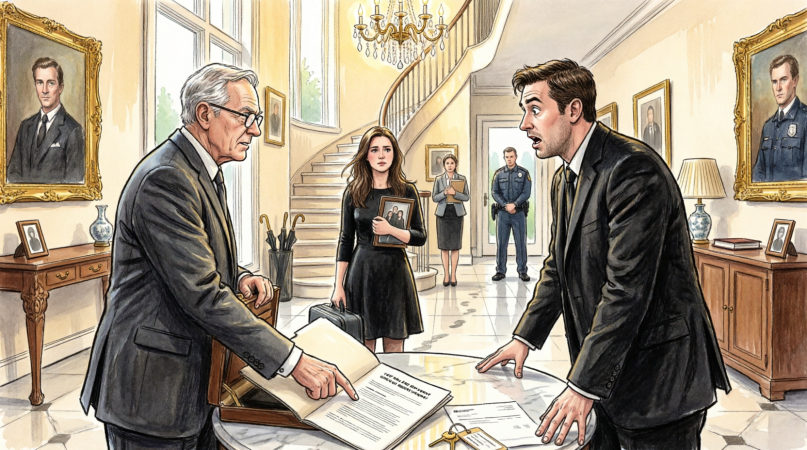
Jason opened the folder.
The first page was simple.
Monthly Household Expenses — Previously Paid by Nora.
Mortgage: $2,180.
Electric, water, gas: $430.
Internet and phones: $210.
Childcare: $1,150.
Groceries: $900.
Health insurance: $640.
Car insurance: $190.
Miscellaneous school costs, clothes, medications, copays, household needs: $300.
Total: $6,000 plus.
Jason’s smile faltered slightly.
“Okay,” he said slowly. “And?”
I turned the page for him.
Jason’s Contributions — Average Last 12 Months.
Transfers to joint account: $1,200.
Payments made directly: truck only.
Below that, in clean bullet points:
Nora’s paycheck covered approximately 80 to 90 percent of household costs.
Jason’s commission spikes were spent primarily on personal expenses, leisure, and discretionary purchases.
Melanie Bennett’s Venmo requests paid from joint account: $9,840 in eighteen months.
Melanie’s head snapped up.
“Excuse me?”
Jason’s eyes widened. “That can’t be right.”
“It is,” I said. “Every transfer is printed in the back. Dates. Notes. Amounts.”
Melanie’s face flushed. “Why are you tracking me like some kind of criminal?”
“I tracked our household spending,” I said. “You appeared often.”
Jason flipped through pages too quickly, panic rising in the movement of his hands. “Why did you make this?”
“Because you said freeloading ends today,” I replied. “And I agree.”
His throat worked.
“Nora,” he said, voice lower now. “We’re married. It’s not freeloading if it’s family money.”
I smiled gently.
“You’re the one who wanted separate finances.”
“That’s not what I meant.”
“No,” I said. “It’s what you said.”
Melanie pushed back her chair. “Jason, tell her to stop.”
Jason did not tell me to stop.
He was too busy reading.
I reached into my pocket and placed two cards on the table.
One was the new debit card linked to my personal account.
The other was the joint account card.
“I opened a new account Friday,” I said. “My direct deposit now goes there.”
Jason stared at me. “You did what?”
“I rerouted my paycheck.”
“You can’t just—”
“My paycheck,” I said calmly. “My account.”
He blinked as if the concept offended him.
“I also moved every autopay I’ve been covering to my account and scheduled cancellations from the joint one where necessary. The mortgage, daycare, utilities, insurance, groceries, and phones are protected. I’m not risking Ellie’s stability. But you no longer have automatic access to the income that pays them.”
Melanie stood so fast her chair scraped the floor.
“So you’re trying to control him with money!”
I looked at her. “No. I’m removing your access.”
Her mouth fell open.
Jason’s face had gone pale under the dining room light. “Wait. What about the joint account balance?”
“What about it?”
“My promotion bonus goes there.”
I tilted my head. “Not anymore.”
The room went very still.
Even Ellie stopped moving her fork through the pie crust I had just placed on her plate.
Jason’s eyes narrowed. “What does that mean?”
“It means your bonus is not going into the joint account.”
“How would you know?”
“Because last week, when you asked me to handle your promotion paperwork, you signed the direct deposit update with the new account instructions attached.”
His face changed.
Confusion first.
Then recognition.
Then fear.
Then anger racing to cover fear.
Melanie’s voice rose. “You stole his money!”
“I didn’t steal anything,” I said. “He signed the authorization.”
Jason stood. “I didn’t authorize that.”
I took the final page from the folder and slid it across the table.
His signature sat at the bottom.
Not forged. Not copied. Not manipulated. His handwriting, bold and careless, the way he signed everything when he assumed I had already made sure the details would not inconvenience him.
“You asked me to print your onboarding documents for the promotion,” I said. “You signed without reading because you assumed I was your unpaid assistant.”
Jason stared at the paper like it had betrayed him.
“This is fraud,” he said.
“No,” I replied. “This is paperwork you didn’t respect until it stopped benefiting you.”
“Send it back.”
“After it deposits, we can discuss your required household contribution.”
“My required—Nora, that’s my bonus.”
“And this is our household.”
“I earned that.”
“I earned the income that has been paying the mortgage you sleep under.”
Melanie pointed a shaking finger at me. “You are unbelievable.”
I turned toward her. “Melanie, you have received almost ten thousand dollars from an account funded mostly by my labor. That ends tonight.”
Her face contorted. “After everything I’ve been through—”
“You’ve been through my bank account,” I said.
Ellie’s small voice cut through the room.
“Mommy… are we okay?”
My heart pinched so sharply I almost lost my composure.
I turned to her immediately. “We’re okay, baby.”
“Is Daddy mad?”
Jason looked at Ellie then, and something like shame flickered across his face. Not enough. But something.
“No, peanut,” he said, forcing his voice softer. “Daddy’s not mad.”
He was lying, but at least he was trying not to scare her.
I stood and lifted Ellie from her chair. “Why don’t we wash your hands and get ready for a movie upstairs?”
“But pie.”
“I’ll bring it.”
I carried her to the bathroom, helped her wash sticky fingers, then settled her in our bedroom with her pie on a small plate and a cartoon playing low on the television. She relaxed quickly, because children want to believe adults when adults say things are fine.
I stood in the doorway watching her for a moment.
Then I returned downstairs.
The dining room had become a different room.
Jason stood near the table, one hand on his hip, the other gripping his phone. Melanie paced near the window, whispering curses under her breath. The folder lay open like evidence at a trial.
Jason looked up. “Fix this.”
“No.”
His jaw tightened. “Nora.”
“You wanted separate finances. This is separation.”
“You tricked me.”
“You trusted me to manage paperwork you couldn’t be bothered to read.”
“That’s not the same thing.”
“No,” I said. “It’s the pattern.”
Melanie scoffed. “Oh, here we go. She has a speech.”
I looked at her, and for the first time that night, I let her see my exhaustion.
“No, Melanie. I don’t have a speech. I have six years of receipts.”
That shut her up for almost three seconds.
Jason stepped closer, lowering his voice like intimidation had a history of working here. Maybe it did. Maybe I had mistaken avoiding his moods for peace so many times that he thought my silence belonged to him.
“You think you’re smart, Nora?” he said. “You think you can outplay me?”
I met his eyes.
“I’m not playing. I’m done.”
His phone buzzed on the table.
He glanced down automatically. Then grabbed it.
I watched his face as he read.
His anger faltered.
His voice dropped. “The truck payment declined.”
I nodded. “The joint account is now funded by you. You spent what was left on Friday.”
“That was a golf weekend with clients.”
“And new clubs.”
“They were on sale.”
“They were eight hundred dollars.”
Melanie laughed, but it came out thin. “So what? He’ll transfer money.”
Jason did not answer.
Because the truth had arrived quietly and sat down among us.
His separate account was almost empty.
He had been spending like his promotion was already a bank balance instead of a promise on company letterhead. He had counted money before it arrived. He had assumed my paycheck would continue to soften every foolish choice.
I stood at the end of the table.
“Here’s what happens next,” I said. “You keep your separate account. I keep mine. Every month, you transfer three thousand dollars to cover your share of the household expenses. If you don’t, we meet with a mediator and put the arrangement in writing. If you still refuse, I’ll speak to an attorney and formalize a financial separation agreement.”
Jason’s face twisted. “You’re threatening divorce?”
“No. I’m creating boundaries.”
“Same thing.”
“It is only the same thing if you believe marriage requires me to be financially available for disrespect.”
He looked away.
“And Melanie,” I said, turning to her, “do not send another Venmo request to my husband that relies on money from this household. If he wants to help you from his own discretionary funds after meeting his obligations here, that is between you and him. But my paycheck is no longer your emergency plan.”
She sneered. “You think you’re better than me because you wear scrubs and pay bills?”
“No,” I said. “I think I’m done paying yours.”
She grabbed her purse.
Jason said, “Mel, wait.”
She rounded on him. “Are you kidding me? You’re going to let her talk to me like that?”
He opened his mouth, but nothing came out.
For once, he was standing between two women and could not use one as a shield against the other.
Melanie looked at me. “You’ll regret this.”
I almost smiled.
People say that when they have run out of leverage.
She stormed out, slamming the front door hard enough to rattle the glass.
The house went quiet.
Jason sat down slowly at the dining room table and stared at his phone. The folder remained open in front of him. Numbers. Dates. Proof. The unromantic skeleton of our marriage.
For a while, neither of us spoke.
Then he muttered, “I didn’t mean it.”
I stood across from him. “Mean what?”
“The freeloading comment.”
I waited.
“I was hyped,” he said. “Dinner, promotion, everybody congratulating me. Mitchell was talking about leadership. I just… I got carried away.”
I nodded once. “You meant it enough to say it out loud.”
His eyes lifted, glossy with frustration. “So what, you’re leaving me?”
It would have been easy to answer with drama. To say yes just to watch him panic. To say no just to keep the floor from opening. Instead, I told him the truth.
“I’m giving you a chance to be a partner,” I said. “For the first time. Not a dependent with an ego.”
His face flushed. “That’s unfair.”
“No. What’s unfair is calling me a freeloader while living inside a life my labor built.”
He looked down.
I picked up the folder and closed it.
“I’m going upstairs to put Ellie to bed properly. When I come back down, we can discuss the first transfer.”
“Nora.”
I paused.
His voice was smaller now. “What happened to us?”
I looked at him for a long moment.
“That’s what I’ve been wondering,” I said.
Then I went upstairs.
Ellie had fallen asleep sideways across our bed with pie crust crumbs on her pajama shirt and the cartoon still playing. I turned off the television, brushed crumbs from the blanket, and carried her to her room. She stirred when I tucked her in.
“Mommy?”
“I’m here.”
“Daddy got loud.”
“I know.”
“Are you sad?”
I sat beside her bed and held her little hand. “A little.”
She opened her eyes. “I clap for you again tomorrow.”
My throat tightened.
“Thank you, baby.”
She fell asleep holding my fingers.
I stayed there long after her breathing evened out.
Downstairs, Jason moved around the kitchen. A plate clinked. A chair scraped. The dishwasher opened and closed. That alone told me how badly I had scared him. Jason almost never loaded the dishwasher without being asked.
The next morning, he made coffee.
Badly.
He used too many grounds and spilled some on the counter, but he made it. When I came downstairs in scrubs, he was standing near the machine holding a mug like a peace offering.
“Coffee?” he asked.
I took it. “Thank you.”
He watched me sip.
“It’s strong,” I said.
“Yeah. I, uh, wasn’t sure how much.”
I did not say, You’ve lived here six years.
He looked tired. Not just sleepy. Tired in the way people look when the story they tell about themselves has begun to crack.
“I can transfer fifteen hundred today,” he said.
“Your share is three thousand.”
“I know. I don’t have three today.”
“That’s a problem.”
“I get paid Friday.”
“Then fifteen hundred today, fifteen hundred Friday.”
He nodded.
Progress, maybe.
Or survival.
There is a difference, and I was no longer interested in confusing them.
For the next three days, Jason behaved like a man trying to reverse a storm by straightening furniture. He took out the trash without announcing it. He packed Ellie’s backpack, incorrectly but earnestly. He asked what time I worked. He texted me a photo of the grocery list and asked whether we needed eggs. He transferred fifteen hundred dollars with a memo line that said household.
He also sulked.
Quietly, but not invisibly.
When he thought I was not looking, his mouth tightened. He checked his accounts often. He whispered on the phone in the garage once, and I knew it was Melanie before he came back inside because his shoulders were up near his ears.
I did not ask.
By Friday, the second fifteen hundred had not arrived.
I waited until six.
Then seven.
At eight-thirty, after Ellie was asleep and Jason was watching television with the remote in one hand and his phone in the other, I stood in the living room doorway.
“The transfer didn’t come.”
He did not look at me. “Cash flow is weird this week.”
“Your paycheck came in.”
“It’s not that simple.”
“It is.”
He muted the television and sighed loudly. “Nora, I had things pending. The truck issue caused fees. I had to cover some work expenses. I can’t just empty my account because you made a spreadsheet.”
“Household expenses are not optional.”
“I said I’ll get it to you.”
“When?”
“Soon.”
That word had carried too much weight in my marriage.
Soon, I’ll fix the garage shelf.
Soon, I’ll call daycare.
Soon, I’ll pay back the joint account.
Soon, I’ll talk to Melanie.
Soon, things will calm down.
Soon is where accountability goes to die.
I nodded. “Okay.”
He looked relieved, which told me he misunderstood.
On Monday morning, after preschool drop-off, I called a family law attorney named Rebecca Harlan whose office was in a brick building near Decatur Square. I had found her through a colleague at the hospital who once told me over vending machine coffee that the best lawyers were the ones who did not sound impressed by drama.
Rebecca did not sound impressed by drama.
She listened while I explained the separate accounts, the household expenses, the missed transfer, and the fact that I was not yet filing for divorce but needed boundaries enforceable enough to matter.
When I finished, she said, “You’re describing a postnuptial financial agreement or a formal separation of financial responsibilities. Whether he signs voluntarily is another question.”
“I expected that.”
“Do you feel unsafe at home?”
The question landed quietly but heavily.
“No,” I said after a moment. “Not physically.”
“Emotionally?”
I looked out the window at people walking past with coffee cups and laptop bags.
“I feel tired.”
“That’s not nothing.”
“I know.”
She explained options. Mediation. Documentation. Temporary agreements. Child-related expenses. Separate accounts. Debt responsibility. Household contributions. Legal limits. Risks. She asked about the direct deposit update, and I told her the truth: he signed the form, but he did not read it. Her silence afterward was long enough to make my stomach tighten.
“That may create conflict,” she said carefully.
“I know.”
“Do not move or redirect any additional funds belonging solely to him without explicit written clarity.”
“I won’t.”
“Good. Going forward, clean lines only.”
Clean lines.
I wrote that down.
By the time I left her office, I had a list of documents to gather, a plan for mediation, and a strange feeling in my chest that was either fear or oxygen.
Jason did not react well.
I told him that evening at the kitchen table after Ellie went to bed. I had printed Rebecca’s mediation referral and a proposed temporary household contribution agreement.
He stared at it.
“You went to a lawyer.”
“Yes.”
“Unbelievable.”
“You missed the transfer.”
“I told you cash flow was weird.”
“And I told you what would happen if you didn’t contribute.”
He pushed the paper away. “This is insane. Married people don’t invoice each other.”
“Married people also don’t call each other freeloaders after years of being subsidized.”
His jaw tightened. “So you’re never letting that go.”
“I’m not letting the pattern continue.”
He stood and paced to the sink, then back. “You know what Melanie said? She said you planned this. She said you’ve been waiting for a chance to humiliate me.”
“Melanie has received nearly ten thousand dollars from us. Her opinion is not neutral.”
“She’s my sister.”
“I’m your wife.”
He stopped.
The sentence hung between us.
For years, I had watched Jason treat those two loyalties as if mine were the flexible one. Melanie could demand. Melanie could cry. Melanie could accuse. Melanie could arrive empty-handed and leave with leftovers and money. I was expected to understand because she was family.
But what was I?
The woman who paid the mortgage?
The woman who made sure his daughter had shoes that fit?
The woman who smiled at promotion dinners while he told people he carried the stress?
Jason rubbed both hands over his face. “I don’t want a mediator.”
“Then make the transfer and sign a household agreement.”
“I don’t want to be treated like a tenant.”
“I didn’t want to be treated like an expense.”
He looked at me then, and for once, he had no immediate answer.
The next few weeks were not dramatic in the way people think marital turning points are dramatic.
There was no screaming in the driveway. No suitcase thrown from a balcony. No public meltdown in front of neighbors. Instead, there were emails from lawyers, bank notifications, tense conversations after Ellie fell asleep, and mornings where we passed each other in the kitchen like coworkers after a failed merger.
Jason paid the overdue amount, but not gracefully.
He made comments.
“Must be nice having everything controlled.”
“Should I ask permission before buying lunch?”
“I guess I’m just the bad guy now.”
Sometimes I answered. Sometimes I did not. I was learning that not every thrown hook deserved my mouth.
At work, I became quieter. My friend and fellow nurse, Denise Carter, noticed by the second week.
Denise was forty-five, divorced, sharp-eyed, and almost impossible to fool. She had the kind of calm that came from raising two sons, surviving one bad marriage, and working trauma long enough to know which complaints mattered.
We were restocking supplies after a brutal morning when she said, “You look like someone who either needs coffee or a shovel.”
I almost laughed. “Coffee.”
“Mm-hmm. Who are we burying?”
“No one yet.”
She stopped and looked at me.
That was all it took.
I told her the shorter version in the break room over microwaved soup neither of us wanted. The promotion dinner. The freeloading comment. The separate accounts. The spreadsheet. Melanie. The missed transfer. The lawyer.
Denise listened without interrupting.
When I finished, she stirred her soup and said, “Men love separate finances until they find out their wives were the infrastructure.”
I stared at her.
Then I laughed so hard I nearly cried.
She handed me a napkin. “I’m serious.”
“I know.”
“Is he mean often?”
I looked down.
Denise’s voice softened. “Nora.”
“He wasn’t always.”
“They never are every minute.”
“He can be good with Ellie.”
“That’s not the same as being good to you.”
I nodded, but the nod hurt.
At home, Jason began trying in uneven bursts.
Some days he seemed genuinely shaken. He would cook spaghetti and leave the kitchen looking like a minor disaster, then clean it without being asked. He would sit with Ellie and practice letters. He would ask how my shift went and actually listen for a minute or two.
Other days, resentment leaked out of him like gas from a cracked line.
He hated sending the monthly transfer.
He hated seeing the numbers.
He hated that his promotion bonus, once deposited, did not become proof of dominance. After legal advice, we documented what portion was his separate income and what portion would be applied toward overdue household contributions, shared debt, and a savings account for Ellie’s care. He called that “bureaucratic.” I called it clean.
Melanie hated everything.
She sent me a Venmo request for $600 two weeks after the dinner with the note: since you like receipts.
I declined it.
Then I blocked her.
She called Jason crying. Then yelling. Then crying again. For a few days, he was unbearable, pacing the house with his phone, saying things like, “She has nobody else,” and “You don’t understand how hard it’s been for her,” and “It’s just money.”
Finally, I said, “Then give her your golf clubs.”
He stared at me.
“What?”
“If it’s just money, sell the new clubs and send her that. Or skip lunches out for two months. Or cancel your sports package. Or use your discretionary account. Help your sister however you want after your obligations here are met.”
“That’s not fair.”
“Why?”
“Because I shouldn’t have to choose.”
I looked at him, and something in my face made him look away.
“You’ve been making me choose for years,” I said. “You just never had to see it.”
That night, he slept on the couch.
Not because I asked him to. Because his pride needed a room of its own.
Mediation happened in a beige office park in Sandy Springs with framed abstract art and a bowl of peppermints on the conference table. The mediator, a gray-haired woman named Linda Shaw, had a voice so neutral it could have cooled soup. Jason arrived in a navy blazer, as if dressing like a responsible man might help him become one.
I brought a binder.
Jason saw it and sighed.
Linda began by asking what we wanted.
Jason said, “I want my wife to stop treating me like I’m financially irresponsible.”
Linda wrote something down.
I said, “I want documented household contributions proportional to expenses, clear separation of discretionary spending, no use of joint funds for extended family without written agreement, and a shared savings plan for our daughter.”
Linda wrote longer.
Jason looked at me. “You sound like a contract.”
“I learned from receipts.”
The first session was ugly in quiet ways.
Jason tried to frame himself as a husband blindsided by a controlling wife. I let him talk. That was something I had learned from nursing too: people often reveal the wound by describing the wrong pain.
He said I “suddenly changed everything.”
I showed the years of uneven contributions.
He said I “made him look bad” in front of Melanie.
I showed Melanie’s transfers.
He said he had been under pressure before the promotion.
I said pressure did not create permission to degrade me.
Linda asked him whether he believed I had been freeloading.
Jason looked at the table.
“No,” he said finally.
It was the first time he had said it plainly.
Linda waited.
Jason swallowed. “No. She wasn’t freeloading.”
I stared at my hands because if I looked at him, I might cry, and I did not want my tears mistaken for surrender.
“Then why use that word?” Linda asked.
Jason rubbed his jaw.
“I don’t know.”
Linda said nothing.
Jason exhaled. “Because I wanted to feel like I was the one in control.”
There it was.
Not complete accountability. Not transformation. But a door opening.
Linda turned to me. “What do you need to hear from him?”
I looked at Jason.
“I need to hear that you understand our life was not being carried by you alone.”
His eyes met mine.
“I understand,” he said.
“No. Not like that.”
His face tightened, but he tried again.
“I understand that your paycheck has been paying most of our household expenses. I understand that you have been managing the bills, Ellie’s care, the house, and your job. I understand that I benefited from that while acting like I was the only one under pressure.”
The room went very quiet.
Linda wrote something down.
I nodded once.
It did not fix everything.
But truth, spoken clearly, has weight.
We left mediation with a temporary agreement.
Jason would transfer a fixed amount monthly based on documented household costs. Both of us would keep separate personal accounts. Shared expenses would be tracked through a household account requiring agreed contributions. No money would go to extended family from shared funds without written consent. Ellie’s expenses would be prioritized. Personal debts remained personal unless jointly agreed. We would revisit in six months.
Jason hated signing it.
But he signed.
When we got home, Ellie ran into the hallway holding a drawing.
“Mommy! Daddy! Look!”
It was a picture of three stick figures under a yellow sun. One had long brown hair. One had short brown hair. One was small with wild yellow scribbles around the head. Above them, she had asked her preschool teacher to write: My family.
Jason looked at it for a long time.
Then he crouched and hugged her.
I stood in the doorway watching, the signed agreement still in my bag.
People think boundaries destroy families.
Sometimes they are the only thing that gives a family any honest chance to survive.
Fall moved into Atlanta slowly that year.
The heat loosened its grip by degrees. Mornings grew cooler. Leaves collected along the curb. Ellie turned five in October and insisted on a butterfly birthday party with purple cupcakes and enough glitter to permanently alter our living room rug. Jason helped hang decorations. He paid for half the party without complaint. When Melanie texted him asking why she had not been invited to “her own niece’s birthday planning,” he showed me the message instead of hiding it.
“What do you want to do?” he asked.
“What do you want to do?” I replied.
He looked uncomfortable. “I want to invite her if she can behave.”
“And if she can’t?”
“Then she leaves.”
“Can you enforce that?”
He hesitated.
There was the work.
Not the words. Not the agreement. The work.
“I think so,” he said.
“That’s not enough.”
He nodded slowly. “Then no. Not this year.”
Melanie did not come.
Ellie barely noticed. She had preschool friends, cupcakes, balloons, and a butterfly crown. Jason looked sad for part of the afternoon, and I let him. His sadness was not mine to solve.
Later, after everyone left and Ellie fell asleep surrounded by new stuffed animals, Jason and I cleaned frosting off the kitchen floor.
“I miss who I thought Melanie was,” he said.
I rinsed a sponge. “Who was that?”
“My little sister who needed me.”
“That may be part of who she is.”
He looked at me. “But not all.”
“No.”
He nodded, eyes tired. “I think I liked being needed. It made me feel successful before I actually was.”
I leaned against the counter.
“That’s probably the most honest thing you’ve said in months.”
He gave a small, humorless laugh. “Therapy.”
“You’re going?”
He nodded.
I had not known.
“Since when?”
“Three weeks.”
“What made you start?”
He looked around the kitchen. The butterfly plates stacked near the sink. The deflated balloons. The crumbs. The ordinary evidence of a child loved well.
“I didn’t like who I sounded like in mediation.”
I absorbed that quietly.
“Good,” I said.
He looked at me, almost smiling. “That’s all?”
“That’s a lot.”
Therapy did not turn Jason into a different man overnight.
Nothing does.
But it gave him fewer places to hide from himself. He began noticing his own defensiveness, sometimes after the fact, sometimes during. He apologized more specifically. He stopped saying “helping” when he meant parenting. He learned Ellie’s pediatrician’s name. He took over scheduling her dentist appointment and only asked me three questions instead of twelve. He started cooking on Thursdays because those were my late shifts. The food was repetitive, but edible.
He still slipped.
Once, in November, after a bad sales week, he snapped, “Must be nice to have a steady paycheck and not worry about performance.”
I looked at him.
He closed his eyes. “I’m sorry. That was ugly.”
“Yes.”
“I’m scared about numbers and I took a shot at you.”
“Yes.”
“I’ll make pasta.”
“That doesn’t fix it.”
“I know. But I’m still making pasta.”
That was new.
Not perfection.
But new.
Thanksgiving came with its own battlefield.
Jason wanted to invite Melanie.
I said no.
He argued, but not like before. No accusations. No “she’s family” as a magic spell. He argued from guilt, which was at least more honest.
“She’ll be alone,” he said.
“She has friends.”
“She’ll tell everyone I kept her away.”
“She probably will.”
“She’ll say you control me.”
“Jason.”
He sighed. “I know.”
“What do you know?”
“That if I invite her before she takes responsibility, I’m asking you to absorb the cost again.”
I said nothing.
He rubbed his forehead. “I hate this.”
“I know.”
“She’s my sister.”
“I know.”
“You’re my wife.”
I looked at him then.
He said it quietly, but it mattered.
“Yes,” I said.
We spent Thanksgiving with Denise and her family instead. Ellie played with Denise’s granddaughter. Jason watched football with Denise’s brother and helped wash dishes afterward without making a heroic announcement. Denise caught my eye from across the kitchen and raised one eyebrow.
Later, when Jason took Ellie to the bathroom, Denise leaned close and said, “He looks housebroken.”
I choked on my tea.
“Denise.”
“What? I’m being generous.”
“He’s trying.”
“Good. Make sure trying has receipts too.”
“I do.”
She smiled. “That’s my girl.”
By Christmas, the household account had become routine.
Jason’s transfers came on time. Mine did too. Shared bills were paid from shared contributions. Personal spending stayed personal. I stopped carrying the invisible panic of wondering whether his choices would collide with the mortgage. I built savings again. Not huge. Not dramatic. But mine.
The first time I bought myself a new winter coat from my personal account without mentally subtracting Melanie’s next emergency, I sat in my car outside the store and cried.
Not because of the coat.
Because of the space around the decision.
Jason noticed the coat when I came home.
“It looks nice,” he said.
“Thank you.”
“How much was it?”
The old me would have answered quickly, defensively, already justifying.
The new me looked at him.
He caught himself. “Sorry. None of my business unless it affects household money.”
“It doesn’t.”
“Then it looks nice.”
That small correction warmed me more than the coat.
In January, Jason’s company held a regional kickoff event downtown. Spouses were invited to the closing dinner. I almost did not go. The memory of the promotion dinner still lived in me like a bruise. But Jason asked differently this time.
“I’d like you there,” he said. “Not for appearance. Because I want you there. But if you don’t want to, I understand.”
I went.
The dinner was at a hotel ballroom with too much beige carpet and surprisingly good salmon. Jason introduced me to colleagues as “my wife, Nora, who’s a nurse at Piedmont and honestly keeps our entire life from falling apart.” He said it lightly, but not jokingly.
I watched the faces around us.
Some laughed.
One woman said, “Same.”
Mitchell Grant, Jason’s boss, clapped him on the shoulder and said, “Smart man, giving credit where it’s due.”
Jason looked at me. Not for praise. For recognition.
I gave him the smallest smile.
During dessert, Mitchell’s wife asked me how I balanced nursing and motherhood.
Normally, that question made me tired. That night, I answered honestly.
“I don’t balance it alone anymore,” I said.
Jason heard.
His hand found mine under the table.
That did not erase the car ride. It did not erase the folder. It did not erase Melanie’s smirk or the truck payment decline or the mediation office. But healing, if it comes, does not come as erasure. It comes as evidence that the wound is no longer being reopened daily.
In February, Melanie appeared at our front door.
It was raining.
I opened the door because Jason was giving Ellie a bath upstairs. Melanie stood on the porch in a black hoodie, mascara smudged under one eye, hair damp at the ends. She looked less polished than usual. Younger somehow. Or maybe just less armored.
“Nora,” she said.
I did not invite her in.
“Melanie.”
She shifted her weight. “Is Jason here?”
“Yes.”
“Can I talk to him?”
“About what?”
Her eyes flashed. “He’s my brother.”
“And this is my house.”
The old Melanie would have exploded. This one looked down.
“I need help,” she said.
“With money?”
Her mouth tightened.
I waited.
“My car got repossessed.”
I felt a flicker of pity. Real pity. Then I remembered nearly ten thousand dollars and the way she had said I had it easy.
“I’m sorry to hear that.”
“I need to get to work.”
“You have a job?”
“Yes.”
“Good.”
She looked past me into the warmth of the house. “Can you just get Jason?”
I stepped back and called upstairs.
Jason came down in jeans and a sweatshirt, Ellie’s bath water still running faintly above us.
When he saw Melanie, his face changed with old reflexive worry. Then he looked at me. Not for permission. For steadiness.
“What’s going on?” he asked.
Melanie told him. The car. The missed payments. The fees. The need for cash immediately or everything would collapse. She cried halfway through. Some of it was real. Some of it was strategy. Often, in families like theirs, even the person crying no longer knows the difference.
Jason listened.
Then he said, “I’m sorry.”
Melanie wiped her cheek. “So can you help?”
“I can help you figure out a bus route. Or I can drive you to work twice this week if it doesn’t conflict with Ellie or my schedule. I can help you make a budget. I can’t give you money.”
She stared at him.
“What?”
“I can’t give you money.”
“You mean Nora won’t let you.”
Jason’s jaw tightened.
There it was. The test.
“No,” he said. “I mean I’m choosing not to.”
Melanie looked as if he had slapped her.
“After everything?”
“I love you,” he said. “But I’m not funding emergencies you create by ignoring bills.”
She turned to me, furious. “You did this.”
I shook my head. “No. I stopped doing it.”
Her face crumpled into something uglier than anger. Hurt, maybe. Betrayal, certainly. But not the kind that belongs entirely to the present. I wondered, not for the first time, what Jason and Melanie had learned in childhood about need, love, and money. I wondered who had taught them that rescue was proof and boundaries were abandonment.
Wondering did not make me open my wallet.
Melanie left without coming inside.
Jason stood in the doorway after she walked away, rain blowing lightly onto the floor.
“You okay?” I asked.
“No.”
I waited.
“But I didn’t give her money.”
“No.”
He looked at me. “That was awful.”
“Yes.”
“Necessary?”
“Yes.”
He closed the door.
From upstairs, Ellie called, “Daddy! Bubbles are escaping!”
Jason wiped his face with both hands, then ran upstairs.
Life, relentless and ordinary, continued.
By spring, I no longer checked the household account every day.
That may not sound romantic, but it felt like peace.
I knew what would be there. I knew the mortgage would clear. I knew daycare was covered. I knew Jason’s truck payment came from his account and his anxiety about it was not mine to manage. I knew Melanie could not reach me through Venmo or guilt. I knew if Jason slipped, I had paper, policy, and a lawyer who spoke in clean lines.
I also knew something more painful: love without respect had nearly emptied me.
That realization did not arrive all at once. It came in small moments. When I noticed my shoulders no longer rose at the sound of Jason’s phone buzzing. When I bought groceries without rehearsing explanations for the total. When I stopped apologizing for being tired after a shift. When Ellie asked Daddy for clean socks because Daddy now knew where the socks were.
One Saturday in April, Jason and I took Ellie to Piedmont Park. The dogwoods were blooming, and the air smelled like grass and food trucks. Ellie ran ahead with a kite shaped like a rainbow fish, shrieking every time it dipped. Jason chased her, laughing, nearly tripping over his own feet. I sat on a blanket watching them, sunlight warm on my arms.
For a moment, we looked like the family in Ellie’s drawing.
That scared me.
Not because it was false, but because it was not entirely false. That is what makes decisions hard. People who hurt you are rarely monsters every hour. Jason could be funny. He could be tender with Ellie. He could make pancakes shaped like lopsided hearts. He could also become cruel when threatened, arrogant when praised, careless when comfortable.
The question was not whether he had good in him.
The question was whether the good could become consistent enough to trust.
He came back breathless and dropped onto the blanket beside me while Ellie tried to relaunch the kite.
“She’s fast,” he said.
“She’s five.”
“She has your stamina.”
“She has your stubbornness.”
He smiled. Then his face grew serious.
“I’ve been thinking,” he said.
Dangerous words, once.
Now I waited.
“I want to apologize again. Not for one comment. For the whole way I saw things.”
I looked at Ellie because it was easier than looking at him.
“I thought money I earned was mine and money you earned was ours,” he said. “I didn’t say it that way, but that’s how I acted. I thought my stress counted more because my paycheck changed month to month. I thought because you were steady, you weren’t under pressure. And I let Melanie disrespect you because it made me feel important to be needed by her.”
The wind tugged the kite sideways. Ellie yelled, “Mommy, look!”
“I’m looking!” I called.
Jason waited until Ellie turned away again.
“I’m sorry,” he said.
Something in me softened, and something else stayed guarded. Both were true.
“Thank you,” I said.
“I know you may not forgive all of it.”
“I don’t know what forgiveness means yet.”
He nodded.
“I do know I don’t want to go back,” I said.
“I don’t either.”
“If things slide, I won’t carry them quietly next time.”
“I know.”
“No, Jason. Listen to me. I won’t absorb disrespect to keep the house peaceful. I won’t let Ellie grow up thinking that’s marriage.”
His eyes moved to our daughter.
“I don’t want that either.”
“Then show her something different.”
He nodded slowly. “I’m trying.”
“I know.”
There it was again.
Trying.
A word I had learned to distrust and then slowly allow back into the room, provided it arrived with action.
In June, our six-month financial agreement review came due.
We sat at the same kitchen table where I had once built the spreadsheet after midnight. The folder was thinner now. Less like ammunition. More like a map.
Jason had met every transfer.
No shared money had gone to Melanie.
Household costs were stable.
We had started an emergency fund for Ellie.
Jason had reduced discretionary spending and sold the golf clubs he bought the weekend before the truck payment declined. He did not tell me immediately. I found out when I saw the deposit.
“Why did you sell them?” I asked.
He shrugged. “They annoyed me.”
“Golf clubs annoyed you?”
“What they represented annoyed me.”
That answer stayed with me.
At the review, we made the agreement permanent.
Not because our marriage was perfect. Because the agreement had made honesty harder to avoid.
After we signed, Jason leaned back and looked around the kitchen.
“I used to hate this table,” he said.
I raised an eyebrow. “The table?”
“Yeah. Every big conversation happens here.”
“It’s from Target.”
“I know. But emotionally, it’s a courtroom.”
I laughed before I could stop myself.
He smiled, and for a second we were simply us. Not fixed. Not innocent. But alive.
That summer, Melanie sent a letter.
Not a text. Not a Venmo request. A letter in a pale blue envelope addressed to both of us. Jason opened it while I was making dinner, then went quiet.
“What is it?” I asked.
He handed it to me.
The handwriting was large and dramatic.
She apologized.
Badly at first. The first paragraph included the words “if you felt” twice, which made me nearly hand it back. But by the second page, something shifted. She admitted she had been angry when Jason stopped giving her money. She admitted she had told herself I was selfish because it was easier than admitting she had been using us. She said losing the car had scared her. She said Jason helping her budget instead of rescuing her made her furious, then embarrassed, then eventually grateful. She had taken extra shifts at work. She was on a payment plan. She was trying.
At the end, she wrote: Nora, I shouldn’t have said you had it easy. I knew you worked hard. I said it because I wanted what you built without respecting what it cost you. I’m sorry.
I read that sentence three times.
Jason watched me carefully.
“What do you think?” he asked.
“I think it’s the first useful thing she’s said to me.”
He laughed softly.
“Do you want to see her?”
“Not yet.”
“Okay.”
He did not argue.
Another receipt of change.
In September, I got a promotion of my own.
Clinical nurse coordinator.
It came with more responsibility, a modest raise, and a schedule that was somehow both better and more complicated. Denise brought cupcakes to the break room. Ellie made me a card with glitter letters that said GOOD JOB MOMMY. Jason booked dinner at a small Italian restaurant in Decatur, not a steakhouse, not a performance venue, just a warm place with good pasta and a patio strung with lights.
At dinner, he raised his glass.
“To Nora,” he said.
I narrowed my eyes slightly, half teasing, half cautious.
He smiled. “For being promoted because she is excellent at what she does, for carrying more than I understood, and for teaching this family that accountability is not an attack.”
Ellie lifted her apple juice. “To Mommy!”
I looked at Jason.
There were tears in my eyes, which annoyed me.
“Thank you,” I said.
He reached across the table, palm up.
I took his hand.
The thing about rebuilding is that it does not give you back the old house. It cannot. The old house had hidden rot behind painted walls. The old house looked good from the street and leaked when it rained. The old house taught you where not to step.
What you build afterward is different.
Maybe smaller.
Maybe less impressive to outsiders.
But if you do it honestly, it can stand.
A year after Jason said “the freeloading ends today,” we drove past the same steakhouse in Buckhead on our way home from Ellie’s kindergarten orientation.
I noticed it before Jason did.
The dark windows. The valet stand. The expensive glow.
My body remembered before my mind fully caught up. My stomach tightened. My hands went cold.
Jason glanced over. Then he saw the restaurant and understood.
He was quiet for several blocks.
Finally, he said, “I hate who I was that night.”
I watched the freeway lights appear ahead.
“I hated him too,” I said.
He nodded. “Fair.”
In the back seat, Ellie kicked her feet and sang a song from school.
Jason took a breath. “Thank you for not letting him stay.”
I turned toward him.
He kept his eyes on the road. His hands were steady on the wheel.
“I mean it,” he said. “I don’t know if I would have changed if you’d just argued with me. I think I would have defended myself forever. The receipts made it impossible.”
I looked out the window.
“The receipts weren’t the hard part,” I said.
“What was?”
“Deciding I deserved to use them.”
He did not answer immediately.
Then he said, “You did.”
The freeway lights moved over us. Bright. Dark. Bright. Dark.
This time, the silence between us did not feel like something waiting to explode.
It felt like room.
Room for truth.
Room for regret.
Room for the woman I had been before marriage taught me to shrink around someone else’s pride, and room for the woman I had become when I stopped.
The freeloading did end that day.
Jason had been right about that, though not in the way he imagined.
What ended was not a lazy wife living off a hardworking husband. That woman had never existed. She was a character Jason created because he needed someone to stand beneath him when his promotion lifted him higher than his character could safely carry.
What ended was my willingness to fund disrespect.
My willingness to let “family” mean everyone but me.
My willingness to convert exhaustion into silence.
My willingness to protect a man from the consequences of his own math.
After that night, everything cost what it actually cost.
The mortgage.
The daycare.
The truck.
Melanie’s emergencies.
Jason’s pride.
My patience.
Our marriage.
Some costs were too high. Some were worth paying. Some had been charged to me without permission for years.
But once I saw the numbers, I could not unsee them.
And once Jason saw them, neither could he.
That is the thing about receipts. People think they are paper. They are not. They are memory with proof. They are truth that does not shake when someone raises his voice. They are the record of what happened after everyone has finished explaining what they meant.
I still have the original folder.
It sits in a file box in my closet, behind tax returns and Ellie’s old preschool artwork. I do not look at it often. I do not need to. Its work is done.
But I keep it.
Not because I plan to use it again, though I would if I had to.
I keep it because it reminds me of the night I sat at my kitchen table while my husband slept upstairs believing he had finally taken control. It reminds me of the hum of the refrigerator, the glow of the laptop, the numbers lining up like witnesses. It reminds me that clarity can arrive quietly. It reminds me that calm is not weakness. It reminds me that a woman can be tired, hurt, underappreciated, and still precise enough to save herself.
Sometimes, when younger nurses at work talk about money, marriage, and feeling guilty for wanting fairness, I hear my own old voice in theirs. I do not tell them what to do. People rarely accept instructions about love until they are ready. But I tell them this:
Know the numbers.
Not because marriage should be a business deal.
Because respect should survive math.
And if someone calls you a burden while standing on everything you built, do not waste your breath trying to convince him you are valuable.
Print the receipts.
Then decide what kind of life you are willing to keep funding.
More Details