Seven AGT Magicians Who Made Howie Mandel Doubt Reality
Aug 6, 2026

Seven AGT Magicians Who Made Howie Mandel Doubt Reality

From pseudo–mind science to phone-hacking mind readin

From pseudo–mind science to phone-hacking mind reading, seven audacious acts didn’t just fool America’s Got Talent—they rattled Howie Mandel so hard the judges begged to see more.
On a talent show built on big voices and bigger dreams, it takes something stranger than talent to stop the room cold. It takes disbelief. Over a parade of seven magic acts, America’s Got Talent delivered exactly that—sustained, gleeful disbelief—aimed straight at Howie Mandel. The results were hilarious, unnerving, and, at times, oddly touching. These performers didn’t just win votes. They bent the air around the room, then let everyone check the seams.

The “Pseudoscientists” Who Stole Reading

Two magicians walked on with a shrug and a smirk and swapped their names as if identity were a loose jacket. “We’re not going to show you a trick,” one of them said. “We’re gonna show you a demonstration of pseudoscience.” They called it pressure phrenology—old-time quackery remixed to modern mischief—and invited Howie onstage. With gloved hands and mock-serious patter, they claimed they could squeeze away abilities. It was theater, sure, but the payoff landed with a thud in Howie’s mind.

They teased him—no more piano, no more backflips—and then aimed for the jugular: reading. Cards with simple words came out. The judges nodded. The camera confirmed. Howie stared and stumbled. Then, as the “pressure” lifted, ordinary words snapped back into focus. It was high-wire gaslighting with a laugh track. Even the panel couldn’t hide its glee. One judge cracked, “You made Howie look like jackass. And who doesn’t love that?” Another admitted, “I don’t know how you did it, but I loved it,” and begged to be the next volunteer. The trick was as much about social tension as sleight of hand: what happens when everyone sees what you can’t?

Bar Magic at Breathing Distance

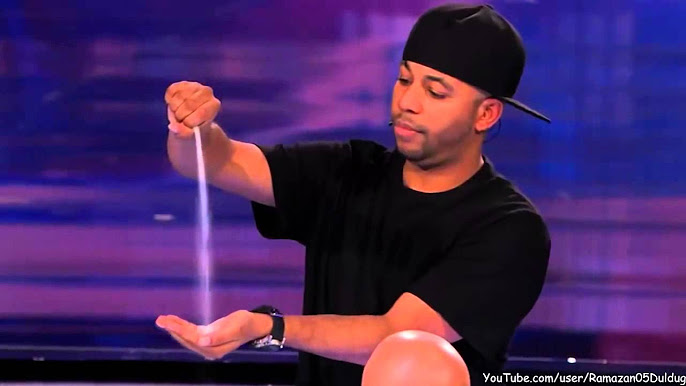
Next came a hustler of hospitality—the self-described bar magician who needs no grand set, just a table edge and your doubt. He framed it plainly:

He even fixated on a weird detail no one could unsee afterward:

But admiration drowned out confusion. “Boy, that was good. That was slick. It was seamless,” Howie said. Another judge added, “I did not want it to stop. You went bang, bang, bang… I absolutely loved it.” Four yeses, zero oxygen.

Cards Where Drinks Should Be

Later, a different kind of close-up chaos spilled into the aisles. A card was freely chosen and marked. A beat passed. The performer smiled and steered attention away—until a strange instruction popped the balloon of logic.

The lid peeled back. The crowd pitched forward. “Are you… no.” Inside, soaked and unmistakable: a signed card that should not have been anywhere near a beverage. “That’s my card,” someone gasped, followed by a shuddering punch line from Howie:so much to say, but now I realize I’m holding cards that were in your mouth.”

Magic can be elegant. It can also be rudely intimate. This was both, and it rattled the neat-freak in chief.

The Mind Hacker Who Drafted AI Into the Act

Then came the magician who talked like a system update: precise, grand, a little ominous. He stared at Howie and declared

Four yeses thundered in unison.

A Memory You Can Hold—Until You Can’t

Not every shock landed like a jump scare. One artist dealt in quieter aftershocks, building a story about the one thing we make every second:

he said. He asked for a drawing on a card—something personal, present—and slid it into the deck. The ring rested on the back of another card to mark a moment. This wasn’t about speed. It was about trust.

Then the air folded. He snapped. The card beneath the ring was no longer the placeholder—it was hers, the very one she had drawn on moments before. Applause came fast. Awe lingered. He reminded everyone what he had said from the start.

The table was clear. The memory remained, warmer than proof.

“Name Any Card” Meets a Magician’s Imagination

Few prompts invite arrogance like “Name any card.” A nimble showman gave it to Howie straight:

Howie didn’t hesitate. The magician grinned:

He framed the next beat as a lesson in imagination. He placed hands like a sculptor guiding clay, then said what everyone felt in their bones: maybe the easiest way to find a card is to believe you already have. In Howie’s clasped hands, impossibility took up residence, waiting to be discovered like something you forgot you were carrying.

Why This Shook Howie

Mandel plays two roles on the panel: comedian and canary in the coal mine. He loves clean logic, and he hates a world that won’t stay still. These acts specialized in disorder. They stole reading, smuggled signed cards into sealed drinks, turned a smartphone into a séance, and warped time around a ring and a drawing. Howie tried strategy—peeking from angles, calling out odd details, leaning on humor—but the surprises outpaced his defense. Even his jokes slipped into admiration.

What binds these seven together isn’t the method; it’s the feeling. Each trick started as a simple, testable claim and then undermined the test. You can look, the performers said. You can choose. You can hold this. And then, when you did, the thing you trusted turned against your expectations. That’s when laughter turns to a small, private scream—which is also when the best TV happens. As one judge put it afterward,

The Judges, the Room, the Verdict

The panel’s responses told their own story arc. Early on, the pseudoscience duo drew laughter and a torrent of yeses. The bar magician left veterans blinking.

came one quick review. The card-in-cup episode brought out a different energy—grossed out, giddy, stunned. The AI mind-hack shattered any lingering pretense of control, earning the night’s strongest praise and a rare admission of total bafflement. And the memory piece closed like a lullaby after a thunderstorm, the kind of wonder that hums in your chest on the drive home.

Across the board, the decisions were swift. “We’re gonna vote,” a judge announced at one point, and when they did, the answers cascaded: yes, yes, yes, yes. If you measure magic by gasps per minute, the scoreboard was lopsided. If you measure it by the number of times a proud skeptic admits defeat, it was a rout.

Why We Watch

It’s easy to forget, in a world of endless feeds, that live astonishment still has muscles TV can’t quite capture until a moment breaks and the room gasps together. These seven acts made a familiar stage feel newly dangerous. They built trust, broke it, and gave it back like a gift. They toyed with language, with touch, with tech, with memory. Most of all, they made Howie Mandel—comic, critic, champion of common sense—say the quiet part out loud: he didn’t see it coming.

If you crave that rare clash of comedy, fear, and awe, watch the full performances. Let the pseudoscientists squeeze away your certainty, lean in for the barroom miracles, flinch at the card in the cup, and hold your breath when AI finishes your sentence. Then sit with the final whisper: maybe the best proof of magic isn’t on the table at all. It’s the memory you carry out of the room.

g, seven audacious acts didn’t just fool America’s Got Talent—they rattled Howie Mandel so hard the judges begged to see more.
More Details
She Sang Aretha Franklin at Just 12 Years Old… And Earned the Crowd’s Loudest Cheers
Aug 6, 2026

She Sang Aretha Franklin at Just 12 Years Old… And Earned the Crowd’s Loudest Cheers

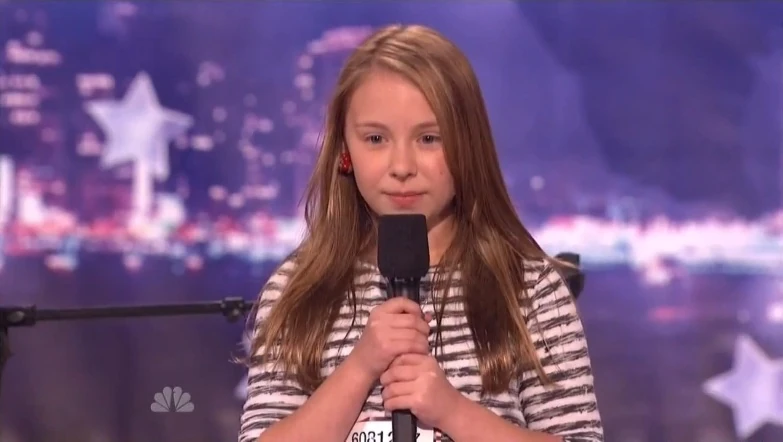
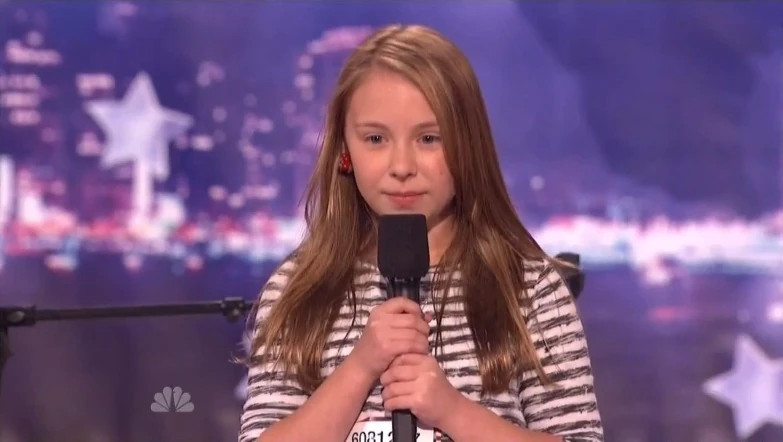
Eleven-year-old Ansley Burns, hailing from Easley, South Carolina, stepped onto the America’s Got Talent (AGT) stage with a vibrant personality and an unmistakable Southern charm. She announced her plan to sing a challenging Aretha Franklin classic, but her initial performance was immediately hindered by a flawed and “horrible” backing track. This technical failure threatened to derail her entire audition, forcing the judges to admit they couldn’t properly evaluate her talent. However, the crisis revealed something far more valuable than a perfect voice: Ansley’s unflappable composure under pressure.

Simon Cowell, recognizing her potential but frustrated by the track, took a dramatic step: he stopped the music and asked Ansley to sing a verse and chorus a cappella (unaccompanied). In a moment of high-stakes television drama, the usually intimidating judge handed the nervous girl a glass of water—dubbed “magic water”—to steady her nerves. This pivot forced Ansley to rely solely on her raw talent. After a brief moment of silent focus, she dove into the song, and the true power of her voice was immediately apparent. Her performance was strong, soulful, and delivered with a mature, charismatic energy that completely defied her age.

The judges were thoroughly impressed by her professionalism and sheer willpower. Gabrielle Union praised her composure, noting that she works with people much older who lack the talent Ansley possesses in her “little finger.” Howie Mandel stated that personality was as important as technical ability, concluding that Ansley was someone they would definitely remember. Ansley Burns proved that a true performer can overcome any obstacle, trading a disastrous backing track for a brilliant, unaccompanied moment that secured her a unanimous four “yeses” and a spot in the next round.

More Details
From Silence to Standing Ovation in Seconds — This 11-Year-Old’s Voice Is Incredible
Aug 6, 2026

From Silence to Standing Ovation in Seconds — This 11-Year-Old’s Voice Is Incredible

Anna Graceman’s audition on America’s Got Talent was one of the most memorable moments of Season 6. At just 11 years old, she stepped onto the stage with a quiet confidence and a piano, ready to perform Alicia Keys’ “If I Ain’t Got You.” From the very first notes, she showed a level of emotional depth and vocal control far beyond her age, immediately capturing the attention of both the judges and the audience.

Her performance built gradually, blending soft piano playing with a powerful, soulful voice that filled the room. The simplicity of her setup made the moment even more striking, allowing her raw talent and musical sensitivity to take center stage. As she reached the peak of the song, the audience responded with visible excitement, and the judges were clearly impressed by her maturity as a performer.

By the end of her audition, all three judges gave her a unanimous “yes,” sending her through to the next round with a standing ovation. Her audition quickly went viral online and became one of the most talked-about kid performances in the show’s history. It marked the beginning of a strong run on the competition and established her as one of the standout young singers of that season.


From Silence to Standing Ovation in Seconds — This 11-Year-Old’s Voice Is Incredible

More Details
Aug 5, 2026

Why Everyone Laughed at Her… Until She Sang One Note and Changed the World” — The Story of Susan Boyle – AGT⭐⭐

🎤 Then Everything Changed in Seconds

The music started.

Susan chose to sing “I Dreamed a Dream” from the musical Les Misérables.

The first note came out…

And suddenly—

Everything changed.

😱 A Voice That Shocked the World

Her voice was powerful.

Clear. Emotional. Beautiful.

The same people who laughed just seconds before were now frozen in shock.

You could literally see the transformation:

  • Smiles turned into silence

  • Doubt turned into disbelief

  • Judgment turned into admiration

Within seconds, the entire audience was captivated.


😭 A Standing Ovation That Meant Everything

By the time she finished singing, the room exploded.

Everyone stood up.

The judges applauded.

Some looked emotional. Others simply couldn’t believe what they had just witnessed.

It wasn’t just a great performance.

It was a lesson.


🌍 Why This Video Became One of the Most Viral Ever

Susan Boyle’s audition didn’t just go viral—it became a global phenomenon.

The video gained tens of millions of views in a very short time, shocking even YouTube analysts.

People from all over the world shared it, not just because of her voice—but because of what it represented.


💡 The Powerful Message Behind Her Story

This moment touched millions because it revealed something deeply human:

❤️ Don’t judge someone before they show you who they are

🌱 Talent doesn’t depend on appearance

🎯 Dreams don’t have an age limit

🌈 Sometimes, the most extraordinary people are the most unexpected

Susan didn’t just sing.

She proved the world wrong.


🏆 From Unknown Woman to Global Star

After that audition, Susan Boyle’s life changed forever.

She went on to:

  • Reach the finals of Britain’s Got Talent

  • Release multiple successful albums

  • Become an international music star

Her debut album became one of the fastest-selling albums of all time.

From being laughed at on stage…

To being loved around the world.


💬 The Lesson We All Need

Susan Boyle’s story is not just inspiring—it’s a reminder.

In a world where people are often judged instantly, her moment teaches us to pause.

To listen.

To believe.

Because sometimes…

The person you least expect can become the one you never forget.


🎬 Final Thoughts

That night on Britain’s Got Talent wasn’t just about music.

It was about humanity.

About kindness.

About second chances.

So the next time you’re about to judge someone…

Remember the moment Susan Boyle stepped onto a stage, was underestimated by millions—

And then proved that true talent needs no introduction.

Many people were already judging her.

Her appearance. Her age. Her confidence.

But what happened next became one of the most viral, emotional, and unforgettable moments in television history.


🌧️ The Moment Everyone Misjudged Her

Susan Boyle was 47 years old.

She lived a simple life in a small village in Scotland. She wasn’t famous. She wasn’t glamorous. She didn’t look like a typical pop star.

As she introduced herself on stage, the audience smirked. Some laughed.

Even the judges—including Simon Cowell—looked skeptical.

When she said she wanted to be a professional singer like Elaine Paige, people didn’t take her seriously.

At that moment…

No one believed in her.

More Details
Why Everyone Laughed at Her… Until She Sang One Note and Changed the World” — The Story of Susan Boyle – AGT⭐⭐
Aug 5, 2026

Why Everyone Laughed at Her… Until She Sang One Note and Changed the World” — The Story of Susan Boyle – AGT⭐⭐

🎤 Then Everything Changed in Seconds

The music started.

Susan chose to sing “I Dreamed a Dream” from the musical Les Misérables.

The first note came out…

And suddenly—

Everything changed.

😱 A Voice That Shocked the World

Her voice was powerful.

Clear. Emotional. Beautiful.

The same people who laughed just seconds before were now frozen in shock.

You could literally see the transformation:

  • Smiles turned into silence

  • Doubt turned into disbelief

  • Judgment turned into admiration

Within seconds, the entire audience was captivated.


😭 A Standing Ovation That Meant Everything

By the time she finished singing, the room exploded.

Everyone stood up.

The judges applauded.

Some looked emotional. Others simply couldn’t believe what they had just witnessed.

It wasn’t just a great performance.

It was a lesson.


🌍 Why This Video Became One of the Most Viral Ever

Susan Boyle’s audition didn’t just go viral—it became a global phenomenon.

The video gained tens of millions of views in a very short time, shocking even YouTube analysts.

People from all over the world shared it, not just because of her voice—but because of what it represented.


💡 The Powerful Message Behind Her Story

This moment touched millions because it revealed something deeply human:

❤️ Don’t judge someone before they show you who they are

🌱 Talent doesn’t depend on appearance

🎯 Dreams don’t have an age limit

🌈 Sometimes, the most extraordinary people are the most unexpected

Susan didn’t just sing.

She proved the world wrong.


🏆 From Unknown Woman to Global Star

After that audition, Susan Boyle’s life changed forever.

She went on to:

  • Reach the finals of Britain’s Got Talent

  • Release multiple successful albums

  • Become an international music star

Her debut album became one of the fastest-selling albums of all time.

From being laughed at on stage…

To being loved around the world.


💬 The Lesson We All Need

Susan Boyle’s story is not just inspiring—it’s a reminder.

In a world where people are often judged instantly, her moment teaches us to pause.

To listen.

To believe.

Because sometimes…

The person you least expect can become the one you never forget.


🎬 Final Thoughts

That night on Britain’s Got Talent wasn’t just about music.

It was about humanity.

About kindness.

About second chances.

So the next time you’re about to judge someone…

Remember the moment Susan Boyle stepped onto a stage, was underestimated by millions—

And then proved that true talent needs no introduction.

Many people were already judging her.

Her appearance. Her age. Her confidence.

But what happened next became one of the most viral, emotional, and unforgettable moments in television history.


🌧️ The Moment Everyone Misjudged Her

Susan Boyle was 47 years old.

She lived a simple life in a small village in Scotland. She wasn’t famous. She wasn’t glamorous. She didn’t look like a typical pop star.

As she introduced herself on stage, the audience smirked. Some laughed.

Even the judges—including Simon Cowell—looked skeptical.

When she said she wanted to be a professional singer like Elaine Paige, people didn’t take her seriously.

At that moment…

No one believed in her.

More Details
They Made Everyone LAUGH Out Loud Without Even Saying A Word!⭐⭐
Aug 5, 2026

They Made Everyone LAUGH Out Loud Without Even Saying A Word!⭐⭐

From a taped enigma to a duo debating who rides the giraffe, a string of audacious acts proved you don’t need dialogue to crush a room. Here’s how they did it—and why the judges couldn’t stop laughing.

The night opened with a greeting that felt more like a handshake than an introduction: two visitors from Japan, new to America and to this stage, nodding, smiling, testing their English. “Nice to meet you. Hello.” They called themselves Liu and Yuya—“we are Sumaha”—and described the United States with the modest warmth of tourists who fell into the right postcard. “Very beautiful country,” they said, before looking out at the panel and adding, “Very beautiful humans.”

No one in the room could guess what would come next. A judge pressed them for details—was this their job in Japan? Ten years, they answered. The exchange grew loopy, like a warm-up sketch that doesn’t end. Someone cracked, “What is happening?” A beat later came the line that defined the mood: “They’re so cute.” And then, without a single premise set in neat words, they detonated the room.

What they delivered was sculpted silliness, the kind of physical comedy that winks at language and keeps going without it. The judges gushed in short bursts that perfectly matched the act: “That was genius.” “Genius.” “Really funny.” It was, as one of them put it, “Ten years in the making.” When asked whose idea it all was, the duo offered the kind of teamwork answer that sounds like a puzzle: “We our idea.” Their only creative debate? “Who’s gonna be on top when we do the giraffe.” Somehow, that choice—who rides the giraffe—became a thesis for their entire aesthetic: fearless, playful, and gloriously committed to the bit.

The laugh that needs no introduction

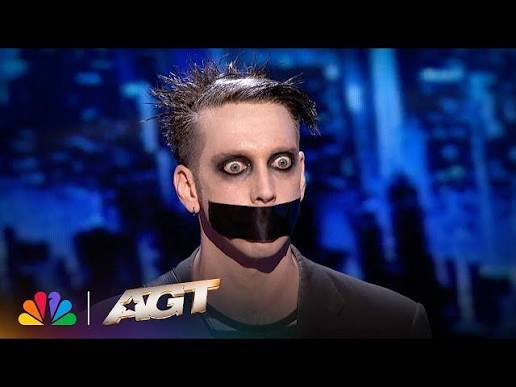
Later, a performer arrived without a name you could pin down. The host tried to figure it out: “You are… you are you.” The person’s face and body spoke more than their voice; when asked, “What do you have a name?” the best answer anyone got was a nod toward tape—“You’re taped.” What were they going to do? “You don’t know.” It shouldn’t have worked. It did.

Onstage, the silence didn’t hide anything; it revealed the craft. The audience saw a routine built on clean visual beats and punch lines that didn’t require translation. One judge summed it up: “Simple but clever, unique, funny, brilliant.” Another admitted, “At first, I thought you were so creepy, but then I really truly loved it.” The praise was so buoyant it swerved into self-parody: “By this time tomorrow,” a judge boomed, “everyone in America—no. No one in America is gonna know your name.” It was a perfect slip, a joke inside a joke about performance anonymity. The act’s mystery, it turned out, was a feature, not a bug.

Akira’s ‘never shown show’

The next quiet revolution came from a 51-year-old performer, Akira, who described his work with a phrase that was part riddle, part mission statement: “This is my full time job in Japan.” He asked to keep the plan a surprise, then hinted at the concept with a promise that felt like a wink: “Never shown show.” When the music cue finally came—“Music, start”—so did the point. We weren’t watching a spectacle; we were watching restraint turned into a punch line.

The rhythm was the joke. He said almost nothing, then said it at half-speed. “Slowly. More slowly. Okay. Okay.” The audience laughed because the stage dared them to—and because Akira knew exactly where to place the silence. Afterward, a judge teased, “You came all the way from Japan to show us that. Well, not show us that, actually. That was the whole point.” Akira answered, over the roar, “I gave everythi

The panel split for a moment. One judge warned, “I’m saying no. Absolutely no.” But the tide turned with a grin and a stamp of certainty: “A 100% yes.” If the night had a refrain, it was that simple: if it makes you laugh, it belongs.

The parody that wanted to be the original

Not every word-light act sailed through, and that made the triumphs feel earned. A performer who called herself Yuri Ann Retriever—“Yuriang Retriever is my stage name”—announced her hero list like a drumroll: “I only respect three people in the world, my mom and my dad. And? Julianne.” She had a cat, she explained. “His name is Retriever.”

Her routine was a pastiche of pop-dance poses and deliberate misses. One judge hit the buzzer anyway. Afterward, the conversation turned deliciously meta. “Julianne, you gave her a buzzer when every move you just watched was inspired by you.” The dancer pleaded her case directly: “Yes. I wanna be like you. But you buzz me. You buzz me.” The panel toyed with the line between flattery and craft. “You are so cute,” came the gentle verdict, followed by a surprising offer: “I am prepared to pay Julianne to give you dancing lessons.” Then the door closed softly: “It’s a no for now, so thank you.” Even here, the humor did its work. It made the sting feel like part of the show.

The science of a single plop

Then came a duo whose stage name landed with a thunk and a grin—“Yumbo. Dang.”—and a mission so microscopic it felt monumental: “Sound of a drop of water falling on the surface of water.” The demonstration hinged on a line that could have been written by a physics teacher with a sense of humor: “You have to get the right angle.”

The judges tried to keep it together. They failed, happily. “How many times are you sitting alone at home on the couch with your belly button going, what do I use this for?” one of them cracked, before conceding, “I’m gonna go home and I’m gonna try that.” The panel laughed at its own bafflement. “If you’re just tuning in now,” a judge said, “you’re gonna be going, what the hell am I watching?” And then the endorsement that every oddball artist wants to hear: “This is one of the funniest things and the most stupid things I’ve seen on this show.” When it came time to vote, two judges leapt in—“I wanna give you your first yes.” “We all need to laugh more in our lives, so I’m gonna give you a yes.”—and a third demurred. “I didn’t laugh, and I didn’t really get it, so I have to say no.” The act didn’t flinch. The laughter already had.

One comic who proved silence is a punch line

Amid the wordless wonders, one stand-up grabbed the mic and made a case for quiet of a different kind: the pause. He opened with a fastball, the kind of self-aware misdirection that kicks the door in: people ask me, “Is that genetic?” He answered himself: “Yes. Because you see, my mom was Irish, and my dad was a lobster.” Then he swiveled toward the invisible hum in all our living rooms—subtitles. “I wear hearing aids, so I watch all my movies and TV shows with the subtitles on. My favorite is when the subtitle says, ‘indistinct chatter.’”

He worked the crowd with mischief and care, admitting the daily obstacle course of a drive-thru—“you gotta say the order fast, and you’re talking through an intercom”—before popping the tension with a joke that only lands if the room trusts you. “Let’s talk about the elephant in the room,” he said. “Who ordered Stephen Hawking off of wish.com?” It drew a gasp, then a laugh, because he immediately reclaimed the line as his own story and capped it with a twist of pride: “He might be smarter than me, but I would beat him in a race.” Every beat was a reminder that even spoken comedy is sculpted with silence—that a pause, placed right, can be louder than a punch line.

Why the room cracked

Across the night, the through line was simple: when performers handled silence with purpose, everyone listened harder. Sumaha turned a “What is happening?” into a roar of recognition, turning a decade of craft into an instant classic. The anonymous, taped mystery figure let the audience fill in every blank, while a judge narrated the shape of the laugh with perfect honesty: “It was, like, simple but clever, unique, funny, brilliant.” Akira moved even the skeptics by engineering the world’s slowest reveal—“Slowly. More slowly. Okay.”—until the panel pushed its chairs back and said the quiet part out loud: “This is what AGT is all about.”

Even the outliers stitched into the theme. Yuri Ann Retriever showed how parody lives or dies on precision, turning “I wanna be like you” into a dialogue about taste and timing. Yumbo Dump proved that the most fragile sound effect can carry a whole room if the setup is brave enough. As one judge put it, “I think what your talent is is making people laugh with really weird things that you do.” In between, judges confessed their own bewilderment and joy. One stared into the lights and said, half-plea, half-promise: “I don’t know what it is, but I really, really think that you deserve this.” Another turned to a colleague after a big decision and announced, “You shocked the world.”

Maybe that’s the point. Comedy doesn’t always need a thesis statement. Sometimes it just needs a body, a rhythm, and the courage to say very little. The performers who triumphed didn’t chase translation; they trusted reaction. They didn’t explain. They showed. And the room—judges included—met them where they were, halfway between confusion and delight.

Want to see how far a joke can travel without a script? Watch the video and follow the beats that words can’t catch. The next time a crowd bursts into laughter before anyone speaks, you’ll know what’s happening: silence, stealing the show.

More Details